In the 1990s, before Michael Dennis was a filmmaker, screening host, or archivist, he worked at the Video Library, the fabled video store in Mount Airy. He remembers the 1989 film Riverbend being on the shelves, but he had never watched it.
Dennis, who founded the Philadelphia-based production company Reelblack in 1999, finally got around to watching the film in 2019. Charles Woods, Dennis’ mentor and podcast cohost, had asked him to transfer a VHS copy of the film to digital. He wanted to post the film on Reelblack TV’s YouTube channel.
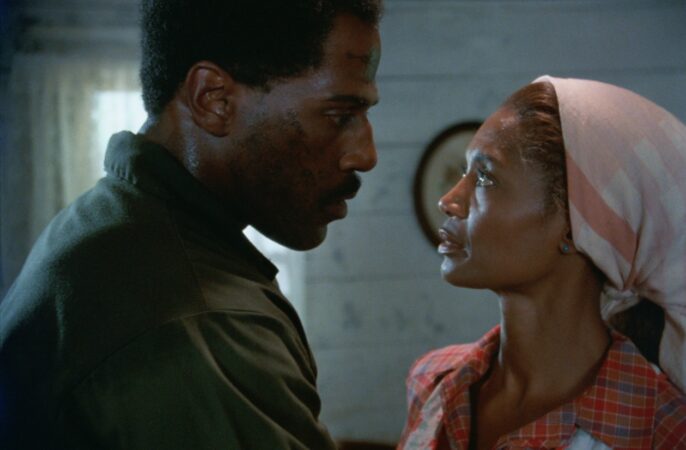
Riverbend, directed by Sam Firstenberg, is set in 1966 and tells the story of a group of Black Vietnam veterans who lead an uprising against a racist sheriff in a small Southern town. It’s an action-adventure film, in the tradition of the Rambo and Missing in Action series, firmly rooted in the B-movie style of the late 1980s — complete with a synthesizer-heavy musical score — but with much more of a social message than was typical of that time.
The film had only a perfunctory theatrical release and was released on VHS in 1990. In its brief run, the film opened only in New York, Texas, and Florida. But now, it has gotten an unlikely revival in Philadelphia, a city where it was never shown.
“The film itself is very revolutionary in some respects,” Dennis said. “I mean, it’s a genre picture, of course, but the theme is very revolutionary … and I was interested to talk to Sam about how the movie actually got made because it’s so different from most American films, nearly all American films.”
A few months after he posted the film on YouTube, Dennis received an email from Firstenberg, a B-movie stalwart whose credits also include American Ninja, American Samurai, and Breakin’ 2: Electric Boogaloo.
“I thought it was going to be a cease-and-desist letter, but instead he said, ‘No, you’re doing this movie a great service because it’s an orphan film and it was financed independently, and it’s basically lost,’” said Dennis, who teaches a course on race and ethnicity in American Cinema in Temple’s Film and Media Arts Department.
During the COVID-19 lockdown, Dennis saw a 35 mm print of Riverbend being sold on eBay by a seller in South Africa. He put in a winning bid for the print that’d take months to reach him.
Dennis considers himself an archivist, although he hadn’t previously mounted a full-scale restoration of a film before. But in keeping with Reelblack’s long-stated mission of encouraging the appreciation of Black film, especially rarer ones, he sought to restore Riverbend.
The eBay print, he said, had “every scratch known to mankind on it.” It was also missing seven minutes of material. Replacing the missing scenes with materials from the VHS, calling it a “sort of grindhouse cut,” Dennis gave the film its first public screening in decades at the Denton Black Film Festival in Texas in 2024. There, he met Valerie Vance, the widow of the film’s screenwriter and producer, Sam Vance.
“We were trying to find out where [Riverbend’s] negative was,” Dennis said, “And we had no luck because all the labs had closed and have become different companies.”
He got in touch with Dennis Doros, who runs the Missing Movies Instagram account and Milestone Films, a company known for rescuing “lost films.” Within days, the film assets were located at the film lab FotoKem, with Amazon/MGM paying the bills to host it.
Missing Movies, Vance, and Realblack worked out a deal to acquire the film’s negative and other assets.
The film then traveled to Norristown, where it was restored at Reel Revival, a company that provides scanning services. Austin Squitieri, its proprietor, started by scanning and digitizing the Riverbend negative. What followed was a painstaking process of digital repair, which included dirt removal, some Photoshopping, and final assembly of the edited footage.
Squitieri had not seen the film before working on the restoration, although he had heard of it.
“It’s a fun title,” he said. “It tackles something serious, and you can tell it was made passionately, as some of the more niche films tend to be.”
After premiering at the American Cinematheque Aero Theater in Los Angeles last October, the restored version of Riverbend is now headed to Philadelphia. The film will screen at Film Society East on Thursday and will be released on Blu-ray on June 27, through a new label called Reelblack Renaissance.
“There’s so many great Black independent films that are in danger of being lost or forgotten,” Dennis said. Reelblack Renaissance’s mission is “to restore them, reclaim them, and represent them in the Blu-ray and streaming market.”
Firstenberg, 76, will be on hand for the Philadelphia premiere.
“He tours the country supporting his body of work. And, this is like rescuing a lost child for him,” Dennis said.
Philadelphia is one of the most popular major cities among renters searching for apartments ahead of this year’s peak rental season.
The city ranks in the top 10 most popular out of the 150 largest U.S. cities, according to an analysis of millions of apartment searches by the nationwide apartment search platform RentCafe.
To rank cities at the start of the year, the platform measured page views for apartment listings, saved searches, listings that were marked as favorites, and the availability of units.
Rental activity is typically more dormant in the winter months before it heats up with the weather and peaks in the summer. “Looking out your window today, you can see a major reason why,” said Doug Ressler, manager of business intelligence at Yardi Matrix, a sister division of RentCafe.
Philadelphia came in at No. 8 in RentCafe’s ranking of in-demand rental markets in early 2026. The city often ranks high for popularity among renters because of its size, access to job hubs, and affordability compared to New York and other major East Coast cities.
RentCafe found that a majority of the interest in Philadelphia apartments comes from people already living in the city.
But out-of-town renters also want to move here. The majority of these apartment hunters searched from New York, followed by Boston and Washington. Renters in Atlanta, Los Angeles, and Houston also were interested in Philadelphia rentals.
Philadelphia fell three spots from last year in RentCafe’s ranking, because the number of saved apartment searches dropped, Ressler said. That’s partly because an apartment construction boom in the city has created many available units. So apartment hunters can more easily find homes and don’t need to save as many searches.
window.addEventListener(“message”,function(a){if(void 0!==a.data[“datawrapper-height”]){var e=document.querySelectorAll(“iframe”);for(var t in a.data[“datawrapper-height”])for(var r,i=0;r=e[i];i++)if(r.contentWindow===a.source){var d=a.data[“datawrapper-height”][t]+”px”;r.style.height=d}}});
Beyond Philadelphia
Midwestern and Southern cities dominated RentCafe’s rankings, with 11 of the 30 most in-demand cities located in the Midwest. Cincinnati took the No. 1 spot, followed by Atlanta and Minneapolis.
Washington and Baltimore rounded out the top-five list.
In top-ranked Cincinnati, RentCafe said renter interest was driven by people wanting to move from expensive areas along the coast to a midsizedcity that still offers a strong job market and positions in healthcare, manufacturing, and finance. Cincinnati also has become more appealing because of recent revitalization of downtown neighborhoods and the riverfront along the Ohio River.
Renter interest in El Paso, Texas, has grown the most out of the 150 large cities that RentCafe analyzed. The city climbed 115 spots to rank No. 28 this year.
Keith McGregor, a real estate appraiser, and his wife, Greta, are permanent residents of Pennington, N.J., but for the past five years they have enjoyed a second home in Philadelphia’s Washington Square West.
Keith has enjoyed the vibe of the city and the architectural details of the 19th-century two-bedroom, two-bathroom loft-style condo, which they are now selling.
“We liked that it was bi-level,” he said, with ceilings almost 18 feet high.
“We liked the location, close to Reading Terminal [Market] and the Walnut Street Theatre,” as well as Thomas Jefferson University, he said.
Primary bedroom of the condo.
The McGregors redesigned the unit with an open-concept layout and added a second bedroom. Each bedroom has an en-suite bathroom.
They kept the barrel-vaulted ceilings, plentiful exposed brick, and oversized windows. The renovation created a gallery-like space that the owners said would be ideal for displaying an art collection.
The building, known as the White Building, was originally the SS White Dental manufacturing company. The McGregors’ unit has 1,334 square feet of living space.
Exterior of the White Building.
The building recently underwent facade restoration and upgrades to its hallways and common spaces.
The condo for sale has new ceiling fans, new toilets, stainless steel appliances, a Sub-Zero refrigerator with built-in ice maker, a new cooktop, in-unit laundry, an on-site fitness center, and a fresh paint job.
The kitchen has stainless steel appliances.
Local restaurants include Sampan, El Vez, and Lolita.
The unit is listed by Marc Silver of Compass Real Estate for $625,000.
It rises and falls to the crescendo of the film’s emotional jazz riffs, matching the gravity of the civil rights struggle.
Proudfoot drops a cadre of never-before-seen black-and-white images of lawyer Jones’ backing King up, a display of Jones’ behind-the-scenes prowess. He was a speech writer and close friend of King’s.
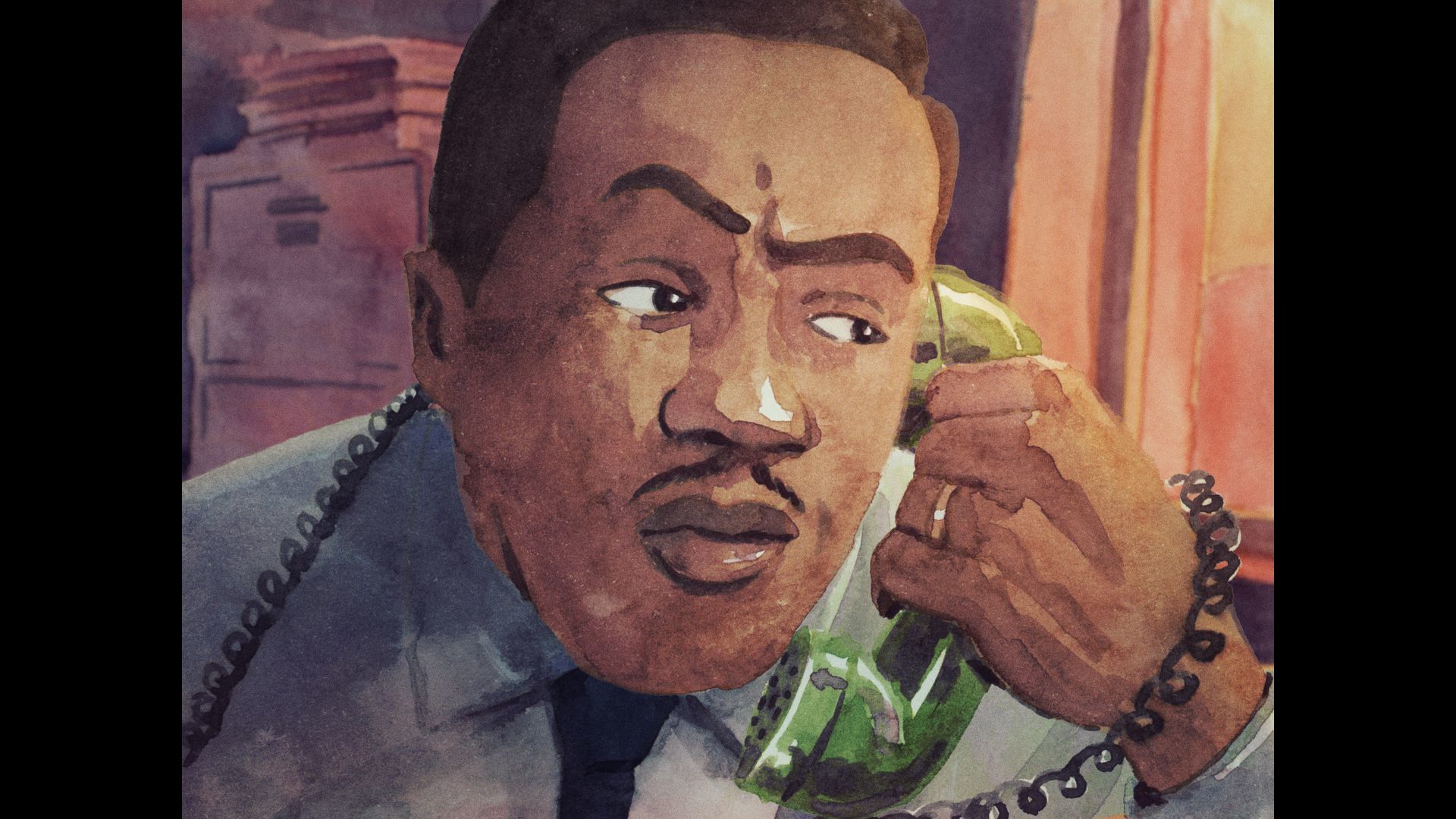
But it’s the directors’ deft use of watercolor animations by Brazilian artist Daniel Bruson’s (Autism Goes to College) that brings a tenderness to Jones’ sometimes cynical, always cut-to-the-chase personality.
You see, Jones is that cat who, back in the day, stayed casket clean in sharp three-piece suits and sparkling Rolex watches. He’s that uncle who dared white men to tell him that he didn’t belong; that educated Black man who didn’t have time for racism. And it’s for that reason, King kept him in the background, but also in his ear.
Clarence B. Jones in an animated scene from “The Baddest Speechwriter of All.”
“I told Martin straight up,” Jones says in Baddest, answering Curry, who is making his directorial debut with the film. “Don’t put me near any demonstration. … If a white man puts his hands on me, they are going down.”
Three thousand watercolor images move seamlessly through Baddest narrating Jones’ life in a slow, jazzy rhythm. We watch him develop civil rights strategies with King and a coalition of like-minded Jewish people.
We are with Jones the night he matter-of-factly writes the first seven paragraphs of King’s “I Have a Dream” speech, arguably one of the world’s most important addresses. We watch King give the speech as Jones looks from the wings, surprised and in awe.
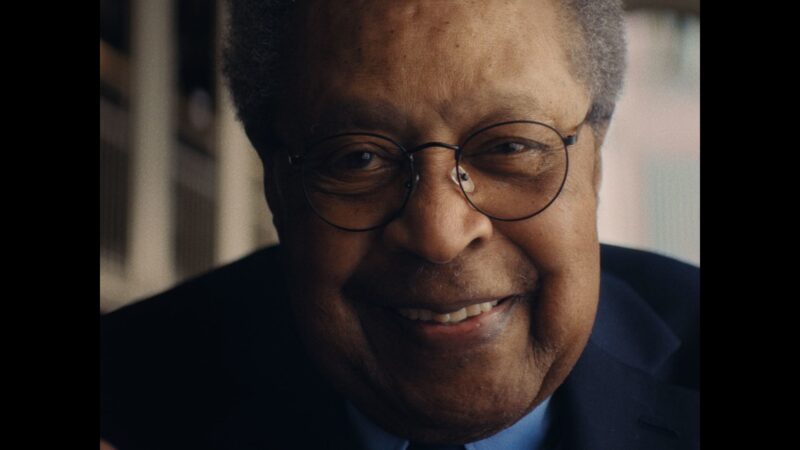
“I didn’t know he was going to read my words word-for-word,” Jones, 95, told The Inquirer in a recent video chat.
He closes his eyes often as he talks, punctuating his speech every so often with a well-placed, “You hear me?” or “You understand me?”
His hair is a short white Afro. Soft and defiant.
A wintertime soldier from North Philly
Jones was the only child of domestic workers, born in the 1300 block of Master Street, where Temple University’s sports complex stands today. Shortly after, his parents found work as live-in help at the Riverton, Burlington County, country estate of Edgar and Eleanora Lippincott, a Quaker family and part owners of a prosperous 19th-century Philadelphia-based clothing firm.
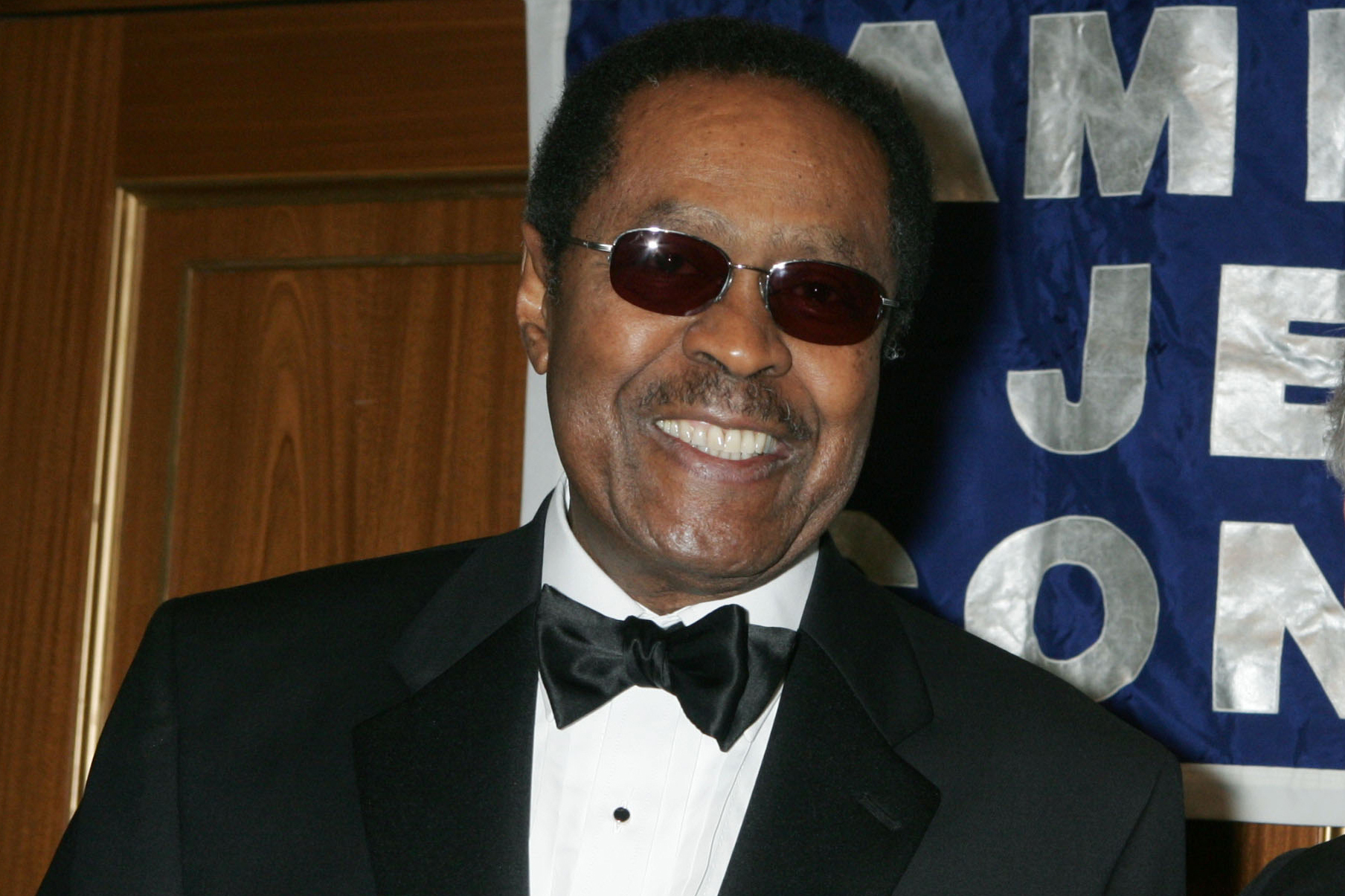
Clarence B. Jones before he received the American Jewish Congress’ “Isaiah Award,” on March 1, 2006, in New York.
“I lived there [with the Lippincotts] until they sent me to a Catholic boarding school [the Sisters of the Blessed Sacrament],” Jones said. “I was raised by Catholic nuns who told me, ‘Master Jones, you are a good boy, Jesus loves you. You are beautiful.’”
The positive reinforcement turned Jones into a force, at a time when Black people’s education and career options were limited by racism. He finished Palmyra High School in New Jersey, the current home of the Clarence B. Jones Institute of Social Advocacy, at the top of his class. He attended the summer program at the Juilliard School in Manhattan for two years and studied clarinet. There he fine-tuned the musical ear that, he said, aided him in writing King’s speeches.
He graduated from Columbia University, did a brief stint in the Army, and graduated from Boston University Law School. By the late 1950s, he was working as an entertainment lawyer for Revue Studios, which was absorbed into what is now Universal.
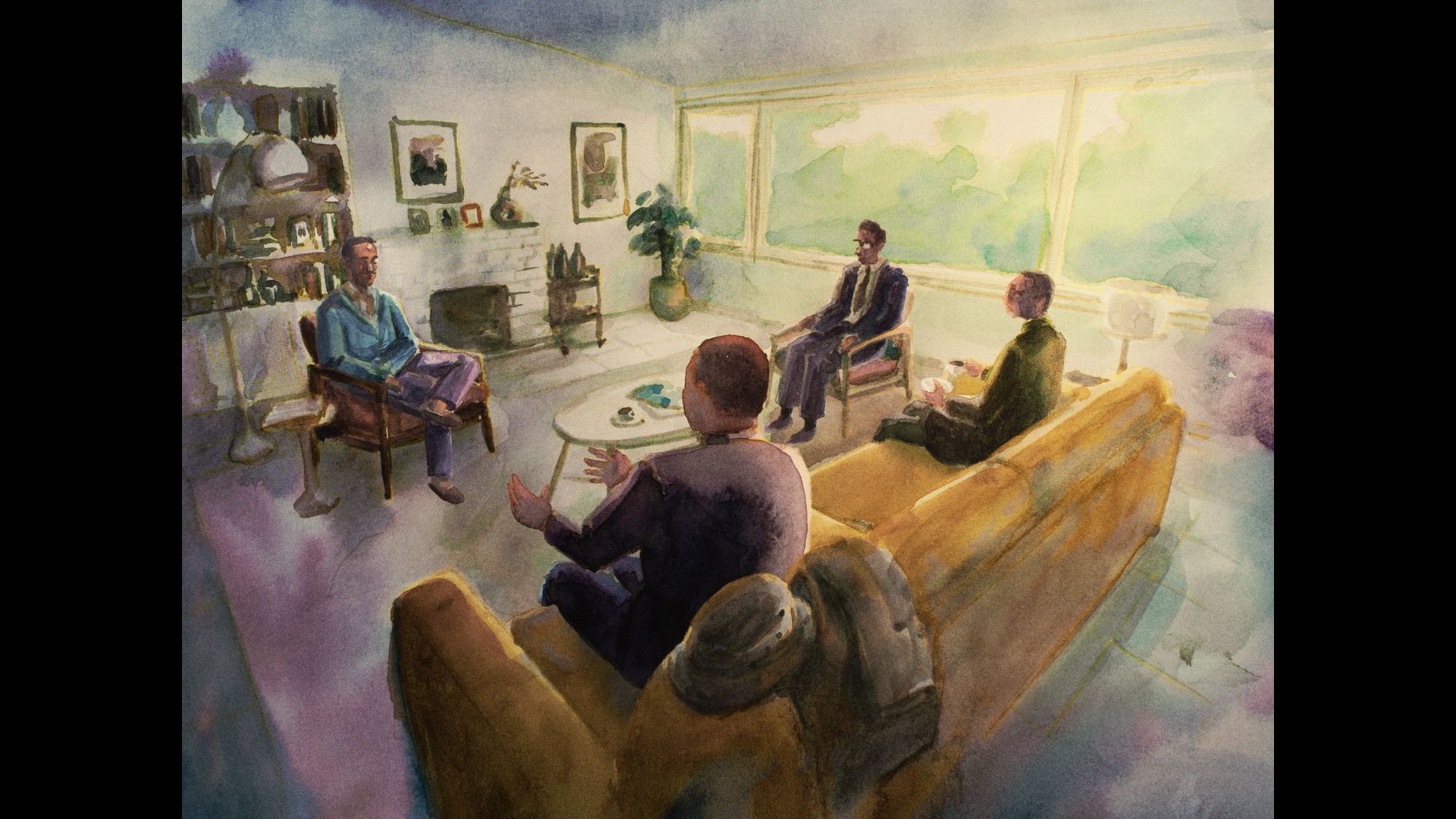
Clarence B. Jones in an animated scene in his living room in “The Baddest Speechwriter of All.”
Jones was at home one evening in 1960 when his mentor and former New York judge Hubert T. Delany asked him to defend King, then a young preacher and budding Civil Rights Movement leader, against a tax evasion charge in Montgomery, Ala.
Jones said no.
“I wondered whether he [King] was real,” Jones said. “‘Cause I’m saying he [King] comes from a middle-class Black family. He didn’t have to do this. I come from the kitchen.”
Yet, he agreed after hearing King preach at a church in neighboring Baldwin Hills. Jones was struck by his sermon imploring educated Black people not to turn their backs on the struggle.
In 1963, King was jailed again. This time in for leading demonstrations, marches, and sit-ins against racial segregation in Birmingham, Ala. Jones smuggled out notes that King wrote to his fellow clergymen while incarcerated and compiled the missives into King’s “Letter from a Birmingham Jail.”
That same year Jones worked with singer Harry Belafonte to secure $100,000 from the Rockefellers to bail Birmingham protesters out of jail. The Rockefellers asked him to sign a promissory note, that they later tore up. Jones references that promissory note in his draft of King’s speech.
“I was sharing a room with King in Albany, Ga.,” Jones told The Inquirer. “And he said, ‘Anybody can walk with me in the warm sunlight of an August summer. But only a wintertime soldier walks with me at midnight in the alpine chill of winter. You, Clarence, are my wintertime soldier.’”
How ‘Baddest’ came to be
Proudfoot and Curry met through a mutual friend in the late 2010s. A few years later, Curry helped produce Proudfoot’s 2022 Oscar-winning documentary The Queen of Basketball, the story of women’s basketball pioneer Lusia Harris.
Curry met Jones in 2022 when Golden State Warriors coach Steve Kerr invited Jones to speak to the team. Curry was intrigued with the elder statesmen’s stories and asked Proudfoot if he would be interested in working on a documentary about Jones’ life.
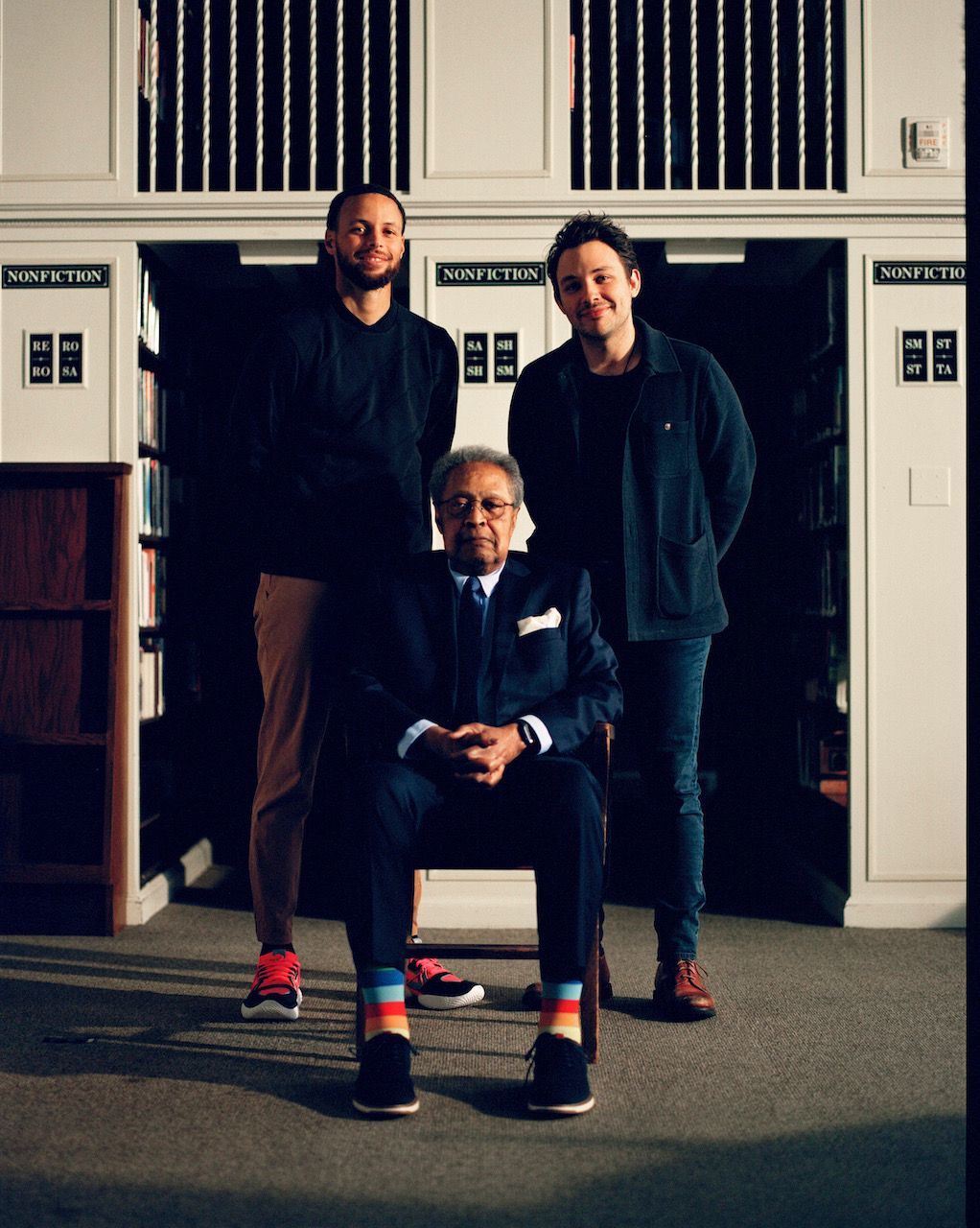
Stephen Curry, Clarence B. Jones, and Ben Proudfoot on the set of “The Baddest Speechwriter of All.”
“As a storyteller, I’m always interested in approaching well-known pieces of history through a fresh perspective,” said Proudfoot, a 35-year-old Nova Scotia native and two-time Academy Award winner. (Proudfoot’s credits also include the 2024 Netflix documentary The Turn Around, about Phillies superfan John McCann.)
“Clarence wasn’t just sitting there waiting for Dr. King to call him,” Proudfoot said. “He was a reluctant participant. He made a decision to live in comfort or live with purpose.”
Jones was King’s attorney until his assassination in 1968. In the late 1960s he became a partner at what is now Cogan, Berlind, Weill & Levitt, making him the first African American partner at a Wall Street investment banking firm. During that time he also became the first Black person to become an allied member of the New York Stock Exchange.
During the 1970s, Jones served as the chairman of the New York-based Inner City Broadcasting, where he and Percy Sutton — once Malcolm X’s attorney — founded New York’s WBLS, the blueprint for today’s R&B radio stations. There, he also had a hand in developing the long-running variety show, . From 1971 to 1974, Jones was editor and publisher of the New York Amsterdam News.
“I’m telling you,” Jones said as a sly grin crawled across his face. “I was a bad man.”
In recent years, Jones has enjoyed a renewed spotlight.
He was featured in a 2024 Super Bowl commercial paid for by the Foundation to Combat Antisemitism. “I’d remind people that all hate thrives on one thing, silence,” he says, urging viewers to stand up to Jewish hate. President Joe Biden awarded him the Presidential Medal of Freedom — the highest civilian honor — in May that same year.
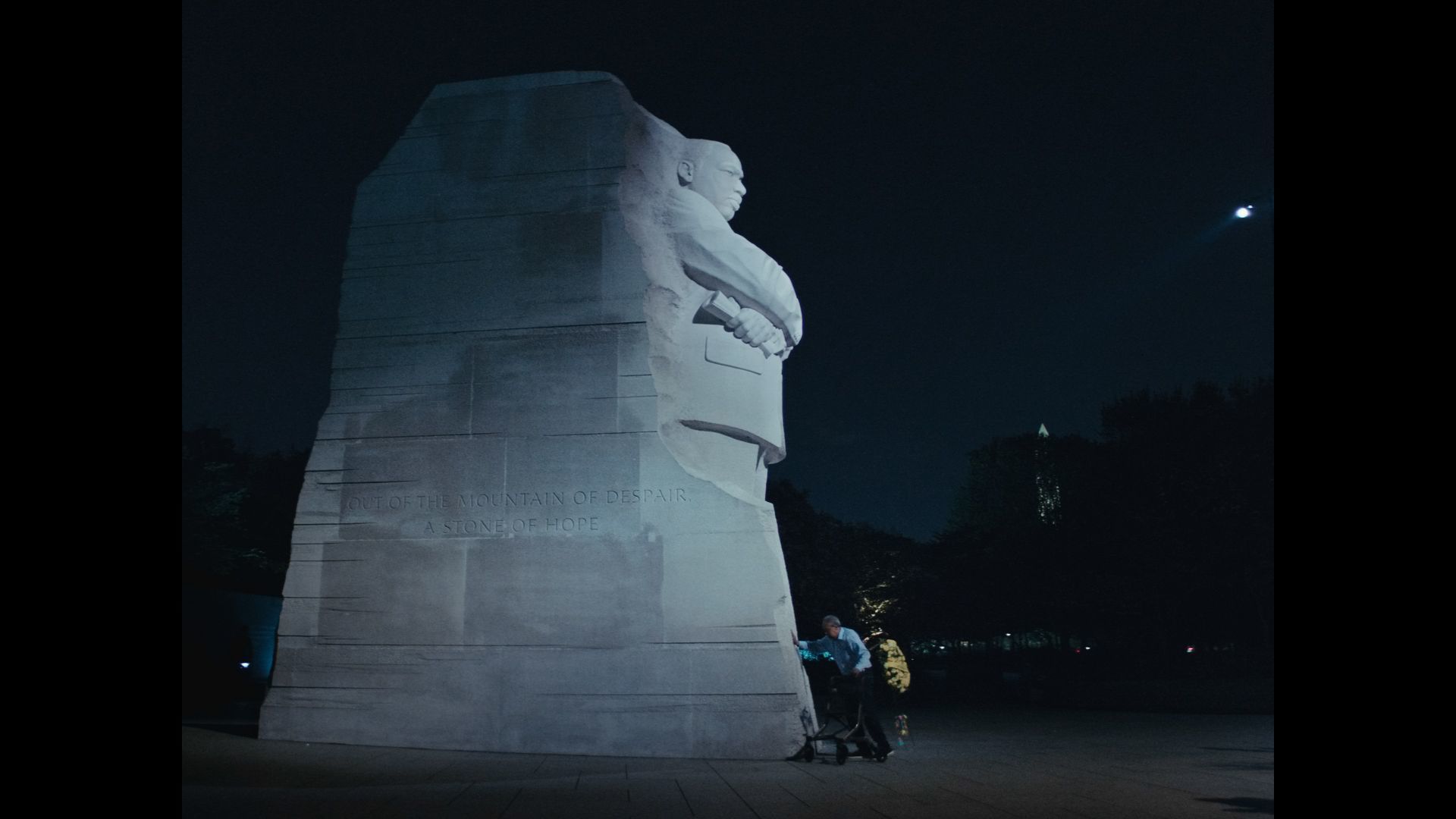
Clarence B. Jones visiting the Martin Luther King Jr. Memorial in Washington in an animated scene of “The Baddest Speechwriter of All.”
Just days after the death of the Rev. Jesse Jackson, Jones remembered Jackson as a leader in the civil rights struggle. “I looked upon Jesse Jackson as someone who was a warrior in the battle who has fallen,” Jones said. “I regard him with great love and affection.”
At a time when the historical civil rights language Jones had a hand in drafting is seen by this presidential administration as racist toward white Americans, Jones is reflective.
If people would focus more on love, perhaps America would be a better place.
“King’s work was about love,” he said. “The love he had for his work, for his people … the love he had for me.”
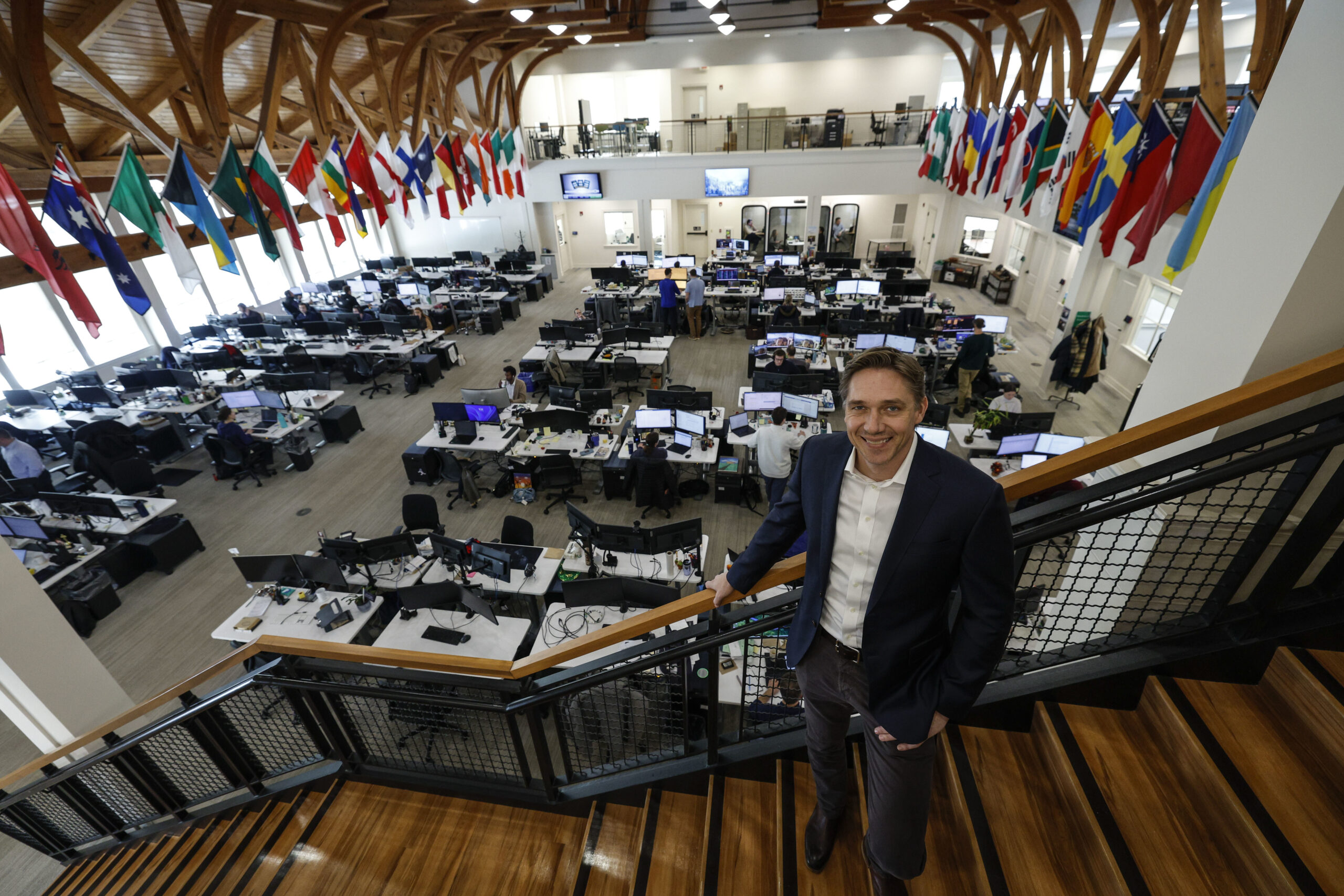
After John Michael Bontrager came home to Pennsylvania from Wall Street to start an advice firm for big investors, he located his company in Kennett Square, “America’s Mushroom Capital” and the most populous of the old factory and farming towns along Old Baltimore Pike in southern Chester County.
Bontrager and those who joined him prospered. In 2018, he stepped down as founding head of investment-risk adviser Chatham Financial, which now employs 850 at its campus just east of the square-mile borough of 7,500.
Now, he’s devoting himself to the redevelopment of Kennett Square and nearby towns.
Using his own fortune, donations, and state and local government funds, Bontrager and his allies have developed a string of projects — restaurants, hotels, and nonprofits — under the loose umbrella of his Square Roots Collective. Their affiliates have purchased 2% of the town’s houses to redevelop as rentals. Their goal: Make the area more attractive to college-educated young people, while also boosting the quality of life for longtime residents and working people.
In December, the borough council endorsed Bontrager’s “public, cultural, and social impact initiatives,” calling them “key to shaping the inclusive community.” They voted unanimously to ceremonially rename Birch Street, an industrial road Bontrager has visibly transformed, as “Bontrager Walk.”
Bontrager agreed to take questions at his Kennett Square office. His daughter, newly designated co-CEO Stephanie Almanza, and his chief of staff, Luke Zubrod, a Chatham Financial alumnus who serves on the borough planning commission, sat in.
The conversation has been edited for length and clarity.
Why did you start local projects while you were still building your company?
[I wanted] to convince people we wanted to hire, between the ages of 25 and 33, that Kennett is a reasonable place for them to live. How do we make this attractive for people to move here and to bring people who grew up here back?
Thirty years ago when I came here, it was a great community for families. But it was harder to convince singles and couples with no kids.
I read sociology, for example Chuck Marohn’s Confessions of a Recovering Engineer; Yoni Appelbaum’s Stuck about zoning; The Logic of Failure by a German neuroscientist [Dietrich Dorner].
The elements I came up with: A community is totally interconnected, people and organizations. All decisions have ripple effects. When communities focus only on solving the near term problem, it’s probably not going to be good.
For example, we have about 30% of Chester County “preserved.” Well, it’s great to have open space. But if you take a third of your land out of commission, without providing for housing, housing prices will go up dramatically. And taxes.
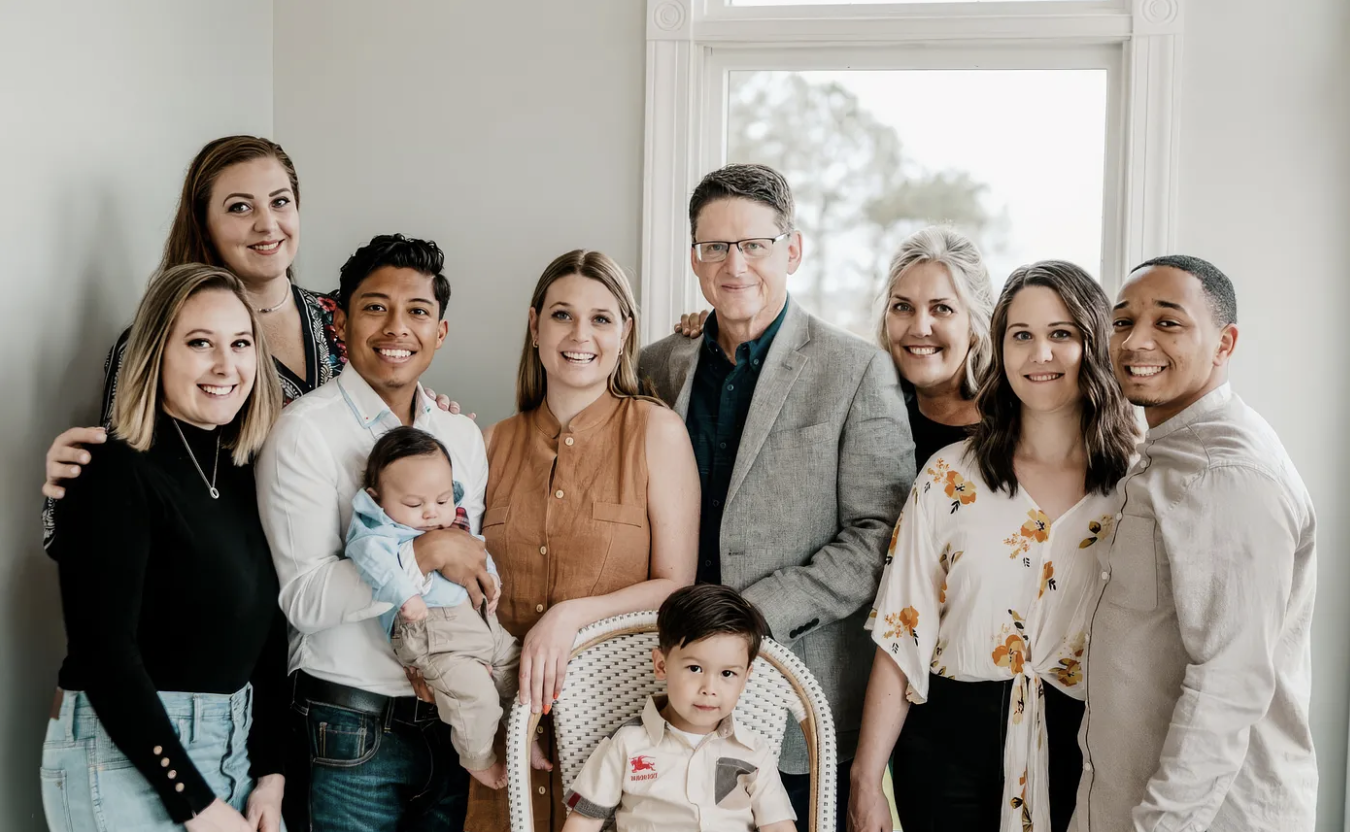
Mike Bontrager (center, in grey jacket) with family members (from left) Stephanie, Kymm, Luis, Cruz, Katherine, Mason, Mike, Dot, Lauren, and Willie.
How do you solve issues in concert?
Collaboration, trust, working together. A lot of elected officials are volunteers. It’s easier to focus on one issue at a time and react to the three or four people who show up at your meeting with pitchforks.
Of course you want a say over what happens in your neighborhood. But the consensus favors the status quo, the entrenched interest.
Not everyone loves what we’re doing. Luke, Stephanie, and myself have said, ‘Let’s understand people’s concerns. We’re neighbors.’ We listen; we have a lot of meetings.
What are the institutions you’ve set up?
The Square Roots Collective isour brand for all the activities. It includes Square Roots Community Initiative, a 501(c)4 nonprofit that’s the umbrella group. There’s our for-profit businesses; the profits go to support the nonprofits. We donated more than $1 million last year to nonprofits and projects in the area.
On Birch Street, there’s our offices, and the Creamery [converted from an old condensed-milk plant site], which we started as a beer garden in 2016, it’s now a restaurant, and Artelo, the art hotel.
We are also working on the Francis, an eight-room hotel in the middle of town. And we are opening a really cool cocktail bar, the Star and Lantern [referencing the Underground Railroad and the area’s abolitionist history] in 2027. And we are preparing Opus, a restaurant.
On the nonprofit side, there’s the Kennett Trails Alliance, a 14-mile loop. About half is open, and we have easements for most of the rest, not all. It connects some of the open spaces, the Brandywine Creek, Anson B. Nixon Park, the YMCA.
And there’s Voices Underground, an organization we initiated in partnership with Lincoln University and Longwood Gardens, elevating the stories of the Underground Railroad.
Artelo Hotel Kennett Square, which has works by local artists in each room. This is “Floating Free,” by Philadelphia artist Philip Adams.
Your groups own about 40 of the 2,000 or so houses in the borough. Is there a shortage of affordable rentals, given demand from mushroom farms and other industry?
Yes. What we have is tenant housing, market rate, including some we rent to area charitable and community groups [for their clients].
How did you decide to start Chatham in 1991?
When I was 13, I worked for an appliance repairman, John Schmucker. He was brilliant at fixing washers, dryers, dishwashers. But he was a disastrous business guy. He never collected. I saw building a business is very different from being smart and an expert.
My father was a Mennonite pastor in Christiana, Lancaster County. I went to Lancaster Mennonite School. I went to Wheaton College in Illinois. I was so naive; I had never met a real professional.
I would sign up for any kind of recruiter interview. I eventually went to see someone who worked for Chemical Bank [predecessor of JPMorgan Chase]. I got a job offer.
I joined this new unit selling these emerging derivatives — interest-rate swaps, currency and commodity hedging — to help clients manage the risks.
There were products that were inappropriate for most investors. Municipalities got in trouble buying things that didn’t need, where the banks took out a lot of money.
People needed advice. I loved helping clients, maybe it was a big company, or maybe an oil distributor in Queens who needed to hedge his fuel-pricing risk.
Why did you return to this area from New York?
My wife wanted to move back to our families. In August 1991, I bought a place in Cochranville. We had a satellite dish that brought in Telerate [a stock-tracking service], which was just a year old. That’s what made it possible to do this work anywhere. I started over the garage, me and my dog.
It turned out to be the best time to start a derivatives advisory business. There were a lot of properties available from [recently failed] savings-and-loans at cents on the dollar, and someone figured out a legal structure that allowed real estate investments trusts to go public. We did their hedging. Same with private equity.
I called a few of my old clients, Milton Cooper at Kimco Realty Trust, we helped him go public, he recommended us. We advised [mortgage-bonds pioneer Ethan Penner] on the first mortgage-backed securities. In 1994, I cold-called a young associate at a firm buying failed S&L loans. He hired us to hedge. That was Jon Gray, who worked his way up and is expected to be the next CEO of Blackstone.
We mastered hedge accounting. We had more derivative hedging experts than anyone. The Big Four accounting firms and their clients found we spoke their language.
By 2000, we had built a real business. We moved to Kennett because it was a larger town [and closer to Philadelphia and its airport].
How did you prepare your work to go on after you left, under your successor Matt Henry?
At Chatham, I wanted us to be internally owned, the people who are joining should reap rewards. I did not want any outside investors. [Employees own most of the stock, and elect top officers.]
I have been diagnosed with ALS, which is a pretty devastating diagnosis. I don’t how long I will be able to be actively involved. I still get to do purposeful work with people I love. Isn’t that what we all want? So I’m going to go until I can’t.
CEO Matt Henry of Chatham Financial center, just outside Kennett Square.
The University of Pennsylvania Health System had an operating profit of $189 million in the first six months of fiscal 2026, up from $117 million in the same period a year ago, the nonprofit reported to bond investors Friday.
Operating income increased, even after Penn put $43 million put into reserves for medical malpractice claims. Two years ago, Penn had recorded charges totaling $90 million for the same purpose.
Here are more details on Penn’s results:
Revenue: Penn had $6.76 billion in total revenue, up nearly 12% even adjusting for the inclusion of Doylestown Health in fiscal 2026. Penn acquired Doylestown last April.
“We’ve had good volume growth over the prior year, particularly in our outpatient activity,” the health system’s chief financial officer, Julia Puchtler, said in an interview.
The system has also had an increase in the acuity level on the inpatient side, she said. That translated into more revenue.
Expenses: The $43 million malpractice charge boosted overall malpractice expenses through December to $125 million, from $69 million in the same period a year ago.
It’s not that Penn is seeing more claims, Puchtler said. “It’s really the average reserve per claim that we’re seeing accelerate,” she said.
Notable: Excluding Doylestown, Penn saw a 5.9% increase in patient volumes, Puchtler said. “That’s mostly outpatient,” she said. “Outpatient surgery, endoscopy, and some of our other infusion therapy are all increased over the prior year.”
Editor’s note: This article has been updated to reflect an additional medical malpractice charge in 2024, bring the total to $90 million.
The grandson of the inventor of Reese’s Peanut Butter Cups went viral after penning an open letter to Pennsylvania’s Hershey Company on Feb. 14. But it was far from a valentine.
Brad Reese, 70, accused the confectionery manufacturer of hurting the brand his grandfather H.B. Reese began a century ago, cutting corners with its chocolate quality. Within the week, Reese’s post has sparked discussions about brand integrity, ingredients, and legacy.
In a LinkedIn post, Reese said Hershey’s assortment of Reese’s products (including the valentine heart-shaped ones he had recently sampled) include different, cheaper ingredients, swapping milk chocolate for compound coatings and peanut butter for peanut butter créme.
“How does The Hershey Co. continue to position Reese’s as its flagship brand, a symbol of trust, quality, and leadership, while quietly replacing the very ingredients (Milk Chocolate + Peanut Butter) that built Reese’s trust in the first place?” Reese wrote.
Reese isn’t wrong. Several Reese’s products today — including the valentine’s hearts and the Easter egg-shaped versions — use chocolate-flavored coatings that cannot be legally called “milk chocolate,” a term that’s regulated by the Food and Drug Administration. It’s unclear exactly when the swaps occurred.
The flagship Reese’s Peanut Butter Cups continue to list milk chocolate and peanuts as the first two ingredients.
Still, the product line’s variance represents a shift across the candy industry as cocoa prices continue to rise, driven by a combination of factors, including climate-sparked changes in supply, tariffs, and labor shortages, the New York Times reports. Chocolate companies, including Hershey’s, have responded by making cost-effective ingredient swaps. The Times reported that several chocolate-forward Hershey’s candies no longer listed milk chocolate among their ingredients during last Halloween season.
Hershey doesn’t deny the swaps, but is defending its quality.
The company said in a statement Wednesday that Reese’s Peanut Butter Cups are made the same way they’ve always been, with house-made milk chocolate and roasted peanuts, but that ingredients for some other Reese’s products can vary based on demand.
“As we’ve grown and expanded the Reese’s product line, we make product recipe adjustments that allow us to make new shapes, sizes, and innovations that Reese’s fans have come to love and ask for, while always protecting the essence of what makes Reese’s unique and special: the perfect combination of chocolate and peanut butter,” the company said.
A package of Reese’s Hearts is shown on Tuesday, Feb. 17, 2026, in New Jersey. (AP Photo/Pablo Salinas)
A government database last updated in 2023 shows changes to the ratio of peanuts and milk chocolate used in Reese’s Peanut Butter Eggs over the years. Three years ago, the egg chocolates had more peanuts and milk chocolate than anything else. But the current formula lists sugar and vegetable oil first — and no milk chocolate.
Reese said he thinks Hershey has gone too far this time.
He picked up a bag of Reese’s Mini Hearts for Valentine’s Day, but threw them away after sampling.
“It was not edible,” Reese told The Associated Press. “You have to understand. I used to eat a Reese’s product every day. This is very devastating for me.”
Reese’s grandfather, H.B. Reese, spent two years at Hershey before leaving to form his own company, H.B. Reese Candy Co. in 1919. The company manufactured about 12 types of chocolate, made with ingredients that included real cocoa butter, fresh cream, and freshly roasted peanuts.
He invented Reese’s Peanut Butter Cups in 1928. They were a hit and had wrappers included the slogan: “Made in Chocolate Town, so they must be good.” H.B. Reese died in 1956. His six sons eventually sold his company to Hershey in 1963.
Now, Reese is waging war.
He redesigned his personal website to take on Hershey’s ingredient swaps. The lead photo on the homepage shows an orange cap with the phrase “MAKE REESE’S GREAT AGAIN” stitched on the front. He says the website is devoted to “protecting Reese’s brand integrity.” It includes a list of news coverage his LinkedIn call-out has received to date.
“Right now, the REESE’S story is diverging from what’s inside REESE’S products. And that divergence puts REESE’S and the legacy behind it, at risk,” Reese said on LinkedIn. “As the grandson of the man who created REESE’S Peanut Butter Cups, I’m not asking for nostalgia. I’m asking for alignment. For truth in REESE’S brand stewardship.”
The Imhotep Charter boys’ basketball team was in Boston a few years ago for a tournament when Andre Noble told his players that they were in his hometown.
“I said, ‘Wait. What?’” said Ebony Twiggs, whose son, Justin Edwards, was one of Imhotep’s stars. “I just thought he always lived here. I didn’t know he wasn’t from Philly.”
Noble reminded Twiggs of the people she knew from West Oak Lane. He had been at Imhotep for more than 20 years. And he was one of the city’s premier high school basketball coaches. He fit in. Of course he was from Philadelphia.
Noble, who can win a sixth straight Public League title and 13th overall on Sunday when Imhotep plays West Philly High, is one of Philly’s all-time coaches.
Unlike the rest, Noble didn’t spend his teenage summers playing at places like Chew, Tustin, and Myers. He didn’t win CYO titles, ride the trolley to watch doubleheaders at the Palestra, or find himself within six degrees of separation from someone who played on the 1954 La Salle basketball team.
Philadelphia has produced great players, coaches, and even referees. And the high school coaches, especially the ones who have won at the rate Noble has, often grew up here. They played for the city high schools, perhaps even stayed for college, and remained a tight-knit crew who stayed home to teach the game.
Speedy Morris still lives in Roxborough, Dan Dougherty was from Olney, Bill Ellerbee grew up on Uber Street, and Carl Arrigale is as South Philly as slowly driving past a stop sign. The guys on the Mt. Rushmore of Philadelphia high school coaches are from the neighborhood who coached kids like them.
Andre Noble has been at Imhotep for 20 years, but his hometown is Boston.
But Noble grew up in Boston’s Mattapan neighborhood and didn’t even play high school ball. He came to Philadelphia in 2000 after graduating from Lincoln University and taught math at Imhotep, which did not yet have an athletic program.
Noble planned to stay in Philly for a year before moving on. His plans changed, he stayed, and Imhotep became a basketball powerhouse.
The guy from Boston did what seemingly has never been done: become a great Philly high school coach as an outsider.
“I think by the time everyone figured out I wasn’t from Philly, it was too late,” Noble said. “The ball was already rolling down the hill. But I’m definitely a Philly basketball guy. It’s important to me.”
A special guy
Imhotep didn’t have a basketball team when Noble arrived. The school didn’t even have a building.
“We called them modulars, but everyone else said, ‘Yo, that’s the trailer school,’” said Noble, who is now the school’s CEO.
Two students in his algebra class — Briscoe Chew and Marlon Mills — told Noble at the end of the school year that they were transferring. Noble was stunned. Why? Imhotep doesn’t have sports, they told him. So Noble launched a basketball team and kick-started a league with the city’s other charter schools.
Noble didn’t have a playing background to lean on, so he picked the brains of coaches in the area. Rap Curry, Greg Dennis, and Clyde Jones became his mentors. He was on his way. His plan to leave Philly after a year was spoiled, so he began to scour the city for players. He watched games at youth programs in North Philadelphia and hung at playgrounds, hoping he could fill a roster at Imhotep.
“I knew he was from Boston, but then I started seeing him at 25th and Diamond or 33rd and Diamond,” said Kamal Yard, who runs Philly Pride, one of the city’s premier AAU programs. “I’m like, ‘Bro, what are you doing down here? Do you know where you’re at?’ But he was in the mix. He was in the hood. He was in the projects. Nobody goes to the back of the projects at 25th and Diamond, but he did it. He was meeting the kids. That was his intro to Philly, and he was onto something. He got immersed into it.”
Yard met Noble years earlier when they were both students at Lincoln. Yard played ball and Noble watched from the stands. The future coach was studying, Yard said. When students complained about the food in the cafeteria, Noble led the charge as a member of the student government. He led a boycott, filed a petition, called the state, and ordered a review.
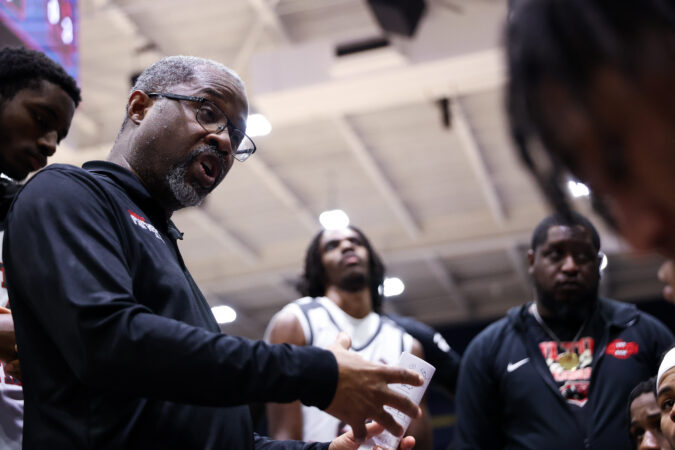
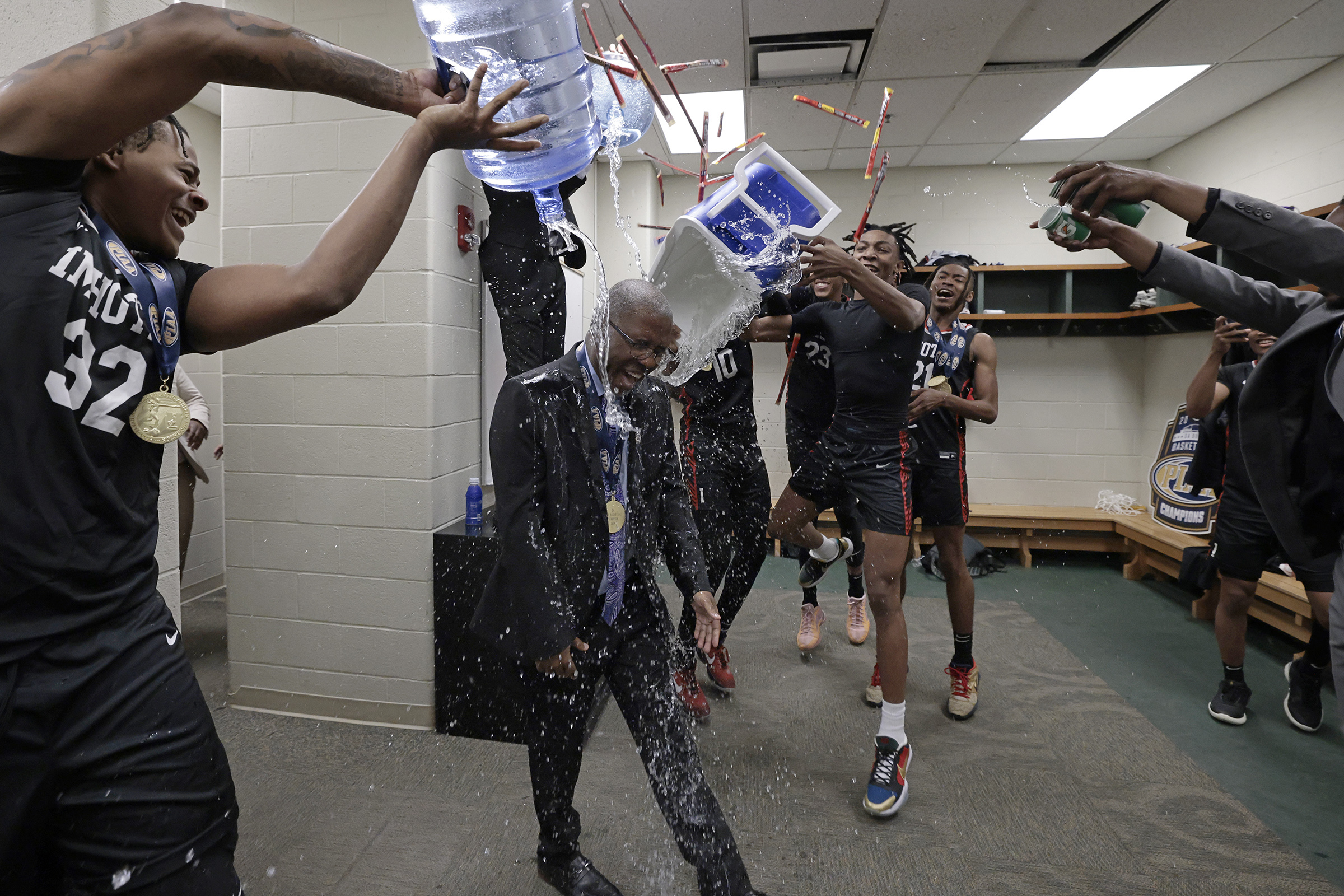
Imhotep players soak head coach Andre Noble after winning PIAA Class 5A boys basketball championship in 2024.
“You blinked and, man, we had a whole new menu,” Yard said. “But the whole point was that he was always about other people. So watching this transition, it’s no surprise. He’s a giver of people. He doesn’t look like a tough guy because he’s mild-mannered, but there’s a lot of toughness and resiliency in that frame. He’s as tough as they come.
“Brother Andre will go into the lion den with a tiki torch and a sword to go help a kid. He might come out scratched up, but he helped his kid. That’s Brother Andre.”
The Panthers, waiting for their gym to be built, practiced at a nearby recreation center and a middle school. It wasn’t ideal, but it worked. Imhotep won the Charter School league before moving in 2004 to the Public League. Five years later, Noble’s team won it all.
The Boston guy had built one of Philly’s finest teams.
“He’s a special guy,” said Fran Dunphy, the quintessential Philly coach. “The biggest asset he brings is just his genuine goodness. He treats the kids well, but there’s no question that he has an accountability for them and needs them to pay attention. They all seem to buy in. He’s remarkable for me.”
A teacher
Noble was a junior in college when he thought about how he was the only kid he grew up with preparing to get a degree. He wondered, how did that happen? And then he thought about his mom, a single parent who worked as an office manager and raised her sons — “Two knuckleheads,” Noble said — in a tough neighborhood.
“I called her and thanked her,” Noble said. “I knew it was that little lady who I thought was crazy but provided the foundation. She was a stickler, a disciplinarian. It was her way or the highway, ‘Hey, this is what you’re doing.’”
It was a big deal when Noble secured admission to the Boston Latin School, a prestigious school near Fenway Park. But his mother asked him to think about it before she sent in his paperwork. She asked her son, would he take his studies seriously? Would he be ready to work hard? Can he commit himself? Noble said he would.
Years later, he found out that his mom already had sent in the paperwork. But Della Noble wanted her son to feel a sense of ownership in his decision. She believed her son could do it. And now Noble empowers and supports the kids at Imhotep the same way his mom did. If a kid on his team wants to visit a college, Noble often is driving the car. If a kid has a problem in school, Noble’s door is open.
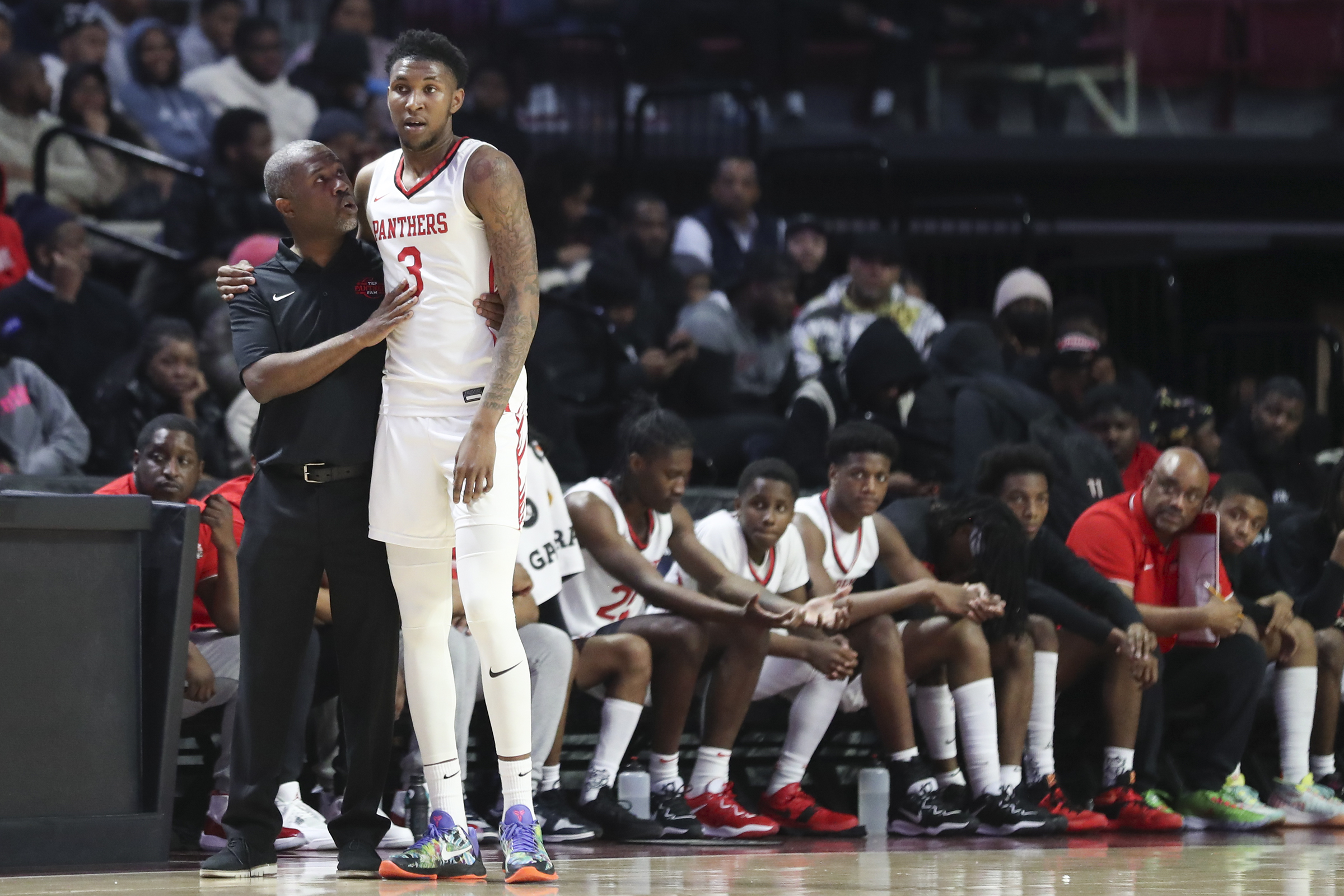
Imhotep’s Andre Noble (left) shown with Justin Edwards during the 2023 Public League championship game against West Philly. Edwards now plays for the Sixers.
“You realize that there’s way more important things in life,” Noble said. “If we can get them to be the best young men we can be, then the rest of their lives will be meaningful. There’s so many things you can teach through basketball.”
Becoming one of Philly’s all-time coaches is about more than just breaking a press or drawing up an inbounds play with seconds left. Noble proved that an outsider can do it, too.
“There’s a trust that he has with his players that we all try to search for in relationships with the kids,” Dunphy said. “I think he’s found that secret. To be honest with you, I don’t know if I ever sat down with him and said, ‘Yo, what is your secret?’ I think he would be so humble, and he’d say, ‘I don’t know. I’m just being myself.’ It’s what makes mentorship so important to all of us. You have to be there for the young people.”
Noble has surrounded himself with a crew of assistant coaches who grew up in Philly. He has embraced the city’s basketball history and has now spent more time here than he did in Boston. He’s an adopted Philly guy.
Charles “Shoob” Monroe, who organizes an annual showcase game for the city’s top high schoolers, said Noble knows more about old-school Philly basketball than people who actually lived here. No, he’s not from Philly. But Noble became a part of it.
“Someone always knows someone or knows someone who knows someone,” said Arrigale, who could win his 13th Catholic League title on Sunday when his Neumann Goretti squad plays Father Judge. “He didn’t really have that experience because no one played against him and things like that. But he’s been around long enough that he knows everyone now. He’s had a pretty good run over there.”
A father figure
Twiggs’ son now plays for the Sixers but once was a teenager who didn’t clean his room or finish his homework. And when that happened, Twiggs knew to call the guy from Boston.
“Justin would come home and be like, ‘You told on me,’” Twiggs said.
Twiggs, a single mother who worked two jobs to keep her son’s dream alive, said Noble was like “a father figure” to her son. He wasn’t from Philly but that was OK.
“Justin lacked that growing up,” Twiggs said of a male role model. “Having Brother Andre and the whole coaching staff just be so hands on with Justin took a lot of stress off for me.”
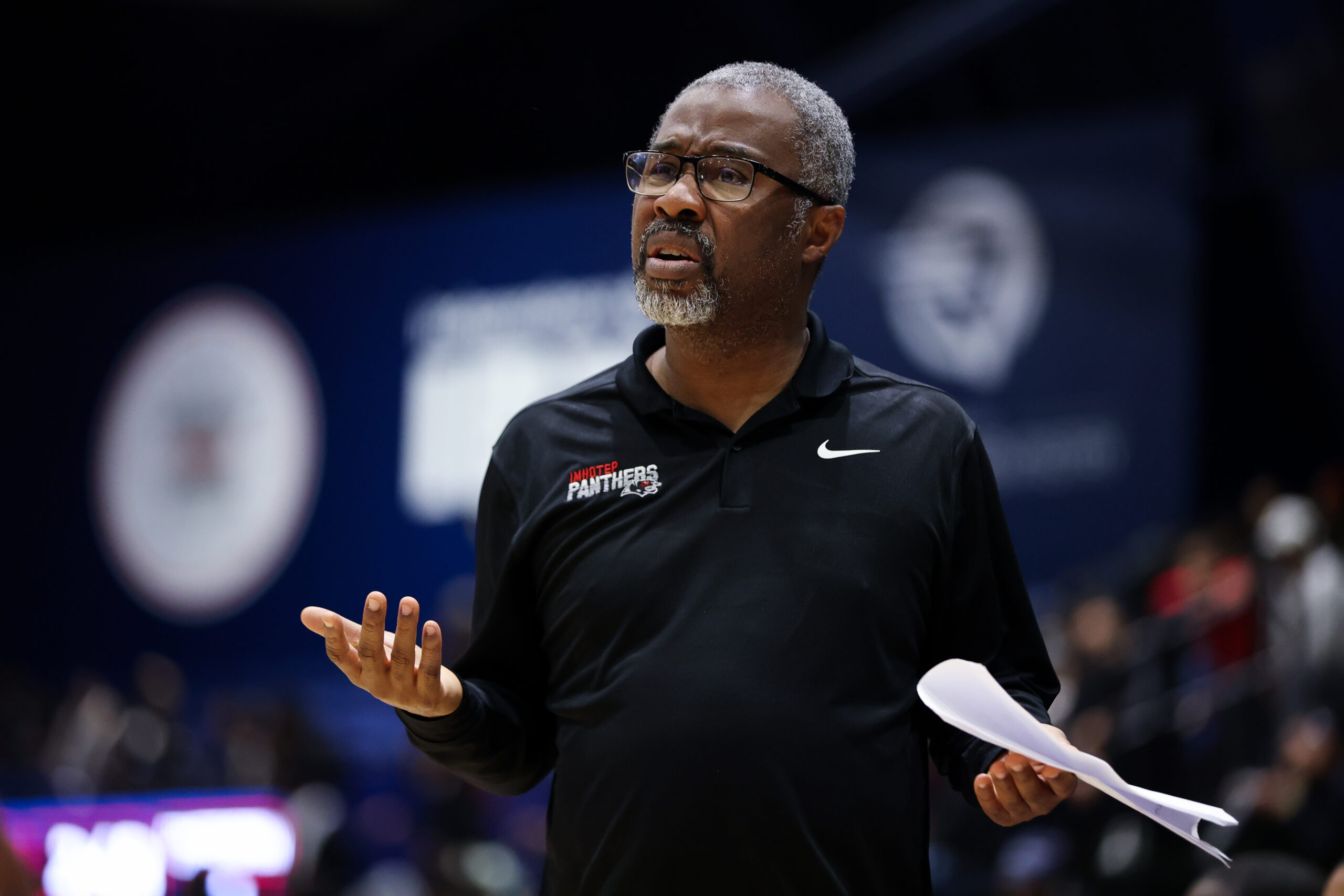
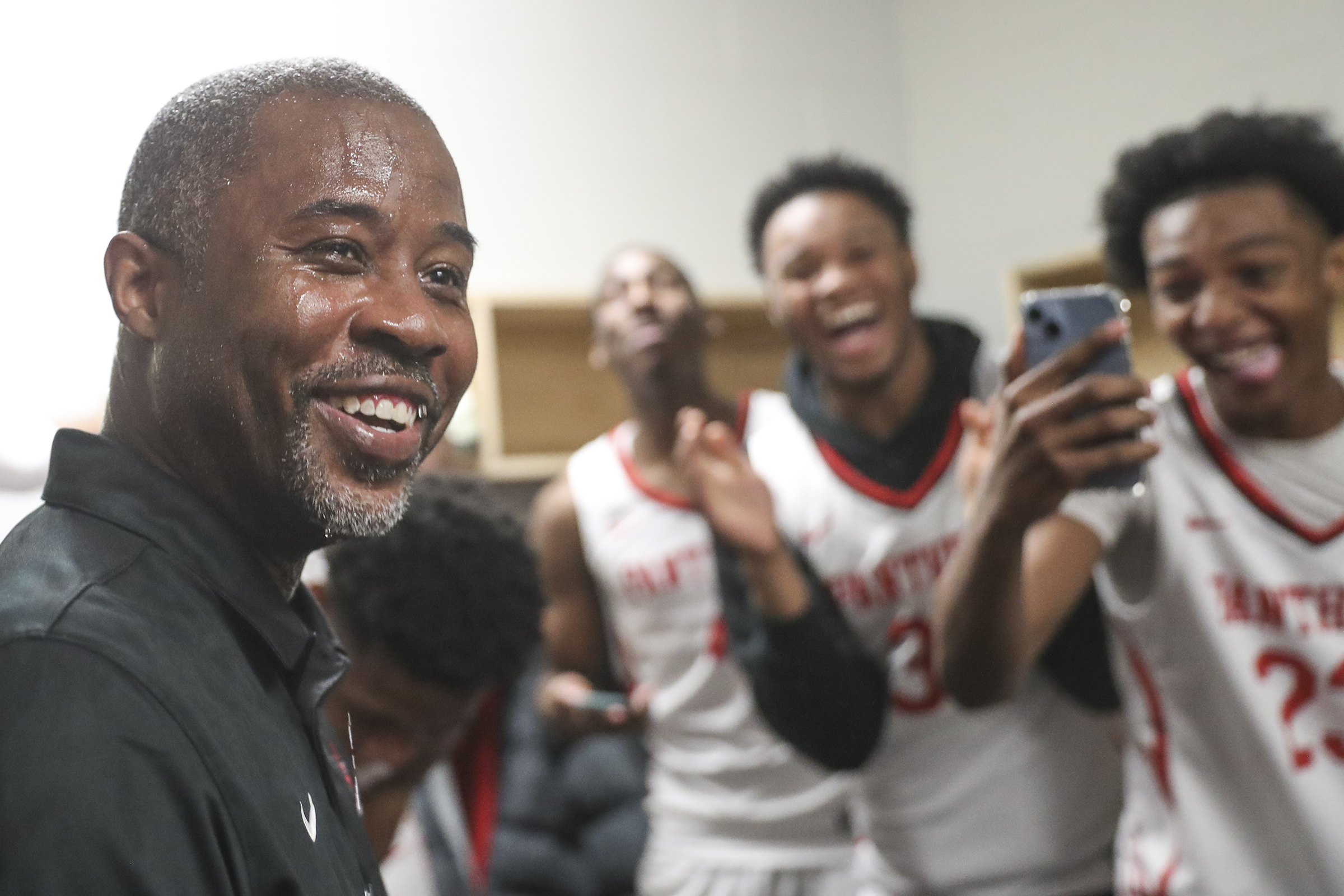
Andre Noble has enough accolades to coach in college. He’s instead decided to stay at Imhotep.
Edwards is one of the many players Noble coached who moved onto a Division I program. By now, the coach who didn’t play high school ball has enough accolades to coach in college. He’s instead decided to stay at Imhotep.
A few years ago, Mills’ son, Timmy, graduated from Imhotep. He brought his son to see Noble and tell the story about how two students triggered Noble to start a team. It was true, Noble said. And that helped the guy from Boston find a home in Philly.
“I love what I get to do,” Noble said. “I love the school. I love serving this community. I don’t see myself anywhere else. I don’t rule anything out, but if I have the opportunity to coach and lead at Imhotep until the rest of my career, that would be a blessing. The one-year plan definitely didn’t work out. I failed in that.”
After a cold, snow-filled winter in Philadelphia, the city is finally getting its first glimpse at spring, thanks to the Phillies.
The Phillies’ 2026 spring training schedule kicks off Saturday afternoon against the Toronto Blue Jays in Dunedin, Fla., followed by their Clearwater debut Sunday at BayCare Ballpark, their Sunshine State home since 2004.
Fans will be able to tune in to more spring training games than ever. Between NBC Sports Philadelphia, the MLB Network, 94.1 WIP, and the Phillies themselves, there will be a broadcast for all but three games of this year’s 30-game Grapefruit League schedule.
There’s also Aidan Miller, the No. 23 prospect in baseball. The 22-year-old shortstop is expected to start the season in Triple-A, but will get some playing time at third base during spring training, according to my colleague Scott Lauber. That would set up Miller for an early promotion if Alex Bohm gets off to a slow start.
As far as new faces, the most prominent is outfielder Adolis García, who is replacing Nick Castellanos and is just two seasons removed from hitting 39 home runs for the Texas Rangers.
Here’s everything you need to know to watch or stream Phillies spring training games:
What channel are Phillies spring training games on?
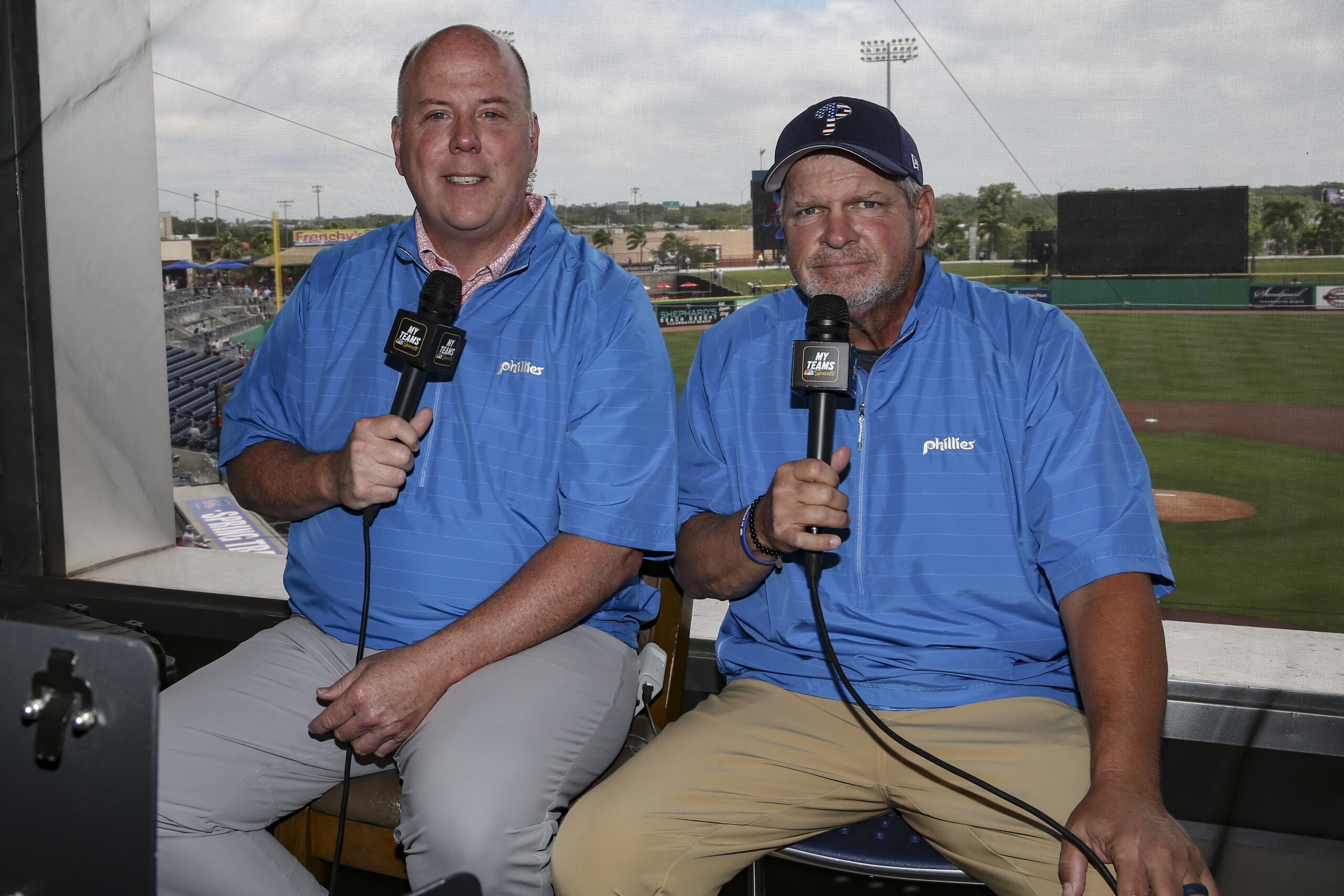
Phillies broadcasters Tom McCarthy (left) and John Kruk will be back again for NBC Sports Philadelphia.
The bulk of the Phillies’ televised spring training games will air on NBC Sports Philadelphia, which plans to broadcast 17 games — nine on the main channel and eight on NBC Sports Philadelphia+. That’s a big jump from last year, when it aired 12 games.
The schedule includes an exhibition game against Team Canada on March 4 serving as a warm-up for this year’s World Baseball Classic. The multicountry tournament begins on March 5 in Tokyo, and the Phillies will be well-represented — 11 players, including Bryce Harper and Kyle Schwarber, will leave spring training early to participate.
Returning for his 19th season as the TV voice of the Phillies is play-by-play announcer Tom McCarthy, who will be joined in the booth by a familiar cast of analysts that includes Rubén Amaro Jr., Ben Davis, and John Kruk.
MLB Network will broadcast six Phillies spring training games (though just two will be available in the Philly TV market due to blackout rules). ESPN won’t be airing any — the network is broadcasting just four spring training games on their main channel, and six more on its ESPN Unlimited subscription service.
Radio listeners can tune into 94.1 WIP to hear 10 weekend games. Play-by-play announcer Scott Franzke is back for his 21st season calling the Phillies, joined once again by a rotation featuring veteran analyst Larry Anderson and Kevin Stocker.
Cole Hamels will be back, but not Taryn Hatcher
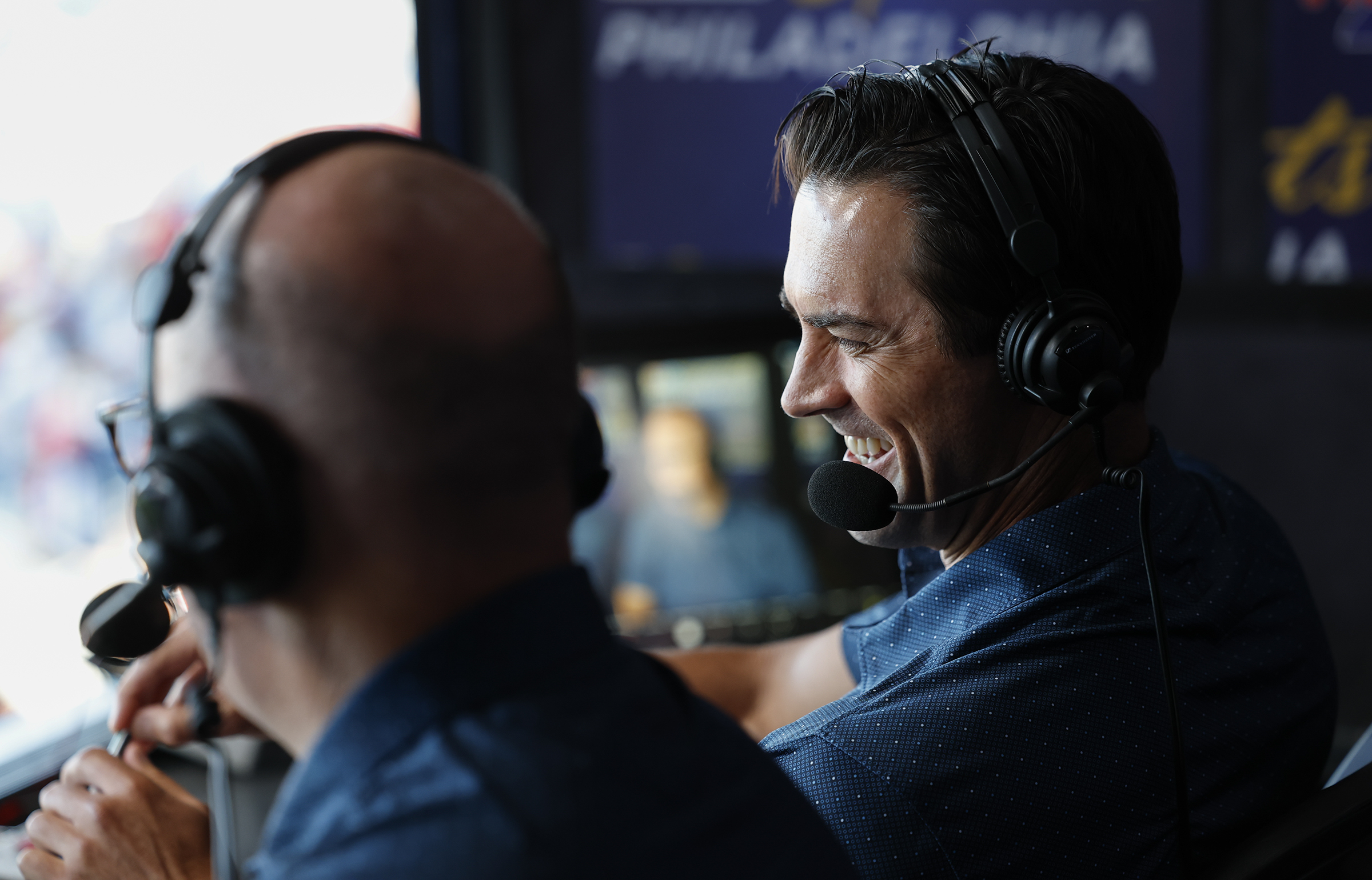
Former Phillies pitcher Cole Hamels (right) called nine games last season for NBC Sports Philadelphia.
A little bit of Hollywood will be back in the Phillies booth this season.
2008 World Series MVP Cole Hamels will call a few spring training games for the second straight season, beginning in the middle of March. Hamels was something of a natural in the booth last season, calling the nine regular-season games he worked a “crash course” in broadcasting.
“I tried to tell myself, ‘Don’t overtalk. Don’t be long-winded. Don’t just talk to talk,’” Hamels told The Inquirer in September. “I start watching the game and enjoying it, and I forget sometimes I have to talk.”
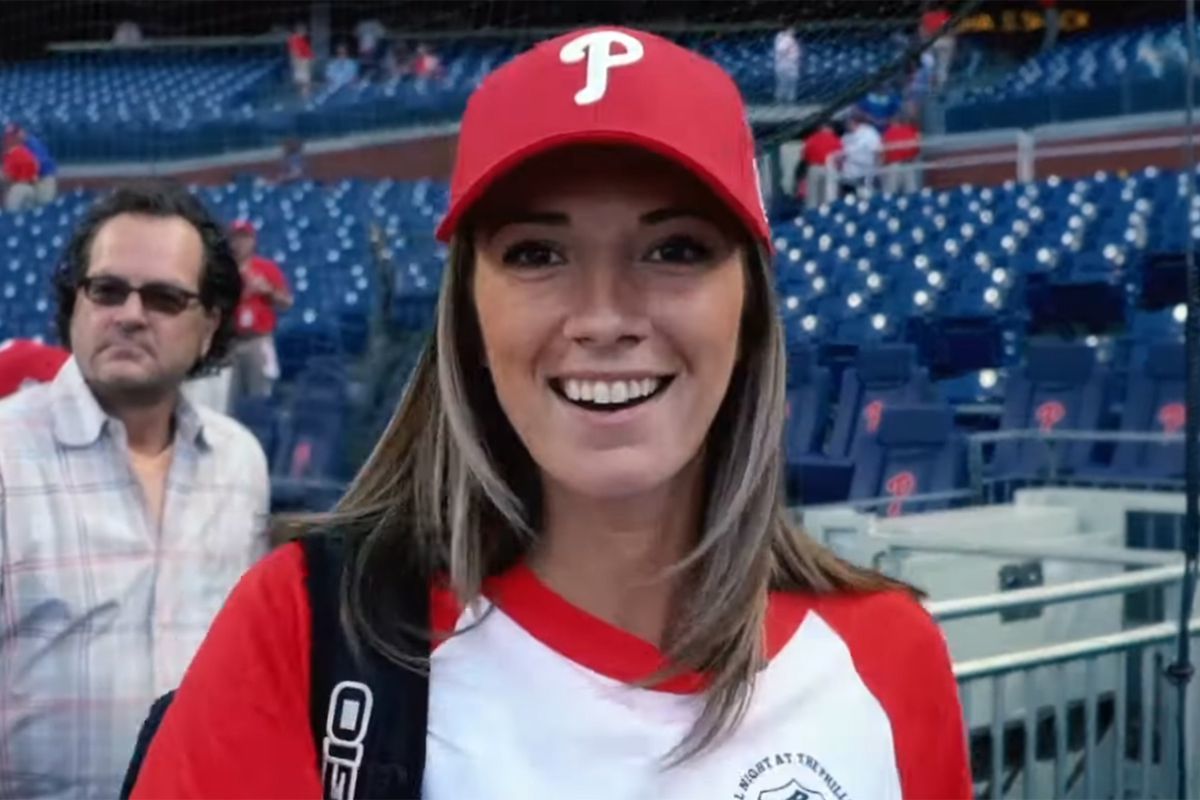
Taryn Hatcher, seen here during a 2019 media softball game.
One NBC Sports personality who won’t be back is Taryn Hatcher, who joined the network in 2018 and spent the past few seasons covering the game as an in-stadium reporter.
Hatcher’s contract wasn’t renewed at the end of the year and NBC Sports Philadelphia eliminated the position, according to sources.
You can also stream NBC Sports Philadelphia on Hulu + Live TV and YouTube TV, which will soon roll out a skinny sports bundle. And NBC Sports Philadelphia will stream its games on the NBC Sports app, but a subscription to a cable service is required.
One streaming service where you won’t find the network is Fubo, which hasn’t broadcast any NBC channels since November due to a carriage dispute. NBC Sports Philadelphia is also not available on Sling TV or DirecTV Stream.
For the third straight season, the Phillies will also exclusively stream a handful of spring training games from BayCare Ballpark for free on the team’s website.
The team will also provide an audio-only feed for a few midweek road games that aren’t airing on WIP.
Are there any new MLB rules in spring training?
Umpires will have their balls and strikes face challenges this season.
There aren’t any new rules in play during spring training, but MLB is fully rolling out its automatic ball-strike (ABS) challenge system ahead of its launch in the regular season. The Phillies plan on giving it a healthy test drive.
The rules are pretty straightforward. Pitchers, catchers, or batters can challenge a ball or strike by taping their head immediately after the umpire’s call.
Each team starts the game with two challenges, which they only lose when a challenge is unsuccessful. If a team has no challenges remaining and the game goes into extra innings, they’re awarded one per inning until the game is over.
Phillies news and spring training updates
Trea Turner fields a ground ball during spring training Wednesday.
Trea Turner was still the fastest man in the league at 32. Here’s his secret.
The Phillies will open the season against the Texas Rangers at Citizens Bank Park.
The Phillies are scheduled to open the 2026 season on March 26 against the Texas Rangers at Citizens Bank Park, where the team will hang its 2025 NL East pennant.
In the everyday chaos that characterizes President Donald Trump’s America, the news cycle changes faster than most of us can keep up with it.
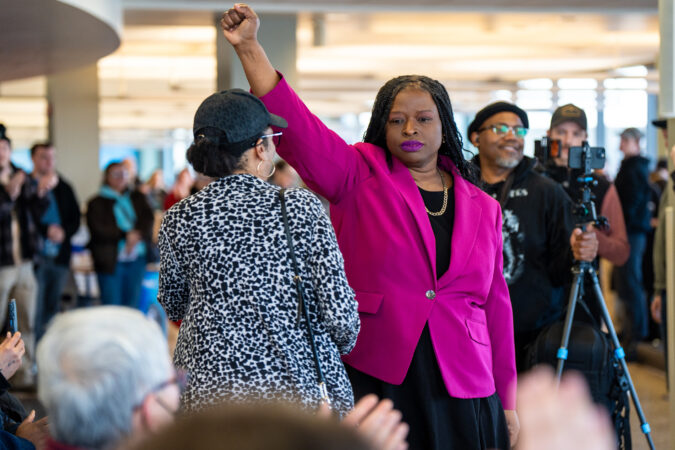
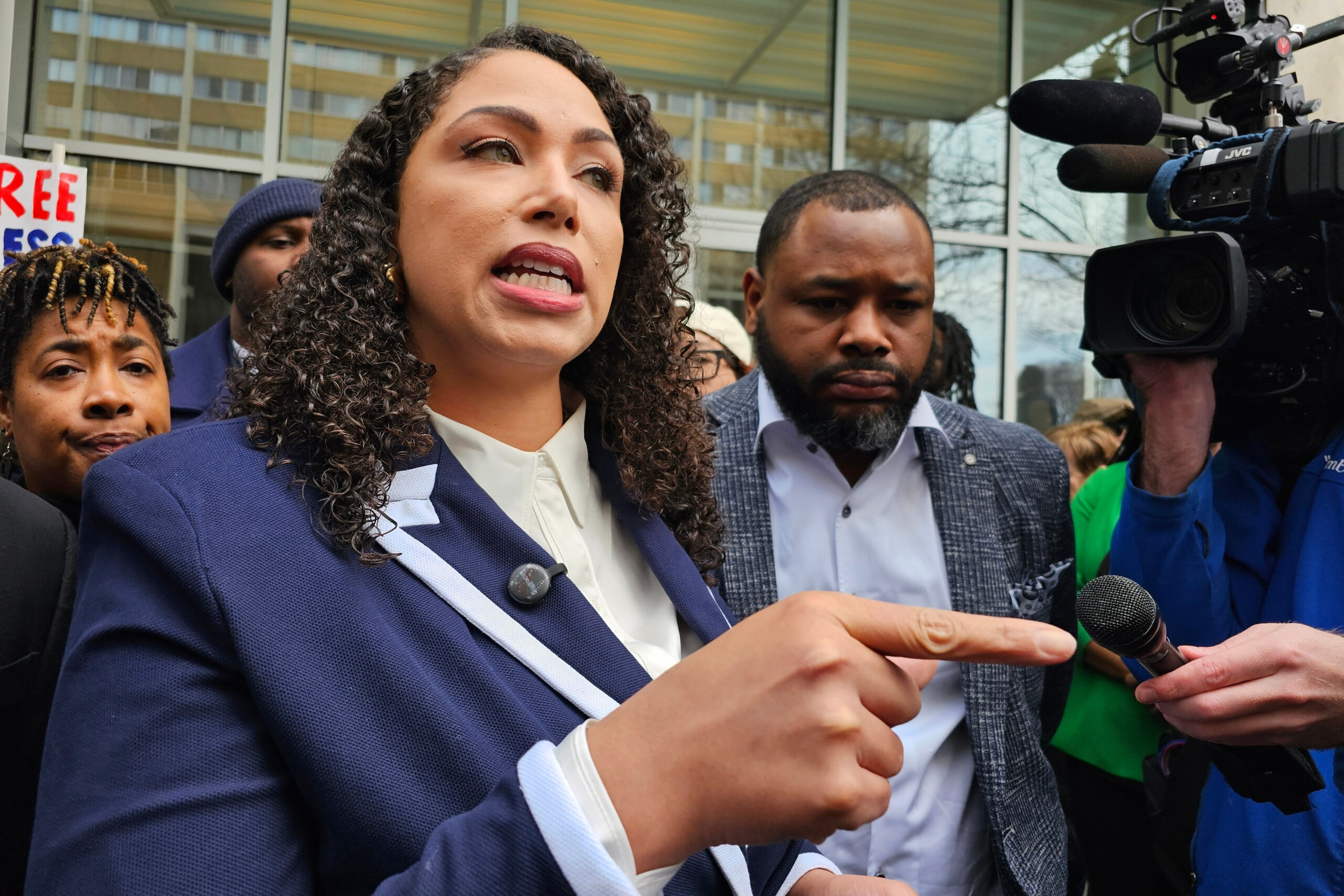
But can we please pause for a moment and consider the gravity ofwhat happened to Nekima Levy Armstrong at the hands of the U.S. government? She led a group of activists who interrupted a worship service in Minnesota on Jan. 18. The demonstrators went to Cities Church in St. Paul to stage a protest in support of immigrant rights.
The choice of venue was very much intentional: One of the leaders at the church is an administrator at a local U.S. Immigration and Customs Enforcement office. Four days later, Levy Armstrong, a half dozen other protesters, and two journalists were arrested.
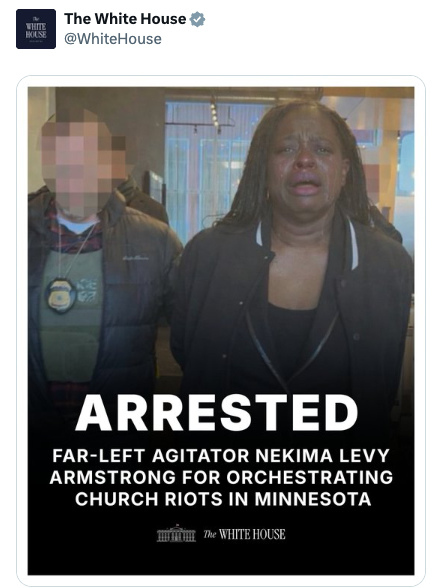
Afterward, while she was still in custody, Trump administration officials released an AI-manipulated image of her on X, the social media site formerly known as Twitter, on accounts for Homeland Security Secretary Kristi Noem and the White House.
The doctored image shows Levy Armstrong (no relation) with her mouth open as if she’s sobbing hysterically. Her face also appears to have been darkened. The photo caption reads: “ARRESTED far-left agitator Nekima Levy Armstrong for orchestrating church riots in Minnesota.”
It wasn’t a riot. Nor was she crying. But all that is beside the point. The Trump administration officials wanted to make her look bad, even if it meant reshaping reality to do so. What’s especially concerning is the dishonest way it went about it. According to photos and video of her arrest, Levy Armstrong maintained a mostly impassive expression on her face throughout the ordeal.
On Jan. 22, the White House posted an AI-altered image of Nikema Levy Armstrong on the White House’s official X feed. The altered image makes Levy Armstrong appear as crying, the original image shows no such emotion.
A lot of people might see the digitally altered image of her sobbing and assume that because it was posted on a verified social media channel from the highest levels of government, it is an accurate representation of what happened — when it’s anything but.
A New York Times analysis concluded that the photo had been manipulated — something the White House admits to doing, and is unrepentant about. The manipulated photo is a meme, according toWhite House spokesperson Kaelan Dorr, who doubled down on X, saying, in part: “Enforcement of the law will continue. The memes will continue.”
No one should be surprised at that reaction, considering how many questionable AI images Trump has shared. (And, although it wasn’t artificial intelligence, don’t get me started on his racist post about the Obamas earlier this month.)
He once posted an AI video of himself — with a crown on his head — flying a plane that dumps feces onto “No Kings” protesters. It was even more disturbing when he released a deepfake video of former President Barack Obama, who seems to live rent-free inside Trump’s head, being arrested in the Oval Office.
Imagine the uproar if another president had done such a thing. Many people have normalized this kind of corrosive behavior so much that Teflon Don usually gets off with a shrug. But those of us who care about accountability have to keep calling him out.
Dirty politics are one thing, but when Trump administration officials manipulated the photo of Levy Armstrong, a private citizen, it made my blood boil. It’s another reminder that there’s no bottom with Trump when it comes to how low he will go, and that’s really scary.
I recently had a chance to speak with Levy Armstrong, and can report that, despite the administration’s efforts, she is unbowed and unbroken.
She called the government’s use of the fake image “horrifying and deeply disturbing,” and insists “I was cool, calm, and collected” during the arrest.
“I guess because they didn’t see me broken, they needed to manufacture an image of me broken,” Levy Armstrong told me.
“This is not unlike what has happened historically to Black people with all of the Sambo imagery and the mammy imagery that’s out there, with exaggerated features and darkened skin,” she said. “That’s the same thing that I went through, and that’s what they did to me. Not to mention making me look hysterical.”
She added that “I felt caricaturized, just like our people have been during slavery and Jim Crow.”
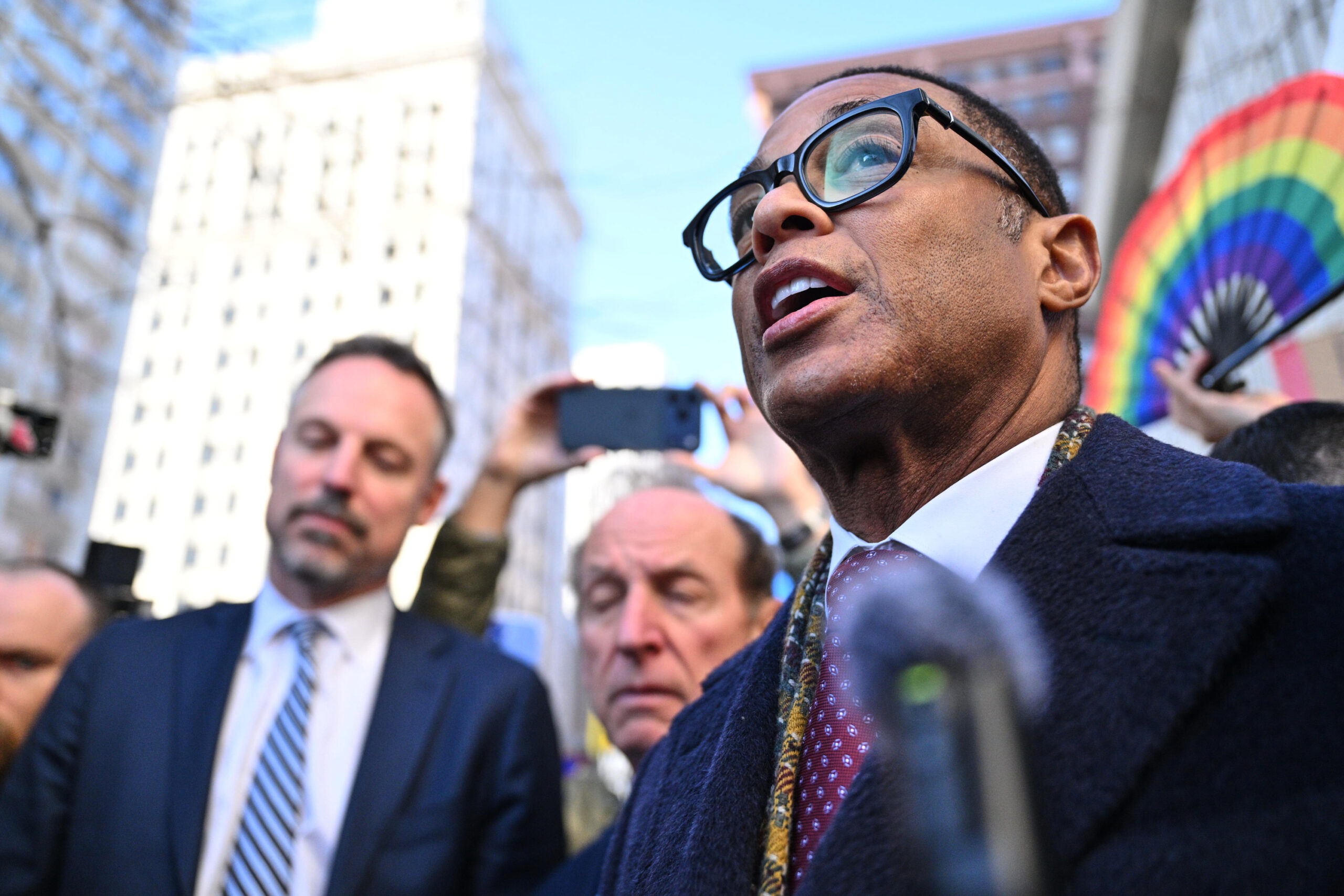
While I had her on the phone, I also asked Levy Armstrong about the arrest of former CNN anchor Don Lemon, who covered the protest she organized.
Journalist Don Lemon speaks to the media outside the U.S. District Courthouse in St. Paul, Minn., on Feb. 13.
Levy Armstrong disputes MAGA claims that Lemon was a participant in the demonstration, as opposed to being an observer. Levy Armstrong told me, “I just think it’s foolishness that they would try to rope him in as a protest organizer.”
“He’s not an activist. He’s not an organizer,” she pointed out. “He’s not a protester whatsoever.”
The former law professor said that referring to Lemon as an organizer was an excuse to attack him, as well as Georgia Fort, an Emmy Award-winning independent Black journalist based in Minnesota, who also faces federal charges after covering the protest.
Minnesota-based independent journalist Georgia Fort speaks to reporters and supporters outside the federal courthouse in St. Paul, Minn., on Feb. 17, after pleading not guilty over her alleged role in a protest that disrupted a Sunday service at a Southern Baptist church in St. Paul.
I’ve covered many protests throughout my journalism career, and find what happened particularly upsetting. Republicans talk a good game about upholding the Constitution, but the arrests were clearly an attempt to keep journalists from exercising their First Amendment right to freedom of the press.
Meanwhile, no arrests have been made in the fatal shootings by Border Patrol and ICE, respectively, last month of Alex Pretti, an intensive care nurse, or Renee Good, a mother of three.
But Levy Armstrong has been charged for her role in a disruptive but peaceful protest inside a church during which no one was physically harmed. (And, yes, although they are rare, demonstrations in churches happen. During the civil rights movement, demonstrators would hold “kneel-ins” to protest segregated churches in the Jim Crow South.)
An ordained minister, Levy Armstrong told me she draws strength from such icons of the civil rights movementas Fannie Lou Hamer, Rosa Parks, and the Rev. Dr. Martin Luther King Jr., all of whom had suffered the indignity of being arrested while fighting for their basic human rights.
“Everybody needs to wake up,” she said. “This is not just about immigration. This is about our constitutional rights. This is about our democracy. This is about our freedoms.”
Freedoms we stand to lose if we allow the Trump administration to try and silence us the way it has attempted to do with Lemon, Fort, and Levy Armstrong, among so many others.
Levy Armstrong has nothing but praise for Philadelphia District Attorney Larry Krasner, who is vocal about prosecuting ICE agents who run afoul of the law. Her suggestion for concerned Philadelphians? “Get some whistles,” she said. “Get some people organized. Hold your elected leaders accountable.”