Robert Koopmeiners is up to here with this winter and is among the masses more than ready for the atmosphere to flip the switch.
“It’s getting kind of old,” he said. But he wasn’t complaining about Arctic freezes, or winter storms, or black ice, or hideously darkening mountains of plowed snow.
He was talking about the weather in Colorado, where he is a National Weather Service meteorologist, where bone-dry Denver has set nine high-temperature records since Dec. 1, where wildfire alerts were in effect, and water is getting scarce.
Warm West, cold East, and vice versa are standard fares in the great national atmospheric seesaw that hasn’t been doing much seesawing lately, as if a boulder has been placed atop our end of it.
That’s the result of an atmospheric roadblock for the ages in the high latitudes around Greenland, meteorologists say, that has allowed winter to reappear with a ferocity not experienced in several years in the Northeast, and a winterlong spring in parts of the West. The cold in the East may even be related to rising global temperatures.
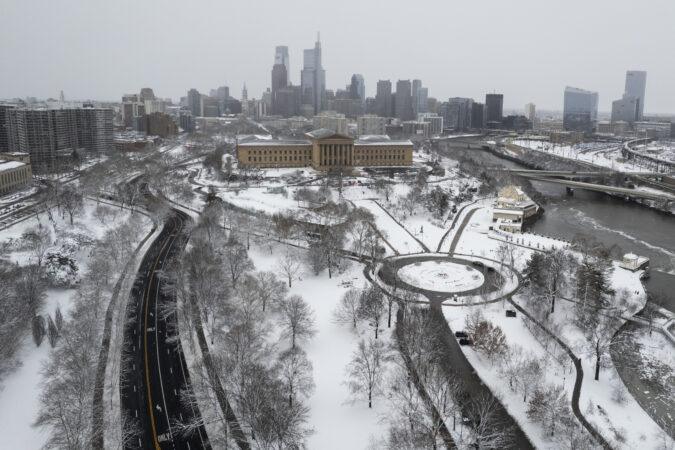
The result for the Philadelphia region has been one of the colder and snowier meteorological winters — the Dec. 1 to Feb. 28 period — on record. Officially Philadelphia has had more days of snow cover of an inch or more than in the five seasons ending with the winter of 2023-24 combined.
After quite a wintry start to the new week, with even some more snow possible, a major warmup is due to begin with a spring teaser possible next weekend. (It may turn colder the second half of the month, but that can wait.)
In the meantime, the atmosphere is enjoying a belly laugh over the preseason outlooks for the winter of 2025-26.
Philadelphia’s winter scorecard
By convention, the weather community divides the seasons into three-month increments. In part that’s in recognition of the fact that weather often has an adversarial relationship with astronomy. For example, it has snowed, and hit 90 degrees, in the astronomical spring, the period between the vernal equinox and summer solstice.
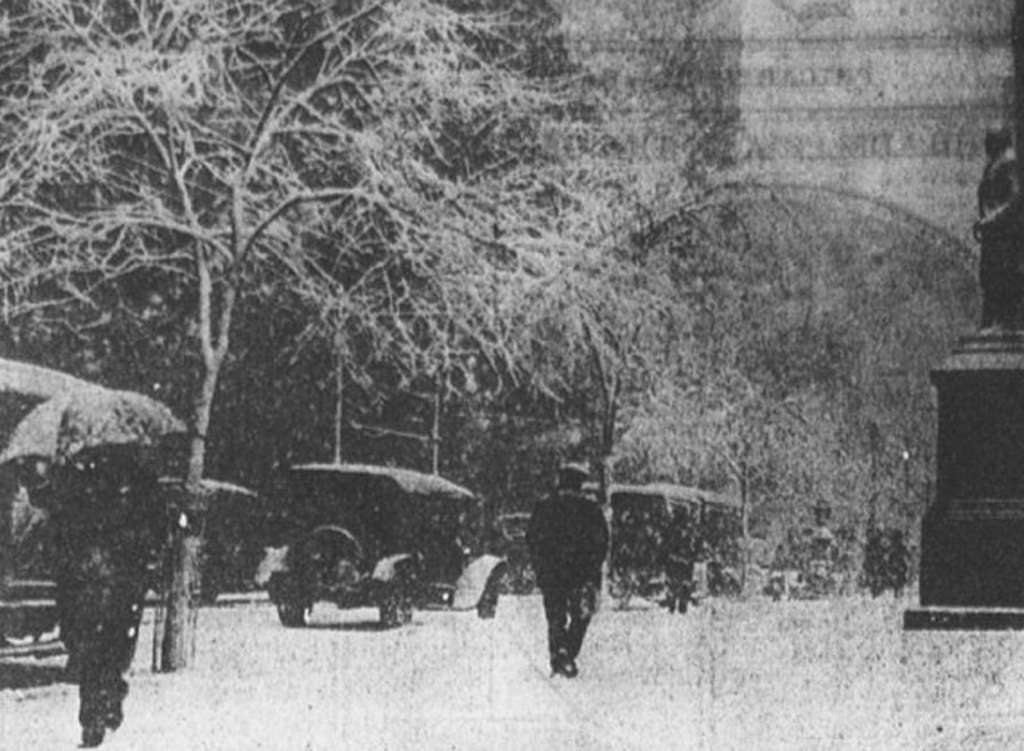
The day before Easter in 1915, Philadelphia was socked with 19 inches of snow, despite a forecast of “Unsettled, rain likely.”
For the three-month 2025-26 winter period, official temperatures at Philadelphia International Airport have averaged a shade over 33 degrees, putting it in the top third for coldest winters in the period of record dating to the late 19th century.
The official snow total is in the top 20% of all winters on record. The normal through February is just under 20 inches.
AccuWeather Inc. and 6abc went with 14 to 18 inches. Fox29 called for16 inches, and 17 days of snow cover. At last count, that snow-cover count was up to at least 35. Other forecast services called for normal — 23.1 inches — or slightly above-normal snowfall.
Regarding temperatures, all the outlooks foresaw normal — thethree-month averageis 36.1 degrees — to above-normal temperatures for the Philly region, save for Arcfield Weather, a private-sector company, which went for below.
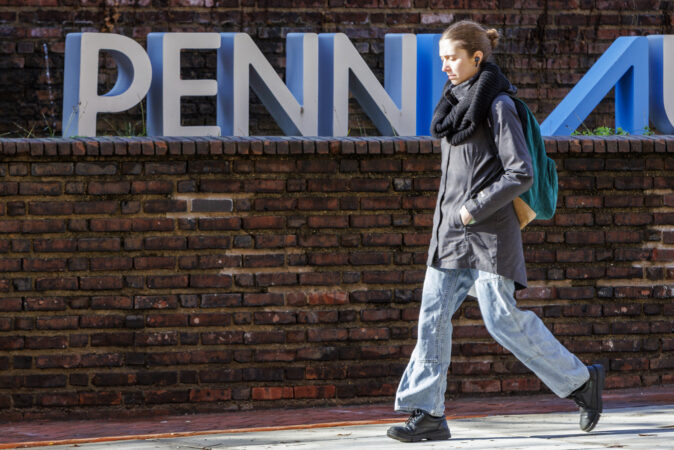
Nicole Swinson looks into Penn’s Landing while standing in the snow on Monday, Feb. 23, 2026.
‘Blocking’ has been the leitmotif of Philly’s winter
If it seemed that what happened kept happening, that was more than perception.
It was the result of particularly vigorous “blocking” in the vicinity of Greenland in which high pressure, or heavier air, persistsin the upper atmosphere. It was a massive obstruction that kept directing cold air and storms toward the East while toasting the West, said Climate Prediction Center branch chief Jon Gottschalck.
The East got stuck under a “trough” of upper-air low pressure that favored storminess and cold, he added. The West, quite the opposite.
“The blocking pulled the storms eastward, and the cold followed,” said Paul Pastelok, Accuweather’s longtime seasonal forecaster. “We should have caught on to that.”
In addition, an upper-air pressure pattern over the Arctic — the Arctic Oscillation — was stuck in its negative phase from December until recently, said climate center meteorologist Laura Ciasto, with negative consequences for local winter-phobes.
When it’s negative, the weather-moving west-to-east jet stream winds can become more active at the midlatitudes where we live, and the conditions colder and stormier. The oscillation has had “an interesting winter,” she said. “Typically,” she said, “we expect the AO to fluctuate.”
Related to the oscillation’s behavior were episodes of “polar vortex stretching,“ said Ciasto. The vortex’s powerful winds usually trap cold air in the Arctic, but on occasion they weaken and ”stretch,“ allowing cold air to spill southward.
Another explanation for why the forecasts went awry may be an obvious one: We’re not used to this level of Arctic cold or prodigious snowfalls like the Sunday-Monday event that creamed parts of the region with 20 inches or more. “We have simply gone many years without experiencing a storm like this,” said Owen Shieh, warning coordination meteorologist at NOAA’s Weather Prediction Center.
Did the world suddenly grow colder?
No, the planet didn’t cool off precipitously. In fact, said Pastelok, the blocking may have been related to warming-related sea-ice reductions near Greenland. The solar energy absorbed by freshly freed waters could have effects on pressure patterns in the high atmosphere, he said, adding that for now, that’s only a hypothesis.
While the world evidently cooled slightly last year after a record 2024, according to NOAA’s database, it’s still about 2 degrees Fahrenheit warmer than the 20th-century average, the supply of Arctic air isn’t quite as it used to be.
As it turns out, Philly’s winters in the 21st century have trended milder, with average temperatures about 2 degrees Fahrenheit above long-term averages.
The overall warming trend has been one reason the climate center has had the odds favoring above-normal winter temperatures for Philly for the last seven consecutive winters. And they indeed were above normal for six straight years — but not seven.
Retired climate center forecaster Mike Halpert once remarked that while sticking with the trend can be a smart bet, “some years you’re going to be woefully wrong.”
When Nora Murphy Kramp walked away from her veterinary assistant career to pet sit full time, she didn’t expect that years later, a large chunk of her clientele would be chickens.
And goats. And pigs. Oh, my.
“It’s more common than not,” said Murphy Kramp, founder of Chester County Canines, based near Malvern. “Basically, if it’s, ‘Hey, come take care of my dogs,’ if they happen to have a nice backyard, a year later, it’s like, ‘Oh, hey, come take care of my dogs. We have six chickens now — them, too.’”
But for some of her clients, chickens are just the start: Some have added goats and sheep to their little homesteads, too.
Chester County is a ripe place for it, merging its strong agricultural past and the growing number of residents.
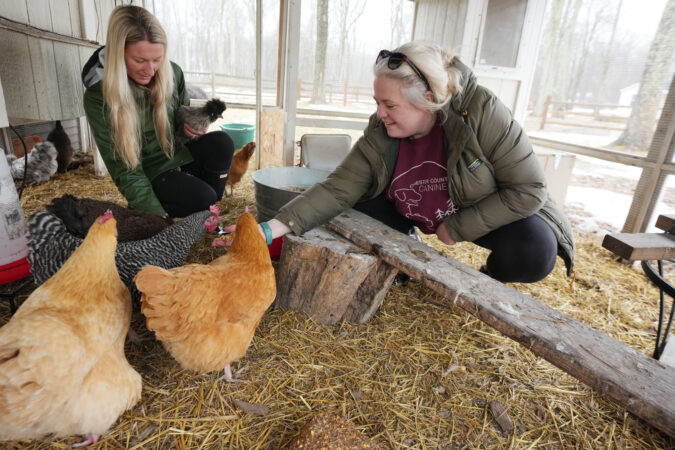
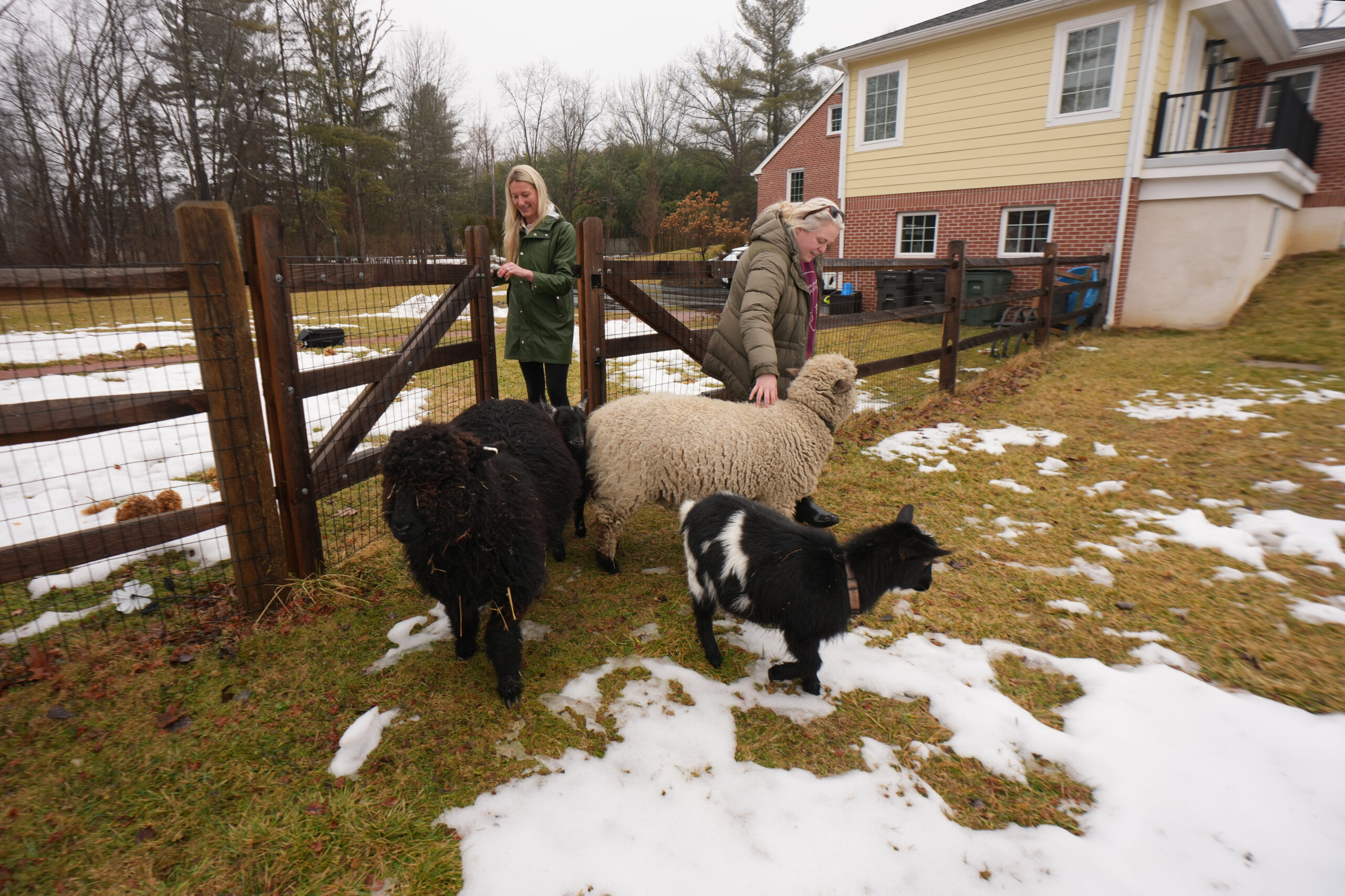
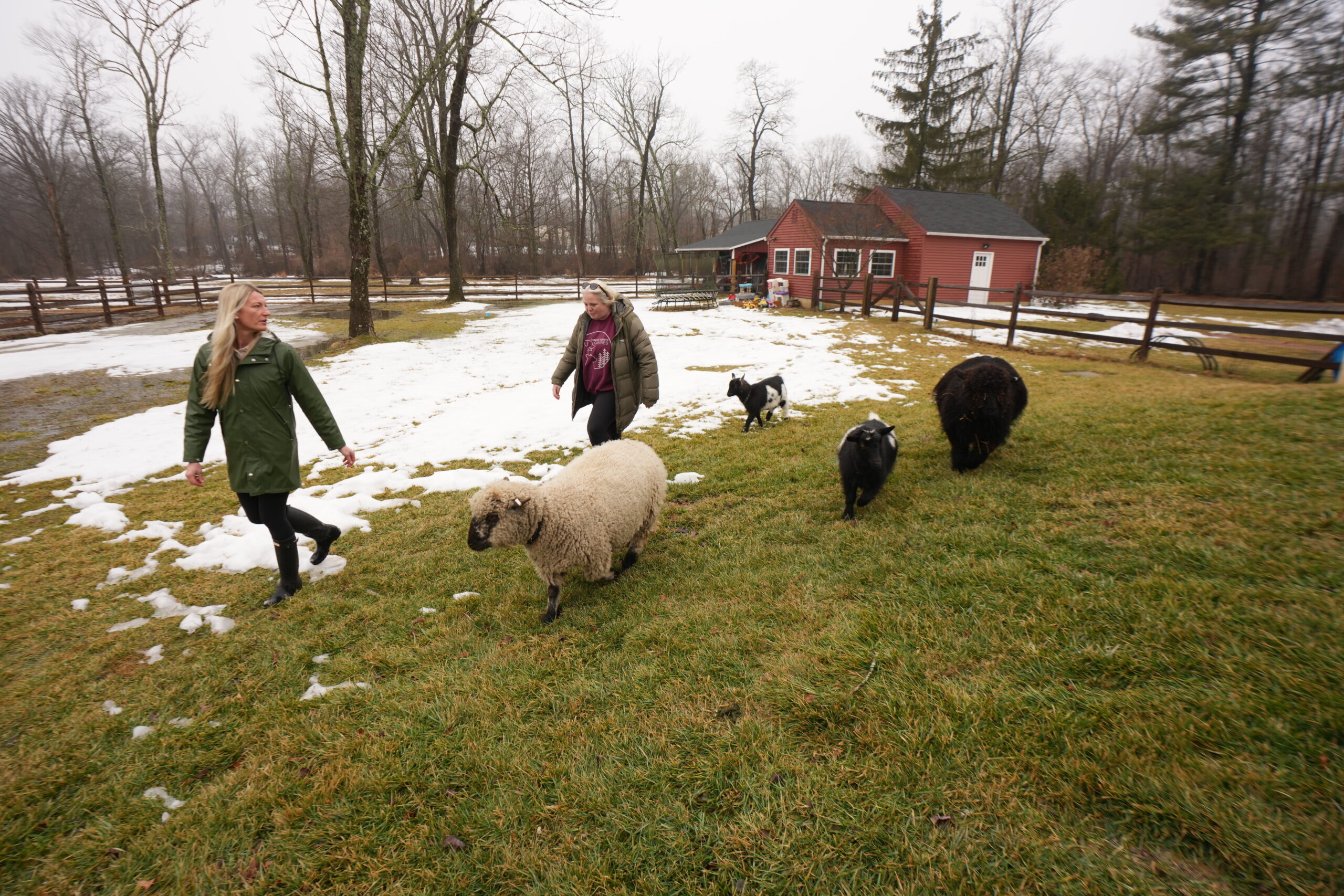
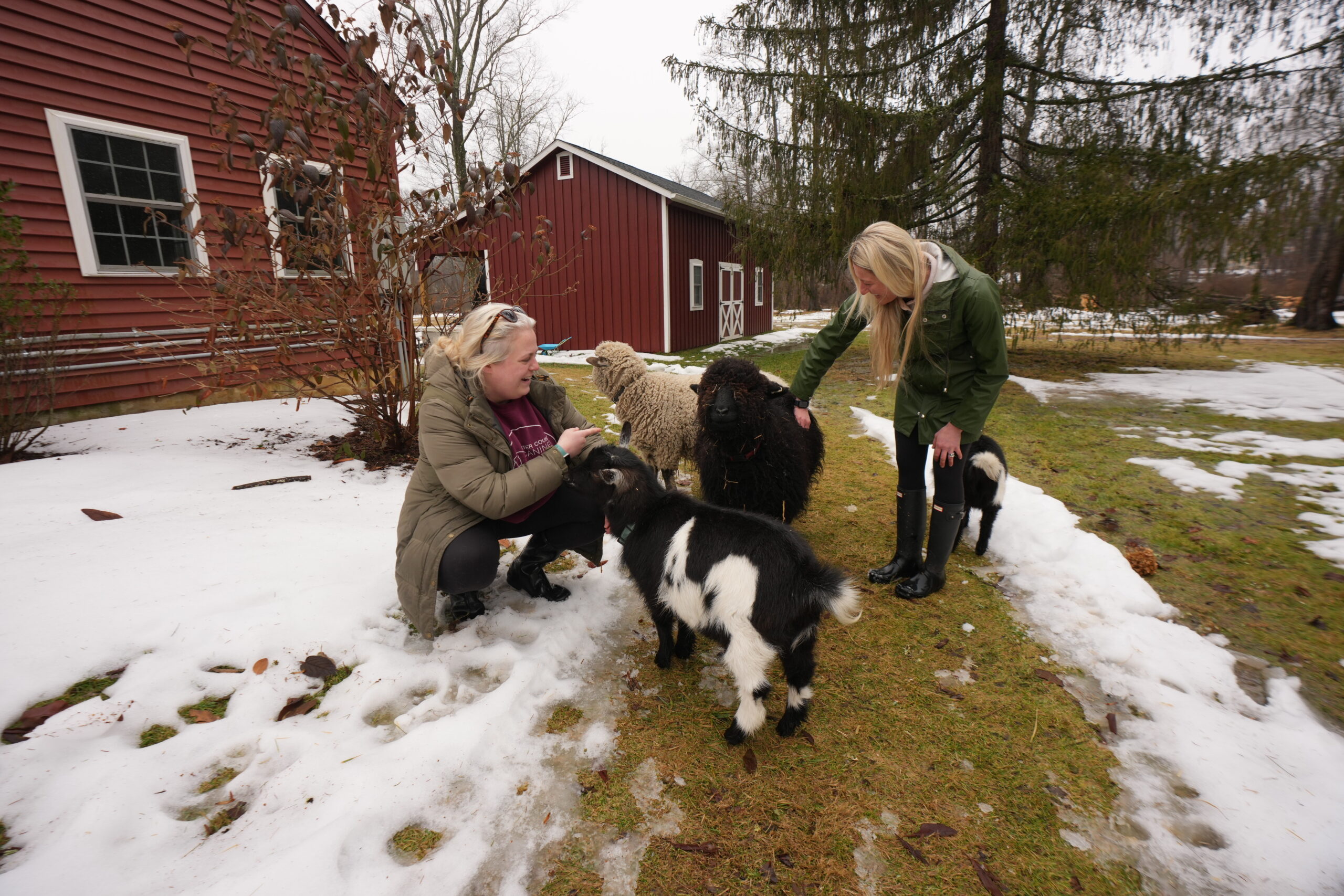
Julie Gunderson, left, and her pet sitter Nora Murphy Kramp, right, at Gunderson’s house with her farm animals, in Chester County, Pa., Feb. 20, 2026.
Over time, development has increased along with population — the county is one of the fastest-growing in the state — bringing all the amenities one could ask for. But with many municipalities having ordinances friendly to homesteading, allowing residents to farm animals with enough acreage, or chickens if the coop can be far enough from the house, more and more people have been embracing the so-called country life. (Murphy Kramp had to enter a “chicken lottery” to secure her own chickens last spring, due to the surge in popularity. A study last year found that there are more than 85 million backyard chickens nationwide, rivaling the population of cats and dogs.)
When people leave Philadelphia, with its tightly packed rowhouses or apartments, getting chickens can be one of the first things they do, observed Shiena Powelson, the owner of I Sit, They Stay, a pet-sitting business based in Chester County near Pottstown.
“There’s a lot of open spaces out this way, where there’s purposely no building going on, so it allows people to have these animals without being on top of the neighbor,” Powelson said. “On my road, I have these young families that have the chicken coops, but then there’s also a 15-acre horse farm four houses down from me. It’s a nice mix.”
Powelson, who grew up in an animal-loving family that ran a pet store in Pottstown, started her career as an educator at the Philadelphia Zoo. On the side, she fostered her pet-sitting business, and movedto it full time about 15 years ago. From the jump, she has had an interesting assortment of pets to care for: reptiles and exotic birds. She used to sit for full-on farms, mucking horse stalls or caring for sheep, but now she is finding more of a hybrid: people who live in residential communities but have chickens, ducks, and even pot-bellied pigs.
Julie Gunderson, left, and her pet sitter Nora Murphy Kramp, right, at Gunderson’s house with her farm animals in Chester County.
“When you pull in this development, you would never expect there would be two pot-bellied pigs living in the development,” she said.
Chickens, she has found, tend to be a familial thing, where parents teach their kids where the food comes from and how to care for the animals.
John Marshall, one of Powelson’s clients, grew up in Montgomery County and had a friend whose family had chickens. He thought it was awesome. With his own land, he decided to get his own. Now, the 54-year-old has had chickens on his couple of acres in the Pottstown area for about 30 years.
“It’s amazing, because it’s like having a dog. People just fall in love,” Marshall said. “They just become your little buddies. A lot of people think they’re real hard to take care of, but they’re not, if you set the coop up right.”
Caring for farm animals requires a different part of Powelson’s brain — digging back into her zoo background. Does she have her boots for muddy coops? Does she have her heavy jacket to work outside when it’s 10 degrees?
Nora Murphy Kramp, left, and her client Julie Gunderson, right, at Gunderson’s house with her farm animals, in Chester County, Pa, Feb. 20, 2026.
“It feels very different when I’m going to let someone’s dog out and can just hang out with them,” she said. “It’s a nice variety.”
With chickens and other farm critters, there are stalls to clean and muck. Murphy Kramp gets there at the crack of dawn to feed the animals.
During one hot summer, she told a client, Julie Gunderson, that she probably needed a fan for the chicken coop. From vacation, Gunderson ordered one, and Murphy Kramp assembled it and set it up. It gave Gunderson peace of mind, knowing someone was that hands-on with her chickens while she was away.
“I had talked to a lot of people along the way who have slightly bigger operations — still backyard farms — but they would tell me, ‘Oh, you’ll never get away together, someone’s always going to have to stay home to take care of the animals,’” Gunderson said. “I just feel very fortunate to have found Nora. I really trust her.”
Gunderson, 38, didn’t grow up on a farm, or with pets other than dogs. But she had an early appreciation of farm animals, spending time at the barn with her grandfather in Rhode Island. She decided to give chickens a try during the COVID-19 pandemic, after she went from working full time to staying at home with her first child to everything shutting down in rapid succession.
With five acres of land, and a county friendly to backyard farms like hers, it felt seamless to add two goats and two sheep a few years later.
It has been a way for her to learn a new skill, and to do something with her family, she said.
“It was kind of just like, how do I kind of get something new that educates me and teaches me something similar to how I felt when I was working, where I feel like I’m growing in some way,” she said.
With her three kids, all under age 6, they gather eggs and clean up the goat and sheep barn.
“If people are on the fence, I say do it,” she said. “There are plenty of pet sitters to help you when you need to get away.”
The recent heavy snowfall brought snowmen and sledding to parks across the city. It also brought snowball fights. I invited two Inquirer staffers to answer this week’s doozy of a question.
Have a question of your own? Or an opinion? Email me.
Evan Weiss, Deputy Features Editor
OK, so the question this week is also a bit of a tale…
Two random teenagers threw snowballs at me, a grown man. One hit me in the face and knocked off my glasses. Was I, a grown man, allowed to throw the world’s fastest revenge snowball? Or should I have just yelled a few expletives and moved on (what I actually did)?
Jason Nark, Life & Culture Reporter
Phew, he’s a better person than me.
You’re certainly allowed to throw a revenge snowball, or worse, in my opinion. An unprovoked snowball throwing is fraught with peril.
Mike Newall, Life & Culture Reporter
I think we need to start coming up with cool names for these reader questions. Like, Frozen in Time.
But yes, Frozen in Time, you gotta get revenge. Just be an adult about it.
Evan Weiss, Deputy Features Editor
You’re not worried about a person (or phone) only seeing a grown man throw a hard snowball at kids?
Jason Nark
Again, it’s a perilous situation. Snowballs aren’t fun and games to me.
Mike Newall
That’s why I said be adult about it. As the father of a 6-year-old, I can tell you that a child’s first reaction when they’ve done something wrong is to fight or run. You don’t need that. You’ll either slip — or, worse, the kids will just double down and snowball-light-you-up.
You have to think of it calmly, analytically. “Who are these kids? When will I likely see them again?” Put some snow aside in the shade, and then prepare to surprise them when that moment comes.
And try to throw from behind the cover of a wall or fence or car, just so you don’t run into the whole mean adult thing Evan was talking about.
Painful, I think. No one likes a snowball to the face.
But I guess, being the adult, you can’t really retaliate too much or you’ll have an angry dad knocking at your door.
Mike Newall
Yeah, obviously doesn’t need to be said: but, Frozen in Time, you shouldn’t aim at the face. No faces.
But you’re one of the fittest people I know, Jason. I’d put my money on you.
Jason Nark
I’d like to not put myself in the environment at all. If there’s a snowball fight happening, I hope I’m inside with a coffee, petting my dog.
Mike Newall
OK. Me too.
Jason Nark
I need to move to Southern Arizona or New Mexico.
Evan Weiss
So your advice is really “don’t get hit in the face by a snowball.”
I’m going to take the unpopular stance here: I wouldn’t retaliate. Nothing to gain, plenty to lose. Shouting is fine though.
Mike Newall
Revenge would be fun. Make you feel a kid again.
Jason Nark
I agree. I don’t think I’d retaliate either, now that I think of it. Who knows. The anger might compel me.
Mike Newall
The best advice on parenting I ever got was from my old vet: she said (about dogs, mind you) that all they want (again dogs) is for you to be happy when you come home and see them and stop what you’re doing and give them attention. All kids ever want is our attention. Who am I to deny that by withholding a surprise snowball to the back or legs or shoulder area (above the neck strictly off-limits)?
Evan Weiss
You’re holding strong for vengeance!
Mike Newall
For the children. I am.
Evan Weiss
Any last words of wisdom for Frozen in Time?
Mike Newall
Do it for the kids, Frozen in Time. For the kids.
Jason Nark
I say take a deep breath, breathe out the rage, and search on Zillow for desert properties in the Southwest.
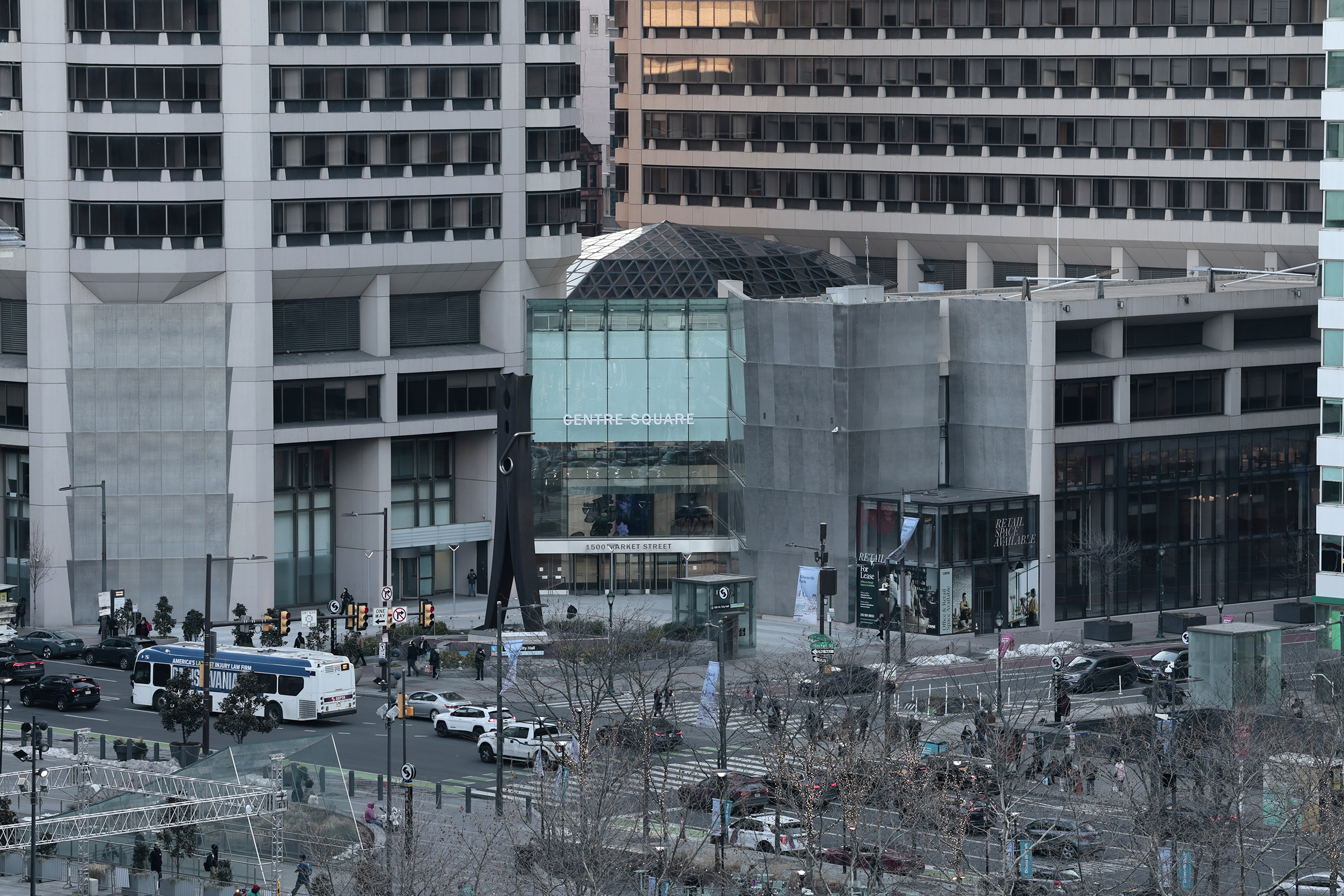
When it opened in 1974, the connected concrete towers of Centre Square boasted the most office space in Philadelphia, at over 1.7 million square feet.
Over 51 years later, the Brutalist behemoth still holds that title.
Butprobably not for much longer.
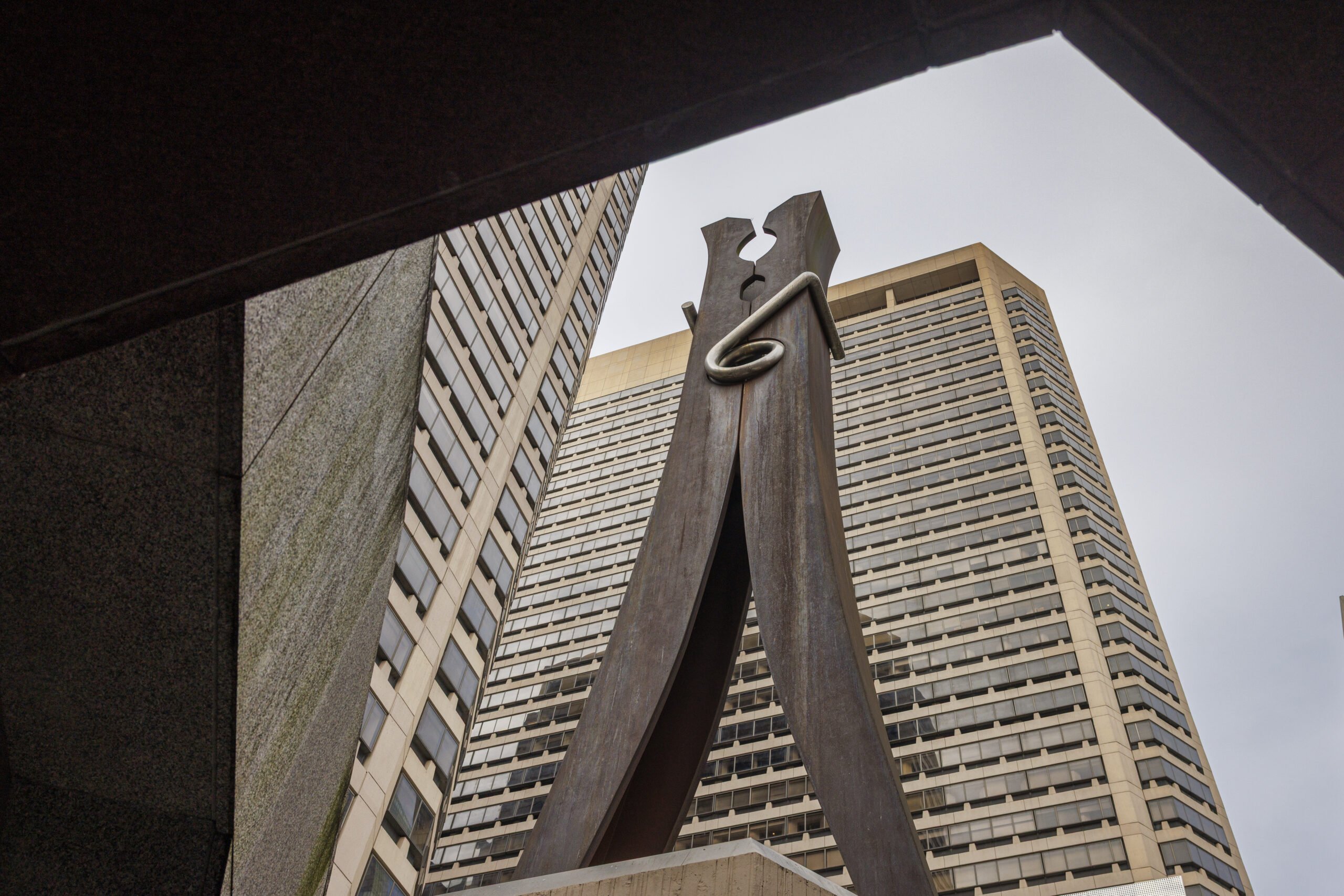
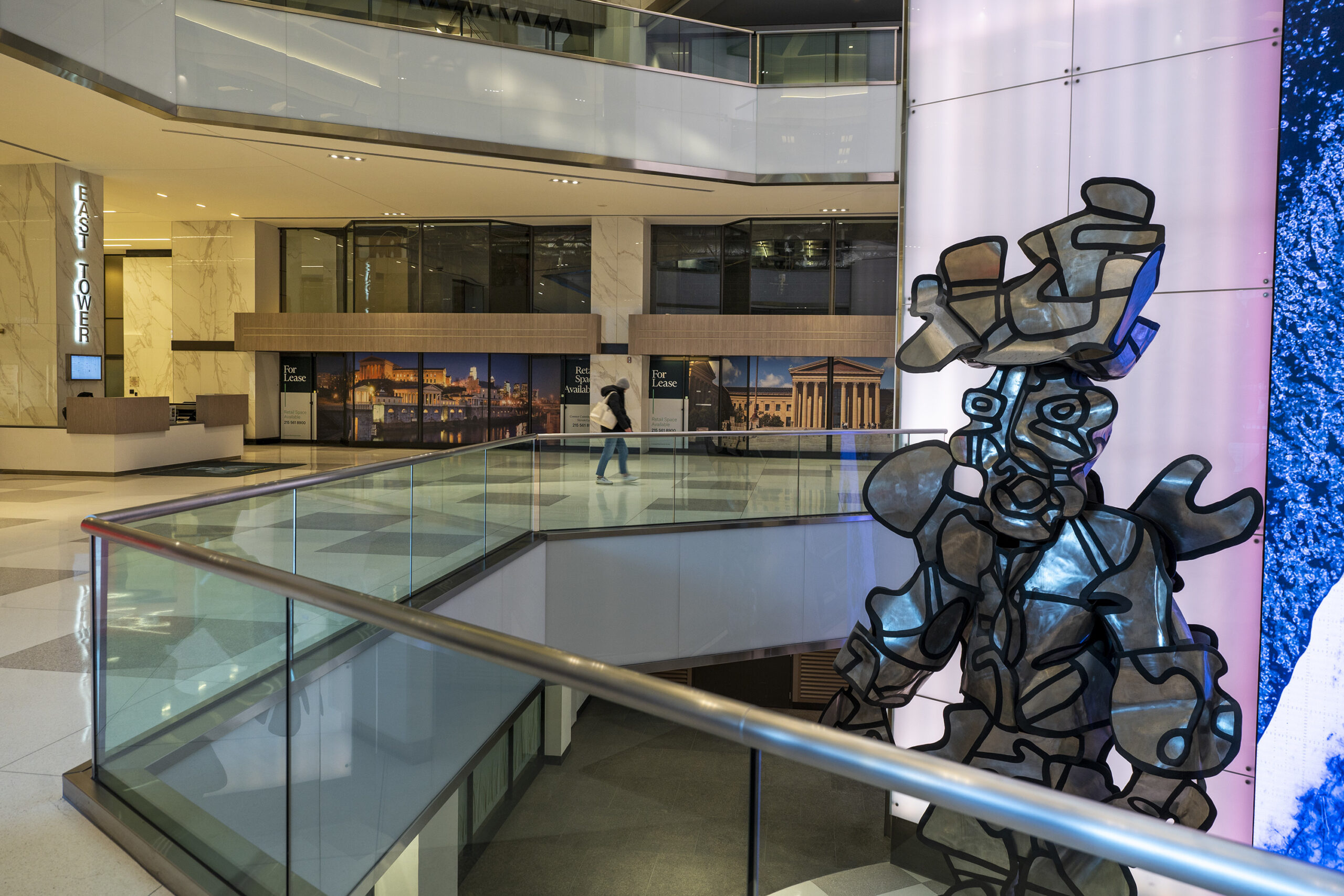
Centre Square — also known as the “Clothespin building” for its four-story pop art sculpture — is slated for mixed-use redevelopment by PMC Property Group and investor and developer Dean Adler, with much of the complex being devoted to hotel rooms and apartments.
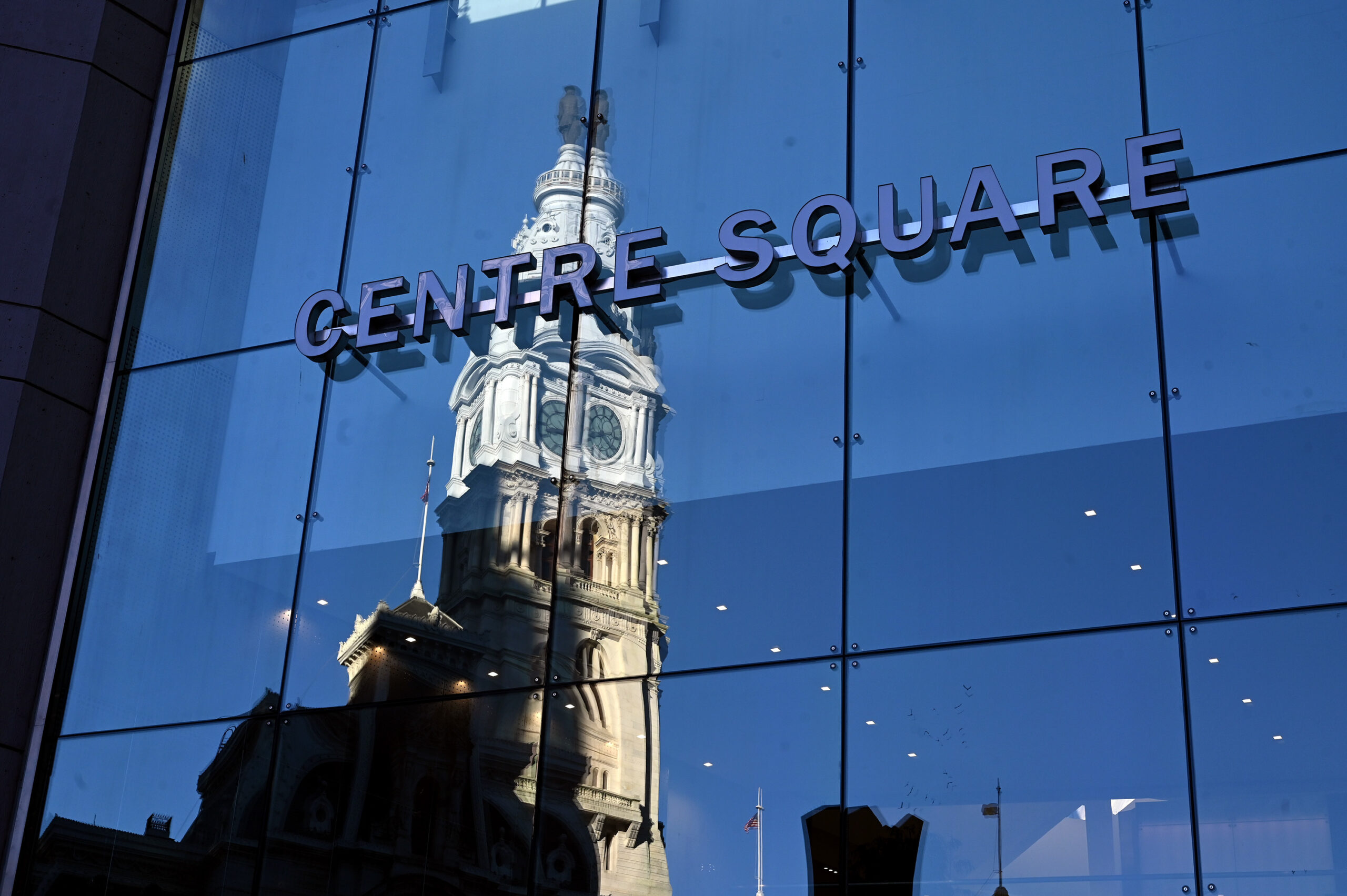
“That corner of West Market is the best corner in the city,” Adler said. “You get …all the visibility going around the circle. When you look at City Hall, it may not be so nice inside, but outside, it’s a 1904 Beaux Arts building.”
Centre Square’s fortunes sank when COVID-19 struck and have never recovered. At the end of 2025, occupancy stood at 37.6%, giving it the highest vacancy rate in Center City,according to Morningstar Credit.
In 2017, when Centre Square last sold, it went for $328 million. Last July, the complex was appraised at $104.4 million and is now under agreement of sale to PMC and Adler for less than $94 million, according to Adler.
He says the plan is to retain 500,000 square feet of office space, enough to house the remaining tenants. Then there will be between 250 and 500 apartments spread between thebuilding’s two towers. Three hundred luxury hotel rooms will be built on the upper floors of the east tower, facing City Hall.
“William Penn is in your bedroom,” Adler said of the hotel.
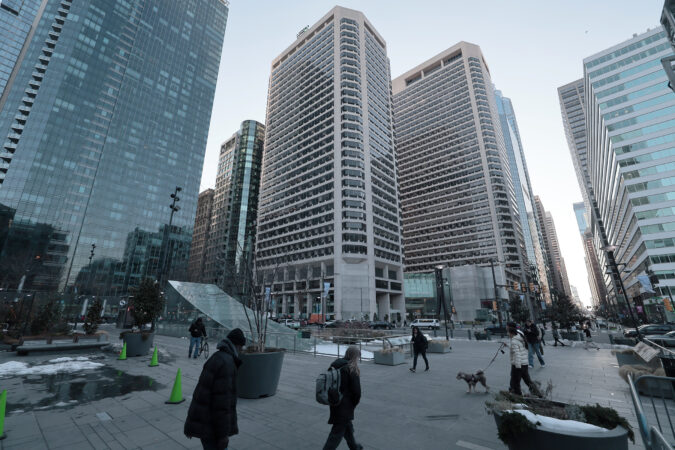
Centre Square is located across from City Hall on what investor Dean Adler calls “the best corner in the city.”
On the lower levels of Centre Square, Adler says there will also be a spa and a 50-meter pool — amenities that he says the building previously had.
The acquisition of Centre Square is part of a wave of high-profile redevelopments between Adler and PMC, led byits president, Ron Caplan.
In recent years, the partners have purchased and redeveloped the Bellevue on South Broad Street, the Battery on the Delaware River, and the Bourse on Independence Mall.
“In today’s environment, there’s a real estate crisis, and we are buying these buildings for 20 cents on the dollar,” Adler said. “We …are rejuvenating architectural gems that are functionally obsolete.”
PMC declined to comment. News of Centre Square’s acquisition was first reported by the Philadelphia Business Journal.
Centre Square (center) at 1500 Market Street in Philadelphia on Friday, Feb. 27, 2026
More than ‘an office district’
The new Centre Square is part of a trend in which struggling office buildings have sold for less than half their previous prices with plans to convert the spaces into homes.
Centre Square’s discount was even deeper: The reported sale price is almost half what it sold for in 2002, not even adjusting for inflation.
The Wanamaker Building, which had over 1.4 million square feet of office space, is another example. Previously one of Philadelphia’s largest office buildings, it is being turned into apartments by TF Cornerstone and Alterra Property Group. Only a small number of offices will be preserved.
“The office district isn’t only an office district anymore,” said Prema Katari Gupta, president of the Center City District.
“There’s hospitality; there’s increasing residential. What makes a city great is when you have these layered neighborhoods with a lot of different types of demand drivers,” Gupta said.
The partners in Centre Square’s redevelopment haveworked together for decades, including on the new Aramark headquarters on the Schuylkill and 2040 Market St.
Adler‘s longtime business partner, Ira Lubert, with whom he founded real estate investment group Lubert-Adler, is not involved in the project. Instead, the Centre Square project partnership with PMC is being done under the auspices of a new venture, Adler & Co.
Philadelphia’s No. 1 business address
Centre Square spans two towers because it dates to an era when developers would not build taller than the William Penn statue atop City Hall, an unofficial agreement with the city that lasted until the 1980s when the Liberty Place skyscrapers were erected.
Planning for Centre Square began in the mid-1960s, signaling a shift, along with the construction of Penn Center, for Philadelphia’s office district from the Art Deco South Broad Street to West Market Street.
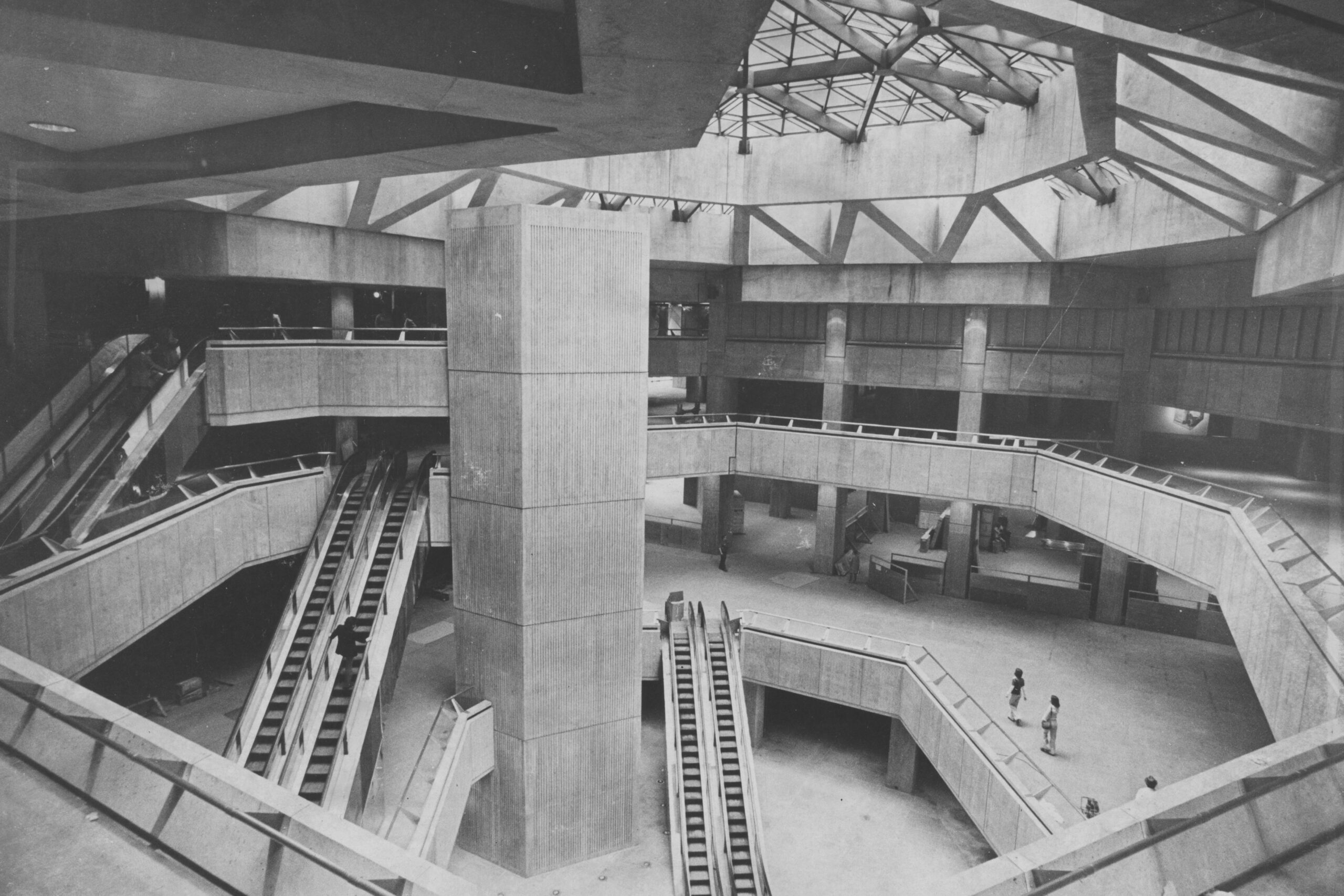
Centre Square’s atrium and retail space in in 1974.
“Those buildings created the momentum,” said Bill Hankowsky, former CEO of Liberty Property Trust, which developed neighboring office skyscrapers like Liberty Place and the Comcast towers. “It was the biggest single project that said we’re going down Market West.”
Designed by architect Vincent Kling and developer Jack Wolgin, it was seen as a revolutionary project and hailed as Philadelphia’sNo. 1 business address in ads in The Inquirer.
Centre Square also bears the architectural hallmarks of the 1960s, like its poured concrete building materials that — along with its respect for the old height limit — set it apart from the steel skyscrapers built farther down West Market later in the decade.
The building’s Brutalist architecture — often a polarizing style — has bedeviled many of its subsequent owners, who pumped millions of dollars into Centre Square nearly every decade since the 1970s to keep it competitive.
“It is structurally built differently than other buildings on Market West,” Hankowsky said. “It’s a substantial building, but also it is a tougher building to deal with. The walls are thick, the floors are thick. It’s a big challenge.”
That’s part of what deterred many other developers who considered buying the building.
The sheer scale is a challenge, too. Some interested parties were put off by the percentage of the building that would have to remain office, as a full residential conversion is unlikely.
“The buildings don’t particularly lend themselves to a complete conversion to apartments,” said John Grady, who used to lead the Philadelphia Industrial Development Corp. and studied the building for its prior ownership. “They’re too big, and the floor plates don’t work as well as other buildings.”
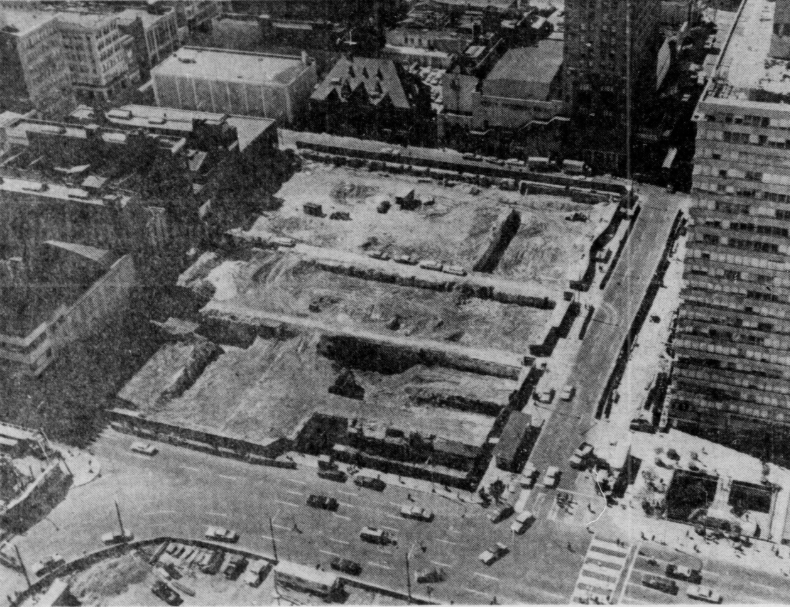
A photo of the long vacant lot while Centre Square went through its fiscal and legal trials during construction.
Born in drama, consideredfor Comcast HQ
Centre Square’s birth was not easy. Its planning and construction took almost 10 years, with legal and financial delays that included an investigation of the project by then-District Attorney Arlen Specter. (Wolgin told reporters that the Republican politician was “out to get” him.)
The delays left a yawning vacant lot just west of City Hall, which led Mayor James Tate to describe Centre Square as “doomed” in 1969.
When Wolgin eventually began construction, he then faced blowback from powerful critics of Claes Oldenburg’s Clothespin sculpture that he wanted to place in front of his towers.
“It was a disaster!” Jack Wolgin told The Inquirer in 2001. “They said, ‘How can you take something like this pop art and put it in front of City Hall? It’s a monstrosity! It’s a disgrace!’”
Despite the building’s polarizing beginnings, it became a mainstay of the office market, attracting one-time corporate giants like CoreStates bank and Towers Perrin consultants.
Claes Oldenburg’s pop art Clothespin sculpture stands in front of Centre Square.
It snagged Comcast as a tenant in the early 1990s, after the company was forced out of its first urban home by the fire that destroyed One Meridian Plaza.
Comcast studied the building as a possible headquarters for the company before eventually turning to Liberty Property Trust to build their skyline-defining towers.
Still, many of its 1960s-era flourishes proved difficult to adapt to the modern era. By the 1980s, the atrium that connects the two towers and houses its inward-facing retail received its first renovation.
Centre Square’s atrium has undergone renovations almost every decade since.
The lobby of Centre Square in 2024.
Looking ahead
Inquirer architecture critic Inga Saffron wrote about Centre Square‘s latest update in January 2020.
“Fortunately for Philadelphia, the city’s biggest, baddest Brutalist complex, Centre Square, has always been too big to fail,” she wrote just before COVID-19 struck and emptied office towers around the country.
Now, six years later, Adler and PMC Property Group believe they can bring it back as something new.
Philadelphia’s $10 billion municipal pension system is now 68% funded and on pace to reach full funding by 2032, a year earlier than previously projected, City Controller Christy Brady announced this week.
A decade ago, the pension fund was only 45% funded and appeared to pose a significant threat to the city’s fiscal health. But a series of reforms carried about by successive mayors, state and city legislators, and municipal labor leaders have fostered a remarkable turnaround.
The city’s pension system pays for retirement benefits for city workers. Benefits vary based on when employees were hired. About 35,000 people are currently receiving benefits, according to the pension board’s most recent newsletter. That includes retirees, their beneficiaries, and disability claimants.
“The fiscal health of the Pension Fund continues its relentless upward climb since many reforms were put in place 10 years ago,” Brady, who sits on the city Board of Pensions and Retirement, said in a statement. “We’ve made smart investments, doubled our assets, reduced investment manager fees — resulting in a large reduction of the overall liability for taxpayers.”
The reforms included increasing annual contributions from the city budget to the pension fund beyond the minimum amount required by state law; negotiating union contracts with higher employee retirement contributions; moving away from high-fee investment managers; and dedicating revenue from a 1% sales tax in Philadelphia to the pension fund.
Despite disagreeing on many other issues, the mayoral administrations of Michael A. Nutter, Jim Kenney, and now Cherelle L. Parker have largely stuck to the same playbook when it comes to turning around the pension fund.
“Everyone has played a role in the stabilization of our pension fund, a development with enormous fiscal consequences for our city,” Parker said last year to City Council.
The continuity is in no small part due to the influence of Rob Dubow, who has been the city’s finance director since 2009 and has encouraged mayors to prioritize improving the health of the pension fund. Dubow chairs the pension board, which in addition to Brady includes appointees from the administration and the labor unions for city workers.
The good news for the pension fund comes as Parker prepares to unveil her proposal for the next city budget to Council on March 12.
The current budget, which took effect in July 2025 and was originally projected at $6.8 billion, has grown to just under $7 billion, according to the latest Quarterly City Manager’s Report. The fund balance — the amount of money left unspent, and the city’s primary reserve for navigating unexpected crises — is now projected to close the current fiscal year at $509 million, up from an initial estimate of $471 million.
As the city chips away at the pension system’s unfunded liability, it is paying more than $800 million per year into the system, an enormous expense. But there is light at the end of the tunnel.
If Parker serves two terms, she will leave office right when the pension fund is projected to reach full funding, which will be a watershed moment and will reduce the annual pension contribution by more than $400 million.
Parker’s budget plans appear to take into account that the next mayor may have it easier when it comes to fixed costs. For instance, her 13-year schedule for reducing business income and receipts tax rates, which Council approved last year, back-loaded the biggest tax cuts until after she is likely to leave office.
Meanwhile, Parker’s signature housing initiative calls for the city to take out $800 million in bonds over the next two years. Philly taxpayers will repay that debt, along with an estimated $500 million in interest, over the coming decades.
We’ll show you a photo taken in the Philly-area, you drop a pin where you think it was taken. Closer to the location results in a better score. This week’s theme is about the art of the late Isaiah Zagar. Good luck!
Round #22
Question 1
Where can you find this mosaic by Isaiah Zagar?
Loading…
ClickTap on map to guess the location in the photo
ClickTap again to change your guess and hit submit when you're happy
You will be scored at the end. The closer to the location the better the score
Jose F. Moreno / Staff Photographer
Pretty good/Not bad/Way off! Your guess was from the location.Spot on! Your guess was exactly at the location. Here's also where a random selection of Inquirer readers guessed.
Isaiah Zagar, the renowned mosaic artist from Philadelphia, died recently at 86.
Located near the Magic Gardens, Zagar’s nonprofit organization and gallery, this 2004 mural “Anthony's Eyes” sits next to another mural, “Julia’s Birthday Card," and is displayed at a private residence on Bainbridge Street.
Quiz continues after ad
Question 2
This mosaic is on the exterior of a former coffee shop. Where is it?
Loading…
Tom Gralish / Staff Photographer
Pretty good/Not bad/Way off! Your guess was from the location.Spot on! Your guess was exactly at the location. Here's also where a random selection of Inquirer readers guessed.
This East Passyunk mural is located on the former Black N Brew building. It was recently announced that Love & Honey Fried Chicken would take over the space.
Quiz continues after ad
Question 3
The mural seen here is controversially being torn down. Do you know its location?
Loading…
Tom Gralish / Staff Photographer
Pretty good/Not bad/Way off! Your guess was from the location.Spot on! Your guess was exactly at the location. Here's also where a random selection of Inquirer readers guessed.
The Painted Bride mural located at the former Painted Bride Art Center building is in the process of being torn down after years of legal battles to save the mosaic.
Your Score
ARank
Amazing work. You know your mosaics.
BRank
Good stuff. You’re almost perfect.
CRank
C is a passing grade, but you could do better.
DRank
D isn’t great. Try again next week!
FRank
We don’t want to say you failed, but you didn’t not fail.
You beat % of other Inquirer readers.
We’ll be back next Saturday for another round of Citywide Quest.
HONESDALE, Pa. — In waiting rooms all over America, millions of children found something to stave off the impending needles and drills, a magical world of puzzles, games, and stories written just for them.
For many kids, Highlights was the first magazine they ever read, and, perhaps, the one that mattered most when they look back on their childhoods, decades later.
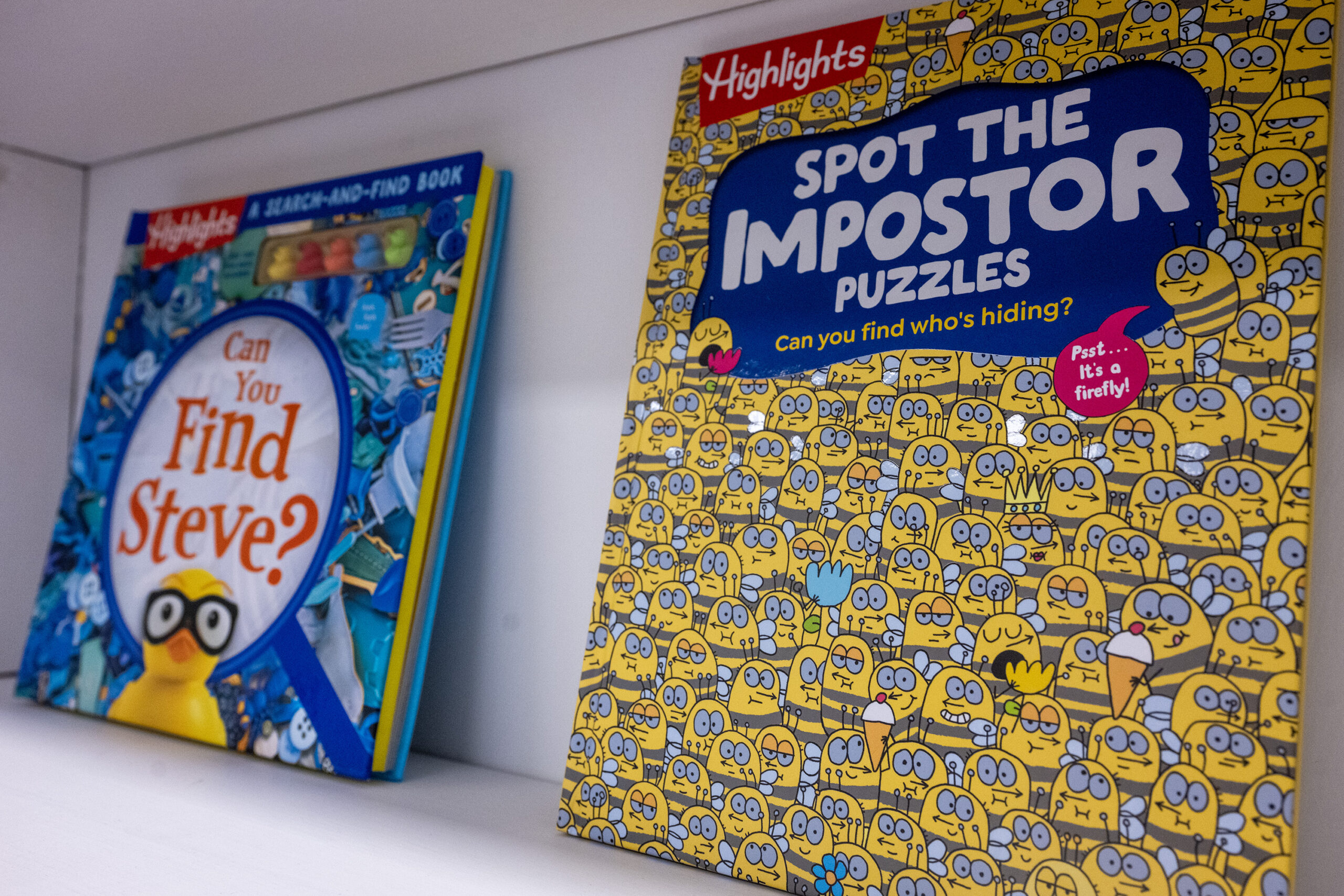
Books published by Highlights on a shelf at the magazine’s editorial offices in Honesdale.
In an era when print circulation — magazines, newspapers, and even the phone book — steadily declines, it’s easy to look back on Highlights, which was first published in 1946, with a glowing nostalgia. Every issue was full of intricately illustrated hidden-picture puzzles, the beloved duo of Goofus and Gallant making disparate decisions, and child-authored “Dear Highlights” questions that were often silly, serious, and tender.
“I let my friends borrow one of my stuffed animals. She’s going to give it back next time we meet, but I’m afraid she’s going to lose it,” a girl named Ramona, from California, wrote to Highlights.
The magazine may get some Generation Xers feeling wistful, but Highlights and its handful of offshoots are alive and well and, perhaps, more crucial than ever in an era where children’s attention spans are pulled in every direction. Highlights turns 80 this year, and its editorial offices remain in a cozy pre-Civil War, Italianate house in downtown Honesdale, Wayne County.
“We are as relevant as we were 80 years ago,” said Marlo Scrimizzi, senior editorial director for Highlights for Children. “Our future is expansion. We want to bring Highlights to more homes and families.”
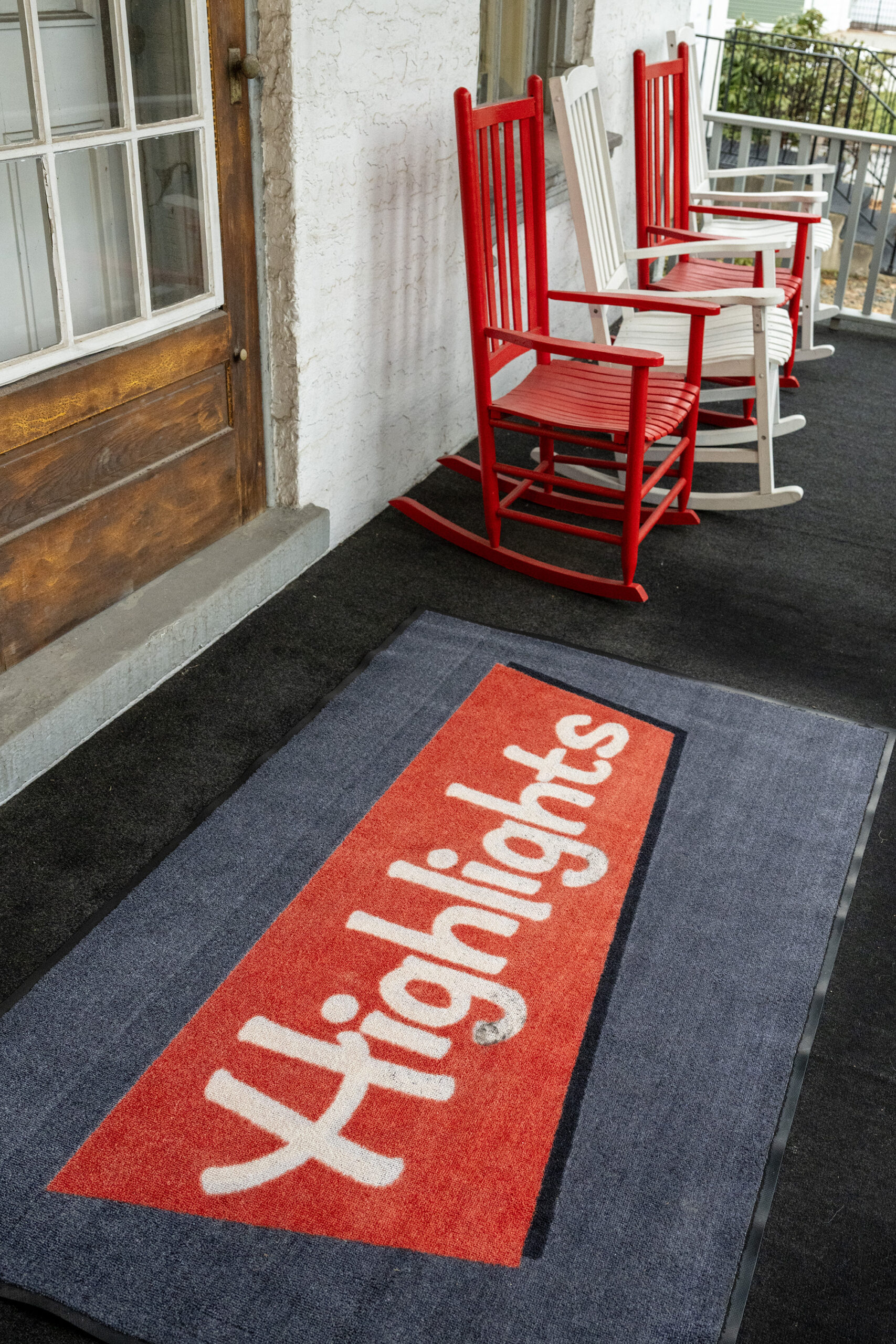
Front porch of the Highlights magazine editorial offices in Honesdale Jan. 14, 2026.
Today, Highlights for Children publishes six magazines, with a combined circulation of one million a month, all while remaining family-owned. It’s still full of old favorites, like Goofus and Gallant, plus dinosaurs, outer space themes, animals, and unicorns, the mythical beast that’s made a big comeback in recent years.
“Dinosaurs will always be in,” Scrimizzi said.
Outside of the flagship magazine, which targets children 6 to 12, the company publishes Hello (ages 0-2), Highlights CoComelon (ages 1-4), High Five (ages 2-6), High Five Bilingüe (ages 2-6), and brainPLAY (ages 7 and up).
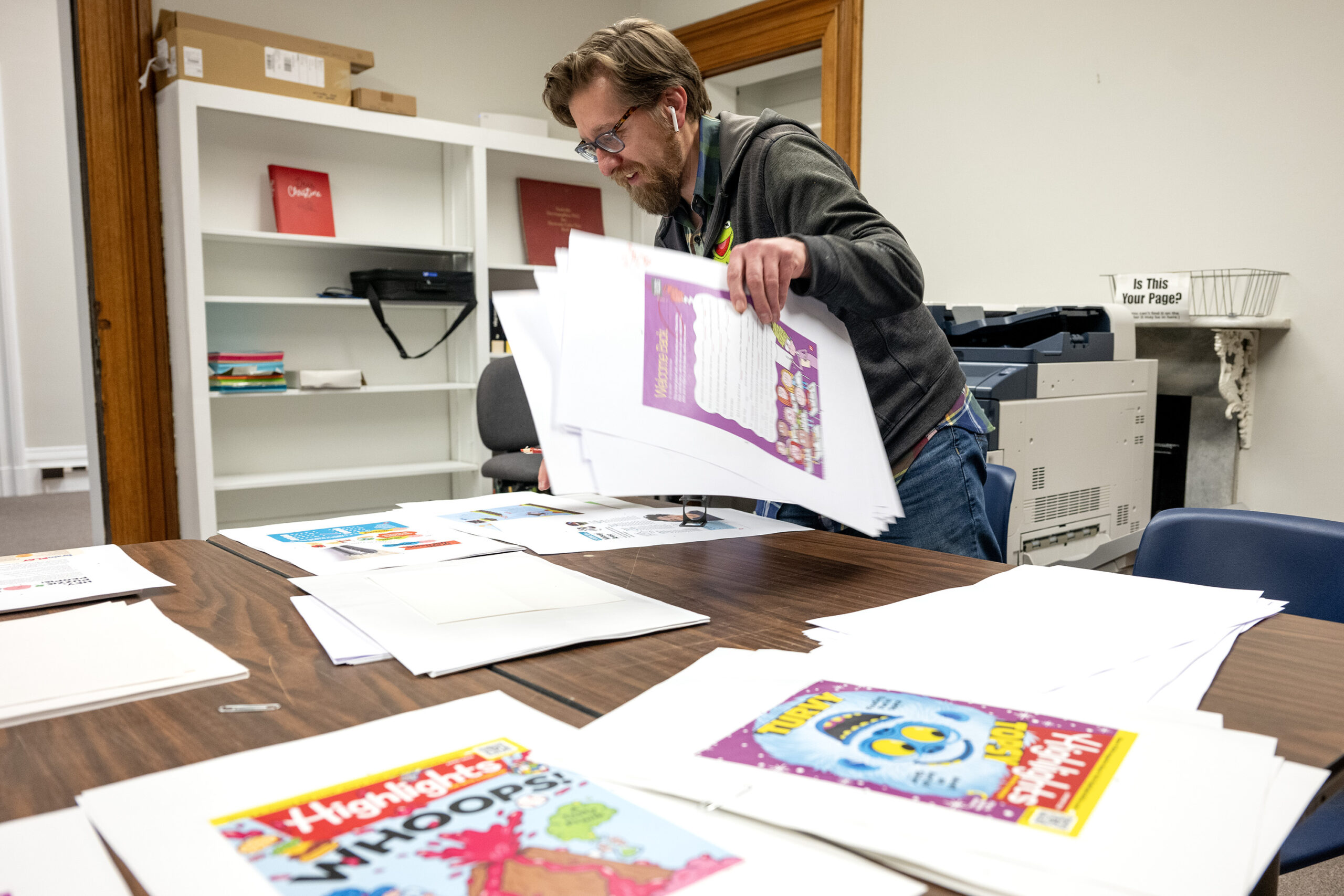
On a recent January afternoon in Honesdale, the editorial crew was laying out its latest issue, which featured a Japanese artist who practices kintsugi, the art of repairing broken objects by filling cracks with lacquer mixed with powdered gold, silver, or platinum.
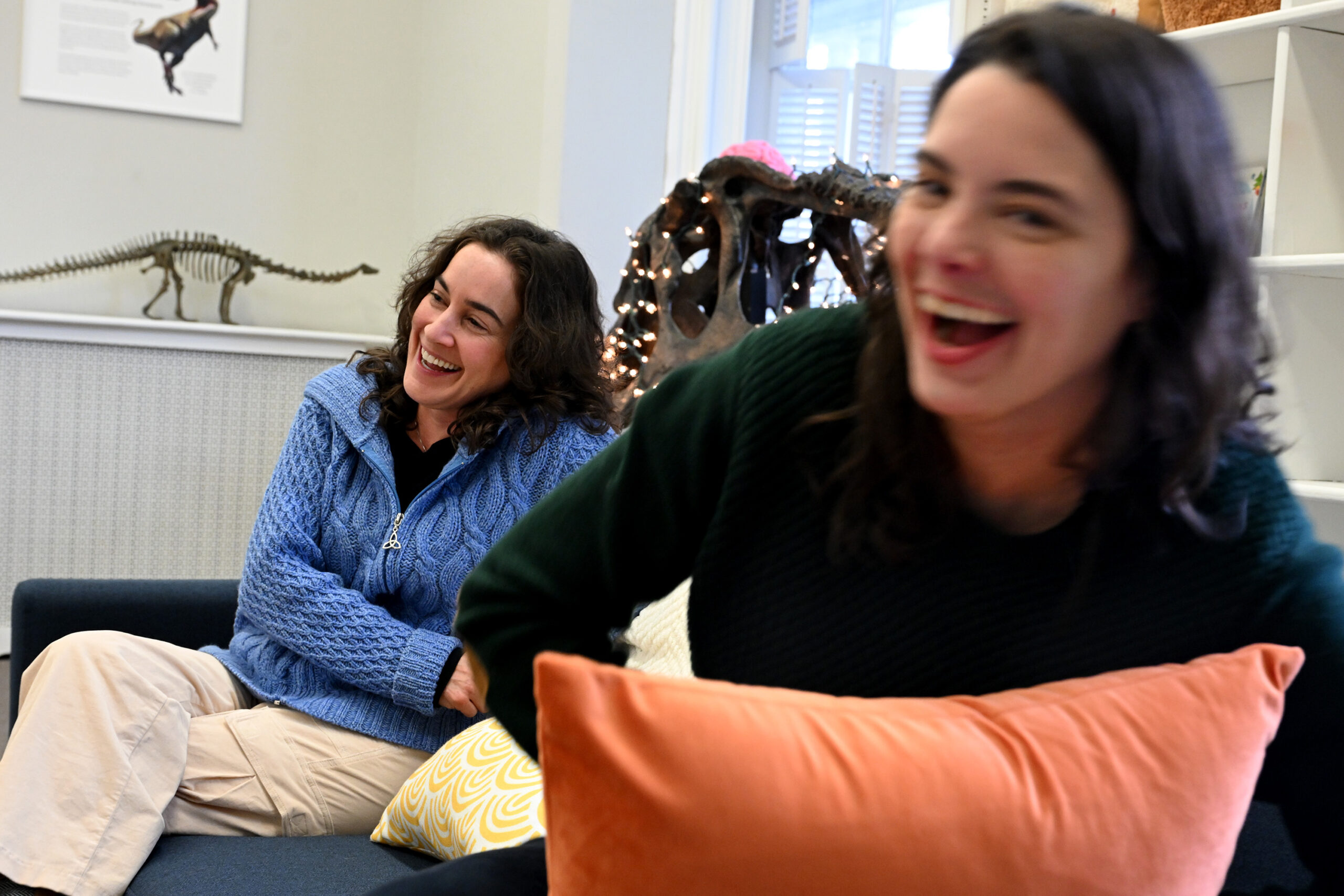
Highlights magazine editor Judy Burke (left) and editorial director Marlo Scrimizzi at the magazine’s editorial offices in Honesdale.
In the 1940s, a husband and wife duo from Pennsylvania, Garry Cleveland Myers and Caroline Clark Myers, made an unlikely decision to create a magazine focused on and for children, with the motto “Fun with a purpose.” Garry Cleveland Myers had a Ph.D. in psychology from Columbia, and Caroline Clark Myers was a schoolteacher in Wayne County.
“They really wanted kids to know that they had it in themselves to be creative, to think through problems, to be empowered and have the confidence to really come up with the creative solutions and think through answers to questions,” said Judy Burke, the magazine’s editor.
The Myerses, who had worked for another children’s magazine before starting their own, had a groundswell of support from parents and built a clientele base through old-fashioned door-knocking. By 1950, however, the business model was lagging.
“They were editors, not business people, really. They were educators,” Burke said. “They were in really dire straits, financially, and almost had to close, so they kind of rallied some troops.”
The business didn’t fully take off, however, until their son Garry Myers Jr. quit his job as an aeronautical engineer and took a look at the books. It was Garry Myers Jr. who decided to send the magazine to doctors’ and dentists’ offices, which sparked a rush of subscriptions from parents.
By 1960, Highlights had a half-million subscribers, and the relationship between the magazine and the waiting room was forever sealed.
“Parents would see their kids amusing themselves with this magazine in the waiting room and think, ‘What is this product?’” Burke said. “There wasn’t a ton of magazines for kids back then.”
Dipesh Navsaria, a professor of pediatrics at the University of Wisconsin, said the competition for children’s attention extends to the waiting room in 2026. Some have arcade games. Others have televisions. Every parent has a phone, he said, which is an easy salve for a sick child.
Senior production artist Dave Justice looks through proofs of forthcoming Highlights magazines in the editorial offices in Honesdale.
Still, as a supporter of Highlights, he believes the timeless magazine still matters there.
“Families should expect and perceive that the most important thing we care about is that child’s health and well-being. That extends to what’s on the walls, in the exam rooms, and the waiting room,” he said. “With Highlights, there’s a long history of trust. Highlights doesn’t have advertising, and parents can know their kids aren’t going to be marketed to.”
Burke was one of those kids in the waiting room, reading Highlights at a doctor’s appointment 20 miles west of Honesdale.
“I’d see how much of the magazine I could read before they called me in,” she said. “I didn’t want to miss a page.”
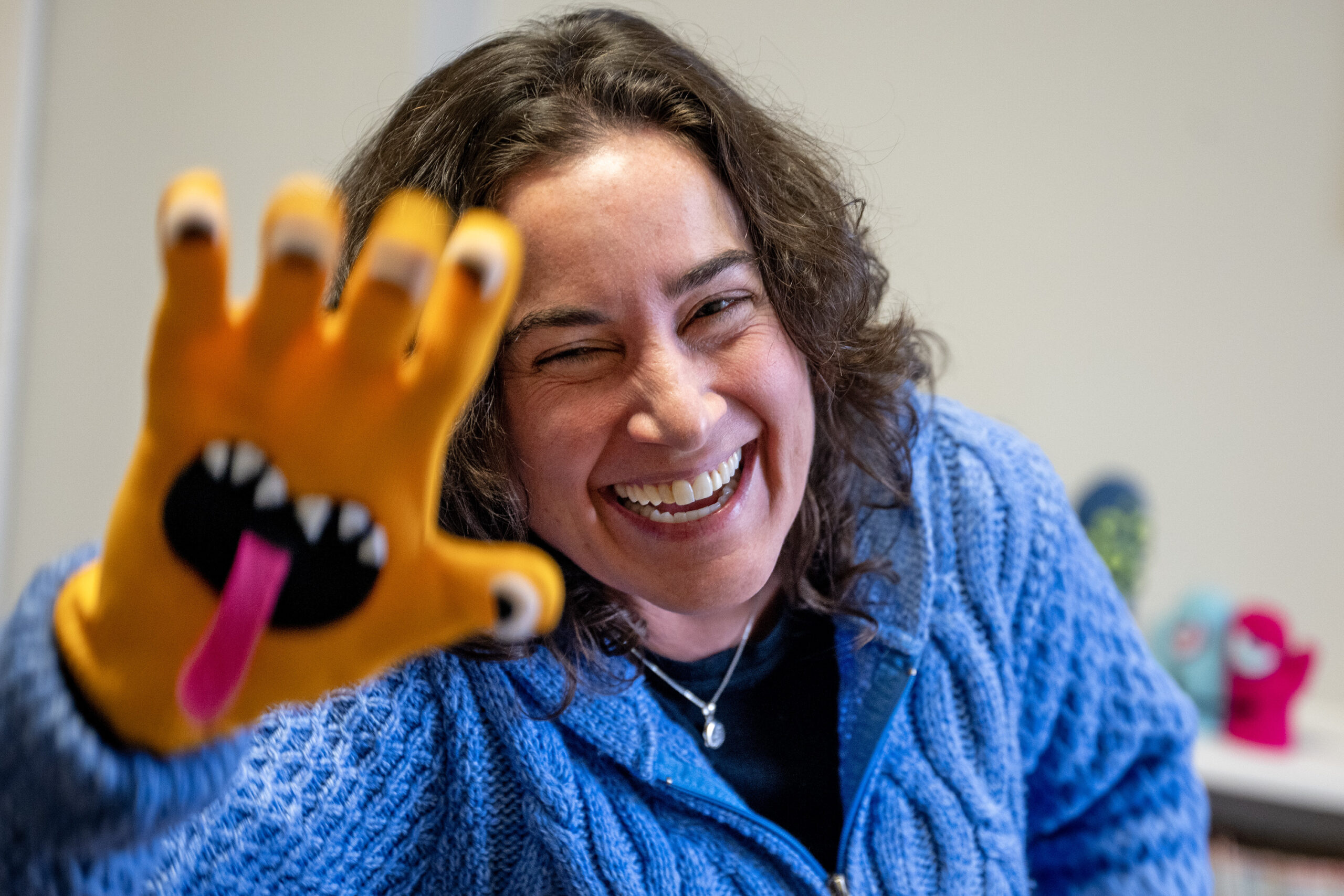
Highlights magazine editor Judy Burke with a hand puppet at the magazine’s editorial offices in Honesdale on Jan. 14, 2026.
Decades later, Burke was in a Pennsylvania dentist’s office during a break from college and picked up Highlights again. That inspired her to reach out to the company, and she’s now been there for 31 years.
“A girl wrote in recently and said, ‘I love your magazine so much, I just feel like I could curl up with it,’” Burke said. “Those words warm my heart.”
Honesdale has seen an uptick in population and tourism, along with more breweries, artists, restaurants, and short-term rentals moving into the once sleepy Poconos town. Burke, Scrimizzi, and a small crew who anchor the Honesdale editorial offices are in the middle of it all, downtown. Other editorial staff members work remotely, and the company’s business offices are in Ohio.
A “Can You Find Steve?” duck, the subject of a new book published by Highlights on a shelf at the magazine’s editorial offices in Honesdale Jan. 14, 2026.
The Honesdale offices aren’t the location of an amusement park, but there’s a large dinosaur head in a meeting area and vintage children’s books that the Myerses wrote for, along with other children’s memorabilia.
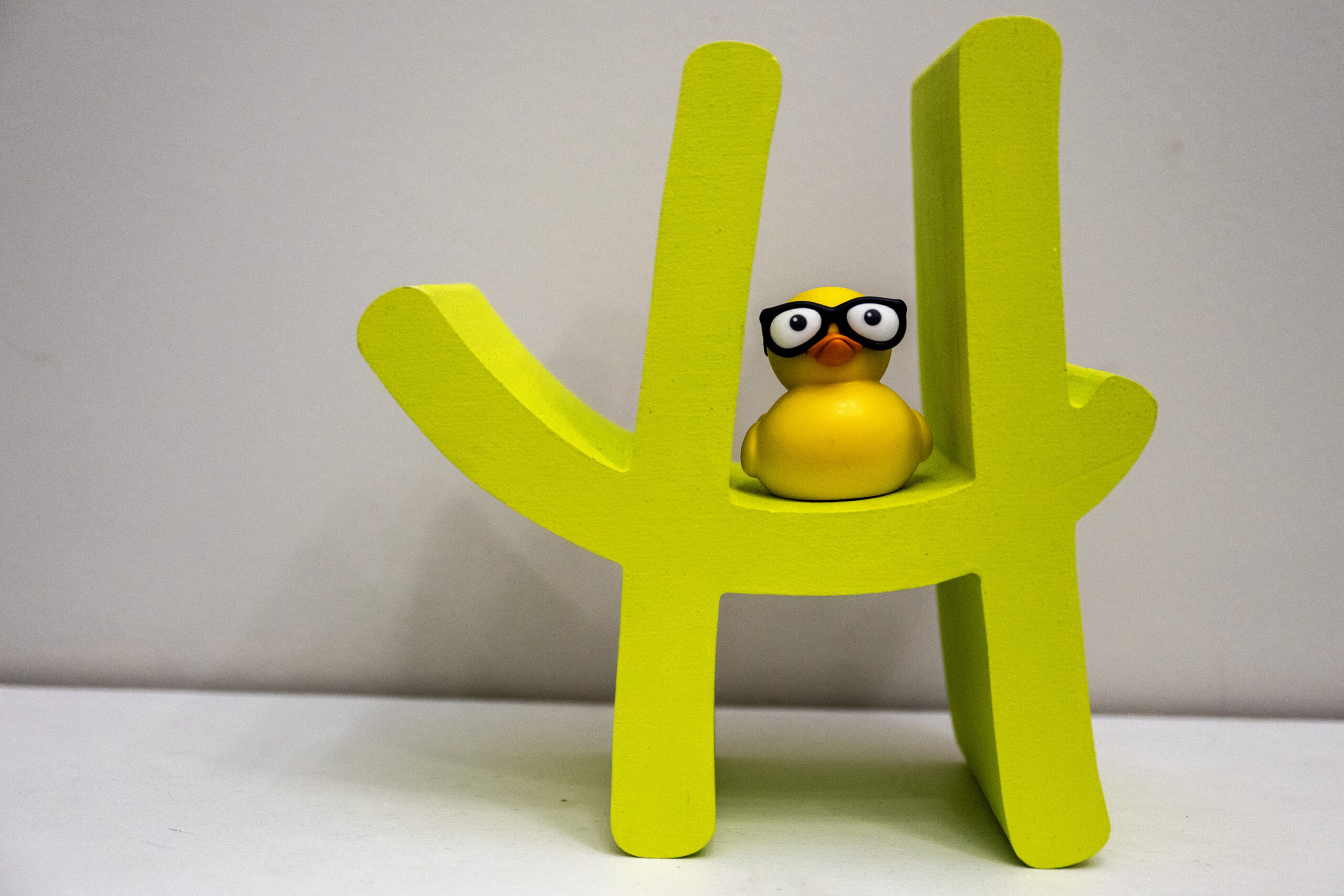
Burke’s office is filled with monster puppets, and just outside it, on a wall, is a large wooden motif of the magazine built by a fan, a testament to how beloved it is.
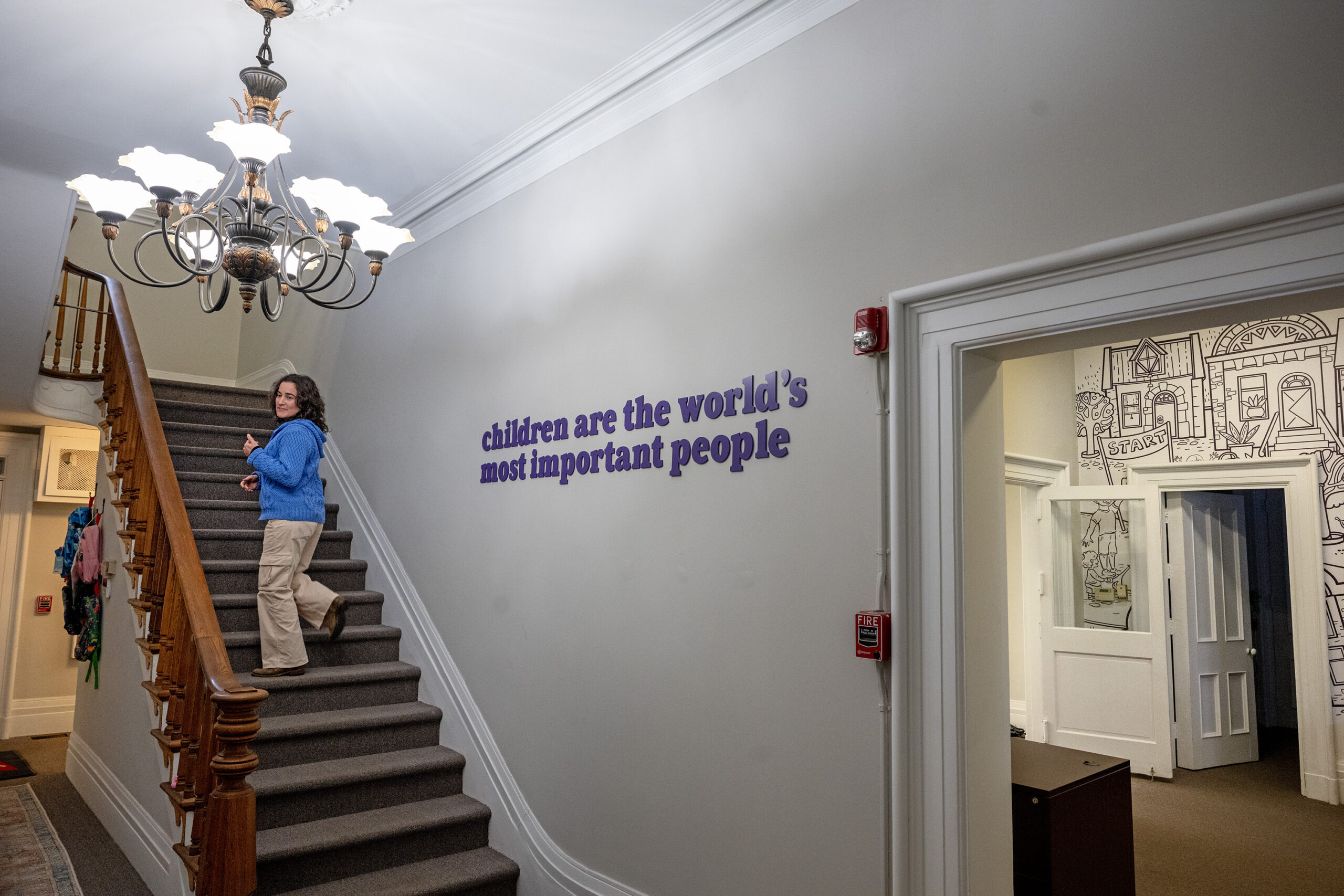
Along the staircase, Highlights’ guiding principle is affixed to the wall: “Children are the world’s most important people.”
Highlights magazine editor Judy Burke in the former mansion that is the magazine’s editorial offices in Honesdale Jan. 14, 2026. The beloved children’s publication began as a small operation in the town in 1946 and the editorial offices are still there, even as it has grown into one of America’s most respected educational magazines for kids.
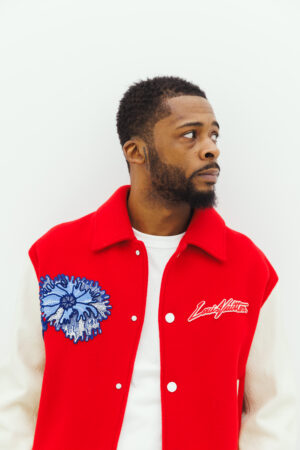
Since his 2012 mixtape, Straight From The Kur, the Mount Airy native has transformed his past experiences into emotionally raw music that has drawn an impassioned fan base.
Over the years, his fiery lyrics and hard-nosed delivery have become sharper, and his fan base and influence have grown. After striking hot with street anthems like “Peach Snapple” and an acclaimed release with 2024’s THURL, Kur has become a national mainstay.
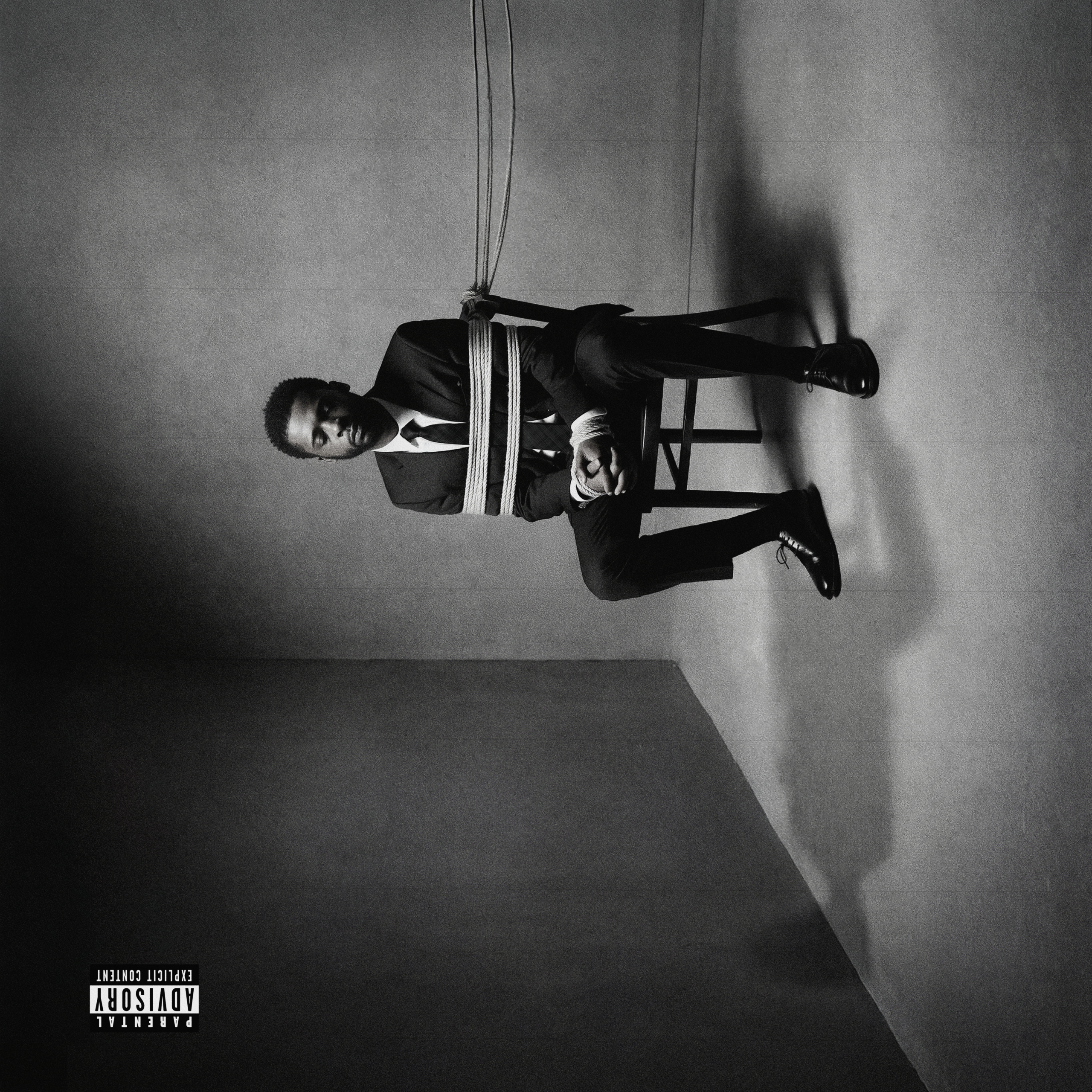
The 31-year-old rapper, born Chauncey Ellison, continues the momentum with his new album ARD, released in late February.
Kur said the project, which stands for both the Art of Release and Discipline and a shortened version of alright, marks a return to form.
After 2025’s “Skip Da 8,” North Phjilly rapper Kur releases his newest album, “ARD.”
“I was super transparent and vulnerable when I first came out. I think as the years went on, I started to put a filter on and shut [fans] out from certain things,” he said. “I think that was a contradiction because people were actually supporting me because I was transparent. I tried to get back to it as much as I could on ARD.”
He’s peeling back the layers, letting fans in on his own personal struggles, in hopes that the two parties find a path of self-reclamation and healing.
“When you dig a little deeper, everybody has built up trauma that they’re not releasing. And I think that people don’t hear, ‘Yo, you will be alright or you will be OK.’ Somebody may not have anybody to tell them that they will be OK. I think just to see it may change their perspective. I’m coming from a healing point.”
We asked him about his perfect day in Philly. Here’s how he’d spend it.
10 a.m.
It’s different in the summer than the winter. If it’s summertime, I’m waking up and going to Kelly Drive, then stopping by Rita’sfor a mango water ice. Or, I’m going to get aPhilly Pretzel Factory.
Noon
I had to fall back on cheesesteaks, so I’m going to go to Bistro SouthEast on South Street. It’s not a heavy Philly staple, but that’s my kind of day in Philly.
2 p.m.
Look at clothes at Status andCreme on Second and Race Street. Or go to King of Prussia Mall. There’s also a place called Bullseye on 15th and Walnut Street. They have some good stuff in there. And there’s Common Ground[in Midtown Village] and [Center City’s] Lapstone & Hammer.
6 p.m.
I go to a smoothie truck in Fishtown and then I usually go to the studio. I’m telling you what I do, so I don’t want to make nothing up. I can’t lie.
3 a.m.
I leave the studio at 2 or 3 a.m. I go to Healthy Picks in Center City because it’s 24 hours. It’s the only place in Philly where you can get fresh fruit at 3 a.m. That changed my whole jawn. Nothing against Wawa, but when you go there and you get fruit, it isn’t really how you want it. To have a jawn where they chop it up and it’s fresh and super icy.
“They are definitely not just sitting there getting dusty in a room,” Hortz Stanton said.
In storage getting dusty?
Hortz Stanton said thousands of non-exhibited items in the Penn Museum’s collections found other purposes last year. And, 5,000 college students were able to use them for classes and research.
“A lot of things happen when objects aren’t on display, everything from conservation to research to documentation,” said Hortz Stanton.
Museums aim to protect their inventory, while still keeping items available.
The Museum of the American Revolution has a collection of 5,000 historical objects, such as archaeological material, documents, paintings, prints, and other items. But only about 300 items are on exhibit.
“They are not buried away and never to be seen again; we store all the collection here at the museum,” said Matthew Skic, director of collections and exhibitions. “Many of our documents are not on display because they are extremely light-sensitive, but we take them on rotations.”
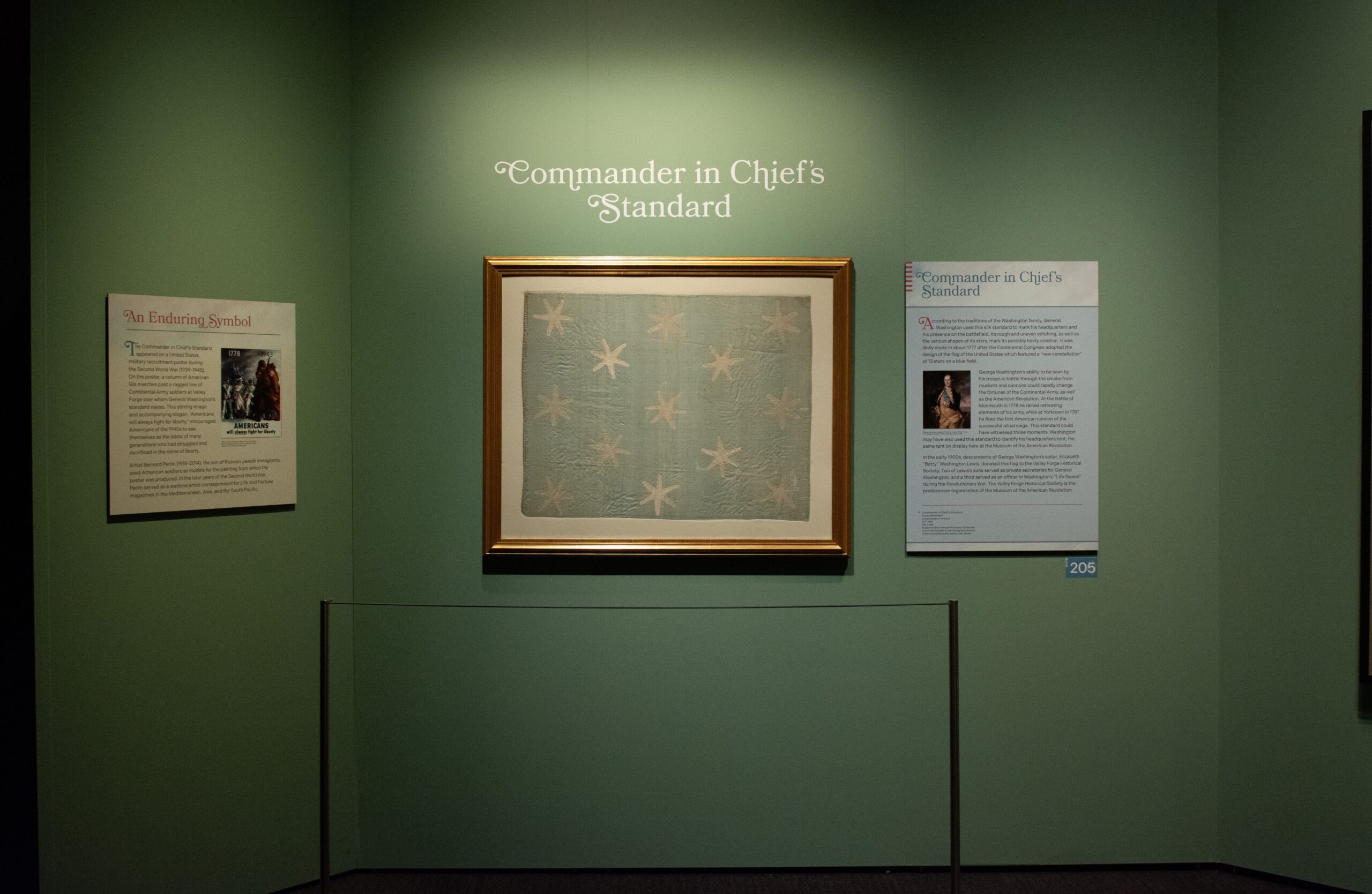
George Washington’s headquarters flag, for example, was put out for a special exhibition in 2025. The display was short-lived due to the brittleness of the silk. It’s now back in storage.
George Washington’s Headquarters Flag (also known as the Commander-in-Chief’s Standard). This flag has been on display only twice at the Museum of the American Revolution.
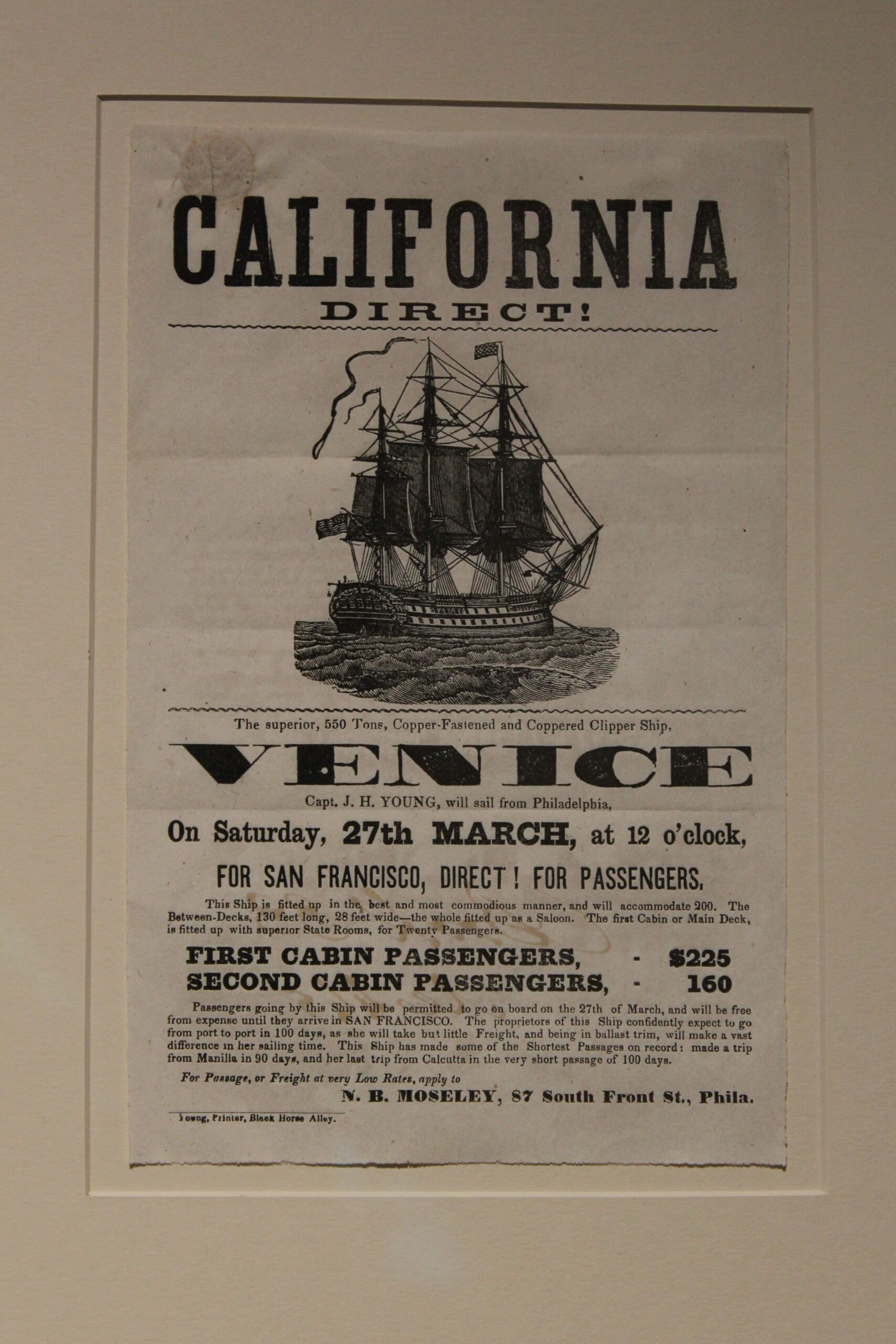
They are not the only ones keeping a rotation of unexhibited items for preservation. The Independence Seaport Museum keeps 60% to 80% of its 10,000 items in storage throughout the year.
”People often will say: Why are you hoarding all this stuff?” said Peter Seibert, the museum’s president and CEO. “That’s not the case; we want to get them out, it’s just that sometimes that is not always possible.”
His museum has items as small as a thimble and as big as a submarine and the cruiser Olympia. Keeping textiles safe from moths and documents from crumbling requires proper conditions, including acid-free boxes.
Broadside advertising for Philadelphians to go to California in 1848. Handout: Independence Seaport Museum.
For less-fragile items, life can go places.
Museums often loan storage items to one another. Penn Museum, for example, recently loaned part of its collection to the Zayed National Museum in Abu Dhabi.
This doesn’t mean Philadelphians have lost the chance of seeing those items.Philly museums have benefited from getting items from other institutions — such as the lunar module, which the Smithsonian lent to the Franklin Institute for 49 years. These days, however, lending contracts are much shorter, typically a year or two, Hortz Stanton said.
“Collections are not storage; they are a living resource,” said Paul Callomon, the Academy of Natural Science malacology collections manager.
He views the 21 million items in the academy’s collection as an active resource to scientists all over the world. His department, in particular, has the third-largest shell collection in the world, he said, as well as a variety of fish, plants, and microscopic algae that are not usually available to everyday visitors.
Ornithology collection manager Jason Weckstein sees the non-exhibited items being put to use daily.
”We make study skins, so we actually skin the bird, and we retain the skin and dissect the body,” he said. “We take tissue samples and take data on the internal organs of the body.”
Conservation matters
For years, Penn Museum had two large 14th-century Buddhist murals on display in its rotunda space, but construction forced them to be pulled down for their protection. What began as a precaution turned into a multiyear mural conservation project.
“Over time, things may crack or materials may weaken; our conservationists are able to stabilize this object so they can be stored safely or eventually reinstalled,” Hortz Stanton said.
The conservation process involves documenting the condition of the items, looking at what it needs for long-term care, cleaning, and taking measures to stabilize an object, said Skic.
How to access things in storage
The Academy of Natural Sciences and Penn Museum have many of their items cataloged in an online database. Researchers and students anywhere can request to see materials.
For Hortz Stanton, this conserves resources and protects fragile items.
”We are just one short part of the history of the things we are taking care of, a blip in time,” Hortz Stanton said. “The hope is that these objects are preserved for future generations.”
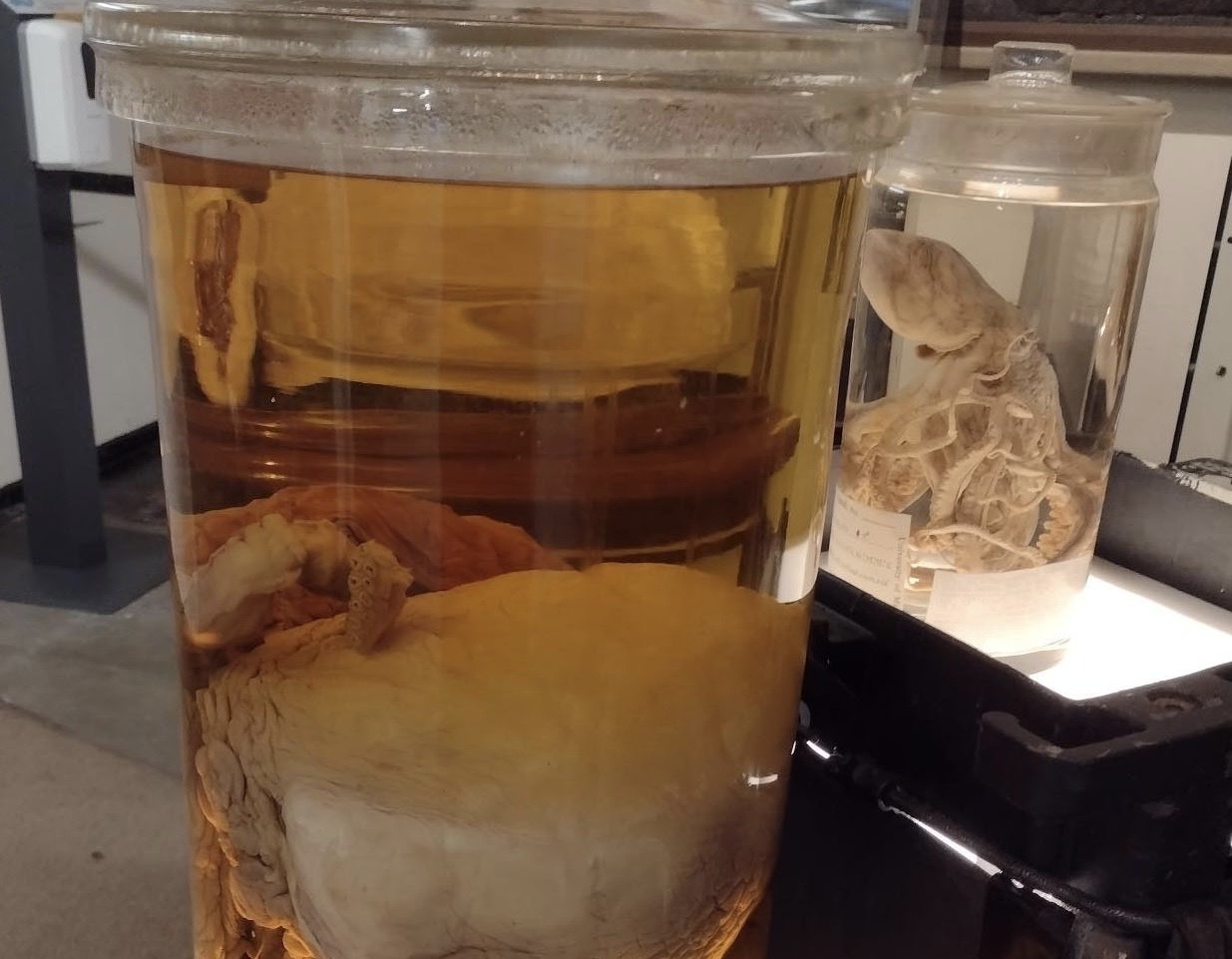
To make the items more available to the public, the academy holds a members’ night once a year. Animals, field books, photographs, and experimental projects not normally on exhibit become available for a night of knowledge.
Octopus not normally exhibited at the Academy of Natural Science. People can see it during members’ night.
Not a member? Callomon said anyone can tour the collection if they make arrangements.
“Bird clubs come for behind-the-scenes tours, and artists actually use our collection for bird field guides to study specimens,” Weckstein added.
The Museum of the American Revolution is also a bit more flexible with its collection, even granting access to descendants of Revolutionary War soldiers and people working on historical projects, Skic said.
“These items are tangible connections to America’s founding era,” Skic said. “They serve as a way to learn about those events and make sure people know these are real people, real events, and that those events continue to shape our lives today.”
Think you know your news? There’s only one way to find out. Welcome back to our weekly News Quiz — a quick way to see if your reading habits are sinking in and to put your local news knowledge to the test.
Question 1 of 10
The city got its biggest snowfall in a decade during a storm that officially dumped this much powder at Philadelphia International Airport Sunday into Monday:
CorrectIncorrect. XX% of other readers got this question right.
Although the 14 inches measured officially at Philadelphia International Airport dwarfed the 9.3 inches of snow and sleet that accumulated in January’s storm, fears that the snowfall would reach what the National Weather Service called “potentially historic” levels didn’t quite materialize.
Question 2 of 10
According to recently released U.S. Census Bureau data, which county in the Philadelphia area was home to six of the 10 wealthiest towns in the region for the five-year period that ended in 2024?
CorrectIncorrect. XX% of other readers got this question right.
Chester County towns held six of the top 10 spots, including the top four — Pocopson Township, West Pikeland, Birmingham, and Easttown. Pocopson, in fact, is in a rarified zone for wealth, with an annual median household income of $230,000.
story continues after advertisement
Question 3 of 10
When Team USA beat out Canada for the men's hockey gold medal in the 2026 Winter Olympics, how did they honor late New Jersey native Johnny Gaudreau?
CorrectIncorrect. XX% of other readers got this question right.
Auston Matthews, Matthew Tkachuk, and Zach Werenski carried Gaudreau’s No. 13 jersey as they glided across the ice. And two players, Dylan Larkin and Werenski, scooped up Gaudreau's two oldest kids — Noa and Johnny Jr. — and carried them back out to the ice for a team photo.
Question 4 of 10
Veteran publicans, including Fergus Carey and Jim McNamara, will soon open Monto, a Celtic bar in the former Mac's Tavern in Old City. This Philly restaurateur will oversee the kitchen:
CorrectIncorrect. XX% of other readers got this question right.
Poe, the proprietor of Poe’s Sandwich Joint and Poe’s Side Piece, plans to blend his South Philadelphia sensibility with Irish pub fare — a mashup he calls the “Poe-gues” menu. His existing lineup of cutlet sandwiches, cheesesteaks, and burgers will serve as the backbone of Monto's food offerings.
Question 5 of 10
Why did Saladine Sharad, a 34-year-old handyman from North Philly, recently go viral?
CorrectIncorrect. XX% of other readers got this question right.
Sharad remembers one driver shouting at him “out of concern” as he rode his scooter. He let them know he was OK with a nod, and they drove off. But unbeknownst to Sharad, the driver had filmed him and uploaded the video to Instagram. “WHO MANS IS THIS??? Only in Philly. [an] electric scooter seen driving on Lincoln Drive,” the caption read.
Subscribe to The Philadelphia Inquirer
Our reporting is directly supported by reader subscriptions. If you want more journalism like this story, please subscribe today.
A Gettysburg theme park is closing and everything must go — including this type of animal, of which 30 will be available for auction:
CorrectIncorrect. XX% of other readers got this question right.
Sparkle, Pumpernickel, Russel’s Majestic Princess Gingerbread, Summer Wish, Shortcake and the other miniature horses will head for greener pastures at the Saturday morning auction, which will mark the end of the 55-year-old Land of Little Horses. Cameo, an 11-year-old chocolate mare with a bald face is expected to be the most popular and collect the highest bid.
Question 7 of 10
From national champions to top-50 contenders, a tight-knit club in Delco has quietly built one of America’s most competitive scenes to meet up and play this game on a weekly basis:
CorrectIncorrect. XX% of other readers got this question right.
The Delco Scrabble Club is a weekly gathering with some of the best players out there. Soon, it’ll draw national attention when two of the club’s members compete on CW’s Scrabble game show, hosted by comedian and former late-night show host Craig Ferguson.
Question 8 of 10
This Doylestown native has been nominated for the Rock and Roll Hall of Fame:
CorrectIncorrect. XX% of other readers got this question right.
The city’s biggest pop star, Pink, is among the 17 nominees in the running to be inducted later this year. Along with the Doylestown-born “Get the Party Started” singer, the list of potential inductees includes another artist with Philly ties in Lauryn Hill.
Question 9 of 10
Tired Hands Brewing’s Ardmore brewpub location is limbo as its owner navigates the future of the beer company. For now, it’s serving as this:
CorrectIncorrect. XX% of other readers got this question right.
While the Ardmore Fermenteria location remains open, the brewpub has pivoted to a private event space. The owner said the decision to shift to private events was born out of a number of factors: having two Tired Hands locations in Ardmore was confusing for customers; ongoing construction in Ardmore created a “prohibitive environment” for doing business; and the changing landscape of brewing has prompted Tired Hands to begin reimagining parts of its business model.
Question 10 of 10
Kylie Kelce attended the Winter Olympics for work, but Jason Kelce was just along for the ride, enjoying his time as a spectator. A CBS tweet identifying the couple as “Kylie Kelce and her husband” went viral. Jason said he had no problem with it, but would’ve preferred if they referred to him as this instead:
CorrectIncorrect. XX% of other readers got this question right.
“I really was just there to have fun and enjoy the Olympics,” Kelce said on the latest episode of New Heights. “So, I was 100% — [her husband] was the correct way to say it. I wanted to tell them I prefer ‘ball and chain.’”
Your Results
You have skipped .
You scored XX out of 10.
The average reader scored XX out of 10
Seems like you’ve been skimming more than reading there, buddy. There’s always next week.
You’ve read some articles (or made some educated guesses) but we wouldn’t come to you first for our local news recaps. Better luck next week!
Do you work here? You’re a local news stan with the latest updates on Philly happenings. Your friends definitely ask you for summaries on what’s going on and it shows.