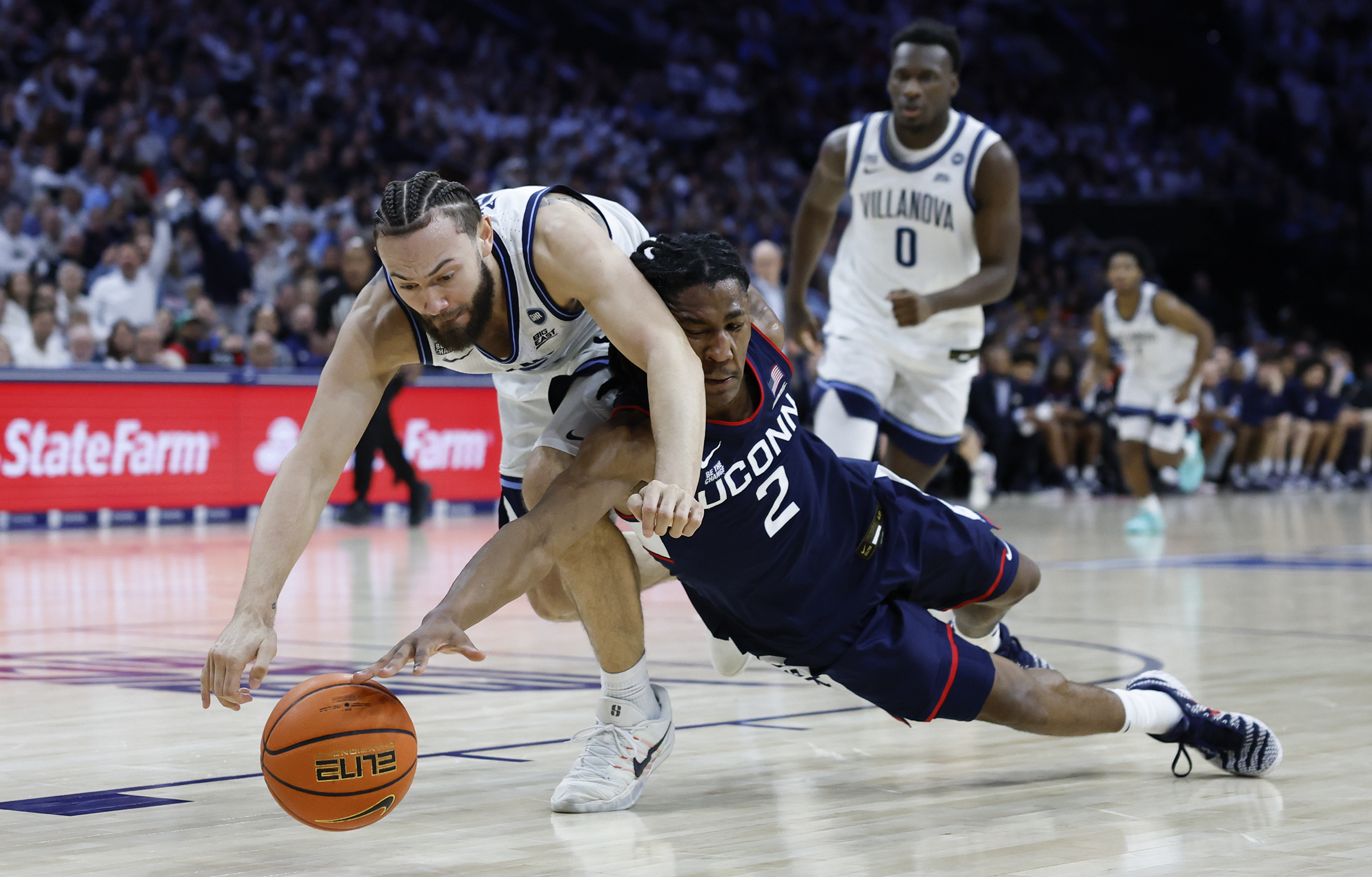
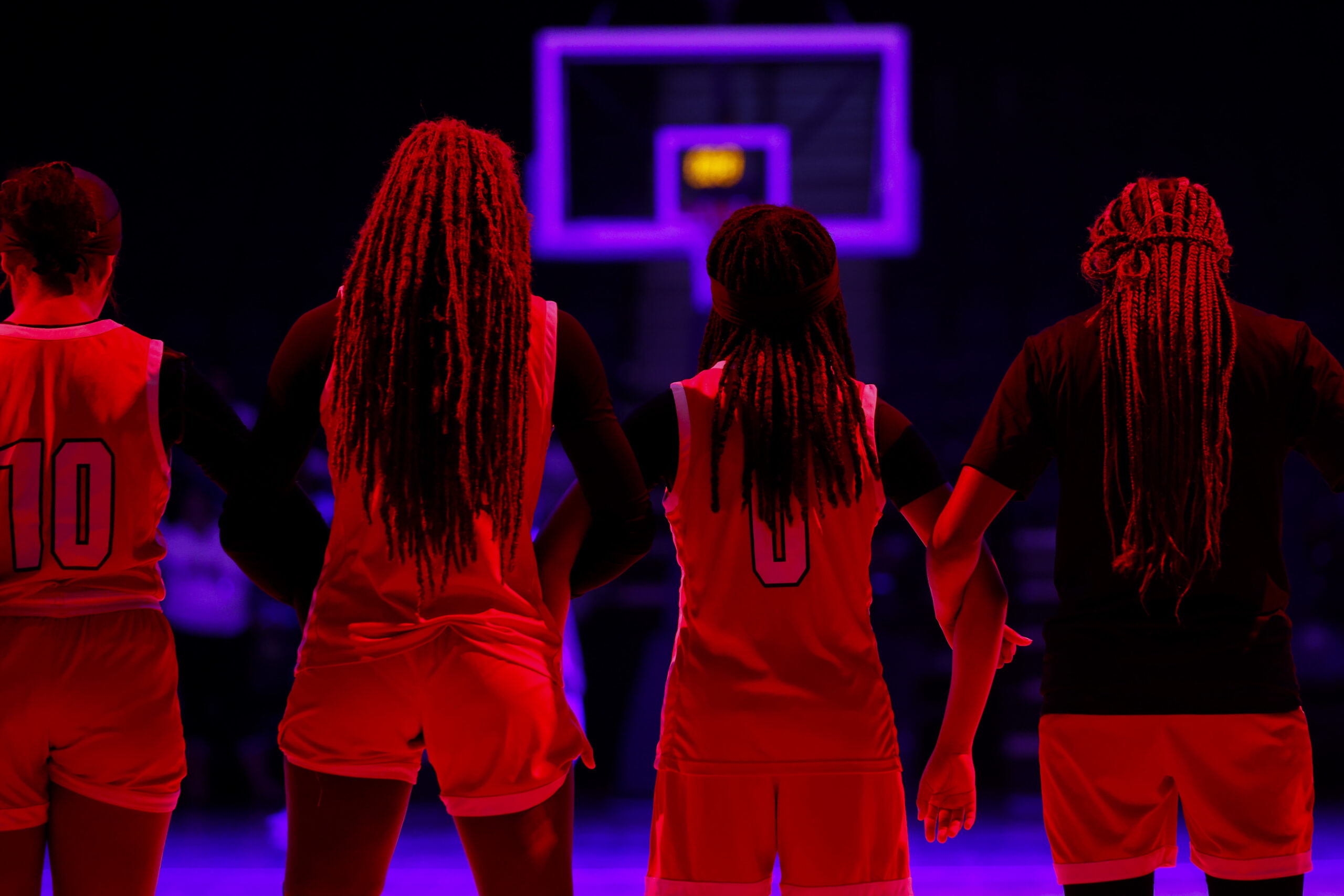
Each Friday, Inquirer photo editors pick the best Philly sports images from the last seven days. This week, the Philadelphia Public and Catholic League basketball playoffs were decided, with three of the four champions — Imhotep and Father Judge on the boys’ side and Audenried on the girls’ — picking up where they left off last year. In the case of Imhotep, it was the sixth straight Public League title, while Audenried captured its fourth. Meanwhile, the Archbishop Carroll girls won their first title since 2019. Down at spring training in Clearwater, the Phillies’ Grapefruit League schedule began, giving fans their first taste of baseball in more than four months.
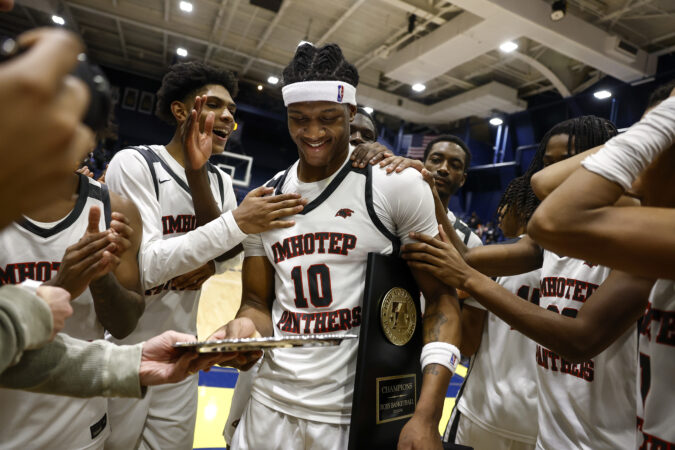
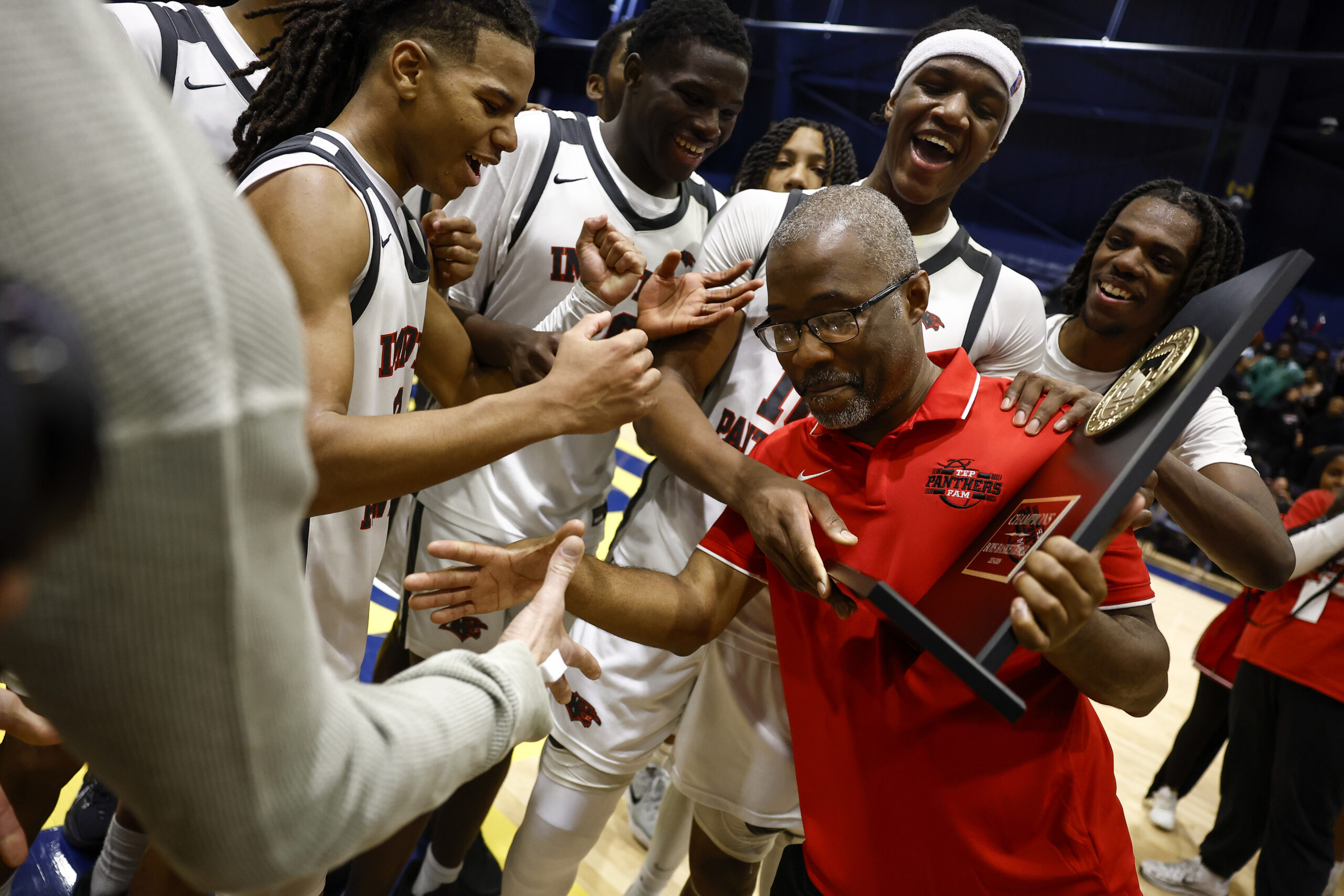
Imhotep Institute Charter players celebrate their sixth straight Philadelphia Public League boys basketball title with head coach Andre Noble (red shirt). They beat West Philadelphia High School, 39-35, on Sunday at La Salle University’s John E. Glaser Arena.
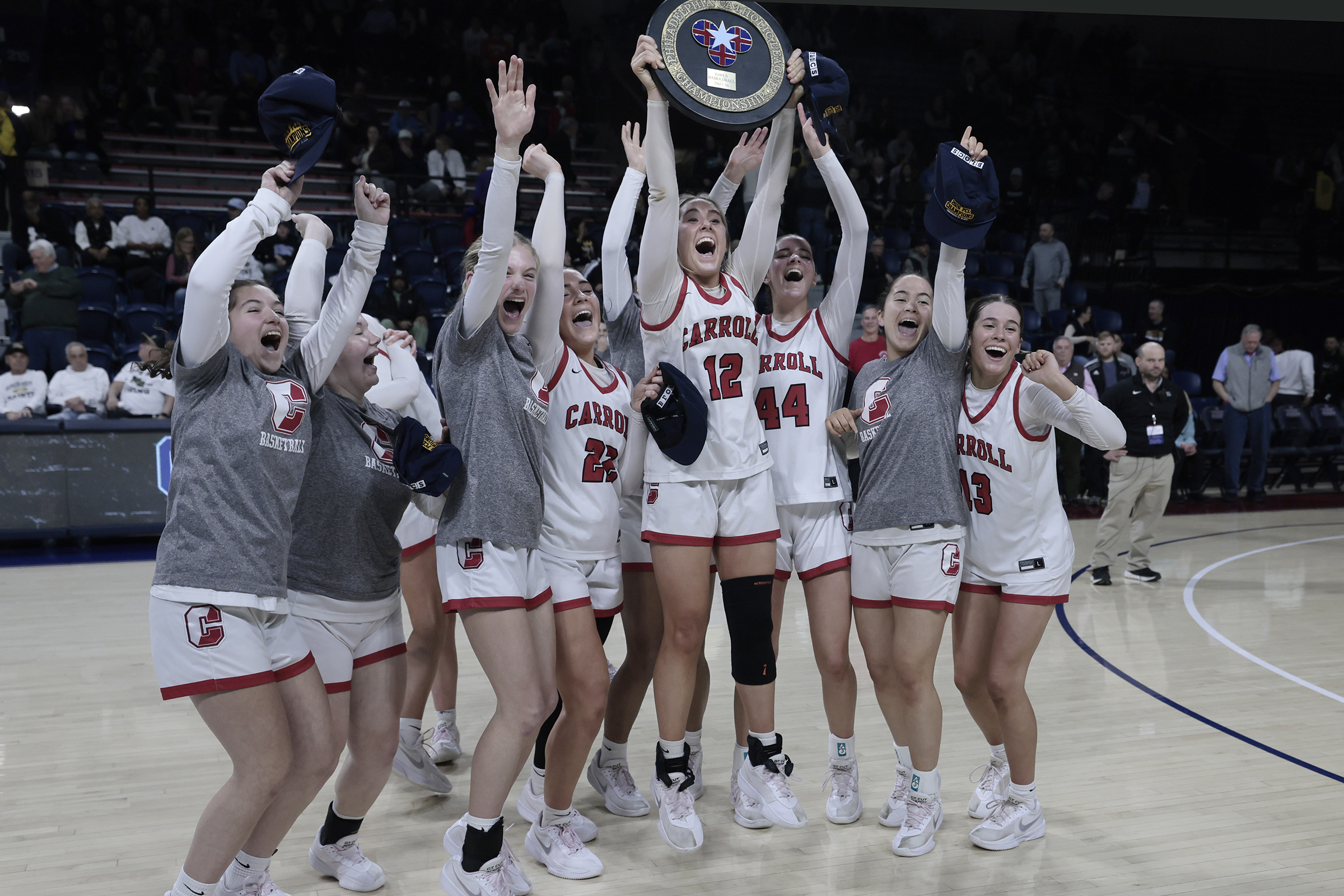
Archbishop Carroll won the Philadelphia Catholic League girls’ championship behind the trio of senior Alexis Eberz (holding trophy), and her sisters, sophomores Kayla and Kelsey Eberz.
Father Judge fans celebrate after their team won its second straight Catholic League boys’ championship. Last year, the Crusaders followed it up with a state title.
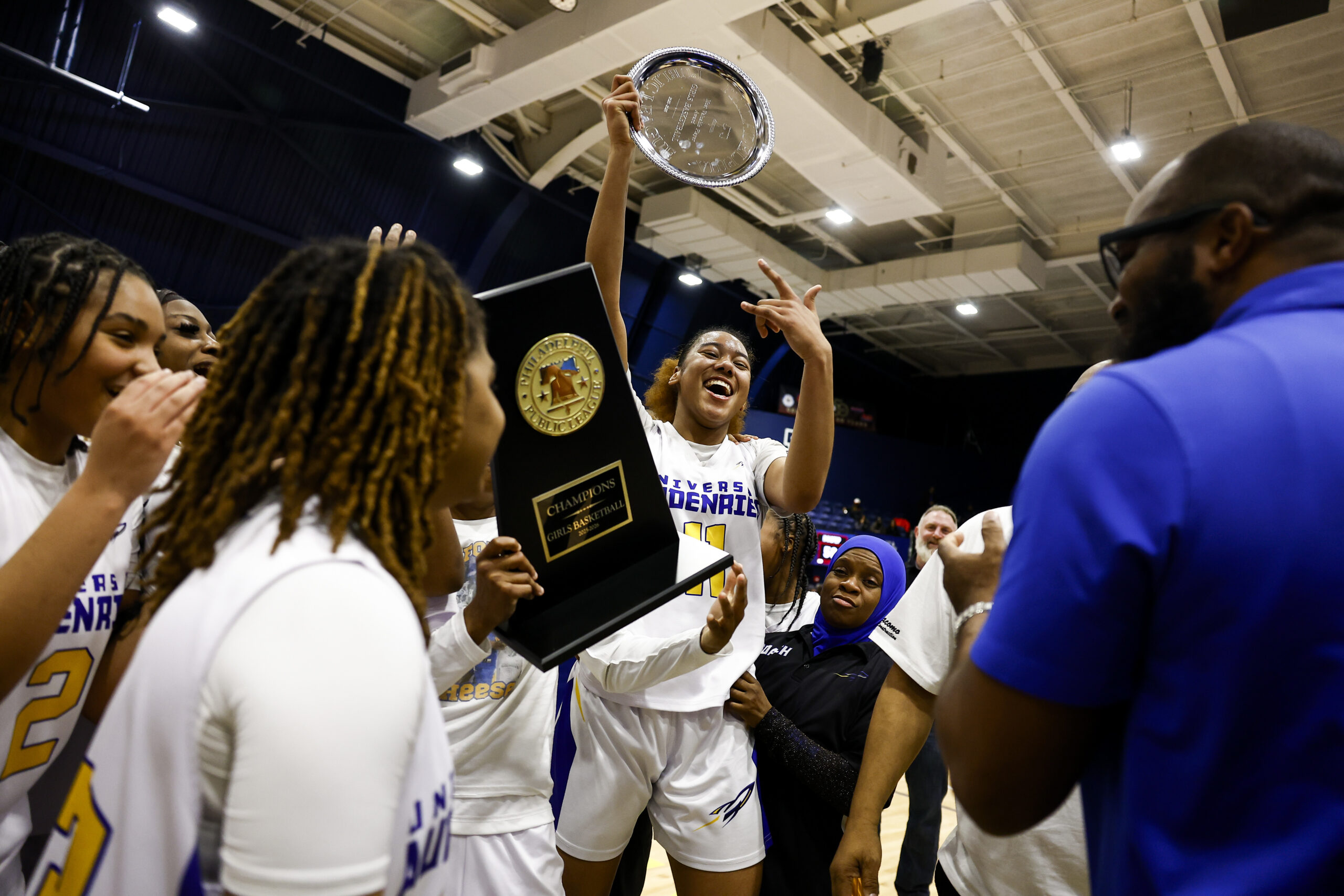
Imhotep had a chance to win both the boys’ and girls’ titles, but Universal Audenried Charter and junior Nasiaah Russell took home the school’s fourth straight crown Sunday at John E. Glaser Arena.
Andrew Painter spent most of last season in Lehigh Valley with the IronPigs, where he was selected to represent the Phillies at the 2025 All-Star Futures Game. He’s expected to be a part of the big-league rotation this season.
Phillies shortstop Edmundo Sosa hugs new outfielder Adolis García during Wednesday’s 5-3 win over the Detroit Tigers in Clearwater. The victory was the Phillies’ first of spring training.
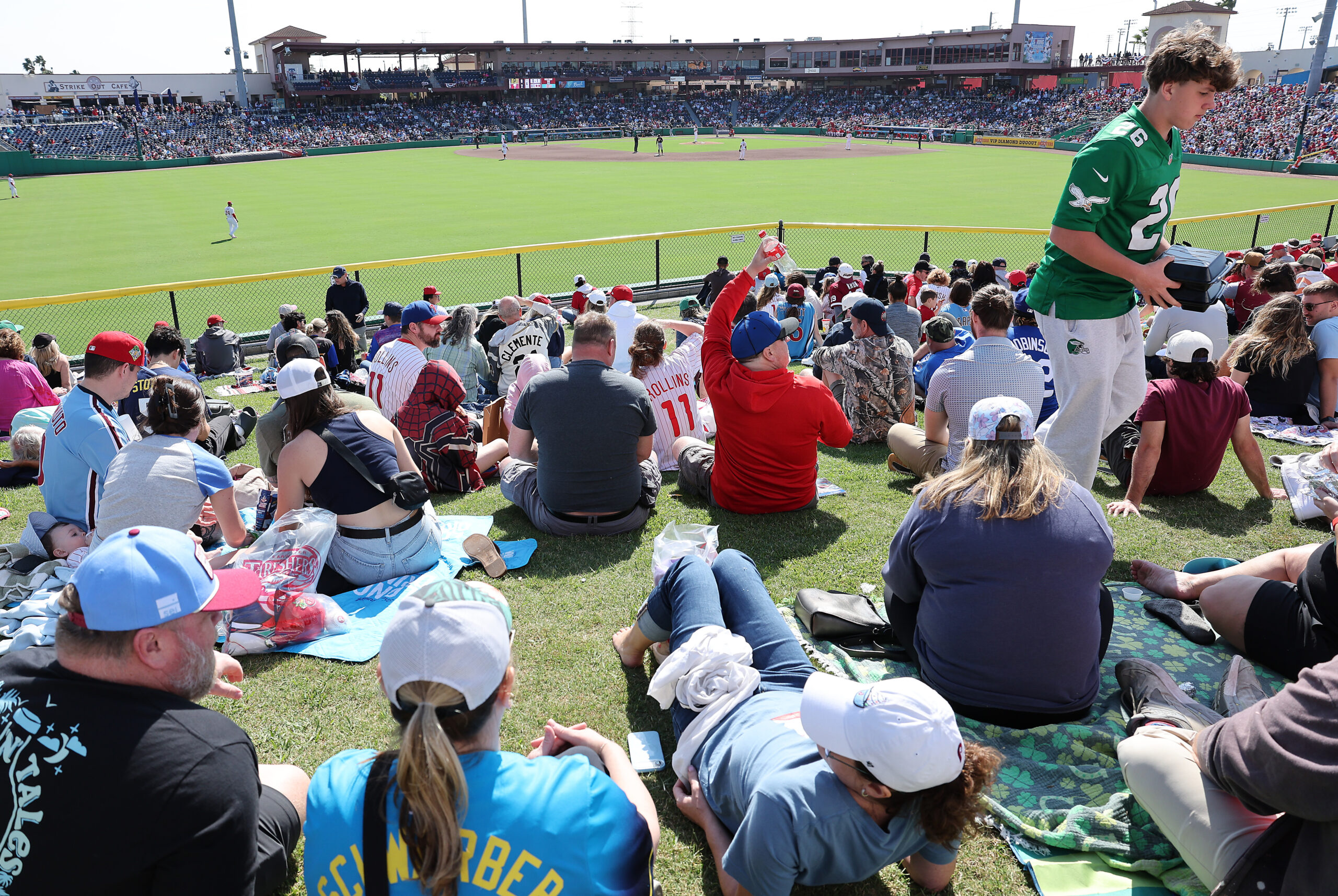
Even on the berm at BayCare Ballpark in Clearwater, Eagles fans aren’t hard to find, including this one in a kelly green Saquon Barkley jersey. It was Sunday.
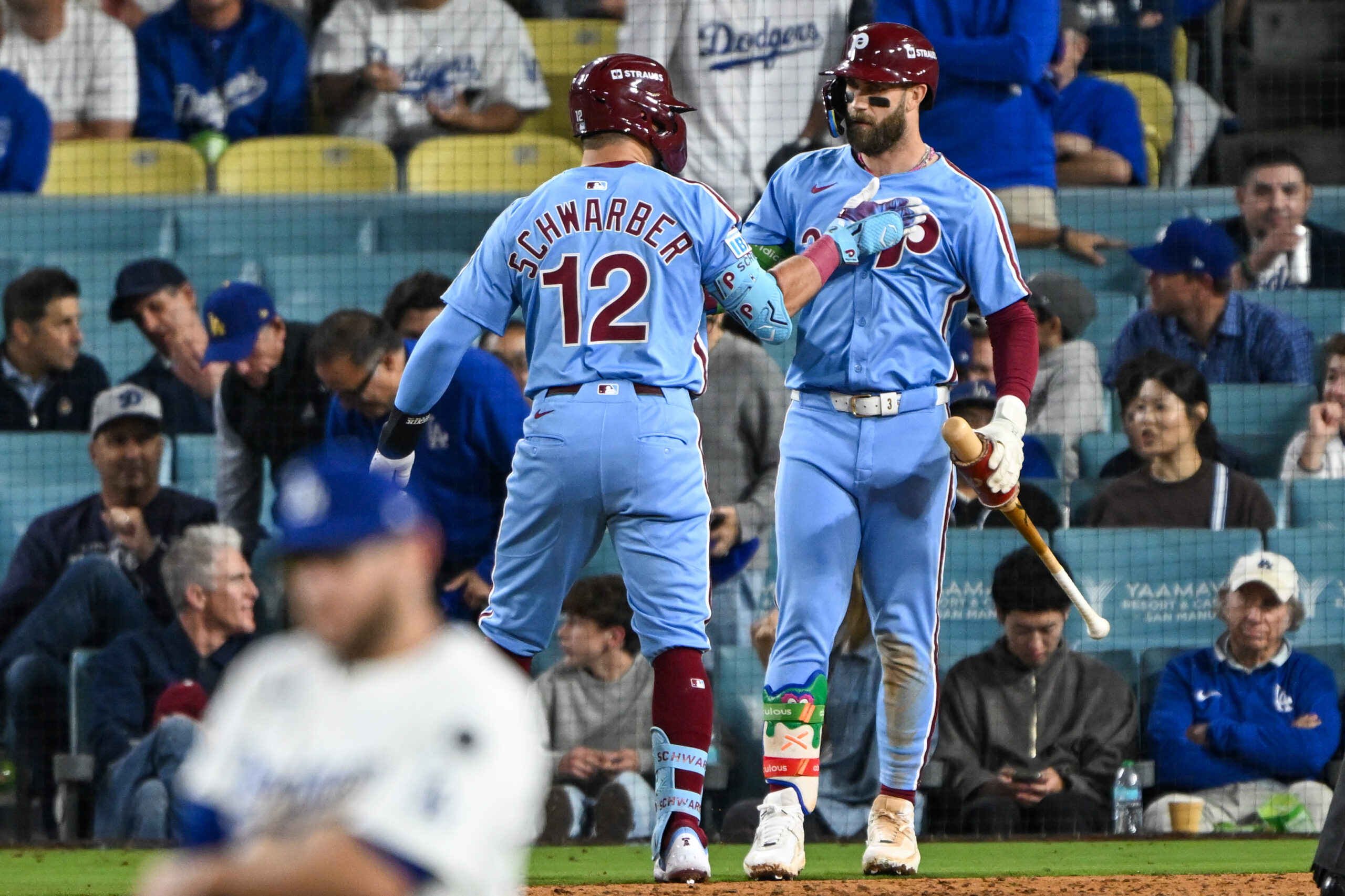
What if I told you that Alec Bohm offered more protection to Bryce Harper than Kyle Schwarber?
What if I told you the Phillies’ best batting order is the one they rode to the NL East title, and that Rob Thomson shouldn’t change a thing?
I can’t say either of these things with any degree of certainty. All I can tell you is what the numbers added up to last season. If you don’t like numbers, what you are about to read probably isn’t for you. But a surprising number of people emailed me after Tuesday’s column and suggested that I compare Harper and Schwarber’s numbers when hitting back-to-back in the lineup.
As a refresher, the topic du jour — or however you say the topic of that day in French — was Harper’s struggles to score runs after reaching base. It was a pertinent topic, given that it sat at the intersection of issues people rightfully have with the Phillies’ odd-fitting and top-heavy batting orders.
But the ramifications of Dave Dombrowski’s roster construction are much broader than the infrequent sound of Harper’s cleats clacking on home plate. The weight is disproportionately borne by Thomson. The dam has more holes than he has fingers. Baseball would be a lot more fun if he could use Harper and Schwarber twice each time through the batting order. Until he can, the lineup will always leak somewhere.
The question remains. What is the optimal (legal) combination? Specifically, at the top of the order, seeing that Thomson has used a number of different combinations of Harper, Schwarber, and Trea Turner, with or without another hitter mixed in.
I used Retrosheet’s play-by-play data and borrowed Will Hunting’s chalkboard and did some figurin’. Harper behind Schwarber, Schwarber behind Harper, neither behind the other. The sample sizes are too small to render any definitive judgments, especially given other confounding variables in play.
Observation 1: Harper didn’t get any benefit from batting in front of Schwarber.
In fact, he was his least productive self with Schwarber behind him in the order. The splits are pretty drastic. Harper’s OPS was nearly 100 points higher when batting in front of Bohm vs. Schwarber. And it wasn’t just because he walked more. His extra-base hit percentage was higher, thanks in part to five home runs in 126 plate appearances in front of Bohm compared with seven in 200 in front of Schwarber.
Here’s the interesting part: Harper was much better hitting behind Turner when Schwarber wasn’t hitting directly behind him, specifically when Bohm split the lefties in the No. 3 spot, with Harper batting second and Schwarber fourth. In fact, Harper and Schwarber were both pretty darn good in those situations — again, in tiny sample sizes.
Harper behind Turner, and nonconsecutively with Schwarber: 9-for-37, five extra-base hits, two home runs, 11 walks, .903 OPS.
Schwarber in those situations: 9-for-38, six extra-base hits, four homers, eight walks, 1.014 OPS.
All of Harper’s plate appearances in front of Schwarber came in the first three months of the season. The last time Thomson used a Harper-Schwarber lineup was those back-to-back losses in Toronto when the Blue Jays outscored them, 11-2.
Phillies manager Rob Thomson has quite the number of decisions to make when it comes to where Bryce Harper and Kyle Schwarber end up in his batting order.
After Harper returned from the injured list in late June, Thomson switched to the lineup that carried the Phillies through the rest of the season. Schwarber in the two-hole, followed by Harper. Only twice did he deviate from that batting order when both players were in the lineup. Understandably so. The Phillies averaged five runs per game in their last 79 games, putting together a team OPS of .789.
There is a question of correlation vs. causation here. Were the Phillies better as a team because Harper’s numbers were better behind Schwarber? Or were Harper’s numbers better behind Schwarber because that’s where he was hitting when he and the rest of the team found its stride?
All sorts of variables could be in play: the quality of pitching the Phillies faced in the last three months vs. the first three months, the weather, etc.
That being said …
The numbers show Kyle Schwarber should not bat in the cleanup spot behind Bryce Harper.
Observation 3: Schwarber should not bat cleanup. The optimal lineup is either Turner-Schwarber-Harper or Schwarber-Turner-Harper.
The Phillies were at their best when Schwarber and Harper were batting in the top three. This is obvious. Schwarber may look like the prototypical table-clearer until you see what happens when Bryson Stott and Turner are getting it set.
No offense to either player. But the goal is to get your elite players the most at-bats. It doesn’t get more prototypical than Aaron Judge, and the Yankees bat him leadoff.
It comes down to this, really: Down by one in the bottom of the ninth with the top of the order due up, you want a lineup that guarantees Harper and Schwarber a chance at tying the game. The data from last season doesn’t prove anything, but it is always smarter to err on the side of what the data suggests when what it suggests is the same as one’s intuition.
We can argue about Bohm vs. Adolis García vs. Realmuto. Hopefully, we’ll end up arguing about Aidan Miller. But there isn’t much of an argument for batting Schwarber or Harper lower than third.
Just ask any opposing pitcher what he would prefer.
Intermittent fasting, one of America’s most popular diet trends, may be no more effective than simply cutting calories for weight loss, a new review of research shows.
Researchers found little to no difference in the amount of weight loss acrossmore than 20 studies comparing intermittent fasting, an eating pattern that cycles between periods of eating and fasting, with traditional dietary advice (which calls for restricting calories or the types of foods eaten).
The findings were published this month in the Cochrane Library, home to evidence reviews that are considered the gold standard for evaluating health evidence.
“From the results of this review, it doesn’t look like intermittent fasting is any better than regular dietary advice,” said Diane Rigassio Radler, a co-author on the study and a clinical nutrition professor at Rutgers School of Health Professions.
The data came from 22 randomized controlled trials involving nearly 2,000 participants across Europe, North America, China, Australia, and South America. Interventions ranged from four weeks to six months long, and looked at participants’ outcomes up to a year later.
In six of the trials, participants were picked at random to either practice intermittent fasting or do nothing. The difference in weight loss between the two groups was so small that it was not considered “clinically meaningful,” Radler said.
People generally need to lose 5% of their body weight to see health benefits. When the research team pooled the results of studies, they found weight loss from intermittent fasting slightly exceededthat of the group that did nothing, but remained below the 5% threshold.
“Anecdotally, people have told me that [intermittent fasting] might work for them, but the reasons for doing these systematic reviews is so that you can pull the evidence and make a stronger conclusion based on facts,” Radler said.
The studies focused on people in the overweight or obese categories as measured by BMI, a calculation of a person’s body fat based on their height and weight. The relevance of the research findings to people in the healthy weight category remains unknown. (While widely used, BMI is often not a good predictor of an individual’s health, as people’s body types can vary widely depending on race, gender, and age.)
The Inquirer spoke with Radler, who is also a registered dietitian by training, about the findings of the study and its implications, in an interview that was lightlyedited for length and clarity.
What is the theory behind intermittent fasting?
From a physiological perspective, there’s sound science in terms of why fasting might have an edge over just calorie restriction alone.
Number one, it involves calorie restriction. It’s thought to increase fat metabolism. There’s some hormonal stuff going on. It may enhance insulin sensitivity. When you’re fasting, you’re going to be breaking down fatty acids, and those can produce a significant source of energy.
But from the available studies we were able to evaluate, the findings are that intermittent fasting was not really different [in terms of weight loss].
There’s the theoretical framework, and then there’s what happens when you put it into reality.
Instead of intermittent fasting, what would you recommend?
It’s individualized. It depends on where the patient’s at and what they feel that they want to do.
The cardinal rule of thumb is you create a calorie deficit, and whether that’s with restricted eating or increased energy expenditure (such as through exercise), or a combination of both, you’re looking to achieve calorie restriction over time. Generally, you’re going to probably sustain that for at least 12 weeks, and then look at some outcomes.
We found that people who work with a registered dietitian on a weekly or every other week basis have the most success in terms of achieving weight management.
Your study found that intermittent fasting wouldn’t necessarily be effective. But would it be harmful for people to do?
You have to look at people’s baseline and their other comorbidities if they have any. But generally, we didn’t find that there were adverse effects, according to the studies that measured that as an outcome.
When you fast, there’s a risk of dehydration and risk of low blood sugar, but generally, the studies that measured the adverse effects didn’t find significant differences.
Are there any gaps in the research that you think should be looked into further?
There could be room for more research with a wider diversity of subjects, because most of the studies were in high-income countries. We have to look at some of the cultural differences.
Also, research with longer durations. We were not able to find studies that went out beyond 12 months of outcomes.
A 14-year-old boy and his mother went to his pediatrician because the teen had just been placed on a three-day suspension. The reason? His loud snoring was disrupting his classes.
His doctor asked many questions to understand what was going on, and learned his patient had been frequently falling asleep in class over the last several months. He told the doctor that no matter how much he tried to stay awake, he couldn’t help dozing off. Previously he had received As and Bs in his classes, but since he was missing so much in class, lately he had been getting more Cs and even a D. He and his mother were both worried about this. He was also embarrassed over his loud snoring making him the center of attention in class.
His sleepiness was also causing problems at home. He and his mother agreed that waking up in the morning was a nightmare because he kept falling back asleep after his alarm sounded. His mother said that it often took up to an hour to get him out of bed.
The doctor reviewed his medical history and saw that he was a generally healthy teen who didn’t have any chronic conditions or take any daily medications. He had his tonsils and adenoids removed eight years prior for a reason his mother did not remember. His pediatrician noted that he had gained a significant amount of weight over the last two years and his body mass index (a ratio of weight to height) was now in the obese range.
His doctor then asked more questions about his sleep. Generally, he went to bed at 10 p.m. and woke up around 6:30 a.m. for school. He had already tried measures to improve his “sleep hygiene” which are the habits around sleep. He left his phone charging outside his room in the hallway so he wouldn’t be tempted to scroll all night long. He tried to pick a consistent sleep and wake up time, even on weekends.
He didn’t typically have problems falling asleep, and he didn’t wake up at night. He denied having restless legs that interrupted sleep. His mother told the doctor that he snored loudly enough that she could hear it outside the door. One or two times she had also noticed that he paused in breathing during sleep for a few seconds, without waking up. The doctor asked if the teen ever had muscle weakness when having a strong emotion. Both he and his mother were amused by the question but didn’t think this had ever occurred; the doctor explained that she was describing “cataplexy,” which can be seen in people with a neurological problem with sleep called narcolepsy.
The doctor then asked to speak with the teen one-on-one. She was worried that his sleepiness issues might be indicative of a problem like depression, anxiety, or drug use. The teen denied symptoms like a loss of pleasure in doing things or feeling worthless. He told her that his favorite thing to do was play in the band, where he played five different band instruments. Unfortunately, he had been kicked out of his band due to his declining grades and his suspension. He wasn’t someone who was easily anxious and he didn’t have anxious thoughts at night keeping him up. He had never tried alcohol, vaping, marijuana, or other substances.
The doctor invited the teen’s mother back in the room for the physical examination. She assessed his blood pressure, heart, thyroid, lungs, abdomen, and neurological system and did not find anything abnormal.
Answer:
The doctor referred the teen to a pulmonologist, or lung specialist for a sleep study to see whether the teen may have narcolepsy or obstructive sleep apnea. For the sleep study, also called polysomnography, the teen slept overnight in the hospital while his oxygen saturation, breathing patterns, and brain activity were monitored.
Due to many episodes of apnea (pauses in breathing during sleep) and hypopnea (partial decrease in air flow during sleep), he was diagnosed with severe obstructive sleep apnea. Obstructive sleep apnea (OSA) is a condition where the throat becomes closed or narrowed during sleep, causing pauses or decreases in air flow, which can cause oxygen levels in the body to drop.
This causes the body to wake up, even if the person doesn’t notice it. If this happens throughout the night, the person cannot get restful sleep and can be very tired during the day. Risk factors for OSA include male sex, obesity, and having large adenoids and/or tonsils.
The teen was grateful to understand that his sleepiness was not his fault or a sign of laziness. He started treatment with continuous positive airway pressure (CPAP) overnight to help keep his airway open. Once his daytime sleepiness improved, he was able to do more physical activity during the day. The best part was that his school let him back into the band, and he decided to challenge himself to learn another instrument.
Take home points
Teens generally need 8 to 10 hours of sleep to best support their health.
Daytime sleepiness is common in adolescents and can affect their schoolwork, relationships with peers and family, and daily activities.
Common methods to improve sleep hygiene include a consistent schedule of going to bed and waking up (even on weekends), avoiding screens in the bedroom, having a consistent bedtime routine, and being active daily but avoiding heavy exercise for at least an hour before bed.
In some cases excessive daytime sleepiness may be an indicator of an underlying health condition, such as obstructive sleep apnea. Be sure to talk to your child’s doctor if you have these concerns — OSA is becoming more common in children due to obesity, though it can have other causes as well.
Samantha Starkey is a third-year pediatric resident and Hayley Goldner is a pediatrician in the adolescent medicine department at Nemours Children’s Hospital, Delaware
Readers were asked to draw a line where they believed South Jersey starts. Here is every individual submission we received. As you can see, the lines are scattered across the state, but there is a focus on the center of the state.
In the end, the average divider marking South Jersey sat near Burlington, Trenton, and just south of Toms River.
There were many factors that influenced where people drew their line, from using towns and counties to highways and area codes as boundaries.
I-195 was a popular point of division. “The dividing line in my mind is I-195, which goes from around Trenton east to the shore,” Will Dean from South Jersey wrote.
story continues after advertisement
Cultural factors also played a role. Eagles or Giants? Phillies or Mets? Flyers or Devils? Taylor ham or pork roll?
According to an analysis of Twitter accounts and what teams they follow, the county divide between Eagles fans and Giants fans tracks very closely with where readers drew the line.
After readers answered where South Jersey starts, we asked the more controversial question: Does Central Jersey exist? An overwhelming 74% of readers said that it did.
If a reader said yes, we challenged them again to draw the line between North and Central Jersey. Every line represents a submission.
Rebecca Overholt, a reader who has lived in all regions of the state, said of Central Jersey: "You get NYC and Philly stations in both TV and radio. You can find Eagles fans, Giants fans, and Jets fans all on the same block, and the only reason they get along is the jerk who flies a Dallas flag.”
Julie Lawson, another reader from South Jersey, weighed in, saying: “South and North Jersey are distinctly different. Central Jersey is amorphous and sort of exists where the two mix, sort of like the brackish water between fresh and saltwater.”
The average line was south of Hillsborough and New Brunswick.
“Happy to see a majority think Central Jersey exists because it does. I'd argue that New Brunswick is the dividing line; its county name, MIDDLEsex, screams Central Jersey,” said Tim Quinn, a Central Jersey reader.
As you can see, we are far from reaching a consensus here.
Maybe the one point New Jerseyans can agree on is best said by reader Ryan Wall: “Regardless of whether or not people believe Central Jersey exists, one thing everyone in the Garden State can agree on is that it's the greatest place in the world to call home. Lest we forget: ‘We're from Jersey, baby, and you're not.’”
What should we settle next?
Staff Contributors
Design, development, data, and reporting: Garland Fordice
South Philly’s Mark Abadi has had a way with word games since he was old enough to pick up a Scrabble board.
By 10, he would complete large-print mini games and crossword puzzles, and started playing Scrabble against his parents.
He became what he calls a “word nerd,” obsessing over newly-learned words and trying out new strategies in hotly-contested Scrabble battles at home.
“I could never compete with my parents,” he joked. His parents always matched his competitive spirit.
Eventually, he lost interest in the game until, at 15, he found his childhood Scrabble board and began playing again. Only this time, he had spent days studying the Scrabble dictionary, which made him better equipped to out-point his parents.
“I looked through the [dictionary] pages, and was like, ‘Oh my God, that’s a word? You can play ‘A‘ā’ because it’s a kind of lava? What?’”
Mark Abadi is one of several nationally-ranked Scrabble players in the country. He recently struck gold on the CW game show based on the iconic board game.
Abadi, a copy editor at Business Insider, found immediate inspiration reading the 2001 Word Freak by Stefan Fatsis, a journalist who explored the underground Scrabble community and became an expert-level player. Soon, he’d follow Fatsis’ footsteps and become a nationally-ranked Scrabble player.
For nearly two decades, Abadi, 35, has competed in tournaments throughout the country. He’s won regional matches and scored top five finishes in world-class competitions, including the North American Scrabble Championship.
The Montgomery County native has continued to sharpen his skills by rubbing shoulders with other world-class players, many of who (like Abadi) are members of the Delco Scrabble Club.
“I casually hop on SEPTA and then I’m face-to-face with the best Scrabble players in the country. It’s kind of intimidating,” he said.
‘We’re waiting for you’
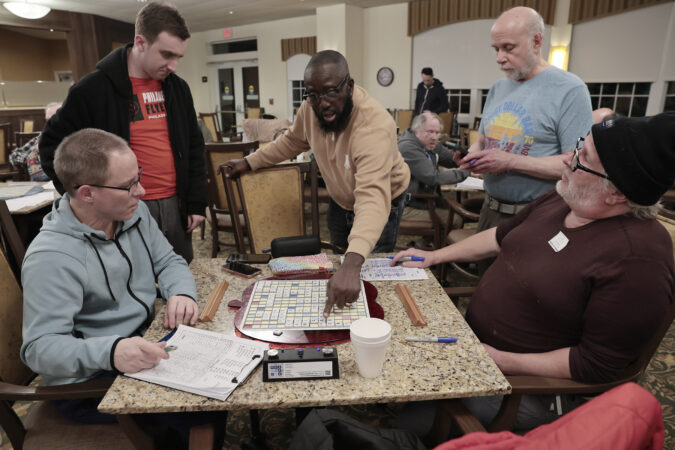
The Riddle Village dining room was pin-drop quiet on a recent evening, save for the occasional shaking of Scrabble tiles. The Delco Scrabble Club had gathered at the assisted living facility, where one of their oldest members lives, for their weekly meeting.
When The Inquirer got there, the members were halfway through their first of five 50-minute games.
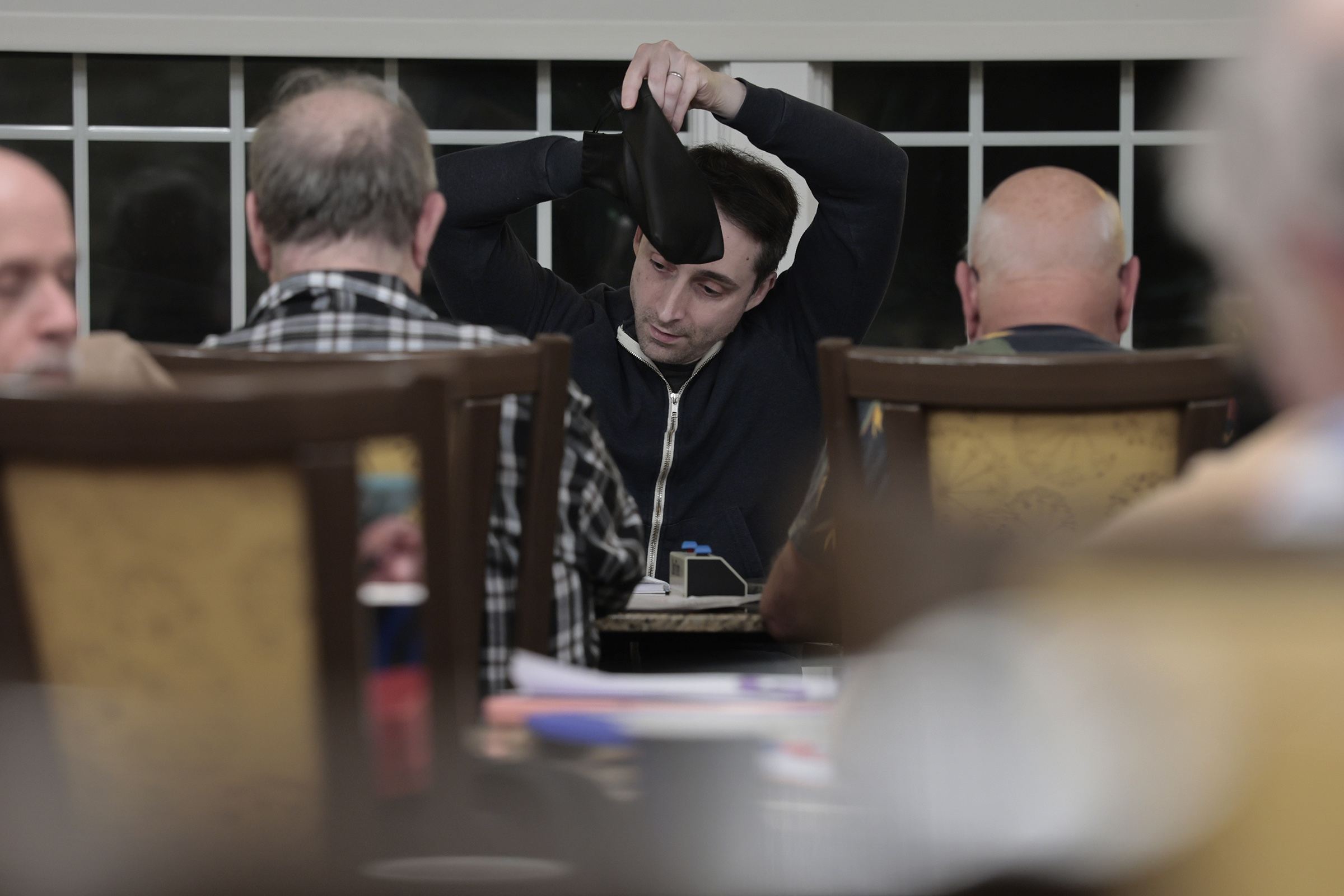
Will Anderson, a 41-year-old national Scrabble champion, reached into the black drawstring bag suspended above his head and plucked a plastic tile. “We do this as a courtesy to our opponents,” he said, glancing at the bag. “So you aren’t doing any shenanigans when you’re drawing.”
Will Anderson picks his tiles from the bag while playing Scrabble during a Scrabble group meetup at Riddle Village in Media on Thursday, Feb. 12, 2026.
Unlike Abadi, Anderson did not grow up playing Scrabble. He started as an adult, partly to break a World of Warcraft addiction. That was in 2009.
Since then, he’s won multiple tournaments and become an online Scrabble celebrity of sorts. After building an audience on Twitch, he turned to YouTube, where he currently has 70,000 subscribers and regularly posts “Scrabble History” videos detailing legendary games and players.
“It’s more growth than I ever could have imagined,” Anderson said. His online following even led to his day job as a content producer at Scopely, the mobile gaming company behind the Scrabble app.
In Riddle Village, Anderson was playing two games at once because the group had an odd number of players. “We call it good Will and evil Will,” said Samuel Moch, a top-10 player in Pennsylvania, also a club member. “And that’s appropriate because I’m playing good Will and I’m beating him.”
Meanwhile, “Evil Will” was facing Jeff Jacobson, a retired tuxedo salesman and another top player in the state, and winning.
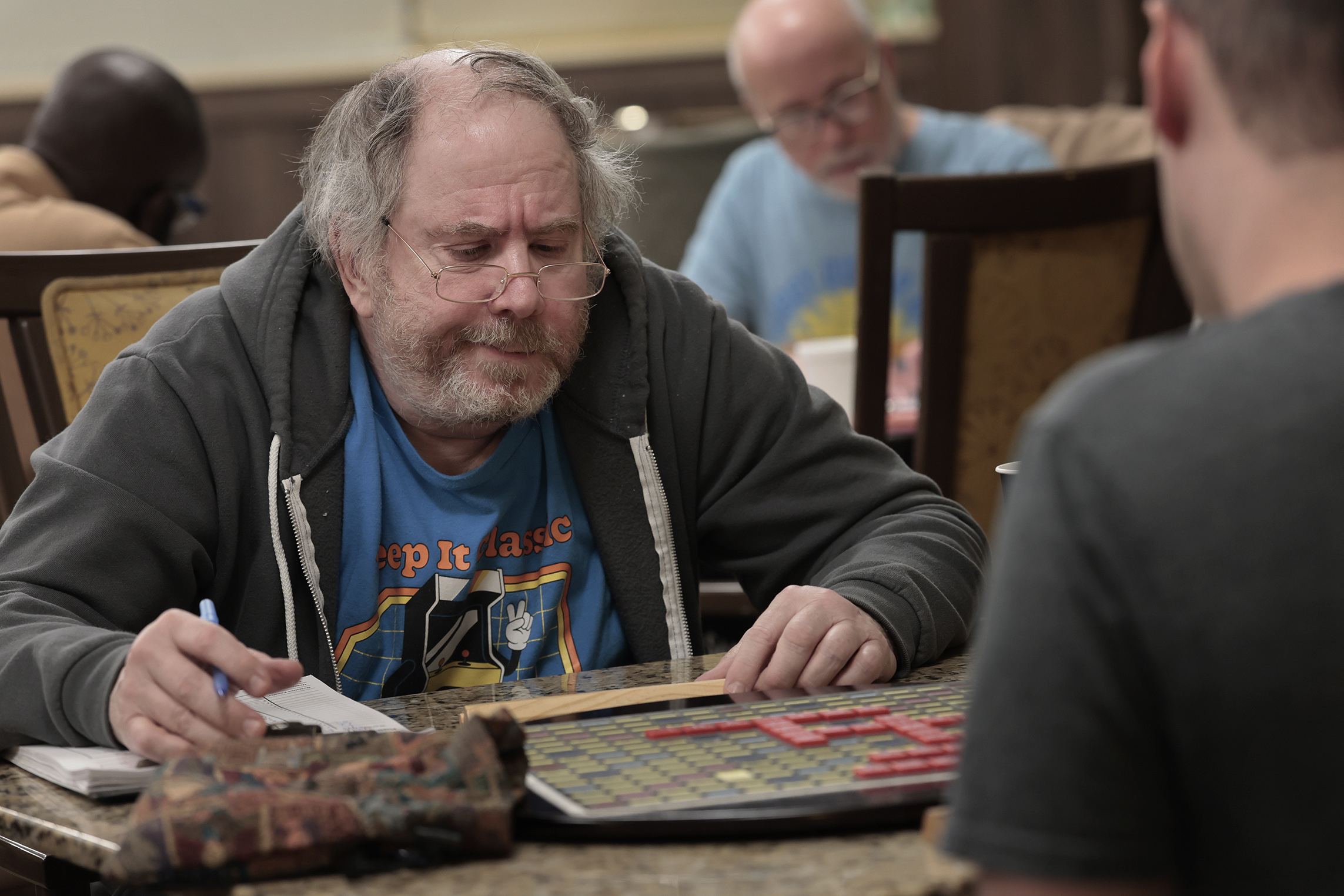
Jeff Jacobson of Philadelphia (left) ponders his next move while playing Scrabble with Samuel Moch of Philadelphia (right) during a Scrabble group meetup at Riddle Village in Media on Thursday, Feb. 12, 2026.
Anderson, who lives in Aston, said part of the reason Philadelphia is home to so many strong Scrabble players may simply be its size.
“You have a higher chance of these unusual hobbies in urban areas,” he said. Or perhaps, he added, the city’s competitive sports culture spills over into word games. “There could be something to that.”
The competitive scene also benefits from the fact that Scrabble is a universally known game. Almost everyone learns it at home, as did several members of the Delco Scrabble Club.
They grew up playing with friends and relatives, got so good that nobody around them could beat them, and began looking for tougher opponents.
“If you’re that person in your family,” Anderson said, “we’re waiting for you with open arms.”
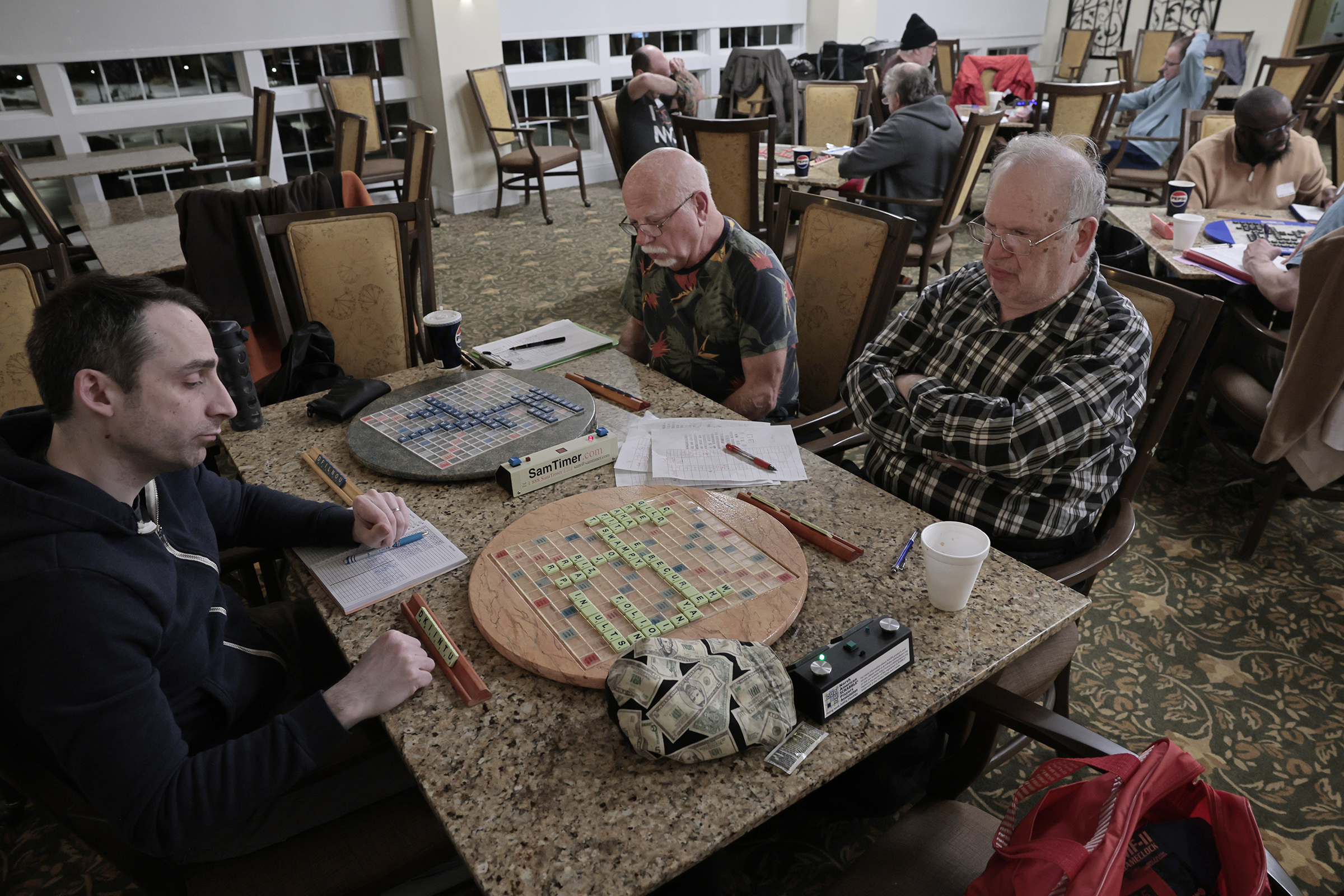
Will Anderson (left) plays Joe Petree (middle) and Marty Fialkow (right) during a Scrabble group meetup at Riddle Village in Media on Thursday, Feb. 12, 2026.
At the Delco Scrabble Club, it quickly becomes clear that Scrabble has more in common with chess than it does with word games.
“As a tournament player, you realize how deep and how beautiful the strategy of Scrabble is,” Anderson explained. “And in your pursuit of playing better and better, you leave the word game part of it behind and embrace it as a strategy game.”
Often, players don’t even know the definitions of the words they play.
Evan Chester, the fifth-best player in Pennsylvania and one of the top 50 players in the country, doesn’t know the definition of unaus, the word he had put down in the Riddle Village game. He knows it because he memorized the dictionary.
“But it’s a very useful and playable word,” said the 22-year-old.
“It’s a two-toed sloth,” said fellow club member Brendan McClanahan. Other club members, like de facto leader Ed Roth, who has been hosting the club at his house regularly for six years, nodded in agreement.
“Yup, two-toed sloth,” he said, as he laid down the word decrial.
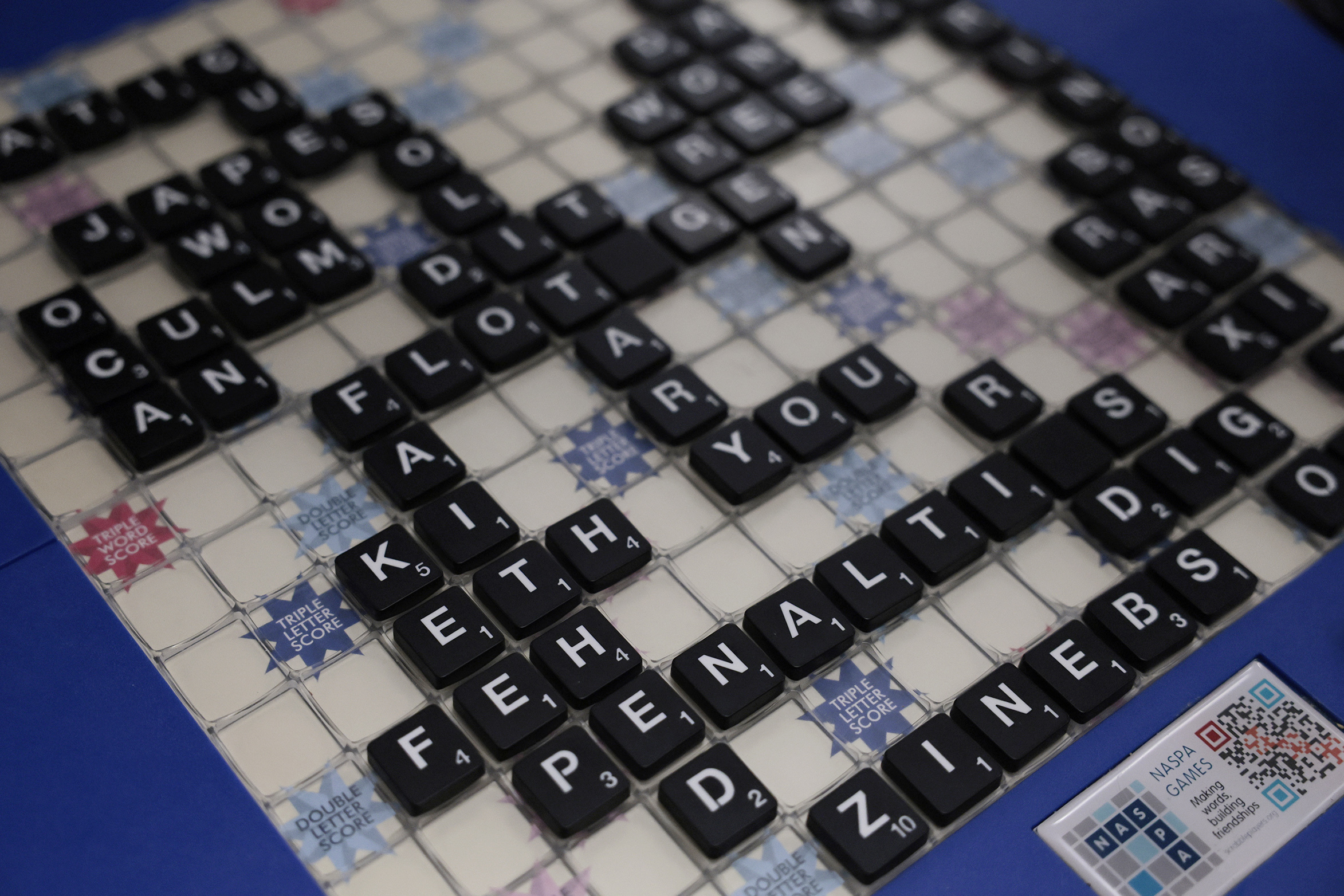
A completed Scrabble game board during a Scrabble group meetup at Riddle Village in Media on Thursday, Feb. 12, 2026.
Delco to TV
The Delco Scrabble Club is drawing the attention of national TV audiences. Abadi and Anderson are competing on CW’s Scrabble game show, hosted by comedian and former late-night show host Craig Ferguson.
Last summer, Abadi submitted an application to audition for the game show. And after meeting with the casting director, he was invited to compete in London for the show’s $10,000 prize.
Abadi scored a win last week and will advance to future episodes of the show.
“I put my fist up and clapped and everything,” he said. “I was way more peppy than I am in real life, to be honest.”
Anderson, who applied to audition after a show producer reached out to him on YouTube, won’t appear until the tail-end of the season in August. He was equally enthusiastic during his run.
“I kicked up the hooting and hollering far beyond my norm,” he said. And while he was nervous in the lead-up to the game, “when it came to actually playing Scrabble,” he said, “the muscle memory kicked in, and it just became fun again.”
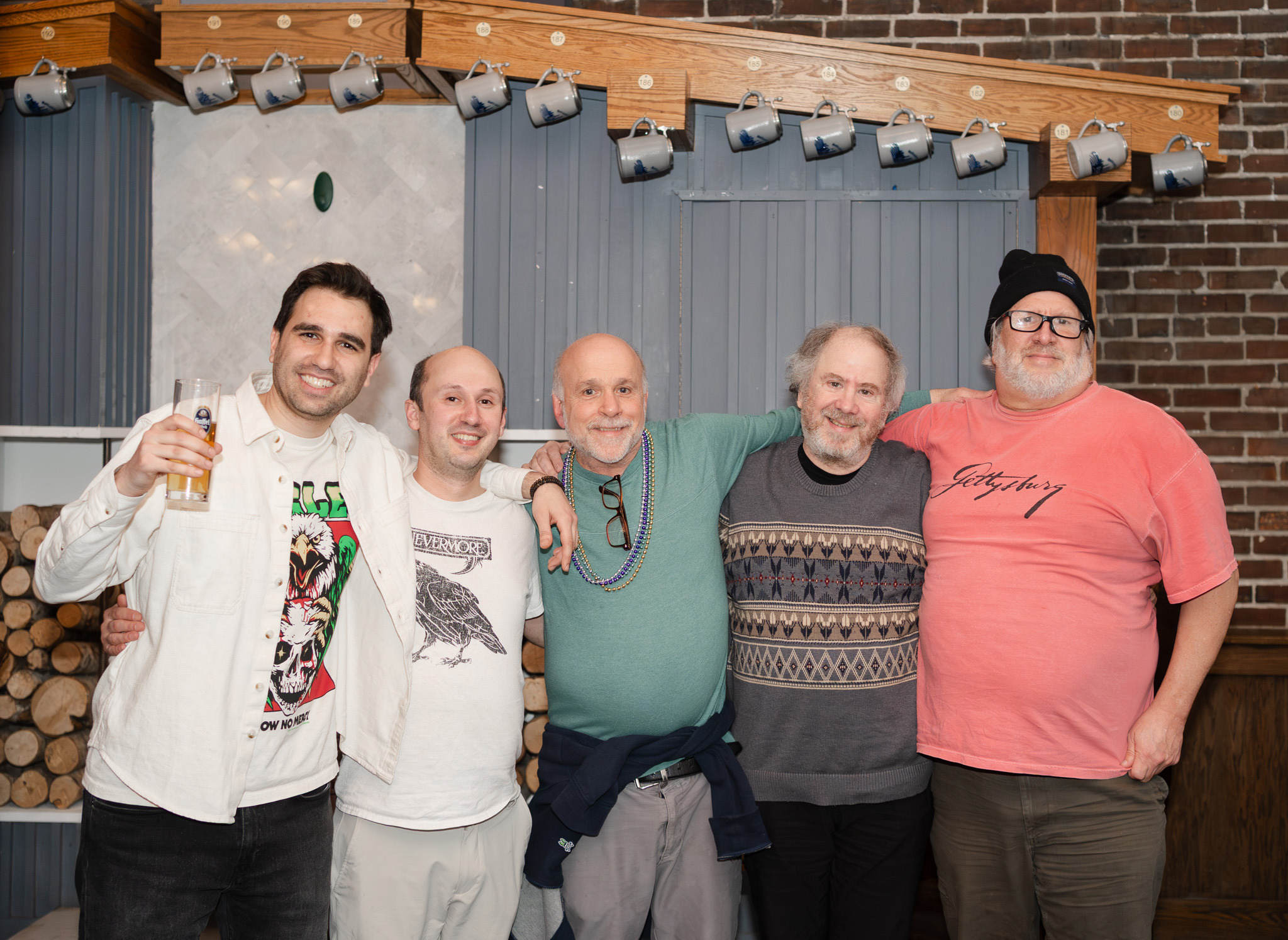
A group of Mark Abadi’s friends, family, and Scrabble club members celebrate his win on the CW game show, “Scrabble.”
Anderson and Abadi signed NDAs preventing them from discussing their performance, but both said winning wasn’t their main goal. Abadi wanted to “have fun” and represent the Philly and Scrabble communities well, which he thinks he did. Anderson just hopes his appearance on the show is entertaining for viewers.
Through the show, Abadi is hopeful more people are drawn to the iconic board game. It’s not just a “vocabulary contest,” or a “game made for grandparents,” he said, adding there’s “something for everyone to appreciate about it.”
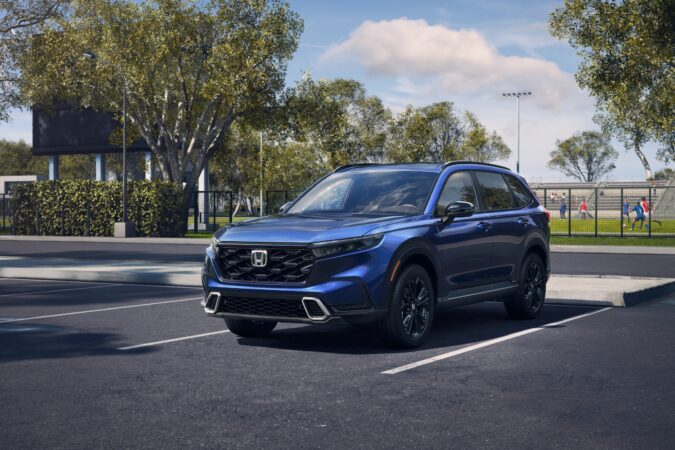
2026 Honda CR-V Hybrid AWD Sport Touring vs. Kia Sportage Hybrid: A challenger for the hybrid crown?
This week: Honda CR-V Hybrid
Price: $42,550 for the trim level (which is top of the line)
What others are saying: “Highs: Civilized and efficient hybrid powertrain, roomy interior, new larger standard infotainment touchscreen. Lows: Price premium over nonhybrid CR-V, could use a few more ponies,” says Car and Driver.
What Honda is saying: “The hybrid that gives you more.”
They haven’t changed too much about the underpinnings of this model — same powertrain, but with a new look. A TrailSport model gives it more Passport-type off-roady features.
It really looked like a Passport parked in the driveway.
Up to speed: The CR-V Hybrid feels like a surprisingly quick little SUV. The two-motor hybrid system creates 204 horsepower and is coupled to a 2-liter four-cylinder engine that gets updates for 2026.
In any case, the CR-V has a nice feel of momentum as it goes about daily driving, even if the hard numbers are actually kind of soft.
Shiftless: A Honda with a shift lever continues to excite me far more than it really should. But that’s how disappointed I was with the old buttons. I just found them unattractive and cumbersome.
The power band is fairly even in this hybrid version of the CR-V; gasoline-powered Hondas with CVTs can be a little uneven.
On the road: The CR-V appeared quite mannerly and easy to drive.
And then I found Sport mode. This really turns the small SUV into a Volkswagen or Mazda competitor. It doesn’t quite have the fun factor but it really wiggles through the curves nicely. Cornering is a real bright spot, as I made some left turns at stoplights far more enthusiastically than I’d have thought possible, and the tall SUV never even flinched.
The CR-V also rates highly for maneuverability. With a backward-garage at Chez Sturgis, a lot of three-point runs happen, and the CR-V let me go from one corner to another in one swoop, much like the smallest vehicles out there.
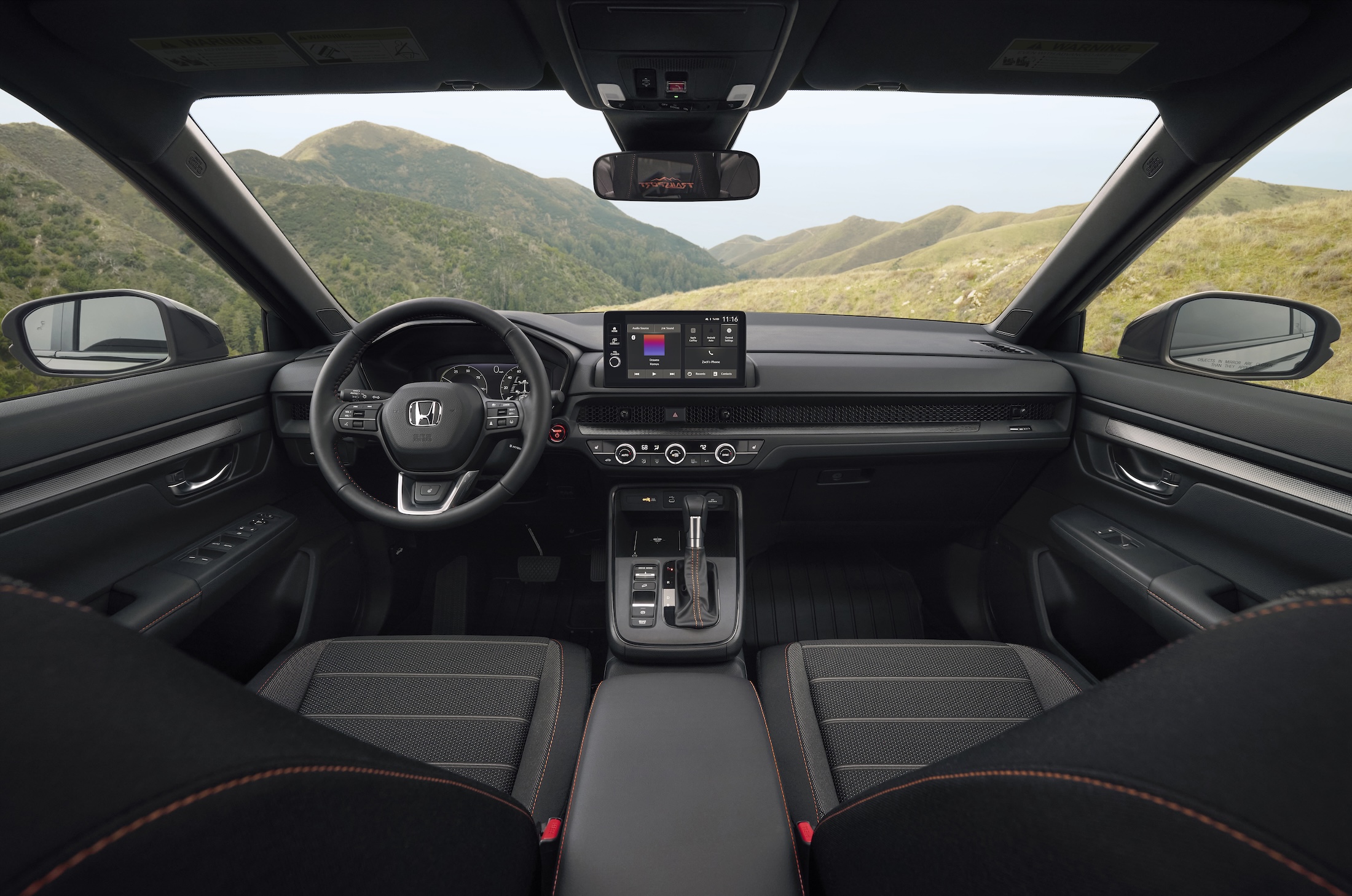
Honda favors basic black in its interiors and it gives the CR-V Hybrid a classic look.
Driver’s Seat: The seat seemed a little stiff at first, and my time in the Civic Hybrid made me paranoid — Civic seats tend to jab me just the wrong way. But no Mr. Driver’s Seats were harmed in the making of this review, and a comfortable time was had by almost all.
The gauges are clear and the default offers pretty much all the info you’ll need, which is how it should be.
A heated steering wheel comes courtesy of the Sport Touring trim.
Friends and stuff: The rear seat is where happy Honda seat dreams go to, well, not exactly die, but suffer a little bit. The seat back is flat except for an annoying lumbar bump near the bottom. At least there are several recline choices.
Legroom is fantastic, as is foot room, while headroom is snug, about an inch from Mr. Driver’s Seat’s head.
Cargo space is a whopping 36.3 cubic feet behind the rear seat and 76.5 with the seat folded; the seat bottom folds down with the back rest to maximize cargo space.
In and out: It’s a slight step up into the CR-V. Not too much of a climb.
Play some tunes: After experiencing true audio joy from the Honda Odyssey stereo once upon a time, I keep expecting dynamite sound from Hondas, but often I’m disappointed. The Bose premium system in the CR-V Hybrid Sport Touring performs OK, an A- or a B+. Sigh.
Operation of the system is not bad, with dials for volume and tuning. Sound adjustments are in the larger 9-inch touchscreen but are unavailable when the vehicle is moving. This is a precaution I like for you and all the other drivers out there, but I’m special and don’t need it.
Keeping warm and cool: Dials control temperature and fan speed while buttons handle the rest. It’s a pretty easy setup.
Fuel economy: The CR-V hybrid averaged 35.2 mpg for almost the entire visit, a nice reward for the hybrid premium, and just the overall chance to feel smug.
Where it’s built: Greensburg, Ind.; East Liberty, Ohio; and Alliston, Ontario.
How it’s built: Consumer Reports predicts the CR-V Hybrid reliability to be a 4 out of 5.
Next week: How does the Kia Sportage Hybrid compare?
She didn’t even like diamonds. That was the funny thing. Costume jewelry, yes. A pair of handmade earrings, certainly. Diamonds, well, she’d always found them a bit showy.
She liked this one, though, because it had been Jim’s.
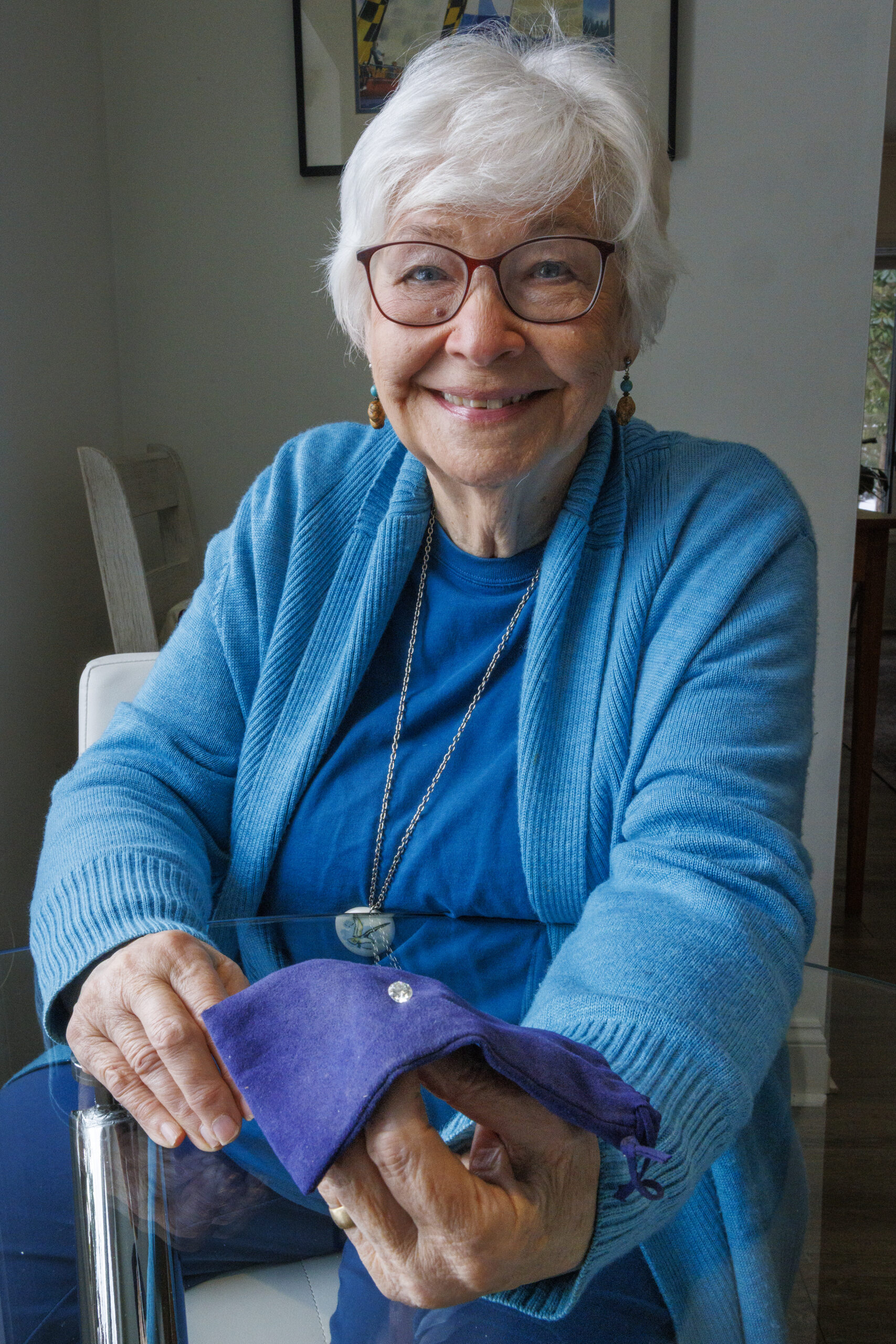
It was a man’s ring, a 1.3-carat diamond, round cut, set on a simple gold band, and when her husband, Jim, passed away a few years ago, Cindy Ware made it hers.
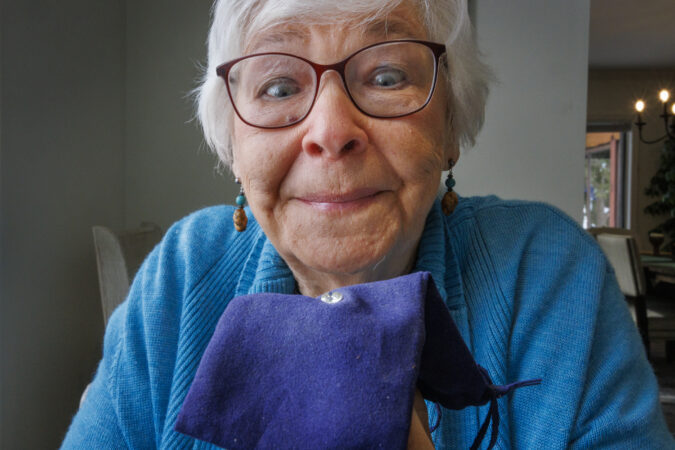
Cindy Ware of Kennett Square with diamond inherited by her late husband, Jim. She lost it but it was discovered embedded in a neighbors shoe in Florida. Photograph taken at her home on Wednesday, Feb. 25, 2026.
She wore it everywhere — to the grocery store, to lunch with friends, to her morning water aerobics class. It brought her comfort. A few times a day, she would look down at it, think of Jim, and smile.
“I never took it off,” says Cindy, who is 82 and impossibly sweet and sometimes wears a sweatshirt that says I’m often mistaken for an adult because of my age.
So when the diamond went missing last December, shortly before Christmas, Cindy was devastated. She felt sick, like she’d let Jim down.
She thought to herself: “Cindy, you just lose everything that’s important.”
A 60-year love story
Cindy Ware met the man she would marry in Pinkie Patterson’s second-grade class. This was in Mount Holly, N.C., in 1951. On Valentine’s Day of that year, while out sick with the mumps, Cindy had been allowed to come to the school parking lot to collect her Valentines.
The teacher sent a little boy out to deliver a box of treats.
He had a buzzcut and a little cowlick and his name was Jim.
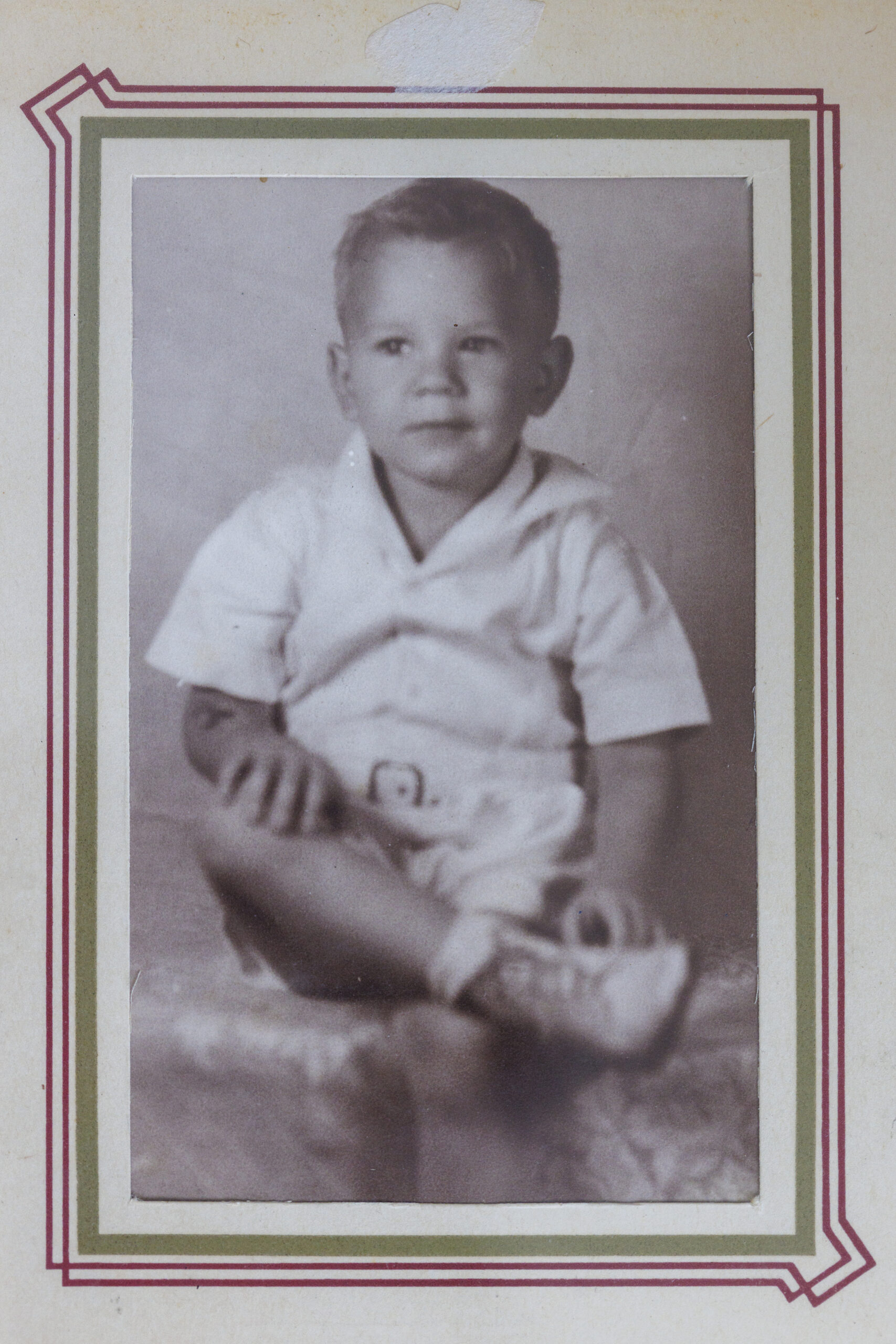
Childhood photograph of Jim Ware the late husband, Cindy Ware of Kennett Square. She lost the diamond he inherited but it was discovered embedded in a neighbors shoe in Florida. Photograph taken at her home on Wednesday, Feb. 25, 2026.
Well, Cindy’s mother thought Jim was about the most precious little boy she had ever seen. And Cindy — who until that point hadn’t given it much thought — soon decided that maybe she agreed.
By high school, they were an item — inseparable, Cindy explains, “except when we were mad at each other and dated other people.”
They got together for good during college, and theirs was a 60-year love story.
They married in 1965. They moved to New Jersey, then to Pennsylvania. They raised three boys. Their boys grew up and had children of their own. A few years ago, they settled into a retirement community in Kennett Square, where they liked to take morning walks and eat pizza with mushrooms and pepperoni.
“We never needed a lot of anything else,” Cindy says. “Just the two of us.”
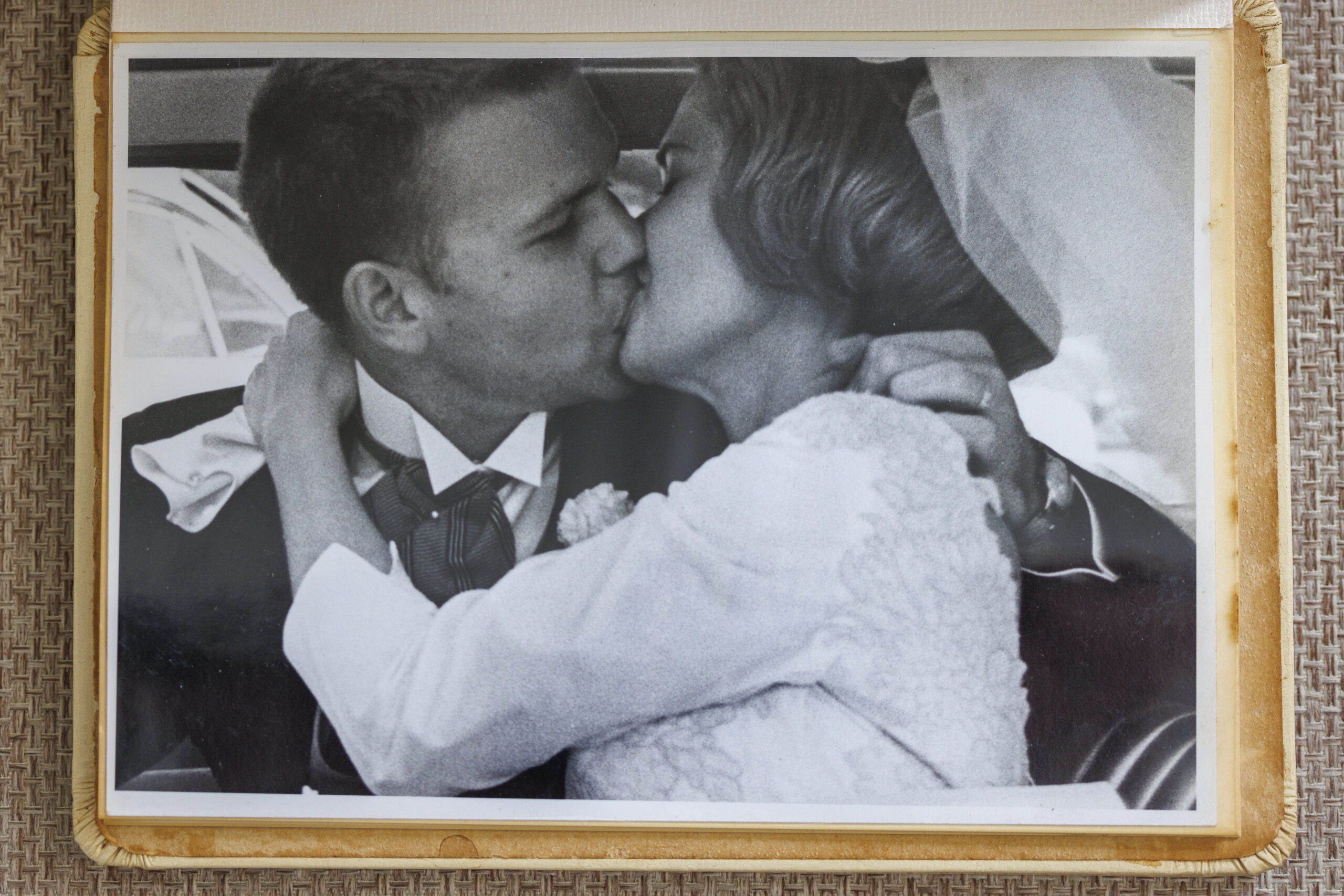
Wedding photograph of Jim (late) and Cindy Ware of Kennett Square. She lost a diamond he inherited but it was discovered embedded in a neighbors shoe in Florida. Photograph taken at her home on Wednesday, Feb. 25, 2026.
When Jim got sick, in 2020, it was horrible.Months of doctor’s visits, then specialist visits. Then, finally, hospice.
“The worst year of my life,” Cindy says.
Not long after Jim passed, in 2023, Cindy was getting the family’s affairs in order. One day, at a local bank, she opened an old lockbox and discovered a diamond ring — an heirloom that had been passed down through generations of Jim’s family.
Back when she and Jim married, and they didn’t have much money, he had told her she could have her pick: a ring or a car. “That’s a no-brainer,” she had replied. “I want a car.”
Still, something about the diamond spoke to her.
She plucked it from the lockbox and slid it onto her middle finger, and that’s where it remained for the next three years.
The missing diamond
She was having lunch with a friend last December when she glanced down and realized it was gone.
The diamond had dislodged from the setting, and it was nowhere to be found.
“I was just bereft,” Cindy says.
It could have been anywhere. In her car. In the grass outside her home.
At one point, she wondered whether she had lost it during her water aerobics class at the retirement community’s swimming pool. Things could get a little intense with the arm exercises. Maybe it had jostled loose and sunk to the bottom.
But what could be done? Even if they drained the pool, the likelihood of them ever finding the diamond was minuscule.
Her sons urged her not to worry, assured her that it was OK. There was always the chance that it might still turn up.
But weeks passed, then months.
Eventually, she resigned herself to the fact that the diamond was never coming back.
‘That might be a diamond’
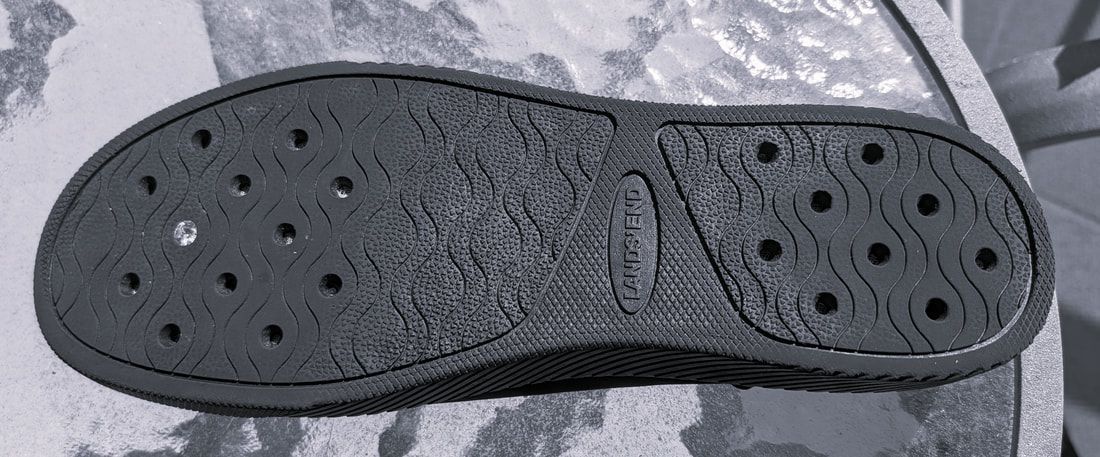
One afternoon a couple weeks ago — on a pool deck 1,100 miles from Kennett Square — a man named Coleman looked down and noticed, lodged in the tread of his Lands End pool shoe, what appeared to be a small piece of glass.
Or wait. Maybe it was some kind of gem.
At a pool in South Florida earlier this month, a Pennsylvania man looked down at his pool shoe and discovered what at first appeared to be a gem or piece of glass stuck in the tread.
For days he had been wearing the pool shoes — to the pool, through locker rooms. He had stuffed them into his gym bag, into a suitcase. Earlier that day, he had worn them on a walk in the gritty sand of a South Florida beach.
He also wore them back home in Kennett Square, where he lived in a retirement community. In the afternoons — after the ladies finished their morning water aerobics — Coleman’s group played pool volleyball. He always wore his pool shoes during games.
Now, sitting poolside in Florida, Coleman’s husband, John, examined the stone and said, “Uh, that might be a diamond.”
Intrigued, but not yet convinced, the couple went the following day to a Pompano Beach jeweler.
Nine times out of 10, the jeweler told them, when people think they’ve found a diamond, it turns out to be nothing.
This was not one of those times.
Yes, the jeweler said, it was a diamond, all right — 1.3 carats, nicely colored, likely from the 1950s or ’60s. Probably worth a bit of money.
Tickled, Coleman posted a photo of the diamond to Facebook.
A diamond in the sole of his shoe
Back in Pennsylvania, Cindy was on the phone with her good friend.
It was Valentine’s Day, and the two were chatting about this and that, and at the end of their conversation, in passing, her friend mentioned a man from their neighborhood, Coleman, who had just posted a photo from Florida.
Apparently, he had found a diamond lodged in his shoe.
As it happened, Cindy and Coleman knew each other well. They lived just a couple streets apart, worked out in the same pool. Once, when Jim was in hospice, Coleman and his husband had brought her flowers.
Cindy tracked down the photo. Saw the small gem lodged in her neighbor’s pool shoe.
Impossible, she thought.
She dialed Coleman’s number.
“Hello,” she said, “I think you have my diamond.”
The return
It was confirmed a day later.
Back from Florida, Coleman delivered the diamond to Cindy’s house, along with a collection of yellow roses. Neither of them could stop smiling.
Best they can tell, the diamond fell to the bottom of the community pool, where Coleman — while playing pool volleyball — happened to step on it, just right. How it had remained lodged in his shoe’s tread for days or weeks or months — across multiple states — was anyone’s guess.
“It could never happen in a million thousand years,” Cindy says.
Says Coleman, “It does make you sit back and think for a minute about what is going on here.”
As you might imagine, their story has been the talk of their retirement community. Everyone, it seems, wants to talk about the little diamond that traveled halfway across the country in a shoe.
As for the diamond itself, Cindy has decided that it‘s time to pass it on, to her oldest son.
“I can no longer be trusted,” she jokes.
In the meantime, she has stopped wearing it to water aerobics.
The fire-engine-red Empanadas United machine arrived in Philadelphia last fall. It appeared in the lobby under the SEPTA Regional Rail tracks at 30th Street Station, where yearslong renovations have shut restaurants, leaving a gap for automation to fill.
The empanada machine works like this: Tap your card. Choose one of four fillings. Whirr, beep, the ovens ignite, the rich smell rises. A minute passes. A pair of mottled, tan, crusted, half-moon-shaped empanadas, each bigger than a man’s hand, drop into a topless personal-pizza-sized box. The little plastic door opens, and your account is $8 lighter.
That’s a premium price compared to what you pay in Philly’s corner stores; but it costs extra to eat in a transit hub. The empanada machine is one of several rival meal-vending machines at the station, such as the California Pizza Kitchen machine that charges $12 for a plain, 7-inch pizza.
These turnovers were formed — from flour and fat, chicken or beef, sazon and cebolla — last night or yesterday, at Empanadas United. The Philadelphia-based empanada bakery serves restaurants across the region, from its base 15 blocks north of the train station.
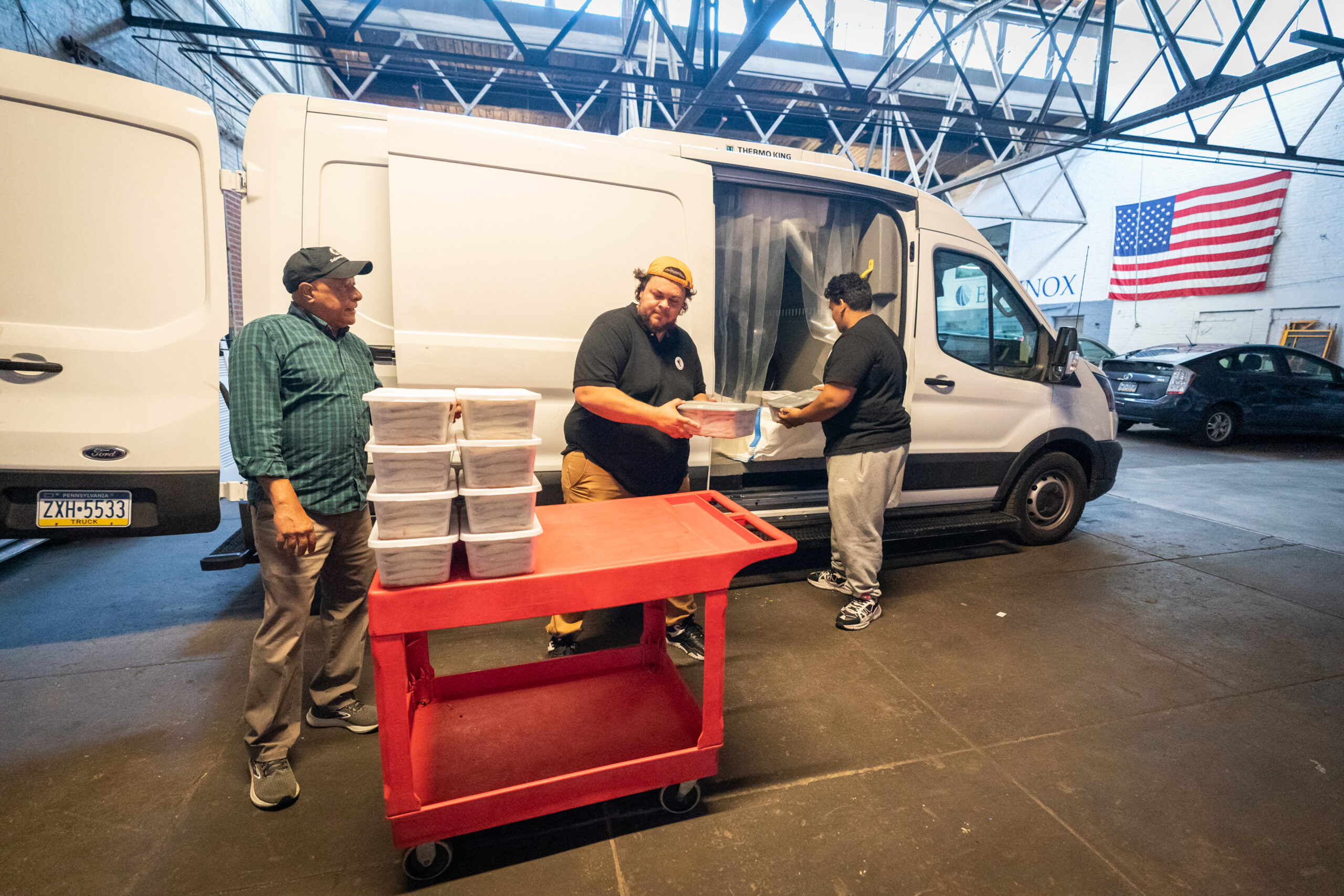
Pedro Rodriguez (left) with Pedro Rodriguez (center) and his son, Yorby Rodriguez, load empanadas for delivery at Empanadas United in Philadelphia in 2024.
The vending machine, assembled by LBX Food Robotics of Sunnyvale, Calif., used two ovens to finish the turnovers — convection for the crust, infrared for the fillings. It is also furnished with a microwave oven, for use with prepared foods, but the empanadas don’t need that. The machine sees steady use, say SEPTA staff who watch the busy lobby below the train platforms.
The machine is profitable, says Victor Tejada, the former Comcast designer who started Empanadas United in 2023. The bakery, using order software including Tejada’s Dominican Food App, was supplying empanadas to takeout customers at 160 stores, Tejada says, when he and his partners sold it last year to Virtual Dining Concepts (VDC). The acquirer says it has taken the brand national and expanded service to more than 500 locations — plus a handful of vending machines, starting with the one at 30th Street Station. Tejada stayed on to run the brand.
The Philadelphia empanada factory makes a fraction of the empanadas now sold under its name. In other cities they are made by local bakeries to Empanadas United specifications, according to Adam Robin, VDC’s chief operating officer.
Taking brands national
Florida-based VDC focuses on taking local and celebrity food brands national, contracting chain restaurants, food delivery services, and other food retailers. They aim to set standards so the products can be reproduced in local plants anywhere and mass-marketed fresh. Its other brands include Barstool Sports’ Pardon My Cheesesteak, MrBeast Burger, and MLB Ballpark Bites.
VDC last year hired Evolvending, founded by former VDC executive Valentina Ellison, to deploy the Philly empanadas in machines at transit centers, as colorful working billboards for the brand.
“Empanadas United has a really excellent concept, Victor Tejada has an entrepreneurial spirit that we love working with, and we are growing the brand all over the country,” said VDC’s Robin. He learned the restaurant business as a teenager, rising from busboy to chef, and joined VDC as chief operating officer in 2021.
“We are a virtual dining company. We targeted this brand for acquisition, we bought it last year, we manage the online storefronts,” Robin added. The company has sold more than 2 million empanadas since the deal, and plans to sell six million this year, he said.
The machines, a small part of total Empanadas United distribution, each have 60 slots, each of which holds two empanadas, filled on a two-day cycle, according to Robin. If they sell out, that’s more than 20,000 empanadas and $80,000 per machine per year.
“They cover their costs. We are thinking of expanding them,” Robin says.
Evolvending has also put Empanadas United machines at Boston Logan Airport and Hartsfield-Jackson Atlanta International Airport. But it’s not yet at Philadelphia International Airport.
The company also hasn’t set up Empanadas United machines in its hometown of Miami yet, while it considers what flavors to offer in that large and diverse market, Robin said. Among empanada fans, “Some love Venezuelan, some Cuban, some Mexican, and some like fun flavors like apple pie.”
In the spring of 2020, during the early days of the COVID-19 pandemic and related business shutdowns, the streets of Center City were practically deserted.
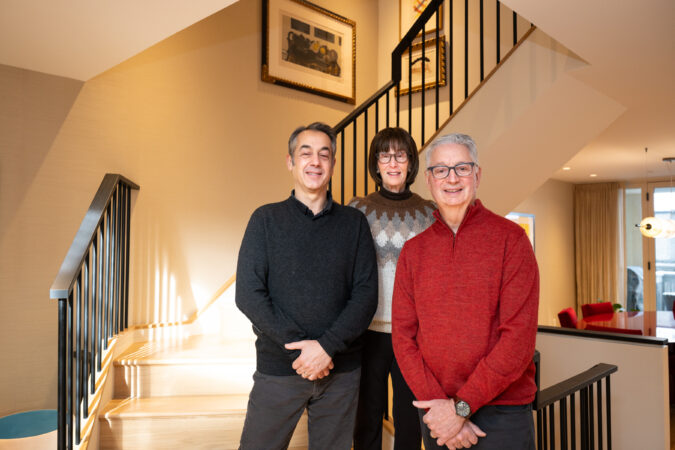
Two of the few people out and about were lawyers Amy Slater and Mark Silow, who were house-hunting — sort of.
They liked their neighborhood and the house where they had lived since 1989, and they preferred to remain there, but the house would need updating and modernizing. They didn’t know exactly what to do or, equally importantly, who should do it.
They did know that they didn’t want to do it piecemeal Silow said. Their solution: Walk the area until their “aha” moment came — the feeling that “whoever designed that is who we want to hire.”
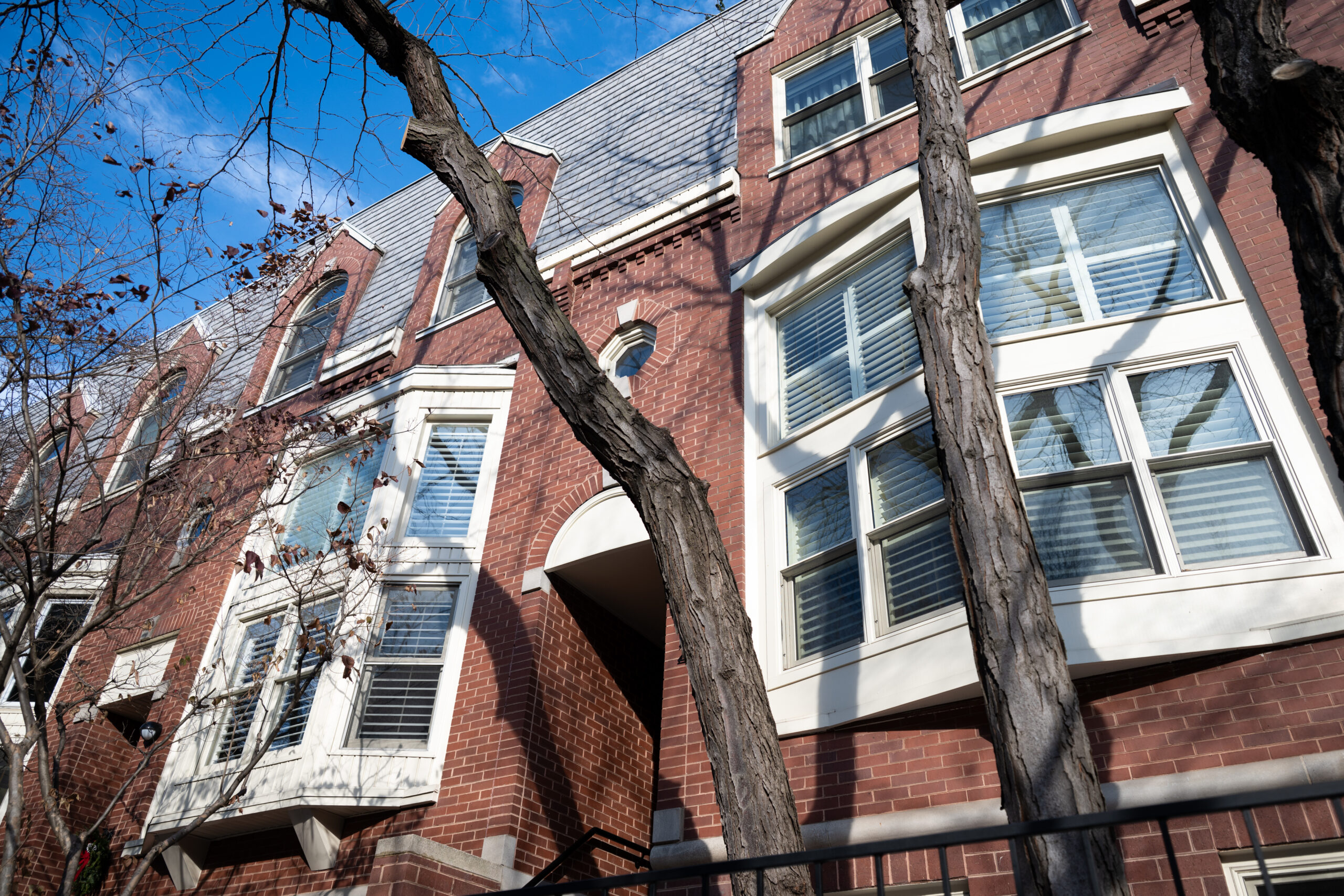
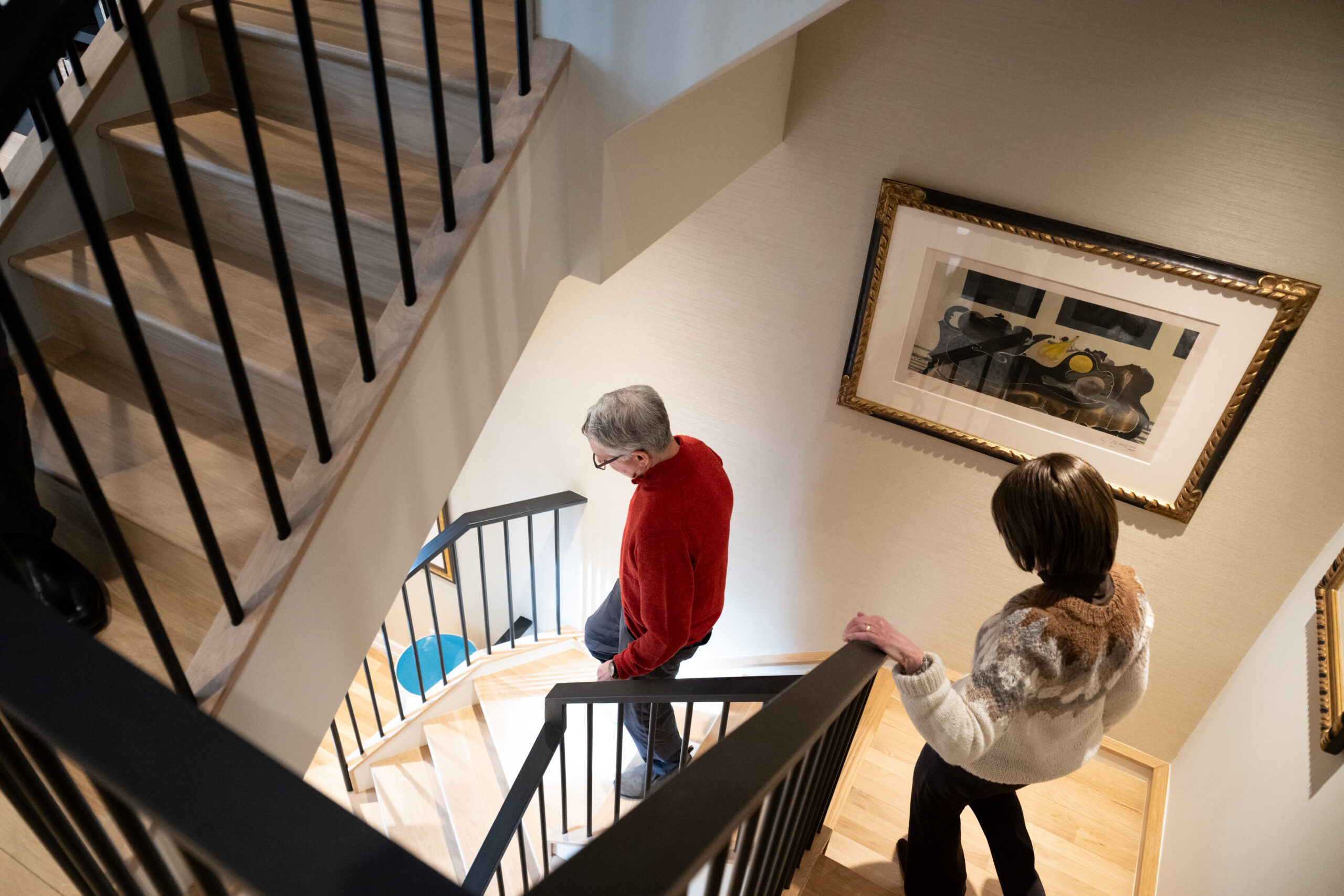
The home’s exterior.Mark Silow and Amy Slater walk down the spiral staircase, which their architect redesigned.
Then they saw a home on Rittenhouse Square whose style they loved. So they slipped a note into the mail slot.
The original owners had moved on but the people living there knew who the architect was: Tim Kerner, principal architect at Terra Studio of Center City. They not only shared this information with Slater and Silow, but invited them over.
For Kerner, designing Slater and Silow’s home was an unusual challenge. Almost all his previous experience was with clients who were building from scratch, or at least moving into a house that was new to them.
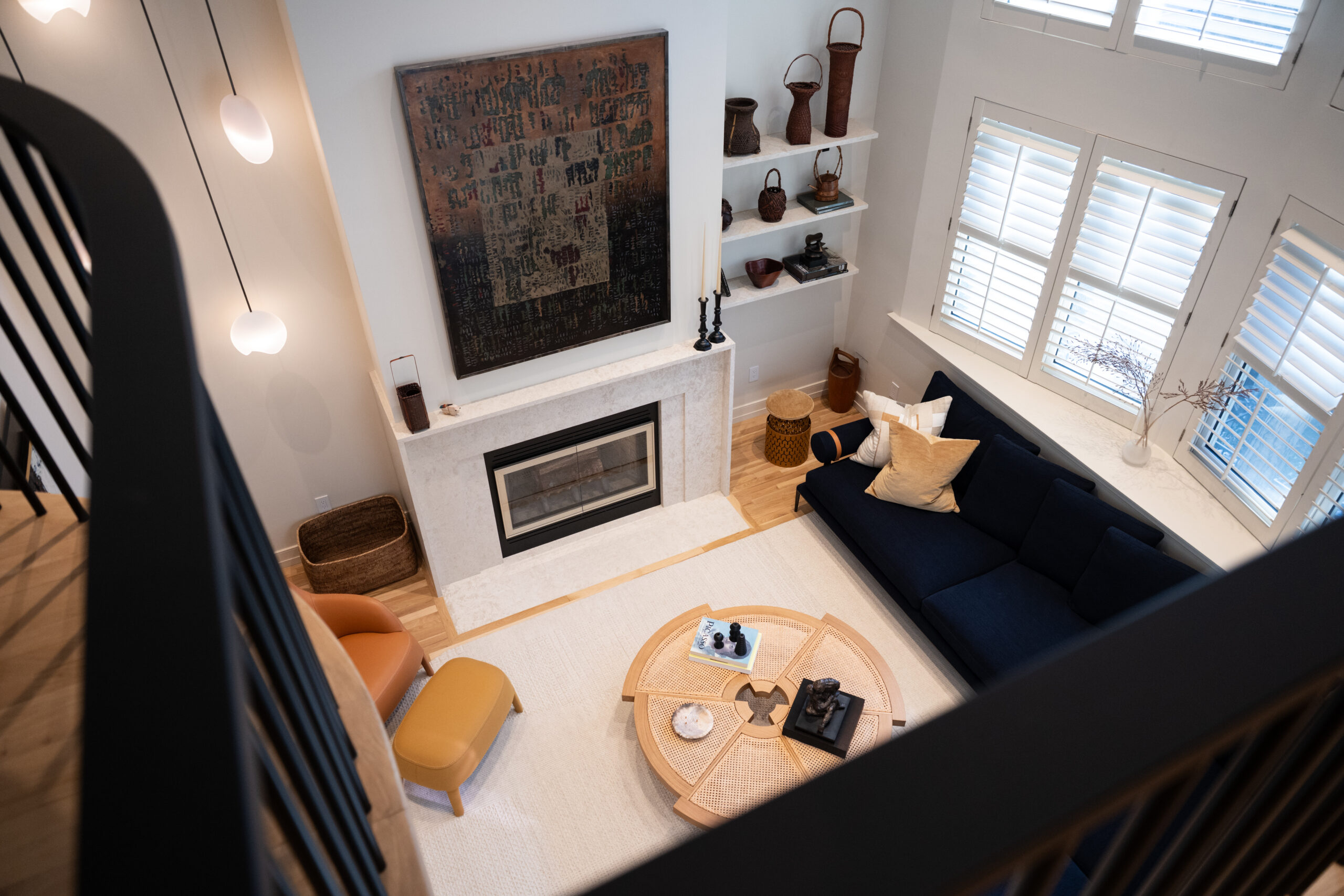
Slater and Silow had been touring Scandinavia and Japan and envisioned a style that combined design inspiration from the two cultures: light, airy, and open.
The living room from above. Scandanavian and Japanese design ideas influenced the home’s remodel.
Primary goals, Kerner said, were “to increase natural light and a feeling of openness” and to “update the interiors with more modern and cleaner lines.”
As art collectors, the couple combined their own acquisitions and art from Slater’s family. The renovation period gave them a chance to reframe or clean up some of the pieces.
They had detailed talks about every part of the renovation, Kerner said.
“Their appreciation for the integration of functional and aesthetic solutions was always evident,” he said. “Their thoughtfulness in considering the interrelation of space, finishes, colors, furniture, and technology were key to the success of the project.”
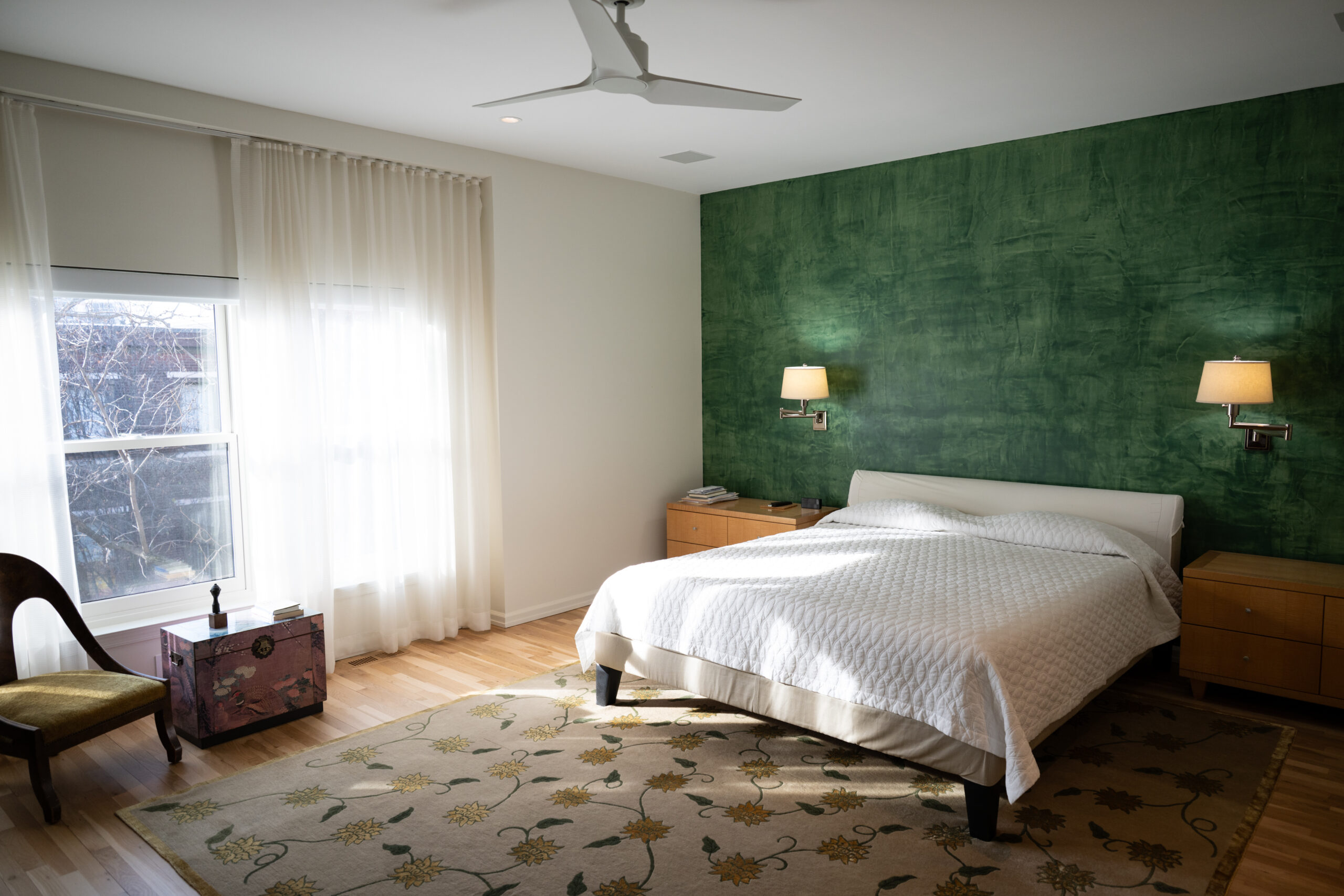
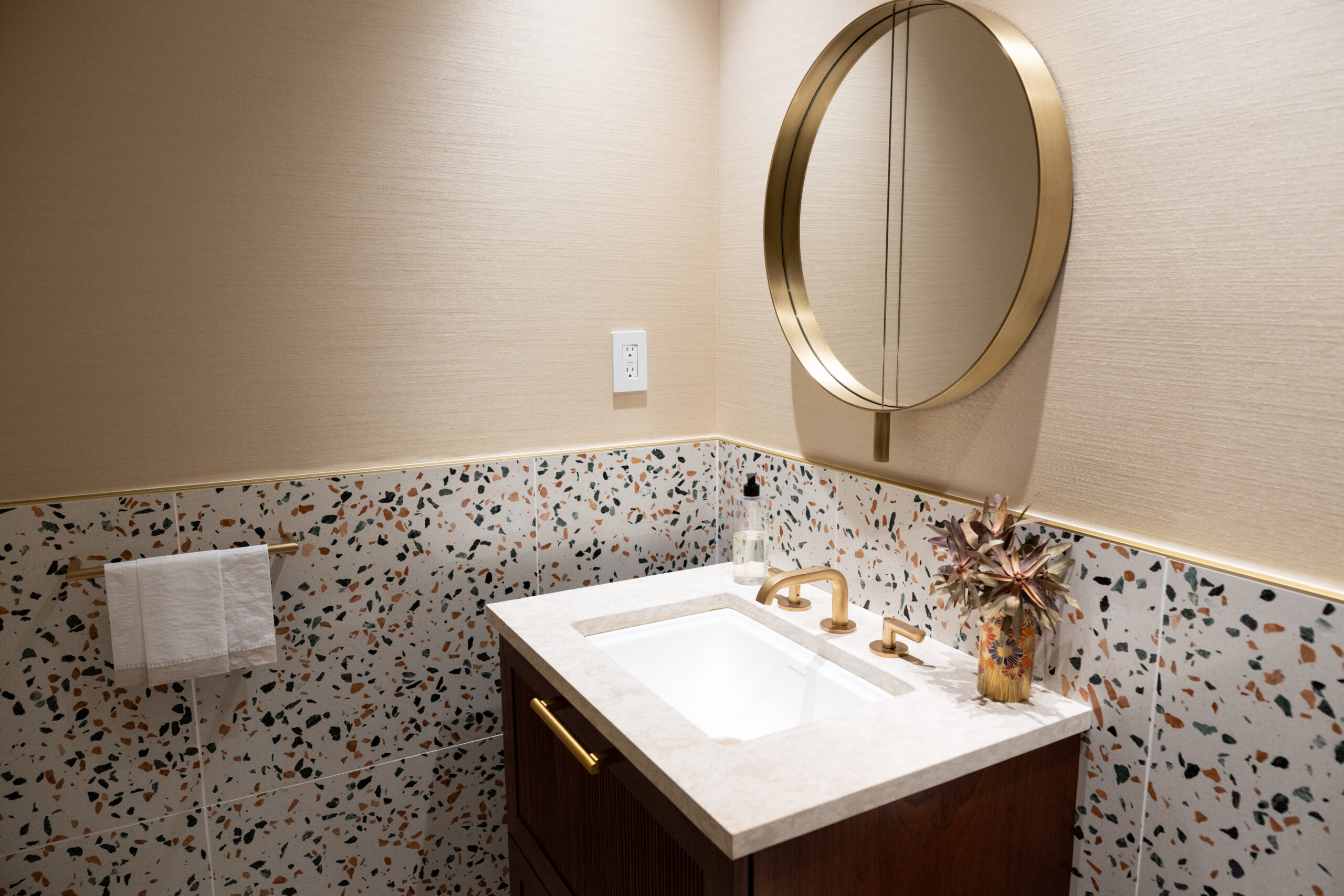
The primary bedroom has a green accent wall, hardwood floors and ample light from large windows.The first-floor bathroom has gold hardware and details in the tiling.
The clients wanted a new kitchen and a new roof, this one with a deck. And they wanted to redo the first-floor powder room and replace the concrete front steps. The mechanicals also needed to be updated.
Throughout the project, Kerner worked with interior designer Carlo Fiammenghi; structural engineer Amy Rivera; Springboard Automation for home controls, sound, and technology; Urban Jungle for roof deck garden design and planting; and Joanne Hudson for kitchen cabinetry.
The house has four floors and 3,000 square feet, plus a two-car garage, and they did not change the basic configuration other than knocking down a wall between the kitchen and the dining area.
There are three bedrooms, three full bathrooms, and a powder room, with the primary bedroom and library on the third level.
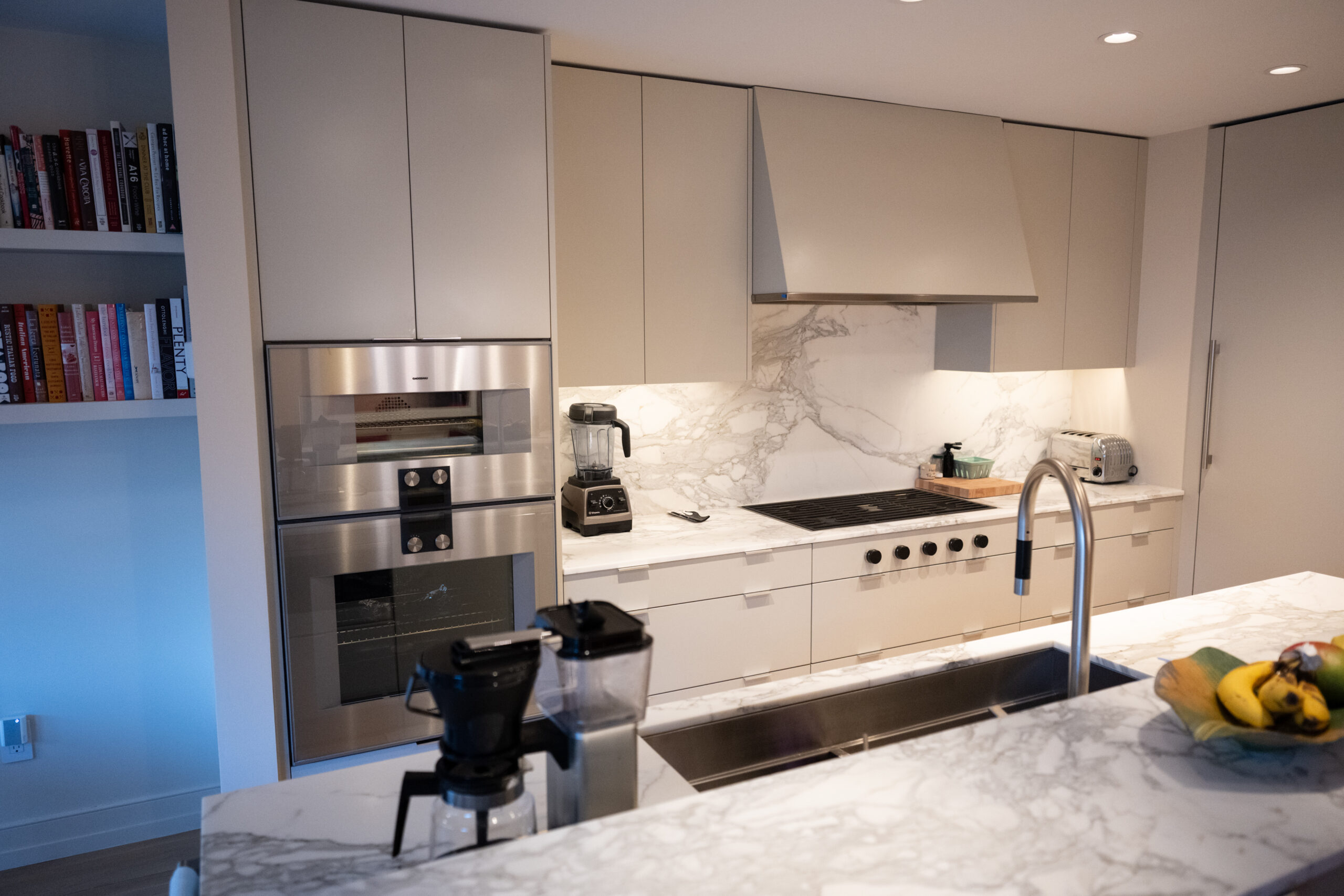
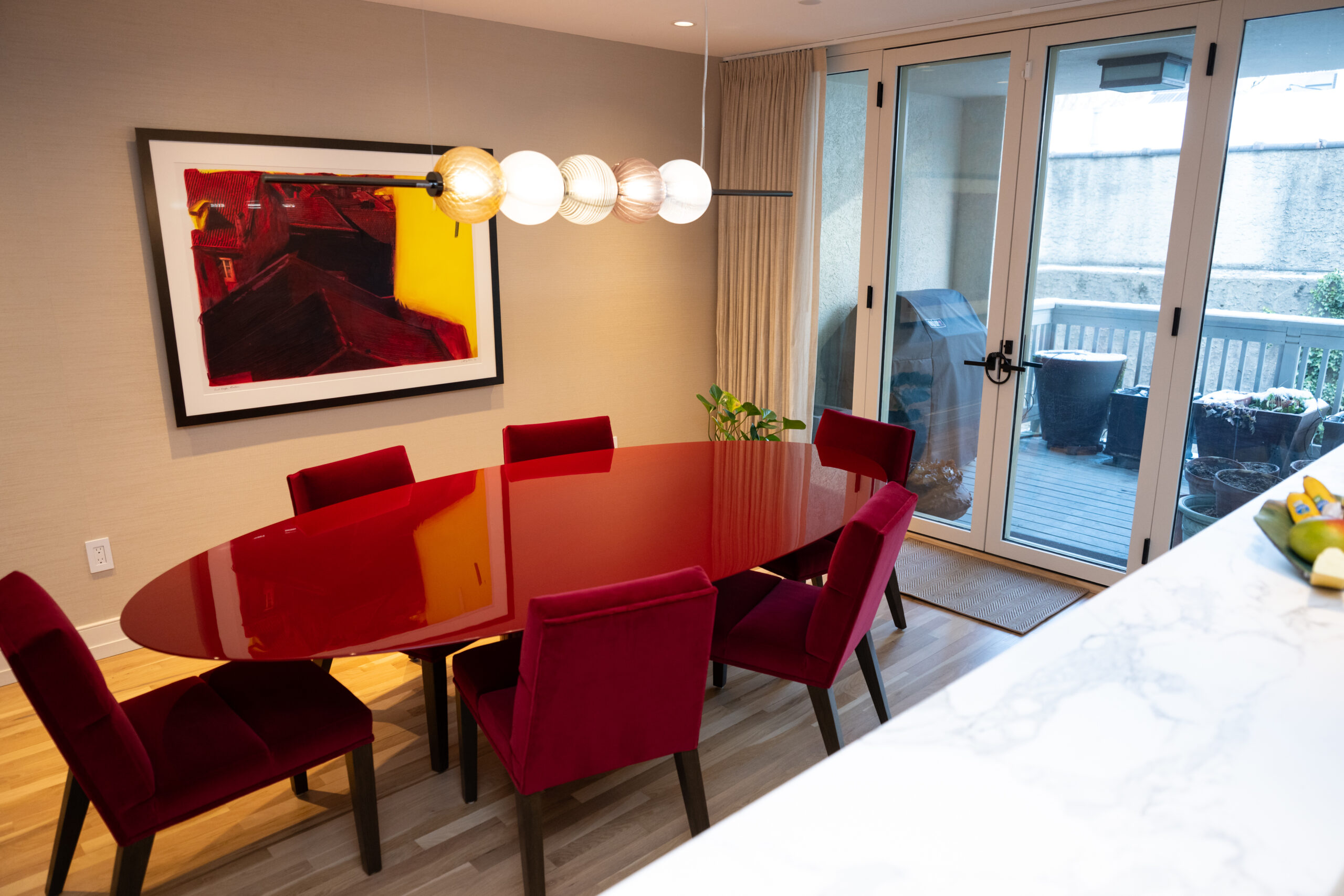
The remodeled kitchen makes use of Calacatta marble.The dining area features a bold red table and chairs with modern lighting.
“We opened up and renovated the kitchen,” Kerner said, with new counters, cabinets, appliances and fixtures. The kitchen marble is Calacatta, which is quarried from the Apuan Alps near Carrara, Italy.
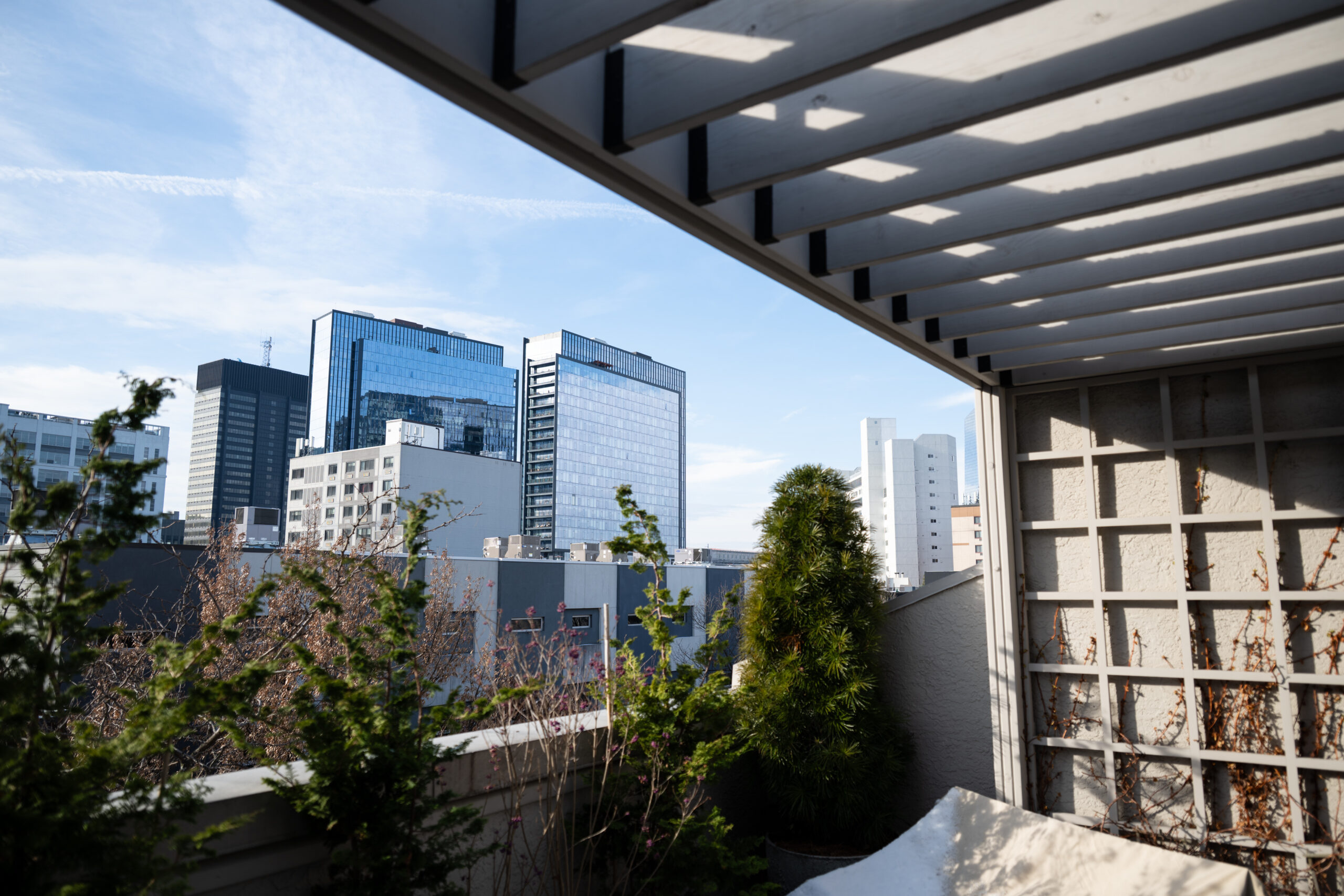
They installed a new roof deck with a pergola and some new plantings, and added new furnishings. They also replaced all windows and the entrance door, and opened the dining room to the exterior with a larger sliding glass door.
In the living room, they added a stone fireplace mantel and shelving.
The staircase was completely redesigned, with new railings from the basement to the roof deck, and was broken up by custom shelving on the mezzanine.
The view from Silow and Slater’s roof deck.
Bluestone treads and risers replaced the concrete front steps. And automated lighting and mechanical controls were installed, along with a new whole-house sound system.
Construction took nine months in 2022, with Slater and Silow living in a nearby apartment. Both Slater and Silow say they are delighted with the result.
“We call it our new old house,” Slater said.
Is your house a Haven? Nominate your home by email (and send some digital photographs) at properties@inquirer.com.