By 2019, after a decade of producing dozens of documentaries about Philadelphia history, the filmmakers at History Making Productions realized they had more than just the story of a city.
They had the story of America.
On Friday, the studio released its epic, new telling of that 400-year-old story: In Pursuit: Philadelphia and the Making of America. Directed by documentary filmmaker Andrew Ferrett and written by author and historian Nathaniel Popkin — and mixing modern footage with historical recreation and more than 600 on-camera interviews — the 10-episode series explores the history of America through the lens of Philadelphia, its birthplace.
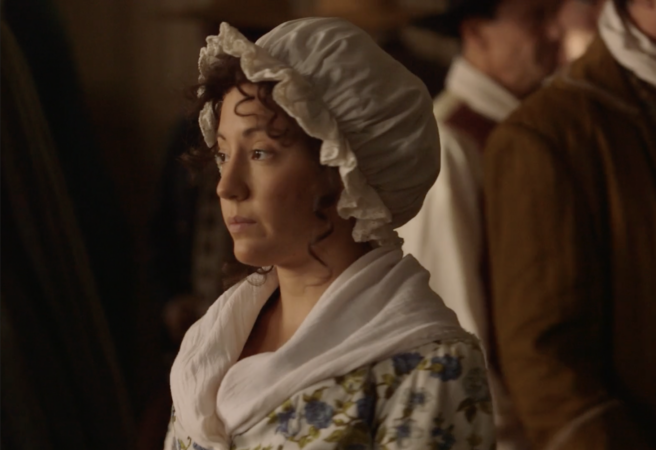
Belinda Davis as Sarah Forten in “In Pursuit: Philadelphia and the Making of America.”
Timed to coincide with the 250th anniversary of the Declaration of Independence in 2026, known as the Semiquincentennial, the series provocatively grapples with urgent questions, like how did the American experiment actually unfold? And how can it endure?
“Philadelphia is not just the birthplace of American democracy — it has been its proving ground,” said Sam Katz, series creator, executive producer, and founder of History Making Productions. “This series looks honestly at how ideals were formed, challenged, expanded, and sometimes betrayed, and why that history matters so urgently.”
‘A national moment’
Spanning 400 years of Philadelphia history, from its Indigenous roots to the MOVE Bombing the series is equal parts entertainment and civic project. Funded by Katz and philanthropies like Pew Center for Arts & Heritage, Penn Medicine, and Lindy Communities, the series premiered at the National Constitution Center on Thursday.
Episode One is now streaming online. Katz and the filmmakers will host screenings and community conversations at Pennsbury Manor in Bucks County on Sunday, and another screening Feb. 26 at the Bok Building in South Philadelphia.
Throughout 2026, as the city and country celebrate the national milestone, a citywide “In Pursuit of History Film Festival” will promote each new installment with monthly screenings and public events. 6abc will air monthly hourlong shows to highlight new episodes.
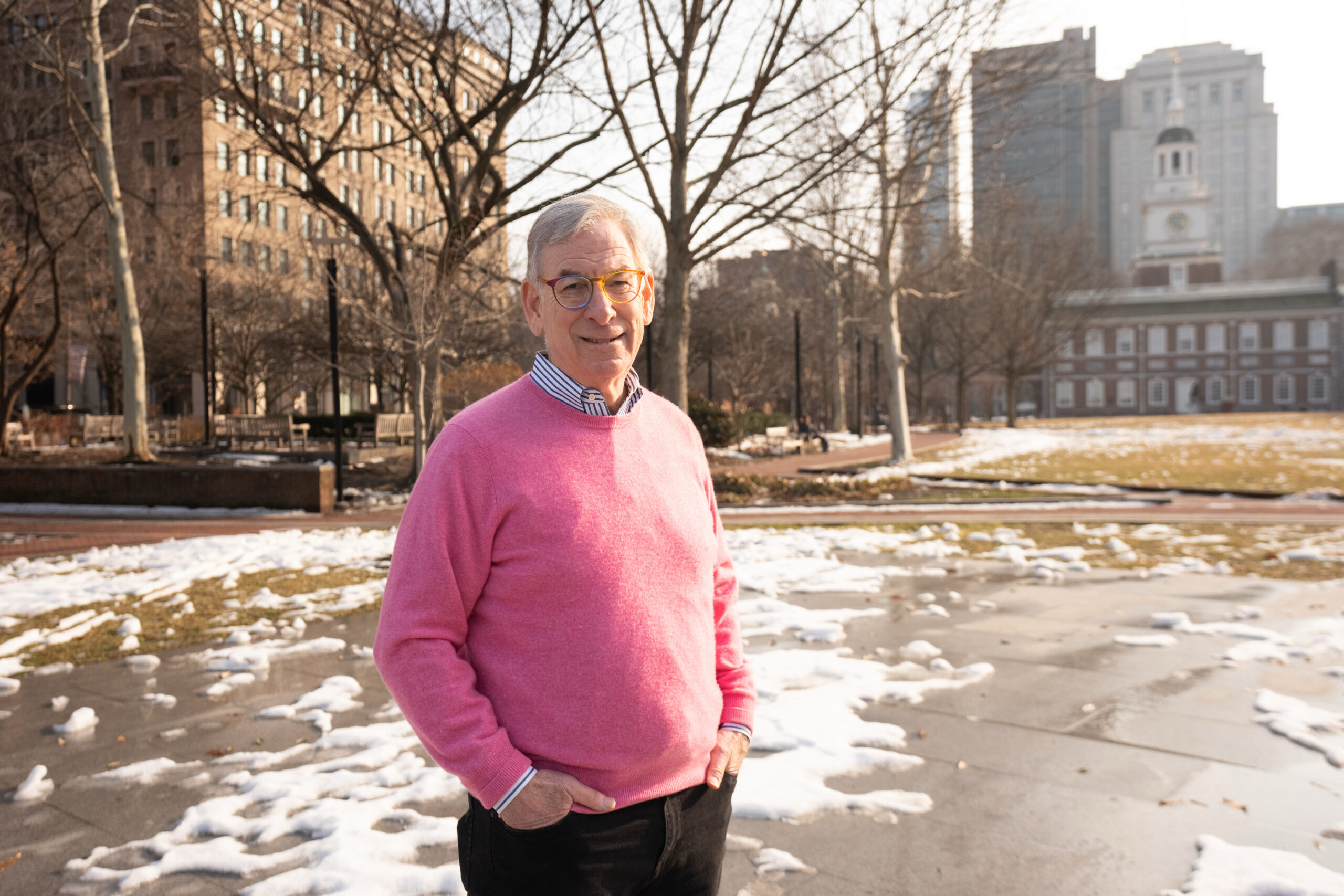
Sam Katz at Independence Hall, in Philadelphia, Tuesday, Feb. 17, 2026.
From the beginning, the project was meant to get people talking about the true meaning of the American experience, and those it has left behind.
“We’re going to get partners all over the city, and we’re going to have screenings all over the place,” said Katz, the civic-leader-turned-producer. “We’re going to create opportunities for people to come and meet the filmmakers, or meet a historian or an artist, who will then lead a conversation. It really is an opportunity for Philadelphia to take stock of itself.”
Popkin, who cofounded Hidden City Daily, said the project tells the story of events that shaped a city and a country founded on ideals not yet fully realized — and now as divided and tested as they’ve been in decades.
“The timing is perfect,” he said. “I think a film can really launch a lot of conversations. This is a moment for us as a nation.”
Fresh portals
Ferrett, who grew up in Bucks County, and has been directing and producing films at History Making Productions for more than 15 years, said the project revealed itself.
For earlier Philly projects — including The Great Experiment, an Emmy-award winning, 14-part docuseries spanning 500 years of Philly history, and Urban Trinity: The Story of Catholic Philadelphia — the filmmakers had amassed hundreds of unused hours of interviews with local and national historians, artists, and cultural leaders.
Over the years, much of it had to be left on the cutting room floor, including magical moments that Ferrett said opened fresh portals to Philly history.
“We talked to pretty much anyone you can imagine who was either involved with studying Philadelphia history, or in the case of 20th-century history, a lot of witnesses to it,” he said.
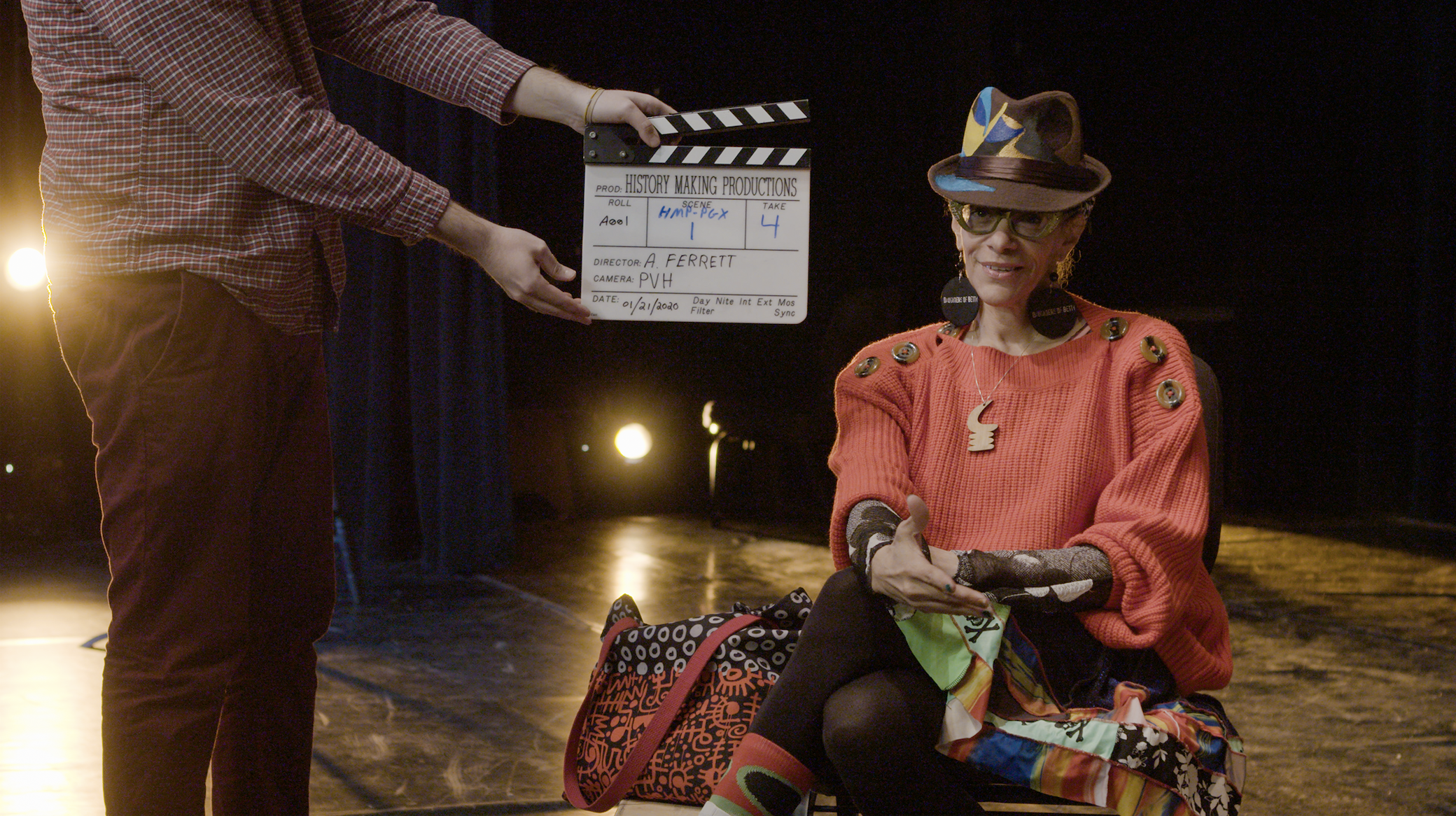
Poet Ursula Rucker during filming of “In Pursuit: Philadelphia and the Making of America.” The new 10-part docuseries examines the history of America through the story of Philadelphia.
Besides, he said, nowhere else could hold a better mirror to America than the place of its birth.
“It really became obvious to us that what we have here is much more than a local history,” he said. “It’s a history of the whole United States because so many consequential moments that shaped the country’s history went through Philadelphia.”
History that feels alive
Setting out to tell the story anew, Katz raised money to shoot updated interviews and fresh historical recreations.
Meanwhile, history did not slow down, from the COVID-19 pandemic, to the killing of George Floyd and the Black Lives Matter movements, to Trump, and immigration crackdowns.
“We were asking how do we deal with history while all this is happening,” Katz said. “We were writing about it right now.”
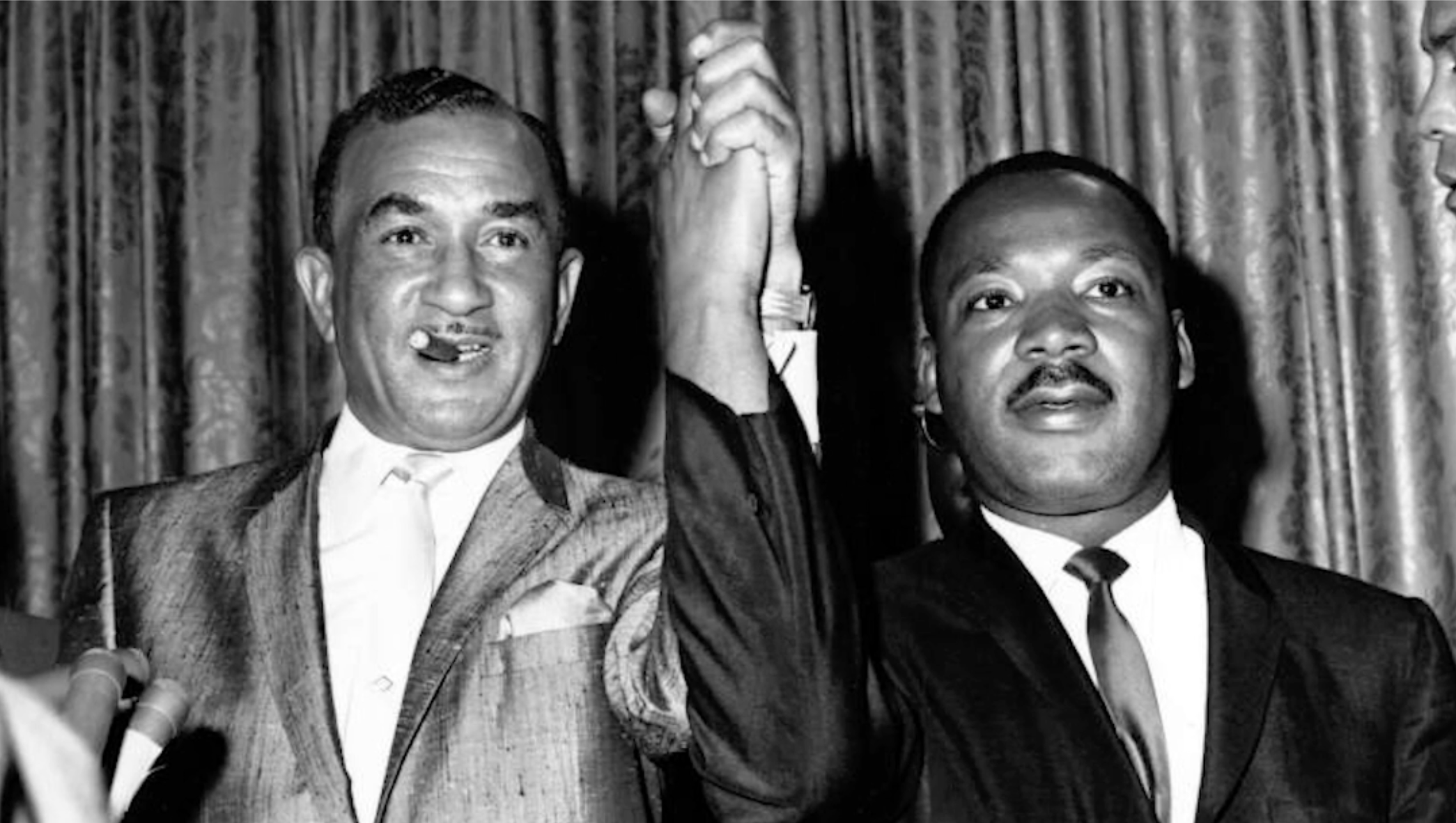
Cecil B. Moore and Martin Luther King Jr. in footage from “In Pursuit: Philadelphia and the Making of America.”
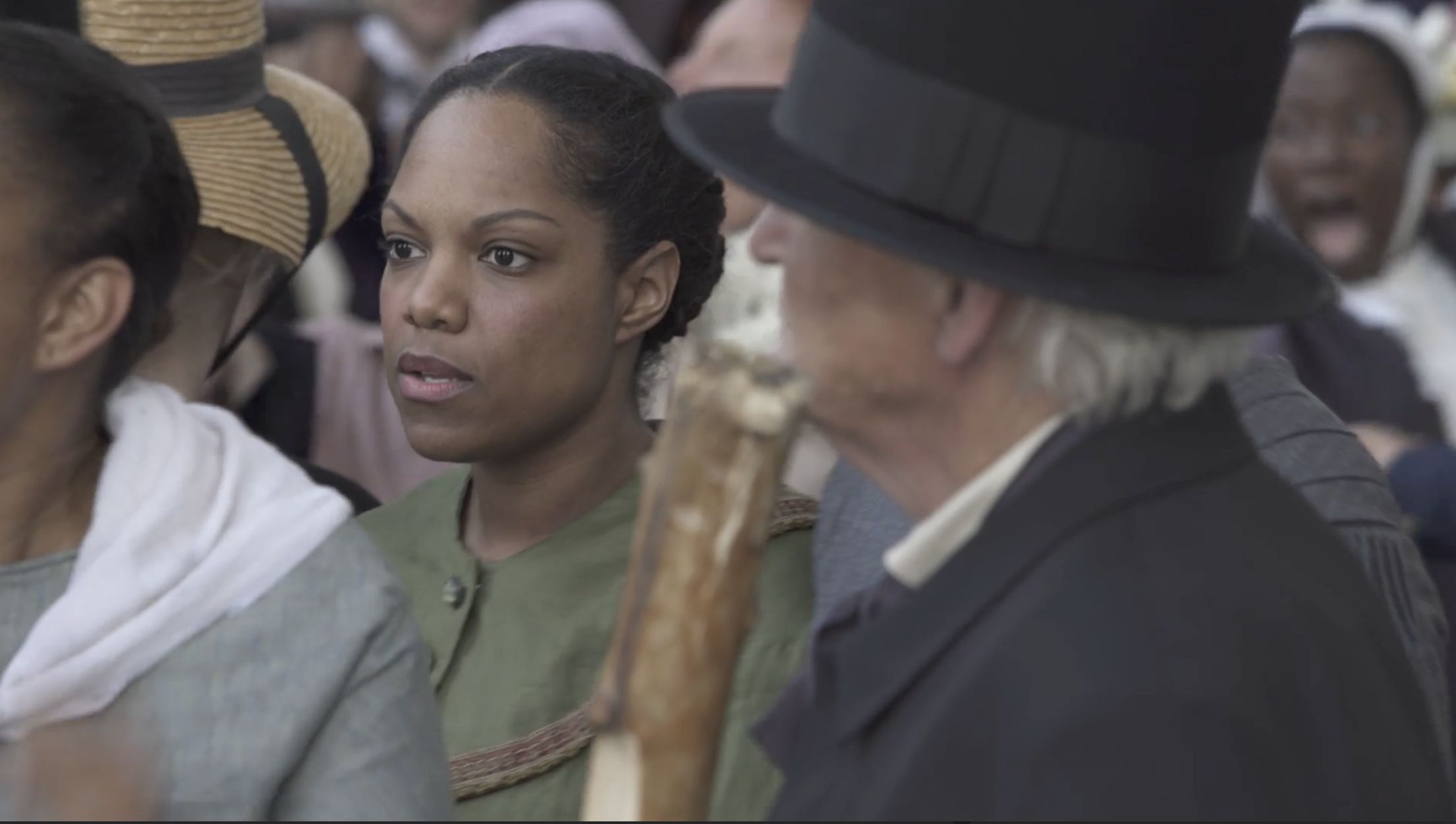
Narrated in a warm, resonant baritone by actor Michael Boatman, known for roles in shows Spin City and The Good Wife, In Pursuit is no dull, black-and-white history. The city feels alive, the stakes serious and undecided.
Threading modern-day footage of bustling Philly streetscapes and soaring neighborhood shots with commentary and historical recreations imprints the series with a powerful immediacy.
The story stretches far beyond 1776, though the dramatic details of that sweltering summer in Philadelphia are recounted in episode three in gripping scenes of refreshingly believable historical recreations.
“We were able to shoot these lush and full reenactments,” said Ferrett, of all 10 episodes. “Sam was always like, ‘Where’s the dirt? I don’t want to see people with perfect teeth and smiling.’”
The start
Episode One, “Freedom (to 1700),” begins at the beginning, pulling no punches as it tells the story of the Lenape people, Philadelphia’s earliest Indigenous settlers — and of the generations of Dutch and other European colonists’ efforts to eradicate them through violence and disease.
It surprises even in the telling of William Penn, recounting how the rebellious aristocrat’s nonconformist ways landed him in jail more than once, before he founded a City of Brotherly Love meant to be a better world, and a testing ground of the most advanced ideals in Europe.
The episode also showcases what Ferrett describes as “deepeners,” when the story cuts away from the arc of history for moments of reflection from modern Philly voices.
“We all feel it here … it’s all in our bloodstream,” poet Ursula Rucker says in the episode. “What does this city mean to me? Everything. Everything.”
Think you know your news? There’s only one way to find out. Welcome back to our weekly News Quiz — a quick way to see if your reading habits are sinking in and to put your local news knowledge to the test.
Question 1 of 10
This iconic Philly sculpture has been temporarily removed from its perch at Sister Cities Park so it can be restored by original artist Robert Indiana’s foundation after years of UV and weather exposure.
CorrectIncorrect. XX% of other readers got this question right.
Indiana’s AMOR sculpture was removed on Wednesday for conservation and restoration. The sculpture was transported to Fine Finishes Painting Studio in Peekskill, NY, where conservators approved by the Robert Indiana Foundation will strip and repaint it. It’ll be back in May.
Question 2 of 10
After 96 years, Pat’s King of Steaks is changing how it makes cheesesteaks and is offering a new ingredient option. What is it?
CorrectIncorrect. XX% of other readers got this question right.
Owner Frank Olivieri said his father didn’t want seeded rolls. “But since my father unfortunately passed several weeks ago, I thought maybe it’s time to change up a little bit,” he said. Pat’s announced the “new school” seeded-roll option on Instagram as a limited-time offering, but Olivieri said it likely will be permanent. (Across the street, Geno’s still offers plain rolls only.)
story continues after advertisement
Question 3 of 10
What is the proposed replacement for the site of the Broad Street Diner, which continues to operate but has held demolition permits since 2022?
CorrectIncorrect. XX% of other readers got this question right.
On Tuesday, plans for a six-story Hyatt Studios hotel were posted on the Philadelphia Planning Commission’s website. The proposal includes 105 hotel rooms and 42 underground parking spaces. Hyatt Studios is a recently launched extended-stay brand of the larger hotel chain.
Question 4 of 10
A federal judge ordered the Trump administration to restore the slavery exhibits that were removed from Philly’s President’s House. In her 40-page opinion, Judge Cynthia M. Rufe compared the federal government’s removal to this novel:
CorrectIncorrect. XX% of other readers got this question right.
Rufe, a George W. Bush appointee, compares the federal government’s argument that it can unilaterally control the exhibits in national parks to the Ministry of Truth in George Orwell’s 1984, a novel about a dystopian totalitarian regime. The Trump administration has appealed. National Park employees began restoring the exhibit Thursday.
Question 5 of 10
Philadelphia bars Grace & Proper, Sonny’s Cocktail Joint, and WineDive, produce and serve this signature liqueur:
CorrectIncorrect. XX% of other readers got this question right.
Ginjinha, a classic sour cherry Portuguese liqueur, is enjoyed in its home country across sidewalk-facing counters and to-go windows. In the Philly area, you’ll be hard-pressed to find it at most establishments — except for the bars owned and operated by Chris Fetfatzes’ Happy Monday Hospitality: Sonny’s on South Street, Grace & Proper in Bella Vista, and WineDive in Rittenhouse.
Subscribe to The Philadelphia Inquirer
Our reporting is directly supported by reader subscriptions. If you want more journalism like this story, please subscribe today.
For the 800th episode of The Simpsons, the show showcased Philadelphia and parodied National Treasure. Which Philly-tied celebrity was not featured in the episode?
CorrectIncorrect. XX% of other readers got this question right.
When Homer Simpson and his family arrive in Philly, passing a welcome sign calling the city “The Big Scrapple,” a hotel concierge played by Kevin Bacon greets them. “We offer 24-hour room service from our full Boyz to Menu. If you need a wooder or any other jawn just ring the Patti LaBelle and we’ll send a jabroni right up,” he said. Quinta Brunson, Questlove, and The Roots were featured in the episode. Boyz II Men also contributed their own version of The Simpsons theme song for the episode.
Question 7 of 10
The Pennsylvania Restaurant and Lodging Association is pushing for Philly bars to stay open until 4 a.m. (instead of 2 a.m.), special for the FIFA World Cup. To change the closing time for bars, what would have to happen?
CorrectIncorrect. XX% of other readers got this question right.
Any changes to bar closing times would have to come from new legislation, as the Pennsylvania Liquor Control Board does not have the authority to change the liquor code to allow bars to sell alcohol after 2 a.m. No legislation on keeping Philly bars open later has been introduced yet.
Question 8 of 10
The nation’s oldest chartered hospital — Pennsylvania Hospital’s Pine Building — will become Philadelphia’s newest museum. It was originally founded by physician Thomas Bond and this historic figure:
CorrectIncorrect. XX% of other readers got this question right.
Benjamin Franklin and Bond established a medical institution to treat the physically and mentally ill for free. The hospital’s Pine Building, which started construction in 1755, will be converted to the Pennsylvania Hospital Museum, Penn announced on Monday. It’s scheduled to open to the public on May 8.
Question 9 of 10
While Morey’s Piers’ iconic Ferris wheel is undergoing much-needed renovations in the South Philadelphia Navy Yard, thieves snuck into a temporary work site at the Wildwood theme park to steal mechanical components valued at more than $175,000 from the beloved ride. How tall is the Ferris wheel?
CorrectIncorrect. XX% of other readers got this question right.
The Giant Wheel, a 156-foot LED-lit Ferris wheel and one of the tallest at the Jersey Shore, is disassembled, repaired, and repainted regularly, but this year’s renovation required transportation to the Navy Yard to work on its 16,000-pound centerpiece.
Question 10 of 10
Narberth artist Emily Stewart is making “ephemeral” public art out of this commonly accessible medium:
CorrectIncorrect. XX% of other readers got this question right.
Stewart is making intricate temporary sculptures out of snow, transforming her neighborhood into a temporary, open-air gallery. She carves sculptures and intricate figures out of the snow. She describes it as a way to foster community.
Your Results
You have skipped .
You scored XX out of 10.
The average reader scored XX out of 10
Seems like you’ve been skimming more than reading there, buddy. There’s always next week.
You’ve read some articles (or made some educated guesses) but we wouldn’t come to you first for our local news recaps. Better luck next week!
Do you work here? You’re a local news stan with the latest updates on Philly happenings. Your friends definitely ask you for summaries on what’s going on and it shows.
You have to start there. It is the independent variable. You have to define it in order to solve the rest of the equation. You can’t have an opinion on how the Eagles should proceed with their All-Pro wide receiver if you don’t first have an opinion on what they should do without him.
Feel free to take as much time as you need. Just make sure that you don’t dwell too long on the internal options. Right now, there aren’t any.
Aside from DeVonta Smith, the Eagles have exactly two pass-catchers under contract who had a target for them last season. Darius Cooper and Britain Covey combined for 11 catches on 112 yards. Other than that, your options are limited to 2024 sixth-round pick Johnny Wilson, who missed last season with a knee injury. The tight end room doesn’t even have anyone to turn on the lights.
So … what’s the plan?
The draft is not a serious option. Not where the Eagles are picking, at least. Last year’s draft yielded 11 wide receivers and tight ends who played at least 50% of their team’s snaps. Four of those players were selected before pick No. 23. Five others played for the Titans, Browns or Jets. Maybe they’ll be in a position to draft this year’s Emeka Egbuka (No. 19 to the Bucs in 2024). But they could just as easily end up with this year’s Matthew Golden (No. 23 to the Packers). The best way to get yourself in trouble on draft day is to try to solve this year’s problems.
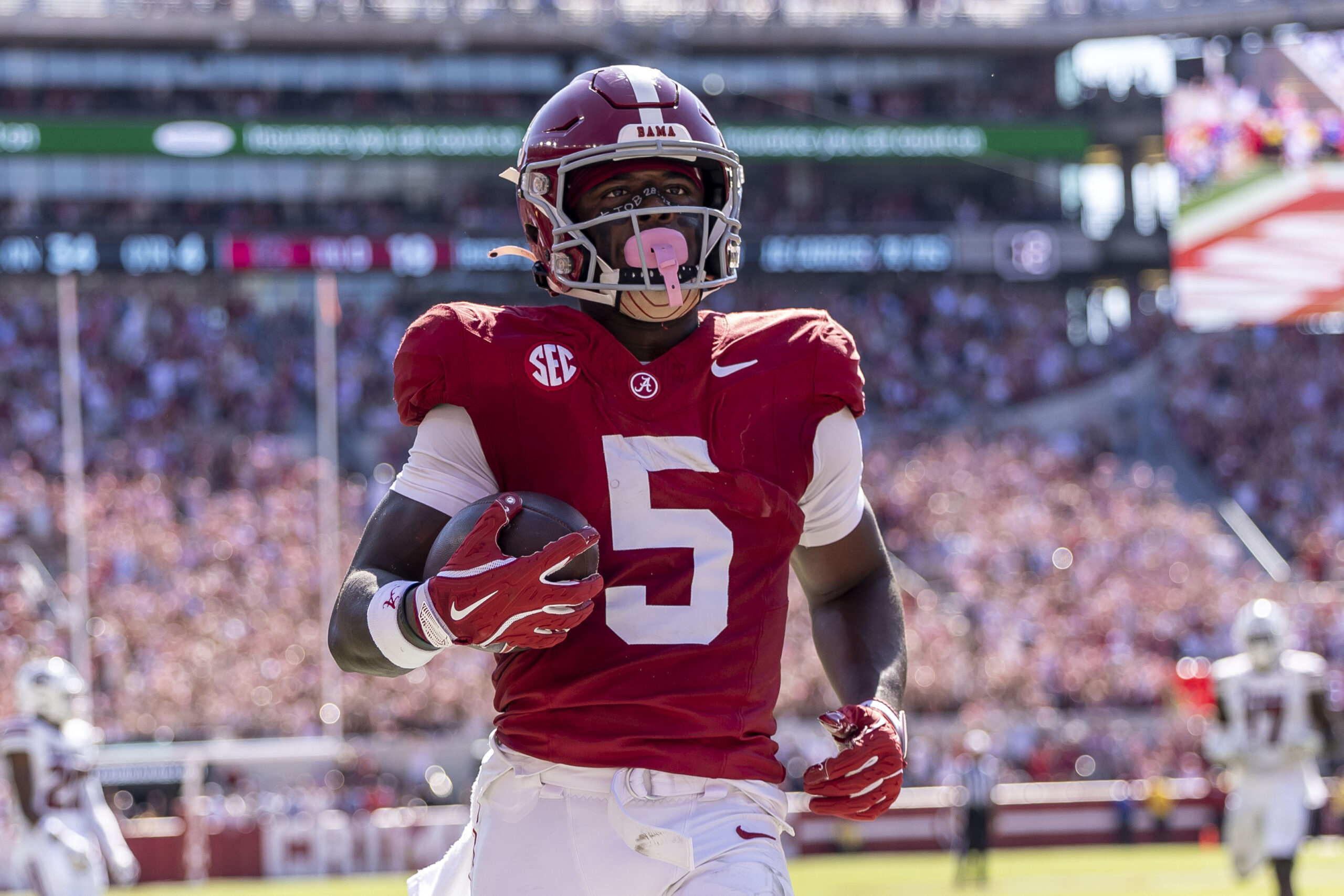
It isn’t outlandish to think Alabama wide receiver Germie Bernard might be capable of what Deebo Samuel did as a rookie when the 49ers drafted him in 2019.
That’s not to say they shouldn’t be looking. Nor that they won’t find some help. Alabama’s Germie Bernard would make a worthy target, even at No. 23. Whatever he measures at the combine, the game speed is there, as is the hybrid 6-foot-1, 204-pound frame. It isn’t outlandish to think he could do what Deebo Samuel did as a rookie after the 49ers drafted him at No. 36 overall in 2019: 57 catches, 802 yards, 14 carries, 159 yards. But to feel comfortable trading Brown, you need a lot more certainty than “isn’t outlandish.”
Free agents? Sure, let’s talk. Alec Pierce would be a no-brainer. At 25 years old, the Colts wideout caught 47 passes for 1,003 yards with Daniel Jones, Philip Rivers and Riley Leonard at quarterback. He isn’t anywhere close to Brown as a singular talent. Still, if you combine him with a draft pick like Bernard, he could be part of a radical and positive identity shift in both the short- and long-term.
Only one problem: The Eagles are one of 32 teams that can bid on free agents. A team like the Patriots can offer more cap room and a better quarterback and an acute need at the position. I’m skeptical the Eagles would win out.
The free agent crop is interesting even beyond Pierce and presumptive Cowboys franchisee George Pickens. Jauan Jennings and Mike Evans could replace some of Brown’s physicality in traffic and in 50/50 situations. Again, though, you have to wonder. Will players who have multiple options err on the side of a team with a run-heavy approach and Jalen Hurts at quarterback?
The conundrum is the same as it was three months ago, when the annual pre-trade-deadline nonsense reached its crescendo. The dream that the Eagles might part ways with their WR1 died in a head-first collision with reality. However disgruntled Brown was, however diminished his skills were, nobody else on the roster would have done enough in his stead to survive such a move. To suggest otherwise was to betray a fundamental misunderstanding of how this Eagles passing offense works. It would not have functioned without him.
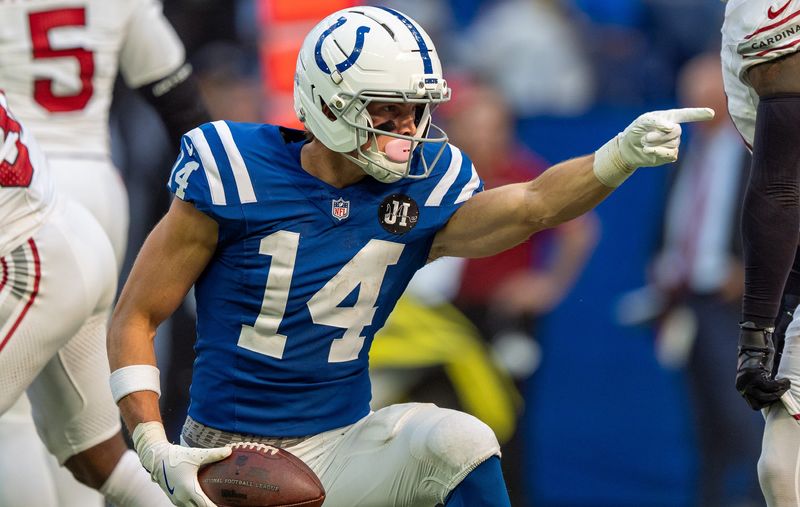
Colts wide receiver Alec Pierce had his first 1,000-yard season with Daniel Jones, Philip Rivers, and Riley Leonard throwing to him.
True, the Eagles barely functioned with Brown. But that only matters if you think they should have given up on the season at the trade deadline. That’s what they would have been doing by trading Brown. Look at their track record without him. Brown missed four (meaningful) games in his first three seasons with the Eagles. The Eagles lost three of them, and they scored 15 points in the game that they won. In 2025, the Eagles scored 38 points against the Giants without Brown. They also threw the ball 20 times. Smith was the only wide receiver to catch more than one of them.
Plenty of NFL teams have managed to win without two WR1 types. But we’ve never seen Hurts have to do it. Right now, the Eagles don’t even have a WR2 who is better than replacement level. Keep in mind, the Eagles already have a hugely pressing need at tight end. They could need to spend big bucks to retain Jaelan Phillips, or to sign a replacement. In the draft, they will be hard-pressed to turn down an opportunity to add another offensive lineman to their feeder system.
The preponderance of the circumstances says the Eagles probably shouldn’t trade Brown. Life would be a lot easier if they didn’t need to. The onus is on the case for how they can do so and survive. If you can make one, I’m sure they’d love to hear it.
Price: $38,809 as tested. Black dual exhaust added $1,700; Performance Package, $1,500; fancy paint, $475; floor mats, $299.
What others are saying: “Highs: Genuinely rewarding to drive, one of the last manuals available, remarkably affordable. Lows: Noisy cabin on the interstate, we dare you to sit in the back, unexciting exhaust note,” says Car and Driver.
What Toyota is saying: “Level up your drive.”
Reality: Even funner, ‘til you get on the highway.
What’s new: The GR86 gets a new Yuzu Edition for 2026, with yellow paint and black seats. Otherwise it’s pretty much as before, since its redesign in 2022.
Up to speed: The 2.4-liter four-cylinder engine makes 228 horsepower and gets the little sports car to 60 mph in 5.4 seconds, says Car and Driver, and I believe it. I’d think it’s a little faster, but we’ll stick with the facts.
It’s truly a sporty car to drive. It’s fine for passing on Interstate highways and such but it’s really at home on the back roads, racing up hills and back down again.
Shifty: You can get a GR86 with a stick, but Mr. Driver’s Seat didn’t. The six-speed automatic transmission is a nice facsimile, with Park up in the right corner so it looks like it COULD be a stick. I actually spent a couple seconds looking for a clutch until I realized there wasn’t one.
The shifter then snakes through Reverse and Neutral to get to Drive, another bit of stick-shift cosplay.
The manual setting works nicely, and really makes the little car even that much more fun. Use the lever to augment the engine’s power for any country road antics and you’ll feel nicely rewarded.
On the road: Did someone say fun? The rear-drive GR86 has plenty of it, snaking through turns and sliding around corners even at fairly low speeds, so you can feel like it’s a blast even when not going much beyond 40 or 45 mph — although faster is funner.
Less fun is the time spent on the highway; I found myself getting a bit of a headache during half-hour trips on Route 202 between King of Prussia and West Chester.
Off the road, the GR86 is great companion for tight parking lots, thanks to a turning radius of 35 feet and change.
The interior of the Toyota GR86 is snug and retro fun, unless you’re sat in the back. Then it’s snug, retro, and not at all fun.
Driver’s seat: The cloth seats offer great support and are comfortable enough. They feel firm and a little crowded, so some people might not appreciate the big wings. The Lovely Mrs. Passenger Seat found them as nice as I did.
The manual controls adjust height, fore-aft, and backrest simply.
The gauges and steering wheel controls are old-fashioned, looking like last-gen Lexus dials, but I call old-fashioned a good thing these days.
Friends and stuff: There’s a rear seat but it’s pretty cruel. Guests would have been harmed in the making of this review.
I finally build up the nerve to try it out on Day 6. The ceiling is so low that I had to cant my head to the side. Foot room and legroom look impossible, but I could actually get my legs in there by setting the front seat a few notches up from normal. But when I did that and tried out the front, my legs were more cramped than on a Frontier flight.
I would say only put kids in the back. Or maybe kid, singular.
Cargo space is 6.26 cubic feet. (I didn’t round it because you’ll need every .01 cube.) The seat folds (all in one complicated-to-open piece) to create more luggage space.
In and out: In and ouch. It’s way down there and requires a bit of undignified squatting, twisting, ducking, and scooching.
Play some tunes: Sad. Tinny. Sound gets a C grade, probably one of the lowest I’ve ever assigned.
Last-gen controls. You definitely won’t be distracted playing around with the touchscreen, though there is one, because it’s 2026 and I think it’s law now or something.
Keeping warm and cool: The heater controls feature dials for temperature and fan speed and buttons inside the dials for blower choice. It’s such a small car that it runs hot; the seat heaters offer nice support when it’s not too cold out, but the switches are awkwardly built into the armrest.
Fuel economy: I averaged about 26 mpg in spirited drives around Chester County’s old country roads every chance I could get. I would actually park and wait for certain roads to clear and then go make the most of the exhaust note. I guess the dual exhausts are worth $1,700.
Where it’s built: Ota, Gunma, Japan
How it’s built: Consumer Reports predicts the GR86 reliability is a 4 out of 5.
In the end: Definitely lots of joy to be had here, and I could get behind buying a GR86. But with the Mini Cooper and Volkswagen GTI, you get fun and some practicality as well, plus the delight doesn’t diminish at highway speeds.
The new league year is right around the corner, and it’s almost time for the 2026 Eagles roster to start coming into focus.
But first, the annual NFL Scouting Combine.
It’s the next thing on the offseason calendar, and while the focus for much of the week will be on the athletes going through performance testing, when it comes to the Eagles, it should be a big week for news related to the team.
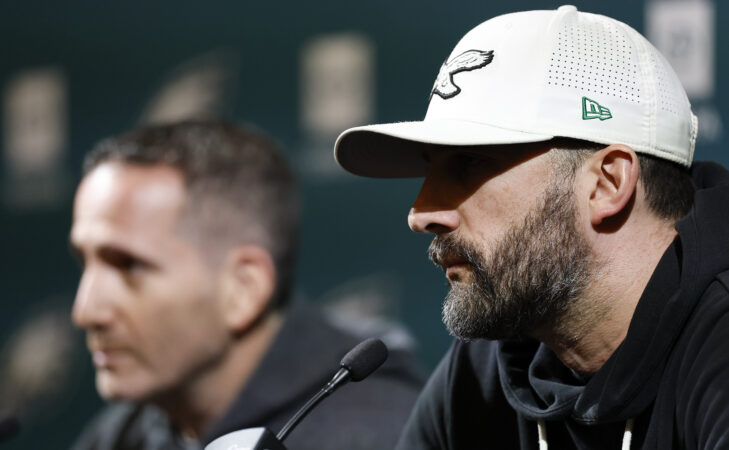
Reporters typically get to talk to Nick Sirianni and Howie Roseman around the combine, and there are certainly plenty of questions to ask this year.
Here’s a look at five of the most pressing Eagles topics the coach and general manager may be addressing soon:
Why did the Eagles choose Sean Mannion, and why did they assemble this staff around him?
It’s been three weeks since the Eagles filled their vacancy at offensive coordinator by hiring Green Bay Packers quarterbacks coach Sean Mannion, a 33-year-old former quarterback with only two years of coaching experience. But we’ve yet to hear from Sirianni or Roseman, besides an initial statement released by the team, on why the Eagles hired Mannion, what they liked about him, and what hiring him means for the future of the scheme.
In the weeks since, the rest of the offensive coaching staff has been filled out. The Eagles hired one of their other coordinator candidates, former Tampa Bay offensive coordinator Josh Grizzard, as pass game coordinator. They hired Packers wide receivers coach Ryan Mahaffey to be the tight ends coach and run game coordinator. Longtime offensive line coach Jeff Stoutland left the team (more on that later), and he was replaced by Minnesota Vikings offensive line coach Chris Kuper.
The Eagles retained wide receivers coach Aaron Moorehead and running backs coach Jemal Singleton, sources told The Inquirer, and, according to CBS Sports, plan to shift Parks Frazier, last season’s pass game coordinator, to quarterbacks coach.
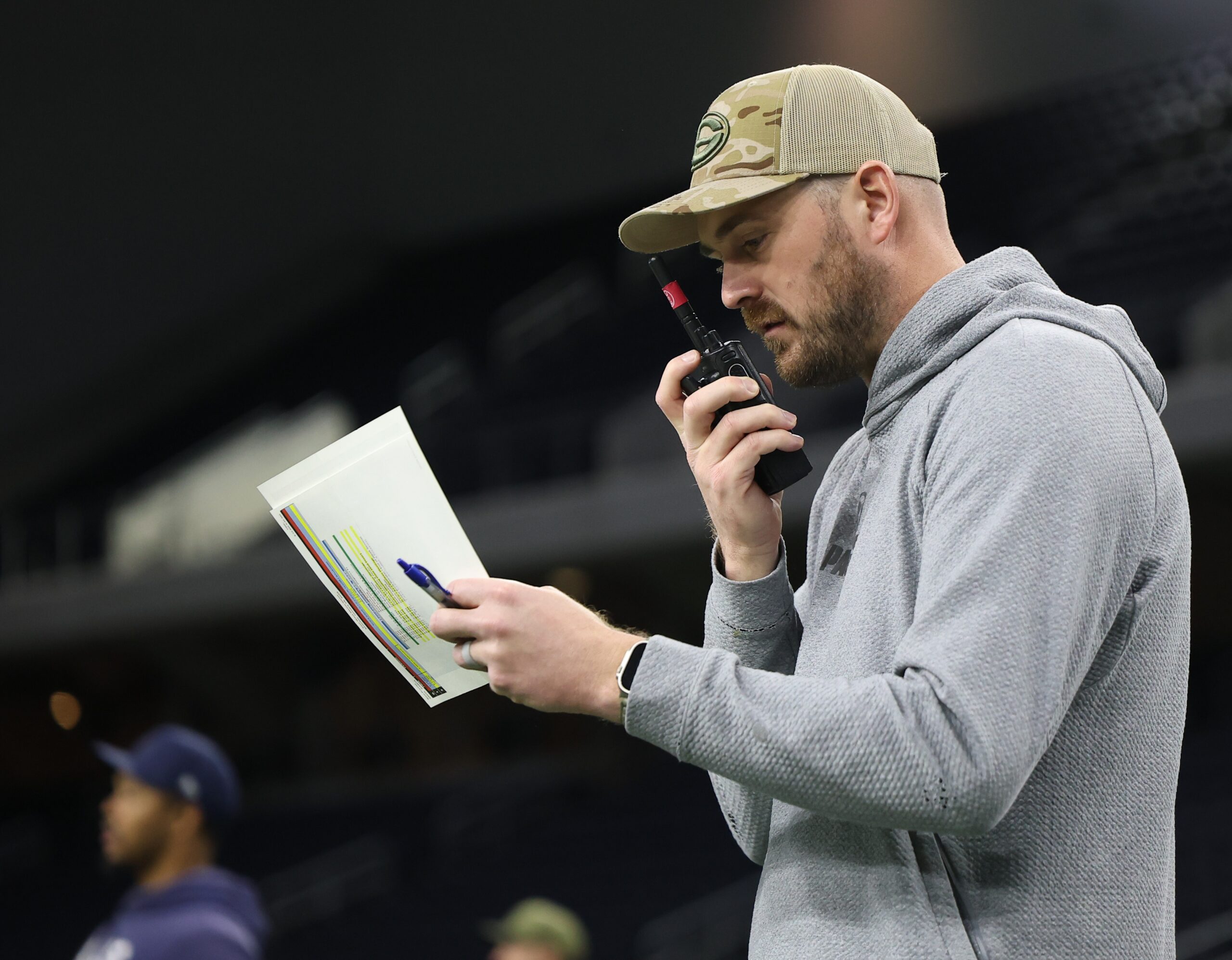
Sean Mannion will be calling plays for the first time under intense scrutiny in Philadelphia.
The new offensive coaching staff, under a first-year play-caller, is an amalgamation of coaches with different backgrounds. What will it mean for the scheme going forward?
Sirianni said after removing Kevin Patullo that the offense needed to “evolve.” He’ll soon have the chance to explain why and how this group can help it do that.
What happened with Jeff Stoutland?
The longest-tenured coach in the building, who has been widely regarded as the best offensive line coach in the sport, is no longer coaching with the Eagles.
Why?
The Eagles wanted Stoutland back as the offensive line coach, league sources said, but Stoutland, who also held the title of run game coordinator, wasn’t going to be as involved in the running game, and the Eagles are shifting schemes. Change is in the air. But Stoutland’s role in the running game decreased as last season went on, The Inquirer’s Jeff McLane reported recently on the unCovering the Birds podcast.
How did it get to this, and how much of an impact will his departure have on the offensive line moving forward?
Don’t expect Roseman to say anything that strays too far from his normal line when it comes to A.J. Brown and players like him.
Here’s what Roseman said at the end-of-year news conference on Jan. 15 when asked if he was open to trading Brown or if trading him was a nonstarter: “It is hard to find great players in the NFL, and A.J.’s a great player. I think from my perspective, that’s what we’re going out and looking for when we go out here in free agency and in the draft is trying to find great players who love football, and he’s that guy. I think that would be my answer.”
Still, Roseman likely will be asked about the star receiver’s future in Philadelphia in the coming days. It’s for good reason. Brown, of course, hasn’t been shy about his frustrations with the direction of the offense. But during Super Bowl week, Brown appeared on Micah Parsons’ podcast and spoke about his excitement for the future and the new offensive coaching staff. “Sometimes change is not a bad thing,” he said. He also called Philadelphia “home.”
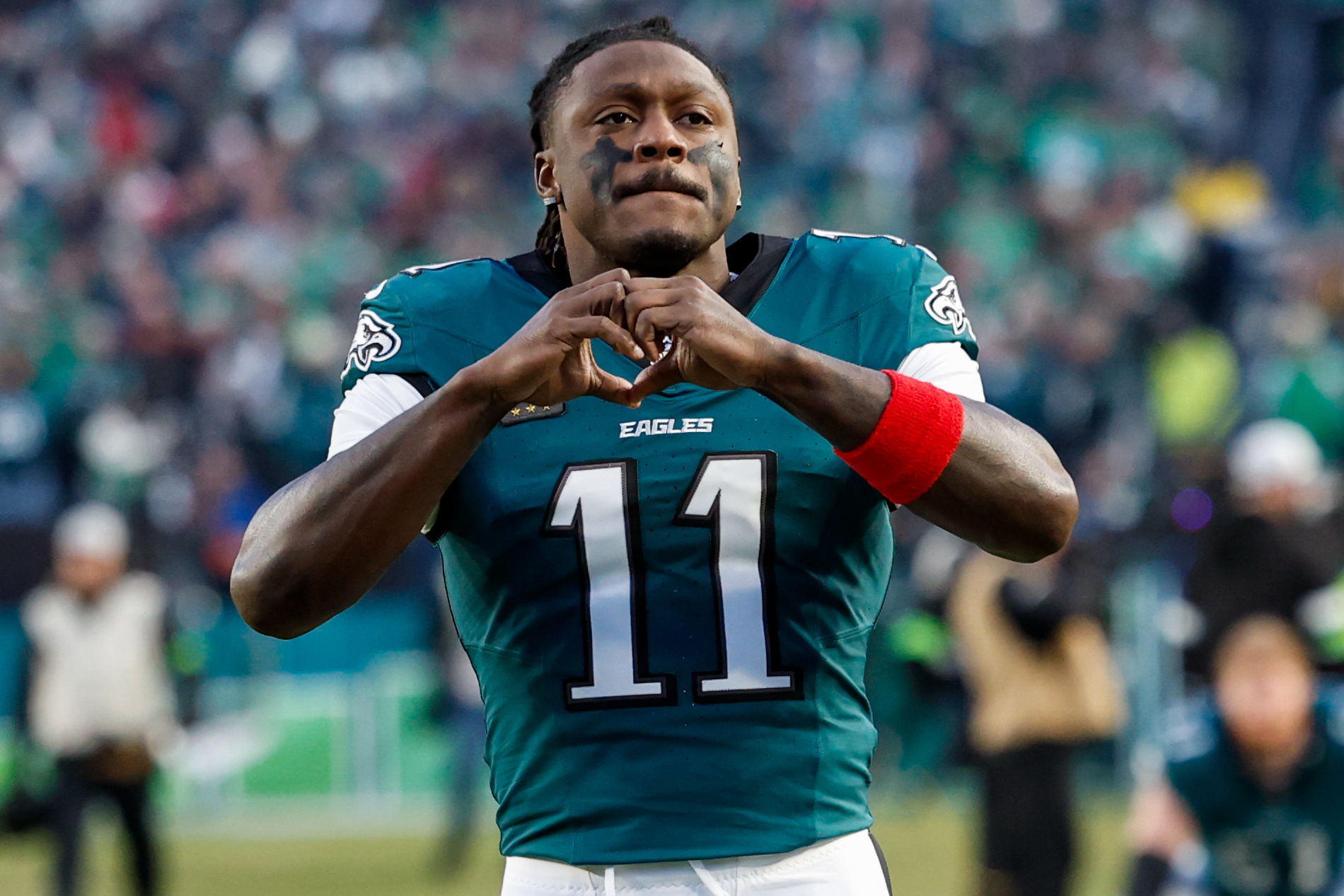
Does wide receiver A.J. Brown have enough love for Philadelphia to remain an Eagle?
While he didn’t sound like someone who was about to ask for a trade, it’s still early in the offseason.
Brown’s future with the team impacts how the Eagles approach the draft and free agency, so a decision on whether the Eagles see him in their immediate plans probably is already made. It’s complicated, however, because of the salary cap implications. The cost to trade Brown before June 1 would be $48.939 million, according to Over the Cap. If the Eagles traded him after that, they would incur a dead cap charge of $22.09 million. Much more palatable, but still a lot of dead money.
It begs the question, too: Could the Eagles ever get good value in a trade for Brown?
Roseman probably won’t be showing his cards in the coming days, but it’s a topic he’ll have to address.
How much has the future outlook of the offensive line changed, and how will it impact the plans?
The offensive line took a big step back in 2025 thanks to a slew of injuries. Lane Johnson missed half the season. Landon Dickerson was never fully healthy and may never be again. Cam Jurgens played through back pain.
At the time of Stoutland’s departure, it wasn’t even a sure thing that Johnson and Dickerson would be back for the 2026 season. A unit that basically was plug-and-play has turned into a big question mark for the Eagles. How much longer will Johnson and Dickerson play? (Editor’s note: Johnson announced his return for 2026 on Thursday.)
Eagles offensive tackle Lane Johnson’s health and future were in doubt before he announced his return on Thursday.
Jurgens, meanwhile, shared a video this week on social media of him in Colombia undergoing stem cell treatments. Jurgens, via his agent, declined to comment further on what led him to go that route or how he is feeling. The center had back surgery after the Super Bowl last year and did not play to his 2024 level this past season.
This impacts how the Eagles approach the draft and free agency. They’re due to get an eventual replacement for Johnson in the door, but they now need to think about the future of the interior.
Who stays, who goes, and who could get extended or restructured?
It soon will be time for the Eagles to go shopping on the free agency market, but there are some players on the current roster in line to have their contracts extended or possibly restructured.
Let’s start with Jordan Davis, who broke out in 2025 and earned himself a new contract. The Eagles picked up Davis’ fifth-year option last year, but signing him to a new deal is almost too obvious because it would free up much-needed cap space for 2026.
Will defensive tackle Jordan Davis be first in line for a contract extension after a breakout season?
There’s also Jalen Hurts, whose cap number jumps from nearly $22 million in 2025 to nearly $32 million in 2026. It will be more than $42 million in 2027, more than $47 million in 2028, and a whopping $97.5 million in 2029. But Hurts has no guaranteed money beyond this season. A restructure or extension could be on the table sooner than later.
What about the free agents? Jaelan Phillips, for example, is one of the best edge rushers on the market, and the Eagles need some of those. Safety Reed Blankenship is slated to hit the market, and the Eagles need a safety.
Roseman may not tip his hand, but he’ll certainly be asked about all of it with free agency just a few weeks away.
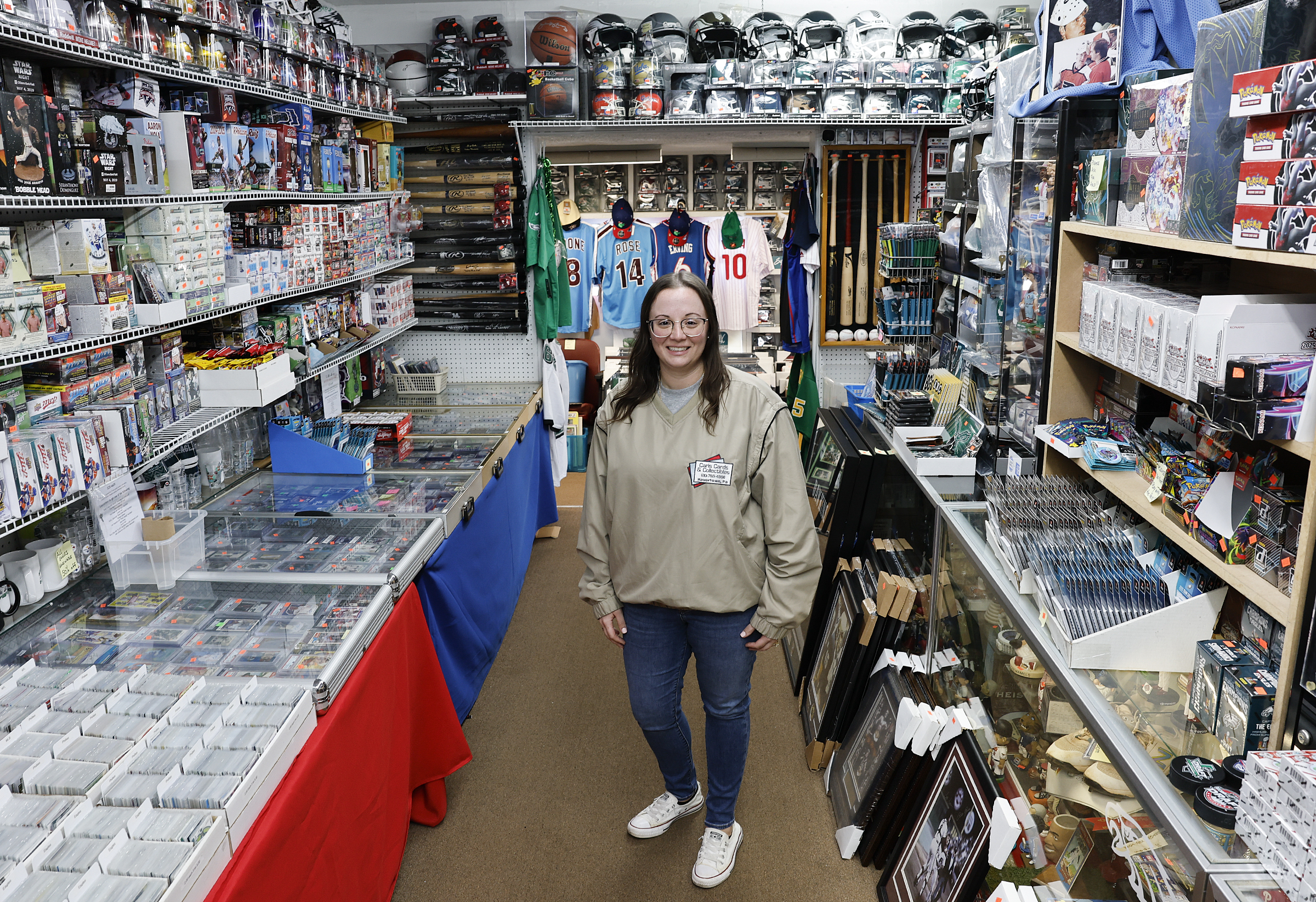
On the morning of Jan. 31, a few hours after Carl Henderson died unexpectedly in his sleep, his daughter, Lauren Henderson-Pignetti, drove to her late father’s sports cards and collectibles shop.
She opened it up like she would any other Saturday. Sometimes, kids stopped in with their parents on the back end of trips to the grocery store. Or while they were driving home from basketball practice or piano lessons.
Being there — just like her father had for 31 years — seemed like the right thing to do. So, the younger Henderson stayed at Carl’s Cards in Havertown from 11 a.m. to 7 p.m., until the last customer left.
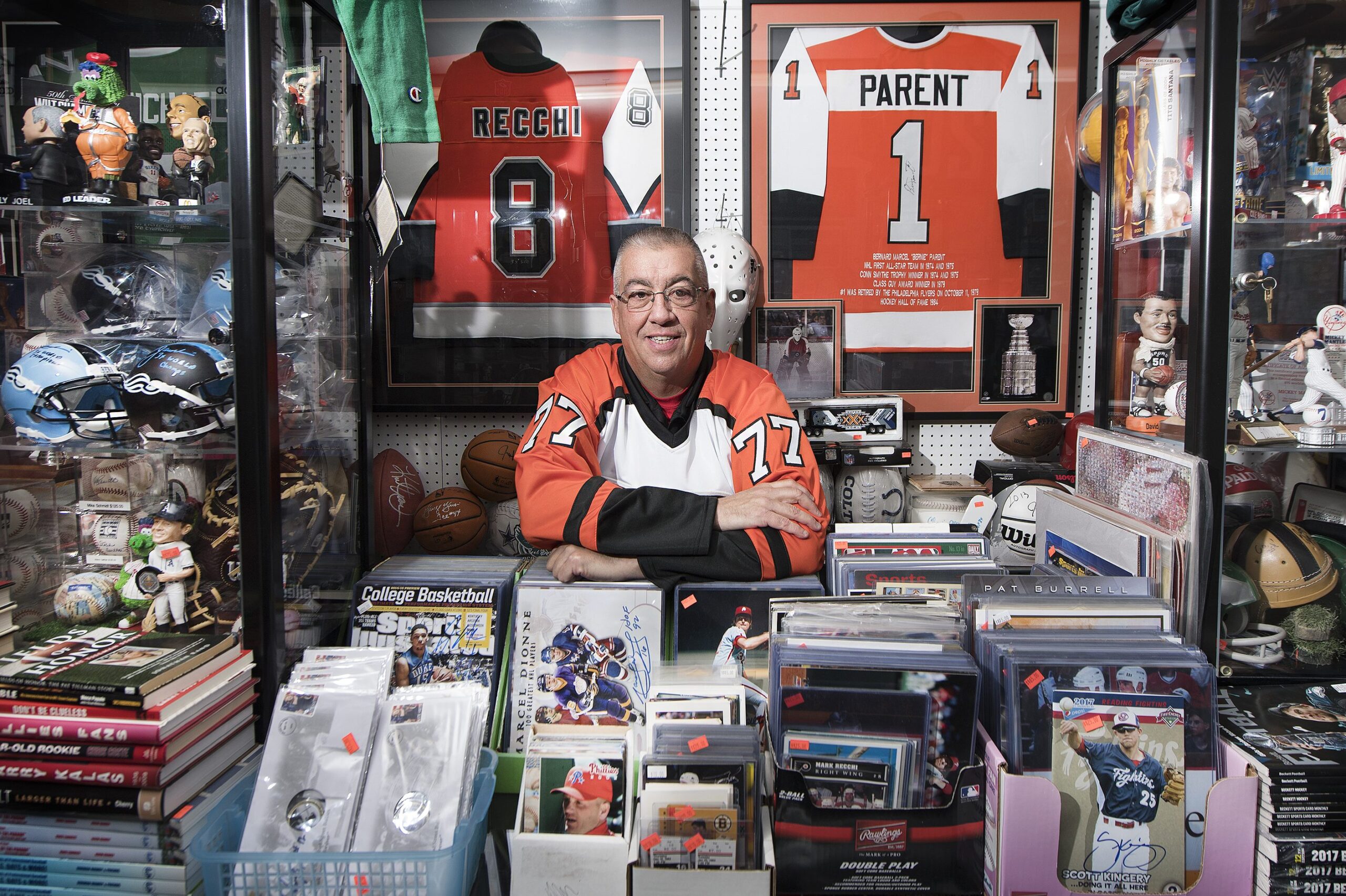
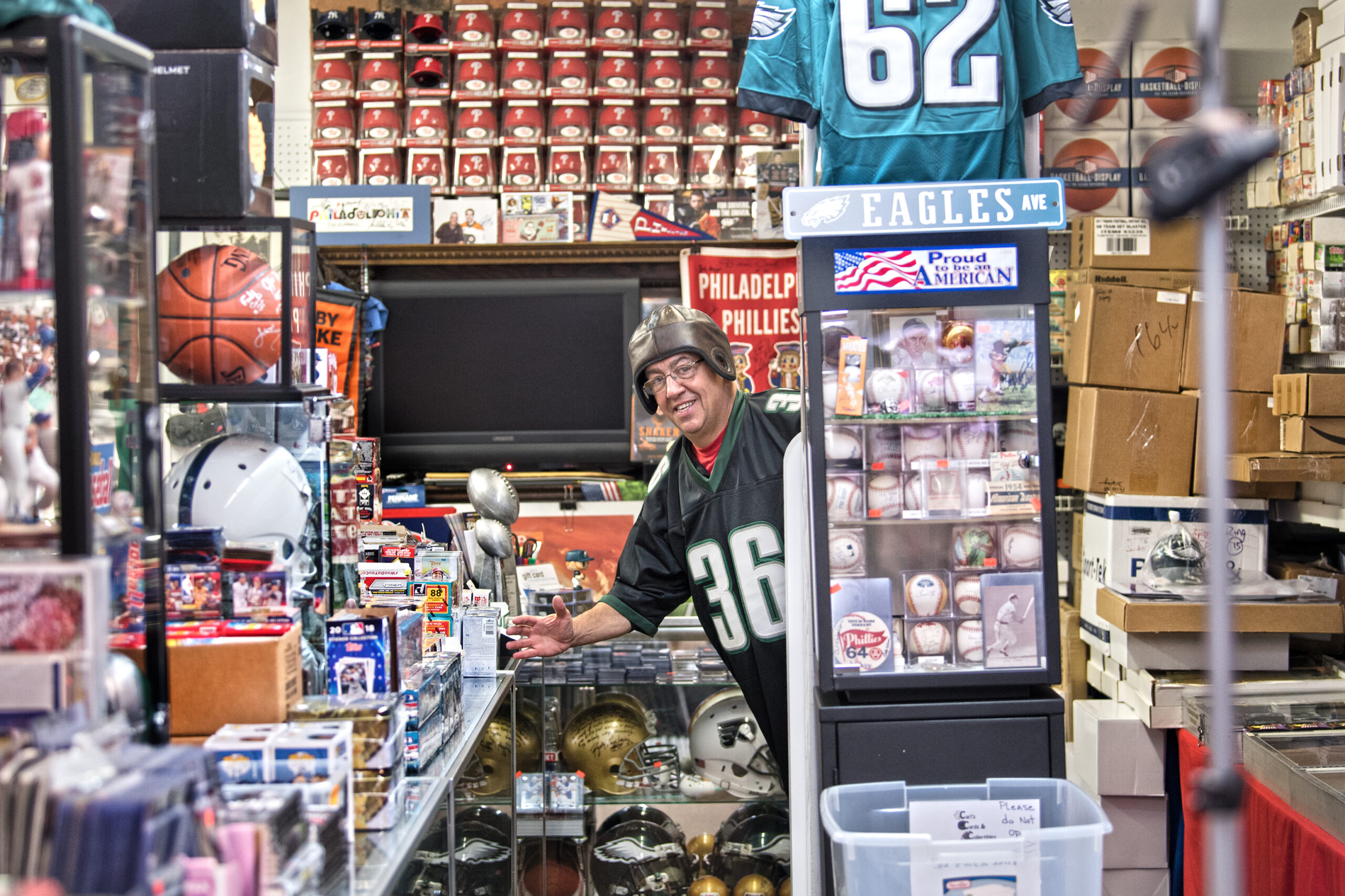
Carl Henderson at his Havertown store in 2018.
The shop owner was 69 when he passed. His family announced the news on Sunday, and received an overwhelming response; thousands of messages from children and adults and even a few local pro athletes.
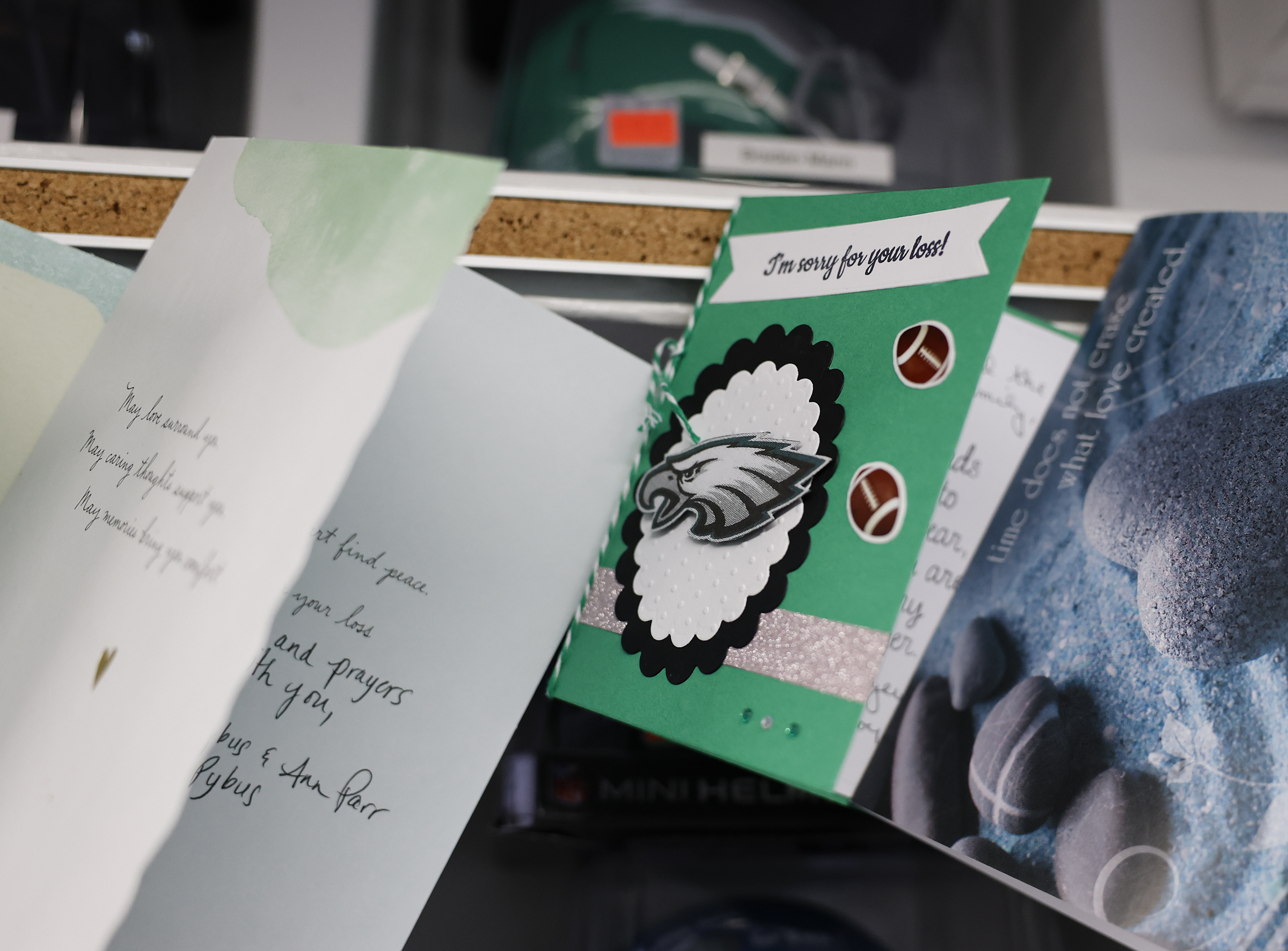
By Monday morning, bouquets of flowers were wedged between the doors. Customers started sending sympathy cards. Some showed up in person to express their support.
A memorial service held last week, in Bryn Mawr, drew about 400 people. Former Phillies pitcher Dickie Noles read a passage from the Old Testament. Members of the Broad Street Bullies sat among the crowd.
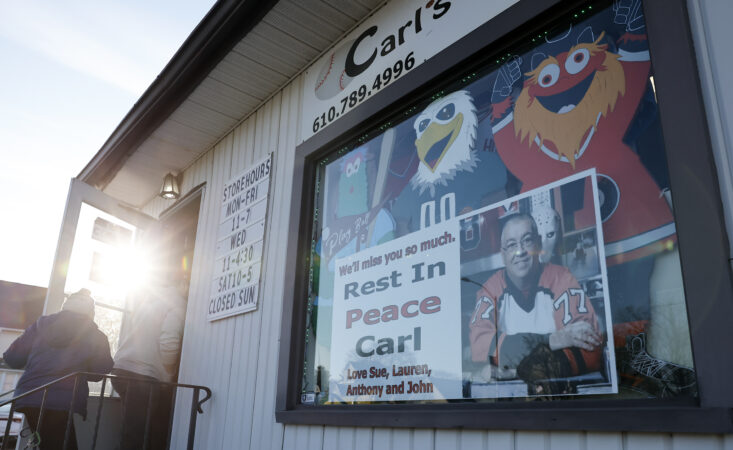
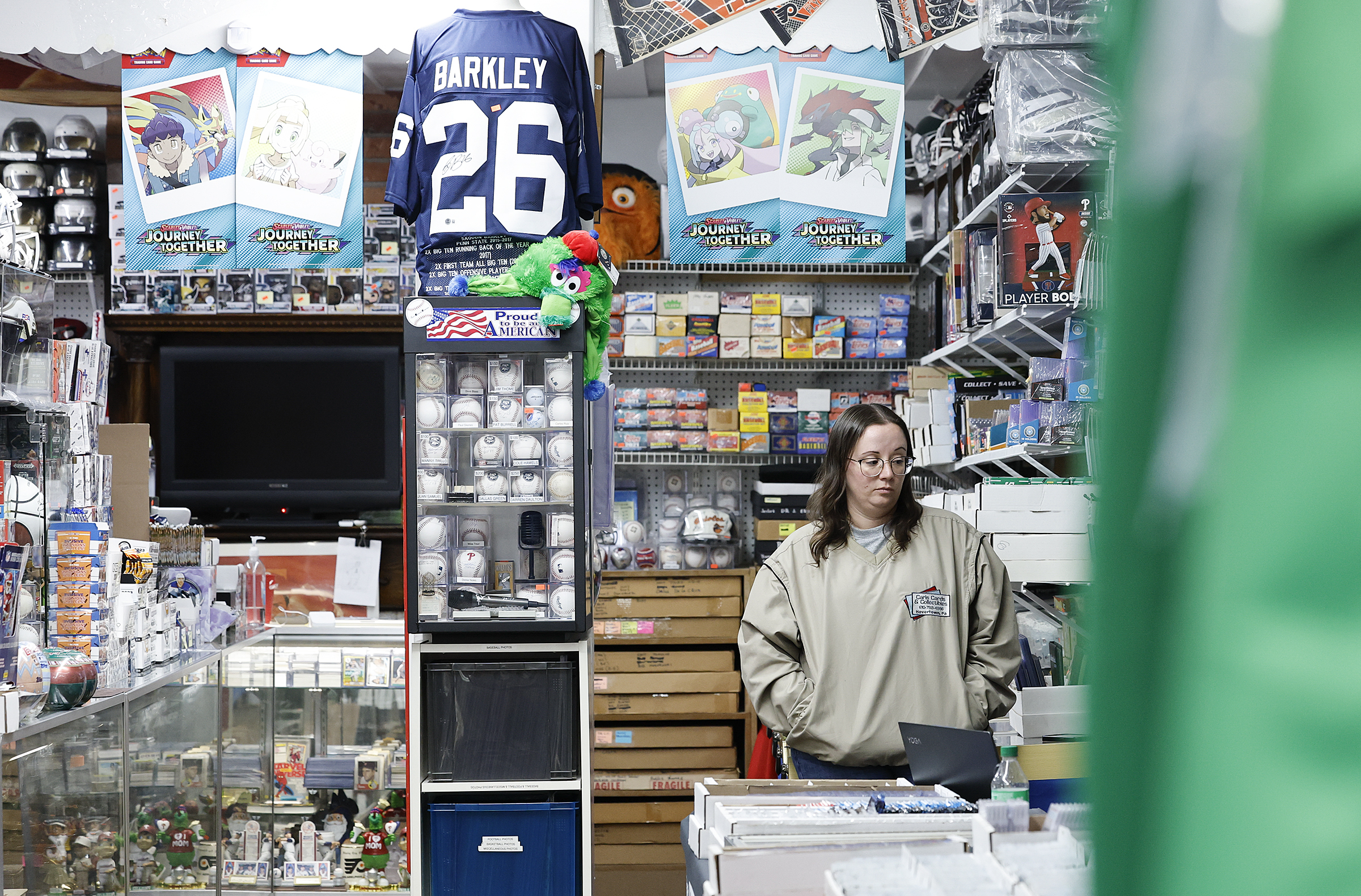
His shop looks a little different now. Those sympathy cards are pinned along the walls. A sign commemorating the longtime owner sits in its front window.
Condolences and tributes have poured into Carl’s Cards, including some from area sports figures.
But the character remains the same — and Henderson-Pignetti is determined to keep it that way. Carl’s Cards has something for everyone. Kids can fish through the dollar bin for unexpected treasures. Right above it, collectors can purchase a limited edition Bryce Harper-signed bat more than 1,000 times that price.
There are more run-of-the-mill items, like signed helmets and jerseys, but also packs of Pope Leo XIV trading cards, and a rectangular piece of wood cut from the old Spectrum court.
The sports memorabilia world can be transactional, if not cold, but Henderson navigated it with warmth and integrity. He frequently donated money and autographed items to charity.
He liked to say he knew his clientele — and they weren’t always big spenders.
The shop owner cared just as much about the 10- or 11-year-old student with only a few dollars in their pocket. Or those who had no money to spend at all, but just wanted to vent about Philadelphia sports.
“He didn’t care if you were buying something,” said Henderson-Pignetti. “It was almost like a version of a bar where you stop in and talk to a bartender.
“You can buy something, [but] you don’t have to. You can just stop in and talk. It wasn’t always about the dollar.”
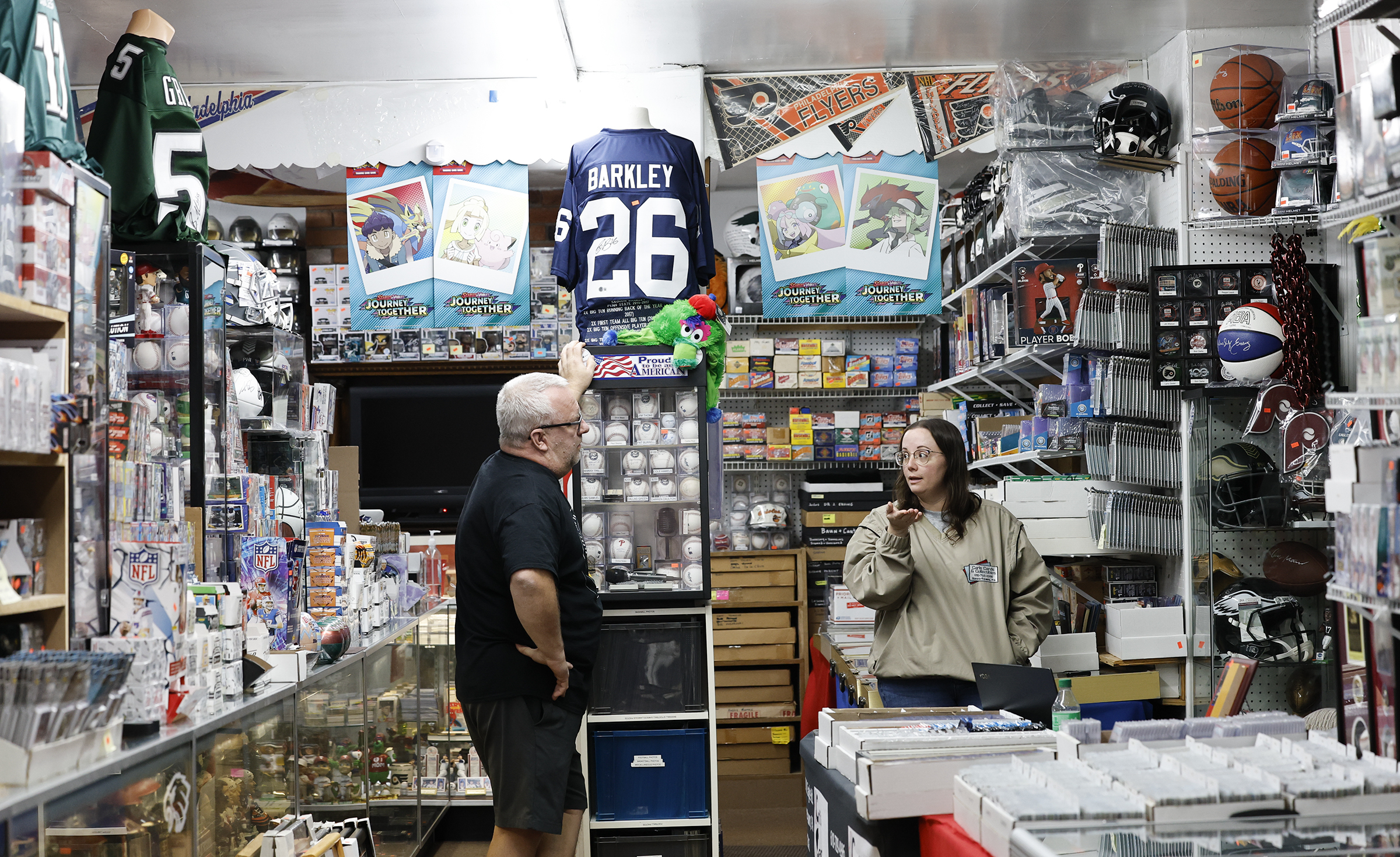
Lauren Henderson-Pignetti has taken on the responsibility of maintaining her father’s life’s work.
The store has been open since Henderson passed. For now, it’ll stay on its previous schedule.
Henderson-Pignetti sees this as a way of honoring her late father, who would’ve wanted Carl’s Cards to stay alive, no matter what.
“We made the decision to keep everything rolling the way he would have,” she said. “He spent 31 years building this place. He would have wanted everything to stay the way it was.”
A family atmosphere
When Henderson opened Carl’s Cards in 1995, his family thought he was out of his mind. He’d left a stable, corporate job working for Ryerson Steel, and had a wife and young daughter to support.
But Henderson loved collecting, and was ready for a change. So, he signed a three-year lease for a small property on Darby Road.
By 1998, he’d outgrown it, moving to a bigger location across the street from The Haverford Skatium. In 2010, he outgrew his budding collection yet again, moving Carl’s Cards to its current home on West Eagle Road.
These shops were where Henderson-Pignetti spent her childhood. She watched as her father welcomed world-class athletes for autograph signings, and put them at ease in a way bigger card shops couldn’t.
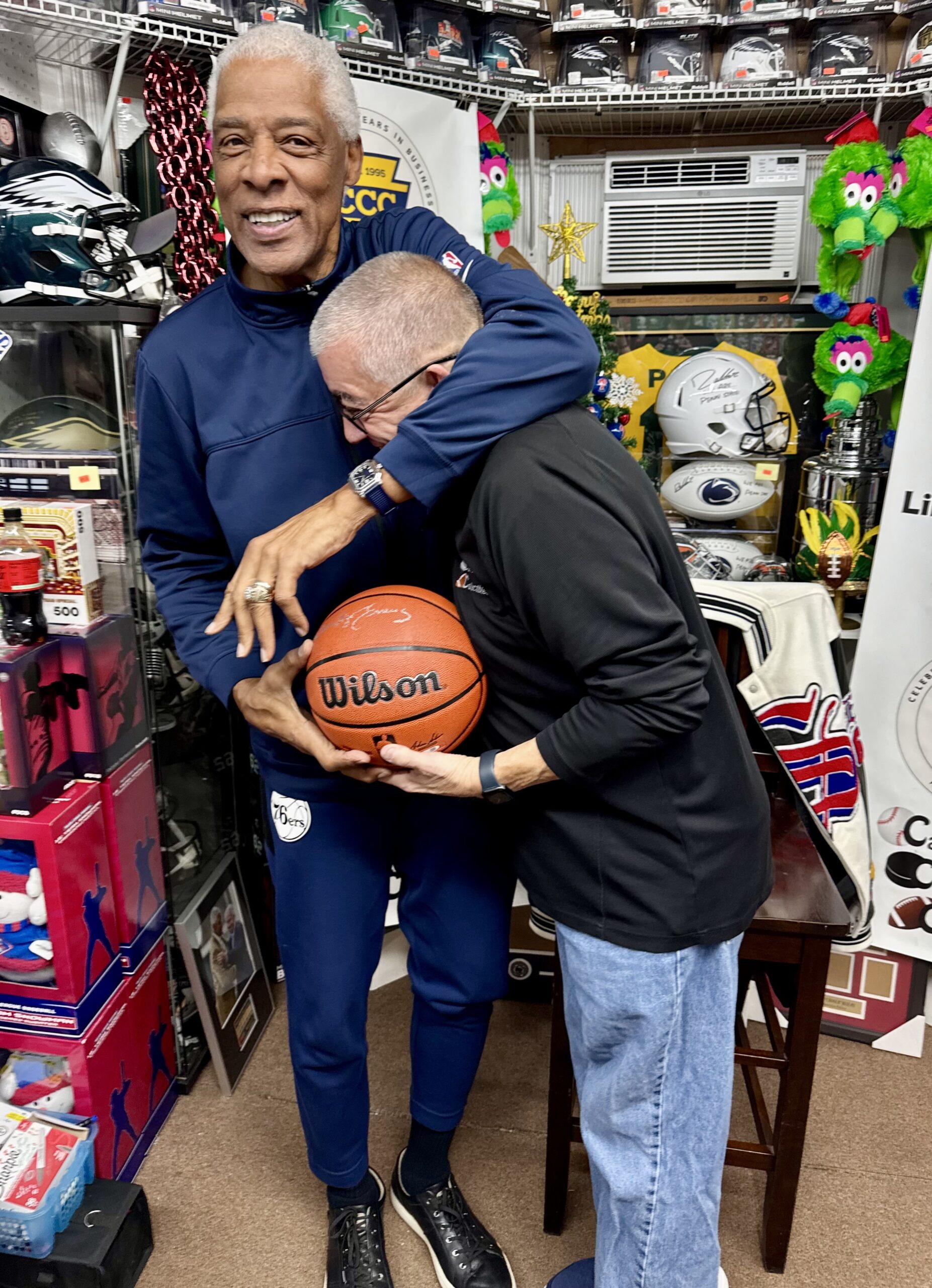
Julius Erving was among the local sports dignitaries who were made to felt comfortable by Carl Henderson (right).
There were no strangers at Carl’s Cards. He was always running the show, with his wife, Sue, selling tickets. As Lauren got older, she began to help out too, mainly with social media and website management.
“It’s not like one of those big card shows where you’re sort of forced in and forced back out again,” Henderson-Pignetti said. “It’s very much a family atmosphere. So, I think a lot of players really enjoyed that.”
Henderson’s theory was that when athletes were more relaxed, they were able to show their authentic selves. This proved true time and time again. Carl’s Cards hosted everyone from Allen Iverson to Jimmy Rollins to A.J. Brown.
Many of these athletes returned for more signings. Some, like Eagles offensive tackle Fred Johnson, even reached out after Henderson’s passing. Others, like Julius Erving, treated the store owner like an age-old friend.
An appearance by Erving had long been on Carl’s bucket list. Like many kids growing up in Philadelphia in the 1970s, Henderson idolized Dr. J. He owned Converse sneakers — just like the Sixers forward — and played varsity basketball at John Bartram High School.
Not much enthralled Henderson, but the idea of sharing a room with one of the best athletes of his generation did. They booked the signing for Dec. 21. After it was done, Erving hung around and talked to the store owner.
At one point, he heard some employees poking fun. He joined in.
“Dr. J was like, ‘Man, they even talk to the boss like that!’” Henderson-Pignetti recalled. “And my dad was like, ‘Do you hear that, guys? I’m the boss here.’
“It was just a really fun, sort of banter conversation. It was just nice.”
While autograph signings were part of the job, they were not the whole job. Henderson wanted his shop to be just as accessible for young kids.
Carl Henderson was a lifelong fan of the area’s sports teams, and that passion showed in his work.
In addition to the dollar bin, he made sure to stock the shelves with affordable card packs. He brought in a gumball machine and added $25 mystery memorabilia boxes.
But above all, he was an uplifting presence in their lives, in a way that Henderson-Pignetti wasn’t even aware. After her father died, she heard from all sorts of kids.
One of them, 12-year-old Owen Papson, crafted a handmade letter.
“I just heard the news,” he wrote. “I am so sorry. We will miss Carl so much. Your store will always be my favorite.”
Inside, he taped a signed Harold Carmichael Topps card with an inscription above: “Hopefully this will help.”
More stories came pouring in on Facebook. One, in particular, stuck with her. It was from a longtime customer who used to frequent Carl’s Cards in the early 2000s.
Lauren Henderson-Pignetti (right, with John O’ Brien) has been touched by the outpouring over her father’s death.
He explained that at the time, his parents were going through a divorce. Henderson was a stable presence when he needed one. He’d ride his bike to the store and was greeted with a smile every time.
“I had no idea,” said Henderson-Pignetti. “To think that something so simple as my dad just being in his place of business … for this kid [it] meant more to him than I think he probably even realized.”
‘A gift from God’
Last September, Henderson-Pignetti quit her role as director of development at the Humane Society in Reading. She loved working there, but was ready for something different, similar to her father when he left Ryerson Steel.
In the moment, her decision was based on a gut feeling, but now she can see the bigger picture. Last fall, Henderson-Pignetti started working full-time at Carl’s Cards.
On Thursdays, her father would give her run of the shop; how to properly open and close, how to track sales, how website orders are mailed out, and other intricacies of the job.
“It was a gift from God, basically, because it allowed me to just absorb even more information from him,” she said. “I kind of look back on that as a weird sort of intuition type of thing. If I hadn’t left my job, that wouldn’t have happened.”
Lauren Henderson Pignetti says her goal is to keep Carl’s Cards & Collectibles up and running after her father’s passing.
The goal, for now, is to keep the shop open. Some days are easier than others. Sue is sick and unable to work. Coworkers, and even customers, have helped pick up shifts when Henderson-Pignetti needs some space.
It can be emotionally exhausting at times. But she’s going to see it through.
“The plan is to not have anything change,” she said. “He would want me to step right into this role. I have no doubt about that. So that’s what I’m going to do, for as long as I possibly can.”
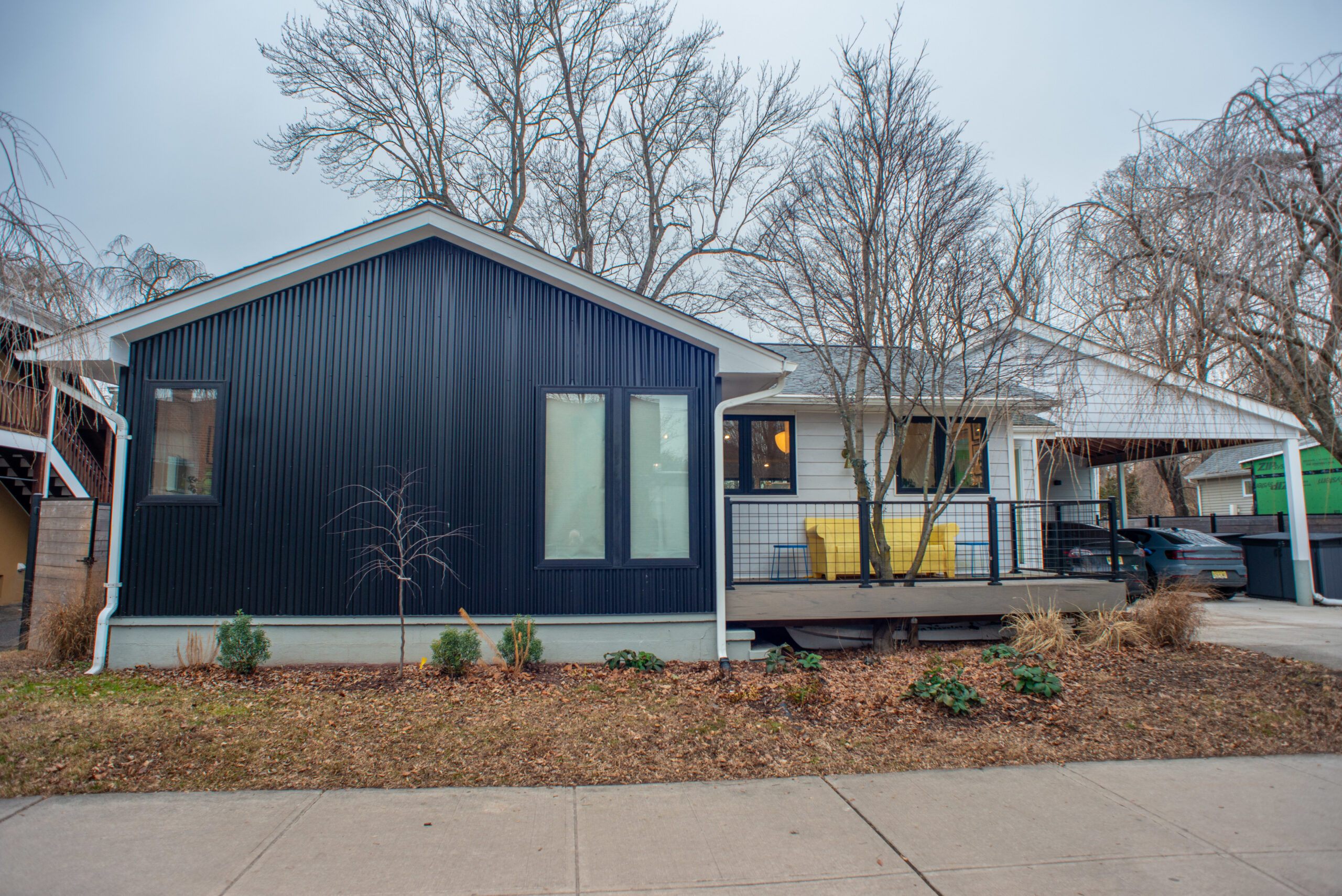
As their family grew, Lauren Braun-Strumfels and Kyle Strumfels felt the walls of their 1895 rowhouse in Lambertville, N.J., closing in on them. With two kids, the 16-foot wide, one-bathroom house left a lot to be desired.
They pined after the neighboring standalone house built in the 1970s, an abnormality for the Victorian-era town that attracts antiques lovers to Hunterdon County year-round. Even though maintenance had been deferred for decades, the house sat on an unusually roomy lot for the dense, walkable downtown. The couple, unafraid of a renovation, had a vision for what it could become.
But creating the California modern-inspired ranch house they live in today was not nearly as straightforward. First, buying the house proved challenging.
The exterior of Kyle Strumfels and Lauren Braun-Strumfels’ home in Lambertville, N.J.
“When we finally got to the table and signed the deal, [the seller’s] lawyer said, ‘I thought she was gonna go breach of contract, like, three times!’” Braun-Strumfels, 46, said. The couple felt it on their end, too, as they helped guide their neighbor through the sale. “It was very stressful and very intense.”
They closed for $290,000 in August 2017. The young family moved into the two-bedroom house on Feb. 4, 2018, the day the Eagles won the Super Bowl, recalled Strumfels, 47. Their two kids, now 12 and 9, shared one room while the couple had the other. Everything needed updating.
“With the rowhouse, there were certain things that we just wouldn’t want to do to it, historically, to preserve the character,” Braun-Strumfels said. “This house was a total blank slate. It was neither historic nor attractive, so we felt like we could really transform it.”
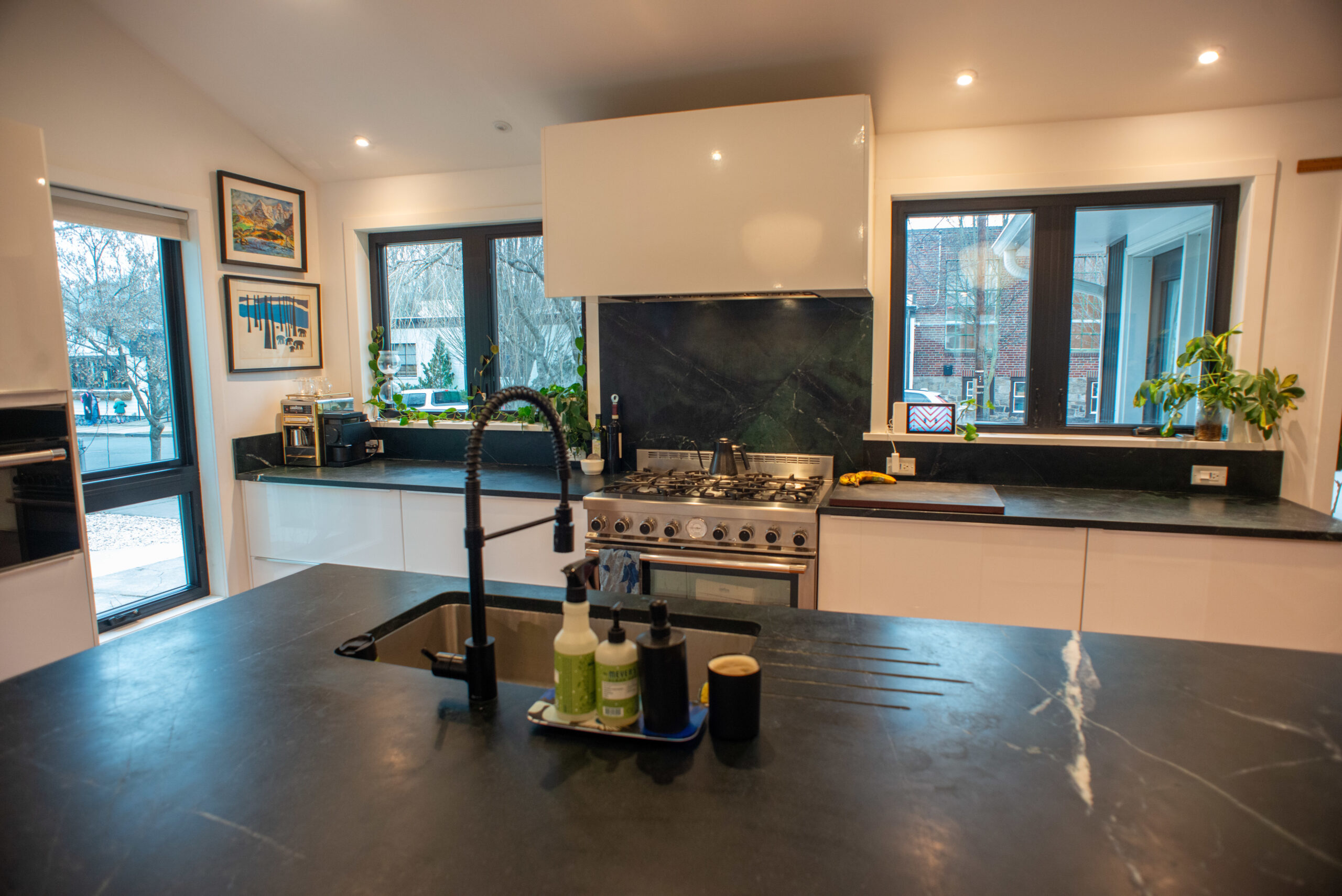
In the first of their two major renovations, they funneled $150,000 into moving the kitchen to the front of the house, bumping the back wall of the house out to add more living space, and adding a Jack-and-Jill bathroom connecting the two original bedrooms on top of less exciting but no less important mechanical upgrades. They lived that way for a few years but always knew there was more work to do.
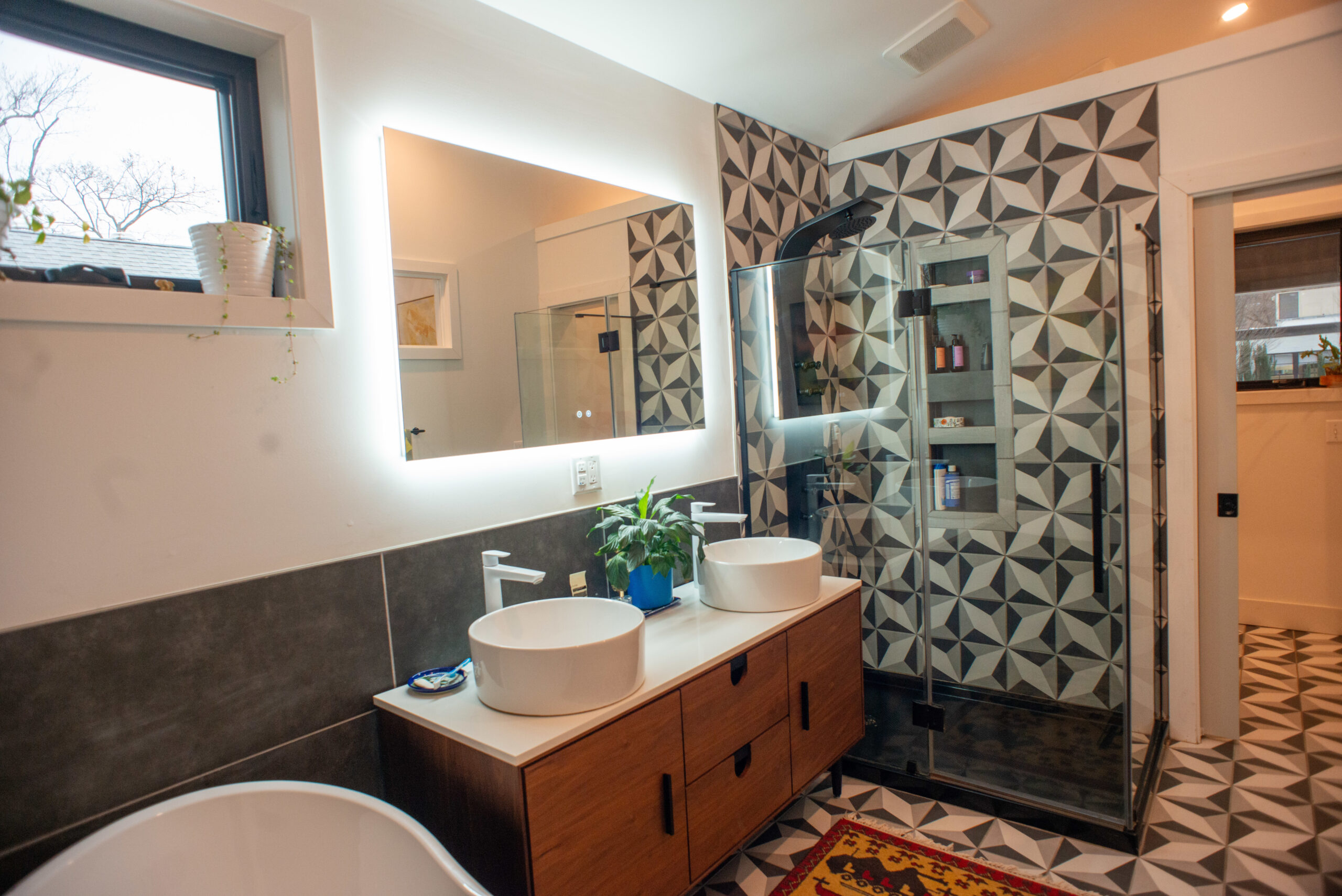
The kitchen, which was relocated in the first round of renovations.The main bathroom.
The second renovation didn’t go quite as smoothly.
The couple began pursuing a $300,000 construction loan in 2018 that didn’t close until 2020, thanks to a zoning snafu. The amount was intended to leave a nice cushion for finishing details, but by the time the loan was theirs, the pandemic had driven up lumber costs and “our whole budget got eaten by two-by-fours,” Braun-Strumfels said. Their tile budget was whittled down to about $1 per square foot in the bathrooms, meaning Braun-Strumfels had to let go of her plans for elaborate tile and countertops.
They also had to part with one architect who didn’t quite get the couple’s vision. They then hired Princeton-based architect Peter Wasem.
The hallway near the entrance features a large painting that contrasts with the green front door.
Ultimately the renovation added 1,000 square feet for a new entry as well as what they call an “adult wing,” with a walk-in closet that leads to an en suite bathroom. Through a stroke of smart design, the en suite’s water closet doubles as a powder room, creating a circular flow through the wing.
Coming from their rowhouse, which only had two exposures, it was important to Braun-Strumfels and Strumfels to take advantage of the roomy lot’s natural light. The primary bedroom is lined in windows — with a partial view of their old property. Their living room addition also has a large window overlooking the backyard.
The primary bedroom has two-story windows, high ceilings, and a living space.
The original front porch was enclosed to become a shared office for Braun-Strumfels, an associate professor of history at Cedar Crest College, and Strumfels, a senior vice president of ESG and climate at Macquarie Group. A new carport gives the house a distinctly mid-century touch.
The result of the renovations is an open-concept house where the couple’s eclectic furniture, wares, and finishes can live in harmony. Their collection of mid-century furniture and wares from local joints like Rago Auctions coexists with original art, including Strumfels’ favorite piece from Philadelphia’s Material Culture. And that’s on a backdrop of modern finishes like sleek soapstone countertops and Herman Miller pendant lighting over the oversized kitchen island.
“Sometimes I wondered if people would be mad we stuck a modern house in the middle of this town, but people seem to really like it,” Strumfels said. Folks in the area can be very resistant to change, Strumfels said, but “we get a lot of nice feedback.”
Mid-century furniture and original art coexist in an eclectically decorated home.
They have no plans to move, but Braun-Strumfels said they do harbor a hope of someday returning to Philadelphia, where they lived for a year before moving to Lambertville.
Paintings hang on the wall.One of the children’s bedrooms.
“We have our little pipe dream that we might retire eventually, get a little spot in the city, go back and forth,” she said.
But for now, they’re finally perfectly at home.
Is your house a Haven? Nominate your home by email (and send some digital photographs) at properties@inquirer.com.
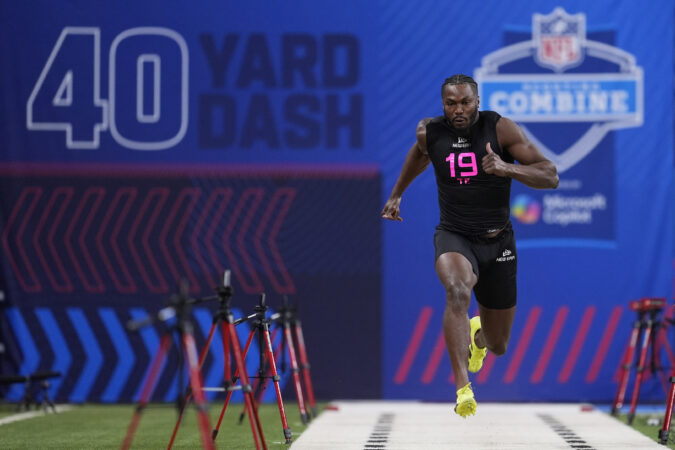
Next week, 319 college football prospects will descend on Indianapolis for the annual NFL scouting combine, where they will be tested physically, mentally, and medically, interviewed by NFL front office personnel, and will speak with hundreds of media members.
This latest step in the 2026 NFL draft process allows teams to home in on the next crop of players that will fill their franchises. All 32 teams will have 45 “formal interviews,” which last just under 20 minutes, can include watching film or any questions teams want to ask a prospect, and typically take place in the Lucas Oil Stadium suites.
The first direct touch point with prospects happened at last month’s Shrine and Senior Bowl games. NFL teams will utilize this next piece of the puzzle to identify which prospects match their team needs.
Here is how we’re ranking the combine position groups from strongest to weakest — and how they could help the Eagles address some roster needs.
Ohio State cornerback Davison Igbinosun (1) is a potential target for the Eagles beyond the first round.
1. Cornerbacks
It’s a good year to add a secondary player, whether they play outside corner, nickel, or safety. But outside and boundary corners, specifically, will be plentiful from the first round to Day 3 of the draft.
This is a position the Eagles could address early, but not one that will likely be prioritized in the first round. Among the early projected draft picks at the position are LSU’s Mansoor Delane, Tennessee’s Jermod McCoy and Colton Hood, Clemson’s Avieon Terrell, and South Carolina’s Brandon Cisse.
Finding a corner to develop into a starter opposite of Quinyon Mitchell — assuming they don’t bring back Adoree’ Jackson, who is set to be a free agent — should be among the Eagles’ objectives. Keep an eye on San Diego State’s Chris Johnson, Ohio State’s Davison Igbinosun, Arkansas’ Julian Neal, Georgia’s Daylen Everette, and Texas A&M’s Will Lee as players who could interest the Eagles.
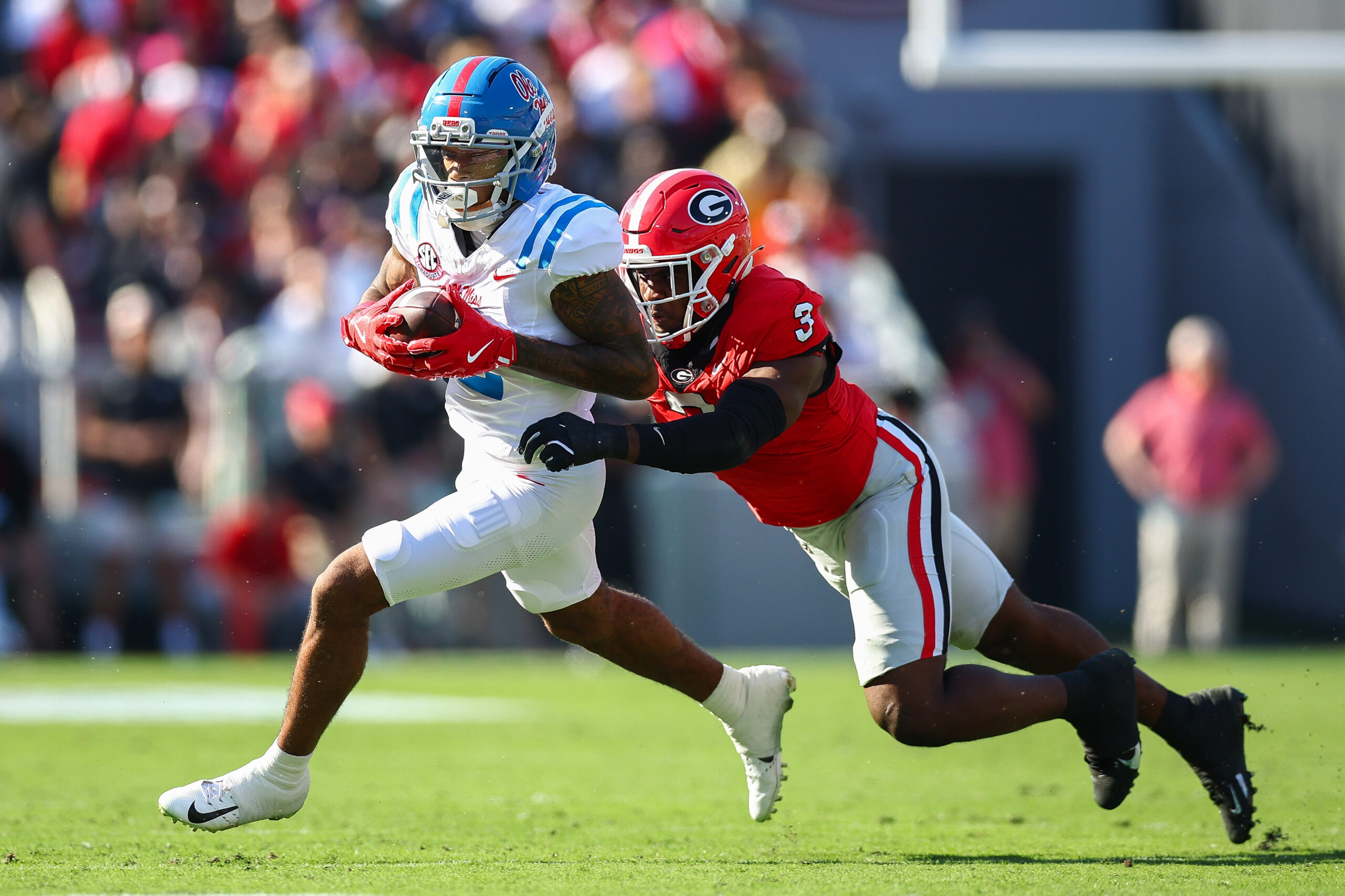
Ole Miss wideout Harrison Wallace III (2) could be a depth or slot option for the Eagles.
2. Wide receivers
There is always a healthy stable of receivers entering the draft, and 2026 is no different. The Eagles, of course, won’t be drafting a wide receiver early — unless they trade A.J. Brown before the draft — but they will need to add more depth to the room regardless.
The top of the class is led by Ohio State’s Carnell Tate, Arizona State’s Jordyn Tyson, and USC’s Makai Lemon, but the receivers heading to the combine feature several skill sets.
The Eagles’ WR3 spot is a potential question mark heading into next season with Jahan Dotson heading into free agency. Players like Ole Miss’ Harrison Wallace, Baylor’s Josh Cameron, Georgia Tech’s Eric Rivers, and Clemson’s Antonio Williams are players to keep an eye on that can occupy either a slot role or have moved around the formation in their collegiate careers and could fit in a depth role for the Eagles.
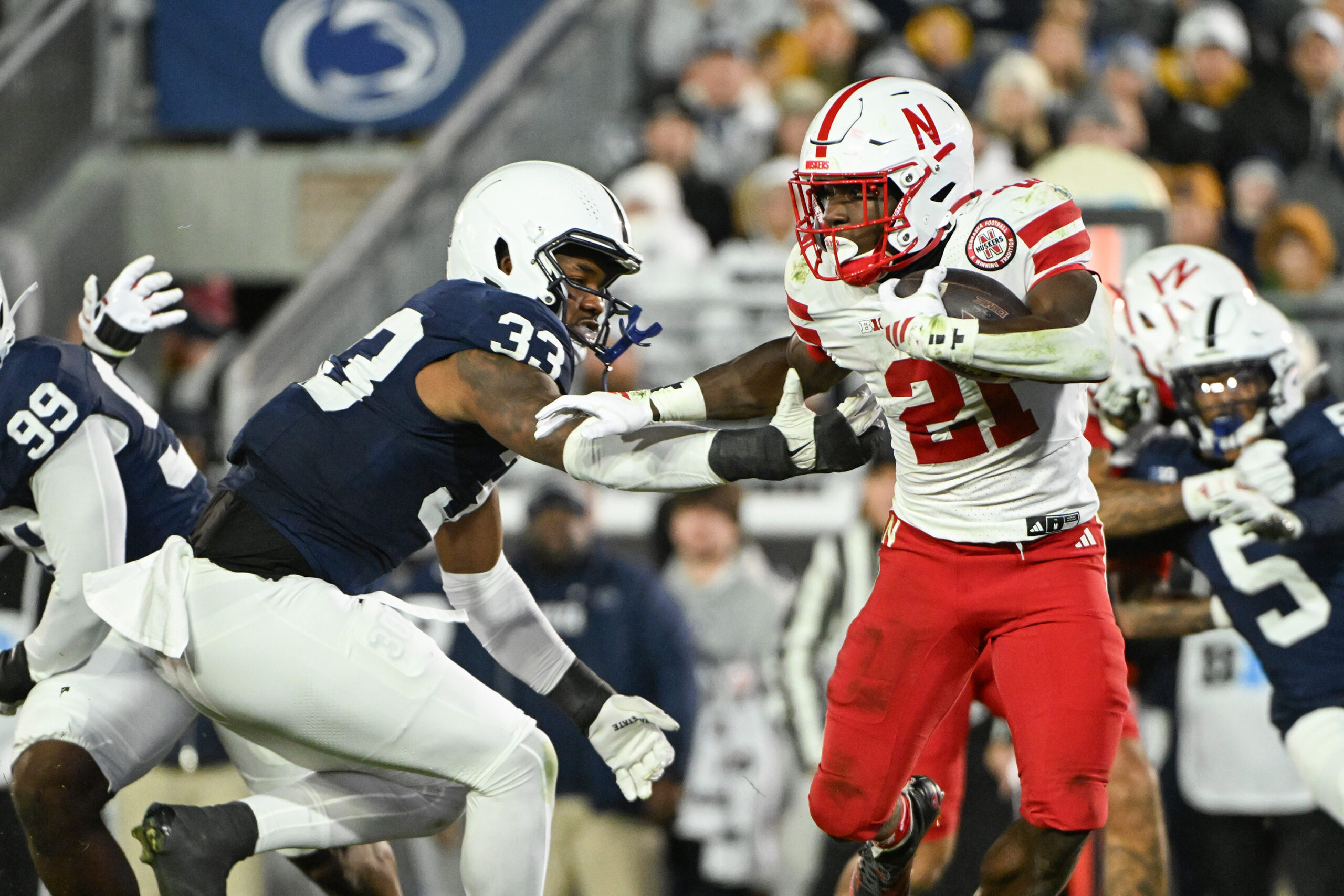
Would Penn State defensive end Dani Dennis-Sutton (33) be a fit for the Eagles’ pass rushing group?
3. Edge rushers
There is an abundance of edge rushers worth drafting in this class, with Miami’s Rueben Bain, Texas Tech’s David Bailey, and Auburn’s Keldric Faulk as the top names. With Jaelan Phillips and Azeez Ojulari set to become free agents and Brandon Graham’s status unknown for 2026, the Eagles’ edge rusher room desperately needs more depth.
The versatile edge rusher types might interest the Eagles more in this class, though, to complement the relatively light-body types in the edge rusher room currently. Alabama’s LT Overton, Florida’s Tyreak Sapp, and Penn State’s Dani Dennis-Sutton are all players who are bigger in size and have the ability to play from three-techniques out to true pass rusher alignments.
As for developmental pass rushers, keep an eye on Michigan’s Jaishawn Barham, Western Michigan’s Nadame Tucker, and Boston College’s Quintayvious Hutchins as late Day 2 and early Day 3 options as pure pass rushers.
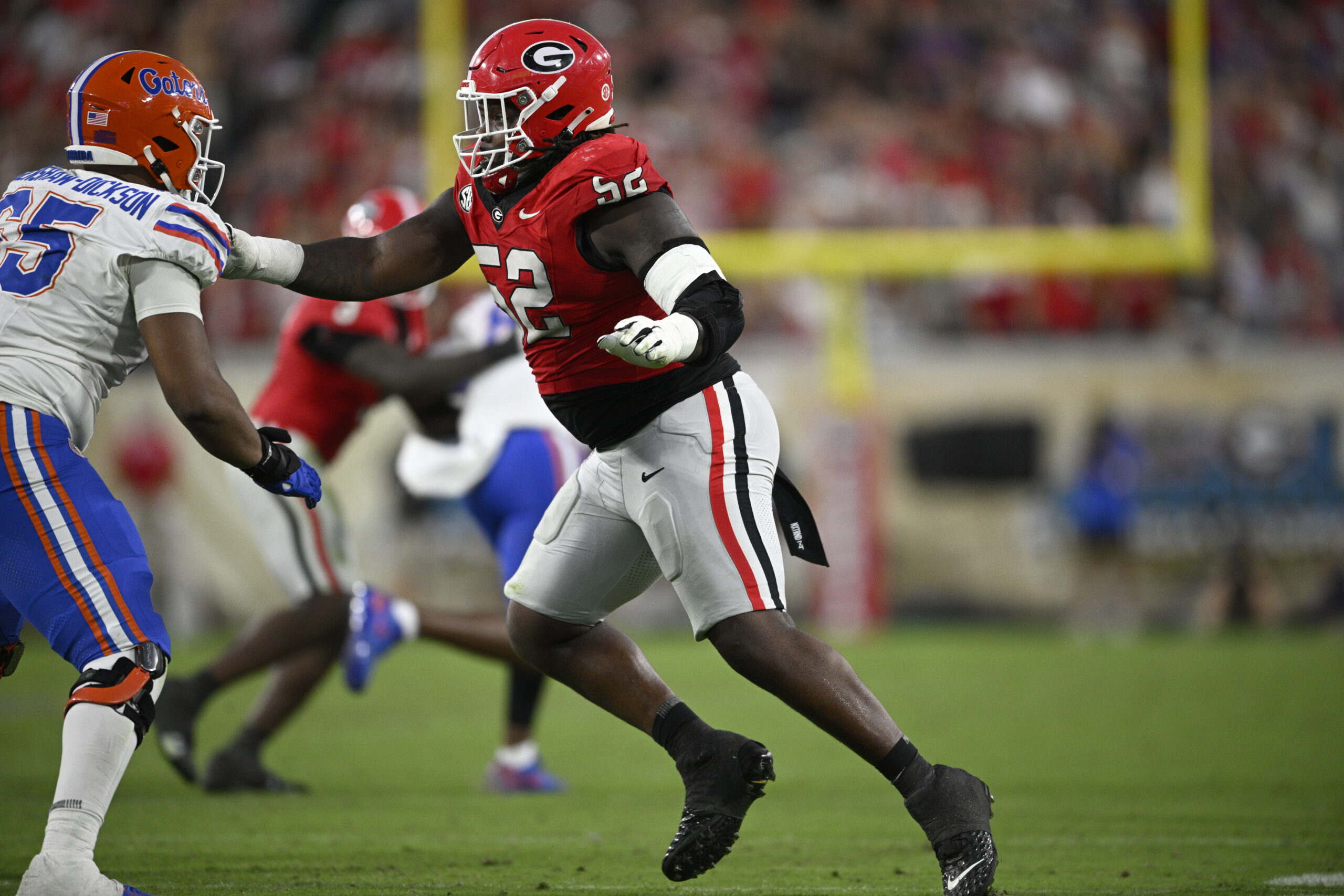
Christen Miller (52) is another Athens-to-South Philly possibility for the Eagles.
4. Interior D-line
As the Eagles and Seattle Seahawks proved in the last two Super Bowls, an interior pass rush presence matters a whole lot, and the NFL has a deep group of prospects to choose from in this class.
There are run stuffer types such as Texas Tech’s Lee Hunter, Ohio State’s Kayden McDonald, Iowa State’s Domonique Orange, and Georgia’s Christen Miller, and twitchy pass rushers including Clemson’s Peter Woods and Florida’s Caleb Banks.
Jalen Carter and Jordan Davis could soon get extensions from the Eagles, but adding more bodies to have a deeper rotation and talent level in the room would only help keep those players fresh. Michigan’s Rayshaun Benny, Missouri’s Chris McClellan, and Texas A&M’s Tyler Onyedim are a few Day 2 and 3 options to keep tabs on.
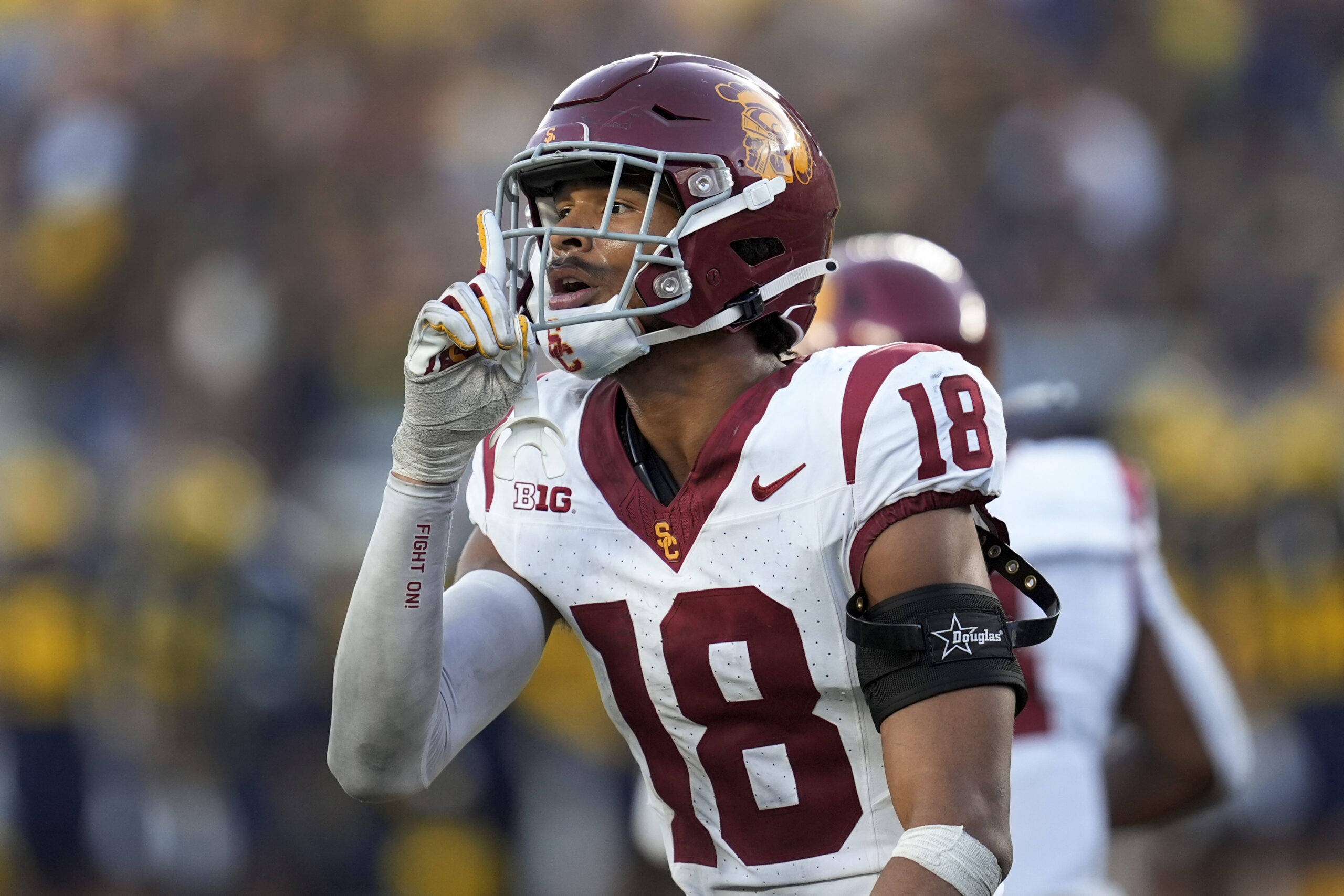
Eric Gentry is a local product who might be of interest to the Eagles.
5. Linebackers
The Eagles linebacker room became a strength of the defense over the last few seasons and they won’t need to expend an early-round pick on one. But this class has three first-round caliber players at the position: Ohio State’s Arvell Reese and Sonny Styles and Georgia’s CJ Allen.
The Eagles could lose Nakobe Dean to free agency this offseason, but still have Jihaad Campbell and Zack Baun penciled in as starters. There are two players in this class with Philly-area ties: USC’s Eric Gentry, the former Neumann Goretti standout, and Missouri’s Josiah Trotter, the younger brother of Jeremiah Trotter Jr. Josiah Trotter and Gentry are both expected to get drafted.
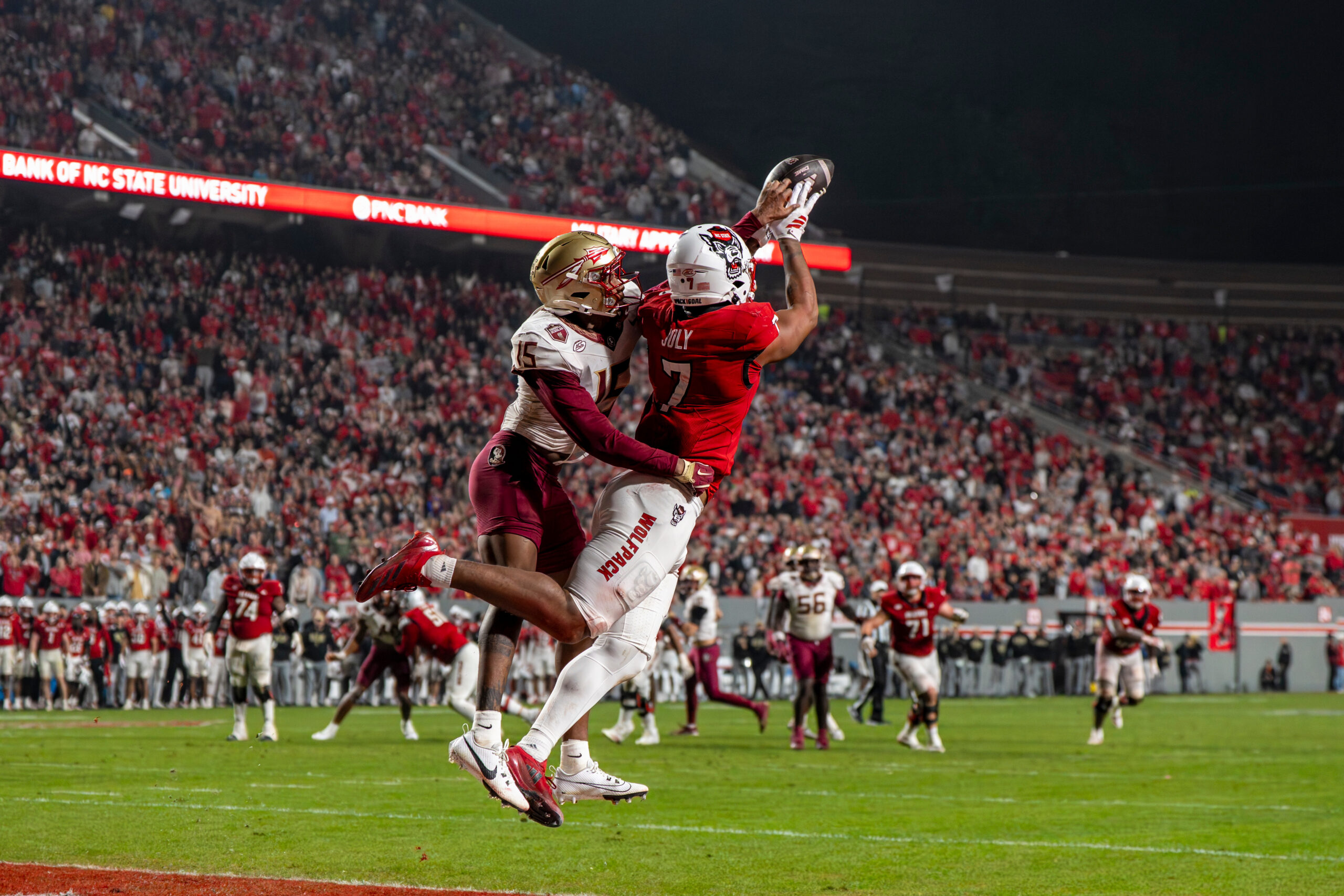
North Carolina State tight end Justin Joly (7) could be an intriguing target for the Eagles.
6. Tight ends
Put a big circle around this group, because tight end is one of the pressing needs for the Eagles. Dallas Goedert, Grant Calcaterra, and Kylen Granson are all set to be free agents, and regardless of whether any of those players return, the room needs more talent in it.
Oregon’s Kenyon Sadiq is at the top of the class, and likely the only tight end to go in Round 1. But this class is strong on Day 2 and 3.
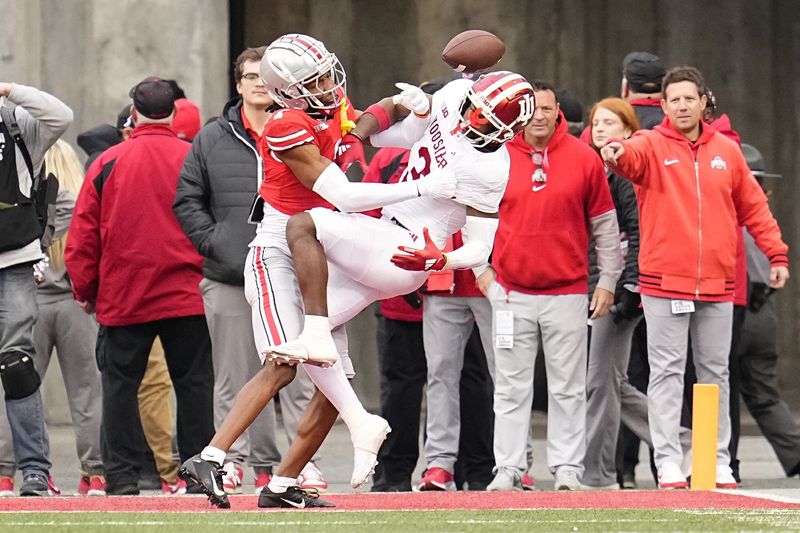
Ohio State’s Max Klare, NC State’s Justin Joly, Georgia’s Oscar Delp, and Baylor’s Michael Trigg are all receiving tight end prospects worth taking on Day 2. Players who can thrive in-line as blockers and have some receiving chops as well include Ohio State’s Will Kacmarek, Penn State’s Khalil Dinkins, Texas A&M’s Nate Boerkircher, and Indiana’s Riley Nowakowski, who can also play fullback.
Other later names, including Utah’s Dallen Bentley, Ole Miss’ Dae’Quan Wright, and Stanford’s Sam Roush are developmental options on Day 3 and could fill roles as second or third options in multi-tight end formations.
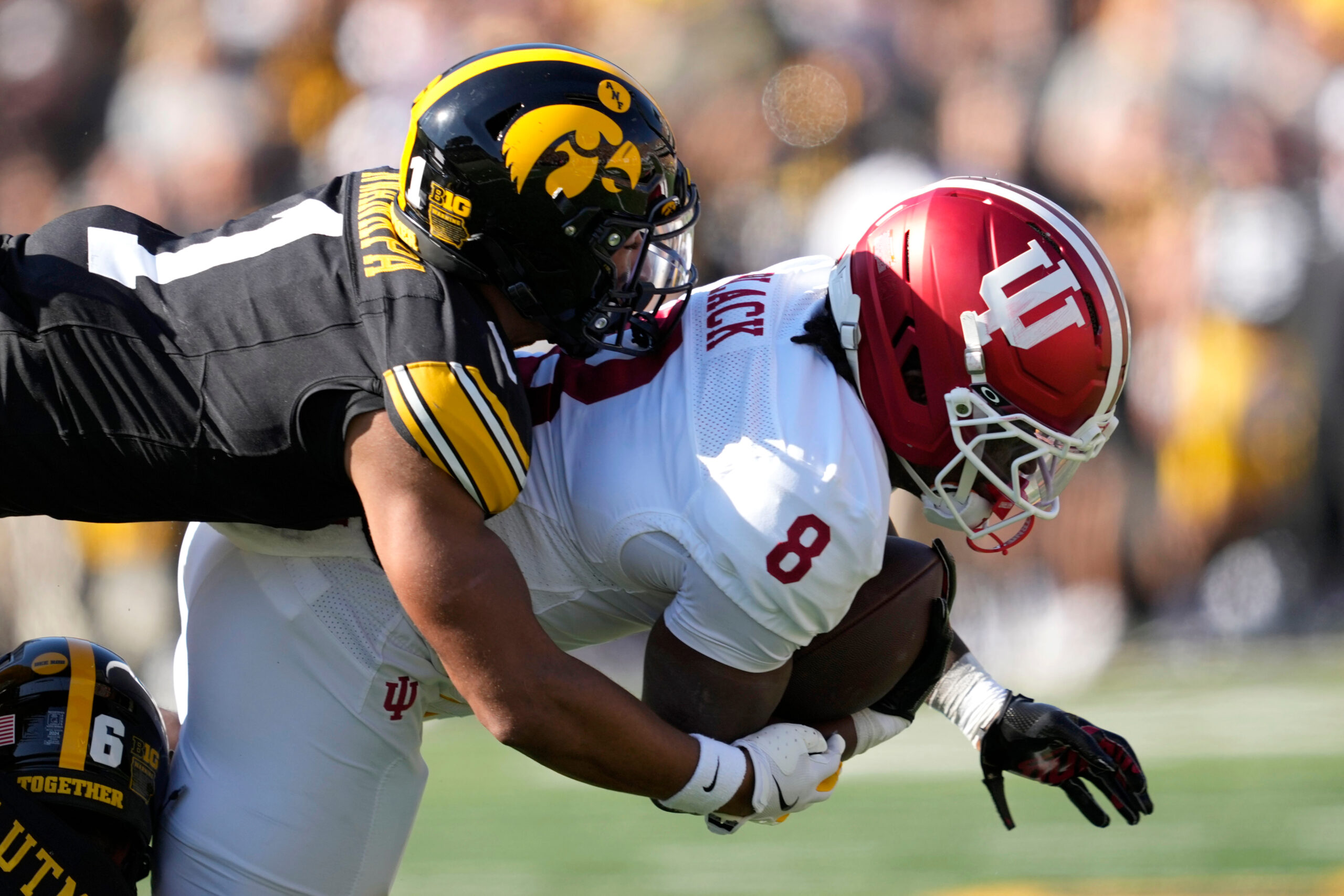
Could Xavier Nwankpa (1) join Cooper DeJean as another ex-Hawkeye in the Eagles secondary?
7. Safeties
This is a position that probably needs more attention than it generally gets, considering Reed Blankenship and Marcus Epps are soon-to-be free agents. Drew Mukuba and Sydney Brown are the only players under contract for next season who have taken significant snaps at the position.
This is a strong safety class, led by Ohio State’s Caleb Downs, who is also one of the best players in the draft class. Quinyon Mitchell’s alma mater, Toledo, has another early-round pick in Emmanuel McNeil-Warren, and there are plenty of coverage specialists such as USC’s Kamari Ramsey, LSU’s A.J. Haulcy, and Arizona’s Genesis Smith.
Since Blankenship played more near the line of scrimmage, the Eagles could be looking to pair that skill set with Mukuba, and players including Penn State’s Zakee Wheatley, Oregon’s Dillon Thieneman, and Iowa’s Xavier Nwankpa fit the bill.
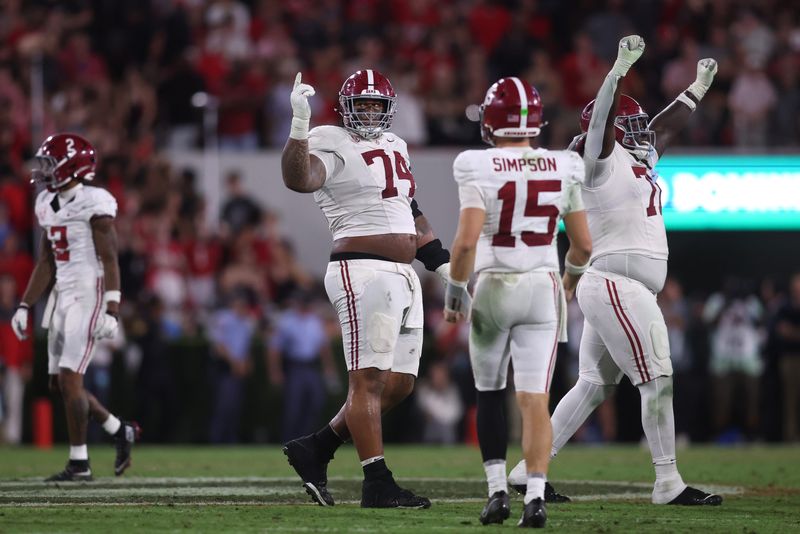
Kadyn Proctor (74) is generating buzz as a possibility along the Birds’ offensive line.
8. Offensive linemen
This is the spot the Eagles need to upgrade most heading into next season, yet it’s among the weakest groups in this class in terms of starting caliber players. Still, there are players that will interest the Eagles.
The player most commonly linked to the Birds is Alabama’s Kadyn Proctor, a massive offensive lineman with unique athleticism at 6-foot-7, 366 pounds. Is he a tackle or guard? That debate could get settled at the combine next week.
The other top offensive linemen are Utah’s Spencer Fano and Caleb Lomu and Miami’s Francis Mauigoa. Fano and Mauigoa are also players that could move to the interior at the NFL level. Georgia’s Monroe Freeling, Arizona State’s Max Iheanachor, and Clemson’s Blake Miller are the next group of fringe first-round players who will strictly be tackles in the NFL and could serve as potential heirs to Lane Johnson whenever he retires.
As for interior offensive line, Penn State’s Olaivavega Ioane is the only true guard prospect that is Round 1 worthy. The Day 2 prospects like Texas A&M’s Chase Bisontis, Oregon’s Emmanuel Pregnon, Georgia Tech’s Keylan Rutledge, and Notre Dame’s drop-off could be players the Eagles have interest in, especially with Landon Dickerson’s uncertain future.
The overall O-line class has a steep drop-off after the starting-caliber players, so if the Eagles want one, they’ll need to draft one early.
9. Running backs
The Eagles seem set at the running back position for now with Saquon Barkley, Tank Bigsby, and Will Shipley. A quick glance at the running back invites at the combine shows a relatively limited group to pick from.
There’s only one running back right now that has first-round consideration, and that’s Notre Dame’s Jeremiyah Love. Beyond him, the next running back could wait a full one or two rounds before hearing their name called in the 2026 draft.
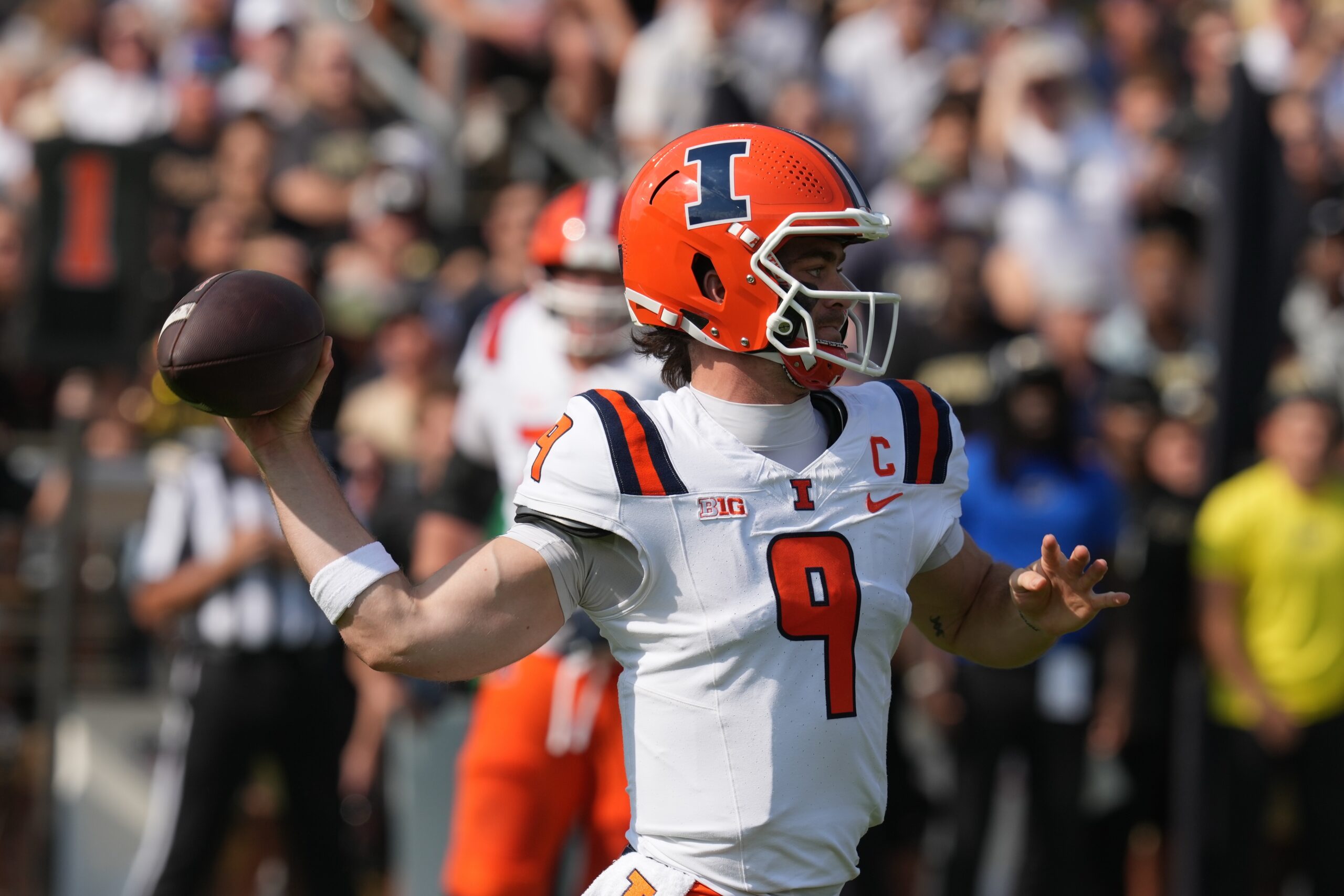
Illinois quarterback Luke Altmyer is a potential developmental QB the Eagles might evaluate.
10. Quarterbacks
As we alluded to in the All-Star game takeaways, this is not a strong quarterback class and it’s reflected in the number of combine invites. Indiana’s Fernando Mendoza is the projected top pick, but beyond him, the class is wide open. Alabama’s Ty Simpson could go in Round 1, but the gap between the second and third quarterback taken in this class could be very wide.
The class overall lacks starting caliber players, and the sweet spot of the class is likely between Rounds 3-6. The Eagles could draft one to develop since Sam Howell is a free agent and Tanner McKee could move on over the next year via trade or free agency.
Some players attending the combine that could make sense for the Eagles include Kansas’ Jalon Daniels, Arkansas’ Taylen Green, and Illinois’ Luke Altmyer.
A defiant Stephen Colbert blasted CBS on Monday for killing an interview with a Texas Democrat, blaming arcane rules being enforced by the Trump administration.
“He was supposed to be here, but we were told in no uncertain terms by our network’s lawyers, who called us directly, that we could not have him on the broadcast,” Colbert said of State Rep. James Talarico, who is running in the Democratic primary for a U.S. Senate seat in Texas.
CBS issued a statement claiming they didn’t prohibit him from running an interview.
“The Late Show was not prohibited by CBS from broadcasting the interview with Rep. James Talarico,” the statement read. “The show was provided legal guidance that the broadcast could trigger the FCC equal-time rule for two other candidates, including Rep. Jasmine Crockett, and presented options for how the equal time for other candidates could be fulfilled. The Late Show decided to present the interview through its YouTube channel with on-air promotion on the broadcast rather than potentially providing the equal-time options.”
The decisioncomes down to something known as the equal-time rule, a federal requirement put into law in 1934 that requires broadcast stations like CBS to provide comparable airtime to political opponents during an election. Cable networks like Fox News and Comedy Central, home to The Daily Show, are not bound to those rules, allowing them to be as partisan as they choose.
News programs on broadcast TV (such as Meet the Press and Face the Nation) are exempt from the rule, and the Federal Communications Commission has not enforced it on late-night shows since 2006, when it ruled then-California gubernatorial candidate Arnold Schwarzenegger’s appearance on The Tonight Show with Jay Leno qualified as a “bona fide news interview.”
The move was criticized by FCC commissioner Anna Gomez, a Democrat appointed by former President Joe Biden, who called it “an escalation in this FCC’s ongoing campaign to censor and control speech.”
Colbert said CBS prohibited the interview with Talarico from airing Monday night. Instead, it was posted in its entirety on Colbert’s YouTube channel.
“At this point, [Carr has] just released a letter that says he’s thinking about doing away with the exemption for broadcast for late night. He hasn’t done away with it yet,” Colbert said. “But my network is unilaterally enforcing it as if he had.”
Talarico told Colbert that Trump and Republicans ran against cancel culture during the last election, but now the current administration is “trying to control what we watch, what we say, what we read.”
“And this is the most dangerous kind of cancel culture, the kind that comes from the top,” Talarico said. “Corporate media executives are selling out the First Amendment to curry favor with corrupt politicians.”
Bill Carter, who covered late-night television for decades at the New York Times and currently writes for the website LateNighter, called CBS’s capitulation “shameful,” especially since the FCC has not moved yet to enforce the rule.
“Trump’s intention is to mute free speech of his critics, and he’s found the rule in the FCC and decided he can do this,” Carter said. “And he’s got the broadcasters cowed a bit.”
“Let’s just call this what it is: Donald Trump’s administration wants to silence anyone who says anything bad about Trump on TV, because all Trump does is watch TV,” Colbert added.
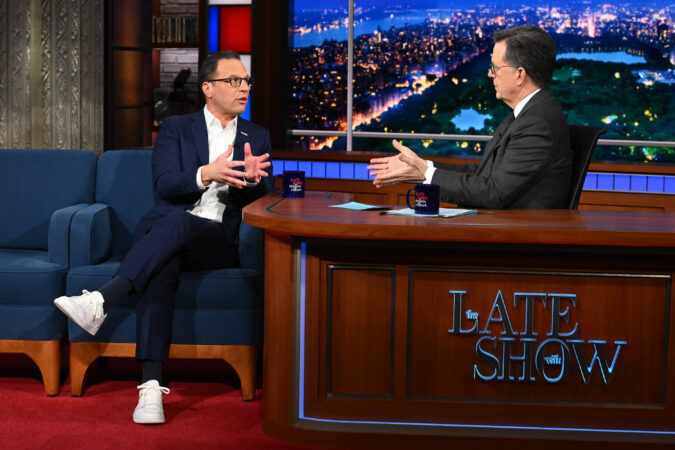
How was Josh Shapiro able to appear on Colbert’s show?
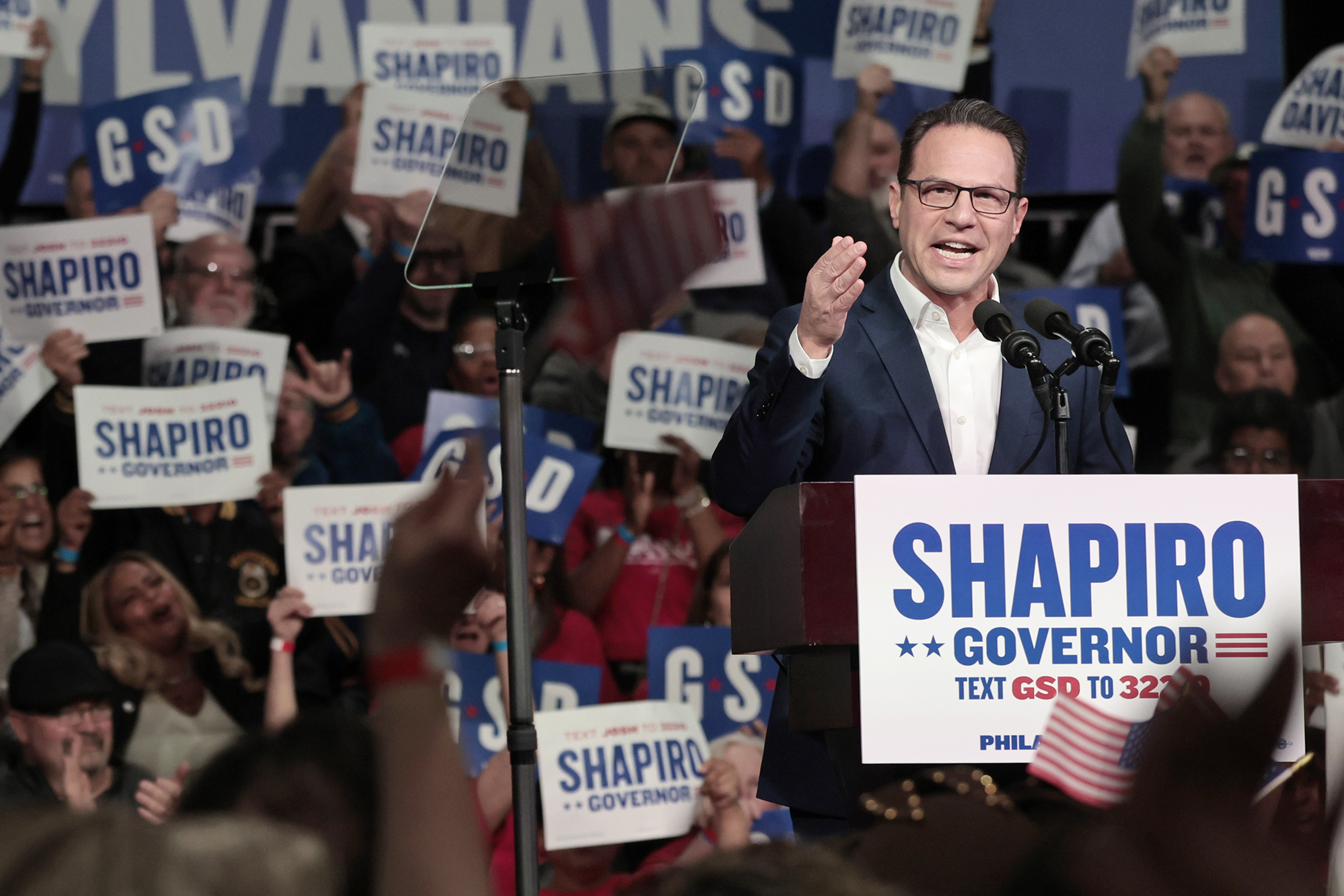
Governor Josh Shapiro announced his re-election campaign weeks before appearing on Colbert’s show last month.
Shapiro was able to appear not only on Colbert’s show, but also on ABC’s daytime talk show The View, which has also found itself a target of the FCC under Carr.
“I think it’s worthwhile to have the FCC look into whether The View, and some of these other programs that you have, still qualify as bona fide news programs and therefore are exempt from the equal opportunity regime that Congress has put in place,” Carr said in a September interview with conservative CNN commentator Scott Jennings.
It’s also why U.S. Sen. Jon Ossoff’s forthcoming interview with Colbert is still slated to air on the network Wednesday. While Ossoff (D., Ga.) has announced he is running for reelection in Georgia, the window for candidates to officially file paperwork for their primaries does not open until March 2.
Neither CBS nor Ossoff’s campaign has commented on the interview.
The equal-time rule also applies to radio broadcasts, where conservative talk shows are among the most dominant formats and regularly feature Republican candidates for office during election years. Then-candidate Trump did multiple interviews on 1210 WPHT in Philadelphia during the 2024 election.
Carr has said he does not plan to enforce a stricter equal-time rule on radio stations the way he has for television networks, claiming in a news conference last month there wasn’t a similar bona fide news exemption “being misconstrued on the radio side.”
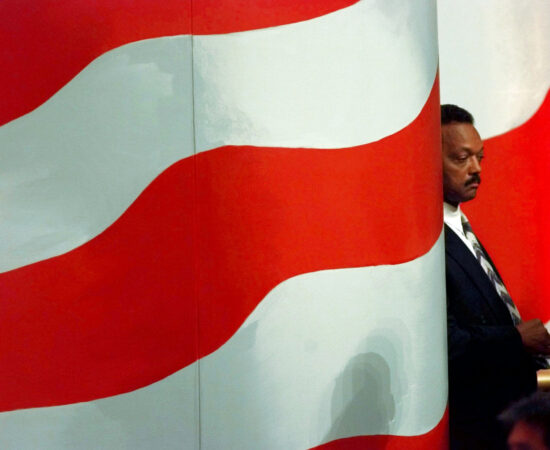
There’s an old saying that “only the good die young.” Not true, of course, but the sentiment is understandable given the complex twists and turns of any life, including that of the Rev. Jesse Jackson, the civil rights titan and noteworthy presidential candidate, who at age 84 died Tuesday at his home in Chicago.
The Rev. Jackson’s rise into America’s awareness was itself triggered by a death. He was with the Rev. Dr. Martin Luther King Jr. on the balcony of a Memphis hotel in 1968 when an assassin’s bullet killed his mentor. Who knew then that the Rev. Jackson would become as forceful a voice for equality as King, and later, a credible though unsuccessful political candidate for the nation’s highest office?
Both the Rev. Jackson and King were gifted with voices that moved people to action, not just with their words, but with how they expressed them. King’s cadence perfected in sermons from pulpits across the South stirred the souls of folks who were cautioned to peaceably place their bodies in harm’s way to achieve dignity.
The Rev. Jackson more so appealed to people’s outrage as he urged protesters to let their oppressors know, “I am somebody!” Hearing the Rev. Jackson speak, you got the feeling that those three words meant more to him than the disparate treatment Black people were afforded in then-segregated America. It was true that some aspects of the Rev. Jackson’s life had also been a struggle.
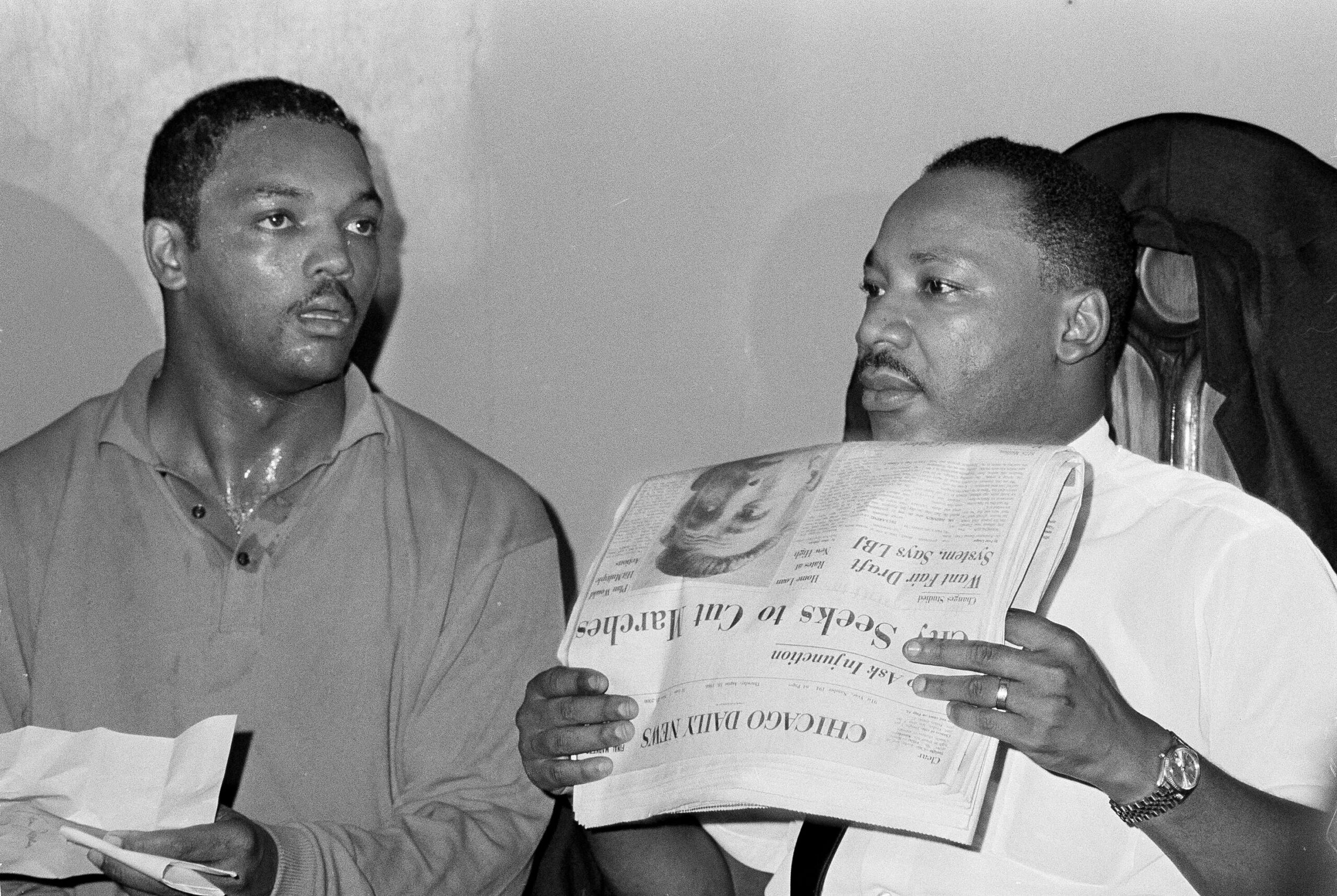
Civil rights leader the Rev. Dr. Martin Luther King, Jr. (right) and his aide, the Rev. Jesse Jackson, are seen in Chicago in August 1966.
Born in 1941 in Greenville, S.C., the mother of Jesse Louis Burns was a 16-year-old high school majorette who had been impregnated by a 33-year-old married man who lived next door, but denied his paternity. Two years later, Jesse’s mother married Charles Jackson, whom she met when he was a barbershop shoeshine man. Jackson sent the boy to live with his grandmother and didn’t adopt Jesse until he was 16 years old.
After high school, the Rev. Jackson enrolled at the University of Illinois Urbana-Champaign on a football scholarship. After his freshman year, he transferred to North Carolina A&T University, a historically Black institution in Greensboro, N.C., where he became a leader in his Omega Psi Phi fraternity chapter and president of the student body. In those roles, the seeds of the Rev. Jackson’s dynamic activism were sown.
Earlier, the Rev. Jackson had been a member of the “Greenville Eight,” the eight African American students arrested for refusing to leave the then-segregated Greenville County Public Library. By 1965, he was marching with King in Selma, Ala., and in 1967 was named head of Operation Breadbasket, the Southern Christian Leadership Conference program developed to help poor Black communities across the nation.
The Rev. Jackson eventually left the SCLC after King’s death and, in 1971, created his own organization, Operation PUSH, and later the Rainbow Push Coalition, which became as involved in politics as it was with social justice. That political involvement is credited with being a factor in the 1983 election of Chicago’s first Black mayor, Harold Washington.
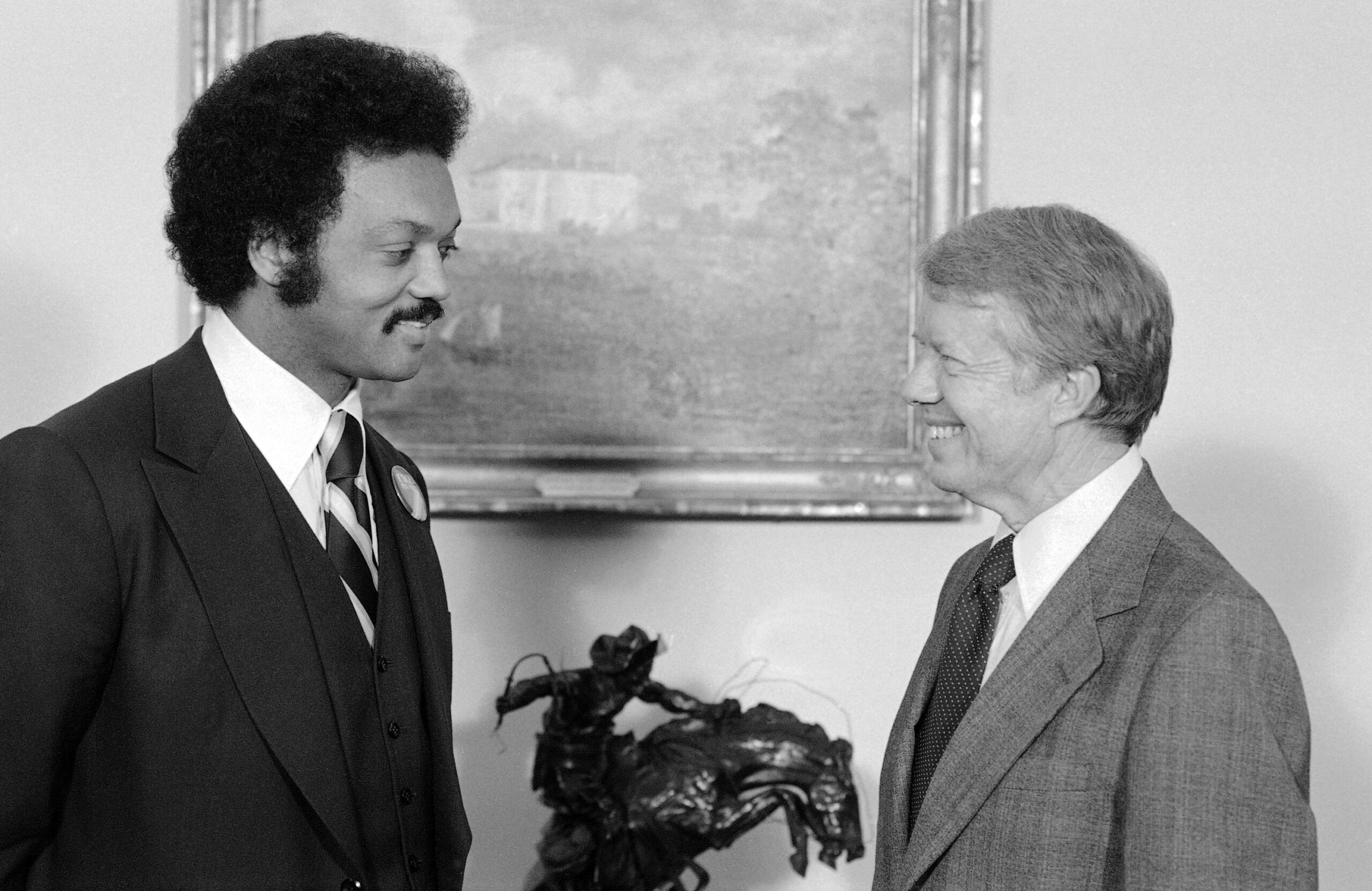
President Jimmy Carter speaks with the Rev. Jesse Jackson at the White House in Washington, April 4, 1979.
The Rev. Jackson’s subsequent 1984 presidential campaign resonated with voters of all colors and backgrounds who agreed with him that America wasn’t doing enough “to clothe the naked, to house the homeless, to teach the illiterate, to provide jobs for the jobless, and to choose the human race over the nuclear race.”
The Rev. Jackson won 465 delegates to the 1984 Democratic National Convention and 1,218 delegates in 1988, both times far exceeding Shirley Chisholm’s 151 delegates when the New York member of Congress ran for president in 1972. But the Rev. Jackson never gave it a third shot. He instead spoke out for justice not just in this country but around the world, and, in 2000, was awarded the Presidential Medal of Freedom by President Bill Clinton.
Those were good times, but life isn’t always good.
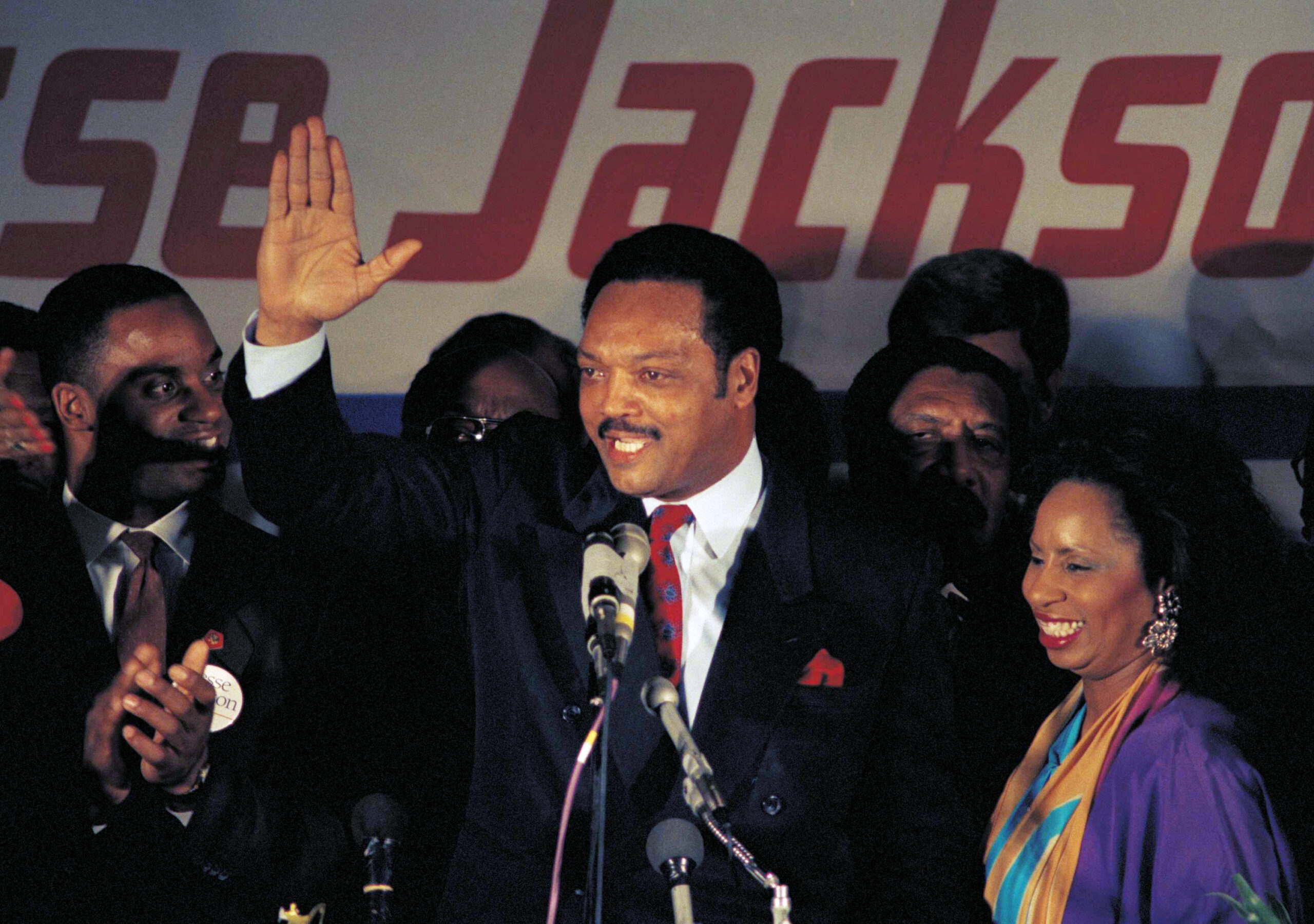
The Rev. Jesse Jackson, with his wife, Jacqueline, concedes defeat in the Illinois Democratic primary on March 16, 1988, in Chicago.
Watching the Rev. Jackson in his final years, attending public events but barely able to move or speak, made you wish for a better summation of a life once so full of zest and vigor. But the Rev. Jackson has left behind vivid memories captured in print, video, and downloads of a man history should not forget. Memories of crowds screaming, “Run, Jesse, Run,” as the Rev. Jackson tried to fulfill a political dream left to be carried out by someone else. Thank God, Jesse did live to see that.
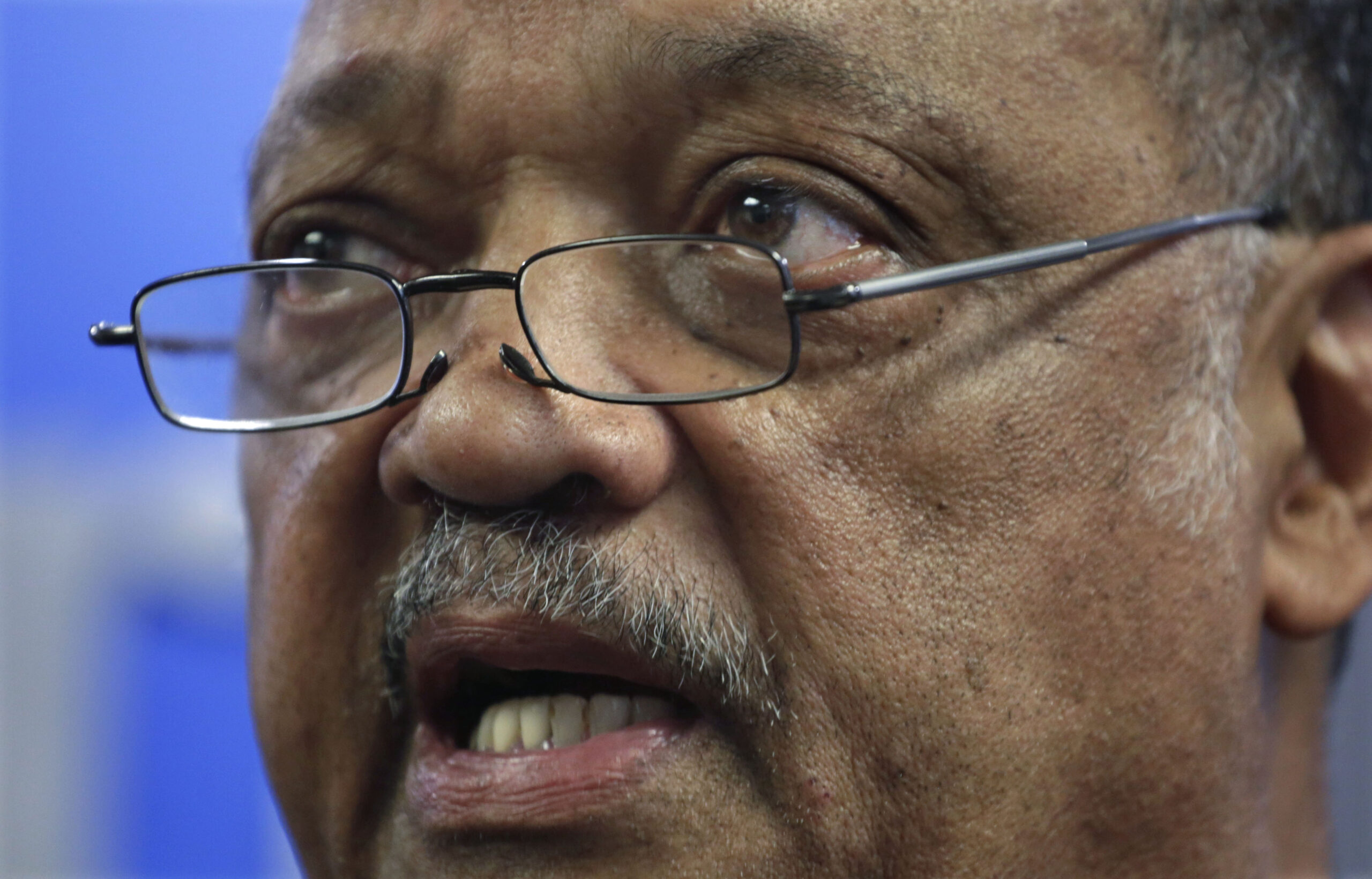
Jackson speaks at a Chicago news conference in February 2015.