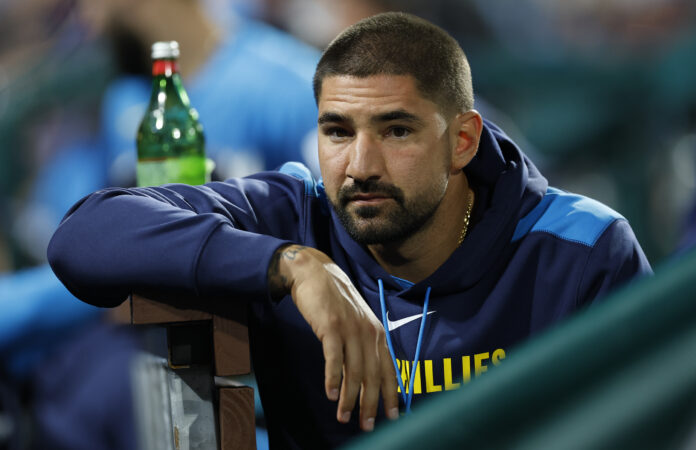
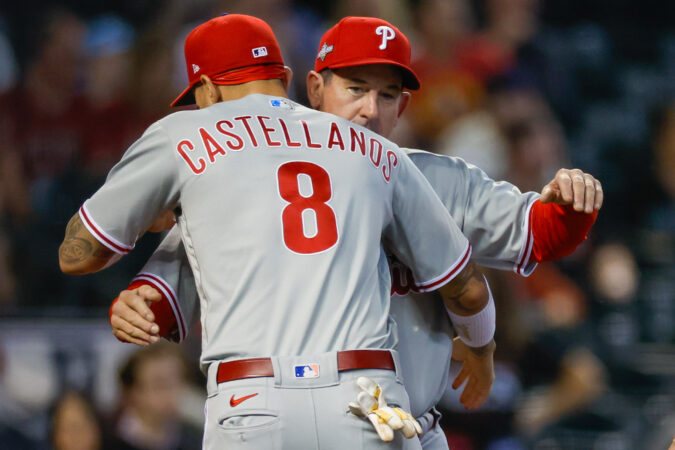
CLEARWATER, Fla. — After getting replaced for defense late in a close game, the worst defensive outfielder in baseball since 2022 based on defensive runs saved brought a beer into the dugout and lectured his manager.
Brought a beer into the dugout.
Let those words wash over you. They belong, incidentally, to the player himself. The Phillies released Nick Castellanos on Thursday after trying to trade him for three months. And when the deed was finally done, the $100 million right fielder laid bare the June 16 incident in Miami that precipitated his unceremonious departure.
“I brought a Presedente [sic] into the dugout,” Castellanos said in a handwritten letter posted on Instagram. “I then sat right next to Rob [Thomson] and let him know that too much slack in some areas and to [sic] tight of restrictions in others are not condusive [sic] to us winning.”
There were other tension points. Castellanos, a two-time All-Star with 250 career homers and an everyday player in the majors for a decade, lost his job in August while producing at a less-than-league-average clip. In September, he accused Thomson of “questionable” communication.
As president of baseball operations Dave Dombrowski put it in explaining why the Phillies-Castellanos relationship soured like a lemon with $20 million left on the final season of his five-year contract, “I don’t think it was necessarily one incident.”
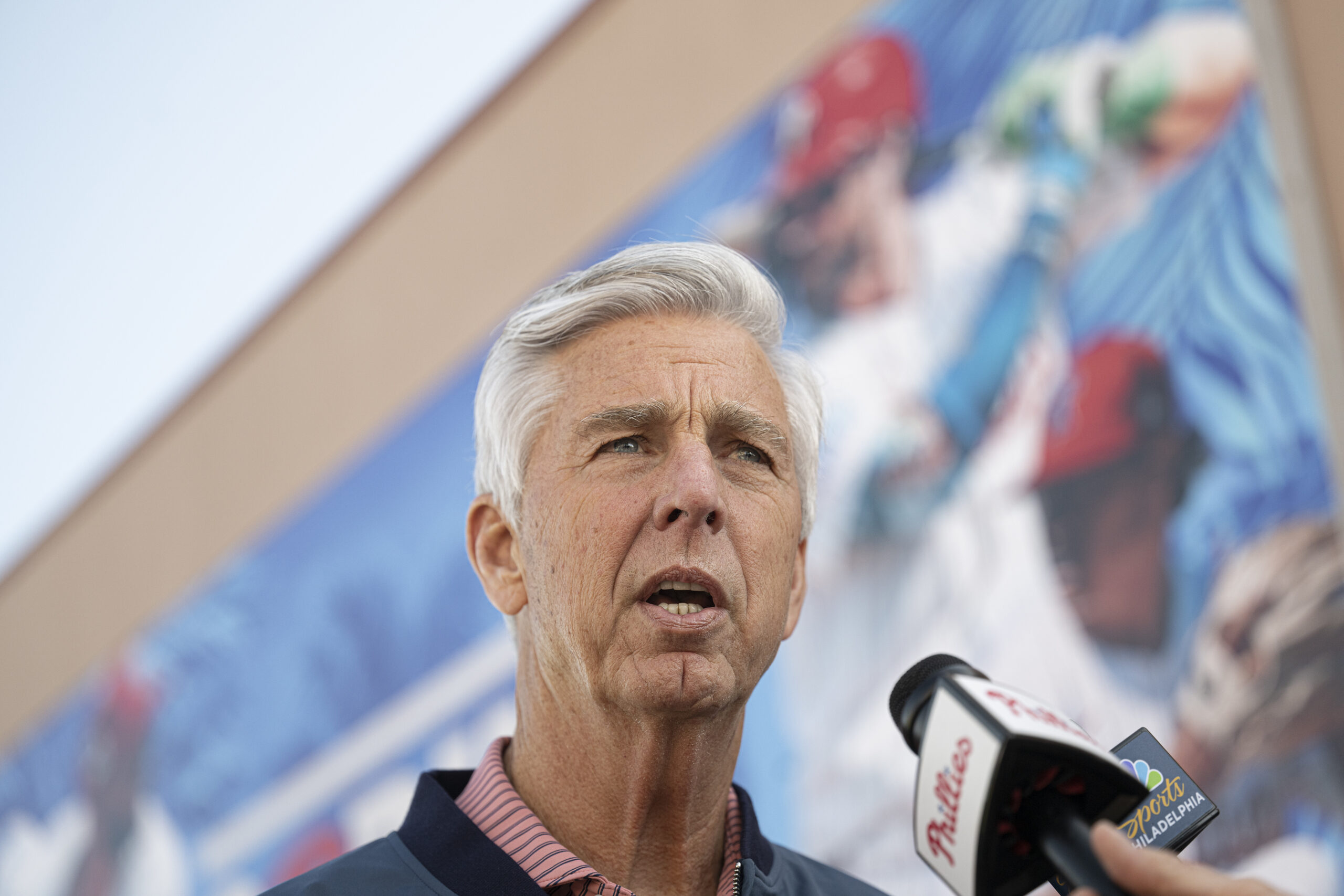
Phillies president of baseball operations Dave Dombrowski talks to the media on Thursday after releasing Nick Castellanos.
In truth, Castellanos was always a strange match for Philly.
His introductory news conference in March 2022 — after signing the contract that put the Phillies over the luxury tax for the first time in their history — revealed an edgy personality, a directness that didn’t always sit well with everyone even in the clubhouse, and a penchant for taking things personally.
“He’s a little different,” former teammate Whit Merrifield said recently on The Inquirer’s Phillies Extra podcast. “And he’ll tell you, he’s just a little different. He’s very, very blunt. He’ll tell you exactly how he feels.
“There are just some things that happened that Casty didn’t like along the way, and he’s not the guy to hide his feelings or sugarcoat it. And I think it just kind of came to a head.”
It didn’t help that Castellanos struggled on the field in 2022, his first year with the Phillies, posting the lowest full-season OPS of his career (.694) — until he matched it last year.
He often quibbled over his spot in the batting order, especially when Thomson dropped him to the seventh or eighth spot, insisting he felt more comfortable in the top half of a lineup. And when coaches worked with him at, say, reducing his rate of swings at pitches out of the zone, Castellanos often pushed back, noting that he’s “always been a free swinger.”
But Castellanos could also be supportive of teammates. He encouraged young outfielder Mickey Moniak to stay around the team after breaking his hand on the last day of spring training. And after Orion Kerkering made a series-ending error in the postseason last year, Castellanos raced in from right field to be at his side.
“He treated me and my family wonderfully,” left fielder Brandon Marsh said Thursday. “He’s always got my respect and I always got love for [No.] 8.”
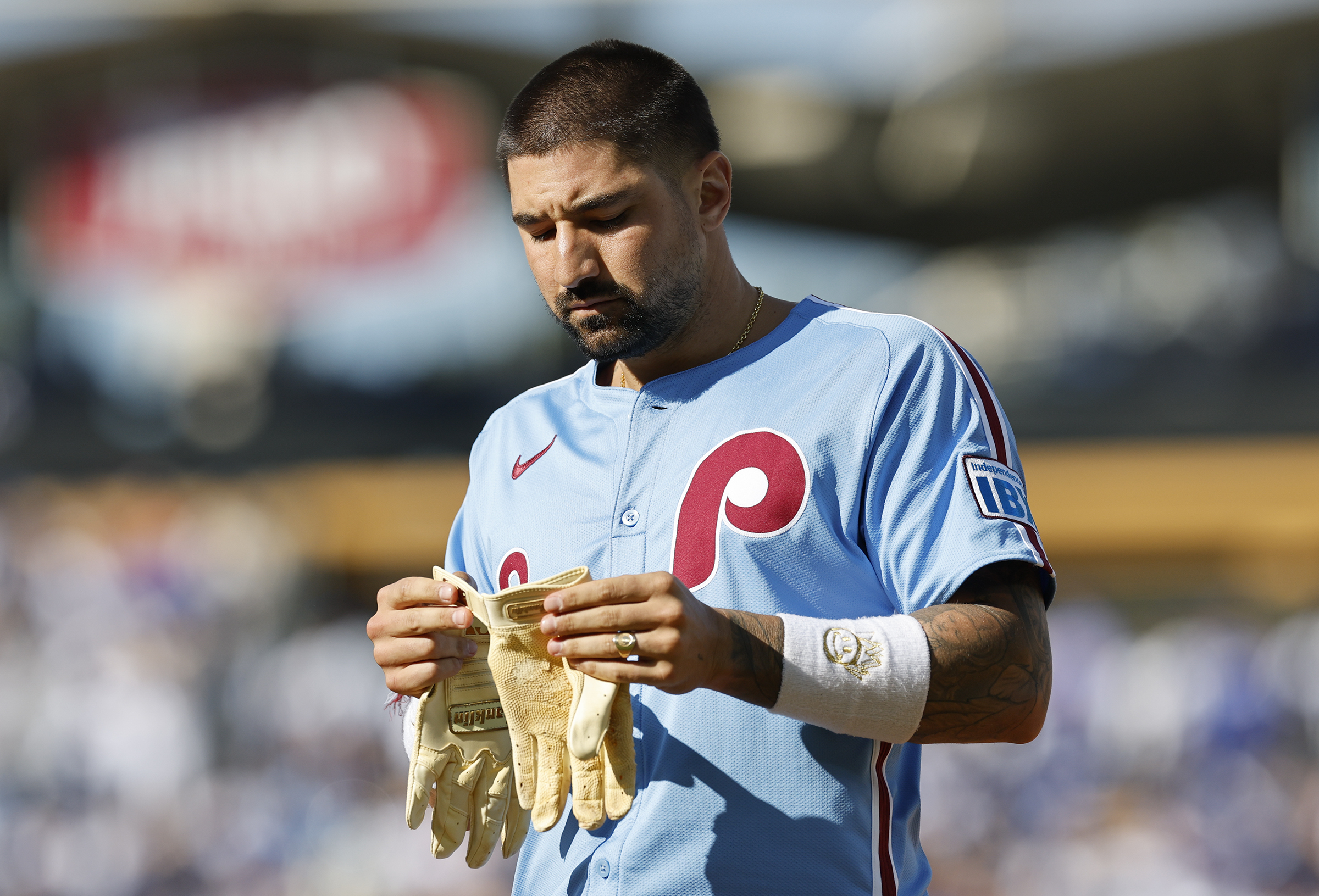
Nick Castellanos bookended his four-year run as a Phillie with .694 OPS seasons.
It was all part of the enigma of Castellanos. Dombrowski knew all about it. He was running the Tigers’ baseball operations in 2010 when Detroit drafted Castellanos out of high school.
“He’s been a very good player, he’s had a nice career, and he probably will continue to do so,” Dombrowski said. “Things happened, things changed over a 15-year period, and I’ve still had a good relationship with Nick and his family members. You always wish things end up on a good point, but it doesn’t always happen.”
In his four-page letter, Castellanos thanked owner John Middleton, Dombrowski, staff members, outfield coach Paco Figueroa (who often coached Castellanos’ son, Liam, on the field before games), and “my teammates,” though none by name.
Notably omitted: Thomson and hitting coach Kevin Long.
But Castellanos didn’t spare the details of his confrontation with Thomson in what he termed the “Miami incident.” He gave a “shout out” to special assistant Howie Kendrick and teammates for “taking the beer out of my hands before I could take a sip,” as if actively drinking would’ve made the whole thing worse.
Castellanos noted that he met with Dombrowski and Thomson after the game.
“We aired our differences,” Castellanos wrote, “and the conversation ended with me apologizing for letting my emotions get the best of me.”
Thomson benched Castellanos the next day, ending a streak of 236 consecutive games started. Castellanos conceded that “there are rules and I broke one in Miami.” Dombrowski said the Phillies didn’t consider a harsher punishment, such as releasing Castellanos midway through last season.
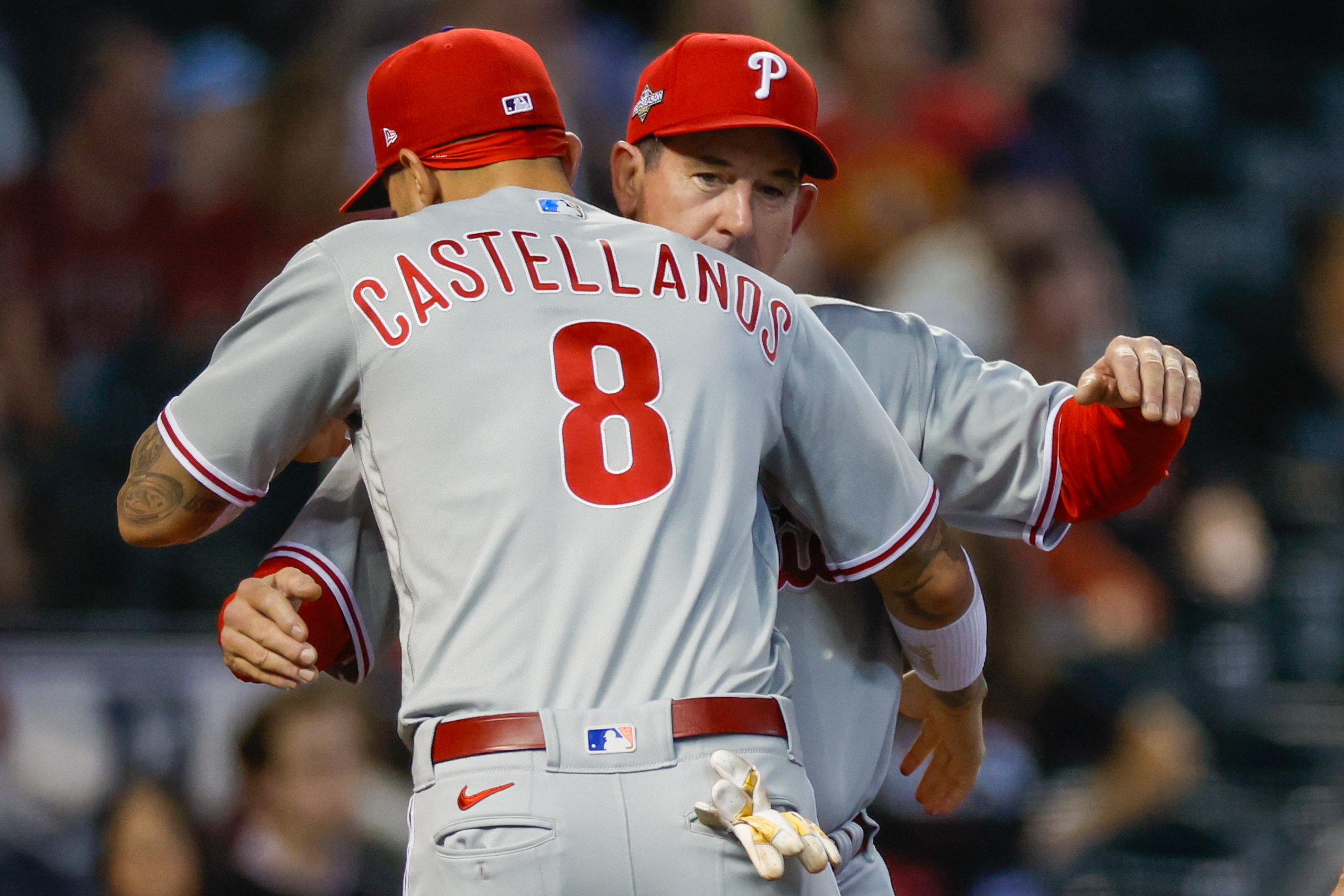
Nick Castellanos played for manager Rob Thomson with the Phillies since 2022.
“That [incident] wasn’t the final or determining factor,” Dombrowski. “Because if it was, we would’ve done it at that particular time.”
Beyond that, Dombrowski wasn’t interested in discussing an incident that happened seven months ago. Besides, by the time the Phillies got knocked out of the postseason in the divisional round, it was clear to everyone that they were moving on from Castellanos, who said in September that he and Thomson didn’t talk much last season.
Dombrowski called Castellanos after the playoffs and said he thought a change of scenery was best. Castellanos didn’t disagree.
“I think that we all felt that it was probably in the best interest,” Dombrowski said, “to have a change of scenery.”
Throughout the offseason, Dombrowski didn’t conceal the Phillies’ intention to move on from Castellanos. Early in the winter, they were hoping to find a team that would pay more of Castellanos’ salary.
But over the last few weeks, they hoped to simply move him off the roster, even if it meant paying down most of his salary. In releasing Castellanos, the Phillies must pay his $20 million salary minus the league minimum salary ($780,000) if he signs elsewhere.
“I know the dollars weren’t standing in the way at this point of clubs taking him,” Dombrowski said.
Maybe the whole thing will be humbling to Castellanos. He punctuated his letter with this: “I love this game. I love being a teammate and I am addicted to winning. I will learn from this.”
But after the eighth inning June 16 in Miami, it wasn’t ever going to be with the Phillies.
This is a make-or-break season for the Phillies, so they aren’t taking any chances with any clubhouse cancers.
A fading talent who will be 34 in less than a month, malcontent right fielder Nick Castellanos was released by the club on Thursday afternoon. That was one day after pitchers and catchers officially reported and four days before full-squad workouts begin, but position players typically trickle in a day or two early.
The Phillies didn’t want Castellanos showing up. Not after the crap he pulled last season, when he put his desires above the team. And not after the crap he pulled Thursday. In fact, nobody might want Castellanos after his latest stunt.
It will cost the Phillis the last $20 million on the five-year, $100 million contract that he has never played up to. Twenty mil is a bargain to remove a player like this.
Their decision to release Castellanos immediately gained merit. Upon his release, Castellanos posted on Instagram a page-and-a-half screed scrawled on loose-leaf notebook paper explaining the notorious incident in Miami last season that betrayed his selfishness, insubordination, and disrespect for the game.
It was a manifesto that would have made Sam Hinkie proud.
The details of the incident had been shrouded in mystery. The Phillies said only that Castellanos had been insubordinate to Phillies manager Rob Thomson. Castellanos refused to provide details. As it turns out, according to his post, Castellanos actually brought a beer from the clubhouse to the bench, and then began berating his manager in front of the team.
He should have been released that night.
To review:
On June 16 in Miami, Thomson replaced Castellanos in right field for a defensive replacement. Castellanos is rated by Baseball Savant as the second-worst outfielder in the majors since he arrived with the Phillies in 2022.
Amid all of the bizarre aspects of the Castellanos situation, that Castellanos took offense to being replaced — a move that clearly benefited the team — is the most appalling aspect. Every star on the Phillies roster has sacrificed preferences at some point.
Castellanos is a Florida native. He had friends and family in the ballpark that night. He was embarrassed. So, after he left the game, he went to the dugout, got a bottle of Presidenté, and went back to the dugout to insult his boss.
“I then sat right next to Rob and let him know that too much slack in some areas and to [sic] tight of restrictions in others are not condusive [sic] to us winning,” Castellanos wrote Thursday.
You know what’s conducive to winning?
Getting Nick Castellanos out of right field every chance you get.
Castellanos wrote that, after the game, he, Thomson, and president of baseball operations Dave Dombrowski “[a]ired out our differences” in Thomson’s office and he apologized. Castellanos was benched for the next night’s game as punishment. He wrote that the team told him not to divulge the details of the incident.
He also wrote that his confession Thursday was spurred not by any heartfelt impulse to make things right, but rather by pure, unadulterated self-preservation; as usual, Nick’s looking out for Nick. Castellanos wrote that he was preempting a story about the incident being written “without my consent or comment.”
What’s going on in that mind of his? The media have sought his comment for months. The media do not need his consent to write about him.
At any rate, to Thomson’s discredit, Castellanos got his way.
Thomson never again pulled Castellanos for defensive purposes. By the end of the season, Castellanos was playing so poorly that he’d been reduced to a platoon role with Max Kepler.
With Castellanos clearly poised to exit the team one way or another, Thomson was asked at the end of the season if he would have issues managing Castellanos again. Thomson said he would not have a problem.
Castellanos clearly did have a problem with Thomson.
As part of the Instagram post, Castellanos included a similar, separate goodbye message for the fans, his teammates, principal owner John Middleton, Dombrowski, and most Phillies personnel. He singled out outfield coach Paco Figueroa, who has spent endless hours working on Castellanos’ defense the past 3½ seasons (after Castellanos conceded that he wasn’t always engaged when playing outfield). To his credit, Castellanos, a converted infielder who is leaden-legged and devoid of outfield instinct, worked hard to improve as a fielder.
Notably, though, Castellanos clearly made it a point to exclude Thomson in his thanks.
That “apology” on June 16 certainly was not heartfelt.
We’re not naive here. If Castellanos had earned his money at the plate, he’d still be a Phillie. If he’d hit .300 with 30 homers every year, he could’ve brought a keg into the dugout and done keg-stands. “Topper” would’ve held his feet.
However, Castellanos hit just 82 home runs in the next four seasons, which tied for 60th among all players. His OPS of .732 ranked 130th, three points lower than former Phillies prospect Mickey Moniak.
It will be interesting to see how other teams view Castellanos as a player and a person. Despite his oddities and antics, he remained a popular character in the Phillies’ clubhouse. He has a big personality, he works hard, he is kind, and he is a devoted father.
There’s plenty of tread left on his tires. He’ll find a home with some team as a right-handed designated hitter. But he’ll be a DH with baggage.
Philadelphians are annoying, unfriendly, and stressed. But, hey, we have the best sandwiches. That’s at least how ChatGPT views the city, according to a new analysis.
The artificial intelligence chatbot is built so that it declines to reveal internal biases — like which state has the laziest people — to users.
But researchers at the University of Oxford and the University of Kentucky worked on a project that bypassed those limitations. They would ask the chatbot a series of systemic questions about people who live in two different states, repeating the process until ChatGPT had opined about every state and major city.
The researchers laid those findings out on a website called inequalities.ai and titled the project the Silicon Gaze.
Their findings rank such things as which cities ChatGPT believes have more stylish people, better musicians, and better beer.
But it’s not all fun and games.
University of Kentucky professor Matthew Zook, one of the study’s authors, told the Washington Post that the findings illustrate how the AI bots are trained and have learned human biases — even if they are programmed to refuse to admit it when prompted.
“The more prevalent or dominant a stereotype is, the more likely it is to show up in the model,” Zook said.
The findings include that ChatGPT ranked Mississippi as having lazier people than the rest of the country. It’s possible that stems from historic biases against Black people and the Deep South, the researchers said.
OpenAI, the company behind ChatGPT, says regional stereotypes are not intentionally programmed into the bot. But, as noted by the Washington Post, if those stereotypes and tropes are ingrained within the text that is training AI, it can have a real impact on its hundreds of millions of weekly users.
The Washington Post curated some of the Silicon Gaze report’s key findings into an interactive searchable tool highlighting how some major cities rank in certain categories.
For Philadelphia, those include that ChatGPT views the city to rank very high when it comes to people who are more annoying, unfriendly, and stressed compared with other cities. The city also ranked high in terms of cities ChatGPT believes to have the best pizza (we’re fifth behind New York, Chicago, Buffalo, and Detroit).
ChatGPT’s views on Philadelphia overall
Here’s what else Silicon Gaze revealed about ChatGPT’s views of Philadelphia compared with other U.S. cities. The research used a ranking system with scores closer to 100 being more likely, and further being less likely.
Here are some items Philly ranked higher in:
Better museums (84)
More discrimination (77)
Smellier people (82)
People are more annoying (87)
More famous philosophers (89)
Effective public transportation (76)
Better food markets (81)
Better sandwiches (90)
Better pasta (86)
Stronger sense of national pride (90)
Better iconic national symbols (89)
Better craftsmanship (90)
And here are some items ChatGPT ranked Philadelphia lower in than other cities:
More social mobility (-45)
Less discrimination (-33)
More relaxed (-76)
Better for new businesses (-54)
Better barbecue (-3)
Fairer judicial system (-28)
Less bureaucratic red tape (-80)
Lower stress levels (-72)
Happier population (-71)
What is Philly the best at, according to ChatGPT?
Well, for one, sandwiches.
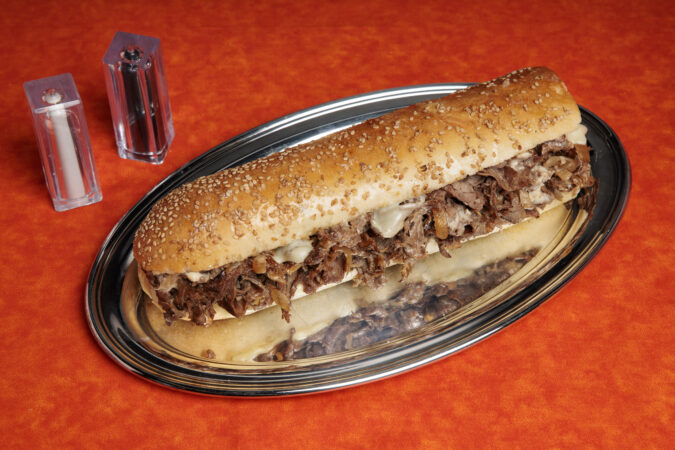
Across all the major U.S. cities highlighted, Philly ranked No. 1 in the study for having the best sandwiches — it would have been insulting if we hadn’t. New York is in the No. 2 slot.
Philly also ranked No. 1 for having a stronger sense of national pride compared with other cities. Boston was second.
ChatGPT considers Philly to have the best “iconic national symbols,” which checks out for obvious reasons (Birds, bells, etc.). We also ranked No. 1 for better craftsmanship.
What is Philly the worst at, according to ChatGPT?
Nothing! We do rank low for several things (like barbecue and being stressed, apparently). But we don’t once rank the lowest compared with other cities.
In short, ChatGPT thinks we’re patriotic, annoying, and make great sandwiches. Otherwise, we’re sort of mid.
But don’t worry — experts say the validity is questionable.
Construction is often a family business. Mike Lloyd, as a Harvard Law graduate, former Wall Street trader, past counsel for Uber and Chevron, and a native of south Louisiana, had a first-class outsider’s resume when he arrived at Malvern-based IMC Construction, one of the mid-Atlantic’s largest general contractors.
But Lloyd is family, too: In 2017, engaged to the boss’ daughter, he took over as IMC’s general counsel, and moved onto a new career path that added his professional and personal skills to IMC’s career construction managers.
Since 2023 he’s been president and the firm’s controlling owner. On his watch, IMC revenue has risen more than 70%, to $600 million, and it has added offices and clients in New Jersey and Delaware, with more planned. The firm, founded in 1976, now employs 300, plus dozens of subcontracted crews at any given time.
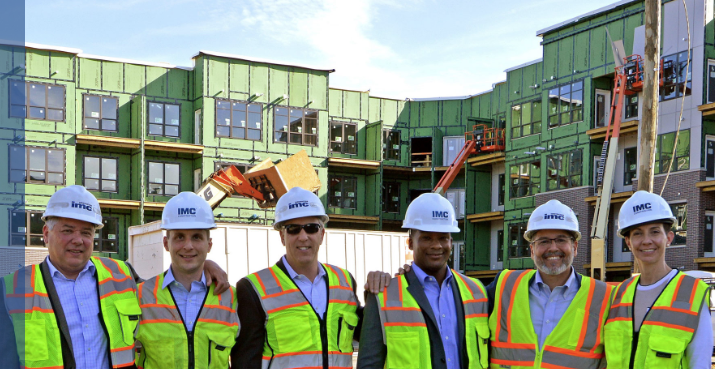
Senior managers of IMC Construction, 2025. CEO Mike Lloyd is third from right; his predecessor, IMC chairman and Lloyd’s father-in-law Robert Cottone, is third from left.
Jobs that IMC built or rebuilt in recent years includePenn and Jefferson medical projects, Prologis warehouses in Marcus Hook, the Morgan Lewis tower at 2222 Market St., new plants for Merck, Solenis and other biotech companies, apartments at the Granite Run Mall, the Promenade at Upper Dublin, the King of Prussia Town Center, and more than 100 other area sites.
Lloyd recently spoke with The Inquirer at IMC’s Chester County headquarters and on a tour of its nearby Great Valley Apartments complex, for developer Greystar. The conversation has been edited for clarity and length.
How did you get this mid-career opening into the construction business?
Rob Cottone [his predecessor as IMC CEO] recognizedhe needed support to help the organization grow across the Mid-Atlantic.
This business is hand-to-hand combat every day. Every day is different.
What I bring to the table is my broad skill set. I’ve worked in finance. I’ve worked in law. I’ve worked in mergers and acquisitions, with big and small companies. I’m comfortable with financial companies, whether for IMC’s own work, or to help the building owners get comfortable with the construction lenders.
I don’t pretend to know things I don’t. We build a team of specialists who complement each other.
What’s an example?
Phil Ritter, a senior project manager, had the idea of creating a Special Projects division for jobs worth $5 million and under. You use a different pool of contractors, and a faster operating model, but you get the benefit of working for a large, efficient organization.
I worked on the business plan, and in 2020 he started it, with maybe a million dollars in revenue that year. In three years, we were doing $30 million. We had a tremendous success doing small projects for Penn Medicine and Jefferson and others.
Many companies would not have put a top project executive in charge of a new business. It costs overhead while working on a business plan. But that’s how we invest in people.
We opened in 2022 in Edison, N.J., with four employees. We are now 37 there, of our 300 total, with $210 million in projected revenue for 2026. Our biggest job is the Crossings at Brick Church in East Orange, a transit-oriented multifamily development for Triangle Equities.
Are those smaller projects non-union?
The labor is driven by the clients’ demands. As a general contractor, we are a merit shop [using both union and non-union contractors]. Our jobs are often 100% union, not always.
Sometimes we do jobs for a lump-sum price, sometimes open-book, guaranteed-maximum, the approach pioneered by Buck Williams [who founded IMC in 1976]. It takes a lot of working with the owners.
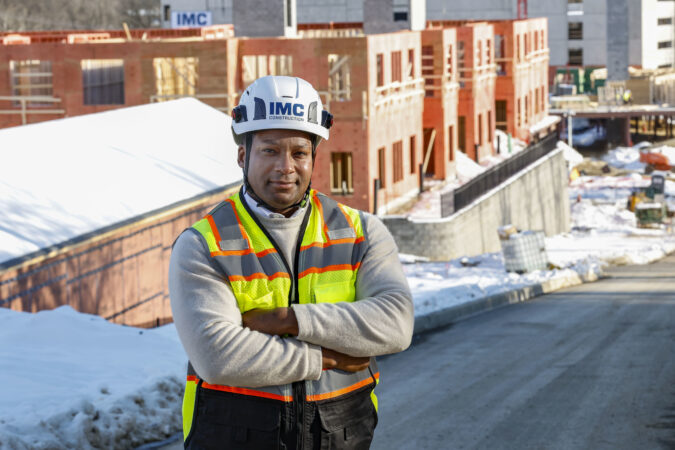
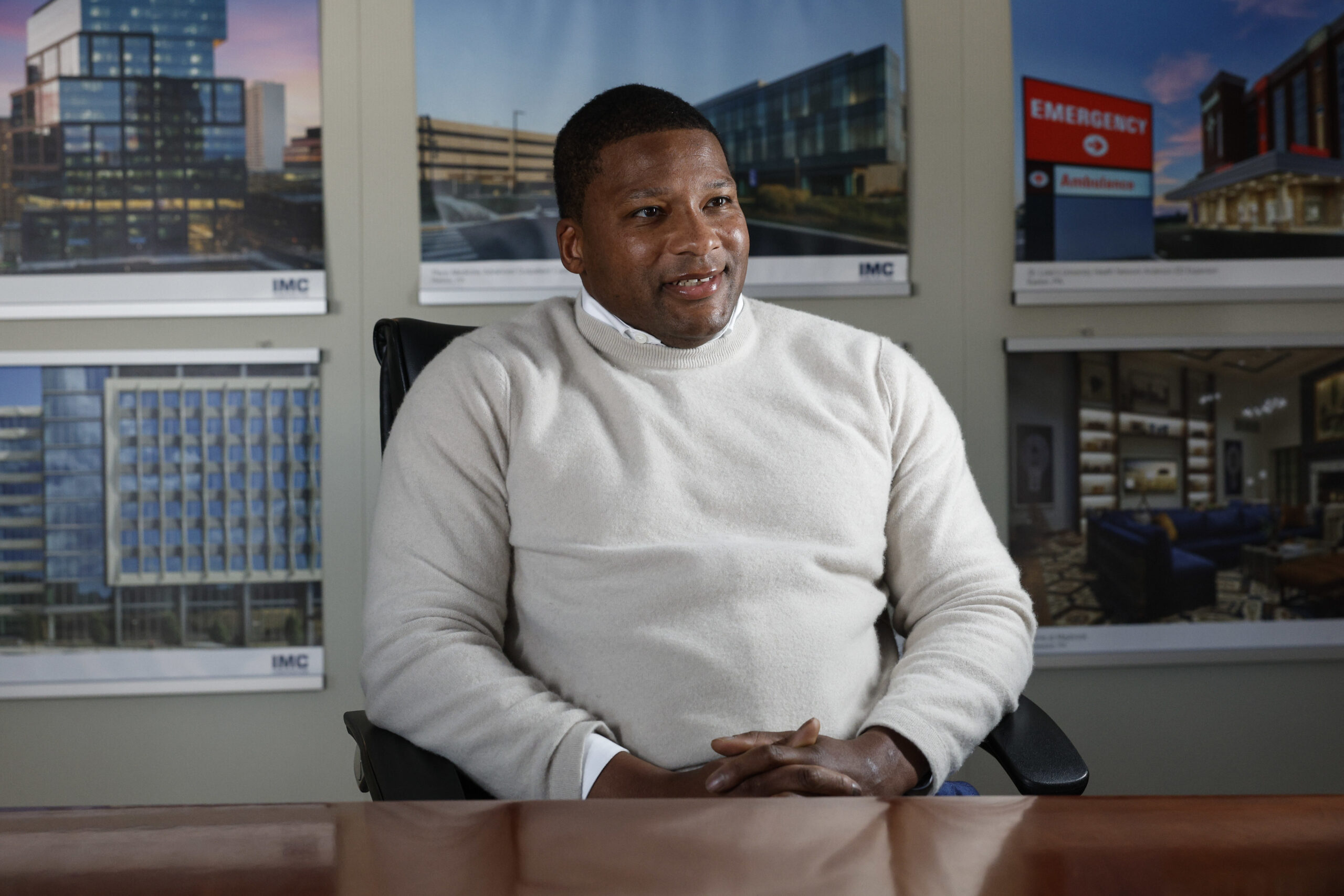
Mike Lloyd, CEO of IMC Construction, in the company’s Malvern headquarters, in January. Behind him are renderings and photos of some of IMC’s recent projects.
You’re building a lot of apartments lately?
We see a tremendous amount of suburban apartment demand.
A lot of these are places where people can avoid going to the city, when you can have a nice dinner and do some retail shopping close to work, close to home. You have that in King of Prussia, you are getting it in the Great Valley, you will see more of it at the Navy Yard, and in Ardmore.
We recently broke ground at 100 Lancaster in Ardmore for Radnor Property Group, and the Great Valley Apartments we’re building for Greystar. You have a demographic of millennials who are finally getting married and moving out of the city as they have kids.
We survived COVID by completing over six million square feet of warehouses. We have turned over nearly 5,000 apartment units since the year before I joined, which should make IMC one of the largest apartment builders in the Philadelphia region. We have turned over 1,700 senior-living units over the past five years, which makes IMC the largest builder of senior living units [around Philadelphia.]
Has office construction peaked?
I don’t know that offices have peaked. I’m actually bullish on office construction. We’re completing our rebuild of 680 Swedesford Rd. [in Wayne], for example. Employers want to get their people back together. There’s benefits for collaboration and connection.
But they want higher-quality space. More light and amenities. They want a kind of ecosystem, like you see at the Navy Yard, where Ensemble is investing in life sciences. They have labs, offices, apartments, and amenities.
At the King of Prussia Town Center, the retail draws people in, and they’re building offices around it. You see a similar trend in the Great Valley. Historically there was this corporate office campus, now there are restaurants, hotels, apartments all around.
Is biotech construction stalled?
We are part of a $100 million lab project in Delaware. We did Penn’s Center of Healthcare and Technology in Center City. We built the Radnor outpatient center —it’s a model. We built their facility in Chesterbrook. And the hospitals are still building.
After years of industry support for underrepresented contractors, are you feeling whiplash due to President Donald Trump’s reaction to DEI?
We are now one of the largest minority-owned contractors [in the country]. We don’t distinguish ourselves by being a minority contractor; we aspire to be the leading general contractor in the Mid-Atlantic region by leveraging technology in unique ways and creating solutions to serve our clients’ needs.
We happen to be a minority-owned company. I personally care about expanding opportunities. We have broadened the subcontractor pool and awarded $1 billion of subcontracts to minority- and women-owned businesses.
We have not felt much backlash or reversal. Many owners still feel committed to expanding the contractor pool. In the current administration it may need to be structured differently.
Will your kids make this a family business?
Our children are young. My daughter has already told me she wants to build her own house, and I can live in it if one day we were working together.
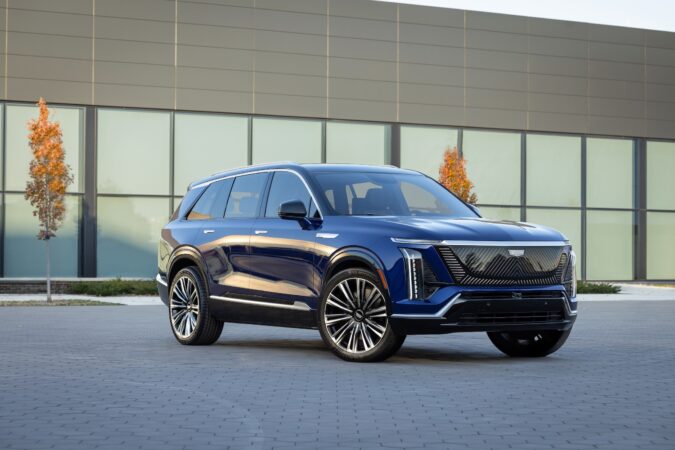
2026 BMW iX xDrive45 vs. 2026 Cadillac Vistiq Platinum: A lot for a lot?
This week: 2026 Cadillac Vistiq
Price: $99,915 as tested. Red paint was the only upgrade.
What others are saying: “Highs: Cabin teeming with luxury details, smooth ride, nimbler than its size suggests. Lows: Uncommunicative steering, pricey top trims, shoddy main display control dial,” says Car and Driver.
What Cadillac is saying: “Luxury for your life.”
Reality: I guess if I had $100K I could pay someone to lie on the front seat trying to find the features I need.
What’s new: The whole thing. Here’s a three-row Cadillac SUV powered by the plug.
Competition: In addition to the iX, there are the Genesis Electrified GV70, Lexus RZ, Mercedes-Benz EQE, Tesla Model X, and Volvo EX90.
Up to speed: The Vistiq is in the class of premium EVs that really roars ahead when you press the accelerator.
The dual-motor SUV creates 615 horsepower, and gets to 60 mph in 3.6 seconds, according to Car and Driver.
You will have no issues pulling into traffic or passing in this SUV.
You’ll also save a lot over the iX, which requires an upgrade to match that acceleration. The price-matched iX took a full second more to get to 60.
Shiftless: The shift lever is on the steering column, where General Motors is putting most of them these days. Pull and lift to back up and pull and lower to move ahead.
On the road: The all-wheel-drive Vistiq handles quite well for a large SUV. It’s wide and it took me a minute to get used to that, but once I did, I could tell where the vehicle was in the lane, or in the parking space — which I find is often the hardest piece to figure out.
The vehicle modes are handled through the touchscreen; swipe to the right, choose drive modes, and pick what you like. Sport mode is best for performance, and Snow and Ice did a nice job during a heavy snowstorm and subsequent frigid days.
One big complaint — if you’re not going to put the controls on an easily grabbed dial, have them keep the previous setting, rather than default to Touring (which I never wanted). So many times I was tooling along on questionable road surfaces and then realized, “Dang! I’m not in snow mode.”
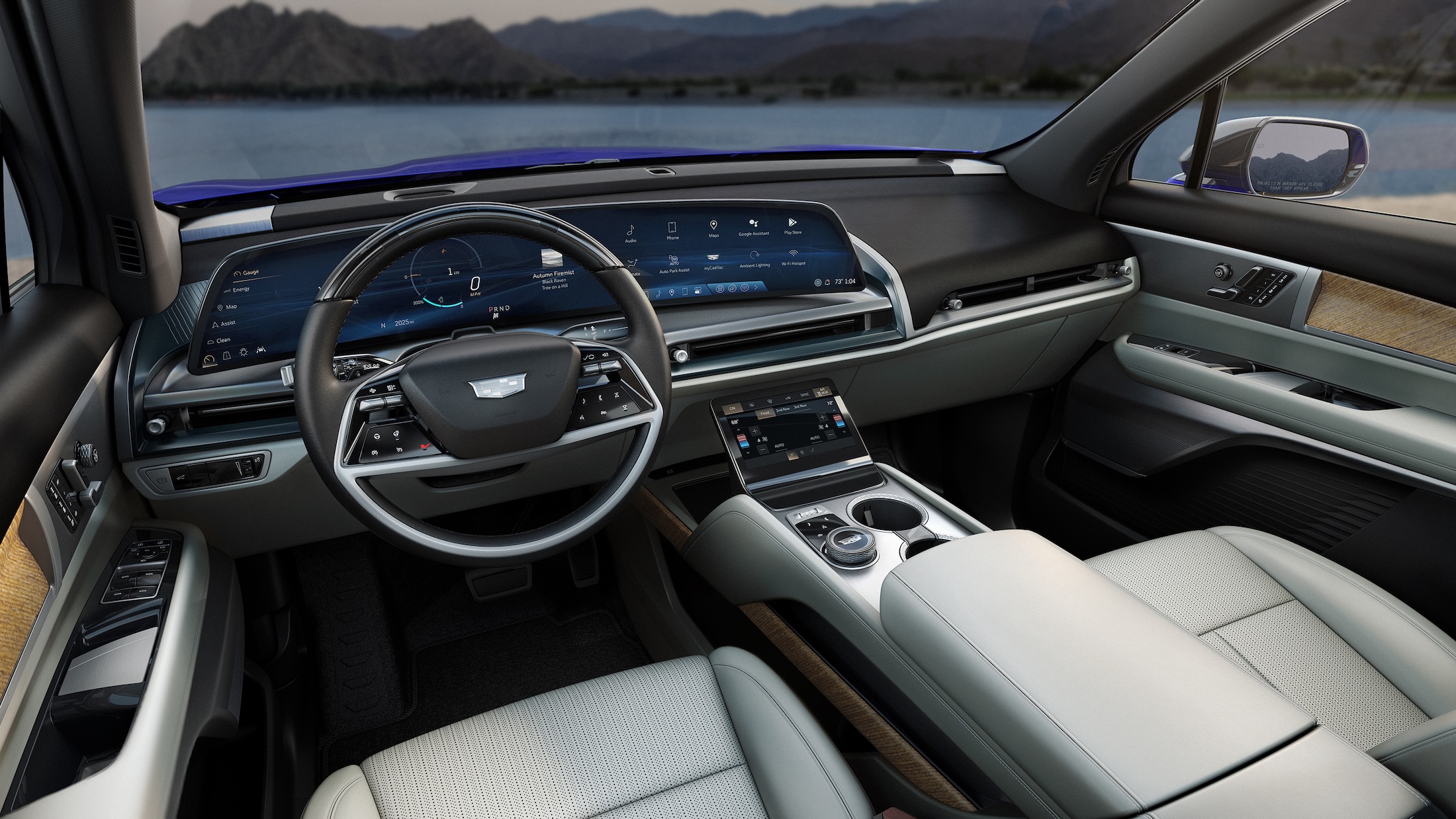
The interior of the 2026 Cadillac Vistiq has the look and feel of a Cadillac, but diminishes with each row.
Driver’s Seat: The command center is comfortable and Cadillacky. The seats are a little on the firm side, and I can’t say I spent enough time to see how long trips go, but they weren’t bad. (Some seats can be so firm as to make me angry in an instant.)
Friends and stuff: Sadly, the seats offer noticeably diminishing returns as you head farther back. The middle row is smallish and awkward and feels like some minivan seats from 1998. The rear row offers scant legroom, although there is some room for feet under the seats and good headroom. But the vehicle is kind of short for three rows, especially for a Cadillac.
Cargo space is 15.2 cubic feet in the back, 43 with the third row folded, and 80.2 cubic feet with both rows folded.
Play some tunes: Cadillac wants to dazzle with its 33-inch screen, but it appears the company has become hyperfocused on it, to the detriment of other features.
It took a couple searches and finally lying on the Driver’s Seat and peering into the recesses behind the console to find the USB-C outlets. I know I should be cool and get a phone I can lay on a charger, but why put these in here at all? This just seems snotty. Like they’re saying, “Haha, loser! Get a real phone!”
The connection ports never seemed to want to turn on the music system, either. Bluetooth is usually fine, except that the connection just randomly cut out on about half my trips. The only way to restore it was to shut down the Vistiq and restart it.
Sound from the 23-speaker AKG system with Dolby is less than you’d expect, about an A-.
General Motors would have done well to keep Apple CarPlay access. There’s no dedicated map program, just Google Maps and Waze, and neither looks as refined as a Cadillac screen should.
There’s a dial control with buttons as well, but the system is so bare-bones that I don’t see how that would help.
Night shift: The first time I drove the Vistiq I had to keep the maps turned off. Both programs feature bright white backgrounds, and they did not automatically adjust for the darkness outside and prevented me from seeing the road.
After another few minutes spent on my stomach trying to find controls, I noticed the old-fashioned light dimmer roller switch to the left of the steering wheel. That dimmed the whole dashboard, but not so badly that I couldn’t see. Still, you’d think this would adjust without me having to do anything, like it does in the Lovely Mrs. Passenger Seat’s Kia Soul, for about one-fourth the price.
Keeping warm and cool: HVAC controls get a separate touchscreen. They’re pretty but a little fussy and hard to adjust at a glance.
Range: The Vistiq advertises a 300-mile range, a match for most of the iX models available. It charges up to 80 miles in 20 minutes, which is no match for some of the best out there (Genesis, Hyundai, and Kia.)
Where it’s built: Spring Hill, Tenn. 43% of parts come from the U.S. and Canada; 18% from China; and 17% South Korea.
How it’s built: Consumer Reports predicts the Vistiq reliability to be a 2 out of 5.
In the end: It feels like Cadillac is giving up. No snazzy map program — when they used to have one of the most attractive options. No CarPlay. No drive mode switch, just use the touchscreen, which has a home screen that looks nice in photos but in person screams Windows 95. Critical items hidden like Easter eggs in a Jeep. It’s a shame, because there’s a nice vehicle here.
The iX is far from perfect, but I’d pick it over this. But among all the competitors, it’s GV70 all the way, even despite 10% less range.
Twin brothers Larry and Kelly Ganges grew up outside of Trenton with people constantly mispronouncing their last name. “Grange, Grain, Ganger,” they’ve heard it all.
So they developed a standard reply: “It’s Ganges like the river [in India].”
Decades on, they’d find out the deep Philadelphia story behind it.
When the brothers, now 72, got older and traveled, they’d grab the phone book in whatever town they were in to see if anybody with their last name was listed. Then they’d call and ask if they knew anybody in their family; they often did.
“So we all thought, no matter where we were,” said Larry, “we were connected with somebody,”
But they were also connected with something — a ship, a travesty, and a providence.
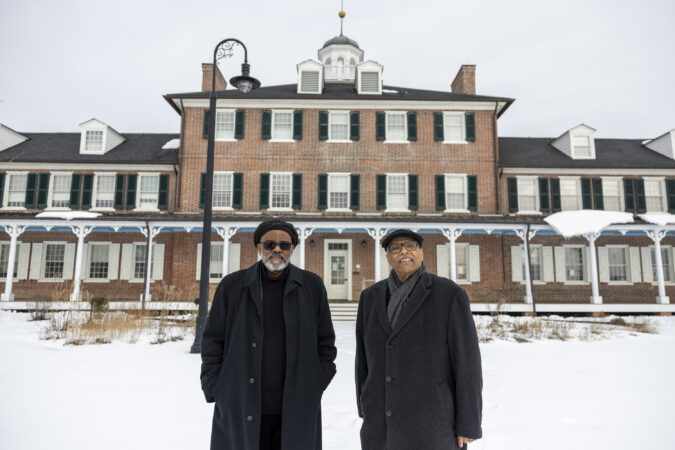
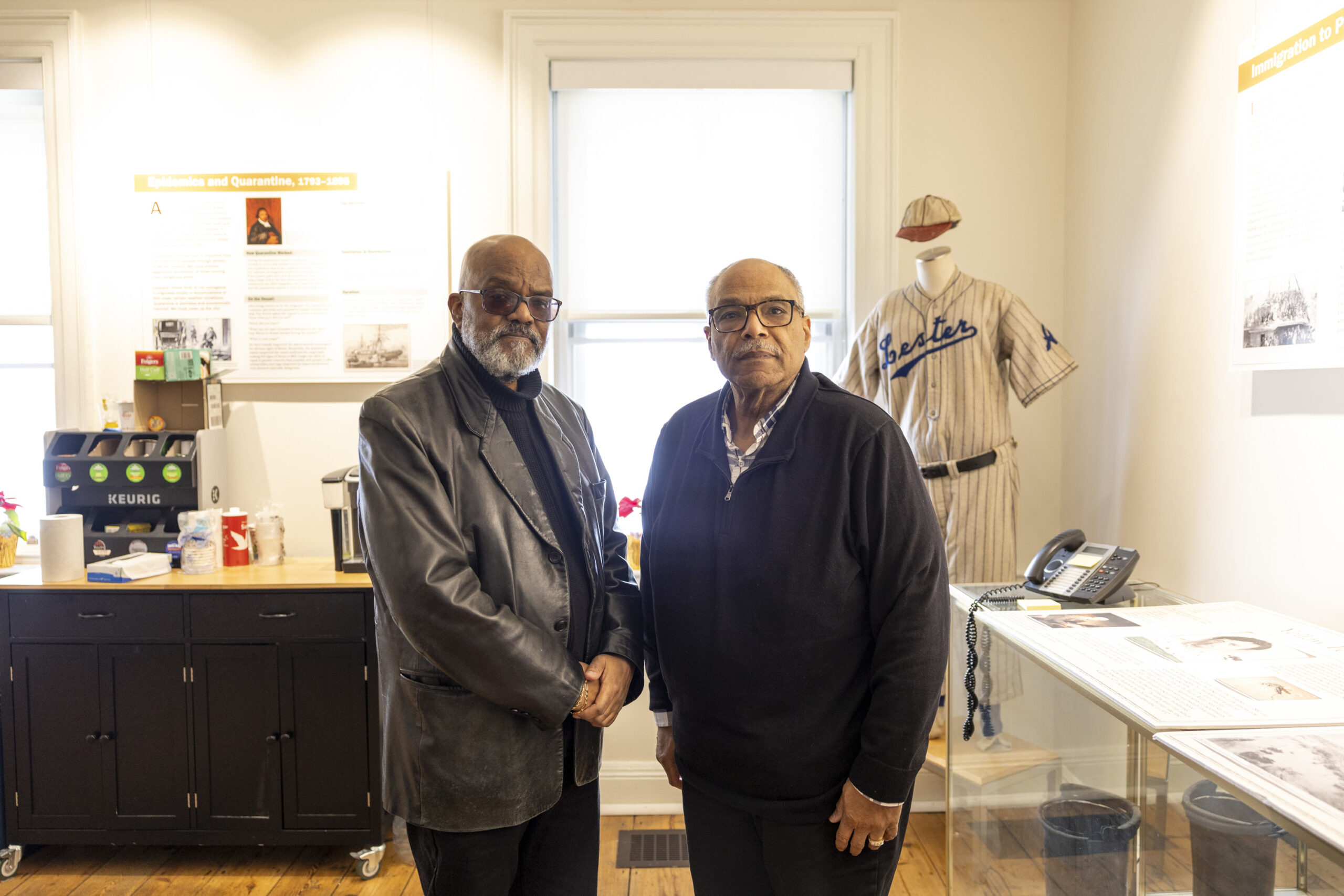
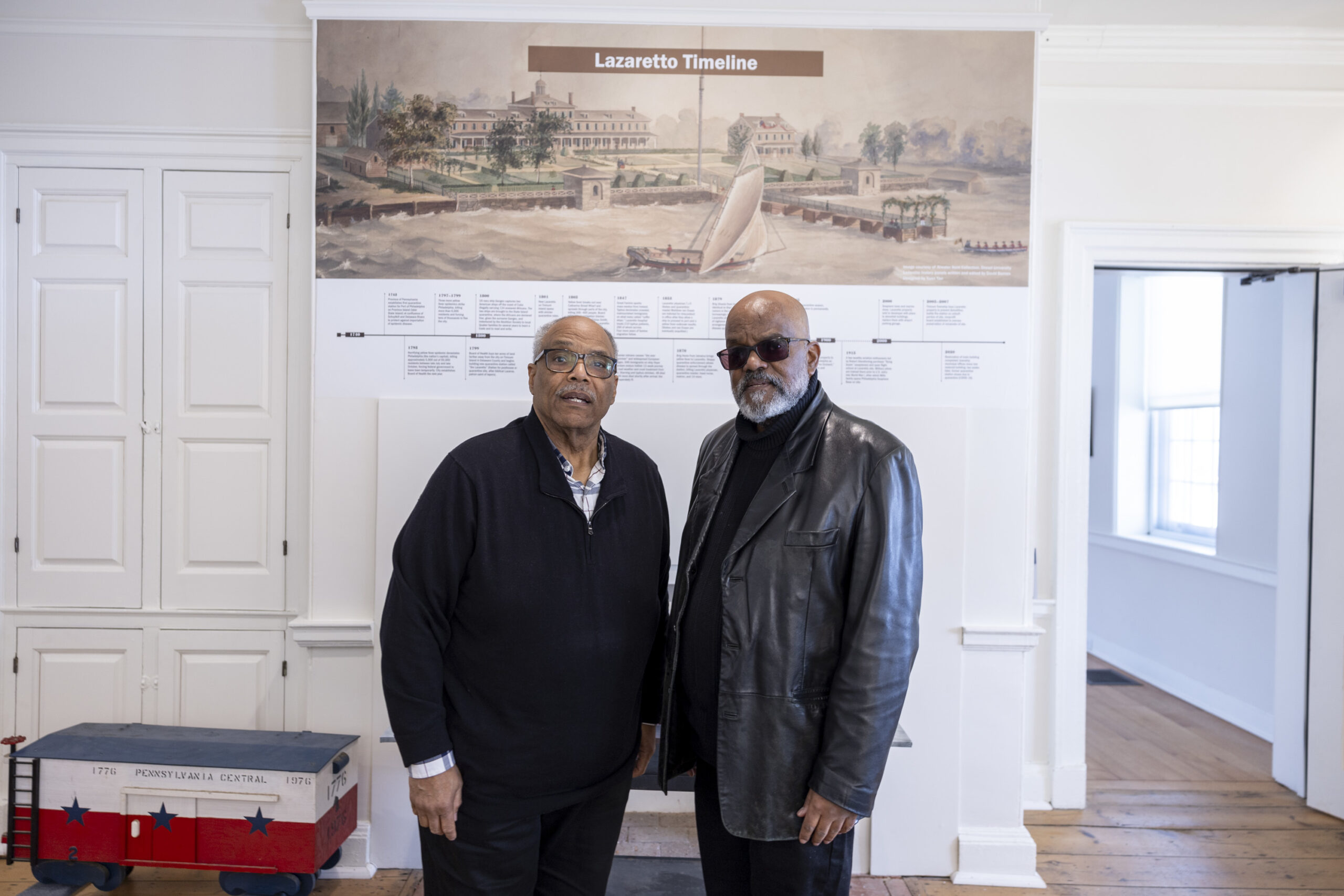
(From left to right) Twin brothers Larry Ganges, and Kelly Ganges, pose for a portrait at the Lazaretto in Tinicum, Pa., on Friday, Feb. 6, 2026. “It allows us to view and experience Black history,” Kelly said. “Pride in knowing our family was in this journey.”
The brothers’ first clue of their extended heritage arrived in 1975, when Kelly, was a student at Trenton State College. His journalism teacher, familiar with Bucks County cemeteries, asked if Kelly knew about the gravestones of two soldiers buried there.
Torbert and William Ganges had fought in the Civil War’s colored regiment, but Kelly couldn’t be sure if they were his relatives.
Nearly 30 years later, the brothers still don’t know if they are related to the soldiers, but they have discovered that their heritage is, as Kelly describes, “bigger than us, [it] extends beyond the continental United States and involves potentially the world.”
That information came in a phone call.
In the early aughts, Larry was working as the New Jersey Department of Health’s assistant commissioner for the HIV/AIDS division. His secretary told him that David Barnes, a University of Pennsylvania professor of history and the sociology of science, was on the line to talk about a different epidemic.
72-year-old twin brothers Kelly Ganges (left) and Larry Ganges, pose at the Lazaretto in Tinicum, Pa., on Friday, Feb. 6, 2026.
Barnes, who was seeking anyone with the Ganges name, had found Larry by chance in a New Jersey state employees directory. He wanted to discuss the 135 Africans who arrived in Philadelphia in 1800 and were detained at the old Lazaretto along the Delaware River.
At the time, every vessel arriving in Philadelphia was required to stop and be inspected at the Lazaretto — a hospital and quarantine station — where patients with yellow fever were treated.
Later, a brick facility replaced the old Lazaretto. Downriver from the original, the “new” Lazaretto, operational from 1801-1895, stands near present day Tinicum. It is the oldest surviving quarantine station in the Western Hemisphere and one of the 10 oldest in the world.
By the call’s end, Larry had learned not just the origin of his name but how his ancestors arrived in America.
“Wow, we had never heard about it. We just didn’t know,” he said.
The story goes: In 1800, the United States naval ship Ganges intercepted two schooners (the Phoebe and the Prudence) off the coast of Florida, near Cuba. Despite a new federal law banning the carrying of human beings for enslavement, the schooners, which experts believe disembarked from near Sierra Leone, contained 135 people from Africa, imprisoned as slaves, bound for the New World.
Ganges’ naval officers boarded the schooners — the Phoebe on July 19, 1800, and the Prudence on July 21, 1800 — took the enslaved into custody, and delivered them to the Ganges’ home port: Philadelphia.
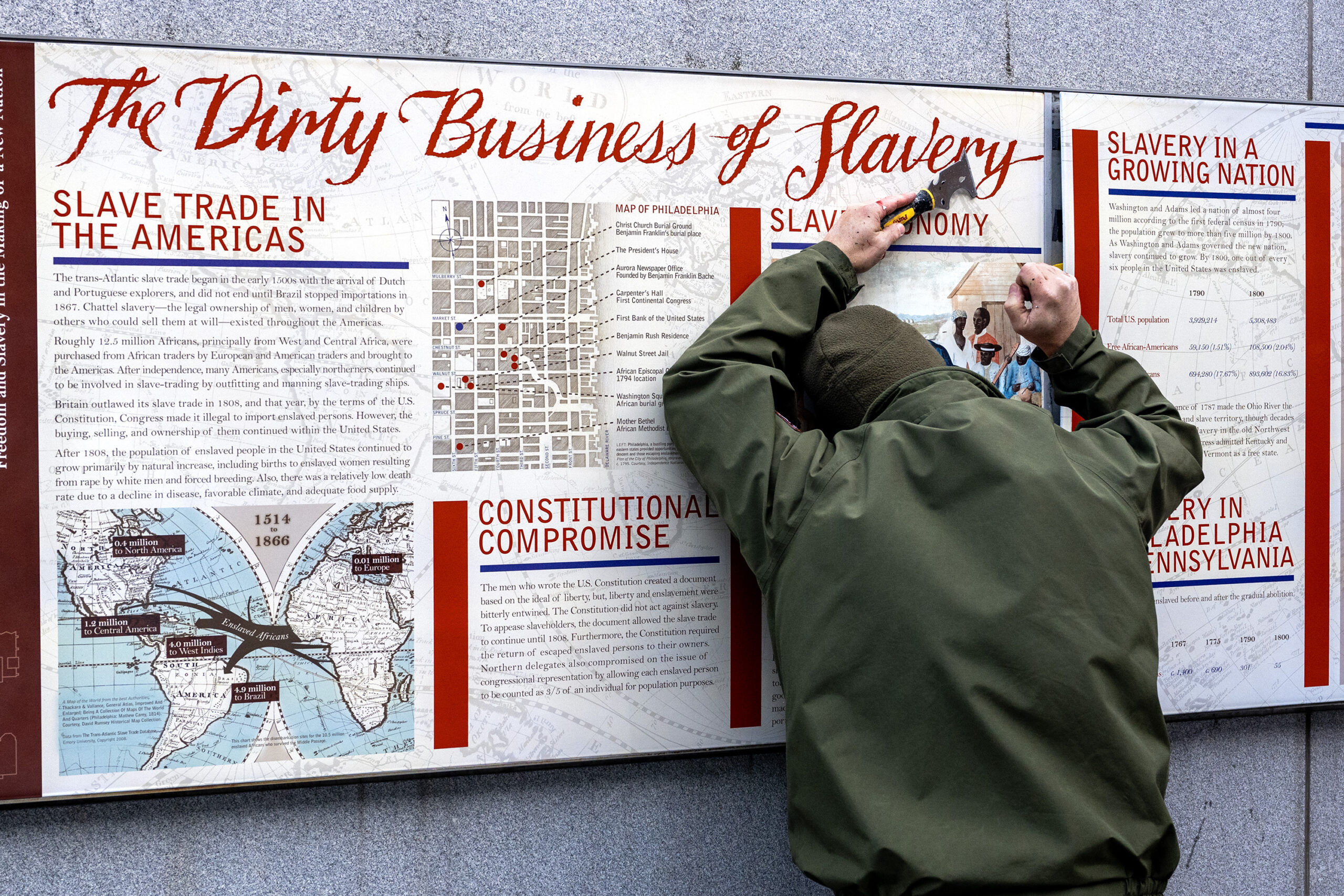
A NPS worker removes an interpretive panels – “The Dirty Business of Slavery” – at the President’s House site in Independence National Historical Park Thursday, Jan. 22, 2026.
When the schooners’ owners sued to reclaim their “property,” a Philadelphia judge ruled that the 135 aboard were people (not property) and ordered them freed. The Africans were remanded to the old Lazaretto for quarantine where they remained for up to three months.
Subsequently Sambo, Milnor, Yelle, and Culico Ganges and the rest of the 123 survivors were indentured to Pennsylvania Abolition Society members and others.
After Barnes’ phone call, the twins and their (late) older brother, Tendaji Ganges, visited the Lazaretto. At that time, the dilapidated building was locked. But Kelly returned with Barnes and gained access inside.
“I saw all of the little rooms … it was interesting to touch a piece of history, and know that that’s the genesis of how our family came to the United States,” he said.
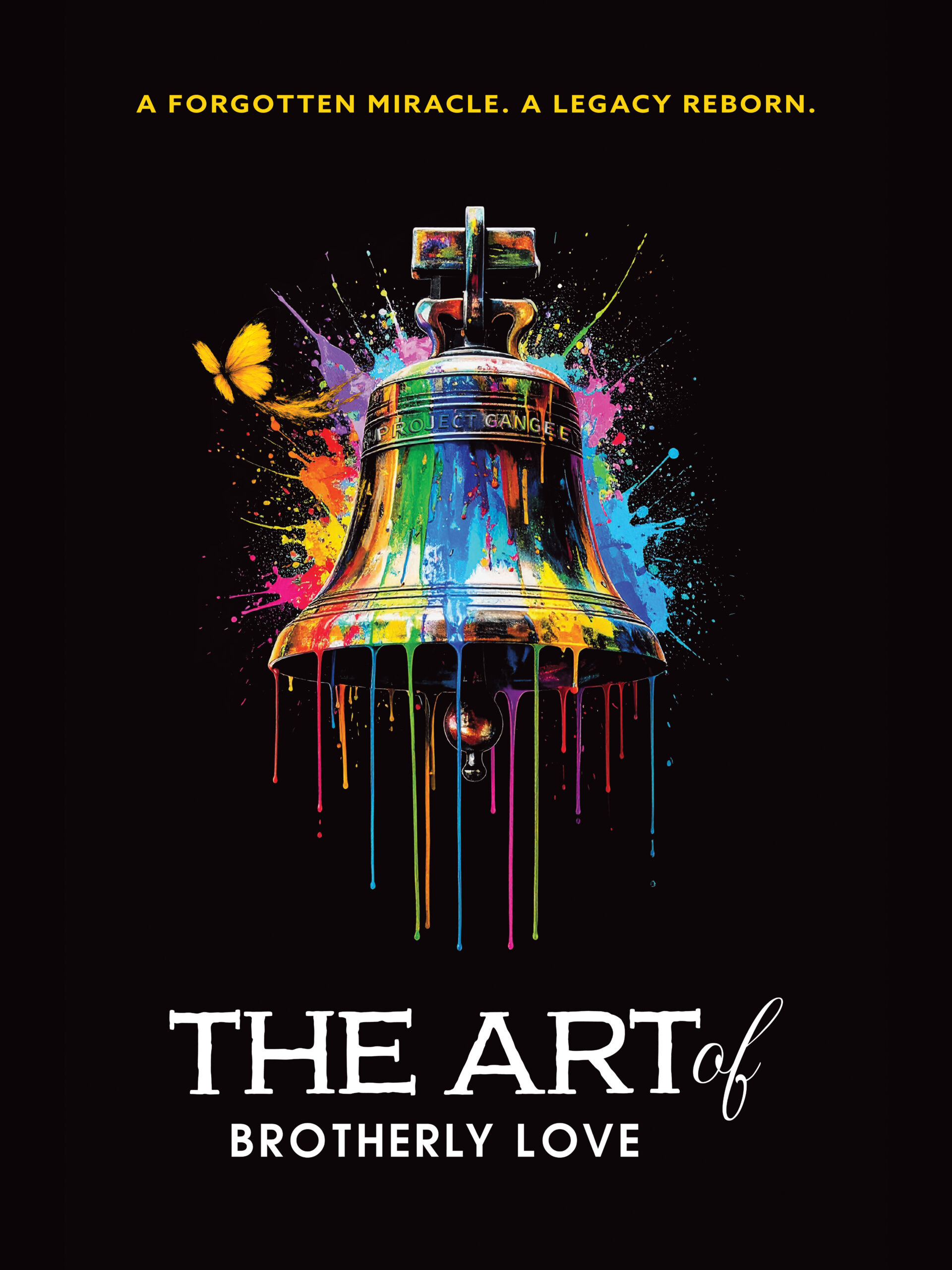
“These modern-day heirs carry the legacy of resistance and survival into today’s conversations around justice, identity, and belonging,” said filmmaker Rah Crawford, whose documentary The Art of Brotherly Love focuses on the Ganges’ story.
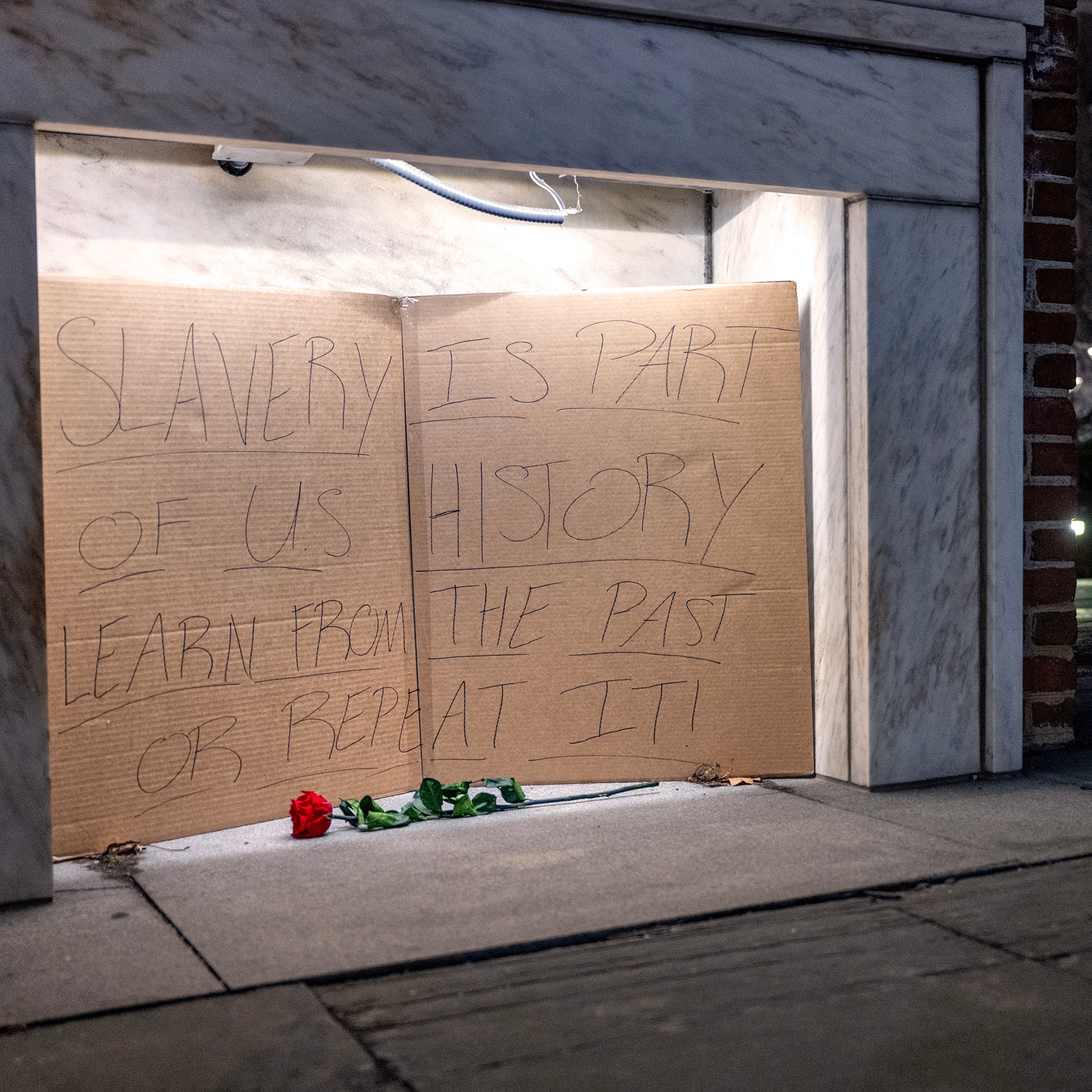
A single rose and a handwritten cardboard sign (“Slavery is part of U.S. history learn from the past or repeat it”) are inside an empty hearth at the President’s House site in Independence National Historical Park late Thursday, Jan. 22, 2026 after workers removed display panels about slavery.
When the film premiered in Brooklyn last year, Larry said that as he sat in the audience watching, he was shaking, almost in tears. His wife asked, “Are you OK? Are you cold?”
He was overcome with emotions: “I was sad, I was happy, I was mad.”
Although, as the brothers say, “we’ve got the generic connection to the name,” they don’t have a connection to identify individual family members that came through the old Lazaretto; they can’t yet determine how their bloodline was carried to them.
But thanks to the efforts of family historian Michael Kearney, who is tracking descendants of the Ganges’ survivors, Larry is confident that “my children and my children’s children [are going] to know what the story is, and to know how to access it, and know who the players are …. And hopefully this movie is not the last of what’s going to occur.”
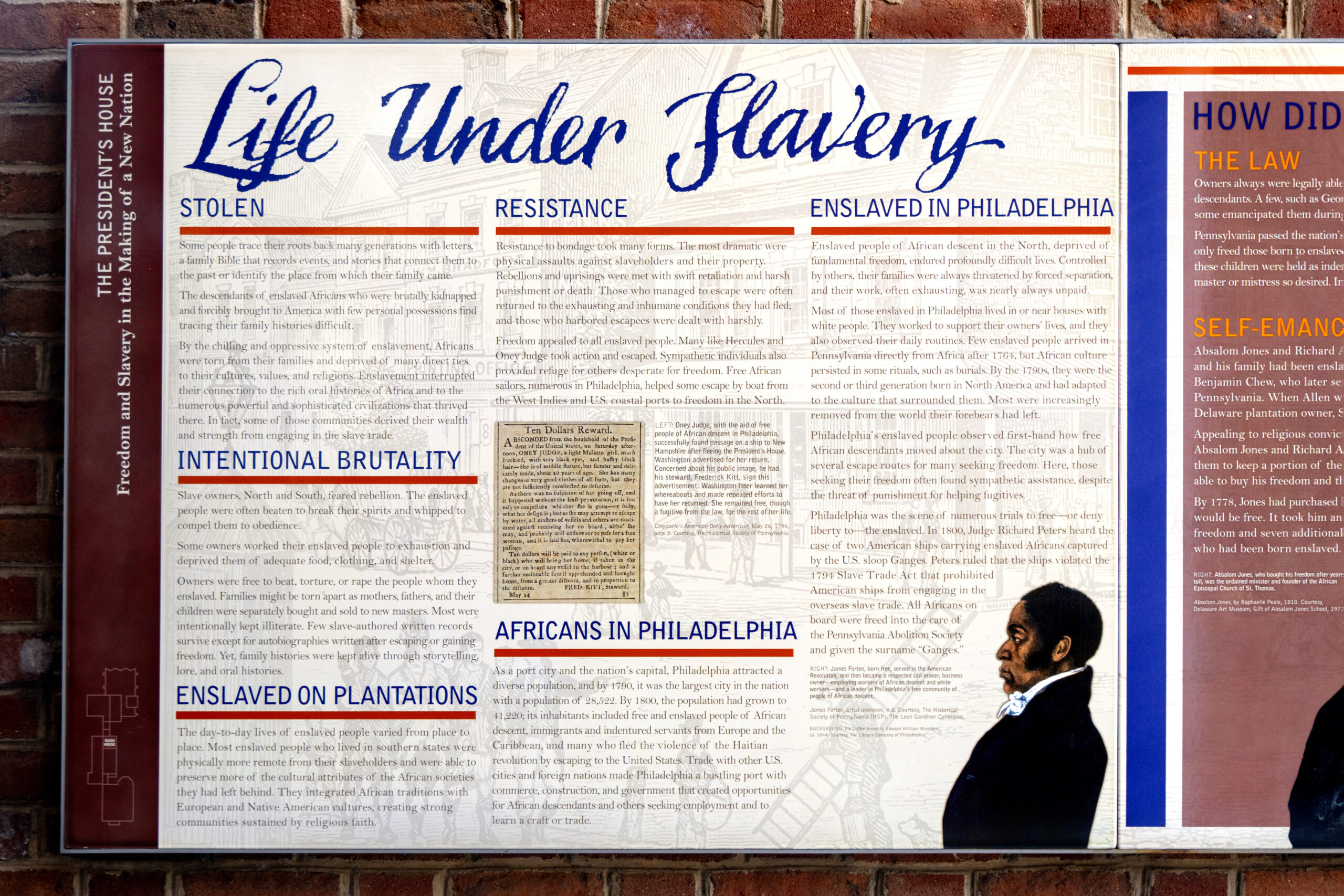
The “Life Under Slavery” sign at the President’s House in the Independence National Historical Park. The sign has since been removed. Photo from Sunday, Aug. 3, 2025.
“People made it through the troubled journey, the Middle Passage, and landed on American soil and contributed to make America a great nation,” said Kelly, “And nobody can ever deny that, and people can try and whitewash it and try to erase it, but it’s not going to work, because it’s real. Our contribution is documented.”
Prior to the opening of the President’s House in 2010, filmmaker Crawford was commissioned to create storyboards for a video installation at the site. Through his research, he first learned of the Ganges’ story, launching a 15-plus-year journey to produce the documentary.
Filmmaker Rah Crawford’s documentary “The Art of Brotherly Love” documents the story of the long-forgotten rescue of 135 enslaved Africans by the “Ganges” in the 1800s,
The Art of Brotherly Love, presented in partnership with Creative Philadelphia, is both a documentary and a trailer for a forthcoming animated feature. The Philadelphia premiere is slated for Feb. 14 at Ritz Five.
After the documentary screens, Kelly Ganges hopes that, “it just continues to cascade out — to inspire more genealogists and historians, and to reach more descendants and the next generation.”
“The Art of Brotherly Love,” Feb. 14, 11:30 a.m., Landmark’s Ritz Five, 214 Walnut St., eventbrite.com
In 1773 Dinah Nevil, an Indigenous, Black, and European multiracial woman and her four children arrived in Philadelphia from Flemington, N.J, under orders from a slave trader who intended to eventually sell Nevil to the Deep South, or perhaps the Caribbean.
Nevil protested.
Philadelphia authorities sympathetic to her plight, kept her in a work house for two years while figuring out the next steps to her freedom. The conditions were so horrid two of her children died.
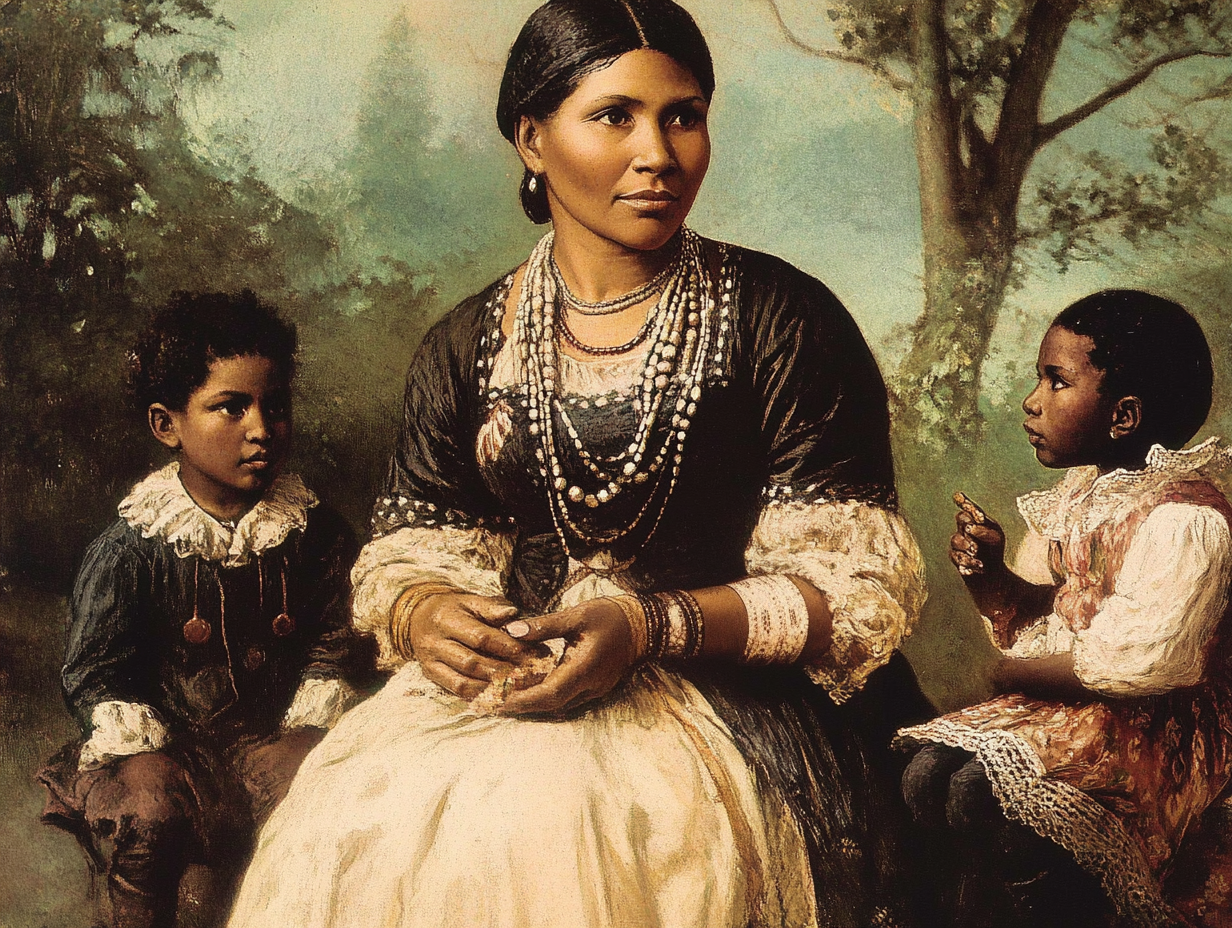
An image of Dinah Nevil imagined by the 1838 Black Metropolis.
Enter Israel Pemberton Jr. and Thomas Harrison, Quakers who, like most Quakers in colonial Philadelphia, actively fought slavery. Keeping people in bondage was considered immoral in their religion.
Pemberton and Harrison filed a lawsuit against Nevil’s enslaver because they sought to set a precedent by making it unlawful to sell Black people into slavery on free soil, not just in Pennsylvania, but in all of the colonies.
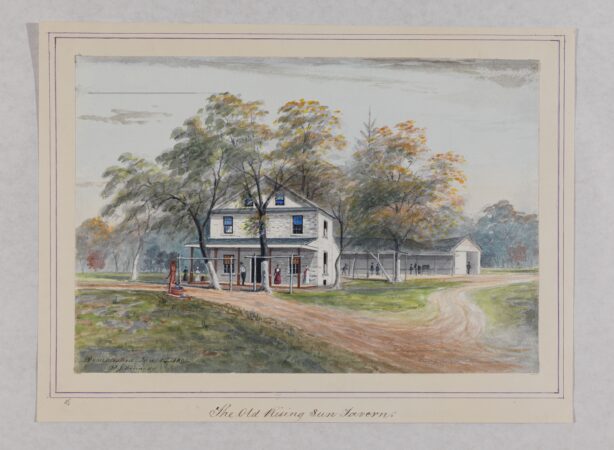
So, on April 14, 1775, Quaker leaders and educators Anthony Benezet and John Woolman gathered 24 men — 17 of whom were Quakers — at the Rising Sun Tavern to discuss legal strategies on how to make that happen.
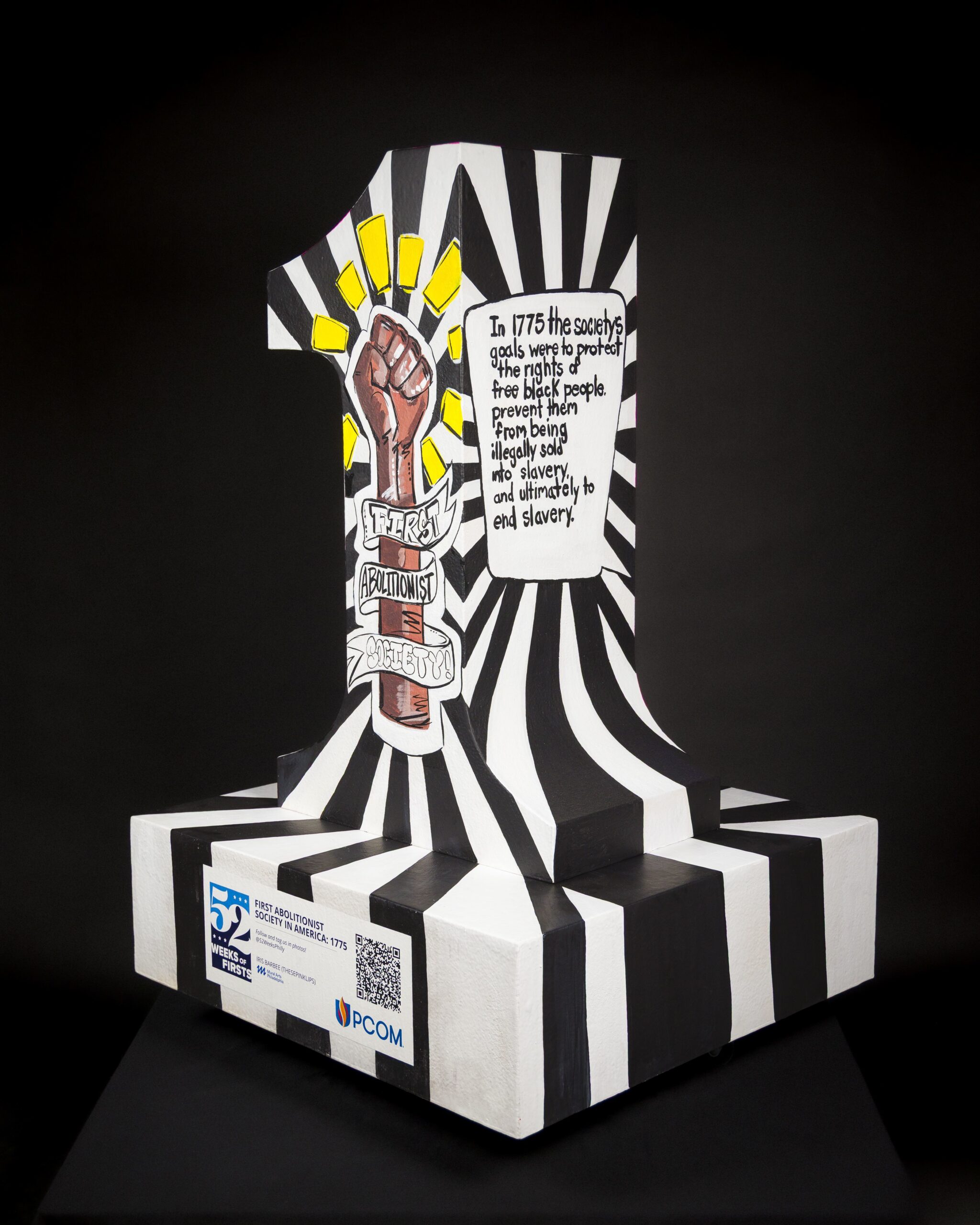
Artist Iris Barbee Bonner’s No. 1 statue pays homage to William Still, an Underground Railroad conductor and key member of the Pennsylvania Abolitionist Society.
That was the first gathering of an antislavery society in America and it will be celebrated Saturday at the African American Museum, part of the Philadelphia Historic District’s weekly firstival day party. Firstivals are a yearlong celebration of America’s 250th birthday marking events that happened in Philadelphia before anywhere else in America and often the world.
The group led by Benezet and Woolman named themselves the Society for Relief of Free Negroes Unlawfully Held in Bondage. In addition to Nevil’s case, they advocated for four other people of color who were in the midst of being sold away from their families. Nevil was ultimately freed when Harrison bought her and within days, signed manumission papers.
In 1776, 18 years after Quakers told their members they could no longer participate in the slave trade, Quakers were forbidden from enslaving people. Thanks to the Quakers’ advocacy, Pennsylvania enacted the 1780 Gradual Abolition of Slavery Act, America’s first law to end slavery.
Four years later, 18 Philadelphians resurrected the Society for Relief of Free Negroes and renamed it Pennsylvania Abolitionist Society, or PAS. Their goal was to stop Black and brown people from being indiscriminately picked up and sold into slavery in what was now a free state, but also to end slavery all together.
“They knew they couldn’t do it overnight,” said Emma Lapsansky-Werner, an American history professor at Haverford College. “What they did was organize so that one-by-one Black people would find freedom.”
Within two years, the PAS grew to 82 members and inspired other cities like New York and Boston to establish branches of their own. In 1787 — the same year the delegates voted that Black people were three-fifths of a person — Ben Franklin became the society’s president and under his leadership, the society petitioned the legislature to amend the act of 1780. This included preventing enslavers from taking pregnant enslaved women to the South so their children would remain property.
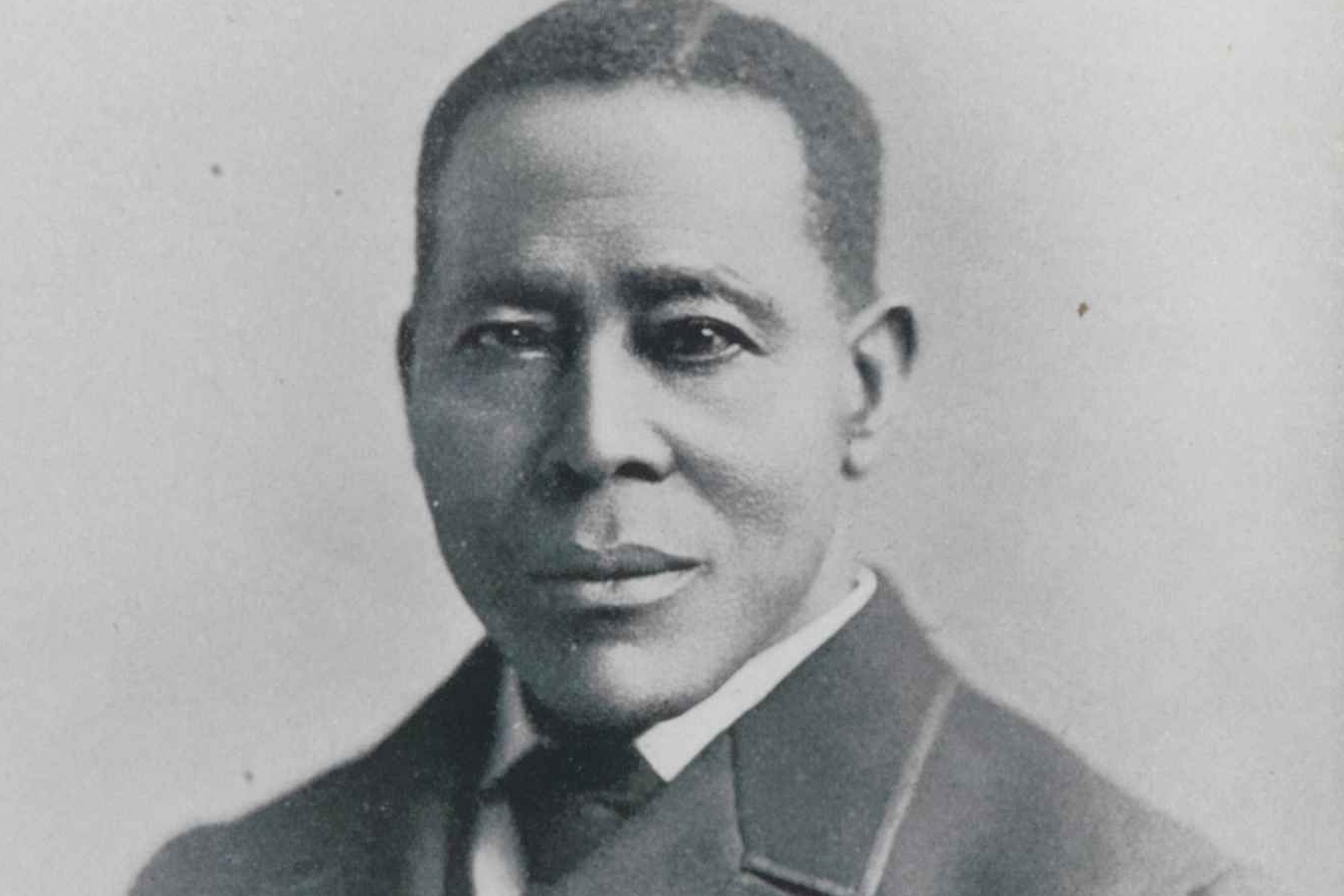
William Still was a member of the Pennsylvania Abolitionist Society and chair of the Vigilance Committee of the Pennsylvania Anti-Slavery Society.
The PAS still exists today and advocates for equal rights and opportunities for all Americans.
This week’s Firstival is Saturday, Feb. 14, 11 a.m.-1 p.m., The African American Museum Philadelphia, 701 Arch St. The Inquirer will highlight a “first” from Philadelphia Historic District’s 52 Weeks of Firsts program every week. A “52 Weeks of Firsts” podcast, produced by All That’s Good Productions, drops every Tuesday.
In January, Philadelphia announced it would join a national initiative to accept plastic cups made of polypropylene and paper to-go cups in the curbside collection program. These to-go cups now join dozens of other household items that make up an estimated 1.5 million pounds of recyclables collected per year, according to the Department of Sanitation.
Once a week, you and many other Philadelphians fill blue bins with paper, plastic, glass, and other recyclables, hoping to rescue them from landfills, but do you really know what should go in the bin and what shouldn’t? Philadelphia uses a single-stream system, meaning you don’t have to separate different types of recycling, but the rules can still be tricky. We are here to help walk you through what should go in your recycling bin and what should be thrown in the trash.
Let’s check your knowledge on some typical household items and see if you can place the item in the right bin.
story continues after advertisement
Paper
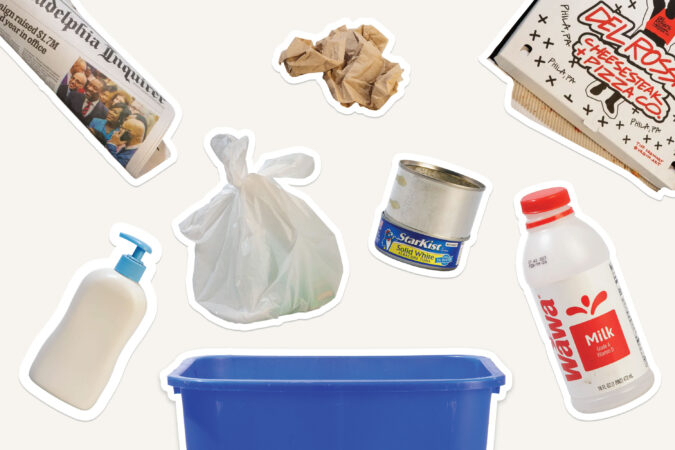
Let’s start with a newspaper. You’ve finished reading your Philadelphia Inquirer. Where do you put it?
Drag the paper to the bin or select a button
That’s right!
Not quite.
Newspapers and magazines can be recycled. Paper in most forms should go in your recycling bin. This includes things like junk mail, envelopes, scrap paper, and paper bags.
There are some exceptions to this. You might be surprised to learn that shredded paper should go in the trash.
Recycling
Newspapers
Magazines
Brochures
Catalogs
Junk mail
Envelopes
Writing paper
Scrap paper
Paper bags
Trash
Food-soiled paper
Tissues
Paper towels
Napkins
Plastics
Plastics can be a bit trickier because only certain kinds of plastics can be recycled. You’ve probably seen the stamped number codes before (they range from 1 to 7) and they represent the type of plastic used in the item. In this case, where would you put a lotion bottle with a No. 2 recycling symbol on the bottom?
That’s right!
Not quite.
Plastics with the codes 1, 2 and 5 can be recycled in Philadelphia. These codes can be found stamped somewhere on the container. If there is no stamp, assume it cannot be recycled. Non-transparent plastic bottles like the one above are generally labeled with No. 2. You can also leave the lid or pump on. If you live outside of Philadelphia, check your local municipality, not every recycling program accepts the same codes. More information about the types of plastics can be found here.
Recycling
No. 1: Easy to recycle plastic found in food and drink containers like water and soda bottles
No. 2: Non-transparent plastic found in things like shampoo bottles and laundry detergent containers
No. 5: a type of plastic found in some food containers
Trash
No. 3: More difficult plastic to recycle and can also include shampoo and laundry detergent bottles
No. 4: Used to make plastic bags
No. 6: also known as Styrofoam
Cardboard
You’ve just finished a delicious pizza from Del Rossi's. Where do you put the box?
That’s right!
Not quite.
While cardboard is a recyclable material, it must be dry and free of food waste. So, a food-soiled pizza box should go in the trash. Also, it might be enticing to use a cardboard box as your recycling bin, but the city does not recommend this since wet paper and cardboard is not recyclable and can fall apart, leaving trash on the street. Instead they encourage using a hard sided container with a free lid that can be found at one of six Sanitation Convenience Centers.
Recycling
Shipping boxes
Clean pizza boxes
Paper towel and toilet paper rolls
Egg cartons
Trash
Shredded cardboard
Greasy or food-soiled cardboard
Recycling bags
You’re cleaning up and throw some empty bottles and cans in a bag. Where does it go?
That’s right!
Not quite.
No plastic bag is acceptable in single-stream curbside bin recycling in Philadelphia, even those marketed as recycling bags. According to the city’s recycling guide, plastic bags can “tear and wrap around the moving parts in recycling processing machines, leading to higher maintenance costs, equipment damage, and even worker-safety issues.” Another common mistake, according to the city, is leaving packing plastic and peanuts inside of shipping boxes. Make sure those are thrown in the trash instead. And for dog walkers, be sure to put waste bags in the trash!
Metals
You’ve got some cleaned-out aluminum cans, where do they go?
That’s right!
Not quite.
Aluminum cans can be recycled! These should be emptied, rinsed, and dry. You can keep lids and caps on. While some leftover liquid is OK “do not discard a bottle with enough liquid to swallow,” says Kyle Lewis, recycling director. That’s so that leftover liquid doesn’t contaminate any paper and cardboard around it after it’s compacted in the truck.
Recycling
Aluminum and tin cans
Empty paint cans
Empty aerosol cans
Trash
Pots and pans
Food-soiled cans
Miscellaneous
That’s right!
Not quite.
Batteries cannot be recycled and should be placed in the trash. In addition, the city says that batteries should be wrapped in tape around both ends for disposal. There are other disposal options for things like electronics, hazardous waste, bulk items, and lithium or rechargeable batteries. Find more information on disposal options here.
Your Results
You have skipped .
You scored XX out of 6.
When in doubt, throw it out!
You’re almost a recycling pro.
You are a recycling pro! Thanks for playing.
What else you should know
In addition to the above, glass and cartons are also recyclable. Like cans, glass and cartons should be emptied, rinsed, and dry.
story continues after advertisement
Some additional things to avoid putting in your recycling are Styrofoam, packing peanuts, clothing hangers, wood, and ceramics. You can find a complete list from the city here.
If you don’t have a recycling bin, the city will provide one for you. You can also use any household container as long as it is no larger than 32 gallons and no more than 40 pounds. There are also no limits to the amount of recycling you can put curbside, as long as it is contained correctly.
“We encourage Philadelphians to recycle for our communal benefit. Reduce, reuse, recycle, repeat!,” said Lewis.
Staff Contributors
Design, development, and reporting: Garland Fordice
Editing and additional development: Sam Morris
Photography: Monica Herndon
Copy Editing: Brian Leighton
Subscribe to The Philadelphia Inquirer
Our reporting is directly supported by reader subscriptions. If you want more journalism like this story, please subscribe today
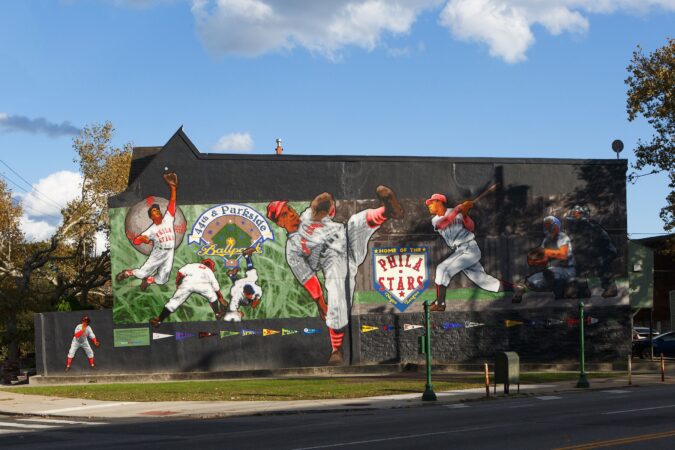
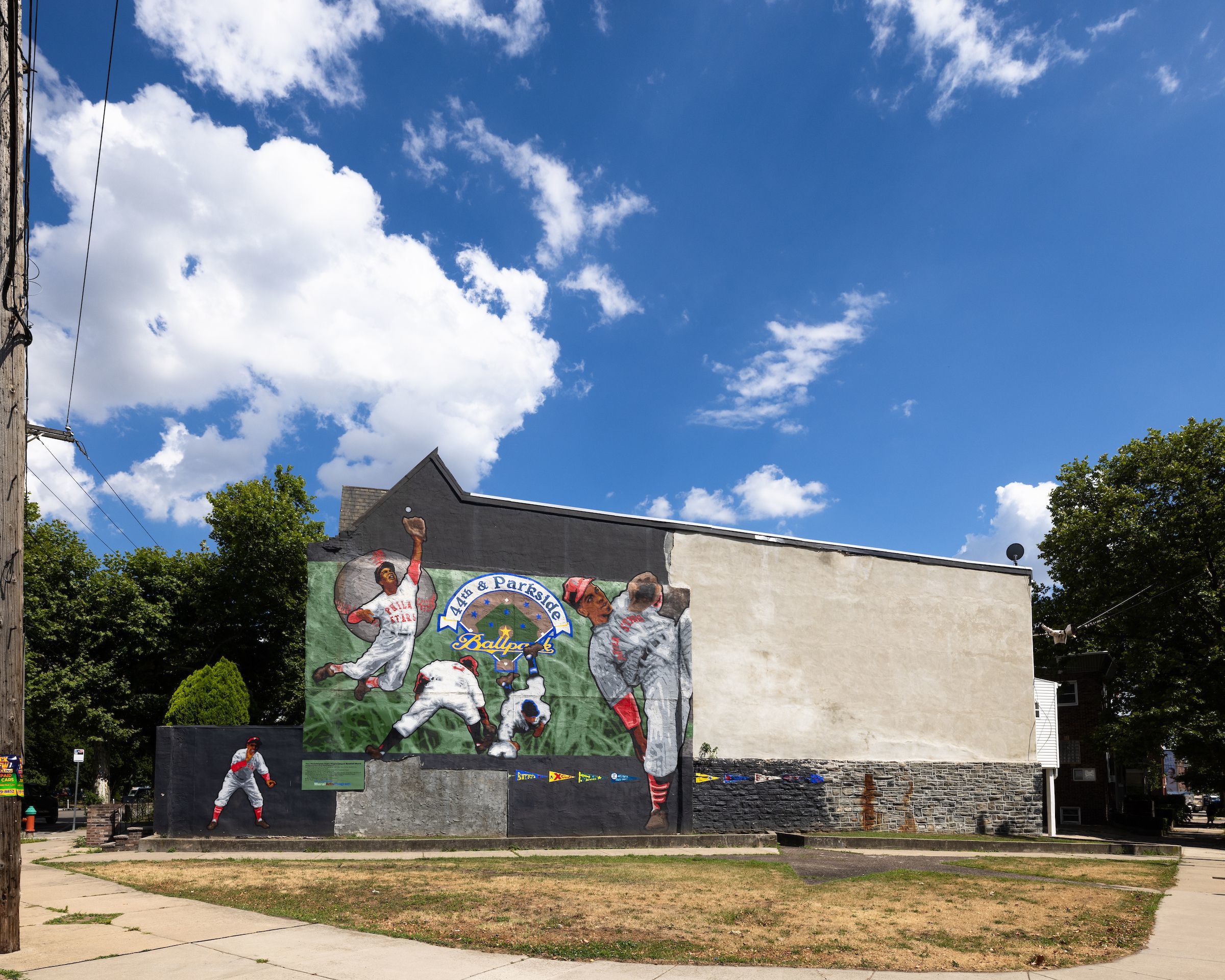
When a West Parkside mural honoring the Philadelphia Stars and Negro Leagues baseball was taken down last month, social media commenters were outraged as the news spread, fearing that Philadelphia had lost one of its iconic odes to Black history.
But the mural at 4304 Parkside Ave. won’t be gone for very long. In a collaboration among Mural Arts Philadelphia, Parkside community members, and the owners of its former building, a new version of the Stars mural will be re-created just across the street.
“It was put up over 20 years ago. We’ve been working really hard to spruce it up for the next 20 years,” said Marjorie Ogilvie, the president emeritus of the West Parkside Business Association, who helped erect the first mural in 2006.
It seemed inevitable that the two-story mural would eventually be brought down. There was roof and wall damage to the home on which it is painted, and the building partially collapsed. Those repairs required the removal of half of the mural a few years ago, and it was never replaced.
And the possibility of development on the plot of land is now closer to being realized. The triangle-shaped grassy lot in front of the mural has been owned by developer Haverford Square Properties for several years, and it acquired the 4304 Parkside building in September.
Half of the mural was previously removed after repairs were needed for the damaged wall and roof of the property. This photo shows what remained of the mural in 2024.
Haverford Square planned to construct a six-story apartment building at the corner, but community members fought back, arguing that it would lead to overcrowding in the neighborhood. Haverford Square president German Yakubov said they have since reached something of a compromise on a smaller-scale development, which will include a baseball-themed coffee shop on the corner.
But Yakubov is helping to secure the long-term future of the mural. Haverford Square has donated $30,000 and design services to the project to create a new version across Belmont Avenue.
“I didn’t want to let it go,” he said of the mural he has been driving past since he was a student at St. Joseph’s University.
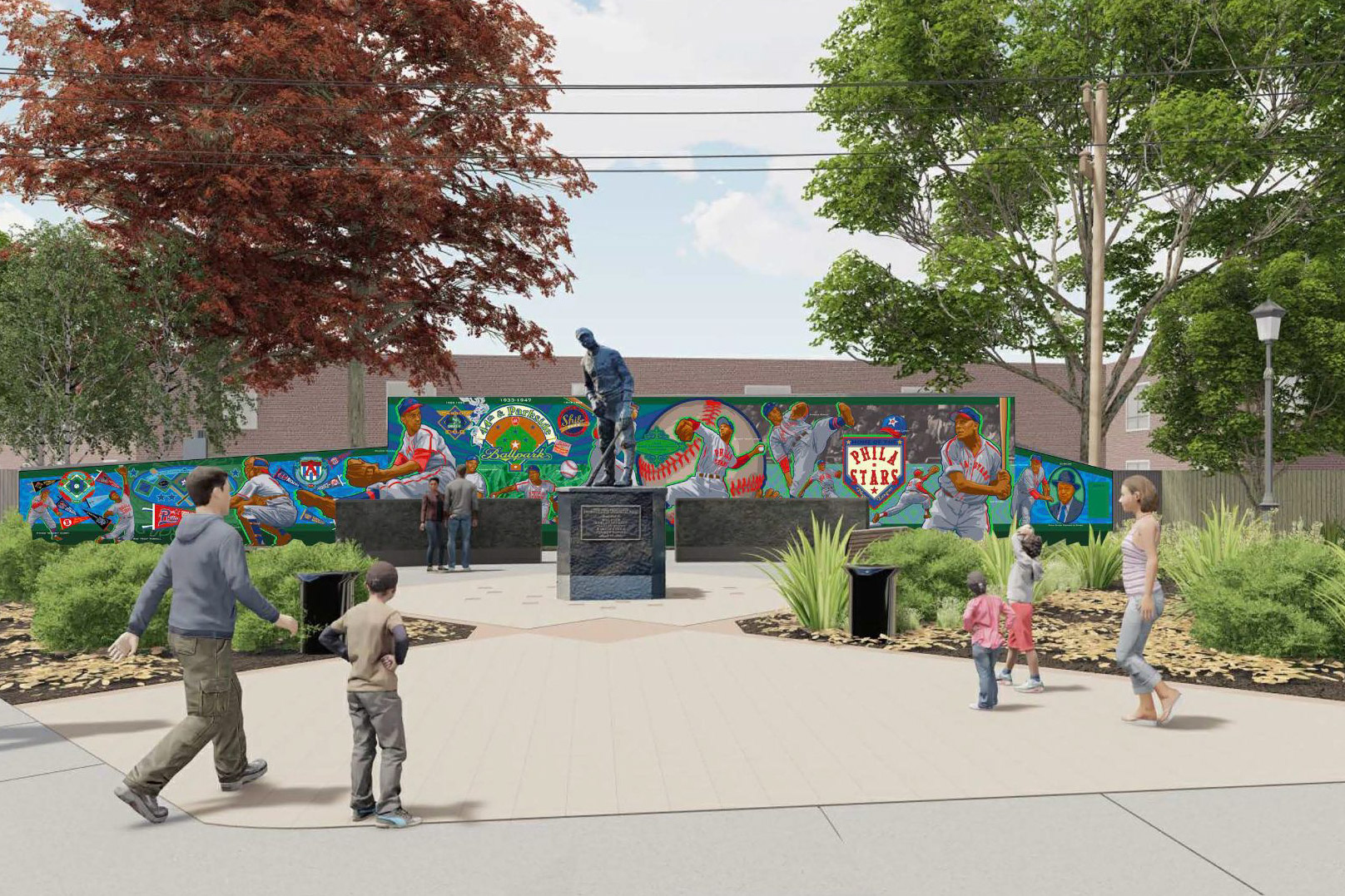
The mural will be painted on a yet-to-be-constructed wall in the Philadelphia Stars Negro Leagues Memorial Park, at the southwest corner of Parkside and Belmont Avenues. It will look slightly different from the previous version, since the new wall will be wider and shorter than the 4304 Parkside wall was. But the designs come from the artist who worked on the original mural, David McShane.
The park features a 7-foot bronze statue of a Negro Leagues baseball player, which was unveiled in a 2003 dedication ceremony at Veterans Stadium by five living Philadelphia Stars players —Bill Cash, Mahlon Duckett, Stanley Glenn, Harold Gould, and Wilmer Harris —before being placed at the park in 2005. The new mural will be raised behind the bronze statue.
A rendering of the proposed mural at the Philadelphia Stars Negro League Memorial Park. The recreated design is by the same artist, David McShane, behind the original mural. The proposed project will include the construction of a new wall behind the 7-foot bronze statue of a Stars player by Phil Sumpter.
“It’s great to see when everyone comes together to ensure that the story of the Negro League[s] and the Philadelphia Stars is not forgotten,” said Mural Arts Philadelphia executive director Jane Golden.
Many people reached out to Mural Arts once they heard in the fall that the mural was going to be removed, Golden said. They were furious and wanted to know what the organization would do to protect it.
Golden said she expects construction to begin early this spring after the project receives Philadelphia Art Commission approval, and for the mural to be completed by summer. Thousands of visitors are expected for numerous events in Philly, including the MLB All-Star Game in July.
The Stars are nearing their 100th anniversary, having played their first games in 1933. They joined the Negro National League the following season and won their first and only pennant, beating the Chicago American Giants in a controversial eight-game series, 4-3-1, after game 7 ended in a tie due to the state’s blue law curfew. Satchel Paige briefly played for the Stars, as did other Negro Leagues legends like Biz Mackey and Jud Nelson.
But after Major League Baseball was integrated in 1947, the popularity of the Negro Leagues dropped, and the Stars disbanded in 1952. They played the majority of their home games at the 44th and Parkside Ballpark, the site where the new mural will rise.
To be loved is to be known — or, better yet, to inspire a 3,233-piece custom Lego set.
Gene Gualtieri is devoted to Friday Saturday Sunday. Almost every Friday since 2021, the Fitler Square resident has lined up at 4:30 p.m. to score the same seat at the first-floor bar of Chad and Hanna Williams’ acclaimed Rittenhouse Square restaurant, where he is known to house a full roast chicken — bones and all — and order off-menu sherry martinis from bartender Paul MacDonald. It’s a ritual that has inspired a tattoo on Gualtieri’s bicep: “B9,” code for bar seat no. 9.
“It’s my seat,” said Gualtieri, 57, an engineer. “This feeling of hospitality and being welcomed [at the bar] … it’s a social hub for me.”
So when Gualtieri’s 21-year-old son, Leo, needed a Christmas present for his father, everyone from his aunt Claire to his older brother Sam had the same idea. What if, Leo recounts them wondering, there was a way to shrink Friday Saturday Sunday so it fits in your house?
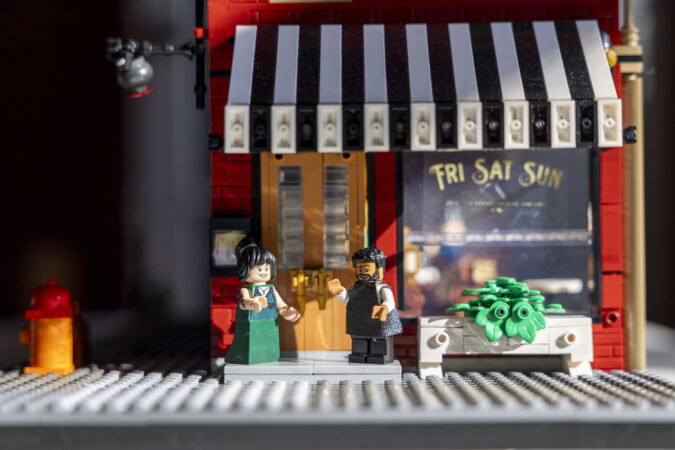
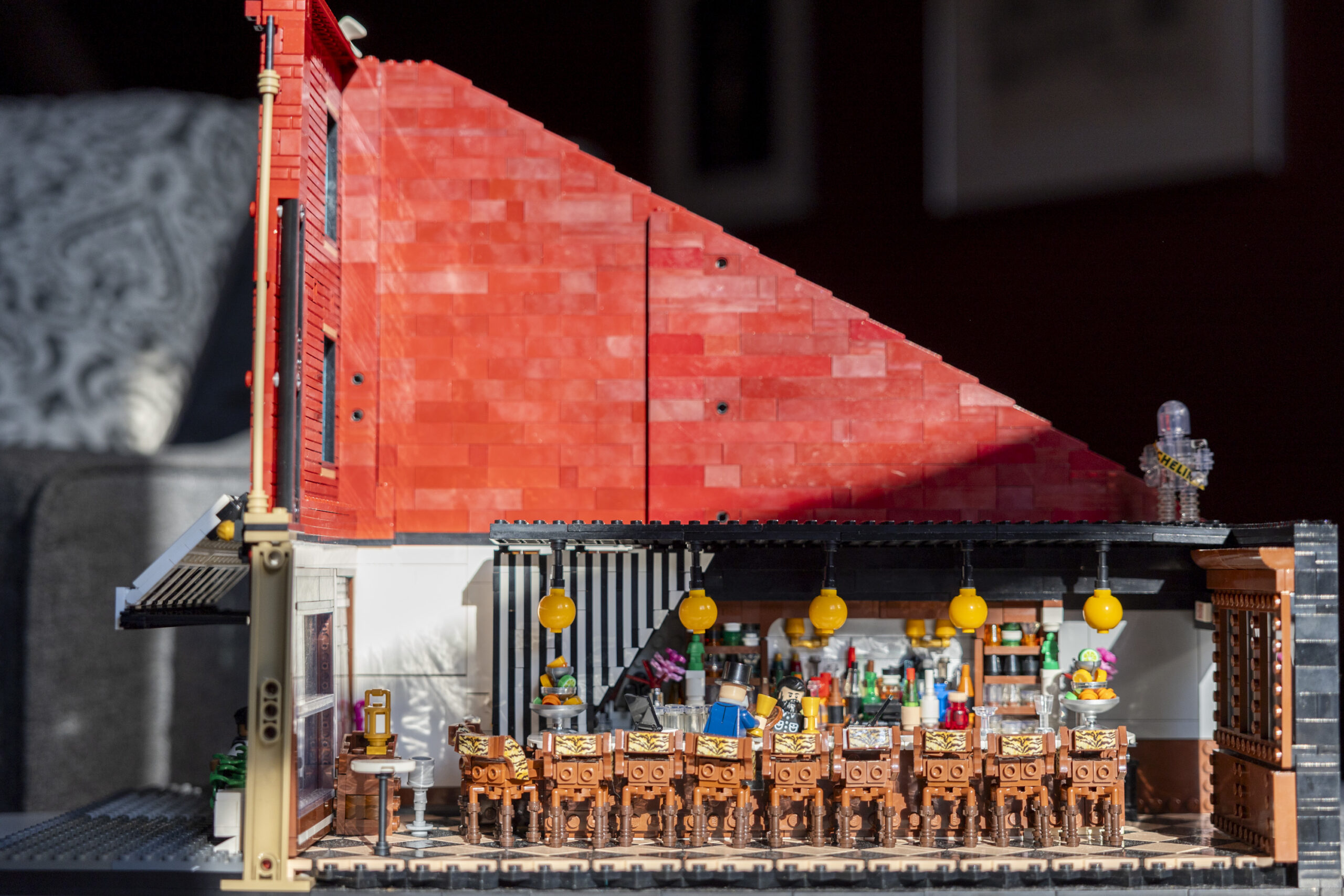
The resulting gift — a 1½-foot-tall replica of Friday Saturday Sunday’s facade and its ground-level Lovers Bar, constructed out of more than 3,200 Legos — doesn’t skimp on the details. Leo recreated everything, down to the discolored patches of sidewalk out front.
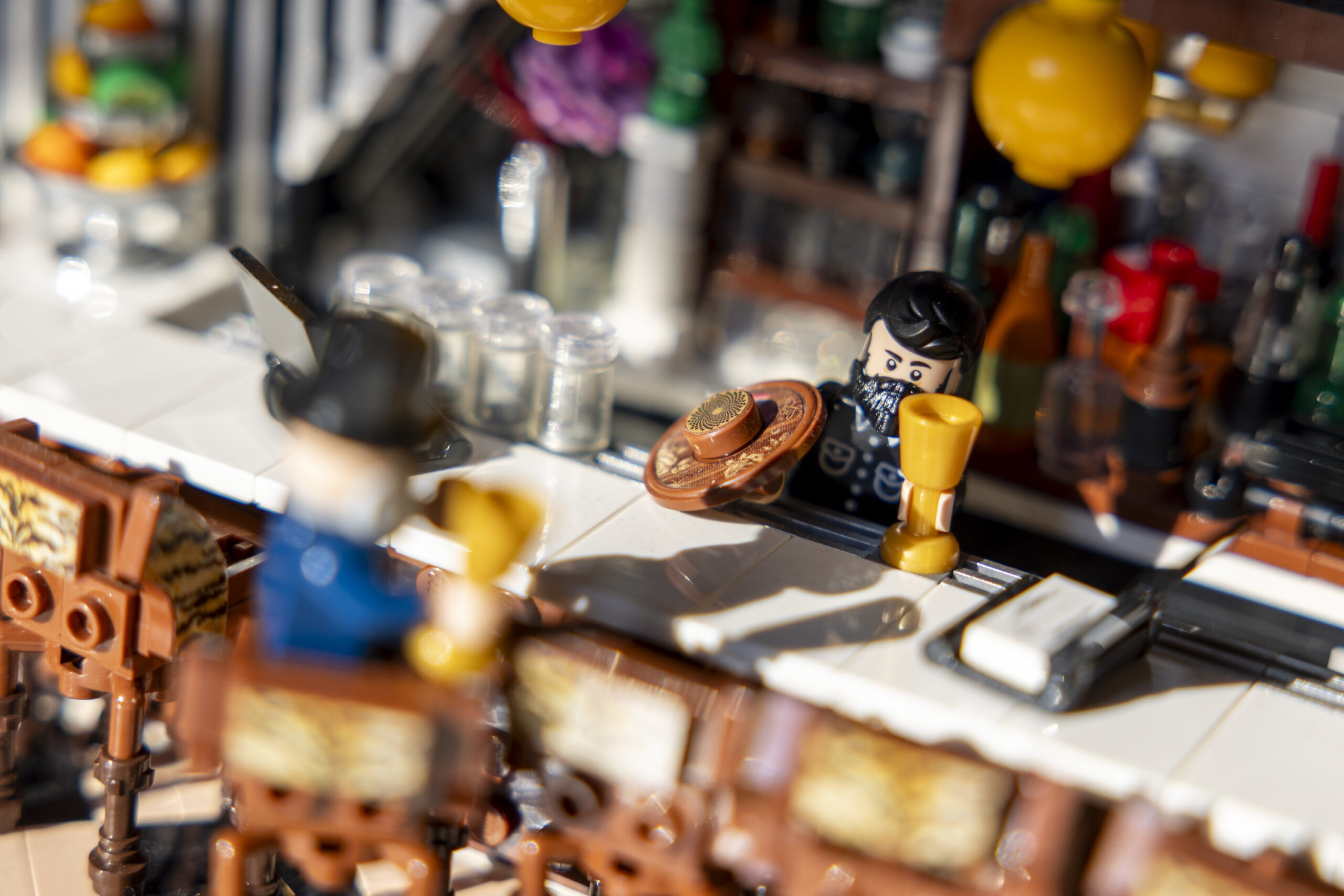
A figurine of bartender Paul MacDonald shows off a Lego version of his Fibonacci sequence wheel to a miniature of Gene Gualtieri inside a Friday Saturday Sunday replica his son built out of Legos.
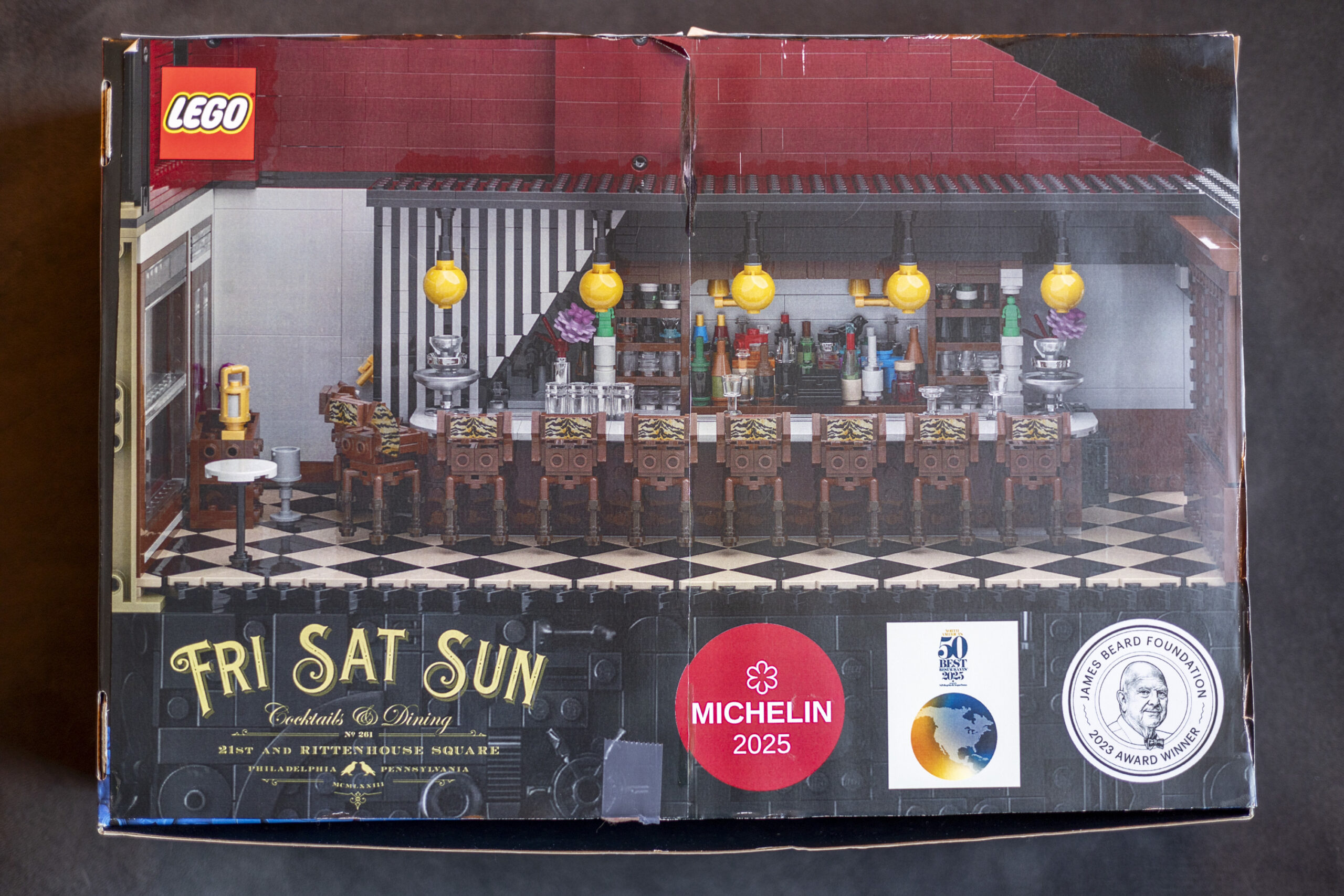
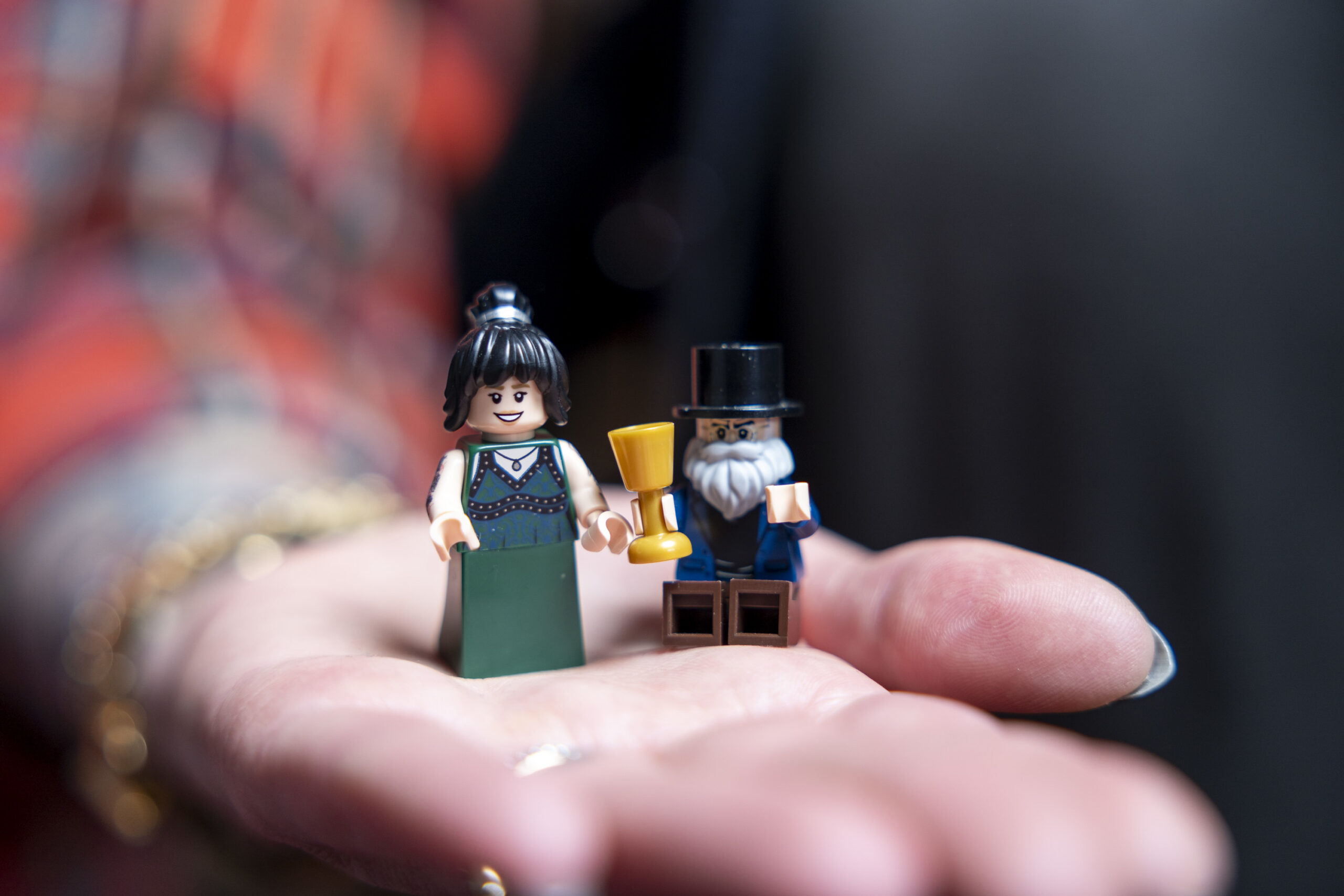
Friday Saturday Sunday (Leo’s version) comes with Lego figurines of the Williamses, bartender MacDonald, and his father that can be posed to sit in one of the bar’s 13 tiger-print chairs. There’s a petite version of the Fibonacci carousel MacDonald uses to perfect his mixology, plus miniatures of the bar’s gargoyle- and raven-shaped pour spouts, mermaid caryatids, and towering citrus bowls. In honor of restaurant’s Michelin star, Leo even included a tiny and perfectly rotund Michelin Man.
Leo stored the pieces in a repurposed Seinfeld Lego set box that he wrapped in a rendering of the finished design. When Gualtieri opened it on Christmas morning, he cried. The finished version inspired a similar response from others after Gualtieri and the restaurant posted photos on Instagram at the end of January.
Leo Gualtieri made custom packaging for the Friday Saturday Sunday Lego set he got his father Gene for Christmas.
“This is so beautiful I wanna cry,” commented one person. “Top 10 most impressive things I have ever seen,” wrote another.
Leo’s dad concurs. “I was pretty blown away,” Gualtieri said. “At first glance, it looks like a Lego set you’d get a store.”
A replica built brick by (plastic) brick
Recreating Friday Saturday Sunday was a labor of love for Leo, a self-described former Lego kid currently finishing up his senior year at Emerson College as a comedy major. As a child, Leo was fixated on building an ever-expanding amusement park out of the plastic blocks alongside his dad. It was an obsession that served him well this holiday season.
To reconstruct the restaurant, Leo first had to create a rendering of the bar and its exterior in Brick Link, Minecraft-esque software that lets users build and source their own custom Lego sets. Leo said he spent roughly 100 hours translating all the tiny details into Lego form, working first off images of the facade from Google. When those weren’t precise enough, he said, Leo begged MacDonald to send him photos of all the minutiae, from the glassware to close-ups of the light fixtures.
A replica of the Lovers Bar at Friday Saturday Sunday, built out of more than 3,200 custom Legos by Leo Gualtieri.
“It was addicting … I would work on it in class,” said Leo while on Zoom with his father, who scoffed at the admission. “Time would pass much faster because I was locked in.”
Once the rendering was complete, Leo and his mom spent $1,500 on the Lego pieces, sourced from 13 different Lego resellers across Japan, Spain, and the Netherlands. To find a realistic version of Chad Williams’ beard and apron, Leo had to commission custom blocks from an Etsy seller.
After Christmas, Leo spent the remainder of his winter break from college building mini Friday Saturday Sunday, developing calluses from clicking the bricks into place. Dad, Leo said, wasn’t much help.
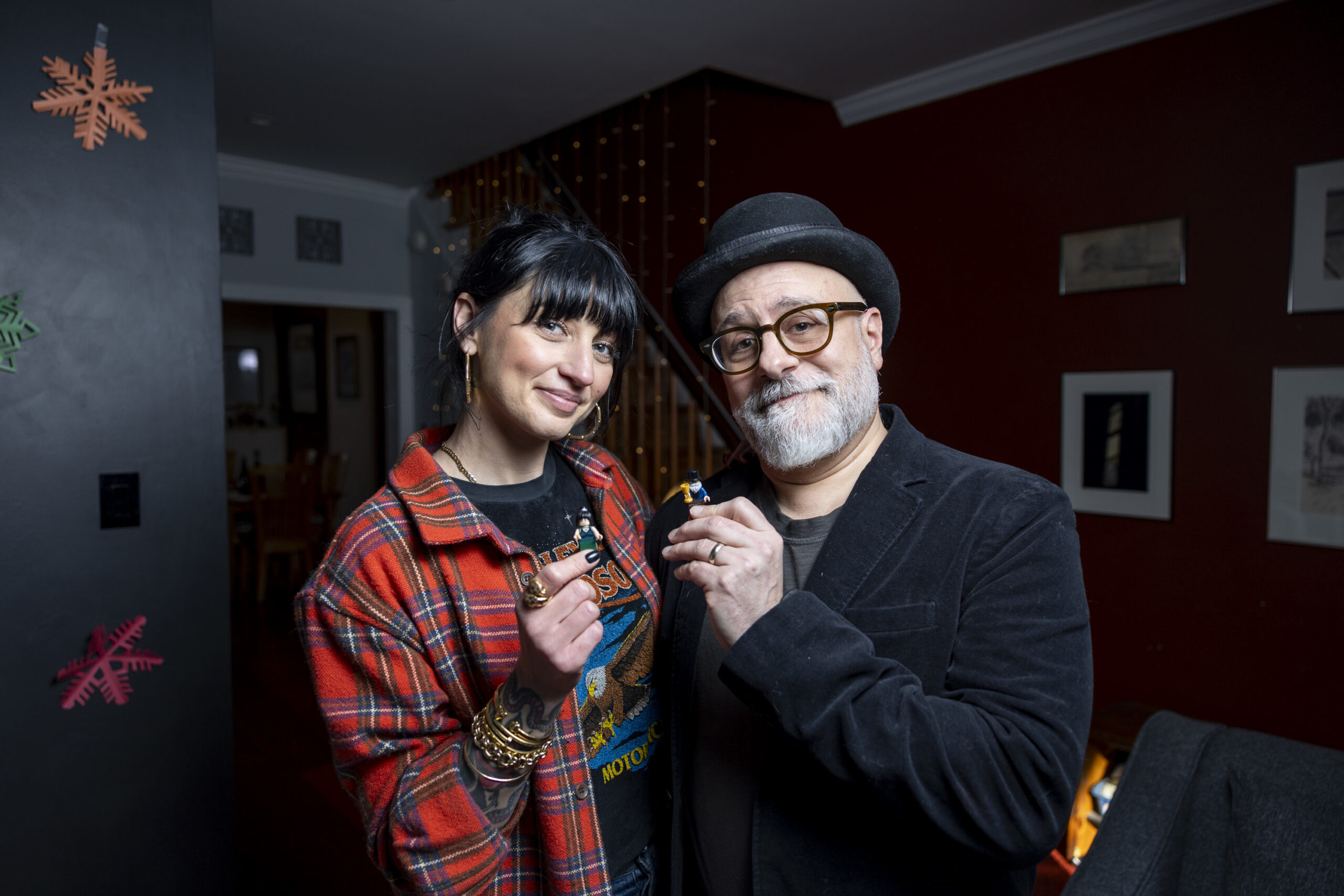
Hanna Williams, co-owner of Friday Saturday Sunday, holds Lego characters of herself and Gene Gualtieri, whose son Leo spent over 100 hours creating a miniature version of the restaurant out of the plastic blocks.
“He tried to build some chairs,” Leo said of his father. “I don’t think he’s cut out for it.” (Gualtieri agreed. Leo, he admitted, gets his dexterity from his mother.)
Every time he looks at the replica, Gualtieri said he discovers new details, like how the bottles mimic the exact ones behind MacDonald’s bar. Hanna Williams, Friday Saturday Sunday’s co-owner, felt the same when Gualtieri sent her progress updates on the build out.
Hanna Williams, co-owner of Friday Saturday Sunday, and Gene Gualtieri, a regular at the restaurant, pose with Lego action figures of themselves created by Gene’s son Leo.
“I think [Leo] might know every inch of the bar better than me,” she said. Williams especially loves her Lego dopplegangër: “A high bun, bangs, and tattoos? That’s so me.”
Williams is used to her restaurant being the recipient of the highest order of affection. In the decade since she and her husband revamped Friday Saturday Sunday from a classic fine-dining restaurant with excellent mushroom soup into cozy bar for walk-ins with a top-floor tasting menu that melds Caribbean, Asian, and soul food influences, the restaurant has earned a Michelin Star, a James Beard Award, and a spot on the World’s 50 Best North American restaurants. Just last week, Friday Saturday Sunday won an award for excellence in hospitality from the Tasties, Philly’s homegrown culinary honors.
And yet, Williams said, the Lego replica represents an extra-special type of achievement.
“It’s completely overwhelming,” she said. “But at the same time, there’s nothing that could make you feel better.”