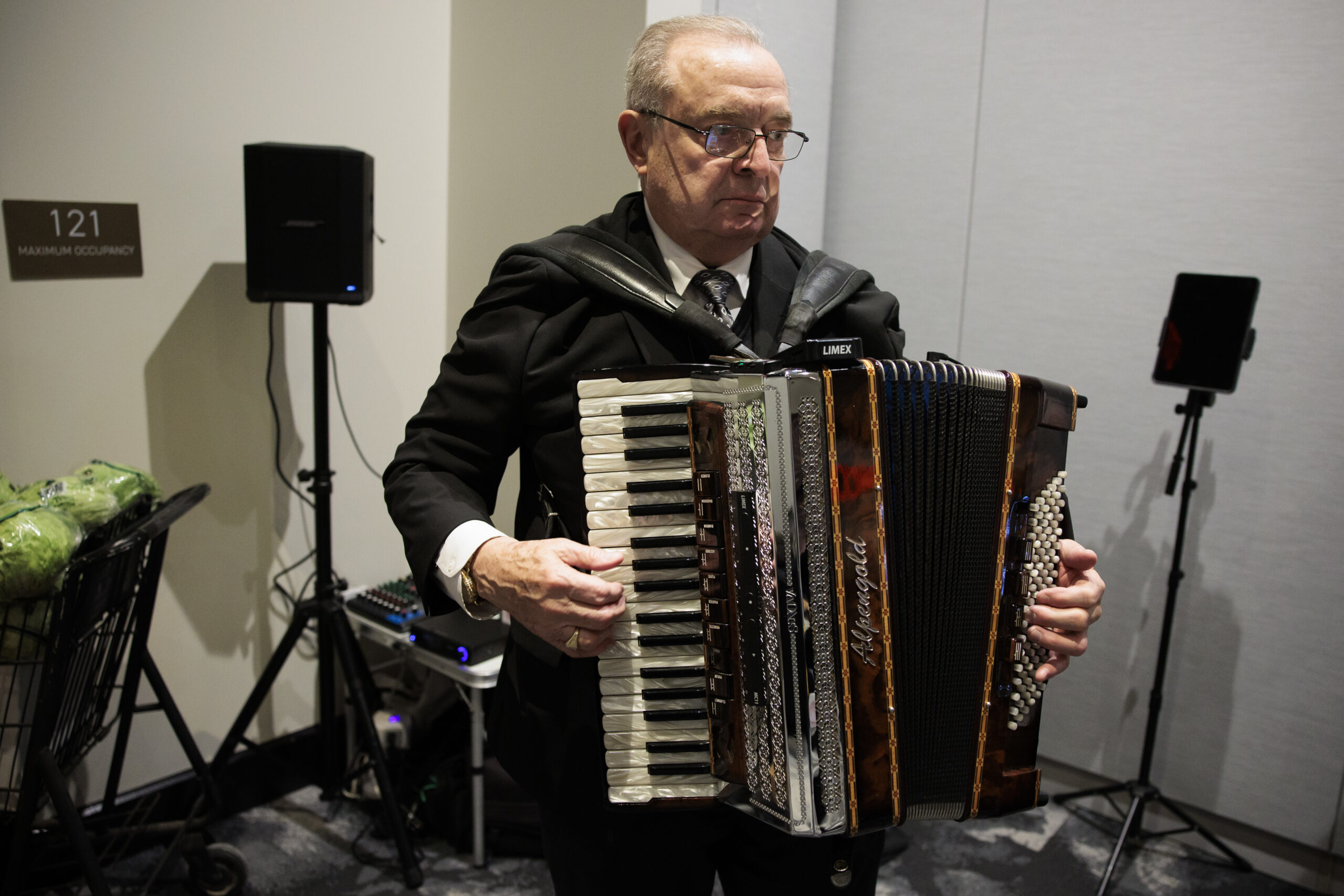
Lou Capozzoli, 86, of Southwest Philly, a dive bar owner and band front man with a penchant for telling jokes, died Sunday, Feb. 1, after battling a brief illness at Mercy Fitzgerald Hospital while surrounded by family.
Mr. Capozzoli, born April, 4, 1939, was just one year younger than the bar he would eventually take over at the intersection of East Passyunk Avenue and Federal Street, then called Ray’s after the nickname bestowed on his father, Anthony.
Almost immediately, the bar became the center of Mr. Capozzoli’s life. He grew up in the apartment upstairs and as a toddler would sit quietly on the bar downstairs, eating cornflakes, while his mom poured beers. His dad, meanwhile, would wish every customer a happy birthday, even if it wasn’t theirs to celebrate.
It was a gesture that stuck with Mr. Capozzoli, who would go on to spend the rest of his life doing whatever he could to earn smiles from strangers, whether it meant serving birthday shots of cake-flavored vodka with a candle or performing to crowds as a singer and saxophonist across Las Vegas, the Jersey Shore, and South Philly.
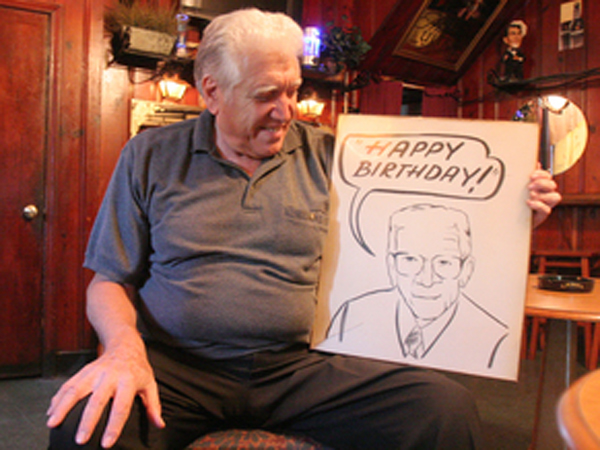
Mr. Capozzoli with a drawing of his father, Anthony “Ray” Capozzoli, who opened Ray’s Happy Birthday Bar in South Philadelphia in 1938. Mr. Capozzoli took over the bar when his father died in 1997.
“That’s all he wanted, for his father to be proud of him,” said Rose Capozzoli,Mr. Capozzoli’s wife.
As a boss, Mr. Capozzoli was “pretty silly,” said bartender T.C. Cole, who also played guitar in Mr. Capozzoli’s band. “He would call you at 1:45 in the morning when you’re trying to close just to tell you a joke.”
The inside of Ray’s Happy Birthday Bar. Mr. Capozzoli was known for calling regulars on the mornings of their birthdays.
If jokes were a currency, Mr. Capozzoli was a billionaire, friends and family said. He’d fire them off incessantly — during closing shifts, band performances, family dinners — and had enough discretion to whisper the most risqué in your ear. Mr. Capozzoli’s style was modeled after that of Buddy Hackett and Rodney Dangerfield, his favorite comedians, but the punch lines didn’t matter as much his delivery.
Mr. Capozzoli “would laugh with the person he was telling the joke to,” his son Anthony Capozzoli, 55, said. “If you weren’t laughing with the punch line, you were laughing at how much he enjoyed getting to it.”
More recently, Anthony said, his father would call him just to workshop material, most of which isn’t fit to print. Mr. Capozzoli’s favorite jokes were set to music in 2023 for a five minute-long comedy track as part of a studio EP for the Rage Band, the seven-piece group that Mr. Cappozoli sang with for 41 years alongside a rotating cast of characters.
Low Cut Connie front man Adam Weiner recorded the EP. He and Mr. Capozzoli grew close after Weiner played a gig at Ray’s in 2012, bonding over their shared love of captivating a crowd.
“Not everyone is about joy when they perform … People care about their ego, people care about fashion,” Weiner said. “But Lou was always about fun, just radiating 100% joy.”
Mr. Capozzoli started performing professionally when he was 14, sneaking into clubs to accompany bands on the alto sax. The stage was a calling that helped him fall in love. It also took him to the edge of celebrity.
After serving in the military in the early 1960s and playing for Sophia Loren as part of an army band, Mr. Capozzoli told jokes and sang standards at the Stardust and Flamingo casinos in Las Vegas. At the peak of his fame, he opened for Diana Ross at the Riptide Club in Wildwood in 1965. That same year Mr. Capozzoli met his wife, Rose, who was charmed by his talents at another Wildwood concert. They wed three years later.
Mr. Capozzoli bonded with Low Cut Connie’s Adam Weiner over their shared love of performing.
Mr. Capozzoli’s steadiest gig began in 1984 with the Rage Band, once the house act for Sea Isle City’s now-shuttered Springfield Inn. There, Mr. Capozzoli settled into his larger-than-life style, commanding a crowd of roughly 1,000 people a night on summer weekends. He’d serenade Burt and Ernie puppets for a medley of Sesame Street songs and show tunes, or don outlandish masks for a Mummers tribute.Both brought down the house, but never as much as when Mr. Capozzoli would cover “Those Were The Days” or ”Sweet Caroline,” which were always punctuated with jokes.
“I call him the showman’s showman,” said Brian Saunders, one of band’s saxophonists. Tony DiMattia, a bassist for the band, concurred: “He didn’t just entertain the crowd. He entertained us as musicians.”
The Rage Band stopped their Sea Isle residency in 1999, only to pick up at new one at Ray’s in 2003, where they have performed on the first Saturday of every month from October through April ever since. The band never rehearsed, DiMattia said. Mr. Capozzoli’s stage presence could smooth over just about any kink.
Mr. Capozzoli played in The Rage Band for 42 years, performing for packed houses at the Springfield Inn in Sea Isle City and Ray’s Happy Birthday Bar.
“There is no Rage Band without Lou,” Saunders said. “He was the glue that kept us together.”
Outside of music, Mr. Capozzoli’s greatest loves were his wife and children. He was a dedicated father who enjoyed cooking large French toast breakfasts, organizing tee ball games, and ensuring the family always had a rescue dog to snuggle. Laughter — and his wife’s minding — kept Mr. Capozzoli going, even as the decades of working in a smoking bar wore on him.
“I don’t think I’ve ever seen Lou angry,” said Saunders. “I don’t think he’d ever not had a smile on his face.”
Mr. Capozzoli was an accomplished saxophonist who started playing professionally when he was 14 years old.
In addition to his wife, Rose, and son, Anthony, Mr. Capozzoli is survived by his daughters, Dyan Wixted and Luann Capozzoli, and three grandchildren: Louis, Daniel, and Delaney.
Visitation with the family will be held from 6 to 9 p.m. Feb. 6, and from 9:30 to 11 a.m. Feb. 7 at Pennsylvania Burial Company, 1327-31 S. Broad St., Philadelphia, Pa., 19147. Services will follow Saturday at 11 a.m.
Super Bowl LX will monopolize our attention Sunday as only the Big Game can. But once the buzzer sounds on Patriots-Seahawks, mitts will be poppin’ across Florida and Arizona.
With Phillies pitchers and catchers set for workouts beginning Wednesday in Clearwater, Fla., LX baseball notes:
I. Before the continuation of the “Is Bryce Harper still elite?” debate, another note from last season: Only one of the Phillies’ 43 biggest hits, based on Win Probability Added, belonged to Harper. He had four of their 13 biggest hits from 2019-24.
II. So, whatever you thought of Dave Dombrowski’s assessment that Harper “didn’t have an elite season like he has had in the past,” can we agree that 2025 was un-Bryce-like?
III. It’s probably giving Dombrowski too much credit to suggest he was being calculated. But the last time anyone publicly poked Harper, he homered twice in Game 3 of the 2023 division series and stared a hole through Braves shortstop “Attaboy” Orlando Arcia. A chip on Harper’s shoulder wouldn’t be the worst thing for the Phillies.
IV. Fact: Harper faced a lower rate of strikes (43%) than any hitter in baseball last season.
V. Another fact: Harper swung at 35.6% of pitches out of the strike zone, 129th among 144 qualified hitters and far above his career mark (29.3%), according to Statcast.
VI. It’s about Harper’s swing decisions, then, as much as lineup protection. “If he gets that [chase] number down to 32, just drop it 3%, now he’s swinging at better pitches, he’s going to do more damage,” hitting coach Kevin Long told The Inquirer’s Phillies Extra podcast. “The onus falls on me to make sure he’s swinging at the right pitches and him to make sure he’s not expanding. No matter what, he has to control his at-bats.”
Kyle Schwarber batted in front of Bryce Harper for most of last season, when he hit 56 homers and was runner-up for NL MVP.
VII. Still, don’t be surprised if Rob Thomson puts Kyle Schwarber behind Harper in the batting order. It was the other way around for most of last season.
VIII. A month before the Mets signed Bo Bichette — out from under the Phillies’ nose, by the way — they pushed hard for Schwarber, league sources said. The Phillies re-signed Schwarber to a five-year, $150 million contract, the biggest deal ever for a full-time designated hitter.
IX. Speaking of Bichette, set a calendar reminder for June 18-21, the Mets’ first visit to South Philly.
X. The Mets lost 18½ games in the NL East standings in 108 days, missed the playoffs, then overhauled the roster … and fans bemoaned not bringing back Pete Alonso, Brandon Nimmo, Jeff McNeil, and Edwin Díaz. The Phillies won another division title, had a bad week in October, then ran back the core of the roster … and fans bemoaned keeping the band together. Strange days.
XI. BetMGM set the Phillies’ over/under win total at 90.5. Same as the Mets’.
XII. July will be a big month for business at the corner of 11th & Pattison: Futures Game (July 12), Home Run Derby (July 13), All-Star Game (July 14), Mets (July 16-19), Dodgers (July 20-22), and Yankees (July 24-26).
XIII. Schwarber has 340 homers. If he hits 32 per year — and a work stoppage doesn’t wipe out part of the 2027 season — he would reach 500 homers before his new Phillies contract runs out in 2030.
XIV. Harper has 363 homers and would need to hit 23 per year to reach 500 before the expiration of his 13-year contract in 2031.
XV. Players who hit their 500th homer with the Phillies: Mike Schmidt, on April 18, 1987.
Zack Wheeler is recovering from thoracic outlet decompression surgery in September.
XVI. After being diagnosed with a blood clot in his upper right arm, Zack Wheeler had venous thoracic outlet decompression surgery in September. The recovery for a pitcher typically takes up to eight months, Thomson said, which would put Wheeler on a May timetable.
XVII. Bet on Wheeler to beat that projection. He began throwing from a mound this week, a source close to the 35-year-old righty said. The Phillies won’t push Wheeler, but he’s motivated to make as many starts as possible in what he has said will be his second-to-last season.
XVIII. Not every pitcher recovers at the same rate, but Diamondbacks starter Merrill Kelly had vTOS surgery in September 2020 and started Arizona’s second game of the 2021 season.
XIX. If Wheeler isn’t ready, top prospect Andrew Painter almost certainly will occupy a spot in the season-opening rotation. Painter, who turns 23 on April 10, could be the Phillies’ youngest starter since Ranger Suárez on Aug. 16, 2018 (22 years, 355 days).
XX.Justin Crawfordturned 22 on Jan. 13. If he makes the team out of camp, as expected, he will be the youngest position player on a Phillies opening-day roster since Freddy Galvis in 2012 and the youngest outfielder since Greg Luzinski and Mike Anderson in 1973.
XXI. Crawford’s ground-ball rate in triple A last season (59.4%) would’ve easily led the majors, topping Christian Yelich’s 56.7% mark.
XXII. But Crawford also would’ve ranked fifth with 67 bolts, defined by Statcast as sprints of at least 30 feet per second. (Trea Turner led the majors with 117 bolts.)
XXIII. Is it really so bad, then, that Crawford tends to hit a lot of balls on the ground? “Hopefully it doesn’t matter,” Lehigh Valley hitting coach Adam Lind said. “His approach works right now. He’s super fast. His swing works to where he can hit the ball all over the yard. Whenever a defender has to take one step away from first base, that usually means he’ll be safe.”
XXIV. Quiz: Crawford could be the Phillies’ eighth different opening-day center fielder in nine years. Name the others. (Answer below.)
XXV. Upon stepping down as Twins president last week, Derek Falvey cited ownership’s “different plan” for the team’s direction. If Minnesota enters a full rebuild, All-Star center fielder Byron Buxton would be widely coveted, including by the Phillies. Buxton, 32, has three years and $45 million left on his contract, plus no-trade rights.
XXVI. The Phillies’ projected luxury-tax payroll is $316.3 million, according to Cot’s Baseball Contracts, trailing the Dodgers ($402.5M), Mets ($376.6M), and Yankees ($335.5M). For a second consecutive year, the Phillies will pay a 110% tax on every dollar spent above $304 million, the highest of four thresholds.
XXVII. In 2025, the Phillies paid $56,062,903 in luxury taxes on a $314,329,912 payroll, the Associated Press reported. Their tax bill has risen from $2,882,657 in 2022, $6,977,345 in 2023, and $14,351,954 in 2024.
XXVIII. Owners will gather Wednesday in Palm Beach, Fla., for their quarterly meetings. Many owners are pushing for a salary cap in the next collective bargaining agreement. The players’ union has historically opposed a cap. It would take eight of 30 owners to block a salary-cap proposal. The existing CBA expires Dec. 1, with a lockout likely to follow.
XXVIX. Last month, commissioner Rob Manfred told a New York radio station that MLB has discussed schedule changes, including an in-season tournament similar to the NBA Cup. The players would need to agree to any new formats.
XXX. The Phillies will send 11 players from their 40-man roster to the World Baseball Classic: Schwarber, Harper, and Brad Keller (U.S.); Cristopher Sánchez and Johan Rojas (Dominican Republic); José Alvarado (Venezuela); Taijuan Walker (Mexico); Aaron Nola (Italy); Garrett Stubbs and Max Lazar (Israel); Edmundo Sosa (Panama). Preliminary round games begin March 5, with the final set for March 17 in Miami.
XXXI.Jesús Luzardo was invited to pitch for Venezuela and Team USA but declined. “It’s very important for my family, for me, to represent Venezuela,” Luzardo told Phillies Extra. “But just in terms of intelligent decision-making, after a long last year and looking forward to a long this year, I thought the correct decision would be to take a slow spring training and make sure everything’s along the right line to be prepared for the year.” Luzardo is eligible for free agency after this season.
XXXII. Left-handed pitcher A: 3.59 ERA, 544 strikeouts, 1.287 WHIP, 117 ERA-plus in 588⅓ innings since 2022.
XXXIII. Left-handed pitcher B: 3.83 ERA, 602 strikeouts, 1.186 WHIP, 116 ERA-plus in 529⅓ innings since 2022.
XXXIV. Suárez (Lefty A) signed a five-year, $130 million contract with the Red Sox last month that will cover his ages 30-34 seasons.
XXXV. Luzardo (Lefty B) will pitch at age-28 this season.
XXXVI. Quiz answer: Brandon Marsh (2025), Rojas (2024), Marsh (2023), Matt Vierling (2022), Adam Haseley (2021), Roman Quinn (2020), Odúbel Herrera (2019), and Aaron Altherr (2018).
Jesús Luzardo posted a 3.92 ERA in a career-high 183⅔ innings in his first season with the Phillies in 2025.
XXXVII. Sánchez threw the most changeups (1,084) in baseball last season. Among 72 pitchers who threw at least 300, he ranked ninth in opponents’ batting average (.170) and slugging (.243) against his changeup.
XXXVIII. Changeup artist Cole Hamels on why Sánchez’s is so dominant: “One thing I’ve noticed is you cannot recognize the spin. It’s the same [as the two-seamer]. So, it’s a coin flip: Am I going to try to hit 97 [mph] with sink, or am I going to hit 87 with drop-off-the-table [action]? And he’s not scared to throw it in any type of count, with anybody on.”
XXXIX. By finishing second in the Cy Young voting last year, Sánchez’s club options for 2029 and 2030 increased by $1 million apiece to $15 million and $16 million.
XL. The automated ball-strike system is coming to MLB after being tested last year in spring training and the minors. Each team is allowed two challenges per game. Thomson prefers that challenges be initiated by the catcher or batters, with specific hitters getting a green light to challenge.
XLI. Opinions about ABS are varied. “There’s a human element pitchers like with umpires,” reliever Tanner Banks said last month. “Maybe you steal [a strike] because the catcher does a great job. But at the end of the day, you want consistency. The umpires I’ve talked to are for it if it helps make the right call.”
XLII. Imagine if the Phillies could’ve challenged umpire Mark Wegner’s missed strike call on Sánchez’s 2-2 pitch to Alex Call with one out in the seventh inning of Game 4 of last year’s NL division series. Call walked on the next pitch and scored the tying run. Sánchez said Wegner admitted that he got it wrong.
XLIII. A catcher’s game-calling is among the last skills that are largely immeasurable through analytics, which explains why it took so long for the Phillies and J.T. Realmuto to reach an agreement in free agency. At 35, amid three years of declining offense, Realmuto’s value is tied to his intangible impact on the pitching staff.
XLIV. Since 2023, opponents had a .682 OPS and Phillies pitchers had a 3.75 ERA with Realmuto behind the plate. The major-league averages were .722 and 4.18.
XLV. “In my opinion, catchers are undervalued as far as contracts and dollars go,” said Realmuto, who eventually accepted a three-year, $45 million offer. “I truly believe it’s one of, if not the most important position on the field, and I just enjoy fighting for that.”
XLVI. Quiz: Realmuto started a career-high 132 games behind the plate last season. In the last 80 years, how many catchers started that many games at age 34 or older? (Answer below.)
XLVII. Player A: .260/.306/.426, 121 doubles, 82 homers, 100 OPS-plus in 2,477 plate appearances.
XLVIII. Player B: .237/.296/.441, 118 doubles, 110 homers, 107 OPS-plus in 2,473 plate appearances.
LIX.Nick Castellanos (Player A) in four seasons with the Phillies (ages 30-33).
L.Adolis García (Player B) in the last four seasons with the Rangers (ages 29-32).
LI. Castellanos ranked last among all outfielders in defensive runs saved (minus-41) since 2022; Garcia was tied for ninth (plus-23).
LII.Bryson Stott lowered his hands, moved them closer to his body, and batted .294 with an .855 OPS after the All-Star break last season. It’s one reason Phillies officials are confident in running back almost the same lineup.
LIII. Here’s another: Marsh batted .303 with an .836 OPS after May 1.
LIV. If depth is a factor, and it usually is, the open seats in the bullpen could go to Rule 5 pick Zach McCambley and Zach Pop, who is out of minor league options. But Thomson is talking up Kyle Backhus, a lefty with a low arm slot who was acquired in a trade with Arizona.
LV. Righty-hitting outfielder Bryan De La Cruz will be in camp as a nonroster invitee after signing a minor-league contract in November. De La Cruz, 29, has major-league experience, mostly with the Marlins. He was MVP of the Dominican Winter League, batting .301 with eight homers and an .888 OPS in 46 games.
Chase Utley is getting closer to being elected to the Hall of Fame.
LVI. Lefty reliever Génesis Cabrera also will be in camp as a nonroster invitee. Once a promising reliever with the Cardinals, Cabrera hit Harper in the face with a 97 mph fastball in 2021. The Phillies will be his sixth team since 2024.
LVII. It’s clear that Chase Utley will eventually get elected to the Hall of Fame after reaching 59.1%, 68 votes shy of the requisite three-quarter majority, in his third year on the ballot. But will it take one more voting cycle or two for him to get to the 75% mark?
LVIII. The electorate changes each year, depending on how many writers join the process upon reaching 10 years of membership in the Baseball Writers’ Association of America. But consider Carlos Beltrán’s path to election: 57.1% in 2024, 70.3% in 2025, and finally 84.2% this year. So, pencil in Utley for the Class of 2028 … and maybe book a hotel in Cooperstown for 2027 just in case.
LIX. Quiz answer: Six. Realmuto (2025), Yadier Molina (2017), Jason Kendall (2008), Tony Peña (1991), Elston Howard (1964), and Bob Boone (1982-86).
Think you know your news? There’s only one way to find out. Welcome back to our weekly News Quiz — a quick way to see if your reading habits are sinking in and to put your local news knowledge to the test.
Question 1 of 10
Former Philadelphia District Attorney Seth Williams' tenure imploded as he was prosecuted on federal corruption charges nearly a decade ago. What is he up to now?
CorrectIncorrect. XX% of other readers got this question right.
The role’s expectations are modest. Williams offers spiritual counseling and religious programming to the 600 or so prisoners held at Riverside Correctional Facility. It is part-time and pays about $21 per hour.
Question 2 of 10
Punxsutawney Phil saw his shadow this week, indicating six more weeks of winter are yet to come. That clairvoyant groundhog calls this famed Pennsylvania place home:
CorrectIncorrect. XX% of other readers got this question right.
The weather-predicting groundhog saw his shadow Monday outside his hole at Gobbler’s Knob in Punxsutawney. If you believe such things, that means the entire country — including our snow-covered section of the Northeast — can expect below-average temperatures for the next six weeks.
story continues after advertisement
Question 3 of 10
Formerly known as Lou Turk's, Delaware County’s lone strip club is changing its name, but keeping its highly anticipated flower sale. What holiday marks the occasion?
CorrectIncorrect. XX% of other readers got this question right.
The annual Mother’s Day and Easter flower sales outside of the strip club will remain intact, despite the name change to The Carousel Delco. You wouldn’t want to tell your mom you bought her flowers at the Acme, would you?
Question 4 of 10
One South Philly restaurant has a popular cocktail that mimics a beloved style of soup. The soup is:
CorrectIncorrect. XX% of other readers got this question right.
Chef Thanh Nguyen’s signature pho cocktail at Gabriella’s Vietnam is a many-layered marvel. It’s not like drinking pho broth spiked with vodka. A tiny squirt of Sriracha muddled with fresh culantro and ginger adds a soft orange hue.
Question 5 of 10
After weeks of uncertainty over their potential retirement, which Eagles staff member ultimately decided to return for another season with the team?
CorrectIncorrect. XX% of other readers got this question right.
Fangio’s decision to stay brings some stability to an Eagles coaching staff that is already in the process of undergoing change. Hours before Fangio's return was official, Stoutland announced that he would be leaving his post as the Eagles offensive line coach after 13 years.
Subscribe to The Philadelphia Inquirer
Our reporting is directly supported by reader subscriptions. If you want more journalism like this story, please subscribe today.
This Mount Airy ice cream shop previously said it was closing for good, but will be sticking around after all:
CorrectIncorrect. XX% of other readers got this question right.
Founder Danielle Jowdy announced in December 2024 that she planned to end her 14-year run at the end of 2025. But Liz Yee, a pastry chef at the nearby Catering by Design who also creates desserts for Doho restaurant, also in Mount Airy, plans to reopen Zsa’s on Saturday, Ice Cream for Breakfast Day.
Question 7 of 10
A few months ago, the Philadelphia Art Museum took up its new moniker. But now, it's changing again. The new (?) name is:
CorrectIncorrect. XX% of other readers got this question right.
The PhAM acronym used in marketing materials will be dropped, and the museum will once again refer to itself in shorthand as the PMA as many Philadelphians long have. Why the retreat? In short, the new name was widely disliked.
Question 8 of 10
This boxing great's former home in Cherry Hill is once again on the market with an asking price of $1.9 million:
CorrectIncorrect. XX% of other readers got this question right.
About 300 people have been tasked with manually breaking up ice at crosswalks and streets in residential neighborhoods in Philadelphia following the region's recent stubborn snowfall. What are they called?
CorrectIncorrect. XX% of other readers got this question right.
Mayor Cherelle. L Parker said that the city has tapped into its Future Track Program for snow-removal efforts. The trainees are typically at-risk young adults who are not enrolled in higher education and are unemployed. They get job experience, as well as other services, and they help in beautification projects. In the snow cleanup, Parker said, the trainees cleared more than 1,600 ADA ramps.
Question 10 of 10
Anonymous hackers claimed that a recent data breach compromised data for 1.2 million students, donors, and alumni at the University of Pennsylvania. But the school now says this many people were impacted:
CorrectIncorrect. XX% of other readers got this question right.
The school hired cybersecurity specialists to help investigate the Oct. 31 breach, which accessed systems related to development and alumni activities. A Penn source confirmed Tuesday that fewer than 10 people received notifications that their personal information had been affected.
Your Results
You have skipped .
You scored XX out of 10.
The average reader scored XX out of 10
Seems like you’ve been skimming more than reading there, buddy. There’s always next week.
You’ve read some articles (or made some educated guesses) but we wouldn’t come to you first for our local news recaps. Better luck next week!
Do you work here? You’re a local news stan with the latest updates on Philly happenings. Your friends definitely ask you for summaries on what’s going on and it shows.
Coastal homes featuring wooden gambrel roofs, cedar siding, covered porches, and inside spaces that flow out to patios and pools are mainstays of Jersey Shore properties. The architect who brought that look to the area, arguably, is Mark Asher.
For more than four decades, Asher has left his imprint on homes from Cape May to Rumson to the Philly suburbs, everything from 1,200-square-foot cottages to 15,000-square-foot mansions.
Now principal of Asher Slaunwhite + Partners in Jenkintown, Asher has come a long way since designing his first house in 1986: an 1,800-square-foot Cape Cod in Ocean City for his parents.
“I suppose my parents were looking for a return on their investment,” Asher said. “The house was serviceable. It stood up and didn’t leak, which puts me well ahead of most architects’ first-house experience.”
Architectural blueprints in Asher’s office.
That first solo experience taught him many lessons, mostly “that there was a lot to learn,” he said.
One of those lessons he acquired along the way was that many cultural myths about architects exist, beginning with the notion that architects are generalists who know a little bit about a lot of things. In fact, he said, the reality is that you have to become very, very good at many, many things.
“We are balancing the skills in land use, regulatory environment, technology, budget, and design,” Asher said. “And of course, client relationships. The house — the finished product — is the tip of an enormous iceberg.”
Those relationships have been the cornerstone of his business. He has a long list of repeat customers and takes pride in designing homes for the children of former clients.
Early in his career, Shore homes on Seven Mile Island, home to Avalon and Stone Harbor, were his bread and butter. Today, about 60% of his work comes from the Shore, and the rest from coastal clients who hire him for their inland homes.
Steve and Nancy Graham had Asher design two homes: their Avalon beach house in 2003, and their primary home in Wayne a year later. Nancy had worked for a builder at the time, and was a true collaborator during the design process.
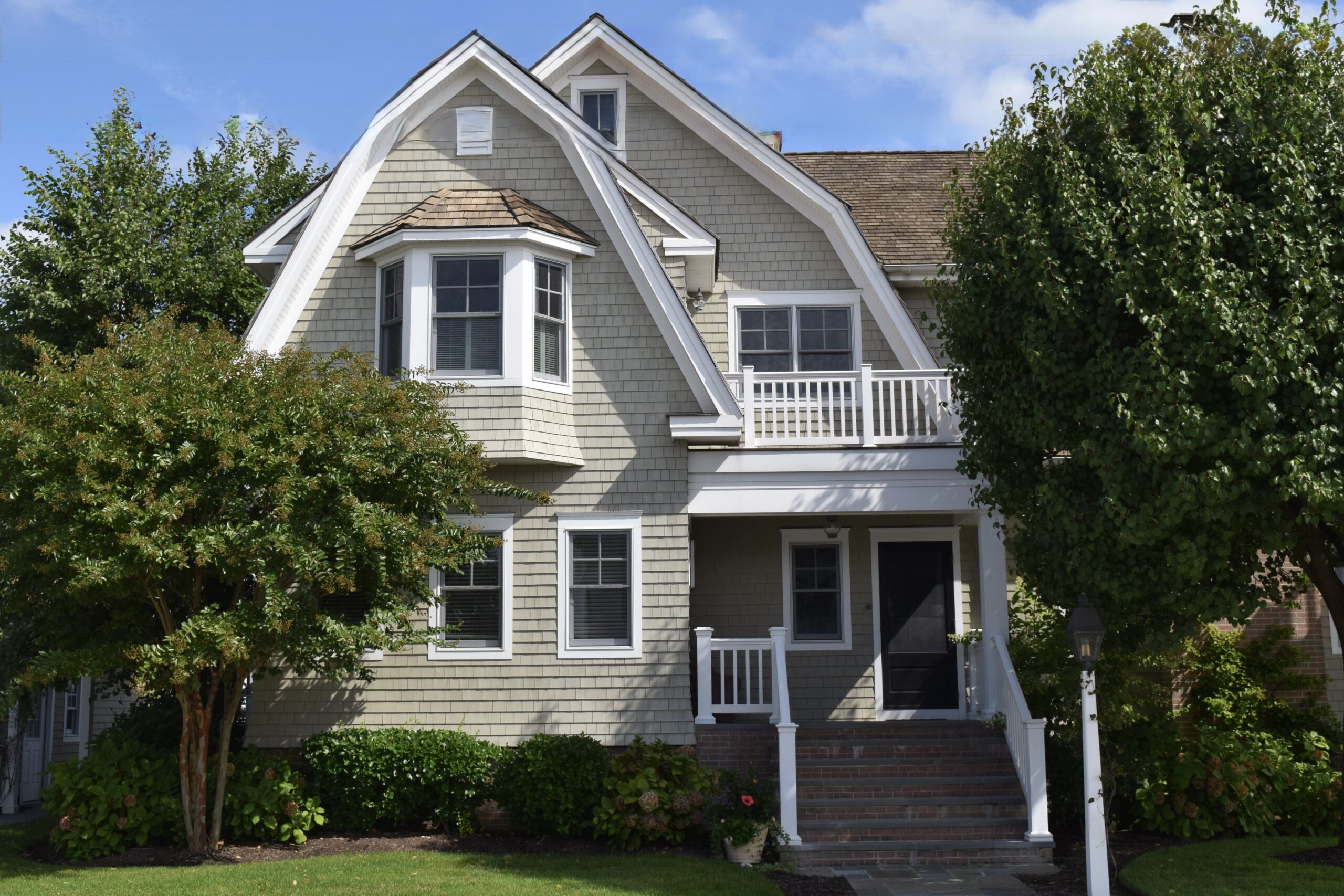
The house of Steve and Nancy Graham in Avalon, which architect Mark Asher designed for the family in 2003.
They razed an existing cottage, replacing it with a two-story, 4,000-square-foot, six-bedroom vacation home for their family, which at the time included their three children. Now, eight grandchildren make memories there.
The Graham’s Shore house was nothing like the Wayne house he designed for them, which replicated that house’s traditional, historical neighbors. Their Avalon property was Asher’s first foray into designing Shore homes and included a gambrel roof, cedar siding, and a covered porch.
“I had designed many houses like this before anyone built one, but I kept getting shot down,” Asher said. “Once it was done, it was like a hit song, and it was all people wanted.”
A childhood passion
As early as he can remember, Asher loved to sail. Spending his summers at the Shore, he’d tool around in a small dinghy, hugging the Jersey coast from Brigantine to Cape May.
“The sights and sounds, the feel, and even the smells of these coastal towns became etched in my memory,” Asher said. “So when I started to work in the various beach towns, it was really just going back to a place I’d already been.”
He had a similar passion for architecture at an early age, curious about old houses. He’d park himself on the curb, sketch pad in hand, and draw the houses he found most interesting. Those were his Architecture 101 lessons.
(From left) Laura Glantz, Jeanine Snyder, Mark Asher, and Deborah Slaunwhite chat in the office of Asher Slaunwhite + Partners in Jenkintown.
“I grew up in old houses, warts and all,” he recalled. “They were constantly being worked on. Saturday mornings invariably meant a trip to the lumberyard or the hardware store. And I love old houses still — their history and their stories.”
After graduating from Virginia Tech School of Architecture in 1982, he worked at various architecture firms, learning the subtleties of his profession. In 1992, the Ocean City Yacht Club hired Asher for a redesign, and in 1995 the Avalon Yacht Club followed suit.
“This was pre-computer, pre-Internet, so the OCYC project was drawn by hand,” he recalled. “Hard work and passion will cover the sins of inexperience.”
Building for today’s family dynamic
Asher’s first home design came in 2000, a relatively small two-coastal cottage that cost about $125 per square foot to build. Today, that same house would cost about eight times that, outpacing the inflation rate by 1,200%, Asher said.
His designs have evolved along with the needs of his clients. Shore houses today are often designed for three generations of living.
“Now you need areas for people to come together, but also to separate under the same roof,” said Michael Buck, president of Buck Custom Homes in Avalon and Ocean City, who has worked with Asher on about 30 projects.
A home in Ocean City designed by architect Mark Asher.
Although homes previously housed multiple generations, they weren’t purposefully designed to accommodate the needs of extended families. In many cases, homes are shifting to a more contemporary style, with five en-suite bedrooms, an elevator, and dedicated HVAC closet.
“Mark’s plans capture a certain simplicity of the coastal environment of the home,” Buck said. “His architecture speaks to a classic, thoughtful approach to how a house blends in with its environment on a micro and macro level.”
Asher’s entry into coastal building brought a greater emphasis on the home’s exterior, both in beauty and function.
“When Mark came to town, the shift toward second homes from purely rental properties had already begun,” said Jack Binder Sr., broker at Ferguson Dechert Real Estate in Avalon. “The affluent, personal-use buyer wanted to express themselves through custom housing that stood apart from the rest and featured high-end amenities.”
“Mark married functional interior space that flowed to exterior entertaining areas allowing his clients to enjoy their home to the max,” Binder said.
One of the homes designed by Mark Asher in Avalon.
Asher’s home interiors are thoughtfully designed, said Allison Valtri, principal of Allison Valtri Interiors in Avalon.
“His windows are very carefully placed so that the light comes in in a way that is unexpected,” Valtri said. “Some of my favorite windows are ones that are capturing the sky. That fulfilling moment of peace is very thoughtful.”
Asher also brought a desire for lush, green lawns to replace the stones that had previously filled the yards. “The stones were hot in the summer, cold in the winter, and ugly all year round,” he said.
“When I began, I was working in a very traditional architectural palette,” he said. “The ’70s and ’80s were not very kind to beach architecture — think big hair and shoulder pads or stucco and a fondness for inexplicable round windows. So I was on a sort of reclamation project.”
If it’s true that imitation is the sincerest form of flattery, Asher should feel quite proud.
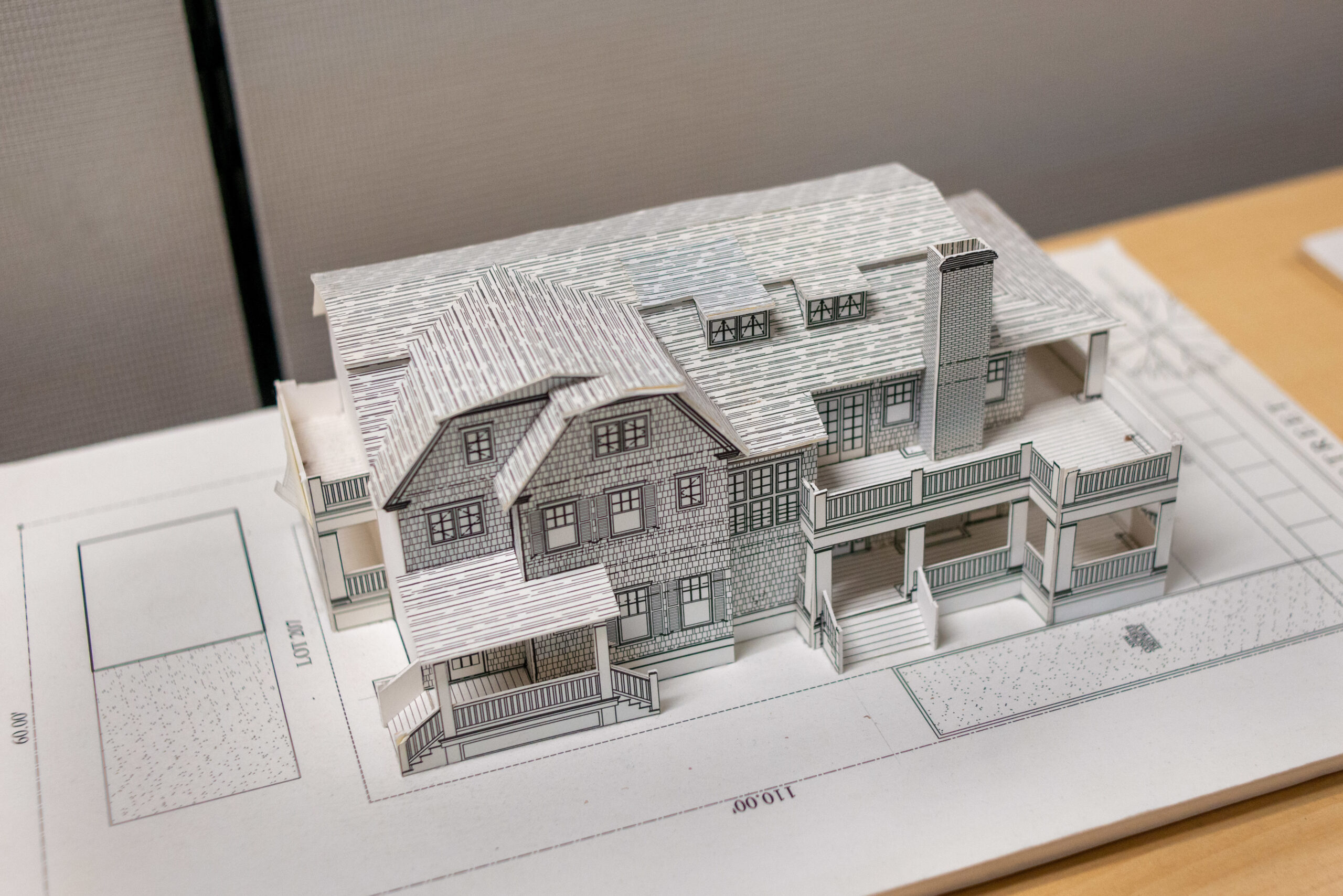
An architectural model at the offices of Asher Slaunwhite + Partners.
“He elevates and then watches everyone else catch up,” Buck said. “For example, not long ago, a wood roof was an anomaly, but now it’s mainstream.”
But Asher sees it differently. Imitation just means he needs to challenge himself to find something better.
He shares credit for his successes with those who have helped and inspired him, including his wife and longtime collaborator, Susan Asher, as well as his architect partners, Deborah Slaunwhite and Laura Glantz, and his business partner Jeanine Snyder. He also enjoys mentoring young architects.
“Any profession has a responsibility for the generation that comes after it,” Asher said. “And I’ve often believed that my own start was a little rockier than it might have been. Some early guidance would have been helpful. So you pay it forward.”
The opening ceremony of the 2026 Winter Olympics doesn’t take place until Friday at Milan’s San Siro Stadium, but some of the world’s top athletes are already competing in Italy. That includes in the sport of curling, which always seems to shine on the global stage.
“I love exposing people to something that’s so special,” said Carolyn Lloyd, who’s been a member of the Philadelphia Curling Club for 20 years. “People don’t realize just how special it is. It’s different from a lot of sports, certainly in its culture. This sport captures my whole heart.”
Curling is one of the first sports to start, with mixed doubles beginning Wednesday. Team USA made its debut early Thursday against Norway and Switzerland in mixed doubles. However, men’s and women’s curling will begin on Feb. 12 and will feature a local athlete: Marple Newtown High School graduate Taylor Anderson-Heide, who attended the University of Minnesota and is making her Olympic debut.
Anderson-Heide, 30, is a five-time national champion. She trained at the Philadelphia Curling Club in Paoli with her identical twin Sarah Anderson.
“What I saw watching these kids grow up, was the dedication of coming and continuing to work through adversity,” Lloyd, who lives in Collegeville, said of the Anderson sisters. “Any sport you’re going to lose a lot while you’re learning and you have to be resilient. That’s one thing that I’m always the most impressed at when I think about them. And I cheer their successes. And when they struggle, I feel it too because you know how hard they work.”
Here’s everything you need to know about curling before it once again captures the world’s attention at the Winter Olympics …
What are the rules of curling?
Curling, which officially became an Olympic sport in 1998, involves two teams sliding granite stones across a long strip of ice known as a sheet. Players take turns sliding a 44-pound stone toward a round target, known as a house, that sits at each end of the 150-foot long sheet. Each house consists of four rings and a center, known as the button.
Two teams of four players take turns delivering one stone at a time. When delivering a stone, a player uses one of the hacks, or fixed rubber blocks, to push off and must release it before what is known as “the hog line” for it to be considered in play.
Canada’s Brett Gallant releases the stone before the hog line in one of the matches on Wednesday’s opening day.
Games are typically 10 rounds (or ends), and only one team is awarded points after each. The team with the stone closest to the button after all 16 are thrown (eight per team) receives one point — and one additional point for each stone that is both inside or touching the house and closer to the button than opposing team’s closest stone. The team that goes last has what is called “the hammer,” a distinct advantage that passes to the other team after the team that possess it scores.
A traditional team consists of a lead, second, third, and fourth — and players throw stones, two each, in that order. A fifth player serves as an alternate. Each team also appoints a captain, known as the skip, and a vice skip. The skip is in charge of directing play for the team and typically stands in the house at the scoring end of the sheet. The vice-skip takes over their duties when the skip, who typically goes last, is delivering stones.
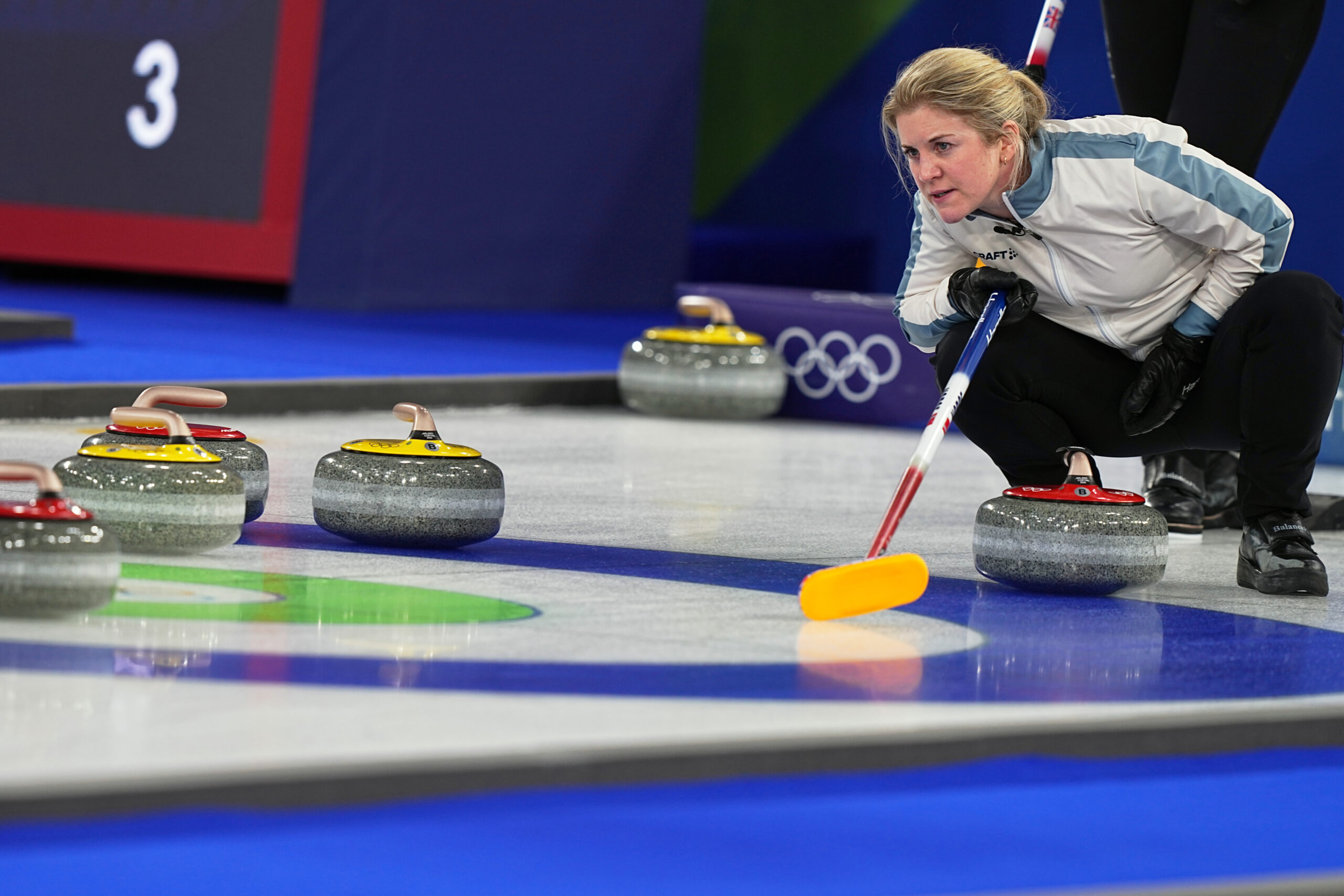
Then there’s sweeping. In addition to the rotation of the stone helping guide its trajectory, a pair of sweepers can brush the ice, creating friction and influencing how the stone moves. You’ll often see the skip yelling out orders to these players as they quickly move down the sheet and stay ahead of the stone.
And the ice? It’s not the same as what the Flyers play on.
“You can’t curl on a skating or ice hockey rink,” former Olympic curler and current Great Britain’s chef de mission (or non-playing captain) Eve Muirhead recently told the Athletic. “The stone wouldn’t go anywhere. So you put millions of tiny water droplets on the sheet to cause less friction between the ice and stone. The droplets freeze into what we call ‘pebble’ — if you run your hand over the ice, it’s rough.”
In mixed doubles, which joined the Olympics in 2018, the rules are slightly different. The game includes just two players — one male and one female — as well as pre-placed stones, a “power play,” and fewer ends.
Curling is considered one of the oldest team sports. According to World Curling, a 16th century Flemish artist known as Pieter Bruegel painted an activity similar to curling being played on frozen ponds. Written evidence dates to the mid-1500s in Scotland, where the first recognized curling clubs were formed — and where the majority of granite for the stones is produced.
The game eventually spread across the globe, but the first official international competition didn’t take place until the 1924 Winter Games in Chamonix, France, where curling made its Olympic debut as a men’s competition. While curling made a couple more appearances over the next 60 years as a demonstration event — at the 1932 Olympic Winter Games (Lake Placid), the 1988 Olympic Winter Games (Calgary), and the 1992 Olympic Games (Albertville) — it wasn’t until 1998 in Nagano that curling was included as a full medal sport for both men and women.
Kristin Skaslien of Norway faces off against Britain at the 2026 Winter Olympics on Wednesday.
Since then, Lloyd, 49, has seen the growth in the sport on a local level.
“We went from having like a couple 50 to 75 people coming to open house to having hundreds of people outside,” Lloyd said. “The police were here and there was a line down the block. It got so crazy so fast.”
Every four years, curling again captivates the fans around the world. But why? Part of that is likely how different it is from many of the fast-paced Olympic sports. That slower pace allows for more strategy and real-time analysis, like baseball. And it doesn’t look that hard — although looks are deceiving in this case.
It can also be very satisfying to watch heavy stones effortlessly glide across ice, especially when they do it like this …
Another reason people enjoy curling is the etiquette and sportsmanship associated with the sport.
During the week the Philadelphia Curling Club will host league nights where members compete in games. After the competition, it’s tradition to stay after and socialize, with the winning team buying the losing team the first round of drinks.
The postgame ritual is known as “broomstacking,” and has become a deeply rooted tradition that focuses on the camaraderie of the sport.
“Broomstacking is usually in the more fun tournaments,” said former Philadelphia Curling Club member, and Olympic curler Taylor Anderson-Heide in a YouTube video on the spirit of curling. “Or we call them bonspiels. You can decide to stack your brooms on the house and then go have a drink inside at the bar.”
There are other unspoken rules. For instance, similar to golf, the crowd never cheers for missed shots — and you always shake your opponents hand before and after a game. There’s also no talking during an opponent’s shot, and players call their own fouls. And like in chess, you must know when to concede when there’s no way to mathematically win.
If this got you excited to watch, good news: There is curling every day of the Olympics, until Feb. 22, when the women’s gold medal will be decided. There are far too many games to list here, but you can check out the official Olympic schedule here.
The mixed doubles medal matches will take place first, on Feb. 10 at 8:05 a.m. ET (bronze medal match) and 12:05 p.m. (gold).
The men’s bronze medal match is Feb. 20 at 1:05 p.m. ET, with the gold medal match the following day at the same time. The women’s bronze medal will be decided on Feb. 21 at 8:05 a.m. ET, with the women’s gold medal match concluding the event on Feb. 22 at 5:05 a.m. ET.
How can I watch Olympic curling?
Select matches will air on CNBC and USA Network, with the women’s gold medal match on Feb. 22 scheduled to air on NBC. All of the matches will be available to stream on Peacock and NBCOlympics.com. You can get the full TV schedule here.
2026 BMW iX xDrive45 vs. 2026 Cadillac Vistiq: A lot for a lot?
This week: BMW iX
Price: $96,275 as tested. M Sport Package added $4,500 for a lot of M’s(on the steering wheel, among exterior and interior elements); Executive Package, $3,250 for soft-close doors and more; Driving assistant professional, $2,550. And there’s more, mentioned below.
What others are saying: “Highs: Tranquil cruising, competitive driving range, deluxe cabin. Lows: Busy exterior styling is polarizing, low rear seating position,” says Car and Driver.
Consumer Reports gushed: “We were thoroughly impressed with BMW’s all-electric iX, which is speedy, ultraquiet, and delivers a cushy ride. Even with its complicated controls, the iX earned one of the highest road test scores ever.”
What BMW is saying: “The new age of iX.”
Reality: And this $100,000 model is the low-budget iX.
What’s new: The iX electric SUV is new and improved for model year 2026, BMW says, with a redesigned exterior, cutting-edge technology, and versatility.
Competition: In addition to the Vistiq, there are the Genesis Electrified GV70, Lexus RZ, Mercedes-Benz EQE, Tesla Model X, and Volvo EX90.
Up to speed: Car and Driver reports the iX xDrive45 gets to 60 mph in 4.6 seconds. An M70 version takes just 3.6. It’s still quite fast, but there are other reasons to upgrade. Read on.
Shiftless: A small toggle gets you into Reverse or Drive; there’s a button for Park.
On the road: The iX handles nicely like a good all-wheel-drive EV should. It’s not stellar but it’s smooth and fun. It was actually a little rough on highways.
Vehicle modes are accessed via a touch pad on the console, which gives you a touchscreen full of choices to take your mind and eyes off the road. When you press Sport then there’s an activation dialogue to capture your attention. Who cares about the car that stopped in front of you, the cyclist, the deer, the kid chasing the ball, when there’s all this touchscreen to look at.
The interior of the 2026 BMW iX is striking in red leather. It’s comfortable and spacious but with some quirks.
Driver’s Seat: Here’s another of the iX’s mysteries. The seat is nicely appointed and most comfortable (and on the roomy side), but I was stuck with a lumbar bump that I couldn’t get rid of. The controls are on the door a la old Hyundais but there’s there nothing for lumbar. The touchscreen wasn’t offering any clues either.
The seats do offer massage, and that function helped take my mind off the lumbar issues — and convinced me there has to be a control for it … somewhere.
All this for the bargain price of $3,500, for the leather seats.
Steady speed: The steering wheel controls allow for changing from adaptive cruise to a more intrusive driving assist mode.
All I wanted to do was simply figure out how to set the distance to the next car. It flashed on the screen when I set the system up and then disappeared forever. Because it was set to the farthest distance, cruise control became useless on Philly-region roads, because everyone here will just cut right in front of you. Mr. Driver’s Seat included.
Friends and stuff: The rear seat is comfortable and luxurious, although the backrest is a little recline-y for me. There’s ample room for three people across and for everyone’s legs.
Cargo space is 35.5 cubic feet behind the rear seat and 77.9 with the seat folded.
In and out: The iX is at a nice height so anyone who doesn’t like climbing or bending will be pleased.
Play some tunes: The Harman Kardon stereo system produces among the best sound I’ve heard in a long time. Notes and chords that are buried by normal speakers are allowed to sparkle as intended; this is an A+.
The system is all in the touchscreen or through BMW’s dial and buttons on the console. A volume roller knob on the console just monkeys things up; it’s fairly smooth to the touch and hard to roll. The latter controls remain a favorite and bring this system a step above many other modern BMW offerings (I’m glaring at you, 228).
Keeping warm and cool: Temperature settings are available on the main touchscreen. A small fan icon on the touchscreen opens the larger menu, and I confess for the first couple days I found that HVAC system annoying — it would blow too hard on auto, even on the lowest setting — and then occasionally boil us. In manual mode I had to run the fan at four out of five to get any coolness.
Range: The iX xDrive45 has a range of 312 miles, according to BMW. That jumps to 340 miles in the mid-range xDrive60, and drops back to 302 in the high-performance M70.
Where it’s built: Dingolfing, Germany
How it’s built: Consumer Reports gives the iX a 3 out of 5 for reliability.
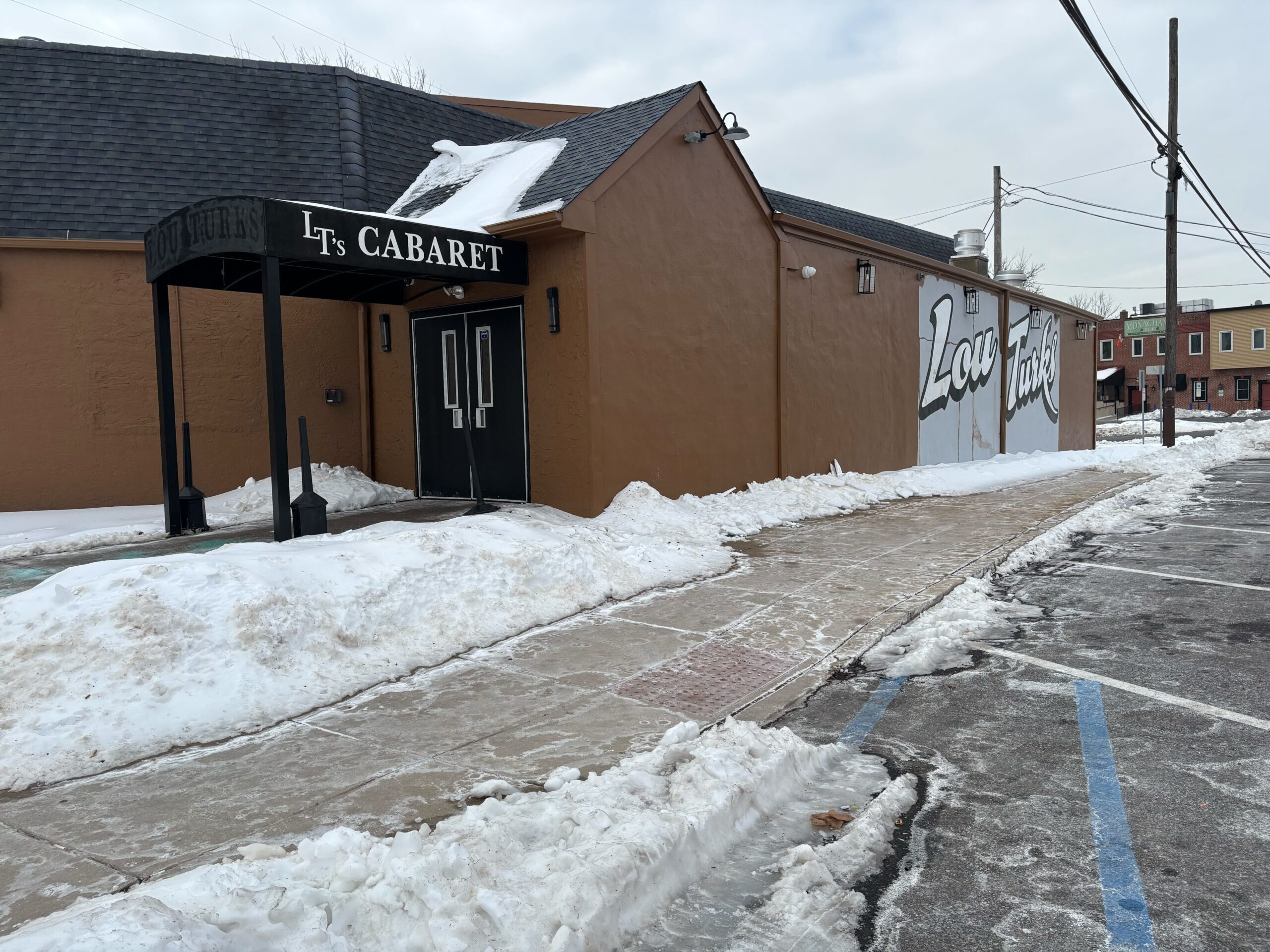
Shockingly, Delaware County has only one strip club, Lou Turk’s in Tinicum Township. Not shockingly, it bills itself as “historic” and a “Delco icon.”
Over on Yelp, reviewers call it a “hallowed hall,” “better than expected,” and “the Cheers of the female entertainment industry in the Philly area.”
Now, folks can call Lou Turk’s something else: the Carousel Delco, though the odds that they will actually call it that are exactly zero. It’s as likely as Philadelphians calling the Gallery the Fashion District or anyone saying Columbus Boulevard instead of Delaware Avenue.
A Delco institution for more than 50 years, Lou Turk’s announced it was rebranding via a statement on its social media pages last weekend, prompting comments like “April fools?” “Fake news?” and “This may go down as the biggest travesty to ever occur in Delco … and my god that’s saying something.”
Along with the new name, the club released what appears to be new signage, with the word “CAROUSEL” spelled out using silhouettes of nude women. The establishment also announced recent renovations, new amenities, menu enhancements, and new management. Yeah, new management that did not return my requests for an interview about why this was done.
I have no idea what would inspire someone to name a strip club “The Carousel Delco,” aside from the fact that both have poles. The club’s statement seems to explain why the new name was chosen, but it actually doesn’t. Classic Delco.
“We are still a Delco bar — always have been, always will be,” it reads. “That legacy is exactly why this name was chosen.”
Wait, did Delco bars all used to have carousels inside? If so, I definitely missed this county’s Belle Époque.
When I saw the news, my biggest fear was that one of Delco’s most storied traditions could be in jeopardy — the annual Mother’s Day and Easter flower sales outside of the strip club. It’s been the subject of countless memes and something I’ve used in stories as shorthand to explain Delco culture.
Luckily, whoever wrote the club’s statement anticipated that concern and immediately assuaged all fears:
“We look forward to many more awesome memes along the way … and we will still be selling flowers this Mother’s Day holiday.”
Whew! I mean you wouldn’t want to tell your mom you bought her flowers at the Acme, would you?
Trials and tribulations
The establishment was purchased in the mid-1960s by the late Louis Saddic, who was better known as Lou Turk, a name he picked up as a kid in South Philly, according to a 1983 Inquirer article.
Located in the Essington section of Tinicum, just off of Route 291, the club is situated in between an Irish pub and a Wawa, because of course it is. It’s so close to the Philadelphia International Airport you can see the underbellies of planes flying low overhead, which historically made Lou Turk’s a popular layover spot for travelers. Being near the shipyard didn’t hurt either.
The building itself is a windowless parallelogram painted in a muddy brown, with LOU TURKS plastered in large white letters on a gray patch on the side and “LT’s Cabaret” written on the awning.
Lou Turk’s is at the intersection of Powahatan and Jansen Avenues in the Essington section of Tinicum Township.
It’s unclear if the business was always a strip club, but it definitely was by 1973, when it started to receive citations by the PLCB for “lewd, immoral or improper entertainment,” according to our archives.
In 1983, the club was raided twice, the second time by 55 police officers who confiscated a whopping total of $19 from dancers they claimed had sexual contact with patrons. Turk, who was subsequently hit with prostitution and racketeering charges, vehemently denied the claims, as did five dancers and five other employees arrested in the raid.
William J. Davies, then-deputy district attorney for Delaware County, said at the time of Lou Turk’s: “It won’t reopen” and “We are not going to tolerate this sort of thing out in Delaware County.” Boy, was he off base.
The following year at trial one dancer testified she would “haul off and slug” any patron who tried to get handsy, which tracks for Delco. Investigators who testified used marshmallows and hand puppets to describe what they allegedly witnessed in the club, a Daily News report said.
Turk was represented at trial by the late high-profile attorney A. Charles Peruto Sr., who at one point, while questioning a PLCB agent’s testimony about interactions between a dancer and a patron, “assumed the dancer’s squatting position in front of the jury box and questioned the agent about the physical possibility of the act he had described,” according to an Inquirer article.
It’s unclear if the jurors threw Peruto tips, but what is becoming clear is how the club got its storied reputation in the annals of Delco history.
Turk’s case ended in a mistrial because prosecutors didn’t supply his attorney with the necessary discovery material before the case went to court. You can’t hide anything when prosecuting a strip club.
In 1990, a judge ordered the club to close for a year, after it had racked up a dozen citations between 1975 and 1990, “the longest history of state liquor code violations in the Philadelphia area for lewd entertainment,” The Inquirer wrote at the time.
During the shutdown, the bar operated a sandwich shop with a walk-up window for a few months, but it didn’t cut the mustard.
Lou Turk’s reopened on July 1, 1991, and The Inquirer was surprisingly there on opening day to see a dancer named Gail with palm tree pasties perform to the dulcet tones of ’80s glam metal band Ratt.
The establishment hasn’t made headlines since, according to our archives, aside from a report by unnamed sources that Ryan Howard visited the club in 2008, and several passing references to it in stories about Delco culture by yours truly.
‘Holy mackerel!’
I’m not sure when I first became aware of Lou Turk’s. As a nearly two-decade transplant, it’s the stuff of legends that’s always been here and I’ve always heard talked about, like Wawa or the Lower Swedish Cabin.
Whenever someone asks for a suggestion for the best place to eat or visit on the Delco subreddit or on a local Facebook page, someone inevitably suggests Lou Turk’s, tongue-in-cheek, like they do Woody’s in Philly.
“I think I even got a Lou Turks answer to me asking about vets in the area for my cat lol I died,” one Redditor posted.
“Did the cat survive?” another asked.
“Yeah he got a lap dance and started feeling better.”
Several reviewers on Yelp attest that the club’s food is pretty good. Even Jim Pappas, who’s gained local notoriety for trying and cataloging more than 1,100 cheesesteaks in the tristate area on his Philadelphia Cheesesteak Adventure website and YouTube channel, gave the food a thumbs-up.
“Holy mackerel! Who knew Lou Turk’s would have great food?” he says in his review.
One Yelp reviewer in 2011 even used a cheesesteak analogy to describe the place.
“As far as quality of performers go, think of this place as a cheesesteak shop in comparison to LeBec Fin; you can get a very satisfying quality meal, but it’s not exactly something you’d be bragging about to everyone you meet,” they wrote.
Uncle Lou’s
Changing the name of anything is hard, especially around here, where change is as welcome as the Dallas Cowboys.
But it may be particularly difficult for Lou Turk’s, which is so ingrained in local culture some folks call it Uncle Lou’s.
That’s the great thing about Delco. It doesn’t have famous tourist sites like Longwood Gardens or King of Prussia Mall, but what it has it owns to the bone, including its lone strip club.
Punxsutawney Phil may have seen his shadow on Monday, but spring training waits for no groundhog.
The Phillies’ trucks have been loaded with gear, including thousands of baseballs and one hot dog launcher, and have begun their journey toward Clearwater, Fla. Camp is set to open on Feb. 11, officially starting the long buildup toward October.
Here’s everything to know about Phillies spring training this year:
First spring training game: Feb. 21 at Blue Jays (Dunedin, Fla.)
Spring training home opener: Feb. 22 vs. Pirates (Clearwater)
World Baseball Classic:
Last spring training game: March 23 vs. Rays (Clearwater)
Opening day: March 26 vs. Rangers, 4:05 p.m., Citizens Bank Park
The Phillies’ biggest moves of the offseason were bringing back two members of their core: Kyle Schwarber (right), and J.T. Realmuto.
What additions did the Phillies make?
It was really more about the addition they didn’t make.
When the Phillies went to sleep on Jan. 15, they believed Bo Bichette would be in their lineup for seven seasons after they agreed to his $200 million asking price. By lunchtime on Jan. 16, he signed with the Mets. Dave Dombrowski described it as a “gut punch,” even though the former Blue Jays shortstop wasn’t a consideration for the Phillies until after the holidays.
They prioritized bringing back Kyle Schwarber and J.T. Realmuto, and after signing the former to a five-year, $150 million contract in mid-December, they made an offer to the latter. Talks with Realmuto stalled over money, and the Phillies began considering alternatives. Bichette expressed an interest in switching positions and met with the Phillies over Zoom on Jan. 12.
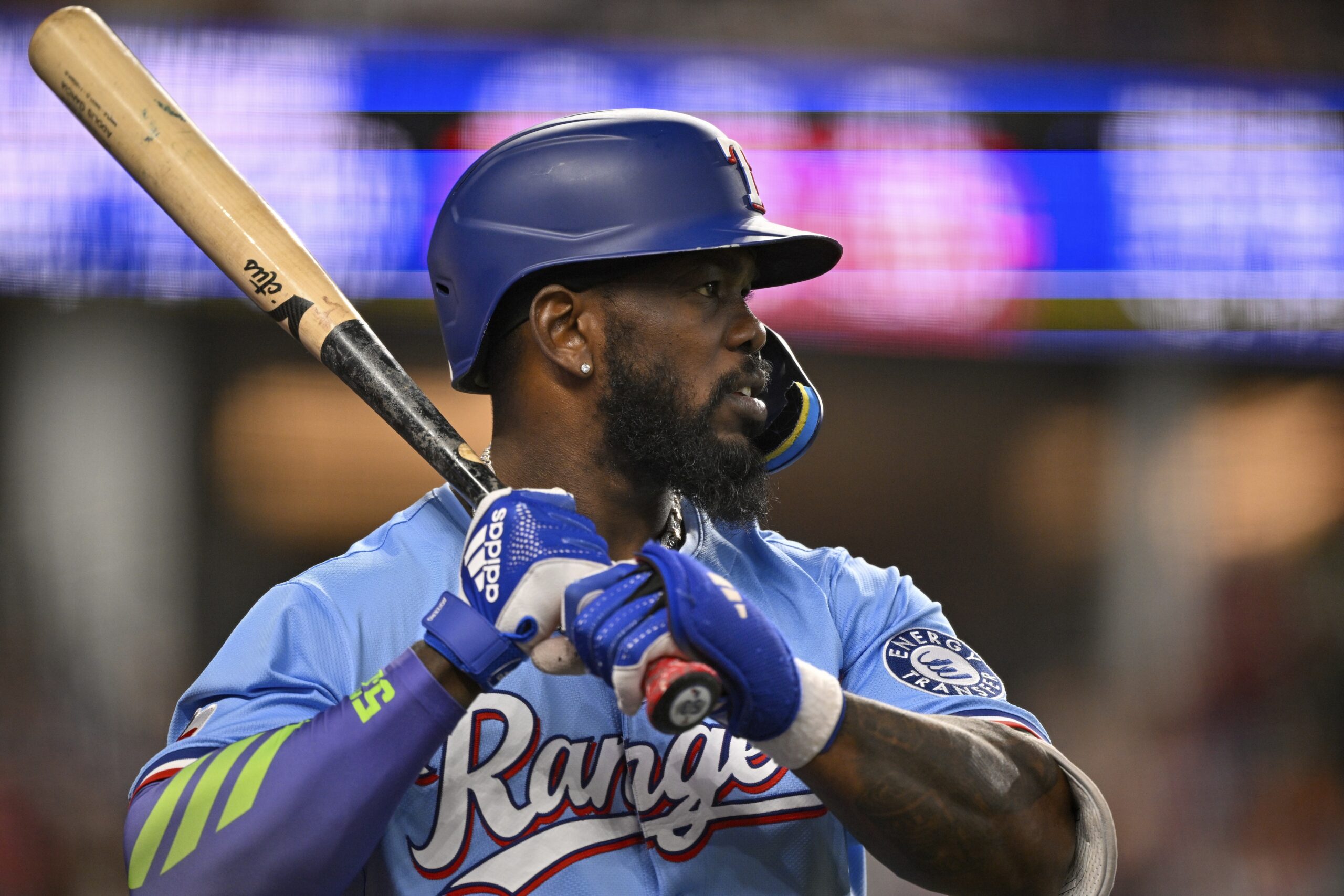
The Phillies are counting on outfielder Adolis García to rebound from a down 2025 season with the Rangers.
Which new Phillie is most intriguing for 2026?
Lauber: Does Justin Crawford count as “new?” Oh, OK, we’ll get to him later. In that case, García. In 2023, he hit 39 homers, got down-ballot MVP votes, and dominated the postseason for the World Series champion Rangers. The Phillies bet on bouncebacks last year from Max Kepler and Jordan Romano and went bust. Will their latest free-agent gamble work out better?
March: Keller. The right-hander had been a starter for most of his career before his breakout season last year as a high-leverage reliever for the Cubs, and he has retained his starter’s arsenal of four-seam, sinker, slider, changeup, and sweeper. That, plus a jump of over 3 mph on his fastball in 2025, makes him an intriguing back-end option in the Phillies’ bullpen.
What did the rest of the NL East do this offseason?
Rooting for the Mets must feel like riding the Coney Island Cyclone. And the last few months surely left fans nauseous, dizzy, and uncertain if they’re really satisfied.
Consider: After going from a 5½-game lead in the division to missing the playoffs in a three-month collapse for the ages last season, the Mets traded Brandon Nimmo and Jeff McNeil and didn’t re-sign Edwin Díaz and Pete Alonso. New Yorkers lost their minds, sure that president of baseball ops David Stearns misplaced his.
But the Mets signed Bichette, relievers Devin Williams, Luke Weaver, and Luis García, first baseman Jorge Polanco, and center fielder Luis Robert Jr., and traded for second baseman Marcus Semien along with ace Freddy Peralta and swingman Tobias Myers.
Are the Mets different? Oh yeah. Are they better? We’ll see.
The Braves hired a new manager (Walt Weiss) and bulked up the bullpen with Robert Suarez and the return of closer Raisel Iglesias. They re-signed shortstop Ha-Seong Kim (out until at least May after hand surgery), traded for utility man Mauricio Dubón, and signed outfielder Mike Yastrzemski.
Two other big moves: The Marlins acquired 23-year-old outfielder Owen Caissie from the Cubs for right-handed starter Edward Cabrera; the Nationals traded top-of-the-rotation lefty MacKenzie Gore to the Rangers, plunging Washington even further into a rebuild under a new, ultra-young front office (36-year-old president Paul Toboni) and manager (33-year-old Blake Butera).
— Lauber
The Mets’ busy offseason included trading for Brewers ace Freddy Peralta.
Which NL East addition will have the biggest impact?
Lauber: Bichette. What, you expected a different answer? If nothing else, the drama will be delicious when Bichette makes his first visit to Philly (June 18-21, by the way). But he’s also a terrific hitter who will be learning a new position on the second-largest payroll in baseball. Get your popcorn ready.
March: Peralta. The collapse of the Mets’ starting rotation was one of the main contributors to their free-fall out of playoff contention at the end of last season. With the Brewers in 2025, the right-hander had a 2.70 ERA over 176⅔ innings and posted the most wins in the National League (17-6). Peralta finished fifth in Cy Young voting and is now positioned to lead the Mets’ rotation.
Zack Wheeler’s return from thoracic outlet decompression surgery is still to be determined.
What are the top Phillies storylines this spring?
Lauber: A year ago, Zack Wheeler would have been my choice to start one game for all the marbles. (Yes, over even Tarik Skubal and Paul Skenes.) Wheeler is now five months removed from thoracic outlet decompression surgery. Every time he picks up a ball in spring training will be newsworthy, not only in determining when he will return to competition but what he looks like when he does. Will he still be an ace of aces?
March: Andrew Painter has been a top storyline for many springs now, from teenage phenom with a chance to make the team to his road back from Tommy John surgery. Well, he’s back now. Painter pitched 118 innings in 2025, all in the minors, never receiving the major league call-up expected in “July-ish.” This will finally be his first normal spring since 2023, and there is a rotation spot up for grabs. Will he earn it?
What’s the Phillies’ biggest roster decision?
Lauber: Although the decision to commit to Crawford was made early in the offseason, it’s about to play out in real time. At 22, he would be the youngest outfielder to make a Phillies opening-day roster since Greg Luzinski and Mike Anderson in 1973. As the Phillies turn over the keys to center field, Crawford will be at the center of attention.
March: The Phillies stocked up on potential bullpen depth this winter, making a host of minor league deals, a few trades, and a Rule 5 selection of McCambley. Six reliever spots are likely spoken for, barring injury: lefties José Alvarado and Tanner Banks, and righties Jhoan Duran, Keller, Orion Kerkering, and Bowlan. There will be some stiff competition for the final two spots.
Shortstop prospect Aidan Miller should also get some work at third base this spring.
Which prospect should fans look out for?
Lauber: As you watch Crawford and Painter, don’t take your eyes off Aidan Miller. The Phillies intend to expose the 22-year-old shortstop to third base in spring training, but it will be interesting to see how much third he actually plays — and how fast they push him if he starts hot in triple A and/or Alec Bohm falters again in April.
March: Gabriel Rincones Jr. made a big impression last spring with a couple of towering home runs. The outfielder was added to the Phillies’ 40-man roster ahead of the Rule 5 draft, and he could get a major league look at some point in 2026. Rincones, who will be 25 next month, struggles against left-handed pitching, so any opportunity would likely be in a strict platoon. But he has some big power potential against righties.
After living in small apartments in Queen Village and Rittenhouse Square, Cooper Lee Kidd was ready to start shopping for his first home.
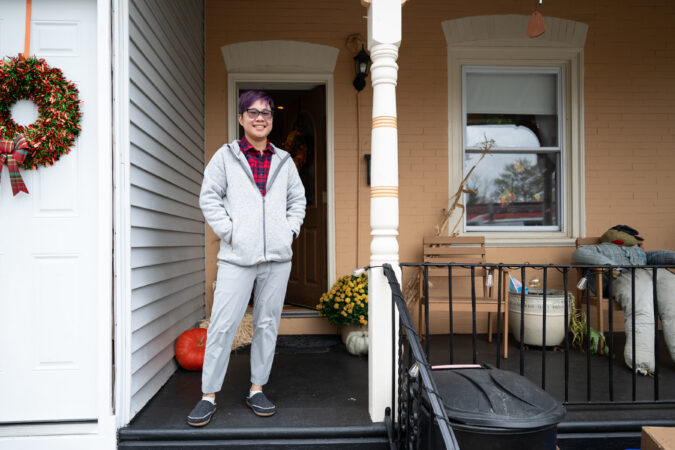
The Washington, D.C., native, who works in banking and volunteers for the Philly Goat Project, wanted more indoor space and more yard for gardening and entertaining friends. He purchased his home one day before his 30th birthday.
“This is the first house that we saw,” Kidd said on an autumn afternoon. The light from his living room window highlighted a strand of his purple hair. “I looked at another one, a rowhouse in South Philly, but it was literally sinking into the ground. We came back to this one.”
The 900-square-foot rowhouse, nestled near the end of the block in East Mount Airy, was thoughtfully designed, he said. The home, outfitted with hardwood floors, tall ceilings, and lots of natural light, felt less cookie-cutter and industrial than the many other houses he saw online. Most important, he said, it was located in a progressive neighborhood with a strong sense of community.
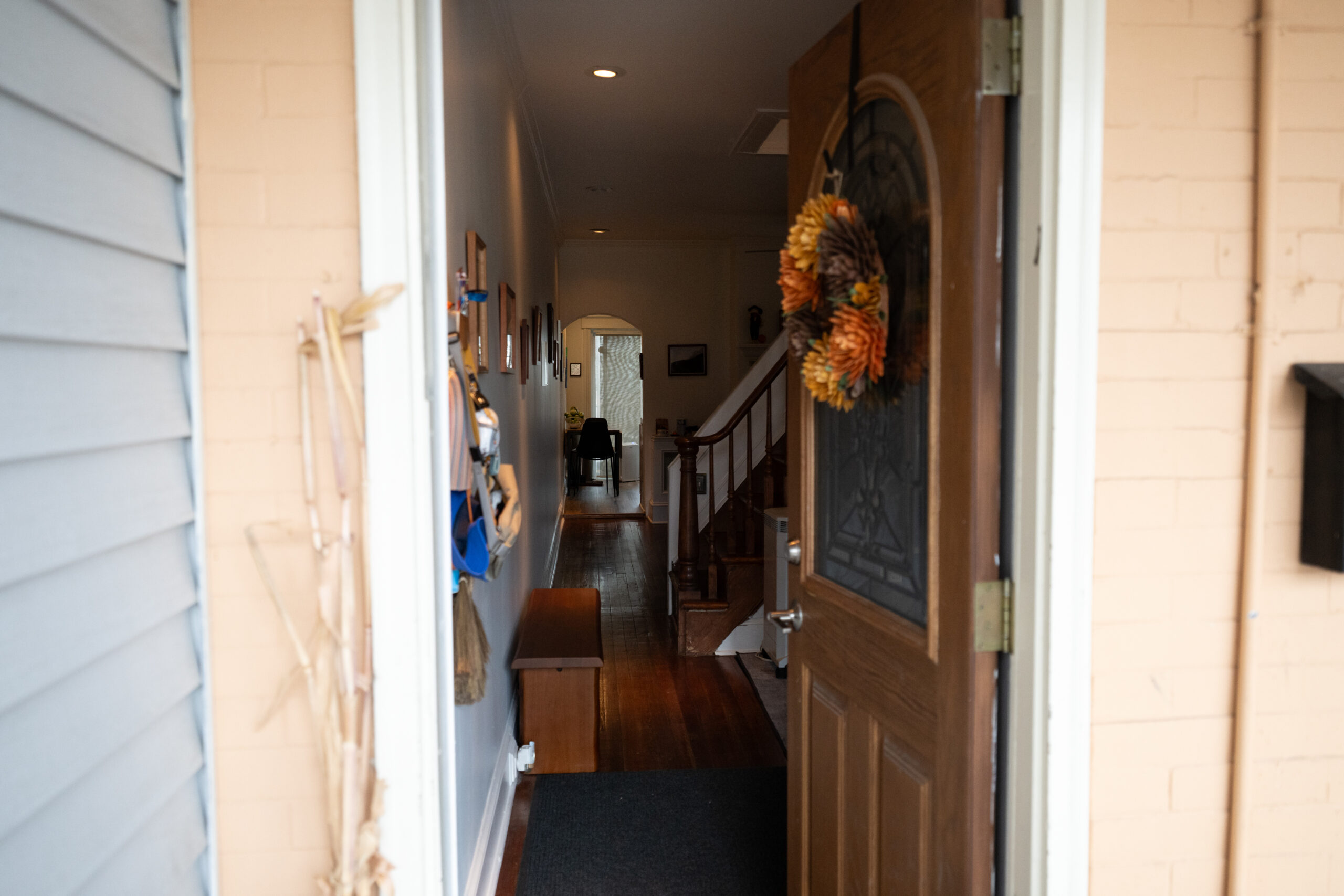
The entry to Kidd’s rowhouse.The living room, where a plant in the window enjoys the afternoon sun.
“I wanted to be very intentional about moving to the area. I didn’t want to live in a neighborhood that was all white. It’s also very economically diverse and that was very important to me,” he said. “Plus, you are near public transportation. You are near nature. There is so much happening here.”
In the front room, a large ornate mantel anchors the space. A decorative leaded glass door leads to a cozy porch. He painted the porch black and decorated it with a pride flag and corn that he grew in the backyard.
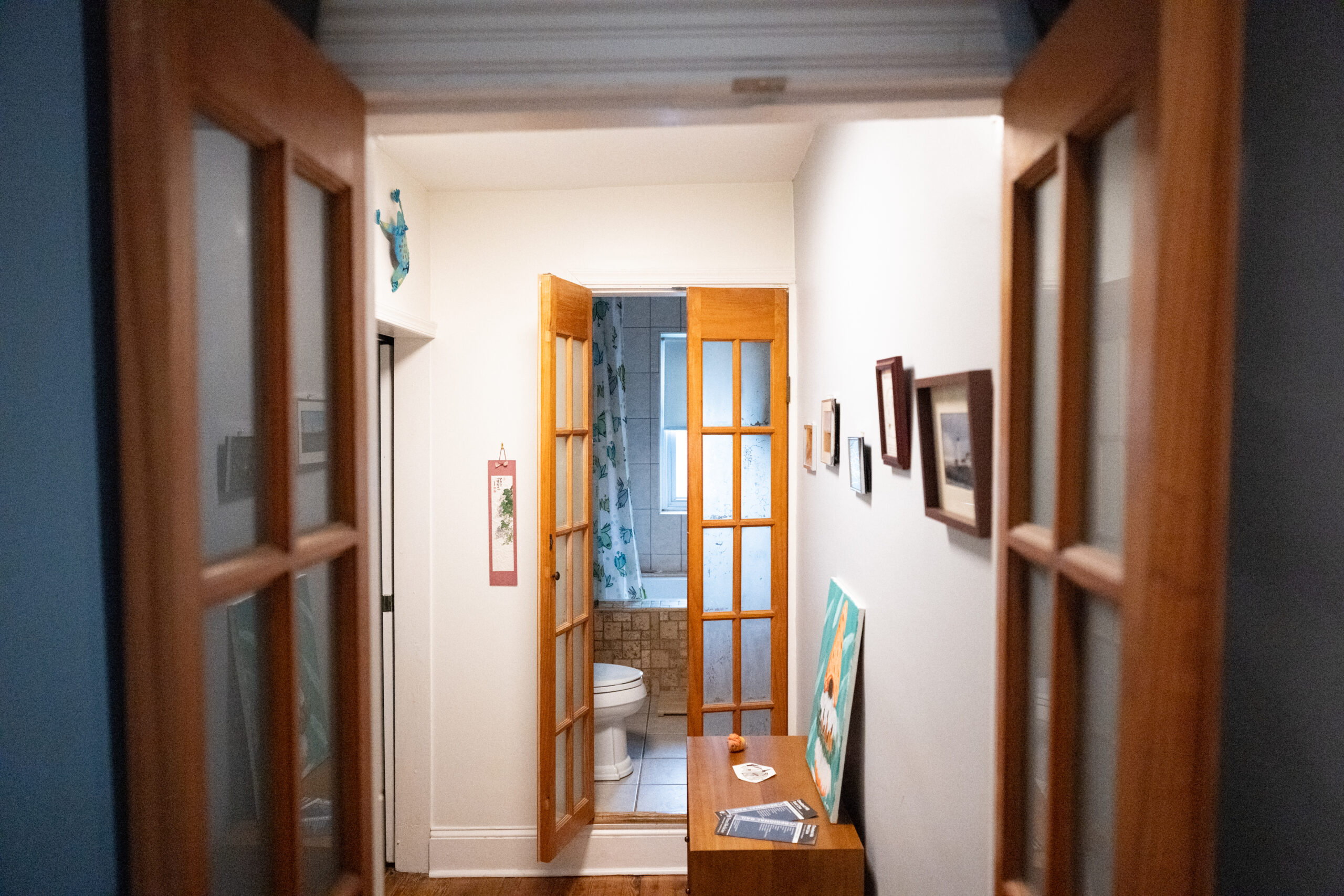
A steep set of stairs divides the living room and adjacent dining room, which like other areas of the home are decorated with Kidd’s photography, including images from his trips to Zion National Park, Assateague Island, and Chicago. Rustic wooden doors lead to a bathroom, which used to be a closet, and to the basement. The dining room boasts decorative tile, a large cabinet, and dining table.
“The previous owner left a lot of furniture. He got out of here very fast,” Kidd said. The owner, who moved out of the country, left the dining room cabinet, the TV stand, a bed frame, and even a French sports car that he tried to sell to Kidd.
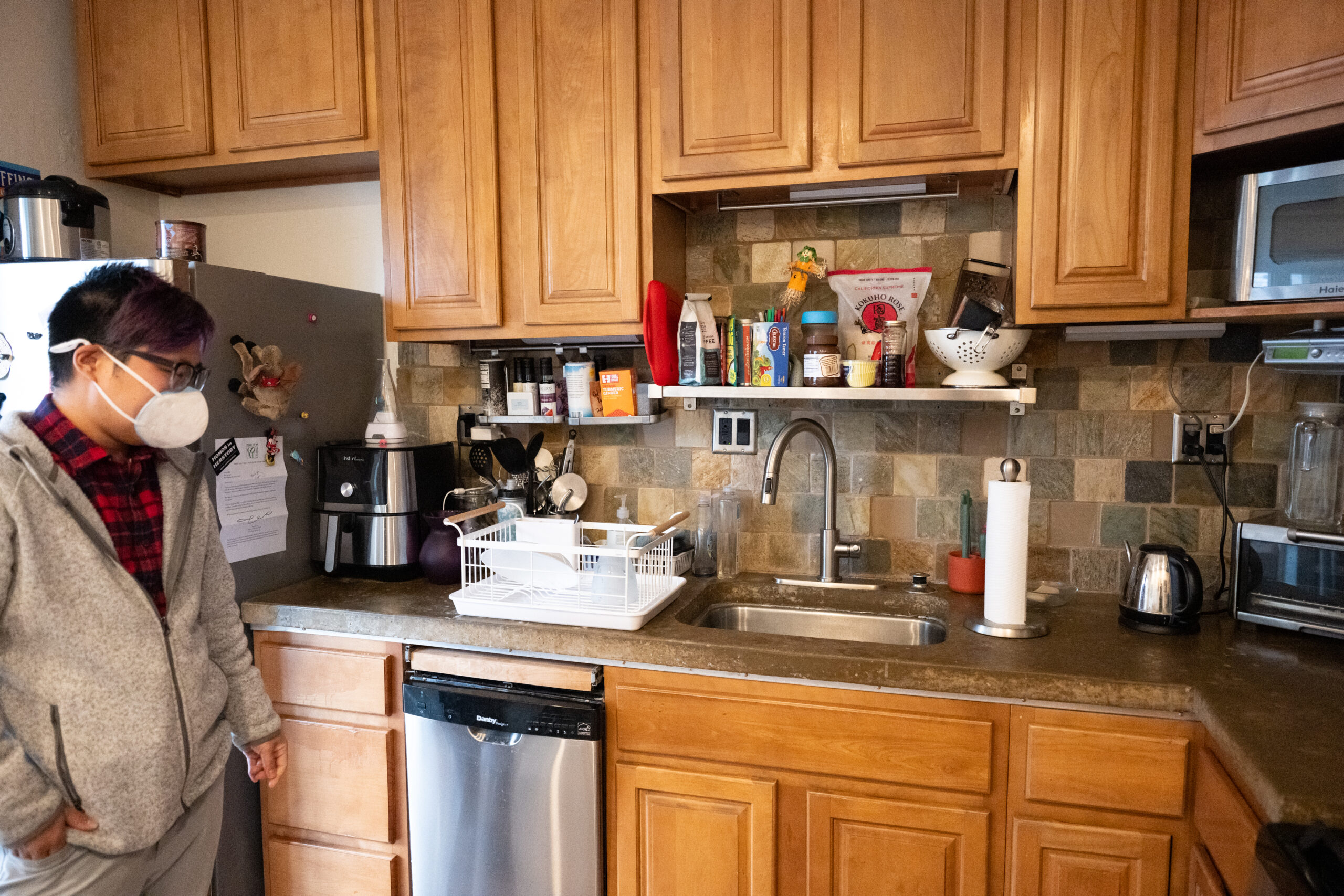
The larger kitchen with a dishwasher was an upgrade for Kidd.The upstairs landing and bathroom.
Kidd didn’t buy the car, but he was grateful for the furniture. “It’s very expensive to furnish a home.”
In the back of the rowhouse, the spacious L-shaped kitchen came with oak cabinets, concrete countertops, and a dishwasher. While he’s not a huge fan of the countertops, Kidd said he was grateful for the upgrades.
“When I was in Rittenhouse, I had to wash dishes in the bathtub,” he said.
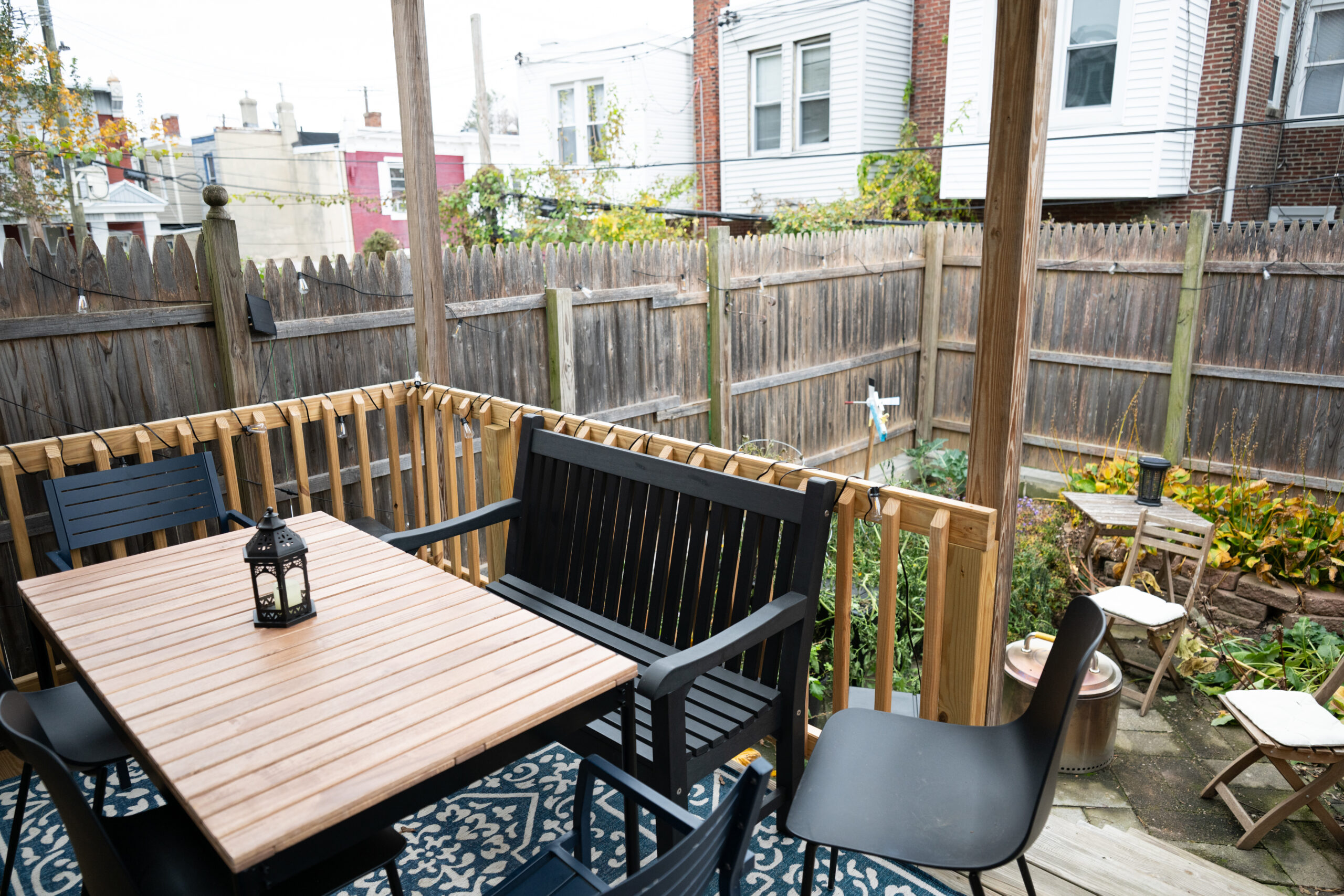
Double doors lead to a quaint deck, wooden pergola, and postage-stamp yard.
The outdoor space was a major draw for Kidd. It took him weeks to clean out the yard, but he was able to grow several plants during his first summer in the home.
This past summer, Kidd spent some free time growing broccoli, kale, tomatoes, and native plants, purchased from local business Good Host Plants. It had taken weeks to clean out the trash that the previous owner had left in the yard.
“I had never gardened before,” Kidd said. “I grew up in a normal suburban home. My parents gardened. I don’t think my brother and I were interested at the time.”
The last batch of tomatoes Kidd harvested from his backyard garden is piled into bowls in his kitchen.Kidd’s garden during the summer, as the flowers were blooming. He worked to clear out the yard and make space for plants and seating after moving in.
Kidd attended the University of Maryland for his undergraduate degree in sociology. He went on to work for the Children’s Hospital of Philadelphia for several years, studying HIV in adolescents, before the grant funding his work was cut. He then returned to graduate school at the University of Maryland. In 2022, he started his current job in banking and finance.
He uses the second bedroom upstairs as his office. Painted a moody hunter green, the office is outfitted with built-in bookcases and a charming pocket door.
The front bedroom faces a historic cemetery. The open space provides for a nice view.
“The Realtor joked that I could commune with my ancestors,” he said. “But you get a really nice sunrise and sunset. There’s no obstruction.”
The home office is made cozy with a velvety couch and throw pillows.
Kidd is grateful the city and neighborhood even has affordable and attainable homes for someone his age.
“This home feels very cozy, so much more than the apartments. It feels like mine.”
Is your house a Haven? Nominate your home by email (and send some digital photographs) at properties@inquirer.com.
Don Bitterlich’s Chevy Caprice was loaded with everything he needed for his gig that night at an Italian restaurant in Northeast Philly: an accordion, a speaker, and a pair of black slacks.
He learned to play the accordion as a 7-year-old in Olney after his parents took him to a music shop on Fifth Street and he struggled to blow into a trumpet. His father pointed to the accordion, and Bitterlich played it everywhere from his living room on Sixth Street to Vitale’s on Saturday nights.
The owner of Vitale’s — a small restaurant with a bar near Bustleton and Cottman Avenues — paid Bitterlich $175 every Saturday. It was a lot of money for a college student in the 1970s. First, he had to finish football practice.
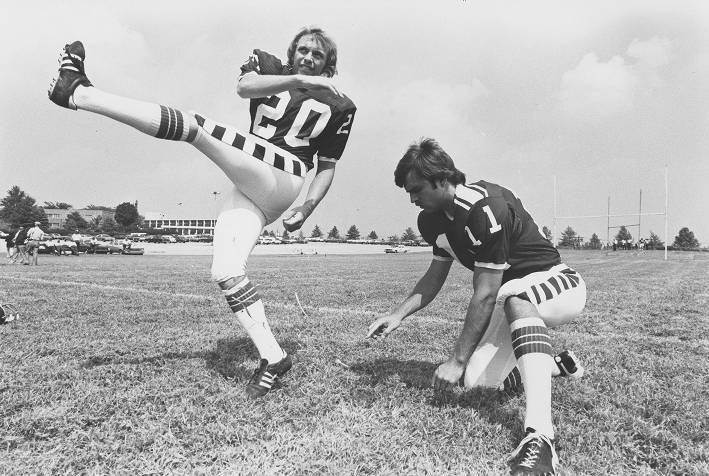
Bitterlich went to Temple on a soccer scholarship before football coach Wayne Hardin plucked him to be the placekicker. He never even watched a football game, but soccer coach Walter Bahr — the father of two NFL kickers — told Hardin that Bitterlich’s powerful left leg was fit for field goals.
Bitterlich went to football camp in the summer of 1973, while also playing soccer for Bahr and trying to keep up with his accordion. He had yet to officially make the football team that August, so there was no use in canceling his 10 p.m. Saturday gig at Vitale’s. Bitterlich was due to play there in 90 minutes, but the Owls had yet to include their kicker in practice. He was hoping to leave practice by 8:45 p.m., and it was almost time.
“I’m watching the clock,” Bitterlich said.
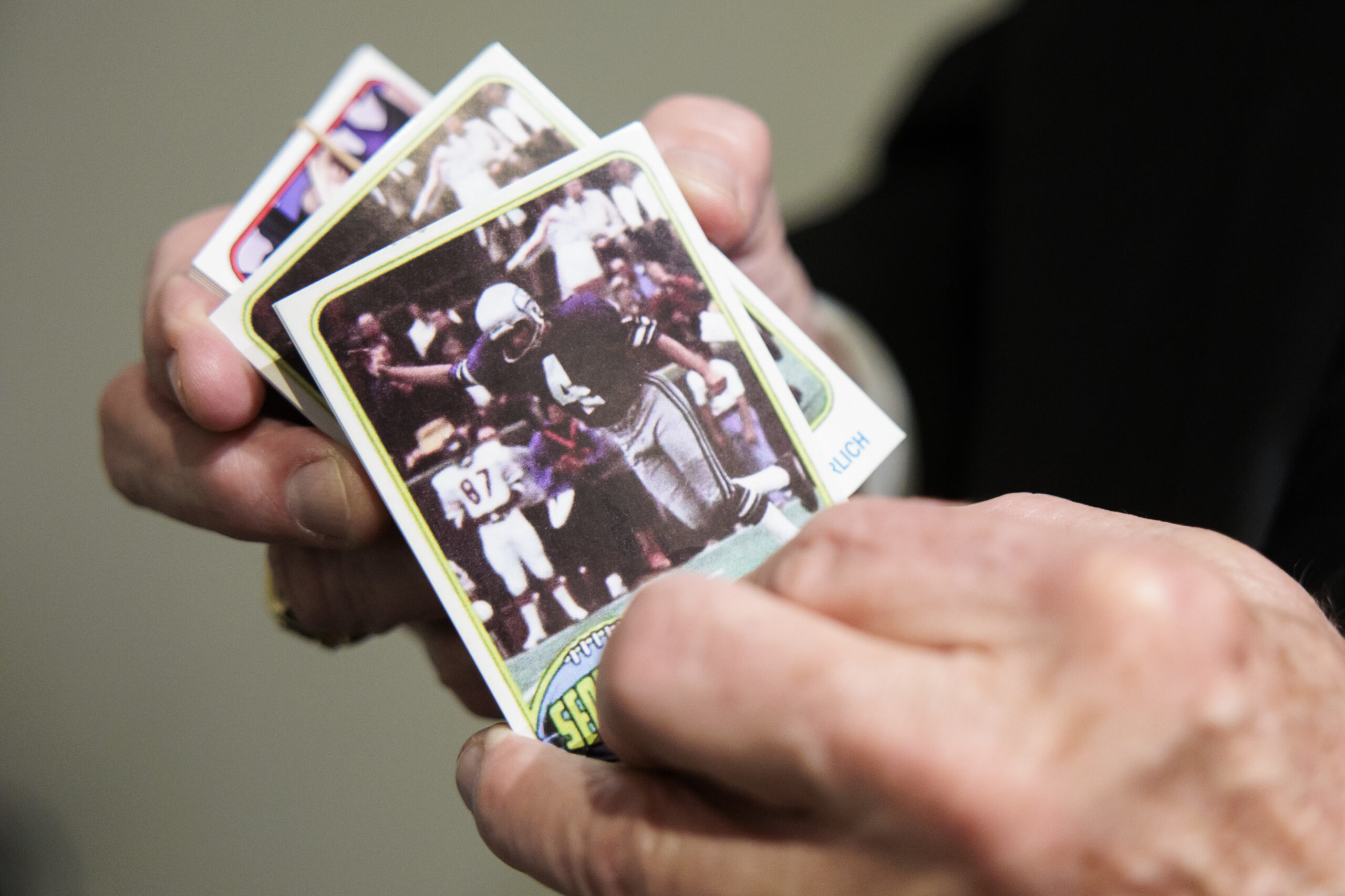
Don Bitterlich holds his Seahawks football card. He scored the first points in Seahawks history as a kicker.
He asked an assistant coach if the team was going to kick, and the coach shrugged him off. A half-hour later, he asked again. He had to go, Bitterlich said.
“He said, ‘Go where?’” Bitterlich said.
Bitterlich set records at Temple, played in an all-star game in Japan, was in his dorm when he was selected in the 1976 NFL draft, and scored the first-ever points for the Seattle Seahawks, who play Sunday in Super Bowl LX against the New England Patriots.
He made it to the NFL despite knowing little about football until he became Temple’s kicker. It was a whirlwind, he said.
He really made his name with the accordion, the instrument he’s still playing more than 50 years after he had to rush to a gig from football practice.
He has long been a regular at German festivals, restaurants, banquets, and even marathons. A German club in the Northeast called Bitterlich “the hardest working accordion player in the world.” He played a gig on Sunday night in South Philly and another on Monday morning near Lancaster.
Bitterlich, 72, who worked as a civil engineer until retiring last year, said he played more than 100 gigs in 2025. Football stopped years ago, but the show rolls on.
“These days,” he says, “most people around hear me playing the accordion, and they don’t know that I kicked in the NFL.”
Becoming a kicker
Bitterlich was home in Warminster — his family moved from Olney just before his freshman year at William Tennent High — when Bahr called. The Temple soccer coach had been a star on the U.S. team that upset England in the 1950 World Cup and was one of the best players to come out of Philadelphia.
“He had this raspy voice,” Bitterlich said. “He smoked cigars during practice and basically chewed and ate half of it as well. He always called me ‘Bitterlich’ but called me ‘Donald’ if I screwed up.”
Don Bitterlich (20) at Temple, likely during the 1975 season.
So Bitterlich figured he was in trouble when his coach called him “Donald” on the phone.
Bahr asked Bitterlich whether he knew who Hardin was. Yes, he said. Bahr said he had just talked to the football coach and told him Bitterlich could kick. The coach had watched Bitterlich since he played soccer for Vereinigung Erzgebirge, a German club his grandfather founded off County Line Road. He told Bitterlich he could do it.
“So I said, ‘No soccer?,’” said Bitterlich, who was also the mascot at basketball games in the winter. “‘No, you’re my starting left midfielder.’ I was thinking, ‘How is this going to work?’”
Bahr told Bitterlich to call the football office, get a bag of balls, and start kicking. He kicked every day at the German club and tried to figure it out. He was soon splitting his day between football camp in Valley Forge and soccer camp at the old Temple Stadium on Cheltenham Avenue in West Oak Lane. Each sport practiced twice a day and Bitterlich found a way to make them all.
He played a soccer game that season in Pittsburgh, flew home with the team, and then took a taxi from the airport to Temple Stadium to kick for the football team. He was studying civil engineering and balancing two sports plus his accordion.
It eventually became too much. Hardin told Bahr that he would give the kicker a full scholarship to play football. That was it.
“With the football scholarship, I got room and board,” Bitterlich said. “So I was living on campus after commuting from Warminster. It was insane. I was so worn out.”
Making history
Bitterlich kicked a game winner in October 1973 against Cincinnati as time expired, made three kicks at Temple longer than 50 yards, and was the nation’s top kicker in 1975. The soccer player made a quick transition.
“Coach Hardin always said, ‘If I yell ‘field goal,’ I expect three points on the board,’” said Bitterlich, who was inducted into the Temple Hall of Fame in 2007. “He expected that. The point of that was that he trusted you. That was his way of saying, ‘I’m not asking you to do anything that I don’t think you can do.’”
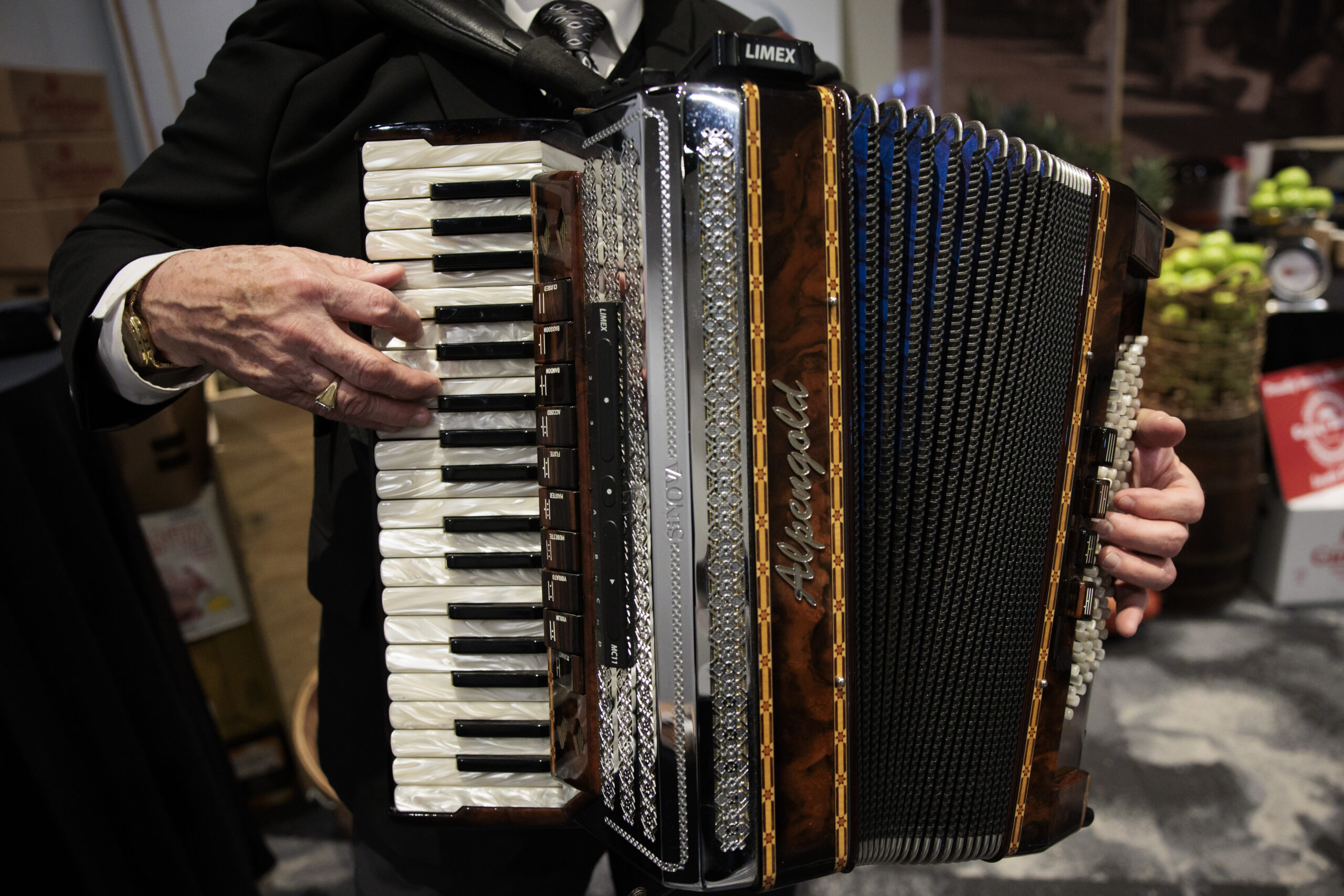
Don Bitterlich performs with his accordian on Sunday during The Tasties at Live! Casino.
The coach helped Bitterlich understand the mental side of kicking, challenging him in practice to focus on the flagpole beyond the uprights. Try to hit the flag, he said.
“That had a huge mental impact on me,” Bitterlich said. “You have that image, and then when you do your steps back and you’re set, that’s all you can see. It made all the difference in the world for me. Once you have that image, you zone out any of the noise. You’re just focused on that image.”
It helped him focus in September 1976 when the Seahawks opened their inaugural season at home against the St. Louis Cardinals. They drafted Bitterlich five months earlier in the third round. The Kingdome’s concrete roof made the stadium deafening, but Bitterlich felt like he was back in North Philly practicing at Geasey Field as he focused the way Hardin taught him to.
He hit a 27-yard field goal in the first quarter, registering the first points in franchise history. The Seahawks had quarterback Jim Zorn and wide receiver Steve Largent, but it was the soccer player who scored first.
Bitterlich’s NFL career didn’t last long, as the Seahawks cut him later that month after he missed three field goals in a game. He tried out for the Buffalo Bills, but a blizzard hindered his chances. He signed with the Eagles in the summer of 1977, missed a field goal in a preseason game, and was cut.
He landed a job as a civil engineer in Lafayette Hill. He received a call on his first day from Eagles coach Dick Vermeil, who said the San Diego Chargers wanted to try him out. Bitterlich flew to California the next day but turned down a three-year NFL contract that would pay him only slightly more than his new job back home.
“Plus, the real reason I turned down their offer was that they couldn’t hold for a left-footed kicker,” Bitterlich said. “Their holder just couldn’t get the ball down. I didn’t want to sign that contract. ‘What’s going to happen in two days when that guy can’t get the ball down?’”
A week later, the San Francisco 49ers called. He flew back to California, tried out against another kicker, and was told he won the job. But the 49ers decided to sign Ray Wersching, who had been cut the previous season by the Chargers. Bitterlich turned down the chance to replace Wersching in San Diego, and now Wersching was swooping in for the job Bitterlich wanted in San Francisco.
“I went back home and said, ‘That’s enough,’” said Bitterlich, who played three NFL games. “It started to get disappointing.”
“I love to play,” Bitterlich says of his accordion. “I usually don’t take breaks. Most bands will play 40 minutes on, 20 minutes off. I just play through.”
Still playing
His NFL journey was hard to imagine that day at practice as he watched the clock at Temple Stadium and thought about how long it would take to drive to Vitale’s. Bitterlich told the assistant coach that it was almost time to play his accordion. That, the coach said, was something he would have to talk to Hardin about. Fine, Bitterlich said.
“I didn’t know if I was going to make the team or not, and I knew I was going to play soccer,” Bitterlich said. “So I just went over and told Coach.”
Hardin heard his kicker say he had to leave football practice to play the accordion and laughed.
“He said, ‘Yeah, I heard something about that,’” Bitterlich said.
The coach stopped practice and let Bitterlich get in the mix. He nailed six field goals and the other kicker shanked a few. The job felt like his. He hit a 47-yarder and looked over at Hardin.
“He’s like, ‘Yeah, yeah. Go ahead. Go,’” Bitterlich said.
Bitterlich was soon in his Chevy Caprice, heading down Cottman Avenue on his way to Vitale’s. He wasn’t late to his accordion gig that night. His football career would end a few years later, but the music has yet to stop.
“I enjoy it,” Bitterlich said. “I love to play. I usually don’t take breaks. Most bands will play 40 minutes on, 20 minutes off. I just play through. I really don’t take a break. I love it.”