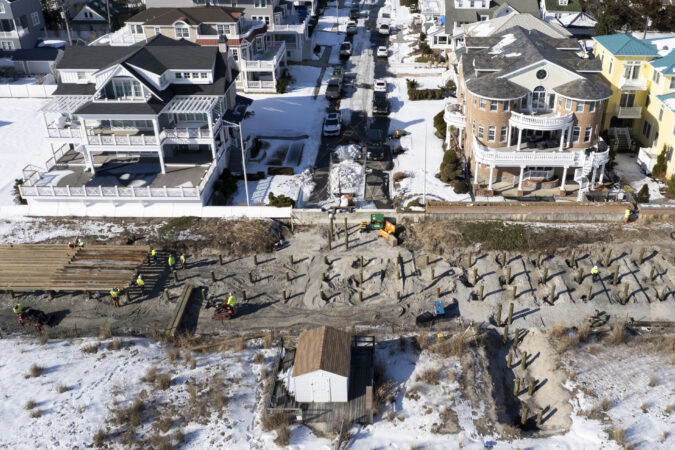
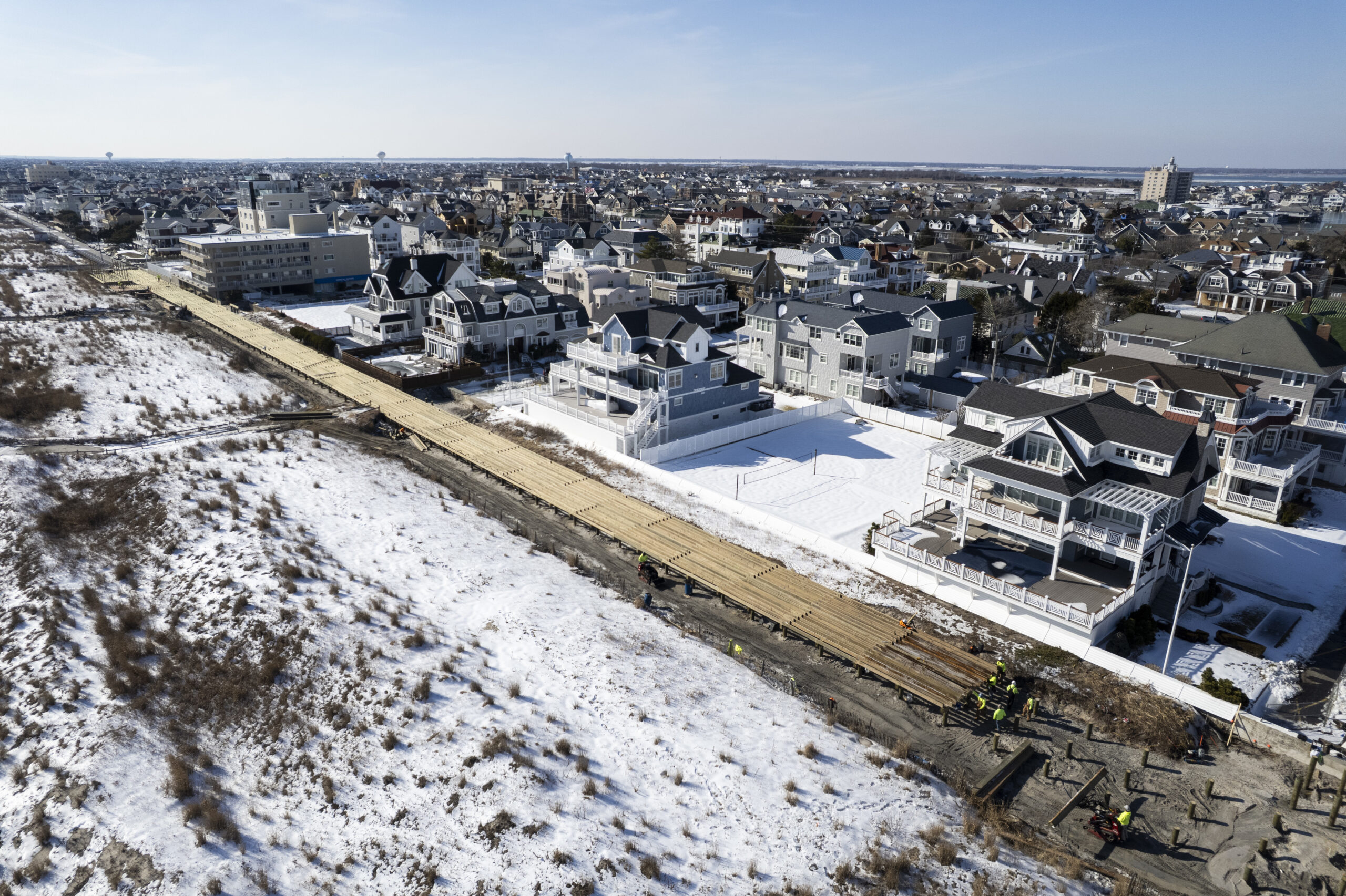
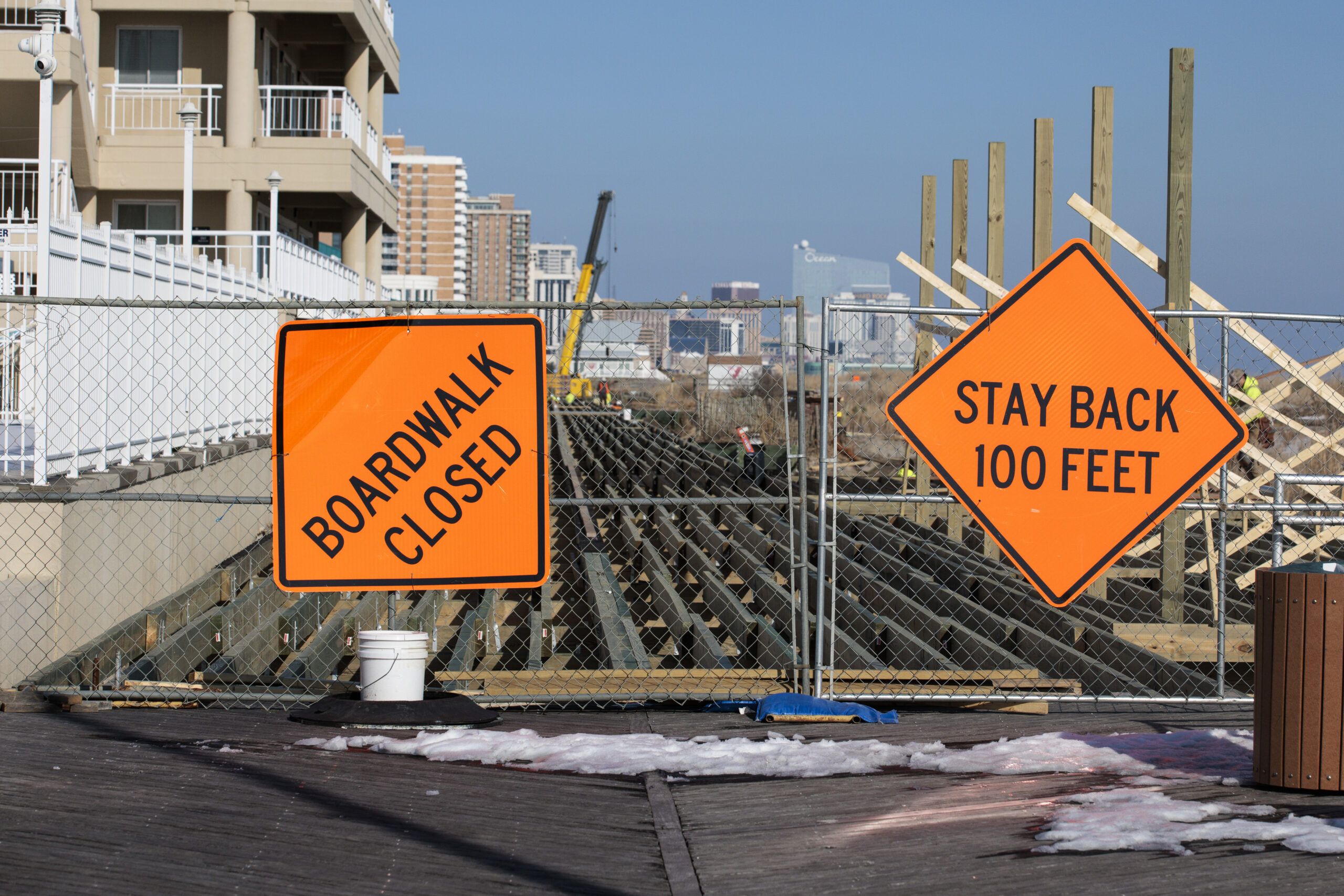
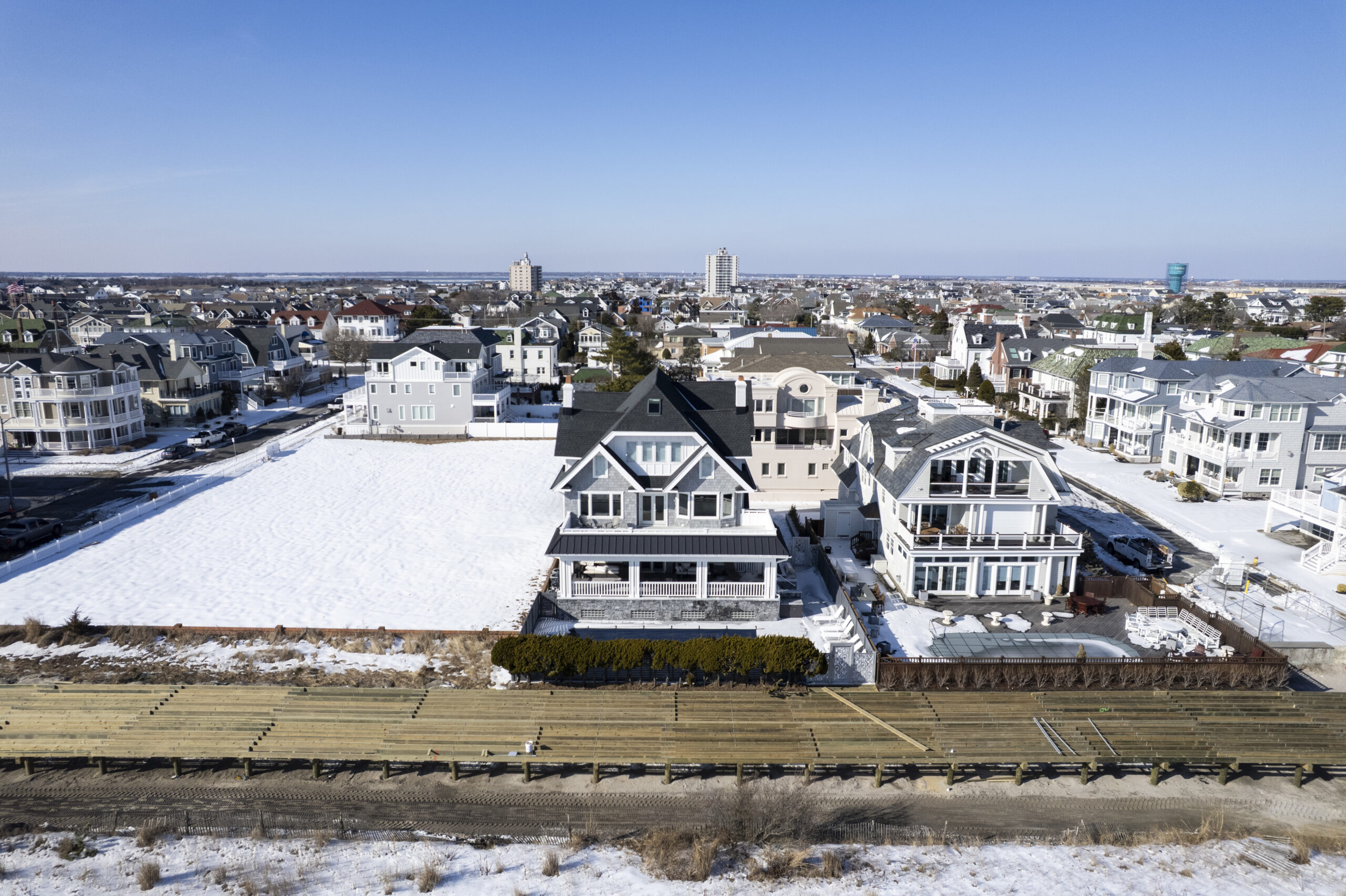
VENTNOR, N.J. — They demolished the existing boardwalk from the tennis courts to the fishing pier, north to south, and now they are building their way back up.
Financed mostly with federal funds granted to New Jersey from the COVID American Rescue Plan, Ventnor and other Shore towns like Ocean City, North Wildwood, Atlantic City, and Wildwood have set out to redo or upgrade their iconic pathways.
Ventnor is using $7 million in federal funds and bonded for about $4 million more, officials said.
Will this stretch of boardwalk reconstruction be done by Memorial Day?
Construction continues on the boardwalk on Wednesday, Feb. 4, 2026, in Ventnor City, N.J.
“It’s always a worry,” Ed Stinson, the Ventnor city engineer, said in an interview late last month. “We’ve had multiple meetings with the contractor [Schiavone Construction], one as recent as three weeks ago. In all the meetings, he’s said it’ll be complete and open before Memorial Day.”
The reconstruction has delivered a seven-block offseason interruption in a walkway that is popular year-round.
Work will stop for the summer, city officials say. In the fall, a second 13-block section, from Suffolk Avenue to the Atlantic City border at Jackson Avenue, will begin. There is currently no funding or plan for the boardwalk from Cambridge south to the Margate border, said Stinson.
The biggest change people will notice is that the original and distinctive angled herringbone decking pattern of the boardwalk is being replaced with a straight board decking. Ultimately, it came down to cost over tradition.
“There was discussion about it,” said Stinson. “There’s additional lumber that’s wasted when you do the herringbone, and the labor to cut that material. The additional material costs were significant. It’s a waste of tropical lumber. The only reason to go herringbone is tradition and appearance.”
The reconstruction has delivered a seven-block offseason interruption in a walkway that is popular year-round. Work will stop for the summer, city officials say.
Other differences are changes in lighting (lower, more frequent light poles) and some enhancements of accessible ramps. The existing benches, with their memorial plaques, will be back.
To demolish the boardwalk, the contractor cut the joist and the decking in 14-foot sections, “swung it around, carried it over to the volleyball court,” Stinson said, on Suffolk Avenue.
“That’s where they did their crushing and loading into the dumpsters. They worked their way down and followed that with the pile removing.”
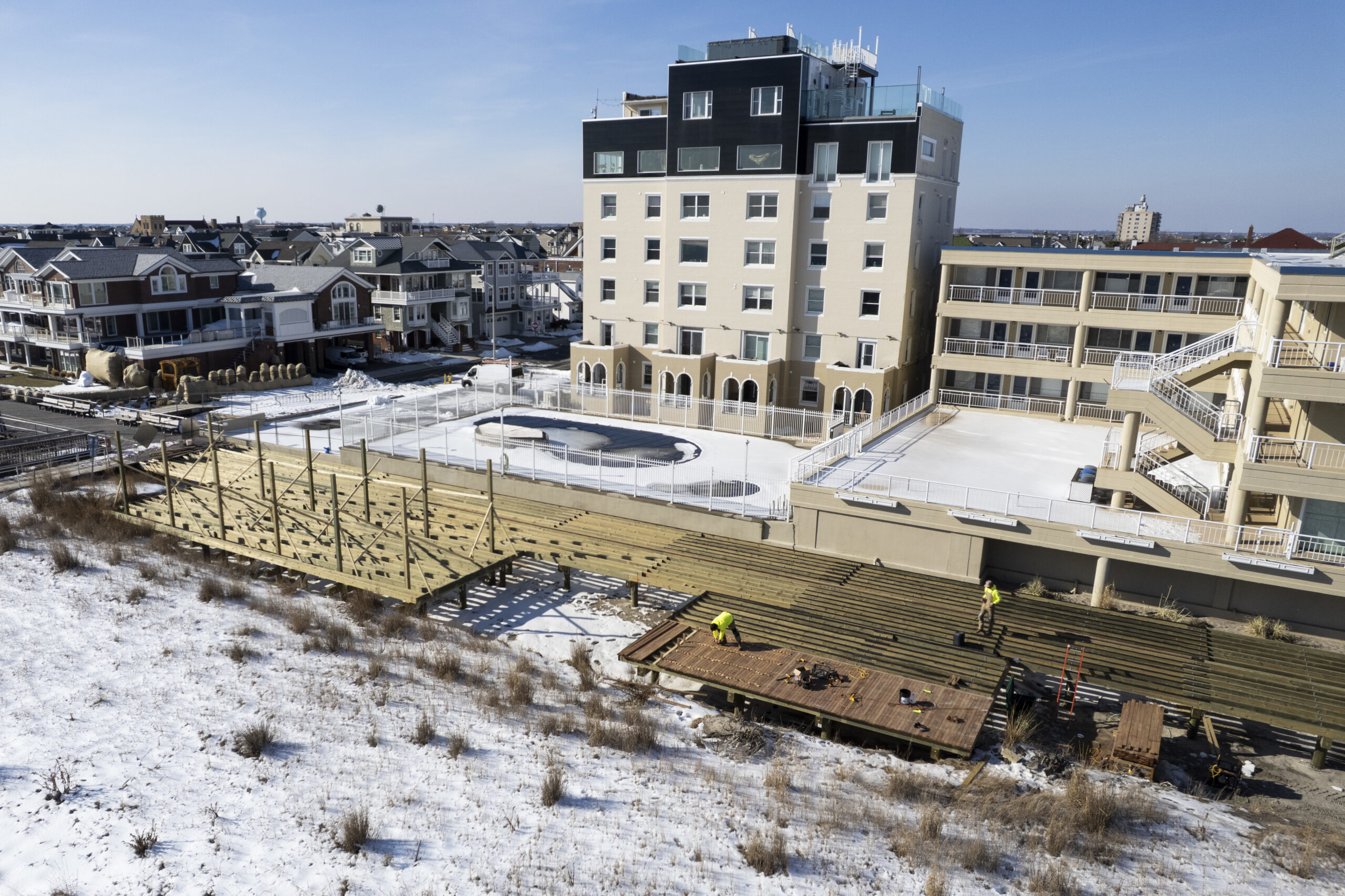
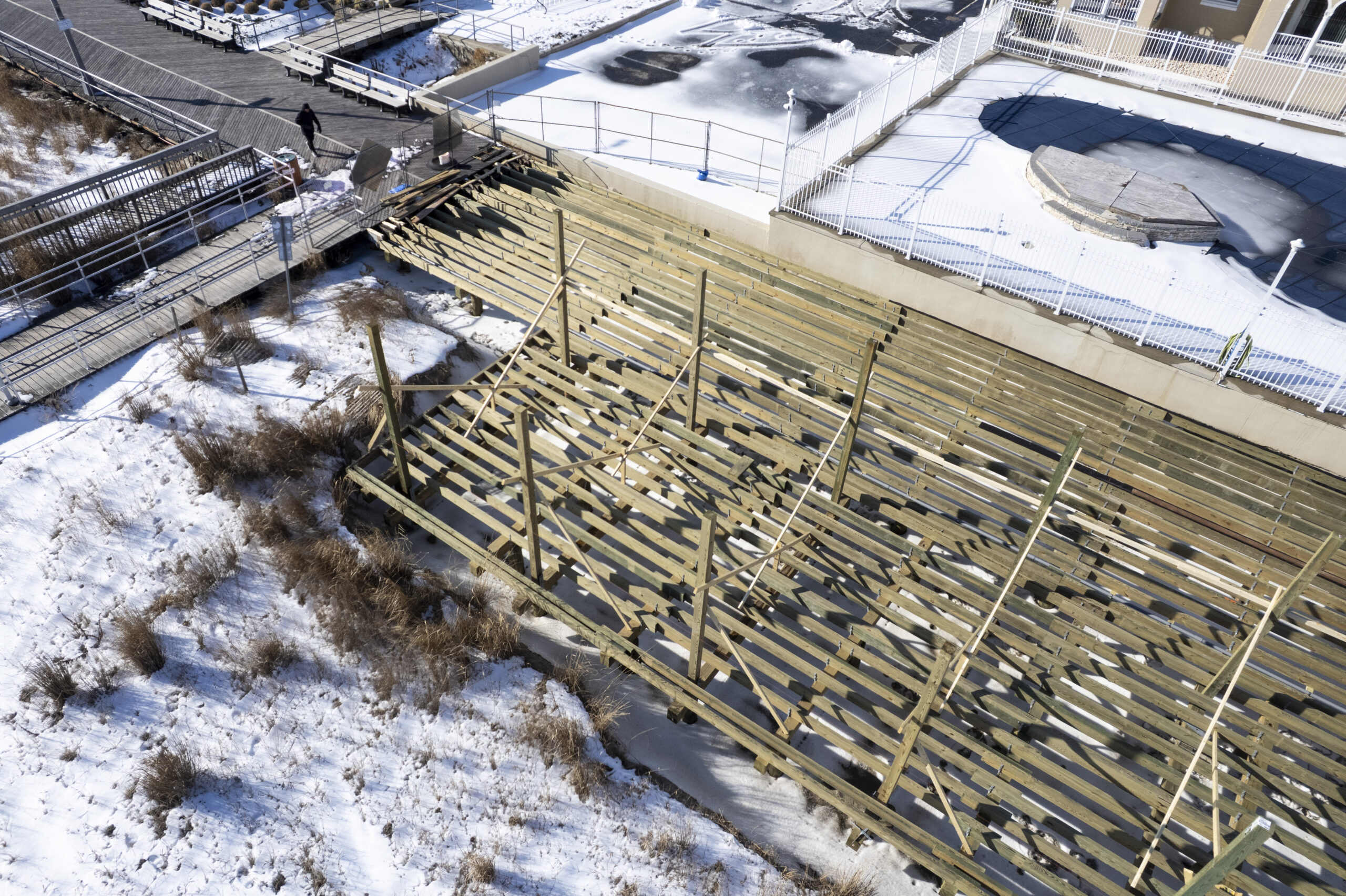
The original herringbone pattern can be seen on the left, compared with the new straight decking pattern on the new construction side.
The other massive job was excavating the sand that had accumulated under the boardwalk. “They screened it, cleaned it, and put it down there,” on the beach in piles. It will be spread around above the tide line, Stinson said.
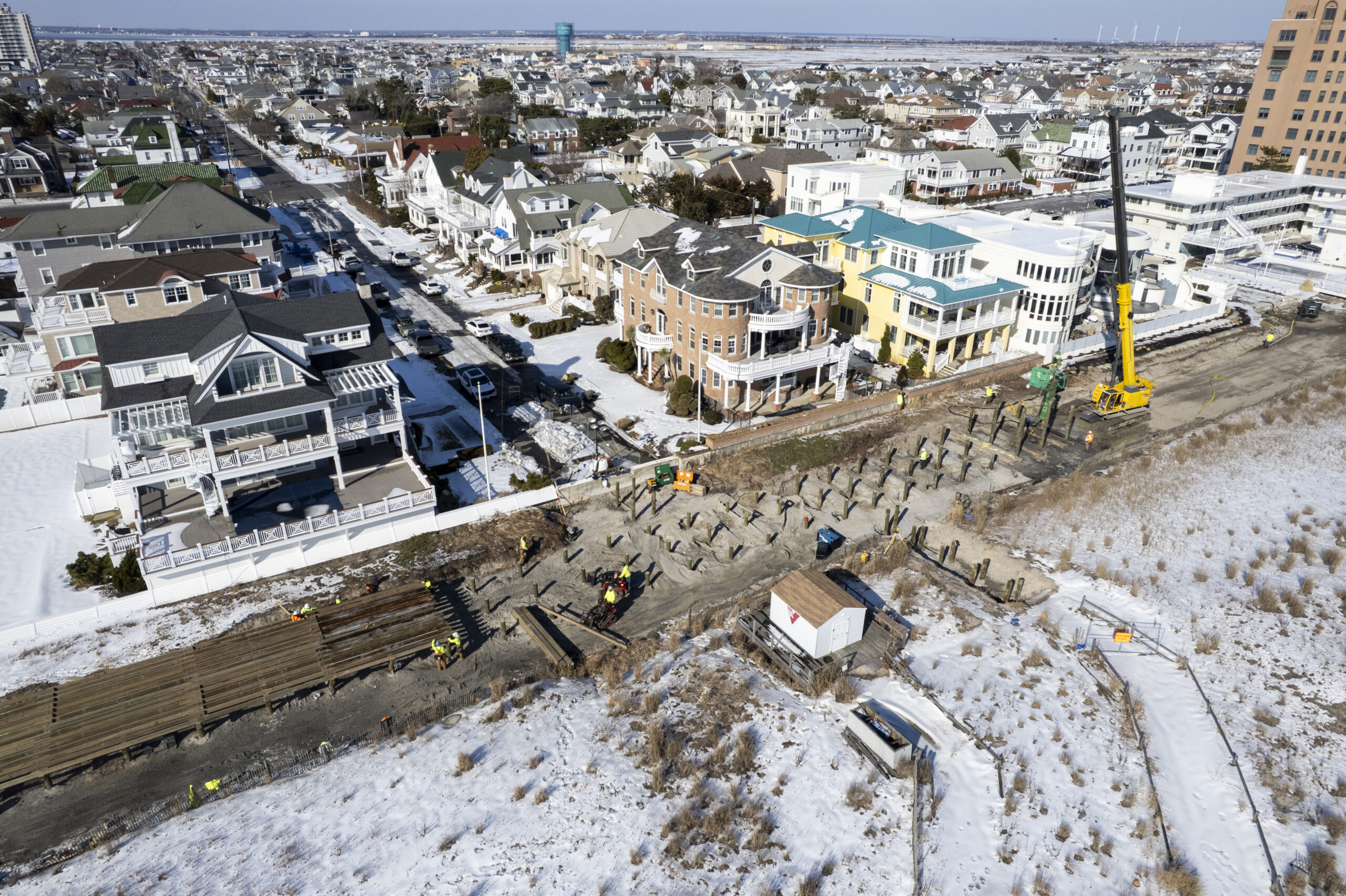
Once the excavation was down, the pile driving crew set out beginning at the south end and working their way toward Suffolk Avenue. “Then the framing crew came in and started framing,” Stinson said. On Feb. 2, the third team began its work: the decking crew.
The weather has slowed the pace, Stinson said. “They were doing about 20 to 24 piles a day,” he said, a pace that dropped to about nine piles a day after the snowstorm and ice buildup.
The framing crew installs pile caps, 8-by-14 beams that run across the boardwalk atop the pilings. The decking crew follows behind them, installing the wood, a tropical wood known as Cumaru. The use of Brazilian rainforest lumber at one time inspired protests, but that has not been an issue this time.
Construction continues on the boardwalk on Wednesday, Feb. 4, 2026, in Ventnor City, N.J.
Ventnor’s boardwalk, which links to Atlantic City’s famous walkway, dates to 1910. It was rebuilt twice before: once after the hurricane of 1944 and again after the March storm of 1962. Margate, on the southern end, never rebuilt its boardwalk after 1944.
Stinson said the tropical wood is noted for its “denseness and durability. It does not last forever.”
In all, $100 million of American Rescue funds was set aside by Gov. Phil Murphy for a Boardwalk Fund and awarded to 18 municipalities, including, as Stinson said, “anybody who has anything close to a boardwalk.”
Brigantine, with its promenade, received $1.18 million. Ocean City, in the process of rebuilding a portion of its north end boardwalk, received $4.85 million.
The two biggest recipients were Asbury Park and Atlantic City, each receiving $20 million. Atlantic City has completed a rebuilding of its Boardwalk to stretch all the way around the inlet to Gardner’s Basin. Wildwood, with $8.2 million, has undertaken a boardwalk reconstruction project, and North Wildwood, receiving $10.2 million, is rebuilding its boardwalk between 24th and 26th Streets, combining the herringbone pattern with a straight board lane for the tram car.
Although the timing of the reconstruction was no doubt prompted by the availability of the federal funds, Stinson said Ventnor’s boardwalk had shown signs of age.
“We’ve been into some significant repairs on the boardwalk,” Stinson said. “Those have increased every year. We were getting into pile failures. It was due. I don’t know if the city would have tackled it without the [federal] money.”
Ventnor’s boardwalk, which links to Atlantic City’s famous walkway, dates to 1910. It was rebuilt twice before: once after the hurricane of 1944 and again after the March storm of 1962.
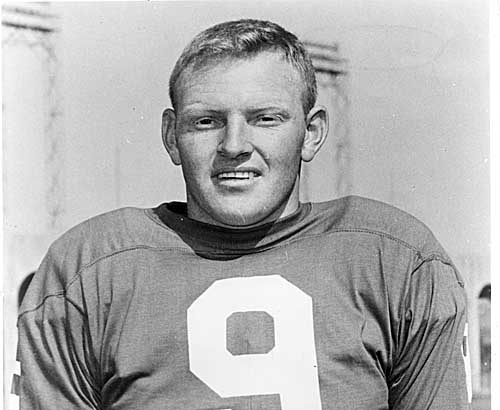
Sonny Jurgensen was an Eagle and a Redskin but never a saint.
It’s been about a week since the hedonistic Hall of Famer died at 91 and nearly 62 years since he departed Philadelphia for Washington in a trade that left the city’s bartenders as downcast as its football fans.
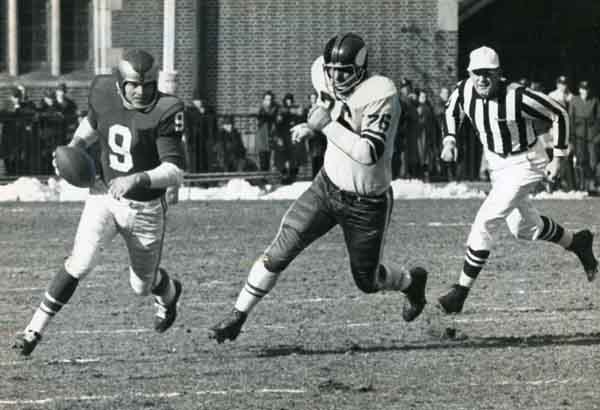
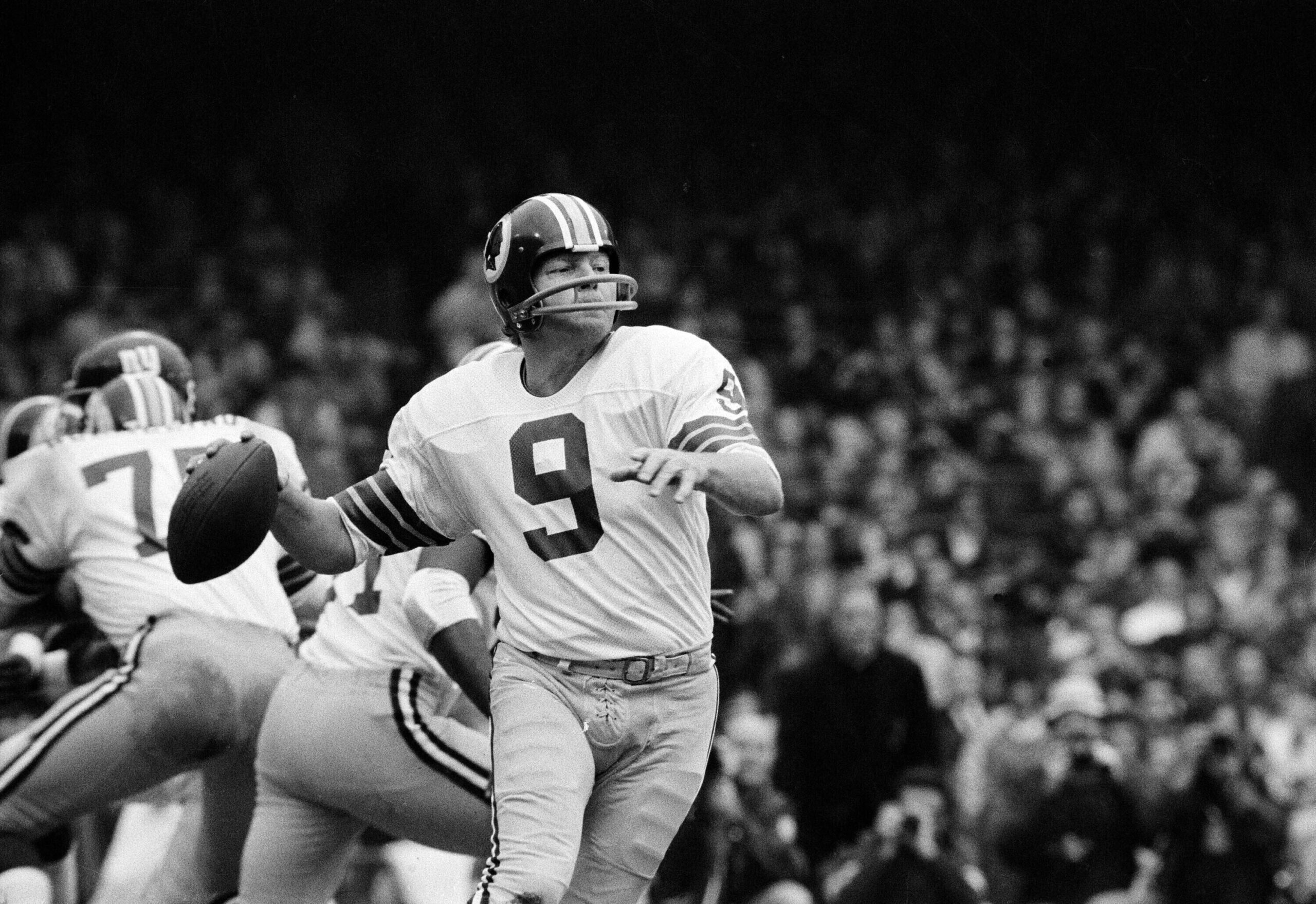
Thinking of Jurgensen now, I still conjure images of that flimsy helmet he wore with its single-bar face mask. I see him squirming in the pocket, quickly surveying the downfield action, then flicking those effortless passes to Tommy McDonald or Pete Retzlaff.
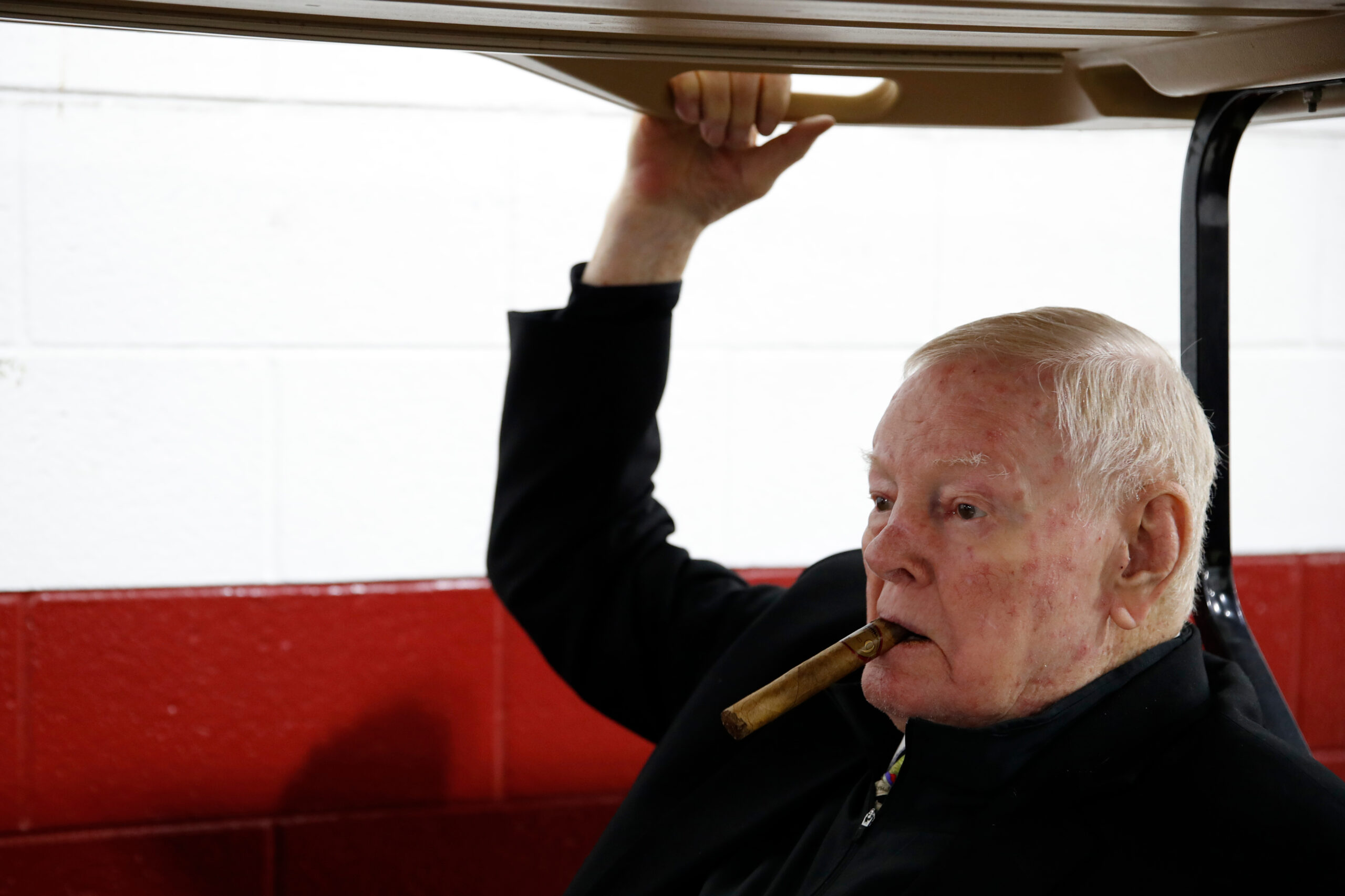
But I also still see, maybe more than in any other athlete from that era, his personal foibles. There was the booze, the pot belly, the mischievous smile, the postgame cigars that jutted from his mouth like middle fingers to those who disapproved.
Sonny Jurgensen was one of the NFL’s great characters of his era and went go on to achieve exalted status in Washington.
Jurgensen was one of the first Philly athletes whose lifestyle was as well-known as his talents. Throughout his seven seasons as an Eagle, the last three as a starter, Philadelphia was rife with whispered stories about the redhead’s off-field encounters. It hardly was a secret that he loved liquor, ladies, and last calls.
Like many of his early-1960s Eagles teammates, the native North Carolinian lived during the season at the Walnut Park Plaza hotel at 63rd and Walnut, just a short stagger from one of the team’s favorite bars, Donoghue’s. Jurgensen regularly showed up there as well as Center City spots like the Latimer Club and Jimmy’s Milan.
Another of his favorite haunts was Martini’s, an Italian restaurant and bar in Berwyn where he befriended the owner, Louie DiMartini. DiMartini’s son, Bill, remembered all the nights that his dad and “Uncle Sonny” showed up at their house.
“One night, my siblings and I were in bed when we were awakened by loud singing,” DiMartini said. “Sonny and my dad had just made up a song called ‘Pine Tree.’ The song had no other lyrics but ‘pine tree,’ and they went on singing it for hours.
“Another time, the Eagles couldn’t find Sonny; he hadn’t shown up for practice. We woke up to get ready for school, and as my older brothers went downstairs they found Sonny sleeping on the couch. My father told us, ‘You didn’t see anything.’”
I was a 12-year-old sports nut when I learned of Jurgensen’s off-field proclivities. For me, pardon the expression, it was a sobering experience, perhaps the first time I realized sports heroes weren’t gods.
Sonny Jurgensen led the Eagles to a 10-4 mark and was an All-Pro in 1961. After two more seasons he was traded to Washington.
If my memory is accurate, it happened on a morning in January 1962. The night before, my father, the sports editor of two Philadelphia neighborhood weeklies, had attended his first Philadelphia Sports Writers Association banquet.
I couldn’t wait to hear about it. So at 7:30 the next morning, when he got home from his full-time job as a Bulletin proofreader, I was waiting at the door. As I peppered him with questions, he handed me the event’s program. On its front page were the autographs he’d gathered from sports celebrities he’d encountered there — Gene Mauch, Sonny Liston, Mickey Mantle.
Clearly a little starstruck himself, he eagerly described Mantle’s Oklahoma drawl, Liston’s enormous hands, Mauch’s steely eyes.
Then I saw another signature, this one from Jurgensen, the spirited quarterback who’d just emerged as an NFL star after throwing a league-best 32 touchdown passes during the Eagles’ 10-4 season in 1961.
I awaited my father’s impressions. A virtual teetotaler, his tone shifted when he said, clearly disapproving, “I’ve never seen anyone drink so much.”
That was a jolt. Could a star quarterback be a drunk? That didn’t compute. It was, after all, the pre-Ball Four world of the early 1960s when most of us knew nothing about things like Mantle’s carousing or Liston’s mob connections. Sports writers of the era, many of whom partied just as hard as Jurgensen, shielded the athletes they covered.
My young mind’s palette worked in black and white only. There were no shades of nuance. Heroes had no flaws. Or so I believed. Was Jurgensen a drunk or a hero? He couldn’t be both. Was he the pure-passing machine who’d just thrown for an NFL-high 3,723 yards? Or was he no different from those lost souls my grandmother pointed out in warning whenever we rode the 47 trolley past Vine Street’s Skid Row.
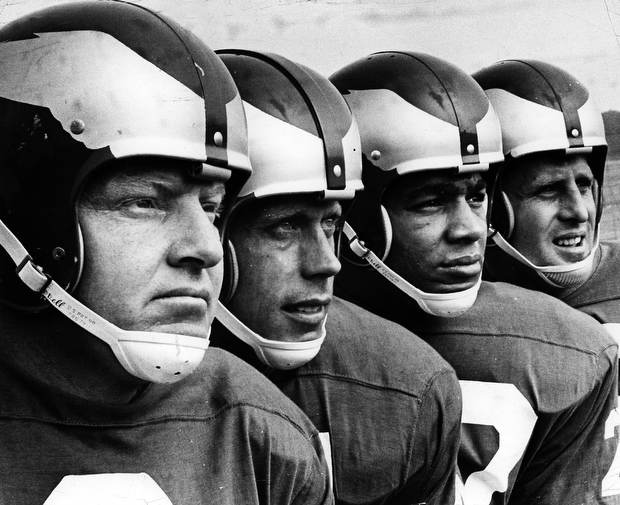
Eagles players (from left) Sonny Jurgensen, Pete Retzlaff, Timmy Brown, and Tommy McDonald during the 1963 season.
I still wasn’t sure when in April 1964, 12 days after he dealt McDonald, Jurgensen’s partner on and off the field, coach/general manager Joe Kuharich shocked Eagles fans by trading the colorful QB to Washington. I wondered if it had something to do with the then 29-year-old’s lifestyle. And I wasn’t alone. Daily News columnist Jack McKinney gave voice to what many thought was behind the incongruous trade.
“Another theory is that Jurgensen’s off-field antics, something less than that of a Boy Scout leader, may have been a factor.”
That trade, which brought pedestrian QB Norm Snead here, was a bad omen. It launched one of the longest and darkest stretches in Eagles history. They wouldn’t reach the postseason again until 1978. In those 14 intervening seasons, the team amassed a combined record of 68-122-6.
With Jurgensen, meanwhile, Washington made five playoff appearances in that span, and in his first six seasons there, he was named first- or second-team All-Pro four times.
No matter the Washington coach, Jurgensen flourished. For three seasons, he clashed with prudish Otto Graham — “He likes candy bars and milkshakes,” Jurgensen said, “and I like women and scotch” — but twice led the league in passing yards. He got along famously with Graham’s successor, Vince Lombardi. Never prone to hyperbole, Lombardi once admitted that Jurgensen “may be the best the league has ever seen.”
And he was still pretty formidable after hours, too. He became a regular at such late-night D.C.-area establishments as the Dancing Club and Maxie’s. At least twice, he was charged with driving while intoxicated.
Sonny Jurgensen spent 11 seasons as a player in Washington and was named to the Pro Football Hall of Fame in 1983.
Jurgensen ended his 18-year career in 1974 with the highest QB rating (82.62) of anyone in the pre-1978 era. Sometime in the 1980s he reportedly stopped drinking and for four decades was Washington’s drawling, plain-spoken radio analyst.
By then the NFL had changed. Its stars now endure round-the-clock scrutiny.
I’m not sure how Jurgensen would have dealt with social media, paparazzi, tabloid headlines. Would it have impacted his play? Would the DWIs have sent him to rehab? Would the whispers have become shouts?
In the end, I really don’t care.
I lost that sportswriters banquet program years ago. I lost a lot of that youthful righteousness, too. So from now on, in those corners of my mind where it’s always a sunlit Sunday at Franklin Field, I’ll remember Jurgensen simply as a gifted man with a child’s name who lofted all those beautiful spirals.
When your social media algorithm starts feeding you videos of Snoop Dogg, and Jason and Kylie Kelce learning how to curl, it must be time for the Winter Olympics.
Ahead of the Milan Olympic Games, similar to the Kelces and Snoop Dogg, I had the opportunity to get some hands-on training. Here’s a look about the training that goes into the sport, my own experience on the ice, and some local places to play.
Curling can look effortless on television, but looks can be deceiving.
Daniel Laufer, 19, a freshman at Thomas Jefferson University from Richboro, Bucks County, who has been curling for 12 years, had the opportunity to compete on this year’s Olympics ice at the Cortina Olympic Stadium in Italy during last year’s World Junior Curling Championships as a member of Team USA.
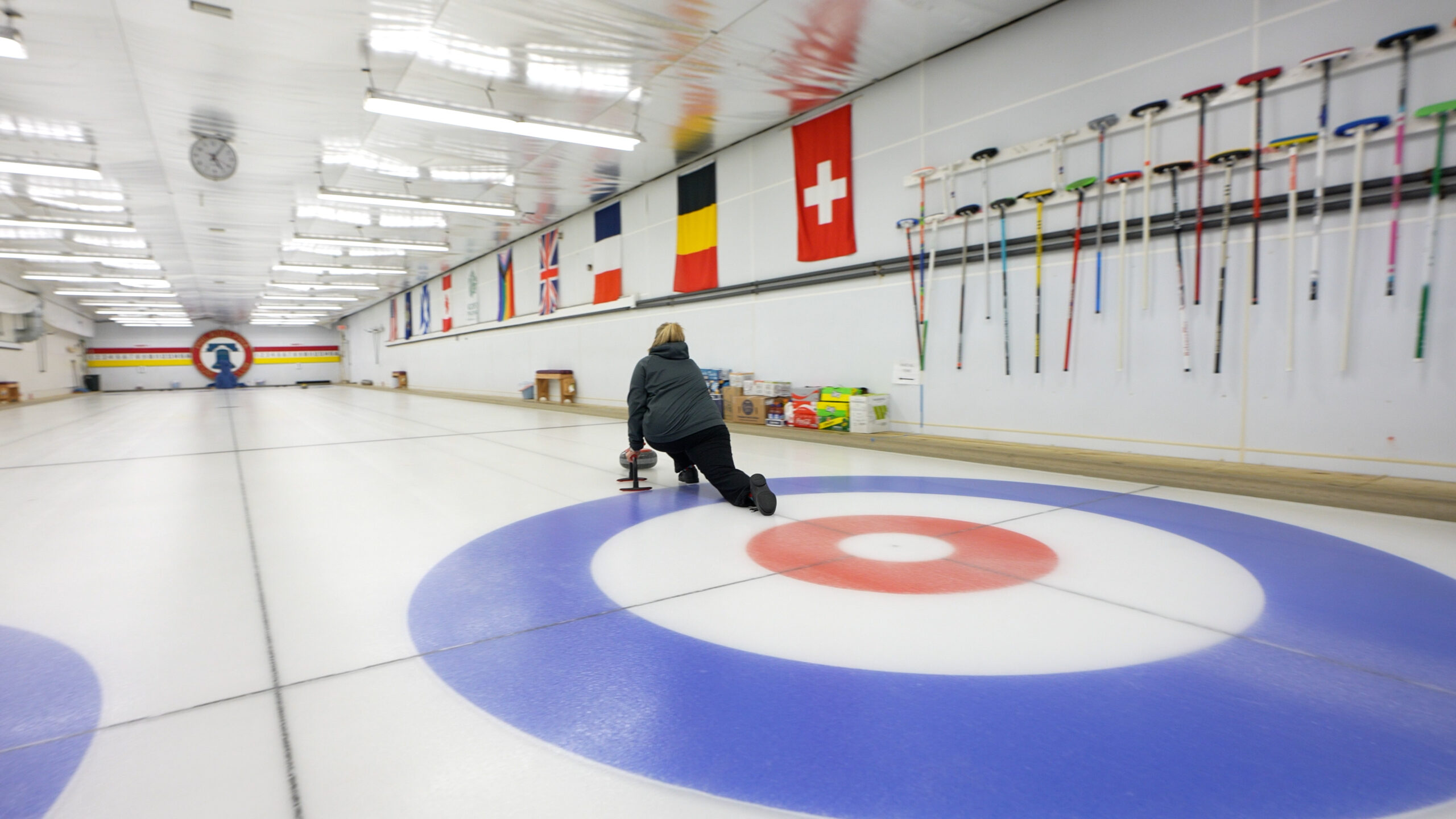
The ice at the Olympic curling center in Milan, like the ice seen here at the Philadelphia Curling Club in Paoli, is pebbled, which is different than the smooth ice you’d find at a Flyers game.
“That was a really great experience,” Laufer said. “[The ice] was really good. Obviously, not as good as it is for the Olympics. They were still figuring out the facilities and figuring out the rocks. We had a really good experience with that venue.”
This year, Laufer again will be competing in the World Junior Curling Championships, just outside Copenhagen, Denmark, from Feb. 24 through March 3. Ahead of the event, he’s been training, working on his strength and cardio.
“I usually try to lift four to five times a week and do a significant amount of cardio,” Laufer said. “When I was training specifically for Worlds last season, I had like three months where I was practicing five days a week. Practices are like two hours long. I probably throw 50 to 60 rocks every practice.
“That’s what a higher level training regiment looks like. But, it looks different for everybody.”
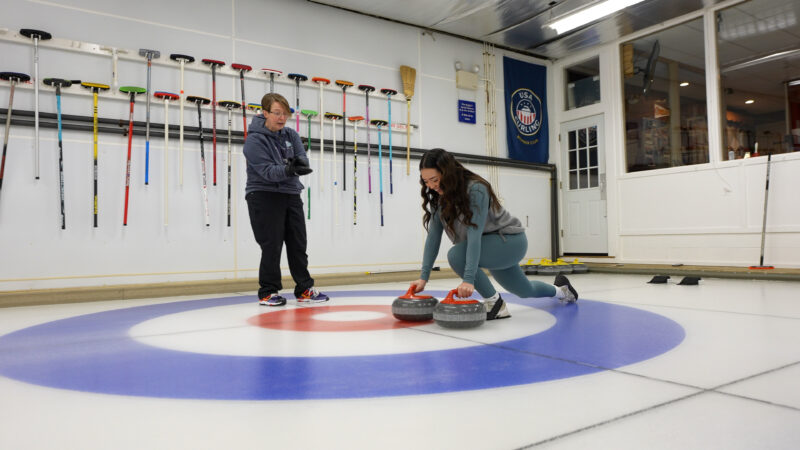
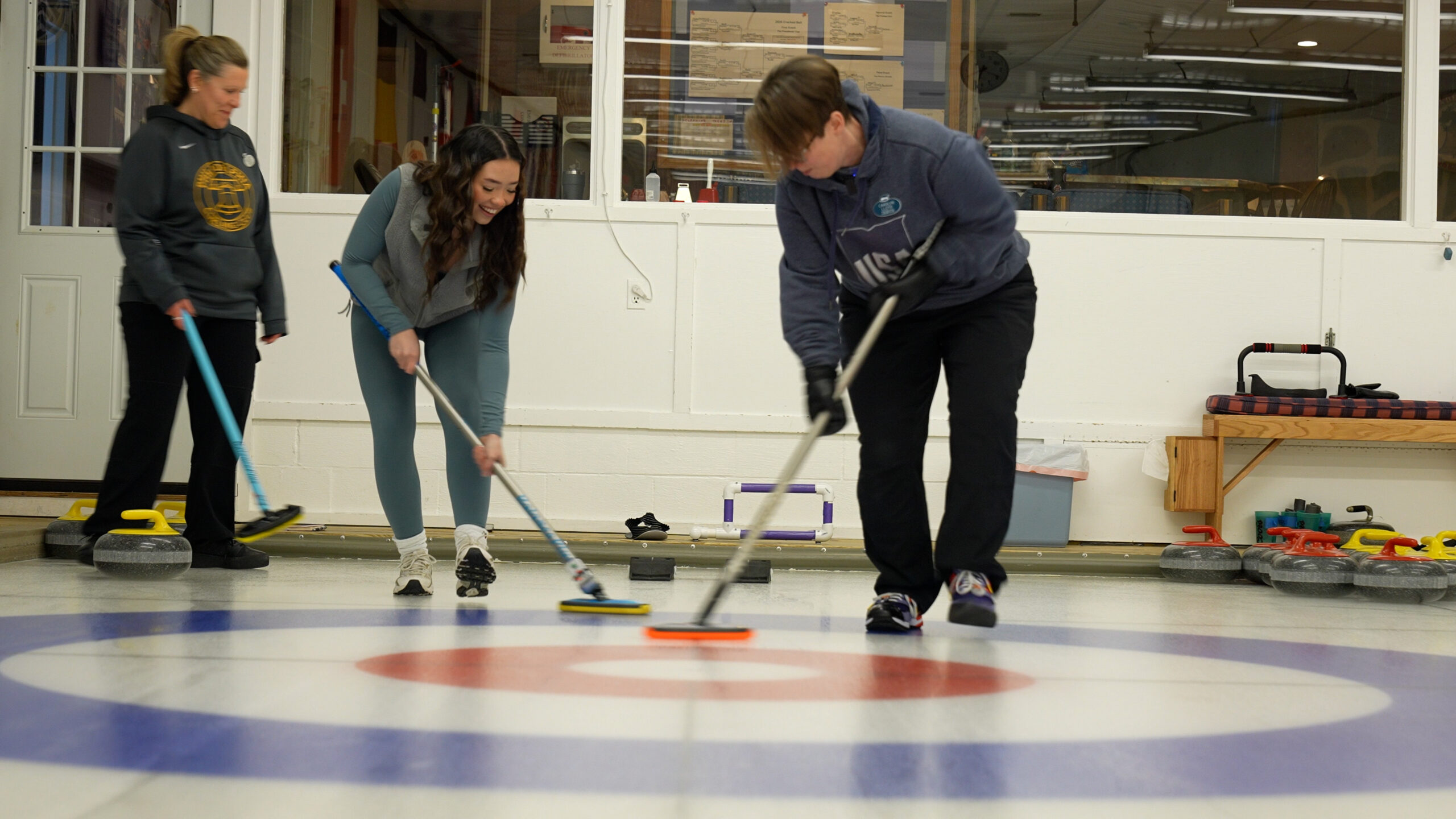
Inquirer reporter Ariel Simpson (center) gets instructions on how to sweep from Carolyn Lloyd (right) at the Philadelphia Curling Club in Paoli.
How hard is curling?
Not everyone trains like Laufer, especially amateurs. So how difficult is curling for the average person? I recently had the opportunity to get a hands-on experience at the Philadelphia Curling Club in Paoli with Carolyn Lloyd, a member for 20 years.
“I love exposing people to something that’s so special,” said Lloyd, who lives in Collegeville. “People don’t realize just how special it is. It’s different from a lot of sports, certainly in its culture. This sport captures my whole heart.”
Before this I had never stepped foot on ice — other than the sheet that covered my driveway for two recent weeks. So, I knew this was going to be a bit of a challenge, but Lloyd was more than up to the task of teaching me.
When it came to delivering the stone, I watched a number of YouTube videos ahead of time. So, of course, I felt like a pro walking in — I didn’t even need special shoes, just some attachments. But once I actually stepped onto the ice, with a gripper covering one shoe and a slider covering the other, I felt like a baby deer trying to walk for the first time.
Walking on the ice was hard enough. Now, imagine having to get into a squat position and push off the hack — a rubber block embedded into the ice — with one leg and balance on the other while holding a deep lunge and bracing your core.
Then you have to aim, release, and spin a 42-pound granite stone. Easy? Trust me, it’s not like they make it look on TV.
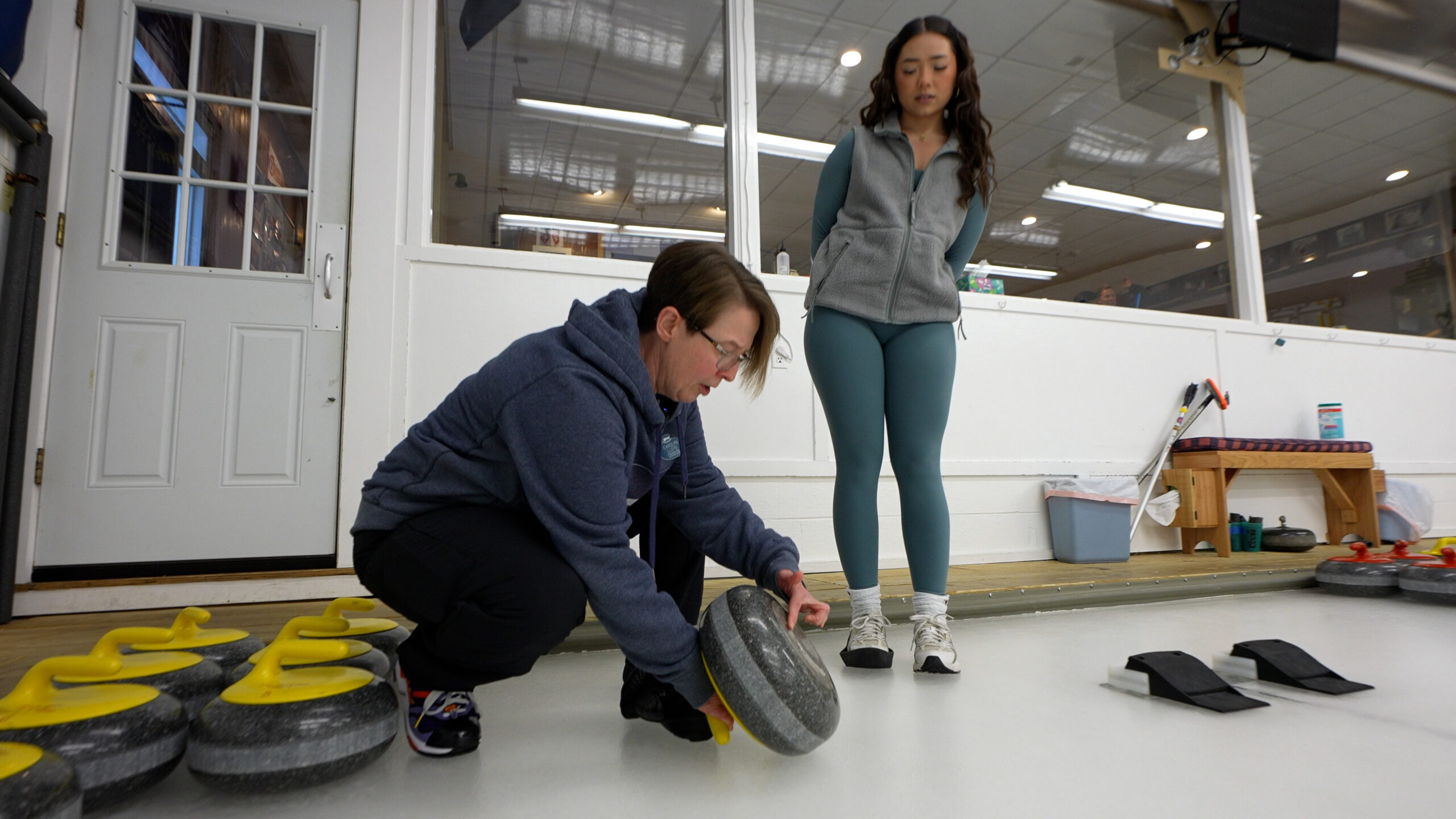
Carolyn Lloyd (left) explains Inquirer reporter Ariel Simpson the parts of a curling stone at the Philadelphia Curling Club in Paoli.
It took me a few tries before I was even mentally prepared to push off with enough strength to move myself a few feet. But, once you get over the fear of falling onto the ice, you start to actually enjoy yourself and can focus on the next step — getting the stone to the house — which I did, eventually.
And all of this was only learning how to deliver the stone. Sweeping was a whole other issue. By the time I was ready to try sweeping, I had much more confidence walking on the ice, so that’s a plus. But now I had to run on it.
Afterward, I felt like I had done a full body workout. The amount of core, lower-body, and arm strength needed for curling is substantial and was certainly a surprise.
The one part of the sport I didn’t get a chance to take part in was the social aspect. It’s a game that’s big on camaraderie, including the post-round tradition of “broomstacking,” when the winning team buys the losing team a drink. But, hey, I was on the clock.
Where can I try curling in the Philly area?
If you want to give curling — and its rules and traditions — a try, there are a couple of local clubs where you can learn.
The Philadelphia Curling Club was started in 1957 but didn’t move to its current location until 1965. Since then they have grown, gaining over 200 members.
“This building was built for curling,” Lloyd said. “We bought the land. We built the club. And to this day, what you see here is a lot of the club members’ efforts. Most of the work that we do is not things that other people come in and do for us.”
The club offers a junior program on the weekends where kids can start as early as 5 years old.
“It’s something that anyone can pick up,” Lloyd said. “The game has adaptations for people who have different types of ability needs. You can learn very quickly, and then you can refine that skill for the rest of your life.”
A member of the Philadelphia Curling Club in Paoli delivers a stone during warmups last week.
There’s also the Bucks County Curling Club, located on York Road in Warminster, that was formed in 2010. The four-sheet club also has over 200 members and plays year-round.
Although it’s usually once every four years when the world tunes in to watch curling on TV, there is plenty of curling content that Laufer wants fans to know about.
“We have a ton of events,” he said. “There’s the Grand Slam of Curling events, which are our biggest tour events. There’s the World Championships, the European Championships. There’s a lot of events to watch, a lot of events that U.S. teams play in.”
The high-end, 31-story apartment tower at 210 S. 12th St. has nine penthouses on the top two floors. They have a variety of layouts, including three-bedroom, three-bathroom apartments that range from roughly 1,650 to 1,835 square feet and cost from $12,600 per month to $13,250 per month.
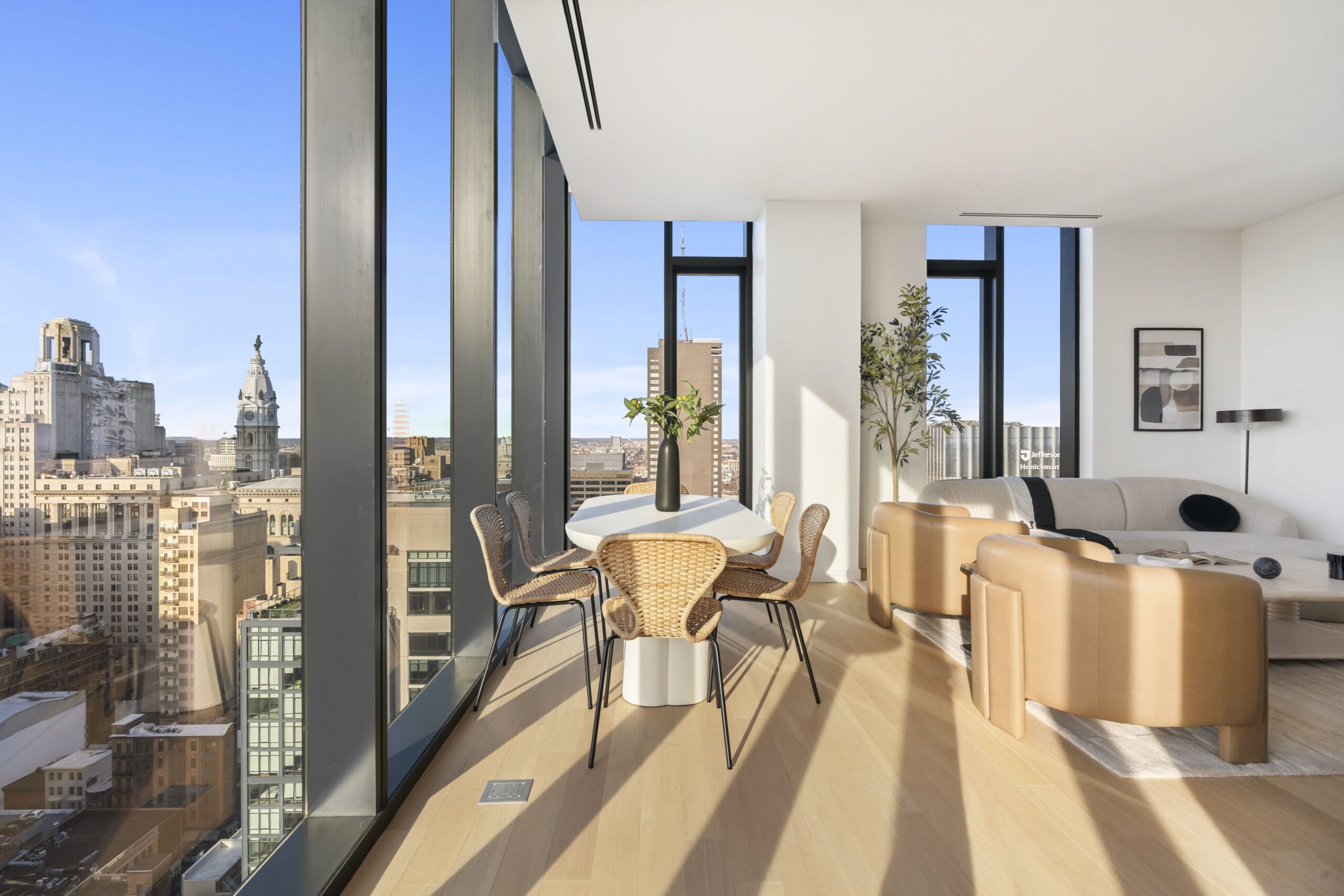
Penthouses for rent have at least one balcony and floor-to-ceiling windows that offer lots of natural light and panoramic views.
“You are literally looking at the Philadelphia skyline from the best view possible,” said listing agent Justyna Goldman with SERHANT.
Tenants can see the City Hall tower from this penthouse at the Center City apartment building.
The Philadelphia metropolitan area has had a growing number of very wealthy renters in recent years. For people who like the renting lifestyle or “if someone wants to live their best life but is only staying for a short time” in Philadelphia, the penthouses at 210 S. 12th could be for them, Goldman said.
“We offer an incredible space and incredible square footage for the price,” she said. “We are looking to make someone a very happy renter.”
Goldman said the building could be attractive to athletes, entrepreneurs, and people working in the medical field, since hospitals are nearby. The building’s Center City location means “you’re surrounded by everything you could possibly need,” she said.
The nine penthouses at 210 S. 12th are on the 30th and 31st floors and all have at least one balcony.
The penthouses include walk-in closets and spacious living areas and kitchens.
Parking spaces are available in an automated underground parking garage with electric vehicle chargers.
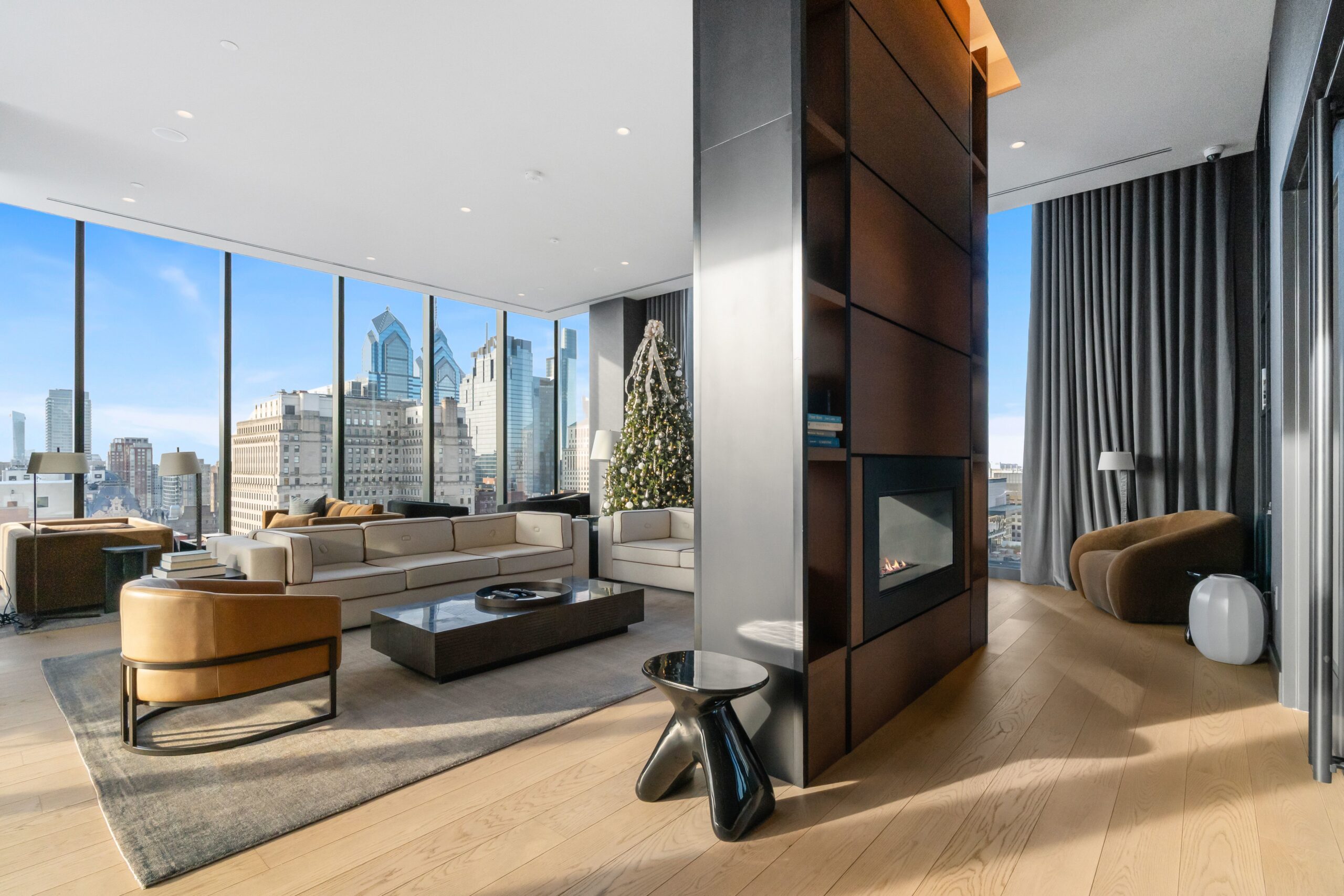
An amenity lounge on the 30th floor of 210 South 12th includes a fireplace and floor-to-ceiling windows with Philadelphia skyline views.
Tenants have access to amenities such as an outdoor pool, a fitness center, yoga and wellness studios, a game room, lounges and co-working spaces, outdoor terraces, a pet spa, and a dog park.
The tower includes studios and one- and two-bedroom apartments. Studios start at $1,968, one-bedroom dens start at $2,300, one-bedroom units start at $2,411, and two-bedroom units start at $3,809.
The building’s website is currently advertising rent deals. The property is offering 2½ to 3 months free for leases longer than a year.
Salon Republic, which offers salon suites for rent, is operating in one of the tower’s retail spaces and more retailers are expected to be announced soon.
The views make the penthouses at 210 S. 12th special, said listing agent Justyna Goldman with SERHANT.
In 1985, when Chris and Cynthia Swayze found a three-story colonial on 32 acres of farmland in Central Bucks County, they knew they were facing a challenge. The house, built in the late 1700s, was in disrepair. They also had no farming experience.
But they saw the home’s potential.
“We felt it was a diamond in the rough,” said Chris, a retired engineer.
The home’s prior owner, who had lived there for 40 years, had died. The Swayzes bought the house from her nephew, who shared her history.
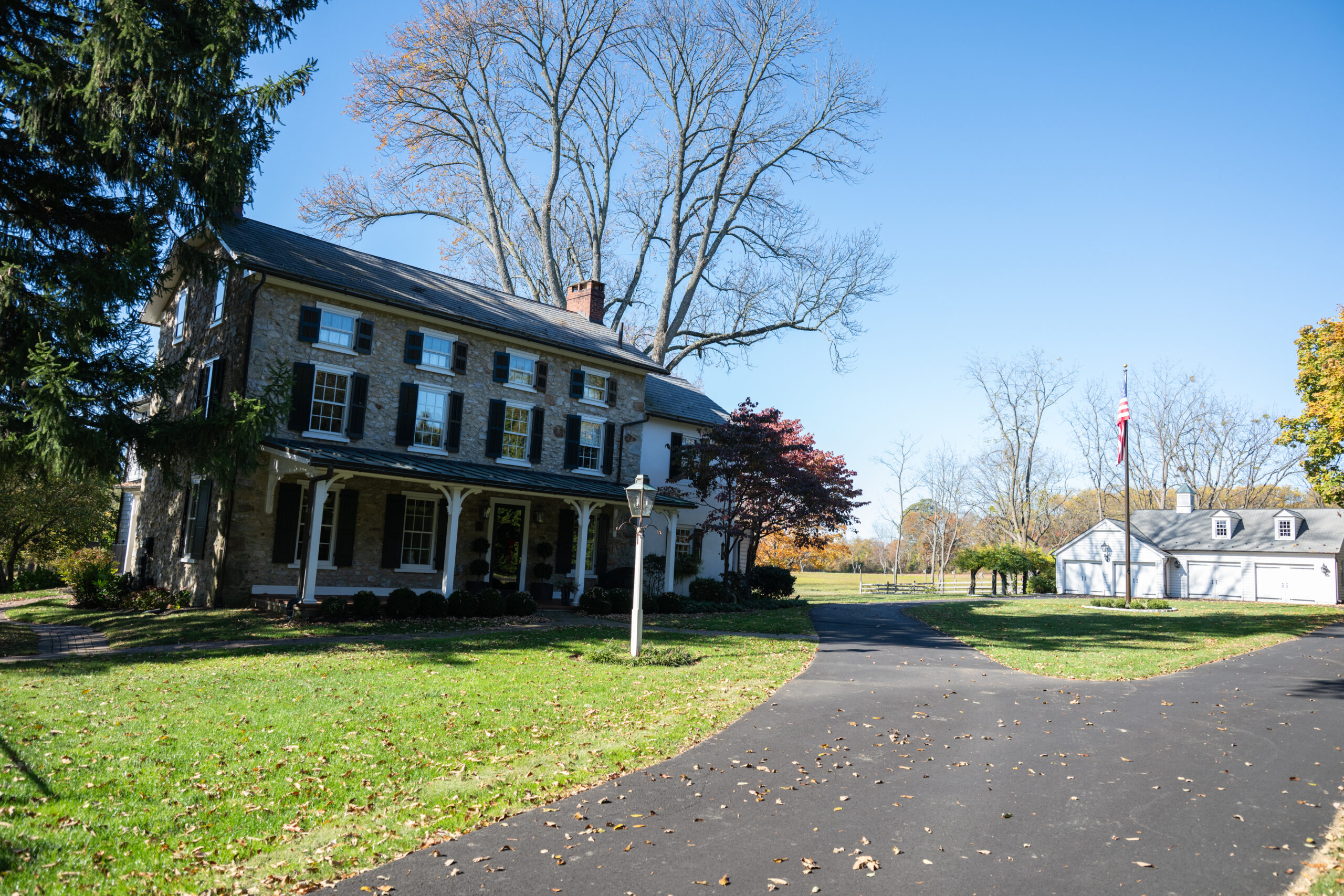
The front of the Swayze home and the garage. The house was built in the late 1700s.
“She had one of the original Sylvan pools, and the neighborhood kids learned how to swim in it,” Chris said.
She raised miniature collies on the property and the yard was littered with the remains of chain-link kennels. The collies also left their mark on the floors.
The windows, original to the house, had no screens, and the basement had a pile of coal left over from before the furnace was converted from coal to oil.
The Swayzes immediately got to work cleaning the overgrown property. They removed plaster that had been set over the home’s exterior fieldstones — in vogue in the 1700s. They refinished all the floors, painted, installed air-conditioning, and fixed the pool.
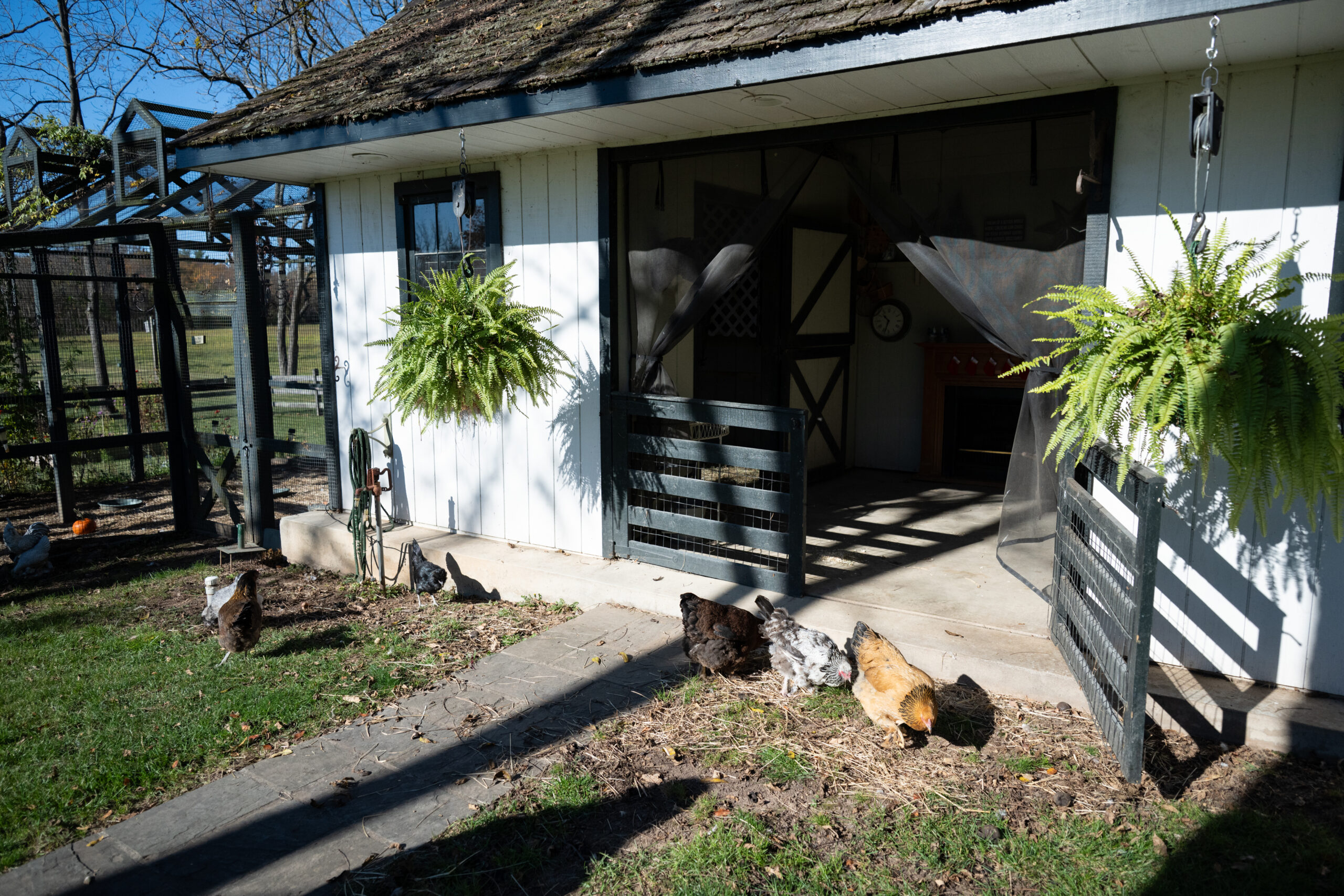
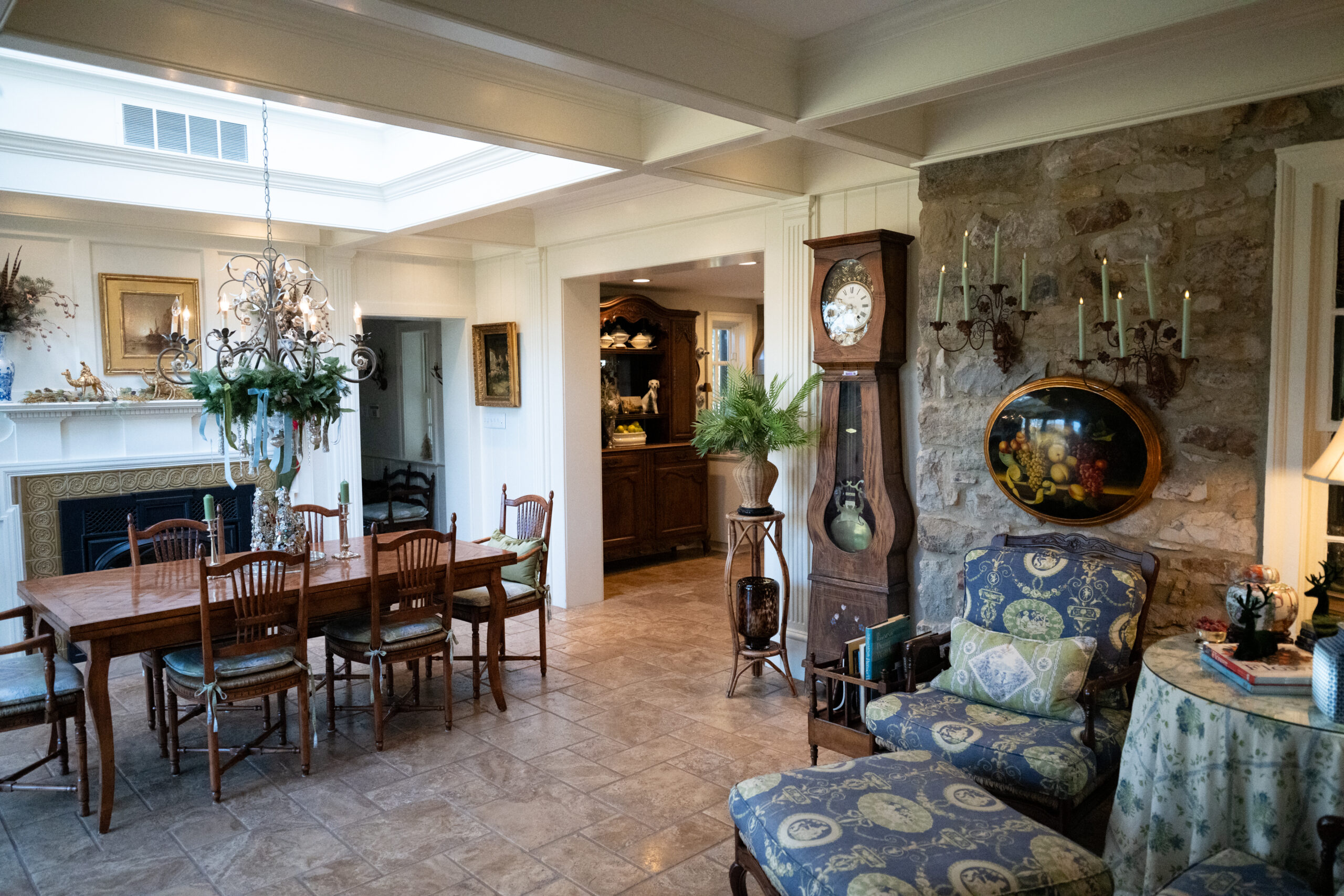
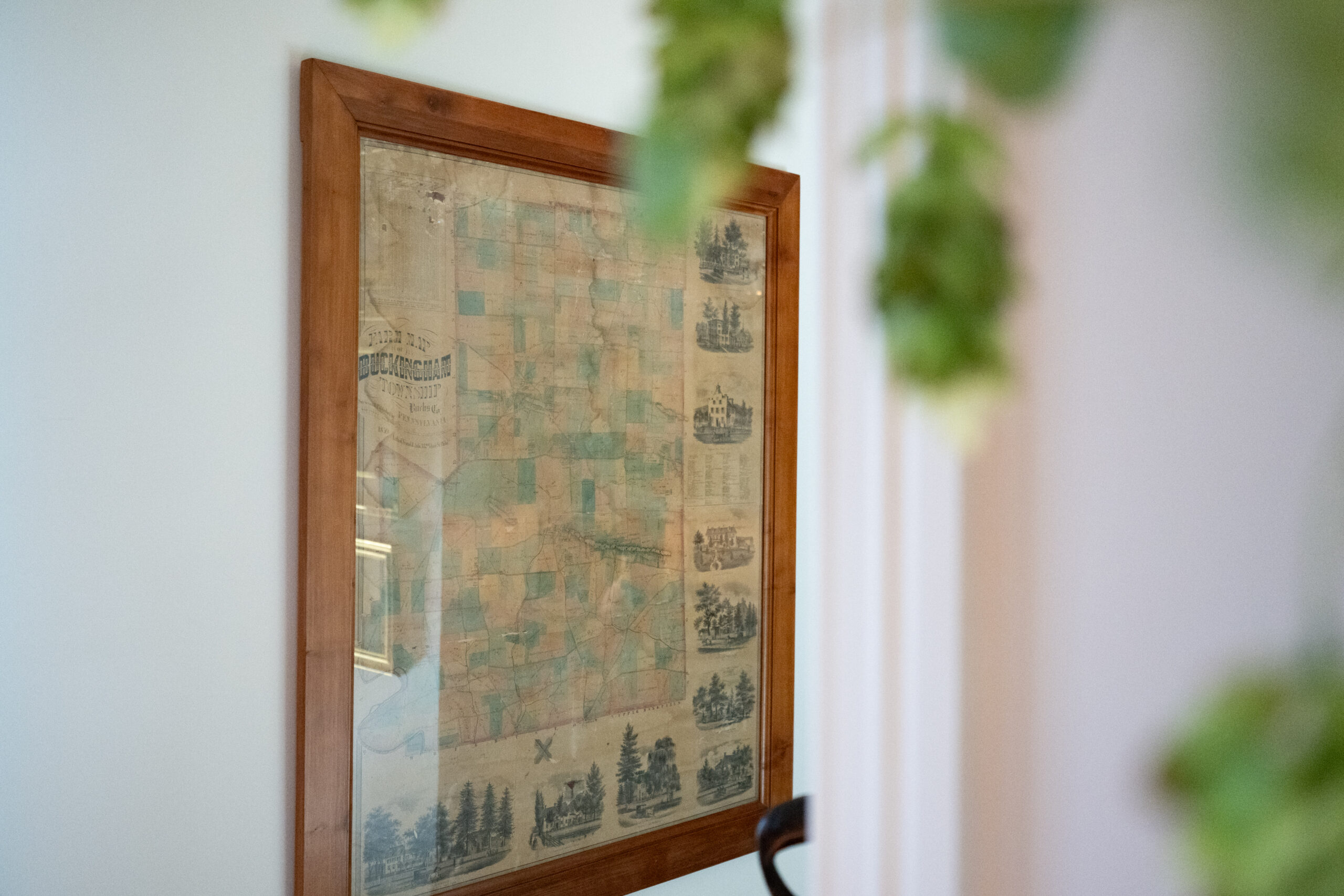
The chicken coop in the backyard.The house is surrounded by 32 acres of land.The dining room and sitting area, with details and decor that evoke the home’s history.A framed map of Philadelphia the Swayzes found when making a home repair.
With no experience in farming, they partnered with a local farmer. Initially he planted corn and soybeans in two back fields. Today they grow hay in those fields. Seven chickens keep them supplied with fresh eggs.
Over the decades, the couple made structural changes, including an addition to the back of the house and a kitchen expansion. Those projects increased the home’s size from roughly 3,000 square feet to about 6,500 square feet, including five bedrooms and four bathrooms. Two of the bedrooms are en suite and include sitting rooms.
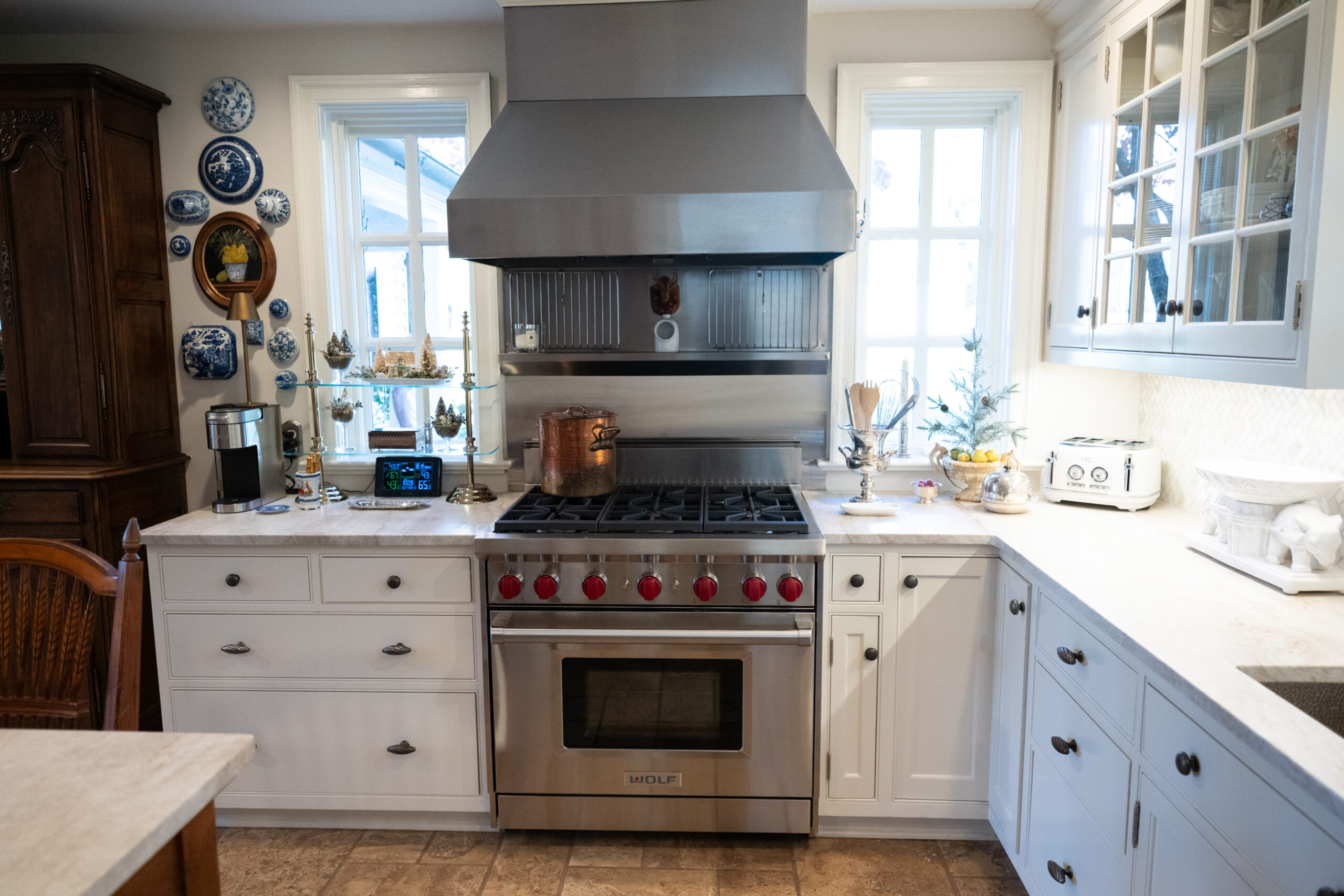
The kitchen, which had been a tiny room with a freestanding stove, free-standing refrigerator, and a couple of cabinets with a sink base, saw the greatest transformation. During two separate renovations, they moved a staircase that connected the kitchen to the basement, took down a wall, and broke through an existing kennel to expand the space.
They added cabinets and counters, a peninsula, built-in appliances including a Sub-Zero refrigerator, and a professional range hood. Beyond the kitchen they created a new entrance, vestibule, and pantry. The expansive kitchen also includes a fireplace and a conservatory-style glass roof that they call the “party hat.”
Chris and Cynthia Swayze made significant changes to their kitchen, enlarging it and adding modern appliances.The conservatory-style glass roof above the dining area.
“We have heat lights under the range hood that keeps food warm,” said Cynthia. “It’s the one thing I can’t live without.”
During a separate renovation, an addition was put on the back of the house with a primary bedroom suite, family room, and finished basement.
Their daughter, Rebecca Nolan, co-owner of Home Tonic in Newtown, designed the interior in a traditional style. The home is filled with ornate chandeliers, intricate woodwork, and walls awash in rich colors as well as bold, colorful, patterned wallpapers.
The puzzle room, where grandson Luke also enjoys playing chess.Assorted porcelain jars on top of a cabinet in the family room.
One of Cynthia’s favorite rooms is the guest room, painted in a deep chocolate brown, with a custom canopy over the bed.
“I wanted it to feel really cozy, like when you got into that bed you were surrounded by a big hug,” she said.
The puzzle room is where Cynthia and her grandson Luke, 8, hang out. In addition to working puzzles, he’s teaching her how to play chess.
A framed map of Philadelphia on linen, dated 1809, hangs in the basement. They found it in the garage attic when repairing a leak, and were amazed that it had survived.
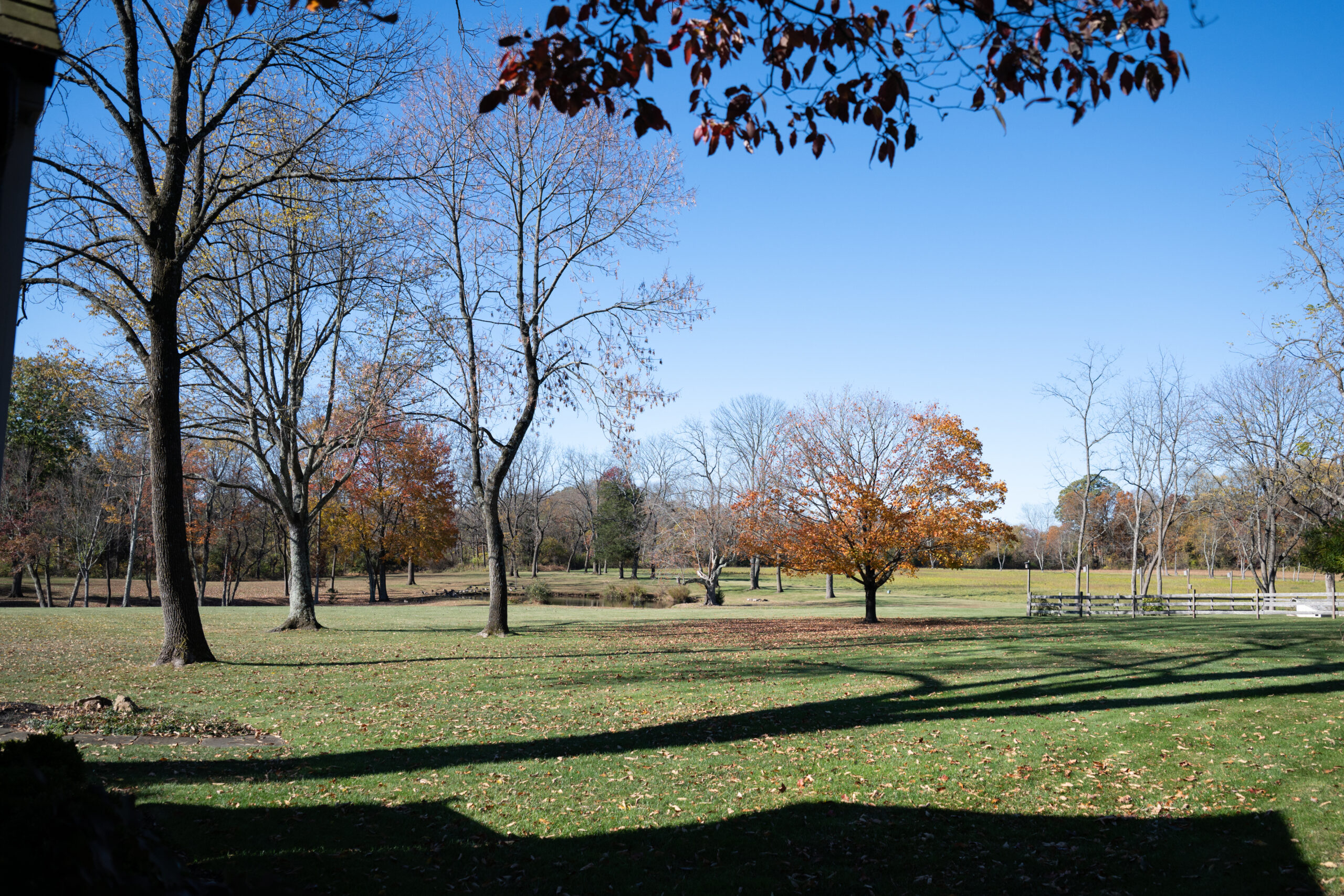
A pond and many tall trees are on the property.
The home’s expansive grounds offer a breathtaking view from the patio, accessible from the kitchen’s French doors. The peaceful vista includes sights of the swimming pool, pond, chicken coop, fields, and lots of open space. Chris especially appreciates the gigantic ash tree they’ve been treating for ash bore.
“From the circumference we’ve determined it’s over 200 years old,” said Chris. “We appreciate the history that Central Bucks County has to offer.”
Is your house a Haven? Nominate your home by email (and send some digital photographs) at properties@inquirer.com.
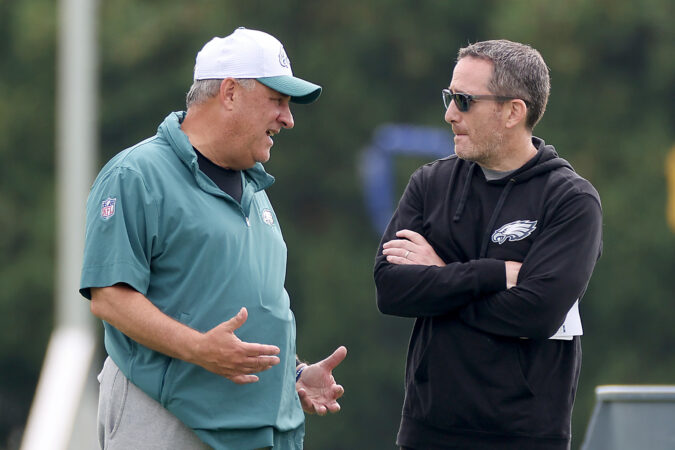
The Eagles are no longer the defending champions, and their early exit from the playoffs one month ago has already ushered in major changes. Out is offensive coordinator Kevin Patullo, in is new offensive coordinator Sean Mannion, and with him more changes to the offensive coaching staff.
The Eagles are facing a key offseason as they aim to make changes and improvements to make sure their Super Bowl window remains open in 2026 and beyond.
Stoutland’s departure is a big one, as he has long been regarded as the best offensive line coach in the NFL. The Eagles hired his replacement on Monday by bringing in former Vikings offensive line coach Chris Kuper, who was with Minnesota as the line coach for the last four seasons before his contract expired. Kuper crossed paths with Mannion in 2023, when Mannion was a quarterback on the Vikings’ roster. He also worked under Vic Fangio as an assistant offensive line coach when Fangio was the head coach of the Denver Broncos (2019-21).
The new hires also indicate that Parks Frazier, the pass game coordinator this season, and Jason Michael, the tight ends coach, could be on their way out with the Eagles as the team revamps its offensive scheme under a new coordinator.
On the defensive side, there was a brief scare when Fangio was mulling retirement, but the defensive coordinator made the decision to return to the Eagles for the 2026 season. Fangio’s exit would have been a big blow, especially considering that the Dallas Cowboys plucked Eagles defensive backs coach Christian Parker, a highly regarded, 34-year-old up-and-comer, to be their new defensive coordinator. It had always seemed like a matter of time until Parker, who was also the defensive pass game coordinator, was lured to a better job with another team, and that time came.
Parker, of course, has been instrumental in helping the Eagles develop their two young All-Pro defensive backs, Quinyon Mitchell and Cooper DeJean. Those young players will now be under the tutelage of Joe Kasper, who will assume the role of defensive backs coach after being promoted from safeties coach, a position the Eagles need to backfill.
Did Jaelan Phillips show the Eagles enough to get a new contract from them this offseason?
Roster decisions
Scheduled free agents
The Eagles have 20 pending free agents — 10 on offense, nine on defense, and punter Braden Mann.
Offense
TE Dallas Goedert: Goedert reworked his deal last offseason to stay with the Eagles and scored a career-best 11 touchdowns, a tight end record for the team. Considering the Eagles don’t have any tight ends on the roster, they may look to bring the 31-year-old back after he got through the season relatively healthy.
WR Jahan Dotson: The little-used third receiver could find a new home this offseason. WR3 is a tough position on this team behind A.J. Brown and DeVonta Smith, and it seems unlikely the Eagles will find it worth bringing Dotson back.
OT Fred Johnson: Johnson left for free agency after last season, but the Eagles traded for him before the season for some insurance at tackle, and they needed it. It remains to be seen how the Eagles approach the draft and free agency, but Johnson’s return would put an experienced body on the depth chart.
TE Grant Calcaterra: As mentioned, the Eagles don’t have any tight ends. Calcaterra has been productive when the Eagles use him as a pass catcher, but he’s not a great blocker, and the Eagles need their tight ends to block.
OL Brett Toth: The do-it-all lineman has been a valuable asset in the offensive line room. He can fill in at any position.
TE Kylen Granson: Granson was a big part of the Eagles’ special teams, despite having a limited role in the offense. The tight end position is in flux, but Granson could return as a depth piece.
OL Matt Pryor: The Eagles brought back a familiar and experienced face in the offseason for some depth. Pryor gave that and provided positional versatility. But he wasn’t all that great in relief.
RB AJ Dillon: Dillon started the season in the mix to get snaps behind Saquon Barkley, but he fell out of favor after the Eagles traded for Tank Bigsby. Dillon was inactive for most of the second half of the season and logged just 12 carries. The Eagles are pretty set at running back with Barkley, Bigsby, and Will Shipley.
QB Sam Howell: The Eagles weren’t comfortable with Kyle McCord as QB3, so they acquired Howell before the season. McCord has since landed with Green Bay.
FB Ben VanSumeren: VanSumeren changed positions from linebacker to fullback and made the 53-man roster, but his season ended with an injury on the opening kickoff in Week 1. The Eagles signed Kansas City’s Carson Steele to a futures contract. Will they bring back VanSumeren and have a fullback competition?
Defense
Edge rusher Jaelan Phillips: The deadline acquisition stepped in right away and was a difference-maker along the defensive line. The Eagles need a top-end edge rusher to add to a unit that has Jalyx Hunt and Nolan Smith under contract. Phillips would make sense.
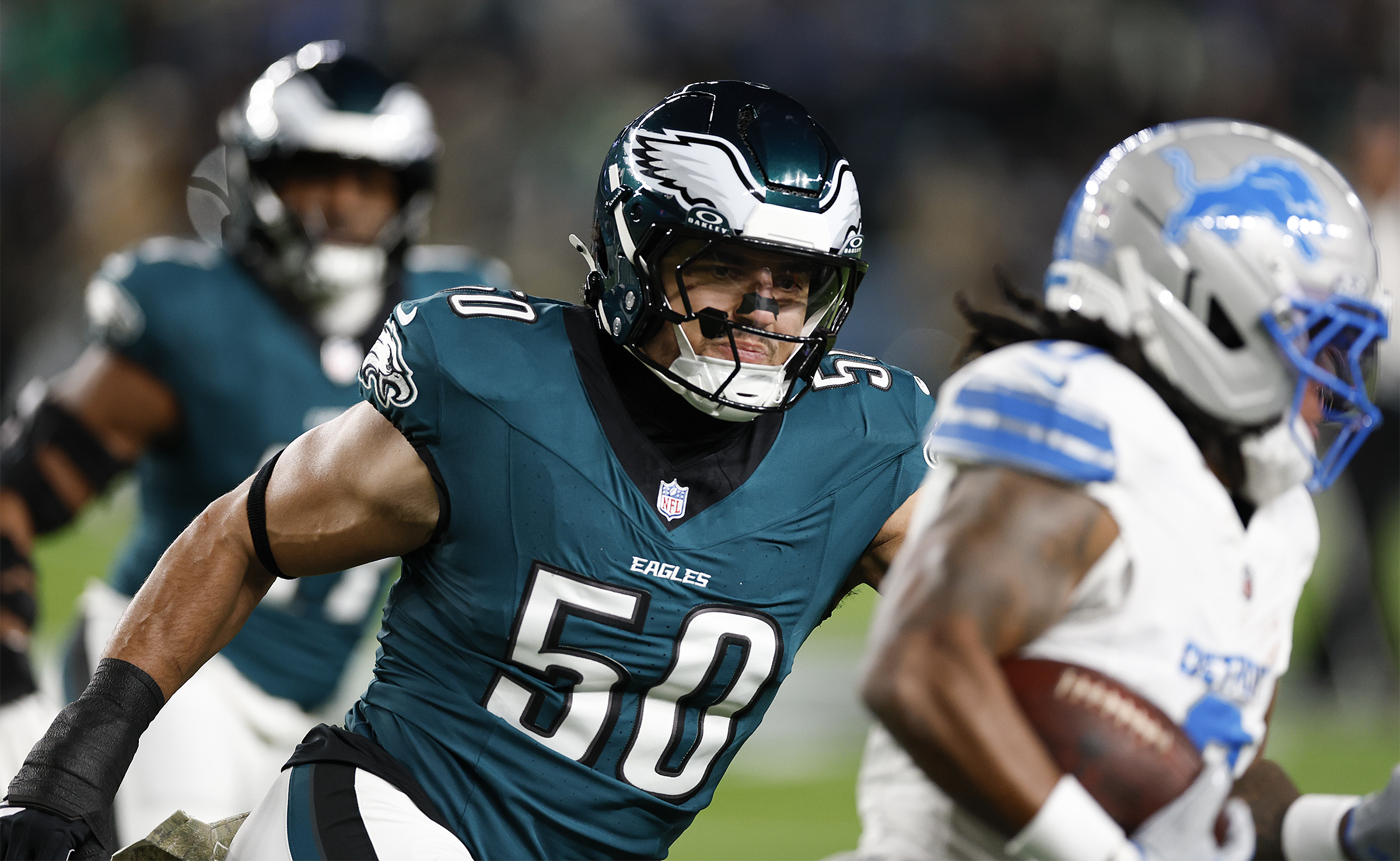
LB Nakobe Dean: Dean returned from patellar tendon surgery in the middle of the season and looked like he didn’t miss a beat. But the Eagles drafted his replacement last season in Jihaad Campbell.
S Reed Blankenship: Blankenship has been a big part of the defense for the last four years. He has started 50 games and is a leader. The Eagles are thin at safety, but it remains to be seen what Blankenship’s market looks like and if the Eagles will be in the mix.
CB Adoree’ Jackson: Jackson was up and down in training camp and to start the season, but he played his way into a starting job opposite Mitchell. He’ll be 31 next season, and the Eagles probably want to get better at CB2.
S Marcus Epps: Epps stepped in as a starter after Drew Mukuba went down. He just turned 30, although he could find his way back to the Eagles and compete for a job.
Edge rusher Brandon Graham: Graham came out of retirement and briefly changed positions when Jalen Carter went down and the interior needed a boost. Will he go back into retirement?
Edge rusher Joshua Uche: Uche seemed to be playing his way into a bigger role when the Eagles brought Graham out of retirement, which forced Uche to a lesser role. The Eagles are thin on the edge, though Uche seems to be more of a depth piece right now.
Edge rusher Azeez Ojulari: Ojulari ended up behind Uche on the depth chart and then missed most of the season after being placed on injured reserve.
Edge rusher Ogbo Okoronkwo: Okoronkwo made the team out of training camp as a depth edge rusher but suffered a season-ending injury in Week 4, the only game in which he played.
Special teams
P Braden Mann: Mann had a great season. He ranked fifth in the NFL in punt average (49.9 yards). It would make sense for the Eagles to want to bring him back.
New deals?
There are a few players under contract who could be in the running for a new contract with the Eagles.
DT Jordan Davis: The Eagles picked up Davis’ fifth-year option last offseason and he remains under contract for the 2026 season. But after a breakout 2025 season, he likely earned himself a lot of money.
DT Jalen Carter: The Eagles likely will do what they did with Davis and pick up Carter’s fifth year, but it might be time for an extension now. Carter didn’t have his best season after a dominant 2024. The Eagles may be able to sign him to a more team-friendly deal, though Carter and his agent, Drew Rosenhaus, may opt to play 2026 on his current deal and revisit the big-money deal next offseason.
DT Moro Ojomo: Ojomo is set to play the final year of his four-year rookie deal in 2026. The seventh-round pick has been a major success story. Will the Eagles look to lock him up beyond 2026? Will they be able to afford all of these defensive linemen with big contracts coming in the future for other defensive stars like Mitchell and DeJean?
Contracted players who could be on the way out
The Eagles have some players on the 2026 roster who may not be here when training camp starts.
K Jake Elliott: Elliott has had two consecutive seasons in which he didn’t perform well enough. His 2025 field goal conversion rate was just 74.1%, the lowest of any kicker who played a full season.
WR A.J. Brown: Will his frustrations with the offense cause him to ask for a trade? It would be a costly move for the Eagles, but they’ve willingly taken on dead cap in the past. The Eagles would have a big hole to fill if it came to that.
RT Lane Johnson: Johnson remains one of the best tackles in football, but his availability was an issue this season. He missed the final eight games after suffering a Lisfranc injury in his right foot. The Eagles probably would love him back, but Johnson will be 36 in May and won’t play forever.
LG Landon Dickerson: The Inquirer’s Jeff McLane reported in a podcast during Super Bowl week that Dickerson’s return was no sure thing. The 27-year-old played through a lot of pain in 2025 and his body has taken a toll with multiple injuries since his college football playing days. An early retirement would leave the Eagles with a big hole.
QB Tanner McKee: Will the Eagles look to ship McKee to another team for a draft pick? McKee’s Week 18 performance didn’t help their cause.
CB Kelee Ringo: Ringo remains under contract on his rookie deal, but he seems like a change-of-scenery candidate. He has struggled to get on the field with the Eagles, though he has been great on special teams.
2026 free agency targets
What do the Eagles need most? What kind of players will be on the market?
First, the Eagles need to know what happens with the futures of key offensive players like A.J. Brown, Lane Johnson, and Landon Dickerson.
At the moment, they have just over $20 million in cap space, according to Over the Cap. That’s not a lot, but Howie Roseman has shown the creativity to use void years and spread cap hits out over multiple seasons.
Free agency begins March 11.
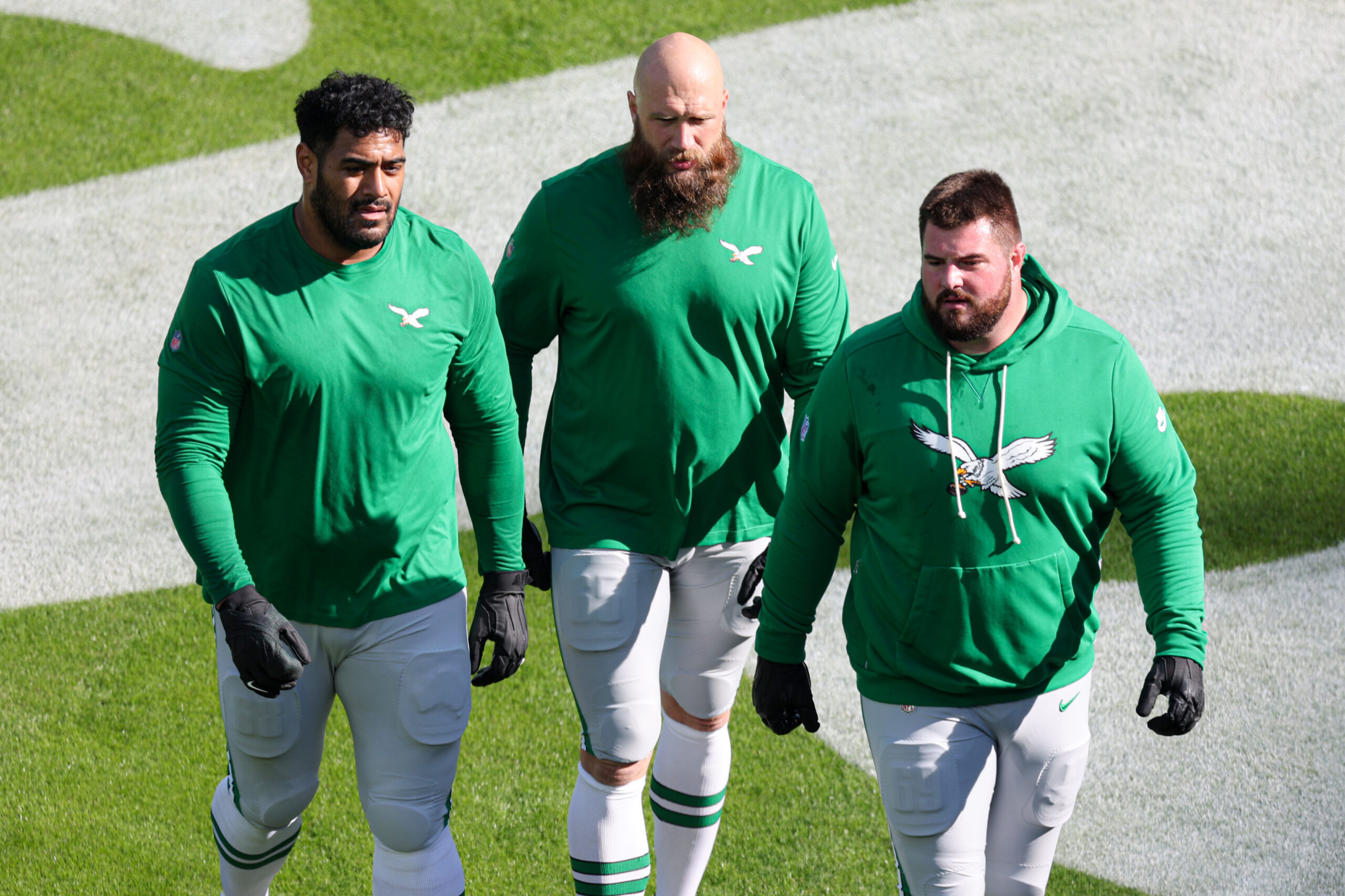
Jordan Mailata (left) will be back, but what will become of tackle Lane Johnson (center) and guard Landon Dickerson (right)?
Position groups and players to target
Offensive line: Will Johnson return? Will Dickerson ever be fully healthy again? Can Cam Jurgens bounce back? Those are big questions facing the Eagles, who need to restore their offensive line this offseason. Reinforcements likely will come via the draft, but free agency offers some options.
Indianapolis Colts right tackle Braden Smith, for example, has dealt with injuries but could provide insurance for Johnson and help the Eagles bridge their way to the next young tackle. Old friend Isaac Seumalo fits that bill, too, at guard. Same with Cleveland Browns guard Joel Bitonio.
Wide receiver: Regardless of what happens with Brown, the Eagles could use some more help at receiver. They won’t be playing in the George Pickens pool, and probably not Alec Pierce, either, but what about Romeo Doubs, Kendrick Bourne, or Van Jefferson at WR3?
EDGE: Jaelan Phillips should be at the top of the Eagles’ wish list. Jalyx Hunt and Nolan Smith are the only two edge rushers under contract. The Eagles will draft at least one rusher, but they need a top-end talent like Phillips. If not Phillips, other top options would be Trey Hendrickson, Odafe Oweh, Boye Mafe, Joey Bosa, and Khalil Mack. There’s always the possibility of Roseman figuring out a way to trade for Maxx Crosby, too.
Tight end: Dallas Goedert may be in the running to return. But if not, the Eagles could eye someone like Atlanta’s Kyle Pitts, who finally played to his potential this season. Pitts attended Abington and Archbishop Wood before playing at Florida in college. Other free agents include Isaiah Likely, David Njoku, and Tyler Higbee. The Eagles probably will use a draft pick on one, too.
Cornerback: Quinyon Mitchell eventually will re-sign at the top of the market, and you don’t see many teams spending that type of money on two players at this position. But there are some options the Eagles could target, like Tariq Woolen, Roger McCreary, and Jamel Dean. Will those players be too costly? We’ll see.
Safety: Reed Blankenship has been solid for the Eagles, but he’s not great in coverage. The Eagles could be looking to pair Drew Mukuba with a better player on the back line, and they could look to do that via free agency. Old friend Kevin Byard has been really productive with the Chicago Bears, though he could command a bigger contract than the Eagles are willing to give out. Los Angeles Rams safety Kamren Curl could be an option.
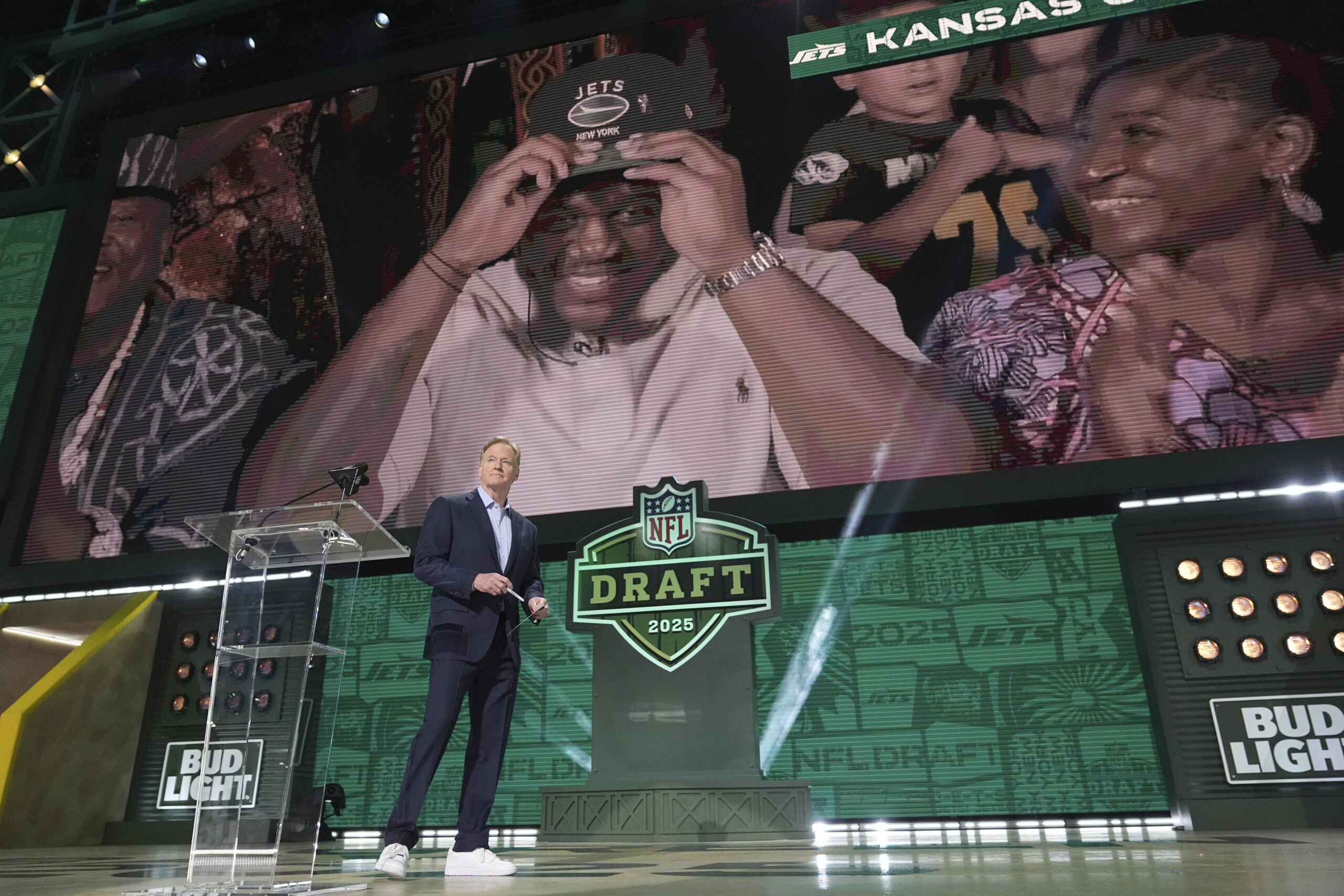
The 2026 NFL draft will be held April 23-25 in Pittsburgh.
The 2026 NFL draft
The Eagles’ needs here will become clearer after free agency, though our Devin Jackson released his first mock draft Monday morning and has the Eagles making a key addition to their offense at a position of need.
The draft will take place beginning on Thursday, April 23, in Pittsburgh.
The yearly NFL Scouting Combine begins on Feb. 23; and teams have until April 15 to conduct visits, tests, and interviews with prospective draft picks.
League meetings (updated Jan. 17)
The annual league meeting is from March 29 to April 1 in Arizona. It is there that the Tush Push likely will be another big topic of conversation and could meet its demise.
But the Eagles’ lack of success using their signature play this season could result in some teams backing off a little bit. We’ll see.
There’s also another league meeting May 19 and 20 in Orlando.
2026 Eagles schedule (updated Jan. 17)
The Eagles’ opponents are known. They play home games vs. their three divisional opponents (Washington Commanders, Dallas Cowboys, and New York Giants), as well as other games vs. the Indianapolis Colts, Carolina Panthers, Los Angeles Rams, Seattle Seahawks, Pittsburgh Steelers, and Houston Texans.
Besides their three NFC East road games, the Eagles also travel to play the San Francisco 49ers, Chicago Bears, Arizona Cardinals, Jacksonville Jaguars, and Tennessee Titans.
It remains to be seen if the Eagles will get an international game.
The schedule is due out in May, but international dates will likely be released before that.
“I hate to leave it,” said Stephanie Tauman, “but it’s just too big for me.”
Tauman has spent six years in her four-bedroom, 3½-bathroom 1957 mid-century modern home in Drexel Hill. She bought the house sight unseen in 2019 after viewing it online.
But now, at 3,314 square feet, “it has gotten very big,” so she is planning to move to a smaller home. Tauman, an artist and art teacher, hopes to settle in Philadelphia.
Living room
She does not know who originally commissioned the split-level house. She already owned some mid-century modern furniture and other items when she bought it.
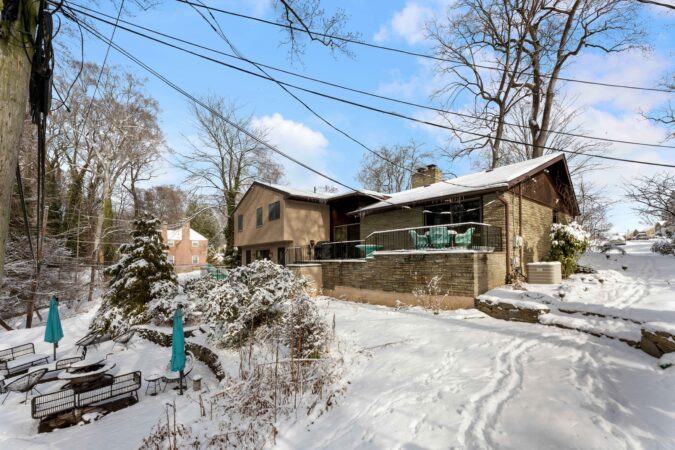
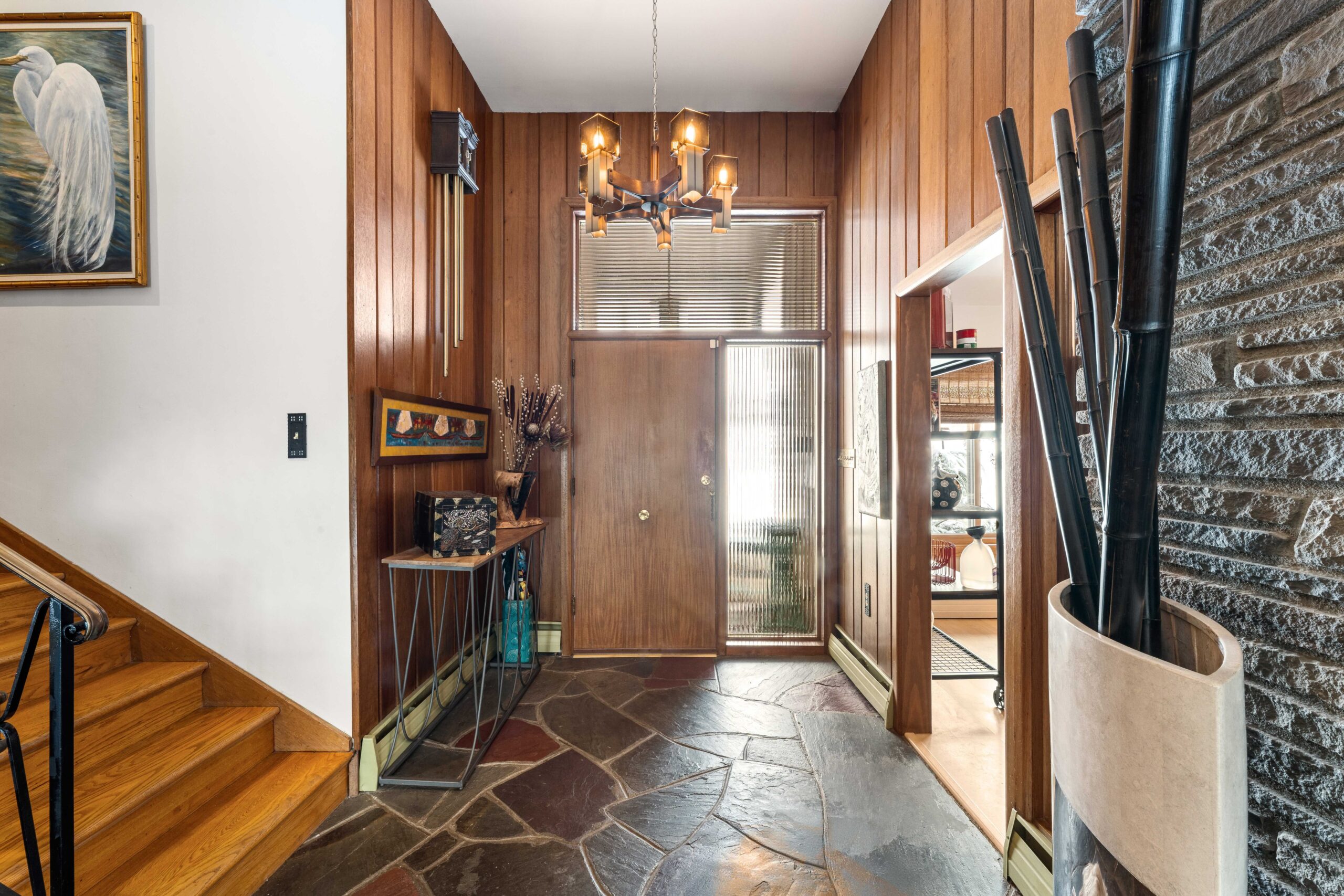
The approach to the house is along a slate walkway with arts and crafts style light fixtures. The exterior is stone and mahogany, and the foyer has a slate and mahogany theme.
The four bedrooms are on the top level, and there are three terraces connecting to the outdoors.
Kitchen
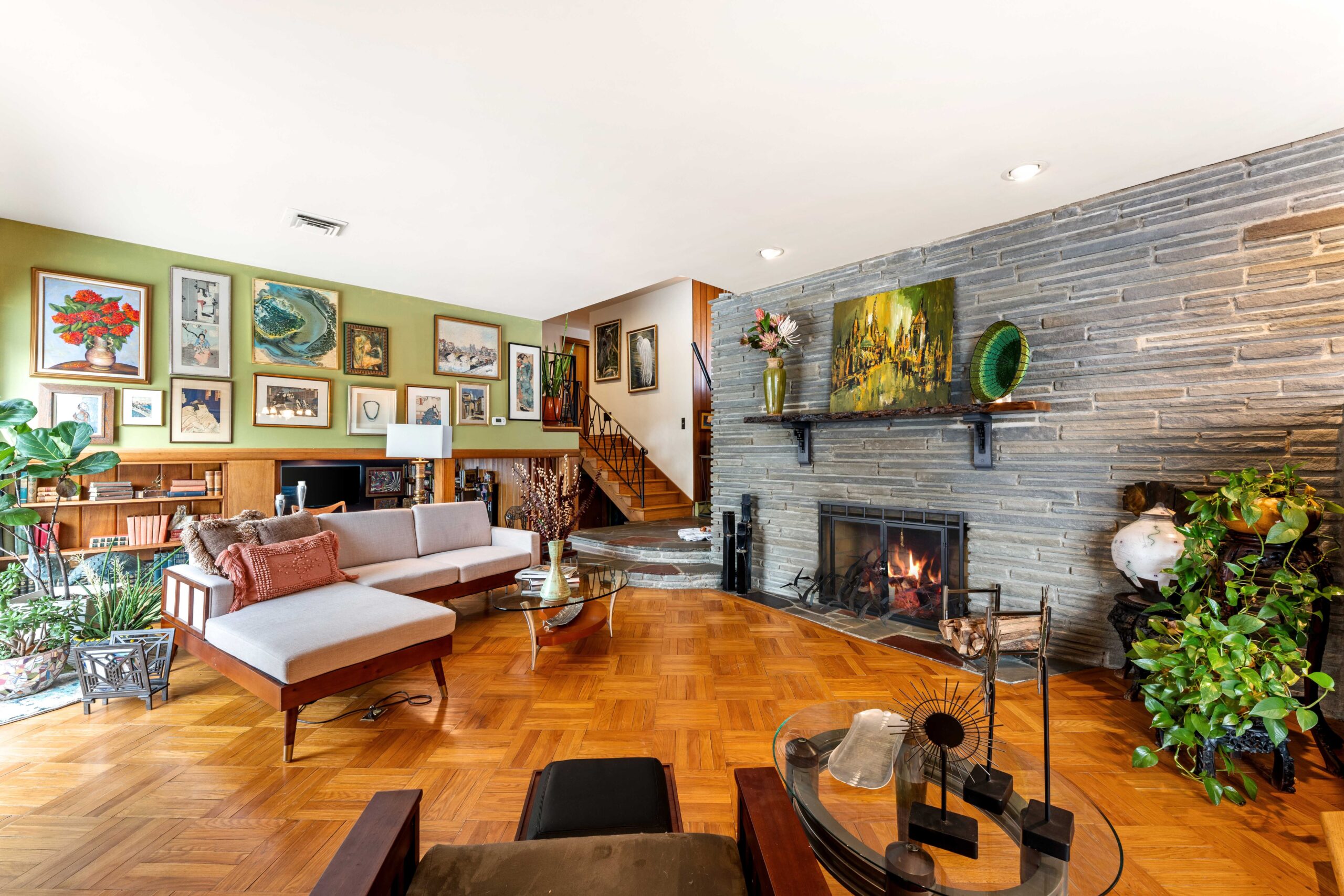
The middle level has the foyer, dining room, kitchen, and sunken living room, which includes a working gas fireplace.
The first level has the family room, powder room, and two-car garage with a heated workroom.
The finished basement has Tauman’s art studio.
Front hall
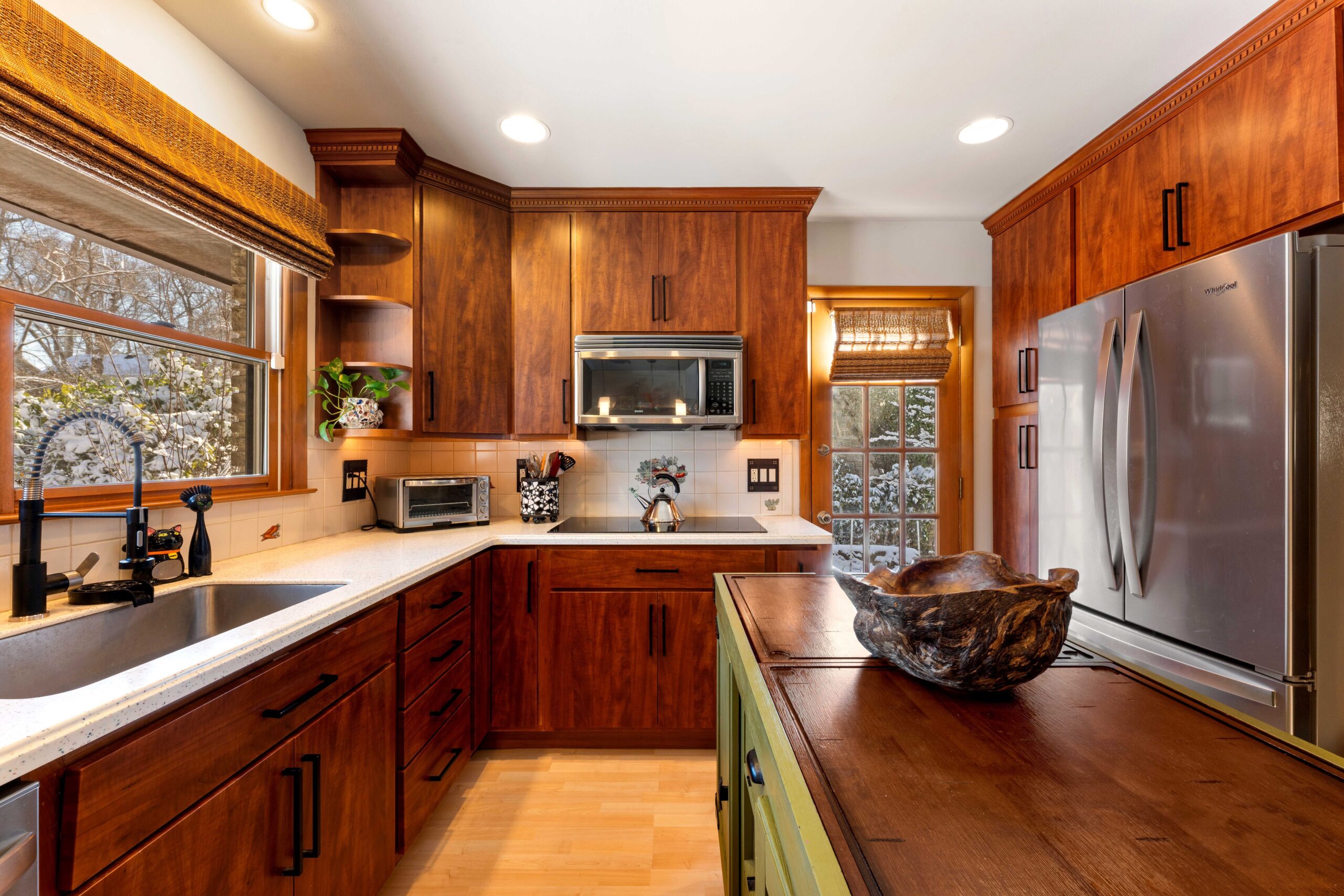
The eat-in kitchen has a 36-inch cooktop, double convection wall ovens, Corian countertops, and refaced cabinetry.
The family room has a wet bar with sink and second dishwasher.
Terrace
The primary bedroom has an en suite bathroom with whirlpool tub, stand-up shower, walk-in closet, and views of Pilgrim Park.
Another bedroom has mahogany built-ins and could serve as a nursery or study. The hall bath has a large corner bathtub.
Primary bedroom
There is a high-capacity water heating system and landscape lighting.
The house is listed by Joseph Bograd of Elite Realty Group for $729,900.
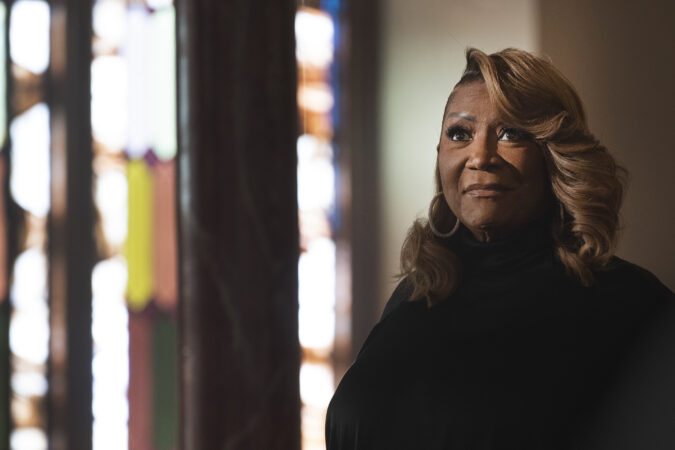
On a bitterly cold afternoon last month, Patti LaBelle walks gingerly down Mother Bethel A.M.E. Church’s center aisle, her left hand grazing the top of each pew, steadying her balance.
Half a dozen content creators, directors, and Visit Philadelphia staff coax the Grammy award-winning songstress toward the 18th century church’s magnificent altar, their voices overflowing with encouragement, reverence, and love.
LaBelle’s stockinged footstepsare deliberate, her unblinking eyes affixed on the organ pipes in front of her.
She’s as contemplative as she is careful.
“Come on, Miss Patti,” cooed Kyra Knox, the Emmy award-winning filmmaker who is directing Visit Philadelphia’s Black History Month promotional video, “We Are the Fabric. We are the Thread,” starring the Philadelphia legend. “You are doing great.”
“We Are the Fabric” is part of the nonprofit tourism agency’s “Indivisible” campaign, a yearlong initiative highlighting Philly’s diverse tourist destinations during America’s 250th birthday and Black History Month, which, coincidentally, is celebrating its 100th birthday this year. (Carter G. Woodson introduced Negro History Week in 1926. It was extended to Black History Month in 1976.)
The videos are streaming on several online platforms including Hulu and HBO Max in seven markets, including Philadelphia, New York, Atlanta, and Washington, D.C. During the month of February, Visit Phillywill conduct a series of neighborhood walks through the city’s historic districts with a special focus on Black history courtesy of the historical arts organizations 1838 Black Metropolis and the Black Journey.
“You cannot tell the story of American culture, innovation, music, art, and food without Black Americans because they are woven into every thread of the national narrative,” said Angela Val, president and CEO of Visit Philly.
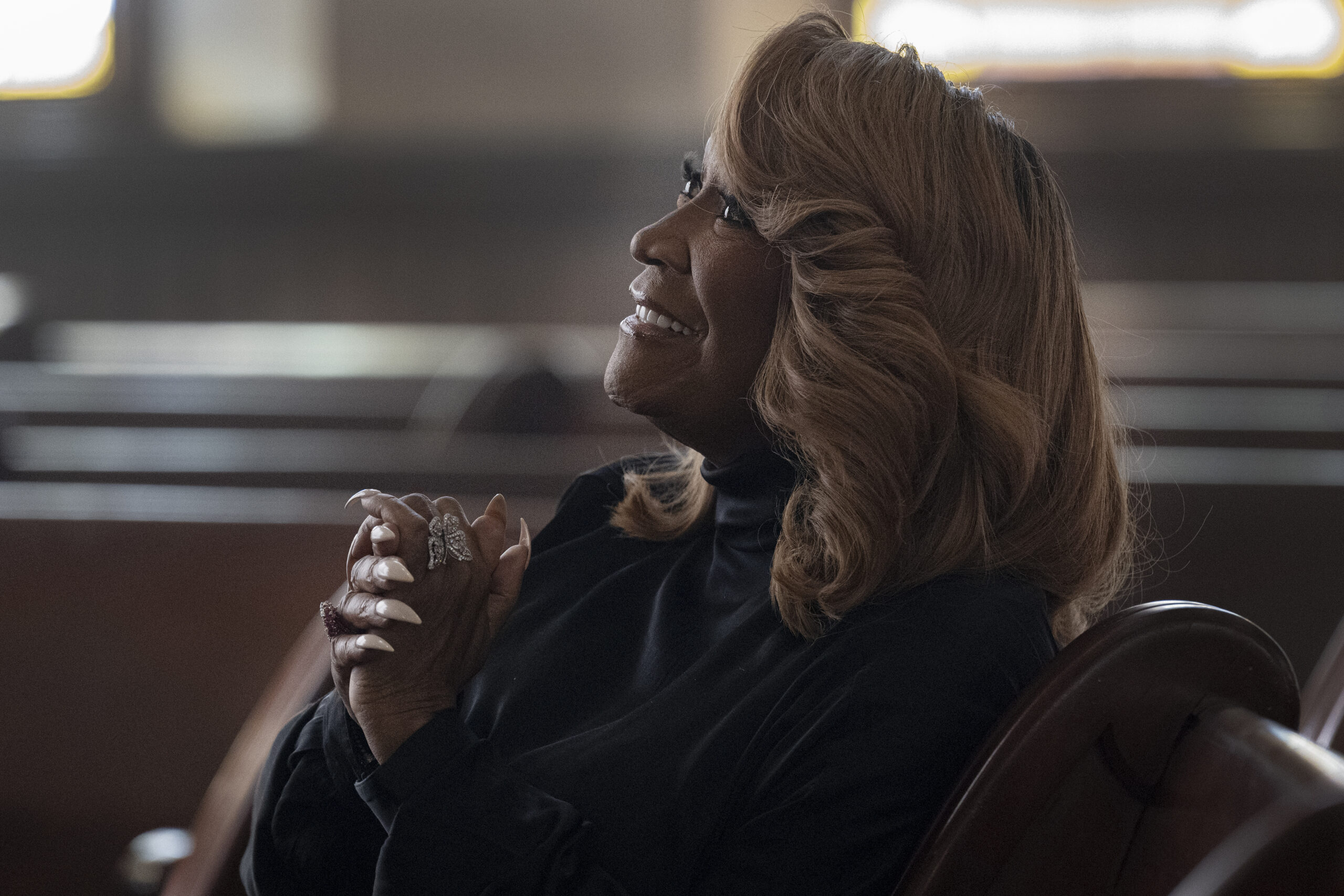
The filmmakers squeezed in a lot of places on the cold Thursday afternoon. Mother Bethel — the home of America’s first Black Christian church founded by formally enslaved Richard Allen — is the first stop on the hours-long shoot. After recording takes of LaBelle’s coffin-shaped ivory nails in prayer and the centuries-old church’s sunlit stained glass windows, LaBelle and the crew drive 14 blocks west to South Philadelphia’s Union Baptist Church.
Film rolls and cameras flash as LaBelle, wrapped in an ankle-length vintage chocolate brown fur, is reflective in front of Union Baptist’s 111-year-old stately exterior. Inside, barrier-breaking early 20th century contralto Marian Anderson once sang in the choir. Like Anderson, LaBelle got her start singing gospel at Southwest Philly’s Beulah Baptist Church.
Singer Patti LaBelle at Mother Bethel A.M.E. Church in Philadelphia during a shoot for Visit Philadelphia’s “Indivisible” initiative, part of an effort to celebrate the city’s communities of color during the city’s 250th anniversary. LaBelle is starring in the campaign’s Black History Month promotion.
After a few windy takes, the crew made its way to the southwest corner of City Hall in front of the statue of martyred 19th century civil rights leader Octavius Catto. The day ended at the Arden Theatre, a nod to Philadelphia’s vibrant Black performing arts community.
LaBelle stars in and narrates the video. She’s accompanied by 9-year-old Riley Mills and visits historical sites and modern locations, like Uncle Bobbie’s Coffee & Books in Germantown, reminding us that Black history is to be passed through the generations.
“When the Constitution couldn’t hold us, we held each other,” LaBelle says, her voice clear, sharp, and determined.
“We made the music you move to,” she continues as images of Teddy Pendergrass, Kenny Gamble, and Leon Huff fill the screen. And then, in an “if you blink, you will miss it moment,” there LaBelle is, in an old photograph flanked by her Labelle group members Sarah Dash and Nona Hendryx, followed by her powerful words: “When they wouldn’t give us a stage, we built one.”
Living Black history
Patti LaBelle is 81. She knows she’s Black history. She’s proud of it and doesn’t take it lightly.
“Black people stand for everything,” LaBelle told The Inquirer in between takes at Mother Bethel, her voice barely a whisper, worn out from her performances in the “Queens: 4 Legends Tour” starring LaBelle, Chaka Khan, Gladys Knight. and Stephanie Mills. They all came of age before the Civil Rights Act of 1964 was passed.
“And we continue to. We continue to fight while things are being taken away from us.”
As Visit Philly filmed “We Are the Thread,” the National Park Service was in the midst of dismantling an exhibit honoring nine enslaved people who worked at George Washington’s house when Philadelphia was America’s capital city.
“If we don’t fight to keep what is ours,” LaBelle said, her scratchy voice taking on urgency. “It will be lost.”
Visit Philly’s choice of LaBelle as its Black history spokesperson this year is thoughtful and necessary.
Her generation of civil rights warriors bridges the gap between Black Americans who lived through Jim Crow and those of us who only heard horror stories of how difficult it was for our ancestors to go to school, work, and vote.
As this administration claims that the Civil Rights Act resulted in “white people being very badly treated,” it’s important that stories like LaBelle’s aren’t just repeated but remembered and celebrated — especially as they get up there in age.
We need to give them their flowers now.
Without Patti LaBelle, Philadelphia — and its music — would be a different place.
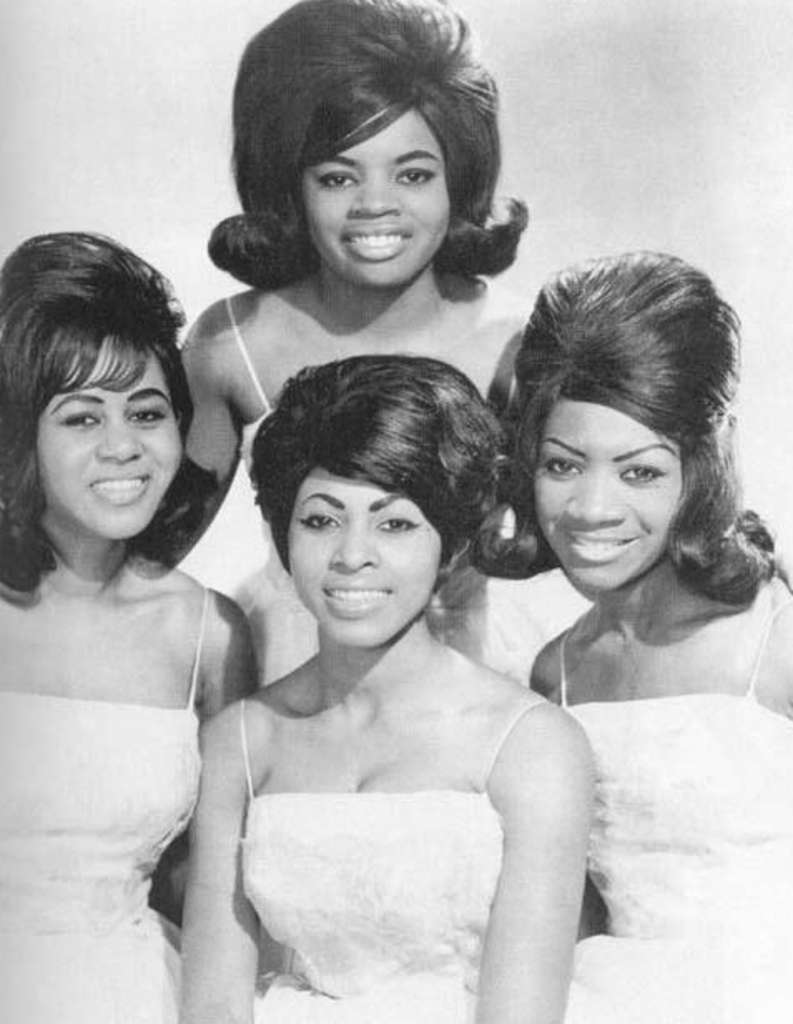
Patti LaBelle (right) and the Blue Belles, the group with which she had her first hit, in 1962: “I Sold My Heart to the Junkman.”
A Philadelphia girl
LaBelle was born Patricia Louise Holte in Southwest Philadelphia in 1944. Her dad, Henry, came to Philadelphia from Georgia in the early part of the 20th century during the Great Migration. He worked on the railroad, was a singer, and an occasional gambler. Her mom, Bertha, was a homemaker. LaBelle was the youngest of five.
She went to Bartram High and sang at Beulah Baptist before becoming the lead singer of Patti LaBelle and the Blue Belles.
The group’s 1962 hit, “I Sold My Heart to the Junkman,” sold millions of copies, cementing LaBelle’s stardom, getting her a spot on the Chitlin’ Circuit for performances at Uptown Theater. She appeared on American Bandstand and Jerry Blavat’s radio show.
By 1975, the group was simply known as Labelle and was a visual smorgasbord of Afrofuturistic sequins and space suits. It released the iconic “Lady Marmalade” that catapulted Labelle to the cover of Rolling Stone, becoming the first Black music group to be featured.
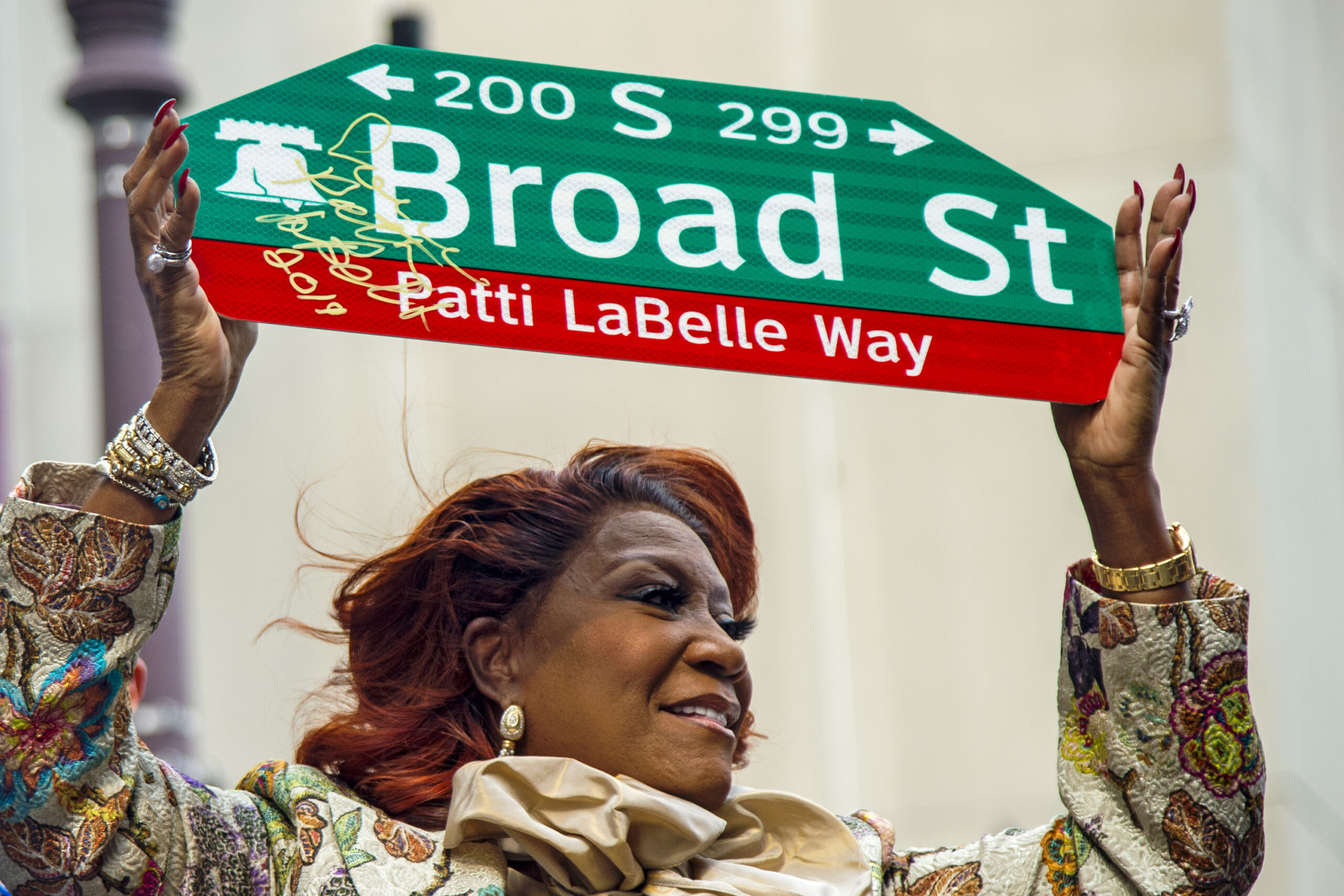
Patti LaBelle holds up a sign during a celebration on July 2, 2019, as the block of Broad Street between Spruce and Locust Streets is renamed Patti LaBelle Way.
“I’ve had a lot of wonderful moments in my career,” LaBelle said. “It’s nice to remember, to be proud. We made a lot of history.”
(Christina Aguilera, Lil’ Kim, Mya, and Pink covered “Lady Marmalade” in 2001 for the Moulin Rouge soundtrack. And in 2003 Labelle’s “Lady Marmalade” was inducted into the Grammy Hall of Fame.)
In 2016, LaBelle received the Marian Anderson Award. Three years later, the city named a block of Broad Street between Spruce and Locust Patti LaBelle Way.
LaBelle, who lives in Villanova now, never left the Philadelphia area.
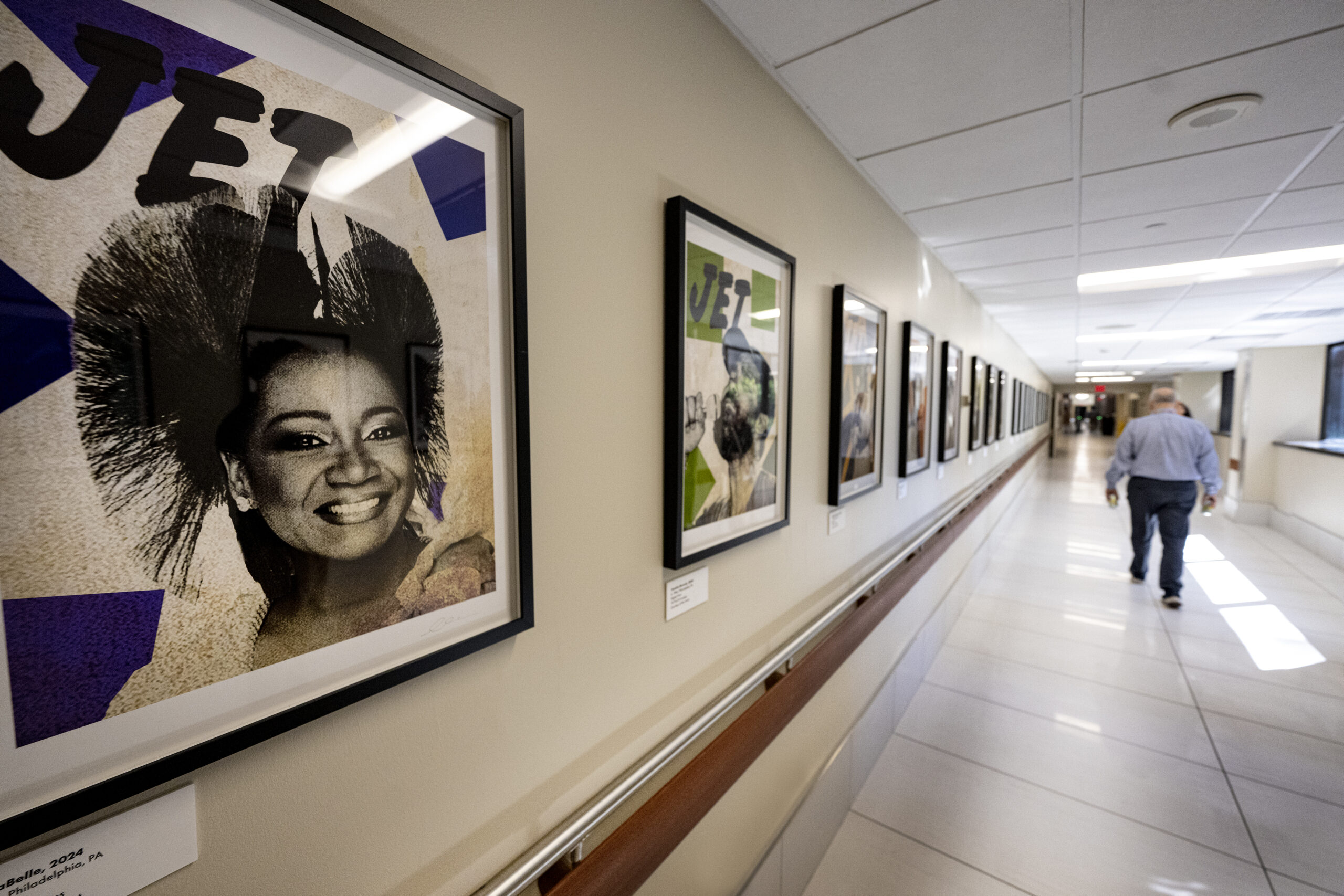
Patti LaBelle and Frankie Beverly are two of the celebrities featured on reimagined Shaheed Rucker’s ‘(re)Covering the Iconic” in in Jefferson Einstein’s community corridor. Monday, Sept. 8, 2025.
“I’m a Philadelphia girl,” she said with pride. “It’s laid back, comfortable. … How I like it.”
Over the decades, she has had a few entrepreneurial endeavors including two short-lived Philadelphia boutiques and a clothing collection on HSN. However, she’s best known for her indisputably yummy line of desserts — sweet potato pies and cobblers. Late last year, she introduced pancake mix and syrup that, she says for the record, is nothing like Aunt Jemima.
“For one,” she said, mustering up a bit of her trademark LaBelle sass, “I’m a real person.”
Real to her core.
“She’s given a lot to Philadelphia,” Val said. “She’s given so much to the country … to the Black community.”
Nine nations will compete in five group stage matches this summer, plus two more in a knockout game on July 4. Here’s what you need to know about those countries and their fans — and what those fans need to know about Philly.
The Delaware Valley Regional Planning Commission is working to help keep alive the city’s project to cap the Vine Street Expressway after Washington last year yanked $150 million in promised federal money.
The project was dependent on a $159 million U.S. Department of Transportation grant covering the entire cost.
Now, DVRPC, at the city’s request, is managing the process of gathering $12.5 million to replace some of the lost money, enough to complete the final design.
“We are taking this administrative action to keep the project moving,” DVRPC spokesperson Elise Turner said.
The Chinatown project involves building a cap over I-676 from just east of 10th to 13th Streets, allowing for a park as well as more developable land. It would tie together Chinatown and the neighborhood to the north, which were united until the interstate split them.
Finishing the design will advance the project as officials look for construction funding. It’s possible building the cap will be delayed.
For the design work, $10 million would be obtained from another federal program for improvements on the national highway network. That money is available in the region’s reserve controlled by PennDot, DVRPC staff said.
The city would contribute $2.5 million.
The city’s Office of Transportation and Infrastructure Systems is working to secure the money and is “confident” that will happen, a spokesperson said, while declining to disclose details.
As for construction, “funding will have to be figured out later,” said DVRPC’s Turner.
The agency determines priorities for regional transportation projects.
To receive federal funds, an infrastructure project needs the formal blessing of the DVRPC, the designated metropolitan planning organization for the Philadelphia region.
Meanwhile, preliminary engineering work is continuing, financed by the $8.4 million. The project is expected to receive environmental approvals in the spring, DVRPC said.
President Donald Trump and the GOP congressional majorities have been targeting Biden-era initiatives for elimination, including various transportation-equity programs — to fund projects like the Stitch — that began under the national infrastructure act of 2022.
In late 2023, construction of the cap was projected to begin in 2027, although at other points a groundbreaking was anticipated in 2028.
The timeline is currently unclear.
This story has been updated to clarify DVRPC’s role in the project.