Tag: Weekend Subscribers

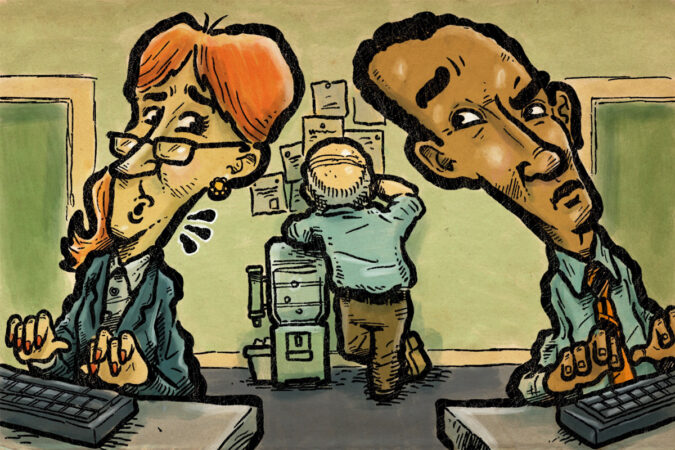
  • Gossiping about the boss? It might be a good thing, per new study

    Gossiping about the boss? It might be a good thing, per new study

    Gossip often gets a bad rap.

    It can be seen as frivolous or hurtful, and not typically encouraged.

    Still, “there seems to be something about it that makes people a little bit giddy, or excited to be gossiping,” says Rebecca Greenbaum, a professor at Rutgers University School of Management and Labor Relations.

    In a recent study, Greenbaum and co-authors focused on the role of gossiping in the workplace. They found that talking about the boss behind their back can present a benefit: bonding among colleagues, and more cooperation. Their findings were recently published in the Journal of Business Ethics.

    The study surveyed hundreds of participants who were asked to report if they had gossiped about the boss that day and how they acted afterward. Colleagues of some of the participants were also surveyed.

    The study results show that on days when employees talked about the boss, they were likely to experience negative feelings such as guilt or shame, and avoid the boss. After gossiping, employees also reported feeling more of a sense of belonging with their colleagues.

    “It doesn’t necessarily mean we’re saying ‘go out and gossip’ because we want you to feel closer to one another,” said Greenbaum. “It’s just that it provides one explanation for why people probably do engage in gossip, because they are getting this benefit from feeling closer to one another.”

    This conversation has been edited for length and clarity.

    What role has gossip typically played in the workplace? Is it positive? Negative?

    In most of the research [until now] … oftentimes it was just looked at more negatively, or it was [discussed] much more in terms of being the victim of gossip. So if I found out someone was speaking poorly about me, how would I feel? I would probably feel angry. I’d feel hurt, I’d feel sad.

    But where [we] really took this in a different direction was focusing much more on the person engaging in the gossip. From that standpoint, not as much research had been done in terms of how people react to their own behavior. So for example, do people really see it as bad? That was one thing we were curious about.

    What do you hope people will take away from the study?

    Keep in mind the boss is someone who can give you rewards, they can punish you — so it’s a little bit more high-stakes to talk badly about a boss compared to maybe just you talking bad[ly] about a coworker or neighbor or something like that.

    We have these emotional reactions sometimes because they serve to protect us. So if you feel … shame and guilt, [for example], it’s telling you that you need to course correct.

    We not only need to protect ourselves individually, but we have this relational need that has to do with our survival too. When people gossip, and then they respond to that gossip by feeling emotionally closer, and like they belong with their group a bit more, that can also facilitate a person’s sense of survival.

    If you have this common enemy, like a boss who’s a jerk to you and he’s mean, sometimes it can feel even better for your sense of belonging to gossip about him.

    Why does it matter if colleagues feel connected to one another?

    Oftentimes people have to engage in teamwork. You need to cooperate, collaborate, come up with creative ideas together, advance some type of project. Even if you aren’t necessarily working together, there’s another big aspect of what we do in organizations, which is not engaging in counterproductive behaviors towards one another. [A colleague might say], “I have a kid at home who’s sick, I was supposed to give this presentation. Can you give it?” If we feel closer with one another, we might be more willing to cooperate with some of those requests that come our way.

    What if you and colleagues like the boss? How do you build that sense of bonding?

    If we have leaders who are good to us, we’re more willing to help them out. There’s basically a role modeling effect where people within the workforce end up treating each other with more dignity and respect too. So if you have a good boss, that’s actually the best scenario, because you don’t have to gossip and experience some of those negative types of emotions.

    Are there any other benefits of having a bad boss?

    I’m asked about this a lot, because I’ve been studying dysfunctional leadership for so long. I know there’s some research out there that shows that, for example, if you do have an abusive boss — that boss who might yell at you, ridicule you, tell you you’re stupid, whatever it may be — sometimes it can get people behaving better, performing better, but it’s short-lived.


  • South Jersey’s Lavar Scott is NASCAR’s third active Black driver. He’s ‘trying to change the whole dynamic of motorsports.’

    South Jersey’s Lavar Scott is NASCAR’s third active Black driver. He’s ‘trying to change the whole dynamic of motorsports.’

    Racing has always been in Lavar Scott’s DNA, stemming from the auto repair shop in Carneys Point, N.J., that his grandfather, Wayne Scott Sr., founded in 1978.

    His older brother, mother Sonia, aunts and uncles, and even Wayne all raced growing up, mostly in drag racing. Scott began his racing journey when he was 5 years old on dirt tracks across Pennsylvania and Delaware. In trying to follow his older brother’s footsteps, Scott quickly developed an affinity for the sport, one that would lead to him becoming one of just a handful of Black NASCAR drivers.

    “I just raced all my life and fell in love with the sport, just from the fact that when we show up to the racetrack when I was younger, show up with the cars that my grandfather worked on, helped build, and it was a family effort, family team,” Scott told The Inquirer recently. “We [would] drive to the racetrack together, and then doing that and winning races like that, you don’t find that other type of love and I guess gratitude for something like in any other sport that I played.”

    Lavar Scott (center) shown with his grandfather and mother after winning a race during his childhood.

    Scott raced on dirt tracks until he was 14. When he turned 15, he transitioned to racing on asphalt tracks to try and seriously pursue a career in racing, which meant moving to Charlotte, N.C., to make that happen.

    From those humble beginnings, Scott, now 22, has risen quickly. Six years ago, he was accepted into the NASCAR Drive for Diversity program and is working his way toward racing at the highest level. Last month, Scott began his first year racing full-time in the NASCAR O’Reilly Auto Parts Series, the second-tier of the sport.

    He credits his Pa. roots.

    “[I] became really good, worked hard at it, had a chance to move down south at 16 to become part of the NASCAR diversity program and be a part of Rev Racing,” Scott said. “I raced for Rev for five years throughout the ranks of late models, ARCA legends, [and] just had a really good few years with them. I was rookie of the year in 2024 in the ARCA [Menards Series].

    “It all comes from racing back at home in the Pennsylvania area. We used to race there three times a week. It was a full-time job really as a kid racing. And that’s what got me to this point, was doing it consistently.”

    Scott, whose racing journey will bring him back to the area later this year, is just the third active Black driver in the sport. He joins NASCAR star Bubba Wallace and fellow O’Reilly Auto Parts Series driver Rajah Caruth, who went through NASCAR’s Drive for Diversity program with Scott. The two have continued their friendship on and off the track, and leaned on one another as they try to grow the sport.

    “I think me and Rajah go through so many things and we kind of battle it together,” Scott said. “We’re really in a team a little bit, trying to change the whole dynamic of motorsports and bring more of us alike in the sport.

    “And it’s so good to have someone like him to do it with, because Rajah is a not only a great driver, but he’s a great person. … I really connect with [him], aside from just being a professional athlete together. He’s not just a teammate or just a friend, like he’s someone that we really going through this stuff together and figuring out, and it’s really cool.”

    Through it all, Scott has remained himself.

    And as he’s continued to level up, he’s also started to give back.

    Scott, who races with Alpha Prime Racing, entered a partnership with Philadelphia-based Urban Affairs Coalition last fall, a nonprofit which aims to “unite government, business, neighborhoods, and community leaders to improve the quality of life, build wealth, and solve emerging issues in urban communities.”

    Through this partnership, UAC is launching Team Racing-2-Education, with the goal of introducing young people to careers in engineering, data analytics, automotive tech, and media production within motorsports.

    Lavar Scott’s No. 45 car is decorated with the logo of the Philly-based nonprofit Urban Affairs Coalition.

    “Lavar represents the dreams of every kid. He represents the opportunity that every kid should have. And ultimately, we are in the business of changing and saving lives and making dreams come true through the nonprofit sector,” said Arun Prabhakaran, the president of the UAC. “The partnership really arose around this idea of, ‘How do we create enough visibility for a story like this to be able to change the way that America thinks about motorsports?’ They should think about motorsports, and see, ‘I could become a petrochemical engineer.’ They should see, ‘I could become a designer and design cool looking race cars.’”

    And while Scott is behind the wheel of his own car, he is also a perfect example, having gone from “a 5-year-old who was racing on a dirt track to arguably one of the most decorated motor sports athletes and NASCAR athletes in the region’s history,” Prabhakaran added.

    For Scott, he sees the local interest, but hopes the partnership can open more eyes to the many motorsport jobs that don’t involve making a series of left-hand turns.

    Lavar Scott shown with young fans after winning at the Limerock Dirt Speedway in New York last August.

    “I know in the Philadelphia market, there is so much interest in motorsports, but I want to expose more and make it more known to people,” Scott said. “I think anything you want to do … happens in motorsports, whether it’s like a designer, somebody working with tires, shock guys, social media.

    “Every avenue that you can take in this world applies to motorsports in some way or form.”

    When will Lavar Scott compete near Philadelphia?

    Scott’s debut season in the NASCAR O’Reilly Auto Parts Series began at the Daytona 500 in Florida on Feb. 14, where he finished 16th. But that was his third overall race in NASCAR’s second-tier series.

    Scott made his debut at Dover Motor Speedway in Dover, last July, finishing 28th in the formerly named Xfinity Series, and raced again in September at the Xfinity Series at World Wide Technology in Madison, Ill., where he finished 19th.

    The South Jersey native finished 28th at Atlanta Motor Speedway two weeks ago and finished 22nd at the Circuit of the Americas this past weekend, which is just outside of Austin, Texas.

    South Jersey’s Lavar Scott shown before the Daytona 500 in February.

    He will compete at Dover Motor Speedway this season on May 16 and will race at Pocono Raceway on June 13. Scott is looking forward to being close to home for both tracks, with Pocono being less than two hours from his hometown and Dover just under an hour from where he grew up.

    “Dover and Pocono, they’re fun tracks. Dover more so fits my driving style. It’s kind of really aggressive,” Scott said. “I like tracks like that where really a lot of it depends on the driver. And then Pocono, racing out in Pa. again, it’s always cool. It’s a big track. It’s definitely error dependent, so you got to be smart there. …

    “It’s a lot around those weekends that matter to me and make it more than — I won’t say other weekends — but it’s an emphasis, and I definitely have those weekends circled on the calendar.”

  • House of the week: A Spanish-style ranch house near Swarthmore for $699,000

    House of the week: A Spanish-style ranch house near Swarthmore for $699,000

    Donna Wise doesn’t know if this was on the builder’s mind in 1970, but he designed a house that combined sociability and privacy.

    The four-bedroom, 2½-bathroom ranch house in Wallingford has the kitchen, living room, dining room, basement, and two-car garage on one side of the house and the living quarters on the other side.

    That way, Wise said, guests “can ask to use the bathroom without passing through your bedroom. And the grounds are beautiful.”

    The living room.

    The builder’s other houses nearby were all Colonials, she said. Her parents, Mary and Robert Wise, bought the Spanish-style house 42 years ago. After her father died in 1995 and her mother in 2006, she and her sister, Cheryl Wise, remained there.

    Now the sisters, who grew up in Folcroft, Delaware County, are moving to a nearby condo.

    The kitchen has stainless steel appliances.

    The approach to the 3,064-square-foot house is on a circular driveway.

    Donna said the construction is so symmetrical that if one looks through a window, they can see through the whole house.

    The kitchen has stainless steel appliances, and the office could be converted to a fifth bedroom.

    The primary bedroom.

    The family opened up the layout, knocking down a wall separating the kitchen and the dining room. The basement is unfinished.

    The house is near the Commodore Barry Bridge, which provides easy access to the Jersey Shore. It is also close to the Swarthmore SEPTA Regional Rail station. It is also convenient to Tyler Memorial Arboretum and several parks.

    The front entrance to the house.

    The house is in the Wallingford-Swarthmore School District.

    It is listed by Lindsay Wise of Coldwell Banker Realty for $699,000.

  • The Flyers helped renovate the home of a Northeast Philly teen battling leukemia. He’s ‘gobsmacked.’

    The Flyers helped renovate the home of a Northeast Philly teen battling leukemia. He’s ‘gobsmacked.’

    One word would describe 19-year-old Ethan Ruiz’s reaction to his newly renovated home: “Gobsmacked.”

    “I don’t know how you turn what was here before into such a large space,” Ruiz said. “I guess it involved knocking down walls, but seeing it in its full extent — completely open. I love the open-air design of everything.”

    Ruiz was the 10th recipient of the Building Hope for Kids grant, an initiative in which Flyers Charities and Michael’s Way partner to renovate homes for children battling cancer.

    The initiative led to Ruiz’s home in Northeast Philadelphia being renovated to create a more comfortable, accessible, and uplifting space as he continues treatment for his leukemia diagnosis.

    “Every year we work with St. Christopher’s Hospital,” said Blair Listino, chair of Flyers Charities and an alternate governor of the Flyers who is the chief financial and administrative officer for Comcast Spectacor. “We work with social workers there who select a family that they think it would make a very big impact on in their lives to have a new home.

    “This is the 10th house we’ve done and we’ve worked with a lot of organizations day in and day out. There’s different organizations here who’ve helped with the house. IKEA donated all the furniture. Sprouts [Farmers Market] stocked the kitchen. And we have Rheem who did the HVAC system for us.”

    The basement at newly renovated home for 19-year old Ethan Ruiz and his mom features a home gym.

    In 2025, Flyers Charities increased its financial contribution to the initiative to $100,000 due to the increased cost of building materials and the success of previous home renovations.

    Flyers Charities financially supports Michael’s Way, a local nonprofit whose mission is to improve the lives of children with pediatric cancer, for the project while the wives and girlfriends of Flyers players act as interior designers for the house.

    Ethan and his mother, Yomayra Carrer, were surprised with the news in October. Construction began in January with Flyers Charities and wives and girlfriends working alongside Fastrack Construction and IKEA to complete a full-scale renovation.

    The renovation includes a new HVAC system, a new roof for long-term structural security, engineered hardwood flooring to reduce dust and allergens, new cabinetry, a home gym, walk-in closet, and new tile.

    When asked what his favorite part of the renovation was, Ruiz said: “My room.”

    Ruiz’s room was decorated with forest green walls, featured a gaming setup in the corner, and personalized with some of his favorite items — including a “Ghost of Yotei” poster, and album artwork from Tyler, the Creator’s “Chromakopia.”

    One of the masterminds behind Ruiz’s room was Alex Sanheim, Travis Sanheim’s wife.

    Ethan Ruiz’s newly renovated bedroom was decorated with forest green walls, featured a gaming setup in the corner, and personalized with some of his favorite items — including a “Ghost of Yotei” poster, and Tyler, the Creator’s “Chromakopia” album artwork.

    “It’s tough to design something for someone else and still hope it’s exactly what they envisioned,” Alex Sanheim said. “And by his reaction, I think we nailed it. It was to be green and moody and have a gaming [setup]. I think the space works for him to enjoy gaming between school. Everything now, it’s just completely different.

    “It truly wouldn’t be possible without every single person. I just truly don’t think that we give enough credit to everyone because it takes a village for sure.”

    After getting to know the family, the Flyers’ wives and girlfriends took both Ruiz and Carrer’s interests in consideration to make their vision come to life. For instance, plants were something Carrer loved to have in her home. Going into the renovation, she was a little worried she would have no place for them.

    “From my exact sitting position [in the living room], I can count like six of them,” Ruiz said.

    Little did Ruiz know, he missed an entire cabinet of four additional plants to his right. Although the plants were a must have, for Carrer, the kitchen was the main star of the house — but it may take some time getting used to.

    “I don’t know if I’m just like of a different tax bracket, so I don’t know this, but like, I didn’t even know that ovens could come in — dude, there’s two. And it’s split into one big one,” Ruiz said.

    Carrer added: “We’re going to figure it out.”

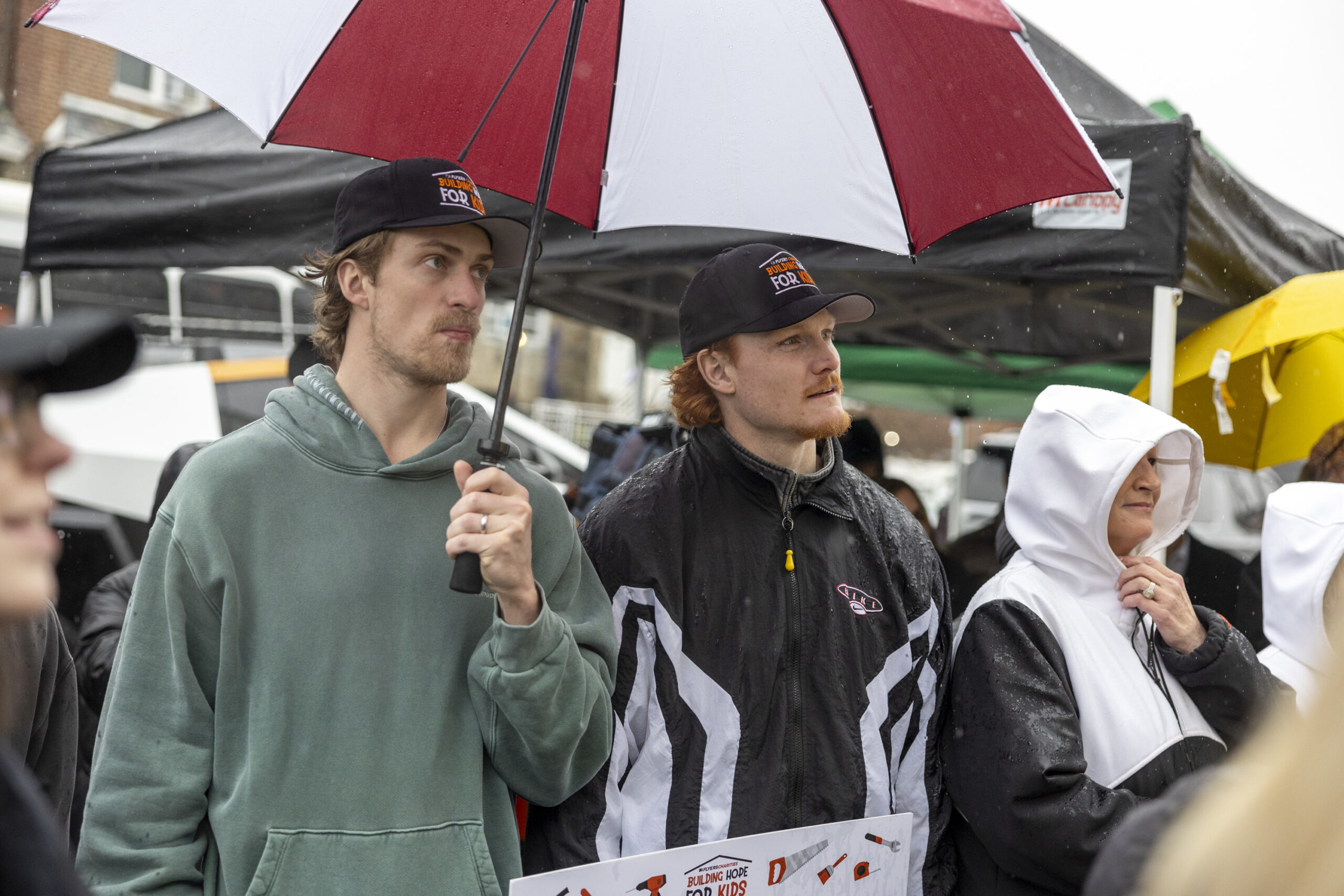
    Flyers Travis Sanheim (left) and Owen Tippett attended the unveiling of Ethan Ruiz and Yomayra Carrer’s renovated home on Tuesday.

    When asked what would be the first thing they make in their new kitchen, they responded: “Empanadas.”

    Despite the rainy conditions Tuesday, Gritty and Flyers players Jamie Drysdale, Bobby Brink, Owen Tippett, and Sean Couturier were there to witness the big reveal.

    “Oh, they did a great job,” Couturier said. “I would probably let them redo our house altogether. They did an amazing job. Everything kind of fit together and I’m sure they’re happy with the end result.”

    For the Ruiz family, the renovation was a dream come true.

    “The way that I saw all the wives show up, the contractors, I know how stressful it was,” Carrer said. “But they were like, ‘No, this is something we want to do. We do it with joy in our hearts.’ So, to me it’s like they will forever be in my prayers. The contractors, the wives, the Flyers, Michael’s Way. It’s been a long journey, but it’s a beautiful one.”

  • Jhoan Duran was once a hard-throwing minor leaguer with no nickname. Then, a coach gave him one that stuck.

    Jhoan Duran was once a hard-throwing minor leaguer with no nickname. Then, a coach gave him one that stuck.

    Luis Ramírez grew up in El Taque, a small village in northwestern Venezuela. It was known for its arid climate, full of cacti and barren landscapes.

    It was also known for its critters. Ramírez, the assistant pitching coach for the Minnesota Twins, saw his fair share of snakes and centipedes, lizards, and, of course, tarantulas.

    They’d hide under bushes and tree roots and had a distinctive pattern — a dark blue body, with a mix of black and yellow stripes along the legs. The image always stuck with the coach throughout his decades-long career in professional baseball.

    Ramírez, 52, was hired by the Twins in 2006 to work at their Venezuelan academy. He gradually moved up the ranks, from the Gulf Coast League, to the Appalachian League, to the Arizona Fall League. In 2019, he was promoted to pitching coach at the team’s high-A affiliate in Fort Myers, Fla.

    It was there that he met Jhoan Duran. The future Phillies closer was a 21-year-old starter at the time. He was skinny, and tall, with blonde and black dreadlocks sprouting from his head.

    One day, when Ramírez was talking to strength and conditioning coach Chuck Bradaway about Duran’s pregame routine, he blurted out a nickname.

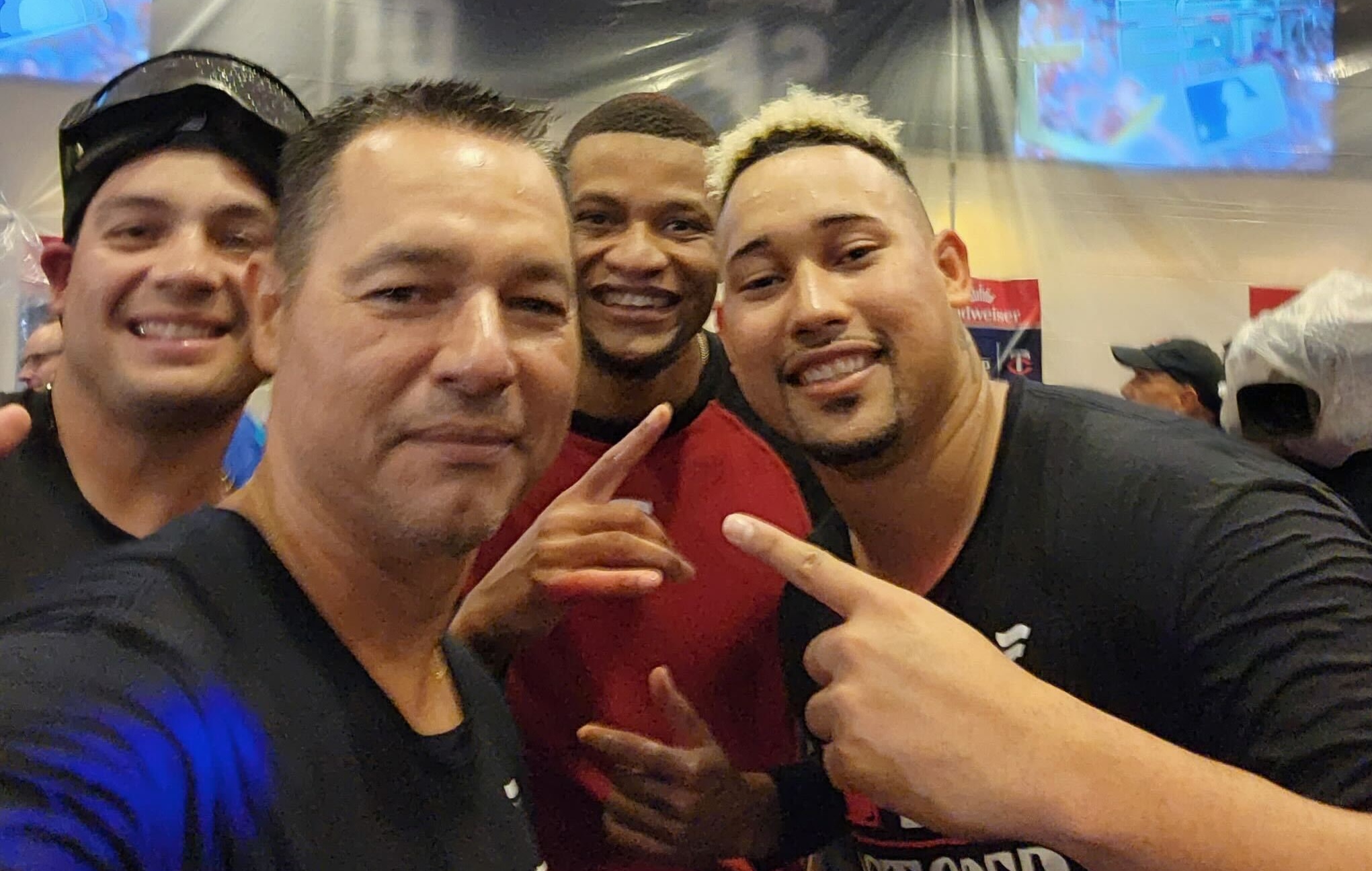
    Luis Ramírez (second from left) with Jhoan Durán (far right) in 2023.

    “Somehow, ‘Durantula’ came to my mind,” Ramírez said, “and I said it. And it’s been there ever since.”

    There were a few reasons the pitching coach came up with this specific moniker. One was his pupil’s last name. Another was that “duro” translates to “hard” in Spanish, and Duran was already hitting triple-digits on the radar gun.

    But the biggest reason was Duran’s hair.

    “He used to have dreadlocks,” Ramírez recalled. “And the color of his hair was brown, and kind of yellow. And the dreads were kind of long, and it kind of looked like a tarantula.

    “It kind of looked like one of those spiders. A little spider leg, hanging [off].”

    He added: “I saw a lot of tarantulas when I was a kid, and his hair looked just like it.”

    Duran, who watched the Spider-Man movie trilogy growing up, embraced the nickname. When he reached the major leagues in 2022, he began to put tarantulas on his sneakers. He eventually got a tarantula tattoo, and in 2023, an entrance fit for a WWE wrestler.

    When the closer was dealt to the Phillies at the 2025 trade deadline, the entrance came with him. Before Duran jogs from the bullpen, all of the lights in Citizen Bank Park go out.

    Fans hold up their phones, as a remix of “El Incomprendido” by Farruko and “Hot” by Pitbull and Daddy Yankee begins to play. Duran’s name appears in flames on LED screens, while a tarantula crawls from one side of the ballpark to the other.

    The display still makes Ramírez smile.

    “The nickname is the same thing with [pitches],” he said. “Sometimes you’re in the bullpen, and you move a grip, or you make a slight adjustment, and now a pitch that was maybe average becomes a weapon. ‘Durantula’ just stuck.”

    A playoff mentality

    Duran and Ramírez say their relationship is akin to that of a father and son. In 2019, the pitcher moved from his hometown of Esperanza, Dominican Republic, to Fort Myers full-time.

    He and Ramírez would train together during the offseason. They’d fine-tune his pitches, tweak his routines, and work on conditioning, but also spent time together off the field.

    Their families became close. Duran’s son began calling Ramírez “Tío Lupita” — Uncle Lupita in English — because the pitching coach would play the song “Hay Lupita” by Lomiiel while he was cooking dinner.

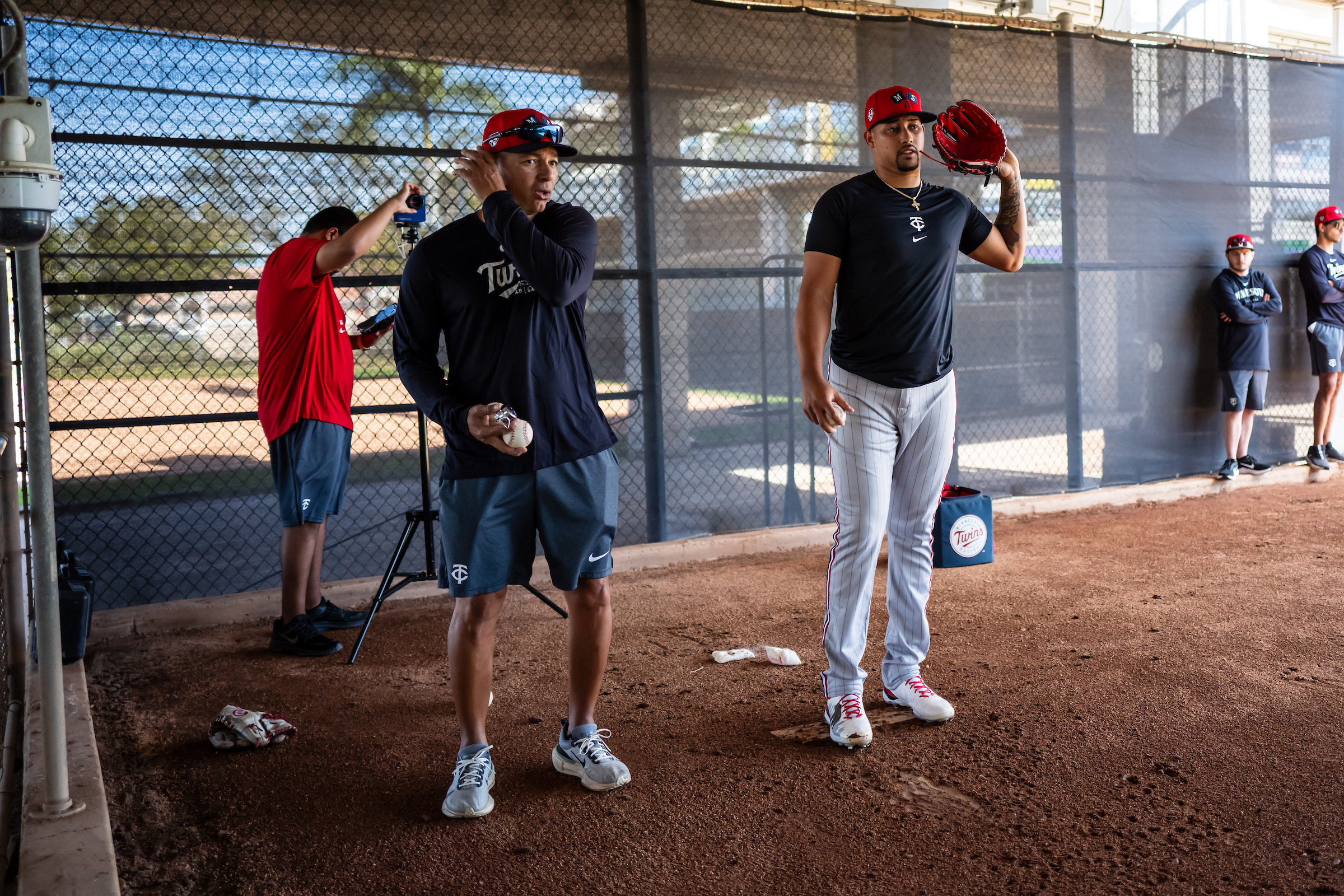
    Jhoan Durán (right) pictured with Luis Ramirez in Fort Myers during spring training in 2024.

    “I used to dance with him,” Ramírez said. “The song would go, ‘Hay Lupita, Hay Lupita.’ And then, from there, he just called me Tío Lupita all the time.”

    Even as early as 2019, the pitching coach saw promise in Duran. He had big-time stuff without a pretentious attitude. Duran was hungry to learn, and put in the work to do so.

    Ramírez could envision him playing a big role for the organization down the road, so when they were in Fort Myers, he started talking to Duran about one day pitching in the World Series.

    He didn’t specify what role it would be, but Ramírez had a hunch his pupil would eventually become the team’s closer.

    He and Duran split up in 2021, when Ramírez accepted a position coaching at double-A Wichita, and Duran was promoted to triple-A St. Paul.

    They reunited at the big league level in 2022, when Duran was converted to a Twins reliever, and picked up their conversations from there.

    Ramírez told him to prepare mentally and physically to pitch the last few outs of the biggest game of his life.

    Jhoan Duran was a star with the Twins but postseason success was elusive.

    “You are going to help us to win a World Series,” Ramírez would tell Duran. “You have to be ready for that. Because you’re going to be the guy closing the game in the World Series.”

    “I remember that like yesterday,” Duran added. “He always told me, when he saw me, he’d say, ‘Hey, remember. You’re going to be one of the guys to help the Twins win a World Series.’”

    The young pitcher kept the message in the back of his mind, but in 2023, when he closed out the game that would clinch the Twins’ first playoff spot since 2020, he struggled.

    Duran threw 34 pitches against the Angels, of which only 17 were strikes. He allowed two walks and one earned run on two hits. Duran got the save, but Ramírez could tell something was off.

    So, he approached the pitcher the next day.

    “Hey, last night, I thought the game was a little fast for you,” Ramírez said.

    “Yes,” Duran conceded. “I was a little sped up.”

    “That’s my fault,” the coach replied. “Because I should have prepared you for this moment. We should have talked more before it happened.”

    Ramírez connected Duran with the team psychologist, who began working with the closer on visualization exercises. It had an immediate impact.

    Jhoan Duran recorded 16 saves after being acquired by the Phillies on July 30, 2025.

    Duran didn’t allow a run in his four postseason appearances that year. He had six strikeouts and yielded only one walk through five innings pitched.

    The closer returned to October baseball in the National League Division Series last season. He pitched in Games 1 and 2 against the Dodgers, allowing one hit and two walks, with four strikeouts.

    His final outing came in Game 4. Duran entered in relief of Cristopher Sánchez in the bottom of the seventh, with runners on first and second and one out. He induced a groundout from Andy Pages, and intentionally walked Shohei Ohtani.

    In the next at-bat, he walked Mookie Betts, allowing the tying run to score. He retired his next four batters.

    Duran was charged with the blown save in the Phillies’ season-ending 2-1 loss, but only after the home plate umpire blew a call earlier in the inning.

    Jhoan Duran enters his first full season with the Phillies.

    This was not the way the closer wanted his season to end. But Ramírez isn’t worried about how he will bounce back.

    He says Duran has a short memory, and an unwavering trust in himself — good qualities for a high-pressure job.

    The coach is hopeful that the closer will have more October moments. He believes he’s built for it.

    “He feeds off of the crowd,” Ramírez said, “off of the energy, the pressure. He’s never been afraid of [a situation where] the game is on the line. He’s never been afraid of that.

    “I think that’s why he got traded there. Because, I know that in Philadelphia, the park is always full.”

  • How the world can stop ICE from hijacking the World Cup

    How the world can stop ICE from hijacking the World Cup

    The 2026 Winter Olympics in Milan may be over, but the political storm and protests stirred by the presence of U.S. Immigration and Customs Enforcement have not faded. With the FIFA World Cup set to bring millions of international fans to North America next, the Milan backlash now feels less like an isolated controversy and more like a warning of what could lie ahead.

    Italian lawmaker Riccardo Magi (center) shows a placard demanding that U.S. Immigration and Customs Enforcement (ICE) agents not be allowed at the Milan Cortina Olympics, during a protest staged outside the U.S. Embassy in Rome in January.

    The last World Cup in Qatar drew about one million international visitors. The 2026 tournament — hosted across the United States, Canada, and Mexico — is expected to attract several times that number, making it the largest in soccer’s history. Its success will hinge not only on logistics and policing, but on whether teams and supporters feel welcome, safe, and able to move across borders within tight time frames.

    That confidence is now under scrutiny. ICE acting Director Todd Lyons has said the agency will be a “key part of the overall security apparatus” for the World Cup. Yet, when immigration enforcement becomes visibly woven into the staging of a global tournament, it ceases to look like routine security and instead risks appearing as a projection of domestic policy onto an international stage.

    Already, there are increasing calls to boycott the event for safety reasons, with fan groups like Football Supporters Europe expressing concern about the “ongoing militarization of police forces in the U.S.”

    Meanwhile, supporters from Latin America, Africa, and the Middle East are already asking whether a valid visa will be enough. Could minor paperwork errors lead to detention? For mixed-status families living in the United States, the anxiety is sharper still. A major German team has reportedly canceled a U.S. tour, and online fan forums openly debate boycotts.

    Sport has always intersected with politics. The 1936 Berlin Olympics were carefully orchestrated by the Nazi regime to project ideological confidence and international legitimacy, even as discriminatory policies continued at home. Decades later, the global boycott of apartheid South Africa — leading to the country being barred from the 1964 Olympic Games — showed that tournaments can reflect moral choices.

    But there is a difference between holding regimes accountable and turning sporting events into stages for domestic enforcement policy. This point carries particular weight in the U.S., a country whose global appeal has long rested on openness and pluralism.

    Chelsea’s Cole Palmer walks with the golden ball trophy after Chelsea won against Paris St. Germain in the Club World Cup final, at MetLife Stadium in East Rutherford, N.J., in July.

    The World Cup is a soft-power moment. For one month, North America will present itself to billions of viewers not just as a host, but as a harmonious society — a rare global moment when rival nations share rules, rituals, and space on equal terms.

    That is precisely why international bodies have treated soccer as a tool for cohesion rather than division. The United Nations has repeatedly promoted sport as a mechanism for refugee integration and social stability, while organizations working on counter-extremism and discrimination, including the Muslim World League, have similarly highlighted how athletics can cultivate “understanding, empathy and respect” across communities.

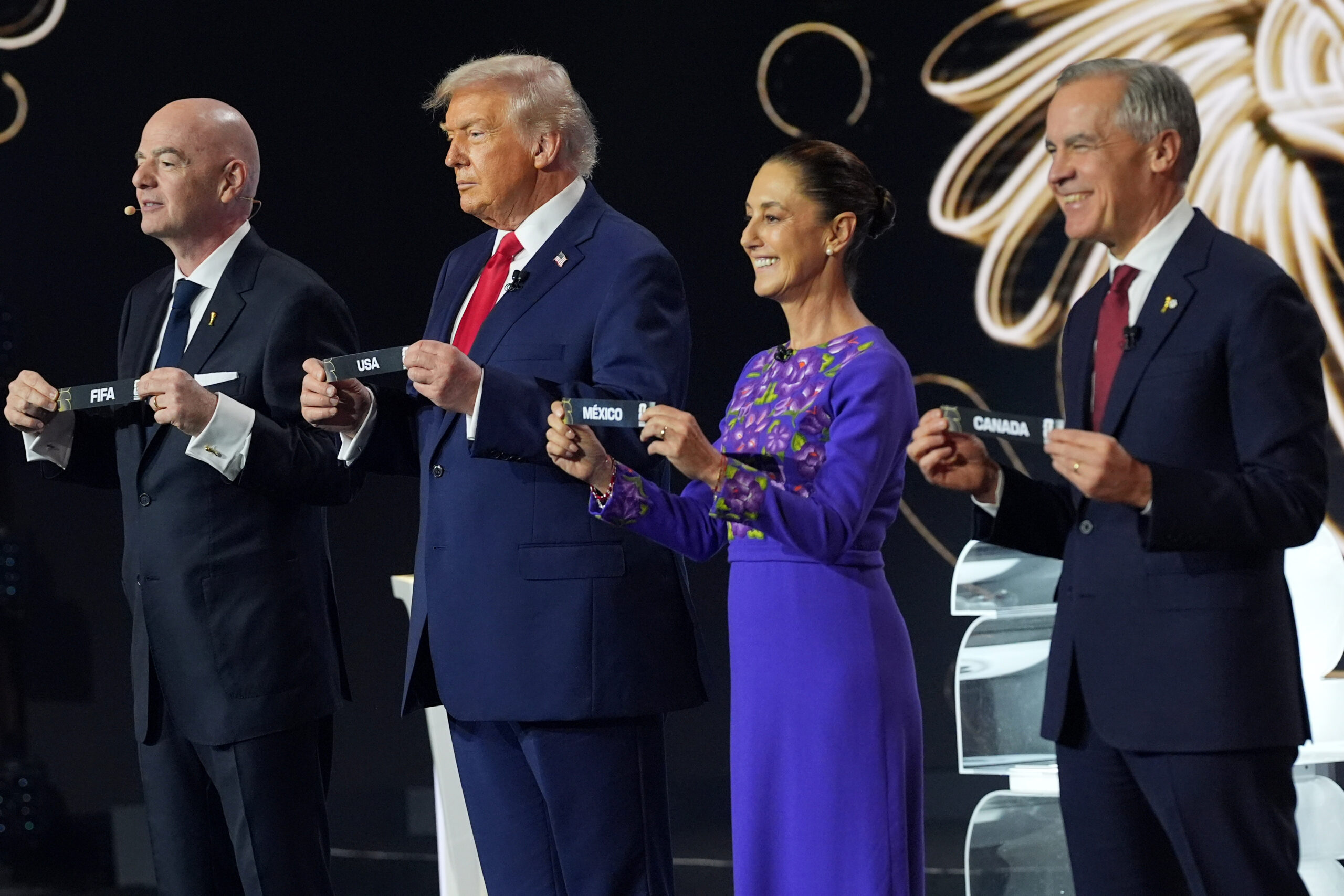
    Canadian Prime Minister Mark Carney, Mexican President Claudia Sheinbaum, President Donald Trump, and FIFA President Gianni Infantino hold up country names during the draw for the 2026 FIFA World Cup at the Kennedy Center in Washington in December.

    MWL’s secretary general, Mohammad bin Abdulkarim Al-Issa — who was recently recognized in the United States for his efforts to combat hate — has repeatedly warned that weak integration and social division are the biggest threats facing humanity today. Global sporting events, by contrast, offer rare shared civic spaces where diverse societies meet on equal terms, reinforcing inclusion rather than suspicion.

    If enforcement spectacle overshadows the 2026 World Cup, the consequences will be economic as well as social. Travel hesitancy, empty seats, and reduced tourism would be immediate effects.

    But the deeper risk is political: Visible exclusion at a global event reinforces narratives of division and grievance that extremists on all sides are quick to exploit. When people feel unwelcome in shared civic spaces, mistrust grows — and the integrative power that sport is meant to provide begins to erode.

    That makes clarity from federal authorities essential. The U.S. Departments of Homeland Security and State and host city governments should coordinate to publish tournament-specific guidance covering visa processing timelines, entry procedures for ticket holders, and the scope of enforcement activity around official venues.

    Clear assurances that immigration sweeps will not be conducted at stadiums, accredited fan zones, or public watch sites would reduce uncertainty without compromising border security.

    For a country that prides itself on being a nation of immigrants — and for a president who places great stock in ratings, turnout, and global spectacle — the 2026 tournament presents an extraordinary opportunity to show that security and openness can coexist. Full stadiums and strong international attendance would reinforce the image of a confident, welcoming host nation.

    If instead, travel hesitancy, empty seats, and visible enforcement dominate the optics, the tournament risks projecting exclusion rather than unity.

    That outcome would not only diminish the World Cup’s global appeal but squander a rare moment of soft power that no amount of security planning alone can restore.

    Khalid Sayed is the leader of the opposition for the African National Congress in the Western Cape Provincial Parliament in South Africa, now serving his second term. A former provincial leader of the ANC Youth League, he is an activist committed to social cohesion and democratic renewal in a postapartheid society.

  • Pennsylvania, N.J. lawmakers react to U.S.-Israel joint strike on Iran

    Pennsylvania, N.J. lawmakers react to U.S.-Israel joint strike on Iran

    By Saturday morning, when many Americans were waking to the news that the U.S. and Israel had launched a missile attack on Iran, U.S. Sen. John Fetterman (D., Pa.) had already spoken in support of the bombings.

    “Operation Epic Fury,” Fetterman said on X at 4:18 a.m., using the name given to the campaign by the Trump administration. “President Donald Trump has been willing to do what’s right and necessary to produce real peace in the region.”

    “God bless the United States, our great military, and Israel,” Fetterman said.

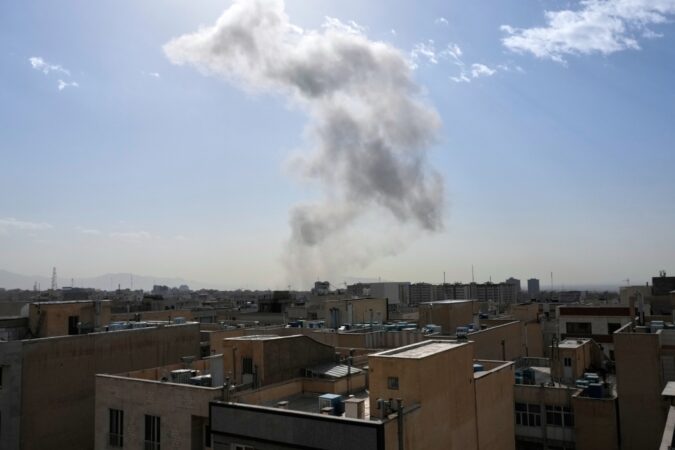
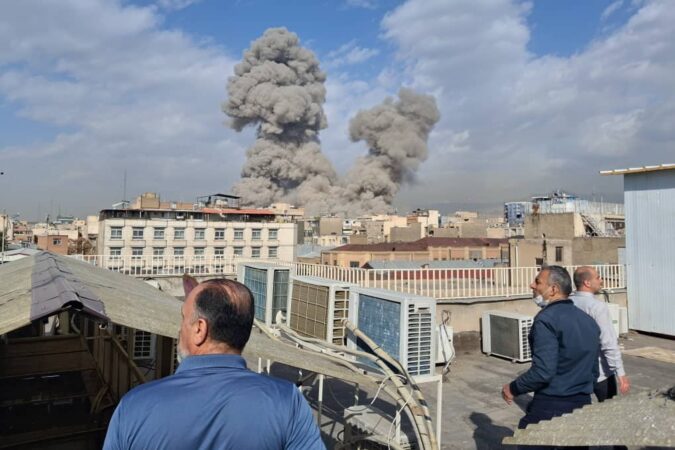
    The missile strikes were focused on the home of Iran’s leader and a number of targets in Tehran and other cities. Trump called on the Iranian people to take over the government and put an end to the country’s decades of theocratic rule.

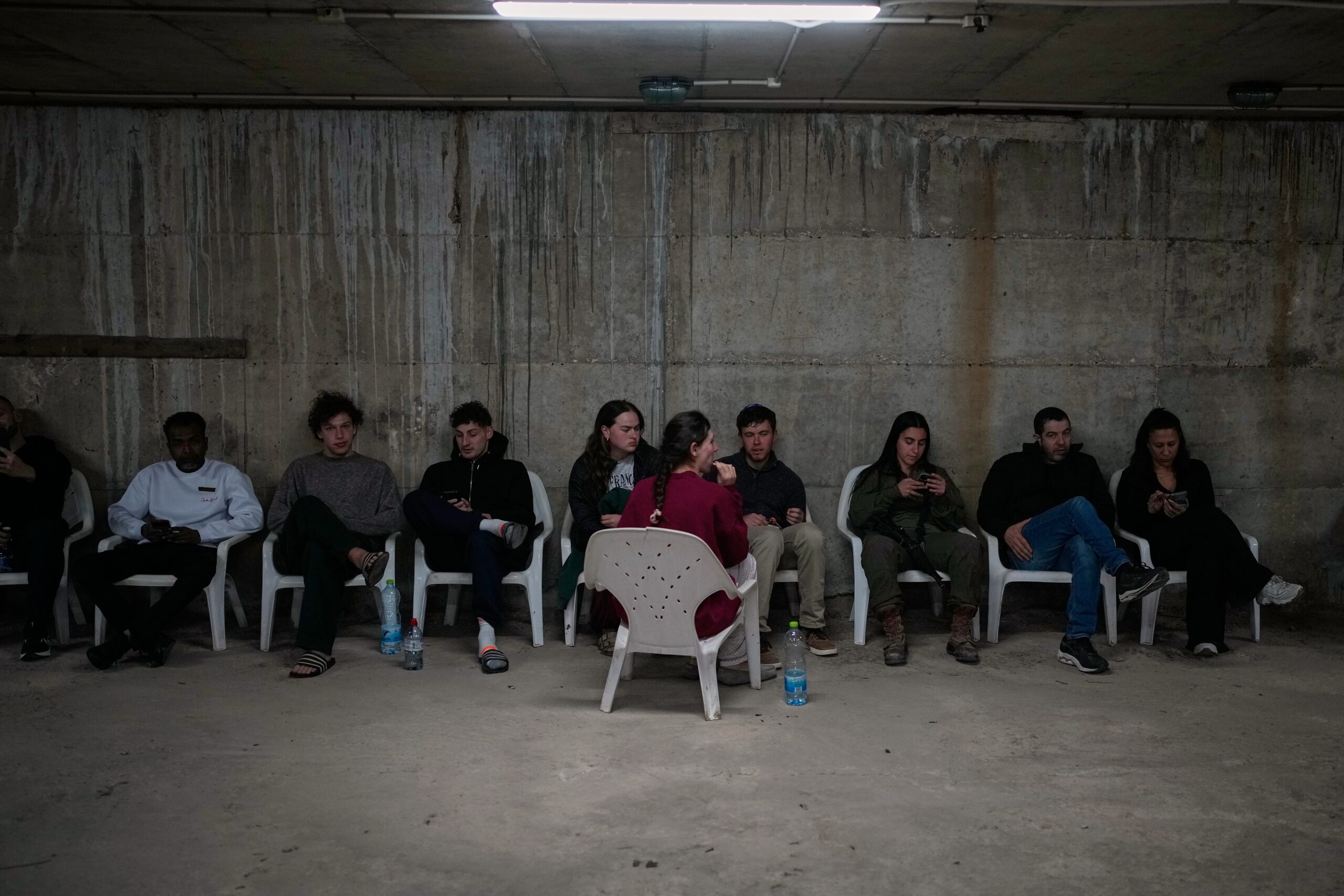
    People sit in a shelter after warning sirens sound following Israeli strikes on Iran, in Tel Aviv, Israel, Saturday, Feb. 28, 2026. (AP Photo/Ohad Zwigenberg)

    The possibility of such an attack was anticipated for weeks as tensions rose between Iran and Israel and the U.S. positioned warships in the region.

    Pennsylvania Gov. Josh Shapiro criticized Trump in a statement Saturday for acting “without Congressional approval,” while adding that the Iranian regime “must never be allowed to possess nuclear weapons.”

    Trump and his administration “have not demonstrated to the American people that we have a clear plan with this mission — and by taking unilateral action, without a broad coalition of international partners, he is putting our brave servicemembers at greater risk and undermining our national security interests,” Shapiro, a Democrat, said.

    U.S. Sen. Dave McCormick (R., Pa.) said he is praying for U.S. troops and allies “during this challenging and noble mission.”

    “For decades, the Iranian regime has killed Americans, threatened Israel and our allies in the region with their ballistic missiles and nuclear ambitions, and butchered tens of thousands of its own people,” McCormick said on X.

    “The president has given the ayatollahs a chance for a deal, and they have rejected a path to peace and prosperity,” McCormick added.

    Pennsylvania’s U.S. senators, Democrat John Fetterman, left, and Republican Dave McCormick, in Braddock, Pa., on Feb. 2.

    On Saturday afternoon, several dozen protesters gathered outside Philadelphia City Hall, chanting “death to America” and “free Palestine,” and speaking about the U.S. incursion.

    McCormick noted earlier this week that Iranian citizens have been embroiled in protests against its government in recent weeks. The government responded with an internet blackout and a violent crackdown. More than 7,000 citizens have died as a result of the crackdown, according to a U.S.-based human rights agency.

    McCormick, an Army veteran of the first Persian Gulf War, added that people in the U.S. are distrustful of prolonged military operations overseas.

    Both McCormick and Fetterman have spoken in support of a strong U.S. backing of Israel, and like many lawmakers have received campaign donations from pro-Israel lobbying groups such as the American Israel Public Affairs Committee, according to a political group critical of U.S. support for Israel that tracks such public spending.

    In the U.S. House of Representatives, Rep. Chrissy Houlahan (D., Chester), an Air Force veteran, said the attack lacks a clear explanation or new threat posed to the U.S.

    “Make no mistake, Iran is a very bad actor on the world stage, and has been for a long time, but the American people have not been given any evidence of any appreciable change and Congress did not authorize any action,” Houlahan said in an emailed statement.

    “President Trump, who promised no wars, is now again putting the lives of our men and women in uniform in grave danger all while trampling all over the Constitution,” Houlahan said.

    The Trump administration’s strike was initiated without a vote by Congress. Houlahan said that House Speaker Mike Johnson (R., La.) canceled votes for next week, a move she believes is to prevent floor time for lawmakers to weigh in on the attack.

    “Speaker Johnson has forfeited Congress’s authority, rendering Congress and the Constitution immaterial,” Houlahan said. “Now we will all pay the price, whatever that is.”

    U.S. Rep. Brian Fitzpatrick (R., Bucks) said Congress needs to have a say in any further military actions in Iran.

    “The American people deserve clarity of mission, defined objectives, and disciplined oversight,” said Fitzpatrick, a senior member of the House Intelligence Committee and chairman of the Central Intelligence Agency Subcommittee.

    Fitzpatrick called Iran “the world’s foremost state sponsor of terrorism” and said it cannot be allowed to possess nuclear weapons.

    Democratic Sen. Andy Kim of New Jersey called for lawmakers to return to Congress immediately to vote on whether the U.S. should be at war.

    “It’s just very clear that the American people don’t want this,” Kim posted to social media on Saturday.

    Sen. Cory Booker (D., N.J.), a member of the Senate Foreign Relations Committee, critized the president’s actions for presenting “no strategy for what happens if the Iranian regime collapses.”

    Booker said American service members “deserve leadership guided by strategy, grounded in law, and worthy of their sacrifice — not reckless decision making that places them in the path of escalating danger.”

    U.S. Rep. Brendan Boyle (D., Philadelphia) also criticized the attack.

    “The regime in Iran is evil and poses a serious threat,” Boyle said in an emailed statement. “But no president can unilaterally launch a war. Any use of force that risks dragging us into war must be debated and authorized by Congress. The American people want lower costs and affordable health care, not yet another costly foreign war.”

    U.S. Rep. Dwight Evans (D., Philadelphia) said the House and Senate should vote on a war powers resolution “to stop Trump’s reckless warmongering.”

    “After claiming last June he ‘completely and totally obliterated’ Iran’s nuclear program, President Trump launched yet another illegal, ill-conceived attack on Iran,” Evans said in an emailed statement. “These escalations only put American lives, at home and abroad, at greater risk and drag our country towards another endless war.”

    South Jersey Democratic U.S. Reps. Herb Conaway Jr. and Donald Norcross were both critical of the attack. While calling the Iranian regime “brutal,” Conaway said Trump’s actions were illegal and reckless. And Norcross said the American people deserve to understand why the strikes were undertaken. He called for “an immediate classified briefing to Congress to fully explain the rationale for this action and the path forward.”

    Republican U.S. Rep. Jeff Van Drew (R., N.J.) praised the action.

    “Operation Epic Fury shows that America will confront evil, defend our people, and stand by our allies,” he wrote on social media.

    New Jersey Gov. Mikie Sherrill, a Democrat, said in a statement that as a precautionary measure, law enforcement would increase patrols at houses of worship and other sensitive sites.

    “My office is closely monitoring the situation in Iran, Israel, and elsewhere in the Middle East,” Sherrill said, adding that there was no known threat to the state.

    And the Philadelphia Police Department said it was monitoring developments overseas.

    “While there are no credible threats to Philadelphia, we’ve increased patrols at religious & cultural sites out of caution,” police said.

  • A mad king’s illegal war on Iran is a cry for regime change … in Washington

    A mad king’s illegal war on Iran is a cry for regime change … in Washington

    It turns out that democracy really does die in darkness — at 1:30 a.m. Eastern time, to be exact.

    The pilastered chambers of the U.S. Capitol — where 535 lawmakers who, under the Constitution, wield the sole authority to send the nation to war — were empty when the first cruise missiles slammed into Tehran, 6,300 miles and eight-and-a-half time zones away.

    Like Congress, many Americans — only 27% of whom, according to a poll last week, have great confidence in Donald Trump’s ability to make the right decisions about using military force — were likely sound asleep when the war started, perhaps dreaming of the normality of brunch or the dog park on an unseasonably warm Saturday.

    Trump was not even in the White House Situation Room — the multimillion-dollar mancave that exists for a commander in chief to run our too-frequent military ops — but was instead ensconced at his gilded Florida palace at Mar-a-Lago, addressing the nation in an eight-minute video after a Friday night of partying. His wild, uncoiffed midnight hair was crammed under a hat hailing the country whose founding principles he’d just demolished, “USA.”

    It’s normal for invaders to attack under the cover of darkness, yet Saturday’s massive attack on Iran — launched jointly with our sister 2020s global pariah, Israel — occurred in bright morning sunshine in downtown Tehran, its streets packed with commuters and school buses at the start of the Arab world’s workweek.

    It seems that this time, the dead-of-night deception was aimed at the American people, in an assault on everything the United States was intended to stand for.

    While many words will be written or uttered in the coming days about who is winning this U.S.-Israel war of choice, the next military targets, the inevitable spike in the price of oil, and the fate of Iran’s tottering regime, there is one fact that matters more than any other.

    This war — and, yes, it is a “war,” with an expected loss of American blood, as Trump himself acknowledged from Mar-a-Lago — is illegal.

    Full stop.

    Article 1, Section 8 of the U.S. Constitution, hashed out here in Philadelphia, could not be more explicit on that point, stating in plain 18th-century English that only Congress has the power “To declare War, grant Letters of Marque and Reprisal, and make Rules concerning Captures on Land and Water.”

    America’s founders knew exactly what they were doing — seeking to prevent one unchecked or unhinged president from arbitrarily launching a lethal conflict that might be in his own best interest, but not the nation’s. “The constitution supposes,” James Madison wrote in 1798, “what the History of all Governments demonstrates, that the Executive is the branch of power most interested in war, and most prone to it.”

    David Janovsky, acting director of the Constitution Project at the Project on Government Oversight, told Time magazine last week that any attack on Iran ordered by White House fiat would be flat-out unconstitutional.

    “There’s no indication that there’s any sort of circumstance that would give the president the unilateral authority to order military action,” Janovsky said. “It’s true that presidents have some inherent authority to deploy the military as commander in chief, but that’s really limited to true emergency circumstances where there is an attack underway that needs to be repelled, or maybe an extremely clear imminent attack. But there’s no suggestion that that’s the case today — that would make the strikes illegal.”

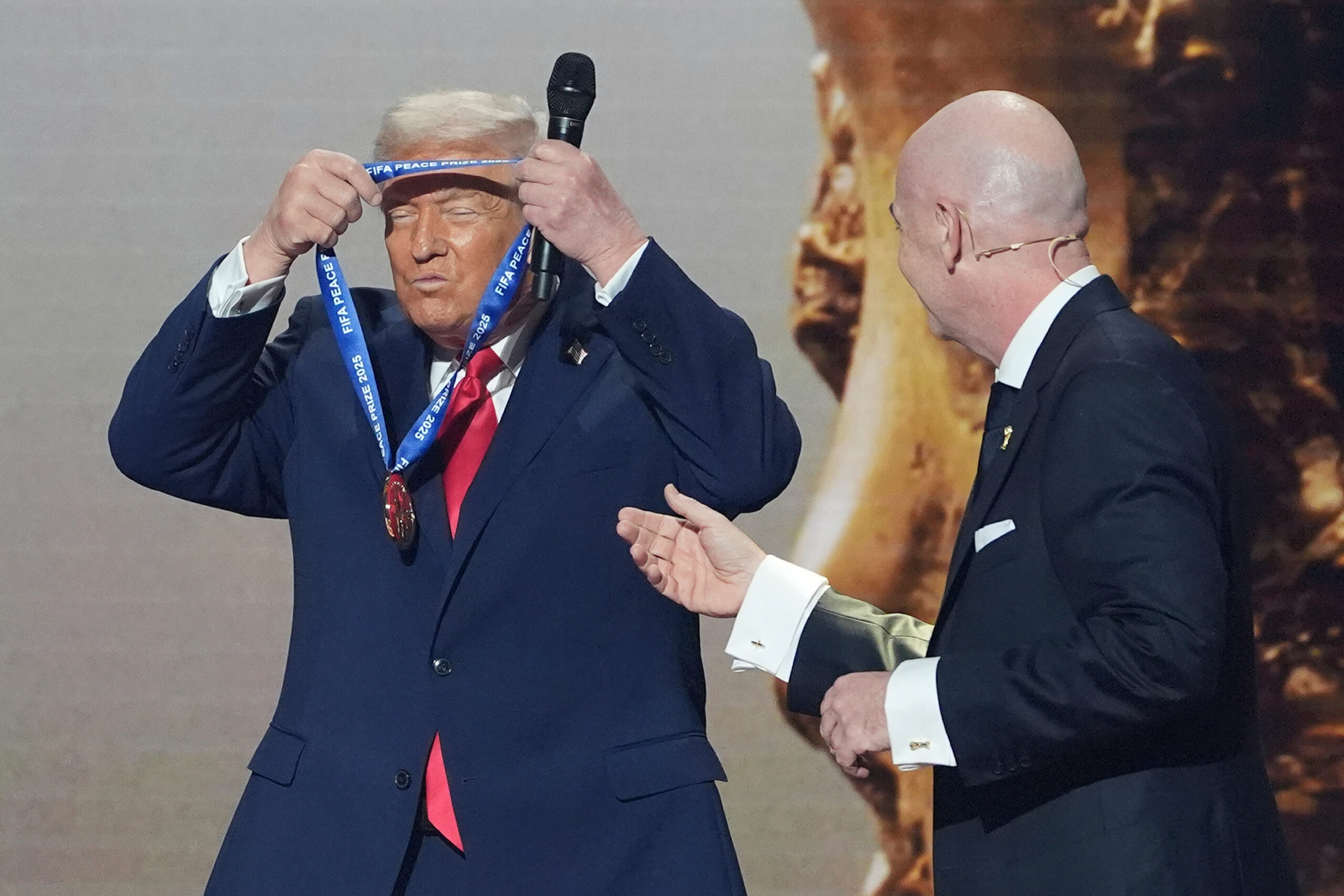
    And it’s not only unconstitutional. An aggressive and unprovoked war — which this unambiguously is — is also a blatant violation of international law and the post-World War II global order that we once encouraged with the United Nations, in the hope of preventing the emergence of some future tyrant. Who knew that the greatest threat to world security in the 21st century would come from the current holder of the coveted FIFA Peace Prize™ and the chairman of his own much-ballyhooed Board of Peace?

    When the rise of our Cold War national security state after 1945 led to prolonged, unpopular, and undeclared wars in Korea and Vietnam, Congress passed the 1973 War Powers Act that meant to require consultation and its mandated involvement, a seeming solution that is now increasingly honored in the breach.

    It’s worth noting that when the George W. Bush regime decided to launch a war of choice against Saddam Hussein’s Iraq in the early 2000s, its case was larded with lies, including a 16-word whopper that the president uncorked during his 2003 State of the Union address. But a generation ago, Bush, Dick Cheney, and their merry band of war criminals at least felt it was necessary to get a congressional authorization, and to spend months wooing the public and the pundits.

    Trump had a similar chance to lobby the American people and the world in his State of the Union address last week, and he largely whiffed. He included only a brief and perfunctory recitation of the long-standing and, in fairness, justifiable grievances against Iran’s brutal repression of its own people, its nuclear ambition, and its backing of violent proxy groups.

    To be sure, we should be alarmed about the destructive threat of nuclear bombs in the hands of unconstrained strongmen backed by religious fanatics — whether that’s in Tehran, Jerusalem, or Washington. And most of the world wants freedom for Iran’s long-repressed masses, but U.S. and Israeli bombs might be the worst possible way to make that happen.

    Already, as I write this in the very early hours of the war, there are reports that the bombing of a girls’ school in southern Iran has killed as many as 85 people, most of them innocent children. We are spilling the blood of the very people we are promising to liberate. Are we really expecting to be someday greeted with rose petals?

    Again?

    Indeed, there are many painful echoes of Bush 43’s disastrous conflict with Iraq, including shameless lying by the commander in chief. Trump’s 3 a.m. claims that Iran poses an “imminent” threat to the United States and is close to developing ballistic missiles that can reach our shores are almost as ludicrous as his Big Lie about the 2020 election.

    Just like early 2003, when Iraq opened up to outside weapons inspectors, but we invaded them anyway, Trump’s all-out attack came in spite of reports that Iran was making “significant” concessions at the bargaining table in Geneva, regarding both the nuclear program and the kind of big-money stuff like oil and minerals that warm the heart of our corrupt kleptocracy. All this after Barack Obama had a successful deal, negotiated with years of hard work, to halt Iran’s nuclear enrichment that Trump 45 came in and scuttled because ¯_(ツ)_/¯.

    Trump seems to be bored with peace. For whom? For what?

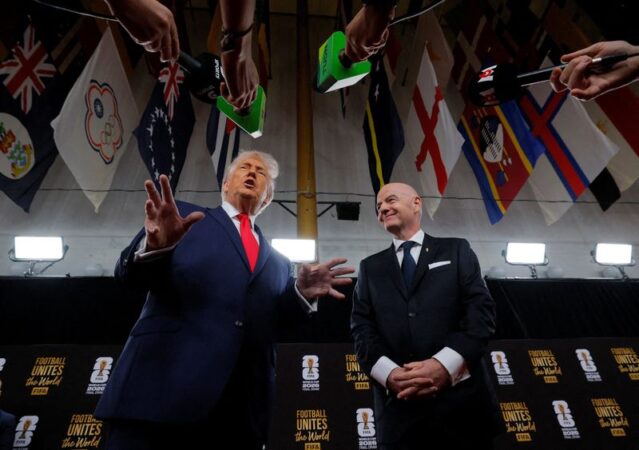
    President Donald Trump is presented with the inaugural FIFA Peace Prize by FIFA President Gianni Infantino during the 2026 FIFA World Cup draw at the Kennedy Center in December.

    It seems way too spot on that the Pentagon is calling this massive attack “Operation Epic Fury” — a fitting tribute to a president who reportedly launched into an epic Downfall-level rage when even a right-wing U.S. Supreme Court struck down his also-unconstitutional tariffs, whose U.S. Department of Justice is covering up the Jeffrey Epstein files, and who is considering a “national emergency” around the 2026 midterms that smells like a Reichstag fire.

    Sure, the Iran war is a massive distraction from Trump’s cratering poll numbers at home, but aggressive war is also just a thing strutting strongmen do to consolidate their illegitimate powers. Bush’s Iraq War was the last throes of a decaying democracy, while Trump’s actions are those of an unrestrained dictator — exactly the mad king that Madison sought to warn us about 228 years ago.

    So now what?

    “Trump has launched an illegal regime change war in Iran with American lives at risk,” Democratic Rep. Ro Khanna of California, a Bucks County native and a top critic of unchecked militarism, posted on X after the attack. He said he and his GOP renegade ally, Rep. Thomas Massie of Kentucky, plan to go ahead Monday with a vote to invoke the War Powers Act — even as the prospect of that vote may be why Trump pushed the button now.

    Not only do the odds of success for Khanna and Massie seem dim, but the War Powers Act seems too late, yet also too little. In a nation that has pressed impeachment or resignation on four presidents, including Trump 45, Trump 47’s unlawful and murderous war on Iran already seems the worst abuse of presidential power in American history.

    A cruise-missile assault aiming to change the government in Iran is, in reality, a desperate plea for regime change in Washington, D.C. Democrats, who could gain power in the House as early as this year thanks to GOP scandals and illness, must make clear that Trump’s impeachment and an end to American autocracy are their main priority.

    For now, we have unnecessarily injected ourselves into a long-troubled corner of the world where there are almost no good guys, where theocratic dictators are unceasingly slaughtering the citizens of other theocratic dictators. Maybe that’s because, over the course of 250 increasingly tragic years, the United States has finally become exactly like them.

    The only epic fury should be our own.

  • Trump: ‘Freedom’ for Iran is goal of ‘major military operation’

    Trump: ‘Freedom’ for Iran is goal of ‘major military operation’

    President Donald Trump told The Washington Post early Saturday that his main concern is “freedom” for the Iranian people as the U.S. launched military strikes in the country.

    A U.S. official said a multiday operation against Iran began at about 1 a.m. Eastern time with a salvo of ship-launched Tomahawk cruise missiles and air-launched munitions from U.S. Air Force and Navy jets.

    Iran quickly launched counterstrikes in response to the attack, which the Trump administration has named “Operation Epic Fury.” Multiple U.S. military bases were targeted by Iran, the official said, including the support facility for its 5th Fleet ships in Bahrain, according to the country’s state-run news service.

    While the operations are ongoing, no U.S. service members have been injured, the official said, who spoke on the condition of anonymity to provide details that had not yet been publicly announced. Israel said it also launched attacks on Iran on Saturday.

    “All I want is freedom for the people,” Trump said in a brief phone interview shortly after 4 a.m., when asked what he hopes his legacy will be as a result of the military action and a push for regime change in Iran.

    “I want a safe nation, and that’s what we’re going to have,” the president said, his first reportable remarks since announcing “major combat operations” in a video message around 2:30 a.m.

    Trump spoke from Mar-a-Lago, his home in Palm Beach, Fla., where he arrived Friday night just hours before the military strikes began. He spoke to the Post as television news played in the background.

    Despite his previous criticism of U.S. involvement in Middle Eastern wars particularly American lives lost during efforts to topple and install new regimes — Trump on Saturday made the case for the United States helping to bring about regime change in the country. In the video address, Trump urged Iranians once the strikes cease to “take over your government,” telling them “this will be probably your only chance for generations.”

    Trump also conceded that U.S. troops were putting their lives at risk in this effort.

    “The lives of courageous American heroes may be lost and we may have casualties,” Trump said in his taped remarks. “That often happens in war. But we’re doing this, not for now. We’re doing this for the future, and it is a noble mission.”

    Less than a year ago, while visiting the Middle East, Trump decried the “so-called nation builders” who “wrecked far more nations than they built.”

    “And the interventionalists were intervening in complex societies that they did not even understand,” Trump said in May at an investment conference in Riyadh, the capital of Saudi Arabia.

    Now, the president is portraying himself as the one willing to assume substantial risk to save the Iranian people, urging them to “seize control” of their “destiny” with U.S. help.

    “No president was willing to do what I am willing to do tonight,” Trump declared in the eight-minute video, which he said was filmed shortly after the attacks began in the early hours Saturday. He stood behind a lectern, wearing a white “USA” ball cap.

    “Now you have a president who is giving you what you want, so let’s see how you respond,” he said, speaking to the Iranian people. “America is backing you with overwhelming strength and devastating force.”

    Trump’s case to the American people for taking the country to war with Iran has never been urgently articulated.

    While the president said the objective of the strikes is to “defend the American people by eliminating imminent threats from the Iranian regime,” in his video about the attacks, Trump accused Iran of a litany of sins: from working to build a nuclear weapon to roadside bombs to a campaign of “mass terror” he said the regime has carried out against the U.S. “for 47 years.”

    Trump invoked the 1979 hostage crisis, in which 66 Americans were taken hostage at the U.S. Embassy in Tehran, and the 1983 bombing of U.S. Marine barracks in Beirut, in which 241 Americans were killed. He said Iran was “probably involved” in the al-Qaeda attack on the USS Cole in 2000 in Yemen.

    “I built and rebuilt our military in my first administration,” Trump said, “and there is no military on Earth even close to its power, strength or sophistication.”

    While speaking to the Post, the president did not take additional questions about the scope of ongoing operations or the potential for U.S. troop involvement on the ground. On Thursday, Vice President JD Vance said in an interview with the Post that any operation Trump initiates in Iran would not result in the U.S. becoming involved in a drawn-out war.

    “The idea that we’re going to be in a Middle Eastern war for years with no end in sight – there is no chance that will happen,” Vance said.

    Foreign policy experts have warned that, unlike the limited strikes the U.S. launched against Iranian nuclear sites in June, a wider conflict with Tehran could embroil Washington for years.

    Trump’s views on U.S. intervention in the Middle East have evolved over time, with the president initially expressing support for the Iraq War at its outset more than two decades ago, before months later calling it a “terrible mistake.”

    He built his political brand as an “America First” president opposed to adventures overseas, decrying the Iraq War during his 2016 campaign and in 2024 pledging a “stop to the endless wars and a return to peace in the Middle East.”

    “We defeated [Islamic State] in record time, but we had no wars,” Trump said in his November 2024 election night victory speech, referring to his first term. “They said, he will start a war. I’m not going to start a war. I’m going to stop wars.”

  • What’s new at the zoo

    What’s new at the zoo

    Open for more than 150 years, America’s first zoo continues to flourish as an epicenter of family fun, attracting millions of visitors annually. The Philadelphia Zoo is shaking off winter with new adventures and attractions this spring that are worth checking out.

    “This year will be another great year to visit Philadelphia Zoo,” said Jo-Elle Mogerman, the zoo’s president and CEO. “Come first for Hollenstein Ross Penguin Point with a new species to the Philly Zoo, Magellanic penguins. Come again for Carey Bear Country, a state-of-the-art facility designed for the care and conservation of endangered bears, allowing our guests to get closer to them than ever before.”

    There are other new experiences, too, like the 100-foot Pherris Wheel, opening for daily rides on March 28.

    “These new additions bring our mission of sharing our passion for conservation and creating transformative memories further to life,” Mogerman said.

    Here are the top must-sees at the Philadelphia Zoo this spring:

    Carey Bear Country

    Thanks to a gift from the W.P. Carey Foundation and other donors, Bear Country has leveled up with a massive expansion, including a third bear habitat and a fresh new name: Carey Bear Country, opening this spring.

    Updates include a cozy den space for breeding and a spacious glass viewing area for visitors. Keep your eyes peeled for the arrival of a dynamic duo of Andean bears. You’ll be able to spot them by their semicircular white or yellow markings around their eyes that resemble glasses.

    And don’t miss the one single sloth bear, with more of his furry friends to arrive at a later date. Find them with their distinctive “V” or “Y” markings on their chests.

    A rendering of the new Zoo360 crossing over Carey Bear Country at the Philadelphia Zoo.

    Zoo360

    The wildly popular and clever Zoo360, an innovative see-through mesh animal trail that allows a variety of animals to roam around and above the zoo, has just added an extension in Carey Bear Country’s third bear habitat.

    Proud Philadelphia fact: The Philadelphia Zoo is the first zoo to have this type of mesh animal trail. The zoo has several animal trails throughout the park, with a different mesh trail for each set of animals. From big cats (snow leopards and lions), smaller primates (black-and-white colobus monkeys), great apes (gorillas and Sumatran orangutans), and red pandas, now the bears will have the same opportunity to explore.

    “When Zoo360 first launched in 2011, it was revolutionary in the zoo world, so much so, that now more than 70 zoos around the globe have designed and built their own versions,” Mogerman said.

    The Philadelphia Zoo previously had Humboldt penguins (pictured here), but now it will house Magellanic penguins exclusively.

    Hollenstein Ross Penguin Point

    Say a frosty welcome to the Magellanic penguins at Hollenstein Ross Penguin Point. These first-time visitors will be the only colony of penguins there. Named for the Strait of Magellan, this species is native to the coastal regions of South America.

    Choose from several vantage points in which to view them: Head to the lower area to watch these excellent swimmers, capable of reaching speeds of 15 mph, frolic in a 250,000-gallon pool, or venture to the upstairs viewing gallery, where you can watch them through crystal-clear glass as they waddle and dive their way around.

    You can’t miss their tuxedolike black-and-white feathers and their donkey-sounding noises.

    ZOOtopiaries: Nature’s Sculptures debuts in April at the Philadelphia Zoo.

    ZOOtopiaries: Nature’s Sculptures

    Back from its popular launch last year, the ZOOtopiaries: Nature’s Sculptures installation is debuting in April. These three-dimensional mosaic topiaries of animal designs will be crafted from 22 plant species, including joyweeds, hens and chics, and sedums.

    These sculptures will be playfully interspersed in the garden beds throughout the zoo. Some of last year’s favorites will appear again this year, including the preening peacock and giant giraffes, which tower at 21 feet high and weigh 9,400 lbs.

    New topiaries this year include a terrific giant tortoise, a bright-eyed bear, and a brilliant bald eagle. Get an up close look to see if you can discover what plants and flowers are used in these designs showcasing the interconnection of art, plants, and animals.

    The Zoo’s new Ferris wheel is open daily starting March 28.

    Pherris Wheel

    Get a spectacular bird’s-eye view of the animals 10 stories below while riding the Zoo’s first Ferris wheel.

    Open daily starting on March 28, the wheel offers scenic views of the city skyline, the Art Museum, and the Schuylkill. Guests must be 32” to ride, and children must be accompanied by an adult. Tickets must be purchased online ($8) or at the zoo.

    “The Pherris Wheel has a number of fantastical light and color shows it cycles through,” Mogerman said. “Throughout the year, we will also be using the lights on the wheel to celebrate all the big sporting events happening in the city: the Flyers, the Sixers, the Phillies, the MLB All-Star Game, the FIFA World Cup, and the Eagles.”

    The Festival of Colors celebrates Holi at the Philadelphia Zoo on April 25, 2026.

    Festival of Colors

    This popular festival, presented in partnership with the Council of Indian Organizations, is back for more fun. The one-day event on April 25 celebrates Holi, the festival of colors celebrated in India and its diaspora. With colors, flowers, and festivities, it marks the end of winter and the arrival of spring.

    This zoo celebration includes Indian music, food, and dancing, featuring artists from Philadelphia’s Indian American community. Throw colored powders (called gulal) at each other and into the air, where red represents love, green for new beginnings, and yellow for prosperity.

    Enjoy this fun day and play with water and share sweet foods. Festival of Colors is included in general admission and zoo membership.