Tag: Weekend Subscribers

  • The WNBA’s rapid growth means a rise in gambling, and it’s affecting the players

    The WNBA’s rapid growth means a rise in gambling, and it’s affecting the players

    Growing up in a family of six in Poughkeepsie, N.Y., former Villanova women’s basketball star Maddy Siegrist said the closest thing she witnessed to a sports bet was when the Super Bowl rolled around. And even then, it was friendly wagers.

    “It just wasn’t a thing in our house,” said Siegrist, who now plays for the WNBA’s Dallas Wings. “I didn’t grow up with people who bet. Plus, there were no apps or anything. I knew people that did boxes on the Super Bowl. That was the extent of my knowledge.”
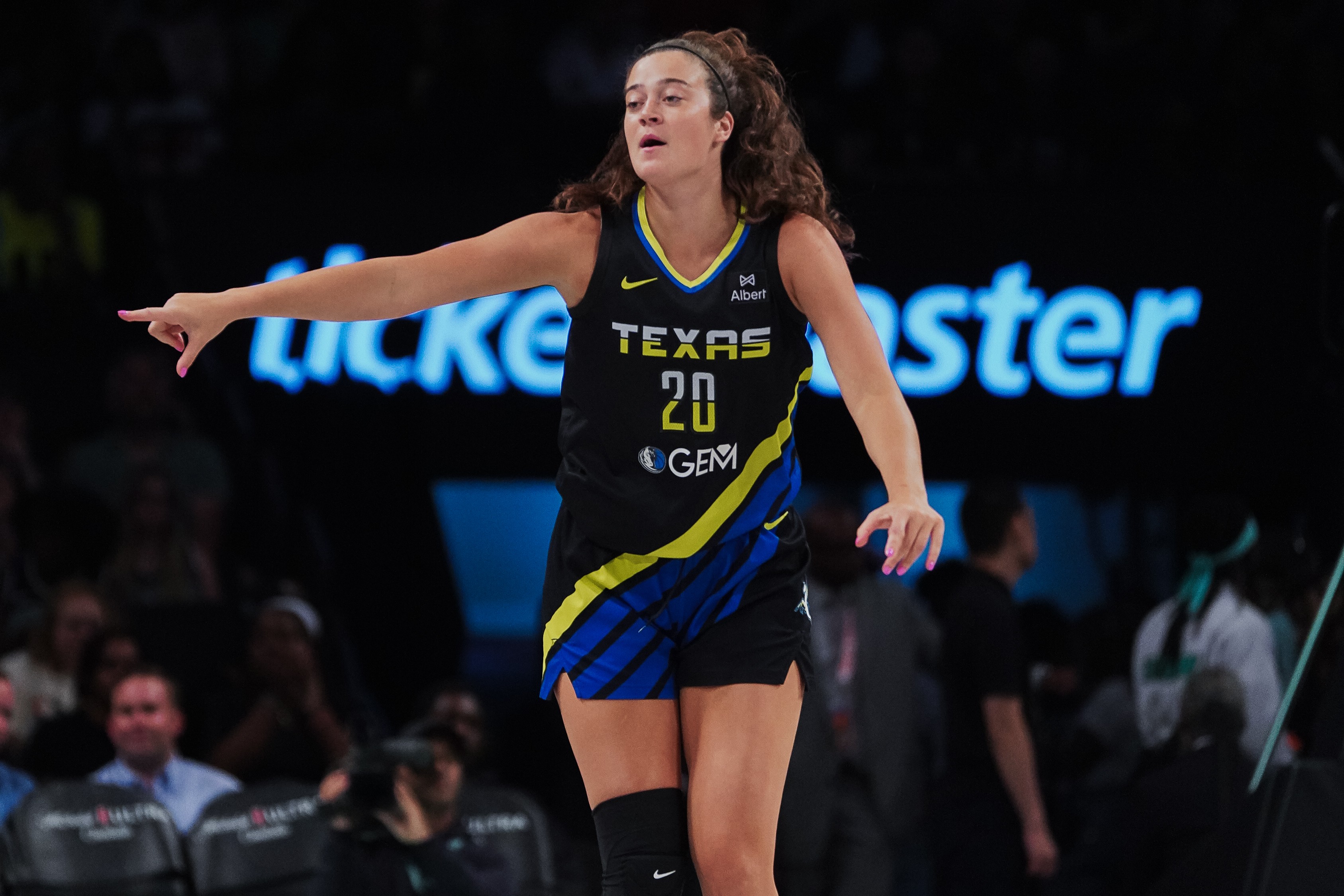
    Maddy Siegrist didn’t grow up around sports betting, but it’s now inextricably tied to her profession.

    Since Siegrist went pro in 2023, however, legalized sports betting has infiltrated virtually every corner of sports. Siegrist said the WNBA benefits from the sports gambling population laying bets on games. That translates to more eyes watching women’s professional basketball, which generates a bigger fan base, which spurs continued growth of the sport and its brand.

    But Siegrist, 25, is quick to point out a darker side to the sports-gambling intersection, “one of the rougher parts that people don’t think about,” she said.

    Public vitriol directed at athletes is nothing new. But add the sports gambling component and a bettor’s ability to wager on virtually any aspect of a game or performance at the click of an app, and the result can be toxic. Often, negative fan reaction is the result of a losing bet, and social media has exacerbated the issue.

    “Any pro athlete will kind of give you the same [story]: These are people betting from their house that you’re going to go under [a projected stat total] or your team’s going to win,” Siegrist said. “With the world of social media, just how much hate people get is truly amazing. I’m not a super controversial player. I don’t have the spotlight like some of my other teammates. But if you have a bad game or a good game, you can get anywhere from 50 to 100 [direct messages] or comments on your social media that are crazy.”
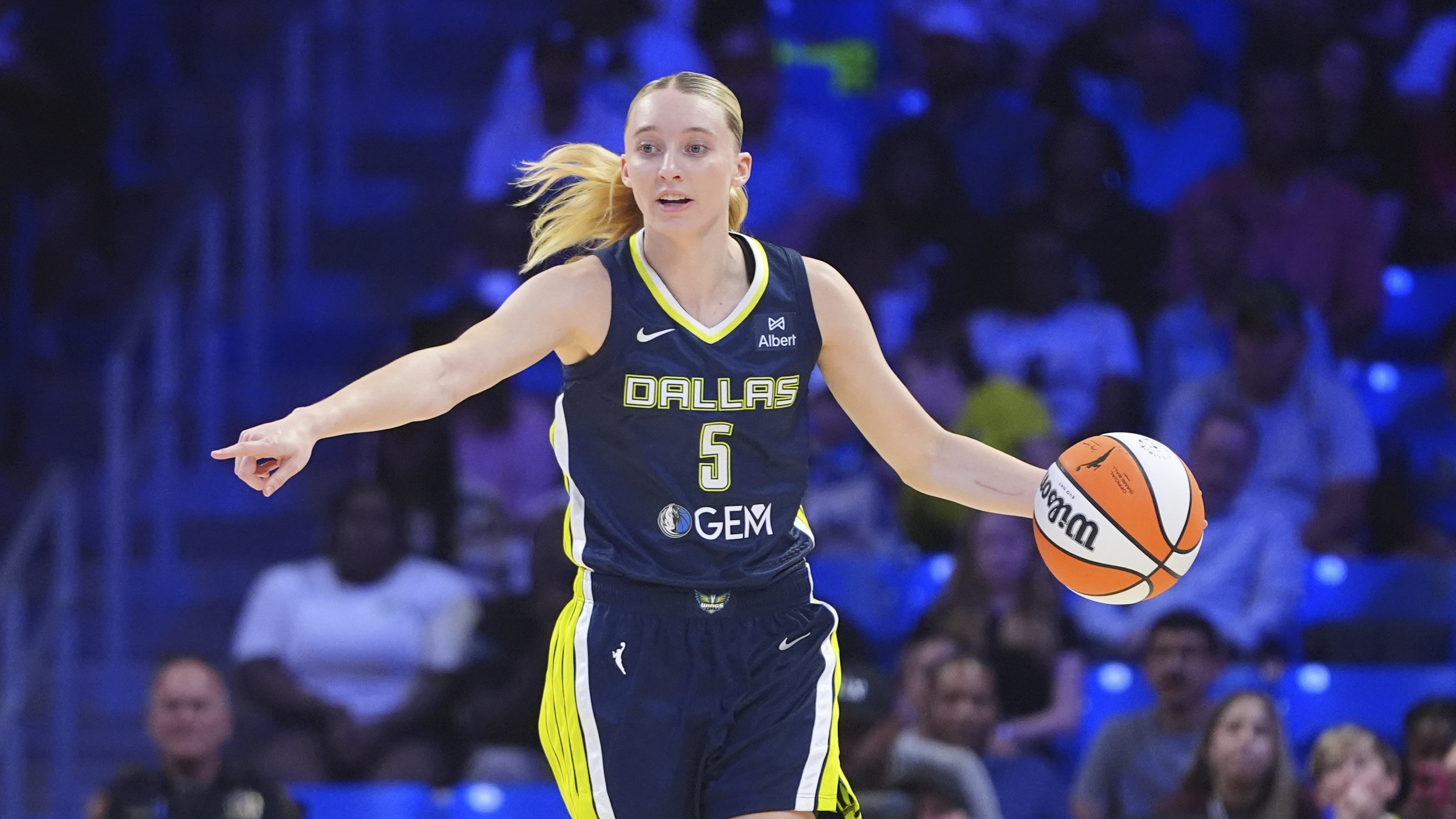
    Dallas Wings guard Paige Bueckers, a teammate of Maddy Siegrist, is one of the WNBA’s brightest young stars.

    Betting burden

    No longer are the WNBA and college women’s basketball considered unattractive markets for sports gamblers. Players like Indiana Fever star Caitlin Clark and Paige Bueckers, Siegrist’s teammate on the Wings, are among the stars generating buzz, and, by extension, causing a spike in gambling activity on the sport.

    Female athletes, professional and amateur, shoulder many challenges beyond maintaining elite performance on the court or field. That includes playing in the age of the ever-growing legalized sports betting industry — especially the proliferation of multimillion-dollar business partnerships between pro sports leagues like the WNBA and gaming companies like BetMGM.

    And sports remain corrupted by the underworld of illegal gambling, where pro athletes can turn to a side hustle to try to score millions illicitly. The recent unsealing of the federal indictments that involve illegal gambling schemes, the NBA, and purported organized crime members is one such example, and Siegrist said she had followed those recent announcements.

    While the WNBA and the players’ union continue collective bargaining negotiations, there are developments regarding salary structure in the league’s latest proposal. The changes could temper a longstanding gripe by professional women’s basketball players: that their compensation is not commensurate with the gargantuan salaries made by male pro hoops players — as they shoulder the shared burden of scrutiny from bettors and fans alike.

    According to a source with knowledge of the situation, the league’s latest proposal includes language that defines a maximum salary structure with a guaranteed $1 million base for 2026 and projected revenue sharing pushing total earnings for max-salary players to more than $1.2 million. This follows an agreement to extend the current labor agreement to Jan. 9

    The average player’s salary is projected to exceed $500,000 in 2026, while the minimum salary is projected to be more than $225,000 — up from approximately $102,000 and $66,000, respectively, in 2025.

    Institutional support

    Once the WNBA season starts, Siegrist said she drastically reduces her social media use to keep her mind clear of clutter and keep the focus on basketball.

    “You have to take it for what it is. Obviously, social media helps you build your brand, stay connected,” she said. “From that perspective, it’s great. It’s really allowed athletes to monetize off of themselves, and it gives fans a unique perspective into seeing these people’s lives, which I think is great.

    “Twitter [now known as X] is the worst. I definitely try to not go on at all during the season. … Sometimes I like to scroll on TikTok, take my mind off stuff. But I don’t ‘like’ anything that has to do with the WNBA on TikTok. I think for me, it’s definitely a balance.”

    The WNBA has taken steps to combat hate and negative fan behavior directed at the league’s players and personnel. Earlier this year, the league launched the “No Space for Hate” initiative, a “multidimensional platform designed to combat hate and promote respect across all WNBA spaces — from online discourse to in-arena behavior.”

    One of the campaign’s goals is the use of artificial intelligence to safeguard the players’ and teams’ social media pages and to automatically detect, report, and delete hate speech and harassment.

    “As interest in sports betting grows around the WNBA, we are taking clear, concrete steps to protect players and safeguard the integrity of the game. Player safety remains our highest priority,” the WNBA said in a statement. “We’ve enhanced security, expanded monitoring of online threats, and increased fan education. We are also working closely with our gaming partners to monitor betting activity and ensure our systems protect the game. These safeguards are constantly being reviewed and strengthened to ensure we keep the players safe and our game secure.”

    Around the time the WNBA launched “No Space for Hate,” sportsbook behemoth BetMGM announced its partnership with the reigning champion Las Vegas Aces. BetMGM also is an authorized gaming partner with the league.

    Even while injured, Caitlin Clark (right), here with another former top overall pick in Aliyah Boston, generates a ton of buzz around the WNBA.

    “The NBA and WNBA are very different in terms of scale and seasonality — the NBA is a much bigger league, but both have shown strong year-over-year growth,” said BetMGM trading manager Christian Cipollini. “The WNBA benefits from its summer schedule when there’s less competition for attention, and star power like Caitlin Clark has driven a major uptick in engagement. Even after Clark’s injury this [2025] season, handle remained well above pre-Clark levels, which speaks to the league’s momentum.”

    Cipollini said BetMGM — and the gaming industry as a whole — is committed to sports integrity.

    “That includes athlete harassment, and we’re working with the leagues on this issue from several angles,” he said.

    Historical perspective

    During his 42 years (1978-2020) as head coach of the Villanova women’s basketball team, Harry Perretta said gambling on women’s college basketball was never an issue for him and his players, simply because the interest wasn’t there. Of course, the bulk of Perretta’s Villanova coaching career unfolded before the 2018 Supreme Court ruling that legalized sports betting state to state.

    “I guess you always might have bookies on campus. But I used to tell [players], ‘You really don’t want to get involved,’” said Perretta, 70. “People who get themselves in trouble are people who make bets without putting money down. Next thing you know, they’re behind the eight ball.”

    There was that 1998 ’Nova-UConn women’s game, though. Nykesha Sales was on the cusp of becoming Connecticut’s career scoring leader before she sustained a devastating Achilles injury. But before UConn’s game against Villanova, Perretta and longtime UConn women’s coach Geno Auriemma agreed to let Sales score an uncontested basket after tipoff to reach the milestone. Villanova then was allowed to score its uncontested basket, before the “real” game began. Then-Big East commissioner Mike Tranghese also had agreed to the gesture.

    “We let Sales score a basket, and I checked to see if there was an over/under on that game,” Perretta said. “I checked out of curiosity. When we let her score the two [points], and then Connecticut let us score two, I didn’t want anybody saying something crazy. There was no betting on that game, but I checked. That did go through my mind when that whole sequence occurred.”

    In the final two years of Perretta’s Villanova tenure — during which he coached Siegrist, Perretta said he started to see a lot more betting lines on women’s college basketball games, particularly around the start of the NCAA Tournament. The dual salvos of legalized sports betting and amateur athletes securing name, image, and likeness deals had reshaped the sports landscape.

    Siegrist — who married Perretta’s son Stephen, a Drexel assistant women’s basketball coach, in late October — said that going back to her ’Nova playing days, players were consistently educated on the dangers of associating with any illegal gambling operation or people within that culture.

    “I have it ingrained from college and the NCAA, ‘No gambling ever, or else you’re not going to be able to play.’ I’ve tried to keep that mentality,” Siegrist said.

    The bigger challenge, she said, is now balancing her career in the online sports wagering fishbowl.

    “People are crazy. They’ll post something from five years ago and comment a hundred times, ‘You suck.’ It’s a pain to go through and delete it all,” Siegrist said. “The Wings pay a company to manage social media, the outside comments, and take them down right away if they’re threatening or hate[-related]. We’re going to see more and more of that, which I think is great.

    “These leagues and organizations are just trying to protect their players. At the end of the day, everyone is just trying to play the game they love to the best of their abilities. When you try and focus on that, these are all ways to keep the main thing the main thing.”
  • The family of dancers that has danced the Philadelphia Ballet ‘Nutcracker’ for at least a dozen years

    The family of dancers that has danced the Philadelphia Ballet ‘Nutcracker’ for at least a dozen years

    The Nutcracker is about family. It centers around a girl named Marie, her parents and little brother, and the magical things that happen after they throw a Christmas party.

    At Philadelphia Ballet, it’s more than just that.

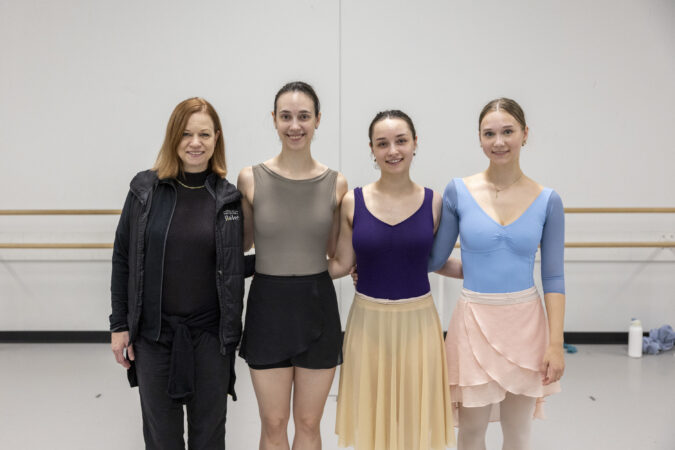
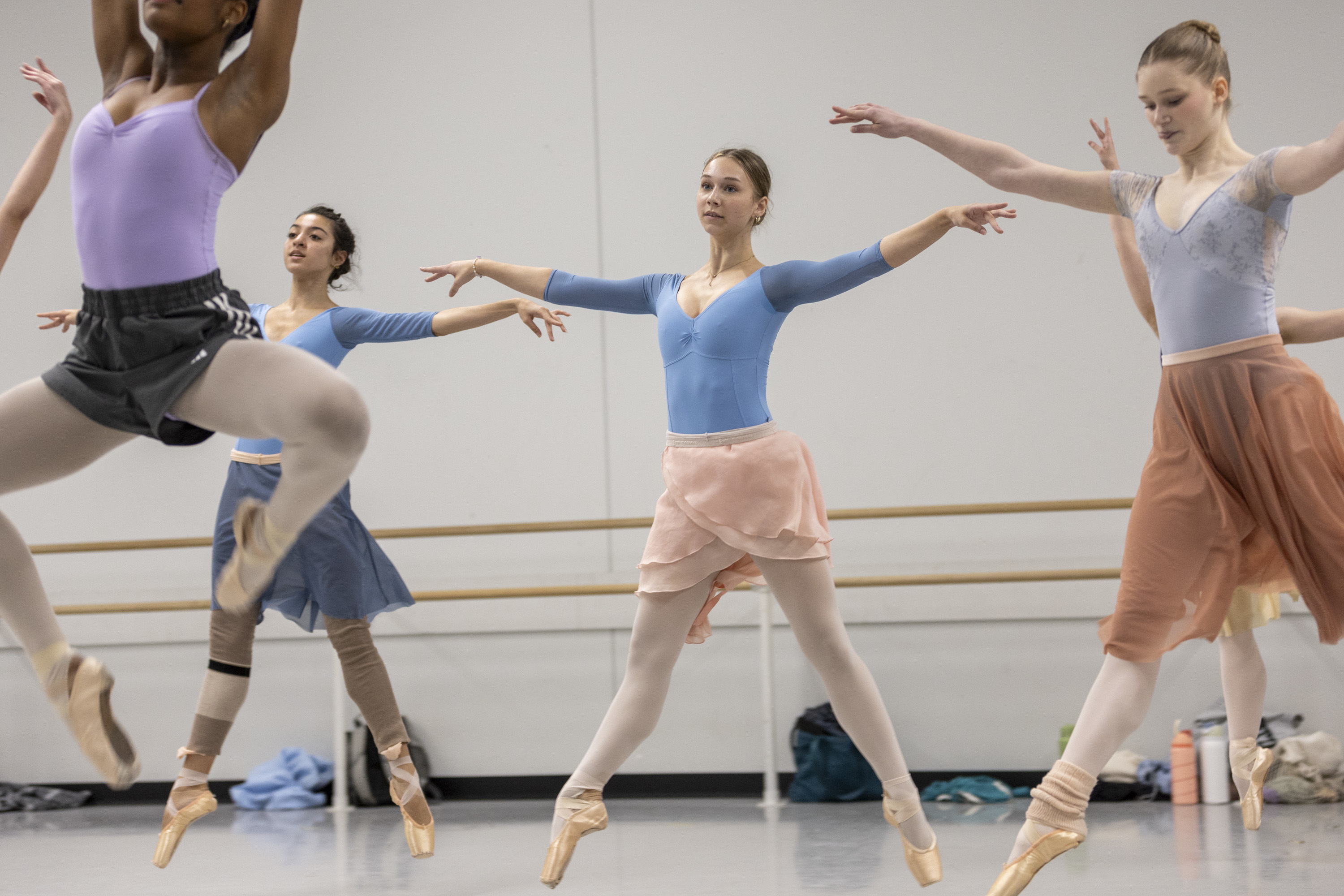
    Four members of a dancing family make Nutcracker magic onstage together. Sisters Isabella, 21, Ava, 19, and Olivia DiEmedio, 16, are all members of the company. Isabella is in the corps de ballet, Ava an apprentice, and Olivia in Philadelphia Ballet II.

    When the company opens its annual production of George Balanchine’s The Nutcracker this weekend at the Academy of Music, the sisters will perform as snowflakes, flowers, parents, maids, and a variety of sweet treats.

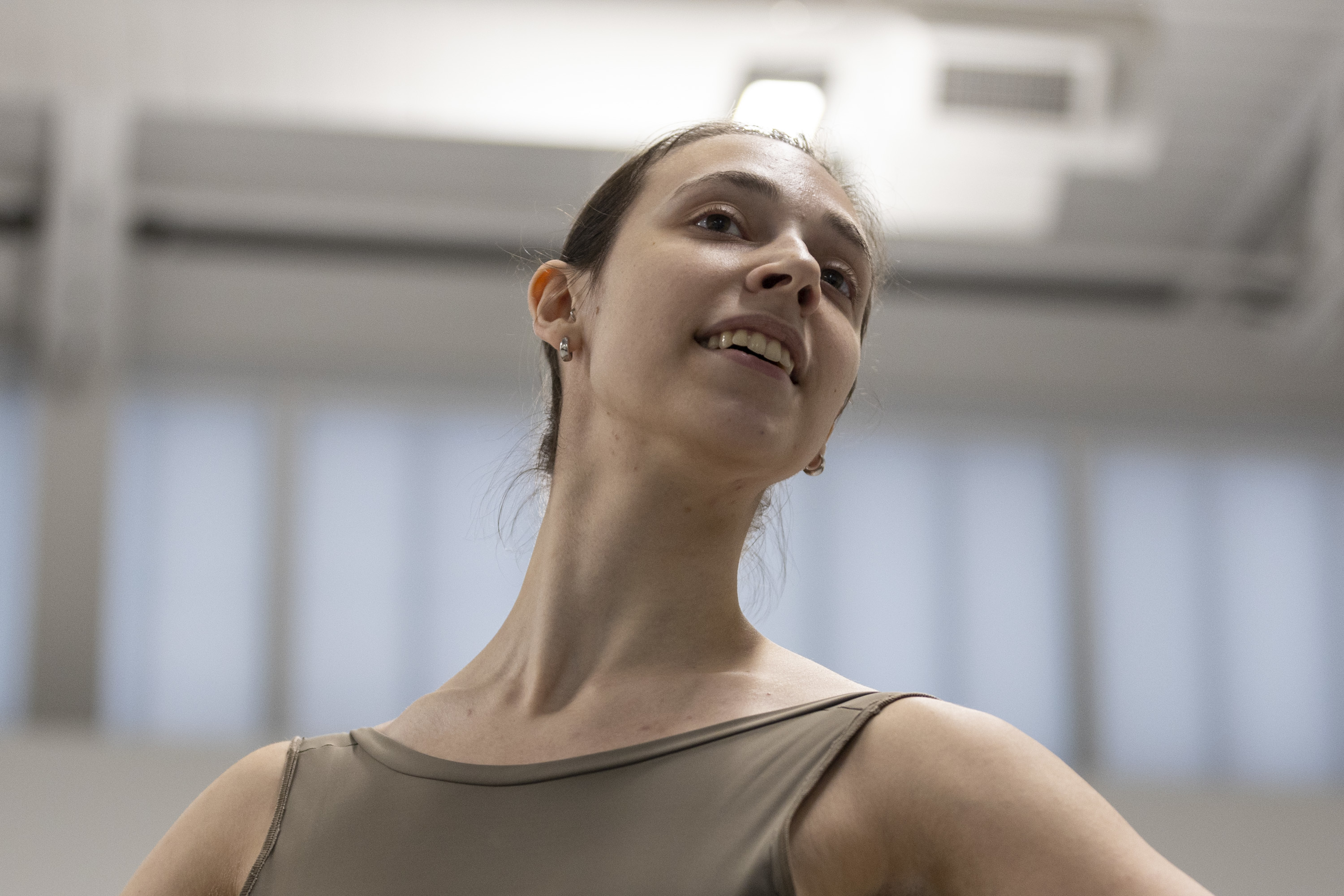
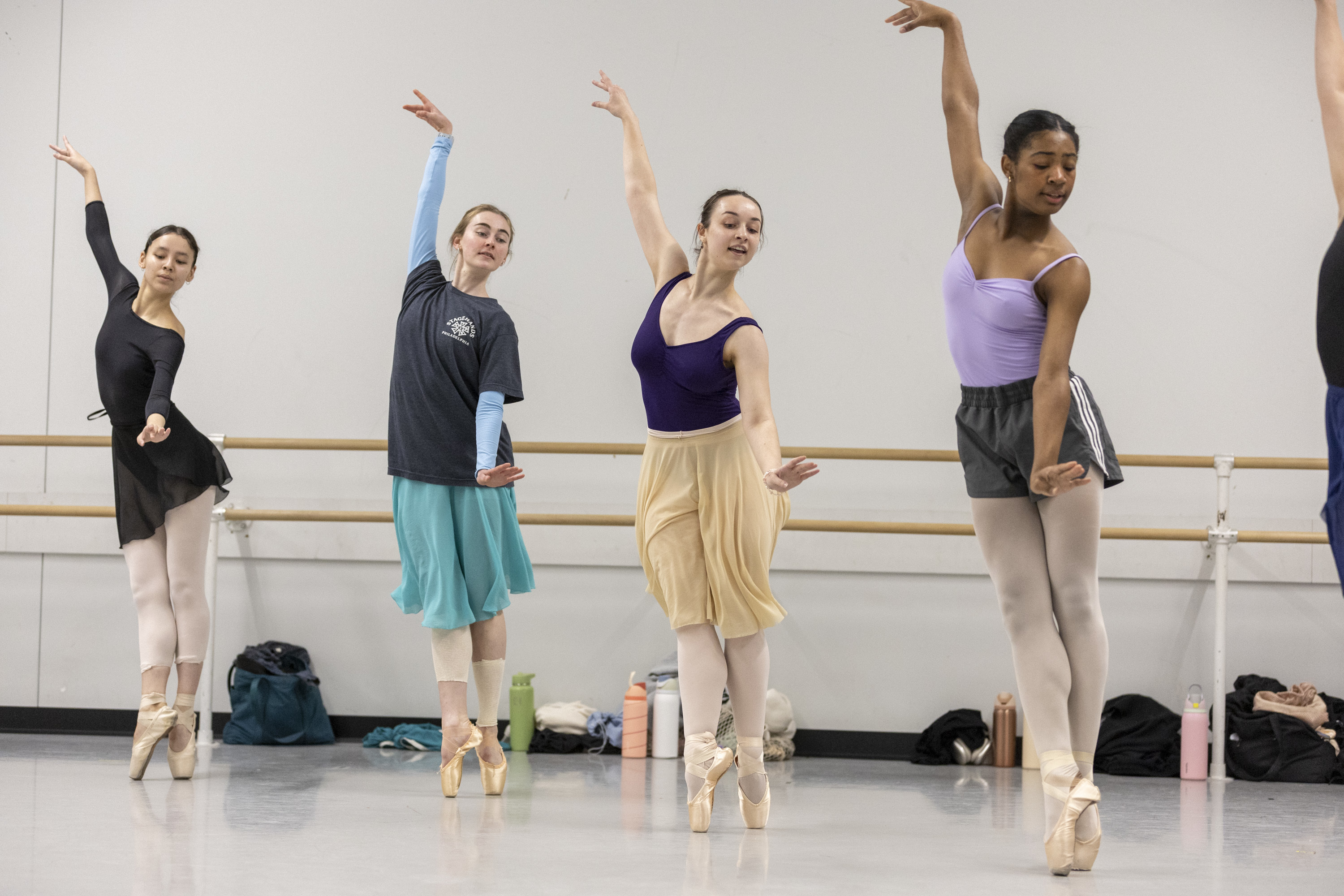
    Olivia DiEmedio, 16, (center) rehearses “The Nutcracker” with Philadelphia Ballet.

    The sisters are still on the rise in the company, and are yet to explore most of the principal roles. But they’ve filled most of the children’s, many of the corps, and some soloist roles. In fact, there has been a DiEmedio in one scene or another of The Nutcracker for at least a dozen years.

    Even their mother is sometimes onstage alongside them.

    Charity Eagens, who grew up in East Norriton, Montgomery County, was in the company, then known as Pennsylvania Ballet, for 10 years, starting in 1996. Now she is a teacher in the School of Philadelphia Ballet and the children’s ballet stager. She is also the grandmother in some performances of The Nutcracker.

    Eagens has taught all three of her daughters throughout their training, and she continues to do so once a week, when she teaches company class.

    In ballet class, she is their teacher. As soon as they step outside the studio, she is Mom.

    “It would be really awkward for all my friends to see me calling you Miss Charity,” Ava said to her mother on Zoom, gathering around a table at Philadelphia Ballet.

    “I would never say ‘Miss Charity,’” Olivia added. “I would just say what I needed to say and, like, just raise my hand.”

    The DiEmedio sisters grew up on Philadelphia Ballet.

    Isabella DiEmedio, 21, rehearses “The Nutcracker” with Philadelphia Ballet.

    “I took Isabella to see her first ballet [when] she was 2 years old, which is a little bit too young,” Eagens said. “But a lot of my friends were still in the company, and I took her. I thought, ‘Let me just see how long she sits.’”

    It was Sleeping Beauty, which is well over two and a half hours.

    “So it’s probably not the best one,” said Eagens. “However, she sat on the edge of her seat for the whole thing.”

    In 2007, when she was 3, Isabella started ballet classes in a local school where Eagens taught.

    When she was 4, Isabella went to her mother and said, “I want to dance on the same stage as you, Mom,” Eagens said.

    In 2012, when Isabella was 7, the company reopened its school (after becoming the Rock School for Dance 20 years earlier, when it looked like the troupe might fold), and Eagens signed her up.

    Her sisters followed in the same pattern: local classes at 3, moving over to the School of Philadelphia Ballet for more serious training when they were 7. They tried gymnastics, too, but ballet is what stuck for all of them.

    Ava DiEmedio, 19, (second from right) rehearses “The Nutcracker” with Philadelphia Ballet.

    The Nutcracker was a staple in their lives. Ava and Olivia both danced the role of Marie. Isabella was too tall when it might’ve been her turn, putting the top child’s role out of her reach.

    These days, Isabella lives independently, sharing an apartment with another dancer in the company. Ava is considering moving out as well, but her father is encouraging her to stay put and save money. Meanwhile, she and Olivia split their time living with Eagens in Worcester, Montgomery County, and with their father in Philadelphia, which is convenient for getting to the studio and theater.

    At 16, Olivia is a junior in high school, doing her academic work online through the Brandywine Virtual Academy, which is affiliated with the Methacton School District she used to attend in person.

    “I never had to withdraw them from school,” Eagens said.

    At different stages of their burgeoning careers, the sisters continue to support one another.

    “In combined company class with the men and women, I’ll stand behind Isabella,” Ava said. “And then in the ladies class, I stand behind Olivia. Sometimes I’ll tell [Olivia] little things I noticed about her technique.”

    Their boss has his eye on them.

    “Isabella, Olivia, Ava, and their mother Charity each bring their own artistry and dedication to Philadelphia Ballet,” said artistic director Angel Corella, “and watching them share the stage is incredibly moving.”
    The sisters are all eager to improve and get opportunities.

    “I want to be the best that I can and see how far I can take it,” Isabella said.

    Ava agreed. “I want to be able to branch out of corps roles.”

    As the youngest, Olivia knows she may have to wait her turn, although in ballet even the youngest professionals can get big roles.

    “Technically, I’m still in training,” as a second company member, she said. “So I have to always keep in mind and have a good mindset about it and keep working hard every day.”

    But, she added, “I really want to become someone who is, like, the star.”

    Philadelphia Ballet in “George Balanchine’s The Nutcracker.” Dec. 5-31, Academy of Music. $28-$282, 215-893-1999 or ensembleartsphilly.org

  • In search of a crafty holiday gift? Here’s where to look in Lower Merion.

    In search of a crafty holiday gift? Here’s where to look in Lower Merion.

    The jingle bells are ringing, the Hanukkah party guest list is filling up, and you still don’t have a present for the coolest, artsiest person on your shopping list.

    Looking for a kooky snow globe? Bespoke Eagles memorabilia? An art print unlike any other? Don’t worry! If you’re living on (or traveling to) the Main Line, here’s where you should be shopping for crafty presents.

    Sweet Mabel Gallery

    Narberth’s Sweet Mabel Gallery is an iconic local business, run by husband-and-wife duo David Stehman and Tracy Tumolo. Sweet Mabel got its start in 2005 when Tumolo took over her grandfather’s former barbershop in Narberth. She and Stehman, who were graphic designers, decided to turn the barbershop into a local gallery and store stocked with colorful American and Canadian folk art.

    To celebrate the shop’s 20th anniversary, Sweet Mabel is displaying and selling works from local artists, all under $100. An anniversary ceremony will be held on Dec. 5 from 6-9 p.m. at the storefront on Haverford Avenue. Plus, if you find the perfect gift, Sweet Mabel will wrap it for free.

    Ardmore Holiday Market

    Art Star, a Philadelphia gallery and boutique, is bringing a collection of bespoke craft vendors to Ardmore for two weekends this month. The Ardmore Holiday Market, organized in partnership with the Ardmore Initiative, will take place Dec. 6 and 13 from 11 a.m. to 3 p.m. at Schauffele Plaza.

    Ardmore Holiday Market attendees can look out for Philly-area artists like Lauren Delk Ceramics, Mahika Market, Fwens, and Leann the Illustrator. Peruse the booths, listen to live music, and, if you have time, stop by Suburban Square for a free photo with Santa from 11 a.m. to 2 p.m.

    Past Present Future

    Looking for a funky snow globe? A one-of-a-kind charm necklace? Day of the Dead inspired earrings? Ardmore’s Past Present Future is a portal into the world of eclectic antiques and crafts, from embroidered cat-themed pillows to hand-painted ceramic dishes. Sherry Tillman started Past Present Future in Philadelphia in 1976, drawing on her “long-held ties to the local arts and crafts community” to procure unique goods.

    Past Present Future is open Mondays through Saturdays from 11 a.m. to 6 p.m. and Sundays from noon to 4 p.m. (or later — “If we are still standing, we are still open,” the shop’s Facebook page reads).

    Something Different by Eric

    Eric Wells‘ store, Something Different by Eric, isn’t just a gift shop, it’s a hub for people with disabilities on the Main Line.

    Wells and his mom, Bernadette Wheeler, started the Bryn Mawr store in 2015. The nonprofit shop is staffed entirely by volunteers, including Haverford College students and special education advocates. Wheeler has said Something Different by Eric is part of a larger effort to “educate the community” and help people “see disabled individuals in action.”

    In addition to selling unique housewares, Philly- and Main Line-themed trinkets, sports memorabilia, baby gifts, and greeting cards, Something Different by Eric is stocked with books about mental and physical disabilities.

    The shop is open from noon to 8 p.m. on Fridays and Saturdays and from 1 to 5 p.m. on Sundays.

    This suburban content is produced with support from the Leslie Miller and Richard Worley Foundation and The Lenfest Institute for Journalism. Editorial content is created independently of the project donors. Gifts to support The Inquirer’s high-impact journalism can be made at inquirer.com/donate. A list of Lenfest Institute donors can be found at lenfestinstitute.org/supporters.

  • White is the 2026 Pantone Color of the Year. They say the choice isn’t political.

    White is the 2026 Pantone Color of the Year. They say the choice isn’t political.

    In a colorless move that, Pantone says, speaks to our collective longing for calmness, a clean slate, serenity, and focus, the New Jersey-based global color authority named Cloud Dancer — a billowy, balanced white — as its 2026 color of the year.

    The blank hue’s uncluttered vibe, Pantone says, plucks us out of the day-to-day crazy of our newsfeeds, AI-generated madness, and hustle culture.

    White, says Pantone Color Institute’s vice president Laurie Pressman, offers relief and respite. White noise silences the cacophony of worry rattling around in our overstimulated brains. The color gives us permission to think, refocus, and chart a new future.

    The pause between the doing, white is the be-ing.

    “White speaks to the value of measured consideration and quiet reflection,” Pressman said. “It represents a future free of toxicity and excess … contentment and peace, unity, and cohesiveness. It’s ethereal. White embraces the clouds.”

    Sweet dollops of whipped cream are white, meringue is white. Fluffy mashed potatoes are white, too.

    A fresh pair of Air Force 1s, patent leather go-go boots, a clean tee, a crisp button-up. A voluminous bridal gown. We ski in winter white.

    Mikado crop top with organza ball-gown skirt, limited edition ($1,150) at David’s Bridal, with pearl-drop earrings ($1,300) at Rosnov Jewelers. (Michael Bryant/Staff Photographer)

    White is fly.

    “In fashion and interior design, white is in our comfort zone,” said Leatrice Eiseman, executive director of the Pantone Color Institute. “It’s natural and organic. It’s about sustainability.”

    White is ethereal. She’s dreamy. She represents new beginnings. I’m overwhelmed, too. I would love to drop my precepts and jump into a world of my own making. Architectural white shirts and black pants are my grown woman fashion go-to.

    I get it.

    But y’all, white is the color of the year in 2026.

    As a Black woman living in Trump’s America, I can’t help but wonder if Pantone’s choice of Cloud Dancer was much more of a nefarious harbinger than they perhaps realized.

    No, I don’t think Pantone is low key promoting whiteness or advocating for a white savior.

    Cloud Dancer, the 2026 Color of the Year, is billowy like this curtain blowing in the wind.

    Rather, to me, Cloud Dancer is a subliminal acknowledgment of the power structure emerging in America, especially her politics. The Trump administration’s attacks on diversity, equity, and inclusion programs in universities and the federal government; its attempts to whitewash American history; its deportation of undocumented (and documented) brown immigrants; its adoption of white supremacist values: It all points to an America that values white lives more than others.

    Fashion and style always gives us clues to the future. So, I asked Pantone if they were tapping into something that perhaps they weren’t even aware of?

    “Absolutely not,” Pressman said, her tone pleading with me to stop with the correlation. “Pantone is not political.”

    Pantone is not political, true. But its trend forecasters keep their manicured fingers on the pulse. And in this moment I’m unable to ignore Ku Klux Klan robes are white, too.

    COY is always right

    Pantone’s Color of the Year is rooted in fashion. Its early picks – oceanic Cerulean in 2000; orange Tiger Lilly in 2004; and golden Mimosa in 2009 – influenced clothing, accessories, and makeup. As we moved deeper into the millennium, COY was the trendy choice for Kitchen Aids, accent walls, and Post-it notes.

    In the last decade, however, color of the year has come to define our collective moods more than just our fashion aspirations.

    It’s the aura hovering over the world, indicative not just of the life we have, but the one we want. The colors have become a peek into the energy of the feelings driving tomorrow’s zeitgeist.

    That became crystal clear in 2016, the first year Pantone chose two colors — a pink Rose Quartz and a baby blue Serenity. The dual hues were a nod to the emerging blurring of gender lines.

    In 2021, Pantone chose two colors again: Ultimate Gray and Illuminating Yellow.

    A year into the pandemic, we were emerging from a 2020 into a hopeful 2021, Pressman explained.

    The 2023 color, Viva Magenta, spoke to the vibrant post-pandemic life we craved.

    The Pantone Color of the Year is Cloud Dancer. The soft white represents a clean palette, a fresh start, shift and change.

    And its 2025 pick was Mocha Mousse, the color of espresso martinis, expensive wood, and me. It made such good sense in a year Black girl magic was at its peak.

    Things took a quick turn after. According to a New York Times study, 319,000 Black women have left both public and private sector jobs in 2025, the result of the Trump administration’s cost-cutting and DEI Initiatives.

    A clean slate

    A key reason why Pantone chose white is because, Pressman said, people are craving blank slates.

    “People have gotten to a point where they see what’s happening isn’t working for them anymore,” Pressman said. “They want something different, new, authentic.”

    Cloud Dancer hit that nail on the head.

    The Trump administration is dismantling the Department of Education, killing funding for the arts, scrubbing civil rights departments in federal agencies, and decimating medical research, replacing vaccine recommendations with unsubstantiated claims about Tylenol.

    Debris is seen at a largely demolished part of the East Wing of the White House, Thursday, Oct. 23, 2025, in Washington, before construction of a new ballroom. (AP Photo/Jacquelyn Martin)

    The violent crimes of Jan. 6 protesters have been pardoned. The president has ripped out the East Wing of the White House.

    All clean slates and new beginnings. But for who?

    Cloud Dancer, Eiseman said, is a throwback to classic fashion, citing Coco Chanel and Audrey Hepburn. Sure, fashion of the “Golden Era” was glamorous. These women were undeniably well-dressed, but it was also a time when white gloves and girdles were the norm, and equally glamorous Black women like 1940 Academy Award winner Hattie McDaniel was forced to sit in a segregated section during the Oscar ceremony because her white colleagues didn’t want to sit next to her.

    When the conversation turned to the yin (black) and yang (white) of fashion, I wondered aloud if, maybe this could have been a year when Pantone chose two colors: black and white. Perhaps this could signify harmony.

    Crickets.

    Pantone’s Color of the Year image of the Cloud Dancer.

    Later, I realized Pantone didn’t pick the cooperative vibe up, because it just wasn’t there.

    I’m not ready to wave the white flag yet. In the midst of all this, white remains a shade of hope, purity, and freedom. It’s the color of the Suffragist movement. Pantone’s is simply yet another canary in the coal mine which means I have a lot of work to do.

    I can’t afford to have my head in the clouds.

  • Seeking answers on autism: A CHOP expert debunks the top 5 myths | Expert Opinion

    Seeking answers on autism: A CHOP expert debunks the top 5 myths | Expert Opinion

    Several parents asked for my opinion when the Food and Drug Administration recently announced a warning label on acetaminophen for its alleged link to autism, and when the agency supported the use of leucovorin as an autism treatment despite a lack of scientific evidence. And I am sure I will get questions about the Centers for Disease Control and Prevention’s new claim on its website that the link between vaccines and autism cannot be “ruled out.”

    As a developmental and behavioral pediatrician who cares for many children on the autism spectrum, I love to talk with families about what they’re hearing.

    Families with children on the spectrum can feel whiplashed by online “influencers” hawking different theories, products, and alternative treatments. These families want to do everything they can to support their children, and so they seek out information everywhere they can find it.

    Families look for alternatives because many of our current treatments are not effective for all children, and even those that work well can require intensive effort from teachers, therapists, and caregivers. As a clinician, I try to share the available evidence with families so they can make informed decisions.

    Hype for particular treatments and theories about autism’s rise are not new. But when the highest officials in government shout about autism from the rooftops and the internet is awash in “information” untethered from scientific proof, it is more important than ever for clinicians and public health officials to approach parents with compassion, honesty, and evidence.

    At Children’s Hospital of Philadelphia (CHOP), Pediatric Health Chat is tracking medical myths and rumors, including those about autism. Based on that data and conversations with parents, here are the top five things I wish my families knew:

    1. Autism is not an epidemic

    While it is true the number of children with autism spectrum disorder continues to rise across all sociodemographic groups, there is no evidence a single environmental toxin or other factor is the cause. In fact, the strongest studies show that most of the rise in autism over the past 20 years is due to increased recognition of the condition that has meant earlier, incorrect diagnoses can be set aside; and the fact that more characteristics and behaviors are known to be signs of autism. So, while autism diagnoses are rising, there is no evidence of an epidemic — autism is growing, but it’s not a sudden outbreak like COVID .

    2. Vaccines do not cause autism

    The myth that vaccines cause autism originated in a British study back in the 1990s on just 12 children that was so fraudulent, the journal that published it wound up retracting it. Some people continue to insist that because autism has continued to increase — and new vaccines have been developed — there must be some kind of a link. But just because two things occur at the same time does not mean that one causes the other. (A classic example is that both ice cream purchases and drownings increase in the summer, but no one is claiming that ice cream causes drowning!)

    As CHOP’s Vaccine Education Center lays out, there have been numerous, well done studies that have not found a link between vaccines and autism. Vaccines save lives, and the evidence in favor of vaccine safety with respect to autism is overwhelming. I encourage all of my patients’ families to vaccinate their children. I am proud to say that I vaccinate my own children following recommended schedules — to protect them from preventable infections.

    3. Acetaminophen does not cause autism

    While a few small studies have found an association between prenatal acetaminophen use and autism, the largest and strongest studies have found no association. Studies that do not include factors like why the pregnant person is taking acetaminophen or whether siblings are on the autism spectrum may inaccurately conclude that acetaminophen is a cause when it is not. The truth is that high fevers during pregnancy are known to be dangerous, and acetaminophen, the active ingredient in Tylenol, is the safest medication we have for treating fever. I would have no hesitation recommending acetaminophen during pregnancy as needed.

    4. Leucovorin is not a proven treatment for autism

    Last spring, a news story appeared about a child who became more verbal after taking leucovorin (also known as folinic acid, a medication that is used for cancer patients undergoing chemotherapy). Since that time, requests from families in the autism community to begin leucovorin have skyrocketed. Yet the evidence for leucovorin’s effectiveness is incredibly limited. For example, children in placebo groups — those that didn’t get any leucovorin — showed similar gains as those that got it. Some families dropped out of the trials because their children became more aggressive while receiving leucovorin. We need larger, well designed, randomized control trials before I would feel comfortable recommending leucovorin to my patients.

    5. So-called facilitated communication does not help children with autism

    Several decades ago, facilitated communication (in which a facilitator touches a patient to “help them spell” on a keyboard or letter board) was thoroughly debunked by studies proving the facilitator was guiding responses, not helping the person to truly communicate their own thoughts.

    Yet facilitated communication (FC) has made a comeback in the form of other “therapies” like supported typing and through the “Telepathy Tapes” podcast. However, these are just FC by another name and are also unsupported by evidence.

    On the other hand, augmentative or alternative communication, through which individuals themselves use alternative strategies or “talker” devices to express themselves (instead of having a facilitator physically help them), is strongly supported by evidence. While I understand why families want to give their children every opportunity to express themselves, I strongly urge them to go with the methods that are proven to help them achieve their goals.

    Most troubling to me is that woven through all these myths and misinformation is the implicit belief that individuals with autism lack value, or that they cannot lead happy, successful lives. While some individuals on the autism spectrum struggle to live independently and may have some challenging behaviors, all these people are worthy of dignity and respect. Continuing to find ways to best support people with autism and their families, to allow them to reach their highest potential, needs to be the focus.

    Editor’s note: Pediatric Health Chat is an online initiative at Children’s Hospital of Philadelphia taking aim at the latest myths and misconceptions about children’s health. Kate E. Wallis, MD, MPH, is a developmental behavioral pediatrician with the Division of Developmental and Behavioral Pediatrics at Children’s Hospital of Philadelphia.

  • Justin Crawford is set to debut with the Phillies in 2026. Here are a few prospects who could join him.

    Justin Crawford is set to debut with the Phillies in 2026. Here are a few prospects who could join him.

    In 2025, the Phillies had the second-oldest lineup in baseball.

    Collectively, the average age of Phillies hitters was 30.3 years old, ranking only behind the Dodgers’ 30.7. That number only stands to increase when their core reports to Clearwater, Fla., another year older in February — that is, unless the Phillies see an injection of youth. Which, according to president of baseball operations Dave Dombrowski, is the plan.

    “We also have some young players that we’re going to mesh into our club,” Dombrowski said in October. “I’m not going to declare that anybody has a job, but there will be some people that we’re really open-minded to be on the big league club next year.”

    There are several Phillies prospects poised to make their debuts in 2026. Here’s a breakdown of the position players on the farm most likely to make a major league impact in 2026. (An overview of pitching prospects can be found here.)

    Justin Crawford could wind up in center field or left field for the Phillies in 2026.

    Justin Crawford

    The Phillies have been saying it for a while: Justin Crawford is ready.

    There isn’t much left for the outfielder to prove at the triple A level after he hit .334 and stole 46 bases for Lehigh Valley. Crawford, who turns 22 next month, was blocked from a promotion in 2025 because of a lack of a path to regular playing time on the major league club. But with some outfield shuffling expected this offseason, he will have an opportunity in 2026, one he could seize as soon as opening day.

    “Crawford has a real strong chance to be with our club,” Dombrowski said at the general managers’ meetings last month. “We’re giving him that opportunity to be with our club.”

    The Phillies view Crawford internally as a center fielder, though he also played 30 games in left field at Lehigh Valley last season. Where his major league opportunity will come will likely depend on how the rest of the outfield picture shakes out after any free-agent additions or trades.

    Beyond youth, Crawford would add speed to the Phillies’ lineup. He has an 81.9% success rate in stolen base attempts throughout his three-year professional career, and last season hit 23 doubles and four triples. He doesn’t have an overwhelming amount of power, with just seven homers last season, and his ground-ball rate continues to be high, at 59.4% in 2025. Despite that, he has hit well at every minor league level, and the only test left is the biggest one.

    “I think [Crawford] more than anybody is looking forward to the 2026 opportunity he’s going to have in front of him,” Phillies farm director Luke Murton said on a recent episode of Phillies Extra, The Inquirer’s baseball show.

    Gabriel Rincones Jr.’s 18 home runs ranked second in the Phillies farm system last season, but all were against right-handed pitching.

    Gabriel Rincones Jr.

    At his year-end news conference in October, Dombrowski highlighted outfield prospect Gabriel Rincones Jr. as one of the young players in the system the Phillies were high on.

    “We really like Gabriel Rincones, who’s got a lot of pop in his bat, and really hits right-handed pitching even better,” Dombrowski said.

    The Phillies added Rincones to the 40-man roster to protect him from being selected in the Rule 5 draft on Dec. 10.

    Ranked No. 9 in the Phillies’ system by MLBPipeline, Rincones had a .240 batting average and a .799 OPS in 119 games at Lehigh Valley. His 18 home runs ranked second in the Phillies farm system, trailing Rodolfo Castro by one.

    All 18 of those came against right-handed pitching, though. Rincones struggles against lefties, with just a .107 batting average and a .323 OPS.

    If an opportunity were to arise for him in the majors, it would likely be strictly a platoon role — and the Phillies already have a left-handed outfield platoon bat in Brandon Marsh. But Rincones’ pop against righties could be of value to the major league club at some point in 2026.

    Shortstop Aidan Miller led the Phillies farm system with 59 stolen bases last season.

    Aidan Miller

    Infield prospect Aidan Miller slashed .264/.392/.433 and led the Phillies farm system with 59 stolen bases in 116 games last season. Eight of those games were in triple A after a September promotion from double-A Reading, as Miller finished the season one step from the majors.

    When Miller’s big league opportunity arrives, though, he will need to have a chance to play every day to develop.

    Miller has played only shortstop in the minor leagues. But there isn’t exactly an opening there for the foreseeable future, with Trea Turner under contract through 2033 and coming off a resurgent defensive season.

    With Alec Bohm heading into free agency after the 2026 season — and once again surrounded by trade rumors — it seems the likeliest path for Miller to break into the Phillies infield will be third base.

    “We’d have to make sure that we properly prepared him to do that, and that’s still a discussion that we’ll have to have,” Dombrowski said in October of Miller changing positions. “But he’s a really good player and a good athlete.”

    Murton said on Phillies Extra that while the Phillies would not completely rule out Miller playing left field as a path to the majors, it’s “not something that I think we’ve kicked around too much recently.”

    Keaton Anthony

    Ranked No. 15 in the Phillies’ system, first baseman Keaton Anthony has flown relatively under the radar.

    Anthony, who was one of 26 Iowa student-athletes investigated for violating the NCAA’s sports betting policies in 2023, went undrafted that year. He was not charged, and the Phillies signed him as a free agent.

    Since then, Anthony has a career .324 minor league batting average and an .869 OPS. He won a Gold Glove in 2024 as the top defensive first baseman in the minors.

    Anthony, who slashed .323/.378/.484 this season, reached triple A in June. The 24-year-old right-hander’s approach is geared more toward contact and he doesn’t have a ton of power, with six homers last year. But Anthony hits line drives at a 33.5% clip.

    As a first baseman, Anthony has a very limited avenue to the majors as it stands. But he has some experience playing outfield in college.

    With a strong start to 2026, Anthony could potentially follow a similar trajectory as Otto Kemp in 2025. Kemp, who was also undrafted, was called up as an injury replacement in June. Despite having little outfield experience, Kemp ultimately saw some time in left field to keep his bat in the lineup.

  • 2026 Chevrolet Equinox EV: The price is nice, but there’s a catch

    2026 Chevrolet Equinox EV: The price is nice, but there’s a catch

    2026 Chevrolet Equinox EV LT front-wheel drive: A no-bells, no-whistles EV test.

    Price: $36,495 as tested. No options on test vehicle; price is up by $1,500 from the 2025 model tested.

    The all-wheel-drive model starts $5,000 higher and sacrifices about 10 miles of range.

    Conventional wisdom: Car and Driver likes that it has “more range than rivals, competitively priced” and is “available with Super Cruise and other tech.” They didn’t love the “underpowered front-drive model, less cargo space than the gas model, no Apple CarPlay or Android Auto.”

    Marketer’s pitch: “America’s most affordable 315+ mile range EV.”

    Reality: Definitely affordable. Will it be worth the trade-offs?

    Plug them in: Mr. Driver’s Seat has compiled a few EVs for comparison. So over the next two weeks you’ll see how this compares to more expensive electron-driven options from Hyundai and Volkswagen.

    What’s new: The Equinox EV carries on pretty much unchanged since its 2024 debut, although all-wheel-drive models boast a range boost for 2026.

    Competition: In addition to the above models, there are the Ford Mustang Mach-E, Honda Prologue, Kia EV6, Mini Countryman EV, Subaru Solterra, and Tesla Model Y.

    Up to speed: Car and Driver got one thing right — the 0-60 time is not the stuff of EV legend. The Equinox EV in its barest front-wheel-drive form will not plaster you to the seat when it’s time to leave the red light, but it does move with ease. It’s worth noting that pickup for passing will still leave most drivers impressed, and this can be an important test.

    Car and Driver puts the 0-60 time at 7.7 seconds, a not-unexpected number from a small SUV with 220 horsepower. All-wheel drive ups the ante to 300 horses, and it moves to 60 mph in 5.8 seconds.

    Shiftless: The Mercedes-ish wiper stalk on the steering column requires a pull and up for Reverse and a pull and down for Drive. The pull is a nice touch, so you don’t feel like you’ll make any stupid mistakes while riding around, the kind I’ve made now and again with these shifters.

    On the road: The Equinox EV handles with great ease, being pulled to the road by the heavy batteries in the floor. Highways are smooth, and country roads are nicely followed, with a touch of fun added as well.

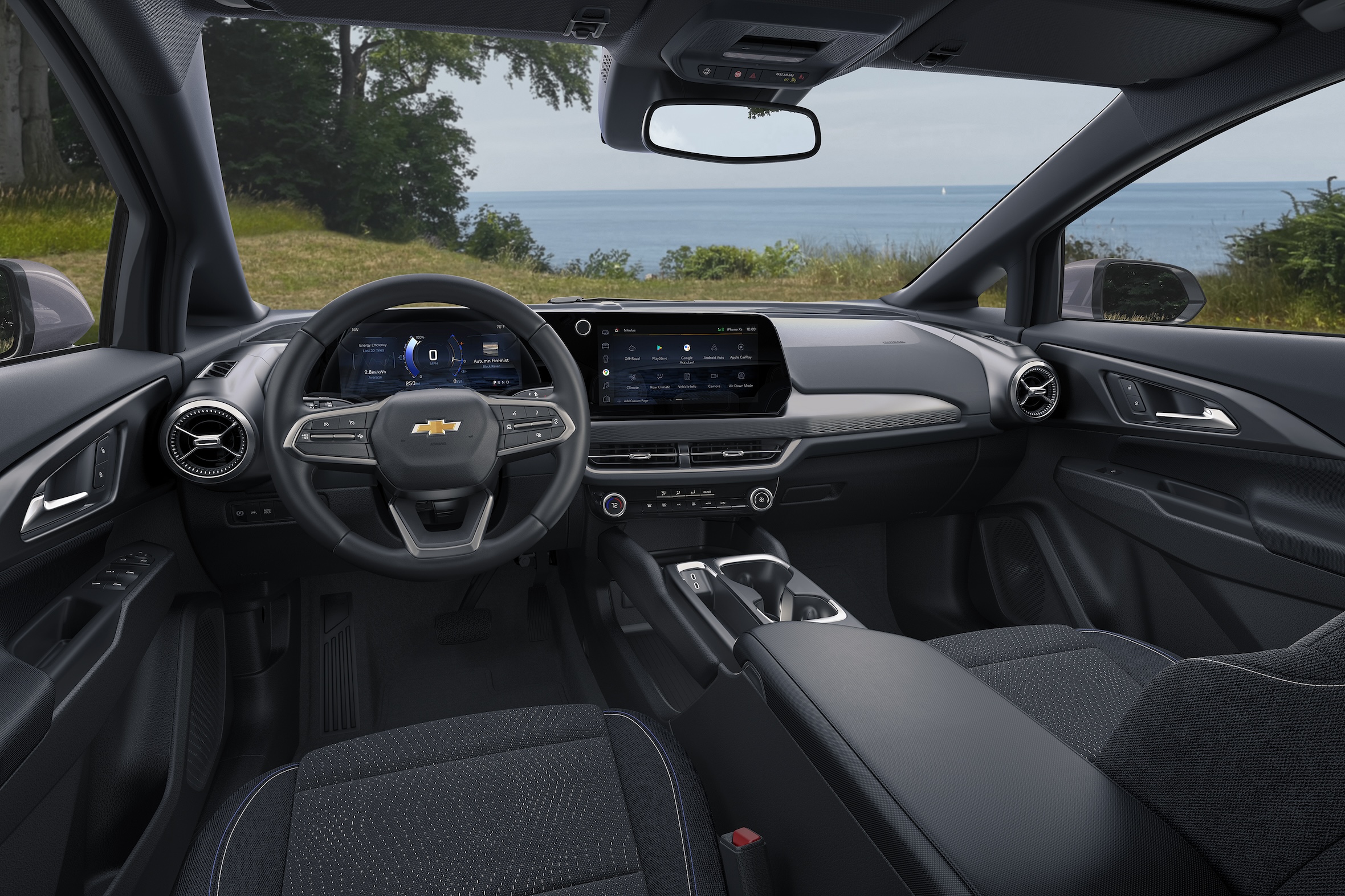
    The interior of the 2026 Chevrolet Equinox EV LT1 is quite literally the cheap seats. The front are comfortable, but the rear seat is lacking. Upgrades are available.

    Driver’s Seat: The cloth seats in the basic model tested provided plenty of comfort and support, although they felt a little warm as the humidity stayed up even as the temperatures fell to high 70s at the end of August.

    (If you want heated and ventilated seats, you have to add $7,000 for the LT2 model, and then you have the privilege of paying extra for those options.)

    The starter is in the seat sensor, which is not my favorite way to get going, but this one seemed to work more consistently than some I’ve experienced. GM also has added a touchscreen on-off icon for the times when the Equinox can’t tell you’re done driving.

    Friends and stuff: Rear seat room is nice in the corners, but the center seat passenger will feel the hump and the console. The seat is designed presumably to make your passengers whine during the test drive, so you buy an upgrade. It’s firm and has weird indentations in the lumbar area.

    You can always counter back from the Driver’s Seat that legroom, foot room, and headroom are all awesome so everyone back there should be thankful they’re not riding around in the back of 1980s front-wheel-drive Buicks, because there was a sad seat.

    Cargo space is 57.2 cubic feet with the seat folded and 26.4 behind the rear seat.

    Play some tunes: The infotainment center features a gigantic 17.7-inch display that’s clear and pretty easy to follow.

    The volume dial is a wide shallow thing that GM keeps putting into cars. It reduces me to tears at least once a week after accidentally rubbing the touchscreen and changing something important.

    Like maybe the music. Sound from the system is very good, about an A, so any interference becomes a personal affront. (Don’t interrupt the tunes, as the lovely Mrs. Passenger Seat and all the point-ohs know.)

    CarPlay is gone, but my notes didn’t mention missing it, so maybe that’s not the end of the world after all.

    Keeping warm and cool: Actual knobs control temperature and fan speed, and buttons let you do some of the simple functions. It’s nice that the big touchscreen didn’t eliminate the old-style controllers, even as temperature and fan control options reside in the bottom corners of the touchscreen.

    You can really get some air out of the blowers, which is nice. The corners have the round vents that make me happy with their ease of direction and on-off control.

    Range: A 319-mile range is great to have, but charging can be slow. InsideEVs tested one at three different chargers in February, and it averaged around 40 minutes to get from 10% to 80%, far slower than most competitors.

    Chevrolet advertises just 285 miles of range for the AWD models from 2025 but 309 for the 2026 AWD models.

    Where it’s built: Ramos Arizpe, Mexico. Mexico supplies 46% of parts; South Korea, 20%; the U.S. and Canada, 12%.

    How it’s built: Consumer Reports predicts the reliability of the Equinox EV to be a 2 out of 5.

    In the end: If you don’t mind missing some creature comforts, the Equinox EV can get you charging for a nice price.

    Next week: Hyundai Ioniq 5.

  • Swarthmore College hopes to redevelop Cunningham Fields as its athletic infrastructure ages

    Swarthmore College hopes to redevelop Cunningham Fields as its athletic infrastructure ages

    As Swarthmore College embarks on an ambitious campaign to update its campus infrastructure, plans for a redeveloped athletic complex are taking shape. Under the college’s proposal, Cunningham Fields, a set of playing fields located off College Avenue and North Chester Road, would be redesigned to include updated grass and turf fields, new tennis courts, spectator seating, and a pavilion with restrooms and team meeting areas.

    As the lengthy development process between the borough and the college continues to play out, here’s what you need to know about the proposed redesign.

    What is Cunningham Fields?

    Cunningham Fields is a set of athletic fields located on the Swarthmore College campus, off College Avenue and North Chester Road. The complex currently includes four grass fields, six tennis courts, locker rooms, and restrooms. The fields are used for lacrosse, field hockey, soccer, rugby, and Ultimate Frisbee practice. They are open to the public when they are not in use by the college.

    What does the proposed renovation look like?

    The Cunningham Fields redesign proposes the construction of three new sports fields; a pavilion with restrooms, team meeting areas, a training room, and storage; additional spectator viewing areas; and the addition of six tennis courts and relocation of existing tennis courts.

    One all-purpose turf field would be installed for soccer, lacrosse, rugby, Ultimate Frisbee, kickball, and flag football. The all-purpose field would not have lighting, a sound system, or permanent seating.

    A second proposed turf field would be used primarily for field hockey. That field would include spectator seating for up to 160 people, a press box, a scoreboard, a sound system, and lighting, per NCAA regulations. The field may be lit from 4 to 8 p.m., depending on the season, with the option to extend to 10 p.m. one day a week for fall night games. The use of the sound system would be limited to intercollegiate games, which the college says typically occur twice a week during the season.

    A new grass field would be put in primarily for soccer, rugby, and other recreational activities. The field would not have lighting or a sound system, and would be designed as a “quiet and calm environment,” the college says.

    The proposal also includes renovating existing tennis courts and adding six courts, which the college says would allow the men’s and women’s teams to play side by side.

    Why does the college want to renovate Cunningham Fields?

    The Cunningham Fields renovation is part of a larger plan for Swarthmore’s athletic facilities, which the college says are in need of major updates.

    Cunningham Fields currently presents “a unique set of challenges,” according to the college. The natural grass fields require significant maintenance. Its tennis courts have poor drainage and no spectator seats and are split between two locations, creating scheduling conflicts during meets. In addition to Cunningham Fields, the college says, Swarthmore’s Lamb-Miller Field House is “at the end of its usable life” and no longer meets NCAA requirements.

    A spokesperson for the college said in a statement that the proposed development is “an exciting project designed to meet the needs of our students while also serving as a resource for the broader Swarthmore College and Borough community.”

    The proposed renovation follows the 2024 adoption of “Swarthmore Forward,” a strategic plan that articulates the college’s vision for nurturing “all aspects” of students’ well-being, including health and wellness.

    How has the Cunningham Fields proposal changed over time?

    After receiving community feedback, the college says it has made significant changes to its initial plans and is “committed to preserving a true parklike character” through modern lighting and sound technology, quiet hours, deliberate scheduling, and environmentally responsible materials, among other measures.

    While the college initially planned to put lighting on all of the new fields, it now plans to light only the tennis courts and field hockey field. Plans for a new fitness court have been eliminated. Spectator seating and new netting have been pared back.

    To address the complaint of buses waiting along College Avenue, the South Cunningham Lot would be used as the main entry point, and drop-off and pickup would take place at a dedicated area near the parking lot entrance off South Chester Road.

    Has the borough approved the renovations?

    Not yet. Swarthmore College is in the middle of a development process with the borough that could take months, or longer.

    When property owners want to build something that does not comply with the existing zoning code (like the Cunningham Fields proposal), they can go through one of two avenues. Developers can either request that a municipality rezone its specific parcel of land, or propose a text amendment, which changes the municipality’s zoning code at-large.

    The college has gone the latter route, requesting an amendment to the borough’s zoning code. As proposed by the college, the amendment would add various permitted uses to the current IN-B Institutional District code, including changes that would affect the allowance of tennis courts, walking paths, safety netting, and scoreboards.

    Before a text amendment can be passed, it has to go through the borough’s planning and zoning committee, borough council, and planning commission. At a meeting on Dec. 1, the Swarthmore Borough Council discussed traffic, environmental impacts, and noise issues, raising questions like how late the college could use its field lights and where and when spectators could park for games. The council plans to send a list of questions and concerns to the planning commission by the end of the month. The commission will then study those issues before returning with a recommendation.

    If the zoning amendment is approved, the college’s development proposal would then have to go through an approval process with the county and borough, introducing another set of public meetings.

    How do residents feel?

    At a Nov. 20 meeting of Swarthmore’s planning and zoning commission, fears about changing neighborhood character and environmental impacts dominated public comment, according to the Swarthmorean, a community newspaper. Some residents expressed concerns about disruptive late-night athletic games, while others questioned the college’s decision to pursue a text amendment rather than a zone change.

    In its statement, the college said it looks forward to “continued engagement with our neighbors and the Borough as the process moves forward and to creating a space that benefits both the College and Swarthmore residents.”

    This suburban content is produced with support from the Leslie Miller and Richard Worley Foundation and The Lenfest Institute for Journalism. Editorial content is created independently of the project donors. Gifts to support The Inquirer’s high-impact journalism can be made at inquirer.com/donate. A list of Lenfest Institute donors can be found at lenfestinstitute.org/supporters.

  • Want a Christmas tree without the holiday crowd? Here’s how to get one delivered.

    Want a Christmas tree without the holiday crowd? Here’s how to get one delivered.

    If you need a Christmas tree to brighten your living room with the smell of freshly-cut pines and a medley of lit ornaments without the typical holiday crowd, you’re in luck.

    These decadent evergreens can arrive without you ever setting foot outside of your house, thanks to an array of local delivery services.

    Place an order, and the following business will transport a tree straight to your doorstep. Many will even set it up for you, or you can opt for a contactless delivery. There are even some offering recycling services once the holiday season comes to an end.

    Here’s where to order a tree for delivery in Philadelphia and the surrounding suburbs.

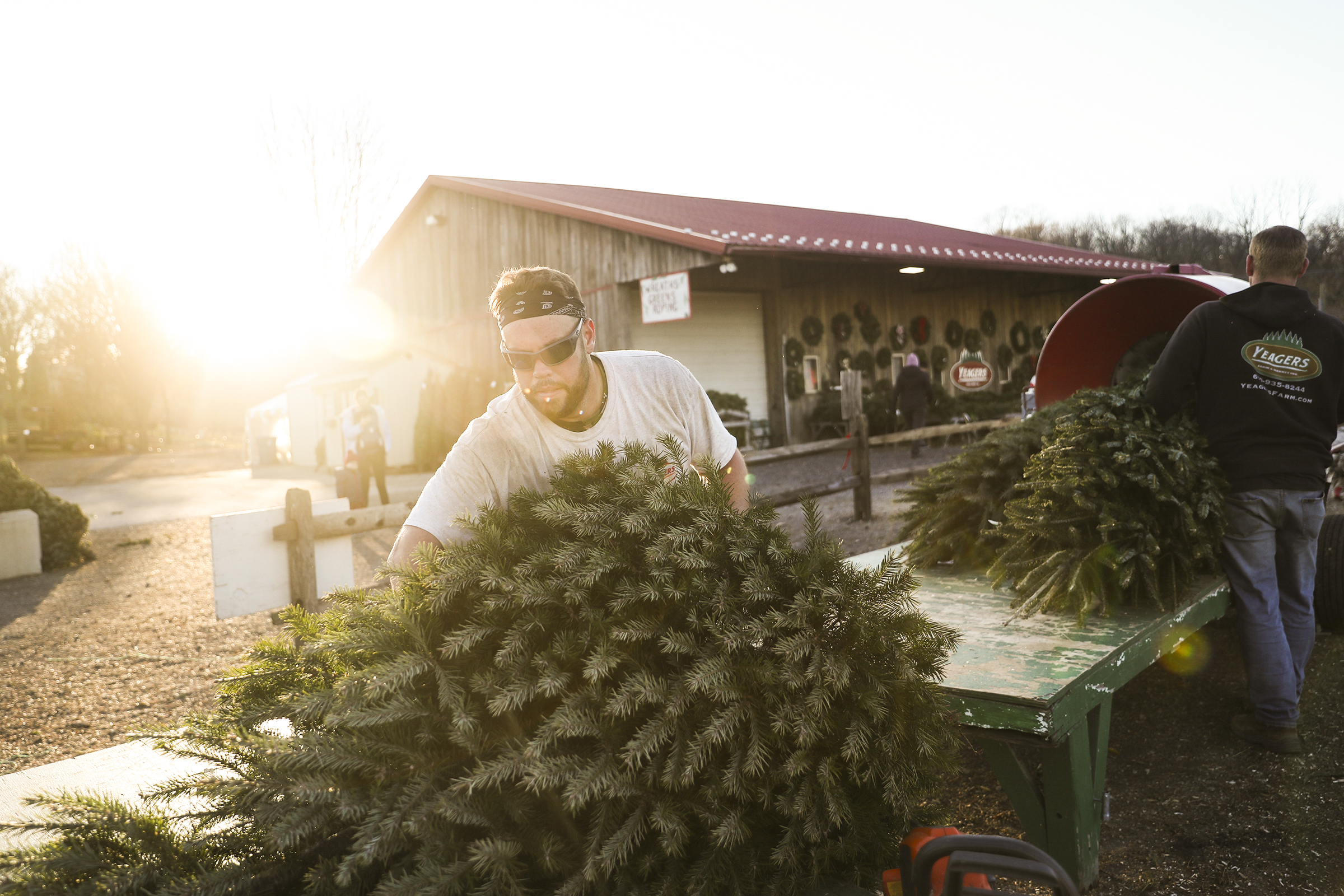
    Ross Varanyak helps prepare Christmas trees for customers at Yeager’s Farm in Phoenixville, Pa. on Friday, Dec. 2, 2022.

    Philadelphia

    The Christmas Tree Stand

    Choose between a Living Emerald green (3 to 4 inches tall) and Fraser or Douglas firs (3 to 16 feet tall) at the Christmas Tree Stand. Both the Fishtown and West Chester locations offer tree delivery services seven days a week between 8 a.m. and 8 p.m.

    Next-day delivery is available in the city and in select suburbs throughout the region. Visit the website to select the tree type, size, and delivery option. The tree will be transported straight to your doorstep. Upgrade to the premium package to have your tree set up with a stand. Once the holidays pass, you can also schedule a pickup and recycling service in January. Wreaths and garlands are also available for purchase.

    💵 $75 and up, 📞 267-225-7931, 🌐 thechristmastreestand.com

    Walt’s Christmas Trees

    Stop by Walt’s Christmas Trees in Northeast Philly for a variety of Fraser, West Coast Douglas, and Pennsylvania Douglas firs. The 47-year-old family business is kicking off its inaugural Christmas delivery season with the help of a third-party service. Visitors can stop by the main location or one of the other five hubs and choose a tree ranging between 5 and 14 feet tall. Once selected, the tree will be delivered for a $40 fee within a 10-mile radius. Delivery will be available until Christmas Eve.

    💵 $60 and up,📍 8956 Frankford Ave, Philadelphia, Pa. 19136 📞 215-913-5762, 🌐 waltschristmastrees.org

    Rob Felker, 34, of South Philadelphia, slams a christmas tree to unveil the size and branches for customers on Saturday, Nov. 30, 2019. Felker is Rocky Yo-Mo’s nephew. “I love Christmas,” Felker said. “I love going up to Pittsburgh and bringing the trees down here so people can have trees in their house.”

    Rocky Yo-Mo’s Christmas Trees

    Looking for a Christmas tree without sacrificing convenience? Rocky Yo–Mo’s will deliver the tree to your front door for free. Check out the selection (Monday to Saturday, 10 a.m. to 10 p.m., and 10 a.m. to 9 p.m. on Sunday) at the South Philly lot. Decide between a Fraser, concolor, or Douglas fir, and schedule your at-home delivery. Payments are made in cash.

    💵 $90 and up,📍1000 S. Front St., Philadelphia, Pa. 19147, 🌐 instagram.com/rockyomos

    Cousin Eddie’s Tree Delivery

    Founded in 2020 with the late Trevor Budny and his brother, Anthony Price, Cousin Eddie’s Tree Delivery is back to dispatch fresh-cut, 6-to-7-foot-tall Douglas firs across the Philadelphia area. Check out their Instagram account @cousin_eddies to view available trees and claim one via direct message.

    The trees are claimed on a first-come, first-served basis and are offered until the supply runs out. All trees and sizes come at a flat rate, which includes contactless delivery. Cousin Eddie’s also offers a tree stand and post-holiday removal for an additional charge,

    💵 Starting at $100, 📷 @cousin_eddies

    People shop for Christmas trees at Yeager’s Farm in Phoenixville, Pa. on Friday, Dec. 2, 2022.

    Suburbs

    Yeager’s Farm & Market

    The Yeager family has been farming in northern Chester County for 200 years. Pick your tree at this Phoenixville farm, and they’ll deliver it to you. Cut your own Douglas, Fraser, Canaan, concolor, or Nordmann fir for $15 per foot. Fresh-cut 6-to-10-foot-tall Douglas and Fraser firs are available for $50 to $299. Trees will be delivered and set up on Mondays, Tuesdays, and Wednesdays.

    💵 Cut your own: $15 per foot; fresh cut: $100 to $350,📍1015 Pike Springs Road, Phoenixville, Pa. 19460, 📞 610-935-8244, 🌐 yeagersfarm.com

    Colavita Christmas Tree Farm

    More than two dozen varieties of trees fill this Yardley farm, offering delivery across Lower Bucks County and other nearby areas. A stand and set up are available for an additional charge.

    Call the farm to arrange delivery within your area, or swing by any day of the week (9 a.m. to 4:30 p.m.) to cut or choose your own tree, which range from 4 to 12 feet tall. The farm makes fresh wreaths daily, too.

    💵 $80 to $600,📍1761 Dolington Road, Yardley, Pa. 19067, 📞 215-493-3563, 🌐 colavitachristmastreefarm.com

    McArdle’s Holiday Farm

    For its 62nd season, this Buckingham farm offers a wide variety of 3-to 17-foot trees. Call to set up delivery in the Doylestown area, or show up at the farm to pick up a precut Fraser, Douglas, and concolor fir. All trees come with a free holiday mug, while supplies last. Farm hours are Monday to Sunday, 10 a.m. to 5 p.m.

    💵 $49 to $599,📍 4316 Mechanicsville Road, Doylestown, Pa. 18902, 📞 215-794-7655, 🌐 facebook.com/mcardlesholidayfarm

    Wiggins Christmas Tree Farm

    This family-owned business delivers trees throughout the region, with fees starting at $50 for areas near West Chester. Any delivery beyond 30 minutes starts at $75. Call ahead for exact pricing to your home, or visit one of the Wiggins’ three farms.

    The West Chester location offers Douglas firs ranging from 7 to 8 feet tall, and the Cochranville location has trees from 2 to 10 feet tall. The precut lot at 1301 Westchester Pike in West Chester offers trees between 5 to 11 feet tall for $59 to $229. Purchase with cash, Monday to Friday 10:30 a.m. to 9 p.m., Saturday to Sunday 9 a.m. to 9 p.m.

    💵 $59 to $229,📍2176 Gap Newport Pike, Cochranville, Pa. 19330, or 1257 Westtown Thornton Road, West Chester, Pa. 19382, 📞 610-344-7822, 🌐 wigginschristmastrees.com

    Tom Barrett, 43, of Queen Village, carries a new Christmas tree from Rocky Yo-Mo’s Christmas Trees with his kids Chloe Barrett, 9, and Callum Barrett, 6, to their home on Saturday, Nov. 30, 2019.
  • Her 105-year-old home near Palmer Cemetery got big updates, while keeping some history

    Her 105-year-old home near Palmer Cemetery got big updates, while keeping some history

    When Nicala La Reau bought a 105-year-old Fishtown home last year, the neighborhood was a major selling point. But she knew it would need “a full gut renovation.”

    “The house had incredible bones, but it was dated both inside and out — everything from the plumbing and electrical systems to the finishes and floor plan needed updating,” she said.

    La Reau appreciates the home’s “rare luxury for city living” with its generously sized backyard. “That’s where my vegetable and herb garden, and my roses all live,” she said.

    Renovations began immediately when she purchased the property in October 2024. It had been a five-bedroom, 1½-bathroom home.

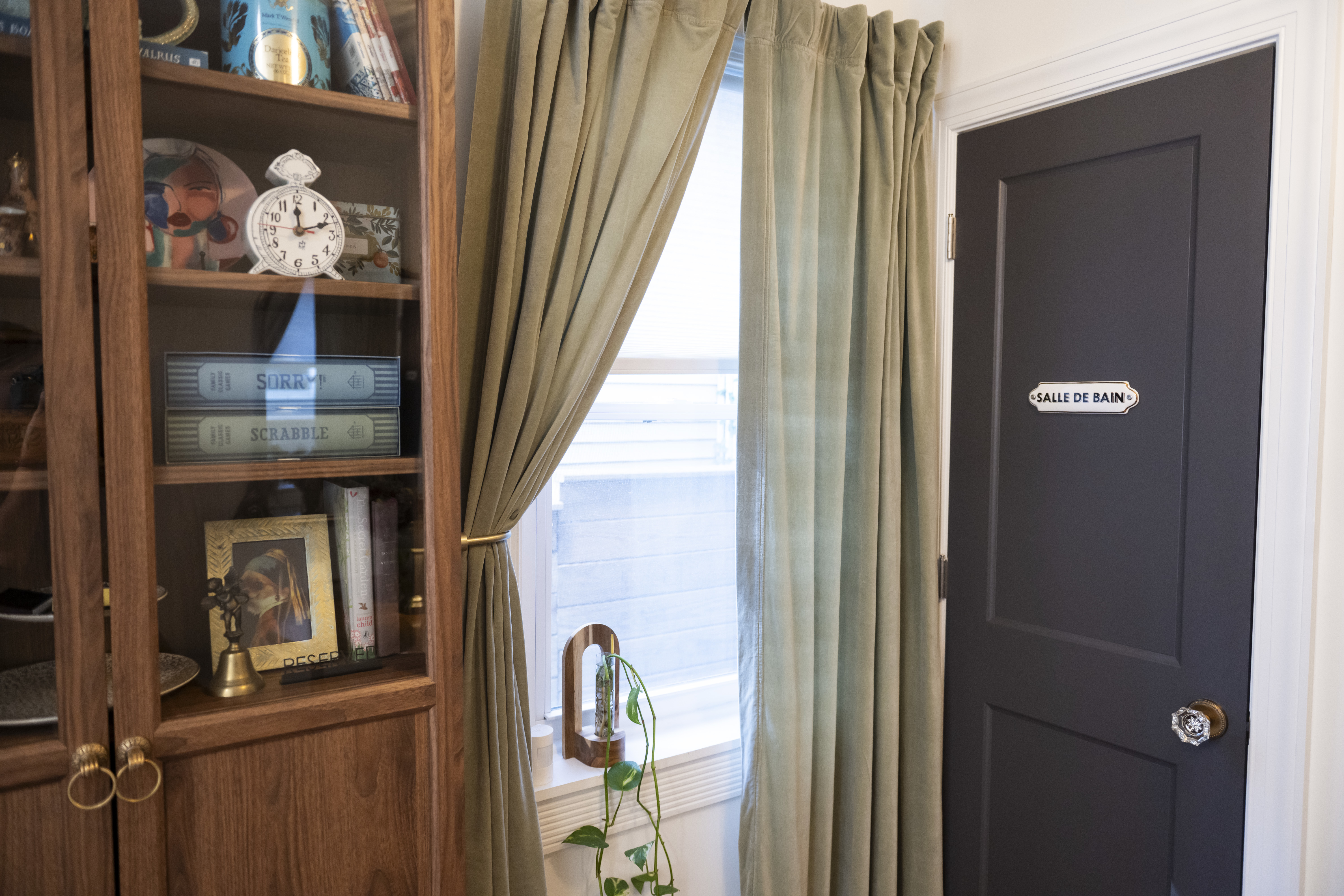
    A half bathroom, so labeled in French, sits off the dining area.
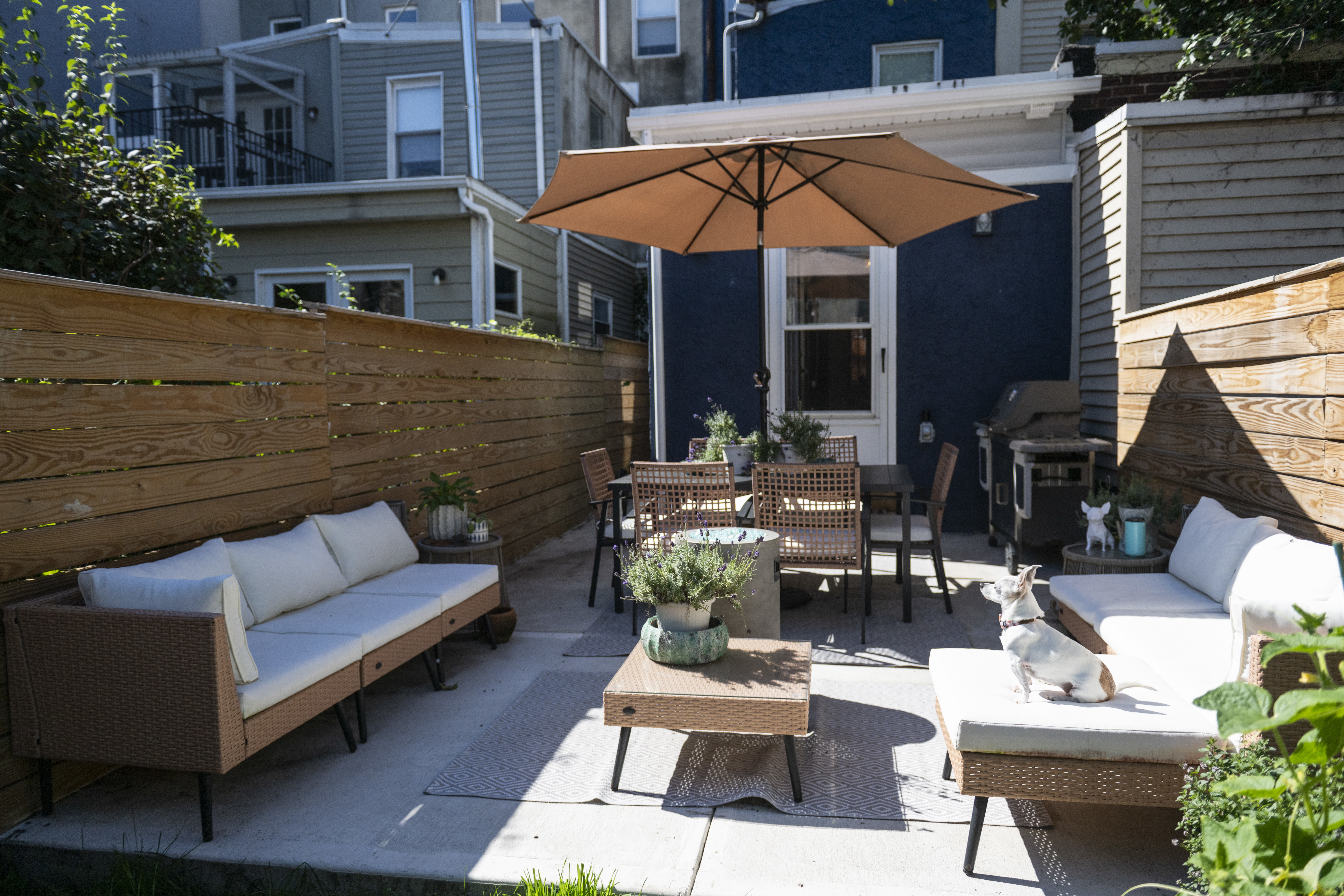
    The backyard, with ample seating and La Reau’s herb garden.
    An extension of the living space, featuring colorful art and a magenta bench.
    The television sits above a wood cabinet with intricate details.

    By the time she was done renovating, about six months later, the new floor plan dropped one bedroom, putting an additional full bathroom in its place. She also expanded the primary bathroom.

    Her goal was to reconfigure the layout to create larger, more functional bathrooms and bedrooms.

    The first floor has an open-concept living, dining, and kitchen area that leads to the backyard. The second floor includes the primary suite with a large bathroom, as well as an additional bedroom, which La Reau uses as a walk-in closet. There’s also a guest bath.

    The third floor has another bedroom, an office, and access to the rooftop deck, which she uses for relaxing and entertaining.

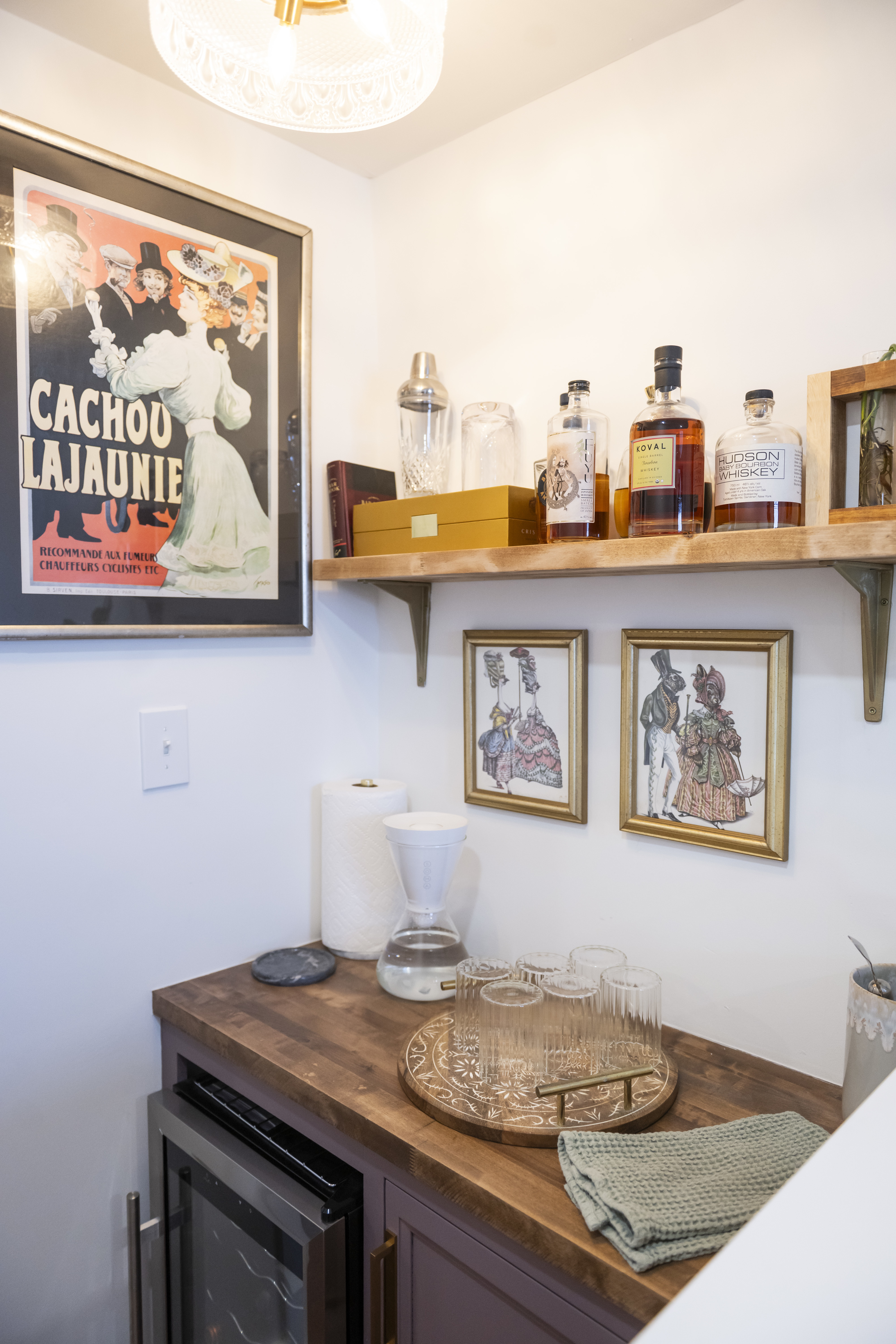
    A wet bar on the third floor, which has access to the rooftop deck.
    The bedroom furniture is surrounded by hanging plants.

    “In the warmer months, I use it for everything from morning coffee to evening gatherings and even summer movie nights,” said La Reau.

    The home sits near Palmer Cemetery, a historic location that she believes gives her block “a unique and peaceful character.”

    “What I love most is that the land directly across the street is part of the cemetery, which means there’s a sense of openness and greenery you don’t often get in the city,” La Reau said. “It creates a rare balance of being in an urban neighborhood while still feeling connected to nature.”

    La Reau’s personal style and design flair is evident at every turn in the home. She carefully selected every finish and detail.

    In the dining area, a collection of art in various shapes and sizes and an intricately framed mirror line the walls.
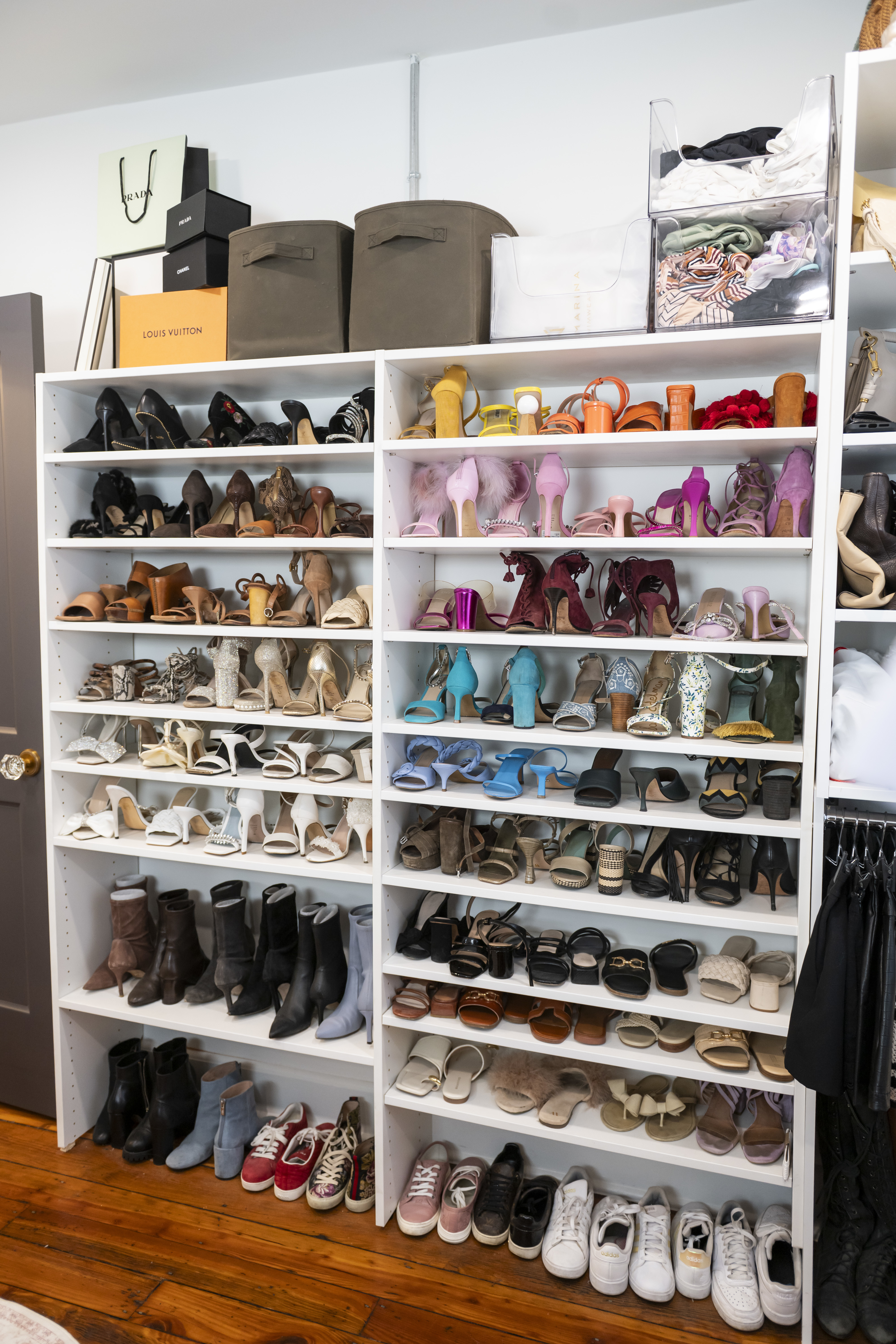
    The shoe wall in La Reau’s closet.

    “The project was extensive. I completely gutted the kitchen and two existing bathrooms, added an additional full bathroom, and restored many of the home’s original features: hardwood floors, columns, stair treads and railings, as well as the marble fireplace,” she explained. And the renovation included upgrading all of the essential systems, including plumbing, electrical, and structural reinforcements.

    Still, she aimed to preserve the historic charm of the home while layering in modern elements that reflected her personal, eclectic style.

    “Much of my inspiration comes from my travels abroad, especially time spent working in Barcelona, and my family,” La Reau said. La Reau is the marketing director for North America for Pronovias, an international wedding dress designer based in Barcelona, Spain. “Parisian and European influences are woven throughout the design,” she said.

    She opted for neutral finishes to create a timeless, classic foundation that will “age gracefully,” while using accents such as glass knobs and crystal lighting fixtures to honor the home’s vintage character.

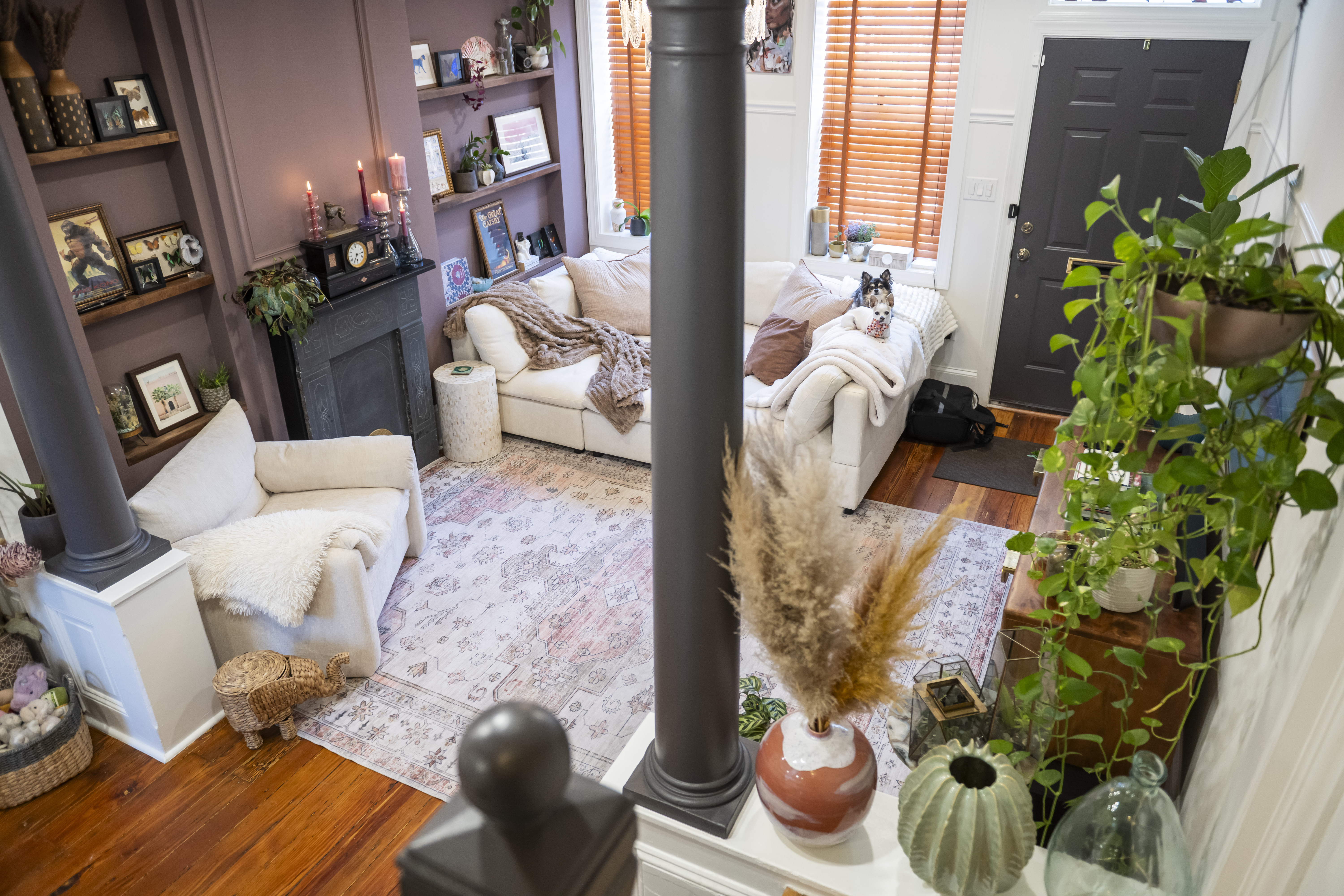
    The living space features a colorful accent wall, purple details, and columns dividing the first-floor spaces.

    In the living room depth and drama were created with a wall in Cinnamon Slate by Benjamin Moore, a balance of heathered plum and velvety brown, framing the restored fireplace and custom-built shelving.

    “I also introduced new molding throughout the primary bedroom and living areas to elevate the architectural character,” she said.

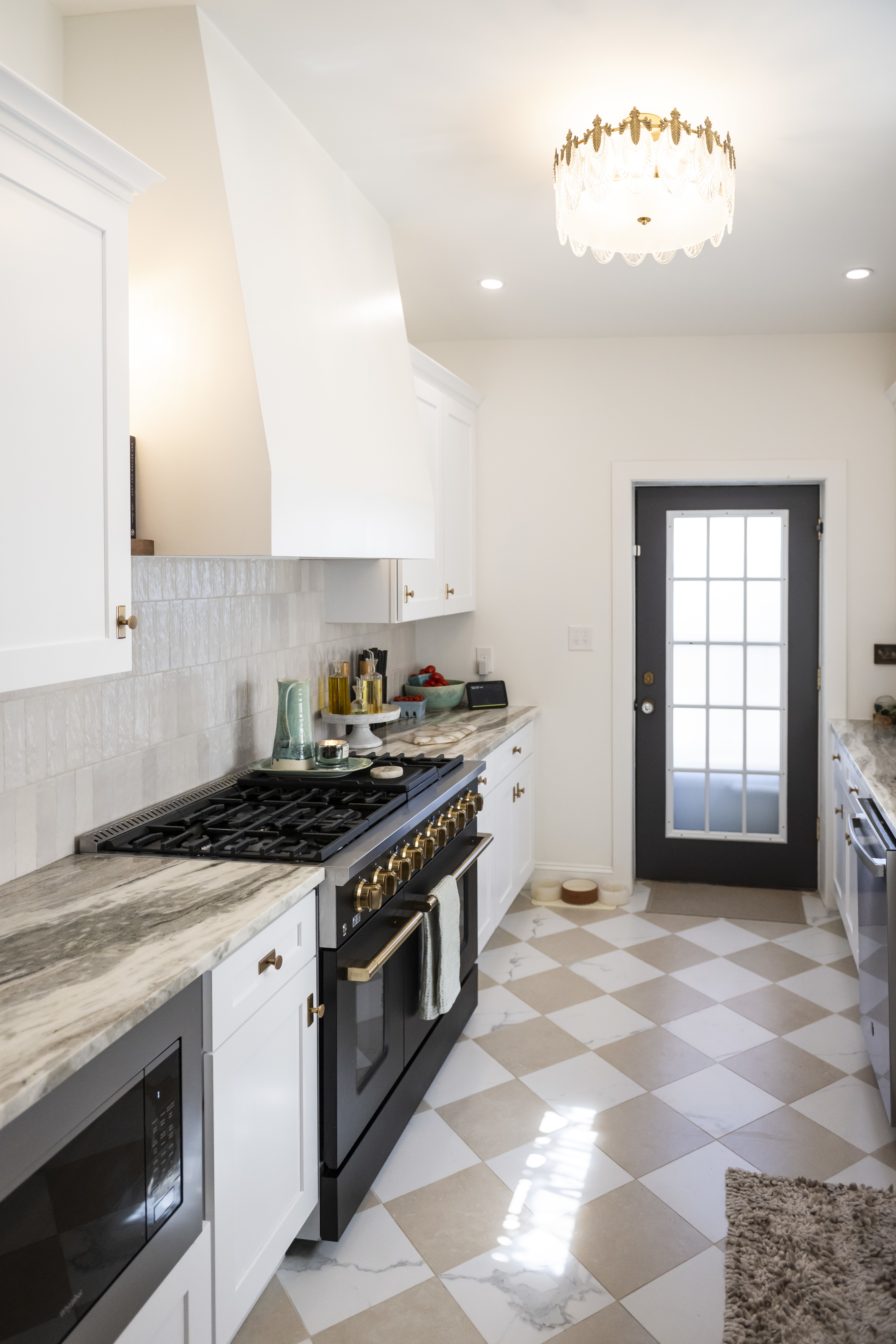
    The kitchen was one of the most important spaces, as La Reau enjoys cooking and baking. The focal point is a Kucht Gemstone KEG Series range in a slate finish with gold accents, featuring an eight-burner, double-oven statement piece that blends luxury and function.

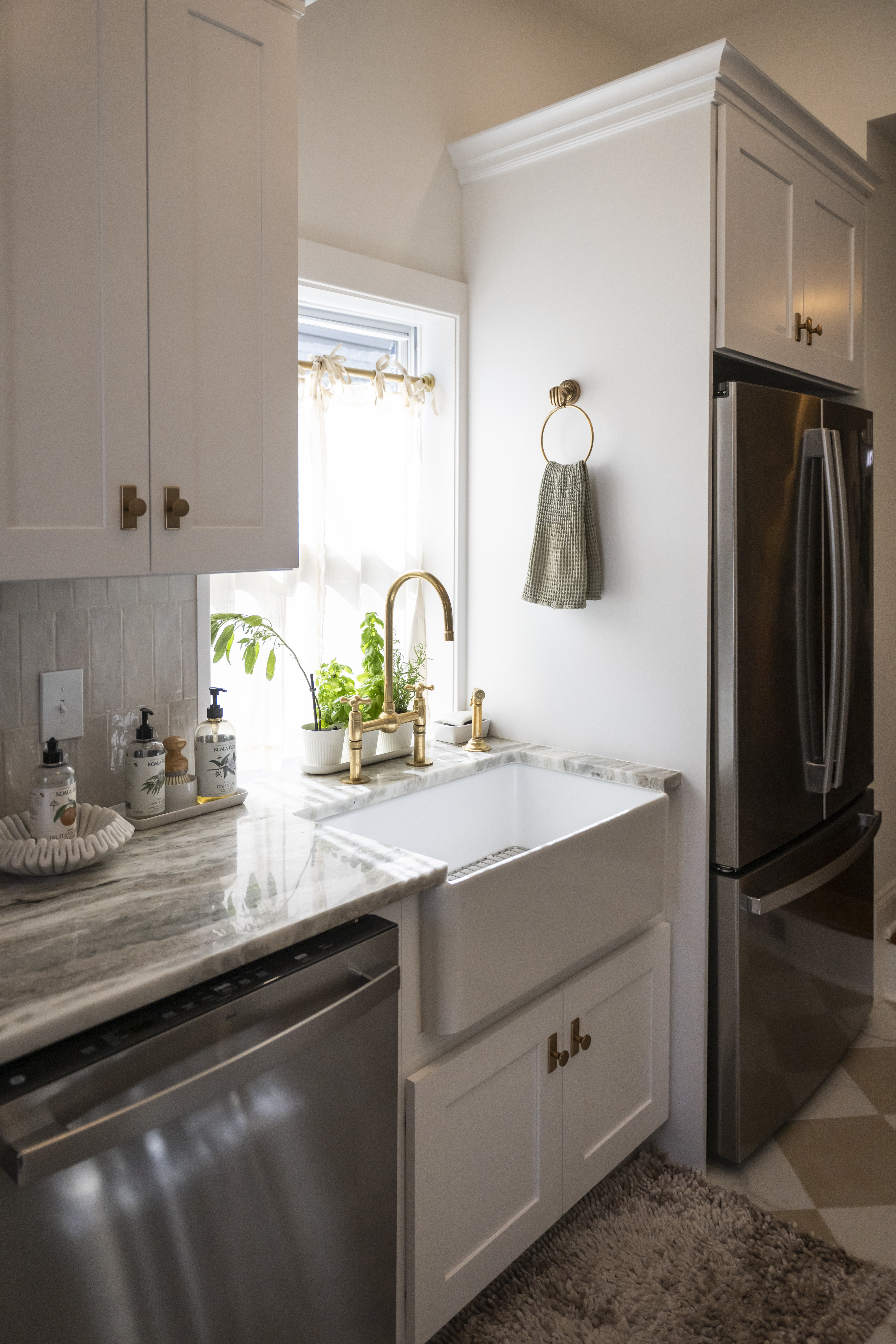
    “To balance its boldness, I selected soft, muted finishes: marble crepe and white flooring rather than a stark black-and-white checkerboard, sandstone backsplash tiles, and granite countertops with subtle gray and brown veining,” she said.

    A Kucht Gemstone KEG Series range is a centerpiece of the kitchen.
    A large sink and gold details in the kitchen, which was an important space as La Reau loves to cook and bake.

    Throughout the home, splashes of bright color against muted fabrics and warm wood furniture create a layered but cohesive atmosphere.

    “Artwork collected from my travels is thoughtfully placed in each room, allowing every space to tell its own story while still flowing together as a whole,” La Reau said.

    She feels right at home in her community.

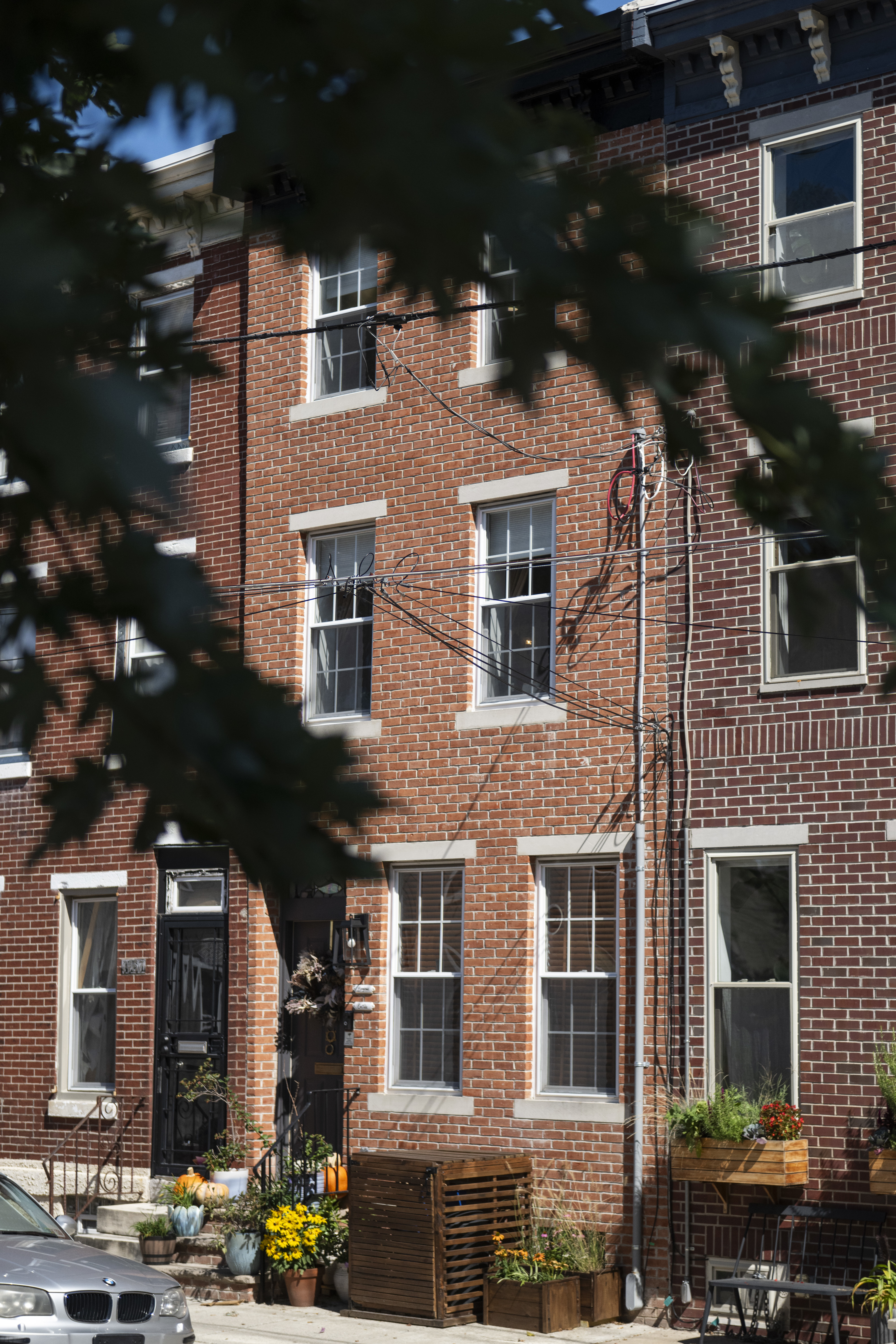
    The exterior of Nicala La Reau’s home.

    “The walkability to Frankford Avenue is unbeatable‚” she said. With its evolving culinary scene, she noted, there seems to always be a new restaurant or bar to check out.

    “But beyond that, there’s a neighborliness here — you see people out walking dogs, saying hello, and looking out for one another,” said La Reau. “Fishtown has a balance of growth and rootedness that feels like somewhere I can grow into long term.”

    Is your house a Haven? Nominate your home by email (and send some digital photographs) at properties@inquirer.com.