It was understandable and probably justified when a surge of roughly 3,000 masked and gun-toting federal agents into Greater Minneapolis was described in martial terms, as a kind of modern-day Battle of Stalingrad fought in a snowbound U.S. prairie metropolis.
Watching the icy slips of the clumsy U.S. Immigration and Customs Enforcement (ICE) officers, and the remarkable pushback from whistle-blowing neighbors braving subzero cold, the writer Margaret Killjoy quoted a friend: “ICE made a classic Nazi mistake: they invaded a winter people in winter.” So when border czar Tom Homan stood at a Minneapolis podium last week and declared an end to “Operation Metro Surge,” many in the media raced to cast the move as a major pullback.
“The Occupying Army Retreats,” proclaimed the American Prospect, in a tone that was echoed across numerous outlets. “The announcement of ICE’s withdrawal from Minnesota, like that of the British from Boston 250 years ago, marks a victory for people power.”
But the smell of victory didn’t travel the nearly 1,200 miles east to the South Jersey suburb of Lindenwold, where on the very same morning Homan announced the end of the Minnesota surge, residents were shocked by an ICE raid that targeted a bus stop for an elementary school in a district that is 60% Latino.
A Ring video from the Woodland Village Apartments, where about 44 kids were waiting for the bus, captured the alarming scene as fourth and fifth graders — some screaming “ICE! ICE!” — ran away from the masked agents in tactical gear who’d pulled up in unmarked vehicles. School officials believe no child was apprehended, although there were conflicting reports on whether any adult was arrested. But the suburban community, some 15 miles southeast of Philadelphia, was shaken to its core.
Thursday morning kids were sent running from their bus stop in panic because ICE showed up. This guy at yesterday's ICE Out of Lindenwold, NJ protest is a must watch
“I never protested before in my entire life but …,” he said, choking back tears. “I watched fourth- and fifth-grade kids run away from our own government. I never want to see that again.”
Unfortunately, America is all but certain to see this again. While Homan’s public proclamation of a drawdown in Minnesota seemed a small concession to crumbling political support for ICE, what happened in Lindenwold was a window into a dystopian near-future of more immigration raids — not fewer. This would allow an undeterred authoritarian Donald Trump regime to fill a $38 billion gulag archipelago of coast-to-coast warehouses with newly handcuffed human beings.
Even Homan said as much last Thursday, if you listened closely. “And let me be clear, mass deportations will continue, and we’re not rolling back,” he said. “President Trump promised mass deportations, and that’s exactly what the American people are going to get.”
Let’s also be clear. What happened in Minneapolis since the start of the year really was a landmark victory for democracy, and the notion that everyday Americans can defend their neighbors. At the cost of two lives, the great personal risks taken by Minnesota’s ICE resisters ended in both an unforgettable moral triumph and some real tangible gains.
The actions taken by ICE watchers — who blew their alert whistles, recorded the government’s maneuvers on their phones, or volunteered food and rides to help immigrants stay safe indoors — prevented the arrests of scores and maybe hundreds of law-abiding neighbors. The courage of their resistance drove a huge shift in public opinion against the immigration raids, forcing rare concessions from the Trump regime. This heroism probably did cause ICE to scale back its Minnesota operations sooner than planned, and even pressured the U.S. Department of Justice to investigate two agents whose version of a shooting didn’t fit reality.
But Trump’s mass deportation drive — with an inexorable inertia created when Congress threw a whopping $170 billion toward this effort last year — refuses to obey the normal laws of political gravity.
U.S. Border Patrol officers walk along a street in Minneapolis last month.
For starters, the U.S. Department of Homeland Security has lied repeatedly to the American people, which means there’s no way of truly knowing to what extent the Minnesota surge has even ended. The day after Homan’s announcement, a St. Paul-based journalist noted 100 reports of ICE activity, still more than any other state.
But even more importantly, a flurry of reports last week about a massive ICE expansion for the rest of the year with many more agents in the field, more offices to support them, and more detention camps to hold thousands of new arrestees showed that what happened on the streets of Minneapolis was not the beginning of the end.
The fact that ICE is ending its surge in Minneapolis — similar to what happened in 2025 in Los Angeles, Chicago, Charlotte, N.C., and New Orleans, albeit on a smaller scale — seems less significant than the fact that the agency has, under Trump, more than doubled the number of field agents from 10,000 to 22,000, with many just hitting the streets.
Indeed, the drive to recruit new agents isn’t letting up. A Times of London reporter described the push as “a breakneck operation” as he watched officers from U.S. Customs and Border Protection — which also had its biggest hiring year in a decade — work the crowd with promises of a $50,000 bonus at a sold-out professional bull-riding event in Salt Lake City.
Can we really celebrate a “retreat” from Minneapolis when WIRED reported last week that ICE is also rushing to close leases on as many as 150 new offices — an average of three in every single state — to house its growing roster of agents and the attorneys and other back-office staffers needed to process the thousands of new arrestees?
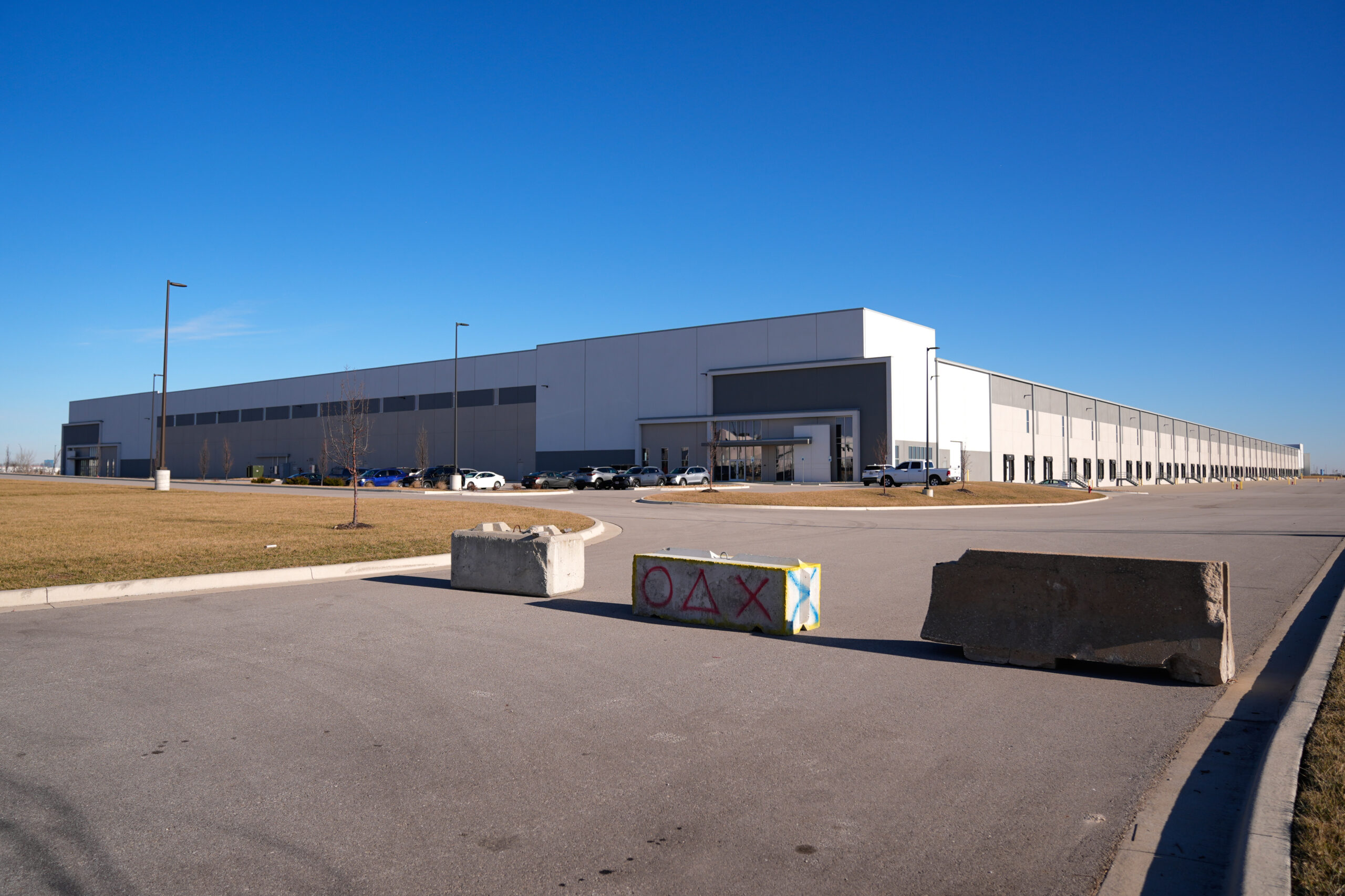
Barricades block a drive outside a warehouse as federal officials tour the facility to consider repurposing it as an ICE detention facility on Jan. 15.
For example, multiple outlets confirmed last week that Homeland Security just inked a lease for high-end office space in the Westlakes Office Park in Berwyn, in Philadelphia’s Main Line suburbs, reportedly to house ICE attorneys and related personnel. A planned office in Philadelphia’s Chinatown, at 801 Arch St., is also listed by WIRED.
Experts say the logistics of converting these rectangular behemoths — like the 1.3 million-square-foot warehouse in Schuylkill County, Pa., that used to distribute cheap consumer goods for Big Lots that DHS claims can house up to7,500 detained immigrants — into even remotely humane facilities is daunting, if not impossible. Yet, DHS is plowing ahead with stunning speed, clearly expecting a pending spike in arrests.
In rural Social Circle, Ga., ICE is claiming it will convert a one million-square-foot warehouse into a detention site for as many as 10,000 people — double the town’s population — as soon as two months from now. Project Salt Box, which is tracking the rapid gulag expansion, says DHS is using a legal maneuver to fast-track bidding to allow large private firms like the Geo Group to run these detention centers.
Neither Trump’s plunging approval rating, nor the rapidly rising level of ICE resistance from everyday citizens like that flag-waver in Lindenwold, nor the Democratic demands for major reforms that have caused a DHS shutdown (with, ironically, no impact on ICE or Border Patrol) has put a dent in this unyielding drive toward rank inhumanity.
A newly bloated ICE wants to create a Minneapolis in every state, even as more and more Americans are willing to take considerable risks to stop them. What we are witnessing just over one year into the Trump regime is less a retreat and more an escalating game of chicken — with the forces of democracy and fascism headed for a dangerous collision.
If you’re part of the growing American majority who is disgusted with what ICE is doing in our streets, now is the time to get your whistle, attend a training session on what to do when the secret police arrive at your kid’s bus stop, attend a protest like the next “No Kings” event on March 28, and join the movement to protect your neighbors.
In the spirit of John Paul Jones and the revolutionary American founders, we have not yet begun to fight.
The Franklin Institute has welcomed its newest exhibit with the world premiere of “Universal Theme Parks: The Exhibition.”
The 18,000-square-foot exhibit — which opened Saturday — takes visitors behind the scenes of the country’s billion-dollar theme-park industry through an expansive collection of costumes, immersive photo opportunities, and park props.
The exhibit has eight galleries, 20 interactive components, and 100 theme park-related artifacts ranging from actor show props to model roller coasters.
Young Lachlan McMahon poses for a photo at the Franklin Institute’s newest exhibit, “Universal Theme Parks: The Exhibition,” on Thursday.
At an early showcase Thursday, those behind the exhibit touted it as a “first-of-its-kind look” that would “[immerse] guests in the creative process that brings Universal’s most iconic experiences to life.”
“At the institute, I think we are really a leader in bringing exhibitions that educate, but they do it while entertaining,” said Larry Dubinski, president and CEO of the Franklin Institute.
“We wanted to create an exhibit in which we could teach some interesting things about engineering, design, jobs that are in a booming business, like theme parks, and [inspire] that curiosity and creativity.”
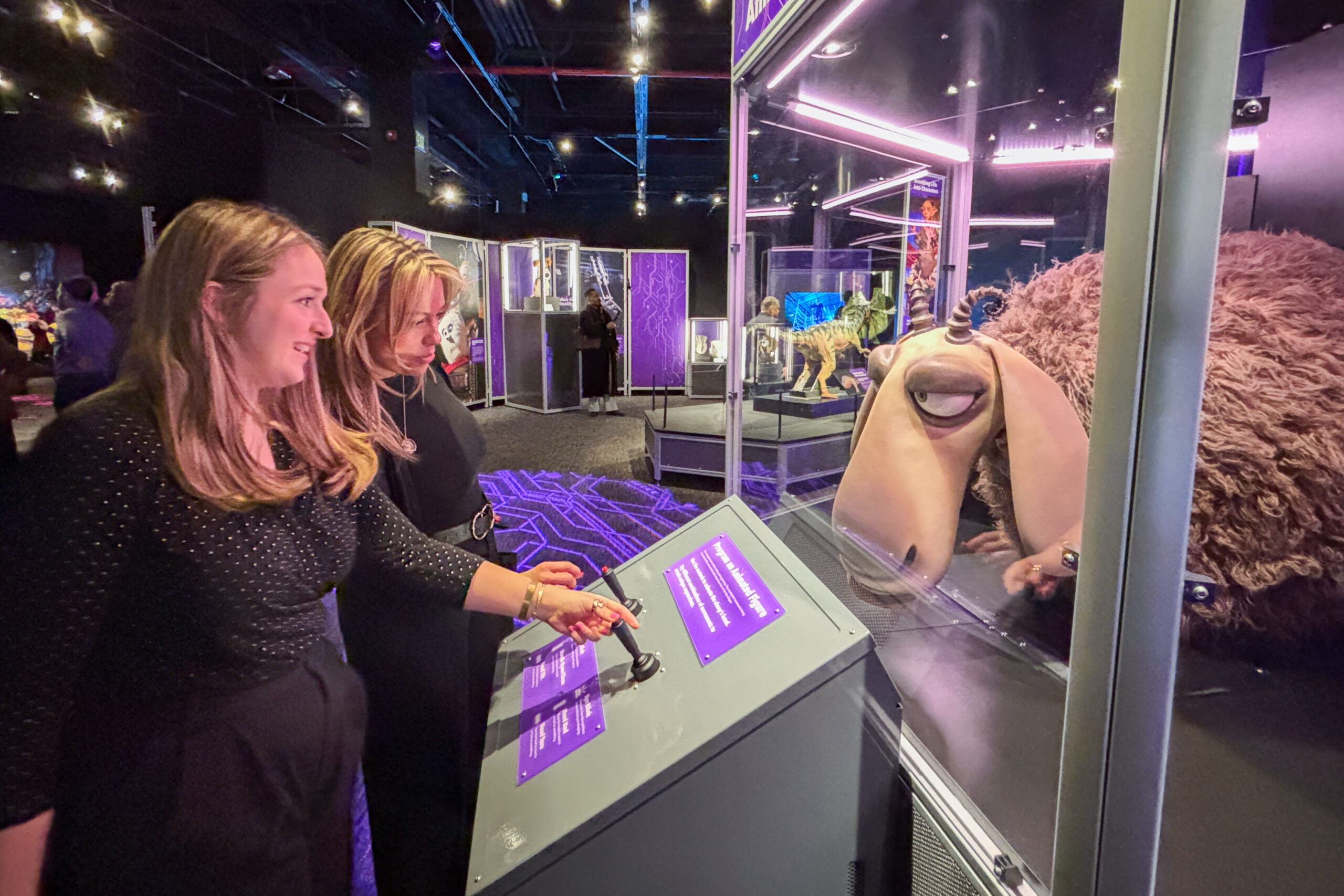
Kyra Zamborsky (left) and Jade Beasley at the Franklin Institute’s new exhibit that pays homage to Universal’s theme parks, in Philadelphia, on Feb. 12, 2026.
Among the goals of the exhibit was to package science and technology learning in an accessible way.
“History and science and technology — these things need to be wrapped in a layer of immersion that gets today’s kids excited,” said Dan Picard, owner and chief creative officer of creative design firm MDSX. “Because they don’t want to walk through a place that’s boring. … If you do not have a vibe, you’re not going to sell tickets, you’re not going to connect with kids, and you’re not going to have a shot to create that spark that makes them curious about these topics.”
Created in partnership between the Franklin Institute and Comcast NBCUniversal, the exhibit opens with a video featuring legendary filmmaker Steven Spielberg that uses archival footage to take visitors through the history of Universal’s theme parks.
From there, visitors will find a collection of galleries showcasing all aspects of the theme-park universe. There is a station on the science of roller-coasters, including models of real-life coasters, as well as costumes worn by park workers.
Among the most popular stops on Thursday was a station that allowed users to program the movements of an animatronic figure from DreamWorks Animation’s How to Train Your Dragon. (The exhibit features other Universal attractions, including Jaws, The Wizarding World of Harry Potter, and Jurassic World.)
Sprinkled throughout the exhibit are video interviews with those who make Universal’s theme parks tick — from costume designers to storyboard artists and creative directors.
“There’s so many opportunities for interactivity and creative storytelling,” said Abby Bysshe, chief experience and strategy officer at the Franklin Institute, of the draw to creating a theme park-related exhibit. “It was about kind of curating all these parts and pieces, and talking with their team members and finding ways to really highlight what makes Universal theme parks so special.”
At the new exhibit at the Franklin Institute that pays homage to Universal’s theme parks, in Philadelphia on Feb. 12, 2026.
“At the end of the day, our mission is to inspire and educate,” said Dubinski. “And here, people are going to be inspired, they’ll be educated — and they’ll have a great time as they go through.”
“Universal Theme Parks: The Exhibition,” runs through Sept. 7, 9:30 a.m. to 5 p.m. daily. Daytime tickets range from $41 for children to $47 for adults and include admission to the Franklin Institute.
Evening tickets, available from Thursday through Saturday, are $25 and limited to the Universal exhibit. Tickets at fi.edu, (215) 448-1200.
As the 76ers entered 2020 draft night, Doc Rivers and Sam Cassell had become enamored with Tyrese Maxey.
The two Sixers coaches at the time — both NBA points guards in a past life — sat together in a “silent panic” as the picks unfolded, hoping Maxey would continue slipping to No. 21.
“It really just fell right into our hands,” said Rivers, now head coach of the Milwaukee Bucks.
That was the final piece that needed to align — amid some bizarre basketball and societal circumstances — for Maxey to become a Sixer.
Tyrese Maxey signed a four-year, $204 million extension with the Sixers in 2024.
The COVID-19 pandemic canceled the 2020 NCAA Tournament, swapping a potential final on-court showcase for Maxey with Kentucky for “working out for, like, [eight] months straight.” Several pre-draft interviews with teams were via videoconference, preventing decision-makers from witnessing Maxey’s work ethic and joyful demeanor in person and making that year’s overall talent evaluation an even more inexact science. And the only reason the Sixers had the 21st overall selection in the first place was because of a game-winning shot in the Orlando restart bubble by the Oklahoma City Thunder’s Mike Muscala, which officially conveyed a traded top-20-protected draft pick to the Sixers.
“People will remember that number [21],” Indiana Pacers coach Rick Carlisle said when asked recently about Maxey. “Because if you redraft that draft, he’s at the very top somewhere, for sure.”
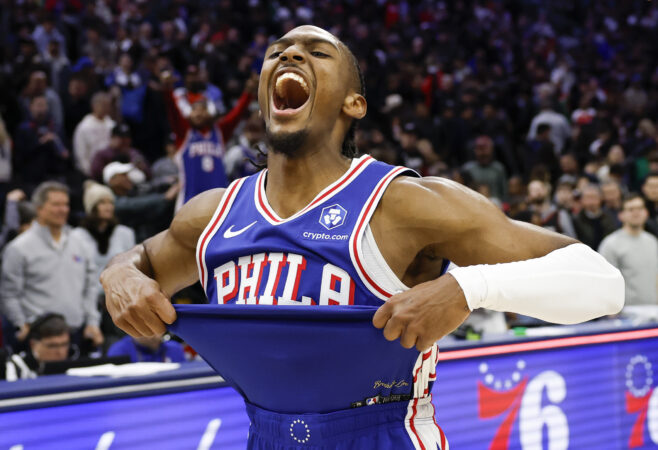
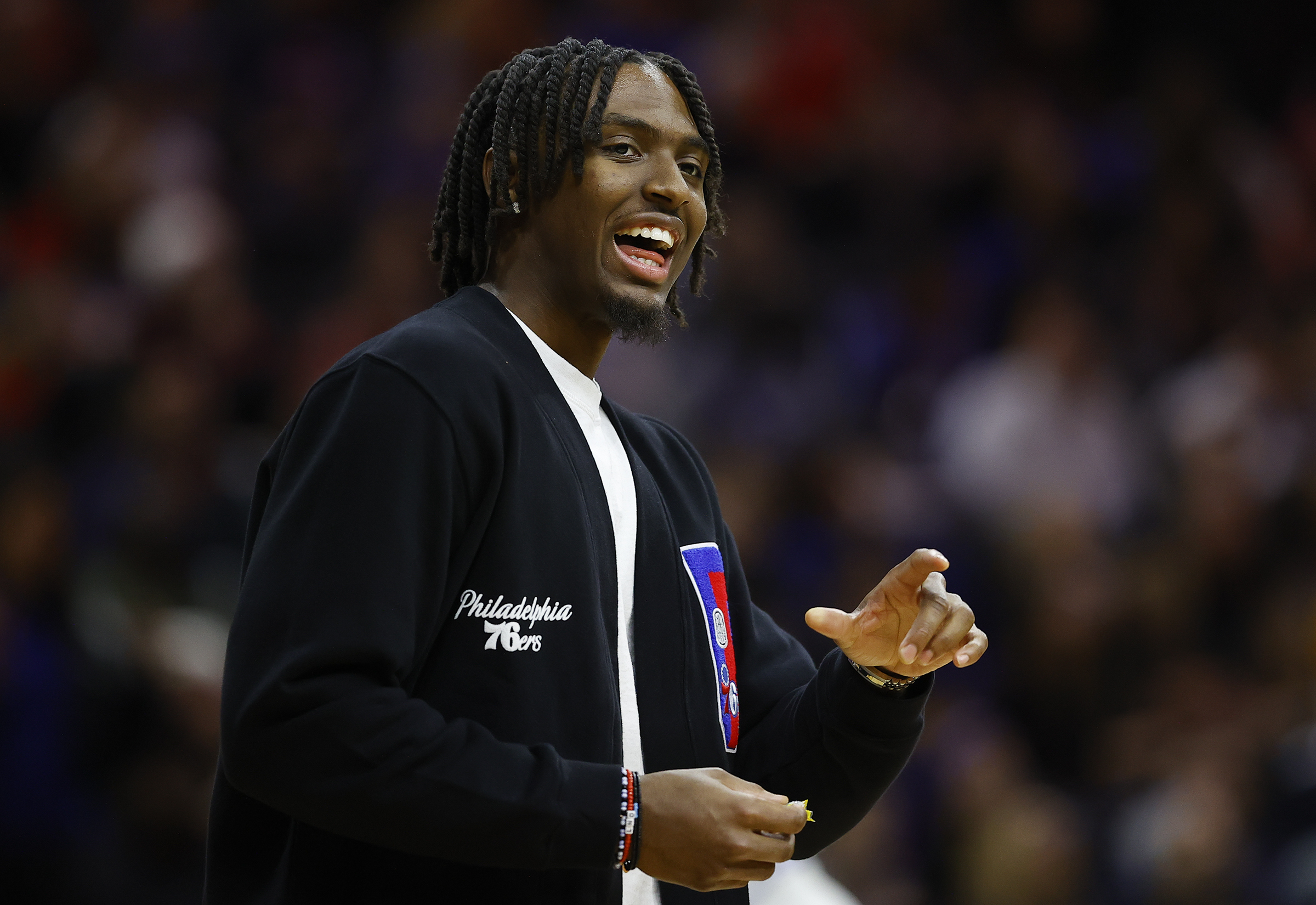
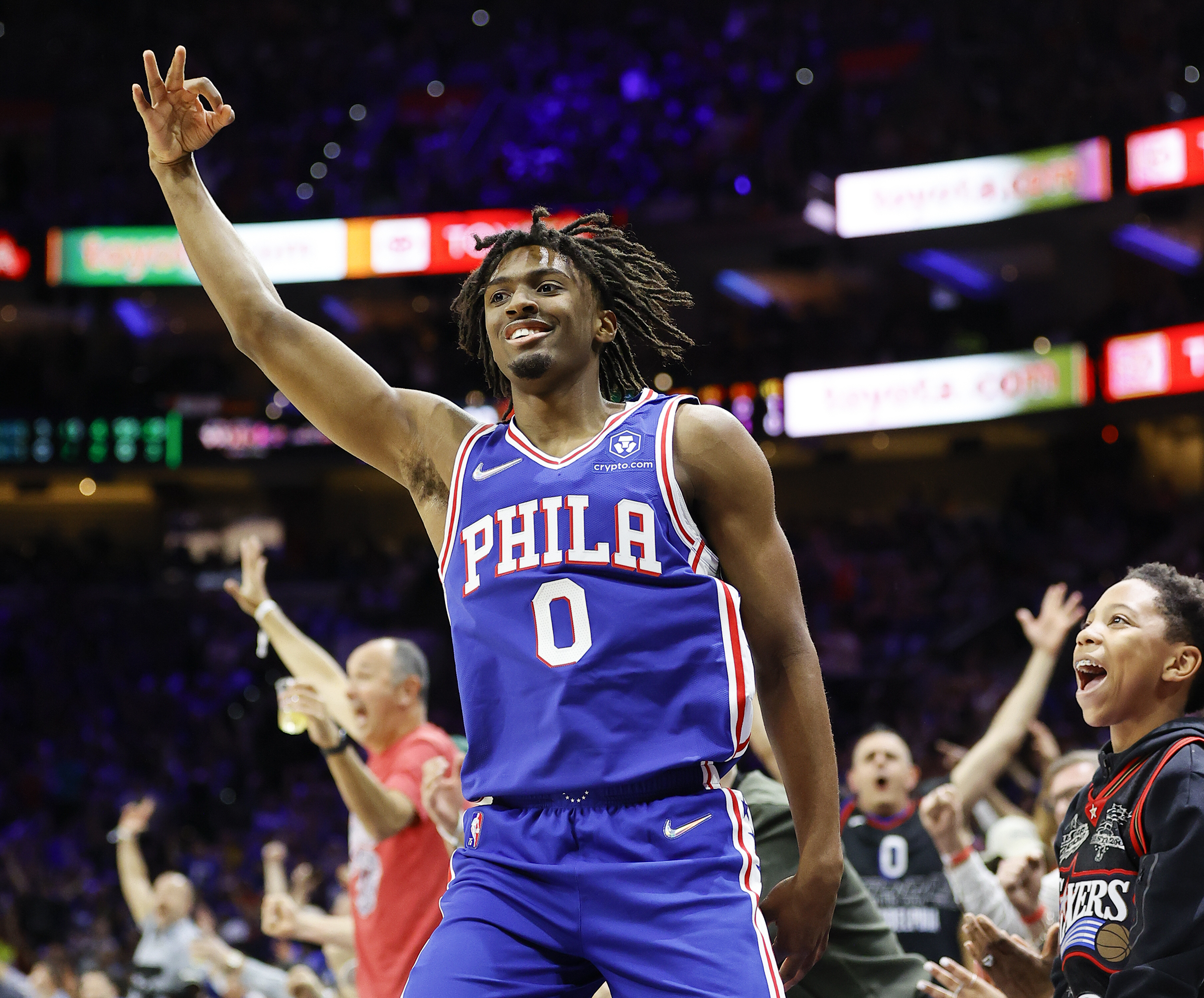
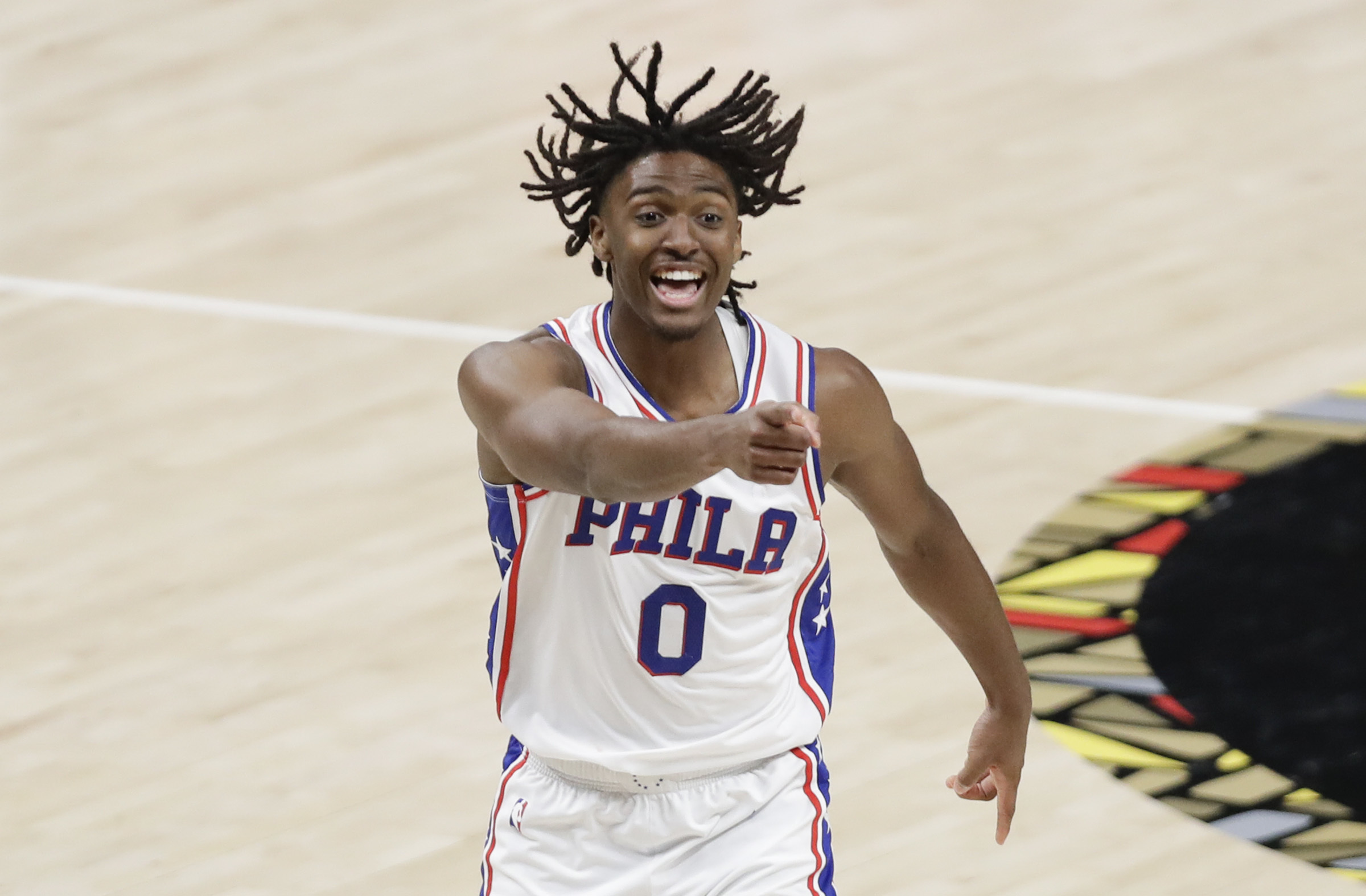
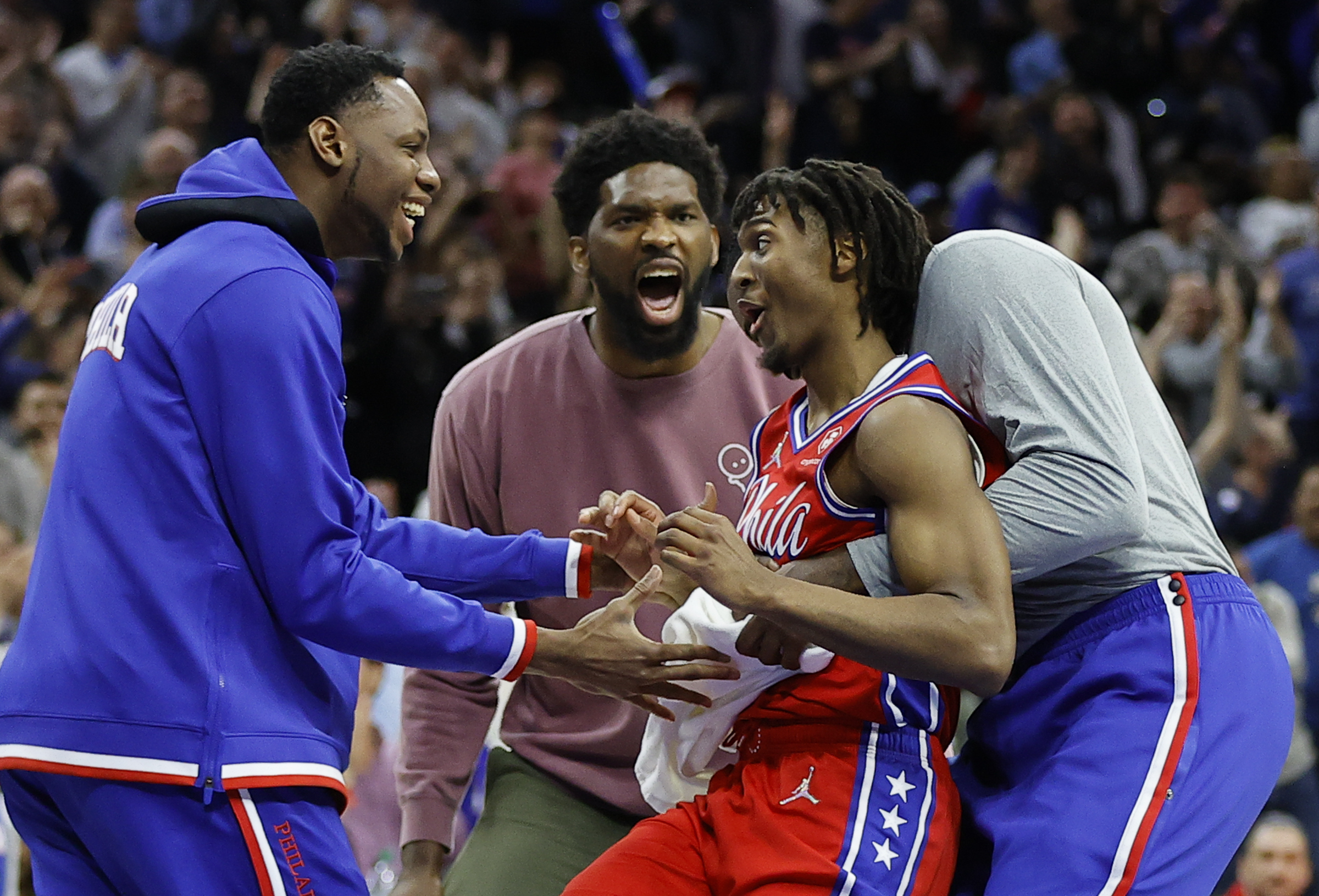
Now Maxey is an All-Star starter, living up to “The Franchise” nickname bestowed upon him by teammate Joel Embiid, a former MVP. The explosive guard entered Thursday ranked sixth in the NBA in scoring average (28.9 points), leading the league in minutes played (38.6), and adding 6.8 assists, 4.1 rebounds, and 2 steals per game. He signed a five-year, $204 million max contract in the summer of 2024.
Does he ever think about the specific series of events needed for his Philly origin story to occur? Yes.
“I’m blessed,” Maxey told The Inquirer last month. “I really got lucky.”
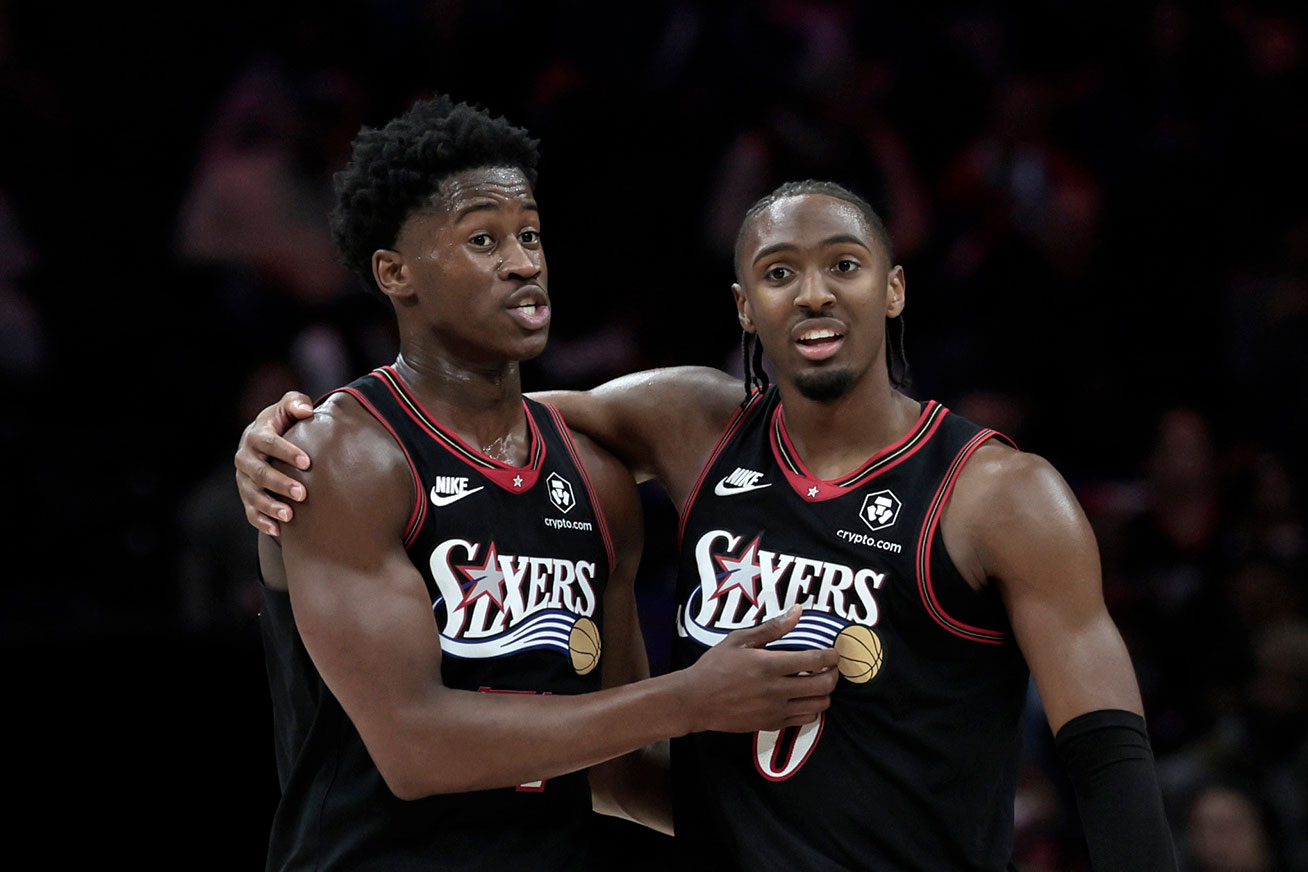
Sixers guards VJ Edgecombe and Tyrese Maxey will travel together to All-Star Weekend to partake in the Rising Stars game and All-Star Game, respectively.
Maxey and his family were at the SEC Tournament in Nashville in March 2020 when the remainder of the college basketball season was canceled because of the pandemic’s onset.
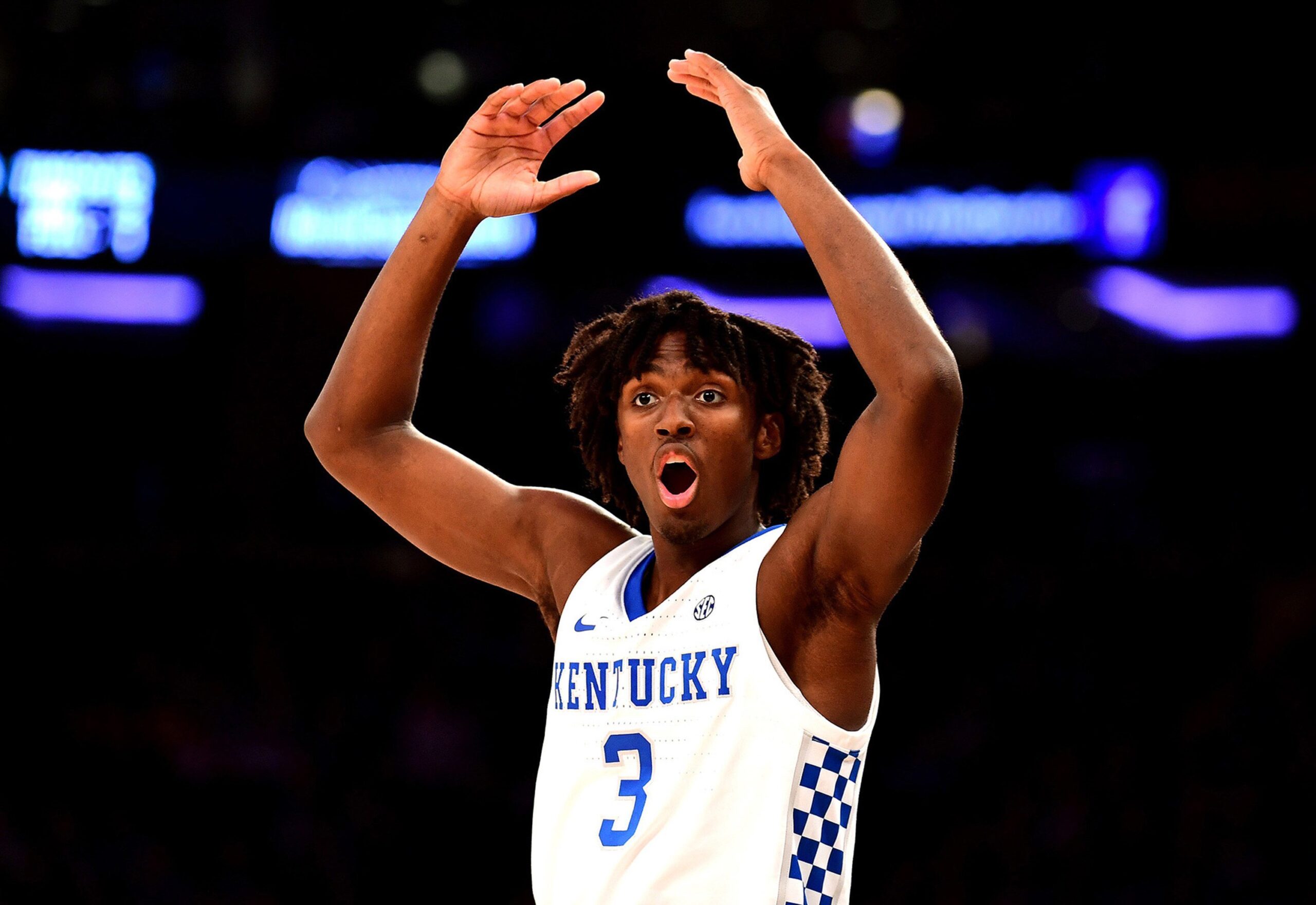
Fueled by Maxey and fellow future NBA guard Immanuel Quickley, Kentucky was a threat to make a deep NCAA Tournament run. March Madness can become a prime stage for an NBA prospect’s draft stock to soar, and missing out left Maxey with a sour “What did you come to college for?” taste.
“I was like, ‘I’m ready to go home and be with my family,’” Maxey said. “My mom came and got me that night.”
Tyrese Maxey fell to the Sixers partly because he couldn’t workout or interview in front of NBA teams.
Maxey went back to his hometown of Garland, Texas, near Dallas and trained with his father, Tyrone, his longtime coach. After signing with Klutch Sports agency, Maxey then went to Los Angeles to work with personal trainer Chris Johnson.
When Maxey learned that Rajon Rondo, a standout NBA point guard and Johnson client, arrived at the gym at 5:30 a.m., Maxey told Johnson, “I’m there.” That daily workout fed into a weightlifting session with performance coach Al Reeser, who today accompanies Maxey with the Sixers. Maxey would return to the gym for a 10 a.m. shooting session with various players, including all-time great LeBron James, before a third workout at 12:30 p.m. With no guidance yet from an NBA team or system he would be stepping into, Maxey drilled all aspects of his game, including shooting touch, passing reads, and three-point accuracy.
Maxey has kept that early-morning routine ever since, believing it now gives him a psychological advantage over competitors.
“I knew then he had everything that it took for him to have a very promising career in the NBA,” Johnson told The Inquirer in 2021. “Whatever franchise was going to get him was going to get somebody that, No. 1, could be coached. No. 2, would be prepared. No. 3, not afraid of hard work — but not just regular hard work. We talk about elite training when your body [doesn’t] feel like it.
“I knew right away, ‘Oh, he’s going to be pretty special.’”
Then Maxey’s parents made him put on a polo shirt for video interviews with team executives, where he hoped his authenticity would pierce through the “kind of awkward” digital setting. Tyrone reminded his son to make sure he conveyed that he had been trained as a point guard, even though he played off the ball at Kentucky.
Tyrese Maxey played well at Kentucky but NBA teams believed he wasn’t a great shooter.
The most common feedback Maxey remembers receiving from teams back then was he “can’t shoot,” after he made 29.2% of his three-point attempts at Kentucky. He attempted to change that narrative during a workout with an unnamed team, when Tyrone said Tyrese made 33 consecutive three-pointers and “and they still passed on him” on draft night.
“He was proving he could shoot in front of this team,” said Tyrone, who will watch Maxey compete in the All-Star three-point contest on Saturday. “ … And it’s like, ‘Man, this is crazy.’”
One team Maxey believed had “no chance” to join? The Sixers.
He had “zero” contact with the organization before the draft. But that front office was studying him behind the scenes.
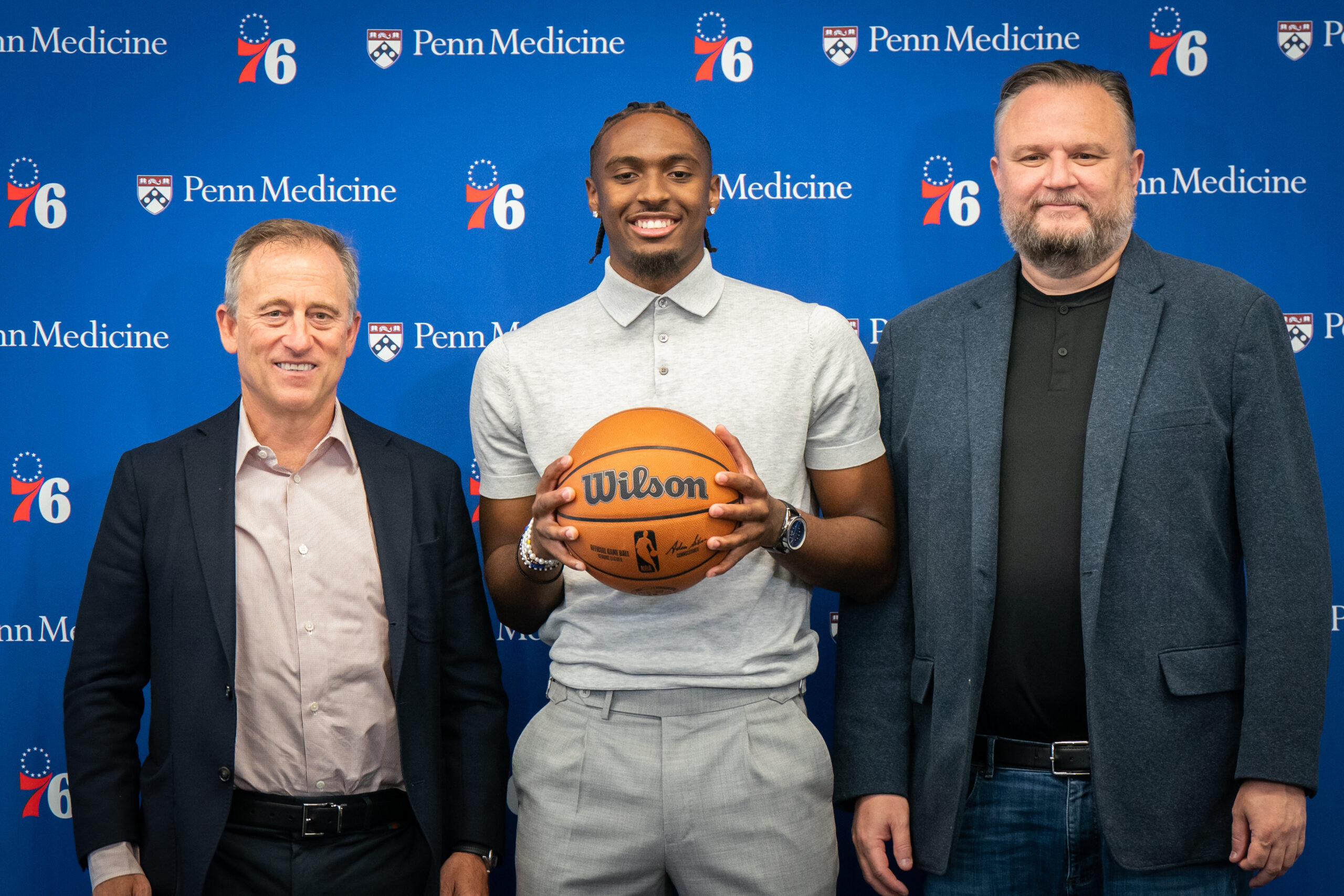
President of basketball operations Daryl Morey credits general manager Elton Brand and the scouting staff for doing the bulk of the evaluation on Maxey before Morey joined the organization from the Houston Rockets in November 2020.
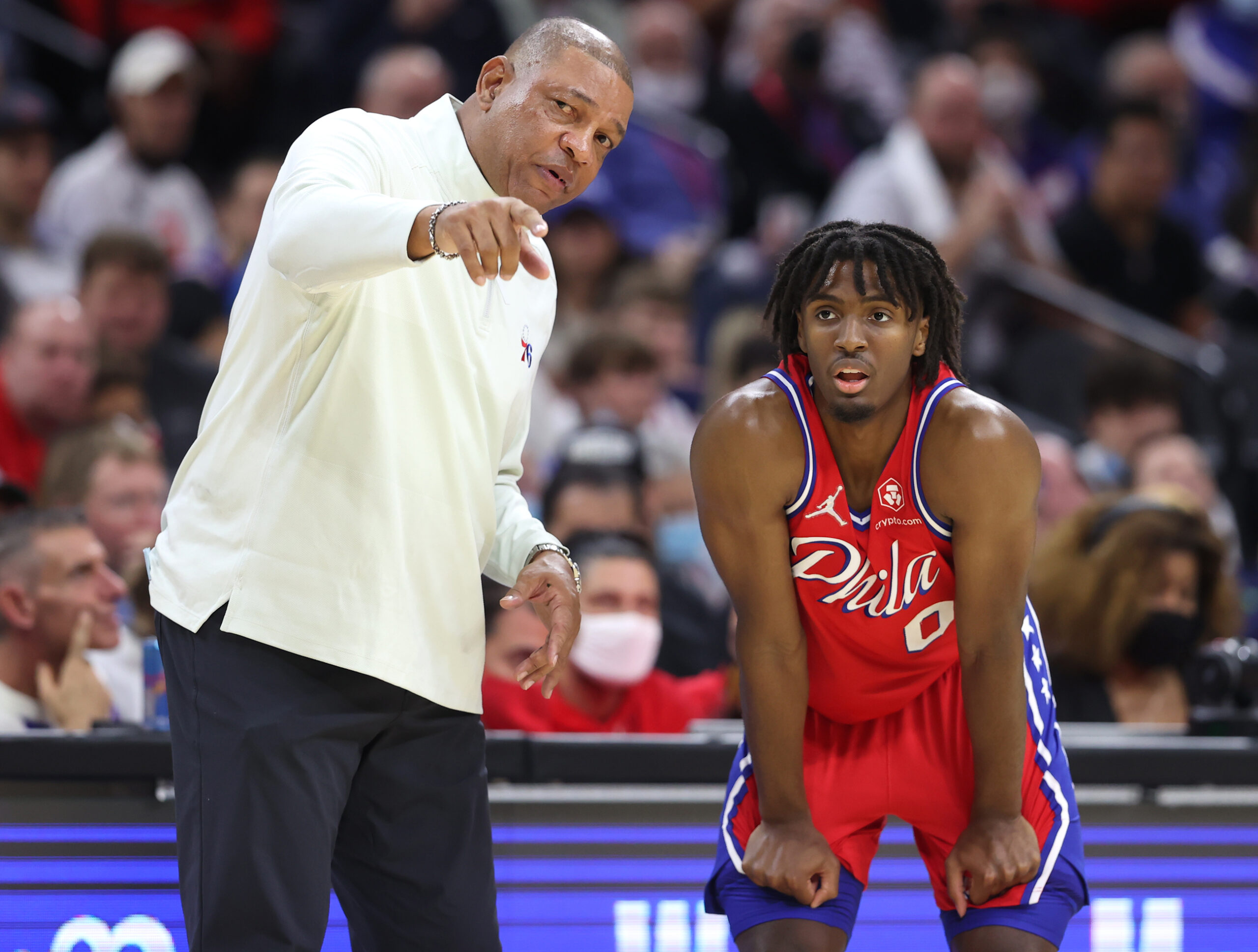
Former Sixers coach Doc Rivers placed trust in Tyrese Maxey when Ben Simmons stepped away from the team. Tyrese Maxey is now an All-Star starter and the top American vote-getter in the All-Star Game.
Maxey’s quickness and finishing around the rim immediately stood out. Morey believed in Maxey’s perimeter shooting mechanics and “secondary indicators” of NBA potential, despite the low three-point percentage in college. Morey also picked up on the pride Maxey took in improving his defense, which has turned him into a legitimate disruptor on that end of the floor in his sixth NBA season.
Morey told The Inquirer in 2021 that Maxey was ranked around 10th on the Sixers’ big board entering the draft.
“A lot of his on-the-surface things didn’t pop at Kentucky,” Morey said, “which is why I think the scouts get a lot of credit on this one.”
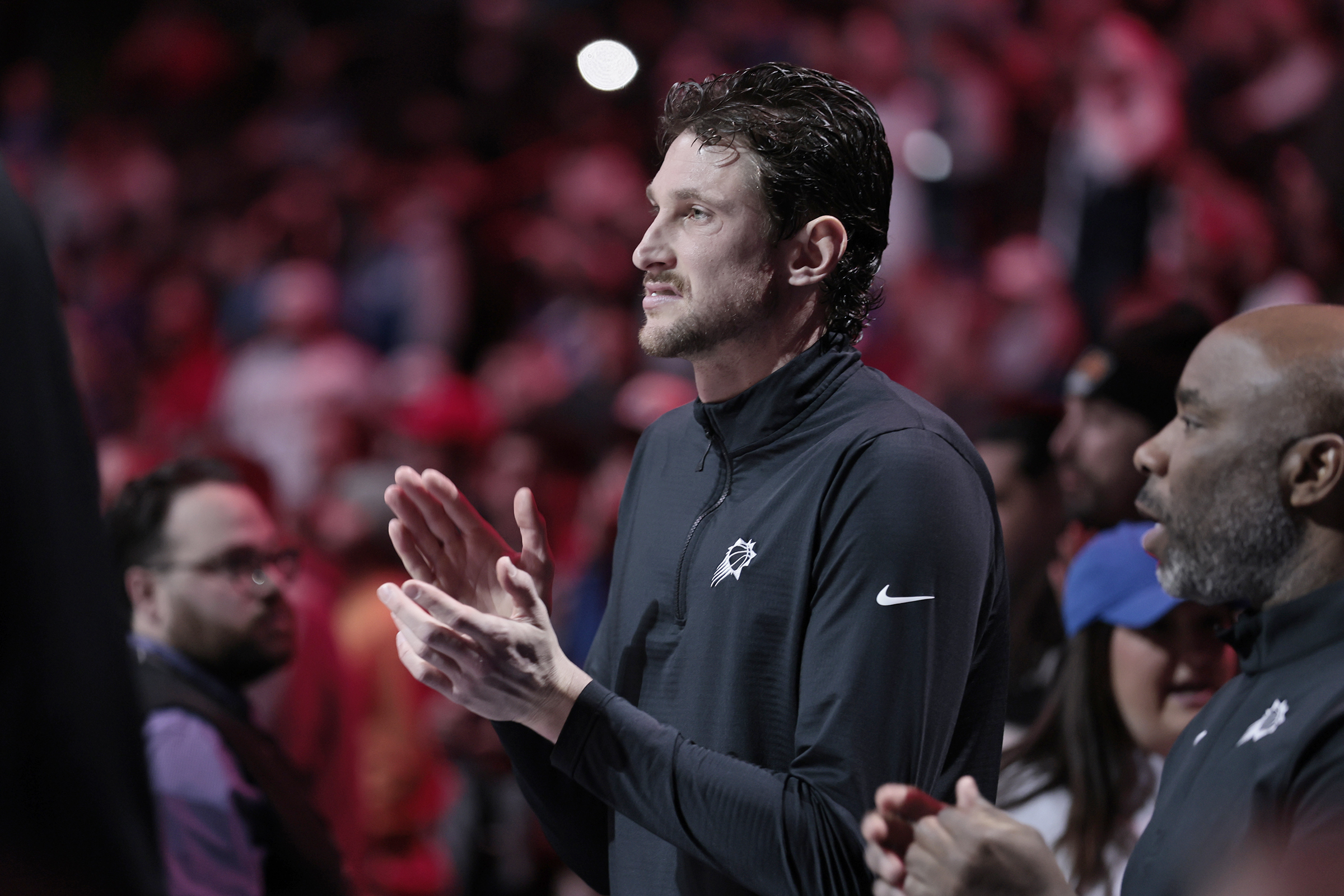
Mike Muscala, a former player with the Sixers and Thunder, is now a Phoenix Suns assistant coach.
To even possess that pick, however, the Sixers needed two fortuitous 3-pointers at Disney World by Muscala, the former Sixer who at that time was a role player for the Thunder.
Those shots beat the Miami Heat in their second-to-last regular-season bubble game, which configured the standings so that the top-20-protected draft pick that Oklahoma City owed the Sixers would convey that year. Muscala told The Inquirer that, as Maxey began his NBA ascension about a year or two later, he began to catch wind from the most-tapped-in Sixers fans of the roundabout impact he had on the team landing its future All-Star.
“It is interesting when you start thinking about different dominoes that fall,” said Muscala, who is now an assistant coach with the Phoenix Suns and said he does not know Maxey.
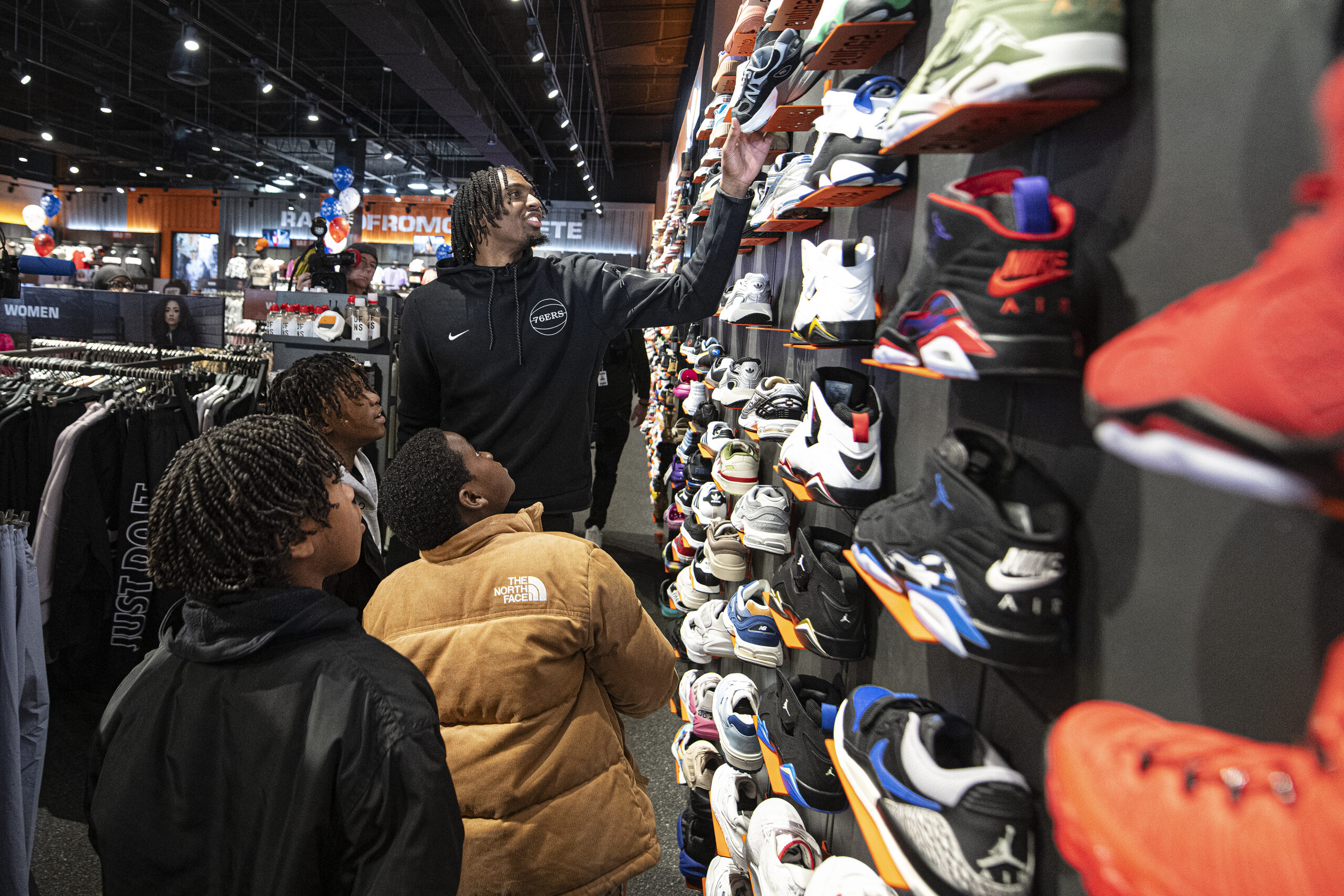
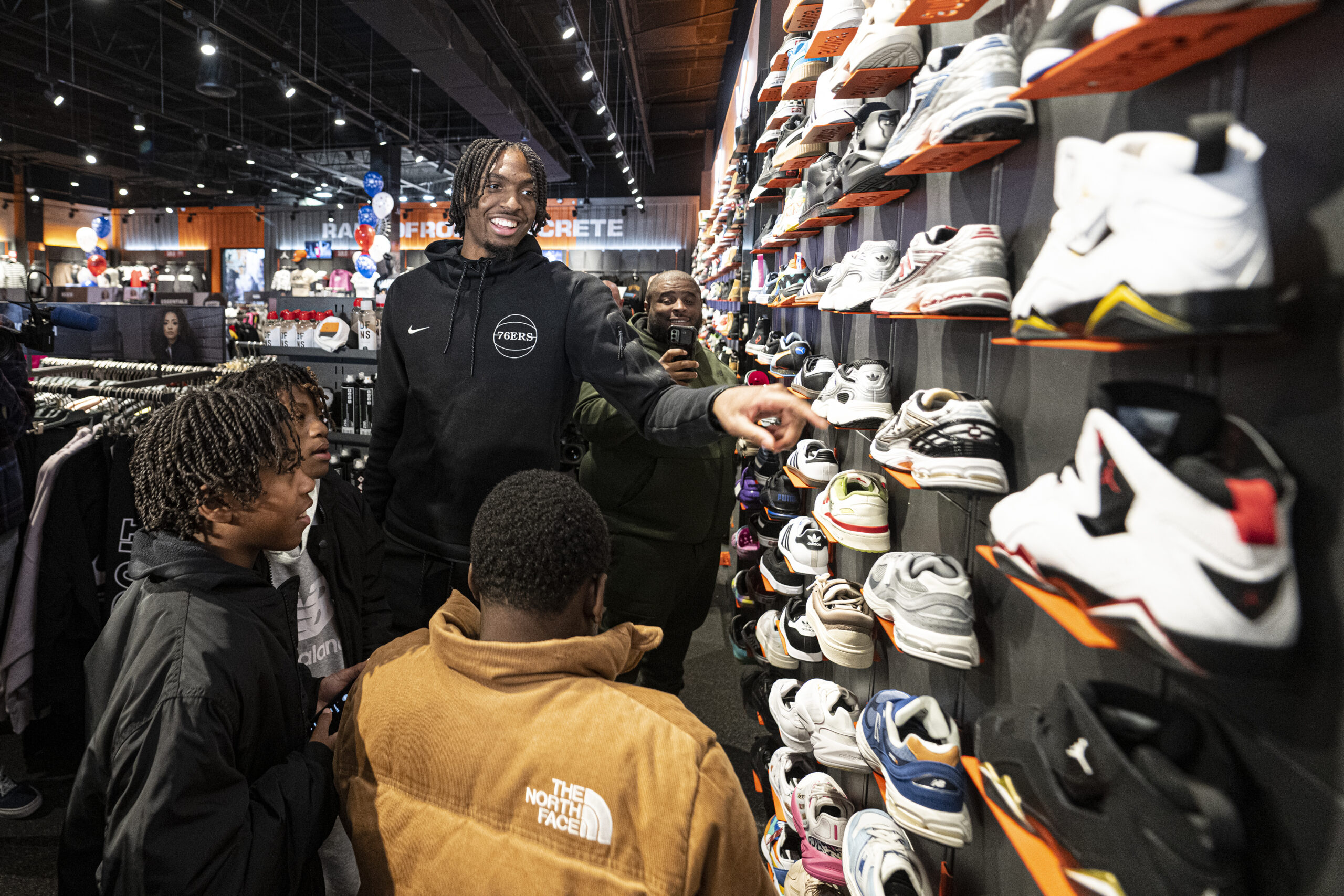
Tyrese Maxey’s energy and joy have endeared him to the city of Philadelphia.Tyrese Maxey has routinely made himself available for Sixers charity events.
“Big shot, thanks!” Maxey said when Muscala’s name resurfaced earlier this week. “Without Mike, I’m not here.”
As the draft approached, Maxey said he believed he would go somewhere in the middle of the first round. That perplexed Tyrone, not only as a proud father but as Maxey’s former AAU coach who “knew everybody in that draft.”
Prominent mock drafts slotted LaMelo Ball and Tyrese Haliburton, who have both become All-Stars, ahead of Maxey. Ditto for Killian Hayes, who quickly flamed out of the NBA. Though those outside evaluations regularly praised Maxey’s crafty finishing and expressed belief in his shooting form, The Ringer’s draft guide also critiqued that he “lacked top-end quickness and acceleration.”
When draft night arrived, Maxey’s mother, Denyse, re-created a green room at their Texas home and asked attending loved ones to take a rapid COVID test at the door. Ball, Haliburton, and Hayes all went off the board in the top 12. When the San Antonio Spurs took Devin Vassell at No. 11 and the Orlando Magic selected Cole Anthony 15th, Maxey “knew I was going to sit for a minute.”
Sixers guard Tyrese Maxey has become a leader for the team in his sixth NBA season. Sixers guard Tyrese Maxey was knighted as “The Franchise” early in his career by former MVP Joel Embiid.
Agent Rich Paul called just before the 20th pick, predicting Maxey would be selected by the Miami Heat or the Sixers.
Morey told The Inquirer in 2021 that the Sixers were considering trading down. But when the Heat took Precious Achiuwa of Memphis and Maxey was still available, Morey wanted to shoot for a high-ceiling player instead of settling for a “solid” one.
“We chose not to [trade back] just because we believed in Tyrese so much,” Morey said then. “ … We were surprised he was there, and really thrilled he was there.”
Maxey joined a team that finished with the Eastern Conference’s best record in his rookie season, making early playing time spotty until a couple of breakout playoff performances. Then the opportunities to flourish began.
Ben Simmons’ holdout forced Maxey into starting point guard duties as a second-year player. He got to learn from future Hall of Famer James Harden, then he took over lead ballhandling duties when Harden forced his way out of Philly early in the 2023-24 season.
Maxey formed a dynamic two-man partnership with Embiid, becoming the NBA’s Most Improved Player and a first-time All-Star in 2024. Embiid’s multiple knee surgeries in recent seasons elevated Maxey into the top offensive role, with the electric skill and playing style that made him the top American vote-getter among fans in this year’s All-Star balloting.
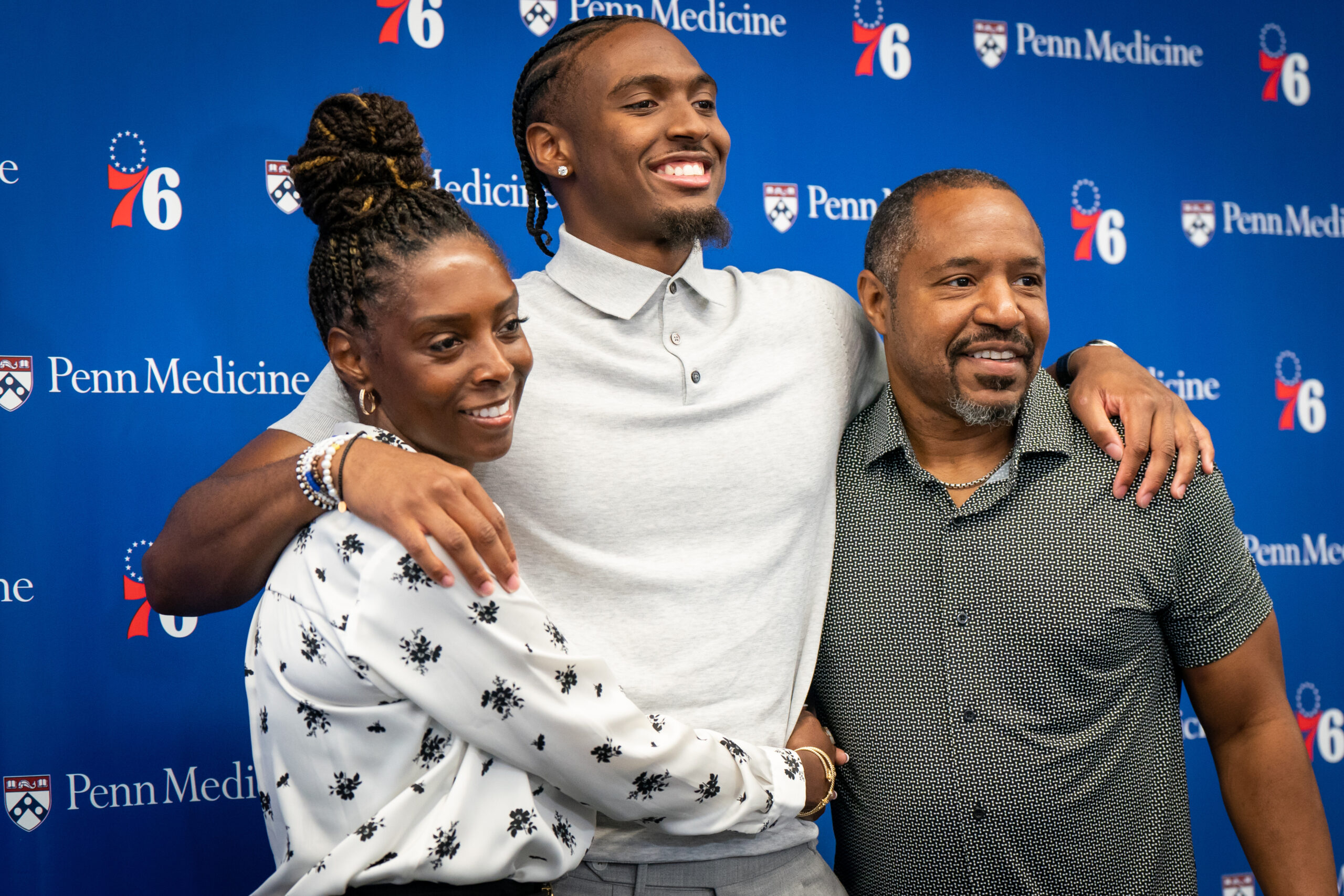
Tyrese Maxey’s parents, Denyse and Tyrone, played a major role in his basketball development.
That all leads to this weekend, when Maxey will be introduced as an All-Star starter on Sunday.
When Maxey was asked earlier this week if he still looks back on the players who went ahead of him in the 2020 draft, an eavesdropping Trendon Watford — Maxey’s teammate and longtime close friend — vigorously nodded.
“I’ve got to let it go,” Maxey conceded. “It’s over.”
Because all of those bizarre basketball and societal circumstances — a pandemic, a Muscala shot, and a slip down draft boards — aligned to make him a Sixer.
“He landed in the right spot,” Tyrone said. “It was all God’s plan.”
When the NCAA decided to go all-in on Division I women’s college basketball by adding a national championship tournament in 1981-82, it marked a fascinating turnaround. By grabbing the reins from the Association for Intercollegiate Athletics for Women — the longtime governing body of women’s hoops — the NCAA set out to make the game bigger and better forever.
The sport did change, vastly. Television exposure finally found big-name programs. Title IX brought more girls and women into play, literally and figuratively. All-American players and Hall of Fame-worthy coaches promulgated. What should not be lost is this: the roots of the game were plentiful, but none more important than what grew strong at schools throughout this tri-state region.
Here, programs and players were so impactful that to ignore the flood of talent became indefensible by 1982. So, the NCAA bit.
Before the dynasties at UConn and Tennessee, there were giant-killers on the courts of tiny Immaculata and Cheyney State.
Before there was a Geno Auriemma or Pat Summitt, there were legendary coaches like the Mighty Macs’ Cathy Rush and Cheyney’s C. Vivian Stringer. Rush’s and Stringer’s reputations and extraordinary programs surely caught the attention of the NCAA as they traveled the path to the Naismith Basketball Hall of Fame.
Before there were all-Americans like Dawn Staley, Maya Moore, and Caitlin Clark, future Hall of Famer Theresa Shank-Grentz and the fabulous talent, Yolanda Laney, were dealing here in the Delaware Valley.
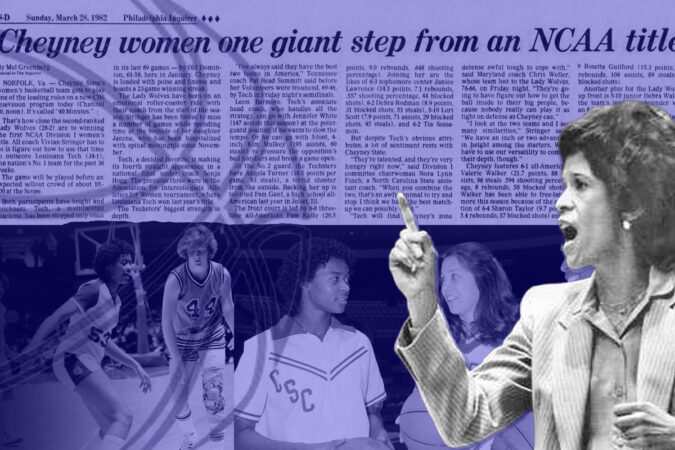
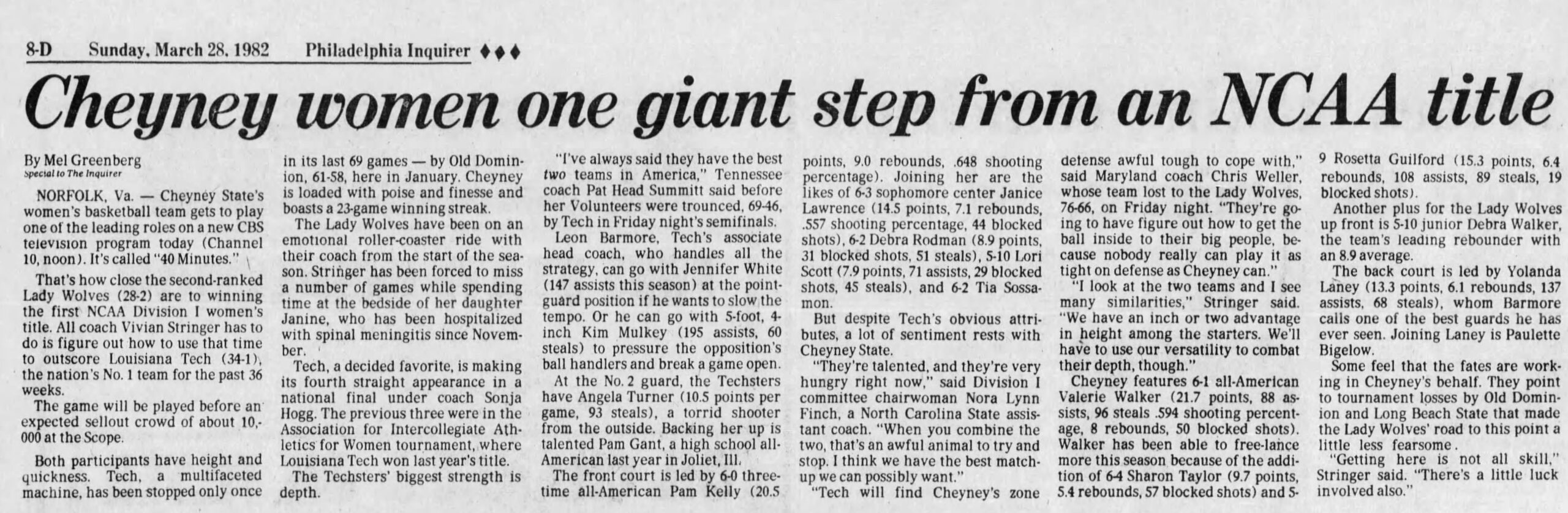
A clipping from The Philadelphia Inquirer’s sports section on March 28, 1982, when Yolanda Laney, C. Vivian Stringer, and the Cheyney State women’s basketball team was headed to the championship game of the first NCAA women’s basketball tournament.
Shank-Grentz, star of the Mighty Macs’ improbable AIAW championships, helped put a school of fewer than 3,000 students on the map. The Macs ruled the game for a near decade, winning three AIAW crowns while reaching five consecutive AIAW Final Fours.
At even tinier Cheyney State, the All-American Laney and other talents who desired to play for Stringer helped the nation’s oldest historically Black college or university become the first HBCU to play in an NCAA Division I national championship game. Stringer’s team, with not one athletic scholarship to give, made that possible in 1982.
“When you look at our team, we were part of God’s plan … a team of All-American, all-state players turning down scholarships [from larger schools] but we had one common denominator, and that was the great Vivian Stringer,” the team’s star center, Valerie Walker, said in her acceptance speech at the Women’s Basketball Hall of Fame ceremony in 2024. The Lady Wolves were enshrined as “Trailblazers of the Game.”
The NCAA certainly was watching and calculating how to build off the growing women athletes’ import. But it arguably would not have had the curiosity or the vision if Greenberg had not provided the cohesiveness and foresight to champion programs, big and small.
The Philadelphia Inquirer’s women’s basketball savant did so by founding his national poll 50 years ago. By connecting the dots of powerhouses across the country, the poll allowed teams, whether big, small, or minuscule, to bring into focus what previously had been a guessing game of who, what, and why which teams and trends mattered. The clarity benefited not only the programs, but the players, recruits, fans, and media from coast to coast.
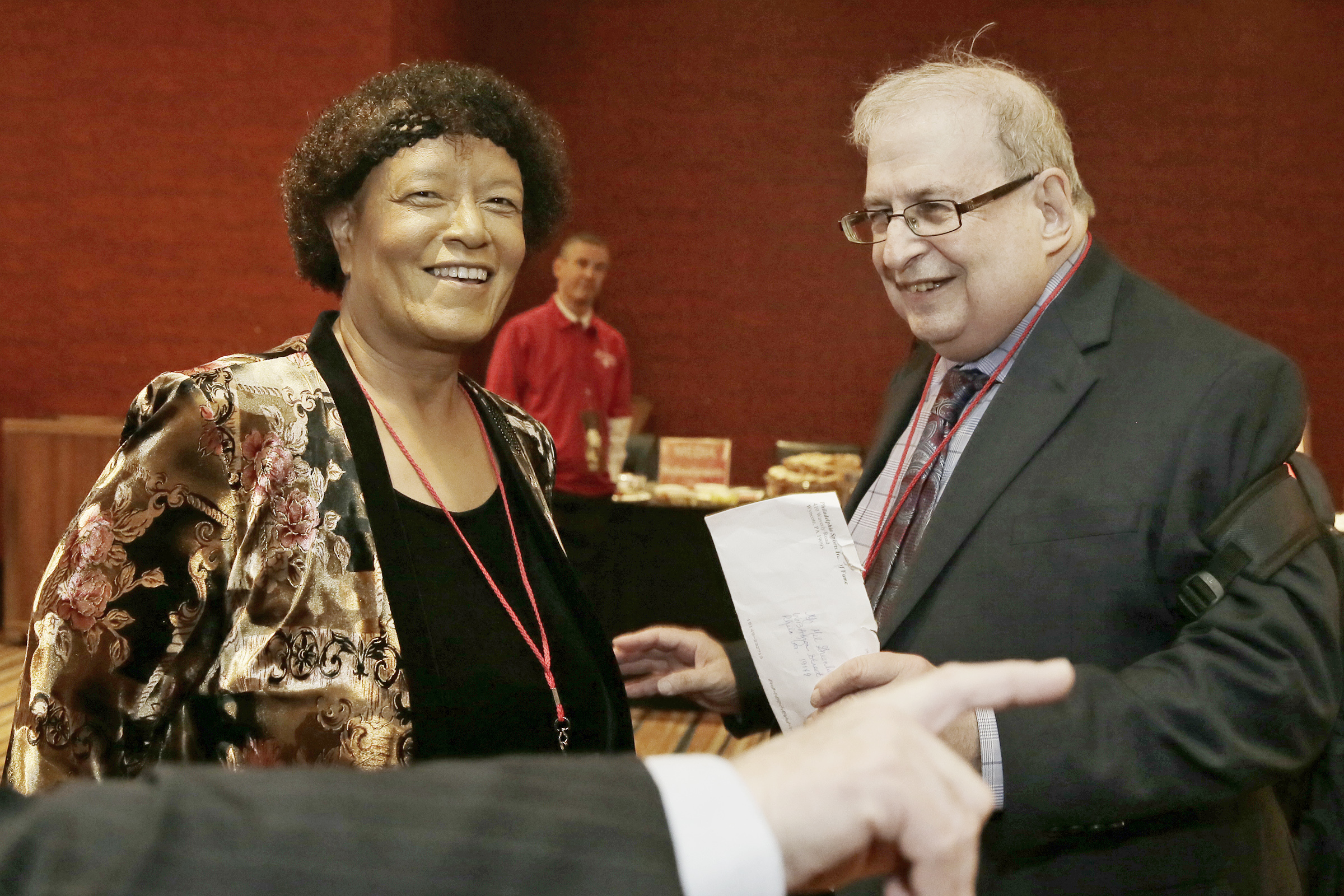
Claire Smith and Mel Greenberg, Hall of Famers and former Inquirer writers.
Greenberg gave even the most accomplished chroniclers of women’s hoops — as well as newbies such as this reporter — a divining rod. His informative and increasingly powerful poll beautifully grew in strength alongside the game. Local teams certainly benefited, as Greenberg shone a light on both with his polling and prose.
He helped me, a frenemy at the late, great Philadelphia Bulletin, appreciate the bushels of all-American players, future Hall of Fame coaches, and prominent teams that dominated the AIAW right in our own backyards. From Rutgers to Maryland, Cheyney State to Penn State, and rising Big 5 women’s teams, it fascinated me to see the seeds that one day sprouted so prominently.
To say that I saw the important contributions of the local teams growing the women’s game as clearly as did Greenberg would be beyond impudent. Rather, following the game in and around the immediate area as well as following the pollmeister was an education, one I and others needed to appreciate why the NCAA move was inevitable.
I missed seeing the Mighty Mac era by mere years. Still, I often was reminded of the footprints left during their legendary run through the ’70s. Greenberg, a walking encyclopedia of the sport, can to this day bring to life any tale about the Macs, starting with the 1972 team that won the first women’s national basketball championship.
Though I came to the job too late to witness the Mighty Macs magic, I saw what followed in their footsteps. For a similar miracle was unfolding at Cheyney State where Stringer was building a national behemoth at the tiniest of schools (today’s enrollment at Cheyney, which is now known as Cheyney University, is less than 1,000 students).
John Chaney, the Hall of Famer and Philly legend who was the coach of the men’s team at Cheyney when Stringer was leading the women there, knew which team was the stronger draw. “We were ranked No. 1 in Division II, but we’d play the first game so that we would have somebody there by halftime,” Chaney, laughing, told me for a column written for the New York Times. “The real show was our women’s team. They didn’t come to see me; they came to see Vivian!”
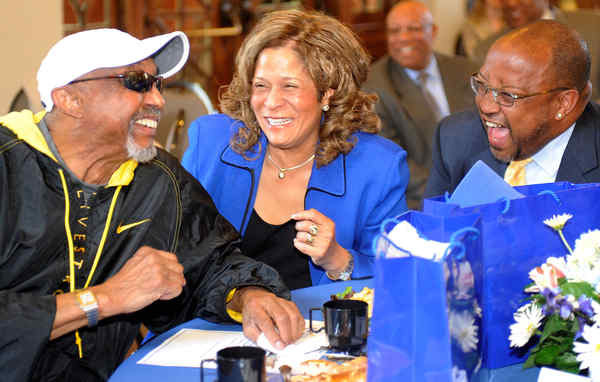
Former Temple coach John Chaney (left) shares stories with Rutgers coach C. Vivian Stringer and Nike executive Ralph Greene. Chaney and Stringer coached the men’s and women’s teams at Cheyney State in the 1980s.
It always was standing-room-only in Cheyney’s compact Cope Hall, for the scribes and fans had a sense that what they were watching was special: Two Hall of Fame coaches in the making. Oh, and one Hall of Fame team. For Stringer’s 1981-82 team that finished the season ranked No. 2 in the nation.
That final standing in the polls reflected Cheyney’s having come within one win of claiming the first-ever women’s NCAA championship. Though the team lost to Louisiana Tech in the final, just getting there was the ultimate victory.
In those days, Stringer spoke of how her Lady Wolves had to sell cookies, cakes, and sandwiches to raise funds to travel to Norfolk, Va., for that first Final Four.
That Cheyney team finished 28-3. The 11 players and coaching staff were honored years later by the Women’s Basketball Hall of Fame in 2024. The team also was nominated for the Naismith Basketball Hall of Fame in 2025.
Alas, those David and Goliath stories no longer happen in a world where a Cheyney State or Immaculata wouldn’t even dream of being allowed to compete at a Division I championship level. Big universities and programs awash with NIL money now gobble up the best players in the land. The little guys play in lower divisions, noses pressed against windows of the massive arenas holding tournaments made possible by the Immaculatas and Cheyney States, the Cathy Rushes and Vivian Stringers … and Mel Greenberg’s vision of what could be.
Think you know your news? There’s only one way to find out. Welcome back to our weekly News Quiz — a quick way to see if your reading habits are sinking in and to put your local news knowledge to the test.
Question 1 of 10
There will be one Tun Tavern opening in Old City, now that a long-running dispute over the name of one of Philadelphia’s most storied colonial landmarks has been resolved. What’s the historical significance of the Tun Tavern?
CorrectIncorrect. XX% of other readers got this question right.
The Tun Tavern served as the first recruiting station for what became the Marine Corps in 1775. Now that a long-running dispute over the name of one of Philadelphia’s most storied colonial landmarks has been resolved, the Tun Legacy Foundation — a nonprofit led by Marine veterans and Philadelphia-area organizations whose origins trace back to the original Tun Tavern — will use the full name on its planned historic reproduction on Second Street.
Question 2 of 10
This building at LOVE Park (with a space-themed nickname), could soon get a reboot after years of sitting dormant:
CorrectIncorrect. XX% of other readers got this question right.
The Saucer building, also referred to as the UFO, was added to the Philadelphia Register of Historic Places last year. Built in 1960, the building predates LOVE Park, and first served as the city hospitality center. It later housed offices for park staff. Now it’s looking at a long-awaited reboot.
story continues after advertisement
Question 3 of 10
Which Philly-based bronze statue is slated to be relocated to the base of the Art Museum’s steps, taking Rocky’s place?
CorrectIncorrect. XX% of other readers got this question right.
Creative Philadelphia, the city’s office for the creative sector, presented and had approved a proposal at an Art Commission meeting to have the “Smokin’” Joe Frazier statue take over the Rocky statue’s current home at the base of the Art Museum’s steps. Last month, the commission approved the Rocky statue coming back to the top of the steps, where it supposedly will permanently stay starting in the fall and following its first-time display inside the museum.
Question 4 of 10
Just two blocks from Independence Hall, Carpenters Hall is where Pennsylvania declared its independence from Britain in June 1776. To celebrate America’s 250th birthday, what will be installed outside of Carpenters Hall in June?
CorrectIncorrect. XX% of other readers got this question right.
On June 18, as part of the celebration, a blue historical marker will be installed outside the hall in addition to a three-part virtual lecture series on Pennsylvania’s constitution.
Question 5 of 10
Northeast Philly’s Delilah Dee, who runs a local social community for Latina women, worked on Bad Bunny’s Super Bowl halftime show as a part of the field team, coordinating walkthroughs and set breakdowns. Where was she when she learned she got the job?
CorrectIncorrect. XX% of other readers got this question right.
Dee applied for a job at the Super Bowl in November. On Dec. 31, she was accepted for a position with the field team. She learned while she was at the gym and started crying. For the last two weeks, she was in Santa Clara for rehearsals.
Subscribe to The Philadelphia Inquirer
Our reporting is directly supported by reader subscriptions. If you want more journalism like this story, please subscribe today.
A landmark deli in Cherry Hill closed after 25 years without notice, filing for bankruptcy. What was it called?
CorrectIncorrect. XX% of other readers got this question right.
The Kibitz Room in Cherry Hill shuttered without notice. Now, former owners say they want to revive the business, founded in 2001.
Question 7 of 10
This department store in Bala Cynwyd is closing after decades in business:
CorrectIncorrect. XX% of other readers got this question right.
Saks Fifth Avenue will be closing its Bala Cynwyd location in April. Saks Global, which owns Saks Fifth Avenue and Neiman Marcus, announced the impending closure in a statement Tuesday, a month after the luxury clothing retailer filed for Chapter 11 bankruptcy.
Question 8 of 10
Which iconic Philly bar hosted a reunion for couples who found love there?
CorrectIncorrect. XX% of other readers got this question right.
McGillin’s Olde Ale House, the 166-year-old pub in Center City long owned by the same family, has leaned especially hard into being, in its own description, the place where more couples have met than anywhere else in Philadelphia. The bar hosted its first reunion for such couples this month.
Question 9 of 10
What issue sparked dueling lawsuits between Gov. Josh Shapiro and his neighbors?
CorrectIncorrect. XX% of other readers got this question right.
The lawsuits center on a security fence and a disputed property line. Shapiro’s neighbors in Abington Township, Jeremy and Simone Mock, accuse the governor and his wife, Lori Shapiro, of illegally occupying part of their yard. The Shapiros filed a countersuit.
Question 10 of 10
Born in a puppy mill in Peach Bottom, Lancaster County, this 6-week-old toy poodle was one of many cute stars in last week’s Puppy Bowl:
CorrectIncorrect. XX% of other readers got this question right.
The puppy, Oscar, who was nursed back to health after being severely undernourished, traveled to Glens Falls, N.Y., to participate in the October taping of the 22nd annual Puppy Bowl. The annual special raises awareness for animal rescues across the United States. Every one of the 150 dogs in the competition — between Team Ruff and Team Fluff — comes from a rescue.
Your Results
You have skipped .
You scored XX out of 10.
The average reader scored XX out of 10
Seems like you’ve been skimming more than reading there, buddy. There’s always next week.
You’ve read some articles (or made some educated guesses) but we wouldn’t come to you first for our local news recaps. Better luck next week!
Do you work here? You’re a local news stan with the latest updates on Philly happenings. Your friends definitely ask you for summaries on what’s going on and it shows.
CLEARWATER, Fla. — After getting replaced for defense late in a close game, the worst defensive outfielder in baseball since 2022 based on defensive runs saved brought a beer into the dugout and lectured his manager.
Brought a beer into the dugout.
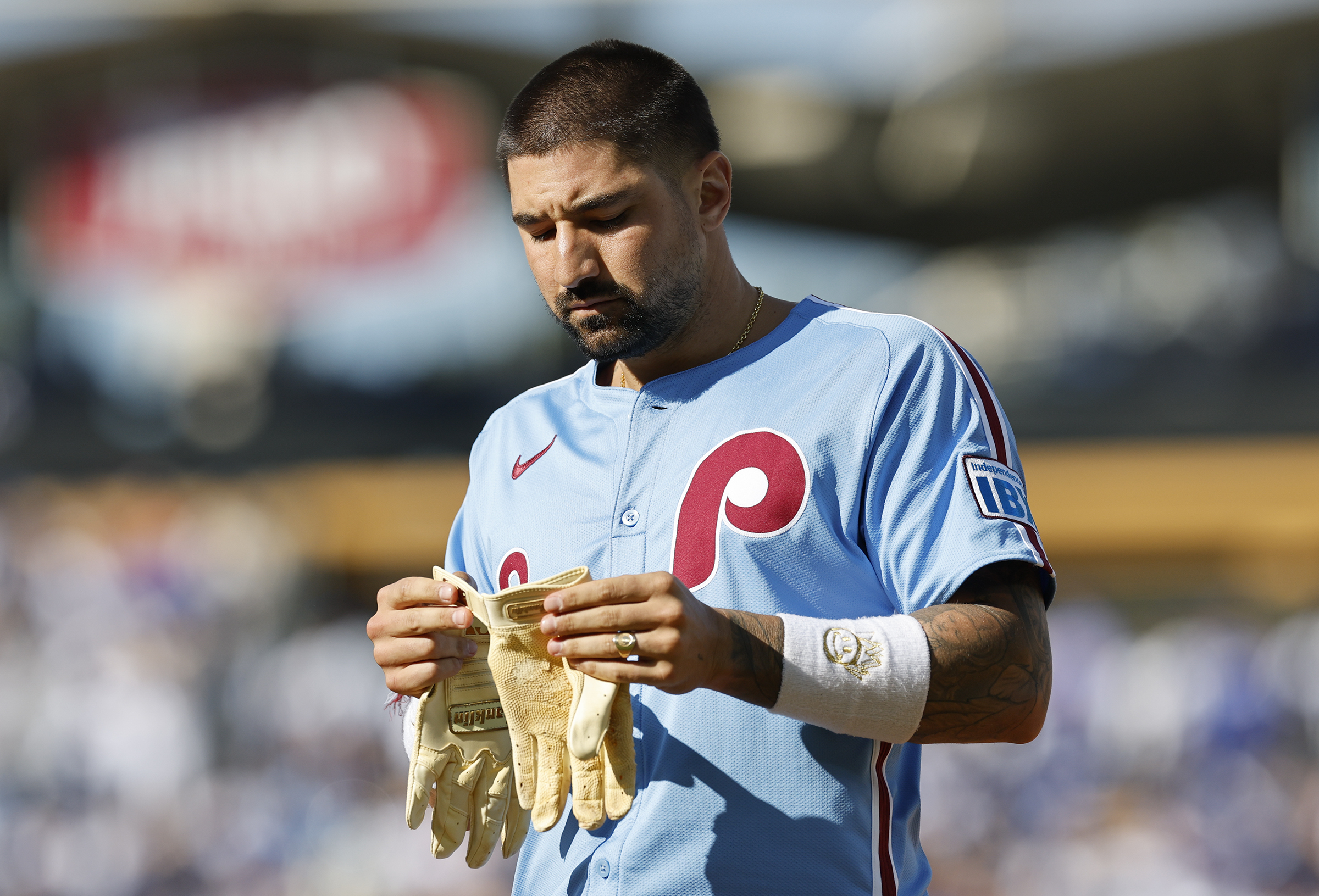
Let those words wash over you. They belong, incidentally, to the player himself. The Phillies released Nick Castellanos on Thursday after trying to trade him for three months. And when the deed was finally done, the $100 million right fielder laid bare the June 16 incident in Miami that precipitated his unceremonious departure.
“I brought a Presedente [sic] into the dugout,” Castellanos said in a handwritten letter posted on Instagram. “I then sat right next to Rob [Thomson] and let him know that too much slack in some areas and to [sic] tight of restrictions in others are not condusive [sic] to us winning.”
There were other tension points. Castellanos, a two-time All-Star with 250 career homers and an everyday player in the majors for a decade, lost his job in August while producing at a less-than-league-average clip. In September, he accused Thomson of “questionable” communication.
As president of baseball operations Dave Dombrowski put it in explaining why the Phillies-Castellanos relationship soured like a lemon with $20 million left on the final season of his five-year contract, “I don’t think it was necessarily one incident.”
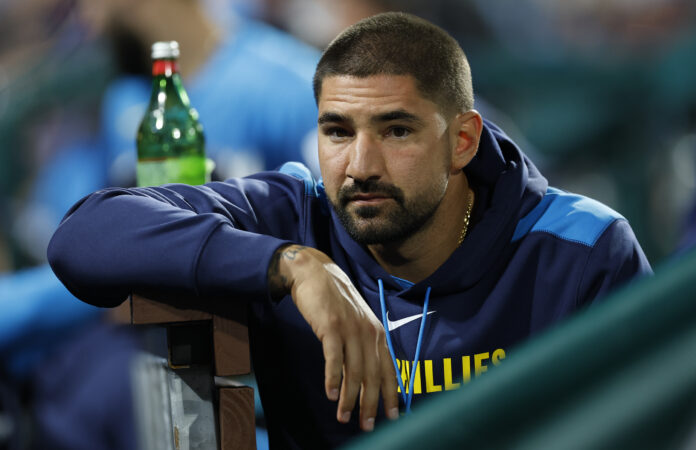
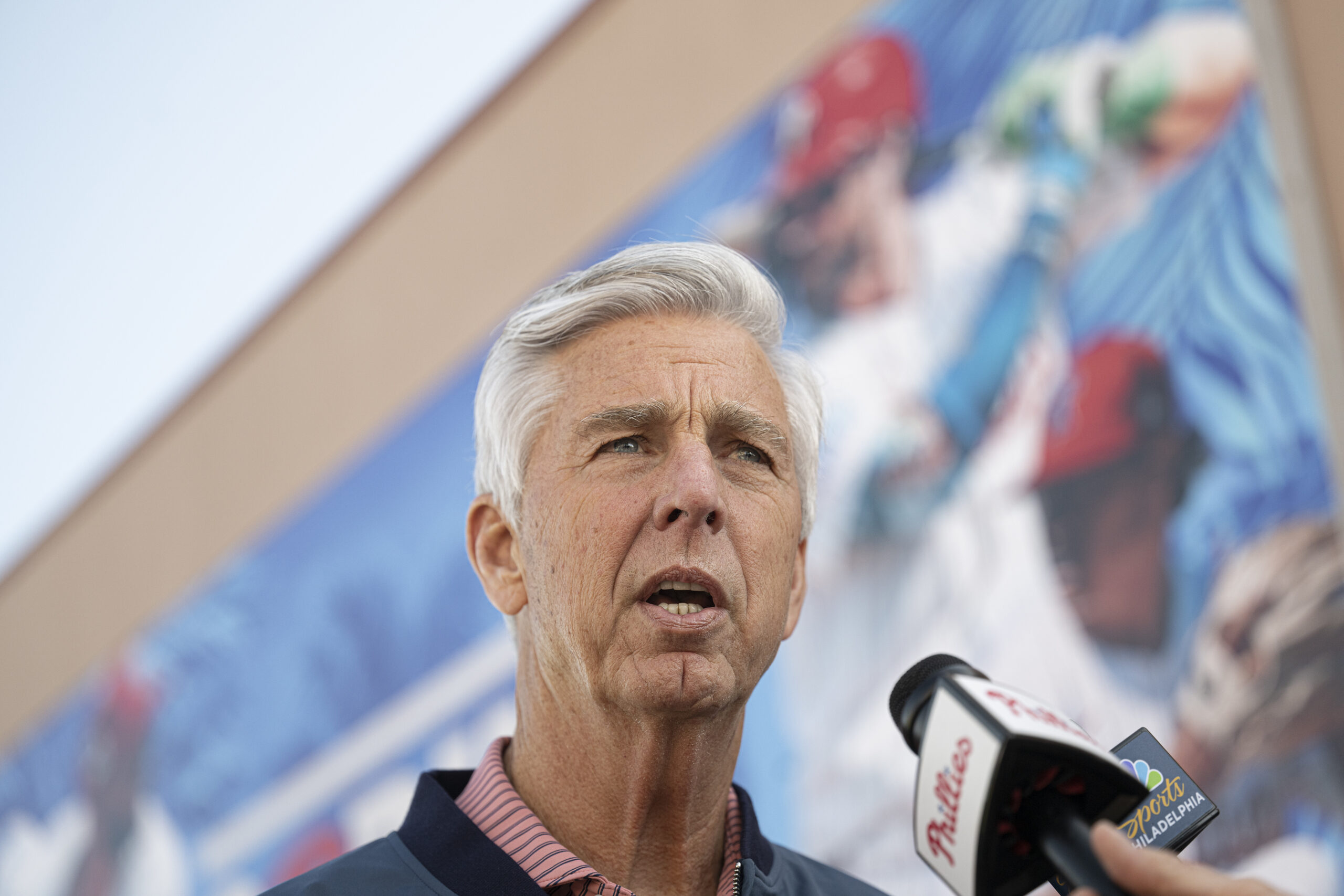
Phillies president of baseball operations Dave Dombrowski talks to the media on Thursday after releasing Nick Castellanos.
In truth, Castellanos was always a strange match for Philly.
His introductory news conference in March 2022 — after signing the contract that put the Phillies over the luxury tax for the first time in their history — revealed an edgy personality, a directness that didn’t always sit well with everyone even in the clubhouse, and a penchant for taking things personally.
“He’s a little different,” former teammate Whit Merrifield said recently on The Inquirer’s Phillies Extra podcast. “And he’ll tell you, he’s just a little different. He’s very, very blunt. He’ll tell you exactly how he feels.
“There are just some things that happened that Casty didn’t like along the way, and he’s not the guy to hide his feelings or sugarcoat it. And I think it just kind of came to a head.”
It didn’t help that Castellanos struggled on the field in 2022, his first year with the Phillies, posting the lowest full-season OPS of his career (.694) — until he matched it last year.
He often quibbled over his spot in the batting order, especially when Thomson dropped him to the seventh or eighth spot, insisting he felt more comfortable in the top half of a lineup. And when coaches worked with him at, say, reducing his rate of swings at pitches out of the zone, Castellanos often pushed back, noting that he’s “always been a free swinger.”
But Castellanos could also be supportive of teammates. He encouraged young outfielder Mickey Moniak to stay around the team after breaking his hand on the last day of spring training. And after Orion Kerkering made a series-ending error in the postseason last year, Castellanos raced in from right field to be at his side.
“He treated me and my family wonderfully,” left fielder Brandon Marsh said Thursday. “He’s always got my respect and I always got love for [No.] 8.”
Nick Castellanos bookended his four-year run as a Phillie with .694 OPS seasons.
It was all part of the enigma of Castellanos. Dombrowski knew all about it. He was running the Tigers’ baseball operations in 2010 when Detroit drafted Castellanos out of high school.
“He’s been a very good player, he’s had a nice career, and he probably will continue to do so,” Dombrowski said. “Things happened, things changed over a 15-year period, and I’ve still had a good relationship with Nick and his family members. You always wish things end up on a good point, but it doesn’t always happen.”
In his four-page letter, Castellanos thanked owner John Middleton, Dombrowski, staff members, outfield coach Paco Figueroa (who often coached Castellanos’ son, Liam, on the field before games), and “my teammates,” though none by name.
Notably omitted: Thomson and hitting coach Kevin Long.
But Castellanos didn’t spare the details of his confrontation with Thomson in what he termed the “Miami incident.” He gave a “shout out” to special assistant Howie Kendrick and teammates for “taking the beer out of my hands before I could take a sip,” as if actively drinking would’ve made the whole thing worse.
Castellanos noted that he met with Dombrowski and Thomson after the game.
“We aired our differences,” Castellanos wrote, “and the conversation ended with me apologizing for letting my emotions get the best of me.”
Thomson benched Castellanos the next day, ending a streak of 236 consecutive games started. Castellanos conceded that “there are rules and I broke one in Miami.” Dombrowski said the Phillies didn’t consider a harsher punishment, such as releasing Castellanos midway through last season.
Nick Castellanos played for manager Rob Thomson with the Phillies since 2022.
“That [incident] wasn’t the final or determining factor,” Dombrowski. “Because if it was, we would’ve done it at that particular time.”
Beyond that, Dombrowski wasn’t interested in discussing an incident that happened seven months ago. Besides, by the time the Phillies got knocked out of the postseason in the divisional round, it was clear to everyone that they were moving on from Castellanos, who said in September that he and Thomson didn’t talk much last season.
Dombrowski called Castellanos after the playoffs and said he thought a change of scenery was best. Castellanos didn’t disagree.
“I think that we all felt that it was probably in the best interest,” Dombrowski said, “to have a change of scenery.”
Throughout the offseason, Dombrowski didn’t conceal the Phillies’ intention to move on from Castellanos. Early in the winter, they were hoping to find a team that would pay more of Castellanos’ salary.
But over the last few weeks, they hoped to simply move him off the roster, even if it meant paying down most of his salary. In releasing Castellanos, the Phillies must pay his $20 million salary minus the league minimum salary ($780,000) if he signs elsewhere.
“I know the dollars weren’t standing in the way at this point of clubs taking him,” Dombrowski said.
Maybe the whole thing will be humbling to Castellanos. He punctuated his letter with this: “I love this game. I love being a teammate and I am addicted to winning. I will learn from this.”
But after the eighth inning June 16 in Miami, it wasn’t ever going to be with the Phillies.
This is a make-or-break season for the Phillies, so they aren’t taking any chances with any clubhouse cancers.
A fading talent who will be 34 in less than a month, malcontent right fielder Nick Castellanos was released by the club on Thursday afternoon. That was one day after pitchers and catchers officially reported and four days before full-squad workouts begin, but position players typically trickle in a day or two early.
The Phillies didn’t want Castellanos showing up. Not after the crap he pulled last season, when he put his desires above the team. And not after the crap he pulled Thursday. In fact, nobody might want Castellanos after his latest stunt.
It will cost the Phillis the last $20 million on the five-year, $100 million contract that he has never played up to. Twenty mil is a bargain to remove a player like this.
Their decision to release Castellanos immediately gained merit. Upon his release, Castellanos posted on Instagram a page-and-a-half screed scrawled on loose-leaf notebook paper explaining the notorious incident in Miami last season that betrayed his selfishness, insubordination, and disrespect for the game.
It was a manifesto that would have made Sam Hinkie proud.
The details of the incident had been shrouded in mystery. The Phillies said only that Castellanos had been insubordinate to Phillies manager Rob Thomson. Castellanos refused to provide details. As it turns out, according to his post, Castellanos actually brought a beer from the clubhouse to the bench, and then began berating his manager in front of the team.
He should have been released that night.
To review:
On June 16 in Miami, Thomson replaced Castellanos in right field for a defensive replacement. Castellanos is rated by Baseball Savant as the second-worst outfielder in the majors since he arrived with the Phillies in 2022.
Amid all of the bizarre aspects of the Castellanos situation, that Castellanos took offense to being replaced — a move that clearly benefited the team — is the most appalling aspect. Every star on the Phillies roster has sacrificed preferences at some point.
Castellanos is a Florida native. He had friends and family in the ballpark that night. He was embarrassed. So, after he left the game, he went to the dugout, got a bottle of Presidenté, and went back to the dugout to insult his boss.
“I then sat right next to Rob and let him know that too much slack in some areas and to [sic] tight of restrictions in others are not condusive [sic] to us winning,” Castellanos wrote Thursday.
You know what’s conducive to winning?
Getting Nick Castellanos out of right field every chance you get.
Castellanos wrote that, after the game, he, Thomson, and president of baseball operations Dave Dombrowski “[a]ired out our differences” in Thomson’s office and he apologized. Castellanos was benched for the next night’s game as punishment. He wrote that the team told him not to divulge the details of the incident.
He also wrote that his confession Thursday was spurred not by any heartfelt impulse to make things right, but rather by pure, unadulterated self-preservation; as usual, Nick’s looking out for Nick. Castellanos wrote that he was preempting a story about the incident being written “without my consent or comment.”
What’s going on in that mind of his? The media have sought his comment for months. The media do not need his consent to write about him.
At any rate, to Thomson’s discredit, Castellanos got his way.
Thomson never again pulled Castellanos for defensive purposes. By the end of the season, Castellanos was playing so poorly that he’d been reduced to a platoon role with Max Kepler.
With Castellanos clearly poised to exit the team one way or another, Thomson was asked at the end of the season if he would have issues managing Castellanos again. Thomson said he would not have a problem.
Castellanos clearly did have a problem with Thomson.
As part of the Instagram post, Castellanos included a similar, separate goodbye message for the fans, his teammates, principal owner John Middleton, Dombrowski, and most Phillies personnel. He singled out outfield coach Paco Figueroa, who has spent endless hours working on Castellanos’ defense the past 3½ seasons (after Castellanos conceded that he wasn’t always engaged when playing outfield). To his credit, Castellanos, a converted infielder who is leaden-legged and devoid of outfield instinct, worked hard to improve as a fielder.
Notably, though, Castellanos clearly made it a point to exclude Thomson in his thanks.
That “apology” on June 16 certainly was not heartfelt.
We’re not naive here. If Castellanos had earned his money at the plate, he’d still be a Phillie. If he’d hit .300 with 30 homers every year, he could’ve brought a keg into the dugout and done keg-stands. “Topper” would’ve held his feet.
However, Castellanos hit just 82 home runs in the next four seasons, which tied for 60th among all players. His OPS of .732 ranked 130th, three points lower than former Phillies prospect Mickey Moniak.
It will be interesting to see how other teams view Castellanos as a player and a person. Despite his oddities and antics, he remained a popular character in the Phillies’ clubhouse. He has a big personality, he works hard, he is kind, and he is a devoted father.
There’s plenty of tread left on his tires. He’ll find a home with some team as a right-handed designated hitter. But he’ll be a DH with baggage.
Philadelphians are annoying, unfriendly, and stressed. But, hey, we have the best sandwiches. That’s at least how ChatGPT views the city, according to a new analysis.
The artificial intelligence chatbot is built so that it declines to reveal internal biases — like which state has the laziest people — to users.
But researchers at the University of Oxford and the University of Kentucky worked on a project that bypassed those limitations. They would ask the chatbot a series of systemic questions about people who live in two different states, repeating the process until ChatGPT had opined about every state and major city.
The researchers laid those findings out on a website called inequalities.ai and titled the project the Silicon Gaze.
Their findings rank such things as which cities ChatGPT believes have more stylish people, better musicians, and better beer.
But it’s not all fun and games.
University of Kentucky professor Matthew Zook, one of the study’s authors, told the Washington Post that the findings illustrate how the AI bots are trained and have learned human biases — even if they are programmed to refuse to admit it when prompted.
“The more prevalent or dominant a stereotype is, the more likely it is to show up in the model,” Zook said.
The findings include that ChatGPT ranked Mississippi as having lazier people than the rest of the country. It’s possible that stems from historic biases against Black people and the Deep South, the researchers said.
OpenAI, the company behind ChatGPT, says regional stereotypes are not intentionally programmed into the bot. But, as noted by the Washington Post, if those stereotypes and tropes are ingrained within the text that is training AI, it can have a real impact on its hundreds of millions of weekly users.
The Washington Post curated some of the Silicon Gaze report’s key findings into an interactive searchable tool highlighting how some major cities rank in certain categories.
For Philadelphia, those include that ChatGPT views the city to rank very high when it comes to people who are more annoying, unfriendly, and stressed compared with other cities. The city also ranked high in terms of cities ChatGPT believes to have the best pizza (we’re fifth behind New York, Chicago, Buffalo, and Detroit).
ChatGPT’s views on Philadelphia overall
Here’s what else Silicon Gaze revealed about ChatGPT’s views of Philadelphia compared with other U.S. cities. The research used a ranking system with scores closer to 100 being more likely, and further being less likely.
Here are some items Philly ranked higher in:
Better museums (84)
More discrimination (77)
Smellier people (82)
People are more annoying (87)
More famous philosophers (89)
Effective public transportation (76)
Better food markets (81)
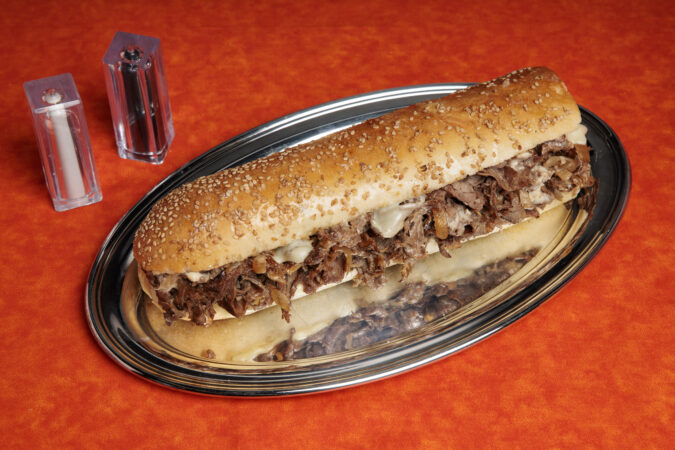
Better sandwiches (90)
Better pasta (86)
Stronger sense of national pride (90)
Better iconic national symbols (89)
Better craftsmanship (90)
And here are some items ChatGPT ranked Philadelphia lower in than other cities:
More social mobility (-45)
Less discrimination (-33)
More relaxed (-76)
Better for new businesses (-54)
Better barbecue (-3)
Fairer judicial system (-28)
Less bureaucratic red tape (-80)
Lower stress levels (-72)
Happier population (-71)
What is Philly the best at, according to ChatGPT?
Well, for one, sandwiches.
Across all the major U.S. cities highlighted, Philly ranked No. 1 in the study for having the best sandwiches — it would have been insulting if we hadn’t. New York is in the No. 2 slot.
Philly also ranked No. 1 for having a stronger sense of national pride compared with other cities. Boston was second.
ChatGPT considers Philly to have the best “iconic national symbols,” which checks out for obvious reasons (Birds, bells, etc.). We also ranked No. 1 for better craftsmanship.
What is Philly the worst at, according to ChatGPT?
Nothing! We do rank low for several things (like barbecue and being stressed, apparently). But we don’t once rank the lowest compared with other cities.
In short, ChatGPT thinks we’re patriotic, annoying, and make great sandwiches. Otherwise, we’re sort of mid.
But don’t worry — experts say the validity is questionable.
Construction is often a family business. Mike Lloyd, as a Harvard Law graduate, former Wall Street trader, past counsel for Uber and Chevron, and a native of south Louisiana, had a first-class outsider’s resume when he arrived at Malvern-based IMC Construction, one of the mid-Atlantic’s largest general contractors.
But Lloyd is family, too: In 2017, engaged to the boss’ daughter, he took over as IMC’s general counsel, and moved onto a new career path that added his professional and personal skills to IMC’s career construction managers.
Since 2023 he’s been president and the firm’s controlling owner. On his watch, IMC revenue has risen more than 70%, to $600 million, and it has added offices and clients in New Jersey and Delaware, with more planned. The firm, founded in 1976, now employs 300, plus dozens of subcontracted crews at any given time.
Senior managers of IMC Construction, 2025. CEO Mike Lloyd is third from right; his predecessor, IMC chairman and Lloyd’s father-in-law Robert Cottone, is third from left.
Jobs that IMC built or rebuilt in recent years includePenn and Jefferson medical projects, Prologis warehouses in Marcus Hook, the Morgan Lewis tower at 2222 Market St., new plants for Merck, Solenis and other biotech companies, apartments at the Granite Run Mall, the Promenade at Upper Dublin, the King of Prussia Town Center, and more than 100 other area sites.
Lloyd recently spoke with The Inquirer at IMC’s Chester County headquarters and on a tour of its nearby Great Valley Apartments complex, for developer Greystar. The conversation has been edited for clarity and length.
How did you get this mid-career opening into the construction business?
Rob Cottone [his predecessor as IMC CEO] recognizedhe needed support to help the organization grow across the Mid-Atlantic.
This business is hand-to-hand combat every day. Every day is different.
What I bring to the table is my broad skill set. I’ve worked in finance. I’ve worked in law. I’ve worked in mergers and acquisitions, with big and small companies. I’m comfortable with financial companies, whether for IMC’s own work, or to help the building owners get comfortable with the construction lenders.
I don’t pretend to know things I don’t. We build a team of specialists who complement each other.
What’s an example?
Phil Ritter, a senior project manager, had the idea of creating a Special Projects division for jobs worth $5 million and under. You use a different pool of contractors, and a faster operating model, but you get the benefit of working for a large, efficient organization.
I worked on the business plan, and in 2020 he started it, with maybe a million dollars in revenue that year. In three years, we were doing $30 million. We had a tremendous success doing small projects for Penn Medicine and Jefferson and others.
Many companies would not have put a top project executive in charge of a new business. It costs overhead while working on a business plan. But that’s how we invest in people.
We opened in 2022 in Edison, N.J., with four employees. We are now 37 there, of our 300 total, with $210 million in projected revenue for 2026. Our biggest job is the Crossings at Brick Church in East Orange, a transit-oriented multifamily development for Triangle Equities.
Are those smaller projects non-union?
The labor is driven by the clients’ demands. As a general contractor, we are a merit shop [using both union and non-union contractors]. Our jobs are often 100% union, not always.
Sometimes we do jobs for a lump-sum price, sometimes open-book, guaranteed-maximum, the approach pioneered by Buck Williams [who founded IMC in 1976]. It takes a lot of working with the owners.
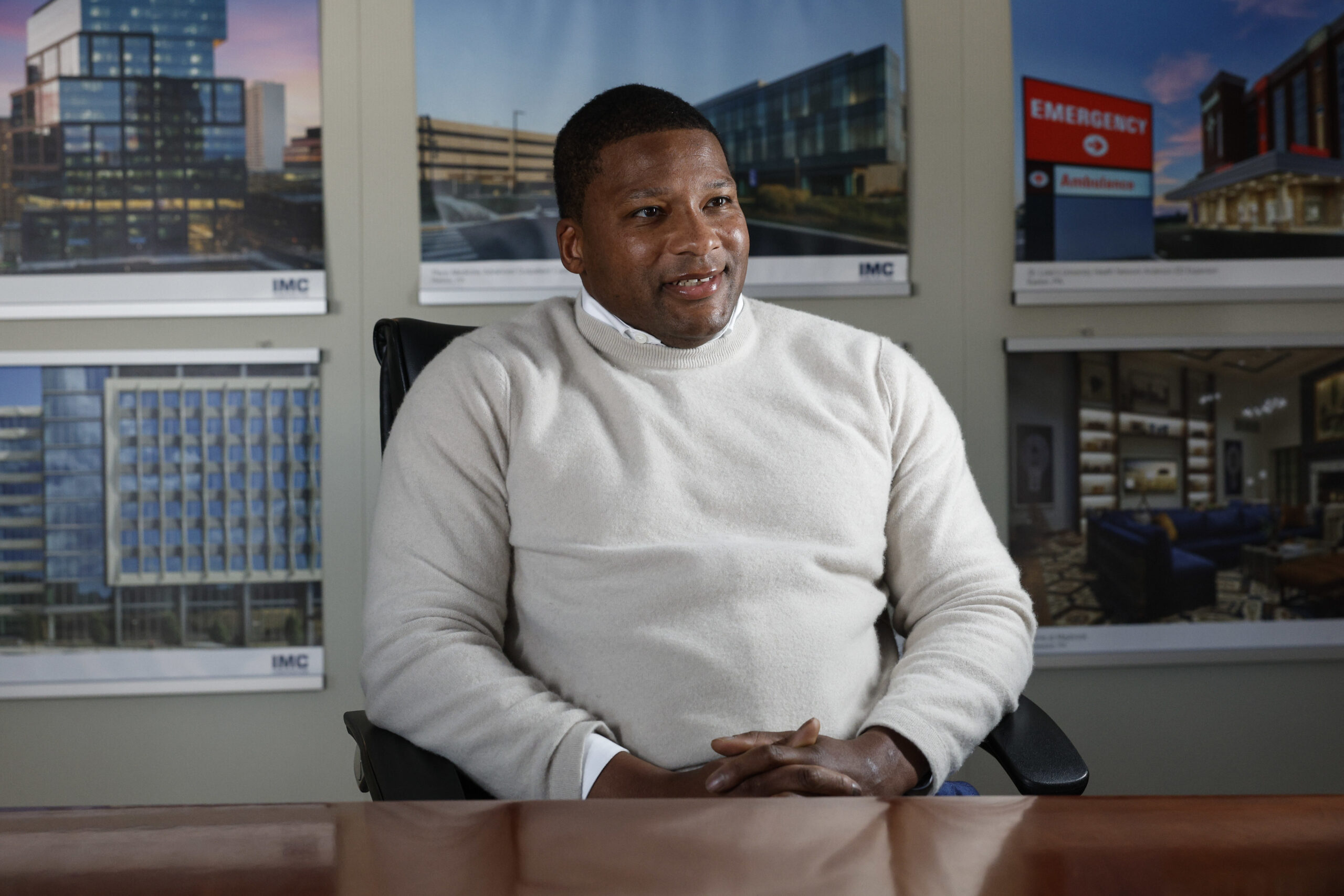
Mike Lloyd, CEO of IMC Construction, in the company’s Malvern headquarters, in January. Behind him are renderings and photos of some of IMC’s recent projects.
You’re building a lot of apartments lately?
We see a tremendous amount of suburban apartment demand.
A lot of these are places where people can avoid going to the city, when you can have a nice dinner and do some retail shopping close to work, close to home. You have that in King of Prussia, you are getting it in the Great Valley, you will see more of it at the Navy Yard, and in Ardmore.
We recently broke ground at 100 Lancaster in Ardmore for Radnor Property Group, and the Great Valley Apartments we’re building for Greystar. You have a demographic of millennials who are finally getting married and moving out of the city as they have kids.
We survived COVID by completing over six million square feet of warehouses. We have turned over nearly 5,000 apartment units since the year before I joined, which should make IMC one of the largest apartment builders in the Philadelphia region. We have turned over 1,700 senior-living units over the past five years, which makes IMC the largest builder of senior living units [around Philadelphia.]
Has office construction peaked?
I don’t know that offices have peaked. I’m actually bullish on office construction. We’re completing our rebuild of 680 Swedesford Rd. [in Wayne], for example. Employers want to get their people back together. There’s benefits for collaboration and connection.
But they want higher-quality space. More light and amenities. They want a kind of ecosystem, like you see at the Navy Yard, where Ensemble is investing in life sciences. They have labs, offices, apartments, and amenities.
At the King of Prussia Town Center, the retail draws people in, and they’re building offices around it. You see a similar trend in the Great Valley. Historically there was this corporate office campus, now there are restaurants, hotels, apartments all around.
Is biotech construction stalled?
We are part of a $100 million lab project in Delaware. We did Penn’s Center of Healthcare and Technology in Center City. We built the Radnor outpatient center —it’s a model. We built their facility in Chesterbrook. And the hospitals are still building.
After years of industry support for underrepresented contractors, are you feeling whiplash due to President Donald Trump’s reaction to DEI?
We are now one of the largest minority-owned contractors [in the country]. We don’t distinguish ourselves by being a minority contractor; we aspire to be the leading general contractor in the Mid-Atlantic region by leveraging technology in unique ways and creating solutions to serve our clients’ needs.
We happen to be a minority-owned company. I personally care about expanding opportunities. We have broadened the subcontractor pool and awarded $1 billion of subcontracts to minority- and women-owned businesses.
We have not felt much backlash or reversal. Many owners still feel committed to expanding the contractor pool. In the current administration it may need to be structured differently.
Will your kids make this a family business?
Our children are young. My daughter has already told me she wants to build her own house, and I can live in it if one day we were working together.
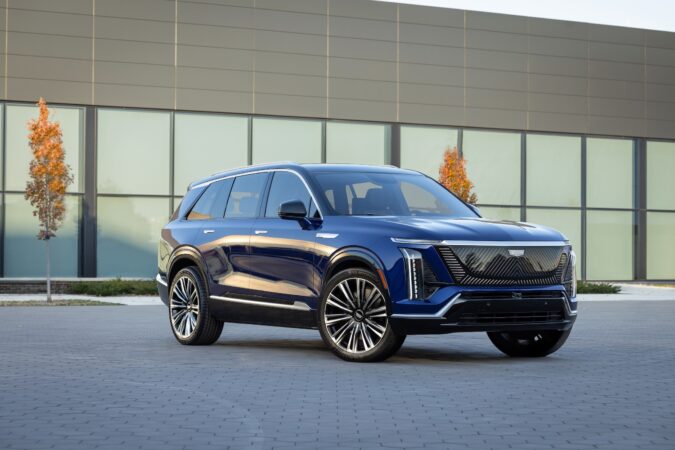
2026 BMW iX xDrive45 vs. 2026 Cadillac Vistiq Platinum: A lot for a lot?
This week: 2026 Cadillac Vistiq
Price: $99,915 as tested. Red paint was the only upgrade.
What others are saying: “Highs: Cabin teeming with luxury details, smooth ride, nimbler than its size suggests. Lows: Uncommunicative steering, pricey top trims, shoddy main display control dial,” says Car and Driver.
What Cadillac is saying: “Luxury for your life.”
Reality: I guess if I had $100K I could pay someone to lie on the front seat trying to find the features I need.
What’s new: The whole thing. Here’s a three-row Cadillac SUV powered by the plug.
Competition: In addition to the iX, there are the Genesis Electrified GV70, Lexus RZ, Mercedes-Benz EQE, Tesla Model X, and Volvo EX90.
Up to speed: The Vistiq is in the class of premium EVs that really roars ahead when you press the accelerator.
The dual-motor SUV creates 615 horsepower, and gets to 60 mph in 3.6 seconds, according to Car and Driver.
You will have no issues pulling into traffic or passing in this SUV.
You’ll also save a lot over the iX, which requires an upgrade to match that acceleration. The price-matched iX took a full second more to get to 60.
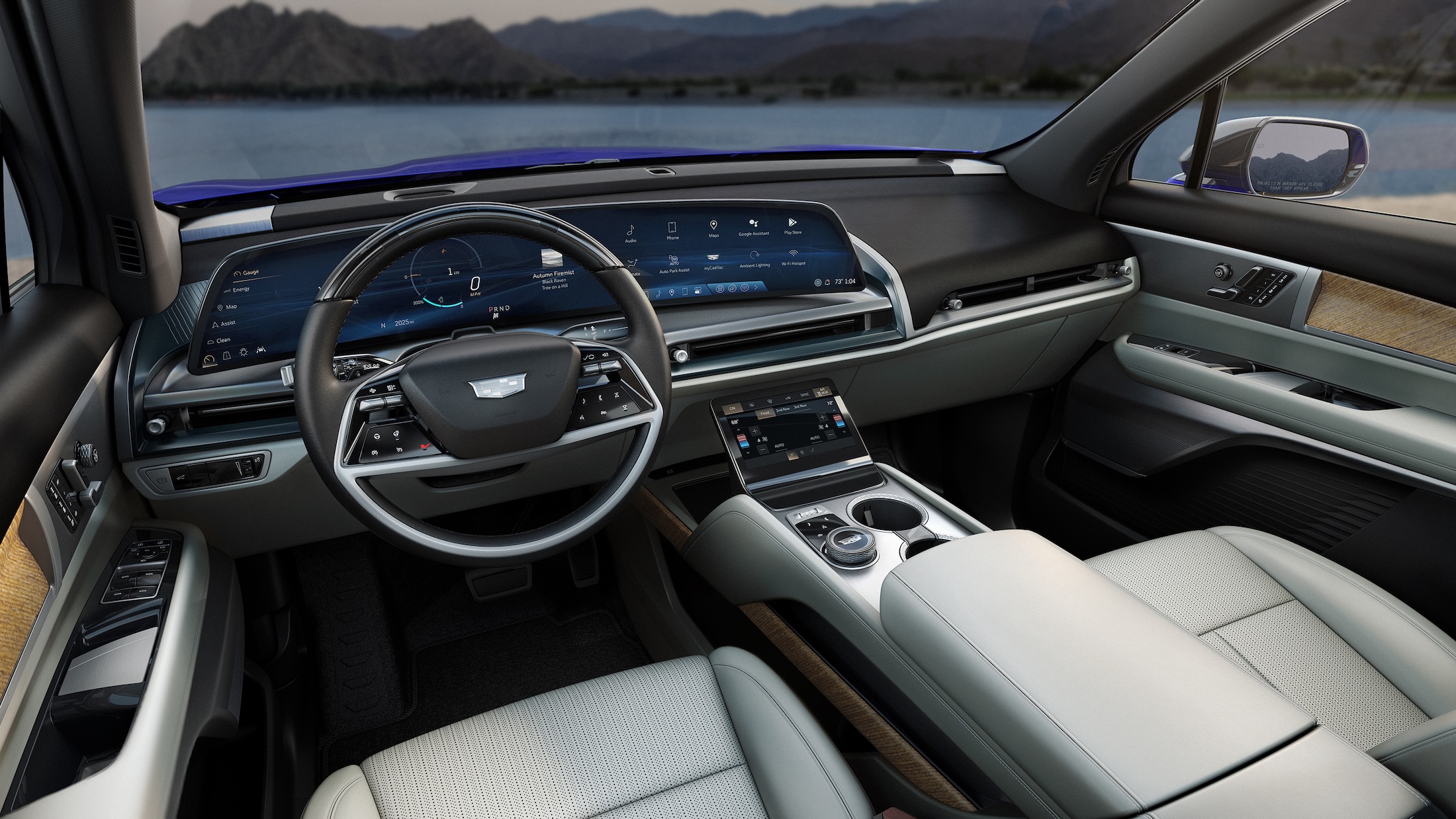
Shiftless: The shift lever is on the steering column, where General Motors is putting most of them these days. Pull and lift to back up and pull and lower to move ahead.
On the road: The all-wheel-drive Vistiq handles quite well for a large SUV. It’s wide and it took me a minute to get used to that, but once I did, I could tell where the vehicle was in the lane, or in the parking space — which I find is often the hardest piece to figure out.
The vehicle modes are handled through the touchscreen; swipe to the right, choose drive modes, and pick what you like. Sport mode is best for performance, and Snow and Ice did a nice job during a heavy snowstorm and subsequent frigid days.
One big complaint — if you’re not going to put the controls on an easily grabbed dial, have them keep the previous setting, rather than default to Touring (which I never wanted). So many times I was tooling along on questionable road surfaces and then realized, “Dang! I’m not in snow mode.”
The interior of the 2026 Cadillac Vistiq has the look and feel of a Cadillac, but diminishes with each row.
Driver’s Seat: The command center is comfortable and Cadillacky. The seats are a little on the firm side, and I can’t say I spent enough time to see how long trips go, but they weren’t bad. (Some seats can be so firm as to make me angry in an instant.)
Friends and stuff: Sadly, the seats offer noticeably diminishing returns as you head farther back. The middle row is smallish and awkward and feels like some minivan seats from 1998. The rear row offers scant legroom, although there is some room for feet under the seats and good headroom. But the vehicle is kind of short for three rows, especially for a Cadillac.
Cargo space is 15.2 cubic feet in the back, 43 with the third row folded, and 80.2 cubic feet with both rows folded.
Play some tunes: Cadillac wants to dazzle with its 33-inch screen, but it appears the company has become hyperfocused on it, to the detriment of other features.
It took a couple searches and finally lying on the Driver’s Seat and peering into the recesses behind the console to find the USB-C outlets. I know I should be cool and get a phone I can lay on a charger, but why put these in here at all? This just seems snotty. Like they’re saying, “Haha, loser! Get a real phone!”
The connection ports never seemed to want to turn on the music system, either. Bluetooth is usually fine, except that the connection just randomly cut out on about half my trips. The only way to restore it was to shut down the Vistiq and restart it.
Sound from the 23-speaker AKG system with Dolby is less than you’d expect, about an A-.
General Motors would have done well to keep Apple CarPlay access. There’s no dedicated map program, just Google Maps and Waze, and neither looks as refined as a Cadillac screen should.
There’s a dial control with buttons as well, but the system is so bare-bones that I don’t see how that would help.
Night shift: The first time I drove the Vistiq I had to keep the maps turned off. Both programs feature bright white backgrounds, and they did not automatically adjust for the darkness outside and prevented me from seeing the road.
After another few minutes spent on my stomach trying to find controls, I noticed the old-fashioned light dimmer roller switch to the left of the steering wheel. That dimmed the whole dashboard, but not so badly that I couldn’t see. Still, you’d think this would adjust without me having to do anything, like it does in the Lovely Mrs. Passenger Seat’s Kia Soul, for about one-fourth the price.
Keeping warm and cool: HVAC controls get a separate touchscreen. They’re pretty but a little fussy and hard to adjust at a glance.
Range: The Vistiq advertises a 300-mile range, a match for most of the iX models available. It charges up to 80 miles in 20 minutes, which is no match for some of the best out there (Genesis, Hyundai, and Kia.)
Where it’s built: Spring Hill, Tenn. 43% of parts come from the U.S. and Canada; 18% from China; and 17% South Korea.
How it’s built: Consumer Reports predicts the Vistiq reliability to be a 2 out of 5.
In the end: It feels like Cadillac is giving up. No snazzy map program — when they used to have one of the most attractive options. No CarPlay. No drive mode switch, just use the touchscreen, which has a home screen that looks nice in photos but in person screams Windows 95. Critical items hidden like Easter eggs in a Jeep. It’s a shame, because there’s a nice vehicle here.
The iX is far from perfect, but I’d pick it over this. But among all the competitors, it’s GV70 all the way, even despite 10% less range.