Tag: World Cup

  • VAR time limits, tournament expansion, and more were the topics tackled ahead of Friday’s FIFA World Cup draw

    VAR time limits, tournament expansion, and more were the topics tackled ahead of Friday’s FIFA World Cup draw

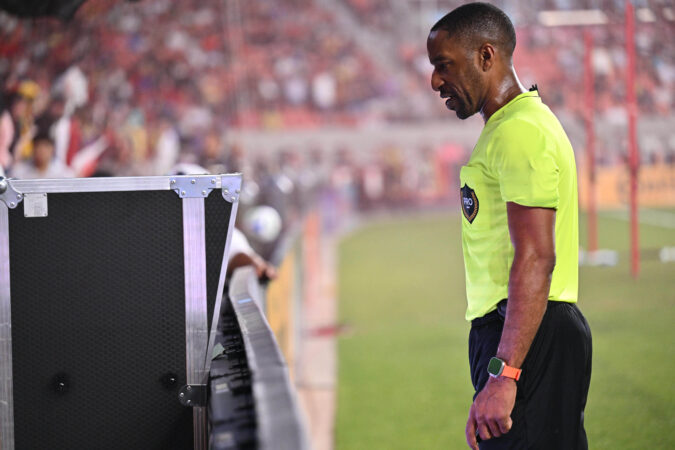
    WASHINGTON — Whether fans like video reviews in soccer or not, they tend to draw complaints when those reviews seem to take too long.

    It might seem natural to want a time limit for those reviews, perhaps one or two minutes. The sport’s global governing body is saying no, though, at least for now.

    “Well, there might be different opinions, which I will respect,” FIFA’s refereeing chief Pierluigi Collina said Thursday at a media briefing ahead of Friday’s 2026 men’s World Cup draw. “Certainly, when something lasts a bit longer, it’s not because the referee is, say, lazy or slow. Probably, things which are considered are particularly complicated.’”

    A game referee from 1995 to 2005, including the 2002 men’s World Cup final, Collina took his new role with FIFA in 2017 and has remained a public figure ever since.
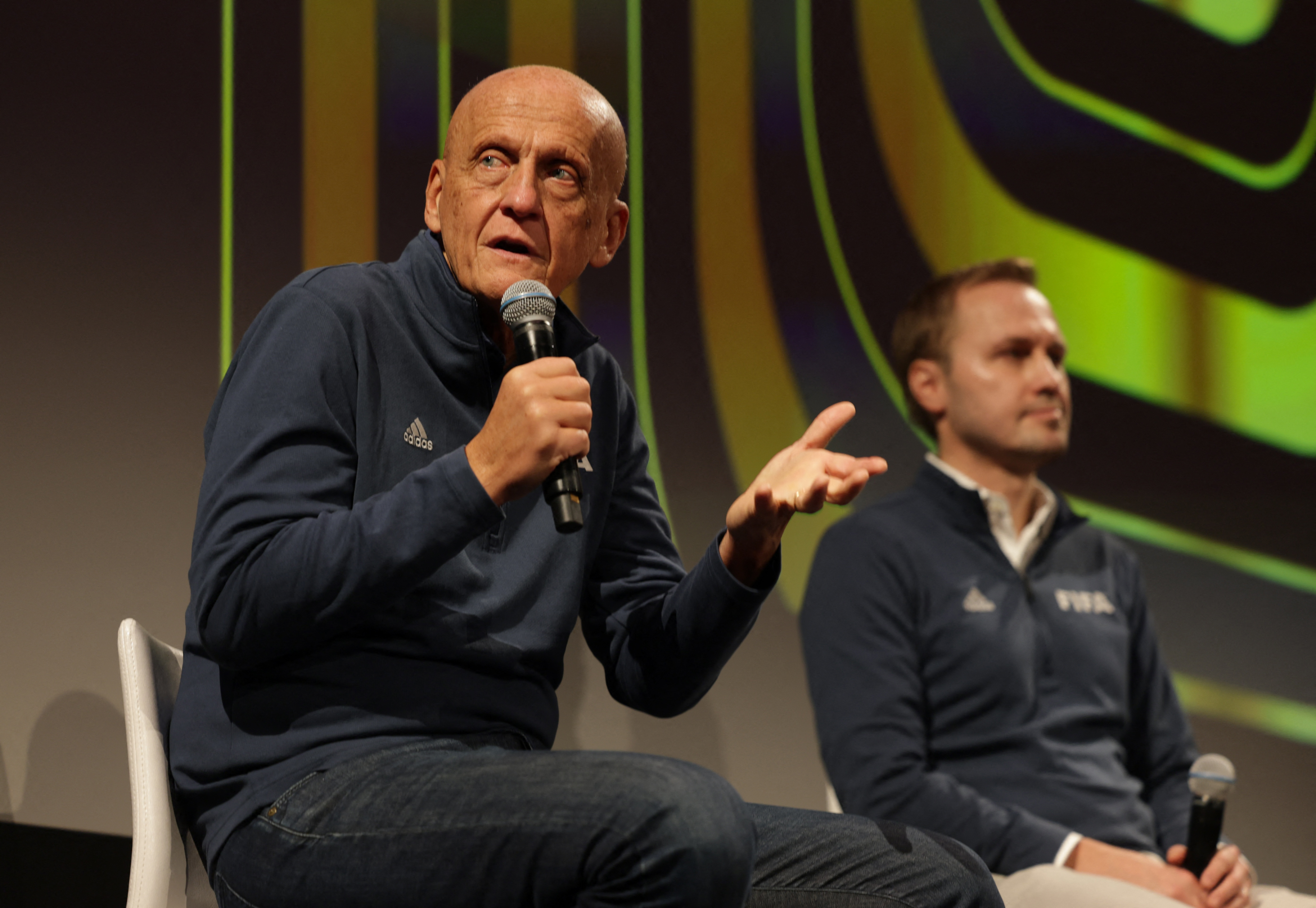
    Pierluigi Collina (left) speaking at Thursday’s event.

    “Something else to consider is when you are waiting for someone, every second looks like an eternity — when you are under pressure and you are doing something, time flies,” he said. “So, referees, when they are doing that, probably they do not really realize that time is passing for them so quickly. But, we all know that timing is an issue in every activity, so we are always trying to improve.”

    Collina acknowledged a report by the Times of London earlier this week that the International Football Association Board — the entity that sets the rules of how soccer is played — is considering expanding what VAR is allowed to rule on.

    The expansion would include second yellow cards, which result in red cards and expulsion; and whether officials got it right calling a corner kick vs. a goal kick.

    “It was already announced after a meeting of the IFAB football and technical advisory panel: the discussion took place, and the outcome was to propose to further discuss and propose” at the IFAB’s next business meeting on Jan. 20, Collina said. If a proposal passes there, it will go to the annual general meeting in March. That vote would be for implementation on June 1, in time for the World Cup.
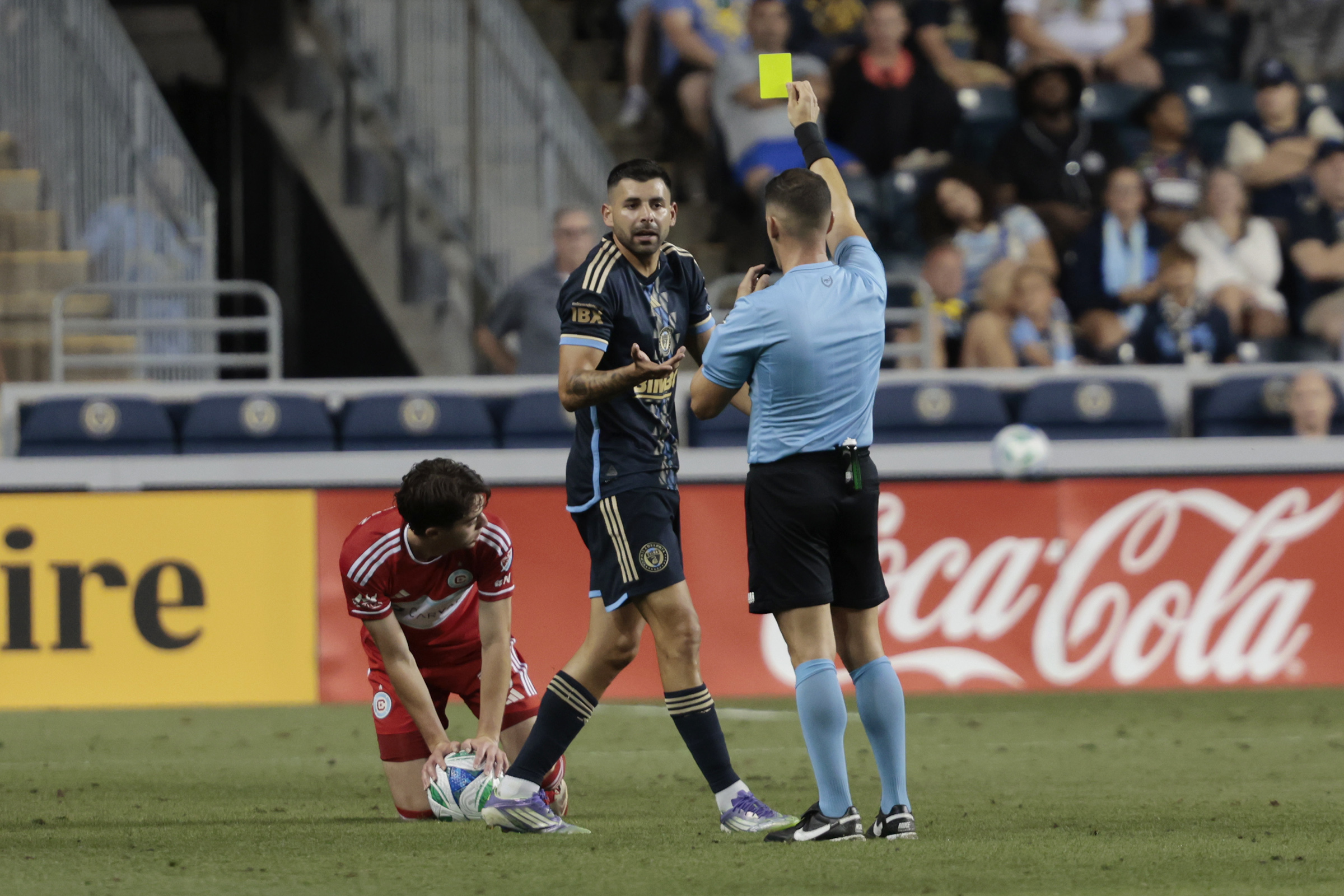
    Under the current rules, a straight red card is reviewable, but a second yellow card that results in expulsion is not reviewable.

    “Certainly, extending the possibility of the VAR to intervene in some specific circumstances is something [on] the table,” Collina said, adding: “It would be a pity if the result of the competition, whichever the competition is, is decided not by what the players do on the field playing, but by a honest mistake made by the decision-maker.”

    Specific to corner kicks calls, he said “that the main criteria is no delay” in the action on the field.

    “It takes normally, how long? 10, 15 seconds to get the attackers ready to take the corner kick,” Collina said. “In these 10-15 seconds, if the corner kick was wrongly given, everybody has the evidence that the start of play is wrong. To me, it’s difficult to understand if they have the possibility to see that, why we have to hide our head under the sand and hope that nothing happened on the corner kick which is taken.”

    Collina also said that FIFA hopes to use referee bodycams again next summer, after debuting them in the Club World Cup.

    “It was, I would say, a great success,” he said. “It has been implemented in some leagues, [which] means that it was well-received by the TV viewers — also, referees got some benefit from using that. So, pretty confident that the rule-maker, as mentioned, IFAB, will give us the permission to to implement it during the next World Cup [in] ’26.”
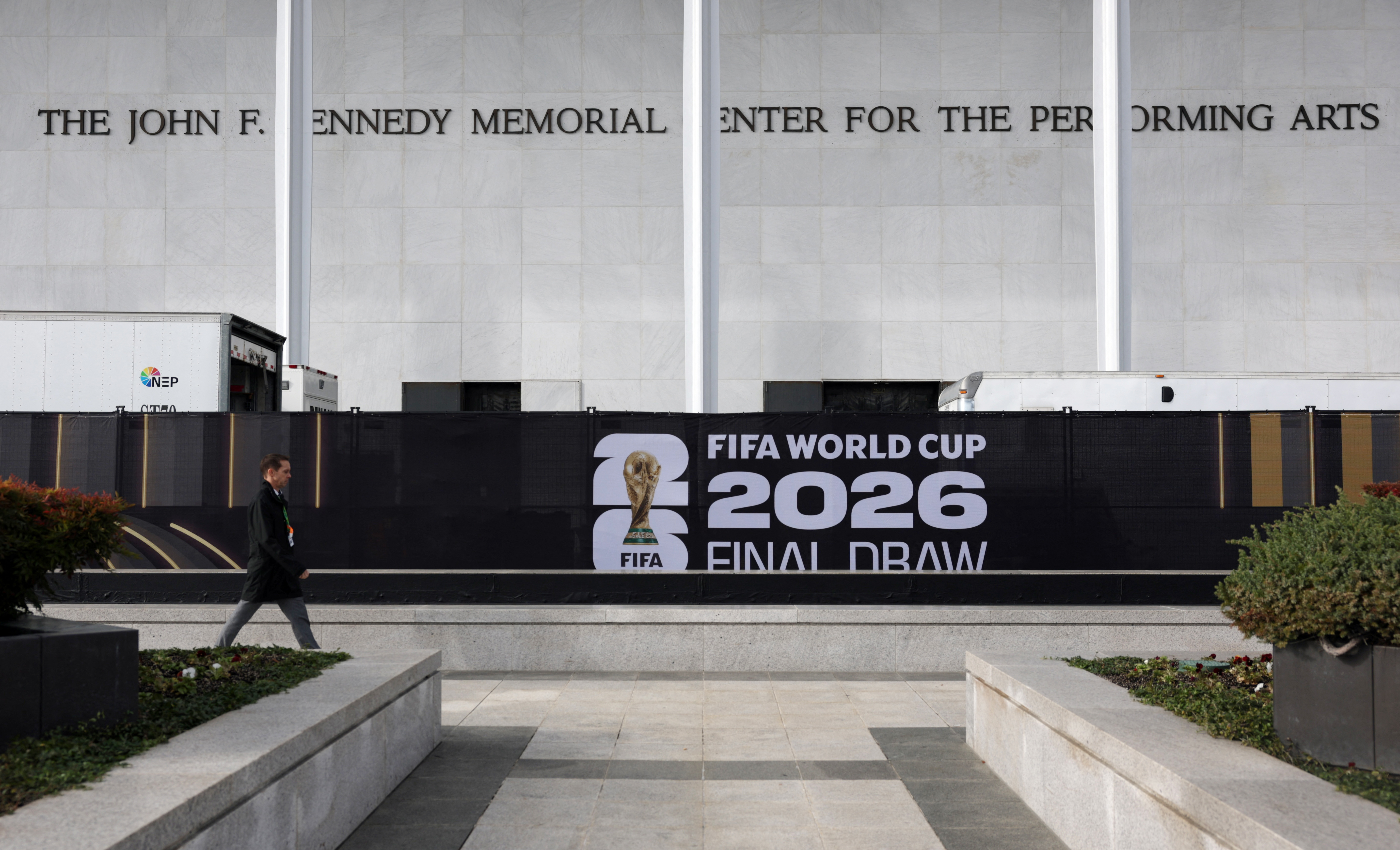
    Preparations at the Kennedy Center in Washington for Friday’s event.

    FIFA defends expanding the World Cup to 48 teams

    It was no surprise to hear FIFA officials say Thursday that it’s a good thing to expand the men’s World Cup to 48 teams, as will happen for the first time next year. The women’s tournament will follow suit in 2031 when the U.S. spearheads a regional tournament alongside Mexico, Costa Rica, and Jamaica.

    But the way those officials framed it nonetheless was news, especially for the international media outlets that have traveled to D.C. this week.

    “It’s less than 25% of the 211 countries who are affiliated to FIFA,” said Arsène Wenger, FIFA’s chief of global football development and the famed former manager of English Premier League club Arsenal. “Still, 75% of the teams are not there, and I count in there China, India — that’s 3 billion people.”

    FIFA’s chief football officer Jill Ellis, the former U.S. women’s national team manager, noted how the growth of women’s soccer worldwide has made it easier to have a 48-team tournament without fear of lopsided games.

    “We see it in the in the college basketball landscape right here in the U.S.,” said the coach who led the U.S. women to World Cup titles in 2015 and 2019. “We’re used to these teams that are maybe lower-ranked and then they suddenly have this phenomenal run.”

    Jill Ellis (left) and Arsène Wenger (right) on stage Thursday.

    Will weather be an issue again?

    The hot temperatures at this summer’s Club World Cup understandably raised a lot of complaints, and fears of more problems next summer. Wenger raised that unprompted.

    FIFA hasn’t said much yet about if it will take weather into consideration for kickoff times, beyond one hint from president Gianni Infantino in July that it would be a good idea.

    “If there’s one uncertainty that we don’t master, it’s the weather,” Wenger said. “Especially in Miami, you know, places like Atlanta, where you had some problems last year. So we’ll do the maximum to protect the competition and the players.”

    He also said “we will consider a lot the best possibilities for the teams to be protected from heat” as FIFA finalizes the kickoff times before Saturday’s announcement. But skeptical fans worldwide won’t believe that until they see it.

    Temperatures were in the 90s during many Club World Cup games this past summer.
  • The best and worst World Cup opponents for the USMNT, and the teams Philly should want to host

    The best and worst World Cup opponents for the USMNT, and the teams Philly should want to host

    WASHINGTON — At some point between noon and 2 p.m. on Friday, the World Cup group draw will tell us which teams the United States will play in next year’s tournament. We’ll also get the first hints of which teams will come to Philadelphia, although the schedule won’t be set until Saturday.

    Along the way, there will be jokes from Kevin Hart, singing from Andrea Bocelli, and appearances from Tom Brady, Wayne Gretzky, Shaquille O’Neal, and Aaron Judge. President Donald Trump also will be involved, having steered FIFA to move the event from Las Vegas to the Kennedy Center in D.C.

    Not only was FIFA president Gianni Infantino happy to oblige his friend, but the global governing body added the Village People (of Trump favorite “Y.M.C.A.” fame) to the list of performers.

    But somewhere amid all that, there will be sports, too. Tournament draws weren’t always as much of a spectacle, but they’ve always been a dramatic part of soccer’s tapestry.

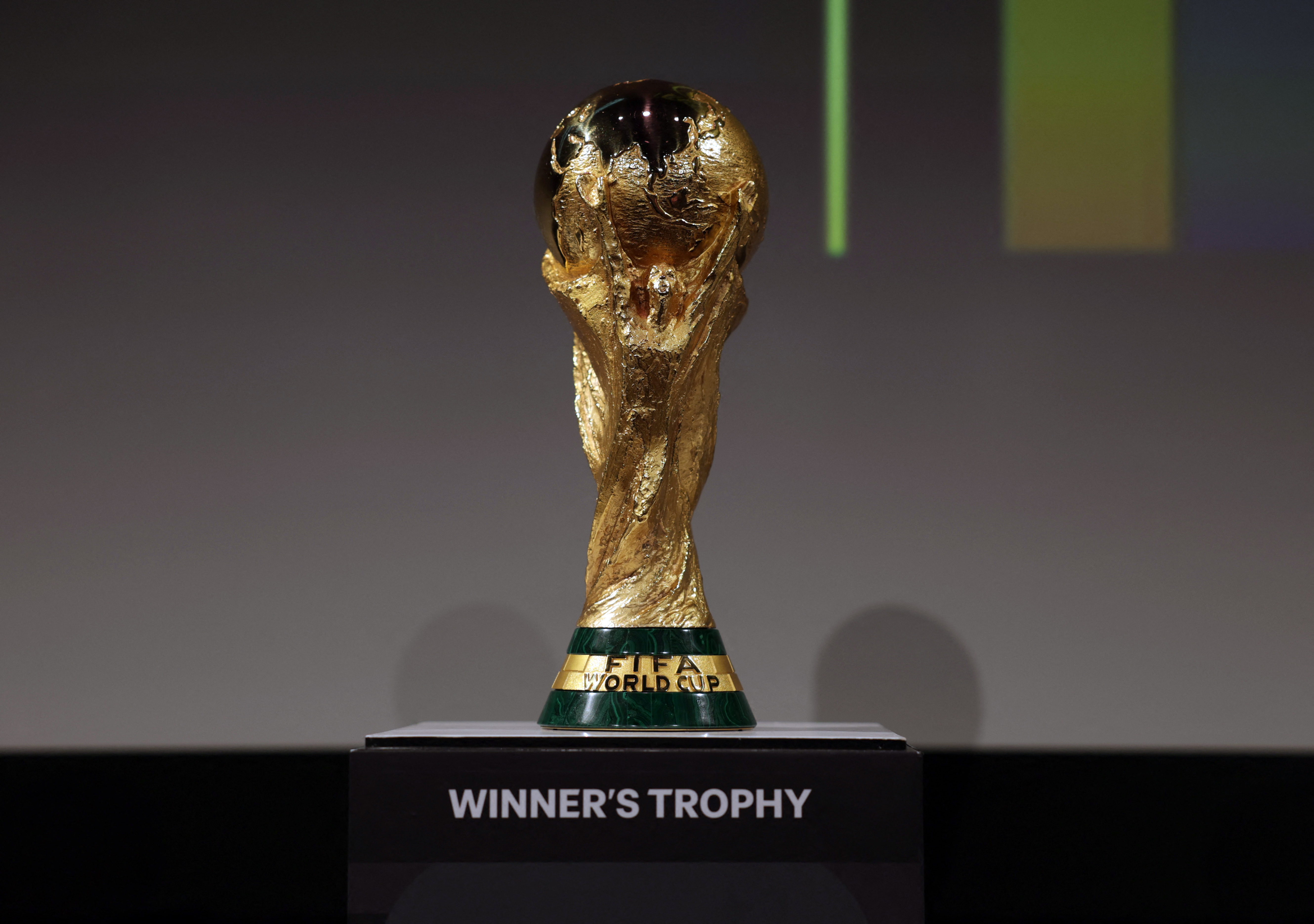
    The men’s World Cup trophy on display Wednesday at the Kennedy Center in Washington, where the draw will take place Friday.

    Once the pots of seeds were set last month — four groups of 12 each, with the cohosts and the top nine teams in FIFA’s rankings in Pot 1 — the speculation began worldwide. How about England vs. Scotland, or the Republic of Ireland, Wales, or Northern Ireland if they get through Europe’s last qualifying playoffs?

    How about a Spain-Morocco rematch of a 2022 World Cup epic? If Italy gets through the playoffs, which teams will it face in its first men’s World Cup in 12 years? And what powerhouses will underdogs like Haiti, with the Union’s Danley Jean Jacques, get to challenge?

    Then, of course, there are matchups that resonate off the field. For all the efforts to keep sports and politics separate, soccer has always been the most political sport. So will the U.S. play Iran for a second straight men’s World Cup, and a third overall? There are sparks already, as Iran has boycotted the draw, since some of its delegates were refused visas.

    As you wonder, here are three rules to consider. First, teams from the same continent can’t be drawn in the same group except for Europe, which has 16 berths in the first 48-team World Cup. There must be one European team in each group, and there can’t be more than two.

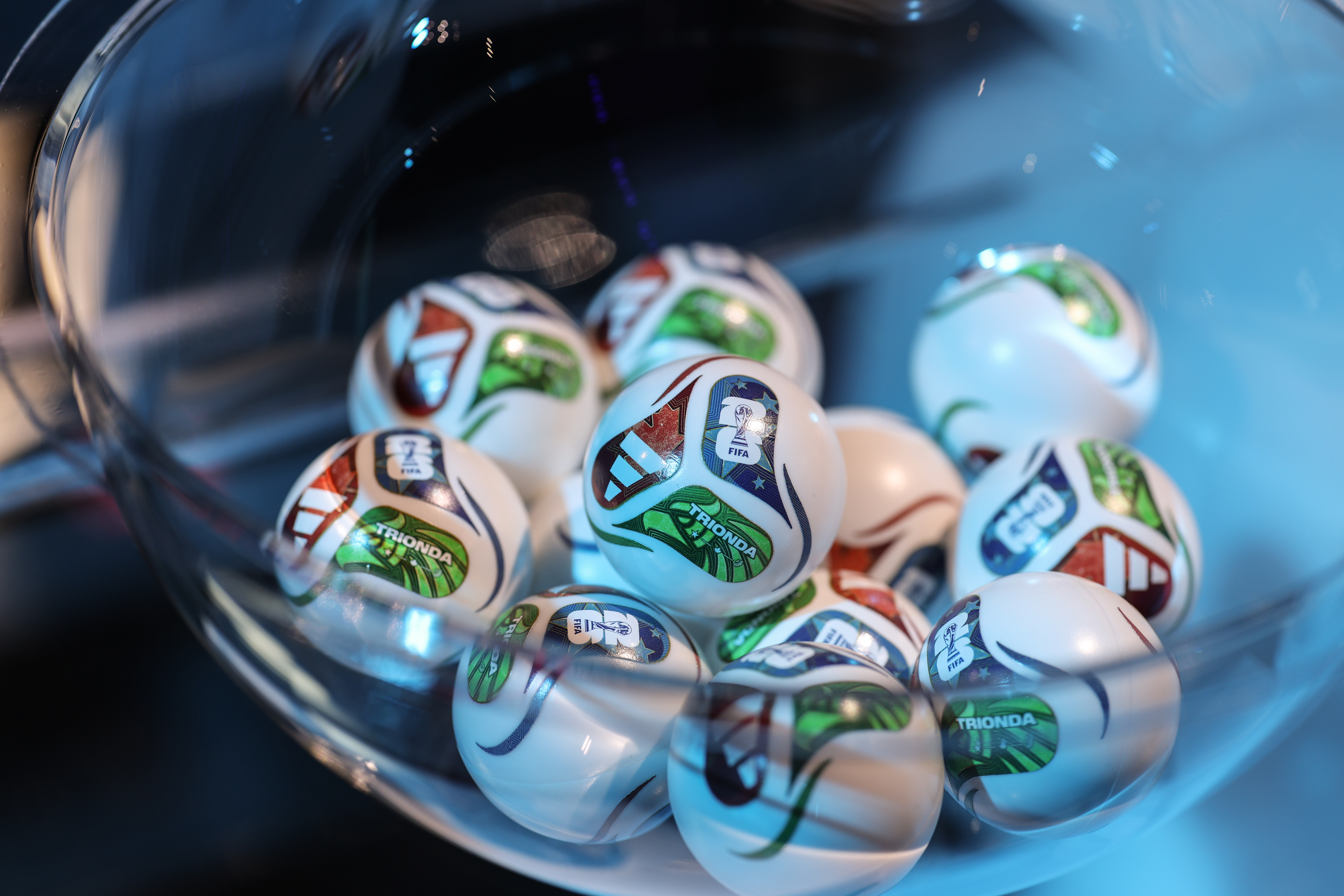
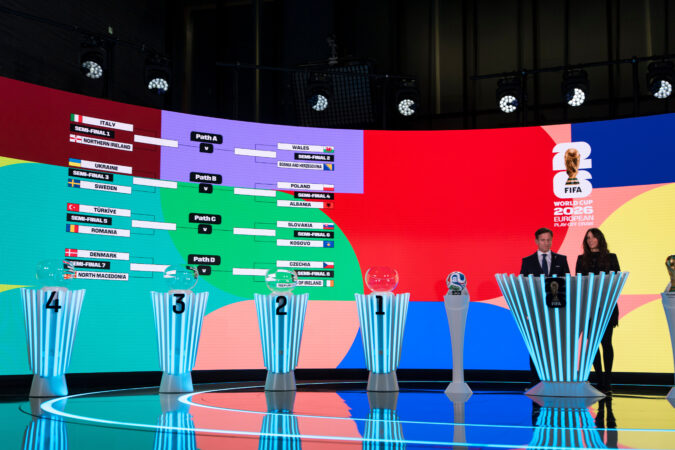
    The famous draw balls in one of the bowls on stage, waiting to be picked up.

    With that in mind, here are our picks for the easiest, hardest, most festive, and most politically controversial groups that the U.S. could end up in:

    The picks

    The easiest group: Austria, South Africa, Jordan. There are lower-ranked European teams in the playoffs than No. 24 Austria, but the case here is about the opponent you know vs. the opponent you don’t.

    Since Austria is in Pot 2, drawing that country would spare the U.S. from big hitters like Croatia, Colombia, Morocco, and Japan. From there, South Africa would give the U.S. a better tactical matchup than the rest of Pot 3, whose teams span Europe, Africa, South America, Asia, and Concacaf.

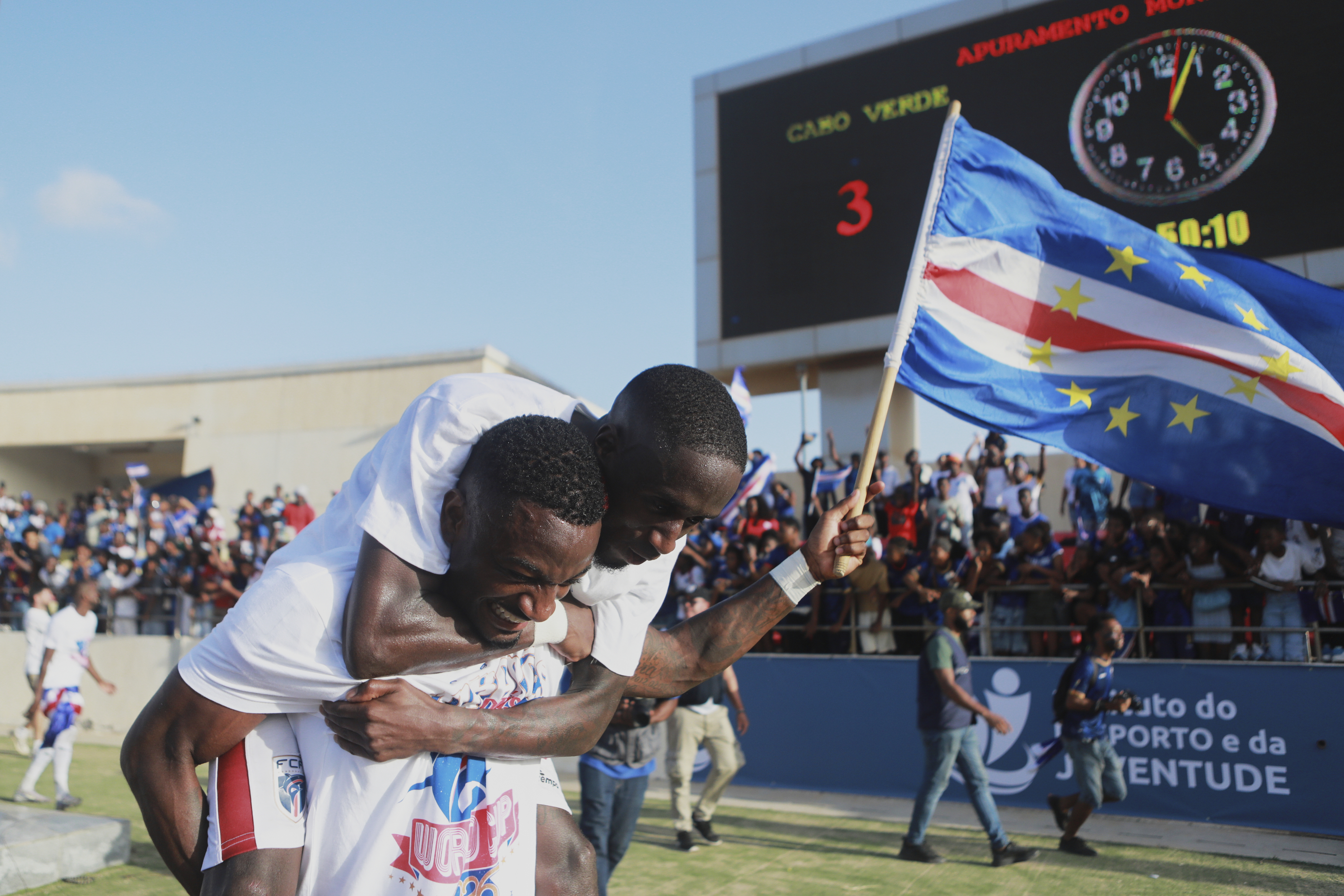
    Having picked South Africa from Pot 3, all the African teams in Pot 4 are off the table. So we’ll go to Asia for Jordan, a World Cup debutant ranked No. 66. And we’ll wish Cape Verde, with former Union midfielder Jamiro Monteiro in a starring role, all the best.

    Former Union midfielder Jamiro Monteiro (right) helped Cape Verde qualify for its first World Cup.

    The hardest group: Morocco, Norway, Italy if it qualifies. Morocco edges Croatia and Colombia from Pot 2 for talent — led by Paris Saint-Germain’s Achraf Hakimi — and a vibrant, gritty playing style.

    In Pot 3, Norway has finally delivered Manchester City superstar striker Erling Haaland to his first World Cup, along with outstanding Arsenal playmaker Martin Ødegaard.

    In Pot 4, we turn to the European playoffs. Italy never needs much introduction, though it bears repeating that the Azzuri truly blew it in failing to reach the 2018 and 2022 World Cups. The current squad features goalkeeper Gianluigi Donnarumma and midfield generals Nicolò Barella and Manuel Locatelli.

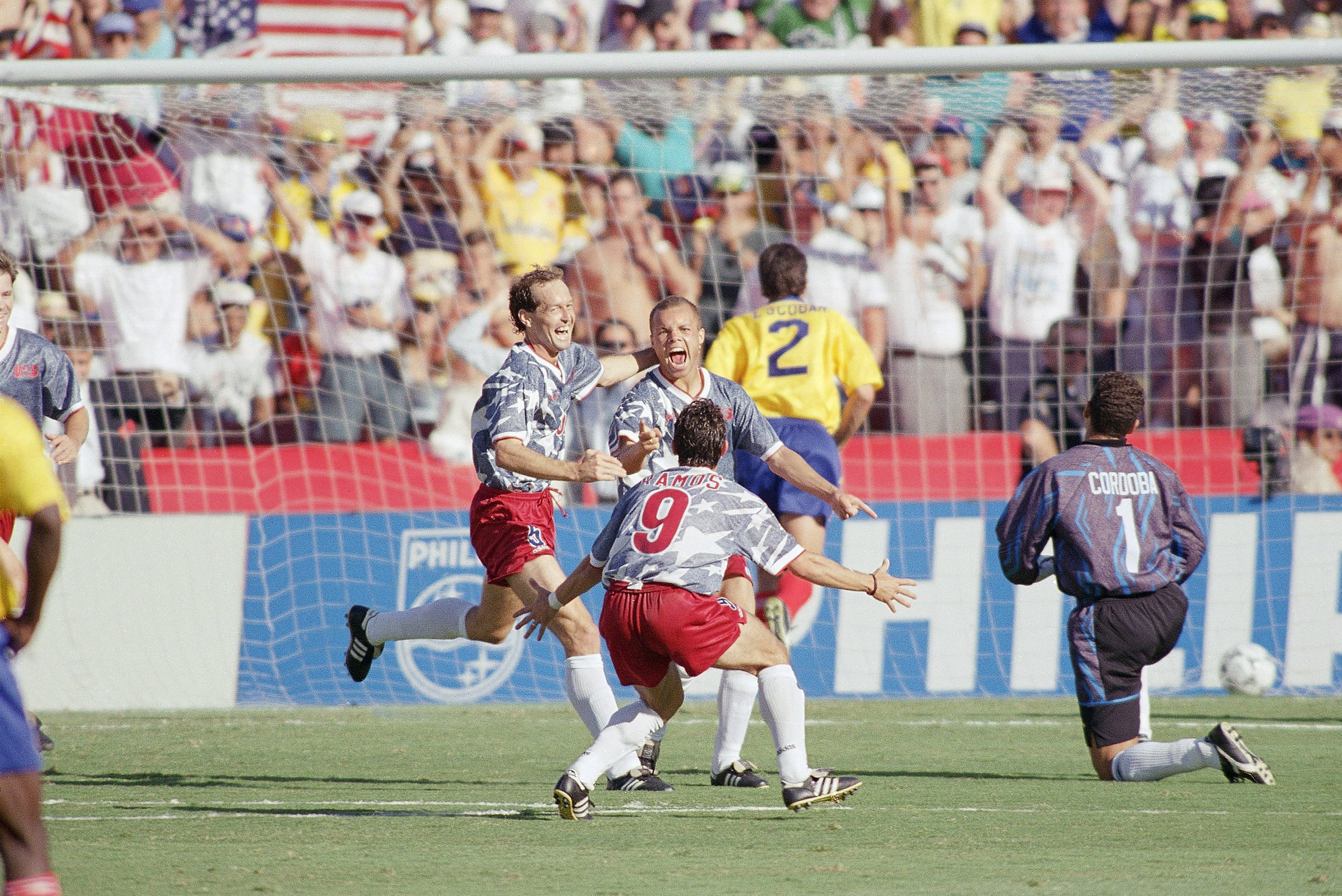
    The most festive group: Colombia, Scotland, Republic of Ireland. A U.S.-Colombia game would be a headache for the American squad but would bring back epic memories of the 1994 upset at the Rose Bowl. The Cafeteros’ fan base is also as good as it gets in South America, especially with the country’s big immigrant population in this country.

    Former Union sporting director Earnie Stewart (center) scored in the United States’ upset of Colombia at the 1994 World Cup.

    Scotland and Ireland’s fan bases are massive, loud, and fun-loving. The Scots are in a men’s World Cup for the first time since 1998, and the Tartan Army will travel in huge numbers — buoyed by expats here and anyone who wants to feel the part for a day.

    The same goes for Ireland if it gets through a tricky qualifying playoff with Czechia, North Macedonia, and favorite Denmark. But if the Irish make their first World Cup since 2002, the sea of green will flood the States. New Jersey’s Meadowlands still echo with the raucous noise of the 1994 Ireland-Italy game.

    The most political group: Iran, South Africa, Ukraine if it qualifies. A combustible mix of war, immigration, race, and religion that spans as widely as three continents.

    The teams Philadelphia fans should want

    As the city saw up close during the Club World Cup this summer, there’s no party in soccer like a South American party. Argentina, Brazil, and Colombia have the continent’s biggest fan bases in the U.S., and the first two would bring global superstars in Lionel Messi or Real Madrid’s Vinícius Júnior.

    Philly fans got to know Brazil’s new phenom, 18-year-old Estêvão, when he scored for Palmeiras against Chelsea in the Club World Cup at Lincoln Financial Field — then joined the Blues a few weeks later.

    It’s already set that the U.S. won’t play in the nation’s birthplace during the group stage, to the dismay of fans here and well beyond. But from the rest of Pot 1, France would bring the most star power from Europe, and the Netherlands‘ dancing masses would paint the town oranje.

    Germany would also be very welcome in a city with proud and deep German roots.

    In Pot 2, no player is more worth watching than Croatia’s Luka Modrić. Even at age 40, his passing skills are unparalleled as he heads into his last World Cup. Japan, South Korea, and Morocco have vibrant fan bases, and the latter two have big expat communities in this part of the U.S.

    In Pot 3, Scotland easily is the team you’d want most — and that every hotel, bar, and restaurant would dream of. Egypt would bring another superstar in Liverpool’s Mohamed Salah.

    Pot 4 is where the Union ties are. It would be special for Jean Jacques to play in his club hometown with Haiti or for Monteiro to come back to town with Cape Verde’s Blue Sharks.

    The biggest of all on that scale would be if Jamaica gets through the intercontinental qualifying playoffs to earn its first men’s World Cup trip since 1998, finally delivering Andre Blake to a stage he deserves. And the turnout from Jamaican fans would be epic, in a city they love coming to for the Penn Relays.

    Among the European playoff contenders, the Republic of Ireland would be a huge deal here. But ever since the day three years ago when Philly was named as a host city, the first name on everyone’s lips has been Italy. Imagine how electric it would be if the Azzuri’s World Cup drought ends at the Linc.

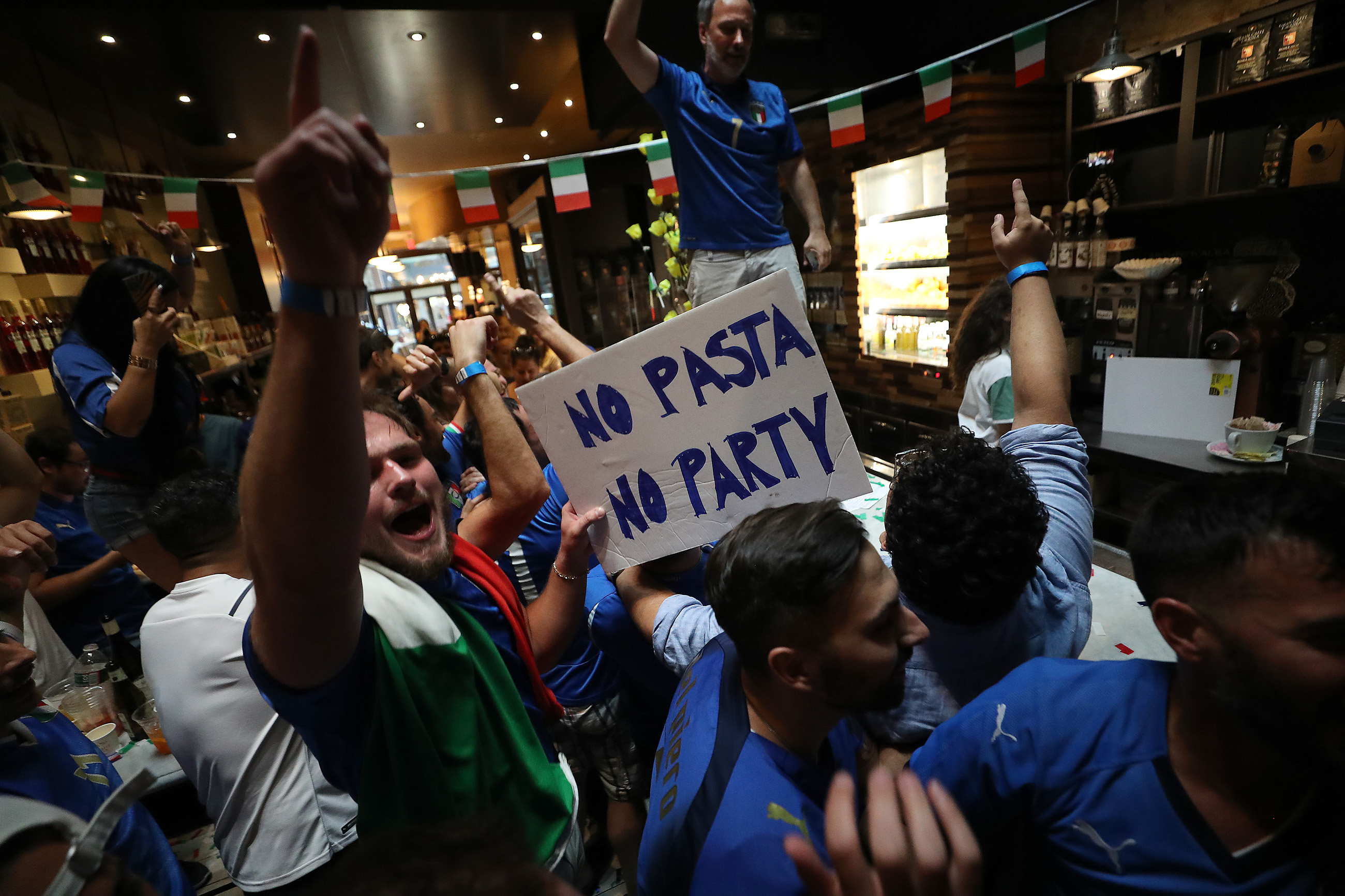
    The scene at Gran Caffe L’Aquila in Center City when Italy won the European Championship in 2021.

    You might have noticed one big team hasn’t been mentioned here yet: England. The Three Lions would bring a huge amount of fans, star players, and media attention to town. But to come to the city where America declared independence from them, 250 years later?

    Ask around locally, and you’d find a fair number who’d say no thanks. They’d dreamed for years of a U.S.-England game on July 4, until the preset part of the draw path took the possibility away. It would feel strange if England uses the old colonial capital as the launchpad to fulfill the hype as one of the favorites to win it all.

  • Joint city-Parking Authority proposal to reopen Filbert Street bus station advances in Council

    Joint city-Parking Authority proposal to reopen Filbert Street bus station advances in Council

    The Philadelphia Parking Authority would renovate and run the abandoned Greyhound bus terminal on Filbert Street under legislation approved Wednesday by a key City Council committee.

    It was a step toward ending a two-year civic struggle to find a site for long-distance buses and their passengers. The renovated station could be ready for a series of big national and international events expected to draw millions of visitors next year.

    “A lot of people are going to be coming here for the first time, and when they’re in that station, they’re going to get their first taste of Philadelphia — and we want to make sure it’s a good one,” said Councilmember Mike Driscoll, who sponsored the bill on behalf of the Parker administration.

    The city will host events in 2026 for the 250th anniversary of the Declaration of Independence, as well as FIFA World Cup soccer matches and the Major League Baseball All-Star Game, among others.

    Greyhound ran the terminal at 10th and Filbert Streets for more than three decades but ended its lease in June 2023 when the business model of its parent company, Flixbus, called for divesting from real estate and moving toward cheaper curbside service in many U.S. cities.

    Since November 2023, customers of Greyhound, Peter Pan, and other interstate bus carriers wait, board, and arrive at curbside along Spring Garden Street in Northern Liberties — with no shelter from the weather and few amenities. It also has proved a nuisance to nearby businesses.

    Before that, the buses operated at curbside on Market Street between Sixth and Seventh Streets.

    PPA has a 10-year lease agreement with the property’s owner, 1001-1025 West Filbert Street LLC, with an option to extend it.

    The city senses that over the long term the owner anticipates selling the property, said Michael Carroll, assistant managing director for the Philadelphia Office of Transportation and Infrastructure Systems.

    “That’s the sweet spot, long enough that there’s a meaningful basis to invest in improvements and solve the problems,” Carroll told the committee.

    “At the 10-year mark, decisions will have to be made about whether this is a site that forever works best in Philadelphia, or whether there’s a better site,” he said.

    The unanimous Finance Committee vote came after it amended the measure to adjust the fees bus companies would be charged to stop in Philadelphia.

    Each stop in the city would cost $40 until the bus terminal is open, when it would move to a $65 fee. A smaller number of buses subsidized by the Pennsylvania Department of Transportation under a program to provide rural service would pay $16 a stop.

    Committee members also asked for suspension of a procedural rule so that all 17 lawmakers could consider the bill Thursday and clear the way for final passage before the holidays.

    In the agreement with the city that is part of the bill, PPA would run the terminal; assess the fees on bus carriers for the use of the facility and any street loading zones, such as those in University City; and handle enforcement.

    The Filbert Street proposal includes specific requirements designed to address concerns particular to Chinatown.

    For instance, the streets department would change traffic patterns so buses are routed to the station via Market Street instead of driving through the heart of the neighborhood as they did in the past.

    John Mondlak, first deputy and chief of staff of the city planning department, said that the through traffic had long been a chief complaint of residents and business owners in Chinatown.

    This story has been updated to include the name of the firm that owns the former Greyhound station.

  • International fans with World Cup tickets arriving in the U.S. next summer can apply for a priority visa. Here’s how.

    International fans with World Cup tickets arriving in the U.S. next summer can apply for a priority visa. Here’s how.

    Editor’s note: The headline in this story was updated to reflect that international ticketholders will have priority access to apply for a visa, not receive one.

    Ticket holders for the 2026 FIFA World Cup who plan to travel internationally into the U.S. next summer will have priority access to interview appointments for travel visas.

    On Monday, FIFA and the U.S. Department of State announced that international fans who bought tickets to any of the 78 matches hosted in 11 U.S. cities, including Philadelphia, will be eligible for the FIFA Priority Appointment Scheduling System, or FIFA PASS, which allows each ticket holder to obtain a prioritized visa interview for a B-2 visa.

    Here’s what it is, how it works, and why the State Department is looking to make World Cup travel to America a priority.

    President Donald Trump holds the FIFA World Cup trophy alongside FIFA president Gianni Infantino on Monday.

    What is FIFA PASS?

    The U.S. is co-hosting the world’s largest soccer tournament alongside Canada and Mexico, with the final scheduled to take place at MetLife Stadium on July 19.

    The FIFA PASS is expected to expedite visa processing for international travelers seeking to enter the U.S. for the international tournament next summer.

    Typically, wait times for an interview at U.S. embassies in countries where a B-2 tourist visa is required range from less than a month to 16½ months.

    How many matches will be in Philadelphia?

    Philadelphia will host six matches at Lincoln Financial Field in June and July, including a Round of 16 match on July 4.

    The FIFA World Cup 2026 Volunteer Center at the Fashion District is said to have over 3,000 Philadelphia-based volunteers.

    How do people apply?

    Many of the nations already qualified for next summer’s World Cup are listed under the U.S. Visa Waiver Program, including Japan, Australia, France, South Korea, England, and Germany, among others.

    However, many qualified nations are not included on the list of waiver countries. All six CONMEBOL qualifiers from the South American federation are excluded from the list, as are the nine qualifying countries from the Confederation of African Football. Fans from these nations will need to obtain a visa to cheer on their teams in the U.S.

    Travelers from countries included in the Visa Waiver Program can travel to the U.S. as tourists or on business for 90 days or less without obtaining a visa. Travelers from nations included in the waiver program must have a valid Electronic System for Travel Authorization approval before departing their home countries.

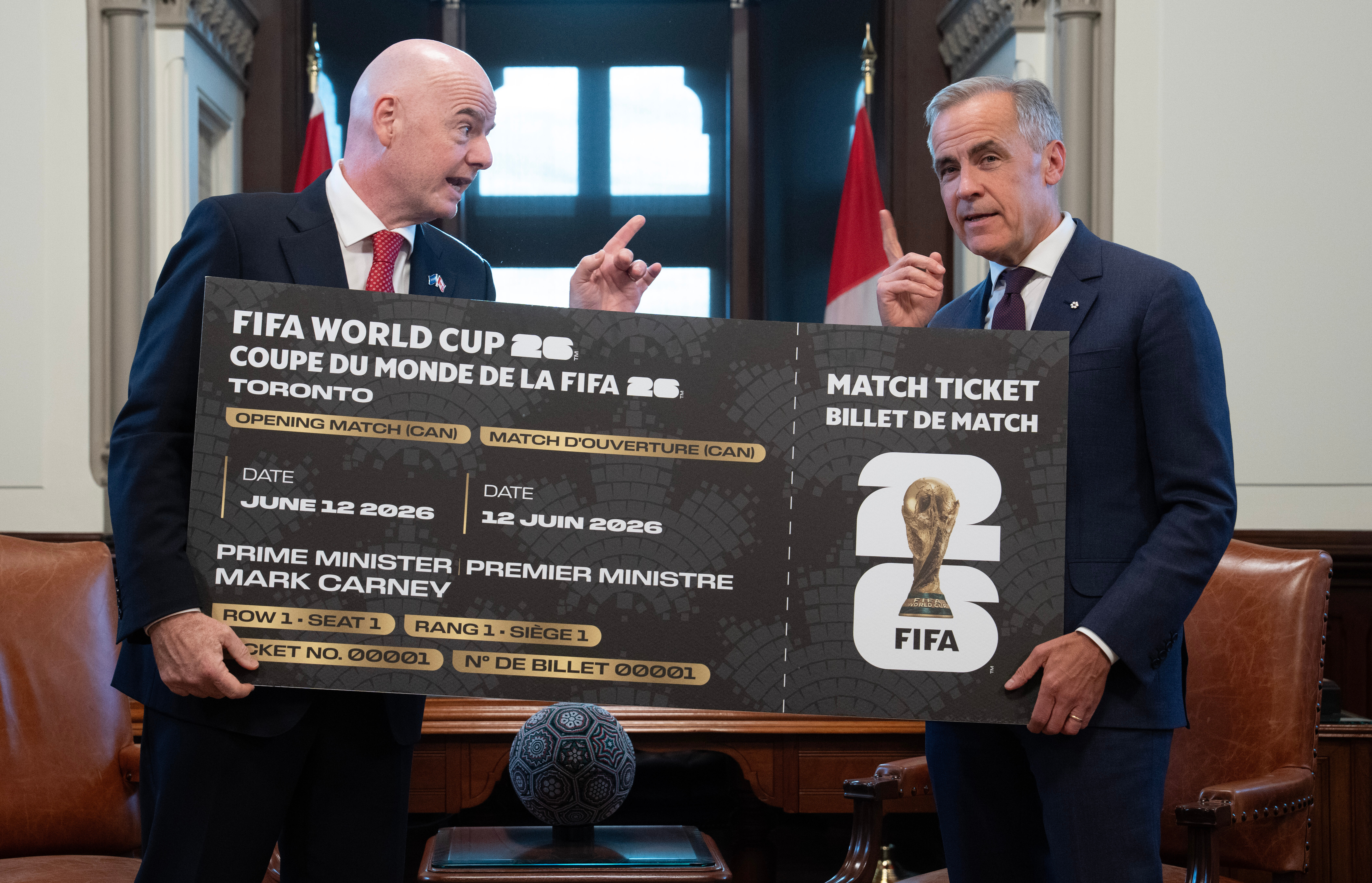
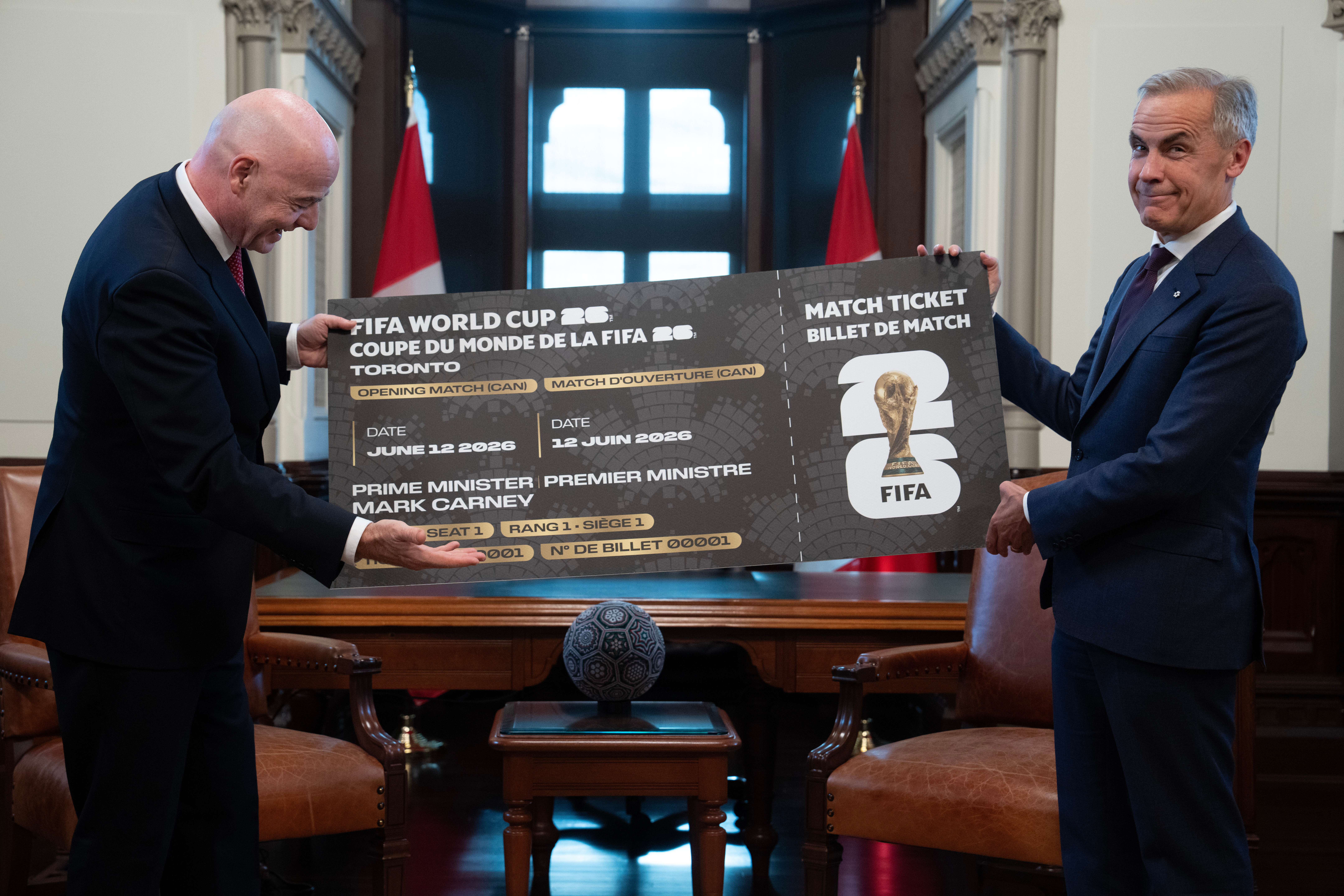
    Canadian Prime Minister Mark Carney (right) is presented with a novelty World Cup ticket by FIFA President Gianni Infantino on Oct. 10.

    What officials are saying

    Gianni Infantino, president of FIFA, regaled the news in a press release, saying that “we have always said that this will be the greatest and most inclusive FIFA World Cup in history — and the FIFA PASS service is a very concrete example of that.”

    Secretary of State Marco Rubio added that “the kickoff is coming up” for the World Cup in the next eight months and that “the United States is offering prioritized appointments so FIFA World Cup fans can complete their visa interviews and show they qualify.”

    The State Department encourages those who are in countries where interview appointments are available to apply for one immediately. FIFA’s release said that further information about the FIFA PASS process will be distributed directly to ticket holders “in early 2026.”

    How many nations have qualified?

    As of Tuesday, 34 countries have qualified for the tournament, leaving 14 spots to be filled in the 48-team field. The 2026 World Cup will be the first to feature 48 teams, expanding from the traditional 32-team format. The World Cup draw, which will determine groups for the tournament, will take place in Washington at noon on Dec. 5.

    Over 1 million tickets have already been sold worldwide for matches in the United States, Mexico and Canada next year.

    How many people are expected?

    FIFA said it had sold 1 million tickets for the event in October, less than a month after making match tickets available to the public. More than 6 million tickets are available for 104 tournament matches in 16 host cities in Canada, Mexico, and the United States.

    Are there any concerns?

    The announcement comes in the midst of logistical uncertainty for next summer’s World Cup. President Donald Trump threatened to relocate World Cup matches from a few cities, including Boston, in October over his safety concerns because of civil unrest. On Monday, he mentioned those relocation threats again while speaking alongside Infantino in the Oval Office.

  • FIFA’s World Cup draw is this week. Here’s what to know before, during, and after Friday’s event

    FIFA’s World Cup draw is this week. Here’s what to know before, during, and after Friday’s event

    The FIFA World Cup is rapidly approaching, but before the world’s premier international tournament hits U.S. soil this summer, FIFA will assign qualifying nations into groups for the tournament during its highly anticipated final draw.

    Here’s everything you need to know about Friday’s event.

    When and where is the tournament draw, and how can I watch?

    The World Cup draw, which will determine the groups for the round-robin stage of the tournament, will take place on Friday at noon. The event will be hosted by the Kennedy Center in Washington and broadcast live on Fox. Its coverage of the draw will begin at 11:30 a.m. and conclude at 3 p.m. FIFA’s event, which begins at noon, is expected to last about an hour and a half, with the draw itself accounting for about 45 minutes of that time.

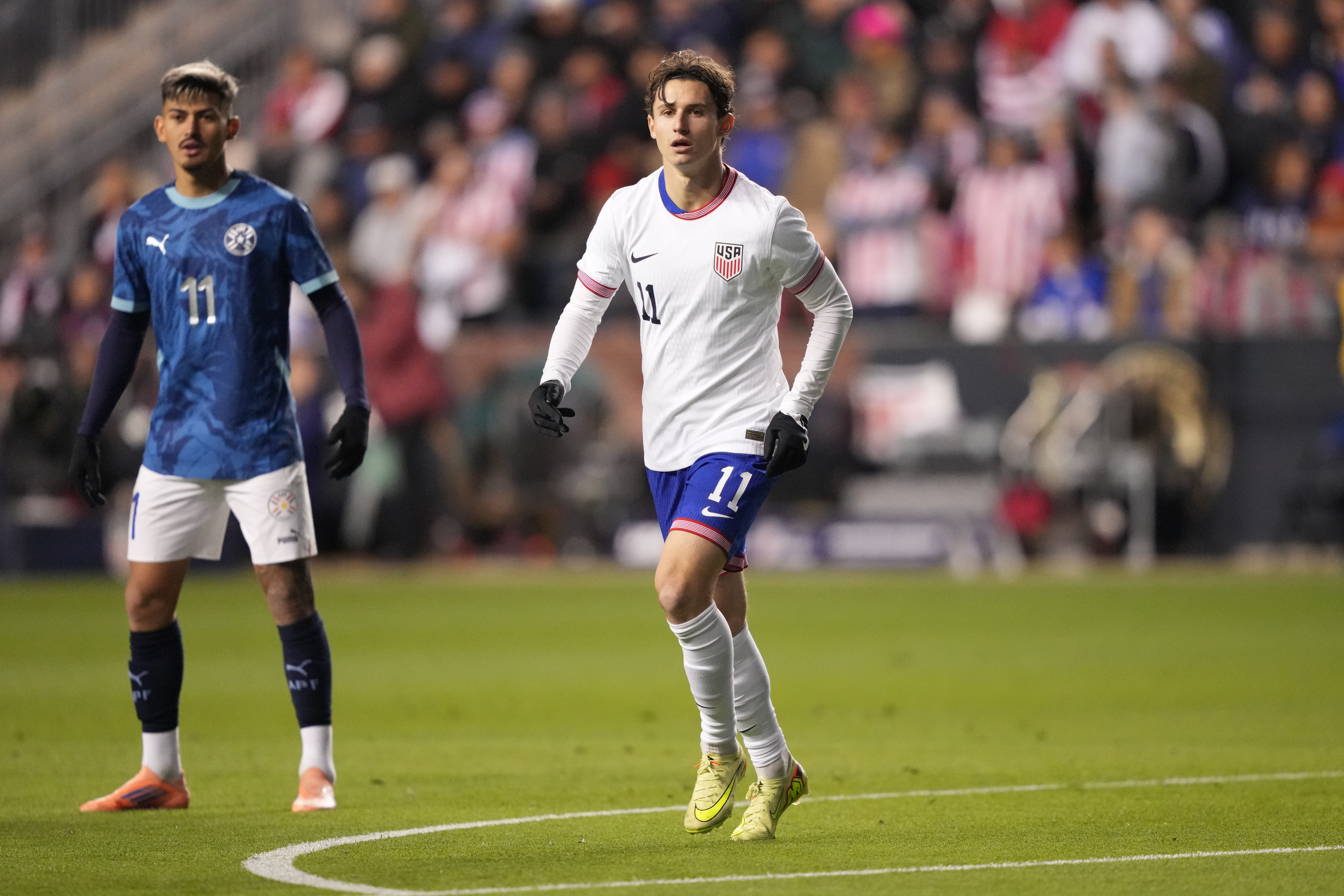
    Medford native Brenden Aaronson (right) and the U.S. will find out their pairings as one of three host nations on Friday.

    What teams are in the draw?

    Forty-two national teams, including cohosts Canada, Mexico, and the U.S., have already qualified for the World Cup and will be included in the draw.

    Six spots remain available for the World Cup, which will feature 48 teams for the first time in its history. Four of the remaining six qualifying spots will be awarded to the top four teams in the European Federation’s 16-team playoff, which will conclude in March. The other two spots will be awarded to the top two finishers at the FIFA Playoff Tournament, also in March.

    At Friday’s draw, the six qualifiers yet to be determined will be represented by placeholder slips, four for Europe and two for the intercontinental FIFA playoff.

    Here’s a full list of the qualified teams by confederation, plus a look at participants in the European playoff and the FIFA Playoff Tournament:

    Cohosts: Canada, Mexico, United States

    Asian Football Confederation (AFC): Australia, Iran, Japan, Jordan, South Korea, Qatar, Saudi Arabia, Uzbekistan

    Confederation of African Football (CAF): Algeria, Cape Verde, Ivory Coast, Egypt, Ghana, Morocco, Senegal, South Africa, Tunisia

    Confederation of North, Central American and Caribbean Association Football (Concacaf): Curaçao, Haiti, Panama

    South American Football Confederation (CONMEBOL): Argentina, Brazil, Colombia, Ecuador, Paraguay, Uruguay

    Oceania Football Confederation (OFC): New Zealand

    Lionel Messi will most likely play in his final FIFA World Cup with Argentina this summer.

    Union of European Football Associations (UEFA): Austria, Belgium, Croatia, England, France, Germany, Netherlands, Norway, Portugal, Scotland, Spain, Switzerland

    UEFA 16-team playoff (four qualifiers): Albania, Bosnia and Herzegovina, Czechia, Denmark, Italy, Kosovo, Northern Ireland, North Macedonia, Poland, Ireland, Romania, Slovakia, Sweden, Turkey, Ukraine, and Wales

    FIFA World Cup 26 Playoff Tournament (two qualifiers): Bolivia (CONMEBOL), Democratic Republic of the Congo (CAF), Iraq (AFC), Jamaica (Concacaf), New Caledonia (OFC), and Suriname (Concacaf)

    How does the draw work?

    Qualified nations will be divided into four pots based on their FIFA World Rankings positions. Pot 1 will contain the nine best-qualified teams in the rankings, as well as the three cohosts. The host nations have already been assigned to groups — Mexico will be in Group A, Canada will be in Group B, and the U.S. will be in Group D. The remaining teams will be assigned to the other nine groups, one team per group.

    After all the teams in Pot 1 have been drawn, the draw will move to Pot 2, selecting one team for each of the 12 groups. The process will repeat with Pot 3 and Pot 4, resulting in 12 groups of four teams. During the tournament, the top two teams in each group will advance to the knockout rounds. The top eight third-place finishers in the 12 groups will also advance, completing the Round of 32.

    Though the draw determines tournament groups, FIFA is also looking ahead to the knockout rounds. FIFA will structure the knockout bracket so that the top four teams in its rankings — Spain, Argentina, France, and England — will not meet before the tournament semifinal, provided that they each finish first in their respective groups. It is the first time the World Cup will use a tennis-style bracket for knockouts.

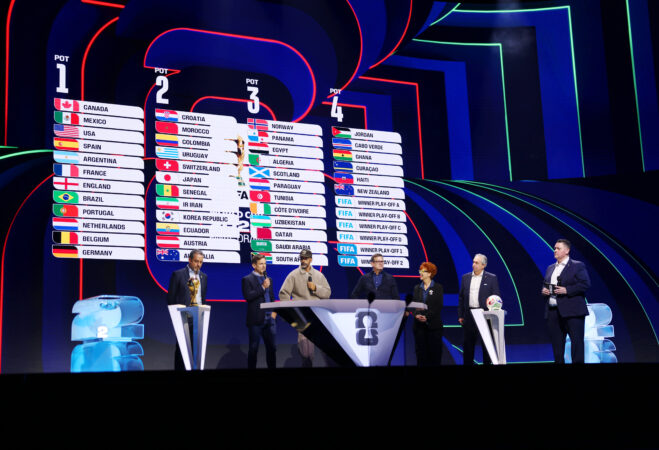
    Here’s a complete look at the pots that will be used on Friday:

    Pot 1: Canada (B1), Mexico (A1), U.S. (D1), Spain, Argentina, France, England, Brazil, Portugal, Netherlands, Belgium, Germany

    Pot 2: Croatia, Morocco, Colombia, Uruguay, Switzerland, Japan, Senegal, Iran, South Korea, Ecuador, Austria, Australia

    Pot 3: Norway, Panama, Egypt, Algeria, Scotland, Paraguay, Tunisia, Ivory Coast, Uzbekistan, Qatar, Saudi Arabia, South Africa

    Pot 4: Jordan, Cape Verde, Ghana, Curaçao, Haiti, New Zealand, European playoff winner 1, European playoff winner 2, European playoff winner 3, European playoff winner 4, Intercontinental playoff winner 1, Intercontinental playoff winner 2.

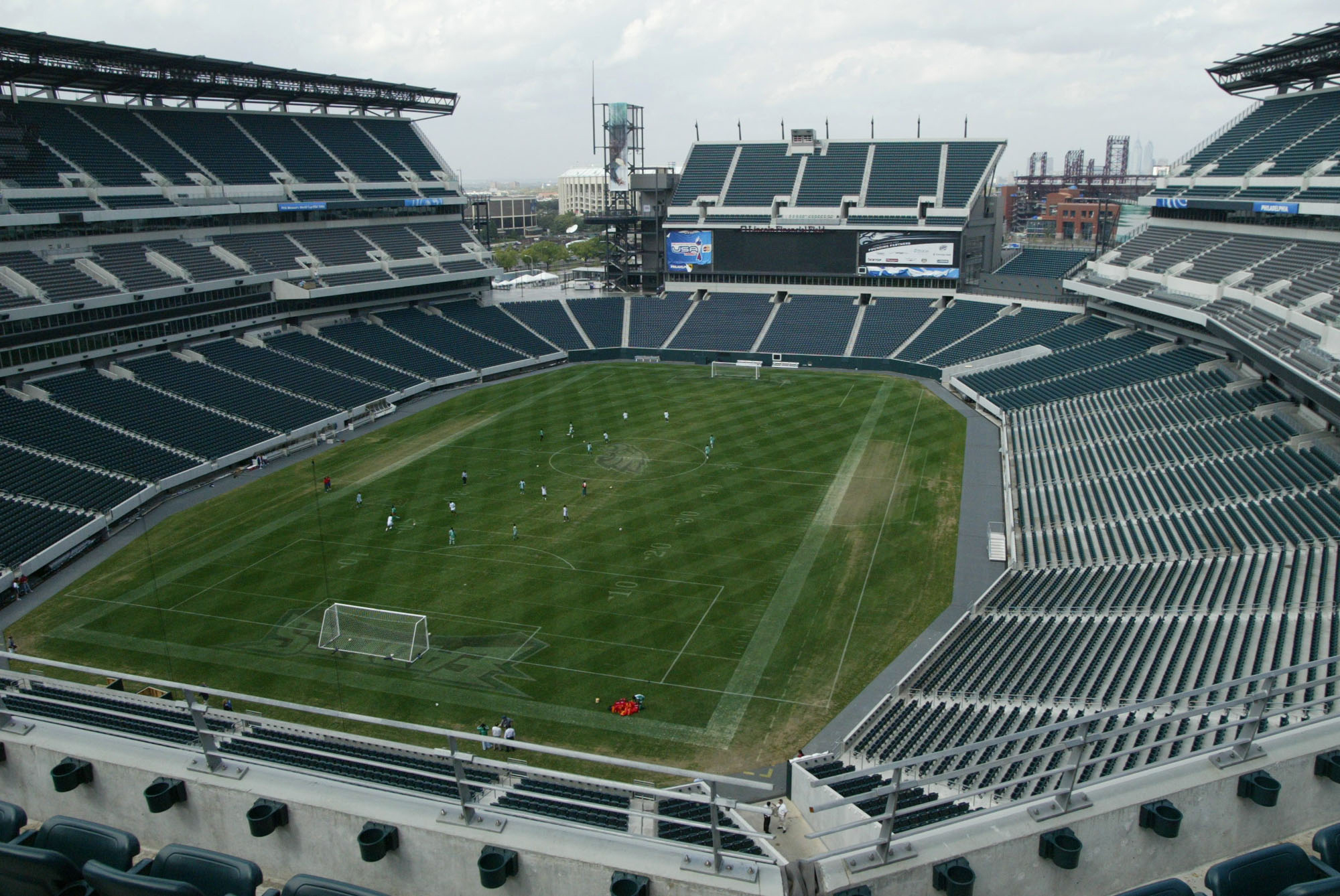
    Lincoln Financial Field is one of 11 venues in the United States that will host next summer’s World Cup.

    Which teams are coming to Philly?

    The draw should help determine which international sides will play in Philadelphia this summer. FIFA’s tournament schedule shows that Philly will host group stage games for Groups C, I, and L, and two for Group E, alongside a Round of 16 match. Fans will not be able to track which teams are coming to Philly during the draw, as the current tournament schedule does not give specific placeholders for the group stage matchups.

    The World Cup schedule will be updated on Saturday after the draw, with the paired teams assigned to venues along with kickoff times. The updated schedule will include which teams will play group stage matches in Philly from Groups C, E, I, and L, as well as the time for the Round of 16 match on July 4.

    Canadian Prime Minister Mark Carney (right) is presented with a novelty World Cup ticket by FIFA president Gianni Infantino on Oct. 10.

    Can I still buy tickets after the draw?

    Yes. Fans interested in buying tickets for World Cup matches at Lincoln Financial Field can enter ticket lotteries for individual group-stage games via FIFA’s random selection draw.

    The lotteries will begin accepting entries on Dec. 11 at 11 a.m. and close at the same time on Jan. 13.

    After the random selection draw phase of ticket sales has finished, any remaining inventory will be released on a first-come, first-served basis closer to the beginning of the tournament. Single-match and multimatch hospitality packages are also available through FIFA.

    FIFA’s first-come, first-served phase will be the last opportunity for fans to buy tickets directly through FIFA. After that, tickets will be available only through resale on the secondary market.

  • Philadelphia is on a long list of potential cities for the 2031 women’s World Cup

    Philadelphia is on a long list of potential cities for the 2031 women’s World Cup

    NEW YORK — The United States Soccer Federation proposed 14 American sites among 20 possible venues to host games for the 2031 Women’s World Cup, including seven U.S. stadiums to be used for next year’s men’s tournament.

    FIFA released the bid books Friday for the 2031 and 2035 women’s tournaments. There is only one bidder for each, a U.S.-Mexico-Costa Rica-Jamaica proposal for 2031 and a United Kingdom plan for 2035. FIFA is to formally confirm the bids at its congress on April 30.

    Twenty-six additional U.S. stadiums were mentioned as suitable venues for a 48-nation tournament the bidders project would draw 4.5 million fans and generate about $4 billion in revenue, up from $570 million for 2023 in Australia and New Zealand and a projection of $1 billion for the 2027 tournament in Brazil.

    Proposed ticket prices of $35 for the cheapest seats in the opening round to $120 to $600 for the final were listed in a ticket grid. FIFA has refused to release a grid for next year’s men’s tournament, saying only prices initially ranged from $60-$6,730 but could fluctuate with dynamic pricing. The bid book said premium seating would average 10%-20% of capacity at the majority of 2031 stadiums.

    Lincoln Financial Field last hosted a women’s World Cup in 2003.

    Fifty sites in all were mentioned in the joint 2031 bid. Final decisions likely will not be made for several years.

    The bid book also said “other suitable cities are included” beyond the specified 14 “as part of the broader bid framework with the understanding that they will continue to be equally considered for the purposes of stadium selection.”

    “By proposing more than the required 20 sites, the joint bidders demonstrate a commitment to securing the best possible hosting conditions and ensuring the tournament represents the full diversity of our region on a global scale,” the bid book stated.

    The 2026 U.S. sites included in the 2031 proposal are Arlington, Texas (AT&T), Atlanta (Mercedes-Benz), East Rutherford, N.J. (MetLife), Houston (NRG), Inglewood, Calif. (SoFi), Kansas City, Mo. (Arrowhead), and Seattle (Lumen Field).

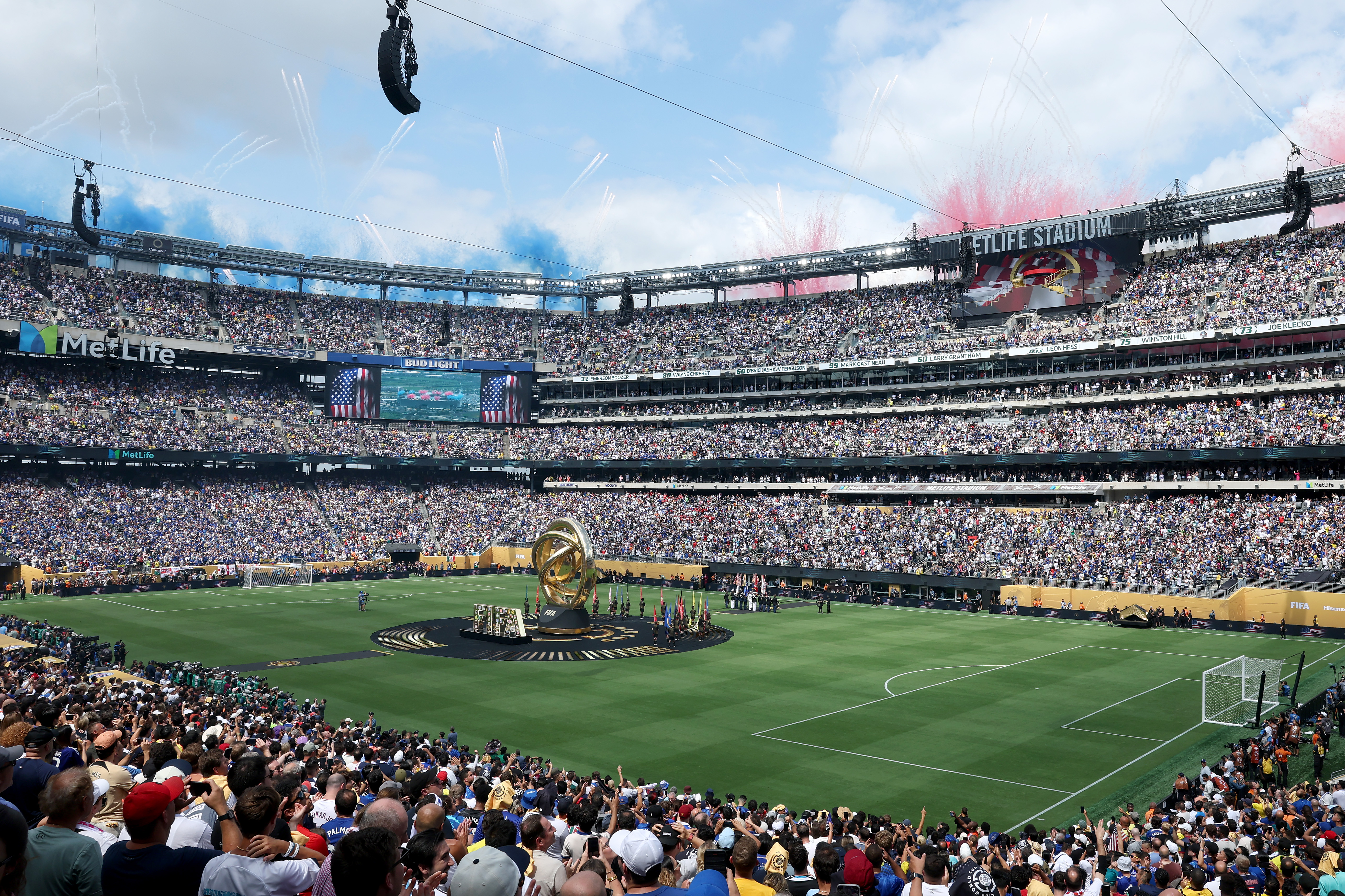
    MetLife Stadium in East Rutherford, N.J., hosted this year’s Club World Cup final and will host next year’s men’s World Cup final.

    The seven others are Charlotte, N.C. (Bank of America), Denver (Empower Field), Minneapolis (U.S. Bank), Nashville (Geodis Park), Orlando (Camping World), San Diego (Snapdragon), and Washington (proposed NFL venue on the RFK Stadium site).

    Orlando and Washington were sites of the 1994 men’s World Cup.

    Mexico’s three sites for next year’s World Cup also are proposed for the women’s tournament, Mexico City (Azteca), Guadalajara (Akron), and Monterrey (BBVA), along with a fourth in Torreón (Corona).

    National stadiums are proposed in Kingston, Jamaica, and San Jose, Costa Rica.

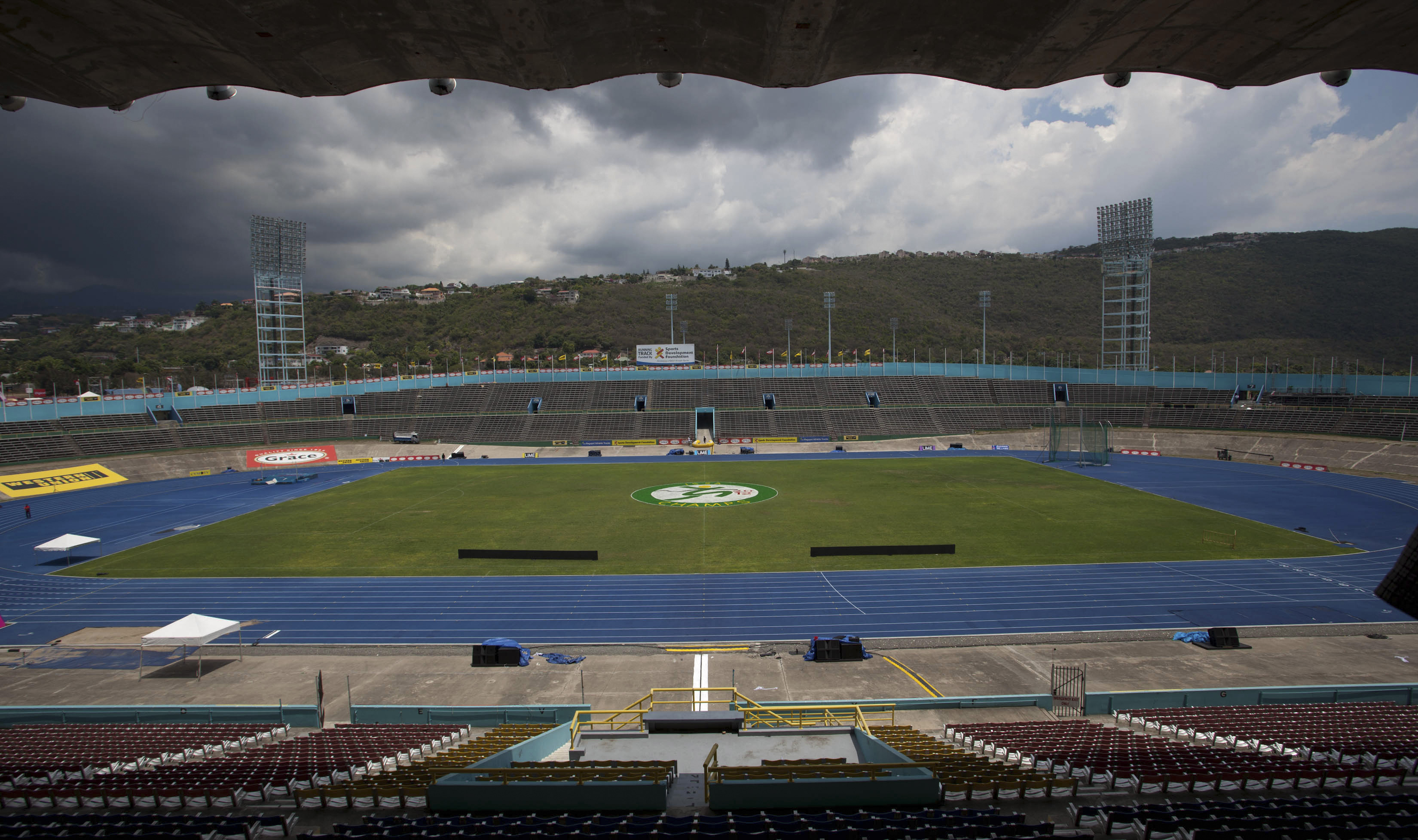
    The national stadium in Kingston, Jamaica will host its first women’s World Cup games.

    Other U.S. venues listed as possibilities are Foxborough, Mass. (Gillette), Philadelphia (Lincoln Financial Field), and Santa Clara, Calif. (Levi’s), all venues for next year’s men’s World Cup.

    Additional sites included were Baltimore (M&T Bank), Birmingham, Ala. (Protective), Carson, Calif. (Dignity Health Sports Park), Cincinnati (TQL), Cleveland (Huntington Bank Field), Columbus, Ohio (Lower.com Field), Frisco, Texas (Toyota), Glendale, Arizona (State Farm), Harrison, N.J. (Sports Illustrated), Los Angeles (Memorial Coliseum), Miami (Chase), Nashville (Nissan), New York (Etihad Park), Orlando (Inter & Co), Pasadena, Calif. (Rose Bowl), St. Louis (Energizer Park), San Francisco (Oracle Park), Sandy, Utah (America First Field), and Tampa, Fla. (Raymond James).

    Second possible sites in cities, all with lower capacities, were included for Houston (Shell Energy), Kansas City, Mo. (CPKC), and Washington (Audi Field).

    Indianapolis was listed for a proposed stadium.

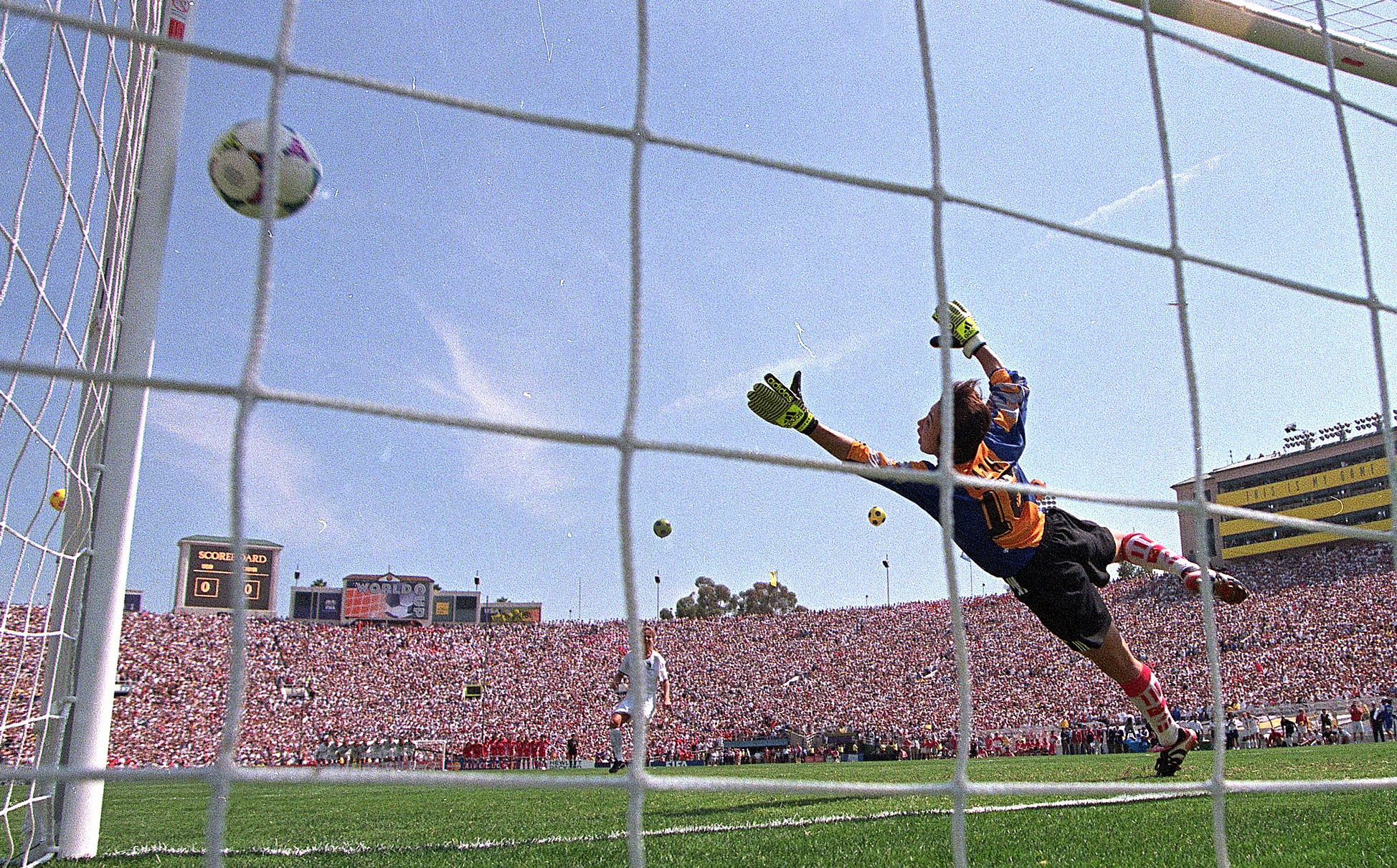
    The Rose Bowl in Pasadena, Calif., hosted the 1999 women’s World Cup final – still one of the most famous games in women’s soccer history.

    Miami’s Hard Rock Stadium was the only 2026 World Cup venue not included.

    Chicago was not listed after dropping out of bidding to host in 2026 because of what it said were FIFA’s burdensome financial demands.

    Additional possibilities in Mexico are Pachuca (Miguel Hidalgo) and Querétaro (Corregidora) along with Universitario as an alternate choice in Monterrey. Saprissa was listed as an alternate site in San Jose, Costa Rica.

    Organizers envision fan festivals and watch parties in conjunction with games. Revenue from marketing and sponsorships is projected at $1.4 billion.

  • FIFA lays out the rules for the World Cup draw

    FIFA lays out the rules for the World Cup draw

    GENEVA — The 2026 World Cup draw next week will reward the four highest-ranked teams — Spain, Argentina, France and England — who will be placed in separate sections of a new tennis-style seeded tournament bracket.

    FIFA said Tuesday the top four teams in the latest men’s rankings will, if they finish top of their respective round-robin groups, avoid each other until the semifinals of the June 11-July 19 tournament being co-hosted by the United States, Canada and Mexico.

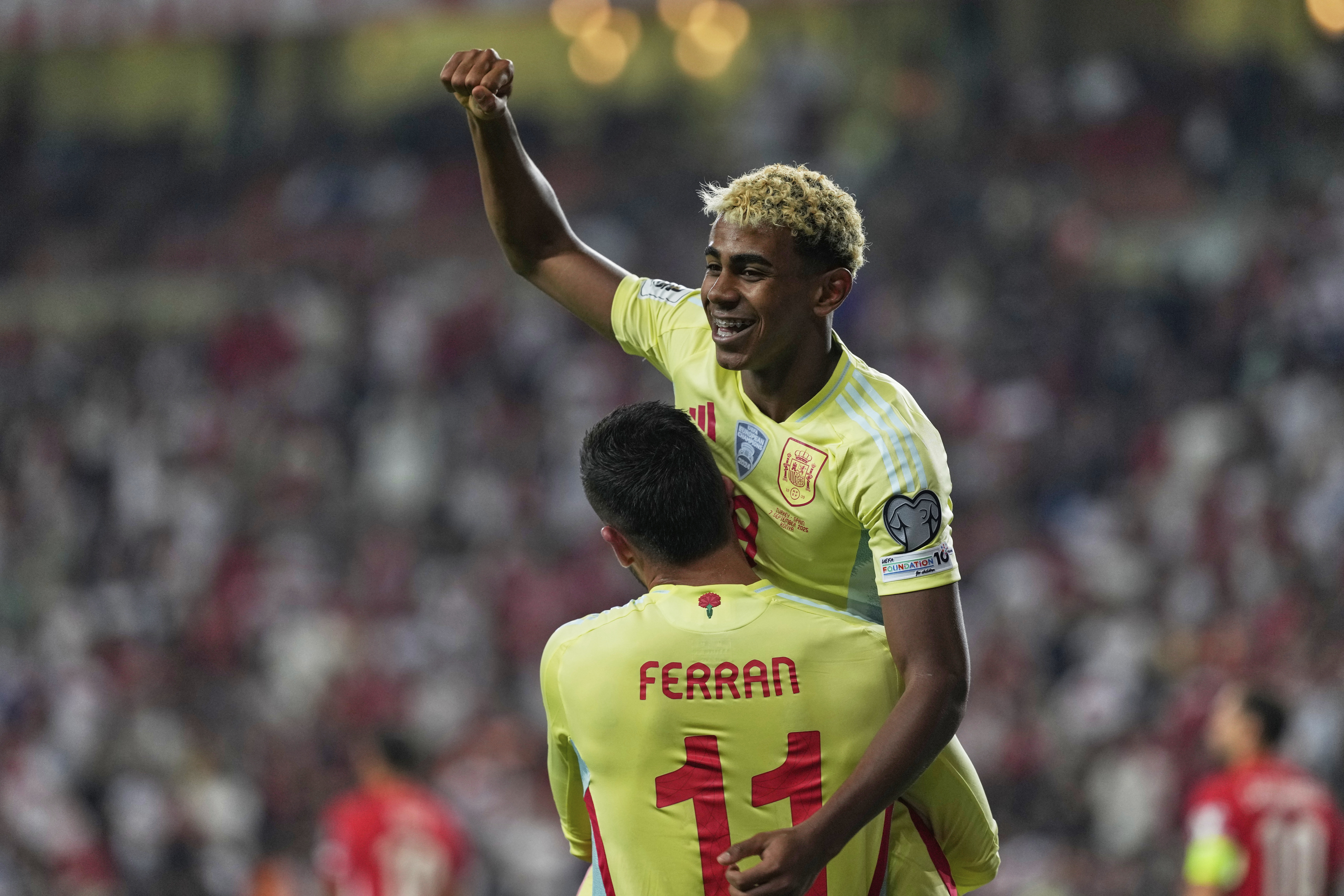
    Defending champion Argentina with Lionel Messi and top-ranked European champion Spain with Lamine Yamal therefore can ensure they do not meet until the final at MetLife Stadium near New York.

    “To ensure competitive balance, two separate pathways to the semifinals have been established,” FIFA said in a statement, aiming to reward teams whose consistent good results have raised their world ranking.

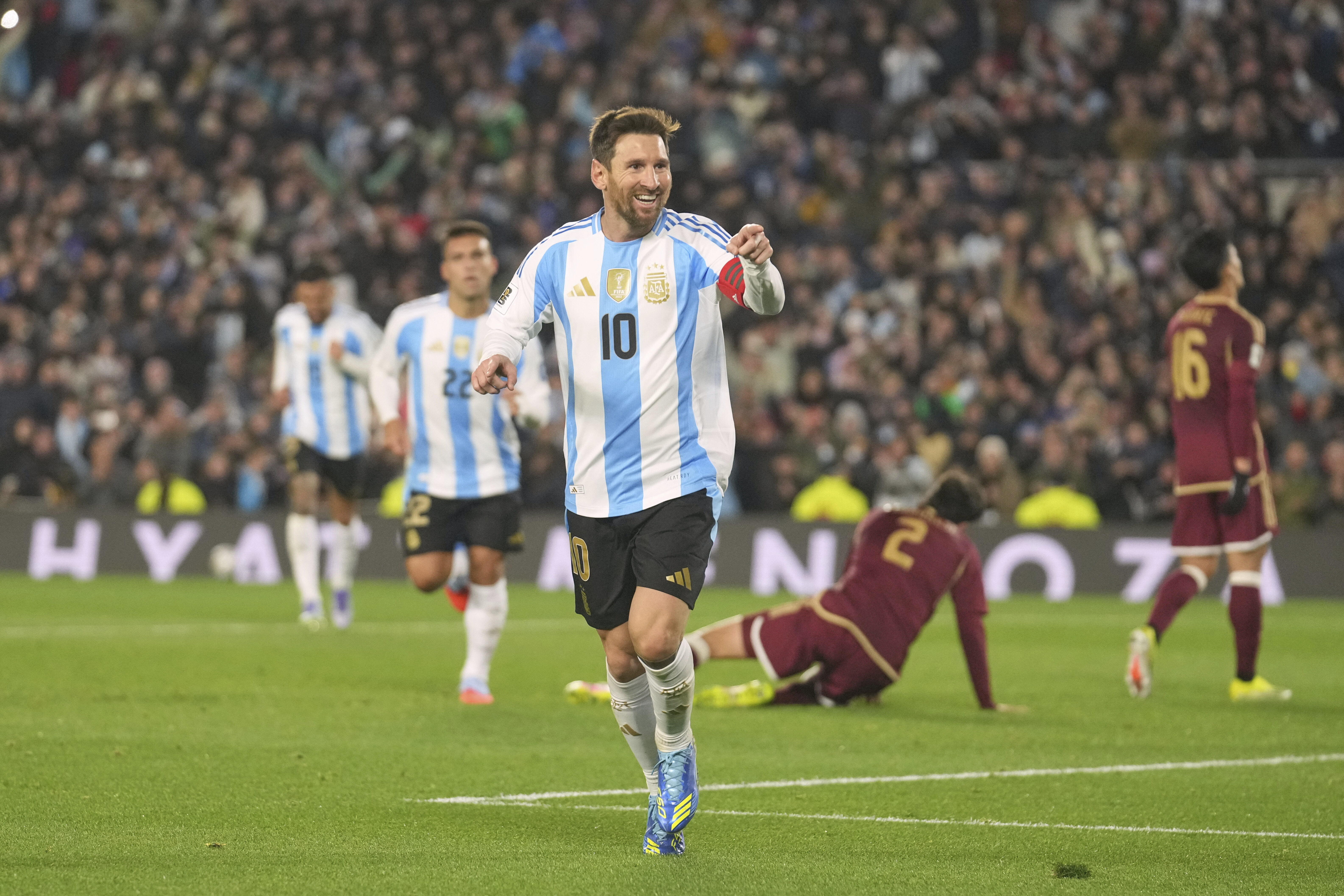
    Lionel Messi celebrates scoring a goal for Argentina in September.

    At previous World Cups, the path for teams into and through the knockout phase was decided by which group they were drawn into.

    The draw ceremony for the first 48-team World Cup will be held Dec. 5 at the Kennedy Center in Washington, D.C., in the presence of U.S. President Donald Trump.

    The 42 teams that already qualified include Iran and Haiti which FIFA expects will play exactly where they are drawn regardless of complicated politics those countries have with the U.S. The 16 host venues for the 104 games include 11 cities with NFL stadiums in the U.S., three in Mexico and two in Canada.

    The other six entries will be decided in March when European and global playoffs brackets are scheduled, and those teams all will come out of the draw pot of lowest-ranked teams.

    Spain’s Lamine Yamal (right) is the soccer world’s new superstar.

    That means four-time champion Italy could be a dangerous option in the draw on Friday of next week that will set the match schedule by placing teams in 12 round-robin groups of four teams each.

    Europe has 16 teams in the lineup and a maximum of two can be drawn into any one group. The other 32 teams in the tournament cannot be drawn in a group with a team from the same continent.

    The three co-hosts are among the 12 top seeds in the draw, which is scheduled to take about 45 minutes during a show lasting about an hour and a half, FIFA said. The U.S. will open on June 12 against a team from pot 3, then face a team from pot 2 and close the group stage against a team from pot 4.

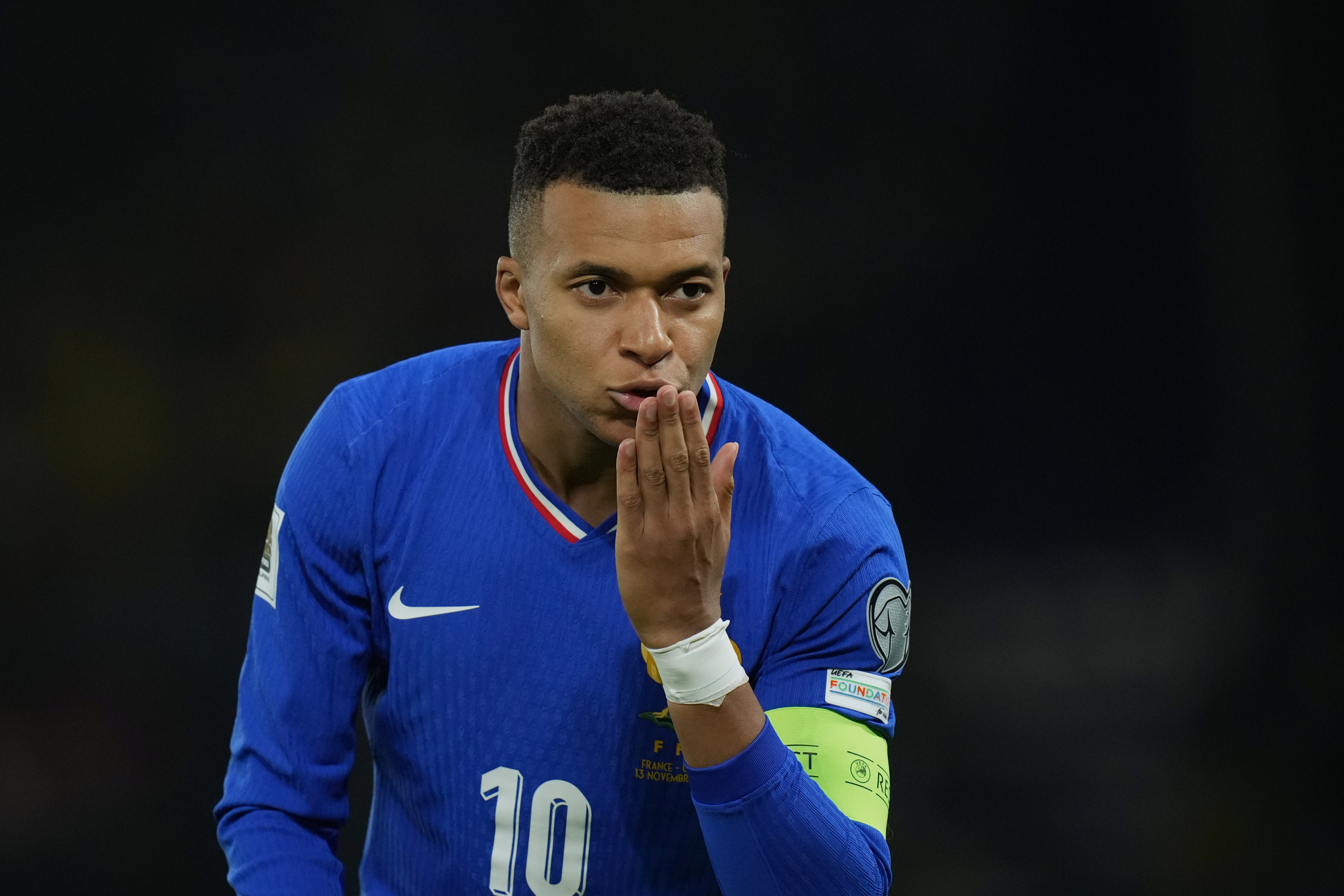
    Kylian Mbappé led France to the 2018 World Cup title and the 2022 final.

    World Cup draw seedings

    Pot 1: Spain, Argentina, France, England, Brazil, Portugal, Netherlands, Belgium, Germany, United States, Mexico, Canada.

    Pot 2: Croatia, Morocco, Colombia, Uruguay, Switzerland, Japan, Senegal, Iran, South Korea, Ecuador, Austria, Australia.

    Pot 3: Norway, Panama, Egypt, Algeria, Scotland, Paraguay, Tunisia, Ivory Coast, Uzbekistan, Qatar, Saudi Arabia, South Africa.

    Pot 4: Jordan, Cape Verde, Ghana, Curacao, Haiti, New Zealand, European playoff winner 1, European playoff winner 2, European playoff winner 3, European playoff winner 4, Intercontinental playoff winner 1, Intercontinental playoff winner 2.

  • Matt Freese is on the verge of something big with the USMNT. First, he’s got to beat the Union.

    Matt Freese is on the verge of something big with the USMNT. First, he’s got to beat the Union.

    If there was anything to learn about Matt Freese, it’s that he’s a really serious individual.

    Last week, in his return to the Philly area with the U.S. men’s national soccer team, the former Union goalkeeper and Wayne native said he spent the bulk of the week inside the team hotel instead of visiting family and friends.

    He wasn’t a complete recluse. He visited a few old friends from the Union, who were training on fields adjacent to the USMNT at the WSFS Bank Sportsplex in Chester. He even took time to speak to classes at YSC Academy, the school created specifically for soccer players aspiring to be in Freese’s shoes.

    Other than that? Freese treated the homecoming as a business trip, which was clearly conveyed in refusing all requests for interviews the day before a game and the serious gaze on his face even after the USMNT’s 2-1 win over Paraguay last Saturday.

    He returns on Sunday when the Union host New York City FC in MLS’ Eastern Conference semifinal (7:55 p.m., FS1, Apple TV, MLS Season Pass).

    “I actually didn’t see my family. I didn’t do anything,” Freese said. “[This week], I just stayed in the hotel. [Chuckles], I’m a bit of a loser, but when I’m in camp, I’m locked in. I’ll see my family in the offseason at some point.”

    Freese being locked in isn’t because he’s being standoffish. Instead, it’s his effort to prove to himself that he belongs. He has made sacrifices — particularly whenever he receives that call from the men’s national team.

    See, it was roughly around this time last year that Freese was a bit of an afterthought. Incumbent goalkeeper Matt Turner was on a tear for club and country and looked to be a shoo-in for being first up on USMNT manager Mauricio Pochettino’s roster.

    But amid a lack of playing time with Crystal Palace, Turner’s club team, he fell down the depth chart, as Pochettino told reporters in May that “it’s open for another player maybe to challenge in between [the goalkeepers] and maybe to try to give the possibility to play [to] another player,” according to an ESPN report.

    Enter Freese, who has had several call-ups since Pochettino’s remarks and has impressed, notably his performance in the U.S.’s shootout win over Costa Rica the Gold Cup quarterfinals in June. He made three saves in the penalty kick portion of the match, which helped the U.S. vault into the semifinal, and earned soccer’s version of the nickname “Matty Ice.”

    From that moment, he’s been a mainstay with the national team. Now, with the last games of the November cycle wrapping up earlier this week, it’s a waiting game to see if he’ll be called into camp for Pochettino’s World Cup squad.

    From being an unknown to being No. 1 — the opportunity arguably has never been bigger for Freese.

    “What’s driving me is this chance to represent my country,” Freese said. “Having that opportunity is one that I dreamed about but didn’t know if I was ever going to get. So every time I’m called up, I want to make the most of training, and then every time I get to play in a game, I want to make the most of that as well.”

    From favorite to foe

    One thing that stood out in a conversation with Freese was his reply that when it came to visiting family, he’d do so “in the offseason at some point.”

    Coincidentally, if the Union have their way, he might not have to commute too far. A week removed from being the hero against Paraguay, Freese returns to Subaru Park as the villain in his role as the starting goalkeeper for NYCFC.

    Matt Freese (49) guided NYCFC past fourth-seed Charlotte FC to set up an Eastern Conference semifinal date against the Union.

    The meeting is the fourth time the teams will battle in the postseason and the second time for Freese, who was released from the Union in 2022 following the team’s run to the MLS Cup final.

    Instead of looking at his ouster from the Union as being on the outside looking in at a professional career, which started in the team’s youth academy, Freese locked in. Just a year after joining NYCFC was named the team’s MVP last season.

    Now, he leads NYCFC as the fifth seed in the East looking up at the No. 1 team and Supporters’ Shield winner — on its home field.

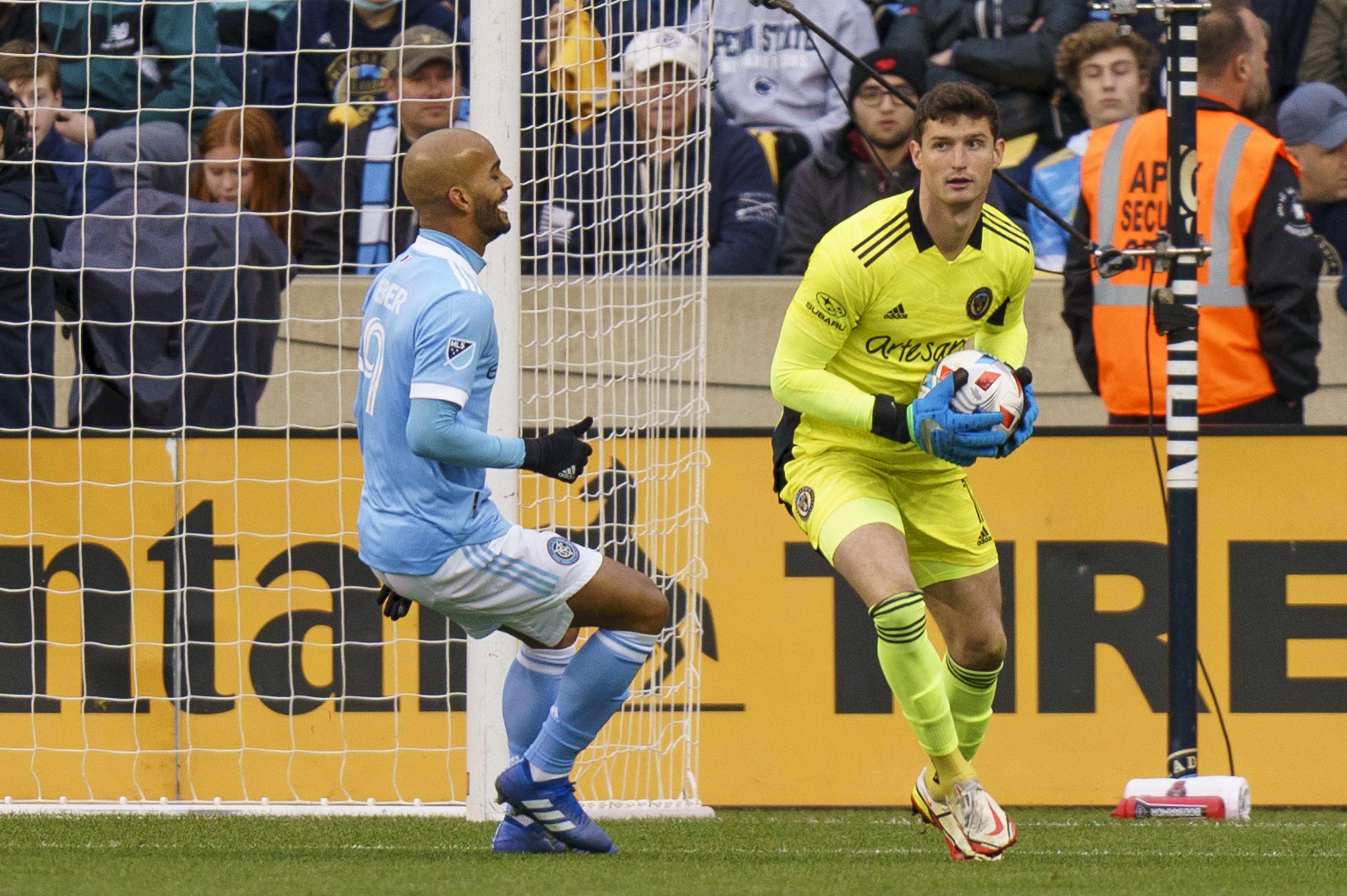
    Matt Freese (right) shown as a member of the Union against his current team, New York City FC during a game in 2021.

    “It’s a really exciting time in my career right now,” Freese said. “It’s important however to stay humble and be thankful that I’m in this situation. I have a job to do, and our goal as a team is to be the last team standing. We have to beat the best. That’s what it comes down to.”

    Fellow U.S. national team member Max Arfsten notes that mentality as the reason Freese has arrived at this moment. Arfsten, whose Columbus Crew side recently fell out of the Eastern Conference playoffs following a loss to rival club FC Cincinnati, gets a routine look at Freese firsthand over the course of the season and sees something special in the goalkeeper.

    “He’s my guy,” Arfsten, a midfielder, said following last week’s USMNT win in Chester. “His ability to control our back line and his communication is big. It allows us to do our job because we know he’s got it covered back there. He’s locked in right now, and that’s really good as we continue to push forward toward the World Cup.”

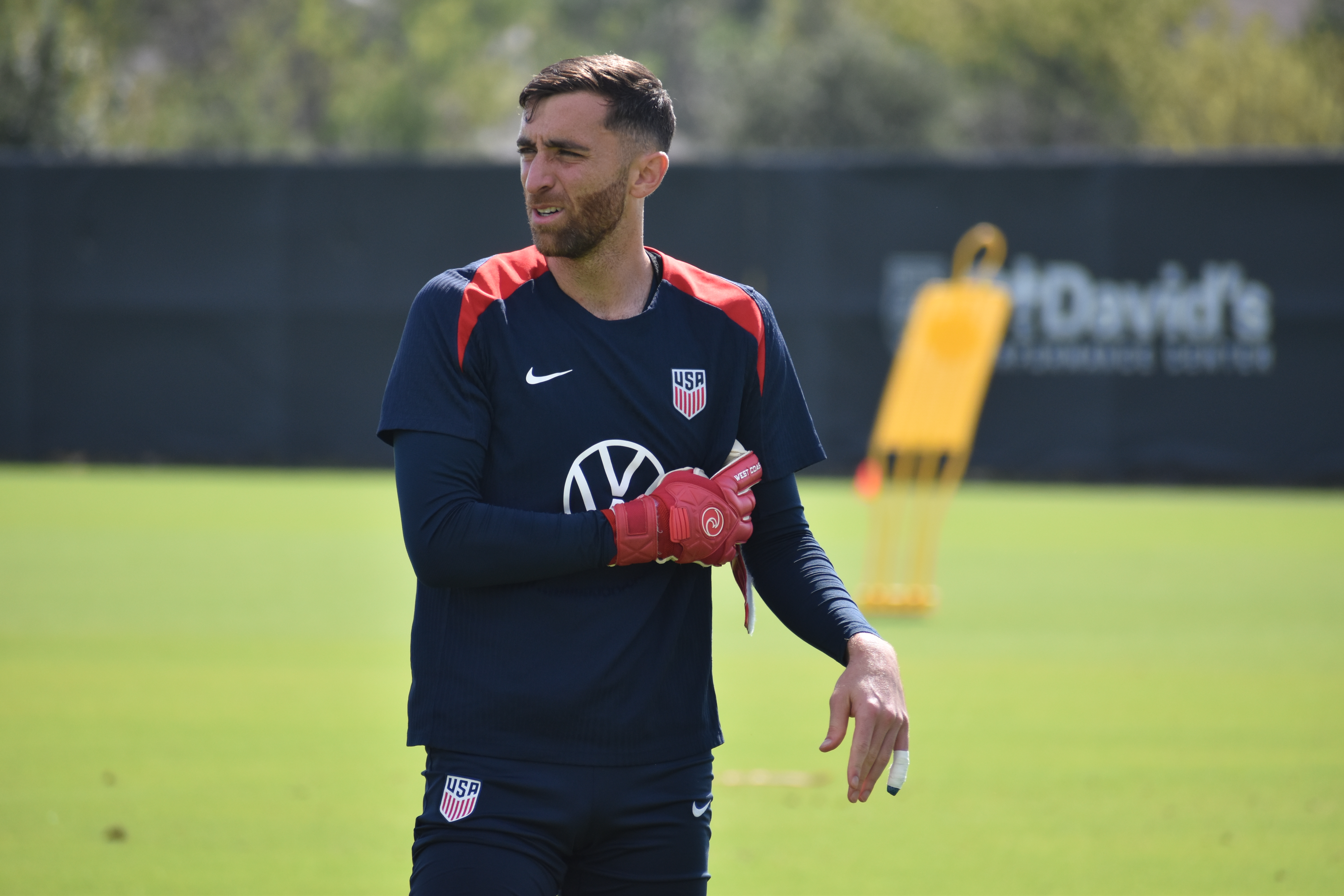
    U.S. men’s national team goalkeeper Matt Freese dives for a save during a training session earlier this month at the WSFS Sportsplex in Chester.

    On his way out of the Union’s locker room last Saturday, Freese briefly struck up a conversation with a security guard stationed just outside the main doors. What was said was muffled, but what was distinctly heard was the security guard ending the conversation in jest with “see you on Sunday.”

    Given what’s at stake, and having an obvious familiarity with Philly banter, it might have been one of the few times Freese let his armor down and cracked a smile.

  • The Union’s Danley Jean Jacques celebrates helping Haiti reach its first men’s World Cup since 1974

    The Union’s Danley Jean Jacques celebrates helping Haiti reach its first men’s World Cup since 1974

    In soccer as in life, sometimes more than one thing happens at once. Right now, the Union have so many things happening that your head could end up on a swivel.

    There’s the ongoing investigation into sporting director Ernst Tanner’s alleged misconduct, for which there were no new updates by the close of business Thursday.

    There’s the rest of the team’s preparations to resume the playoffs on Sunday vs. New York City FC at Subaru Park (7:55 p.m., FS1, Fox Deportes, Apple TV) after three weeks without a game.

    There’s the fact that next year’s schedule was announced Thursday with three rounds of this year’s playoffs still to go. (Early schedule releases are good, but this one took almost everyone by surprise.)

    And on top of all of that, there are the epic swings of emotions that two of the Union’s stalwart players experienced while playing for their national teams.

    Andre Blake’s Jamaica came up painfully short of qualifying for next year’s World Cup, with ties at Trinidad and home vs. Curaçao. The first made the second game a must-win, but the Reggae Boyz could only manage a scoreless tie while hitting the post three times.

    Those results sentenced Jamaica to March’s inter-continental playoffs in Mexico that will clinch two of the six remaining World Cup tickets. Blake and company will play Oceania runner-up New Caledonia, and the winner will play Africa’s Democratic Republic of the Congo for a Cup berth.

    At the same time, Danley Jean Jacques’ Haiti reached the world game’s biggest stage for the first time since 1974. Despite not being able to play a true home game for years because of domestic unrest, Les Grenadiers beat Costa Rica 1-0 and Nicaragua 2-0. When tradition-rich Costa Rica and Honduras played a scoreless tie on Tuesday, Les Grenadiers clinched first place in their group.

    Even better, Tuesday was Haiti’s national holiday, celebrating its centuries of independence from France.

    “I’m very proud to have qualified my country for a World Cup,” Jean Jacques said at Thursday’s Union practice, speaking in his native French. “It feels good, and I think it makes all Haitian people in general feel good.”

    Unfortunately, the 25-year-old midfielder was suspended from the finale because of yellow card accumulation, so watched from the stands of Haiti’s neutral-ground “home” in Curaçao. But he was able to take part in the celebrations.

    “It was a bit stressful, because I wanted to play, I wanted to give everything for my country,” Jean Jacques said. “But I was confident in my teammates. I knew they would do the rest of the work. I had done the most I could, and I was very confident that my teammates would get it done.”

    Because Haiti’s game finished before Costa Rica-Honduras, the team didn’t know at its final whistle whether it had qualified. So they all waited on the field, following the other game on mobile phones. TV cameras were still rolling and captured the joy when the news came across.

    “Representing Haiti means many things,” Jean Jacques said. “You have to give your heart. Every time I represent Haiti, I try to give my maximum, I try to give everything for my country. I don’t want to come up short for my country — I try to give my maximum, and I feel very, very good to represent Haiti.”

    Some players documented their celebrations on Instagram, and fans flooded their comments to celebrate. There were also great scenes in Haiti’s capital, Port-au-Prince, and throughout the Haitian diaspora across North America.

    “It had been a long time since Haiti qualified for a [men’s] World Cup, and now we’ve done it,” Jean Jacques said. “I think they [at home] are proud, and I hope they will stay behind us and push us and give us strength. They will help us in the future, because I think we have more to give.”

    Coincidentally, Jean Jacques isn’t the only player on Haiti’s team with ties to Philadelphia. Outside back Duke Lacroix, 32, is an Ocean County, N.J., native who played his college soccer at Penn from 2011-14.

    Lacroix has played professionally ever since in the U.S. second-division USL Championship, for a range of teams. At his current home, the Colorado Springs Switchbacks, he has many teammates with Union ties, including Matt Real and Anthony Fontana.

    “He told me that he spent some time here, and about the city,” Jean Jacques said of Lacroix. “He said it’s a nice city and I’m in a good club. … I can say he’s a good player who plays strong, is very serious, and works hard.”

    It’s also a coincidence that Jean Jacques’ closest friend on the Union, Olivier Mbaizo, was the first player to make a World Cup squad while with the club. Jean Jacques could be the second, with lots of people in Chester and beyond hoping Blake ties him on that mark.

    “It means many things for me. I think it would mean many things for the club, too,” Jean Jacques said. “The team deserves this, because it’s a good club, with a good setup. I hope there will be other players, too, who will be able to be part of the World Cup, because it’s a good thing for the club.”

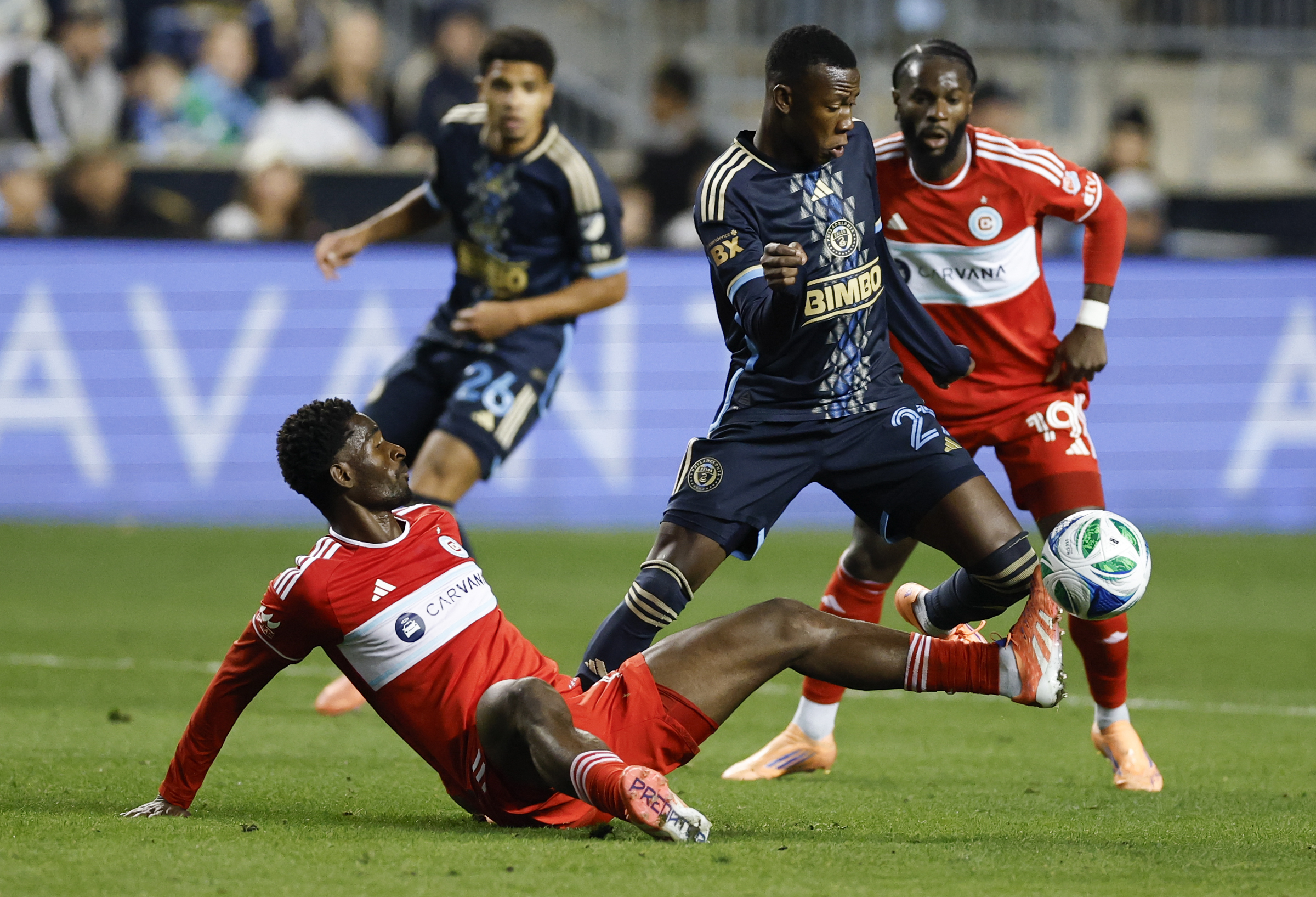
    Danley Jean Jacques (center) in action with the Union during their playoff series against Chicago last month.

    He also took a moment to praise the club’s young Americans who have played in youth World Cups lately: Frankie Westfield at the under-20 level and Cavan Sullivan at the under-17 level.

    “I think they will keep growing,” he said.

    There’s a long way to go until next summer for Jean Jacques, Haiti, and the Union. But he has allowed himself a moment to dream of what it will be like if he steps onto the field in a World Cup game — perhaps even at Lincoln Financial Field if Haiti is drawn to play here.

    “It has always been a dream to play in a World Cup, to qualify my country, so I’m very happy,” he said. “I’m waiting for the moment when it arrives, and I’ll see how it goes. But no matter what, whether I’m on the field or off it, I’ll support my teammates and give everything for the country.”

    2026 FIFA World Cup qualifying playoffs

    All games will be played in March as single-elimination rounds. The inter-continental playoffs will be played in Guadalajara and Monterrey, Mexico, while the European playoffs will be played on home fields.

    Inter-continental playoffs

    Bracket 1: New Caledonia (Oceania) vs. Jamaica (Concacaf); winner plays Democratic Republic of the Congo (Africa)

    Bracket 2: Bolivia (South America) vs. Suriname (Concacaf); winner plays Iraq

    European playoffs

    In all the brackets listed below, the first game’s winner will host the second-round contest.

    Bracket 1: Wales vs. Bosnia & Herzegovina, Italy vs. Northern Ireland

    Bracket 2: Ukraine vs. Sweden, Poland vs. Albania

    Bracket 3: Slovakia vs. Kosovo, Turkey vs. Romania

    Bracket 4: Czech Republic vs. Republic of Ireland, Denmark vs. North Macedonia

  • Projecting the USMNT’s World Cup roster after its last game of the year: Several locals in; surprises on the bubble

    Projecting the USMNT’s World Cup roster after its last game of the year: Several locals in; surprises on the bubble

    TAMPA, Fla. — From the time Mauricio Pochettino took over the U.S. men’s soccer team last year, each moment has had two meanings.

    Along with trying to win games, every pass, shot, tackle, save, or failure has been about trying to make the World Cup team. That mentality is burned deep into American soccer’s psyche, as it has been for many decades, and it’s even deeper when the tournament is on home soil.

    The competition is made more difficult by how few opportunities there are to compete. Tuesday’s U.S.-Uruguay game was the 22nd match of Mauricio Pochettino’s tenure, with two more in March before the World Cup roster is named in late May.

    That is the same number of games (24) the Eagles played in their entire 2024 campaign, from the preseason through the Super Bowl — to say nothing of how many games there are in other sports’ calendars.

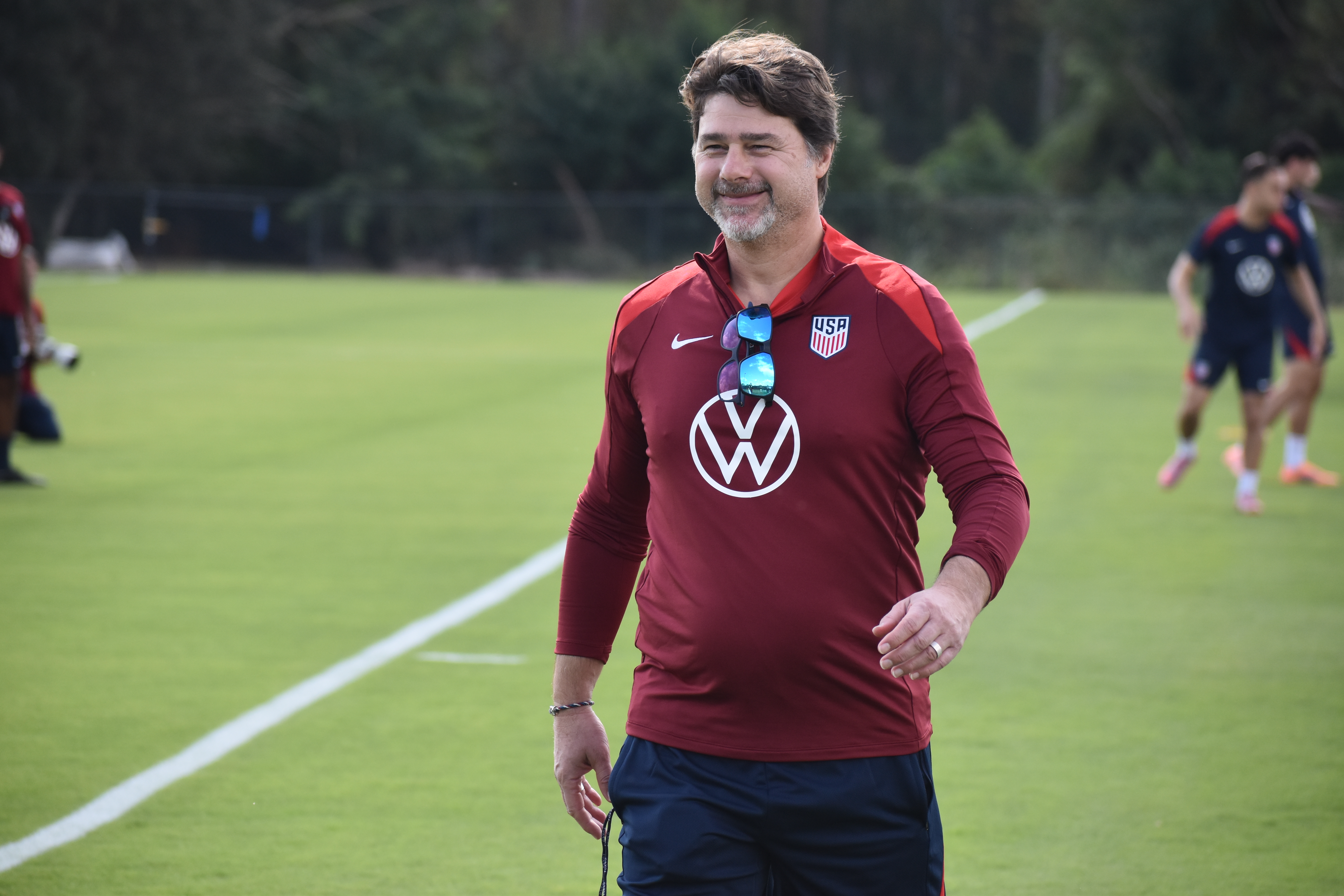
    U.S. manager Mauricio Pochettino.

    On top of that, in none of those 22 games has Pochettino had every member of his A squad healthy. Christian Pulisic, Tyler Adams, Weston McKennie, Folarin Balogun, Chris Richards, Sergiño Dest, and others have missed significant time along the way.

    Then combine those absences with the Nations League flop in March, which forced Pochettino to blow up his plans and bring in a bunch of less-talented challengers to try to outhustle the stars. The result is the roller-coaster path the U.S. team has been on this year, reaching a smooth track only in the last two months.

    This has made projecting a World Cup roster quite difficult. It’s a game fans love to play, and the media often enjoys it too. But the absences, the results, and the quick cadence of FIFA windows this fall made it more sensible to wait.

    Now, though, the Americans have wrapped up their work for the year. The 24 players on this month’s squad headed back to the club world on Wednesday morning, and that side of the game will reign until late March.

    Gio Reyna is one of the players who left a big and positive impression in this month’s games.

    So this moment feels right to look at the bigger picture. Here’s my view of the race to make the plane to Atlanta, where the 26-player World Cup team will gather at U.S. Soccer’s new national training center before its pretournament friendlies.

    The projection is broken down by the six main positions in Pochettino’s tactics: goalkeeper, outside back, centerback, central midfielder, attacking midfielder, and striker. Each position then has players who look like they’re in, those on the bubble (in alphabetical order), and a few words of analysis.

    Goalkeepers

    In: Matt Freese (New York City FC), Patrick Schulte (Columbus Crew)

    Bubble: Roman Celentano (FC Cincinnati), Jonathan Klinsmann (Cesena, Italy), Zack Steffen (Colorado Rapids), Matt Turner (New England Revolution)

    Matt Freese making a save during one of the U.S. men’s team’s practice sessions in Chester last week.

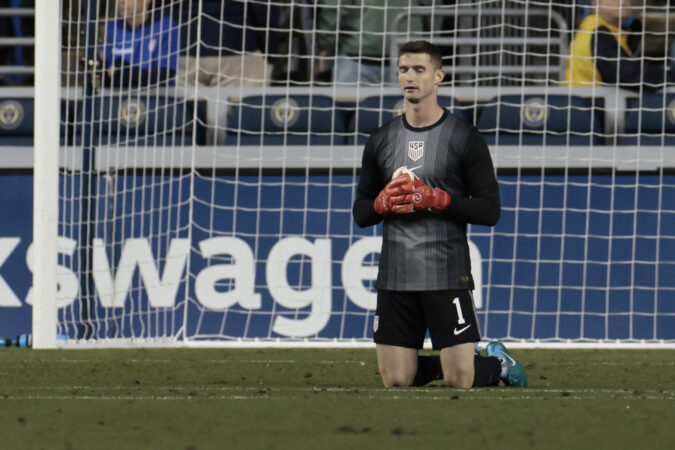
    Analysis: Unless something goes off the rails for Freese, the Wayne native is in line to become the most surprising U.S. starting goalkeeper at a World Cup for generations. He was given a chance in June and has not let it go, playing 13 of the Americans’ 14 games since the start of the summer.

    Schulte, at age 24, is a fine starter in Columbus, a capable backup with the U.S., and a leading name for the 2030 cycle.

    Turner’s fall is as surprising as Freese’s rise. The locked-in starter from the 2021 Gold Cup through this past March is now not just out of games, but out of rosters. Even a move back to New England to get the playing time he lacked in Europe hasn’t gotten him back in Pochettino’s good graces.

    Matt Turner is on the outside looking in with the U.S. squad right now.

    Celentano and Klinsmann, son of former U.S. manager Jürgen Klinsmann, have been in a few U.S. camps. Steffen, of Downingtown, unfortunately is on the outside looking in right now, despite his talent. He’ll have to hope for a strong start next year in Colorado that vaults him over the field.

    Outside backs

    In: Max Arfsten (Columbus Crew), Sergiño Dest (PSV Eindhoven, Netherlands), Alex Freeman (Orlando City), Antonee Robinson (Fulham, England), Tim Weah (Marseille, France)

    Bubble: Kristoffer Lund (FC Köln, Germany), John Tolkin (Holstein Kiel, Germany)

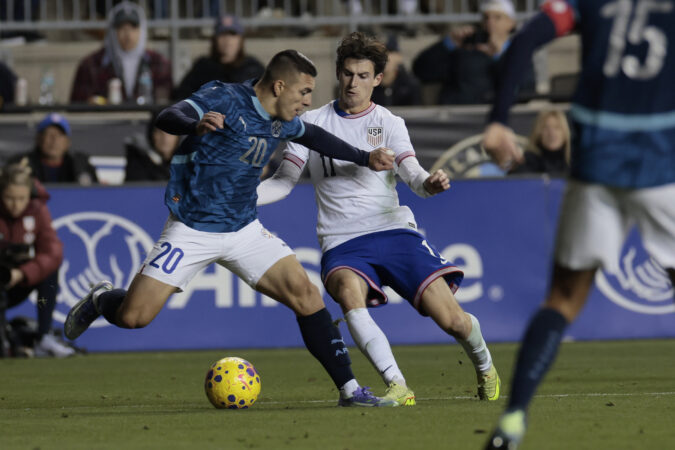
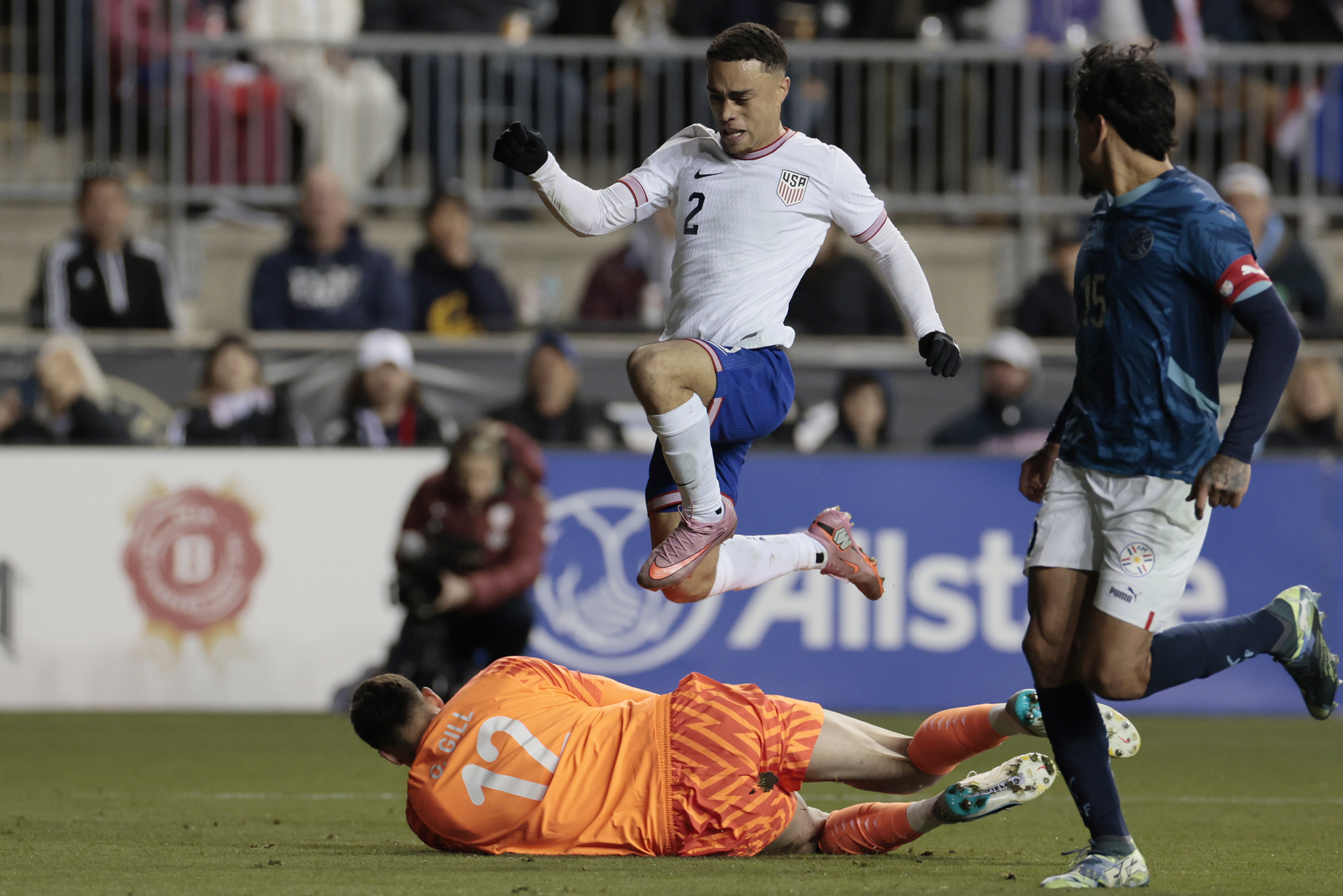
    Sergiño Dest (2) in action against Paraguay at Subaru Park on Saturday.

    Analysis: With one exception, this position is easy to line up. All five of the “in” names are locks to make the squad unless Robinson can’t recover from a long-term knee issue. From here, the view is if he’s healthy on June 1, that’s all that matters.

    Dest and Weah are the other big names, each capable of thriving in the right wingback role and playing the left side if necessary.

    Earlier this year, a reader complained to me on social media that the underwhelming Gold Cup squad might only produce the last players picked for a World Cup squad. I responded that if that was to happen, that squad would be a smashing success, no matter its results.

    Arfsten and Freeman are the proof of that, having shot to well-earned prominence this year. Though they wouldn’t start if the three others are healthy, they are more than capable backups.

    Lund and Tolkin are on the bubble in case Robinson ends up out. Tolkin played well against Uruguay on Wednesday in his first U.S. cap since the Gold Cup; Lund hasn’t been called in since October of last year.

    Centerbacks

    In: Mark McKenzie (Toulouse, France), Tim Ream (Charlotte FC), Chris Richards (Crystal Palace, England)

    Bubble: Noahkai Banks (Augsburg, Germany), Tristan Blackmon (Vancouver Whitecaps), Cameron Carter-Vickers (Celtic, Scotland), Miles Robinson (FC Cincinnati), Joe Scally (Borussia Mönchengladbach, Germany), Auston Trusty (Celtic, Scotland), Walker Zimmerman (free agent, last with Nashville SC)

    Chris Richards working out during a practice in September.

    Analysis: Ream and Richards aren’t just locks, they’re expected starters. The third starting spot is up for grabs, and there’s a lot of competition.

    McKenzie isn’t just projected as in here out of hometown loyalty to the Union alumnus from Bear, Del. His play for the national team and Toulouse puts him above a field in which no one else has truly stepped up.

    From here, the bet is Pochettino will take two more, and the race is wide-open.

    Blackmon has played some for Pochettino but isn’t at the needed level. Carter-Vickers didn’t play for the U.S. in October, a big warning sign, then suffered an Achilles injury at Celtic. Robinson is a U.S. regular but hasn’t quite done well enough to ensure a plane ticket.

    Scally can play multiple positions and is listed here because right centerback is where he projects under Pochettino. After being out of the picture for a while, he played there against Paraguay, got torched on a goal, then didn’t play vs. Uruguay.

    Mark McKenzie (left) and Auston Trusty (right) grew up with the Union together, and could go to the World Cup together.

    Trusty played the full game vs. Uruguay and did well at both ends of the field. Zimmerman is last in line, but if he lands at a big club in MLS free agency and starts the year strong, he could be an emergency option.

    Banks is a big wild card. The 18-year-old Hawaii native stands 6-foot-4, is starting to earn regular playing time at Augsburg, and has held his own in the Bundesliga’s cauldron. Pochettino called him up in September, but hasn’t since. If Banks keeps playing, he might just make it.
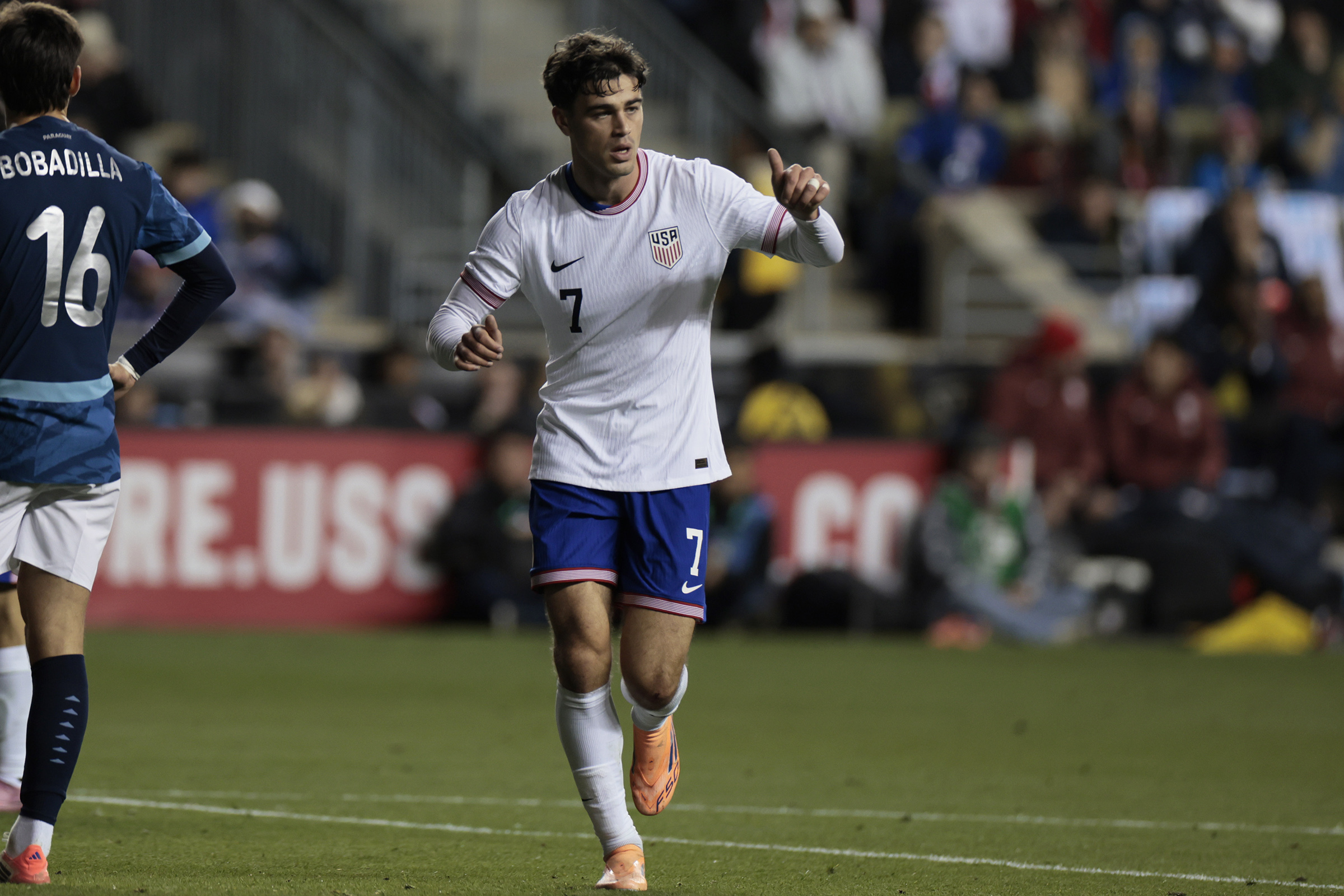
    Central midfielders

    In: Tyler Adams (Bournemouth, England)

    Bubble: Sebastian Berhalter (Vancouver Whitecaps), Johnny Cardoso (Atlético Madrid), Aidan Morris (Middlesbrough, England), Cristian Roldan (Seattle Sounders), James Sands (St. Pauli, Germany), Tanner Tessmann (Lyon, France)

    Tyler Adams (left) is one of the U.S. team’s biggest stars.

    Analysis: Adams is a lock — a star, a veteran, and the team’s most vocal leader. From there, the question will be how deep Pochettino goes at the position.

    Tessmann, Roldan, and Morris lead the way, with Tessmann the closest to a lock. That takes the total to four, and the guess here is one more will make it.
    Berhalter made quite a statement in Tuesday’s win over Uruguay, with a goal and an assist off a corner kick. That puts him ahead for now of Cardoso, who has tons of talent and is at a huge club but has a history of playing poorly for the U.S. He’s also coming off an injury. If he’s healthy by March, he could get one shot at a ticket in that month’s friendlies.

    Sands helps his case with versatility, as he also can play centerback. He got a look in October and wasn’t bad, but he wasn’t called back this month even though there was room for him.

    Attacking midfielders

    In: Brenden Aaronson (Leeds United, England), Weston McKennie (Juventus, Italy), Christian Pulisic (AC Milan, Italy), Malik Tillman (Bayer Leverkusen, Germany), Alejandro Zendejas (Club América, Mexico)

    Bubble: Diego Luna (Real Salt Lake), Jack McGlynn (Houston Dynamo), Gio Reyna (Borussia Dortmund, Germany)

    Union alum and Medford native Brenden Aaronson in action for the U.S. on his former home field at Subaru Park.

    Analysis: The “in” players are locks as long as they’re healthy, with Zendejas the only one close to a question. Pulisic obviously is a starter, with Tillman or McKennie in line to run next to him.

    From there, Pochettino can make subs based on situations. Medford’s Aaronson is an ideal defensive closer, and Zendejas provides width and creativity.

    The last pick could come down to Luna, whom Pochettino rightly adores for his toughness; or Reyna, whose talent is forever followed by injury fears. It would be great to see both make it, but there might not be room unless another position is sacrificed. Reyna has the advantage now and will keep it if he plays regularly for his club.

    McGlynn is a long shot, but a hot streak with Houston next year could bring his magic left foot back to the picture.

    Strikers

    In: Folarin Balogun (AS Monaco, France), Ricardo Pepi (PSV Eindhoven, Netherlands), Haji Wright (Coventry City, England)

    Bubble: Patrick Agyemang (Derby County, England)

    Folarin Balogun (center) might finally be the U.S. team’s long-awaited top striker.

    Analysis: It’s truly remarkable that the highest-profile position is one at which the U.S. has the fewest questions. Never before in the program’s 36-year modern era has there been a striker depth chart with this much quality.

    If Balogun, Pepi, and Wright are healthy, they’ll be on the plane, and that will be it. If any of them are injured — which Pochettino and every U.S. fan will pray doesn’t happen — Agyemang is first in line to come in.
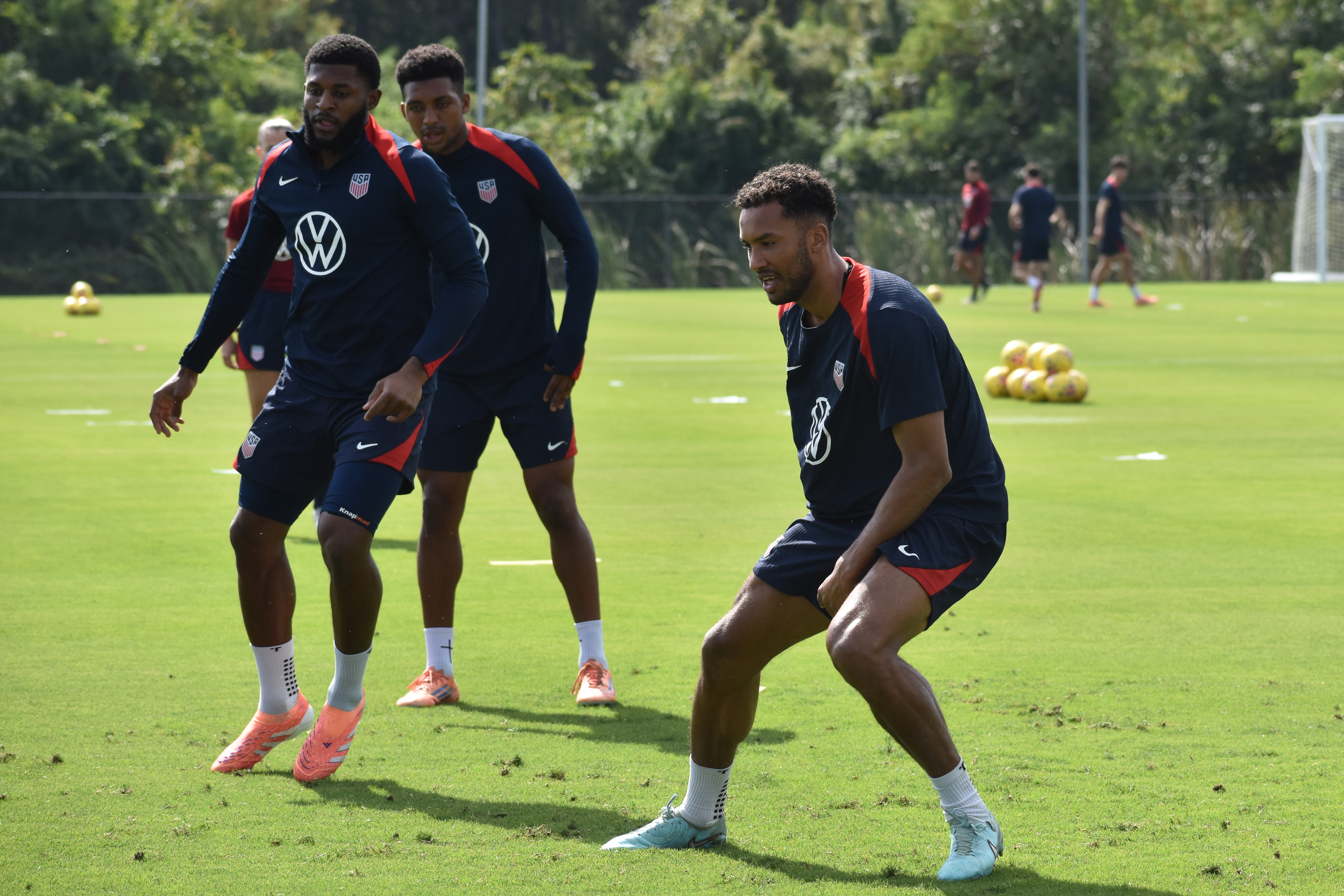
    The field drops so far from there that right now no other strikers truly are in consideration.