Category: Business

Business news and market updates

  • Federal Reserve cuts rates again, signals one more cut amid uncertain outlook

    Federal Reserve cuts rates again, signals one more cut amid uncertain outlook

    The Federal Reserve cut interest rates by a quarter of a percentage point on Wednesday for the third time this year, seeking to shore up a softening labor market even as inflation builds and leaving the prospect of more cuts next year unclear.

    “It’s a labor market that seems to have significant downside risks,” Fed Chair Jerome Powell said at a news conference following the meeting.

    Although Fed officials tentatively penciled in at least one more rate cut before the end of next year, estimates about where the economy is heading varied significantly and Powell suggested the central bank might wait before returning to any additional cuts.

    “We are well positioned to wait and see how the economy evolves from here,” he said.

    Wednesday’s widely expected move lowers the Fed’s benchmark rate to a range of 3.5 to 3.75 percent, the lowest level in about three years. But officials remain sharply divided over how to respond to an economy sending mixed signals: Inflation remains above the Fed’s target, which would typically argue for holding rates steady, while slower hiring and a modest uptick in unemployment suggest a case for easing.

    Investors cheered the news, with major financial indexes ending the day higher on Wednesday afternoon.

    Nine Federal Reserve officials backed Wednesday’s cut while three dissented. Two officials — Chicago Fed President Austan Goolsbee and Kansas City Fed President Jeffrey Schmid — favored no rate reduction, while Fed governor Stephen Miran preferred a larger, half-point cut. It was the most dissent since September 2019.

    In another sign of division among top Fed officials, the latest economic projections also released on Wednesday showed seven officials penciled in no additional cuts next year, while 12 favored at least one or more.

    Fed policies influence what households and businesses pay for mortgages, credit cards and other loans, and investors are watching closely for guidance on the central bank’s next steps.

    The Fed’s job is to keep prices stable and to maximize employment, but it is split on how to navigate what some describe as a light version of stagflation — elevated inflation alongside a labor market that is slowing but far from collapsing. Those divides were exposed at the Fed’s last gathering in October, where officials expressed “strongly differing views about what policy decision would most likely be appropriate,” according to the meeting minutes.

    Further complicating the decision, the Fed received far less official data about the health of the economy, because of the government shutdown that delayed or canceled the release of reports on the jobs market and consumer prices. Some Fed officials, relying on alternative data or surveys of the business community, argued that progress on inflation had stalled and warned that cuts risked undermining hard-won gains. Others countered that rising unemployment and weakening consumer demand suggested a need for action.

    Powell defended cutting rates now rather than waiting for the Fed’s next meeting in late January, when officials will finally have a better sense of the status of economy thanks to a trove of upcoming official reports. Wednesday’s call reflected mounting evidence of a cooling job market, he noted, saying that after readjustments and revisions, job growth may have been slightly negative since spring.

    “I think you can say that the labor market has continued to cool gradually, maybe just a touch more gradually than we thought,” Powell said.

    With unemployment rising to 4.4 percent in September, the Fed no longer characterized that rate as “low,” in a statement announcing the rate cut.

    Former Philadelphia Fed president Patrick Harker said this week that Wednesday’s move is shaping up to be a “hawkish cut” — a rate reduction paired with a signal that policymakers may soon pause further easing. Harker said the Fed’s internal divergence reflects an unusual degree of economic “fog,” with inflation not worsening as much as feared, unemployment claims relatively stable, and labor-market signals increasingly difficult to interpret. He noted that monthly job gains below 100,000 would normally be a red flag, but demographic trends and uncertain immigration patterns complicate the baseline.

    Those disagreements are unfolding amid unprecedented political pressure from President Donald Trump, who has repeatedly criticized the Fed for not moving quickly enough to lower rates and has threatened to fire Powell. Trump renewed those attacks ahead of this week’s meeting, telling Politico that support for aggressive rate cuts is a litmus test for whoever he taps to succeed Powell, whose term as chair expires in May. The president plans to nominate a successor early next year, though he has already signaled he knows who he is likely to pick.

    Former Pennsylvania Sen. Pat Toomey, who was top Republican on the Senate Banking Committee, said he is perplexed by Trump’s push for cuts, because inflation remains above target and the broader economy continues to expand. The data shows cooling — not collapsing — labor conditions, which wouldn’t normally justify an urgent push for easing rates, Toomey said.

    Toomey warned that the president is taking a much bigger political gamble than he appears to realize. If inflation were to spike again, he said, Trump would “completely own” the fallout after pressuring the Fed when “there’s no obvious need to ease.” That makes the campaign for faster rate cuts “surprising,” Toomey said.

    Although Powell secured enough board support to approve Wednesday’s cut, future easing would depend on keeping that alliance.

    The split appears to pit a “hawkish” coalition of regional Fed presidents focused on preventing inflation from resurging against a group of governors in Washington who see the greater risk in a softening economy. Officials such as Cleveland Fed President Beth Hammack, who said she would have preferred not to cut rates in October, have argued that inflation remains stubbornly above the bank’s 2 percent target and warned that reducing rates too soon could keep prices rising.

    Meanwhile, other officials continue to emphasize that a cooling labor market and softening consumer demand call for cuts, to ensure the economy does not slip further.

  • All Amazon Fresh stores, including six in the Philly area, are closing

    All Amazon Fresh stores, including six in the Philly area, are closing

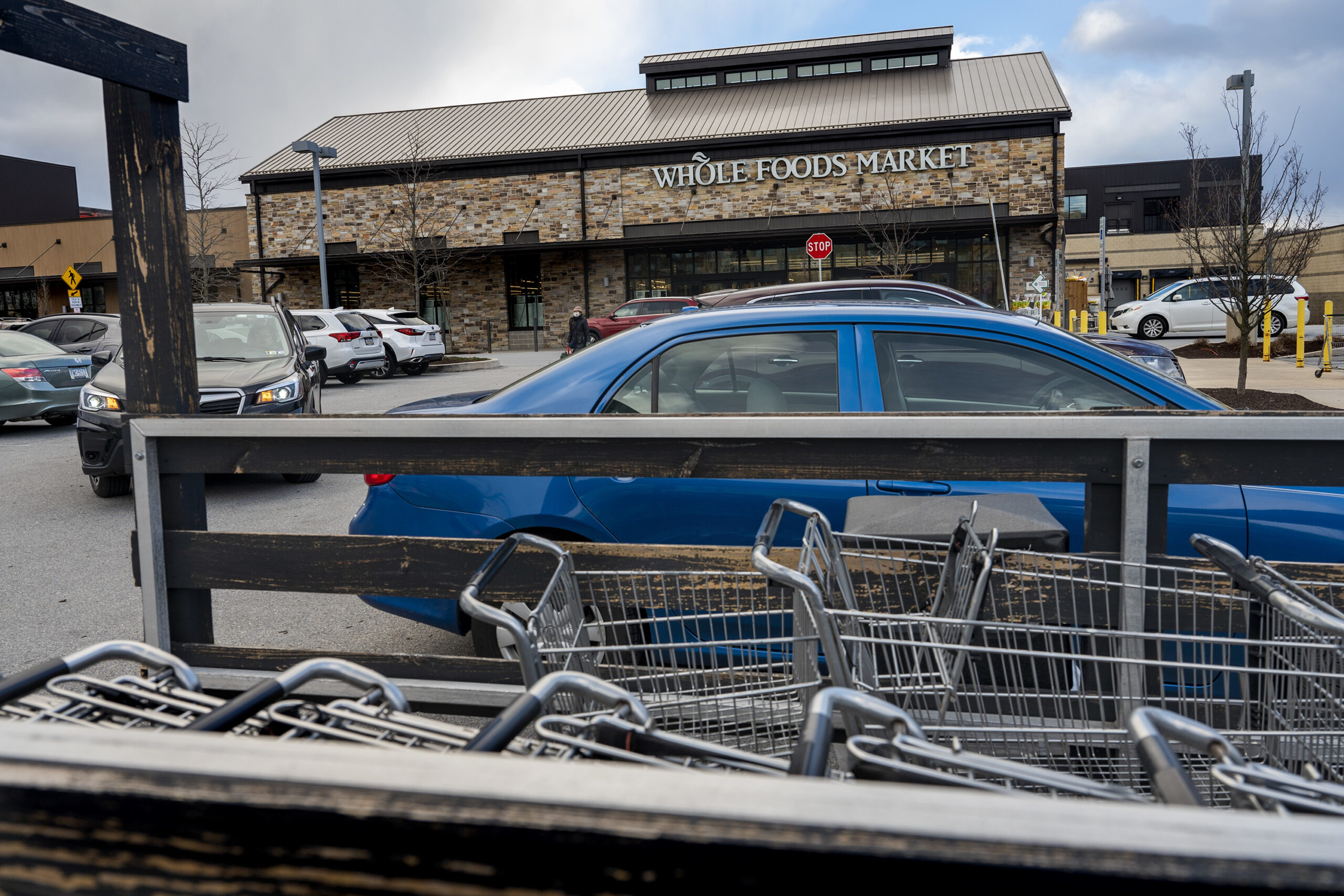
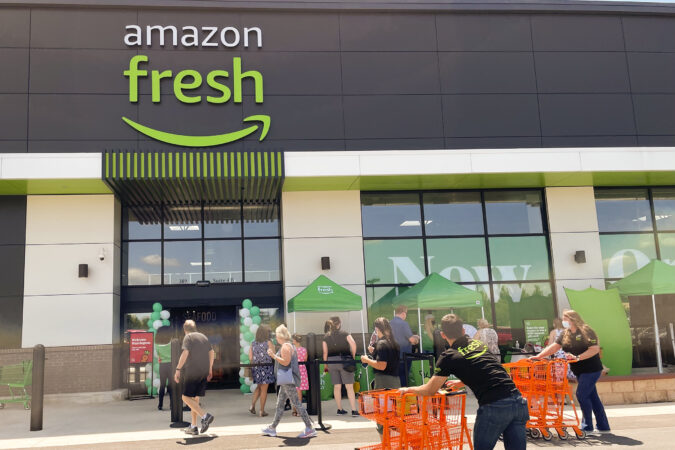
    Amazon will be closing all its physical Amazon Fresh stores, including six in the Philadelphia region, as it expands its Whole Foods footprint and grocery delivery services.

    The e-commerce giant made the announcement in a statement Tuesday, noting that it would convert some Amazon stores into Whole Foods Markets.

    “While we’ve seen encouraging signals in our Amazon-branded physical grocery stores, we haven’t yet created a truly distinctive customer experience with the right economic model needed for large-scale expansion,” the company said.

    People shop inside the Amazon Fresh in Warrington in August 2021. The store and all other Amazon-branded grocers are closing.

    The statement did not specify which Amazon Fresh stores would become Whole Foods, and company spokespeople did not answer questions about whether any Philadelphia-area locations would be converted.

    Amazon Fresh has stores in Broomall, Bensalem, Langhorne, Northern Liberties, Warrington, and Willow Grove. The Northern Liberties location on Sixth and Spring Garden Streets opened this summer after years of construction.

    Two more potential Amazon Fresh stores seemed to be in the works in Havertown and Northeast Philadelphia as of the summer, according to PhillyVoice.

    Customers use the Amazon Dash Cart at the Amazon Fresh grocery store in Warrington in 2021.

    Smaller-format Amazon Go stores, the closest of which are in New York, will also be shuttered or converted.

    As the company winds down its Amazon-branded physical stores, it says it will “double down” on online grocery delivery, including by expanding its same-day services to more communities.

    Amazon’s same-day delivery has been available in the Philadelphia market since 2009. Since December, Amazon has been testing “Amazon Now” delivery — which aims to get groceries to customers in 30 minutes or less — in parts of Philadelphia and Seattle.

    Amazon also said it plans to invest more in physical Whole Foods stores, adding more than 100 stores nationwide in the coming years.

    The Whole Foods store in Exton, as pictured in 2022.

    Amazon said Tuesday that Whole Foods has seen a 40% growth in sales since Amazon purchased the organic-grocery chain in 2017.

    Whole Foods has 550 locations nationwide, including more than a dozen in the Philadelphia area. Amazon spokespeople did not answer questions about whether more Whole Foods stores were in the works in the Philly region.

    Amazon also expects to open at least five more smaller-format Whole Foods Market Daily Shop stores by the end of the year. The company said that decision was based on “strong performance” at the five existing shops in the New York City area and Arlington, Va.

    The Center City Whole Foods Market as pictured in February 2025.

    The online retailer said it plans to continue to experiment with new ways of shopping at its physical stores.

    In its statement, Amazon gave a shout-out to one such test in the Philadelphia area: “The store within a store” experience at the Whole Foods in Plymouth Meeting.

    Since November, customers at that store have been able to browse the physical aisles of Whole Foods, while digitally ordering unique products from Amazon and Whole Foods. The orders are then packaged in minutes in an automated micro-fulfillment center within the grocer’s back-of-house area.

  • TikTok settles as social media giants face landmark trial over youth addiction claims

    TikTok settles as social media giants face landmark trial over youth addiction claims

    LOS ANGELES — TikTok agreed to settle a landmark social media addiction lawsuit just before the trial kicked off, the plaintiff’s attorneys confirmed.

    The social video platform was one of three companies — along with Meta’s Instagram and Google’s YouTube — facing claims that their platforms deliberately addict and harm children. A fourth company named in the lawsuit, Snapchat parent company Snap Inc., settled the case last week for an undisclosed sum.

    Details of the settlement with TikTok were not disclosed, and the company did not immediately respond to a request for comment.

    At the core of the case is a 19-year-old identified only by the initials “KGM,” whose case could determine how thousands of other, similar lawsuits against social media companies will play out. She and two other plaintiffs have been selected for bellwether trials — essentially test cases for both sides to see how their arguments play out before a jury and what damages, if any, may be awarded, said Clay Calvert, a nonresident senior fellow of technology policy studies at the American Enterprise Institute.

    A lawyer for the plaintiff said in a statement Tuesday that TikTok remains a defendant in the other personal injury cases, and that the trial will proceed as scheduled against Meta and YouTube.

    Jury selection starts this week in the Los Angeles County Superior Court. It’s the first time the companies will argue their case before a jury, and the outcome could have profound effects on their businesses and how they will handle children using their platforms. The selection process is expected to take at least a few days, with 75 potential jurors questioned each day through at least Thursday. A fourth company named in the lawsuit, Snapchat parent company Snap Inc., settled the case last week for an undisclosed sum.

    KGM claims that her use of social media from an early age addicted her to the technology and exacerbated depression and suicidal thoughts. Importantly, the lawsuit claims that this was done through deliberate design choices made by companies that sought to make their platforms more addictive to children to boost profits. This argument, if successful, could sidestep the companies’ First Amendment shield and Section 230, which protects tech companies from liability for material posted on their platforms.

    “Borrowing heavily from the behavioral and neurobiological techniques used by slot machines and exploited by the cigarette industry, Defendants deliberately embedded in their products an array of design features aimed at maximizing youth engagement to drive advertising revenue,” the lawsuit says.

    Executives, including Meta CEO Mark Zuckerberg, are expected to testify at the trial, which will last six to eight weeks. Experts have drawn similarities to the Big Tobacco trials that led to a 1998 settlement requiring cigarette companies to pay billions in healthcare costs and restrict marketing targeting minors.

    “Plaintiffs are not merely the collateral damage of Defendants’ products,” the lawsuit says. “They are the direct victims of the intentional product design choices made by each Defendant. They are the intended targets of the harmful features that pushed them into self-destructive feedback loops.”

    The tech companies dispute the claims that their products deliberately harm children, citing a bevy of safeguards they have added over the years and arguing that they are not liable for content posted on their sites by third parties.

    “Recently, a number of lawsuits have attempted to place the blame for teen mental health struggles squarely on social media companies,” Meta said in a recent blog post. “But this oversimplifies a serious issue. Clinicians and researchers find that mental health is a deeply complex and multifaceted issue, and trends regarding teens’ well-being aren’t clear-cut or universal. Narrowing the challenges faced by teens to a single factor ignores the scientific research and the many stressors impacting young people today, like academic pressure, school safety, socio-economic challenges, and substance abuse.”

    A Meta spokesperson said in a statement Monday the company strongly disagrees with the allegations outlined in the lawsuit and that it’s “confident the evidence will show our longstanding commitment to supporting young people.”

    José Castañeda, a Google Spokesperson, said Monday that the allegations against YouTube are “simply not true.” In a statement, he said “Providing young people with a safer, healthier experience has always been core to our work.”

    TikTok did not immediately respond to a request for comment Monday.

    The case will be the first in a slew of cases beginning this year that seek to hold social media companies responsible for harming children’s mental well-being. A federal bellwether trial beginning in June in Oakland, Calif., will be the first to represent school districts that have sued social media platforms over harms to children.

    In addition, more than 40 state attorneys general have filed lawsuits against Meta, claiming it is harming young people and contributing to the youth mental health crisis by deliberately designing features on Instagram and Facebook that addict children to its platforms. The majority of cases filed their lawsuits in federal court, but some sued in their respective states.

    TikTok also faces similar lawsuits in more than a dozen states.

  • How Philadelphia merchants can get help paying for improvements, equipment, and security| Expert Opinion

    How Philadelphia merchants can get help paying for improvements, equipment, and security| Expert Opinion

    Running a retail or restaurant business in Philadelphia isn’t easy.

    But some local programs can provide much-needed cash for specific purposes like equipment purchases, store improvements, and security.

    Here are four to consider.

    The Storefront Development Program

    Operated by the Philadelphia Department of Commerce, the Storefront Development Program provides as much as $15,000 in matching funds to upgrade and beautify your storefront, including masonry and brick pointing, exterior painting, new windows or doors, facade lighting, signage and awnings, see-through security grills, cornices, and similar enhancements. Only businesses in certain commercial corridors are eligible and projects must be planned and approved in advance.

    Justin Coleman, owner of Bake’n Bacon in South Philadelphia, used the program to replace deteriorating windows, update doors, and repaint his storefront’s exterior.

    “The program helped us cover half the expenses for our 11-foot windows, which was a tremendous assistance,” he said. ”The new paint made a significant difference, and the upgrades to the exterior of my business improved visibility and curb appeal.”

    InStore Forgivable Loan Program

    Also administered by the city’s Department of Commerce, the InStore Forgivable Loan Program offers forgivable loans of up to $100,000, which are interest-free for the first five years. They can be used for interior build-outs, equipment purchases, and other improvements.

    Forgiveness is given if the business is open and operating at the same location for the full five-year term. Like the Storefront Development Program, only businesses located in certain areas of the city are eligible.

    Business Security Camera Program

    The city’s Department of Commerce also provides up to $3,000 in matching funds for businesses and property owners that install exterior security cameras through the Business Security Camera Program.

    Companies that participate must register their cameras with the Philadelphia Police Department’s SafeCam system, so police can request access to footage when needed. Participants must either own the property or have permission from the landlord and can only use contractors approved by the city. The application process also requires photos and cost estimates.

    “I wanted to have as many exterior security cameras around my storefront, as there can be a lot going on out there,” said James Singleton, owner of men’s clothing store Smooth Like That in Olney. “These cameras are good for the commercial area, making everyone feel safer.”

    Stabilization grants

    The Merchants Fund was founded in 1854 in Philadelphia to initially support retired merchants with pensions. But today the fund aids active small businesses with financial needs.

    The fund offers stabilization grants, which are intended to help stabilize a business when it can identify a specific issue or challenge that it doesn’t have the financial means to address, said Jill Fink, the fund’s executive director.

    “Often these are capital expenses — equipment, repairs, or improvements — that have a real shelf life, and small businesses simply don’t have the thousands of dollars needed to replace them,” she said. “Our goal is to make an investment that actually fixes something so that the business can keep operating, serve its neighborhood, and in some cases create a new revenue stream.”

    The fund provides one-time grants of up to $10,000 to eligible Philadelphia-based small businesses. They must be independently owned; have a physical storefront, food truck, or kiosk; have been in business for at least two years; and demonstrate financial need, with annual revenue between $50,000 and $750,000. Professional services firms, nonprofits, and real estate, childcare, and eldercare businesses are not eligible.

    At the Link Studios in Old City, which sells hair and beauty products and services, the fund helped owner Carla Clarkson turn an unused space into something functional. She used the grant to buy shelving, storage, air purifiers, heating and air, and paint. She was also able to access coaching and mentorship from other business owners.

    “The networking alone was incredibly valuable,” Clarkson said. “I met other entrepreneurs and nonprofit leaders, and that directly led to new opportunities for my business.”

    Fink, a former business owner, stresses the additional resources that her fund provides beyond just grants.

    “We work to try and find ways to connect businesses with each other because being a small-business owner can be a very lonely place,” she said. “There’s lots of times in their business they might have friends or family that don’t necessarily understand the stress and pressure that a small business is under.”

    When machines at the NV Optical store in West Philadelphia went down, owner Tiffany Easley said, the business couldn’t afford the necessary repairs, and the Merchants Fund was an enormous help.

    “It was less than 30 days from application to repair. The timing lined up perfectly and made a huge difference for our business,” she said. “They don’t just give you money. They understand small business struggles and connect you to resources that are vital to long-term growth.”

    The Merchant Fund’s next enrollment period opens March 15.

    Whether you’re pursuing a City of Philadelphia program or a stabilization grant from the Merchants Fund, your business is expected to be licensed, registered, and have all necessary permits from the city and state. And it must be current on both federal and local taxes or enrolled in an approved payment program.

  • Job titles are out and skills are in, Wharton expert says. Here’s what employers want to see.

    Job titles are out and skills are in, Wharton expert says. Here’s what employers want to see.

    Job hunters beware: Some of the hard-earned skills listed on your resume are going unnoticed by potential employers.

    Workers’ profiles on job posting websites often feature general abilities, like leadership, communication, teamwork, and problem-solving, a recent report from the Wharton School says. But they’re not highlighting the “specialized, execution-oriented skills,” employers are seeking. That’s created a “skills mismatch economy.”

    “People are not representing their skills in a way that’s necessarily resonating with the skills that employers want,” said Eric Bradlow, the vice dean of artificial intelligence and analytics at the Wharton School, who co-authored the report.

    Meanwhile, AI has been speeding the shift from a “role-based labor market to a skills-based economy,” the report outlines, making it all the more poignant to know what skills employers actually want.

    Bradlow says generative AI has been “a positively destructive bomb on roles and titles,” by making workers able to carry out tasks that they didn’t know how to do in the past. So “having a specific job title is becoming less relevant.”

    The Wharton School worked in partnership with Accenture, a professional services firm, to analyze millions of job postings and worker profiles for the report. The study used data from Lightcast, a labor market data provider, and the U.S. Bureau of Labor Statistics. Bradlow spoke with The Inquirer about their findings.

    This conversation has been edited for length and clarity.

    What are some skills included on resumes that don’t make much difference to employers, because everyone seems to have them?

    Do we think it’s important to communicate? Well, yeah, of course, it is. Do we think it’s important to have leadership skills and manage teams well? Yeah, of course. Last time I checked, those were really important parts of the job — but everybody puts that down.

    We’re not saying in the report that those skills aren’t important. What we’re saying is there’s an over supply of people stating those skills, as opposed to companies saying these skills are what’s going to get you the job.

    Companies are realizing that depth of skill is what’s going to be really important.

    Do people lack the specialized skills employers are looking for? Or are they just failing to highlight them on their resumes?

    That’s something, trust me, I wish I could answer.

    If we had people’s transcript data, or if we knew what courses someone had taken, then we could try to get an understanding of what skills people actually have.

    I think two things are going to happen, based on this Wharton-Accenture Skills Index gap report. Number one is, you will see a migration where people [will say,] “I need to acquire those skills, if I don’t have them, if I want a job.” Second, you’ll see [organizations] — whether it’s an academic institution or a for-profit institution — saying, “Wait a second, here, we need more people with this skill. We’ll create a certification program.”

    You found that some skills are actually tied to higher-paying jobs. Was that surprising?

    I’m not sure I had hypotheses about which skills would be paid higher or lower.

    I think maybe the part that surprised me a little bit was that there wasn’t massive swings and variation like “if you have this skill, your salary doubles.” That’s not what we found in the data.

    What advice would you give someone crafting their resume?

    One is talk about the specific skills you have. Every resume I read says “I’m an effective communicator, experienced leader.” That’s fine, but that’s not what’s going to stick out and become differentiated, because everyone’s going to say that. To the degree that you have specific expertise and depth or skills, those are the kinds of things to put on the resume.

    The second thing I would say is that … we should be in the skills acquisition business, be a lifelong learner. Skills will always be valued. Jobs in a particular workflow can go away. People with skills will be hired.

    Take, for instance, a customer-support agent in a customer-satisfaction group. If you’re someone with exceptional problem-solving skills, you’re hearing your customer, and you’re able to tie it to some remedy; that skill is not going to go away even if the job you’re currently in happens to go away.

    What skills are needed more or needed less because of the adoption of AI recently?

    I don’t view it as AI replacing humans. I view AI as that decision-support tool you should use for every decision.

    If I were an employer today, I wouldn’t even consider hiring someone that didn’t recognize the power of artificial intelligence as a decision-support aid. I don’t know what business decision — pricing decision, product launch decision, product design decision, possibly even hiring decision — [for which] I wouldn’t use artificial intelligence as a decision-support tool.

    I would also say, equally, I’m very concerned about the agentic use of AI — in some sense totally handing over high-stakes decisions.

    From where you stand, is AI coming for people’s jobs, as we often hear, or is it coming for their skills? What’s the difference?

    Go through the history of mankind.

    The train engine came. So you mean we don’t need as many horses? Electricity came. You mean we don’t need as much coal? Green energy came, and so now we don’t need as much nuclear fusion?

    Doesn’t technology always come and translate one set of jobs to another set of jobs? It’s not AI is coming for your job. What companies are realizing about AI is there are certain roles and functions that AI can do extraordinarily well, with high accuracy, and in some cases better than humans can do. These tend to be functions, by the way, that many humans don’t like doing anyway.

    I don’t see AI coming for your job any more so than any set of technology. This is an extraordinarily disruptive technology, but we’ve lived through periods of extraordinarily disruptive technology.

  • Why this big water-and-sewer merger doesn’t impress investors, so far

    Why this big water-and-sewer merger doesn’t impress investors, so far

    As shareholders of American Water of Camden and Bryn Mawr-based Essential Utilities prepare to vote Feb. 10 on a merger to create a combined $40 billion private water and sewer company, regulators in New Jersey and Pennsylvania are weighing the company’s latest rate increase requests.

    American Water’s New Jersey affiliate filed for an average 10% water and 8% sewer rate hike on Jan. 16 for 2.9 million customers in that state, which it said would fund improvements to aging water and sewer systems, if approved by the Board of Public Utilities. Customers would pay an average of $18 more a month.

    Pennsylvania’s Public Utility Commission said last month that it would consider the company’s request to boost water and sewer rates on 2.4 million customers by an average 15%, or $20 a month.

    Investors are showing no great interest in the deal between American Water and Essential. American Water shares fetched over $140 for most of last year but closed Friday at $130.74 and have been trading at close to that discount since CEO John C. Griffith announced the deal in October.

    Essential, which operates the Aqua America water utilities and Pittsburgh’s natural gas utility, has so far shown none of the premium that typically enriches shareholders of a healthy company as it is to be acquired. It closed Monday at $39.32, flat from its preannouncement price.

    The merger “would be highly favorable” for American Water in many ways but not so good for shareholders of Essential, which negotiated only with American Water and didn’t look for a better offer from other potential buyers such as France’s Veolia or Florida-based NextEra, according to Ryan Connors, a Bucks County-based utilities analyst who’s been following both companies for 20 years.

    American Water says planning for the merger is advancing as the vote approaches. Vice president Jimmy Sheridan and past Essential chief operating officer Rick Fox head an integration planning team, and they hired consultant McKinsey & Co. to help.

    Inside recent rate-hike hearings

    Though they’ve been competing for more than a century, both companies, like the handful of other private water operators active in the U.S., have faced grassroots opposition to privatizing water distribution.

    The Pennsylvania Supreme Court on Jan. 21 crushed American Water’s yearslong campaign to take over the Chester Water Authority, which serves 40, mostly affluent, suburbs in Chester and Delaware Counties and a Lancaster County township. The court ruled the counties, which oppose a sale, can block the deal, which cash-strapped Chester City’s state-appointed financial administration favored.

    Analyst Connors, who sat through recent American Water rate hearings in Harrisburg, Scranton, and in Exeter Township, Berks County, says that company has been making a more effective case recently for the Pennsylvania rate hikes it will need to keep updating and eventually acquiring more municipal systems.

    In Exeter, it was American Water staff and vendors who packed seats for a state regulatory hearing on the company’s latest rate increase. Vocal opponents who dominated the last such hearing two years ago stayed home. Connors said their leaders told him they felt “defeated” that rates still went up despite the 2024 protests, though not as much as the utility wanted.

    Another “parade of vendors,” recruited openly by American Water, dominated a recent Harrisburg city rate hearing and testified in the company’s favor, Connors told clients of Northcoast Research in a Jan. 21 report.

    In the latest round of rate-hike hearings, only in Scranton did state, county, and city officials show up to complain about repeated increases by American Water’s Pennsylvania-American Water Co. affiliate. “The recurring theme could not have been more clear, with nearly every politician stressing the rapid-fire rate increase requests in recent years,” Connors said.

    How much is Essential worth?

    Buying Essential’s Aqua-Pennsylvania water companies would add Aqua’s customers in some of Pennsylvania’s richest towns to American Water’s rate base. American Water has been “socializing” its rates to subsidize poor towns, Connors noted.

    But Connors is still urging Essential shareholders to vote against the merger, defying chief executive Christopher Franklin and the company’s board.

    American Water’s offer “undervalues” Essential shares and creates “fundamental risks,” including pressure on American Water to avoid rate increases to prevent political opposition in Pennsylvania, Connors said.

    He cites estimates of Essential’s real value from the statement sent to shareholders urging them to approve the deal. Bank of America, the buyer’s adviser, said Essential is worth as much as $63 a share, considering its assets and cash flows.

    Essential’s adviser, Moelis & Co., says its cash flows imply the company is worth as much as $52 a share, a roughly 25% premium over its current price.

  • How to prepare your taxes for free and avoid identity theft

    How to prepare your taxes for free and avoid identity theft

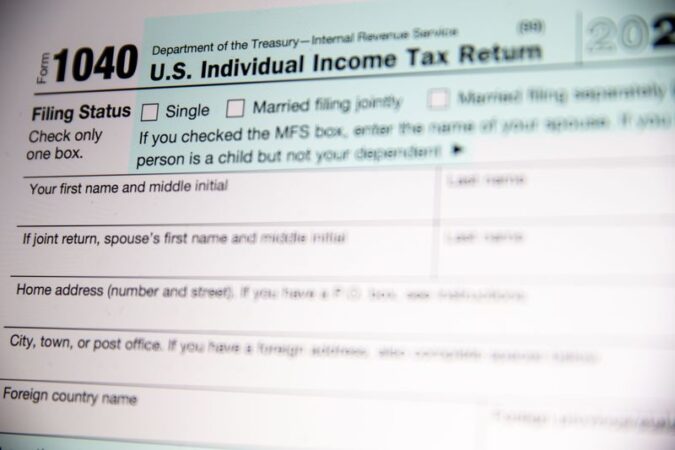
    Each year, Americans spend an average of $240 to prepare and file their tax returns, according to the IRS Taxpayer Advocate Service. And the process is so complicated that about a million taxpayers who could get money back don’t file returns, allowing the U.S. Treasury to keep more than $1 billion of their money.

    Many taxpayers can get free assistance preparing and filing their returns. Below is a rundown of available services, who is eligible, and how to avoid scams.

    All these prep-and-filing options require you to track down documents and then enter or verify data. Fortunately, most websites are easy to navigate. Instead of filling out complicated forms and instructions, you answer simple questions, such as “Do you have children living with you?” and “Did you have interest income from a bank, savings, or investment account?”

    Warning: Don’t search the internet using terms such as “file my taxes for free” — you could end up on the website of a scammer, or even a well-known tax-prep brand that will charge you hefty fees. Instead, use the links provided in this article, or go to irs.gov.

    Free services from tax-prep companies

    Several tax-prep companies provide free online resources for those with low- or moderate-low incomes.

    “Free File” is a partnership between the IRS and eight companies (the IRS calls them “trusted partners”) to provide free tax preparation and filing services for individuals and families with adjusted gross incomes of $89,000 or less.

    This year, the participating companies are: 1040.com, 1040NOW.net, ezTaxReturn.com, FileYourTaxes.com, FreeTaxUSA.com, OLT.com, TaxAct.com, and TaxSlayer.com.

    In addition to the income threshold requirement, each company sets its own eligibility rules based on age, state residency, and other factors. Some companies charge fees to prepare and/or file state income tax returns. Click here for a list of participating companies and links to their eligibility requirements.

    Although H&R Block and TurboTax, the most popular tax-prep software companies, do not participate in the IRS’s Free File program, they do offer free online prep-and-filing services to those with relatively simple tax returns. In general, you can use these two companies’ free options if you had wages reported on a W-2, had only one job, take the standard deduction, and are entitled to the most common credits, such as the child tax credit or earned income credit. H&R Block says 55% of taxpayers can use its free option; TurboTax estimates 37% can use its free online software.

    Free tax-prep help for low-income taxpayers

    The Volunteer Income Tax Assistance (VITA) program helps community organizations offer free basic tax preparation help, using IRS-certified volunteers, generally to households with adjusted gross incomes of $67,000 or less or to those with disabilities. Some programs specialize in assisting those who speak limited English. Selected help centers also have workstations where taxpayers can input info and electronically file their own tax returns with or without the assistance of an IRS-certified volunteer. Click here for a searchable database of VITA in-person-help sites.

    VITA also operates GetYourRefund.org, a website offering free tax-prep software. It was built by Code for America, a nonprofit organization, with help from the IRS. To qualify, you must meet income requirements (in general, it’s limited to individuals and families with adjusted gross incomes under $89,000 per year).

    Instead of meeting in person with a tax-prep volunteer, with GetYourRefund.org you upload your tax documents to its website and provide basic information. A VITA volunteer completes your return and then a second volunteer reviews it; you likely will be contacted several times with questions. It usually takes two or three weeks to complete the process.

    If you don’t need any help, you can also use the website to file your return for free.

    Free tax-prep help for older taxpayers

    Similar to VITA, the Tax Counseling for the Elderly (TCE) program helps community nonprofits provide free tax help to older adults. In general, you must be 60 or older, but some sites will help those in their 50s with low-to-moderate incomes. The AARP Foundation’s Tax Aide program staffs most sites, and many advisers specialize in pension and retirement issues unique to seniors. Between now and April 15, use the AARP’s “Tax-Aide Site Locator” webpage to find nearby help.

    At some TCE locations, you can prepare and file your own return on-site for free using tax-prep software and with help from a volunteer. This option is available only at locations that list “Self-Prep” in the AARP online site finder tool.

    Free tax-prep help for military and recent veterans

    MilTax is a free resource backed by the Department of Defense for service members, eligible family members, survivors, and recent veterans (up to 365 days from their separation or retirement date).

    It includes tax preparation and electronic filing software, as well as personalized support from military tax experts. MilTax assists with issues involving deployments, combat and training pay, housing, and multistate filings. Eligible service members (and some veterans) can use MilTax to electronically file a federal tax return and up to three state returns for free. Get free one-on-one tax help from MilTax experts over the phone by calling 800-342-9647, use the live chat feature, or visit a VITA location for in-person help.

    Protect against fraud

    There are several steps you can take to protect yourself against tax-related identity theft.

    First, don’t answer phone calls or respond to texts or emails that say they’re from the IRS. Its agents send all notices via mail; they won’t ever call you out of the blue.

    Also, be on the lookout for warning signs of fraud. Monitor your mail. Most victims don’t realize they’ve been targeted until they send in their tax return and receive a warning letter from the IRS that more than one return was filed with their Social Security number, or that they didn’t declare all their income from a company they didn’t work for. Other IRS notifications that could indicate a problem: an online account that you didn’t open was created in your name, or you were assigned an employee identification number that you didn’t request.

    A simple but effective way to prevent tax identity theft is to request an identity protection PIN (IP PIN) from the IRS. This unique six-digit number prevents anyone else from using your Social Security Number or individual taxpayer identification number (ITIN) to file a return in your name. It’s like freezing your credit files to lock out the bad guys. (Note: The IP PIN is different from the five-digit PIN you may use to sign your return electronically.)

    It takes only minutes to create an IP PIN. You will first need to have or create an online IRS account or visit an IRS Tax Assistance Center. And you’ll need to obtain a new number each year.

    Hundreds of thousands of Americans become victims of tax-related identity theft each year. Committing the crime has become easier because so much personal information has been exposed through massive data breaches. The average time to resolve tax-return-theft claims is nearly two years.

    Delaware Valley Consumers’ Checkbook magazine and Checkbook.org is a nonprofit organization with a mission to help consumers get the best service and lowest prices. It is supported by consumers and takes no money from the service providers it evaluates. Until March 5, Inquirer readers can access Checkbook’s ratings and advice free at Checkbook.org/Inquirer/taxes.

  • Iron Hill Brewery could be revived in some locations as judge OKs trademark acquisition

    Iron Hill Brewery could be revived in some locations as judge OKs trademark acquisition

    Iron Hill Brewery may get a second life.

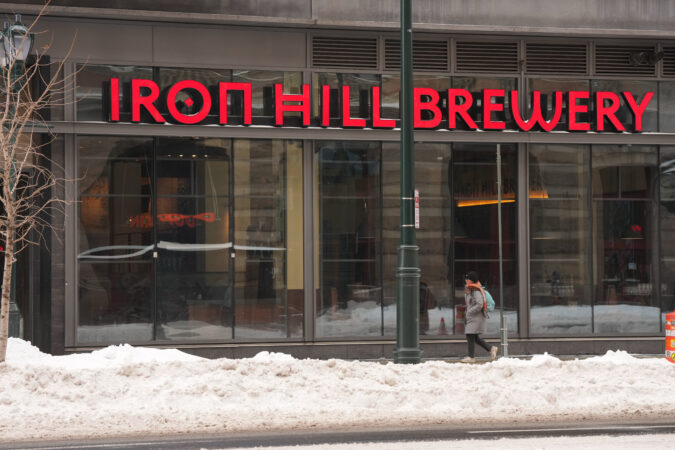
    Four months after the chain closed nearly 20 locations and filed for bankruptcy, a federal judge has approved the acquisition of Iron Hill’s trademark and intellectual property in conjunction with the transfer of five restaurant leases, including one in Philadelphia, according to court documents filed over the weekend.

    The shuttered brewpubs in Center City, Huntingdon Valley, Hershey, Lancaster, and Wilmington are set to be taken over by new tenants, each of which is referred to as “IHB” in the documents. Earlier this month, these tenants registered as business corporations under “IHB” and the name of each location, according to state records in Pennsylvania and Delaware.

    Judge Jerrold N. Poslusny Jr. also approved a written agreement that allowed for “Rightlane LLC” to assume Iron Hill Brewery’s trademark and intellectual property, according to the same filing in U.S. Bankruptcy Court in New Jersey.

    A view from the outside looking in on a closed Iron Hill Brewery.

    Jeff Crivello, the former CEO of Famous Dave’s BBQ, was originally set to buy the assets of these five Iron Hill locations, along with those of five others that he has since sold.

    On Monday, Crivello confirmed that the assets of his five remaining Iron Hills, along with the brand’s trademark and intellectual property, had been acquired by a buyer called Right Lane.

    There are several companies that go by the name Rightlane or Right Lane. Attempts to reach representatives of the Right Lane that was involved in the Iron Hill deal were unsuccessful.

    The deal could revive some prime real estate in the Philadelphia region. In Center City, the 8,500-square-foot restaurant was meant to help revitalize the troubled Market East. In Wilmington, Iron Hill had renovated its 10,000-square-foot restaurant on the waterfront.

    In December, Crivello had hinted at the possibility of an Iron Hill resurrection, saying, “We’re working with a couple buyers that want to reopen [closed breweries] as Iron Hill.”

    Iron Hill Brewery, which was founded in Newark, Del., developed a loyal following over its nearly 30 years in business. Fellow business owners and brewers considered it a pioneer in the local craft beer scene and a restaurant that helped put suburban downtowns like West Chester and Media on the map. Customers said they loved its family-friendly atmosphere.

    In more recent years, Iron Hill opened a production facility in Exton, started canning its beers, and unveiled new locations in Philadelphia, South Carolina, and Georgia. This expansion occurred against the backdrop of the coronavirus pandemic and a nationwide decline in consumers’ thirst for beer and other alcohol.

    For Iron Hill, it did not prove a winning strategy. By the time the chain filed for liquidation bankruptcy this fall, it owed more than $20 million to creditors and had about $125,000 in the bank.

    Since then, massive shells of former breweries have sat vacant throughout the region. As the case made its way through bankruptcy court, landlords were delayed in their searches for new tenants.

    Many locations still remain empty, with no word on what might fill the spaces. But in some spots, there are signs of life.

    The company that owns P.J. Whelihan’s may be moving into the former Iron Hill in Newtown, Bucks County.

    Last month, PJW Opco LLC, which is registered at the headquarters of PJW Restaurant Group, was approved to take over a lease for an 8,000-square-foot closed Iron Hill in the Village at Newtown shopping center.

    In South Carolina, Crivello has sold the assets of the former Iron Hills in Columbia and Greenville to Virginia-based Three Notch’d Brewing Co.

    This story has been updated to reflect additional information about Right Lane.

  • Fitness classes, juice bars, and cryotherapy: The new, upscale gym coming to Cherry Hill and Lower Merion

    Fitness classes, juice bars, and cryotherapy: The new, upscale gym coming to Cherry Hill and Lower Merion

    Boutique gym Club Studio Fitness is expanding to the Philadelphia area with new locations in Cherry Hill and Wynnewood.

    Club Studio is set to take over 30,240 square feet at Cherry Hlil’s Ellisburg Shopping Center in the former BuyBuy Baby storefront. The gym is expected to open in spring 2027.

    The Cherry Hill gym will be Club Studio’s second New Jersey gym. The California-based chain opened its first Garden State location in Edgewater in May.

    A rendering of the Club Studio Fitness gym slated to open in the Ellisburg Shopping Center in Cherry Hill, N.J., in spring 2027.

    The high-end gym chain is also set to open on the Main Line late this year. Club Studio will take over a 50,000-square-foot space in the Wynnewood Shopping Center, a space formerly home to Bed Bath & Beyond. The Wynnewood gym is expected to open toward the end of 2026.

    Both shopping centers are owned by Federal Realty Investment Trust, a Maryland-based real estate trust with a large Philadelphia-area footprint.

    The addition of Club Studio is “an exciting new chapter for Wynnewood Shopping Center” that continues “the evolution towards more relevant shopping, dining, and now, wellness” experiences, Jeffrey Fischer, Federal Realty’s vice president of leasing, said in a news release.

    The Cherry Hill and Wynnewood gyms will have boutique fitness classes; free weights areas; strength and functional training zones; cardio equipment; juice bars; cryotherapy and red-light therapy; and personal stretch stations.

    Club Studio is planning to open another Pennsylvania location in Collegeville. The chain has around a dozen locations across the U.S., with a large presence in California, and has around 20 new gyms in the works, according to its website.

    This suburban content is produced with support from the Leslie Miller and Richard Worley Foundation and The Lenfest Institute for Journalism. Editorial content is created independently of the project donors. Gifts to support The Inquirer’s high-impact journalism can be made at inquirer.com/donate. A list of Lenfest Institute donors can be found at lenfestinstitute.org/supporters.

  • Stranded by winter weather? Here’s what airlines owe you.

    Stranded by winter weather? Here’s what airlines owe you.

    Winter weather can upend even the best-laid travel plans, but one less thing to worry about is losing money if your flight is canceled: U.S. airlines are required to provide refunds.

    A monster storm started to wreak havoc across parts of the country over the weekend, with 12,200 weekend flights and counting canceled. Forecasters warned that catastrophic damage, especially in areas pounded by ice, could rival that of a hurricane.

    Here’s a guide for winter travelers as flight disruptions pile up:

    Keep an eye on weather forecasts

    When airlines expect bad weather to create problems for flights, they often give travelers a chance to postpone their trips by a few days without having to pay a fee. Search online for your airline’s name and “travel alerts” or similar phrases to look for possible rescheduling offers.

    American Airlines, for example, said it is waiving change fees for passengers impacted by the storm and adding extra flights around the country in an effort to help passengers reach their destination after the storm passes.

    Check before going to the airport

    Use the airline’s app to make sure your flight is still on before heading to the airport.

    Cancellations can happen hours — or even days — before departure time. Consider American and Delta Air Lines: By midday Saturday, each carrier had canceled more than 1,000 of its scheduled Sunday flights, according to flight tracking site FlightAware.

    Oklahoma’s largest airport suspended all flights Saturday, while Dallas–Fort Worth International Airport, a major hub, saw more than 700 departing flights canceled and nearly as many arriving flights called off. Flight disruptions also were stacking up at airports in Chicago; Atlanta; Nashville; and Charlotte, N.C.

    Disruptions continued to intensify on Sunday.

    My flight was canceled, now what?

    If you’re already at the airport, get in line to speak to a customer service representative. If you’re still at home or at your hotel, call or go online to connect to your airline’s reservations staff. Either way, it helps to also research alternate flights while you wait to talk to an agent.

    Most airlines will rebook you on a later flight for no additional charge, but it depends on the availability of open seats.

    Snow is plowed in the East Falls section of Philadelphia on Monday.

    Can I get booked on another airline?

    You can, but airlines aren’t required to put you on another carrier’s flight. Some airlines, including most of the biggest carriers, say they can put you on a partner airline, but even then it can be a hit or miss.

    Am I owed a refund?

    If your flight was canceled and you no longer want to take the trip, or you’ve found another way to get to your destination, the airline is legally required to refund your money — even if you bought a non-refundable ticket. It doesn’t matter why the flight was canceled.

    The airline might offer you a travel credit, but you are entitled to a full refund. You are also entitled to a refund of any bag fees, seat upgrades or other extras that you didn’t get to use.

    When will I get my refund?

    If you paid with a credit card, a refund is due within seven business days after you decline an offer from the airline for another flight or a voucher, and within 20 calendar days if you paid for the ticket with a check or cash, according to the U.S. Department of Transportation.

    What else will my airline cover?

    U.S. airlines aren’t required by the Transportation Department to compensate passengers for meals or lodging when an airline cancels or significantly delays a flight during an “uncontrollable” event like bad weather.

    Each airline, however, does have its own policies for assisting passengers who are stranded by a so-called “controllable” flight cancellation or long delay. These include disruptions caused by maintenance issues, crew shortages, or computer outages that halt operations. The Transportation Department can hold airlines accountable for these commitments and maintains a website that lets travelers see what each airline promises if a major disruption is their fault.

    Other tips

    If the weather forecast is troubling, Kyle Potter, executive editor of Thrifty Traveler, suggests looking into booking a backup flight. Some airlines stand out as potential backups, Potter says, because they let customers get a full refund as long as they cancel within 24 hours of booking.

    The customer service phone lines will be slammed if flight cancellations and delays start stacking up during a bad storm. If you’re traveling with someone who has a higher frequent-flyer status, call the airline using their priority number. Another trick: Look up the airline’s international support number. Those agents can often rebook you just the same.