Category: Business

Business news and market updates

  • Campbell’s exec loses job after alleged racist comments and claims of 3D-printed chicken, company says

    Campbell’s exec loses job after alleged racist comments and claims of 3D-printed chicken, company says

    Campbell’s Co. said on Wednesday that a vice president reportedly caught on an audio recording disparaging the Camden-based soup giant’s products — claiming the company uses bioengineered meat, which Campbell’s denies — and allegedly making racist comments is no longer an employee.

    The allegations emerged after Robert Garza, another former employee, filed a lawsuit last week claiming that he was fired for reporting in January to his manager that Martin Bally, who had a position at Campbell’s as chief information security officer, had made problematic comments to him during a meeting in November 2024.

    According to the five-page lawsuit, Bally “made several racist comments about Indian workers at the company.”

    Bally also told Garza that Campbell’s products were highly processed food for “poor people,” according to the lawsuit, which was filed in Michigan, where both Garza and Bally live and worked for the company.

    Garza, who worked as a cybersecurity analyst for Campbell’s, did an interview last week with WDIV-TV, an NBC affiliate in Detroit, and provided at least some portions of secretly recorded audio of the meeting to the station for broadcast.

    The audio recording is not mentioned in the lawsuit. However, it is legal in Michigan for one party in a conversation to make a recording without the consent of the other party.

    The person in the recording, alleged to be Bally, says: “We have s— for f— poor people.” The speaker then acknowledges rarely buying Campbell’s products, saying they are unhealthy.

    The voice says that Campbell’s uses “bioengineered meat. I don’t wanna eat a piece of chicken that came from a 3D printer.” The speaker then goes on to make racist comments about coworkers.

    “After a review, we believe the voice on the recording is in fact Martin Bally,” Campbell’s Co. said in a statement on Wednesday.

    “The comments were vulgar, offensive and false, and we apologize for the hurt they have caused. This behavior does not reflect our values and the culture of our company, and we will not tolerate that kind of language under any circumstances,” the company said.

    “As of November 25, Mr. Bally is no longer employed by the company,” Campbell’s said.

    Bally could not be reached for comment on Wednesday.

    Campbell’s said in its statement that the company makes food from high-quality ingredients, including real chicken meat.

    “We’re thankful for the millions of people who buy and enjoy our products and we’re honored by the trust they put in us,” the company said.

    Campbell’s has a new page on its website to answer questions about its food that were raised by the former vice president’s alleged comments.

    One section responds to the question: “Is Campbell’s chicken 3D printed?”

    “No. We do not use 3D-printed chicken, lab-grown chicken, or any form of artificial or bioengineered meat in our soups,” the website said.

    On Monday morning, James Uthmeier, the attorney general of Florida, responded to a post on X from an account apparently based in Ohio raising concerns about “FAKE MEAT that comes from a 3-D printer.”

    Uthmeier said: “Florida law bans lab-grown meat. Our Consumer Protection division is launching an investigation and will demand answers from Campbell’s.”

  • Trail project planned near King of Prussia Mall gets new funding

    Trail project planned near King of Prussia Mall gets new funding

    A trail planned in Montgomery County is getting new funding to take the project to the next step.

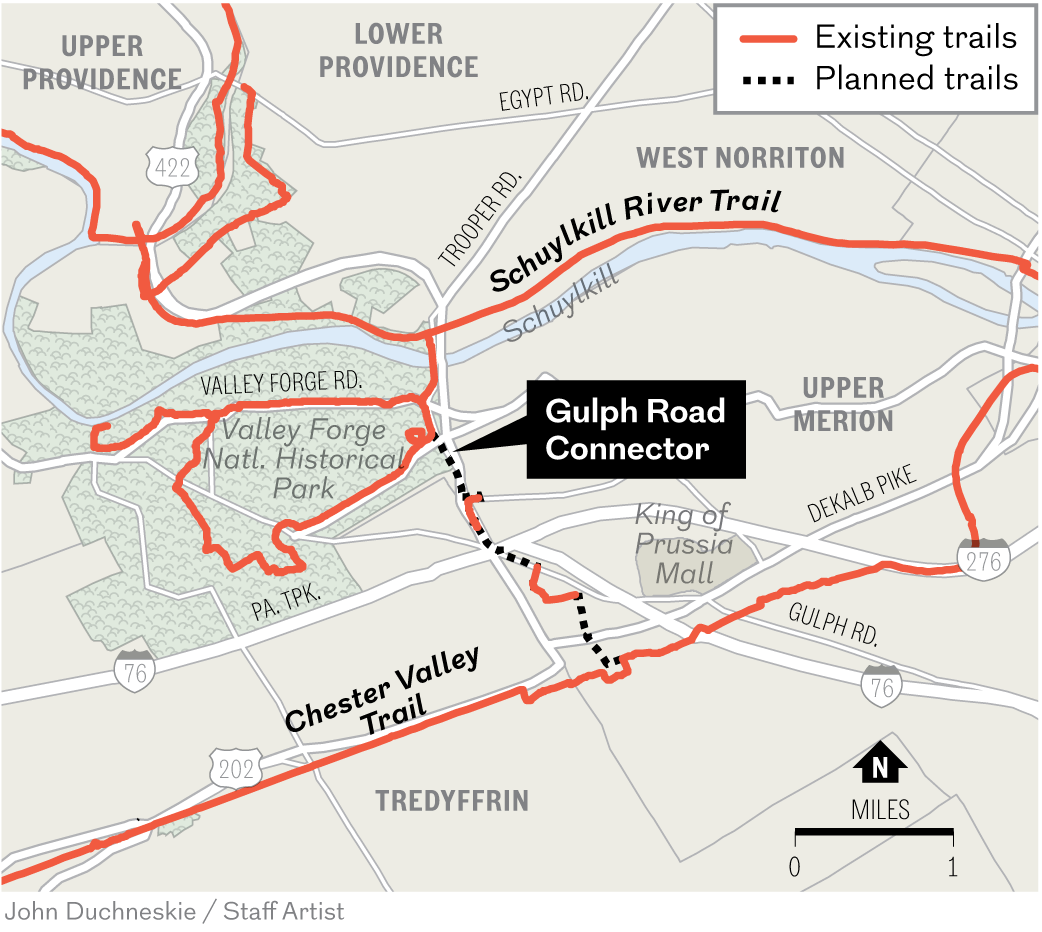
    The “Gulph Road Connector,” as it is currently called, is slated to connect to the Chester Valley Trail near the King of Prussia Mall, cross through Valley Forge National Historical Park, and link with the Schuylkill River Trail when completed.

    The project was recently awarded a three-year $326,900 grant from the William Penn Foundation, which will begin in January, said Eric Goldstein, president and CEO of the King of Prussia District, which is leading the project. The official name of the trail has not been determined.

    The influx of funds is slated for education, advocacy, and marketing, said Goldstein, who noted that the foundation is supporting “efforts to build a coalition of advocates” for the trail. The money will not be used for design or construction.

    Segments of the planned 2.8-mile trail connector are in stages of design and construction, with some already built, Goldstein said.

    “What we’re trying to do is ultimately fill in the blanks to make the 2.8-mile section complete,” he said.

    Goldstein said the new funds will allow the King of Prussia District to work with different partners along the trail. The aim is to build a coalition and raise awareness of the proposed trail, which ideally would lead to more grant money down the line for design and construction, he said.

    Map of the planned Gulph Road Connector trial near King of Prussia.

    The new funding is “the impetus for this trail to start moving toward completion,” said Molly Duffy, executive director of the Valley Forge Park Alliance, a partner organization in the trail’s development.

    There is no estimate yet for the total cost of the project, Goldstein said.

    The project is part of the Circuit Trails, a regional network that aims to have more than 850 miles of trails through nine counties. Once the trail is built out, Goldstein said, he expects it will be managed by multiple entities, depending on the section.

    He hopes to be able to complete the trail in the next 10 years.

    Some parts of the trail are “enormously complex,” he noted, adding that pedestrian bridges over sections of highway would require complex engineering and be costly — which requires raising funds.

    While the trail is expected to be used for recreation, it could also be an option for commuting to work.

    “The second audience of this proposed trail network is employees that work in Upper Merion Township that are seeking alternative modes of transportation to get to and from work,” he said.

    The trail also could make Valley Forge National Historical Park more accessible by ways other than driving, Duffy said.

    “We want people to be able to get here,” Duffy said. “Knowing where this is — in this super densely populated suburban area — we know that there’s this missing link, really, between these two major trails that, once built, will literally connect thousands and thousands of people who live in the area, work in the area, are visiting the area.”

  • Jean E. Corrigan, former Montgomery County manager and longtime assistant to then-State Rep. Josh Shapiro, has died at 70

    Jean E. Corrigan, former Montgomery County manager and longtime assistant to then-State Rep. Josh Shapiro, has died at 70

    Jean E. Corrigan, 70, of Roslyn, Montgomery County, retired fleet and operations manager for the Montgomery County Department of Assets and Infrastructure, onetime constituent services representative for then-State Rep. Josh Shapiro, hair salon owner and operator, disability services advocate, and award-winning volunteer, died Saturday, Nov. 22, of non-alcoholic cirrhosis of the liver at her home.

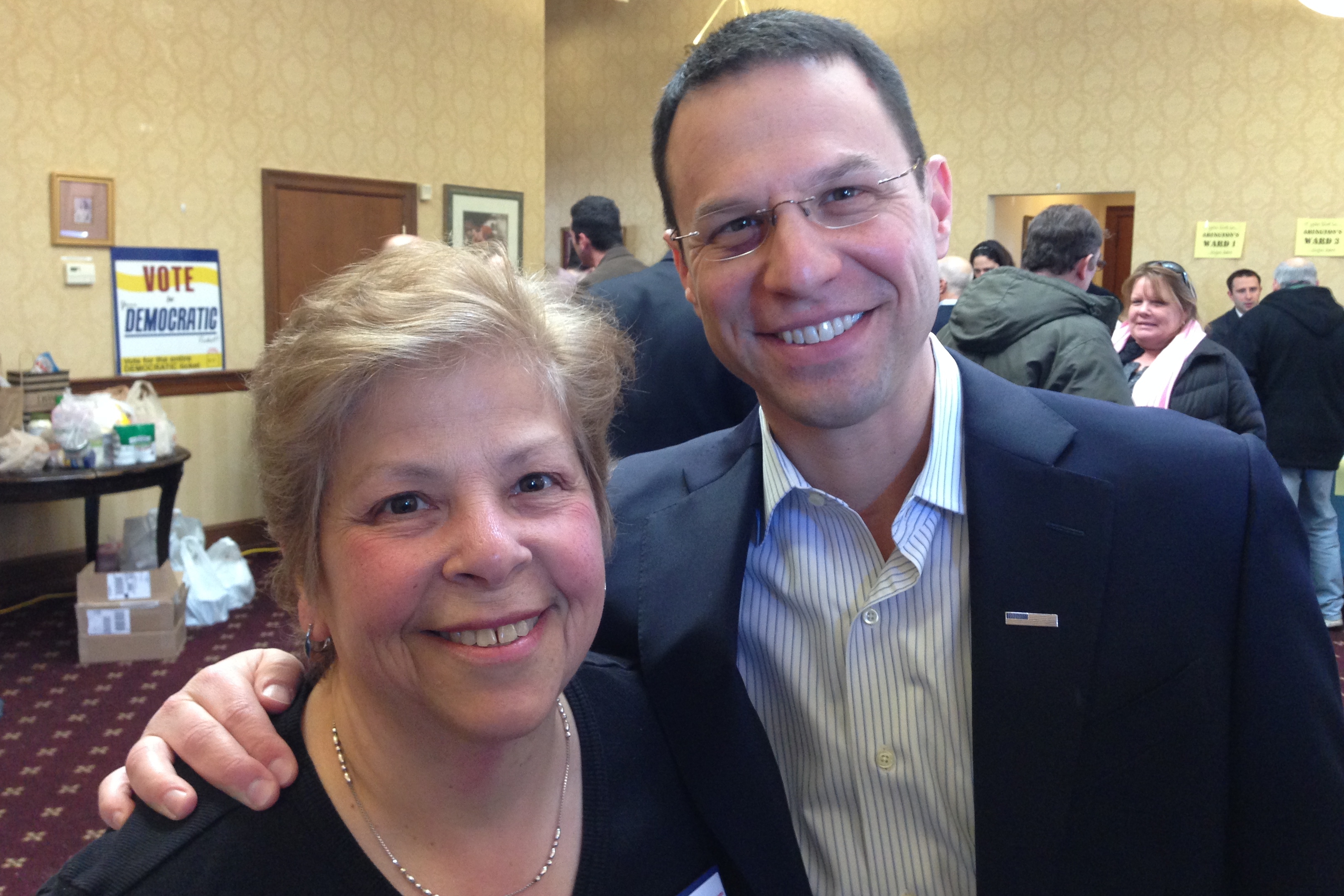
    A lifelong resident of Glenside and nearby Roslyn, Mrs. Corrigan was vice chair of the Abington-Rockledge Democratic Committee from 1995 to 2013, and served as Gov. Shapiro’s constituent service agent when he represented the 153rd Legislative District in the Pennsylvania House of Representatives from 2004 to 2012.

    “Jean was the very first volunteer on my very first campaign,” Shapiro recalled. “We knocked doors together, met our neighbors together, and, after winning, served our community together.”

    In addition to breaking down bureaucratic delays and solving all kinds of constituent problems for Shapiro, Mrs. Corrigan doggedly championed fair wages, reproductive freedom, increased funding for special education and disability services, and improved healthcare. Colleagues called her a “super volunteer” and a “campaign mom” because she helped so many candidates win elections.

    Gov. Shapiro said Mrs. Corrigan “made her neighbors’ lives better.”

    She hosted visiting campaign workers at her home for years, took charge of distributing lawn signs and sample ballots, and organized other preelection events at her dining room table. She was named the local committee’s Democrat of the Year in 2002 and earned several awards from community service organizations.

    “Through that work, I got to see just how much of herself she gave to others,” Shapiro said. “Where there was a need in the community, she worked to address it. When someone needed help, she lent a hand. She made her neighbors’ lives better, and I will forever be grateful for her life of service.”

    In 2001, Mrs. Corrigan ran unsuccessfully for Abington Township commissioner, finishing second among three candidates and losing to a long-entrenched incumbent. In a preelection profile in The Inquirer, she listed “responsible growth” as a top value and “maintain integrity of Abington Township” as a main goal.

    “Jean was passionate about serving others,” her family said in a tribute. “She believed that politics and civic activism could make a positive difference in people’s lives.”

    Mrs. Corrigan was called a “super volunteer” by colleagues and friends.

    At work, Mrs. Corrigan managed Montgomery County’s fleet of vehicles from 2015 to her retirement in 2022. She joined the county’s assets and infrastructure department in 2012 as operations manager for public property and supervised the county’s building services, construction carpenters, project collaboration, and computer-aided design.

    She studied beauty science and hair styling in high school, attended the Willow Grove Beauty Academy, and ran her own salon called Shears to You from 1993 to 2001. As a volunteer, she was one-time president of the Abington School District Special Education Parent Advisory Council, copresident of the Abington Junior High School parent-teacher organization, and chair and vice chair of several Abington Township community initiatives.

    She raised funds for school events and served on the board of the Abington YMCA. “Jean was selfless, empathetic, blunt, affectionate, caring, plainspoken, honest, and incredibly hard-working,” her family said. “There was no ego, no vanity.”

    Jean Elizabeth Fanelli was born Aug. 30, 1955, in Abington Township. She grew up with a brother, Angelo, and graduated from Abington High School in 1973. She was interested in clothing design as well as beauty culture and took classes at Temple University.

    Mrs. Corrigan stands with her husband, Peter, and son David

    After a brief marriage to Bruce Cunningham was annulled, she married Peter Corrigan — an usher at her first wedding — in 1977, and they had sons Joseph and David and a daughter, Pauline. They lived in Glenside for decades, in the same house in which she grew up, and moved to Roslyn a few years ago.

    Mrs. Corrigan enjoyed shopping trips with her daughter and baking holiday cookies. She liked to entertain and cook for everybody.

    She doted on her two granddaughters and spent memorable summers near Arrowhead Lake in the Pocono Mountains. She could talk to anybody, her family said.

    “She was a wonderful mother,” her daughter said. “I learned to have respect and manners from her.”

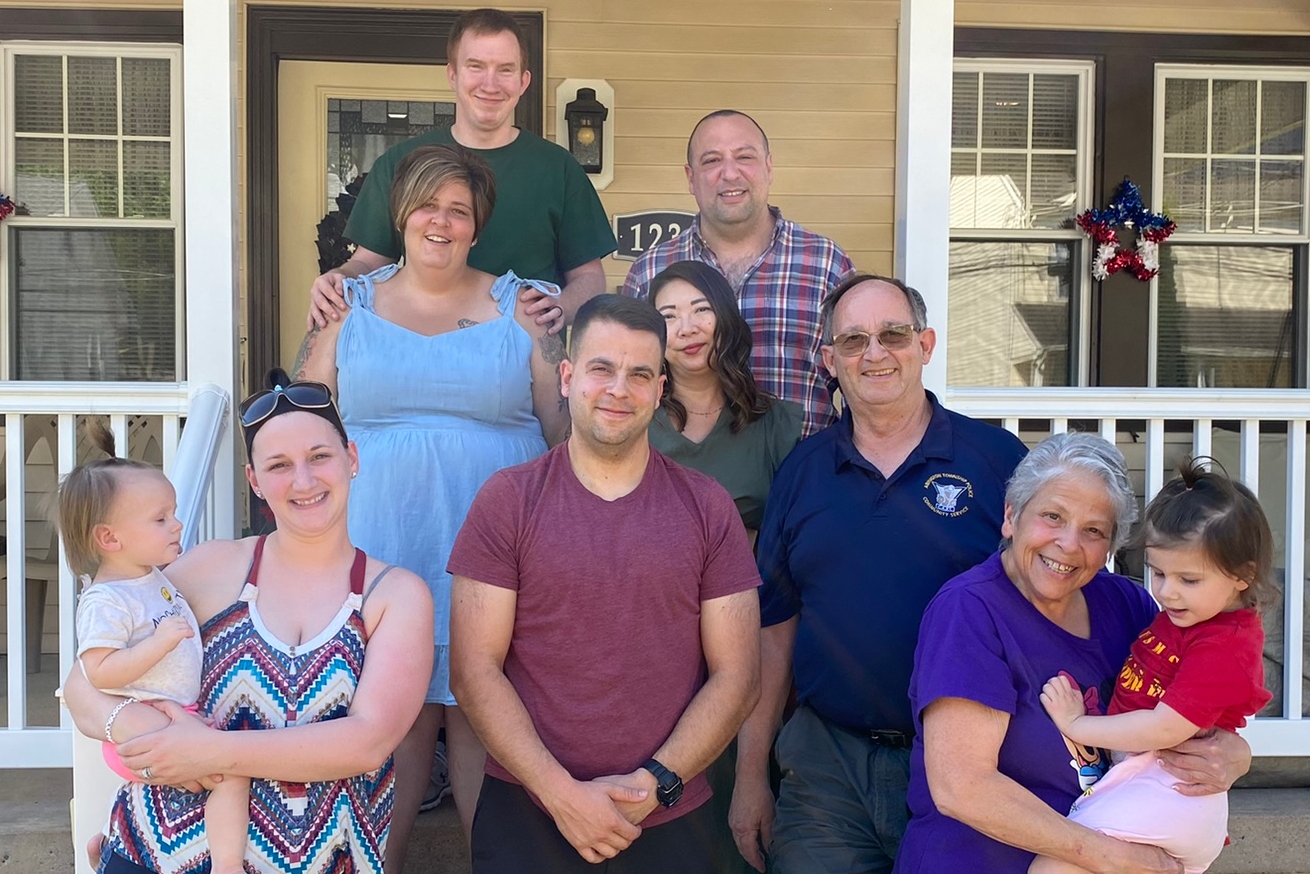
    Mrs. Corrigan (front right) enjoyed time with her family.

    Her son David said: “She taught me to be considerate and understanding of everyone I encounter, a lesson I will never forget.”

    Her son Joseph said: “She was incredibly generous with her time and resources. She could build relationships, and a theme of her life was caring for people.”

    Her husband said: “She was one of a kind.”

    In addition to her husband, children, granddaughters, and brother, Mrs. Corrigan is survived by other relatives.

    A private celebration of her life is to be held later.

    Donations in her name may be made to Hedwig House Inc., 1920 Old York Rd., Abington, Pa. 19001.

    Mrs. Corrigan’s smile could light up a room, her family said.
  • After 30 years, this Long Beach Island pizzeria needs a new home

    After 30 years, this Long Beach Island pizzeria needs a new home

    In the early ’90s, Colleen Mazzella walked into a newly opened pizzeria and met the man who would become not only her boss, but her husband.

    She was visiting a friend who had been hired at Italian Affair in Stafford, and owner Dominick Mazzella, then a recent Staten Island transplant, offered her a job, too.

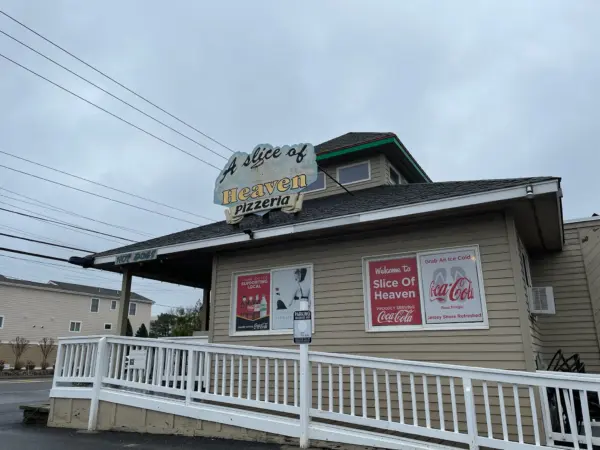
    They soon became a couple, and a year later, in May 1995, opened A Slice of Heaven across from Fantasty Island Amusement Park on Long Beach Island. The building at 7th Street and Bay Avenue in Beach Haven had housed a car wash, candy store and photo shop through the years, and when the two met with owner Peter Buterick, “he said ‘I’m going to take a chance on you. I’ve got a good feeling about this,’” Mazzella said.

    They made a name for themslves, thanks to a menu of dishes like stuffed cheesesteak pizza, scratch-made meatballs and cheesesteaks.

    Thirty years later, the building is full of memories that became precious to Mazzella after Dominick died just days before his 50th birthday in 2024. She recalls the Stanley Cup being brought to the restaurant (“My husband was a gigantic hockey fan,” she said), staying open to serve pizza until 4 a.m. and borrowing ingredients from other restaurant owners to get through busy days.

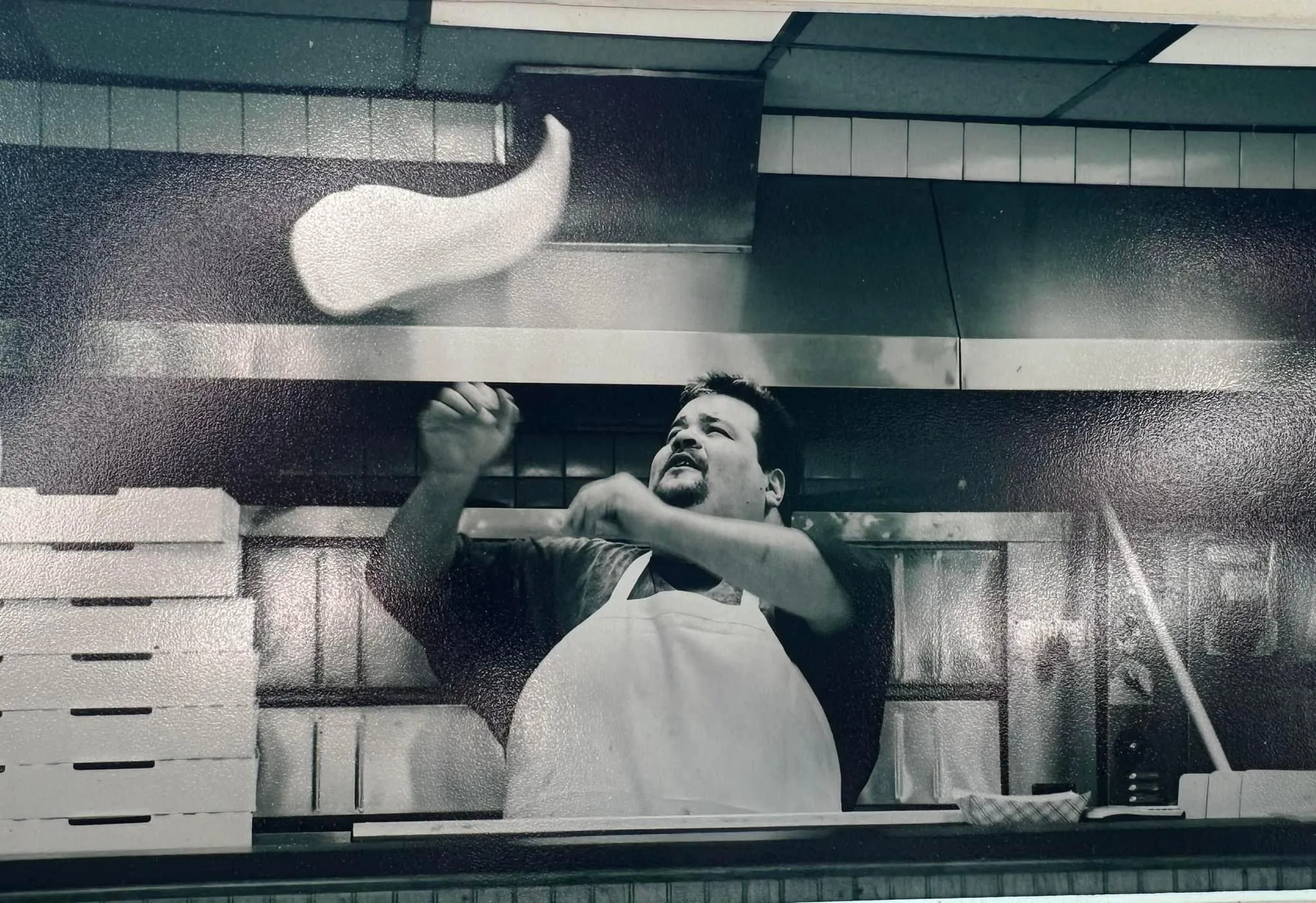
    Dominick Mazzella is pictured behind the counter of A Slice of Heaven, the Long Beach Island pizzeria he opened with his wife, Colleen, in 1995.

    She remembers when a family who lost their father stopped in for his favorite pizza before spreading his ashes on the beach, rebuilding after Superstorm Sandy sent four feet of water into the dining room and making pizza by flashlight during a power outage.

    The restaurant is also where Dominick taught his son to make pizza, a legacy the 18-year-old — also named Dominick — has dreamed of continuing.

    But it will have to happen somewhere else, as A Slice of Heaven closed earlier this month. The Mazzellas leased their restaurant space and the building has been sold.

    “The plan was to take this place over,” Mazzella said of her and her husband’s plans for their son, a third-generation pizza maker whose grandfather emigrated from Naples, Italy, and owned restaurants in New York before opening the Stafford pizzeria with Dom.

    A Slice of Heaven’s last day in business was Nov. 17, and Mazzella must vacate the building by the end of the month. She has been searching for a new location since learning of the impending sale several years ago, and while she wants to keep the restaurant on Long Beach Island, rentals that will work for her business are hard to come by, she said.

    “My intention is to be on the island,” said Mazzella, who grew up in Brant Beach and now lives in Cedar Run on the mainland. “I love the people here. I grew up here. I love everything about it.”

    “It’s just a fact of finding a place to land,” she said. “It’s been tough. I just have to keep believing that the places that I found that didn’t work out didn’t work out for a reason, and that it’s because we’re waiting for the right place.”

    “We’ll find something,” she said. “I gotta believe that.”

    Since announcing the closing date in early November, Mazzella has seen an outpouring of support online and in person, with customers sharing memories and well wishes.

    One spoke of how the elder Dominick fulfilled her request to spell “It’s a boy!” in pepperoni on a pizza for her gender reveal. Another customer wrote of how the restaurant’s delivery driver checked on her elderly father when she couldn’t reach him. Dozens more said A Slice of Heaven’s pizza is part of their vacation tradition.

    For Mazzella, it is stories like these that make giving up not an option.

    “Absolutely not,” she said. “We’re not done.”

  • Temple Health reported a $15 million operating loss in the first quarter of fiscal 2026

    Temple Health reported a $15 million operating loss in the first quarter of fiscal 2026

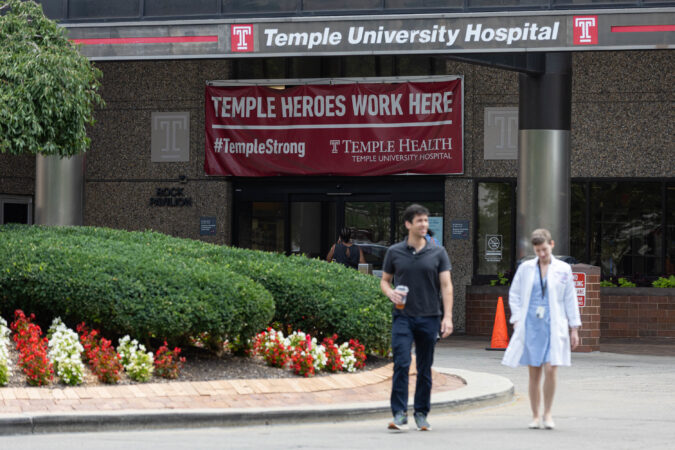
    Temple University Health System reported a $15 million operating loss in the three months that ended Sept. 30.

    The result for the first quarter of fiscal 2026 was an improvement from the North Philadelphia nonprofit’s $17 million loss last year.

    “We’re pretty happy where we are,” CEO Mike Young said Wednesday. Revenue was above budget and labor costs were on budget in the first quarter for the first time in several years.

    Here are some details:

    Revenue: Total revenue was $800 million, up 13% from $712.5 million a year ago. Outpatient revenue increased by nearly $62 million, much of it from the health system’s specialty and retail pharmacy business.

    Temple participates in a federal program for safety-net hospitals that allows it to buy certain drugs at a discount and then get full reimbursement from insurance companies.

    Expenses: Temple noted in its report to municipal bond investors Tuesday that salaries, including higher pay rates for nurses, and higher drug spending for outpatient infusions and other pharmacy business were the biggest expense increases.

    Notable: On the labor front, several job categories remain hard to fill, Young said. Those are CT techs, nurse anesthetists, and lab techs. “Other than those three [specialties], it’s not where it was three years ago, where you couldn’t find anybody,” he said.

  • Christmas tree retailers find lots to like at a Pennsylvania wholesale auction

    Christmas tree retailers find lots to like at a Pennsylvania wholesale auction

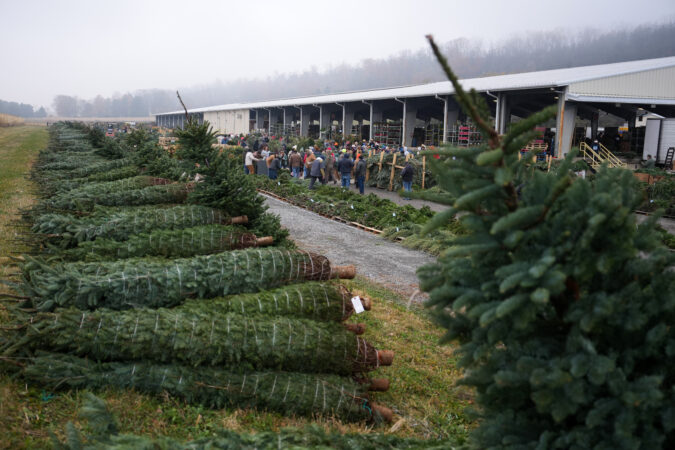
    MIFFLINBURG, Pa. — Christmas went on the auction block last week in Pennsylvania farm country, and there was no shortage of bidders.

    About 50,000 Christmas trees and enough wreaths, crafts, and other seasonal items to fill an airplane hangar were bought and sold by lots and on consignment at the annual two-day event put on at Buffalo Valley Produce Auction in Mifflinburg.

    Buyers from across the Northeast and Mid-Atlantic were there to supply garden stores, corner lots, and other retail outlets for the coming rush of customers eager to bring home a tree — most commonly a Fraser fir — or to deck the halls with miles of greenery.

    Bundled-up buyers were out in chilly temperatures to hear auctioneers hawk boxes of ornaments, bunches of winterberry, cotton branches, icicle lights, grave blankets, red bows, and tree stands. It was nearly everything you would need for Christmas except the food and the presents.

    A worker transports holiday decorations at Buffalo Valley Produce Auction in Mifflinburg, Pa.

    Americans’ Christmas tree buying habits have been evolving for many years. These days homes are less likely than in years past to have a tree at all, and those that do have trees are more likely to opt for an artificial tree over the natural type, said Marsha Gray with the Howell, Michigan-based Real Christmas Tree Board, a national trade group of Christmas tree farmers.

    Cory Stephens was back for a second year at the auction after his customers raved about the holiday decor he purchased there last year for A.A. Co. Farm, Lawn & Garden, his store a three-hour drive away in Pasadena, Md. He spent nearly $5,000.

    “It’s incredible, it’s changed our whole world,” Stephens said. “If you know what you’re looking for, it’s very hard to beat the quality.”

    Ryan Marshall spent about $8,000 on various decorations for resale at Ward’s Berry Farm in Sharon, Mass. Among his purchases were three skids of wreaths at $29 per wreath — and he expected to double his money.

    “The quality’s good, and it’s a place that you can pick it out yourself,” he said.

    Gray said her group’s research shows the main reason people pick a real tree over an artificial tree “is the scent. They want the fresh scent of a real Christmas tree in their home.” Having children in the house also tends to correlate with picking a farm-grown tree, she said.

    An August survey by the Real Christmas Tree Board found that 84% of growers did not expect wholesale prices to increase this season.

    Buffalo Valley auction manager Neil Courtney said farm-grown tree prices seem to have stabilized, and he sees hope that the trend toward artificial trees can be reversed.

    “Long story short — we’ll be back on top of the game shortly,” Courtney said. “The live tree puts the real Christmas in your house.”

    A survey by a trade group, the National Christmas Tree Association, found that more than 21 million farm-grown Christmas trees were sold in 2023, with median price of $75. About a quarter of them were purchased at a “choose-and-cut” farm, one in five from a chain store, and most of the rest from nurseries, retail lots, nonprofit sales, and online.

  • Jefferson Health hit with federal WARN Act lawsuit

    Jefferson Health hit with federal WARN Act lawsuit

    A lawsuit filed Tuesday in Philadelphia accused Jefferson Health of violating federal labor rules when it laid off 1% of its 65,000 employees in October and this month without providing a 60-day notice.

    The purported class-action lawsuit says the proposed lead plaintiff, Ciara Brice, lost her job as a medical assistant on Nov. 12 with no notice and has not received the severance pay she was promised.

    Brice was not available for comment, said her lawyer, Jeremy E. Abay, with Philadelphia law firm Pond Lehocky Giordano Inc.

    The Worker Adjustment and Retraining Notification Act has a complicated rubric for determining when a mass layoff requires advance notification, which is filed with state labor departments. One of the triggers is an employer cutting at least 500 jobs, according to Abay.

    Even though the layoffs happened throughout Jefferson’s entire footprint from South Jersey to near Scranton, Abay said notice is required because Jefferson operates as a single entity.

    “We believe the facts will show that there was no violation of the federal WARN Act,” Jefferson said in a statement.

    The nonprofit filed a notice of 108 layoffs at Jefferson Cherry Hill Hospital, Jefferson Stratford Hospital, and Jefferson Washington Township Hospital because New Jersey has its own rules, Abay said.

    In August, Jefferson reported a $195 million operating loss on $15.8 billion in revenue for the year that ended June 30.

    The nonprofit, which grew through acquisitions from three hospitals in Philadelphia in 2015 to more than 30 now, provided no details when it announced the layoffs in mid-October.

    That layoff was part of a series of large job cuts starting in the summer of 2023, but may have been the first time patient-facing workers like Brice were hit.

    The lawsuit seeks back pay, benefits, and damages for each laid-off employee who did not receive a 60-day notice.

    Editor’s note: The headline on this article has been updated to clarify that a lawsuit claims violations.

  • How are things at PHL right now? Our live tracker is following the Thanksgiving surge.

    How are things at PHL right now? Our live tracker is following the Thanksgiving surge.

    There’s always some anxiety that comes with heading to the airport. This week, maybe more so.

    AAA predicts nearly 82 million Americans will travel at least 50 miles for Thanksgiving, a U.S. record if it stands. Even with concerns about the reliability of air travel, AAA reports about 6 million people will fly to their destination this week, a glut of humanity that could jam airports nationwide.

    Air traffic at Philadelphia International Airport (PHL) has been running relatively smoothly since the government shutdown ended, Inquirer analysis shows.

    But an onslaught of holiday passengers could quickly change that.

    Are you headed to PHL? Use our charts below to get a glimpse of how the airport is functioning today. The charts will update every hour through Jan. 1 and reset every morning at 4 a.m.

    window.addEventListener(“message”,function(a){if(void 0!==a.data[“datawrapper-height”]){var e=document.querySelectorAll(“iframe”);for(var t in a.data[“datawrapper-height”])for(var r,i=0;r=e[i];i++)if(r.contentWindow===a.source){var d=a.data[“datawrapper-height”][t]+”px”;r.style.height=d}}});

    window.addEventListener(“message”,function(a){if(void 0!==a.data[“datawrapper-height”]){var e=document.querySelectorAll(“iframe”);for(var t in a.data[“datawrapper-height”])for(var r,i=0;r=e[i];i++)if(r.contentWindow===a.source){var d=a.data[“datawrapper-height”][t]+”px”;r.style.height=d}}});

    Nearly half of the flights at PHL were delayed or canceled at PHL during the climax of the federal government shutdown, which lasted until Nov. 12. Analysis shows delays and cancellations have returned to normal levels since, with disruptions generally affecting less than 20% of flights a day.

    Fewer than five flights a day have been canceled for the last week at PHL.

    In the lead up to the holiday weekend, Frontier Airlines was experiencing the most disruptions. More than 40% of the company’s flights in and out of PHL were delayed or canceled last weekend, analysis of PHL flight board data shows.

    PHL offers flights from 15 airlines. The chart below shows what percentage of the most active airlines’ flights are delayed or canceled.

    window.addEventListener(“message”,function(a){if(void 0!==a.data[“datawrapper-height”]){var e=document.querySelectorAll(“iframe”);for(var t in a.data[“datawrapper-height”])for(var r,i=0;r=e[i];i++)if(r.contentWindow===a.source){var d=a.data[“datawrapper-height”][t]+”px”;r.style.height=d}}});

    What about my flight?

    PHL offers up-to-date information for each flight arriving or departing from its gates on its website. However, airport officials recommend checking with your airline for more specific information.

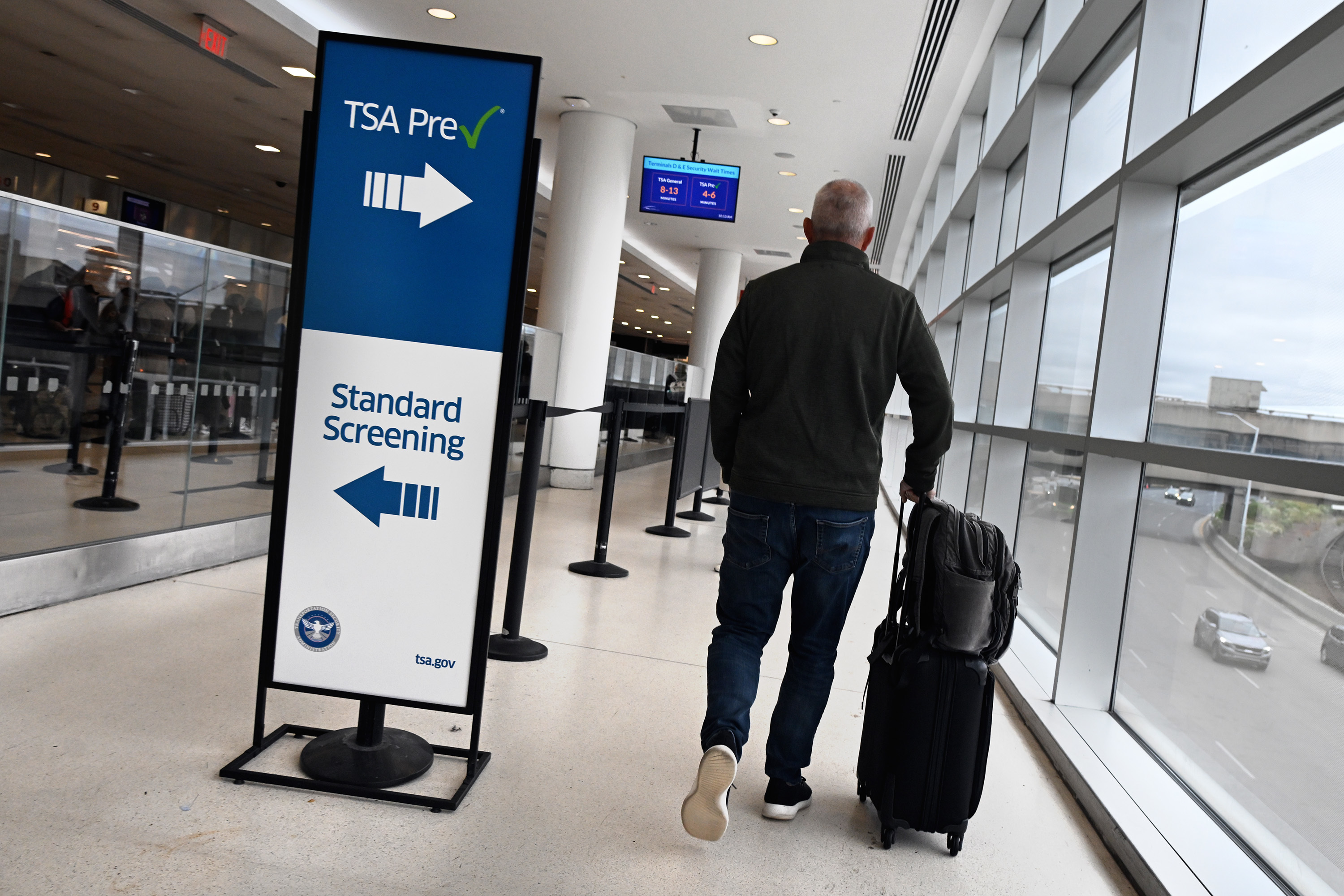
    A traveler enters the TSA PreCheck security line at Terminals E-F at Philadelphia International Airport in October.

    Security wait times

    As of Monday morning, all six security checkpoints at PHL were open. TSA PreCheck is available at Terminals A-East, C and D/E.

    Current security wait times are available on PHL’s website.

    Weather outlook

    Leaving Philly: Rain could slow things down Tuesday afternoon into Wednesday, according to the National Weather Service. Some wind may linger into the weekend, but otherwise flying out of Philadelphia looks fairly unhindered. What’s happening at your destination could, of course, change this.

    Coming to Philly: Elsewhere in the country, NWS forecasts show a broad area of low pressure affecting the eastern half of the country with rain Tuesday into Wednesday. Later in the weekend, weather systems could affect the Midwest, Northwest and Rocky Mountains, potentially complicating travel from those locations.

  • Why your small business needs an AI policy

    Why your small business needs an AI policy

    It’s no secret that the use of both generative and agentic AI will proliferate over the next few years as the technology becomes more reliable and pervasive.

    More than 58% of small businesses are already using AI in their companies, according to a recent study from the U.S. Chamber of Commerce, and that usage is expected to rise this year. For now, most of that can be attributed to chatbots like ChatGPT, Gemini, Copilot, and others.

    Because of this, your business needs to create and maintain a strict AI policy. Why?

    “An AI policy places guardrails around the usage of AI by your employees,” said Philadelphia attorney David Walton, who chairs the artificial intelligence team at Fisher & Phillips. “It allows your employees to use AI faster and better.”

    Without an AI policy, a business would be exposed to reputational damage that’s caused by AI “hallucinations” or errors, Walton said. In addition, a company’s proprietary data — pricing, contracts, customers information, processes — could be exposed to the public, particularly when employees use free AI tools that offer less protection.

    Lawyer Star Kashman, founding partner of Cyber Law Firm, warns her clients that without an AI policy, employers could be exposed to claims of bias and other lawsuits.

    “For example, there might be some resumes from people of certain races, people of certain genders that maybe aren’t as accepted by the AI system, and you’re automatically rejecting great candidates,” she said. “You’re going to be the one that has a huge lawsuit on your hands, even for your employees’ actions, if you weren’t able to protect it.”

    A good AI policy should include the following.

    Include a statement of purpose for AI

    The policy should be clear that AI is allowed only when used responsibly and with guardrails.

    It should also be clearly stated that AI tools are used only when they can improve productivity, provided that they are safe and confidential.

    Provide a list of approved applications

    A company’s AI policy should specify which tools and software are approved by management, both lawyers said.

    The tools should be used for business purposes only. Free tools should not be allowed because of their privacy concerns, and if a tool is not listed in the policy, permission is required from management to use it.

    When employees use AI on a personal account, Walton said, “it’s hard for the business to control privacy settings, and confidential data may leak into free or public AI models.”

    Consider a proprietary information ban

    It’s still unclear how safe our data is when AI applications are being used. To that end, it’s a good practice to avoid or even ban the entry of private information into these platforms.

    This would include customer data, financial statements, contracts, pricing information, personal identifying factors, trade secrets, or anything medical, legal, or human resources related.

    State the ownership of AI work

    When an employee makes a “prompt” into an AI chatbot, that query, as well as any resulting workflows and custom instructions, are all assets of the company and should be stated as so.

    A company’s AI policy should state that employees must return all AI-created work at separation, cannot export data into their personal accounts, and cannot use their own agents or tools for company work.

    Avoid AI in HR

    AI applications shouldn’t be used in hiring or performance reviews, both Kashman and Walton said. Many platforms leverage AI to perform these functions, but these tools could create more headaches than benefits.

    “HR is the front line for legal problems tied to AI,” Walton said. “Relying on AI to make hiring, firing, or performance review decisions could be very problematic.”

    Ban certain outputs

    An AI policy should ban the use of images, videos, or voice without management approval. NSFW (not-safe-for-work), pornographic, or defamatory content should be off limits. This can help protect against reputation damage, deepfakes, and offensive content.

    Always use human oversight

    We know today’s AI tools are far from perfect. Your policy should state that everything AI produces must be validated, checked, sourced, and edited by a human.

    Explain why the AI policy exists

    AI is new, and your employees are already concerned about this new technology. Kashman said it’s important to explain the “why” behind each rule in your policy.

    “Instead of just ‘don’t,’ explain the risk to the employee and company such as hallucinations, data leaks, bias, etc.” she said. “Employees follow rules better when they understand them.”

    The uncertain regulatory environment is another big reason for creating an AI policy. Regulation of AI use shouldn’t be expected anytime soon, Walton said.

    “Businesses must prepare for state-level AI regulation, especially around risk assessment and bias, because the federal government is unlikely to pass comprehensive laws anytime soon,” he said.

    However, some states — like New Jersey — have proposed bills that would require businesses to do formal risk assessments and acceptable-use policies. Meanwhile, President Donald Trump is considering an executive order limiting states from regulating AI.

    Kashman said the lack of regulations will leave business owners vulnerable “because tech companies aren’t going to be as liable for harms.” So small businesses “must protect themselves with strong internal policies,” she said.

    “An AI assistant or chatbot can help businesses draft a policy or template, especially for nonlawyers who need structure or a first draft,” Kashman said. It’s important to frequently update this policy because the technology, models, privacy terms, and data breaches change rapidly, she added.

    “However, be careful,” she said. “AI can’t understand the nuances of a specific business or legal risk, so human review from legal counsel or an expert is necessary.”

  • Latest Par Funding plan will give scammed investors nearly all their money back

    Latest Par Funding plan will give scammed investors nearly all their money back

    More than 1,600 victims of the Par Funding scheme will get nearly all their money back, despite repeated warnings from the U.S. Securities and Exchange Commission (SEC) that full reimbursement would be highly unlikely.

    The news comes 5½ years after a federal court-appointed receiver seized the Philadelphia loan company amid investigations that have sent its top officers to federal prison.

    “Sounds like Christmas to me!” said investor Joe Brock, a management consultant who invested $200,000 with Par.

    Starting in 2011, Par raised $550 million, telling investors it was lending to merchants at high interest rates for big profits. But Par insiders diverted over $200 million to themselves, and many of its clients couldn’t repay the loans. In March 2020, Par stopped paying investors back.

    In July 2020, the SEC filed a sweeping fraud lawsuit against the firm, its owners and pitchmen. Criminal charges followed in 2023. Eight people involved with the company have pleaded guilty and been sentenced to prison and fines.

    How much will investors get?

    The investors were repaid $111 million, just over half their missing $220 million, under an initial “distribution” of Par assets approved last December.

    Another $97 million will be on the way, pending approval by Florida-based federal Judge Rodolfo Ruiz, who has overseen the case since FBI agents raided Par’s Old City offices and detained founder Joseph LaForte on gun charges in 2020. The judge has declared Par a Ponzi scheme, designed to defraud, by using old investors’ money to fool new investors into falsely believing Par was profitable.

    A third, smaller payout may be arranged in the future, which could bring the recovery above the loss total, according to the new proposal.

    The plan was filed Friday to the judge.

    In July 2020, the FBI raided Par offices and founder LaForte’s Haverford home, and the SEC asked Ruiz to put the company into receivership to protect what was left of investors’ money and to investigate whether LaForte and his allies had stolen money from the company.

    The SEC also filed civil charges against founder LaForte, his wife, Lisa McElhone, chief financial officer Joseph Barleta, and four investment salespeople, accusing them of selling unregistered securities and failing to disclose LaForte’s prior federal fraud convictions.

    Federal criminal fraud charges followed against the three top Par officials, plus debt collectors James LaForte and Renato Gioe; an investment salesman, Perry Abbonizio, and two Colorado accountants who did Par’s taxes.

    The investors are getting their investments back, but not the promised interest. And the paybacks will be uneven.

    Under the terms of the proposal, investors in Par funds set up through Dean Vagnozzi, a former King of Prussia insurance agent who was Par’s most successful salesperson, are on track to receive as much as 98% of their total investment, or as little as 46%, depending on when they invested and how much was in Par.

    Some of the funds set up for Vagnozzi’s A Better Financial Plan invested partly in Par and partly in life-settlement contracts, insurance policies purchased from their owners at a discount so investors collect the proceeds when they die. Investors in those funds still hope to collect additional funds as the policyholders die.

    Where the recovered money is coming from

    The $110 million in the first distribution from the receiver was funded largely by money seized from Par and from founder Joseph LaForte, McElhone, and other Par officials.

    The $97 million in the second distribution included $36.5 million in Par funds that had been held in escrow while the receiver negotiated how much was owed to investors in the Chehebar family (some members spell it Shehebar), who own Rainbow Stores.

    Lawyers for the Chehebars argued that they had negotiated senior payment rights and should have gotten repaid before other investors. But the receiver said the Chehebars were actually “insiders” who worked closely with the LaFortes and didn’t deserve special treatment.

    The Chehebars agreed to settle for $3.1 million — or more if the receiver is able to pay all approved investor claims.

    Another $31 million for the payback has been collected from a settlement of lawsuits against John Pauciulo, salesman Vagnozzi’s longtime lawyer, whom Vagnozzi and others blamed for failing to warn that the Par funds ought to be registered with the SEC and to warn investors about LaForte’s criminal past.

    Insurers for Pauciulo’s former law firm, Eckert Seamans, agreed to pay $47 million, but part of that total was consumed in payments to lawyers and others with claims against Pauciulo.

    In hearings this fall, investigators for the Pennsylvania Disciplinary Board, an arm of the state Supreme Court, have argued that Pauciulo failed to properly advise his clients about the danger from investing in Par. A ruling is pending.

    Helping fund the planned second round of payments to Par investors was $10 million from the sale of LaForte’s former vacation home in Jupiter, Fla., one of the last of 25 properties seized by the receiver as proceeds of the Par founder’s fraud.

    The rest is funded by millions taken from Par and its investors and not paid out earlier.

    For a potential third distribution, the receiver and its consultants have identified several additional funding sources:

    • $11 million in still-uncommitted cash from the funds the receiver took from Par and its owners;
    • $10.5 million in a requested IRS refund of taxes Par paid on phony profits the company reported when it was trying to get more people to invest;
    • $1 million from the sale of three remaining properties at 20-22 N. Third St. in Philadelphia, the last of 20 city properties the receiver has used to raise cash for victims;
    • Up to $4 million that might still be collected from Par’s last borrowers, half of it from Kingdom Logistics, a Texas-based mining company.

    Investors also should receive some proceeds from the liquidation of the former Par Funding corporate jet, worth an estimated $6 million when it was seized by the FBI in 2020, and a Charles Schwab investment account, worth more than $13 million at that time. The government has a separate process for deciding how to pay back that money to investors.

    Expenses for the receiver’s lawyers and other professional services have cost around $100,000 a month, according to the receiver’s most recent quarterly reports.

    All the Par officials charged with crimes were sentenced, most of them earlier this year, after pleading guilty to criminal fraud and, in some cases, other charges.

    Besides fines, restitution and probationary periods, these are the prison terms for people involved: