Category: Business

Business news and market updates

  • Sheetz opens its first store in Wawa land, right across from a Wawa

    Sheetz opens its first store in Wawa land, right across from a Wawa

    Sometimes Sheetz happens, and at 8:02 a.m. on Thursday it happened in Montgomery County, when the chain opened its first convenience store in what’s long been undisputed Wawa territory.

    The store — which is directly across from a Wawa on West Ridge Pike near Lewis Road in Limerick Township — opened not with a Boom Boom, but with a whisper.

    Unlike a Wawa grand opening — where fans often queue up well before the doors open and the line to get in wraps around the building — there was just David Swartz waiting outside for the opening, bundled up in his folding rocker chair.

    Swartz, 36, of Collegeville, who arrived an hour before the opening, was surprised to find himself the only one in line, as were the gaggle of Philadelphia reporters who far outnumbered him and peppered him for interviews.

    A self-identified “diehard Wawa fan,” Swartz said he came to Sheetz’s opening for the food.

    “There’s nothing you can get here that isn’t delicious,” he said. “I love Wawa but they need different stuff and that’s what Sheetz is here to do, they’re here to deliver that.”

    Slushies, plushies, and more

    Once the doors opened, folks who’d been waiting in their cars started to file in, forming a line for the coffee, which was free all day (the Wawa across the street offered free coffee on Thursday, too). Other customers explored the touch-screen menus, checked out the prepared food offerings, and browsed the aisles.

    Inside, Swartz poured himself a slushie and ordered a hot dog, nachos, and fish tacos with fries — at 8:15 a.m. He also picked up three Hello Kitty plushies for his girlfriend. Wawa, he pointed out, does not sell plushies.

    “My girlfriend is going to be very happy when I come home with these,” he said.

    Inside the store after being the first to enter, Dave Swartz of Collegeville organizes his plushie toys and frozen drink as the first Sheetz store opens in the Wawa territory Thursday in Limerick Township.

    Elsa Ortiz, 54, drove an hour from Philadelphia to pick up a hoagie (or “Subz” as they call them at Sheetz) for her boyfriend.

    “Sheetz is definitely better than Wawa for him,” she said. “Right now I’m neutral, but today I am a Sheetz girl.”

    Ortiz said the store being across from a Wawa is very on brand for the Philadelphia region.

    “The rivalry is just like Philly, with its rivalries and everything else,” she said. “Still, go Eagles! I’m still Eagles!”

    There are some rivalries you can play both sides of, and some you can’t.

    Shortly after 9 a.m., when giveaways for gift cards and Sheetz schwag began, the store became so packed with people it became a real Sheetz show and the line outside for freebies stretched down the building. The residents of the Delaware Valley may rep hard and local, but they also won’t say no to a free T-shirt.

    The expansions

    While opening a Sheetz across from an existing Wawa may seem like the new guy in town is throwing down the gauntlet, it’s actually a move taken out of Wawa’s own playbook. In 2024, when the Delaware County-based chain opened up its first store in central Pennsylvania — what was traditionally Sheetz country — it did so within eyeshot of an existing Sheetz.

    For decades, the urban lore in Pennsylvania was that there was a gentleman’s agreement regarding unspoken boundaries between Delco-based Wawa in the southeastern corner of the state and Blair County-based Sheetz, in south-central Pennsylvania.
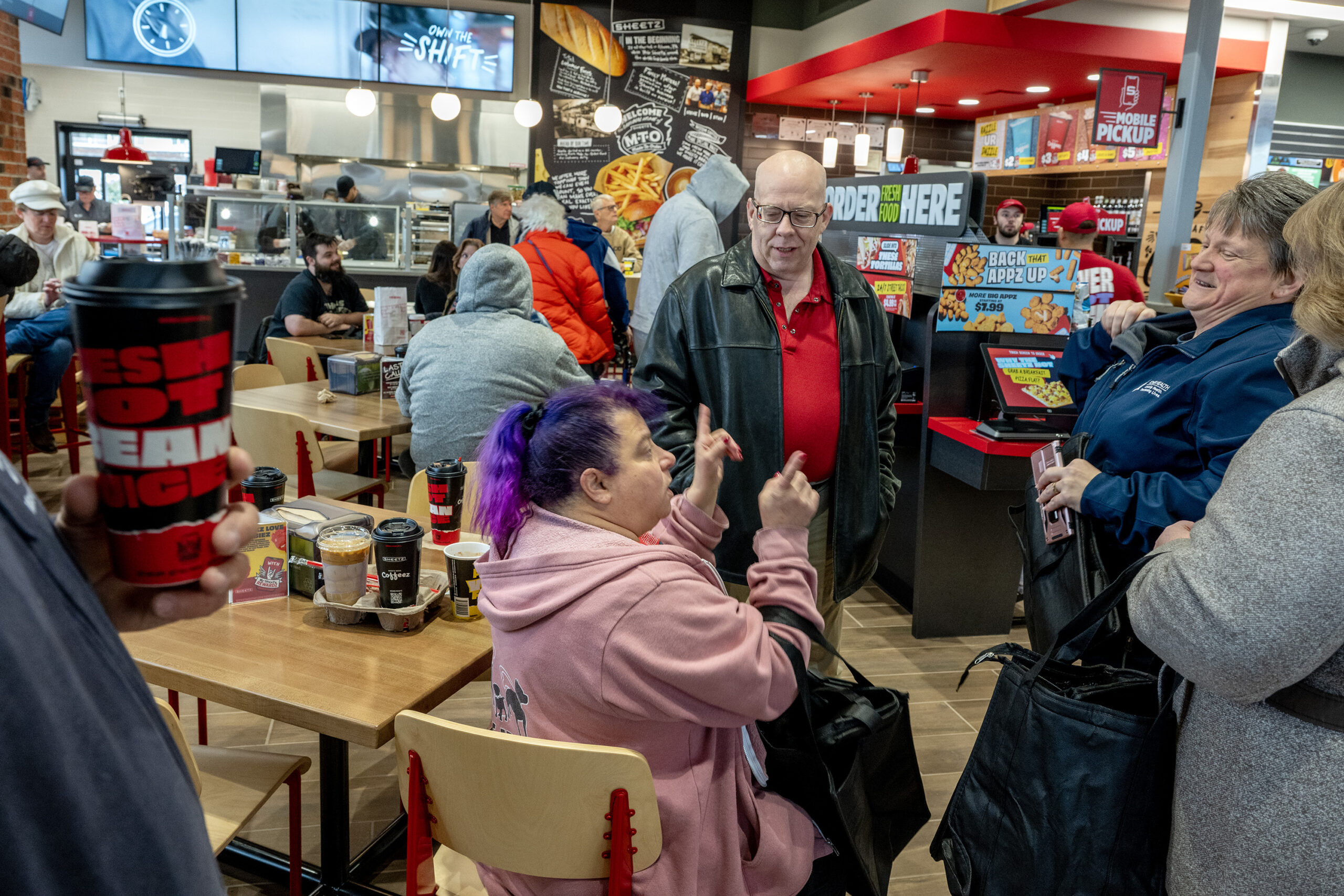
    Amy Rudolph (seated) of Collegeville holds court with fellow grand opening patrons as she recounts her story of being #2 in line as the first Sheetz store opens in the Wawa territory Philadelphia suburbs Thursday, Feb. 12, 2026 in Limerick Township.

    But that’s all it was — lore (New Jersey has its own devil, we had to come up with something) — and as both chains began rapid expansions in the 2010s, it seemed inevitable they’d cross over to each other’s markets at some point. In fact, Wawa and Sheetz have coexisted in several markets already for some time, including right here in Pennsylvania, in Berks and Lehigh Counties, according to Wawa spokesperson Lori Bruce.

    Today, Wawa has 1,193 stores in 13 states and Washington, D.C., and more than 95 store openings planned for this year. Ten stores have gone up in central Pennsylvania in the last two years, with 40 more planned over the next five, Bruce said.

    Sheetz, meanwhile, has more than 800 stores in seven states. Previously, its closest store to Philadelphia was in Berks County, but now that it has officially moved into the Philly suburbs, it doesn’t appear it plans to slow down. Sheetz stores have been proposed in Chester County and even in Delco, at Painters Crossing shopping center in Chadds Ford, just five miles down the road from Wawa’s headquarters.

    Now that could get Sizzli.

    A rivalry?

    Representatives of both chains deny they are rivals and point out that they have worked together to support various nonprofits.

    Adam Sheetz, executive vice president of Sheetz, said it has been a friendly competition for decades.

    “They’re one of the best retailers in the country, certainly one of the best in our industry, and we have great respect for them and competing with them has just made us better over the years,” he said.

    Bruce agreed.

    “We’re fortunate to have always had a respectful and friendly relationship with the folks at Sheetz,” she said. “And, while we have always embraced healthy competition at Wawa, when we think about competitors, we tend to think about challenging ourselves to make sure we are meeting the needs of our customers and communities.”

    Folks may eat on trash cans at Wawa, but you’ll never hear Wawa officials talking trash on Sheetz. Wawa fans, on the hand, are a whole other hoagie roll.
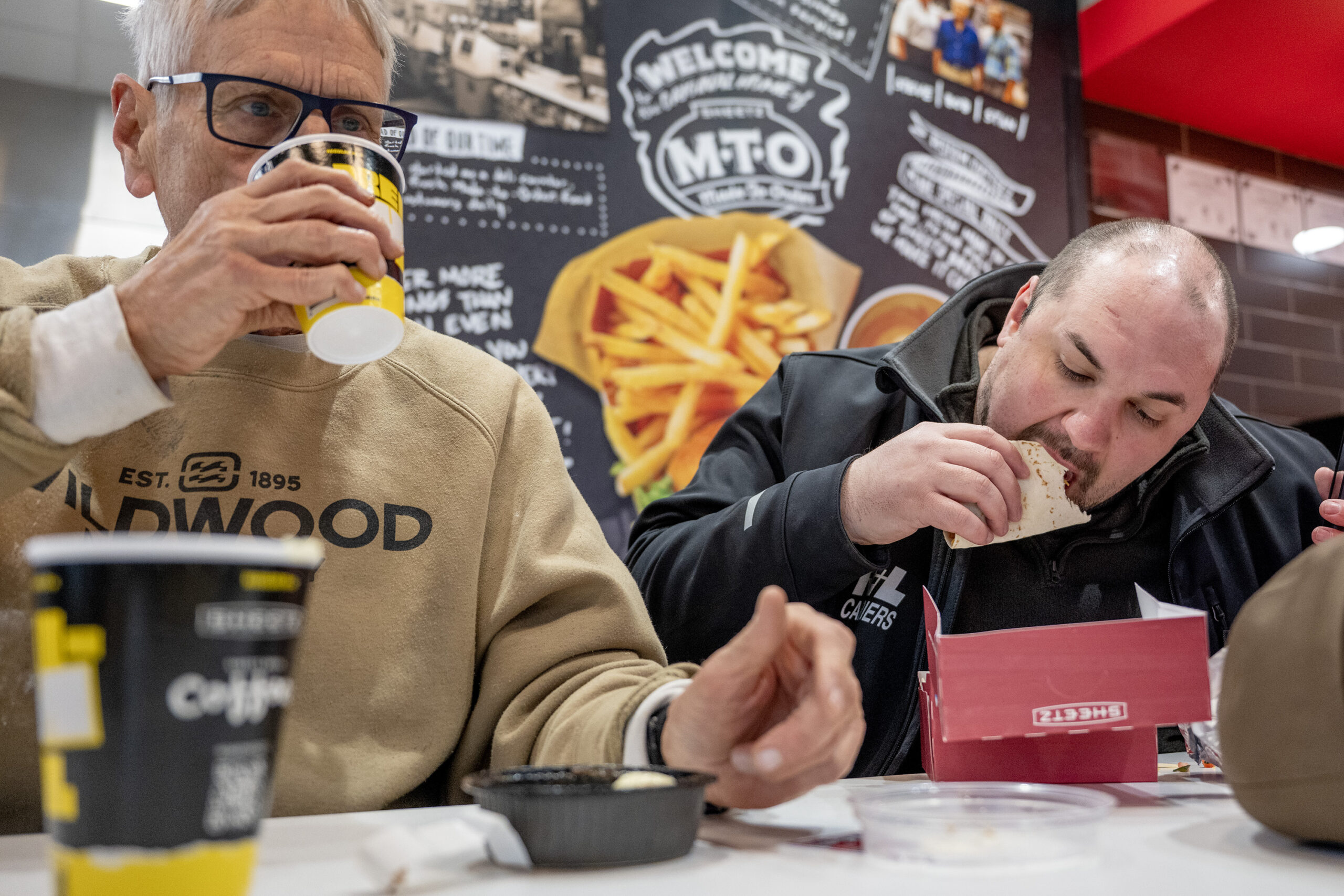
    Craig Scott (left) of Wayne and Dave Swartz (right) of Collegeville have breakfast as the first Sheetz store opens in the Wawa territory in Limerick Township.

    The low-stakes rivalry between the stores’ fans has resulted in memes, debates, op-eds, and even a forthcoming documentary, Sheetz Vs. Wawa: The Movie.

    When news of the impending Sheetz opening spread last month, cheeky comments by Wawa fans on social media included “We are all protesting this,” “sheetz is temu wawa,” “Sheetz is fire, but Wawa is for life,” and “this is my heated rivarly [sic].””

    But local officials said they didn’t hear of any pushback on the Sheetz.

    Patrick Morroney, a Limerick Township supervisor, has never been to a Sheetz but said he’s pro-business and welcomed Sheetz opening a store in the community.

    “I think that people are going to find their niche between Wawa and Sheetz,” he said.

    Jamila Winder, chair of the Montgomery County commissioners, said she frequented Sheetz while going to Pennsylvania State University and having the company open a store in Montco is “nostalgic” for her.

    “Even though Wawa has dominance here in Montgomery County and the region, we always welcome new businesses because that creates economic drivers, job opportunities for both, and it just gives people options to choose from,” she said.

    The opening

    During his remarks at the opening ceremony, Neil Makhija, vice chair of the county commissioners, took a different approach and leaned into the playful rivalry by putting on a Wawa hat while speaking to the crowd.

    He called the opening a “complicated day” for him and many people in Southeastern Pennsylvania.

    “I thought, ‘What is happening to our community? Do we need a stronger border security policy in Montgomery County? Should we build a wall and make Delco pay for it?’” he said to laughter from the crowd. “[But] here in Montgomery County we’re welcoming, we’re inclusive, and we’re hungry and I think we’re OK with a little competition.”

  • Medicaid insurer AmeriHealth Caritas is closing its PerformRx PBM at the end of this year

    AmeriHealth Caritas, one of the nation’s largest Medicaid insurers, is closing its in-house pharmacy benefits manager, PerformRx, by the end of this year, the Newtown Square company said in an announcement to employees Wednesday.

    Health insurers effectively subcontract with pharmacy benefit managers to oversee drug benefits. They have become increasingly powerful cogs in healthcare and face new restrictions under a law signed by President Donald Trump this month.

    OptumRx, a unit of UnitedHealth Group Inc. and one of the three largest PBMs, is scheduled to take over for PerformRx on Jan. 1. OptumRx already provides PBM services to the majority owner of AmeriHealth Caritas, Independence Health Group. Independence is best known for its Independence Blue Cross business.

    “This decision reflects evolving market and regulatory landscape, not the performance or dedication of our PerformRx leadership or associates,” the AmeriHealth Caritas announcement to staff said.

    Caritas said in a statement to The Inquirer that it expected a “limited impact on jobs, with many functions remaining in-house to support the same high-quality experience for members and providers.”

    The company did not elaborate on the market and regulatory changes that precipitated the decision to close PerformRx, which Caritas formed in 1999. PerformRx has contracts in 13 states, including Pennsylvania and Delaware, according to the Caritas website.

    One of those states is California, where a new law took effect Jan. 1 that prohibits PBMs from charging health plans, including Medicaid plans, more than they pay the pharmacy for a drug. PBMs are still allowed to change a flat administrative fee in the state.

    Independence owns 61.3% of AmeriHealth Caritas. Blue Cross Blue Shield of Michigan owns the rest. Caritas accounted for about three-quarters of Independence’s $32 billion in revenue in 2024. The former CEO of AmeriHealth Caritas, Kelly A. Munson, succeeded Gregory E. Deavens in the top job at Independence last year.

  • Closed Iron Hill Brewery in Newtown is officially becoming a P.J. Whelihan’s franchise

    Closed Iron Hill Brewery in Newtown is officially becoming a P.J. Whelihan’s franchise

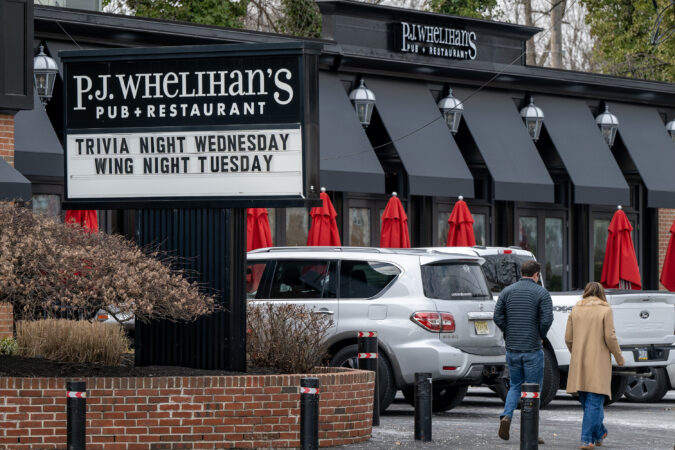
    The company behind P.J. Whelihan’s is officially moving into a shuttered Iron Hill Brewery.

    The Haddon Township-based PJW Restaurant Group has signed a lease for Iron Hill’s former location at the Village at Newtown, according to Brian Finnegan, the CEO of Brixmor Property Group, which owns the Bucks County shopping center.

    PJW marketing director Kristen Foord confirmed the lease signing, saying in an email that the company was “not in a position to share additional specifics” at this time.

    The move was approved by a federal judge last month as part of Iron Hill’s bankruptcy proceedings.

    Like more than a dozen other former Iron Hills throughout the region, the nearly 8,000-square-foot space in Newtown has sat empty since the Exton-based brewpub chain closed all locations and filed for liquidation bankruptcy last fall.

    Iron Hill opened in the affluent suburb in 2020. The restaurant moved in after Brixmor refurbished the more than 200,000-square-foot complex on South Eagle Road.

    As part of the revamp, the developer added new buildings, allowing it to bring in shops and restaurants like Iron Hill, Harvest Seasonal Grill, and Turning Point. The 30-acre complex is anchored by the high-end grocer McCaffrey’s Food Markets.

    In Newtown, “we’ve got Free People and Lululemon and Ulta that we added to the shopping center,” Finnegan said Wednesday in an interview. “We’ve got a lot of strong service tenants. We also have Capital Grill and Harvest, so some great food and beverage options.”

    And soon, he said, that list will also include P.J. Whelihan’s.

    PJW’s most well-known restaurant is P.J. Whelihan’s, which started in the Poconos in 1983 and has expanded to include 25 P.J. locations, the majority of which are in the Philly region.

    PJW also owns the Pour House in Exton, North Wales, and Westmont, Haddon Township; the ChopHouse in Gibbsboro; the ChopHouse Grille in Exton; Central Taco & Tequila in Westmont; and Treno, also in Westmont.

    While the Newtown restaurant will get new life soon, many other former Iron Hills still sit vacant.

    Some landlords are actively looking for tenants, with West Chester’s John Barry saying he hopes to have a lease signed by the end of this month.

    “We have a number of groups interested in the space and a few [letters of intent] have been submitted,” Barry said in an email last month.

    In other places, such as Voorhees, township officials and community members remain in the dark about whether another tenant will move in soon, and landlords can’t be reached.

    A few of the closed breweries may be revived under new owners, though details are slim.

    A federal judge last month approved the acquisition of Iron Hill’s trademark and intellectual property in conjunction with the transfer of restaurant leases in Center City, Huntingdon Valley, Hershey, Lancaster, and Wilmington.

    Representatives of the potential new owner, Rightlane LLC, have been unable to be reached. Contacted through the owner of Iron Hill’s building in Center City, Rightlane declined to comment to the Philadelphia Business Journal earlier this month.

  • Nordic-style sauna with cold plunge debuts at Schuylkill Center

    Nordic-style sauna with cold plunge debuts at Schuylkill Center

    Erin Mooney, executive director of the Schuylkill Center for Environmental Education, slipped out of a sweltering sauna last weekend wearing only a bathing suit and strode barefoot straight into the coldest day of the winter.

    “I never thought that I would find myself in a bathing suit laying down in the snow on a 15-degree day, and I found myself doing that at the Schuylkill Center,” Mooney said.

    It marked the opening weekend of a new experience that the Schuylkill Center, on Hagy’s Mill Road in Philadelphia, is offering along with a local sauna company, Fiorst — one that already has had solid booking off social media views, despite having just opened Saturday.

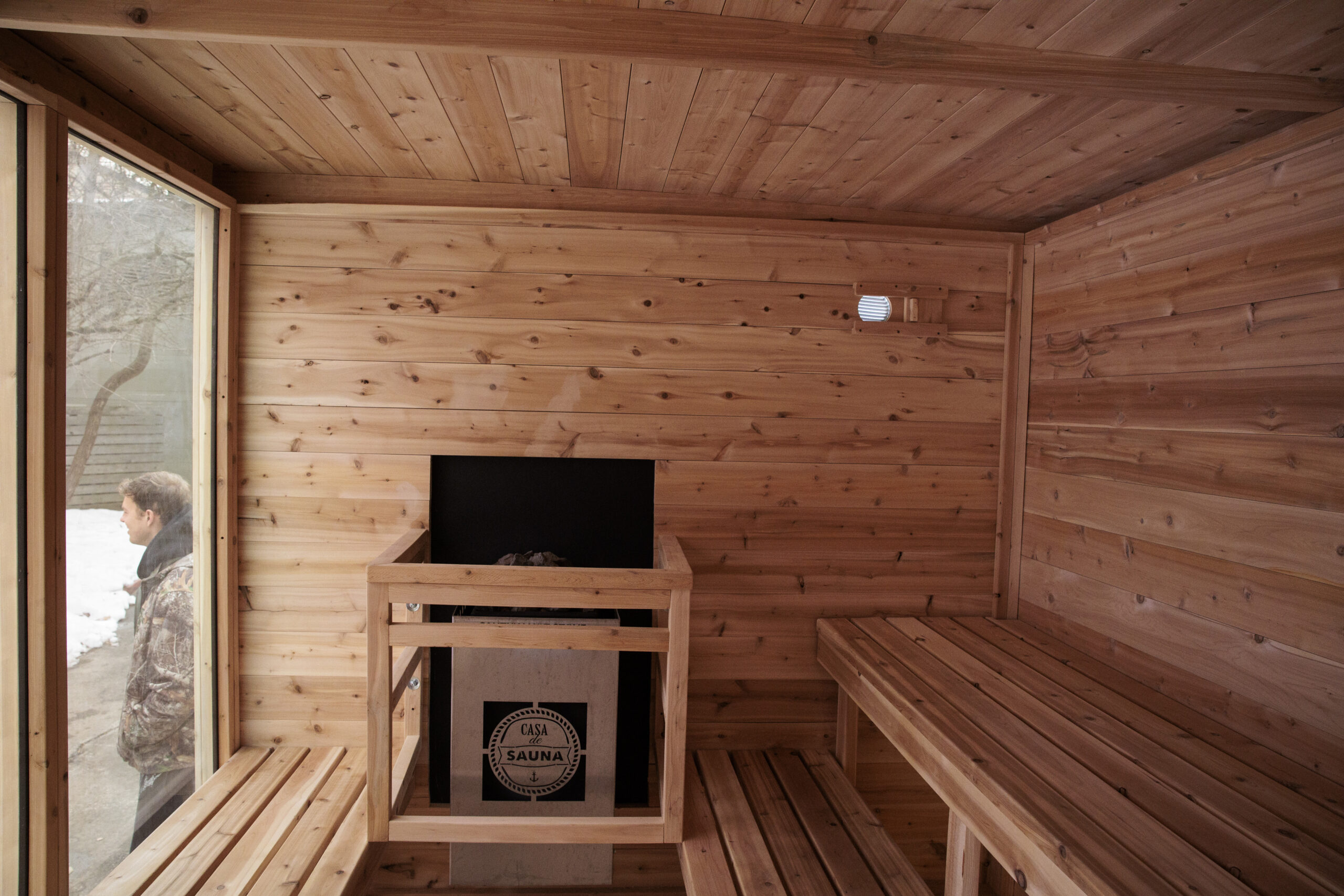
    Visitors will have the chance to relax in a glass-walled, wood-fired sauna overlooking a snowy field and woods in Northwest Philly, paired with a cold plunge.

    Mooney said the idea to host a mobile sauna on the preserve’s grounds grew from a desire to keep the center lively through winter and draw in new visitors. She was inspired by a sauna exhibit by the American Swedish Historical Museum in FDR Park and began looking for a way to bring that Nordic tradition of “hot and cold” to her own facility.

    She spotted Fiorst, a mobile sauna venture run by Jose Ugas, on social media, reached out, and the two forged a near-instant partnership. They spoke on Jan. 30, a Friday; by the next Friday, a custom sauna unit from Toronto rolled onto the grounds.

    By last Saturday, the fire was lit, and guests arrived.

    “It was, you know, kind of kismet, in a way, we were able to have this shared vision,” Mooney said. “And with him doing this servicing of the saunas on site, it makes it so much easier for us.”

    The interior of the Nordic-style sauna at the Schuylkill Center for Environmental Education.

    How does the sauna work?

    Nordic-style wood saunas are notable for their minimalist design and high heat, which participants couple with either a plunge into a cold shower, tub, or lake or a step outdoors.

    Fiorst’s installation overlooks the center’s main wooded area, framing the winter landscape through a glass wall as guests sweat it out inside the sauna’s 170- to 190-degree temperatures. Each 90-minute session allows participants to cycle at their own pace through intense heat and biting cold, a contrast Mooney found invigorating.

    The sauna is modeled on a concept popular across Nordic countries, including Norway, Finland, Denmark, and Sweden.

    Mooney said the project has already pulled in new visitors from neighborhoods like Fishtown or outside Philadelphia who might not typically visit for hiking or birdwatching.

    She believes the sauna fills a niche for “clean, wholesome, healthy fun” that is alcohol-free.

    However, unlike the typical Nordic experience of being nude during the sauna, the Schuylkill Center experience is strictly “bathing-suit friendly,” a choice tailored to American comfort levels.

    The collaboration operates on a revenue split, with a charitable twist. During February, the center’s share of the proceeds goes to its Winterfest for Wildlife campaign to support the on-site wildlife clinic.

    For now, the sauna remains a seasonal experiment, but it will stay in place as long as demand — and winter weather — holds up.

    “I think it will stay seasonal,” Mooney said. “We live in a sauna already in the summer in Philadelphia.”

    The sauna is open on weekends at the Schuylkill Center from 9 a.m. to 5 p.m. and is booked through the Fiorst website. The cost for a 90-minute session is $75. You can add a friend for $25. Private sessions of up to 16 cost $600. For now, bookings can be made only one week in advance.

    The Schuylkill Center is expecting Valentine’s Day weekend to book quickly.

    Jose Ugas (left), founder of Fiorst, and Erin Mooney, executive director of the Schuylkill Center for Environmental Education, at the sauna.

    ‘A moment of clarity’

    Ugas, a bioengineer at Johnson & Johnson who lives in Whitemarsh Township, felt compelled to bring a Nordic-style sauna experience to the region after a trip he took to Sweden following the loss of his mother to brain cancer in 2023. There, friends introduced him to a traditional Scandinavian ritual: enduring searing dry heat inside a wooden sauna, followed by a plunge into icy water or a cold shower.

    What began as a distraction soon crystallized into a moment of clarity, Ugas said.

    “Just that time together and kind of going between the hot and the cold just was like a mental reset for me,” Ugas said.

    Ugas, who will graduate with an MBA from Villanova University this spring, wanted to replicate the nature-immersive element that had grounded him overseas.

    He found a Toronto company that builds portable glass-fronted wooden saunas and ordered a custom unit equipped with a wood-fired stove, hot stones, steam, aromatherapy, and a cold-plunge tub. Ugas launched Fiorst in 2024, describing it as “nomadic” at first.

    The venture first hosted sessions overlooking Valley Forge and at Fitzwater Station in Phoenixville. Ugas then established a more permanent site, which he calls Riverside, on River Road in Conshohocken where he still books sessions.

    Ugas calls the partnership with the Schuylkill Center a natural fit given its location amid nature, merging his wellness goals with the venue’s environmental focus.

    “At the core of our mission and their mission is to get people out in nature,” Ugas said.

    So far, he has relied on social media to market the sauna, which has drawn hundreds of visitors to its locations.

    The Nordic-style sauna at the Schuylkill Center for Environmental Education in Philadelphia.

    ‘Social sauna’

    Serena Franchini, a nurse and founder of Healing Fawn Inner Child Work & Somatic Therapy, has taken sauna sessions at Ugas’ other locations. She sees it as a tool to help with nervous system regulation while offering an immersion in nature.

    “I loved the idea that it was outside,” Franchini said.

    She likes the relaxed atmosphere compared with some traditional saunas that often enforce strict time limits on heating and cooling cycles. Instead, she cycles between the sauna and cold-plunge tub at her own pace.

    Franchini highlighted the mental wellness aspect of Ugas’ “social sauna” sessions, noting Friday night events as “skip the bar” alternatives that allow strangers to gather for a healthy, communal experience.

    “It’s a great way for community to connect with people that are interested in the same things that you are,” Franchini said.

  • This Harvard-trained, ex-Uber lawyer is the boss at one of Philly’s biggest builders

    This Harvard-trained, ex-Uber lawyer is the boss at one of Philly’s biggest builders

    Construction is often a family business. Mike Lloyd, as a Harvard Law graduate, former Wall Street trader, past counsel for Uber and Chevron, and a native of south Louisiana, had a first-class outsider’s resume when he arrived at Malvern-based IMC Construction, one of the mid-Atlantic’s largest general contractors.

    But Lloyd is family, too: In 2017, engaged to the boss’ daughter, he took over as IMC’s general counsel, and moved onto a new career path that added his professional and personal skills to IMC’s career construction managers.

    Since 2023 he’s been president and the firm’s controlling owner. On his watch, IMC revenue has risen more than 70%, to $600 million, and it has added offices and clients in New Jersey and Delaware, with more planned. The firm, founded in 1976, now employs 300, plus dozens of subcontracted crews at any given time.

    Senior managers of IMC Construction, 2025. CEO Mike Lloyd is third from right; his predecessor, IMC chairman and Lloyd’s father-in-law Robert Cottone, is third from left.

    Jobs that IMC built or rebuilt in recent years include Penn and Jefferson medical projects, Prologis warehouses in Marcus Hook, the Morgan Lewis tower at 2222 Market St., new plants for Merck, Solenis and other biotech companies, apartments at the Granite Run Mall, the Promenade at Upper Dublin, the King of Prussia Town Center, and more than 100 other area sites.

    Lloyd recently spoke with The Inquirer at IMC’s Chester County headquarters and on a tour of its nearby Great Valley Apartments complex, for developer Greystar. The conversation has been edited for clarity and length.

    How did you get this mid-career opening into the construction business?

    Rob Cottone [his predecessor as IMC CEO] recognized he needed support to help the organization grow across the Mid-Atlantic.

    This business is hand-to-hand combat every day. Every day is different.

    What I bring to the table is my broad skill set. I’ve worked in finance. I’ve worked in law. I’ve worked in mergers and acquisitions, with big and small companies. I’m comfortable with financial companies, whether for IMC’s own work, or to help the building owners get comfortable with the construction lenders.

    I don’t pretend to know things I don’t. We build a team of specialists who complement each other.

    What’s an example?

    Phil Ritter, a senior project manager, had the idea of creating a Special Projects division for jobs worth $5 million and under. You use a different pool of contractors, and a faster operating model, but you get the benefit of working for a large, efficient organization.

    I worked on the business plan, and in 2020 he started it, with maybe a million dollars in revenue that year. In three years, we were doing $30 million. We had a tremendous success doing small projects for Penn Medicine and Jefferson and others.

    Many companies would not have put a top project executive in charge of a new business. It costs overhead while working on a business plan. But that’s how we invest in people.

    We opened in 2022 in Edison, N.J., with four employees. We are now 37 there, of our 300 total, with $210 million in projected revenue for 2026. Our biggest job is the Crossings at Brick Church in East Orange, a transit-oriented multifamily development for Triangle Equities.

    Are those smaller projects non-union?

    The labor is driven by the clients’ demands. As a general contractor, we are a merit shop [using both union and non-union contractors]. Our jobs are often 100% union, not always.

    Sometimes we do jobs for a lump-sum price, sometimes open-book, guaranteed-maximum, the approach pioneered by Buck Williams [who founded IMC in 1976]. It takes a lot of working with the owners.

    Mike Lloyd, CEO of IMC Construction, in the company’s Malvern headquarters, in January. Behind him are renderings and photos of some of IMC’s recent projects.
    You’re building a lot of apartments lately?

    We see a tremendous amount of suburban apartment demand.

    A lot of these are places where people can avoid going to the city, when you can have a nice dinner and do some retail shopping close to work, close to home. You have that in King of Prussia, you are getting it in the Great Valley, you will see more of it at the Navy Yard, and in Ardmore.

    We recently broke ground at 100 Lancaster in Ardmore for Radnor Property Group, and the Great Valley Apartments we’re building for Greystar. You have a demographic of millennials who are finally getting married and moving out of the city as they have kids.

    We survived COVID by completing over six million square feet of warehouses. We have turned over nearly 5,000 apartment units since the year before I joined, which should make IMC one of the largest apartment builders in the Philadelphia region. We have turned over 1,700 senior-living units over the past five years, which makes IMC the largest builder of senior living units [around Philadelphia.]

    Has office construction peaked?

    I don’t know that offices have peaked. I’m actually bullish on office construction. We’re completing our rebuild of 680 Swedesford Rd. [in Wayne], for example. Employers want to get their people back together. There’s benefits for collaboration and connection.

    But they want higher-quality space. More light and amenities. They want a kind of ecosystem, like you see at the Navy Yard, where Ensemble is investing in life sciences. They have labs, offices, apartments, and amenities.

    At the King of Prussia Town Center, the retail draws people in, and they’re building offices around it. You see a similar trend in the Great Valley. Historically there was this corporate office campus, now there are restaurants, hotels, apartments all around.

    Is biotech construction stalled?

    We are part of a $100 million lab project in Delaware. We did Penn’s Center of Healthcare and Technology in Center City. We built the Radnor outpatient center — it’s a model. We built their facility in Chesterbrook. And the hospitals are still building.

    After years of industry support for underrepresented contractors, are you feeling whiplash due to President Donald Trump’s reaction to DEI?

    We are now one of the largest minority-owned contractors [in the country]. We don’t distinguish ourselves by being a minority contractor; we aspire to be the leading general contractor in the Mid-Atlantic region by leveraging technology in unique ways and creating solutions to serve our clients’ needs.

    We happen to be a minority-owned company. I personally care about expanding opportunities. We have broadened the subcontractor pool and awarded $1 billion of subcontracts to minority- and women-owned businesses.

    We have not felt much backlash or reversal. Many owners still feel committed to expanding the contractor pool. In the current administration it may need to be structured differently.

    Will your kids make this a family business?

    Our children are young. My daughter has already told me she wants to build her own house, and I can live in it if one day we were working together.

  • 2026 Cadillac Vistiq: It’s the $100,000 question

    2026 Cadillac Vistiq: It’s the $100,000 question

    2026 BMW iX xDrive45 vs. 2026 Cadillac Vistiq Platinum: A lot for a lot?

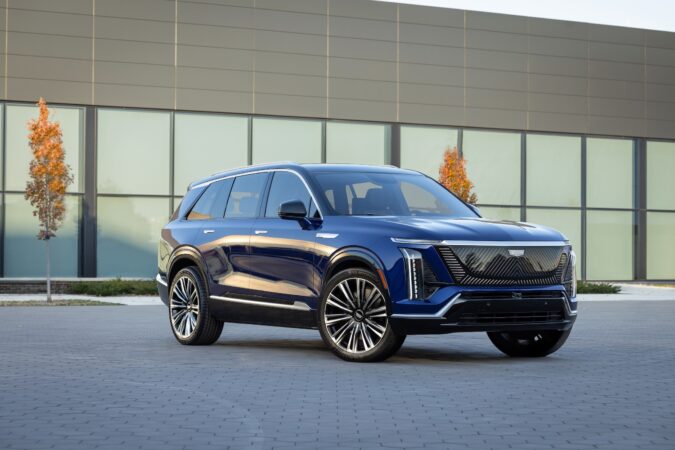
    This week: 2026 Cadillac Vistiq

    Price: $99,915 as tested. Red paint was the only upgrade.

    What others are saying: “Highs: Cabin teeming with luxury details, smooth ride, nimbler than its size suggests. Lows: Uncommunicative steering, pricey top trims, shoddy main display control dial,” says Car and Driver.

    What Cadillac is saying: “Luxury for your life.”

    Reality: I guess if I had $100K I could pay someone to lie on the front seat trying to find the features I need.

    What’s new: The whole thing. Here’s a three-row Cadillac SUV powered by the plug.

    Competition: In addition to the iX, there are the Genesis Electrified GV70, Lexus RZ, Mercedes-Benz EQE, Tesla Model X, and Volvo EX90.

    Up to speed: The Vistiq is in the class of premium EVs that really roars ahead when you press the accelerator.

    The dual-motor SUV creates 615 horsepower, and gets to 60 mph in 3.6 seconds, according to Car and Driver.

    You will have no issues pulling into traffic or passing in this SUV.

    You’ll also save a lot over the iX, which requires an upgrade to match that acceleration. The price-matched iX took a full second more to get to 60.

    Shiftless: The shift lever is on the steering column, where General Motors is putting most of them these days. Pull and lift to back up and pull and lower to move ahead.

    On the road: The all-wheel-drive Vistiq handles quite well for a large SUV. It’s wide and it took me a minute to get used to that, but once I did, I could tell where the vehicle was in the lane, or in the parking space — which I find is often the hardest piece to figure out.

    The vehicle modes are handled through the touchscreen; swipe to the right, choose drive modes, and pick what you like. Sport mode is best for performance, and Snow and Ice did a nice job during a heavy snowstorm and subsequent frigid days.

    One big complaint — if you’re not going to put the controls on an easily grabbed dial, have them keep the previous setting, rather than default to Touring (which I never wanted). So many times I was tooling along on questionable road surfaces and then realized, “Dang! I’m not in snow mode.”

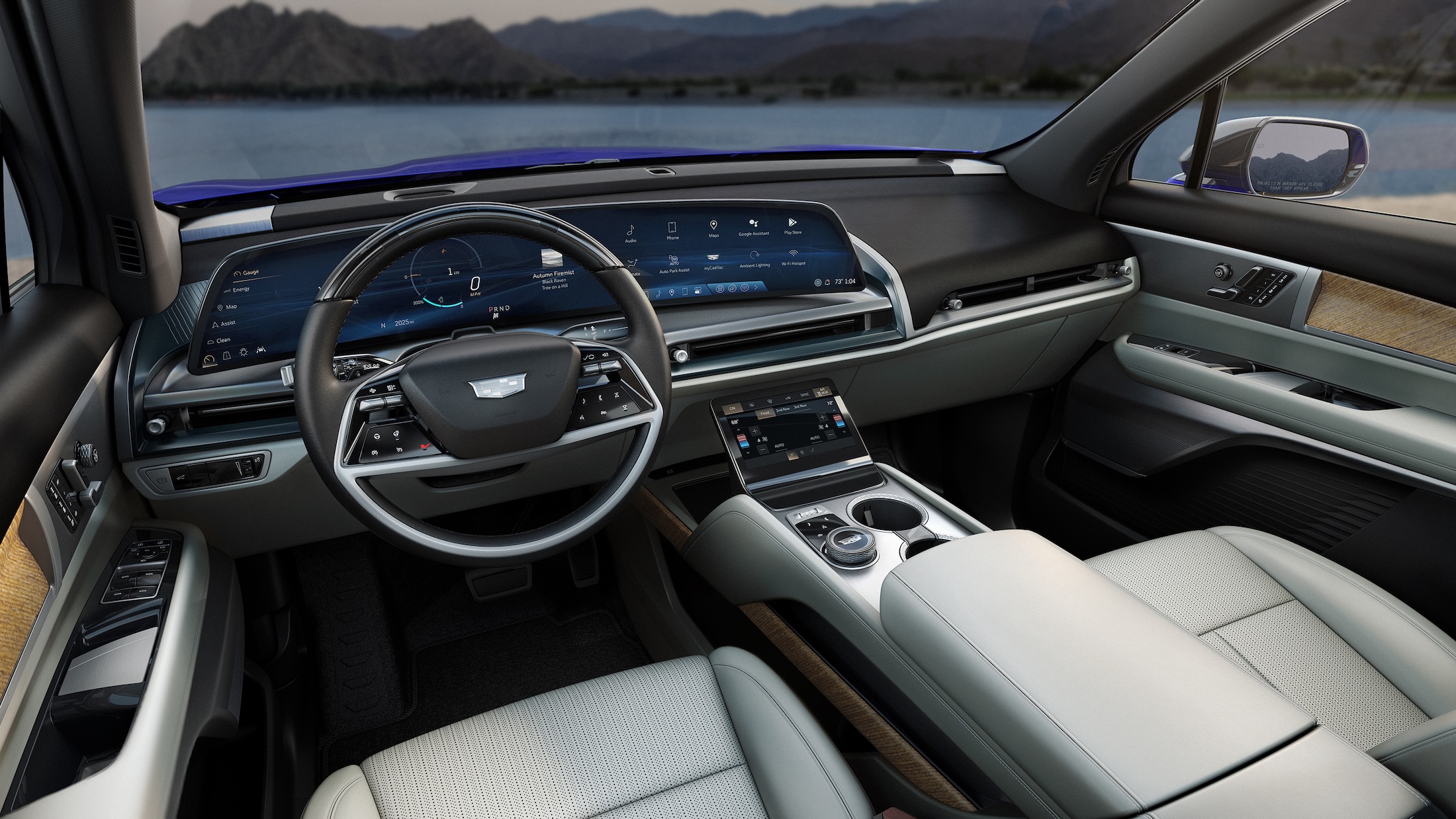
    The interior of the 2026 Cadillac Vistiq has the look and feel of a Cadillac, but diminishes with each row.

    Driver’s Seat: The command center is comfortable and Cadillacky. The seats are a little on the firm side, and I can’t say I spent enough time to see how long trips go, but they weren’t bad. (Some seats can be so firm as to make me angry in an instant.)

    Friends and stuff: Sadly, the seats offer noticeably diminishing returns as you head farther back. The middle row is smallish and awkward and feels like some minivan seats from 1998. The rear row offers scant legroom, although there is some room for feet under the seats and good headroom. But the vehicle is kind of short for three rows, especially for a Cadillac.

    Cargo space is 15.2 cubic feet in the back, 43 with the third row folded, and 80.2 cubic feet with both rows folded.

    Play some tunes: Cadillac wants to dazzle with its 33-inch screen, but it appears the company has become hyperfocused on it, to the detriment of other features.

    It took a couple searches and finally lying on the Driver’s Seat and peering into the recesses behind the console to find the USB-C outlets. I know I should be cool and get a phone I can lay on a charger, but why put these in here at all? This just seems snotty. Like they’re saying, “Haha, loser! Get a real phone!”

    The connection ports never seemed to want to turn on the music system, either. Bluetooth is usually fine, except that the connection just randomly cut out on about half my trips. The only way to restore it was to shut down the Vistiq and restart it.

    Sound from the 23-speaker AKG system with Dolby is less than you’d expect, about an A-.

    General Motors would have done well to keep Apple CarPlay access. There’s no dedicated map program, just Google Maps and Waze, and neither looks as refined as a Cadillac screen should.

    There’s a dial control with buttons as well, but the system is so bare-bones that I don’t see how that would help.

    Night shift: The first time I drove the Vistiq I had to keep the maps turned off. Both programs feature bright white backgrounds, and they did not automatically adjust for the darkness outside and prevented me from seeing the road.

    After another few minutes spent on my stomach trying to find controls, I noticed the old-fashioned light dimmer roller switch to the left of the steering wheel. That dimmed the whole dashboard, but not so badly that I couldn’t see. Still, you’d think this would adjust without me having to do anything, like it does in the Lovely Mrs. Passenger Seat’s Kia Soul, for about one-fourth the price.

    Keeping warm and cool: HVAC controls get a separate touchscreen. They’re pretty but a little fussy and hard to adjust at a glance.

    Range: The Vistiq advertises a 300-mile range, a match for most of the iX models available. It charges up to 80 miles in 20 minutes, which is no match for some of the best out there (Genesis, Hyundai, and Kia.)

    Where it’s built: Spring Hill, Tenn. 43% of parts come from the U.S. and Canada; 18% from China; and 17% South Korea.

    How it’s built: Consumer Reports predicts the Vistiq reliability to be a 2 out of 5.

    In the end: It feels like Cadillac is giving up. No snazzy map program — when they used to have one of the most attractive options. No CarPlay. No drive mode switch, just use the touchscreen, which has a home screen that looks nice in photos but in person screams Windows 95. Critical items hidden like Easter eggs in a Jeep. It’s a shame, because there’s a nice vehicle here.

    The iX is far from perfect, but I’d pick it over this. But among all the competitors, it’s GV70 all the way, even despite 10% less range.

  • Protesters in multiple states press Target to oppose the immigration crackdown in Minnesota

    Protesters in multiple states press Target to oppose the immigration crackdown in Minnesota

    NEW YORK — Activists planned protests at more than two dozen Target stores around the United States on Wednesday to pressure the discount retailer into taking a public stand against the 5-week-old immigration crackdown in its home state of Minnesota.

    ICE Out Minnesota, a coalition of community groups, religious leaders, labor unions, and other critics of the federal operation, called for sit-ins and other demonstrations to continue at Target locations for a full week. Target’s headquarters are located in Minneapolis, where federal officers last month killed two residents who had participated in anti-ICE protests, and its name adorns the city’s major league baseball stadium and an arena where its basketball teams plays.

    “They claim to be part of the community, but they are not standing up to ICE,” said Elan Axelbank, a member of the Minnesota chapter of Socialist Alternative, which describes itself as a revolutionary political group. He organized a Wednesday protest outside a Target store in Minneapolis’ Dinkytown commercial district.

    Demonstrations also were scheduled in St. Paul, Minnesota, Boston, Chicago, Honolulu, Philadelphia, Pittsburgh, Raleigh, North Carolina, San Diego, Seattle and other cities, as well as in suburban areas of Minnesota, California and Massachusetts. Target declined Wednesday to comment on the protests.

    Target first became a bull’s-eye for critics of the Trump administration’s surge in immigration enforcement activity after a widely-circulated video showed federal agents detaining two Target employees in a store in the Minneapolis suburb of Richfield last month. Luis Argueta, a spokesperson for Unidos Minnesota, an immigrant-led social justice advocacy organization that is part of the ICE Out Minnesota coalition, said his group is focusing its protests on the Richfield store.

    One of the demands of Wednesday’s protests is for Target to deny federal agents entry to stores unless they have judicial warrants authorizing arrests.

    Some lawyers have argued that anyone, including U.S. Border Patrol and Immigration and Customers Enforcement agents without signed warrants, can enter public areas of a business as they wish. Public areas include restaurant dining sections, open parking lots, office lobbies and shopping aisles, but not back offices, closed-off kitchens or other areas of a business that are generally off-limits to the public and where privacy would be reasonably expected, those lawyers say.

    Target has not commented publicly on the detention of the store employees. CEO Michael Fiddelke, who became Target’s chief executive on Feb. 2, sent a video message to the company’s 400,000 workers two days after a Border Patrol agent and a Customs and Border Protection officer shot and killed Minneapolis resident Alex Pretti on Jan. 24.

    Fiddelke said the “violence and loss of life in our community is incredibly painful,” but he did not mention the immigration crackdown or the fatal shootings of Pretti, an ICU nurse at a medical center for U.S. veterans in Minneapolis, and Renee Good, a mother of three fired on in her car by an ICE agent.

    Fiddelke was one of 60 CEOs of Minnesota-based companies who, in the wake of Pretti’s death, signed an open letter “calling for an immediate de-escalation of tensions and for state, local and federal officials to work together to find real solutions.”

    The protests over its alleged failure to oppose the immigration crackdown in Minnesota come a year after Target faced protests and boycotts over the company’s decision to roll back its diversity, equity and inclusion initiatives. At the time, critics said the decision marked a betrayal of Target’s retail giant’s philanthropic commitment to fighting racial disparities and promoting progressive values in liberal Minneapolis and beyond.

    The retail chain also is struggling with a persistent sales malaise. Critics have complained of disheveled stores that are missing the budget-priced flair that long ago earned the retailer the nickname “Tarzhay.”

    While Wednesday’s protests targeted a tiny fraction of the company’s nearly 2,000 stores, the negative attention serves as another distraction from Target’s business, according to Neil Saunders, managing director of the retail division of market research firm GlobalData.

    “The agenda has been hijacked by this,” Saunders said. “And it is a bit of a distraction for Target that they’d rather not have.”

    In recent days, a national coalition of Mennonite congregations organized roughly a dozen demonstrations inside and outside of Target stores across the country, singing and urging Target to publicly call Congress to defund Immigration and Customs Enforcement among other demands.

    A spokesperson for Mennonite Action said the coalition was not formally connected to ICE Out but following the lead of organizers in Minneapolis.

    The Rev. Joanna Lawrence Shenk, associate pastor at First Mennonite Church of San Francisco, said the group did not plan any actions on Wednesday but was mapping out weekend singalong events at Targets in a handful of towns and cities, including Pittsburgh and Harrisonburg, Virginia. She estimated that by the end of the weekend more than 1,000 congregation members will have participated.

    Shenk noted that the Mennonites sing This Little Light of Mine and other gospel songs and hymns.

    “The singing was an expression of our love for immigrant neighbors who are at risk right now and who are also a part of our congregation,” she said. “For us, it’s not just standing in solidarity with others but it’s also protecting people who are vulnerable.”

  • ‘We’re going to work at the speed of business’: Mayor Cherelle Parker launches PHL PRIME to help firms navigate Philly’s red tape

    ‘We’re going to work at the speed of business’: Mayor Cherelle Parker launches PHL PRIME to help firms navigate Philly’s red tape

    Mayor Cherelle L. Parker on Wednesday unveiled PHL PRIME, a new service in Philadelphia that has nothing to do with Amazon — although the e-commerce giant could potentially sign up for it.

    At her annual address to the Chamber of Commerce for Greater Philadelphia, Parker signed an executive order to establish PHL PRIME, which stands for Project Review and Infrastructure Made Easy. The new program is designed to draw “high-impact economic development projects that generate quality jobs” by helping businesses that are considering investing in Philadelphia to navigate city rules and regulations, according to the mayor’s office.

    “I‘m the mayor, and I’m not absolving myself of the responsibility of making sure that bureaucracy is working effectively and efficiently,” Parker said during her annual speech at the Convention Center. “We’re not going to burden business with the ‘time tax.’ We’re going to work at the speed of business.”

    Parker told reporters the new program will not involve hiring any new staff. Instead, it’s meant to bring various city departments together into a “PHL PRIME Tiger Team“ to coordinate a streamlined approach and lay out the welcome mat for investment.

    In her wide-ranging speech, Parker also said the city was committed to helping major development plans from the Market East corridor and the South Philadelphia Stadium Complex to the port and shipyard.

    But Parker did not speak at length about two measures she included in last year’s city budget deal that some have said shows the city is not as welcoming to business as it could be. Both relate to the city’s business income and receipts tax, or BIRT.

    Attendees record Mayor Cherelle L. Parker on the big screen as she delivers her keynote address at the Chamber of Commerce for Greater Philadelphia’s Annual Mayoral Luncheon at the Convention Center Wednesday, Feb. 11, 2026.

    Parker on Wednesday briefly mentioned a law she and City Council adopted last year that bakes in annual incremental cuts to the two BIRT tax rates over 13 years. And she thanked the Tax Reform Commission for guidance on making the city’s tax structure more business-friendly.

    “I am proud to affirm that we proposed and codified into law $210 million in tax investments to provide the kind of predictability that the business community told us that it needs,” Parker said. “I hope that was a direct sign to each of you in this room that the executive and the legislative branches are listening.”

    But she did not mention that the enacted tax cuts — the steepest of which will likely take effect after she leaves office — are far less aggressive than the commission’s recommendations, which called for completely eliminating BIRT within eight to 12 years.

    Parker also did not address the elimination of an important tax break that allowed businesses to exempt their first $100,000 in revenue when calculating their BIRT liabilities. That policy — which lasted about a decade before Council approved a Parker bill to end it last year — effectively eliminated BIRT for the tens of thousands of businesses that take in less than $100,000 per year from commerce in the city.

    Parker has said she supports the exemption but was forced to get rid of it after the city was sued by Massachusetts-based Zoll Medical Corp., which does business in Philadelphia and argued that the tax break violated the Pennsylvania Constitution.

    Philly’s smallest businesses are now scrambling to comply with the rule change. Tax bills are due April 15.

  • Instagram chief says he does not believe people can get clinically addicted to social media

    Instagram chief says he does not believe people can get clinically addicted to social media

    LOS ANGELES — Adam Mosseri, the head of Meta’s Instagram, testified Wednesday during a landmark social media trial in Los Angeles that he disagrees with the idea that people can be clinically addicted to social media platforms.

    The question of addiction is a key pillar of the case, where plaintiffs seek to hold social media companies responsible for harms to children who use their platforms. Meta Platforms and Google’s YouTube are the two remaining defendants in the case, which TikTok and Snap have settled.

    At the core of the Los Angeles case is a 20-year-old identified only by the initials “KGM,” whose lawsuit could determine how thousands of similar lawsuits against social media companies would play out. She and two other plaintiffs have been selected for bellwether trials — essentially test cases for both sides to see how their arguments play out before a jury.

    Mosseri said it’s important to differentiate between clinical addiction and what he called problematic use. The plaintiff’s lawyer, however, presented quotes directly from Mosseri in a podcast interview a few years ago where he said the opposite, but he clarified that he was probably using the term “too casually,” as people tend to do.

    Mosseri said he was not claiming to be a medical expert when questioned about his qualifications to comment on the legitimacy of social media addiction, but said someone “very close” to him has experienced serious clinical addiction, which is why he said he was “being careful with my words.”

    He said he and his colleagues use the term “problematic use” to refer to “someone spending more time on Instagram than they feel good about, and that definitely happens.”

    It’s “not good for the company, over the long run, to make decisions that profit for us but are poor for people’s wellbeing,” Mosseri said.

    Mosseri and the plaintiff’s lawyer, Mark Lanier, engaged in a lengthy back-and-forth about cosmetic filters on Instagram that changed people’s appearance in a way that seemed to promote plastic surgery.

    “We are trying to be as safe as possible but also censor as little as possible,” Mosseri said.

    In the courtroom, bereaved parents of children who have had social media struggles seemed visibly upset during a discussion around body dysmorphia and cosmetic filters. Meta shut down all third-party augmented reality filters in January 2025. The judge made an announcement to members of the public on Wednesday after the displays of emotion, reminding them not to make any indication of agreement or disagreement with testimony, saying that it would be “improper to indicate some position.”

    In recent years, Instagram has added a slew of features and tools it says have made the platform safer for young people. But this does not always work. A report last year, for instance, found that teen accounts researchers created were recommended age-inappropriate sexual content, including “graphic sexual descriptions, the use of cartoons to describe demeaning sexual acts, and brief displays of nudity.”

    In addition, Instagram also recommended a “range of self-harm, self-injury, and body image content” on teen accounts that the report says “would be reasonably likely to result in adverse impacts for young people, including teenagers experiencing poor mental health, or self-harm and suicidal ideation and behaviors.” Meta called the report “misleading, dangerously speculative” and said it misrepresents its efforts on teen safety.

    Meta is also facing a separate trial in New Mexico that began this week.

  • Robert E. Booth Jr., pioneering knee surgeon and celebrated antiquarian, has died at 80

    Robert E. Booth Jr., pioneering knee surgeon and celebrated antiquarian, has died at 80

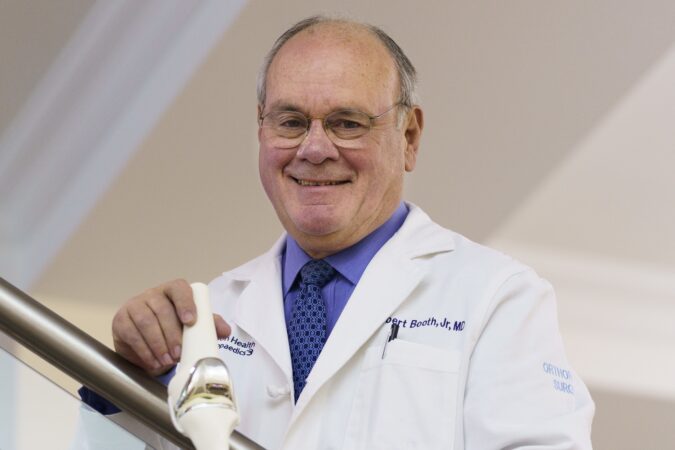
    Robert E. Booth Jr., 80, of Gladwyne, renowned pioneering knee surgeon, former head of the Department of Physical Medicine and Rehabilitation at Pennsylvania Hospital, celebrated antiquarian, professor, researcher, writer, lecturer, athlete, mentor, and volunteer, died Thursday, Jan. 15, of complications from cancer at his home.

    Born in Philadelphia and reared in Haddonfield, Dr. Booth was a top honors student at Haddonfield Memorial High School, Princeton University, and what is now the Perelman School of Medicine at the University of Pennsylvania. He was good at seeing things differently and went on to design new artificial knee joint implants and improved surgical instruments, serve as chief of orthopedics at Pennsylvania Hospital, and mentor celebrated surgical staffs at Jefferson Health, Aria Health, and Penn Medicine.

    He joined with two other prominent doctors to cofound the 3B orthopedic private practice in the late 1990s and, over 50 years until recently, performed more than 50,000 knee replacements, more than anyone, according to several sources. Last March 26, he did five knee replacements on his 80th birthday.

    In a tribute, fellow physician Alex Vaccaro, president of Rothman Orthopaedic Institute, said: “He restored mobility to thousands, pairing unmatched technical mastery with a compassion that patients never forgot.”

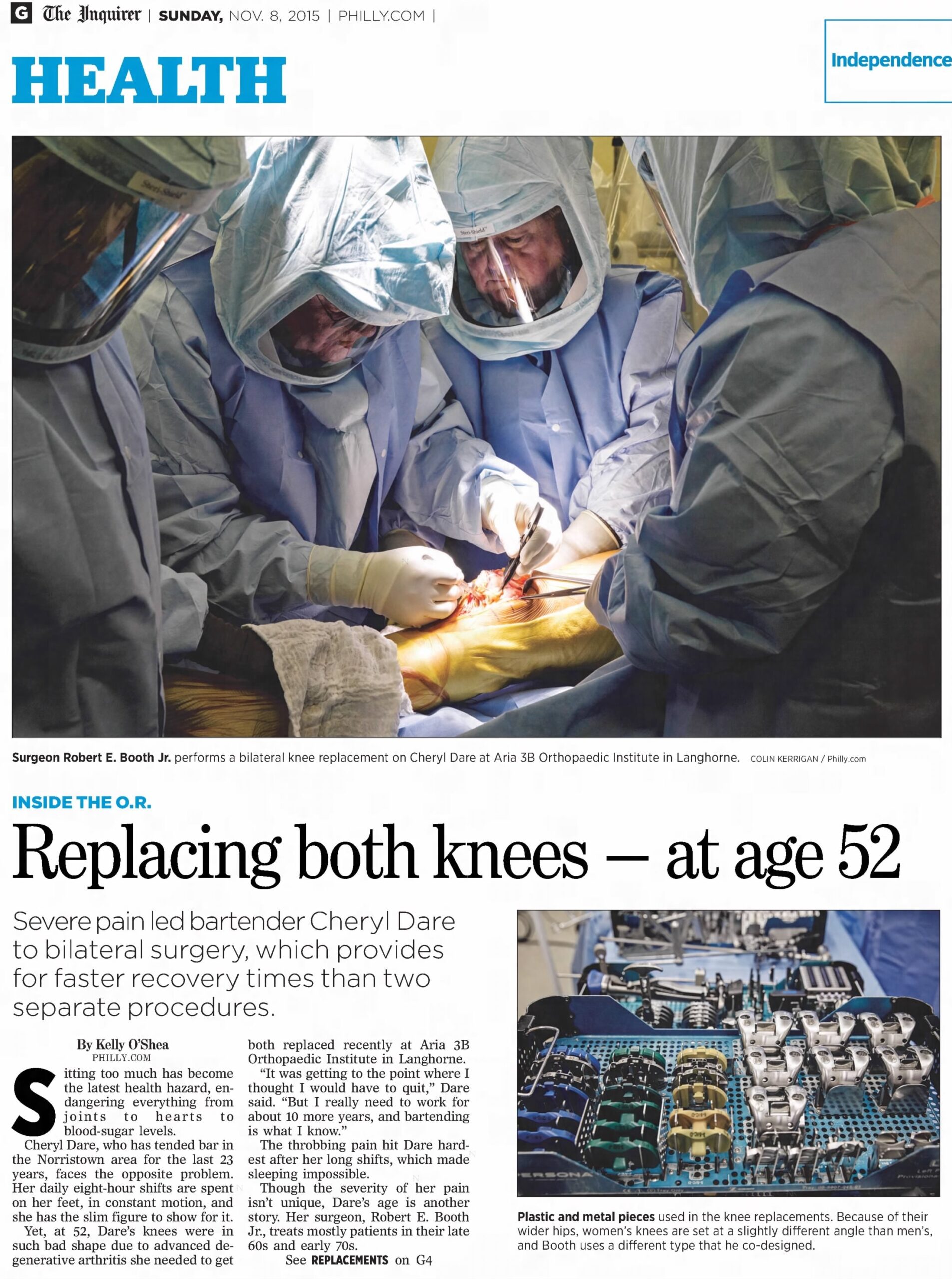
    In a 1989 story about his career, Dr. Booth told The Inquirer: “It’s so much fun and so gratifying and so rewarding to see what it means to these people. You don’t see that in the operating room. You see that in the follow-ups. That’s the fun of being a surgeon.”

    Friends called him “a legend in his profession” and “a friend to everyone” in online tributes. He was known to check in with patients the night before every surgery, and a colleague said online: “Patients were all shocked by his compassion.”

    Dr. Booth was also praised for his organization and collaboration in the operating room. “His OR was a clinic in team work and efficiency,” a former colleague said on LinkedIn.

    He told Medical Economics magazine in 2015: “I love fixing things. I like the mechanics and the positivity of something assembled and fixed.”

    This article about Dr. Booth’s practice was published in The Inquirer in 2015.

    His procedural innovations reduced infection rates and increased success rates. They were scrutinized in case studies by Harvard University and others, and replicated by colleagues around the world. Some of the instruments he redesigned, such as the Booth retractor, bear his name.

    He was president of the Illinois-based Knee Society in the early 2000s and earned its 2026 lifetime achievement award. In an Instagram post, colleagues there called him “one of the most influential leaders in the history of knee arthroplasty.”

    He was a professor of orthopedics at Penn’s school of medicine, Thomas Jefferson University Hospital, and the old Allegheny University of Health Sciences. He loved language and studied poetry on a scholarship in England after Princeton and before medical school at Penn. He told his family that his greatest professional satisfaction was using both his “manual and linguistic skills.”

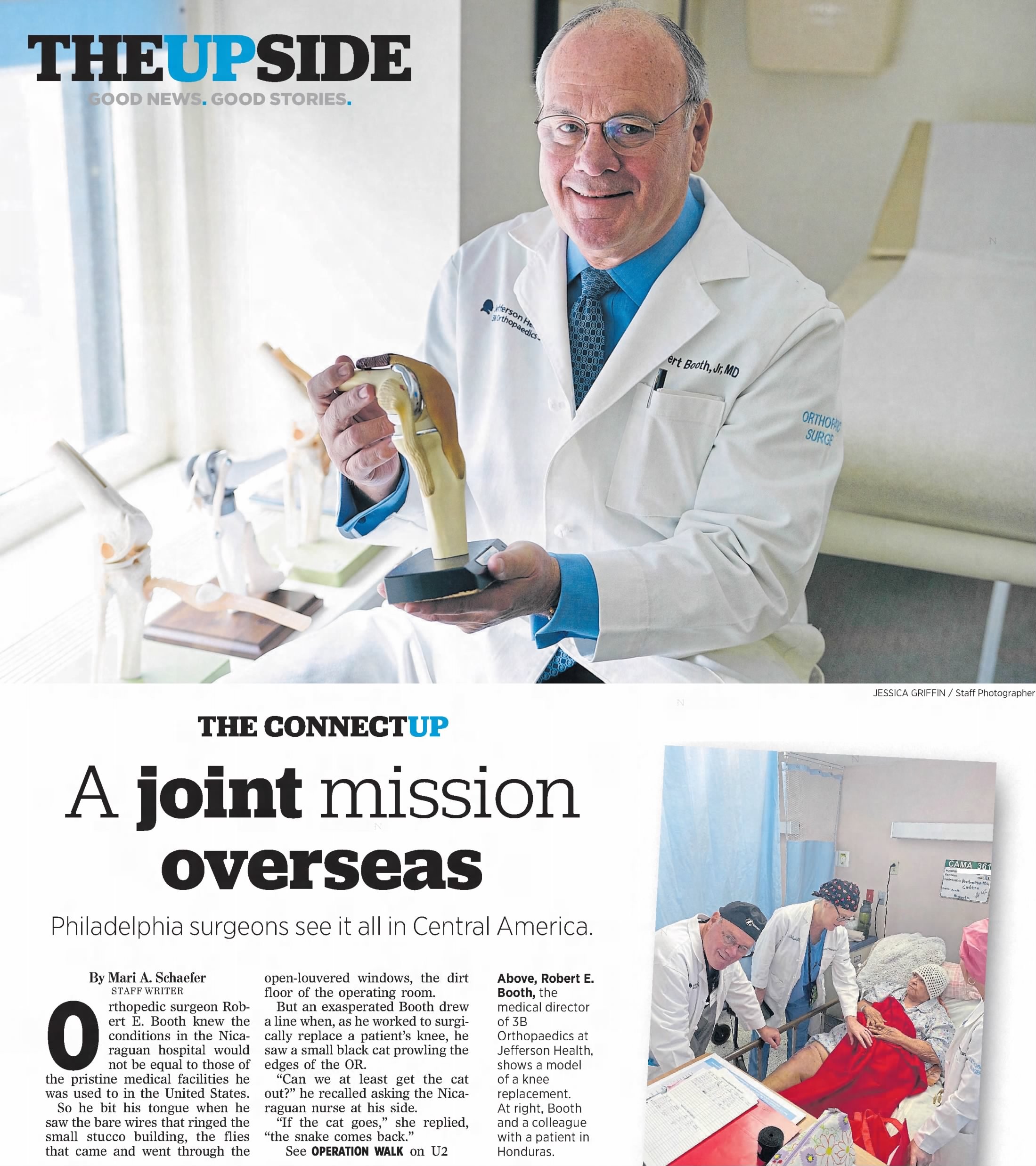
    He was onetime president of the International Spine Study Group and volunteered with the nonprofit Operation Walk Denver to provide free surgical care for severe arthritis patients in Panama, Guatemala, Honduras, Nicaragua, and elsewhere. Colleagues at Operation Walk Denver noted his “remarkable spirit, profound expertise, and unwavering commitment” in a Facebook tribute.

    This story about Dr. Booth’s charitable work abroad appeared in The Inquirer in 2020.

    At home, Dr. Booth and his wife, Kathy, amassed an extensive collection of Shaker and Pennsylvania German folk art. They curated five notable exhibitions at the Philadelphia Antiques Show and were recognized as exceptional collectors in 2011 by the Philadelphia Society for the Preservation of Landmarks.

    He lectured widely about art and antiques, and wrote articles for Magazine Antiques and other publications. He was president of the American Folk Art Society and active at the Philadelphia Museum of Art, the Metropolitan Museum of Art in New York, and the Canterbury Shaker Village in New Hampshire.

    “He was larger than life for sure,” said his daughter, Courtney.

    Robert Emrey Booth Jr. was born March 26, 1945, in Philadelphia. He was the salutatorian of his senior class and ran track and field at Haddonfield High School.

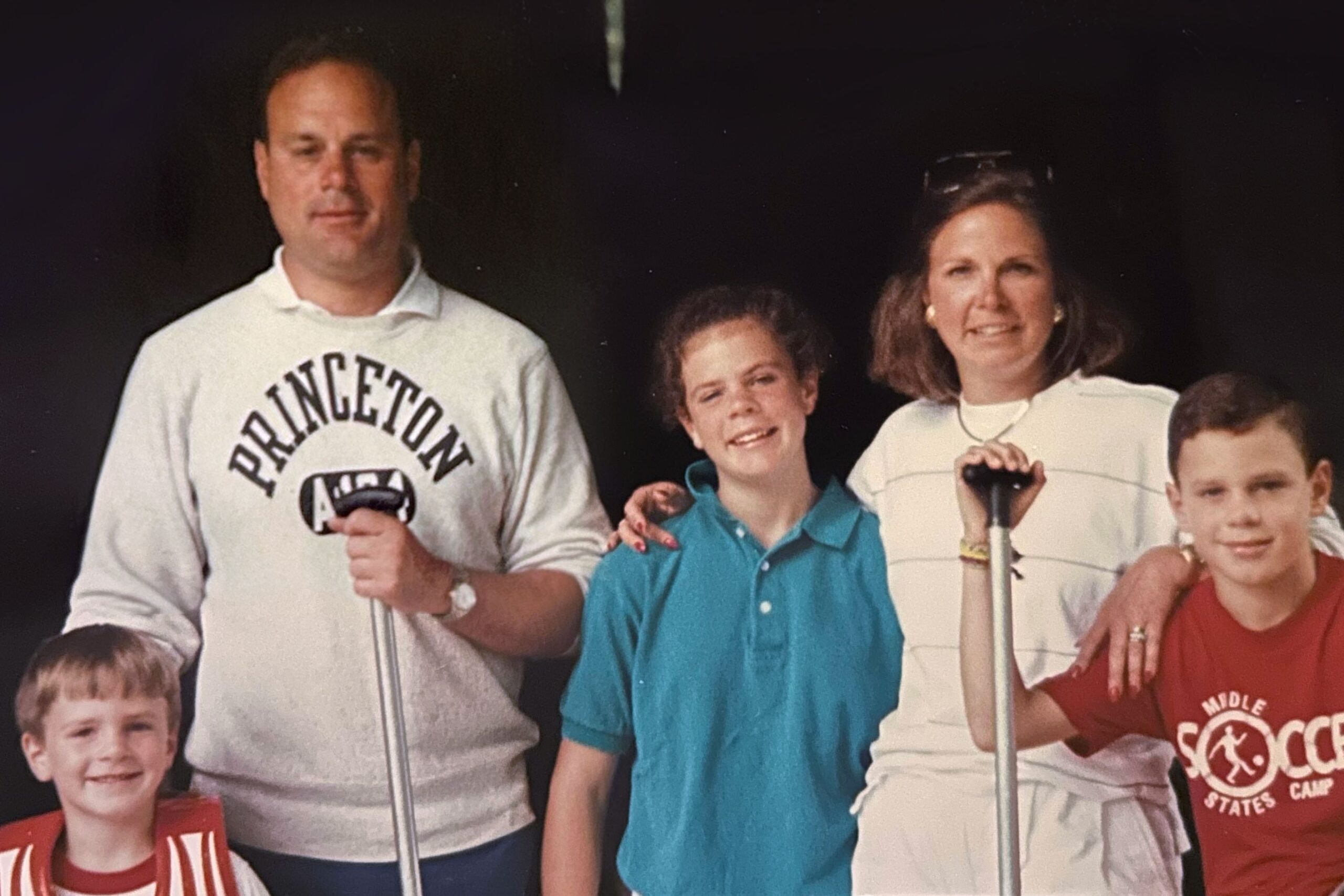
    Dr. Booth enjoyed time with his family.

    He earned a bachelor’s degree in English at Princeton in 1967, won a letter on the swimming and diving team, and played on the school’s Ivy League championship lacrosse team as a senior. He wrote his senior thesis about poet William Butler Yeats and returned to Philadelphia from England at the suggestion of his father, a prominent radiologist, to become a doctor. He graduated from Penn’s medical school in 1972.

    “I always liked the intellectual side of medicine,” he told Medical Economics. “And once I got to see the clinical side, I was pretty well hooked.”

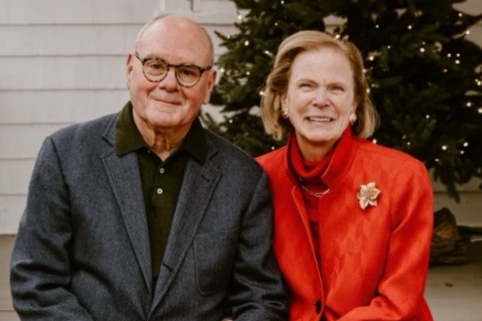
    He met Kathy Plummer at a wedding, and they married in 1972 and had a daughter, Courtney, and sons Robert and Thomas. They lived in Society Hill, Haddonfield, and Gladwyne.

    Dr. Booth liked to ski and play golf. He was an avid reader and enjoyed time with his family on Lake Kezar in Lovell, Maine.

    “He was quite the person, quite the partner, and quite the husband,” his wife said, “and I’m so proud of what we built together.”

    Dr. Booth and his wife, Kathy, married in 1972.

    In addition to his wife and children, Dr. Booth is survived by six grandchildren and other relatives.

    A private celebration of his life is to be held later.

    Donations in his name may be made to Operation Walk Denver, 950 E. Harvard Ave., Suite 230, Denver, Colo. 80210.