Category: Health

  • RFK Jr. holds a Harrisburg rally to promote health agenda

    RFK Jr. holds a Harrisburg rally to promote health agenda

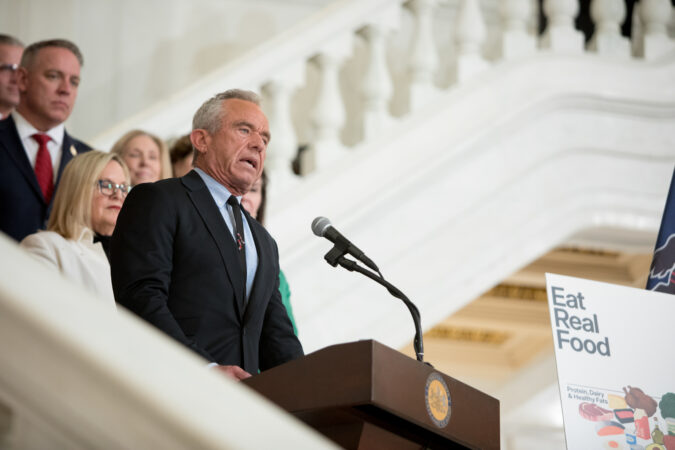
    Health and Human Services Secretary Robert F. Kennedy Jr. touted his new nutritional guidelines and pushed back against criticism of his vaccine policy Wednesday at a rally in Harrisburg.

    Speaking from the rotunda of the state Capitol, Kennedy declared that Americans are sicker than their European counterparts and blamed “bad policy choices” by his predecessors for turning a “once-exemplary healthcare system into a sick care system.”

    Doctors, hospitals, insurers, and pharmaceutical companies, he said, are incentivized to keep Americans ill instead of preventing diseases.

    It was an echo of remarks Kennedy has made over the last year advancing his “Make America Healthy Again” agenda. A longtime anti-vaccine activist before his appointment as top health leader under President Donald Trump, Kennedy has overhauled major aspects of U.S. health policy, including the long-standing childhood vaccine schedule, drawing intense criticism from public health officials who say the move will increase preventable illnesses and death.

    In Harrisburg, Kennedy was joined by a crowd of nearly 200, as well as two dozen Republican lawmakers. Some spoke in praise of his efforts to overhaul dietary recommendations and decried what they described as waste and fraud in the state’s Medicaid and food assistance systems.

    State Treasurer Stacy Garrity, a Republican who hopes to challenge Gov. Josh Shapiro in this year’s gubernatorial election, stood near Kennedy at the rally but did not deliver remarks.

    Kennedy touted his new dietary guidelines, announced earlier this month, that flipped the traditional food pyramid on its head to promote consumption of whole foods, proteins, and some fats.

    He is encouraging Americans to prioritize eating proteins and vegetables and reduce eating “highly processed foods” with “refined carbohydrates.” This marks the first time U.S. dietary guidelines have explicitly called out what are also known as ultra-processed foods, a move supported by the American Medical Association and some other medical societies.

    “Big food processing companies” influenced American dietary guidelines “for too long,” Kennedy told the crowd.

    “They told us, for the last 40 years, to eat as much as we could of refined carbohydrates, of ultra-processed foods, to stuff ourselves with sugar and salt,” he said. “We are now cutting through the red tape, and we’re telling Americans it’s time to start eating real food.”

    But his dietary plan’s emphasis on foods high in saturated fats and its vague guidance on alcohol consumption have received pushback.

    HHS’s newest food guidelines recommend limiting saturated fats, but also encourage Americans to eat food with high levels of such fats, including red meat and beef tallow, a New York Times reporter noted at a news conference after his speech.

    The revised recommendations are “not perfect,” Kennedy replied.

    “They give guidelines. They’re going to be very useful to people, and they are going to be much, much better for public health than what we were working with,” he said.

    Health and Human Services Secretary Robert F. Kennedy, Jr. was flanked by state lawmakers at a rally in the Pennsylvania State Capitol Wednesday.

    Upending vaccine policy

    Nechel Shoff of Middletown, Dauphin County, came to the Capitol to advocate on behalf of her son, Squale, 24, who has autism. She said she believes her son’s autism was due to vaccinations he had as a 9-month-old baby that led to encephalitis and a high fever for six weeks. (There is no evidence that vaccinations cause autism.)

    She supports Kennedy’s efforts to change federal vaccine recommendations and said his efforts have not resulted in changes at the state level.

    “We need him desperately,” Shoff said of Kennedy.

    Kennedy’s comments about vaccines were the highlight for many in the crowd, who vigorously nodded their heads in agreement and cheered.

    But critics were also in attendance, after staging a protest prior to Kennedy’s appearance outside the Capitol in support of vaccine access.

    One interrupted Kennedy’s speech by yelling “Restore Medicaid!” before being escorted away.

    Federal officials announced in December that they will decrease the number of recommended childhood immunizations from 17 to 11. Some vaccines that protect against serious illnesses like rotavirus and hepatitis B are now recommended only for children at higher risk of health complications.

    Several states, including Pennsylvania, have changed their own policies around vaccine distribution to ensure continued access to vaccines no longer recommended by the Centers for Disease Control and Prevention.

    In a statement posted on X before the rally, Shapiro said that Kennedy has “made our country less healthy and less informed.”

    “He’s spent his entire time as Secretary causing chaos and spreading misinformation. Every step of the way, we’ve stood up to his efforts to endanger public health — protecting vaccine access and families’ freedom to make their own health care decisions,” the Democratic governor wrote.

    Kennedy told reporters at a news conference that he is not limiting access to vaccines and that people who want certain vaccines can still get them. “Some states may take a different pathway, and I think we envisioned that different people would be doing different things, but it ends the coercion,” he said.

    Decades of evidence show vaccination itself presents little risk of harm to patients, and forgoing them carries high risks of spreading preventable diseases.

    Naomi Whittaker, an obstetrics and gynecology doctor, attended Wednesday’s rally with her children, all sporting “Make America Healthy Again” hats.

    She’s a UPMC-affiliated ob-gyn who specializes in “restorative reproductive medicine” to help women with fertility issues.

    Her practice often includes diet changes, lifestyle changes, hormone support, and endometriosis surgery. She sees Kennedy’s work to change the food pyramid and question big pharmaceutical companies as critical dialogues the public should have.

    “I really want to balance the public health and individual health,” Whittaker said. “There’s some middle ground of vaccines.”
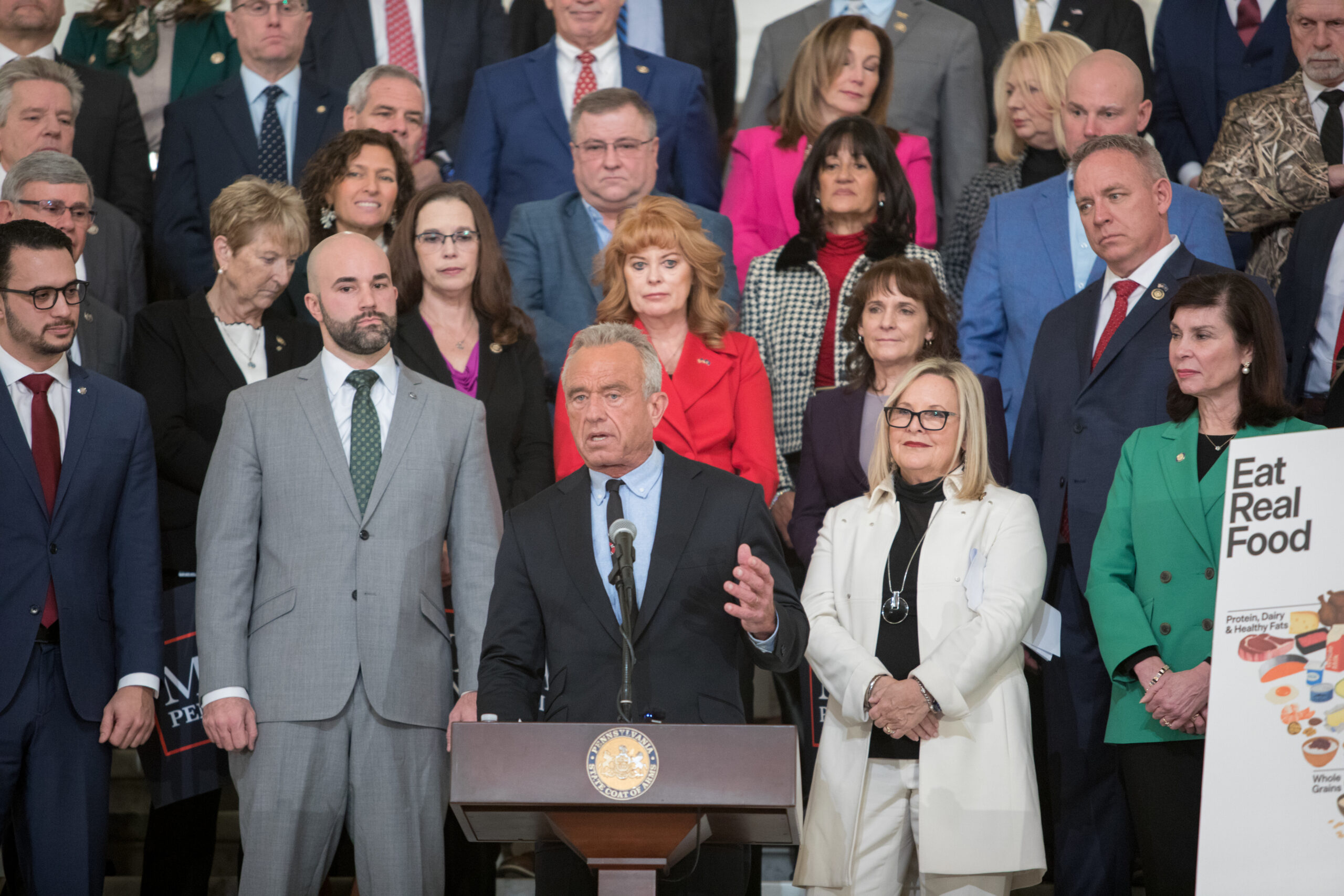
    Secretary of Health and Human Services Robert F. Kennedy Jr. speaks at a Harrisburg rally Wednesday.

    State Rep. Tarik Khan (D., Philadelphia), who attended the event, said it was what went unsaid by Kennedy that stood out to him the most: that the Trump administration is making it harder for some people to access food assistance and healthcare, creating barriers to the healthy lifestyles that Kennedy touts.

    “We’ve known for years that we need to eliminate processed foods,” said Khan, a nurse practitioner. “We know that you need to eat more fruits and vegetables. We know that proteins are critical. We know that refined carbohydrates, you should try to avoid as much as possible.”

    “This is not groundbreaking information,” Khan added.

  • Riddle Hospital receives $4M in state funding to expand healthcare access in Delaware County

    Riddle Hospital receives $4M in state funding to expand healthcare access in Delaware County

    Two Delaware County hospitals are getting $6 million in additional funding to help them address a sharp increase in patients after Crozer Health, the county’s largest hospital and busiest emergency department, closed last year.

    About $5 million of the funding had previously been allocated to Crozer Health under a program that supports hospitals that care for a high portion of low-income patients with Medicaid. About $3 million of that money was redistributed to Riddle Hospital in Media; Mercy Fitzgerald Hospital in Darby $2 million. Local lawmakers secured an additional $1 million for Riddle.

    “They really have stepped up to fill a big void, and we want to make sure they have the resources they need,” said Rep. Lisa Borowski, a Delaware County Democrat.

    The additional funding will allow Riddle, part of the nonprofit Main Line Health system, to hire more staff, said Ed Jimenez, Main Line Health’s CEO.

    When there aren’t enough nurses or other clinicians to cover the hospital’s needs, Riddle has had to turn to staffing agencies, which charge three to four times the rate Main Line pays staff providers, he said.

    Main Line executives and local lawmakers marked the funding announcement at Riddle Wednesday with a check presentation ceremony and roundtable discussion about ongoing regional healthcare challenges.

    Rep. Gina Curry, a Delaware County Democrat, urged hospital executives to continue trying to connect with patients who may be without doctors after Crozer was closed by its bankrupt for-profit owner, Prospect Medical Holdings, based in California.

    Crozer-Chester Medical Center in Upland and its sister hospital, Taylor Hospital in Ridley Park, served a disproportionately low-income population in Chester and other densely populated communities outside Philadelphia with high rates of chronic health problems, such as asthma and heart disease.

    “You’re working very hard inside here to try to help, but how are you including the community to let them know that Main Line Health is wrapping around them,” Curry said.

  • Lehigh Valley Health Network will go out of network for UnitedHealthcare’s Medicare Advantage plans Monday

    Jefferson Health’s Lehigh Valley Health Network will go out of network Monday for members of UnitedHealthcare’s Medicare Advantage plans.

    That means about more than 20,000 people who get care at LVHN facilities could experience disruptions in their care. Two years of negotiations failed to result in a new contract, Jefferson said in a statement Wednesday.

    Jefferson also said that United reduced payments to LVHN by nearly 40% since 2021, reducing the nonprofit health system’s revenue by more than $100 million over four years.

    “When an insurer stops paying agreed‑upon rates and refuses to negotiate, patient access is put at risk. Jefferson and LVHN will not stand by while an insurer prioritizes its own margins over fair contracts and sustainable care,” said Jeffrey Price, a Jefferson senior vice president involved in managed care and payer relations.

    LVHN patients who have UnitedHealthcare plans through their employers will remain in-network at the nonprofit system through most of April 25, Jefferson said.

    United said that negotiations continue on those contracts, but noted that LVHN wanted a 20% price increase in the first year.

    The dispute does not affect Philadelphia-area Jefferson patients with insurance from UnitedHealthcare, the nation’s largest health insurer.

    Jefferson first warned in October that its LVHN facilities would start going out of network this month.

    At the time, United suggested that Jefferson’s announcement during the Medicare Advantage annual enrollment period was a negotiating tactic designed to put pressure on United.

    United said Wednesday that its “top priority is providing people continued access to the care they need through our broad network of providers who collaborate with us to provide quality, affordable care.”

    The company noted that it recently signed a multiyear contract with LVHN’s biggest competitor, St. Luke’s University Health Network. That contract covers employer-sponsored plans as well as Medicare and Medicaid plans.

    By going out of network with United Medicare Advantage plans, LVHN joins other well-known systems to have done so in the last year. They include Johns Hopkins Medicine and Mayo Clinic.

    Last March, Jefferson went out of network with Cigna Health for a few weeks during a similar impasse in negotiations. Jefferson and Cigna quickly reached a deal after the termination.

  • Why don’t doctors just order tests for everything? | Expert Opinion

    Why don’t doctors just order tests for everything? | Expert Opinion

    This past week, two patients came in with different versions of the same request. A healthy man in his late 40s brought in a printout of his exhaustive blood test panel and wanted my advice on how to interpret it. Many of the results (some slightly out of range) were obscure, like unusual mineral and vitamin levels.

    The second patient, a mid-30s man who struggles with weight gain and has early warning signs of diabetes, asked me to test him “for everything.” When I asked him what he meant by everything, he explained that he did not have a specific medical concern:, “You know, everything — testosterone, all of the other hormones, cholesterol particles — just do it all,” he said.

    Both of these patients had done ChatGPT research and were interested in preventing disease or, at the very least, catching it early. Neither patient had any symptoms of illness, but each shared a story about a friend or relative who had been diagnosed with a disease that, if caught earlier, may have led to far less suffering. As I talked about their concerns, I ended up exploring with both patients the important difference between screening and diagnostic testing, and why doctors do not look for everything.

    Screening is a medical evaluation for patients without symptoms to identify possible health problems or risk factors early on, when disease is preventable or treatment can be most effective. An example is measurement of blood pressure and cholesterol; when one or both are elevated, diet and lifestyle modification, and sometimes medication, can reduce the risk of heart attack, stroke, and kidney disease. Mammography and colonoscopy screening are able to detect breast and colon cancers at early stages when they are most responsive to treatment or curable.

    Diagnostic testing, on the other hand, helps to solve medical puzzles by analyzing blood, examining tissue samples, viewing X-rays or other exams — such as a stress test or endoscopy — to evaluate abnormal symptoms or better understand a physical issue. For instance, a doctor may order a blood count or thyroid blood tests to evaluate a patient with increased fatigue, or a stress test for someone with chest pain.

    So how do doctors decide what to screen or test for?

    Screening is recommended when there is high-quality scientific evidence that indicates finding a problem early will lengthen or improve the quality of your life. Your primary care doctor can review which screening tests are most appropriate for your age group.

    Before ordering a diagnostic test, doctors often ask themselves — what will I do once I have the result? The patient interview, examination, and clinical thinking come first, and careful testing follows to prove or disprove a theory about what is wrong.

    So what’s the matter with just being extra thorough? We have all heard stories of tests showing results that doctors were not exactly looking for that led to an important diagnosis. Why not cast a wide net and look for everything?

    This kind of accidental good fortune is rare in medicine. More often, haphazard overtesting produces confusing results, as happened with my 40-something patient. This creates pressure on doctors to seek clarity by ordering even more tests, or to send the patient for consultations with specialists. Further, when diagnostic tests are ordered for patients without a strong likelihood of a disease, false positives — abnormal results when there is actually no disease present — can occur. Follow-up is needed, which may sometimes lead to unnecessary invasive procedures that can actually risk harming the patient. Financial cost and anxiety can soar along the way. Fortunately, my patient and I agreed that we didn’t need to chase the minor, obscure test irregularities in his blood work results.

    My second, mid-30s patient wanted me to order excessive screening. We discussed which screening tests, supported by evidence, would be most helpful for preventive health. His AI-derived advice was very thorough but did not address practical matters like what his insurance would pay for, and the potential for a sweeping test panel to do more harm than good.

    Testing or screening for everything sounds like a great idea but is fraught with risk. Avoiding this pitfall requires doctoring that is still hard to find online — a trusting relationship with an expert who puts your best interests at the top of the priority list.

    Jeffrey Millstein is an internist and regional medical director for Penn Primary and Specialty Care.

  • Pediatricians are disregarding the new vaccination schedule

    Pediatricians are disregarding the new vaccination schedule

    Utah pediatrician Ellie Brownstein is used to encountering parents hesitant to get their child vaccinated.

    But after the Trump administration in early January pared back the list of vaccines routinely recommended for babies and children, she’s seeing something else: Parents worried they won’t be able to vaccinate their kids.

    At Brownstein’s Salt Lake City office, one mother pressed for the measles, mumps, and rubella shot for her 2-week-old infant. Brownstein declined because the first dose is intended for children between 12 and 15 months old.

    “The provaccine crowd has become outspoken,” Brownstein said. “They want all the vaccines since this announcement.”

    Pediatricians and national leaders with the American Academy of Pediatrics interviewed by The Washington Post say they are fielding more questions from families, illustrating the confusion and anxiety sown by the overhaul of the childhood immunization schedule despite the administration’s assurances that anyone who wants a vaccine can still get them free.

    The doctors are essentially ignoring the agency’s approach and relying on recommendations made by the AAP, which mirror the Centers for Disease Control and Prevention’s guidance from early 2025. They are spending more time explaining the importance of immunizations — a task that has become more common with the ascent of Health Secretary Robert F. Kennedy Jr., a longtime anti-vaccine activist who has upended the nation’s immunization policies.

    Las Vegas pediatrician Terence McAllister said the extra time explaining vaccination “means you have to skip explaining something else,” such as proper sleep practices or nutrition.

    Days after the administration announced it was recommending fewer vaccines, McAllister struggled to answer a question from a patient who asked why there are different childhood vaccine schedules.

    “There’s not a good scientific explanation for why,” McAllister said. “Our data about these vaccines has not changed. We still know that they are effective.”

    President Donald Trump in December instructed health officials to reassess the vaccine schedule, saying children get too many shots, contradicting researchers, medical associations, and career scientists at the CDC who say they have been safe and essential in fighting infectious diseases. Administration health officials cast the move as bringing the United States in line with peer countries such as Denmark, even though others largely mirror the U.S., including Canada, the United Kingdom, and Australia. They asserted that the change will forge trust in the nation’s immunization system after backlash to COVID vaccines, encouraging uptake of vaccines for some once-rampant highly contagious viruses.

    The CDC’s Jan. 5 announcement preserves broad government recommendations for those core childhood vaccines for diseases such as measles and polio. But the agency is no longer recommending every child be immunized for several other diseases, which medical associations and public health experts have warned could endanger children and reverse the declines in vaccine-preventable illness.

    Only a smaller group of babies and children should get meningococcal ACWY and hepatitis vaccines if they are high risk or a doctor recommends it, the agency said. The federal government is recommending flu and rotavirus vaccines under a designation known as “shared clinical decision-making,” where the government no longer endorses them but allows children to get the shots after families consult with their healthcare providers. The CDC already shifted to this model for coronavirus vaccines in the fall.

    Medical associations, public health advocates, and state officials in Democrat-led states have blasted revisions to the childhood vaccine schedule, saying comparisons to other countries are misleading because their populations are smaller and less diverse and have access to universal healthcare.

    Crystal Rommen, director of the advocacy group Louisiana Families for Vaccines, said she is already practicing how to speak to parents about the change at a health fair this month. “Comparing the U.S. to Denmark is like comparing apples to oranges,” she plans to tell parents who ask.

    The Department of Health and Human Services responded to The Post’s request for comment after this article’s publication. In a statement, the agency said the updated vaccine recommendations continue to protect children from serious diseases.

    “Many peer nations achieve high vaccination rates without mandates by relying on trust, education, and strong doctor-patient relationships, and HHS will work with states and clinicians to ensure families have clear, accurate information to make their own informed decisions,” the agency said.

    Even before the CDC’s announcement, blue states had begun establishing regional alliances to recommend vaccines, underscoring the splintering of public health policy in protest of Kennedy. At least 19 states have rejected the CDC’s new childhood recommendations in favor of the AAP’s schedule.

    The tensions came to a head after the Food and Drug Administration narrowed approval of the coronavirus vaccines in the summer and the CDC had not promptly recommended them. Many Americans struggled to get the shots at pharmacies, prompting a flurry of states to change their rules to ease access.

    Because of those actions, pharmacists in most states are no longer limited to administering vaccines recommended by the CDC, said Brigid Groves, vice president of professional affairs at the American Pharmacists Association. Pharmacists are already well equipped to discuss vaccines with patients under a shared clinical decision-making model, she said.

    “By and large, we are really anticipating that for those families who want vaccines, it’s going to be business as usual,” Groves said.

    Infants and toddlers are generally vaccinated at doctors’ offices instead of pharmacies, but the minimum age requirements vary by state.

    At Skippack Pharmacy, about 32 miles north of Philadelphia, pharmacist Mayank Amin said he has continued administering shots to children, particularly immigrants who need vaccines to attend school. Many of the shots are paid for through a federal program that pays for vaccines, which HHS officials have said will continue.

    Among his patients, few have mentioned the CDC’s schedule change, reflecting that many parents take their cues from trusted local health providers, not the federal government, he said.

    “The messaging [from the CDC] isn’t so strong anymore,” Amin said.

    Some parents say they feel emboldened to ensure their children get their shots.

    Sarah Lewis, 42, a nurse-practitioner and mother of three in Columbus, Ohio, recalled discussing whether to space out shots with her pediatrician when her first child was vaccinated, because the number of shots felt overwhelming.

    Ultimately, Lewis trusted her pediatrician, and her youngest child received vaccines on the CDC’s then-schedule. The CDC’s announcement hardened her conviction that her two youngest children, ages 1 and 3, must get timely vaccinations — she worries parents have forgotten about diseases such as measles that regularly infected kids.

    “Everyone who questions vaccines need to take a step back and look at our past,” Lewis said.

    Pediatricians have also had to reassure families that — for now — public and private health insurances will pay for the shots, as mandated by the CDC’s new schedule and promised by major insurers. But they also do not know whether that will remain the case months or years from now.

    In Utah, Brownstein said she is worried that diseases such as rotavirus and hepatitis A will come roaring back — and she’s had experience with both. Decades ago, her own children fell ill with rotavirus, which was the leading cause of infant diarrhea before vaccines. She took both children to the emergency room and one was hospitalized overnight for IV treatment.

    In the 1990s, Utah once had one of the highest rates of hepatitis A, a liver disease, fueled by infections passed on to adults by children who contracted the virus in day cares, she recalled.

    In Louisiana — where health officials have prohibited vaccination promotion events and a member of the overhauled CDC vaccine panel who became prominent as a critic of coronavirus vaccines is now surgeon general — pediatricians and parents are seeing the effects of the vaccine debate, and its limits.

    Among Medicaid patients at Nest Health, a company that provides health services at home for low-income families in New Orleans, nurses and doctors have continued administering vaccines for families along AAP recommendations — with few questions asked.

    “People on Medicaid have bigger fish to fry than whatever the administration is doing” with vaccine messaging, said Rebekah E. Gee, a former Louisiana health secretary. “We’re just remaining clear and concise and sticking to our guns on what we think is the right thing to do.”

    Louisiana’s state health department did not return a request for comment.

    Baton Rouge pediatrician Mikki Bouquet recently met with a mother that delayed her infant’s vaccines by two months because she thought it was safer, which made the child too old to start the rotavirus vaccine, she said.

    The mother also declined an immunization for respiratory syncytial virus, saying she heard on the news that it was optional and “not necessary.”

    Although federal health officials said they were classifying the recommendation for RSV immunization to high-risk groups, they later clarified that otherwise healthy children whose mothers did not receive a maternal vaccine are considered high risk. In short, nothing had changed: Doctors were still advised to immunize every newborn against the leading cause of infant hospitalizations, despite the confusion.

    Bouquet didn’t push the vaccine issue, instead discussing the baby’s rash. “Hopefully, with some trust, we can bring up these topics again,” she said.

  • Researchers find Antarctic penguin breeding is heating up sooner, and that’s a problem

    Researchers find Antarctic penguin breeding is heating up sooner, and that’s a problem

    WASHINGTON — Warming temperatures are forcing Antarctic penguins to breed earlier and that’s a big problem for two of the cute tuxedoed species that face extinction by the end of the century, a study said.

    With temperatures in the breeding ground increasing 5.4 degrees Fahrenheit (3 degrees Celsius) from 2012 to 2022, three different penguin species are beginning their reproductive process about two weeks earlier than the decade before, according to a study in Tuesday’s Journal of Animal Ecology. And that sets up potential food problems for young chicks.

    “Penguins are changing the time at which they’re breeding at a record speed, faster than any other vertebrate,” said lead author Ignacio Juarez Martinez, a biologist at Oxford University in the United Kingdom. “And this is important because the time at which you breed needs to coincide with the time with most resources in the environment and this is mostly food for your chicks so they have enough to grow.’’

    For some perspective, scientists have studied changes in the life cycle of great tits, a European bird. They found a similar two-week change, but that took 75 years as opposed to just 10 years for these three penguin species, said study co-author Fiona Suttle, another Oxford biologist.

    Researchers used remote control cameras to photograph penguins breeding in dozens of colonies from 2011 to 2021. They say it was the fastest shift in timing of life cycles for any backboned animals that they have seen. The three species are all brush-tailed, so named because their tails drag on the ice: the cartoon-eye Adelie, the black-striped chinstrap and the fast-swimming gentoo.

    Warming creates penguin winners, losers

    Suttle said climate change is creating winners and losers among these three penguin species and it happens at a time in the penguin life cycle where food and the competition for it are critical in survival.

    The Adelie and chinstrap penguins are specialists, eating mainly krill. The gentoo have a more varied diet. They used to breed at different times, so there were no overlaps and no competition. But the gentoos’ breeding has moved earlier faster than the other two species and now there’s overlap. That’s a problem because gentoos, which don’t migrate as far as the other two species, are more aggressive in finding food and establishing nesting areas, Martinez and Suttle said.

    Suttle said she has gone back in October and November to the same colony areas where she used to see Adelies in previous years only to find their nests replaced by gentoos. And the data backs up the changes her eyes saw, she said.

    “Chinstraps are declining globally,” Martinez said. “Models show that they might get extinct before the end of the century at this rate. Adelies are doing very poorly in the Antarctic Peninsula and it’s very likely that they go extinct from the Antarctic Peninsula before the end of the century.”

    Early bird dining causes problems

    Martinez theorized that the warming western Antarctic — the second-fasting heating place on Earth behind only the Arctic North Atlantic — means less sea ice. Less sea ice means more spores coming out earlier in the Antarctic spring and then “you have this incredible bloom of phytoplankton,” which is the basis of the food chain that eventually leads to penguins, he said. And it’s happening earlier each year.

    Not only do the chinstraps and Adelies have more competition for food from gentoos because of the warming and changes in plankton and krill, but the changes have brought more commercial fishing that comes earlier and that further shortens the supply for the penguins, Suttle said.

    This shift in breeding timing “is an interesting signal of change and now it’s important to continuing observing these penguin populations to see if these changes have negative impacts on their populations,” said Michelle LaRue, a professor of Antarctic marine science at the University of Canterbury in New Zealand. She was not part of the Oxford study.

    People’s penguin love helps science

    With millions of photos — taken every hour by 77 cameras for 10 years — scientists enlisted everyday people to help tag breeding activity using the Penguin Watch website.

    “We’ve had over 9 million of our images annotated via Penguin Watch,” Suttle said. “A lot of that does come down to the fact that people just love penguins so much. They’re very cute. They’re on all the Christmas cards. People say, ‘Oh, they look like little waiters in tuxedos.’”

    “The Adelies, I think their personality goes along with it as well,” Suttle said, saying there’s “perhaps a kind of cheekiness about them — and this very cartoonlike eye that does look like it’s just been drawn on.”

  • Black and low-income patients face disparities in access to genetic testing, Penn study finds

    Black and low-income patients face disparities in access to genetic testing, Penn study finds

    At Penn Medicine’s clinic where adults receive genetic counseling and testing, about 9% of patients are Black.

    By contrast, one in four patients at the cardiology and endocrinology clinics located in the same facility in West Philadelphia are Black, while nearly 40% of city residents are. Those from low-income neighborhoods are also less likely to be seen at the genetics clinic, yet more likely to have positive results when tested, a recent Penn study found.

    These findings line up with what Theodore Drivas, a clinical geneticist and the study’s senior author, had long suspected about the impact of racial disparities based on his own experience seeing patients at Penn’s clinic.

    The study, published this month in the American Journal of Human Genetics, found that Black patients were also less likely to be represented at adult genetics clinics at Mass General Brigham, a Harvard-affiliated health system in Massachusetts.

    There’s no biological reason why rates of testing should differ, Drivas said. The overall rate of genetic disease should be similar regardless of race, even though certain diseases are more prevalent in some populations.

    “Genetic disease doesn’t favor one group or another,” he said.

    That means if one group isn’t getting tested as much, they’re probably missing out on key diagnoses.

    Racial disparities are an ongoing concern in medicine and have been attributed to a wide range of causes, including socioeconomic factors, unequal access to care, implicit bias, and medical mistrust due to historic injustices.

    In a study published last August, Drivas’ team found that the chances of a genetic condition being caught varied widely by race. Among patients admitted to intensive care units across the Penn health system, 63% of white patients knew about their genetic condition, compared to only 22.7% of Black patients.

    To address these disparities, Drivas is calling for changes to how the medical field approaches genetic testing, such as by integrating testing into standard protocols and improving national guidelines.

    “It’s not just a Penn problem or a Harvard problem. It’s a genetics problem in general,” Drivas said.

    Diving into the disparities

    Drivas’ team analyzed data from 14,669 patients who showed up at adult genetics clinics at Penn and Mass General Brigham between 2016 and 2021. The findings are limited to the two major academic centers on the East Coast, which tend to see sicker patients compared to community medical centers.

    Black patients were 58% less likely to be seen at Penn’s genetics clinic than would be expected based on the overall University of Pennsylvania Health System patient population.

    At Mass General Brigham, Black patients were 55% less likely than would be expected based on that system’s population.

    Some literature has suggested that Black patients and others from minority groups are less likely to agree to genetic testing because of an inherent distrust in the medical system due to historic injustices. “But we don’t see that in our data,” Drivas said.

    Once evaluated at Penn’s clinic, Black patients were 35% more likely to have testing ordered than white individuals.

    His team also found disparities affecting lower-income individuals. Each $10,000 increase in the median household income of a person’s neighborhood was associated with a 2% to 5% higher likelihood of evaluation at a genetics clinic.

    Meanwhile, patients from neighborhoods with lower median socioeconomic status were more likely to get positive results from testing than those from wealthier neighborhoods.

    “We’re relatively over-testing the people from higher socioeconomic brackets and under-testing the people from lower socioeconomic brackets,” Drivas said.

    The solution is not to stop testing the wealthier people, he clarified, but to improve access to testing for others.

    Undoing disparities

    People who want to get a genetic diagnosis often have to go to major medical centers.

    The University of Pennsylvania health system comprises seven hospitals across Pennsylvania and New Jersey. Its Perelman Center for Advanced Medicine, adjacent to the Hospital of the University of Pennsylvania in West Philadelphia, is the only one that has an adult genetics clinic.

    Drivas has many patients who drive two or three hours to be seen for genetic testing.

    The current wait time at his clinic is around three or four months, which he said is “pretty good” compared to others.

    He thinks part of the solution to reducing disparities requires expanding the size and diversity of the genetics workforce so more patients can be seen.

    Geneticists also need to better educate doctors in other fields about when to refer patients, he said. Creating better guidelines would help.

    Notably, Black patients in the study were more likely to be evaluated than white individuals for genetic risk factors of cancer — an area where there are clear clinical practice guidelines recommending genetic testing.

    They need to come up with similar guidelines for other conditions, such as cardiovascular and kidney diseases, he said.

    Another idea he had was to make genetic testing more integrated into standard care in the hospital.

    His earlier study found a surprising number of adults in ICUs at Penn had undiagnosed genetic conditions. Such testing is now widely available and often costs as little as a few hundred dollars.

    “It costs money, but I think there are cost savings and life-saving interventions that can come from it,” Drivas said.

  • Pa. leads in making breast cancer screening more accessible

    Pa. leads in making breast cancer screening more accessible

    Pennsylvania is leading the way on breast cancer screening policy. Thanks to Senate Bill 88, a decisive move from the commonwealth, patients with state-regulated health plans will no longer face high out-of-pocket costs when an abnormal screening requires follow-up breast imaging.

    Many Americans assume this is already the case, given the Affordable Care Act’s promise of no-cost preventive services. With breast cancer, however, that’s not always true.

    Patients whose routine screening mammogram reveals an abnormality require additional imaging for a more detailed look. Those who are at high risk due to family history, dense breast tissue, or a genetic abnormality may need an MRI or ultrasound for their routine screening, rather than a standard mammogram.

    Cultural, economic, and other social factors, including access to health care, may influence the lower rate of breast cancer screening.

    Neither meets most health plans’ technical definition of “preventive care.” And, in many parts of the country, both can cost hundreds, even thousands, of dollars out of pocket.

    By eliminating out-of-pocket costs for patients, Pennsylvania is establishing itself as a national leader in breast cancer treatment. But this state legislation can only go so far, and many people still face major gaps in coverage when they need breast imaging beyond a screening mammogram.

    As it turns out, that lack of coverage doesn’t sit well with voters.

    Support for treatment

    In a national poll of 1,000 Republican primary voters commissioned by the Alliance for Breast Cancer Policy, sentiment on the topic was clear: If a patient needs breast imaging, they should get it — with the full cost covered by their health plan.

    A full 95% of polled voters said insurers should cover the full cost of all recommended breast imaging, not just the standard screening mammogram. After all, preventive care means preventive care. Voters recognize that. When health plans split hairs and argue technicalities, they do so at the patients’ risk.

    A bill before Congress would help, covering many in Pennsylvania who will still fall through the cracks even after the passage of SB 88. Known as the Access to Breast Cancer Diagnosis (ABCD) Act (S 1500/HR 3037), the federal legislation would eliminate out-of-pocket costs for patients’ necessary breast imaging.

    And 85% of polled voters responded to the legislation’s primary goal: ensuring women get the answers they need before it’s too late. When breast cancer is caught early, treatment is more effective, less invasive, and far more likely to lead to positive outcomes — with five-year survival rates as high as 98%. Early detection saves both lives and dollars.

    Respondents expressed support for the ABCD Act, especially given the impact the bill would have on those who often can’t get the help they need: rural, lower-income, Black, Hispanic, and younger women.

    With costs for healthcare so high, many, especially younger women who make up 10% of all new breast cancer cases in the U.S., are looking toward high-deductible health plans to lower their monthly costs. But this often comes with less comprehensive coverage before a deductible. Two-thirds of polled voters say the full cost of necessary breast imaging should still be covered for those with high-deductible health plans.

    Pennsylvania is proving that bold, patient-centered policy can save lives and reduce costs. Yet, in more than half the country — and still for some in the Keystone State — outdated insurance rules still force patients to choose between lifesaving breast imaging and paying their bills.

    It’s time for Congress to follow Pennsylvania’s lead and make comprehensive breast cancer imaging a priority.

    Breast cancer doesn’t wait. In 2025, an estimated 43,000 women and men in the U.S. lost their lives to the disease, including 1,800 in Pennsylvania alone. Access to early diagnosis should never hinge on the state you reside in. Congress should take note of Pennsylvania’s recent legislation and ensure lifesaving screenings are within reach for everyone.

    Molly Guthrie is vice president for policy and advocacy at Susan G. Komen and leads the Alliance for Breast Cancer Policy.

  • How Penn helped to rescue RHD’s Family Practice health clinics after a nonprofit ownership change

    How Penn helped to rescue RHD’s Family Practice health clinics after a nonprofit ownership change

    A year ago, leaders of Family Practice & Counseling Network feared their health clinic, which has served low-income Philadelphians for more than 30 years, wouldn’t survive past June.

    The clinic was part of Resources for Human Development, a Philadelphia human services agency that a fast-growing Reading nonprofit called Inperium Inc. had acquired in late 2024.

    As a federally qualified health clinic since 1992, the clinic had received an annual federal grant, higher Medicaid rates, and other benefits.

    But federal rules prohibited the clinic from continuing to retain that status and those benefits under a parent company. That meant Family Practice & Counseling Network had two options: close or spin out into a new entity that would reapply to be a federally qualified clinic.

    “We had to figure it out,” the organization’s CEO Emily Nichols said in a recent interview.

    At the time, the organization’s three main locations had 15,000 patients. They are “very underserved, low-income people that deserve good healthcare,” she said.

    Thanks to $9.5 million in financial and operational support from the University of Pennsylvania Health System, a new legal entity took over the clinics in July. They now operate under the tweaked name, Family Practice & Counseling Services Network, and without the federal status.

    “Penn allowed us to survive,” Nichols said.

    Still in a precarious position

    The nonprofit, with its name now abbreviated as FPCSN, remains in a precarious position.

    Because of the corporate change, the $4.2 million annual grant that Family Practice had been receiving through RHD had to be opened up for other applicants under federal law. FPCSN applied but won’t find out until March the result of the competition.

    Natalie Levkovich, CEO of the Health Federation of Philadelphia, a nonprofit that supports community health centers in Southeastern Pennsylvania, expressed confidence that the clinic will regain the funding, which helps cover the cost of caring for people who don’t have insurance.

    “FPCSN is a well-run, well-regarded, well-supported health center that has an established, high-functioning practice in multiple locations,” Levkovich said. The clinic received letters of support from all the other federal clinics in the area, she said.

    In addition to the grant, other key benefits of being a federally qualified health center — the status the clinic had for 33 years — are receiving medical malpractice insurance through the federal government and enhanced Medicare and Medicaid rates.

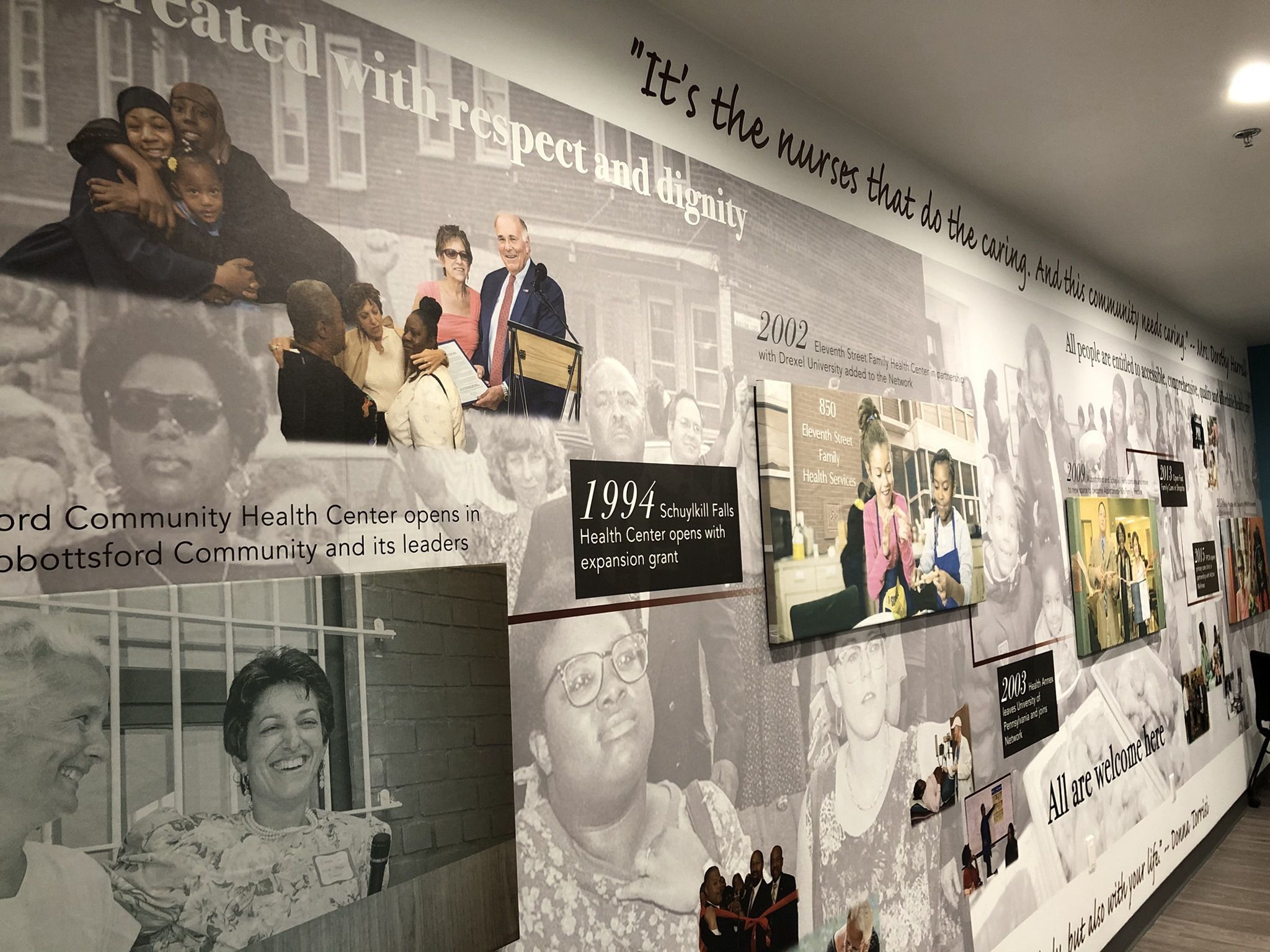
    A mural in a conference room at Family Practice & Counseling Services Network’s headquarters in Nicetown shows a timeline of the agency’s history since its founding in 1992.

    In return, federally qualified clinics have to accept all patients, including people without insurance. The insurance mix of FPCSN’s patient population is about 60% Medicaid, 20% uninsured, 10% Medicare, and 10% commercial, Nichols said.

    Also, half of a federal clinic’s board members have to be patients at the clinic. FPCSN has three main locations, in Southwest Philadelphia, on the western edge of North Philadelphia, and in the West Poplar neighborhood. Its revenue in fiscal 2025 was $31 million.

    During the past year, 55 FPCSN staff members have left, leaving 140 employees still at the organization, including 16 nurse practitioners who provide the primary care. The departures may have contributed to a decline in the number of patients seen to 13,500 last year, compared to 15,000 the year before, Nichols said.

    Why Penn helped FPCSN

    Federally qualified health centers form the core safety net in Philadelphia and across the nation, said Richard Wender, who chairs Family Medicine and Community Health at Penn, which had a longstanding relationship with RHD’s clinics.

    Under contract, Penn family practice physicians were providing prenatal care to 400 pregnant patients at the clinics that would have closed abruptly at the end of June if Penn hadn’t provided support. “We wanted them to be able to continue to take care of the patients that they were taking care of,” Wender said.

    The money from Penn helped pay startup costs for the new entity and bridged the period until FPCSN was able to secure new contracts with insurance companies.

    Penn also didn’t want the clinic’s patients showing up in its already busy emergency departments for basic care. “That adversely affects their health because it’s not a good place to get preventive care,” he said.

    But it was important to Penn that there was a pathway back to federal clinic status. “We feel as optimistic as we can,” Wender said.

    Wender and Nichols credited Kevin Mahoney, CEO of Penn’s health system, with the preservation of FPCSN’s services for low-income Philadelphians by throwing his full support behind the effort.

    “You have to have a CEO, a leader in your health system, who understands that this is the responsibility of large academic health centers,” Wender said.

  • Philadelphia-area nursing homes have amassed $5.3 million in fines since 2023 for safety violations

    Philadelphia-area nursing homes have amassed $5.3 million in fines since 2023 for safety violations

    Safety violations at Philadelphia-area nursing homes have led to nearly $5.3 million in fines since 2023, an Inquirer review of federal data shows, with almost half of the region’s 182 facilities facing financial penalties.

    The Bristol Township nursing home, where an explosion last month killed three people, topped a list of nursing homes fined in Philadelphia, Chester, Delaware, Montgomery and Bucks County, according to Centers for Medicare & Medicaid Services (CMS) data.

    The facility was fined a total of $418,000 for two sets of violations in 2024 when it was known as Silver Lake Healthcare Center. The nursing home was renamed Bristol Health & Rehab Center last month, following an ownership change shortly before the explosion.

    Six-figure penalties are not uncommon in the region. More than 22% of the 85 facilities fined had penalties greater than $100,000. The violations cited concerns ranging from noncompliant fire extinguishers to life-threatening hazards, such as allowing a resident to overdose on illegal narcotics.

    Accela Rehab And Care Center at Springfield in Montgomery County had the most citations for health deficiencies in the Philly-area — 122 total.

    Edenbrook of Yeadon in Delaware County had the most fire safety violations with 60.

    Pennsylvania regulators inspect nursing homes annually to ensure compliance with state requirements and once every 15 months for compliance with federal regulations, said Neil Ruhland, a spokesperson for the Pennsylvania Department of Health.

    The amount of a fine depends on the severity of a violation, with bigger fines when people are harmed; the number of residents impacted by the violation; and how long the facility was out of compliance.

    Nursing homes cited for deficiencies are required to develop a plan of correction, which is reviewed and monitored by the state. If the facility continues to be out of compliance, it may face penalties, including fines and ultimately could be terminated from Medicare and Medicaid, though that’s rare.

    Here’s a look at federal fines and citations at nursing homes across Southeastern Pennsylvania since 2023, according to CMS.

    window.addEventListener(“message”,function(a){if(void 0!==a.data[“datawrapper-height”]){var e=document.querySelectorAll(“iframe”);for(var t in a.data[“datawrapper-height”])for(var r,i=0;r=e[i];i++)if(r.contentWindow===a.source){var d=a.data[“datawrapper-height”][t]+”px”;r.style.height=d}}});