Category: Health

  • U.S. completes withdrawal from World Health Organization

    U.S. completes withdrawal from World Health Organization

    NEW YORK — The U.S. has finalized its withdrawal from the World Health Organization, one year after President Donald Trump announced America was ending its 78-year-old commitment, federal officials said Thursday.

    But it’s hardly a clean break.

    The U.S. owes about $280 million to the global health agency, according to WHO. And Trump administration officials acknowledge that they haven’t finished working out some issues, such as lost access to data from other countries that could give America an early warning of a new pandemic.

    The withdrawal will hurt the global response to new outbreaks and will hobble the ability of U.S. scientists and pharmaceutical companies to develop vaccines and medicines against new threats, said Lawrence Gostin, a public health law expert at Georgetown University.

    “In my opinion, it’s the most ruinous presidential decision in my lifetime,” he said.

    The WHO is the United Nations’ specialized health agency and is mandated to coordinate the response to global health threats, such as outbreaks of mpox, Ebola, and polio. It also provides technical assistance to poorer countries; helps distribute scarce vaccines, supplies, and treatments; and sets guidelines for hundreds of health conditions, including mental health and cancer.

    Nearly every country in the world is a member.

    Trump cited COVID-19 in pulling U.S. from WHO

    U.S. officials helped lead the WHO’s creation, and America has long been among the organization’s biggest donors, providing hundreds of millions of dollars and hundreds of staffers with specialized public health expertise.

    On average, the U.S. pays $111 million a year in member dues to the WHO and roughly $570 million more in annual voluntary contributions, according to the U.S. Department of Health and Human Services.

    In an executive order issued right after taking office, Trump said the U.S. was withdrawing from WHO due to the organization’s mishandling of the COVID-19 pandemic and other global health crises. He also cited the agency’s “failure to adopt urgently needed reforms” and its “inability to demonstrate independence from the inappropriate political influence of WHO member states.”

    WHO, like other public health organizations, made costly mistakes during the pandemic, including at one point advising people against wearing masks. It also asserted that COVID-19 wasn’t airborne, a stance it didn’t officially reverse until 2024.

    Another Trump administration complaint: None of WHO’s chief executives — there have been nine since the organization was created in 1948 — have been Americans. Administration officials view that as unfair given how much the WHO relies on U.S. financial contributions and on U.S. Centers for Disease Control and Prevention personnel.

    Public health experts say U.S. exit will hobble responses to threats

    Experts say the U.S. exit could cripple numerous global health initiatives, including the effort to eradicate polio, maternal and child health programs, and research to identify new viral threats.

    Ronald Nahass, president of the Infectious Diseases Society of America, called the U.S. withdrawal “shortsighted and misguided” and “scientifically reckless.”

    The U.S. has ceased official participation in WHO-sponsored committees, leadership bodies, governance structures and technical working groups. That would seem to include the WHO group that assesses what flu strains are circulating and makes critical decisions about updating flu shots.

    It also signals the U.S. is no longer participating in global flu information-sharing that guides vaccine decisions.

    Such disease intelligence has helped Americans be “at the front of the line” when new outbreaks occur and new vaccines and medicines are quickly needed to counteract them and save lives, Gostin said.

    Trump administration officials say they already have public health relationships with many countries and are working to ensure direct sharing of that kind of information, rather than having WHO serve as a middleman. But U.S. officials did not give specifics about how many such arrangements are in place.

    Gostin, an expert on international public health treaties and collaborations, said it’s unlikely the U.S. will reach agreements with more than a couple dozen countries.

    Many emerging viruses are first spotted in China, but “is China going to sign a contract with the United States?” Gostin said. “Are countries in Africa going to do it? Are the countries Trump has slapped with a huge tariff going to send us their data? The claim is almost laughable.”

    Gostin also believes Trump overstepped his authority in pulling out of WHO. The U.S. joined the organization through an act of Congress and it is supposed to take an act of Congress to withdraw, he argued.

    U.S. still owes money, WHO says

    The U.S. is legally required to give notice one year in advance of withdrawal — which it did — but also to pay any outstanding financial obligations.

    The U.S. has not paid any of its dues for 2024 and 2025, leaving a balance of about $280 million at current exchange rates, according to WHO.

    An administration official denied that requirement Thursday, saying the U.S. had no obligation to pay prior to withdrawing as a member.

  • How to shovel a ton of snow safely

    How to shovel a ton of snow safely

    With a significant snowfall expected in the Philadelphia region this weekend, doctors are urging people to be cautious when digging out.

    About 100 people a year die from heart attacks brought on by shoveling snow. Thousands more wind up in the emergency department with sprains, strains, chest pain, and other heart problems.

    Shoveling may not seem like a cardio workout, but it can put as much strain on your heart as a treadmill stress test, according to the American Heart Association. People often mistakenly lift with their arms, which is more taxing on the heart than lifting with their legs. In extreme cold, blood vessels constrict to conserve heat, but that can further elevate blood pressure.

    People with a history of heart problems, smoking, or obesity may be especially at risk.

    In the Philadelphia area, shovelers are more accustomed to an inch or two of powder or slush. This weekend’s storm, which could bring several times that, will be a bigger and more dangerous challenge, said Jonathan Stallkamp, a senior vice president and chief medical officer for Main Line Health, a nonprofit system with four hospitals in the Philadelphia suburbs.

    “All of a sudden your heart goes from beating normally, and now you’re putting in this additional heavy work of shoveling,” said Stallkamp.

    Here’s how to shovel safely and make sure the upcoming storm isn’t your downfall.

    Ask for help

    The best way to prepare for clearing massive amounts of snow is to make sure you’re in good physical shape, said Stallkamp.

    Shoveling uses muscles people may not be accustomed to exercising, and puts stress on the heart.

    “A lot of our older community members aren’t in as good shape as they think,” Stallkamp said.

    He encouraged people to be realistic about their abilities, and ask for help from a younger neighbor or relative, if possible.

    Some cardiologists say that anyone over age 45 should use extra caution when shoveling.

    Treat it like a sport

    Prepare to tackle snow the way an athlete would prepare for a big game: Drink lots of water, avoid caffeine (which can raise blood pressure), and wear the right gear (mittens are generally warmer than gloves). And don’t forget to stretch. Warming up your joints, and muscles in your legs, arms and back will reduce the risk of injury, according to Mayo Clinic.

    Lift with your legs

    Bending your knees to scoop and lifting with your legs will reduce strain on your back. Lifting with arms and back are more likely to result in a pulled muscle.

    Shovel often

    Stallkamp recommends getting out early, clearing snow as it falls, rather than waiting for the big event to be over. It’s easier to shovel an inch of snow multiple times than to dig out of a foot of snow. While the forecast for the Philadelphia region is still in flux, some forecasts suggest snow could turn to ice, which adds to the challenge of clearing driveways and sidewalks.

    Ice will be easier to clear if it falls on a thin layer of snow, than directly onto pavement, Stallkamp said.

    Keep fingers away from snowblowers

    This maybe goes without saying, but Stallkamp said he’s seen it enough that he’s sending a clear warning: Do not put your hands inside the opening of a snowblower.

    When a stick or chunk of ice gets stuck in a snowblower, people may instinctively reach in to try to dislodge the object.

    “But once that jam clears, those blades spin and your fingers go with it,” he said.

    Take breaks and warm up

    Mayo Clinic experts recommend taking breaks to check in with your body. If you feel out of breath, lightheaded, or just off, go inside to warm up and relax.

    With ice in the forecast, Stallkamp recommends taking steps to keep your house warm if your home uses electric heat and you lose power.

    Generators can help restore enough electricity to turn the heat on, but they should be kept as far from the house as possible and never used inside. Generators produce large amounts of carbon monoxide that can be deadly, especially in the winter when windows and doors are closed up.

    If possible, turn up the heat in advance, so your home stays warm longer if power goes out.

  • You can get stronger with gentle weight training, new study finds

    You can get stronger with gentle weight training, new study finds

    If you’re intimidated by weight training, a new study is full of reassurance.

    Weight workouts don’t have to be complicated or grueling to be effective, the study found. Almost any kind of lifting led to increased muscle and strength in the study. Whether people lifted heavy weights or light, through many repetitions or few, the results were broadly comparable.

    “Lift however you like to lift. That’s the lesson,” said Stuart Phillips, a professor of kinesiology at McMaster University in Ontario, Canada, and an expert in resistance exercise. Phillips is the senior author of the study, which was published last month in the Journal of Physiology.

    The study also provided other lessons, some unexpected, including about the importance of genetics in our bodies’ response to weight training and how some of us may get stronger without getting much bigger — or vice versa — when we begin to train.

    Do you have to lift heavy weights?

    Gym culture is full of widely held beliefs about the best ways to lift, Phillips said, many backed by scant evidence.

    “You’ll see guys who’ve been lifting for decades and swear you have to lift heavy” to gain substantial muscle mass and strength, he said. For them, weights must be hefty enough that you can barely grunt through eight or nine taxing reps before your arms or legs give out.

    But mounting evidence suggests that heavy weights are overrated. A comprehensive 2023 review of hundreds of past experiments concluded that, compared with no exercise, any lifting — not just with heavy weights — “promoted strength and hypertrophy” or larger muscles.

    But questions remain about the most effective weight workouts. If you use lighter weights, how many times should you repeat each lift? What drives muscle growth, if it’s not heavy loads? And will everyone make the same gains from the same workouts?

    For answers, Phillips and his colleagues recruited 20 healthy, young men who didn’t normally weight train and checked the size and strength of their muscles. (They have a similar study underway with women.) The men’s limbs were then randomized to heavy or light lifting; that is, their right or left arm was randomly assigned to complete biceps curls using a heavy weight, while the other arm did the same exercise with a much lighter weight. Similarly, one leg did knee extensions against a heavy weight; the other leg completed the same exercise with a much lighter load.

    The heavy weights were challenging enough that lifters could manage no more than 12 repetitions before reaching muscular failure, meaning they felt they couldn’t lift again. With the lighter weights, the participants lifted through as many as 25 repetitions before deciding they couldn’t do another.

    Light weights work fine

    The men worked out three times a week under the researchers’ supervision, increasing their weights once they could easily complete more than 12 heavy or 25 light repetitions. At the end of 10 weeks, the researchers retested everyone.

    By then, the men’s muscles were almost all stronger and larger, with little difference between limbs. The arm that lifted light weights was just as buff as the one that lifted heavy and ditto for legs. Both approaches were equally effective.

    This finding “reinforces the idea that load isn’t an important determinant” of muscular response, Phillips said. “Effort is.” If people lifted until their muscles tired, they got results.

    The practical takeaway is that you can “pick what works for you,” Phillips said. Have sore joints or little taste for big weights? Use smaller ones. Have limited time? You’ll finish faster with heavier loads.

    But don’t expect your results to exactly mirror mine. There were substantial differences from one volunteer to the next. Some nearly doubled their strength or mass; others added less. And there was little relationship between bulk and strength. Some men got far stronger without growing much bigger, and some achieved almost the opposite.

    These differences underscore the role of genetics. “To some extent, our muscular responses are baked in,” Phillips said. After 10 weeks of the same lifting routine, I won’t look precisely like you. But we’ll both be stronger and better muscled.

    What about body weight exercises?

    This study “was very well-designed,” said Brad Schoenfeld, an exercise scientist at CUNY Lehman College in the Bronx, who researches resistance training but was not involved with the new work. The findings suggest that “within broad limits, you can build similar amounts of muscle mass” with light or heavy loads.

    The study has limitations, though. It involved only young men new to lifting. Phillips said he believes the results would be similar for women, older people, and anyone who’s been weight training for years. But studies are needed with those groups to be sure.

    The training also involved gym machines. Would the results be the same with body weight exercises? “I think so,” Phillips said, adding, “I’m counting on it.”

    Much of his own training nowadays, at age 60, takes place at home, he said, and involves body weight work. “I’ve got enough space in my basement to do squats, do deadlifts,” he said. He repeats each exercise until he can barely finish another rep, he said. “I do what I preach.”

    But the key point is that he does something, Phillips said, and regularly. “Based on self-report and participation data, about 80% of people do not lift weights at all.” He hopes his group’s study and other research will encourage more people to try some kind of resistance training routine, he said. “Let’s make 2026 the year of strength.”

  • One year of inspections at Chester County Hospital: December 2024 – November 2025

    One year of inspections at Chester County Hospital: December 2024 – November 2025

    Pennsylvania’s Department of Health did not cite Chester County Hospital for any safety violations between December 2024 and November of last year.

    The West Chester-based hospital is part of Penn Medicine.

    Here’s a look at the publicly available details:

    • Feb. 6, 2025: Inspectors came to investigate a complaint but found the hospital was in compliance. Complaint details are not made public when inspectors determine it was unfounded.
    • May 5: Inspectors visited for a special monitoring survey and found the hospital was in compliance.
    • July 25: Inspectors came to investigate a complaint but found the hospital was in compliance.
  • Formal U.S. withdrawal from WHO is decried as ‘scientifically reckless’

    Formal U.S. withdrawal from WHO is decried as ‘scientifically reckless’

    The United States formally withdrew from the World Health Organization on Thursday, one year after President Donald Trump announced plans to pull out of the preeminent global health alliance.

    Trump justified the move based on what he viewed as the “mishandling” of the coronavirus pandemic, a failure to adopt changes and inappropriate political influence from some members.

    The departure stunned global health experts and international authorities because the U.S. had been the most influential member of the 194-member organization and played a key role in its establishment in 1948. It had also historically been the organization’s largest financial contributor.

    “Withdrawing from the World Health Organization is scientifically reckless,” Ronald Nahass, president of the Infectious Diseases Society of America, said in a statement. “It fails to acknowledge the fundamental natural history of infectious diseases. Global cooperation is not a luxury; it is a biological necessity.”

    In announcing the withdrawal, the Department of Health and Human Services said the U.S. will remain a global leader in health, but through “existing and new engagements directly with other countries, the private sector, nongovernmental organizations, and faith-based entities.”

    During a briefing with reporters, a senior HHS official said U.S.-led global health efforts going forward will rely on the presence that federal health agencies, such as the Centers for Disease Control and Prevention, the National Institutes of Health and the Food and Drug Administration, already have in 63 countries and bilateral agreements with “hundreds of countries.”

    “I just want to stress the point that we are not withdrawing from being a leader on global health,” the official said, speaking on the condition of anonymity under ground rules for the briefing.

    All U.S. personnel and contractors assigned to or embedded with WHO offices have been recalled. All U.S. government funding to the WHO has been terminated, nearly $280 million, according to a person familiar with the government funding who spoke on the condition of anonymity because they were not authorized to discuss the matter on the record. The State Department and HHS did not respond to questions about the funding.

    According to the WHO, the U.S. must meet its financial obligations before withdrawing and the organization’s executive board is set to consider the matter at its February meeting.

    Public health experts have questioned how the U.S. can continue to be a global public health leader.

    Health Secretary Robert F. Kennedy Jr. said in June that the U.S. would no longer contribute to Gavi, an independent public-private financing group that buys vaccines and distributes them in low- and middle-income countries. As part of sweeping HHS staffing cuts last year, the CDC’s Global Health Center lost its director and some other employees.

    “It’s almost laughable that the Trump administration thinks they can lead in global health,” said Lawrence Gostin, a law professor at Georgetown University and director of a WHO Collaborating Center for National and Global Health Law. “They’ve decimated the global health capacities of the CDC. They’ve slashed global health funding around the world.”

    It’s unclear how the formal withdrawal will affect some key meetings where U.S. officials have historically played a major role. Next month, the WHO is scheduled to convene a global meeting of influenza experts to decide which virus strains should be included in next season’s flu vaccine, a process that guides vaccine production months in advance.

    Scientists from WHO collaborating centers, including the CDC, other countries’ public health agencies and academic laboratories, review global surveillance data, genetic sequencing and laboratory analyses to assess which influenza strains are spreading and how they are changing.

    In February 2025, CDC scientists were allowed to participate in the WHO meeting. Asked whether CDC scientists would be able to take part next month, the senior HHS official told reporters that there are ongoing conversations and that an announcement will come “in the near future.”

  • New Jersey officials confirm 2026’s first case of bird flu in a commercial flock

    New Jersey officials confirm 2026’s first case of bird flu in a commercial flock

    Federal and state agriculture officials announced Thursday that they have identified a case of highly pathogenic avian flu on a commercial bird farm in Burlington County.

    The New Jersey Department of Agriculture said in a news release that the case was the first confirmed in the state in 2026.

    The farm’s owner contacted agriculture officials after birds on the farm began dying, and highly pathogenic avian influenza was later found in samples submitted to state officials.

    The farm has been quarantined and no new birds will arrive there until a “thorough cleaning and disinfection” to eliminate the virus, officials said in a news release.

    Health and agricultural officials have been monitoring outbreaks of HPAI in commercial flocks across the country since 2022, including in the Philadelphia area. Though the virus has also spread in dairy cattle elsewhere in the country, it has not been detected in cattle in Pennsylvania or New Jersey.

    HPAI has infected humans, although none in either state, and New Jersey officials said there is little risk to the public.

    Human infections typically occur after close or lengthy unprotected contact with infected birds or cattle, or the places they have touched, officials said.

    People who have had unprotected contact with infected birds should monitor themselves for symptoms for 10 days, including fever, cough, a sore throat, eye irritation or redness, aches, and diarrhea. If symptoms emerge, they should call a doctor.

    Poultry farmers should notify state officials if they notice their birds exhibiting symptoms of avian flu, including coughing, sneezing, lethargy, eating or drinking less, or dying suddenly, officials said.

    State officials said they are also monitoring cases of avian flu in wild birds after “an outbreak of wild bird deaths in various parts of the state.”

    The rise in cases in wild birds, which started in November, affects a number of species of wild birds, “including but not limited to waterfowl, raptors, and scavenger birds,” officials said.

    The New Jersey Department of Environmental Protection asked residents to avoid directly touching sick or dead wildlife. If they find a dead wild bird on their property and want to dispose of it, residents should wear personal protective equipment and thoroughly wash their hands and disinfect non-disposable gear afterward.

    Dead birds should be double-bagged in trash bags with a zip tie and placed in an outdoor trash can that pets or other wildlife cannot access.

  • Penn’s medical school received an $8 million gift to redesign the way it trains doctors

    Penn’s medical school received an $8 million gift to redesign the way it trains doctors

    The University of Pennsylvania has received an $8 million gift to redesign how it trains doctors at the Perelman School of Medicine, Penn officials announced Thursday.

    Incorporating technology, AI, and data to create customized learning pathways for Penn medical students is an overarching goal. The effort comes at a time when increasingly easy access to medical information and changes in care delivery are leading medical schools nationwide to revamp their curricula.

    The gift to Penn is from New York-based RTW Foundation, a philanthropy associated with the life sciences investment firm founded by Perelman School graduate and Penn Medicine board member Rod Wong. Penn said the gift from Wong, and his wife, Marti Speranza Wong, is the largest single donation to support curriculum innovation at the medical school, which dates back to 1765.

    At a news conference announcing his donation Thursday, Wong recalled his time at the medical school right after its last major overhaul of the curriculum in 1998. One update under Penn’s “Curriculum 2000” revamp was recording and making lectures available online — a relatively innovative move at the time (YouTube wouldn’t be created for another several years).

    “Technology has changed, and obviously we’re at this same inflection point because of AI and data science,” said Wong, who is managing partner and chief investment officer at RTW Investments LP.

    Penn alumnus Rod Wong (center) sits with dean of Perelman School of Medicine Jonathan A. Epstein (left) after signing the gift agreement.

    The vast majority of the $8 million gift will go toward hiring data scientists and engineers, supporting faculty, and building and acquiring the platforms needed to deliver the new curriculum.

    Technology will be incorporated into new training techniques, such as by using augmented or virtual reality to assist in learning anatomy, developing knowledge needed to diagnose illnesses and develop treatment plans, and mastering clinical skills such as IV placement and suturing.

    For example, students can practice taking a person’s medical history or doing a physical exam on a virtual patient, while an AI agent is there to give feedback in real time.

    “It’s really adaptive to the individual learner, but you do it at your own pace, on your own time,” said Lisa Bellini, executive vice dean of the medical school and a leader on the project.

    The redesign will take place over the next three years as school leaders consult with stakeholders and work on building the platform.

    Some of Wong’s gift will be used to create a biannual endowed lecture in business and entrepreneurship that will bring leaders in medicine and healthcare innovation to campus. The gift will also establish the Roderick Wong Entrepreneurship Pathway, which will provide mentorship, workshops, and project-based learning to students with business interests.

    “We really need to incorporate the fundamentals of how best to use technology responsibly within the practice of medicine and create something incredibly enduring, because you’re not going to go through this exercise every three years,” Bellini said.

    The Perelman School of Medicine is embarking on its curriculum revamp at a time when medical education is evolving at many schools.

    Some medical schools have concentrated the traditional two years spent learning science into one year to give students more time to learn how to interact with patients and collaborate with other medical professionals.

    A three-year medical school option is offered at institutions such as the Pennsylvania State University College of Medicine to speed doctors into the clinic and reduce students’ debt loads.

    Jennifer Kogan, vice dean for undergraduate medical education at the Perelman School of Medicine, is a leader in the curriculum revamp.

    Faster, flexible learning

    Like most medical schools, Perelman has a standard curriculum where students take foundational science courses for a stretch of time and then transition to the hospital to gain clinical experience.

    This can lead to some students repeating courses that they already mastered in college.

    “If you were a biochemistry major as an undergrad, do you really have to take biochemistry again?” said Jennifer Kogan, vice dean of undergraduate medical education and a leader on the redesign project. “How could you better use that time to achieve whatever your career goals are?”

    Leaders at Penn want to give students the flexibility to adjust their timelines based on their skill sets and goals.

    Instead of setting a fixed time for how long a class or rotation will take, a student who masters a skill more quickly should be able to move on and devote their time to other interests, such as research or entrepreneurship.

    Many students at Penn pursue dual degrees or research fellowships that end up adding a fifth year of medical school. Penn leaders hope adding flexibility to the curriculum could enable students to instead finish in four years or “maybe even three,” Kogan said. (The possibility of a three-year path is not yet guaranteed but will be explored.)

    “It will be better set up to support students like me who have had to use significant federal loans to finance their way through medical school and might have benefited from the condensed training timeline,” said Alex Nisbet, a fourth-year medical student at Perelman who spoke at the signing event.

    An attendee holds a pennant flag representing the Perelman School of Medicine.

    The school will leverage data and AI to assess how individual students are progressing in what they’re calling a “precision education model.”

    Though parts of the program will be piloted over the next three years, the first class to see the full implementation of the curriculum will be in the fall of 2029.

  • I’m a gastroenterologist. Here are some surprising GLP-1 gut benefits. | Expert Opinion

    I’m a gastroenterologist. Here are some surprising GLP-1 gut benefits. | Expert Opinion

    Q: I’m worried that GLP-1s are bad for my gut. Should I avoid them altogether for this reason?

    A: In the original clinical trials of GLP-1 medications for weight loss, the most common side effects were gastrointestinal, including nausea, vomiting, and constipation. Ask almost anyone who’s been on one, and they’ll probably tell you that they’ve had some GI issues — even if very mild.

    So you might be surprised that as a gastroenterologist, when my patients tell me they’re considering starting a GLP-1 (the class of drug that includes Ozempic, Wegovy, and Zepbound, among others), my answer is often highly enthusiastic: Do. It.

    We hear all the time about the weight loss or heart health benefits of GLP-1s, but as a scientist who studies GLP-1 and the stomach in my own laboratory, I’ve seen firsthand how powerful and beneficial they can be for gut health. The GI effects of GLP-1s that I wish more people talked about? Randomized controlled trials have found that they can, in some cases, improve outcomes for people with fatty liver disease and fibrosis — or liver scarring — which previously no drugs could reliably achieve.

    GLP-1s are also associated with a lower risk of stomach ulcers, according to research I conducted with my colleagues and — here’s a big one — they’re linked to lower odds of colorectal cancer. Many of these potential associated benefits are unrelated to weight loss, although the weight loss alone can start a cascade of wins.

    For example, one of my patients who started a GLP-1 lost about 20 pounds after six months. Losing that 20 pounds helped her knees, which had been aching all the time, and allowed her to begin exercising regularly. She began walking daily and then, before long, joined a Zumba class. This would have been unheard of for her before taking a GLP-1. Now, even though her weight has remained steady, she’s a healthier person because she stays active, something that lowers the risk of cancer and heart disease regardless of her weight.

    That doesn’t mean I downplay the GI issues, rather in my practice, I anticipate them and make a proactive plan. With each patient, I have an honest discussion about the possibility of unwanted side effects, including the possibility of more serious, although rare, complications such as pancreatitis.

    Let’s be real: The majority of people taking GLP-1s do experience symptoms like nausea or constipation. However, in most cases, these symptoms are mild to moderate and transient: Fewer than 5% of people stop treatment because of GI symptoms. So if someone wants to stick with their GLP-1, I like to help give them every chance I can. And with a pill version of Wegovy now available, they’re going to become increasingly accessible.

    Everyone interested in GLP-1s should have that clear-minded discussion with their own physician who knows their own medical history and goals. To help start that conversation, here are some of the most common questions I get:

    What exactly are GLP-1 medications doing to my gut?

    You’ve probably heard that GLP-1, or glucagonlike peptide 1, is a hormone produced by the body that is involved in hunger signaling. But GLP-1 medications do so much more than this. For instance, they suppress stomach acid production and fortify the protective mucus layer along the stomach’s lining, which is at least partly how scientists like myself hypothesize they may help reduce the risk of ulcers. Perhaps most evident to anyone taking them is that GLP-1s slow the stomach down. As a result, food sits inside longer before it gets emptied into the small intestine, and that can create an uncomfortable sense of fullness and queasiness. (Hello, Ozempic burps!) A similar slowing occurs in the colon. Because one of the colon’s primary jobs is to absorb water, the longer the waste sits there, the drier and harder it becomes. Hence, constipation.

    We still have much to learn about GLP-1’s other effects on the gut and body. How GLP-1 medication influence our microbiome is an emerging area of research, but some limited studies in humans suggest that they may influence the production of beneficial bacterial metabolites. They also appear to help reduce chronic inflammation, which plays a big role in multiple diseases.

    How can I treat the unwanted side effects?

    You should explore possible treatments with your physician, who can make tailored recommendations. The goal isn’t for you to “suffer through” therapy with GLP-1 in the name of good health, but to make taking a GLP-1 drug as sustainable as possible. I tell my patients when starting these drugs to expect side effects and plan for them. And no, GI symptoms like nausea are not what drives weight loss, so don’t hold back seeking help.

    Let your hunger cues guide you

    Contrary to how many of us eat otherwise, when taking a GLP-1 it’s important to try to eat only when actually hungry, eat slowly, and respond to your body’s cues saying you’re full. It’s common for people to eat smaller portions than they’re used to, but still feel satisfied.

    Be proactive about bowel issues

    Anyone who struggles with their bowel movements at baseline, speak up now: We need to be especially proactive. Sometimes it’s as simple as starting a daily fiber supplement, which can be helpful for diarrhea or constipation (both are possible with GLP-1s). In the case of constipation, over-the-counter laxatives like a capful of powdered polyethylene glycol (like in Miralax) can help, while for diarrhea, loperamide (like in Imodium) can be great. But don’t give up if these feel inadequate — there are also several prescription medications that can help get your colon back on track.

    Try OTC remedies for nausea and heartburn

    For nausea, sometimes the fix can be to simply lower the dose of the GLP-1 you’re taking, although there are medications that can help. Over-the-counter remedies like bismuth subsalicylate (like in Pepto-Bismol), dimenhydrinate (like in Dramamine), or ginger tea can provide quick relief. If these are insufficient, your doctor may consider prescription antinausea medications. Because of the delay in stomach emptying, heartburn can also show up, but over-the-counter treatments like histamine-2 blockers (like Pepcid AC and Zantac 360) can help.

    Who is more likely to experience side effects?

    In real-world studies of people taking these medications, men appear to have half the risk of experiencing GI side effects as women. The most important advice to avoid side effects is to start on a low dose and increase slowly.

    Are certain GLP-1s more likely to cause side effects?

    Head-to-head trials comparing semaglutide (Ozempic, Wegovy) with liraglutide (Victoza, Saxenda) show broadly similar GI side effects overall, though results vary somewhat by study and dose. The good news is that major trials have found that these side effects were more common in the first few days or weeks of starting treatment, when they peaked, but then tended to subside. So I tell my patients that even if they experience GI symptoms initially, there’s a good chance they’ll get better.

    What I want my patients to know

    GLP-1 drugs are often spoken of as weight loss tools but, to me, that really misses the point. Obesity is a chronic, inflammatory disease that drives up the risk of heart disease, Type 2 diabetes, and certain cancers. Using a medication to treat a medical condition is not a moral failing — as some of my patients have been made to feel. There are fewer more powerful steps someone can take for their health than to reduce that constant state of inflammation, and as a doctor, I will always find that worth celebrating and supporting.

    Trisha Pasricha is an assistant professor of medicine at Harvard Medical School and author of the forthcoming book “You’ve Been Pooping All Wrong.”

  • A Bucks County toddler will advocate for less toxic treatments as an ambassador for a national cancer charity

    A Bucks County toddler will advocate for less toxic treatments as an ambassador for a national cancer charity

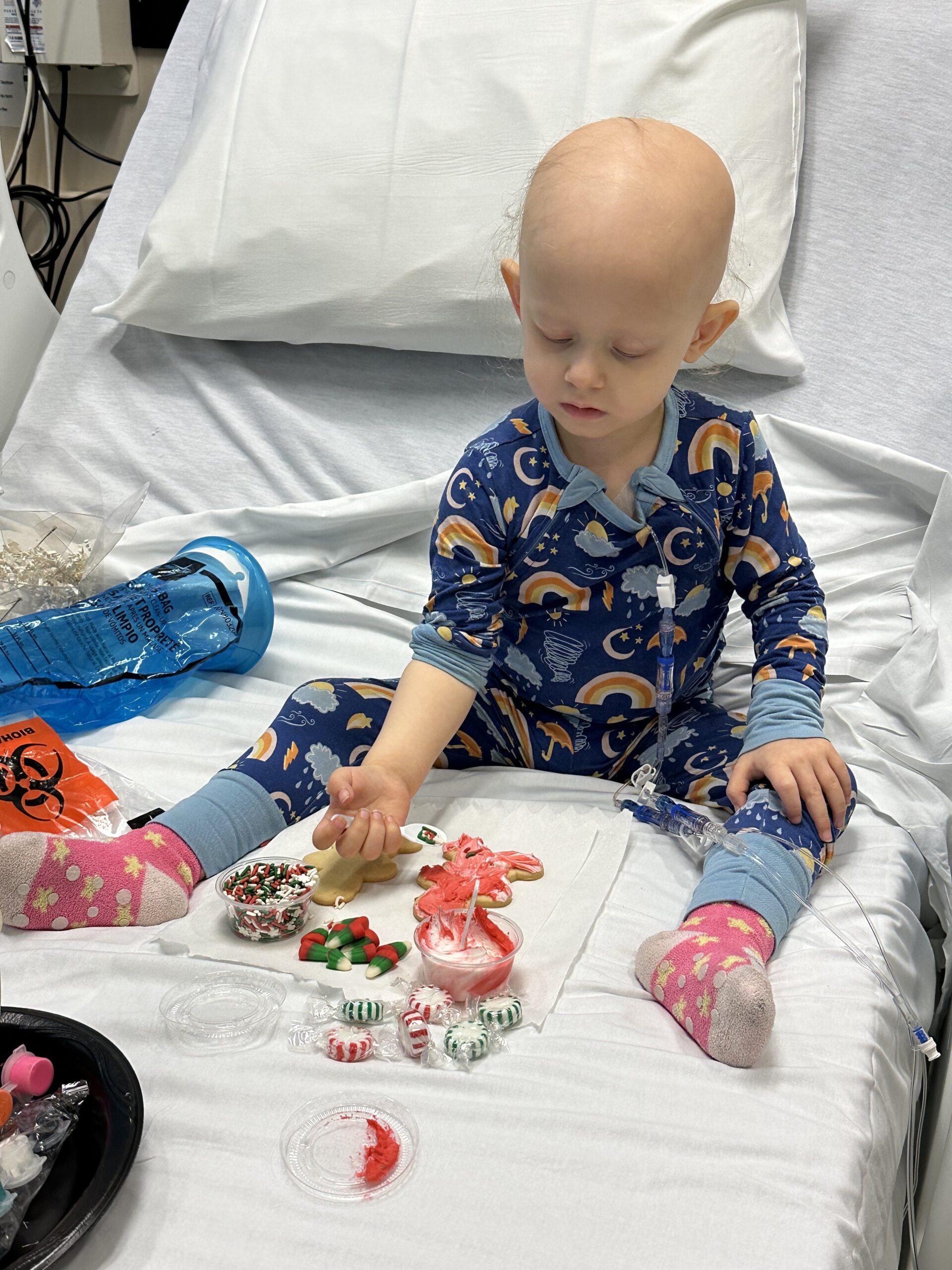
    Adalyn Hetzel had just celebrated her second birthday in the spring of 2024 when doctors at Children’s Hospital of Philadelphia diagnosed her with an aggressive soft tissue cancer.

    She endured 40 weeks of aggressive chemotherapy and a month of daily proton radiation therapy on her road to remission.

    Now, the Bucks County toddler will spend the next year sharing her story as one of five ambassadors for the St. Baldrick’s Foundation, one of the nation’s largest childhood cancer charities.

    The California-based organization has awarded more than $369 million in research grants since 2005, with $18 million going to Philadelphia-based institutions.

    The selected children and their families will attend advocacy days in D.C., to appeal to lawmakers, share their stories with the public, and spread awareness on social media.

    Kristopher Hetzel, Adalyn’s father, said their goal will be to advocate for research into more effective, less toxic treatments.

    While more than 80% of kids diagnosed with cancer in the United States now survive the disease, many sustain long-term side effects due to the harsh therapies. One study found that by age 45, 95% of survivors had at least one chronic health condition, and 80% had one that was disabling or life-threatening.

    Adalyn will likely have severe dental issues, limited jawbone growth, and an increased risk of developing secondary cancers due to the treatment later in life.

    The threat of recurrence also still looms.

    “It can’t be like that for these kids. We got to come up with better treatment,” Hetzel said.

    Diagnosis to treatment

    Hetzel first noticed a small nodule on Adalyn’s tongue in April 2024.

    After appointments with her pediatrician, dentist, and two oral surgeons left the family without a diagnosis, they went to CHOP, where a biopsy confirmed she had a highly aggressive form of soft tissue cancer called rhabdomyosarcoma.

    “All of a sudden your world becomes so small and it’s just your kid. Nothing else matters,” Hetzel said.

    Adalyn and her parents, Kristopher Hetzel and Allison Verdi.

    Doctors started Adalyn immediately on an intense chemotherapy regimen combining three drugs. She also received a month’s worth of daily proton beam radiation, requiring general anesthesia each session due to her age.

    By the end of the 40 weeks of chemotherapy, Adalyn dropped down to the 0.4th percentile of weight. She was so immunocompromised due to the treatment that when she contracted the flu, a critical response team at CHOP had to rush in.

    Doctors withheld her final chemotherapy session for fear it could be life-threatening.

    Adalyn Hetzel, a 3-year-old from Southampton, Pa., received 40 weeks of chemotherapy to treat her rhabdomyosarcoma.

    Being an ambassador

    In April, nearly a year after her diagnosis, Adalyn was declared to be in remission. She still receives scans every three months due to the potential for recurrence.

    “[Adalyn] turned back into this playful, happy, joyful toddler who finally has the energy to be herself,” Hetzel said.

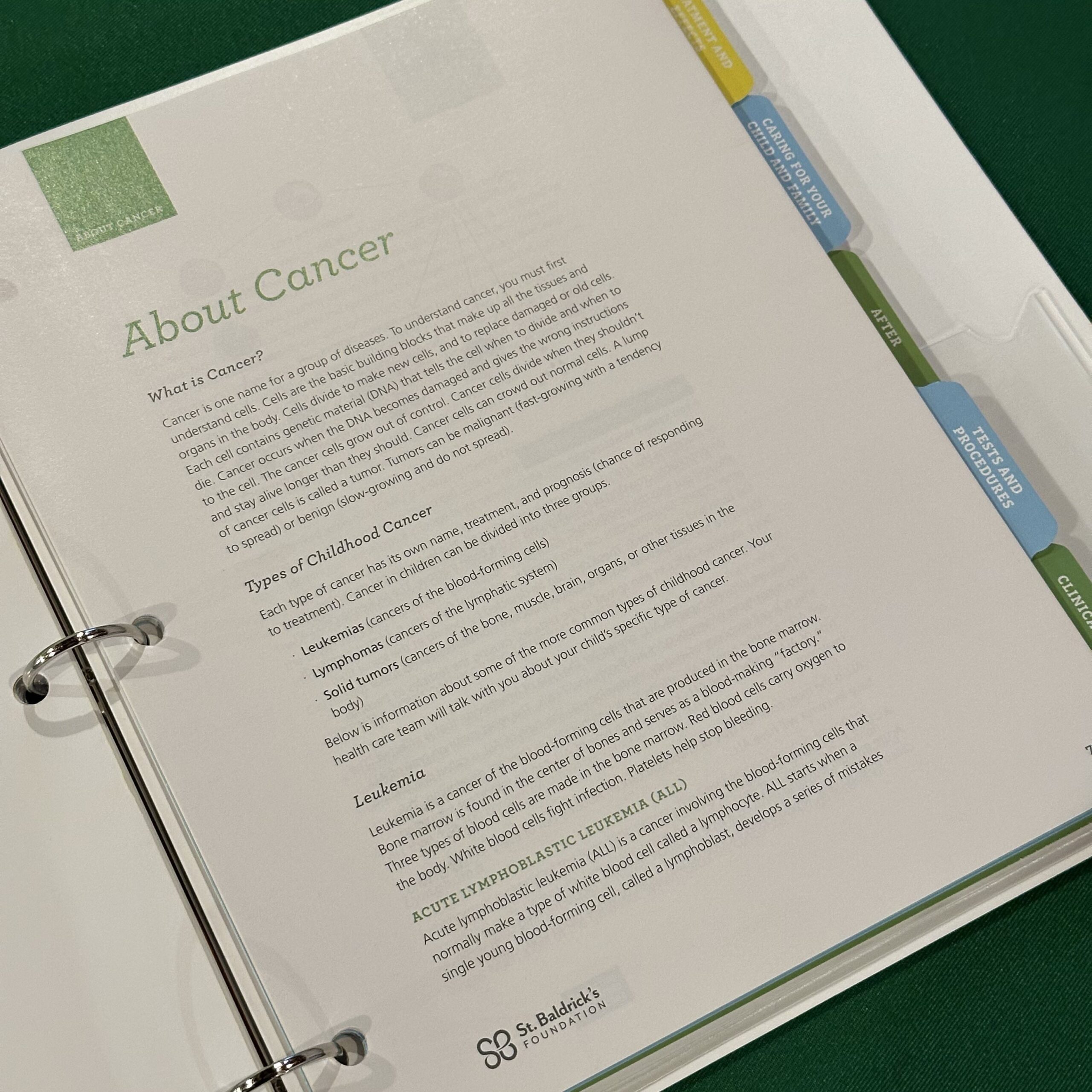
    Her family decided to get involved with St. Baldrick’s after benefiting from their services firsthand. Right after Adalyn’s diagnosis, Hetzel recalled being given a binder with their logo on the front that laid out a “game plan of what our life was going to look like.”

    That resource, called the Children’s Oncology Group Family Handbook, is funded by St. Baldrick’s and is given to newly diagnosed families around the country.

    The St. Baldrick’s Foundation funds the Children’s Oncology Group Family Handbook.

    Given her age, her father said he is cautious of not crossing the line in their advocacy and making her uncomfortable, and hopes that when she is older, she will understand the importance of sharing what she went through.

    Jane Hoppen, director of family relations at St. Baldrick’s, said the family always has veto power. The foundation focuses on highlighting each child’s unique personality and interests to “serve as the face and voice of the foundation.”

    For example, Adalyn, who loves chocolate-dipped croissants, will be featured on its social media for National Croissant Day.

    “What we want for every kid who’s diagnosed is the ability to just go back and enjoy being a kid again,” Hoppen said.

    Adalyn Hetzel, a 3-year-old from Southampton, loves croissants.
  • The new owner of Crozer-Chester Medical Center wants to restore hospital and emergency services

    The new owner of Crozer-Chester Medical Center wants to restore hospital and emergency services

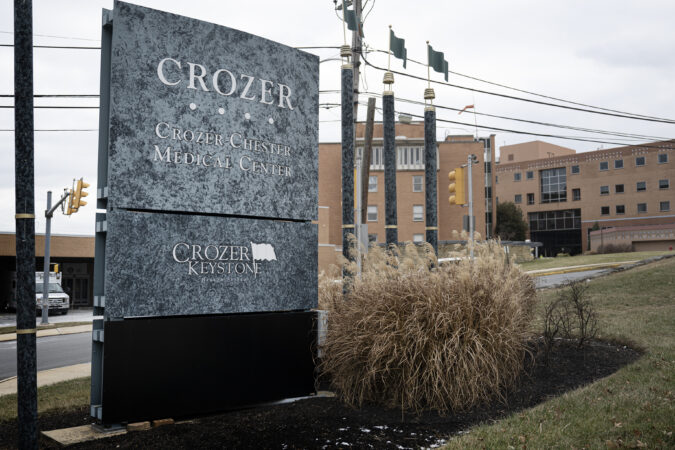
    The new owner of the defunct Crozer-Chester Medical Center wants to restore hospital and emergency services to the 64-acre campus that straddles Chester and Upland Township in Delaware County.

    Newly formed Chariot Equities completed the $10 million purchase Wednesday. The for-profit entity said it expected within six months to have an agreement with a health system that would operate a “right-sized” hospital and emergency department at the facility that had been the county’s largest provider of those services before closing last year.

    The idea is then to open the first phase within two years, Chariot said in a statement.

    Chariot did not say how much it would spend on refurbishing Crozer-Chester, which had suffered from years of neglect under its two previous owners.

    Chariot’s partner at Crozer-Chester is Allaire Health Services, a Jackson, N.J.-based for-profit operator of nursing homes.

    The partners said they are in talks with regional and national nonprofit health systems regarding an operating partnership, but provided no details. The amount of money needed for the project would likely depend on what prospective tenants would want to do at the property.

    “Our belief in Delaware County’s future, and the community’s need for sustainable healthcare access, made this an effort worth committing to well before the finish line,” said Yoel Polack, Chariot’s founder and principal.

    Little is known about the new owners. Polack worked in healthcare real estate in the New York City area before setting his sights on redeveloping Crozer-Chester.

    Federal records list Allaire’s CEO Benjamin Kurland as an owner of 20 nursing homes, including three in the Philadelphia area. Chariot’s statement said Allaire owns a total of 29 facilities in five states.

    Philadelphia-area facilities associated with Kurland are the Center For Rehab & Nursing Washington Township, which was acquired from Jefferson Health; Riverview Estates Rehab & Senior Living Center in Riverton; and West Park Rehabilitation & Nursing Center in West Philadelphia.

    Local interest?

    Main Line Health has been involved in discussions about reopening emergency services at three former Crozer hospitals — Crozer-Chester Medical Center, Springfield Hospital, and Taylor Hospital — at the request of state lawmakers and the property owners, Ed Jimenez, CEO of Main Line Health, said Wednesday at a Riddle Hospital event.

    Jimenez said he would “entertain the concept” of restoring emergency services at one of the hospitals as part of a partnership with other health systems, but only if it can be done on a break-even basis.

    All three of the former hospital buildings visited by Main Line officials are in poor condition and were stripped of medical equipment after the closures. Main Line’s experts estimated it would cost between $15 million and $20 million just to make the emergency department at Taylor functional, Jimenez said.

    ChristianaCare, Delaware’s largest health system, considered acquiring Crozer in 2022. Instead, it took a different path to expansion in Southeastern Pennsylvania. It is planning to open two micro-hospitals in Delaware County. The nonprofit system also took over five former Crozer outpatient locations. Its credit rating was recently downgraded by one notch because of lower profitability.

    The importance of Crozer-Chester

    Crozer-Chester closed in early May during the bankruptcy of owner Prospect Medical Holdings Inc., a for-profit company based in California, and after the failure of government-supported efforts to form a new nonprofit owner for Crozer-Chester and other Crozer Health facilities.

    Crozer-Chester was particularly important as a safety-net provider for a low-income area of Delaware County that has few other nearby options. The Crozer system, which had four hospitals, was the county’s largest health system and largest employer for many years.

    Two local Democratic officials, State Rep. Leanne Krueger and Delaware County Council member Monica Taylor, said they were encouraged by the approach being taken by Chariot and Allaire.

    At Taylor Hospital, the other Crozer hospital that closed last year, new owners are also looking for healthcare tenants. Local investors bought the Ridley Park facility for $1 million. It is less than four miles from Crozer-Chester.

    The same group agreed last week to pay $1 million for Springfield Hospital, another facility that had previously shut down under Prospect ownership.