Category: New Jersey News

  • At 18, South Jersey figure skater Isabeau Levito is heading to the Olympics: ‘I feel like I really achieved my dream life’

    At 18, South Jersey figure skater Isabeau Levito is heading to the Olympics: ‘I feel like I really achieved my dream life’

    Weeks before she had made the team, South Jersey figure skater Isabeau Levito was confidently saying, “when I go to the Olympics …”

    Levito, 18, who lives and trains in Mount Laurel, wasn’t being cocky. She knew; she had done the math.

    Qualifying for the 2026 Milan Cortina Olympics was “definitely a realistic goal for me for the past three years,” said Levito, the 2023 U.S. champion and 2024 world silver medalist. “But I felt like I had to prove myself again after missing a bit of last season with an injury.

    “But when the season was going the way it was going, score-wise, internationally, I just had to skate the way I can skate at nationals and have it solidified.”

    Isabeau Levito performs during the women’s free skating competition at the U.S. Figure Skating Championships in St. Louis. She won the bronze medal.

    Indeed, with two clean programs and the bronze medal at the 2026 U.S. Figure Skating Championships earlier this month, combined with strong results throughout the season and last year, that spot was hers.

    So when she met with Justin Dillon, chief high performance officer for U.S. Figure Skating, who told her reality show-style that she was on the team, Levito seemed happy but not surprised. Her head coach, Yulia Kuznetsova, however, was flooded with tears.

    “This is a huge dream for Yulia,” Levito said.

    Kuznetsova skated pairs while growing up in Russia and later in Disney on Ice, where she performed with her now-husband and another of Levito’s coaches, Slava Kuznetsov. But she never made it to that top frozen stage — until now as a coach.

    Kuznetsova also knew it was within reach. But the duo knew what they needed to do.

    Isabeau Levito performs during the women’s free skating competition at the U.S. Figure Skating Championships in St. Louis. She won the bronze medal.

    They opted this season for a triple flip combination instead of a triple Lutz. They thought the flip had a better chance of being called clean. (This worked out, but her individual triple Lutz also has been getting better results lately.)

    “Next season, I really want to switch things around and do new things and have more fun with it,” Levito said, “because this season it was a matter of doing all the skills that I honed, all the things that are the most comfortable and the most reliable. But next season, let’s just start risking things.”

    First, there’s that big trip to her mother’s hometown of Milan, Italy, where her grandmother and other relatives still live and where she’ll compete with and against her friends: the other American women, Amber Glenn and Alysa Liu, and many international skaters.

    She’s looking forward to being fully immersed in the Olympic experience and having her family see her skate. The opening ceremony is Feb. 6.

    “I am going to run this [Olympic] village,” she said. “This is going to be so fun.”

    She’s read about the village and watched TikToks from the Summer Games.

    “But I really have no idea what the Olympic Village is going to look like. That’s why I’m so excited to get there and explore it,” she said.

    Most of the ice sports, including figure skating, will be in Milan. The snow and sliding sports, plus curling, will be 250 miles away in Cortina and other mountain regions. This Olympics will be held in six villages across northern Italy.

    Before nationals, Levito had a lot of obligations. There were days when film crews came into the rink and stayed all day, cutting into her training time.

    The results were viral social media videos for sponsors such as Red Bull (she compares skills with a hockey player) and Everlane (she answers rapid-fire questions while getting ready to get on the ice at the Igloo Ice Rink in Mount Laurel).

    Now she’s back to a more typical schedule of skating for hours every day.

    “Everything’s exactly the same,” she said of her days on the ice. “What’s different, though, is how exciting it is going to the rink every day, being that I’m actually training for the Olympics right now.”

    Does Olympic prep include getting a tattoo of the rings, as so many athletes do?

    “I just don’t know if I would get a tattoo in general,” Levito said. “I think I’m going to start with the Olympic necklace,” which many Olympians sport.

    “If I did get a tattoo, it would be in such a hidden place, and it would be so tiny and microscopic. And I’m thinking to myself, ‘If that’s the circumstances I would get a tattoo under, maybe I should think about it for a while.’”

    Meanwhile, time is ticking, meaning she needs to shop for some formal dresses to wear at Olympic banquets and choose things to pack for any downtime.

    Levito said she likely will bring a couple of books as well as her bedazzling kit. Besides all the sparkles she wears on the ice, she enjoys adding rhinestones to her various makeup cases and a comb.

    “It’s so soothing,” she said.

    Isabeau Levito skates her short program at the Grand Prix de France in October.

    There is a lot of talk of extra bling: The three American women have a good chance of earning medals at the Olympics. But Levito isn’t thinking about that.

    “The village is what I’m focused on,” she said. “And obviously skating my best, but I can already feel like I will.”

    The pressure also is off a bit. With Glenn winning her third consecutive national title and Liu as the reigning world champion, Levito feels she’s less in the spotlight than she was a couple of years ago, when she won nationals and the silver medal at worlds.

    But it’s all good.

    “Honestly to me right now my life feels like perfect,” she said. “Dare I say I love everything that’s in my life, like personal life, and just like my goals that I’ve achieved, whether I’m under the radar or not?

    “I’m just so happy right now. I feel like I really achieved my dream life that I had in mind maybe five or some years ago. I feel like I’m really living what I was wishing for or envisioning for myself, so I’m just beyond proud.”


  • How N.J. ended up having some of the most restrictive e-bike regulations in the country

    How N.J. ended up having some of the most restrictive e-bike regulations in the country

    With a flick of his pen, outgoing Gov. Phil Murphy signed a bill Monday that makes New Jersey one of the most restrictive states for e-bikes, much to the dismay of cycling enthusiasts within and beyond the Garden State’s borders.

    Under the new regulations, all e-bikes must be registered and insured, whether they are low-speed e-bikes, which require pedaling and cannot exceed 20 mph, or high-speed bikes, called motorized bicycles or e-motos, that can go up to 28 mph.

    Riders will need to be at least 15 years old and they will need a motorized bicycle license to ride. People 17 and older can ride an e-bike using a driver’s license.

    The New Jersey law treats all e-bikes as the same, whereas most other states that regulate e-bikes tend to focus on e-motos when it comes to license and insurance requirements. The slower pedal-assist bikes face a patchwork of regulations across the country, with some restrictions on where they can go. By requiring insurance for the pedal-assist bikes people use for exercise and commuting, New Jersey now has some of the toughest regulations in the country for e-bikes, and cycling enthusiasts across the country fear their states might follow suit.

    The new regulations mark a dramatic shift in how New Jersey sees e-bikes. It was only in 2019 that state leaders, including Murphy, touted them as an alternative to cars with the potential to cut emissions and congestion in the state, allowing them to operate on streets, highways, and bicycle paths.

    Introduced in the legislature in November, the bill with e-bike restrictions traveled quickly across both chambers as lawmakers felt moved to action by fatalities in the state, including that of a Scotch Plains 13-year-old boy who collided with a landscaping truck while riding his e-bike in September and died.

    “It is clear that we are in an age of increasing e-bike use that requires us to take action and update regulations that help prevent tragedies from occurring,” Murphy said Monday.

    This is a point that even the most ardent critics of the new law have long agreed with. It had been six years since the last update to e-bike laws, and they agree that reckless riders abound.

    If New Jersey Facebook groups are any indicator, the law has plenty of supporters, sick of fast e-bikes taking up sidewalk space and e-motos zipping through residential neighborhoods.

    Ocean City Mayor Jay A. Gillian said in a statement Tuesday that the city had long called for the change.

    “Nobody likes more red tape, but the benefits of the new law far outweigh the inconvenience of the new registration requirements,” he wrote.

    Still, cycling advocates maintain the law is creating an unnecessary insurance requirement on a slew of people, such as tourists going down the Shore with their low-speed e-bikes, delivery drivers, and people who use pedal-assist bikes for exercise.

    Critics worry the law is not addressing some of the main issues plaguing the industry, such as misleading advertisements marketing e-motos as e-bikes and the sale of modification hardware that makes bikes go faster.

    State Sen. President Nicholas Scutari, a Democrat whose district includes Scotch Plains, introduced the bill in November, arguing that the increase in e-bikes created dangers for riders, motorists, and pedestrians.

    “Requiring registration and licensing will improve their safe use, and having them insured will protect those injured in accidents,” he said Monday.

    The 2019 e-bike laws did include insurance requirements for e-motos, which had to be registered and titled with the New Jersey Motor Vehicle Commission, but cycling advocates say these have never been enforced.

    Debra Kagan, executive director of the New Jersey Bike Walk Coalition, said she has asked for state data on e-moto registration and there does not seem to be any.

    The MVC did not immediately respond to a request asking for e-moto registration data.

    A fiscal analysis by the New Jersey Office of Legislative Services anticipated an increase in administrative costs for the MVC to update its technology systems, for communications, and to prepare an annual registration report for all e-bike classes. It did not give an estimate of how much that could cost the state. The law comes with no money attached.

    “Now this new legislation will require that all e-bikes, even the lowest speed e-bikes that don’t have throttles, would require licensing and registration, and there is no system and no funding to implement that across the state there,” Kagan said.

    The new law, critics add, will also carry a negative economic impact for the state, despite the expected fees the OLS says will be collected through registrations and eventual penalties for violations.

    While low-speed e-bikes can exceed $2,000, budget models can start at around $400, making them a suitable affordable transportation alternative.

    Patrick Cunnane, who sits on the board of directors of the trade organization People for Bikes and is an adviser to a bike shop in Gloucester County, worries that may no longer be the case for many with the new added costs of registration and insurance.

    Shore town boosters and small bike-rental businesses also feel threatened, Cunnane said. He said it was not out of the realm of possibility that the ability to travel on e-bikes could be what tips the scales between a stay in Ocean City, N.J., or one in Ocean City, Md., or at the Delaware beaches.

    “It’s just crazy for New Jersey to isolate themselves from an activity that’s really a lot of fun and safe,” he said.

    Niclas Elmer, owner of Tuckahoe Bike Shop, which has a handful of locations in Atlantic and Cape May Counties, said even as the threat of added regulation loomed, parents balked at buying their children low-speed e-bikes.

    “It was hard for us because we couldn’t give a straight answer [regarding regulations],” said Elmer, who has been in the retail business for more than 20 years.

    Further worrying Elmer is the status of bike rentals, a key part of his business model. He doesn’t know if these will be exempt from the new laws.

    To Elmer and others, cycling advocates say the fight over e-bike regulations is not over.

    Cunnane said People for Bikes has already been in touch with the administration of new Gov. Mikie Sherrill on the matter. The hope is that in the year the state has to set its new registration framework, advocates will be able to influence new legislation that walks back some of the restrictions.

    Cunnane was encouraged by the comments of the legislators who supported the law. They clearly want to tackle what they perceive to be a large problem, he said. Cycling advocates are not against all regulation; they simply want more targeted ways to address safety concerns.

    “We think we can really help make it better,” he said.

  • SEPTA Regional Rail delays this morning are due to a train pulling down overhead wires

    SEPTA Regional Rail delays this morning are due to a train pulling down overhead wires

    SEPTA Regional Rail riders experienced significant delays — at times, 30 minutes to an hour — at the peak of morning rush hour on Tuesday morning, after a train pulled electrical wires down.

    A West Trenton Line train struck overhead electrical wires near Wayne Junction train station in the Nicetown section of Philadelphia at 7:45 a.m., said SEPTA officials.

    The train lost power and was tangled in the wires it had pulled down.

    Marie Pollock, 24, who was on board, felt the train start to gradually slow down before quickly and forcefully coming to a stop. Pollock could see wires hitting the train windows and noted that other passengers were startled during the collision.

    “We were keeping the doors closed because it was so cold,” Pollock said. “We were on kind of a hill, so there wasn’t any room for SEPTA to get a shuttle, and the power was out on both tracks, so we couldn’t get a typical rescue train to us.”

    Pollock, who had already been waiting a half-hour in 20-degree chill for her 6:17 a.m. West Trenton Line train before the ordeal, said passengers waited inside the stuck train for an hour and a half.

    SEPTA crews had to cut through the downed wires to free the train and then used a diesel-powered train to tow the disabled one to Wayne Junction, where passengers took other trains into Center City.

    Pollock’s four-hour journey didn’t end until 10 a.m. when she finally arrived at Jefferson Station.

    Since then, service interruptions have been occurring primarily on the Warminster, Lansdale/Doylestown, and West Trenton lines. However, delays cascade throughout the rail system, leading to 15 to 45-minute delays on other lines, said SEPTA spokesperson Andrew Busch.

    “Repairs are still continuing,” Busch said Tuesday afternoon, “but service has improved. Some minor delays, and we are advising passengers to plan for some extra time during rush hour, but we expect the evening commute to be better than this morning.”

    There is currently no timeline for completed repairs.

    SEPTA urges riders to use the SEPTA mobile app and septa.org for the latest updates.

    Today’s service interruptions follow a streak of solid performance by SEPTA after months of disruptions while SEPTA rushed to inspect and repair a fleet of 223 trains after five caught fire last year.

  • A N.J. power broker’s son was convicted in a fatal hit-and-run. Former Gov. Murphy pardoned him on his last day.

    A N.J. power broker’s son was convicted in a fatal hit-and-run. Former Gov. Murphy pardoned him on his last day.

    The governor’s pardon was issued Tuesday even before a jury convicted Harris Jacobs, 28, for a hit-and-run in Atlantic City that killed a pedestrian.

    The pardon was one of 97 issued by former Gov. Phil Murphy in his final hours in office. Jacobs’ attorney, Lou Barbone, told the news site BreakingAC that his client was notified even before the jury came back with its verdict on Tuesday.

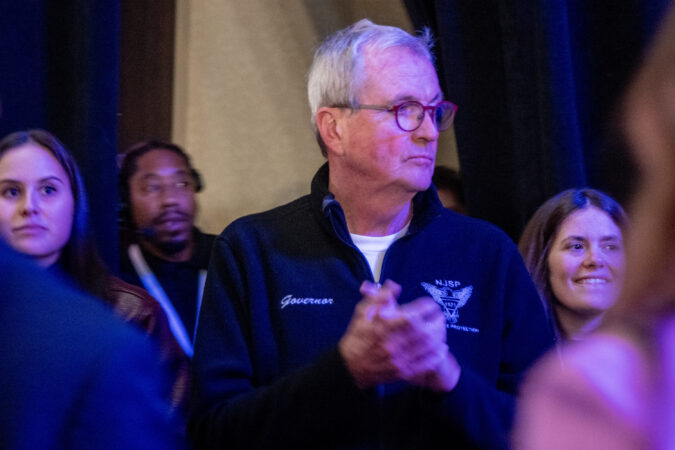
    Gov. Mikie Sherrill was sworn in at noon Tuesday to be New Jersey’s 57th Governor.

    Jacobs is the son of attorney and Atlantic City power broker and Democratic fundraiser Joe Jacobs, who has longstanding ties to Murphy and his wife, Tammy.

    Harris Jacobs was involved in a fatal hit and run at 3:30 a.m.on Sept. 4, 2022 outside the Dunkin’ Donuts at Atlantic and Indiana in Atlantic City, according to the Atlantic County Prosecutor.

    Jacobs spoke to his father 10 times after the crash, but never called police, according to testimony reported by BreakingAC.

    The pedestrian, Orlando Fraga, 76, was pronounced dead at the scene. Both Fraga and Jacobs were from Atlantic City.

    Seven hours after the accident, Jacobs was arrested and charged with leaving the scene of an accident. He was initially jailed is in the Atlantic County Justice Facility, but later released pending his trial.

    Surveillance video showed Harris stopping at the Dunkin’ Donuts and rushing to the injured man. He told his roommate what happened, according to BreakingAC’s account of the trial, and repeatedly called his father, but did not call police.

    A first trial in May ended without a verdict. But the retrial ended in conviction on Tuesday, which was immediately nullified by the governor’s pardon.

    Barbone did not immediately return a request for comment. The governor’s office also did not respond to a request.

    The second-degree conviction would have carried a sentence of five to 10 years under New Jersey law.

  • Kim Kardashian’s clothing brand settles N.J. tax investigation for $200,000

    Kim Kardashian’s clothing brand settles N.J. tax investigation for $200,000

    The clothing company founded by Kim Kardashian will pay $200,000 to end an investigation accusing it of charging New Jersey customers sales tax for a period of five years, even though clothing is exempt under state law.

    The New Jersey Office of Attorney General accused Skims Body of improperly collecting sales tax between 2019 and 2024. The 6.625% levy applies to most consumer goods, but clothing and footwear for human use — including Skims’ underwear and shapewear — are largely exempt.

    The attorney general’s office said that Skims engaged in “unconscionable business practices.” But the company said it “mistakenly” collected the taxes for half a decade, according to the consent order.

    “As prices on everything from clothing to groceries soar, our office is committed to protecting our residents from unlawful practices that drive up the prices they pay at the register,” said New Jersey Attorney General Matthew Platkin in a statement.

    The tax collection was due to a “technical error,” a Skims spokesperson said in a statement. The company fixed the error and said it is proactively reaching out to all affected customers to provide refunds.

    “We remain deeply committed to the highest standards of compliance and have implemented enhanced safeguards to prevent any recurrence of similar issues,” the spokesperson said.

    Skims agreed to pay $200,000 to close the investigation, according to a consent order dated Jan. 16. The agreement also requires the company to “use best efforts” for the next four years to refund customers.

    The sales tax collected by Skims has already been remitted to the New Jersey Division of Taxes, the attorney general’s office said.

    The company had been issuing refunds to New Jersey customers who complained about the sales tax charge even prior to the agreement, according to social media posts.

    The apparel brand is valued at $5 billion, according to Fortune, and serves mainly Gen Zers and millennials.

  • Mikie Sherrill takes oath as New Jersey governor, becoming the second woman to lead the state

    Mikie Sherrill takes oath as New Jersey governor, becoming the second woman to lead the state

    NEWARK, N.J. — Mikie Sherrill was sworn in as New Jersey governor Tuesday, becoming the second woman to govern the state and the first from the Democratic Party.

    Sherrill, who is also the first female veteran from either party to be elected to the office, broke tradition by opting to be inaugurated in her home county of Essex, in northern New Jersey, instead of the state’s capital city, Trenton.

    She took the oath at the New Jersey Performing Arts Center in Newark in the morning. Joined onstage by her family and high-profile Democrats, Sherrill spoke about her love for New Jersey and denounced President Donald Trump in a speech on Tuesday.

    She also gave two shout-outs to South Jersey, noting that she learned on the campaign trail that South Jerseyans say “pork roll” instead of “Taylor Ham.”

    “I have heard you in South Jersey, where you want jobs, transportation investments, innovative businesses, and not to be forgotten or left behind,” she also said.

    New Jersey Governor-elect Mikie Sherrill waves as she arrives for her inauguration, Tuesday, Jan. 20, 2026, in Newark, N.J. (AP Photo/Seth Wenig)

    She even referenced Philadelphia while talking about the founding of the United States — in a very Jersey way.

    “In fact, not too far away, in the greater Camden metropolitan region, in a place called Philadelphia, Thomas Jefferson wrote a declaration of our independence, marking the birth of this great nation,” she said.

    “This entirely unique and revolutionary declaration claims human beings had universal rights to life, to liberty, to the pursuit of happiness, not because of who their parents were, but because every human being is endowed with these rights by their creator, not by a king,” she added, and was met by applause.

    She drew parallels between England’s king at the founding of the United States and Trump, whom Democrats have criticized through “no kings” protests. Sherrill said Trump is “illegally usurping power, unconstitutionally enacting a tariff regime to make billions for himself and his family while everyone else sees their costs go higher.”

    Sherrill, a former Navy helicopter pilot, former federal prosecutor, and mother of four, was elected to Congress in 2018 and stepped down in November after winning the election, defeating Jack Ciattarelli, who had won the endorsement of Trump.

    Sherrill, whose closely watched candidacy drew significant national support, promised during her campaign that she would make New Jersey more affordable and would stand up to Trump.

    She told voters she would declare a state of emergency on utility rates on her first day in office, a promise she executed while still onstage for her inauguration speech right after being sworn in. She signed two bills: one freezing utility rates and the other encouraging more energy production in the state.

    White flowers lined the front of the stage, and large American and New Jersey flags served as a backdrop.

    Virginia Gov. Abigail Spanberger, Sherrill’s friend and former congressional colleague, was in attendance. Spanberger became Virginia’s first female governor on Saturday in a ceremony attended by Sherrill and other high-profile Democrats.

    New Jersey and Virginia were the only states to hold gubernatorial races last year, and the Democratic victories were viewed as a positive sign for the party heading into the midterms with Trump in the White House.

    Sherrill, who turned 54 on Monday, succeeds Gov. Phil Murphy, a Democrat who served two terms. It’s the first time the same party has held the governor’s mansion for three consecutive terms since 1970.

    After the ceremony, Sherrill was slated to head to Trenton to sign more executive orders before going back north for an inaugural ball Tuesday evening at the American Dream in East Rutherford.

    Sherrill’s lieutenant governor, Dale Caldwell, 65, was also sworn in Tuesday. Caldwell, a Middlesex County-based Methodist pastor, most recently worked as the first Black president of Centenary University. He has worked for state government, started nonprofits, and led charter schools.

    In his speech Tuesday, Caldwell said his father marched with the Rev. Dr. Martin Luther King Jr., whom he and Sherrill both mentioned in their speeches.

    “My father taught me that faith must be active, not passive. He taught me that justice is not an idea, it is a responsibility,” Caldwell said. “And he taught me that service is not optional, especially for those who have been blessed with opportunity.”

    Sherrill defied expectations on both sides of the aisle by winning what had been viewed as a competitive race by 14 points. Republicans had felt optimistic in part because the state shifted red in 2024, but those gains bounced back in November. The resident of Montclair similarly won a crowded primary by more than 100,000 votes in June.

    During her campaign, Sherrill repeatedly reminded voters of Ciattarelli’s ties to Trump and leaned into the president’s unpopularity in the state.

    Sherrill’s campaign repeatedly held events in Newark leading up to her election with the support of Newark Mayor Ras Baraka, a progressive who placed second in the Democratic primary.

    Her decision to be inaugurated up north was celebrated by Newark officials, but Trenton City Council member Jennifer Williams, a Republican, argued in an op-ed that it was an insult to Trenton.

    The governor-elect visited Camden on Monday to celebrate Martin Luther King Jr. Day and announced that she will divert resources to the city to honor the civil rights leader.

    Christine Todd Whitman, the first woman to serve as New Jersey governor, used the same venue as Sherrill when she was sworn in for her second term in 1998 while the war memorial in Trenton, the traditional site, was undergoing renovations.

    Whitman served as a Republican from 1994 to 2001 before joining the Bush administration and has since left the Republican Party for the Forward Party. She endorsed Sherrill’s candidacy.

    New Jersey Gov. Mikie Sherrill speaks after taking the oath of office during an inauguration ceremony, Tuesday, Jan. 20, 2026, in Newark, N.J. (AP Photo/Seth Wenig)
  • It may feel like zero in Philly this week, and the ‘wind chill’ has Pennsylvania roots

    It may feel like zero in Philly this week, and the ‘wind chill’ has Pennsylvania roots

    The region evidently is about to migrate from the refrigerator to the freezer this week, with wind-chill levels possibly approaching zero as temperatures fall to the teens and a brisk west wind adds sting.

    “Wind chill” has been a staple of National Weather Service forecasts and media weather reports since 1973.

    (Commercial services, such as AccuWeather Inc., now have their own variants.)

    At different times it has been a subject of contention, confusion, derision, and revision; its popularity, however, endures.

    In terms of alerting the public to potential health hazards, “I think it’s useful,” said Michael DeAngelis, vice chair of emergency medicine at Temple University’s Lewis Katz School of Medicine.

    Said Harvey V. Lankford, a retired physician and writer who has done a deeper dive into wind chill than most humans: “It’s a yardstick.

    “The public loves it.”

    But where do those numbers come from, and do they tell us how we really feel?

    The birth of ‘wind chill’

    Gentoo penguins walk at Neko Harbour in Antarctica, Saturday, Nov. 22, 2025. (AP Photo/Mark Baker)

    Wind chill is a measure of heat loss from the body from the combination of temperature and wind.

    What we know about its effects has a lot to do with former Eagle Scout Paul Siple, the pride of Erie’s Central High School.

    He pursued his quest while accompanying Admiral Richard Byrd on his legendary expeditions to that icy forbidden planet known as Antarctica, where the wind stings “like a knife drawn across the face,” as one of his associates put it. At age 19, Siple had won a highly publicized national competition to join Byrd.

    Siple minted the term wind chill in his 565-page unpublished doctoral dissertation, a copy of which Lankford obtained from Clark University, in Worcester, Mass.

    On a later expedition, Siple, assisted by geologist Charles Passel, conducted experiments measuring how long it took to freeze a container of water under a variety of temperature and wind conditions. Winds obviously accelerated the freezing process.

    Using that data they estimated heat loss from human skin, publishing their findings in a landmark 1945 paper.

    But Lankford said Siple got remarkable results in his more primitive earlier research, which included estimating frostbite thresholds, using a relatively simple formula involving wind speeds and temperatures.

    Siple’s work would become the basis for the wind chill factor that the weather service massaged and began sharing publicly in 1973.

    Frostbite and the wind chill revision

    The wind chill calculations underwent a significant revision a quarter century ago.

    U.S. and Canadian scientists during the 1990s used human subjects to upgrade the index, including establishing new frostbite thresholds.

    Twelve subjects, with sensors inside their cheeks and their faces bare, were subjected to temperatures ranging from 32 to 58 below at three different wind speeds.

    They were monitored for signs of “frostnip,” which precedes frostbite by about a minute.

    For the record, the researchers found that with wind chills of 40 below, frostnip occurs within 15 minutes.

    The weather service said the revised index profited from “advances in science, technology and computer modeling.”

    Yet Siple obviously had been on to something decades earlier, Lankford said.

    In a paper published in 2021 in the journal Wilderness and Environmental Medicine, Lankford and coauthor Leslie R. Fox wrote that some of the modern findings on frostbite thresholds were remarkably similar to what appeared in Siple’s dissertation.

    Lankford said they were not surprised by the similarities: “We were stunned.”

    Staying safe in the cold

    Aside from frostnip and frostbite potential, exposure to frigid temperatures and strong winds poses a variety of other health hazards, DeAngelis said.

    Those conditions can seriously exacerbate certain lung problems.

    For the healthy, he recommends proceeding with caution while exercising. Sweating in the cold — it does happen, just ask runners and hikers — can increase the risk of hypothermia.

    Plus, your brain, heart, kidneys, and other internal organs will be diverting blood flow from muscles and extremities, and that could slow recovery from exertion.

    Or you could just put off that run or bike workout until Thursday, when it may go up to 40 degrees.

  • A teen couldn’t find her mom’s 30-year-old demo tape. The internet stepped in.

    A teen couldn’t find her mom’s 30-year-old demo tape. The internet stepped in.

    The long-lost demo tape had always held a certain mythos in Charlotte Astor’s imagination.

    For years, the Cherry Hill teen had heard stories about it, recorded about 30 years ago by her mother’s very loud, very short-lived, teenage hardcore band, Seed.

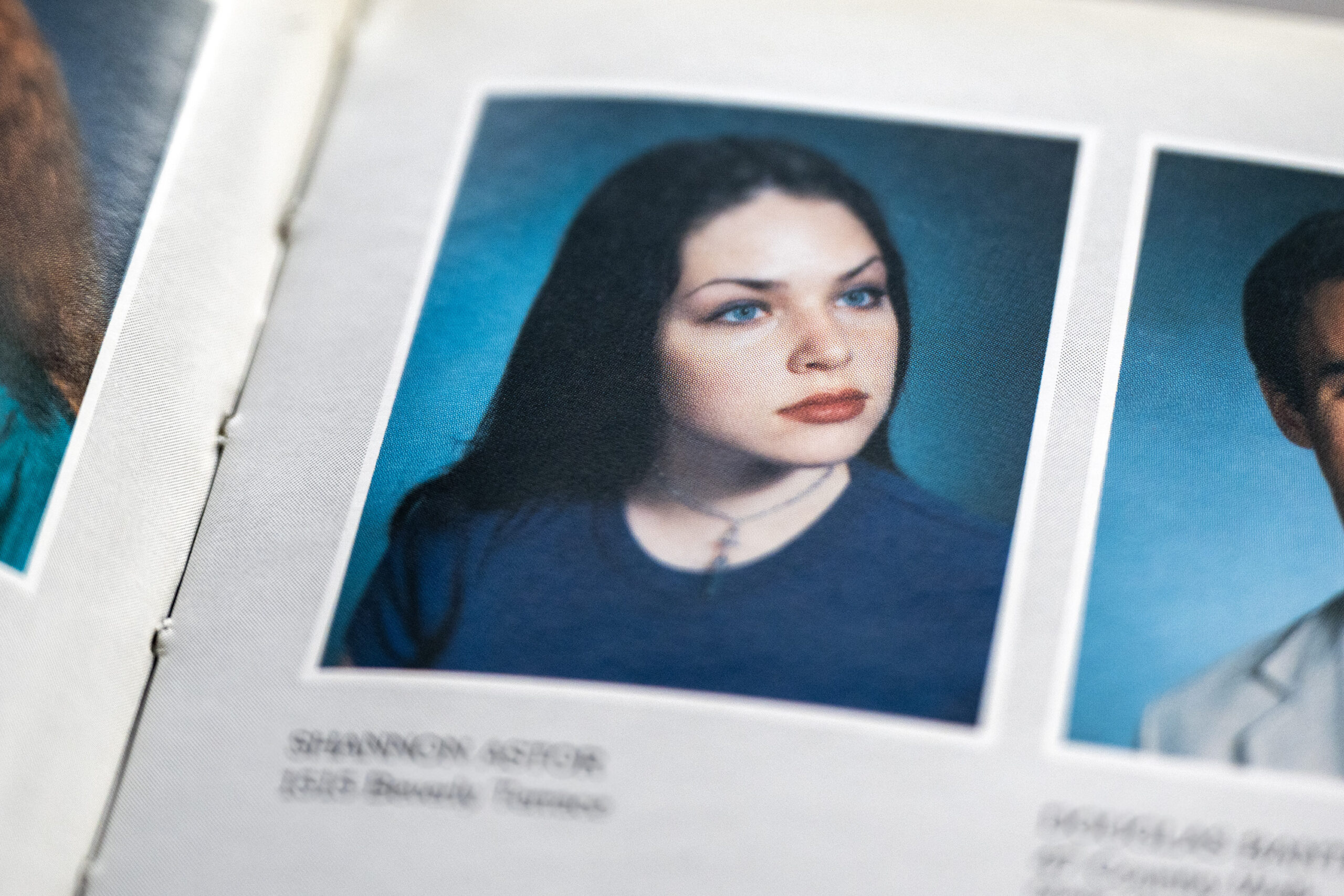
    Shannon Astor, now 47, had been a vocalist for the group, just 14 or 15 years old, at a time when female representation within the genre was rare. Within a year or so, the group had disbanded — but before it did, the group, which typically practiced in a member’s parents’ basement, recorded a single demo. There had been only a few dozen copies produced back then, and they had all sold, scattering out around the South Jersey area.

    For Charlotte, the tape became a kind of white whale — a relic of her mother’s hard-charging past, something the teen occasionally scoured the web for, to no avail.

    She’d never heard her mother’s band. And she wanted to. Badly.

    “Ninety-five percent of what I have about my mother is in the stories she tells me,” says Charlotte, 16, a junior at Cherry Hill High School East.

    But a demo was something tangible. Something concrete.

    “A demo,” she decided, “I can find.”

    And so one night last spring, that’s what she set out to do.

    She had little to go on: A rough estimate of when the demo would have been released (1993-94), a general geographic location (South Jersey), and a single lyric (“In the wind of the AM shadows cling to nearby trees as season shifts to satisfy the light from above”).

    “I have been looking for this tape for 4 years,” she wrote in an appeal to her 1,000 or so Instagram followers, “… and it would mean the absolute world to me to find this tape.”

    But something about her search — this desire to connect with a parent, to bridge a gap three decades wide — resonated. It became, within the tight-knit confines of the hardcore music scene, a united pursuit.

    At an age when most teenagers couldn’t get far enough away from their parents, here was one launching a quixotic quest to better understand hers.

    A senior class photo of Shannon Astor in the 1996 Cherry Hill High School East yearbook. Now 47, Shannon was previously in a hardcore band called Seed.

    Soon, strangers from across the country were digging through old boxes in basements, or tagging old running buddies from Jersey’s 1990s hardcore scene in social media posts. Some reached out to old producers from the area, wondering whether the demo might have made its way into some dusty studio corner.

    Messages poured in, too — hundreds of them — with suggestions ranging from the plausible to the outlandish. Had she tried getting in touch with Bruce Springsteen’s people? You never know what the Boss might have stowed away in some mansion closet.

    “I suddenly had communication with so many people who I thought I would never in my life have any connection with,” Charlotte said. “California to Jersey, and everything in between.”

    The lead singer of a well-known Jersey straight-edge band of the era, Mouthpiece, joined the search, messaging Charlotte after others reached out to him about the tape. (He vaguely remembered her mother, Shannon, but not the band.)

    Much of the outside help, Charlotte notes, has come from the hardcore community.

    Indeed, much of Charlotte’s young life is rooted in the same hardcore music scene that her mother’s once was. Like Shannon before her, Charlotte spends many nights at hardcore shows around the area, photographing the scene for the magazine she self-publishes, “Through Our Eyes.” And like her mother previously, she’s a member of the “straight-edge” hardcore community, a group with a shared collection of ideals that includes abstaining from drinking or drugs. (Her first flirtation with teenage rebellion came when she snuck out of the house one night to go to her favorite record store.)

    And though her mother does not necessarily share Charlotte’s zeal for locating the old tape — “I’m not waiting for some garage band demo to be unearthed,” Shannon joked — she understands what it would mean to her daughter to have it.

    “It’s special to me only because of how much she needed to hear it,” said Shannon. “I’m just so pro-Charli and everything that she does … But this is her journey, and something that was intrinsically important to her.”

    To those in the scene, meanwhile, the response has been very hardcore.

    “A bunch of people banding together to help this random girl find her mom’s thing,” said Quinn Brady, 19, of New York, and a friend of Charlotte’s. “Most people assume that hardcore people are not very nice or friendly. [But] there’s this inherent kinship. It connects people across the nation in a way that not a lot of other genres of music do.”

    A recent selfie by Charlotte Astor (right) and her mother, Shannon Astor, taken at Reading Terminal Market.

    Those outside the hardcore scene have been no less enthralled, however.

    In December, after NJ.com picked up the story, further extending its reach, a documentary filmmaker reached out about the possibility of doing a film on her quest.

    Last year, after posting in some “old-head” hardcore Facebook groups about the tape, Shane Reynolds — a member of the Philly-based hardcore band God Instinct — stumbled upon what appeared to be the most promising lead yet.

    “I found the guy who allegedly made the demo,” Reynolds said.

    But when she got the man on the phone, Reynolds says, it proved to be a dead end.

    The closest Charlotte came was last year, not long after she first posted about the demo on Instagram. Her mom’s former bandmate in Seed, convinced he must have kept something from that period, recovered from storage an old cassette that featured a recording of a single Seed practice session.

    Charlotte took it home, pushed it into the stereo in her bedroom. She stared at the ceiling as the tape began to play and 30 years fell away.

    For the first time, she could put a sound to the stories she grew up hearing.

    “The first thing I heard was a few seconds of my mom talking,” Charlotte said. “That’s my mom, when she was 16. I’m listening to a clip of my mother, listening to her at the same age I am.”

    Charlotte Astor, a junior at Cherry Hill High School East, and her vintage 35mm film Nikon camera in the school’s photography classroom.

    Still, that small taste has only reinforced her devotion to unearthing the actual demo.

    Charlotte remains realistic about her odds of finding it. No, it’s not likely to be found in some radio station’s studio. And no, Bruce Springsteen is almost certainly not in possession of a three-decades old demo tape from her mother’s teenage years.

    But some graying hardcore fan from the ’90s, with a penchant for hoarding and a cluttered garage?

    Stranger things have happened.

    “I have confidence — unwavering confidence — that someone has it,” Charlotte says. “And that I will get my hands on it.”

  • Capturing the sun

    Capturing the sun

    The reconstructed “ghost” structure with partial walls and windows of the building known in the eighteenth-century as 190 High Street is officially titled, “Freedom and Slavery in the Making of a New Nation” (2010).

    The open-air President’s House installation in Independence National Historical Park was designed to give visitors a sense of the house where the first two presidents of the United States, George Washington and John Adams, served their terms of office.

    The commemorative site designed by Emanuel Kelly, with Kelly/Maiello Architects, pays homage to nine enslaved people of African descent who were part of the Washington household with videos scripted by Lorene Cary and directed by Louis Massiah.

    Just like the Rocky statue I photographed last week in anticipation of this week’s news, the President’s House was in the news last year so it remains on my radar as I walk around Old City (our newsroom is right across the street).

    The cloud formation in the winter sky was what first caught my attention. Then it was seeing the sun lined up directly behind the triangular pediment above the Georgian home’s “front door.”

    I played with “placement” of the sun peeking through a tiny gap at a bottom corner of the gable. I knew knew that f/22 on my mirrorless camera’s lens would give me a nice starburst. It’s an optical effect that happens because the lens’ aperture blades don’t form a perfect circle. And the narrower the opening — like f/22 — the more pronounced the effect (shooting at f/2.8 is not quite as dramatic).

    Then it was simply a matter of my moving my head ever-so-slightly to align the sun with the little hole — like threading a needle.

    While standing in the thin shadow of the door, I was getting blasted in the eye each time I moved. Then a group of tourists, or a noise, startled a flock of pigeons and as they took flight I was not poised just right, but I liked having the birds there better than a perfect placement of the starburst.

    I tried a similar “trick” a few years ago, when walking around my town photographing with my iPhone. It doesn’t have a mechanical diaphragm so the effect is not the same. Plus, the threading-the-needle part is much more difficult when you are not actually looking through the lens as in a DSLR. And with a backlight sun blasting you directly in the face.

    The optical principle of refraction through a lens diaphragm is the same for both mirrorless and DSLR cameras because light travels through the lens elements and aperture in the same way.

    Since 1998 a black-and-white photo has appeared every Monday in staff photographer Tom Gralish’s “Scene Through the Lens” photo column in the print editions of The Inquirer’s local news section. Here are the most recent, in color:

    Deepika Iyer holds her niece Ira Samudra aloft in a Rockyesque pose, while her parents photograph their 8 month-old daughter, in front of the famous movie prop at the top of the steps at the Philadelphia Art Museum. Iyer lives in Philadelphia and is hosting a visit by her mother Vijayalakshmi Ramachandran (partially hidden); brother Gautham Ramachandran; and her sister-in-law Janani Gautham who all live in Bangalore, India.
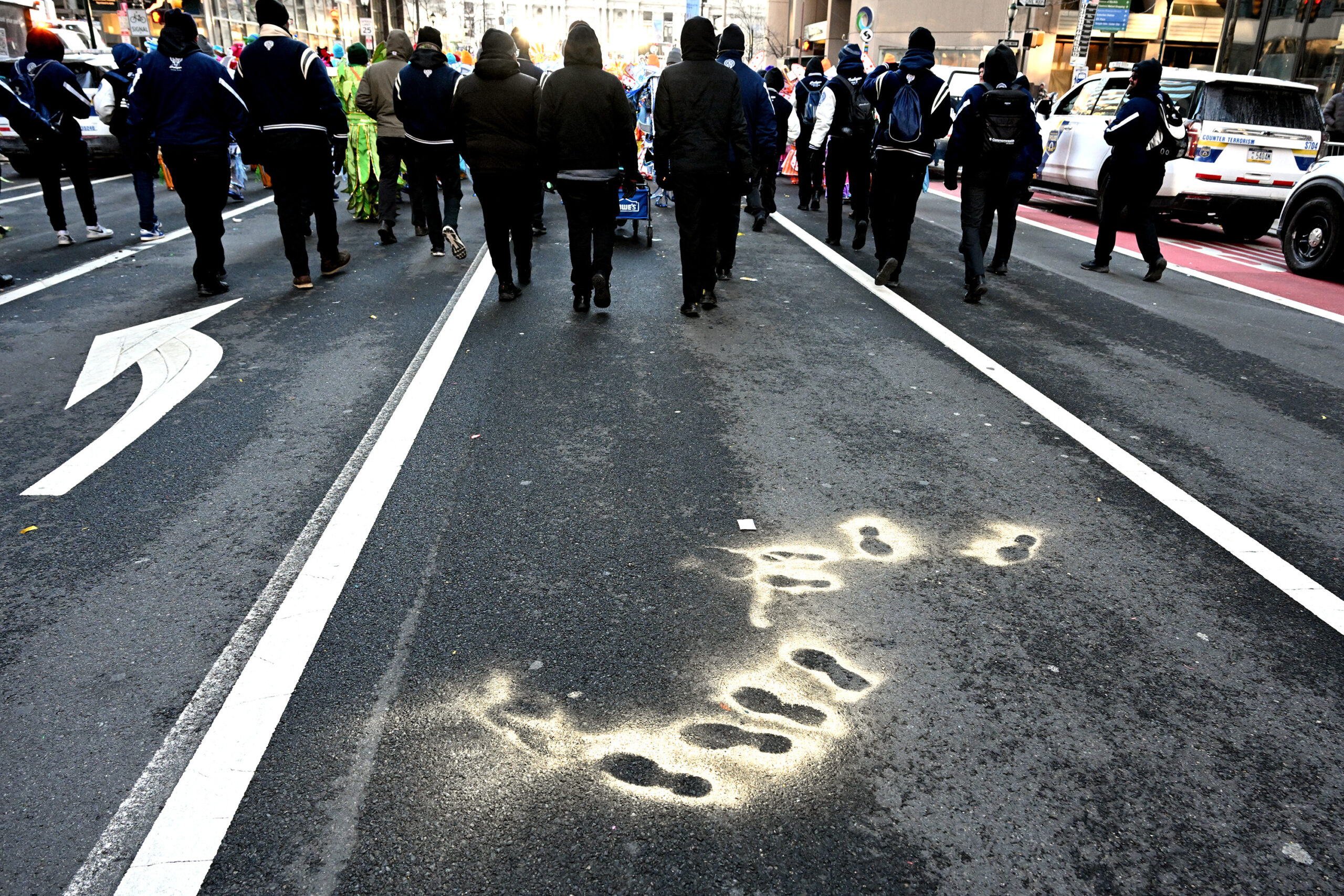
    January 5, 2026: Parade marshals trail behind the musicians of the Greater Kensington String Band heading to their #9 position start in the Mummers Parade. Spray paint by comic wenches earlier in the day left “Oh, Dem Golden Slippers” shadows on the pavement of Market Street. This year marked the 125th anniversary of Philly’s iconic New Year’s Day celebration.
    Dec. 29, 2025: Canada geese at sunrise in Evans Pond in Haddonfield, during the week of the Winter Solstice for the Northern Hemisphere.
    December 22, 2025: SEPTA trolley operator Victoria Daniels approaches the end of the Center City Tunnel, heading toward the 40th Street trolley portal after a tour to update the news media on overhead wire repairs in the closed tunnel due to unexpected issues from new slider parts.
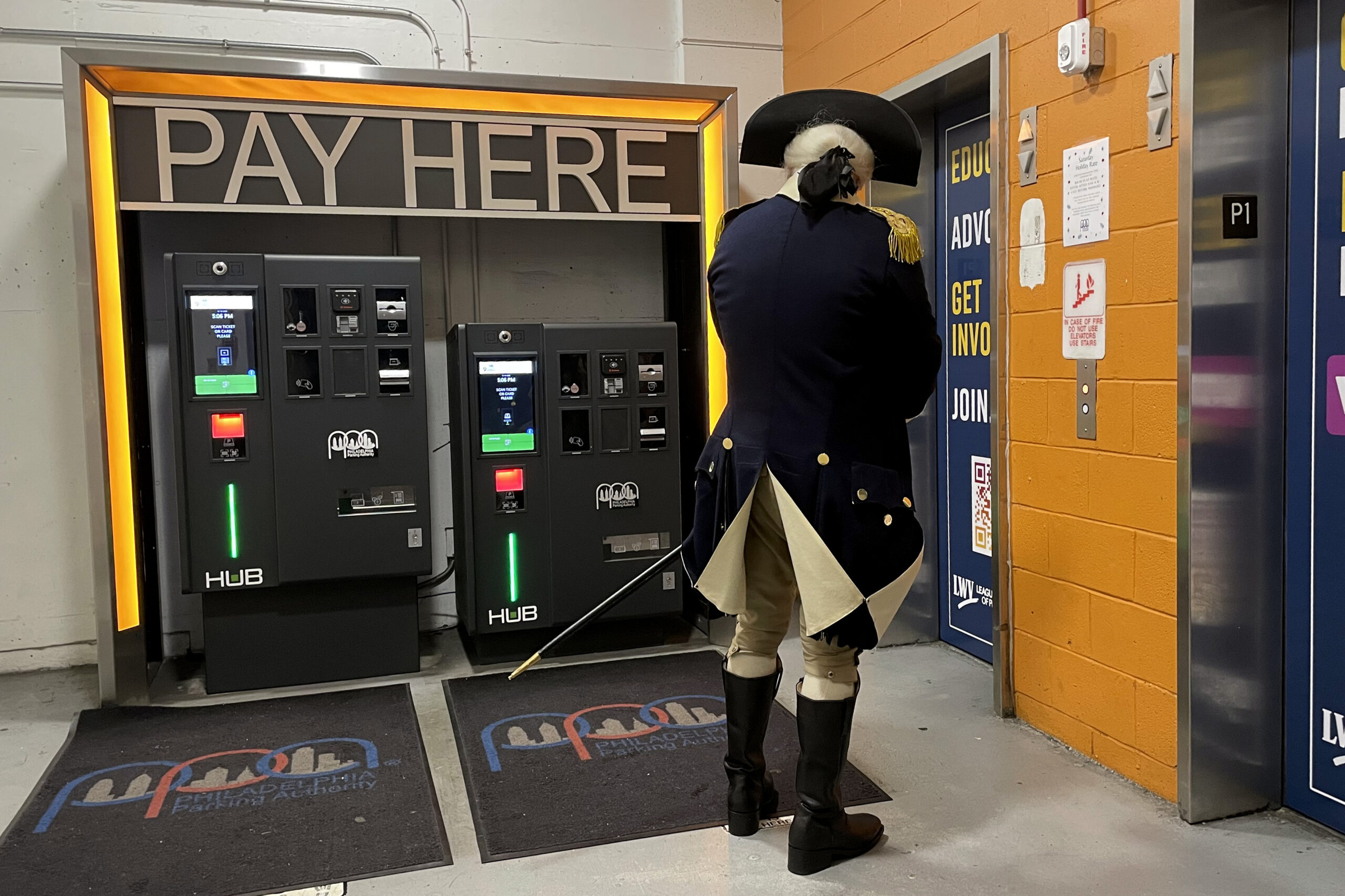
    December 15, 2025: A historical interpreter waits at the parking garage elevators headed not to a December crossing of the Delaware River, but an event at the National Constitution Center. General George Washington was on his way to an unveiling of the U.S. Mint’s new 2026 coins for the Semiquincentennial,
    December 8, 2025: The Benjamin Franklin Bridge and pedestrians on the Delaware River Trail are reflected in mirrored spheres of the “Weaver’s Knot: Sheet Bend” public artwork on Columbus Boulevard. The site-specific stainless steel piece located between the Cherry Street and Race Street Piers was commissioned by the City’s Public Art Office and the Delaware River Waterfront Corporation and created and installed in 2022 by the design and fabrication group Ball-Nogues Studio. The name recalls a history that dominated the region for hundreds of years. “Weaver’s knot” derives from use in textile mills and the “Sheet bend” or “sheet knot” was used on sailing vessels for bending ropes to sails.
    November 29, 2025: t’s ginkgo time in our region again when the distinctive fan-shaped leaves turn yellow and then, on one day, lose all their leaves at the same time laying a carpet on city streets and sidewalks. A squirrel leaps over leaves in the 18th Century Garden in Independence National Historical Park Nov. 25, 2025. The ginkgo (Ginkgo biloba) is considered a living fossil as it’s the only surviving species of a group of trees that existed before dinosaurs. Genetically, it has remained unchanged over the past 200 million years. William Hamilton, owner the Woodlands in SW Phila (no relation to Alexander Hamilton) brought the first ginkgo trees to North America in 1785.
    November 24, 2025: The old waiting room at 30th Street Station that most people only pass through on their way to the restrooms has been spiffed up with benches – and a Christmas tree. It was placed there this year in front of the 30-foot frieze, “The Spirit of Transportation” while the lobby of Amtrak’s $550 million station restoration is underway. The 1895 relief sculpture by Karl Bitter was originally hung in the Broad Street Station by City Hall, but was moved in 1933. It depicts travel from ancient to modern and even futuristic times.
    November 17, 2025: Students on a field trip from the Christian Academy in Brookhaven, Delaware County, pose for a group photo in front of the Liberty Bell in Independence National Historical Park on Thursday. The trip was planned weeks earlier, before they knew it would be on the day park buildings were reopening after the government shutdown ended. “We got so lucky,” a teacher said. Then corrected herself. “It’s because we prayed for it.”
    November 8, 2025: Multitasking during the Festival de Día de Muertos – Day of the Dead – in South Philadelphia.
    November 1, 2025: Marcy Boroff is at City Hall dressed as a Coke can, along with preschoolers and their caregivers, in support of former Mayor Jim Kenney’s 2017 tax on sweetened beverages. City Council is considering repealing the tax, which funds the city’s pre-K programs.
    October 25, 2025: Austin Gabauer, paint and production assistant at the Johnson Atelier, in Hamilton Twp, N.J. as the finished “O” letter awaits the return to Philadelphia. The “Y” part of the OY/YO sculpture is inside the painting booth. The well-known sculpture outside the Weitzman National Museum of American Jewish History was removed in May while construction continues on Market Street and has been undergoing refurbishment at the Atelier at the Grounds for Sculpture outside of Trenton.
    October 20, 2025:The yellow shipping container next to City Hall attracted a line of over 300 people that stretched around a corner of Dilworth Park. Bystanders wondered as they watched devotees reaching the front take their selfies inside a retro Philly diner-esque booth tableau. Followers on social media had been invited to “Climb on to immerse yourself in the worlds of Pleasing Fragrance, Big Lip, and exclusive treasures,” including a spin of the “Freebie Wheel,” for products of the unisex lifestyle brand Pleasing, created by former One Direction singer Harry Styles.
    October 11, 2025: Can you find the Phillie Phanatic, as he leaves a “Rally for Red October Bus Tour” stop in downtown Westmont, N.J. just before the start of the NLDS? There’s always next year and he’ll be back. The 2026 Spring Training schedule has yet to be announced by Major League Baseball, but Phillies pitchers and catchers generally first report to Clearwater, Florida in mid-February.
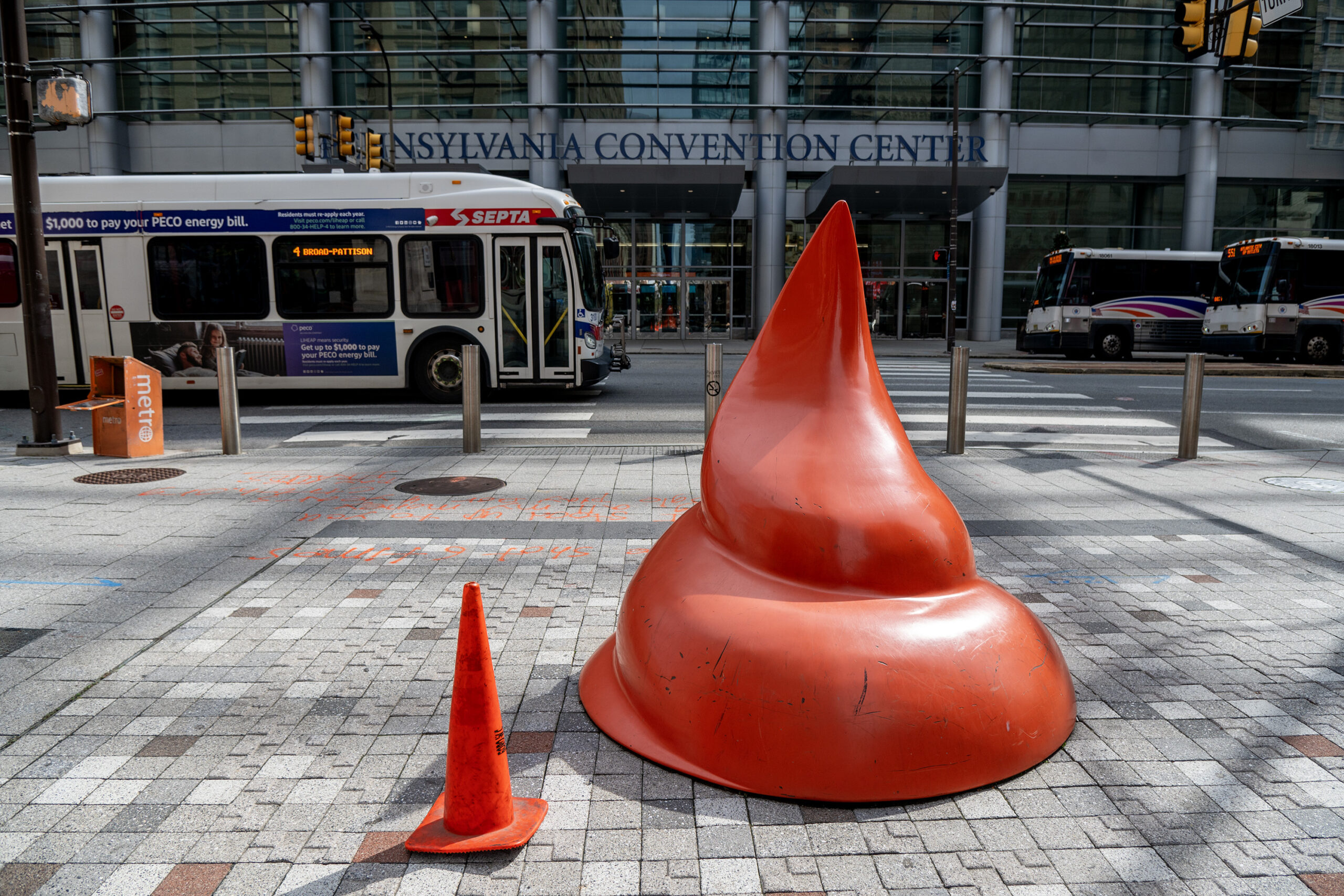
    October 6. 2025: Fluorescent orange safety cone, 28 in, Poly Ethylene. Right: Paint Torch (detail) Claes Oldenburg, 2011, Steel, Fiberglass Reinforced Plastic, Gelcoat and Polyurethane. (Gob of paint, 6 ft. Main sculpture, 51 ft.). Lenfest Plaza at the Pennsylvania Academy of the Fine Arts on North Broad Street, across from the Convention Center.

    » SEE MORE: Archived columns and Twenty years of a photo column.

  • After the Gillian’s closure, boardwalk merchants agree it will never be the same. They want a say in what comes next.

    After the Gillian’s closure, boardwalk merchants agree it will never be the same. They want a say in what comes next.

    OCEAN CITY, N.J. — Along the commercial stretch of Ocean City’s boardwalk, from Sixth to 14th Streets, there are 167 storefronts, including four Kohr Bros. Frozen Custards, three Johnson’s Popcorns, three Manco & Manco Pizzas, and eight Jilly’s stores of one type or another.

    There are eight mini-golfs, nine candy shops, 18 ice cream places, 10 pizza shops, 18 arcades or other types of amusements, five jewelry stores, three surf shops, five T-shirt shops, and 47 clothing or other retail shops. There is one palm reader.

    Even without Gillian’s Wonderland Pier, the iconic amusement park at Sixth Street that famously closed in October 2024, it still adds up to a classically specific, if repetitive, Jersey Shore boardwalk experience. Many of the shops are owned by the same Ocean City families, some into their third generation.

    But now these very shop owners are sounding the alarm.

    “This is a group that’s been hanging on for a long time,” Jamie Ford, owner of Barefoot Trading Co., at 1070 Boardwalk, said in an interview last week. “These places are hanging in there. They’re not going anywhere, but we’re nervous.”

    The merchants have urged city officials to green-light a proposal by Icona’s Eustace Mita to build a seven-story hotel on the Wonderland site. But officials have twice balked at starting the process.

    Chuck Bangle, owner of the storied Manco & Manco Pizza, warned planning officials he might close one of his three locations if business did not pick up. Other boardwalk property owners said longtime tenants were not returning.

    “It’s the 70th year of our family business, the 34th year on the boardwalk,” Bangle told the planning board Jan. 7, before it eventually deadlocked 4-4 on whether the Wonderland site should be declared in need of rehabilitation. “I wrestled with closing the Eighth Street location. I don’t want to close. The impact of Wonderland’s closing on all the merchants has been substantial.”

    Business along Boardwalk near 7th Street, Ocean City, NJ., Thursday, Jan. 15, 2026.

    Gillian’s, which was last operated by Ocean City Mayor Jay Gillian under a lease from Mita, had anchored the north end of the boardwalk at Sixth Street with its signature Ferris wheel, historic carousel, and beloved kiddie rides since 1965. Mayor Gillian recently declared personal bankruptcy, and has been sued for $600,000 in Wonderland debt.

    Into blustery January, the debate has raged about whether a luxury hotel, even one that would save the Ferris wheel, would bolster or undermine the essential character of this dry town and its beloved boardwalk.

    At this point, even the most ardent members of the Save Wonderland faction seem resigned to the reality that, as Will Morey of Morey’s Piers himself came up from Wildwood to say to the planning board, the odds of Wonderland coming to life again as an amusement park are slim to none.

    A rendering of the proposed new Icona in Wonderland Resort, to be built on the site of the old Wonderland Pier. The proposal for a 252-room resort includes saving the iconic Ferris wheel and carousel.

    It’s the rest of the boardwalk that now wants to be heard: merchants with the voice of their ancestors ringing in their ears.

    “This is an incredible opportunity,” said Ocean City Councilman Jody Levchuk, a member of the family that owns the Jilly’s stores on the boardwalk. He is also a member of a boardwalk subcommittee that will report its findings on Feb. 7. “My grandfather — who’s a big boardwalk guy — he’d walk up and he’d say this man wants to spend $170 million and you’re ignoring him.”

    Plummeting parking revenue

    A season without Wonderland took its toll. Parking figures from municipal lots tell the story.

    The 249-spot lot at Fifth and the boardwalk across from Wonderland brought in $483,921 in parking fees in 2024 (people paid an average of $21 to park there during the summer season), but dropped to $290,895 in 2025, a 40% decrease. Overall, parking revenue dropped by about a half-million dollars, from $2.46 million in 2024 to $1.95 million in 2025.

    At the end of 2025, there were a half-dozen empty storefronts, according to boardwalk merchants who keep track, mostly in the 600 block adjacent to Wonderland, though there is inevitable churn during the offseason.

    Becky Friedel, owner of 7th Street Surf Shop, said in an interview that the shop is planning to expand and take over two of the vacant boardwalk storefronts for a new breakfast and lunch spot and a clothing boutique.

    She said that while businesses have seen the loss of some of the younger clientele who used to fill Ocean City rooming houses and group Shore houses, the newer second-home owners come “with a fair amount of money.” The boardwalk also has a handful of higher-end boutiques, including the Islander. The downtown saw the opening of a Lululemon last year. Some envision a boardwalk that might include more boutiques in the mix, and fewer repeating sequences of ice cream-french fries-pizza-beachwear.

    “We’re optimistic,” Friedel said. “Obviously [Wonderland closing] hurt us a little bit, especially in the evening. Our night business isn’t as strong as it was. We’re taking over the french fry place to focus on breakfast and lunch.”

    Taking on the boardwalk

    Also optimistic are the partners behind Alex’s Pizza, the Roxborough stalwart dating to 1961 that is opening up this summer at 1214 Boardwalk, next to Candyland. Coming in hot with a tomato sauce swirl atop the pizza not unlike the Manco’s staple, Alex’s partner Rich Ennis said, “We’re more of a thin-crust pizza.”

    The enthusiasm of Ennis and partner Dylan Bear to take on the boardwalk also raises the question of whether the center of gravity will continue to shift southward, away from the no-longer-Wonderland end.

    Dylan Bear, owner of Alex’s Pizza, 1214 Boardwalk, Ocean City, NJ., Thursday, Jan. 15, 2026.

    “If you don’t have an anchor down there, people are not going to walk down there,” said Mark Benevento, owner of Congo Falls golf at 1132 Boardwalk, among other properties he rents out. “They will turn around at the music pier.”

    Rather than seeing the hotel proposal as a threat to the character of the town, the merchants have united to stress that they view it as essential to Ocean City’s preservation. In other Shore towns, it has been the push of residential development that has eaten away at commercial zones. The parcel is currently zoned for amusements.

    In places like Seaside Heights, Long Beach Island, and Avalon, condo and new residential construction has chipped away at the essential character of the places, replacing some of their most distinctive destinations, from restaurants to motels to bars and nightclubs.

    Mark Raab, a local pediatric dentist whose family owns five boardwalk properties in Ocean City, called the closing of Wonderland “devastating” in remarks to the planning board.

    “People don’t know what’s going on,” he said. “This year we had three businesses that closed, longtime tenants that did not renew their leases. Six years ago we had a waiting list for these properties.

    “The boardwalk is not thriving,” he said. “The boardwalk is slowly going down. It’s going down piece by piece. It is rapidly becoming a snowball effect.”

    ‘Now they have galvanized us’

    Ford, of Barefoot Trading, thinks the time has come for the view of the merchants to be heeded. The 4-4 tie at the planning board is being seen not as an outright rejection of a rehabilitation designation, which would expedite zoning allowances and possible tax abatements, but as a pass back to the city council.

    The families, he said, are “the backbone of it. What we’re speaking in favor of should carry a little bit of weight.”

    In a usually sleepy Jersey Shore January, there has been an awful lot of intrigue, and packed meetings, with the latest talk of perhaps a limited zoning change that would allow a hotel, though perhaps one not as grand (252 rooms, seven stories) as Mita is seeking.

    There is also talk of allowing residential units above boardwalk storefronts. And many believe the city council will essentially give the tie to the nonvoting planner, Randall E. Scheule, who told his deadlocked board he believed the Wonderland site did meet two needed criteria — significant deterioration and a pattern of underutilization — and to go ahead and approve the rehabilitation zone.

    Mita has said that time is of the essence. He said he has been shocked at the way the town has stymied his plan twice.

    Councilman Keith Hartzell, who twice voted against advancing Mita’s development plan, said he still wants to negotiate with Mita over height, parking, and other issues. One possibility, in conjunction with the boardwalk subcommittee, is rezoning just the 600 block of the boardwalk to allow a hotel. Hartzell has also been trying to bring a playground to that end in the meantime.

    “I’m not anti-hotel at all,” Hartzell said. “Our job is to come up with something [Mita] can do that he can make money with and be happy with.”

    For Ocean City’s merchants, the Wonderland saga, and Mita’s difficulty in getting his hotel off the ground, has prompted them to step out from behind the counter or out of the ticket booths and speak up.

    Said Benevento, the Congo Falls owner: “Maybe we have never gotten political. Now they have galvanized us.”