Category: News

Latest breaking news and updates

  • One person was killed in a 3-car crash on Lincoln Drive

    One person was killed in a 3-car crash on Lincoln Drive

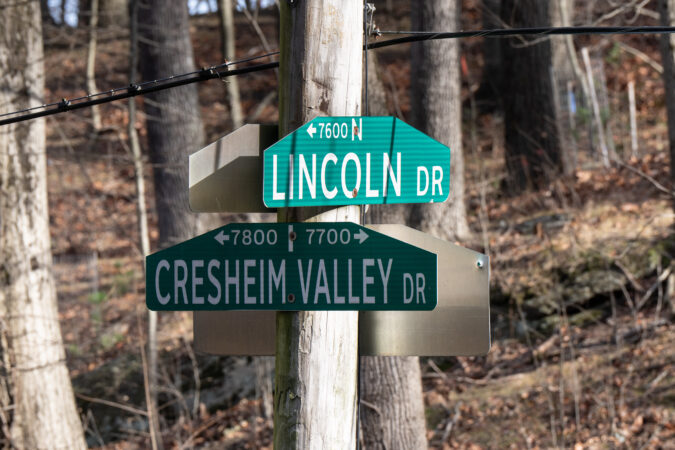
    One person is dead following a three-car collision Thursday night on the 3300 block of Lincoln Drive in East Falls. Police on Friday identified that driver as 65-year-old Eric Sullivan from the East Germantown area.

    Shortly before 9:20 p.m., Sullivan was driving north in a white 1997 Toyota 4Runner and crossed into the southbound lane, hitting a black 2026 Mercedes-Benz C-300 head on before smashing into a third vehicle, a black 2025 Nissan Rogue.

    Sullivan’s car flipped over multiple times and the driver was ejected onto the road. Medics pronounced Sullivan dead about five minutes later, according to police.

    The 45-year-old man driving the second car and the two passengers, a 36-year-old woman and an 8-year-old girl, were all taken to Albert Einstein Medical Center. They’re all in stable condition. As was the driver of the third car who was taken to Lankenau Hospital, said police spokesperson Jasmine Colón-Reilly.

    Police are investigating the cause of the crash.

    Lincoln Drive is listed on the city’s High Injury Network, the 12% of roads where 80% of Philadelphia’s most dangerous and deadly crashes occur. Area residents have long advocated for a safer street design to reduce the number of crashes and bring down speeds.

    In 2023, PennDot and the city announced plans to install four speed tables — structures similar to speed bumps but designed to be less noisy — at both ends of Lincoln Drive’s most dangerous stretch, which is directly northeast of where the crash occurred. Residents argued that and other proposed safety additions to the road wouldn’t be enough to combat the danger of the hairpins turns and other hazards along that street.

  • Trump thanks Iran for canceling executions as senior cleric issues threats

    Trump thanks Iran for canceling executions as senior cleric issues threats

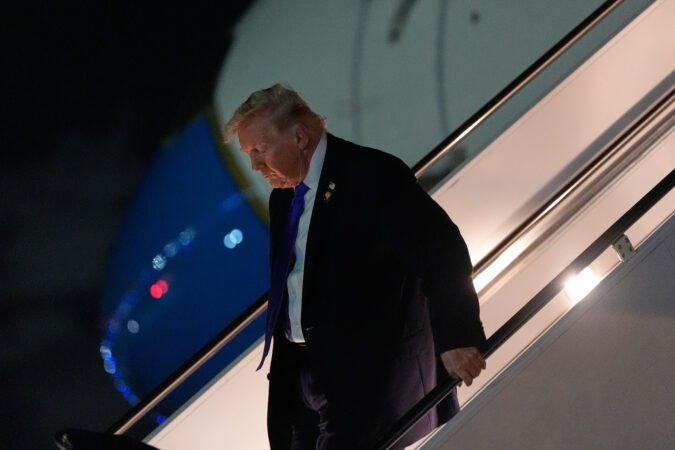
    WASHINGTON — President Donald Trump took the unusual step on Friday of thanking the Iranian government for not following through on executions of what he said was meant to be hundreds of political prisoners.

    “Iran canceled the hanging of over 800 people,” Trump told reporters while leaving the White House to spend the weekend at his Mar-a-Lago estate in Palm Beach, Fla. He added, “and I greatly respect the fact that they canceled.”

    The Republican president also suggested on his social media site that more than 800 people had been set to be executed, but he said they now won’t be.

    “Thank you!” he posted.

    Those sentiments come after Trump spent days suggesting that the U.S. might strike Iran militarily if its government triggered mass killings during widespread protests that have swept that country.

    The death toll from those protests continues to rise, activists say. Still, Trump seemed to hint that the prospects for U.S. military action were fading since Iran had held off on the executions.

    The president’s rosy assessment did not match the more complicated situation on the ground in Iran but appeared to be Trump backing away from his early pronouncements that suggested a U.S. attack on that country might be imminent.

    Trump had previously posted of Iran and the protesters there, “Help is on the way.” But asked if that was still the case on Friday, he replied: “Well, we’re going to see.”

    Questioned about who convinced him to back down on seeming suggestions that he would strike Iran, Trump said, “Nobody convinced me. I convinced myself.”

    “You had yesterday scheduled over 800 hangings. They didn’t hang anyone,” Trump said. “They canceled the hangings. That had a big impact.”

    Cleric warns of ‘hard revenge’ on Trump, Netanyahu

    As Iran returned to uneasy calm, a senior hard-line cleric called Friday for the death penalty for detained demonstrators and directly threatened Trump — evidence of the rage gripping authorities in the Islamic Republic.

    Harsh repression that has left several thousand people dead appears to have succeeded in stifling demonstrations that began Dec. 28 over Iran’s ailing economy and morphed into protests directly challenging the country’s theocracy.

    There have been no signs of protests for days in Tehran, where shopping and street life have returned to outward normality, though a week-old internet blackout continued. Authorities have not reported any unrest elsewhere in the country.

    The U.S.-based Human Rights Activists News Agency on Friday put the death toll, at 2,797. The number continues to rise.

    Iran’s exiled Crown Prince Reza Pahlavi urged the U.S. to make good on its pledge to intervene, calling Trump “a man of his word.”

    Ayatollah Ahmad Khatami’s sermon, carried by Iranian state radio, sparked chants from those gathered for prayers, including: “Armed hypocrites should be put to death!” Executions, as well as the killing of peaceful protesters, are two of the red lines laid down by Trump for possible military action against Iran.

    Khatami, a member of Iran’s Assembly of Experts and Guardian Council long known for his hard-line views, described the protesters as the “butlers” of Israeli Prime Minister Benjamin Netanyahu and “Trump’s soldiers.” He insisted their plans “imagined disintegrating the country.”

    “They should wait for hard revenge from the system,” Khatami said of Netanyahu and Trump. “Americans and Zionists should not expect peace.”

    His fiery speech came as allies of Iran and the United States alike sought to defuse tensions. Russian President Vladimir Putin spoke Friday to both Iranian President Masoud Pezeshkian and Israel’s Netanyahu, Kremlin spokesperson Dmitry Peskov said.

    Peskov said “the situation in the region is quite tense, and the president is continuing his efforts to help de-escalate it.”

    Russia had previously kept largely quiet about the protests. Moscow has watched several key allies suffer blows as its resources and focus are consumed by its 4-year-old war against Ukraine, including the downfall of Syria’s former President Bashar Assad in 2024, last year’s U.S. and Israeli attacks on Iran, and the U.S. seizure of Venezuelan leader Nicolas Maduro this month.

    Exiled Iranian royal calls for fight to continue

    Days after Trump pledged “help is on its way” for the protesters, both the demonstrations and the prospect of imminent U.S. retaliation appeared to have receded. One diplomat told the Associated Press that top officials from Egypt, Oman, Saudi Arabia, and Qatar had raised concerns with Trump that a U.S. military intervention would shake the global economy and destabilize an already volatile region.

    Yet the Trump administration has warned it will act if Iran executes detained protesters. Pahlavi, whose father was overthrown by Iran’s 1979 Islamic Revolution, said he still believes the president’s promise of assistance.

    “I believe the president is a man of his word,” Pahlavi told reporters in Washington. He added that ”regardless of whether action is taken or not, we as Iranians have no choice to carry on the fight.“

    Despite support by diehard monarchists in the diaspora, Pahlavi has struggled to gain wider appeal within Iran. But that has not stopped him from presenting himself as the transitional leader of Iran if the regime were to fall.

    Iran and the U.S. traded angry accusations Thursday at a session of the United Nations Security Council, with U.S. ambassador Mike Waltz saying that Trump “has made it clear that all options are on the table to stop the slaughter.”

    Gholam Hossein Darzi, the deputy Iranian ambassador to the U.N., blasted the U.S. for what he said was American “direct involvement in steering unrest in Iran to violence.”

    Iran authorities list protest damage

    Khatami, the hard-line cleric, also provided the first overall statistics on damage from the protests, claiming 350 mosques, 126 prayer halls, and 20 other holy places had sustained damage. Another 80 homes of Friday prayer leaders — an important position within Iran’s theocracy — were also damaged, likely underlining the anger demonstrators felt toward symbols of the government.

    He said 400 hospitals, 106 ambulance, 71 fire department vehicles, and another 50 emergency vehicles also sustained damage.

    Even as protests appeared to have been smothered inside Iran, thousands of exiled Iranians and their supporters have taken to the streets in cities across Europe to shout out their rage at the government of the Islamic Republic.

    Amid the continuing internet shutdown, some Iranians crossed borders to communicate with the outside world. At a border crossing in Turkey’s eastern province of Van, a trickle of Iranians crossing Friday said they were traveling to get around the communications blackout.

    “I will go back to Iran after they open the internet,” said a traveler who gave only his first name, Mehdi, out of security concerns.

    Also crossing the border were some Turkish citizens escaping the unrest in Iran.

    Mehmet Önder, 47, was in Tehran for his textiles business when the protests erupted. He said laid low in his hotel until it was shut for security reasons, then stayed with one of his customers until he was able to return to Turkey.

    Although he did not venture into the streets, Önder said he heard heavy gunfire.

    “I understand guns, because I served in the military in the southeast of Turkey,” he said. “The guns they were firing were not simple weapons. They were machine guns.”

    In a sign of the conflict’s potential to spill over borders, a Kurdish separatist group in Iraq said it has launched attacks on Iran’s paramilitary Revolutionary Guard in recent days in retaliation for Tehran’s crackdown on protests.

    A representative of the Kurdistan Freedom Party, or PAK, said its members have “played a role in the protests through both financial support and armed operations to defend protesters when needed.” The group said the attacks were launched by members of its military wing based inside Iran.

    The death toll of at least 2,797, provided by the Human Rights Activists News Agency, exceeds that of any other round of protest or unrest in Iran in decades and recalls the chaos surrounding the 1979 revolution.

    The agency has been accurate throughout years of demonstrations, relying on a network of activists inside Iran that confirms all reported fatalities. The AP has been unable to independently confirm the toll. Iran’s government has not provided casualty figures.

  • Here’s where 22 painted replica Liberty Bells will be installed around Philly in 2026

    Here’s where 22 painted replica Liberty Bells will be installed around Philly in 2026

    The bells are coming.

    On Friday, the city revealed the 22 large replica Liberty Bells that will decorate Philly neighborhoods this year for the celebrations of America’s 250th anniversary. Officials also released a list of locations where the painted bells will soon be installed. The program announced two special replica bells for the Independence Visitor Center and the Convention Center.

    Designed by 16 local artists selected through Mural Arts Philadelphia — and planned for commercial corridors and public parks everywhere from Chinatown and South Philly to West Philly and Wynnefield — the bells depict the histories, heroes, cultures, and traditions of Philly neighborhoods.

    <iframe title="‘Bells Across Pa.’ Locations in Philadelphia" aria-label="Locator map" id="datawrapper-chart-UZW3N" src="https://datawrapper.dwcdn.net/UZW3N/1/" scrolling="no" frameborder="0" style="width: 0; min-width: 100% !important; border: none;" height="665" data-external="1"></iframe><script type="text/javascript">window.addEventListener("message",function(a){if(void 0!==a.data["datawrapper-height"]){var e=document.querySelectorAll("iframe");for(var t in a.data["datawrapper-height"])for(var r,i=0;r=e[i];i++)if(r.contentWindow===a.source){var d=a.data["datawrapper-height"][t]+"px";r.style.height=d}}});</script>

    “Philadelphia has always been a city of neighborhoods, each with its own story to tell,” said Mayor Cherelle L. Parker during an unveiling of the bells in Olney. “That’s why our communities and these talented artists came together to tell these stories.”

    As part of the state nonprofit America250PA’s “Bells Across PA” program, more than 100 painted bells will be installed across Pennsylvania throughout the national milestone, also known as the Semiquincentennial.

    For weeks, artists had toiled on their bells inside a makeshift studio behind the Widener Memorial School, each telling a different story of neighborhood pride.

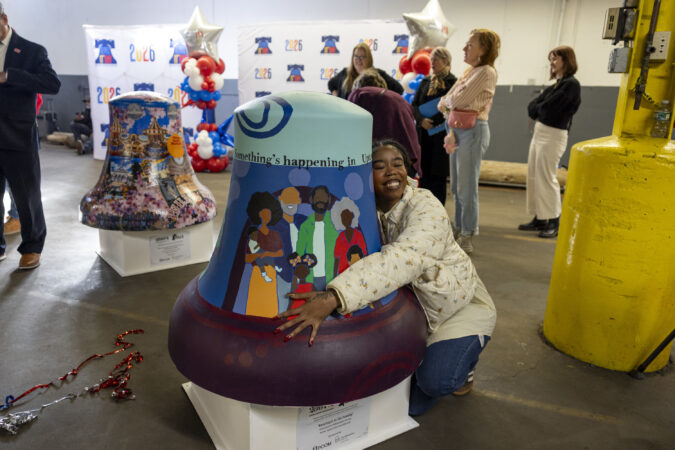
    Ana Thorne, of Center City, 37, is next to their bell they made during the Bells Across PA event in celebration of America’s 250th Birthday in Philadelphia, Pa., on Friday, Jan. 16, 2026.

    An Italian Market bell depicts scenes of the bustling produce stands, flickering fire barrels, and smiling old- and new-school merchants. An El Centro de Oro bell is painted with images of the neighborhood’s historic Stetson Hats factory, the iconic Latin Music store Centro Musical, and popular iron palm tree sculptures. A Glen Foerd bell is decorated with paints mixed with water from the Delaware River.

    “Our goal is to create a Semiquincentennial celebration that meets every Philadelphian where they are,” said Kathryn Ott Lovell, president and CEO of the Philadelphia Visitor Center Corp. and Philadelphia250.

    Local artist Cindy Lozito works on her South Philadelphia bell, one of 20 painted replicas of the Liberty Bells representing different neighborhoods Tuesday, Dec. 9, 2025. The bells will decorate parks and public spaces in every corner of the city during America’s 250th birthday.

    Planners said they expect the bells to draw interest and curiosity similar to the painted donkeys that dotted Philly neighborhoods during the 2016 Democratic National Convention. Those painted decorations became the focus of scavenger hunts and countless selfies.

    Organizers expect to install the bells sometime in March, once the weather warms.

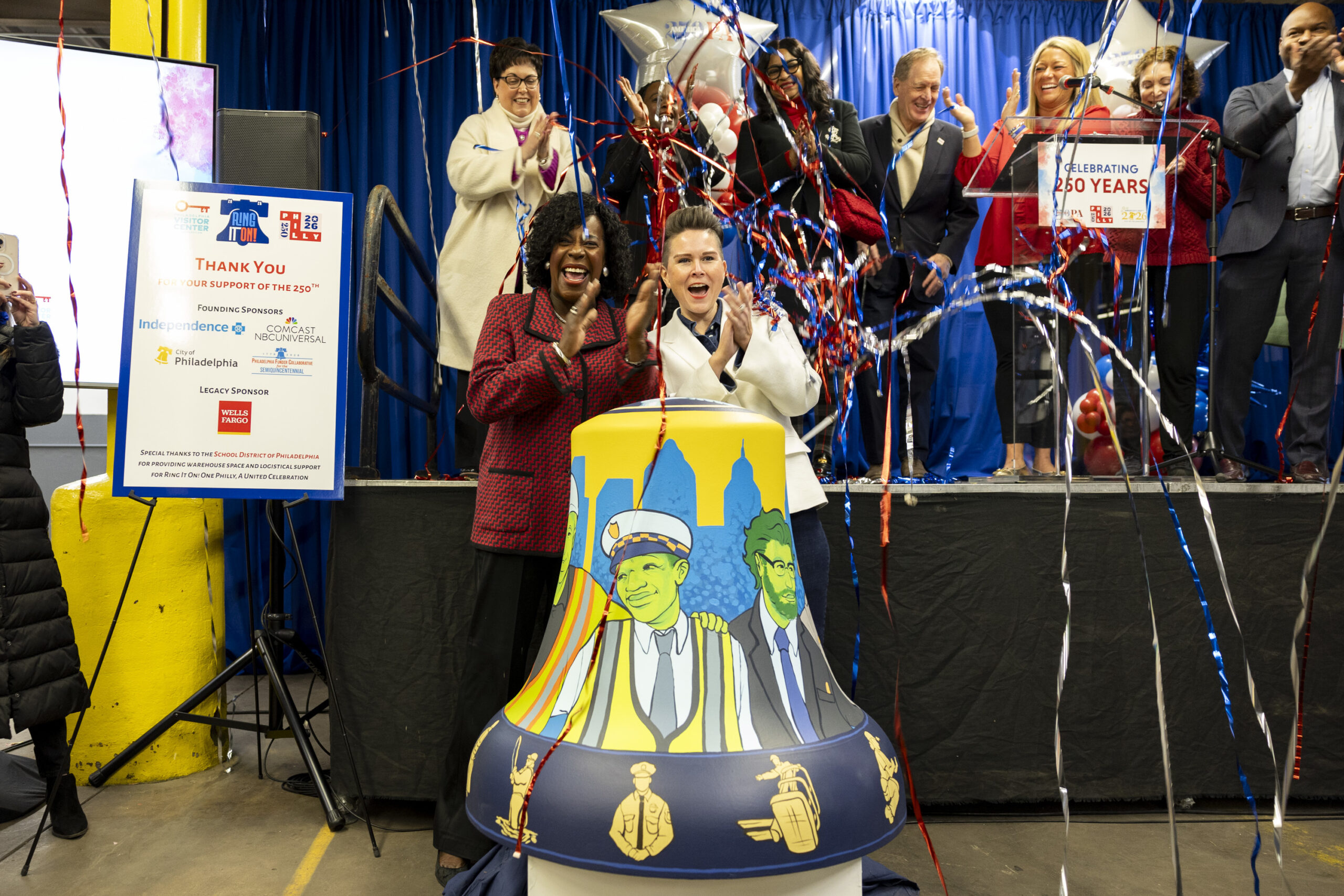
    Mayor Cherelle L. Parker and Pennsylvania Deputy Secretary of Tourism Anne Ryan, reveals one of the bells called “Philly Workforce: Celebrating Our Past, Building the Future” made by artist Akira Gordon during the Bells Across PA event in celebration of America’s 250th Birthday in Philadelphia, Pa., on Friday, Jan. 16, 2026.

    “I am asking all Philadelphians and everyone who visits our city in 2026 to see the bells,” Parker said.

    Below is a full list of Philadelphia’s Bells Across PA installations, artists, and locations:

    Neighborhood: Chinatown

    Artist: Chenlin Cai, Xingzi Liang

    Bell Title: “It Takes a Village”

    Bell Location: 10th Street Plaza (10th and Vine Streets)

    Neighborhood: City Hall/Center City

    Artist: Akira Gordon

    Bell Title: “Philly Workforce: Celebrating Our Past, Building the Future”

    Bell Location: Municipal Services Building, 1401 John F. Kennedy Blvd.

    Neighborhood: El Centro de Oro

    Artist: Symone Salib

    Bell Title: “El Centro de Oro”

    Bell Location: 2739 N. Fifth St.

    Neighborhood: Fox Chase

    Artist: Sean Martorana

    Bell Title: “Heartbeat of the Fox”

    Bell Location: Lions Park, 7959 Oxford Ave.

    Neighborhood: Germantown

    Artist: Emily Busch

    Bell Title: “Who’s Your North Star?”

    Bell Location: Joseph E. Coleman Northwest Regional Library, 68 W. Chelten Ave.

    Neighborhood: Hunting Park

    Artist: Andrew Daniels

    Bell Title: “United Hunting Park”

    Bell Location: Hunting Park

    Neighborhood: Logan Square

    Artist: Cindy Lozito

    Bell Title: “Connection Between the Stars”

    Bell Location: Franklin Institute, 222 N. 20th St.

    Neighborhood: Mayfair

    Artists: Alana Bogard, Madeleine Smith

    Bell Title: “Celebrate Mayfair”

    Bell Location: 7343 Frankford Ave.

    Neighborhood: Mount Airy

    Artist: Parris Stancell

    Bell Title: “A Tapestry of Hidden History”

    Bell Location: United Lutheran Seminary, 7301 Germantown Ave.

    Neighborhood: Ogontz

    Artist: Tykira Octaviah Mitchell

    Bell Title: “Keeping It In the Family”

    Bell Location: 7182 Ogontz Ave.

    Neighborhood: Olney

    Artist: Joanne Gallery

    Bell Title: “Where Global is Local”

    Bell Location: Greater Olney Library, 5501 N. Fifth St.

    Neighborhood: Parkside

    Artist: Parris Stancell

    Bell Title: “Fun Facts and Historical Treasures of Fairmount Park”

    Bell Location: Memorial Hall, 4231 Avenue of the Republic

    Neighborhood: Point Breeze

    Artist: Symone Salib

    Bell Title: “The Promise of What’s to Come”

    Bell Location: 1336 S. 21st St.

    Neighborhood: Roxborough

    Artist: Meghan Turbitt

    Bell Title: “19128: A Place With Roots”

    Bell Location: Roxborough Pocket Park, 6170 Ridge Ave.

    Neighborhood: South Philadelphia

    Artist: Cindy Lozito

    Bell Title: “Open Everyday”

    Bell Location: Piazza DiBruno, 914 S. Ninth St.

    Neighborhood: Southwest

    Artist: Michele Scott

    Bell Title: “A Diagram of Value”

    Bell Location: Bartram’s Garden, 5400 Lindbergh Blvd.

    Neighborhood: Torresdale

    Artist: Bob Dix

    Bell Title: “Nature to Industry to Nature Again”

    Bell Location: Glen Foerd, 5001 Grant Ave.

    Neighborhood: University City

    Artist: Sean Martorana

    Bell Title: “The Ringing Railroad”

    Bell Location: William H. Gray III 30th Street Station, 2955 Market St.

    Neighborhood: West Philadelphia

    Artist: Akira Gordon

    Bell Title: “Lancaster Living Legacy”

    Bell Location: 3952-54 Lancaster Ave.

    Neighborhood: Wynnefield

    Artist: Abigail Reeth

    Bell Title: “Stories Tolled”

    Bell Location: 5320 City Ave.

    In addition to the bells listed above, there will be additional Liberty Bell replicas in Philadelphia as part of America250PA’s Bells Across PA program. These bells are in partnership with Mother Bethel African Methodist Episcopal Church, the Philadelphia Convention and Visitors Bureau, and Visit Philadelphia.

    Neighborhood: Center City

    Artist: Tara Jacoby

    Bell Title: “We The People

    Bell Location: Independence Visitor Center

    Bell Sponsors: Visit Philadelphia, Philadelphia Visitor Center Corp.

    Artist: Ana Thorne

    Bell Title: “Colorful Independence

    Bell Location: Convention Center

    Bell Sponsors: Philadelphia Convention and Visitors Bureau, Convention Center

  • Who is Shane Hennen, the high-stakes Philly gambler at the center of the latest sports-betting indictment?

    Who is Shane Hennen, the high-stakes Philly gambler at the center of the latest sports-betting indictment?

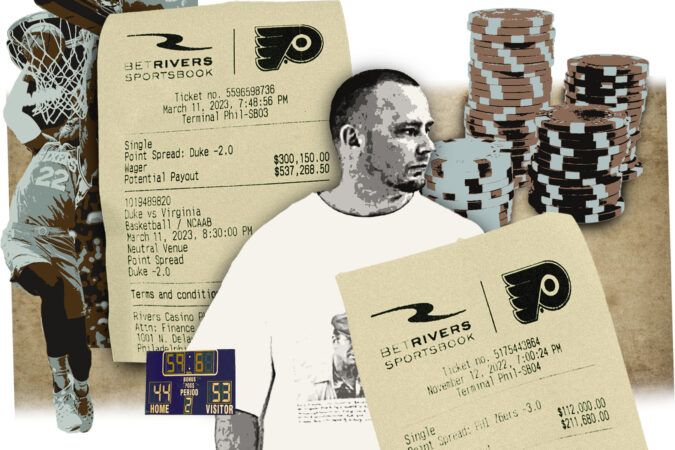
    For Shane Hennen, the house of cards keeps folding.

    A federal indictment unsealed Thursday accuses the Philadelphia-based professional gambler of acting as a ringleader in a sweeping sports-betting conspiracy now involving the NCAA and the Chinese Basketball Association. Hennen was first arrested last January in connection with a gambling case involving a former Toronto Raptor, and was also charged separately in an October indictment in New York focused on the NBA.

    The latest charges against Hennen, known as “Sugar Shane,” brought an international angle to the existing portrait of a high-stakes gambler who prosecutors allege was willing to bribe athletes to throw games, provide devices to fix backroom card games tied to the New York mafia, and use insider betting information to place fraudulent wagers.

    In all, federal prosecutors have accused Hennen of conspiring to place fraudulent bets on ex-Raptors forward Jontay Porter and NBA guard Terry Rozier, bribing the top-scoring player in the CBA to throw games, and recruiting college basketball trainers to help rig dozens of NCAA games — much of it orchestrated from Hennen’s favorite Philly casino, Rivers. On top of it all, he is also alleged to have participated in the rigging of mob-linked poker games in New York City.

    And while the list of implicated players and conspirators continues to grow by the dozens, Hennen has remained a central figure to the bet-fixing scandals that have rocked the sports world over the past year.

    Rise of a “betfluencer”

    On social media, Hennen has cast himself as rising from a hard-luck Pennsylvania town to a self-styled “betfluencer,” flying on private jets from Las Vegas to Monte Carlo and gambling up to $1 million a week on sports and card games.

    But Hennen’s earlier record for criminality came into clearer view as result of the federal investigations. While growing up in the Pittsburgh area, he did time for drug and gambling related charges that now serve as a kind of prelude to his role in the bet-fixing scandals.

    In 2006, the Washington, Pa., native received probation in Allegheny County for charges linked to a gambling scheme. According to court records, Hennen and an accomplice rented adjacent rooms in a Pittsburgh area hotel to hold underground dice games. While gambling in one room, a partner in the next room employed a magnetic device to flip loaded dice to preferred numbers.

    Then, early one morning in 2009, a former Duquesne University basketball player was found bleeding from a stab wound in Pittsburgh’s South Side neighborhood, a popular nightlife area. The man survived and later told police that Hennen had stabbed him in the neck after the athlete confronted him about cheating in a card game. Hennen was also picked up on a DUI less than two weeks later, but was released.

    Not long afterward, Hennen was charged with two more felonies after he was caught in a parking lot with 500 grams of cocaine down the street from the Meadows Casino, near Pittsburgh.

    In subsequent court filings, Hennen revealed that he had been working with a local drug dealer for more than a year. Facing well over a decade of jail time between the drug and assault charges linked to the stabbing, Hennen agreed to testify against his dealer and participated in a federal drug sting involving a different narcotics supplier based in Detroit, court records show.

    He served just less than two-and-a-half years in prison, plus four years of supervised release.

    According to court transcripts published by Sports Illustrated in October, Hennen admitted five times under oath that he cheated other people out of money.

    During a cross-examination, Lee Rothman, an attorney for his associate drug dealer he was testifying against, stated bluntly that Hennen made “a living out of cheating people out of things.”

    “That’s correct,” Hennen said.

    After his release in 2013, Hennen traveled to Pensacola, Fla., purportedly to work as a sales rep for a seafood wholesaler. Court records show he almost immediately went back to gambling, even violating his probation to travel out of state to participate in the 2014 World Series of Poker in Las Vegas.

    When Hennen landed in Philadelphia in 2015, it was seemingly to start over. He leased an apartment near the Rivers Casino in Fishtown.

    The small casino would become Hennen’s unlikely staging ground for a new, more lucrative gambling scheme that would come to span the globe.

    From Philly to China

    Local gamblers said Hennen worked the poker and baccarat tables at Rivers, using the action to build a reputation with the house and pave the way for six-figure sports bets, the kind only gamblers with money and a track record at the casino are allowed to make.

    By 2022, Hennen had launched an online betting consultancy via an Instagram page called “Sugar Shane Wins.” On social media, Hennen posted his sportsbook picks along with glamorous photos jetting around to Vegas or Dubai, or sitting courtside at Sixers games.

    Although he marketed bets on teams familiar to U.S. gamblers, his focus — and income — was overseas, according to federal prosecutors.

    He posted courtside photos of himself at Sixers games with a Mississippi-based sports handicapper named Marves Fairley, who prosecutors say connected the gambler with Antonio Blakeney, a former Louisiana State University shooting guard who had done a brief stint on the Chicago Bulls.

    Blakeney had subsequently bounced around different international teams, including Hapoel Tel Aviv, in Israel, and the Nanjing Monkey Kings and Jiangsu Dragons, both in China. According to a federal indictment, while playing for the Dragons, Hennen and Fairley bribed Blakeney to underperform in Chinese basketball games in order to fix high-stakes bets against the team and recruit others to do the same.

    Suddenly, the slots parlor on the Delaware was seeing six-figure bets placed on multiple Chinese basketball games through its sportsbook, BetRivers, sometimes for upward of $200,000. Representatives for the casino declined to comment Thursday on the latest federal indictment.

    The gambit proved reliably lucrative. In a 2023 text message obtained by federal authorities, Hennen reassured an accomplice who had placed big bets against Blakeney’s team.

    “Nothing gu[a]rantee[d] in this world,” Hennen wrote, ”but death taxes and Chinese basketball.”

    The model would also serve as a template for a similar racket the duo would orchestrate within the NCAA.

    By 2024, the duo had recruited basketball trainers Jalen Smith and Roderick Winkler to help convince dozens of college basketball players to rig matches on their behalf.

    Ultimately, 39 players on more than 17 Division 1 NCAA teams would participate, with bettors wagering millions on at least 29 rigged games.

    Hennen took a behind-the-scenes role, authorities alleged, texting a network of straw bettors who placed big wagers on games featuring star players bribed by the trainers, and sometimes moving bribe money or splitting up winnings back in Philly.

    His rising profile started to draw unwanted attention.

    Shortly after Hennen relocated to Las Vegas in 2023, he was accused of rigging poker matches by Wesley “Wes Side” Fei, another professional gambler who claimed in social media posts that Hennen had scammed him out of millions.

    The next year, gambling industry watchdog Integrity Compliance 360 began flagging bets placed on six Temple University basketball games. One, against Alabama-Birmingham in March 2024, saw the Borgata, in Atlantic City, cancel bets for the game due to suspicious betting activity. Before the end of 2024, the National Collegiate Athletic Association had launched an investigation into the games, as rumors swirled that federal authorities were questioning Temple player Hysier Miller as part of an alleged point-shaving scheme.

    Then Porter, the Raptors center, was banned for life from the NBA, after it emerged that the league was investigating yet another bet-rigging scheme. A few months later, Porter pleaded guilty to gambling charges — the first hint at the true scope of a sprawling federal investigation that went on to consume the NCAA and NBA.

    Beginning of the end

    In January 2025, Hennen’s luck ran out.

    Authorities stopped him in Las Vegas as he was boarding a one-way flight to Panama, en route to Colombia. He had $10,000 in his pocket and claimed he was headed to South America for dental treatment.

    But investigators had already zeroed in on Hennen as the main orchestrator of the prop betting scheme involving Rozier, the former Miami Heat guard. In October, federal prosecutors in the U.S. District Court for the Eastern District of New York unsealed an indictment, accusing Hennen of working with Fairley to have Rozier throw games for a profit, sometimes using Philadelphia as a meeting point to dole out the proceeds to other bettors.

    Court records show that since then, Hennen has entered plea negotiations with federal prosecutors and relocated to a residence in South Philadelphia. (His attorney did not respond to a request for comment.)

    During the Thursday news conference unveiling the latest indictment, Wayne Jacobs, a special agent in charge of the FBI Philadelphia field office, said that Hennen and his conspirators’ actions had undermined faith in professional sports writ large.

    “We expect athletes to embody the very best of hard work, skill, and discipline, not to sell out to those seeking to corrupt the games for their own personal benefit,” he said. “The money that’s used as a tool to influence outcomes does not just taint a single game, it tears up the trust and the results that we cherish.”
  • Heavy fire temporarily closes North Philadelphia restaurant Bella Vista

    Heavy fire temporarily closes North Philadelphia restaurant Bella Vista

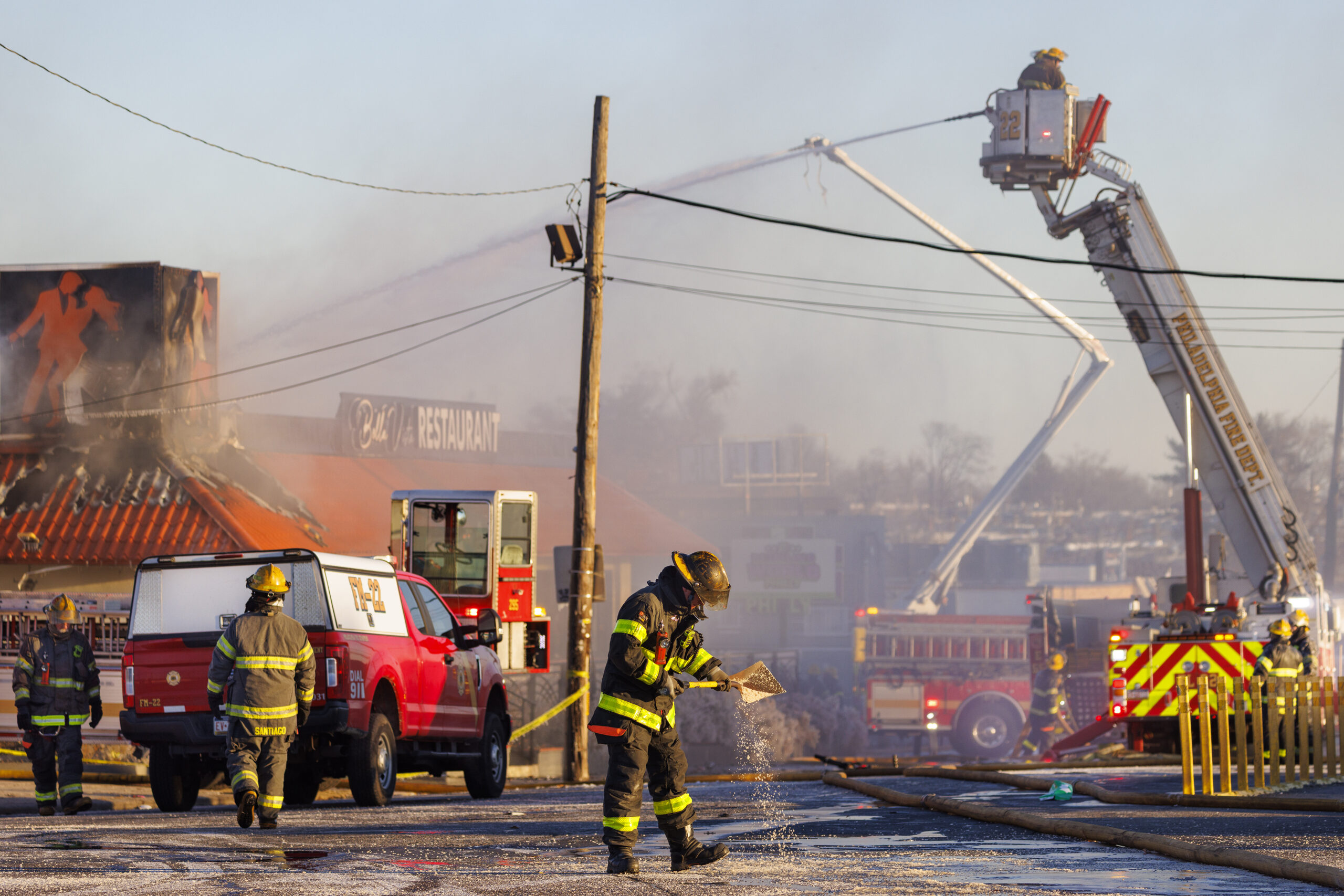
    North Philadelphia restaurant Bella Vista is temporarily closed after a fire caused severe damage to the building on Friday morning.

    The Philadelphia Fire Department responded to a report of a “heavy fire” at the surf and turf restaurant, located on Whitaker Avenue, just before 4 a.m.

    “Thankfully, there are no reported injuries,” said PFD spokesperson Rachel Cunningham. “Philadelphia Fire Department members are still on scene making sure all hot spots are extinguished.”

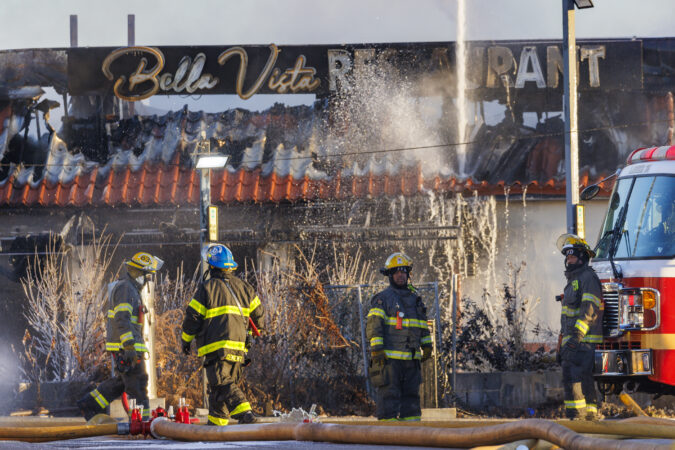
    A Philadelphia firefighter salts the roadway at a fire at Bella Vista Restaurant on Whitaker Avenue at Hunting Park Avenue, in Philadelphia, Friday, Jan. 16, 2026.

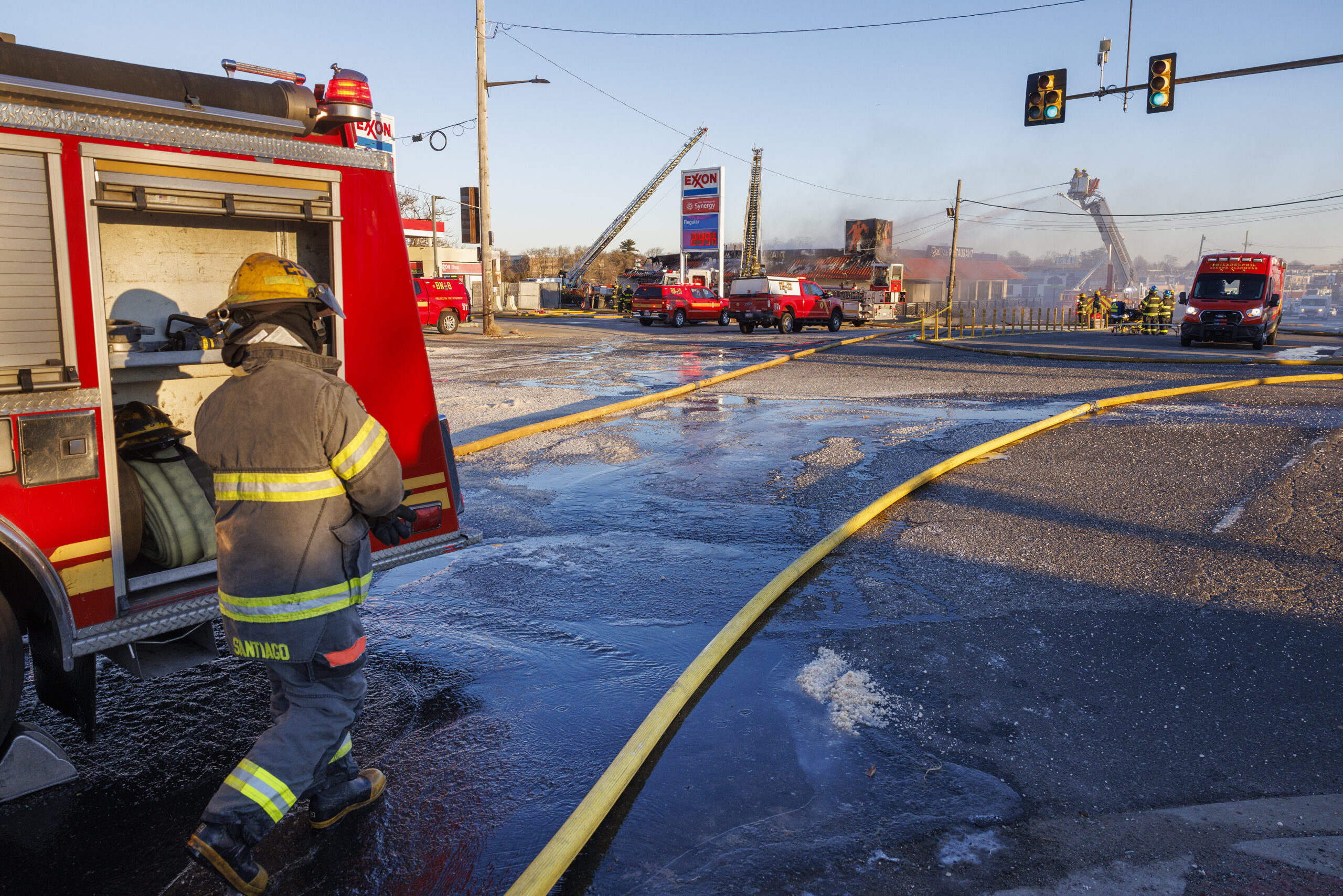
    The fire’s size required the responding crew, Battalion 10, to place all hands in service. They also called for three more engine companies and another ladder company, according to a PFD spokesperson. A total of 80 firefighters and support staff placed the fire under control at 6:26 a.m.

    Large sections of the restaurant’s roof were caved in and blackened from the fire, and the building’s “Bella Vista Restaurant” sign was charred. Bella Vista’s owners could not be reached for comment.

    Philadelphia firefighters work at Bella Vista Restaurant, Whitaker Avenue near Hunting Park Avenue, Philadelphia, Friday, Jan. 16, 2026.

    PGW and PECO were also contacted to ensure that no electricity or gas-related issues occurred. The Fire Marshall’s Office is investigating the cause of the fire.

    A rooftop fire next to the award-winning Fishtown restaurant, Suraya, forced the Lebanese restaurant to temporarily close two weeks ago. It reopened the following day.

  • ‘Some sort of connection’: Police investigating whether three Philly slayings tied to towing industry are related

    ‘Some sort of connection’: Police investigating whether three Philly slayings tied to towing industry are related

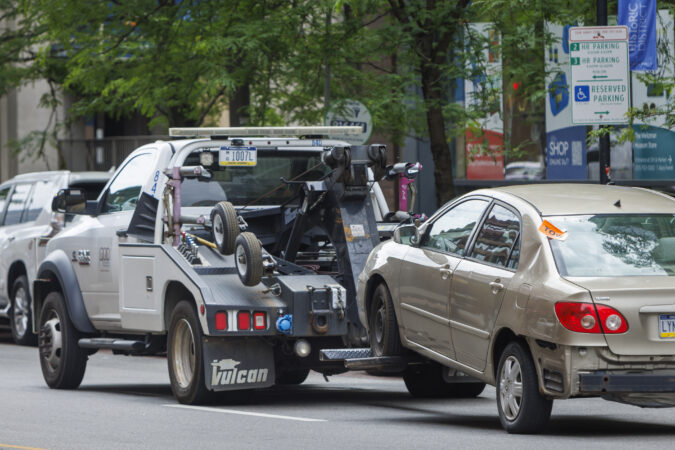
    Philadelphia police are investigating whether the separate slayings of three men, all of whom worked in the city’s towing industry, are connected, authorities said this week.

    Two of the men, who were shot and killed in December and January respectively, worked as truck operators for the Jenkintown-based company 448 Towing and Recovery, according to police.

    The other man, who was shot and killed in November, is connected to a different towing company and worked as a wreck spotter.

    Investigators began looking at a possible connection between the killings after the shooting death of 25-year-old Aaron Whitfield Jr. on Sunday, according to Lt. Thomas Walsh of the department’s homicide unit.

    “On the surface, there’s obviously some sort of connection,” Walsh said.

    Whitfield was in a tow truck with his girlfriend outside of a Northeast Philadelphia smoke shop near Bustleton Avenue and Knorr Street that evening when two men pulled up in another vehicle. They fired at least a dozen shots at the truck before speeding off.

    Whitfield died at the scene, while the woman was hospitalized with gunshot wounds to the leg.

    The shooting came after another 448 Towing and Recovery driver, David Garcia-Morales, was shot on Dec. 22 while in a tow truck on the 4200 block of Torresdale Avenue, according to police.

    Police arrived to find Morales, 20, had been struck multiple times. They rushed him to a nearby hospital, where he died from his injuries on Dec. 26.

    While Walsh could not conclusively say whether investigators believe the killings were carried out by the same person or by multiple individuals, he noted that two different vehicles had been used in the crimes.

    One of those vehicles, a silver Honda Accord used in the shooting of Whitfield, was recovered earlier this week after police found it abandoned in West Philadelphia, Walsh said.

    Meanwhile, police are investigating whether the shooting death of 26-year-old Aaron Smith-Sims in November may also be connected to the killings of Whitfield and Garcia-Morales.

    Smith-Sims, who Walsh said was connected to a different towing company, died after he was shot multiple times on the 2700 block of North Hicks Street in North Philadelphia the morning of Nov. 23.

    Investigators are now looking to question the owners of both towing companies involved, according to Walsh.

    So far, they have failed to make contact with the owner of 448 Towing and Recovery.

    “Obviously the victims’ families are cooperating,” Walsh said. “They’re supplying all the information that they have.”

    An industry that draws suspicion

    Philadelphia’s towing industry can appear like something out of the Wild West, with operators fiercely competing to arrive first at car wrecks and secure the business involved with towing or impounding vehicles.

    Police began imposing some order on the process in 2007, introducing a rotational system in which responding officers cycle through a list of licensed towing operators to dispatch to accident scenes.

    But tow operators often skirt that system, employing wreck spotters — those like Smith-Sims — to roam the city and listen to police scanners for accidents, convincing those involved to use their service before officers arrive.

    The predatory nature of the industry and, in some cases, its historic ties to organized crime make it rife with exploitative business practices and even criminal activity.

    But Walsh cautioned the public against jumping to conspiracy theories about the killings, which have proliferated on social media in the days after Whitfield’s death and the news of a possible connection between the murders.

    Those suspicions aren’t entirely unwarranted.

    In 2017, several employees who worked for the Philadelphia towing company A. Bob’s Towing were shot within 24 hours of one another — two of them fatally.

    Police and federal investigators later arrested Ernest Pressley, 42, a contract killer who was sentenced to life in prison after pleading guilty to killing six people between 2016 and 2019.

    Pressley admitted to accepting payment in exchange for killing one of the towing employees, 28-year-old Khayyan Fruster, who had been preparing to testify as a witness in an assault trial.

    Pressley shot Fruster in his tow truck on the 6600 block of Hegerman Street, killing him and injuring one of his coworkers.

    And in an effort to mask the killing — and to make it appear as if it had been the result of a feud between towing operators — Pressley earlier shot and killed one of Fruster’s coworkers at A. Bob’s Towing at random, according to prosecutors.

  • A charter seeking to open on Valley Forge Military Academy’s campus has withdrawn its application

    A charter seeking to open on Valley Forge Military Academy’s campus has withdrawn its application

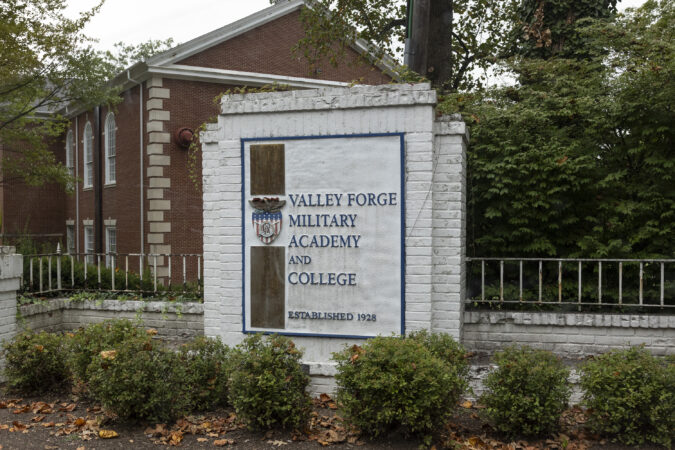
    A group seeking to open a charter school on the Valley Forge Military Academy campus has withdrawn its application, citing a move by Radnor Township to take some of the land by eminent domain.

    The board of the proposed Valley Forge Public Service Academy says it plans to resubmit its application to the Radnor school board once the township’s plan to take 14 acres by eminent domain “has been clarified sufficiently to ensure the welfare and safety” of potential students and staff.

    The Radnor Township Board of Commissioners voted last week to authorize the township’s solicitor to acquire the land from the military academy, which is set to close in May amid financial turmoil and abuse allegations.

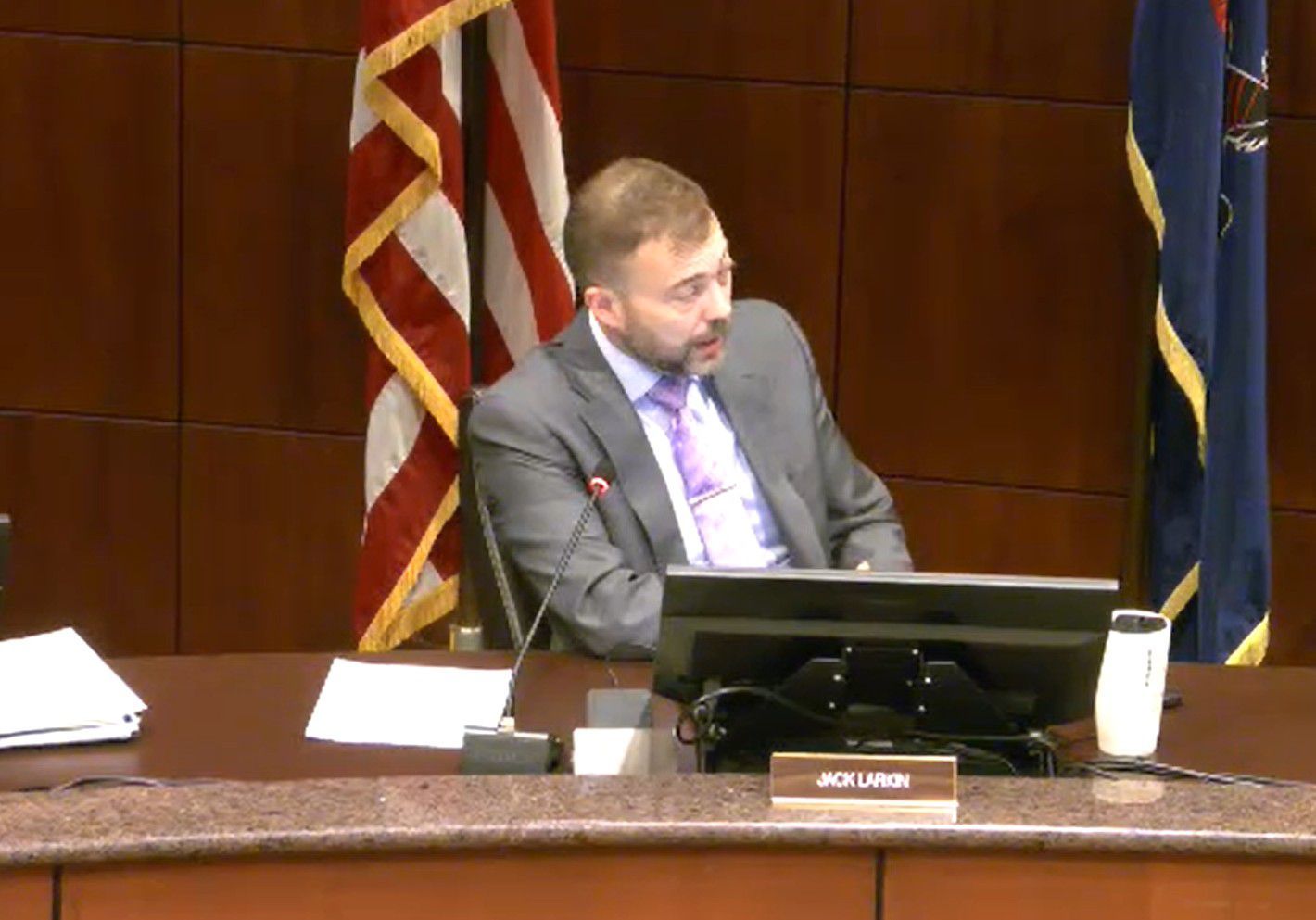
    Township officials say they want to prevent more development around North Wayne. At a meeting last week, Radnor Commissioner Jack Larkin said the township had reached out to military academy officials to negotiate a deal, but had not heard back.

    Alan Wohlstetter, a charter school consultant who is backing the proposed Valley Forge charter, said the move to use eminent domain was “clearly not something we could have anticipated.”

    “Clarification is now needed on a number of items in order for us to proceed with our application,” Wohlstetter said in a statement Thursday.

    Plans for the charter — which was proposed to open this fall and enroll up to 150 students — had been in the works since last year, even before the military academy announced its closure. The once-storied academy, which has struggled with declining enrollment, mounting costs, and a series of abuse scandals, had discussed renting its campus to the proposed new charter.

    It was the latest plan for a charter school — a school that is publicly funded but privately managed — to rent facilities from the military academy.

    The Radnor school board — which like other Pennsylvania school boards has the power to approve or deny applications for new charters seeking to open in their districts — has rejected two previous charter proposals at the military academy campus.

    The board held its first hearing on the latest proposal in December and a second hearing had been scheduled for this month.

    The academy spans about 70 acres. In December, Eastern University entered an agreement to buy 33 acres of the property.

    In pursuing eminent domain, Radnor officials say they are considering taking 14 acres to build a replacement for the township’s recreation center, along with a park.

    A video still of Radnor Commissioner Jack Larkin speaking at a Jan. 5 township meeting regarding the possible taking of 14 acres of Valley Forge Military Academy through eminent domain.

    While Larkin said he did not believe the plan would conflict with the proposed charter school, Wohlstetter said the charter’s backers needed clarity on which acres would be affected, and how the plan would impact traffic and parking.

    The uncertainty impairs the charter’s ability to pre-enroll students, Wohlstetter said — adding that the charter wants to be “good partners to the Radnor community.”

    Wohlstetter said the charter would resubmit its application to the school board “at a future date.” The proposed charter would enroll students in grades six to 12, with a focus on preparing them for careers in public service fields like law enforcement, firefighting and EMS.

  • Mixed signals and mutual suspicions fueled the clash between the Federal Reserve and Trump administration prosecutors

    Mixed signals and mutual suspicions fueled the clash between the Federal Reserve and Trump administration prosecutors

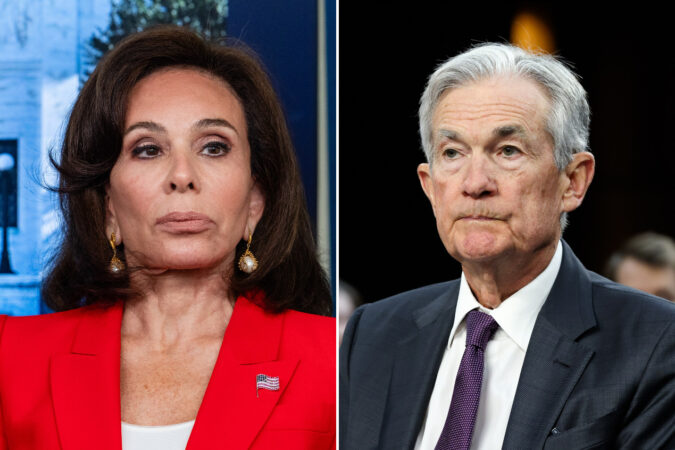
    The battle between the Federal Reserve and Trump administration prosecutors accelerated over the past few weeks amid mixed signals and mutual suspicion, according to interviews with a half-dozen figures with knowledge of both sides of the dispute.

    Late last month, Fed officials grew concerned that the Justice Department was preparing a criminal case against them when they received two casually worded emails from a prosecutor working for Jeanine Pirro, the U.S. attorney for Washington, D.C. The messages sought a meeting or phone call to discuss renovations at the central bank’s headquarters, according to three people familiar with the matter, who like most others interviewed spoke on the condition of anonymity to discuss an open investigation.

    The emails, sent Dec. 19 and Dec. 29, came from Assistant U.S. Attorney Carlton Davis, a political appointee in Pirro’s office whose background includes work for House Oversight Committee Chairman James Comer (R-Kentucky), the people said.

    The messages struck Fed officials as breezy in tone.

    “Happy to hop on a call,” one of the missives read in part.

    The casual approach generated suspicions at the Fed. Chair Jerome H. Powell, who by that point had sustained months of criticism from President Donald Trump and his allies over the central bank’s handling of interest rates, retained outside counsel at the law firm Williams & Connolly. Fed officials opted not to respond to Davis, choosing to avoid informal engagement on a matter that could carry criminal implications, according to a person familiar with the decision.

    That led Pirro, a former Fox News host and longtime personal friend of Trump’s, to conclude that the Fed was stonewalling and had something to hide, according to a Justice Department official familiar with the matter.

    “The claim that, ‘Oh, they didn’t think it was a big deal’ is naive and almost malpractice,” the official said. “We gave them a deadline. We said the first week of January.”

    The investigation centers on the Fed’s first large-scale renovation of its headquarters on the National Mall since it was built in the 1930s and whether proper cost controls are in place. Powell testified to Congress in June about the scope of a project that had ballooned to $2.5 billion in costs, up from about $1.9 billion before the coronavirus pandemic.

    Trump, his aides and some congressional Republicans have sought to cast the renovation as overly luxurious and wildly over budget, claims that Powell has strenuously disputed. Fed officials have said that the economic disruptions following the pandemic triggered a jump in the price of steel, cement and other building materials.

    Powell and the Fed’s defenders say the renovation claims are being used to pressure the independent central bank to lower interest rates, as Trump has called for, and potentially to bully Powell into resigning.

    The emails from Davis to a Federal Reserve lawyer did not indicate the existence of a criminal investigation because prosecutors had not yet opened one, according to two people with knowledge of the matter. There was no FBI involvement when Pirro’s office opened a fact-gathering inquiry in November, and the bureau remains uninvolved, according to two other people familiar with the matter.

    In the emails, Davis asked “to discuss Powell’s testimony in June, the building renovation, and the timing of some of his decisions,” a Justice Department official said. “The letter couldn’t have been nicer,” that official said. “About 10 days after that, we sent another, saying, ‘We just want to have a discussion with you.’ No response through January 8.”

    “We low-keyed it,” the official added. “We didn’t publicize it. We did it quietly.”

    The subpoenas were served the next day. They seek records or live testimony before a grand jury at the end of the month.

    Powell publicly disclosed the probe Sunday evening in a video statement, saying the Fed had received subpoenas “threatening a criminal indictment.”

    “The threat of criminal charges is a consequence of the Federal Reserve setting interest rates based on our best assessment of what will serve the public, rather than following the preferences of the president,” he said.

    In a post on X, Pirro said the outreach had been benign, writing: “The word ‘indictment’ has come out of Mr. Powell’s mouth, no one else’s. None of this would have happened if they had just responded to our outreach.”

    Conducting an investigation without using the FBI is an approach Pirro’s office has used on at least one previous occasion. In August, one of the prosecutors now assigned to the Fed inquiry, Steven Vandervelden, was tasked with reviewing numerous complaints that the D.C. police, under then-Police Chief Pamela A. Smith, had been incorrectly categorizing some crimes to paint a rosier picture than the reality on the ground.

    That inquiry relied on voluntary interviews with more than 50 police officers and other witnesses, as well as cooperation from the mayor’s office and the police department’s internal affairs unit, according to a seven-page report Pirro and Vandervelden issued at its conclusion. The report recommended changes to police practices while saying the classification issues did not rise to the level of criminality. No subpoenas were issued in that probe, according to a person familiar with the matter, and the report does not mention any.

    But Smith announced her resignation shortly before the report was released.

  • Philly students are posting their best math performance in years

    Philly students are posting their best math performance in years

    Philadelphia students are performing the best they have in math in years, showing steady improvement since the pandemic.

    Still, just a quarter of city third through eighth graders passed Pennsylvania math assessments, with 25.1% of students scoring proficient or advanced on the 2024-25 exam, up from a 22% pass rate the prior year and 18.9% in 2016-17.

    That means the district surpassed the school board’s goal of a 22.2% pass rate for last school year — but fell well below the 2029-30 target of 52% proficiency.

    Philadelphia students still lag Pennsylvania averages considerably, though — for the 2024-25 year, 41.7% of students in grades three through eight statewide passed math tests.

    Scores are slightly stronger in the lower grades. Overall, 33.7% of Philadelphia third graders passed the state test, compared to 27.4% the prior year. The board’s third-grade target is 57.5% for 2029-30; it was 28% last year, a nod to prior performance.

    Officials said the jumps are due in part to the new math curriculum the district adopted in 2023-24.

    The school board devoted its full Thursday night progress monitoring session to examining math goals. The highlighted findings include:

    Attendance correlates with math scores

    Students’ attendance generally correlates to their math performance. Of pupils who attended school 90% of the time or more, the highest percentage of students were at or above benchmark (29%) and the lowest percentage needed the most intense interventions (24%).

    The reverse is true for students who are considered “chronically absent” — those who attend school less than 80% of the time. In that category, more than half of students — 52% — needed intense interventions, and just 7% scored proficient or above.

    Improvements for students learning English

    English language learners’ math skills are improving, as measured by Star tests, which the district gives periodically throughout the school year to measure student learning.

    The math proficiency of third grade English learners, for example, was up year-over-year as marked by the winter Star exam. This school year, 23% of English learners passed the test, compared with 18% at the same point in 2024-25.

    Slight improvements for students with disabilities

    Students with disabilities scored lower. Overall, 11% of students with disabilities passed the winter Star exam, up slightly from 10% last year.

    Focus on early math skills

    Officials said gains were made in part because of a focus on building foundational math skills.

    Students in kindergarten and first and second grades all saw jumps from fall to winter in mastering skills such as numeral recognition, addition to 10, and subtraction to 10, as measured by Star tests. The district showed significant gains in third grade performance this year.

  • The White House and a bipartisan group of governors, including Josh Shapiro, want to fix AI-driven power shortages and price spikes

    The White House and a bipartisan group of governors, including Josh Shapiro, want to fix AI-driven power shortages and price spikes

    Washington — The Trump administration and a bipartisan group of governors on Friday tried to step up pressure on the operator of the nation’s largest electric grid to take urgent steps to boost power supplies and keep electricity bills from rising even higher.

    Administration officials said doing so is essential to win the artificial-intelligence race against China, even as voters raise concerns about the enormous amount of power data centers use and analysts warn of the growing possibility of blackouts in the Mid-Atlantic grid in the coming years.

    “We know that with the demands of AI and the power and the productivity that comes with that, it’s going to transform every job and every company and every industry,” Interior Secretary Doug Burgum told reporters at the Eisenhower Executive Office Building, next to the White House. “But we need to be able to power that in the race that we are in against China.”

    Trump administration says it has ‘the answer’

    The White House and governors want the Mid-Atlantic grid operator to hold a power auction for tech companies to bid on contracts to build new power plants, so that data center operators, not regular consumers, pay for their power needs.

    They also want the operator, PJM Interconnection, to contain consumer costs by extending a cap that it imposed last year, under pressure from governors, that limited the increase of wholesale electricity payments to power plant owners. The cap applied to payments through mid-2028.

    “Our message today is just to try and push PJM … to say, ‘we know the answer.’ The answer is we need to be able to build new generation to accommodate new jobs and new growth,” Energy Secretary Chris Wright said.

    Govs. Josh Shapiro of Pennsylvania, Glenn Youngkin of Virginia, and Wes Moore of Maryland appeared with Burgum and Wright and expressed frustration with PJM.

    “We need more energy on the grid and we need it fast,” Shapiro said. He accused PJM of being “too damn slow” to bring new power generation online as demand is surging.

    Shapiro said the agreement could save the 65 million Americans reliant on that grid $27 billion over the next several years. He warned Pennsylvania would leave the PJM market if the grid operator does not align with the agreement, a departure that would threaten to create even steeper price challenges for the region.

    PJM wasn’t invited to the event.

    Grid operator is preparing its own plan to meet demand

    However, PJM’s board is nearing the release of its own plan after months of work and will review recommendations from the White House and governors to assess how they align with its decision, a spokesperson said Friday.

    PJM has searched for ways to meet rising electricity demand, including trying to fast-track new power plants and suggesting that utilities should bump data centers off the grid during power emergencies. The tech industry opposed the idea.

    The White House and governors don’t have direct authority over PJM, but grid operators are regulated by the Federal Energy Regulatory Commission, which is chaired by an appointee of President Donald Trump.

    Trump and governors are under pressure to insulate consumers and businesses alike from the costs of feeding Big Tech’s data centers. Meanwhile, more Americans are falling behind on their electricity bills as rates rise faster than inflation in many parts of the U.S.

    In some areas, bills have risen because of strained natural gas supplies or expensive upgrades to transmission systems, to harden them against more extreme weather or wildfires. But energy-hungry data centers are also a factor in some areas, consumer advocates say.

    Ratepayers in the Mid-Atlantic grid — which encompasses all or parts of 13 states stretching from New Jersey to Illinois, as well as Washington, D.C. — are already paying billions more to underwrite power supplies to data centers, some of which haven’t been built yet, analysts say.

    Critics also say these extra billions aren’t resulting in the construction of new power plants needed to meet the rising demand.

    Tech giants say they’re working to lower consumer costs

    Technology industry groups have said their members are willing to pay their fair share of electricity costs.

    On Friday, the Information Technology Industry Council, which represents tech giants Google, Meta, Microsoft, and Amazon, said it welcomed the White House’s announcement and the opportunity “to craft solutions to lower electricity bills.” It said the tech industry is committed to “making investments to modernize the grid and working to offset costs for ratepayers.”

    The Edison Electric Institute, which represents investor-owned electric companies, said it supports having tech companies bid — and pay for — contracts to build new power plants.

    The idea is a new and creative one, said Rob Gramlich, president of Grid Strategies LLC, a Washington, D.C.-based energy markets and transmission consultancy.

    But it’s not clear how or if it’ll work, or how it fits into the existing industry structure or state and federal regulations, Gramlich said.

    Part of PJM’s problem in keeping up with power demand is that getting industrial construction permits typically takes longer in the Mid-Atlantic region than, say, Texas, which is also seeing strong energy demand from data centers, Gramlich said.

    In addition, utilities in many PJM states that deregulated the energy industry were not signing up power plants to long-term contracts, Gramlich said.

    That meant that the electricity was available to tech companies and data center developers that had large power needs and bought the electricity, putting additional stress on the Mid-Atlantic grid, Gramlich said.

    “States and consumers in the region thought that power was there for them, but the problem is they hadn’t bought it,” Gramlich said.

    Associated Press writer Matthew Daly and The Washington Post contributed to this article.