Category: News

Latest breaking news and updates

  • The new Norristown school board plans to oust its superintendent, citing poor test scores

    The new Norristown school board plans to oust its superintendent, citing poor test scores

    The Norristown Area School District’s board is moving to oust its superintendent, saying the district needs a new leader to reverse years of poor test scores.

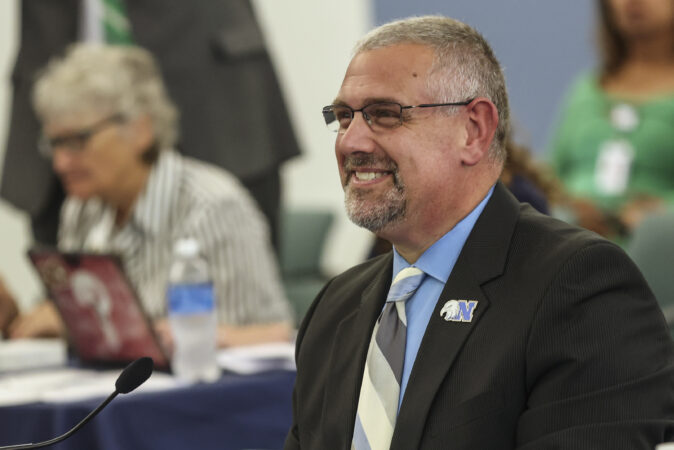
    The move to replace Superintendent Christopher Dormer, who has led the Montgomery County district since 2018 and whose contract expires June 30, comes after five new members were elected to the nine-person school board in November. The board voted unanimously Jan. 20 to give Dormer notice they would not renew his contract.

    Some community members expressed shock at the decision to part ways with Dormer, who is also the president of the Pennsylvania Association of School Administrators. Dormer has been a vocal advocate for increasing funding to Norristown, which is considered underfunded by the state, and where nearly three-quarters of students are economically disadvantaged.

    Jeremiah Lemke, who joined the Norristown school board in December and is now its president, acknowledged Dormer as “a leader statewide” in advocating for a new school funding system and a superintendent who has done “many good things for the district.” But, he said at the Jan. 20 meeting, test scores are a concern.

    “Student achievement in Norristown hasn’t been winning, under Mr. Dormer, for years, not months, but years — seven to be exact,“ Lemke said in an emailed statement Wednesday. ”If the Eagles didn’t win for seven years, regardless of what positive developments happened in the organization, there would be no questions asked when the head coach was replaced.“

    Norristown, a majority Hispanic district, enrolls about 8,000 students.

    About 28% of Norristown’s third-through-eighth graders scored proficient or above in English language arts on the Pennsylvania System of School Assessment standardized tests last year, compared to 48.5% statewide. In math, 27.4% of Norristown students were proficient, compared to 41.7% statewide.

    Over the last few years, changes in Norristown’s test scores have largely tracked Pennsylvania’s as a whole, with ELA scores sliding, and math scores improving. In 2023, 30.7% of Norristown students scored proficient in ELA, compared to 53.7% of students at the state level. In math, 21.6% of Norristown students scored proficient in 2023, compared to 39.4% statewide.

    In a message to staff and families after the Jan. 20 vote, Dormer said he was proud of what the district had accomplished during his tenure — “including consecutive years with minimal to no tax increases, the sizable and significant additions in staffing after years of reductions, the sustained investment in new instructional resources and educational opportunities after years of unaffordability, the development and implementation of our facilities master plan after decades of deferred maintenance, and the commitment to the principles of equity, inclusion, and belonging as we navigated a worldwide pandemic and an increasingly politically divided country.”

    Dormer, who began his career in education as an educational assistant in the Lower Merion School District, spent 13 years as a teacher, coach, and athletic director in the Upper Darby School District before moving into administration in 2005. He became Upper Darby High School’s principal in 2008, a role he held for five years, and came to Norristown in 2016.

    Performance reviews on the district’s website show Dormer was rated “proficient” by the board in 2021-22 and 2022-23. More recent reviews were not listed online.

    On Wednesday, Dormer declined to comment.

    Lemke — who works for a Philadelphia nonprofit, Jounce Partners, that has coached charter school leaders to improve teacher performance — said in a statement Wednesday that the decision was “thoughtful, reflective, data-informed, and unanimous, amongst new and continuing board members.”

    The board last week voted to approve a $79,500 contract with Alma Advisory Group, a Chicago-based firm, to conduct a national search for a new superintendent.

    Jordan Alexander, another new school board member, said during that board meeting that members “often have to make decisions that are very unpopular.”

    “I’m gonna be honest, I wasn’t so sold,” Alexander said. A former Norristown student, Alexander said that when Dormer “came to the scene, the pride did go up, and it was a breath of fresh air.”

    But “we cannot advocate ourselves to be the best if our performance does not reflect that,” Alexander said.

    Community reaction to the ouster

    Some community members accused the board of a predetermined decision.

    “Staff were not aware of these changes … the community was not aware, or anybody. You guys just threw it out there,” Ericka Wharton, a parent and leader of a Norristown community center, told the board at last week’s meeting. Wharton warned the decision could create instability, including a decline in student achievement.

    Carmina Taylor, a local advocate, told the board that community members deserved “a full explanation with dates and details that led to your decision.”

    “This decision is short-sighted, abrupt, without consideration as to how the students will be impacted by this major shift in leadership,” said Taylor, co-founder of the Movement for Black and Brown Lives in Montgomery County.

    The election of the new board came after infighting in the local Democratic Party. Chris Jaramillo, the former board president, lost the local Democratic Party’s endorsement for reelection last year. Jaramillo had opposed a tax break for a senior affordable housing development. Last week, the new board voted to rescind a November district policy that restricted tax abatements, saying it would replace it.

    Jaramillo is also a co-founder of the Movement for Black and Brown Lives in Montgomery County. In an interview Wednesday, he described the board’s new leaders as inexperienced and questioned how it could quickly replace Dormer without causing disruption.

    “I don’t think it’s a sound decision,” said Jaramillo. He said he worried the board would pick someone “without any sort of knowledge of how diverse Norristown and its surrounding area are.”

    Taylor said Wednesday she wasn’t speaking on behalf of Jaramillo. She accused the board of “plotting” to remove Dormer.

    “How in the world, if they didn’t have a sense of what they wanted to do, could they have even attempted to do that in the last 45 days?” said Taylor, who has filed a complaint with the school board, alleging insufficient transparency.

    Lemke said it is “categorially false” that the board acted too quickly and without transparency. “Once we were installed, we had a short time period in which to make a decision because we knew that if we didn’t renew his contract it would not be a quick task to do a national search for a superintendent,” he said.

    Taylor noted that while the district’s test scores “are bad,” Norristown has only been receiving additional state money under a new formula intended to remedy constitutional underfunding for the past two years. (The budget proposed by Gov. Josh Shapiro Tuesday would give underfunded districts their third installment of a nine-year plan.)

    “It’s not enough to address the systemic issue, period,” she said.

  • Washington Post cuts a third of its staff in a blow to a legendary brand

    Washington Post cuts a third of its staff in a blow to a legendary brand

    The Washington Post laid off one-third of its staff Wednesday, eliminating its sports section, several foreign bureaus, and its books coverage in a widespread purge that represented a brutal blow to journalism and one of its most legendary brands.

    The Post’s executive editor, Matt Murray, called the move painful but necessary to put the outlet on stronger footing and to weather changes in technology and user habits. “We can’t be everything to everyone,” Murray said in a note to staff members.

    He outlined the changes in a companywide online meeting, and staff members then began getting emails with one of two subject lines — telling them their role was or was not eliminated.

    Rumors of layoffs had circulated for weeks, ever since word leaked that sports reporters who had expected to travel to Italy for the Winter Olympics would not be going. But when official word came down, the size and scale of the cuts were shocking, affecting virtually every department in the newsroom.

    “It’s just devastating news for anyone who cares about journalism in America and, in fact, the world,” said Margaret Sullivan, a Columbia University journalism professor and former media columnist at the Post and the New York Times. “The Washington Post has been so important in so many ways, in news coverage, sports and cultural coverage.”

    Martin Baron, the Post’s first editor under its current owner, billionaire Jeff Bezos, condemned his former boss and called what has happened at the newspaper “a case study in near-instant, self-inflicted brand destruction.”

    Journalists pleaded with Bezos for help

    Bezos, who has been silent in recent weeks amid pleas from Post journalists to step in and prevent the cutbacks, had no immediate comment.

    The newspaper has been bleeding subscribers in part due to decisions made by Bezos, including pulling back from an endorsement of Kamala Harris, a Democrat, during the 2024 presidential election against Donald Trump, a Republican, and directing a more conservative turn on liberal opinion pages.

    A private company, the Post does not reveal how many subscribers it has, but it is believed to be roughly 2 million. The Post would also not say how many people it has on staff, although the New York Times estimated that more than 300 journalists were let go.

    The Post’s troubles stand in contrast to its longtime competitor the New York Times, which has been thriving in recent years, in large part due to investments in ancillary products such as games and its Wirecutter product recommendations. The Times has doubled its staff over the past decade.

    Eliminating the sports section puts an end to a department that has hosted many well-known bylines through the years, among them John Feinstein, Michael Wilbon, Shirley Povich, Sally Jenkins, and Tony Kornheiser. The Times has also largely ended its sports section, but it has replaced the coverage by buying The Athletic and incorporating its work into the Times website.

    The Post’s Book World, a destination for book reviews, literary news and author interviews, has been a dedicated section in its Sunday paper.

    A half-century ago, the Post’s coverage of Watergate, led by intrepid reporters Bob Woodward and Carl Bernstein, entered the history books. The Style section under longtime Executive Editor Ben Bradlee hosted some of the country’s best feature writing.

    All Mideast correspondents and editors laid off

    Word of specific cuts drifted out during the day, as when Cairo Bureau Chief Claire Parker announced on X that she had been laid off, along with all of the newspaper’s Middle East correspondents and editors. “Hard to understand the logic,” she wrote.

    Lizzie Johnson, who wrote last week about covering a war zone in Ukraine without power, heat, or running water, said she had been laid off, too.

    Anger and sadness spread across the journalism world.

    “The Post has survived for nearly 150 years, evolving from a hometown family newspaper into an indispensable national institution, and a pillar of the democratic system,” Ashley Parker, a former Post journalist, wrote in an essay in The Atlantic. But if the paper’s leadership continues its current path, “it may not survive much longer.”

    Fearing for the future, Parker was among the staff members who left the newspaper for other jobs in recent months.

    Atlanta paper also makes cuts

    Also on Wednesday, the Atlanta Journal-Constitution, which stopped print editions and went all-digital at the end of last year, announced that it was cutting 50 positions, or roughly 15% of its staff. Half of the eliminated jobs were in the newsroom.

    Murray said the Post would concentrate on areas that demonstrate authority, distinctiveness and impact, and resonate with readers, including politics, national affairs, and security. Even during its recent troubles, the Post has been notably aggressive in coverage of Trump’s changes to the federal workforce.

    The company’s structure is rooted in a different era, when the Post was a dominant print product, Murray said in his note to the staff. In areas such as video, the outlet hasn’t kept up with consumer habits, he said.

    “Significantly, our daily story output has substantially fallen in the last five years,” he said. “And even as we produce much excellent work, we too often write from one perspective, for one slice of the audience.”

    While there are business areas that need to be addressed, Baron pointed a finger of blame at Bezos — for a “gutless” order to kill a presidential endorsement and for remaking an editorial page that stands out only for “moral infirmity” and “sickening” efforts to curry favor with Trump.

    “Loyal readers, livid as they saw owner Jeff Bezos betraying the values he was supposed to uphold, fled The Post,” Baron wrote. “In truth, they were driven away, by the hundreds of thousands.”

    Baron said he was grateful for Bezos’ support when he was editor, noting that the Amazon founder came under brutal pressure from Trump during the president’s first term.

    “He spoke forcefully and eloquently of a free press and The Post’s mission, demonstrating his commitment in concrete terms,” Baron wrote. “He often declared that The Post’s success would be among the proudest achievements of his life. I wish I detected the same spirit today. There is no sign of it.”

  • Democrats demand ‘dramatic changes’ for ICE, including masks, cameras and judicial warrants

    Democrats demand ‘dramatic changes’ for ICE, including masks, cameras and judicial warrants

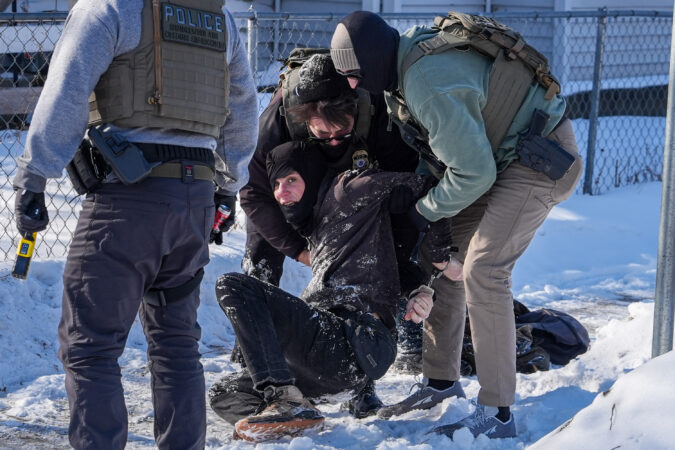
    WASHINGTON — Democrats are threatening to block funding for the Homeland Security Department when it expires in two weeks unless there are “dramatic changes” and “real accountability” for U.S. Immigration and Customs Enforcement and other law enforcement agencies who are carrying out President Donald Trump’s campaign of federal immigration enforcement in Minnesota and across the country.

    Congress is discussing potential new rules for ICE and U.S. Customs and Border Protection after officers shot and killed two Minneapolis protesters in January. Senate Democratic leader Chuck Schumer and House Democratic leader Hakeem Jeffries reiterated their party’s demands on Wednesday, with Schumer telling reporters that Congress must “rein in ICE in very serious ways, and end the violence.”

    Democrats are “drawing a line in the sand” as Republicans need their votes to continue the funding, Jeffries said.

    The negotiations come amid some bipartisan sentiment that Congress should step in to de-escalate tensions over the enforcement operations that have rocked Minnesota and other states. But finding real agreement in such a short time will be difficult, if not “an impossibility,” as Senate Majority Leader John Thune (R., S.D.) said Tuesday.

    President Donald Trump last week agreed to a Democratic request that funding for the DHS be separated from a larger spending bill and extended at current levels for two weeks while the two parties discuss possible requirements for the federal agents. House Speaker Mike Johnson (R., La.) said this weekend that he was at the White House when Trump spoke with Schumer and that they were “on the path to get agreement.”

    But it’s unclear if the president or enough congressional Republicans will agree to any of the Democrats’ larger demands that the officers unmask and identify themselves, obtain judicial warrants in certain cases and work with local authorities, among other asks. Republicans have already pushed back.

    And House GOP lawmakers are demanding that some of their own priorities be added to the Homeland Security spending bill, including legislation that would require proof of citizenship before Americans register to vote. South Carolina Sen. Lindsey Graham and other Republican senators are pushing for restrictions on sanctuary cities that they say don’t do enough to crack down on illegal immigration. There’s no clear definition of sanctuary jurisdictions, but the term is generally applied to state and local governments that limit cooperation with federal immigration authorities.

    It’s also uncertain if Democrats who are furious over the Trump administration’s increasingly aggressive immigration enforcement operations would be willing to compromise.

    “Republicans need to get serious,” said Schumer, a New York Democrat, adding that they will propose “tough, strong legislation” in the next day.

    A look at Democrats’ demands and what Republicans are saying about them:

    Agreement on body cameras

    Republicans say they are open to officer-worn body cameras, a change that was already in the underlying homeland security spending bill. Homeland Security Secretary Kristi Noem backed that up on Monday when she ordered body-worn cameras to be issued to every DHS officer on the ground in Minneapolis, including those from ICE. She said the policy would expand nationwide as funding becomes available.

    The bill already directed $20 million to outfit immigration enforcement agents with body-worn cameras.

    Gil Kerlikowske, who served as commissioner of U.S. Customs and Border Protection from 2014 to 2017, said that most agents are “very supportive” of cameras because they could help exonerate officers. But he added that complex questions remain, including when footage should be released and when cameras must be activated.

    “When do you turn it on? And if you got into a problem and didn’t have it on, are you going to be disciplined? It’s really pretty complex,” he said.

    Schumer said Tuesday that the body cameras “need to stay on.”

    Disagreement on masking

    As videos and photos of aggressive immigration tactics and high-profile shootings circulate nationwide, agents covering their faces with masks has become a flashpoint. Democrats argue that removing the masks would increase accountability. Republicans warn it could expose agents to harassment and threats.

    “State law enforcement, local folks don’t do it,” said Rep. Bennie Thompson, the top Democrat on the Committee for Homeland Security. ”I mean, what’s so special about an ICE law enforcement agency that they have to wear a mask?”

    But Republicans appear unlikely to agree.

    “Unlike your local law enforcement in your hometown, ICE agents are being doxed and targeted. We have evidence of that,” Johnson said on Tuesday. He added that if you “unmask them and you put all their identifying information on their uniform, they will obviously be targeted.”

    Immigration officers are already required to identify themselves “as soon as it is practical and safe to do so,” according to federal regulations. ICE officials insist those rules are being followed.

    Critics, however, question how closely officers adhere to the regulations.

    “We just see routinely that that’s not happening,” said Nithya Nathan Pineau, a policy attorney with the Immigrant Legal Resource Center.

    Judicial vs. administrative warrants

    Democrats have also demanded stricter use of judicial warrants and an end to roving patrols of agents who are targeting people in the streets and in their homes. Schumer said Tuesday that they want “arrest warrants and an end to racial profiling.”

    Most immigration arrests are carried out under administrative warrants, internal documents issued by immigration authorities that authorize the arrest of a specific person but do not permit officers to forcibly enter private homes or other non-public spaces without consent. Traditionally, only warrants signed by judges carry that authority.

    But an internal ICE memo obtained by The Associated Press last month authorizes ICE officers to use force to enter a residence based solely on a more narrow administrative warrant to arrest someone with a final order of removal, a move that advocates say collides with Fourth Amendment protections.

    Democrats have not made clear how broadly they want judicial warrants used. Jeffries of New York said that Democrats want to see “an end to the targeting of sensitive locations like houses of worship, schools and hospitals.”

    Johnson said Tuesday that Democrats are trying to “add an entirely new layer” by seeking warrants signed by a judge rather than the administrative warrants that are signed by the department. “We can’t do that,” he said.

    The speaker has said that an end to roving patrols is a potential area of agreement, but he did not give details.

    Code of conduct, more accountability

    Democrats have also called for a uniform code of conduct for all ICE and federal agents similar to that for state and local law enforcement officers.

    Federal officials blocked state investigators from accessing evidence after protester Renee Good was shot and killed by an ICE agent on Jan. 7. Gov. Tim Walz, a Democrat, demanded that the state be allowed to take part, saying that it would be “very difficult for Minnesotans” to accept that an investigation excluding the state could be fair.

    Hoping for a miracle

    Any deal Democrats strike on the Department of Homeland Security is unlikely to satisfy everyone in the party. Rep. Ayanna Pressley of Massachusetts said she would never support an agreement that didn’t require unmasking.

    “I ran for Congress in 2018 on abolish ICE,” Pressley said. “My position has not changed.”

    Thune, of South Dakota, has repeatedly said it’s an “impossibility” to negotiate and pass something so complicated in two weeks. He said any talks should be between Democrats and Trump.

    “I don’t think it’s very realistic,” Thune said Tuesday about finding quick agreement. “But there’s always miracles, right?”

  • Iran and the U.S. will hold nuclear talks Friday in Oman, Iranian foreign minister says

    Iran and the U.S. will hold nuclear talks Friday in Oman, Iranian foreign minister says

    DUBAI — Nuclear talks between Iran and the United States will take place Friday in Oman, the Iranian foreign minister said, as tensions between the countries remain high following Tehran’s bloody crackdown on nationwide protests last month.

    The announcement by Iranian Foreign Minister Abbas Araghchi on Wednesday came after hours of indications that the anticipated talks were faltering over changes in the format and content of the talks.

    ”I’m grateful to our Omani brothers for making all necessary arrangements,” Araghchi wrote on X on Wednesday evening.

    Earlier Wednesday, a regional official said Iran was seeking a “different” type of meeting than that what had been proposed by Turkey, one focused exclusively on the issue of Iran’s nuclear program, with participation limited to Iran and the United States. The official spoke on condition of anonymity because they were not authorized to brief the media.

    Secretary of State Marco Rubio had said U.S. officials were working on maintaining a meeting with Iran this week.

    Tensions between the countries have spiked after U.S. President Donald Trump suggested the U.S. might use force against Iran in response to its crackdown on protesters. Trump also has been pushing Tehran for a deal to constrain its nuclear program.

    Rubio hopes talks will go beyond nuclear ones

    Iran’s reformist President Masoud Pezeshkian on Tuesday said he had instructed the foreign minister to “pursue fair and equitable negotiations” with the U.S., in the first clear sign from Tehran it wants to try to negotiate. That signaled the move is supported by Supreme Leader Ayatollah Ali Khamenei, who has the final say on all matters of state and previously dismissed any negotiations.

    Rubio said the U.S. hoped to discuss a number of concerns beyond the nuclear issue, including discussions on Iran’s ballistic missiles, support for proxy networks across the region and the “treatment of their own people.”

    “The leadership of Iran at the clerical level does not reflect the people of Iran. I know of no other country where there’s a bigger difference between the people who lead the country and the people who live there,” he told reporters.

    Vice President JD Vance told The Megyn Kelly Show that diplomatic talks with Iran are challenging because of Tehran’s political system, overseen by Khamenei.

    “It’s a very weird country to conduct diplomacy with when you can’t even talk to the person who’s in charge of the country. That makes all of this much more complicated, and it makes the whole situation much more absurd,” Vance said, noting that Trump could speak directly by phone with the leaders of Russia, China or North Korea.

    Vance said Trump’s bottom line is that Iran cannot be allowed to develop a nuclear weapon, asserting that other states in the region would quickly do the same.

    Iran long has insisted its nuclear program is peaceful. However, Iranian officials in recent years have increasingly threatened to pursue the bomb.

    Vance said he believed Trump would work to “accomplish what he can through non-military means. And if he feels like the military is the only option, then he’s ultimately going to choose that option.”

    Talks expected even after U.S. shot down Iranian drone

    On Tuesday, a U.S. Navy fighter jet shot down an Iranian drone that approached an American aircraft carrier. Iranian fast boats from its paramilitary Revolutionary Guard also tried to stop a U.S.-flagged ship in the Strait of Hormuz, the narrow mouth of the Persian Gulf, the Navy said.

    Iran did not immediately acknowledge either incident, which strained but apparently did not derail hopes for talks with the U.S.

    On Wednesday, Iranian military chiefs visited a missile base in an attempt to highlight its military readiness after a 12-day war with Israel in June devastated Iran’s air defenses. The base holds the Khorramshahr missile, which has a range of more than 1,250 miles and was launched towards Israel during the war last year.

    Turkey urges diplomacy

    Also Wednesday, Turkish President Recep Tayyip Erdogan reiterated Turkey’s opposition to foreign intervention in neighboring Iran, calling for the resolution of issues through dialogue.

    Turkey has been urgently working for the past week to bring the U.S. and Iran to the negotiating table, and was previously expected to host the talks.

    “We believe that external interventions involving our neighbor Iran would pose significant risks for the entire region,” Erdogan said during a visit to Cairo. “Resolving issues with Iran, including the nuclear file, through diplomatic means is the most appropriate approach.”

  • The former Prince Andrew moves to King Charles III’s private estate after Epstein document uproar

    The former Prince Andrew moves to King Charles III’s private estate after Epstein document uproar

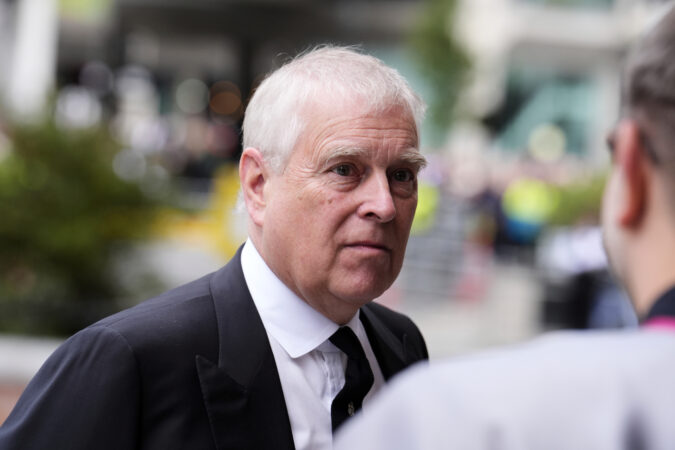
    LONDON — The former Prince Andrew has moved out of his longtime home on crown-owned land near Windsor Castle earlier than expected after the latest release of documents from the U.S. investigation of Jeffrey Epstein revived questions about his friendship with the convicted sex offender.

    The 65-year-old brother of King Charles III, now known as Andrew Mountbatten-Windsor, left the Royal Lodge in Windsor on Monday and is now living on the king’s Sandringham estate in eastern England, Britain’s Press Association reported. British media reported that Mountbatten-Windsor will live temporarily at Wood Farm Cottage while his permanent home on the estate undergoes repairs.

    Mountbatten-Windsor’s move to Sandringham was announced in October when Charles stripped him of his royal titles amid continuing revelations about his links to Epstein. But the former prince was expected to remain at Royal Lodge, where he has lived for more than 20 years, until the spring.

    The expedited departure came as Thames Valley Police announced they were investigating allegations that Epstein flew a second woman to Britain to have sex with Mountbatten-Windsor. A lawyer for the alleged victim told the BBC that the encounter took place in 2010 at Royal Lodge.

    The allegations are separate from those made by Virginia Giuffre, who claimed she had been trafficked to Britain to have sex with Andrew in 2001, when she was just 17. Giuffre died by suicide last year.

    Mountbatten-Windsor has repeatedly denied any wrongdoing in his relationship with Epstein. He hasn’t responded publicly to the new trafficking allegation.

    Mountbatten-Windsor features a number of times in the 3 million pages of documents the U.S. Department of Justice released on Friday.

    In an email dated March 23, 2011, the lawyer for an exotic dancer said Epstein and Mountbatten-Windsor asked her to take part in a threesome at the sex offenders’ Florida home.

    The woman’s legal representatives accused the pair of having “prevailed upon her to engage in various sex acts” during the alleged encounter in early 2006 after initially hiring her to dance for them. The woman was only paid $2,000, not the $10,000 she was promised, her lawyer said.

    The lawyer offered to settle the matter confidentially for $250,000.

    “My client has not pursued her claims against your client until this time because she is not proud of the circumstances of that night,” the lawyer wrote. “She was working as an exotic dancer, but she was treated like a prostitute.”

    In other correspondence between Epstein and someone believed to be Mountbatten-Windsor shows Epstein offering to arrange a date between the man and a 26-year-old Russian woman. The man, who signs off simply as “A,” later suggests that he and Epstein have dinner in London, either at a restaurant or Buckingham Palace.

    The documents do not show wrongdoing by many of those named. The appearance of famous people in the files often reflect Epstein’s extremely wide reach.

    The former prince’s residence at Royal Lodge has long been a point of contention between the king and his brother.

    After Charles became king in 2022, he tried to force his brother to move into a smaller house on the Windsor Castle estate. Mountbatten-Windsor refused, citing a lease on the property that ran through 2078.

    But the pressure for him to leave became irresistible in October as lawmakers and the public raised questions about the favorable terms of Mountbatten-Windsor’s lease on the 30-room house and surrounding estate, which is managed by the Crown Estate.

    The Crown Estate controls properties throughout the country that are technically owned by the monarchy but are managed for the benefit of British taxpayers.

    By contrast, the Sandringham Estate in Norfolk is the personal property of the king.

    Art museum official bails

    Art museum curator and director David A. Ross has left his post at the School of Visual Arts in New York after the latest release of documents about Epstein revealed his friendship with him.

    Ross, who was chair of the MFA art practice program, resigned Tuesday, the school said in a statement, adding that it was “aware of correspondence” between him and Epstein. Ross’ online page at the school was offline Wednesday.

    The resignation was first reported by ARTnews.

    In emails dating from 2009, Ross banters with, reaches out to meet and consoles Epstein, calling him “incredible” and “I’m still proud to call you a friend.”

    In one exchange in 2009, Epstein suggests an exhibition called “Statutory” that would feature “girls and boys ages 14-25 ”where they look nothing like their true ages.” Replied Ross: “You are incredible” and noted that Brooke Shields posed nude at age 10.

    Also that year, Ross wrote to console Epstein after the financier had been deposed. “Damn, this was not what you needed or deserved,” Ross wrote. “I know how tough you are, and in fact, it probably bothers me as your friend more than it does you.”

  • Lee Hamilton, foreign policy leader in Congress, has died at 94

    Lee Hamilton, foreign policy leader in Congress, has died at 94

    Lee H. Hamilton, a deliberative, soft-spoken Indiana Democrat who won bipartisan respect for his integrity and foreign policy expertise during 34 years in the U.S. House of Representatives, and who later helped steer high-profile inquiries into the 9/11 terrorist attacks and Iraq War strategy, died Feb. 3. He was 94.

    His son, Douglas Hamilton, confirmed the death but did not cite a specific cause.

    Mr. Hamilton, who was first elected to the House in 1964, became a prominent voice in some of the most contentious foreign policy debates of his era.

    The son of a pacifist Methodist minister, he helped lead an unsuccessful effort in 1991 to block President George H.W. Bush’s use of the military to drive Iraq from Kuwait. During the Reagan administration, the congressman had forcefully opposed military aid for the anti-communist Contra rebels fighting to overthrow Nicaragua’s left-wing Sandinista government.

    An all-state Hoosier high school basketball star, he maintained the lanky build and crew cut of his youth into his senior years. He also maintained a middle-of-the-road voting record that reflected the largely rural, small-town slice of southern Indiana he represented.

    He was measured in tone and language, almost professorial in manner — the antithesis of the stereotypical backslapping, lectern-thumping politician.

    “Lee Hamilton is a thinker, which makes him a little different,” political commentator Chris Matthews, then an aide to Speaker Thomas P. “Tip” O’Neill Jr. (D., Mass.), told the New York Times in 1984. “He makes his case logically, deductively. He’s not the kind of visceral politician you see around here.”

    At the time, Mr. Hamilton chaired the Europe and Middle East subcommittee of the House Foreign Affairs Committee and was O’Neill’s point man in pushing the Reagan administration to withdraw U.S. peacekeepers from Lebanon after the terrorist bombing in Beirut that killed 241 American service members. He later chaired the full Foreign Affairs and Intelligence committees.

    Mr. Hamilton advocated an activist role for Congress in shaping foreign policy and cautioned lawmakers against ceding all responsibility for military intervention to the president.

    The proper boundary between the executive and legislative branches was at the heart of the Iran-Contra affair, which raised Mr. Hamilton’s profile somewhat beyond Capitol Hill.

    After disclosures that the Reagan administration had diverted profits from the secret sale of weapons to Iran to fund the Nicaraguan rebels, then-Speaker Jim Wright (D., Texas) appointed Mr. Hamilton to head a special House committee to investigate the clandestine arrangement, which was designed to circumvent Congress’ ban on funding of the Contras.

    In 1987, Mr. Hamilton’s committee and a Senate panel chaired by Democrat Daniel K. Inouye of Hawaii held 41 days of televised hearings. The two key players, Vice Admiral John Poindexter, Reagan’s national security adviser, and an aide, Lt. Col. Oliver North, were unrepentant when they appeared, insisting that the covert program was in the national interest.

    Blaming the scandal at least in part on Congress’ “fickle, vacillating, unpredictable, on-again-off-again policy” toward the Contras, North told the committees: “The Congress of the United States left soldiers in the field unsupported and vulnerable to their communist enemies. . . . I am proud of the efforts that we made, and I am proud of the fight that we fought.”

    Mr. Hamilton’s reply was polite and stern. “I cannot agree,” he said, “that the end has justified these means, that the threat in Central America was so great that we had to do something even if it meant disregarding constitutional processes [and] deceiving the Congress and the American people.”

    He concluded: “Democracy has its frustrations. You’ve experienced some of them, but we — you and I — know of no better system of government. And when that democratic process is subverted, we risk all that we cherish.”

    In the end, the two committees found no conclusive evidence that Reagan was aware of the diversion. But their majority report concluded that laws had been disregarded and that the president “created or at least tolerated an environment where those who did know of the diversion believed with certainty that they were carrying out the President’s policies.”

    North and Poindexter were later found guilty of criminal charges stemming from the Iran-Contra affair, but their convictions were overturned on appeal.

    In an interview for this obituary in 2016, Norman Ornstein, a political scientist at the American Enterprise Institute, called Mr. Hamilton “one of the premier legislators of his time.”

    At least two Democratic presidential candidates, Michael Dukakis in 1988 and Bill Clinton in 1992, considered Mr. Hamilton as a running mate. His less-than-lively style and his record on some social issues — most noticeably, his opposition to federal funding of abortions except in cases of rape, incest or a threat to the mother’s life — may have hurt his chances.

    Mr. Hamilton did not seek reelection in 1998, but his career in elective politics proved to be only a first act. The second was a run of leadership roles in public policy and academic undertakings that cemented his standing as one of Washington’s elder statesmen.

    In 2002, he was named vice chairman of the 9/11 Commission, an independent, bipartisan panel created by Congress and the White House to examine the terrorist attacks a year earlier on the World Trade Center and the Pentagon.

    Chaired by former New Jersey Gov. Thomas Kean, a Republican, the 10-member group issued a unanimous report in 2004 identifying a raft of government shortcomings that contributed to the 9/11 disaster and 41 recommendations to prevent a recurrence. The report led to a number of changes in national security policies and organization, including the creation of a new position — director of national intelligence — to unify the intelligence community.

    Though the commission was not without critics, Kean and Mr. Hamilton, who worked essentially as co-chairs, got high marks for steering the investigation through a political minefield and producing a document that had the backing of all commission members, Republicans and Democrats.

    Mr. Hamilton returned to the limelight in 2006 as co-chair, with former secretary of state James A. Baker III, of the Iraq Study Group, a bipartisan panel organized by the U.S. Institute of Peace to propose strategies to stabilize Iraq, where sectarian violence was taking an increasing toll in American and Iraqi lives three years after the U.S.-led invasion.

    Among its 79 recommendations, the 10-member group called for boosting diplomatic efforts in the region, including engaging Syria and Iran, and increasing the number of American troops embedded in Iraqi units for training purposes while gradually decreasing the strength of U.S. combat forces.

    In part because of Baker’s close connection to the Bush family, the panel’s work drew significant media attention. But in January 2007 — in what then-Vice President Dick Cheney later described as a “repudiation of the Baker-Hamilton report” — President George W. Bush announced the deployment of more than 20,000 additional U.S. troops to Iraq to provide security, mainly in Baghdad. The surge would buy time for the Iraqi government to strengthen its military capacity, the administration argued.

    In 2015, President Barack Obama awarded Mr. Hamilton the Presidential Medal of Freedom, the nation’s highest civilian honor. The White House announcement called him “one of the most influential voices on international relations and American national security over the course of his more than 40-year career.”

    Lee Herbert Hamilton was born in Daytona Beach, Fla., on April 20, 1931, and as a child, he moved with his family to Evansville, Ind., where his father had a church assignment.

    He graduated in 1952 from DePauw University and completed a law degree at Indiana University in 1956. He was a lawyer in Columbus, Indiana, when he got involved in politics, and in 1964, he rode President Lyndon Johnson’s coattails to victory over an incumbent GOP congressman. Except for a close call in the GOP landslide of 1994, he repeatedly won reelection by comfortable margins.

    His wife of 57 years, Nancy Nelson, died in a car accident in 2012. In addition to his son, Douglas, survivors include two daughters, Tracy Souza and Deborah Kremer; five grandchildren; and a great-granddaughter.

    After leaving Congress, Mr. Hamilton was president for more than a decade of the Woodrow Wilson International Center for Scholars in Washington. He also directed what is now the Center on Representative Government at Indiana University in Bloomington and wrote books on Congress and international affairs.

    When Mr. Hamilton left the Wilson Center in 2010 and was preparing to move back to Indiana, an NPR interviewer asked him what he had learned over his many years in public life.

    “I think that you come filled with ambition and drive and energy and wanting to accomplish great things, and you find the system is very hard to move, to make it work,” Mr. Hamilton replied. “I think what has impressed me over the years is the sheer complexity and difficulty of governing this country.”

  • Ann Harnwell Ashmead, renowned classical archaeology researcher and writer, has died at 96

    Ann Harnwell Ashmead, renowned classical archaeology researcher and writer, has died at 96

    Ann Harnwell Ashmead, 96, of Haverford, renowned classical archaeology researcher, writer, museum curator, volunteer, and world traveler, died Saturday, Jan. 17, of chronic congestive heart failure at her home.

    Dr. Ashmead was an archaeological specialist in Greek vase painting, the depiction of cats on classical and Near Eastern artifacts, and the history of other ancient ceramics. She traveled to Greece, Italy, Turkey, France, and elsewhere around the world to examine, analyze, and research all kinds of ceramics collections.

    She consulted with hundreds of other archaeologists and curators, and wrote extensively about the ongoing international research project to document ancient ceramics and the extensive collections at Haverford and Bryn Mawr Colleges, the Penn Museum, the Rhode Island School of Design, the Louvre Museum in Paris, and other places. She did archaeological field work in Greece during her college years at Bryn Mawr and served as a classical archaeology graduate teaching assistant.

    She was onetime curator of Bryn Mawr’s 6,000-piece Ella Riegel Memorial Museum and a research associate at the Penn Museum. She partnered for years with Bryn Mawr professor Kyle Meredith Phillips Jr. to research and write articles and books about ancient vases, cups, jars, pots, Etruscan images of cats, and other classical antiquities.

    Dr. Ashmead visited many archaeological sites in Greece and elsewhere.

    Some of her colleagues lovingly called her “the cat lady.”

    Dr. Ashmead often reassembled broken ancient objects for curators and created visual and oral presentations to augment her printed catalogs, articles, and books. “She was indefatigable,“ her family said in a tribute.

    She shared her research at conferences, meetings, and exhibitions around the globe, and most recently collaborated with Ingrid M. Edlund-Berry, professor emerita at the University of Texas at Austin, on a project that scrutinized cats as shield devices on Greek vases.

    “Ann was very modest, humble, and self-deprecating about her publications and academic achievements,” her family said. Her son Graham said: “She was a role model who inspired me with her curiosity on all subjects and issues, and a love of world travel, reading, and lifelong learning.”

    Dr. Ashmead spoke English, Japanese, Greek, Chinese, French, Danish, and Italian.

    Dr. Ashmead was active with the Archaeological Institute of America, and her research was published by the American Journal of Archaeology, the journal of the American School of Classical Studies at Athens, and other groups.

    She married Haverford College English professor John Ashmead Jr. in 1949, and they spent the next two decades traveling the world while he completed Fulbright Scholar teaching assignments. They lived in Japan, Taiwan, and India, and later in Paris, Athens, and Florida.

    She spoke English, Japanese, Greek, Chinese, French, Danish, and Italian. “Her learning never stopped,” her family said.

    Ann Wheeler Harnwell was born Oct. 7, 1929, in Princeton, N.J. Her family moved to Wynnewood in 1938 after her father, Gaylord P. Harnwell, became chair of the physics department at the University of Pennsylvania. He became president of Penn in 1953.

    Dr. Ashmead had many articles, catalogs, and books published over her long career.

    She graduated from Lower Merion High School in 1947 after spending the previous three years with her family in California. She earned bachelor’s and master’s degrees and a doctorate in classical archaeology at Bryn Mawr, and her 1959 doctoral thesis was titled: “A Study of the Style of the Cup Painter Onesimos.”

    On page 2, she wrote: “Such attributions of vases to an artist are a delicate business, the outcome of a long and intricate process of observation and analysis, often of tentative nature.”

    She and her husband had sons John III, Graham, and Gaylord, and daughters Louisa and Theodora. They divorced in 1976 but remained close friends until he died in 1992.

    Having grown up during the stock market crisis in the 1930s, Dr. Ashmead followed the market closely as an adult, and was thrifty and frugal, her family said.

    Dr. Ashmead married English professor John Ashmead Jr. in 1949.

    She was an avid letter writer and reader, and her personal library featured more than 5,000 books. She volunteered for years at Bryn Mawr’s old Owl Bookstore and especially enjoyed reading to her children and grandchildren.

    She was on the board of the Haverford College Arboretum and a member of the Hardy Plant Society, the Henry Foundation for Botanical Research, and the Philadelphia Skating Club. She enjoyed dancing, organizing Easter egg hunts, and hosting birthday parties and family events.

    A fashionista in the 1960s and ’70s, she was adept at needle crafting, quilting, and sewing. She bred cats, painted, collected antiques, and researched her genealogy.

    She always made time for family no matter where in the world they were, and they said: “She was concerned if she was ever separated from a child and distraught if they were distraught.”

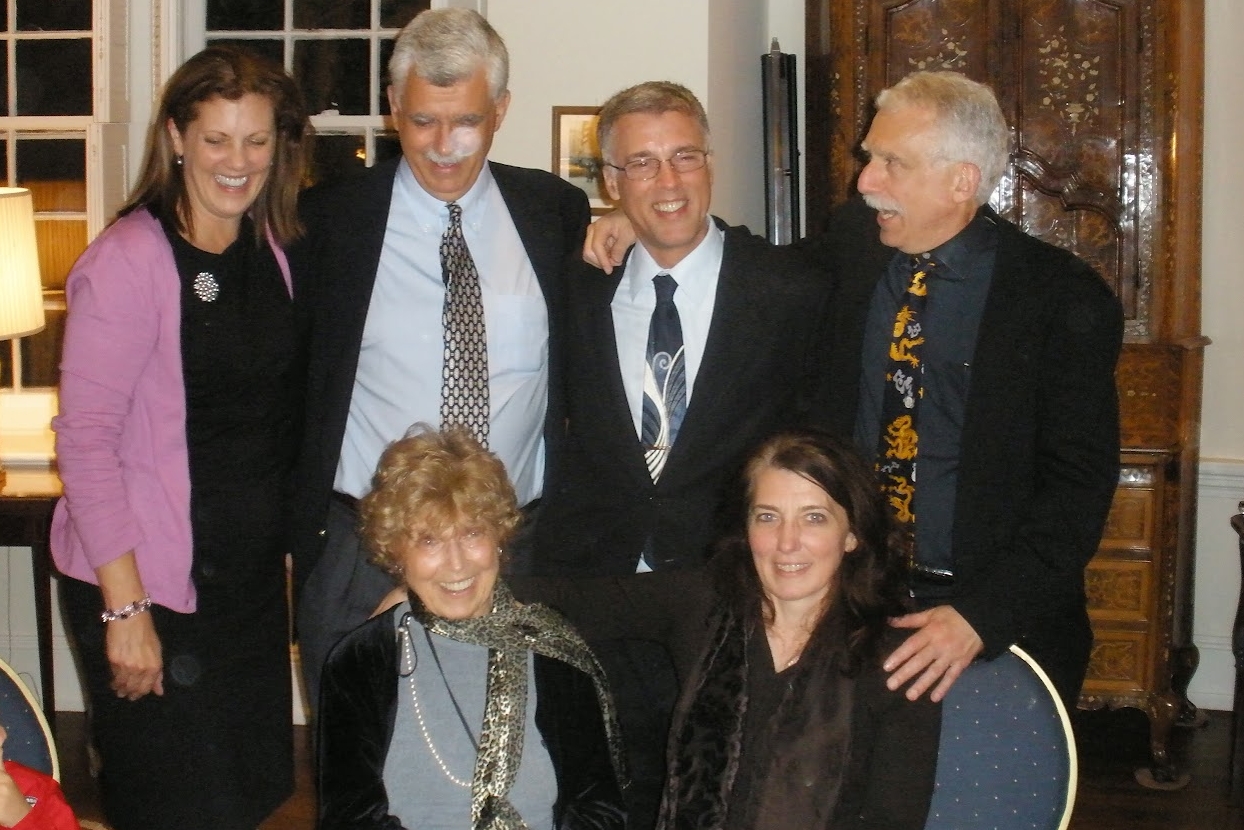
    Dr. Ashmead (front left) always made time for her family.

    She lived in Denmark for a few years and finally settled for good in Haverford in 1983. “She was interesting, smart, capable, strong, articulate, and fun to be around,” her daughter Theodora said. “She was solution-oriented. She sparkled.”

    In addition to her children, Dr. Ashmead is survived by six grandchildren, a sister, and other relatives. A brother died earlier.

    She requested that no services be held and donated her body to the Humanity Gifts Registry through Penn’s Perelman School of Medicine.

    Donations in her name may be made to the Haverford College Arboretum, 370 Lancaster Ave., Haverford, Pa. 19041.

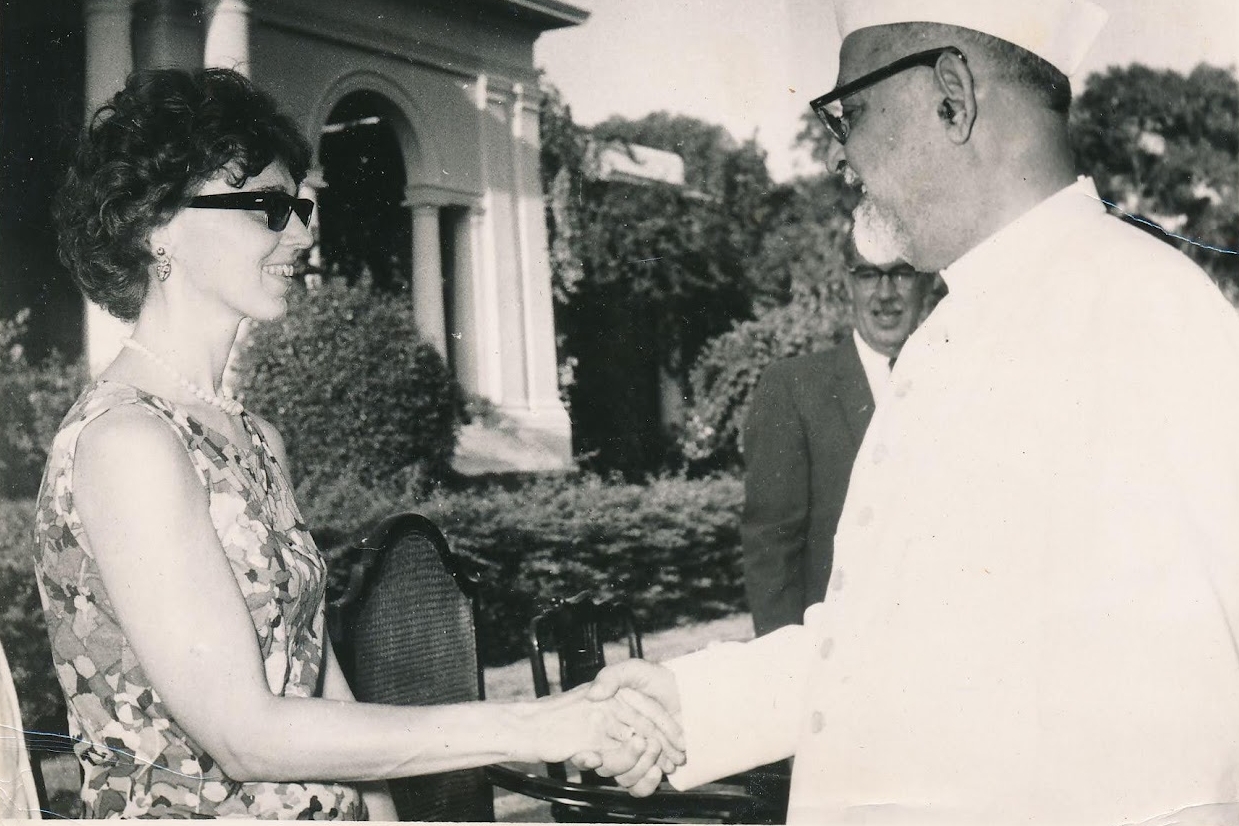
    Dr. Ashmead (left) met many dignitaries during her worldwide travels.
  • The Schuylkill is frozen, but that doesn’t mean you can ice fish on it

    The Schuylkill is frozen, but that doesn’t mean you can ice fish on it

    Have you been looking longingly at your fishing gear during the Philadelphia winter? Are Deadliest Catch reruns not hitting the same?

    With the surface of the Schuylkill River still frozen solid and frigid temperatures returning this weekend, a reader asked through Curious Philly, The Inquirer’s outlet for answering questions, whether they were allowed to ice fish on it.

    Ice fishing, after all, is a practice that began with subarctic Indigenous peoples thousands of years ago, well before the advent of the modern fishing rod in the late 1700s. Fishing along the Schuylkill is accepted and celebrated in warmer temperatures, so what about its frozen cousin?

    Unfortunately for those Philadelphians dreaming about an Arctic lifestyle, the answer is no.

    “Ice fishing is illegal in Philly,” Philadelphia Police Department spokesperson Sgt. Eric Gripp said by email. The practice is not explicitly outlawed, but walking out onto the ice in order to carve a hole and cast a line underneath violates city rules.

    A pedestrian walks past a large pile of snow and ice along the Benjamin Franklin Parkway on Monday.

    “You can’t walk, swim, or be in/on the waterway — unless in a vessel — regardless as to whether or not it’s frozen,” Gripp said.

    Philadelphia police began spreading the message to not venture out onto the frozen Schuylkill this week, after local CBS News video captured several adults and children walking across it Sunday. The Police Department’s directive on code violation notices lists ice skating, skiing, and sledding in some areas of Fairmount Park as potential offenses.

    Ice fishing could put you in violation of a few city ordinances, too. While you would likely be subject only to a summary offense and a $25 fine for each violation, police say you would be breaking rules about using areas managed by Parks and Recreation outside of their approved use, and risk violating the ban on “swimming” or wading out onto any Philadelphia creek, lake, river, or stream.

    » ASK US: Have something you’re wondering about the Philly region? Submit your Curious Philly question here.

    Even though the Schuylkill’s frozen surface may be several inches thick in certain locations, ice’s integrity can’t be judged based upon only how it looks, how fresh it is, or the temperature outdoors, according to the Pennsylvania Fish and Boat Commission. Ice’s strength is also informed by several other factors, including the depth of the water underneath the ice, and nearby fish activity.

    “Anyone that walks onto the Schuylkill River, … they’re taking their life into their own hands. It’s not a smart thing to do,” said commission spokesperson Mike Parker. Parker said the commission highly advises against walking on top of or fishing on the frozen surface of any moving body of water, like a river.

    “There’s no such thing as safe ice,” in those cases, he said.

    A fisherman sits in the sun outside a pop up shelter while ice fishing on frozen Lake Wentworth in Wolfeboro, N.H.

    But ice fishing can be relatively safe on still bodies of water, like lakes and ponds. As general guidelines, the fish and boat commission advises that anglers fish only on those bodies of water when ice is at least five inches thick, and never to go out onto ice alone.

    If you are still interested in ice fishing during the region’s cold spell, the Fish and Boat Commission offers a map of approved ice fishing destinations across the state.

    The closest ones to Philadelphia include Deep Creek Dam in Montgomery County; Marsh Creek Lake, in Chester County; and Lake Galena in Bucks County.

  • Government lawyer yanked from immigration detail in Minnesota after telling judge ‘this job sucks’

    Government lawyer yanked from immigration detail in Minnesota after telling judge ‘this job sucks’

    WASHINGTON — A government lawyer who told a judge that her job “sucks” during a court hearing stemming from the Trump administration’s immigration enforcement surge in Minnesota has been removed from her Justice Department post, according to a person familiar with the matter.

    Julie Le had been working for the Justice Department on a detail, but the U.S. attorney in Minnesota ended her assignment after her comments in court on Tuesday, the person said. The person spoke on the condition of anonymity to discuss a personnel matter. She had been working for U.S. Immigration and Customs Enforcement before the temporary assignment.

    At a hearing Tuesday in St. Paul, Minn., for several immigration cases, Le told U.S. District Judge Jerry Blackwell that she wishes he could hold her in contempt of court “so that I can have a full 24 hours of sleep.”

    “What do you want me to do? The system sucks. This job sucks. And I am trying every breath that I have so that I can get you what you need,” Le said, according to a transcript.

    Le’s extraordinary remarks reflect the intense strain that has been placed on the federal court system since President Donald Trump returned to the White House a year ago with a promise to carry out mass deportations. ICE officials have said the surge in Minnesota has become its largest-ever immigration operation since ramping up in early January.

    Several prosecutors have left the U.S. Attorney’s office in Minnesota amid frustration with the immigration enforcement surge and the Justice Department’s response to fatal shootings of two civilians by federal agents. Le was assigned at least 88 cases in less than a month, according to online court records.

    Blackwell told Le that the volume of cases isn’t an excuse for disregarding court orders. He expressed concern that people arrested in immigration enforcement operations are routinely jailed for days after judges have ordered their release from custody.

    “And I hear the concerns about all the energy that this is causing the DOJ to expend, but, with respect, some of it is of your own making by not complying with orders,” the judge told Le.

    Le said she was working for the Department of Homeland Security as an ICE attorney in immigration court before she “stupidly” volunteered to work the detail in Minnesota. Le told the judge that she wasn’t properly trained for the assignment. She said she wanted to resign from the job but couldn’t get a replacement.

    “Fixing a system, a broken system, I don’t have a magic button to do it. I don’t have the power or the voice to do it,” she said.

    Homeland Security Assistant Secretary Tricia McLaughlin said Le was a probationary attorney.

    “This conduct is unprofessional and unbecoming of an ICE attorney in abandoning her obligation to act with commitment, dedication, and zeal to the interests of the United States Government,” McLaughlin said in a statement.

    Le and the U.S. Attorney’s office in Minnesota didn’t immediately respond to emails seeking comment.

    Kira Kelley, an attorney who represented two petitioners at the hearing, said the flood of immigration petitions is necessary because “so many people being detained without any semblance of a lawful basis.”

    “And there’s no indication here that any new systems or bolded e-mails or any instructions to ICE are going to fix any of this,” she added.

  • Police ‘buried’ footage that showed a teen didn’t kill his friend at a SEPTA station, lawsuit says

    Police ‘buried’ footage that showed a teen didn’t kill his friend at a SEPTA station, lawsuit says

    A teenager who faced charges that were later dropped in the killing of his friend, and spent 49 days in jail before video evidence established his innocence, has sued Philadelphia and SEPTA police officers who were involved in his prosecution.

    Zaire Wilson, 18, is accusing law enforcement officers of hiding and ignoring evidence showing he did not shoot and kill Tyshaun Welles on a platform at the City Hall station on Jan. 11, 2024.

    Welles, 16, was hit in the head and his family decided to take him off life support less than a week later. The Frankford High School sophomore was not the target of the shooting, detectives said.

    Tyshaun Welles, 16, was struck in the head by a stray bullet on the subway platform at SEPTA’s City Hall station.

    Wilson and Quadir Humphrey, 20, were arrested the night of the shooting. Police said Wilson pulled out a gun and Humphrey used it to open fire at the group of teens. After Welles died, Wilson was charged with murder and held without bail at the Juvenile Justice Services Center.

    The Philadelphia District Attorney’s Office dropped the charges against Wilson in late February 2024 after prosecutors received surveillance footage from SEPTA.

    “The SEPTA surveillance video of the incident, which was not available to the DA’s Office at the time of Wilson’s arrest, shows that he was clearly not involved in the shooting and murder of Welles‚” the office said in a statement.

    Law enforcement did not share the footage with prosecutors until Feb. 26, 2024, and the district attorney’s office charged Wilson based on a criminal complaint that was riddled with errors and omissions, according to the lawsuit, which was filed last month in the Eastern District of Pennsylvania.

    It is “shocking” that “critical video evidence” was not available to prosecutors at the time of Wilson’s arrest, said Jon Cioschi, a Wiseman, Schwartz, Cioschi & Trama attorney who filed the complaint.

    “It is our view that the video footage conclusively establishes Zaire’s innocence, and that no reasonable officer, taking the evidence seriously, would or could have concluded otherwise,” Cioschi said.

    The city’s law department declined to comment on active litigation. SEPTA did not respond to a request for comment.

    Humphrey pleaded guilty to third-degree murder, aggravated assault, and related crimes, and was sentenced to 17 to 45 years in prison in July.

    What the surveillance footage shows

    Wilson and Welles spent the evening of Jan. 11 with a group of friends at LevelUp, a neighborhood organization in West Philadelphia, the complaint says.

    Surveillance footage reviewed by The Inquirer shows the group, which included the two teens and Wilson’s teenage brother, arriving at the westbound Market-Frankford Line platform at the City Hall SEPTA station around 9:15 p.m.

    As the group waited for the train, the teens chatted and played on the platform as at least four SEPTA officers stood near them.

    Wilson playfully chased a girl in an orange shirt to the east end of the platform. He saw Humphrey, who arrived to the platform separately from the teens, and the two chatted and paced together for a few seconds. As Wilson began to walk back toward the group, a train approached, and Humphrey pulled out a gun and opened fire. Wilson ran to the staircase and got off the platform while Humphrey continued to shoot.

    The teens dispersed during the pandemonium, but one dropped to the ground. After the shooting ended and Humphrey ran away, officers picked up Welles and took him off the platform.

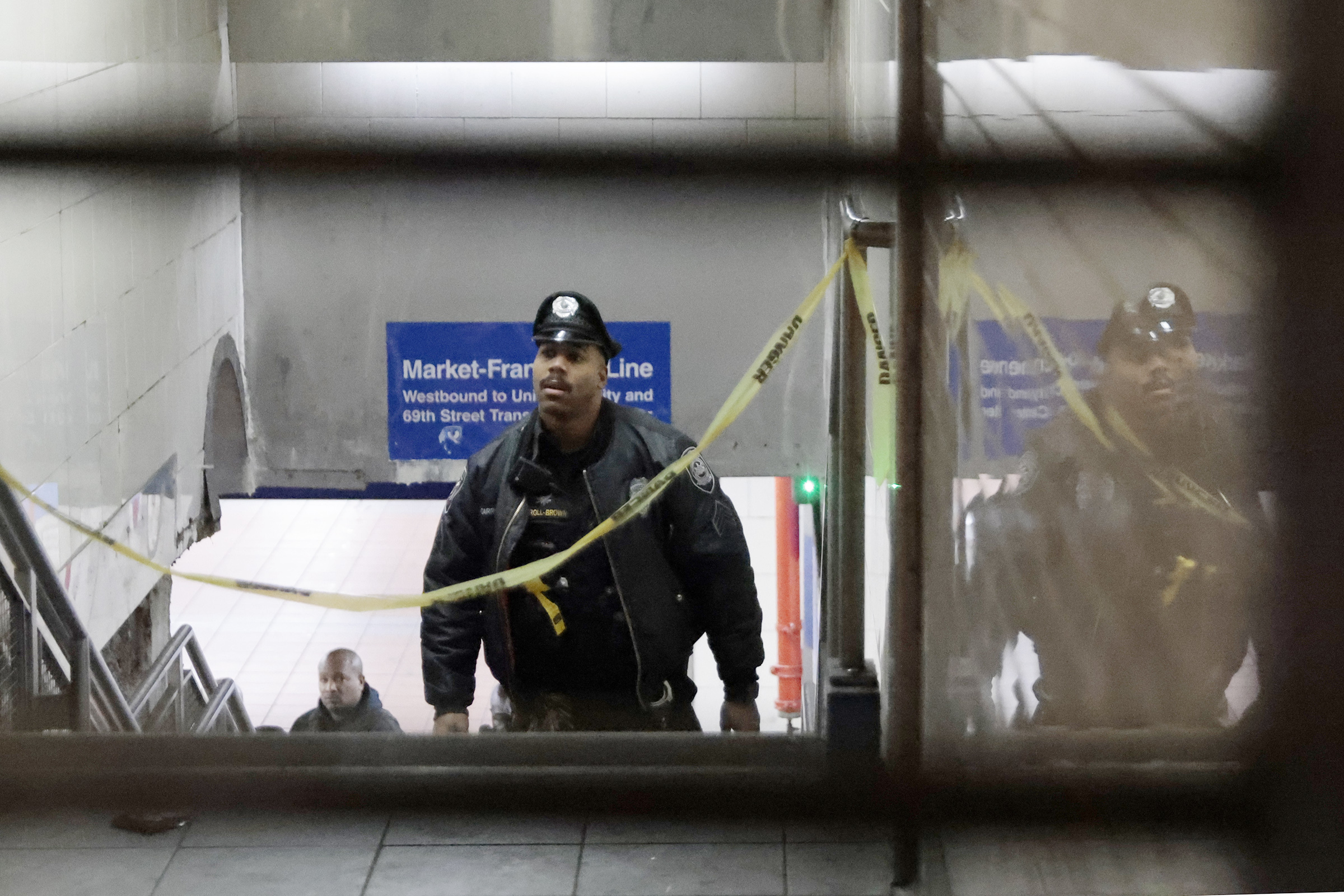
    A SEPTA law enforcement officer walks up stairs from a platform where earlier a SEPTA transit police officer reported a shooting and a victim down on the westbound platform at 15th Street Station near City Hall in Philadelphia on Thursday, Jan. 11, 2024.

    Moments after the shooting, Wilson returned to the platform. He raised his hands as officers with guns drawn rushed to him, pinned him to the ground, frisked him, and let him go. Wilson then walked down the platform where he met his brother and another teen. The three abruptly ran upstairs.

    The footage contradicts police statements that Wilson brandished a gun. That Wilson returned to the scene, where he knew a group of officers were standing, while Humphrey ran away, should have indicated his “consciousness of innocence,” the suit says.

    Humphrey himself told staff at the Juvenile Justice Services Center that Wilson had nothing to do with the shooting, according to the lawsuit, and wrote a letter to a judge on Jan. 16, 2024, days after the shooting, that said “the person I was arrested and detained with has no connection whatsoever.”

    “Rather than follow the facts,” the suit says, “defendants buried them.”