Category: National Politics

  • IRS improperly disclosed confidential immigrant tax data to DHS

    IRS improperly disclosed confidential immigrant tax data to DHS

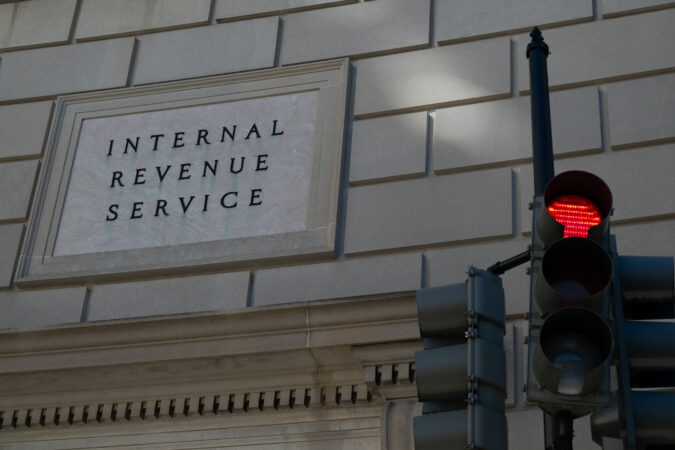
    The Internal Revenue Service improperly shared confidential tax information of thousands of individuals with immigration enforcement officials, according to three people familiar with the situation, appearing to breach a legal firewall intended to protect taxpayer data.

    The erroneous disclosure was only recently discovered, the people said. The IRS is working with officials from the Treasury Department, Justice Department, and Department of Homeland Security on the administration’s response.

    The IRS confirmed the Washington Post’s reporting in a court filing Wednesday afternoon. Dottie Romo, the tax agency’s chief risk and control officer, wrote in a sworn declaration that the IRS provided confidential taxpayer information even when DHS officials could not provide sufficient data to positively identify a specific individual.

    But in a controversial decision, Treasury, which oversees the IRS, in April agreed to provide DHS with the names and addresses of individuals the Trump administration believed to be in the country illegally, pursuant to DHS requests.

    Federal courts have since blocked the data-sharing arrangement, holding that it violates taxpayers’ rights, though the government appealed those rulings.

    Before the agreement was struck down, DHS requested the addresses of 1.2 million individuals from the IRS. The tax agency responded with data on 47,000 individuals, according to court records.

    When the IRS shared the addresses with DHS, it also inadvertently disclosed private information for thousands of taxpayers erroneously, a mistake only recently discovered, said the people familiar, who spoke on the condition of anonymity for fear of retribution.

    Romo, in her declaration, did not state when the IRS learned of its error. She said the agency notified DHS on Jan. 23, to begin taking steps to “prevent the disclosure or dissemination, and to ensure appropriate disposal, of any data provided to ICE by IRS based on incomplete or insufficient address information.”

    She declined to state if the IRS would inform people whose data was illegally disclosed to immigration officials, and said DHS and ICE had agreed to “not inspect, view, use, copy, distribute, rely on, or otherwise act on any return information that has been obtained from or disclosed by IRS” because of the pending litigation.

    The affected individuals could be entitled to financial compensation for each time their information was improperly shared. And government officials can personally face stiff civil and criminal penalties for sharing confidential tax information.

    Charles Littlejohn, an IRS contractor, pleaded guilty in 2023 to leaking the tax returns of President Donald Trump and other wealthy individuals.

    Littlejohn was sentenced to five years in prison. Trump in January sued the IRS for $10 billion in damages related to the Littlejohn leak.

    In a statement, a DHS spokesperson said that under the data-sharing agreement, “the government is finally doing what it should have all along.”

    “Information sharing across agencies is essential to identify who is in our country, including violent criminals, determine what public safety and terror threats may exist so we can neutralize them, scrub these individuals from voter rolls, and identify what public benefits these aliens are using at taxpayer expense,” the spokesperson said.

    There is little evidence that undocumented immigrants have attempted to participate in U.S. elections, nor is there a link between undocumented immigrants and higher levels of crime.

    “With the IRS information specifically, DHS plans to focus on enforcing long-neglected criminal laws that apply to illegal aliens,” the DHS spokesperson said.

    Treasury and Justice Department spokespeople declined to comment, citing agency policies not to comment on active litigation. The Office of the Deputy Attorney General is monitoring the ongoing litigation, but the office is not making any decisions on the matter, according to a person familiar with the matter who was not authorized to comment publicly.

    When the IRS began conversations with DHS over data sharing shortly after Trump returned to the White House, senior IRS employees warned administration officials that the program was likely illegal and could sweep up misidentified people, the Post has reported.

    During early meetings on the project, one agency staffer asked immigration authorities how many people with the same name may live in the same state, according to one of the people, illustrating how easy it would be for the Trump administration to inadvertently breach taxpayers’ privacy, including those who are not targets of immigration investigations.

    The IRS’s privacy department was largely sidelined from the talks, two of the people said, and its IT department took over implementing the data sharing. That team had largely been taken over by officials from Trump’s U.S. DOGE Service, the White House’s “efficiency” office charged with shrinking the federal government.

    Treasury officials justified the data-sharing agreement by arguing immigration enforcement was pursuing individuals who had violated criminal statutes, though immigration violations are generally civil, not criminal.

    Under the arrangement, DHS would provide the IRS with the name and address of a taxpayer. The IRS would then cross-reference that information with its confidential databases and confirm the taxpayers’ last known address.

    Immigration officials said the procedure was necessary because DHS lacked reliable information to locate individuals the Trump administration wanted to detain and deport, according to numerous IRS and DHS officials, who spoke on the condition of anonymity because they were not authorized to publicly discuss the matter.

    “This allegedly unauthorized viewing involves personal information that taxpayers provided to the IRS pursuant to a promise that the IRS would prioritize keeping the information confidential,” Judge Colleen Kollar-Kotelly of the U.S. District Court for the District of Columbia wrote in a November order. “A reasonable taxpayer would likely find it highly offensive to discover that the IRS now intends to share that information permissively because it has replaced its promise of confidentiality with a policy of disclosure.”

  • Grand jury refuses to indict Democratic lawmakers in connection with illegal military orders video

    Grand jury refuses to indict Democratic lawmakers in connection with illegal military orders video

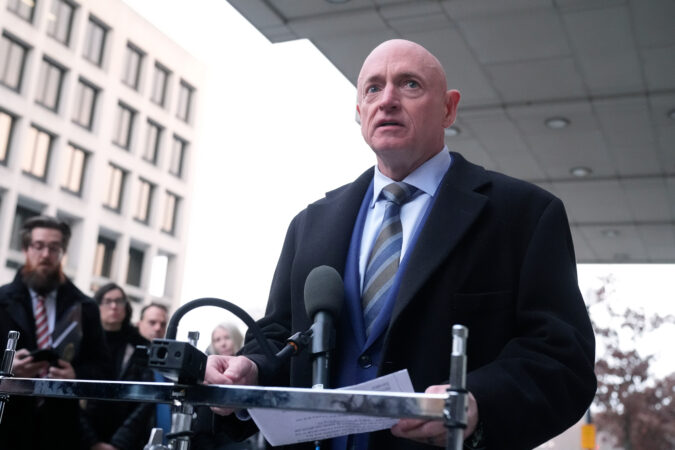
    WASHINGTON — A grand jury in Washington refused Tuesday to indict Democratic lawmakers in connection with a video in which they urged U.S. military members to resist “illegal orders,” according to a person familiar with the matter.

    The Justice Department opened an investigation into the video featuring Democratic Sens. Mark Kelly and Elissa Slotkin and four other Democratic lawmakers urging U.S. service members to follow established military protocols and reject orders they believe to be unlawful. All the lawmakers previously served in the military or at intelligence agencies.

    Grand jurors in Washington declined to sign off on charges in the latest of a series of rebukes of prosecutors by citizens in the nation’s capital, according to the person, who spoke on the condition of anonymity because they were not authorized to publicly discuss the matter. It wasn’t immediately clear whether prosecutors had sought indictments against all six lawmakers or what charge or charges prosecutors attempted to bring.

    Grand jury rejections are extraordinarily unusual, but have happened repeatedly in recent months in Washington as citizens who have heard the government’s evidence have come away underwhelmed in a number of cases. Prosecutors could try again to secure an indictment.

    Spokespeople for the U.S. attorney’s office and the Justice Department didn’t immediately respond to requests for comment Tuesday.

    The FBI in November began contacting the lawmakers to schedule interviews, outreach that came against the backdrop of broader Justice Department efforts to punish political opponents of the president. President Donald Trump and his aides labeled the lawmakers’ video as “seditious” — and Trump said on his social media account that the offense was “punishable by death.”

    Besides Slotkin and Kelly, the other Democrats who appeared in the video include Reps. Jason Crow of Colorado, Chrissy Houlahan of Pennsylvania, Maggie Goodlander of New Hampshire and Chris Deluzio of Pennsylvania.

    Slotkin, a former CIA analyst who represents Michigan, said late Tuesday that she hopes this ends the Justice Department’s probe.

    “Tonight we can score one for the Constitution, our freedom of speech, and the rule of law,” Slotkin said in a statement. “But today wasn’t just an embarrassing day for the Administration. It was another sad day for our country,” she said.

    Kelly, a former Navy pilot who represents Arizona, called the attempt to bring charges an “outrageous abuse of power by Donald Trump and his lackies.”

    “Donald Trump wants every American to be too scared to speak out against him,” Kelly said in a post on X. “The most patriotic thing any of us can do is not back down.”

    In November, the Pentagon opened an investigation into Kelly, citing a federal law that allows retired service members to be recalled to active duty on orders of the defense secretary for possible court-martial or other punishment. Defense Secretary Pete Hegseth has censured Kelly for participating in the video and is trying to retroactively demote Kelly from his retired rank of captain.

    The senator is suing Hegseth to block those proceedings, calling them an unconstitutional act of retribution. During a hearing last week, the judge appeared to be skeptical of key arguments that a government attorney made in defense of Kelly’s Jan. 5 censure by Hegseth.

  • Progressive Analilia Mejia celebrates victory in 13-person primary to replace Mikie Sherrill in Congress

    Progressive Analilia Mejia celebrates victory in 13-person primary to replace Mikie Sherrill in Congress

    Analilia Mejia appeared to cement victory in the Democratic primary to replace New Jersey Gov. Mikie Sherrill in Congress after her top opponent conceded Tuesday morning.

    It’s a massive upset win for the progressive movement.

    Mejia led the race with a razor-thin margin when former U.S. Rep. Tom Malinowski, the closest contender, conceded. The Associated Press has still not called the race five days after the election as the race remains tight, but Malinowski’s concession will enable Mejia to focus on campaigning for her April 16 contest against Republican Joe Hathaway.

    The progressive, an Afro-Latina, shared a gif of Bad Bunny overwhelmed with emotion as he stood last week to receive the coveted album of the year Grammy for Debí Tirar Más Fotos — the first Spanish album to get the honor.

    She delivered a victory speech a couple of hours later on a livestream that kicked off with about two dozen supporters from unions and progressive groups chanting “abolish ICE,” “tax the rich,” and “Mejia for Congress.”

    Mejia said she wants to represent “every voice” in the district and said the victory was not hers alone.

    “This isn’t a race in which one individual won,” she said. “This is a race in which the community stepped up and said, ‘In this moment, what we want are real representatives who will listen to the people, who will ask questions about what is keeping you up at night, who will prioritize your interest over special interests.’”

    There were 13 candidates in the special primary for the open North Jersey seat, but as the results poured in Thursday it became a race between Mejia, a progressive endorsed by the Working Families Party, and Malinowski, a moderate who represented a neighboring district before losing his reelection bid in 2022.

    “Analilia deserves unequivocal praise and credit for running a positive campaign and for inspiring so many voters on Election Day,” Malinowski said in a statement Tuesday.

    Malinowski initially appeared to be in the lead Thursday night, which led multiple outlets and the Democratic National Committee to prematurely declare the race in his favor. Mejia picked up steam and moved ahead of him as the night went on, and publications issued retractions.

    In response, Mejia shared on social media the famous 1948 photo of President Harry Truman holding up the Chicago Tribune’s erroneous “Dewey Defeats Truman” headline.

    Mejia, the daughter of Colombian and Dominican immigrants, has repeatedly said that U.S. Immigration and Customs Enforcement cannot be reformed and should therefore be abolished as President Donald Trump’s immigration enforcement tactics become increasingly scrutinized across the country.

    She said at a news conference Friday that her position resonated with voters, and that the agency “must be replaced by something that isn’t violent, that isn’t shooting Americans in the streets, that is respecting our Constitution.”

    She made the case during her campaign that “any old blue just won’t do” and that she is “unbought and unbossed.”

    Malinowski raised nearly three times as much as Mejia through Jan. 16, according to Federal Election Commission data.

    Her victory is a major breakthrough for New Jersey’s progressive movement in what has become a fairly reliably blue district that includes parts of Essex, Morris, and Passaic Counties. It comes on the heels of a progressive victory in the crowded Jersey City mayoral race.

    (function () {window.addEventListener(‘message’, function (e) { var message = e.data; var els = document.querySelectorAll(‘iframe[src*=”‘ + message.id + ‘”]’); els.forEach(function(el) { el.style.height = message.height + ‘px’; }); }, false); })();

    It also adds another feather to the cap of the national progressive movement after the victory of New York City Mayor Zohran Mamdani, who was supported by some of the same high-profile progressives as Mejia, including U.S. Sens. Bernie Sanders (Ind., Vt.) and Elizabeth Warren (D., Mass.) and U.S. Rep. Alexandria Ocasio-Cortez (D., N.Y.).

    Sherrill, who remained neutral in the primary, said in a statement Tuesday that she endorses Mejia’s campaign to replace her seat in Congress.

    “I’ve known Analilia for years — I’ve seen her dedication to expanding opportunity and fighting for working people. I know she will be a great partner in Congress whether it is fighting for the Gateway Tunnel or to protect our Constitutional rights,” Sherrill said, referencing a major infrastructure project Trump halted.

    Mejia will enter the April special election as a heavy favorite against Hathaway, the former Randolph mayor who ran unopposed in the Republican primary. A regular primary will take place less than two months later, on June 2, for the midterm elections in November. That means the winner’s term will last only through this year.

    The progressive, who grew up in Elizabeth, lives with her husband and two kids in Glen Ridge in Essex County, where she says she has resided for 13 years.

    She said Friday that garnering name recognition was an “uphill battle” since she was one of the last candidates to join the crowded race. Even though mail ballots went out before many voters had the chance to get to know her, her team made it up “by being on the ground and having the most extensive field operation possible,” she added.

    Mejia has most recently worked as the co-executive director of Popular Democracy, a network of organizations across the country that call for “transformational change for Black, brown and low-income communities,” according to its website.

    She has a long resumé in activism, politics, and government, including working as the national political director for Sanders’ 2020 presidential campaign, the deputy director for the U.S. Labor Department’s Women’s Bureau under former President Joe Biden, the executive director of the New Jersey Working Families Party, and a union organizer before launching her bid for the seat.

    She said she also campaigned for Sherrill’s gubernatorial bid last year, whose organizers prioritized reaching Spanish-speaking voters. Mejia spoke in both English and Spanish in her victory speech.

    Her victory is the latest example of how the Democratic establishment in New Jersey is losing its grasp on primaries in the state.

    That is largely because New Jersey redesigned its primary ballot system last year to get rid of its county line ballot. The long-held system was advantageous to candidates supported by their local party apparatus, and progressive activists like Mejia worked for years to dismantle it to give other candidates a shot.

    Malinowski had the endorsement of the Morris County Democratic Committee, and the other local committees supported candidates who fell behind the two front-runners.

    AIPAC’s attacks on Malinowski

    A thorn in Malinowski’s side was a series of attacks funded by the American Israel Public Affairs Committee (AIPAC), a pro-Israel national lobbying group, on issues unrelated to Israel. The method may have backfired, since Mejia has been more critical of Israel than the former House member.

    United Democracy Project, a super PAC funded by AIPAC, attacked Malinowski in ads for voting “with Trump” by supporting bipartisan legislation that included funding for federal immigration enforcement. It also went after him for undisclosed stock trading while in Congress, for which he had received previous scrutiny.

    Patrick Dorton, a spokesperson for the super PAC, told the New York Times that Malinowski is not sufficiently supportive of Israel because he has talked about putting conditions on aid for the country.

    The group spent nearly $2 million on the race, according to Adimpact, which tracks TV and other spending by campaigns.

    Malinowski, who generally supports Israel, said in his concession statement that the results of the race “cannot be understood” without looking at the “dishonest ads” funded by the group.

    “I wish I could say today that this effort, which was meant to intimidate Democrats across the country, failed in NJ-11,” he said. “But it did not. I met several voters in the final days of the campaign who had seen the ads and asked me, sincerely: ‘Are you MAGA? Are you for ICE?’”

    He said he will oppose any candidates AIPAC backs in the June primary when the seat is again on the line.

    Mejia said AIPAC’s attacks demonstrate the influence money has over American politics, but she rejected the notion AIPAC played a decisive role in the race.

    “What they didn’t do is win this for us,” she said. “How we won it was people power. How we won it was talking to folks. How we won it was knocking at doors. How we won it was being ready at every moment.”

  • Annual governors gathering with White House unraveling after Trump excludes Democrats

    Annual governors gathering with White House unraveling after Trump excludes Democrats

    WASHINGTON — An annual meeting of the nation’s governors that has long served as a rare bipartisan gathering is unraveling after President Donald Trump excluded Democratic governors from White House events.

    The National Governors Association said it will no longer hold a formal meeting with Trump when governors are scheduled to convene in Washington later this month, after the White House planned to invite only Republican governors. On Tuesday, 18 Democratic governors also announced they would boycott a traditional dinner at the White House.

    “If the reports are true that not all governors are invited to these events, which have historically been productive and bipartisan opportunities for collaboration, we will not be attending the White House dinner this year,” the group wrote. “Democratic governors remain united and will never stop fighting to protect and make life better for people in our states.”

    Oklahoma Gov. Kevin Stitt, a Republican and the chairman of the NGA, said in a letter Monday to fellow governors obtained by The Associated Press that the White House intends to limit invitations to the association’s annual business meeting, scheduled for February 20, to Republican governors only.

    “Because NGA’s mission is to represent all 55 governors, the Association is no longer serving as the facilitator for that event, and it is no longer included in our official program,” Stitt wrote.

    The NGA is scheduled to meet in Washington from Feb. 19-21. Representatives for Stitt, the White House and the NGA didn’t immediately comment on the letter.

    Brandon Tatum, the NGA’s CEO, said in a statement last week that the White House meeting is an “important tradition” and said the organization was “disappointed in the administration’s decision to make it a partisan occasion this year.”

    The governors group is one of the few remaining venues where political leaders from both major parties gather to discuss the top issues facing their communities. In his letter, Stitt encouraged governors to unite around common goals.

    “We cannot allow one divisive action to achieve its goal of dividing us,” he wrote. “The solution is not to respond in kind, but to rise above and to remain focused on our shared duty to the people we serve. America’s governors have always been models of pragmatic leadership, and that example is most important when Washington grows distracted by politics.”

    Signs of partisan tensions emerged at the White House meeting last year, when Trump and Maine’s Gov. Janet Mills traded barbs.

    Trump singled out the Democratic governor over his push to bar transgender athletes from competing in girls’ and women’s sports, threatening to withhold federal funding from the state if she did not comply. Mills responded, “We’ll see you in court.”

    Trump then predicted that Mills’ political career would be over for opposing the order. She is now running for U.S. Senate.

    The back and forth had a lasting impact on last year’s conference and some Democratic governors did not renew their dues last year to the bipartisan group.

  • Congressional leaders say ICE deal is still possible despite divisions

    Congressional leaders say ICE deal is still possible despite divisions

    WASHINGTON — Congressional leaders said Tuesday that a deal was still possible with the White House on Homeland Security Department funding before it expires this weekend. But the two sides were still far apart as Democrats demanded new restrictions on President Donald Trump’s immigration crackdown.

    After federal agents fatally shot two protesters in Minneapolis last month, Democrats say U.S. Immigration and Customs Enforcement needs to be “dramatically” reined in and are prepared to let Homeland Security shut down if their demands aren’t met. On Tuesday, Senate Democratic Leader Chuck Schumer and House Democratic Leader Hakeem Jeffries said they had rejected a White House counteroffer that “included neither details nor legislative text” and does not address “the concerns Americans have about ICE’s lawless conduct.”

    “We simply want ICE to follow the same standards that most law enforcement agencies across America already follow,” Schumer said Tuesday. “Democrats await the next answer from our Republican counterparts.”

    The Democrats’ rejection of the Republican counteroffer comes as time is running short, with a shutdown of the Homeland Security Department threatening to begin Saturday. Among the Democrats’ demands are a requirement for judicial warrants, better identification of DHS officers, new use-of-force standards and a stop to racial profiling.

    Finding agreement on the charged, partisan issue of immigration enforcement will be exceedingly difficult. But even as lawmakers in both parties were skeptical, a White House official said that the administration was having constructive talks with both Republicans and Democrats. The official, granted anonymity to speak about ongoing deliberations, stressed that Trump wanted the government to remain open and for Homeland Security services to be funded.

    Senate leaders also expressed some optimism.

    “There’s no reason we can’t do this” by the end of the week, Senate Democratic Leader Chuck Schumer said after meeting with his caucus on Tuesday.

    Senate Majority Leader John Thune, R-S.D., said there have been “some really productive conversations.”

    Democratic demands

    Schumer and Jeffries have said they want immigration officers to remove their masks, to show identification and to better coordinate with local authorities. They have also demanded a stricter use-of-force policy for the federal officers, legal safeguards at detention centers and a prohibition on tracking protesters with body-worn cameras.

    Among other asks, Democrats say Congress should end indiscriminate arrests, “improve warrant procedures and standards,” ensure the law is clear that officers cannot enter private property without a judicial warrant and require that before a person can be detained, it’s verified that the person is not a U.S. citizen.

    Democrats made the demands for new restrictions on ICE and other federal law enforcement after ICU nurse Alex Pretti was shot and killed by a U.S. Border Patrol officer in Minneapolis on Jan. 24, and some Republicans suggested that new restrictions were necessary. Renee Good was shot by ICE agents on Jan. 7.

    Many Democrats said they won’t vote for another penny of Homeland Security funding until enforcement is radically scaled back.

    “Dramatic changes are needed at the Department of Homeland Security before a DHS funding bill moves forward,” Jeffries said. “Period. Full stop.”

    Republican counterproposal

    Jeffries said Tuesday that the White House’s offer “walked away from” their proposals for better identification of ICE agents, for more judicial warrants and for a prohibition on excessive use of force. Republicans also rejected their demand for an end to racial or ethnic profiling, Jeffries said.

    “The White House is not serious at this moment in dramatically reforming ICE,” Jeffries said.

    Republican lawmakers have also pushed back on the requests. Oklahoma Sen. Markwayne Mullin, a close ally of Trump, said Tuesday that he’s willing to discuss more body cameras and better training — both of which are already in the Homeland spending bill — but that he would reject the Democrats’ most central demands.

    “They start talking about judicial warrants? No. They start talking about demasking them? No, not doing that. They want them to have a photo ID with their name on it? Absolutely not,” Mullin said.

    Republicans have said ICE agents should be allowed to wear masks because they are more frequently targeted than other law enforcement officials.

    “People are doxing them and targeting them,” said House Speaker Mike Johnson, R-La., on Monday. “We’ve got to talk about things that are reasonable and achievable.”

    Some Republicans also have demands of their own, including the addition of legislation that would require proof of citizenship before Americans register to vote and restrictions on cities that they say do not do enough to crack down on illegal immigration.

    At a House hearing on Tuesday, the acting director of ICE, Todd Lyons, said his agency is “only getting started” and would not be intimidated as his officers carry out Trump’s mass deportation agenda.

    Trump deals with Democrats

    Congress is trying to renegotiate the DHS spending bill after Trump agreed to a Democratic request that it be separated out from a larger spending measure that became law last week and congressional Republicans followed his lead. That package extended Homeland Security funding at current levels only through Feb. 13, creating a brief window for action as the two parties discuss new restrictions on ICE and other federal officers.

    But even as he agreed to separate the funding, Trump has not publicly responded to the Democrats’ specific asks or suggested any areas of potential compromise.

    White House press secretary Karoline Leavitt said late last week that the Trump administration is willing to discuss some items on the Democrats’ list, but “others don’t seem like they are grounded in any common sense, and they are nonstarters for this administration.”

    Thune said Tuesday that “there are certain red lines that I think both sides have, things they are not going to negotiate on, but there are some things they are going to negotiate on, and that’s where I think the potential deal space is here.”

    It was, so far, unclear what those issues were.

    “We are very committed to making sure that federal law enforcement officers are able to do their jobs and to be safe doing them,” Thune said of Republicans.

    Consequences of a shutdown

    In addition to ICE and U.S. Customs and Border Protection, the homeland security bill includes funding for the Federal Emergency Management Agency and the Transportation Security Administration, among other agencies. If DHS shuts down, Thune said last week, “there’s a very good chance we could see more travel problems” similar to the 43-day government closure last year.

    Thune has said Republicans will try to pass a two- to four-week extension of the Homeland Security funding while negotiations continue.

    Many Democrats are unlikely to vote for another extension. But Republicans could potentially win enough votes in both chambers from Democrats if they feel hopeful about negotiations.

    “The ball is in the Republicans’ court,” Jeffries said Monday.

  • Philly’s port has a problem with the ‘Buy America’ law: The cranes they need aren’t made in the U.S.

    Philly’s port has a problem with the ‘Buy America’ law: The cranes they need aren’t made in the U.S.

    In an effort to reduce air pollution and modernize U.S. ports, the Biden administration in 2024 announced $3 billion in grants for zero-emission equipment — including tens of millions earmarked for Philadelphia’s port to buy two new electric cranes to help unload ships.

    Ports have embraced the clean energy push, but some have run into a problem. U.S. law requires federally funded infrastructure projects to use American-made products. But according to industry groups, no U.S. firm makes the giant ship-to-shore gantry cranes like the ones Philly is hoping to buy.

    So now the Philadelphia Regional Port Authority (PhilaPort), the state agency that owns terminals and logistics facilities along the Delaware River, is asking the Trump administration for a waiver from so-called Build America, Buy America rules.

    Those rules — included in a 2021 law that had bipartisan support in Congress — reflect a push under both Republican and Democratic administrations to revive American manufacturing, especially in industries such as semiconductor production and shipbuilding, where continued U.S. deference to China is seen as a potential security risk.

    But there are practical constraints to so-called onshoring, from the cost of materials to a shortage of skilled labor. The U.S. manufacturing sector has lost more than 200,000 jobs since 2023.

    In the case of the cranes, PhilaPort says that even if it could procure them in the U.S., it would still face risks because of a lack of “a reliable domestic supply chain for spare parts and service.”

    The Environmental Protection Agency said it is reviewing PhilaPort’s application. It might not be a slam dunk: President Donald Trump’s administration has slashed billions of dollars in funding for Biden-era clean energy initiatives — and early last year, PhilaPort’s grant appeared to be briefly suspended.

    Yet Trump has also expressed support for union dockworkers like the ones who would operate new cranes at Tioga Marine Terminal in Port Richmond. The International Longshoremen’s Association has celebrated the initiative, known as the Clean Ports Program, saying it protects jobs against automation.

    If the EPA does sign off on the request, the port authority will have to navigate a geopolitical minefield.

    Grant recipients are prohibited from using the funds to buy equipment made in China, whose state-owned Shanghai Zhenhua Heavy Industries Co. Ltd. (ZPMC) produces 70% of the world’s ship-to-shore cranes, including the vast majority in use at U.S. ports.

    American reliance on Chinese-made critical port infrastructure has raised national security concerns, magnified by the FBI’s 2021 discovery of “intelligence gathering equipment” onboard a ship that was delivering ZPMC cranes to Baltimore’s port, according to a congressional investigation.

    Only three companies outside China, two in Europe and one in Japan, make ship-to-shore cranes available for international buyers, according to the American Association of Port Authorities. Each firm’s cranes would likely be subject to tariffs imposed by the Trump administration.

    Another wrinkle: As PhilaPort has sought support for the waiver from Pennsylvania’s congressional delegation, some lawmakers have expressed reservations that even cranes made by a non-Chinese manufacturer might include parts made in China. Limiting that exposure could be challenging, given China’s dominance in these intermediate goods.

    It remains to be seen whether lawmakers will ultimately back the request. Labor unions such as United Steelworkers have broadly opposed exemptions from domestic production requirements. A spokesperson for United Steelworkers said the union is “still reviewing the specifics of this case.”

    U.S. Rep. Brendan Boyle (D., Pa.) said he “fought hard” to include the Build America Buy America provision in the 2021 law. “So I’m naturally quite concerned any time an entity is attempting to circumvent these important provisions that protect American jobs and industries,” he said in a statement.

    “PhilaPort’s management needs to do a much better job explaining why a waiver in this case is absolutely necessary,” said Boyle, whose district includes the Tioga terminal.

    Spokespeople for U.S. Sens. John Fetterman (D., Pa.) and Dave McCormick (R., Pa.) did not respond to messages seeking comment.

    Those restrictions will likely increase the cost. Of the $80 million awarded to PhilaPort by the EPA, the port authority had budgeted $47 million for two cranes at Tioga Marine Terminal.

    Now, “it’s unclear if we can do two [cranes] for that price,” said Ryan Mulvey, the port authority’s director of government and public affairs.

    Replacing diesel-powered cranes

    The 2022 Inflation Reduction Act passed by Congress and signed by President Joe Biden presented an opportunity for PhilaPort’s Tioga Marine Terminal, which was built in the 1960s and until recently was still using two diesel-powered cranes that had been installed in the late ‘60s and early ’70s.

    The cranes reached the end of their useful life and were recently dismantled, and the port authority has installed electrical infrastructure to support zero-emission equipment at Tioga, which handles cargoes such as forest products, containers, and steel.

    President Joe Biden speaks at PhilaPort’s Tioga Marine Terminal in Philadelphia on Oct. 13, 2023.

    Cranes can lift two 20-ton cargo containers off a ship at a time. Without them, “it really restricts the amount of cargo you can put through the terminal,” said Andrew Sentyz, president of operator Delaware River Stevedores, which leases the terminal from the port authority.

    About 100 to 200 union longshoremen work at the site, depending on cargo volumes, he said.

    When PhilaPort started reaching out to vendors, at least three — Konecranes of Finland, Phoenix-based Stafford Crane Group, and Swiss-German firm Liebherr’s U.S. affiliate — indicated they were working toward making ship-to-shore cranes that would meet domestic content requirements under the Build America, Buy America Act, a provision of Biden’s 2021 bipartisan infrastructure law. (Stafford is a new entrant in the STS crane market.)

    But when the port authority proceeded to bid for the project last spring, four potential bidders said they were not able to deliver cranes meeting PhilaPort’s technical specifications within its schedule or budget, according to the application it filed with the EPA in September.

    One firm said Buy America rules would increase the cost of the project as much as threefold. It would take three to five years to build the manufacturing facilities needed to comply with the law and a further 36 months to complete production. By comparison, cranes that are not subject to those rules can be completed within 28 months, the vendor said.

    “In the absence of continuing federal incentives toward onshore crane manufacturing, the vendor advised there is not sufficient market demand to continue to scale up its domestic manufacturing of cranes,” PhilaPort’s application says.

    Another vendor told the port authority that “the low volume of current demand for BABA-compliant cranes makes domestic manufacturing currently uneconomical.”

    To comply with Buy America regulations, more than 55% of the total cost of components in a manufactured product must be from U.S.-made parts.

    The EPA has acknowledged the limited domestic production of zero-emission port equipment and in 2024 temporarily lowered that requirement to 25% for certain items. But to take advantage of that reduced threshold, installation of the STS cranes would have to begin by the end of the year — a timeline PhilaPort says is not realistic.

    ‘Nonexistent for decades’

    PhilaPort’s findings were consistent with broader industry research.

    American crane manufacturing “has been nonexistent for decades,” Cary Davis, president and CEO of the American Association of Port Authorities, told the U.S. trade representative last May in comments opposing Trump’s proposed 100% tariff on Chinese-made cranes.

    Barriers to reviving domestic industry include a shortage of welders and the fact that “American steel is significantly more expensive than European or Asian alternatives,” Davis said.

    Holt Logistics Corp. cranes lift containers off vessels docked at the Packer Avenue Marine Terminal in South Philadelphia.

    Likewise, the National Association of Waterfront Employers told the Biden administration in 2024 that domestic crane manufacturing is years, “if not decades, away from being a reality.”

    The EPA is aware of the industry input, and as part of its review of PhilaPort’s application, the agency is now conducting its own market research to assess the availability of American-made cranes, a spokesperson said.

    There have been signs of some incremental progress toward diversifying supply chains. In September, California-based PACECO Corp., a subsidiary of Japanese firm Mitsui E&S, said it had secured a contract to supply two ship-to-shore cranes to a terminal at the Port of Long Beach in California. The cranes will be built in Japan, the companies said, and include “American-made components supplied by U.S. companies.”

    “This order underscores the shift now underway in the U.S. container handling market,” Troy Collard, general manager of sales at PACECO, said in a news release announcing the order. He said the order shows there are “reliable alternatives” to Chinese manufacturers “that both meet the needs of U.S. ports and support broader national security and supply chain resilience goals.”

    Scrutiny of China

    The focus on domestic production comes as Congress and federal law enforcement have in recent years stepped up scrutiny of potential security risks associated with Chinese equipment at U.S. ports.

    China’s ZPMC built about 80% of the ship-to-shore cranes in use at U.S. ports — including several bought by PhilaPort for the Packer Avenue Marine Terminal in South Philadelphia. The firm has close ties to the Chinese Communist Party, according to two Republican-led House committees that investigated the company.

    ZPMC cranes were installed at Packer Avenue Marine Terminal in 2018.

    In 2024, three years after the FBI’s discovery in Baltimore, the committees said their investigation found that ZPMC had installed communication devices on crane components and other maritime infrastructure at two U.S. seaports. These cellular modems, not included in contracts with U.S. ports, were “intended for the collection of usage data on certain equipment,” constituting “a significant backdoor security vulnerability that undermines the integrity of port operations,” the investigation found.

    China has called concerns about spying “overly paranoid.”

    But under Beijing’s “highly acquisitive data governance regime and comparatively high levels of control over PRC firms,” Chinese-made equipment and software in port systems enable surveillance and “may cause delay or disruption to the critical operations of U.S. maritime transport systems,” Isaac Kardon, senior fellow for China Studies at Carnegie Endowment for International Peace, told Congress last year.

    It is not easy to completely remove China from the supply chain, however. In response to a request from lawmakers, PhilaPort asked prospective bidders if they could produce the cranes without Chinese parts, Mulvey said. Only one firm said it could source “100% without Chinese components,” he said.

    PhilaPort noted in the waiver application that it is considered by the Pentagon as one of 14 “strategic military seaports.” During the Iraq War, that enabled the port to handle Army shipments.

    “These cranes enable the efficient handling of heavy, oversized, and mission-critical military cargo, directly supporting the Department of Defense’s logistical and deployment capabilities,” the application says.

  • Democratic ward leaders endorse Sharif Street for Congress, solidifying him as Philly’s establishment favorite

    Democratic ward leaders endorse Sharif Street for Congress, solidifying him as Philly’s establishment favorite

    Philadelphia’s Democratic Party has endorsed State Sen. Sharif Street for the city’s open congressional seat.

    The endorsement Monday came as no surprise, given Street’s insider connections. He previously chaired the Pennsylvania Democratic Party and is close to party leaders in the city. And Bob Brady, who chairs the Democratic City Committee, said last fall that he expected his fellow ward leaders to vote to endorse Street.

    But it nonetheless strengthens Street’s status as the favorite in the race among the local Democratic establishment. Street, the son of former Mayor John F. Street, was endorsed by the politically powerful unions in the Philadelphia Building & Construction Trades Council last year.

    “I am deeply honored to have received the overwhelming support of the grassroots leaders who power our party,” Street, who represents a North Philadelphia district in the state Senate, said in a statement. “This endorsement is more than just a vote of confidence — it is a demonstration that we are building a broad-based coalition.”

    Street is one of about a dozen Democrats vying to succeed retiring U.S. Rep. Dwight Evans in Pennsylvania’s 3rd Congressional District. Other contenders include State Reps. Morgan Cephas and Chris Rabb and physicians Ala Stanford and Dave Oxman.

    Street has also emerged as the front-runner in the financial race. Recently disclosed campaign reports showed he raised $348,000 from donors in the last quarter of 2025, the largest haul among the candidates.

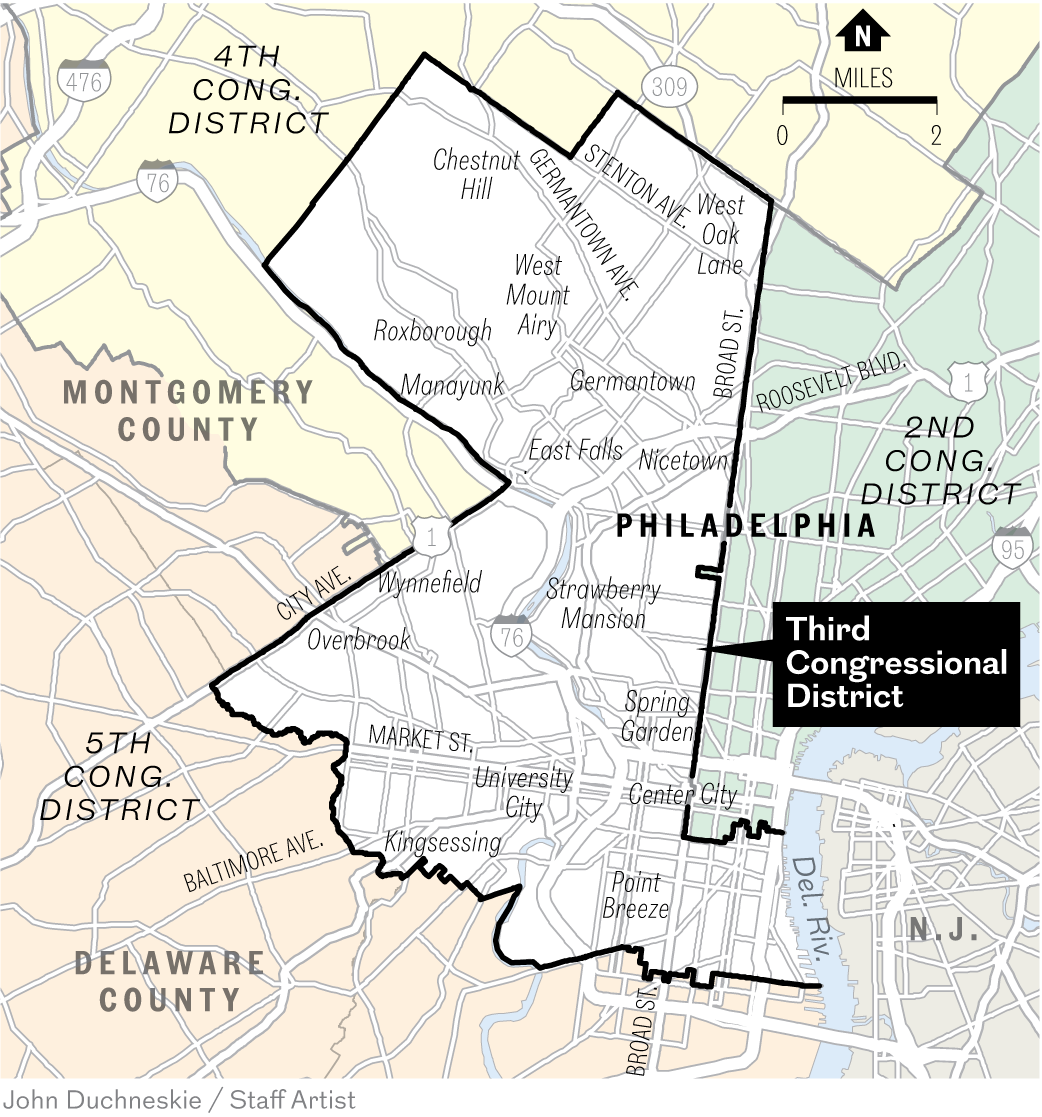
    The 3rd Congressional District is, by some measures, the most heavily Democratic district in the U.S. House, and includes West and Northwest Philadelphia and parts of Center City, Southwest, South, and North Philadelphia.

    The winner of the Democratic primary in May is all but guaranteed victory in November. Democrats hold a 7-to-1 voter registration edge over Republicans in Philadelphia.

    Map of Pennsylvania’s Third Congressional District.

    Earning the party nod may help Street stand out in a crowded field and will bolster his ground game for campaigning, activating the party’s hundreds of committeepeople to get out the vote for him.

    But it doesn’t guarantee victory. Insurgent candidates have defied the party’s dominance several times in recent city elections, and the district includes several progressive pockets that could open the door for a candidate who can coalesce the left against Street.

    The endorsement followed a vote by the Democratic ward leaders in the district. A candidate must receive at least 50% of the vote to win the party endorsement.

    If no candidate reaches that mark, each ward prints its own sample ballots with its preferred candidates, which often happens in open contests like this year’s primary.

    The party’s endorsement of Street means all ward leaders are now encouraged to include him in the literature distributed to voters before and on election day. Some wards, however, choose to print their own slates anyway.

    The party did not immediately disclose the final vote tally at the endorsement meeting.

    Northwest Philadelphia’s 50th Ward, which is led by Mayor Cherelle L. Parker, has not yet made an endorsement in the race, said Aren Platt, executive director of the mayor’s campaign, People for Parker.

    Top candidates in the race, including Street, were scheduled to face off at a candidates forum hosted by the Center City Residents Association on Monday night.

  • John Fetterman asks DHS to halt development of ICE detention centers in Pennsylvania, saying they will burden local communities

    U.S. Sen. John Fetterman (D., Pa.) is calling on the Department of Homeland Security to hit the brakes on its plan to develop two Immigration and Customs Enforcement detention centers in Pennsylvania, saying they would have a negative impact on local communities.

    “While I have been clear in my support for the enforcement of federal immigration law, this decision will do significant damage to these local tax bases, set back decades-long efforts to boost economic development, and place undue burdens on limited existing infrastructure in these communities,” Fetterman wrote in a letter addressed to DHS Secretary Kristi Noem and posted online Saturday.

    Fetterman’s criticism comes shortly after DHS purchased an $87 million warehouse in Upper Bern Township, Berks County, and a nearly $120 million former Big Lots distribution center in Tremont Township, Schuylkill County.

    A 1.3-million-square-foot former Big Lots warehouse in Tremont, Pa., has been bought by U.S. Immigration and Customs Enforcement for $119 million. The agency plans to detain up to 7,500 immigrants there.

    The Tremont Township detention center would house as many as 7,500 people, Fetterman noted, while the Upper Bern Township one would be capable of detaining 1,500 people.

    Upper Bern Township has 1,606 residents, according to the U.S. Census Bureau, and is about 30 minutes northwest of Reading. The facility is near an Amazon warehouse and the Mountain Springs Camping Resort.

    Tremont Township — where the much larger detention center is set to be built — has just 283 residents and is next to the 1,670-resident Tremont Borough. Tremont is in a rural area northeast of Harrisburg, near the Appalachian Trail, state game lands, and Fort Indiantown Gap, an Army National Guard training center.

    In his letter, Fetterman said local and state officials did not have a chance to weigh in on how these massive facilities would affect everything from sewer systems and the electrical grid to hospitals and emergency medical services.

    “Both townships do not currently have the capacity to meet the demands of these detention centers, with Tremont Township officials specifically stating the proposed 7,500-bed detention facility would quadruple the existing burden on their public infrastructure system,” Fetterman said.

    A warehouse in Upper Bern Township, Berks County, Pennsylvania, was purchased by ICE and the Trump administration.
    A warehouse in Upper Bern Township, Berks County, Pa., was purchased by ICE and the Trump administration.

    The letter maintains Fetterman’s stance as someone who supports ICE operations in general while criticizing the federal government’s recent handling of them. After federal agents shot and killed two U.S. citizens in Minneapolis last month, Fetterman called on the Trump administration to fire Noem. A few days later, Fetterman said he supports ICE agents wearing face masks.

    Fetterman was among 23 Senate Democrats to cross the aisle last month to vote for a compromise bill funding the federal government through September, while granting just two weeks of funding for DHS.

    Fetterman said the Pennsylvania facilities would result in a tax loss of $1.6 million to the communities. He asked DHS to agree to several conditions before proceeding further with the sites.

    He requested an “impact assessment,” details on the criteria used to select these facilities, an agreement that federal funds be used to upgrade them, and “a commitment to a period of public engagement and dialogue with these communities.”

    “Due to these significant concerns, it is my fear that DHS and ICE did not perform any due diligence, spending more than $200 million in tax dollars for warehouses that cannot be adequately converted and further eroding trust between Pennsylvanians and the Federal government,” Fetterman wrote.

    The Department of Homeland Security and Immigration and Customs Enforcement did not immediately respond to a request for comment.

    This story has been updated to correct the location of one of the proposed detention centers to Upper Bern Township.

  • Could the Philly region become the ‘eds, meds, and defense industrial base’ region?

    Could the Philly region become the ‘eds, meds, and defense industrial base’ region?

    As Chris Scafario sees it, Philadelphia’s reputation as an “eds and meds” region, referring to its plethora of colleges and hospitals, could grow a third leg.

    It could also become the defense industrial base region, said Scafario, CEO of the Delaware Valley Industrial Resource Center.

    President Donald Trump wants to increase defense spending, with $1.5 trillion proposed for 2027. This could mean more research and workforce development training opportunities — and local universities are positioned to take advantage of it, Scafario said.

    Chris Scafario, CEO of the Delaware Valley Industrial Resource Center

    “A lot of that investment is going to be targeted toward university and innovation-based relationships because they need help getting stuff done,” said Scafario, who is talking to local colleges to help get them ready to capitalize. “They need access to brilliant people, whether they’re faculty or the faculty’s work products, the students.”

    The move comes as colleges face potential cuts in research funding under the Trump administration in other areas, such as the National Institutes of Health. Both Princeton University and the University of Pennsylvania in the last month announced cutbacks to cope with potential financial fallout from federal policies.

    Scafario’s center, which is based at the Navy Yard and was founded in 1988, aims to foster economic development and local manufacturing.

    The Philadelphia region has been involved in defense contracting on and off for years, with major hubs in naval and aerospace manufacturing, and local universities say they worked with the Department of Defense in the past. Rowan University in New Jersey says it has $70 million in defense-related research projects underway.

    But Scafario sees the opportunity for major expansion.

    Drexel University, Temple University, Penn, Rowan, and Villanova University, which is already a top producer of naval engineers, are among the schools that are “in a great spot to leverage the opportunities that are going to be coming through the defense industrial base,” Scafario said. “In the next year, people are going to start realizing that we are meds, eds, and a defense industrial base region. It’s going to bring a lot of investment, a lot of economic opportunities, and some really, really great employment opportunities in the region.”

    The Philadelphia region could become a national anchor for shipbuilding or other maritime industrial-based activities, he said.

    Scafario hopes to bring colleges together with other partners for more discussions in the spring when the timeline for those federal investments starts to become clearer, he said.

    Amanda Page, Warfighter Technologies Liaison for the Delaware Valley Industrial Resource Center

    Colleges could help with efforts to accelerate production capacity of naval ships and work on initiatives such as how to make submarines less traceable and more durable. Or they could help improve medical equipment and training for the battlefield. The treatment standard in the military used to be the “golden hour”; now it’s about “prolonged field care,” said Amanda Page, a retired active-duty Army medic who serves as warfighter technologies liaison for the center.

    “Medical personnel need to be prepared mentally, physically, emotionally, and electronically to keep those patients for 96 hours,” Page said. “That’s going to require a ton of research and technology.”

    Page was hired by the center in October to help build relationships between the center, the Department of Defense (which the Trump administration has rebranded the Department of War), local higher education systems, and the city.

    “I’m super excited about what it will bring to the region and what the region can prove to the Department of War about its legitimacy,” she said, “as a manufacturing and technology powerhouse.”

    Local colleges say they are reviewing potential collaborations.

    “There are a lot of opportunities we are looking at,” said Aleister Saunders, Drexel’s executive vice provost for research and innovation, declining to provide specifics for competitive reasons.

    In addition to opportunities with the Navy and the Navy Yard, he noted major local companies involved with aerospace and aviation, including Lockheed Martin and Boeing. There are also opportunities around materials and textiles with the Philadelphia-based Defense Logistics Agency Troop Support, which provides many of the supplies to the military.

    “Those are really valuable assets that we should find a way to leverage better than we are,” he said.

    Key opportunities are available in advanced manufacturing and workforce development, he said.

    “There could be folks who are already working in manufacturing who need [upgraded skills] in advanced manufacturing techniques,” he said.

    Temple University president John Fry said increasing research opportunities and impact — the school’s research budget now exceeds $300 million — is a priority in the school’s strategic plan. Temple offers opportunities around medical manufacturing, healthcare, and health services, he said.

    “The key to doing that is going to be partnerships,” he said.

    Josh Gladden, Temple’s vice president for research, said he has met with folks from Scafario’s group and they are talking about some opportunities, but declined to discuss them because they are in early development.

    He noted that the Navy is interested in working with Temple’s burn unit.

    Temple has also been getting to know the workforce needs of businesses at the Navy Yard and looking at how to align its educational programs, Fry said.

    “Those are relationships I would love to pursue,” he said. “Part of our mission is to develop the future workforce and grow the regional economy, and that’s one way of doing it.”

    Rowan has been a longtime research partner with the U.S. military, said Mei Wei, the school’s vice chancellor for research.

    “It’s encouraging to know there could be more funding available for research,” Wei said. “These projects give our undergraduate and graduate students the opportunities they need to develop their research skills with close guidance from our faculty and our external partners.”

  • Trump’s racist post about Obamas is deleted after backlash despite White House earlier defending it

    Trump’s racist post about Obamas is deleted after backlash despite White House earlier defending it

    WASHINGTON — President Donald Trump’s racist social media post featuring former President Barack Obama and his wife, Michelle Obama, as primates in a jungle was deleted after a backlash from both Republicans and Democrats who criticized the video as offensive.

    Trump said later Friday that he won’t apologize for the post. “I didn’t make a mistake,” he said.

    The Republican president’s Thursday night post was deleted Friday and blamed on a staffer after widespread backlash, from civil rights leaders to veteran Republican senators, for its treatment of the nation’s first Black president and first lady. The deletion, a rare admission of a misstep by the White House, came hours after press secretary Karoline Leavitt dismissed “fake outrage” over the post. After calls for its removal for being racist — including by Republicans — the White House said a staffer had posted the video erroneously and it had been taken down.

    The post was part of a flurry of social media activity on Trump’s Truth Social account that amplified his false claims that the 2020 election was stolen from him, despite courts around the country and a Trump attorney general from his first term finding no evidence of fraud that could have affected the outcome.

    Trump has a record of intensely personal criticism of the Obamas and of using incendiary, sometimes racist, rhetoric — from feeding the lie that Obama was not a native-born U.S. citizen to crude generalizations about majority Black countries.

    The post came in the first week of Black History Month and days after a Trump proclamation that cited “the contributions of black Americans to our national greatness and their enduring commitment to the American principles of liberty, justice, and equality.”

    An Obama spokeswoman said the former president, a Democrat, had no response.

    ‘An internet meme’

    Nearly all of the 62-second clip, which was among dozens of Truth Social posts from Trump overnight, appears to be from a conservative video alleging deliberate tampering with voting machines in battleground states as the 2020 presidential votes were tallied. At the 60-second mark is a quick scene of two primates, with the Obamas’ smiling faces imposed on them.

    Those frames were taken from a separate video, previously circulated by an influential conservative meme maker. It shows Trump as “King of the Jungle” and depicts a range of Democratic leaders as animals, including Joe Biden, who is white, as a jungle primate eating a banana.

    “This is from an internet meme video depicting President Trump as the King of the Jungle and Democrats as characters from The Lion King,” Leavitt said by text.

    Disney’s 1994 feature film that Leavitt referenced is set on the savannah, not in the jungle, and it does not include great apes.

    “Please stop the fake outrage and report on something today that actually matters to the American public,” Leavitt added.

    By noon, the post had been taken down with responsibility placed on a Trump subordinate.

    The White House explanation raised additional questions about the control of Trump’s social media account, which has also been used to levy import taxes, threaten military action, make domestic policy announcements, and intimidate political rivals. The president often signs his name or initials after policy announcements.

    The White House did not immediately respond to questions about its process for vetting posts and how it guarantees that the public knows when Trump himself is posting.

    Mark Burns, a pastor and a prominent Trump supporter who is Black, said Friday afternoon on X that he had spoken “directly” with Trump about the post. He recommended to Trump that he fire the staffer who posted the video and publicly condemn what happened.

    “He knows this is wrong, offensive, and unacceptable,” Burns posted.

    Condemnation across the political spectrum

    Trump and the official White House social media accounts frequently repost memes and artificial intelligence-generated videos. As Leavitt did Friday, Trump aides typically dismiss critiques and cast the images as humorous.

    Yet while it was still up, Trump’s post drew condemnation from across the political and ideological spectrum — and demands for an apology that had not come by the early afternoon.

    The Rev. Bernice King, daughter of the assassinated civil rights icon the Rev. Dr. Martin Luther King Jr., resurfaced her father’s words: “Yes. I’m Black. I’m proud of it. I’m Black and beautiful.” She praised Black Americans as “diverse, innovative, industrious, inventive” and added, “We are beloved of God as postal workers and professors, as a former first lady and president. We are not apes.”

    The U.S. Senate’s lone Black Republican, Tim Scott of South Carolina, called on Trump to take down the post. “Praying it was fake because it’s the most racist thing I’ve seen out of this White House,” Scott, who chairs Senate Republicans’ midterm campaign arm, said on social media.

    Another Republican, Sen. Roger Wicker of Mississippi, is white but represents the state with the largest percentage of Black residents. Wicker called the post “totally unacceptable” and said the president should apologize.

    Some Republicans who face tough reelections this November voiced concerns, as well, feeding an unusual cascade of intraparty criticism for a president who often has enjoyed a stranglehold over fellow Republicans who stayed silent over some of Trump’s previous controversial statements or fear a public spat with the president or losing his endorsement in a future campaign.

    NAACP President Derrick Johnson pointed to Trump’s wider political concerns, asserting that Trump is trying anything to distract from economic conditions and attention on the Jeffrey Epstein case files.

    “Donald Trump’s video is blatantly racist, disgusting, and utterly despicable,” Johnson said in a statement. “You know who isn’t in the Epstein files? Barack Obama,” he continued. “You know who actually improved the economy as president? Barack Obama.”

    A long history of racism

    There is a long history in the U.S. of powerful white figures associating Black people with animals, including apes, in demonstrably false and racist ways. The practice dates back to 18th-century cultural racism and pseudo-scientific theories in which white people drew connections between Africans and monkeys to justify the enslavement of Black people in Europe and North America, and later to dehumanize freed Black people as an uncivilized threat to white people.

    Thomas Jefferson, author of the Declaration of Independence, wrote in his famous text “Notes on the State of Virginia” that Black women were the preferred sexual partners of orangutans. President Dwight Eisenhower, discussing the desegregation of public schools in the 1950s, once argued that white parents were concerned about their daughters being in classrooms with “big Black bucks.” Obama, as a candidate and president, was featured as a monkey or other primate on T-shirts and other merchandise.

    In his 2024 campaign, Trump said immigrants were “poisoning the blood of our country,” language similar to what Adolf Hitler said to dehumanize Jews in Nazi Germany.

    During his first White House term, Trump referred to a swath of developing nations that are majority Black as “shithole countries.” He initially denied using the slur but admitted in December 2025 that he did say it.

    When Obama was in the White House, Trump advanced the false claims that the 44th president, who was born in Hawaii, was born in Kenya and was constitutionally ineligible to serve. Trump, in interviews that helped endear him to many conservative voters, repeatedly demanded that Obama produce birth records and prove he was a “natural-born citizen” as required to become president.

    Obama eventually released his Hawaii records. Trump finally acknowledged during his 2016 campaign, after having won the Republican nomination, that Obama was born in Hawaii. But he immediately said, falsely, that his Democratic rival Hillary Clinton started those birtherism attacks on Obama.