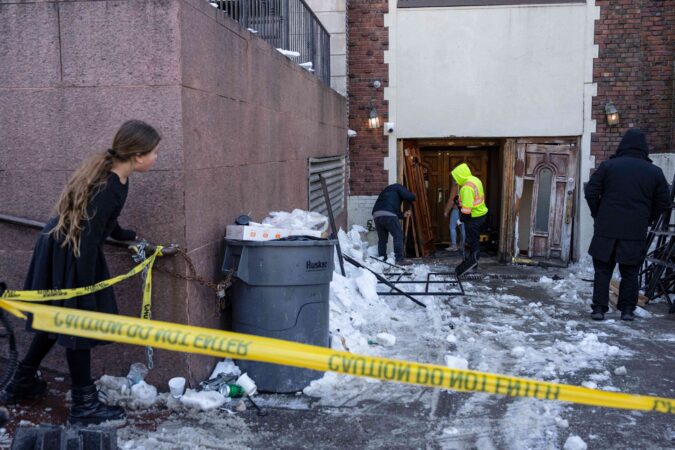
NEW YORK — A man who drove his car into the Chabad Lubavitch world headquarters in New York City had recently been trying to connect with the Hasidic Jewish community and was recorded on video enthusiastically dancing with congregants during a recent visit to the site, police said.
Investigators were still trying to piece together what prompted the man, Dan Sohail, 36, to ram his car repeatedly into a set of doors at the revered Hasidic Jewish center in Brooklyn on Wednesday night, but police charged him Thursday with attempted assault as a hate crime, based on the fact that the building was a Jewish institution.
“Earlier this month, Sohail attended a social gathering at this very same location,” New York Police Department Chief of Detectives Joseph Kenny said at a news conference, noting there was video circulating online of that gathering.
The video appears to show Sohail dancing with Orthodox men inside the headquarters.
“We believe that he was in Brooklyn last night to continue this attempt to connect with the Lubavitch Jewish community,” Kenny said.
Sohail told police that he lost control of his car because he was wearing “clunky boots,” Kenny said, though Kenny added that Sohail had removed several blockades and cleared snow away from a sidewalk before driving into the building.
The complex at 770 Eastern Parkway includes a synagogue and offices, and was packed with worshippers at the time, but no one was injured. Some of the building’s doors were damaged. No weapons were discovered in Sohail’s car.
Sohail’s father told the New York Daily News Thursday that his son had been considering converting to Judaism and that he had struggled with “mental problems.” The Forward, a media outlet centered on Jewish issues, interviewed a rabbi in New Jersey who said Sohail attended a Purim service at Chabad last year and visited two other times, looking for spiritual guidance.
“I was able to talk to him for a few minutes and see that he’s not exactly stable,” Rabbi Levi Azimov told the Forward. Another rabbi at a Jewish school in Carteret, N.J., where Sohail lived, told the Forward he had dropped by for afternoon prayers on Tuesday but began yelling about feeling let down by Chabad after the service.
The crash occurred on the 75th anniversary of Rabbi Menachem Mendel Schneerson becoming the leader of the Lubavitch movement and prompted immediate concern in the city. Mayor Zohran Mamdani and the city’s police commissioner, Jessica Tisch, rushed to the scene to brief the media, with officials announcing increased security around houses of worship across the city.
“This is deeply alarming, especially given the deep meaning and the history of the institution to so many in New York and around the world,” Mamdani said. “And on today of all days.”
The Chabad Lubavitch headquarters and synagogue in Brooklyn draws thousands of visitors each year. There is a near constant police presence around the complex.
WASHINGTON — Democrats and the White House struck a deal to avert a partial government shutdown and temporarily fund the Department of Homeland Security as they consider new restrictions for President Donald Trump’s surge of immigration enforcement. But passage was delayed late Thursday as leaders scrambled to win enough support for the agreement before the midnight Friday deadline.
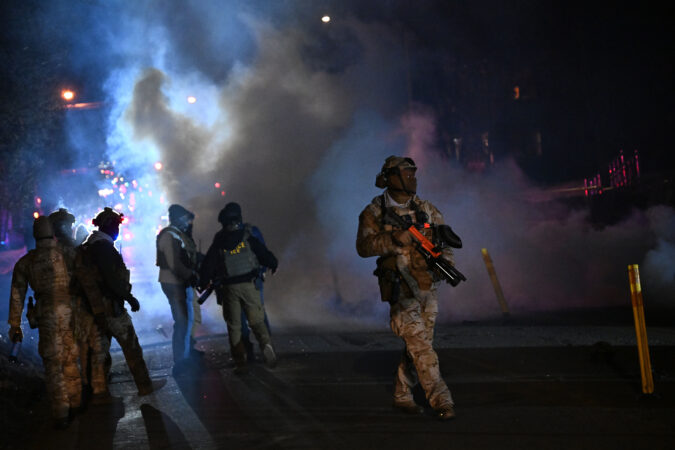
As the country reels from the deaths of two protesters at the hands of federal agents in Minneapolis, the White House agreed to separate homeland security funding from a larger spending bill and fund the department for two weeks while they debate Democratic demands for curbs on the U.S. Immigration and Customs Enforcement agency.
“Republicans and Democrats have come together to get the vast majority of the government funded until September” while extending current funding for Homeland Security, Trump said in a social media post Thursday evening. He encouraged members of both parties to cast a “much needed Bipartisan ‘YES’ vote.”
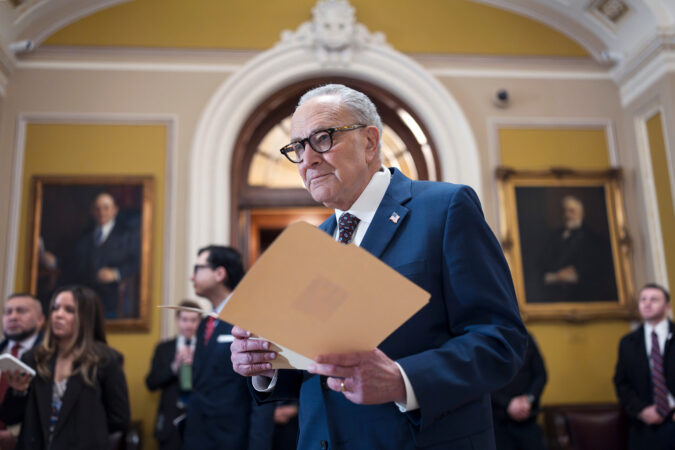
Still, all senators weren’t yet on board. Leaving the Capitol just before midnight Thursday after hours of negotiations, Senate Majority Leader John Thune said there were “snags on both sides” as he and Democratic leader Chuck Schumer tried to rally support.
“Hopefully people will be of the spirit to try and get this done tomorrow,” Thune said.
Sen. Lindsey Graham, R-S.C., said late Thursday that he was one of the senators objecting. He said Immigration and Customs Enforcement agents were being treated unfairly. He has also opposed House language that would repeal a new law that gives senators the ability to sue the government for millions of dollars if their personal or office data is accessed without their knowledge.
Democrats had requested the two-week extension and say they are prepared to block the wide-ranging spending bill if their demands aren’t met, denying Republicans the votes they need to pass it and potentially triggering a shutdown.
Rare bipartisan talks
The rare bipartisan talks between Trump and his frequent adversary, Senate Democratic leader Chuck Schumer, came after the fatal shooting of 37-year-old Alex Pretti in Minnesota over the weekend and calls by senators in both parties for a full investigation. Schumer called it “a moment of truth.”
“The American people support law enforcement. They support border security. They do not support ICE terrorizing our streets and killing American citizens,” Schumer said.
The standoff has threatened to plunge the country into another shutdown, just two months after Democrats blocked a spending bill over expiring federal health care subsidies. That dispute closed the government for 43 days as Republicans refused to negotiate.
That shutdown ended when a small group of moderate Democrats broke away to strike a deal with Republicans, but Democrats are more unified this time after the fatal shootings of Pretti and Renee Good by federal agents.
Democrats lay out demands
Democrats have laid out several demands, asking the White House to “end roving patrols” in cities and coordinate with local law enforcement on immigration arrests, including requiring tighter rules for warrants.
They also want an enforceable code of conduct so agents are held accountable when they violate rules. Schumer said agents should be required to have “masks off, body cameras on” and carry proper identification, as is common practice in most law enforcement agencies.
The Democratic caucus is united in those “common sense reforms,” and the burden is on Republicans to accept them, Schumer said.
“Boil it all down, what we are talking about is that these lawless ICE agents should be following the same rules that your local police department does,” said Democratic Sen. Tina Smith of Minnesota. “There has to be accountability.”
Earlier on Thursday, Tom Homan, the president’s border czar, stated during a press conference in Minneapolis that federal immigration officials are developing a plan to reduce the number of agents in Minnesota, but this would depend on cooperation from state authorities.
Still far apart on policy
Negotiations down the road on a final agreement on the Homeland Security bill are likely to be difficult.
Democrats want Trump’s aggressive immigration crackdown to end. “If the Trump administration resists reforms, we shut down the agency,” said Connecticut Sen. Richard Blumenthal.
“We need to take a stand,” he said.
But Republicans are unlikely to agree to all of the Democrats’ demands.
North Carolina Sen. Thom Tillis said he is opposed to requiring immigration enforcement officers to show their faces, even as he blamed Homeland Security Secretary Kristi Noem for decisions that he said are “tarnishing” the agency’s reputation.
“You know, there’s a lot of vicious people out there, and they’ll take a picture of your face, and the next thing you know, your children or your wife or your husband are being threatened at home,” Tillis said.
South Carolina Sen. Graham said some of the Democratic proposals “make sense,” such as better training and body cameras. Still, he said he was putting his Senate colleagues “on notice” that if Democrats try to make changes to the funding bill, he would insist on new language preventing local governments from resisting the Trump administration’s immigration policies.
“I think the best legislative solution for our country would be to adopt some of these reforms to ICE and Border Patrol,” Graham posted on X. But he said that the bill should also end so-called “sanctuary city” policies.
Uncertainty in the House
Across the Capitol, Speaker Mike Johnson, R-La., told The Associated Press on Thursday that he had been “vehemently opposed” to breaking up the funding package, but “if it is broken up, we will have to move it as quickly as possible. We can’t have the government shut down.”
On Thursday evening, at a premiere of a movie about first lady Melania Trump at the Kennedy Center, Johnson said he might have some “tough decisions” to make about when to bring the House back to Washington to approve the bills separated by the Senate, if they pass.
“We’ll see what they do,” Johnson said.
House Republicans have said they do not want any changes to the bill they passed last week. In a letter to Trump on Tuesday, the conservative House Freedom Caucus wrote that its members stand with the Republican president and ICE.
“The package will not come back through the House without funding for the Department of Homeland Security,” they wrote.
Video of the Jan. 19 incident between 22-year-old Paulina Reyes and 22-year-old Francis Scales quickly went viral on social media, garnering millions of views and spurring reactions from right-leaning influencers and Elon Musk.
During the confrontation, Reyes — whose internship with WHYY had ended before the incident — accused Scales of being a “fascist” and a “racist” for posting content online she viewed as insulting to Muslims and people of color.
Attorney General Dave Sunday, in announcing Thursday that his office’s mass transit prosecutor would oversee the case, said “violence will not be tolerated as a means to conduct political debate, protest, or exhibit differences.
“This type of violence is senseless, as we have an individual facing criminal charges over political disagreement,” the attorney general said in a statement.
In addition to simple assault, Reyes is charged with possessing an instrument of a crime, a misdemeanor. She also faces charges of harassment and disorderly conduct, which are summary offenses.
Reyes was arraigned Thursday morning and released without having to to post bail.
The mass transit prosecutor for Philadelphia, Michael Untermeyer, worked with SEPTA police to bringthe charges, according to Sunday.
It has drawn criticism from District Attorney Larry Krasner, who last year challenged the law that created the post, saying it was unconstitutional, unfairly singled out Philadelphia, and stripped his office of authority.
A spokesperson for Krasner did not immediately return a request for comment on the special prosecutor’s decision.
Footage of the South Philadelphia incident ricocheted across conservative media, and some influencers had accused Reyes of being an “Antifa agitator” and called for her arrest. Musk’s comments on X, suggesting Reyes had “violence issues,” generated hundreds of thousands of views alone.
Reyes told The Inquirer in an earlier interview that she had been defending herself against Scales, who was filming her,and that resorting to pepper spray was “not something I wanted to do.”
She said she has since received death and rape threats for her role in the confrontation. She did not return a request for comment Thursday.
Reyes and Scales knew each other from attending the Community College of Philadelphia, where Reyes is still a student.
Videos on Scales’ social media page, Surge Philly, show the commentator interviewing attendees at protests, asking them questions about charged topics such as immigration enforcement. He has also been a vocal critic of Krasner.
Scales said Reyes’ pepper spray got in his face and eyes, and Sunday, the attorney general, said Reyes also punched the man. A friend who was with Scales filmed the incident. Scales, too, filmed Reyes, saying he did so for his own safety.
Scales said in a statement that he was grateful for the attorney general’s decision to bring charges, and that he hoped that would deter others from similar actions.
“No one has the right to physically attack another person because of different opinions,” Scales said.
Federal prosecutors in Minneapolis have told U.S. Attorney Daniel Rosen, the Trump administration appointee leading the office, that they feel deeply frustrated by the Justice Department’s response to the shootings of Renée Good and Alex Pretti by immigration officers and suggested that they could resign en masse, leaving the office unable to handle its current caseload, according to two officials familiar with the office.
At least one prosecutor in the office’s criminal division has resigned since a meeting this week with Rosen at which the prosecutors aired their concerns, according to the people, who spoke on the condition of anonymity to discuss a personnel matter that has not been made public.
The threat of further resignations is the latest sign of how the federal judicial system in Minnesota has begun to crack under the strain imposed by the administration’s immigration enforcement surge in the state. On Wednesday, the chief federal district judge in the state wrote that Immigration and Customs Enforcement officials had violated 96 court orders since launching the crackdown in Minnesota, dubbed Operation Metro Surge.
“ICE has likely violated more court orders in January 2026 than some federal agencies have violated in their entire existence,” Chief U.S. District Judge Patrick Schiltz wrote.
When asked for comment about the Minnesota prosecutors, a Justice Department spokesperson responded with Attorney General Pam Bondi’s February 2025 “zealous advocacy” memo that said attorneys would face discipline or termination if they are not “vigorously defending presidential policies.”
The U.S. attorney’s office in Minnesota has been in turmoil since the administration sidelined the office in the investigations around the shootings of Good and Pretti, who were shot two and a half weeks apart during confrontations with immigration officers in Minneapolis.
At least a half-dozen prosecutors in the office — including the second-in-command — resigned earlier this month after top Justice Department officials told prosecutors not to investigate the shooting of Good but instead try to build a case against her partner.
In the aftermath of those resignations, the Justice Department sent prosecutors from other Midwestern states to help deal with the swelling caseload in Minnesota. The severe staffing shortage in the office is expected to worsen in the coming weeks as more prosecutors from the office’s criminal and civil divisions resign.
The Minnesota U.S. attorney’s office is down to about half of its full staffing level of approximately 70 lawyers. At least some of the resignations occurred in the final months of the Biden administration before President Donald Trump took office.
When Pretti was shot by immigration officials on Jan. 24, Trump administration officials said the Department of Homeland Security would be leading the probe, prompting confusion and frustration among Minneapolis prosecutors who felt they should be involved.
The shootings of Good and Pretti were captured on cellphone cameras and have prompted outrage from Democrats and Republicans over Trump’s immigration crackdown.
Typically, a federal investigation into an officer-involved shooting would involve FBI agents and criminal and civil rights prosecutors. Any federal use-of-force investigation into an officer’s conduct is considered a civil rights investigation because the provision under which officers can be charged is a civil rights statute that covers deprivation of a person’s rights “under color of law.”
The Washington Post reported that the FBI briefly opened a civil rights investigation into the Good shooting before changing course.
Law enforcement officers are rarely charged for using lethal force, in part because the law provides significant leeway for officers to decide when use of force is needed. Law enforcement experts said that an accurate conclusion can only be reached, however, if officials examine all relevant state and federal laws and their application to the facts in the case.
The immigration crackdown has strained U.S. attorney’s offices across the country. On the criminal side, prosecutors are handling a surge in cases involving allegations of residents impeding immigration officers. And on the civil side, attorneys are being inundated with an influx of petitions from immigrants contesting their detainments.
The Justice Department is also facing staffing shortages at its Washington headquarters and in U.S. attorney’s offices across the country. In 2024, roughly 10,000 attorneys worked across the Justice Department and its components, including the FBI. In 2025, Justice Connection, an advocacy group that has been tracking departures, estimates that at least 5,500 people — not all of them attorneys — had quit the department, been fired or taken a buyout offered by the Trump administration.
The department has struggled to find qualified candidates to fill these vacancies.
DENVER — Donald Trump lost his bid for reelection in 2020. But for more than five years, he’s been trying to convince Americans the opposite is true by falsely saying the election was marred by widespread fraud.
Now that he’s president again, Trump is pushing the federal government to back up those bogus claims.
On Wednesday, the FBI served a search warrant at the election headquarters of Fulton County, Ga., which includes most of Atlanta, seeking ballots from the 2020 election. That follows Trump’s comments earlier this month when he suggested during a speech at the World Economic Forum in Davos, Switzerland, that charges related to the election were imminent.
“The man has obsessions, as do a fair number of people, but he’s the only one who has the full power of the United States behind him,” said Rick Hasen, a UCLA law professor.
Hasen and many others noted that Trump’s use of the FBI to pursue his obsession with the 2020 election is part of a pattern of the president transforming the federal government into his personal tool of vengeance.
Sen. Jon Ossoff, a Georgia Democrat, compared the search to the Minnesota immigration crackdown that has killed two U.S. citizen protesters, launched by Trump as his latest blow against the state’s governor, who ran against him as Vice President Kamala Harris’ running mate in 2024.
“From Minnesota to Georgia, on display to the whole world, is a President spiraling out of control, wielding federal law enforcement as an unaccountable instrument of personal power and revenge,” Ossoff said in a statement.
It also comes as election officials across the country are starting to rev up for the 2026 midterms, where Trump is struggling to help his party maintain its control of Congress. Noting that, in 2020, Trump contemplated using the military to seize voting machines after his loss, some worry he’s laying the groundwork for a similar maneuver in the fall.
“Georgia’s a blueprint,” said Kristin Nabers of the left-leaning group All Voting Is Local. “If they can get away with taking election materials here, what’s to stop them from taking election materials or machines from some other state after they lose?”
Georgia has been at the heart of Trump’s 2020 obsession. He infamously called Republican Secretary of State Brad Raffensperger on Jan. 2, 2021, asking that Raffensperger “find” 11,780 more votes for Trump so he could be declared the winner of the state. Raffensperger refused, noting that repeated reviews confirmed Democrat Joe Biden had narrowly won Georgia.
Those were part of a series of reviews in battleground states, often led by Republicans, that affirmed Biden’s win, including in Michigan, Wisconsin and Nevada. Trump also lost dozens of court cases challenging the election results and his own attorney general at the time said there was no evidence of widespread fraud.
Voting machine companies also have brought defamation cases against some conservative-leaning news sites that aired unsubstantiated claims about their equipment being linked to fraud in 2020. Fox News settled one such case by agreeing to pay $787 million after the judge ruled it was “CRYSTAL clear” that none of the allegations were true.
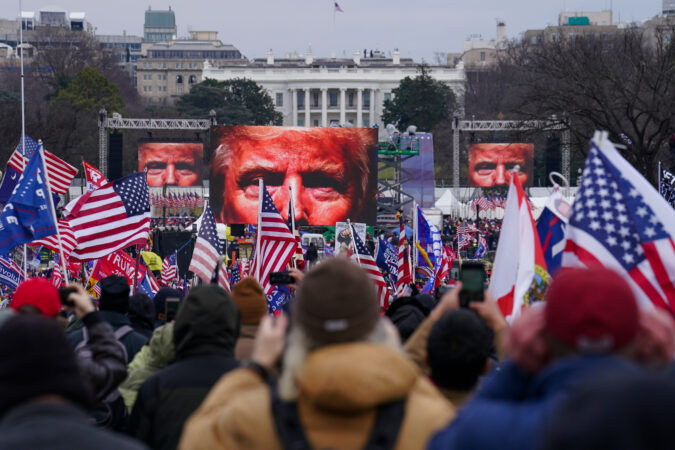
On his first day in office, Trump rewarded some of those who helped him try to overturn the 2020 election results by pardoning, commuting or vowing to dismiss the cases of about 1,500 people charged in the Jan. 6, 2021, attack on the U.S. Capitol. He later signed an executive order trying to set new rules for state election systems and voting procedures, although that has been repeatedly blocked by judges who have ruled that the Constitution gives states, and in some instances Congress, control of elections rather than the president.
As part of his campaign of retribution, Trump also has spoken about wanting to criminally charge lawmakers who sat on the House committee investigating the Jan. 6 attack, suggesting protective pardons of them from Biden are legally invalid. He’s targeted a former cybersecurity appointee who assured the public in 2020 that the election was secure.
During a year of presidential duties, from dealing with wars in Gaza and Ukraine to shepherding sweeping tax and spending legislation through Congress, Trump has reliably found time to turn the subject to 2020. He has falsely called the election rigged, said Democrats cheated and even installed a White House plaque claiming Biden took office after “the most corrupt election ever.”
David Becker, a former Department of Justice voting rights attorney and executive director of The Center for Election Innovation & Research, said he was skeptical the FBI search in Georgia would lead to any successful prosecutions. Trump has demanded charges against several enemies such as former FBI Director James Comey and New York’s Democratic Attorney General, Letitia James, that have stalled in court.
“So much this administration has done is to make claims in social media rather than go to court,” Becker said. “I suspect this is more about poisoning the well for 2026.”
MINNEAPOLIS — The Justice Department has charged a man who squirted apple cider vinegar on Democratic U.S. Rep. Ilhan Omar at an event in Minneapolis, according to court papers made public Thursday.
The man arrested for Tuesday’s attack, Anthony Kazmierczak, faces a charge of forcibly assaulting, opposing, impeding and intimidating Omar, according to a complaint filed in federal court.
Authorities determined that the substance was water and apple cider vinegar, according to an affidavit. After Kazmierczak sprayed Omar with the liquid, he appeared to say, “She’s not resigning. You’re splitting Minnesotans apart,” the affidavit says. Authorities also say that Kazmierczak told a close associate several years ago that “somebody should kill” Omar, court documents say.
Kazmierczak appeared briefly in federal court Thursday afternoon. His attorney, Jean Brandl, told the judge her client was unmedicated at the time of the incident and has not had access to the medications he needs to treat Parkinson’s disease and other serious conditions he suffers from.
U.S. Magistrate Judge Dulce Foster ordered that Kazmierczak remain in custody and told officials he needs to see a nurse when he is transferred to the Sherburne County Jail.
Kazmierczak also faces state charges in Hennepin County for terroristic threats and fifth-degree assault, Hennepin County Attorney Mary Moriarty announced Thursday.
“This was a disturbing assault on Rep. Omar, who is frequently the target of vilifying language by fellow elected officials and members of the public,” Moriarty said. “The trust of our community in the federal government keeping politics out of public safety has been eroded by their actions. A state-level conviction is not subject to a presidential pardon now or in the future.”
The attack came during a perilous political moment in Minneapolis, where two people have been fatally shot by federal agents during the White House’s aggressive immigration crackdown.
Kazmierczak has a criminal history and has made online posts supportive of President Donald Trump, a Republican.
Omar, a refugee from Somalia, has long been a fixture of Trump’s anti-immigrant rhetoric. After she was elected seven years ago, Trump said she should “go back” to her country. He recently described her as “garbage” and said she should be investigated. During a speech in Iowa earlier this week, shortly before Omar was attacked, he said immigrants need to be proud of the United States — “not like Ilhan Omar.”
Omar blamed Trump on Wednesday for threats to her safety.
“Every time the president of the United States has chosen to use hateful rhetoric to talk about me and the community that I represent, my death threats skyrocket,” Omar told reporters.
Trump accused Omar of staging the attack, telling ABC News, “She probably had herself sprayed, knowing her.”
Kazmierczak was convicted of felony auto theft in 1989, has been arrested multiple times for driving under the influence and has had numerous traffic citations, Minnesota court records show. There are also indications he has had significant financial problems, including two bankruptcy filings.
In social media posts, Kazmierczak criticized former President Joe Biden and referred to Democrats as “angry and liars.” Trump “wants the US is stronger and more prosperous,” he wrote. “Stop other countries from stealing from us.”
In another post, Kazmierczak asked, “When will descendants of slaves pay restitution to Union soldiers’ families for freeing them/dying for them, and not sending them back to Africa?”
Threats against members of Congress have increased in recent years, peaking in 2021 following the Jan. 6 attack on the U.S. Capitol by a mob of Trump supporters before dipping slightly, only to climb again, according to the most recent figures from the U.S. Capitol Police.
Officials said they investigated nearly 15,000 “concerning statements, behaviors, and communications directed against Members of Congress, their families, staff, and the Capitol Complex” in 2025.
WASHINGTON, D.C. – Gov. Josh Shapiro told national reportersThursdaythat he likes U.S. Sen. John Fetterman (D., Pa.), and still talks to him — citing a meeting several months ago.
It’s long been clear that Pennsylvania’s two top Democrats have a tense relationship, a dynamic Fetterman explained in detail in his memoir, Unfettered, released in November, writing that the two men no longer speak after they butted heads as members of the Pennsylvania Board of Pardons.
Speaking to a roundtable of Washington journalists hosted by the Christian Science Monitor on Thursday, Shapiro said he “of course” likes the commonwealth’s senior senator and still speaks to him.
“We were in a meeting together a few weeks ago with (U.S. Transportation) Secretary (Sean) Duffy, working on an important issue in Pennsylvania. So we all work together, Senator McCormick as well,” Shapiro said. “We’ve got to work together for the people of Pennsylvania.”
That meeting, however, was in November when Shapiro and Fetterman met with Duffy to discuss SEPTA — roughly a week before the release of Fetterman’s book. Mayor Cherelle L. Parker and Sen. Dave McCormick (R., Pa.) also participated in that meeting.
A spokesman for Shapiro did not immediately respond to questions about whether they’ve spoken since.
Though Shapiro and Fetterman’s disagreements date back to the pair’s days on the state pardons board, the senator has increasingly drawn ire from his fellow Democrats in recent months for voting with Republicans and has faced calls for a primary challenge.
Shapiro was mum when asked whether he’d support Fetterman if he sought reelection.
“John will decide if he wants to run for reelection. I appreciate the service,” he said.
Fetterman claims in a chapter of his book titled “The Shapiro Affair” that Shapiro, as attorney general, had been unwilling as a member of the pardons board to recommend the commutation of two men that Fetterman strongly believed should be released.
Fetterman, who was lieutenant governor at the time, even threatened in a private meeting to run against Shapiro for governor if he didn’t support the commutations.
“I told him there were two tracks — that one and the one in which he ran for governor and I ran for the Senate (which was the one I preferred),“ Fetterman wrote in the memoir. ”I had no interest in friction, only in what I felt was justice.”
Fetterman also claimed that Shapiro’s cautionin these cases was about protecting his future political ambitions.
“I believe what drove him to delay and deny applications was not the facts of a given case as much as a fear that someone whose sentence he’d commuted would go on to commit terrible violence on the outside,” Fetterman wrote.
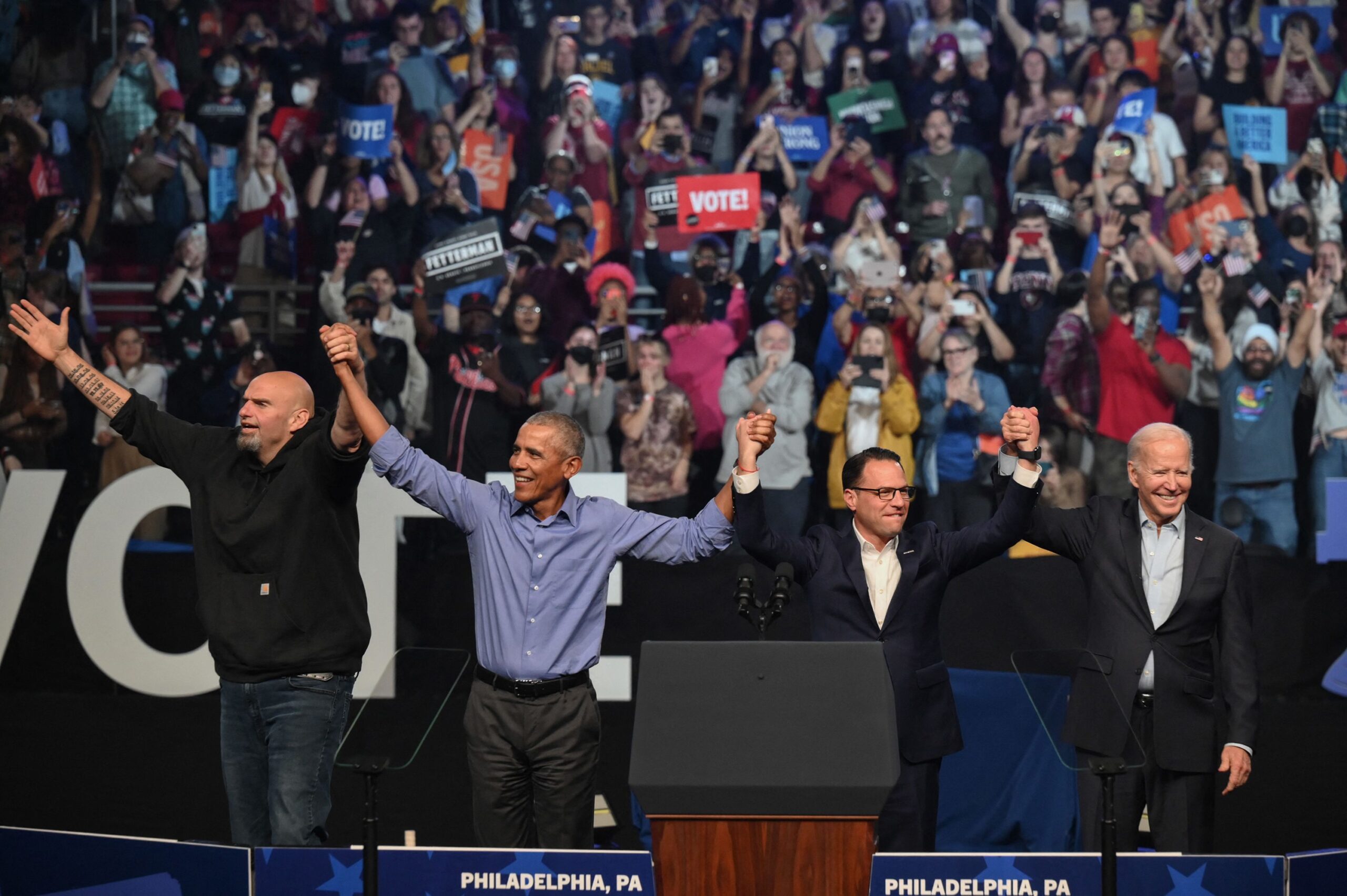
Then-Senate candidate John Fetterman, former President Barack Obama, then-candidate for governor for Pennsylvania Josh Shapiro, and then-President Joe Biden ahead of the 2022 election.
In his own book, Shapiro reflects on agonizing over those decisions including the concern that a commuted individual would go on to harm others. Throughout his book tour he has dodged questions about potential presidential aspirations.
Things got so bad that then-Gov. Tom Wolf had to get involved by meeting with them privately, and Fetterman later got caught on a 2020 Zoom meeting calling Shapiro a “f— asshole,” not realizing that his microphone was still live.
While Fetterman devoted an entire chapter of his 240-page book to Shapiro, the state’s senior U.S. senator only gets two passing mentions in Shapiro’s book.
In one mention, Shapiro notes that he spoke with Fetterman backstage at a 2022 Erie County Democratic Committee dinner when Shapiro debuted a new speech about what “real freedom” means, just days before Fetterman had a stroke in lead up to that year’s primary election.
Shapiro also mentions Fetterman in a chapter about the governor’s history with former President Barack Obama. Shapiro and Fetterman were both on the ballot in 2022 and cohosting a campaign rally, where Obama and former President Joe Biden came to stump for them.
Fetterman is not mentioned in the rest of the book. Shapiro does not delve into the fellow Democrat’s threat to run against him.
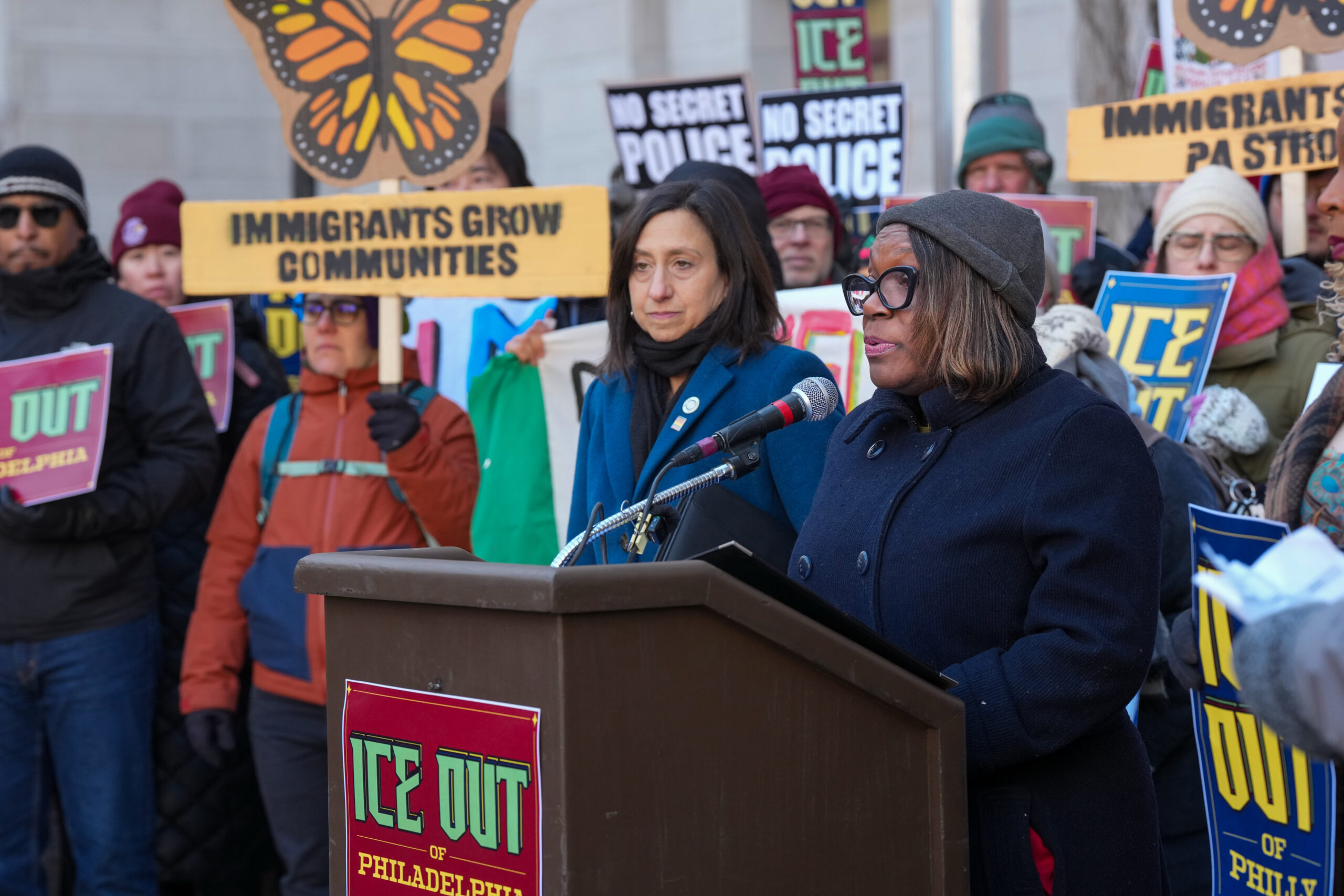
All but two of Philadelphia’s 17 City Council members have sponsored a package of legislation aimed at limiting ICE operations in the city, a level of support that could ensure the measures become law even if they are opposed by the mayor.
The 15 cosponsors, confirmed Thursday by a spokesperson for Councilmember Kendra Brooks, indicate a potentially veto-proof majority of lawmakers back the sweeping “ICE Out” effort.
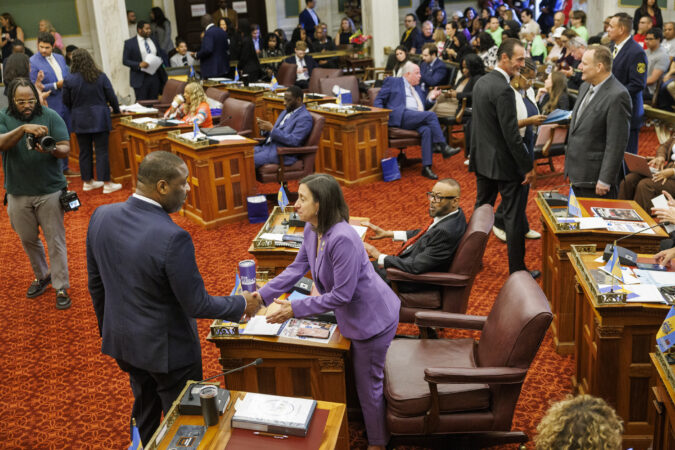
Brooks and Councilmember Rue Landau, the proposal’s authors, on Thursday formally introduced the seven bills in the package, which includes measures that would codify Philly’s “sanctuary city” status, ban U.S. Immigration and Customs Enforcement from operating on city-owned property, and prohibit employment discrimination on the basis of immigration status.
Landau said that “reaching a majority sends a clear message.”
“Philadelphia stands with our immigrant communities,” she said in a statement. “At a moment when the federal government is using fear and violence as governing strategies, this level of support shows that Council will do everything we can to protect our immigrant neighbors.”
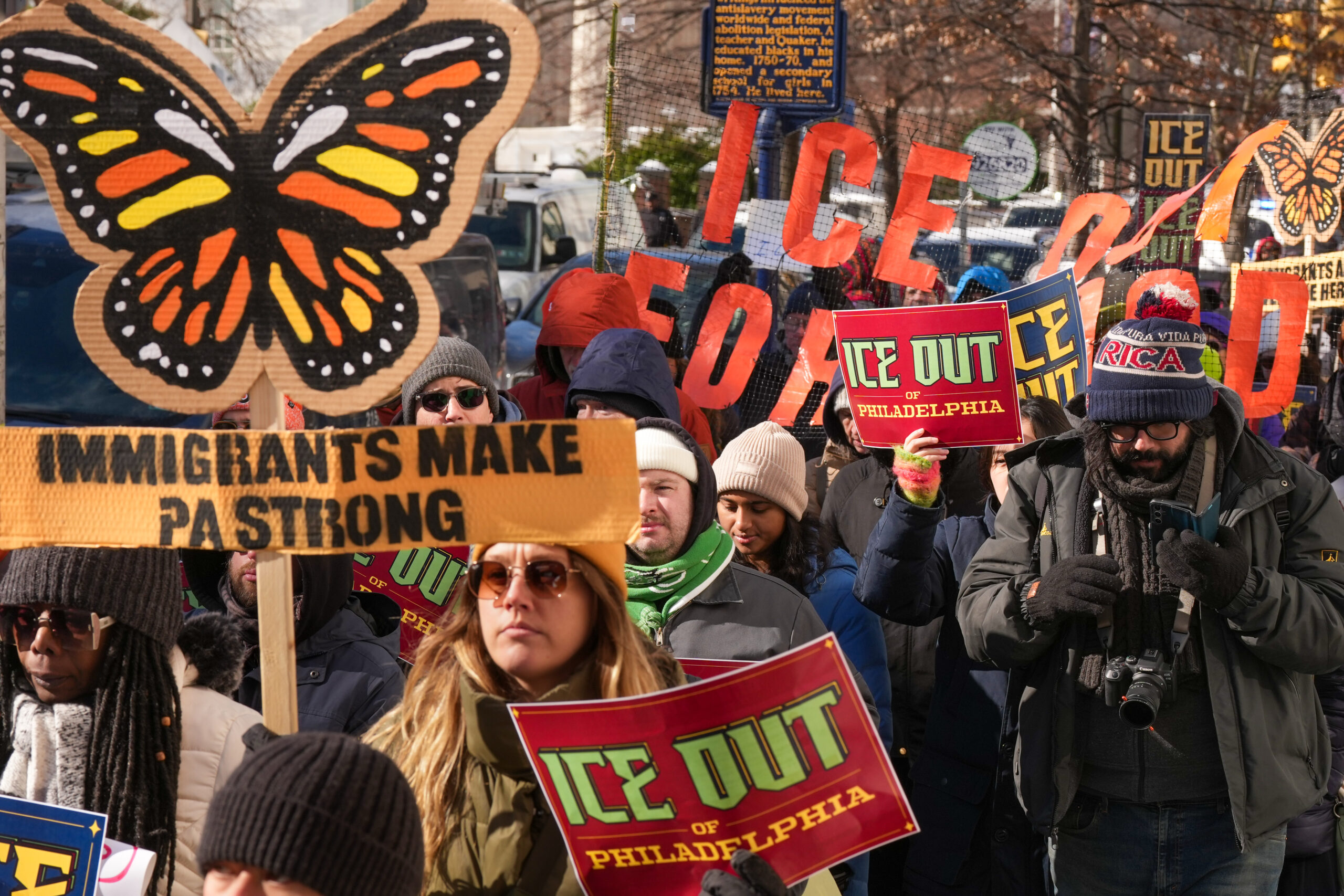
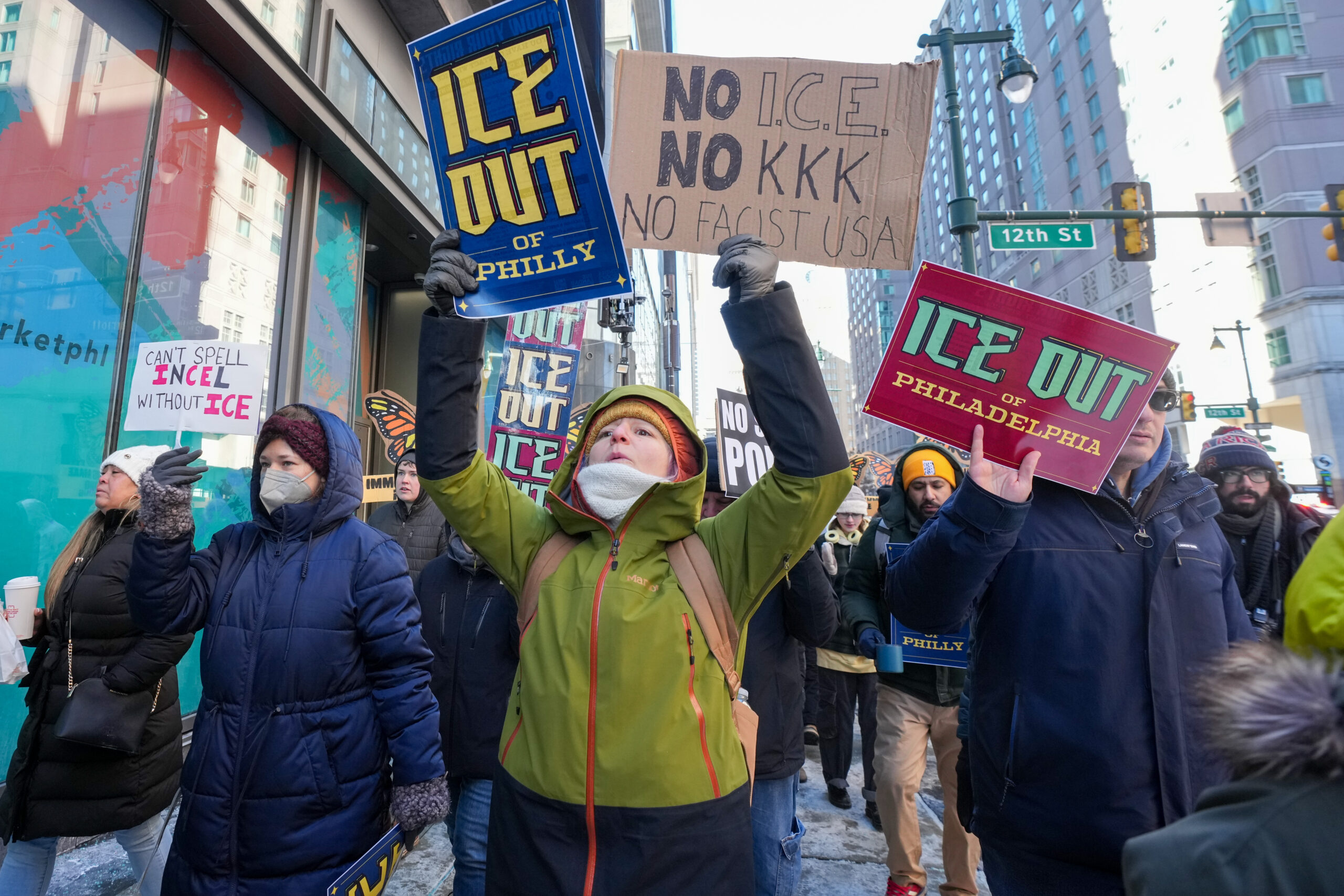
Advocates and protesters call for ICE to get out of Philadelphia, in Center City, January 27, 2026.
The 15 lawmakers on board with Brooks and Landau’s proposal have each cosponsored all seven bills, Brooks’ spokesperson Eric Rosso said. Only Councilmembers Mike Driscoll, a Democrat, and Brian O’Neill, Council’s lone Republican, declined to cosponsor the legislation, he said.
Driscoll, who represents lower Northeast Philadelphia, said in a statement that the shootings of Renée Good and Alex Pretti by federal agents in Minneapolis this month “caused real pain and fear” and “deserve serious attention.”
“Locally, we should aim for immigration policies that are focused, proactive and aimed at practical, long-term solutions that ultimately hold up in court,” he said.
Driscoll said he is open to amended versions of the legislation.
O’Neill, whose district covers much of Northeast Philadelphia, could not immediately be reached for comment.
The developments Thursday prompted Mayor Cherelle L. Parker to make one of her first public comments about President Donald Trump’s mass deportation campaign, saying in a statement that her administration “understand[s] the public’s fear of the unknown as it relates to federal policy associated with immigration.”
“We have a comprehensive approach to public safety, and we will always be prepared for any emergency, as we have consistently demonstrated and will continue to demonstrate,” Parker said. “I have a great deal of faith in our public safety leaders — our subject matter experts — who I asked to be a part of this team and we’re going to do our best to work in an intergovernmental fashion, along with City Council, to keep every Philadelphian safe.”
Parker said she and her team are reviewing the legislation.
Advocates and protestors call for ICE to get out of Philadelphia, in Center City, January 27, 2026.
The mayor has largely avoided confrontation with Trump’s administration over immigration policy, a strategy some have speculated has helped keep Philadelphia from the National Guard deployments or surges of ICE agents seen in Minneapolis, Chicago, Los Angeles, and elsewhere.
But the popularity of the “ICE Out” package among Council members may force her to wade into the issue. Administration officials will testify when the bills are called up for committee hearings. If they are approved, Parker will have the choice of signing the bills into law, vetoing them, or letting them become law without her signature.
Council bills require nine votes for passage, and 12 votes are needed to override mayoral vetoes. With 15 Council members already signaling their approval for the bills, chances appear strong that the city’s legislative branch has the numbers to override any opposition.
Mayor Cherelle L. Parker has avoided confrontation with the White House on immigration issues.
In a Council speech, Brooks addressed the debate over whether the legislation would draw Trump’s ire.
“Staying silent is not an option when people are being publicly executed in the streets and the federal government is covering up their murders,” Brooks, of the progressive Working Families Party, said. “I want to be clear: ICE is already here. We don’t want a Minneapolis situation, but I reject the claim of those who are pretending we don’t already have a problem.”
Council President Kenyatta Johnson, a centrist Democrat and an ally of Parker, shared a similarview.
“From my perspective, the Trump administration has already been looking at the city,” Johnson told reporters. “Overall, the majority of members of City Council support the legislation, and so we see this legislation being successfully voted out of committee.”
ICE agents have been arresting suspected undocumented immigrants in the city before and during Trump’s tenure, and his administration has canceled grants for the city and educational and medical institutions in Philadelphia. But the city has not seen a mass deployment of ICE agents or federalized troops.
Councilmember Anthony Phillips, also a centrist and Parker ally, represents the 9th District, from which the mayor hails.
“What the ’ICE Out’ legislation ultimately says to Donald Trump,” Phillips said, “is that no matter what you try to do to undermine the health and safety and well-being of Philadelphia citizens, we will stand up to you.”
Johnson suggested potential legal issues could be ironed out through amendments if needed.
“The reality is this: This is a moral issue, right?” he said. “And if there are any legality issues that has to be addressed as a body, we’ll work with our members to address it.”
Next, Johnson will refer the legislation to committee, where members will hold one or more hearings featuring testimony from administration officials, experts, stakeholders, and the public. Council members can also amend the bills in committee.
Kendra Brooks shown here during a press conference at City Hall to announce a package of bills aimed at pushing back against ICE enforcement in Philadelphia, January 27, 2026.
Supporters of the legislation packed Council chambers Thursday morning, and many spoke during public comment, ranging from leaders of advocacy organizations to a former immigration judge to immigrants who tearfully pleaded for Council to pass the package swiftly.
Several Spanish-speaking residents spoke through interpreters; other residents testified on behalf of friends or family members who are undocumented and were fearful to come to City Hall themselves. A school nurse told Council members that her students have asked her what tear gas feels like.
“The traumatic effects of these [ICE] raids on our children and our families and our communities will last for years and generations to come,” said Jeannine Cicco Barker, a South Philadelphia psychologist who said she is the daughter of immigrants. “These times call for bold, brave new measures to protect our community, and you have a chance to do some of that here. Philly urgently needs these protections.”
Ethan Tan, who said he is an immigrant and a father of two, said he is fearful for his family and community.
“To this administration, fear is the point. Alienation is the point. Isolation is the point,” he said. “The ‘ICE Out’ package says to me and immigrants that we may be afraid, but we can show solidarity and resolve anyway.”
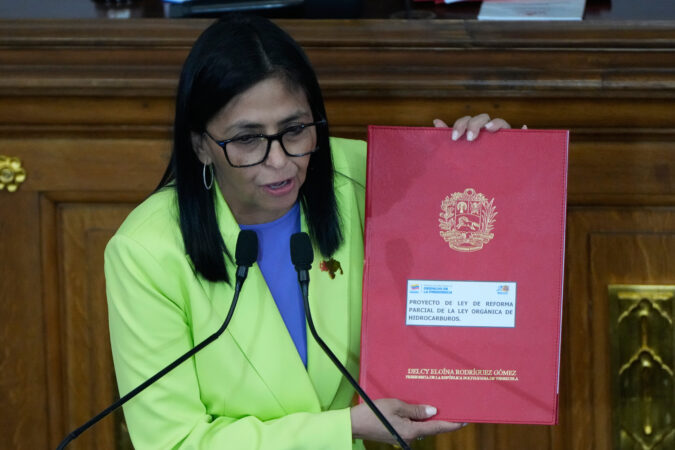
WASHINGTON — President Donald Trump said Thursday he has informed Venezuela’s acting president, Delcy Rodríguez, that he will open up all commercial airspace over the Venezuela and Americans will soon be able to visit.
Trump said he instructed his transportation secretary, Sean Duffy, and U.S. military leaders to take steps to open the airspace for travel by the end of the day.
“American citizens will be very shortly able to go to Venezuela, and they’ll be safe there,” the Republican president said.
Venezuela’s government did not immediately comment.
While the State Department continued to warning Americans against traveling to Venezuela, at least one U.S. airline announced its intention to soon resume direct flights between the countries.
American Airlines was the last U.S. airline flying to Venezuela when it suspended flights in 2019 that it operated between Miami and the capital, Caracas, as well as the oil hub city of Maracaibo. The airline said Thursday it would share additional details about the return to service in the coming months as it works with federal authorities on security assessments and necessary permissions.
“We have a more than 30-year history connecting Venezolanos to the U.S., and we are ready to renew that incredible relationship,” Nat Pieper, American’s chief commercial officer, said in a statement. “By restarting service to Venezuela, American will offer customers the opportunity to reunite with families and create new business and commerce with the United States.”
Before Venezuela came undone in the mid-2010s, it was not uncommon for Venezuelans to take weekend leisure trips to Miami. U.S. airlines stopped flying to Venezuela before the Department of Homeland Security in 2019 ordered an indefinite suspension, arguing that conditions in Venezuela threatened the “safety and security of passengers, aircraft, and crew.”
Earlier this week, Trump’s administration notified Congress that it was taking the first steps to possibly reopen the shuttered U.S. Embassy in Caracas as it explores restoring relations with the country after the U.S. military raid that ousted then-President Nicolás Maduro. In a notice to lawmakers dated Monday and obtained by The Associated Press, the State Department said it was sending in a regular and growing contingent of temporary staffers to conduct “select” diplomatic functions.
“We are writing to notify the committee of the Department of State’s intent to implement a phased approach to potentially resume Embassy Caracas operations,” the department said in separate but identical letters to 10 House and Senate committees.
Diplomatic relations between the two countries collapsed in 2019.
Even as Trump suggested Americans will be safe in Venezuela, his State Department kept in place its highest-level travel advisory: “Do not travel,” a warning of a high risk of wrongful detention, torture, kidnapping and more.
The department did not immediately respond to a message inquiring whether it would be changing that warning.
In November, as Trump was ramping up pressure on Maduro, the American president said the airspace “above and surrounding” Venezuela should be considered as “closed in its entirety.”
The Federal Aviation Administration, which has jurisdiction generally over the United States and its territories, told pilots to be cautious flying around Venezuela because of heightened military activity.
After that FAA warning, international airlines began canceling flights to Venezuela.
The FAA issued a similar 60-day warning in January, urging U.S. aircraft operators to “exercise caution” when flying over the eastern Pacific Ocean near Mexico, Central America, and parts of South America. The warning was issued after Maduro’s capture but came as the U.S. has threatened to continue military strikes on alleged drug trafficking boats in the area.
The FAA on Thursday said it was lifting four Notices to Airmen (NOTAMs) for the region that it said were “issued as precautionary measures and are no longer necessary.”
“Safety remains our top priority,” the FAA said in a statement, “And we look forward to facilitating the return of regular travel between the U.S. and Venezuela.”
KYIV, Ukraine — President Donald Trump said Thursday that President Vladimir Putin has agreed not to target the Ukrainian capital and other towns for one week as the region experiences frigid temperatures. There was no immediate confirmation from the Kremlin that Putin has agreed to such a pause.
Russia has been pounding Ukraine’s critical infrastructure, hoping to wear down public resistance to the war while leaving many around the country having to endure the dead of winter without heat.
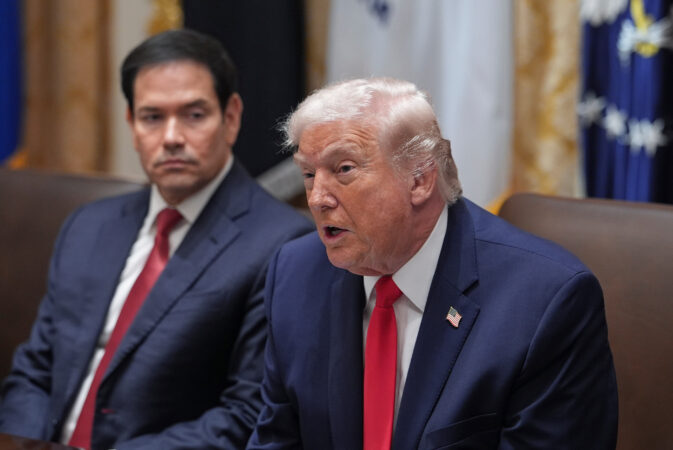
“I personally asked President Putin not to fire on Kyiv and the cities and towns for a week during this … extraordinary cold,” Trump said during a Cabinet meeting at the White House, adding that Putin has “agreed to that.”
Kremlin spokesman Dmitry Peskov was asked earlier Thursday whether a mutual halt on strikes on energy facilities was being discussed between Russia and Ukraine, and he refused to comment on the issue.
Ukrainian President Volodymyr Zelensky late Wednesday had warned that Moscow was planning another large-scale barrage despite plans for further U.S.-brokered peace talks at the weekend.
Trump said he was pleased that Putin has agreed to the pause. Kyiv, which has grappled with severe power shortages this winter, is forecast to enter a brutally cold stretch starting Friday that is expected to last into next week. Temperatures in some areas will drop to minus-22 Fahrenheit, the State Emergency Service warned.
“A lot of people said, ‘Don’t waste the call. You’re not going to get that.’” the president said of his request of Putin. “And he did it. And we’re very happy that they did it.”
Zelensky, for his part, thanked Trump for his effort and welcomed the “possibility” of a pause in Russian military action on Kyiv and beyond. “Power supply is a foundation of life,” Zelensky said in his social media post.
Trump did not say when the call with Putin took place or when the ceasefire would go into effect. The White House did not immediately respond to a query seeking clarity about the scope and timing of the limited pause in the nearly four-year war.
Russia has sought to deny Ukrainian civilians heat and running water over the course of the war, which began with Russia’s full-scale invasion on Feb. 24, 2022. Ukrainian officials describe the strategy as “weaponizing winter.”
Last year was the deadliest for civilians in Ukraine since 2022 as Russia intensified its aerial barrages behind the front line, according to the U.N. Human Rights Monitoring Mission in the country.
The war killed 2,514 civilians and injured 12,142 in Ukraine — 31% higher than in 2024, it said.
A Russian drone attack killed three people in Ukraine’s southern Zaporizhzhia region overnight and caused a major blaze in an apartment building, officials said Thursday.
Firefighters also worked through the night to put out fires in the central Dnipropetrovsk region, where two people were injured, officials said.
Zelensky said Ukrainian intelligence reports indicate Russia is assembling forces for a major aerial attack. Previous large attacks, sometimes involving more than 800 drones as well as cruise and ballistic missiles, have targeted the Ukrainian power grid.
The ongoing attacks discredit the peace talks, Zelensky said. “Every single Russian strike does,” he said late Wednesday.
Russia’s daily bombardment of civilian areas behind the roughly 600-mile front line has continued despite international condemnation and attempts to end the fighting.
Ukraine is working with SpaceX to address the reported use of its Starlink satellite service by Russian attack drones, Ukrainian Defense Minister Mykhailo Fedorov said Thursday on the Telegram messaging app.
He said his team contacted the American aerospace company run by Elon Musk and “proposed ways to resolve the issue.” Starlink is a global internet network that relies on around 10,000 satellites orbiting Earth.
Fedorov thanked Musk and SpaceX President Gwynne Shotwell for their “swift response and the start of work on resolving the situation.”
Musk and SpaceX have sought to steer a delicate course in the war.
Shotwell said a year after the invasion that SpaceX was happy to provide Ukrainians with connectivity “and help them in their fight for freedom.” At the same time, the company sought to restrict Ukraine’s use of Starlink for military purposes, she said.
Negotiations between the two sides are poised to resume on Sunday amid doubts about Moscow’s commitment to a settlement.
The European Union’s top diplomat accused Russia of not taking the talks seriously, calling Thursday in Brussels for more pressure to be exerted on Moscow to press it into making concessions.
“We see them increasing their attacks on Ukraine because they can’t make moves on the battlefield. So, they are attacking civilians,” Kaja Kallas said of Russia at a meeting of EU foreign ministers.
She stressed that Europe, which sees its own future security at stake in Ukraine, must be fully involved in talks to end the war. The push for a settlement has been led over the past year by the Trump administration, and European leaders fear their concerns may not be taken into account.
Steve Witkoff, Trump’s special envoy, said Thursday “a lot of progress” was made in recent three-way talks and expressed optimism that more headway can be made when the parties meet again in the coming days.
“I think the people of Ukraine are now hopeful and expecting that we are going to deliver a peace deal sometime soon,” Witkoff added.
The number of soldiers killed, injured or missing on both sides during the war could reach 2 million by spring, with Russia suffering the largest number of troop deaths for any major power in any conflict since World War II, according to an international think tank report published Tuesday.