Category: Real Estate

  • A quarter-century-old zoning law threatens to block a restaurant and bar in Fishtown

    A quarter-century-old zoning law threatens to block a restaurant and bar in Fishtown

    A plan to revitalize a neglected building at 2043 Frankford Ave. with a ground-floor burger restaurant and second-floor cocktail bar is facing stiff opposition in Fishtown.

    Because of an over-25-year-old zoning overlay — which applies to the east side of Frankford Avenue and not the west side — the Slider Co.’s plans have been hung up for months awaiting a hearing from the city’s Zoning Board of Adjustment (ZBA).

    On Wednesday, the board ruled in the Slider Co.’s favor, but the saga has cost the business owners at least $40,000 and almost six months of waiting for a hearing.

    And that’s if opponents of the project don’t appeal the ZBA ruling to the Court of Common Pleas — adding at least another nine months and more legal costs to the project, probably killing it.

    “We were expecting to have a straightforward project, and then all of a sudden all hell breaks loose,” zoning attorney Alan Nochumson, who represents Slider Co.’s William Johnson and Anesha Garrett, said at a late January ZBA hearing.

    The principal opponent of the project is Ashley Gleason, who owns the clothing shop Vestige next door at 2041 Frankford Ave. She hired a zoning attorney to fight the case. At a Fishtown Neighbors Association (FNA) meeting last year, a narrow majority (36-30) voted to recommend that the zoning board deny the application.

    “Our block is not like the lower part of Frankford. It doesn’t have the bars and restaurants,” Gleason said at the ZBA hearing. “It is mostly residential and retail. So it [the proposal] is out of character for this block.”

    (function() {
    var l2 = function() {
    new pym.Parent(‘fishtownburger’,
    ‘https://media.inquirer.com/storage/inquirer/projects/innovation/arcgis_iframe/fishtownburger.html’);
    };
    if (typeof(pym) === ‘undefined’) {
    var h = document.getElementsByTagName(‘head’)[0],
    s = document.createElement(‘script’);
    s.type = ‘text/javascript’;
    s.src = ‘https://pym.nprapps.org/pym.v1.min.js’;
    s.onload = l2;
    h.appendChild(s);
    } else {
    l2();
    }
    })();

    The property at 2043 Frankford Ave. is a faded two-story building at the end of the row, and it’s been in rough shape for years.

    Unusually for a restaurant application, the case has stirred up allies in the community who submitted a petition in support of Johnson and Garrett, who already have a presence in the neighborhood.

    The former president of FNA, Ashlei Tracy, spoke in support of their application at the zoning board, noting bars and restaurants on the blocks of Frankford to the north and south of this one.

    “A constant complaint that we hear is that Fishtown is becoming very corporate,” Tracy said in an interview after the hearing. “A part of that is that it’s so expensive to even go through this [zoning] process.”

    The cases can also stir neighborhood tensions. January’s ZBA hearing on the matter saw lengthy testimony, weeping, and accusations of racial discrimination. Johnson and Garrett are Black, and Fishtown is an overwhelmingly white neighborhood.
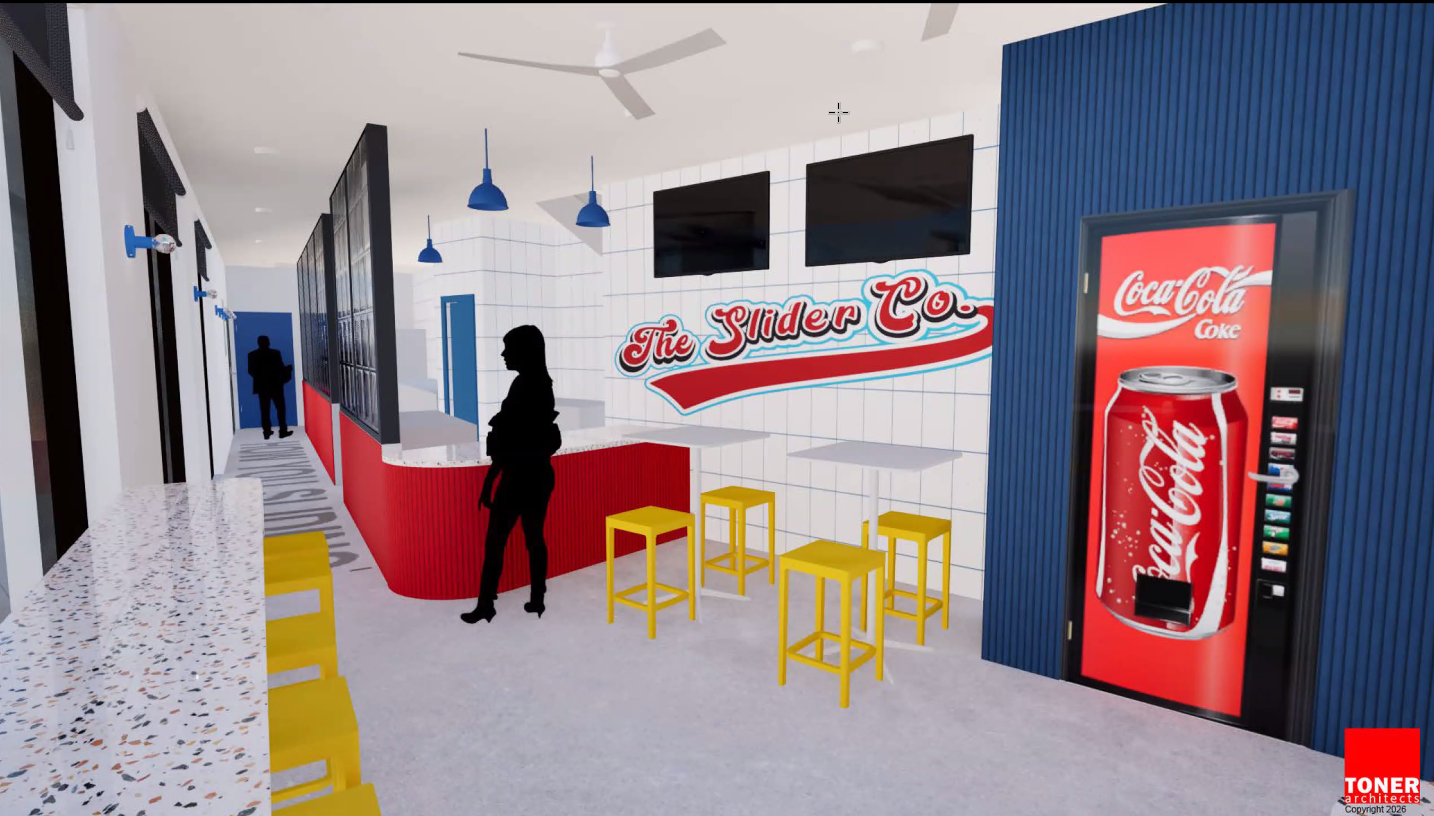
    An interior rendering of the burger place planned by the Slider Co. The Coke machine is a hidden entrance to the upstairs speakeasy.

    The wrong side of the street

    The complexities of the Slider Co.’s attempt to open a new restaurant and bar in one of Philadelphia’s hottest culinary neighborhoods is an effect of a 1990s-era zoning law to address rowdy nightclubs along the Delaware River.

    The “North Delaware Avenue overlay district,” which covers much of Northern Liberties and Fishtown, bans entertainment businesses from the area it covers while requiring food and beverage businesses to secure approval from the ZBA to open.

    The overlay extends from the Delaware River to the east side of Frankford Avenue and from Lehigh Avenue down to Spring Garden Street.

    The law was largely successful in its initial aims, stemming the creation of new nightclubs in the area. The Delaware riverfront is now known for its surplus of rental apartments, not for rowdy nightlife.

    “Everyone agrees that the original purpose of the overlay no longer needs to be served,” said Matt Ruben, a longtime civic activist in Northern Liberties who has been involved with zoning and planning issues in the area — including negotiations around this overlay — for years.

    “Where there is disagreement, and shifting views within some neighborhoods, is on the more subtle question of whether there should be some kind of zoning to help regulate everyday operational nuisances and negative impacts that can come from them,” Ruben said. “Even from operators who are not bad actors at all.”

    Many overlays linger on for decades, long after the politicians who created them are retired because they empower neighborhood groups to stave off changes in their community.

    An interior rendering of the upstairs speakeasy proposed by Slider Co.

    In this case, Councilmember Mark Squilla, who represents the area, says he is open to rewriting or scaling back the overlay, but only if there is unanimity among neighborhood and business groups in Fishtown and Northern Liberties.

    Currently, the Fishtown Neighbors Association (FNA) is in favor of the zoning overlay, which it argues gives residents of Frankford Avenue and the surrounding blocks a say in the restaurant boom.

    The community group says new restaurants and bars have affected quality of life — such as when eateries implement late-night private trash collection that can wake up people who live nearby.

    “I have not seen any interest in our community to get rid of” the zoning overlay, said John Scott, president of FNA. “It’s not seen as a detriment. It’s seen as a way to mitigate some of the impact of the food establishments.”

    Johnson and Garrett fear the old zoning law has given opponents of their project a way to wage legal warfare against their proposal.

    “We have never previously faced opposition to opening a new restaurant,” said Johnson, who has opened numerous culinary businesses in Delaware and Philadelphia.

    “An appeal to the Court of Common Pleas would likely put the project in jeopardy due to the financial strain and delays it would impose on the property owner,” Johnson said.

    Gleason’s lawyer declined to comment, and the property owner, Jordan Claffey, did not respond to a request for comment.

    Staff writer Michael Klein contributed to this article.
  • Large Roxborough apartment project adds more family units and makes changes to appease neighbors

    Large Roxborough apartment project adds more family units and makes changes to appease neighbors

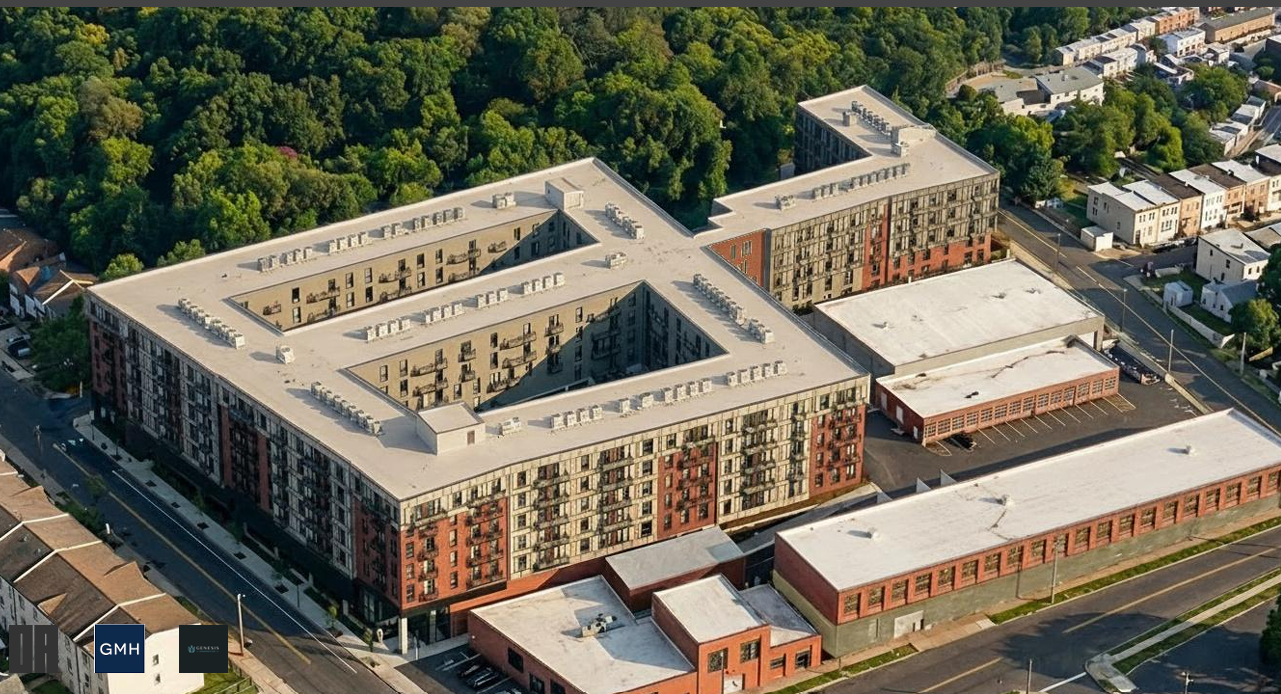
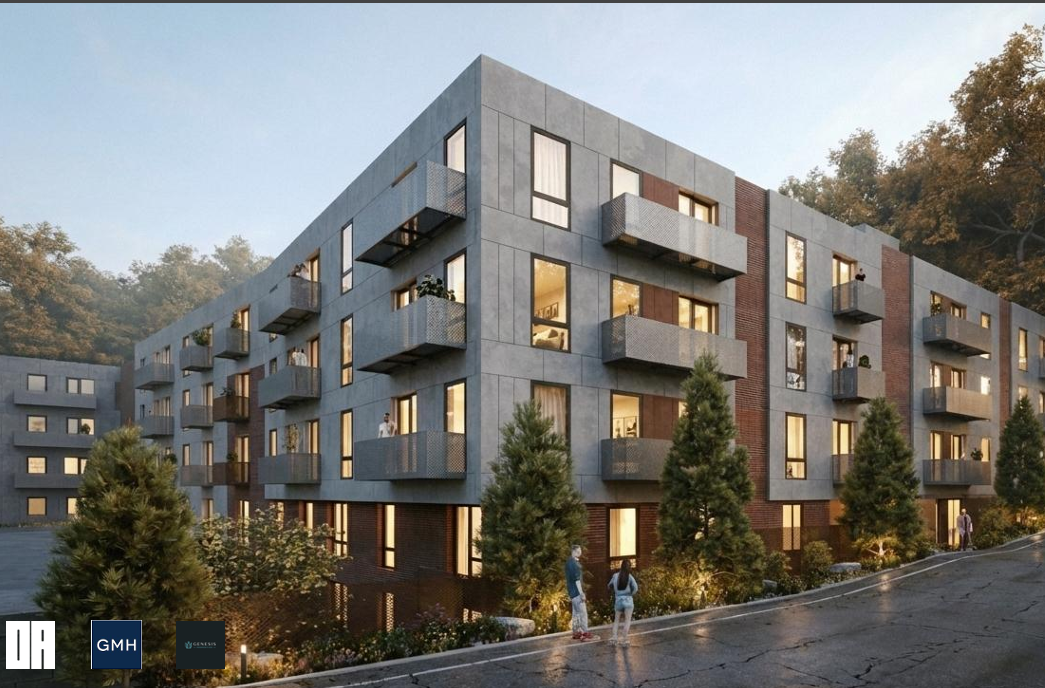
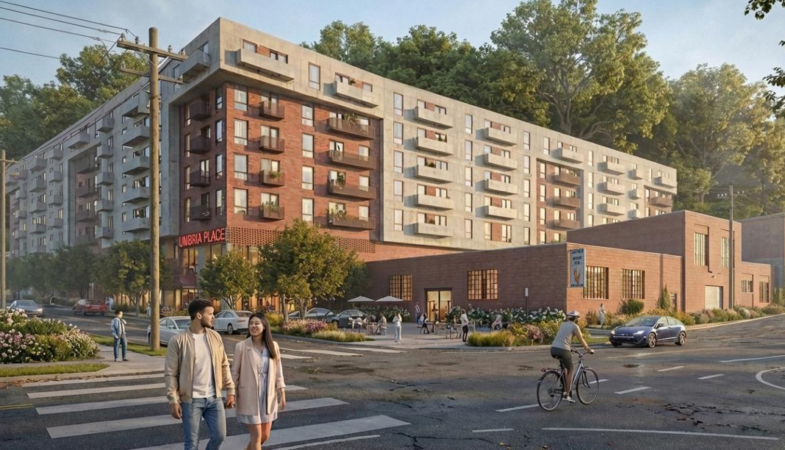
    A large new apartment proposal for 4889 Umbria St. in Roxborough has been altered to appease some neighbor concerns, with more brick incorporated into the facade and design tweaks to ease congestion.

    The developers, Philadelphia-based Genesis Properties and Newtown Square-based GMH Communities, also reduced the number of apartments from 384 to 369.

    But the actual number of bedrooms increased from 481 to 486, as they shifted to larger, family-size apartments.

    “I love the increase of twos and threes [bedrooms] and the availability to families, which I don’t find very common as a developer,” said Maria Sourbeer, vice president at Mosaic Development Partners and a member of the city’s Civic Design Review committee. “The money’s in the studios and ones.”

    The design team explained that the developers felt this corner of Northwest Philadelphia would have strong demand for larger units.

    Last November, the project’s initial consideration at the Civic Design Review committee saw pushback to its fortress-like design.

    Philadelphia-based Oombra Architects sought to soften elements of the project, increasing plantings and street tree coverage.

    More brick has been added as a building material, in a bid to echo the older industrial buildings on the project’s southwestern edge.

    A bird’s eye rendering of the new development on Umbria Street in Roxborough.

    The 123-space bike parking facility has been moved from the third to the first floor.

    The developers also relocated the parking garage entrance from busy Parker Avenue to Smick Street, which had not previously been publicly accessible. The project includes 380 spaces.

    “[We] want to commend you in taking the process seriously,” said Ximena Valle, an architect who chairs the CDR committee. “We recognize that you could have come here with no changes made. … Overall, there’s a big win here.”

    The Civic Design Review process makes recommendations but cannot force developers to accede to its critiques. The last time the Philadelphia City Planning Commission studied its efficacy in 2019, it found that only a third of projects adopted CDR recommendations.

    A rendering of the Lemonte Street side of the project, the largest new apartment building in Roxborough in years.

    Although the project offers nearly one parking space for every apartment — far more than they are legally required — the local community group still held concerns about the amount of parking included in the project as the bedroom count rose.

    Otherwise, they largely embraced the changes.

    “There are going to be more cars on the street. I don’t think there’s any question about that,” said Marlene G. Schleifer of the Ridge Park Civic Association. “But we were pleased with the work that the developer has done to comfort us a little bit and make it easier to swallow.”

  • Why nobody really knows the scale of the U.S. housing crisis

    Why nobody really knows the scale of the U.S. housing crisis

    America faces a serious housing shortage, one that Moody’s estimates would take more than 2 million new homes to resolve.

    But over at Goldman Sachs, analysts put the number at 3 million. Zillow’s estimate tops 4 million, while Brookings projects 5 million, and McKinsey says 8 million. Meanwhile, congressional Republicans insist the shortfall is closer to 20 million.

    Then there are the economists who contend there’s no shortage at all.

    The disparate projections reflect the challenge of quantifying the nation’s housing needs, a puzzle that rests on assumptions about how much a home should cost, how many people it should hold, and how big a footprint it should have.

    With housing affordability a crucial political issue and increasingly out of reach for many Americans, determining the nation’s needs is not merely an academic exercise but is key to devising policies that will solve the problem.

    Vacancy rates and missing households

    The U.S. has 146 million homes, Census Bureau data show. Of those, 8.1 million are “doubled up” households, meaning people are sharing space with nonrelatives. Zillow’s housing estimate assumes most of those people would prefer having their own place. There also are 3.4 million vacant homes available to rent or buy, the real estate website says. So Zillow economists subtracted the number of available homes from the number of doubled-up households and concluded that the nation needs 4.7 million more homes.

    Several analyses zeroed in on two questions: How many homes should be vacant, and how many consumers have delayed striking out on their own because of the cost.

    Though it might seem counterintuitive, a healthy housing market needs vacancies. An empty property could signal it’s between tenants or buyers, for example, or under renovation. Or it could mean the owner is splitting time between properties; according to the National Association of Home Builders, more than 6 million homes — about 1 in 20 — are secondary residences.

    What constitutes a healthy level of vacancies is harder to define, as experts put it anywhere from 3% to 13%. After home construction cratered following the 2008 housing crash, vacancy rates slumped to the lowest level in nearly two decades, falling to less than 1% of owner-occupied dwellings and 5% of rental units. They have yet to fully recover.

    The optimal home number could be as simple as one for every household, plus a certain number of vacancies. But what if we don’t have an accurate count of households?

    When housing costs are prohibitive, adult children tend to reside with their parents longer; in 2023, 18% of adults 25 to 34 were living in a parent’s home, compared with 8% in the 1970s, according to a Pew Research Center report.

    For many economists, that suggests the equation should be: the number of existing households, plus the number of homes that should be vacant, plus the number of households that would naturally come into being if there was enough inventory to lower prices.

    Yet different researchers using this framework still came up with different answers for the housing shortage.

    Moody’s Analytics and PolicyMap say it would take 800,000 homes to reach the equilibrium of the U.S. housing market between 1985 and 2000. Add 1.2 million “pent up households,” those that haven’t formed yet, and the conclusion is the U.S. needs an additional 2 million homes.

    Brookings’s calculation aims to get back to the 2006 vacancy rate of more than 12%, when it was near its historic peak. It used a complex statistical model to tease out how much of the decline in household formation since then is due to home prices instead of other factors, such as young people having trouble finding jobs or marrying later. As a result, it concluded the U.S. needed 4.9 million more houses.

    Other analyses along these lines include Freddie Mac’s, which calls for 3.7 million more homes. Goldman Sachs analysts tried the “vacancies plus pent-up demand” approach, as well as a mathematical model to determine how many homes it would take to make ownership as affordable relative to income as it was in the 1990s. Both equations worked out to between 3 million and 4 million homes. McKinsey added up new households and vacancies, plus enough housing to address homelessness and replace overcrowded homes with more than one person to a bedroom, to get to 8.2 million.

    Envisioning an unconstrained market

    A 2022 congressional report took a different tack. Most analyses attempt to re-create some semblance of the housing market two, three or four decades ago. But Republicans on the Joint Economic Committee argued that the correct number is equal to the number of homes that developers would build had they had no regulatory constraints — no permitting or zoning rules that prohibit them from building what customers want.

    The Republicans’ estimate relied on the reasoning that the value of the land should be about 20% of the home cost. Anything higher would mean the market is artificially constrained; land becomes pricier when it is harder to build something on it. To bring prices in line with that in every U.S. county, they concluded the home shortage stood at 20 million.

    By their math, North Dakota and West Virginia have almost no housing shortage, while California is short 4.5 million homes. Eliminating zoning and building restrictions across the country’s hundreds of jurisdictions might be unfeasible, but they project that any substantial effort would lower prices. For example, they contend that building an additional 2.7 million homes could reduce prices enough to make ownership economically viable for nearly 5 million more consumers.

    “If we relaxed all regulations that concerned supply in every single market in the United States, this is how many homes you would have … . I do think this is the right way to think about how many homes we should have,” said Kevin Corinth, an economist who co-authored the report while he was a Senate staffer and now works at the American Enterprise Institute, a libertarian think tank. “If you really want to bring down home prices to the point where people can actually afford them, you’re going to have to build a lot more houses than people are suggesting.”

    Per capita spending

    Housing analyst Kevin Erdmann did some eye-popping math recently. Adjusted for inflation, per capita spending on housing construction has been falling as a fraction of personal consumption, dropping 23% since 1990. If such spending held to 1990 levels, he said, the U.S. would have an additional 40 million houses. “Almost all professional estimates of the housing shortage are ridiculously low,” Erdmann, who has written two books about the housing market, wrote on his Substack.

    He said the slowdown in construction spending indicates that people are living in smaller homes than they’d prefer because they had no choice, but he shies away from actually saying the country is 40 million homes short. Instead, based on aggressive assumptions about missing households and necessary vacancies, he says the country needs 15 million to 20 million.

    Maybe there’s no shortage at all

    Urban planning professors Kirk McClure and Alex Schwartz examined 900 U.S. metropolitan areas and found that only 19 had added more population than housing since 2000. Before the 2008 recession, they argued, developers built far too many houses, leaving room for underbuilding in some years since.

    “Yes, we have a shortage of units in the low-income price points, but not overall,” McClure said. He contends it would be far less costly for the government to help poor households rent or buy existing units than to build new ones. “The best housing program right now would be an increase in the minimum wage. You get people up to $20 an hour and suddenly life gets better — we can’t build our way out of this problem.”

    This view of the current housing supply transcends partisan lines, with some of the highest and the lowest estimates of the shortage coming from the right. Economists at the libertarian Cato Institute contend that housing production has kept up with population growth. Just because people want to live in big houses in expensive, densely populated areas, they assert, doesn’t mean there’s a shortage.

    “A shortage is literally people don’t have anywhere to live. That’s not what we have,” Norbert Michel, one of the Cato writers, said in an interview.

    In the end, the dispute doesn’t just come down to the choice of mathematical models, but varying interpretations of what a housing shortage even means.

    “If I have a hard time finding an apartment in the area of Washington, D.C., that I like, I can still move to Maryland and find something,” Michel said. “The idea that I’m just completely shut out of all my options and I can’t find any place to live, that’s what a shortage evokes. And the data doesn’t support that.”

    Erdmann views it differently: “There are 28-year-olds living with their parents that wouldn’t be if there were a house. If that’s not a shortage, I don’t know when you could use the word.”

  • City Council seeks to stop demolitions as anti-blight measure

    City Council seeks to stop demolitions as anti-blight measure

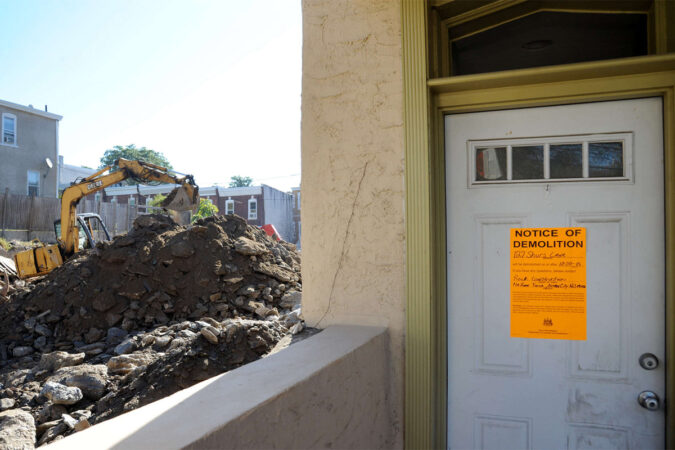
    Late last year, some members of Philadelphia City Council began pursuing legislation to further regulate demolition.

    Philadelphia has many thousands of vacant properties, and historically, some local politicians have sought to encourage razing such structures to prevent fire risks or eliminate drug havens.

    But in the last couple of decades, as real estate development heated up in many neighborhoods, concerns emerged that potentially historic older buildings were being destroyed to make the vacant land more valuable.

    “We know that when these properties are demolished in certain communities, that typically is a sign of gentrification,” Councilmember Jeffery Young, who represents much of North Philadelphia, said at a Tuesday hearing.

    “When you demolish that property and you build up, you’re trying to make more money than the property was originally stated as a shell,” said Young, whose district also includes parts of Center City.

    Young introduced a bill last year that would ban demolition permits from being issued in his district unless a property owner had secured building permits for a new project.

    He said he saw the legislation as a means to encourage property owners to repair existing buildings and to ensure that vacant lots would not scar his district.

    “When you rehab a property, the price is typically lower than a brand-new house, and so we’re trying to keep homes affordable,” Young said, “and prevent blight from our communities.”

    Young’s bill would not apply to buildings deemed imminently dangerous by the Philadelphia Department of Licenses and Inspections.

    Last year Councilmember Jamie Gauthier passed a law containing a similar provision, but for a more tightly proscribed area that covered properties held by large higher education institutions in University City.

    The Building Industry Association (BIA) presented a litany of concerns about Young’s bill at Tuesday’s Rules Committee hearing.

    The BIA feared the legislation would delay projects, as many developers demolish structures while they are waiting for their building permits. The additional months in limbo would increase insurance, security, and financing costs, the group argued.

    The bill could also encourage bad actors to engage in dangerous behavior, the BIA said.

    “To qualify for an exception based on structural danger, certain property owners may be compelled to intentionally incur code violation or enforcement action to demonstrate instability,” said Kenn Penn, a local developer, who spoke on the BIA’s behalf. It “incentivizes the very condition that the city seeks to avoid.”

    Penn also warned about the danger of preserving long-vacant properties.

    “The bill would prevent demolition of vacant and unsecured structures that are highly susceptible to unlawful occupation,” Penn said. “Philadelphia has already experienced multiple fires this winter, many historically linked to squatters and abandoned buildings.”

    Penn asked Young to limit the legislation to properties that do not have a vacant property license.

    But the bill passed from the committee with only technical amendments.

    “I understand the impacts this will have on the development community,” Young said. “But what I think this bill does is ensures that property owners maintain their properties in a prudent manner.”

  • Housing ban on former Hahnemann campus is on hold in City Council as concerns mount

    Housing ban on former Hahnemann campus is on hold in City Council as concerns mount

    Councilmember Jeffery Young pushed pause Tuesday on his highly controversial housing ban for the former Hahnemann hospital campus.

    Young has proposed a “Vine Street Expressway” zoning overlay that would cover the shuttered medical center and its surroundings and block residential development from its largely empty buildings and lots.

    Although developers have struggled to find new office or healthcare tenants for the area, Young initially described his legislation as a means to preserve the former campus as a jobs hub.

    However, an apartment development is proposed in the former Hahnemann patient towers by New York-based developer Dwight City Group — which is why most observers were stunned when Young introduced his last-minute bill banning all housing development from the area.

    Then in a sudden reversal at a City Council hearing Tuesday, Young said he was not advancing the bill.

    “We’re holding it so we can further [communicate] with all the community stakeholders that are involved,” Young said in an interview after the hearing. “We want to make sure that this project represents the best interest of the city of Philadelphia, and by continuing dialogue, we’ll achieve that goal.”

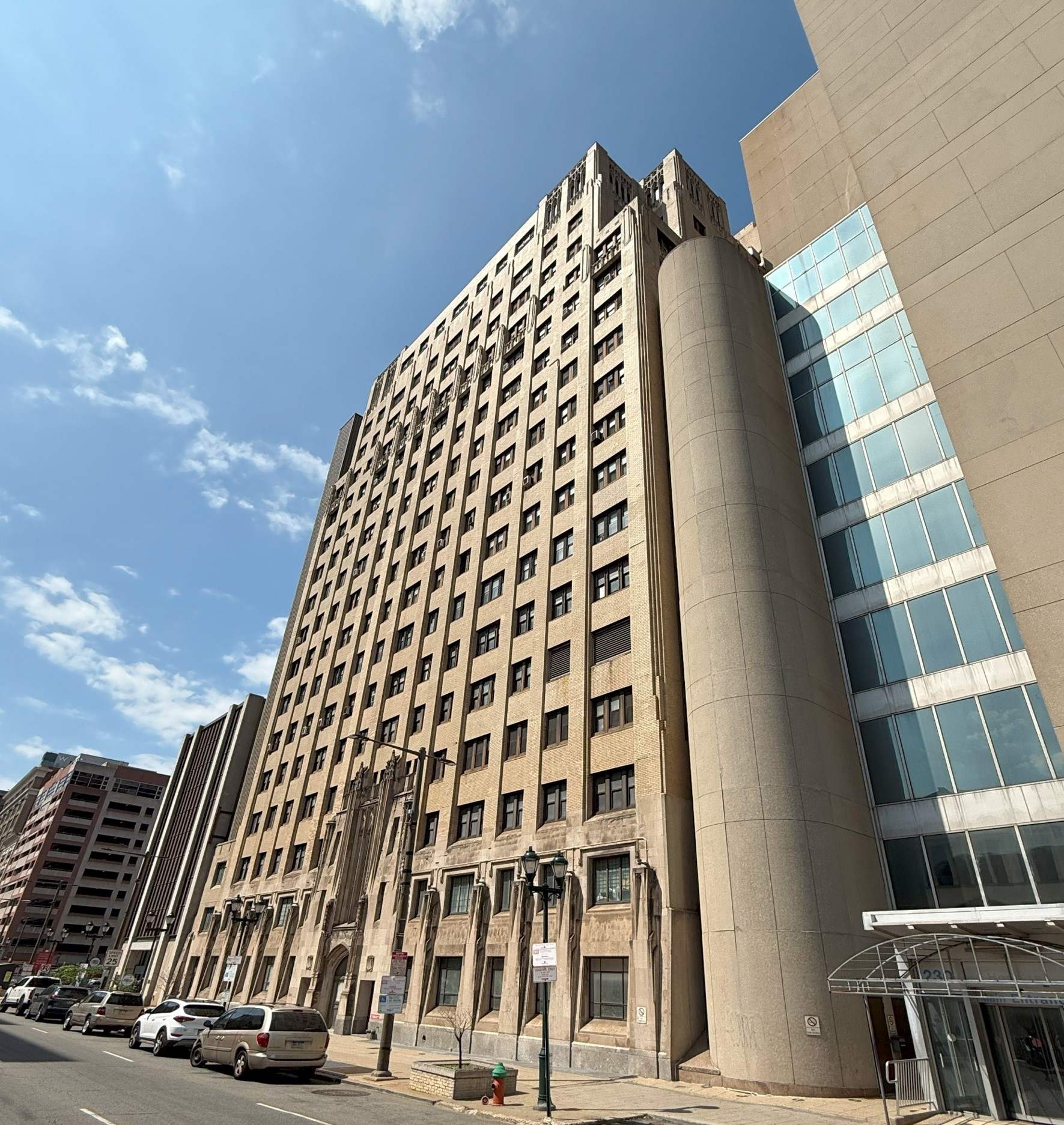
    The art-deco style South Tower of the former for Hahnemann hospital complex, which is almost 100 years old.

    No interest groups have officially come out in favor of the legislation. Pro-housing groups, the Logan Square Neighborhood Association, and the building trades unions have all expressed concerns about it.

    Property owners who would be affected include influential local institutions including Brandywine Realty Trust and Drexel University. Mayor Cherelle L. Parker’s administration was also concerned, especially as the administration pushes to get 30,000 units of housing built or repaired during her term through the Housing Opportunities Made Easy (H.O.M.E.) plan.

    “This bill conflicts with the goals of the comprehensive plan and the goals of the H.O.M.E. plan to support residential development,” said testimony prepared for Paula Brumbelow Burns of the City Planning Commission.

    Ironically, as a result of Young’s anti-housing legislation, permits have been secured for 824 units of housing on the former hospital site, as property owners rushed to secure the right to develop apartments before the feared ban would be enacted.

    With the exception of Dwight City Group’s proposal, it is not clear that many of those permits will quickly result in housing.

    The application for 300 units at Martinelli Park and 163 units at the Brandywine-owned Bellet building do not appear to signify new projects in the immediate future, but instead an effort to preserve value and flexibility of use.

    Young argued that the legislation has been successful in that it compelled property owners to talk with his office about their plans.

    “People need to understand what’s happening when you have large properties where potentially thousands of units will be developed there,” Young said. “We have properties that as a former hospital that’s filled with asbestos and other types of issues, no one knows what’s going on.”

  • A couple bought a house on a quiet street. Then they found a swastika in the basement.

    A couple bought a house on a quiet street. Then they found a swastika in the basement.

    The property listing in Beaver, Pa., extolled the countless charms of the Colonial Revival. There was the “grand foyer with a handmade railing,” the built-in cabinets and “beautiful” hardwood floors, and the covered porch offering “stunning” views of the nearby Ohio River.

    “This home adorns many wonderful features,” the listing read, “and outstanding details throughout.”

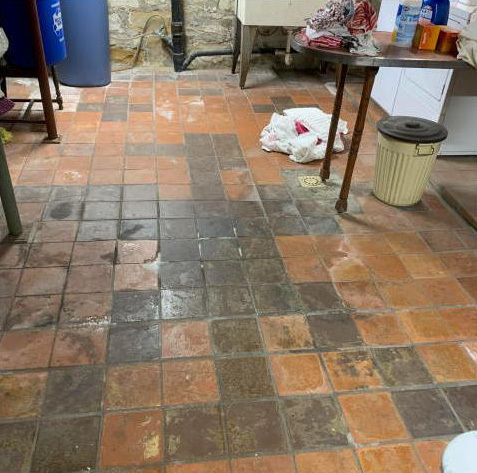
    One detail, however, was notably absent from the listing: the sizable swastika arranged in permanent tile on the basement floor.

    That omission has become the source of an unusual legal battle, a disturbing discovery that has weaved its way through the state court system and raised questions — legal and otherwise — about what represents a “material defect” in a property.

    “I certainly have not seen [this] particular fact-pattern come up before,” said Hank Lerner, chief legal officer for the Pennsylvania Association of Realtors. “It’s a pretty specific one.”

    When Daniel and Lynn Rae Wentworth closed on the five-bedroom home in 2023, for around $550,000, it was easy to see the draw. Anchored on a spacious lot, just a block from the river, the home was idyllic by just about any measure.

    But shortly after moving in, the Wentworths were clearing out the basement when they discovered the grim iconography in tile — a swastika, along with, what appeared to the couple, to be an image of a Nazi eagle. (According to the Wentworths, the tiled images had been covered by rugs during the inspection of the home.)

    After Daniel and Lynn Rae Wentworth purchased a home in Beaver, Pa., they discovered in the basement floor what they believed to be a tiled image of a Nazi eagle (pictured above) and a swastika.

    “Mortified,” as they would later say, the Wentworths filed a complaint in Beaver County civil court, alleging the previous owner had violated the Pennsylvania Real Estate Seller Disclosure Law, and seeking monetary damages.

    The Wentworths argued they would never have bought the home had they known about the tiled floor. Nor, they said, could they be expected to live in the home — or sell it — given its condition. In their complaint, the couple estimated it would cost roughly $30,000 to replace the floor.

    “This … is just not something you’d ever expect to have to deal with,” said Daniel Stoner, an attorney for the Wentworths.

    “They could have actual economic harm from the potential reputational damage if people thought they put it in themselves or were aware of it.”

    The seller — an 85-year-old German immigrant who’d owned the home for nearly a half-century — did not share this view.

    In response to the Wentworths’ suit, Albert A. Torrence, an attorney for the seller, argued in a court filing that “purely psychological stigmas do not constitute material defects of property … and a seller has no duty to disclose them.”

    What’s more, he argued, the Wentworths had failed to identify any untruthful or inaccurate statements he’d made regarding the property.

    In an interview, Torrence denied that the home’s previous owner was a Nazi supporter. Forty years ago, he said, the previous owner had been reading a book about the swastika symbol being co-opted by Germany’s Nazi Party; angry, he decided to include the symbol in a basement renovation project, placed a rug over it not long after, and forgot about it.

    “And, of course, it fits into the narrative, ‘A Nazi lived in this house,’” said Torrence. “It’s just not the narrative that people want it to be.”

    Regardless, the case raised an interesting question: When it comes to property sales, what, exactly, does rise to the level of a material defect worthy of disclosure?

    Pennsylvania law requires sellers to disclose a laundry list of potential problems with a home — termites, structural or heating problems, sewage issues. “[Any] problem with a residential real property or any portion of it that would have a significant adverse impact on the value of the property or that involves an unreasonable risk to people on the property.”

    Absent from that list? Hate symbols that had been permanently embedded.

    In court filings, the previous owner cited an earlier case that had advanced all the way to the Pennsylvania Supreme Court.

    In 2007, after a California resident purchased a Delaware County home, she learned from a neighbor that the property had been the site of a grisly — and highly publicized — murder-suicide. The new owner, Janet S. Milliken, sued.

    In that case, the state’s Supreme Court ruled that the home’s unfortunate history did not represent a material defect, adding that it would be impossible to quantify the psychological impact of various events that might have occurred on a given property.

    “Does a bloodless death by poisoning or overdose create a less significant ‘defect’ than a bloody one from a stabbing or shooting?” the court wrote. “How would one treat other violent crimes such as rape, assault, home invasion, or child abuse? What if the killings were elsewhere, but the sadistic serial killer lived there? What if satanic rituals were performed in the house?”

    Leaning heavily upon the Supreme Court’s decision in the Milliken case, the Beaver County trial court dismissed the Wentworths’ complaint.

    Unsatisfied with the ruling, the Wentworths appealed.

    In a decision filed late last year, three Superior Court judges affirmed the initial ruling that the tiled imagery was not required to be disclosed in accordance with the state’s disclosure law.

    “A basement that floods, a roof that leaks, beams that were damaged by termites … these are the conditions our legislature requires sellers to disclose if they are known,” the judges wrote in an 18-page ruling filed Nov. 12.

    “We are not dismissive of the Wentworths’ outrage, nor their concern that the existence of the images could taint them as Nazi supporters,” the decision went on. “With this lawsuit, however, they have made a public record to counter any supposition in that regard.”

    Though the couple could’ve appealed to the Pennsylvania Supreme Court, Stoner, their attorney, said this week that they had decided against doing so, citing the low likelihood that the case would’ve been heard by the court.

    “I’ve only had one case in my entire career that they’ve actually taken up,” Stoner said. “So the chances of them even getting it heard weren’t the greatest.”

    As for the home, Lynn Rae Wentworth told the Pittsburgh Jewish Chronicle recently that she and her husband planned to remove the tiling once they were sure the legal wrangling had concluded.

    She said they were also considering approaching local legislators in hopes of changing the law, making hate symbols material defects that necessitated disclosure.

    As she told the publication, “I don’t want anyone to have to go through this again.”

  • He celebrated his 30th by putting down roots in Mount Airy

    He celebrated his 30th by putting down roots in Mount Airy

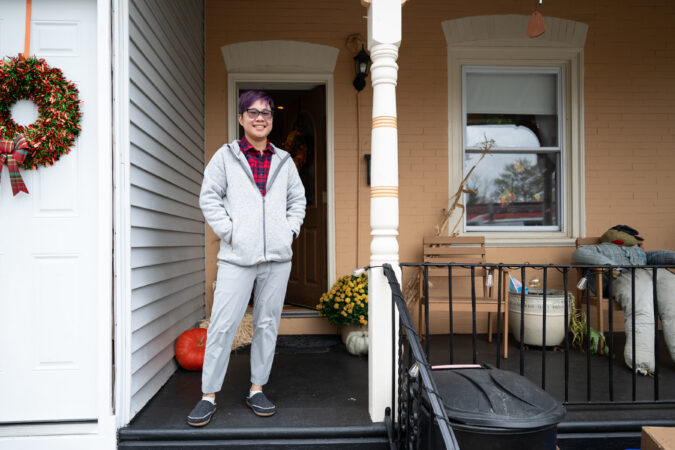
    After living in small apartments in Queen Village and Rittenhouse Square, Cooper Lee Kidd was ready to start shopping for his first home.

    The Washington, D.C., native, who works in banking and volunteers for the Philly Goat Project, wanted more indoor space and more yard for gardening and entertaining friends. He purchased his home one day before his 30th birthday.

    “This is the first house that we saw,” Kidd said on an autumn afternoon. The light from his living room window highlighted a strand of his purple hair. “I looked at another one, a rowhouse in South Philly, but it was literally sinking into the ground. We came back to this one.”

    The 900-square-foot rowhouse, nestled near the end of the block in East Mount Airy, was thoughtfully designed, he said. The home, outfitted with hardwood floors, tall ceilings, and lots of natural light, felt less cookie-cutter and industrial than the many other houses he saw online. Most important, he said, it was located in a progressive neighborhood with a strong sense of community.

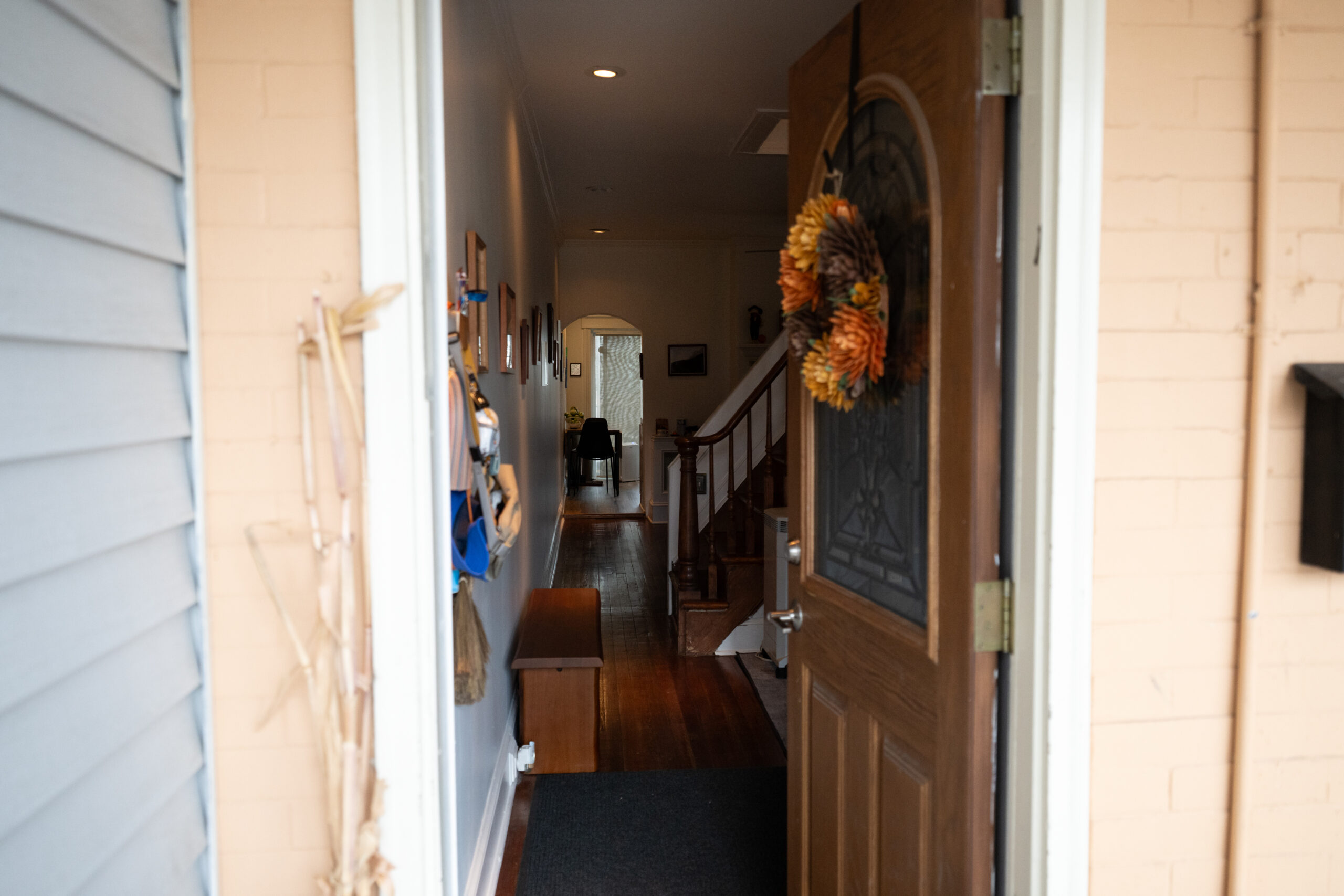
    The entry to Kidd’s rowhouse.
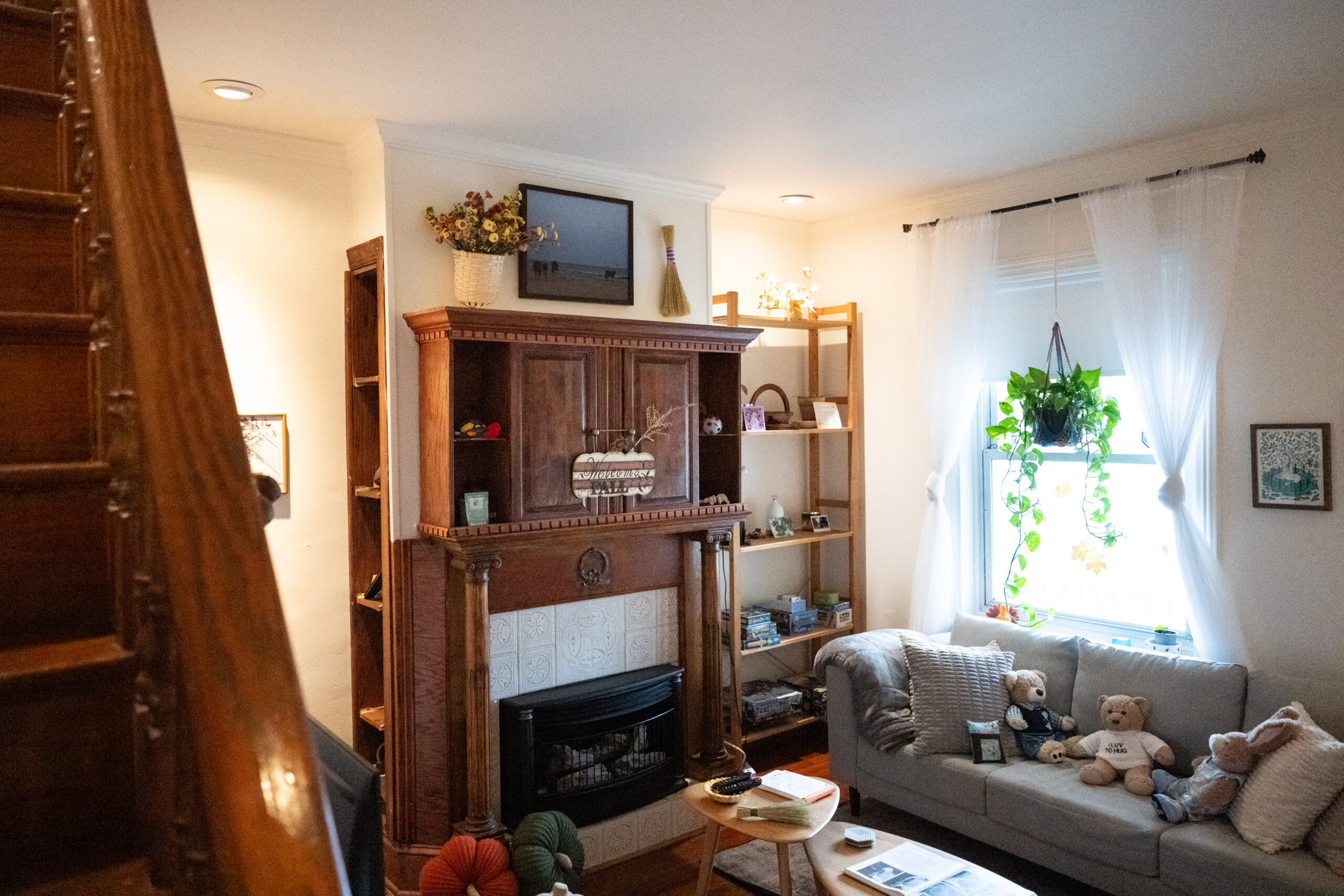
    The living room, where a plant in the window enjoys the afternoon sun.

    “I wanted to be very intentional about moving to the area. I didn’t want to live in a neighborhood that was all white. It’s also very economically diverse and that was very important to me,” he said. “Plus, you are near public transportation. You are near nature. There is so much happening here.”

    In the front room, a large ornate mantel anchors the space. A decorative leaded glass door leads to a cozy porch. He painted the porch black and decorated it with a pride flag and corn that he grew in the backyard.

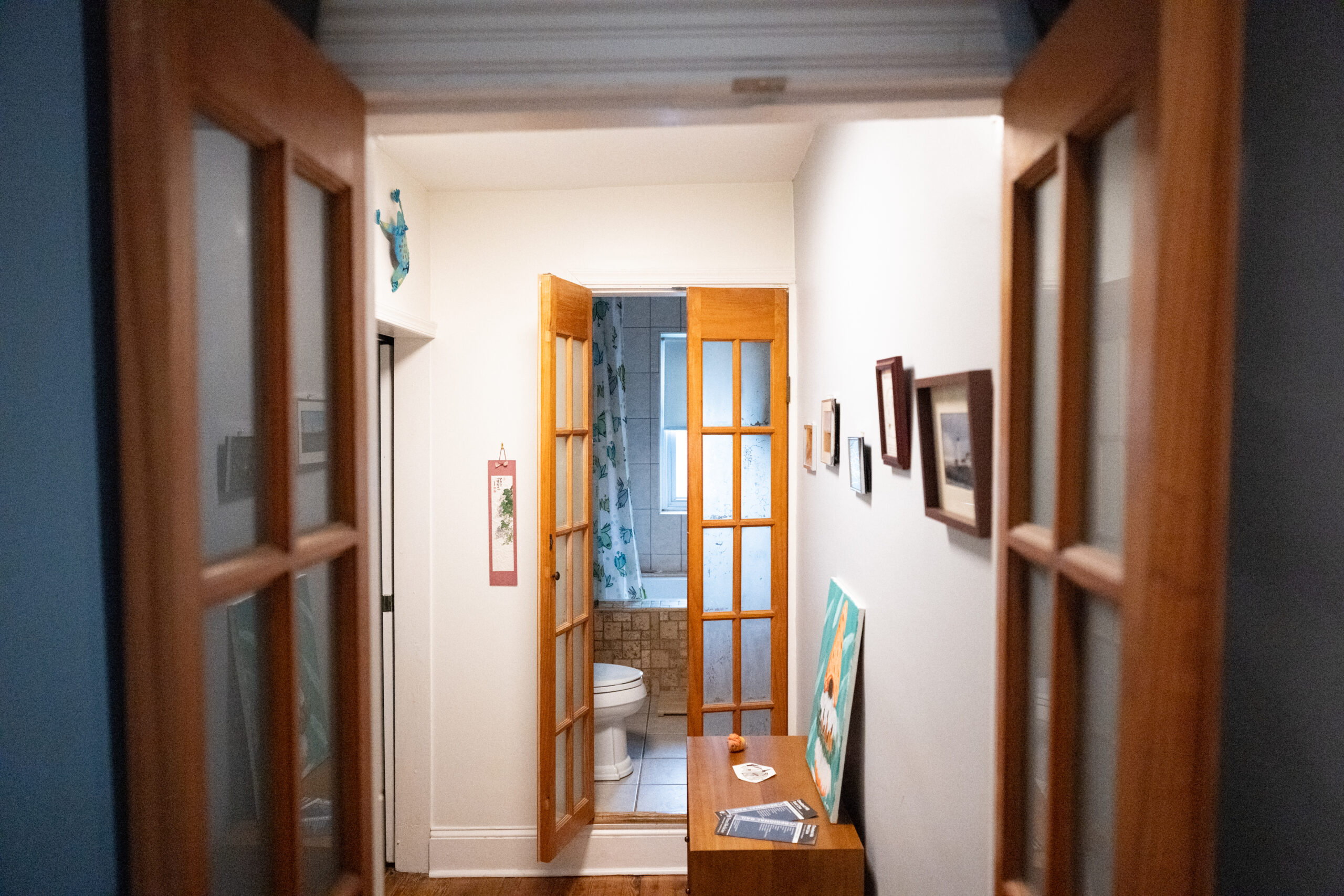
    A steep set of stairs divides the living room and adjacent dining room, which like other areas of the home are decorated with Kidd’s photography, including images from his trips to Zion National Park, Assateague Island, and Chicago. Rustic wooden doors lead to a bathroom, which used to be a closet, and to the basement. The dining room boasts decorative tile, a large cabinet, and dining table.

    “The previous owner left a lot of furniture. He got out of here very fast,” Kidd said. The owner, who moved out of the country, left the dining room cabinet, the TV stand, a bed frame, and even a French sports car that he tried to sell to Kidd.

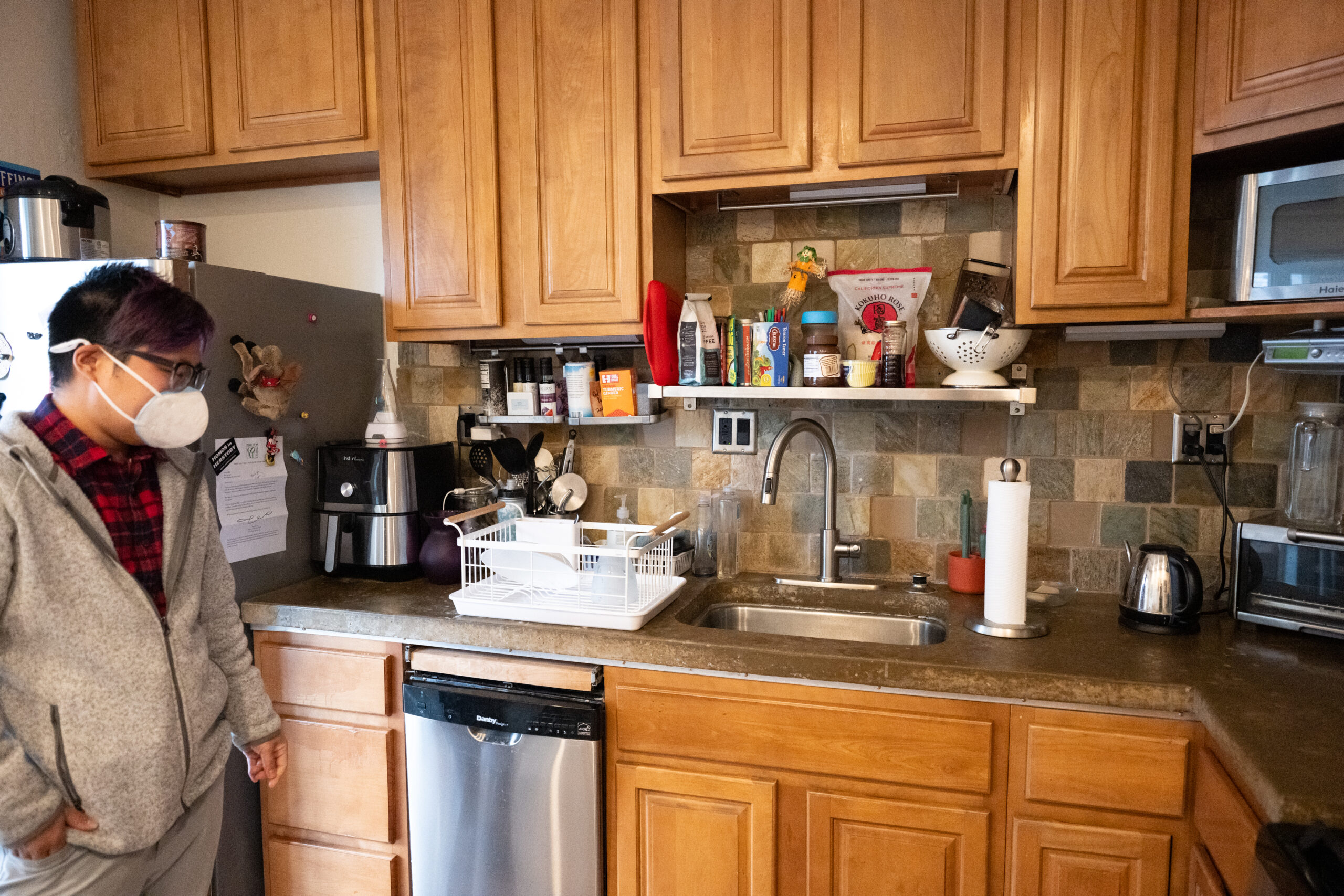
    The larger kitchen with a dishwasher was an upgrade for Kidd.
    The upstairs landing and bathroom.

    Kidd didn’t buy the car, but he was grateful for the furniture. “It’s very expensive to furnish a home.”

    In the back of the rowhouse, the spacious L-shaped kitchen came with oak cabinets, concrete countertops, and a dishwasher. While he’s not a huge fan of the countertops, Kidd said he was grateful for the upgrades.

    “When I was in Rittenhouse, I had to wash dishes in the bathtub,” he said.

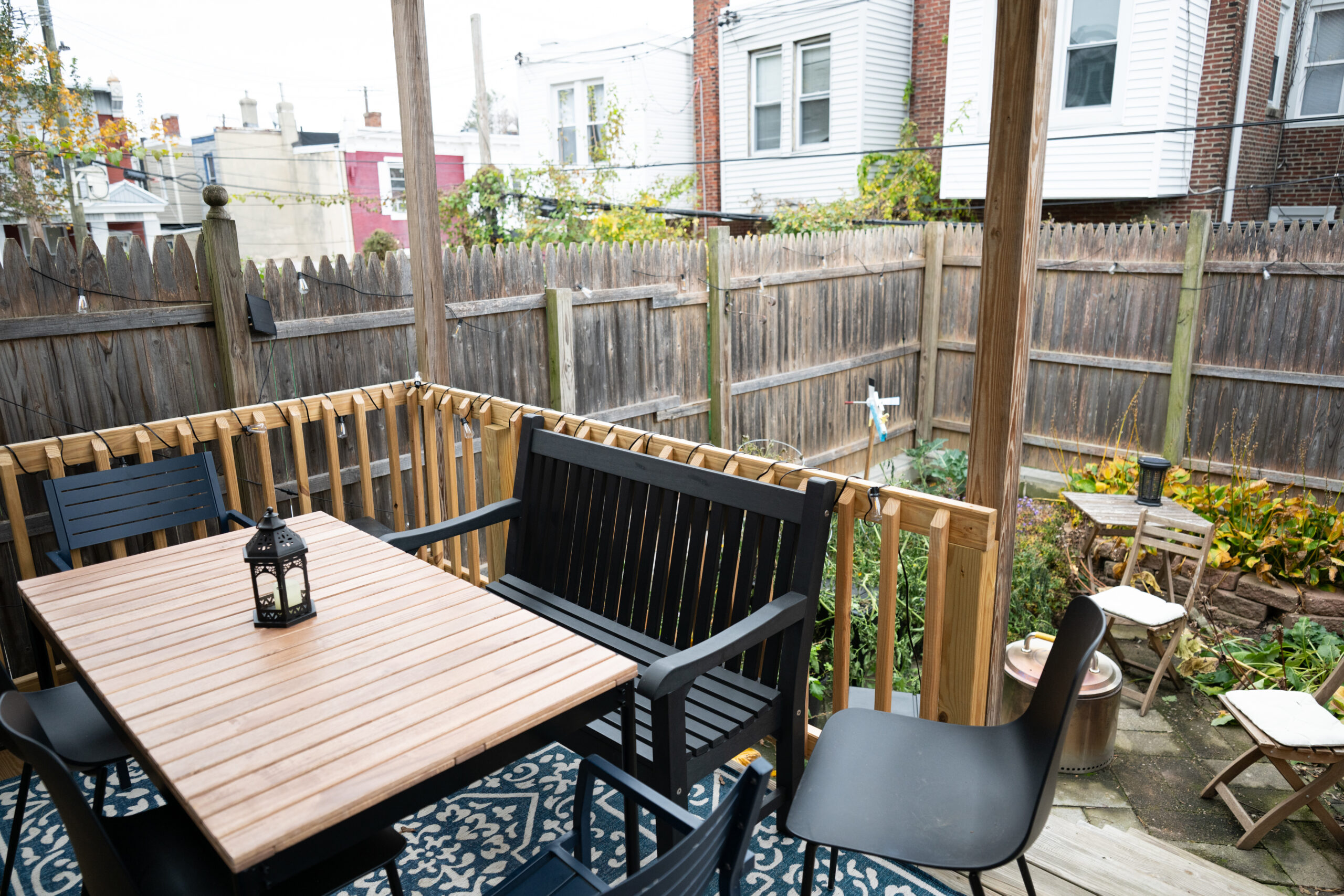
    Double doors lead to a quaint deck, wooden pergola, and postage-stamp yard.

    The outdoor space was a major draw for Kidd. It took him weeks to clean out the yard, but he was able to grow several plants during his first summer in the home.

    This past summer, Kidd spent some free time growing broccoli, kale, tomatoes, and native plants, purchased from local business Good Host Plants. It had taken weeks to clean out the trash that the previous owner had left in the yard.

    “I had never gardened before,” Kidd said. “I grew up in a normal suburban home. My parents gardened. I don’t think my brother and I were interested at the time.”

    The last batch of tomatoes Kidd harvested from his backyard garden is piled into bowls in his kitchen.
    Kidd’s garden during the summer, as the flowers were blooming. He worked to clear out the yard and make space for plants and seating after moving in.

    Kidd attended the University of Maryland for his undergraduate degree in sociology. He went on to work for the Children’s Hospital of Philadelphia for several years, studying HIV in adolescents, before the grant funding his work was cut. He then returned to graduate school at the University of Maryland. In 2022, he started his current job in banking and finance.

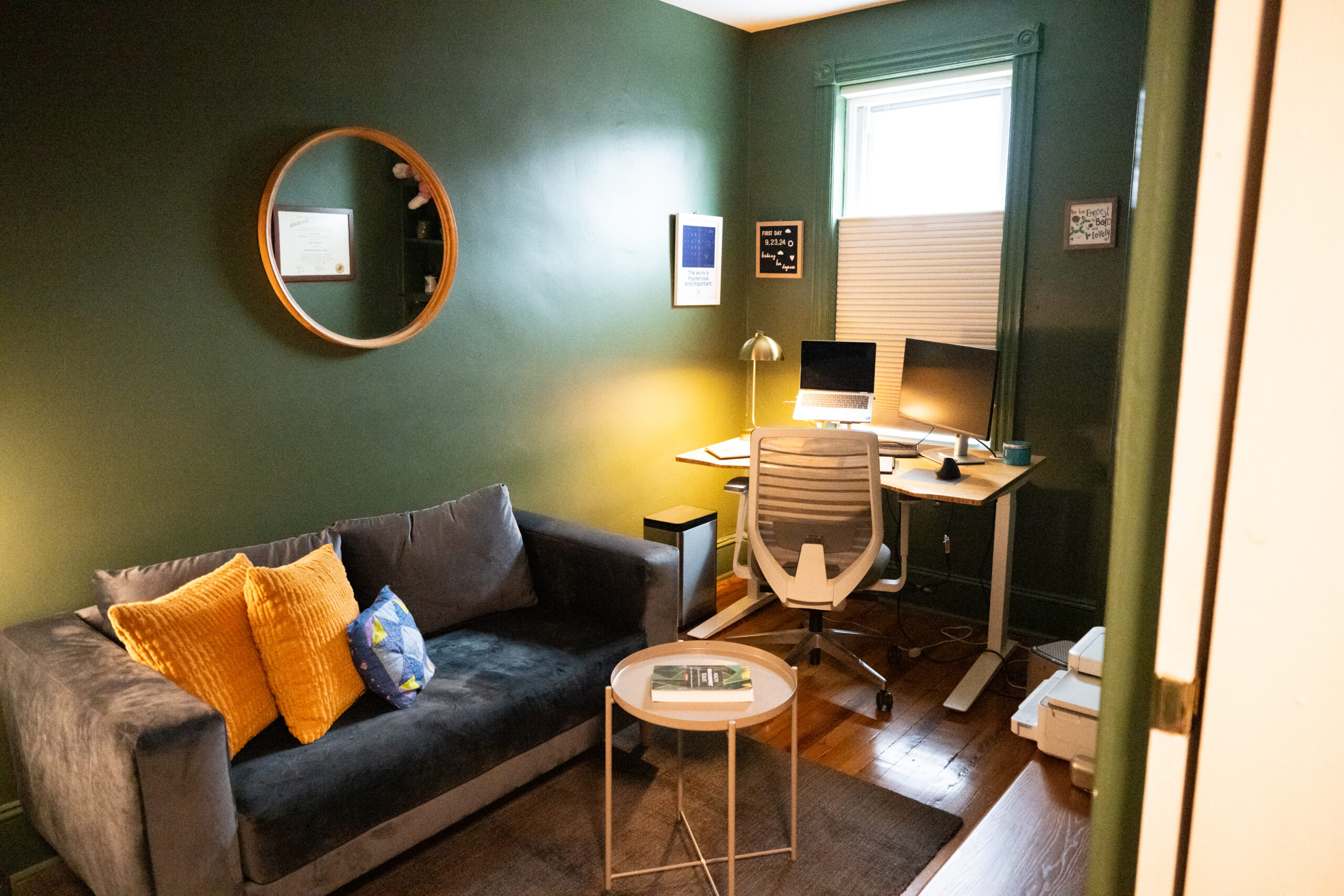
    He uses the second bedroom upstairs as his office. Painted a moody hunter green, the office is outfitted with built-in bookcases and a charming pocket door.

    The front bedroom faces a historic cemetery. The open space provides for a nice view.

    “The Realtor joked that I could commune with my ancestors,” he said. “But you get a really nice sunrise and sunset. There’s no obstruction.”

    The home office is made cozy with a velvety couch and throw pillows.

    Kidd is grateful the city and neighborhood even has affordable and attainable homes for someone his age.

    “This home feels very cozy, so much more than the apartments. It feels like mine.”

    Is your house a Haven? Nominate your home by email (and send some digital photographs) at properties@inquirer.com.

  • James Ijames rewrote the script to ‘Good Bones’ after seeing the pushback to the Sixers arena. Is the play any good?

    James Ijames rewrote the script to ‘Good Bones’ after seeing the pushback to the Sixers arena. Is the play any good?

    Gentrification is perhaps not the flashiest subject for a play. But in a city like Philadelphia — which has seen years of rapid development and community backlash, particularly surrounding the contested Sixers arena effort — it serves as a ripe starting point for dramatic exploration in Good Bones, running at the Arden Theatre through March 22.

    Directed by Akeem Davis and written by Pulitzer Prize-winning playwright James Ijames, the play centers on Aisha (Taysha Marie Canales), a businesswoman tasked with community outreach for sports complex developers, and Earl (Walter DeShields), the contractor she hires for home renovations who vehemently opposes the arena. They both grew up in the same (fictional) neighborhood but hold vastly different visions for its future.

    Arts reporter Rosa Cartagena and residential real estate reporter Michaelle Bond discuss the production’s funny, emotional, and complex portrayal of a very Philly reality.

    Old neighborhoods, new names

    Rosa Cartagena: You’ve been covering real estate extensively here in Philadelphia. I’m wondering what’s your first impression of the way this play addressed gentrification?

    Michaelle Bond: I saw a lot of themes that I hear about all the time covering housing. The feelings of longtime residents vs. newer ones, revitalization vs. displacement, what new construction looks like and how it fits (or doesn’t) in a neighborhood, even what a neighborhood should be called.

    RC: Right, there was a funny moment on opening night when Earl criticized the newcomers for calling their neighborhood the new name “Finbrook” instead of “the Heat” and an audience member clapped. We’ve seen that kind of rebranding all across this city, too.

    MB: I think the Heat is the cooler of the two names, by the way. There’s more passion behind it. But yes, developers and real estate agents have rebranded or tried to rebrand lots of neighborhoods. The Gayborhood, for example, is also called Midtown Village now. Almost 10 years ago, a small developer in North Philly’s Norris Square tried to rename the neighborhood Stonewall Heights and was promptly shut down. In an extreme example, the Black Bottom neighborhood in West Philly was bulldozed and renamed University City.

    Taysha Marie Canales (Aisha) and Walter DeShields (Earl) examine a model sports complex development in ‘Good Bones,’ running at the Arden Theatre through March 22.

    The Sixers arena influence

    RC: This story is set in an American city that could stand in for Philadelphia, or the sites of previous performances in Washington, D.C., and New York. The playwright James Ijames was living in South Philly when he wrote Good Bones, and he’s previously discussed his own growing pains of moving to a new community. This production delivers a specifically Philly version but with a universal resonance.

    MB: Right, because in the other productions, the new development coming in wasn’t a sports complex, was it?

    RC: Ijames rewrote the script after seeing the local pushback to the Sixers arena proposed in Chinatown. There are a few Philly callouts, like Earl’s sister Carmen (Kishia Nixon) attending the University of Pennsylvania and a joke about the Sixers sucking (which killed).

    Revitalization vs. destruction

    MB: One thing I’ve heard a lot about across Philly is that residents raise their kids in their neighborhoods, but when the kids grow up, they can’t afford to buy a home in that same neighborhood. Earl says that the public housing complex where he and Aisha grew up will be torn down and probably replaced with condos that no one can afford. The production does a good job highlighting the displacement and the class dynamics that are often at play.

    RC: Absolutely. In this case Aisha grew up, moved away, married a guy from a rich family, and returned to purchase a home with “character and charm.” But her view of the neighborhood’s drastic transformation isn’t a negative one — she sees her efforts as “healing” her once neglected and sometimes violent home. Aisha and Earl bond over their memories of the Heat but fiercely disagree about what is revitalization vs. destruction.

    MB: That’s the thing. They’re both passionate about the neighborhood and want to help the residents there, but they have different ways of going about it. Aisha wants to get rid of the public housing complex and “start over,” but Earl wants improvements that don’t erase the history.

    Taysha Marie Canales (Aisha) and Kishia Nixon (Carmen) in ‘Good Bones,’ running at the Arden Theatre through March 22.

    RC: We learn that Earl has been handcrafting cabinet knobs that look like the ones originally in the kitchen, because he has memories of playing in the empty house after the previous owner died.

    MB: Earl is a big fan of preservation. He calls new construction ugly and says it has no character or charm. And that’s definitely something I’ve heard from Philadelphians. And how that’s particularly irritating in a historic city like Philadelphia. Inquirer architecture critic Inga Saffron said in a recent column that Philly neighborhoods “are now awash in interchangeable blocky structures, all dressed in the same dreary gray clothing, their aluminum panels shrink-wrapped around the exterior like a sheet of graph paper.”

    Block parties and traditions

    RC: Ew, yeah the millennial gray. New neighbors also bring new problems. When a block party interrupts Aisha’s husband Travis’ (Newton Buchanan) sleep, he decides to lodge a noise complaint using an app called the Hood — a clever Ijames invention that makes “this narc s— so pleasant,” Carmen says — and the cops come in a harrowing scene portrayed through anxiety-inducing lighting design thanks to Shannon Zura. It’s later revealed that the event was an annual community gathering Earl organized.

    MB: That’s also something I hear about. The tension between longtime residents who have longstanding traditions and newer residents who don’t have an understanding of that history or what it means to the community.

    RC: Or who are scared to even talk to their neighbors. Earl makes the point that Travis could have simply stepped outside and asked them to turn it down. It’s even more damning because Aisha’s whole job is to “help the franchise speak the language of the community.” Earl criticizes her by saying, “I expect more from my people.” As universal as it is, Good Bones isn’t a stereotypical representation of gentrification because these aren’t white newcomers in a historically Black community, which makes this portrayal richer and thornier.

    Newton Buchanan (Travis) and Taysha Marie Canales (Aisha) in ‘Good Bones,’ running at the Arden Theatre through March 22.

    Nuance and personal experience

    MB: Speaking of thorny, the play also touches on what can be development’s double-edged sword. Investment boosts existing residents’ property values, but then everything gets more expensive, from property taxes to groceries. Earl mentions at one point that a Whole Foods replaced a neighborhood spot.

    RC: That frustration shined through in DeShields’ strong performance, too. The actor has had his own direct experiences with gentrification here after growing up in South Philadelphia and seeing his neighborhood renamed to Point Breeze. I think that personal pain and loss bolstered his take on Earl, who reminds Aisha that transformation to some means elimination for others. Aisha, on the other hand, primarily focuses on her memories of violence and trauma that she experienced, saying that they deserved better. Canales delivers a layered and emotional speech that underscores how these conversations can be conflicting and difficult.

    MB: I went into the play thinking there would be a clear resolution, but there really wasn’t one. And that speaks to the complexity of the subject matter.

    RC: That’s also a testament to the play’s strengths — it succeeds in getting audiences to think critically about a nuanced topic. Hopefully that means they’ll actually talk to their neighbors, too.

    “Good Bones” runs through March 22 at the Arden Theatre, 40 N. Second St., Phila., 215-922-1122 or ardentheatre.org. Runtime: 1 hour and 45 minutes (no intermission).

  • ICE buys $87 million warehouse in Berks County as it plots expansion of immigration detention centers across the U.S.

    ICE buys $87 million warehouse in Berks County as it plots expansion of immigration detention centers across the U.S.

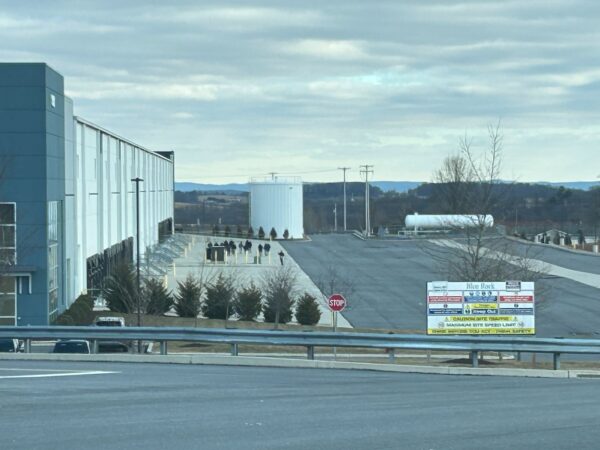
    UPPER BERN, Pa. — The Trump administration has quietly purchased a nearly 520,000-square-foot warehouse in Berks County as it plans to convert such facilities into immigration detention centers across the U.S.

    The warehouse, located at 3501 Mountain Rd. in Upper Bern Township, was sold to the U.S. government on behalf of the Department of Homeland Security and Immigration and Customs Enforcement for $87.4 million, deed records show. The purchase was recorded on Feb. 2.

    Spotlight PA visited the warehouse, which is located about a mile from I-78, on Jan. 15 and witnessed about two dozen individuals touring the exterior of the building. One man who arrived early to the site that day identified himself to a reporter as ICE.

    The property was most recently called the Hamburg Logistics Center, and before that was the site of the Mountain Springs Arena, a county landmark known for rodeos and demolition derbies. It neighbors an Amazon warehouse and the Mountain Springs Camping Resort.

    The building is one of at least 23 that ICE plans to convert into immigration detention facilities, Bloomberg reports. The Berks County warehouse could house up to 1,500 beds.

    ICE also finalized the purchase of a warehouse in nearby Tremont Township, in Schuylkill County, on Monday, according to a deed. The Tremont property is located less than 300 yards from a daycare center and has already faced fierce resident opposition.

    A spokesperson for ICE did not answer any questions about the Berks County warehouse purchase and instead lauded the agency’s targeting of “vicious criminals.”

    “Thanks to the One Big Beautiful Bill, ICE has new funding to expand detention space to keep these criminals off American streets before they are removed for good from our communities,” the spokesperson said.

    Upper Bern Township’s solicitor said in an emailed statement that community leaders learned about the sale on Monday. They declined to answer questions.

    “The township was not involved in this transfer and has not received any applications from either the prior or new owners regarding the future use of the property,” the statement reads. “The township has no further comment on this matter at this time.”

    State Sen. Chris Gebhard and State Rep. Jamie Barton, Republicans who represent the area, said they have reached out to federal contacts to gather more information on how the Department of Homeland Security plans to use the warehouse.

    “Our immediate concerns include the potential loss of property tax revenue for the host municipality, county, and school district, as well as security and perimeter considerations,” the lawmakers said in a joint statement. “We look forward to engaging directly with the appropriate federal officials to address these issues. Once additional information is available, we will provide an update.”

    The property is assessed at $22 million and currently pays $198,286 annually in county property taxes under the current tax rate of 9.013 mills. Combined with Hamburg Area School District and township taxes, the loss of tax revenue from the federal government’s purchase would be about $624,000.

    State Sen. Judy Schwank (D., Berks) declined to comment on the warehouse purchase on Monday. In an earlier interview with Spotlight PA, she called the then-potential sale “deeply concerning,” especially given the reports of mistreatment of people detained in ICE facilities. She released a statement about “ICE’s action in Minneapolis” on Jan. 27, shortly after federal agents killed Alex Pretti.

    “My concern is, knowing the track record of some of these other facilities located throughout the country, it’s not good,” she said. “I don’t necessarily want to see something like that being housed in our county.”

    The deed finalized on Monday shows the property was sold to ICE by an LLC connected to PCCP, a national commercial real estate equity firm. The firm purchased the warehouse in 2024 for $57.5 million, deed records show.

    Reached by phone Monday afternoon, PCCP partner Greg Eberhardt — who is the authorized signatory for 3501 Mountain Road Owner LLC on the latest deed — denied knowledge of the property and its sale, and refused to comment further.

    “I have no idea what you’re talking about,” Eberhardt said before hanging up on a Spotlight PA reporter. “I’m not making company comments.”

    Upper Bern Township is situated on the edge of Berks and Schuylkill Counties, with a population of roughly 1,600 people. The community is mostly white, with only 2.8% of residents identifying as another race, according to the 2020 Census.

    Bridget Cambria, an attorney with Aldea, a nonprofit that provides pro bono immigration legal services, said the detention center would have a “disruptive” and “chilling” impact on Berks County’s immigrant community.

    “If there are people that live freely and at peace knowing that they do the right thing, they can do their immigration process or stay with their family or figure out a way to legalize their status, they’re going to be more afraid to do that with a giant detention center in their backyard,” Cambria said.

    A 2022 study by the Detention Watch Center and the Immigrant Legal Resource Center found that immigrants were more likely to be arrested by ICE in counties with more detention bed space.

    This story was produced by the Berks County bureau of Spotlight PA, an independent, nonpartisan newsroom. Sign up for Good Day, Berks, a daily dose of essential local stories, at spotlightpa.org/newsletters/gooddayberks.

    BEFORE YOU GO … If you learned something from this article, pay it forward and contribute to Spotlight PA at spotlightpa.org/donate. Spotlight PA is funded by foundations and readers like you who are committed to accountability journalism that gets results.

  • Signs of a frozen housing market in Philadelphia and Delaware County

    Signs of a frozen housing market in Philadelphia and Delaware County

    The ground and your toes aren’t the only things frozen in the Philadelphia region.

    In the city and Delaware County last month, potential home sellers and buyers stayed on the sidelines, and sales were slow, according to a Redfin analysis of the 50 most-populous metropolitan areas for the four weeks ending Jan. 25. Pending home sales were down about 4% from the same time last year.

    “You’re just not seeing a lot of activity happening,” said Chen Zhao, head of economics research at Redfin.

    What has been heating up are prices. The market that Redfin defines as Philadelphia and Delaware County was in the top three areas where sale prices increased the most compared to the same time last year. The median sale price was up just over 10% to $294,125.

    Limited home supply and rising home prices tend to go hand in hand, and that is what is happening in these markets, Zhao said.

    Sales in January’s slow market happened at higher prices because buyers who are still in the market are willing to pay elevated prices.

    The average number of new home listings ticked up slightly from last year, and it should continue to grow as the typically busy spring housing market approaches. So should the number of buyers looking for homes.

    Any changes in affordability, Zhao said, will be “mostly driven by mortgage rates, not so much by prices.”

    The average interest rate on a 30-year, fixed-rate mortgage was almost 7% at the end of January 2025, according to the government-backed mortgage buyer Freddie Mac. This year, it was 6.10% at the end of the month.

    Zhao said she doesn’t expect mortgage rates to go much lower this year.

    But buyers have more power than they think, especially now when sales are slow, Zhao said. They “really should be thinking about negotiating” with sellers.