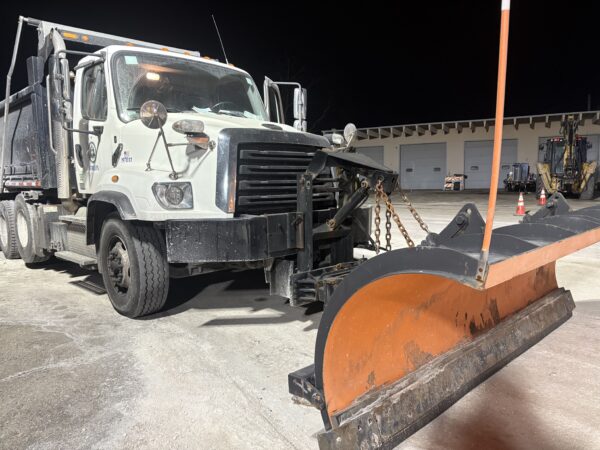
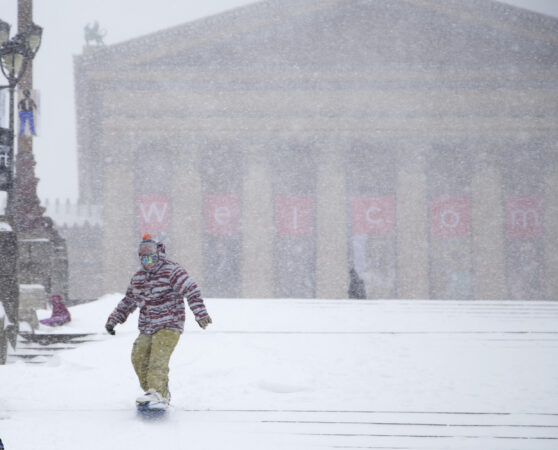
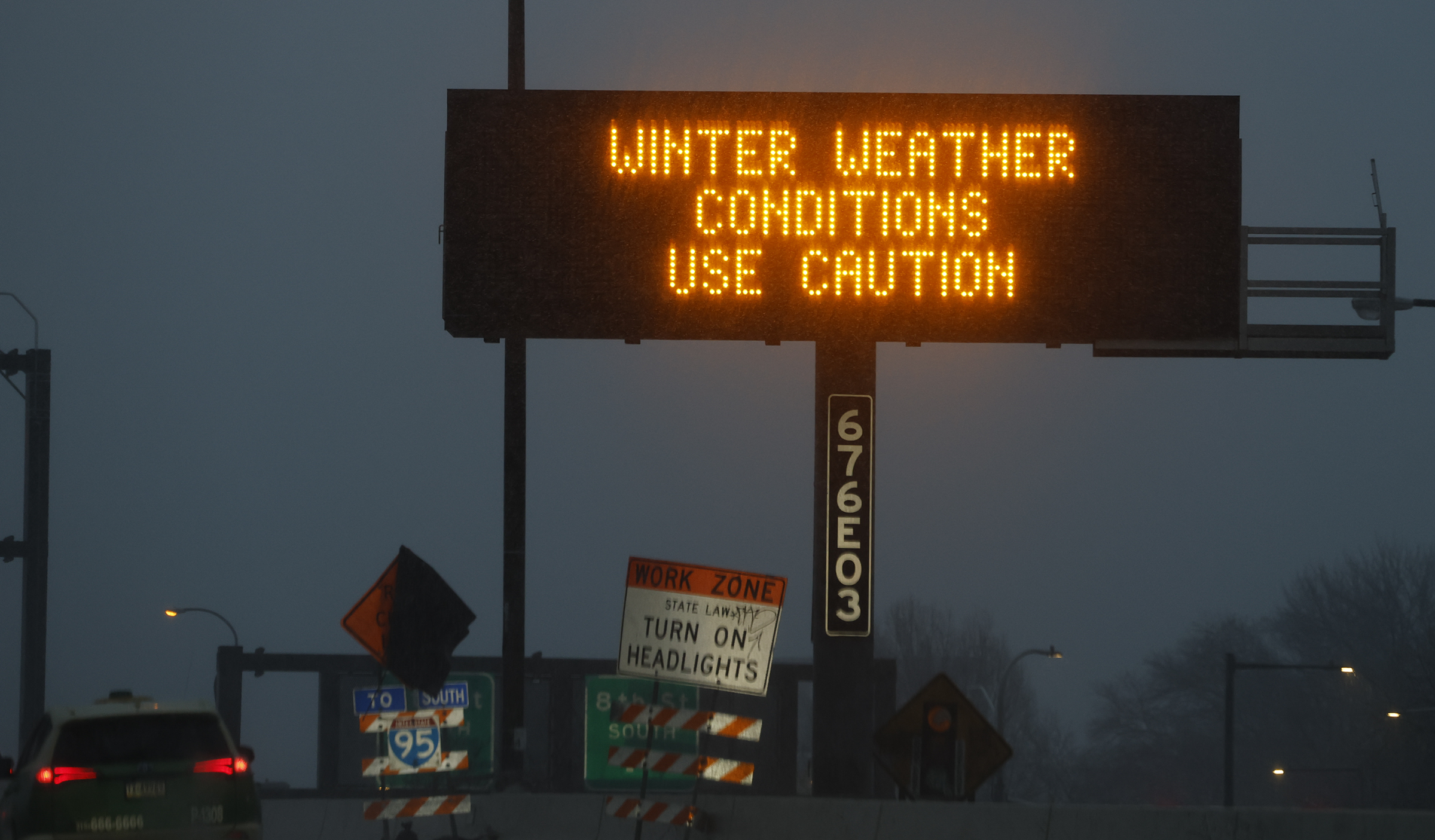
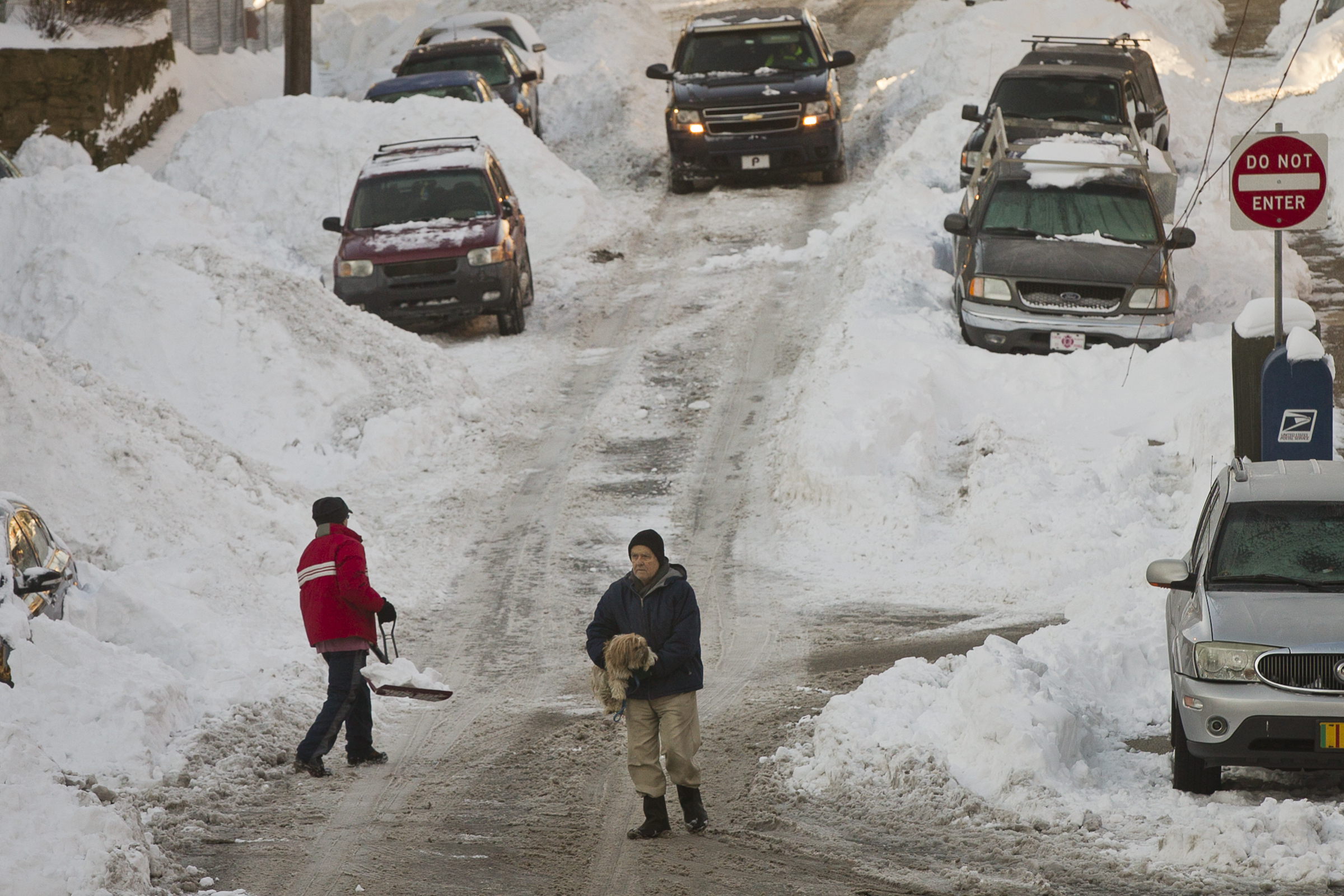
The action inside the gates of a Department of Streets yard in North Philadelphia hours before impending snow looks like a ballet.
An ensemble of tri-axle dump trucks wait in the wings (behind an orange traffic cone). Center stage (a salt dome), the excavator scoops up tons of rock salt in its jaws. The first truck makes its entrance and pirouettes (a three-point turn), while the excavator stretches its long arm, unloading heaps of salt into the truck bed. Then, a trumpet (the “beep” of a car horn) ushers the dump truck off (out through the yard’s gates).
“This is a matter of life and death in some cases if we don’t get this right,” Carlton Williams, director of the Office of Clean and Green Initiatives, said of the city’s road operations at a news conference Sunday. “We’re fighting it continuously.”
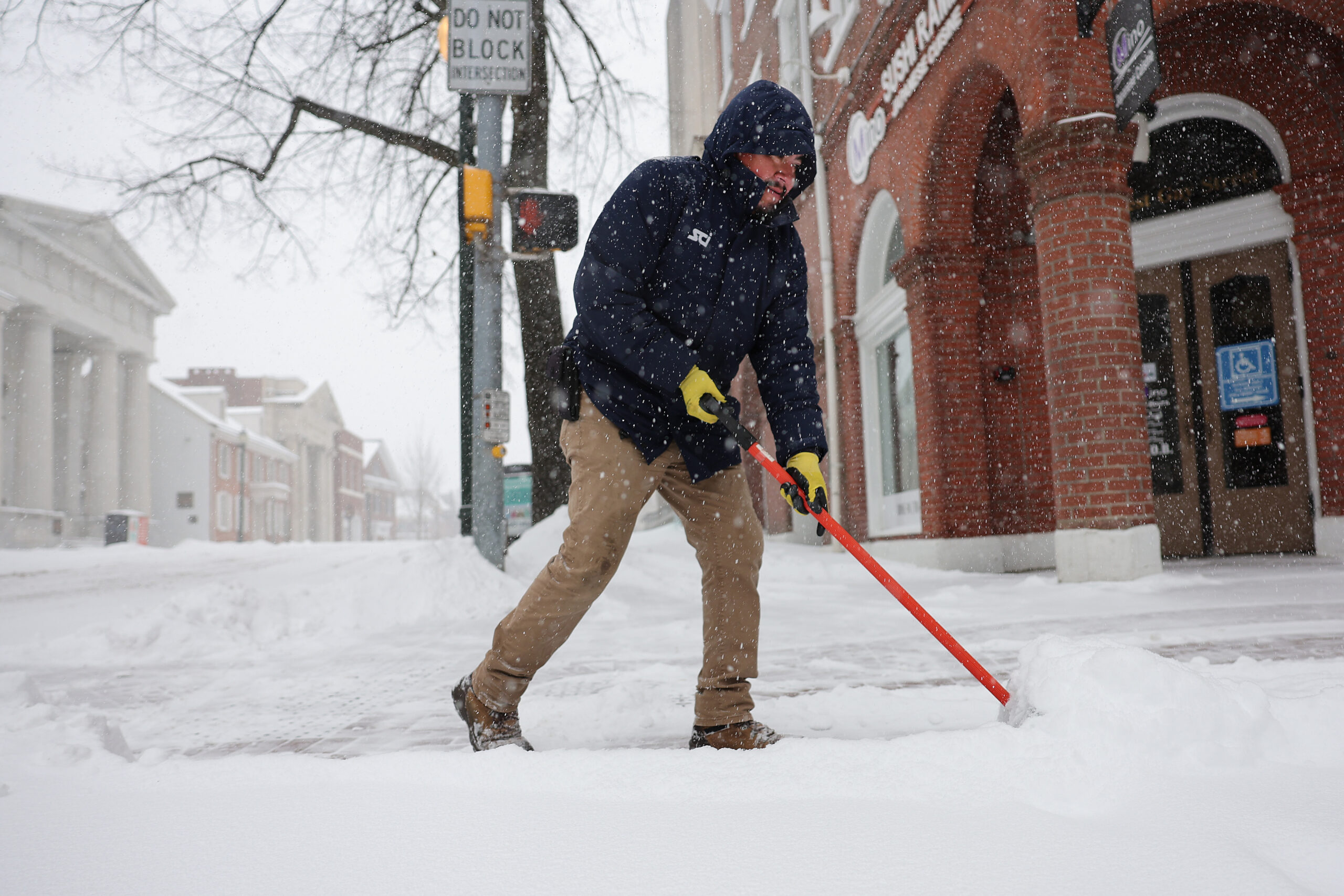
Tackling this snow event is a vast and complicated system, requiring a revolving cast of roughly 600 pieces of equipment and more than 1,000 employees, including contractors, and people and vehicles — like compactor trash trucks with plows attached — pulled in from other departments, officials said. It also calls for some improv, moving and adjusting with the ever-changing weather. This dance is sometimes more akin to organized chaos than choreography.
The curtain call time was 10 p.m. Saturday at the North Philadelphia yard for crews assigned to 151 different routes on the primary thruways, like Broad Street. At 11 p.m., the residential fleet — which handles 133 routes on smaller secondary and tertiary roads — clocked in. More staff were scheduled to arrive at staggered times throughout the storm.
There are roughly a hundred back-end staff working behind the curtain: They are the choreographers, tasked with managing crews, inputting data, monitoring street camera footage, and responding to phone calls or issues. They are in it for the long haul, prepared to spend days in front of a computer armed with spare clothes, a stockpile of food, caffeine, and personal hygiene products.
The drivers are assigned routes and vehicles, then fill up with salt — of which there were roughly 30,000 tons, or more than 66 million pounds, in storage Saturday night. The trucks leave the yard and typically head to the top of their route and await the OK to start plowing.
According to Williams, crews had been clearing since 5 a.m. Sunday. Snow must be expeditiously removed from the streets before salt can be spread. And with this storm, there was limited timing to get that done before the precipitation turned icy and whatever was on the ground froze. Just after noon, the snow was seemingly over, giving way to sleet.
Officials also deployed “lifting operations” Sunday afternoon to scoop up large snow piles amassed in the densest neighborhoods and deposit them elsewhere. One option was a trailer-sized snow melting machine, which liquefies 135 tons of snow per hour
It may not approach their magnitudes, but Sunday’s snow-and-ice cold brew is expected to bear eerie similarities to some of Philly’s historic winter storms and perhaps rival them for disruption.
By 7 a.m., up to 3 inches had been reported around the region, with heaviest amounts to the south where the snow started earlier.
Officially, at Philadelphia International Airport, 1.6 inches had been measured, already making this the city’s biggest official total of the month. But Center City trumped it at 1.8.
From 8 to 10 inches was expected around the city before the snow mixes with sleet and possibly freezing rain during the afternoon, said Nick Guzzo, a meteorologist at the National Weather Service Office in Mount Holly. All that is subject to change, of course.
As for the potential mixing, “pick your poison,” said Guzzo’s colleague Mike Lee.
The office has posted winter storm warnings for the entire region, joining offices from New Mexico to Maine.
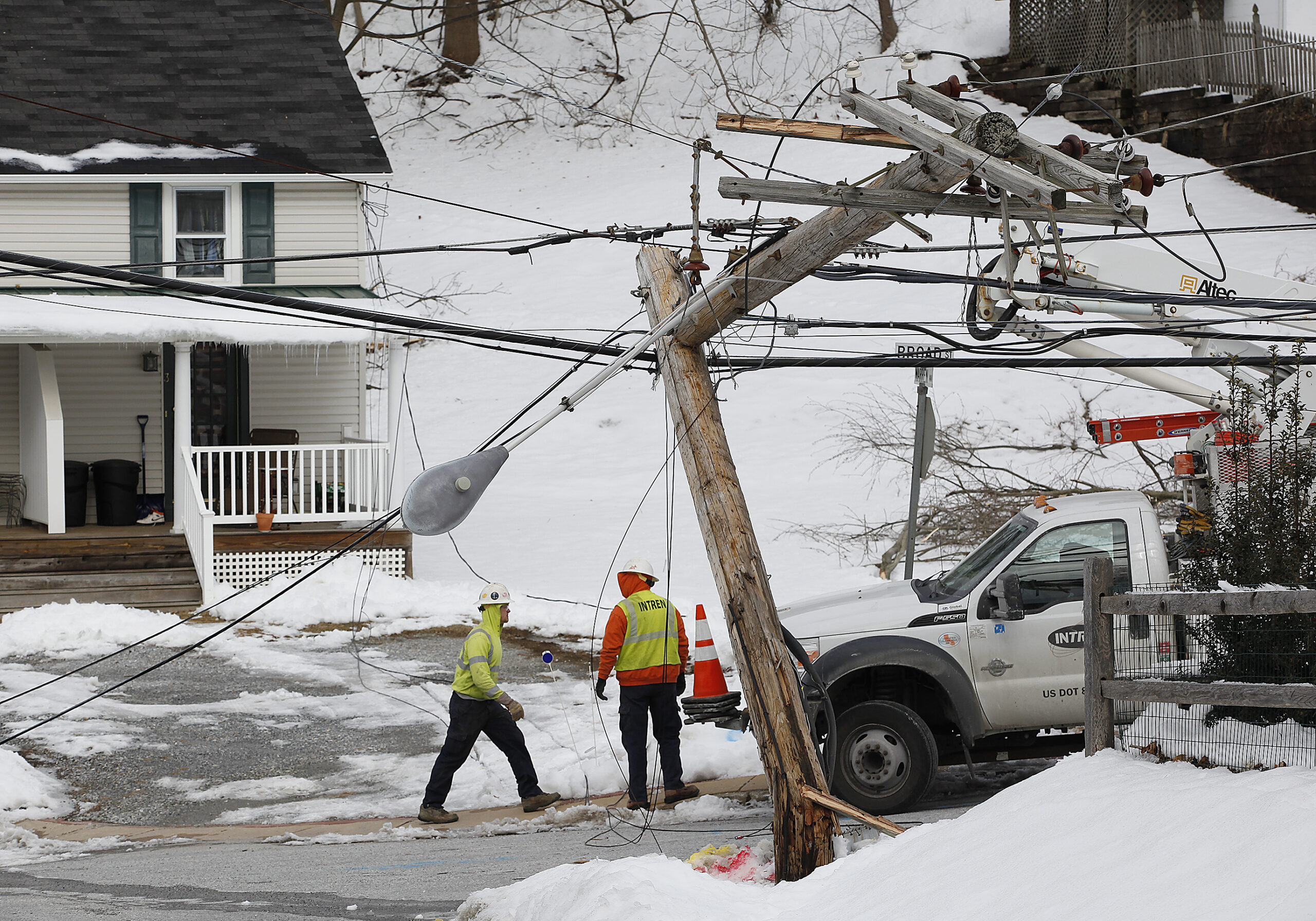
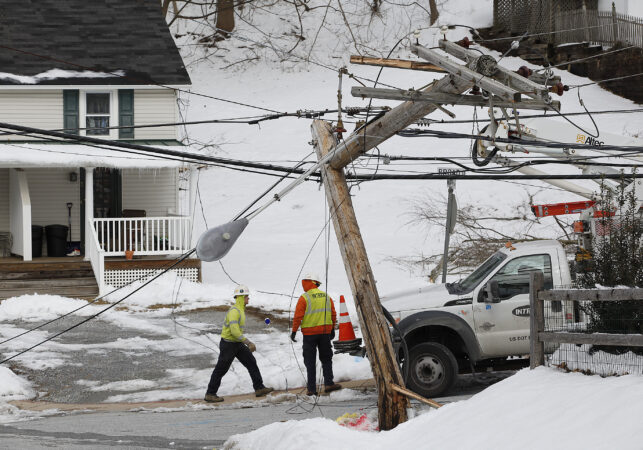
A crew from northern Illinois works to restore power at Broad Street and Warren Avenue in Malvern after the February 2014 ice storm.
The precipitation is due to shut off early Monday, but by then it may be a case of welcome to ice station Philly.
Nothing that falls is going to melt, as temperatures will get no higher than the 20s Sunday and may not see 30 for the rest of the week
Affirming their faith in the forecasts, Philadelphia, New Jersey, and Pennsylvania have declared emergencies. If you have plans the next few days, don’t count on them happening, and some kids might be able to put off homework for a few days.
Perhaps of more interest to some parties, Pennsylvania announced that all its liquor stores will be closed Sunday, and the Girl Scouts have pushed back their cookie-sale dates all the way to the spring equinox. (At least some of the bars and churches may be open.)
How much for Philly?
On Saturday, the National Weather Service was sticking with 8 to 10 inches for the immediate Philly area, said meteorologist Amanda Lee, with less to the southeast. AccuWeather Inc. was calling for 6 to 10 inches.
A lot of that would fall during a “front-end thump,” said AccuWeather meteorologist Elizabeth Glenny. Once the mixing begins, accumulation rates would back off.
While people understandably want to know how many inches of snow are going to land, that is almost always difficult to answer, meteorologists say, especially in a storm of this nature.
In this case, snow amounts are dependent on a coastal storm that had not yet formed Saturday and on what might happen in parts of the atmosphere that are not well-observed.
Temperatures in the bottom 5,500 feet of the atmosphere over Philly are expected to remain below freezing, said AccuWeather senior meteorologist Tom Kines, but computer models insist that a warm layer in the higher atmosphere would result in the changeover.
That warmth would be imported from the Atlantic Ocean by the strong onshore winds from the northeast generated by the storm — it’s not for nothing that these things are called nor’easters.
Another wild card would be if the snow is heavy enough that it could survive the warm layer and delay the changeover.
But the mixing of sleet, which is liquid that remains frozen in its trip through the atmosphere, and freezing rain, liquid that freezes on contact, is inevitable, forecasters said.
Freezing rain atop a snowpack is especially dangerous because it adds weight to vulnerable and snow-burdened power lines and tree branches. Sleet is polite enough to bounce off hard surfaces, but since it is pure ice, it is slower to melt.
Said the weather service’s Mike Lee, the mixing “just means we’re getting a different blend of horrors.”
Remembrance of Philly storms past
Mike Lee said that about 1.5 inches of liquid precipitation — the amount of melted snow and ice — was expected to fall during the storm, and whatever landed was certain to participate in becoming a massive block of ice.
And it is close to what fell during Philly’s last double-digit snow, the 22.4 inches of Jan. 22-23, 2016.
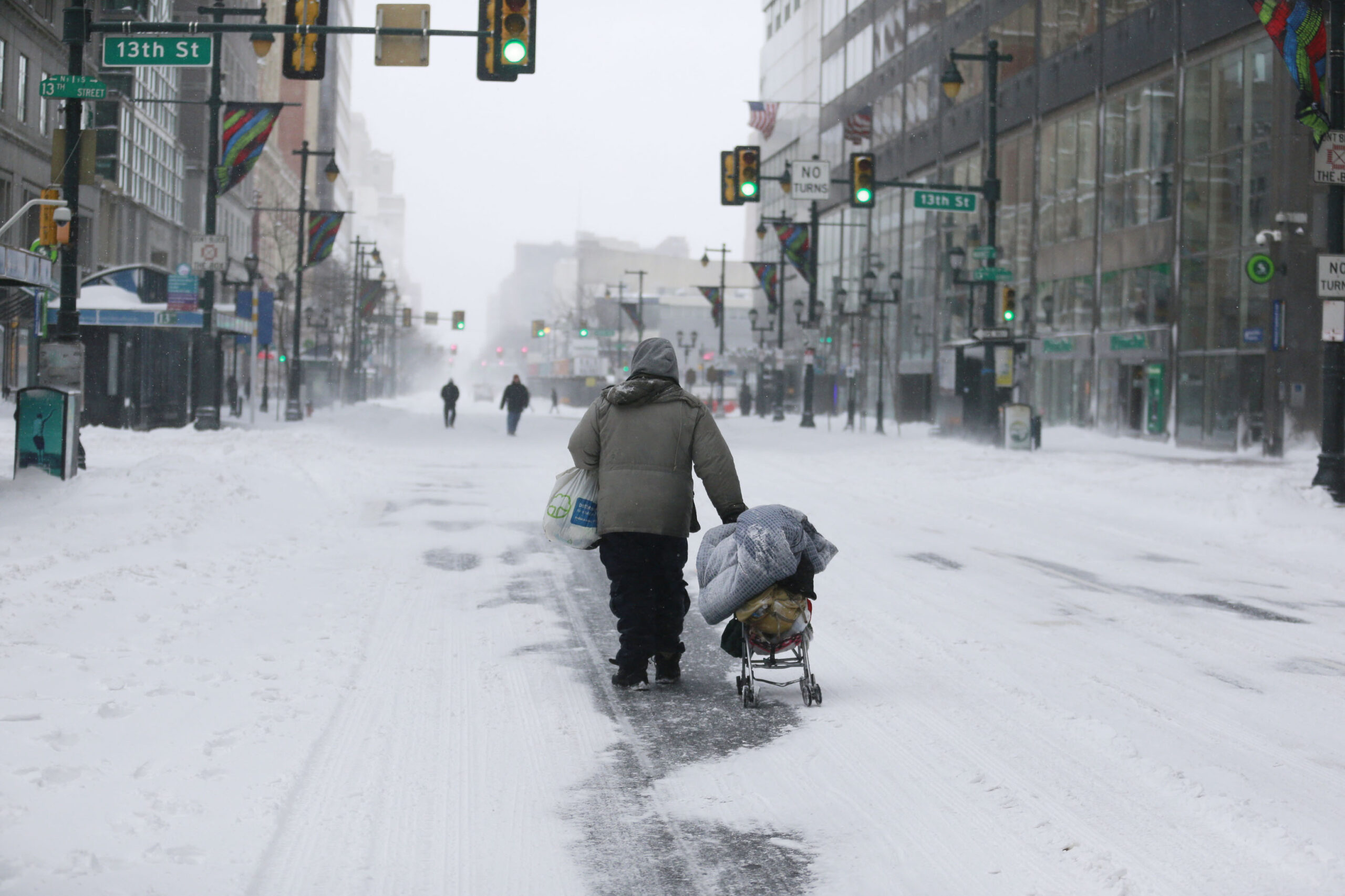
Market Street near 13th is mostly pedestrian traffic as snow falls over the region on Jan. 23, 2016.
In mid-March 1993, a foot of snow accumulated rapidly during a blizzard, followed by several hours of sleet and a flash freeze during the early morning. It created what a weather service meteorologist famously called an “Arctic landscape.”
The landscape Monday may be similar, but with one important difference.
That March storm occurred near the equinox, when the sun was about 50% stronger than it is this time of year, according to NASA data, and days were close to two hours longer. (Yes, those days are coming.)
The temperature bottomed out at 11 degrees Saturday morning, the lowest reading of the season at Philadelphia International Airport, and into the single digits outside the city.
Most airlines have canceled flights departing Sunday from Philadelphia International Airport. By late Saturday afternoon, there were 502 canceled flights into or out of the airport, according to the city.
Temperatures are expected to get no higher than the mid-20s Sunday and Monday. And then it’s going to get colder, with daytime highs no better than the low 20s, and nights in the single digits.
Philly’s biggest snow in five years has an icy finish, and it isn’t going anywhere soon
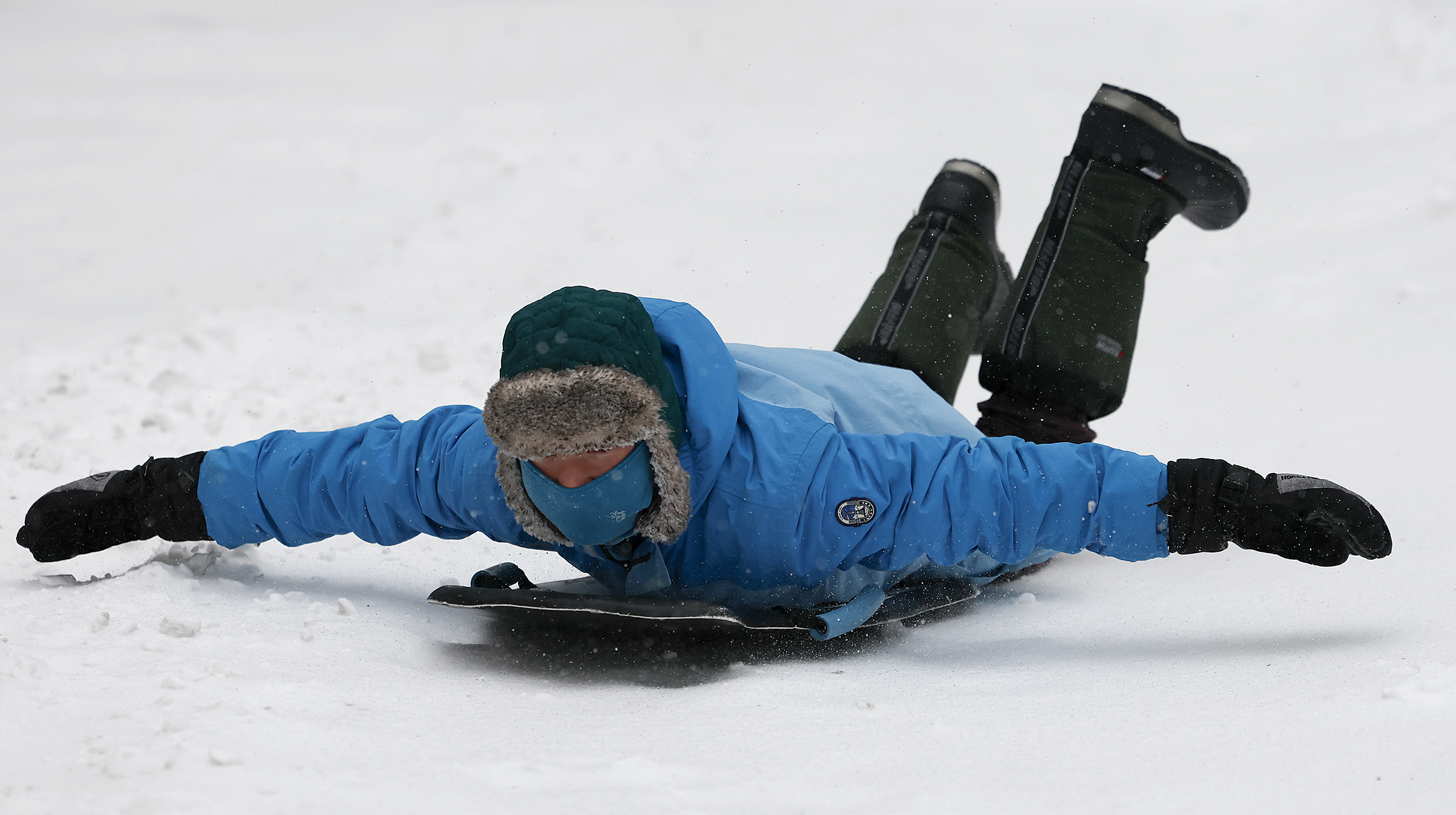
George Lynch, 11, slides on his stomach down 2nd Street in the Society Hill neighborhood Sunday.
Hours of percussive sleet layered a nasty icing on Philadelphia’s biggest snowfall in five years Sunday, and it may be some time before bare ground resurfaces in the region, if not normality.
This was not the stuff of postcards.
Officially 7.4 inches of snow was measured at unusually quiet Philadelphia International Airport, with similar amounts reported in the neighboring counties, as temperatures didn’t get out of the teens during the day anywhere near Philly.
And shovelers beware: That mess may weight as much as 18 inches of pure snow. Besides, we may be out of practice. This was the most snow since the 81 inches of Feb. 2-3, 2021. Incidentally, that snowfall was the biggest in five years, in what has been a generally snow-deprived decade.
Forecasters say it is unlikely that the precipitation would flip back to snow, but some additional accumulation was possible, since sleet — liquid that freezes before it lands — counts as snow. In some places it was falling at the rate of 0.5 inches an hour, the National Weather Service said, an extraordinary rate for sleet.
Some freezing rain — liquid that freezes on contact with a surface — was possible Sunday evening, said Nick Guzzo, meteorologist at the National Weather Service in Mount Holly.
However, widespread power outages were unlikely, a function of the unusual behavior of a potent but peculiar storm that wrought a familiar set of disruptions and inconveniences.
A pedestrian walks under the Benjamin Franklin Bridge Sunday.
A far-reaching winter storm blanketed the Mid-Atlantic in an icy brew of snow and sleet Sunday, with preliminary totals nearing a foot in parts of New Jersey.
Philadelphia ranked near the top end of regional totals. A survey of five regional National Weather Service offices showed PHL’s total ranked 103rd of 565 reports made in the last six hours.
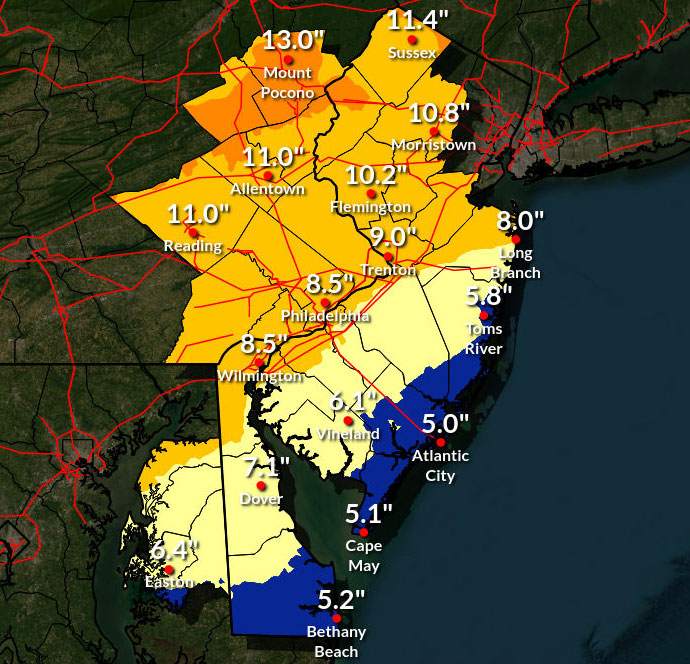
The Philadelphia metropolitan region generally received between four and nine inches of snow by early Sunday afternoon, according to National Weather Service reports.
Among the highest totals:
Pottstown – 9.5 inches
Norristown – 8.7 inches
Stowe – 8.5 inches
Lower Pottsgrove – 8.5 inches
New Hanover – 8.5 inches
Use the map and chart below to find preliminary snow totals in your area. Hover over dots on the map to reveal more information, or search for Philadelphia-area totals below.
window.addEventListener(“message”,function(a){if(void 0!==a.data[“datawrapper-height”]){var e=document.querySelectorAll(“iframe”);for(var t in a.data[“datawrapper-height”])for(var r,i=0;r=e[i];i++)if(r.contentWindow===a.source){var d=a.data[“datawrapper-height”][t]+”px”;r.style.height=d}}});window.addEventListener(“message”,function(a){if(void 0!==a.data[“datawrapper-height”]){var e=document.querySelectorAll(“iframe”);for(var t in a.data[“datawrapper-height”])for(var r,i=0;r=e[i];i++)if(r.contentWindow===a.source){var d=a.data[“datawrapper-height”][t]+”px”;r.style.height=d}}});
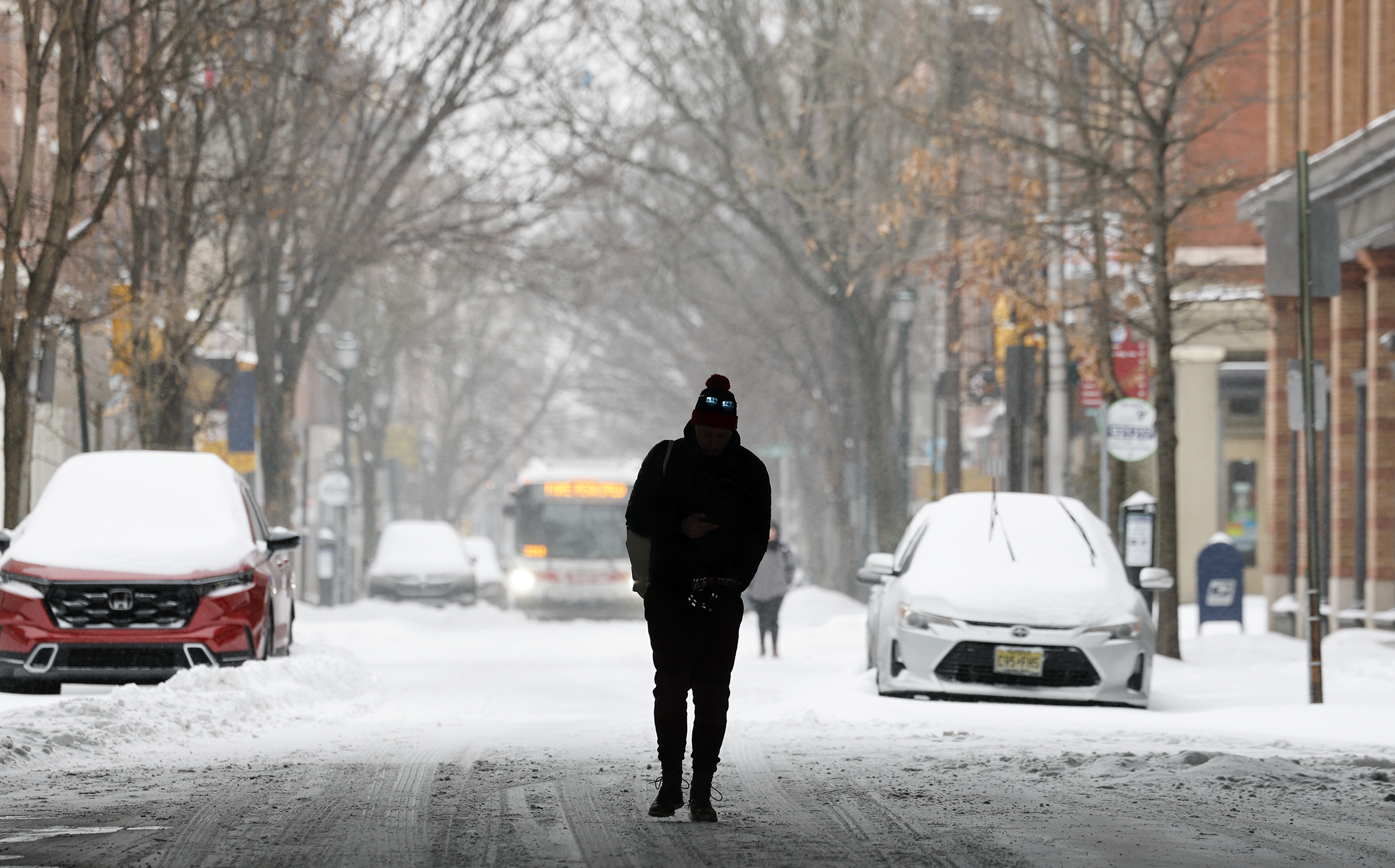
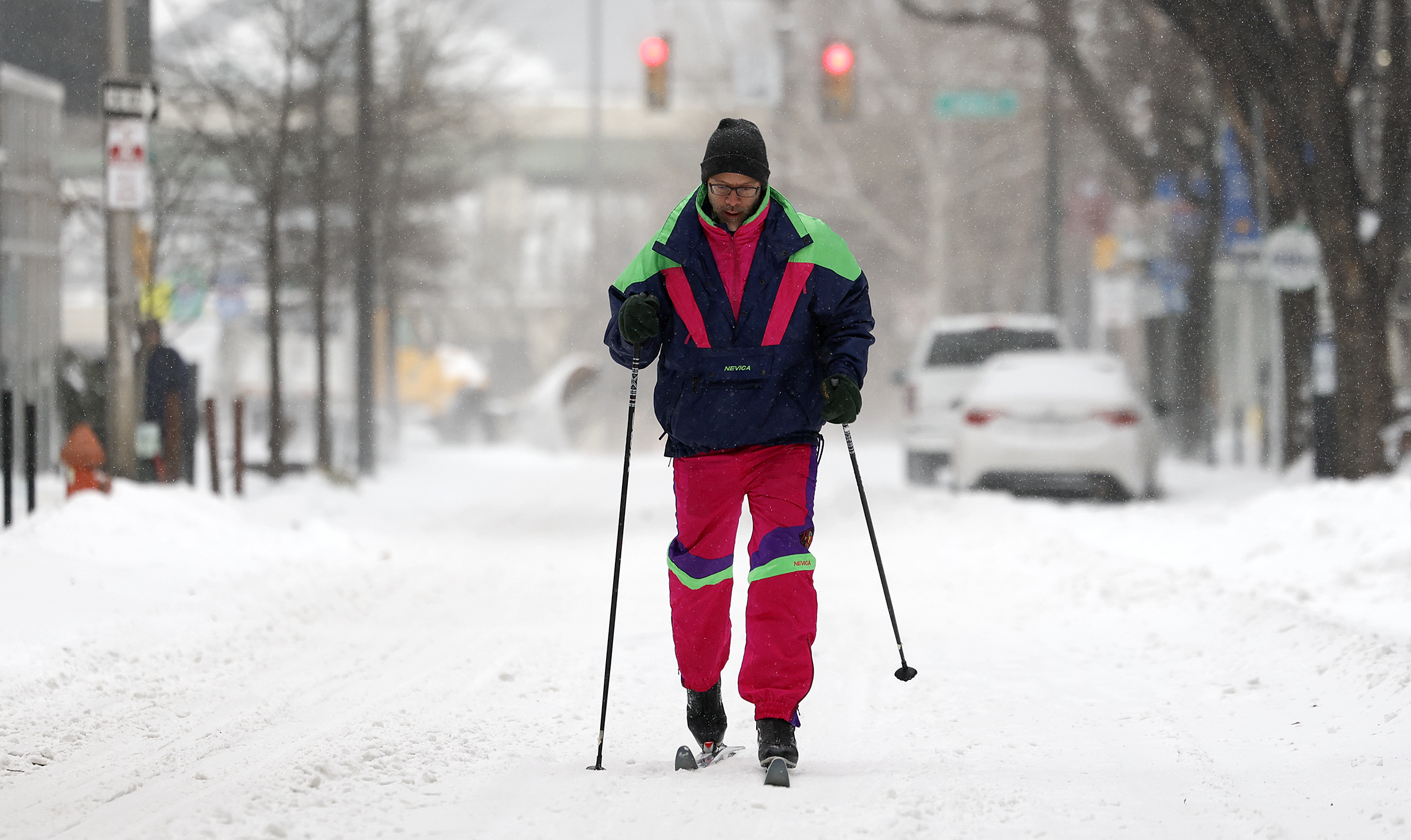
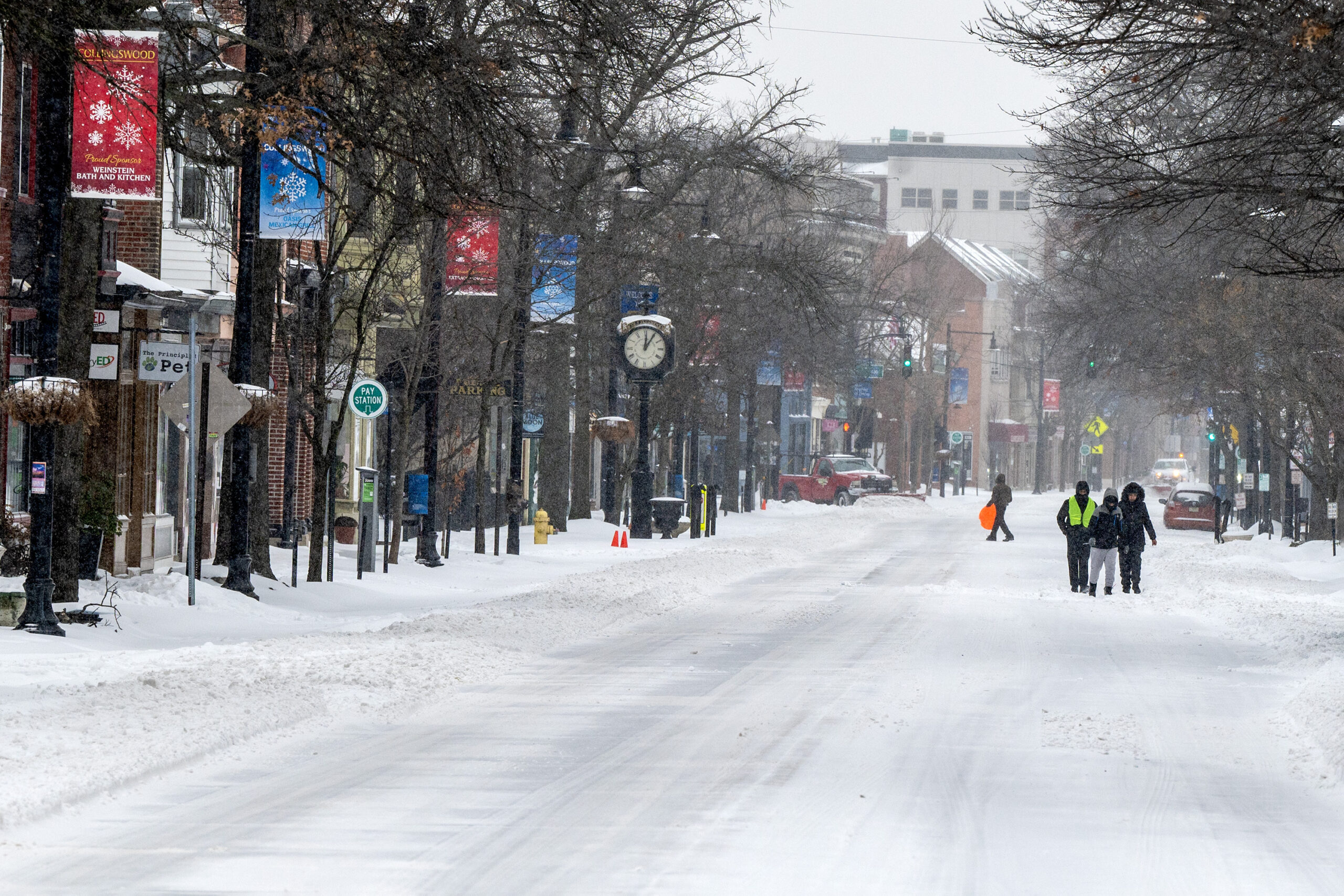
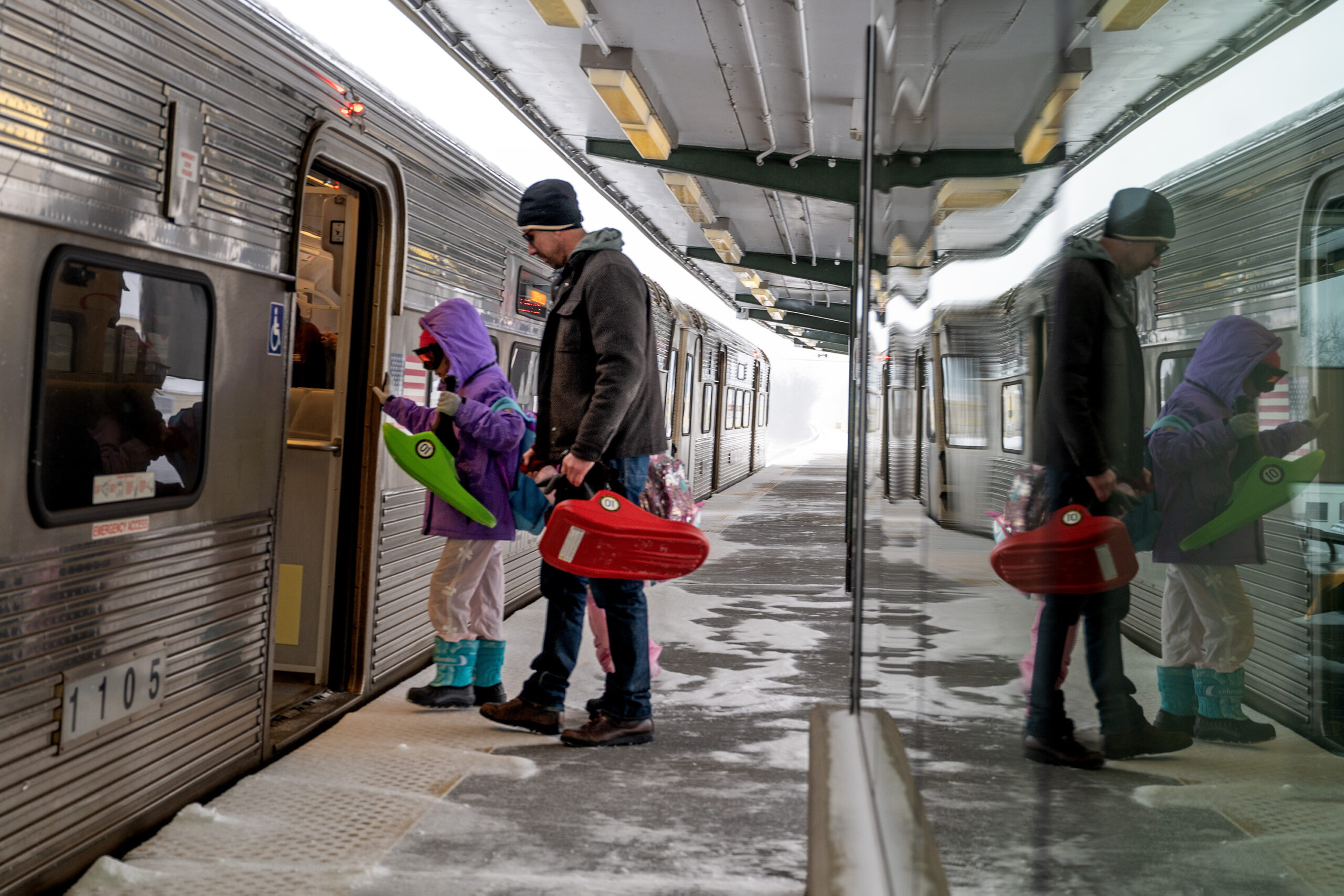
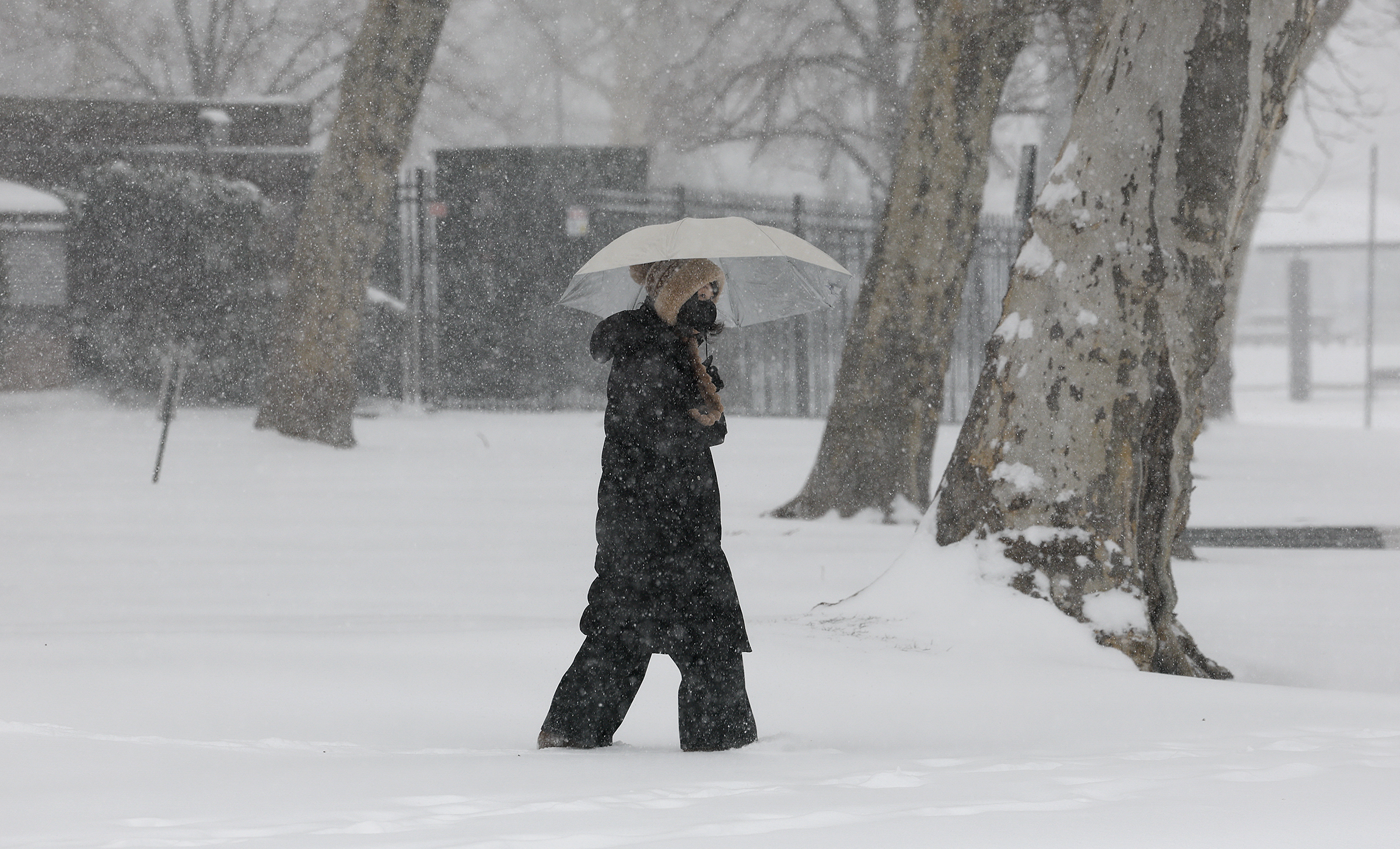
Russ Walters skies along Race Street in the Old City neighborhood Sunday. Pedestrians walk in the middle of a plowed but empty Haddon Avenue in downtown Collingswood. Mike Doveton and his daughters. Maya, 10, and Jaydan (hidden), 6, board a PATCO train with their sleds heading out to snow. A pedestrian uses their umbrella as snow falls on Race Street.
// Timestamp 01/25/26 1:41pm
Philly officially has its biggest snow in five years
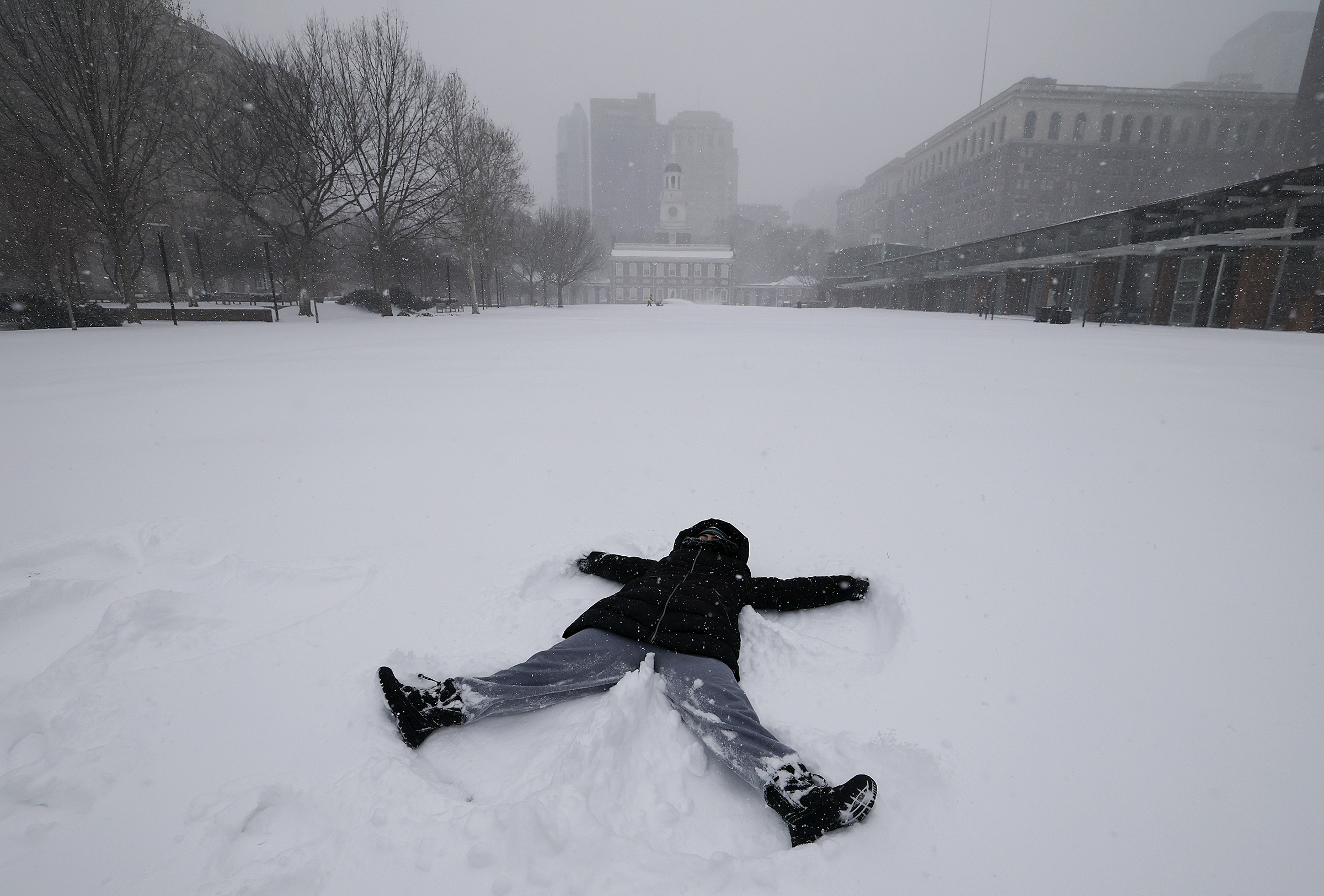
Julie Cohen makes a snow angel on the snow covered lawn at Independence Mall Sunday.
At 1 p.m., 7.4 inches of snow was measured at Philadelphia International Airport, the biggest snow in five years.
It also pushed the seasonal total to 13.8 inches, also the highest since the winter of 2020-21.
Given how cold it was during the snowfall, the regional totals didn’t show their usual wide variations, and were mostly in the 6- to 8-inch range. It’s possible that another inch could be added to the totals with the slow-accumulating sleet and a possible flip-back to light snow before the precipitation ends.
Some freezing rain also is possible late in the day or evening Sunday.
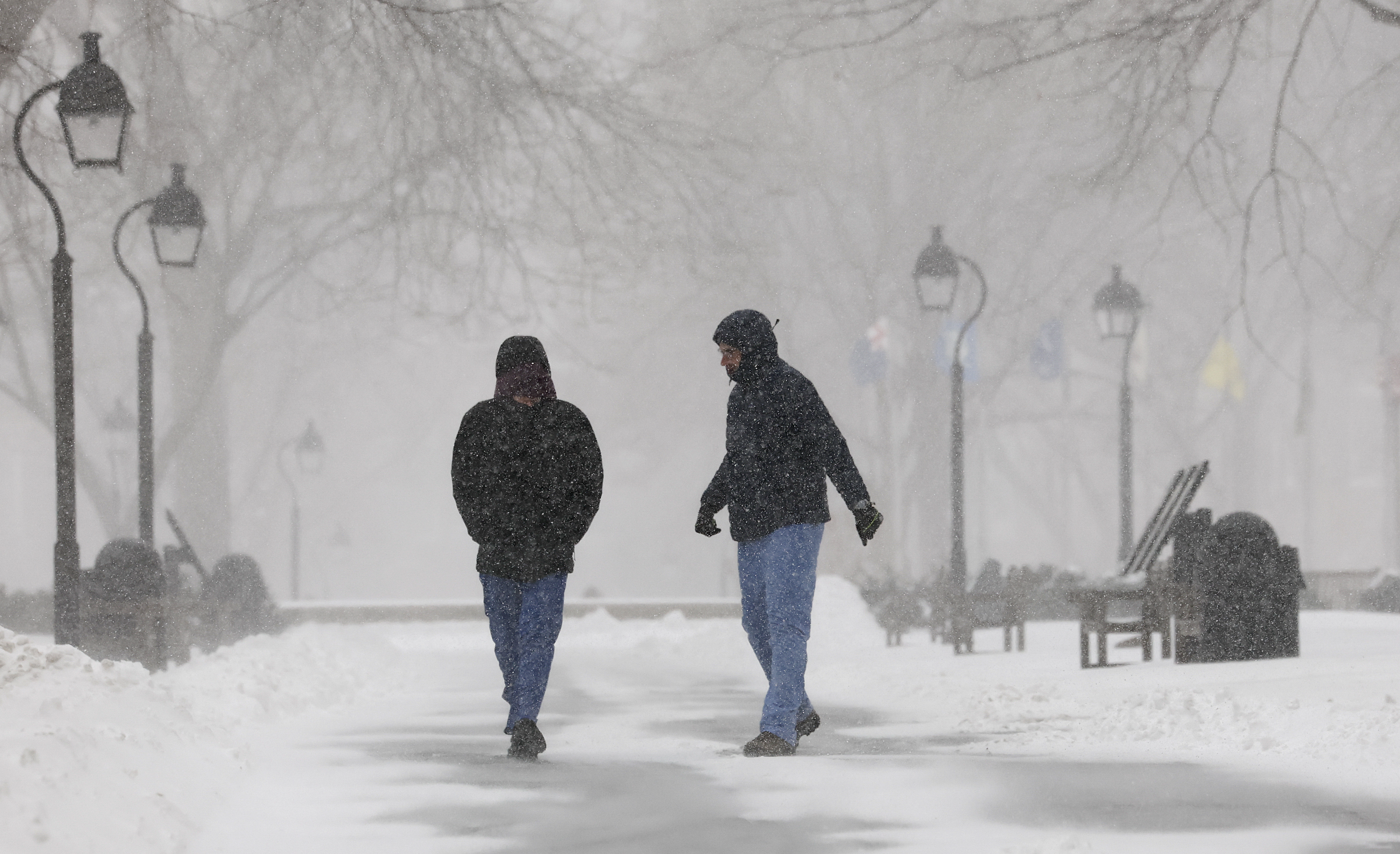
Two pedestrian brave the weather in Washington Square Park Sunday.
Temperatures at the surface remain in the teens, but sleet has routed the snow throughout the region.
Before the changeover, weather service spotters reported as much as 7 inches of snow. By convention, spotters measure snow before changeovers, since sleet and rain compress the snowpack.
Sleet, which is liquid that freezes on the way to the surface, counts as snowfall, but it accumulates ponderously. A tenth of an inch of liquid will yield about an inch of snow, but it would take three times that to produce an inch of sleet.
The changeover is the result of a layer of warm air in the upper atmosphere imported from the ocean by the onshore winds of a potent coastal storm.
The sleet is due continue this afternoon, and freezing rain also remains a possibility before it all ends late tonight or early Monday, said Nick Guzzo, meteorologist at the National Weather Service Office in Mount Holly.
Whereas sleet and freezing rain hold down accumulations, he notes that they slow down the melting process.
Ice cubes take longer to melt than snowflakes.
Be careful shoveling. The whole frozen mess may feel like it weighs as much as 18 inches of snow.
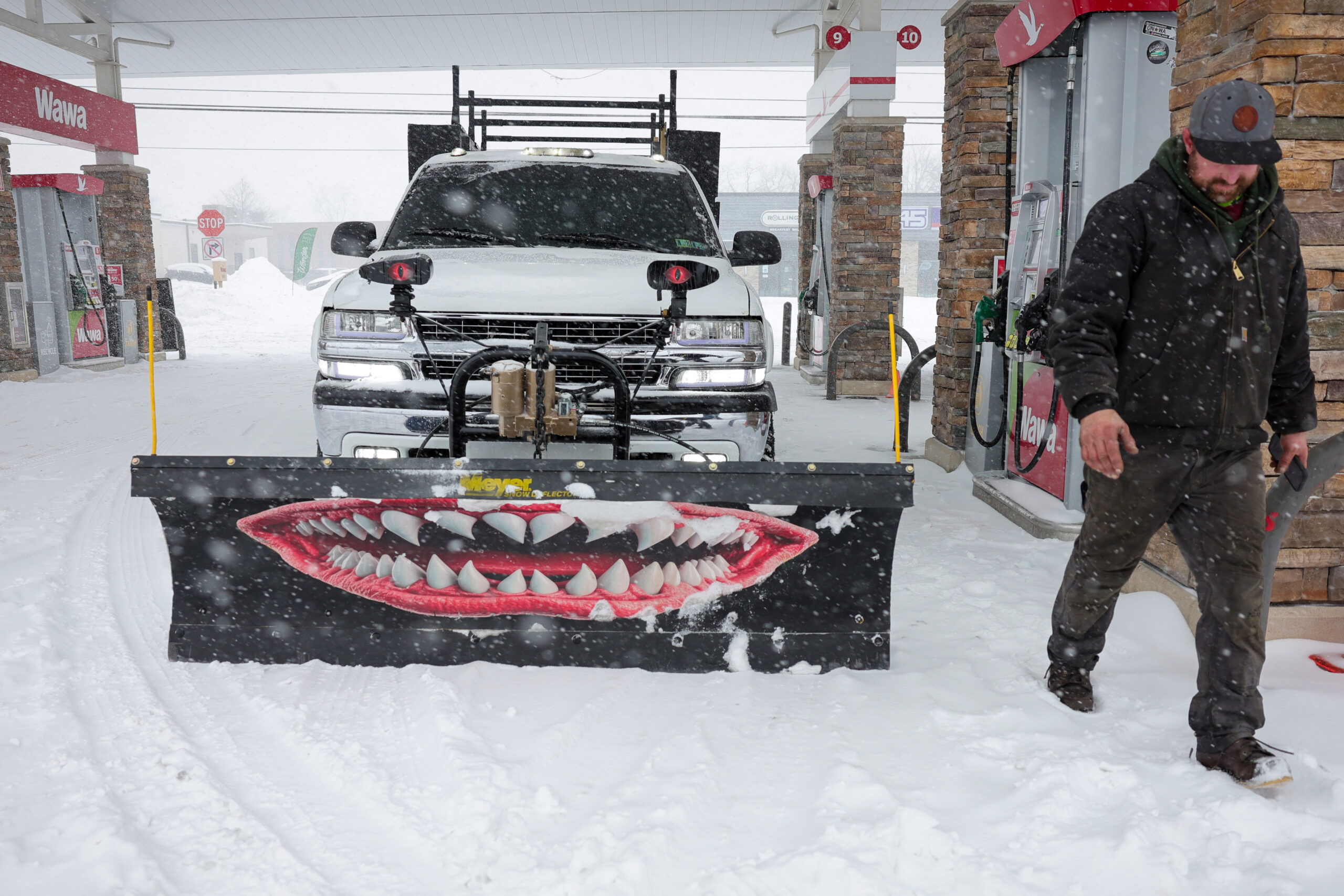
Mike Orazietti takes a break at Wawa from snowplowing in West Chester Sunday.
Five inches or more of snow have fallen in several locations in the Philly region, according to reports from National Weather Service trained spotters.
Here is the current list, which is likely to grow before sleet mixes in the next few hours:
Lehigh Valley International Airport cancels all flights Sunday
ABE is currently closed. Snow Ops continue as long as weather conditions allow for our team to work safely. We encourage travelers to check with their airline for flight delays or cancellations impacting Sunday / Monday's schedule. @69News@mcall@LVNewsdotcom@lehighvalleypic.twitter.com/MyTfQgElWI
Warming centers across Philadelphia will remain open during this storm as part of the ongoing Code Blue declaration, Philadelphia Mayor Cherelle L. Parker said a news conference Sunday.
24-hour warming centers are available for use, stocked with water, snacks, blankets, warming kits, and cots, said Crystal Yates-Galle, deputy managing director for health and human services.
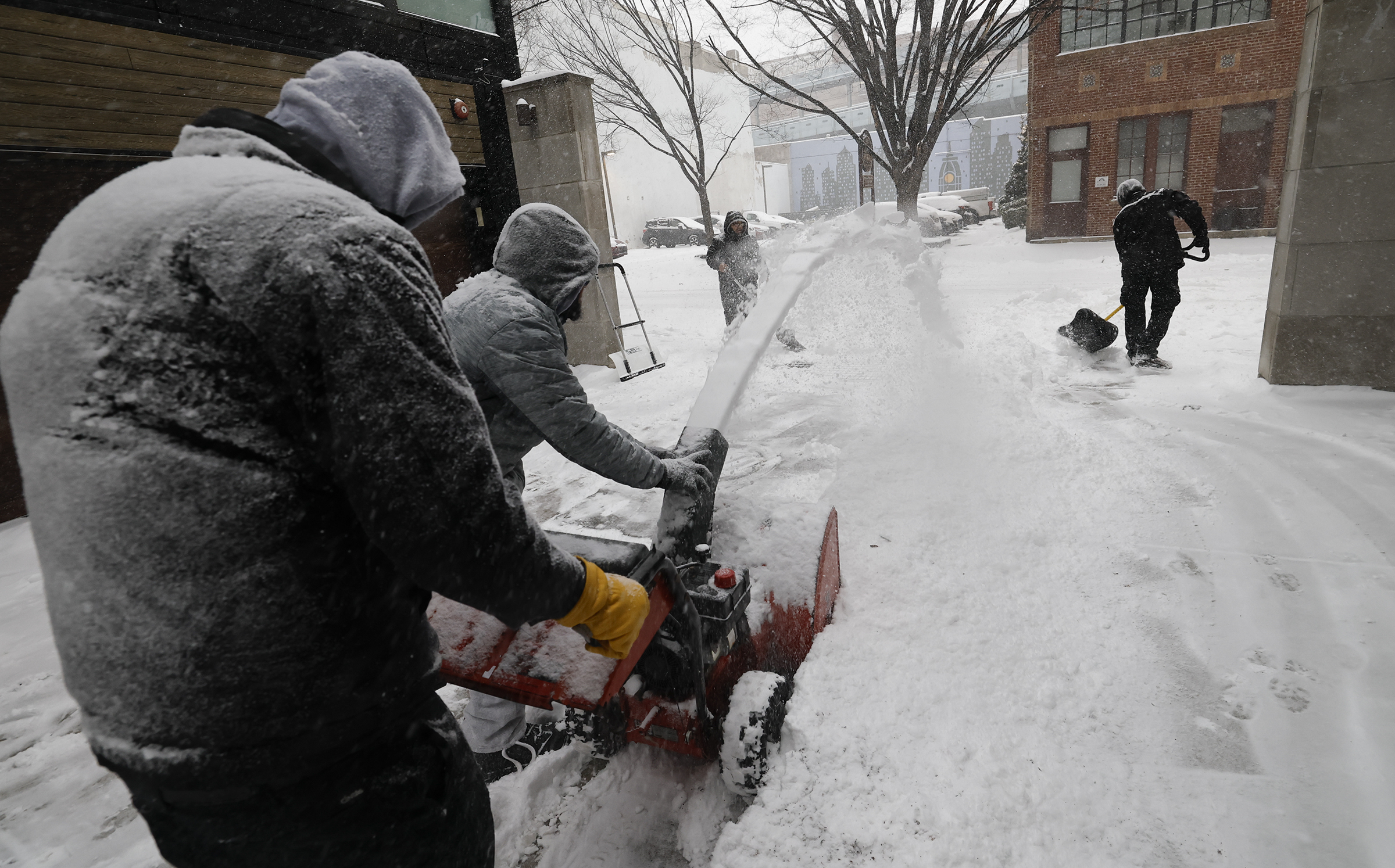
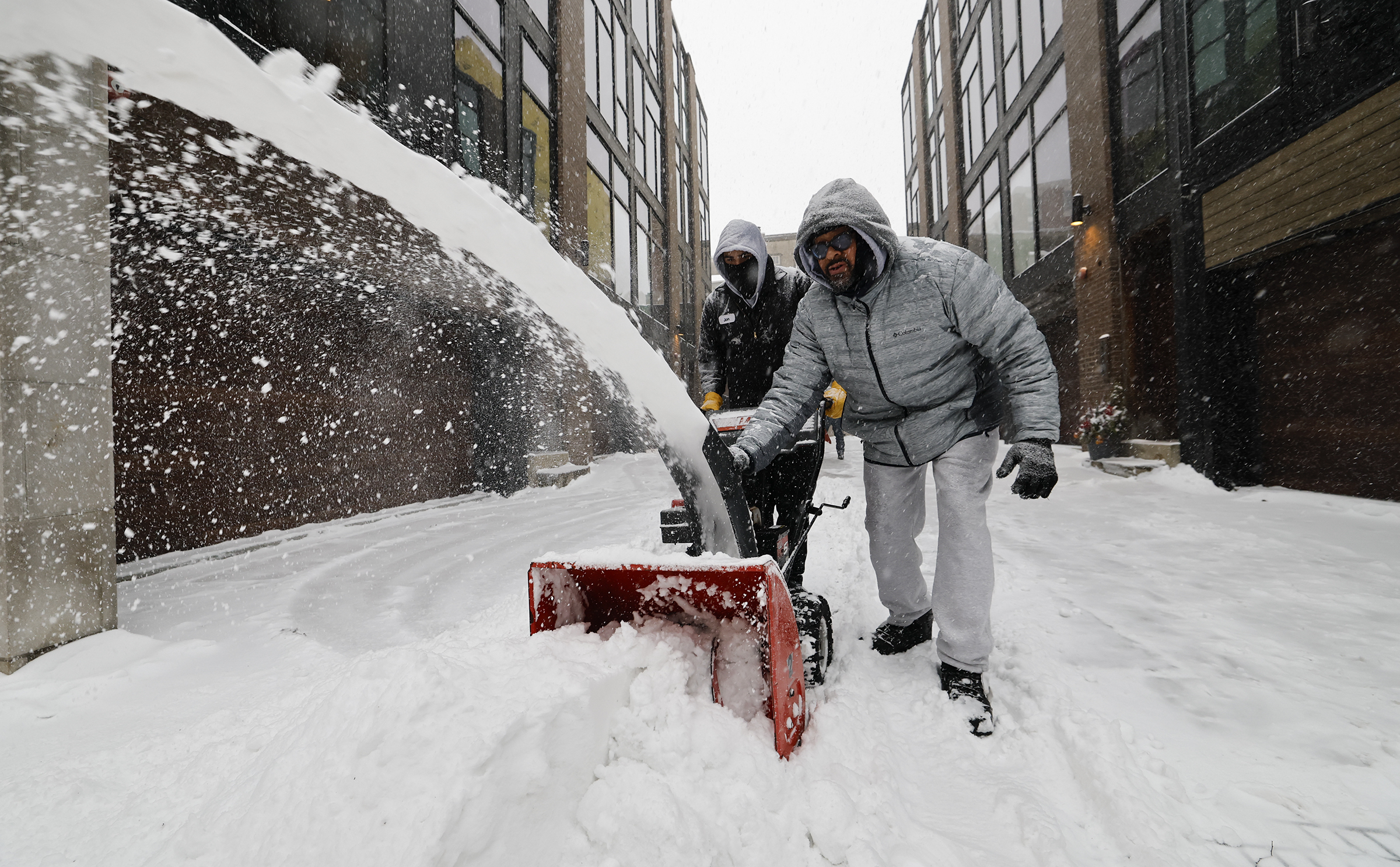
Jonathan Ahmad (left) and Michael Thompson clear snow in Old City Sunday.
Carlton Williams, director of the office of clean and green initiatives, debunked a widespread piece of misinformation he said has been circulating online.
No, he said, the city is not handing out free salt, which it needs for roadways and events given the expected icy conditions.
“We must be smart about the work that we’re doing … because this is a matter of life and death if we don’t get this right,” Williams said at a news conference Sunday.
Williams said 4 to 7 inches of snow are expected to fall in the next couple hours, and it’s likely to freeze.
Meanwhile, in some parts of the city, accumulation will likely get to a point where snow must be removed from the neighborhood and deposited elsewhere.
The city has also invested in a snow melter “that delivers 135 tons an hour melting snow,” Williams said.
So far, that snow has fallen at a rate of two inches in two hours, said Dom Morales, director of the office of emergency management
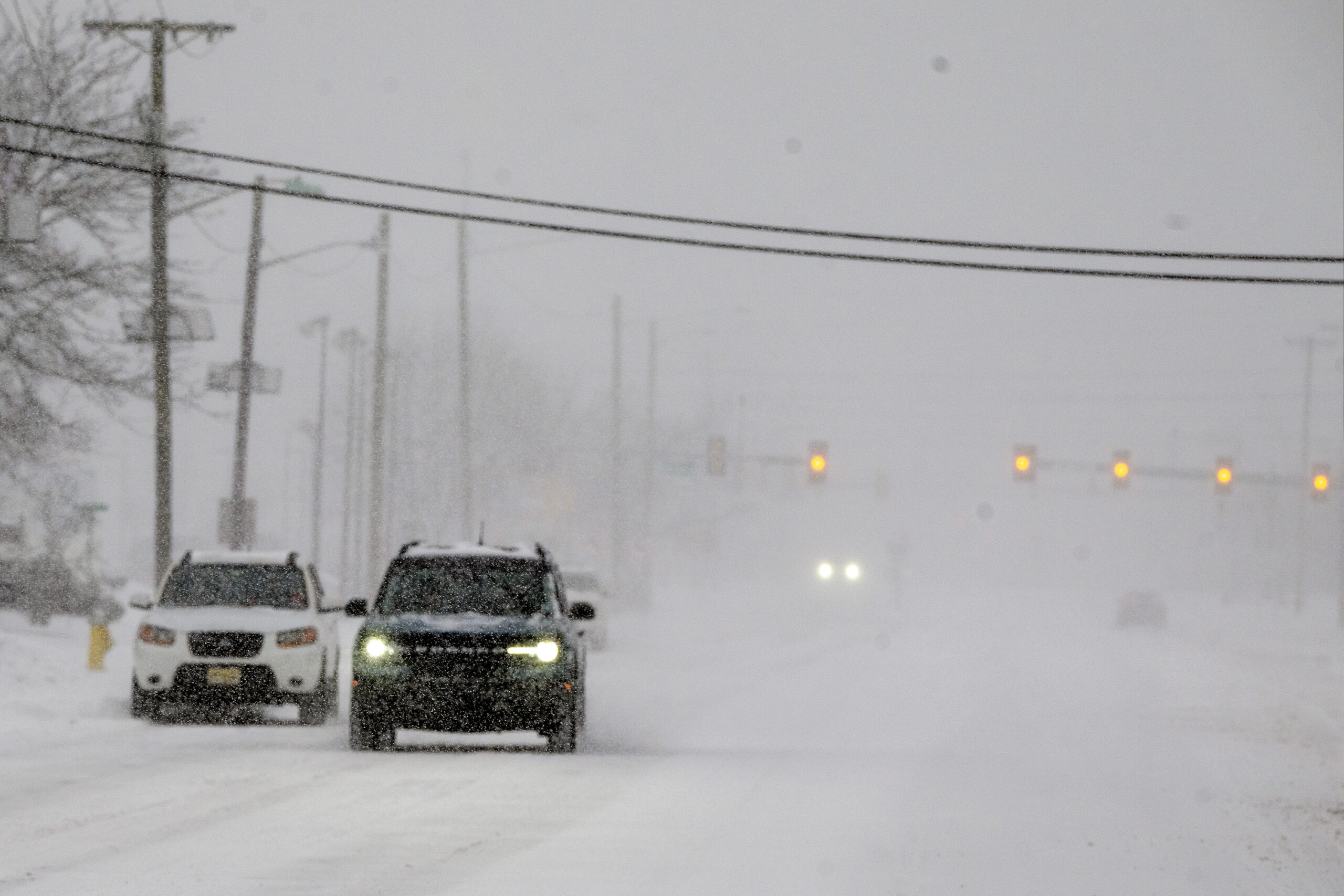
Like other officials, he warned of treacherous conditions on the roads, noting that state’s 511PA website can provide details on road conditions.
“Whether you have four wheel drive, all wheel drive, the conditions are not favorable to being on the road right now,” Morales said.
He warned that sleet and freezing rain could create “invisible ice” and lead people to fall off their stoops even if they’ve shoveled earlier.
Morales encouraged people to keep their phones charged in case power goes out and check out the city’s website for details on how to respond to common scenarios including a downed tree, a water emergency, and a power outage.
“Philly we have a few more days ahead of us,” Morales said. “So please, let’s keep ready, and let’s take care of one another.”
Cherry Hill Mall, Christiana Mall close due to snow
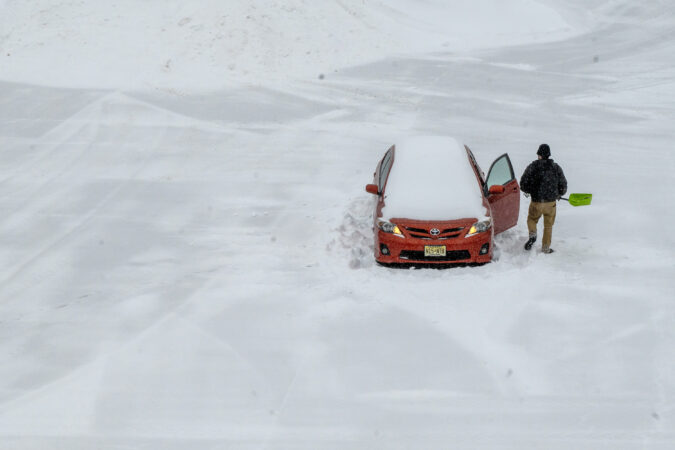
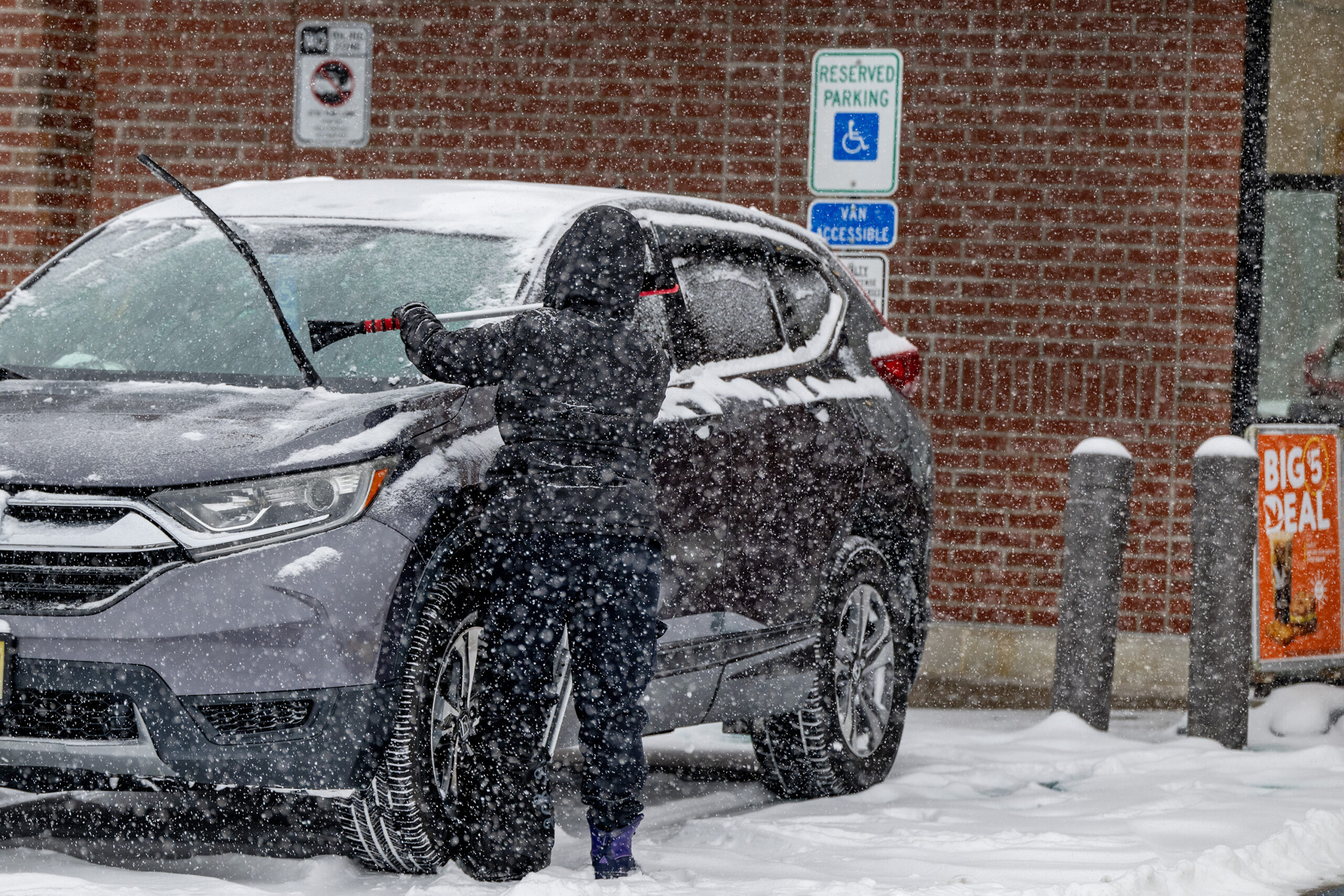
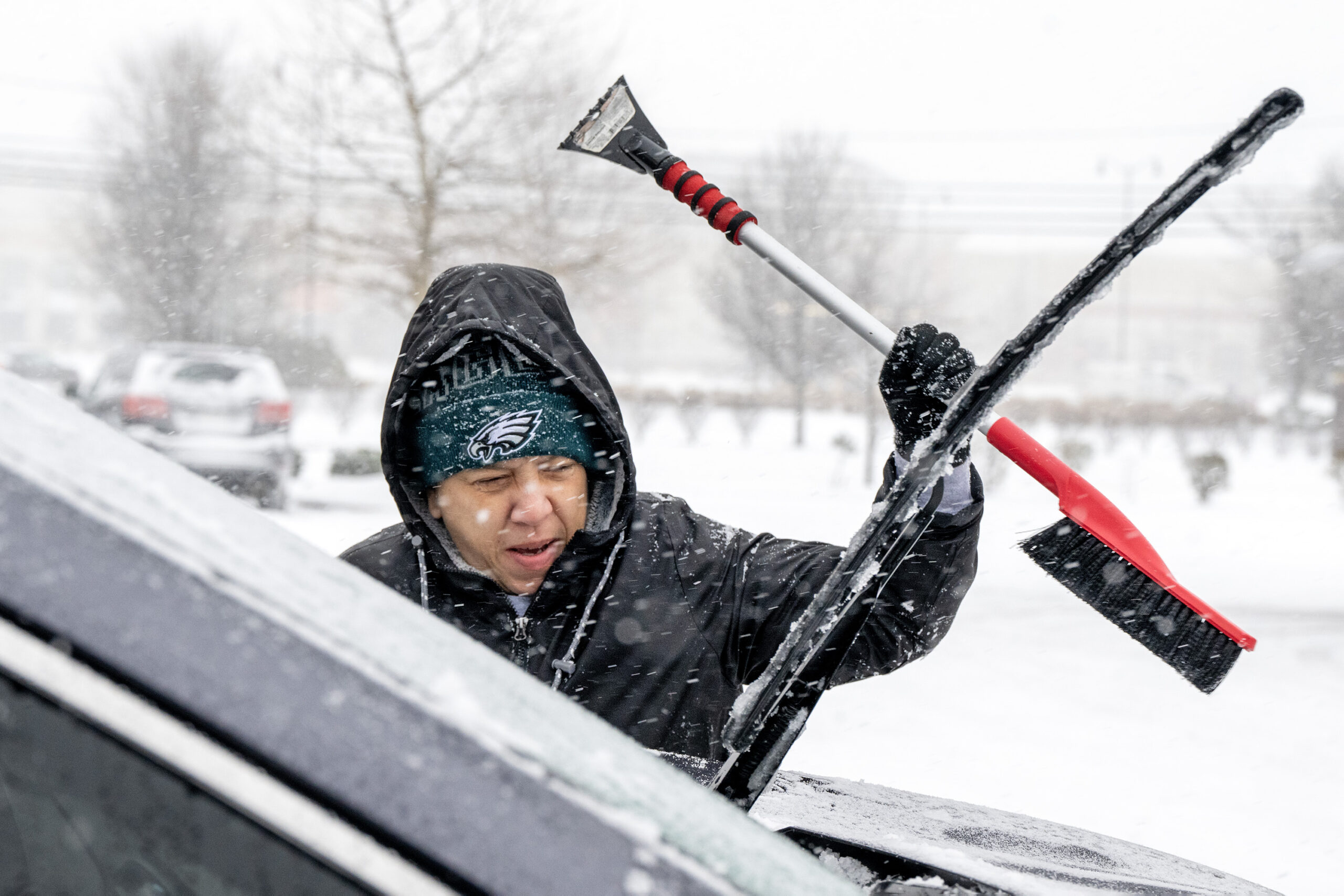
Carmen Roman clears snow off her car at the Wawa on Haddonfield Road in Cherry Hill Sunday.
Both the Cherry Hill Mall and the Christiana Mall will be closed Sunday due to the snow.
In New Castle County, level 2 driving restrictions are in effect, meaning only essential personnel are permitted to drive.
In Philadelphia, Emilia, James Beard Award-winning chef Greg Vernick’s Italian restaurant in Kensington, has postponed its scheduled opening from Monday to Tuesday. Vernick told The Inquirer he was unsure if his fish supplier could deliver Monday.
Alex Peralta shovels a sidewalk on Gay Street in West Chester, Pa., Sunday.
Snow totals of 4 to 6 inches have been reported across the region as heavy snow continues.
Meanwhile, the sleet line continues to advance northward and had reached central Delaware by mid morning. The Washington, D.C., area flipped to sleet around 8:30 a.m., after about seven inches had accumulated.
Sleet is expected to join the party in the immediate Philly area by early afternoon, and that would put the brakes on further accumulations. Before that happens, it is possible that the city officially will have had its biggest snowfall in five years.
Parker warns Philly residents to stay home and off the roads
A pedestrian uses their umbrella as snow falls in the Old City neighborhood of Philadelphia Sunday.
Philadelphia Mayor Cherelle L. Parker asked people to stay home and off the roads if possible as the city grapples with a winter storm that has dumped about three inches so far — and is expected to turn to ice in the coming hours.
“This remains a significant winter storm, and there are rough travel conditions expected all day,” Parker said.
Parker said 1,000 city workers are clearing roads and sidewalks and battling snow with about 600 pieces of equipment, including triaxial dump trucks, loaders, sanitation compactors with plows attached, and pickup trucks.
“And this was a new one for me, Philadelphia, even ATVs have been deployed,” Parker noted.
Philadelphia remains under a snow emergency that began Saturday night at 9 p.m.. The city has no update on when it plans to lift the emergency.
The city has teams working in “an enhanced emergency posture” to address the needs of people affected by the bitter cold. The city has implemented 250 additional beds for those in need, Parker said. If residents see anyone in need of immediate help, they can call 215-232-1984.
SEPTA to suspend bus, regional rail service at 2 p.m.
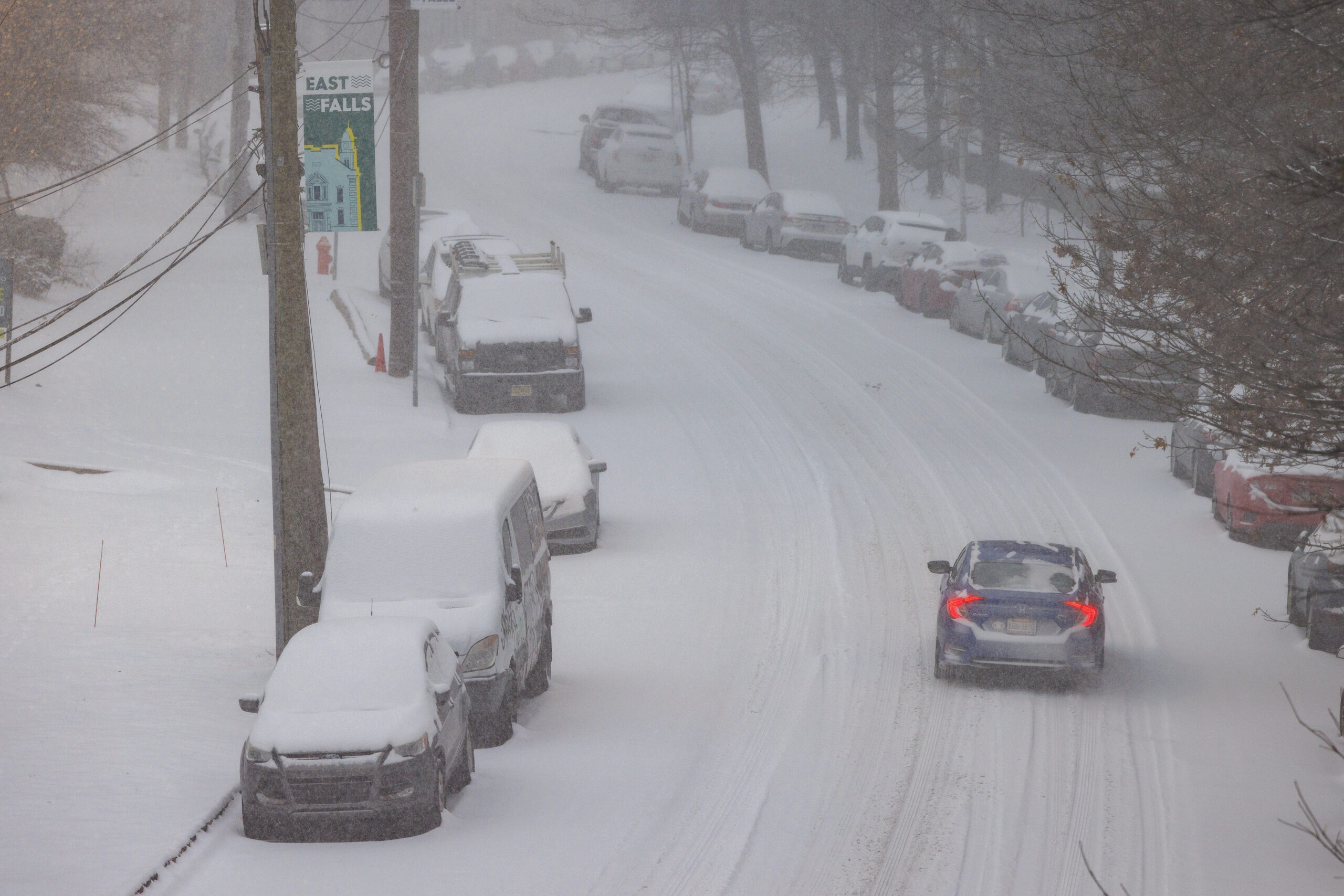
A SEPTA Regional rail train heading through the East Falls section of Philadelphia Sunday.
SEPTA will suspend all bus and Regional Rail service at 2 p.m. Sunday, the agency announced.
As for trolley service, the T1 is suspended, the T3 is cutting back at 59th/Chester, and the T4 is cutting back at Island/Woodland, SEPTA said. The T2 and T5 are currently running regular service.
The Market-Frankford and Broad Street subway lines will continue to run. through the storm, the agency said. Crews have been assigned to keep station entrances, platforms, and sidewalks clean of ice and snow, as best they can.
A pedestrian walks across Race Street along 2nd Street in the Old City neighborhood of Philadelphia. Michael Thompson (right) and Jonathan Ahmad clear snow. Carmen Roman clears snow off her car after dropping her partner off at work at the Costco In Cherry Hill early Sunday morning.
// Timestamp 01/25/26 9:27am
$5 parking in Center City garages to avoid getting your car towed
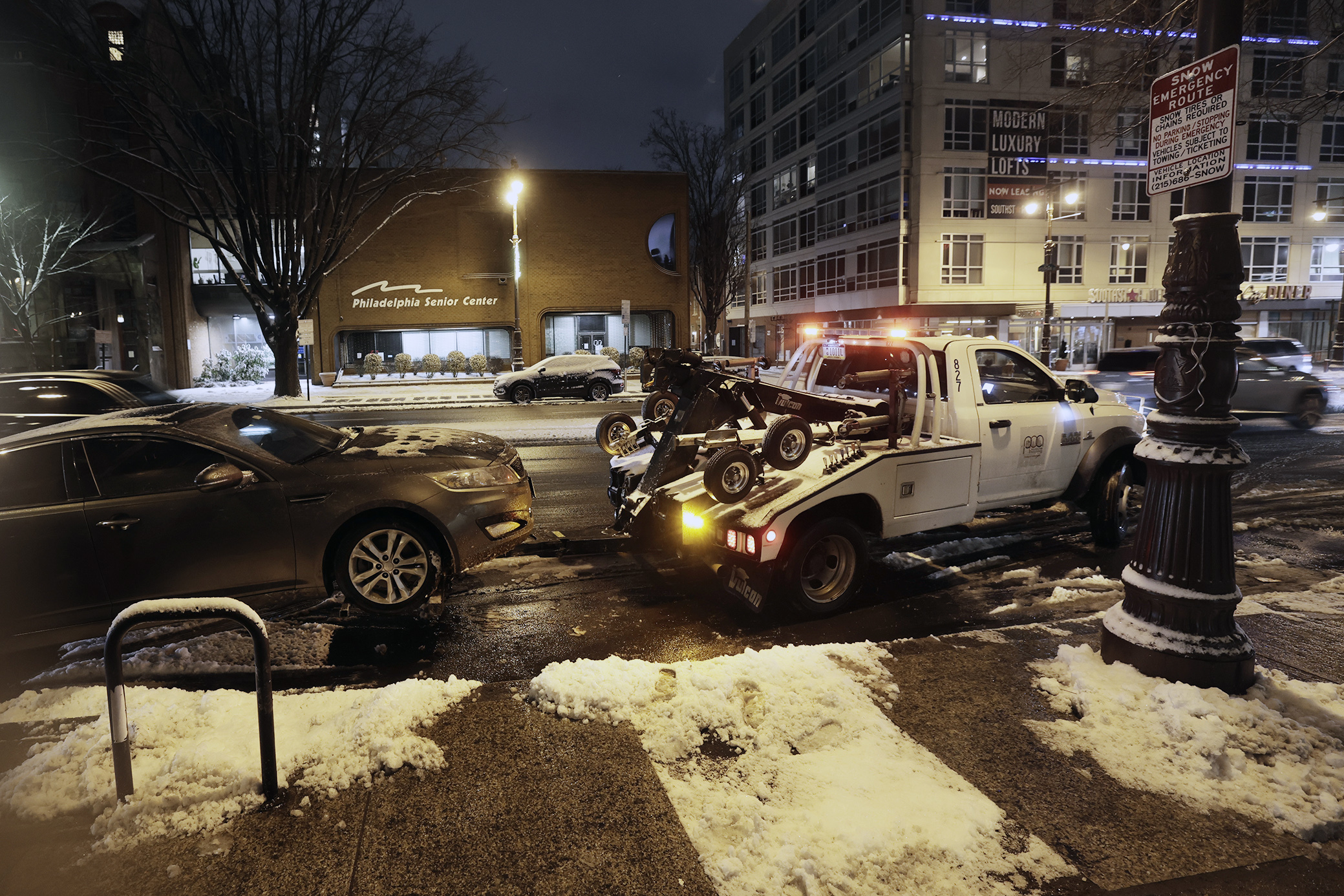
A Philadelphia Parking Authority truck tows a car from South Broad Street, a snow emergency route, earlier this month.
As the snow covers everything in its path, parking on designated snow emergency routes is the fastest way to get your car towed.
To prevent this, the Philadelphia Parking authority is offering $5 parking for 24 hours in Center City garages until the snow emergency is lifted.
Philadelphia Family Court Garage (1503-11 Arch Street – Going south on 15th Street, enter the garage on the west side just after 15th & Cherry Streets)
Meters and time limit violations won’t be enforced until the emergency ends. But if you suspect your car was towed, call 215-686-SNOWor visit www.philapark.org/tow to locate it. A license plate number is needed.
PennDOT and Philadelphia Department of Streets are working hard plowing to keep highways and roads passable. Please avoid unnecessary travel so they have room to safely work. If traveling, use caution and give yourself at least 6 car lengths behind snow response equipment. pic.twitter.com/yATOdEnJqV
2 to 3 inches of snow have already fallen across the Philadelphia region.
Not that the bar was especially high, but officially Philly has had its biggest snowfall of the month, with 1.6 inches measured officially at the mostly dormant Philadelphia International Airport.
That tops the 1.1-inch report of last weekend. It also brings the seasonal total to 8, and one of the safer bets is that this winter will end up being snowier than the winter of 2024-25 – 8.1 inches.
By 8:30 a.m., amounts of 2.5 to 3 inches were common throughout the region.
The next official report from PHL is due at 1 p.m. For now, it is playing catch-up with the 1.8-inch reading at Rittenhouse Square.
Heavy snow arrives, with ice to follow. It all may stick around for a week or more.
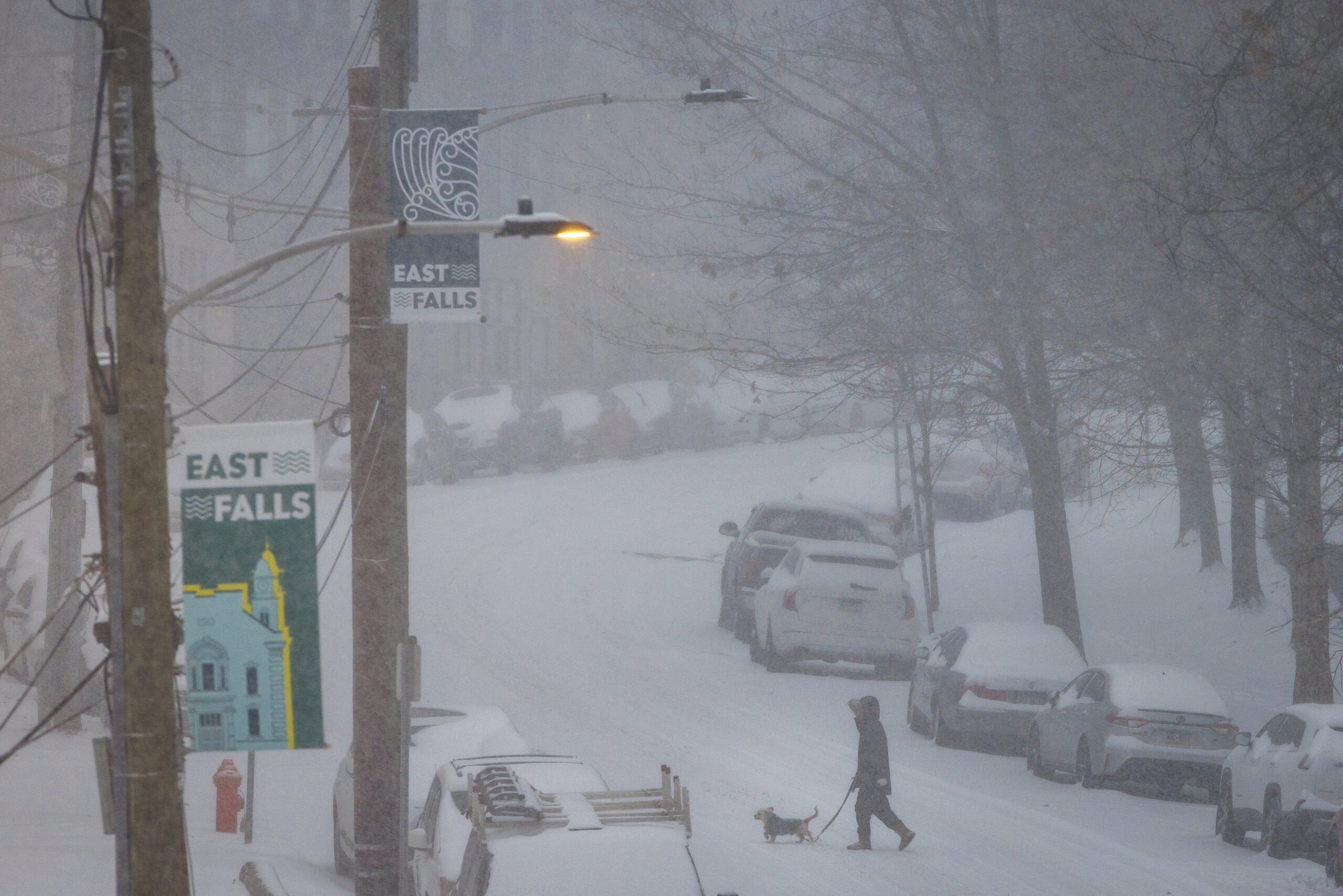
Dog walkers and fresh snow along Cresson Street in the East Falls section of Philadelphia.
It may not approach their magnitudes, but Sunday’s snow-and-ice cold brew is expected to bear eerie similarities to some of Philly’s historic winter storms and perhaps rival them for disruption.
By 7 a.m., up to 3 inches had been reported around the region, with heaviest amounts to the south where the snow started earlier.
Officially, at Philadelphia International Airport, 1.6 inches had been measured, already making this the city’s biggest official total of the month. But Center City trumped it at 1.8.
From 8 to 10 inches was expected around the city before the snow mixes with sleet and possibly freezing rain during the afternoon, said Nick Guzzo, a meteorologist at the National Weather Service Office in Mount Holly. All that is subject to change, of course.
The precipitation is due to shut off early Monday, but by then it may be a case of welcome to ice station Philly.
Nothing that falls is going to melt, as temperatures will get no higher than the 20s Sunday and may not see 30 for the rest of the week
Snow falls in Manayunk. Several inches of snow have already fallen in Bear, Del. Snow covers the trees in Conshohocken, Montgomery County.
// Timestamp 01/25/26 8:11am
Cancellations piling up at PHL
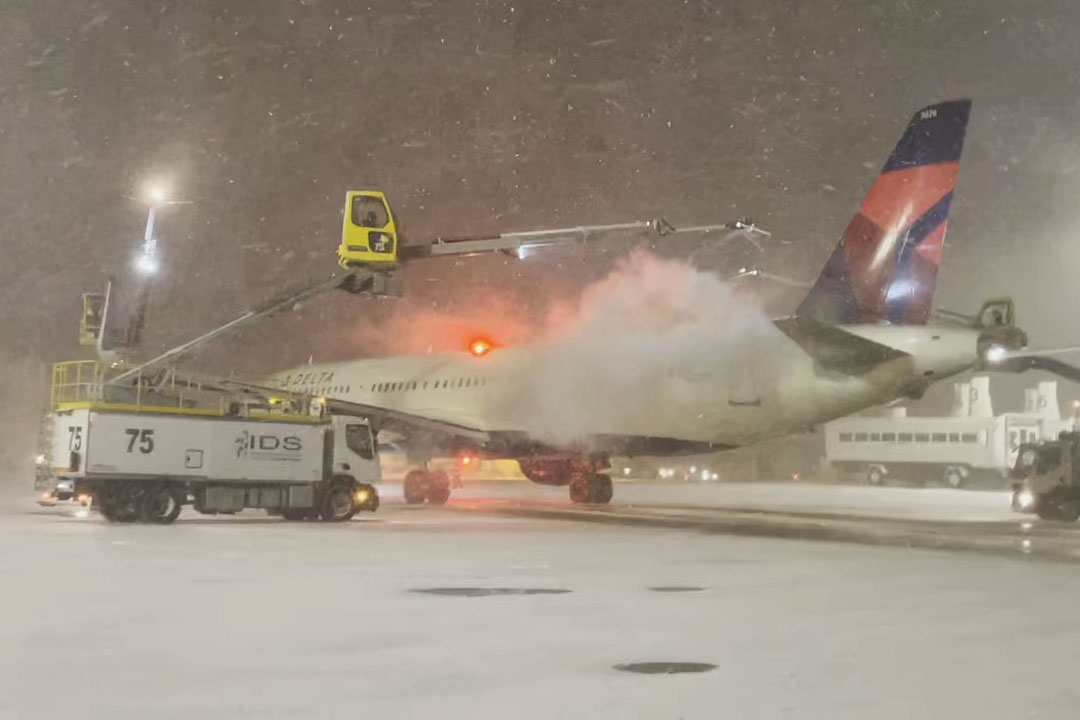
Crews deice a Delta plane as snow falls at Philadelphia International Airport Sunday, Jan 25, 2026.
At least 641 flights have been canceled going into or out of Philadelphia International Airport Sunday, as a major snowstorm moves across the Northeast.
Due to the reduced number of flights, TSA agents will only be operating at checkpoints A-East, D/E, and F.
Travels are encouraged to check with their airlines for the latest flight information.
The National Weather Service is forecasting 8.5 inches of snow will fall in Philadelphia, followed by sleet and freezing rain.
On Saturday, the National Weather Service was going with 8 to 10 inches for the immediate Philly area, said meteorologist Amanda Lee, with less to the southeast. AccuWeather Inc. was calling for 6 to 10 inches.
A lot of that would fall during a “front-end thump,” said AccuWeather meteorologist Elizabeth Glenny. Once the mixing begins, accumulation rates would back off.
While people understandably want to know how many inches of snow are going to land, that is almost always difficult to answer, meteorologists say, especially in a storm of this nature.
In this case, snow amounts are dependent on a coastal storm that had not yet formed Saturday and on what might happen in parts of the atmosphere that are not well-observed.
Temperatures in the bottom 5,500 feet of the atmosphere over Philly are expected to remain below freezing, said AccuWeather senior meteorologist Tom Kines, but computer models insist that a warm layer in the higher atmosphere would result in the changeover.
That warmth would be imported from the Atlantic Ocean by the strong onshore winds from the northeast generated by the storm — it’s not for nothing that these things are called nor’easters.
Another wild card would be if the snow is heavy enough that it could survive the warm layer and delay the changeover.
But the mixing of sleet, which is liquid that remains frozen in its trip through the atmosphere, and freezing rain, liquid that freezes on contact, is inevitable, forecasters said.
Freezing rain atop a snowpack is especially dangerous because it adds weight to vulnerable and snow-burdened power lines and tree branches. Sleet is polite enough to bounce off hard surfaces, but since it is pure ice, it is slower to melt.
Said the weather service’s Mike Lee, the mixing “just means we’re getting a different blend of horrors.”
Midvale Avenue is covered in fresh snow in the East Falls section of Philadelphia.
Snow is forecast to accumulate rapidly Sunday morning, with temperatures in the teens and snowfall rates of one to two inches per hour.
Models were suggesting sleet could mix in as soon as early afternoon, said Tom Kines, senior meteorologist with AccuWeather Inc.
Temperatures in the bottom 5,500 feet of the atmosphere are going to remain well below freezing. However, as the coastal storm intensifies, its onshore winds from the northeast are forecast to import warmer air from over the ocean into the upper atmosphere, which would change the snow to sleet and rain Sunday afternoon and evening.
It’s possible the precipitation will flip back to all snow and accumulate maybe another inch early Monday, Staarmann said. But at that point it would have all the impact of drizzle in the ocean. The mass of snow and ice evidently will be vacationing in Philly for a while.
“It will stick around for a week, maybe two weeks,” Staarmann said.
Vehicle restrictions on Pa. highways now in effect
PennDOT implemented vehicle restrictions on Pennsylvania highways due to the storm
Vehicle restrictions aimed at limiting the number of cars on roads statewide during Sunday’s snowstorm are not in effect across Pennsylvania.
PennDot’s vehicle restrictions are instituted in a tiered system, with today’s coming in at tier four — the second-highest level. Under that tier, commercial vehicles are totally prohibited from using a number of interstates around Pennsylvania, as well as the Pennsylvania Turnpike.
“The decision to implement these restrictions was made with the intention of balancing safety for everyone on the roadway, including commercial drivers,” PennDot secretary Mike Carroll told reporters Friday at a news conference. “We will remove these restrictions as soon as conditions warrant.”
In addition to limiting the travel of vehicles like tractor trailers and commercial buses, PennDot’s restrictions also apply to school buses, motorcycles, RVs, and passenger vehicles that are towing trailers, Carroll added. None of those vehicles, he said, are permitted to use roadways while the restrictions are in place.
Officials urged motorists to stay home, noting the anticipated snowfall rate of one to two inches per hour, as well as the overall snowfall totals, will make keeping roads safe and clear difficult.
Restrictions, PennDot notes online, are evaluated hourly. Pennsylvania’s traveler information website, 511PA, keeps an up to date map of which roads are impacted by the restrictions, and Carroll recommended travelers check that website before heading out, should they absolutely have to.
“Stay home and watch the NFL games, despite the fact that the Eagles and Steelers are not playing,” Carroll said.
But as large and disruptive as this storm will likely be, it will have a difficult time cracking the list of the top January snowstorms in Philly history.
It would take 12.3 inches of snow for this latest storm to make its way on to the list of the snowiest January storms in Philly history. That would match a 1922 event dubbed the “Knickerbocker storm” because snow caused the collapse of the Knickerbocker Theatre in Washington, D.C., killing 98 people, which remains the worst natural disaster in the city’s history.
Here’s the full list of the Philly snowfalls of a foot or more in January history:
Saying “it’s been a while” since New Jersey faced a storm like the one being forecasted for Sunday and Monday, Gov. Mikie Sherrill urged state residents to stay off the roads and to not “commit to anything on Monday.”
Sherrill said in a press conference in Newark late Saturday afternoon that while “we’re tough” in New Jersey, “we have to be safe.” She declared a state of emergency starting 5 p.m. Saturday.
Sherrill said she was expecting snowfall to range from eight inches to 18 inches throughout the state. It will be a storm “the likes of which we haven’t seen in a decade,” Sherrill said.
The governor said extremely cold temperatures are expected to make things more difficult, and she suggested that people watch football and play board games with their children on Sunday.
“We are prepared for the moment, but we do need the people of New Jersey to stay safe,” she said.
The governor was accompanied by State Police Acting Superintendent Lieutenant Colonel David Sierotowicz, Department of Transportation Acting Commissioner Joseph Bertoni, and NJ Transit President and CEO Kris Kolluri.
With challenging conditions expected, Acting Attorney General Jennifer Davenport and the Division of Consumer Affairs warned sellers that price gouging New Jersey’s consumers during the declared state of emergency wouldn’t be tolerated.
Sellers can’t excessively increase prices (10% more than normal or higher) during a declared state of emergency, or for 30 days after the termination of the state of emergency, according to New Jersey law.
“As a former prosecutor, my administration will not tolerate price gouging, and we will be vigilant during this winter storm,” Sherrill said, adding that there’d be “zero tolerance for those who prey on New Jerseyans during this state of emergency.”
After the coldest morning of the winter, Philadelphia could experience more snow this weekend than it did during the entire winter of 2024-25, accompanied by a potentially nasty mix of ice.
The National Weather Service on Saturday was holding serve on its call for 8 to 12 inches in and around Philly, and those amounts may be tweaked depending on the best guesses on how much sleet and freezing rain enters the mix. AccuWeather Inc. was going with 6 to 10.
Subtle changes to accumulation forecasts are likely, but that merely would mean, “We’re just getting a different blend of horrors,” said Mike Lee, a meteorologist in the Mount Holly office.
One thing is certain: Whatever falls won’t melt. Temperatures dropped into single digits throughout the region, and got as low as 11 at the Philadelphia International Airport banana belt. . Temperatures won’t get above the mid-20s while anything is falling from the skies Sunday and early Monday.
The weather service has issued a profoundly predictable winter storm warning, in effect from 7 p.m. Saturday until 1 p.m. Monday.
Whatever the outcome, the storm still in its formative stage already has had significant impacts on the region and may have set an unofficial record for pre-storm buildup and preemptive closings.
Philadelphia Mayor Cherelle L. Parker declared a state of emergency for Sunday, as did Pennsylvania Gov. Josh Shapiro and New Jersey Gov. Mikie Sherrill. PennDot is imposing speed restrictions. SEPTA is expecting issues.
Some schools already were planning for multiple-day closings, as the snow and ice will be accompanied by one of the region’s more impressive cold snaps of the last several years.
Were it not for the storm, in fact, the cold might be getting headlines.
Wind chills Saturday morning are expected to drop below zero. Sunday’s high of 25 degrees may make it the warmest day of the week.
It is likely that layers of snow and ice will harden into a frozen mass that the January sun won’t be able to do a whole lot about.
As a public service, for now we will hold off on mentioning another potential storm threat.
The latest on the timing of the storm in Philly
While the weather service warning goes into effect 7 p.m. Saturday, flake sightings could hold off until daybreak Sunday, said Alex Staarmann, a weather service meteorologist.
Snow may accumulate rapidly Sunday morning with temperatures in the teens. Models were suggesting sleet could mix in as soon as early afternoon, said Tom Kines, senior meteorologist with AccuWeather Inc.
Temperatures in the bottom 5,500 feet of the atmosphere are going to remain well below freezing. However, as the coastal storm intensifies, its onshore winds from the northeast are forecast to import warmer air from over the ocean into the upper atmosphere, which would change the snow to sleet and rain.
It’s possible the precipitation will flip back to all snow and accumulate maybe another inch early Monday, Staarmann said. But at that point it would have all the impact of drizzle in the ocean. The mass of snow and ice evidently will be vacationing in Philly for a while.
“It will stick around for a week, maybe two weeks,” Staarmann said.
How much for Philly?
Just how much snow and ice would be on the ground remained unclear Friday. And it’s all but certain the projections are going to change. For the record, a grand total of 8.1 inches fell all of last season in Philly.
Louis Uccellini, former head of the National Weather Service and one of the nation’s most prominent winter-storm experts, said some later modeling was cutting back on the ice in areas west of the city, suggesting the possibility of higher snow amounts.
(function () {window.addEventListener(‘message’, function (e) { var message = e.data; var els = document.querySelectorAll(‘iframe[src*=”‘ + message.id + ‘”]’); els.forEach(function(el) { el.style.height = message.height + ‘px’; }); }, false); })();
“It’s not that we’re getting 2 to 4 [inches],” said Staarmann. “We’re going to get a lot of snow.”
However, some icing was a near certainty throughout the region.
The ice potential for the Philly region
The weather service is predicting a quarter-inch of freezing rain, which is probably about the last thing the people at Peco wanted to hear. Freezing rain is a greater threat to power lines and trees than sleet.
Yes, Peco is well aware of the storm and has crews on standby, said spokesperson Candace Womack.
Sleet develops when a partially melted snowflake or rain drop freezes on the way to the ground. It doesn’t accumulate efficiently like snowflakes. Freezing rain is rain that doesn’t turn to ice until it lands on a surface and freezes on contact.
During a winter storm, both hold down snow accumulations. Typically, an inch of liquid precipitation can yield a foot of snow. A similar amount of liquid would yield about 4 inches of sleet.
(function () {window.addEventListener(‘message’, function (e) { var message = e.data; var els = document.querySelectorAll(‘iframe[src*=”‘ + message.id + ‘”]’); els.forEach(function(el) { el.style.height = message.height + ‘px’; }); }, false); })();
Both can fall when surface temperatures are well below freezing, if the upper air is warm enough.
A big difference is that sleet bounces off surfaces, but ice gloms onto them, a menace to power lines and tree branches.
An ice storm resulted in over 700,000 Peco outages in 2014, a winter record. In that case, freezing rain came 18 hours after a heavy snowfall.
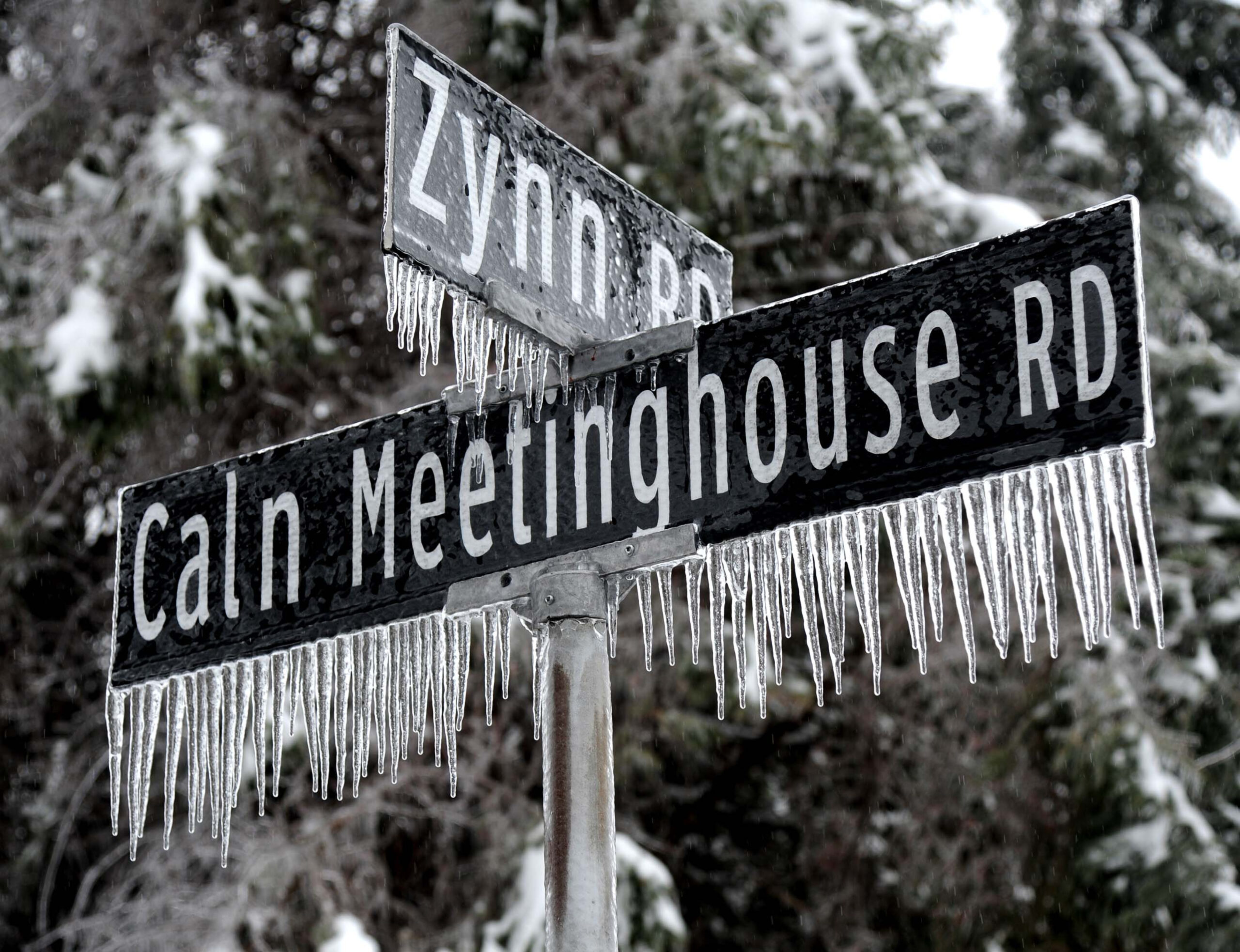
An overnight freezing rain storm swept through the Philadelphia region Feb. 5, 2014, leaving downed trees and power lines in its wake, along with icicles everywhere as evidenced by these streets signs in Downingtown.
When will the snow and ice disappear?
The snow and ice are going to be around for as far as the computer models can see. Temperatures may not get above freezing the rest of the month, as NOAA’s Climate Prediction Center has the odds favoring below normal temperatures through Feb. 6.
The U.S. model was indicating another storm threat for around Groundhog Day, a week from Monday, Uccellini said.
But as large and disruptive as this storm will likely be, it will have a difficult time cracking the list of the top January snowstorms in Philly history.
This storm isn’t that, though thanks to a dangerous component of sleet and ice it will impact a large swath of the country, from West Texas to Maine.
It would take 12.3 inches of snow for this latest storm to make its way on to the list of the snowiest January storms in Philly history. That would match a 1922 event dubbed the “Knickerbocker storm” because snow caused the collapse of the Knickerbocker Theatre in Washington, D.C., killing 98 people, which remains the worst natural disaster in the city’s history.
Here’s the full list of the Philly snowfalls of a foot or more in January history:
30.7 inches: Jan. 7-8, 1996
22.4 inches: Jan. 22-23, 2016
16.7 inches: Jan. 22-23, 1935
15.1 inches: Jan. 26-27, 2011
13.5 inches: Jan. 21-22, 2014
13.2 inches: Jan. 19-20, 1961
13.2 inches: Jan. 19-20, 1978
12.6 inches: Jan. 22-23, 2005
12.3 inches: Jan. 28-29, 1922
Top 10 snowstorms in Philadelphia history
!function(){“use strict”;window.addEventListener(“message”,(function(a){if(void 0!==a.data[“datawrapper-height”]){var e=document.querySelectorAll(“iframe”);for(var t in a.data[“datawrapper-height”])for(var r=0;r<e.length;r++)if(e[r].contentWindow===a.source){var i=a.data["datawrapper-height"][t]+"px";e[r].style.height=i}}}))}();
Exact snowfall projections for the weekend’s impending storm are still taking shape, but by Friday afternoon, this much was clear:
There’s likely to be a lot of it.
Forecasts have predicted as much as 18 inches of snow in the city. A snow emergency has been declared, and already, Philadelphia schools have canceled classes on Monday — which means there should be ample time to get outside and enjoy the area’s bounty of prime sledding locales.
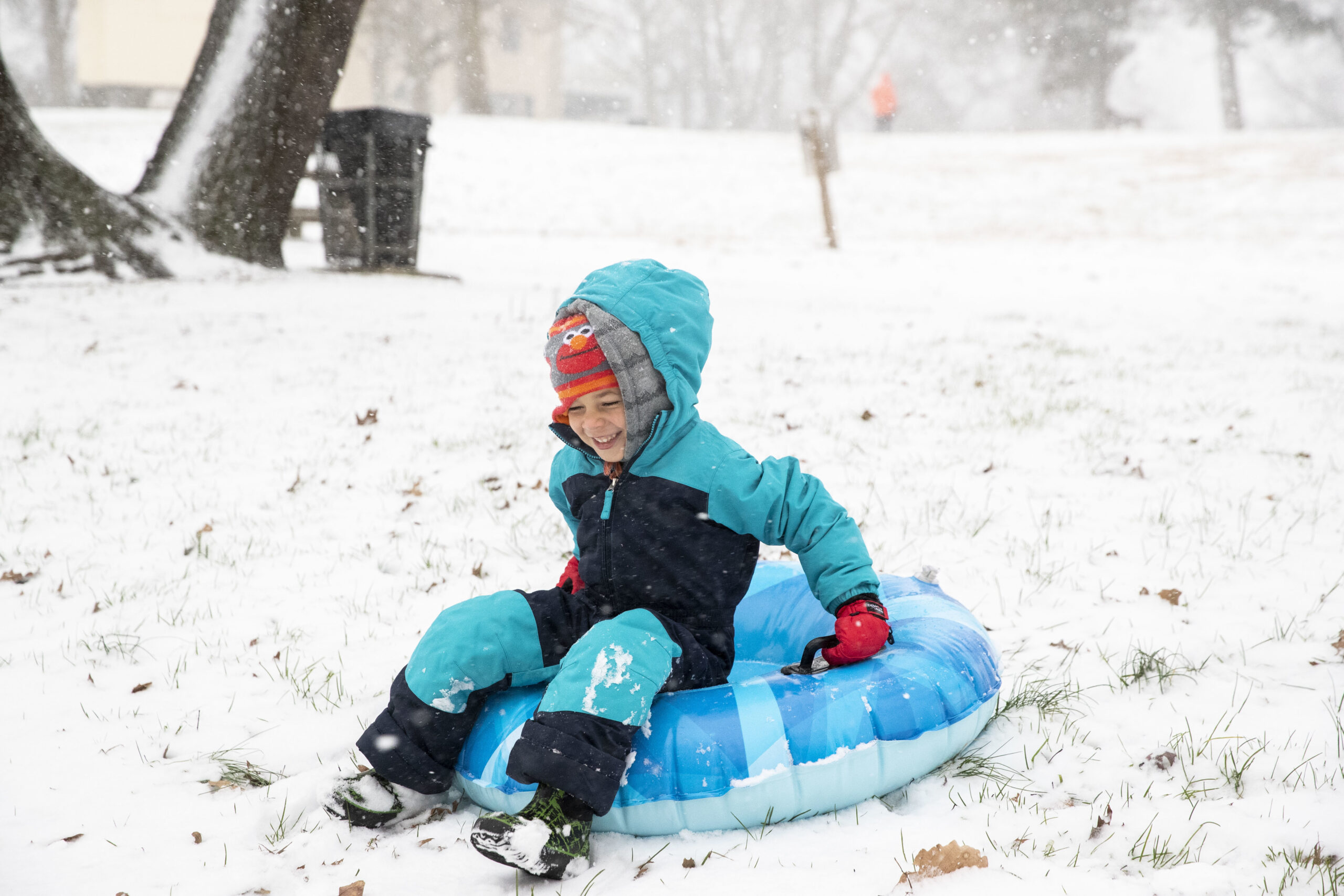
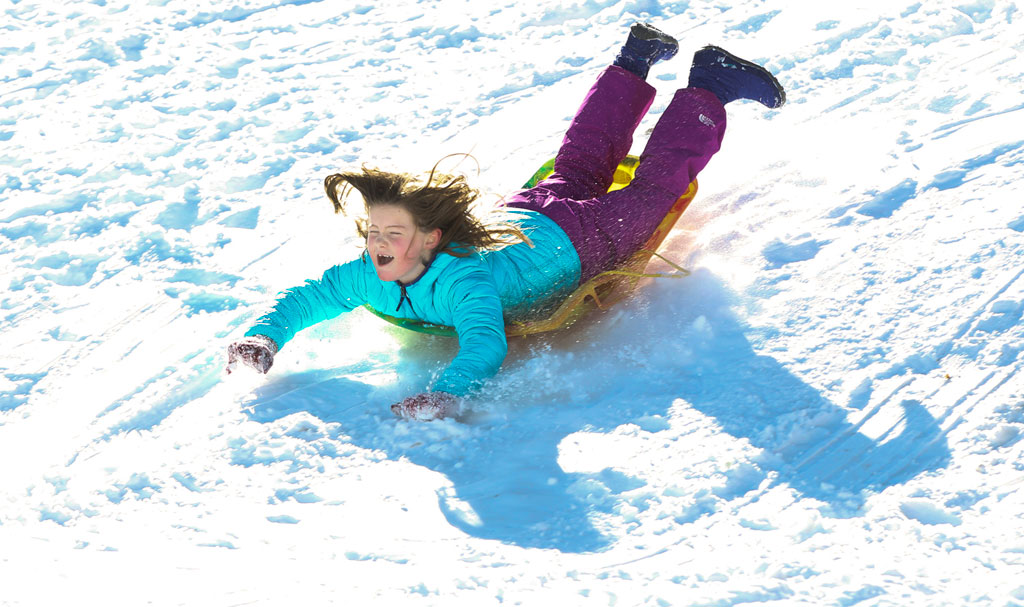
With the possibility of the city’s first double-digit snowfall in a decade, the region figures to be a sledder’s haven, with hills in all shapes and sizes.
Temperatures are expected to dip dangerously low beginning Friday night — so be sure to take precautions before heading out.
In the meantime, we’ve rounded up a few of the area’s best sledding spots to help you make the most of the coming snowfall.
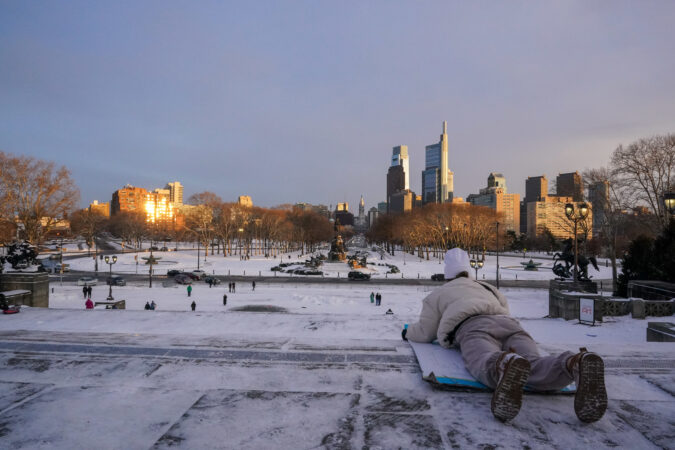
The Art Museum’s “Rocky” steps are probably the most famous sledding spot in all of Philadelphia. Flying down solid concrete can be a bit dangerous — so take caution — but there should be plenty of snow on the ground by the time things taper off. And remember, there are some hills around back to hit, as well as a set of (less famous) steps.
Not far from the Art Museum, you’ll find East Fairmount Park’s Lemon Hill, known typically for the Federal-style mansion that stands there. During snowstorms, however, it transitions into a prime sledding spot for kids of all ages, thanks to steep hillsides that are begging for a run. Like others on the list, though, it can get crowded, so be prepared to wait your turn.
Chestnut Hill locals know this spot as a landmark thanks to the 125-foot water tower, but it also happens to be among the neighborhood’s best sledding hills. That’s thanks to a wide variety of hills that make it a great choice for gaggles of kids with varying sledding experience, so feel free to bring the family out and stake your claim.
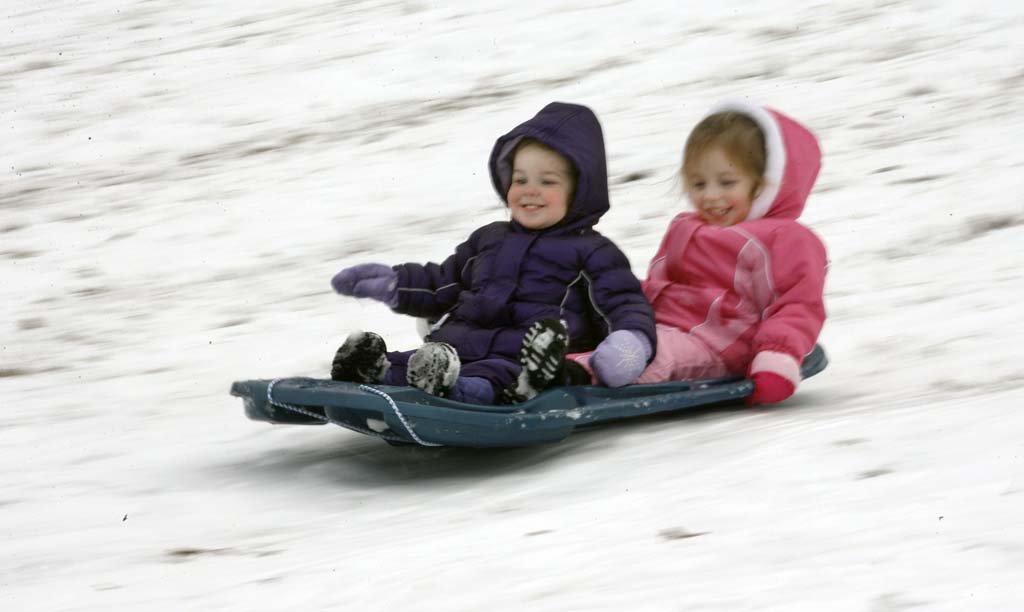
Aisha Mershani, back right, assists her daughter Zara, 5, front right, and their friend Rachit, 7, back center, as they sled at the Clark Park Bowl, in Philadelphia, Monday, January 6, 2025.
Take a trip to West Philly’s Clark Park, where you’ll find a “bowl” — one of the park’s best-known features — that offers some more moderate slopes for young, budding sledders, or folks just looking for a milder run. As a bonus, it’s a pretty roomy area, so feel free to take a break from the slopes and find a spot to get in on other winter activities, like building snowmen or making snow angels.
Sure, Burholme Park is home to the historic Robert W. Ryerss Museum and Library, but it also happens to be one of Northeast Philadelphia’s best sledding spots once the powder begins to stick. Here, you’ll find a large, expansive hill that serves as the park’s main draw for thrill-seeking sledders, but there are a few smaller, less intense options, too.
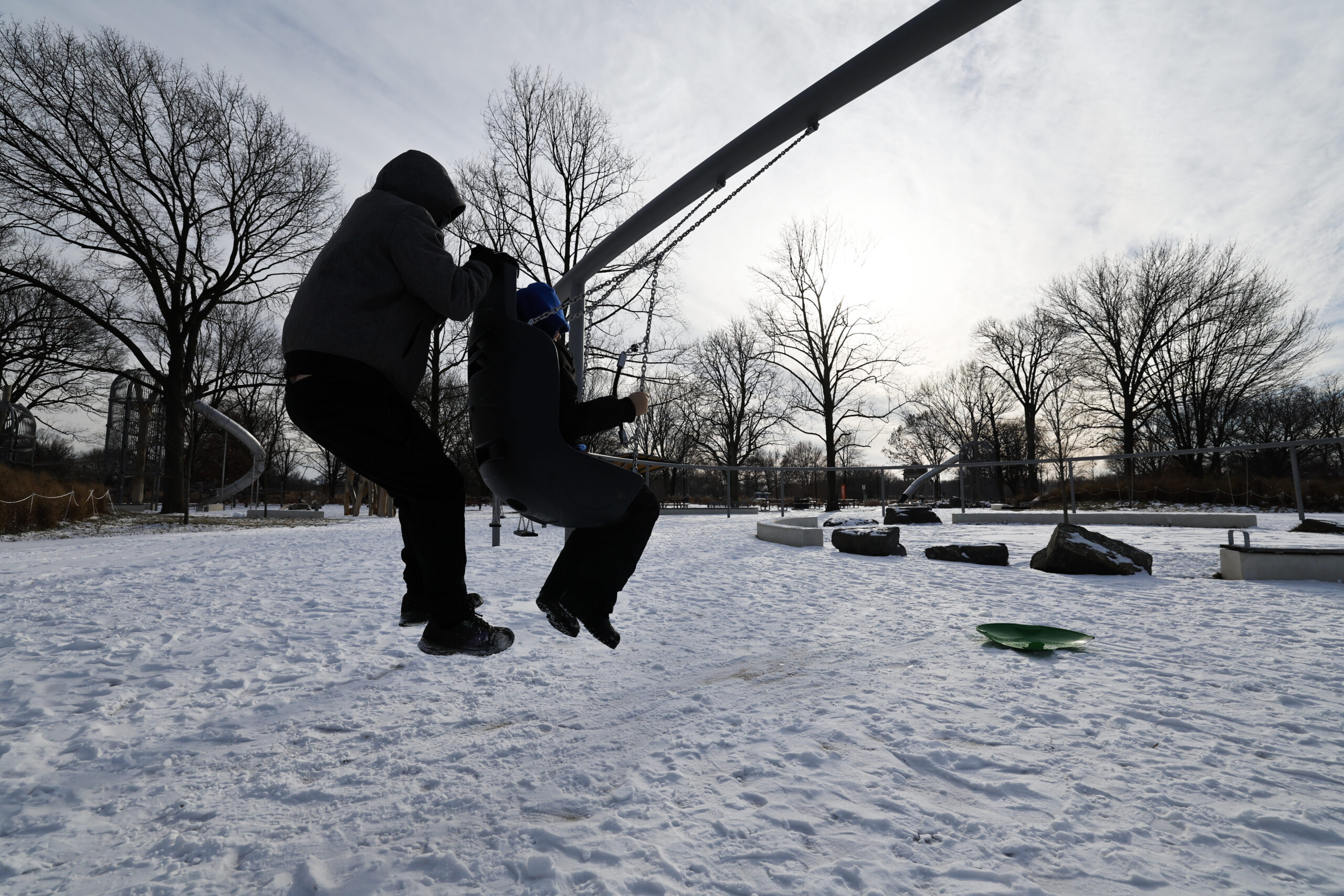
Jason Chestnut (left) rides a swing with his son Caleb Chestnut, 10, at the snow filled Anna C. Verna Playground at FDR Park in South Philadelphia on Thursday, January 23, 2025.
This might not be the adrenaline junky’s first choice, but there is plenty of space to ramble in this South Philly park. Plus, you’ll also find some options in nearby Packer Park (the so-called “Bridge Hill” at Broad and Packer is one favorite, but it’s near traffic, so be careful).
With about 50 acres of land, there’s no shortage of hills to choose from, and the scenery is tough to beat. Located in Southwest Philly, Bartram’s Garden might be best known for its historic botanical garden and fantastic skyline views of the city — but add sledding to the list come winter. If you’re planning on driving, the gates on 54th and 56th streets open at sunrise and close at sunset, though exact hours can vary.
You typically can’t go wrong when it comes to sledding and college campuses. On Hawk Hill, the university’s 125-acre main campus, you’ll find plenty of acceptable terrain upon which to relieve the winter doldrums and escape the stresses of student life.
At more than 1,700 acres, Newtown’s Tyler State Park is big. It also happens to be essentially one giant downhill slope that brings out the crowds when a good snow comes. Some favorite spots, according to the Department of Conservation and Natural Resources, are located just below the Upper Plantation Picnic Area parking lot, and west of the park’s covered bridge — so plan accordingly.
Located in Quakertown, Nockamixon State Park is home to all kinds of winter activities, ranging from ice fishing to cross-country skiing. It’s also a great sledding spot, particularly if you head to the area above the park’s marina. DCNR suggests parking in lot 13 for easy access. However, the Nockamixon’s hunting season is open, so be mindful not to enter hunting areas.
If you feel like the other spots on the list haven’t given you room to let loose on the slopes, this Downingtown park just might — it has around seven acres of sledding hills to check out. To get there, the DCNR recommends heading to the picnic area at the East Launch. Depending on when you go, check to see if Marsh Creek’s hunting season is open to avoid those areas.
For a more relaxing day of sledding, head to Media’s Rose Tree County Park. There, you’ll find 120 acres of gentle, rolling slopes that are perfect for novice sledders. If you want something a little more exciting, Ridley Creek State Park — located a couple miles from Rose Tree Park — has great options by its park office.
Yes, Valley Forge is a fantastic historical landmark, having served as the location for George Washington’s winter encampment in 1777 and 1778. But it’s also a great place to get some sledding done for the whole family. The Valley Forge Tourism and Convention Board has a few recommendations, including hills near the Memorial Arch and statue of Anthony Wayne.
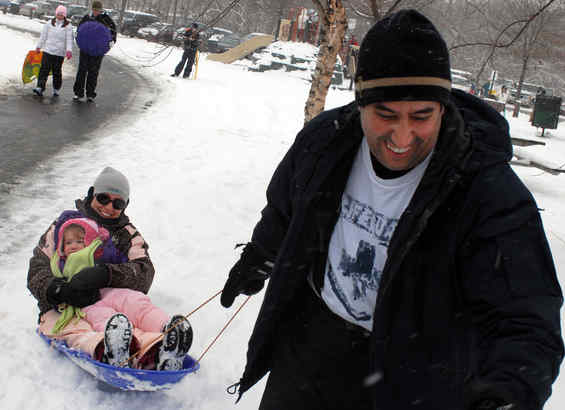
Megan Solleder (front) appears to enjoy sledding for the first time with sister Alyssa Solleder at Frank Donio Memorial Park in Winslow in 2007. They were there with their mother.
At about 50 acres, this Sicklerville park isn’t huge, but it is a favorite sledding spot among locals when a good winter snow hits. Take the walking path to easily find plenty of hills to choose from, and get sledding.
In the warmer months, this Mount Laurel park is known for its small fishing lake and nature trail — but come winter, it’s a hot spot for South Jersey locals looking for some good sledding. Head there to find the park’s designated sledding hill, which is near the parking lot, and features a long slope that’s on the gentler side of things, making it great for youngsters.
Back in the late 1800s, this spot was part of a coastal defense system on the Delaware River. These days, it’s a favorite winter sledding spot for folks in Salem County. It’s not for the faint of heart, though, as the hills and embankments can get a little steep for inexperienced sledders — but they are good for picking up some serious speed.
We’ll show you a photo taken in the Philly-area, you drop a pin where you think it was taken. Closer to the location results in a better score. This week’s theme is all about snow! Good luck!
Round #17
Question 1
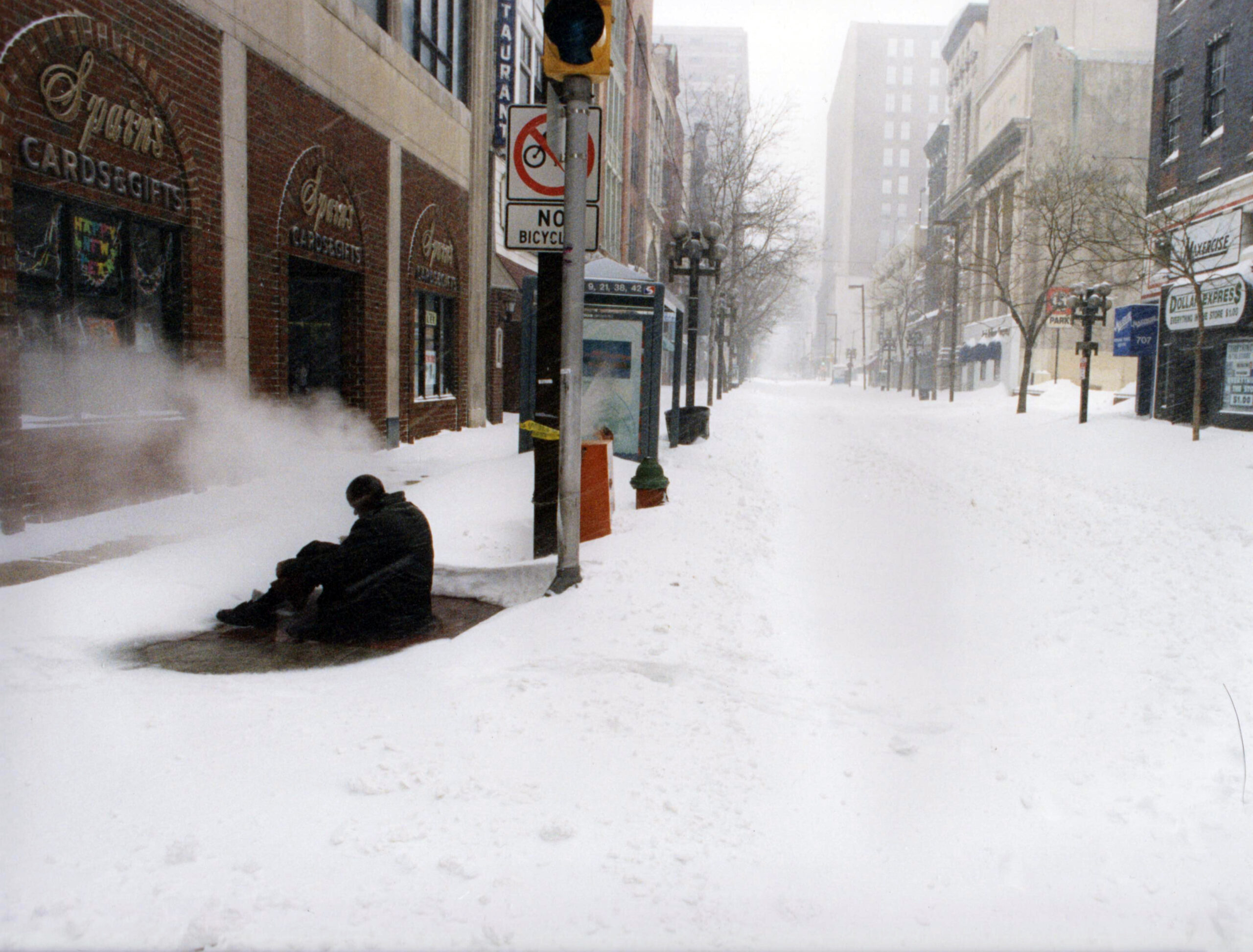
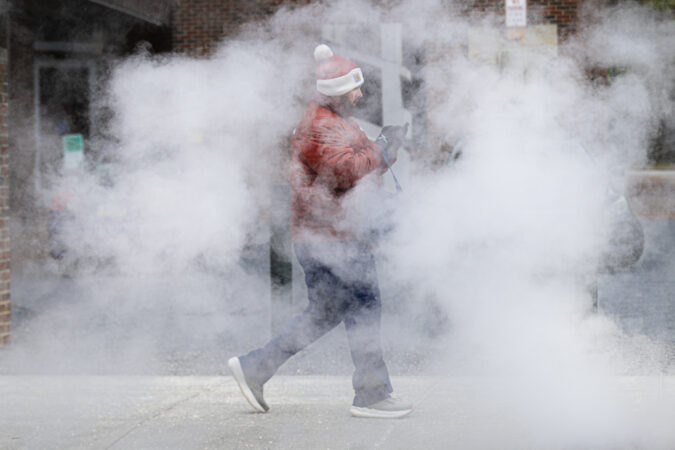
Where is this person waiting for the bus?
Loading…
ClickTap on map to guess the location in the photo
ClickTap again to change your guess and hit submit when you're happy
You will be scored at the end. The closer to the location the better the score
Heather Khalifa / Staff Photographer
Pretty good/Not bad/Way off! Your guess was from the location.Spot on! Your guess was exactly at the location. Here's also where a random selection of Inquirer readers guessed.
Pretty good/Not bad/Way off! Your guess was from the location.Spot on! Your guess was exactly at the location. Here's also where a random selection of Inquirer readers guessed.
This is the Independence Hall hole at the Philly Mini Golf course in Franklin Square Park. Until February 16, the entire course will be Winter themed with lights, seasonal music, and occasional inflatable snowman.
Quiz continues after ad
Question 3
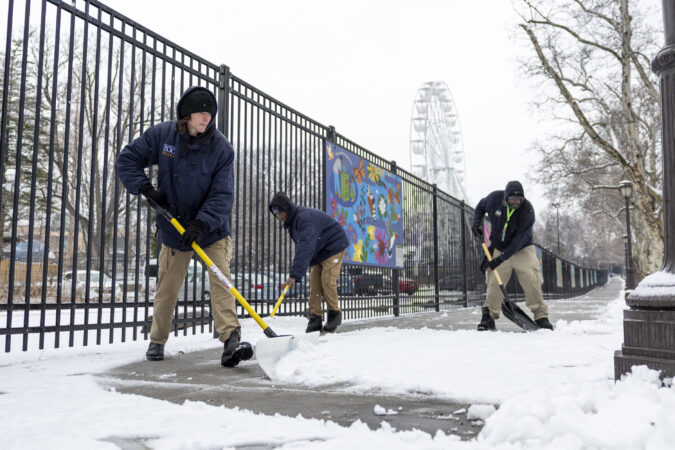
Where are these folks shoveling?
Loading…
Tyger Williams / Staff Photographer
Pretty good/Not bad/Way off! Your guess was from the location.Spot on! Your guess was exactly at the location. Here's also where a random selection of Inquirer readers guessed.
Service workers at the Philadelphia Zoo are shoveling snow on a parking lot near the new “Pherris Wheel.” This new observation wheel that will remain through America’s 250th anniversary celebrations.
Your Score
ARank
Amazing work. A Winter wonderland of knowledge.
BRank
Good stuff. You’re a real snowman.
CRank
C is a passing grade, but you nearly slipped.
DRank
D isn’t great. That was an avalanche of bad answers.
FRank
We don’t want to say you failed, but you didn’t not fail.
You beat % of other Inquirer readers.
We’ll be back next Saturday for another round of Citywide Quest.
Brace yourself for the cold, Philadelphians, because the first double-digit snowfall in 10 years is potentially heading our way, followed by sub-freezing temperatures that could last the rest of the month.
Since nowhere is safe from the cold, here are some tips on how to keep yourself from freezing and your property from damage (no burst pipes in sight):
Staying indoors is the best way to keep frostbite and hypothermia at bay, but some must brave the temperature for work, other needs, or emergencies, as even waiting for the bus can take longer if SEPTA experiences storm-related service delays.
With temperatures forecast in the teens and lower 20s, it is important to keep an eye on your core temperature.
When you rapidly lose heat or stay wet for too long, it can cause hypothermia, even indoors. This can affect your brain and body, causing slurred speech, confusion, clumsiness, and extreme tiredness.
Continued exposure to the cold can cause frostbite, as blood stops reaching your fingers, nose, ears, and extremities properly. You can get frostbite even under winter clothing, and it can lead to losing the affected body parts. If you start feeling tingling, numbness, or your skin looks gray or pale, head indoors.
Frostbite can happen without hypothermia symptoms, and vice versa. Children, older adults, and people with circulation issues are especially at risk
To prevent both afflictions, stay dry, covered, and layered up, keeping your skin from being exposed.
Four out of five warming centers reached capacity on Thursday, but the city plans to open more and add beds as needed.
The warming centers remain open at select libraries from 9 a.m. to 9 p.m. And shelter beds have been added under the Code Blue declaration.
Some recreation centers will also serve as warming centers from 9 p.m. to 9 a.m. Find the selected libraries and recreation centers closest to you on the city’s interactive map of warming centers.
Folks in need of a warm place can go to their local police precinct to be transported to the nearest warming center.
Broken bones and head trauma are no fun. Stay grounded by wearing footwear with enough traction (no sneakers or dress shoes), or traction cleats.
You can’t control the city roads, but salting your sidewalk properly can help avoid starting your day on the ground, or worse, in the emergency room. As you walk, make sure to lean slightly forward and take shorter steps. You may look like a penguin, but it’s worth it to avoid the pain and medical bills.
Much like your body, your home also loses heat in the cold, putting pipes at risk for freezing and bursting. Disconnecting garden hoses and shutting off the valve that feeds them, and keeping faucets slightly open and running can prevent expensive repairs.
Pipes will begin to freeze when a thermostat is at 39 degrees and lower. Maintaining the thermostat at 50 degrees or above is ideal.
Though they won’t burst, cars get cold too, reducing battery power and creating a risk of being left stranded, especially if the battery is older than two or three years.
Be ready to jump-start your car. Jumper cables and a portable jumper pack can be helpful. Remember, red clamps to the positive post of the dead battery; black clamps to the negative post of the working battery and to the unpainted metal surface on the engine of the dead car.
With a significant snowfall expected in the Philadelphia region this weekend, doctors are urging people to be cautious when digging out.
About 100 people a year die from heart attacks brought on by shoveling snow. Thousands more wind up in the emergency department with sprains, strains, chest pain, and other heart problems.
Shoveling may not seem like a cardio workout, but it can put as much strain on your heart as a treadmill stress test, according to the American Heart Association. People often mistakenly lift with their arms, which is more taxing on the heart than lifting with their legs. In extreme cold, blood vessels constrict to conserve heat, but that can further elevate blood pressure.
People with a history of heart problems, smoking, or obesity may be especially at risk.
In the Philadelphia area, shovelers are more accustomed to an inch or two of powder or slush. This weekend’s storm, which could bring several times that, will be a bigger and more dangerous challenge, said Jonathan Stallkamp, a senior vice president and chief medical officer for Main Line Health, a nonprofit system with four hospitals in the Philadelphia suburbs.
“All of a sudden your heart goes from beating normally, and now you’re putting in this additional heavy work of shoveling,” said Stallkamp.
Here’s how to shovel safely and make sure the upcoming storm isn’t your downfall.
Ask for help
The best way to prepare for clearing massive amounts of snow is to make sure you’re in good physical shape, said Stallkamp.
Shoveling uses muscles people may not be accustomed to exercising, and puts stress on the heart.
“A lot of our older community members aren’t in as good shape as they think,” Stallkamp said.
He encouraged people to be realistic about their abilities, and ask for help from a younger neighbor or relative, if possible.
Some cardiologists say that anyone over age 45 should use extra caution when shoveling.
Treat it like a sport
Prepare to tackle snow the way an athlete would prepare for a big game: Drink lots of water, avoid caffeine (which can raise blood pressure), and wear the right gear (mittens are generally warmer than gloves). And don’t forget to stretch. Warming up your joints, and muscles in your legs, arms and back will reduce the risk of injury, according to Mayo Clinic.
Lift with your legs
Bending your knees to scoop and lifting with your legs will reduce strain on your back. Lifting with arms and back are more likely to result in a pulled muscle.
Shovel often
Stallkamp recommends getting out early, clearing snow as it falls, rather than waiting for the big event to be over. It’s easier to shovel an inch of snow multiple times than to dig out of a foot of snow. While the forecast for the Philadelphia region is still in flux, some forecasts suggest snow could turn to ice, which adds to the challenge of clearing driveways and sidewalks.
Ice will be easier to clear if it falls on a thin layer of snow, than directly onto pavement, Stallkamp said.
Keep fingers away from snowblowers
This maybe goes without saying, but Stallkamp said he’s seen it enough that he’s sending a clear warning: Do not put your hands inside the opening of a snowblower.
When a stick or chunk of ice gets stuck in a snowblower, people may instinctively reach in to try to dislodge the object.
“But once that jam clears, those blades spin and your fingers go with it,” he said.
Take breaks and warm up
Mayo Clinic experts recommend taking breaks to check in with your body. If you feel out of breath, lightheaded, or just off, go inside to warm up and relax.
With ice in the forecast, Stallkamp recommends taking steps to keep your house warm if your home uses electric heat and you lose power.
Generators can help restore enough electricity to turn the heat on, but they should be kept as far from the house as possible and never used inside. Generators produce large amounts of carbon monoxide that can be deadly, especially in the winter when windows and doors are closed up.
If possible, turn up the heat in advance, so your home stays warm longer if power goes out.