Category: Business Wires

  • What travelers can expect as Southwest Airlines introduces assigned seats

    What travelers can expect as Southwest Airlines introduces assigned seats

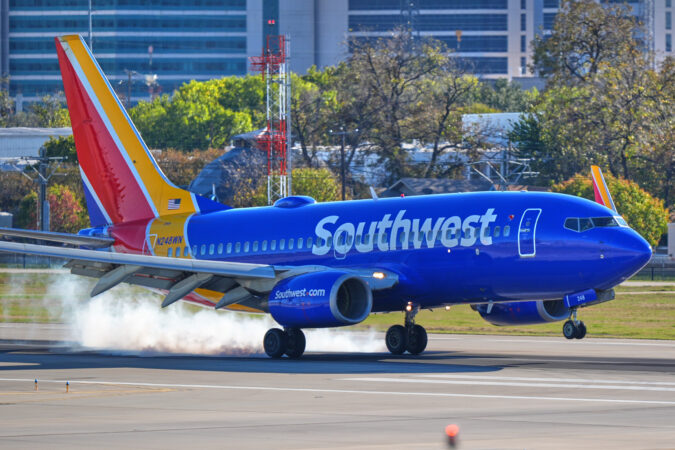
    Southwest Airlines passengers made their final boarding-time scrambles for seats on Monday as the carrier prepared to end the open-seating system that distinguished it from other airlines for more than a half‑century.

    Starting Tuesday, customers on Southwest flights will have assigned seats and the option of paying more to get their preferred seat closer to the front of a plane or seats with extra legroom. The airline began selling tickets shaped by the new policy in July.

    Here’s what travelers can expect as Southwest does away with another of its signature features and becomes more like other airlines:

    Goodbye, A/B/C groups

    Under the open-seat system, Southwest customers could check in starting exactly 24 hours before departure to secure places in boarding lines at departure gates.

    Early check-ins were placed in the coveted “A” boarding group, essentially guaranteeing they would find an open window or aisle seat. Others landed in “B” or “C,” the likelihood of only middle seats being available rising the longer they waited to check in.

    The Dallas-based airline’s unusual seating process began as a way to get passengers on planes quickly and thereby reduce the time that aircraft and crews spent on the ground not making money. It helped Southwest operate more efficiently and to squeeze a few more flights into the daily schedule; the system also was a key reason Southwest remained profitable every year until the coronavirus pandemic.

    The open-seating arrangement became less democratic over time, however, as Southwest also had starting allowing passengers to pay extra for spots near the front of the line.

    Hello, assigned seating

    An eight‑group boarding structure is replacing the find-your-own-seat scrum. Instead of numbered metal columns at departure gates, passengers will file through two alternating lanes once it’s time for their group to board.

    The airline said its gate areas will be converted in phases starting Monday night, a process that could take about two months to complete. Columns that remain standing past Tuesday will have their numbers removed or covered in the meantime.

    Southwest is selling tickets at fares with different seating choices, including standard seats assigned at check‑in or paid preferred and extra‑legroom seats selected at booking. For certain flights, passengers also will have the option of paying for priority boarding beginning 24 hours before departure.

    How it will work

    Newly designed boarding passes will show seat assignments and boarding groups, according to Southwest. A reservation made for nine or fewer people, including families, will assign those passengers to the same boarding group.

    Southwest says the boarding groups are based on seat location, fare class, loyalty tier status, and the airline’s credit card rewards benefits. Passengers who purchase seats with extra legroom will be placed in groups 1-2. Customers with premium fares and the airline’s “most loyal travelers” will also have access to preferential seats and earlier boarding, the carrier said, while those with basic fares will likely be placed in groups 6-8.

    Other changes

    With the switch to assigned seating also comes a revision of the airline’s policy for customers who need extra room. Under the new rule — also effective Tuesday — travelers who do not fit within a single seat’s armrests will be required to purchase an additional seat in advance.

    That represents a change from the airline’s previous policy that allowed passengers the choice to purchase a fully refundable extra seat before arriving at the airport, or request a free one at the gate. Under the updated policy, refunds are still possible but no longer guaranteed and depend on seat availability and fare class.

    In May 2025, Southwest also ended its decades‑old “bags fly free” policy, replacing it with baggage fees for most travelers.

    The changes mark one of the biggest transformations in the airline’s history, as it alters its longstanding customer perks to bring it more in line with the practices of other larger U.S. carriers.

    Why all the change?

    The shift comes amid pressure from investors to increase profitability.

    “We have tremendous opportunity to meet current and future customer needs, attract new customer segments we don’t compete for today, and return to the levels of profitability that both we and our shareholders expect,” Southwest CEO Robert Jordan said last year.

    When the Texas-based airline first announced plans in 2024 to switch to assigned seating, it said studies on seating options showed that customer preferences had changed over the years, with the vast majority of travelers saying they now want to know where they are sitting before they get to the airport.

    Jordan said at the time that open seating was the top reason surveyed travelers cited for choosing another airline over Southwest.

  • Sleep-tracking devices have limits. Experts want users to know what they are

    Sleep-tracking devices have limits. Experts want users to know what they are

    Your watch says you had three hours of deep sleep. Should you believe it?

    Millions of people rely on phone apps and wearable devices like rings, smartwatches, and sensors to monitor how well they’re sleeping, but these trackers don’t necessarily measure sleep directly. Instead, they infer states of slumber from signals like heart rate and movement, raising questions about how reliable the information is and how seriously it should be taken.

    The U.S. sleep-tracking devices market generated about $5 billion in 2023 and is expected to double in revenue by 2030, according to market research firm Grand View Research. As the devices continue to gain popularity, experts say it is important to understand what the devices can and cannot tell you, and how their data should be used.

    Here’s a look at the technology — and why one expert thinks its full potential has yet to be realized.

    What your sleep tracker actually measures

    Whether it’s an Apple Watch, a Fitbit, an Oura Ring or one of innumerable other competitors, health and fitness trackers largely take the same basic approach by recording the wearer’s movements and heart rate while at rest, according to Daniel Forger, a University of Michigan math professor who researches the science behind sleep wearables.

    The algorithms used by major brands have become highly accurate for determining when someone is asleep, Forger said. The devices are also somewhat helpful for estimating sleep stages, though an in-lab study would be more precise, he said.

    “If you really want to know definitively how much non-REM sleep you’re having vs. REM sleep, that’s where the in-lab studies really excel,” Forger said.

    The sleep numbers that matter most — and the ones that don’t

    Dr. Chantale Branson, a neurologist and professor at the Morehouse School of Medicine, said she frequently has patients showing up with sleep scores from fitness trackers in hand, sometimes fixated on granular details such as how much REM sleep they got on a certain night.

    Branson says those patients are taking the wrong approach: the devices help highlight trends over time but should not be viewed as a definitive measure of one’s sleep health. Nor should any single night’s data be seen as significant.

    “We would have believed them with or without the device and worked on trying to figure out why they can’t sleep — and that is what the wearables do not do,” she said.

    Branson said she thinks people who check their sleep statistics every morning would be better served by spending their efforts on “sleep hygiene,” including by creating a relaxing bedtime routine, avoiding screens before bed, and making sure their sleep environment is comfortable. She advises those concerned about their sleep to consult a clinician before spending money on a wearable.

    Forger takes a more favorable view toward the devices, which he says help keep the overlooked importance of sleep front of mind. He recommends them even for people without significant sleep issues, saying they can offer insights that help users fine-tune their routines and feel more alert during the day.

    “Seeing if your biological clock is in sync is a huge benefit because even if you’re giving yourself the right amount of time, if you’re sleeping at the wrong times, the sleep won’t be as efficient,” Forger said.

    How sleep data can drive better habits

    Kate Stoye, an Atlanta-area middle school teacher, bought an Oura Ring last summer, having heard positive things from friends who used it as a fertility tracker: “It’s so accurate,” she said. Stoye found the ring to be just as helpful with tracking her sleep. After noticing that the few nights she drank alcohol coincided with poorer sleep quality, she decided to give up alcohol.

    “I don’t see much reason to drink if I know that it’s going to affect how I feel,” said Stoye, who always wears her device except when she is playing tennis or needs to charge it.

    Another trend she says she detected in the ring’s data: the importance of not eating too late if she wants to get good rest.

    “I always struggle with going to bed, and it’s often because I eat late at night,” Stoye said. “I know that about myself, and it knows it too.”

    When sleep tracking becomes a problem

    Mai Barreneche, who works in advertising in New York City, used to wear her Oura Ring constantly. She said it helped her develop good sleep habits and encouraged her to maintain a daily morning exercise regimen. But as a metric-driven person, she became “obsessed” enough with her nightly sleep scores that it began to cause her anxiety — a modern condition that researchers have dubbed “orthosomnia.”

    “I remember I would go to bed thinking about the score I was going to get in the morning,” Barreneche said.

    Barreneche decided not to wear her ring on a beach vacation a few years ago, and when she returned home, she never put it back on. She said she has maintained the good habits the device pointed her toward, but no longer wants the stress of monitoring her nightly scores.

    Branson, of the Morehouse School of Medicine, said she’s observed similar score-induced anxiety as a recurring issue for some patients, particularly those who set goals to achieve a certain amount of REM sleep or who shared their nightly scores with friends using the same device. Comparing sleep types and stages is ill-advised since individual needs vary by age, genetics, and other factors, she said.

    “These devices are supposed to help you,” Branson said. ”And if you feel anxious or worried or frustrated about it, then it’s not helpful, and you should really talk to a professional.”

    The future of wearables

    Forger thinks the promise of wearables has been underestimated, with emerging research suggesting the devices could one day be designed to help detect infections before symptoms appear and to flag sleep pattern changes that may signal the onset of depression or an increased risk of relapse.

    “The body is making these really interesting and really important decisions that we’re not aware of to keep us healthy and active and alert at the right times of day,” he said. “If you have an infection, that rhythm very quickly starts to disappear because the body goes into overdrive to start fighting the infection. Those are the kind of things we can pick up.”

    The technology could be particularly useful in low-resource communities, where wearables could help health issues to be identified more quickly and monitored remotely without requiring access to doctors or specialized clinics, according to Forger.

    “There’s this really important story that’s about to come out: About just how understanding sleep rhythms and sleep architecture is going to generally improve our lives,” he said.

  • Trump visits Iowa trying to focus on affordability during fallout over nurse’s Minneapolis shooting

    Trump visits Iowa trying to focus on affordability during fallout over nurse’s Minneapolis shooting

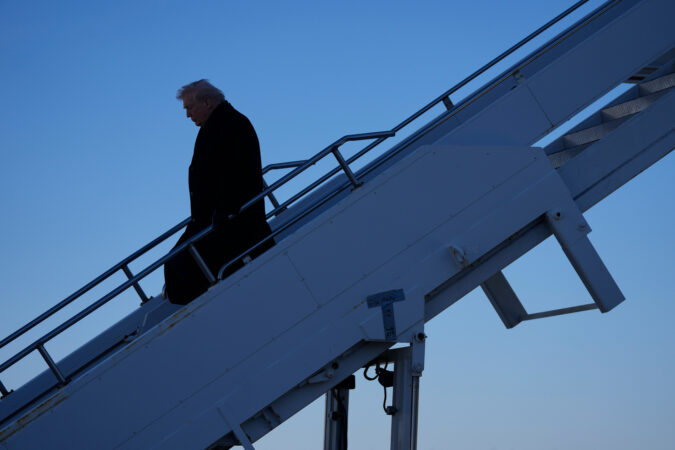
    CLIVE, Iowa — President Donald Trump arrived in Iowa on Tuesday as part of the White House’s midterm-year pivot toward affordability, even as his administration remains mired in the fallout in Minneapolis over a second fatal shooting by federal immigration officers this month.

    The Republican president first made a stop at a local restaurant, where he met some locals and sat for an interview with Fox News Channel — in which he said he was attempting to “de-escalate a little bit” in Minnesota. Afterwards, he was scheduled to deliver a speech on affordability at the Horizon Events Center in Clive, a suburb of Des Moines.

    The trip is expected to also highlight energy policy, White House chief of staff Susie Wiles said last week. It’s part of the White House’s strategy to have Trump travel out of Washington once a week ahead of the midterm elections to focus on affordability issues facing everyday Americans — an effort that keeps getting diverted by crisis.

    The latest comes as the Trump administration is grappling with the weekend shooting death of Alex Pretti, an ICU nurse killed by federal agents in the neighboring state of Minnesota. Pretti had participated in protests following the Jan. 7 killing of Renee Good by an Immigration and Customs Enforcement officer. Even as some top administration officials moved quickly to malign Pretti, Trump said he was waiting until an investigation into the shooting was complete.

    Trump calls Pretti killing ‘sad situation’

    As Trump left the White House on Tuesday to head to Iowa, he was repeatedly questioned by reporters about Pretti’s killing. Trump disputed language used by his own deputy chief of staff, Stephen Miller, who on social media described Pretti as an “assassin” who “tried to murder federal agents.” Vice President JD Vance shared the post.

    Trump, when asked Tuesday if he believed Pretti was an assassin, said, “No.”

    When asked if he thought Pretti’s killing was justified, Trump called it “a very sad situation” and said a “big investigation” was underway.

    “I’m going to be watching over it, and I want a very honorable and honest investigation. I have to see it myself,” he said.

    He also said Homeland Security Secretary Kristi Noem, who was quick to cast Pretti as a violent instigator, would not be resigning.

    Later, as he greeted diners at an Iowa restaurant, Trump weighed in further with comments that were likely to exacerbate frustration among some of his backers who are also strong Second Amendment proponents.

    “He certainly shouldn’t have been carrying a gun,” Trump said of Pretti.

    He called it a “very, very unfortunate incident but said, ”I don’t like that he had a gun. I don’t like that he had two fully loaded magazines. That’s a lot of bad stuff.”

    Republicans want to switch the subject to affordability

    Trump was last in Iowa ahead of the July 4 holiday to kick off the United States’ upcoming 250th anniversary, which morphed largely into a celebration of his major spending and tax cut package hours after Congress had approved it.

    Republicans are hoping that Trump’s visit to the state on Tuesday draws focus back to that tax bill, which will be a key part of their pitch as they ask voters to keep them in power in November.

    “I invited President Trump back to Iowa to highlight the real progress we’ve made: delivering tax relief for working families, securing the border, and growing our economy,” Rep. Zach Nunn, R-Iowa, said in a statement in advance of his trip. “Now we’ve got to keep that momentum going and pass my affordable housing bill, deliver for Iowa’s energy producers, and bring down costs for working families.”

    Trump’s affordability tour has taken him to Michigan, Pennsylvania and North Carolina as the White House tries to marshal the president’s political power to appeal to voters in key swing states.

    But Trump’s penchant for going off-script has sometimes taken the focus off cost-of-living issues and his administration’s plans for how to combat it. In Mount Pocono, Pennsylvania, Trump insisted that inflation was no longer a problem and that Democrats were using the term affordability as a “hoax” to hurt him. At that event, Trump also griped that immigrants arriving to the U.S. from “filthy” countries got more attention than his pledges to fight inflation.

    Competitive races in Iowa

    Although it was a swing state just a little more than a decade ago, Iowa in recent years has been reliably Republican in national and statewide elections. Trump won Iowa by 13 percentage points in 2024 against Democrat Kamala Harris.

    Still, two of Iowa’s four congressional districts have been among the most competitive in the country and are expected to be again in this year’s midterm elections. Trump already has endorsed Republican Reps. Nunn and Mariannette Miller-Meeks. Democrats, who landed three of Iowa’s four House seats in the 2018 midterm elections during Trump’s first term, see a prime opportunity to unseat Iowa incumbents.

    This election will be the first since 1968 with open seats for both governor and U.S. senator at the top of the ticket after Republican Gov. Kim Reynolds and Republican U.S. Sen. Joni Ernst opted out of reelection bids. The political shake-ups have rippled throughout the state, with Republican Reps. Randy Feenstra and Ashley Hinson seeking new offices for governor and for U.S. senator, respectively.

    Democrats hope Rob Sand, the lone Democrat in statewide office who is running for governor, will make the entire state more competitive with his appeal to moderate and conservative voters and his $13 million in cash on hand.

  • TikTok settles as social media giants face landmark trial over youth addiction claims

    TikTok settles as social media giants face landmark trial over youth addiction claims

    LOS ANGELES — TikTok agreed to settle a landmark social media addiction lawsuit just before the trial kicked off, the plaintiff’s attorneys confirmed.

    The social video platform was one of three companies — along with Meta’s Instagram and Google’s YouTube — facing claims that their platforms deliberately addict and harm children. A fourth company named in the lawsuit, Snapchat parent company Snap Inc., settled the case last week for an undisclosed sum.

    Details of the settlement with TikTok were not disclosed, and the company did not immediately respond to a request for comment.

    At the core of the case is a 19-year-old identified only by the initials “KGM,” whose case could determine how thousands of other, similar lawsuits against social media companies will play out. She and two other plaintiffs have been selected for bellwether trials — essentially test cases for both sides to see how their arguments play out before a jury and what damages, if any, may be awarded, said Clay Calvert, a nonresident senior fellow of technology policy studies at the American Enterprise Institute.

    A lawyer for the plaintiff said in a statement Tuesday that TikTok remains a defendant in the other personal injury cases, and that the trial will proceed as scheduled against Meta and YouTube.

    Jury selection starts this week in the Los Angeles County Superior Court. It’s the first time the companies will argue their case before a jury, and the outcome could have profound effects on their businesses and how they will handle children using their platforms. The selection process is expected to take at least a few days, with 75 potential jurors questioned each day through at least Thursday. A fourth company named in the lawsuit, Snapchat parent company Snap Inc., settled the case last week for an undisclosed sum.

    KGM claims that her use of social media from an early age addicted her to the technology and exacerbated depression and suicidal thoughts. Importantly, the lawsuit claims that this was done through deliberate design choices made by companies that sought to make their platforms more addictive to children to boost profits. This argument, if successful, could sidestep the companies’ First Amendment shield and Section 230, which protects tech companies from liability for material posted on their platforms.

    “Borrowing heavily from the behavioral and neurobiological techniques used by slot machines and exploited by the cigarette industry, Defendants deliberately embedded in their products an array of design features aimed at maximizing youth engagement to drive advertising revenue,” the lawsuit says.

    Executives, including Meta CEO Mark Zuckerberg, are expected to testify at the trial, which will last six to eight weeks. Experts have drawn similarities to the Big Tobacco trials that led to a 1998 settlement requiring cigarette companies to pay billions in healthcare costs and restrict marketing targeting minors.

    “Plaintiffs are not merely the collateral damage of Defendants’ products,” the lawsuit says. “They are the direct victims of the intentional product design choices made by each Defendant. They are the intended targets of the harmful features that pushed them into self-destructive feedback loops.”

    The tech companies dispute the claims that their products deliberately harm children, citing a bevy of safeguards they have added over the years and arguing that they are not liable for content posted on their sites by third parties.

    “Recently, a number of lawsuits have attempted to place the blame for teen mental health struggles squarely on social media companies,” Meta said in a recent blog post. “But this oversimplifies a serious issue. Clinicians and researchers find that mental health is a deeply complex and multifaceted issue, and trends regarding teens’ well-being aren’t clear-cut or universal. Narrowing the challenges faced by teens to a single factor ignores the scientific research and the many stressors impacting young people today, like academic pressure, school safety, socio-economic challenges, and substance abuse.”

    A Meta spokesperson said in a statement Monday the company strongly disagrees with the allegations outlined in the lawsuit and that it’s “confident the evidence will show our longstanding commitment to supporting young people.”

    José Castañeda, a Google Spokesperson, said Monday that the allegations against YouTube are “simply not true.” In a statement, he said “Providing young people with a safer, healthier experience has always been core to our work.”

    TikTok did not immediately respond to a request for comment Monday.

    The case will be the first in a slew of cases beginning this year that seek to hold social media companies responsible for harming children’s mental well-being. A federal bellwether trial beginning in June in Oakland, Calif., will be the first to represent school districts that have sued social media platforms over harms to children.

    In addition, more than 40 state attorneys general have filed lawsuits against Meta, claiming it is harming young people and contributing to the youth mental health crisis by deliberately designing features on Instagram and Facebook that addict children to its platforms. The majority of cases filed their lawsuits in federal court, but some sued in their respective states.

    TikTok also faces similar lawsuits in more than a dozen states.

  • Trump’s use of AI images pushes new boundaries, further eroding public trust, experts say

    Trump’s use of AI images pushes new boundaries, further eroding public trust, experts say

    LOS ANGELES — The Trump administration has not shied away from sharing AI-generated imagery online, embracing cartoonlike visuals and memes and promoting them on official White House channels.

    But an edited — and realistic — image of civil rights attorney Nekima Levy Armstrong in tears after being arrested is raising new alarms about how the administration is blurring the lines between what is real and what is fake.

    Homeland Security Secretary Kristi Noem’s account posted the original image from Levy Armstrong’s arrest before the official White House account posted an altered image that showed her crying. The doctored picture is part of a deluge of AI-edited imagery that has been shared across the political spectrum since the fatal shootings of Renee Good and Alex Pretti by U.S. Border Patrol officers in Minneapolis

    However, the White House’s use of artificial intelligence has troubled misinformation experts who fear the spreading of AI-generated or edited images erodes public perception of the truth and sows distrust.

    In response to criticism of the edited image of Levy Armstrong, White House officials doubled down on the post, with deputy communications director Kaelan Dorr writing on X that the “memes will continue.” White House Deputy Press Secretary Abigail Jackson also shared a post mocking the criticism.

    David Rand, a professor of information science at Cornell University, says calling the altered image a meme “certainly seems like an attempt to cast it as a joke or humorous post, like their prior cartoons. This presumably aims to shield them from criticism for posting manipulated media.” He said the purpose of sharing the altered arrest image seems “much more ambiguous” than the cartoonish images the administration has shared in the past.

    Memes have always carried layered messages that are funny or informative to people who understand them, but indecipherable to outsiders. AI-enhanced or edited imagery is just the latest tool the White House uses to engage the segment of Trump’s base that spends a lot of time online, said Zach Henry, a Republican communications consultant who founded Total Virality, an influencer marketing firm.

    “People who are terminally online will see it and instantly recognize it as a meme,” he said. “Your grandparents may see it and not understand the meme, but because it looks real, it leads them to ask their kids or grandkids about it.”

    All the better if it prompts a fierce reaction, which helps it go viral, said Henry, who generally praised the work of the White House’s social media team.

    The creation and dissemination of altered images, especially when they are shared by credible sources, “crystallizes an idea of what’s happening, instead of showing what is actually happening,” said Michael A. Spikes, a professor at Northwestern University and news media literacy researcher.

    “The government should be a place where you can trust the information, where you can say it’s accurate, because they have a responsibility to do so,” he said. ”By sharing this kind of content, and creating this kind of content … it is eroding the trust — even though I’m always kind of skeptical of the term trust — but the trust we should have in our federal government to give us accurate, verified information. It’s a real loss, and it really worries me a lot.”

    Spikes said he already sees the “institutional crises” around distrust in news organizations and higher education, and feels this behavior from official channels inflames those issues.

    Ramesh Srinivasan, a professor at UCLA and the host of the Utopias podcast, said many people are now questioning where they can turn to for “trustable information.” “AI systems are only going to exacerbate, amplify and accelerate these problems of an absence of trust, an absence of even understanding what might be considered reality or truth or evidence,” he said.

    Srinivasan said he feels the White House and other officials sharing AI-generated content not only invites everyday people to continue to post similar content but also grants permission to others who are in positions of credibility and power, like policymakers, to share unlabeled synthetic content. He added that given that social media platforms tend to “algorithmically privilege” extreme and conspiratorial content — which AI generation tools can create with ease — “we’ve got a big, big set of challenges on our hands.”

    An influx of AI-generated videos related to Immigration and Customs Enforcement action, protests and interactions with citizens has already been proliferating on social media. After Renee Good was shot by an ICE officer while she was in her car, several AI-generated videos began circulating of women driving away from ICE officers who told them to stop. There are also many fabricated videos circulating of immigration raids and of people confronting ICE officers, often yelling at them or throwing food in their faces.

    Jeremy Carrasco, a content creator who specializes in media literacy and debunking viral AI videos, said the bulk of these videos are likely coming from accounts that are “engagement farming,” or looking to capitalize on clicks by generating content with popular keywords and search terms like ICE. But he also said the videos are getting views from people who oppose ICE and DHS and could be watching them as “fan fiction,” or engaging in “wishful thinking,” hoping that they’re seeing real pushback against the organizations and their officers.

    Still, Carrasco also believes that most viewers can’t tell if what they’re watching is fake, and questions whether they would know “what’s real or not when it actually matters, like when the stakes are a lot higher.”

    Even when there are blatant signs of AI generation, like street signs with gibberish on them or other obvious errors, only in the “best-case scenario” would a viewer be savvy enough or be paying enough attention to register the use of AI.

    This issue is, of course, not limited to news surrounding immigration enforcement and protests. Fabricated and misrepresented images following the capture of deposed Venezuelan leader Nicolás Maduro exploded online earlier this month. Experts, including Carrasco, think the spread of AI-generated political content will only become more commonplace.

    Carrasco believes that the widespread implementation of a watermarking system that embeds information about the origin of a piece of media into its metadata layer could be a step toward a solution. The Coalition for Content Provenance and Authenticity has developed such a system, but Carrasco doesn’t think that will become extensively adopted for at least another year.

    “It’s going to be an issue forever now,” he said. I don’t think people understand how bad this is.”

  • Activists say Iran’s crackdown has killed at least 6,159 people

    Activists say Iran’s crackdown has killed at least 6,159 people

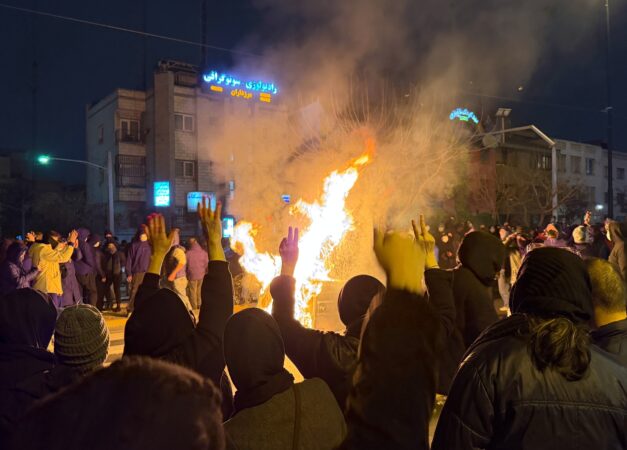
    DUBAI, United Arab Emirates — Iran’s bloody crackdown on nationwide protests has killed at least 6,159 people while many others still are feared dead, activists said Tuesday, as a U.S. aircraft carrier group arrived in the Middle East to lead any American military response to the crisis. Iran’s currency, the rial, meanwhile fell to a record low of 1.5 million to $1.

    The arrival of the USS Abraham Lincoln aircraft carrier and guided missile destroyers accompanying it provide the U.S. the ability to strike Iran, particularly as Gulf Arab states have signaled they want to stay out of any attack despite hosting American military personnel.

    Two Iranian-backed militias in the Mideast have signaled their willingness to launch new attacks, likely trying to back Iran after U.S. President Donald Trump threatened military action over the killing of peaceful protesters or Tehran launching mass executions in the wake of the demonstrations.

    Iran has repeatedly threatened to drag the entire Mideast into a war, though its air defenses and military are still reeling after the June war launched by Israel against the country. But the pressure on its economy may spark new unrest as everyday goods slowly go out of reach of its people — particularly if Trump chooses to attack.

    Ambrey, a private security firm, issued a notice Tuesday saying it assessed that the U.S. “has positioned sufficient military capability to conduct kinetic operations against Iran while maintaining the ability to defend itself and regional allies from reciprocal action.”

    “Supporting or avenging Iranian protesters in punitive strikes is assessed as insufficient justification for sustained military conflict,” Ambrey wrote. “However, alternative objectives, such as the degradation of Iranian military capabilities, may increase the likelihood of limited U.S. intervention.”

    Activists offer new death toll

    Tuesday’s new figures came from the U.S.-based Human Rights Activists News Agency, which has been accurate in multiple rounds of unrest in Iran. The group verifies each death with a network of activists on the ground in Iran.

    It said the 6,159 dead included at least 5,804 protesters, 214 government-affiliated forces, 92 children and 49 civilians who weren’t demonstrating. The crackdown has seen over 41,800 arrests, it added.

    The Associated Press has been unable to independently assess the death toll given authorities cutting off the internet and disrupting calls into the Islamic Republic.

    Iran’s government has put the death toll at a far lower 3,117, saying 2,427 were civilians and security forces, and labeled the rest “terrorists.” In the past, Iran’s theocracy has undercounted or not reported fatalities from unrest.

    That death toll exceeds that of any other round of protest or unrest there in decades, and recalls the chaos surrounding Iran’s 1979 Islamic Revolution.

    The protests in Iran began on Dec. 28, sparked by the fall of the Iranian currency, the rial, and quickly spread across the country. They were met by a violent crackdown by Iran’s theocracy, the scale of which is only starting to become clear as the country has faced more than two weeks of internet blackout — the most comprehensive in its history.

    Iran’s U.N. ambassador told a U.N. Security Council meeting late Monday that Trump’s repeated threats to use military force against the country “are neither ambiguous nor misinterpreted.” Amir Saeid Iravani also repeated allegations that the U.S. leader incited violence by “armed terrorist groups” supported by the United States and Israel, but gave no evidence to support his claims.

    Iranian state media has tried to accuse forces abroad for the protests as the theocracy remains broadly unable to address the country’s ailing economy, which is still squeezed by international sanctions, particularly over its nuclear program.

    On Tuesday, exchange shops offered the record-low rial-to-dollar rate in Tehran. Traders declined to speak publicly on the matter, with several responding angrily to the situation.

    Already, Iran has vastly limited its subsidized currency rates to cut down on corruption. It also has offered the equivalent of $7 a month to most people in the country to cover rising costs. However, Iran’s people have seen the rial fall from a rate of 32,000 to $1 just a decade ago — which has devoured the value of their savings.

    Some Iranian-backed militias suggest willingness to fight

    Iran projected its power across the Mideast through the “Axis of Resistance,” a network of proxy militant groups in Gaza, Lebanon, Yemen, Syria and Iraq, and other places. It was also seen as a defensive buffer, intended to keep conflict away from Iranian borders. But it has collapsed after Israel targeted Hamas, Hezbollah in Lebanon and others during the Gaza war. Meanwhile, rebels in 2024 overthrew Syria’s Bashar Assad after a yearslong, bloody war in which Iran backed his rule.

    Yemen’s Houthi rebels, backed by Iran, have repeatedly warned they could resume fire if needed on shipping in the Red Sea, releasing old footage of a previous attack Monday. Ahmad “Abu Hussein” al-Hamidawi, the leader of Iraq’s Kataib Hezbollah militia, warned “the enemies that the war on the (Islamic) Republic will not be a picnic; rather, you will taste the bitterest forms of death, and nothing will remain of you in our region.”

    The Lebanese militant group Hezbollah, one of Iran’s staunchest allies, refused to say how it planned to react in the case of a possible attack.

    “During the past two months, several parties have asked me a clear and frank question: If Israel and America go to war against Iran, will Hezbollah intervene or not?” Hezbollah leader Sheikh Naim Kassem said in a video address.

    He said the group is preparing for “possible aggression and is determined to defend” against it. But as to how it would act, he said, “these details will be determined by the battle and we will determine them according to the interests that are present.”

  • Investigators will detail causes of midair collision over Washington, D.C., and recommend changes

    Investigators will detail causes of midair collision over Washington, D.C., and recommend changes

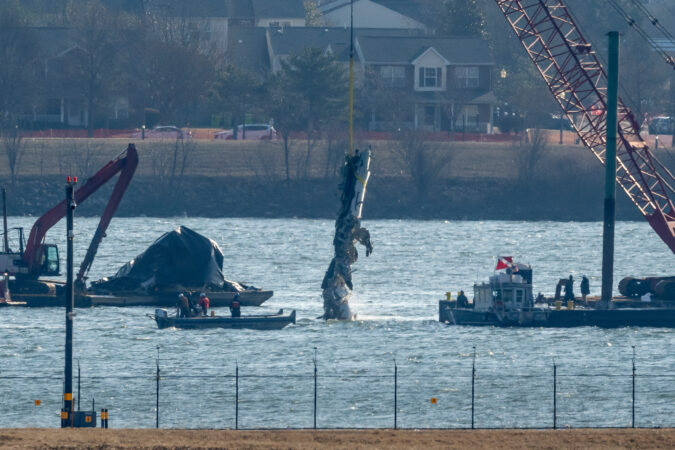
    So many things went wrong last Jan. 29 to contribute to the deadliest plane crash on American soil since 2001 that the National Transportation Safety Board isn’t likely to identify a single cause of the collision between an airliner and an Army helicopter near Washington, D.C., that killed 67 people at its hearing Tuesday.

    Instead, their investigators will detail what they found that played a role in the crash, and the board will recommend changes to help prevent a similar tragedy. Last week, the Federal Aviation Administration already took the temporary restrictions it imposed after the crash and made them permanent to ensure planes and helicopters won’t share the same airspace again around Reagan National Airport.

    Family members of victims hope those suggestions won’t be ignored the same way many past NTSB recommendations have been. Tim Lilley, whose son Sam was the first officer on the American Airlines plane, said he hopes officials in Congress and the administration will make changes now instead of waiting until another disaster.

    “Instead of writing aviation regulation in blood, let’s start writing it in data,” said Lilley, who is a pilot himself and earlier in his career flew Black Hawk helicopters in the Washington area. “Because all the data was there to show this accident was going to happen. This accident was completely preventable.”

    Over the past year, the NTSB has already highlighted a number of the factors that contributed to the crash including a poorly designed helicopter route past Reagan Airport, the fact that the Black Hawk was flying 78 feet higher than it should have been, the warnings that the FAA ignored in the years beforehand, and the Army’s move to turn off a key system that would have broadcast the helicopter’s location more clearly.

    The D.C. plane crash was the first in a number of high-profile crashes and close calls throughout 2025 that alarmed the public, but the total number of crashes last year was actually the lowest since the COVID-19 pandemic hit in 2020 with 1,405 crashes nationwide.

    Experts say flying remains the safest way to travel because of all the overlapping layers of precautions built into the system, but too many of those safety measures failed at the same time last Jan. 29.

    Here is some of what we have learned about the crash:

    Helicopter route didn’t ensure enough separation

    The route along the Potomac River the Black Hawk was following that night allowed for helicopters and planes to come within 75 feet of each other when a plane was landing on the airport’s secondary runway that typically handles less than 5% of the flights landing at Reagan. And that distance was only ensured when the helicopter stuck to flying along the bank of the river, but the official route didn’t require that.

    Normally, air traffic controllers work to keep aircraft at least 500 feet apart to keep them safe, so the scant separation on Route 4 posed what NTSB chairperson Jennifer Homendy called “an intolerable risk to flight safety.”

    The controllers at Reagan also had been in the habit of asking pilots to watch out for other aircraft themselves and maintain visual separation as they tried to squeeze in more planes to land on what the Metropolitan Washington Airport Authority has called the busiest runway in the country. The FAA halted that practice after the crash.

    That night a controller twice asked the helicopter pilots whether they had the jet in sight, and the pilots said they did and asked for visual separation approval so they could use their own eyes to maintain distance. But at the investigative hearings last summer, board members questioned how well the crew could spot the plane while wearing night vision goggles and whether the pilots were even looking in the right spot.

    The Black Hawk was flying too high

    The American Airlines plane flying from Wichita, Kan., collided with the helicopter 278 feet above the river, but the Black Hawk was never supposed to fly above 200 feet as it passed by the airport, according to the official route.

    Before investigators revealed how high the helicopter was flying, Tim Lilley was asking tough questions about it at some of the first meetings NTSB officials had with the families. His background as a pilot gave him detailed knowledge of the issues.

    “We had a moral mandate because we had such an in-depth insight into what happened. We didn’t want to become advocates, but we could not shirk the responsibility,” said Lilley, who started meeting with top lawmakers in Congress, Transportation Secretary Sean Duffy, and Army officials not long after the crash to push for changes.

    The NTSB has said the Black Hawk pilots may not have realized how high the helicopter was because the barometric altimeter they were relying on was reading 80 to 100 feet lower than the altitude registered by the flight data recorder.

    Investigators tested out the altimeters of three other Black Hawks of the same model from the same Army unit and found similar discrepancies.

    Past warnings and alarming data were ignored

    FAA controllers were warning about the risks all the helicopter traffic around Reagan airport created at least since 2022.

    And the NTSB found there had been 85 near misses between planes and helicopters around the airport in the three years before the crash along with more than 15,000 close proximity events. Pilots reported collision alarms going off in their cockpits at least once a month.

    Officials refused to add a warning to helicopter charts urging pilots to the crash that killed her cousin Peter Livingston and his wife, Donna, and two young daughters, Everly and Alydia, who were both promising figure skaters.

    “It became very quickly clear that this crash should never have happened,” Feres said. “And as someone who is not particularly familiar with aviation and how our aviation system works, we were just hearing things over and over again that I think really, really shocked people, really surprised people.”

  • European Union opens investigation into Musk’s AI chatbot Grok over sexual deepfakes

    European Union opens investigation into Musk’s AI chatbot Grok over sexual deepfakes

    LONDON — The European Union opened a formal investigation into Elon Musk’s social media platform X on Monday after his artificial intelligence chatbot Grok spewed nonconsensual sexualized deepfake images on the platform.

    European regulators also widened a separate, ongoing investigation into X’s recommendation systems after the platform said it would switch to Grok’s AI system to choose which posts users see.

    The scrutiny from Brussels comes after Grok sparked a global backlash by allowing users through its AI image generation and editing capabilities to undress people, putting females in transparent bikinis or revealing clothing. Researchers said some images appeared to include children. Some governments banned the service or issued warnings.

    The 27-nation EU’s executive said it was looking into whether X has done enough as required by the bloc’s digital regulations to contain the risks of spreading illegal content such as “manipulated sexually explicit images.”

    That includes content that “may amount to child sexual abuse material,” the European Commission said. These risks have now “materialized,” the commission said, exposing the bloc’s citizens to “serious harm.”

    Regulators will examine whether Grok is living up to its obligations under the Digital Services Act, the bloc’s wide-ranging rule book for keeping internet users safe from harmful content and products.

    In response to a request for comment, an X spokesperson directed the Associated Press to an earlier statement that the company remains “committed to making X a safe platform for everyone” and that it has “zero tolerance” for child sexual exploitation, nonconsensual nudity, and unwanted sexual content.

    The X statement from Jan. 14 also said it would stop allowing users to depict people in “bikinis, underwear or other revealing attire,” but only in places where it has been deemed illegal.

    “Non-consensual sexual deepfakes of women and children are a violent, unacceptable form of degradation,” Henna Virkkunen, an executive vice president at the commission, said in a statement.

    “With this investigation, we will determine whether X has met its legal obligations under the DSA, or whether it treated rights of European citizens — including those of women and children — as collateral damage of its service,” said Virkkunen, who oversees tech sovereignty, security, and democracy.

    Musk’s artificial intelligence company xAI launched Grok’s image tool last summer. But the problem began snowballing only late last month when Grok seemingly granted a large number of user requests to modify images posted by others. The problem was amplified both because Musk pitches his chatbot as an edgier alternative with fewer safeguards than rivals, and because Grok’s responses on X are publicly visible, and can therefore be easily spread.

    The EU investigation covers only Grok’s service on X, and not Grok’s website and standalone app. That’s because the DSA applies only to the biggest online platforms.

    There’s no deadline for the bloc to resolve the case, which could end in either X pledging to change its behavior or a hefty fine.

    In December Brussels issued X with a 120-million euro (then-$140 million) fine as part of the earlier ongoing DSA investigation, for shortcomings including blue checkmarks that broke the rules on “deceptive design practices” that risked exposing users to scams and manipulation.

    The bloc has also been scrutinizing X over allegations that Grok generated antisemitic material and has asked the site for more information.

    Malaysia and Indonesia blocked access to Grok earlier this month in response to the controversy, becoming the first countries to do so.

    On Friday, Malaysian authorities said they lifted the temporary restriction after the company implemented additional security and preventive measures, without giving further details. Malaysian regulators said they met last week with X’s representatives and would continue to monitor the situation.

  • Stranded by winter weather? Here’s what airlines owe you.

    Stranded by winter weather? Here’s what airlines owe you.

    Winter weather can upend even the best-laid travel plans, but one less thing to worry about is losing money if your flight is canceled: U.S. airlines are required to provide refunds.

    A monster storm started to wreak havoc across parts of the country over the weekend, with 12,200 weekend flights and counting canceled. Forecasters warned that catastrophic damage, especially in areas pounded by ice, could rival that of a hurricane.

    Here’s a guide for winter travelers as flight disruptions pile up:

    Keep an eye on weather forecasts

    When airlines expect bad weather to create problems for flights, they often give travelers a chance to postpone their trips by a few days without having to pay a fee. Search online for your airline’s name and “travel alerts” or similar phrases to look for possible rescheduling offers.

    American Airlines, for example, said it is waiving change fees for passengers impacted by the storm and adding extra flights around the country in an effort to help passengers reach their destination after the storm passes.

    Check before going to the airport

    Use the airline’s app to make sure your flight is still on before heading to the airport.

    Cancellations can happen hours — or even days — before departure time. Consider American and Delta Air Lines: By midday Saturday, each carrier had canceled more than 1,000 of its scheduled Sunday flights, according to flight tracking site FlightAware.

    Oklahoma’s largest airport suspended all flights Saturday, while Dallas–Fort Worth International Airport, a major hub, saw more than 700 departing flights canceled and nearly as many arriving flights called off. Flight disruptions also were stacking up at airports in Chicago; Atlanta; Nashville; and Charlotte, N.C.

    Disruptions continued to intensify on Sunday.

    My flight was canceled, now what?

    If you’re already at the airport, get in line to speak to a customer service representative. If you’re still at home or at your hotel, call or go online to connect to your airline’s reservations staff. Either way, it helps to also research alternate flights while you wait to talk to an agent.

    Most airlines will rebook you on a later flight for no additional charge, but it depends on the availability of open seats.

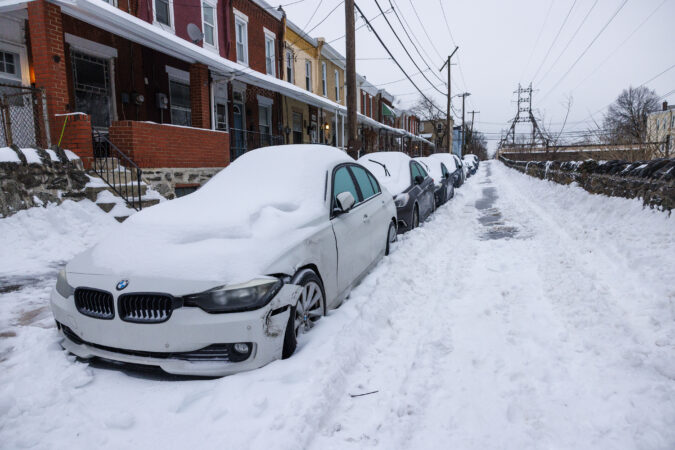
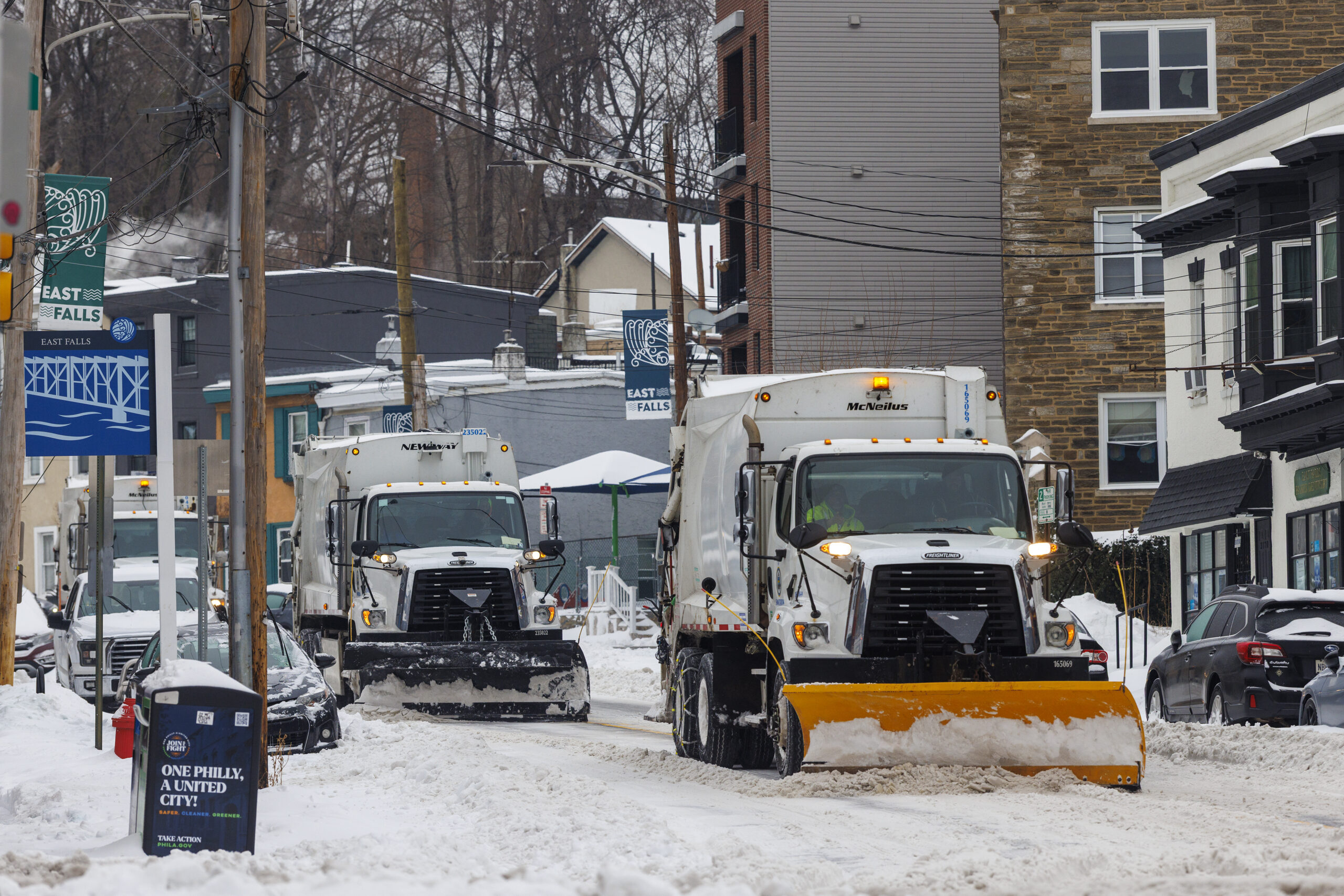
    Snow is plowed in the East Falls section of Philadelphia on Monday.

    Can I get booked on another airline?

    You can, but airlines aren’t required to put you on another carrier’s flight. Some airlines, including most of the biggest carriers, say they can put you on a partner airline, but even then it can be a hit or miss.

    Am I owed a refund?

    If your flight was canceled and you no longer want to take the trip, or you’ve found another way to get to your destination, the airline is legally required to refund your money — even if you bought a non-refundable ticket. It doesn’t matter why the flight was canceled.

    The airline might offer you a travel credit, but you are entitled to a full refund. You are also entitled to a refund of any bag fees, seat upgrades or other extras that you didn’t get to use.

    When will I get my refund?

    If you paid with a credit card, a refund is due within seven business days after you decline an offer from the airline for another flight or a voucher, and within 20 calendar days if you paid for the ticket with a check or cash, according to the U.S. Department of Transportation.

    What else will my airline cover?

    U.S. airlines aren’t required by the Transportation Department to compensate passengers for meals or lodging when an airline cancels or significantly delays a flight during an “uncontrollable” event like bad weather.

    Each airline, however, does have its own policies for assisting passengers who are stranded by a so-called “controllable” flight cancellation or long delay. These include disruptions caused by maintenance issues, crew shortages, or computer outages that halt operations. The Transportation Department can hold airlines accountable for these commitments and maintains a website that lets travelers see what each airline promises if a major disruption is their fault.

    Other tips

    If the weather forecast is troubling, Kyle Potter, executive editor of Thrifty Traveler, suggests looking into booking a backup flight. Some airlines stand out as potential backups, Potter says, because they let customers get a full refund as long as they cancel within 24 hours of booking.

    The customer service phone lines will be slammed if flight cancellations and delays start stacking up during a bad storm. If you’re traveling with someone who has a higher frequent-flyer status, call the airline using their priority number. Another trick: Look up the airline’s international support number. Those agents can often rebook you just the same.

  • France detains captain of suspected Russian ‘shadow fleet’ tanker seized in Mediterranean

    France detains captain of suspected Russian ‘shadow fleet’ tanker seized in Mediterranean

    PARIS — The captain of a tanker intercepted in the Mediterranean Sea by the French navy on suspicion of shipping oil in violation of sanctions against Russia was being held in custody on Sunday for questioning.

    The ship’s Indian captain, 58, was handed to judicial authorities following the diversion of the oil tanker, Grinch, and its arrival at anchorage in the Gulf of Fos-sur-Mer, the Marseille prosecutor’s office said in a statement.

    The investigation is being conducted by the Maritime Gendarmerie’s Investigation Unit in Toulon, jointly with the Marseille Ship Safety Centre, on charges of failure to fly a valid flag, according to the statement, which added that the crew, also of Indian nationality, was being kept on board.

    “The purpose of the investigation is to verify the validity of the flag flown by the tanker and the documents required for its navigation,” the statement said.

    The Grinch came from Murmansk in northwestern Russia and is suspected of being part of the sanctioned Russian “shadow fleet.” A video provided by the French military showed members of the navy boarding the ship from a helicopter earlier this week.

    Russia is believed to be using a fleet of over 400 ships to evade sanctions over its war on Ukraine. France and other countries have vowed to crack down.

    The fleet comprises aging vessels and tankers owned by nontransparent entities with addresses in nonsanctioning countries, and sailing under flags from such countries.

    Last September, French naval forces boarded another oil tanker off the French Atlantic coast that President Emmanuel Macron also linked to the shadow fleet. Putin denounced that interception as an act of piracy.

    That tanker’s captain will go on trial in February over the crew’s alleged refusal to cooperate, according to French judicial authorities.