Category: Washington Post

  • I’m an oncologist. Here’s what the science says about cancer and supplements. | Expert Opinion

    I’m an oncologist. Here’s what the science says about cancer and supplements. | Expert Opinion

    I specialize in treating people who are immunocompromised from leukemia or other cancers affecting the cells of the bone marrow. Recently, I was reviewing the medications one of my patients was taking when she showed me a photo of a pill bottle with a label indicating that the contents included antioxidants.

    “It’s to help boost my immune system,” she explained. “I want to make sure it’s safe to take with my other medicines.”

    It is estimated that 64 to 81% of people with a cancer diagnosis use dietary supplements. Almost half take them without telling their healthcare providers — so I was grateful my patient asked me about hers. Among people without cancer, approximately 50% report taking supplements, many of which purport to help prevent cancer.

    But do they? Here’s what we know about cancer and supplements.

    Are dietary supplements safe? And how well do they work?

    Unlike prescription medications and over-the-counter drugs, dietary supplements are not well regulated by the FDA. Supplement manufacturers who introduce new ingredients do have to submit a premarket safety notification that the supplement “will reasonably be expected to be safe” when used as the product label suggests. However, the FDA can only take action against a supplement manufacturer if safety concerns are raised after it has been marketed. There is no requirement, though, for efficacy — so unless a dietary supplement is tested in a clinical trial, we really don’t know if it works.

    The FDA does not approve the label on a dietary supplement either, but if a claim is made about how the supplement affects the structure or function of the human body (such as “calcium builds stronger bones”), the manufacturer must notify the FDA and include a disclaimer that the FDA has not evaluated that claim.

    Supplement manufacturers also need to comply with good manufacturing practices (known as GMP, these are strict requirements that ensure food, drugs, and cosmetics are made according to safe, quality standards), and the FDA can inspect manufacturing facilities. Despite this, products with deceptive claims and false labels can end up on shelves. For example, in 2015 the New York State Attorney General’s office found that four out of five herbal supplements sold at four national retailers did not contain any of the herbs mentioned on their labels. The products were often made from little more than cheap fillers like powdered rice, asparagus, and houseplants. It ordered them to halt sales of those supplements thereafter.

    Can dietary supplements help prevent cancer?

    As a general statement, when dietary supplements have been studied rigorously in clinical trials, they have not been shown to prevent cancer.

    For example, epidemiological and laboratory studies conducted decades ago initially suggested that taking antioxidants such as beta-carotene could help stave off cancer. Yet, randomized trials enrolling thousands of people, in which approximately half the subjects received dietary supplementation and half received placebo, failed to show that beta-carotene prevents skin cancer recurrence in people with a previous skin cancer, or has any effect on overall cancer rates.

    Other research has also failed to show that beta-carotene or other antioxidants, such as vitamin C or vitamin E, prevent colorectal adenomas (polyps that can lead to cancer); that those supplements, selenium, or vitamin A prevent gastrointestinal cancers; or that beta-carotene or vitamin A prevent lung cancer.

    Dietary supplements were not helpful in analyses that separated men from women, either. In one study of over 8,000 women, vitamin C and E did not lower overall cancer rates, and in a study of over 36,000 women enrolled in the Women’s Health Initiative, vitamin D or calcium supplementation had no effect on rates of colorectal cancer or on overall cancer rates. Similarly, vitamin E and selenium did not prevent the development of prostate cancer in a study that included over 35,000 healthy men, nor in a study of men with precancerous findings in the prostate.

    Can dietary supplements increase cancer risk?

    Most dietary supplements are not harmful. Some, however, should be taken with caution, especially in certain populations of people.

    In a follow-up analysis of the 35,000 healthy men treated with selenium and/or vitamin E — the study designed to prevent cancer — men taking vitamin E actually had a 17% higher risk of developing prostate cancer than men taking a placebo. Similarly, beta-carotene, which did not do a great job in preventing cancer, was found in one analysis to increase the risk of lung cancer and stomach cancer, particularly among smokers.

    Another study, which assigned people to receive folate supplementation or placebo to prevent colon polyps, found that folate was not effective. However, the men who received folate were over 2.5 times as likely to develop prostate cancer compared to those receiving placebo.

    Without question, anyone at risk for developing these types of cancers should avoid taking these dietary supplements. But what about people, like my patient, who already have cancer?

    In one study of over 1,100 women with breast cancer who were receiving chemotherapy, those who took antioxidant dietary supplements before and during treatment had a higher risk of cancer recurrence — though taking a multivitamin had no effect. One possible explanation is that antioxidants may counter some of the cancer-fighting effects of chemotherapy. Dietary supplements can also alter how the body processes chemotherapy, which can theoretically reduce the medication’s efficacy or worsen its side effects.

    There’s a lot we still don’t know about the potential benefits or risks of taking dietary supplements, which are not regulated by the FDA. At the very least, tell your doctor about any nonprescription vitamins or supplements you’re taking, so they can make sure they aren’t harming you or interfering with the treatments they do prescribe you.

    Mikkael A. Sekeres, MD, MS, is the chief of the division of hematology and professor of medicine at the Sylvester Comprehensive Cancer Center, University of Miami. He is author of the books “When Blood Breaks Down: Life Lessons from Leukemia” and “Drugs and the FDA: Safety, Efficacy, and the Public’s Trust.”

  • Behind closed doors, GOP lawmaker questioned ‘disturbing’ East Wing demolition

    Behind closed doors, GOP lawmaker questioned ‘disturbing’ East Wing demolition

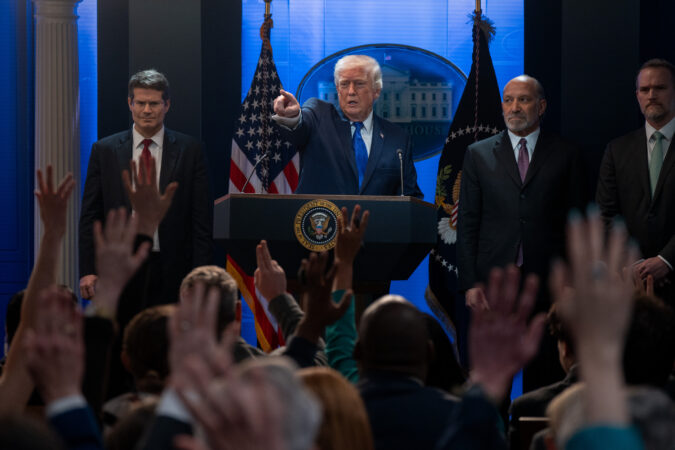
    As GOP leaders leaped to defend President Donald Trump’s decision to tear down the East Wing of the White House last year, one Republican lawmaker privately warned a senior White House aide that he had “substantial concerns” and demanded answers about how the decision was made.

    Administration officials had pledged the project would not “interfere” with existing structures, and the public had no warning about the demolition.

    “The stark images of the East Wing demolished in mere days were disturbing to Americans who cherish preservation of our nation’s history,” Rep. Michael R. Turner (R., Ohio), co-chair of the congressional Historic Preservation Caucus, wrote in an Oct. 24 letter obtained through a Freedom of Information Act request and shared with the Washington Post.

    Turner’s correspondence to Will Scharf, Trump’s staff secretary and chairman of the National Capital Planning Commission, the review committee with the power to approve or reject the ballroom project, raised questions about oversight, transparency, and process, including whether the White House had taken steps to preserve artifacts.

    The communication, obtained by the government watchdog group Public Citizen, adds to the public understanding of sweeping concerns voiced by members of Congress, preservationists and others over transparency and other issues with Trump’s project. A federal judge is weighing a legal challenge to the construction.

    Scharf responded more than seven weeks later, telling Turner that Trump administration officials did not consult with or get the approval of the commission before tearing down the East Wing. But, he added, they were not required to since the commission’s review process covers only “vertical” construction — not demolition or site preparation. Scharf has made the same argument several times since, a position critics have blasted as absurd because those three steps are so closely linked — and because part of the commission’s duty in reviewing projects is to consider the preservation of buildings that already exist.

    Turner declined, through a spokeswoman, to discuss the letter or his concerns, and none of the other 17 Republicans on the Historic Preservation Caucus responded to interview requests.

    The letter from Turner “revealed what people were really thinking,” said Jon Golinger, democracy advocate at Public Citizen. “I bet there’s a lot more high-ranking Republicans who feel the same.”

    Trump has cast the 90,000-square-foot, privately funded addition as a needed upgrade to the White House that taxpayers will not have to support. Administration officials have publicly identified about two dozen companies and about a dozen individual donors they say have already contributed hundreds of millions toward the $400 million project, including major corporations such as Amazon, Google, and Palantir that collectively have billions of dollars in contracts before the administration. (Amazon founder Jeff Bezos owns the Washington Post.)

    Americans oppose Trump’s demolition of the White House’s East Wing by a more than 2-to-1 ratio, according to an Economist/YouGov poll conducted this month.

    Given that, Golinger said, he’s not surprised by Republicans’ relative silence on the project in a midterm election year.

    “I certainly haven’t seen a lot of campaign ads saying, ‘Elect me for this reason,’” Golinger said. “No Republicans have had to … put their name behind this project and say, ‘This is what I stand for.’”

    Many liberal lawmakers and political groups, meanwhile, have invoked the ballroom in appeals to voters ahead of the midterms. Congressional Democrats have pressed the Trump administration and its allies to divulge more details, asking whether donors stand to gain for their contributions.

    “BLOCK Trump’s White House Ballroom,” said one fundraising email sent by Defend Democracy Now PAC last month. “Top Democrats are fighting TOOTH AND NAIL to stop this wasteful project in its tracks.”

    On Oct. 30, Rep. Teresa Leger Fernandez (D., N.M.), Turner’s fellow co-chair on the Historic Preservation Caucus, was among the 60 House Democrats who sent Trump a public letter asking for some of the same information Turner had requested privately less than a week before.

    U.S. District Judge Richard J. Leon is expected to rule soon on whether the project can proceed after criticizing the Trump administration for making an “end run” around congressional oversight by soliciting private donations for the project rather than seeking taxpayer money.

    At a court hearing last month, Leon expressed skepticism of Justice Department lawyers’ argument that Congress had authorized the White House to make changes to its grounds by setting aside several million dollars in funding and allowing the Interior Department to solicit gifts for national parks.

    Leon, a George W. Bush appointee, said the congressional authorization was narrow and limited to matters such as White House maintenance, not carte blanche to undertake one of the biggest changes in the White House’s history. Justice Department lawyers have argued that any pause on the project could pose a national security risk and said they will immediately appeal if Leon grants a stay on construction.

    If he rules that Congress must explicitly authorize the ballroom building, Trump could press congressional Republicans to deliver, which would commit Turner to a public up-or-down vote.

    “There will be nowhere to run,” Golinger said, “and nowhere to hide.”

  • Trump’s newest tariffs could face legal challenge, though time is short

    Trump’s newest tariffs could face legal challenge, though time is short

    President Donald Trump’s new tariffs are not legally justified, according to several prominent economists and trade experts, who say there is no sign of the profound international financial problems that such measures were intended to remedy.

    Hours after the Supreme Court invalidated the emergency tariffs that he imposed last year, Trump on Friday invoked a 1974 law to announce a new 10% global import tax, later raising it to 15%. The president cited a provision known as Section 122 that authorizes temporary restrictions on imports to deal with “fundamental international payments problems.”

    In an official proclamation, the president said the nation’s “balance of payments,” a comprehensive account of Americans’ financial transactions with foreigners, was suffering “a large and serious deficit.” And he listed a number of metrics reflecting a deteriorating U.S. financial posture.

    The law does not define “balance-of-payments deficit,” and economists disagree about what should be included in the term. But several critics, including the International Monetary Fund’s former chief economist and a prominent conservative legal commentator, disputed the president’s claim. Trump wrongly conflated an alleged payments deficit with the merchandise trade deficit that he targeted last year with his first set of comprehensive tariffs under the International Emergency Economic Powers Act (IEEPA), they said.

    “The U.S. does not have a ‘payments’ problem. It can finance its trade deficits,” Gita Gopinath, the former IMF official, now teaching at Harvard University, wrote on X.

    Added Andrew McCarthy, a former federal prosecutor, writing in the conservative National Review: “These new tariffs are even more clearly illegal than Trump’s IEEPA tariffs.”

    Opposition to the new import taxes erupted even before they took effect at 12:01 a.m. on Tuesday. The outcry suggested that the president, still smarting from his 6-3 Supreme Court defeat, could face renewed legal jeopardy over the centerpiece of his economic agenda.

    “I do anticipate a lawsuit,” said Scott Lincicome, vice president of general economics for the Cato Institute and a former trade lawyer.

    U.S. importers would have the right to sue once they paid the tariffs. Liberty Justice Center, the nonprofit public-interest law firm that represented several small businesses in one of the tariff cases decided by the Supreme Court, said Monday that it is “closely monitoring” the president’s latest actions.

    “We will ensure that whatever authority the executive branch relies on, it follows the rules Congress actually wrote and the constitutional guardrails that protect our system of separated powers,” said Sara Albrecht, the center’s chairman.

    The debate over the Section 122 levies shows that questions of law and economics will continue to dog Trump’s bid to remake the global trading system. This time, there is no question that Congress has delegated to the president the power to levy tariffs — only under what circumstances. At issue are complex definitional questions of international economics and the legislative intent behind the wording of an untested provision in U.S. trade law.

    Time may also be a factor. The Section 122 tariffs expire after 150 days unless Congress votes to extend them, which is unlikely.

    Judges might be reluctant to “second guess” the president’s judgment on whether a balance-of-payments problem exists, said John Veroneau, a lawyer who served as deputy U.S. trade representative under President George W. Bush.

    Still, the administration’s newfound reliance upon Section 122 reverses the legal arguments it made last year. Defending the president’s emergency tariffs, Justice Department attorneys told an appeals court that Section 122 did not apply to Trump’s trade deficit concerns, which were “conceptually distinct from balance-of-payments deficits.”

    The White House declined to elaborate on the president’s Feb. 20 proclamation and fact sheet, which blamed a loss of domestic manufacturing for an excessive number of dollars leaving the country. Problems with the nation’s balance of payments can “endanger the ability of the United States to finance its spending, erode investor confidence in the economy, and distress the financial markets,” the proclamation said.

    Congress passed the Trade Act of 1974 when the United States was dealing with a distinctly different set of economic issues. In 1971, President Richard M. Nixon abruptly ended the convertibility of dollars into gold, marking the end of the Bretton Woods system of fixed exchange rates.

    At the time, foreign central banks were rushing to trade their unwanted dollars for gold, threatening to deplete U.S. financial reserves.

    There’s no sign of that sort of crisis today. The dollar has dropped about 10% over the past year, but it remains above its level for most of the decade leading to 2015. There’s certainly no sign of the “imminent and significant depreciation” that Section 122 requires.

    But even some Democrats say the administration is reacting to worrisome financial ailments.

    Economist Brad Setser, who served in the Treasury Department under President Barack Obama, said the global economy is characterized by dangerous imbalances.

    For years, the U.S. has run a deficit in its current account, the broadest measure of the nation’s trade balance, while China has run a mirror-image surplus. To keep running a large trade deficit, the U.S. must attract financing from abroad. So far, it’s been able to do that, which is why many analysts do not share the administration’s urgency.

    But the nation’s net international investment position — which balances the value of foreign stocks and bonds owned by Americans against what foreigners own in this country — is also deteriorating. That figure reached negative $26.7 trillion last year, down sharply in recent years.

    Some of that decline reflects foreigners’ large purchases of U.S. stocks, which have outperformed other markets, and thus is not a problem, Setser said. But the deterioration in the investment account also stems from the growth in the U.S. external debt, which carries a rising interest burden.

    “At this level of the current account [deficit], U.S. external debt will tend to rise. The external position will tend to weaken, which is one definition of a balance-of-payments problem,” he said. “The debt position does worry me.”

  • Food companies simply can’t get enough of the word ‘simply’

    Food companies simply can’t get enough of the word ‘simply’

    Food companies are trying to keep it simple.

    Simply was the hottest word at an annual packaged-food and staples conference in Orlando last week. It’s become the preferred label for a new wave of products containing fewer, more natural ingredients — from beverages to peanut butter.

    Kraft Heinz Co. is putting a spotlight on its Simply line of ketchup that uses cane sugar instead of high-fructose corn syrup. Coca-Cola Co. now has Simply Pop, a prebiotic soda line with no added sugar, which was added last year to its existing Simply line of fruit juices and drinks. And PepsiCo Inc., which is in the midst of overhauling its snacks and lowering prices, has expanded its own Simply line of products that has no artificial colors or flavors.

    PepsiCo has expanded its own Simply line of products that has no artificial colors or flavors, such as Simply NKD Doritos and Cheetos, made by Frito-Lay, a division of PepsiCo.

    While simply has long been a popular marketing term in the industry, it’s making a resurgence as companies look to navigate pressure from Washington, which blames processed foods for health problems including obesity and diabetes, and a growing number of consumers who are scrutinizing ingredient lists. An added bonus: Companies can often charge more for “clean label” products.

    PepsiCo is updating its packaging to emphasize “simple ingredients based on nature,” chief executive Ramon Laguarta said last week at the Consumer Analyst Group of New York conference. The company updated its Lay’s brand last year and added a “naked” line of Doritos and Cheetos to its Simply portfolio without any artificial colors or flavors. It’s also revamping its Tostitos line of corn chips.

    “We’re changing the image. We’re making it more natural,” Laguarta said.

    Simply is also playing a key role at Kraft Heinz, as the maker of Jell-0 and Lunchables discards a previous plan to split up the company and instead looks to revitalize its brands. It’s starting with ketchup.

    “We’re just really getting started with this Simply platform and this organic platform that I think shows really great promise,” Kraft Heinz chief executive officer Steve Cahillane said Thursday in Orlando. But he noted that Kraft Heinz doesn’t plan to reformulate its entire portfolio.

    “Some consumers are willing to pay for that increased cost that comes with Simply and some are not,” he said.

    The meaning of “simply” has evolved for food companies over time, prompting the need for rebranding in some cases.

    JM Smucker Co. decided to create a new Jif Simply line of peanut butter, which has a shorter list of ingredients. It’s phasing out an earlier iteration, called Simply Jif, that had lower levels of sodium and sugar than regular Jif but still contained ingredients like fully hydrogenated vegetable oils.

    Smucker CEO Mark Smucker said the new Jif Simply is a “very basic formula that obviously is responding to consumer trends.”

    The new peanut butter still has lower sodium and sugar, and comes in three formulations: unsweetened, sweetened, and crunchy. It’s made from roasted peanuts, palm oil, salt, and sugar in the sweetened version.

    The new Jif Simply line “has already received strong retailer acceptance,” he said.

  • Biden, aides project optimism in cancer fight, but some close friends worry

    Biden, aides project optimism in cancer fight, but some close friends worry

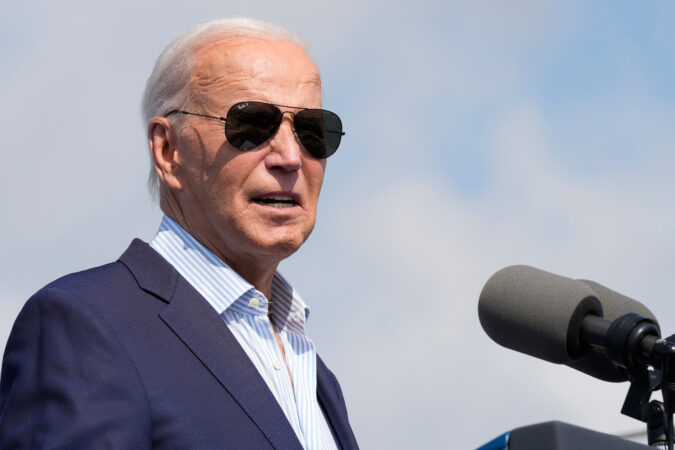
    Longtime friends and allies of Joe Biden say they are worried about the toll an aggressive form of prostate cancer is taking on the former president and his health. But Biden and his aides say he is doing well, making progress on ongoing projects, and maintaining public appearances.

    Biden has been encouraged as he has gone through treatment and aides said the former president is doing as well as they could hope nearly a year after he announced his metastatic prostate cancer diagnosis. He is continuing to work on his memoir and build out his foundation and presidential library, attending board dinners and meetings. He was spotted last week on an Amtrak train from Washington to Delaware, where he took pictures with passengers.

    Biden’s public engagements since leaving office last January have been fairly limited. He attended Tatiana Schlossberg’s funeral in January, traveled with his family to St. Croix during the holidays, and has been seen on flights, planes, at Mass, and at restaurants. He is expected to visit South Carolina this month and deliver remarks at an event to mark the sixth anniversary of his victory in that state’s primary, which set the stage for his 2020 presidential win.

    Four people close to Biden who have spoken with him in recent months, who spoke on the condition of anonymity to discuss sensitive details, said there have been no updates from the president on his condition. But the people, including two former Biden officials and an elected Democrat, said he has at times appeared more fatigued in private interactions over the past several weeks, a source of worry that they have attributed to the strain of cancer and its treatment.

    A fifth person said Biden is staying active and engaged, and remains “encouraged and positive about his prognosis given his positive response to treatment.”

    Biden’s personal office declined to comment for this story.

    Biden, 83, announced last May that he was diagnosed with Stage 4 prostate cancer that had metastasized to the bone. The cancer is characterized by a Gleason score of 9, meaning it is an aggressive cancer that is more likely to spread quickly. (The scale ranges from 6 to 10.) At the time, Biden’s office said the cancer was responding to hormone therapy, “which allows for effective management.”

    Biden rang the ceremonial bell at Penn Medicine Radiation Oncology in Philadelphia on Oct. 20 after completing a course of radiation therapy. He also underwent surgery in September to remove skin cancer lesions on his head.

    Medical experts said metastatic prostate cancer is incurable — and most commonly spreads to the bones, as it has for Biden — though an array of advancements in recent years has made it possible to manage it effectively. That means patients can live with the cancer for years and end up dying of something else entirely, said Judd Moul, professor of urology at the Duke Cancer Institute at Duke University.

    Without knowing additional details about Biden’s health and treatment, experts said his prognosis could vary widely. Biden’s office has not shared additional details that would indicate the degree to which the cancer has spread or how Biden responded to radiation last year. Oncologists said some men with advanced prostate cancer can live many years with effective treatment while others deteriorate rapidly.

    The elements of Biden’s diagnosis that are publicly known — including his Gleason score and the fact that the cancer was Stage 4 and had already spread at the time of diagnosis — indicate he is facing a serious and advanced form of the disease, one that typically requires ongoing treatment and close monitoring.

    “Bone metastasis is the most common place prostate cancer spreads, but the degree is important and how it’s found,” Moul said. “The degree of spread or amount of spread is just as important as the fact there’s spread.”

    Moul added: “There are a lot of men with advanced prostate cancer who can live many, many years. It’s unfair to all of our patients to paint a pessimistic picture for everyone because there are a lot of patients, even with metastatic cancer, who die of something else.”

    The five-year survival rate for metastatic prostate cancer is 34% to 38%, according to the American Cancer Society, which notes that advancements in treatments have significantly improved outcomes.

    It is also common for metastatic prostate cancer to spread to the spine, said Gerald Denis, Shipley prostate cancer research professor at Boston University Chobanian & Avedisian School of Medicine. Doctors especially want to avoid a weakening of the bones, Denis said, noting that such weakening in the spine can lead to fractures. He said there are “highly effective end of life medications to reduce pain.”

    “If the spine has been degraded by the tumor metastasis, it’s entirely possible to break your back simply by getting out of bed the wrong way,” Denis said, noting he does not know any of the specifics of Biden’s case. “This is a very painful and difficult stage of the terminal illness. … I am very sad for him and his family.”

    Biden’s cancer diagnosis has raised uncomfortable questions for Democrats, who for months were embroiled in a debate over whether Biden’s decision to seek reelection paved the way for Trump’s return to office. Most have been loath to relitigate that controversy in recent months, focused instead on winning control of the House in this year’s midterms and picking up Senate seats.

    Biden’s diagnosis has forced the party to privately grapple with what would have happened had he served a second term and then received his diagnosis just months in. That in part has fueled a broader discussion about when Democratic leaders and lawmakers should step aside, a debate that is playing out in some key primary races and some older lawmakers’ decisions to seek another term.

    Several allies of the former president said they are saddened at the way Biden’s post-presidency has unfolded. Trump has attacked him relentlessly, fellow Democrats have not wanted to defend him because of lingering anger and resentment over the 2024 election, and he has been battling an aggressive form of cancer.

    Biden has faced a post-presidency with little modern precedent. He is the oldest president to leave office, giving him limited time to shape his legacy outside of his four-year term. And Trump — who has faced similar questions about his age, physical health, and mental acuity — has remained fixated on his predecessor since returning to office last year, insulting him almost daily and repeating the false claim that he won the 2020 election.

    “I think Joe Biden is the worst thing that ever happened to old people,” Trump said in an interview with the New York Times last month.

    Barbara Perry, a presidential scholar at the University of Virginia’s Miller Center, said presidents who leave office on negative terms — whether they lost reelection or were unpopular — are often able to rehabilitate their image in their post-presidential years.

    Jimmy Carter, another one-term Democrat who some referred to as a “failed president,” is often held up as the person with the most successful post-presidency. But while Carter’s work on housing and global poverty helped enhance his reputation, it did not alter perceptions among many about his time in office. Carter spent nearly two years in hospice after battling metastatic melanoma.

    “We don’t know how long President Biden will have to correct for the ways things ended, which by all accounts was not a positive for him,” Perry said. “The other element of this in political and historical terms is what’s happening to him now raises questions about what was happening to him in the White House with his health.”

  • Mexican forces tracked slain cartel boss to secluded cabin, officials say

    Mexican forces tracked slain cartel boss to secluded cabin, officials say

    GUADALAJARA, Mexico — Mexican forces located the drug kingpin known as “El Mencho,” whom they killed in a major operation over the weekend, in part by tracking one of his girlfriends to a secluded cabin, Mexican officials said Monday.

    Officials canceled school in some states and warned communities to stay inside as reports spread of violent cartel reprisals, and authorities deployed thousands of troops to the western Mexican state of Jalisco. But Mexico’s president said Monday the country was under control and returning to normalcy.

    Security forces closed in on Nemesio Rubén Oseguera Cervantes, 59, at a cabin in Tapalpa, in Jalisco. He fled as his bodyguards opened fire. Eight cartel members were killed in the gun battle, Gen. Ricardo Trevilla Trejo, Mexico’s secretary of national defense, told reporters Monday.

    Authorities captured the cartel leader, wounded by gunfire, in nearby woodlands. They took him, two of his bodyguards, and a wounded soldier by helicopter to get medical treatment, but they died en route, Trevilla said. Officials decided to head for an airport in Michoacán to transport the bodies by air force plane to Mexico City.

    Mexican special forces and National Guard troops helped plan and execute the operation, with support from the Mexican Air Force, Trevilla said. Mexican troops “accomplished their mission,” he said, emotional and tearful, and demonstrated the “strength of the Mexican state, without a doubt.”

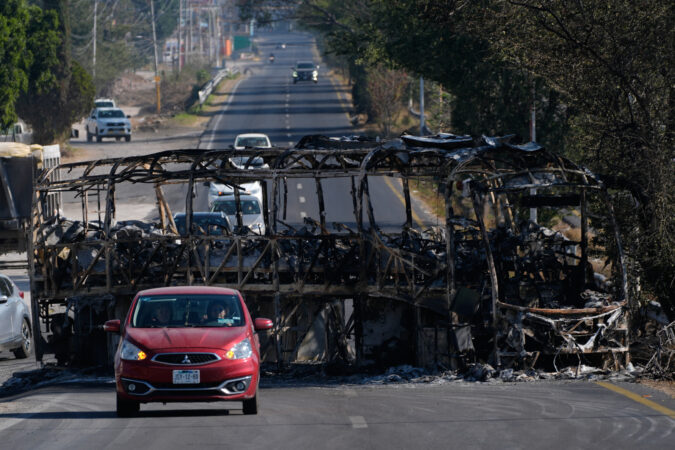
    The killing of Mexico’s most powerful drug lord provoked violence: Beginning Sunday, the cartel burned vehicles, blocked highways, attacked gas stations and banks, and set other fires, said Omar García Harfuch, Mexico’s top security official. The government registered 85 blockades across the country, with 18 in Jalisco alone, and 27 other acts of violence against authorities. Seventy people were detained in seven states. More than 25 security officials were killed in the operation, as was a 59-year-old woman. More than 30 “criminals” were also killed, García Harfuch said. He praised Mexican forces for “debilitating an organization with international reach.”

    Harfuch called Oseguera’s Jalisco New Generation Cartel the “principal” organization responsible for violence in the country, “including homicide, human trafficking, extortion, kidnapping, and armed attacks against authorities.”

    In an overnight statement, the U.S. Embassy issued alerts covering areas of 18 Mexican states — more than half the total. It warned Americans in eight cities, including popular tourist destinations such as Puerto Vallarta and Cancún, to shelter in place, citing dangers from blocked roads and criminal activity.

    In a late-night message, President Claudia Sheinbaum urged Mexicans to remain “informed and calm.”

    Guadalajara, the capital of Jalisco, was among the cities hit hardest in Sunday’s initial wave of violence. Pablo Lemus Navarro, Jalisco’s governor, said in a video on social media that he had declared a “code red” emergency, suspending public transportation, major events, and school on Monday.

    Photographs taken in the immediate aftermath of Oseguera’s killing showed the burned-out wreckage of cars and buses blocking Guadalajara street junctions and entrances to businesses, with surrounding neighborhood streets largely empty after residents were warned to stay inside.

    In Puerto Vallarta, a vacation resort on Jalisco’s Pacific coast, footage verified by Reuters showed black smoke billowing over the city and burning vehicles blocking a highway underpass.

    Oseguera was Mexico’s most dominant cartel leader, expanding the Jalisco New Generation Cartel into a major power that took control of lucrative drug routes into the United States. The cartel, which traffics large quantities of fentanyl, cocaine, heroin, and methamphetamine across the U.S.-Mexico border, eventually eclipsed the rival Sinaloa Cartel as Mexico’s most powerful group.

    According to a statement from Mexico’s Defense Ministry, security forces had intended to detain Oseguera, but a shootout forced them to return fire.

  • Israelis brace for another war as Trump mulls strikes on Iran

    Israelis brace for another war as Trump mulls strikes on Iran

    TEL AVIV — In Ramat Aviv, a quiet and green neighborhood in northwest Tel Aviv, some of the buildings hit by Iranian missiles during the 12-day war between Israel and Iran last June still stand in ruins.

    Chen, 44, a resident of one of the damaged apartments still undergoing renovation, said that although he, his wife, and their children, age 10 and 7, were not in the apartment at the time, it was not easy to recover. “It took us a lot of time to stabilize,” said Chen, who spoke on the condition that he be identified only by first name out of concern for his family’s safety.

    Now, as the United States assembles a massive amount of war-fighting machinery in the Middle East, and U.S. officials say the Trump administration appears ready to undertake an extended military assault on Iran, Israelis are once again preparing for war. Such an attack risks Iranian retaliation not just against U.S. military targets but also against Israel.

    Similar anxiety is now gripping many Iranians and others throughout the region who could get caught in the prolonged conflict.

    “There is a sense of stress; it is a very unpleasant feeling,” Chen said. “If it starts — should we stay in Ramat Aviv? Should we leave?” He doesn’t want his children to experience an attack; the sirens and explosions caused them anxiety, he said, adding that evacuating poses its own challenges: “You don’t know when it will actually happen, and you also don’t want to get stuck.”

    The 12-day conflict between Israel and Iran in June killed at least 29 people in Israel, according to the Israel Defense Forces. In Iran, at least 610 people were killed, according to the country’s Health Ministry.

    “We are prepared for any scenario. And if the Ayatollahs make the mistake of attacking us, they will experience a response they cannot even imagine,” Prime Minister Benjamin Netanyahu said at an IDF officers’ graduation ceremony on Thursday.

    Soroka Medical Center in Beersheba, one of Israel’s largest hospitals, also sustained a direct hit from an Iranian missile in June, causing minor injuries and extensive damage.

    “It will take several more years until we finish rebuilding everything that was destroyed,” Shlomi Codish, the medical center’s director general, said. A quarter of the hospital’s beds and more than a third of its operating rooms have been unusable since the strike, Codish said.

    Now, the hospital is preparing for the possibility of another war. “Once the order is given, we’ll have to move 400 to 500 patients on very short notice, including premature babies and elderly patients on ventilators,” he said. They will be moved to the hospital’s protected spaces or discharged home.

    “This is our reality in the Middle East; unfortunately, we are a bit more skilled at this due to the circumstances,” Codish said. Beyond treating the population of southern Israel, he said the hospital must also focus on the staff’s resilience.

    There were 2,300 people there the day the missile hit, he said. “When things escalate, it’s a heavy emotional burden for a place that’s already been targeted, including the feeling that the Iranians know exactly how to target us,” he said. “We are working hard with the team to restore their sense of security.”

    After more than two years of Israel fighting on various fronts — from Gaza to Iran and Lebanon — many Israelis seem accustomed to military threats, at least on the surface.

    Amid the preparations, most Israelis continue their daily routines, going to work and school until sirens are heard or further instructions are issued by the Home Front Command.

    IDF spokesperson BG Effie Defrin said Friday that “the IDF remains vigilant in defense” and that there is there is “no change in the guidelines.”

    “It’s very weird to have different life-threatening things fill you with fear in different ways,said Amalya Liebermann, 27, a video director and editor from Tel Aviv. “But just trying to keep some sort of normalcy and continue with at least communal living in a way, I think that helps a lot.”

    While Israeli news anchors and commentators attempt to parse statements from President Donald Trump pointing to the possibility of a U.S. attack on Iran, Liebermann chose to spend Saturday afternoon in the warm late-winter sun with her friend Rani Assa Polansky, 26.

    They met in one of the city’s more crowded squares, which also became a memorial site for the victims of the Oct. 7 Hamas-led attack. “After the previous Iranian war, which was really tough and scary, even thinking about the possibility is so anxiety-inducing that it makes me freeze. So I prefer not to think about it,” Liebermann added.

    Assa Polansky also prefers not to think of the possibility, but said her boyfriend packed an emergency bag with passports and a bottle of water.

    Unlike the campaign in June, when Israel launched a surprise attack on Iran, current and former Israeli officials say that Israel now is not expected to strike first and will defer to the U.S., joining only if necessary. “The U.S. is leading, and Israel is playing second fiddle,” Energy Minister Eli Cohen, a member of Israel’s Security Cabinet, told Galatz Radio last week.

    “As for when Israel joins, we have made it clear: If anyone in Iran tries to divert the fire toward the State of Israel, we will exact a very heavy price,” Cohen added.

    “We need to continue to stay out of it, in coordination with the Americans, of course,” former national security adviser Tzachi Hanegbi told Channel 12. “When they need us, we know how to be there.”

    “The level of coordination and cooperation with the U.S., as well as the state of readiness within Israel, is at its peak,” Brig. Gen. (Res.) Ran Kochav, former Air and Missile Defense Commander and IDF spokesperson, told the Washington Post.

    “For 30 years, all Israeli governments tried to ensure that the Iranian problem would not just be an Israeli problem, and they succeeded,” Kochav added. “The Americans are now leading this effort, and we should be pleased with that, staying involved and coordinated — and perhaps even participating, if the Americans agree. There is an opportunity here that likely won’t return in the coming years.”

    Meanwhile, Iranian and U.S. officials have been engaged in talks that Washington hopes will secure limits on Tehran’s nuclear program. Trump said Thursday that Iranian leaders “must make a deal” or “bad things will happen.”

    Netanyahu told the annual conference of Presidents of Major American Jewish Organizations that any deal must ban all Iranian enrichment of uranium and dismantle “the equipment and the infrastructure that allows” for enrichment.

    “In Israel, there is a hope that the Americans will do the job for us,” said Danny Citrinowicz, senior researcher in the Iran and the Shi’ite Axis Program at the Institute for National Security Studies. “Netanyahu wants a broad campaign that will severely damage Iran’s strategic capabilities; for him, this is a dream come true.”

    While the U.S. can significantly weaken Iran, Citrinowicz saidI still don’t see any strategic goal that can be achieved in this campaign.”

    Some Israelis voiced exhaustion.

    “None of us really wants another war, we’re all really tired,” said Daniel, 29, a resident of Tel Aviv, who works in the tech industry, and spoke on the condition that he identified only by first name because he is still on active reserve duty. “We do understand that if America attacks Iran, obviously, there will be repercussions against us.”

    “In Israel, we have to hold these two emotions, right? One is that we want peace, and second, that understanding that maintaining it sometimes does come with a price,” Daniel said, adding that there is a “a theocratic regime over there that needs to be taken down, so we’re up for it,” because doing so will “do good for the whole region.”

    Perhaps with a more moderate regime in Iran, he said, he would be able to visit the country one day. “Iran is a beautiful place,” he said, “and historically, Persians and Jews got along very well.”

  • Supreme Court to consider whether states can sue over greenhouse gas emissions

    Supreme Court to consider whether states can sue over greenhouse gas emissions

    The Supreme Court agreed Monday to take a case examining whether states and cities can sue fossil fuel companies over harms caused by climate change, a legal tactic modeled on the push to hold tobacco companies responsible for the health effects of smoking.

    The case is significant because dozens of municipalities are seeking billions in damages against oil and gas companies, often accusing them of misleading the public or hiding evidence about the links between greenhouse gases and climate risks. The companies deny any wrongdoing.

    The justices will hear an appeal by Suncor and ExxonMobil, which argue the city of Boulder’s legal action in state court is preempted by federal law. They say greenhouse gas emissions are inherently a federal issue because the pollution emanates from outside Colorado and drifts across state lines.

    “Boulder, Colorado, cannot make energy policy for the entire country,” the companies wrote in a petition to the Supreme Court.

    Boulder sued Suncor and ExxonMobil in 2018, alleging the company knowingly sold fossil fuels that would cause a range of harms in Colorado, including increased summer heat, more intense wildfires, and a greater concentration of ground-level ozone. The city sought to recoup damages for past and future harms. The companies denied the claims.

    After complicated legal wrangling, the Colorado Supreme Court eventually ruled that federal law did not preempt Boulder’s lawsuit in state court and that the suit could move forward. The companies then appealed to the Supreme Court.

    The Trump administration took the unusual step of asking the Supreme Court to take up the case, even though the federal government was not directly involved in it. Attorneys for Boulder urged against that.

    “There is no constitutional bar to states addressing in-state harms caused by out-of-state conduct, be it the negligent design of an automobile or sale of asbestos,” attorneys wrote in filings.

    The Supreme Court last year declined to take a similar case involving a lawsuit by Honolulu seeking to hold fossil fuel companies responsible for climate change damage in Hawaii. The Biden administration had urged the court not to take it up at the time.

    In 2023, the Supreme Court allowed lawsuits by a handful of municipalities seeking to hold businesses responsible for climate change.

    The high court last month heard arguments in a related case in which a Louisiana community is attempting to preserve a $745 million jury verdict against Chevron and keep the case and similar cases in state court. The case could have consequences for how communities rectify environmental damage allegedly caused by oil companies.

    In a major ruling in 2022, the Supreme Court curbed the ability of the Environmental Protection Agency to regulate greenhouse gases.

  • Bill would restrict Trump administration’s push for ICE detention centers

    Bill would restrict Trump administration’s push for ICE detention centers

    Sens. Jeanne Shaheen (D., N.H.) and Maggie Hassan (D., N.H.) introduced a bill Monday that would bar the Department of Homeland Security from opening new immigration detention centers without state and local officials’ consent.

    The legislation is a response to the Trump administration’s plans to convert warehouses into new processing sites and detention centers across the country as part of President Donald Trump’s campaign to deport millions of undocumented immigrants. Reps. Chris Pappas (D., N.H.) and Maggie Goodlander (D., N.H.) plan to introduce a companion bill in the House.

    The legislation has little chance of passing the Republican-controlled Congress, but it reflects the qualms that some lawmakers in both parties have expressed about the administration’s push to set up facilities in their states and districts, some of which could house as many as 10,000 people.

    “Our new bill responds directly to the concerns we’ve heard from local officials in towns like Merrimack, New Hampshire, and across the country,” Shaheen said in a statement. “They were never consulted about ICE’s plans, and they don’t want the chaos of new detention facilities in their communities.”

    Shaheen and Hassan are introducing the bill as Democrats demand the Trump administration agree to new restrictions on DHS after federal agents last month shot and killed two U.S. citizens in Minneapolis. Much of DHS shut down earlier this month after the two sides failed to strike a deal to send more money to the agency.

    The bill would prohibit DHS from setting up new processing sites or detention centers unless local officials and the state’s governor sign off.

    At least one governor — Pennsylvania Gov. Josh Shapiro (D) — has said he opposes the administration’s plans to set up a new detention center in his state.

    “I don’t think this is helpful to have in our community,” Shapiro said this month. “I don’t want it here, and we’re exploring what options we have.”

    The bill would also require the administration to notify Congress and to accept public comment for at least 60 days before setting up new detention centers or processing sites.

    U.S. Immigration and Customs Enforcement has bought facilities in Maryland, Pennsylvania, New Jersey, Georgia, Michigan, Texas, and Arizona to detain undocumented immigrants, according to an ICE spokesperson. The administration undertook “community impact studies and a rigorous due diligence process to make sure there is no hardship on local utilities or infrastructure prior to purchase,” according to the spokesperson.

    Republicans in Congress largely support Trump’s deportation campaign, which they argue is necessary after the arrival of millions of undocumented immigrants under the Biden administration. Republicans included $45 billion for expanding immigration detention in the tax and spending law that Trump signed last year. But some Republican lawmakers have expressed concerns about the administration’s plans to set up new detention centers and processing sites in their states and districts.

    Sen. Roger Wicker (R., Miss.) relayed local officials’ concerns about a proposed facility in his state to Homeland Security Secretary Kristi L. Noem earlier this month. “I appreciate her for agreeing to look elsewhere,” Wicker wrote on X.

    Rep. Dan Meuser (R., Pa.) said he is working to set up a meeting between DHS officials and local leaders in his district, where DHS bought two facilities that it plans to convert into a processing site and detention center.

    “These recent developments have raised serious concerns, and I share many of the same questions being raised by local officials and residents,” Meuser said in a statement.

    Sen. Dave McCormick (R., Pa.) said in a statement that his team was also in touch with DHS officials and local leaders to assess the impact of the facilities, including the possibility of thousands of new jobs. ICE estimates the two facilities together would create more than 11,000 jobs.

    Rep. Mike Collins (R., Ga.) and his aides have been in frequent communication with ICE and local leaders about a planned detention center in his district that would hold up to 9,000 people, according to Emma Gibson, a Collins spokesperson. The district is a Republican stronghold, but the city manager of Social Circle — the small city where the detention center would open — and many residents oppose the project.

    Collins supports Trump’s efforts “to detain and deport criminal illegal aliens who flooded across our border under Joe Biden, but he also shares the concerns of the Social Circle community that the city may not have the infrastructure or capacity to support the demands of this facility,” Gibson wrote in an email to the Washington Post.

    Democrats appear to have had less success in pushing back on the administration’s plans to build new detention centers and processing sites. Hassan told Todd M. Lyons, the acting ICE director, in a hearing last week that DHS had failed to consult local leaders about its plans to open a facility in her state.

    “I would hope that I would get the same treatment to that Senator Wicker got — which is to say the town doesn’t want the dentition center, so please cancel it,” Hassan said. “And I would expect that my partisan affiliation shouldn’t make any difference to that determination.”

    Lyons said in the hearing that DHS officials had spoken with New Hampshire Gov. Kelly Ayotte (R) about the project’s economic impact. ICE did not say whether it plans to move forward with the facility.

    Sen. John Fetterman of Pennsylvania — the only Senate Democrat who voted for legislation this month to fund DHS — has come out against the proposed facilities in his state, warning that they would “do significant damage to these local tax bases, set back decades-long efforts to boost economic development, and place undue burdens on limited existing infrastructure in these communities.”

    Democrats from Georgia, New Jersey, and Arizona have also voiced concerns about proposed detention centers and processing sites.

    Sens. Ruben Gallego and Mark Kelly, both Democrats of Arizona, wrote to Noem and Lyons this month seeking more information by Feb. 17 about DHS’ purchase of a warehouse in Surprise, Ariz., that it plans to turn into a processing site.

    “Given the scale of this project, the total lack of community involvement, the concerns we have heard from local leaders, and the potential implications for the community and region, we urge the Department to immediately provide answers about this project before it moves forward,” Gallego and Kelly wrote.

    The Democrats have not heard back from DHS, according to Kelly’s office.

  • FBI Director Kash Patel defends partying with U.S. Olympic ice hockey team

    FBI Director Kash Patel defends partying with U.S. Olympic ice hockey team

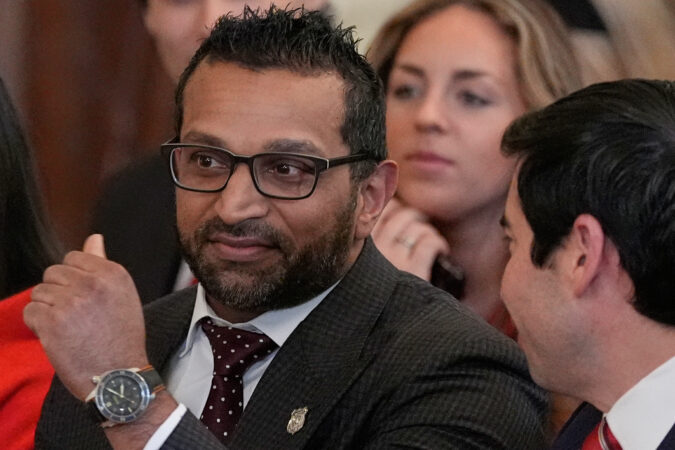
    FBI Director Kash Patel is defending himself after videos showed him drinking and partying with the U.S. men’s hockey team at the Olympics on Sunday, during a weekend in which several emergencies unfolded for the law enforcement bureau.

    As clips of Patel raucously celebrating with Team USA went viral Sunday night, Patel took to social media to say the men’s hockey team had invited him into the locker room to celebrate with them after it had clinched the gold medal in an overtime victory over Canada.

    “For the very concerned media — yes, I love America and was extremely humbled when my friends, the newly minted Gold Medal winners on Team USA, invited me into the locker room to celebrate this historic moment with the boys — Greatest country on earth and greatest sport on earth,” Patel, an avid hockey fan, wrote on X.

    In one video shared by a ProPublica reporter, Patel appears to be chugging a beer, spraying the bottle’s contents about the locker room, and ecstatically pumping his fists, as the team breaks out in a rendition of “Courtesy of the Red, White and Blue (The Angry American),” a country anthem about American defiance written after the 9/11 terrorist attacks.

    Another video showed Patel flashing a shaka, or “hang ten,” sign next to team center Dylan Larkin as both mug for the camera. In yet another video — reshared by an FBI spokesperson — Patel holds a phone out as President Donald Trump, apparently on speakerphone, invites the team to the White House and says he will also have to invite the gold-medal-winning U.S. women’s hockey team or “be impeached.”

    “I’m on it,” Patel tells Trump. “I’m f—ing on it.”

    On Monday, NBC News reported that the U.S. women’s hockey team said it was declining Trump’s invitation.

    “We are sincerely grateful for the invitation extended to our gold medal–winning U.S. Women’s Hockey Team and deeply appreciate the recognition of their extraordinary achievement,” a USA Hockey spokesperson said. “Due to the timing and previously scheduled academic and professional commitments following the Games, the athletes are unable to participate.”

    “They were honored to be included and are grateful for the acknowledgment,” the spokesperson added.

    The White House did not immediately respond to a request for comment.

    The locker room videos prompted public criticism of Patel and questions about his judgment during a critical time for the bureau. Hours earlier, an armed man was fatally shot by U.S. Secret Service agents and a sheriff’s deputy after he breached the secure perimeter of Trump’s Mar-a-Lago estate. Patel had promised from his official X account that the FBI, the lead agency investigating the incident, was “dedicating all necessary resources” to the matter.

    The FBI is also still involved in a high-profile search for Nancy Guthrie, the mother of Today show anchor Savannah Guthrie, who remains missing after more than three weeks. U.S. intelligence agencies also warned American citizens in Mexico to shelter in place amid a wave of violence across that country after “El Mencho,” the head of the Jalisco New Generation Cartel, was killed by Mexican security forces Sunday.

    “There was a threat at the president’s residence at MAL, Americans in Mexico are facing major threats by cartel members, Nancy Guthrie is still missing, and our FBI Director thinks he’s a frat bro?!” Xochitl Hinojosa, a former Justice Department spokesperson under the Biden administration, wrote on X.

    Several others resurfaced a clip of Patel in 2023 criticizing then-FBI Director Christopher A. Wray for using a government jet for personal travel.

    “Maybe we ground that plane. [Or charge him] $15,000 every time it takes off. Just a thought,” Patel said then.

    FBI representatives have steadfastly defended Patel’s trip to Italy and denied he used the FBI’s taxpayer-funded Gulfstream jet for personal travel, for which Democrats have investigated him in the past. In the days leading up to the Olympics men’s hockey final, FBI spokesperson Ben Williamson clashed with several news outlets that had reported Patel had used the government jet to fly to Italy with plans to attend hockey games at the Olympics.

    Williamson said Thursday on X that Patel’s trip had been planned months ago and would include meetings with Italian law enforcement and other security officials.

    “The FBI also has a major role in Olympic security … so we have a U.S. consulate briefing on Olympic security and current FBI posture, as well as thanking FBI personnel on the ground,” Williamson added then.

    Williamson also said “any personal portion [of the trip] would be reimbursed,” according to an email to MS NOW that he posted Sunday.

    Representatives for the FBI did not immediately respond for a request for additional comment Monday morning, as well as questions about whether Patel’s attendance at Olympic events would be considered personal travel and, if so, how much Patel would reimburse the bureau.