Category: Washington Post

  • Should you feed a cold and starve a fever? Here’s what experts say.

    Should you feed a cold and starve a fever? Here’s what experts say.

    Most of us have heard the adage “Feed a cold, starve a fever.”

    It comes from an outdated theory that a cold makes your body cooler and eating can help warm it up, and that a fever makes your body warmer and fasting can help cool it down. The premise itself is flawed: While fevers do raise your body temperature, colds don’t make your body cold. You might even get a fever when you have a cold.

    As for whether you should eat more or less, in most cases, there’s no convincing evidence that limiting food intake when you’re sick plays a meaningful role in recovery, experts said.

    There may be a more accurate approach. “Feed a cold. Feed a fever, too,” said Roy Gulick, the chief of the infectious-disease division at Weill Cornell Medicine and an attending physician at New York-Presbyterian Hospital.

    Experts recommend staying hydrated and eating healthy foods — at least when your stomach will allow it — to support your body when you’re sick. The advice holds true whether you’re dealing with a cold, which is an upper-respiratory infection that can be caused by more than 200 viruses, or a fever, which can be caused by viral and bacterial infections, autoimmune issues, and reactions to medications, among other things.

    “If you are truly not feeling hungry, you don’t necessarily have to eat more than you feel like eating,” said Geeta Sood, an assistant professor in the infectious-disease division at Johns Hopkins University. However, you do want to make sure you’re getting enough calories, protein, and nutrients — and hydration — to help support your body as it heals, she said.

    What does the research show?

    Research in this area is limited — and mostly in animals. For example, in a 2016 study, mice were infected with either a bacterium that causes gastrointestinal illness or a virus that causes influenza. In mice with the bacterial infection, fasting was protective while nutritional supplementation was detrimental, the authors found. The pattern was reversed in mice with the flu and viral sepsis. While interesting fodder for further research, these results can’t be applied directly to humans, experts said.

    In humans, researchers who conducted a 2021 review concluded that there is some evidence that nutrients such as vitamins and minerals can help support the body’s immune response and help fight infections in general. And a 2024 review that included newer studies that were conducted during the pandemic suggested that nutritional needs may depend on the specific pathogen you’re fighting and other variables, such as the duration and severity of your illness — not simply on whether it’s a bacterium or virus.

    The reality is that most studies on how nutrition affects infections have looked at only a handful of pathogens, said David Schneider, a professor of microbiology and immunology at Stanford University. To further complicate matters, when you’re experiencing symptoms such as a runny nose or fever, you may not know whether you’re sick with a bacterium or virus, he said. Both of these things make it difficult to give generalized recommendations about what might be best for every cold or every fever, he said.

    Why do I lose my appetite when I’m sick?

    There is some rationale to the adage, because it’s common to lose your appetite when your body is fighting off an infection. As your immune system ramps up, it releases chemical messengers, known as cytokines, to rally immune cells to fight infection, and those same signals also tell the brain that eating isn’t a priority, said Sharon Bergquist, an internal medicine physician and associate professor at the Emory University School of Medicine.

    While not well understood, one theory states that a drop in calorie and protein intake triggers a process called autophagy, which helps recycle damaged cell parts and may play a role in immune defense, she said.

    That said, the process of fighting an infection is “metabolically really costly,” Bergquist said, explaining that although you can skip food for a day if you aren’t hungry, going longer than that may leave you without adequate nutrition. “It takes so much energy and calories that there’s a rationale for us needing to increase our food and our hydration during times of illness so that we can support our immune system,” she said.

    What can I do if I have an infection?

    Vaccines are the first-line defense to help prevent and lessen the severity of some viral infections, including COVID and the flu. If you get sick, however, you can try some medications that may help you recover faster.

    • Antibiotics target specific kinds of bacteria such as those that cause strep throat, pneumonia, or urinary tract infections.
    • Antiviral medications can help treat certain viral infections, including the coronavirus and influenza. Three antivirals — Paxlovid, remdesivir, and molnupiravir — are available by prescription to treat COVID in people who are at high risk of serious complications, and four antivirals are approved to treat the flu.

    There are also a few other things you can do to help support your body.

    • Stay hydrated. Losing water and electrolytes through sweat when you have a fever, as well as through diarrhea and vomiting, can put you at risk for dehydration, so it’s important to drink plenty of water and make sure you’re getting enough electrolytes, Gulick said. Pediatric beverages and sports drinks with added sodium and potassium can help you stay hydrated, and warm liquids such as soups, broths, and caffeine-free herbal teas can help ease symptoms such as congestion, body aches, and chills, Sood said. Avoid alcohol and caffeinated drinks because they are diuretics and can make dehydration worse.
    • Eat, when possible. Listen to your body, but when you have an appetite, eat healthy, whole foods rich in vitamins, minerals, and antioxidants such as fresh fruits and vegetables. One strategy is to make smoothies or soups, Bergquist said. Avoid foods high in saturated fats and processed carbohydrates.
    • Get rest. Take time to rest as your body does much of its repair work while you sleep, Bergquist said. “Don’t push your body because you want to dedicate that energy to your immune system,” she said.
    • Take hot showers or baths. The steam can help break up congestion and clear airways.
    • Try zinc. Zinc may help shorten a cold by a day or two. In a 2024 review, researchers found some evidence that zinc might reduce the duration of symptoms by about two days compared with a placebo, though the mineral was associated with mild side effects such as nasal and oral irritation, problems with taste, stomach pain, constipation, diarrhea, and vomiting. Most other supplements have no real advantage for colds, including vitamin C, which, when started at the onset of symptoms, doesn’t help lessen the duration or severity, research shows.
    • Use honey for a cough or sore throat. Adults and children older than 1 year can add honey to warm tea or water to help soothe sore throats and calm coughs.
  • The Atlantic’s essay about measles was gut-wrenching. Some readers feel deceived.

    The Atlantic’s essay about measles was gut-wrenching. Some readers feel deceived.

    When Kelly McBride read Elizabeth Bruenig’s essay in the Atlantic about a child’s death from measles complications, she was moved and quickly shared the story on her Facebook account. She hadn’t realized that Bruenig’s family had been ravaged by virus and the well-known journalist had lost a child.

    McBride, a media ethicist and senior vice president at the Poynter Institute, also didn’t realize the story was a hypothetical scenario — and the child a composite character based on the author’s research — until a friend alerted her to an editor’s note at the bottom of the story. Then, McBride felt duped.

    “I feel deceived,” McBride said. “I spent all weekend talking about this story to my friends as if the reporter had experienced it.”

    Bruenig’s stirring account of a mother’s experience learning her child will die of the long-term effects of measles has remained one of the Atlantic’s most read stories since it was published Thursday, receiving more than 700 comments. Written in the second person, some readers have called the essay a visceral and gut-wrenching exposé of the human impacts of the measles epidemic.

    It has also generated controversy. Readers and media experts have condemned the story as breeching journalistic ethics by informing the reader that the story is fictionalized through a short editor’s note at the end of the 3,000-word essay. Some public health experts argued the story was a dangerous writing exercise that could evoke backlash and confusion as vaccine skepticism hits an all-time high across the country.

    “Grateful to @ebruenig for sharing her and her family’s ordeal,” Gabby Stern, a former World Health Organization communications director, wrote on X shortly after the story published. “Friends, please ensure that your children receive vaccinations against preventable diseases like measles.”

    She followed up soon after: “I missed the disclaimer at the bottom. Others did, too. You get to the end and you’re shattered, not looking for caveats and fine print. Disappointed in the magazine. The topic is too high-stakes for such shenanigans.”

    Adrienne LaFrance, executive editor at the Atlantic, told The Washington Post in a statement that the magazine was “pleased that so many people are reading and praising Liz’s remarkable essay.”

    “We trust our readers to understand all different kinds of writing and writerly devices,” she said. “And while we included a note about Liz’s methods for transparency’s sake, we’re finding that most readers already understand the second-person well enough to know that the ‘you’ referenced throughout the piece is not literally ‘you,’ the reader.”

    The Atlantic, one of the most popular American magazines with 1.4 million subscribers, has become a destination for health reporting in recent years. The Atlantic is among a cohort of outlets that have reported on rising measles cases across the United States, as well as the role that misinformation and shifting government guidelines have on childhood vaccinations. Once eliminated in the country, outbreaks have led to the highest count of measles cases in more than three decades. Atlantic staff writer Tom Bartlett was first to find and interview the parents of a child who died of measles in Texas, the first such death in a decade.

    Bruenig, a former Post opinion writer, has twice been a finalist for the Pulitzer Prize for feature writing, one of the industry’s top honors for narrative journalism. (This reporter worked for the Atlantic from 2017 to 2019.)

    Bruenig wrote the essay in the second person, detailing a scenario where two unvaccinated children attend a birthday party and catch measles from an infected-but-asymptomatic child. “Your daughter behaves normally over the next week while the virus slowly spreads inside her, infecting immune cells that carry it to the lymph nodes, where it replicates and spreads at a rapid pace.”

    It includes a short disclaimer at the bottom of the 3,000-word piece: “This story is based on extensive reporting and interviews with physicians, including those who have cared directly for patients with measles.”

    Reported hypotheticals have been used in other grim chronicles such as Outside Magazine’s 1997 story “Frozen Alive,” about freezing to death; a passage of Kathryn Schulz’s 2015 New Yorker essay “The Really Big One” about the risks of a large earthquake; and the 2024 Annie Jacobsen book “Nuclear War: A Scenario,” about how nuclear warfare could transpire. The first two stories also are written in second person.

    Many readers, including physicians, praised the Atlantic essay, writing that its evocative writing and storytelling forced readers to grapple with the impact of vaccine hesitancy. “Read this while holding my almost-one-month-old, and it absolutely wrecked me. What a powerful and important piece,” one commenter wrote. “Tragically realistic story exquisitely described by Ms. Breunig,” wrote another. “I’m a pediatrician who has never seen a case of measles but am awaiting my first one.”

    Others, however, expressed their confusion in the essay’s comments. “The fact that readers in the discussion are unsure of whether this is a true story or fiction highlights a fundamental failure on the part of the author, and the editor,” one reader wrote.

    “I know the internet is full of made up stuff, but I trusted the Atlantic,” another reader wrote. “I feel foolish that I told my husband about this as if it were the truth. Glad I didn’t share it with my sisters. We are all pro vaccines, and I’m concerned this story masquerading as a first person memoir will encourage people on the edge to blow off vaccines.”

    Tom Rosenstiel, a professor at University of Maryland’s Philip Merrill College of Journalism and former executive director of the American Press Institute, felt the piece did the reader a disservice by not being fully transparent about they were about to read. He said the Atlantic needed to clearly explain the unusual choices in the story upfront, avoiding deception.

    “Any time you’re answering questions about why you did something in the story after you’ve published it, you’re in a bad place,” he said.

    Some physicians argued the uncertainty around the essay could fan distrust of vaccines. Angela Rasmussen, a virologist at the University of Saskatchewan who edits the journal “Vaccine,” said she found the essay scientifically sound but extremely confusing. She initially believed the essay was about Bruenig’s real child and felt the essay could backfire. “We need effective communicators like this,” she said. “But if that effective communication is being presented in such a way that it actually diminishes trust further, then we’re in real trouble.”

    Rachael Bedard, a physician and writer, called herself an admirer of Bruenig, but expressed similar concerns in a series of posts on X.

    “One of the things that people who have actually interacted [with] anti-vaxxers know is that they often think the liberal media is lying to them about how bad measles is,” she wrote, writing that the Atlantic’s presentation of this essay as anything other than fiction “affirms all of those concerns.”

    Bruenig, in an interview with the website Nieman Lab, defended the structure of her essay. “It is a hypothetical account of a very real phenomenon based on careful reporting,” she said. “I would place it somewhere on the creative nonfiction spectrum.” She said that she interviewed doctors for her piece, and based the character of the mother on herself.

    “I have no doubt that there are a lot of people out there who are unhappy with the story or reject its premises, and they are entitled to their interpretations. I get it,” she said. “But my job is to report the truth about the world — and I use all kinds of literary, and narrative devices to do that. I do it because telling the truth is important in its own right, whether or not anyone finds it persuasive.”

  • Talks end in Geneva with no end to Russia’s war or hard-line demands

    Talks end in Geneva with no end to Russia’s war or hard-line demands

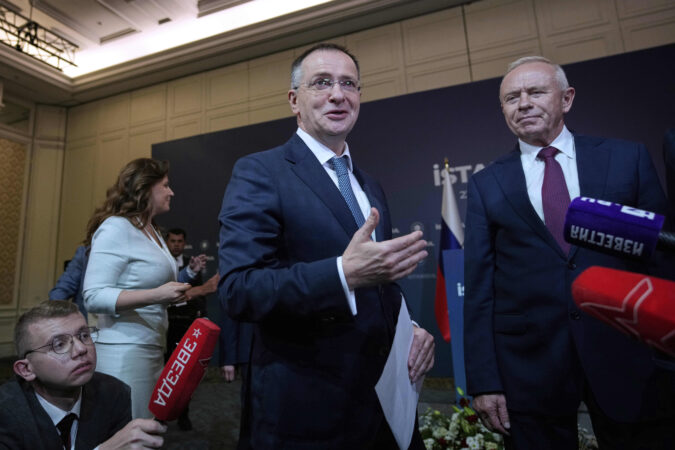
    U.S.-mediated talks between Moscow and Kyiv in Geneva, Switzerland, broke off on Wednesday without any significant progress or indication that Russia was ready to step back from its maximalist demands for subjugating Ukraine.

    The head of the Russian delegation, Vladimir Medinsky, tersely said the talks had been “difficult but businesslike” and had ended after just two hours of discussions on Wednesday following longer conversations the previous day.

    The reappearance of Medinsky, known to be a hard-line aide to Russian President Vladimir Putin, as head of the Kremlin’s delegation had signified that Russia was digging in its heels on core demands — including significant cuts to the Ukrainian military, the dismantling of Ukrainian President Volodymyr Zelensky’s government and guarantees for Ukraine’s neutrality, analysts said.

    Moscow has insisted that these steps are required to address what it describes as the “root causes” of the war. Ukraine’s position is that Russia’s invasion was unprovoked and that Moscow should end its illegal war of aggression and remove its troops that are occupying Ukrainian territory.

    Russian analysts said Moscow’s demands encompassed a far wider spectrum of issues than the territorial swaps proposed by President Donald Trump’s administration as a path to end the war.

    “As long as there is an armed anti-Russia on Ukrainian territory, there can be no peace,” said Sergei Markov, a pro-Kremlin political analyst. “I don’t think anyone had any big hopes that the talks would end in success. The positions are very, very far from each other.”

    “The idea of territorial swaps for peace is not Russia’s idea,” Markov added. “It is Trump’s.”

    Proponents of territorial exchanges envision that Russia would withdraw from some areas it occupies in Ukraine in exchange for Ukraine withdrawing its military from parts of the heavily fortified Donbas area, which Putin has failed to capture during four years of full-scale war.

    Zelensky’s administration has previously said it could agree to withdraw troops from the Donbas area. But Kyiv has said it would agree to a pullback only if the region becomes a demilitarized zone and if the United States first provides legally watertight security guarantees.

    Zelensky told reporters on Wednesday that the talks on “political” issues such as Russian demands for Ukraine to withdraw its forces from “the east” were “not easy” and that differences remain. But Zelensky also sought to put a positive spin on some of the trilateral discussions between Russia, the United States and Ukraine in Geneva, saying they had been “constructive” on ways to monitor any potential ceasefire.

    Zelensky appealed again at the Munich Security Conference over the weekend for U.S.-backed guarantees before he signs on to any deal with Russia to end the war. “Those guarantees answer the main question: how long there will be no war again,” he said then.

    The direct talks between Russia and Ukraine have stalled for weeks over core differences, namely territorial concessions, control of Europe’s largest nuclear power plant, which is occupied by Russia in Ukraine’s Zaporizhzhia region, and questions about Western guarantees for Kyiv, according to two European diplomats who spoke on the condition of anonymity to discuss sensitive diplomacy.

    “So far the Russian position is no boots on the ground from NATO allies, so there are outstanding points: territory, security guarantees and the future of the Zaporizhzhia plant,” one of those diplomats said. “Those are the big sticking points, so we need to see if it really happens.”

    In meetings with U.S. officials late last year, Ukraine’s chief European backers were encouraged by the U.S. interest in playing a role in securing a settlement to the war. France and Britain have led a coalition of allies planning ways to provide Ukraine with a U.S.-backed bulwark against future attack, including with some European troops and air or sea power.

    Still, the Trump administration appeared to want to sign a deal before fully committing, while Kyiv has maintained it needs the Western protection baked into any settlement, the diplomats said. Russia, meanwhile, has ruled out any presence of Western soldiers in Ukraine.

    Zelensky, who met with Secretary of State Marco Rubio over the weekend, has stressed Kyiv’s refusal to cede territory in the east that Russia does not militarily control and said Ukraine could only hold elections if there is a ceasefire.

    Analysts said it was clear the Kremlin had no intention of making any concessions.

    “As long as Putin is in power, Russia isn’t paralyzed by widespread protests, and there is at least some money left in the budget for weapons, the war will continue,” said Tatiana Stanovaya, a senior fellow at Carnegie Russia Eurasia Center, in a post on X. “The Kremlin will not make significant concessions even if faced with a protracted financial and economic crisis.”

    “That means there will be no final settlement either now or in the foreseeable future,” Stanovaya added. “Negotiations may intensify, a short-term ceasefire is possible, and documents may even be signed. But overall, this simulation of negotiations can only lead to the simulation of a ceasefire and the simulation of a settlement.”

    Russia has been facing increasing economic pressure after the U.S. administration imposed tough new sanctions on Russia’s two biggest oil companies, Rosneft and Lukoil, in October.

    The measures caused Russian oil revenue to plummet as Moscow was forced to accept discounts of more than $20 per barrel on its exports. Economists have warned of a nonpayment crisis as the economy grinds to a halt amid high inflation and high interest rates of 15.5% imposed by the Central Bank.

    Analysts say there are concerns in the Kremlin that Moscow could face a narrowing window to reach an advantageous deal because the Trump administration could grow distracted as midterm elections near — and then potentially could be weakened by the results.

  • Russia swaps cash for crosses in bid for African influence

    Russia swaps cash for crosses in bid for African influence

    Deep in South Africa’s wine country near the town of Robertson, past rows of tin shacks and up a gravel road where barefoot children play, sits a little piece of Russia.

    The apricot-hued building with its curved dome proclaims its affiliation with the Moscow Patriarchate of the Russian Orthodox Church on a sign in Afrikaans. The interior is adorned with icons, rugs, and candle stands, things more familiar to a place of worship in, say, St. Petersburg than South Africa’s Western Cape. But the outpost is just one of hundreds of similar churches that have spawned across Africa.

    The continent has long been a target for Russia. The Soviet Union supported decolonialization and aided new independent states during the Cold War while the West engendered mistrust with policies such as doing little to oppose apartheid in South Africa.

    Now, faced with more sanctions over its war in Ukraine and a new geopolitical era, Moscow is trying to leverage its old, soft power ties again in the absence of any significant economic hard power.

    Recent years have seen China dominate, becoming Africa’s biggest trading partner and investing in roads, railways, and ports. The broader aim might be diplomatic, to garner international support from a continent with 54 votes at the United Nations. The Kremlin and its proxies, though, are also leaning on African countries for recruits to bolster its army and the workforce making munitions it uses in Ukraine.

    “Russia is trying to develop its policy of influence in all African countries,” said Thierry Vircoulon, coordinator of the Observatory of Central and Southern Africa at the French Institute of International Relations, known as IFRI. “They want to project the image of a great country that is friendly to all Africans.”

    A Chinese destroyer and Russian and Iranian corvettes at Simon’s Town harbor in Cape Town on Jan. 9 ahead of multinational naval exercises.

    President Vladimir Putin recently created a Kremlin department to coordinate Russia’s interactions and policies with nations personally selected by him. There will be a special team to look after Africa policy, two people familiar with the situation said.

    Early on in its war against Ukraine, there were donations of a small amount of fertilizer and grains to African nations to help alleviate shortages caused by the full-scale invasion in February 2022. More recently, Putin ordered ships to sail around Africa, ostensibly to help countries such as Morocco and Senegal map out their stocks of fish.

    What’s increasingly visible is the linguistic and cultural push. Russia has opened seven centers known as Russian Houses across the continent and plans more, holding talks over a new site in Namibia in early December. Russian, meanwhile, is being introduced at universities in cities including Abidjan in Ivory Coast and Harare in Zimbabwe.

    In 2024, the foundation led by Putin’s daughter Katerina Tikhonova opened a lecture hall at Cheikh Anta Diop University in Dakar, Senegal, to facilitate the teaching of the language.

    More than 32,000 students from Africa are currently studying at Russian universities, Russian Foreign Minister Sergey Lavrov said in December. Since 2020, the number of scholarships allocated to the African continent in Russia has nearly tripled, reaching more than 5,300 places. They are following in the footsteps of African leaders, many of whom had military or academic training in the USSR.

    The Russian embassy in South Africa posted an advertisement for them in December and a politician in Lesotho facilitated sending students to Moscow-based Synergy University earlier in the year.

    And, of course, there’s religion — a way of wielding influence going back to Christian missionaries in colonial times. In less than three years, the Russian Orthodox Church expanded to at least 34 countries in Africa from four, grew the number of clergy to 270 and registered 350 parishes and communities as of June 2024, the latest figures available from the church.

    The geographical expansion might be the most significant in the Russian Orthodox Church’s history, Yuri Maksimov, chairman of the Africa Exarchate’s mission department, wrote in a 2025 academic paper.

    The Russians attracted priests with better salaries, promises of church construction and rapid promotion, according to a study by Father Evangelos Thiani, an academic and Kenyan priest in the Greek Orthodox Church.

    Russian orthodoxy welcomed Alexey Herizo, a Madagascan priest in the capital, Antananarivo, with “open arms.” He did online training with a seminary in Moscow, then practical training on site in 2023 for three months before being ordained as a deacon and then a priest within a few days.

    That was after years of waiting for the Greek Orthodox Church to accept him, said Alexey, his religious name. The salaries provided by the Russian church allow us “to live decently, take care of our family’s health, and provide for our children’s education,” he said.

    The church in Robertson affiliated with the Moscow Patriarchate of the Russian Orthodox Church.

    Expanding outreach

    It’s hard to estimate the number of worshipers the church has now in communities where religion and social conservatism play a large role in everyday life. The church on the outskirts of Robertson, a town named after a Scottish protestant, switched to the Russian branch of the Orthodox faith in 2022. It’s now home to a small congregation of largely white, Afrikaans-speaking South Africans.

    While Russian Orthodox churches in South Africa have mainly recruited from Afrikaans communities, with its conservative values appealing to elements of that group, they have also been seeking to add to their numbers with outreach programs to rural, Black communities.

    The expansion is aimed at “trying to pull more countries into their orbit,” said Tom Southern, director of special projects at the Centre for Information Resilience, who has looked at the growth. “It’s like spiritual colonialism.”

    Russia’s longstanding ties with Africa loosened following the collapse of communism as the country turned to the West. The continent came back into focus after Putin annexed Crimea in 2014 and relations with the United States and Europe soured.

    A report by the European Parliament said Moscow has military cooperation agreements with 43 African countries and is a key supplier of arms. Wagner Group paramilitaries were active trying to fight rebels in places like Mali, though the group has since been disbanded and folded into the government’s Africa Corps. Companies linked with Wagner, meanwhile, had contracts across the continent in security, oil services, and gold mining.

    African countries have vast economic and human potential and are playing an increasingly significant role in global politics, Putin said in a written address to the plenary session of the Russia-Africa Partnership Forum conference in Cairo in December. Lavrov, his foreign minister, told the event that Russia plans to have trade missions operating in 15 African countries by the end of 2026.

    A Russian warship in January joined naval exercises held off the coast of South Africa along with vessels from China, Iran, and the United Arab Emirates. The Russian embassy said they focused on maritime security.

    Russia’s renewed push into Africa lacks the financial resources of its geopolitical rivals, though. While China is sub-Saharan Africa’s biggest trade partner, Russia ranks 33rd and is superseded by the UAE, U.S., Japan, and eight European nations.

    China has built infrastructure in nations from Cameroon to Kenya while the UAE and other wealthy gulf states have become major sources of foreign money in recent years. The European Union is the biggest investor in South Africa and 600 American companies operate in the country.

    Putin hosted a Russia-Africa summit in 2019 attended by 43 heads of state, while the second one in 2023 attracted just 17. The Kremlin blamed the low attendance on “unprecedented pressure” from the U.S. and its allies.

    There’s an increasing effort to counter that. With President Donald Trump upending the world order with trade tariffs, rivalry with China and more recently the capture of Venezuela’s president, Russia is trying to assert its narratives in Africa.

    The state-owned Sputnik news service is hiring South African journalists and in 2026 plans to open a bureau in the country. It would be the second in Africa, following Ethiopia in early 2025, said Viktor Anokhin, who will run the operation. “Our main goal, as it always has been, is to provide an alternative source of news,” Anokhin said when called by Bloomberg. “A balanced offering.”

    Recruiting manpower

    Russia has sponsored disinformation campaigns and stoked instability in conflict-ridden nations, according to research groups including the European Council on Foreign Relations. The country is also accused of using Africans to aid its war effort in Ukraine.

    One of them was Alabuga Start, a recruitment arm of Russia’s Alabuga Special Economic Zone in Tatarstan. It set itself a target of hiring thousands of African women between the ages of 18 and 22, saying they will work in fields such as hospitality and construction.

    Most of the young women end up in a military equipment factory, according to the authors of three reports from organizations including the Institute for Science and International Security.

    “African women typically don’t have access to as many opportunities in life, opportunities to get a well-paying job, opportunities to get an education, opportunities to travel,” said Spencer Faragasso, a senior research fellow at Washington-based ISIS. “The Alabuga Start program really provides on the surface all those benefits. But in reality, they’re working in a drone production factory.”

    Alabuga didn’t respond to requests for comment, while the Russian embassy in South Africa said in August it had no evidence that the rights of those recruited by Alabuga were being violated, describing reports as “biased.”

    On the battlefield, Ukraine estimates that more than 1,400 Africans are fighting for Russia. Kenya’s foreign minister said in November at least 200 Kenyans had been recruited to Russia’s military, often after being told they would work as security guards or drivers.

    A report this month by All Eyes on Wagner, a nonprofit research group, said Russia has recruited from about 35 African countries and provided the names of about 300 Africans killed while fighting for Russia.

    In South Africa, where fighting for a foreign military or assisting it is a crime, a daughter of former President Jacob Zuma is being investigated by the police for allegedly helping to recruit about 20 men for Russia’s military. She told them they were going on a bodyguard training course.

    Separately, South Africa arrested and charged state radio presenter Nonkululeko Mantula and four men she allegedly recruited for the Russian military. Her trial is due to start in April. Bloomberg reported on Jan. 7 that Russia targeted South African video gamers as part of the recruitment drive, according to documents involving two men who left to fight.

    South Africa, Kenya, and Botswana have announced investigations into how their nationals became involved in fighting for Russia. South Africa and Lesotho have publicly warned against accepting some job opportunities and scholarships in Russia.

    Worshipers enter the Cathedral of St. Sergius of Radonezh on the outskirts of Johannesburg.

    Religious leaders

    The widening footprint of the church is symbolic of Russia’s desire to sway Africans to its cause.

    In a 2022 news conference to celebrate the first year of work in Africa, Leonid Gorbachov, the then Patriarchal Exarch of Africa, said the church works with Russian government agencies and was in talks with the government about the exarchate’s needs.

    “It is religious leaders in Africa who remain the most trusted and respected, with religion taking center stage in politics, elections and developmental concerns,” Father Thiani, the Kenyan priest and academic, wrote in the July 2024 paper published by Studies in World Christianity. “The use of religion for entering Africa is therefore an ideal form of Russian soft power.”

    Churches now range from rural outposts in Kenya, Madagascar and the one in Robertson to the St. Sergius of Radonezh cathedral on the outskirts of Johannesburg, which is adorned with grand golden cupolas. Founded in 2003, it was — until the establishment of the Africa Exarchate — the only Russian Orthodox Church in sub-Saharan Africa.

    The activities of the Russian Orthodox Church have raised concerns in a number of countries outside Africa.

    The Czech government placed Patriarch Kirill of Moscow on its sanctions list in April 2023. It cited his support for the invasion of Ukraine, a country who’s church declared full independence from the Moscow patriarchate in 2022.

    In Moldova, a former Soviet state with eyes on EU membership, the government has described the Moscow-linked church as a tool of Russian influence aimed at spreading propaganda and causing instability.

    Priests spoken to by Bloomberg denied the church expansion in Africa was related to Russia’s political objectives.

    Nicholas Esterhuizen, who runs the Saint John of The Ladder Church above a café in Cape Town, said ties with Russia were spiritual and “transcend the current political climate.”

    “If the state is the problem, if the state is at war, why do you need to draw the church into the state? The president is not a leader of the church,” said Daniel Agbaza, a Russian Orthodox priest in Nigeria, where a new church is being built in Benue State. “Because it is called Russian does not mean that it is a Russian government church.”

  • DHS spokeswoman who became a face of Trump deportation campaign steps down

    DHS spokeswoman who became a face of Trump deportation campaign steps down

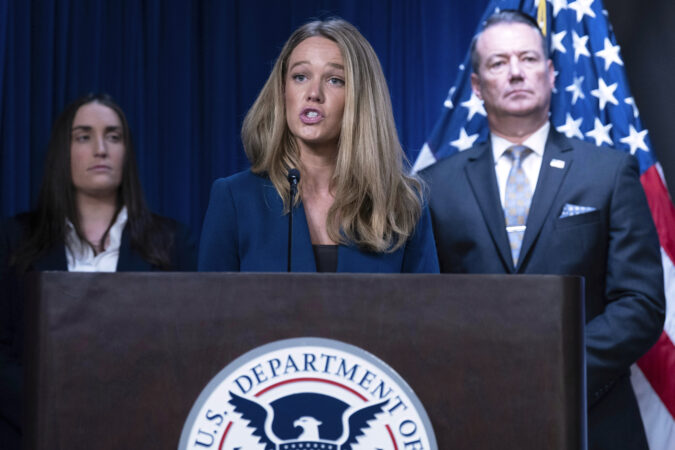
    The Department of Homeland Security’s top spokesperson is leaving the Trump administration, officials said Tuesday, a departure that comes amid falling public approval ratings for the president’s mass deportation agenda.

    Tricia McLaughlin, whose regular Fox News appearances made her a face of the administration’s hard-line immigration agenda, is leaving just over a year into Homeland Security Secretary Kristi L. Noem’s tenure leading the agency. The move comes after DHS and the White House have scrambled to tamp down public outrage over the killings of two U.S. citizens by federal immigration agents in Minneapolis last month.

    McLaughlin informed colleagues Tuesday of her departure. She had begun planning to leave in December but extended her stay to help the administration deal with the fallout of the fatal shootings of Renée Good and Alex Pretti in Minneapolis, according to people briefed on her exit. Politico first reported on McLaughlin’s departure.

    Confirming McLaughlin’s decision in a post on X on Tuesday, Noem cited her “exceptional dedication, tenacity, and professionalism” and said she “has played an instrumental role in advancing our mission to secure the homeland and keep Americans safe.”

    In a statement, McLaughlin thanked Noem and President Donald Trump, saying she is “immensely proud of the team we built and the historic accomplishments achieved by this Administration and the Department of Homeland Security.”

    McLaughlin said she will be replaced by her deputy, Lauren Bis, and DHS’s public affairs team is adding Katie Zacharia, a Fox News contributor.

    Noem’s chief spokeswoman built a reputation as a fierce defender of the administration’s handling of immigration and of the secretary’s leadership, frequently sparring with reporters on social media and appearing on cable news programs. But her forceful pronouncements have drawn criticism from Democrats and immigrant rights groups, who point to incidents in which statements she made were later contradicted in court or in video footage recorded by witnesses.

    McLaughlin joined other administration officials in quickly declaring that Good had committed “an act of domestic terrorism” before she was shot to death by an immigration officer. McLaughlin also said a Venezuelan immigrant had “mercilessly beat” a federal law enforcement officer in Minneapolis. The charges against that man were dropped after the U.S. attorney in Minneapolis said that “newly discovered evidence” was “materially inconsistent with the allegations” the officers had made.

    In those and other incidents, McLaughlin quickly made statements supporting actions by officers before investigations had transpired — something that Democrats and some Republicans have also criticized Noem for doing.

    Christopher Parente, an attorney for Marimar Martinez, a U.S. citizen shot multiple times by a Border Patrol agent in Chicago in the fall, asked a federal judge for permission to release body-camera footage and other evidence that he said was necessary to demonstrate that McLaughlin and other senior administration officials had falsely accused Martinez of being a domestic terrorist and of doxing federal agents.

    Martinez was indicted on federal charges of assault and attempted murder of a federal employee with a deadly or dangerous weapon after the shooting. But a federal judge dismissed the case in November after prosecutors in the Northern District of Illinois requested that the charges be dropped. Prosecutors didn’t state a reason for the dismissal, although attorneys for the defendant criticized the weakness of the government’s case from the start.

    Under McLaughlin, critics say, the DHS public affairs office has produced a skewed view of immigration enforcement. Officials have refused to publish detailed reports of how many immigrants have been arrested and deported. The agency’s messaging has mainly publicized the arrests of immigrants who commit crimes, even though public records show that a majority of migrants who have been detained do not have criminal records.

    “We are pleased with this resignation,” Parente told the Washington Post when asked about McLaughlin’s departure. “Unless Pinocchio is applying for the position, we believe her replacement will be a great improvement and hopefully work to start repairing the credibility of DHS.”

    Critics said that DHS’s public affairs office has refused to publish detailed reports of how many immigrants have been arrested and deported. The agency’s messaging has mainly publicized the arrests of immigrants who commit crimes, even though public records show that a majority of migrants who have been detained do not have criminal records.

    McLaughlin also has repeatedly attacked federal judges who have ruled against the administration, calling them “unhinged,” “deranged” and “disgusting and immoral.” In some cases, she has accused judges of endangering immigration agents or the public through their rulings.

    David Lapan, a DHS spokesman in Trump’s first administration, said he hopes McLaughlin’s replacement “stays away from the belligerent, attacking approach that she took.”

    “The mis- and disinformation that comes out hurts the trust and credibility of the organization, and they can’t afford to have that continue,” Lapan said.

    But McLaughlin’s combative approach won public praise from Trump last month.

    “Great job by wonderful TRICIA MCLAUGHLIN, DHS Assistant Secretary, on the Sean Hannity Show,” Trump posted on social media. “Many Illegals from around our Nation charged with serious crimes this week. Tricia really knows her ‘STUFF!’”

    Democrats have criticized DHS’s posts on social media for disparaging immigrants and posting paintings that depict scenes of a predominantly White America. One post featured an ICE recruitment promotion that stated, “We’ll Have Our Home Again,” a phrase that has been associated with a song embraced by white nationalists.

    McLaughlin defended that promotion, telling the Post in a statement last month: “The fact that people would like to cherry pick something of white nationalism with the same title to make a connection to DHS law enforcement is disgusting.”

    McLaughlin was still posting on X on Tuesday — disputing an NBC News report of growing tensions between DHS leadership and Coast Guard officials over Noem’s use of the military branch’s resources, which she oversees. The Post has also reported on the strained relationship between DHS and the Coast Guard, including Noem’s decision to spend $200 million on new Coast Guard jets for use by senior DHS officials and her move into military housing typically reserved for the Coast Guard commandant.

    Before her tenure at DHS, McLaughlin was a senior adviser and communications director for Vivek Ramaswamy’s 2024 presidential campaign. She joins other senior DHS officials who have left the department in recent weeks, including Madison Sheahan, who last month stepped down from her role as Immigration and Customs Enforcement’s deputy director to mount a campaign against Democratic Rep. Marcy Kaptur in Ohio.

  • Stephen Colbert says CBS blocked interview with Texas Democrat over FCC concerns

    Stephen Colbert says CBS blocked interview with Texas Democrat over FCC concerns

    CBS late-night host Stephen Colbert rebuked his own network Monday night, claiming that lawyers for parent company Paramount Skydance prohibited him from airing an interview with Texas State Rep. James Talarico, a Democratic candidate for the U.S. Senate, over concerns it would violate the Federal Communications Commission’s equal time rule.

    “You know who is not one of my guests tonight?” Colbert asked his audience. “That’s Texas state representative James Talarico. He was supposed to be here, but we were told in no uncertain terms by our network’s lawyers, who called us directly, that we could not have him on the broadcast.”

    In response, the studio audience booed.

    “Then I was told, in some uncertain terms, that not only could I not have him on, I could not mention me not having him on,” Colbert continued. “And because my network clearly does not want us to talk about this, let’s talk about this.” A representative for Paramount Skydance did not respond to a request for comment.

    Colbert launched into a segment about the FCC’s equal time rule, which requires broadcasters to provide equal opportunity to political candidates. News and talk show interviews have traditionally been exempt from the mandate. But in January, the FCC, issued a public notice saying that daytime and nighttime talk shows would have to apply for a exemptions to the equal time rule for each of their programs.

    “Importantly, the FCC has not been presented with any evidence that the interview portion of any late night or daytime television talk show program on air presently would qualify for the bona fide news exemption,” the FCC’s notice read.

    At the time, Anna M. Gomez, the FCC’s lone Democrat, called the notice “misleading” and said nothing has changed about the FCC’s requirements.

    In a statement Tuesday, Gomez wrote that CBS’s decision is an example of “corporate capitulation in the face of this Administration’s broader campaign to censor and control speech” and said that the FCC has “no lawful authority to pressure broadcasters for political purposes.”

    “CBS is fully protected under the First Amendment to determine what interviews it airs, which makes its decision to yield to political pressure all the more disappointing,” she said.

    In a statement Tuesday afternoon, CBS defended itself and pushed back against Colbert’s account.

    “THE LATE SHOW was not prohibited by CBS from broadcasting the interview with Rep. James Talarico,” a spokesperson for the network said in a statement. “The show was provided legal guidance that the broadcast could trigger the FCC equal-time rule for two other candidates, including Rep. Jasmine Crockett, and presented options for how the equal time for other candidates could be fulfilled. THE LATE SHOW decided to present the interview through its YouTube channel with on-air promotion on the broadcast rather than potentially providing the equal-time options.”

    Colbert is already on his way out of CBS, set to depart the network in May when his show goes off the air. CBS announced over the summer that it is canceling The Late Show, the long-running talk show once hosted by David Letterman, which it claimed is “purely a financial decision.”

    Led by Chairman Brendan Carr, the FCC in President Donald Trump’s second term has remade itself as a speech enforcer tackling perceived liberal bias in the media industry. Carr’s speech agenda has been marked by investigations of media companies and threats to take action against broadcasters that do not follow rarely enforced FCC rules. He has frequently invoked a little-used “news distortion” policy as justification, a practice condemned by a bipartisan group of former FCC chairs and commissioners in a November letter.

    Following on-air comments in September by ABC’s Jimmy Kimmel in the wake of conservative activist Charlie Kirk’s killing, Carr suggested on a podcast that the agency could take action against the network and its parent company Disney, which owns broadcast licenses across the country.

    “We can do this the easy way or the hard way,” Carr told conservative podcast host Benny Johnson about Kimmel. “These companies can find ways to change conduct and take actions on Kimmel, or there’s going to be additional work for the FCC ahead.” Carr drew bipartisan criticism for his role in the episode, with Sen. Ted Cruz (R., Texas) likening him to a cinema mafioso. ABC suspended Kimmel for several days in September.

    Last summer the FCC approved an $8 billion deal for David Ellison’s Skydance to buy CBS parent company Paramount after a series of concessions. Skydance pledged to conduct a review of CBS’s programming and agreed to refrain from diversity, equity and inclusion initiatives. It also appointed an ombudsman with Republican Party ties to handle claims of bias.

    In July, CBS also settled a lawsuit from Trump, who claimed that a 60 Minutes interview with political rival Kamala Harris was “deceitful” in its editing. Colbert claimed the $16 million settlement was a “big, fat bribe.” The network canceled The Late Show three days later.

    Colbert’s criticism also comes amid another corporate pursuit for Paramount Skydance.

    The company is trying to persuade Warner Bros. Discovery to accept its hostile bid to buy the company rather than sell to Netflix. It’s unclear whether the FCC would have a role in such a deal, even if Paramount is involved, because no broadcast spectrum licenses would be changing hands. Still, any deal of this size would need government approval, probably from Trump’s Justice Department, where antitrust chief Gail Slater just resigned.

    In December, Trump has said he would be “involved” in vetting the Netflix-Warner Bros. deal, which has massive implications for Hollywood, movie theaters and streaming. More recently, Trump backtracked, saying he is “not involved” in the deal.

    Talarico, 36, has been a member of the Texas House of Representatives since 2018 and more recently has been a rising star in the Democratic Party. He is running for a U.S. Senate seat in Texas, which is holding its primary contests on March 3.

    Though Colbert’s interview with Talarico didn’t broadcast over the airwaves, it was made available on YouTube.

    “This is the party that ran against cancel culture,” Talarico told Colbert. “Now they’re trying to control what we watch, what we say, what we read. And this is the most dangerous kind of cancel culture — the kind that comes from the top.”

  • Trump picks his White House assistant for panel reviewing ballroom

    Trump picks his White House assistant for panel reviewing ballroom

    When Congress created the Commission of Fine Arts more than a century ago, its members were intended to be “well-qualified judges of the fine arts” who would review and advise on major design projects in the nation’s capital, lawmakers wrote. The initial slate of commissioners included Daniel Burnham and Frederick Law Olmsted Jr., architects and urban planners who designed much of Washington.

    Now, the 116-year-old commission is set to include its newest, youngest member: Chamberlain Harris, a 26-year-old White House aide and a longtime executive assistant for President Donald Trump, who is slated to be sworn in at the panel’s next public meeting on Thursday.

    Trump’s selection of Harris — who was known as the “receptionist of the United States” during the president’s first term and has no notable arts expertise — comes amid the president’s push to install allies on the arts commission and another panel, the National Capital Planning Commission. Both commissions are reviewing Trump’s planned White House ballroom and are expected to review his other Washington-area construction projects, such as his desired 250-foot triumphal arch.

    Trump has said he hopes to complete the projects as quickly as possible, despite complaints about their size, design, and potential impact on Washington. A historical preservation group has sued the administration over the ballroom project, saying that Trump should have consulted with the federal review panels before tearing down the White House’s East Wing annex and beginning construction on his planned 90,000-square-foot, $400 million ballroom.

    A federal judge weighing whether to halt the ballroom project in December had instructed the White House to go through the commissions before beginning construction.

    Asked about Harris’s qualifications to serve on the fine arts commission, the White House on Tuesday touted her as a “loyal, trusted, and highly respected adviser” to the president.

    “She understands the President’s vision and appreciation of the arts like very few others, and brings a unique perspective that will serve the Commission well,” Steven Cheung, the White House communications director, said in a statement. “She will be a tremendous asset to the Commission of Fine Arts and continue to honorably serve our country well.”

    Harris, who holds the title of deputy director of Oval Office operations, received a bachelor’s degree in political science in 2019 from the University at Albany, SUNY, with minors in communications and economics, according to an archived copy of her resumé on LinkedIn. She continued working for Trump as an executive assistant when he was out of office.

    Harris was one of seven fine arts commissioners Trump appointed during a 19-day spree in January. The president had left the commission empty for months after firing all six members in October but raced to restock the panel ahead of the agency’s January meeting when the ballroom project was first added to the agenda.

    Former fine arts commissioners said they could not recall a commissioner in the panel’s history with as little prior arts experience as Harris. Several former commissioners also noted that Trump has installed multiple appointees with minimal arts and urban planning expertise on both panels set to review his construction projects remaking Washington.

    “It’s disastrous,” said Alex Krieger, an architect and professor at the Harvard Graduate School of Design, who was chosen for the commission in 2012 by President Barack Obama and served a second term in the first Trump administration. “Some of these people just have no qualifications to evaluate matters of design, architecture, or urban planning.”

    Past commissioners have included Billie Tsien, an architect currently working on Obama’s library, and Perry Guillot, a landscape architect who redesigned the White House Rose Garden during Trump’s first term.

    Witold Rybczynski, an architect who was chosen for the Commission of Fine Arts by President George W. Bush and served a second term under Obama, wrote in an email that President Joe Biden also reshaped the panel by firing Trump appointees before their terms had concluded. He also noted that past presidents installed some political appointees and lesser-known experts to the panel, too.

    “The degree of expertise … has varied,” Rybczynski wrote in an email. He is the Martin and Margy Meyerson Professor Emeritus of Urbanism at the University of Pennsylvania.

    The fine arts commission on Thursday is slated to review the latest ballroom designs and may vote to advance the project. The White House has said it hopes to win formal approval from both review panels by March and begin aboveground construction of the ballroom as early as April.

  • What 42 massive and decaying presidential heads say about America

    What 42 massive and decaying presidential heads say about America

    CROAKER, Va. — George Washington’s chin is crumbling. His cheeks are streaked with sooty grime. His blackened nose is peeling, an apparent victim of frostbite and sunburn. Still, America’s first leader looks nicer than usual. In the winter months, wasps aren’t nesting in his eyes.

    “Just beautiful,” observed Cesia Rodriguez, a 32-year-old massage therapist gazing up at the Founding Father — or what remained of him.

    She’d pulled on rain boots, driven about an hour and trudged through the mud of what her tour guide called “an industrial dump” early Saturday with dozens of other tourists to see “The Presidents Heads,” a private collection of every ex-POTUS’s sculpted likeness from Washington to George W. Bush. They’re arranged in haphazard rows, with Andrew Jackson occupying a prime front spot simply because the owner likes his hair. The vibe is Stonehenge-meets-The Walking Dead.

    Before they started sinking into the ground, the busts fashioned from concrete, plaster, and rebar — was that Styrofoam poking through some cranial holes? — stood about twice the height of a basketball hoop. They each weighed at least 5 tons. Time has not been kind. Chester A. Arthur’s entire jaw is missing. Ulysses S. Grant has lost a chunk of his right eyebrow. And Franklin D. Roosevelt was “scalped” in transit, the tour guide noted, by a Route 199 overpass.

    These commanders in chief weren’t supposed to spoil. They were carved with patriotic love by a Texas sculptor who studied in Paris under a French modern master. They were the polished centerpieces of a $10 million park that in 2010 went bankrupt after six years. Not enough admirers wanted to see them back when they were pristine.

    Now the wait list stretches into the hundreds. Demand didn’t spike, their owner said, until the heads were rotting. Not that their misfortune attracted haters. Quite the opposite. In the wreckage, guests said they could see their country and themselves with more tenderness than judgment. “That one’s me,” a 20-something chirped at jawless Arthur.

    Rodriguez didn’t mull the symbolism when she learned about the spectacle on Facebook. Seeing spooky historical art, she figured, was a fun way to spend Presidents’ Day weekend. Up close, though, the oddities stirred something familiar.

    She thought of the America she loved: her clients, who came from everywhere with stiff necks and bad backs. The nurses, teachers, soldiers, and everyone else on her massage table, resting up to go at it again.

    “It’s the imperfections, for me,” she said.

    The late sculptor, David Adickes, was an Army veteran who’d wanted his stony visages to gleam. On an early-aughts trip to Mount Rushmore, he’d contemplated the granite mugs of Washington, Jefferson, Roosevelt, and Lincoln and thought: Why stop at four?

    Adickes, who died last year at 98, hoped the 42 statues he chiseled at his Houston studio would land in the nation’s capital, he said on a 2022 podcast, but real estate was too costly. So in 2004, he and a business partner settled on a plot near Colonial Williamsburg, aiming to draw history buffs and stroller-pushing families. The Great Recession, overpriced tickets, and poor marketing dashed that vision.

    After the busts went bust, a rental car company purchased Presidents Park and hired local builder Howard Hankins to help flatten it into a parking lot.

    “I just couldn’t see crushin’ ’em,” Hankins recalled.

    Instead, he loaded the abandoned dignitaries onto a fleet of flatbed trucks and escorted them (minus their pedestals) to his farm-slash-industrial dump. Storing them in a muddy field was meant to be temporary, he insisted. A presidential fanatic, Hankins envisioned building a new museum. But the 11-mile move alone cost him $50,000, he said. A decade and a half later, the idea exists only on drawings.

    By 2019, Virginia photographer John Plashal caught wind of what was disintegrating on Hankins’ out-of-the-way acres. He pitched himself as a tour guide to the introverted contractor, and the two hatched a fresh back-road attraction. A few times per year, guests can pay $28.35 to marvel at what the website deems “neglect and decay.” As word spread on social media, Ozzy Osbourne stopped by. So did producers of a certain hit zombie series (though they filmed nothing on site). And the heads just kept deteriorating.

    “Now they look like they’ve got leprosy,” Plashal told the Saturday crowd. “In the summer, they all have an active wasp nest in their eyeballs.”

    Yet the place, he continued, has only grown more popular. Nearly 600 people showed up over the weekend, coming from as far as Germany and the Dominican Republic.

    So what, he asked the group, is the rationale for rolling in now?

    Up shot the arm of 10-year-old Evelyn Price.

    “Because they are falling apart,” the Norfolk fourth-grader offered, “but, um, life is kind of like that.”

    Mess is part of our heritage, her mother added, so wading through muck to engage with the past felt right.

    “America is really, really good at getting things very, very wrong,” mused 41-year-old Treloar Price, a clinical psychologist, “and then working hard to try to fix it.”

    The behemoth noggins reflected the transience of American power to Doug Tempest, a 46-year-old Navy veteran from Richmond.

    Dictators overseas have clung to power for decades, but here, so far — though our current leader has riffed about a third term — no president has defied the Constitution or the will of voters to stay in the White House. Every four years, a new victor can shake things up, while the old Oval Office occupant’s influence tends to fade.

    “One of the superpowers that our country has is we can change direction,” Tempest said.

    For Caren Bueshi, a 62-year-old retired teacher from Naples, Fla., witnessing the sculptures sag into the dirt conjured what she feared the nation was losing. Constitutional literacy, for one. Recent reports of federal agents detaining immigrants with the right papers and clean criminal records disturbed her.

    “We’re forgetting the foundation,” she said, wandering past Jackson’s splintering mane. “It’s a challenging time.”

    “It always is,” interjected her mother, 91-year-old Pat Duke, clutching her arm. “From the beginning.”

    Mom leaned right. Daughter leaned left. But they didn’t want to get into politics. The nonagenarian looked at the presidents and saw men. She saw mortality.

    “My life is getting short now,” she said, “so I’m just enjoying it.”

    A few heads over, Andrea Cote, a 44-year-old consultant, tried to turn the eerie scene into a history lesson for her 9-year-old daughter, June.

    “This is Chester A. Arthur missing his jaw,” she said, pausing in front of the gaping mouth. The rebar inside looked like rusted braces without teeth.

    “Scary,” June said.

    “And Thomas Jefferson was the one who didn’t like to publicly speak,” Cote deadpanned.

    Jokes aside, the derelict skulls touched her. So many families braved the chill that day, she noticed, for a glimpse at American history, no matter what shape it was in. They were interested. They cared. They were coming together.

    So Cote smiled when a fellow tourist with a fancy camera approached.

    “If you squat right here,” he told her kid, “you can get a picture of the sun coming right through his mouth.”

    June grabbed her mom’s phone and aimed it just so.

    “Whoa!” she squealed.

    “See,” he said, “now there’s something positive.”

  • Ukraine detains ex-energy minister as high-level corruption case widens

    Ukraine detains ex-energy minister as high-level corruption case widens

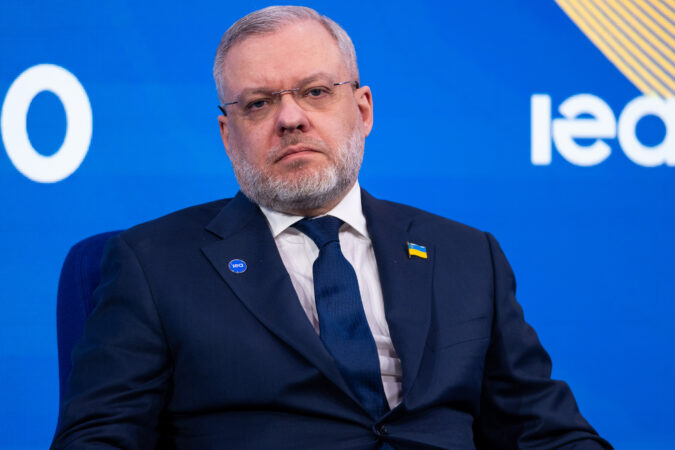
    KYIV — Ukrainian authorities opened a criminal case against the country’s former energy minister German Galushchenko one day after he was caught at the border trying to flee the country — the latest charges in a $100 million corruption probe that has ensnared some of Ukraine’s highest-ranking officials and shaken the office of President Volodymyr Zelensky.

    Galushchenko, who served as energy minister for four years before becoming justice minister for a short period last year, was arrested Sunday by anti-corruption authorities on the Ukrainian-Polish border. On Monday, authorities said he was charged on suspicion of “money laundering and participation in a criminal organization.”

    The arrest is part of an investigation into high-level graft, code-named “Midas.” Other suspects include Timur Mindich, a close friend and former business partner of Zelensky, and Oleksiy Chernyshov, a former deputy prime minister. Authorities allege the group ran a kickback scheme tied to contracts signed with Ukraine’s state nuclear energy company, Energoatom.

    Zelensky’s top aide, Andriy Yermak, resigned in November, hours after authorities searched his home and office as part of the corruption probe. However, Yermak has not been charged, officials said.

    The investigation has placed the issue of Ukraine’s seemingly never-ending battle with corruption front and center, and it has rattled Kyiv’s European supporters as the country struggles to defend against Russia’s invasion, which will reach its fourth anniversary next week.

    Corruption in the country’s energy sector is a particularly sensitive subject, as millions of Ukrainians are enduring frigid, dark apartments this winter because of Russia’s campaign of missile and drone strikes against the power grid.

    On Monday, Ukraine’s air force said Russian forces attacked locations throughout the country overnight with more than 60 drones and six missiles. At least one missile and nine drones pierced air defenses, the air force said in a social media statement.

    Some 1,500 buildings in Kyiv are without heat, of which more than 1,000 are expected to remain so until the end of winter because of significant damage to the power grid, Kateryna Pop, spokesperson for the Kyiv military administration, said on Ukrainian television on Monday.

    In November, investigators at Ukraine’s two main anti-graft bodies, the National Anti-Corruption Bureau and the Specialized Anti-Corruption Prosecutor’s Office — or NABU and SAPO — said they had uncovered a sprawling kickback scheme at Energoatom.

    At that point, NABU and SAPO officials said they had worked for 15 months on the case and compiled evidence that included some 1,000 hours of audio recordings. The alleged scheme involved a 10% to 15% surcharge on Energoatom contracts “to avoid blocking payments for services rendered … or to avoid losing their status as suppliers,” an NABU statement said.

    Members of the group adopted aliases for their communications such as “Che Guevara,” “The Professor,” “Rocket,” and “Sugarman.”

    Some of the contracts involved building installations to protect energy facilities from Russian air attacks, investigators said.

    NABU and SAPO detectives searched Galushchenko’s home in November. Shortly after, Zelensky called for the resignations of Galushchenko and Svitlana Grynchuk, who served as his deputy energy minister and succeeded him when he moved to the Justice Ministry. At the time of the search, officials filed no charges against Galushchenko.

    He has not issued any statements since his arrest. Other suspects in the case have denied their guilt.

    Mindich, 46, fled the country in November and was filmed by the Ukrainian Truth news outlet in Israel. Sunday’s arrest of Galushchenko, 52, prevented him from doing the same. Under martial law, Ukrainian men under the age of 60 are barred from leaving the country without special permission.

    NABU and SAPO did not name Galushchenko in a statement posted on their Telegram channels, but referred to the suspect in the case as “the former energy minister (2021-2025)” — the years that Galushchenko led the ministry.

    The statement said that the suspects of the “criminal organization” uncovered by the Midas operation had registered “a fund” in February 2021 on the island of Anguilla, a self-governing British protectorate in the Caribbean.

    “The fund was headed by a longtime acquaintance of the participants,” the statement said, “a citizen of the Seychelles and Saint Kitts and Nevis,” who laundered the proceeds. The statement did not name the fund head.

    In total, some $112 million was siphoned off from the energy sector while Galushchenko served as energy minister and the money “legalized through various financial instruments, including cryptocurrency and ‘investment’ in the fund,” NABU and SAPO alleged.

    Galushchenko and his family received some $12 million of the money, NABU and SAPO said.

    “Part of these funds were spent on paying for children’s education in prestigious institutions in Switzerland and placed in the accounts of his ex-wife,” the statement said. “The rest was placed on a deposit, from which the high-ranking official’s family received additional income and spent it on their own needs.”

  • Rubio seeks to boost Hungary’s Orban as he faces tough election

    Rubio seeks to boost Hungary’s Orban as he faces tough election

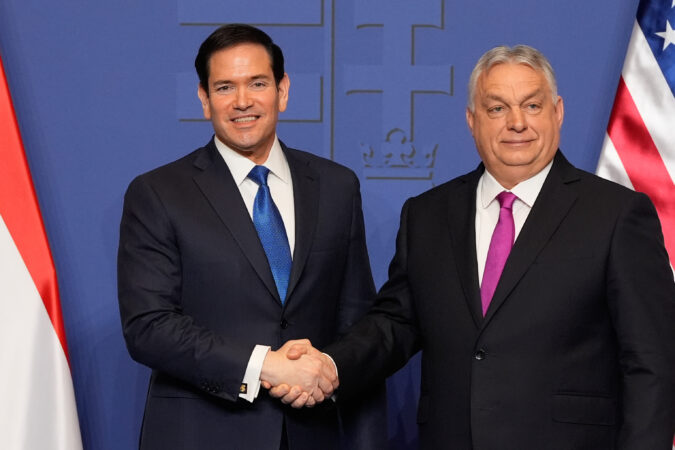
    BUDAPEST — Secretary of State Marco Rubio sought to throw Viktor Orban a political lifeline on Monday, as the Hungarian prime minister trails in most polls ahead of an election this spring that could see Europe’s most pro-Russian and longest-ruling prime minister voted out of power.

    The top U.S. diplomat praised Orban’s leadership, signed a civilian nuclear cooperation agreement with his government, and defended issuing Hungary an exemption from U.S. sanctions despite Orban’s decision to continue buying Russian energy.

    “We want this country to do well,” said Rubio standing alongside Orban during a news conference in Budapest, “especially as long as you’re the prime minister and the leader of this country.”

    “President Trump is deeply committed to your success, because your success is our success,” Rubio added.

    Rubio’s support for Orban marks the latest example of the Trump administration working to keep in power right-wing populist leaders who have praised President Donald Trump and are seen as ideologically aligned. In summer, political neophyte Karol Nawrocki narrowly won a presidential runoff in Poland after being invited to the White House by Trump.

    In a post on Truth Social last week, Trump endorsed Orban for the April elections and called him a “truly strong and powerful Leader” and “a true friend, fighter, and WINNER.”

    Whether the efforts by Trump and Rubio will help Orban prevail in the election remains far from clear in part because Orban’s opponent, Peter Magyar, is also conservative and has gained traction with an anti-corruption message.

    Most polling shows Magyar’s party with a significant lead. “We’re standing on the threshold of victory with 56 days left to go,” Magyar said Sunday, as he formally launched his party’s election campaign in Budapest, vowing to crack down on corruption, return Hungary to its Western European orientation, and end Orban’s nearly 16-year reign.

    Magyar took control of the center-right Tisza party in 2024, the same year the party won about 30% of the vote in European Parliamentary elections. Before he pivoted to the center, he belonged to Orban’s Fidesz party.

    Orban and his Fidesz party are considered by a growing cohort of U.S. conservatives as the intellectual vanguard of policies they seek to replicate in the United States, including hard-line immigration policies and Christian nationalism.

    U.S. conservatives have praised Orban for establishing a fence on Hungary’s southern border in 2015 to keep out refugees fleeing from the Middle East and Africa. They have also praised him for cracking down on LGBTQ+ rights, such as banning the Budapest Pride celebration and approving facial recognition technology to identify scofflaws of the ban.

    Hungary regularly plays host to U.S. conservatives at its Conservative Political Action Conference events, which will again convene in March.

    Orban and the prime minister of neighboring Slovakia, whom Rubio visited on Sunday, are lonely voices in Europe in offering enthusiastic praise for Trump, who has angered traditional U.S. allies by imposing tariffs on them, threatening to take Greenland by force, and attacking European digital regulations.

    Both Hungary and Slovakia have hailed Trump’s efforts to engage Russia and have expressed skepticism about Western support for Ukraine. Orban underscored that point on Monday, using the same hypothetical scenario Trump routinely brings up in his own remarks.

    “If Donald Trump had been the president of the United States, this war would never have broken out,” Orban said. “And if he were not the president now, then we would not even stand the chance to put an end to the war.”

    Rubio expressed exasperation that Washington’s efforts, criticized in some parts of Europe for prioritizing Moscow’s demands over Kyiv’s, weren’t being hailed more widely.

    “This is one of the few wars I’ve ever seen where some people in the international community condemn you for trying to help end a war, but that’s what we’re going to do as long as our role and engagement is a positive one,” Rubio said.

    Orban also thanked the Trump administration for allowing Hungary to continue purchasing “cheap energy” from Russia despite significant efforts by the European Union to stop purchasing Russian oil and gas following the country’s full-scale invasion of Ukraine.

    Critics of Trump’s rapprochement with Hungary question how it serves U.S. interests.

    “Hungary now buys a greater percentage of its oil from Russia than it did at the start of the invasion,” said Jeff Rathke, the president of American-German Institute and a former State Department official. “So it is unclear how Orban contributes to any U.S. objectives aside from the ideological project of supporting right-wing, anti-European, would-be autocrats.”

    When asked about Hungary’s deepening business ties with China and Russia, Rubio said it shouldn’t surprise anyone that Budapest is pursuing its own national interests and emphasized the importance of Orban’s personal relationship with Trump.

    “I’m going to be very blunt with you,” Rubio said. “The prime minister and the president have a very, very close personal relationship and working relationship, and I think it has been incredibly beneficial to the relationship between our two countries.”