Category: Washington Post

  • Family of man shot by ICE in Minneapolis disputes key aspects of DHS account

    Family of man shot by ICE in Minneapolis disputes key aspects of DHS account

    The family of a man shot in the leg by an ICE officer in Minneapolis on Wednesday has disputed key elements of the Department of Homeland Security’s version of the incident, saying the shooting happened at the door of the man’s house as he let his housemate inside, rather than out in the street during a scuffle.

    The Department of Homeland Security has said an ICE officer shot Julio Cesar Sosa-Celis as he was assaulting the officer “with a shovel or broom stick.” The agency said the incident began when the officer attempted to stop Sosa-Celis in his car, and that Sosa-Celis tried to flee and then got into an altercation with the officer outside, joined by two housemates.

    But Sosa-Celis’ mother, citing an account from her son, said DHS had actually been pursuing one of his housemates, who Sosa-Celis let into their house just before the shooting. Alicia Celis said her son made no mention of anyone running from the house to attack ICE officers.

    A Facebook Live video reviewed by the Washington Post includes people at the house telling 911 dispatchers that the shooting happened as the men closed the door at the residence. Another video includes Sosa-Celis mentioning some sort of scuffle before any gunshots were fired, but he does not specify whether that struggle happened at the door or in the street.

    Celis, who lives in Venezuela, told the Post that her son called her from the hospital after he was taken into custody by ICE. He told her he had received a panicked call Wednesday evening from Alfredo Alejandro Ajorna, who is one of his housemates and a fellow DoorDash driver, Celis said. Ajorna said he was being pursued by ICE and that he needed Sosa-Celis to let him in the front door of the house, where they and their partners and children and others live.

    Sosa-Celis opened the door to let Ajorna inside, Celis said her son told her. Ajorna ran indoors. As Sosa-Celis went to close the door an ICE officer shot him in the leg, his mother said. The men retreated into the house, and people inside called emergency dispatchers, Celis said.

    A short time later, ICE officers broke down the front door and went inside the building, Celis said. They arrested Ajorna, Sosa-Celis, and Gabriel Alejandro Hernandez-Ledezma, who Celis said was not involved in the incident and was in the basement of the house, where he lives. All three men are undocumented immigrants from Venezuela, according to DHS; Sosa-Celis’ family said his temporary protected status to live legally in the United States lapsed last year. DHS had not announced charges against the men as of Friday afternoon.

    In its account of Wednesday night’s shooting, DHS alleged that Sosa-Celis fled in his car during an attempted traffic stop, crashed into a parked car, and then ran away. An officer chased him and attempted to arrest him, the agency said, adding that Sosa-Celis resisted and began to “violently assault the officer.” DHS alleged that Sosa-Celis and the officer were struggling when Ajorna and Hernandez-Ledezma came out of a nearby residence and hit the officer with a snow shovel and broom handle.

    DHS also said Sosa-Celis freed himself of the struggle and hit the officer “with a shovel or broom stick,” at which point the officer fired his gun. The agency called the shot “defensive” and said the officer feared for his life. DHS said the men ran into the residence and ICE officers then arrested them.

    When asked to provide additional evidence or body-camera footage of the alleged attack and to address the claims presented by Sosa-Celis’s family, DHS referred the Post to remarks Homeland Security Secretary Kristi L. Noem made Thursday morning.

    “I would say that our agent is beat up,” Noem told reporters. “He’s bruised, he’s injured, he’s getting treatment. And we’re thankful that he made it out alive.”

    The agency also did not respond to questions Thursday evening about the medical conditions of the officer and Sosa-Celis.

    The shooting of Sosa-Celis — and the angry and sometimes violent protests from residents that followed later — came one week after an ICE officer shot and killed Renée Good as she and other residents monitored and protested ICE activity on a residential street.

    The federal government over the past week has increased the number of officers in the city to 3,000, a massive deployment, with vows to send more personnel to quell what one administration official called an “insurrection.” Residents have objected to agents detaining people and said they feel like their city is under attack.

    Some of the family’s account of Wednesday night’s shooting appeared to align with what was said in a Facebook Live video from inside the home that evening. A chaotic scene appears to unfold as children cry and multiple people speak over each other. The people in the livestream report to 911 dispatchers that one of their family members was shot in the leg as they closed the door of the residence, with ICE officers outside. The Post confirmed the video was filmed from the same address on Minneapolis’s north side.

    Sosa-Celis also joined a different Facebook Live video broadcast the same night by a person who Sosa-Celis’ relatives described as a friend of his. That livestream shows Sosa-Celis describing the incident from what appears to be a hospital bed. Speaking Spanish and using a phrase that can be interpreted several ways, he indicates there was some kind of interaction with ICE personnel before the shooting, though it’s unclear whether he’s describing it happening outside the building or as he moved to close the door on the ICE officer.

    Sosa-Celis also joined that livestream from his home in the moments after the shooting. He can be heard telling the host of the video that he needs assistance. “We need help, friend. We have ICE here,” said Sosa-Celis, providing his address to viewers. “They shot us, they shot us. They shot us, and hit me in the leg.”

    When asked by the host if ICE had been following him, Sosa-Celis, who has his camera pointed toward a window outside, replies that ICE had been following Ajorna.

    Neighbors who live behind the house where the shooting happened also confirmed some elements of the family’s version.

    Brieella Johnson, 35, said she was home preparing dinner for her children at about 6:30 p.m. — her husband had just left with one of their sons for Bible study — when she heard two men arguing outside the house on North 24th Avenue, which she can see from her back deck.

    “We heard two men arguing, then we heard a screech of the vehicle trying to go, and then we heard two to three gunshots,” Johnson said, holding her baby and surrounded by her six older children in her living room on Thursday morning.

    She said she saw uniformed ICE officers with guns drawn “swarm” the house. She heard some of the officers shout, “Come out now!” and “Come out now, or we’re going to shoot!” and other things in Spanish.

    Johnson said she saw ICE officers shoot at one of the windows of the house, then, “They threw one smoke bomb, then yelled ‘Fire’ … Then afterwards we could see smoke in the second floor window.” One of the building’s front windows appeared to have been shattered, she said.

    Johnson heard the DHS account of the shooting and said, “It doesn’t make sense. It doesn’t add up.” She questioned why the ICE officer ended up grappling with and chasing someone he was trying to detain, why he didn’t call for backup sooner, and why he fired in a residential area so close to families with children.

    “Even if you’re going after someone you know is illegal, have back up,” she said.

    Tommy Ross, 72, stood outside his rental house around the block from the shooting location and said he heard three shots late Wednesday and saw the gray Ford sedan mired in the snow and uniformed ICE officers “all around it.”

    Ross, who has lived in the neighborhood for 40 years, said he recognized the car: He had met the owner, a young man with a Spanish accent, after he struck Ross’ Nissan sedan about a month ago, and they exchanged insurance information. He said he did not recall the man’s name.

    Ross and his family heard a car wreck about 7 p.m. “ICE was chasing them people. They ran into the house. There was a fight inside the house,” said Tommy Ross Jr., 40, who was visiting his father at the time of the shooting.

    He said he heard a woman shout: “Get out of my house!,” then heard ICE officers shout, “Freeze!” and “Get on the floor!”

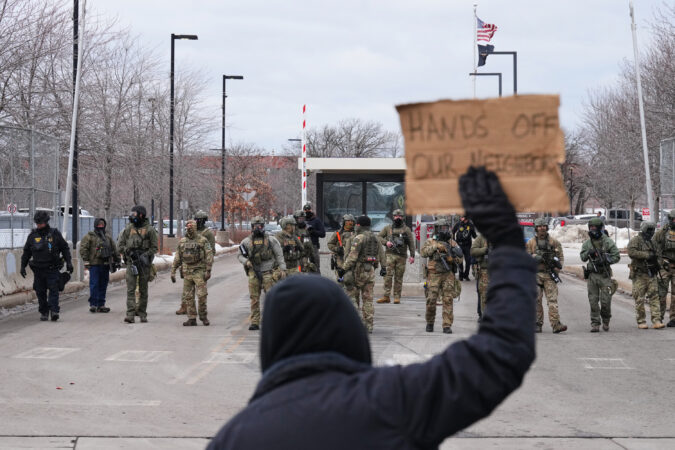
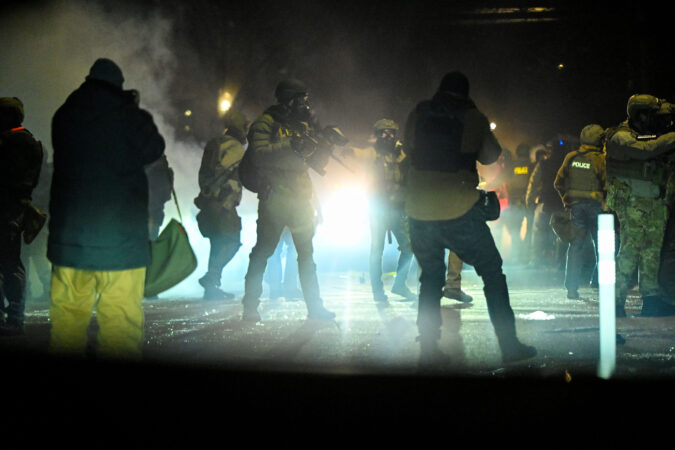
    Following ICE officers’ detention of the three men Wednesday night, tensions flared as neighbors and protesters arrived at the scene. Some protesters heckled, filmed with cellphones, and threw fireworks and a water bottle at officers. Officers fired tear gas and flash bangs at the crowd. Conservative influencer Nick Sortor posted video footage on social media that showed protesters attacking empty ICE vehicles. On Thursday, a damaged ICE laptop and a torn FBI property receipt could be seen on the street.

    “They were combative all night,” the younger Ross said. “They were shooting tear gas, it was all in the air, you couldn’t stand outside without coughing.” The activity was still going on when he headed to bed at 2:30 a.m., he said. “I went to sleep to ‘boom, boom, boom.’ Sounded like a war zone.”

    Local and state officials have called on ICE to leave Minnesota, while the Trump administration has condemned residents who are tracking, protesting, and trying to disrupt ICE activity.

    On Thursday morning, President Donald Trump threatened to invoke the Insurrection Act in Minnesota, raising the possibility of taking the highly unusual step of sending U.S. troops into a domestic city. Minnesota Gov. Tim Walz and Minneapolis Mayor Jacob Frey, both Democrats, urged the federal government not to escalate the tension.

    “They’re trying to make a riot out of it,” the elder Ross said of Trump administration officials, choking up as he spoke. “Governor Walz is doing a good thing, trying to keep them together.”

    Trump on Friday addressed his comments on the Insurrection Act, telling reporters outside the White House: “If I needed it, I’d use it. I don’t think I need it right now.”

    Johnson, the neighbor, said she does not support Trump invoking the Insurrection Act. “I don’t think they need U.S. troops or the National Guard. They need a safe and secure plan,” she said of ICE officers. “If the federal government is going to continue to use ICE, they need to treat these people like humans … You can’t just go in guns blazing. You disrupt communities. You make people scared.”

    But her husband Bryant Johnson, 35, who runs a painting business, blamed local and state officials for not preventing or doing more to address welfare fraud claims that intensified Trump’s attention on Minnesota. Like Trump, he blamed the fraud on Minneapolis’s large Somali community, because many of the dozens of people implicated in the scandal are Somali American. Most Somalis in the Twin Cities, a population of more than 83,000, are U.S. citizens.

    “I feel like a lot of this was brought on by our mayor and our government officials that were very well aware of the fraud,” Bryant Johnson said. “And if they didn’t let that kind of stuff continue and go on, we might not have this much of a presence of ICE.”

    “When you come here from another country to defraud our country of hundreds of millions of dollars,” he added, “you’ve got to go.”

    His wife shook her head. “There has to be a different way of getting them out,” she said. “There’s plenty of Americans that committed fraud. They go to jails, they don’t get killed.”

    Sosa-Celis’ father-in-law, who lives in Saint Paul and spoke on the condition of anonymity because he is undocumented, described Sosa-Celis as a hardworking man who provides for his family in the United States and Venezuela.

    Sosa-Celis’ mother said Thursday evening that she had not heard from her son since Wednesday night and does not know where he is or the status of his injury.

    “I haven’t been able to sleep,” she said. “He never has a ‘no’ for me … He says, ‘Here, Mom. Take as much as you want.’”
  • In the face of Trump’s tariffs, Canada and China grow closer

    In the face of Trump’s tariffs, Canada and China grow closer

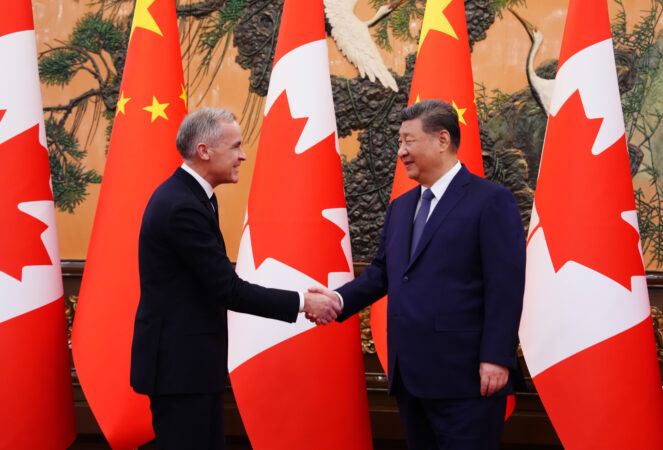
    Canadian Prime Minister Mark Carney hailed a “new strategic partnership” and tariff deals with China on Friday after a four-day visit that analysts said was an effort reset a deeply troubled relationship amid Canada’s efforts to diversify trade away from the United States.

    Carney announced the easing of some of the tariffs the two countries had imposed on each other, with Canada agreeing to allow in 49,000 Chinese electric vehicles at a much-reduced tariff of 6.1%, while China will cut canola seed tariffs to about 15%.

    The moves were a sign of how President Donald Trump’s levies on allies and adversaries alike are reordering global economic relationships, pushing two of the United States’ largest trading partners closer together after years of strained ties to offset the costs.

    Earlier in the day, Carney met with Chinese President Xi Jinping, who described the visit as part of a “turnaround” in Sino-Canadian ties.

    China, Canada’s second-largest trading partner after the United States, imposed steep tariffs on Canadian agricultural goods, including rapeseed and beef, last year. Those duties were retaliation for Canada’s levies on Chinese-made electric vehicles, steel, and aluminum. Ottawa announced those tariffs in 2024, as part of an effort to align itself with U.S. policy on China.

    Despite the easing of some tariffs and the optimistic words from both leaders, the visit was largely an opening “icebreaker,” said Zhao Minghao, deputy director of the Fudan University Center for American Studies. Sino-Canadian ties, he added, still face “many difficulties, especially in areas like ideology and national security. It’s an exploratory process, and they are focusing on the so-called low-hanging fruit first.”

    Reflecting the assessments of many other analysts, Zhao also said the most striking part of the visit was the way Canada was “using the restoration of ties with China as a way to de-risk its relationship with the U.S.”

    Carney’s visit was the first by a Canadian prime minister in nearly a decade, and Sino-Canadian ties have been in a deep freeze for nearly as long. But Canada has been seeking a thaw as part of an effort to diversify trade away amid Trump’s tariffs and threats to use “economic force” to make it the 51st state.

    For Canada, a country caught in the middle between China and the United States — its two largest trading partners — the trade diversification strategy has meant knotty choices. For Carney, a political rookie who won a federal election last year by casting himself as the best person to manage the break in U.S.-Canada ties, the China visit has required walking a tightrope.

    Carney’s predecessor and fellow Liberal, Justin Trudeau, was the last Canadian prime minister to travel to China. He, too, sought closer economic relations with Beijing, but his 2017 visit ended with the two sides deeply divided on several issues and without an expected announcement on the start of formal free trade talks.

    That chasm only widened the next year, after China detained two Canadians — former diplomat Michael Kovrig and businessperson Michael Spavor — in what was widely viewed as retaliation for Canada’s arrest of Meng Wanzhou, a Huawei executive wanted in the U.S. on bank and wire fraud charges.

    The “two Michaels,” as they were known in Canada, were held in secret prisons on vague charges of espionage and stealing state secrets, allegations for which China never provided evidence. They were tried in secret proceedings from which Canadian diplomats were barred, in violation of a consular agreement between the two countries.

    The Canadians were released in 2021, after Meng reached a deal with the U.S. Justice Department that allowed her to return to China in exchange for acknowledging some wrongdoing in the criminal case. A Pew Research Center poll that year found a record of more than 70% of Canadians had an “unfavorable” view of China — up from 45% in 2018.

    Canadian intelligence officials have accused China of “clandestinely and deceptively” seeking to interfere in Canada’s federal elections with the goal of supporting candidates favorable to its strategic interests. They have also alleged that the country conducts transnational repression in Canada, targeting dissidents and lawmakers who are vocal opponents of Beijing.

    Critics of Carney’s rapprochement of China have argued that closer ties could spell trouble, given Beijing’s history of weaponizing access to its markets. Not long after the two Michaels were detained, China imposed tariffs on Canadian canola in what was widely viewed here as further retaliation for Meng’s arrest.

    Opponents of the recalibration in the relationship have also warned that it could draw the ire of the Trump administration, which has been seeking to curtail China’s influence, ahead of a planned review this year of the U.S.-Mexico-Canada Agreement (USMCA). Chris LaCivita, a former Trump campaign manager, said on X that drawing closer to China “won’t end well for Carney.”

    Canadian officials and businesses view the continued existence of the North American free-trade pact as critical for the country’s economic prosperity. More than 70% of Canadian exports have typically gone to the United States. But Trump, who brokered the USMCA and called it “the best agreement we’ve ever made,” said this week that he doesn’t “really care about it.”

    “There’s no real advantage to us,” Trump told reporters in Dearborn, Mich., renewing fears in Canada that he could rip the deal up. “It’s irrelevant to me. … Canada wants it. They need it. We don’t.”

    Carney has been unable to reach a deal to ease the tariffs that the U.S. has imposed on Canadian goods. In October, Trump terminated all trade talks with Canada over a television advertisement critical of tariffs that was broadcast on U.S. networks and paid for by the government of Ontario. Canadian officials said they were close to a deal before Trump suspended negotiations.

    At home, the China reset has also proved tricky.

    Provincial leaders and farmers in the prairie provinces of Saskatchewan and Manitoba, which have been hardest hit by the Chinese tariffs, have long pressed Carney to ease the levies on China. But the move is poised to anger officials in the province of Ontario, the heart of Canada’s auto industry.

    Officials there have supported the tariffs on China, viewing them as necessary for protecting Canadian auto jobs and citing national security concerns. Canada’s auto sector is facing an existential crisis, analysts say, because of Trump’s tariffs on autos, steel, and aluminum. Trump administration officials have repeatedly asserted they do not want to make cars with Canada.

    Trump’s tariffs and threats against Canadian sovereignty have infuriated Canadians. A Pew Research Center poll in July found that 59% of Canadians view the United States as their country’s top threat, while just 17% see China that way.

  • Trump signals Hassett may stay at White House, reshaping Fed chair race

    Trump signals Hassett may stay at White House, reshaping Fed chair race

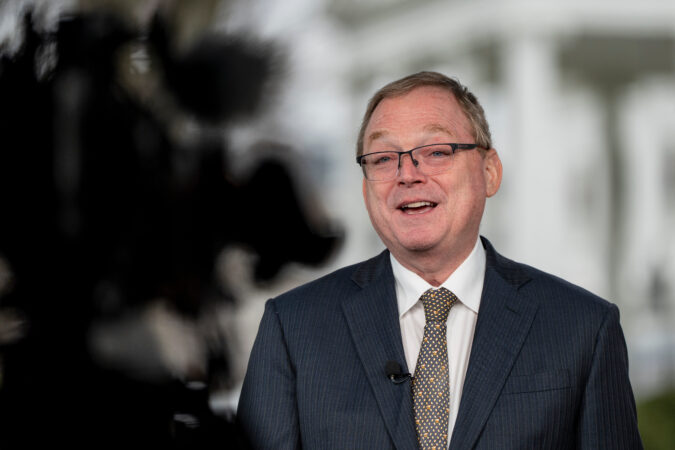
    President Donald Trump on Friday suggested that Kevin Hassett, a top contender to run the Federal Reserve, could remain in his current job as head of the National Economic Council, casting new uncertainty over the race to succeed Fed Chair Jerome H. Powell.

    Speaking at a healthcare event at the White House, Trump said Hassett performed well as a surrogate for the president on television and the potential for him to vacate his current role was a “serious concern.”

    “I actually want to keep you where you are if you want to know the truth. We don’t want to lose him, Susie,” Trump said, addressing White House Chief of Staff Susie Wiles. “We’ll see how it all works out.”

    Analysts and officials close to the White House have said the sweepstakes to succeed Powell may have been scrambled this week when Powell publicly disclosed that the Justice Department had launched a criminal investigation tied to a massive office renovation project for the central bank’s headquarters overlooking the National Mall.

    Powell and supporters characterized the move as an attempt to undercut the Fed’s independence on monetary policy. At least two Republican senators said they won’t vote for any nominee to replace Powell until the legal matter is resolved. And some Fed watchers have said the Senate might be less inclined to approve someone so close to the White House.

    Former Trump strategist Stephen K. Bannon cast that pushback against Hassett in far more combative terms. “The Globalist circle-the-wagons with all the living former Fed Chairs immediately defending Powell sealed Hassett’s fate,” he wrote in a text message. “The anti-Trump Senate cabal signaled they would never confirm someone professionally close to the President.”

    Trump first nominated Powell to the top Fed role in 2017 but quickly soured on him over interest-rate policy. At a January 2020 signing ceremony, Trump suggested that he wished he had instead tapped former Fed governor Kevin Warsh, who was a runner-up for the job.

    “I would have been very happy with you,” Trump said, singling out Warsh. “I could have used you a little bit here. Why weren’t you more forceful when you wanted that job?”

    Analysts said the remarks could place Warsh in a stronger position to become the next chair of the Fed when Powell’s tenure in the role ends in May. Trump had signaled this week that he was choosing between one of “the two Kevins.” He was expected to announce his choice as early as this month.

    In one sign of Warsh’s improved odds, investors in betting markets early Friday afternoon assessed the former Fed governor had a roughly 60% change of replacing Powell, up from around 40% earlier in the day.

    Other candidates in the mix for the role include sitting Fed governor Christopher Waller and Rick Rieder, an executive at BlackRock. Treasury Secretary Scott Bessent has helped spearhead the process for selecting Powell’s replacement but has said he isn’t interested in the role.

    Hassett has acknowledged that the race remains unsettled. Speaking at a Wall Street Journal conference in December, he cautioned against assuming a final decision had been made. “He makes his choice, and then he changes his mind, too,” Hassett said, referring to the president.

  • Mixed signals and suspicions fueled clash between Fed and prosecutors

    Mixed signals and suspicions fueled clash between Fed and prosecutors

    The battle between the Federal Reserve and Trump administration prosecutors accelerated over the past few weeks amid mixed signals and mutual suspicion, according to interviews with a half-dozen figures with knowledge of both sides of the dispute.

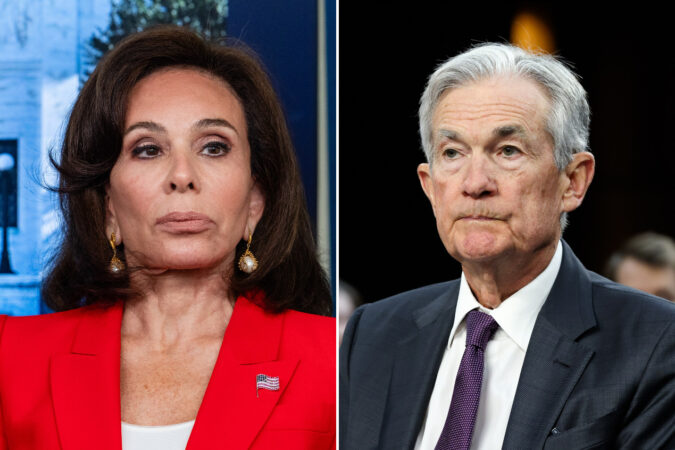
    Late last month, Fed officials grew concerned that the Justice Department was preparing a criminal case against them when they received two casually worded emails from a prosecutor working for Jeanine Pirro, the U.S. attorney for Washington, D.C. The messages sought a meeting or phone call to discuss renovations at the central bank’s headquarters, according to three people familiar with the matter, who like most others interviewed spoke on the condition of anonymity to discuss an open investigation.

    The emails, sent Dec. 19 and Dec. 29, came from Assistant U.S. Attorney Carlton Davis, a political appointee in Pirro’s office whose background includes work for House Oversight Committee Chairman James Comer (R., Ky.), the people said.

    The messages struck Fed officials as breezy in tone.

    “Happy to hop on a call,” one of the missives read in part.

    The casual approach generated suspicions at the Fed. Chair Jerome H. Powell, who by that point had sustained months of criticism from President Donald Trump and his allies over the central bank’s handling of interest rates, retained outside counsel at the law firm Williams & Connolly. Fed officials opted not to respond to Davis, choosing to avoid informal engagement on a matter that could carry criminal implications, according to a person familiar with the decision.

    That led Pirro, a former Fox News host and longtime personal friend of Trump’s, to conclude that the Fed was stonewalling and had something to hide, according to a Justice Department official familiar with the matter.

    “The claim that, ‘Oh, they didn’t think it was a big deal’ is naive and almost malpractice,” the official said. “We gave them a deadline. We said the first week of January.”

    The investigation centers on the Fed’s first large-scale renovation of its headquarters on the National Mall since it was built in the 1930s and whether proper cost controls are in place. Powell testified to Congress in June about the scope of a project that had ballooned to $2.5 billion in costs, up from about $1.9 billion before the coronavirus pandemic.

    Trump, his aides, and some congressional Republicans have sought to cast the renovation as overly luxurious and wildly over budget, claims that Powell has strenuously disputed. Fed officials have said that the economic disruptions following the pandemic triggered a jump in the price of steel, cement, and other building materials.

    Powell and the Fed’s defenders say the renovation claims are being used to pressure the independent central bank to lower interest rates, as Trump has called for, and potentially to bully Powell into resigning.

    The emails from Davis to a Federal Reserve lawyer did not indicate the existence of a criminal investigation because prosecutors had not yet opened one, according to two people with knowledge of the matter. There was no FBI involvement when Pirro’s office opened a fact-gathering inquiry in November, and the bureau remains uninvolved, according to two other people familiar with the matter.

    In the emails, Davis asked “to discuss Powell’s testimony in June, the building renovation, and the timing of some of his decisions,” a Justice Department official said. “The letter couldn’t have been nicer,” that official said. “About 10 days after that, we sent another, saying, ‘We just want to have a discussion with you.’ No response through January 8.”

    “We low-keyed it,” the official added. “We didn’t publicize it. We did it quietly.”

    The subpoenas were served the next day. They seek records or live testimony before a grand jury at the end of the month.

    Powell publicly disclosed the probe Sunday evening in a video statement, saying the Fed had received subpoenas “threatening a criminal indictment.”

    “The threat of criminal charges is a consequence of the Federal Reserve setting interest rates based on our best assessment of what will serve the public, rather than following the preferences of the president,” he said.

    In a post on X, Pirro said the outreach had been benign, writing: “The word ‘indictment’ has come out of Mr. Powell’s mouth, no one else’s. None of this would have happened if they had just responded to our outreach.”

    Conducting an investigation without using the FBI is an approach Pirro’s office has used on at least one previous occasion. In August, one of the prosecutors now assigned to the Fed inquiry, Steven Vandervelden, was tasked with reviewing numerous complaints that the D.C. police, under then-Police Chief Pamela A. Smith, had been incorrectly categorizing some crimes to paint a rosier picture than the reality on the ground.

    That inquiry relied on voluntary interviews with more than 50 police officers and other witnesses, as well as cooperation from the mayor’s office and the police department’s internal affairs unit, according to a seven-page report Pirro and Vandervelden issued at its conclusion. The report recommended changes to police practices while saying the classification issues did not rise to the level of criminality. No subpoenas were issued in that probe, according to a person familiar with the matter, and the report does not mention any.

    But Smith announced her resignation shortly before the report was released.

  • Mixed signals and mutual suspicions fueled the clash between the Federal Reserve and Trump administration prosecutors

    Mixed signals and mutual suspicions fueled the clash between the Federal Reserve and Trump administration prosecutors

    The battle between the Federal Reserve and Trump administration prosecutors accelerated over the past few weeks amid mixed signals and mutual suspicion, according to interviews with a half-dozen figures with knowledge of both sides of the dispute.

    Late last month, Fed officials grew concerned that the Justice Department was preparing a criminal case against them when they received two casually worded emails from a prosecutor working for Jeanine Pirro, the U.S. attorney for Washington, D.C. The messages sought a meeting or phone call to discuss renovations at the central bank’s headquarters, according to three people familiar with the matter, who like most others interviewed spoke on the condition of anonymity to discuss an open investigation.

    The emails, sent Dec. 19 and Dec. 29, came from Assistant U.S. Attorney Carlton Davis, a political appointee in Pirro’s office whose background includes work for House Oversight Committee Chairman James Comer (R-Kentucky), the people said.

    The messages struck Fed officials as breezy in tone.

    “Happy to hop on a call,” one of the missives read in part.

    The casual approach generated suspicions at the Fed. Chair Jerome H. Powell, who by that point had sustained months of criticism from President Donald Trump and his allies over the central bank’s handling of interest rates, retained outside counsel at the law firm Williams & Connolly. Fed officials opted not to respond to Davis, choosing to avoid informal engagement on a matter that could carry criminal implications, according to a person familiar with the decision.

    That led Pirro, a former Fox News host and longtime personal friend of Trump’s, to conclude that the Fed was stonewalling and had something to hide, according to a Justice Department official familiar with the matter.

    “The claim that, ‘Oh, they didn’t think it was a big deal’ is naive and almost malpractice,” the official said. “We gave them a deadline. We said the first week of January.”

    The investigation centers on the Fed’s first large-scale renovation of its headquarters on the National Mall since it was built in the 1930s and whether proper cost controls are in place. Powell testified to Congress in June about the scope of a project that had ballooned to $2.5 billion in costs, up from about $1.9 billion before the coronavirus pandemic.

    Trump, his aides and some congressional Republicans have sought to cast the renovation as overly luxurious and wildly over budget, claims that Powell has strenuously disputed. Fed officials have said that the economic disruptions following the pandemic triggered a jump in the price of steel, cement and other building materials.

    Powell and the Fed’s defenders say the renovation claims are being used to pressure the independent central bank to lower interest rates, as Trump has called for, and potentially to bully Powell into resigning.

    The emails from Davis to a Federal Reserve lawyer did not indicate the existence of a criminal investigation because prosecutors had not yet opened one, according to two people with knowledge of the matter. There was no FBI involvement when Pirro’s office opened a fact-gathering inquiry in November, and the bureau remains uninvolved, according to two other people familiar with the matter.

    In the emails, Davis asked “to discuss Powell’s testimony in June, the building renovation, and the timing of some of his decisions,” a Justice Department official said. “The letter couldn’t have been nicer,” that official said. “About 10 days after that, we sent another, saying, ‘We just want to have a discussion with you.’ No response through January 8.”

    “We low-keyed it,” the official added. “We didn’t publicize it. We did it quietly.”

    The subpoenas were served the next day. They seek records or live testimony before a grand jury at the end of the month.

    Powell publicly disclosed the probe Sunday evening in a video statement, saying the Fed had received subpoenas “threatening a criminal indictment.”

    “The threat of criminal charges is a consequence of the Federal Reserve setting interest rates based on our best assessment of what will serve the public, rather than following the preferences of the president,” he said.

    In a post on X, Pirro said the outreach had been benign, writing: “The word ‘indictment’ has come out of Mr. Powell’s mouth, no one else’s. None of this would have happened if they had just responded to our outreach.”

    Conducting an investigation without using the FBI is an approach Pirro’s office has used on at least one previous occasion. In August, one of the prosecutors now assigned to the Fed inquiry, Steven Vandervelden, was tasked with reviewing numerous complaints that the D.C. police, under then-Police Chief Pamela A. Smith, had been incorrectly categorizing some crimes to paint a rosier picture than the reality on the ground.

    That inquiry relied on voluntary interviews with more than 50 police officers and other witnesses, as well as cooperation from the mayor’s office and the police department’s internal affairs unit, according to a seven-page report Pirro and Vandervelden issued at its conclusion. The report recommended changes to police practices while saying the classification issues did not rise to the level of criminality. No subpoenas were issued in that probe, according to a person familiar with the matter, and the report does not mention any.

    But Smith announced her resignation shortly before the report was released.

  • Trump’s promised manufacturing boom is a bust so far

    Trump’s promised manufacturing boom is a bust so far

    Introducing the highest U.S. tariffs since the Great Depression, President Donald Trump made a clear promise in the spring: “Jobs and factories will come roaring back into our country.”

    They haven’t.

    Manufacturing employment has declined every month since what Trump dubbed “Liberation Day” in April, saying his widespread tariffs would begin to rebalance global trade in favor of American workers. U.S. factories employ 12.7 million people today, 72,000 fewer than when Trump made his Rose Garden announcement.

    The trade measures that the president said would spur manufacturing have instead hampered it, according to most mainstream economists. That’s because roughly half of U.S. imports are “intermediate” goods that American companies use to make finished products, like aluminum that is shaped into soup cans or circuit boards that are inserted into computers.

    So while tariffs have protected American manufacturers like steel mills from foreign competition, they have raised costs for many others. Auto and auto parts employment, for example, has dipped by about 20,000 jobs since April.

    “2025 should have been a good year for manufacturing employment, and that didn’t happen. I think you really have to indict tariffs for that,” said economist Michael Hicks, director of the Center for Business and Economic Research at Ball State in Muncie, Indiana.

    Small- and midsize businesses have found Trump’s on-again, off-again tariffs especially vexing. Fifty-seven percent of midsize manufacturers and 40 percent of small producers said they had no certainty about their input costs in a November survey by the Federal Reserve Bank of Richmond. Only 23 percent of large manufacturers shared that complaint.

    Smaller companies also were more than twice as likely to respond to tariffs by delaying investments in new plants and equipment, the survey found. One reason could be that taxes on imports raise the price of goods used in production much more than they do with typical consumer items, according to a study by the San Francisco Fed.

    Industries producing more technologically complex goods such as aircraft and semiconductors also are paying an outsize price, according to Gary Winslett, director of the international politics and economics program at Middlebury College. Makers of semiconductors, for example, shed more than 13,000 jobs since April.

    “They’re the ones who need the imported inputs. Really advanced manufacturing is actually what’s getting hit the hardest,” he said.

    Trump’s tariffs, however, are not the industrial sector’s only headache. Factory payrolls began their post-pandemic decline in early 2023, almost two years before Trump returned to the White House.

    High interest rates and a shift in consumer spending patterns are hurting the nation’s manufacturers, economists said. Business loans are more than twice as expensive as they were four years ago, with banks charging their most creditworthy borrowers interest rates of 6.75 percent. That discourages businesses from expanding operations and hiring additional workers.

    After bingeing during the height of the pandemic on durable goods, consumers have gradually redirected their spending to in-person services. Money that once went to makers of furniture, televisions and exercise machines now goes instead to restaurants and entertainment venues.

    In Indiana, the spending switch can be glimpsed in the fortunes of the recreational vehicle industry, a local mainstay. RV shipments soared to a record 600,400 in 2021 as consumers trapped at home by the pandemic hit the road. But by 2024, the work-from-home era was over, and sales fell by nearly half. Thor Industries, the largest RV manufacturer, laid off several hundred workers last year, as demand flagged.

    Once Trump returned to the White House, manufacturers responded by over-ordering imports to beat the anticipated tariffs. That’s left many producers with more inventory than they need, suggesting cuts lie ahead, according to Hicks.

    “The manufacturing job losses that we see now are really just the beginning of what will be a pretty grim couple of quarters as manufacturing adjusts to a new lower level of demand,” he said.

    Modest numbers of manufacturing jobs have been trimmed throughout the economy. In December, Westlake Corp., a Houston-based producer of industrial chemicals, said it would idle four production lines at facilities in Louisiana and Mississippi, putting 295 employees out of work. Speaking on an investor call, company executives blamed excess global capacity and weak demand for the move.

    While the jobs that Trump promised have not materialized, factory output rose in 2025, reaching its highest mark in almost three years, according to Federal Reserve data, and administration officials said it is only a matter of time before the full benefits of the president’s plan are felt.

    Trump’s tariffs and jawboning encourage CEOs to invest in new U.S. plants. Provisions in the president’s signature fiscal legislation permitting companies to quickly write off the full expense of new investments in equipment and research and development expenses will spur modern manufacturing, they said.

    “It also encourages the build-out of high-precision manufacturing here at home, which will lead to high-paying construction and factory jobs,” Treasury Secretary Scott Bessent said in a speech this month.

    Companies are spending more than three times as much on constructing new factories as they did when Trump was first inaugurated, though less than during the Biden-era peak. The White House last fall hailed recent investment announcements by companies such as Stellantis and Whirlpool. Last month, T. RAD North America, a subsidiary of a Japanese manufacturer, announced plans for a new auto parts plant in Clarksville, Tennessee, which would employ 928 workers.

    Nick Iacovella, a spokesman for the Coalition for a Prosperous America, which backs Trump’s manufacturing policies, said the roughly 1 percent shrinkage in factory employment last year was less significant than the uptick in business investment.

    “We saw a significant increase in capital expenditures, which is the earliest signal that reindustrialization is taking hold. Those investments take time to permit, build and staff before they show up in employment data,” he said.

    The president’s hopes of increasing manufacturing employment defy decades of experience in the United States and other advanced economies. American factory jobs peaked at 19.5 million in the summer of 1979 and have been sliding ever since, largely because of the introduction of machinery that can do the job of several workers.

    As two presidents sought to revive domestic production over the past decade, manufacturing employment rode a roller coaster. Factory jobs increased by 421,000 during Trump’s first term before sinking by more than 1 million during the pandemic. President Joe Biden used government subsidies to encourage hiring, especially for green energy projects, and manufacturing payrolls rose more than 100,000 above Trump’s highest mark.

    But those gains evaporated by the end of 2024.

    On Tuesday, the president addressed the Detroit Economic Club, touting “the strongest and fastest economic turnaround in our country’s history.” He boasted about growth, productivity, investment, incomes, inflation and the stock market.

    “The Trump economic boom is officially begun,” the president said.

    All that’s missing now are the jobs.

    GRAPHIC

  • Native Americans are being swept up by ICE in Minneapolis, tribes say

    Native Americans are being swept up by ICE in Minneapolis, tribes say

    For hours, Raelyn Duffy searched for any information that could lead to the whereabouts of her son, Jose Roberto “Beto” Ramirez, who that morning had been forcibly removed from his aunt’s car and detained by masked federal immigration officers in Robbinsdale, Minn.

    Ramirez, 20, is Native American — and a U.S. citizen. But video of his arrest last Thursday shows that the officers were unmoved by his aunt’s panicked screams informing them of his legal status. They yanked Ramirez from the passenger’s seat, slammed him on the hood of another car, handcuffed him and took him away.

    Friends identified Ramirez from a Facebook Live video of the arrest and alerted Duffy, who rushed home, grabbed her son’s birth certificate and called Immigration and Customs Enforcement.

    Ramirez, a descendant of the Red Lake Nation, a federally recognized Ojibwe tribe in northern Minnesota, was held in custody for about 10 hours, his mother said in an interview. He is among several Native Americans who have allegedly been swept up in the Trump administration’s surge in immigration enforcement operations in the Minneapolis area that began late last month and has escalated since a U.S. citizen was fatally shot by an ICE agent last week.

    Despite widespread protests over the killing of Renée Good, Trump administration officials say they are surging hundreds more immigration officers into the city and surrounding areas.

    Tribal leaders and members who live in the greater Minneapolis area say Indigenous family members, friends and neighbors have been stopped, questioned, harassed and, in some cases, detained solely on the basis of their skin color or their names. Some immigration experts suggested ICE officers might have racially profiled them and mistaken them for being Hispanic.

    Like Ramirez, four members of the Oglala Sioux Tribe were detained by ICE officers soon after the Minneapolis operation began, according to tribal president Frank Star Comes Out. Tribal leaders for days unsuccessfully sought information about their status before learning that one man had been released, he said in a statement Tuesday.

    The other three remain in custody at the B.H. Whipple Federal Building in Fort Snelling, on the outskirts of Minneapolis, where ICE has detained people arrested in the enforcement operation, he said.

    “Members of the Oglala Sioux Tribe are United States citizens,” Star Comes Out said. “We are the first Americans. We are not undocumented immigrants, and we are not subject to unlawful immigration enforcement actions by ICE or Homeland Security.”

    Star Comes Out did not identify the men; he said he is basing his accounts of their arrests on information offered by the tribal community. The Washington Post was unable to independently verify the men’s names or confirm their arrests.

    The Whipple Building stands on the site of a military fort that, during the Dakota War of 1862 between Native American and white settlers, was used to imprison Indigenous people. Two Dakota leaders were executed at Fort Snelling in 1865.

    “The irony is not lost on us,” Star Comes Out said in the statement. “Lakota citizens who are reported to be held at Fort Snelling … underscores why treaty obligations and federal accountability matter today, not just in history.”

    The Department of Homeland Security disputed the tribe’s allegations, saying it has no record of its immigration officers detaining the tribe members.

    “We have not uncovered any claims by individuals in our detention centers that they are members of the Oglala Sioux tribe,” a spokesperson said in response to questions from the Post.

    In Ramirez’s case, Duffy said she heard from him only after he had been held for hours at the Whipple Building. Upon his release, Ramirez regained access to his phone and called her to tell her what had happened.

    “The upper part of his back, back of his neck, you could just see all of it — scratches, or like marks from being hit,” Duffy said, describing injuries she said resulted from his arrest. “He was all marked up. His hands had cuts from the handcuffs.”

    She added: “It’s racial profiling. It’s crazy.”

    The DHS spokesperson did not respond to the Post’s question about Ramirez.

    Elizabeth Hidalgo Reese, Yunpoví, a scholar of American Indian tribal law at Stanford Law School who was born in the Nambé Pueblo, a Tewa-speaking tribe in northern New Mexico, noted that Minnesota has 11 federally recognized tribes and suggested that Native Americans are “getting caught up in this search for Brown people who look a certain way.”

    Some Democratic state lawmakers are speaking out. State Sen. Mary Kunesh and state Reps. Heather Keeler and Liish Kozlowski, members of the Native American Caucus, expressed concerns in recent days that “countless” Native American community members in Minnesota have reported “being harassed, stopped without cause, and interrogated for documentation.”

    The Oglala Sioux Tribe’s leaders said they notified federal officials that detaining tribal members under federal immigration authority is not only unlawful but also violates binding treaties between the federal government and the tribe.

    “These are sovereign nations,” Kunesh said in an interview. “Using members of the tribe as pawns in micromanaging or emotionally manipulating tribes is just abhorrent.”

    Star Comes Out said that federal authorities said they would provide more information on the detained tribe members only if tribal leaders entered into an agreement with ICE that would empower the leaders to help make immigration arrests.

    The Trump administration has pressured localities across the country into what are known as “287(g) agreements,” which deputize local law enforcement to assist in federal immigration enforcement. More than 1,300 jurisdictions across 40 states have entered the agreements, according to ICE. That is up from 135 at the end of fiscal 2024, according to a study by the Migration Policy Institute.

    In a letter to several Trump administration officers, including Homeland Security Secretary Kristi Noem and Interior Secretary Doug Burgum, Star Comes Out said the tribe would not entertain such an agreement.

    “We will not enter an agreement that would authorize, or make it easier, for ICE or Homeland Security to come onto our tribal homeland to arrest or detain our tribal members,” he wrote.

    Kathleen Bush-Joseph, an analyst with the Migration Policy Institute, said the idea that DHS would leverage information on detainees to pressure tribes to enter 287(g) pacts raises “very real concerns.”

    Asked about the allegations, the DHS spokesperson said: “ICE did NOT ask the tribe for any kind of agreement. We have simply asked for basic information on the individuals, such as names and date of birth so that we can run a proper check to provide them with the facts.”

    Kozlowski, who is of Anishinaabe Ojibwe and Mexican American descent, said the situation highlights the imperative for Native Americans in Minnesota to remain outspoken and vigilant about defending their rights.

    “Trump [is] saying: If you don’t come along with our agenda and enter into agreements and your places of business and lands don’t support us, then we will crush you,” Kozlowski said. “But the thing is that they’ve never been able to crush our spirits — ever.”

  • Your body doesn’t need a detox cleanse. Do this instead.

    Your body doesn’t need a detox cleanse. Do this instead.

    The question: Do detox cleanses really work?

    The science: Detox cleanses are all over social media, with people claiming the diets remove toxins, help you lose weight, and supposedly reset your body using a strict regimen of juices, herbal teas, or other liquids; supplements; or fasting or eliminating certain foods.

    But despite the hype, there is little evidence that these cleanses do what they claim, and they can be risky for people with eating disorders and other health issues such as heart and kidney diseases, experts said.

    “This has become a multibillion-dollar industry because people are looking for quick fixes,” said Tinsay Woreta, an associate professor in gastroenterology and hepatology at Johns Hopkins University. “But a quick detox for three to seven days is not going to have the same benefits as a long-term healthy lifestyle.”

    Detox cleanses are touted as a way to remove toxic substances in our bodies from sources such as ultra-processed foods, alcohol, microplastics, air pollution and household cleaners.

    Some juice cleanses, often built around lemon juice or apple cider vinegar, claim to improve liver function, remove toxins, and boost metabolic function, among other things. Others may call for food restriction or a complete fast, herbal teas and supplements, even laxatives or what are known as colon cleanses. Depending on the detox, it may last a couple of days or up to three weeks or so. By the end, you’re told to expect more energy, glowing skin and stronger nails, and a smaller waist. But although you might see short-lived weight loss, you’re unlikely to get actual detoxification, experts said.

    Your body already has a well-established filtration system. Your lungs trap and expel airborne toxins, your intestines remove foodborne organisms, and your kidneys filter your blood and eliminate waste through urine. Your body’s main detox center, however, is your liver, which processes blood from your digestive system and converts toxins such as alcohol into waste products that can be safely eliminated from your body, Woreta said.

    “We don’t have any evidence that if you eat a well-balanced diet that these cleanses are adding anything” — and they can’t undo damage that already has been done to your body, she said.

    A 2014 research review concluded that there was “very little evidence” to support the health claims of detox diets, and favorable studies of commercial ones were “hampered by flawed methodologies and small sample sizes.” In a 2022 review of fad diets, researchers found no clinical evidence proving or disproving weight loss effectiveness of commercial detox diets but noted that “the success rate of dieting, in general, is only 20%.”

    In 2017, researchers reported that juicing or “detoxification” diets may lead to short-term weight loss because of low caloric intake, but the weight often returns once a normal diet is resumed.

    For instance, the popular lemonade diet or lemon detox diet is usually done for a couple of days to a few weeks and excludes solid food. People begin their day with salt water; drink several glasses of a beverage made of lemon juice, maple syrup, water, and cayenne pepper throughout the day; and have a cup of herbal tea at night. This diet provides somewhere between 600 and 1,200 calories per day when adult women need 1,600 to 2,400 calories and men need 2,200 to 3,000 calories, according to the most recent government dietary guidelines.

    More recently, in 2024, researchers analyzed TikTok videos promoting detoxes and other diets and found that the most popular posts frequently made unsubstantiated health claims, which the authors said posed potential risks to users, including disordered eating.

    Juice cleanses can be risky for people who are vulnerable to eating disorders as they can trigger episodes of undereating or, on the flip side, severe overeating, said Rhonda Merwin, a professor in psychiatry and behavioral sciences at Duke University, who was not involved in the study. Cleanses may also lead to other behaviors to get rid of perceived toxins, such as using laxatives or diuretics, which can become frequent and dangerous, she said.

    Fruit and vegetable juices do contain vitamins and minerals and can be a source of antioxidants, though they lack the fiber found in whole fruits and vegetables. But juice cleanses may lack protein, essential fats, soluble vitamins, and fiber, leading to electrolyte and blood sugar imbalances, which can cause lightheadedness, dizziness, and headaches, said Julia Zumpano, a registered dietitian with the Cleveland Clinic’s Center for Human Nutrition.

    This is especially a concern for people with cardiovascular or kidney disease and taking medications for those conditions because imbalances of sodium and potassium electrolytes can lead to dangerous arrhythmias, said Wendy Weber, the acting deputy director of the National Center for Complementary and Integrative Health at the National Institutes of Health.

    Additionally, juices high in certain vegetables may increase the risk of kidney stones for those who are prone to them. Spinach, for instance, can be high in oxalates, compounds that bind to minerals such as calcium and can exacerbate kidney stones, Weber said.

    And although some fruit juices, such as most orange juice brands, don’t contain added sugars, high levels of natural sugars aren’t good for your health. Dietitians recommend one or two glasses of fruit juice a day, and not eight.

    What else you should know

    You may feel better after a cleanse because you’ve cut out processed foods, added sugars, and alcohol. But a cleanse is of short duration. A more sustainable long-term approach is to limit these items and eat healthy whole foods, Weber said.

    Here are more tips from experts:

    • Eat a balanced diet. A balanced diet — such as the Mediterranean diet — of fruit, vegetables, nuts, grains, and lean protein such as fish and chicken and that avoids processed and fatty foods, added sugars, and artificial sweeteners can reduce your risk of liver disease and other health problems, Woreta said. Also, follow nutrition labels for proper portion sizes. Most people eat larger portions than recommended, Weber said, explaining that one serving size of protein should be no larger than the size of your palm.
    • Be physically active. Adults should get at least 150 minutes per week, or 30 minutes five days per week, of moderate-intensity aerobic activity, according to recommendations from the American Heart Association. “Being physically active as much as you’re able to do so, whether walking or taking up a new exercise routine — anything you can really sustain and stick to — that’s what’s going to have long-term benefit,” Weber said.
    • Limit alcohol intake. Even moderate drinking — defined as up to two drinks per day for men and one for women — is linked to a higher risk of developing certain cancers such as breast, colorectal, and esophageal cancers, as well as brain changes and dementia, heart problems, and sleep problems.

    The bottom line: While some detox diets contain vitamins and minerals and can be a source of antioxidants, they don’t meet all your daily nutritional needs and don’t lead to the same long-term benefits as adopting a healthy diet and lifestyle.

  • Democratic lawmakers say they’re under investigation for military orders video

    Democratic lawmakers say they’re under investigation for military orders video

    Several Democratic lawmakers said Wednesday that they are under federal investigation over a video they released on social media in November in which they reminded U.S. troops they can disobey illegal orders, a message that angered President Donald Trump.

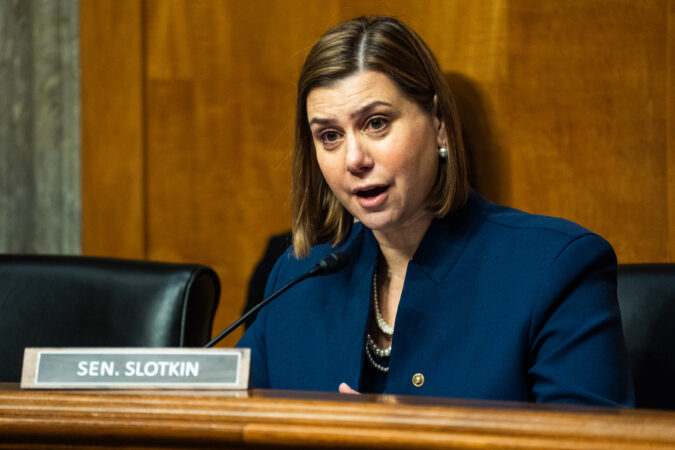
    In a video message Wednesday, Sen. Elissa Slotkin (D., Mich.) said that Jeanine Pirro, the U.S. attorney for D.C., last week asked to interview her about the video. Slotkin added that she also received an inquiry from the FBI’s counterterrorism division late last year and that she believed both were examples of Trump using his political appointees to pressure opponents into silence.

    “It’s legal intimidation and physical intimidation meant to get you to shut up,” Slotkin said in her message, which she posted on social media. “He’s used it with our universities, our corporations, our legal community, and with politicians who falsely believe that doing his bidding and staying quiet will keep them safe. No. I’m not going to do that.”

    Three of the other five Democrats who participated in the video — Reps. Jason Crow (Colo.), Maggie Goodlander (N.H.) and Chrissy Houlahan (Pa.) — also received inquiries from Pirro’s office, according to representatives for the lawmakers.

    “Donald Trump called for my arrest, prosecution, and execution — all because I said something he didn’t like. Now he’s pressuring his political appointees to harass me for daring to speak up and hold him accountable,” Crow said in a statement. “I won’t be intimidated and will keep fighting to uphold my oath to the Constitution and defend our country.”

    Representatives for Pirro’s office declined to confirm or deny the existence of either investigation Wednesday.

    Slotkin, a former CIA analyst, organized the video in question late last year, in which six Democrats with military or civil service backgrounds warned that threats to the country were coming not just from abroad but also domestically. They did not name Trump but, citing the Uniform Code of Military Justice, said that members of the U.S. military and the intelligence community have a responsibility to refuse illegal orders.

    In addition to Slotkin, the video included messages from Reps. Chris Deluzio (Pa.), a former Navy officer; Crow, a former Army Ranger; Goodlander, a Navy veteran; Houlahan, a former Air Force officer; and Sen. Mark Kelly (Ariz.), a former Navy captain and astronaut. Representatives for Kelly and Deluzio did not immediately respond to requests for comment.

    Trump responded by calling the lawmakers “traitors” and claiming on social media that they should be “ARRESTED AND PUT ON TRIAL.” He added that their behavior was “punishable by DEATH!” White House press secretary Karoline Leavitt later clarified that Trump did not want to execute them but accused them of “essentially encouraging” chaos.

    “It is sad and telling that simply stating a bedrock principle of American law caused the President of the United States to threaten violence against me, and it is downright dangerous that the Justice Department is targeting me for doing my job,” Goodlander said in a statement Wednesday.

    Houlahan called the investigation “ridiculous” in a statement.

    “We will not be silenced,” she added.

    The White House didn’t immediately respond to requests for comment.

    In her video message Wednesday, Slotkin said threats against her “went through the roof” following Trump’s social media posts about the lawmakers’ video, prompting her to add round-the-clock security. She received a bomb threat at her home, her parents were “swatted” in the middle of the night, and her siblings needed police cars in their driveways, she added.

    Slotkin said the inquiry from Pirro, a longtime Trump ally, was another way Trump was trying to threaten her.

    “To be clear, this is the president’s playbook. Truth doesn’t matter, facts don’t matter, and anyone who disagrees with him becomes an enemy and he then weaponizes the federal government against them,” she said.

    The reported inquiries from Pirro’s office are not the only examples of repercussions from Trump allies stemming from the video. Last week, Defense Secretary Pete Hegseth said he had formally censured Kelly and would seek to reduce his Navy rank in retirement, accusing the senator of making “seditious statements.”

    In response, Kelly filed a lawsuit against Hegseth, arguing that he was being unlawfully punished and emphasizing that he had earned his military rank.

    “Pete Hegseth wants our longest-serving military veterans to live with the constant threat that they could be deprived of their rank and pay years or even decades after they leave the military, just because he or another secretary of defense doesn’t like what they’ve said,” Kelly said Monday. “That’s not the way things work in the United States of America, and I’m not going to stand for it.”

  • Ford worker who heckled Trump draws support of auto union

    Ford worker who heckled Trump draws support of auto union

    The United Auto Workers union has thrown its support behind a Ford Motor Co. factory worker who was suspended for heckling President Donald Trump during a plant tour in Michigan.

    “The autoworker at the Dearborn Truck Plant is a proud member of a strong and fighting union-the UAW,” Laura Dickerson, the UAW vice president over the union’s Ford Department, said in a statement Wednesday. “He believes in freedom of speech, a principle we wholeheartedly embrace, and we stand with our membership in protecting their voice on the job.”

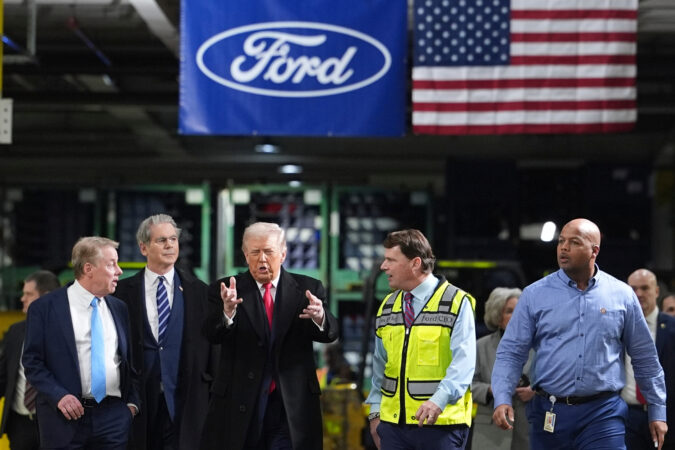
    The worker, TJ Sabula, told the Washington Post he had “definitely no regrets” about shouting at Trump as the president toured Ford’s F-150 pickup truck factory in Dearborn, Michigan, on Tuesday. In a video of the incident, a person could be heard shouting “pedophile protector,” to which the president responded with an expletive and by holding up his middle finger.

    “Workers should never be subjected to vulgar language or behavior by anyone — including the President of the United States,” Dickerson said. “The UAW will ensure that our member receives the full protection of all negotiated contract language safeguarding his job and his rights as a union member.”

    White House spokesman Steven Cheung defended the president’s reaction to the heckler.

    “A lunatic was wildly screaming expletives in a complete fit of rage, and the President gave an appropriate and unambiguous response,” Cheung said in a statement.

    Sabula told the Post he had been suspended by Ford, pending an investigation. The automaker declined to confirm the suspension, but condemned the heckling.

    “One of our core values is respect and we don’t condone anyone saying anything inappropriate like that within our facilities,” Ford said in a statement. “When that happens, we have a process to deal with it but we don’t get into specific personnel matters.”

    Following the suspension, supporters started a GoFundMe campaign titled “TJ Sabula is a patriot!!” to raise money for the worker. As of midday Wednesday, about 14,700 donations had been made totaling more than $325,000.