Category: Washington Post

  • Clinton fails to show for Epstein deposition, threatened with contempt of Congress

    Clinton fails to show for Epstein deposition, threatened with contempt of Congress

    House Oversight Committee Chairman James Comer (R., Ky.) threatened Tuesday to hold Bill Clinton in contempt of Congress after the former president declined to appear before the panel for a closed-door deposition related to its investigation of convicted sex offender Jeffrey Epstein.

    “I think it’s very disappointing,” Comer told reporters Tuesday. ” … We will move next week in the House Oversight Committee … to hold former president Clinton in contempt of Congress.”

    Clinton, along with his wife, former secretary of state Hillary Clinton, were among 10 individuals the panel voted in July to subpoena for testimony related to crimes committed by Epstein and his former girlfriend Ghislaine Maxwell. Hillary Clinton is scheduled to testify Wednesday but does not plan to appear.

    Neither Clinton has been accused of any wrongdoing in connection with Epstein, and both have said they have no knowledge related to the investigation. A spokesman for the former president has previously said he met Epstein several times and took four trips on his airplane, but knew nothing about Epstein’s crimes. Bill Clinton has appeared in Epstein-related photographs released by Congress and the Justice Department.

    The Clintons called the subpoenas from the panel “invalid and legally unenforceable” in a letter obtained and published by the New York Times.

    In the letter, the Clintons noted that they had provided Comer with sworn statements similar to those he had accepted from other subpoenaed individuals, who were later excused from testifying before the committee.

    “We are confident that any reasonable person in or out of Congress will see, based on everything we release, that what you are doing is trying to punish those who you see as your enemies and to protect those you think are your friends,” the Clintons wrote.

    Contempt of Congress is punishable by up to a year in prison. If Comer’s committee moves forward with a contempt finding, the full House would next vote whether to refer the matter to the Justice Department for possible prosecution.

    Comer initially issued subpoenas for the testimony of both Clintons in August, according to aides, who said the committee had made several attempts to accommodate both of their schedules.

    Both were first scheduled for appearances in October, which were later moved to December. Those dates were moved again after the Clintons said they planned to attend a funeral, according to committee aides. Both Clintons declined to suggest alternative dates in January, the aides said.

  • Scott Adams, the ‘Dilbert’ creator who poked fun at bad bosses, dies at 68

    Scott Adams, the ‘Dilbert’ creator who poked fun at bad bosses, dies at 68

    Scott Adams, who became a hero to millions of cubicle-dwelling office workers as the creator of the satirical comic strip Dilbert, only to rebrand himself as a digital provocateur — at home in the Trump era’s right-wing mediasphere — with inflammatory comments about race, politics, and identity, died Jan. 13. He was 68.

    His former wife Shelly Miles Adams announced his death in a live stream Tuesday morning, reading a statement she said Mr. Adams had prepared before his death. “I had an amazing life,” the statement said in part. “I gave it everything I had.”

    Mr. Adams announced in May 2025 that he had metastatic prostate cancer, with only months to live. In a YouTube live stream, he said he had tried to avoid discussing his diagnosis (“once you go public, you’re just the dying cancer guy”) but decided to speak up after President Joe Biden revealed he had the same illness.

    “I’d like to extend my respect and compassion for the ex-president and his family because they’re going through an especially tough time,” he said. “It’s a terrible disease.”

    Mr. Adams was working as an engineer for the Pacific Bell telephone company when he began doodling on his cubicle whiteboard in the 1980s, dreaming of a new, more creatively fulfilling career as a cartoonist. Before long, he was amusing colleagues with his drawings of a mouthless, potato-shaped office worker: an anonymous-looking man with a bulbous nose, furrowed pate, and upturned red-and-white striped tie.

    His doodles evolved into Dilbert, a syndicated comic strip that debuted in 1989 and eventually appeared in more than 2,000 newspapers around the world, rivaling Peanuts and Garfield in popularity.

    Years before the film comedy Office Space and TV series The Office satirized the workplace on-screen, Dilbert poked fun at corporate jargon, managerial ineptitude, and the indignities of life in the cubicle farm.

    In one strip, the title character is awarded a promotion “with no extra pay, just more responsibility,” because “it’s how we recognize our best people.” In another, he’s presented with an “employee location device” — a dog collar.

    Other Dilbert cartoons could be crassly funny. Seeking to improve the company’s image, Dilbert’s pointy-haired boss hires an ad agency that uses a computer program to come up with a new “high-tech name” for the firm, using random words from astronomy and electronics. Their suggestion: “Uranus-Hertz.”

    Mr. Adams proved adept at growing his audience during the tech boom of the 1990s, creating a Dilbert website long before most other cartoonists took to the internet. He also became the first major syndicated cartoonist to include his email address in his comic strip, an innovation that allowed readers to contact him directly with ideas. Their feedback convinced him to focus the cartoon entirely on the workplace, after some of the strip’s early installments explored Dilbert’s home life.

    Interviewed by the Wall Street Journal in 1994, Mr. Adams observed that “the universal thread” uniting the strip’s readers “is powerlessness. Dilbert has no power over anything.”

    By the end of the decade, Dilbert seemed to be everywhere, appearing on the cover of business magazines and in book-length compendiums. Mr. Adams signed off on the creation of a Dilbert Visa card and a Ben & Jerry’s ice cream flavor, branded as Totally Nuts; licensed his cartoon characters for commercials; and partnered with Seinfeld writer Larry Charles to develop an animated Dilbert television series, which aired for two seasons on the now-defunct UPN network.

    Capitalizing on the cartoon’s success, he also put out a shelfful of satirical business books, beginning with the 1996 bestseller The Dilbert Principle. Inspired by the Peter Principle, a management concept in which employees are said to be promoted to their level of incompetence, Mr. Adams argued that “the most ineffective workers are systematically moved to the place where they can do the least damage: management.”

    He wasn’t entirely joking. As he saw it, the people who spouted inane ideas, sucked up to management and pretended they knew more than they did were the ones who got promoted. The workplace was a mess, he suggested, but by calling out bosses’ bad behavior, Dilbert could be a force for good.

    “I heard from lots of people who told me, ‘My boss started to say something that was ridiculous — management fad talk, buzzwords — but he stopped himself and said, “OK, this sounds like it came out of a Dilbert comic,’ and then started speaking in English again.’

    “There is a fear of being the target of humor,” Mr. Adams told the Harvard Business Review.

    Companies such as Xerox incorporated the character into communications and training programs. But some critics found the cartoon’s sarcasm more corrosive than entertaining. Author and progressive activist Norman Solomon, who wrote a book-length critique of the comic, argued that Dilbert was hardly subversive, saying that it offered more for bosses than workers.

    Dilbert does not suggest that we do much other than roll our eyes, find a suitably acid quip, and continue to smolder while avoiding deeper questions about corporate power in our society,” Solomon wrote.

    Mr. Adams scoffed at the criticism, lampooning Solomon by name in his books and comic strips. “My goal is not to change the world,” he told the Associated Press in 1997. “My goal is to make a few bucks and hope you laugh in the process.”

    In interviews, he was often self-deprecating, declaring that his comic strip was “poorly drawn” and noting that long before he made Dilbert he “failed at many things,” including computer games he attempted to program and sell. His other failures included the Dilberito, a line of vitamin-filled veggie wraps that ended up making people “very gassy,” and his short-lived attempt at managing an unprofitable restaurant, Stacey’s at Waterford, that he owned in the Bay Area.

    “Certainly I’m an example of the Dilbert Principle,” he told the New York Times in 2007, a few months into his stint as a restaurant boss. “I can’t cook. I can’t remember customers’ orders. I can’t do most of the jobs I pay people to do.” (Employees told the newspaper that Mr. Adams was loyal and kind, yet totally clueless. “I’ve been in this business 23 years, and I’ve seen a lot of things,” the head chef said. “He truly has no idea what he’s doing.”)

    On the side, Mr. Adams blogged about fitness, politics, and the art of seduction — drawing, he said, on his training as a certified hypnotist, which he learned before becoming a cartoonist. He also wrote about his struggles with focal dystonia, a neurological disorder, which caused spasms in his pinkie finger that made it difficult to draw. Mr. Adams said he developed tricks to get around the issue, holding his pen or pencil to the paper for just a few seconds at a time, and underwent experimental surgery to treat a related condition, spasmodic dysphonia, that hindered his ability to speak.

    Politically, he cast himself as an independent, saying he didn’t vote and was not a member of any party. But he also veered into far-right political terrain on his blog, including in a 2006 post in which he questioned “how the Holocaust death total of 6 million was determined.” A few years later, writing about “men’s rights,” he compared society’s treatment of women to its treatment of children and people with mental disabilities.

    “You don’t argue with a 4-year old about why he shouldn’t eat candy for dinner. You don’t punch a mentally handicapped guy even if he punches you first. And you don’t argue when a woman tells you she’s only making 80 cents to your dollar. It’s the path of least resistance,” he wrote.

    Mr. Adams made headlines with his prediction that Donald Trump, whom he considered a master of persuasion, would win the 2016 presidential election. He was later invited to the White House after publishing the 2017 nonfiction book Win Bigly: Persuasion in a World Where Facts Don’t Matter. (The book’s cover art featured an orange-hued drawing of Dogbert, Dilbert’s megalomaniacal pet dog, with a Trumplike swoosh of hair.)

    “He was a fantastic guy, who liked and respected me when it wasn’t fashionable to do so,” Trump said Tuesday in a Truth Social post, referring to Mr. Adams as “the Great Influencer.” “My condolences go out to his family, and all of his many friends and listeners.”

    Amid a national reckoning on race in the 2020s, Mr. Adams sparked a backlash for his criticisms of diversity, equity, and inclusion programs, and for social media posts in which he joked that he was “going to self-identify as a Black woman” after President Joe Biden vowed to nominate an African American woman to the Supreme Court. In 2022, he introduced Dilbert’s first Black character, an engineer named Dave who announces to colleagues that he identifies “as white,” ruining management’s plan to “add some diversity to the engineering team.”

    The following year, Dilbert was dropped by hundreds of newspapers, including The Philadelphia Inquirer and Daily News, after Mr. Adams delivered a rant that was widely decried as hateful and racist. Appearing on his YouTube live-stream show, Real Coffee With Scott Adams, he discussed a controversial Rasmussen poll asking people if they agreed with the statement “It’s OK to be white,” a slogan associated with the white supremacist movement. About a quarter of Black respondents said “no.”

    Mr. Adams was appalled by the results. He declared that African Americans were “a hate group,” adding: “I don’t want to have anything to do with them. And I would say, based on the current way things are going, the best advice I would give to white people is to get the hell away from Black people.”

    Within a week his syndicate and publisher, Andrews McMeel Universal, cut ties with the cartoonist. Mr. Adams defended his comments, saying he had meant the remarks as hyperbole, and found support from conservative political activists as well as billionaire Tesla executive Elon Musk.

    In a follow-up show on YouTube, he disavowed racism against “individuals” while also telling viewers that “you should absolutely be racist whenever it’s to your advantage.” Weeks later, he relaunched Dilbert on the subscription website Locals, vowing that the comic would be “spicier” — less “PC” — “than the original.”

    “Only the dying leftist Fake News industry canceled me (for out-of-context news of course),” he tweeted in March 2023. “Social media and banking unaffected. Personal life improved. Never been more popular in my life.”

    From bank teller to cartoonist

    Scott Raymond Adams was born in Windham, N.Y., a ski town in the Catskills, on June 8, 1957. His father was a postal clerk, and his mother was a real estate agent who later worked on a speaker-factory assembly line.

    Growing up, Mr. Adams copied characters out of his favorite comic strips, Charles M. Schulz’s Peanuts and Russell Myers’ Broom-Hilda. He applied for a correspondence course at the Famous Artists School but was rejected, he said, because he was only 11. The minimum age was 12.

    Mr. Adams eventually took a drawing course at Hartwick College in Oneonta, an hour’s drive from his hometown. He received the lowest grade in the class and decided to focus instead on economics, receiving a bachelor’s degree in 1979. He moved to San Francisco, got a job as a bank teller at Crocker National Bank and, in his telling, was twice robbed at gunpoint while working behind the counter.

    At night, he took business classes at the University of California at Berkeley. He earned an MBA in 1986 and joined PacBell as an applications engineer, though he found himself deeply unhappy. “About 60 percent of my job at Pacific Bell involved trying to look busy,” he wrote in a 2013 book, How to Fail at Almost Everything and Still Win Big: Kind of the Story of My Life.

    After watching a public television series, Funny Business: The Art in Cartooning, he decided he had found his calling. Mr. Adams struck up a correspondence with the show’s host, cartoonist John “Jack” Cassady, who encouraged him to submit to major magazines like Playboy and the New Yorker.

    All his cartoons were rejected. But with Cassady’s encouragement, Mr. Adams continued to draw, waking up at 4 a.m. and sitting down with a cup of coffee to work on doodles of Dilbert and other characters. He stayed motivated in part by writing an affirmation: “I, Scott Adams, will become a famous cartoonist.”

    Even after he signed a contract to publish Dilbert through United Feature Syndicate, Mr. Adams continued to work at his day job, making $70,000 a year and gathering ideas for his strip while sitting at cubicle No. 4S700R. He left the company in 1995, and two years later he won the National Cartoonists Society’s highest honor, the Reuben Award for cartoonist of the year.

    Mr. Adams was twice married and divorced, to Shelly Miles and Kristina Basham. Information on survivors was not immediately available.

    Looking back on his career, Mr. Adams said he was especially proud of two novellas he had written, God’s Debris (2001) and the sequel The Religion War (2004). The latter was set in 2040 and revolved around a civilizational clash between the West and a fundamentalist Muslim society in the Middle East.

    Discussing the plot in a 2017 interview with Bloomberg Businessweek, Mr. Adams said that the Muslim extremists are defeated after the hero builds a wall around them and “essentially kills everybody there.”

    “I have to be careful, because I’m talking about something pretty close to genocide, so I’m not saying I prefer it, I’m saying I predict it,” he added.

    The magazine reported that Mr. Adams believed the novellas, not Dilbert, would be his ultimate legacy.
  • More workers are stuck in part-time jobs, in warning for the economy

    More workers are stuck in part-time jobs, in warning for the economy

    In a slowing labor market, even people with jobs are increasingly making do with less-than-ideal arrangements. They’re stuck in part-time positions or patching together multiple jobs to make ends meet, employment data shows.

    The number of part-time workers who say they would prefer full-time positions jumped sharply in November to an eight-year high.

    Meanwhile, those with multiple jobs — 5.7% of the workforce — is at its highest level in more than 25 years, according to monthly figures from the Bureau of Labor Statistics. In all, a record 9.3 million Americans worked more than one job in November, a 10% increase from a year earlier.

    The data reflects, at least partially, disruptions from the recent government shutdown, which left hundreds of thousands of Americans furloughed without pay from Oct. 1 to Nov. 12. Many of those workers — along with contractors, consultants, and others who felt the ripples of the shutdown — may have picked up side jobs or part-time gigs to make up for lost pay.

    But economists also point to a broader shift in Americans’ finances and rising concerns about affordability that is driving them to pick up more work. Of particular note: The number of Americans with two full-time jobs jumped by 18% in the past year, with women making up the bulk of that increase.

    “When people start adding jobs, and certainly a second full-time job, that says something about affordability, and about needing more money to meet household expenditures,” said Laura Ullrich, director of economic research at the Indeed Hiring Lab. “In theory, yes, if people ‘want’ to have multiple jobs, and they’re able to find them, that’s a good thing. But from a human perspective, the fact that more people are working two full-time jobs is hard to think of as a positive development.”

    Although federal workers received back pay when the government reopened, that wasn’t the case for its network of contractors and consultants.

    Joshua Beers, a government contractor in Columbia, Md., took a second job delivering food for Uber Eats during the shutdown. Without his usual paychecks — or any hope of back pay – he quickly depleted his savings, and fell behind on credit card and loan payments. The $400 a week from his side hustle wasn’t much, he said, but it was enough to temporarily cover the basics.

    Now, even with his full-time job back, Beers is still making deliveries, late at night and on weekends, to make up for lost income. Plus, he said, he worries about the slowing job market: His wife has been looking for work for over a year.

    “The job market feels really confusing right now,” he said. “I don’t want to give up anything I can do for additional income on the side.”

    The U.S. labor market has cooled markedly in the past year. Employers added 584,000 jobs in 2025, an average of about 49,000 jobs per month. That’s a significant drop from the 2 million jobs added over 2024, or about 168,000 per month. The unemployment rate ticked down Friday to 4.4%.

    That’s left job-seekers in a tough position. Layoffs are still relatively low in a sign that companies would rather cut expansion plans than get rid of existing workers, making it difficult for newcomers to break in.

    To that end, the number of people working part-time because they couldn’t find full-time jobs has gradually picked up since 2023. The surge in November — a 62% increase from a year earlier — was the biggest annual jump on record, going back to 1956.

    “There’s been cooling in the labor market, but the most worrisome sign on its own is a big increase in the number of people working part-time for economic reasons,” said Guy Berger, director of economic research at the Burning Glass Institute. “This is a classic barometer of underemployment, and it tends to go up when the labor market is getting worse.”

    In Wisconsin, Rachel Fredrickson picked up a part-time job in retail in November, after eight months of unemployment from the manufacturing industry. Even with 14 years of experience in search engine optimization, she said it’s been impossible to find a full-time digital marketing position.

    Instead, Fredrickson has been working on a sales floor for up to 20 hours a week. Now, with the holiday rush over, she’s bracing for even fewer hours.

    “I’m back to having weeks where I don’t work at all,” said Frederickson, 38. “My husband and I are getting by, but we have virtually no savings left at this point.”

  • Iraq War critic, Venezuela mission defender: Vance’s foreign policy journey

    Iraq War critic, Venezuela mission defender: Vance’s foreign policy journey

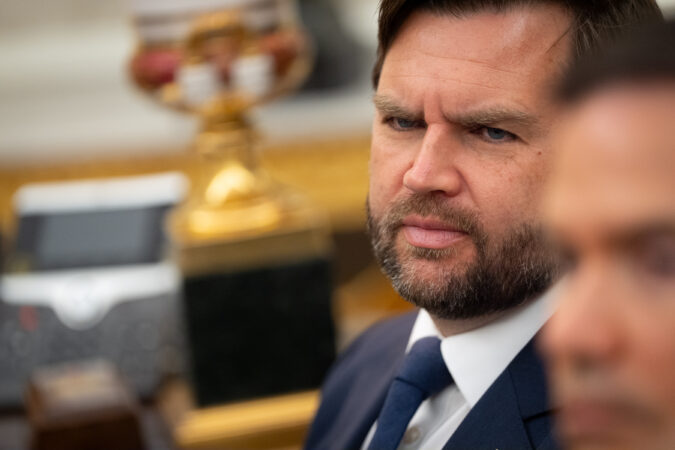
    Vice President JD Vance served in the Iraq War and came home a sharp critic of foreign military interventions, saying that too often Washington policymakers lose sight of American interests when they entangle themselves in faraway wars.

    Now he is defending President Donald Trump’s decision to conduct a daring raid this month in a country closer to home — to depose Venezuelan President Nicolás Maduro. The White House said that a more pro-U.S. government in Venezuela will stop drug and migrant flows, and open the country’s vast oil reserves to U.S. companies. But there are also major risks that armed conflict in the country could escalate, sucking in the United States and making the venture harder to defend as an “America First” endeavor.

    Vance’s defense of Maduro’s seizure appears discordant with his far more skeptical stance toward strikes on the Houthi militia in Yemen — a position revealed in a Signal group chat that was accidentally made public in March. Many prominent advocates of military restraint who have boosted Vance’s foreign policy views in the past now oppose the decision to oust Maduro.

    But as the vice president eyes his 2028 presidential prospects while also wanting to appear in lockstep with the president, Vance has claimed no contradiction at all.

    Going back to his time in the Senate, Vance has been an advocate for a robust U.S. presence in the Western Hemisphere, co-sponsoring a 2023 resolution reaffirming the Monroe Doctrine, which warns foreign powers against challenging U.S. predominance in the Americas.

    Now, he is defending the Venezuela operation as an America First decision.

    “As a Marine Corps veteran, for my entire lifetime, presidents — and let’s be honest, they were Democrats and Republicans — would send the American military to far-off places,” Vance said Friday at a Venezuela-focused White House event for oil executives. “They would get us involved in these endless quagmires. They would lose hundreds or thousands of American lives. And the American people would get nothing out of these misadventures.

    “And now you have an American president who’s empowered the American military to stop the flow of drugs into our country and to ensure that we, as opposed to our adversaries, control one of the great energy reserves that exist anywhere in the entire world. And he did it without losing a single American life in the process,” Vance said.

    Even some of Vance’s allies see the vice president struggling to thread the needle as he tries to stand by Trump while not alienating the GOP’s anti-interventionist wing.

    “If JD Vance himself were president, would Venezuela have happened? Would we have captured Maduro? To me, without a doubt, the answer is no. I cannot fathom a scenario,” said Ben Freeman, a senior fellow at the Quincy Institute, a Washington-based think tank that has hosted Vance in the past.

    Vance is “not interested in militarism,” Freeman said. “He is seeking out diplomacy-first solutions and keeping the U.S. out of foreign adventurism.”

    Vance says there is no daylight between himself, Trump, and Secretary of State Marco Rubio. But Rubio, a Cuban-American from Florida and another potential 2028 contender, has long advocated for aggressive action in Venezuela as a larger strategy to bolster U.S. ties to Latin America and weaken Cuba’s Communist leaders.

    In recent days, Vance has repeatedly felt the need to explain to his followers why the administration decided to go after Maduro.

    “I understand the anxiety over the use of military force, but are we just supposed to allow a communist to steal our stuff in our hemisphere and do nothing? Great powers don’t act like that,” Vance wrote on X on Jan. 4, a day after the president announced Maduro’s capture. Trump was at Mar-a-Lago during the raid, surrounded by his senior-most aides — but not the vice president.

    Two administration officials, who spoke on the condition of anonymity to discuss sensitive considerations, said political optics did not play a role in the decision for Vance to stay away from Mar-a-Lago.

    For safety reasons, Vance rarely joins Trump outside of Washington. Additionally, officials were worried that a vice-presidential motorcade to Mar-a-Lago the evening of the operation could have tipped off Venezuela. As a result, Vance and other White House officials determined it wasn’t necessary for him to attend the news conference, according to the officials.

    Vance and White House officials also said he played a key role in the lead-up to the operation.

    In mid-December, Vance and Rubio led a meeting of Trump’s top advisers and Cabinet officials to plan the operation, including the decision to move forward with an economic quarantine using U.S. military vessels to block sanctioned Venezuelan oil shipments, according to a person with knowledge of the meeting who spoke on the condition of anonymity to discuss sensitive details.

    At the end of the month, Vance also spoke with Qatari intermediaries about whether Maduro was willing to accept any of the United States’ exit offers, the person said. When it was clear Maduro wasn’t prepared to accept the negotiations, Vance and Rubio jointly concluded Maduro was “not a credible interlocutor” and that the U.S. couldn’t conduct business with Venezuela under his leadership, the person said.

    As the operation took place, Vance was “on the same systems as the president,” the person said, monitoring it in real time and “on a line watching the operation with the president.” A spokesperson has previously said that Vance was monitoring events from elsewhere in Palm Beach and departed Florida before Trump spoke to the media.

    Vance has not always been so enthusiastic about taking U.S. military action. He was a sharp voice of dissent in the Signal group chat about strikes on Houthi militants in Yemen threatening shipping traffic in the Red Sea. The Signal chat included Trump’s top national security officials — and the editor of the Atlantic.

    “There is a real risk that the public doesn’t understand this or why it’s necessary,” Vance wrote, noting that militants were threatening more European than American trade.

    “I am willing to support the consensus of the team and keep these concerns to myself,” he said. “I just hate bailing Europe out again.”

    Although Vance never intended for his comments to become public, his sharply independent voice — especially since another top Trump aide on the thread, deputy chief of staff Stephen Miller, said the president had already made a “clear” decision — jumped out to some.

    “The president had decided and Vance was still relitigating,” said Rebecca Lissner, who was former vice president Kamala Harris’ principal deputy national security adviser. “I thought it was really informative about how he operates as the vice president, and how different it is. The fact that instead of JD Vance being the one being like, ‘Guys, the president has decided. We’re moving out,’ he was the one questioning the decision.”

    Vice presidents are often faced with thorny questions about how to influence their administration’s policies. Without a clear portfolio, an agency to run, or a defined responsibility, the vice president has to own actions without always helping decide them.

    That became a struggle for Harris on Gaza policy during the 2024 campaign, when President Joe Biden’s decisions on Israel became unpopular with the Democratic base.

    With Trump and Vance, there may be more room for input, Lissner said.

    “Trump does like to be presented with options, and that means that there’s space for different people to advocate for different options,” she said.

    Vance has leaned into some of the administration’s domestic initiatives with gusto, as was clear last week when he came to the White House briefing room to deliver a sharp defense of the ICE agent who fatally shot a protester in Minneapolis and announce a new Justice Department initiative to uncover fraud in federal programs.

    Allies of Vance say his support for Trump’s foreign policy decisions over the last year should come as no surprise.

    “Vance is never going to break with Trump, and he authentically likes him, and he seems to authentically like Rubio,” said Curt Mills, the executive director of the American Conservative, a magazine that formed in opposition to the Iraq War. “He’s a nationalist and a realist, but he’s also the vice president and not the president, so he’s not ultimately the decision-maker.”

    Sen. Jim Banks (R., Ind.), a friend of Vance’s, said the two have talked about their time serving overseas — Banks in Afghanistan — and how it shaped their view of the U.S.’s role abroad. He too described Vance’s foreign policy as “rooted in realism,” and said that “JD believes that America has a strong role to play around the world.”

    “We served in wars that were poorly run and managed by the military leaders of the prior administrations, and we don’t want to see our country send troops to 20-year forever wars with little purpose and fail in the same way that the previous administrations did,” Banks said. “President Trump doesn’t want that either. He ran against that.”

    Advocates for Trump’s use of force over the past year said he has been careful about not getting pulled deeply into ongoing conflicts.

    The decision not to seek more dramatic change in Venezuela, and instead to work with Maduro’s deputy, Delcy Rodríguez, may be part of that pattern, analysts said — but it also may not work.

    “This isn’t about regime change. This definitely does have that harder-nosed realpolitik flavor, and I think that’s why folks like Vance or others find themselves able to at least try and defend this,” said Emma Ashford, a senior fellow at the foreign police think tank the Stimson Center, who has argued for a more restrained approach to the use of military force.

    Governmental collapse in Venezuela, a military coup, or other unrest could lead to greater migration and larger drug trafficking issues, Ashford said — the opposite of what Vance said he hopes will come.

    “If this spirals into something more, it’s going to be much harder to defend,” she said. “For folks like me, I would say that’s the reason you shouldn’t do it in the first place.”

  • Eyes are on Gorsuch as Supreme Court weighs rights of trans athletes

    Eyes are on Gorsuch as Supreme Court weighs rights of trans athletes

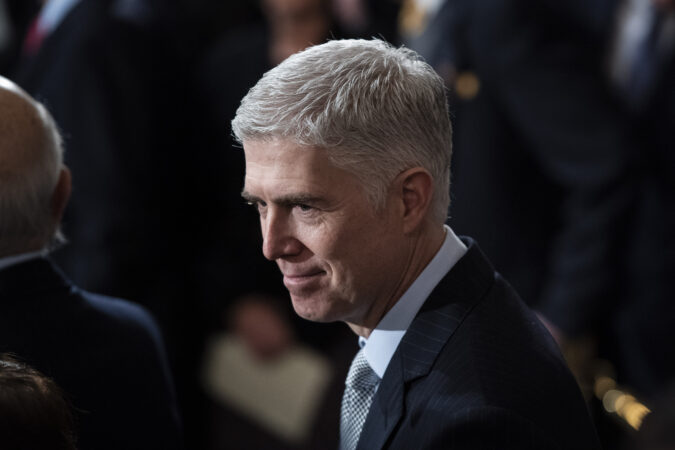
    Justice Neil M. Gorsuch surprised many in 2020 when he wrote one of the Supreme Court’s most consequential rulings expanding legal rights for gay and transgender people.

    The 6-3 decision in Bostock v. Clayton County held that the ban on sex discrimination in a core federal civil rights law, Title VII of the Civil Rights Act, covers discrimination against gay and transgender people.

    “That’s because it is impossible to discriminate against a person for being homosexual or transgender without discriminating against that individual based on sex,” Gorsuch wrote.

    Conservatives were aghast. Some said the ruling heralded the “end of the conservative legal movement.” Liberals praised Gorsuch’s opinion. Some even speculated that Gorsuch, appointed by President Donald Trump, would take on the role of former Justice Anthony M. Kennedy — the Reagan-nominated justice who was critical in landmark gay rights rulings, including establishing the right to same-sex marriage.

    With the Supreme Court set to weigh the question of transgender athletes this week, Gorsuch is again in the spotlight. Supporters of allowing transgender women and girls to play on women’s sports teams have a difficult task persuading the conservative-majority court. They see winning over Gorsuch as key and appear to have crafted their arguments with him in mind.

    Lawyers involved in the two cases before the court expect that Chief Justice John G. Roberts Jr., who joined Gorsuch’s opinion in Bostock, might side with him again. Together with the court’s three liberals, that would be enough for a narrow majority.

    “It’s difficult to imagine how Gorsuch and Roberts would come out differently on this particular issue,” said Shiwali Patel, senior director of education justice at the National Women’s Law Center, which filed an amicus brief supporting the trans athletes at the center of the cases.

    Gorsuch and Roberts, however, have more recently handed defeats to advocates for gay and transgender rights. In June, Roberts wrote the 6-3 ruling that upheld state bans on gender transition care for minors. Gorsuch and Roberts also joined a 6-3 majority that sided with Maryland parents who wanted to opt their children out of lessons featuring LGBTQ+-themed books.

    Because of that, as well as polling that suggests views on trans issues have become more conservative in recent years, some see Bostock as an outlier.

    “Gorsuch is truly a man on his own,” said Josh Blackman, a professor at the South Texas College of Law at Houston, referring to the justice’s reputation for sometimes taking unconventional positions. “On the other hand, he’s living in 2025, and it’s not 2020.”

    The court will hear arguments in the two transgender cases on Tuesday. One concerns Lindsay Hecox, a trans woman and Boise State University student, who challenged a 2020 Idaho law that bars trans women from playing on female sports teams. She says the law violated the Constitution’s equal-protection clause when it stopped her from joining the university’s cross-country team.

    The second case concerns 15-year-old Becky Pepper-Jackson, a transgender high school athlete from West Virginia. Unlike Hecox, Pepper-Jackson argues the law in her state barring trans athletes from women’s sports violates Title IX, the federal civil rights law that bans sex-based discrimination in federally funded schools. That law is worded similarly to the one Gorsuch ruled on in Bostock.

    In their court filing in Pepper-Jackson’s case, the American Civil Liberties Union and Lambda Legal quoted Gorsuch far more than any other justice. They directly quoted his Bostock opinion more than a dozen times and also cited other opinions of his, including a 2012 case dating from Gorsuch’s time as a judge on the court of appeals.

    Karen Loewy, interim deputy legal director for litigation at Lambda Legal, a prominent advocacy group for gay rights, said the approach was not about Gorsuch in particular. Citing his Bostock opinion was necessary for Pepper-Jackson’s arguments about discrimination against transgender people being sex-based discrimination.

    “It really is not a Gorsuch-specific thing,” Loewy said. “He happens to have the gems that really underscore our arguments.”

    Other observers say the strategy is clear.

    “Of course” Pepper-Jackson’s lawyers are working to persuade Gorsuch, said Steve Vladeck, a professor of law at the Georgetown University Law Center who regularly writes about the Supreme Court. “The harder question is whether that’s actually going to work.”

    Gorsuch’s rulings since Bostock raise doubts.

    His votes in the Tennessee case on gender-transition treatments and the Maryland schoolbook case indicate that it’s “unlikely Gorsuch views the trans athletes cases the way he sees Bostock,” said Blackman, who was among the conservatives who criticized Gorsuch following the Bostock ruling.

    Americans have become more supportive of restrictions for transgender people in the past few years, according to a Pew Research Center survey published in February. Fifty-six percent of Americans supported bans on providing gender transition care for minors, up 10 percentage points from 2022, the study found. And 66% favored or strongly favored laws that require trans athletes to compete on teams that match their sex assigned at birth, up eight points from 2022.

    Even before the shift in public opinion, a majority of Americans opposed allowing transgender female athletes to compete against other women at all levels of sports, according to a Washington Post-University of Maryland poll.

    “The climate of views of trans rights is different today than it was five years ago,” Blackman said.

    Title VII, which was at the center of the Bostock case, made it illegal for employers to discriminate against workers based on race, national origin, religion or sex.

    “[F]ew pieces of federal legislation rank in significance,” Gorsuch wrote in his 2020 opinion. He wrote that it was “clear” that discriminating against gay and transgender workers meant discriminating on the basis of sex.

    Lawyers for Pepper-Jackson say the same logic should apply to their case.

    “Like an employer who fires employees for being transgender, a school administrator who discriminates against students for being transgender ‘must intentionally discriminate against individual [students] in part because of sex,’” Pepper-Jackson’s lawyers wrote, quoting Gorsuch’s opinion.

    But lawyers for the state of West Virginia say sports is different from the workplace — an argument that allows them to court Gorsuch’s support without asking him to disavow his Bostock ruling.

    Sex should be irrelevant at work, but “sex is relevant in sports, often requiring sex-differentiated opportunities to ensure fairness and safety,” West Virginia’s lawyers wrote in their brief to the justices. Transgender women have inherent advantages in women’s sports, they argue, and should be banned to ensure equal opportunity for women.

    John Bursch, senior counsel with Alliance Defending Freedom, a conservative legal organization, said he’s confident Gorsuch and Roberts will be part of a majority upholding the bans in Idaho and West Virginia.

    Alliance Defending Freedom represents Madison Kenyon and Mary Kate Marshall, Idaho State University track and cross-country athletes, who are asking the Supreme Court to uphold the Idaho ban alongside the state’s governor, Brad Little.

    Bursch agreed with West Virginia’s argument. In the context of student sports, he said, “you have to take sex into consideration.”

  • Smithsonian removes Trump impeachment text as it swaps his portrait

    Smithsonian removes Trump impeachment text as it swaps his portrait

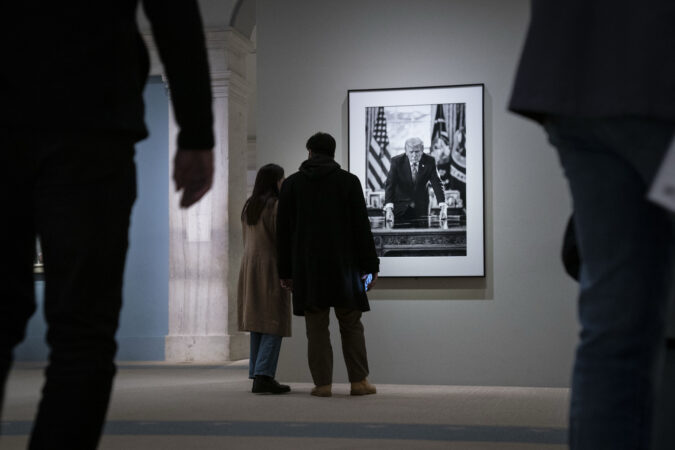
    The National Portrait Gallery removed a swath of text that mentioned President Donald Trump’s two impeachments and the Jan. 6, 2021, insurrection as it swapped out a prominent photo of him last week.

    Trump and the White House posted on social media Friday and Saturday to highlight the updated portrait in the “America’s Presidents” exhibition, which now features a framed black-and-white photo by White House photographer Daniel Torok. It shows Trump staring intensely, with his fists on the Resolute Desk — an image the president first shared on his Truth Social account last year.

    It replaced a photo by Washington Post photojournalist Matt McClain, which showed Trump with his hands folded in front of him, and was accompanied by a longer caption recounting Trump’s first term and his reelection. “Impeached twice, on charges of abuse of power and incitement of insurrection after supporters attacked the U.S. Capitol on January 6, 2021, he was acquitted by the Senate in both trials,” it read, in part.

    A Trump official specifically complained about that passage months earlier, when the president was trying to force out the portrait gallery’s director.

    The placard has been replaced with one whose caption is so short that the outline of the old sign was visible on the wall beneath it, simply noting Trump’s years in office. It now contrasts with portraits of other former presidents, including Joe Biden, Barack Obama, George W. Bush, and Bill Clinton, which all hang alongside wall text highlighting events during their time in office. Clinton’s notes his impeachment.

    National Portrait Gallery spokesperson Concetta Duncan said the museum is “exploring” less descriptive “tombstone labels” for some new exhibits and displays, and she noted that Trump’s portrait in the popular exhibition has changed before.

    Neither the Smithsonian nor the White House directly responded when asked if the Trump administration had requested the changes. The revamp comes several months after Trump bashed former portrait gallery director Kim Sajet as “highly partisan,” leading to her resignation, and after the White House threatened to withhold Smithsonian funding if the institution doesn’t cooperate with the administration’s review of museum content for “improper ideology.”

    Trump’s allies in government have recently led efforts to brand the public sphere with his preferred personal descriptors in ways large and small, adding his name to the Kennedy Center and U.S. Institute of Peace and installing plaques in the White House that laud Trump and disparage his political rivals such as former presidents Biden and Obama. Last year, the Colorado Capitol replaced a portrait of Trump after he complained about it.

    Besides noting the 2021 attack on the U.S. Capitol by Trump’s supporters and his impeachments in the House, the old placard mentioned his Supreme Court appointments, his 2020 election loss to Biden, and his efforts to lead the development of coronavirus vaccines. The text also said that the former photo portrait by McClain was supposed to remain on view until Trump’s commissioned painting was unveiled. (The previous portrait and its biographical label still appeared on the Smithsonian website as of Saturday afternoon.)

    The National Portrait Gallery portrayed the changes as unremarkable, saying that it previously rotated two photos of Trump through the collection.

    A notice posted on the gallery’s website announced the exhibition would temporarily close for updates from April 6 to May 14. It did not specify whether the other labels for former presidents would be changed during that period.

    A former Smithsonian historian, who spoke on the condition of anonymity because they were not authorized to speak for the institution, said that the National Portrait Gallery’s relatively long wall texts have stood out in comparison to shorter labels at many other art museums. “Because it’s a museum which combines art and portraiture, it has always had a biographical component to its labels to explain and contextualize the individual who’s being portrayed,” they said, adding that “you can outline the parameters of somebody’s career in a very neutral fashion.”

    “Tombstone” labels — museum jargon for bare-bones signs that list only essential information such as the artist, date of creation, and medium — are common at art museums such as the Guggenheim or MoMA, as well as other Smithsonian art museums.

    This isn’t the first time the Smithsonian has removed material mentioning congressional attempts to remove Trump from office since he launched a public campaign to remove what he calls “woke” ideology from U.S. cultural institutions. In July, the National Museum of American History briefly removed — then restored — references to his impeachments in its exhibition “The American Presidency: A Glorious Burden.”

    The institution said it had taken the text out “because the other topics in this section had not been updated since 2008.” The change was part of a content review that the Smithsonian agreed to undertake, following pressure from the White House to remove Sajet as the portrait gallery’s director.

    At the time, a White House official provided the Washington Post with a list of instances in which Sajet allegedly criticized Trump or promoted improper ideology. It specifically included the caption on his presidential portrait, for mentioning his impeachments and the Capitol attack.

    Although the Smithsonian Board of Regents affirmed that only its secretary could decide the institution’s personnel, Sajet later stepped down and has not been permanently replaced. Elliot Gruber serves as acting director.

    The changes ignited concerns about political interference at the Smithsonian and how the institution charged with preserving American history could be shaped by the Trump administration’s efforts to exert more control over its work.

    Torok became the White House photographer during Trump’s second term. One of his first official portraits drew attention for its similarity to the president’s 2023 mug shot, for his indictment on criminal charges in Atlanta.

    His photo now hanging in the National Portrait Gallery shows the president leaning over his desk in the Oval Office, fists clenched, looking directly into the camera. Trump posted the photo on Truth Social in October, writing that he was “getting ready to leave our imprint on the World.”

    Torok celebrated the Smithsonian display on social media on Friday and previously described the photo on Instagram as “Powerful!”

    The photo strikingly echoes a quieter image of John F. Kennedy. The president was captured from behind, hunched over in nearly the same position as Trump, in a 1961 photograph called “The Loneliest Job.”

    Trump has struck the same pose in other photos, including one Stephen Voss shot for Time in October.

  • Noem says she’ll send more federal agents to Minnesota

    Noem says she’ll send more federal agents to Minnesota

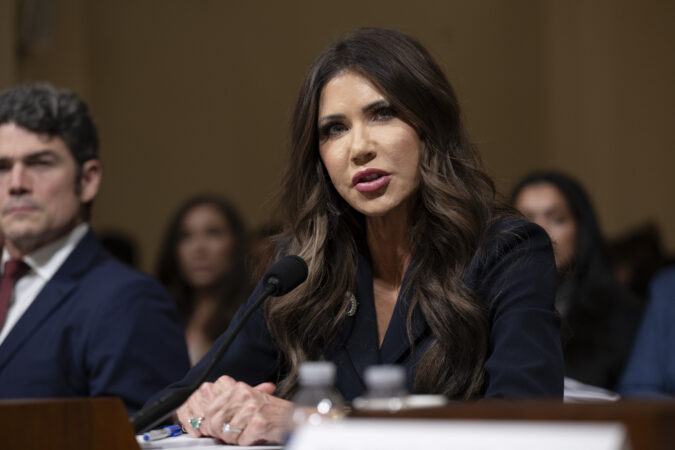
    Homeland Security Secretary Kristi L. Noem said hundreds more federal agents will be deployed to Minnesota as federal and local officials on Sunday doubled down on their competing accounts of what led up to the killing of a U.S. citizen by an Immigration and Customs Enforcement agent in Minneapolis last week, and who gets to investigate.

    In an interview with Fox NewsBusiness’s Sunday Morning Futures, Noem said the administration will send more officers on Sunday and Monday.

    “There’ll be hundreds more, in order to allow our ICE and our Border Patrol individuals that are working in Minneapolis to do so safely,” Noem said.

    The increase in federal agent presence in Minnesota comes as protests continued throughout the weekend. Demonstrators gathered across the country Saturday to demonstrate against ICE and the killing of Renee Good, a 37-year-old mother of three.

    Trump officials remained adamant Sunday that Good was responsible for her own death, while Democrats insisted that an investigation including local law enforcement must be completed before drawing conclusions.

    Federal agents in Minneapolis rammed the door of one home Sunday and pushed their way inside, part of what DHS has called its largest enforcement operation ever.

    In a dramatic scene similar to those playing out across Minneapolis, agents captured a man in the home just minutes after pepper spraying protesters outside who had confronted the heavily-armed federal agents. Along the residential street, protesters honked car horns, banged on drums, and blew whistles in attempts to disrupt the operation.

    But within minutes, the handcuffed man was led away and soon gone.

    More than 2,000 immigration arrests have been made in Minnesota since the enforcement operation began at the beginning of December, said Homeland Security spokesperson Tricia McLaughlin.

    Tensions over the facts of the fatal shooting of Good grew as the FBI, which has taken over the investigation, continued to block Minnesota officials from participating in the inquiry, forcing the local authorities to conduct their own review.

    Speaking to CNN’s State of the Union, Noem said that Good was to blame for the shooting, even though an official investigation into the shooting has not been completed, and as video evidence raised several questions about the administration’s assessment of what happened. About two hours after the shooting on Wednesday, Noem released a statement asserting that Good committed an act of “domestic terrorism,” and she accused Good of weaponizing her SUV by attempting to “run a law enforcement officer over.”

    Almost immediately after the shooting, federal officials, including President Donald Trump, Vice President JD Vance, and Noem, said the ICE officer fired in self-defense. Details of the killing, which was captured in videos widely disseminated online, dispute the administration’s view of the incident. Federal officials’ quick decision to blame Good for the shooting has drawn deep condemnation from Democrats nationwide and Minnesota leaders who’ve argued that federal authorities have not yet finalized a full review of the incident, and that they are blocking Minnesota officials from participating in the investigation.

    Across interviews on Sunday, Noem repeated her accusations that Good used her Honda Pilot to attack the officer, telling CNN’s Jake Tapper that “everything that I said has been proven to be factual.” When pressed by Tapper about video evidence showing that the ICE agent was able to move out of the vehicle’s way and fire at least two of three shots from the side of the car as it veered past him, Noem said Good was “breaking the law by impeding and obstructing a law enforcement operation.” Noem also mentioned that there is video — which Tapper said he had not yet seen — that shows “that this officer was hit by her vehicle.”

    “These officers were doing their due diligence that their training had prepared them to do,” Noem said, insisting that she’s correct in labeling Good a “domestic terrorist” because she “weaponized her vehicle to conduct an act of violence against a law enforcement officer and the public.”

    When Tapper once again pressed her on her decision to draw conclusions ahead of a full investigation, Noem said the administration “will continue to look at this individual and what her motivations were,” but claimed that Good had “harassed and impeded law enforcement operations.”

    Good’s wife has said that Good had “stopped to support our neighbors” when she was fatally shot on the residential street. Good’s family members have said they do not believe she was tailing ICE officers. She had just dropped her son off at school before the shooting, they said. Her father, Tim Ganger, said in a brief interview Wednesday that she got “caught up in a bad situation.”

    Tom Homan, Trump’s border czar, told Fox News Sunday that he believes the officer thought his life was in danger and acted in response. Homan, however, urged Americans to wait for an investigation to play out before making more accusations.

    “There’s a lot of things we don’t know,” Homan said. “You can’t compare this to murder. Murder requires malice and that is just dangerous to put that type of language out.”

    Homan then accused Democratic leaders — including Minneapolis Mayor Jacob Frey, who used an expletive when saying ICE should leave the city — of spreading “the hateful rhetoric [that] has caused a lot of this violence.”

    Frey told NBC News’s Meet the Press that he does bear responsibility to “bring down the temperature” of the rhetoric.

    “To those that are offended, I’m sorry I offended their delicate ears,” Frey said. “But as far as who inflamed the situation, you know, I dropped an f-bomb. And they killed somebody. I think the killing somebody is the inflammatory element here, not the f-bomb.”

    Frey also told NBC News that he believes there is now “deep mistrust” over what the results of an FBI investigation into the shooting will be given that federal officials are not allowing Minnesota authorities, including the Bureau of Criminal Apprehension, to contribute to the review.

    “What I was pushing back on from the very beginning was a narrative that had jumped to that conclusion right from the get-go,” he said. “When you’ve got a federal administration that is so quick to jump on a narrative as opposed to the truth, I think we all need to be speaking out.”

    Sen. Tina Smith (D., Minn.) was more aggressive in her rebuke, accusing the Trump administration of running a “cover-up” of Good’s shooting by trying to shift the public narrative before facts could be learned by investigators.

    “Hours after Renee Good was shot and killed by federal agents, [DHS Secretary] Kristi Noem was telling us what had happened,” Smith said in an interview with ABC’s This Week. “How can we trust the federal government to do an objective, unbiased investigation without prejudice when at the beginning of that investigation, they have already announced exactly what they think happened?”

    Information from the Associated Press was used in this article.

  • Department of Homeland Security changes account of ICE shooting in Maryland

    Department of Homeland Security changes account of ICE shooting in Maryland

    The Department of Homeland Security has changed its account of an immigration enforcement-related shooting in Maryland that left two men injured on Christmas Eve, a move prompted by a local police account that contradicted the federal agency’s initial statement.

    In the department’s announcement of the shooting on X, officials said officers with U.S. Immigration and Customs Enforcement were executing a “targeted immigration enforcement operation” in Glen Burnie when they approached a vehicle and told the driver, Tiago Alexandre Sousa-Martins, to turn off the engine. In the passenger seat of Sousa-Martins’ van, the department said, was Solomon Antonio Serrano-Esquivel.

    Officers “defensively fired” their guns at the vehicle, striking Sousa-Martins after he allegedly refused to power off his van and attempted to flee, ramming it into “several ICE vehicles” before driving in the officers’ direction, DHS said in its initial account. In that account, Serrano-Esquivel suffered whiplash when Sousa-Martins’ van crashed between two buildings.

    But the Anne Arundel County Police Department issued a statement Friday that offered a counter narrative. One of the men was an ICE detainee and already in the agency’s custody when the incident occurred, police said. The other was injured by gunfire “while operating a separate vehicle.”

    DHS did not immediately respond to a request for comment on Saturday about the discrepancy in accounts and the status of the two men’s injuries. In a statement provided to the Baltimore Sun, Assistant Secretary Tricia McLaughlin confirmed Serrano-Esquivel was inside “one of the ICE vehicles that was rammed.”

    In its initial account of the shooting, DHS said Sousa-Martins, a Portuguese national, had been living in the United States illegally on an expired visa that lapsed in 2009, according to a statement provided to the Washington Post in December. The statement also noted Serrano-Esquivel, who’s from El Salvador, was also in the country illegally.

    Sousa-Martins is being held at a detention facility in Bowling Green, Va., according to ICE’s detainee locator website. No details were available for Serrano-Esquivel’s whereabouts and DHS did not immediately respond to questions about either man’s detention status.

    The December incident is one of over a dozen ICE shootings during President Donald Trump’s second term, according to media reports and court records.

    On Wednesday, Renée Good, 37, was fatally shot on a residential street in Minneapolis during an exchange with an ICE officer, sparking protests and scrutiny over ICE’s tactics. The following day, two people were shot and injured during a “targeted vehicle stop” in Portland, Ore., prompting an investigation from Oregon officials.

    DHS has said ICE officers are facing a surge in threats and assaults, including with vehicles used as weapons, and blamed “sanctuary politicians and the media.” Officials have vowed to prosecute “rioters” and warned that demonstrations will not stop their immigration enforcement efforts.

    Anne Arundel County police said in their statement on Friday that the Glen Burnie shooting is still under investigation, and that its officers do not enforce immigration law, work with ICE, or ask people about immigration status. At a December news conference, department spokesperson Justin Mulcahy said the FBI will investigate the alleged attempt to run over the federal agents and ICE would conduct an internal investigation through its Office of Professional Responsibility.

  • How China and Russia are using Maduro’s capture to sway U.S. discourse

    How China and Russia are using Maduro’s capture to sway U.S. discourse

    Two days after Venezuelan President Nicolás Maduro was captured by U.S. Special Forces, a MAGA-friendly social media commentator who uses the name David Freeman shared news footage on X showing Venezuelans cheering and dancing on a South Florida street.

    “Democrats are absolutely FURIOUS over the joy for what President Trump just accomplished,” the social media user wrote to his 1.6 million followers.

    The same day, Maimunka News, an account that usually posts about the war in Ukraine, elevated a video report from the Kremlin-backed news outlet RT stressing that Venezuelans were demanding Maduro’s release.

    Neither video was exclusive or particularly surprising. But both the accounts that promoted them were part of a covert Russian influence operation that has been saturating U.S.-focused information ecosystems with a chaotic stream of often contradictory narratives and conspiracy theories about Maduro’s capture using a network of social media accounts, influencers, and fake websites, according to research from the Atlantic Council’s Digital Forensic Research Lab.

    “I call it the ‘throw spaghetti at the wall’ approach, where they test out various conspiracies … [and] promote contradictory narratives,” said Layla Mashkoor, deputy director of research for the Washington-based group, which linked the social media activity to a covert Russian network known as Storm-1516. “It’s really an approach that doesn’t necessarily seek to amplify a single, cohesive message, but rather just seeks to dilute the entire information environment to confuse individuals.”

    The aim, she said, is “to create chaos that makes it difficult for the everyday person who might encounter this to then be able to discern what are they seeing that might be true.”

    As they have done during many other high-profile and contentious news events, such as the 2024 U.S. presidential election campaign, Russia and China have launched influence operations to quickly capitalize on controversy — this time surrounding the U.S. operation to seize the Venezuelan president — by spreading conspiracy theories, inflammatory claims, manipulated media, or disingenuous content, researchers said. The campaigns about Venezuela illustrate how government actors seek to influence foreign political discourse online during high-pressure news events when authoritative information about what happened is still unfolding.

    Beijing’s communication efforts have centered on showing how the United States acts unilaterally and in a disorderly way, the researchers found. China, whose officials condemned the U.S. strike on Venezuela and Maduro’s capture as violations of international law, sought to bolster its narrative that the United States is an unstable and unreliable player on the world stage, according to the research.

    Beyond sowing uncertainty, the Russian influence operation seeks to dilute the narrative that it failed to protect one of its closest allies, a sensitive point following the downfall of Syria’s Bashar al-Assad in 2024, Mashkoor said.

    “There’s a sort of fine line and fine balance where Russia is both trying to obscure the fact that it was unable to protect its ally by painting the U.S. as the unreliable ally,” Mashkoor said.

    The Chinese and Russian campaigns represent a small sliver of the deluge of misinformation about Maduro’s capture that is swirling online. Social media posts falsely claiming to show the moment when Maduro was captured or that misidentify or conjure up protests for or against the U.S. operation continue to flood social media.

    Propaganda and disinformation campaigns have become easier to produce and often harder to spot with the rise of artificial intelligence, which allows users to easily create fake articles and doctored or completely fake video or audio footage of events, and spread them on social media with a few clicks, researchers said.

    But conspiracy spreaders are also relying on more traditional deception methods — such as using old video footage from other events and mischaracterizing the context — to take advantage of the heightened attention on the political events in Venezuela, said Tyler Williams, vice president of intelligence at the social network analysis firm Graphika.

    For instance, a cluster of X users from countries including Yemen have repurposed footage of the anti-Trump No Kings protests from October to criticize U.S. intervention in Venezuela by alleging the videos showed Americans opposing Maduro’s capture. Some posts used footage that still featured the No Kings logo in the upper-left corner, while other posts carried footage with a different logo covering the original footage, according to Graphika.

    “It’s a very messy information environment, and we haven’t seen kind of a coalescing of narratives between state actors and your usual online users,” Williams said. “I think it’s still early days, and it’s still quite a mess.”

    The Russian-backed Storm-1516 campaign spread several other narratives on X including false conspiracy theories that the Rothschild family was involved in orchestrating the U.S. actions in Venezuela and that Maduro’s capture was a false flag operation rather than a genuine development, according to the Digital Forensic Research Lab. Another Russian operation, the Pravda Network, regurgitated talking points from Kremlin-affiliated sources about the developments in Venezuela on sites that mimic news sites that target U.S. audiences, the research found.

    By contrast, China sought to mock President Donald Trump by mimicking his digital political style. Several inauthentic X accounts promoted a video produced by the Chinese state broadcaster CCTV that featured an AI-generated parody of a popular meme song that derides U.S. foreign military interventions. The original language video, which was initially posted on Douyin, the Chinese equivalent of TikTok, features a dancing baldheaded eagle in a suit boasting about U.S. conflicts in Iraq, Syria, and Venezuela leading to greater control of oil.

    The video, which received more than 1.9 million likes in China, did not get much traction in English on X. But it did seem to demonstrate how China operatives were willing to shift their content strategy to match the political style of the moment in the United States, according to Mashkoor.

    “It speaks to a larger cultural shift in how political dialogue reaches people online, and how it embraces online culture and digital native trends and tropes,” Mashkoor said. “We’re kind of in a new era of how states … try to communicate to each other and to domestic and foreign audiences.”

  • Washington National Opera is moving out of the Kennedy Center

    Washington National Opera is moving out of the Kennedy Center

    The Washington National Opera announced Friday that it plans to leave the John F. Kennedy Center for the Performing Arts, its longtime home, a stunning move that follows reports of declining ticket sales for the 70-year-old organization amid upheaval at the center since President Donald Trump’s takeover.

    The opera said in a statement that it would “seek an amicable early termination of its affiliation agreement with the Kennedy Center” and “resume operations as a fully independent nonprofit entity.”

    After the opera’s announcement, the Kennedy Center claimed it had ended the relationship.

    “After careful consideration, we have made the difficult decision to part ways with the WNO due to a financially challenging relationship,” a spokesperson wrote in a statement. “We believe this represents the best path forward for both organizations and enables us to make responsible choices that support the financial stability and long-term future of the Trump Kennedy Center.”

    But a person familiar with the situation, who spoke on the condition of anonymity because they were not authorized to represent either party, told the Washington Post that the choice was “definitely a WNO decision” and that there was consensus to leave, “but it’s with great regret.”

    There had been concerns since Kennedy Center board chairperson David M. Rubenstein was removed in February and Trump became chairperson, the person said, but the board’s vote to change the name to the Trump Kennedy Center last month spurred the WNO’s decision to leave.

    The opera said in its statement that the decision was driven by the elimination or reduction of support previously provided by the Kennedy Center, as well as changes to the center’s business model, which now require productions to be fully funded in advance — a shift the WNO called incompatible with how opera companies operate.

    “Opera companies typically cover only 30-60% of costs through ticket sales, with the remainder from grants and donations that cannot be secured years ahead when productions must be planned,” the statement read.

    It also added that the new model conflicts with the opera’s artistic mission of balancing popular titles with lesser-known works to serve diverse audiences.

    Francesca Zambello, the opera’s artistic director for 14 seasons, told the Post she was “deeply saddened” to leave the Kennedy Center.

    “I have been proud to be affiliated with a national monument to the human spirit, a place that has long served as an inviting home for our ever-growing family of artists and opera lovers,” she wrote in an email. “In the coming years, as we explore new venues and new ways of performing, WNO remains committed to its mission and artistic vision.”

    To stay on solid financial footing, the opera said, it planned to cut back its spring season and relocate performances to new venues, which will be announced in the coming weeks.

    News of the departure was first reported by the New York Times.

    The person familiar with the situation stressed that the center is the “vision and dream of those who brought themselves out of the darkness of the assassination of a young president.”

    “There are an awful lot of people that are offended that the official memorial to President John F. Kennedy is being manipulated,” they added. “It is not personal to any one president. You just can’t do that.”

    They also said that the move came partly in response to criticism by the new Kennedy Center leadership of the previous management’s financial stewardship. “Frankly, to say that the Kennedy Center was in financial ruin under the predecessor to the current regime is fake,” the person said.

    Describing the opera’s circumstances since Trump’s takeover, the person said the company has seen dropping attendance, a decline in donor contributions, and, especially after the name change, increasing numbers of opera singers and artists who are refusing to perform at the Kennedy Center. “A lot of it really is: You can’t get the artists, you can’t get the ticket sales, you’re not going to be able to get the support under this.”

    Declines in ticket sales became apparent in the first few months after Trump’s takeover, the Post reported in June. Revenue generated from Washington National Opera subscriptions had fallen 15%, year over year, through the first 10 weeks of its campaign.

    A Post analysis in October showed that ticket sales had declined across several genres at the Kennedy Center’s major theaters, a drop that current and former staffers attributed to audiences feeling repelled by Trump’s takeover.

    Zambello had told the Guardian in November that the turmoil was leading the opera to consider moving out of the building. (At the time, the opera’s board chairperson denied plans to leave.) Budget constraints had delayed the opera’s 2026-2027 season planning, a person familiar with the organization told the Post last month.

    Another round of artists and performers has canceled shows at the Kennedy Center since its board, installed by Trump early last year, voted in December to add his name to the center. It was on the building’s exterior signage the following day.