Category: Washington Post

  • Quest for a drug that lowers an artery-clogging particle nears finish line

    Quest for a drug that lowers an artery-clogging particle nears finish line

    A fatty particle can clog arteries just as surely as cholesterol but often goes undetected, striking seemingly healthy people unaware of the danger. Though tests are widely available, they aren’t routinely ordered — in part because there are no approved treatments for the genetic disorder.

    Now, cardiologists waging a campaign against lipoprotein(a) say they are reaching a turning point. Five experimental drugs are in late stages of development and aim to prove that lowering levels of Lp(a) — pronounced “L-P-little-A” — reduces heart attacks and strokes. Results from the most advanced clinical trial are expected in the first half of this year.

    Cardiologists, drugmakers, and Wall Street analysts are optimistic that these new drugs can effectively treat a disorder that is estimated to affect about 20% of the world’s population. Even if they prove effective, the cost of a novel drug — as well as the scant public awareness of Lp(a) — could be a barrier to treating patients who might benefit.

    “There are over a billion people on our planet that have elevated lipoprotein levels and that are at increased risk,” said Steve Nissen, a cardiologist at Cleveland Clinic whose team is leading trials on four drugs targeting Lp(a). “We will have a massive educational job to do.”

    Discovered in the 1960s, Lp(a) is prone to getting stuck in the arterial wall like the particle that doctors call “bad” cholesterol, but it carries another protein that creates an even greater risk of heart attacks, strokes, and restricting blood flowing from the heart. Until 2019, there wasn’t even a diagnostic code for high Lp(a) levels.

    The condition often flies under the radar because it is almost entirely genetic, isn’t part of typical cholesterol tests, and can afflict otherwise healthy people. Diet and exercise don’t bring down Lp(a). With no approved drugs to treat the condition, many cardiologists say they routinely hear that primary care physicians don’t see the point in testing. In a study of more than 48,000 patients globally with a history of heart disease, just 14% had been screened for Lp(a).

    So the cardiology community is closely watching a clinical trial seen as a bellwether for Lp(a) treatments.

    The trial is studying pelacarsen, an experimental drug that stops the liver from producing the extra protein carried by Lp(a) that makes it especially risky. In an earlier trial, researchers showed the drug could reduce Lp(a) levels by up to 80% when injected weekly. Now the drug’s sponsor, Novartis, will be the first to reveal whether lowering Lp(a) levels also reduces cardiovascular events from patients who have heart disease.

    Asked about pricing strategy on a November call with financial analysts, Novartis executives said that pelacarsen would initially be tailored to patients who’ve had early heart problems and a family history of disease, according to a transcript compiled by S&P Global Market Intelligence. “The family history is an emotional motivator for people to take action,” said Dianne Auclair Rocha, a senior vice president.

    Though pelacarsen is the furthest along, other experimental drugs have shown they can lower Lp(a) even more sharply and for longer. Olpasiran, developed by Amgen, cut Lp(a) levels by up to 100% when taken every 12 weeks. Eli Lilly is studying lepodisiran, which works by a similar mechanism, to see if it reduces risk for patients who have not yet had a cardiac event — and it is also developing a pill for lowering Lp(a).

    “If these therapies show benefit, it would impact the lives of these individuals tremendously,” said Gissette Reyes-Soffer, an associate professor at Columbia University Irving Medical Center who advises companies targeting Lp(a). “You’re not going to have four stents put in,” she said, adding that preventing heart disease could save on health costs.

    For now, there are few ways to lower Lp(a) levels. A class of cholesterol-lowering drugs has shown a modest effect, and an expensive blood-filtering procedure can also do so, though neither is approved by the Food and Drug Administration for that purpose. But some cardiologists bristle at physicians who decline to order tests for Lp(a) because there isn’t a drug that treats it.

    “I think that’s crazy,” said Erin Michos, a professor of cardiology at the Johns Hopkins University School of Medicine. “I think Lp(a) is very actionable now,” she said, adding that physicians can take steps to lower all other treatable risks such as high cholesterol, blood pressure, and weight. Michos has consulted for companies developing Lp(a) therapies.

    Labcorp and Quest Diagnostics offer Lp(a) in-person tests for about $50. The Family Heart Foundation, which promotes awareness of genetic risks for cardiovascular disease, offers free at-home kits to test for Lp(a). Guidelines from professional associations differ, with some calling for everyone to get tested once while others recommend screening only those deemed to be at high risk.

    That may change with the results of the pending clinical trials on lowering Lp(a).

    “If these trials are positive, I think they are going to be game changers,” said Salim Virani, a preventive cardiologist who is now vice provost at Aga Khan University in Pakistan. But that will also depend on how they are priced, he said, an issue that has limited access to other effective cardiovascular drugs. “Drugs only benefit when patients are able to take them,” he said.

  • Venezuelan politics are a ‘blood sport.’ The U.S. is entering the ring.

    Venezuelan politics are a ‘blood sport.’ The U.S. is entering the ring.

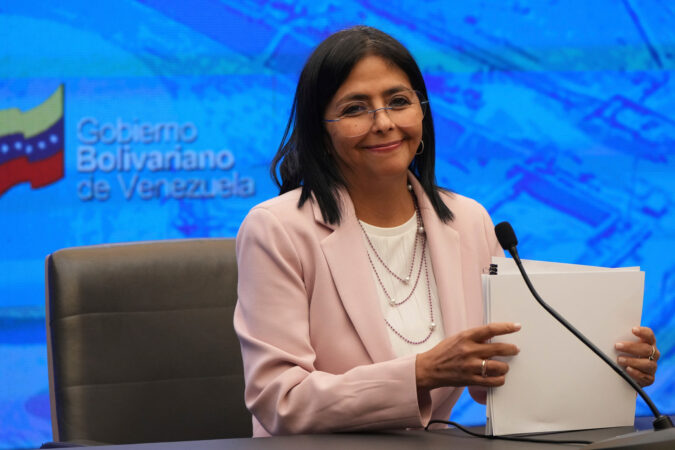
    The day after U.S. special operations forces swept into Caracas, the new Venezuelan president assembled her cabinet members around a large wooden table at the Miraflores Palace. Behind Delcy Rodríguez were large pictures of the country’s fallen leaders: Hugo Chávez, dead of cancer in 2013, and Nicolás Maduro and his wife, Cilia Flores, now jailed in New York on drug-trafficking charges.

    Seated on either side of Rodríguez, at the head of the table, were the powers that remained. One was Vladimir Padrino López, the defense minister, dressed in military camouflage. The other was Diosdado Cabello, the interior minister. He wore a scowl and a hat that said, “To doubt is treason.”

    Both men hold far more power than their titles suggest, analysts say. Stalwarts of the Maduro regime — one U.S. investigators say is built on patronage and fueled by criminal proceeds — they control Venezuela’s expansive security state and much of its commercial activity.

    Since Maduro’s capture and arrest Saturday, public attention has focused on Rodríguez and whether she will accede to White House demands to open up Venezuela’s vast natural resources to American industry. But the newly installed president — alongside her brother Jorge, president of the Venezuelan National Assembly — represents only the political sphere.

    The country’s other power centers, according to scholars, Venezuelan researchers, and current and former U.S. officials, are commanded by Padrino López and Cabello — hard-line, old-school Chavistas who came of ideological age in the socialist movement and accrued significant power and wealth through continued loyalty to the cause.

    Using connections and intimidation, researchers say, the men have repeatedly helped Maduro survive periods of crisis and tighten his authoritarian grip. First in 2019, when much of the world united behind opposition leader Juan Guaidó’s bid to supplant Maduro. And then again in summer 2024, when electoral tallies made clear that Maduro had lost the presidential election.

    Now Padrino López and Cabello, both of whom are wanted by U.S. authorities on drug-trafficking allegations, will help to decide the future of Chavismo — and the nation. Their continued presence magnifies the complexity of the challenge faced by American negotiators as they seek to bypass war and regime change and find common ground with members of a besieged government riven by internal divisions.

    Venezuelan President Nicolás Maduro (left) listens to Defense Minister Vladimir Padrino López during a government-organized civic-military march on Nov. 25, 2025, in Caracas.

    “There are three centers of power,” said a former senior official with the U.S. State Department, who like others in this story spoke on the condition of anonymity to discuss sensitive matters. “And Delcy is going to find out pretty quickly that she can’t provide everything that the Americans want.”

    The Washington Post was unable to reach Padrino López and Cabello for comment. The communications office of the Venezuelan government did not respond to a request for comment.

    President Donald Trump has said the United States is “in charge” of Venezuela, while Secretary of State Marco Rubio has suggested a less direct role, saying the U.S. will use its ongoing oil blockade and other economic measures to make Caracas do its bidding.

    Venezuelan Interior Minister Diosdado Cabello attends the arrival of migrants deported from the United States at Simon Bolivar International Airport in Maiquetia, Venezuela, on Feb. 10, 2025.

    Analysts expressed concern that Washington doesn’t fully understand the factional, internecine political system it now seeks to control — a maze of overlapping loyalties, family ties and competing interests. Several pointed to Cabello — a feared figure who hosts a weekly talk show called Bringing the Hammer — as the wild card.

    One Venezuelan adviser close to Rodríguez’s government said he was central to maintaining unity. “In times of crisis, his role is not conciliatory, but rather one of maintaining order,” the adviser said. “Delcy governs; Diosdado ensures that power does not slip away.”

    But others worry about what he was capable of. At his disposal, according to researchers and U.S. officials, were not only the police and intelligence services, but also the “colectivos,” a pro-government militia embedded throughout society, whose members speed around the streets on motorcycles, armed and masked.

    “Cabello is a brutal, repressive figure in the regime, but he’s not stupid,” said Geoff Ramsey of the Atlantic Council. “He knows his survival depends on threatening to burn down the country, unless his interests are taken care of.”

    “Politics in Venezuela,” he added, “is a ruthless blood sport.”

    Power at all costs

    How the state built by Chávez went from a hierarchal system built around a single charismatic leader to a hotbed of competing factions is, to some degree, a story of Maduro’s own political failings.

    “Chávez was a leftist military man and very charismatic and happened to rule Venezuela during an oil boom, so he had a lot of resources to do a lot of things,” said David Smilde, a sociologist at Tulane University who researches Chavismo. “And with the exception of being a leftist, Maduro is none of those things — not charismatic, not a military man, and he has no oil boom.”

    After narrowly winning the presidential election to succeed Chávez in 2013, Maduro appeared to recognize what he lacked and set out to defend his hold on power not through political persuasion, but by restricting freedoms and empowering — and enriching — the armed forces.

    In February 2016, he put the mining sector in the hands of the military. A few months later, he gave it control over the distribution of basic goods. Another decree shortly afterward put the nation’s ports under its purview. Padrino López, who rose to defense minister in October 2014, became more powerful with each move, researchers said, pioneering new kickback schemes that kept the military loyal to him and indebted to the regime.

    “The military became its own branch of power,” said Carolina Jiménez Sandoval, the Venezuelan president of the Washington Office on Latin America. “I don’t think the United States understands the extent to which the military is ingrained into the politics and economy, both formally and informally.”

    The military also began to profit from illicit revenue streams, American authorities contend. In March 2020, federal prosecutors in the U.S. District Court of the Southern District of Florida filed charges against Padrino López and Cabello for using their roles to facilitate and abet Venezuelan drug trafficking and “flood” the United States with cocaine.

    The U.S. government announced significant bounties for both men — $15 million for Padrino López and $25 million for Cabello.

    Over time, Maduro came to be seen less as the ultimate authority in the country and more as an arbiter between competing powers that had little in common, said Roberto Deniz, a Venezuelan investigative journalist.

    “It’s not just an authoritarian regime,” he said. “It’s an authoritarian regime with a kleptocratic structure in which there are numerous heads, and each one acts as its own fiefdom.”

    “It doesn’t matter if the economy is good or bad, if human rights are respected or not,” he added. “The goal is to preserve power.”

    ‘The black sheep’

    Cabello, who describes himself online as a “revolutionary” and “radical Chavista,” is seen by observers as a particularly unpredictable figure. He participated in Chávez’s failed coup attempt in 1992 and spent the next two years in prison. After Chávez won the presidency through the ballot box, Cabello served as vice president, helping him stave off an attempted coup in 2002, and then as interior minister, a role where he developed deeper ties with the internal security and intelligence forces.

    At the time of Chávez’s cancer diagnosis, he was seen as the second most important revolutionary and a direct rival to Maduro, then the vice president, in the line of succession. After Chávez selected Maduro as his heir, he moved to sideline Cabello, only bringing him back into his cabinet shortly after his apparent electoral loss in 2024.

    “Cabello has been the black sheep in the ruling party,” Ramsey said. “But Maduro found it impossible to rule without his knack for repression and his proximity to the intelligence apparatus.”

    His family’s influence spans the nation. Alexis Rodríguez Cabello, a first cousin, is in charge of the Venezuelan intelligence service and posts frequent homages to Cabello on social media. His brother, José David Cabello, is in charge of the powerful customs and taxation ministry, granting him control over duties at borders and ports. His wife Marleny Contreras, a current member of the national assembly, has been the minister of both tourism and public works.

    The Post was unable to reach Cabello’s family members for comment.

    “Diosdado never stopped being a powerful actor, even when he seemed demoted,” Deniz said.

    And he has “ascended rapidly” since his formal return to government, added Rafael Uzcátegui, the former director of Provea, a prominent Caracas nongovernmental organization — “at the cost of Rodríguez.”

    Uzcátegui saw a narrow path forward for brokering an agreement between Venezuela’s rival power centers that would enable cooperation with U.S. officials and avert a wider conflict.

    “It’s much easier to negotiate with a malandro than a religious fanatic,” he said, using a word that most closely translates to “hustler.” “And the Diosdado Cabello and Padrino López factions are most motivated by material incentive.”

    But there have been worrying early signs, most notably from the informal militias that answer to Cabello.

    The colectivos have fanned out across Caracas. Ordinarily, they carry small arms to intimidate dissenters, but they have been seen with larger weapons in recent days, including assault rifles. They have set up checkpoints, forcing residents to turn over their phones and searching them for messages that could be seen as supportive of the U.S.

    Security forces also have arrested civilians and detained members of the media.

    “Diosdado Cabello could be the spoiler,” said the former senior U.S. diplomat. “It’s a pretty rough start for what is the same regime, but a different management.”

  • The data center rebellion is here, and it’s reshaping the political landscape

    The data center rebellion is here, and it’s reshaping the political landscape

    SAND SPRINGS, Okla. — One float stood out among the tinsel and holiday cheer at the annual Christmas parade here: an unsightly data center with blinding industrial lights and smoke pouring out of its roof, towering menacingly over a helpless gingerbread house.

    This city bordering Tulsa is a battleground, one of many across the country where companies seeking to build massive data centers to win the AI race with China are coming up against the reality of local politics.

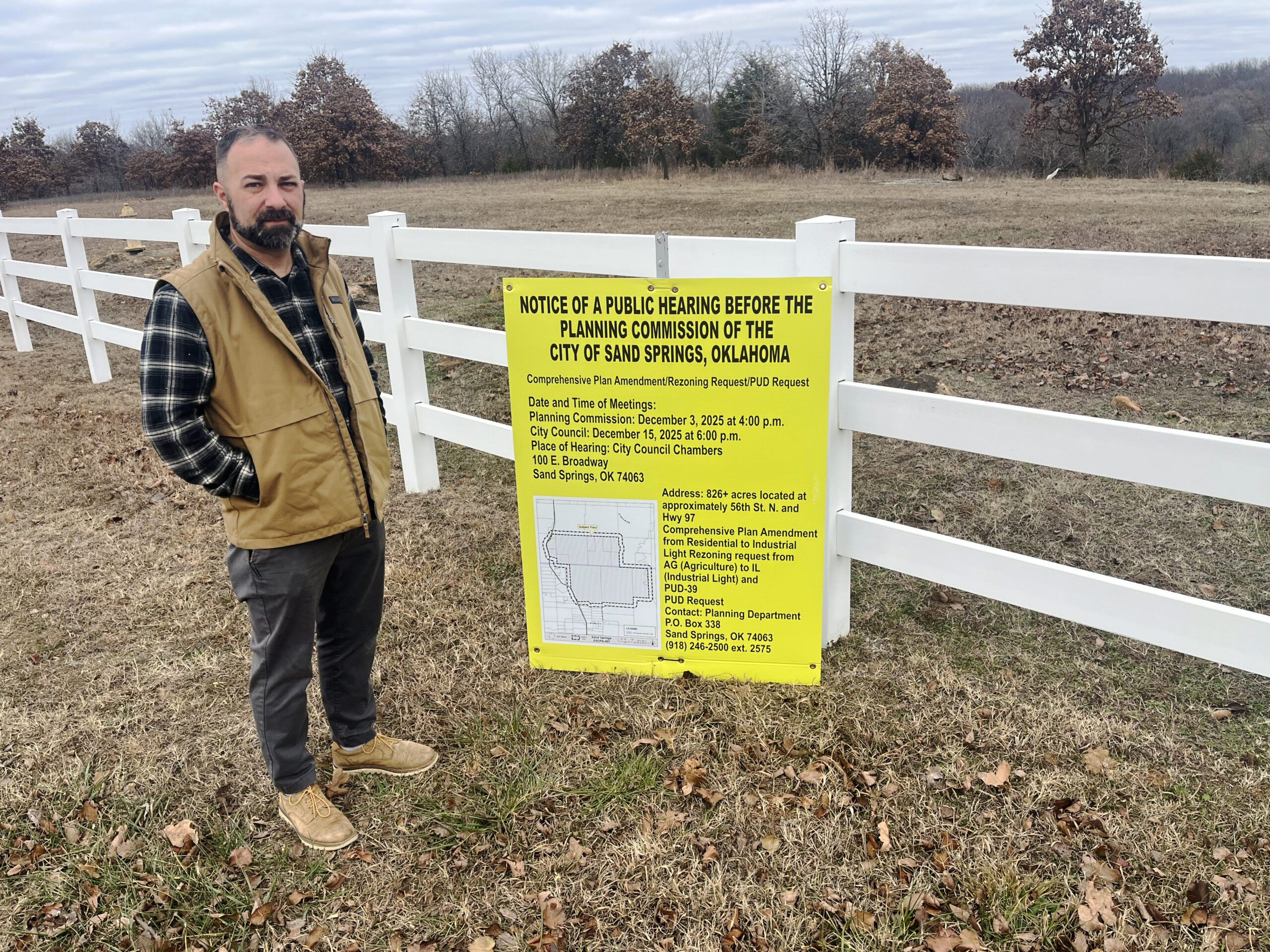
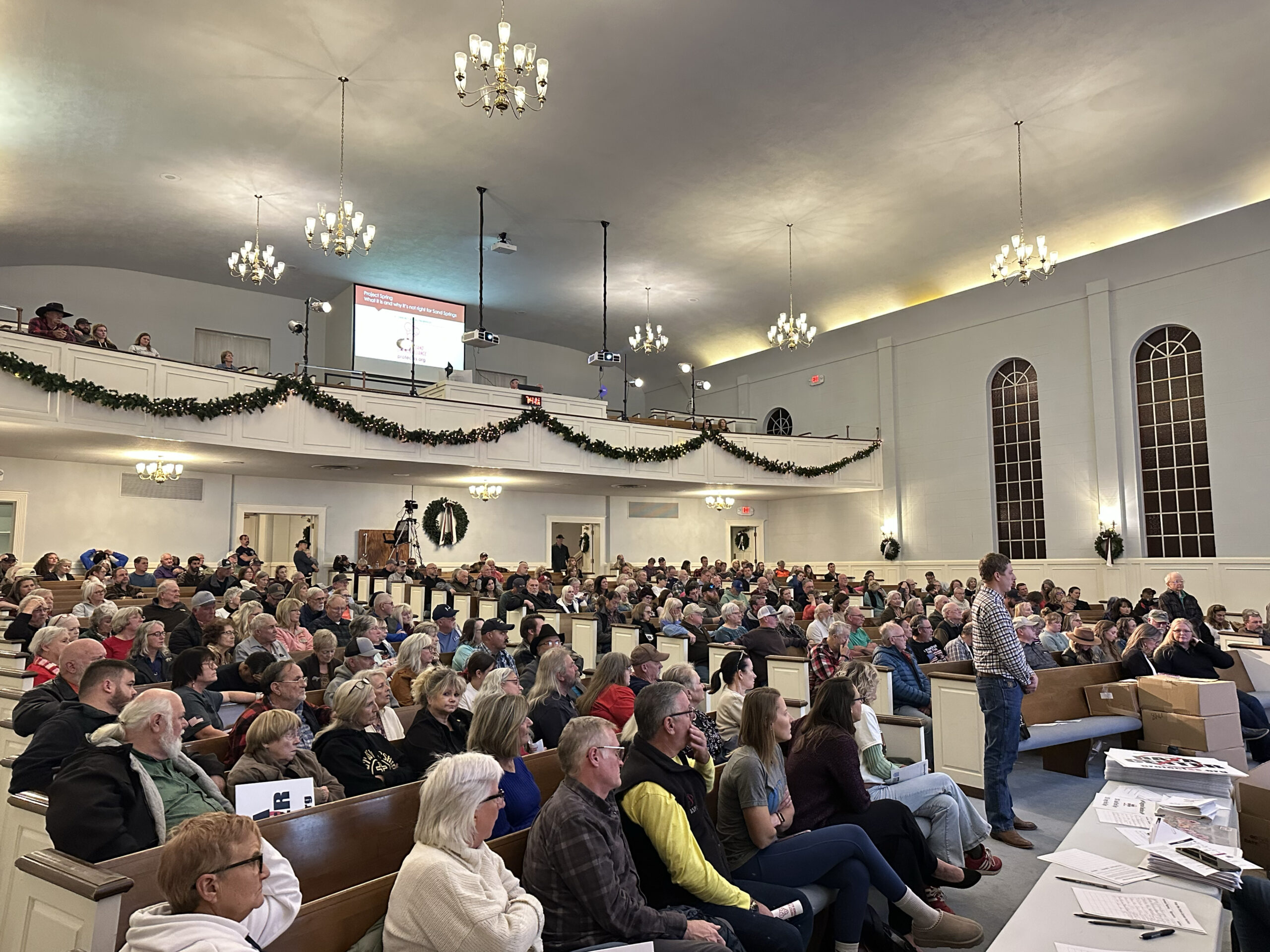
    Sand Springs leaders were besieged with community anger after annexing an 827-acre agricultural property miles outside of town and launching into secret talks with a tech giant looking to use it for a sprawling data center. Hundreds of aggrieved voters showed up at community meetings. Swarms of protest signs are taking root along the rural roads.

    “It feels like these data center companies have just put a big target on our backs,” said Kyle Schmidt, leader of the newly formed Protect Sand Springs Alliance. “We are all asking: Where are the people we elected who promised to protect us from these big corporations trying to steamroll us? The people who are supposed to be standing up and protecting us are standing down and caving.”

    Kyle Schmidt, president of the advocacy group Protect Sand Springs, at the property city officials have annexed near his home.

    From Archbald, Pa., to Page, Ariz., tech firms are seeking to plunk down data centers in locations that sometimes are not zoned for such heavy industrial uses, within communities that had not planned for them. These supersize data centers can use more energy than entire cities and drain local water supplies.

    Anger over the perceived trampling of communities by Silicon Valley has entered the national political conversation and could affect voters of all political persuasions in this year’s midterm elections.

    Many of the residents fighting the project in Sand Springs voted for Trump three times and also backed Gov. J. Kevin Stitt, a Republican who implores tech firms to build in his state.

    “We know Trump wants data centers and Kevin Stitt wants data centers, but these things don’t affect these people,” said Brian Ingram, a Trump voter living in the shadow of the planned project. “You know, this affects us.”

    Ingram was standing before a homemade sign he planted on his front lawn that said, “Jesus Was Born on Ag Land.”

    The grassroots blowback comes from deep red states as much as from left-wing groups such as the Democratic Socialists of America, which have helped draw hundreds of residents to hearings in Arizona, Indiana, and Maryland.

    Even Energy Secretary Chris Wright warned data center developers that they are losing control of the narrative. “In rural America right now, where data centers are being built, everyone’s already angry because their electricity prices have risen a lot,” he told energy executives assembled in Washington for the North American Gas Forum last month. “‘I don’t want them in my state’ is a common viewpoint.”

    Some industry groups argue that residents’ concerns are misplaced.

    “Fueled by misinformation, driven by radical environmental policies, communities are missing out on the jobs, security, and opportunities this technology is delivering,” said an email from Brian O. Walsh, executive director of the AI Infrastructure Coalition. The group says the projects lower electricity prices, a claim that is hotly disputed.

    The White House frames the data center boom as beneficial, saying in a statement that it will lead to big investments in infrastructure and boost manufacturing. But the administration is also aware some communities oppose them.

    “Communities know what’s best for them, and the Administration is clear that local infrastructure decisions remain with states and localities,” the statement said.

    Residents who attended a community meeting held near the land Sand Springs annexed were overwhelmingly against the proposed data center project.

    Many local politicians are yielding to community pressure and rejecting data centers. Between April and June, more projects were blocked or delayed than during the previous two years combined, according to Data Center Watch, a tracking project by the nonpartisan research firm 10a Labs. Some $98 billion in planned development was derailed in a single quarter.

    Last month, a group of Senate Democrats launched an investigation into the role data centers play in increasing electricity prices.

    Sen. Bernie Sanders (Ind., Vt.) last month called for a moratorium on data center construction, warning that the tech firms are draining scarce energy and water reserves and pushing the cost onto everyday Americans in pursuit of AI technologies that threaten to displace millions from the workforce.

    White House AI czar David Sacks replied on X: “He would block new data centers even if states want them & they generate their own power.”

    But advocates say residents’ concerns are legitimate.

    “This data center expansion affects so many issues,” said Mitch Jones, managing director of policy and litigation at Food and Water Watch. The group last month organized a letter signed by several national advocacy groups demanding a moratorium.

    “It takes up farmland in rural communities. It takes up dwindling water sources in communities that need cleaner drinking water. And it is driving up electricity prices for everyone,” he said. “It is drawing together people from disparate backgrounds who might not agree on other political issues. They are saying this is taking place without any forethought to communities and we must stop it.”

    The NAACP this month convened a two-day “Stop Dirty Data” conference in Washington that focused on the impacts of the AI build-out on minority and low-income communities. It included a bus tour of “Data Center Alley” in Northern Virginia, the world’s largest collection of data centers.

    Even Florida Gov. Ron DeSantis is championing an AI “bill of rights” to enshrine local governments’ power to stop data center construction and prohibit utilities from pushing AI infrastructure costs onto residents. The break between Rep. Marjorie Taylor Greene (R., Ga.) and President Donald Trump was driven in part by her vocal criticism of his AI build-out push.

    The industry has struggled to quell the concerns. In Chandler, Ariz., former Sen. Kyrsten Sinema, co-founder of the AI Infrastructure Coalition, implored city officials to get on board with a large proposed project or risk the federal government pushing it through without city input.

    The city council rejected the project unanimously.

    The vote followed the Tucson City Council’s unanimous rejection of a plan that would have required annexing land in the Sonoran Desert that until June had been zoned “rural homestead.” Some voters were outraged that local officials had signed a five-year nondisclosure agreement with Amazon, which did not come to light for two years. Frustration with the power company that would have provided the power has fueled a movement to drive it out in favor of a community-led nonprofit.

    Amazon did not respond to questions about the controversy, saying only, “We do not have any commitments or agreements in place to develop this project.” Amazon founder Jeff Bezos owns the Washington Post.

    “People are understandably asking how they will benefit,” said Chris Lehane, chief global affairs officer at OpenAI, which has won initial local approval for some of the country’s largest data center projects. He said companies need to listen to communities and make sure they are sharing in the economic gains. “You need to be on the ground, having these conversations. It is a journey.”

    In some places, large tech companies have signed contracts committing to pay for new power grid infrastructure required to bring a data center online, even when the companies are not the only ones that would benefit from it.

    It’s a journey that some local officials are willing to go on because the projects generate construction jobs and boost revenue for schools.

    “We’re trying to work through this,” said Mike Carter, the city manager in Sand Springs. “This would probably be one of our major employers. It would almost certainly become the dominant part of our tax base. … When you can surpass Walmart, which is right now the biggest taxpayer in our community, there is a big incentive to look at this.”

    He has tried to assure residents that they will have all their questions answered — including the name of the tech firm — before the city hearing this month, where officials will consider rezoning the sprawling property from agricultural to industrial. He said the city has signed other nondisclosure agreements during negotiations with large corporations, such as Olive Garden.

    The project developer, White Rose Partners, said none of the costs involved with providing electricity to the Sand Springs data center would fall on residential ratepayers. The firm says the data center would generate millions of dollars in revenue for local schools and services.

    It is cold comfort to many residents of the rural community, where the data center would industrialize a landscape now defined by the ranches that drew them there.

    “I don’t care how much chocolate icing you put on a dog turd, it don’t make it chocolate cake,” said Rick Plummer, who raises elite team-roping horses next to the proposed data center. “They are trying to fluff this data center thing up and say, ‘Man, eat this birthday cake.’ But it isn’t birthday cake.”

    On the other side of Tulsa, a steady stream of pickups pulled off the busy local road to sign petitions fighting a different data center proposed for the rural community of Coweta. One sign takes aim at the nondisclosure agreements, stating “NDAs BETRAY.” The petitions demand the firing of a city official who signed one.

    “We want to see this damn data center go away and go someplace else,” said Allen Prather, who was leading the petition drive dressed as Santa. “This town deserves a better centerpiece than a data center. They keep coming to smaller and smaller towns. Leave mine alone.”

    Sherri Crumpacker, a retired law enforcement officer who pulled over to sign, concurred. “I moved here from California to get away from BS like this,” she said.

  • Five Democratic-led states sue HHS over frozen welfare funding

    Five Democratic-led states sue HHS over frozen welfare funding

    Five Democratic-led states are suing the Trump administration for freezing their share of federal food, housing, and childcare assistance dollars, saying officials failed to justify the sweeping actions that could strip billions in aid from needy families.

    New York, along with California, Colorado, Illinois, and Minnesota, asked for a temporary restraining order that would allow them to continue receiving the funds, in a lawsuit filed Thursday evening with the United States District Court for the Southern District of New York.

    The states argued that the Administration for Children and Families, which is within the Department of Health and Human Services, provided no evidence of fraud and acted illegally by enacting sanctions within the three welfare programs without following processes laid out by law. The administration wrote to the states earlier this week that the freeze was necessary to prevent “potential” fraud but didn’t detail what it meant, according to letters viewed by the Washington Post.

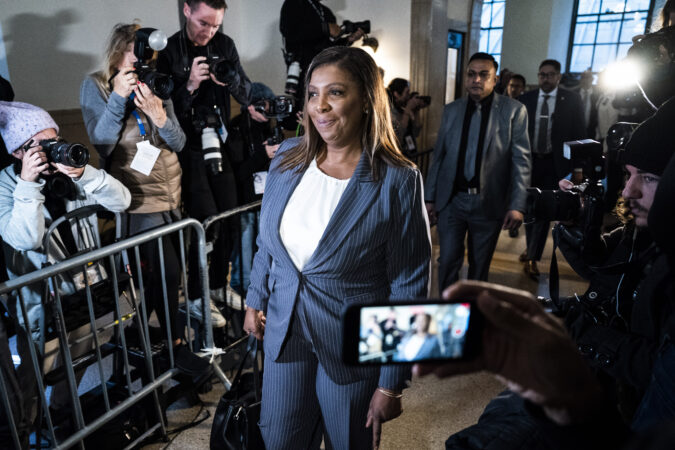
    “I will not allow this administration to play political games with the resources families need to help make ends meet,” New York Attorney General Letitia James (D) said in a statement.

    State officials and child advocates have said the funding freeze would wreak havoc on families relying on childcare aid and could cause ripple effects if parents are forced to quit their jobs to care for children or daycare centers shut down permanently.

    HHS General Counsel Mike Stuart wrote on X late Thursday that the agency “stands by its decision to take this action to defend American taxpayers.”

    “We identified serious concerns in these states that warranted immediate review and action,” he wrote. “These same officials were complicit in this perpetuation of this fraud and allowing it to happen.”

    Minnesota was already in the administration’s crosshairs amid investigations into billions of federal dollars authorities say were fraudulently claimed by individuals and groups purporting to help the state’s low-income population. HHS broadened its crackdown this week, saying nearly $2.4 billion in childcare grants have been frozen to the five states, as well as $7.35 billion in temporary grants for needy families and $869 million in social services funds. These programs help cover childcare, housing, food, and home utility costs for families with low incomes.

    Democratic leaders in those states blasted the move as politically motivated. Before the lawsuit was filed Thursday, New York Gov. Kathy Hochul (D) told reporters that the administration is “coming after Democratic governors, five of us, for no reason at all.”

    “I want them to know this, that you may think you’re punishing me as a Democrat, but this is a county program,” she said, referring to safety net programs in New York partly funded with federal dollars. “We are simply the pass-through. The money goes to providers selected by the counties. They run this.”

    Under the freeze, the states must submit justification and receipts before being able to collect funds from any of the programs. The administration wrote in letters to the states that the freeze wouldn’t be lifted until they put in place more verification measures to ensure the funds are being used properly for eligible recipients.

    A letter from HHS’s Administration for Children and Families to Colorado said the administration is committed to “rooting out fraud” and expressed concern that Colorado is providing “illegal aliens” government benefits.

    Fraud investigations into the three programs targeted by the administration are typically handled by states, former HHS officials said. New York’s Office of the Welfare Inspector General reported it secured nearly $600,000 in fraud-related restitution in 2024, for example.

    The administration froze childcare funding to nearly a dozen daycare facilities in Minnesota in late December after a viral video alleged they were collecting funds without caring for children — claims the state has rebutted. Federal prosecutors have charged 92 people with committing fraud in other, Medicaid-funded programs in the state.

    All five states involved in the lawsuit filed Thursday are among more than two dozen states that previously sued the Trump administration over withholding other federal funds including for education, disaster relief and public health, arguing the actions jeopardize critical services.

  • In unprecedented move, NASA cuts short space mission over astronaut’s health

    In unprecedented move, NASA cuts short space mission over astronaut’s health

    For the first time in the International Space Station’s history, NASA said it was cutting short a crew mission after an astronaut “experienced a medical situation.”

    “It’s in the best interests of our astronauts to return Crew-11 ahead of their planned departure,” NASA Administrator Jared Isaacman told reporters at a news conference Thursday, without naming the astronaut or specifying what the problem was.

    The four-person Crew-11 is made up of U.S. astronauts Zena Cardman and Mike Fincke, along with Japan’s Kimiya Yui and Russia’s Oleg Platonov. Together, they have spent about five months aboard the space station and had planned to stay until mid-February.

    On Wednesday, they were conducting scientific research, ahead of a planned space walk, when one of the astronauts had a medical issue that required help from the other crew members and onboard medical equipment, NASA officials said.

    “The astronaut is absolutely stable. This is not an emergent evacuation,” said NASA’s Chief Health and Medical Officer, J.D. Polk.

    He said the issue also did not reflect a problem with the space station environment and “was not an injury that occurred in the pursuit of operations.”

    Although the Space Station has medical equipment onboard, he said the issue was sufficient to warrant bringing the astronaut back for a full work-up and diagnosis at a facility with more extensive hardware and without the challenges of working in microgravity.

    “Always we err on the side of the astronaut’s health and welfare. And in this particular case, we are doing the same,” he said.

    The crew will return to Earth in the “coming days,” Isaacman said, with plans for a parachute-assisted splashdown off the coast of California. And because of that early departure, Crew-12, which had been scheduled to take over in mid-February, could be deployed earlier.

    “This is exactly what our astronauts train and prepare for,” he added.

    Crew members live and work aboard the International Space Station, orbiting Earth 16 times a day. Run as an international partnership by five space agencies, the station has had more than 290 visitors representing 26 countries since it was assembled in 1998.

  • Trump says he will meet Machado — and would accept Nobel Peace Prize from her

    Trump says he will meet Machado — and would accept Nobel Peace Prize from her

    President Donald Trump said he will meet with Nobel Peace Prize winner María Corina Machado next week — and that he would accept the award she has said she wants to share with him.

    “I understand she’s coming in next week sometime, and I look forward to saying hello to her,” the president said of the Venezuelan opposition leader during an interview with Fox News’s Sean Hannity that aired Thursday. Trump added that he heard Machado wants to give him the prize, “and that would be a great honor.”

    The White House late Thursday did not provide details about Machado’s trip or specify what issues she and Trump would discuss.

    In an interview with Hannity this week in which she heaped praise on Trump, Machado said she had not spoken to the U.S. president since October, when she was announced as the latest Nobel laureate.

    She had been in hiding in Venezuela during President Nicolás Maduro’s last days in power and turned up in Oslo, where her daughter accepted the prize on her behalf. But she promised to return to her country and called for elections to replace Maduro.

    “But I do want to say today, on behalf of the Venezuelan people, how grateful we are for [Trump’s] courageous mission,” Machado said on Hannity’s show this week, adding that she and the Venezuelan people want to “share” the prize with Trump after the U.S. military seized Maduro and his wife and brought them to New York to stand trial on narco-terrorism charges.

    Trump has openly coveted and publicly lobbied for the Nobel Peace Prize, claiming to have “solved” a number of international conflicts. Several world leaders have backed his claims.

    Machado, a former National Assembly member, won the opposition primary in Venezuela two years ago but was barred from running by Maduro in the general election. Maduro claimed victory over the candidate Machado backed, but ballot audits by the Washington Post and independent monitors show the reported election result was invalid.

    Following the U.S. operation to arrest Maduro on Saturday, Trump said the United States would “run” Venezuela with the cooperation of Delcy Rodríguez, Maduro’s vice president, who has become the country’s acting leader. Trump has not given a timeline for when elections would be held and said he did not believe Machado had the support to run the country after Maduro’s removal.

    “I think it would be very tough for her to be the leader,” Trump told reporters last weekend. “She doesn’t have the support within, or the respect within, the country. She’s a very nice woman, but she doesn’t have the respect.”

    Two people close to the White House previously told The Post that Trump was not willing to support Machado because she accepted the Peace Prize. “If she had turned it down and said, ‘I can’t accept it because it’s Donald Trump’s,’ she’d be the president of Venezuela today,” one of the people said, speaking on the condition of anonymity to discuss a sensitive situation.

    Machado told Hannity she believed that if elections were held, she would win the presidency in a landslide.

  • Russia unleashes nuclear-capable missile in latest Ukraine attack

    Russia unleashes nuclear-capable missile in latest Ukraine attack

    KYIV — Russia launched an Oreshnik medium-range ballistic missile, which is capable of carrying nuclear warheads, as part of a large-scale aerial assault on Ukraine overnight Friday, the Russian Defense Ministry said — a menacing reminder to the world of Moscow’s huge nuclear arsenal at a moment when a peace plan promoted by President Donald Trump appears to be faltering.

    The latest Russian aerial barrage largely pummeled Kyiv, leaving close to half a million people without electricity in Kyiv and the surrounding region, officials said, as temperatures plummeted — prompting Mayor Vitali Klitschko to urge residents to temporarily evacuate the capital if possible.

    Klitschko said nearly 6,000 apartment buildings — half of the city’s total — were without heat. Water supply was disrupted in some districts, he said, and he urged residents, “who have the opportunity to temporarily leave the city” to find “alternative sources of power and heat.”

    Russian forces first used the Oreshnik — meaning “hazelnut tree” — in an attack on Ukraine in November 2024, creating concern in Western capitals over Moscow’s potential use of nuclear-capable weapons in the conflict. The missile fired overnight Friday did not carry a nuclear payload.

    Countries friendly to Moscow, such as China, have warned Russia against using nuclear weapons in Ukraine, meaning Russian President Vladimir Putin would risk wide international condemnation even by using a small-scale “tactical” nuclear weapon. Depending on the target, a nuclear strike could also pose the danger of releasing radiation next door to Putin’s own country.

    The Russian Defense Ministry said that the Oreshnik was launched in retaliation for a claimed attack by Ukrainian drones on one of Putin’s residences — an attack that Trump, citing U.S. intelligence, now says never happened.

    Trump initially expressed fury over the alleged drone strike after Putin told him that his residence in the northwestern Novgorod region had been targeted by drones. Kyiv, however, forcefully denied the attack, and local residents did not post anything about it on social media, despite Russia’s claims that 91 drones had been involved and shot down. Days later, Trump rejected Moscow’s claims.

    In its statement, on the Telegram messaging platform, the Russian Defense Ministry called the alleged drone incident a “terrorist attack.”

    Trump told reporters earlier this week: “I don’t believe that strike happened.”

    Trump has been pushing an initiative to halt Russia’s war but with little indication that Putin is willing to support any ceasefire. After a meeting in Paris this week, European leaders and Ukrainian President Volodymyr Zelensky said they had made progress on plans to provide postwar security guarantees and that their initiative was ready for Trump’s approval. Russia, however, quickly rejected any presence of Western peacekeeping forces in Ukraine, a core pillar of the security guarantees.

    On Friday, Ukrainian officials did not specify whether an Oreshnik had been used, but Zelensky later said in a social media post that an Oreshnik had been part of Russia’s overnight aerial assault.

    Ukraine’s security services, the SBU, said that its investigators had found debris indicating the missile was an Oreshnik — including the “stabilization and guidance unit,” which was described as the “brain” of the missile, and “parts from the engine unit.”

    The country’s western air command said in a Facebook post that “the enemy launched a missile strike on infrastructure facilities in Lviv using a ballistic missile.”

    “The air target was moving at a speed of about 13,000 kilometers per hour along a ballistic trajectory,” the air command said. “The type of missile with which the Russian aggressors attacked the city will be established after studying all its elements.”

    Ukrainian media reported six loud explosions in the Lviv region, one after another, shortly before midnight.

    In a Telegram post, Ukraine’s air force said that a “medium-rаnge ballistic missile” was launched from Russia’s Kapustin Yar test site, in the Astrakhan region on the Caspian Sea.

    Ukrainian Foreign Minister Andrii Sybiha said the possible use of an Oreshnik near Ukraine’s border with European Union and NATO member Poland was “a grave threat to the security on the European continent and a test for the transatlantic community.”

    “We demand strong responses to Russia’s reckless actions,” Sybiha wrote on X.

    “It is absurd that Russia attempts to justify this strike with the fake ‘Putin residence attack’ that never happened,” he wrote, adding that Putin used the Oreshnik “in response to his own hallucinations — this is truly a global threat.”

    Alexander Gabuev, director of the Carnegie Russia Eurasia Center, said that Russia’s use of the Oreshnik as a “high precision kinetic weapon with normal warheads” did not make a great deal of sense, since the destruction it caused was “limited.”

    Instead, Gabuev said it was potentially “a signal” — that in striking the Lviv region in far western Ukraine “no part of the country is immune.” It also could be a warning to Western leaders that any peacekeeping contingent sent to Ukraine would be vulnerable.

    “The message could be both to undermine Ukrainian morale but also to show that, look, if you place Western military, it will not be immune, because we have multiple ways to reach these troops,” Gabuev said in an interview.

    In addition to the Oreshnik, Ukraine’s air force said that the Russian attack involved 242 drones “of various types” and 36 missiles, including 13 ballistic missiles. In total, the air force said that 18 missiles and 16 drones pummeled 19 locations.

    “The main direction of the attack was Kyiv region,” the air force said. Air raid alerts in the capital lasted until the early morning hours on Friday, with explosions ringing out regularly — as Ukrainian antiaircraft defenses countered the aerial assault and some of the drones and missiles hit their targets.

    At least four people died and 22 were injured in Kyiv, Ukraine’s state emergency service said.

    Among those killed was a first responder, Serhiy Smolyak. “When the emergency medical team arrived at the scene of the shelling of a residential building, the enemy launched a second strike,” Ukrainian Health Minister Viktor Liashko wrote on social media.

    The damage to Kyiv’s critical infrastructure was extensive, city officials said. Tymur Tkachenko, head of Kyiv’s military administration, said that at least 50 buildings, four educational institutions and 18 cars were damaged, as well as “more than 1,000 broken windows.” A Russian drone also damaged the Qatari Embassy in Kyiv, Zelensky said.

    The difficult energy situation was made worse as temperatures across Ukraine were forecasted to remain well below freezing.

    “This is one of the most difficult attacks on the city,” Tkachenko said. This was in part due to “the challenging weather,” he said, which the Russians were “counting on,” hoping that “we will freeze and our services will collapse.”

    Klitschko warned Kyiv residents that the cold weather would not let up for some time.

    “City services are operating in emergency mode,” the mayor wrote on Telegram. “And the weather conditions, unfortunately, are forecast to be difficult in the coming days.”

  • Renee Good’s wife says she was supporting neighbors when killed by ICE

    Renee Good’s wife says she was supporting neighbors when killed by ICE

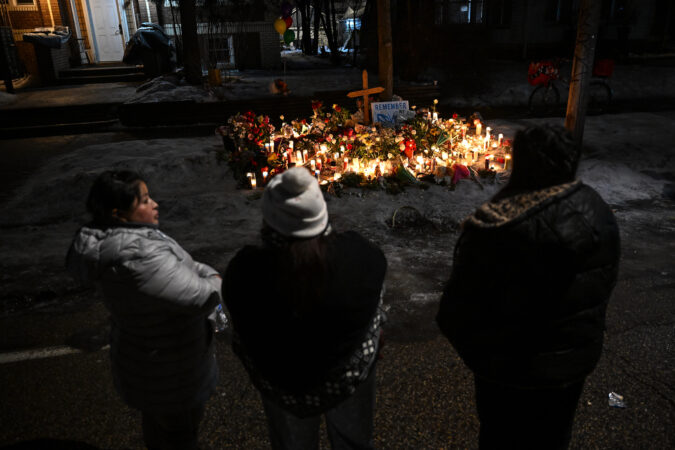
    MINNEAPOLIS — Renee Nicole Good and her wife had “stopped to support our neighbors” when she was fatally shot by an ICE officer in a confrontation on a residential street Wednesday, her wife said in a statement.

    The couple had come to Minneapolis almost a year ago, looking for a place that they and their 6-year-old son could feel comfortable.

    “On Wednesday, January 7, we stopped to support our neighbors. We had whistles. They had guns,” Rebecca Good said in a statement Friday.

    “We were raising our son to believe that no matter where you come from or what you look like, all of us deserve compassion and kindness,” the statement said. “Renee lived this belief every day. She is pure love. She is pure joy. She is pure sunshine.”

    Good, 37, was shot and killed Wednesday morning blocks from her home by an ICE agent, who federal officials say fired in self-defense. Details of the shooting, which was captured in videos by private citizens, are in dispute.

    Tricia McLaughlin, a spokesperson for the Department of Homeland Security, told Fox News on Thursday that Good “was stalking agents all day long, impeding our law enforcement.” Asked by the Washington Post what she was basing that description on, McLaughlin said the information came from “firsthand accounts” from law enforcement officers who had been in contact with Good.

    In interviews this week, friends and family members painted a picture of a woman who lived a quiet life not shaped by overt activism — a sharp contrast to comments by Vice President JD Vance, who blamed Good for her own death, and Homeland Security Secretary Kristi L. Noem, who said Good’s actions amounted to “an act of domestic terrorism.”

    Noem’s comments, and the FBI’s apparent move to block state investigators from the probe into the shooting, show the administration has “already come to a conclusion” about what it wants the inquiry to find, Minneapolis Mayor Jacob Frey said Friday.

    “From the very beginning, they’re calling the victim a domestic terrorist, they’re calling the actions of the agent involved as some form of defensive posture,” Frey said from the Minneapolis City Hall rotunda. “We know they’ve already determined much of the investigation.”

    Good’s family members have said they do not believe she was an aggressive activist tailing ICE officers. She had just dropped her son at school, they said. Her father, Tim Ganger, in a brief interview Wednesday, said she got “caught up in a bad situation. I think she was just caught in the crossfire.”

    Videos show Good’s maroon Honda Pilot parked across the road as U.S. Immigration and Customs Enforcement vehicles approach. ICE agents then confront her, demanding she get out of her car. A frame-by-frame analysis by the Post of the footage, however, raises questions about the accounts of administration officials. The SUV did move toward the ICE agent as he stood in front of it. But the agent was able to move out of the way and fire at least two of three shots from the side of the vehicle as it veered past him, according to the analysis.

    Good’s family and friends describe her as a devoted mother to her three children, an artist with a prizewinning talent for poetry who had weathered personal difficulties, including the death of her second husband, a military veteran who suffered from post-traumatic stress disorder.

    She was “a devoted Christian who took part in youth mission trips to Northern Ireland when she was younger,” said her first husband, who spoke on the condition of anonymity out of concern for the safety of his daughter, 15, and son, 12. “She loved to sing and studied vocal performance in college.”

    Good grew up in Colorado Springs. She attended Coronado High School, sang in the school’s show choir and participated in a school group called Community Crew dedicated to learning practical skills like cooking, according to the yearbook. When she graduated in 2006, Good won “Best Personality.”

    “When I found out that I had won, I was like ‘this is pretty flippin’ sweet!’” she told yearbook staff.

    Good attended Metropolitan State University of Denver briefly in 2014 and 2015. After she and her first husband divorced, he said Good married Timmy Macklin Jr., who served in the U.S. Air Force. In 2019, she began studying creative writing at Old Dominion University in Virginia.

    “She was his heart,” her former brother-in-law Joseph Macklin, who lives near Knoxville, Tenn., said of Good and his brother. He described her as “a great and loving mother.”

    One of her professors, Kent Wascom, director of Old Dominion’s MFA and creative writing program, recalled her as a poet studying how to improve her fiction writing, first in a class and then an advanced workshop. Unlike some of her peers, Good never talked about politics, Wascom said, focusing instead on “realist fiction” about those very different from her, from an elderly woman to a veteran.

    “She consistently sought to write outside of her experience,” he said. “She was a really warm presence but not a show-off. She never made a class about herself, even when her work was the focus of a workshop.”

    By then, Good was older than many of her classmates, pregnant with her third child and working to pay for school (as a dental assistant and at a credit union, her first husband said). “My memory of Renee is how much she tried to connect with her peers and support them,” Wascom said. He recalled how Good later brought her newborn son to meet him.

    By 2020, Good had won a prestigious prize for one of her poems, an honor Wascom said demonstrated her promise. She graduated with a bachelor’s degree in English that December.

    In April 2021, Good met a professional photographer named Charles W. Winslow at an Old Dominion football game that he was covering. She wanted advice on how to incorporate photography into covers for book projects she had planned. He said she was a gifted student and accompanied him on many of his professional assignments. But he also remembered her kindness.

    “As a friend she was kindhearted and always helping others in need,” Winslow said. “She didn’t care of race, creed, color. If she had $10 in her pocket, she would give a homeless person $9 that she passes on the street.”

    In 2023, Timmy Macklin died at the age of 36, and Good became primarily a stay-at-home mom, her first husband said.

    Joseph Macklin said Good made an effort to keep her son in touch with his family back in Tennessee: “She always brought him to see us. She was so kindhearted.”

    After she met and married Rebecca Good, 40, the couple settled in Kansas City, Mo., and crafted a quiet life.

    As a gay couple living in a red state, they weren’t overtly political, at least among the residents of their quiet street in the Waldo neighborhood, their neighbor Jennifer Ferguson recalled Thursday. But after Donald Trump was reelected in 2024, the two broke their lease and told Ferguson they were moving to Canada because of the political situation.

    “[Becca] said, ‘We’re getting out,’ ” Ferguson said. “‘We can go to Canada until we figure out what we are going to do.’”

    The couple lived in the neighborhood for only a short time but made an impression on Ferguson, 41, an administrative assistant. Becca Good had sold a home improvement business before they moved in, so she mostly stayed home with their son, cooking and mowing the lawn. Renee Good told Ferguson she was studying for a master’s degree.

    The two families exchanged Christmas treats and their kids played together, she said.

    They were “just such nice people” and “great parents” to their son, then in preschool, Ferguson said. Both were attentive, quick to enforce rules or stop an activity — like splashing in a kiddie pool — when the little boy seemed overly tired. When they moved away, they gave Ferguson their lawn mower after hers had been stolen.

    “We always talked about free stuff for the kids,” Ferguson said. “She asked about a free indoor playground, and I said, ‘Go to the McDonald’s up the street.” The couple also asked her opinion about nearby charter schools, because her son was about to start kindergarten.

    “They rarely left the house,” Ferguson said, except to take the boy to school. “They were homebodies.”

    They were also devotees of the WNBA and the KC Current, the local women’s pro soccer team. (A KC Current sticker was visible on Good’s Honda Pilot.)

    The couple moved from Kansas City to Minneapolis in March of last year, her first husband said, adding that Becca Good was “getting support from friends and her and Renee’s family.”

    Macklin, Good’s former brother-in-law, said Thursday that Good’s children “are hurting and wondering why this happened, especially the youngest.”

    “We just buried his father three years ago in June and now he lost his mother,” Macklin said. “It is definitely a tragedy no kid should have to go through at such a young age. And to have to see it all over social media and television is sickening.”

    He said that after the shooting, Good’s wife contacted his parents. “My heart really hurts for her. I’m praying for her,” he said. “She’s such a sweet and caring woman.”

    Macklin, whose father is a Christian street preacher, struggled to make sense of Good’s death.

    “I wish she would’ve minded her business and stayed out the way,” he said, but added, “I know families are being broken apart … and it’s heartbreaking, but now it’s our family.”

    “She was a good mother and a good person, and she didn’t deserve this. Her [significant other] doesn’t deserve to be without her, her mom doesn’t deserve to be without her, and her kids don’t deserve to be without her,” he said. “It truly is a tragedy that not just our family is going through, but our nation.”

  • How Trump’s plan to charge foreigners more is causing chaos at national parks

    How Trump’s plan to charge foreigners more is causing chaos at national parks

    Visitors traveling to the most popular national parks are facing a new question at the gate: Are you a United States resident?

    That question is already causing longer wait times to enter parks and is leading some foreign tourists to turn away at the gates. Experts describe the “America-first pricing” as another example of the Trump administration targeting immigrants.

    “It’s meant to make people feel nervous and uncomfortable and make the decision to either stay away or to modify their plans based on their identities,” said Mneesha Gellman, a political scientist at Emerson College who serves as an expert witness in U.S. immigration court.

    “It really is being used to sow fear.”

    In November, the Trump administration announced it would hike visitor fees for people who are not U.S. residents, with 11 popular parks charging a $100 surcharge in addition to the entrance fee. America the Beautiful passes, which include admission to the entire National Park system, cost an additional $170 for nonresidents.

    “The updated fee structure reflects the significant investment made by U.S. taxpayers to support these public lands, while still welcoming international visitors who help sustain local economies and share in our nation’s natural and cultural heritage,” said Elizabeth Peace, an Interior Department spokeswoman, in a statement. “This policy reflects the Administration’s belief that America’s public lands should be enjoyed by everyone who visits our country lawfully and responsibly.”

    The parks subject to the additional fees are Acadia National Park, Bryce Canyon National Park, Everglades National Park, Glacier National Park, Grand Canyon National Park, Grand Teton National Park, Rocky Mountain National Park, Sequoia & Kings Canyon National Park, Yellowstone National Park, Yosemite National Park and Zion National Park.

    That policy went into effect on Jan. 1 and is already having an impact, according to four people familiar with the matter, who spoke on the condition of anonymity for fear of retaliation.

    That includes slowing down entry to parks as staff question visitors about whether they are U.S. residents, which can generate confusion because of the wide array of possible immigration statuses and visas.

    At multiple parks, this has led to long lines and wait times at entrance gates, with staff saying they expect the problem to worsen when visitation peaks in the summer months ahead.

    The NPS website says visitors must show proof of citizenship or residency in the form of a passport, driver’s license, state ID or green card to purchase a pass. But an internal NPS directive reviewed by The Washington Post instructs staff to ask groups, “How many people visiting are not U.S. citizens or residents?”

    The document says “the fee collector does not need to check the identification of every visitor.” Two park employees confirmed they are taking visitors at their word and not checking IDs, except when it’s required to buy or use an annual pass.

    Even the questioning leads to uncomfortable conversations, one of the employees said.

    “We feel a bit conflicted in what we’re doing or it doesn’t feel right,” the person said. “We don’t want to make visitors feel unwelcome.”

    The staffers, who work at separate parks, said every day groups of foreign visitors are deciding not to enter the park when asked about their residency and told they will have to pay higher fees.

    “Wait times are absolutely longer because we have to ask more questions,” the second park staffer said. “If someone doesn’t meet residency requirements then we have to explain everything to them. This can be made extra difficult with language barriers.”

    Deciding who counts as a U.S. resident is difficult when there are hundreds of different immigration statuses, said Julia Gelatt, an associate director of U.S. immigration policy at the Migration Policy Institute, a think tank.

    “I don’t know how somebody from the Park Service who’s not trained in immigration law is meant to tell who is a citizen or permanent resident,” she said.

    The policy is part of a larger Trump administration strategy to send a message that the interests of U.S.-born Americans come before those of immigrants, Gelatt said. That includes restricting immigrant access to public programs, as well as escalating Immigration and Customs Enforcement activity, Gelatt said.

    An undocumented immigrant is likely to face a risk at a National Park only if ICE or other immigration enforcement agents are present, she said, noting examples in the Washington, D.C., area of immigration arrests in parks.

    Verifying visitor’s residency status adds to the workload of already overburdened park staff, said Emily Douce, deputy vice president for government affairs for the National Parks Conservation Association, an advocacy group.

    NPCA estimates that the Trump administration cut 4,000 Park Service employees last year, about a quarter of the overall staff.

    “There is going to be a lot of confusion because it’s not easy to implement such a complicated system of new rules in such a short amount of time,” she said.

    She added that it remains unclear how the fee policy “could affect park visitation or the tourism economies of surrounding gateway communities. Any policy that keeps people from visiting our national parks is a problem.”

  • Trump officials prepare executive order on housing affordability

    Trump officials prepare executive order on housing affordability

    The Trump administration is preparing an executive order focused on housing — with special attention to first-time buyers — as the White House attempts to address voter concerns about affordability.

    An order could include policies that President Donald Trump has already floated, like a 50-year mortgage or a ban on institutional investors buying single-family homes, according to five people close to the deliberations, who spoke on the condition of anonymity to discuss private conversations. Other proposals are newer, like helping home buyers withdraw from their 529 or 401(k) savings accounts to make down payments without incurring tax penalties.

    Exact timing or language is not final, and plans have been in flux over the past few weeks, the people said. But it’s clear the White House increasingly sees housing policy as central to its broader affordability agenda. More details are expected when Trump speaks at the World Economic Forum in Davos, Switzerland, later this month, according to the president’s social media posts and housing officials.

    Bill Pulte, head of the Federal Housing Finance Agency and a close Trump confidant, told the Washington Post on Thursday that an executive action was coming and would later need to be “codified by Congress.”

    “We’ve got 30 to 50 different ideas that are in front of the president,” Pulte said. “He’ll be releasing a handful of them in Davos.”

    Officials have been planning an executive order aimed at housing for months. But timing stalled as different factions within the administration clashed over an approach. Two of the people close to the talks said internal divisions sometimes boiled down to how much the federal government should tell states and cities what to do. Other disagreements centered on what role Congress should play.

    White House spokesperson Davis Ingle said in a statement that Trump had pledged to slash red tape, cut interest rates, and tackle unfair business practices that make it harder for Americans to buy homes.

    “As the President indicated over Truth Social, he will be unveiling more details about his housing proposal in Davos — any discussion from unnamed sources until then is baseless speculation,” Ingle said.

    For much of last year, the administration’s policy agenda has involved blaming undocumented immigrants for housing shortages and clawing back fair housing regulations. Officials also want to take mortgage giants Fannie Mae and Freddie Mac public after years of government control — a tremendously complicated endeavor that could lead to a massive stock offering but, if not done carefully, roil the mortgage market.

    Yet fresh momentum appeared to pick up this week after a meeting of top housing and White House officials on Tuesday. Trump announced the ban on institutional investors on Truth Social on Wednesday, saying he would call on Congress to seal the deal, and drawing favorable reaction from GOP lawmakers. On Thursday, he said Fannie and Freddie would use some $200 billion in cash to buy mortgage bonds — which he said would drive mortgage rates and monthly payments down.

    Administration officials are also looking at ways to implement so-called “portable mortgages,” where homeowners can take their old mortgages with them when they move to a new house, the people close to the discussions said. They are considering “assumable mortgages,” where home buyers take over the sellers’ mortgage. Both of those ideas could help offset the rise in mortgage rates over the past several years, and they could also entice homeowners with low rates to sell without fear of taking on a higher mortgage, opening up more supply in the process. Officials are discussing expanding Opportunity Zones — an economic tool for investing in distressed areas — and other deregulatory policies as a means of boosting homeownership, as well.

    Pulte also teed up more actions related to home builders this week, saying on X that they “need to start building out their lot supply, including optioned land which is ‘ready to go.’”

    Builders have been in talks with the administration for the past year on ways to cut environmental regulations, energy codes, and permitting restrictions, including those that make it harder to turn land from raw to developable lots and pile on costs, said Jim Tobin, president and chief executive of the National Association of Home Builders.

    “If there is an executive order, I don’t expect it to be narrow,” Tobin said. “I expect it to be broad.”

    But Trump’s announcements have come with few details or clarity on Congress’s role. Some proposals could also work against affordability goals; many mainstream economists say a 50-year mortgage would likely increase overall costs for borrowers, because they’ll pay far more in interest over five decades than they would with the conventional 30-year loan.

    Inside the administration, officials see a two-pronged approach to addressing home prices, according to a GOP pollster close to the White House, speaking on the condition of anonymity to discuss private conversations. One path is to increase housing supply through construction; another is decreasing the number of buyers by disincentivizing investors and making it easier to sell homes without paying capital gains taxes. Under current law, most married couples can exempt the first $500,000 in capital gains on the sale of their primary residence from taxes.

    White House officials have reviewed polling that shows voters aged 18 to 24 see affordability through a housing lens, said the GOP pollster. That age group helped deliver the presidency to Trump in 2024, which makes the White House especially sensitive to its political standing with them. The pollster said administration officials are focused on first-time home buyers, which often are adults 40 or younger.

    “This voting cohort who is deeply concerned about this and worried about housing prices delivered, in a lot of ways, the election to President Trump in 2024,” the pollster said. “Affordability means housing in every bit of data we’ve seen.”

    The pollster expects the final plan to pave the way for Trump to take Fannie Mae and Freddie Mac public. He also said he expects the administration to “play around” with the step-up in cost basis, a U.S. tax rule that adjusts the value of inherited assets to their market price at the time of death, which can reduce capital gains taxes for heirs. That would include taxes on homes.

    David Dworkin, president and chief executive officer of the National Housing Conference, said making it easier for younger buyers to withdraw from their 401(k)s penalty-free “will have a bigger impact than any down payment program ever proposed.” At the same time, the way to make homes more affordable is to build more of them.

    “Everything the president does to help us build more units is going to have an impact,” Dworkin said. “Some of these ideas are going to be more impactful than others. Some may have unintended consequences we want to be careful about. But it’s too easy to say, ‘Oh this is risky, let’s not do anything.’ We’ve got to make progress here.”

    Fannie and Freddie’s new bond purchases could be part of the strategy around taking them public, because the move would add value to their balance sheets and help the companies make more money. But the broader effect on affordability could be more muted. Mortgage rates typically track Treasury yields, which fall in times of economic uncertainty. In a Thursday analyst note, Gennadiy Goldberg, head of U.S. Rates Strategy at TD Securities, said that based on the projections for Treasury yields, the 30-year mortgage rates could drift down toward 5.25% by the end of the year, compared to 6.16% this week.

    But if Fannie and Freddie’s vast securities purchases happen quickly, mortgage rates could tick down a bit more, to 5% by year-end, Goldberg wrote.

    Democrats this week criticized the Trump administration for promoting policies those on the left have tried before, like banning institutional investors from the single-family market. But housing is one of the only policy areas with bipartisan support lately. A popular bill from Sens. Tim Scott (R., S.C.) and Elizabeth Warren (D., Mass.) would increase housing supply and pare back regulations that slow new construction. Its progress slowed late last year after House Republicans pressed to keep it out of the annual defense policy bill. But a similar bill is moving forward in the House, and there’s hope a breakthrough will come eventually.

    “My focus is on advancing meaningful solutions that expand housing supply and lower costs — including building on our unanimously passed ROAD to Housing Act — because that’s how we make the American Dream more attainable,” Scott, who chairs the Senate Banking Committee, said in a statement.