Category: Washington Post

  • Steve Cropper, Memphis soul guitarist with Booker T. & the MG’s, dies at 84

    Steve Cropper, Memphis soul guitarist with Booker T. & the MG’s, dies at 84

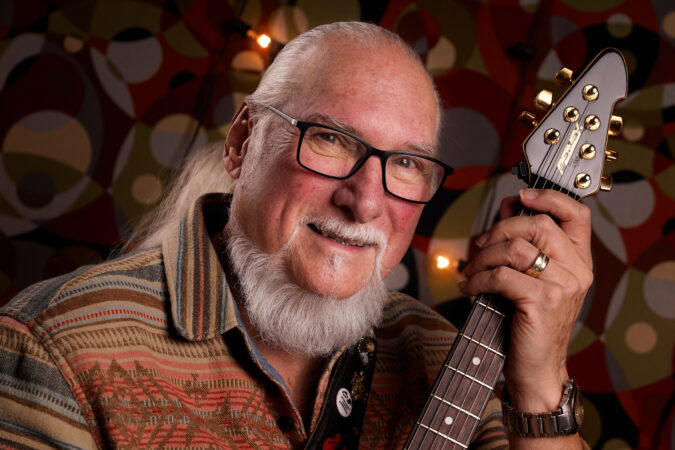
    Steve Cropper, an internationally renowned, Grammy-winning guitarist and Rock & Roll Hall of Fame inductee who played with luminaries such as Otis Redding, B.B. King, Booker T. & the MG’s and the Blues Brothers, died Dec. 3 in Nashville. He was 84 years old.

    Mr. Cropper’s death was announced on his social media accounts in a statement that called him “a beloved musician, songwriter, and producer.” The cause of death was not disclosed.

    In the earliest days of his decades-long career, Mr. Cropper played guitar as a founding member of the Memphis band the Mar-Keys, which had a national hit with “Last Night” in 1961. He formed the band with his childhood friend, Donald “Duck” Dunn, who became a well-known bassist. The two continued to collaborate for years afterward, notably with the famed Booker T. & the MG’s — a groundbreaking, racially integrated R&B/soul studio band formed by Mr. Cropper in 1962.

    Mr. Cropper performed on many enduring hits, including with Otis Redding on “(Sittin’ On) The Dock of the Bay,” which the two co-wrote, and with Sam & Dave on “Soul Man.”

    He also played on two albums with the Blues Brothers and co-wrote hits such as “In the Midnight Hour” with Wilson Pickett, “Knock on Wood” with Eddie Floyd, and “Green Onions” as part of Booker T. & the MG’s.

    Stephen Lee Cropper was born on a farm near Dora, Mo., on Oct. 21, 1941. He recalled falling in love with music after his family moved to Memphis when he was 9 years old and he started hearing Black gospel songs on local radio stations.

    “I really enjoyed that music. I don’t know what it was. At such a young age, it impressed me,” he recalled in a 1984 interview. “The Black spiritual music … it gave me a whole different attitude about music.”

    At about age 14, he decided he wanted to play guitar and scraped together $20 to order one from a catalog by setting pins at a bowling alley in Memphis — earning about 10 cents a game. He recalled his shock when he opened the box and found that the instrument had not been strung.

    “I went, ‘Wait a minute, isn’t it supposed to be all tuned and all that stuff?’” he said with a laugh. “I really didn’t have a musical background in the family.”

    He taught himself how to play, recalling: “I liked the sound of it. I liked the ring of the notes.”

    In his acceptance speech when Booker T. & the MG’s was inducted into the Rock & Roll Hall of Fame in 1992, Mr. Cropper said he was honored to play “with some of the greatest musicians on the planet.”

    “It’s been a great career and it’s been a lot of fun,” he said.

    Mr. Cropper was inducted into the Songwriters Hall of Fame in 2005. He won two Grammy Awards, in 1968 for “(Sittin’ On) The Dock of the Bay” with Redding and in 1994 for “Cruisin’” as part of Booker T. & the MG’s. He was nominated for a Grammy nine times.

    In 1996, British magazine Mojo ranked him as the second-greatest guitarist of all time, behind only Jimi Hendrix.

    “Steve’s influence on American music is immeasurable,” his family said on social media.

    “Every note he played, every song he wrote, and every artist he inspired ensures that his spirit and artistry will continue to move people for generations.”

    Mr. Cropper is survived by his wife, Angel Cropper, and his four children.

  • Admiral says there was no ‘kill them all’ order in boat attack, but video alarms lawmakers

    Admiral says there was no ‘kill them all’ order in boat attack, but video alarms lawmakers

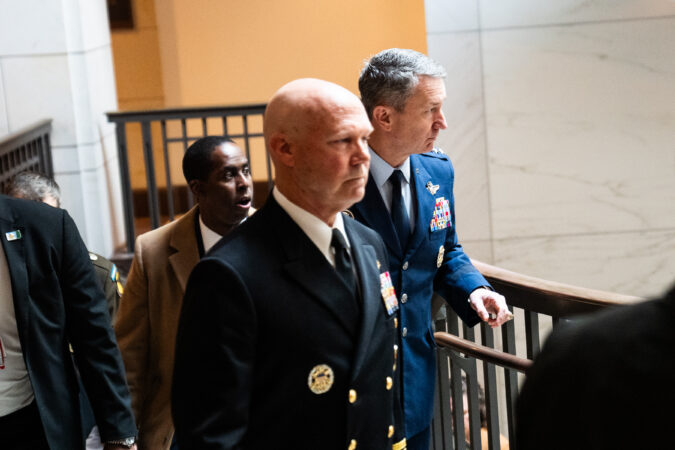
    WASHINGTON — A Navy admiral commanding the U.S. military strikes on an alleged drug boat in the Caribbean told lawmakers Thursday that there was no “kill them all” order from Defense Secretary Pete Hegseth, but a stark video of the attack left grave questions as Congress scrutinizes the campaign that killed two survivors.

    Adm. Frank “Mitch” Bradley appeared for a series of closed-door classified briefings at the Capitol as lawmakers conduct an investigation after a report that he ordered the follow-on attack that killed the survivors to comply with Hegesth’s demands. Legal experts have said such a strike could be a violation of the laws of military warfare.

    “Bradley was very clear that he was given no such order, to give no quarter or to kill them all,” said Sen. Tom Cotton, who heads the Senate Intelligence Committee, as he exited a classified briefing.

    While Cotton (R., Ark.) defended the attack, Democrats who were also briefed and saw video of the survivors being killed questioned the Trump administration’s rationale and said the incident was deeply concerning.

    “The order was basically: Destroy the drugs, kill the 11 people on the boat,” said Washington Rep. Adam Smith, the top Democrat on the House Armed Services Committee.

    Smith, who is demanding further investigation, said the survivors were “basically two shirtless people clinging to the bow of a capsized and inoperable boat, drifting in the water — until the missiles come and kill them.”

    The classified sessions with Bradley, alongside the chairman of the Joint Chiefs of Staff Gen. Dan Caine, provided fresh information at a crucial moment as Hegseth’s leadership comes under scrutiny. But they did little to resolve growing questions about the legal basis for President Donald Trump’s extraordinary campaign to use war powers against suspected drug smugglers. So far more than 80 people have been killed in some 20 strikes.

    Lawmakers have not yet specifically authorized the use of military force against the alleged drug boats, and the Republican-controlled Congress has turned back attempts to put a check on Trump’s power to engage in the missile campaign, which Hegseth has vowed will continue. Several Democrats have called for Hegseth to resign.

    Congressional investigation gets underway

    Lawmakers want a full accounting of the Sept. 2 strike, which was the first in what has become a monthslong series of U.S. military attacks on vessels near Venezuela believed to be ferrying drugs. The Washington Post had reported that Bradley ordered the follow-on attack on the survivors.

    But lawmakers who lead the House and Senate’s national security committees in Congress came away with different descriptions of what the two survivors were doing when they were killed.

    Cotton said he saw them “trying to flip a boat loaded with drugs bound for United States back over so they could stay in the fight.”

    He said there were “several minutes” between the first and second attacks, which consisted of four missile strikes. He said it was “gratifying” that the U.S. military was taking “the battle” to cartels.

    But Connecticut Rep. Jim Himes, the top Democrat on the House Intelligence Committee, said, “what I saw in that room was one of the most troubling things I’ve seen in my time in public service.”

    “You have two individuals in clear distress, without any means of locomotion, with a destroyed vessel,” he said, and who “were killed by the United States.”

    The survivors did not issue any distress call or other communications, though lawmakers were told it appeared the people had a hand raised, “waving” at one point during the attacks, Smith said.

    Smith acknowledged there was likely cocaine on the boat, but he objects to the Republican administration’s rationale for continued attacks on alleged drug runners who may or may not be heading to the United States. “That’s really the core of the problem with all of this,” he said. “That incredibly broad definition, I think, is what sets in motion all of these problems about using lethal force and using the military.”

    Meanwhile, the U.S. conducted yet another strike on Thursday. The U.S. military said it killed four men in a strike on a suspected drug vessel in international waters in the Eastern Pacific, the 22nd such strike.

    “Intelligence confirmed that the vessel was carrying illicit narcotics and transiting along a known narco-trafficking route in the Eastern Pacific,” the U.S. military said in a statement on Thursday.

    Who is Adm. Bradley?

    At the time of the attack, Bradley was the commander of Joint Special Operations Command, overseeing coordinated operations between the military’s elite special operations units out of Fort Bragg in North Carolina. About a month after the strike, he was promoted to commander of U.S. Special Operations Command.

    His military career, spanning more than three decades, was mostly spent serving in the elite Navy SEALs and commanding joint operations. He was among the first special forces officers to deploy to Afghanistan after the Sept. 11 attacks. His latest promotion to admiral was approved by unanimous voice vote in the Senate this year, and Democratic and Republican senators praised his record.

    Sen. Thom Tillis (R., N.C.) has described Bradley as among those who are “rock solid” and “the most extraordinary people that have ever served in the military.”

    But lawmakers like Tillis have also made it clear they expect a reckoning if it is found that survivors were targeted. “Anybody in the chain of command that was responsible for it, that had vision of it, needs to be held accountable,” he said.

    What else are lawmakers seeking?

    Underpinning Trump’s campaign against suspected traffickers is his argument that drug cartels amount to armed combatants because their cargo poses a threat to American lives.

    Democrats are demanding the release of the full video of the Sept. 2 attack, as well as written records of the orders and any directives about the mission from Hegseth. None of the written orders or audio of verbal commands was shared with the lawmakers.

    A White House Office of Legal Counsel memo providing a rationale for the strikes was dated after the fact, on Sept. 5. That memo remains undisclosed, and Democrats want it released.

    Obtaining further information, though, will largely depend on action from Republican lawmakers, who have majority control of the committees, a potentially painful prospect for them if it puts them at odds with the president.

    Rhode Island Sen. Jack Reed, the top Democrat on the Armed Services Committee, said that he and the Senate Armed Services Committee chair, GOP Sen. Roger Wicker, have formally requested the executive orders authorizing the operations and the complete videos from the strikes, among other items. The Trump administration has repeatedly denied their requests for basic information about the operation, Reed said.

    Republican lawmakers who are close to Trump have largely stood by Hegseth and the administration’s decision to conduct the strikes.

    Elsewhere, Venezuelan President Nicolás Maduro and others see the U.S. military operation as part of an effort to prompt a government change in the South American country. Maduro on Wednesday acknowledged speaking last month by phone with Trump, who confirmed the call days earlier.

  • How Palantir shifted course to play key role in ICE deportations

    How Palantir shifted course to play key role in ICE deportations

    For years, Alex Karp, Palantir’s CEO, had declared the data-management company to be “involved in supporting progressive values,” saying he has repeatedly “walked away” from contracts that targeted minorities or that he found otherwise unethical. Even as Palantir took on extensive data-management contracts for the federal government, the company said it was not willing to allow its powerful tools to broadly track immigrants across America.

    That commitment no longer holds. Palantir’s software is helping U.S. Immigration and Customs Enforcement track undocumented immigrants and deport them faster, according to federal procurement filings and interviews with people who have knowledge of the project and who spoke on the condition of anonymity to discuss sensitive details. The software, Immigration OS, plays a key role in supporting the Trump administration’s mass deportation agenda.

    Karp, formerly an outspoken Democrat who a decade ago said that he respected “nothing” about Donald Trump and that a deportation drive made “no sense,” has staunchly defended the president’s immigration policies. Declaring Palantir to be “completely anti-woke,” he has repeatedly praised Trump’s ongoing crackdown on immigrants, thrusting the company into one of the country’s most contentious issues.

    That shift in political alliances in no way signals a change in his core beliefs, Karp said in a statement to The Washington Post, portraying his commitment to controlling immigration as of a piece with his long-standing devotion to social justice.

    “For over two decades, I have implored our political elite to take seriously the truly progressive position on immigration: one of extreme skepticism. To no avail,” Karp said. “Unfettered immigration in Europe, where I lived for well over a decade, has been a disaster — depressing wages for the working class and resulting in mass social dislocation. I remain an economic progressive, isolated among self-proclaimed progressives that are anything but.”

    The changes at Palantir have been driven by multiple factors, according to five of the people familiar with the company’s project. Palantir executives saw Trump’s election to a second term as a mandate from voters for stricter border control, the people said, and, like many other companies, Palantir has changed some policies in response to executive orders targeting diversity in hiring and other issues. They added that Karp’s support of Israel after the Oct. 7, 2023, Hamas attack has drawn him closer to Republican national security hawks.

    Palantir’s federal contracting business has bloomed during the Trump administration. Its September tally of new federal contracts was $128 million, its largest monthly sum on record, according to USASpending.gov. The company’s stock price is up more than 120 percent this year, as it rides its contracting wave and the boom in companies that, like Palantir, are centered on the development and use of AI.

    Palantir has long defied simple political characterization. For years, it has worked with administrations of both parties on projects other Silicon Valley firms shunned, such as the Pentagon’s Project Maven AI target identification system. But its support for ICE on a deportation crackdown punctuated by violent clashes and stiff court challenges has sparked debate among current and former employees over whether it runs afoul of the company’s values and endangers its bipartisan profile.

    Seven months into the project, which was renewed in late September, some Palantir employees still harbor concerns about Immigration OS, according to two of the people familiar with the matter. They say some Palantir staff members have been discussing whether the contract should be discontinued if ICE’s use of the technology veers into extrajudicial actions or violate the company’s civil liberties principles. It couldn’t be determined whether the company’s senior executives are involved in those discussions. A Palantir spokeswoman declined to comment.

    ICE and its parent department, the Department of Homeland Security, declined to answer questions about Immigration OS. DHS said in a statement that Palantir has been a contractor for 14 years, providing “solutions for investigative case management and enforcement operations” to ICE. “DHS looks holistically at technology and data solutions that can meet operational and mission demands,” it said.

    ICE awarded Palantir a $30 million contract on April 11 to build an “Immigration Lifecycle Operating System,” or Immigration OS for short. Its aim, according to procurement filings by the agency, is to facilitate the “selection and apprehension operations of illegal aliens” based on ICE priorities, minimize “time and resource expenditure” in deportations, and track in “near real-time” which individuals leave the country voluntarily. Palantir won the contract without a competitive bidding process, with ICE citing an “urgent and compelling need” and stating that “Palantir is the only source that can provide the required capabilities … without causing unacceptable delays.” ICE renewed the contract on Sept. 25, bringing its total value to about $60 million — a relatively small amount in the context of Palantir’s$2.87 billion revenue in 2024.

    In an internal communication to employees in the spring, Palantir presented the project as a “prototype” and said “longer-term engagements” were “TBD,” according to a copy obtained by 404 Media. The company said it was “pursuing this effort because we believe it is critical to national security and that our software can make a meaningful difference in the safety of all involved in enforcement actions.”

    ICE and Palantir have declined to disclose how many people the system tracks, which agencies it pulls data from, and whether there are safeguards against mistaken identity or overcollection of surveillance data. Shyam Sankar, Palantir’s chief technology officer, told the New York Times in a recent interview that Immigration OS tracked encounters at the border, asylum applications and applications for benefits. Immigration OS does not track information of U.S. citizens who are relatives of undocumented immigrants, Palantir said in a statement.

    ICE adopted Immigration OS this year as it rolled out a campaign to identify and detain what it calls the “Worst of the Worst.” The agency has cited cases of undocumented immigrants committing serious crimes as justification for broad deportation sweeps through Chicago, Charlotte and Portland, Oregon, and other cities. ICE and Palantir declined to say whether Immigration OS played a role in helping compile ICE’s “Worst of the Worst” lists.

    Trump said on Thanksgiving Day that he would “permanently pause” migration from “Third World Countries,” broadly deport undocumented immigrants, and end all federal benefits and subsidies to noncitizens. That would mark an escalation of a campaign that federal judges have repeatedly ruled exceeds the administration’s legal authority, with one Chicago judge saying last month that the use of force involved “shocks the conscience.” The Department of Homeland Security has decried the rulings as coming from “activist judges” and said its actions have been lawful.

    In an interview with Wired published in November, Karp said he had previously “pulled things” that he believed were being deployed in violation of the company’s code of conduct, while rejecting contentions that its immigration software is. Asked whether he needed to take a closer look at how Palantir’s products were being used in the United States, he called it “exactly the right question,” adding: “I’m telling you that I have done this, and I will continue to do it.”

    Wendy R. Anderson, who was Palantir’s senior vice president for national security until May, said Karp has never wavered in his conviction that tech companies working in defense have a duty to the country, not to politics.

    “Alex starts from a single, nonnegotiable premise: America has to win,” she said, speaking generally and not in reference to Immigration OS. “Not in a partisan sense, but in the enduring one — the survival of the United States and the Western institutions that make free societies possible.”

    Palantir, founded by Karp and PayPal co-founder Peter Thiel in 2003 in the wake of 9/11, has long drawn criticism from civil rights activists over the powerful data-management tools it sold to the likes of the Pentagon, CIA and ICE.

    Karp is the son of a Jewish father and African American mother, who brought him along to civil rights protests as a child. He grew up in Philadelphia, graduated from Central High School in 1985 and earned a bachelor’s degree in philosophy from Haverford College. Karp has long been outspoken in his self-identification as a Democrat and his beliefs in privacy protections. “We as a company, and I as an individual, always have been deeply involved in supporting progressive values and causes,” Karp said in 2011.

    In summer 2015, shortly after Trump announced his first major presidential run, Karp told his staff that he had turned down an opportunity to meet Trump, as “it would be hard to make up someone I find less appealing,” according to a leaked video published by BuzzFeed. Karp said he opposed Trump’s broad deportation platform, saying it made “no sense” to throw out hardworking people. He said blaming immigrants for the nation’s ills would bring up “the worst that a society can bring up.”

    During Trump’s first presidency, Palantir said it would not work directly with ICE’s Enforcement and Removal Operations arm on deportations, citing the risk of human rights violations. The company limited its contracts to the agency’s Homeland Security Investigations division, which worked on issues such as terrorism, sex trafficking and drug smuggling, though in practice there was at least some crossover with raids on undocumented immigrants.

    Palantir had made that distinction, Courtney Bowman, the company’s director of privacy and civil liberties, wrote in a 2020 letter to Amnesty International, “because we share your organization’s concern with the potential serious human rights violations against migrants, refugees, and asylum seekers at the U.S.-Mexico border and risks of disproportionate immigration enforcement inside the U.S.”

    Critics say Immigration OS represents a breach of those principles. The project has drawn public backlash, including from Y Combinator co-founder Paul Graham, who wrote on X that Palantir was “building the infrastructure of the police state.” In a public letter, 13 of the company’s former employees accused Palantir’s leadership of being “complicit” in “normalizing authoritarianism” in America.

    Within Palantir, executives defended the project by citing changing voter sentiment on the border issue and changes to ICE’s structure. In one of his first executive orders in January, Trump had ordered ICE’s Homeland Security Investigations to prioritize immigration enforcement instead of national security.

    “The national conversation around immigration enforcement, both at the border and in the interior of the United States has shifted,” the company wrote in an internal communication to employees, according to a copy obtained by 404 Media. Palantir said it had realized that “to really support the agency’s immigration enforcement mission, we must expand our aperture … this means supporting workflows that are substantially distinct from our historical scope and into Enforcement and Removal Operations (ERO).”

    The policy reversal prompted some employee resignations. Brianna Katherine Martin, who had been a U.S. government strategist for the company for almost three years, left in May, citing the recent expansion of the company’s work with ICE.

    “For most of my time here, I found the way that Palantir grappled with the weight of our capabilities to be refreshing, transparent, and conscionable,” Martin wrote on LinkedIn. “This has changed for me over the past few months.” She did not respond to requests for comment.

    The deepened partnership with ICE has come amid other changes at the company.

    Palantir revised its employee code of conduct in March, removing pledges to avoid biased decision-making and eschew unfair action based on race or national origin. The “Protect the Vulnerable” section of the code previously said: “We will not create or perpetuate the unfair treatment and/or stigmatization of individuals or groups, particularly when such unfair action is based on race, color, national origin, religion, sex, gender identity, disability, age, ancestry, marital status, citizenship, or sexual orientation.” The new version pledges more generally to avoid unfair action “based on any characteristic protected by federal, state, or local laws.”

    Palantir also deleted a section that said employees should strive to overcome conscious and unconscious biases in their decision-making. The section now says employees should engage with one another with respect.

    The code-of-conduct changes were made in response to Trump executive orders unrelated to the company’s ICE business, according to a person familiar with the matter, who spoke on the condition of anonymity to discuss the shift. Trump had forbidden federal contractors from “illegal” diversity practices in January.

    Karp biographer Michael Steinberger, whose book “The Philosopher in the Valley” was published last month, said his interviews revealed Karp’s increasing exasperation with what he saw as the Democratic Party’s unwillingness to control the border and preoccupation with identity politics.

    “He has definitely moved to the right,” Steinberger said. “Though I suspect he would be more inclined to say that he thinks the left left him.”

    An important factor in Karp’s rightward shift has been the Oct. 7 attack on Israel two years ago, Steinberger wrote in his book. “I’m now very willing to overlook my disagreements with Republicans on other issues because of the position they have taken on this one,” he quotes Karp there as saying.

    In a letter in July to Amnesty International, responding to questions about its ICE contracts, Palantir said that while it took the human rights risks of its work with governments seriously, its role was to serve as a responsible federal contractor and uphold the law, not to set U.S. government policy.

    “Palantir is not an oversight authority entrusted with scrutinizing or questioning executive branch actors,” the company wrote.
  • Making friends as an adult is hard. Here’s the secret.

    Making friends as an adult is hard. Here’s the secret.

    On a recent Thursday evening in downtown Washington, I took a deep breath and walked into a bar. I joined a couple dozen other women who were milling around making small talk and ordering drinks, waiting for the more formal portion of the evening to begin.

    I was there to make friends.

    When I first moved to D.C. at age 23, I immediately met lots of new people who were in the same boat. Many of my fellow interns were new to the city, and we were all game for adventures. These days I still have close friends, but many of us have busy jobs and young children. Some have moved away. It can be hard to even schedule a phone call to catch up.

    I find myself craving the easy friendships of my early 20s. Could I find that again?

    The meetup I was attending was organized by RealRoots, one of a number of startups aimed at making us less lonely. Even before the pandemic, Americans were spending less time with friends. By 2023, the U.S. surgeon general warned we were in a loneliness epidemic and that the health risks of isolation were akin to smoking.

    The good news is there’s now less stigma in admitting you want to make friends, especially since the pandemic, RealRoots CEO and co-founder Dorothy Li told me.

    “We were all lonely together for two years,” she said, and many of us have begun rebuilding social lives at the same time.

    I consulted experts about how to both make new friends and reconnect with old ones. Here’s what I learned.

    Be vulnerable

    I went into the RealRoots event with a healthy dose of skepticism. I was told that I would be matched with a curated group of women based on my responses to a personality quiz and an interview with an artificial intelligence assistant named Lisa who detected my “social vibe.” (I was “grounded, thoughtful, and warm” — thanks, Lisa!)

    “I totally get it,” Li said when I told her about my doubts. “Human connection needs to be in real life.” But the planning and logistics of matching people who are similar and finding times on their calendars? That, she said, “can be done seamlessly by AI.”

    The women at my meetup included a former professional ballroom dancer, a nurse who loves her work with dementia patients, and an aid worker about to leave for a work trip to Sudan.

    Everyone had different reasons for being there. One woman worked from home and felt isolated, especially since becoming pregnant. Another wanted to push out of her comfort zone and meet new people. A third said she had social anxiety and felt this took the pressure off.

    After mingling, moderators led us through a series of questions, which started like corporate icebreakers (what are your hobbies?) but got progressively more personal (what’s something you’re good at?), finally building to the last question: What’s something you’re struggling with right now?

    I searched my mind for something that wouldn’t feel too revealing. These were basically strangers, after all. But then someone talked about her fertility issues. Another was going through a difficult divorce. Another had a serious illness. I quietly reassessed. When it was my turn, I no longer felt the need to hold back. I talked about my insecurities as a mom. I felt myself starting to cry as I explained my fears about how my anxiety would affect my daughter. I was met with so much empathy.

    When I told Li I felt close to all the women by the end of the night, she told me that’s the point.

    “When you start talking about the things that are actually on your mind, everyone can relate,” Li said.

    Vulnerability invites vulnerability. This rule also applies when trying to deepen friendships.

    For journalist Billy Baker, after getting married, having kids and relocating to the suburbs, he realized that many of his high school and college friends couldn’t be part of his daily life anymore. He set out to build a community where he lived, and the first step was to reach out to people he felt a connection to, and to tell them that. It was intentional and a little scary, but worth it, he said.

    “Vulnerability for me was always rewarded,” said Baker, author of the book We Need to Hang Out: A Memoir of Making Friends.

    Do things you want to do anyway

    When Baker was working on his book about friendship, he was trying to nail down exactly what draws us to other people. He found that a shared interest or activity worked particularly well as a first step. For instance, he would often run into a guy at the gym, so he started asking him to meet up there to work out together.

    “Pickleball has changed senior friendship,” he said. “Is it pickleball they love or is it having this activity that they enjoy, and finding others who also enjoy it and then they’re off for coffee?”

    Baker says if you choose something you want to do anyway, you’ll probably meet people with a shared interest, and even if you don’t you’ll still have a good time.

    Put friendship on the to-do list — near the top

    Baker learned that he couldn’t just assume friendships would happen to him — he needed to take initiative.

    “We were never taught to prioritize friendship,” Baker said. For him, this journey began when his editor asked him to write about how many men let friendships lapse in middle age. Even though Baker had always been social, he realized he had been prioritizing his work and family and neglecting to make time for friends.

    “The gift I gave myself is to put friendship on the to-do list every day alongside eating well, taking care of my family, taking out the trash, all those things,” Baker said. “It needs to be a part of our daily life if you really are going to reap the benefits.”

    Baker’s solution was to take inspiration from a group of men in his town with a tradition called “Wednesday nights” — a weekly promise of getting together. Baker created his own version of it, and said it was awkward at first. But eventually, genuine connections formed.

    At the end of my conversation with Baker, he gave me a challenge: Was there anyone I could think of who I wanted to be closer to?

    I thought of a colleague I have been casual friends with for a few years. I always delighted in running into her in the hallways or at parties, but we had never gotten together just us. Baker encouraged me to ask her to hang out.

    I felt a familiar creeping fear as I reached out to her — what if she was too busy, or didn’t feel the same friendship vibe I did? What if we did hang out and had nothing to say?

    I asked her, my colleague Rachel Kurzius, to get lunch on a Sunday. We chatted for two hours that felt like 20 minutes. We bonded over talking about books and our kids and the surprising number of things we had in common, and it really feels like the start of a friendship. Similar to Baker, I was rewarded by vulnerability.

    If you’re contemplating taking the first step, just do it. The odds are stacked in your favor.

    “We like people who like us,” Baker said. So make the first move.

    After my RealRoots meetup, I declined to join RealRoots’ six week series — like a kickball league, there was a cost, and it didn’t fit into the budget this month — but I was still grateful for the opportunity to meet people. A few days later, I ran into one of the women from the group at a workout class, and we greeted each other like old friends.

  • Federal judge limits warrantless immigration arrests in D.C.

    Federal judge limits warrantless immigration arrests in D.C.

    The Trump administration’s escalating use of warrantless immigration arrests in D.C. this year probably violated federal law, a judge ruled Tuesday in a decision that prohibits such arrests for all migrants in the city except those at risk of escaping.

    U.S. District Judge Beryl A. Howell granted a preliminary injunction sought by the immigrant-rights group CASA Inc. and four migrants who were arrested without administrative warrants in August amid President Donald Trump’s law enforcement surge in the capital. All four had pending immigration applications at the time of their arrests and were eventually released after spending time in detention facilities.

    “They were arrested while going about unavoidable, lawful activities of daily life,” Howell said.

    The judge, in an 88-page opinion, took Trump administration officials to task for depriving migrants of their rights and basic necessities as they languished in cramped detention facilities before being released. She criticized immigration authorities’ “systemic failure” to follow the law and said top administration officials, including Chief Border Patrol Agent Gregory Bovino, had repeatedly misstated the legal requirements for warrantless arrests in public comments.

    Bovino and a spokesperson for the Department of Homeland Security had asserted that officers needed “reasonable suspicion” to conduct such arrests, but Howell said the legal standard was more stringent: probable cause. Homeland Security officials did not immediately respond to a request for comment Wednesday.

    Trump ordered a renewed crackdown on illegal immigration this year, and top administration officials set targets as high as 3,000 daily arrests of migrants. Attorneys for CASA and the four plaintiffs in the case argued that authorities began to work under an “arrest first, ask questions later” policy to comply with the high daily quotas — and began ignoring a section of the Immigration and Nationality Act that authorizes warrantless arrests only when a migrant “is likely to escape before a warrant can be obtained.”

    One of the plaintiffs, Jose Escobar Molina, a scaffolder from El Salvador, described in a court filing how he was picked up at 6 a.m. as he headed to work one morning by a group of plainclothes officers who shoved him into a black SUV, making him think he was being kidnapped. Another plaintiff, from Venezuela, said he showed his arresting officers his driver’s license, work permit and asylum application paperwork, which they disregarded.

    Warrantless arrests have skyrocketed since Trump’s surge began in August, Howell found. By one count, she said, officials conducted 943 immigration arrests over a month-long period that ended Sept. 9, which represented 40 percent of all D.C. arrests. The judge noted that being present in the country without legal authorization is not a criminal offense, but a civil violation. Entering the United States without legal authorization is a misdemeanor under federal law, and a felony for repeat offenders.

    “Viewing all immigrants potentially subject to removal as criminals is, as a legal matter, plain wrong,” Howell said, before quoting a Supreme Court ruling from 2012: “Perceived mistreatment of aliens in the United States may lead to harmful reciprocal treatment of American citizens abroad.”

    At a court hearing last month, an assistant U.S. attorney argued that an injunction would slow the Trump administration’s deportation efforts by allowing the court to micromanage arrests. As part of her ruling Tuesday, Howell ordered that immigration authorities document every warrantless immigration arrest in D.C. with “specific, particularized facts” establishing probable cause “that the person is likely to escape before a warrant can be obtained.”

    The Justice Department in a legal filing denied that immigration authorities had instituted a new policy of warrantless arrests and argued that the court did not have jurisdiction to rule on the case.

    “Plaintiffs identify no written policy authorizing the arrests that they complain of because there is none,” Assistant U.S. Attorney John Bardo said. Howell said approximately 40 migrants had submitted court declarations attesting to the warrantless arrests and said Bovino’s comments defending those arrests with inaccurate information proved that the policy existed.

    “This is a victory for the rule of law and for the people across the city, who have avoided going to work, to church, to school, to grocery stores — out of fear of being unlawfully arrested, detained, and deported,” said Joanne Lin, an official with the Washington Lawyer’s Committee, one of the groups representing the plaintiffs.

    The ruling describes some circumstances in which immigration agents can establish a migrant’s likelihood of escaping before a warrant may be obtained, but Howell said those factors could vary.

    “Some courts have found the likelihood of escape to be higher when, for example, the noncitizen presented ‘conflicting documents,’ ‘had been “picked up before,” ’ admitted that he had previously been removed, or appeared ‘extremely nervous’ as if ‘looking for an opportunity to run,’” the judge wrote. “Courts have also made the self-evident finding that the likelihood of escape is lower when the individual has resided in the country for a lengthy period of time and has strong community ties.”

    Aditi Shah, an attorney involved in the case from the American Civil Liberties Union of D.C., welcomed those conditions.

    “This requires the government to take some extra steps that it’s required to under the law before it can just grab people off the streets and lock them away in detention centers,” she said.

    Ama Frimpong, CASA’s legal director, said the ruling was a powerful memorial to one of the migrants who described his warrantless arrest and detention in a legal filing, using a pseudonym, Elias Doe. He died last week, Frimpong said. His health had worsened after he missed a dialysis treatment while detained, she said.

    “This is now part of his legacy,” Frimpong said. “It is important for impacted community members to lead this fight and show that they are not afraid.”

  • House Judiciary issues subpoena to force Jack Smith to testify in private

    House Judiciary issues subpoena to force Jack Smith to testify in private

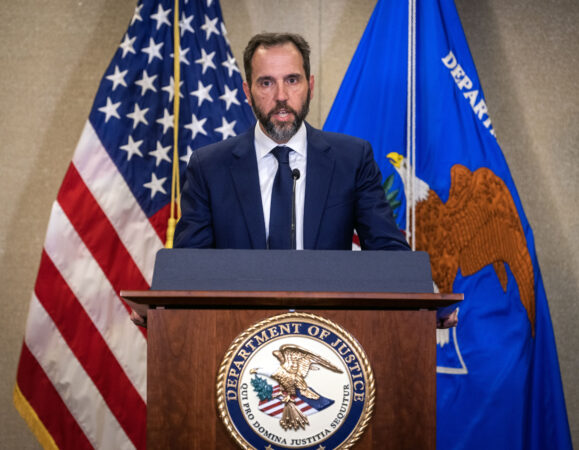
    House Republicans have upped their demands for Jack Smith to testify behind closed doors, issuing a subpoena on Wednesday to the former special counsel that calls on him to meet with members of the House Judiciary Committee and answer questions about his two federal prosecutions of President Donald Trump.

    Rep. Jim Jordan (R., Ohio), who chairs the House Judiciary Committee, said in his letter to Smith — which he posted on social media — that Smith would be deposed on Dec. 17. Smith must hand over materials related to the investigations by Dec. 12, he said.

    The demand is the latest in a string from Republican lawmakers aimed at getting Smith to testify privately and hand over materials related to the probes. In October, Jordan wrote Smith requesting that he sit for a private interview with lawmakers about the investigations, though did not issue a subpoena.

    “Due to your service as special counsel, the Committee believes that you possess information that is vital to its oversight of this matter,” the letter from Jordan reads.

    Smith repeatedly has said he would sit for an interview with lawmakers in a public setting, but does not want to do it behind closed doors. His supporters have expressed concern that a private interview would be subject to selective leaks by committee members.

    Public testimony, however, could put Republicans and the Trump administration in a tricky position. Smith has said he collected ample evidence showing that Trump committed the alleged crimes for which he was indicted. By calling Smith to testify, Republicans risk giving him a platform to air the evidence he collected against the president and failing to elicit testimony that would portray him as a corrupt prosecutor out to get Republicans.

    The former special counsel has also said that, under long-standing protocol, he needs Justice Department guidance to tell him what he is allowed to testify about and what materials he is allowed to hand over. Smith, who is now a private citizen, says he does not have access to the investigatory materials, which are now in the Justice Department’s possession.

    The Justice Department did not immediately respond to a request asking if it had provided Smith with that guidance.

    “Nearly six weeks ago Jack offered to voluntarily appear before the House Judiciary committee in an open hearing to answer any questions lawmakers have about his investigation,” Smith’s attorney, Peter Koski, said in a statement.

    “We are disappointed that offer was rejected, and that the American people will be denied the opportunity to hear directly from Jack on these topics. Jack looks forward to meeting with the committee later this month to discuss his work and clarify the various misconceptions about his investigation.”

    If Smith failed to comply with the subpoena, he could risk prosecution. If a person defies a congressional subpoena, lawmakers could refer that person to the Justice Department for prosecution.

    The back-and-forth over the terms of Smith’s testimony highlights the Trump administration’s contentious relationship with Smith and the large team of agents and prosecutors involved in investigating the president. The administration has fired multiple prosecutors and agents who worked on the cases and has portrayed Smith and his team as corrupt and politicized. The committee has also called some of Smith’s deputies on the special counsel team for testimony.

    Smith oversaw two federal investigations into Trump during the Biden administration. One examined Trump’s alleged mishandling of classified materials after he left office, and the other probed his alleged attempts to overturn the 2020 election results.

    Neither case made it to trial, and both were dismissed before Trump took office in January. Smith has said that he did nothing wrong and that he followed all investigatory protocols when overseeing the cases.

  • DHS launches new immigration sting in New Orleans

    DHS launches new immigration sting in New Orleans

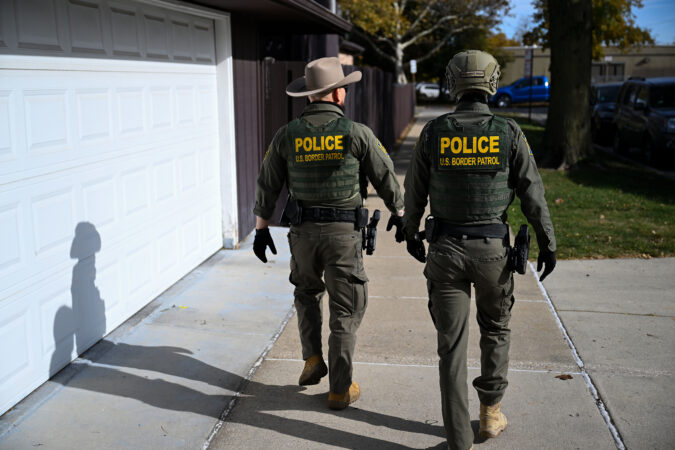
    The Department of Homeland Security announced the start of a new immigration enforcement operation in New Orleans on Wednesday, the latest in a series of sweeps that have resulted in thousands of arrests, legal challenges and protests.

    DHS said it was launching “Operation Catahoula Crunch” to target “criminal illegal aliens roaming free thanks to sanctuary policies that force local authorities to ignore U.S. Immigration and Customs Enforcement (ICE) arrest detainers.”

    The announcement included a list and photos of 10 undocumented immigrants — from Honduras, El Salvador, Guatemala, Jordan and Vietnam — who the agency said had been arrested for a variety of crimes in New Orleans and later released.

    “Sanctuary policies endanger American communities by releasing illegal criminal aliens and forcing DHS law enforcement to risk their lives to remove criminal illegal aliens that should have never been put back on the streets,” Assistant Secretary Tricia McLaughlin said in a statement. “It is asinine that these monsters were released back onto New Orleans streets to COMMIT MORE CRIMES and create more victims.”

    Immigration enforcement escalations in Los Angeles, Chicago, Boston and — for a shorter time — Charlotte have generated unrest. Residents have alleged civil rights abuses, and policing experts have questioned the tactics used and the training provided to agents in the rapidly growing U.S. immigration enforcement apparatus.

    While DHS has said the operations are targeted at capturing violent criminals, many undocumented immigrants with no record have also been arrested. In Chicago, the agency said, immigration officers arrested more than 4,000 people in “Operation Midway Blitz,” but officials have publicly identified only about 120 of those arrested as having a criminal arrest or conviction, some for major crimes such as murder and others for nonviolent offenses such as illegally crossing the border.

    In each city, whistleblowing protesters have trailed immigration agents, warning neighborhoods of their presence. In Chicago and Los Angeles especially, immigration agents were limited in their ability to manage large, hostile crowds or protesters as they worked independently of Chicago police officers, who were not permitted to assist in immigration arrests.

    Across New Orleans, residents had anticipated the operation, particularly immigrants. Some businesses had closed while others posted signs saying, “ICE not welcome here.”

    First Grace United Methodist Church posted a sign citing scripture that read, “ICE: Whatsoever you do to the least, you do unto me.”

    “A lot of people are locking their houses because it’s a scary time. We are all anticipating,” said Leticia Casildo, a co-founder of the nonprofit immigrant advocacy group Familias Unidas en Acción who immigrated to the United States from Honduras and who has lived in New Orleans for 20 years.

    New Orleans mutual aid organizations have been watching closely how immigration operations have played out in other cities, and several organizations have collaborated with like-minded entities in Chicago, Los Angeles and Charlotte to learn new strategies to adapt to increased enforcement.

    A spokesperson for the ACLU of Louisiana said the organization had consulted with the ACLU of North Carolina to fine-tune educational materials for individuals eager to document the actions of federal officers.

    Chicago organizers said they believe that a network of “rapid response” civilians who follow Homeland Security agents or respond to arrest scenes with cameras and whistles effectively warned communities of law enforcement’s presence and held agents accountable, to an extent, for violent interactions.

    “What we’ve learned is that even a street witness who is not recording makes these interactions less traumatic and less violent,” said Beth Davis, a press liaison for Indivisible NOLA. “So we need to get eyes on these people.”

    Louisiana residents’ reaction to Homeland Security actions may be complicated by a new state law punishing obstruction of immigration enforcement, said GOP state Sen. John “Jay” Morris, who represents northern Louisiana and wrote the law. While some mutual aid organizations in New Orleans have been directing people to buy whistles similar to those used in other cities, other organizations have not, anticipating immigration agents or local police may class the use of whistles as obstruction.

    “Such a law shouldn’t be necessary, but around the country and even the sheriff in Orleans Parish about a year ago indicated that she would not cooperate with ICE,” Morris said. “I hate that we have to have a law to tell people they have to cooperate with federal officials.”

    The law he wrote makes it a crime to “hinder, delay, prevent, or otherwise interfere with or thwart” federal immigration enforcement, and those in violation could face fines and up to a year in jail. Morris and other state lawmakers also expanded the crime of malfeasance in office, punishable by up to a decade in jail, to include government officials who refuse requests by ICE and prohibited police and judges from releasing anyone who “illegally entered or unlawfully remained” in the U.S. without notifying ICE.

    He said the laws could come into force if New Orleans officials or others attempt to interfere with DHS.

    New Orleans police spokesman Reese Harper said that federal officials had not notified the department about when the operation would start and that police will not be involved.

    “We handle the criminal aspect of the law. Border Patrol and ICE handle civil. So it’s unlawful for us to even touch that,” Harper said. “The only way we would even come in contact with them is if they called for backup, like a life-threatening situation.”

    He said that Superintendent Anne Kirkpatrick last month “did meet with both Border Patrol and ICE, but we don’t know much about the operation. We know that they are coming and that’s basically it.”

    New Orleans police have operated under a federal consent decree for the past 13 years that limited their cooperation with federal immigration enforcement, including the city’s jail. The Justice Department accused New Orleans of undermining federal immigration enforcement and included it on a list of 18 immigrant “sanctuary cities.”

    But a federal judge ended the consent decree last month, and Kirkpatrick said she would be a “partner” to the federal agents, although officers will not be conducting immigration arrests or asking people about their immigration status, according to a radio interview with WBOK reported by the Times-Picayune.

    Local and state leaders were split on the prospect of more immigration agents in Louisiana and Mississippi.

    New Orleans Mayor-elect Helena Moreno, who will begin her term in January as the city’s first Latina and Mexican-born mayor, criticized immigration enforcement tactics during surges in other cities in an interview with CNN on Tuesday.

    “It’s one thing if you would have a real strategic approach on going after people … who have criminal felonies or are being accused of some very serious and violent crimes. But that’s not what the public is seeing,” Moreno said. “They’re seeing people who are just trying to survive and do the right thing — and many of them now have American children who are not causing problems in our community — treated like they are violent, violent criminals.”

    The Orleans Parish Sheriff’s Office has refused to honor ICE detainers at the jail for more than a decade, but state officials last month challenged that policy under the new state law.

    A spokesman for the sheriff’s office this week referred questions about the operation to New Orleans police.

    Louisiana Gov. Jeff Landry (R) told Fox News on Monday that “we don’t talk about specific operations, but we certainly invite [Border Patrol official] Greg Bovino and [ICE Deputy Director] Madison Sheahan and [Homeland Security Secretary Kristi L.] Noem and all of President Trump’s great team that’s trying to make America safe to help make Louisiana safe.”

    “New Orleans is a crime-ridden city that we’ve been trying to keep people safe and something we’ve been working on since I became governor of Louisiana,” he said. “I’m welcoming them to come in. We’re going to take these dangerous criminals off the streets in Louisiana.”

    Asked what he thought of Kirkpatrick saying she can’t enforce immigration law, Landry conceded that “she can’t” and blamed the recently lifted federal consent decree that “decimated the New Orleans police department” and led him to create a French Quarter-based team of state police called “Troop Nola” “to get crime under control in New Orleans.”

    In September, Landry requested a National Guard deployment to New Orleans, citing an alleged increase in violent crime, even though police and city leaders say crime has decreased and federal support isn’t needed.

    Louisiana is a key hub in “Detention Alley,” a region that includes Texas and Mississippi that’s home to most of the country’s largest federal immigration detention centers. Louisiana’s centers house up to 6,000 detainees. The state opened the new “Louisiana Lockup” in September within the Louisiana State Penitentiary in Angola to hold immigrants whom federal officials consider dangerous. In a news conference, Noem said the prison’s “notorious” reputation — which includes a long, documented history of civil rights abuses — was a factor in choosing the facility to house undocumented immigrants.

    The New Orleans immigration enforcement operation, previously dubbed “Operation Swamp Sweep” in media reports anticipating the action, instead references Catahoula leopard dogs, trained by early Louisiana settlers to hunt wild boar.

  • Even a 15-minute walk may help boost your longevity

    Even a 15-minute walk may help boost your longevity

    Walking for at least 10 or 15 minutes at a time might do more for your health and longevity than spreading your steps out into shorter walks throughout the day, a large-scale study suggests.

    The study, published in October, looked at the effects of how people gather their steps each day, as well as how many steps they take and the associations that these patterns of daily activity might have with risks for heart disease and premature death.

    The data showed that middle-aged and older people in the study who grouped some of their steps into walks lasting 15 continuous minutes or more were about half as likely to develop heart disease in the near term as those who rarely walked for that long at one time. The people taking longer walks were also less likely to die during the yearslong study from any cause.

    “With physical activity, we know that the more the better,” said Emmanuel Stamatakis, a professor of physical activity, lifestyle and population health at the University of Sydney in Australia and lead author of the study. “But we haven’t had a very good understanding of the role of the pattern” of that activity.

    The study builds on earlier research, including from Stamatakis’s lab, exploring how to intensify the health benefits of even a little physical activity. But it also raises questions about whether it’s possible to overthink the simple walk.

    Most of us aren’t moving enough

    “This study is about identifying ways to maximize what people get out of their walking,” Stamatakis said.

    Walking may be the most common physical activity for almost everyone. But many of us do little of it. Current physical activity guidelines recommend 150 minutes a week of moderate activity, which would include brisk walking.

    But “75 to 80% of people are insufficiently active,” Stamatakis said, meaning they don’t meet those guidelines. Quite a few rarely exercise at all.

    It should be possible, though, to make even the briefest amounts of movement better for us, Stamatakis and his colleagues have speculated. In past studies, they have shown that picking up the pace of brief daily activities, such as housework, is associated with lower risks for heart disease and early death. The extra intensity seemed to make everyday chores and actions more potent for people’s health.

    But not everyone can or wishes to up the vigor of their vacuuming. Were there other ways to get more health bang from just being in motion, Stamatakis and his colleagues wondered? What about if people’s activities simply lasted a little longer?

    15-minute walks are best

    To find out, the scientists drew records for 33,560 men and women, most of them in their 60s, from the UK Biobank, a massive databank of British health records. All Biobank participants provide extensive medical information when they join, and many wear an activity tracker for a week.

    The scientists looked for participants who said they don’t formally exercise and whose activity trackers showed they typically accumulated fewer than 8,000 steps a day, most of them far fewer. They also had to be free of diagnosed heart disease.

    Using activity tracker data, the scientists divided people into groups, based on whether their longest daily walk lasted five or fewer minutes, 10 minutes, or 15 minutes or more. They also checked death and hospital records for up to about a decade after people wore the trackers. Then the researchers cross-referenced to see who seemed to have had the longest and healthiest lives.

    The results were consistent and clear. The men and women who’d walked for 15 continuous minutes or more had the lowest risks of heart attacks and other cardiovascular problems and were more likely than the other groups to still be alive. Similarly, those walking for 10 uninterrupted minutes tended to live longer and with less heart disease than those whose longest walk lasted only five minutes.

    These effects held true even if people were taking about the same number of total steps each day.

    Why? It’s likely that the longer walking bouts “meaningfully activated” and altered people’s cardiovascular and metabolic systems in ways the briefer walks couldn’t, the researchers speculate in the study.

    “This is a very insightful and important epidemiological paper that sheds further light into the importance of being physically active,” said Darren Warburton, an exercise scientist at the University of British Columbia, who has studied the health effects of physical activity. He wasn’t involved in the new study.

    Any activity is better than none

    But the study shows association, not cause and effect, so it can’t prove longer walks necessarily lead to better health outcomes. People who walk longer might also be more interested in healthy eating and other good habits that influence their longevity as much as — or more than — their stepping behavior.

    The effects were most pronounced, too, in people walking the least. The people who took fewer than 5,000 steps most days but grouped some of those steps into longer 10- or 15-minute walks showed relatively larger reductions in their risks for heart disease and early death than people taking closer to 8,000 steps a day who likewise strolled for a quarter hour. In other words, if people rarely walked but sometimes walked longer, they got more out of those longer walks than people who generally walked more.

    So, the true lesson of the study could be, just walk more. But if you can’t or really want to amplify the potential benefits of your daily steps, walk a bit longer sometimes.

    That’s a message the study’s authors embrace. “We have a lot of data from other studies showing that any amount of physical activity is good,” said I-Min Lee, a professor of epidemiology at the Harvard T.H. Chan School of Public Health and a study co-author. So, sure, “if you have a choice and are able to, try to walk for more than 10 minutes at a time,” she said. “But the total amount of activity is what matters more than the pattern in which it’s accumulated.”

  • Buy now, pay later boom shows shoppers are swapping impulse buys for strategy

    Buy now, pay later boom shows shoppers are swapping impulse buys for strategy

    From spreading out payments to dodging impulse purchases, holiday shoppers this year took a more judicious approach to spending over the Black Friday-Cyber Monday sales weekend, recent data shows.

    Underscoring this trend, “buy now pay later” services such as Klarna, Affirm, Afterpay, and PayPal Pay Later are increasingly popular among consumers of all income levels — whether shoppers are looking for convenience or seeking to spread out their budget, according to David Tinsley, a senior economist at the Bank of America Institute. Most customers are “light users,” he said, meaning they have about one to four transactions in their account, he added.

    So far this holiday season — beginning in November — the services have driven $10.1 billion in spending, a 9% jump from last year, according to Adobe Analytics. Cyber Monday was the single largest day for BNPL, accounting for a record $1.03 billion, a more than 4% increase over last year. That’s about 7% of what Americans spent online that day.

    Meanwhile, PayPal reported its BNPL transactions increased 23% year over year in the days leading up to Black Friday.

    “Consumers are planning ahead, prioritizing value, and making the most of how they spend their money,” Michelle Gill, the general manager of small business and financial services at PayPal, wrote in a news release on the rise of BNPL.

    Another factor is that these services are becoming more widely available each year at checkout. “BNPL could also just be going up because e-commerce is going up,” said Sucharita Kodali, an analyst at Forrester.

    There are also risks that come with these flexible payment methods. Some services charge interest on missed payments, and experts warn it could lead to overspending, especially for financially vulnerable consumers.

    Preholiday caution

    More broadly, the rising cost of groceries, housing, and energy — as well as tariff-induced price increases on core gifting categories including apparel, toys, and electronics — has forced consumers to be savvier when their dollar isn’t going as far, analysts said.

    “People are being cautious,” Kodali said. “The other shoe is going to drop any day now — the economy from a retail standpoint has been really positive … and this can’t go on forever.”

    While the National Retail Federation forecasts spending in November and December will break a record $1 trillion — an increase of between 3.7% and 4.2% over the same period last year — that doesn’t mean people are buying more, rather that things are costing more, analysts say.

    Still, there were signs of strength. Online sales on Cyber Monday reached $14.5 billion, while Black Friday hit $11.8 billion, according to Adobe Analytics. That’s a 7.1% and 9.1% surge over last year, respectively, and both surpassed Adobe’s forecasts.

    But in-store shopping slumped. Visits to malls and downtown areas on Black Friday fell a respective 2.5% and 2.6% compared to last Black Friday, according to MRI Software, which tracks pedestrian traffic. Small Business Saturday mall visits fell 4.3% while downtown traffic dropped 6%.

    RetailNext, which tracks in-store traffic for more than 560 brands, recorded a steeper decline. Visits fell 3.6% on Friday and 8.6% on Saturday.

    The slowdown doesn’t mean consumers weren’t spending, said Joe Shasteen, global head of advanced analytics at RetailNext, but a shift in how they intended to spend.

    “Shoppers showed they’re done with the impulse-driven, one-day frenzy,” he said in a news release. “Prices, tariffs, and tighter budgets pushed people to shop with discipline, not adrenaline, and they responded by turning Black Friday into a value calculation.”

    Consumers also took advantage of markdowns on everyday essentials. Among the top product categories from Shopify sellers were vitamins and supplements, followed by skin care and activewear. Adobe Analytics projects online grocery sales will drive $23.5 billion in revenue, a 9.3% year-over-year increase.

    “We’re seeing promotions on essentials and the things that consumers feel they need first,” said Marshal Cohen, chief retail adviser at market research firm Circana. “When they have the opportunity to buy grocery and pharmaceutical products at a discount, they’re going to do so.”

    But that doesn’t mean all shoppers are avoiding more exciting gifts.

    “Santa Claus is going to show up — and is he going to show up with vitamins? Yeah. But he’s also going to show up with a toy here and there,” he said.

  • Trump appears to doze off in another meeting

    Trump appears to doze off in another meeting

    President Donald Trump closed his eyes for extended periods as cabinet officials went around the room Tuesday providing updates on their work, at times seeming to nod off.

    It was the second time in less than a month that Trump has appeared to struggle to stay awake as his advisers speak about the administration’s initiatives. A Washington Post analysis of multiple video feeds of the meeting Tuesday showed that during nine separate instances, Trump’s eyes were closed for extended periods or he appeared to struggle to keep them open, amounting cumulatively to nearly six minutes. The episode was similar to an Oval Office event on Nov. 6 when the president spent nearly 20 minutes battling to keep his eyes open.

    Trump’s apparent drowsiness during the 2-hour, 17-minute gathering with his cabinet followed pronouncements in recent days by the 79-year-old president, his advisers and his doctor that he is in excellent health and full of stamina — an assertion the president repeated early in Tuesday’s meeting.

    “Right now, I think I’m sharper than I was 25 years ago,” Trump said, criticizing a recent New York Times article that said the president was facing the realities of aging. He later resurrected a frequent insult, “Sleepy Joe,” to mock former President Joe Biden, the first octogenarian to serve as president, who faced regular scrutiny for his perceived lack of stamina.

    In response to a request for comment about Trump’s eyes being closed during the meeting, a White House official initially told the Post that he was not sleeping, though a subsequent statement from press secretary Karoline Leavitt did not specifically address whether the president had dozed off.

    Leavitt instead said he was “listening attentively and running the entire” meeting, and cited Trump’s “amazing final answer in the news conference,” in which he bashed Somali migrants, calling it an “epic moment.”

    The White House has worked to refute suggestions that Trump has slowed down since his first term eight years ago. His advisers on Monday provided private logs to the New York Post that they said revealed Trump “working up to 12-hour days” on several instances during the past few weeks, the outlet reported.

    But on Tuesday, the president appeared sleepy. Throughout Secretary of State Marco Rubio’s discussion of “the most transformational year in American foreign policy since the end of the Second World War — at least,” Trump leaned his head forward and shut his eyes. They remained closed even as Rubio discussed one of the president’s favorite topics, his efforts to broker peace between warring foreign nations.

    Trump appeared far more alert later Tuesday when announcing “Trump accounts,” new tax-advantaged investment accounts for children. Unlike the meeting that had ended an hour earlier, where Trump was seated as he appeared to battle sleep, the president, Sen. Ted Cruz (R., Texas) and other officials were standing during the 40-minute announcement.

    “I don’t think [Trump] sleeps at all,” Cruz said at one point.

    While Trump’s Oval Office drowsiness last month came a week after he returned from a trip to Asia — a journey known for causing jet lag — the episode Tuesday followed a late night and early morning of the president scrolling and posting on social media.

    Between 10 p.m. Monday and midnight, Trump made nearly 150 posts and reposts on his Truth Social account, ranging from criticisms of Democrats and screenshots of posts from right-wing conspiracy theorists to positive video clips about himself and first lady Melania Trump. Despite being a prolific and longtime user of social media, Trump’s blitz of posts that night was far more than is typical for him, though Trump’s advisers have told the Post he frequently only gets about four hours of sleep a night.

    By 5:30 a.m. Tuesday, the president was back to posting again online.