Category: Washington Post

  • Trump leaves Republicans guessing on midterms plans as outlook darkens

    Trump leaves Republicans guessing on midterms plans as outlook darkens

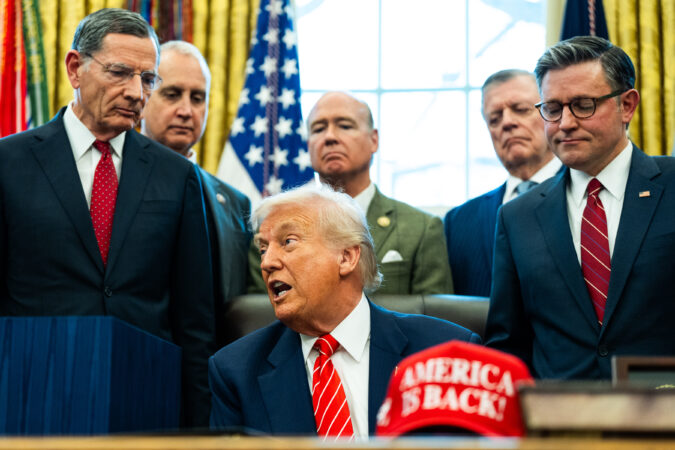
    Republicans looking to the White House to lead in the face of the party’s dimming prospects for November’s midterms are facing a crucial hang-up: the president.

    The party’s flagship campaign committee and super PACs have no indication of how President Donald Trump will deploy his $300 million-plus war chest because he has not approved a spending plan. Republican donors are funding expensive Senate primaries in Texas and Georgia because Trump has not cleared the field with his endorsement, or, in the case of Louisiana, endorsed a challenger to the incumbent Republican.

    People who have spoken with Trump about these obstacles said he at times can sound detached and noncommittal about his plans for spending and endorsements. One person close to the White House said some days the president seems not to care. Having already been impeached twice and indicted four times, Trump is less afraid of being impeached again than he is determined not to let a Democratic-controlled House halt his policy agenda, a White House official said. The official and others spoke to the Washington Post on the condition of anonymity to detail private conversations.

    But a White House official said Trump is excited to get more engaged in midterm strategy and looking forward to increasing his travel this month, including a campaign-style event outside of Washington this week. An Oval Office meeting to go over a handful of House endorsements Wednesday night turned into a five-hour gabfest on the midterms, according to two people present. Trump said he wants to defy the tendency of the president’s party losing seats in Congress in the midterms, one of the people said.

    “We’ll spend whatever it takes,” the person recalled Trump saying. “Go get it done.”

    The president’s political team, led by White House adviser James Blair, campaign strategist Chris LaCivita, and pollster Tony Fabrizio, met in Palm Beach, Fla., on Friday to review research from every competitive race in both chambers and develop estimates for what Republicans will have to spend to win. The team also briefed a retreat of the Senate Republicans’ campaign arm on Saturday.

    For much of last year, the White House was an island of optimism. Trump’s team would argue that Republicans were better positioned than at the same point in his first term, based on data such as the president’s approval rating, the generic ballot, and voter registration.

    Democrats, however, don’t need a 2018-size blue wave to win the House, where Republicans hold the narrowest possible majority and are defending 14 seats rated as toss-ups by the Cook Political Report. Democrats are defending four toss-up seats, and Cook shifted 18 seats in their favor in January.

    Republicans are anxiously awaiting a clear picture of the Trump team’s plans as the president’s sagging approval ratings and Democratic overperformances in special elections have darkened the GOP’s outlook for the midterms. Most Republicans are not ready to criticize Trump in public. But privately, there is rising frustration with an apparent lack of urgency from Trump and his staff, according to people who spoke to the Post.

    “Every time I talk to him on the phone, he says, ‘How’s the race going?’ and then he cites polls back to me so I know he’s following it closely,” Sen. John Cornyn (R., Texas) said, noting that Fabrizio is also his pollster and that LaCivita is a consultant to the super PAC supporting his reelection.

    Still, Trump’s endorsement has eluded Cornyn. “There’s only one person in the world who’s going to make that decision, and we can’t wait,” the senator said.

    Cornyn’s primary in Texas next month is dominating Republican anxieties on the Senate side since national strategists see his toughest challenger, state Attorney General Ken Paxton, as weaker in the general election, according to a memo from the National Republican Campaign Committee obtained by the Post. Holding the Senate seat for the GOP with Paxton as the nominee would cost an additional $100 million in a state where effective advertising costs $8 million a week, according to people involved in the race.

    “Texas cannot be taken for granted,” the memo said, presenting internal polling that puts Cornyn ahead of the Democratic candidates and Paxton behind them. Either Republican would face a competitive general election, the survey showed, with Texas state Rep. James Talarico running stronger than U.S. Rep. Jasmine Crockett on the Democratic side.

    An online survey released Monday that was conducted between Jan. 20 and 31 by the Hobby School of Public Affairs at the University of Houston found Paxton leading Cornyn 38% to 31%, with Rep. Wesley Hunt at 17%. On the Democratic side, Crockett led Talarico 47% to 39%.

    In a presentation to the Republican Senate caucus on Tuesday, National Republican Senatorial Committee Chair Tim Scott of South Carolina said a recent Fox News poll giving Democrats a six-point advantage in House races would put all nine Senate battlegrounds up for grabs, according to two people present. He also noted that Democratic candidates are raising more money for competitive races such as those in Georgia, North Carolina, and Ohio.

    Senate Republicans were heartened Feb. 1 when Trump endorsed John E. Sununu in the Republican primary for Senate in New Hampshire, after extensive lobbying by Senate Majority Leader John Thune (R., S.D.). Sununu has criticized Trump in the past but was leading in polls, and national Republicans saw him as the strongest candidate to flip the seat being vacated by a retiring Democrat, Jeanne Shaheen.

    But lobbying for Trump to endorse Cornyn has stalled as the incumbent has not established a clear polling lead — even after allies have poured $50 million into ads supporting Cornyn. Trump treasures his endorsement as definitive in primaries — and it often is, in part because he resists backing underdogs.

    Early voting opens Feb. 17 for the March 3 primary. If no one wins a majority, the top two candidates will compete in a runoff on May 26.

    Trump renewed hopes that he would wade into the race by telling reporters Feb. 1, “I’m giving it a very serious look.” The day before, a Democrat won a special election in a state Senate district that Trump won by 17 points in 2024.

    “I’ve had many conversations about why I think that makes the most sense to get behind John Cornyn,” Thune told reporters last week. “I don’t have any inside knowledge of when or what that might look like or when it might happen.”

    Trump might clear the field with an endorsement in Georgia to challenge Democrat Jon Ossoff, the person close to the White House said. The Republican primary includes Reps. Buddy Carter and Mike Collins, as well as former football coach Derek Dooley, who is backed by Gov, Brian Kemp. That race, though, is not considered as much a priority for Senate leaders as Texas is.

    Senate Republicans, including Thune, have been frustrated by Trump’s treatment of Senate incumbents, according to two people familiar with the tensions. Sen. Thom Tillis of North Carolina declined to run for reelection in the battleground state after feuding with Trump over Medicaid cuts in the president’s 2025 tax cuts and spending package. Last month, Trump recruited and endorsed a challenger to Sen. Bill Cassidy in Louisiana — which the White House official said was the result of Cassidy’s vote five years ago to convict Trump in the Senate impeachment trial of inciting the Jan. 6, 2021, riot at the Capitol.

    “I do think it’s a real problem when Senate Leadership Fund is on record supporting Cornyn and Cassidy, and President Trump is either silent or in opposition,” Tillis said, referring to the main super PAC supporting Senate Republicans. “We’re literally going to have Republican-on-Republican money being spent, and that makes no sense leading up to a general [election] where we’re going to have headwinds.”

    On the House side, the White House’s push to protect the House majority using redrawn congressional maps in Texas, North Carolina, and Missouri appears poised to net zero seats because of Democratic counteractions in California, Maryland, and Virginia. The latter two still face legislative or judicial hurdles.

    The White House still expects to pick up Republican seats from a new map in Florida, after Gov. Ron DeSantis (R) last month announced a state legislative special session in April. DeSantis said he wanted to wait until then in the hopes of a new Supreme Court ruling that could reshape as many as 19 House districts across the South by further weakening the Voting Rights Act of 1965.

    Trump has noted that the stakes of the midterms include, for him personally, the likelihood of being investigated or even impeached by a Democratic-controlled House. His first administration uniformly disregarded oversight requests and litigated subpoenas until after his term. Now some advisers expect that the administration can stonewall congressional oversight and that Democratic focus on investigating Trump could backfire on them leading up to the 2028 presidential election.

    Republicans still hold an overall advantage in fundraising. The House GOP campaign arm, which historically struggles to attract donors in uphill midterms, outraised its Democratic counterpart in 2025. The Democratic National Committee has more debt than cash, while the Republican National Committee has $95 million in the bank.

    Trump’s main super PAC, MAGA Inc., finished 2025 with a $304 million stockpile. But the PAC, led by LaCivita and Fabrizio, has been mum with allies about its spending plans. The person close to the White House said the president is likely to approve spending in multiple waves, and may reserve funds to maintain his political kingmaker role in future elections and for legal fees.

    “Thanks to President Trump’s leadership, MAGA Inc. will have the resources to help candidates who support President Trump’s America First agenda of securing our border, keeping our streets safe, supercharging our economy, and making life more affordable for all Americans,” PAC spokesperson Alex Pfeiffer said.

    While lawmakers await details on what assistance they can expect from the super PAC, Trump’s team noted it was the largest outside spender in the Dec. 2 special election to retain a House seat in Tennessee.

    “President Trump and his team were all in for me. I wouldn’t have won without them,” said Rep. Matt Van Epps, who won by 8.8 points in a district Trump carried by 22 points in 2024. “I know they’ll do the same for the entire America First team in this year’s midterm.”

    The White House said it is actively scheduling multiple trips for the president in battleground states and districts in the coming weeks and months that will include local lawmakers. The White House has also encouraged cabinet secretaries to minimize foreign trips and focus solely on domestic travel this year, encouraging officials to seek guidance on prioritizing battleground districts. White House officials are also helping to book cabinet members on local media in target areas.

    Since Thanksgiving, Trump has visited the battleground districts of Reps. Rob Bresnahan (R., Pa.) and Don Davis (R., N.C.), as well as Detroit (home to a Senate and governor’s race) and Iowa (home to a Senate race and two target House races). Vice President JD Vance visited battleground House districts held by Ryan Mackenzie (R., Pa.) and Marcy Kaptur (D., Ohio). Medicare administrator Mehmet Oz visited the districts of Rep. Michael Lawler (R., N.Y.) and Brian Fitzpatrick (R., Pa.).

    The White House provided statements from Lawler, North Carolina U.S. Senate candidate Michael Whatley, Sen. Jon Husted of Ohio, Sen. Dan Sullivan of Alaska, and RNC adviser Danielle Alvarez praising Trump and his staff for their support.

    “It is only February, and there is time for more, but I’m glad to have very strong support from the President and his administration,” Husted said.
  • Trump set off a surge of AI in the federal government. Here’s what happened.

    Trump set off a surge of AI in the federal government. Here’s what happened.

    As the Trump administration seeks to sweep away obstacles to developing artificial intelligence, the president’s team has brought its zeal for the new technology to the federal government itself.

    Orders came down from the White House budget office in April urging every corner of the government to deploy AI. “The Federal Government will no longer impose unnecessary bureaucratic restrictions on the use of innovative American AI in the Executive Branch,” the White House said in a statement announcing the push.

    Officials across the government answered the call, according to a Washington Post analysis of more than two dozen recent agency disclosures on AI use. On top of automating rote tasks, government agencies have launched hundreds of artificial intelligence projects in the past year, many of them taking on central and sensitive roles in law enforcement, immigration, and healthcare.

    The Department of Homeland Security has adopted new, more sophisticated facial recognition tools. The FBI has purchased novel systems to sift through reams of images and text to generate leads for investigators. And the Department of Veterans Affairs is developing an AI program to predict whether a veteran is likely to attempt suicide.

    Revoking — even scorning — the Biden administration’s caution, the White House has directed government departments to cut through any red tape that might slow the adoption of AI. “Simply put, we need to ‘Build, Baby, Build!’” the Trump administration’s AI action plan says.

    Federal agencies are doing just that: The 29 that had posted data last week listed 2,987 active uses for AI by the end of 2025, up from 1,684 the year before. The disclosures are required by the budget office and provide basic details about each use of AI. Hundreds of those uses were marked as “high impact,” meaning they are being used as the main basis for making significant decisions or have implications for people’s rights or their safety, according to federal standards.

    The White House argues the technology is a way to make the government vastly more efficient, though it’s impossible to tell from the disclosures how well used any of the thousands of tools are.

    The practical value of many of these tools remains uncertain. The public, meanwhile, remains deeply skeptical of the technology.

    The administration’s focus on speed may come at the expense of ensuring the tools are being used safely, said Suresh Venkatasubramanian, a Brown University computer science professor. AI could spit out erroneous information, leading officials to make bad decisions, or a facial recognition tool could lead to someone being wrongfully placed on a watch list, he said. Venkatasubramanian, who worked on AI safety in the Biden administration, argued that officials previously placed a greater emphasis on oversight and managing risks.

    “It’s not the use case itself that raises the question, it’s do you have the guardrails in place to use what can be very noisy and powerful tools in the right way,” he said. “Any particular use case — even the most innocuous sounding ones — could backfire.”

    The White House Office of Management and Budget, which is overseeing the government’s AI rollout, did not respond to a request for comment. Its April memo directs agency leaders to ensure “that rapid AI innovation is not achieved at the expense of the American people or any violations of their trust.”

    Turbocharged law enforcement

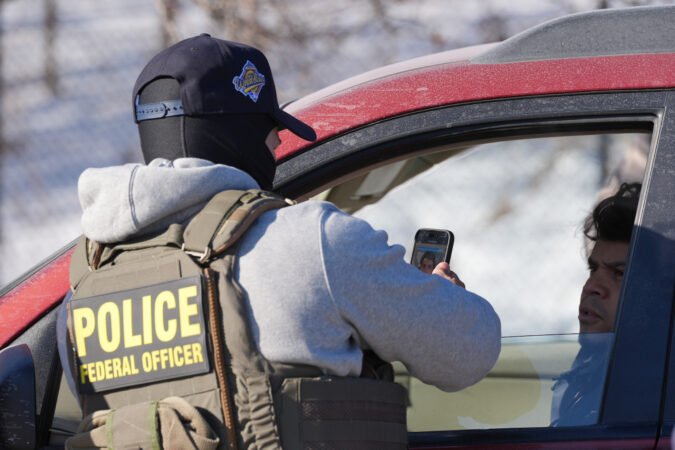
    As the administration has dramatically ramped up its deportation efforts, DHS has increasingly turned to advanced technology to turbocharge its work. The department’s disclosures reveal a suite of facial recognition tools deployed in the past year and another system to help identify people to deport. In all, 151 AI use cases mention either “immigration” or “border” or were filed by immigration and customs agencies.

    Immigration and Customs Enforcement, which is part of DHS, reported adding new facial recognition functions, including the Mobile Fortify app, which is used to scan individuals’ faces in the field. It also disclosed its use of an unspecified system to identify “vulnerable populations,” which the agency defined as including “unaccompanied minors who have crossed the border.”

    ICE also said it began in June using a new generative AI system from the defense contractor Palantir that trawls through handwritten records such as rap sheets and warrants, to automatically extract addresses to aid Enforcement and Removal Operations, the agency’s deportation division. The AI-powered system, called Enhanced Leads Identification and Targeting for Enforcement (ELITE), is not supposed to serve as a “primary basis for enforcement actions,” the agency said. Officers manually review the data and make decisions, it added.

    Another Palantir system helps quickly review ICE’s tip line, summarizing and categorizing each tip, whatever language it is submitted in.

    “Employing various forms of technology in support of investigations and law enforcement activities aids in the arrest of criminal gang members, child sex offenders, murderers, drug dealers, identity thieves and more, all while respecting civil liberties and privacy interests,” DHS previously said in a statement.

    The Justice Department disclosed multiple tools designed to generate leads for investigators, including a facial recognition system at the FBI and another to prioritize tips coming into bureau offices around the country. But many of the department’s descriptions are vague: The output of one FBI tool is described merely as “text.”

    Valerie Wirtschafter, a fellow at the Washington-based think tank Brookings, said a lack of detail in some agency disclosures makes it difficult to fully judge some of their more sensitive uses of AI.

    The Justice Department and Palantir did not respond to requests for comment.

    A Veterans Affairs boom

    The Department of Veterans Affairs listed more high-impact uses of AI than any other agency, disclosing 174 such tools either in development or operation to revamp how it provides healthcare and benefits. The department said it is developing AI helpers to prepare patients for surgery, use computer vision to more precisely measure wounds, and identify potential suicide risks that human clinicians might have missed.

    Another system is designed to help veterans claim their benefits. “This project harnesses the power of artificial intelligence to analyze vast amounts of data, providing personalized recommendations and streamlined access to a wide array of veteran benefits,” the department said in its disclosure.

    Pete Kasperowicz, a VA spokesperson, said those four systems “are still being assessed for their viability and have not been tested or deployed.” He said the department uses AI only as a “support tool,” leaving final healthcare and benefits decisions to agency staff.

    Chris Macinkowicz, an official at Veterans of Foreign Wars, a service group, said that while VA’s use of AI promises to help the agency serve millions of veterans more efficiently, it needs to be carefully overseen.

    “Our experience has shown that, although AI can be a valuable tool, it is not infallible,” Macinkowicz said in an email. “Human judgment is essential to ensure accuracy, fairness, and accountability in decisions that have a direct and lasting impact on veterans and their families.”

    The Department of Health and Human Services disclosed an additional 89 projects connected to medical care. They include using AI to oversee clinical trials and to track the availability of vaccines. The department did not respond to a request for comment.

    Chatbots

    Many government uses are similar to those available to the general public. Agencies operate at least 180 chatbots designed to not only help federal employees complete mundane tasks such as scheduling travel and IT help, but also support them in more sensitive work like understanding labyrinthine internal rule books. Several agencies are using similar tools to help with writing federal rules and deciding how to award contracts.

    In a year that saw hundreds of thousands of federal employees laid off or take buyouts under cuts engineered by the Trump administration, a Defense Department official described at a conference last month how one team was able to use AI to still get a mandatory report finished despite losing the help of a team of about 20 contractors.

    “There’s four people, and guess what?” said Jake Glassman, a senior Pentagon technology official. “They generated the report, and I would dare anyone to see any type of difference on that.”

    National security

    The Pentagon is exempt from the disclosure process, but other government records show how it is aggressively accelerating its AI experimentation. Defense Secretary Pete Hegseth ordered officials to avoid being hamstrung by undue concerns of risks in a memo issued last month. Future AI contracts with vendors must allow for “any lawful use,” he wrote, without further usage constraints.

    “We must eliminate blockers to data sharing,” the memo said. “… We must approach risk tradeoffs … and other subjective questions as if we were at war.” The Pentagon told vendors in recent weeks that it is seeking to acquire cutting-edge “agentic” AI systems that exhibit “decision-making capabilities” and “humanlike agency” for its elite Special Operations forces. One potential use for such systems is to weigh various “constraints” that govern when units can initiate or continue combat and the risk of killing or injuring civilians.

    “These constraints overlap and sometimes include conflicting guidance,” the department said in a request for industry input, adding that the AI agents should understand how certain constraints have priority over others.

    The request said the tools are expected to adapt and learn in real time, though they will be prohibited from “online” learning in contexts such as “kinetic fires” — the use of live ammunition — “since it may lead to undesired behavior.”

    The Defense Department did not respond to a request for comment.

    Science and research

    Government scientists are experimenting with using AI to solve problems in hundreds of niche areas, including eight related to whales and dolphins. Some at the National Oceanic and Atmospheric Administration are working on “Automated whale blow detections” — part of a population-tracking effort. (Some of these biologists are having fun, titling one project “Artificial Fintelligence: Automating photo-ID of dolphins in the Pacific Islands.”) Some 49 other projects use AI to evaluate satellite and aerial imagery to detect ice seals, track invasive species, estimate soybean yields, and locate cooling towers that might be vectors for the spread of Legionnaires’ disease.

    NOAA did not respond to a request for comment.

    Federal archivists have also turned to AI to help make the nation’s history more accessible.

    Jim Byron, a senior adviser at the National Archives and Records Administration, said the agency launched an AI-powered tool last month to let the public search through newly digitized records. They include documents related to the assassinations of President John F. Kennedy and Martin Luther King Jr., as well as the disappearance of pioneering aviator Amelia Earhart.

    Byron said in a statement that the agency plans to build on its work, calling the tool a “giant leap into the present.”

  • Trump plans to keep Democratic governors out of traditionally bipartisan meeting

    Trump plans to keep Democratic governors out of traditionally bipartisan meeting

    President Donald Trump plans to keep Democrats out of a traditionally bipartisan White House gathering of governors typically held as part of the National Governors Association’s annual Washington summit, the organization said.

    According to the governors’ offices, the president also revoked invitations sent to Maryland Gov. Wes Moore (D), the NGA’s vice chair; and Colorado Gov. Jared Polis (D) to attend a second White House event scheduled to occur around the summit: a dinner for governors.

    “This week, I learned that I was uninvited to this year’s National Governors Association dinner — a decades-long annual tradition meant to bring governors from both parties together to build bonds and celebrate a shared service to our citizens with the President of the United States,” Moore said in a statement Sunday. “… It’s hard not to see this decision as another example of blatant disrespect and a snub to the spirit of bipartisan federal-state partnership.”

    Moore told CNN’s State of the Union on Sunday that he was confused by the White House’s decision, saying that, just a few weeks ago, he led a bipartisan group of governors who met with the president as Trump signed a memorandum on bringing down energy costs.

    Moore also said on CNN that it was “not lost” on him that he is the only Black governor of a state.

    “I find that to be particularly painful, considering the fact that the president is trying to exclude me from an organization that not only my peers have asked me to help to lead, but then also a place where I know I belong in,” he said. “I’m never in a room because of someone’s benevolence nor kindness. I’m not in a room because of a social experiment. I’m in the room because I belong there and the room was incomplete until I got there.”

    Spokespeople for Polis, as well as representatives of the Democratic Governors Association, did not immediately respond to a request for comment.

    While Moore and Polis were excluded from the dinner with Trump, some Democrats remained invited to the gathering.

    The White House did not explain why Democratic governors were not invited to the meeting with Trump, and a spokesperson did not respond to a request to provide a list of Democrats who were invited to the dinner.

    Trump has frequently clashed with Moore and Polis, and his decision comes after months of conflict between the federal government and Democratic governors.

    Moore has condemned the president’s threat to deploy the National Guard to Baltimore and defund Maryland’s efforts to replace the fallen Key Bridge. Trump has also repeatedly claimed that Baltimore is “crime ridden” despite the fact that the city is experiencing its lowest homicide rate in 50 years.

    Polis and Trump have repeatedly feuded over Tina Peters, a former county clerk in Colorado who was convicted in state court on felony charges related to efforts to overturn the 2020 presidential election. Polis has defended the conviction and refused the White House’s request to transfer Peters to a federal prison. Because of this, in December, Trump in a Truth Social post called Polis a “scumbag” and said he should “rot in Hell.”

    The NGA’s Washington meetings are expected to take place Feb. 19 to 21. The organization said Friday that the White House meeting will no longer be part of the association’s official schedule.

    In a statement Friday, Brandon Tatum, the interim CEO of the NGA, said that the “bipartisan White House governors meeting is an important tradition, and we are disappointed in the administration’s decision to make it a partisan occasion this year.”

    “To disinvite individual governors to the White House sessions undermines an important opportunity for federal-state collaboration,” Tatum said. “At this moment in our nation’s history, it is critical that institutions continue to stand for unity, dignity and constructive engagement.”

  • Moderate Republican willing to break with party is set to lead ICE hearing

    Moderate Republican willing to break with party is set to lead ICE hearing

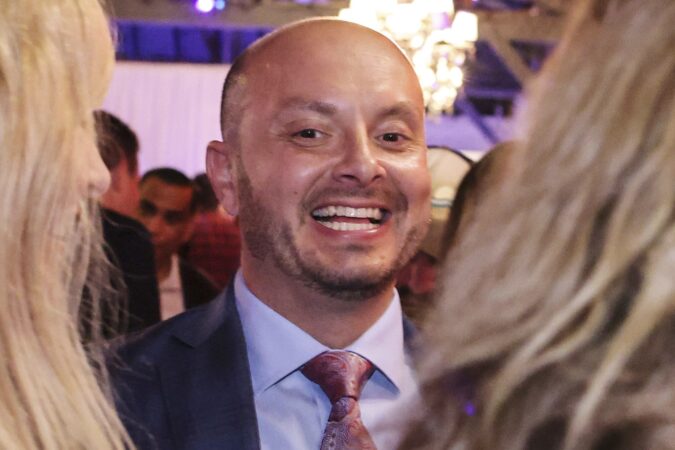
    On Tuesday, Rep. Andrew R. Garbarino (R., N.Y.) plans to lead what is likely to be the most contentious and closely watched hearing of his short tenure as a House committee chairperson. The focus is the Trump administration’s surge in immigration enforcement in Minnesota and elsewhere that has included the shooting deaths of two people in Minneapolis by federal authorities.

    The Homeland Security Committee hearing, which follows public blowback against the administration’s actions, is notable for a Republican-led House that has scaled back oversight hearings since President Donald Trump returned to office. It will be led by a chairperson who also stands out — both for his rapid ascent into the ranks of House leaders and for his reputation as a moderate willing to break with his party on high-profile issues.

    Garbarino, 41, faces the challenge of leading the interrogation of top immigration officials at the peril of angering the White House over Trump’s marquee policy of immigration — at a time when polls suggest a majority of voters disapprove of the president’s handling of it. Those scheduled to testify Tuesday include leaders at U.S. Immigration and Customs Enforcement, Customs and Border Protection, and Citizenship and Immigration Services.

    Former member of Congress Peter T. King, a Republican who represented the same district as Garbarino for 28 years, said it will be a difficult balancing act for the third-term lawmaker, who ascended to chairperson of the Homeland Security Committee in July.

    “He’s going to run the risk of Democrats saying he’s stonewalling, and he’s protecting ICE,” King said, while some Republicans on the committee are going to say “you can’t give an inch” in defending the administration.

    Garbarino’s temperament suits him well for what’s ahead, King said.

    “He has a good style,” King said, adding that Garbarino doesn’t get rattled easily. “He’s not going to be hitting somebody with the gavel.”

    Garbarino, in an interview, said he doesn’t see his job Tuesday as protecting the administration.

    “One of our roles is congressional oversight,” he said. “It’s not my job at this hearing to tout any accomplishments.”

    During the hearing, Garbarino, who practiced law before joining Congress, said he plans to ask questions about the training of immigration agents and their use of force, among other topics.

    Garbarino’s independent streak has at times put him at odds with his party as he sided with Democrats on some consequential votes.

    He supported legislation in 2022 that codified same-sex and interracial marriage. The previous year, he was one of only eight House Republicans to support a bill with new background check requirements for firearm transfers. The same year, he was one of 13 House Republicans to vote for President Joe Biden’s infrastructure bill. The latter move prompted then-Rep. Marjorie Taylor Greene (R., Ga.) to post Garbarino’s telephone number on social media in retaliation.

    And yet, Garbarino has vaulted past most rank-and-file House Republicans to land key committee assignments.

    Besides chairing Homeland Security, he sits on the coveted House Steering Committee that is responsible for doling out committee roles, and he also serves on the Financial Services and the Ethics committees. The latter often deals with controversies. During Garbarino’s tenure on Ethics, the panel voted in 2024 to release its report on former member of Congress Matt Gaetz (R., Fla.) that concluded Gaetz regularly paid for sex and possessed illegal drugs, charges Gaetz consistently denied.

    Ahead of Tuesday’s hearing, some of Garbarino’s more right-wing colleagues have expressed skepticism about how he’ll handle a high-profile examination of the Trump administration’s immigration agenda.

    “I think we need to have strong conservative leadership on that issue in the House,” Rep. Michael Cloud (R., Texas) said. When asked if he doubts whether Garbarino fits that description, Cloud responded: “We’ll see.”

    Similar doubts surfaced at the start of Garbarino’s tenure as Homeland chairperson. Rep. Clay Higgins (R., La.) resigned from the committee after losing a bid to lead it to Garbarino.

    “I would have been disagreeing with probably 90% of the positions that he takes,” Higgins said. “So the best thing for me to do as a joyful warrior was to withdraw from that position that was going to be fraught with disagreement, and I would have essentially derailed the chairman.”

    Garbarino was recommended by the steering committee in July over two other lawmakers as well: Reps. Michael Guest (R., Miss.) and Carlos A. Gimenez (R., Fla.).

    During his tenure in Congress, Garbarino has accomplished a feat that few have in the GOP conference: winning the favor of both former speaker Kevin McCarthy (R., Calif.) and the current speaker, Mike Johnson (R., La.), who helped Garbarino land a seat on the Ethics Committee. His shared first-floor Capitol hideaway is another signal of his close ties to leadership — a perk extended to a select few in the conference.

    “Part of my personality is being able to bring people together, you know, get things done, break down barriers, and part of that is … I do it through humor,” Garbarino said.

    For the most part, Garbarino, who represents Long Island’s South Shore, has won the respect of members of the New York delegation and fellow committee members, including those who represent red districts hundreds of miles from his home state.

    “In many ways, he’s very low-profile. From a public perspective, he doesn’t do a lot of press releases or social media or fanfare, but he has great relationships, and he’s utilized those relationships to deliver for New York,” Rep. Nicole Malliotakis (R, N.Y.) said, adding that she considers Garbarino a “professional schmoozer.”

    Rep. Brad Knott (R., N.C.), a freshman on Homeland Security, said Garbarino “embraces every positive stereotype of a New Yorker: He’s loud, he’s brash, he’s hilarious, he’s off the cuff.”

    King attributed Garbarino’s rapid rise in the House to his affable nature and described him as being a “straight shooter.”

    “People don’t worry about him knifing them in the back, agreeing to one thing and then saying another or doing something else or criticizing something that he really supported,” King said.

    King also led Republicans on the Homeland Security Committee, serving from 2005 to 2013 as chairperson and ranking Republican when the focus was more on counterterrorism in response to the Sept. 11, 2001, attacks — the events that led to the committee’s creation.

    The committee has since evolved, pivoting from counterterrorism to its current focus on immigration and border security. Given that, Garbarino faces another balancing act of guiding the committee’s priorities. Just recently, he shepherded the latest fix to the 9/11 healthcare program in a fraught spending package that passed after a temporary government shutdown.

    Tuesday’s hearing is long overdue, according to Garbarino’s Democratic counterpart, who said he’s been pushing for an oversight hearing on the Department of Homeland Security since Trump took office in January 2025.

    Rep. Bennie G. Thompson (Miss.), the panel’s ranking Democrat, said Garbarino “understands that part of our role is oversight,” adding that Mark Green (R., Tenn.), who led the panel until his resignation from Congress last summer, was not willing to convene a hearing focused on ICE.

    “He understands that part of our role is oversight based on our jurisdiction, so we’ve been able to get a commitment to have a specific hearing on ICE, which we couldn’t get Green to do,” Thompson said.

    Garbarino acknowledged some of the challenges that come with the hearing, which is expected to be confrontational and emotional. He pledged he will “keep order” and ensure every member adheres to the committee’s five-minute rule for questioning.

    “I’m not the Hulk, where all of a sudden I’ll turn angry,” he said.

  • On a paradise island in the Pacific, meth and HIV epidemics rage

    On a paradise island in the Pacific, meth and HIV epidemics rage

    SUVA, Fiji — The methamphetamine drop-offs to a squatter settlement here followed a routine.

    Once a week, according to residents, a black Dodge truck with tinted windows pulled up to a tent on the edge of the community, a dense maze of tiny shacks connected by muddy paths, slick from the persistent summer rain. A man stepped out, swapped drugs for cash with his local contact, and drove off. Dealers repacked the white crystals into tiny zip-top bags, no bigger than a child’s pinkie, before doling them out for about $22 each.

    The settlement does not have plumbing or formal electricity. Even food is scarce. But the drugs were everywhere, according to community workers and one former user who lives here, a 17-year-old boy. Given that almost all his friends were on meth, he said, getting addicted was “only a matter of time.”

    For years, law enforcement partners and the United Nations had warned Fiji that international criminal syndicates were exploiting its geography as a South Pacific island, using it as a transshipment point for drugs originating in Southeast Asia and Latin America and destined for New Zealand, Australia, and North America.

    Those drugs — principally methamphetamines — have seeped into Fiji itself, devastating families and scarring this small society. Community workers say they have seen users as young as 10.

    Compounding the problem is how meth is used in Fiji: injected, rather than smoked, snorted or taken orally, according to interviews with current and former methamphetamine users and an assessment of drug use in Fiji’s capital, Suva, commissioned by the World Health Organization and U.N. Development Program (UNDP). Poor education around drugs and a deeply ingrained communal culture have meant that needles are routinely shared among users, who lack knowledge of or ignore safe sex practices — igniting an HIV public health crisis, health workers said in interviews.

    A sex worker waits outside the Survival Advocacy Network, a safe haven for the LGBTQ+ and sex worker community in Fiji that in recent years has also served injecting drug users and provides free HIV testing.

    Fiji — a tourist destination known for its exclusive resorts, pristine waters, and white-sand beaches — now has one of the fastest-growing rates of HIV infection in the world, overburdening its donor-dependent public health system. More than 1,583 new HIV infections were recorded in 2024 in a country with a population of less than 1 million — the highest ever in Fiji’s history, and a 500% increase from 2018.

    That number, according to preliminary assessments from the Joint U.N. Program on HIV/AIDS (UNAIDS) and Fiji’s Health Ministry, is expected to double again this year to more than 3,000. And public health officials believe the true number of those infected is closer to double that, as many exposed Fijians have not yet been tested, especially on more remote islands.

    Conditions here “were a recipe for an explosive epidemic,” said Jason Mitchell, who leads the Fijian government’s HIV task force. “We have a long way to go … before we see the end of this.”

    A majority of these new cases have been recorded among young people between ages 15 and 34, while a growing number of mothers are passing the infection on to their babies, according to local health statistics; half of the new infections are linked to drug use.

    The Reproductive and Family Health Association of Fiji (RFHAF) gives free HIV tests at a sporting event. Isoa Fou, 26, wasn’t ashamed to be getting a test and feels concerned about what’s going on in the country.

    Experts in both public health and transnational crime believe that Fiji is the starkest example of a phenomenon that is taking hold across the Pacific region: Rising HIV infections track drug shipment routes across islands that are smaller, more isolated and have significantly less testing for the virus, including in Tonga, Samoa, and the Solomon Islands.

    Those islands “all have the early signs that Fiji had in 2019,” said Renata Ram, UNAIDS’ country director in Fiji. Ram raised alarm bells of an impending HIV crisis in a 2022 article, warning that risky behaviors commonplace in Fiji were spreading to other parts of the Pacific.

    Law enforcement officials, customs agencies, U.N. officials and others who investigate drug syndicates believe that the groups operating in and around Fiji are working with each other, bringing together Chinese triads, Mexican cartels, Australian biker gangs, and other syndicates with connections as far away as Nigeria.

    Criminal organizations are targeting our region “because they understand our enforcement limitations to monitor across vast maritime territories using traditional enforcement methods,” said the Oceania Customs Organization Secretariat, a 24-member association that helps coordinate customs and border enforcement for Pacific nations, in a response to questions from the Washington Post. “We’re witnessing unprecedented coordination between drug cartels, organized criminal groups and regional networks.”

    That cooperation presents a huge challenge and has “thrown traditional narcotics work out the window,” according to one U.S. law enforcement official who, like others, spoke on the condition of anonymity to discuss counternarcotics operations. Criminal organizations from different countries, rather than violently seeking to secure turf, are working together in Fiji, law enforcement officials say, much like a diversified multinational corporation.

    “Those guys are going to make deals along the chain, even though they technically would be looked at as adversaries,” the U.S. law enforcement official said, “because at the end of the day they are going to do what it takes to succeed.”

    At the same time, international law enforcement agencies have been reticent to share intelligence with their Fijian counterparts, prosecutors said, because of allegations that drug syndicates have infiltrated the police and other agencies.

    In December, leaked chats on Viber, a messaging app commonly used in Fiji, allegedly showed police officers texting with traffickers about moving drugs. Seven senior officers are now under investigation in connection with that case, according to Fiji’s Ministry of Policing. Between January 2023 and October of last year, before the Viber investigation, 27 police officers were charged with drug-related offenses, the ministry said.

    John Rabuku, Fiji’s deputy director of public prosecutions, who last year secured convictions up to life in prison in connection with the Pacific’s largest-ever drug bust, acknowledged in an interview that these were only “middle-level people … involved in the logistics.” Even at trial, he said, prosecutors were unable to show the drugs came from a particular group. The syndicate had brought in 4.1 metric tons (about 4.5 U.S. tons) of methamphetamine worth over a billion dollars into Nadi, Fiji’s main tourist area, on a yacht in December 2023.

    “No one would give us that information,” Rabuku said. “The offshore intelligence community … just didn’t want to tell us.”

    Guests wait outside a nightclub in Suva in December.

    White money

    Joseph was a singer in a reggae band, performing for tourists at beach bars, when a contact he knew approached him about selling marijuana. The 47-year-old, who spoke on the condition that only his first name be used because of security concerns and ongoing criminal cases against him, started dealing, mostly selling locally grown product to foreigners.

    A few years before the COVID pandemic, he and others said, meth started hitting the streets, first as a party drug for tourists and wealthy Fijians. The drugs, according to the U.N. Office on Drugs and Crime (UNODC) and law enforcement officials, were from shipments transiting to Australia and New Zealand, where meth is growing in demand and exceptionally lucrative, selling for 18 times what it retails for in the United States, according to law enforcement officials and other experts on the drug trade.

    When COVID-19 hit, putting a freeze on tourist arrivals and complicating the transport of drugs in and out of Fiji, traffickers started paying runners in the drug itself — “white money,” as it is called on the streets. Joseph and experts on organized crime said dealers started selling meth locally to turn their pay into cash.

    “That payment in kind became the origin of the domestic market,” said Virginia Comolli, head of the Pacific program at the Geneva-based Global Initiative Against Transnational Organized Crime. There was so much that dealers “didn’t know how to price it,” she said, while users themselves had no idea how addictive the drug could be.

    As supply exploded and prices fell, meth quickly spread among the urban poor, sex workers and other marginalized communities.

    “It was the ‘in thing’ for us,” said Rochelle Naulunimagiti, a 37-year-old transgender sex worker and activist. “All the girls were on it.”

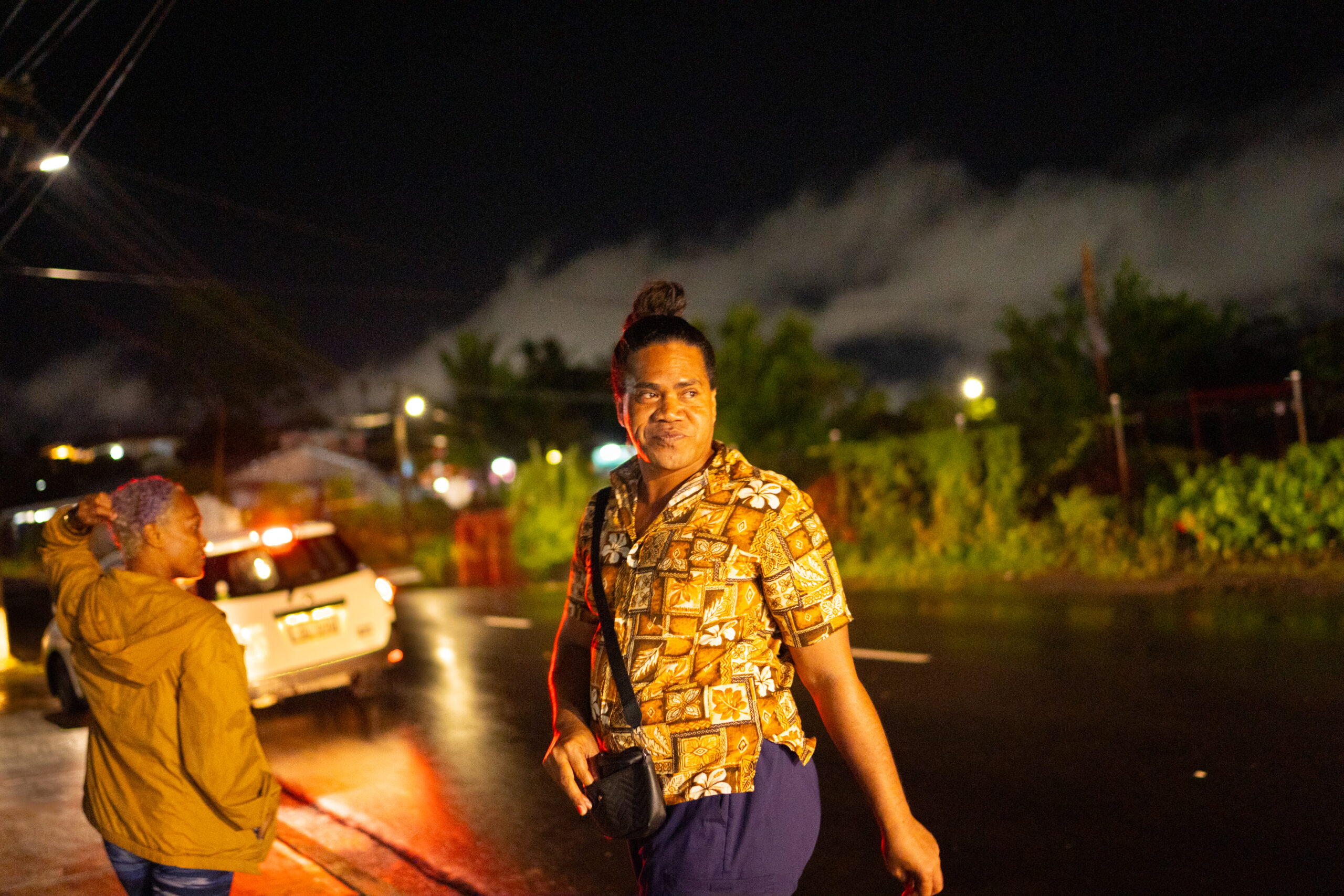
    Rochelle Naulunimagiti, 37, a trans sex worker and community activist, shared a needle with a friend one night when she was desperate to get high, amid an especially tough period in her life. A few months later, she tested positive for HIV, a diagnosis that initially crippled her.

    In Fiji, just as a single cigarette is often shared among a group of smokers and as the traditional psychoactive drink, kava, is passed around in a single cup, needles too were shared, community workers and users said.

    Friends would sit and inject in a group, using shared bottle caps or other mixing paraphernalia to dissolve the crystals into an injectable liquid. Often, just one person — called the “doctor” — would be in charge of administering the drug, injecting the others, users and community workers said. In rare cases, addicts injected themselves with the blood of a person who was already high to get a residual hit. But the high was never as strong. On one evening, reporters from the Post observed a user injecting “raw,” as it is called here: using their own blood, instead of water, to dilute the crystals, and then injecting the mixture back into their veins.

    Ben Morrison, who co-founded Inspire Pacific, which runs a camp for boys who are grappling with drugs and violence, said about 30% of those in the cohort are HIV-positive, most through needle-sharing.

    For them, “HIV is like, what’s that? OK, I got a sickness, but look at my life. I don’t have a dad, I don’t have a home, I don’t eat on a daily basis,” Morrison said. “So what’s another diagnosis from a doctor to me?”

    Sometimes, though, the risks were clear to users. Naulunimagiti knew better, she said. But one night in 2023, grappling with depression, she said she “really needed that feeling.” She took a needle from a friend and injected herself. Several months later, she tested positive for HIV.

    “I was a leader in the community,” Naulunimagiti said through tears. “I thought, what would people think of me?”

    Laundry hangs on a line in an urban squatter community in Suva.

    Culture of silence

    Mark Shaheel Lal, a 24-year-old student, was walking through the streets of Suva one afternoon when a driver rolled down his window and shouted, “he has AIDS!” before speeding off. It wasn’t the first time, he said. Just a few months earlier, someone pointed at him and called out, “HIV.”

    Just weeks before Fiji’s government officially announced there was an HIV outbreak in the country, Lal, a gay man who is not a drug user, came out as HIV-positive. In a nation where a culture of silence still exists around the diagnosis, Lal’s declaration made him a face of the epidemic, as well as a source of information for many HIV-positive Fijians. Through his Facebook page, Living Positive Fiji, Lal has counseled more than 100 newly diagnosed HIV patients over the past year, helping them navigate their diagnosis.

    Mark Shaheel Lal, 24, came out as a HIV-positive in 2024, hoping to break the “culture of silence” around the diagnosis.

    “I know how I felt when I got that note,” Lal said. “I thought my world was ending. It even came to a point where I thought I should take my own life because I was going to die anyway.”

    Some who have reached out to him have been hesitant to get treatment, believing that since they are not showing any signs of sickness, the diagnosis must be incorrect. Advances in antiretroviral therapy mean HIV is no longer the death sentence it once was — but only if detected early and if someone is receiving treatment. Fiji’s public health officials are also pushing for Pre-Exposure Prophylaxis (PReP) medication for high-risk groups, which can prevent people from contracting HIV altogether.

    Of the more than 120 people who died of HIV-related causes in Fiji in 2024, more than half found out their status the same year, according to data from the Health Ministry, long after their immune system had already been fatally compromised.

    Lal holds his HIV medication pills.

    Accessing critical medication has also not always been straightforward. At one point in late 2024, Lal and Naulunimagiti said, there were no antiretroviral pills in the country. There was also a shortage of specimen bottles for further testing, which Lal raised money for and then donated to the local reproductive health clinic.

    In recent months, both Australia and New Zealand have pledged millions to Fiji’s effort to get the HIV epidemic under control. The Fijian government was separately in discussions with the U.S. Agency for International Development (USAID) for additional funding and the U.S. Centers for Disease Control and Prevention (CDC) for help investigating the origins of the epidemic and the specific strain of HIV the country was dealing with, according to people familiar with the conversations. Both discussions did not progress under the Trump administration, which took office soon after Fiji declared its epidemic. USAID had just reopened its regional mission in Fiji in late 2023 after more than a decade.

    A spokesperson for the CDC, in response to questions from the Post, referred queries to the Department of Health and Human Services, which referred the Post on to the State Department. The U.S. Embassy in Suva did not respond to a request for comment.

    Ships in the waters off Fiji.

    New year, new bust

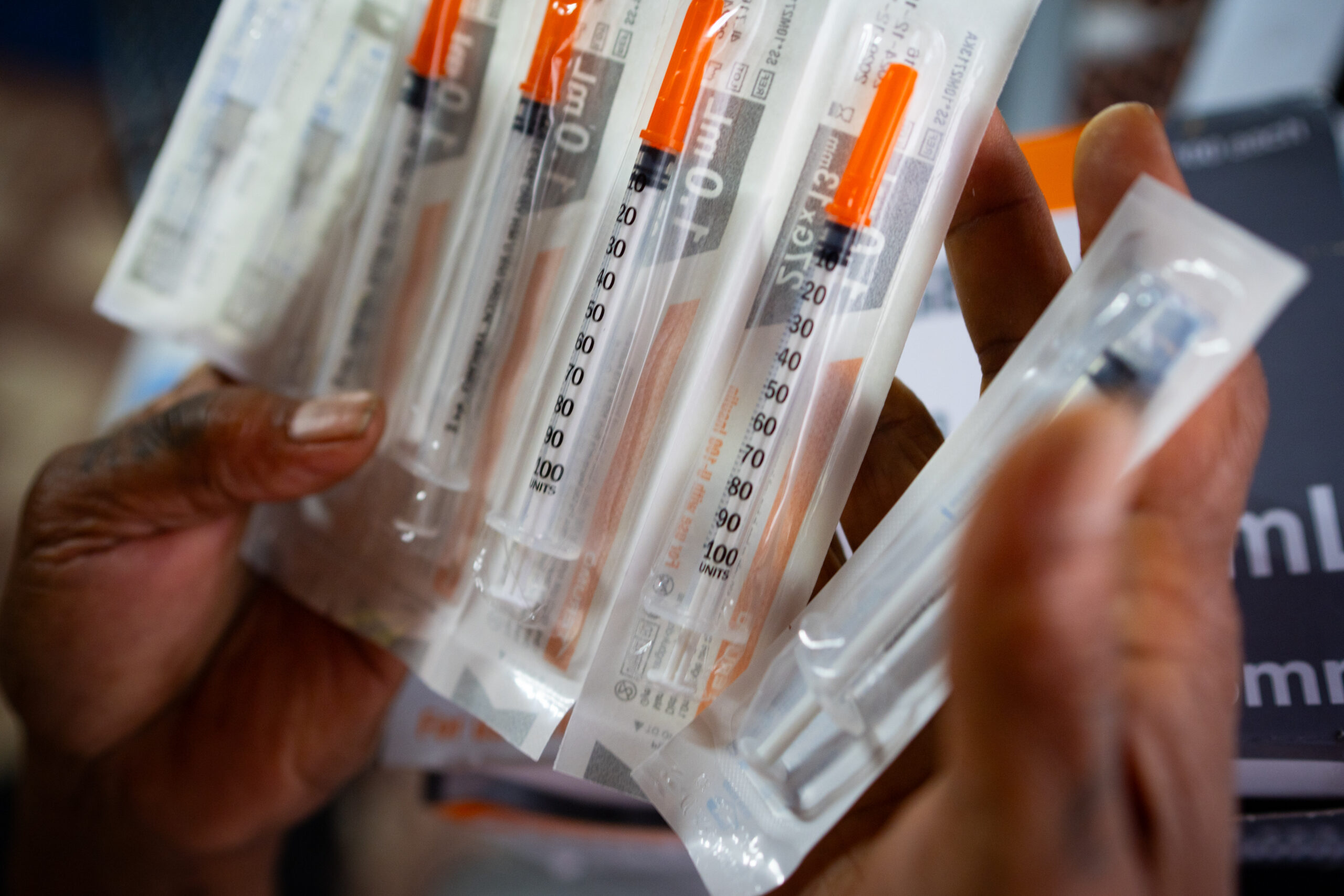
    On a recent afternoon in Fiji, a community worker sitting in a taxi rolled down the window, stuck out their hand and brandished a handful of new syringes, still wrapped in sterile packaging, to a group of zombielike men, scar tissue marking their forearms, sitting outside an alcohol store.

    It took them a minute to register that the syringes were free handouts. They rushed to the car, grabbed the syringes and asked for more.

    Needles have now become almost as valuable as the drug itself, as awareness of safe injecting practices grows in the country. Providing needles remains illegal, however. Participants in the WHO- and UNDP-commissioned assessment on drug use said they “without exception … reported difficulties accessing sterile needles and syringes for injection,” particularly in pharmacies, which are reluctant to give them out without a prescription.

    “Carrying the syringes sometimes feels just as risky as carrying weed or dope,” Joseph said.

    Needles have become almost as valuable in Fiji as meth itself, as awareness of safe injecting practices grows in the country.

    A needle and syringe program, where sterile needles are distributed free with no questions asked, is in the pipeline and likely to be implemented later this year after cabinet approval. The WHO, in its assessment, identified it as one of the highest priorities for Fiji.

    Meanwhile, the drugs keep coming. On Jan. 16, Fijian police raided a vessel off a wharf in the northwest of the country and found more than 2 metric tons of cocaine, packed in over 100 sacks. Prosecutors have charged six — four Ecuadoran nationals and two locals — in connection with the trafficking case. The drugs, prosecutors said, came in through semisubmersible vessels known as “narco subs.” Also so far this year, two senior police officers, who have since been suspended, were charged with illegally importing and possessing meth.

    “A culture of participation” in the drug trade has “seeped into our police force, our institutions and our society,” said Rabuku, the deputy public prosecutor, undeterred even by recent life sentences. As long as that does not change, he added, Fiji will “always remain a transit point for drugs.”

  • Trump’s chaotic governing style is hurting the value of the U.S. dollar

    Trump’s chaotic governing style is hurting the value of the U.S. dollar

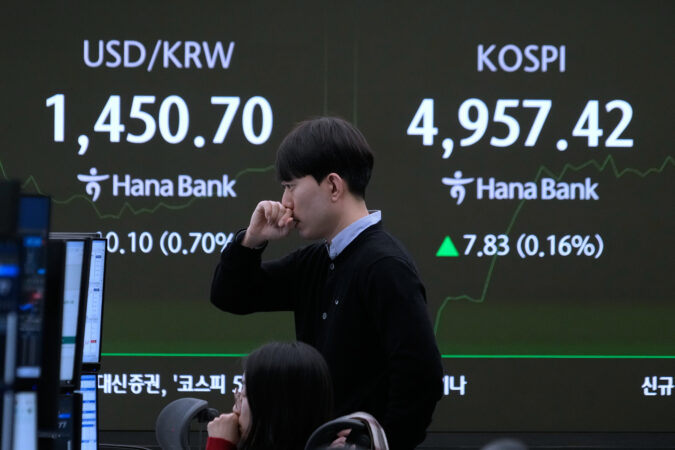
    Fallout from the recent Greenland crisis clipped the U.S. dollar, aggravating a yearlong decline that has shaved more than 10% off the greenback’s value since President Donald Trump returned to the White House.

    The dollar is under pressure on multiple fronts. After a long period of U.S. financial market outperformance, many foreign investors are rebalancing their portfolios to reduce excessive exposure to the United States and to capitalize on improving prospects elsewhere. Washington’s failure to address its mounting public debt, including crisis-level annual budget deficits at a time of low unemployment, isn’t helping.

    But perhaps the key to the dollar’s drop is the ripple effect of the president’s erratic policymaking, including abrupt stops and starts with tariffs and military action against a lengthening list of countries. After more than a year of nonstop upheaval emanating from the White House, many foreign investment managers are exhausted.

    “There is a visceral dislike of this kind of policy chaos,” said economist Robin Brooks, a senior fellow at the Brookings Institution. “I think the dollar will fall around 10% [more] this year.”

    One sign of the dollar’s ebbing appeal has been a staggering surge in gold prices, up almost 80% over the past year.

    At the end of January, the dollar rallied — and gold sank — on news that Trump had nominated Kevin Warsh, a former Federal Reserve governor, to be the next chairman of the nation’s central bank.

    But the broader trend of dollar weakness remains in place, several economists and money managers said. The president has pushed repeatedly for the Fed to cut its benchmark 3.75% interest rate to levels far below what mainstream economists say is appropriate, which would be likely to further erode the dollar’s standing.

    “We should have the lowest interest rate anywhere in the world. They should be two points and even three points lower,” the president said on Thursday during a Cabinet meeting.

    The Fed’s policymaking committee left rates unchanged at their January meeting. But financial markets expect cuts to resume in June.

    A weaker dollar will help U.S. exporters by making their products more affordable for foreign customers while boosting companies that earn profits abroad and convert them into dollars. A sagging greenback also should aid the president’s efforts to shrink the trade deficit and attract foreign capital to spur U.S. reindustrialization.

    But by raising the cost of imported goods such as furniture, computers, cars, appliances, and clothing, a softer dollar could hamper the fight to cool inflation. That would be bad news for the president, already struggling to address voter concerns over the cost of living with the midterm congressional elections little more than nine months away.

    The president and his aides have sent mixed signals about the trend. Recently, Trump brushed off currency concerns, telling reporters in Iowa that the dollar “was doing great.” After traders responded by driving it lower, Treasury Secretary Scott Bessent reaffirmed the traditional U.S. stance in favor of a “strong dollar.”

    Doubts about Trump’s position have swirled since the 2024 election. A widely-read paper by Stephen Miran, a Trump economic adviser the president later named to a Fed position, argued for a weaker dollar to help rebalance the global trading system. With a nod to the president’s Florida resort, Miran christened the proposed arrangement “the Mar-a-Lago accord.”

    No such agreement has emerged. But the dollar showed pronounced weakness on two occasions following major Trump initiatives.

    After Trump’s announcement of historic global tariffs last April, U.S. stocks, bonds, and the dollar all sank in an unusual trifecta. While stocks and bonds recovered, the dollar remained depressed — the opposite of what typically happens when a nation imposes new import taxes.

    Some analysts diagnosed a widespread “Sell America” trade sweeping financial markets. Bessent scoffed, and many analysts now acknowledge that assessment was overstated. The S&P 500 index hit an all-time high recently, which hardly supports the idea of a flight from U.S. assets.

    If foreign investors did not abandon the dollar, they did become less confident in it, a change of sentiment that appeared through increased demand for hedges against their currency exposure.

    For a foreign investor, changes in currency values are as important as movements in asset prices.

    If the dollar falls while a foreigner holds U.S. stocks or bonds, their investment gains can be eroded or eliminated. Foreign investors can protect themselves against that risk by effectively selling dollars and buying their home currency, a practice called hedging.

    When the dollar fell after Trump’s tariff announcements, unhedged investors suffered big losses and some began hedging to mitigate the damage. Those transactions served to encourage the dollar decline, according to a detailed June 2025 analysis by economists with the Bank for International Settlements.

    “Global investors have changed their behavior. Even when they want exposure to the U.S. stock market, they now feel that they have to hedge the currency,” said Dario Perkins, an economist with TS Lombard in London.

    Another headwind facing the dollar is the growing attractiveness of financial markets outside the U.S. For years, global investors poured funds into the U.S., drawn by available returns that were larger than in other markets.

    That’s no longer true. The S&P 500’s 14% return over the past year was dwarfed by gains on exchanges in London, Tokyo, Hong Kong, and Toronto. Brazilian stocks are up 44% since this time last year.

    The latest gauges of economic activity also show other economies stirring. Both the United Kingdom and Japan are growing at least as quickly as the U.S., according to January’s flash PMI surveys.

    The uptick in activity is driving up the price of industrial metals. Zinc is up 30% since mid-2025 and iron ore is up 11%.

    “There was this era of U.S. exceptionalism where the U.S. was significantly outperforming the rest of the world. And now we’re seeing more of a broad base. Global growth is picking up,” said Priya Misra, portfolio manager of JPMorgan’s core-plus bond fund.

    Even after its recent decline, the dollar is about as strong, adjusted for inflation, as it was three years ago and remains at a level some analysts call “overvalued.” Many analysts expect a further decline this year. But there seems little reason to anticipate a full-fledged rout.

    In a statement, Joseph Lavorgna, a counselor to the treasury secretary, described the dollar’s dip as unremarkable. The inflation-adjusted dollar “remains higher today than it was during President Trump’s first term, and it is overall at one of its highest levels in the last several decades,” he said.

    Even as foreign investors edge away from the geopolitical chaos enveloping the dollar, it remains the global reserve currency. No viable alternative exists. Global central banks hold more than $7.4 trillion in U.S. currency, by far their largest single holding.

    The U.S. also boasts the largest and most liquid financial markets. Its leading position in artificial intelligence makes it an essential destination, even for investors who are skeptical of Trump’s governing style.

    “The U.S. economy is one of the strongest, most dynamic in the world. Investors should be careful about declaring the dollar is dead,” said Daniel Ivascyn, chief investment officer for Pimco in Newport Beach, Calif.

    Foreign central banks also would be expected to push back against any rapid dollar plunge, according to economists at Bank of America. The flip side of a sinking dollar, by definition, is the appreciation of other currencies, a particular problem for exporting nations and a “recessionary shock” for the world outside the U.S., they said in a client note recently.

    One wild card is the situation in Japan, where a long era of ultralow borrowing costs appears to have ended. That suggests the Japanese economy may have decisively emerged from its long-term funk. But rising interest rates threaten a popular strategy long used by global investors.

    When Japanese interest rates hovered near zero, global investors could borrow yen cheaply and then invest it in U.S. and other markets, earning sizable returns via a strategy known as the “carry trade.”

    Japanese investors hold nearly $5 trillion in overseas securities, with most of that amount in the U.S. With the gap narrowing between yields in Japan and those in other developed markets, some analysts expect Japanese investors to bring a portion of that money home.

    Last week, Michael Burry, the famed investor known for “The Big Short,” posted several Japanese financial charts on X under the terse heading: “Repatriation pending.”

    So far, there has been no sign of any Japanese exit, and some analysts think the concern is overblown.

    “Japanese interest rates have been going up for some time now, and I’m not seeing any evidence that the Japanese are keeping their money at home,” said Marc Chandler, chief market strategist at Bannockburn Capital Markets in New York.

    If that changes, it would only add to the downdrafts buffeting the dollar.

  • Pentagon cuts academic ties with ‘woke’ Harvard to focus on training ‘warriors’

    Pentagon cuts academic ties with ‘woke’ Harvard to focus on training ‘warriors’

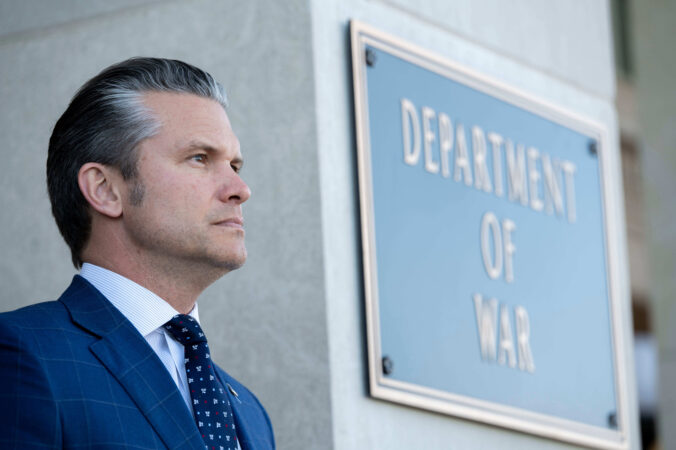
    Defense Secretary Pete Hegseth said his department will cut academic ties with Harvard University, claiming it is no longer the right place to develop military personnel, in the latest flash point in the Trump administration’s long-running battle with the Ivy League institution.

    “For too long, this department has sent our best and brightest officers to Harvard, hoping the university would better understand and appreciate our warrior class,” Hegseth said in a statement Friday. “Instead, too many of our officers came back looking too much like Harvard — heads full of globalist and radical ideologies that do not improve our fighting ranks.”

    The Pentagon will end graduate-level professional military education, fellowships, and certificate programs at the school in the 2026-2027 school year, Hegseth said. Those who are currently attending courses would be able to finish them, he added.

    The Pentagon would also review all graduate programs for active-duty service members at Ivy League and other civilian universities.

    “The goal is to determine whether or not they actually deliver cost-effective strategic education for future senior leaders when compared to, say, public universities and our military graduate programs,” he said.

    Hegseth’s announcement mentioned graduate programs and students but not Harvard College, the university’s undergraduate program. A department official declined to respond to a question Saturday about whether undergraduates in the Reserve Officers’ Training Corps would be affected, saying the department had nothing to add beyond the secretary’s video at this time. Harvard declined to comment on Hegseth’s remarks Saturday.

    Harvard has a long history with the military, with people connected to the school serving in militias more than 100 years before the country’s founding. In 1776, students were sent home early, the campus was given over to the Continental Army, and 1,600 soldiers moved into the school’s five buildings. Later, more than 1,600 soldiers with ties to Harvard fought in the Civil War; the campus hosted the first Army ROTC in the country starting in 1916; and the U.S. Navy Reserve began training officers at Harvard during World War II.

    Some Harvard students also protested the school’s military ties during the Vietnam War.

    As of September 2025, Harvard had more than 100 cadets and midshipmen enrolled, as well as 78 veterans, according to the university. This summer, Harvard Kennedy School announced a fellowship providing a scholarship for at least 50 military veterans or public servants to attend a fully funded one-year master’s degree program.

    Friday’s move is the latest rupture in the Trump administration’s relations with universities and Harvard in particular. President Donald Trump ran on a platform of making colleges and universities “sane,” alleging antisemitism in response to pro-Palestinian campus protests over the Israel-Gaza war. Since he took office, the government has used federal funding as leverage in an attempt to force changes on issues such as admissions, campus protests, and diversity, equity, and inclusion initiatives.

    Ties with Harvard have been particularly fraught, with the government threatening to withhold billions in federal grants and contracts, ordering sweeping changes and opening numerous investigations into the nation’s oldest university.

    Harvard has rejected allegations of antisemitism and sued the Trump administration over the funding freeze and, separately, actions to block international students from enrolling at Harvard. In September, a judge ruled the Trump administration violated the Constitution by blocking more than $2 billion in research grants, and funding has now been restored, though the final outcome is far from clear. Both cases have been appealed by the Trump administration.

    Last week, Trump said on social media that Harvard must pay $1 billion and that the administration wanted nothing more to do with the university, escalating tensions further.

    Hegseth highlighted the military’s long-standing relationship with Harvard in his statement, saying “there are more recipients of our nation’s Medal of Honor who went to Harvard than any other civilian institution in the United States.” But he also accused Harvard of becoming “one of the red-hot centers of ‘hate America’ activism … all while charging enormous tuition. It’s not worth it.”

    “We train warriors, not wokesters,” he said. “Harvard, good riddance.”

    Hegseth went to Harvard himself, earning a master’s in public policy in 2013 from the Harvard Kennedy School. In a segment on Fox News in 2022, where he worked as co-host at the time, he repudiated the degree, scribbling “return to sender” on his diploma.

    Since becoming defense secretary over a year ago, Hegseth has purged the military of DEI programs and “woke” student courses, and pushed out transgender service members. This week, the Pentagon warned Scouting America that it risks losing its partnership with the military unless it institutes “core value reforms” that have not been made public.

  • Zelensky says U.S. is readying huge economic deals with Russia

    Zelensky says U.S. is readying huge economic deals with Russia

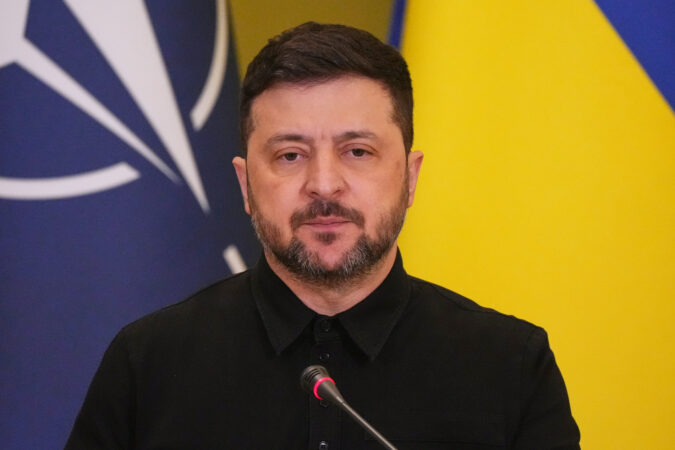
    KYIV — Days after negotiations to halt Russia’s war in Ukraine ended inconclusively in Abu Dhabi, Ukrainian President Volodymyr Zelensky said that Russia and the United States were discussing bilateral economic agreements worth some $12 trillion, including deals that would affect Ukraine.

    Zelensky said intelligence sources showed him documents that laid out a framework for U.S.-Russian economic cooperation that he called the “Dmitriev package” — named for Kirill Dmitriev, the head of Russia’s sovereign wealth fund and a close ally of Russian President Vladimir Putin who has been a central figure in negotiations over a potential ceasefire.

    President Donald Trump previously has dangled the possibility of sanctions relief and renewed economic cooperation with Russia as inducements for Moscow to agree to halt the war. Putin, however, has insisted that Russia would achieve its objectives in Ukraine one way or another.

    Dmitriev drafted a 28-point peace plan with Trump’s envoy to the talks, Steve Witkoff, and Trump’s son-in-law Jared Kushner — first revealed by Axios last November — which included sections for gradually lifting sanctions and creating long-term economic development projects between Russia and Ukraine.

    However, Zelensky, backed by European leaders and some members of Congress, has insisted that the sanctions regime against Russia must instead be tightened, to starve the Russian war machine of revenue and Western technological components.

    “We are not aware of all their bilateral economic or business agreements, but we are receiving some information on the matter,” Zelensky said during a briefing with journalists Friday, according to a transcript released Saturday.

    “There are also various signals, both in the media and elsewhere, that some of these agreements could also involve issues related to Ukraine — for example, our sovereignty or Ukraine’s security,” Zelensky said. “We are making it clear that Ukraine will not support any such even potential agreements about us that are made without us.”

    Zelensky’s concerns were made public as Moscow launched another major airstrike on Ukraine’s energy sector, plunging large portions of the country into darkness and cold Saturday. The attack also caused Ukraine’s nuclear power plants to reduce their power output as the “military activity affected electrical substations and disconnected some power lines,” the International Atomic Energy Agency wrote on X.

    Dmitriev apparently presented the package while meeting with American officials in the U.S., but Zelensky did not say when.

    Zelensky’s remarks come as talks to halt Russia’s war increasingly appear to be at an impasse, in particular over the question of who will control Ukraine’s eastern Donetsk region.

    The U.S. has proposed creating a free economic zone in Donetsk, while Putin has demanded that Ukraine surrender the entire region, including areas Russia has failed to capture militarily even as it nears the fourth anniversary of its full-scale invasion.

    Zelensky, according to the transcript, said that Washington had proposed bringing the war in Ukraine to an end “by June” and that he expected that “they will probably pressure the parties according to this timeline.”

    The main concern for the Americans, Zelensky said, was the midterm congressional elections later this year.

    “We understand that they will devote all of their time to domestic processes — elections, a shift in the attitudes of their society,” Zelensky said. “The elections are, for them, definitely more important. Let’s not be naive. They say they want to achieve everything by June, and they will do everything possible to ensure the war ends that way.”

    Separately, U.S. and Ukrainian officials have discussed a goal of March for reaching a deal, with national elections and a referendum on the proposed peace agreement taking place in May, Reuters reported, citing unnamed sources.

    “The Americans are in a hurry,” Reuters quoted one of its sources as saying, adding that U.S. negotiators had warned that Trump will shift his focus to the elections.

    U.S., Ukrainian, and Russian officials have met in Abu Dhabi twice in recent weeks to try to forge an agreement, but there has been no breakthrough. Still, Ukrainian negotiators say that the tone and substance of the talks have markedly improved.

    Zelensky said that Washington proposed that the parties meet in a week for the first time in the U.S. — “likely in Miami.”

    “We have confirmed our participation,” he said.

    Meanwhile, Russia’s strikes overnight Friday into Saturday marked a continuation of its relentless aerial onslaught against Ukraine’s power plants and electrical grid.

    Ukraine’s air force said that Russia had launched 29 missiles and 408 attack drones at locations across the country — and that 13 missiles and 21 drones struck in 19 locations.

    Russia’s Defense Ministry said in a statement Saturday that its armed forces had carried out a “massive strike using precision-guided sea and air-launched long-range weapons” at energy and transport facilities “used in the Ukrainian Armed Forces’ interests” and “defense industry enterprises.”

    However, the barrage left large swaths of the civilian population without light and heat as temperatures remained well below freezing — a regular occurrence this winter as Russia has targeted the energy infrastructure supplying the entire country.

    Ukraine’s state energy grid operator, Ukrenergo, in a post on social media said that the assault was the second major attack on the entire energy system since the beginning of the year and that “energy facilities in eight regions” were struck.

    Power outages occurred across the country, Ukrenergo said.

    Zelensky, posting on X, said that the bombardment “deliberately targeted … energy facilities on which depends the operation of Ukrainian nuclear power plants.”

    “This puts at risk not only our security in Ukraine, but also the shared regional and European security,” he wrote. “We believe that partners in America, in Europe, and in other states who want peace must view this with a clear head and act accordingly.”

  • Private equity’s giant software bet has been upended by AI

    Private equity’s giant software bet has been upended by AI

    Apollo Global Management’s John Zito left the audience of investors stunned.

    Addressing a gathering in Toronto last fall, he said that the real threat for private capital markets wasn’t tariffs, inflation, or a prolonged period of elevated interest rates. Rather, he said, “the real risk is — is software dead?”

    Zito’s comments, being reported for the first time, marked a forthright challenge to one of private equity’s most entrenched assumptions. For years, investors have funneled hundreds of billions into software businesses, banking on steady growth and resilient, recurring revenues. But the artificial-intelligence revolution is now testing that foundation.

    As worries mount, firms including Arcmont Asset Management and Hayfin Capital Management have hired consultants to check their portfolios for businesses that could be vulnerable, according to people with knowledge of the matter. Apollo cut its direct lending funds’ software exposure almost by half in 2025, from about 20% at the start of the year.

    The uncertainty about the eventual winners and losers is roiling multiple markets. On Tuesday, stocks seen as vulnerable to AI dropped after Anthropic released a new tool, exacerbating worries about disruption to businesses. In recent days, Blue Owl Capital Inc. revealed huge outflows from a tech-focused fund, and two European software firms put loan deals on ice.

    While various business models are threatened, software-as-a-service is particularly vulnerable. AI-native firms can often offer quicker and cheaper solutions, meaning companies that once operated in a defensible sector are now at risk of competition from new players.

    Anthropic’s Claude Code and other “vibe-coding” start-ups are disrupting traditional SaaS by allowing users with no coding experience to build software. That’s dramatically lowering the programming skill barrier and undermining rigid, one-size-fits-all products.

    “Technology private equity, in its current form, is dead,” Isaac Kim, a partner at venture capital firm Lightspeed who previously led Elliott Investment Management’s tech private equity business, said in a recent LinkedIn post.

    The sector has been a hugely popular target for buyout firms and their private credit cousins. From 2015 to 2025, more than 1,900 software companies were taken over by private equity buyers in transactions valued at more than $440 billion, according to data compiled by Bloomberg.

    Deals were easily waved through most investment committees because the model was simple. Revenues are “sticky” because the tech is embedded into businesses, helping with everything from payroll to HR, and the subscription fee model meant predictable cash flows.

    But now, lenders are zeroing in on how prospective borrowers are dealing with the new technology challengers, according to people familiar with the matter. It’s the first question software bosses are being asked during meetings about borrowing, they said.

    Buying a software business, improving margins, and adding leverage “assumes the underlying product remains relevant long enough for financial engineering to work,” Kim said in the post. “AI has changed that assumption.”

    Last year, two outsourcing companies, KronosNet and Foundever, fell into difficulty amid increased investor scrutiny around AI. The debt of both is now trading at distressed levels. Bond prices on other software names, including McAfee and ION Platform Investment Group, have tumbled.

    Also in 2025, CVC Capital Partners’ credit unit took the keys of a contact center support business called Sabio Group after its previous owner struggled to find a buyer.

    “Everyone’s focused on these bubble risks, I think the biggest risk is actually the disruption risk,” Blackstone’s Jon Gray said on Bloomberg TV. “What happens when industries change overnight, like what we saw to the Yellow Pages back in the nineties when the internet came along.”

    In private markets, debt-laden firms have sought forbearance on borrowings, and big-name lenders have slashed valuations on loans to software companies such as Edmentum and Foundever, some to distressed levels.

    Credit exposure

    Sentiment in the equity market has grown increasingly bearish. The S&P North American software index fell 15% in January, its biggest monthly decline since October 2008.

    Private credit’s exposure to software may be much higher than some figures suggest. Barclays estimates so-called business development companies — investment funds that lend directly to firms — have around 20% of their portfolios tied up with the sector, but others say it’s substantially more.

    “If your software business is in healthcare, the fund classifies it as a healthcare exposure,” said Robert Dodd, an analyst at Raymond James. “The software exposure is meaningfully higher than it looks.”

    An additional worry is the software industry’s asset-light model. With less physical infrastructure to seize to try recoup money, that can mean bigger losses.

    Zito’s recent comments represent a change in how the AI threat is being assessed.

    Back in 2022, shortly before Hellman & Friedman and Permira paid just over $10 billion to buy Zendesk Inc., the software firm’s board of directors set out the risks the firm was facing.

    They cited a potential recession, persistently high inflation, and economic headwinds. Not mentioned: AI.

    Just over a week after the sale closed in November 2022, ChatGPT launched.

    But firms under threat aren’t just sitting back. Many have harnessed the technology themselves, and for those that do it effectively, AI could be a boon. Annual recurring revenue from Zendesk’s in-house AI offering, for example, now exceeds $200 million, amounting to 10% of revenue, a person with knowledge of the matter said. Some firms expect AI will help them to reduce costs.

    Brian Ruder, co-CEO of Permira, says there are risks, but the concern has been overdone.

    “If you look back at previous platform shifts in technology, history tells us there will be winners and losers on both sides of the AI-native and incumbent SaaS equation,” he said.

    In the boom times, star businesses such as Coupa Software and Cloudera traded at almost 60 times earnings, according to data from Pitchbook.

    In 2025, software-as-a-service firms were bought by private equity at an average multiple of 18 times, down from 24 the previous year.

    The software industry’s “halo of invulnerability” has been inappropriate for some time, said Robin Doumar, founder of private credit manager Park Square, adding that metrics like huge earnings multiples “defy financial logic.”

    “That chapter I hope has come to a close.”

  • Justice Dept. announces arrest of ‘key participant’ in 2012 Benghazi attack

    Justice Dept. announces arrest of ‘key participant’ in 2012 Benghazi attack

    WASHINGTON — A man Justice Department officials described as a key participant in the 2012 attack that killed a U.S. ambassador and three other Americans in Benghazi, Libya, was taken into U.S. custody Friday and will face prosecution.

    Zubayar al-Bakoush was arrested in an undisclosed country and flown to an airfield near Washington, where he arrived just after 3 a.m. Friday, Attorney General Pam Bondi said. He faces an eight-count indictment on charges including murder, terrorism and arson.

    Bondi and FBI Director Kash Patel declined at a news conference to answer questions about where al-Bakoush was arrested and whether the operation that brought him into custody involved the assistance of foreign nations.

    “We have never stopped seeking justice for that crime against our nation,” Bondi said.

    In the Sept. 11, 2012, attack, at least 20 militants, armed with AK-47s and grenade launchers, stormed the U.S. mission in Benghazi, breaching its gates, forcing their way into offices and setting buildings ablaze. Ambassador J. Christopher Stevens, State Department employee Sean Smith and CIA contractors Tyrone S. Woods and Glen Doherty were killed. Stevens was the first U.S. ambassador slain while performing his duties abroad in nearly four decades

    Almost immediately, the incident became a subject for partisan finger-pointing, with Republican lawmakers faulting the Obama administration and especially then-Secretary of State Hillary Clinton for alleged security failures at the facility and what they described as a slow response to the violence. References to Benghazi — nearly 14 years later — remain a potent point of political division.

    Even as they announced al-Bakoush’s arrest Friday, Justice Department officials seized the opportunity to swipe at frequent Republican targets, renew old lines of attack, and credit President Donald Trump.

    “Hillary Clinton famously once said about Benghazi, ‘What difference, at this point, does it make?’” Bondi said, referring to an irritated response Clinton gave during a 2013 Senate hearing at which she was repeatedly pressed about the motive for the attack.

    “Well, it makes a difference to Donald Trump,” Bondi continued. “It makes a difference to those families and 14 years later, it makes a difference to law enforcement who made the difference in this case.”

    A Republican-led congressional investigation into the incident later found no evidence of wrongdoing by Clinton, though it faulted the Obama administration more broadly for being slow to respond after the militants breached the gates.

    Jeanine Pirro, the Trump-appointed U.S. attorney in Washington whose office is overseeing the prosecution, made reference to that frequent Republican criticism in her remarks Friday about al-Bakoush’s arrest.

    In her prior role as a Fox News host, Pirro frequently waded into the debate over Benghazi, at one point accusing then-FBI Director Robert S. Mueller III of orchestrating a cover-up to protect administration officials.

    “For 13 hours, the American cavalry never came,” she said Friday. “For 13, hours [the victims] waited for that help that never came.

    Democrats have defended their efforts to prosecute individuals tied to the deaths of Stevens and the others, noting that the Justice Department had by late 2013 filed sealed complaints against roughly a dozen overseas militants accused of playing a role in the attack.

    Pirro acknowledged Friday that the complaint that led to al-Bakoush’s arrest was first filed in 2015, during the final year of the Obama administration.

    Court filings unsealed Friday described al-Bakoush as a member of an extremist Libyan militia who was identified by a cooperating FBI witness as one of the attackers caught on surveillance footage from the compound. Agents described footage showing al-Bakoush, with a firearm slung over his shoulder, attempting to break into cars of U.S. service members and following the crowd into buildings where Stephens and others were killed.

    Al-Bakoush is the third man law enforcement officials have brought to the U.S. to face charges.

    A federal jury in Washington in 2017 convicted Ahmed Abu Khattala, a Libyan militia leader and the accused mastermind behind the attack, on conspiracy and terrorism charges tied to the incident. A second militant, Mustafa al-Imam, was found guilty on similar charges in 2019. Both men were sentenced to prison terms of more than a decade.

    “Time will not stop us from going after these predators, no matter how long it takes, to fulfill our obligation to those families who suffered horrific pain at the hands of these violent terrorists,” Pirro said.