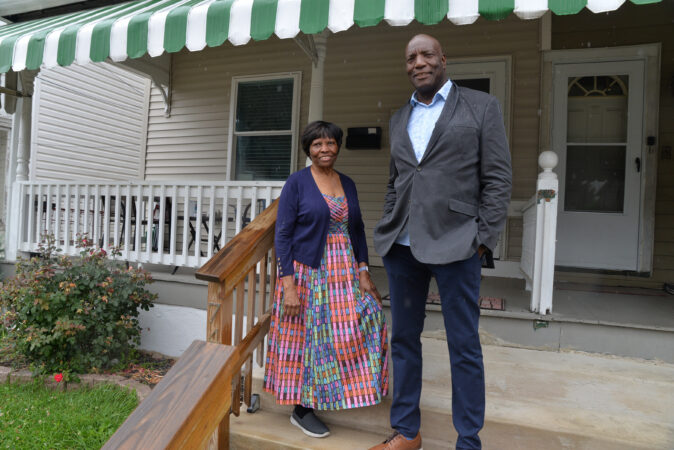
Minnie McNeil and her family still think about a challenge issued by her pastor more than 40 years ago: What could their city benefit from, and how could they address it?
The answer then, and now, was homelessness.
In the decades since, McNeil, 85, and three generations of her family have devotedly worked to support unhoused men in Coatesville. Their work, alongside countywide cross-sector collaboration, culminated in Chester County in June announcing it had reached “functional zero” for chronic homelessness.
Though it’s a milestone for the county, it doesn’t mean their work has stopped. They’ve evolved.
Using federal grant dollars, the W.C. Atkinson Memorial Community Service Center, founded by McNeil and her late husband more than 30 years ago, recently acquired its eighth transitional home in Coatesville, which it will remodel to offer affordable and supportive housing to shelter residents. And the shelter plans to expand its scope — helping catch young adults aging out of foster care before they become unhoused, a story they’ve heard over decades of helping thousands of men.
And separately, Minnie’s son Andrew McNeil, 58, and grandson, Derrick McNeil, 27, have begun an effort to remodel homes in the city, selling them below market to help revitalize Coatesville and support first-time home buyers at a time when housing prices in the county are soaring.
“The dollars of the ’70s and ’80s, the jobs that were available, [and] the housing stock available during that time is not, in our view, as easily accessible, and so the needs, in our view, are greater as a result,” Minnie said.
It started with the shelter
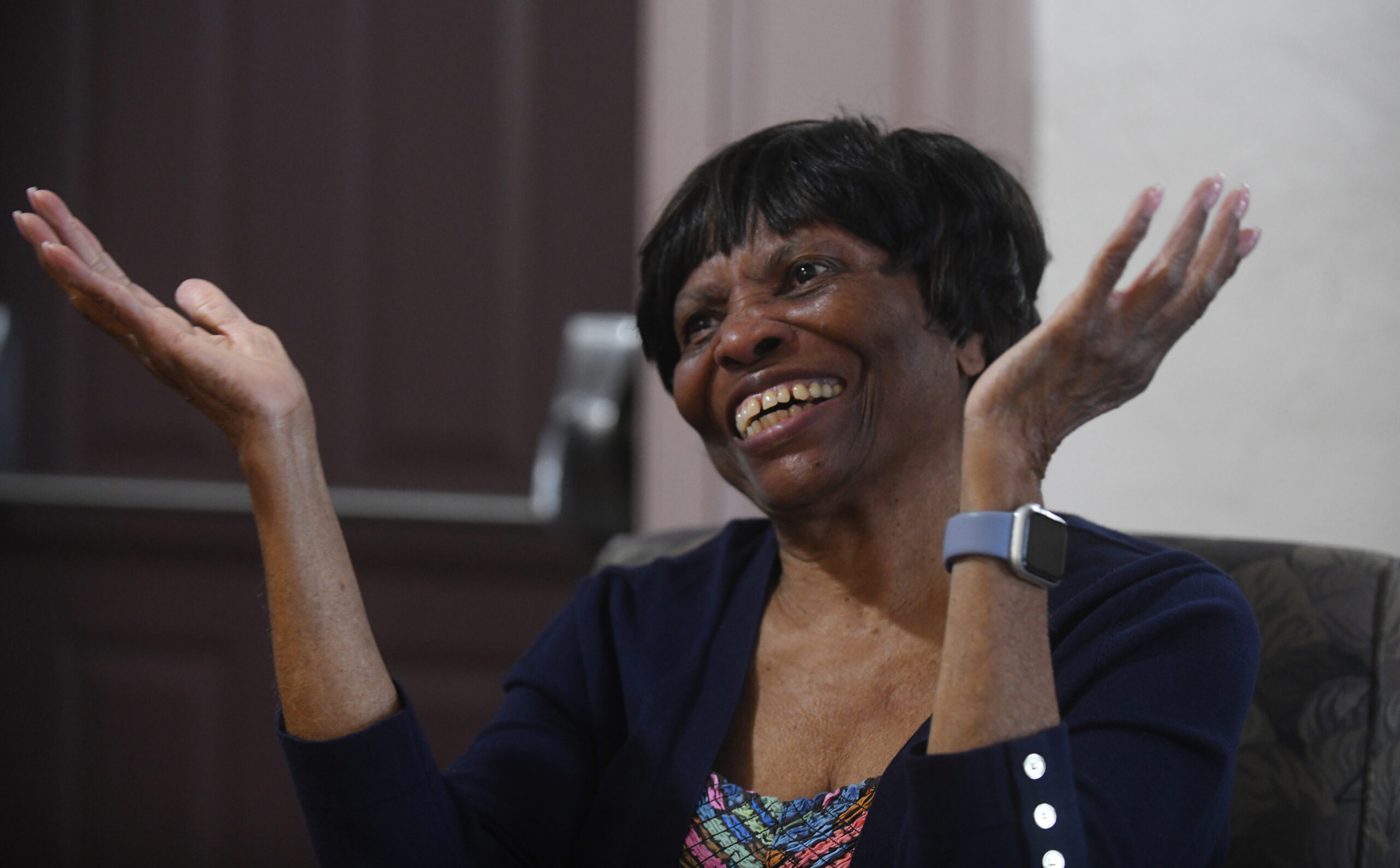
In Minnie’s estimate, the need for support services still exists. The county in June announced it had reached “functional zero” for chronic homelessness, meaning that long-lasting or recurring homelessness had been reduced to “a rare, manageable level,” the county said in a news release last month.
It was an example of cross-sector collaboration, officials said.
Minnie and her late husband, Andrew McNeil Sr., have been a part of that diverse ecosystem since they founded and opened the W.C. Atkinson Memorial Community Service Center at the former Atkinson hospital in 1992. It has always been intrinsically linked to their eldest son, Andrew; it opened on his birthday that year — Jan. 7.
There are few people willing to do what Minnie and her family have done, and fewer who do it so exceptionally, County Commissioner Chairman Josh Maxwell said. He has watched her shelter take on just about every possible man — those whom others would have turned away, he said.
Maxwell knows her magnetism personally: On the biggest day of his political career, his election as chairman, Minnie asked him to stop by a house they were renovating to help. He was in the attic alongside contractors, ripping out insulation and tearing down walls.
“I don’t think anyone else can do what she does,” he said. “I think those people wouldn’t be helped. I think we’d have dozens, if not hundreds, of more homeless people in the county if she wasn’t the one taking them in.”
For Minnie, her children were a guiding light: Could they sleep here? Eat the food? It has kept humanity at the heart, she said.
“Housing is not just a roof over your head, but we’d like to create homes where people live healthy and happy and their very best lives, they reach their full potential,” she said. “A place that, yes, has some outside influence and support, but builds within that home a nucleus where [there’s] love and compassion.”
Michael Weber, 55, called the McNeils a “blessing.” He came to the Atkinson after living in a hotel room, unable to find permanent housing. He happily took up odd jobs at the shelter to support it. He thinks that’s why the McNeils asked if he would want to move into one of the support housing sites, where he could pay below-market rent.
“I didn’t even know it could be this good,” he said.
Andrew and his two brothers were helping hands as children, working shifts at the shelter overnight and preparing meals. Though he never anticipated he’d return to it, Andrew began to learn the ropes from his father when he came back to the county after 12 years in Maryland. (“I never saw that coming,” Minnie noted.)
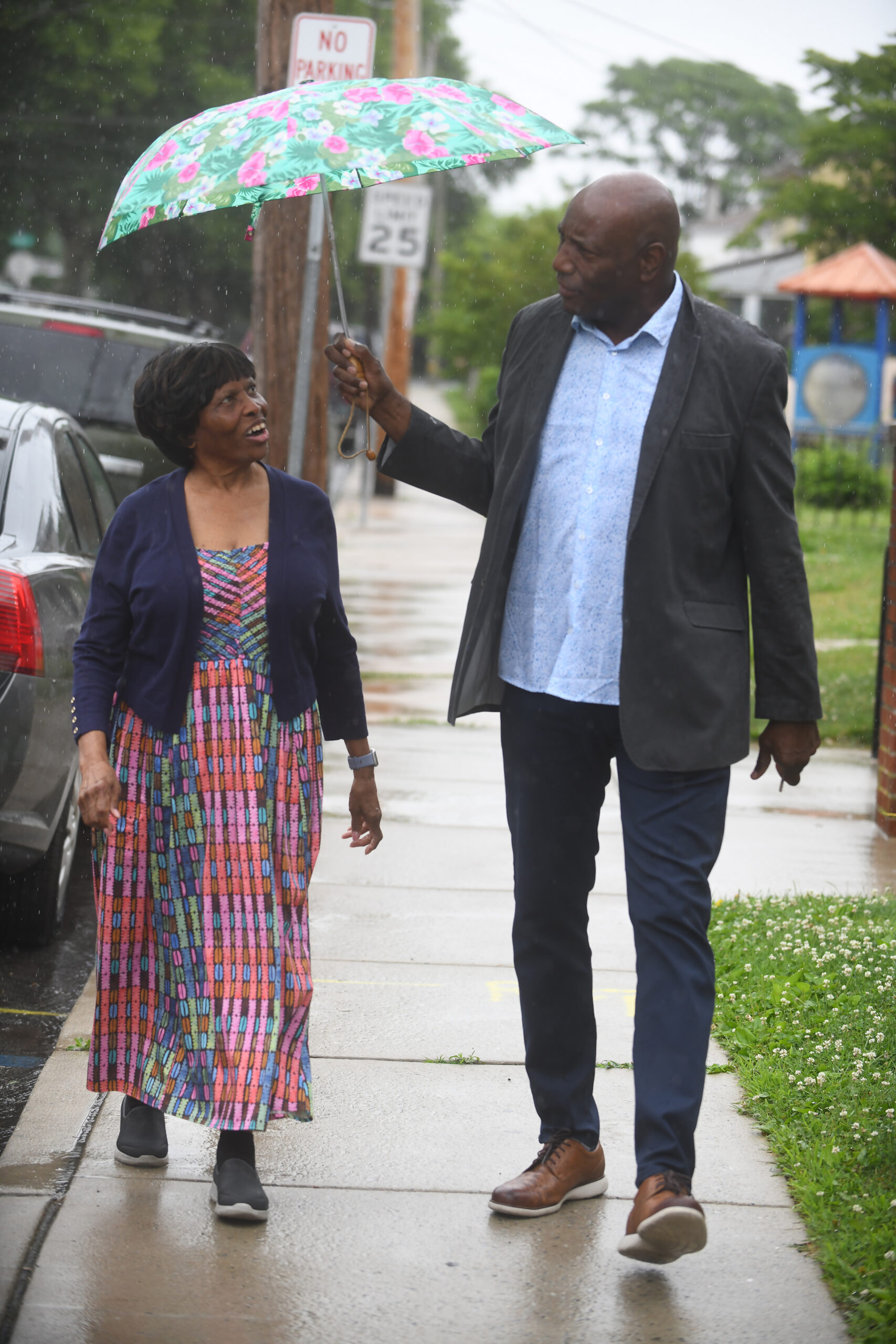
And those lessons didn’t stop at the shelter doors. Derrick, his son, has volunteered at the shelter and found it inspiring. Then Derrick caught the real estate bug, something Andrew knew plenty about.
Their shared interest a new chapter that felt like an extension of what Atkinson had been doing, Andrew said.
“When they move out of the shelter, into the housing, what happens is they have a sense of pride because we’re not putting them into just anything,” he said. “I think that that matters [for] what we’re doing for families as well what we’re also doing with the men.”
He had watched men move from the shelter into the supportive housing, and saw the sense of pride at the homes they were living in. They wanted to bring that feeling more broadly.
Affordability in Chester County
Andrew and Derrick purchased their first project house together in May 2025 for $190,000 as Chester County has seen a diminishing housing stock and rising costs. The county saw some of the highest population growth in Pennsylvania between 2020 and 2024, but the housing market wasn’t keeping pace. Fewer single-family detached homes were built in 2024 than in the last several years, according to the county’s planning commission, and fewer new units were being constructed this decade compared with last.
In 2024, the median sales price hit $525,000 — the highest in the county’s history. That year, only 331 homes sold for under $250,000, a decrease of 5.9% from 462 units in 2023.
In Coatesville, like the Atkinson shelter had done with seven transitional houses, Andrew and Derrick took their first project house down to the studs. For 10 months, they remodeled it to a high standard, Andrew said. It went from a three-bedroom, one-bath to a four-bedroom, three-full-bath home. The house sold to a family about a year after they first purchased it, for $290,000 — under an appraiser’s valuation of $330,000, Andrew said.
“It was a nice experience, just knowing that the end goal was to provide housing and provide opportunities for someone that was maybe purchasing their first property, just trying to provide the best product and the best opportunity for someone at a pretty decent price for what they’re getting,” Derrick said.
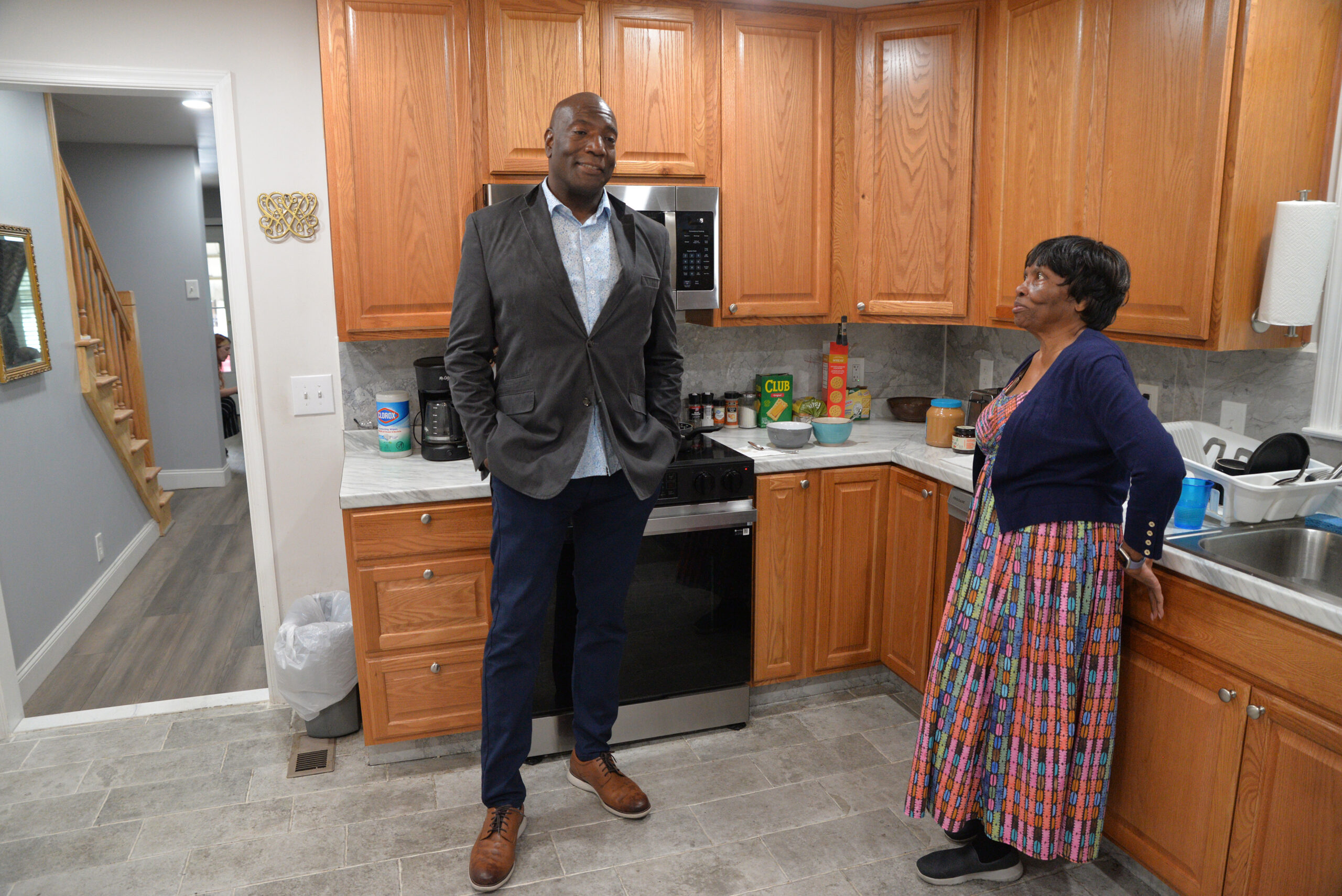
That care and thoroughness was a lesson both Andrew and Derrick learned from Andrew Sr., as the shelter had taken homes with “no lipstick” and modernized them.
“One of my father’s sayings was always ‘We get brick and mortar money once,’ so we have to put the quality into the house, because it’s up to us to maintain it after that,” Andrew said. “So we don’t cut any corners when it comes to rehabbing these houses, and so my son and I adopt that same principle when we remodel houses for the community.”
After the success of their inaugural endeavor, Derrick said they’re looking toward future opportunities like this one, or other options — like lease-to-purchase.
When Andrew reflects on the legacy of the shelter — opened in a historic property that was owned by Whittier C. Atkinson, the first Black physician to open a practice in Coatesville — he thinks of them continuing Atkinson’s holistic approach to medicine in the 1920s, how he would take gifts from the garden as payment for his work. It’s that essence they’re trying to continue, he said.
“I’m still taking lessons from my parents,” he said. “It’s always mission first; I observed that at a young age, and their mission, we’re continuing that … by trying to stay ahead of the curve. What’s the latest need in our community, and how can we address it in our focus?”
This suburban content is produced with support from the Leslie Miller and Richard Worley Foundation and The Lenfest Institute for Journalism. Editorial content is created independently of the project donors. Gifts to support The Inquirer’s high-impact journalism can be made at inquirer.com/donate. A list of Lenfest Institute donors can be found at lenfestinstitute.org/supporters.
Leave a Reply