Blog

  • China critic and former media tycoon Jimmy Lai is sentenced to 20 years in a Hong Kong security case

    China critic and former media tycoon Jimmy Lai is sentenced to 20 years in a Hong Kong security case

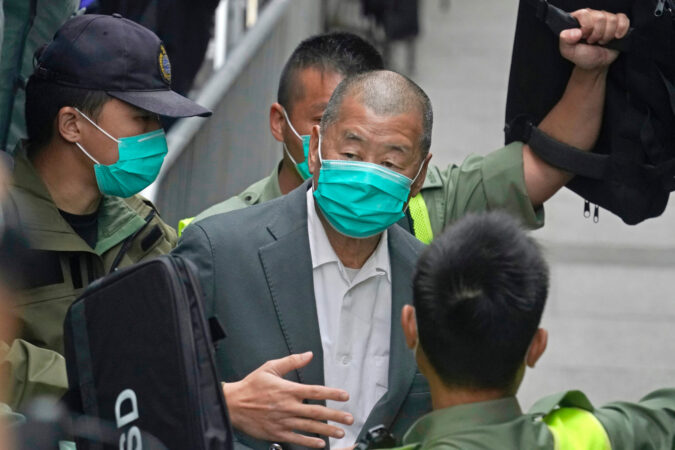
    HONG KONG — Jimmy Lai, the pro-democracy former Hong Kong media tycoon and a fierce critic of Beijing, was sentenced on Monday to 20 years in prison in the longest punishment given so far under a China-imposed national security law that has virtually silenced the city’s dissent.

    Lai, 78, was convicted in December of conspiring with others to collude with foreign forces to endanger national security, and of conspiracy to publish seditious articles. The maximum penalty for his conviction was life imprisonment.

    His co-defendants, six former employees of his Apple Daily newspaper and two activists, received prison terms of between 6 years and 3 months, and 10 years on collusion-related charges.

    Lai smiled and waved at his supporters when he arrived for the sentence. But before he left the courtroom, he looked serious, as some people in the public gallery cried. When asked about whether they would appeal, his lawyer Robert Pang said “no comment.”

    Lai’s daughter says he will die ‘a martyr’ in prison

    The democracy advocate’s arrest and trial have raised concerns about the decline of press freedom in what was once an Asian bastion of media independence. The government insists the case has nothing to do with a free press, saying the defendants used news reporting as a pretext for years to commit acts that harmed China and Hong Kong.

    Lai was one of the first prominent figures to be arrested under the security law in 2020. Within a year, some of Apple Daily’s senior journalists also were arrested and the newspaper shut down in June 2021.

    Lai’s sentencing could heighten Beijing’s diplomatic tensions with foreign governments, which have criticized Lai’s conviction and sentencing.

    U.S. President Donald Trump, who is expected to visit China in April, said he felt “so badly” after the verdict and noted he spoke to Chinese leader Xi Jinping about Lai and asked him “to consider his release.”

    British Prime Minister Keir Starmer’s government also has called for the release of Lai, who is a British citizen. U.K. Foreign Secretary Yvette Cooper called the prosecution “politically motivated,” saying the prison term is tantamount to a life sentence.

    In a statement, Lai’s son, Sebastien, said the “draconian” prison term was devastating for his family and life-threatening for his father. “It signifies the total destruction of the Hong Kong legal system and the end of justice,” he said.

    His sister Claire called the sentence “heartbreakingly cruel” in the same statement. “If this sentence is carried out, he will die a martyr behind bars,” she said.

    Hong Kong leader John Lee said Lai’s sentence demonstrated the rule of law, citing his serious crimes.

    “It’s bringing great satisfaction to the people,” he said in a statement.

    In Beijing, China’s Foreign Ministry spokesperson Lin Jian said Lai is a Chinese citizen and called him a major planner and participant in a series of anti-China destabilizing activities in Hong Kong. He urged “relevant countries” to respect the rule of law in Hong Kong.

    Judges ruled Lai was the mastermind

    Lai founded Apple Daily, a now-defunct newspaper known for its critical reports against the governments in Hong Kong and Beijing. He was arrested in August 2020 under the security law that was used in a yearslong crackdown on many of Hong Kong’s leading activists.

    In their ruling, three government-vetted judges wrote that the starting point of Lai’s sentence was increased because they found him to be the mastermind of the conspiracies. But they also reduced his penalty because they accepted that Lai’s age, health condition, and solitary confinement would cause his prison life to be more burdensome than that of other inmates.

    “Lai was no doubt the mastermind of all three conspiracies charged and therefore he warrants a heavier sentence,” they said. “As regards the others, it is difficult to distinguish their relative culpability.”

    They took into account that Lai is serving a prison term of five years and nine months in a separate fraud case and ruled that 18 years of Lai’s sentence in the security case should be served consecutively to that prison term.

    Urania Chiu, lecturer in law at Oxford Brookes University, said the case is significant for its broad construction of seditious intent and application of the term “collusion with foreign forces” to certain activities by the media. The implication is particularly alarming for journalists and those working in academia, she said.

    “Offering and publishing legitimate critiques of the state, which often involves engagement with international platforms and audiences, may now easily be construed as ‘collusion,’” Chiu said.

    Lai has been in custody for more than five years. In January, Pang said Lai suffered health issues including heart palpitations, high blood pressure, and diabetes. The prosecution said a medical report noted Lai’s general health condition remained stable. The government said his solitary confinement was at Lai’s wish.

    Co-defendants get reduced sentences

    The former Apple Daily staffers and activists involved in Lai’s case entered guilty pleas, which helped reduce their sentences Monday. They earlier admitted to the prosecution charge that said they conspired with Lai to request foreign forces to impose sanctions or blockades, or engage in other hostile activities against Hong Kong or China.

    The convicted journalists are publisher Cheung Kim-hung, associate publisher Chan Pui-man, editor-in-chief Ryan Law, executive editor-in-chief Lam Man-chung, executive editor-in-chief responsible for English news Fung Wai-kong, and editorial writer Yeung Ching-kee. They received prison terms ranging between six years and nine months, to 10 years.

    The two activists, Andy Li and Chan Tsz-wah, were sentenced to six years and three months, and seven years and three months respectively.

    The penalties for Cheung, Chan, and Yeung, alongside the two activists, were reduced in part because they served as prosecution witnesses and the judges said their evidence had “significantly” contributed to the conviction of Lai.

    Before sunrise, dozens of people stood in line outside the court building to secure a seat in the courtroom. One of them was former Apple Daily employee Tammy Cheung.

    “Whatever happens, it’s an end — at least we’ll know the outcome,” Cheung said before the sentence was delivered.

    Case considered a blow to Hong Kong media

    Lai founded Apple Daily in 1995, two years before the former British colony returned to Chinese rule. Its closure in 2021 shocked the local press scene. Hong Kong ranked 140th out of 180 territories in the press-freedom index compiled by media freedom organization Reporters Without Borders in 2025, far from its 18th place in 2002.

    Steve Li, chief superintendent of the police force’s National Security Department, welcomed the heavy sentence on Lai. “Obviously, he has done nothing good for Hong Kong that could serve as a basis for his mitigation,” he told reporters.

    The government said it will confiscate assets related to Lai’s crime.

    Human Rights Watch’s Asia director Elaine Pearson said the harsh 20-year-sentence is effectively a death sentence, calling it cruel and unjust.


  • Bad Bunny vs. Trump in a battle of love and hate | Editorial

    Bad Bunny vs. Trump in a battle of love and hate | Editorial

    It says a lot about the state of affairs when a Puerto Rican singer and rapper does more to unify the country in about 13 minutes than the president of the United States has done in the past 13 months.

    Bad Bunny’s halftime performance at Super Bowl XL was all about love, while Donald Trump’s return to the Oval Office is focused on hate.

    Bad Bunny’s joyful celebration of unity, diversity, and togetherness was a needed respite from Trump’s cruelty, retribution, and division.

    Even though many of the more than 135 million viewers may not have understood the words Bad Bunny sang in Spanish, just about everyone could feel the positive vibe and communal celebration that showcased dancing, hard work, urban street life, family — and a wedding.

    Bad Bunny’s ode to Puerto Rico was a reminder that we are neighbors, not enemies. More broadly, the United States is part of the American continent that includes Canada, Mexico, Central America, South America, the Caribbean, and Greenland.

    We are all stronger when we work together than when we are at each other’s throats.

    Bad Bunny’s positive message stood in stark contrast to the president’s relentless serving of hate that is dividing and weakening the country.

    Just last week, Trump posted a racist video on his social media account that depicted former president and first lady Barack and Michelle Obama as apes.

    In case anyone needed a reminder that Trump has been a stone-cold racist throughout his life, he refused to apologize for the vile meme.

    Eventually, he removed the post after several — but not many — GOP officials called out the blatant racism. The bipartisan backlash is a reminder that it will only take a few good Republican men and women to stop Trump’s attack on America’s institutions and its people.

    Trump’s racist meme about the Obamas came on the heels of a racist and misleading move by the White House that posted a digitally altered image of a Black woman who was arrested while demonstrating against the unlawful actions of U.S. Immigration and Customs Enforcement agents in Minneapolis.

    Bad Bunny and Lady Gaga perform during the Super Bowl halftime show Sunday.

    The image released darkened Nekima Levy Armstrong’s skin and showed her sobbing, though the real picture depicted her as composed. Such detestable propaganda is how the Trump administration spends your tax dollars.

    Trump is not a serious president.

    As much of the country remained in a deep freeze, he spent his 20th weekend at his estate in Palm Beach, Fla., since returning to office last year.

    He played golf with lackey Sen. Lindsey Graham (R., S.C.), and fired off more than 50 social media posts whining about rigged elections (still), the halftime show, and a U.S. Olympic skier he called a “loser” after the athlete expressed “mixed emotions” about representing the country amid Trump’s politics of upheaval.

    The only thing Trump is serious about is enriching himself while many Americans struggle to make ends meet.

    An updated accounting by the New Yorker magazine found Trump and his family leveraged his return to the White House to increase their wealth by $4 billion.

    Lost in all the recent outrages from the Jeffrey Epstein files to Greenland to shooting citizens in Minneapolis was a Wall Street Journal story that detailed how a member of the United Arab Emirates royal family known as the “spy sheikh” invested $500 million to buy 49% of a crypto start-up founded by the Trump family.

    The crypto deal came together as the Trump administration agreed to give the Emirati government hundreds of thousands of advanced computer chips to power artificial intelligence technology — a deal the Biden administration rejected out of national security concerns that the chips could be shared to help China advance its military weapons systems.

    About 70% of Americans believe the country is “out of control” under Trump.

    Many are fed up with his mismanagement of the economy that has resulted in higher prices and fewer jobs — in addition to defying courts, prosecuting political opponents, arresting citizens, deporting immigrants, and stifling free speech.

    The landslide special election victory of a Democrat in a deep-red district in Texas shows voters are putting community before party.

    Then along came Bad Bunny to remind America that love trumps hate.

  • Philadelphia Museum of Art’s chief of staff and CFO have resigned

    Philadelphia Museum of Art’s chief of staff and CFO have resigned

    Two more Philadelphia Museum of Art senior staffers are departing as the museum continues to plot out its path after a period of institutional turmoil.

    Maggie Fairs, who was promoted to chief of staff last year by former director and CEO Sasha Suda, will leave the museum at the end of the month. CFO Valarie McDuffie has also resigned, with her last day this Friday.

    Previously, the museum parted ways with its marketing chief Paul Dien as of Feb. 1. Days later, the museum announced that it was reversing course on a renaming while keeping its new logo. Both changes were unveiled four months earlier in a rebranding overseen by Suda and Dien.

    No other immediate departures are expected, though the museum is working on an “organizational review,” with more changes possible later, a spokesperson said.

    Suda announced the arrival of both Fairs and McDuffie in May 2023, saying that “these two colleagues reflect the future of the institution.” Fairs was hired as vice president of communications after having worked in the United States, United Kingdom, and Canada. McDuffie had previously held several senior financial posts in secondary education.

    Fairs was promoted by Suda to chief of staff in May 2025. A replacement will not be hired, as the museum is restructuring the director’s office without that position.

    A pile of snow and ice sits on Eakins Oval in front of the Philadelphia Museum of Art on Feb. 2.

    Suda was dismissed from the museum in November and subsequently filed a lawsuit alleging that her dismissal was “without a valid basis.” The matter is now headed to arbitration.

    Director and CEO Daniel H. Weiss, who took over in December, said in January that the staff of the museum was “the heart and soul of the place and they need to be treasured and supported and also held accountable,” and that the museum needed “a senior management team that is available to them and transparent in its processes and also accountable.”

    Asked at the time whether there would be a reorganization, he said:

    “With our ambition and our mission, and as that evolves a little bit under each new leader, there needs to be careful review of how the organization serves the needs of the moment. So that’s underway.”

    The museum on Monday also announced Katherine Anne Paul as new curator of Indian and Himalayan art. Paul was most recently curator of Asian Art at the Birmingham Museum of Art since 2019, and held earlier positions at the Newark Museum, the American Museum of Natural History, and the Textile Museum in Washington, D.C. She holds a Ph.D. in languages and cultures of Asia from the University of Wisconsin–Madison.

    Weiss, in Monday’s announcement, singled out Paul’s scholarship and her extensive knowledge of the Philadelphia Museum of Art’s collection. She was assistant and associate curator of Indian and Himalayan art at the museum from 2002 to 2008.

    A previous version of the headline misrepresented the terms of the employees’ work termination. They resigned.

  • New video footage released from day of the fatal Brown University shooting

    New video footage released from day of the fatal Brown University shooting

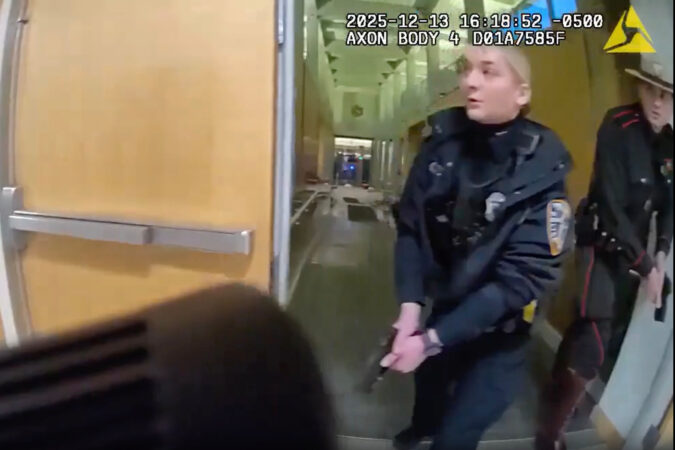
    PROVIDENCE, R.I. — A new video from the day of the Brown University shooting that killed two students and injured nine others was released Monday, with city officials saying they had withheld other footage and redacted the most graphic, violent images to avoid harming victims.

    “This was a difficult process to both maintain our commitment to transparency, to respond to requests from the media and the public’s right to know exactly what happened, but also balancing what we know are potential, really serious downside effects of releasing some of this information,” Providence Mayor Brett Smiley said at a news conference.

    News outlets across the U.S. and other countries had been requesting body camera footage, audio clips, and other public records since shortly after the shooting took place in mid-December.

    Material shows police response to the shooting

    The newly released material includes audio of a campus police officer calling city police at 4:07 p.m. “This is Brown police. We have confirmed gunshots at 184 Hope Street,” the officer said. “We do have a victim but we do not know where they are.”

    Four minutes later, campus police called back with an update: “We have a suspect description, wearing all black and a ski mask, unknown travel direction.”

    Separately, the city released roughly 20 minutes of body camera footage of the officer in charge of the initial response to the shooting. The heavily redacted footage shows a chaotic and confusing scene of officers not knowing if the shooter was still in the building and attempts to quickly find a safe spot to send the students evacuated from the building. Scattered backpacks, gloves, and other items can be seen as officers scour the building looking for a possible shooter and victims.

    “Let’s get these rescues in, where are we staging rescue?” the officer, who was not identified, says in the video.

    He later cautions other officers, “Shooter might still be in the building, so use caution alright.”

    Long portions of the video are either blacked out or with the audio redacted. The video is often blocked by the officer’s arms in front of the camera. Officials defended their decision, made in consultation with city lawyers, to release only one video, saying it offered the most “comprehensive” view. Smiley argued that releasing more videos would not answer the harder question of why the shooter chose to attack the university.

    “Why did this person do this? None of those videos are going to answer that question. None of them,” Smiley said.

    Other audio captures officers describing a possible sighting of the shooter on the second floor of another building and a report of a suspect being taken into custody. That person turned out to be a maintenance worker. It’s unclear when officers realized they had the wrong person in custody, but within minutes, one officer instructs them “We’re gonna work on the premise that that’s not him. We’re gonna conduct a secondary search.”

    The city released those records Monday, saying they waited at the request of the victims′ families until after a memorial service was held the previous week on Brown’s campus. Smiley said he had spoken to the victims and their families in recent days.

    “Many of their kids are working really hard at moving forward and moving on, and releases like today they fear will make it harder to move forward,” he said, describing them as “remarkably strong and resilient.”

    Details of the shooting

    On Dec. 13, gunman Claudio Neves Valente, 48, entered a study session in a Brown academic building and opened fire on students, killing 19-year-old sophomore Ella Cook and 18-year-old freshman MukhammadAziz Umurzokov and wounding nine others.

    A newly released police incident report reiterated the emotional moments law enforcement had previously shared about hospitalized victims responding to photos of the suspected shooter.

    One victim “quickly froze, physically pushed back” and began crying and shaking as she confirmed the image matched the person who shot her. Another victim “took a deep breath, shut his eyes, changed his breathing pattern and confirmed that the shooter he saw in the hallway appeared to be the person in the photos presented.”

    Authorities say Neves Valente, who had been a graduate student at Brown studying physics during the 2000-01 school year, also fatally shot Massachusetts Institute of Technology professor Nuno F.G. Loureiro at Loureiro’s Boston-area home.

    Neves Valente, who had attended school with Loureiro in Portugal in the 1990s, was found dead days after the shooting in a New Hampshire storage facility.

    The Justice Department has since said Neves Valente planned the attack for years and left behind videos in which he confessed to the killings but gave no motive. The FBI recovered the electronic device containing the series of videos during a search of the storage facility where Neves Valente’s body was found.

  • Boy who appeared in Bad Bunny’s Super Bowl show is not the 5-year-old detained by ICE in Minneapolis

    Boy who appeared in Bad Bunny’s Super Bowl show is not the 5-year-old detained by ICE in Minneapolis

    Social media users incorrectly identified a small boy who was part of Bad Bunny’s Super Bowl halftime show on Sunday as Liam Conejo Ramos, the 5-year-old who, along with his father, was detained by immigration officials in Minnesota and held at an ICE facility in Texas.

    The boy was actually Lincoln Fox Ramadan, a child actor from Costa Mesa, Calif., who is also 5 years old, according to his Instagram profile.

    After Bad Bunny finished his song “NUEVAYoL,” cameras showed Lincoln watching Bad Bunny accepting his Grammy for album of the year last week. The artist then walks over and hands Lincoln what appears to be a Grammy.

    Here’s a closer look at the facts.

    Claim: Bad Bunny handed his Grammy to Liam Conejo Ramos during his Super Bowl halftime performance.

    The Facts: This is false. The boy was child actor Lincoln Fox Ramadan.

    “An emotional, unforgettable day being cast as the young Benito — a symbolic moment where the future hands the past a Grammy,” reads a Monday post on Lincoln’s Instagram profile. “A reminder that dreams come true and it’s never too early to dream big.”

    The post includes photos from Lincoln’s appearance during the halftime show and other moments from the day, as well as a childhood photo of Bad Bunny, whose real name is Benito Antonio Martínez Ocasio.

    In the caption, Lincoln also wrote that he’s “sending love to Liam Ramos” and that “we all deserve peace and love in America, a country built by and home to so many hard-working immigrants.”

    Another post from Lincoln’s Instagram, shared on Sunday, included a video of his cameo and was captioned, “I’ll remember this day forever! @badbunnypr — it was my truest honor.” His last post before the Super Bowl, on Jan. 31, was a photo of himself captioned, “I booked a cool gig! Can’t wait to share it with you guys.”

    Liam and his father, Adrian Conejo Arias, who is originally from Ecuador, were detained by immigration officers in a Minneapolis suburb on Jan. 20. They were taken to an ICE detention facility in Dilley, Texas, but returned to Minneapolis on Feb. 1 following a judge’s order.

    Images of immigration officers surrounding the young boy in a blue bunny hat and Spider-Man backpack drew outrage about the Trump administration’s immigration crackdown in Minneapolis.

    Lincoln, the child actor, is half Egyptian and half Argentinian, according to his Instagram and his acting profile. He previous work has included modeling for Walmart and Target.

    Bad Bunny has won six total Grammys, including three at the 2026 awards show. His album of the year win for the critically-acclaimed DeBÍ TiRAR MáS FOToS, is the first time a Spanish-language album has taken home the top prize.

    Representatives for Bad Bunny did not respond to a request for comment.

  • Judge sentences man who decapitated his wife: ‘I don’t think I’ve ever seen a case like this’

    Judge sentences man who decapitated his wife: ‘I don’t think I’ve ever seen a case like this’

    Hours before Ahmad Shareef was arrested for killing his wife, he called his mother and confessed.

    “I cut her head off,” he told her, according to the affidavit of probable cause for his arrest.

    On Monday, Shareef, 37, was sentenced to 16 to 42 years in prison in the decapitation death of Leila Al Raheel inside the couple’s Northeast Philadelphia home. Shareef pleaded guilty to third-degree murder and related crimes in the November 2022 slaying.

    “I don’t think I’ve ever seen a case like this,” said Common Pleas Court Judge Charles Ehrlich.

    New details of the killing also surfaced during the hearing.

    After Shareef confessed to his mother, she asked a neighbor to go to her son’s home in the 300 block of Magee Avenue and check on Al Raheel, according to the affidavit. The neighbor found Al Raheel dead in the dining room, she later told police.

    Officers who responded to the house discovered Al Raheel’s headless body on the kitchen floor, the affidavit said. They found Shareef about four miles away, hiding in bushes in front of a house. His sweatpants, the document said, were stained red with blood.

    Inside a police interview room, Shareef waived his Miranda rights, according to the affidavit. He told detectives he’d argued with Al Raheel after she had called him names.

    Then, he said, he cut off her head with a kitchen knife.

    In court Monday, the neighbor described how discovering Al Raheel’s body upended her life. She said she has been diagnosed with post-traumatic stress disorder. “This isn’t something that time simply erases,” she said.

    No one testified on Shareef’s behalf. His mother, who had been expected to appear, was ill and unable to attend, his defense attorney, Gregg Blender, said.

    Al Raheel, who came to the U.S. with Shareef and his family in 2011, “has no family to speak on her behalf,” said the prosecutor, Maggie McDermott.

    The judge imposed a sentence slightly below the prosecution’s request of 23 to 47 years, after Shareef’s attorney urged him to consider his client’s traumatic childhood and long-standing mental illness, which he said went largely untreated.

    As a child, Shareef moved with his mother from Kuwait to Iraq and later to Syria, fleeing both war and abusive men who, Blender said, subjected them to violence. At the insistence of his family, Shareef later married Al Raheel, a neighbor, Blender said.

    In the U.S., Shareef was treated repeatedly for mental health crises, Blender said. In 2012, he was hospitalized after striking himself and cutting his wrists, and in 2019, Blender said, Shareef stabbed himself in the neck.

    Blender urged the judge to weigh what he described as his client’s “horrific upbringing” against what he acknowledged was “nothing less than a horrific crime.”

    McDermott called the killing the “peak of domestic violence” and “unspeakably awful,” and warned that Shareef posed a continuing danger. If he was capable of such violence toward someone he loved, she argued, then even strangers were at risk.

    Ehrlich said the sentence reflected both Shareef’s traumatic past and the threat he posed going forward.

    “To sever a head with a kitchen knife takes a lot of effort,” he said. “Mr. Shareef, you have lived a life of horrors. I don’t think anyone in this courtroom disputes that.” The question, he added, was what needed to be done to protect others.

    “I’m very concerned about the future — I’m going to be honest with you,” the judge said. “What happened to you as a child was not your fault. But people with this kind of damage can hurt others.”

    After the slaying, neighbors told The Inquirer that several people had been living in the house, which had become an eyesore on the block. Shareef, they said, stood out: He behaved aggressively to other residents, and sometimes appeared outside wearing only underwear.

    Since late 2016, police responded to more than 50 calls on the 300 block of Magee Street for domestic disturbances, reports of weapons, and other complaints. However, police would not disclose exact addresses, and it remains unclear how many of those calls — if any — originated from the home Shareef shared with Al Raheel, where she was eventually killed.

    The city’s Department of Licenses and Inspections also confirmed that inspectors visited the house more than a year before Al Raheel was killed, following reports that the house’s garage was being used as a living space. But the inspectors weren’t able to gain access to the property, according to the department. Instead, they issued violations for weeds and combustible storage.

  • Philadelphia reports two deaths related to intense cold

    Philadelphia reports two deaths related to intense cold

    Philadelphia health officials have reported two deaths related to the city’s extraordinary stretch of freezing temperatures in recent weeks.

    City officials did not provide additional information on the deaths, which took place between Jan. 20, when the city first declared an “enhanced Code Blue,” and Feb. 6.

    An enhanced Code Blue is declared when the wind chill makes it feel like it’s 20 degrees outside or lower for more than three days. In response, officials open up more resources to protect Philadelphians from the cold, including additional shelter beds and warming centers at libraries and rec centers.

    As of Friday, the centers have logged 26,270 stays, said James Garrow, a spokesperson for the city health department.

    Temperatures were in the single digits on Sunday night, and the day’s average temperature of 14 degrees was 20 degrees colder than normal.

    Residents who see someone who appears to be unsheltered outside during Code Blue can call the city’s homeless outreach hotline at 215-232-1984. The city maintains a list of warming centers on its website.

  • Masks emerge as symbol of Trump’s ICE crackdown and a flashpoint in Congress

    Masks emerge as symbol of Trump’s ICE crackdown and a flashpoint in Congress

    WASHINGTON — Beyond the car windows being smashed, people tackled on city streets — or even a little child with a floppy bunny ears snowcap detained — the images of masked federal officers have become a flashpoint in the Trump administration’s immigration enforcement operations.

    Not in recent U.S. memory has an American policing operation so consistently masked its thousands of officers from the public, a development that the Department of Homeland Security believes is important to safeguard employees from online harassment. But experts warn masking serves another purpose, inciting fear in communities, and risks shattering norms, accountability, and trust between the police and its citizenry.

    Whether to ban the masks — or allow the masking to continue — has emerged as a central question in the debate in Congress over funding Homeland Security ahead of Friday’s midnight deadline, when it faces a partial agency shutdown.

    “Humans read each others’ faces — that’s how we communicate,” said Justin Smith, a former Colorado sheriff who is executive director and CEO of the National Sheriffs’ Association.

    “When you have a number of federal agents involved in these operations, and they can’t be identified, you can’t see their face, it just tends to make people uncomfortable,” he said. “That’s bringing up some questions.”

    Democrats demand ‘masks off’

    Masks on federal agents have been one constant throughout the first year of President Donald Trump’s mass deportation operation.

    What began as a jarring image last spring, when plain-clothes officers drawing up their masks surrounded and detained a Tufts University doctoral student near her Massachusetts home, has morphed into familiar scenes in Los Angeles, Chicago, and other cities. The shooting deaths of two American citizens at the hands of federal immigration officers during demonstrations against ICE raids in Minneapolis sparked widespread public protest and spurred lawmakers to respond.

    “Cameras on, masks off” has become a rallying cry among Democrats, who are also insisting the officers wear body cameras as a way to provide greater accountability and oversight of the operations.

    House Democratic Leader Hakeem Jeffries told reporters at the Capitol that unmasking the federal agents is a “hard red line” in the negotiations ahead.

    Immigration and Customs Enforcement says on its website that its officers “wear masks to prevent doxing, which can (and has) placed them and their families at risk. All ICE law enforcement officers carry badges and credentials and will identify themselves when required for public safety or legal necessity.”

    Fueled with funds from Trump’s big tax cuts bill, which poured some $170 billion into Homeland Security, ICE has grown to be among the largest law enforcement operations in the nation. Last year, it announced it had more than doubled its ranks, to 22,000, with rapid hiring — and $50,000 signing bonuses. Homeland Security did not respond to an emailed request for further comment.

    Most Republicans say the current political climate leaves the immigration officers, many of them new to the job, exposed if their faces and identities are made public.

    Sen. Thom Tillis (R., N.C.) said he just can’t agree with Democrats’ demand that officers unmask themselves.

    “You know, there’s a lot of vicious people out there, and they’ll take a picture of your face, and the next thing you know, your children or your wife or your husband are being threatened at home,” he said. “That’s just the reality of the world that we’re in.”

    ICE stands apart with masks

    It appears no other policing agency in the country regularly uses masking on a widespread basis. Instead, masks are used during special operations, particularly undercover work or at times during large crowd control or protest situations, and when there is inclement weather or individual health concerns.

    Experts said only perhaps during the Ku Klux Klan raids or in the Old West has masking been a more widely used tool.

    “It is without precedent in modern American history,” said the American Civil Liberties Union’s Naureen Shah in Washington.

    She said the idea of masked patrols on city streets seeking immigrants can leave people scared and confused about who they are encountering — which she suggested is part of the point.

    “I think it’s calculated to terrify people,” she said. “I don’t think anybody viscerally feels like, OK, this is something we want to become a permanent fixture in our streets.”

    Toward the end of the first Trump administration, Congress sought to clamp down after masked federal agents showed up in 2020 to quell protests in Portland, Ore., and other cities. A provision requiring agents to clearly identify themselves was tucked into a massive defense authorization bill that Trump assigned into law.

    Last year, California became the first state in the nation to ban most law enforcement officers, including federal immigration agents, from covering their faces. The Trump administration’s Justice Department sued, saying the state’s policies “create risk” for the agents.

    A federal judge on Monday blocked the part of the California law that would ban federal immigration agents from covering their faces, but they will still be required to wear clear identification showing their agency and badge number.

    Judge Christina Snyder said she issued the initial ruling because the mask ban as it was enacted did not also apply to state law enforcement authorities, discriminating against the federal government. The ruling could have national implications as states grapple with how to deal with federal agents enforcing the Trump administration’s immigration crackdown.

    It left open the possibility of future legislation banning federal agents from wearing masks if it applied to all law enforcement agencies, with Snyder writing “the Court finds that federal officers can perform their federal functions without wearing masks.” The ruling will go into effect Feb. 19.

    Police seek middle ground, advocates say unmasking not enough

    Smith, of the sheriffs’ association, said there’s no easy answer to the current masking debate.

    He suggested perhaps a middle ground could be reached — one that would allow officers to wear masks, but also require their badge or other identifying numbers to be prominently displayed.

    Advocates said while unmasking the federal agents would be an important step, other restraints on immigration enforcement operations may be even more so.

    They are pushing Congress to curb the ability of ICE officers to rely on administrative warrants in immigration operations, particularly to enter people’s homes, insisting such actions should be required to use judicial warrants, with sign-off from the courts.

    There is also an effort to end roving patrols — the ability of immigration officers to use a person’s race, language, or job location to question their legal status, sometimes called “Kavanaugh stops” after Supreme Court Justice Brett Kavanaugh’s concurring opinion to a Supreme Court decision last summer.

    Greg Chen, senior director of government affairs at the American Immigration Lawyers Association, said because Congress gave Homeland Security such robust funding in the tax cuts bill, “That’s why the policy reforms are so important right now to bring the agency in check.”

    Rep. Ayanna Pressley (D., Mass.), who recently returned from Minnesota, said the weight of the masked enforcement operation can be felt in ways that impact everyone — regardless of a person’s own immigration status.

    “It’s a very a heavy presence of surveillance and intimidation,” she said. “No one is exempt.”

  • Chris Pronger weighs in on Matvei Michkov and a Flyers rebuild that’s been going on ‘for what seems like 12 years’

    Chris Pronger weighs in on Matvei Michkov and a Flyers rebuild that’s been going on ‘for what seems like 12 years’

    Flyers fans are “starving” for a superstar player. That’s what’s driving a lot of the angst around Matvei Michkov, former team captain Chris Pronger said.

    On Monday’s episode of the Spittin’ Chiclets podcast, Pronger, a hockey Hall of Famer who spent the last three years of his 18-year career with the Flyers, shared his thoughts on the team’s rebuild and Michkov’s development as a professional.

    The never-ending rebuild

    The current regime spearheading the Flyers’ rebuild, led by president Keith Jones and general manager Danny Brière, has been in place since May 2023, just under three years. But Flyers fans are still reeling from the failures of previous regimes.

    “They’ve been in what’s called a rebuild for what seems like 12 years,” Pronger said. “I think they’re frustrated and they want the rebuild to be over, but they didn’t go about the rebuild properly in the early days.”

    The Flyers haven’t made the playoffs since the COVID bubble in 2020, and have advanced past the first round just once since the 2012-13 season — during that bubble playoff run, which was played in an empty building in Toronto.

    The most important keys to any successful rebuild are finding a star center and a No. 1 defenseman, two things that have eluded the Flyers so far. It takes lottery luck, which the Flyers haven’t had much of lately. But those who believe Michkov, a winger, becoming a star will be the difference between a Stanley Cup-contending Flyers team and the draft lottery aren’t being realistic, according to Pronger.

    “I don’t know any team — any team — that rebuilds with a winger,” Pronger said. “I don’t know one good team who rebuilt with a winger. You don’t rebuild with a winger, you rebuild up the middle — center, defense, goalie. I know you [draft] the best player available, and clearly he was the best player, but as it relates to that, sometimes you have to luck out, too, in a rebuild and get the right pick when the right player is available.”

    In January, Pronger posted on X that those centerpiece players are the hardest to find, and the Flyers need to be patient and deliberate about compiling assets to make those moves if they become available. But he also suggested that the best way to rebuild is to tear it all the way down, like San Jose and Chicago have done, for a chance at landing a player like Macklin Celebrini or Connor Bedard.

    Flyers right wing Matvei Michkov has struggled in his second season with the team.

    How to help Michkov

    Michkov came into camp out of shape, something Pronger admitted he’d also done early in his career, in his second and third NHL seasons. Teams don’t get a lot of practice time, Pronger said, so it’s extremely difficult to play yourself into shape during the year. Pronger’s coach at the time, former Flyers boss Mike Keenan, was extremely tough on him, to the point where Pronger joked that even his teammates started to feel bad.

    He also pointed to the language barrier between the Russian Michkov and the coaching staff as a hurdle.

    “The fact that he doesn’t speak the language very well, if at all, that’s part of the problem, because it might not be translating properly what he’s going through, what he’s dealing with,” Pronger said. “… You’ve got to be hard on young guys, but it’s not 1995, either. That’s not how this world works in today’s hockey world, in today’s NHL. You have to find a connection with the player. There’s ways to be hard.”

    The Flyers do not employ a full-time Russian translator for Michkov, instead relying on Slava Kuznetsov, a skating coach who also works with Olympian Isabeau Levito, to translate for him.

    Now, the Flyers need to teach Michkov how to be a pro, Pronger said, and that includes setting the example of him coming into camp in shape, and learning to be more responsible with the puck.

    “I saw a few of their games last year with [John Tortorella], and he played [Michkov] a bit differently,” Pronger said. “He got him on the power play, to me it looked like he was putting him in more positions for success. It looked like he let him do a little more, but wasn’t — I don’t know if teaching him is the right word, but showcasing his abilities and not digging into the other parts of the game where he needed to improve.”

    The Flyers are off for the Olympic break and will return to the ice on Feb. 25 against the Washington Capitals.

  • Greenberg Elementary students have been relocated as Philly schools continue to face cold-weather issues

    Greenberg Elementary students have been relocated as Philly schools continue to face cold-weather issues

    Building woes triggered by a sustained blast of cold weather continue at some Philadelphia schools.

    Staff at Strawberry Mansion High reported that about half the building was without heat Monday, with some classrooms in the 40s and hallways not much warmer.

    And staff and students at Greenberg Elementary in the Northeast had to relocate to the old Meehan Middle School after nearly a week of virtual school because of heating problems.

    “Due to insufficient heat throughout the building, Greenberg is not able to safely support in-person learning at this time,” district officials wrote to parents this weekend. “Our facilities team is actively working to resolve the heating issue as quickly as possible. At this time, the repair timeline is still being assessed, but we will continue to provide updates as more information becomes available.”

    Meehan is one of the district’s “swing spaces” — it no longer operates as a school, but is used as an alternate location for schools that need it. It recently housed Thomas Holme Elementary while a new building was constructed for that school. It’s unclear how long Greenberg students will need to stay at Meehan.

    The move rankled some Greenberg parents, who had logistical and safety concerns about sending their children to a different location.

    Katy Foley-Gallagher, mom of a Greenberg kindergartener and third grader, said virtual learning was a challenge — on days she had to work, her husband had to take off from his job to manage their daughter and son.

    But moving to Meehan isn’t ideal either, Foley-Gallagher said.

    “Everybody’s getting anxious — this is disrupting their learning,” said Foley-Gallagher. “They district is not taking care of their building, and they don’t keep up with the infrastructure at all.”

    The school system, which a 2023 landmark court ruling acknowledged has been underfunded for decades, has billions in unmet building needs. Superintendent Tony B. Watlington Sr. has proposed a facilities master plan that would cost $2.8 billion and require closing 20 buildings, as well as modernizing 159 others.

    It’s not yet clear whether Greenberg would receive upgrades as part of that process. And that plan, which the school board is expected to vote on this winter, would take years to implement.

    Greenberg, like other district schools in the Northeast, is overcrowded, with over 1,000 students in a building whose capacity is 800. Students can no longer leave their classrooms for art or music; those rooms have been repurposed to accommodate extra classes.

    “They’re going to put them back in these crowded rooms,” said Foley-Gallagher. “Greenberg is such a good school, but I worry that this is going to drive people out of the school, out of the city.”

    She and other parents said they had concerns about their children being on a campus with Lincoln High, another overcrowded school.

    District officials said they were taking steps to ensure “a smooth transition for students and families” as Greenberg relocates to Meehan.

    The district is providing shuttle service for students who normally walk to Greenberg, though the shuttle leaves at 8 a.m., a half hour after classes begin.

    “We understand that unexpected changes can be challenging for families, and we appreciate your patience and partnership as we work to restore normal building operations,” district chief operating officer Teresa Fleming wrote in an email to parents. “The safety and well-being of our school community remain our highest priority.”