Philadelphia is on track to record the lowest number of fatal overdoses in nearly a decade in 2025, according to preliminary state data.
State officials reported 747 overdose deaths in the city as of Dec. 23. The city last recorded fewer than1,000 deaths in 2016, when 907 people died of overdoses.
window.addEventListener(“message”,function(a){if(void 0!==a.data[“datawrapper-height”]){var e=document.querySelectorAll(“iframe”);for(var t in a.data[“datawrapper-height”])for(var r,i=0;r=e[i];i++)if(r.contentWindow===a.source){var d=a.data[“datawrapper-height”][t]+”px”;r.style.height=d}}});
Likewise, overdose deaths are dropping in Pennsylvania, with a 29% decline in deaths reported statewide between 2023 and 2024, according to preliminary data from the state.
Preliminary data for 2025 indicate that deaths are also on track to decline again across the state, with 2,178 overdoses reported as of Dec. 23, according to state data. In all of 2024, the state recorded 3,340 overdose deaths.
window.addEventListener(“message”,function(a){if(void 0!==a.data[“datawrapper-height”]){var e=document.querySelectorAll(“iframe”);for(var t in a.data[“datawrapper-height”])for(var r,i=0;r=e[i];i++)if(r.contentWindow===a.source){var d=a.data[“datawrapper-height”][t]+”px”;r.style.height=d}}});
City officials in Philadelphia said there are slight differences in how the state and the city report overdose data and could not comment extensively on the state figures. But the city’s own data also show dramatic drops in deaths in the last several years.
As recently as 2022, deaths in the city had soared to their highest-ever rate. But they decreased slightly in 2023.
Citing preliminary data from 2024, Philly Stat 360, a city-run database that tracks quality-of-life metrics, reported 1,064 overdose deaths — a 19% decrease in fatal overdoses from the year before. The city has not yet released its own statistics for 2025.
“My first reaction to hearing these numbers is absolute joy,” said Keli McLoyd, the director of the Philadelphia Overdose Response Unit (ORU). “With that said, the number should be zero. Every overdose is preventable. Every single one of those lives lost is a person.”
State officials said their work to expand overdose prevention efforts and ease entry to treatment has contributed to the dramatic drops in deaths. Still, they said, there is more work to be done.
“Even with the overall decreases, we are still losing too many people — mothers, fathers, sons, daughters, grandparents, grandchildren — to overdose,” said Stephany Dugan, a spokesperson for the Pennsylvania Department of Drug and Alcohol Programs.
She added that all Pennsylvanians “deserve equal and equitable access” to addiction treatment.
Decreases in overdoses in Philadelphia
Discerning the cause of the dramatic drops in overdose deaths can be difficult, city officials say.
“We have to acknowledge that it’s a huge, huge change, and so we really are hopefully doing something right. But I think it’s going to be very hard, if not impossible, to say that one thing resulted in this massive reduction in fatal overdose deaths,” McLoyd said.
Still, efforts at the state and local levels to increase access to naloxone, the overdose-reversing drug, likely made a difference, she said.
A number of local advocates in the addiction medicine field have speculated that there is still much to learn about how the COVID-19 pandemic affected overdose rates, said Daniel Teixeira da Silva, the director of the Division of Substance Use Prevention and Harm Reduction at the Philadelphia Department of Public Health.
“When we look at the [overdose] increases after 2016, leading up to COVID, we can tie that to the introduction of fentanyl to the [drug] supply,” he said Monday, referring to the synthetic opioid behind most of the city’s fatal overdoses.
“When you look at the increases from 2020 to 2022 — this is where I just don’t think we know enough yet. It’s hard to say COVID didn’t impact [deaths]. We look at what was going on at the time, contributors to more risky substance use such as people losing employment, the isolation,” Teixeira da Silva said.
Likewise, he said, policy changes that came about during the pandemic, such as easing some restrictions around opioid addiction medications, could be contributing to a drop in deaths now.
“Maybe we’re seeing benefits of the policies enacted during COVID,” he said.
A changing drug landscape
On Philly Stat 360, city officials said fentanyl still drives nearly all of the opioid overdose deaths in the city.
But about 70% of deaths involved a stimulant like cocaine or methamphetamine in 2024. And about half of the city’s fatal overdoses that year involved both stimulants and opioids.
Taking stock of the drop in overdose deaths, city officials noted the success of a 2024 program at the ORU to deliver naloxone, the opioid overdose-reversing drug sold under the brand name Narcan, to households in neighborhoods seeing a high number of overdoses.
They included neighborhoods in North Philadelphia, where overdose deaths had risen over the last several years. Across the city, Black and Hispanic communities had seen high rises in overdoses — but neighbors often reported receiving fewer resources to address them.
Workers assigned to the naloxone initiative knocked on 100,000 doors offering the medication and access to addiction treatment. In some neighborhoods, up to 88% of neighbors who answered their doors accepted some kind of resource from staffers, according to a city report on the program. McLoyd also helmed an effort to ensure all city fire stations had naloxone on hand.
“We’re sharing those messages that this is a tool for everyone, not just people who use drugs or people who love those who use drugs,” since some people may hide their addiction from others, she said.
This year, the city launched another campaign to educate residents about the risk of heart disease from stimulant use. Eighty percent of overdose deaths among Black Philadelphians in 2023 involved a stimulant, and about half of the Black Philadelphians who died of an overdose between 2019 and 2022 had a history of cardiovascular disease.
“We see opioid-stimulant [overdose deaths] decreasing, but stimulant-only [overdoses] being really persistent,” Teixeira da Silva said. “Stimulant overdoses are not reversed by Narcan,” so it is important to help vulnerable residents understand the specific harms caused by stimulants.
As overdoses decrease in the general population, McLoyd said, it is crucial to maintain outreach efforts toward groups that have seen rising overdoses in recent years, like pregnant people and teens in the juvenile justice system.
“Within certain populations, overdoses are still disproportionately high. We want to develop programs that speak specifically to those populations,” she said.
City officials have also hailed the Riverview Wellness Center, a 234-bed recovery home that offers supportive services to people who have completed a 30-day stay in inpatient treatment.
But Mayor Cherelle L. Parker’s administration has faced criticism from advocates for people in addiction over her decision last yearto slash funding for syringe exchanges. Critics have also decried City Council legislation that regulates mobile medical services for people with addiction, requiring permits to offer care and limiting operating hours and locations in some neighborhoods.
Teixeira da Silva said that the city is using the legislation to more effectively coordinate care for people with addiction. He said his division has been involved in the new permitting process for mobile services to “get them approved as fast as possible to ensure there isn’t a gap in access.”
Statewide initiatives
Across Pennsylvania, the state’s Overdose Prevention Program handed out more than 415,000 doses of naloxone in the first six months of 2025, said Dugan, the Pennsylvania Department of Drug and Alcohol Programs spokesperson.
Those doses helped reverse more than 6,100 overdoses, Dugan said earlier this month.
The state also distributed 437,000 test strips to help drug users detect fentanyl and xylazine. The animal tranquilizer contaminated much of Philadelphia’s illicit opioid supply starting at the beginning of the decade and can cause severe skin wounds that sometimes lead to amputation.
Authorities credited efforts to increase access to treatment in rural counties and to decrease wait times for addiction treatment, implementing a “warm handoff” program that allows patients to transfer directly from hospitals to addiction treatment.
More than 22,000 Pennsylvanians were offered addiction treatment from hospitals in the first 10 months of 2025. Nearly 60% of people who received referrals accepted them, state officials said.
Advocates say that the state’s focus on programs to prevent overdoses has paid off.
“I’m really impressed and grateful for the state and their investment in harm-reduction programs,” said Sarah Laurel, who heads the Philadelphia-based addiction outreach organization Savage Sisters.
But as the drug supply changes, she said, it is vital for health officials to collect more data on other harms of drug use besides overdoses.
For example, medetomidine, another powerful animal tranquilizer not approved for human use, has supplanted xylazine in Philadelphia’s illicit opioid supply.
It causes intense withdrawal that has flooded emergency rooms with patients suffering from dangerous spikes in blood pressure and other heart complications. Some doctors have raised concerns that patients undergoing medetomidine withdrawal risk brain damage from high blood pressure.
Medetomidine was detected in about 15% of all fatal overdoses in Philadelphia between May 2024 and May 2025, according to preliminary city data obtained by The Inquirer this fall.
“It’s great they’re distributing naloxone at the rate they are. However, we have not really seen a ton of data on the complications that this polychemical substance wave is causing for people,” Laurel said.
“It’s a big area where we can look into the people we’re serving and the way their lives are being impacted by drugs.”
Teixeira da Silva said that city officials successfully pushed federal officials this fall to institute new medical billing codes for xylazine use and related amputations, a crucial step to allow hospitals to better track harms from the drug. They are hoping to do the same for medetomidine and its withdrawal symptoms.
“I definitely agree that we need a broader perspective in terms of the harms caused by drug use beyond death,” he said. “Of course, death is the worst harm. That has to be a metric that we continue to monitor and work toward zero.”
For nearly a decade, city transportation and public safety officials have taken part in Vision Zero, an ambitious, nationwide program designed to help communities reduce the number of lives lost to traffic collisions.
In recent years, City Hall has narrowed lanes, installed red-light cameras, and built speed humps in roadways in an effort to slow traffic and keep pedestrians safe.
According to an analysis by the Bicycle Coalition of Greater Philadelphia, the city has suffered 94 fatalities this year. That’s a 39% decrease from the 155 Philadelphians who lost their lives in 2020.
According to the Bicycle Coalition of Greater Philadelphia’s “Traffic Victims Report,” pedestrian fatalities this year are down 39% compared with 2024.
City officials, including Mayor Cherelle L. Parker, deserve credit for swimming against this national tide. While there is little City Hall can do to regulate vehicle size, officials have used the tools that are available to reduce fatalities.
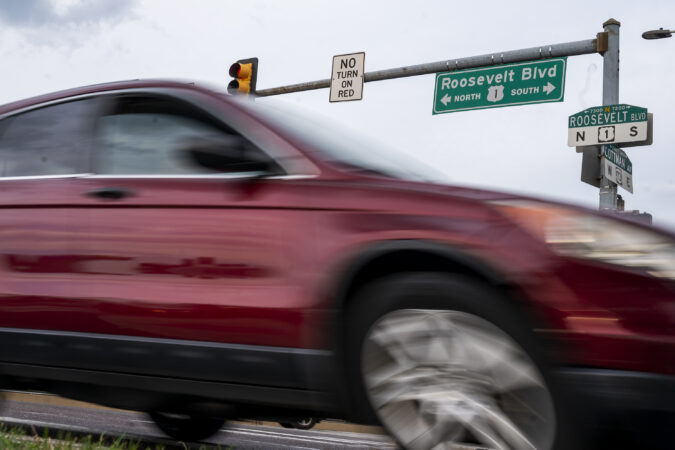
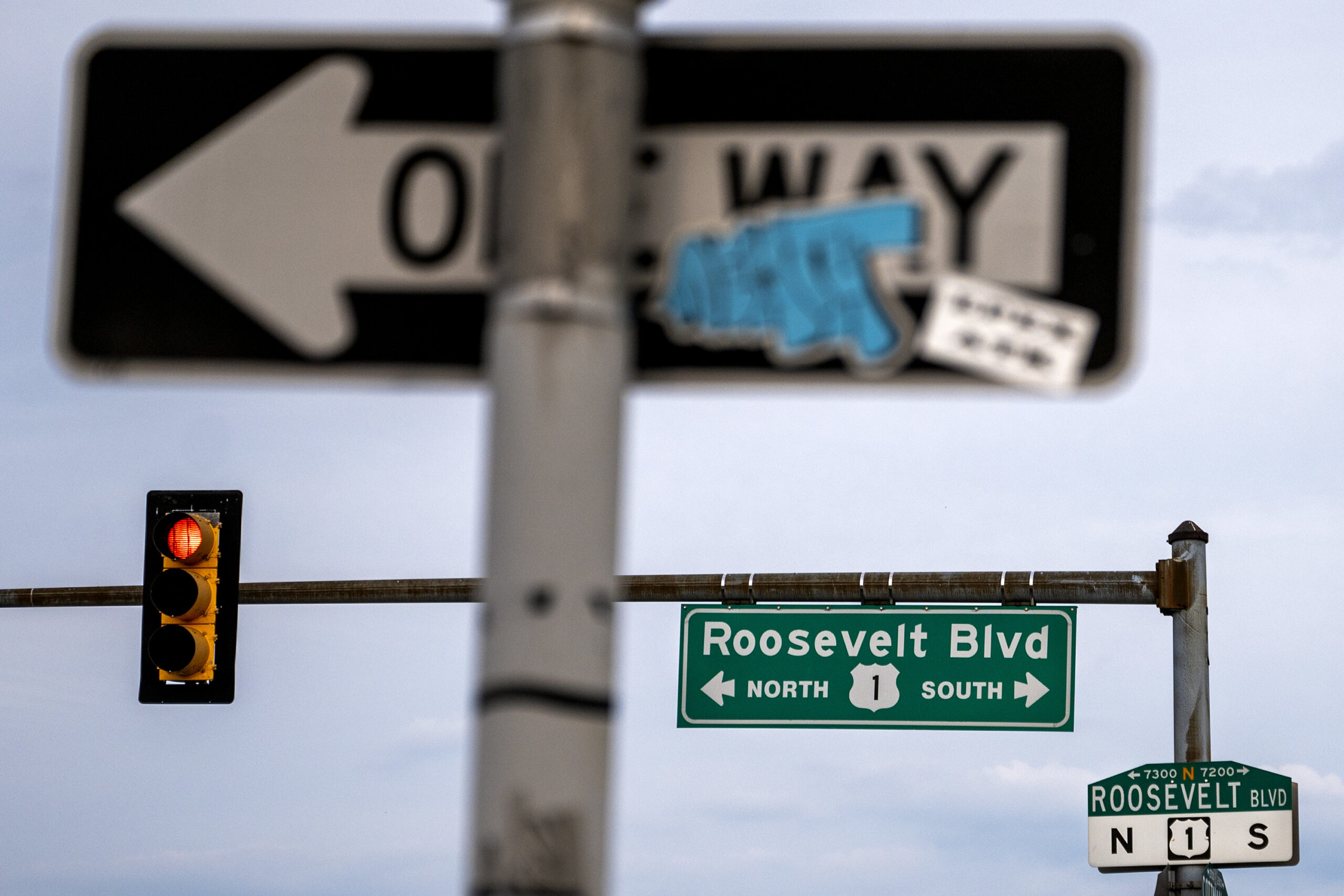
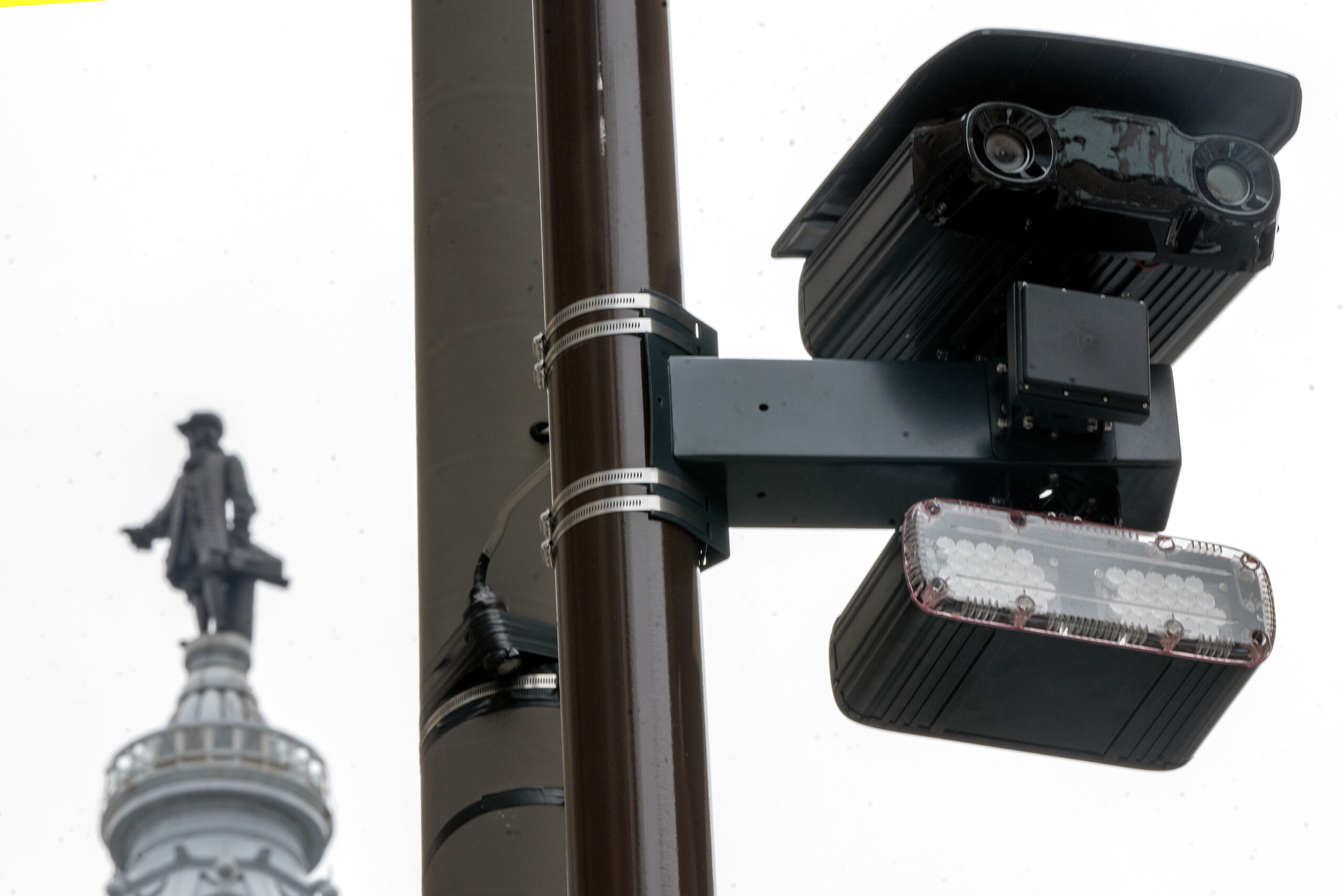
The city’s biggest success story is Roosevelt Boulevard. Once dubbed one of the most dangerous roads in America, the Boulevard is no longer even the most dangerous corridor in Philadelphia (Broad Street now holds that dubious distinction). The change is largely a result of the installation of speed cameras, which officials credit with saving around 50 lives since they were installed in 2020. The cameras have now been installed for Broad Street, as well.
Additionally, the Parker administration has placed a welcome focus on safety around schools and playgrounds. Given that an average of about five Philadelphia children are struck by a vehicle every week, those efforts should be accelerated. After some initial consternation, City Council approved speed cameras for seven school zones this year. If those programs show success, they should be expanded.
An automated speed enforcement camera is mounted on North Broad Street at Arch Street.
So, too, should support from the police. In an interview with Philadelphia Magazine, Police Commissioner Kevin J. Bethel responded to a plea for more traffic enforcement with a reference to ongoing staffing issues, saying that his officers must prioritize the most serious calls. With 100 Philadelphians dying in collisions each year, citations and arrests for traffic violations should remain a point of emphasis.
The plan to reduce traffic fatalities also requires some assistance from Harrisburg. City officials would like to set their own speed limits, arguing that state rules that are designed for rural and suburban communities don’t work in dense, urban areas with heavy pedestrian traffic.
There is still much to be done when it comes to keeping pedestrians in the city safe, but Philadelphians can take comfort in knowing that the tools currently in place are doing what they’re intended to do — save lives.
Way back in 2022, when Philadelphians gathered on an abandoned pier to watch a man eat a rotisserie chicken, folks on social media began to wonder: “Is Philadelphia a real place?”
Sure, that perception has a lot to do with an unbelievable event that actually happened in the suburbs (Delco never fails to carry its weight), but Philly also saw its fair share of the bizarre this year, too.
As we prepare for what may be one of the most important (and hopefully weirdest!) years in modern Philadelphia history, let’s take some time to look back on the peculiar stories from across the region that punctuated 2025.
Five uh-oh
Kevon Darden was sworn in as a part-time police officer for Collingdale Borough on Jan. 12 and hit the ground running, landing his first arrest just four days later.
The only problem? It was his own.
Pennsylvania State Police charged Darden with terroristic threats and related offenses for an alleged road rage incident in 2023 in which he’s accused of pointing a gun at a driver on the Blue Route in Ridley Township. At the time of the alleged incident Darden was employed as an officer at Cheyney University.
A Pennsylvania State Police vehicle. The agency provided two clean background checks for a Collingdale police officer this year, only to arrest him four days after he started the job.
Here’s the thing — it was state police who provided not one but two clean background checks on Darden to Collingdale officials before he was hired. An agency spokesperson told The Inquirer troopers had to wait on forensic evidence tests and approval from the District Attorney’s Office before filing charges.
Darden subsequently resigned and is scheduled for trial next year in Delaware County Court.
For the Birds
The Eagles’ second Super Bowl win provided a wellspring of wacky — and sometimes dicey — moments on and off the field early this year.
Mayor Cherelle L. Parker started the championship run off strong by going viral for misspelling the most popular chant in the city as “E-L-G-S-E-S” during a news conference. Her mistake made the rounds on late night talk shows and was plastered onto T-shirts, beer coozies, and even a license plate. If you think the National Spelling Bee is brutal, you’ve never met Eagles fans.
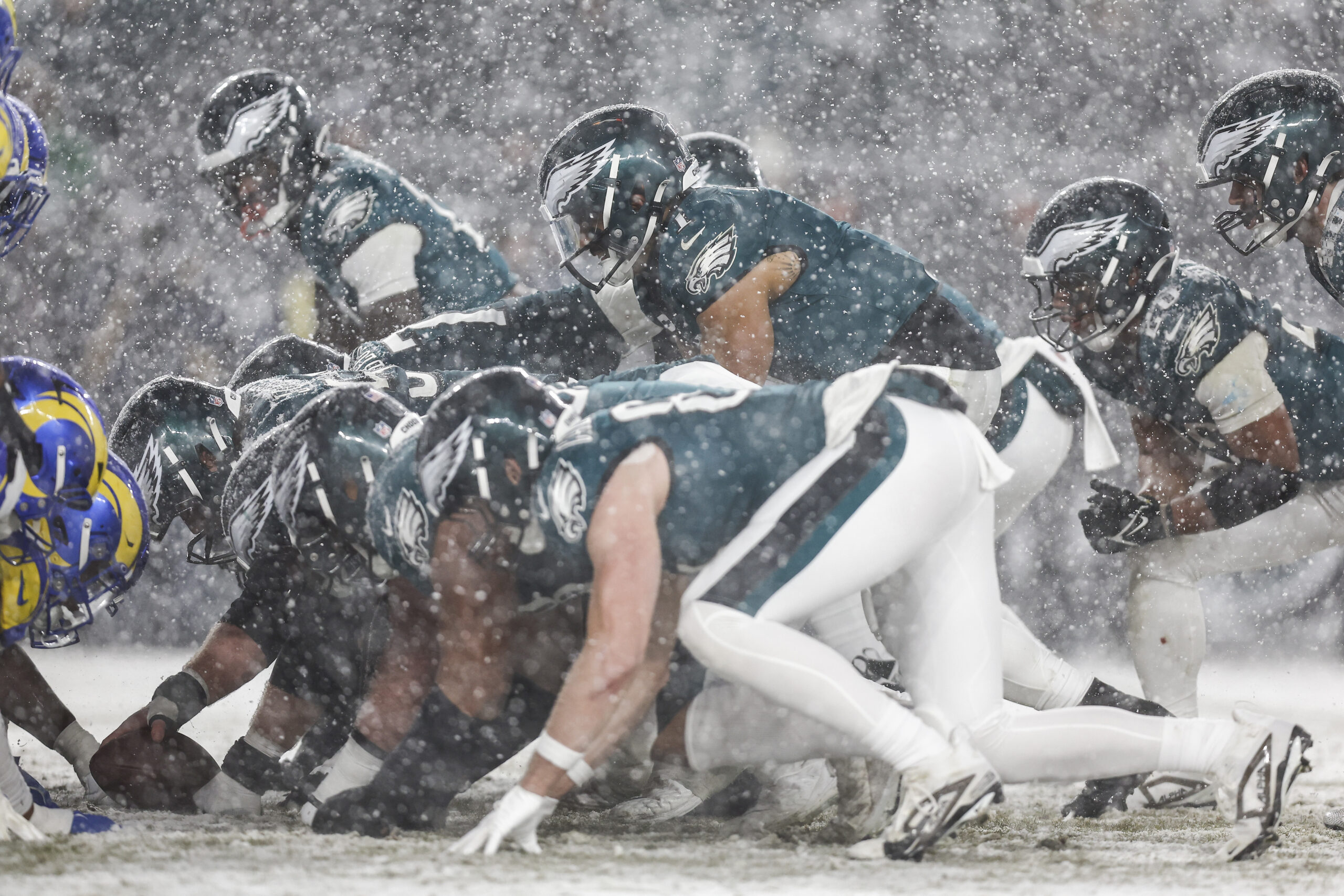
Philadelphia Eagles quarterback Jalen Hurts at the line of scrimmage during the fourth quarter of the NFC divisional playoff at Lincoln Financial Field on Jan. 19. The Philadelphia Eagles defeated the Los Angeles Rams 28 to 22.
Then there was the snowy NFC divisional playoff game against the Los Angeles Rams at Lincoln Financial Field; continued drama around the Tush Push (which resulted in Dude Wipes becoming an official sponsor of the team); and Cooper DeJean’s pick-six, a gift to himself and us on his 22nd birthday that helped the Birds trounce the Kansas City Chiefs 40-22 in Super Bowl LIX.
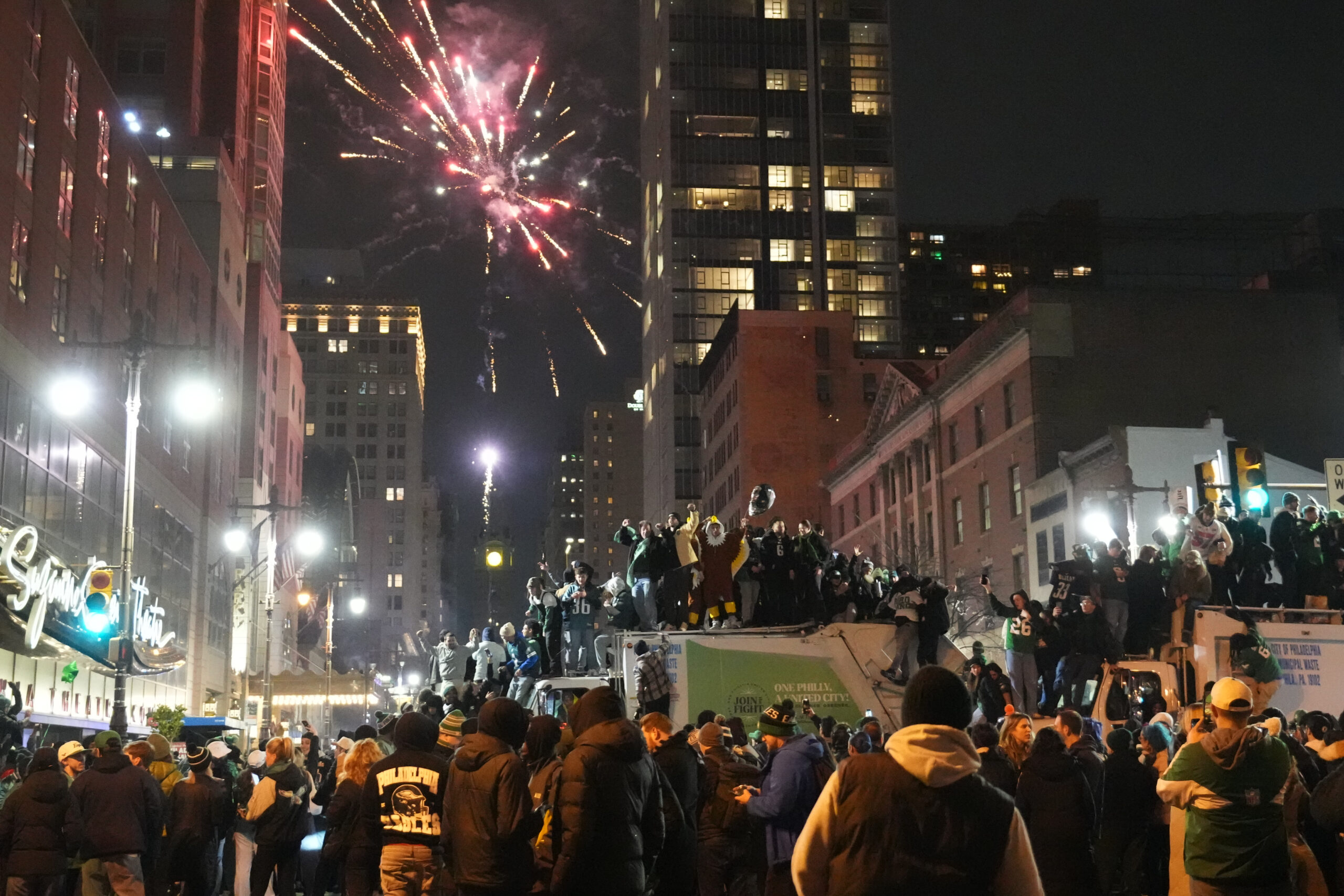
As soon as the Eagles won with Jalen Hurts as MVP, Philadelphians let loose, flooding the streets like a drunken green tsunami. Fans scaled poles and tore them down; danced on bus shelters, medic units, and trash trucks; partied with Big Foot, Ben Franklin, and Philly Elmo; and set a bonfire in the middle of Market Street.
Eagles fans party on trash trucks in the streets of Center City after the Birds win in Super Bowl LIX against the Chiefs on Feb. 9.
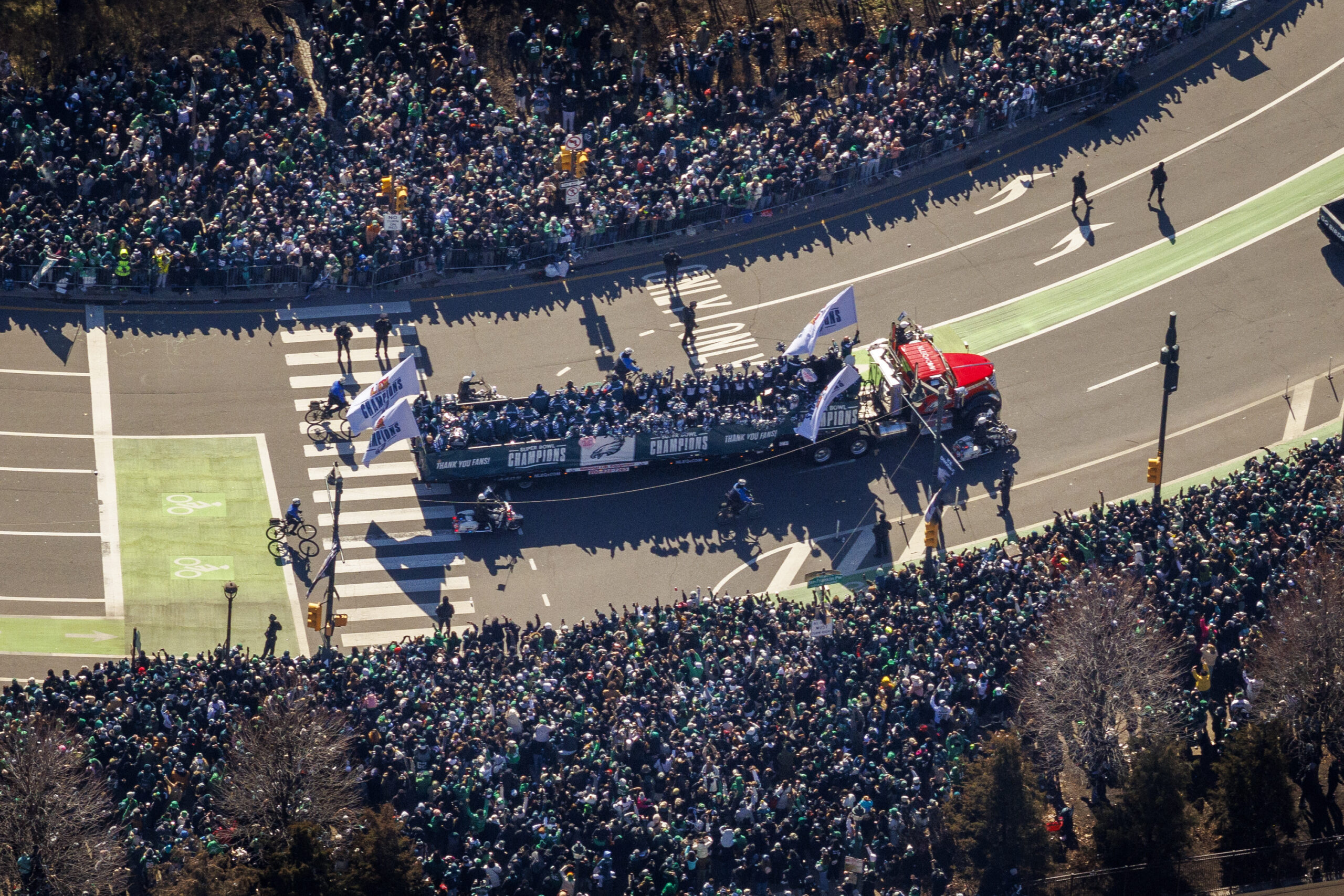
Finally, there was the parade, a Valentine’s Day love letter to the Eagles from Philadelphia. Among the more memorable moments was when Birds general manager Howie Roseman was hit in the head with a can of beer thrown from the crowd. He took his battle scar in pride, proclaiming from the steps of the Philadelphia Art Museum: “I bleed for this city.”
As we say around here, love Hurts.
Throngs of Birds fans lined the Benjamin Franklin Parkway for the Eagles Super Bowl Parade on Feb. 14.
A $40 million goodbye
As far as inanimate objects go, few have experienced more drama in recent Philly history than the SS United States, the 73-year-old, 990-foot luxury liner that was docked for nearly three decades on the Delaware River waterfront.
Supporters spent more than $40 million on rent, insurance, and other measures to keep the ship in Philly with the hopes of returning it to service or at least turning it into a venue. But a rent dispute with the owners of the pier finally led a judge to order the SS United States Conservancy, which owned the vessel, to seek an alternate solution.
Workers on the Walt Whitman Bridge watch from above as the SS United States is pulled by tug boats on the Delaware River.
And so in February, with the help of five tugboats, the ship was hauled out of Philly to prepare it to become the world’s largest artificial reef off the coast of Okaloosa County, Fla.
If the United States has to end somewhere, Florida feels like an apt place.
The ‘Delco Pooper’
While the Eagles’ Tush Push was deemed legal by NFL owners this year, a Delaware County motorist found that another kind of tush push most definitely is not after she was arrested for rage pooping on the hood of a car during a roadway dispute in April.
Captured on video by a teen who witnessed the rear-ending, the incident quickly went viral and put a stain on Delco that won’t be wiped away anytime soon.
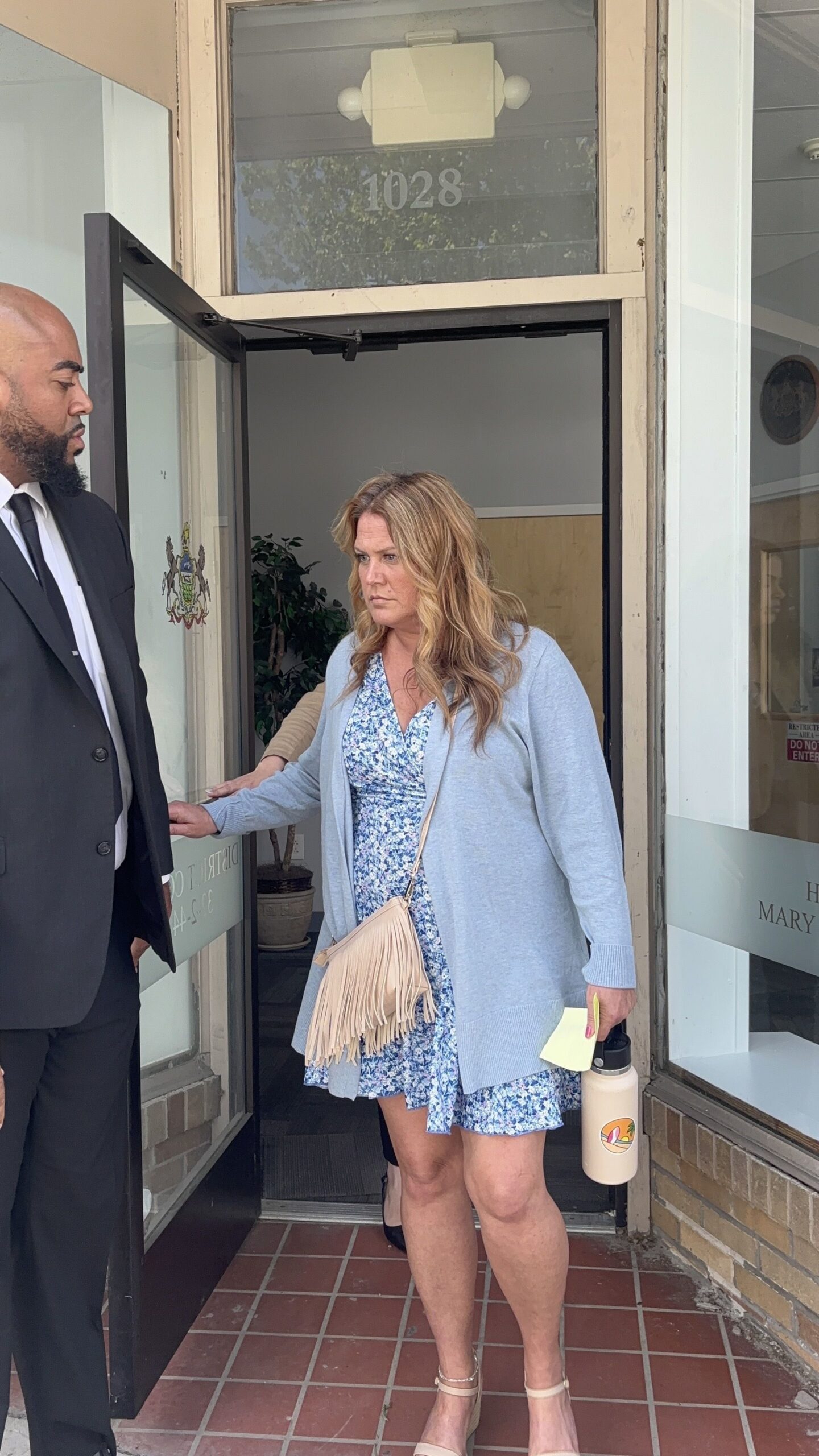
Christina Solometo, who was dubbed the “Delco Pooper” on social media, told Prospect Park Police she got into a dispute with another driver, whom she believed began following her. Solometo claimed when she got out of her car the other driver insulted her and so she decided to dump her frustrations on their hood.
A private security guard holds the door open for alleged “Delco Pooper” Christina Solometo following her preliminary hearing Monday at Prospect Park District Court.
“Solometo said, ‘I wanted to punch her in the face, but I pooped on her car instead and went home,’” according to the affidavit.
I’ve written a lot of stories about Delco in my time, but this may be the most absurd.
Hopefully, she won’t be clogging up the court system anymore.
The Delco pope
Delco is large, it contains multitudes, and never was that more clear than when two weeks after the Delco Pooper case broke, a Delco pope was elected.
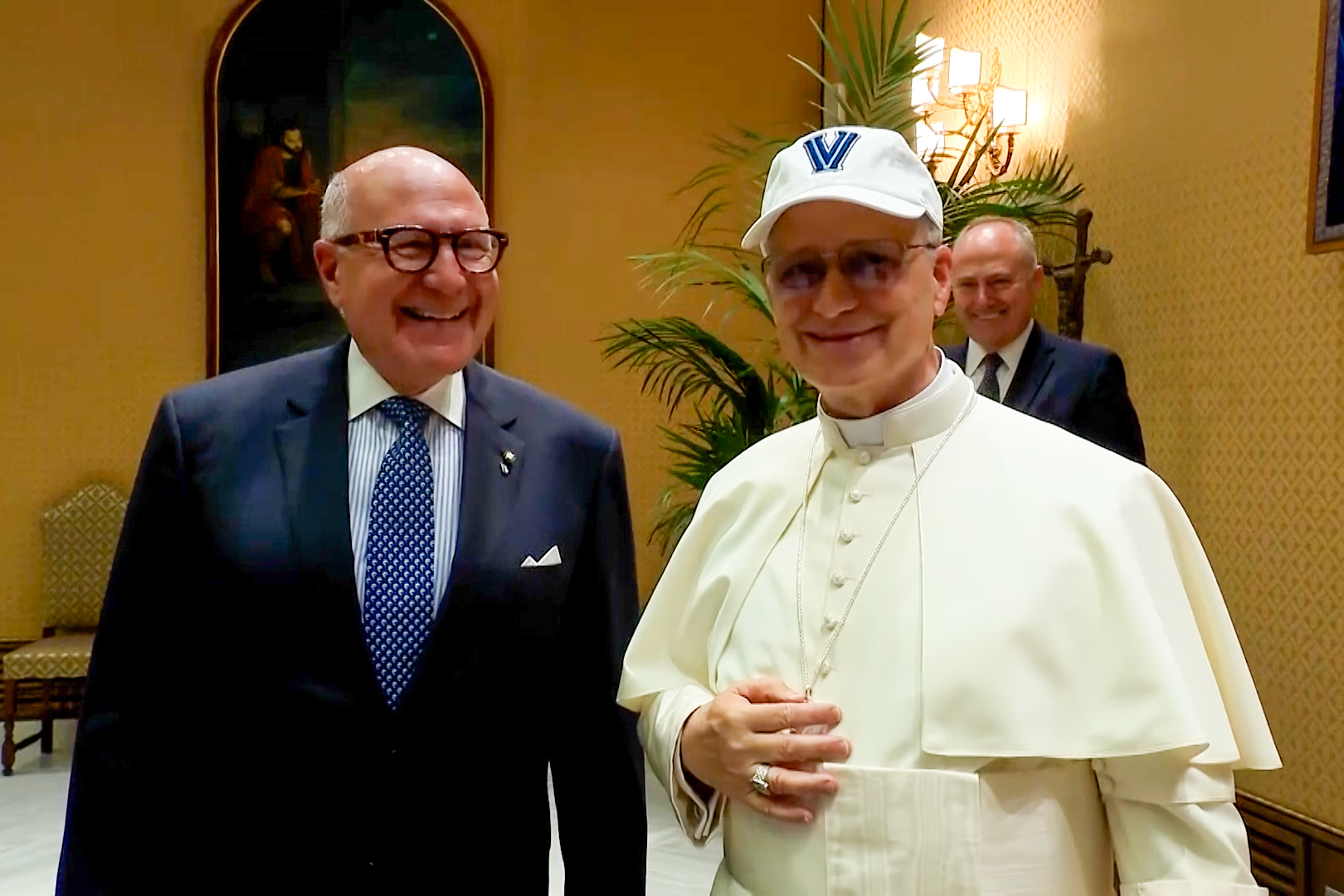
OK, so Pope Leo XIV is technically a native of Chicago, but he attended undergrad at Villanova University — which, yes, technically straddles Delco and Montgomery County — but Delco’s had a tough year so I’m gonna give it this one.
This video screen grab shows Pope Leo XIV wearing a Villanova University hat gifted to him during a meeting with an Italian heritage group.
Born Robert Prevost, Pope Leo is the first U.S. pope in history and also a citizen of Peru. He earned his bachelor’s degree in mathematics from Villanova in 1977 and an honorary doctor of humanities from the university in 2014.
Center City Sips, the Wednesday Center City happy hour program, long ago earned a reputation as a rite of passage for 20-somethings who are still figuring out how to limit their intake and want to do so in business casual attire.
Things seemed to calm down after the pandemic, but then Philadelphians took Sips to another level and a whole new place this year — the streets.
Videos showed hundreds of people partying in the streets of Midtown Village on Wednesday nights this summer. Granted, the parties look far more calm than when sports fans take over Philly after a big win, but the nearby bar owners who participate in the Sips program said their places sat empty as people brought their own alcohol to drink.
Jason Evenchik, who owns Time, Vintage, Garage, and other bars, told The Inquirer that “No one is inside, and it’s mayhem outside.”
“Instead, he claimed, people are selling alcohol out of their cars and bringing coolers to make their own cocktails. At one point on June 11,Evenchik said, a Tesla blocked a crosswalk while a man made piña coladas with a pair of blenders hooked up to the car,” my colleague Beatrice Forman wrote.
In no way am I condoning this behavior, but those two sentences above may be my among favorite this year. Who thinks to bring a blender — with a car hookup — to make piña coladas at an unauthorized Center City street party on a Wednesday night?
Philly.
Getting trashed
Philadelphians experienced a major city workers strike this summer when Mayor Cherelle L. Parker and AFSCME District Council 33 couldn’t agree on a new contract for the union’s nearly 9,000 members.
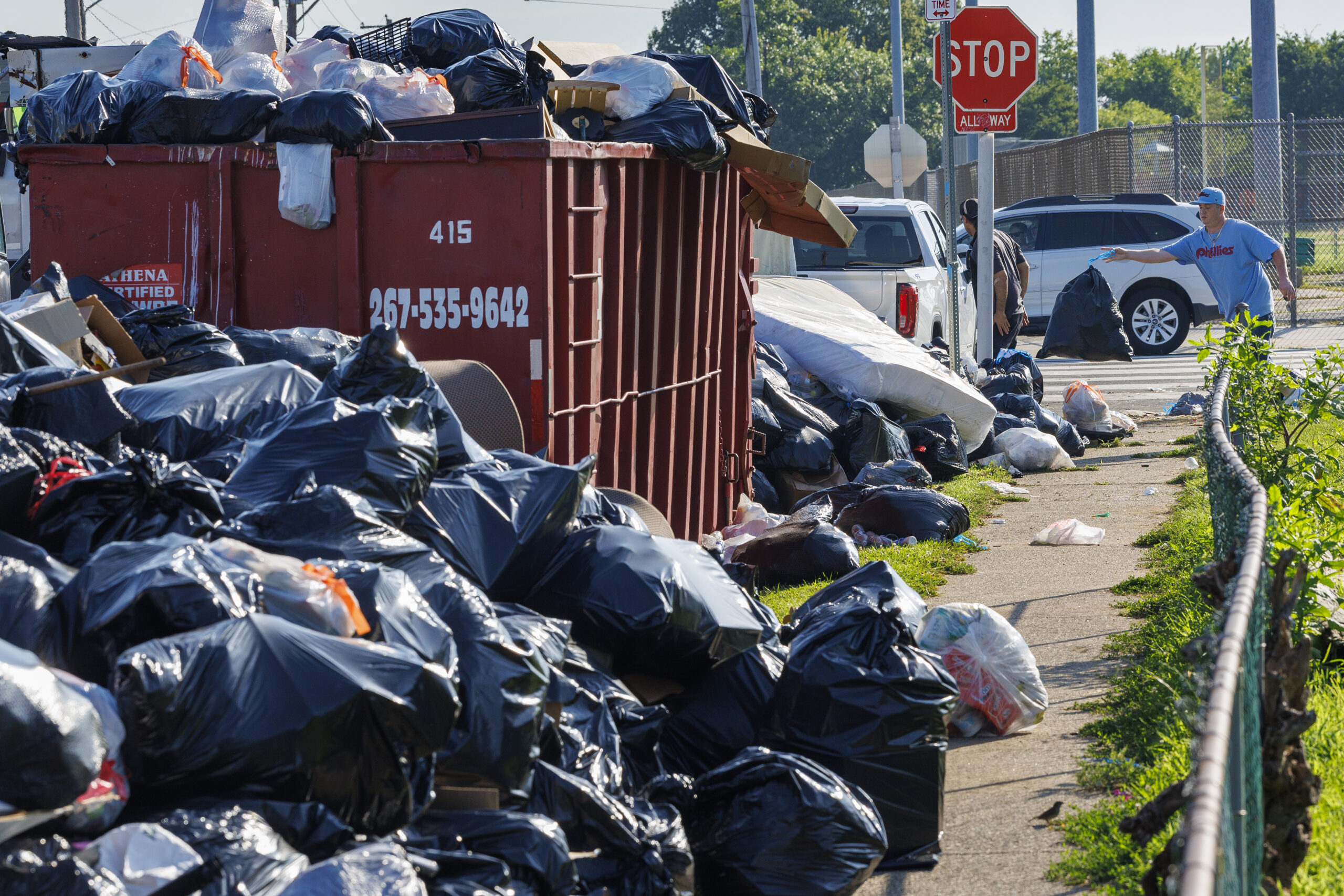
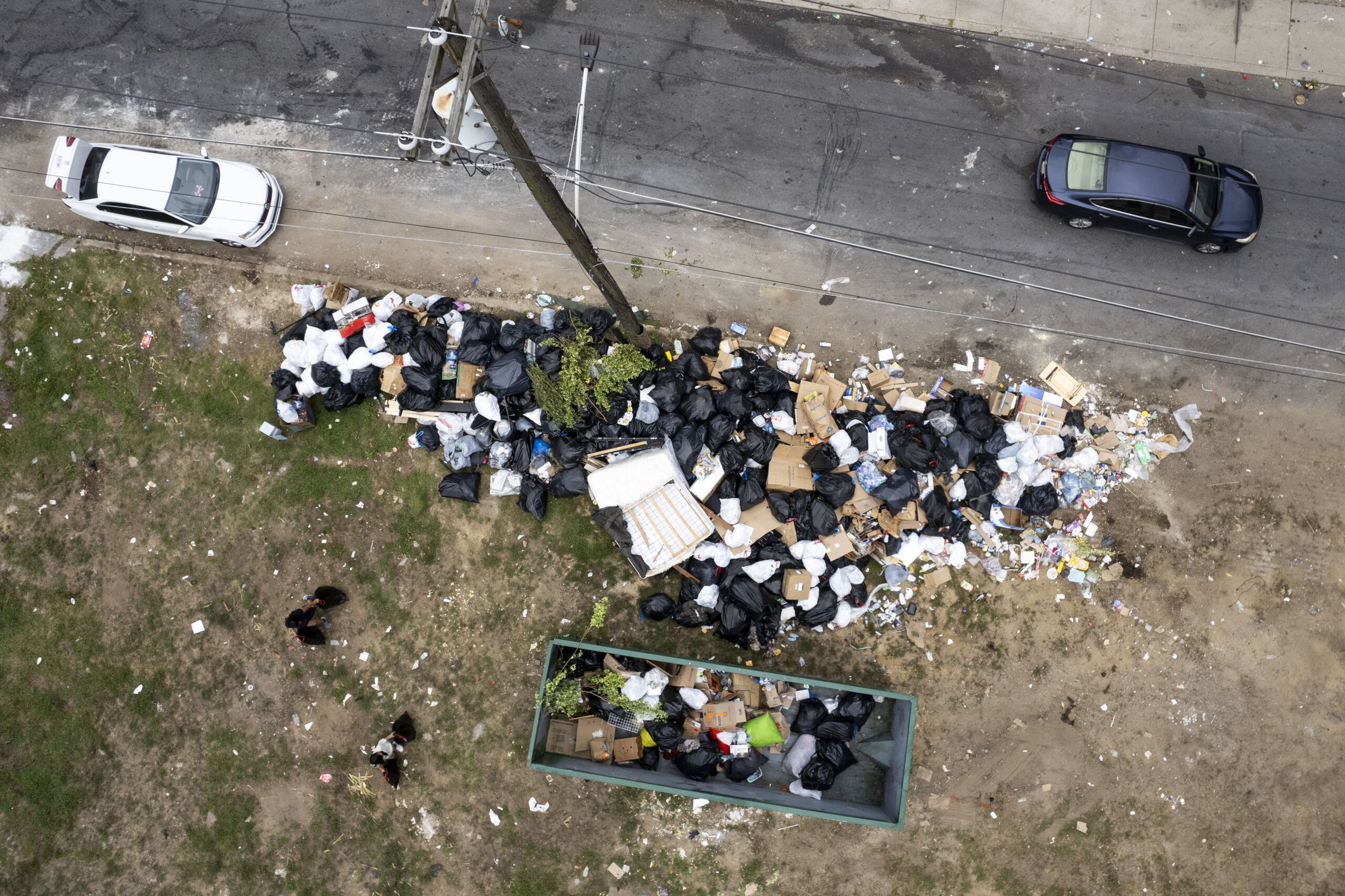
Residents with trash arrive at garbage dump site at Caldera Road and Red Lion Road in northeast Philadelphia during the AFSCME District Council 33 workers strike in July.
As a result, things got weird. Dead bodies piled up at the Medical Examiner’s Office; a striking union member was arrested for allegedly slashing the tires of a PGW vehicle; and for eight days in the July heat, garbage heaped up all across Philadelphia. The city set up temporary trash drop-off sites, which often overflowed into what were nicknamed “Parker piles,” but that also set off a firestorm about whether using the sites constituted crossing a picket line.
Wawa Welcome America July Fourth concert headliners LL Cool J and Jazmine Sullivan even pulled out of the show in support of striking workers, resulting in a fantastic “Labor Loves Cool J” meme.
It was all like something out of It’s Always Sunny in Philadelphia. In fact, the gang predicted a trash strike in the 2012 episode “The Gang Recycles Their Trash.”
The real strike lasted eight days before a contract was reached. In true Philly form, AFSCME District Council 33 president Greg Boulware told The Inquirer “nobody’s happy.”
A large pile of trash collects at a city drop-off site during the AFSCME workers strike this summer.
97-year-old gives birth to 16 kids
A local nonagenarian couple became national shellebrities this year for welcoming seven babies in April and nine more in August, proving that age ain’t nothing but a number, as long as you’re a tortoise.
Western Santa Cruz Galapagos tortoise Mommy, and male Abrazzo, left, are shown on Wednesday, April 23, 2025, at the Philadelphia Zoo in Philadelphia, Pa. The hatchlings’ parents, female Mommy and male Abrazzo, are the Zoo’s two oldest animals, each estimated to be around 100 years old.
Mommy and Abrazzo, Western Santa Cruz Galapagos tortoises who reside at the Philadelphia Zoo, made history with their two clutches, becoming the first pair of the critically endangered species in the zoo’s 150-year history to hatch eggs and the first to do so in any accredited zoo since 2019.
Mommy is also the oldest known first-time Galapagos tortoise mom in the world, so it’s safe to say she doesn’t have any time or patience for shenanigans. She’s got 16 heroes in a half shell to raise.
Western Santa Cruz Galapagos tortoise egg hatchling.
Phillies Karen
Taking candy from a baby is one thing — babies don’t need candy anyway — but taking a baseball from a kid at a Phillies game is a deed so foul and off base it’s almost unimaginable.
And yet, that’s exactly what happened at a Phillies-Marlins game in September, when a home run from Harrison Bader landed in the stands and a dad ran from his seat to grab it and give it to his son. A woman who was sitting near where the ball landed marched over to the dad, berated him, and demanded the ball be given her. Taken aback, the father reached into his son’s baseball glove and turned the ball over.
The entire scene was caught on camera and the woman, with her Kate Gosselin-esque hairdo, was immediately dubbed “Phillies Karen” by flabbergasted fans.
While the act technically happened at the Marlins stadium in Miami, Fla., it captured the minds and memes of Philadelphians so much that it deserves inclusion on this list. Phillies Karen has made her way onto T-shirts and coffee mugs, inspired skits at a Savannah Bananas game and the MLB Awards, and she even became a popular Halloween costume.
To this day, “Phillies Karen” remains unidentified, so it’s a safe bet she lives in Florida, where she’ll have better luck with alligators than with people here.
Institutional intrigue
Drama at area institutions this year had Philadelphians sipping tea like we were moms on Christmas morning, and sometimes, left us shaking our fists in the air like we were dads putting up tangled lights.
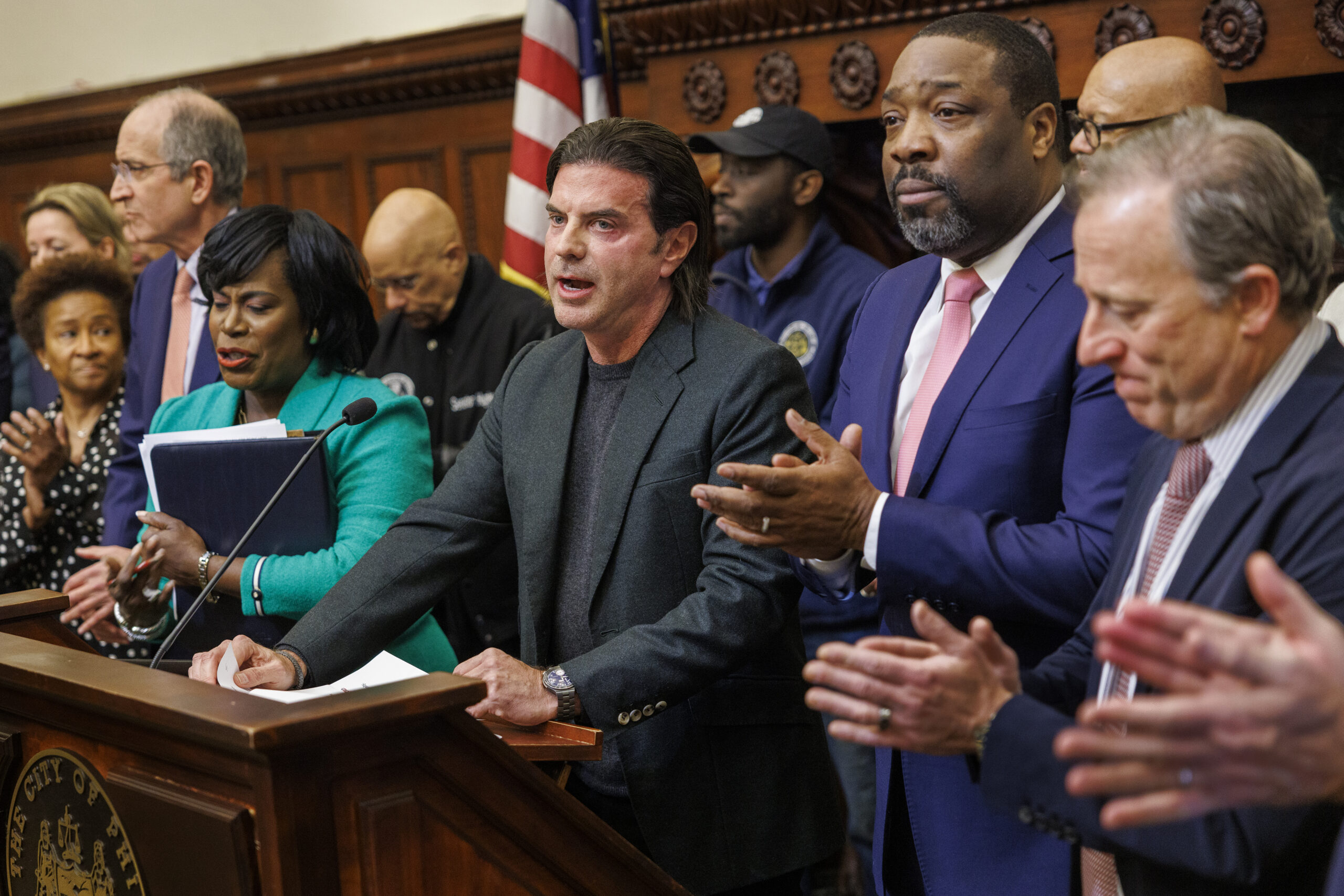
David Adelman with the Philadelphia 76ers makes a statement at a press conference in the Mayor’s Reception Room in January regarding the Sixers changing directions on the controversial Center City arena. At left is mayor Parker, at right City Council President Kenyatta Johnson and Josh Harris, Sixers owner.
It started early in January, when the billionaire owners of the Sixers surprised the entire city by announcing the team would stay at the South Philly sports complex instead of building their own arena on Market East. The decision came after two years of seemingly using the city, its politicians, and its people as pawns in their game.
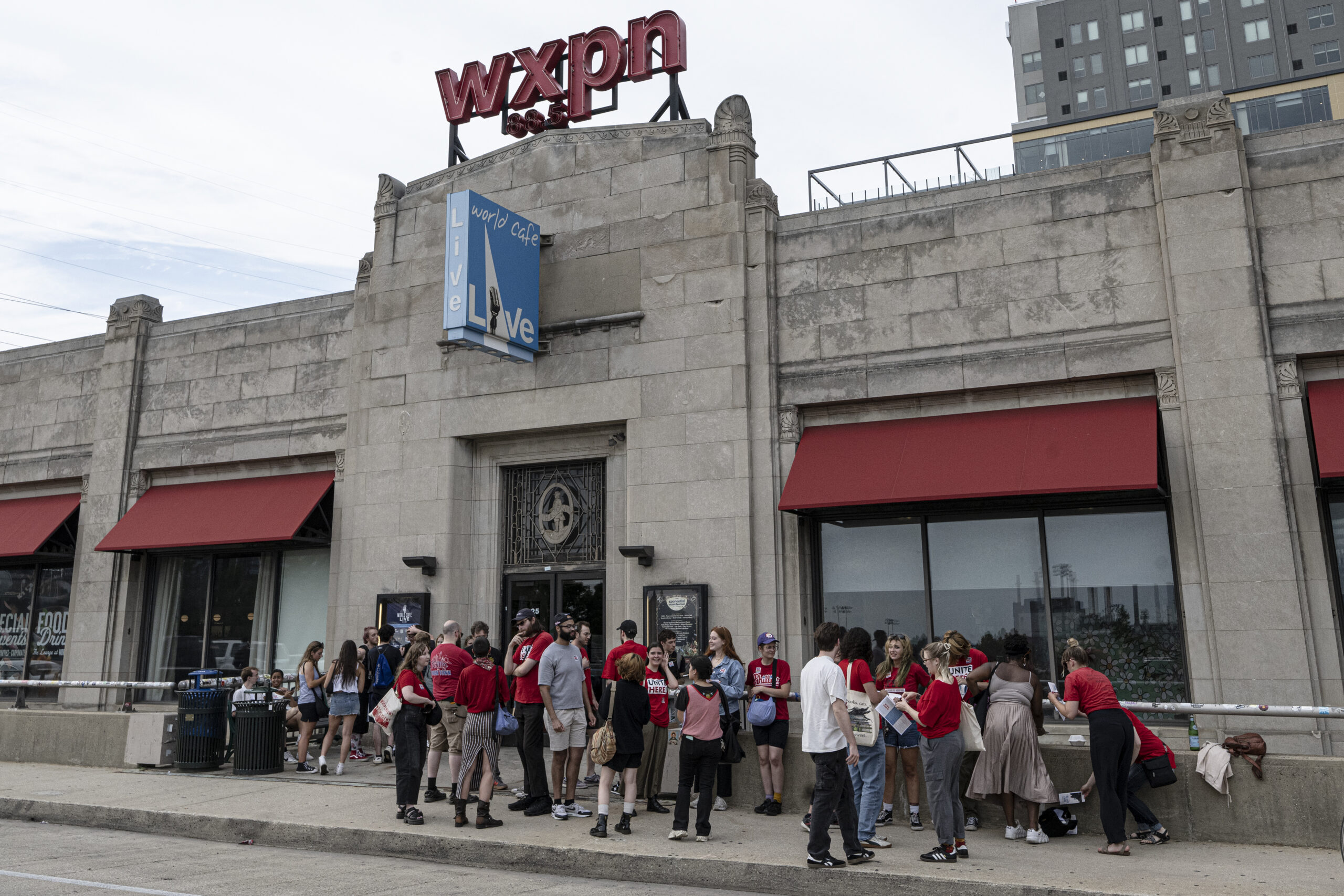
Workers gathered outside World Cafe Live before a Town Hall meeting with management in July.
In June, workers staged a walkout at World Cafe Live due to what they claimed was “an unacceptable level of hostility and mismanagement” from its new owners, including its then-CEO, Joseph Callahan. Callahan — who said the owners inherited $6 million in debt and that he wanted to use virtual reality to bolster its revenue — responded by firing some of the workers and threatening legal action. Today, the future of World Cafe Live remains unclear. Callahan stepped down as CEO in September (but remains chairman of the board), the venue’s liquor license expired, and its landlord, the University of Pennsylvania, wants to evict its tenant, with a trial scheduled for January.
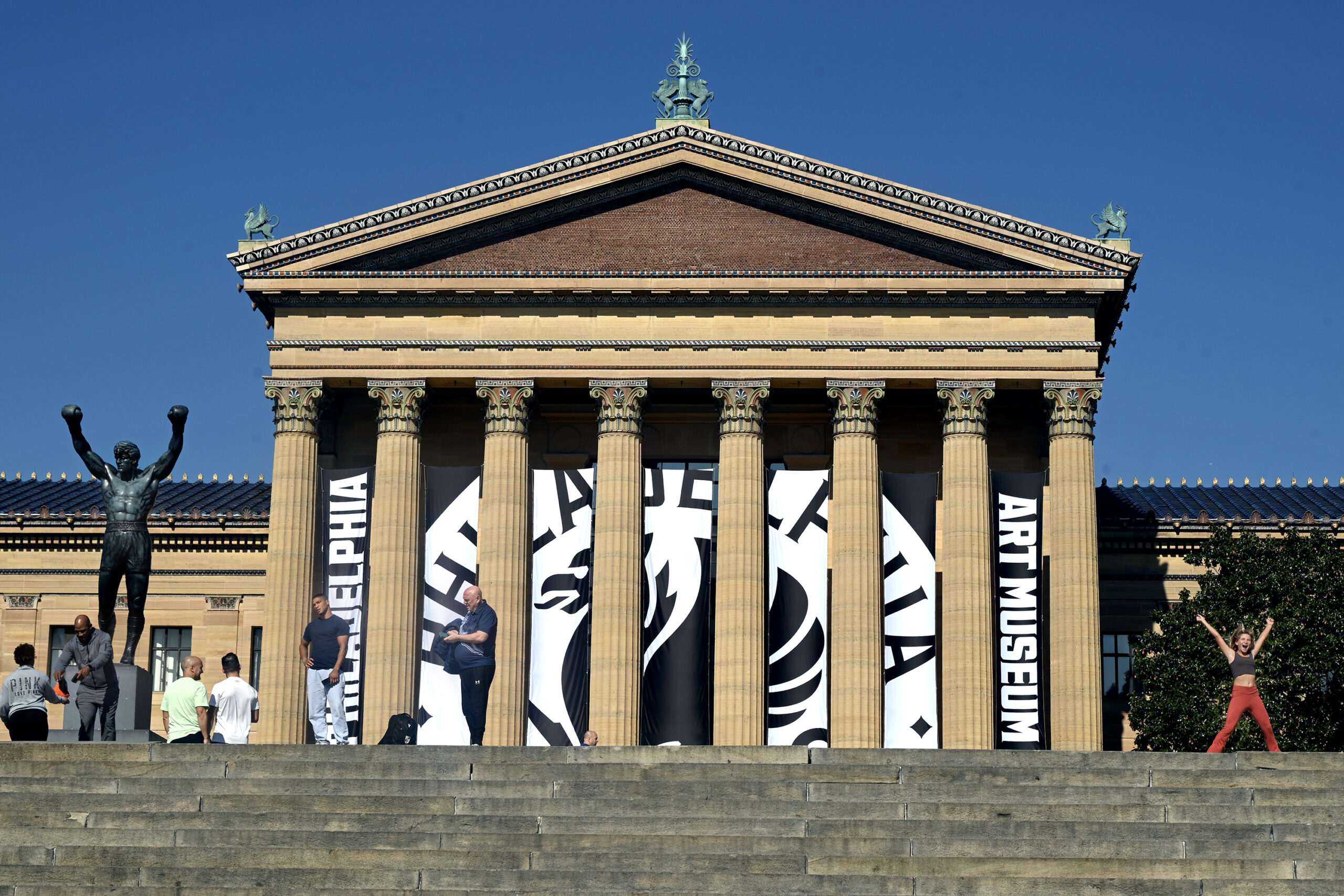
Signage at the east entrance to the Philadelphia Art Museum reflects the rebrand of the institution, which was formerly known as the Philadelphia Museum of Art.
Finally, late this year at the Philadelphia Art Museum, things got more surreal than a Salvador Dalí painting, starting with an institutional rebrand that surprised some board members, didn’t land well with the public, and resulted in a lot of PhART jokes. In November, museum CEO Sasha Suda was fired following an investigation by an outside law firm that focused, in part, on increases to her salary, a source told The Inquirer. Suda’s lawyer called it a “a sham investigation” and Suda quickly sued her former employer, claiming that “her efforts to modernize the museum clashed with a small, corrupt, and unethical faction of the board intent on preserving the status quo.”
Nobody knows where all of this will go, but it’s likely to have more drama than a Caravaggio.
And this year, Parker let go of three top city officials amid ordeals fraught with internal drama for the administration.
Despite those tribulations, the big-picture news for the city has been positive, and the mayor can credibly say she has made progress on her oft-repeated campaign slogan of making Philadelphia “the safest, cleanest, greenest big city in the nation with access to economic opportunity for all.”
"We are doing the best we can with what we have," Parker said in an interview Friday. “Nobody’s resting. We’re not having a party and celebrating because we know we have a lot more work to do.”
story continues after advertisement
The year encapsulated Philadelphia’s reality under Parker’s administration: big wins on major goals despite signs of tension in City Hall.
“She’s getting some pushback, but statistically, in terms of the crime rate, the city is doing better,” said David Dunphy, a Pennsylvania Democratic political consultant and lobbyist. “In terms of the biggest issues that voters had in the last election, it’s inarguable there’s been vast improvement.”
“There’s a general sense Philadelphia is coming back and making a rebound [following the pandemic], and she gets a lot of good will from the sense she enjoys being mayor,” Dunphy said.
Here are six takeaways from Parker’s second year in office.
story continues after advertisement
Big wins, with caveats
Parker made public safety the central themeof her 2023 mayoral campaign. And two years in, the news could hardly be better.
The Police Department as of last week had recorded 212 homicides in 2025, and is on pace to close the year with the lowest level since 1966.
But it’s not just the reduction in violence.
Philadelphia’s poverty rate has dipped below 20%, and it no longer has the highest rate among the 10 largest U.S. cities. The city’s finances are in the best shape they have been in since the early 1990s fiscal crisis. Perhaps most shockingly, there even appears to be progress in Kensington, where Parker has pledged to end the neighborhood’s notorious open-air drug market.
Onedrug dealer told The Inquirer the city’s crackdown has cut his weekly revenue from about $1,500 to $400. And the city isexpanding its Riverview Wellness Village, a first-of-its-kind initiative from Parker’s administration to house and provide treatment for people in recovery.
There are plenty of caveats to all of those headline accomplishments. The decline in homicides began shortly before Parker took office. Philadelphia still has the lowest median income of the 10 biggest cities in the country. The city’s finances, buoyed by a growing economy, have been growing more stable for decades. And the Kensington drug market isn’t disappearing anytime soon.
Workers from Philadelphia’s Community Life Improvement Program clean the intersection of Kensington Avenue and Somerset Street on Jan. 22, 2025.Jessica Griffin / Staff Photographer
But mayors are judged by how the city changes during their tenures. And so far, Parker is likely pleased with her progress on the most important measuring sticks.
“She communicated during the campaign and throughout the beginning of her term a set of priorities that everybody can repeat: the safe, clean, green, inclusive growth or opportunity for all,” said Pedro A. Ramos, a former city managing director who now leads the Philadelphia Foundation, a major philanthropy. “Two years in, I think any fair scorecard has got to give her pretty good grades.”
Tom Gralish / Staff Photographer
Strike highlighted Parker’s strengths and weaknesses
During the first major city worker strike in 40 years, the mayor stoodatop the Philadelphia Art Museum steps in sweltering heat as what were unofficially dubbed “Parker piles” of uncollected trash mounted around the city.
“I will not put the fiscal stability of the city of Philadelphia in jeopardy for no one,” Parker said, explaining her refusal to meet demands for bigger wage increases for the union representing trash collectors, 911 dispatchers, water treatment plant employees, and other blue-collar workers. “If that means I’m a one-term mayor, then so be it.”
Philadelphia Mayor Cherelle L. Parker discusses the AFSCME DC 33 municipal workers strike at a news conference at the Philadelphia Art Museum on Thursday, July 3, 2025.Kaiden J. Yu / Staff Photographer
But the strike was also the most divisive moment in Parker’s tenure, fuelingtensions within organized labor and leading to accusations that Parker didn’t care about the workers’ plight.
Teamsters Local 107 president Bill Hamilton said the mayor encouraged workers to cross picket lines and “should be ashamed of her actions and her words during this strike.”
“She doesn’t have any friends on my side of labor, I can tell you that,” he said.
Parker said that being at odds with labor was “abnormal” for her and that she was disappointed the strike led some people to believe she was not a strong supporter of organized labor.
”Was I disappointed? Yes, because it wasn’t reflective of my career and everything I had done," Parker said in the interview. “But I also respect the union.”
Alejandro A. Alvarez / Staff Photographer
Parker’s don’t-poke-the-bear strategy with Trump
In August, the U.S. Department of Justice sent so-called sanctuary cities a letter threatening to cut off federal funding if they did not get in line with the Trump administration’s immigration policies.
Like many other Democratic leaders, Boston Mayor Michelle Wu excoriated the Trump administration andpublished a scathing response to the DOJ.
But Parker said nothing. Her administration refused to release Philadelphia’s response to the DOJ letter and is still fighting an Inquirer request for the document under Pennsylvania’s Right to Know Law.
Since President Donald Trump took office in January, Parker has rarely if ever uttered the president’s name in public. Supporters sayher don’t-poke-the-bear approach has saved Philadelphia from Trump’s wrath and kept National Guard troops out of the city while theywere deployed to other major U.S. cities. Critics say it shows an unwillingness to stand tall during a dangerous moment in American history.
Read More
Mayor Parker’s restraint with Trump is both calculation and gamble as the president escalates against blue cities
Mayor Cherelle L. Parker has avoided overtly criticizing Trump, even as the president has sought to deploy troops to other American cities against the will of their Democratic mayors.
“We are living in actual fascism,” said City Councilmember Nicolas O’Rourke, of the progressiveWorking Families Party. “It’s clear the mayor is being calculating. That is not the tactic I would take. I think we need to be more pronounced.”
Parker said her goal was to focus on delivering on her campaign promises without letting politics get in the way.
“If there were ever a time that the citizens of Philadelphia needed a mayor to stay laser-focused on doing everything we can with the scarce resources that we have … that time is now,” Parker said. “Some people won’t like it. That’s very unfortunate, but I have to lead in a way that’s authentic to me.”
Kaiden J. Yu / Staff Photographer
A remarkable level of control over Philly’s political arena
In one meeting in June, Council approved the initial legislation for the H.O.M.E. initiative, a $6.8 billion city budget, and a 13-year plan to gradually cut the business tax — all while makingminimal changes to Parker’s proposals.
For a moment, it appeared Council President Kenyatta Johnson had gotten rolled by Parker. But Johnson, standing next to Parker at a celebratory news conference, revealed they had been working together all along, even before Parker unveiled her budget and tax plans three months earlier.
“Folks want to see us fight,” Johnson said. “A while ago … we had the John Street-Ed Rendell partnership when the city thrived. We haven’t seen it since then, quite frankly.”
City Council President Kenyatta Johnson and Mayor Cherelle L. Parker at City Hall on Thursday, Dec. 19, 2024.Tom Gralish / Staff Photographer
It’s difficult to overstate the significance of the comparison. In the 1990s, Mayor Ed Rendell and Council President John F. Street formed an unlikely partnership that was credited with saving the city from the brink of bankruptcy. No mayor and Council presidenthave worked together as closely since.
The moment highlighted how Parker has amassed a remarkable level of control over institutions in Philadelphia government and politics that have tripped up past mayors’ agendas.
In City Hall, Parker’s alliance with Johnson has seen her agenda largely sail through the legislature. City Controller Christy Brady, whose office has historically been a thorn in the sides of mayors, ran for reelection this year on a platform of working with, and not against, the Parker administration.
And the unions for city workers,which have inflicted lasting wounds on past mayors including Rendell and Michael A. Nutter, are all locked in multi-year contracts after Parker’s successful stand against DC 33’s strike.
Politically, the centrist Democratic mayor has a seemingly unbreakable bond with some of the most influential labor organizations in the city — the Philadelphia Building and Construction Trades Council, the Carpenters union, and the Service Employees International Union Local 32BJ — and she is usually in lockstep with Democratic City Committee Chair Bob Brady.
Additionally, potential threats from both the right and the left have not materialized, with the Philly GOP in the political wilderness and the local progressive movement appearing to have lost some momentum.
Parker said the support she has built in Philadelphia politics is not a strategy but the product of her career in public service, which began when she was a teenager interning for former Councilmember Marian Tasco.
“These are organic relationships. These are not like forced marriages,” Parker said. “I’ve been working with all of these people my whole life.”
Council took its most notable stand against Parker during a fight this fall over legislation related to the H.O.M.E. initiative.Johnson sided with lawmakers who wanted to prioritize funding for housing programs for the city’s lowest-income Philadelphians, defying Parker’s plan to spread the benefits more evenly across low- and middle-income households.
But Council still supports the major tenets of H.O.M.E., and Johnson made clear earlier this month the episodedid not damage his alliance with Parker. He even made an unsolicited early endorsement for her 2027 reelection campaign.
“I’m pretty confident that our mayor will be reelected — that’s my personal opinion — and will have my support to get reelected,“ said Johnson, the only senior Democratic member of Council who did not endorse Parker in the 2023 mayor’s race.
Despite facing little political opposition, Parker clearly still sees enemies in many corners.
The mayor bristles at dissent even when she wins, and has recently has been handing out to journalists, administration officials, and others copies of a 98-page book titled Performative Outrage: How Manufactured Fury Undermines Local Government and Public Service.
“It is truly our blueprint,” chief of staff Tiffany W. Thurman said. “It reminds us that noise isn’t the same as progress. … We don’t chase the outrage of the moment. We chase the outcomes of a lifetime.”
The city in August spent $423.80 to order copies for every cabinet member, according to records for the mayor’s office credit card.
Parker signed a copy of the book, which was given to a reporter, writing: “Great read!”
Tom Gralish / Staff Photographer
Signs of discord within the administration
Parker freely admits she is a tough boss. And the strains of working under her demanding leadership style started to show in her second year.
But Anderson, the former DEI director, pushed back on that account, and asserted that DeSantis’ investigation was a pretext for Parker to fire her because she had pushed for the administration to take a more aggressive stance against Trump’s DEI crackdown. Her comments took on new salience whenThe Inquirer revealed this fall that Parker had quietly ended the city’s longstanding policy of prioritizing city contracts for businesses owned by women, people of color, or disabled people due to legal threats from conservative groups.
Parker said personnel issues come with the territory of running a city.
“Things happen. You can’t have a government with 29,000 employees where stuff doesn’t just happen,” she said. “For me, it’s how does my administration navigate those challenges? … Do we get paralyzed into inaction? And the answer is no.”
Ramos added that Parker will be judged by outcomes, not internal disputes.
“At the end of the day, people only care about palace intrigue if they don’t see results,” Ramons said.
Tom Gralish / Staff Photographer
A ‘big mahoff’ emerges
When she became mayor, Parker said she didn’t want one top aide to be the “big mahoff” in her administration. Instead she appointed a “big three” — a trio of senior advisers.
Two years later, it looks like Parker ended up with a “big mahoff” after all.
Thurman, the chief of staff, appears to have become the central figure in the administration, and her portfolio of responsibilities has continually grown over the last two years.
The shift started in 2024, when Thurman took over the 76ers arena negotiations from then-Chief Deputy Mayor Aren Platt. And when Platt resigned in October of that year, Thurman took over the oversight of all the city’s planning and development projects. This year, her portfolio has grown to include the Neighborhood Community Action Centers, a Parker initiative to establish 10 “mini-City Halls” throughout the city, where residents can request services like graffiti removal and traffic-calming measures.
Chief of staff Tiffany W. Thurman takes questions from City Council on Nov. 12, 2024.Alejandro A. Alvarez / Staff Photographer
Parker objected to the notion that her “big three” structure had gone by the wayside and emphasized that the two chief deputy mayors who make up the rest of the triumvirate continue to have “a hell of a lot” in their portfolios. Sinceré Harris, who was Parker’s 2023 campaign manager, oversees labor, legislative affairs, and intergovernmental relations. Vanessa Garrett-Harley leads on child welfare, early education, DEI, and other issues.
Thurman could instead be seen as a first among equals, given that Harris and Garrett-Harley still report directly to the mayor.
But at Friday’s event, Thurman introduced Parker with a flattering speech, and the mayor in turn made clear that Thurman has a central role in her administration.
“Tiffany Thurman is not just my chief of staff. She is the chief air traffic controller” of the administration, Parker said Friday. “Nothing moves in this city without her. I don’t make a decision without her.”
Tom Gralish / Staff Photographer
Staff Contributors
Reporting: Sean Collins Walsh, Anna Orso, Jake Blumgart, Ellie Rushing, and Ryan Briggs
Editing: Oona Goodin-Smith, Ariella Cohen, and Addam Schwartz
Digital Editing: Patricia Madej
Subscribe to The Philadelphia Inquirer
Our reporting is directly supported by reader subscriptions. If you want more journalism like this story, please subscribe today
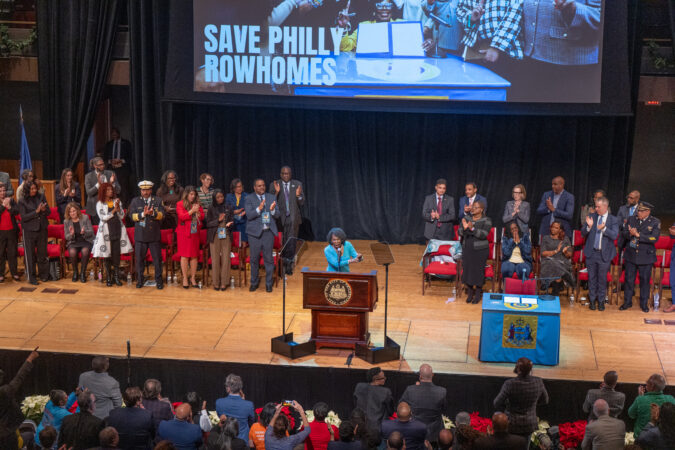
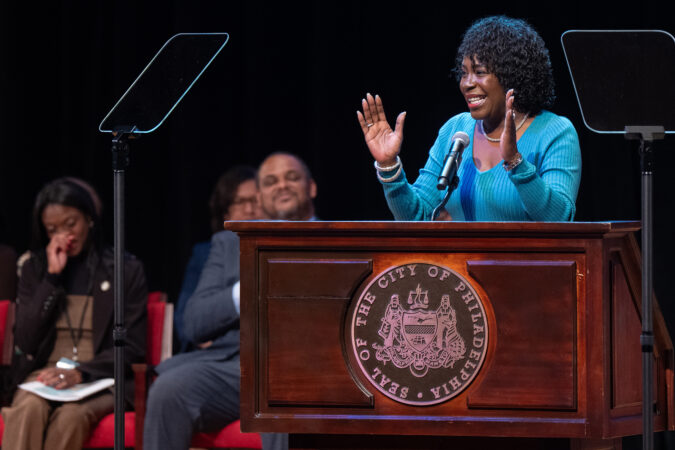
Mayor Cherelle L. Parker marked the halfway point of her term as mayor Friday by portraying the city as safer and more stable than when she took office two years ago, pointing to metrics like the plummeting homicide rate and cleaner streets.
During her second end-of-year State of the City speech, Parker also briefly acknowledged challenges she faced this past year, including the eight-day city worker strike and a spat with City Council over her signature housing plan.
And she outlined a plan to address rising street homelessness heading into 2026, when the city will host several major events expected to draw more than a million visitors.
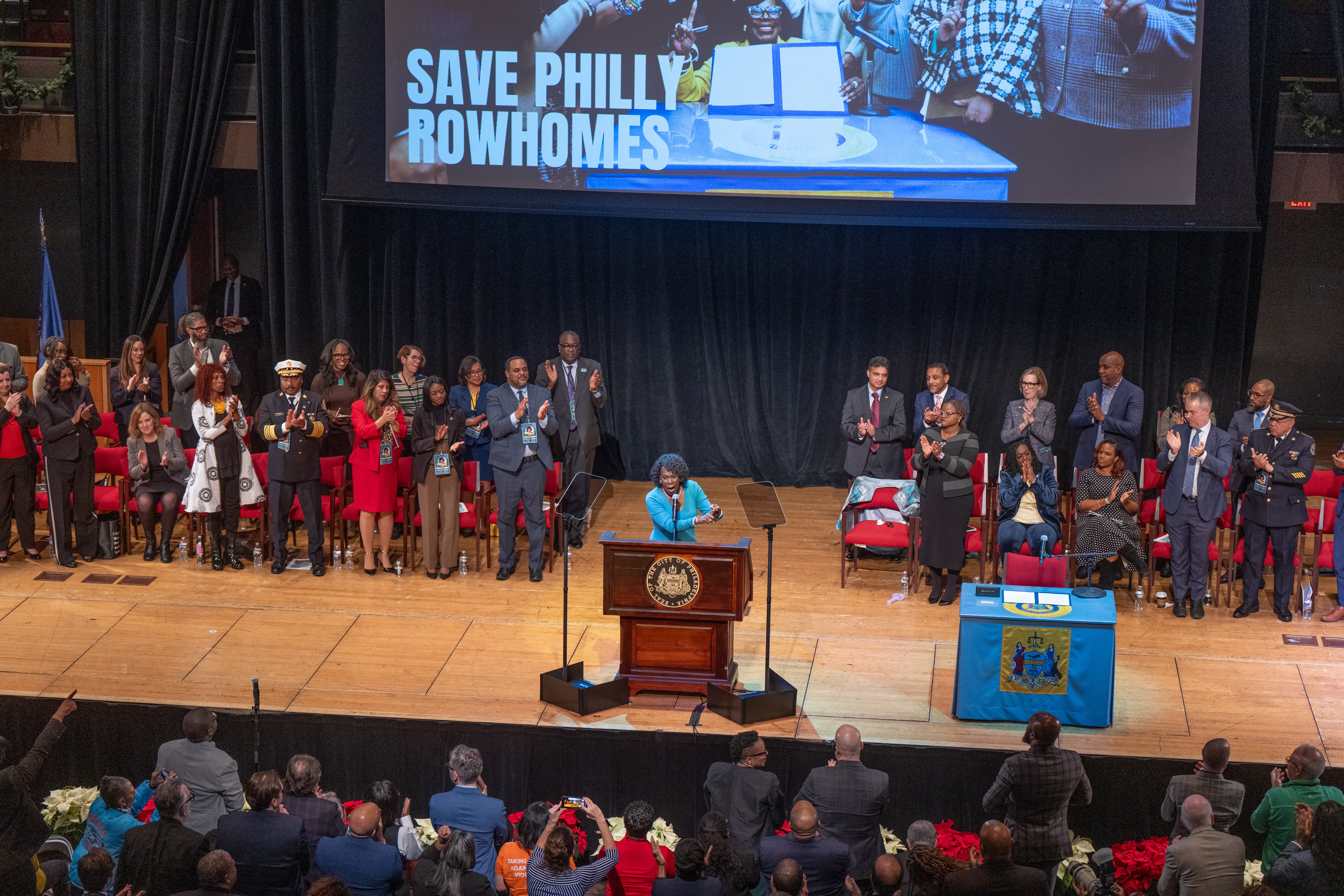
Parker outlined a plan to address rising street homelessness heading into 2026, when the city will host several major events expected to draw millions of visitors, during her end-of-year speech at Temple University Friday.
“I am here today to proudly report to all of you,” she said, “that the state of our city is strong and good, and we are moving in the right direction.”
Parker’s announcement to add 1,000 shelter slots to the city’s system was a stark reminder that — despite progress on public safety and a coming year ripe with opportunity for tourism and growth — some of the city’s longest-term challenges remain unresolved.
And after the mayor this year unveiled a long-awaited plan to build thousands of units of housing in the city, she hit roadblocks in City Council, where members rejected her vision to bolster the middle class in favor of a plan that prioritizes the poorest Philadelphians.
Still, Parker and members of her administration struck an optimistic tone Friday. During the highly produced event, top officials repeatedly proclaimed that the “state of the city” is strong, and they thanked municipal employees in attendance, like police officers and sanitation workers.
Parker’s State of the City address last year was Philadelphia’s first. Traditionally, the mayor’s March budget address to Council was seen as the city’s version of the presidential State of the Union speech in Congress. Parker plans to make the December event an annual tradition as well.
Here are three takeaways from Parker’s speech Friday in North Philadelphia:
A homelessness plan is in the works for 2026
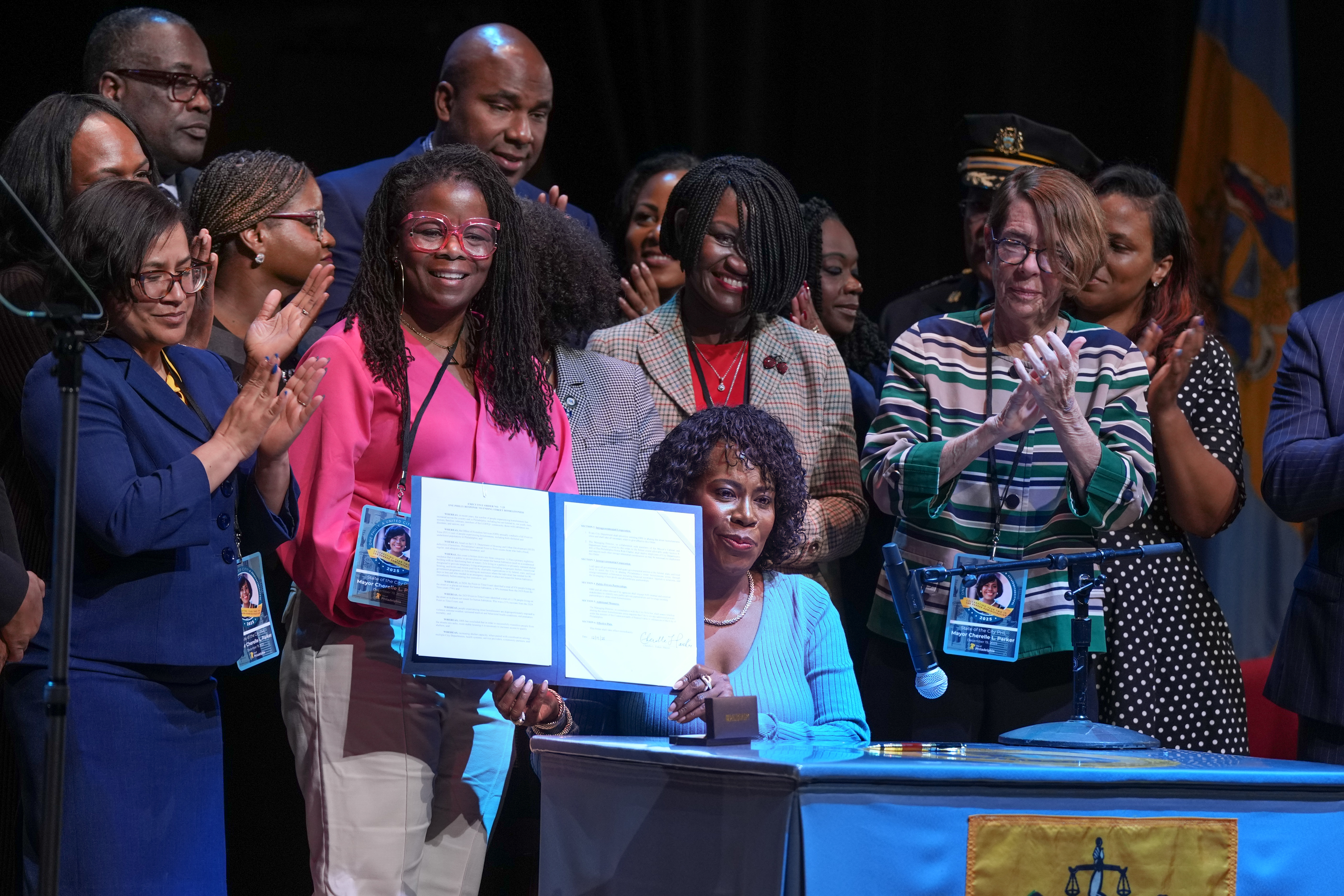
In the middle of her speech, Parker signed an executive order on stage, directing city departments to add 1,000 new beds to the existing shelter system by Jan. 31. That would represent a 35% increase in the number of beds citywide.
The move comes as city data shows homelessness in the city is rising. There were 1,178 unsheltered people in Philadelphia this year, a 20% increase over last year and the highest number recorded since at least 2018, according to city data.
In total, 5,516 people were considered homeless, a number that includes people who live in emergency shelters, are couch surfing, or otherwise lack an adequate nighttime residence. That number is up slightly from 5,191 last year.
Parker’s executive order directs city agencies to increase outreach efforts to people living on the streets and to collaborate with the Philadelphia Housing Authority to move people from shelters to more stable housing.
“We are seeking long-term solutions,” she said, “Solutions that will not only provide an expanded quality shelter system, but with more beds in safe, clean, and welcoming environments.”
Philadelphia Mayor Cherelle L. Parker holds up executive order ending street homelessness.
30,000-unit housing plan swells to 50,000
The mayor’s second year in office was in part defined by her plan to build, repair, or preserve 30,000 units of housing. In March, she unveiled her Housing Opportunities Made Easy, or H.O.M.E., plan, funded by $800 million in bonds.
Parker made clear that her plan would be aimed at uplifting the middle class and often vowed never to pit “the have-nots against the have-a-little-bits.” But City Council this month advanced its own version of the proposal, rejecting Parker’s vision and directing more resources to the poorest Philadelphians.
It was the most significant break between Parker and the legislative branch of her tenure. But the mayor on Friday defended her strategy, saying the middle class should not be asked to wait for access to housing programs.
“You want me to tell you why we shouldn’t tell them to wait?” she said. “Because when I knocked on their doors and asked for their votes — and we’re running for reelection — we don’t ask them to wait.”
Of Council’s 17 members, just four attended Parker’s speech Friday: Anthony Phillips, a close ally, as well as Rue Landau, Jamie Gauthier, and Nicolas O’Rourke — three progressives who led the effort to amend her housing plan. They sat in the front row.
Parker struck a conciliatory tone, saying: “We will work together to press forward together, and we won’t let petty politics get in the way of us moving Philadelphia forward.”
The mayor also made clear Friday that her 30,000-unit benchmark is separate from a plan being advanced by the Philadelphia Housing Authority, which is pursuing an ambitious expansion plan that Parker said would add an additional 20,000 units of affordable housing.
“When you add our H.O.M.E. goal of 30,000 units with that 20,000, those are 50,000 units of housing,” Parker said, “and we shouldn’t have to leave any neighborhood behind.”
On Friday, Parker touted her administration’s work negotiating new contracts this year for almost all of the city’s major municipal unions. She acknowledged, but didn’t dwell on, the strike by the American Federation of State, County and Municipal Employees District Council 33.
“We did have to endure an eight-day work stoppage,” she said. “But guess what we did? In true Philadelphia fashion … we got through it. It wasn’t easy, but we persevered together, and we found common ground, and we reached a fair and fiscally responsible agreement with both District Council 33 and District Council 47.”
DC 33, the largest and lowest-paid union for city workers, called the strike when their previous contract expired at 12:01 a.m. July 1, the first minute the union was legally allowed to walk off the job. Union president Greg Boulware promised his members wouldn’t return to work unless they won raises of 5% per year.
Boulware eventually called off the strike and accepted a contract with raises of 3% per year, which is close to Parker’s last offer before the strike. The deal also included $1,500 onetime bonuses for the union’s roughly 9,000 members and the addition of a fifth step in the DC 33 pay scale, a benefit for veteran employees.
Parker also defended the city’s treatment of DC 33 under her tenure. Repeating an administration talking point from the strike, Parker noted that the union’s accumulated pay increases — combining raises the union won in a one-year contract during Parker’s first year with the increases included in the new three-year deal — will be higher in her first term than under any other mayoral term since the 1990s.
“Just for the record, I also need to affirm — because sometimes people [create] revisionist history — I want to be clear that they were historic pay increases for our city workers,” Parker said. “It’s the largest in one term from any Philadelphia mayor over 30 years.”
Almost 20 years after the Philadelphia Housing Authority (PHA) moved out of its Center City headquarters, a long-promised mixed-income tower will finally begin construction early next year.
The 14-story building is being built by Philadelphia developer Alterra Property Group, which may also manage the site after it opens. PHA will hold a 99-year ground lease on the property at2012 Chestnut St., which will be its only affordable building in Center City.
“It’s a multifamily, mixed-use, mixed-income building in a high opportunity neighborhood,” said Kelvin Jeremiah, president and CEO of PHA.
It “would afford residents a huge opportunity to live in an area that has access to transportation, employment opportunities, and a whole host of amenities literally right outside of their building entrance,” he said.
The tower will have 121 apartments, 40% of which will be rented at market rate with the rest targeted at tenants below 80% of area median income (or almost $83,000 for a three-person household). It will have 28 studios, 63 one-bedroom, and 30 two-bedroom units.
It also will have 2,000 square feet of commercial space, parking available off-site, and amenities that include a roof deck. The project was designed by JKRP Architects.
“I’m looking to break ground in Q1 of next year,” said Mark Cartella, Alterra’s senior vice president of development and construction. “It’s been a long time coming, so we’re excited to finally be going vertical here.”
What took so long?
PHA moved out of its Chestnut Street headquarters in January 2008, leaving a four-story husk. The agency cycled through numerous plans for the property, including a new headquarters and selling the land to a private developer.
The partnership with Alterra began in 2016. At that time, the project would have had 200 units, a majority of them market rate, and the developer would have held the 99-year ground lease on the property.
But neighborhood pushback and the resulting negotiations delayed the proposal until 2020. Then the pandemic caused more chaos, followed by a spike in construction costs and elevated interest rates that killed the original financing plan.
That led to a new strategy in which PHA issued bonds backed by the future rents of the market-rate units to help pay for the project, along with additional funds from federal housing programs, and a $2 million boost promised by Council President Kenyatta Johnson from funds available through Mayor Cherelle L. Parker’s Housing Opportunities Made Easy (H.O.M.E.) initiative.
“By adding high-quality, affordable apartments alongside retail space in the area, this project helps ensure that our downtown remains vibrant, diverse, and accessible to working families and individuals,” Johnson said in a statement.
“The PHA project will also help deliver a more inclusive Center City that reflects the full spectrum and diversity of Philadelphia’s residents,” he said.
A rendering of the roof deck planned for the new mixed-income building proposed by PHA and Alterra.
The 95-year-old headquarters was demolished in early 2024, but groundbreaking has been delayed in the current unpredictable national economic and political environment.
“You can probably sum that all up with it’s just general uncertainty with the change of[presidential]administration, as well as just getting through the design development process with a lot of folks having input,” said Cartella of Alterra.
“This is a little bit beyond the [usual] design development process with Alterra,” he said. “It’s more stringent than what we typically have to go through.”
Jeremiah has repeatedly expressed concerns about how long the development process can take in Philadelphia, especially in combination with federal guidelines and requirements.
But as this process nears its end — 18 years after the move, 10 years since bringing on Alterra, and two since demolition — he is feeling optimistic.
“It is the first PHA built development in Center City,” said Jeremiah. “That’s going to be a signature project for me, for the city, for affordable housing.”
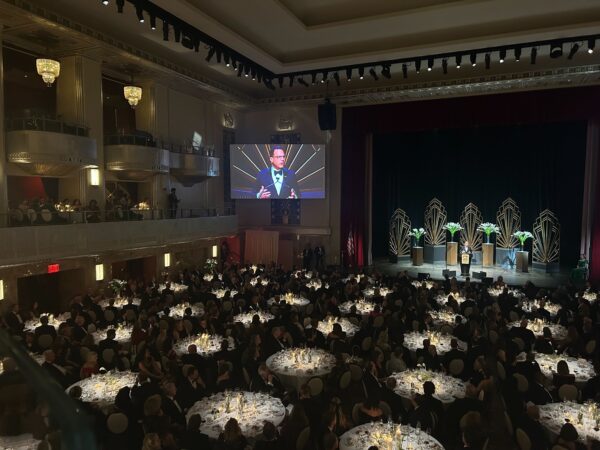
NEW YORK — Pennsylvania’s political class schmoozed their way across Midtown Manhattan this past weekend, bouncing from cocktail parties to swanky receptions organized to woo the elite ahead of a big midterm election year.
Four Inquirer political writers were among those who traveled to the Pennsylvania Society gathering, chatting with lawmakers and interviewing candidates inside the moody bars and penthouse parties. Here are our takeaways.
Maybe Shapiro doesn’t need Pa. Society anymore
Gov. Josh Shapiro this year has hosted fundraisers in New Jersey and Massachusetts for his unannounced reelection campaign.
But he didn’t need to make the rounds this weekend among Pennsylvania’s political elite as he emerges as a top contender for the 2028 Democratic nomination for president.
Shapiro traveled to New York City only to deliver his annual speech to the Pennsylvania Society and honor former U.S. Ambassador to Canada, David L. Cohen, who received the society’s top award.
Instead of handshaking and fundraising like most incumbent governors would, Shapiro has largely avoided Pennsylvania Society mingling during his time as governor. His reelection campaign did not appear to change that.
Pennsylvania politicians (from left) Lt. Gov. Austin Davis, Gov. Josh Shapiro and State House of Representatives Speaker Joanna E. McClinton last January attending the swearing-in ceremony of Attorney General David W. Sunday, Jr. in Harrisburg.
Instead, Lt. Gov. Austin Davis hosted a solo fundraiser for their joint reelection ticket.
“There’s a lot of demands on the governor’s time,” Davis said following a speech at the annual luncheon hosted by the Pennsylvania Manufacturers’ Association.
The Third Congressional District race was the talk of the town
Three of the candidates vying to replace retiring U.S. Rep. Dwight Evans in the Third Congressional District had a busy weekend in New York. State Sen. Sharif Street, pediatric surgeon Ala Stanford, and State Rep. Morgan Cephas made the rounds.
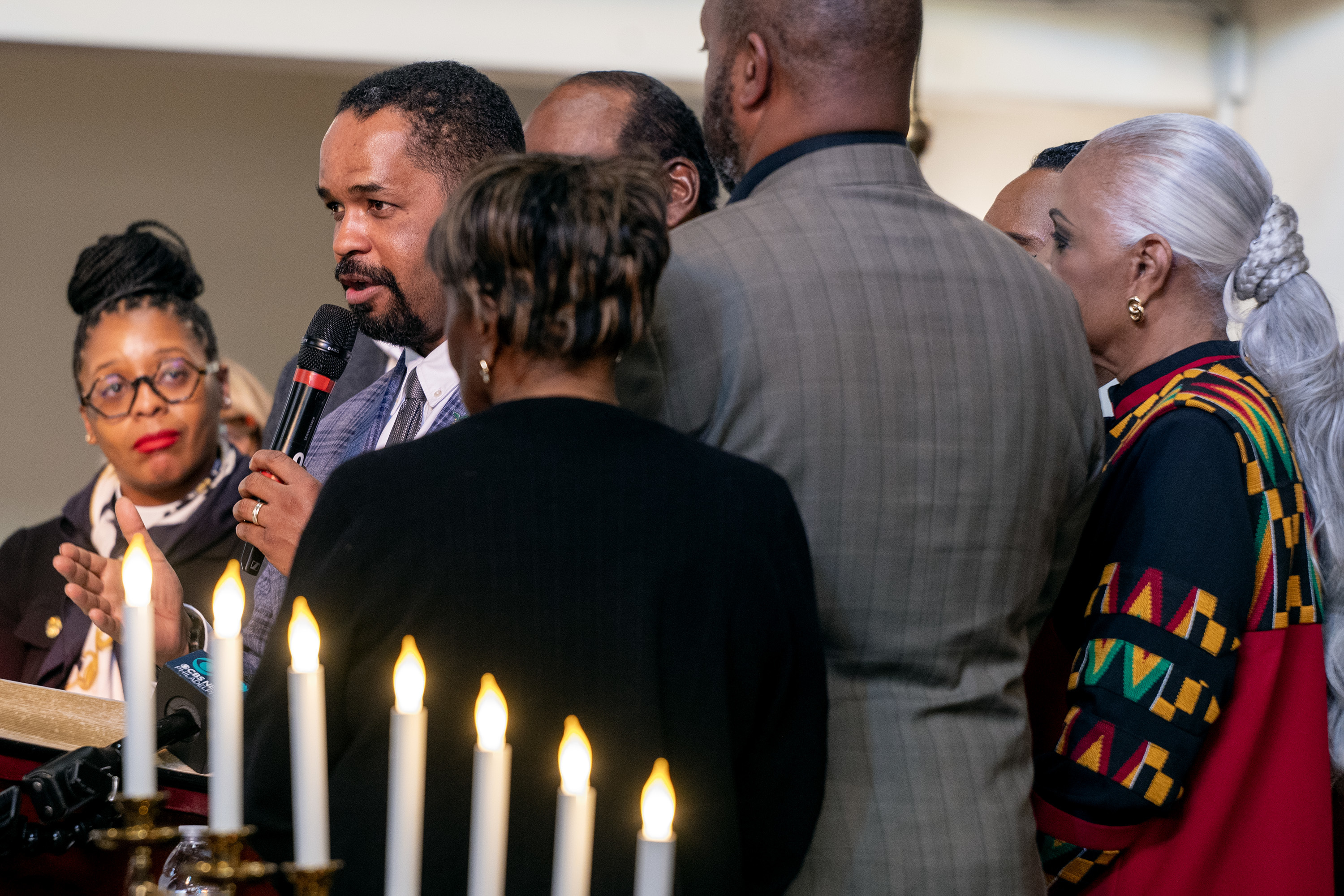
Sharif Street speaks from the pulpit of Mother Bethel A.M.E. church Sunday, Nov. 2, 2025 as the Black Clergy of Philadelphia and Vicinity holds a press conference with other community and political leaders to discuss the negative impacts of the ongoing government shutdown. Mother Bethel Pastor Rev. Carolyn Cavaness is at left.
Stanford held a somewhat star-studded fundraiser Thursday evening, hosted, according to a posted listing for the private event, by Hamilton actor Leslie Odom Jr. (who did not attend but lent his name).
Not spotted: StateRep. Chris Rabb, who is running as an anti-establishment progressive.
“That’s not really my thing,” he said in a text message.
The Parker-Johnson relationship was a hot topic
Philadelphia City Council wrapped up its final meeting of the year the day before the Pennsylvania Society began, and the lawmakers gave the chatterati plenty to talk about in Manhattan, with a dramatic close to the session.
One major topic of conversation in New York: What did Council’s recent conflict with Mayor Cherelle L. Parker over her housing plan mean for the unusually tight relationship between Council President Kenyatta Johnson and the mayor?
The consensus: Mom and Dad were fighting, but they’ll probably patch things up.
“Disagreements between Council and mayor — it happens,” said Larry Ceisler, a Philadelphia-based public affairs executive whose firm hosted a packed party in Midtown on Saturday. “It’s the way the system is set up.”
City Council president Kenyatta Johnson speaking with Philadelphia Mayor Cherelle Parker in June 2024.
Johnson, he said, likely improved his standing with members by holding firm against a last-minute amendment Parker proposed to alter Council’s version of the housing plan’s budget.
Parker and Johnson both made the trek to Manhattan, along with Councilmembers Rue Landau, Nina Ahmad, Jamie Gauthier, Jeffery “Jay” Young Jr., Kendra Brooks, Katherine Gilmore Richardson, Jim Harrity, Cindy Bass, and Quetcy Lozada.
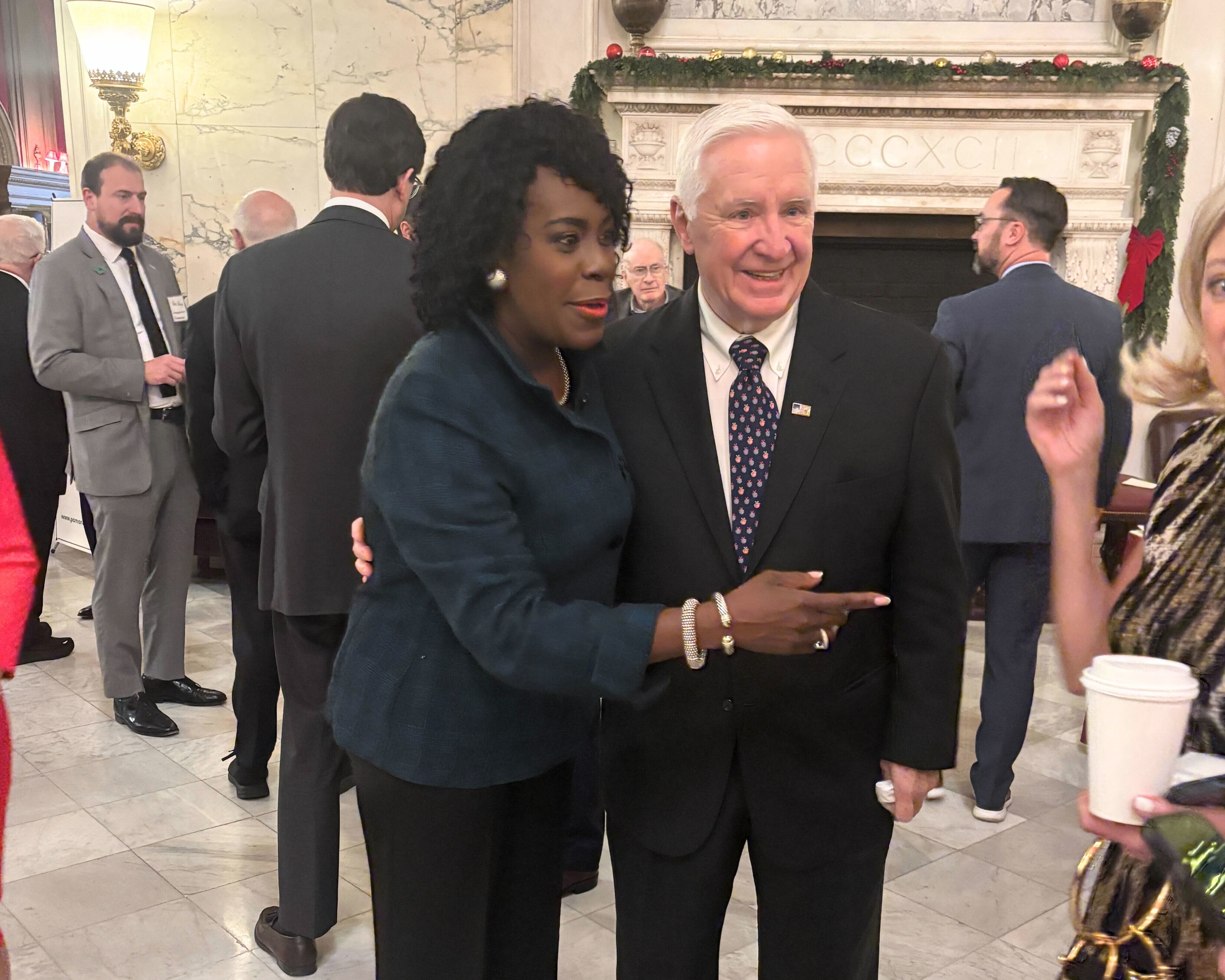
At the PMA luncheon, Parker embraced former Gov. Tom Corbett and gave a warm greeting to Auditor General Tim DeFoor, both Republicans.
Mayor Cherelle L. Parker (left) and former Gov. Tom Corbett at the luncheon hosted by the Pennsylvania Manufacturers’ Association on Saturday in New York.
At the same event, Republican U.S. Sen Dave McCormick shouted out Parker multiple times during his prepared remarks. The pair have forged a working relationship despite their partisan differences.
“We talk about challenges in the city that we’re facing right now, and the hope is that we can count on some folks as allies,” Parker said of meeting with members of the GOP.
She added: “It’s great to try to maintain those lines of communication.”
Special interests woo political elite
Many of the events were hosted by special-interest groups and corporations that have business with the government and are looking to win influence over glasses of Champagne.
There were the usual suspects and big law firms: Duane Morris always hosts a marquee late-night event on Friday in the sprawling Rainbow Room atop Rockefeller Center. Other firms including Cozen O’Connor, Ballard Spahr, and Saul Ewing also hosted cocktail parties.
The company, which has spent millions on political contributions and lobbying, threw a cocktail reception Thursday night at an Italian restaurant attended by a sizable contingent of state lawmakers.
But solutions seemed possible at the Pace-O-Matic party, as Central Pennsylvania Republicans and Philadelphia Democrats milled about the bar in an unlikely alliance.
Another bipartisan event — this one in a sunny room atop the vintage Kimberly Hotel — was hosted by Independence Blue Cross and AmeriHealth Caritas, insurance companies that have Medicaid contracts with the state.
Lawmakers often credit the weekend of partying in New York as a time for civil conversations in a neutral territory that ultimately benefit a philanthropic cause at the Pennsylvania Society’s annual dinner.
But Rabbi Michael Pollack, who leads the government accountability group March on Harrisburg, said the civility seems to come only when special interests are footing the bill.
“It’s absolutely embarrassing that our legislators can only interact with each other when a lobbyist sets up a playdate for them,” he said.
A Christmas budget ballad by DJ Ward
Senate President Pro Tempore Kim Ward debuted a hidden musical talent on stage at the annual bipartisan Pennsylvania Chamber of Business and Industry breakfast: She canwrite a Harrisburg holiday hit.
“I did live in Nashville for six years and no one discovered me,” she joked, before launching into a three-minute budget balladto the tune of “Deck the Halls.”
Ward (R., Westmoreland) debuted her song after an ugly budget battle that lasted 135 days and ended just last month. Punctuated by fa-la-las, she called out each of the top leaders who were in the closed-door budget talks.
Senate President Pro Tempore Kim Ward (R., Westmoreland) speaking in February 2024 at the Capitol in Harrisburg.
Ward is among Shapiro’s top critics. The two had hardly spoken since 2023 until Ward joined in-person budget negotiations at the end of October.
Shapiro will propose a new budget in February, restarting the budget negotiation process.Ward urged the group of leaders to take a break from fighting during the holiday season.
It’s Christmas and we’re all here together
Republicans and Democrats, and all who matter
Let’s celebrate the birth of Jesus
For the next three weeks, let’s not be egregious
Perhaps next budget season will inspire a mixtape.
In the last six months, President Donald Trump has sent troops, immigration agents, or both to Democratic cities from coast to coast. The list includes Los Angeles, Chicago, Washington, Memphis, Portland, Ore., Charlotte, N.C., New Orleans, and Minneapolis.
But not Philadelphia.
The city that seemed an obvious early target, condemned by Trump as the place where “bad things happen,” has somehow escaped his wrath. At least so far.
That has sparked speculation from City Hall to Washington over why the president would ignore the staunchly Democratic city with which he has famously feuded. Here we offer some insight into whether that’s likely to change.
Why has Philadelphia been spared when smaller, less prominent cities have not?
Nobody knows. Or at least nobody knows for sure. But lots of people in government and immigration circles have ideas.
There’s the weather theory, that it’s hard for immigration agents who depend on cars to make arrests in cities that get winter snow and ice. Except, of course, the administration just launched Immigration and Customs Enforcement operations in Minneapolis, which gets 54 inches of snow a year.
Then there’s the swing-state theory, that Trump is staying out of Philadelphia because Pennsylvania ranks among the handful of states that can tip presidential elections. But that doesn’t explain Trump’ssurge into North Carolina, where he sent immigration forces last month.
While the Tar Heel State voted for Trump three times, elections there can be decided by fewer than 3 percentage points.
U.S. Rep. BrendanBoyle, a Democrat whose North and Northeast Philadelphia district includes many immigrants, suggested a blue-state theory, that Trump has mostly targeted cities in states that voted for Vice President Kamala Harris in the 2024 presidential election. But Boyle acknowledged that North Carolina and Tennessee are exceptions.
“It could just be that they’re working their way down the list,” Boyle said.
Has Mayor Cherelle L. Parker had a hand in keeping troops out of Philadelphia?
It depends on whom you talk to.
For months she has passed up opportunities to publicly criticize the president, turning aside questions about his intentions by saying she is focused on the needs of Philadelphia. Some believe her more passive approach has kept the city out of the White House crosshairs.
People close to the mayor point out that big-city mayors who land on the president’s bad side have faced big consequences. For instance, in Los Angeles, Mayor Karen Bass frequently clashed with Trump ― and faced a National Guard deployment.
Some point out that Parker has good relationships with Republicans who are friendly with the president, including U.S. Sen. Dave McCormick of Pennsylvania, who has praised the mayor on multiple occasions.
On the other hand, some in the city’s political class ― especially those already skeptical of Parker ― say the suggestion that she has shielded the city gives her too much credit.
One strategist posited that the lack of overt federal action has more to do with Trump’s trying to protect a razor-thin Republican majority in the House, and that targeting Philadelphia could anger voters in the Bucks County and Lehigh Valley districts where Republicans hold seats.
What does Trump say about his plans for Philadelphia?
Trump suggested there should be a “permanent pause” on immigration from “hellholes like Afghanistan, Haiti, Somalia and many other countries,” declared Washington the safest it has been in decades, and praised ICE as “incredible.”
“I love Philadelphia,” Trump declared. “It’s gotten a little rougher, but we will take it.”
That was a marked change from a decade ago, when Trump called Jim Kenney a “terrible” mayor, and Kenney called him a “nincompoop.”
Kenney fought Trump in court and won in 2018, when a U.S. District Court judge ruled that the president could not end federal grants based on how the city treats immigrants. After the ruling, the Irish mayor was captured on video dancing a jig and calling out “Sanctuary City!”
More recently, in May, Philadelphia landed on Trump’s list of more than 500 sanctuary jurisdictions that he planned to target for funding cuts. That was no surprise. Nor was it surprising that in August, when the administration zapped hundreds of places off that list, Philadelphia was among the 18 cities that remained.
“I don’t know why they’re not here yet,” said Peter Pedemonti, codirector of New Sanctuary Movement of Philadelphia. But the larger point is that “ICE is in neighborhoods every day, they are taking away people every day,” and he urged those who support immigrants to prepare.
“Now is the time to get involved with organizations that are organizing around this,” Pedemonti said. “There are neighbors who need us.”
Has Gov. Josh Shapiro helped dissuade federal action in Philadelphia?
It’s hard to say. Shapiro has challenged Trump in court multiple times, including when he was the state attorney general during Trump’s first term.
As governor,Shapiro sued the administration over its move to freeze billions in federal funds for public health programs, infrastructure projects, and farm and food bank contracts. He also joined a multistate suit challenging an executive order that restricted gender-affirming care for minors.
On immigration, however, Shapiro has been careful not to directly engage in the sanctuary city debate, saying his job is to provide opportunity for all Pennsylvanians. But he has been critical of Trump’s enforcement tactics, calling them fear-inducing and detrimental to the state’s economy and safety.
Still, Trump has not lashed out at Shapiro, a popular swing-state governor. At his rally in Mount Pocono last week, in which he criticized several Democrats, Trump didn’t mention Shapiro ― or the Republican in attendance who is running against the governor in 2026, Stacy Garrity.
Why is the president sending troops to American cities in the first place? Isn’t that unusual?
Highly unusual ― and fought in court by the leaders of many of the cities that have been targeted. On Wednesday, a federal judge blocked Trump’s deployment of troops to Los Angeles, saying it was “profoundly un-American” to suggest that peaceful protesters “constitute a risk justifying the federalization of military forces.”
Trump says the National Guard is needed to end violence, to help support deportations, and to fight crime in Democratic-run cities. Last week he declared that Democrats were “destroying” Charlotte, after a Honduran man who had twice been deportedallegedly stabbed a person on a commuter train.
Two members of the West Virginia National Guard were hospitalized in critical condition ― one subsequently died ― after being shot by a gunman in Washington the day before Thanksgiving.
That the attack was allegedly carried out by an Afghan man who had been granted asylum helped spark a wave of immigration policy changes, all in the name of greater security. For some immigrants who are attempting to legally stay in the country, that has resulted in the cancellation of citizenship ceremonies and the freezing of asylum processes.
So what happens next?
It’s hard to say. Immigration enforcement will surely continue to toughen.
But it’s difficult to predict when or whether troops might land on Market Street.
“I’ve heard so many different theories,” said Jay Bergen, the pastor at Germantown Mennonite Church, who has helped lead demonstrations against courthouse arrests. “It’s probably all of them ― a little bit of the way Shapiro has positioned himself, the way the mayor has positioned herself, a little bit the electoral map of Pennsylvania, a little bit, more than a little bit, Trump’s own personality.”
That Philadelphia has been ignored to date doesn’t mean it won’t be in Trump’s sights tomorrow, Bergen said.
“This administration thrives on being unpredictable, and on sowing as much exhaustion and pain as possible,” Bergen said. “We don’t do ourselves a favor by getting panicked in advance, but we also need to be ready.”
AfterLincoln University’s homecoming in October ended with seven people shot, including one killed, the rural Chester County township where the school is located plans to pass new regulations on large events.
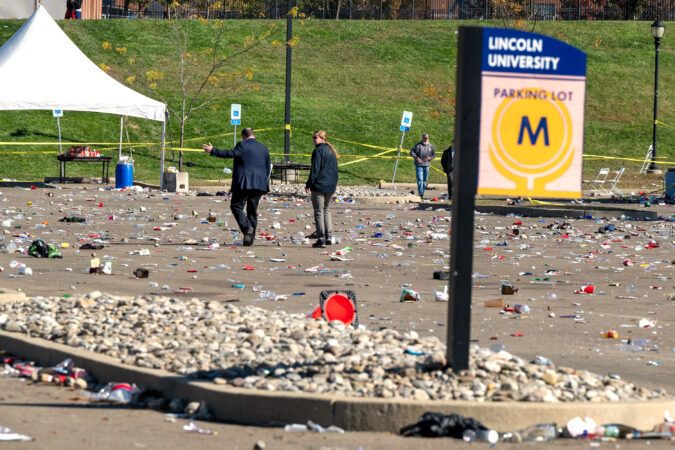
Several officials in Lower Oxford Township said there have been ongoing problems with parking, trash on neighbors’ lawns, disturbances and, in some cases, crime when the 1,650-student university hosts events. After the Oct. 25 shooting, when thousands of people gathered for homecoming, emergency personnel had to use all-terrain vehicles to transport patients on stretchers because ambulances could not access the campus, given how many cars were parked around the venue, they said.
“We have had meetings with people at Lincoln,” said township supervisor Noel Roy, who oversees emergency management. “They’ve been somewhat reluctant to do what needs to be done to try and control the situation.”
Lincoln University has declined to answer specific questions from The Inquirer, but President Brenda Allen at a board of trustees meeting last month acknowledged that changes were needed, especially around the school’s large events, and that the school has to do a better job of collaborating with the township.
“Our top priority remains the safety of our students, faculty, staff, alumni, and community,” the school said in a statement to The Inquirer Thursday. “The university continues to refine our safety measures and protocols.”
At a township supervisors meeting this week, university officials pledged to work with the township.
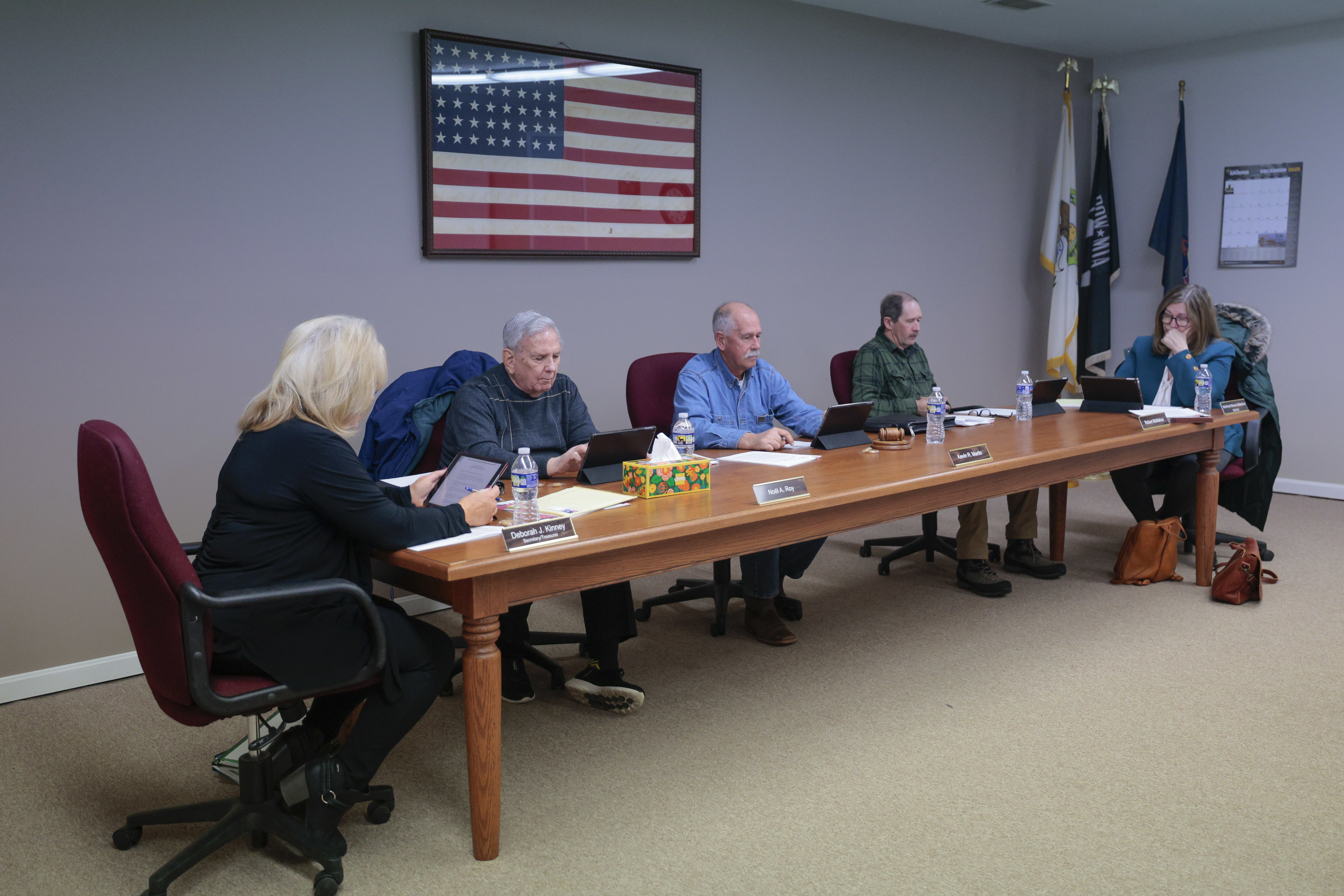
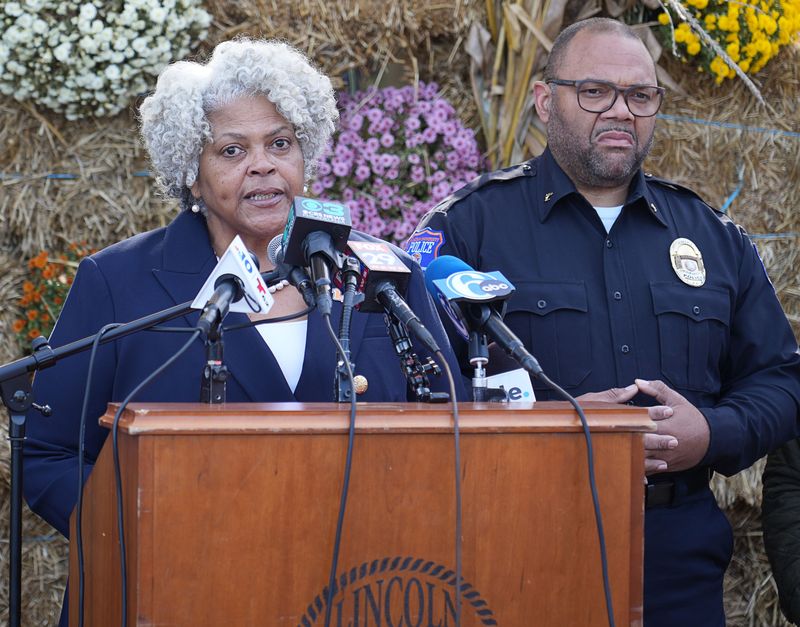
Lower Oxford Township officials meet and discuss a potential large event ordinance following the homecoming shooting at Lincoln University.
“We want to come together because we are a part of this community as well,” said Venus Boston, Lincoln’s general counsel.
Yeda Arscott, Lincoln’s associate vice president of facilities and program management, told supervisors the university is considering several steps to improve safety, including ending all outside events at dusk, eliminating open invitations, requiring guest registration, and canceling large events such as Spring Fling. The school also is looking at parking and safety protocols, she said.
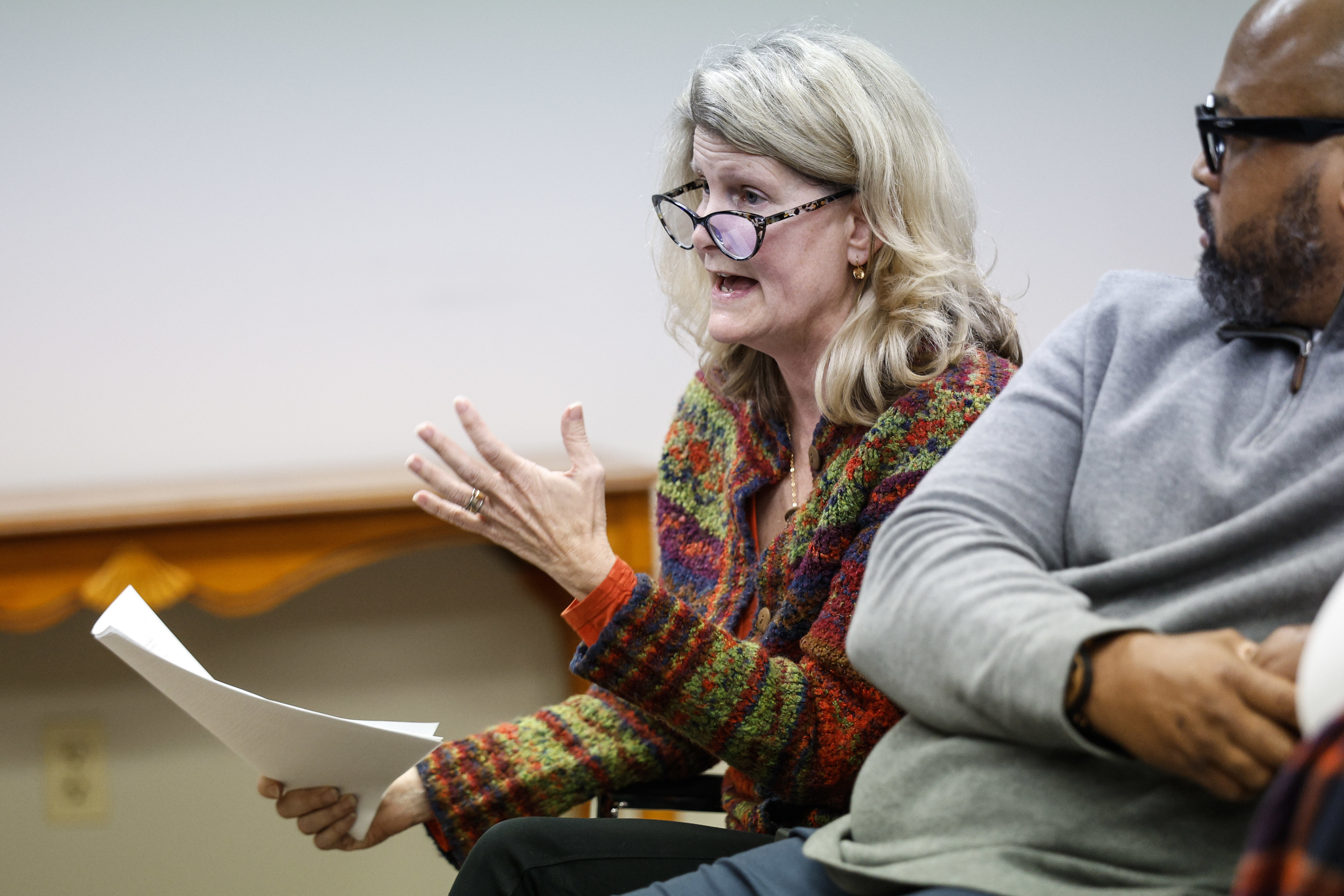
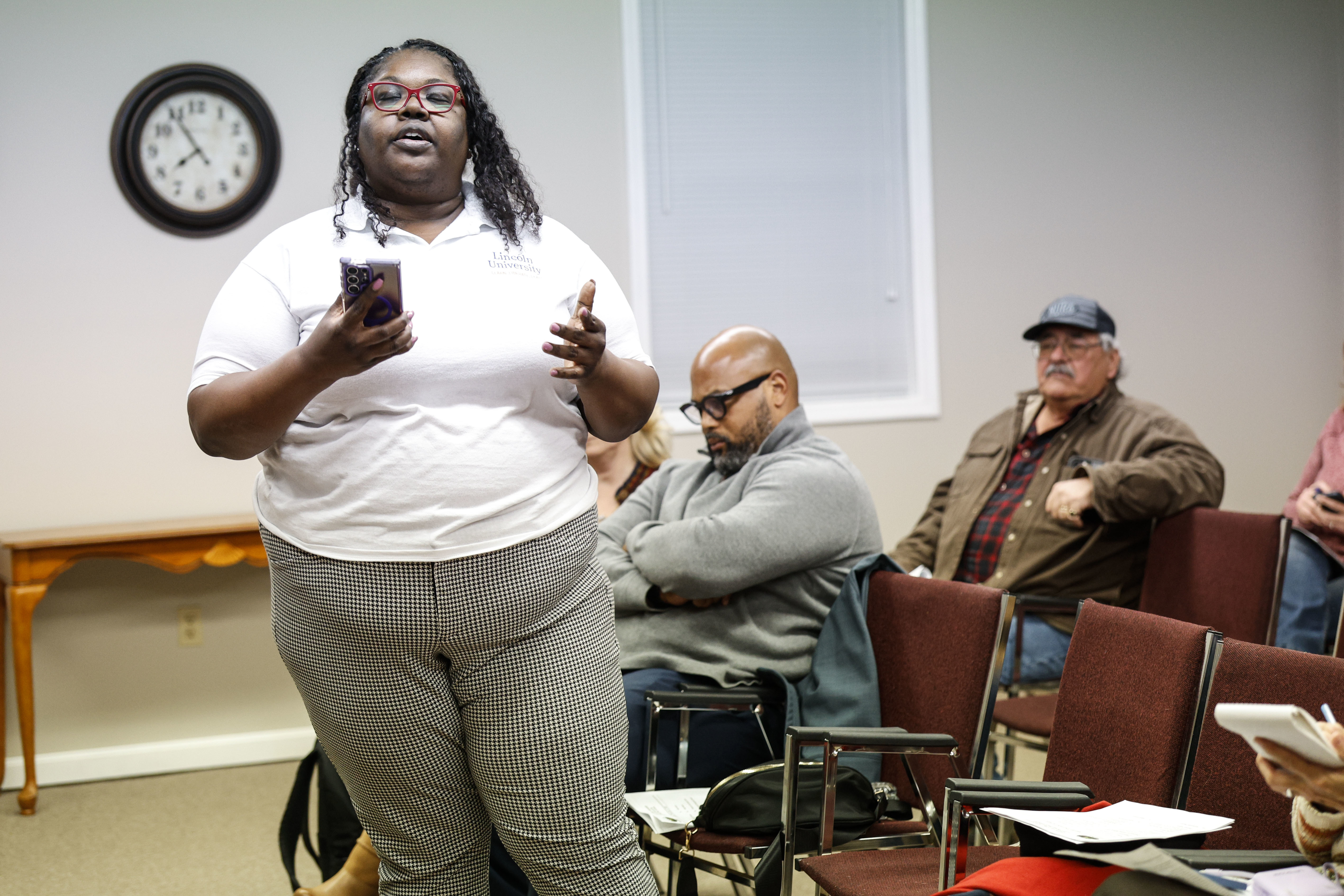
Yeda Arscott, associate vice president director of facilities and program management at Lincoln, speaks at the Lower Oxford Township meeting and shares actions the university is considering following the homecoming shooting.
“This shows real commitment,” said Arscott, who lives five minutes from Lincoln, “but real safety requires joint planning between the township, Lincoln, other major businesses, our neighbors, and emergency services.”
Township and Lincoln officials said they plan to meet privately to discuss solutions.
“Our goal is to work with Lincoln to make this better,” said Kevin R. Martin, chairman of the board of supervisors. “We need to think this through, but we also have a sense of urgency because it does affect our community.”
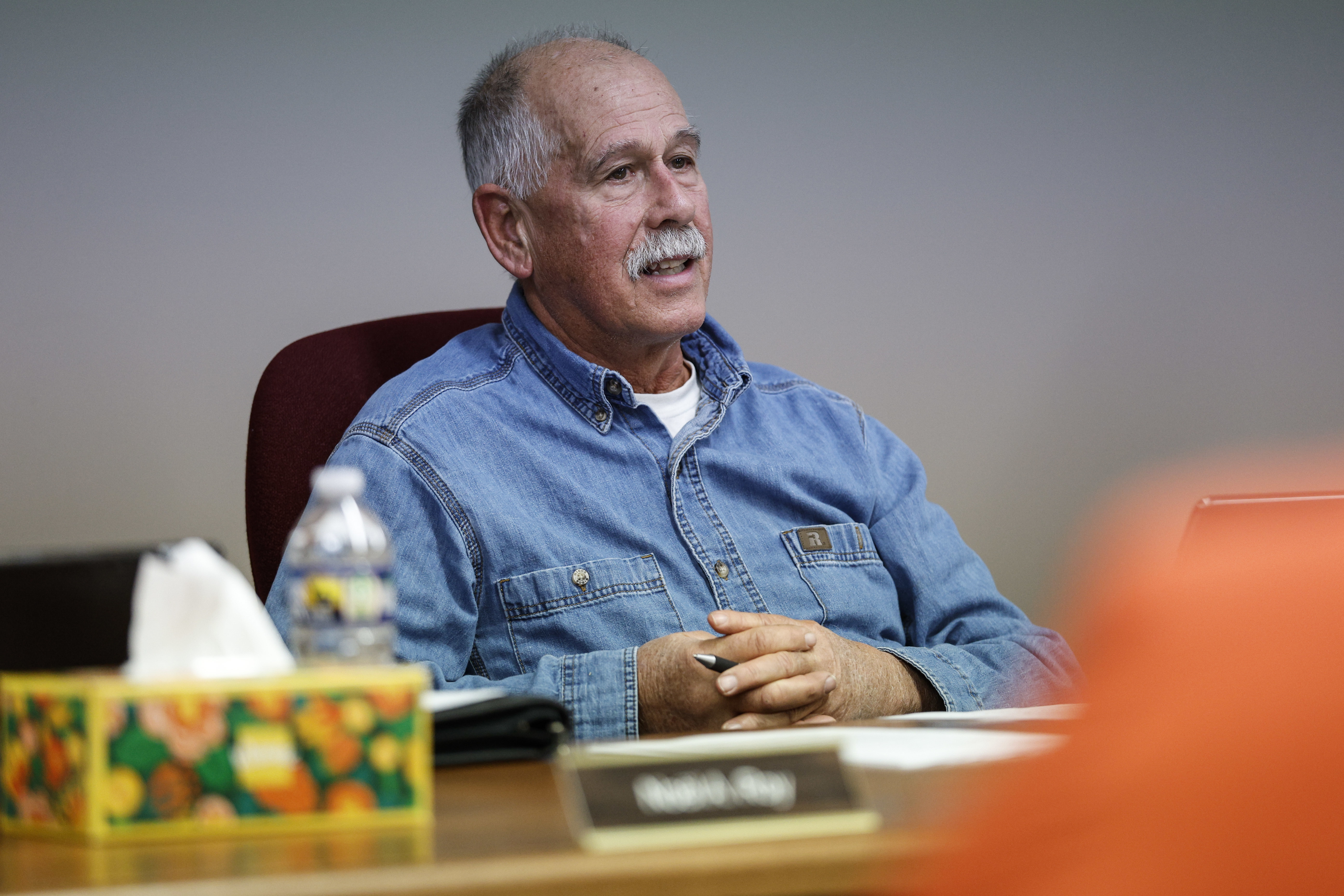
Kevin R Martin, chairman of the township supervisors, said the township wants to work with Lincoln on improvements.
Chester County Commissioner Josh Maxwell said county officialsand the university also will meet in January to discuss best practices for emergency services and student and community safety.
“It’s important that the kids feel safe,” said Maxwell, who also is an adjunct professor at Lincoln. “No one wants this to ever happen again.”
The shooting remains under investigation.Jujuan Jeffers, 20, of Wilmington, was killed, and six others, ages 20 to 25, including a student, were also shot. Zecqueous Morgan-Thompson, 21, of Wilmington, was charged with possessing a concealed firearm without a license. Neither Jeffers nor Morgan-Thompson have any known connection to Lincoln.
Arscott also urged township leaders to “broaden the conversation beyond event permits” and look to address the problem of gun violence.
“We were a victim, too,” Boston said.
“We were a victim, too,” said Venus Boston, Lincoln University’s general counsel.
Tensions with neighbors
The proposed township ordinance would require those seeking to hold special events to apply for a permit 30 days in advance and outline how they will control the number of guests, traffic, alcohol, and security, said township solicitor Winifred Moran-Sebastian. The township couldapprove or reject applications.
Township supervisors last spring passed a parking ordinance to cope with access problems created during past large events at Lincoln, but parking at homecoming still led to issues for emergency responders.
Several residents who attended this week’smeeting were skeptical of Lincoln’s intent to make improvements and called for larger fines than the $1,000 proposed in the ordinance.
Vanessa Ross lives about a half a mile from campus and said she was afraid for her family the night of the homecoming shooting. She spoke at the Lower Oxford Township supervisors meeting.
“I feel my life is in jeopardy with how things are being currently managed,” said Lincoln neighbor Celestine Getty, fearing what could happen if vehicles were unable to get to her house in the event of an emergency.
Vanessa Ross, who has lived about a half mile from Lincoln for 14 years, said crime and disruption have happened at large Lincoln events for half those years.
“There is no excuse whatsoever why the college cannot increase their police force and install the metal detectors that are necessary,” she said. “I can’t even go see Barry Manilow in Philadelphia without going through a metal detector.”
Founded in 1854, Lincoln is known as the first degree-granting historically Black university in the nation. Its 429 acres are nestled in a township of farm fields with a little over 5,000 residents, the majority of them white. Racial tensions have come into play over the years, with township residents saying they have been unfairly accused of racism for raising safety issues.
Allen, the Lincoln president, has not pointed to racism as a factor in the conversations about safety, said Boston, the university’s solicitor.
A storied institution with recent safety issues
Lincoln has a storied history. The first presidents of both Nigeria and Ghana are Lincoln graduates, as are Philadelphia Mayor Cherelle L. Parker, former U.S. Supreme Court Justice Thurgood Marshall, and poet Langston Hughes.
The school hasreceived $45 million in gifts fromphilanthropist MacKenzie Scott, ex-wife of Jeff Bezos. And Allen, who in 2020 had survived an internal battle to oust her and had her contract extended to 2030, was named a top historically Black college leader by a national nonprofitin 2021.
But over the last decade, the university has struggled with safety issues.
In spring 2023, two women were shot and injured on Lincoln’s campus during its annual Spring Fling event. In 2022, a student was fatally stabbed during a fight inside a dorm by the sister of a student. During an on-campus dance in 2018, 15 students were taken to the hospital following a brawl in which a security officer was assaulted. In 2016, there was a robbery and shooting on Lincoln’s campus following homecoming. And in 2015, Lincoln tightened security after shots were fired in a dorm.
Some residents said it’s time for the township to put in additional controls.
“We can no longer wait and see or hope the university will simply do the right thing,” said Andrew Cope, who lived near Lincoln for nearly two decades and still owns property there. “The pattern is too long, the consequences too severe, and the community’s trust too damaged.”
Carmina Taylor, former president of Lincoln parents association, addresses the Lower Oxford Township supervisors.
Carmina Taylor, who led Lincoln’s parent association from 2013 to 2016, said she has had longstanding safety concerns.
When a student was killed in the dorm in 2022, Taylor told The Inquirer she had previously sounded the alarm: “I had said, ‘If Lincoln doesn’t do something, we’re going to have a death on campus.’”
The university’s response to the homecoming shooting, said Taylor, who got a master’s degree from Lincoln in 2011 and whose son graduated from Lincoln in 2016, is “beyond fluff.”
“Until someone does something from the outside to bind them,” she said, nothing will change.
Security expert Brian Higgins said measures, including controlled entrances and screening of guests with hand-held wands, metal detectors or bag checks, are typically used for large crowd events. He acknowledged that imposing strict guest screening may not create the welcoming, upbeat environment characteristic of college homecomings.
“But in light of what happened, it’s very prudent to do so,” said Higgins, president of Group 77, a public safety and security consulting firm, based in the New York metro area.
Higgins, whosecompany has colleges among its clients, said drones increasingly are being usedas part of safety monitoring at large events. Traffic control measures and the setting of crowd size limits are other issues the school should consider, he said.
Anthony Floyd, a former police chief at Lincoln and a Philadelphia city police officer for about 20 years, said the university’s police chief and president should attend every township meeting and work more closely with the township on addressing safety issues.
Anthony Floyd Jr., who was police chief at Lincoln in 2013 and also had been a Philadelphia city cop, told the supervisors at the meeting that better coordination is needed between the community and the university. The school’s police chief and president should attend the supervisor meetings every month, give updates on safety and security, and be held accountable, he said.
Lincoln says it’s working on changes
Last month at a Lincoln board of trustees meeting, Allen, the president, said the campus had been focused on restoring a sense of safety for students and making sure they and staff had counseling support. Allen, a 1981 Lincoln graduate who has led the school since 2017, said the university was examining “safety protocols, parking, traffic, registration for guests,” and the process for inviting guests as part of its review process.
Lincoln University President Brenda A. Allen (left) announces plans for an after action review following the homecoming shooting.
Allen said the university is seeking feedback from the student government association and faculty and staff.
Roy, one of the township supervisors, saidparking restrictions put into place earlier this yearwere not heeded, and the township had to tow 60 cars the night of the homecoming shooting.
“Every time they towed a car, another car would pull into that space,” he said.
An event that would draw 10,000 people to a township with half that population and no police force is concerning, said Moran-Sebastian, the township solicitor. Lower Oxford relies on Pennsylvania State Police for law enforcement. For the homecoming event, the university requested state police, but only got two, Arscott, the facilities’ head, said.
Deborah J Kinney, secretary/treasurer and code enforcement officer, listens during the Lower Oxford Township supervisors meeting.
Township officials have been frustrated with the responses from Lincoln in the past. When a meeting was held in November 2024 to discuss parking-related problems during the previous Spring Fling event, Allen said she didn’t need the township’s help, said Deborah Kinney, township secretary/treasurer and codes enforcement officer. Kinney said she had suggested an event process that would have included a plan for parking.
“So we decided we needed to be proactive on our end, not just for our residents but for their students,” Kinney said. “It’s not the students. It’s the outside influences that are coming in to these events.”
She also said that in 2024, Lincoln accounted for 183, or 26%, of the township’s emergency calls.
Winfred Moran-Sebastian, Lower Oxford Township solicitor, outlines the proposed ordinance to regulate large events in the township. The ordinance is still under draft.
Veronica Carr, a 2016 Lincoln alumna, said she had been concerned about safety when she was a student, and conditions seem to have gotten worse. She did not attend homecoming.
Carr, who works for an African American heritage consulting firm and lives in North Carolina, said she is concerned that two people have been killed on the campus in less than four years.
Philadelphians without retirement savings plans through their employers could soon have access to a plan through the city after lawmakers approved legislation Thursday to enable the novel program to move forward.
City Council members unanimously passed legislation that creates PhillySaves, which is modeled on state-facilitated “auto-IRA” programs that allow people to invest through payroll deductions at no cost to their employers.
Voters would have to approve the creation of an investment management board through a ballot question, which is slated to appear in the May primary election.
The measure was part of a flurry of legislation Council considered during a marathon meeting Thursday, its last session of the year before legislators reconvene in mid-January. Lawmakers passed dozens of pieces of legislation touching on issues including housing, public health, small-business growth, and public safety.
In addition to approving the retirement savings program, Council approved legislation to:
Ban mobile outreach groups that provide medical care and support services to people in addiction from a swath of Kensington, the epicenter of the city’s drug crisis.
Prohibit so-called reservation scalpers, or websites that allow users to reserve tables at coveted restaurants and resell them without the permission of the businesses.
Here’s a breakdown of what else happened on Thursday:
H.O.M.E. inches forward over Parker’s objections
City Council on Thursday approved a key piece of legislation related to Mayor Cherelle L. Parker’s Housing Opportunities Made Easy, or H.O.M.E., initiative, the latest step in the drawn-out fight over how the city should spend the proceeds from the $800 million in city bonds the administration plans to sell to support the program.
Mayor Cherelle L. Parker speaks to the crowd at The Church of Christian Compassion in the Cobbs Creek neighborhood of West Philadelphia on Sunday, Dec. 7, 2025. Parker visited 10 churches in Philadelphia on Sunday to share details about her HOME housing plan
Over Parker’s objections, Council successfully pushed to lower income eligibility thresholds, prioritizing poorer residents. For instance, lawmakers ensured that 90% of the bond proceeds that will be spent on the Basic Systems Repair Program will go to households making 60% of area median income, which is about $71,640 for a family of four.
“This budget opens city housing programs to ensure that more than 200,000 low-income and working-family households have a chance to get into a program that provides housing stability and economic mobility and increases,” said Councilmember Rue Landau, who helped lead the push to lower the income thresholds. “This is a transformational investment, a win-win.”
Supporters react as City Council approves a key piece of legislation related to Mayor Cherelle L. Parker’s H.O.M.E. initiative Thursday, Dec. 11, 25 on the last day of the 2025 session.
A separate but related piece of legislation — an ordinance authorizing the city to sell the bonds — also needs to pass before the administration can take on debt for the initiative. That proposal, which won committee approval Wednesday, is expected to come to the Council floor in January.
In a statement Thursday, Tiffany W. Thurman, Parker’s chief of staff, thanked Council for its vote.
“We look forward to continuing conversations with Council President Kenyatta Johnson and members of City Council in the weeks ahead, and to fulfilling Mayor Parker’s strong vision to save Philadelphia’s rowhomes,” she said.
Council waters down a bill on training for security officers
Council approved a bill requiring private security guards in Philadelphia to go through 12 hours of training when they are hired and an additional eight hours of training every subsequent year.
But the final version of the bill, authored by Councilmember Isaiah Thomas, has been significantly watered down by amendments following a legislative showdown between the Service Employees International Union Local 32BJ, which championed the original version, and real estate and private security industry leaders, which said it was overly onerous and costly.
Thomas’ original bill required security guards to receive 40 hours of training upon hiring, and it prohibited employers from conducting the training for their own workers. Instead, the instruction had to be provided by a nonprofit — potentially including a labor union. SEIU 32BJ, one of the most influential unions in the city, represents building services workers, including security guards.
The amended version, however, allows employers to conduct the training after getting approval for their program from the Philadelphia Office of Worker Protections — a major relief for business leaders.
The new version, which now heads to Parker’s desk, also exempts security guards for bars and restaurants from the training requirements, and pushes back the bill’s effective date from Jan. 1 to March 1.
An inquiry into DEI contracting changes is coming next year
City Council next year will examine Parker’s decision to end its long-standing policy of prioritizing women- and minority-owned businesses in city contracting and replace it with a system favoring “small and local” firms.
Johnson authored a resolution allowing the Committee of the Whole, which includes all 17 members, to look at the history of minority contracting policies in the city and “the rationale, design, and anticipated effects” of Parker’s new policy. The resolution was approved in a unanimous vote, and a hearing will likely be scheduled in the first half of 2026.
Race- and gender-conscious government policies have been targeted by conservative legal groups following a 2023 U.S. Supreme Court decision ending affirmative action in college admissions. The Inquirer revealed in November that Parker quietly ended the city’s 40-year-old contracting policy earlier this year due to the likelihood it would be challenged in court.
The mayor has said her new “small and local” policy will accomplish many of the goals of the old system because many small Philadelphia businesses are owned by Black and brown residents and have faced roadblocks to growth.
Attorneys hired by the city, however, had recommended a race- and gender-neutral policy of favoring “socially and economically disadvantaged” businesses, according to administration documents obtained by The Inquirer.
Lawmakers will get the chance to weigh in on that decision next year.
A controversial zoning change passes for University City
Council on Thursday also approved Councilmember Jamie Gauthier’s controversial University City zoning overlay, which seeks to regulate how higher education institutions dispose of property.
The legislation has been diluted from its original form, and it now regulates the sale of property over 5,000 square feet in University City — which would largely affect only universities themselves.
Councilmember Jamie Gauthier in chambers as City Council meets Thursday, Dec. 11, 2025, on the last day of the 2025 session.
Gauthier has further amended the legislation to exclude healthcare institutions. Among other things, the bill would require that property owners have building permits in hand before they are allowed to move forward on demolitions.
A sale of land would also trigger review by the Philadelphia City Planning Commission.
The legislation is part of Gauthier’s outraged response toSt. Joseph’s University’s sale of much of its West Philadelphia campus to the Belmont Neighborhood Educational Alliance, a nonprofit that operates charter schools. The organization is led by Michael Karp, who is also one of the larger student-housing landlords in the area.
Thomas, a Democrat who represents the city at-large, was the only member to vote against the bill. His vote was a break with the tradition of councilmanic prerogative, in which members generally approve legislation offered by Council members who represent geographic areas when the measure affects only their districts.
Quote of the week
Councilmember Brian J. O’Neill (left) uses his end-of-session speech in City Council Thursday, Dec. 11, 2025 to say goodbye to longtime legislative director Robert Yerkov (right), who is leaving for a job outside government.
That was Councilmember Brian J. O’Neill, Council’s longest-serving member, who is typically its shortest-winded. But on Thursday, he took his time in a speech saying goodbye to longtime legislative director Robert Yerkov, whose last day as a Council staffer is next month.
O’Neill said he was struggling to wrap up his remarks and joked that Council should limit the amount of time that its members can speak. Public commenters are generally limited to three minutes of remarks.
To quote Shakespeare: “Brevity is the soul of wit.”