Tag: Donald Trump

  • Trump names former Federal Reserve governor Kevin Warsh as the next Fed chair, replacing Jerome Powell

    Trump names former Federal Reserve governor Kevin Warsh as the next Fed chair, replacing Jerome Powell

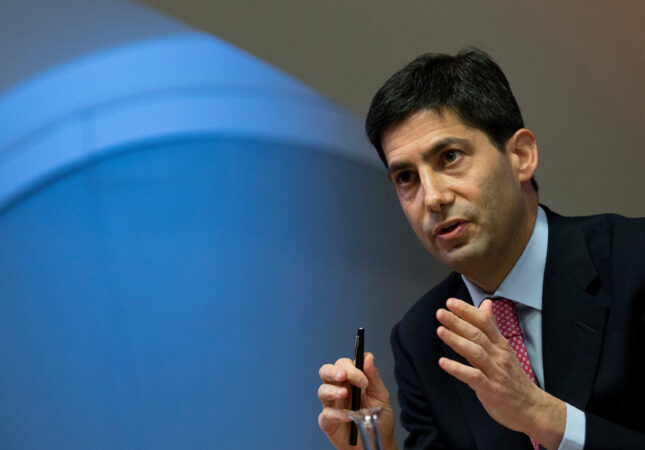
    WASHINGTON — President Donald Trump said Friday that he will nominate former Federal Reserve official Kevin Warsh to be the next chair of the Fed, a decision likely to result in sharp changes to the powerful agency that could bring it closer to the White House.

    If approved by the Senate, Warsh would replace current chair Jerome Powell when his term expires in May. Trump chose Powell to lead the Fed in 2017 but this year has relentlessly assailed him for not cutting interest rates quickly enough.

    “I have known Kevin for a long period of time, and have no doubt that he will go down as one of the GREAT Fed Chairmen, maybe the best,” Trump posted on social media. “On top of everything else, he is ‘central casting,’ and he will never let you down.”

    The appointment, which requires Senate confirmation, amounts to a return trip for Warsh, 55, who was a member of the Fed’s board from 2006 to 2011. He was the youngest governor in history when he was appointed at age 35. He is currently a fellow at the right-leaning Hoover Institution and a lecturer at the Stanford Graduate School of Business.

    In some ways, Warsh is an unlikely choice for the Republican president because he has long been a hawk in Fed parlance, or someone who typically supports higher interest rates to control inflation. Trump, by contrast, has said the Fed’s key rate should be as low as 1%, a level few economists endorse, and far below its current level of about 3.6%.

    During his time as governor, Warsh objected to some of the low-interest rate policies that the Fed pursued during and after the 2008-09 Great Recession. He also often expressed concern at that time that inflation would soon accelerate, even though it remained at rock-bottom levels for many years after that recession ended.

    More recently, however, in speeches and opinion columns, Warsh has voiced support for lower rates.

    Early reaction

    Financial markets reacted in ways that suggest investors expect that Warsh could keep rates a bit higher over time. The dollar and yields on long-term U.S. Treasurys rose, although that moderated a bit.

    The 10-year yield is at 4.26%, up from 4.23% Thursday. U.S. stock futures saw losses of around 0.5%. The biggest moves were in the suddenly volatile metals markets, where gold dropped more than 5% and silver sank more than 13%.

    In Congress, Sen. Thom Tillis, a North Carolina Republican who is retiring, reiterated in a social media post that he will oppose Warsh’s nomination until a Justice Department investigation into Powell is resolved.

    Tillis is a member of the Senate Banking Committee, which will consider Warsh’s nomination.

    He added that Warsh is a “qualified nominee” but stressed that “protecting the independence of the Federal Reserve from political interference or legal intimidation is non-negotiable.”

    Tillis’s opposition could complicate the confirmation process. Asked late Thursday whether Warsh could be confirmed without Tillis’s support, Senate Majority Leader John Thune said, “Probably not.”

    Democratic Sen. Elizabeth Warren of Massachusetts, the highest-ranking Democrat on the Banking Committee, said, “This nomination is the latest step in Trump’s attempt to seize control of the Fed.”

    Warsh beat out several other candidates, including Trump’s top economic adviser, Kevin Hassett, investment manager Rick Rieder, and current Fed governor Christopher Waller.

    Controlling the Fed

    Warsh’s appointment could be a major step toward Trump asserting more control over the Fed, one of the few remaining independent federal agencies. While all presidents influence Fed policy through appointments, Trump’s rhetorical attacks on the central bank have raised concerns about its status as an independent institution.

    The announcement comes after an extended and unusually public search that underscored the importance of the decision to Trump and the potential impact it could have on the economy. The chair of the Federal Reserve is one of the most powerful economic officials in the world, tasked with combating inflation in the United States while also supporting maximum employment.

    The Fed is also the nation’s top banking regulator.

    The Fed’s rate decisions, over time, influence borrowing costs throughout the economy, including for mortgages, car loans, and credit cards.

    For now, Warsh would likely fill a seat on the Fed’s governing board that was temporarily occupied by Stephen Miran, a White House adviser whom Trump appointed in September. Once on the board, Trump could then elevate Warsh to the chair position when Powell’s term ends in May.

    Trump has sought to exert more control over the Fed. In August he tried to fire Lisa Cook, one of seven governors on the Fed’s board, in an effort to secure a majority of the board. Cook, however, sued to keep her job, and the Supreme Court, in a hearing last week, appeared inclined to let her stay in her position while her suit is resolved.

    Powell revealed this month that the Fed had been subpoenaed by the Justice Department about his congressional testimony on a $2.5 billion building renovation. Powell said the subpoenas were “pretexts” to force the Fed to cut rates.

    Trump’s economic policies

    Since Trump’s reelection, Warsh has expressed support for the president’s economic policies, despite a history as a more conventional, pro-free trade Republican.

    In a January 2025 column in the Wall Street Journal, Warsh praised Trump’s deregulatory policies and potential spending cuts, which he said would help bring down inflation. Lower inflation would allow the Fed to deliver the rate cuts the president wants.

    Trump had said he would appoint a Fed chair who will cut interest rates to lower the government’s borrowing costs and bring down mortgage rates, though the Fed doesn’t decide those costs directly.

    In December, he wrote on social media of the need for lower borrowing costs and said, “Anyone who disagrees with me will never be the Fed chairman!”

    Potential challenges and pushback

    Warsh would face challenges in pushing interest rates much lower. The chair is just one member of the Fed’s 19-person rate-setting committee, with 12 of those officials voting on each rate decision. The committee is already split between those worried about persistent inflation, who’d like to keep rates unchanged, and those who think that recent upticks in unemployment point to a stumbling economy that needs lower interest rates to bolster hiring.

    Financial markets could also push back. If the Fed cuts its short-term rate too aggressively and is seen as doing so for political reasons, then Wall Street investors could sell Treasury bonds out of fear that inflation would rise. Such sales would push up longer-term interest rates, including mortgage rates, and backfire on Warsh.

    Trump considered appointing Warsh as Fed chair during his first term, though ultimately he went with Powell. Warsh’s father-in-law is Ronald Lauder, heir to the Estee Lauder cosmetics fortune and a longtime donor and confidant of Trump’s.

    Warsh in recent years has become harshly critical of the Fed, calling for “regime change” and assailing Powell for engaging on issues like climate change and diversity, equity and inclusion, which Warsh said are outside the Fed’s mandate.

    His more critical approach suggests that if he does ascend to the position of chair, it would amount to a sharp transition at the Fed.

    In a July interview on CNBC, Warsh said Fed policy “has been broken for quite a long time.”

    “The central bank that sits there today is radically different than the central bank I joined in 2006,” he added. By allowing inflation to surge in 2021-22, the Fed “brought about the greatest mistake in macroeconomic policy in 45 years, that divided the country.”
  • The FBI raid in Georgia highlights Trump’s obsession with the 2020 election and hints at possible future actions

    The FBI raid in Georgia highlights Trump’s obsession with the 2020 election and hints at possible future actions

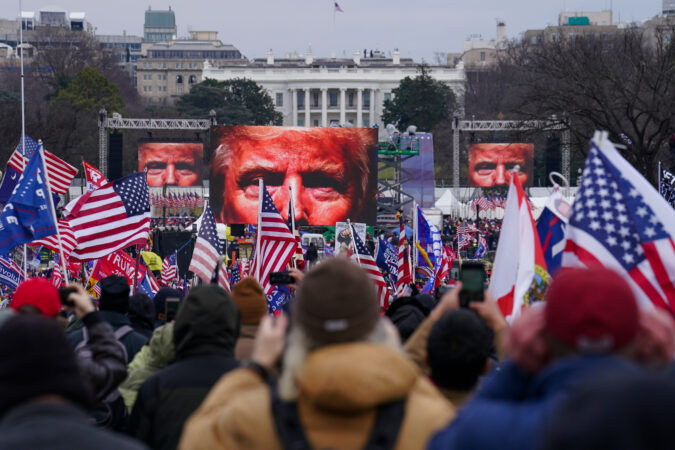
    DENVER — Donald Trump lost his bid for reelection in 2020. But for more than five years, he’s been trying to convince Americans the opposite is true by falsely saying the election was marred by widespread fraud.

    Now that he’s president again, Trump is pushing the federal government to back up those bogus claims.

    On Wednesday, the FBI served a search warrant at the election headquarters of Fulton County, Ga., which includes most of Atlanta, seeking ballots from the 2020 election. That follows Trump’s comments earlier this month when he suggested during a speech at the World Economic Forum in Davos, Switzerland, that charges related to the election were imminent.

    “The man has obsessions, as do a fair number of people, but he’s the only one who has the full power of the United States behind him,” said Rick Hasen, a UCLA law professor.

    Hasen and many others noted that Trump’s use of the FBI to pursue his obsession with the 2020 election is part of a pattern of the president transforming the federal government into his personal tool of vengeance.

    Sen. Jon Ossoff, a Georgia Democrat, compared the search to the Minnesota immigration crackdown that has killed two U.S. citizen protesters, launched by Trump as his latest blow against the state’s governor, who ran against him as Vice President Kamala Harris’ running mate in 2024.

    “From Minnesota to Georgia, on display to the whole world, is a President spiraling out of control, wielding federal law enforcement as an unaccountable instrument of personal power and revenge,” Ossoff said in a statement.

    It also comes as election officials across the country are starting to rev up for the 2026 midterms, where Trump is struggling to help his party maintain its control of Congress. Noting that, in 2020, Trump contemplated using the military to seize voting machines after his loss, some worry he’s laying the groundwork for a similar maneuver in the fall.

    “Georgia’s a blueprint,” said Kristin Nabers of the left-leaning group All Voting Is Local. “If they can get away with taking election materials here, what’s to stop them from taking election materials or machines from some other state after they lose?”

    Georgia has been at the heart of Trump’s 2020 obsession. He infamously called Republican Secretary of State Brad Raffensperger on Jan. 2, 2021, asking that Raffensperger “find” 11,780 more votes for Trump so he could be declared the winner of the state. Raffensperger refused, noting that repeated reviews confirmed Democrat Joe Biden had narrowly won Georgia.

    Those were part of a series of reviews in battleground states, often led by Republicans, that affirmed Biden’s win, including in Michigan, Wisconsin and Nevada. Trump also lost dozens of court cases challenging the election results and his own attorney general at the time said there was no evidence of widespread fraud.

    His allies who repeated his lies have been successfully sued for defamation. That includes former New York Mayor Rudolph Giuliani, who settled with two Georgia election workers after a court ruled he owed them $148 million for defaming them after the 2020 election.

    Voting machine companies also have brought defamation cases against some conservative-leaning news sites that aired unsubstantiated claims about their equipment being linked to fraud in 2020. Fox News settled one such case by agreeing to pay $787 million after the judge ruled it was “CRYSTAL clear” that none of the allegations were true.

    Trump’s campaign to move Georgia into his column also sparked an ill-fated attempt to prosecute him and some of his allies by Fulton County District Attorney Fani Willis, a Democrat. The case collapsed after Willis was removed over conflict-of-interest concerns, and Trump has since sought damages from the office.

    On his first day in office, Trump rewarded some of those who helped him try to overturn the 2020 election results by pardoning, commuting or vowing to dismiss the cases of about 1,500 people charged in the Jan. 6, 2021, attack on the U.S. Capitol. He later signed an executive order trying to set new rules for state election systems and voting procedures, although that has been repeatedly blocked by judges who have ruled that the Constitution gives states, and in some instances Congress, control of elections rather than the president.

    As part of his campaign of retribution, Trump also has spoken about wanting to criminally charge lawmakers who sat on the House committee investigating the Jan. 6 attack, suggesting protective pardons of them from Biden are legally invalid. He’s targeted a former cybersecurity appointee who assured the public in 2020 that the election was secure.

    During a year of presidential duties, from dealing with wars in Gaza and Ukraine to shepherding sweeping tax and spending legislation through Congress, Trump has reliably found time to turn the subject to 2020. He has falsely called the election rigged, said Democrats cheated and even installed a White House plaque claiming Biden took office after “the most corrupt election ever.”

    David Becker, a former Department of Justice voting rights attorney and executive director of The Center for Election Innovation & Research, said he was skeptical the FBI search in Georgia would lead to any successful prosecutions. Trump has demanded charges against several enemies such as former FBI Director James Comey and New York’s Democratic Attorney General, Letitia James, that have stalled in court.

    “So much this administration has done is to make claims in social media rather than go to court,” Becker said. “I suspect this is more about poisoning the well for 2026.”

  • A veto-proof majority of Philadelphia City Council members have signed onto the ‘ICE Out’ proposal

    A veto-proof majority of Philadelphia City Council members have signed onto the ‘ICE Out’ proposal

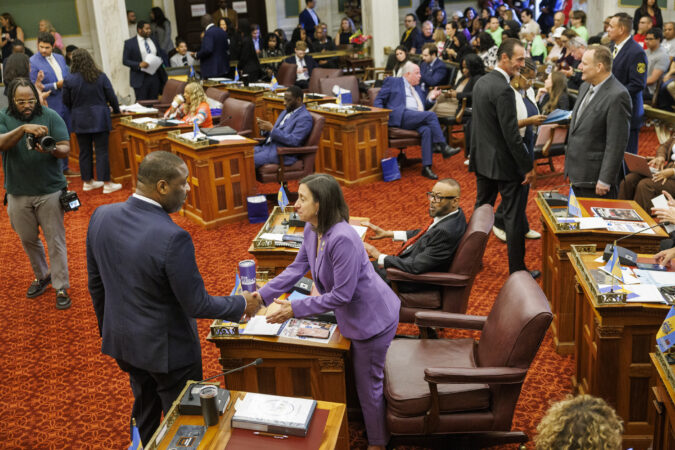
    All but two of Philadelphia’s 17 City Council members have sponsored a package of legislation aimed at limiting ICE operations in the city, a level of support that could ensure the measures become law even if they are opposed by the mayor.

    The 15 cosponsors, confirmed Thursday by a spokesperson for Councilmember Kendra Brooks, indicate a potentially veto-proof majority of lawmakers back the sweeping “ICE Out” effort.

    Brooks and Councilmember Rue Landau, the proposal’s authors, on Thursday formally introduced the seven bills in the package, which includes measures that would codify Philly’s “sanctuary city” status, ban U.S. Immigration and Customs Enforcement from operating on city-owned property, and prohibit employment discrimination on the basis of immigration status.

    Landau said that “reaching a majority sends a clear message.”

    “Philadelphia stands with our immigrant communities,” she said in a statement. “At a moment when the federal government is using fear and violence as governing strategies, this level of support shows that Council will do everything we can to protect our immigrant neighbors.”

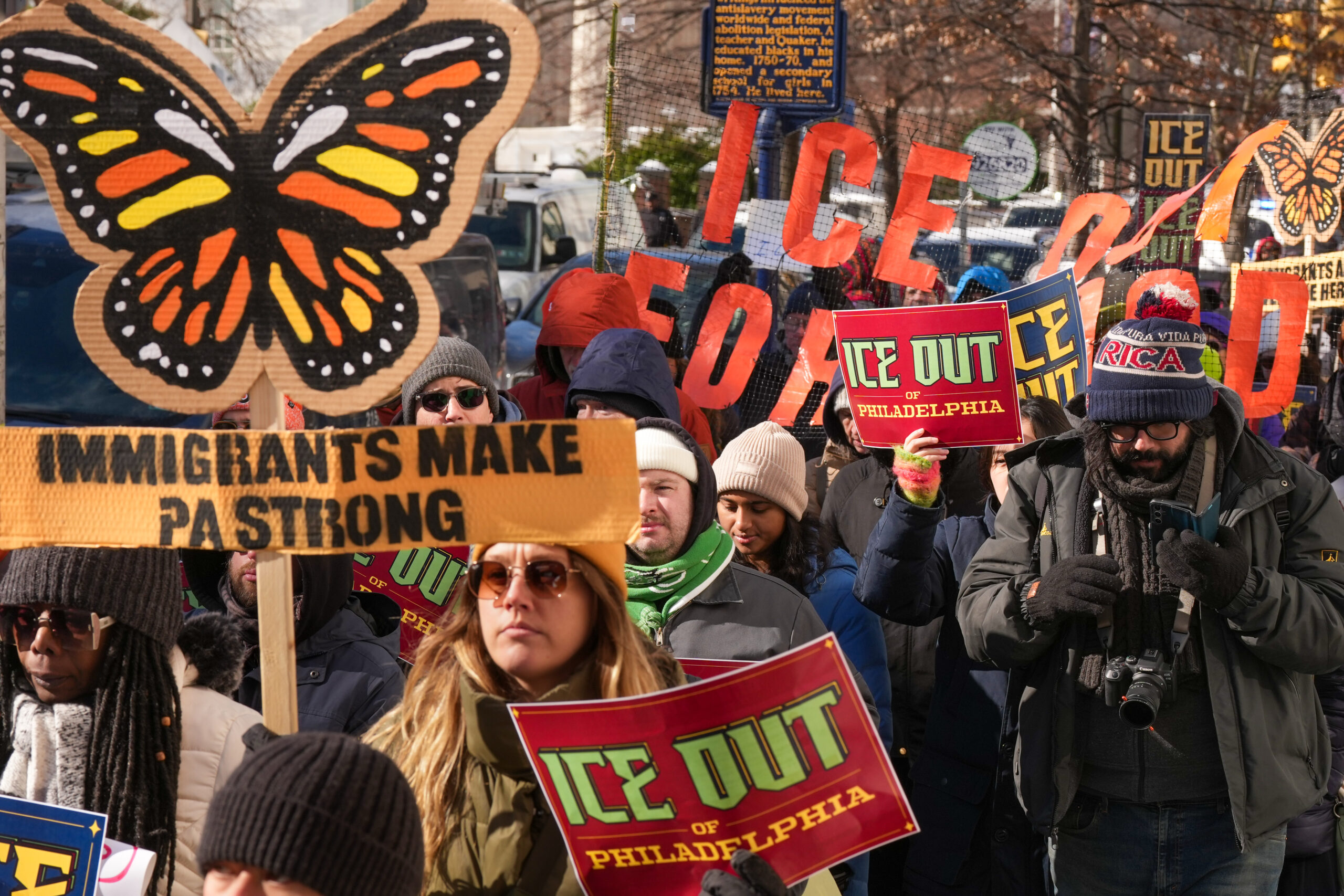
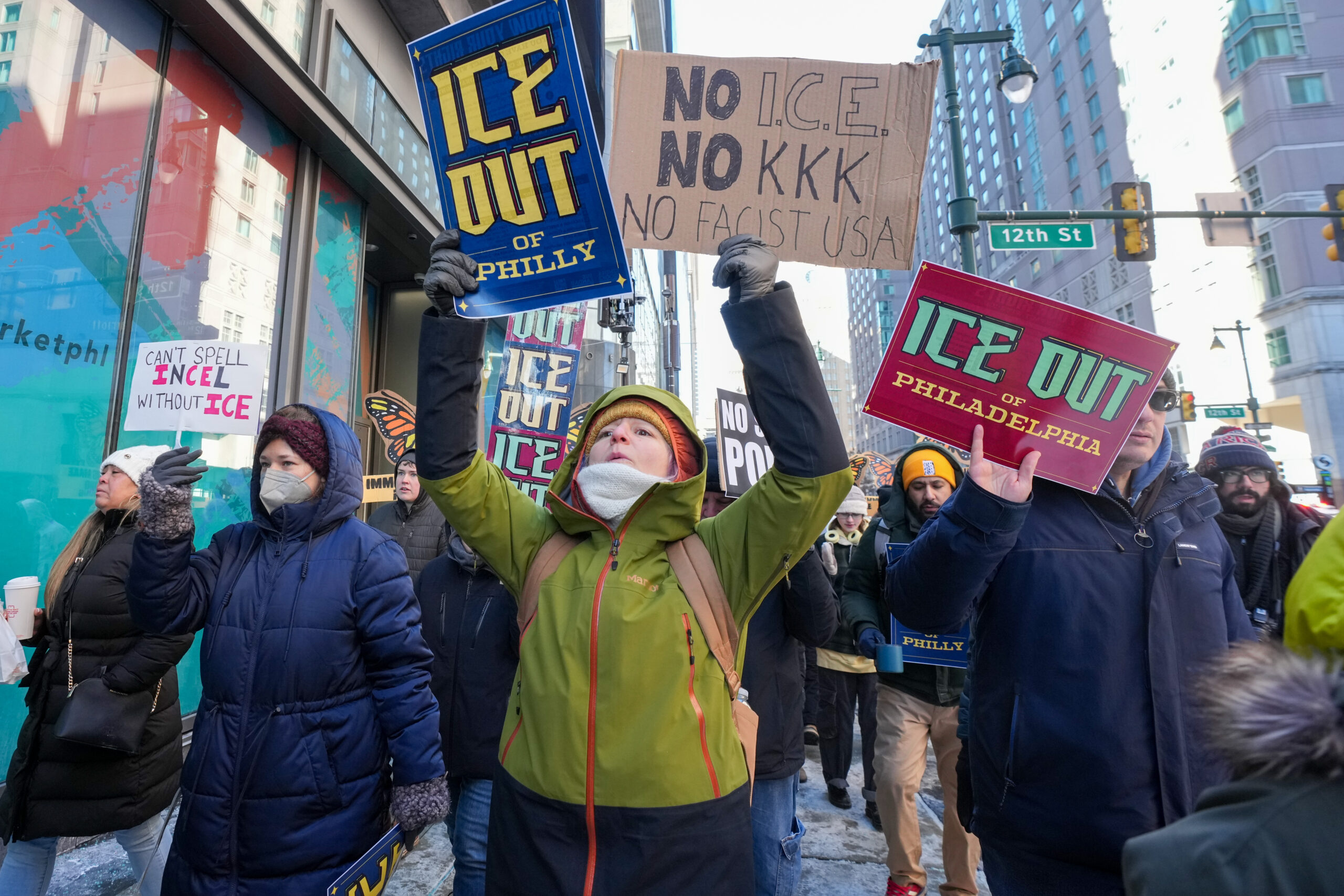
    Advocates and protesters call for ICE to get out of Philadelphia, in Center City, January 27, 2026.

    The 15 lawmakers on board with Brooks and Landau’s proposal have each cosponsored all seven bills, Brooks’ spokesperson Eric Rosso said. Only Councilmembers Mike Driscoll, a Democrat, and Brian O’Neill, Council’s lone Republican, declined to cosponsor the legislation, he said.

    Driscoll, who represents lower Northeast Philadelphia, said in a statement that the shootings of Renée Good and Alex Pretti by federal agents in Minneapolis this month “caused real pain and fear” and “deserve serious attention.”

    But he indicated that he had concerns about whether the “ICE Out” legislation would hold up in court. Similar legislation, including a California ban on law enforcement officers wearing masks, has faced legal challenges.

    “Locally, we should aim for immigration policies that are focused, proactive and aimed at practical, long-term solutions that ultimately hold up in court,” he said.

    Driscoll said he is open to amended versions of the legislation.

    O’Neill, whose district covers much of Northeast Philadelphia, could not immediately be reached for comment.

    The developments Thursday prompted Mayor Cherelle L. Parker to make one of her first public comments about President Donald Trump’s mass deportation campaign, saying in a statement that her administration “understand[s] the public’s fear of the unknown as it relates to federal policy associated with immigration.”

    “We have a comprehensive approach to public safety, and we will always be prepared for any emergency, as we have consistently demonstrated and will continue to demonstrate,” Parker said. “I have a great deal of faith in our public safety leaders — our subject matter experts — who I asked to be a part of this team and we’re going to do our best to work in an intergovernmental fashion, along with City Council, to keep every Philadelphian safe.”

    Parker said she and her team are reviewing the legislation.

    Advocates and protestors call for ICE to get out of Philadelphia, in Center City, January 27, 2026.

    The mayor has largely avoided confrontation with Trump’s administration over immigration policy, a strategy some have speculated has helped keep Philadelphia from the National Guard deployments or surges of ICE agents seen in Minneapolis, Chicago, Los Angeles, and elsewhere.

    But the popularity of the “ICE Out” package among Council members may force her to wade into the issue. Administration officials will testify when the bills are called up for committee hearings. If they are approved, Parker will have the choice of signing the bills into law, vetoing them, or letting them become law without her signature.

    Council bills require nine votes for passage, and 12 votes are needed to override mayoral vetoes. With 15 Council members already signaling their approval for the bills, chances appear strong that the city’s legislative branch has the numbers to override any opposition.

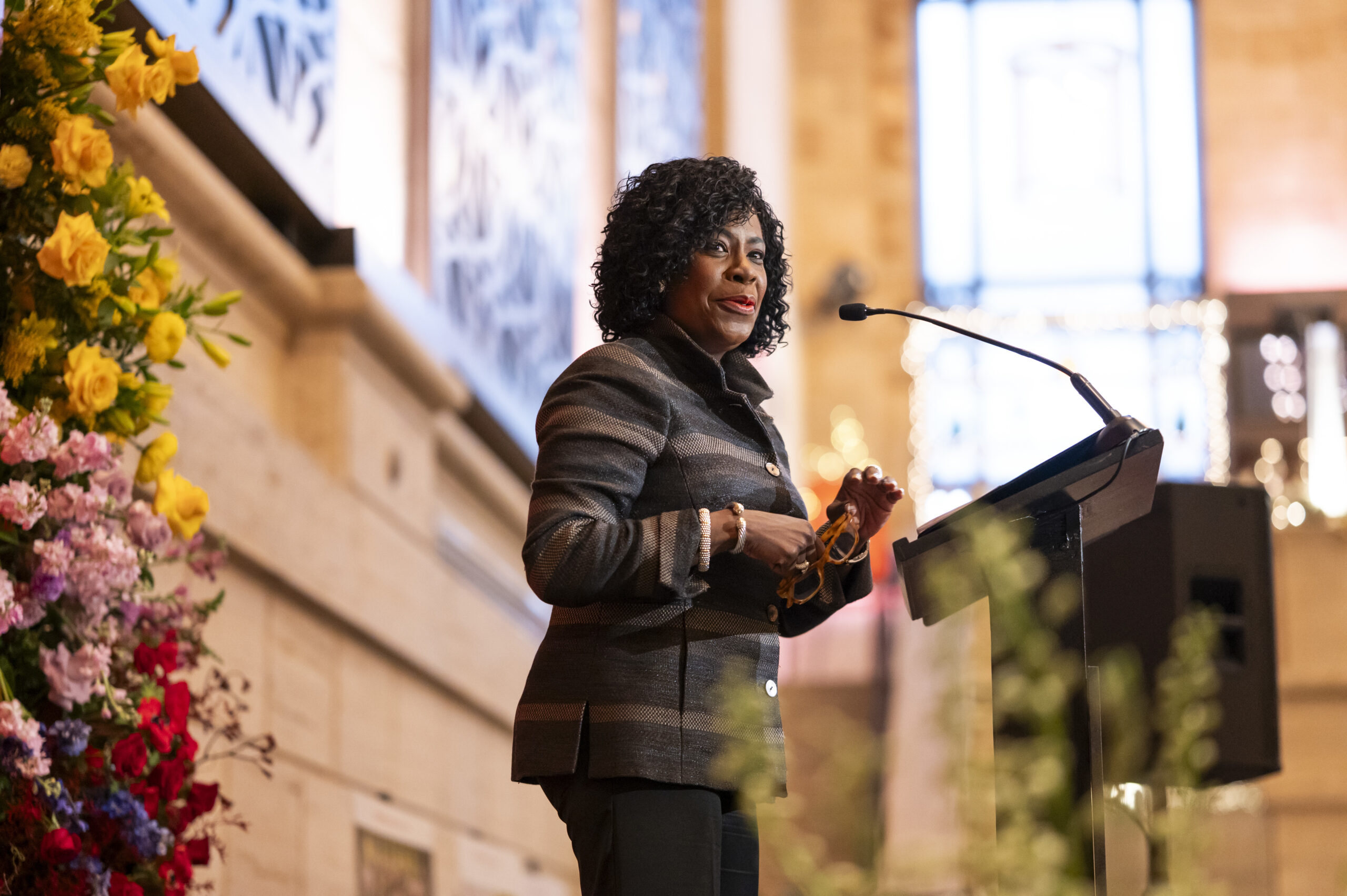
    Mayor Cherelle L. Parker has avoided confrontation with the White House on immigration issues.

    In a Council speech, Brooks addressed the debate over whether the legislation would draw Trump’s ire.

    “Staying silent is not an option when people are being publicly executed in the streets and the federal government is covering up their murders,” Brooks, of the progressive Working Families Party, said. “I want to be clear: ICE is already here. We don’t want a Minneapolis situation, but I reject the claim of those who are pretending we don’t already have a problem.”

    Council President Kenyatta Johnson, a centrist Democrat and an ally of Parker, shared a similar view.

    “From my perspective, the Trump administration has already been looking at the city,” Johnson told reporters. “Overall, the majority of members of City Council support the legislation, and so we see this legislation being successfully voted out of committee.”

    ICE agents have been arresting suspected undocumented immigrants in the city before and during Trump’s tenure, and his administration has canceled grants for the city and educational and medical institutions in Philadelphia. But the city has not seen a mass deployment of ICE agents or federalized troops.

    Councilmember Anthony Phillips, also a centrist and Parker ally, represents the 9th District, from which the mayor hails.

    “What the ’ICE Out’ legislation ultimately says to Donald Trump,” Phillips said, “is that no matter what you try to do to undermine the health and safety and well-being of Philadelphia citizens, we will stand up to you.”

    Johnson suggested potential legal issues could be ironed out through amendments if needed.

    “The reality is this: This is a moral issue, right?” he said. “And if there are any legality issues that has to be addressed as a body, we’ll work with our members to address it.”

    Next, Johnson will refer the legislation to committee, where members will hold one or more hearings featuring testimony from administration officials, experts, stakeholders, and the public. Council members can also amend the bills in committee.

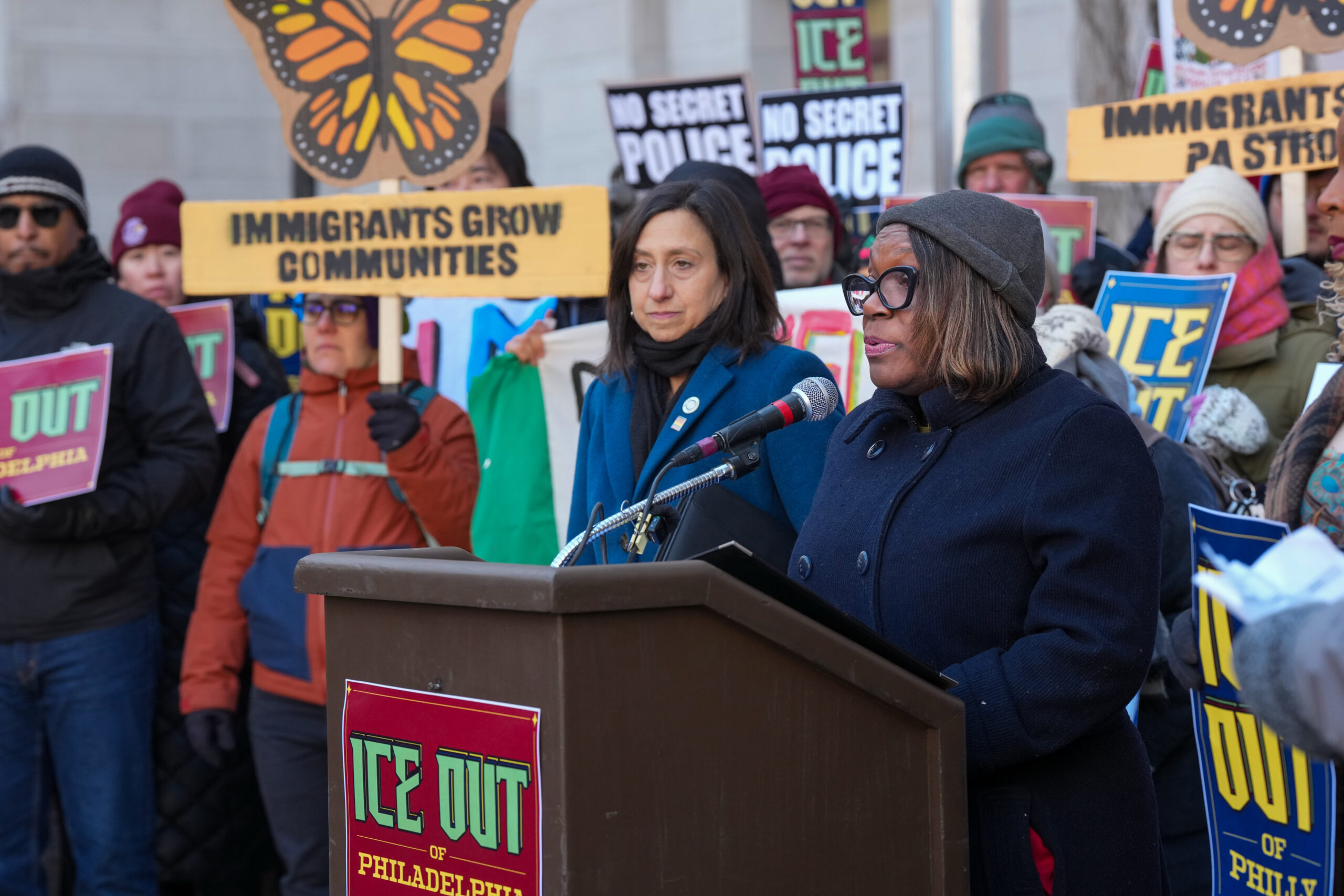
    Kendra Brooks shown here during a press conference at City Hall to announce a package of bills aimed at pushing back against ICE enforcement in Philadelphia, January 27, 2026.

    Supporters of the legislation packed Council chambers Thursday morning, and many spoke during public comment, ranging from leaders of advocacy organizations to a former immigration judge to immigrants who tearfully pleaded for Council to pass the package swiftly.

    Several Spanish-speaking residents spoke through interpreters; other residents testified on behalf of friends or family members who are undocumented and were fearful to come to City Hall themselves. A school nurse told Council members that her students have asked her what tear gas feels like.

    “The traumatic effects of these [ICE] raids on our children and our families and our communities will last for years and generations to come,” said Jeannine Cicco Barker, a South Philadelphia psychologist who said she is the daughter of immigrants. “These times call for bold, brave new measures to protect our community, and you have a chance to do some of that here. Philly urgently needs these protections.”

    Ethan Tan, who said he is an immigrant and a father of two, said he is fearful for his family and community.

    “To this administration, fear is the point. Alienation is the point. Isolation is the point,” he said. “The ‘ICE Out’ package says to me and immigrants that we may be afraid, but we can show solidarity and resolve anyway.”

  • Trump’s border czar suggests a possible drawdown in Minnesota but only after ‘cooperation’

    Trump’s border czar suggests a possible drawdown in Minnesota but only after ‘cooperation’

    MINNEAPOLIS — The number of immigration enforcement officers in Minnesota could be reduced, but only if state and local officials cooperate, President Donald Trump’s border czar said Thursday, noting he has “zero tolerance” for protesters who assault federal officers or impede the ongoing operation in the Twin Cities.

    Tom Homan addressed reporters for the first time since the president sent him to Minneapolis following last weekend’s fatal shooting of protester Alex Pretti.

    The news conference comes after President Donald Trump seemed to signal a willingness to ease tensions in the Minneapolis and St. Paul area after Saturday’s deadly shooting, the second this month. But Homan also emphasized that the administration isn’t backing away from its crackdown on illegal immigration.

    Vowing to stay until the “problem’s gone,” he seemed to acknowledge missteps while warning protesters they could face consequences if they interfere with federal officers.

    “I do not want to hear that everything that’s been done here has been perfect. Nothing’s ever perfect,” Homan said.

    He added later: “But threatening law enforcement officers, engaging and impeding, and obstruction, and assault is never OK, and there will be zero tolerance.”

    Homan also hinted at the prospect of drawing down many of the roughly 3,000 federal officers taking part in the operation, but he seemed to tie that to cooperation from state and local leaders and a reduction in what he cast as interference from protesters.

    “When the violence decreases, we can draw down the resources,” he said. “The drawdown is going to happen based on these agreements. But the drawdown can happen even more if the hateful rhetoric and the impediment and interference will stop.”

    He also said he would oversee internal changes in federal immigration law enforcement, but he gave few specifics.

    “The mission is going to improve because of the changes we’re making internally,” he said. “No agency organization is perfect. And President Trump and I, along with others in the administration, have recognized that certain improvements could and should be made.”

    Despite Trump softening his harsh rhetoric about Minnesota officials — he said this week they were on a “similar wavelength” — there was little sign on the ground Wednesday of any big changes in the crackdown.

    Pretti, 37, was fatally shot Saturday in a scuffle with the Border Patrol. Earlier this month, 37-year-old Renee Good was shot in her vehicle by an Immigration and Customs Enforcement officer.

    On Thursday, Homan doubled down on the need for jails to alert ICE to inmates who can be deported, and that transferring such inmates to the agency while they’re still in jail is safer because it would mean fewer officers having to be out on the streets looking for immigrants in the country illegally. ICE has historically relied on cooperation from local and state jails to notify the agency about such inmates.

    “Give us access to illegal aliens, public safety threats in the safety and security of a jail,” he said.

    Homan acknowledged that immigration enforcement operations in Minnesota haven’t been perfect, but he was also adamant that the administration isn’t surrendering its mission.

    He also seemed to suggest a renewed focus on what ICE calls “targeted operations” designed to focus its efforts on apprehending immigrants who have committed crimes. He said the agency would conduct “targeted strategic enforcement operations” prioritizing “public safety threats.”

    Homan’s arrival in Minnesota followed the departure of the Trump administration’s on-the-ground leader of the operation, Greg Bovino. Homan didn’t give a specific timeline for how long he would stay in Minnesota.

    “I’m staying until the problem’s gone,” he said, adding that he has met elected officials and law enforcement leaders across the city and state, seeking to find common ground and suggested that he’s made some progress.

    Operation Metro Surge began in December with scattered arrests, as Trump repeatedly disparaged the state’s large Somali community. But the operation ramped up dramatically after a right-wing influencer’s January report on Minnesota’s sprawling human services fraud scandal, which centers around the Somali community.

    Federal officials announced thousands of immigration agents were being deployed, with FBI Director Kash Patel saying they would “dismantle large-scale fraud schemes exploiting federal programs.”

    But talk of the scandals was almost immediately forgotten, with federal authorities instead focusing on immigrants in the country illegally and so-called sanctuary agreements that limit cooperation between local law enforcement agencies and jails with immigration authorities.

  • Here’s who Stacy Garrity has picked for a running mate in the Pa. governor’s race against Josh Shapiro

    Here’s who Stacy Garrity has picked for a running mate in the Pa. governor’s race against Josh Shapiro

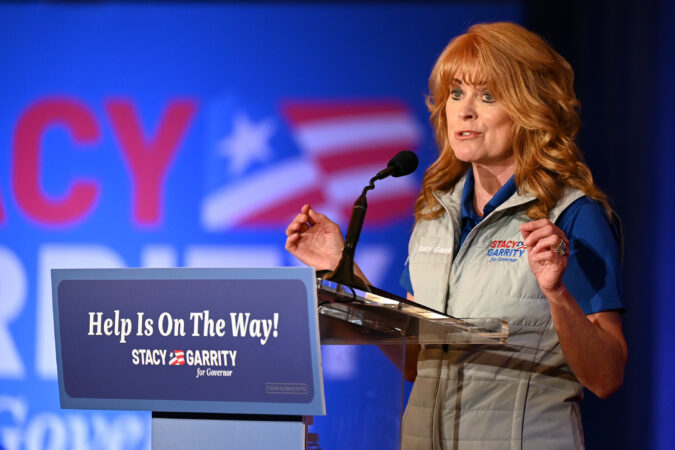
    Pennsylvania Treasurer Stacy Garrity on Thursday announced her pick for a running mate in the governor’s race, as state Republicans mount their campaign to more seriously challenge Democratic Gov. Josh Shapiro in November’s election.

    Jason Richey, a longtime Pittsburgh attorney and chair of the Allegheny County GOP, announced his campaign for lieutenant governor on Thursday morning. Garrity, the state party-endorsed candidate for governor, quickly endorsed him afterward.

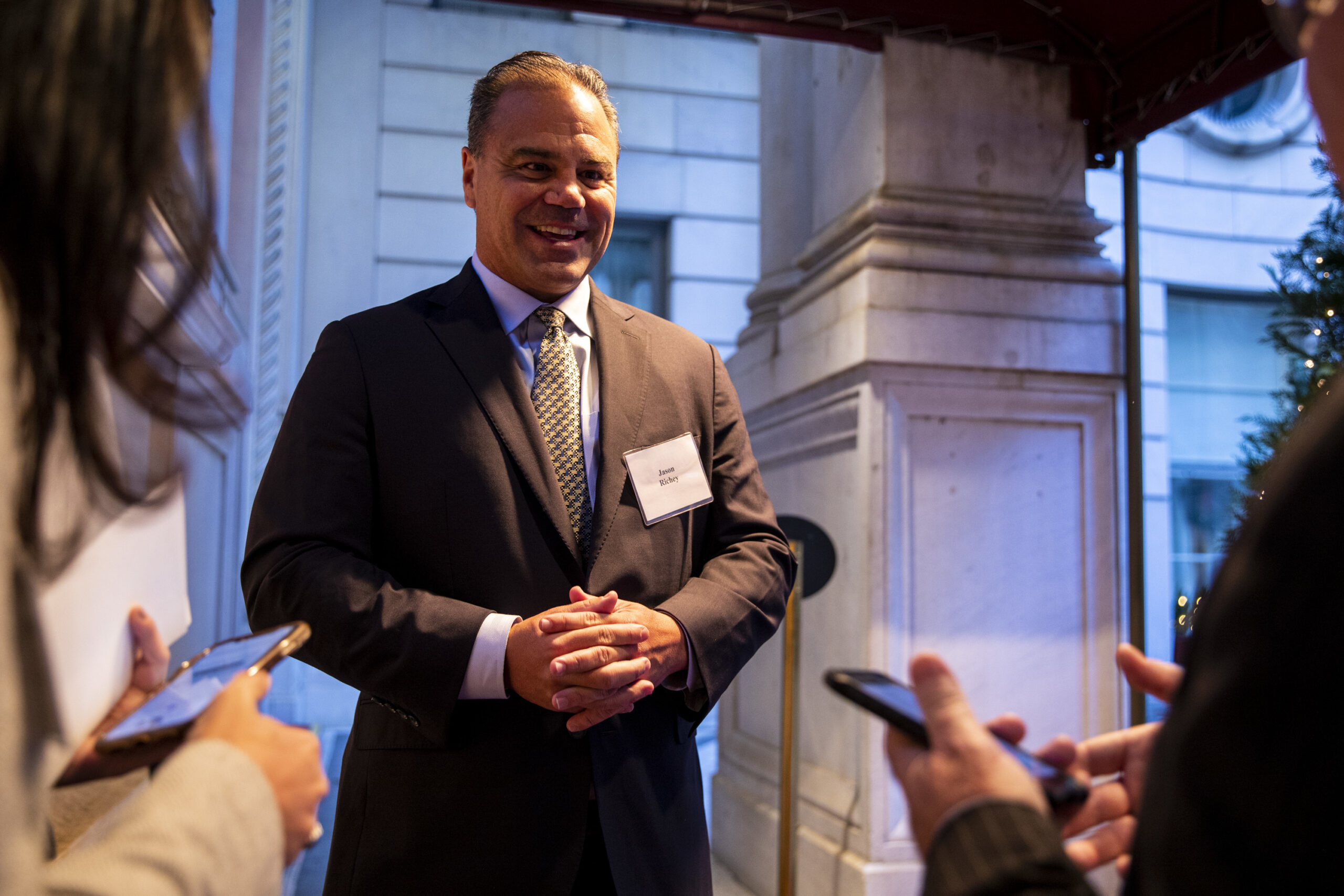
    Jason Richey, Aliquippa, Pa., Republican Candidate for Governor speaks with Inquirer Reporters at the Pennsylvania Manufacturers Association held at The Metropolitan Club in New York, N.Y., on Saturday, Dec., 4 2021.

    Garrity said Richey “rose to the top” as the best candidate to be her running mate to challenge Shapiro.

    “Jason understands the potential Pennsylvania has, but only if our Commonwealth has the right leadership,” she said in a news release, noting that he shares her concerns with Shapiro’s tenure as governor. “Jason Richey will not just be an incredible running mate on the campaign trail, but a terrific partner in governing for all the people of Pennsylvania.”

    Until Richey’s announcement, few moderate candidates had emerged to run alongside Garrity. Meanwhile, other potential candidates declined to run with her in the uphill battle election against Shapiro, a popular incumbent with a $30 million war chest and a growing national profile. Garrity announced earlier this month she had raised nearly $1.5 million in the first few months of her campaign, from August to December.

    Richey is running to be Garrity’s No. 2 among a field of several other potential lieutenant governor candidates, including State Sen. Cris Dush (R., Jefferson) and Bucks County businessman and political newcomer Brian Thomas. Other candidates who have considered a run for lieutenant governor but have yet to announce include former gubernatorial nominee State Sen. Doug Mastriano (R., Franklin) and former State Rep. Rick Saccone (R., Allegheny).

    In Pennsylvania, candidates for lieutenant governor and governor run in the primary election separately. Whoever wins the primary nomination joins on one ticket for the general election. For example, Mastriano won the primary nomination but his endorsed lieutenant governor candidate did not, leading him to run with another running mate in November. At least one of the lieutenant governor candidates — Dush — said he would run for the office in the primary election even without the party’s support.

    Shapiro is expected to again run unopposed in the Democratic primary, alongside Lt. Gov. Austin Davis, the first Black person elected to Pennsylvania’s executive branch.

    “We must turn Pennsylvania around now and I believe that Stacy Garrity is the person who can fix Pennsylvania,” Richey said in a release Thursday. “I’m excited to join Stacy on the ticket that’s going to save Pennsylvania. Stacy has demonstrated leadership, fiscal discipline, a deep commitment to serving Pennsylvanians and the ability to win statewide.”

    In an interview weeks before he decided to enter the race, Richey said he believed Garrity should pick a lieutenant governor candidate who is politically moderate and comes from Pittsburgh or Philadelphia, the state’s population centers.

    Earlier this month, Richey said a running mate who has “a little more urban understanding,” since Garrity hails from a rural part of the state, “would make a lot of sense” on the Republican ticket.

    Garrity secured the state party endorsement for governor last fall, as Republicans sought to coalesce around a gubernatorial candidate after their failures to do so in 2022 led to Mastriano’s nomination to oppose Shapiro. Mastriano went on to lose to Shapiro by nearly 15 percentage points, or 800,000 votes.

    Richey ran in 2022 for governor as part of the crowded GOP primary, but withdrew and did not appear on the ballot with the other nine candidates in the running.

    Garrity, of rural Bradford County, captured President Donald Trump’s endorsement earlier this week, in which Trump called her a “true America First Patriot, who has been with me from the beginning.” Garrity will appear in Philadelphia at the National Constitution Center on Thursday for a live taping of the political podcast RUTHLESS, alongside Fox News analyst Guy Benson.

    In addition to his duties as chair of the Allegheny County GOP, Richey is a partner at K&L Gates law firm in Pittsburgh with a focus on energy law.

    Richey, 54, lives in a suburb of Pittsburgh with his wife and has three sons.

    Staff writer Katie Bernard contributed to this article.

  • CBS, Washington Post blind themselves when America needs eyes on the ground

    CBS, Washington Post blind themselves when America needs eyes on the ground

    She said all the right things.

    The embattled new boss of CBS News, the until-now opinion journalist Bari Weiss, on Tuesday led a town hall-style meeting for editors and reporters at the storied TV network and appeared to understand both the crisis of American media and the values needed to fix it.

    “Our strategy until now has been: Cling to the audience that remains on broadcast television,” Weiss told her newsroom. “I’m here to tell you that if we stick to that strategy, we’re toast.” She called for more investigative reporting and pledged to merge the values of a high-tech start-up with “journalistic principles that will never change — seeking the truth, serving the public, and ferociously guarding our independence …”

    Meanwhile, the overpowering stench of burning toast filled the room.

    That’s because Weiss and her billionaire pro-Trump overlords, the Ellison family, seem to be doing all the wrong things, undercutting those pretty words. Her first concrete move announced in tandem with the town hall was the hiring of 18 thumb-sucking opinion journalists — a ragtag, right-leaning group that includes a medical huckster and an ex-Trump official — even as the newsroom braced for buyouts and feared layoffs that would slash honest shoe-leather reporting.

    The move toward more commentators telling you what to think about an America spiraling into chaos and fewer boots-on-the-ground journalists digging up what’s needed to fix that crisis — objective truth — could not happen at a worse time, and unfortunately, this is not unique to CBS News.

    The Washington Post — which has lost hundreds of thousands of digital subscribers since a self-coup by its billionaire owner, Amazon founder Jeff Bezos, shifted its opinion section to the political right — is also bracing for deep staff cuts that would cripple its international reporting, as well as its sports staff.

    The extent of the widely rumored staff reductions isn’t yet known, but a preview came last week when the paper briefly told the newsroom it was axing its long-standing plan to send 12 journalists to next month’s Winter Olympics in Italy, before slightly backtracking and saying four reporters would still go.

    Still, that move, and the louder rumors about pending layoffs, has led to deep concern over the future of its metro Washington and international desks. “We urge you to consider how the proposed layoffs will certainly lead us first to irrelevance — not the shared success that remains attainable,” stated a letter from 60 journalists on the foreign desk sent this week to Bezos.

    “It’s all very confusing, and no one knows anything,” an anonymous Post staffer told the Guardian. “The anxiety is so sad.”

    America has been losing news reporters for years. Nationally, newsroom staff have plummeted a whopping 26% since 2008, and the pace of job cuts has only accelerated in recent years as vast news deserts with no sources of local journalism expand across rural America. It’s been a perfect storm prompted heavily by internet-driven changes in reader or viewer habits, as well as declining public trust in traditional media.

    But the looming cuts at the Post and CBS are especially painful both in a symbolic sense and also as self-inflicted own goals that will only heighten public mistrust instead of attacking the problem.

    In 1972, with then-President Richard Nixon driving toward a landslide reelection, the Post, under its legendary editor Ben Bradlee, and CBS, with its popular, avuncular anchor Walter Cronkite, were the only two major outlets that took seriously the links between the Watergate break-in and the Nixon White House. Both newsrooms threw major resources into keeping alive the story that eventually caused Nixon to resign, including a 22-minute special report that Cronkite anchored on the CBS Evening News.

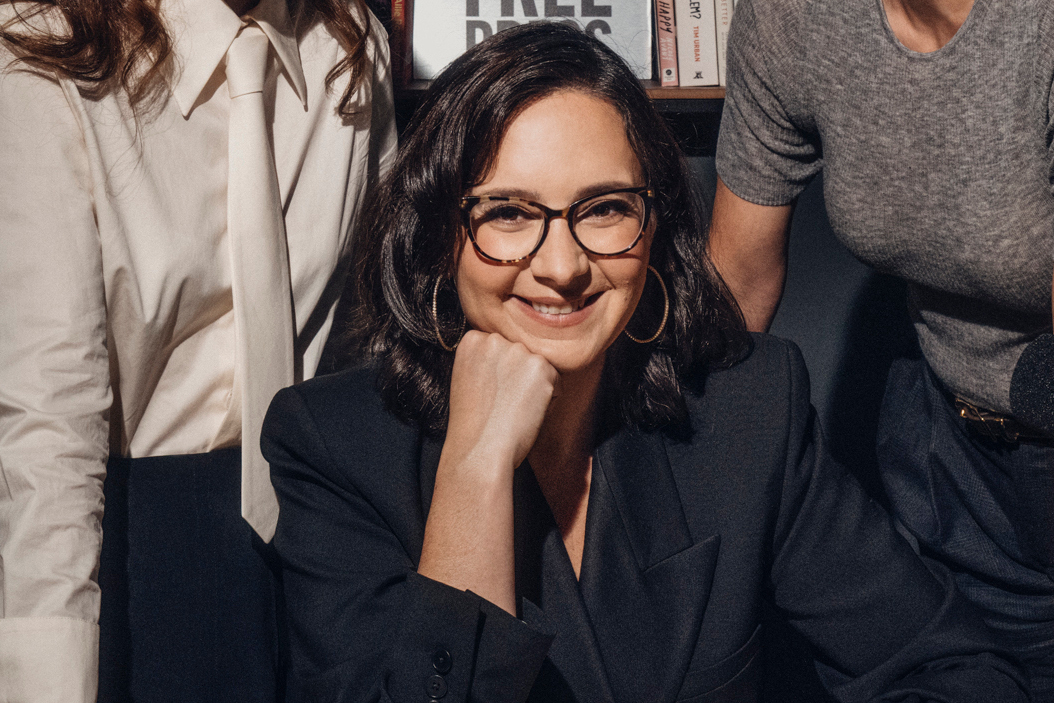
    In this undated photo released by Paramount, one of the Free Press’s cofounders, Bari Weiss, poses for a portrait. Weiss is the editor-in-chief of CBS News.

    That kind of accountability journalism created a bond with the audience that should have left CBS and the Post better positioned to weather the economic storms that have battered journalism in the 21st century. The current crises were self-inflicted, albeit for slightly different reasons.

    In Washington, the Post zigzagged from acknowledging what its readers wanted during Donald Trump’s first term — both in its “Democracy Dies in Darkness” slogan to some solid journalism that backed that up — to billionaire Bezos’ embrace of authoritarianism ahead of Trump’s second coming. The Bezos-ordered spiking of a Kamala Harris endorsement and a rightward editorial shift accelerated a steep decline in subscriptions, including about 300,000 lost readers after the nonendorsement.

    One could argue that staff cuts in such an environment are inevitable, but one might also question the priorities of the Post’s owner, the world’s second-richest person. Amazon — where Bezos remains executive chairman — has just spent $75 million on a White House-fluffing Melania documentary expected to bring back just $1 million at the box office.

    The priorities at Weiss-run CBS News seem similarly warped. The money the newsroom is spending on those 18 or so opinion journalists — a motley crew that includes Mark Hyman, who health experts have accused of “quackery,” calling him a “germ theory denialist,” and retired Gen. H.R. McMaster, a key policy adviser in Trump’s first term — could have been spent on new investigative reporters.

    Indeed, a major CBS rival — MS Now, which is also in a state of flux after spinning off from its longtime relationship with NBC News — did exactly that when it hired Pulitzer Prize-winning journalist and author Carol Leonnig away from the Post, of all places. Since late last year, Leonning has been scooping CBS and everybody else on corruption in Trump’s Justice Department, and the curious case of immigration czar Tom Homan and his $50,000 Cava bag.

    But then Weiss’ overlords in the Ellison family, whose recent role in the TikTok takeover and current fight to acquire Warner Bros. Discovery both depend on the blessing of the Trump White House, probably don’t want the stories Leonnig is uncovering.

    This is not a diatribe against all opinion journalism. I am an opinion journalist, and I started moving in that direction in the 2000s when I thought someone needed to be screaming from the rooftops about the lying and the war crimes of the George W. Bush regime. I think commentary and debate are especially needed in the local communities where such jobs have vanished the most, but I also think powerful opinion journalism exists mainly to augment on-the-ground reporting, not replace it.

    The greatest irony of the pullbacks at CBS and the Post is that the national crisis over immigration raids in Minnesota and the conduct of U.S. Immigration and Customs Enforcement and U.S. Customs and Border Protection officers who’ve killed two citizens has shown that what American democracy needs most is seekers of the truth — much more than people telling you what to think.

    The over-the-top lies from the highest levels of the U.S. government about how and why Renee Good and Alex Pretti were gunned down on the streets of Minneapolis have fallen apart because multiple videos have allowed citizens to see the truth of what actually happened.

    Most of those videos were shot by citizen observers, but with 3,000 federal agents fanning out across Minnesota and hundreds more conducting immigration raids from Maine to Los Angeles, a web of local and independent journalists has also proved critical in documenting the raids and their many human rights abuses.

    Dozens of journalists have been tear-gassed multiple times or struck with rubber bullets or pepper balls, and yet continue to cover protests and ICE activities, often in the most miserable conditions, and keep going out there to create a public record.

    This week, a federal judge called out ICE for violating nearly 100 court orders just since the start of this year. The reason we know about many of these is because of an army of journalists — some independents, some with small community weeklies, and some with metro newspapers like the Chicago Tribune or the Minnesota Star Tribune — who refused to accept the regime’s lies and refused to be scared off by the projectiles fired at them.

    They are showing people the truth. And the truth is rapidly turning public opinion against Trump’s immigration raids and the rush to authoritarianism. Public opinion is changing policy, including the regime’s abrupt retreat from Maine on Thursday, and possible legislative action on Capitol Hill (we’ll believe it when we see it).

    CBS News and the Washington Post could have been at the vanguard of this movement, which would have been a fitting tribute to the legacies of Cronkite and Edward R. Murrow, Bradlee and Bob Woodward and Carl Bernstein, and their many intrepid colleagues. Instead, the supposed keepers of those flames have made a horrible, doomed bet on autocracy.

    What I’ve watched in recent weeks coming out of Minneapolis and elsewhere on the front lines of the war for America’s soul has given me more hope for the future of journalism than any time since the ball dropped to launch this cursed millennium. That CBS and the Post chose this exact moment to willingly blind themselves is beyond pathetic.

  • Mikie Sherrill supports enshrining N.J.’s existing sanctuary policy into law as immigrant rights groups push for an expanded version

    Mikie Sherrill supports enshrining N.J.’s existing sanctuary policy into law as immigrant rights groups push for an expanded version

    New Jersey Gov. Mikie Sherrill supports cementing the state’s sanctuary state policy into law — as it’s already written.

    The Immigrant Trust Directive, commonly called a sanctuary policy, restricts state law enforcement from cooperating with U.S. Immigration and Customs Enforcement (ICE). Enshrining the policy into law would ensure future governors of either party could not unilaterally take it away. As of now, the directive could be undone with a flick of a pen.

    Immigrant rights groups in New Jersey have pushed for several years to make the policy permanent with a new law, a move they say is increasingly urgent amid President Donald Trump’s immigration crackdown in Minneapolis, which has reverberated across the country. But those activists want to expand protections, which could clash with Sherrill’s approach.

    “Gov. Sherrill supports a bill to codify the directive,” her spokesperson Sean Higgins said. “What she does not support is anything that undermines the ability to defend our protections in court, which puts people at risk.”

    Sherrill has said making changes to the directive while making it law could invite lawsuits and risk the whole policy, which was enacted during Trump’s first presidency and has survived federal judges appointed by both Trump and former President George W. Bush.

    “New Jersey’s directive has already withstood judicial review — and that additional action, if not precise, could undo important protections which we cannot risk under the Trump administration,” Sherrill said during her primary campaign.

    Higgins said those concerns “have not changed.”

    Immigrant rights groups nearly reached the finish line late last year after the state legislature passed a bill that included some of the changes they wanted to make.

    But former Gov. Phil Murphy rejected the bill in his final hours in office. Like Sherrill, he said the policy could be in jeopardy if it changed and could invite lawsuits.

    Amol Sinha, the executive director of ACLU New Jersey, disagrees.

    The bill Murphy vetoed — which Democratic lawmakers have already signaled they will reintroduce in the new session would remove an exception for law enforcement to work with federal immigration authorities on final orders of removal and prohibit law enforcement from providing money to federal immigration authorities.

    Sinha and others who support the bill say those changes would be on solid legal ground. Since the courts previously found federal law does not preempt the state’s immigration policy, and the state has the right to determine where its resources go, he said, he believes Murphy’s veto was overly cautious.

    “We cannot be in a situation where we’re constantly afraid of lawsuits and therefore we don’t pass any laws,” Sinha said. “There is legal risk to every law that passes in New Jersey. You’re going to get sued, and if you don’t want to get sued, then you shouldn’t be in government.”

    Sherrill’s stance on the matter has, at times, been ambiguous.

    After a general election debate in late September, she said she was “going to focus on following the law and the Constitution” when pressed by reporters on whether she would keep the directive in place. In October, she said she supported aspects of the policy but also suggested she wanted to revisit it.

    During the primary contest, her spokesperson said Trump “is changing the rules rapidly” and Sherrill would “address the circumstances as they exist,” but she had also signaled support for keeping the policy.

    Since taking office last week, Sherrill has taken other steps to try to shield the state from ICE. She announced Thursday that her administration plans to launch a state database for New Jerseyans to upload videos of ICE operations in the state after two fatal shootings in Minnesota.

    But the pressure to work with legislators on making the sanctuary directive law remains.

    Assemblymember Balvir Singh, a Burlington County Democrat and cosponsor of the bill Murphy rejected, said part of the urgency is concern over Trump’s threats to withhold federal funding from Democratic-led states over policy disagreements.

    Even though Sherrill has kept the policy in place, a directive carries less weight than a statute backed by two branches of government.

    “Our executive can be put under a tremendous amount of pressure where they have to figure out how they’re going to fund our social services systems that rely on federal funding,” Singh said.

    Just last week, Trump directed federal government agencies to review funding for several Democratic states, including New Jersey, almost all of which were on a list of sanctuary jurisdictions produced by his administration.

    The one exception was Virginia, where new Democratic Gov. Abigail Spanberger rescinded a directive that instructed law enforcement to work with ICE. The previous week, Trump said he planned to cut off federal funding for states with sanctuary cities.

    Singh, whose district includes communities with large immigrant populations, said preserving the seven-year-old policy through law is “the very minimum.”

    ‘I take Gov. Sherrill at her word’

    Sherrill declined to comment on the specifics of the bill that reached Murphy’s desk, and the question will be whether lawmakers are able to enact changes to the current directive or if she will only sign a carbon copy of what already exists.

    The sanctuary bill was one of three pieces of legislation aimed at protecting immigrants that Murphy weighed in his final days in office. He signed one about creating model policies for safe spaces in the state and vetoed another aimed at limiting data collected by government agencies and health centers, citing a “drafting oversight.”

    As she waited anxiously for Murphy’s decisions on the bills earlier this month, Nedia Morsy, the executive director of immigrant advocacy group Make the Road New Jersey, said that New Jersey should not “make policy based on fear” and that immigrants in the state were experiencing a “collective feeling of suffocation.”

    She criticized Murphy’s vetoes, saying legal experts had already vetted the bills.

    Sherrill has repeatedly promised to fight Trump and recently said that ICE agents are “occupying cities, inciting violence, and violating the Constitution” and need to be held accountable “for their lawless actions.”

    Her comments have given some activists hope that she will be willing to work with them.

    And while a single bill cannot stop ICE from sweeping New Jersey communities, Sinha said, the state can “put up safeguards and guardrails” through policies like the ones Murphy rejected.

    “I take Gov. Sherrill at her word that she wants to push back against authoritarianism,” he added, “and to me, that means doing whatever we can to protect immigrants in our state.”

  • Gov. Mikie Sherrill says N.J. will create a database for uploading videos of ICE: ‘Get your phone out’

    Gov. Mikie Sherrill says N.J. will create a database for uploading videos of ICE: ‘Get your phone out’

    New Jersey Gov. Mikie Sherrill said her administration will create an online database for people to upload videos they record of ICE.

    “If you see an ICE agent in the street, get your phone out,” she urged New Jerseyans in an appearance on The Daily Show on Wednesday night with host Desi Lydic in New York City.

    Sherrill, a Democrat and former member of Congress, said her administration will set up an online portal “so people can upload all their cell phone videos and alert people.”

    Cell phone video from onlookers has been used to rebut the narrative of President Donald Trump’s administration after federal agents fatally shot Renee Good and Alex Pretti in Minneapolis.

    Sherrill outlined her plan just eight days after she was sworn into office. She became the second woman to lead the state and the first female veteran governor in the country.

    “They will pick people up, they will not tell us who they are … they’ll pick up American citizens. They picked up a 5-year-old child,” she said on the show. “We want documentation, and we are going to make sure we get it.”

    The policy announcement was not featured in the television broadcast, but it was posted to YouTube shortly afterward by The Daily Show.

    New Jersey residents routinely report ICE activity and arrests around the state, including recently in Bridgeton and Princeton. The Garden State is home to about the seventh-largest undocumented population in the country, an estimated 476,000 people, according to the Migration Policy Institute in Washington.

    Amy Torres, executive director of the New Jersey Alliance for Immigrant Justice, said Sherrill needs to do more.

    “We don’t need to see more evidence of what ICE is doing,” Torres said. “They’ve arrested a New Jersey mayor. They’ve gone after a sitting member of Congress. They’ve opened up a 1,000-bed facility in our state’s largest city and they’re ripping our families apart. New Jersey doesn’t need more evidence, we need leadership who is going to act.”

    She said the governor should work to pass additional immigrant protections, like those contained in two bills former Gov. Phil Murphy rejected in his final day in office that would have safeguarded immigrants’ data and expanded the state’s sanctuary policy.

    Sherrill, meanwhile, also said her administration plans to put out information to help New Jerseyans know their rights in the state. And she said she will not allow ICE raids “to be staged from state properties.”

    Sherrill, a former Navy helicopter pilot, compared U.S. Immigration and Customs Enforcement to secret police forces she observed in foreign nations during her service.

    “I knew where this was headed when we started to see DHS people taking loyalty oaths to the president, not the Constitution,” she said. “We saw people in the street with masks and no insignia, so not accountable at all, hiding from the population.”

    New Jersey has become a key state in the Trump administration’s plan to arrest and deport millions of immigrants, and has been slated for an expansion of ICE detention.

    A facility in Elizabeth was for a time the only detention center in the state. But the 1,000-bed Delaney Hall in Newark was reopened for detention in May, and the administration recently announced plans to hold 1,000 to 3,000 detainees at Joint Base McGuire-Dix-Lakehurst, which spans parts of Burlington and Ocean Counties.

    The specific details surrounding that South Jersey undertaking remain unknown.

    In Wednesday night’s television appearance, Sherrill denounced the Minneapolis shootings, calling Good “a mother of three, who drops her 6-year-old off in her Honda Pilot and then gets shot and killed.”

    And she noted that Pretti worked at the Minneapolis VA as an ICU nurse.

    “I saw his official photo, and I’ve seen a million of those … with the flag in the background, I know those guys,” Sherrill said.

    Pretti was fatally shot by a Border Patrol agent, while Good was shot and killed by an ICE agent. Both agencies fall under the Department of Homeland Security.

    The new governor also said on The Daily Show that she called Trump to discuss his decision to freeze funding for the planned Gateway Tunnel in North Jersey, a project championed by Sherrill that would connect New York and New Jersey under the Hudson River.

    New Jersey Gov. Mikie Sherrill does her best New Jersey “Oh!” and “C’mon!” impressions on The Daily Show with host Desi Lydic.

    “I haven’t heard back from him yet to flag for him that this is about 100,000 jobs in the region, and by the way, his numbers aren’t looking so good in that area,” she said.

    Sherrill said the president “should listen to me because I just won back all his voters,” citing her victory in November of more than 14 percentage points, outperforming her Democratic predecessors and reversing rightward shifts in 2024.

    But she also said it is time to “rethink” the federal government’s relationship with states because of attacks from Trump.

    “We need to start looking at expanding,” she said. “This is a time when I think we’re going to see a large expansion of state power, because the states are the rational actors in this space.”

    Sherrill also played a game with Lydic where she picked which things were most New Jersey, choosing Tony Soprano over Snookie; hating New Yorkers over hating Pennsylvanians; diners over Wawa; and “C’mon!” over “Oh!”

  • A plan to redevelop Gladwyne has residents split on their town’s future. What happens next?

    A plan to redevelop Gladwyne has residents split on their town’s future. What happens next?

    Three weeks after developers unveiled a sweeping plan to revitalize much of downtown Gladwyne, the affluent Main Line community has been abuzz with excitement, and skepticism, about the village’s future.

    On Jan. 8, Andre Golsorkhi, founder and CEO of design firm Haldon House, presented plans for a revitalized town center, complete with historic architecture, green spaces, and businesses that “fit the character” of the area. Golsorkhi told a packed school auditorium that Haldon House plans to bring in boutique shops, open an upscale-yet-approachable restaurant, and create spaces for communal gathering.

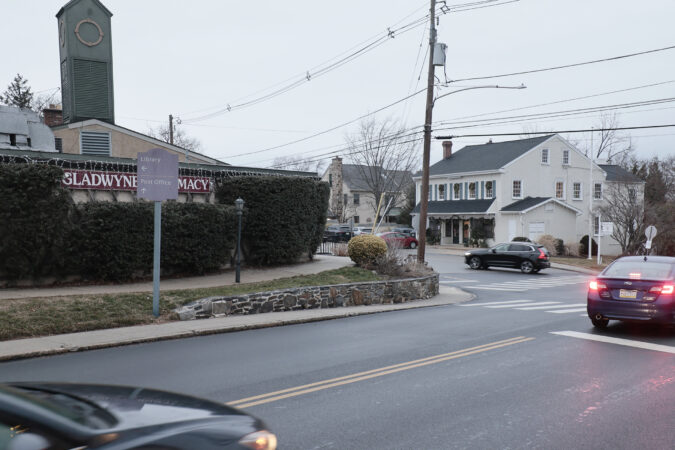
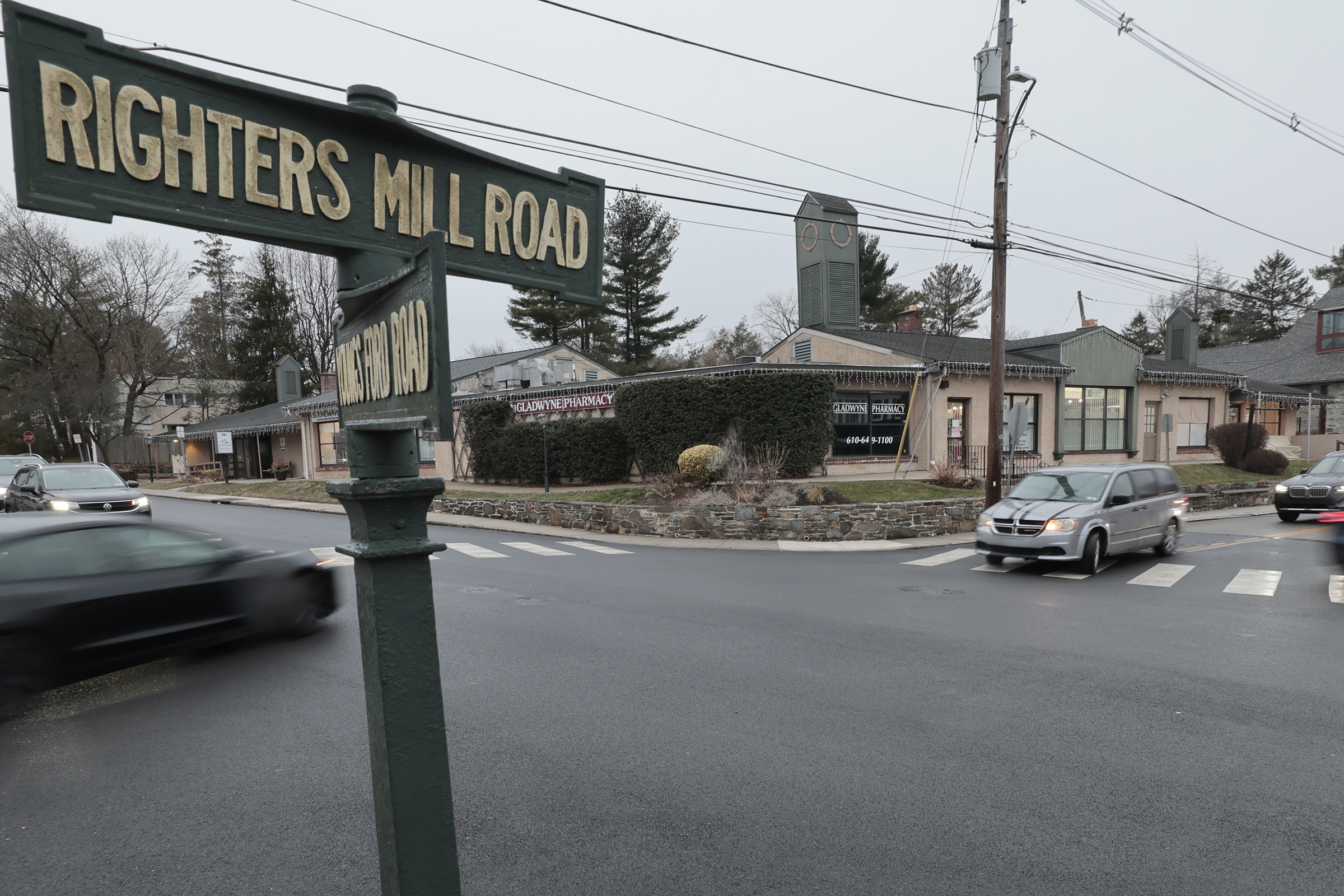
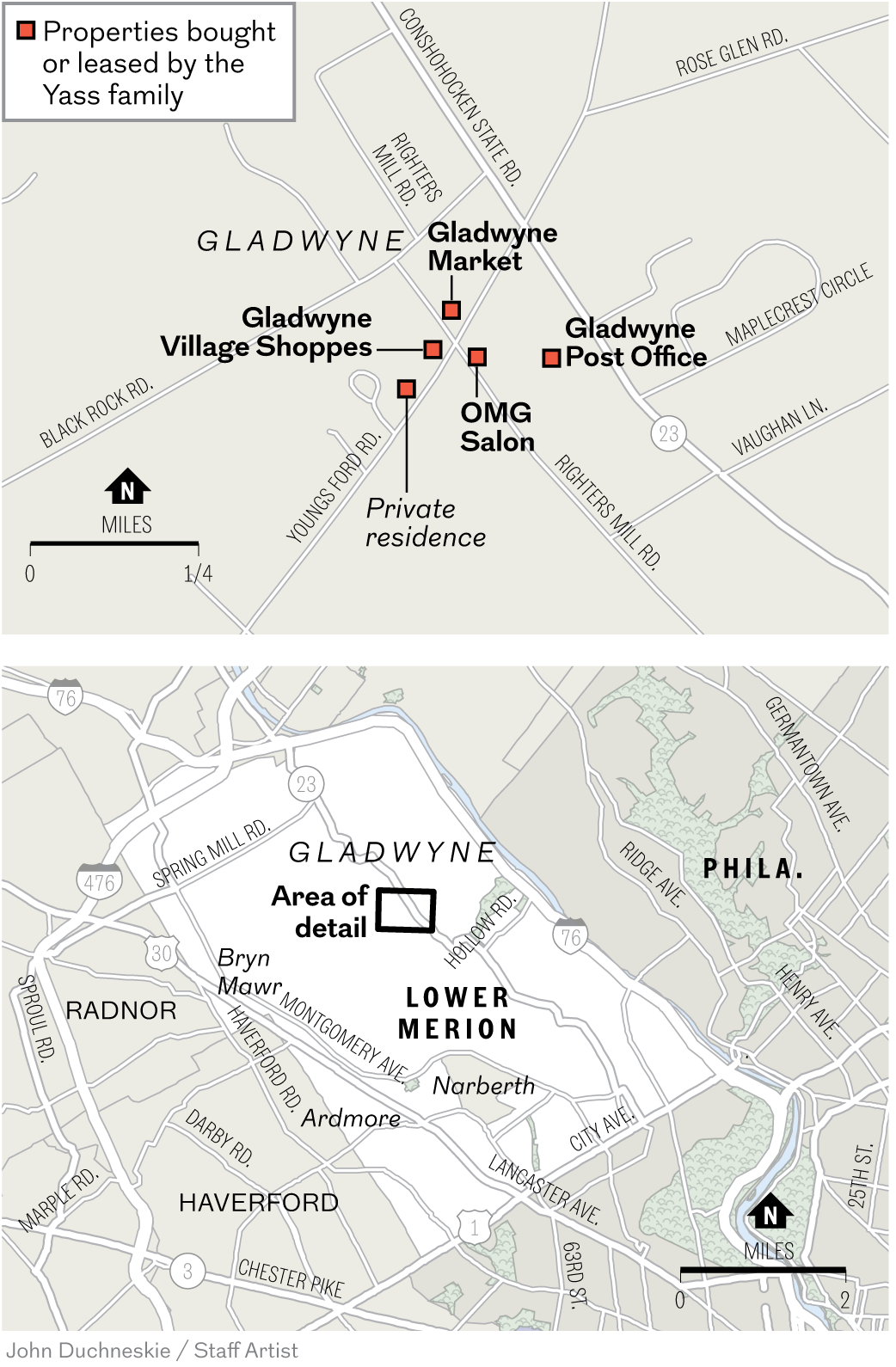
    At the meeting, Golsorkhi also revealed that the project was backed by Jeff Yass, Pennsylvania’s richest man, and his wife, Janine. Golsorkhi said the Yasses want to revitalize Gladwyne as part of a local “community impact project.” Haldon House and the Yasses, who live near Gladwyne, have spent over $15 million acquiring multiple properties at the intersection of Youngs Ford and Righters Mill Roads.

    The news drew a flurry of social media posts — and a write-up in a British tabloid. While some praised the proposal, others protested the changes headed toward their quaint community, and the conservative donor financing them.

    Renderings of a proposed revitalization project in Gladwyne, Pa. Design firm Haldon House is working with billionaire Jeff Yass to redevelop the Main Line village while preserving its historic architecture, developers told Gladwyne residents at a Jan. 8 meeting.

    What is, and isn’t, allowable?

    For some residents, one question has lingered: Is one family allowed to redevelop an entire village?

    A petition calling on Lower Merion Township to hold a public hearing and pass protections preventing private owners from consolidating control of town centers had gathered nearly four dozen signatures as of Friday.

    Around 4,100 people live in the 19035 zip code, which encompasses much of Gladwyne, according to data from the 2020 U.S. Census.

    “Residents deserve a say before their town is transformed. No one family, no matter how wealthy, should unilaterally control the civic and commercial core of a historic Pennsylvania community,” the petition reads.

    Yet much of Haldon House’s plan is allowable under township zoning code, said Chris Leswing, Lower Merion’s director for building and planning.

    Plans to refurbish buildings, clean up landscaping, and bring in new businesses are generally permitted by right, meaning the developers will not need approval from the township to move forward. Gladwyne’s downtown is zoned as “neighborhood center,” a zoning designation put on the books in 2023 that allows for small-scale commercial buildings and local retail and services. The zoning code, which is currently in use in Gladwyne and Penn Wynne, ensures commercial buildings can be no taller than two stories.

    The developers’ plans to open a new restaurant in the former Gladwyne Market and renovate buildings with a late-1800s aesthetic, including wraparound porches and greenery, are generally within the bounds of what is allowed, once they obtain a building permit.

    The Village Shoppes, including the Gladwyne Pharmacy, at the intersection of Youngs Ford and Righters Mill Roads in Gladwyne on Friday, Jan. 9, 2026.

    More ambitious plans, however, like converting a residential home into a parking lot or burying the power lines that hang over the village, would require extra levels of approval, Leswing said.

    The developers hope to convert a residential property on the 900 block of Youngs Ford Road into a parking lot. Lower Merion generally encourages parking lots to be tucked behind buildings and does not allow street-facing parking, a measure designed to avoid a strip mall feel, Leswing said. In order to turn the lot into parking, the developers would need an amendment to the zoning code, which would have to be approved by the board of commissioners.

    Various approvals would also be needed to put Gladwyne’s power lines underground, an ambitious goal set by the Haldon House and Yass team.

    Leswing clarified that no official plans have been submitted, making it hard to say how long the process will take. It will be a matter of months, at least, before the ball really gets rolling.

    Leswing added the developers have been “so good about being locked into the community” and open to constructive feedback.

    Golsorkhi said it will be some time before his team can provide a meaningful update on the development, but expressed gratitude to the hundreds of residents who have reached out with questions, support, and concerns.

    Map of properties in Gladwyne bought or leased by the Yass family.

    From ‘110% in favor’ to ‘a tough pill to swallow’

    Fred Abrams, 65, a real estate developer who has lived in Gladwyne for seven years, said he and his wife are “110% in favor” of the redevelopment, calling it an “absolute no-brainer.”

    Many Gladwyne residents live in single-family homes that keep them in their own, sometimes isolating, worlds, his wife, Kassie Monaghan Abrams, 57, said.

    “Here’s an opportunity for being outside and meeting your neighbors and, to me, getting back to spending time with people,” she said of the proposal to create communal gathering areas.

    “I think it’s a very thoughtful, beautiful design,” Monaghan Abrams added.

    Some social media commenters called the proposal “charming” and “a fantastic revitalization.”

    Others were more skeptical.

    Ryan Werner, 40, moved to Gladwyne in 2012 with his wife, who grew up in the town.

    “One of the things I’ve kind of fallen in love with about Gladwyne is the sense of community,” said Werner, who has a background in e-commerce sales and is transitioning to work in the mental health space.

    Werner is not necessarily opposed to the renovations (although he loved the Gladwyne Market). Rather, he said, it’s “a tough pill to swallow” that Yass is promoting a community-oriented project while supporting President Donald Trump’s administration and Trump-affiliated groups.

    “I’m less opposed to just the commercial side of it and more grossed out by the involvement of certain people in it,” Werner said.

    Gladwyne is a Democratic-leaning community that voted overwhelmingly for former Vice President Kamala Harris in the 2024 election.

    On social media, some griped about the changes.

    “The Village will be just like Ardmore and Bryn Mawr. Can’t undo it once they build it,” one commenter wrote in a Gladwyne Facebook group.

    Golsorkhi said in an email that the “enthusiasm, excitement and support” from the community have been “overwhelming.”

    This suburban content is produced with support from the Leslie Miller and Richard Worley Foundation and The Lenfest Institute for Journalism. Editorial content is created independently of the project donors. Gifts to support The Inquirer’s high-impact journalism can be made at inquirer.com/donate. A list of Lenfest Institute donors can be found at lenfestinstitute.org/supporters.

  • Trump administration reveals location of dismantled slavery exhibits from the President’s House in new legal filing

    Trump administration reveals location of dismantled slavery exhibits from the President’s House in new legal filing

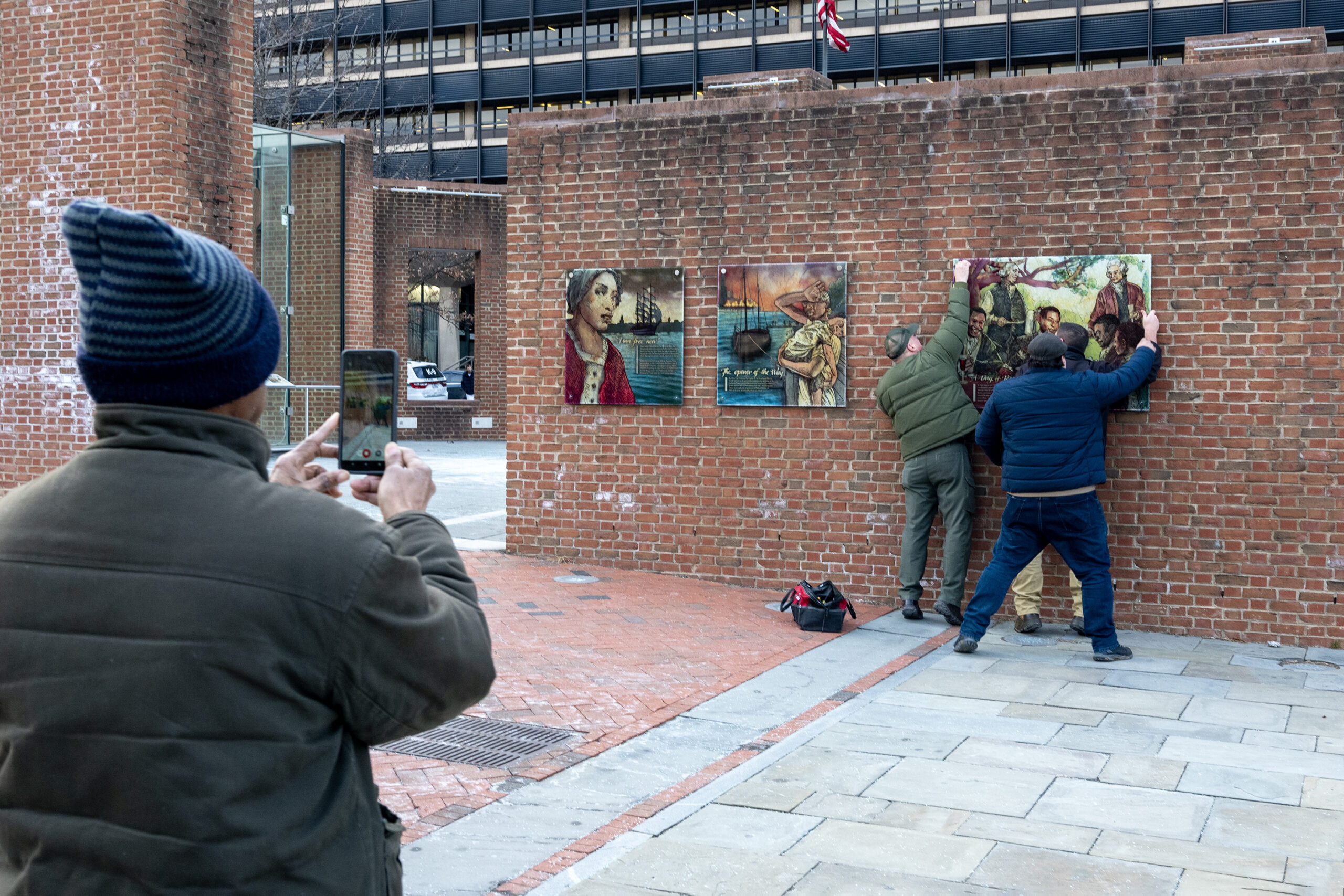
    Informational exhibits about slavery removed by the National Park Service from the President’s House Site last week are being kept in storage at a facility adjacent to the National Constitution Center, according to a legal filing from the Trump administration.

    The exhibits will remain in the park service’s custody at the center, down the street from the President’s House, pending the outcome of the City of Philadelphia’s federal lawsuit against the Department of Interior and the National Park Service for taking down the exhibits.

    But the center said it has no role in storing the exhibits.

    “The storage facility [where the exhibits are being kept] is entirely under control and operation of the Park Service,” said a spokesperson for the Constitution Center, adding that the center does not have possession of or access to the space.

    Mayor Cherelle L. Parker’s administration is seeking an injunction to return the exhibits to the President’s House, which aims to educate visitors on the horrors of slavery and memorializes the nine people George Washington enslaved at the site during the founding of the United States.

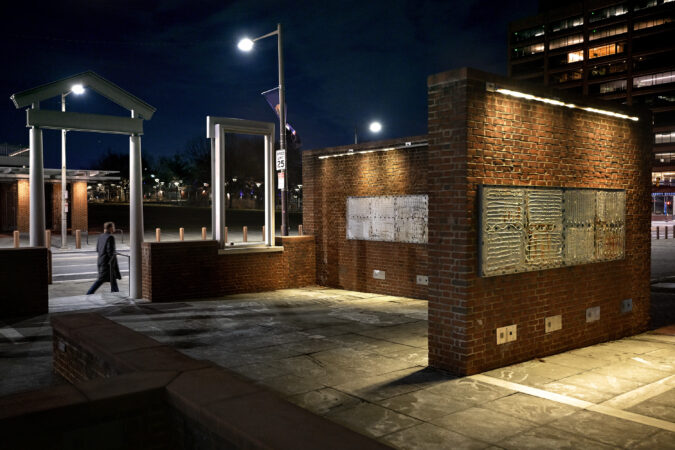
    Jali Wicker records NPS workers remove interpretive panels at the President’s House site in Independence National Historical Park Thursday, Jan. 22, 2026. More than a dozen educational displays and illustrations about slavery were removed from the site, which serves as a memorial to the nine people George Washington enslaved there during the founding of America.

    The location of the removed exhibits was revealed Wednesday in a motion objecting to the city’s injunction. The motion was filed by U.S. attorneys and assistant Attorney General Brett Shumate, representing Interior Secretary Doug Burgum, acting National Park Service Director Jessica Bowron, and their respective agencies.

    The legal filing also provides further details into what transpired last Thursday when park service employees removed exhibits about slavery at the President’s House.

    Park service employees dismantled the exhibit after Bowron ordered Steve Sims, the park service’s acting regional director, to have workers remove the panels and turn off video displays at the site, according to the filing. Sims said the takedown was carried out the same day that Bowron requested it.

    There is also a remaining sign made of wood in a metal structure that was not removed last week because additional tools were needed.

    “When and if NPS removes the sign, it will be stored with the other panels,” Sims said in a declaration included in the legal filing.

    The footprints embedded in the site and the Memorial Wall featuring the names of the nine people Washington enslaved will stay at the President’s House, he said.

    Last year, Burgum and President Donald Trump ordered content at national parks that could “inappropriately disparage Americans past or living” to be reviewed and potentially removed.

    In addition to the actions in Philadelphia, the National Park Service has reportedly removed signage about the mistreatment of Native Americans from the Grand Canyon, among other changes implemented under the orders.

    Tuesday’s filing previews the Trump administration’s legal argument for a hearing scheduled Friday on Philadelphia’s suit, which could be used in other cases around the country.

    The attorneys claim in the filing that this case is “fundamentally a question of Government speech,” and they accuse the city of trying to “censor” the federal government.

    “Such interests are especially weighty where, as here, the City effectively seeks to compel the Federal government to engage in speech that it does not wish to convey,” the attorneys wrote.

    The city’s suit has received legal backing from Gov. Josh Shapiro and the Avenging the Ancestors Coalition, an advocacy group that helped establish the President’s House in the early 2000s.

    The exhibit takedown has been a heartbreak for those who helped develop the site and for Philadelphians who have left artwork memorializing what the site used to be.

    In a video posted to social media Tuesday, Parker said that her administration would keep “fighting” to have the panels restored to the site as the city prepares to play a central role in the nation’s 250th anniversary celebrations in July.

    “This history is a critical part of our nation’s origins, and it deserves to be seen and heard, not just by the people of Philadelphia, but by every person who comes to Philadelphia from around our nation and the world to see and learn from, especially as we celebrate our Semiquincentennial 250th birthday, I want the world to know you cannot erase our history,” she said.

    This story has been updated to include a comment from the National Constitution Center.