Tag: topic-link-auto

  • African American personal faith and organized traditions have had historic impact

    African American personal faith and organized traditions have had historic impact

    When you hear the word faith in relation to the history of African Americans in the United States, what do you imagine? Do you see a preacher, or a gospel choir, or imagine a church mother in a resplendent hat?

    These images, while valid depictions of the Black church, are not the only measures of how faith informs and shapes the history of African American life.

    For African Americans, faith has not been simply about belief in a deity. By necessity, it has also been about having the faith to fight for freedom, faith in showing the shortcomings of democracy, faith in finding hope during struggle, and protecting the community. It was also the only way, for many years, to organize and establish places of worship or set up businesses.

    In the American context, many equate African American religion with Protestant Christianity. Yet, faith isn’t limited to a particular religious tradition or organized religion. It is an intentional practice of believing. The history of African Americans’ personal faith and organized faith traditions is what has sustained them in their tumultuous history in America.

    It is impossible to speak about the history of faith and African American life without speaking of the brutal realities of the Atlantic slave trade and slaveholding in America. Africans who were captured and sold into slavery from ports in West Africa came to the Americas from rich traditions steeped in different African religious practices, like Vodun.

    Some of the enslaved, like Omar Ibn Said, were Muslim, and still others were from places like Congo and had been introduced to Christianity in Africa. Examples of the longevity of these religious traditions can be seen in the practices of the Gullah people in South Carolina, who have shared their traditions like rice growing, ring shouts, and burial practices from enslavement to the 21st century.
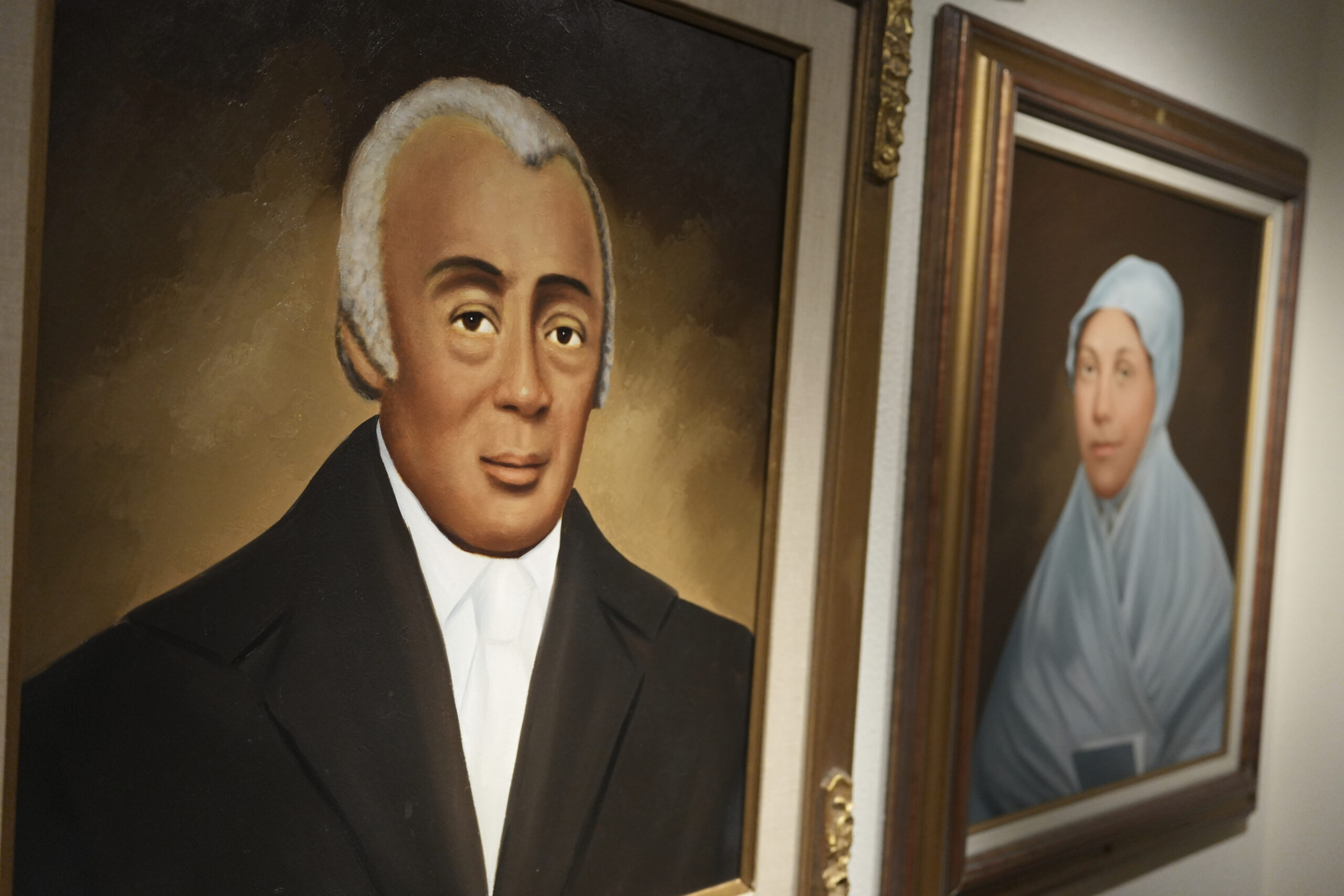
    Portraits of Mother Bethel AME Church founder, the Rev. Richard Allen, and his wife, Sarah, are displayed on a wall at the church’s museum in Philadelphia.

    Faith also defined the involvement and influence of African Americans in the struggle for equality and freedom. Richard Allen and Absalom Jones, both important members of the freed Black community in Philadelphia, left St. George’s United Methodist Church over the racism there. Both Allen and Jones would establish churches: Allen starting Mother Bethel African Methodist Episcopal Church and Jones establishing the African Episcopal Church of St. Thomas.
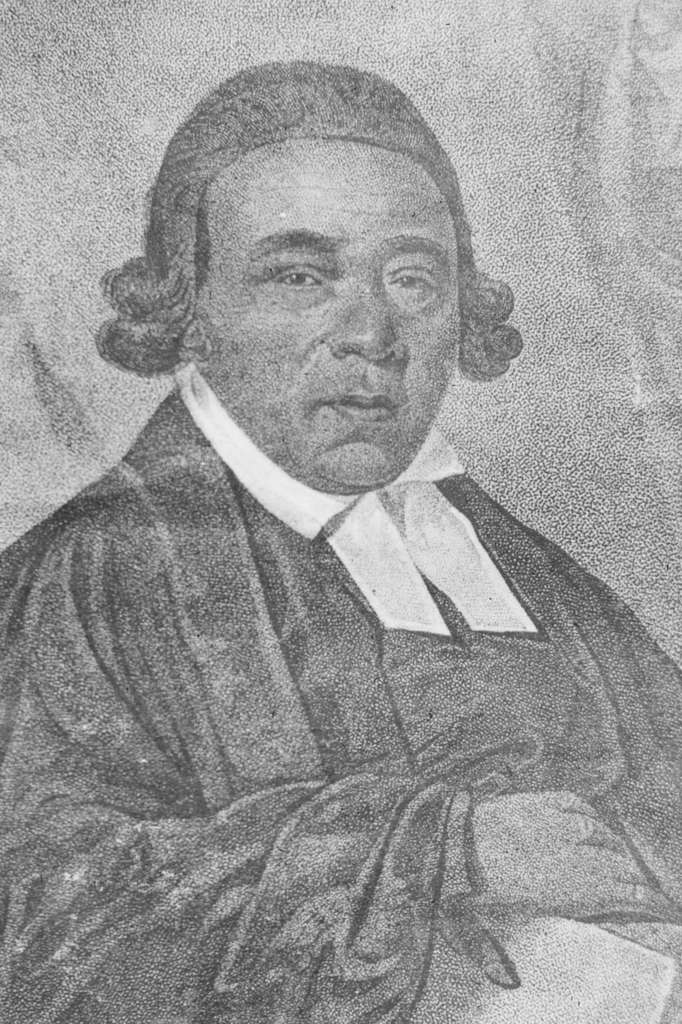
    The Rev. Absalom Jones was a priest in the African Episcopal Church of St. Thomas.

    To wrest Mother Bethel from the attempts of the white Methodist group to gain control over it, Allen would use the legal system, incorporating the church in 1796 and then fighting to keep control of it from the larger white Methodist denomination. Faith, as well as acumen, would give him the determination to see the legal process through to incorporation in Pennsylvania.

    Today, the AME denomination is a worldwide church, estimated to have more than two million members.

    Faith would also play a role in establishing organizations within the African American community.

    Schools in the 19th and early 20th century found their formation in religious organizations post-Civil War. Clergy would pair with white denominations to form schools such as Spellman and Morehouse. Other organizational structures formed by religious communities would include insurance organizations, funeral homes, fraternities, and sororities. The best-known organization, the National Association for the Advancement of Colored People, would also find pastors and religious figures in the initial call for its formation.

    Faith leaders from various religious communities were also instrumental in reminding and challenging white leadership of the promises of democracy and freedom in our founding documents.

    In the 20th century, new religious movements such as Garveyism, Moorish Science Temple, the Nation of Islam, and Father Divine’s peace movement would all organize as a counternarrative to the harsh conditions of racism and Jim Crow in American life. All these movements offered an alternative narrative of not only uplift but also promoted different visions of race through religion that drew followers who questioned the merits of white Protestantism for African Americans.

    Of course, we cannot forget the role of faith in the civil rights movement. While it is obvious to think of the Rev. Dr. Martin Luther King Jr., it is important to remember that King not only found his voice through Christianity, but through the principle of satyāgraha, soul force, coined by Mohandas Gandhi, the famous Hindu leader who promoted nonviolent struggle that formed the foundations of the civil rights movement. Diane Nash, who was Catholic and considered being a nun before becoming an activist while at Fisk College in Nashville, would become an important part of the movement — along with figures like the late U.S. Rep. John Lewis, who was enrolled in divinity school before joining the movement.

    All of these are very brief examples from a very diverse history of faith in the African American community that was not only about individual belief, but many times served as a counter to the racism of religious communities in America that treated African Americans as second-class citizens.

    Suppressing this history by altering it or calling it DEI does an injustice to the history of faith-based organizing in America.

    African Americans’ faith, and the challenges they brought to bear on the racial issues of America, highlighted the promises of the Declaration of Independence and the Constitution. Now, more than ever, we need that faith to sustain us during the 250th anniversary of America.

    Anthea Butler is the Geraldine R. Segal Professor in American Social Thought at the University of Pennsylvania.

  • This developer wants to revive one of South Jersey’s deadest malls. But it’s not a done deal.

    This developer wants to revive one of South Jersey’s deadest malls. But it’s not a done deal.

    A North Jersey developer has plans to finally transform the long-dead Echelon Mall, saying he’d spend more than $250 million to create a “regional destination” with high-end restaurants, entertainment venues, sports retailers, housing, and perhaps even an “upscale supermarket.”

    “We’re going to try to make it Voorhees’ main street” inside the old mall building, said George Vallone, president of the Hoboken Brownstone Co. “Just sort of reinvent the whole thing.”

    The project, which would include townhouses, apartments, a parking garage, and community spaces, was unanimously approved by the Voorhees Township Committee in October.

    But Vallone said his plans aren’t set in stone: The revitalization of the former mall, now called the Voorhees Town Center, depends on whether Hoboken Brownstone can get financial help from the state.

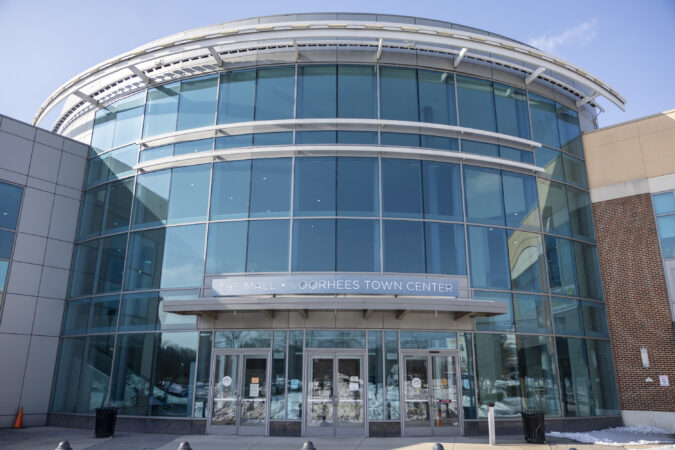
    The entrance to the food court at the Voorhees Town Center, which has been closed for nearly two years after a fire.

    Vallone said his company is applying for a $90 million tax credit for development projects and expects to hear in the coming months whether it is approved. If not, he said, “we walk.”

    Vallone made similar statements in a Philadelphia Business Journal report earlier this week.

    Voorhees Township Mayor Michael Mignogna said he supports “the thoughtful redevelopment of the former Echelon Mall site” as proposed by Hoboken Brownstone.

    “Throughout the process, the township has worked collaboratively with Hoboken Brownstone and Namdar in their private transaction to advocate for the rejuvenation of Town Center, specifically a strong business and retail presence that will restore the site as the center of Voorhees tradition and community,” Mignogna said in a statement.

    He noted that a state tax credit would not affect the developer’s local tax responsibilities.

    The uncertainty represents the latest hurdle in the long quest to revive the sprawling complex off Somerdale Road. Over the years, the 400-acre property, one of the Philadelphia region’s many lifeless malls, has been redeveloped in fits and starts under multiple owners.

    Recently, transformations have begun at nearby malls, including Moorestown and Burlington Center, as the old Echelon Mall languishes.

    What $250 million could do for dead Voorhees mall

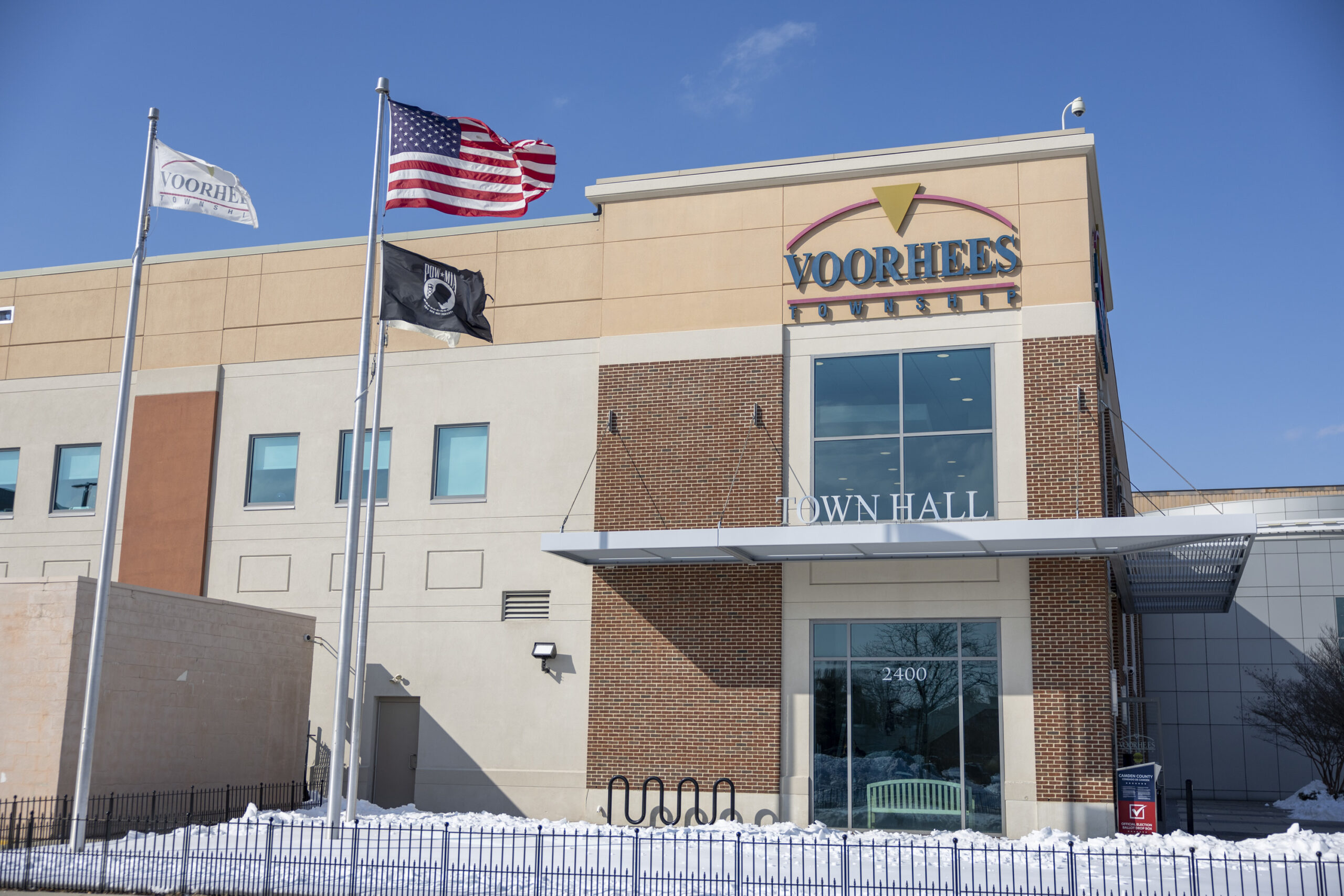
    The Voorhees Township Town Hall would not be included in a potential sale of the closed mall building.

    Voorhees officials, including Mignogna, have been talking about the troubled mall’s revival for two decades.

    Built in the 1970s, the once-bustling Echelon Mall has been struggling with vacancies since the early 2000s.

    In an attempt to turn the mall around, it was partially demolished, and a Main Street-style mixed-use development was built on part of the property in 2008. After this makeover, which cost an estimated $150 million, the complex was rebranded as the Voorhees Town Center.

    Namdar Realty Group, which is known to scoop up distressed malls, bought the property from PREIT for $13.4 million in 2015, but the situation did not improve. Retailers continued to flee. Customers followed. In 2024, a two-alarm fire damaged the inside of the building. It has not reopened since.

    A sign on the door of the Voorhees Town Center, which has been closed for nearly two years due to fire damage.

    Hoboken Brownstone plans to buy the mall building from Namdar in a pending sale, dependent on the tax break, Vallone said. He declined to disclose how much he would pay for the property, and Namdar executives could not be reached.

    The sale would not include the Voorhees Town Hall, which occupies 22,000 square feet of the mall and cost the township $5.5 million.

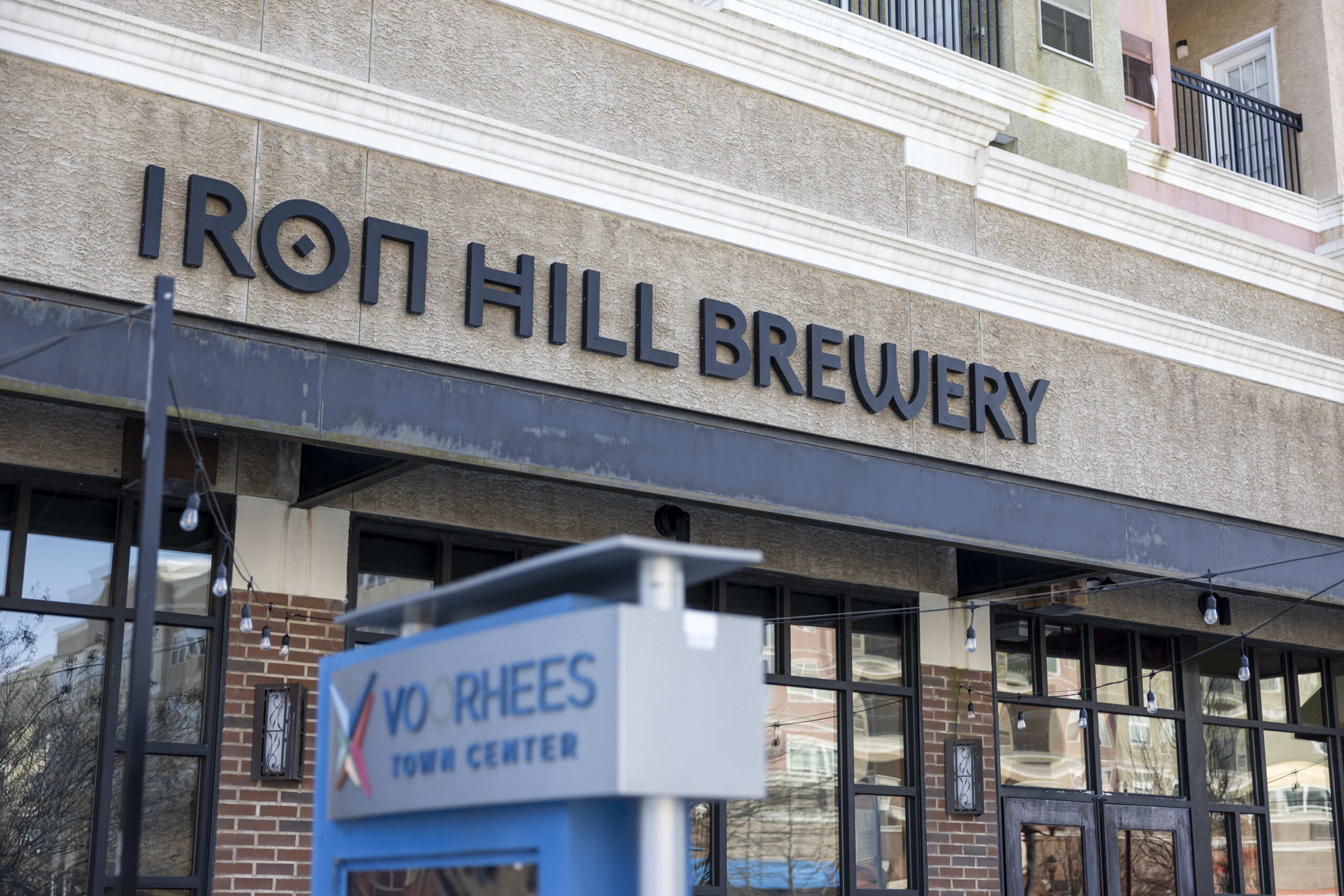
    Nor would it include the property’s existing mixed-use section, Boulevard Shoppes, which had been home to an Iron Hill Brewery until the company filed for bankruptcy and closed all locations this fall. (Township administrator Stephen Steglik said Voorhees hasn’t heard anything from Namdar about what’s next for the Iron Hill space.)

    Voorhees Township officials are in the dark about the future of the closed Iron Hill Brewery.

    Boscov’s, the site’s sole department store, would also be excluded from the sale, and executives have said it would remain open.

    If the sale goes through, Vallone said, construction could begin in early 2027.

    The company plans to build more than 200 market-rate townhouses; more than 100 units of affordable housing, including for-sale townhouses and rental apartments; and a parking garage with at least 1,300 spaces.

    As for the retail space inside the mall, “we’re going to invest a lot of money because there has been very little maintenance done on that thing for the last 20 years,” Vallone said. The mall building will not be torn down, he said, and may look largely the same from the outside.

    Why this developer invests in dead New Jersey malls

    The former Echelon Mail, as seen through a window in October 2024, after a fire damaged the building. The mall has not reopened since.

    In Voorhees, Hoboken Brownstone’s plan differs from its other major mall redevelopment in New Jersey.

    In Flemington, Hunterdon County, Vallone said they’re demolishing Liberty Village, considered the country’s first outlet center, and turning it into a mixed-use complex that will also include townhouses and apartments.

    After buying Liberty Village from Namdar, Vallone said he reached back out to the real estate company to inquire about other mall properties for sale. That’s how he became interested in the Voorhees Town Center.

    Vallone said he believes dead and dying malls can make good investments.

    “Here we have a substantial amount of infrastructure that is feeding the mall,” including plumbing and electric, Vallone said. “That de-risks the project quite a bit.”

    And he said he thinks customers will come to malls-turned-town-centers if they are developed thoughtfully.

    After all, retailers like Amazon can’t deliver everything same-day, Vallone said, and shopping online doesn’t offer the same experience as browsing at a store.

    In-person entertainment, fine dining, and even grocery shopping are also hard to replicate at home, he said: “Certain things, you have to go somewhere to do.”

  • After a historic win, Joi Washington settles into life as Media’s mayor

    After a historic win, Joi Washington settles into life as Media’s mayor

    Joi Washington’s first challenge as mayor came in the form of a winter weather emergency.

    On Jan. 5, Washington was sworn in as Media’s first new mayor in three decades. On Jan. 25, 9.3 inches of snow fell on Philadelphia, setting off a snow emergency declaration. Washington monitored the storm and worked to put parking restrictions and plowing operations into effect.

    It was “fascinating” — a headfirst dive into running a municipal government, she said.

    A graphic designer by trade and former borough council member, Washington moved to Media from Philadelphia in 2013 and fell in love with its walkability and tight-knit community of 6,000. As she learns on the job, friends and colleagues say her intelligence and ability to work across the aisle make her the right person for the role. For Washington, learning how to be a good mayor is all about “being a good neighbor.”

    Media Mayor Joi Washington talks with Garden Café owner Willow Culbertson in downtown Media on Sunday, Feb. 1.

    Who is Joi Washington?

    Washington, 39, was born and raised in Germantown. She graduated from Moore College of Art and Design in 2008 with a bachelor of fine arts in illustration. She has worked for numerous Philly-area companies doing graphic design, digital asset management, and storyboarding.

    Around a decade ago, Washington took a graphic design job in Media. The long commute from Roxborough, where she lived at the time, quickly became tiresome, so she packed up and moved. She met her husband at work, and the two have lived in Media since.

    Washington, a Democrat, was elected to Media’s borough council in 2021, serving until she became mayor last month.

    Katey McVerry, Media’s tax collector, was impressed with Washington as a borough council member. She described Washington as civically and politically engaged, “well known by her neighbors,” and able to work across the aisle.

    When Bob McMahon, Media’s mayor of 33 years, decided to retire last year, Washington stepped up.

    Children played as folks dined on State Street during Media’s Dine Under the Stars event on Wednesday, June 4, 2025.

    A ‘resounding’ win

    Washington campaigned for mayor on expanding public transit options, supporting local businesses, and working with law enforcement to make streets safer for drivers, cyclists, and pedestrians. She was elected with 77% of the vote, beating out Republican Kevin Kellogg.

    Democrats swept local races in Media and Delaware County in November, winning seats on the Rose Tree Media school board, borough council, and Delaware County Council.

    Mary Tonita Austin helped campaign for Washington last year. Austin and Washington met at a Juneteenth celebration when Washington was still on borough council. Last year, when Austin ran for the Rose Tree Media school board, they found themselves in similar spots — Black women running for office in a county that remains largely white (Washington is the first woman and first person of color to be elected mayor of Media).

    Austin gladly handed out Washington’s campaign fliers along with her own.

    “She’s both intelligent and creative, which I think is so important for us to have,” Austin said of Washington.

    Malcolm Yates, a convener of the Delaware County Black Caucus, said Washington’s win was “resounding.”

    Media is 82% white, according to the most recent census estimates — a percentage nearly 1.5 times higher than the Philly metro area at-large. Before Democrats won three seats on the Delaware County Council in 2019, the body had been controlled by Republicans since the Civil War.

    “It shows that the county has been moving and progressing forward to be more of a melting pot,” Yates said of Washington’s win. “You don’t necessarily have to always look or identify a certain way to be a leader.”

    Media Mayor Joi Washington at Media Borough Hall Sunday, Feb. 1, 2026.

    Becoming the mayor

    Washington describes the first few weeks of being mayor as a “whirlwind.” There are webinars to watch, police reports to study, hands to shake, and nuggets of advice to glean from McMahon, now retired, whom Washington has stayed in touch with.

    There’s a lot to look forward to, as well. Media recently secured grants to purchase a new ambulance, enhance walkability within the borough, and improve Barrall Community Park. Washington hopes to bring in visitors to shop and dine at Media’s small businesses, continuing the borough’s ascent as a Delco destination. Washington rattled off a list of forthcoming events with excitement: Dining Under the Stars, the completion of Plum Street Park, and the Media Spring Arts Show.

    As for her personal life, Washington said she is trying to find balance as mayor, which is a part-time gig in Media. Washington is still working as a freelance illustrator and graphic designer. She is also a natural introvert learning to manage an increasingly busy social calendar.

    “I’m also glad that I have two cats to keep me sane. My husband’s very supportive. I think it’s really good to have a life outside of politics,” she said.

    This suburban content is produced with support from the Leslie Miller and Richard Worley Foundation and The Lenfest Institute for Journalism. Editorial content is created independently of the project donors. Gifts to support The Inquirer’s high-impact journalism can be made at inquirer.com/donate. A list of Lenfest Institute donors can be found at lenfestinstitute.org/supporters.

  • How the Canadian prime minister’s anti-Trump speech could change the U.S. economy | Expert Opinion

    How the Canadian prime minister’s anti-Trump speech could change the U.S. economy | Expert Opinion

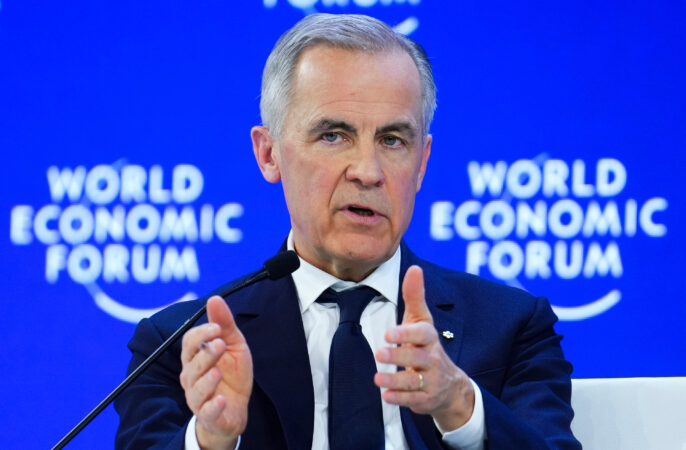
    Canadian Prime Minister Mark Carney may have given the most important economic speech of all the attendees at the World Economic Forum in Davos, Switzerland.

    In it, he addressed the changing face of world economic relationships with a clear, challenging conclusion: “Let me be direct: We are in the midst of a rupture, not a transition.”

    His statement made it clear that the imposition of rules by the world’s most powerful nations will no longer be accepted quietly.

    On behalf of Canada, the tenth largest economy, Carney threw down the gauntlet, saying the pattern of trade and economic relationships that has persisted for decades will undergo great changes, led not by the world’s superpowers, but by the midsize nations who trade with them.

    This is the clearest indication that the backlash to the tariff wars that President Donald Trump started has cut the cords with previously passive but supportive nations.

    The potential economic consequences for the U.S. are massive, though it could take many years before the impacts are clearly understood.

    Many countries will alter their U.S. trade

    While trade is a country-to-country activity, it is no different from a business-to-business relationship.

    If your business partners work well with you, the relationship is long-lasting. But if your partner becomes abusive, a change in the nature of the collaboration is inevitable. You diversify.

    After all the tariffs and threats, our trading partners realize they cannot remain overly dependent on the U.S. They must spread their exports and imports across a larger number of nations.

    Already, Canada, Britain, and the European Union are discussing or finalizing deals with China and India on a variety of goods. These are just the start.

    Agriculture in the crosshairs

    China has cut back on soybean purchases from U.S. farmers. For the five months ending in October 2025, China bought no soybeans.

    Given that China has been purchasing about 55% of U.S. production, U.S. soybean farmers have been devastated, requiring a multibillion-dollar bailout.

    And to make it clear this is not a one-time reduction, China is working to expand its agricultural relationships with South American nations to more permanently diversify its farm supply chain.

    The Canadian call to arms indicates other nations will likely follow the Chinese playbook to escape the political/tariff consequences of disagreeing with U.S. policy.

    There is no coming back from that, to the long-term detriment of U.S. farmers.

    Other key industries at risk

    The military industrial complex is one. Europe purchases a significant amount of U.S. military products because its defense industry cannot supply the continent with enough weapons to go it alone. Instead, it has been hiding behind the U.S. defense shield.

    With U.S. support for NATO in question, Europe now understands it must expand its domestic defense production and diversify its military supply chain.

    While in the near-term, much of the growing European military demand might be met by U.S. suppliers, over the next five to 10 years, a whole new European defense industry is likely to be developed, putting sales to NATO nations by U.S. manufacturers at risk.

    EVs and alternative energy

    The Trump administration is ending much of the government’s support for electric vehicles (EVs). At the same time the rest of the world is gravitating toward EVs.

    In China, EV sales topped 50% of the market last year, while in Europe, EV demand exceeded gasoline-powered vehicles in December for the first time. Sales growth in areas such as South Korea and South and Central America were up by about 50% in 2025.

    Placing tariffs on products being embraced by the rest of the world, while disincentivizing their purchases domestically, is shifting the EV supply chain to countries where it is welcomed.

    Similarly, the antagonism toward renewable energy is also creating competitive issues for U.S. companies.

    Europe blew it badly when it decided to depend on Russian oil and natural gas for a significant portion of its energy needs. That has changed dramatically.

    Europe is in a race to diversify its energy supply chain. But instead of ramping up demand for U.S. petroleum products, it is making agreements with energy companies based in the Middle East, North Africa, and Canada, and is rushing into renewable energy sources such as wind and solar.

    As long as the U.S. wants to dictate to foreign countries how they should behave, the search for more dependable trading partners will continue. That will affect not just the industries highlighted but the entire economy.

    The delinking of Europe and other countries from the U.S. will, over time, reduce foreign demand for our exports. They will have other sources of supply. That slows growth.

    Prices and interest rates may rise

    Interestingly, this change in the world’s trade patterns could force some manufacturers to return to the U.S.

    That may sound positive, but it’s not. The reason goods aren’t produced domestically is that they can be produced more cheaply outside the U.S.

    The only way previously imported products can be manufactured here is if the tariffs are high enough to make foreign goods more expensive than the domestically produced ones.

    If the price we pay for the made-in-America goods is higher than what we paid when they were imported, replacing imported goods with tariff-protected domestic production is inflationary.

    Higher prices also reduce consumer spending power.

    Which brings us to the Federal Reserve and interest rates.

    In this new tariff-driven world, inflation is likely to remain higher than the Fed desires.

    It will be difficult to cut interest rates significantly if inflation doesn’t come down.

    In summary

    Demand for U.S. exports will decline, slowing growth, while prices of imported products continue to rise.

    Inflation is likely to remain high, cutting consumer spending power and keeping interest rates elevated.

    A wide variety of industries could see their worldwide sales hurt, potentially significantly.

    So, buckle up, the future is no longer what it used to be.

  • The Sixers have entered the NBA trade deadline madness. What will they do next?

    The Sixers have entered the NBA trade deadline madness. What will they do next?

    Could we see another alteration to the 76ers‘ roster before they face the Los Angeles Lakers at 10 p.m. Thursday at Crypto.com Arena?

    There was always a belief that the Sixers would shed some salary before the 3 p.m. Thursday trade deadline to get below the luxury tax threshold. They also needed to free up a roster spot to sign two-way players Dominick Barlow and Jabari Walker to standard deals.

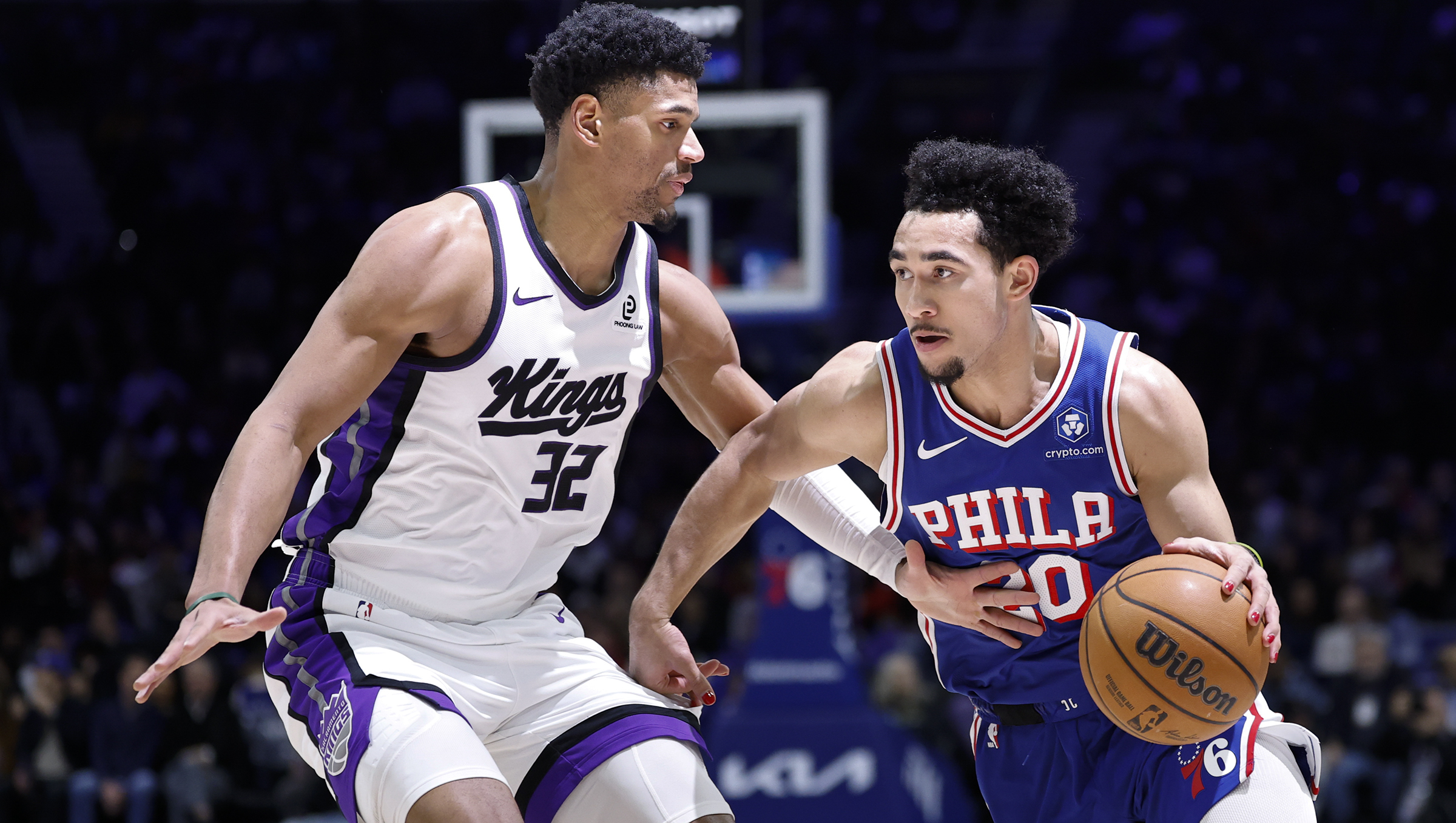
    And the squad might have accomplished both by trading Jared McCain to the Oklahoma City Thunder in exchange for the Houston Rockets’ 2026 first-round pick and three second-rounders. One of the second-rounders is the 2027 most favorable pick from Oklahoma City, Houston, the Indiana Pacers, and Miami Heat. The others are the 2028 Milwaukee Bucks and 2028 Thunder picks.

    The Sixers are now $3 million below the luxury tax threshold after trading away McCain’s $4.2 million salary for draft assets.

    But is there another deal to be made? There’s a sense that this roster, as it’s currently constructed, has a chance to position itself for an Eastern Conference title.

    The Sixers (29-21) take a five-game winning streak into their contest with the Lakers (30-19). The conference’s fifth-place team is 3 ½ games behind the second-place New York Knicks with 32 games remaining.

    The Sixers traded Jared McCain to the Oklahoma City Thunder in exchange for the Houston Rockets’ 2026 first-round pick and three second-rounders.

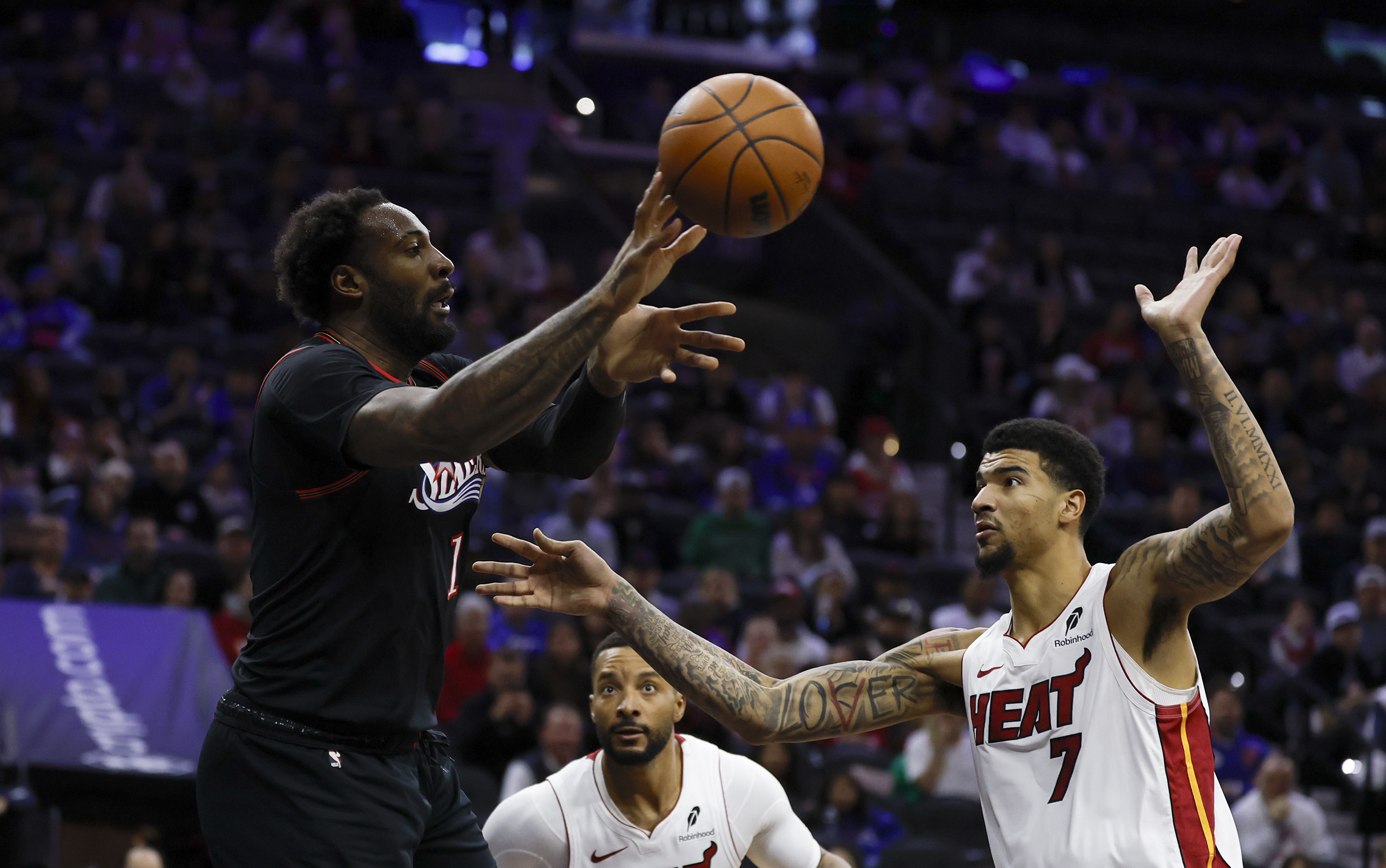
    Multiple sources insist that the Sixers are still willing to trade reserve center Andre Drummond.

    But while McCain battled inconsistent play during his return from last season’s knee surgery, Drummond is the team’s best rebounder and has 12 double-doubles this season.

    Parting ways with Drummond would be a blow to the Sixers’ depth. With Joel Embiid resting on the second night of a back-to-back, Drummond started his 18th game of the season Tuesday night against the Golden State Warriors. The 6-foot-11, 279-pounder had 12 points, 12 rebounds, one steal, and a block in the 113-94 victory.

    Sixers center Andre Drummond is averaging 6.9 points and 8.8 rebounds in just 19.8 minutes per game.

    But more than providing a presence, Drummond has been a great teammate, setting screens, playing hard, and mentoring younger players.

    Sixers guard Tyrese Maxey has seen the same traits from many of his teammates.

    “As far as the trade deadline, when I was younger, I was a part of every [possible trade] situation,” Maxey said. “So you have to keep your head low, keep working. It’s a business, at the end of the day. Whatever happens, happens.

    “I like this group. I think our group is really good, really tight, and guys like each other. So whatever happens, we will always support each other.”

    At this stage of his career, it remains to be seen what kind of return the Sixers would receive for Drummond.

    In fact, Maxey and VJ Edgecombe are the only trade assets who would pull in a player capable of drastically improving the team. And both are considered untouchable.

    But by trading McCain, Daryl Morey, the Sixers’ president of basketball operations, has made a deadline deal every year since being hired in2020.

    And he’s not the only NBA executive making moves. The Detroit Pistons, who sit atop the East, received sharpshooter Kevin Huerter and former Sixers post player Dario Šarić from the Chicago Bulls in a multiteam trade that sent Minnesota Timberwolves point guard Mike Conley and Pistons combo guard Jaden Ivey to the Bulls.

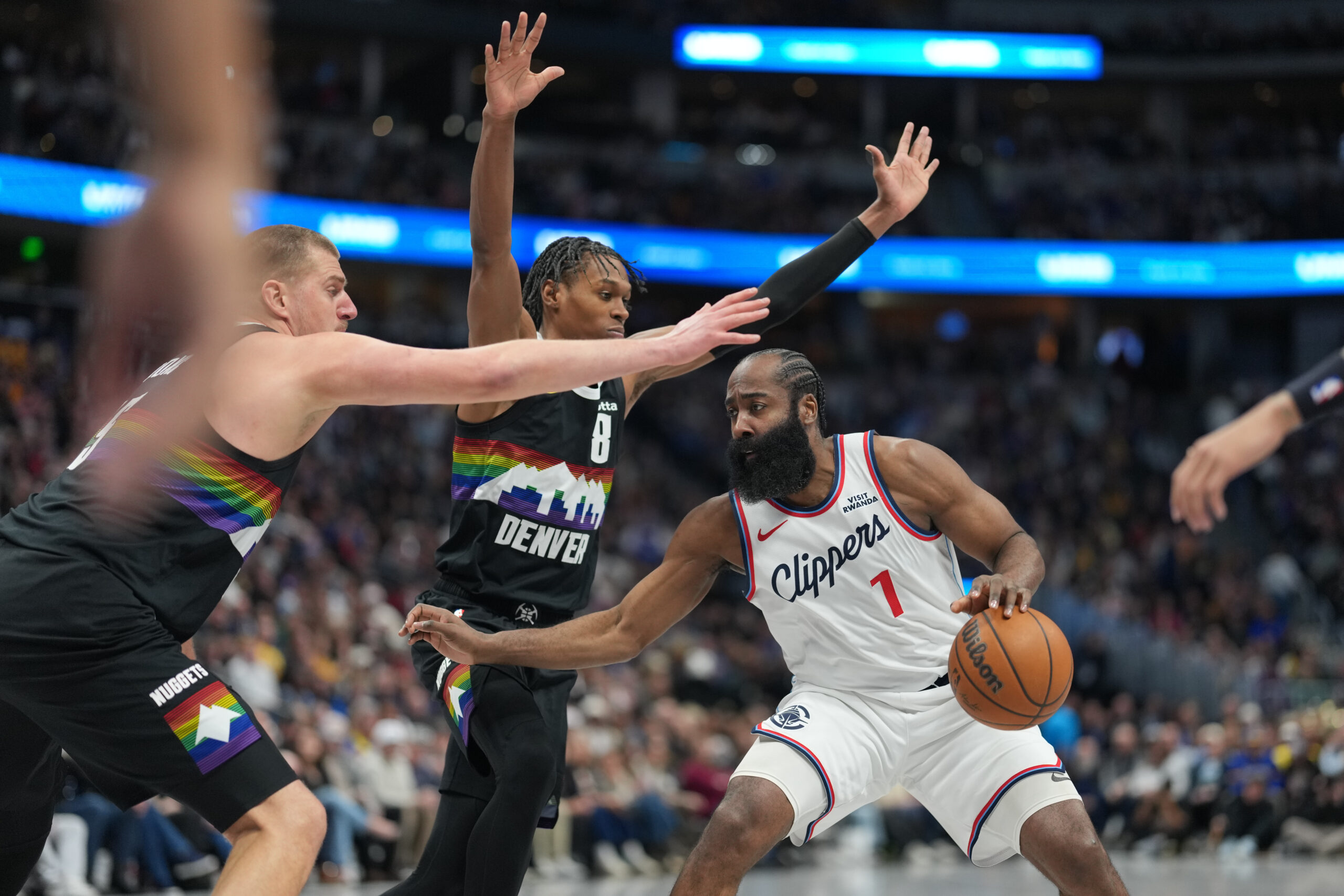
    The Los Angeles Clippers traded former Sixers guard James Harden (right) to the Cleveland Cavaliers on Tuesday.

    The third-place Boston Celtics are acquiring two-time All-Star center Nikola Vučević, a former Sixer, and a second-round pick from the Bulls in exchange for Celtics guard Anfernee Simons and a second-round pick.

    And the fourth-place Cleveland Cavaliers traded two-time All-Star guard Darius Garland and a second-round pick to the Los Angeles Clippers for 11-time All-Star point guard James Harden, another former Sixer.

    Harden will be paired in the backcourt with seven-time All-Star shooting guard Donovan Mitchell. Cleveland (31-21) also has frontcourt difference-makers in 2025 Defensive Player of the Year Evan Mobley and rim protector Jarrett Allen. Both players have made an All-Star team.

    “He does James Harden stuff,” Maxey said about his close friend being traded. “He’s a dynamic player with playoff experience. He knows how to play the game, knows how to get guys involved. He’ll take some pressure off D-Mitch, for sure, and get those other guys, Mobley, Allen, [Jaylon] Tyson, all those guys easy shots.”

    The big question is: What else will the Sixers do?

  • Meet the architect whose style defined modern Jersey Shore homes

    Meet the architect whose style defined modern Jersey Shore homes

    Coastal homes featuring wooden gambrel roofs, cedar siding, covered porches, and inside spaces that flow out to patios and pools are mainstays of Jersey Shore properties. The architect who brought that look to the area, arguably, is Mark Asher.

    For more than four decades, Asher has left his imprint on homes from Cape May to Rumson to the Philly suburbs, everything from 1,200-square-foot cottages to 15,000-square-foot mansions.

    Now principal of Asher Slaunwhite + Partners in Jenkintown, Asher has come a long way since designing his first house in 1986: an 1,800-square-foot Cape Cod in Ocean City for his parents.

    “I suppose my parents were looking for a return on their investment,” Asher said. “The house was serviceable. It stood up and didn’t leak, which puts me well ahead of most architects’ first-house experience.”

    Architectural blueprints in Asher’s office.

    That first solo experience taught him many lessons, mostly “that there was a lot to learn,” he said.

    One of those lessons he acquired along the way was that many cultural myths about architects exist, beginning with the notion that architects are generalists who know a little bit about a lot of things. In fact, he said, the reality is that you have to become very, very good at many, many things.

    “We are balancing the skills in land use, regulatory environment, technology, budget, and design,” Asher said. “And of course, client relationships. The house — the finished product — is the tip of an enormous iceberg.”

    Those relationships have been the cornerstone of his business. He has a long list of repeat customers and takes pride in designing homes for the children of former clients.

    Early in his career, Shore homes on Seven Mile Island, home to Avalon and Stone Harbor, were his bread and butter. Today, about 60% of his work comes from the Shore, and the rest from coastal clients who hire him for their inland homes.

    Steve and Nancy Graham had Asher design two homes: their Avalon beach house in 2003, and their primary home in Wayne a year later. Nancy had worked for a builder at the time, and was a true collaborator during the design process.

    The house of Steve and Nancy Graham in Avalon, which architect Mark Asher designed for the family in 2003.

    They razed an existing cottage, replacing it with a two-story, 4,000-square-foot, six-bedroom vacation home for their family, which at the time included their three children. Now, eight grandchildren make memories there.

    The Graham’s Shore house was nothing like the Wayne house he designed for them, which replicated that house’s traditional, historical neighbors. Their Avalon property was Asher’s first foray into designing Shore homes and included a gambrel roof, cedar siding, and a covered porch.

    “I had designed many houses like this before anyone built one, but I kept getting shot down,” Asher said. “Once it was done, it was like a hit song, and it was all people wanted.”

    A childhood passion

    As early as he can remember, Asher loved to sail. Spending his summers at the Shore, he’d tool around in a small dinghy, hugging the Jersey coast from Brigantine to Cape May.

    “The sights and sounds, the feel, and even the smells of these coastal towns became etched in my memory,” Asher said. “So when I started to work in the various beach towns, it was really just going back to a place I’d already been.”

    He had a similar passion for architecture at an early age, curious about old houses. He’d park himself on the curb, sketch pad in hand, and draw the houses he found most interesting. Those were his Architecture 101 lessons.

    (From left) Laura Glantz, Jeanine Snyder, Mark Asher, and Deborah Slaunwhite chat in the office of Asher Slaunwhite + Partners in Jenkintown.

    “I grew up in old houses, warts and all,” he recalled. “They were constantly being worked on. Saturday mornings invariably meant a trip to the lumberyard or the hardware store. And I love old houses still — their history and their stories.”

    After graduating from Virginia Tech School of Architecture in 1982, he worked at various architecture firms, learning the subtleties of his profession. In 1992, the Ocean City Yacht Club hired Asher for a redesign, and in 1995 the Avalon Yacht Club followed suit.

    “This was pre-computer, pre-Internet, so the OCYC project was drawn by hand,” he recalled. “Hard work and passion will cover the sins of inexperience.”

    Building for today’s family dynamic

    Asher’s first home design came in 2000, a relatively small two-coastal cottage that cost about $125 per square foot to build. Today, that same house would cost about eight times that, outpacing the inflation rate by 1,200%, Asher said.

    His designs have evolved along with the needs of his clients. Shore houses today are often designed for three generations of living.

    “Now you need areas for people to come together, but also to separate under the same roof,” said Michael Buck, president of Buck Custom Homes in Avalon and Ocean City, who has worked with Asher on about 30 projects.

    A home in Ocean City designed by architect Mark Asher.

    Although homes previously housed multiple generations, they weren’t purposefully designed to accommodate the needs of extended families. In many cases, homes are shifting to a more contemporary style, with five en-suite bedrooms, an elevator, and dedicated HVAC closet.

    “Mark’s plans capture a certain simplicity of the coastal environment of the home,” Buck said. “His architecture speaks to a classic, thoughtful approach to how a house blends in with its environment on a micro and macro level.”

    Asher’s entry into coastal building brought a greater emphasis on the home’s exterior, both in beauty and function.

    “When Mark came to town, the shift toward second homes from purely rental properties had already begun,” said Jack Binder Sr., broker at Ferguson Dechert Real Estate in Avalon. “The affluent, personal-use buyer wanted to express themselves through custom housing that stood apart from the rest and featured high-end amenities.”

    “Mark married functional interior space that flowed to exterior entertaining areas allowing his clients to enjoy their home to the max,” Binder said.

    One of the homes designed by Mark Asher in Avalon.

    Asher’s home interiors are thoughtfully designed, said Allison Valtri, principal of Allison Valtri Interiors in Avalon.

    “His windows are very carefully placed so that the light comes in in a way that is unexpected,” Valtri said. “Some of my favorite windows are ones that are capturing the sky. That fulfilling moment of peace is very thoughtful.”

    Asher also brought a desire for lush, green lawns to replace the stones that had previously filled the yards. “The stones were hot in the summer, cold in the winter, and ugly all year round,” he said.

    “When I began, I was working in a very traditional architectural palette,” he said. “The ’70s and ’80s were not very kind to beach architecture — think big hair and shoulder pads or stucco and a fondness for inexplicable round windows. So I was on a sort of reclamation project.”

    If it’s true that imitation is the sincerest form of flattery, Asher should feel quite proud.

    An architectural model at the offices of Asher Slaunwhite + Partners.

    “He elevates and then watches everyone else catch up,” Buck said. “For example, not long ago, a wood roof was an anomaly, but now it’s mainstream.”

    But Asher sees it differently. Imitation just means he needs to challenge himself to find something better.

    He shares credit for his successes with those who have helped and inspired him, including his wife and longtime collaborator, Susan Asher, as well as his architect partners, Deborah Slaunwhite and Laura Glantz, and his business partner Jeanine Snyder. He also enjoys mentoring young architects.

    “Any profession has a responsibility for the generation that comes after it,” Asher said. “And I’ve often believed that my own start was a little rockier than it might have been. Some early guidance would have been helpful. So you pay it forward.”

  • Other Pa. transit systems are dealing with the fiscal crunch that hit SEPTA last year

    Other Pa. transit systems are dealing with the fiscal crunch that hit SEPTA last year

    The bus system serving 11,000 daily riders in Lehigh and Northampton Counties cut its service 5% last week, a result of the continuing uncertainty around state funding for mass transit.

    LANTA did not eliminate any routes but has reduced the number of trips on 13 bus lines.

    “If there’s no solution coming, we’ll have to make deeper cuts,” Owen O’Neil, executive director of LANTA, said in an interview.

    Gov. Josh Shapiro last fall used executive authority to flex long-term funding for capital projects to cover daily operations at SEPTA and Pittsburgh Regional Transit (PRT) for two years, following an impasse with lawmakers.

    Most of the state’s 33 smaller public transit systems did not get that big an assist and now are facing unpleasant belt-tightening choices amid rising costs and years of underfunding from Harrisburg.

    LANTA is planning to raise fares in March.

    But the agency was able to make smaller cuts than the 20% it had budgeted because the Pennsylvania Department of Transportation granted it $13 million to stabilize service over two years, O’Neil said.

    With federal COVID-19 relief funds, LANTA was able to expand service to 11 popular new worksites in the fast-growing Lehigh Valley. It’s the third-largest system in Pennsylvania.
    In the state budget unveiled Tuesday, Shapiro proposed increasing the share of sales tax revenue reserved for SEPTA and its fellow mass transit agencies, raising a projected $319 million a year.

    If the idea is enacted, however, new money would not begin flowing until July 1, 2027 — the start of the 2028 fiscal year. The tax rate itself would stay the same but transit would get 6.1% of the revenue, up from 4.4%.

    O’Neil said LANTA likely could wait that long if needed. But “we don’t have the stable source of funding,” he added. It would be difficult to continue to operate the expanded routes without one, O’Neil said.

    “Our governor is not meeting the moment,” said Connor Descheemaker, statewide campaign manager of Transit for All PA!, a nonprofit advocacy group.

    “Adjusting the sales tax allocation does not meet the structural deficit facing a single one of Pennsylvania’s public transportation systems,” they said.

    Postponing a change for 18 months gives lawmakers and the governor a longer runway to reach agreement on a stable, recurring source of money for transit — either via Shapiro’s proposal or through a new revenue stream.

    State funding for transit operations has declined steeply since the 2013 passage of Act 89, which used toll revenue from the Pennsylvania Turnpike to raise $450 million a year through 2022.

    SEPTA, which got $394 million from the state-sanctioned flex of capital dollars last year, has said it is not considering major service cuts or fare increases this year.

    Executives figure that SEPTA can provide current levels of service until summer 2027.

    The transit agency estimates that it would get $183 million in the first year if the governor’s Tuesday proposal is enacted, said Erik Johanson, SEPTA’s chief financial officer.

    With a local match of $27 million, “the difference between what the governor is proposing and how much we need is getting closer and closer to being sufficient,” Johanson said.

    Yet there has been no proposal to replace the capital money that the transit agency and PRT essentially borrowed against.

    “Those dollars are gone, and they have to be replenished,” he said.

    Descheemaker’s group estimates that seven smaller transit systems, including in the State College area, will have to cut service or raise fares if no solution is in the offing.

    “It’s disappointing that we continue to hear about transit as if it is something that only affects Philadelphia and a little bit of Pittsburgh,” Descheemaker said.

  • Sean Clifford was coached by Sean Mannion as a Packer. Here’s what he says Eagles fans should expect.

    Sean Clifford was coached by Sean Mannion as a Packer. Here’s what he says Eagles fans should expect.

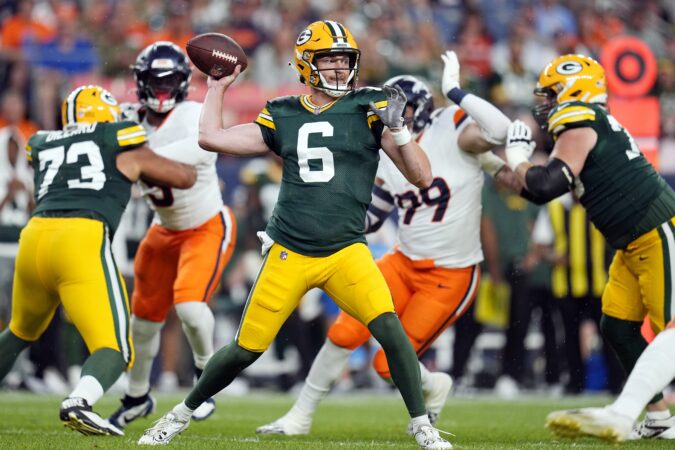
    Quarterbacks are people, too. Sometimes, like everyone else, they have tough days at work. They need support from a willing ear. Sean Clifford, the former Green Bay Packers backup quarterback, is no different.

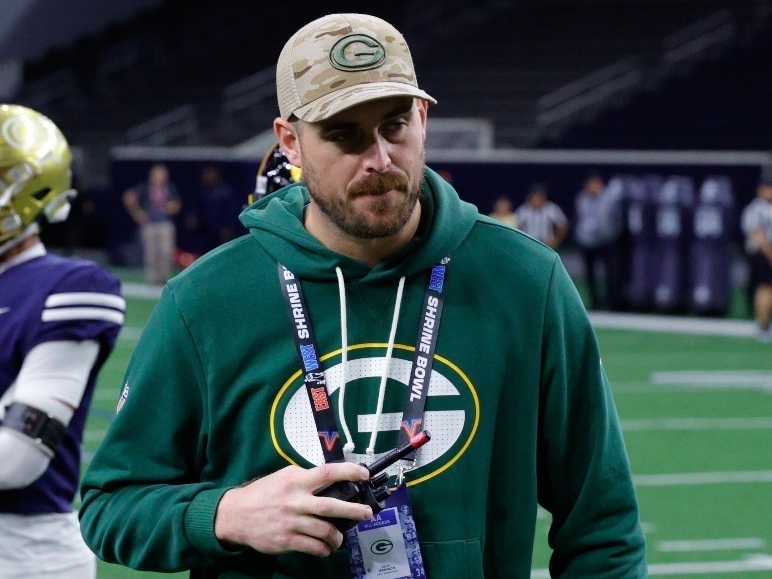
    For Clifford, the former Penn State QB now with the Cincinnati Bengals, that willing ear was once Sean Mannion, the former quarterbacks coach with the Packers who was named Eagles offensive coordinator on Jan. 29.

    When Mannion took on the role with the Packers quarterbacks last summer, he had only one year of coaching experience. He had served as an offensive assistant in 2024 under Tom Clements, the legendary quarterbacks coach who worked with Brett Favre, Aaron Rodgers, and Jordan Love over a span of 14 seasons.

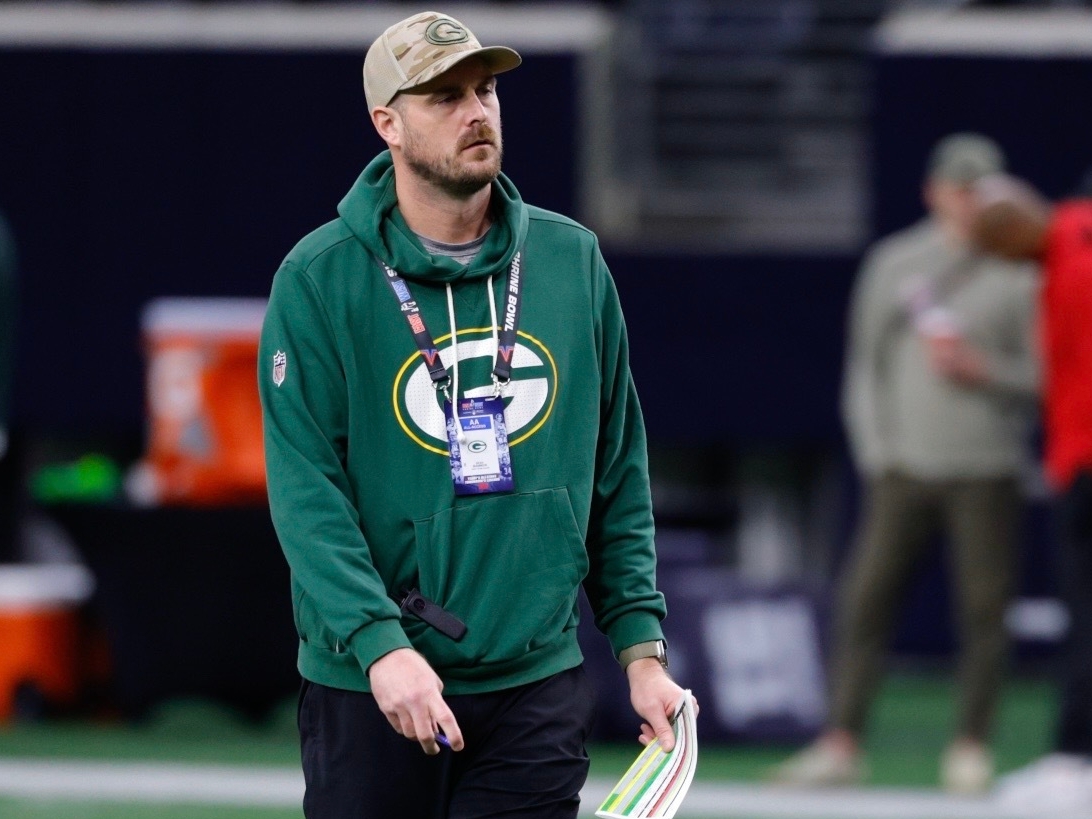
    Sean Mannion served as the Packers’ quarterbacks coach in 2025.

    Still, Mannion’s wealth of playing experience — nine years as an NFL backup — helped him relate to and resonate with his quarterbacks, according to Clifford.

    “I think it’s the little moments when he had to turn off the coach lens and talk to you, man to man or player to player,” said Clifford, a fifth-round pick by the Packers in 2023. “Whether it’s a great situation or a bad one, I felt like I could always go to him and get some feedback. Always felt like I could go to him and vent to him if I needed to, which is like any other job. Sometimes it just gets tough, and you have to be able to have somebody who you can lean on.

    “He’s been through it. He knows what this league’s all about. He knows it’s not easy, and he was able to switch that on, switch that off well in a way that then allows a guy like me or any of the quarterbacks to see him as one of us. Because it’s really easy, as you climb the coaching carousel … I feel like you get farther and farther away from the locker room. But I feel like Sean was always able to come back down and understand what we’re going through.”

    Mannion, 33, could come back down to his players’ level because he recently stood in their cleats. After stints with the St. Louis Rams, the Minnesota Vikings, and the Seattle Seahawks, he retired from playing at the conclusion of the 2023 season. Within weeks, he joined the Packers coaching staff.

    Even as he played, Mannion kept his eye on his anticipated future as a coach. He said in a news conference in May that he was “attacking his playing career” with his eventual transition to coaching in mind, absorbing as much knowledge as he could from his litany of coaches, from Sean McVay to Matt LaFleur to Klint Kubiak and beyond.

    But taking the jump from offensive assistant to offensive coordinator in just two years? Who could have predicted this rapid rise?

    “From the outside looking in, it’s probably the most surprising thing ever,” Clifford said. “But if you work with the guy, you know why he’s risen as fast as he’s risen. From a day-to-day perspective, it’s [a] constant commitment to excellence. It’s a never-ending pursuit to get better.”

    Malik Willis (left) and Jordan Love both had quality 2025 seasons after Mannion was promoted to quarterbacks coach.

    Growth in Green Bay

    That commitment to excellence was reflected in the collective growth of the quarterback corps last season, according to Clifford, who was cut at the end of training camp. Clifford said he never lost his connection with his former Packers teammates, especially Malik Willis, Love’s backup last season and one of Clifford’s close friends.

    Willis, 26, worked his way into becoming a more-than-capable backup behind Love in his fourth NFL season. Clifford watched from afar as Willis completed 85.7% of his passes on 35 attempts in his four games (one start) for the Packers in 2025.

    “I don’t want to speak for Malik, but I know that he would probably attribute some of that to how Sean Mannion prepared him,” Clifford said.

    Preparation is Mannion’s forte. He spent the 2024 season assisting Clements with the quarterbacks, “doing all the stuff that nobody wants to do,” Clifford said. That included running the scout team, drawing up play cards for the scout team, making film cutups, and doing plenty of other odd jobs required of young coaches.

    He drew on all of his experiences, no matter how small, as he blossomed into his role as quarterbacks coach. Mannion had a database of film compiled throughout his playing career that he referenced with his quarterbacks, including his own practice film dating back to 2015, the year the Rams drafted him in the third round out of Oregon State.

    He was invested in the overall improvement of the room, not just the starter, Clifford said. Mannion was constantly in the quarterbacks’ ears, asking them about aspects of the offense that they liked and didn’t like. In the meeting room, Mannion held open-ended discussions with his quarterbacks about the offense, ensuring that every member was engaged. On the field, he could give real-time feedback as if he were in the quarterback’s shoes, because he had been.

    “You throw a pick and some coaches might be just [ticked] because you just didn’t see [the defender] or something,” Clifford said. “But there’s a guy in your lap and you’re trying to make a play, and Sean would never get too hot about anything. Never too high, never too low. Would just pretty much be the same guy. And it’s good to have consistency at the coaching position. In my personal opinion, I feel like that’s the best way to coach.”

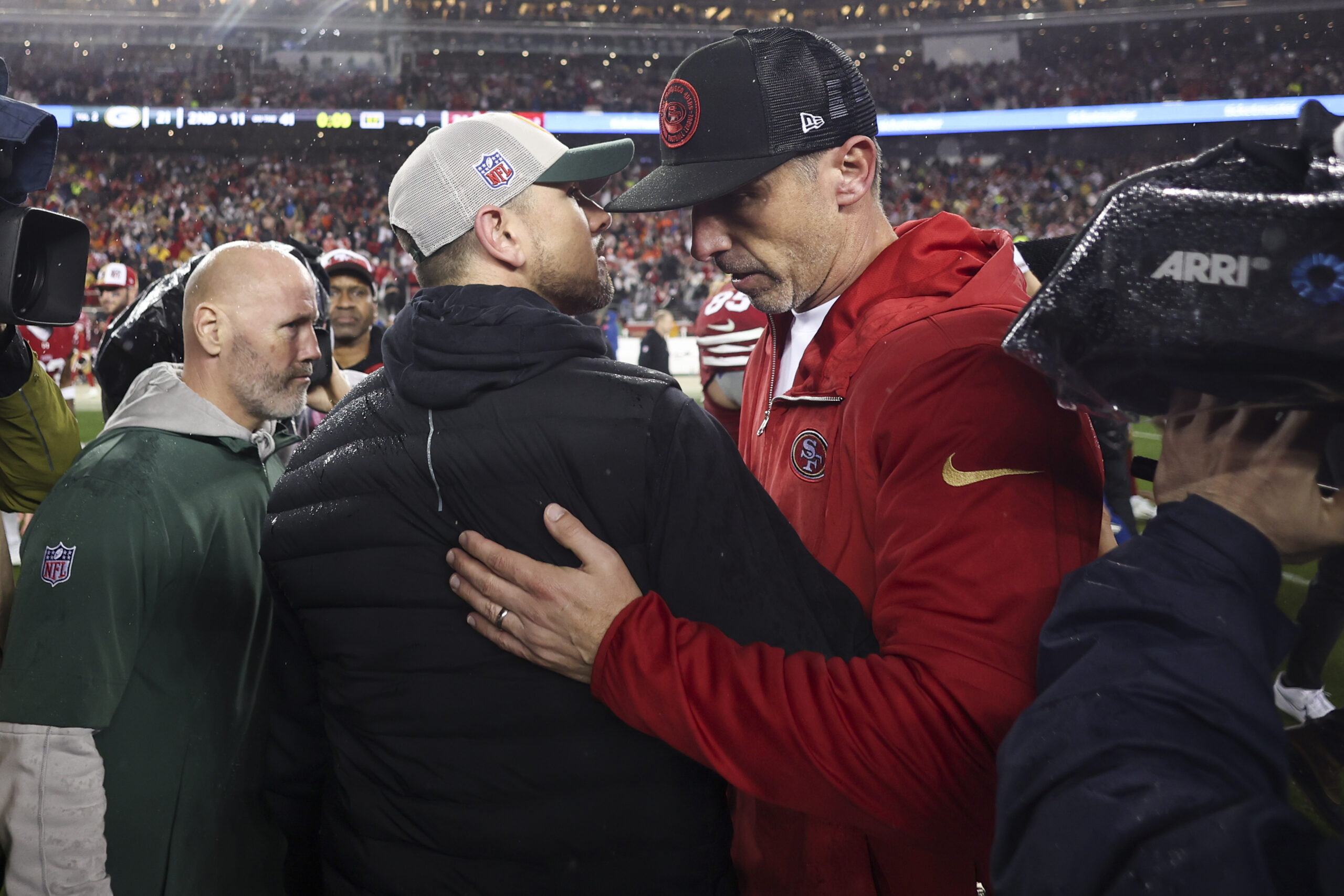
    Expect elements of the scheme favored by 49ers coach Kyle Shanahan (right) as well as Matt LaFleur of the Packers (center).

    Projecting the new-look Eagles offense

    Over the next 200-plus days, Mannion will be tasked with revamping an Eagles offense that floundered under ex-offensive coordinator Kevin Patullo in 2025.

    But what will a revamp look like? And how much influence will Nick Sirianni have on the scheme?

    Mannion’s past could be the best indicator of what lies ahead for the Eagles offense. He spent large chunks of his playing career with offshoots of the Mike and Kyle Shanahan tree, beginning with McVay when he became the Rams’ head coach in 2016. LaFleur, another branch on that tree, served as Mannion’s offensive coordinator with the Rams in 2017 before they worked together for the last two seasons with the Packers.

    “I would be shocked if [the Eagles offense] came out and it was completely different than a Shanahan-style offense,” Clifford said. “But I do think that with the communication that I know he’ll have with Jalen [Hurts], it’ll be a nice blend. You’ll see things from what Jalen has ran the past, what he’s been able to do athletically, physically, with his arm talent, all of it.”

    When LaFleur arrived in Green Bay in 2019, he emphasized the importance of the marriage between the run and the pass, a philosophy that harkens back to Mike Shanahan’s days with the Denver Broncos. The scheme attempts to achieve that marriage in part through the incorporation of play-action passes, especially from under center.

    Sean Mannion will have a major challenge as he sorts out the Eagles’ offensive issues.

    Other hallmarks of the McVay and Shanahan offense include the use of pre-snap motion and outside zone runs. Like most of those offenses, Clifford said the majority of passing plays in Green Bay included a “pure progression,” in which a quarterback goes through his reads in a fixed order instead of attempting to diagnose a defense pre-snap and determine which side of the field the ball ought to go. Clifford explained that the pure progression reads can help the quarterback get the ball out of his hands faster.

    “Defenses are getting really, really good at being able to disguise,” Clifford said. “[It] used to be so easy to see certain things, like if [an edge rusher] was standing up, versus in a three-point [stance], you knew what was coming. They are super dialed in on all of that. So there’s really not those same tells. So you have to be able to just feel zones.

    “I like to compare it a little bit more to basketball nowadays. It’s like you’re running motion instead of just plays. But if you’re able to adjust and just play football, you can have a lot of success. And that’s where I think Jalen will have a tremendous amount of success within this offense, because he’s a gamer. He wins. And if you have a winning quarterback, a guy who’s just going to go out there and play, I think you can have a lot of team success as well.”

    The offensive scheme is just one uncertainty surrounding Mannion’s future in Philadelphia. How will he fare in an offensive play-caller role for the first time in his career? Again, given his familiarity with Mannion’s preparation, Clifford said he is ready for the undertaking.

    “I feel like Sean will put himself into the game before it happens a lot throughout the week, and then, similar to how Matt does it, watch tape and just call games based on what a defense is giving them on that tape,” Clifford said. “Are they giving more one-high [safety]? Are they getting more two[-high]? Are they blitzing? … And I feel like Sean will go into his first game and it will be his, like, 100th game, because he’s probably called it so many times. And that’s [what] I think that Philly fans should feel pretty, pretty good about, even though it’s a young hire.”

    While the big picture of the Eagles offense will remain a mystery until the season begins, the finer details and fundamentals that Mannion has always preached at the quarterback position likely won’t change.

    According to Clifford, Mannion was big on a quarterback’s “base and balance.” Clifford worked with Mannion to improve those facets of his footwork, as they were often the keys to moving the sticks in the passing game and avoiding “GBOT” (get back on track) situations after losing yardage on early downs, something the Eagles struggled with last season.

    The person behind the coach won’t change, either, Clifford said. Mannion made Clifford feel welcomed, whether he was inviting the quarterbacks to dinner at his house or balancing the preparation in the meeting room with non-football talk. Mannion may be young, Clifford said, but he knows how to connect with his players.

    “I think Sean makes everybody around him better,” Clifford said. “And I think it’s not surprising in the slightest that now a team is willing to take that chance to bring him up to the OC level.”

  • Jared McCain’s Sixers tenure was full of ups and downs — and it ended quicker than expected

    Jared McCain’s Sixers tenure was full of ups and downs — and it ended quicker than expected

    LOS ANGELES — Jared McCain took charge during Tuesday’s second quarter at the Golden State Warriors and thrust both arms into the air. He pointed across the Chase Center court toward the 76ers’ bench, a motion veteran Kyle Lowry mimicked back to the second-year guard.

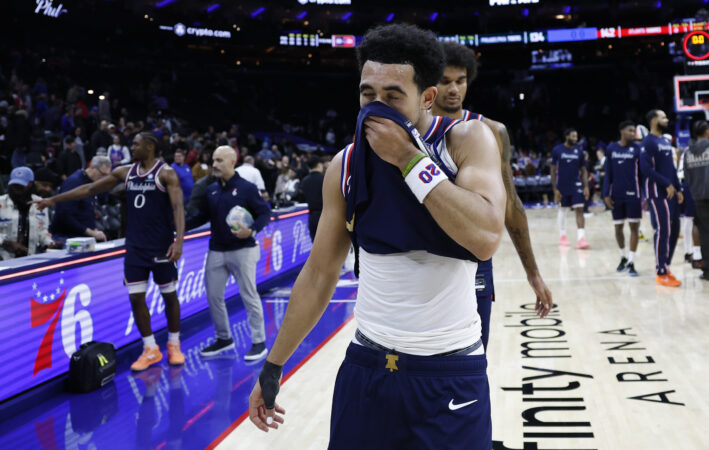
    That turned out to be one of McCain’s final moments as a Sixer. He was traded Wednesday afternoon to the Oklahoma City Thunder in exchange for draft compensation, abruptly ending his stint in Philly.

    McCain’s tenure will be marked by immediate promise after being selected 16th in the 2024 NBA draft, a bright spot in a mostly miserable season. Then, the knee and thumb injuries that required surgery and zapped 11 months from his early basketball development. And, finally, that he essentially ran out of time to regain his footing with the Sixers amid a guard group bolstered while he was sidelined.

    McCain’s popularity extends beyond basketball diehards. The 21-year-old has nearly five million TikTok followers, where he documents his on- and off-court life and partakes in social-media dance trends. He paints his nails. He practices meditation. He picked up non-basketball activities, such as the piano and learning Spanish, while he could not walk or play.

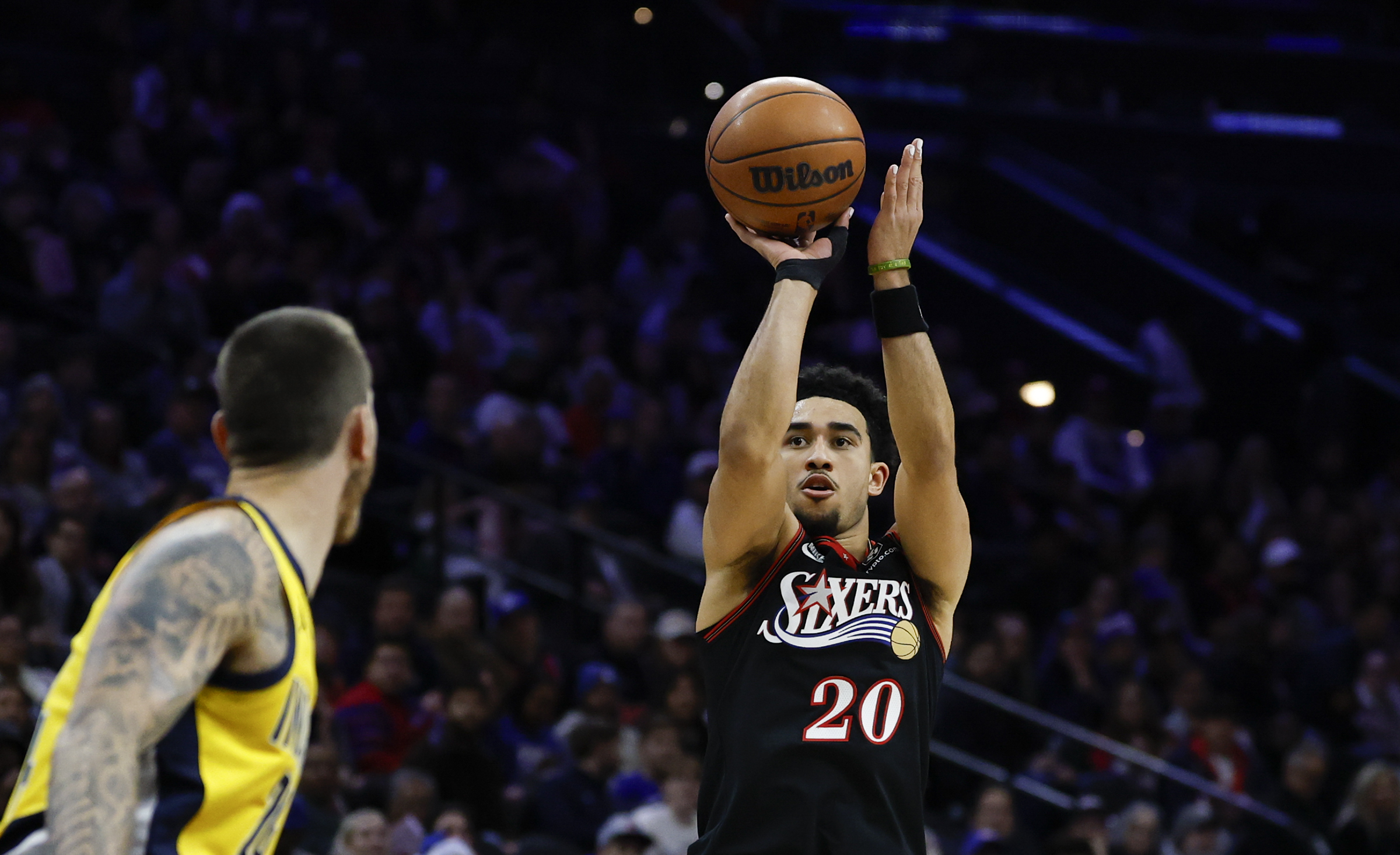
    He also made an immediate impact on the Sixers, averaging 15.3 points and 2.6 assists in 23 games as an early Rookie of the Year frontrunner. His dynamite three-point shooting carried from college to the NBA, connecting on 38.3% of his 5.8 long-range attempts as a rookie. He flashed a crafty ability to drive and finish at the basket or pull up for midrange jumpers, and started developing as a backup point guard option.

    Then he hit his head on the court during a Dec. 13, 2024, home game against the Indiana Pacers. Tests did not reveal a concussion, but found a torn meniscus in his left knee that would end his season. After months working his way back from that, he tore a thumb ligament in a “freak” accident while playing defense in an informal pickup game days before training camp began in late September.

    While McCain was recovering from those injuries, the Sixers’ guard depth increased. VJ Edgecombe, the third overall pick in last summer’s draft, became an instant starter and an impact player on both ends of the floor. Last February, the Sixers traded for Quentin Grimes — and will now likely prioritize re-signing the sixth man following a messy restricted free agency saga last summer.

    Jared McCain shot 38.3% from three-point range in his first season with the Sixers.

    “You never try to compare,” McCain said when asked recently about that competition for guard minutes last week. “You’re always on your own journey. I knew my time was going to come, and I knew it’s going to continue to come.

    “There’s going to be ups and downs, but you kind of stay focused on yourself. It’s not in a selfish way, but it’s more to just worry about yourself in these moments, because it’s bigger than you. You can’t have too big of an ego in this.”

    McCain returned to game action Nov. 4 at the Chicago Bulls, but did not make a shot in his first four games played. He ditched a clunky knee brace that made him feel unbalanced in favor of an “Incrediwear” sleeve, and eventually removed the brace on his shooting hand. He twice joined the G League’s Delaware Blue Coats to try to generate some flow with heavier minutes. As the Sixers returned to relative full strength, McCain slipped out of the rotation. He averaged 6.6 points, 2.0 rebounds, and 1.7 assists in 16.8 minutes across 37 games.

    “I don’t think he’s had much of a runway to play consistently,” coach Nick Nurse said on Jan. 19.

    Yet this move arrives just as McCain had finally rediscovered some rhythm.

    At the tail end of a brutal Jan. 26 loss at the Charlotte Hornets, he connected on four three-pointers. He went 5 of 6 from deep the next night against the Milwaukee Bucks, and made another four attempts Saturday against the New Orleans Pelicans. He also looked more comfortable running the offense during Monday’s victory at the Los Angeles Clippers, and Nurse said he has been pleased with how McCain has played within the Sixers’ defensive schemes.

    All-Star teammate Tyrese Maxey also singled McCain out on Saturday as a teammate who could provide scoring punch during Paul George’s 25-game suspension for violating the league’s anti-drug policy.

    “He has fought his way out of a little funk,” Maxey said then. “And to do that is hard, man. It’s really hard, especially when you don’t play every night [and] the uncertainty of the roster …

    “It’s just a weird spot to be in. But he’s fought his way out, and I see the confidence coming back into him.”

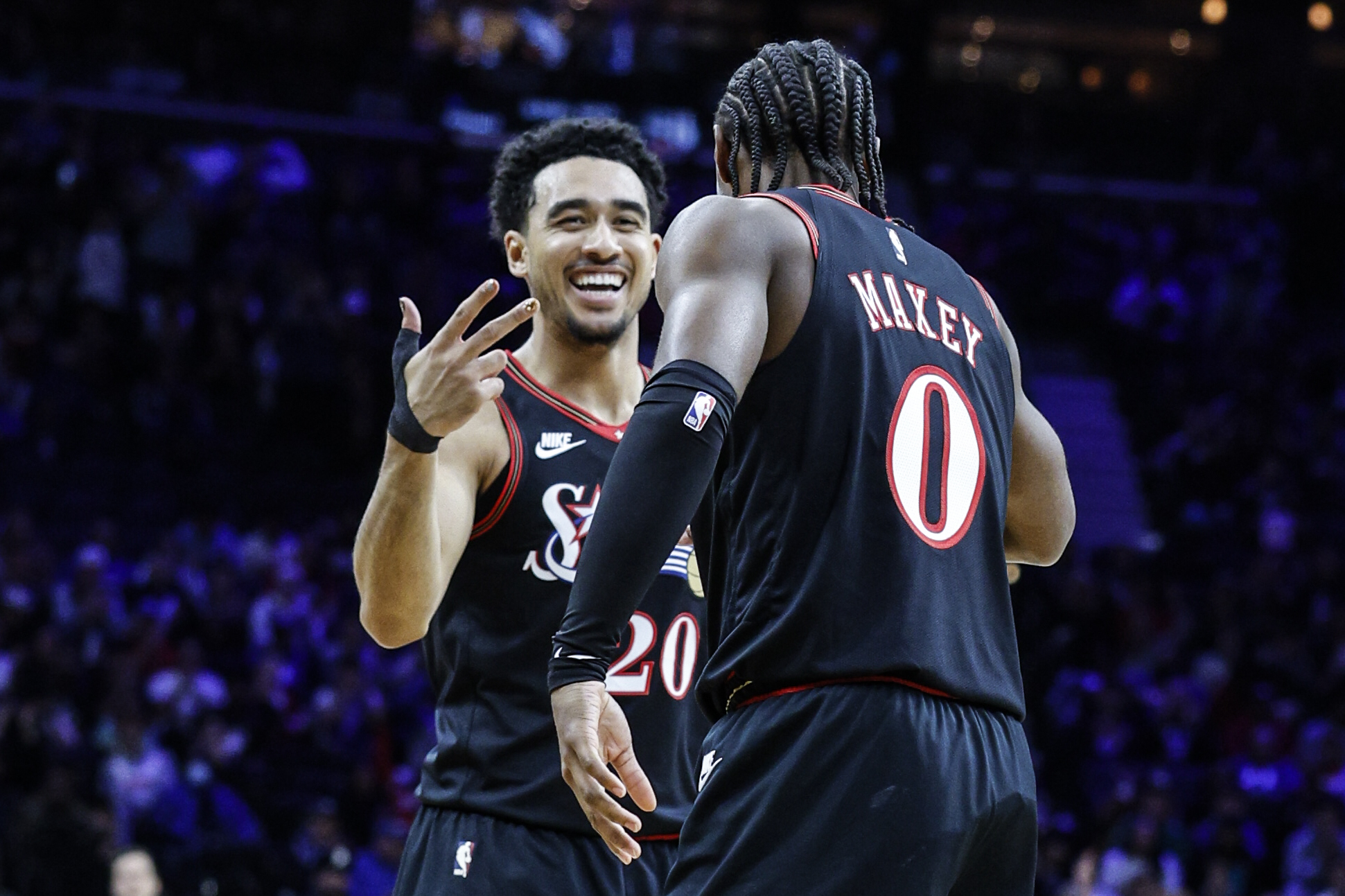
    Jared McCain was gaining more confidence on the court, according to Tyrese Maxey.

    During this mini resurgence, McCain also spoke about refocusing on staying present. He will need that as he abruptly shifts to a new NBA home with about 30 regular-season games remaining. He joins the defending NBA champions anchored by reigning MVP Shai Gilgeous-Alexander, and an organization with a history of identifying and developing young players.

    It is the latest step in an already winding NBA journey for McCain, whose Sixers tenure is now over quicker than expected.

  • Brian Fitzpatrick has more cash on hand than any other swing district Republican incumbent in the country

    Brian Fitzpatrick has more cash on hand than any other swing district Republican incumbent in the country

    U.S. Rep. Brian Fitzpatrick has more cash on hand than any other GOP incumbent in a swing district nationwide as the party prepares for a tough election.

    The Bucks County lawmaker raised about $4.3 million in the most recent cycle, more than any other House candidate in the state and the 21st most of all the candidates running for the 435-member House in 2026. He ended 2024 with nearly $4.4 million when removing debt and had more than $7.3 million cash on hand as of Dec. 31. That haul makes him the best-funded of the 16 candidates on the National Republican Congressional Committee’s Patriots program, a group of vulnerable incumbents in key swing districts, according to Federal Election Commission data.

    “Brian Fitzpatrick has years of electoral success under his belt and will continue to be unbeatable in Bucks County because Pennsylvanians know he’ll always put them first in Washington … this race was over before it began,” NRCC spokesperson Reilly Richardson said in a statement.

    But Fitzpatrick’s district is one of four in Pennsylvania that could determine the control of the U.S. House and has long been coveted by Democrats because of its purple electorate. It is one of nine GOP-held districts in the country that former Vice President Kamala Harris won in 2024.

    Bob Harvie, a Democrat who chairs the Bucks County commissioners, has emerged as the front-runner to face Fitzpatrick in the 2026 election.

    Harvie, who would need to win the May primary to face Fitzpatrick, raised nearly $930,000 last year and has more than $400,000 cash on hand. He surpassed $1 million after getting $100,000 in the first few weeks of the year, according to his campaign.

    “Based on the outpouring of support we are receiving, it’s clear voters agree and are fired up to be a part of this campaign,” Harvie said Wednesday in a news release about his fundraising.

    Harvie made history flipping the Bucks County board six years ago, has strong name recognition in the district, and has the backing of national Democrats. But Fitzpatrick ended the year with nearly 20 times more cash on hand.

    Fitzpatrick received more money from each of New York and Florida than from in-state donors in 2025, according to FEC data. Harvie received the vast majority of his money from Pennsylvania.
    Fitzpatrick could be less vulnerable than other swing-state Republicans

    Fitzpatrick has set himself apart as willing to vote against President Donald Trump without blocking the president’s flagship bills. He was the only Pennsylvania Republican to vote against Trump’s One Big Beautiful Bill Act on final passage, and Trump called him disloyal in response. But Fitzpatrick had cast a key vote that propelled an earlier version of the legislation forward.

    He recently joined Democrats and two other swing-district Republicans in the state to vote to extend Affordable Care Act subsidies, which Republicans quashed. Fitzpatrick criticized House Speaker Mike Johnson (R., La.) and called some of his Republican colleagues “intellectually dishonest.” But Democrats have argued that Fitzpatrick has not been critical enough of the president, whom he often avoids naming when challenging his policies.

    Fitzpatrick has consistently outperformed Trump in the suburban district. He won his most recent election by nearly 13 percentage points.

    Jim Worthington, a GOP mega-donor in Pennsylvania and owner of the Newtown Athletic Club, said that Fitzpatrick’s approach makes him “the perfect representative for a purple county.”

    “Everybody that’s moderate and people that are independents, they love him because he votes to what best represents his constituents, and by the way, sometimes he takes some votes that make me cringe a little bit, but I understand why he does it,” Worthington said.

    Heather Roberts, a spokesperson for Fitzpatrick’s campaign, attributed the incumbent’s fundraising success to his ability to break the partisan mold.

    “Strong fundraising follows strong leadership — and Congressman Fitzpatrick has built a broad coalition of Republicans, Democrats, and Independents who are rejecting the extremes and backing two-party, patriotic, common-sense solutions,” Roberts said in a statement.

    But Democrats are still trying to tie Fitzpatrick to the president, whose popularity is falling, according to Pew Research Center and other pollsters.

    Fitzpatrick “is no maverick and no John McCain — he is a doormat for Trump’s worst instincts and a greenlight for D.C. Republicans’ dangerous agenda that is hurting our community,” Harvie said Wednesday in a statement to The Inquirer.

    “Pennsylvanians deserve a Congressman who will stand up to Trump and actually do something to lower prices — but Fitzpatrick is weak and caves to his own party when it matters most,” said Eli Cousin, a spokesperson for the Democratic Congressional Campaign Committee, in a statement.

    Democrats, including Harvie, will also be trying to build on their successes from the November 2025 elections, when Democrats flipped two key row offices in Bucks — district attorney and sheriff — and saw wins on local school boards.

    But the nonpartisan Cook Political Report expects Fitzpatrick to be in a safer position than his swing-district colleagues, rating his district as “likely” Republican, while U.S. Rep. Rob Bresnahan’s Northeastern Pennsylvania seat is rated “lean” Republican. Republican U.S. Reps Scott Perry of York County and Ryan Mackenzie of Lehigh County are each in districts rated as a “toss up.”

    Harvie has less cash on hand than the other Democratic front-runners in the state’s swing districts.

    Janelle Stelson, a second-time challenger to Perry, ended 2025 with about $1.5 million cash on hand. Scranton Mayor Paige Cognetti, who is challenging Bresnahan, ended the year with a little more than $800,000 cash on hand. Former federal prosecutor Ryan Croswell, Mackenzie’s Democratic challenger with the most cash, has $612,000 for the Lehigh Valley race.

    Does name recognition make Harvie a ‘formidable’ challenger?

    Harvie’s campaign is confident that he can cash in on name recognition, having won two countywide commissioner races in the last seven years that could help raise his profile among voters in the 1st Congressional District, which includes all of Bucks County and a sliver of Montgomery County.

    Provided he wins the primary, Harvie would be the first Democratic challenger to Fitzpatrick’s seat who has held countywide elected office.

    But will that help Harvie’s chances?

    “The starting point that Bob Harvie has with his name ID as a commissioner is just a much better starting point,” said Brittany Crampsie, a Democratic consultant in Pennsylvania, noting that he would not need to spend as much money introducing himself to voters in an expensive Philadelphia-area media market.

    “He has a lot of advantages going into this race, not the least of which is his name ID, but he would be probably the most formidable matchup we’ve seen against Fitzpatrick in his tenure,” she added.

    “Maybe,” GOP consultant Christopher Nicholas said as to whether Harvie has valuable name recognition, adding that “among hardcore Democrats his name ID is decent because they’re hardcore Democrats.”

    “But if you stood out on the streets of Tullytown or Riegelsville or Dublin and said, ‘Who are your county commissioners?’,” residents may be unfamiliar, Nicholas said.

    As of October 2025, 43% of respondents to an internal Harvie campaign survey conducted by Public Policy Polling could identify Harvie, with 26% giving him a favorable rating and 17% an unfavorable. That poll had the commissioner and Fitzpatrick tied at 41%.

    This article has been updated to include a comment from Fitzpatrick’s campaign received after publication.