When Mayor Cherelle L. Parker unveiled her much-anticipated plan to address Philadelphia’s housing crisis last year, there was predictable criticism from the political left. Activists said the proposal drafted by the moderate Democrat would not do enough for the city’s poorest residents.
Less predictable was that a majority of City Council stood with them.
Even the Council president, a centrist ally of the mayor, sided with a progressive faction that just two years ago had been soundly defeated in the mayor’s race — but whose new de facto leader in City Hall has proven adept at building alliances across the ideological spectrum.
At the center of that shift was Jamie Gauthier.
The second-term Democratic lawmaker from West Philadelphiahas solidified herself over the last year as a leading voice on Council and a counterweight to Parker. She has worked within the system as opposed to trying to break it, maintaining relationships with power players who disagree with her on policy.
She counts Ryan N. Boyer — the labor leader who is Parker’s closest political ally — among those who consider her a “thought leader.”
“Over the last year, what you saw,” Boyer said, “is her modulate her positions to become more practical.”
Gauthier has generally voted with progressives, including last year when she opposed the controversial Center City 76ers arena proposal. But she has also endeavored to be a team player, at times compromising on ideological battles to focus on priorities in her district.
Last year, she voted for Parker’s plan to cut taxes for businesses and corporations when other progressives opposed it, because her main priority was securing housing funding. She has not opposed some tough-on-crime efforts in the Kensington drug market, instead allowing her colleagues who represent that area to dictate the policy there.
She says she is trying to use her political capital where it matters.
“Why would I take a protest vote and tank a relationship with a colleague when I’m going to need them later?” she said. “I want to win.”
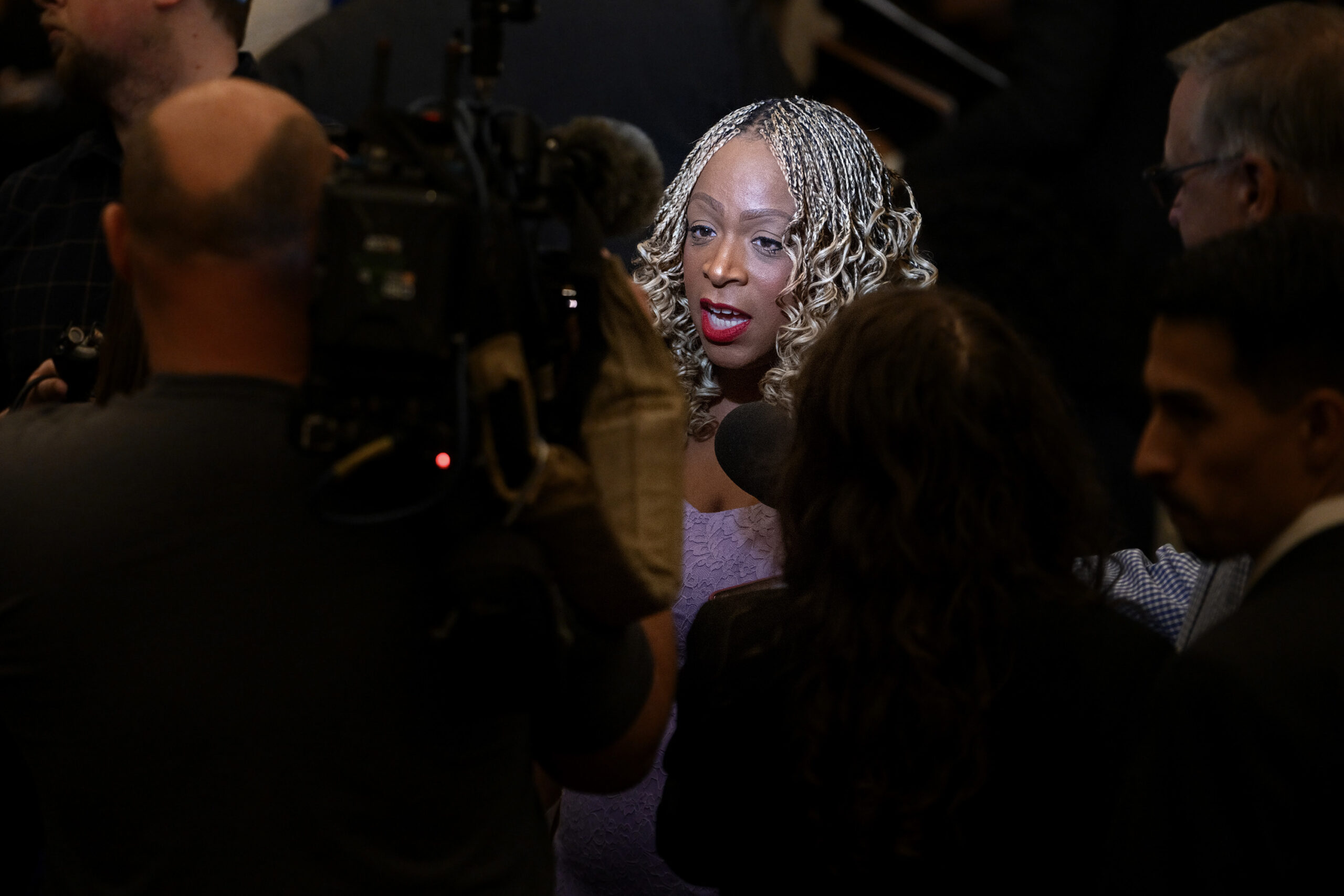
Councilmember Jamie Gauthier talks with news media following a special session of City Council on March 24, 2025.
The fact that Gauthier is a district Council member who represents a large swath of the city west of the Schuylkill also gives her cachet with colleagues. Council has a long tradition of honoring how members want their own neighborhoods to be governed.
Gauthier, who leads Council’s housing committee, has used the influence to make West Philadelphia something of a testing ground for left-of-center policy. Plenty oppose what they see as draconian restrictions on real estate development in her district.
Others see a progressive champion, and some political observers think Gauthier could amass enough support to run for mayor one day. She doesn’t deny that she has thought about it.
But for whatever politics Gauthier can navigate in City Hall, she knows she can rise only if she is successful at home.
‘Not just a lone actor’
When Parker took office, Council was in a moment of upheaval. Council President Kenyatta Johnson was the new leader of the chamber, and several prominent voices were gone after they had resigned to run for mayor themselves.
One was Helen Gym, who was seen as the leader of Council’s left flank. There were questions about who would fill the void once Gym was gone.
Gauthier, 47, an urban planner by trade, did not come up through an activist movement in the same way Gym did, and was a bit more reserved in her style.
But she carries the mantle for the same theory of governance: that lawmakers should prioritize the vulnerable, and that what is good for business is not necessarily good for everyone else.
That set Gauthier on an ideological collision course with Parker, a former Council member who ran for office on a promise to uplift the middle class, a group the mayor believes has been too often ignored.
It came to a head in the fight over Parker’s Housing Opportunities Made Easy, or H.O.M.E., initiative.
Parker wanted to set unusually high income eligibility thresholds for some of the programs so that middle-class families could unlock government subsidies they may not otherwise qualify for. A significant portion of Council, meanwhile, wanted the money to go initially to Philadelphians most vulnerable to displacement.
Parker was clear-eyed about who was leading the charge.
“Councilmember Jamie Gauthier, she may be comfortable and OK with telling Philadelphia homeowners, working-class Philadelphians, that they have to wait and there is no sense of urgency for them,” Parker said in a December interview on WHYY. “But that is not a sentiment that I support or agree with.”
Gauthier is quick to point out that she did not work alone, and that one member of a 17-member body cannot accomplish much. Alongside Councilmember Rue Landau, a fellow Democrat and a housing attorney by trade, Gauthier worked for months to win over her colleagues.
Gauthier didn’t think Parker helped her own cause. A “line was crossed,” she said, when Parker took the fight outside City Hall and to the pulpit. Amid negotiations with Council, the mayor went to 10 churches on one Sunday in December to lobby for support, saying her vision was to not “pit the ‘have-nots’ against those who have just a little bit.”
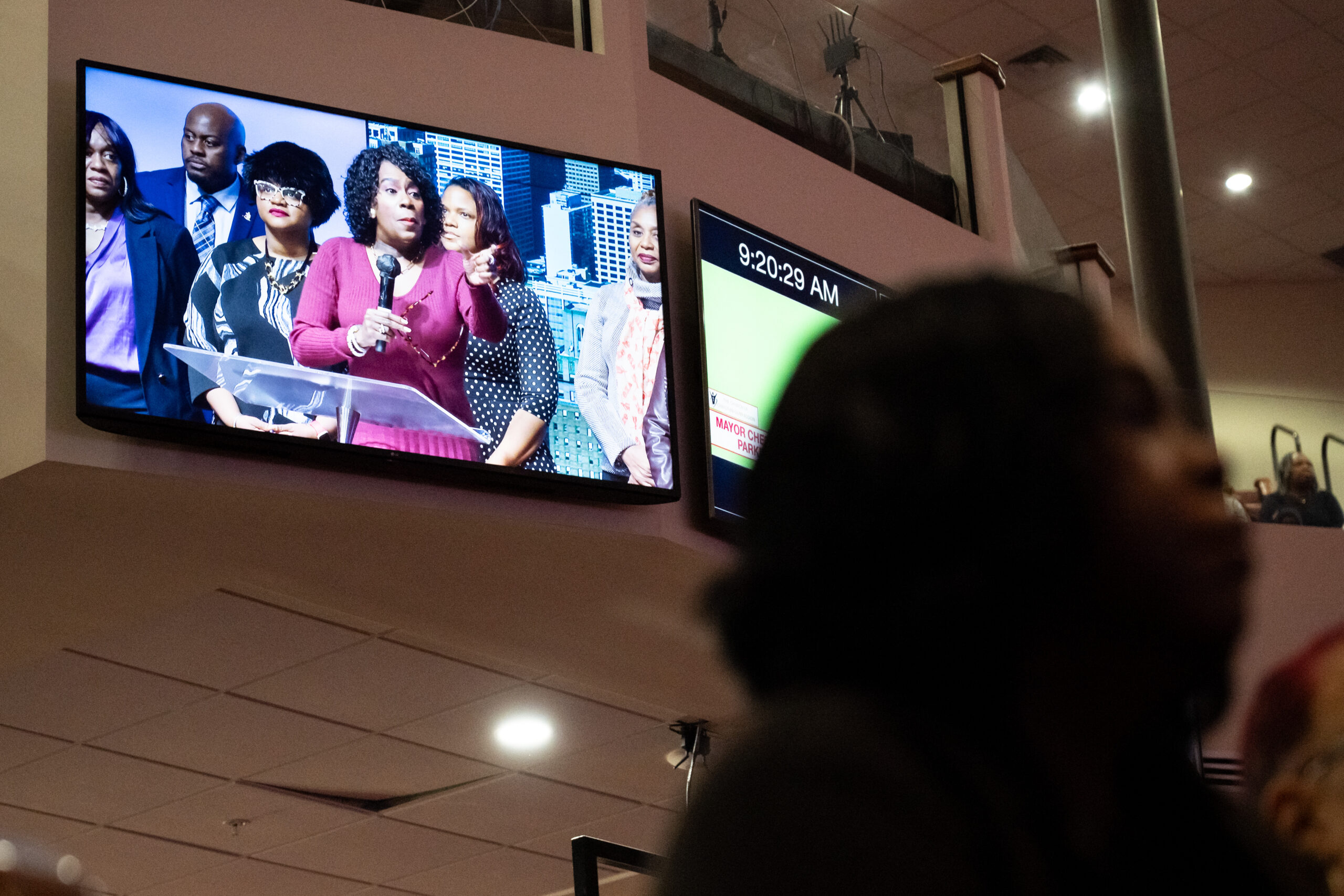
Mayor Cherelle L. Parker speaks to the crowd at The Church of Christian Compassion in the Cobbs Creek neighborhood of West Philadelphia on Sunday, Dec. 7, 2025. Parker visited 10 churches in Philadelphia on Sunday to share details about her HOME housing plan.
To Gauthier, the divisiveness was coming from the mayor’s office.
“I wish the mayor and her administration were more open to other people’s ideas, were more OK with disagreement on policy issues, and more aware of Council as a completely separate chamber of government,” Gauthier said, “as opposed to a body that works for her.”
That is a candid assessment of the relationship between Parker and City Council from Gauthier. Few lawmakers from the mayor’s own party have criticized her publicly.
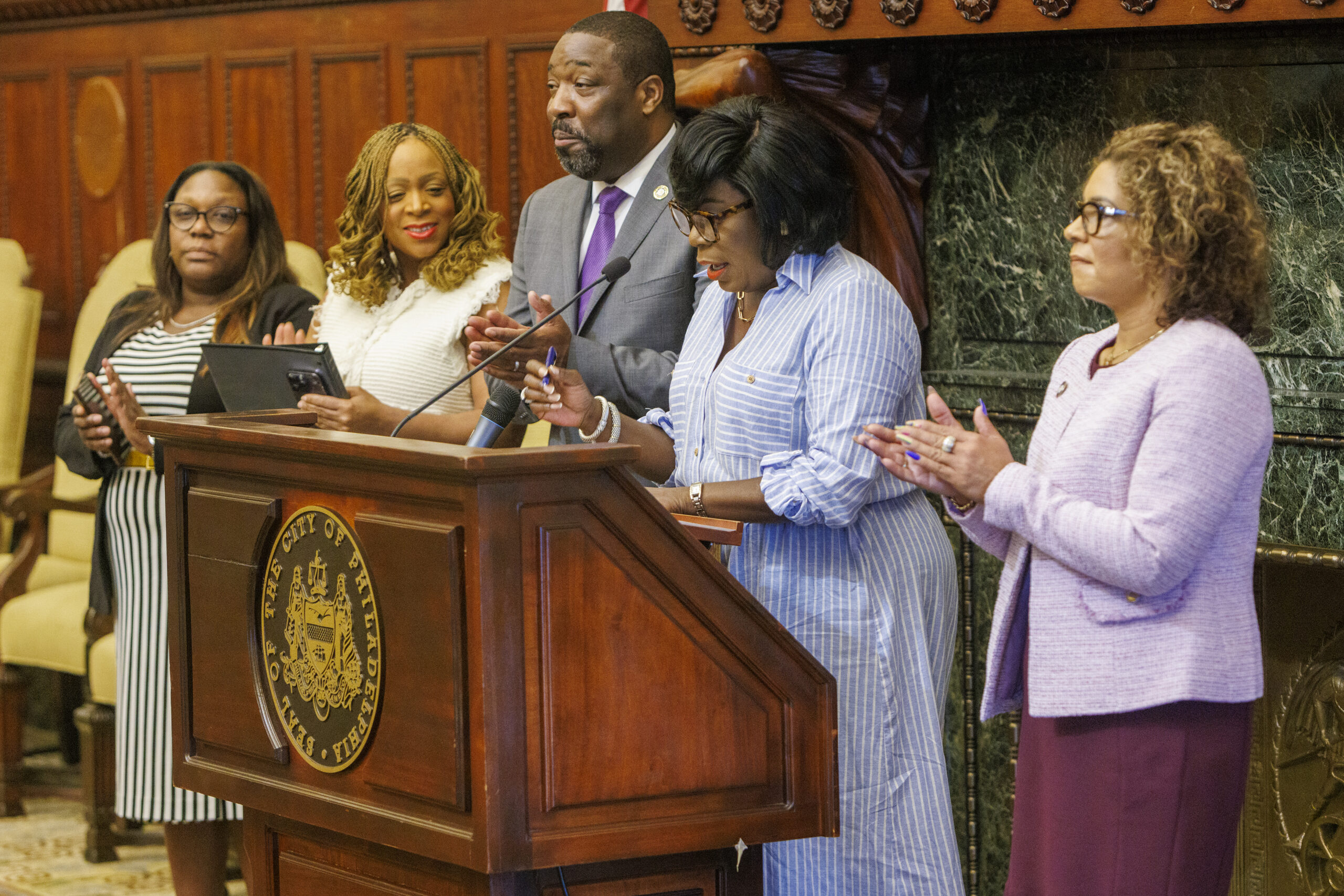
Philadelphia Mayor Cherelle Parker holds a press conference regarding her first budget flanked by members of city council in her reception room, Philadelphia City Hall on Thursday, June 6, 2024. Council members from left are Kendra Brooks, Jamie Gauthier, council president Kenyatta Johnson, and Quetcy Lozada.
State Rep. Rick Krajewski, a West Philadelphia Democrat and a progressive who has worked closely with Gauthier, said the fight over H.O.M.E. showed that Gauthier has learned “the diplomacy required to be an effective legislator.”
“It was a good example of not being afraid of a conflict that felt important to stand up for,” he said, “but then to not just be a lone actor, but organize with other colleagues and allies.”
Gauthier’s most important ally was Johnson, who negotiated directly with Parker through the process and controls the flow of legislation in the chamber.
The two go back years. Before Johnson was Council president, he made a point of welcoming new members, a gesture that has always stuck with Gauthier. They worked closely to secure funding for gun violence prevention. And Gauthier said that since Johnson took the gavel, he has been more open to working with progressives than his predecessor was.
He does not talk about that publicly. What he will say is that he works in partnership with Gauthier because she understands “the bigger picture in terms of how we move forward as the institution.”
“I consider her to be a pragmatic idealist,” Johnson said. “She wears her heart on her sleeve, and she really believes in actually doing the work.”
She was also supported by real estate interests, some of whom now have buyer’s remorse.
After Gauthier pulled off a shock win, she arrived in Council and quickly aligned with the progressive bloc. Through her first two terms, she has used councilmanic prerogative often, and has voted with her district Council colleagues so that they can do the same.
She admits that it is an effective tool for accomplishing her goals quickly.
Carol Jenkins, a Democratic ward leader in West Philadelphia, said Gauthier’s use of councilmanic prerogative is “part of her maturation.”
“That’s the power you have,” Jenkins said.
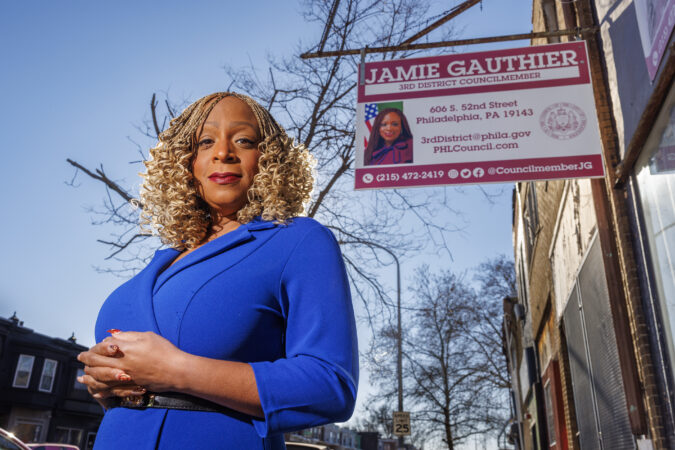
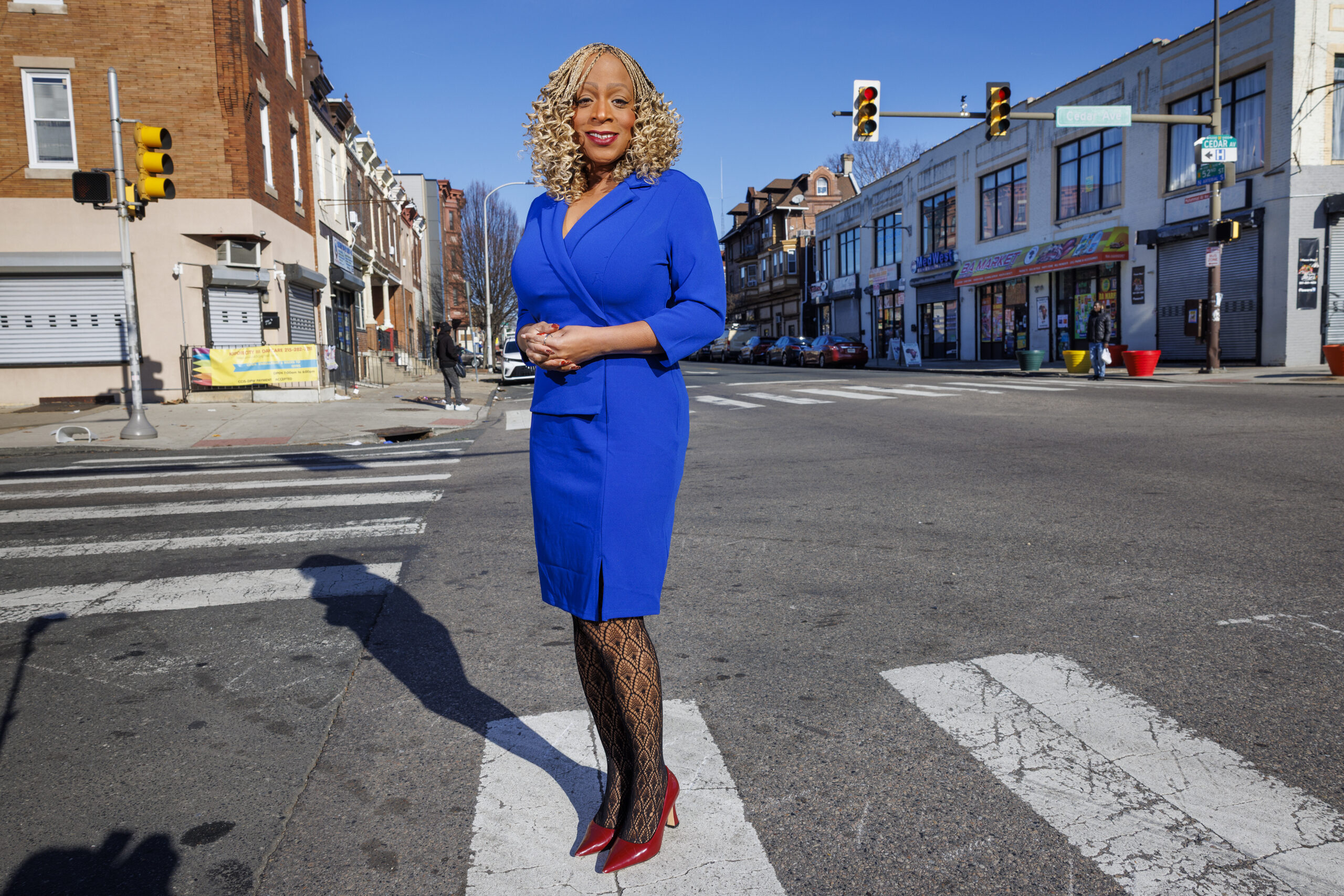
City Councilmember Jamie Gauthier in her district near 52nd Street and Cedar Avenue in Philadelphia on Monday, Dec. 22, 2025.
However, her most notable use of councilmanic prerogative has been in housing policy, and some developers say her district is now the most hostile to growth in the city.
In Gauthier’s first term, she championed legislation to create what is known as a Mixed Income Neighborhood overlay. In essence, it requires that developers building projects with 10 or more units in certain parts of her district make at least 20% of their units affordable. That is defined as accessible for rental households earning up to 40% of the area median income.
For Gauthier, it’s a tool to slow the rapid gentrification of her majority-Black district.
But developers say that growth has slowed significantly in the areas covered by the overlay since it took effect in 2022. Some have said they avoid seeking to build in the 3rd District entirely. The only major project currently in the works in the area is a parking garage.
Ryan Spak, an affordable housing developer who said he considers Gauthier a friend, has been among the most outspoken critics of the overlay. He said while Gauthier’s “moral compass is pointed in the right direction, her policies don’t math.”
“You would never ask a restaurant to give away its ninth and 10th meal for 40 cents on the dollar, with no additional discounts or benefits,” he said, “and expect that restaurant to survive.”
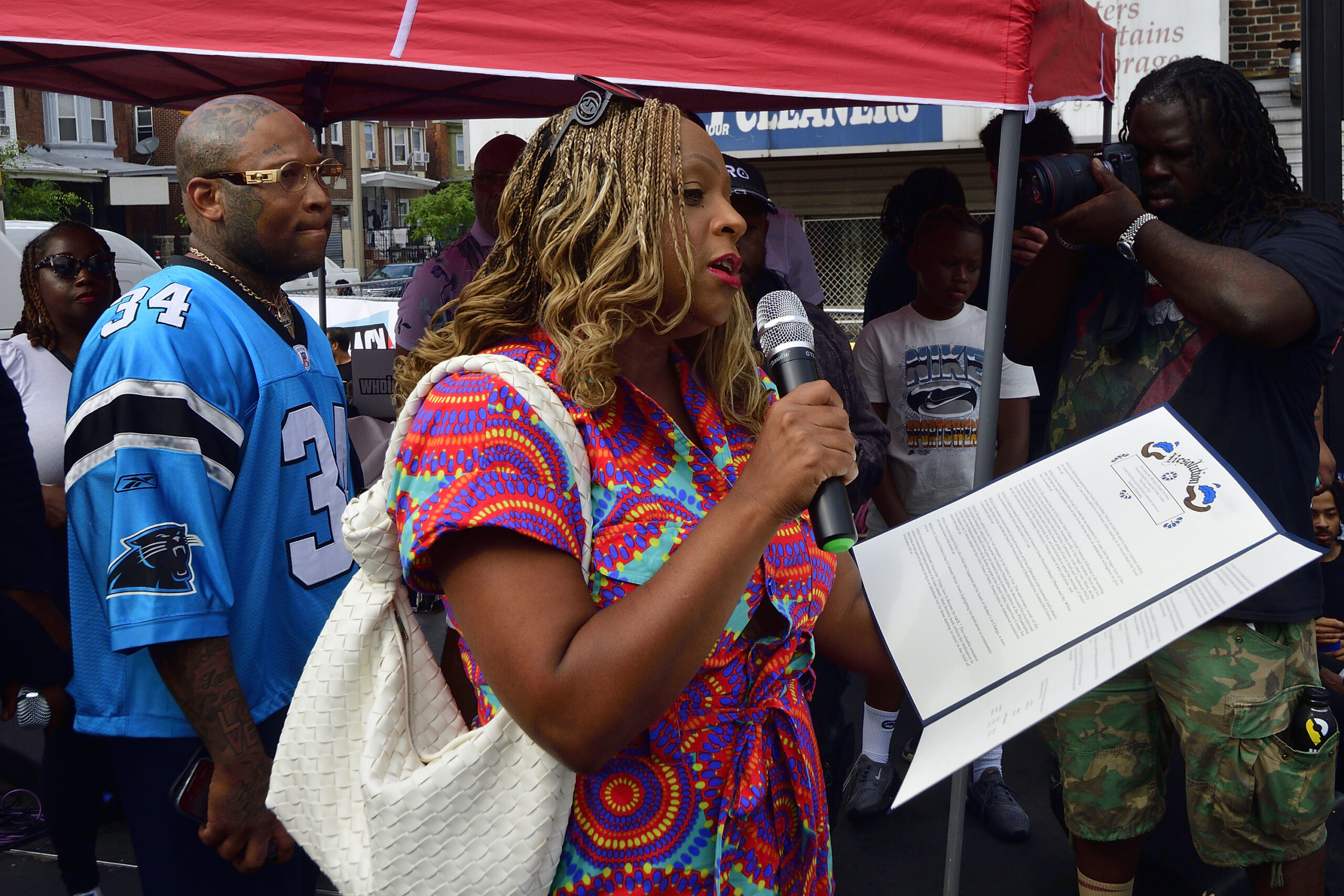
Councilmember Jamie Gauthier reads out a citation honoring Rapper Mont Brown during a street naming ceremony for the Southwest Philadelphia native at the 13th Annual Stop the Violence Kickback Block Party at 55th Street and Chester Avenue, in Southwest Philadelphia on August 17, 2024.
Gauthier said she has made adjustments, and she championed legislation to accelerate permitting and zoning approvals. The mandate, she said, is necessary because the market won’t build enough affordable housing on its own.
“As untenable as it is to them that they can’t make the numbers work, it’s untenable to me that people can’t afford to live here,” Gauthier said. “So we can come together and we can fix that. But I’m not going to move from my position that we have to demand affordability.”
Mayoral buzz, but no ‘stupid campaigns’
Gauthier is one of several names that have been floated in political circles as potential candidates for mayor in 2031, which would be Parker’s final year in office if she runs for and wins a second term. Several of her Council colleagues, including Johnson, are seen as potential contenders.
“I’d be lying if I didn’t say that mayor could be interesting one day,” Gauthier said. “I also don’t believe in stupid campaigns. So I would never do that if I didn’t think I had a path.”
Boyer said he has counseled Gauthier to pursue moderate policy and avoid being “label-cast” as far left. He said Philadelphia is not Chicago or New York, and he doesn’t see the city electing an uber-progressive to be the mayor any time soon.
“Philadelphia has always been a real center-left community,” Boyer said, “and just because you’re the loudest isn’t the most popular.”
The left may have other plans. Robert Saleem Holbrook, a progressive activist, said that Gauthier would be an “ideal candidate” for higher office and that the city’s leftists would back her.
Probably.
“So long as she stays true and supportive of progressive ideals,” Holbrook said. “You can’t compromise on your way up.”
Franki Jupiter grew up in St. Louis, the son of a Presbyterian minister and a Bible study teacher. He was raised to believe he should marry young and remain committed — to both Jesus and his wife — for life.
But Jupiter, 39, didn’t end up doing so.
“I love people, and I’m not great with impulse control,” he explained. (Franki Jupiter is a stage name, but it’s also the one everyone in his life uses.)
After years exploring his sexuality, Jupiter became polyamorous. He met his second wife, G, in 2018 in California, and the two married in 2020, first on Zoom during COVID lockdown and then in a four-day Indian wedding with G’s family.
From the beginning, Jupiter and G have been in an open relationship, but they still consider each other primary partners.
“We have a house together. We’re building a life together. We have two cats together,” Jupiter said. “When you’re in any kind of relationship, it always has to be a conversation.”
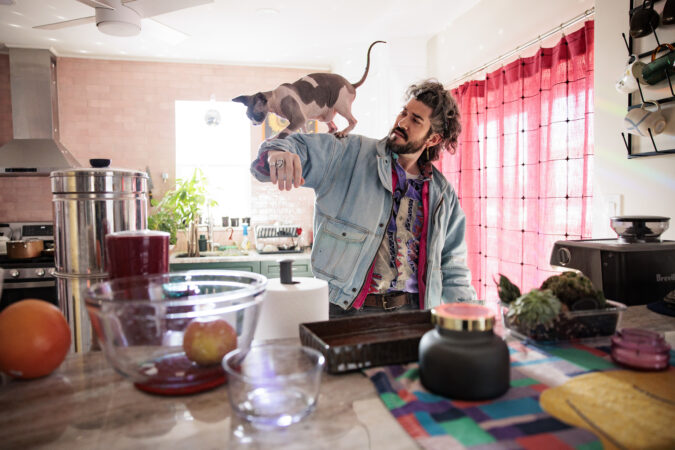
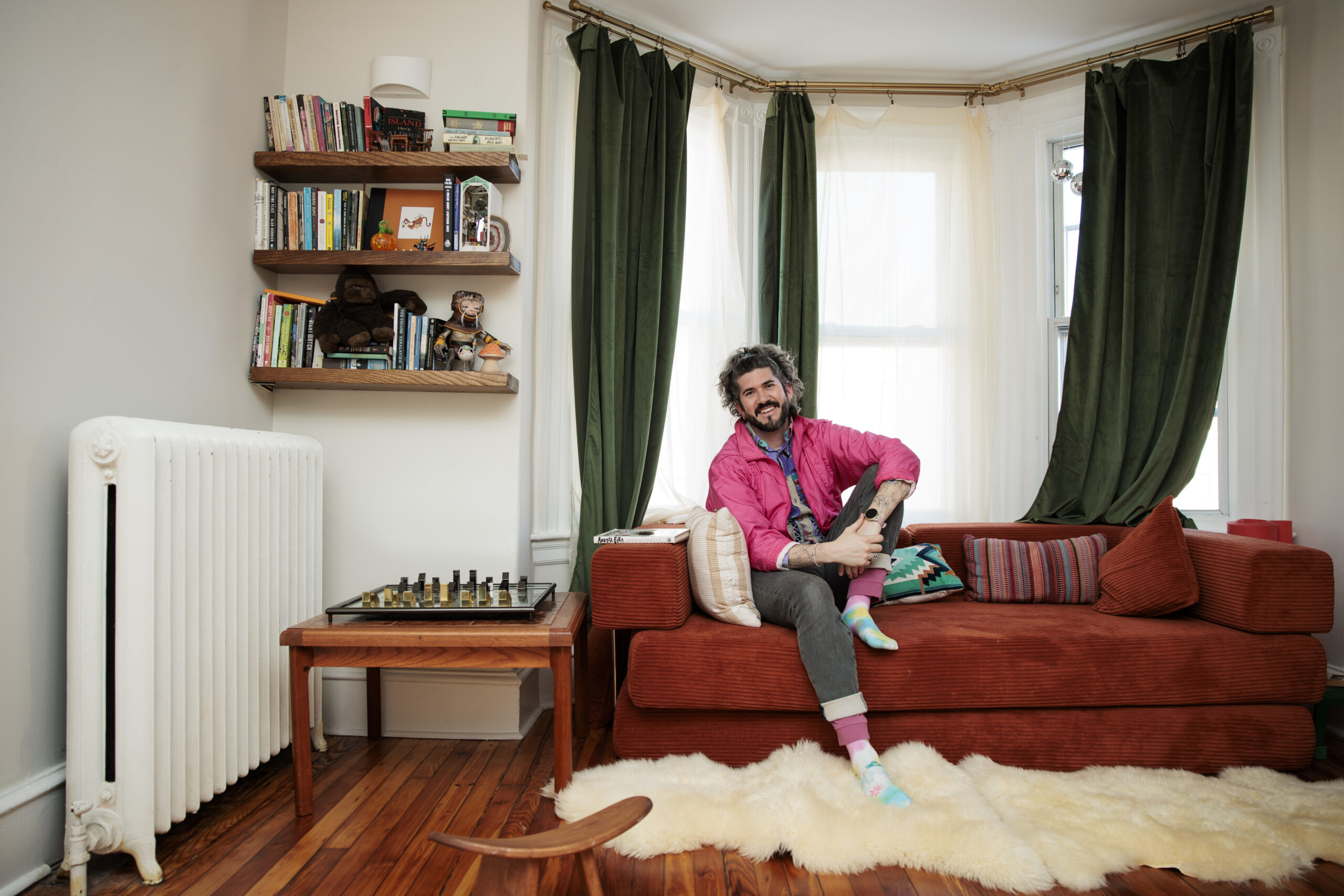
Jupiter in the home he shares with his wife.
Jupiter moved to Manayunk this summer alongside G and his girlfriend of four years, A, who lives a 10-minute walk away. (The Inquirer is referring to his partners by their first initials because they requested privacy.)
He works as a relationship and career coach, and is a singer-songwriter trying to put together a band.
The following, as told to Zoe Greenberg, has been edited for length and clarity.
On being the son of a preacher, and queer
My life partnership, first and foremost, was supposed to be with our Lord and Savior, Jesus Christ. After that, it was supposed to be with one person who you meet and then marry way too early because you’re both eager to have your first intimate relations.
Since I was born, I was queer. I was always putting on my sister’s and my mom’s clothes. There were boys at school that I thought were really cute. I was attracted to drag queens and trans people. I was told very explicitly by my parents and everyone in the church that was not OK.
On having sex before marriage, though he wasn’t supposed to
You’re a 13-year-old boy, and you’re like, “Damn, this is all I can think about. I’m supposed to just give this over to God and actually not think about it?” It just felt less and less biologically possible.
It also messed with my head, because it meant that every person I dated, I wondered, How do I make this person my spouse?
By the time I was 18, I finally had a girlfriend where I could genuinely see us being together forever, which in hindsight is crazy. But I could see it strongly enough that I thought we could probably have sex. And so that was when I decided, All right. This is OK for me.
Having sex as a teenager would not have been in the top 50 things I did that surprised my parents. There was a little bit of a “Don’t Ask, Don’t Tell” policy.
Franki Jupiter makes matcha at home.
On becoming ‘feral’ after leaving home
When I got to college, I went fully feral. I dropped out of school and joined a band. I started taking acid all the time, and moved to Rome briefly and studied photography, fell in love there.
The parts of me that had been repressed for so long all came a bit too much to a head.
After a few years I decided to dial it back and see what I was really looking for. I met someone who ended up being my first wife. She was wonderful and we had a lot of chemistry. We knew that the relationship might not stay steady, but instead of honoring that, we got married.
On discovering polyamory
We sold our car, bought a van, and drove out to California. Within a year of being there, we were separated.
One of the things I realized on the heels of our split was I’m really not a one partner kind of person.
Initially I thought maybe I’d just have to be single forever. Then I read a lot of Reddit threads on people with multiple partners. I read some of the Polyamory 101 hits: The Ethical Slut, Sex at Dawn, Polysecure. I knew lots of people in the Bay Area who were polyamorous.
My whole life, I’ve loved people so much that the idea of not being in some relationship was crazy to me. But I knew that if I was going to be in relationships, they were going to be open.
On meeting G, the woman who would become his second wife
We met for dinner and it was great. One of the first things she asked me was, “Are you gay?” I was like, “I’m not not gay. But no, I’m not gay. I’m open for whatever.”
We went back to her place, had a one-night stand, and didn’t expect anything after that. But we kept coming back. There was this unspoken sense that even if we never see each other again, this has been excellent.
On forgetting to tell G he was still married
I was still legally married to my first wife. I had told G from the beginning, “I’m going to be seeing other people, and I actually don’t want to have a monogamous relationship, ever.” I had also been dating other people concurrently and had told everyone, “By the way, I am technically still married and we’re in the process of getting a divorce.”
I guess I neglected to say it to G.
A few months in, we were at her house and she was cooking dinner. I said something like, “I’d love for us to get together again next week, I just gotta wrap some stuff up with my wife.” She was like, “You gotta what?”
I said, “I gotta wrap some stuff up with my wife.” She said, “What are you talking about?”
I said, “Oh my God, did I not tell you?” She said, “No, you did not.”
I asked if she wanted me to leave and she said she didn’t think so. I asked if she wanted me to rub her feet and she said that would be OK.
After that, she said something along the lines of, “It’s OK. It doesn’t seem like this is something you meant to hide from me. I think we can figure out how to move on from here.”
On marrying G
With G having an Indian passport, our scope as a couple was extremely limited. I could see ways in which marrying her was extremely beneficial for both of us, but definitely for her, because she’d be able to move around much more freely.
Honestly, it felt a little bit like what marriage used to be way back in the day. It wasn’t strictly a love marriage.
She actually proposed to me. We went up to the border of Oregon and California and took a bunch of acid. She took a ring off me and put it back on and said, “Wanna get married?”
Franki Jupiter shows off the disco ball decor in his first floor bathroom.
On meeting his girlfriend, A
Our first date was at a historical gay bar in Berkeley. I told A from the get-go, “I have a wife and my wife is going to be a big part of my life.”
She moved to Philadelphia a little before G and I did this summer. A and I see each other weekly, we take vacations sometimes. As far as I’m concerned, and hopefully as far as she’s concerned, we have no intentions of not being together.
One of the reasons we moved to Manayunk specifically was because she was dating a guy who now lives down the street from me. When we came out to see Philadelphia, he gave us the lay of the land. He and I are still buds. She and him are not dating anymore.
On the relationship between his wife and his girlfriend
My wife and girlfriend have very different personalities. I wouldn’t see them being friends independently of me, like if they had met each other and struck up a conversation, I don’t know that they would necessarily have gone back for seconds. But there’s no bad blood there.
There is a finite amount of time, so I don’t foresee adding other long-term partners. But also, who knows?
This story is part of a new series about life partners across the Philadelphia area. See other stories in the series here and here.
If you want to share your story about who you’re navigating life with romantically or otherwise, write to lifepartners@inquirer.com. We won’t publish anything without speaking to you first.
TOKYO — I’ve never gone out of my way to eat a cheesesteak far outside of Philadelphia.For one thing, I can devour a great one anytime I want when I’m home. I’d rather experience the flavors of different cultures when I travel. The cheesesteak is also one of those iconic foods that almost inevitably tastes wrong outside its home regions: The farther away you roam from its birthplace, the more chance that a false detail — the wrong roll, ingredient combo, precooked shortcut, or even menu description (the sandwich is not called a “Philly”)— is likely to result in something as soulless as a Subway replica.
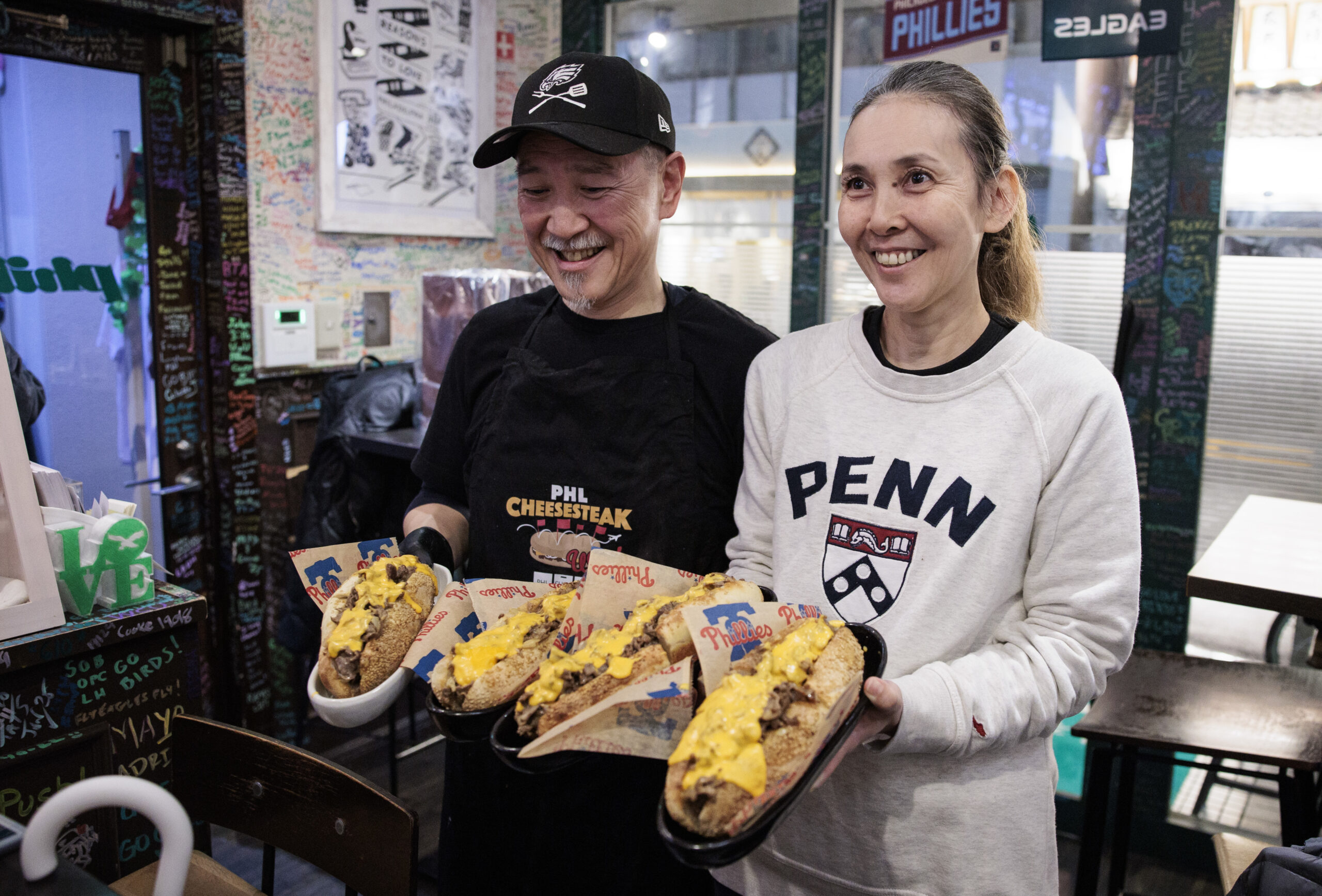
Of course, I needed to travel all the way to Japan to be proven wrong. At Nihonbashi Philly, a restaurant in one of Tokyo’s business districts, a “Go Birds!” sign glowing kelly green out front is just a tease of the Brotherly Love vibes being conjured inside. There, I found Tomomi Chujo in a Penn sweatshirt hand-shaping dough for rolls in her tiny basement prep kitchen, coating them in sesame seeds, and proofing them to be baked fresh for our sandwiches to come.
Kosuke Chujo and his wife, Tomomi, with cheesesteaks at Nihonbashi Philly in Tokyo, Japan.
Tomomi and her husband, chef Kosuke Chujo, are pretty much international Philly celebrities by now. Their efforts to create a faithful cheesesteak on the other side of the globe were brought to the world’s attention by Philly expat social media in 2023 and profiled a year later in The Inquirer by my colleague Jenn Ladd. They drew more than 1,000 hungry Philadelphians who lined up in hopes of tasting their cheesesteaks at a Kensington-Fishtown pop-up at Liberty Kitchen in May, when they were also honored by Philadelphia City Council for their efforts to rep Philadelphia abroad.
Considering I’m reluctant to wait in long lines for a cheesesteak even at Angelo’s, it’s no surprise I didn’t attend the Chujos’ Fishtown pop-up. But, like so many Philadelphians I know who’ve recently made the cheesesteak pilgrimage while visiting Japan, I was not going to waste a good trip to Tokyo without finally checking out Nihonbashi Philly. We waited until the final night of our trip. After nine days of consuming my weight in sushi, ramen, 7-Eleven onigiri, katsu, and yakitori skewers, I was ready for a little taste of home before actually boarding a plane back.
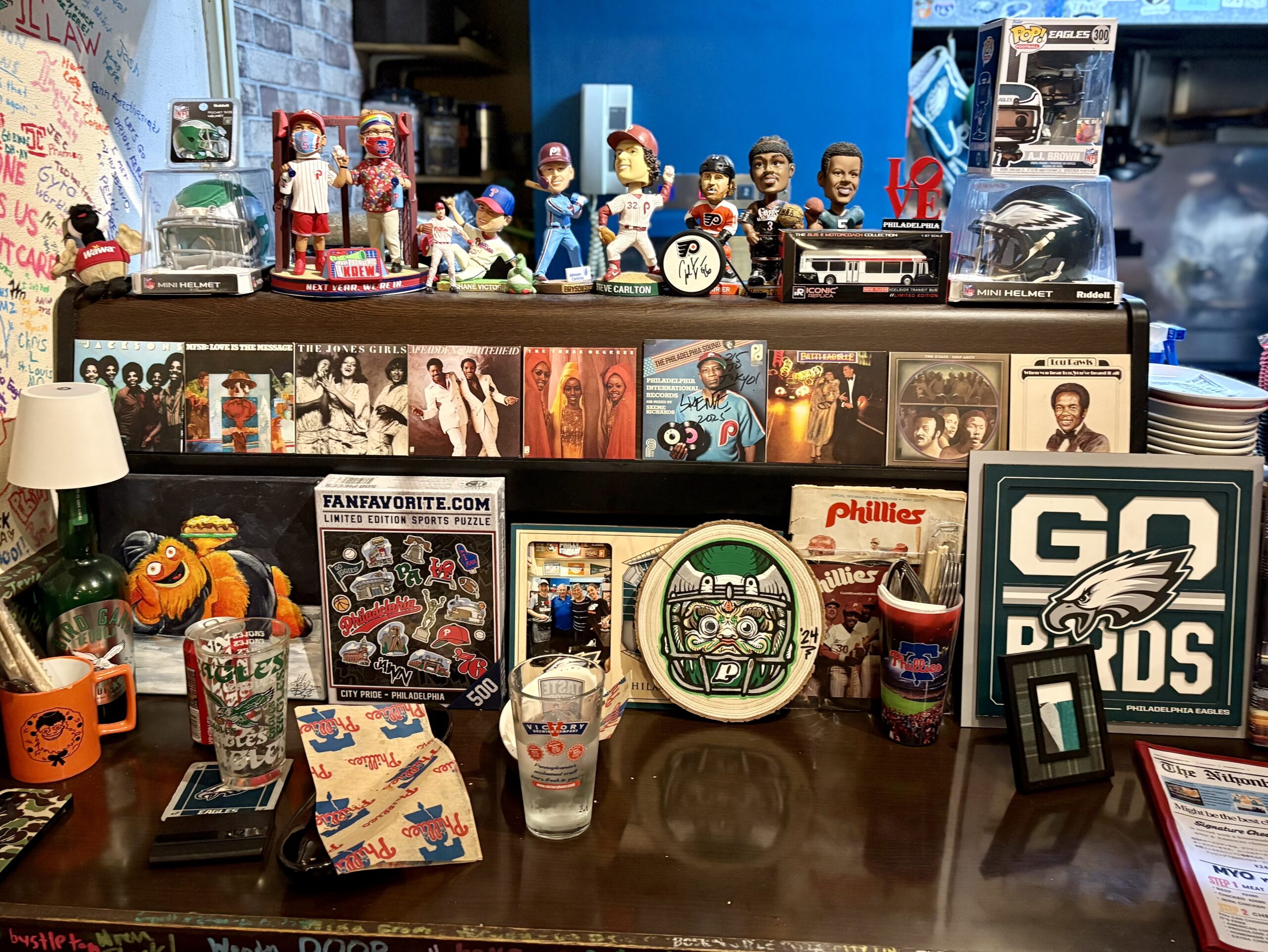
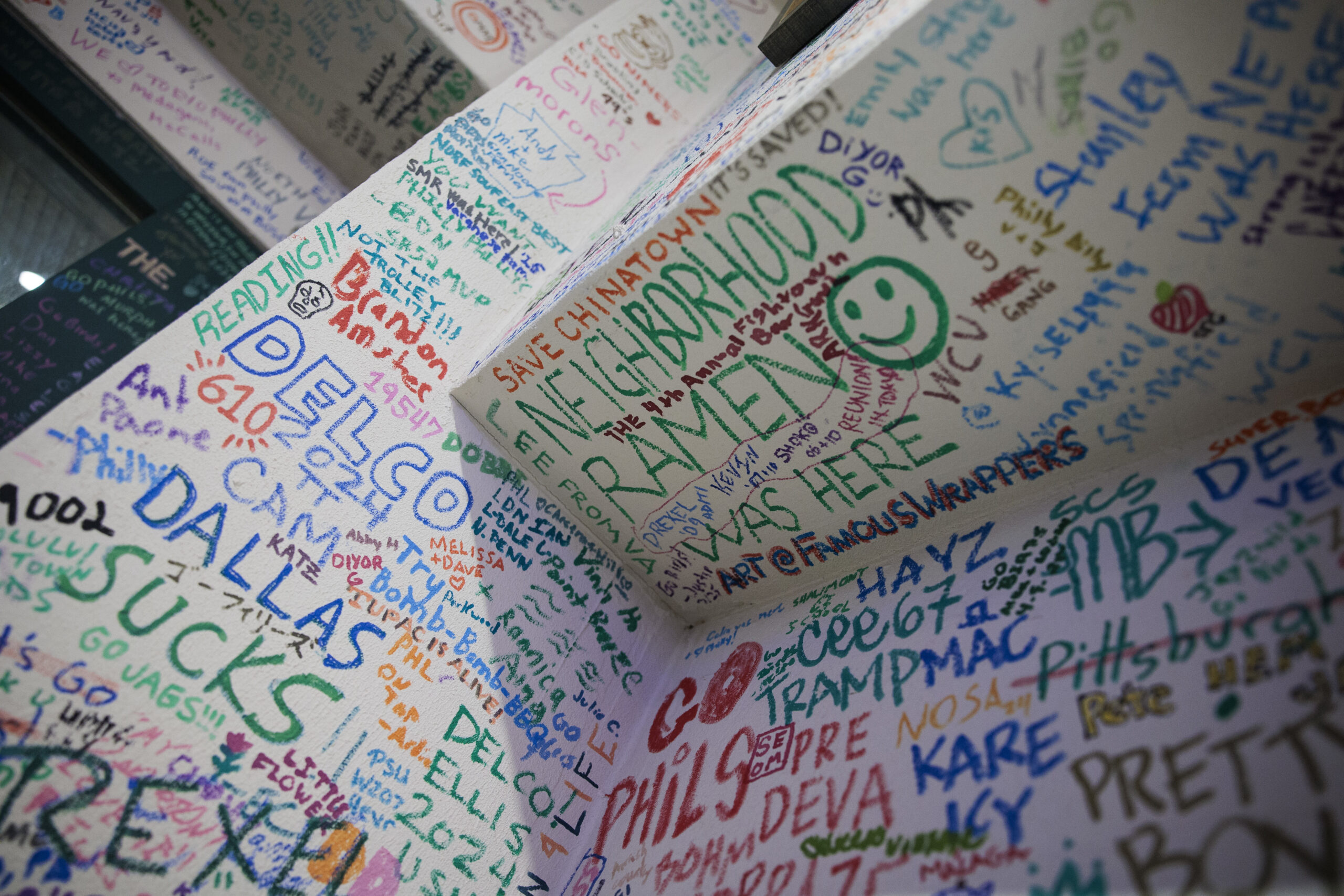
A collection of Philadelphia soul music, bobbleheads, and Philly-themed paraphernalia grows every time an expat visits the Chujos’ restaurant.Handwritten messages decorate the walls at Nihonbashi Philly.
Inside the Chujos’ snug two-story restaurant and bar, I found a space bursting with so much Philly-themed memorabilia, it was almost like passing through the Portal in LOVE Park (at least before it was removed due to vandalism). There are empty Bird Gang whiskey bottles that have been converted into lamps, Kosuke’s extensive CD collection of favorite Philly singers (hello, Patti LaBelle), copious Wawa swag, Gritty art, SEPTA shot glasses, customer-scrawled walls etched with “Dallas Sucks” flair, and a bobblehead shrine of Philly sports figures that’s been transported here from the Elkins Park childhood bedroom of now-Tokyo-based sports journalist Dan Orlowitz, one of the Chujos’ earliest local cheerleaders: “That’s authentic Philly dust!” he says, nudging Donovan McNabb’s spring-loaded noggin into an enthusiastic wobble. “I don’t even have to go home anymore.”
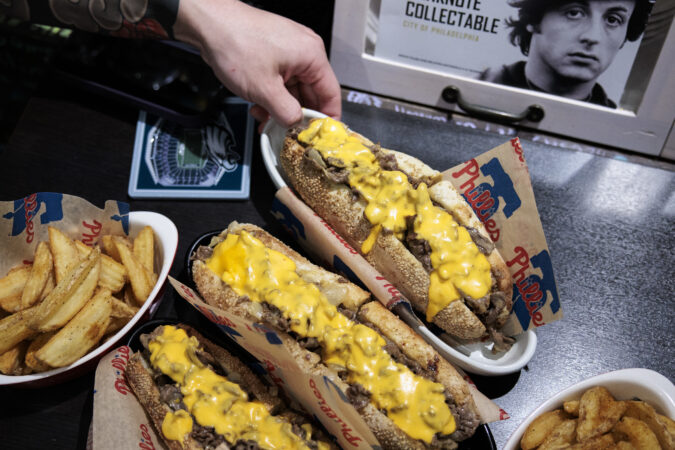
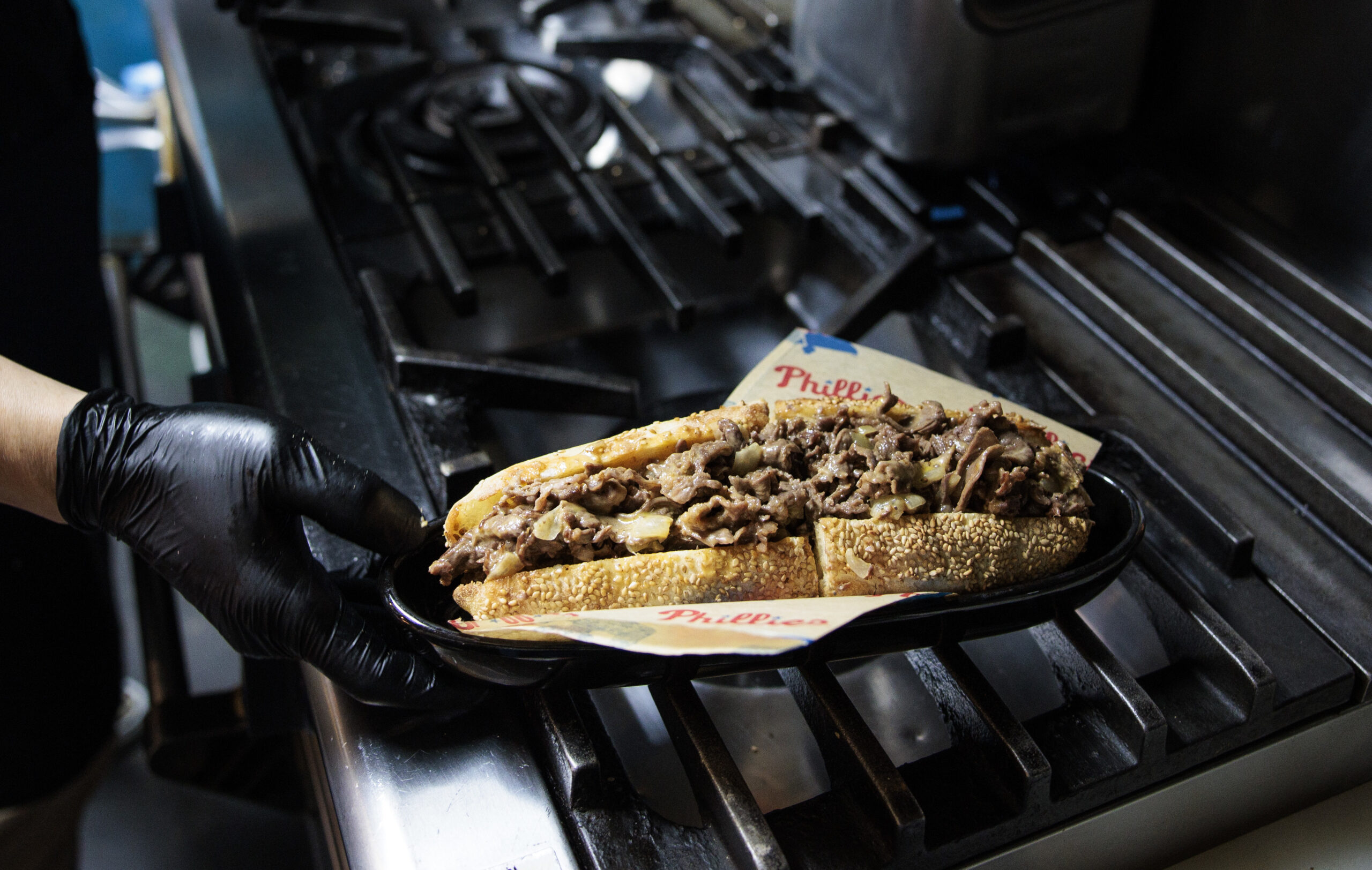
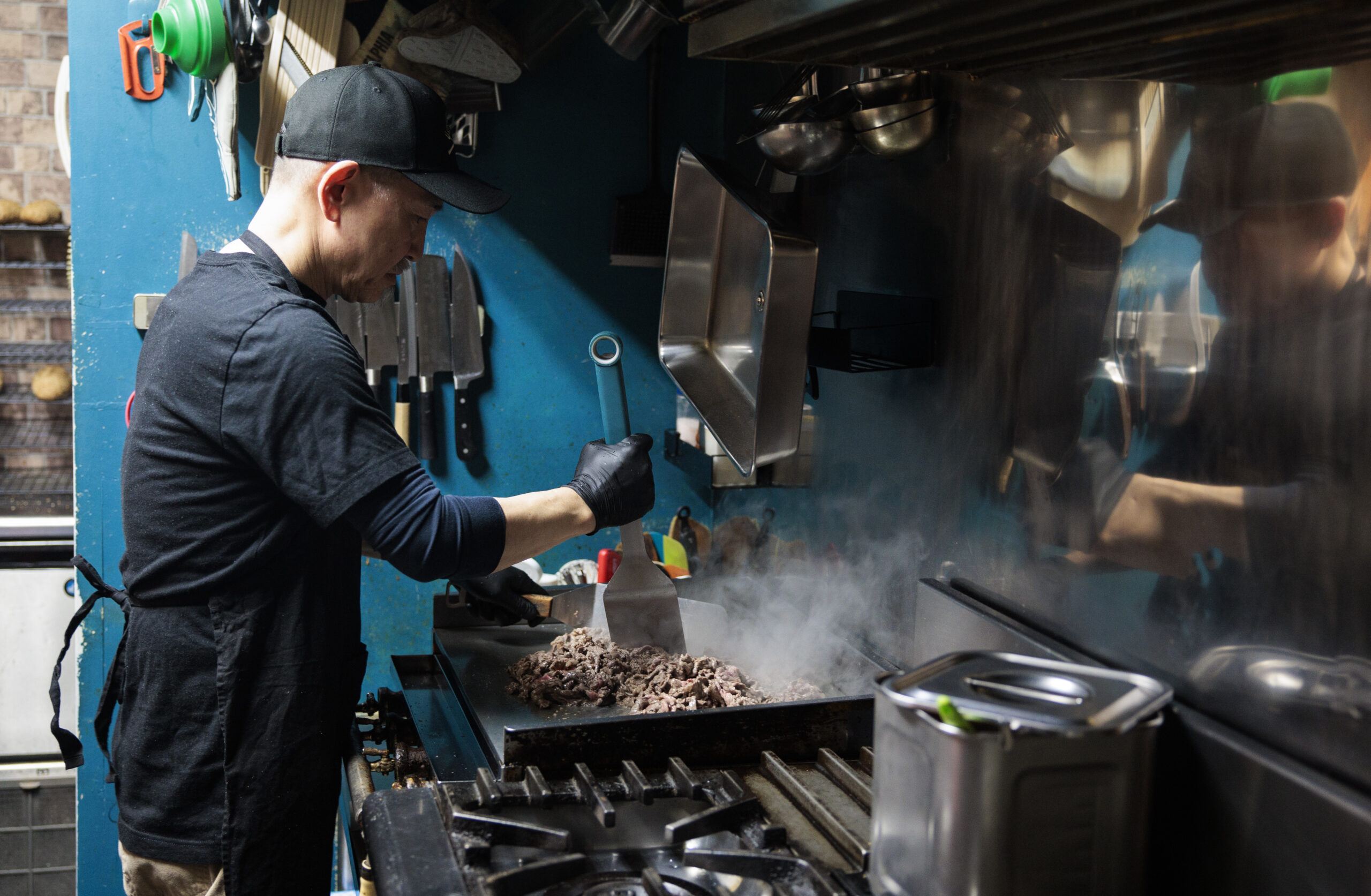
Orlowitz, in fact, was mostly talking about the food. And I was impressed with Kosuke’s work at the griddle, as he rough-chopped good American rib eye and onions without overcooking them, using chopsticks to taste for proper seasoning, melting in cheese, and then scooping it all into Tomomi’s roll for a juicy sandwich that was hearty enough to share. It was a satisfying cheesesteak, even if the cheese was not quite right — slices of American cheese that lacked the creamy flow and piquant savor of the now-standard Cooper Sharp, currently unavailable in Japan. (The Chujos also make their own version of whiz, but, considering I’ve always been a whiz hater, the finishing yellow drizzle on our sandwiches didn’t help. Next time, I’ll go for provolone.)
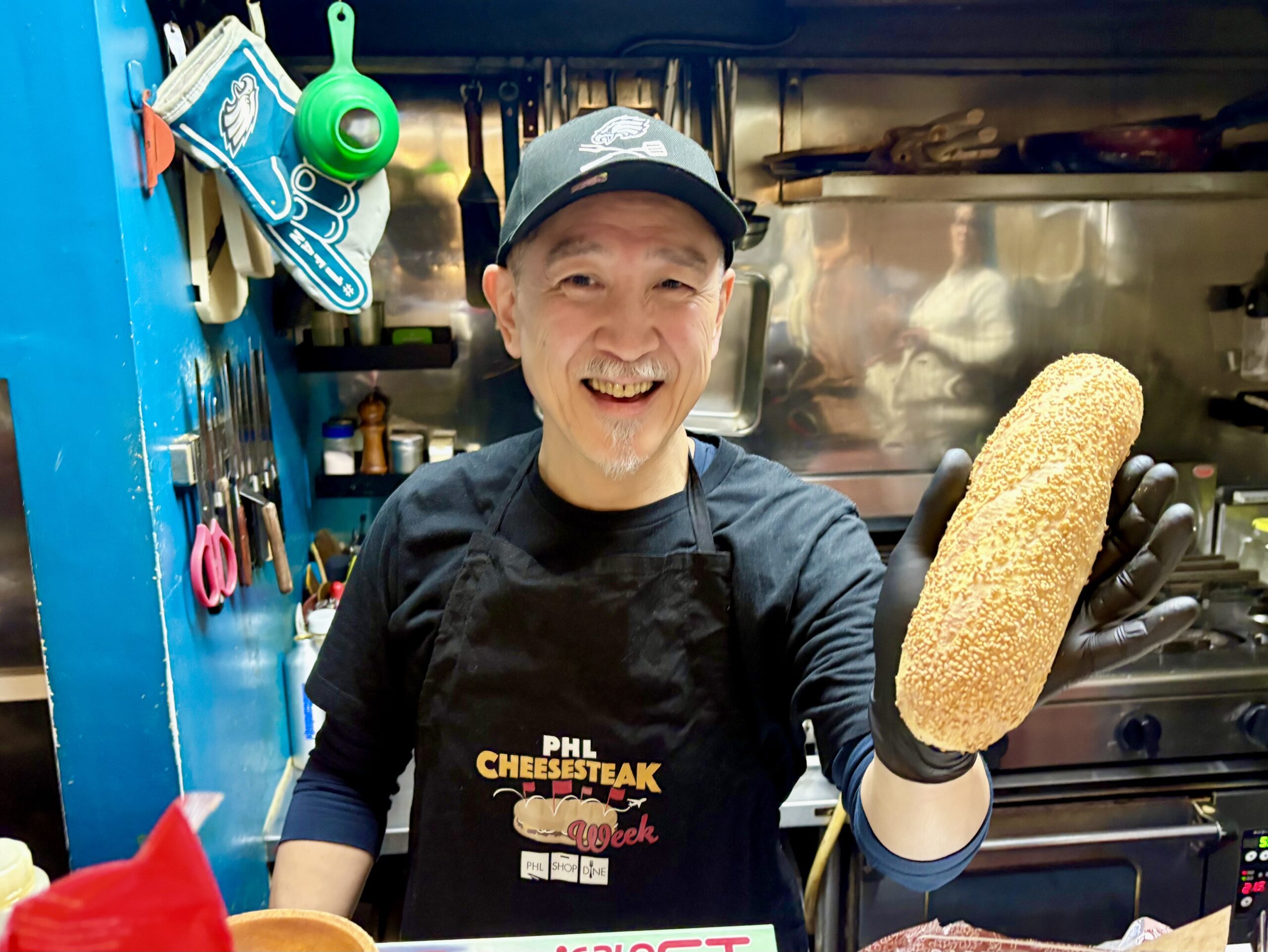
Kosuke Chujo makes a cheesesteak at Nihonbashi Philly on Sunday, Nov. 9, 2025 in Tokyo, Japan.Kosuke Chujo holds a seeded roll baked fresh by his wife and partner, Tomomi Chujo, before preparing a cheesesteak at their restaurant.
Tomomi’s fresh rolls are the outstanding X factor. The Chujos have been vacationing in Philadelphia since 2021, and in between reconnaissance visits to at least 100 different cheesesteak places, she has studied the art of the long roll at old-school Sarcone’s Bakery as well as modern outfits such as Lost Bread Co. and Ursa Bakery.
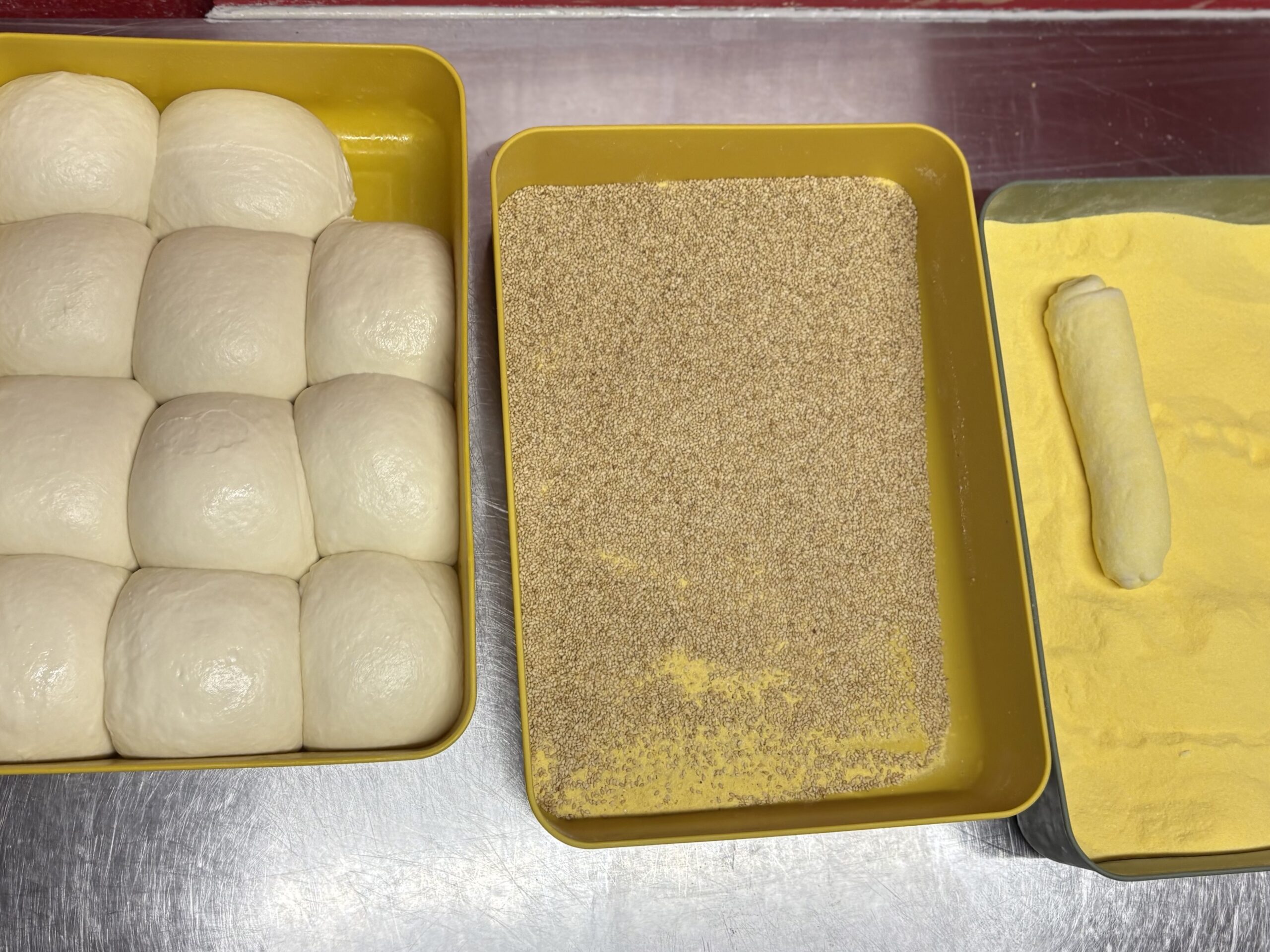
The bread here is softer than typically crusty Philly rolls because more finely ground Japanese flour (ideal for tender shokupan milk bread) doesn’t have as much gluten as its American counterpart. Tomomi compensates for the texture by fully encrusting her rolls in Japanese sesame, which has rounder and more flavorful seeds that add their own distinctive, toasty crunch. It’s so noticeable, in fact, one friend said the sesame conjured for him unexpected tahini backnotes.
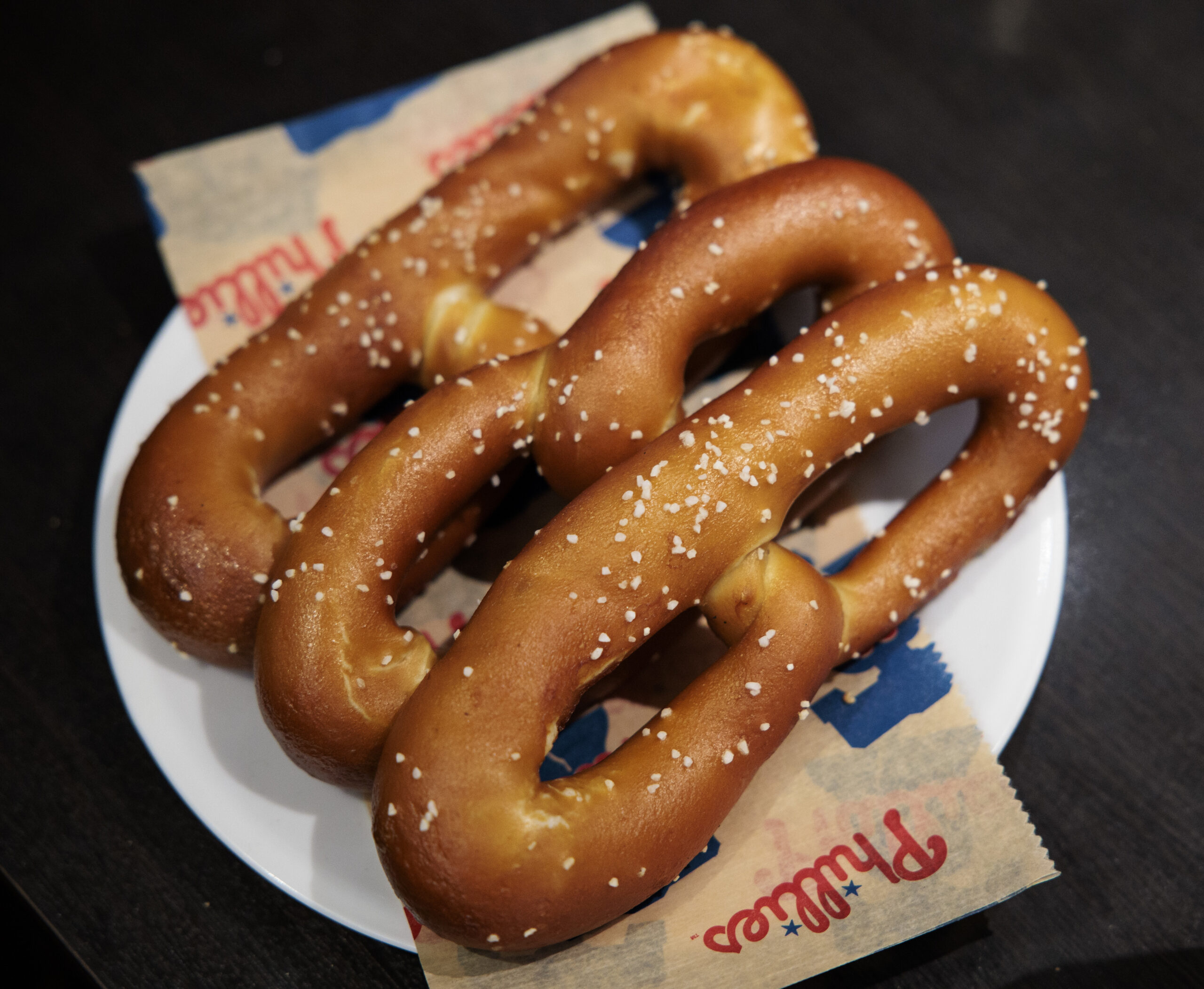
Fresh rolls are prepped for cheesesteaks in the basement of the restaurant called Philly in the Nihonbashi district of Tokyo. Once shaped by hand, their bottoms are dusted in corn meal before they get encrusted in sesame seeds and then baked.Tomomi Chujo’s fresh-from-the-oven salt-speckled soft pretzels.
Cheesesteak obsessives (myself included) will dwell on such minutiae, but I consider such natural variations part of the sandwich’s essential evolution as a living tradition, both in its many thrilling international interpretations among Philadelphia’s immigrant communities, and in the recent boom of house-baked rolls that distinguish some of Philly’s next-gen best.
So much artisanal craft goes into what the Chujos make that, with better cheese, their version would easily land among the upper tier in Philadelphia itself. (Tomomi’s soft pretzels — fresh from the oven and salt-speckled — meanwhile, are already elite.)
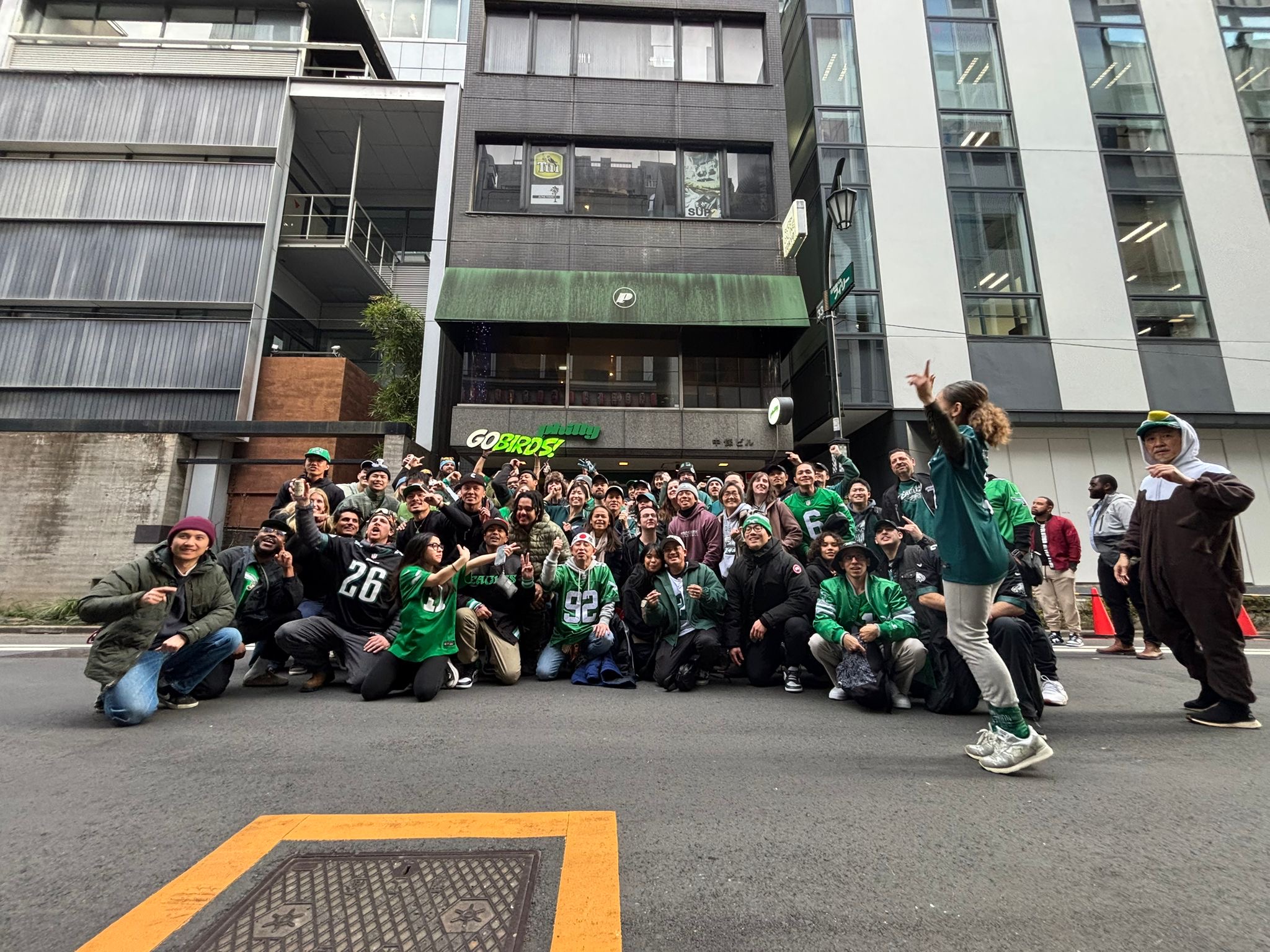
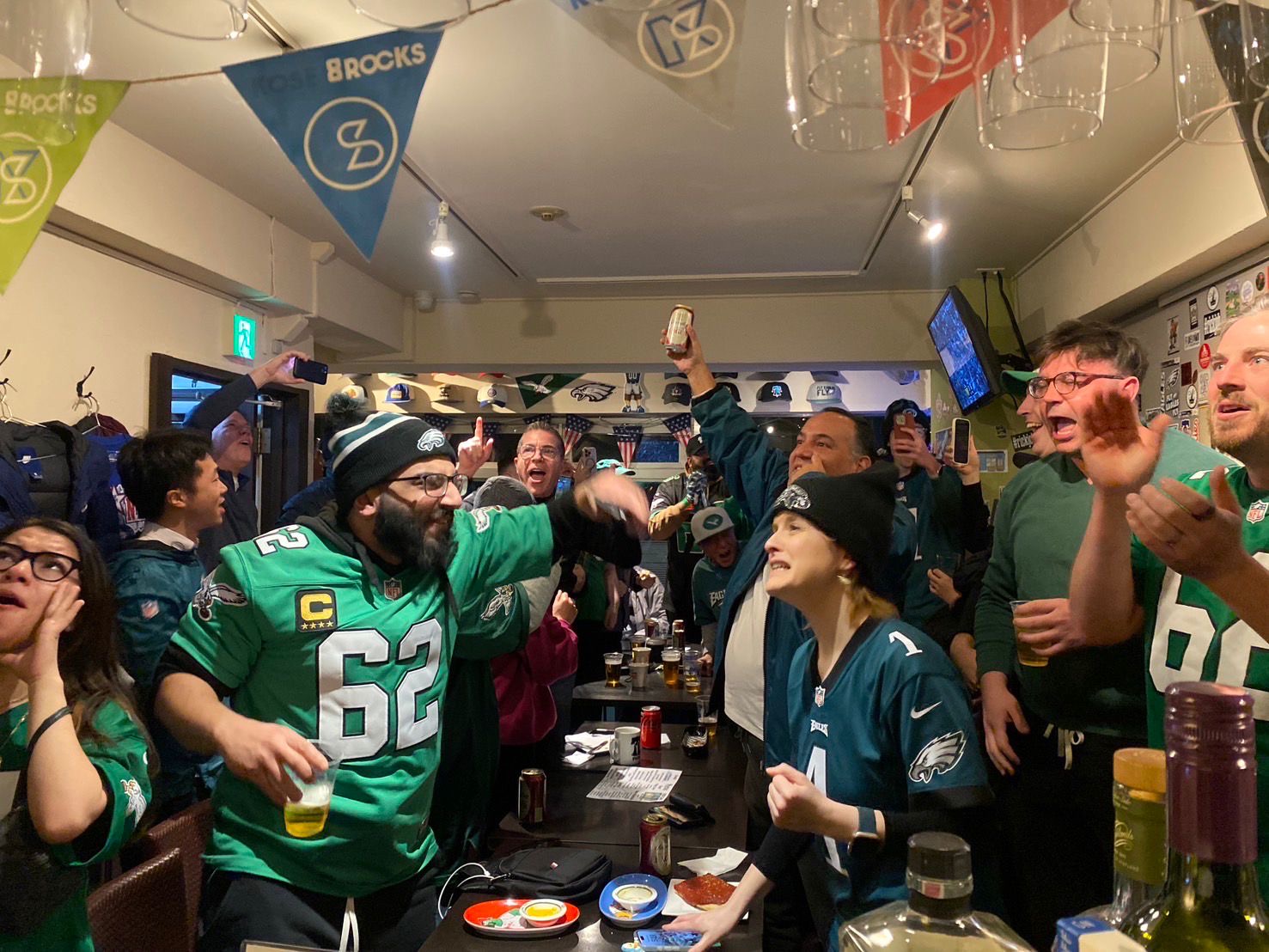
But what makes a visit to Tokyo’s Philly so special is not really even the cheesesteaks. (Though the sandwich has seen a recent boost in interest among Japanese customers since Shohei Ohtani praised it during the Dodgers-Phillies playoff series.) It is the Chujos’ genuine embrace of Philadelphia’s culture and people, from the music to the Eagles watch parties they regularly host, culminating in full-throated “E-A-G-L-E-S Eagles!” victory chants outside that occasionally startle their quiet-loving Tokyo neighbors.
Eagles fans outside Nihonbashi Philly, in Tokyo, during a recent Eagles game.The Chujos regularly host Eagles watch parties at the restaurant.
“We want to be part of the community,” says Tomomi. The Chujos are planning another Philly visit this summer during America’s Semiquincentennial to celebrate their 15th anniversary with wedding photos on the Rocky Steps and in front of City Hall.
For the proud residents of a city with a long tradition of embracing scorn from the wider world — a city whose unofficial anthem is “No one likes us and we don’t care!” — it is touching to see ourselves reflected with so much love and effort in a sandwich created by friends abroad who regard us with nothing but admiration.
This wasn’t merely the rarity of a good cheesesteak far afield, it was a cheesesteak of affirmation: When someone likes us enough to cook our birthright sandwich properly, we actually do care! Deeply.
“The bread on that cheesesteak and those pretzels were so good,” agreed chef Jesse Ito of Royal Sushi & Izakaya, who also came along to Nihonbashi for the meal. “But just to see another culture pay so much respect to something so Philly, if you love where you come from, you almost have to go.”
I have invited two Inquirer journalists who I knew could answer this week’s question — Sam Ruland, who has gone to Clearwater for Phillies spring training and frequents the Shore, and Amy S. Rosenberg, a Shore resident and The Inquirer’s Shore correspondent.
Have a question of your own? Or an opinion? Email me.
Evan Weiss, Deputy Features Editor
This week’s question is:
What’s a better vacation: a week at the Jersey Shore or spring training in Clearwater?
Amy S. Rosenberg, Life & Culture Reporter
I’d say if you’re talking about February or March, definitely opt for spring training. We’ve got almost nothing for you down here.
I‘m always really envious of people who go to spring training. Do people envy me for living at the Shore? Maybe. Maybe not.
So maybe it’s easier for me to say definitely take that spring training trip! Then in the summer take day trips to free beaches (Atlantic City, Strathmere, Wildwood) and sit there with the games on audio. That’s just a lovely day at the beach.
Sam Ruland, Features Planning and Coverage Editor
I went to Phillies spring training in Clearwater in 2023, splitting a house Airbnb with friends, doing the full baseball-all-day, casual-night-out routine.
Clearwater felt special because it was a treat: a few days of baseball optimism, warm weather when Philly is still miserable, and no expectations beyond watching baseball and drinking beer.
I think both of these experiences are so different though! Spring training wouldn’t fill the void of missing a week down the Shore in the summer. Spring training is spring break!
Amy S. Rosenberg
Which is more expensive?
Sam Ruland
Depending on when you book flights, it can be cheap. But if you don’t plan far enough out, you can easily end up dropping close to $1,000 on airfare … to Florida. Which feels wrong.
Amy S. Rosenberg
I would have guessed the Shore would be the more expensive. I really miss the old minor league Atlantic City Surf that played on Albany Avenue at the Surf Stadium, a lot of times with fireworks, and their own mascot, Splash. You didn’t need to leave the Shore to have the full experience, especially for little ones. Mitch Williams was the coach one year.
I typically spend about $38 each way to get to Florida from Atlantic City, just saying.
Sam Ruland
WOW!
Amy S. Rosenberg
(Don’t tell anyone about ACY, the world’s greatest airport.)
Sam Ruland
We spent about $200 on roundtrip flights. But when we considered going last year the prices were wayyyy higher.
Amy S. Rosenberg
As someone who’s a Philly sports fan, though transplanted, I sometimes find it hard to get into the teams in the early season, so for me, going to spring training would be a great way to guarantee a full season immersion, which sounds heavenly.
But if you’re stuck up north, and into basketball, Atlantic City hosts the MAAC 10 tournament, which is a great lead-up to March Madness. A lot of times, the teams that win are sleeper upsets in the main tournament, like St. Peter’s Peacocks. Atlantic City people had a head start on that.
Sam Ruland
I think the Shore is probably more money for a full week — no question. But for some reason, it also feels like you get more out of it. And I say that as someone who loves the Phillies deeply and does not enjoy admitting this.
Amy S. Rosenberg
When you’re down in Clearwater, do you get any beach time? Is there even a beach in Clearwater?
(I’m not really a west coast Florida person.)
Sam Ruland
Yes, there are beaches, but for us the days revolved around games and schedules. The beach was there in theory; spring training energy very much took over in practice.
Amy S. Rosenberg
I feel like spring training vacation is something you should do but not every year maybe.
Evan Weiss
Yeah, I think if it’s something you’ve always wanted to do … go for it. Then go down the Shore next year.
Sam Ruland
Agreed! Spring training is a great trip — but the people who go every year usually don’t have to choose. For friends or couples, Clearwater is perfect. For families, the Shore just makes more sense, even if it costs more.
Amy S. Rosenberg
I think it would be an awfully long summer without that trip down the Shore.
Sam Ruland
I mean Jersey Shore in March vs. Clearwater in March, I think yes, Clearwater. You’re not going to Shore that early!
Amy S. Rosenberg
Yeah, March is kind of bleak. Lots of contractors building very expensive homes on land where cute bungalows used to be. I am surprised to see my summer neighbors showing up on long winter weekends though.
Evan Weiss
So if it’s spring training vs. peak summer down the Shore, do you both side with the Shore?
Sam Ruland
Peak summer Jersey Shore, 1,000%. No hesitation. Hoagies on the beach, Shore showers, no shower happy hours, ice cream every night, boardwalk walks for no reason. That’s unbeatable. But in March, being in Clearwater with the Fightins just feels right.
(But one over the other, I think I have to choose Shore.)
Amy S. Rosenberg
I think it’s OK to take a summer off and go to spring training, especially if people in the traveling group are into it. You won’t be banned from the Shore. There are weekends and free beaches and ways to do it without breaking the bank. And if the Phillies go deep in the post-season you can join the locals on the beach with the twilight games on, order a pizza, and you’ll feel like the beach is a South Philly street where everybody’s on their steps listening.
(Just bring a sweatshirt.)
This conversation has been edited andcondensed for length and clarity.
I have walked through Independence National Historical Park many times looking at the many interpretive panels, exhibits and historical materials after President Donald Trump’s March 27, 2025 Executive Order 14253.
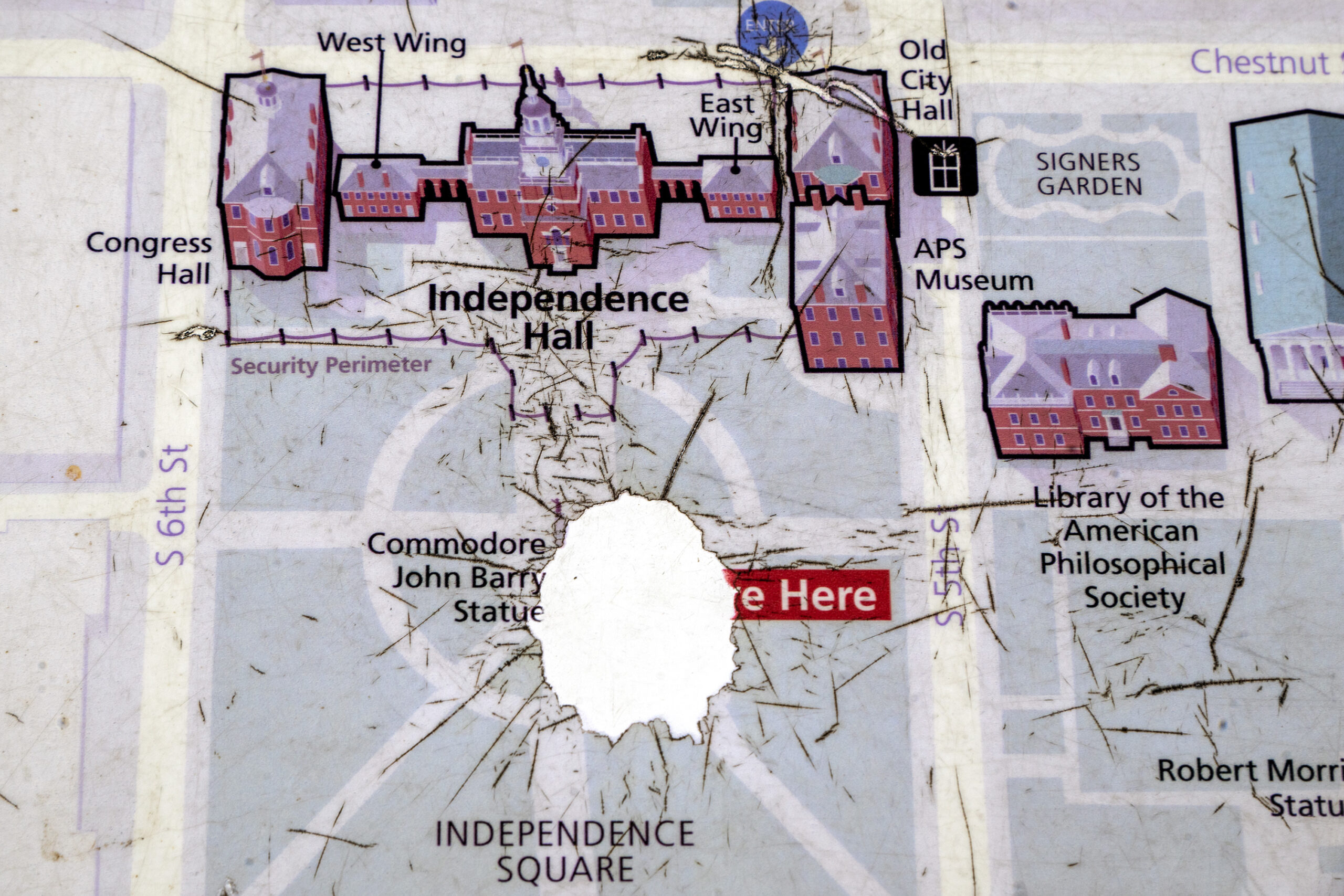
“You Are Here” sign in the square behind Independence Hall July 23, 2025.
Titled “Restoring Truth and Sanity to American History,” the order directed the Department of the Interior, which oversees the National Park Service, to review over 400 national sites to remove or modify interpretive materials that it deems “inappropriately disparage Americans past or living (including persons living in colonial times).” The order aimed to focus on the “greatness of the achievements and progress of the American people.”
At first I looked at the many interpretive panels, videos, exhibits and historical materials in Independence Hall, Liberty Bell Center, President’s House and Ben Franklin Museum, wondering which ones the Interior Secretary might identify that “perpetuate a false reconstruction of American history, inappropriately minimize the value of certain historical events or figures, or include any other improper partisan ideology.”
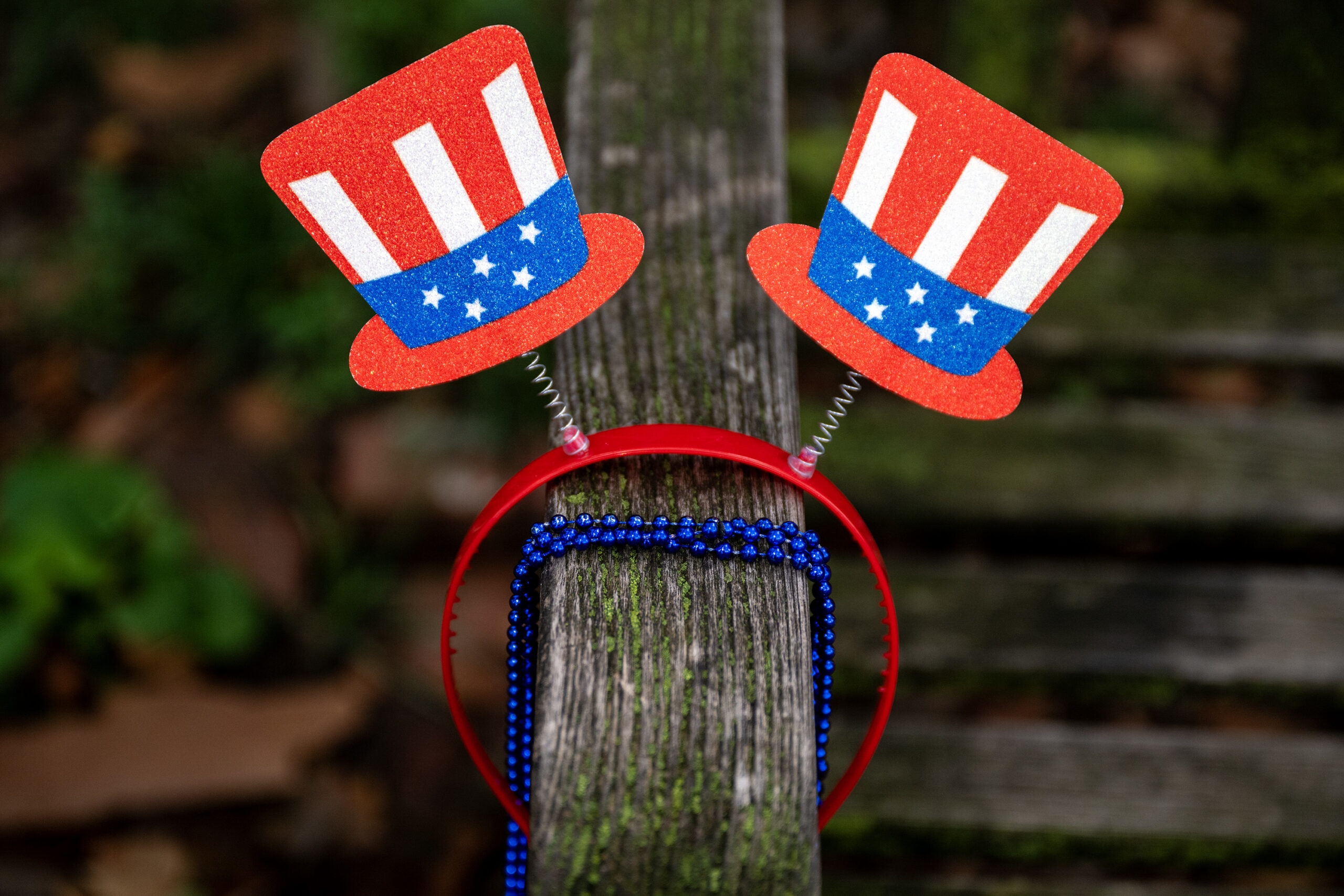
An Uncle Same hatted headband is left on a park bench Philadelphia’s Historic District during the Independence Day weekend celebrations Jul. 2, 2025.
I took a lot of photos, but realized there wasn’t a way I could write a caption reading, “the administration doesn’t like what this panel says about slavery.” So I put any photos I made in a file for later use.
In July, the New York Times broke the story that employees of the National Park Service had been flagging descriptions and displays at scores of parks and historic sites around the country for review — and they had examples of a few here in Philadelphia.
The next day, armed with the specific panels at the Liberty Bell and the President’s House they reported, I went back and re-photographed them all for our own story.
My colleague Fallon Roth obtained and reviewed the internal comments submitted by NPS employees here with many more details so in the following days I made many more photos.
I was even told to re-photograph some panels for a third time, grumbling (to myself) when told “we need higher resolution versions, shot head on, without any distortion,” for an interactive project. Which, I had to admit later (again, to myself) turned out great!
The President’s House came under particular scrutiny, and the removal of noncompliant displays was initially slated to come on Sept. 17.
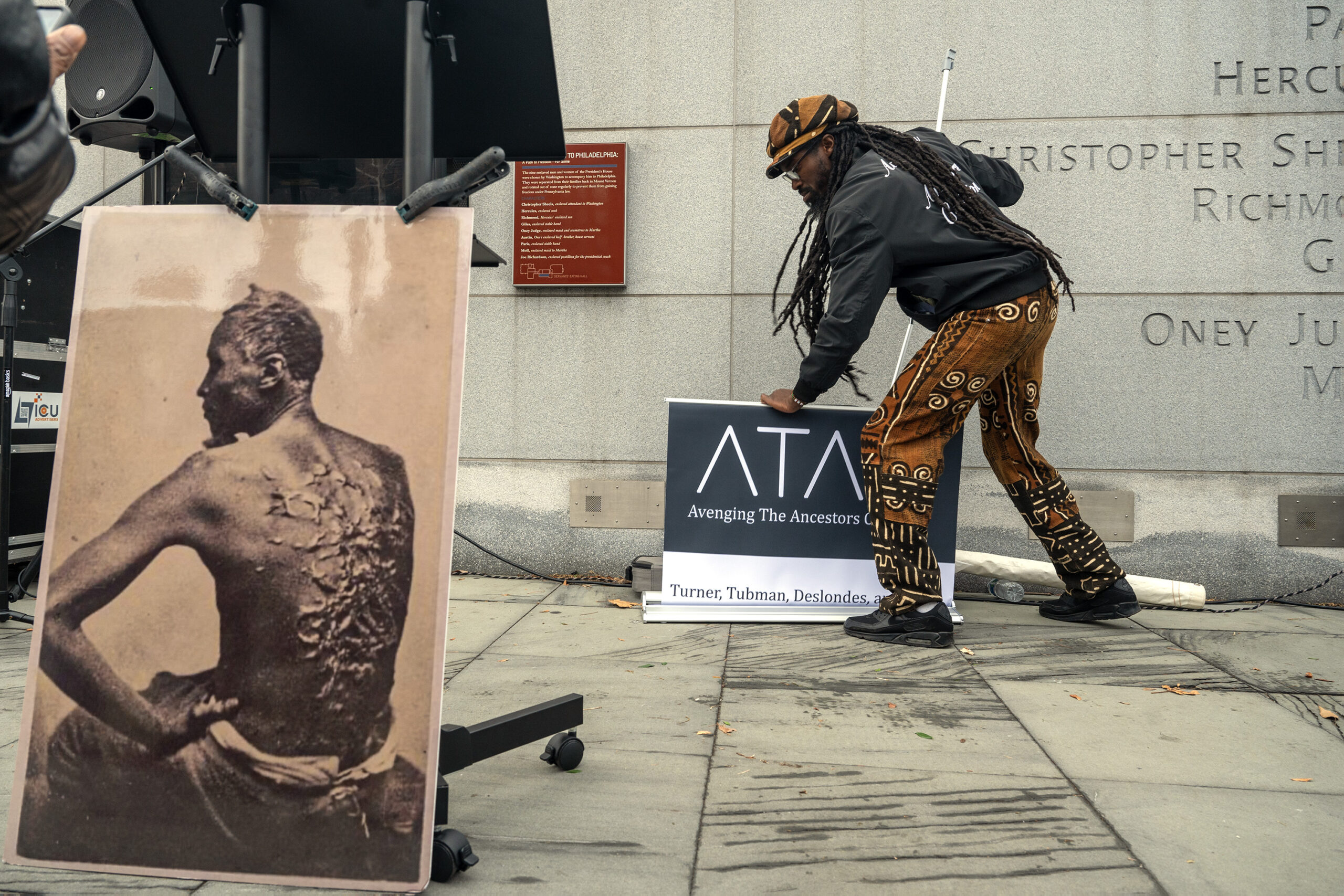
Farugh Maat, with Avenging the Ancestors, Coalition, takes down signs at the President’s House exhibit following a ceremony on the site Dec. 21, 2025 marking the 15th anniversary of its opening. The photo at left, known as “The Scourged Back” is copy of one that was removed from display at Fort Pulaski National Monument in Georgia following an order from President Trump’s “disparaging” executive order.
The administration’s deadline came and went. We got tips that signs had been altered, but I checked, and nothing actually happened. Until Thursday.
I was on assignment near Independence Hall, and as always, walked through the President’s House. It was quiet except for a local TV news crew using Independence Mall as a location for their report on this weekend’s coming winter storm.
Later while editing that assignment, we got a tip that workers with tape measures where looking and poking around “behind the panels” there. I rushed down where my colleague Maggie Prosser was already asking them what they were up to.
I photographed the entire removal, and was joined by photographer Elizabeth Robertson who even made an overall photo from our newsroom overlooking the site.
Finally, I ended up returning after dark, just because.
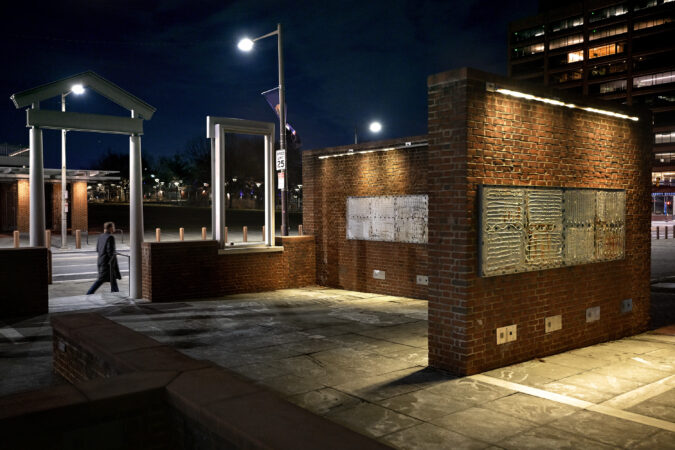
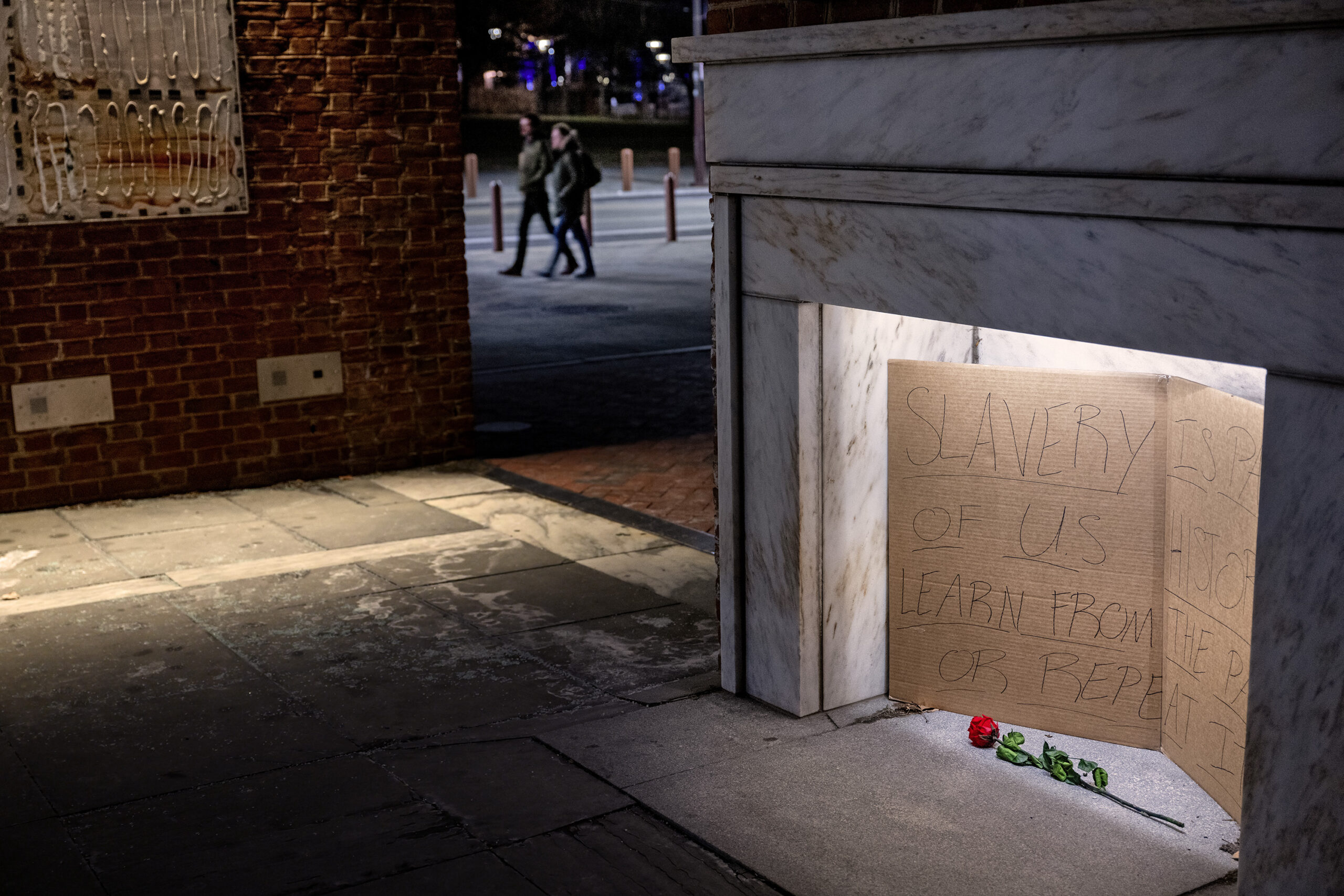
A single rose and a handwritten cardboard sign – “Slavery is part of U.S. history learn from the past of repeat it”- are inside an empty hearth at the President’s House site Thursday night, Jan. 22, 2026 after workers removed display panels.
Since 1998 a black-and-white photo has appeared every Monday in staff photographer Tom Gralish’s “Scene Through the Lens” photo column in the print editions of The Inquirer’s local news section. Here are the most recent, in color:
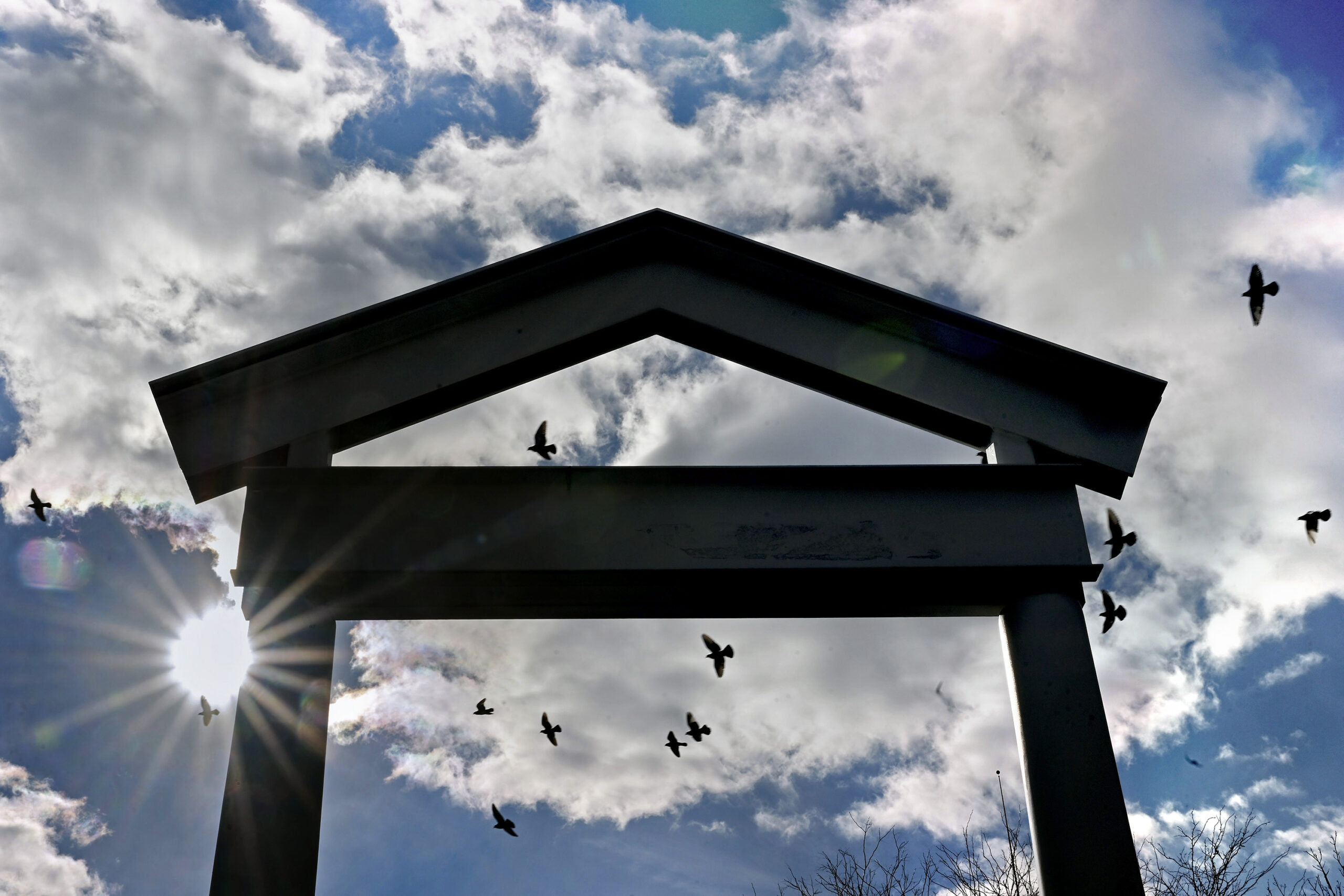
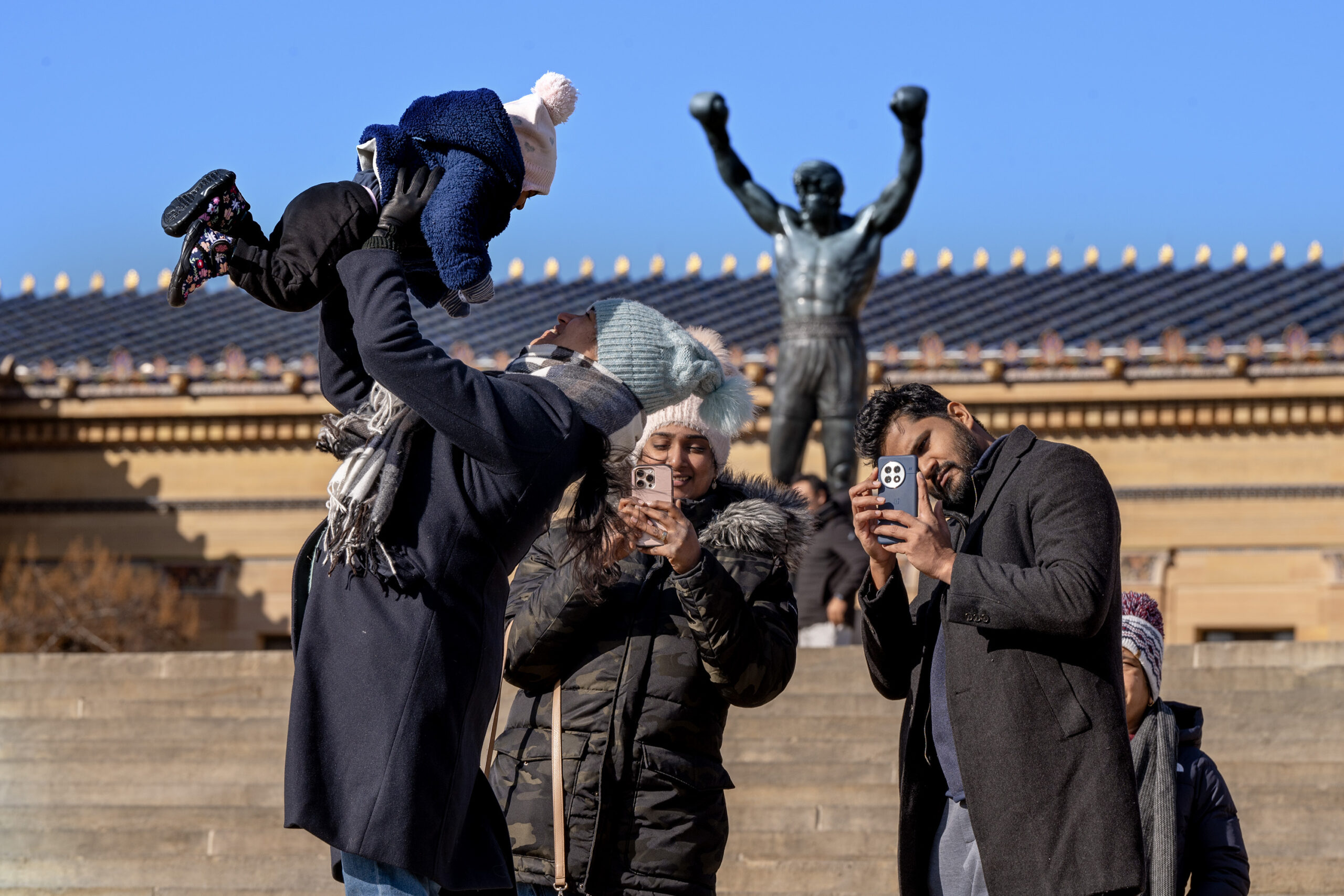
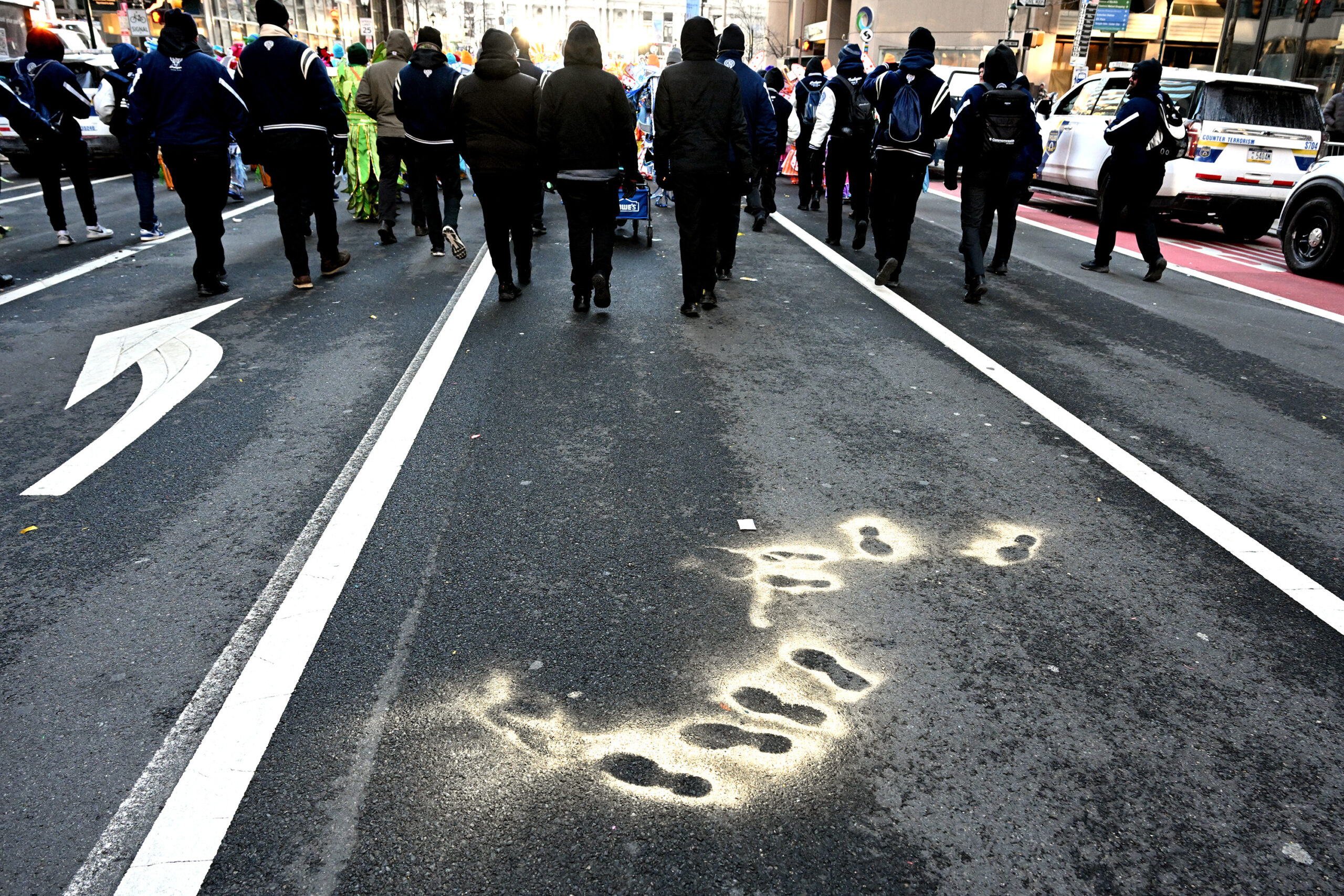
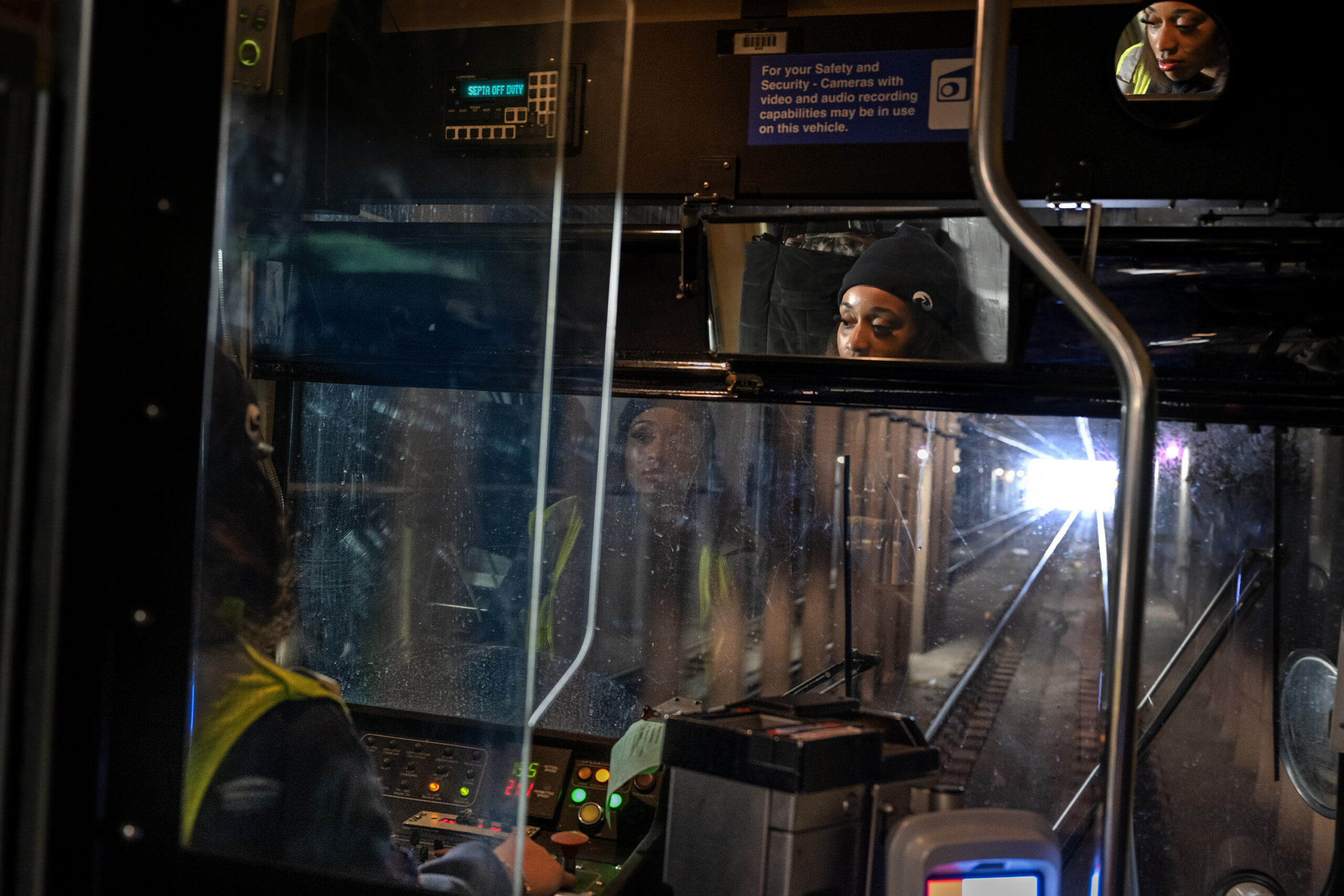
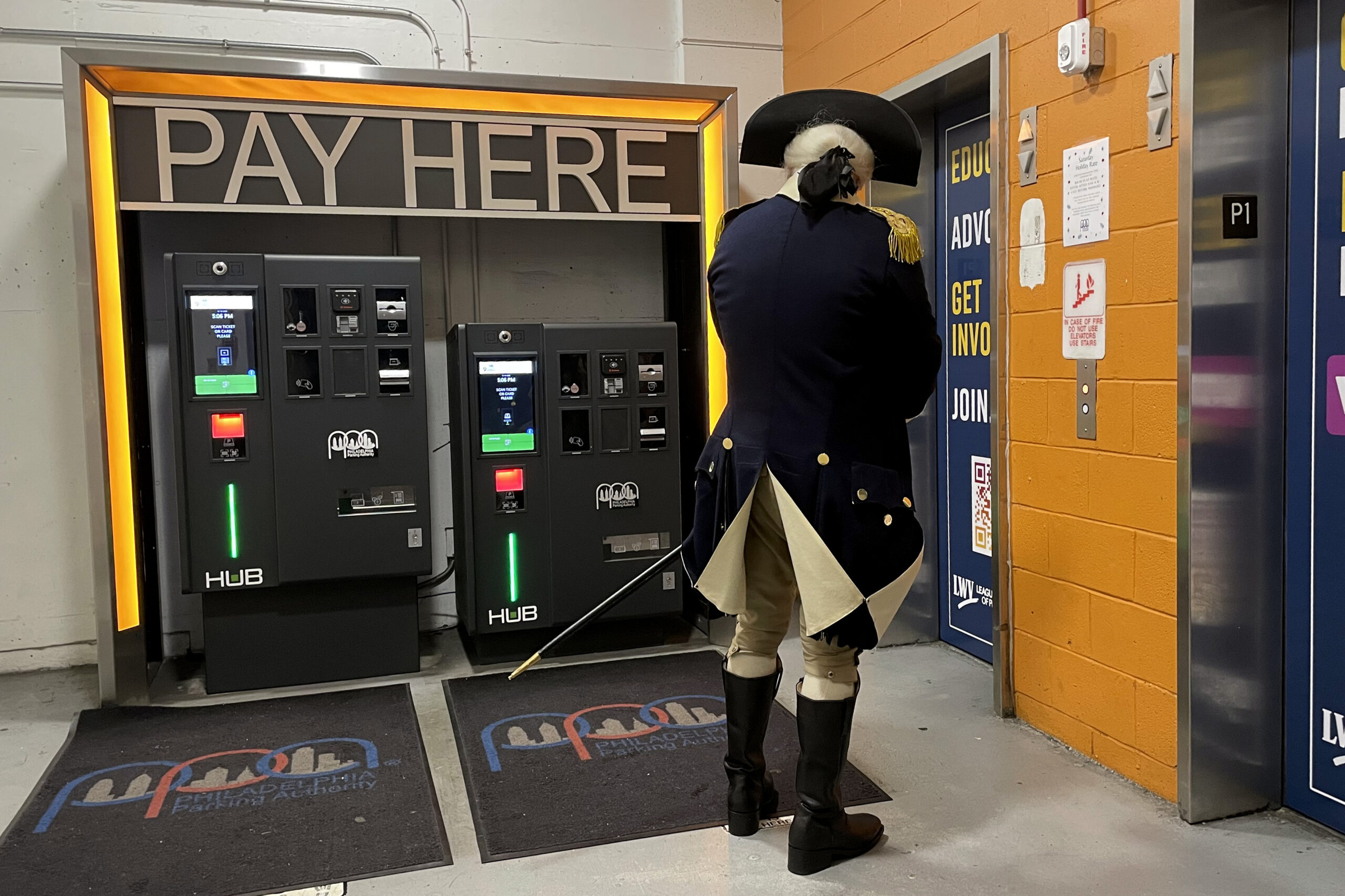
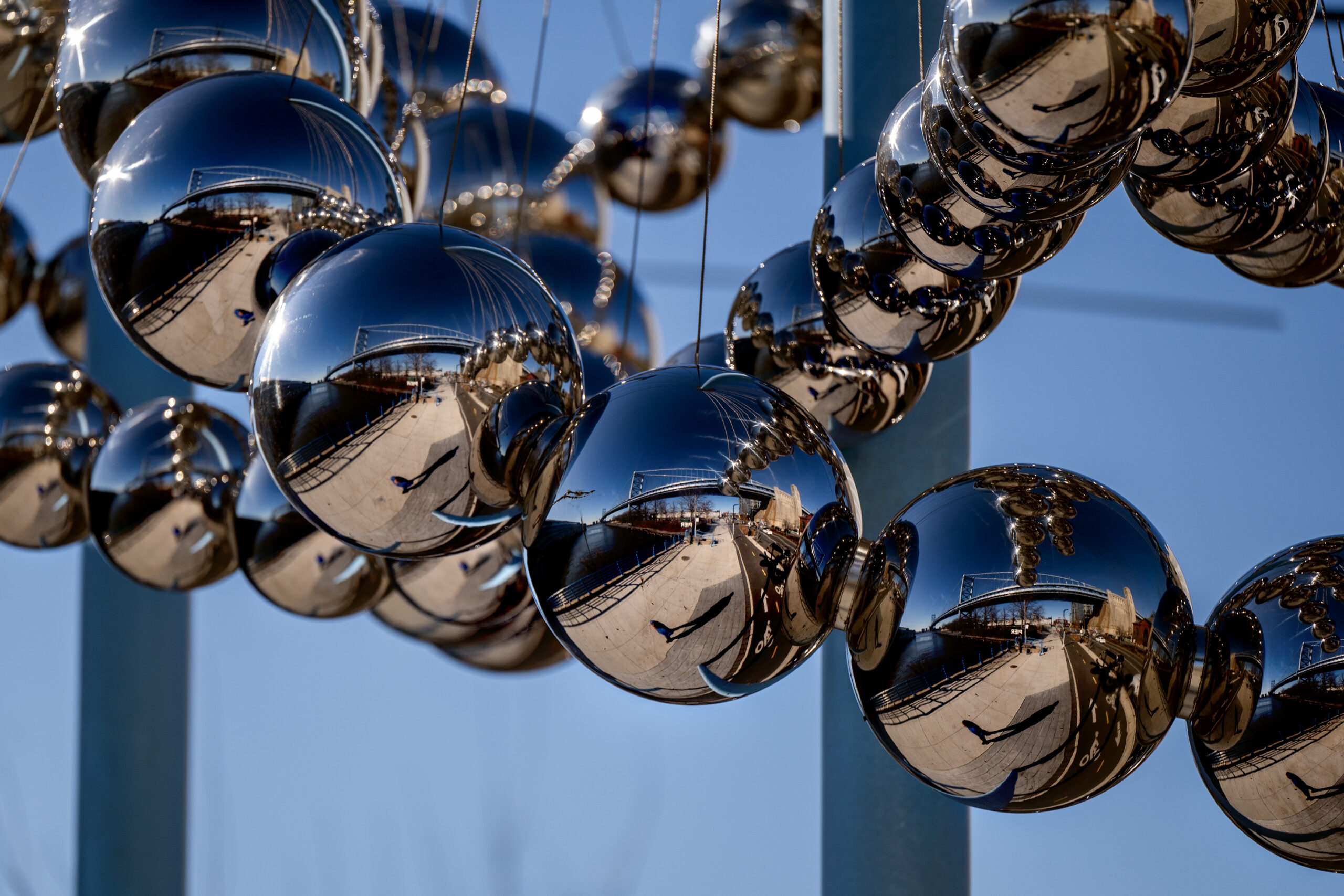
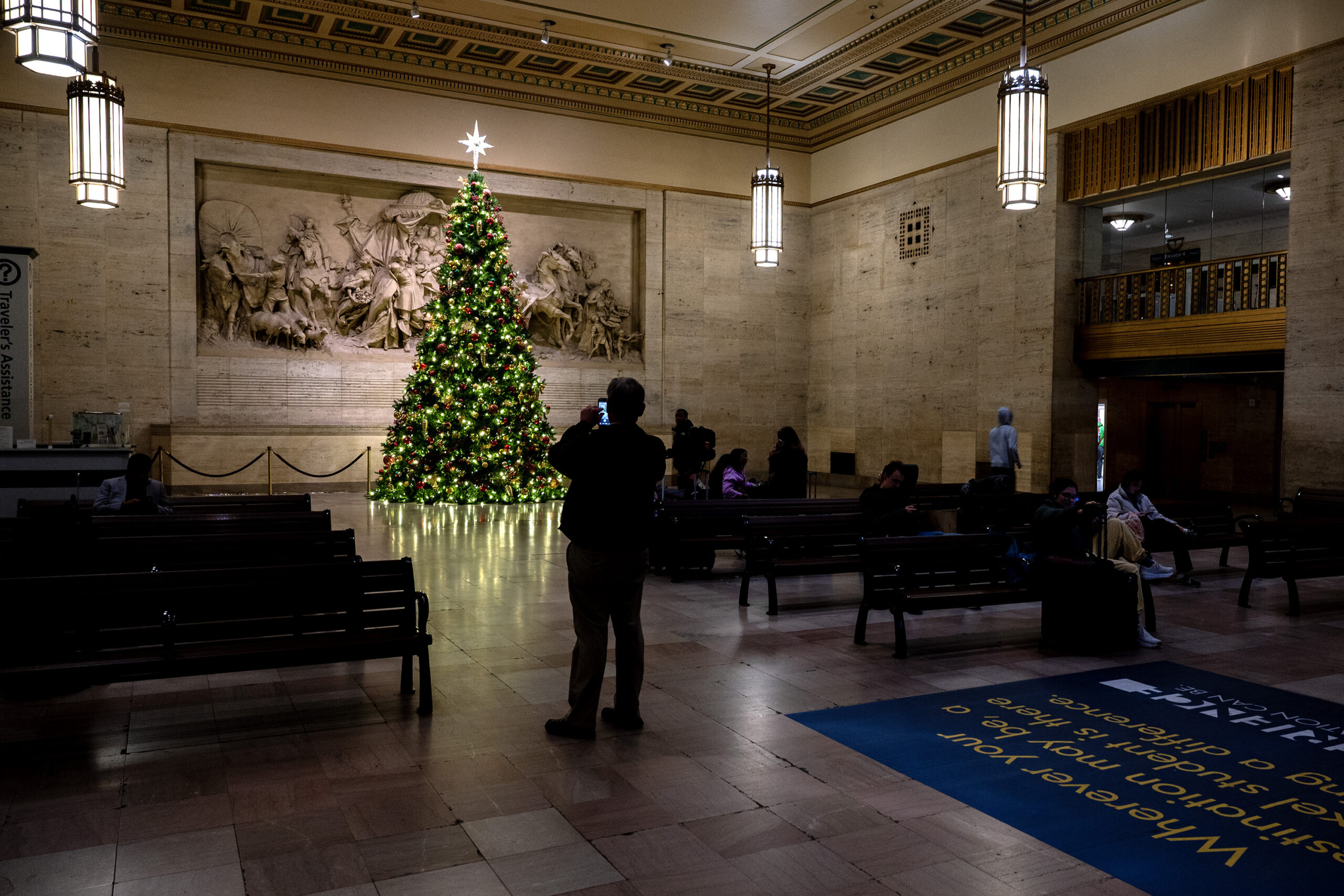
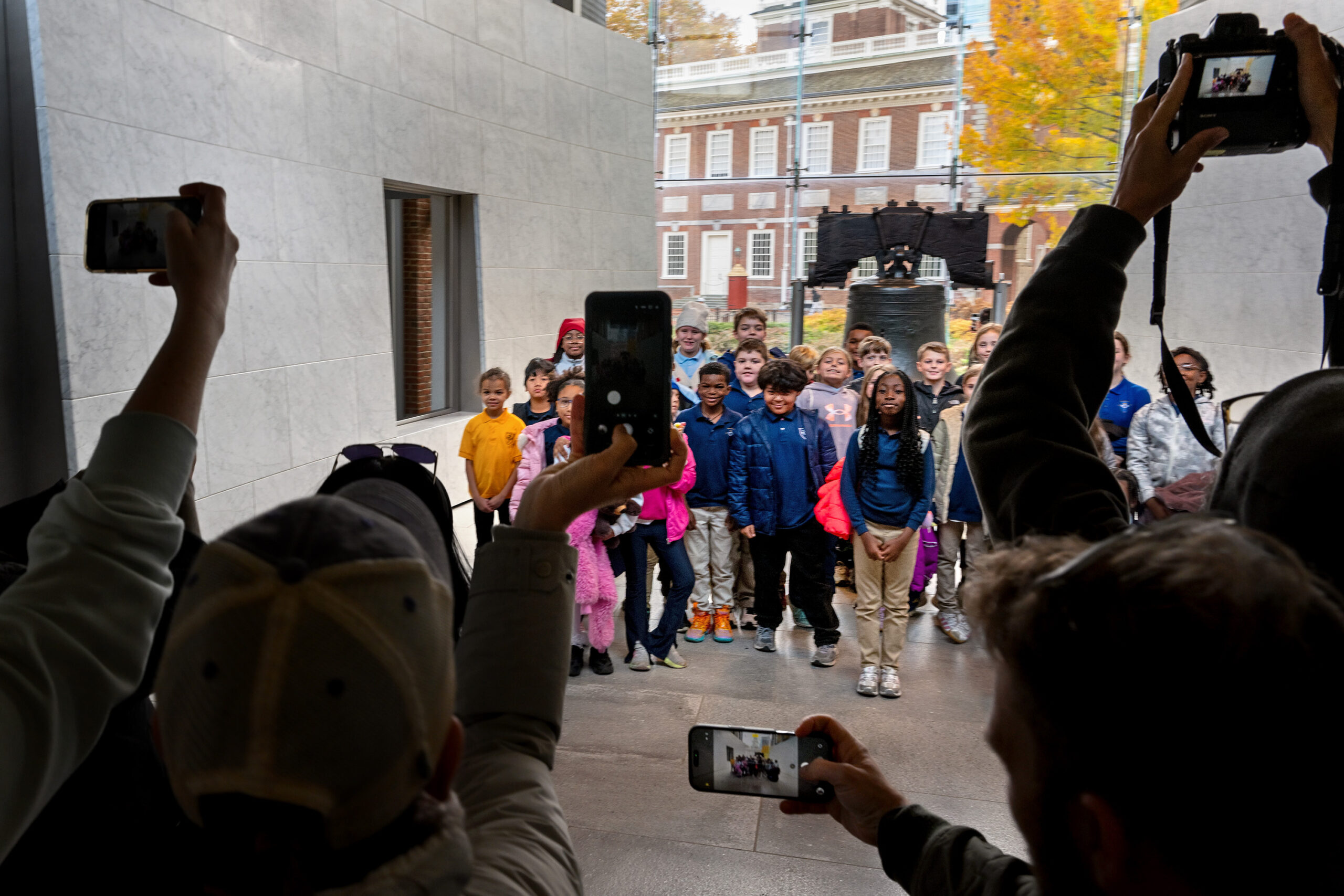
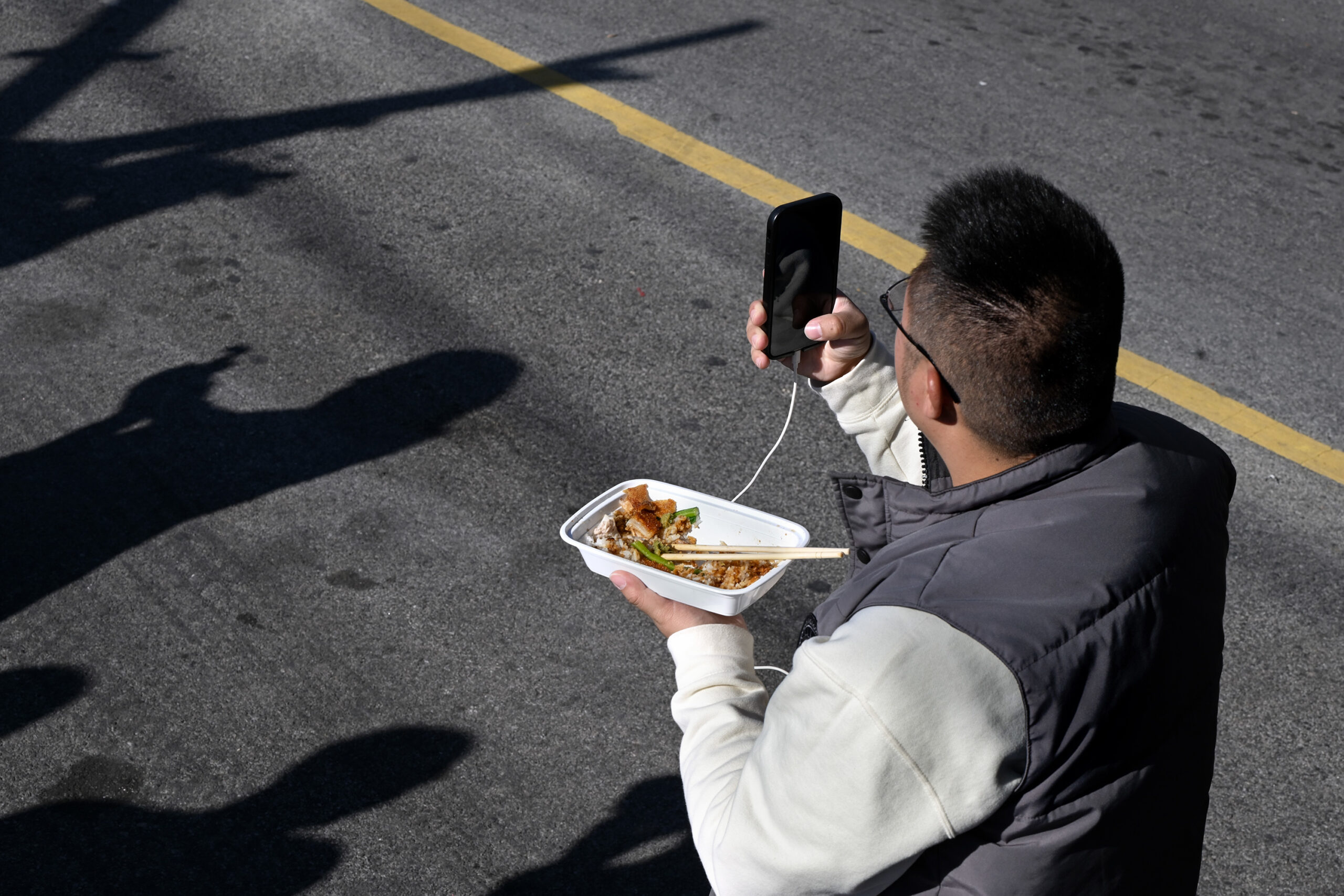
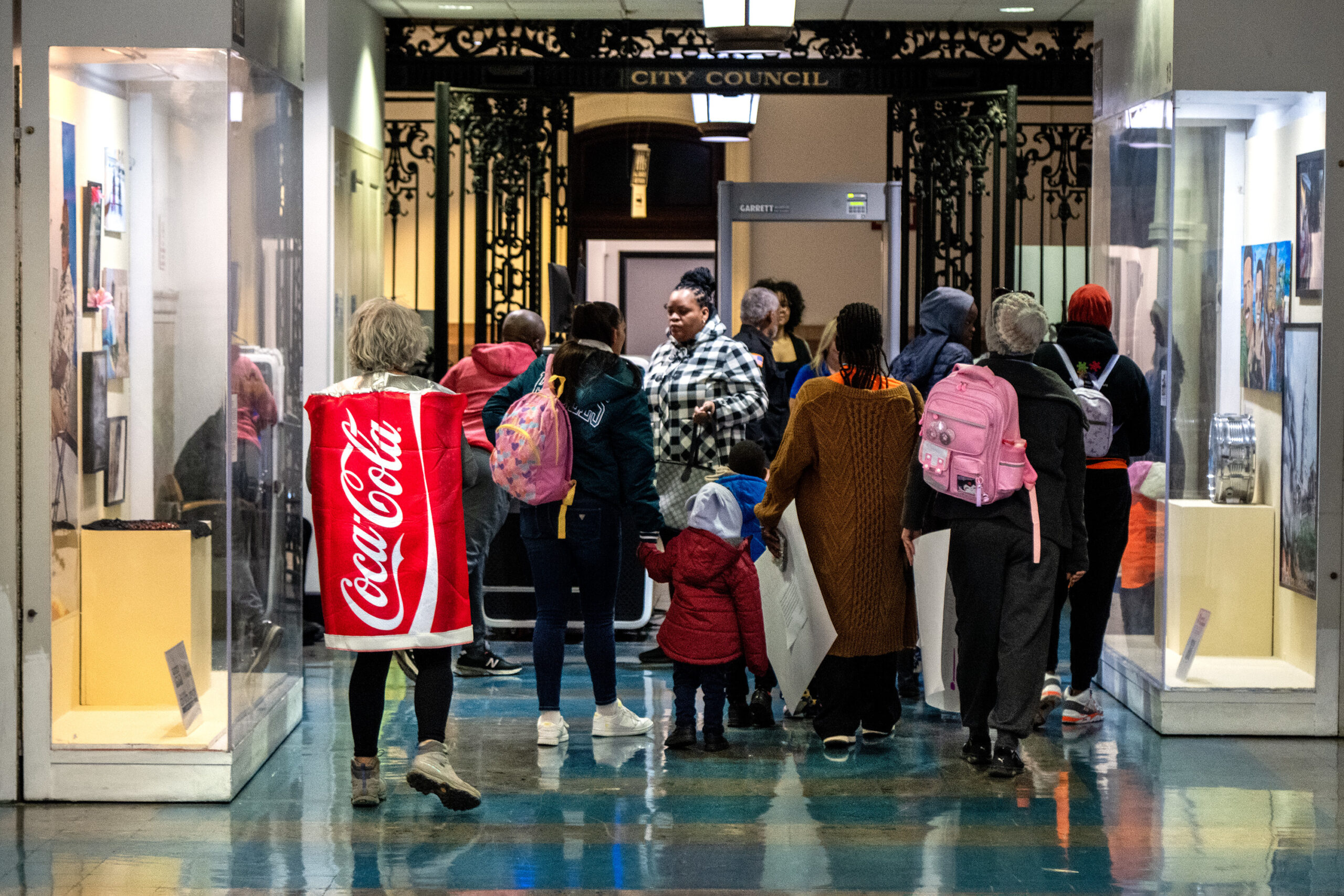
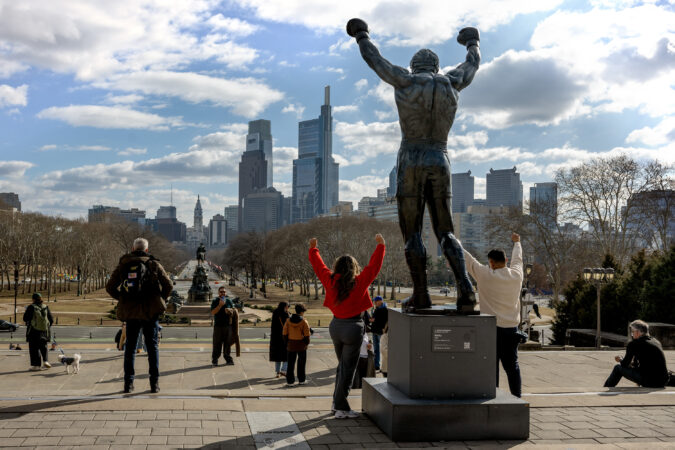
January 19, 2026: A low-in-the-sky winter sun is behind the triangular pediment of the “front door” of the open-air President’s House installation in Independence National Historical Park. The reconstructed “ghost” structure with partial walls and windows of the Georgian home known in the 18th century as 190 High St. is officially titled, “Freedom and Slavery in the Making of a New Nation” (2010). It is designed to give visitors a sense of the house where the first two presidents of the United States, George Washington and John Adams, served their terms of office. The commemorative site designed by Emanuel Kelly, with Kelly/Maiello Architects, pays homage to nine enslaved people of African descent who were part of the Washington household with videos scripted by Lorene Cary and directed by Louis Massiah. Deepika Iyer holds her niece Ira Samudra aloft in a Rockyesque pose, while her parents photograph their 8 month-old daughter, in front of the famous movie prop at the top of the steps at the Philadelphia Art Museum. Iyer lives in Philadelphia and is hosting a visit by her mother Vijayalakshmi Ramachandran (partially hidden); brother Gautham Ramachandran; and her sister-in-law Janani Gautham who all live in Bangalore, India.January 5, 2026: Parade marshals trail behind the musicians of the Greater Kensington String Band heading to their #9 position start in the Mummers Parade. Spray paint by comic wenches earlier in the day left “Oh, Dem Golden Slippers” shadows on the pavement of Market Street. This year marked the 125th anniversary of Philly’s iconic New Year’s Day celebration.Dec. 29, 2025: Canada geese at sunrise in Evans Pond in Haddonfield, during the week of the Winter Solstice for the Northern Hemisphere. December 22, 2025: SEPTA trolley operator Victoria Daniels approaches the end of the Center City Tunnel, heading toward the 40th Street trolley portal after a tour to update the news media on overhead wire repairs in the closed tunnel due to unexpected issues from new slider parts.December 15, 2025: A historical interpreter waits at the parking garage elevators headed not to a December crossing of the Delaware River, but an event at the National Constitution Center. General George Washington was on his way to an unveiling of the U.S. Mint’s new 2026 coins for the Semiquincentennial, December 8, 2025: The Benjamin Franklin Bridge and pedestrians on the Delaware River Trail are reflected in mirrored spheres of the “Weaver’s Knot: Sheet Bend” public artwork on Columbus Boulevard. The site-specific stainless steel piece located between the Cherry Street and Race Street Piers was commissioned by the City’s Public Art Office and the Delaware River Waterfront Corporation and created and installed in 2022 by the design and fabrication group Ball-Nogues Studio. The name recalls a history that dominated the region for hundreds of years. “Weaver’s knot” derives from use in textile mills and the “Sheet bend” or “sheet knot” was used on sailing vessels for bending ropes to sails. November 29, 2025: t’s ginkgo time in our region again when the distinctive fan-shaped leaves turn yellow and then, on one day, lose all their leaves at the same time laying a carpet on city streets and sidewalks. A squirrel leaps over leaves in the 18th Century Garden in Independence National Historical Park Nov. 25, 2025. The ginkgo (Ginkgo biloba) is considered a living fossil as it’s the only surviving species of a group of trees that existed before dinosaurs. Genetically, it has remained unchanged over the past 200 million years. William Hamilton, owner the Woodlands in SW Phila (no relation to Alexander Hamilton) brought the first ginkgo trees to North America in 1785.November 24, 2025: The old waiting room at 30th Street Station that most people only pass through on their way to the restrooms has been spiffed up with benches – and a Christmas tree. It was placed there this year in front of the 30-foot frieze, “The Spirit of Transportation” while the lobby of Amtrak’s $550 million station restoration is underway. The 1895 relief sculpture by Karl Bitter was originally hung in the Broad Street Station by City Hall, but was moved in 1933. It depicts travel from ancient to modern and even futuristic times. November 17, 2025: Students on a field trip from the Christian Academy in Brookhaven, Delaware County, pose for a group photo in front of the Liberty Bell in Independence National Historical Park on Thursday. The trip was planned weeks earlier, before they knew it would be on the day park buildings were reopening after the government shutdown ended. “We got so lucky,” a teacher said. Then corrected herself. “It’s because we prayed for it.” November 8, 2025: Multitasking during the Festival de Día de Muertos – Day of the Dead – in South Philadelphia.November 1, 2025: Marcy Boroff is at City Hall dressed as a Coke can, along with preschoolers and their caregivers, in support of former Mayor Jim Kenney’s 2017 tax on sweetened beverages. City Council is considering repealing the tax, which funds the city’s pre-K programs. October 25, 2025: Austin Gabauer, paint and production assistant at the Johnson Atelier, in Hamilton Twp, N.J. as the finished “O” letter awaits the return to Philadelphia. The “Y” part of the OY/YO sculpture is inside the painting booth. The well-known sculpture outside the Weitzman National Museum of American Jewish History was removed in May while construction continues on Market Street and has been undergoing refurbishment at the Atelier at the Grounds for Sculpture outside of Trenton.October 20, 2025:The yellow shipping container next to City Hall attracted a line of over 300 people that stretched around a corner of Dilworth Park. Bystanders wondered as they watched devotees reaching the front take their selfies inside a retro Philly diner-esque booth tableau. Followers on social media had been invited to “Climb on to immerse yourself in the worlds of Pleasing Fragrance, Big Lip, and exclusive treasures,” including a spin of the “Freebie Wheel,” for products of the unisex lifestyle brand Pleasing, created by former One Direction singer Harry Styles.
Rocky already has a perfectly good spot. People find it. They take photos. They run the steps. They leave happy. The city gets its tourism moment without blocking views, rerouting pedestrians, or turning the top of the Art Museum steps into a permanent selfie bottleneck.
Moving the statue to the top isn’t about improving the experience — it’s about maximizing it. More drama. More branding. More spectacle. And, quietly, more privatization of space that used to just be… there.
That’s the part that grates. The Art Museum grounds have been slowly filling up with things that make sense individually — pop-ups, shops, events, installations — but collectively start to feel like you need a reason, a ticket, or a purchase to exist there. Rocky at the top isn’t just a statue move; it’s another inch taken from a public place that worked fine as-is.
There’s also the price tag. Spending up to a quarter-million dollars to relocate a movie prop in a city that can’t reliably maintain sidewalks or fund its parks feels, at best, tone-deaf. At worst, it sends the message that the view matters more than access.
Rocky is supposed to represent the everyman. Putting him on a pedestal, literally, kind of misses the point.
Leave him where he is. Let the steps belong to everyone.
Doug Taylor (center) of Collingswood, sledding with his 3-1/2 year old grandson Will, waits for a space to open up on the crowded hill in the Haddonfield Friends Meeting cemetery on Jan. 6, 2025. “This is the best day ever!” said Will, about his first real experience with snow.
Snow is beautiful. Everything else about it is not: A for the initial excitement and beauty, F for the cleanup
The snow itself? Gorgeous. Magical. Instagrammable. The Wissahickon is about to look like a snow globe and for about 12 minutes, we will all pretend winter is charming.
The problem is everything that comes with it.
The grocery stores are already stripped bare like a snowstorm personally offended them. Bread is gone. Milk is gone. Eggs are gone. Somehow the rotisserie chickens are gone. People who have never once made French toast are suddenly preparing for a weeklong siege.
Then there’s the shoveling. The bending. The freezing. The part where you convince yourself it won’t be that bad and then immediately regret every life choice once your boots hit the sidewalk. And that’s before you remember some forecasts are floating numbers as high as 17 inches.
Group chats will fill with radar screenshots and passive-aggressive optimism. “Let’s see how it looks Sunday morning,” someone will say, knowing full well no one is leaving the house.
And yes, we’re all rooting for the plows. We always do. We say their names like prayers. We lower our expectations just enough to avoid heartbreak, but not enough to stop hoping.
An F because while snow may be pretty, it is also disruptive, exhausting, and a logistical nightmare that turns adults into meteorologists and grocery shoppers into survivalists. Enjoy the view. Then grab a shovel.
An artistic rendering of the hologram PETA is offering to replace Punxsutawney Phil.
PETA wants Punxsutawney Phil replaced with a hologram. Pennsylvania says absolutely not: A
Every January, right on schedule, PETA shows up with a new proposal to fix Groundhog Day. And every January, Pennsylvania responds with the same energy it reserves for people who suggest putting ketchup on a cheesesteak.
This year’s idea: Retire Punxsutawney Phil to a sanctuary and replace him with a massive, color-changing 3D hologram. A digital marmot. A Bluetooth rodent. Phil, but make it Coachella.
The problem isn’t animal welfare — it’s that Groundhog Day is not a TED Talk. It’s a pre-dawn ritual involving cold fingers, bad coffee, and a collective agreement to believe in something deeply unserious. Turning Phil into a hologram misses the point entirely. If people wanted a clean, efficient, high-tech weather forecast, they would simply look at their phones and go back to bed.
The most Pennsylvania response came from Josh Shapiro, who posted a photo of Phil with “DON’T TREAD ON ME,” effectively summarizing the state constitution in four words. This is not a debate about projections versus puppets. It’s about tradition versus disruption, and Pennsylvania will pick tradition every time, even when it makes no sense.
Phillies pitcher Ranger Suárez throws during the third inning of Game 3 of baseball’s NLDS against the Los Angeles Dodgers Wednesday, Oct. 8, 2025, in Los Angeles.
Wait, we loved Ranger Suárez. How did we get his name wrong?: C
This one landed like finding out you’ve been calling a close friend by the wrong nickname for years… not out of malice, just momentum.
Because Philly didn’t just like Ranger Suárez. Philly loved him. He was homegrown. Trusted. October-tested. His walk-up song was literally “Mr. Rager.” We chanted it. We printed it. We built a whole vibe around it. And somehow, in all that time, nobody stopped to say, “Hey, by the way, is this right?”
The funny part is that this revelation didn’t come with tension or correction. It came with grace. Of course it did. Suárez wasn’t scolding anyone. He wasn’t reclaiming anything. He was just explaining, gently, to a new city, while reassuring the old one that we didn’t need to panic.
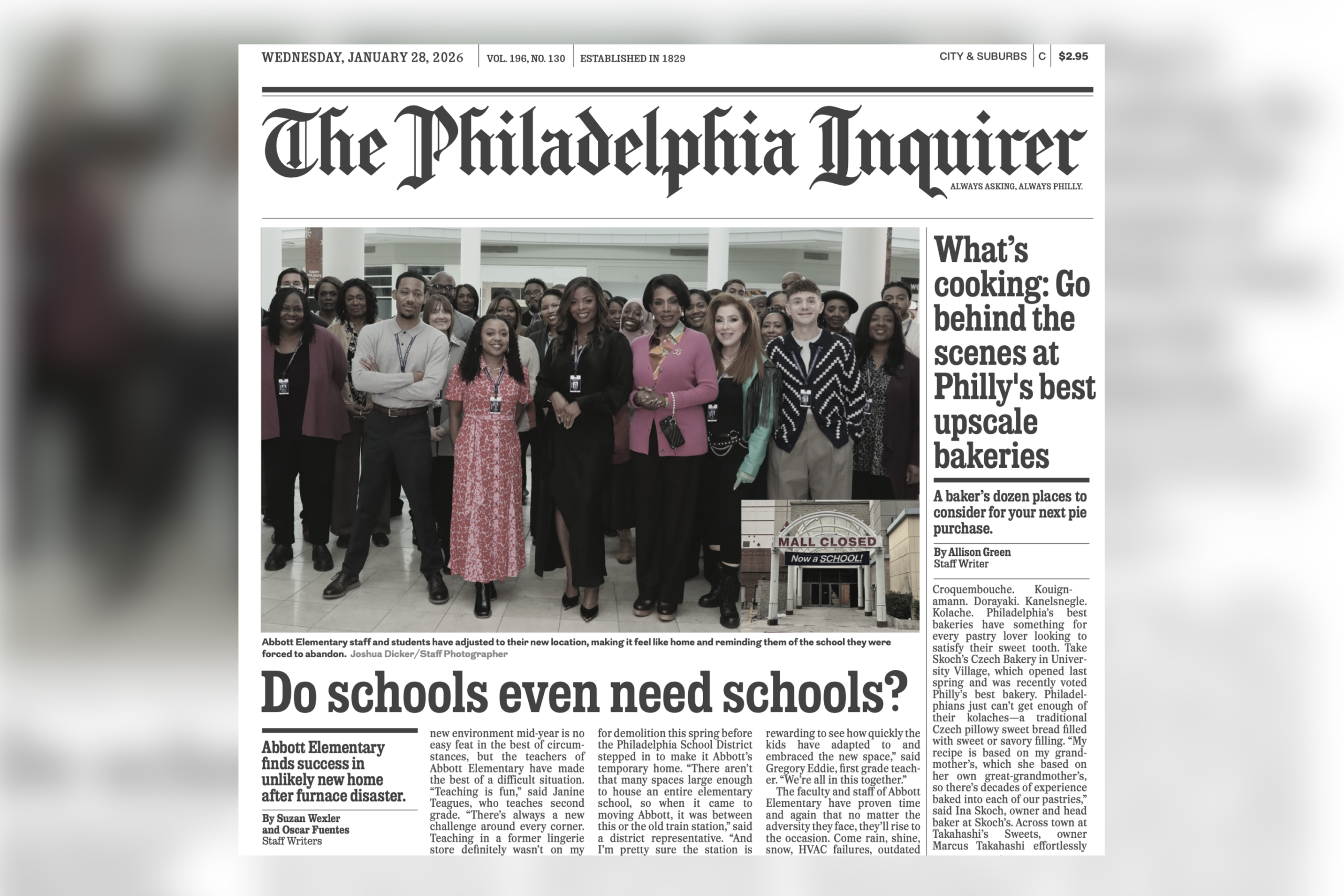
A mock front page of the Philadelphia Inquirer as seen in Season 5 of “Abbott Elementary.”
‘Abbott Elementary’ puts The Inquirer on the front page and nails the vibe: A
This could’ve gone sideways fast. A fictional front page cameo is exactly the kind of thing that can feel smug, indulgent, or weirdly self-important.
In this week’s episode, the paper shows up to cover Abbott’s unexpected success while the school operates out of an abandoned mall. The headline is glowing. The teachers react. Janine beams. Melissa checks whether her quote made it in. Barbara does a victory lap. And then, crucially, the moment passes.
Because in Philly, a front page is not the finish line. It’s a moment.
The district still drags its feet. The construction crew gets reassigned. The attention becomes something administrators can point to instead of acting on. That’s the joke, and it’s a sharp one. Abbott understands that recognition often arrives right before progress stalls, not when it accelerates.
The Four Seasons drops a $25,000-a-night penthouse and Philly blinks twice: B-
Look, nobody is confused about who this is for. It’s still jarring to see the number written down.
For that price, you get 4,000 square feet, sweeping views, curated art, wellness rooms, and menus tied to Vernick Fish and Jean-Georges. Luxury, in other words, is being taken extremely seriously.
And to be fair, this makes sense on paper. Philly is bracing for a monster tourism year with the World Cup, the Semiquincentennial, and a calendar stuffed to the margins. High-end visitors are coming, and the city would like to make sure they don’t stay in New York and commute down like it’s a day trip.
Still, there’s something very Philly about the collective reaction here, which is less awe than quiet disbelief. Not outrage. Not moral panic. Just a pause, followed by: Who is actually booking this?
Because this is a city where luxury tends to coexist awkwardly with reality. A $25,000-a-night penthouse sits a few blocks from potholes, delayed trains, and a whole lot of people who are very proud of finding a good deal.
Maria Cozamanis and Romina Ustayev in episode 101 of “Members Only: Palm Beach.”
Philly somehow gets dragged into a Palm Beach reality show: D
This isn’t fun, campy reality TV. It’s stiff, glossy, and deeply invested in rules that feel made up for the sole purpose of excluding someone. The clothes are loud, the behavior is small, and the hierarchy is treated like gospel. Everyone is performing wealth as if it’s a full-time job, and no one seems to be enjoying it.
Set in the orbit of Mar-a-Lago, the show mistakes proximity to power for personality. Conversations revolve around who belongs where, how to dress “properly,” and which customs are acceptable. It’s uncomfortable in a way that feels less accidental than the show probably intends.
The Philly connection only adds to the weirdness. Aside from one recognizable name, these aren’t women who reflect anything most people here recognize as Philly culture. They don’t feel local. They feel imported, like a version of “high society” that got lost on the way to a country club and wandered onto Netflix instead.
And yet, it’s weirdly watchable. Not because it’s good, but because it’s baffling. The kind of show you finish not feeling entertained, just slightly grimy and confused about how this became the vibe.
I’ve been following the lagman trail for some time now, savoring these chewy, hand-pulled Central Asian noodles from the Uzbek soup bowls of Northeast Philadelphia. Try them at Uzbekistan Restaurant, or in chef Temir Satybaldiev’s stir-fried tribute to his Kyrgyzstani grandmother on the Slavic fusion menu at Ginger. Now, another version of lagman noodles — traditional to the Uyghur ethnic minority in Western China — has landed in University City with Uyghur Noodle King.
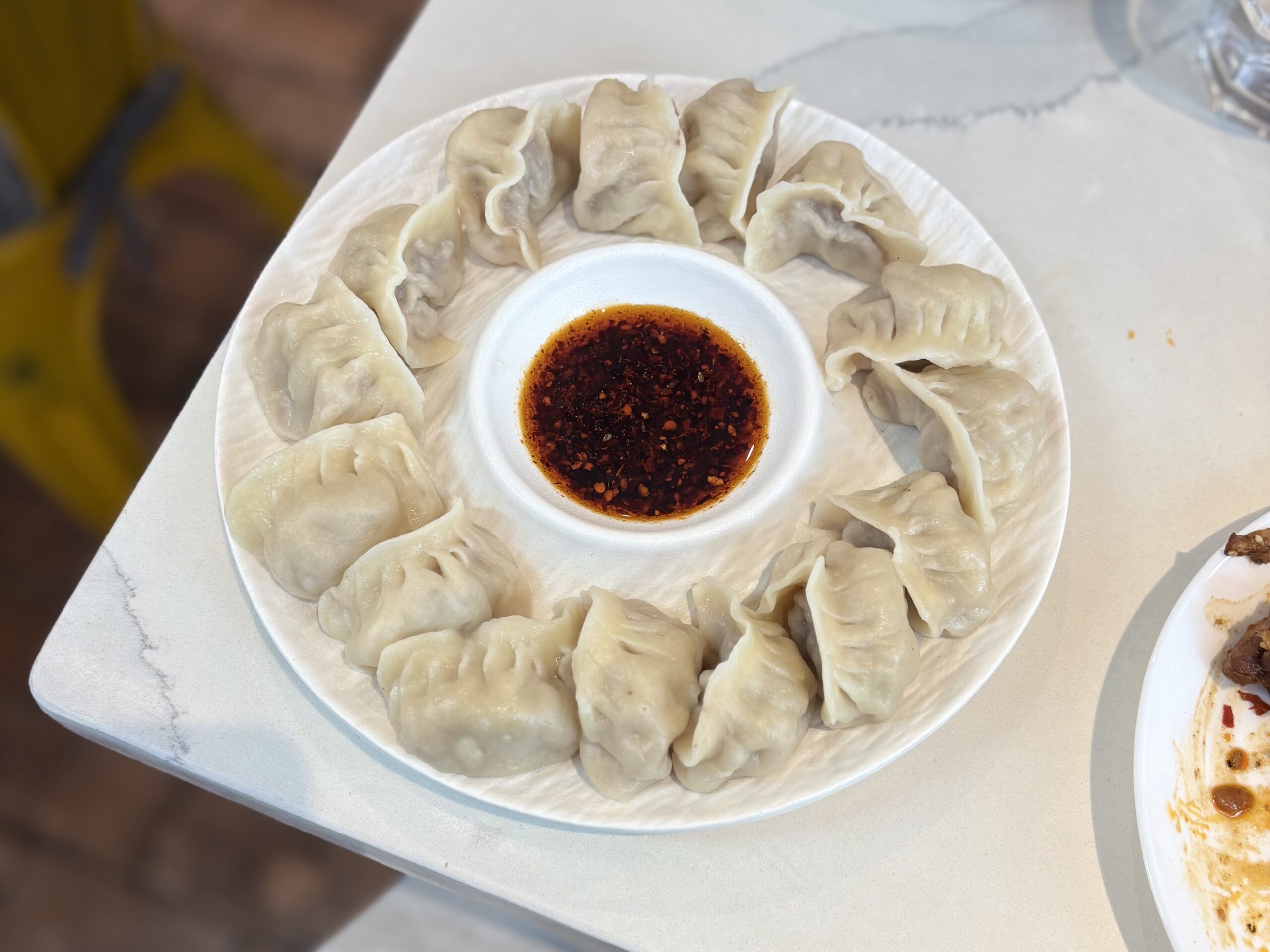
Located in an airy glass box of a space next to Paris Baguette near 38th and Chestnut, this is the first restaurant for co-owners Husenjan “Yush” Damolla and Abdurahman Tawakul. Damolla came to Drexel to study finance 13 years ago and ultimately stayed, working in real estate before finally turning this November to his passion for the food of his hometown, Kashgar, China. The all-halal recipes come from Damolla’s cousin, Mirkamil Rozi, who has a restaurant in Australia and has been training the duo remotely through Zoom sessions between their kitchens. So far, it’s paid off nicely with a tight but tasty menu of flaky samsa turnovers, fragrant kebabs, “big plate chicken” stews laced with numbing Szechuan peppercorn spice, and excellent handmade dumplings stuffed with lamb.
Handmade dumplings stuffed with halal lamb are a highlight at Uyghur Noodle King in University City.
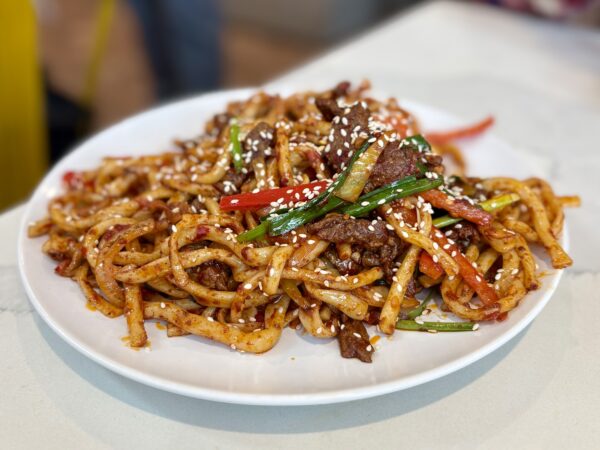
The lagman, though, are the main event, with twine-like noodles that have the kind of elastic snap that can only be achieved through hand-pulling — a vigorous game of cat’s cradle that transforms a single lump of dough into a fistful of 30 or so longer strands. The final dish tosses those noodles into a hot wok with morsels of bell pepper, ginger, chives, and a dried pepper paste that combines with vinegar and soy to create a zesty glaze that glows with tang and spice. Damolla concedes they’re still working on consistency, but relies daily on his cousin’s best advice: “Just follow your heart and imagine you’re cooking for the people back home.” Uyghur Noodle King, 3816 Chestnut St., 347-507-8788, instagram.com/uyghur_noodle_king
— Craig LaBan
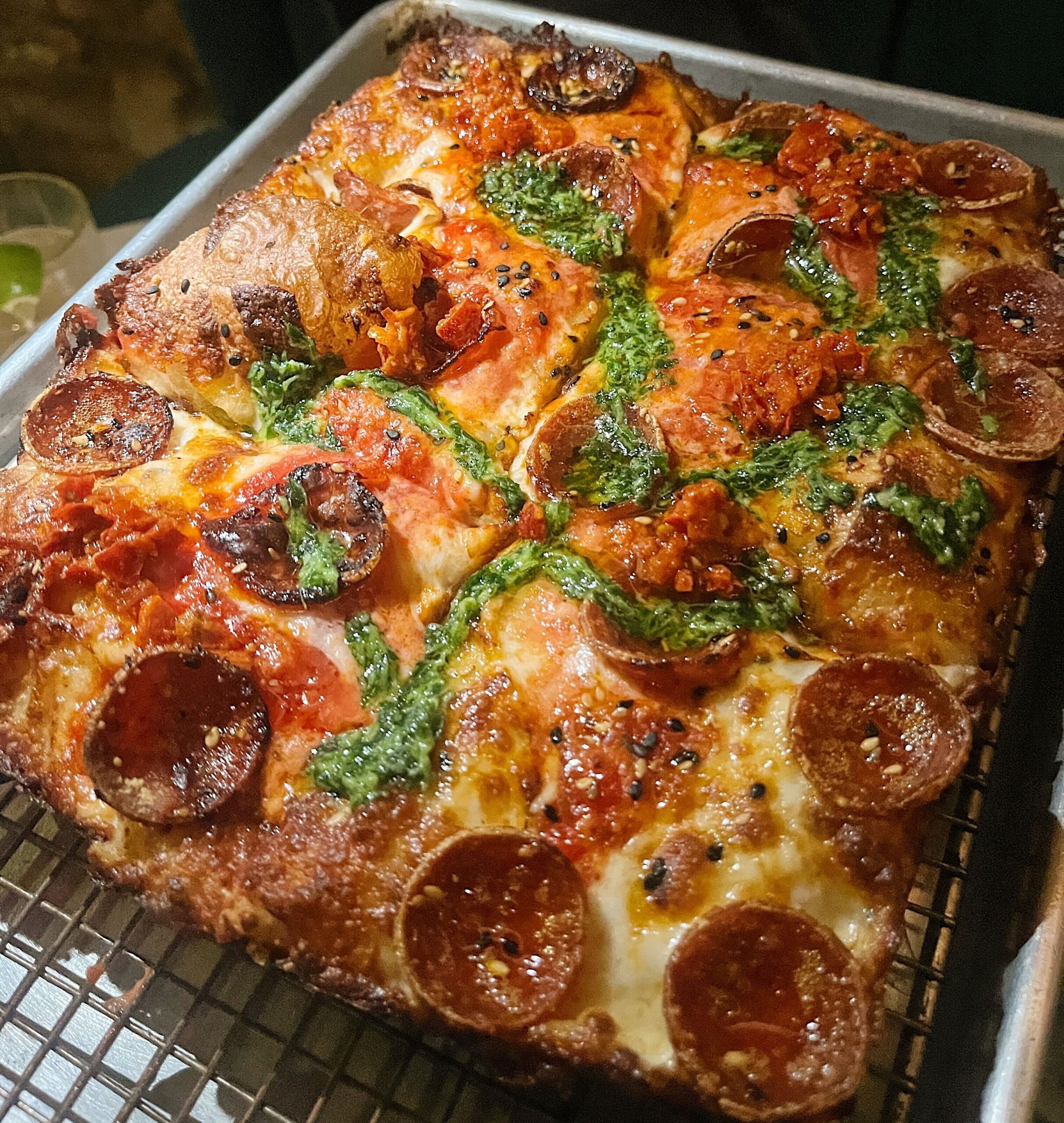
The MVP (VIP style) pizza from Emmy Squared in Queen Village.
The MVP (VIP style) from Emmy Squared
As an ex-New Yorker, it’s my birthright to hate Detroit-style pizza. At its worst, it’s just soggy-yet-burnt bread that lacks the je ne sais quois of a good tomato slice. But at Emmy Squared — Detroit pizza by way of two New York City hot shots who can’t stop opening satellite locations — the square pies rank among the best non-traditional pizza in the city.
Emmy Squared’s MVP pie is composed of ingredients that border on sacrilegious: a Wisconsin cheese blend, a mix of vodka and red sauce swirled with parsley pesto, and a sesame seed crust with an almost focaccia-style crumb. A VIP version is topped with Calabrian chilies and pepperoni slices so crispy the edges fold up to form tiny cups. The result is a flavor combo that hits all the right notes: a little bit of tang, a touch of spice, and an herbaceous finish from the pesto. Good pizza, after all, really is just excellent bread slathered with sauce and cheese. So if the elements are all there, who cares if the form is a little off? 632 S. 5th St., 267-551-3669, emmysquaredpizza.com
How transformative can a piece of bread be? Turns out, very. Especially if you’re able to keep it perfectly crunchy (almost funnel-cakelike), douse it in a bath of decadent caramel, then top it off with a perfect dollop of vanilla ice cream.
I give you Meetinghouse’s caramel toast, an item on the Kensington restaurant‘s menu I would have never thought to order had it not been highly recommended to me by a friend (or two, actually). I’ll truly be dreaming of it for some time to come. Well, that, and Meetinghouse’s green salad — it could double as a wedding centerpiece — and a crab dip that would make any Marylander proud. Meetinghouse, 2331 E. Cumberland St., meetinghousebeer.com
The buyers: Carrita Thomas, 33, nonprofit program evaluator; Jake Stein, 42, CEO of a tech start-up
The house: A 6,775-square-foot church in Society Hill built in 1920
The price: Listed for $2.5 million, purchased for $2.5 million
The agent: Kate McCann, Elfant Wissahickon Realtors
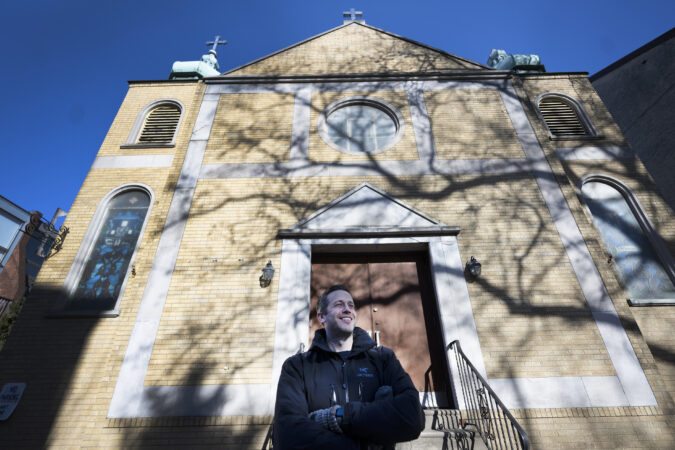
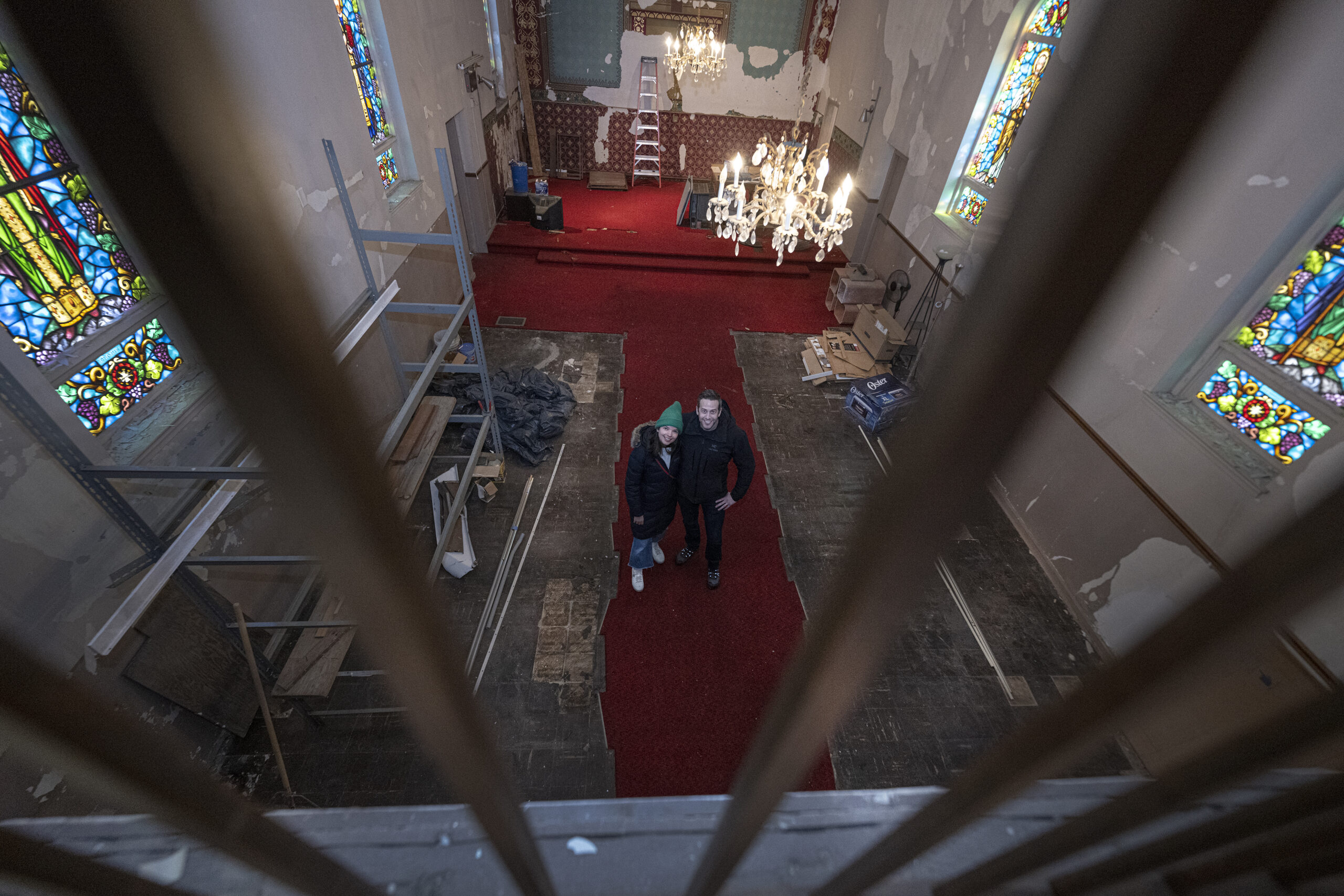
Carrita Thomas and Jake Stein on the main floor of their newly purchased church in Society Hill.
The ask: Carrita Thomas and Jake Stein moved to Society Hill in 2021 and immediately fell in love. They grew even more attached after having their first child. They loved the abundance of playgrounds and parking. But most of all, they appreciated how the area functioned as a village. “We have a great community of friends,” Thomas said. “We are very close with our neighbors.”
But when they found out that Thomas was pregnant with twins, their rowhouse, which once felt generous, suddenly seemed cramped. They needed more space fast but didn’t want to leave the neighborhood. They also wanted on-site parking and outdoor space for Thomas to garden. Plus they needed at least six bedrooms. The couple knew they were in for a difficult search.
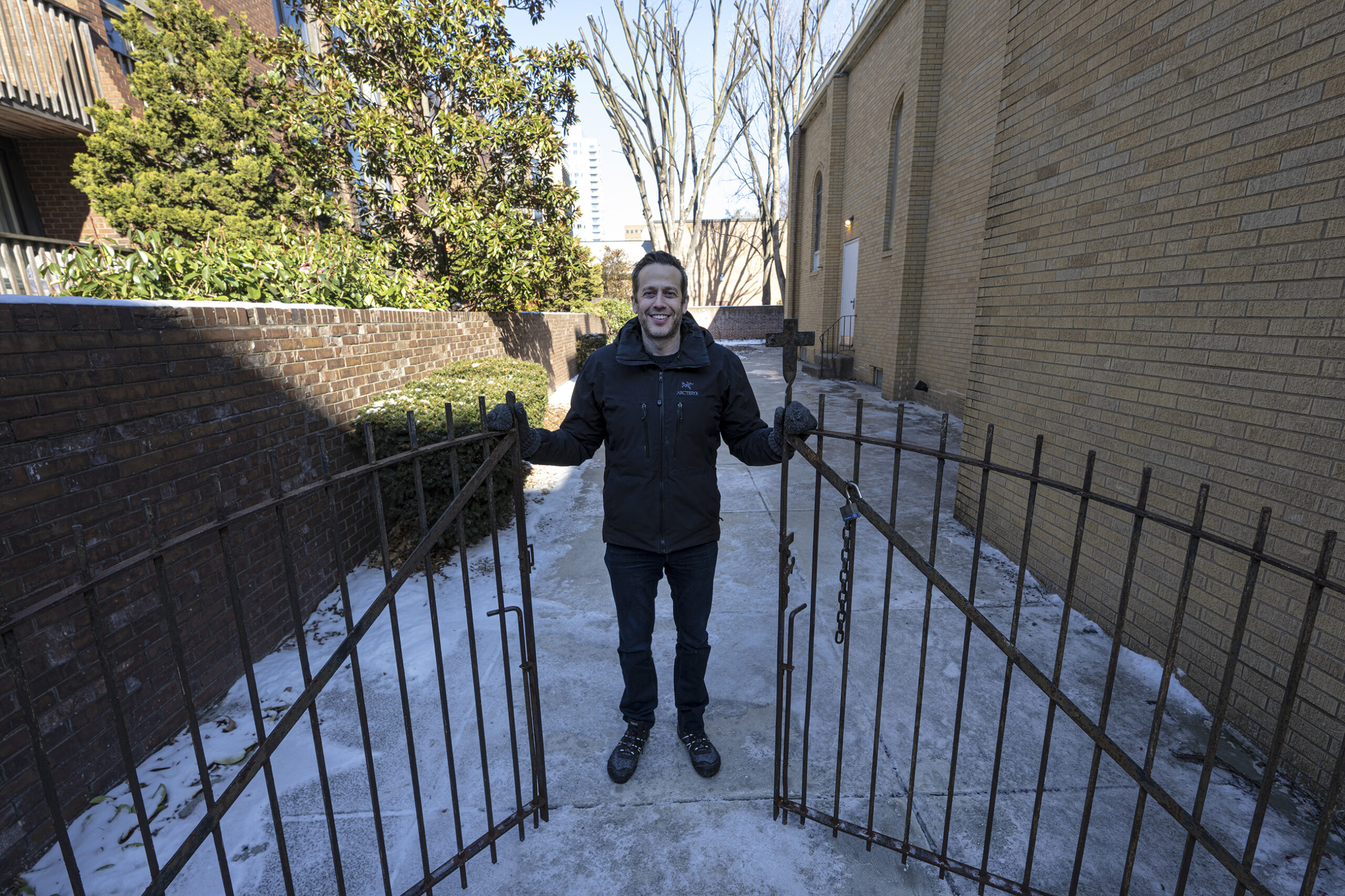
One of the church’s courtyards with plant beds where Thomas and her daughter recently planted bulbs with friends.
The search: The market moved fast for houses that met their criteria. More than once, they scheduled showings for houses already under contract. Once, they scheduled a showing three days after a house came on the market, only to have the agent cancel because it had already sold. After several misses, they decided to reassess their options, including renovation. “We had not been interested in it before because we’d only heard negative stories,” Thomas said.
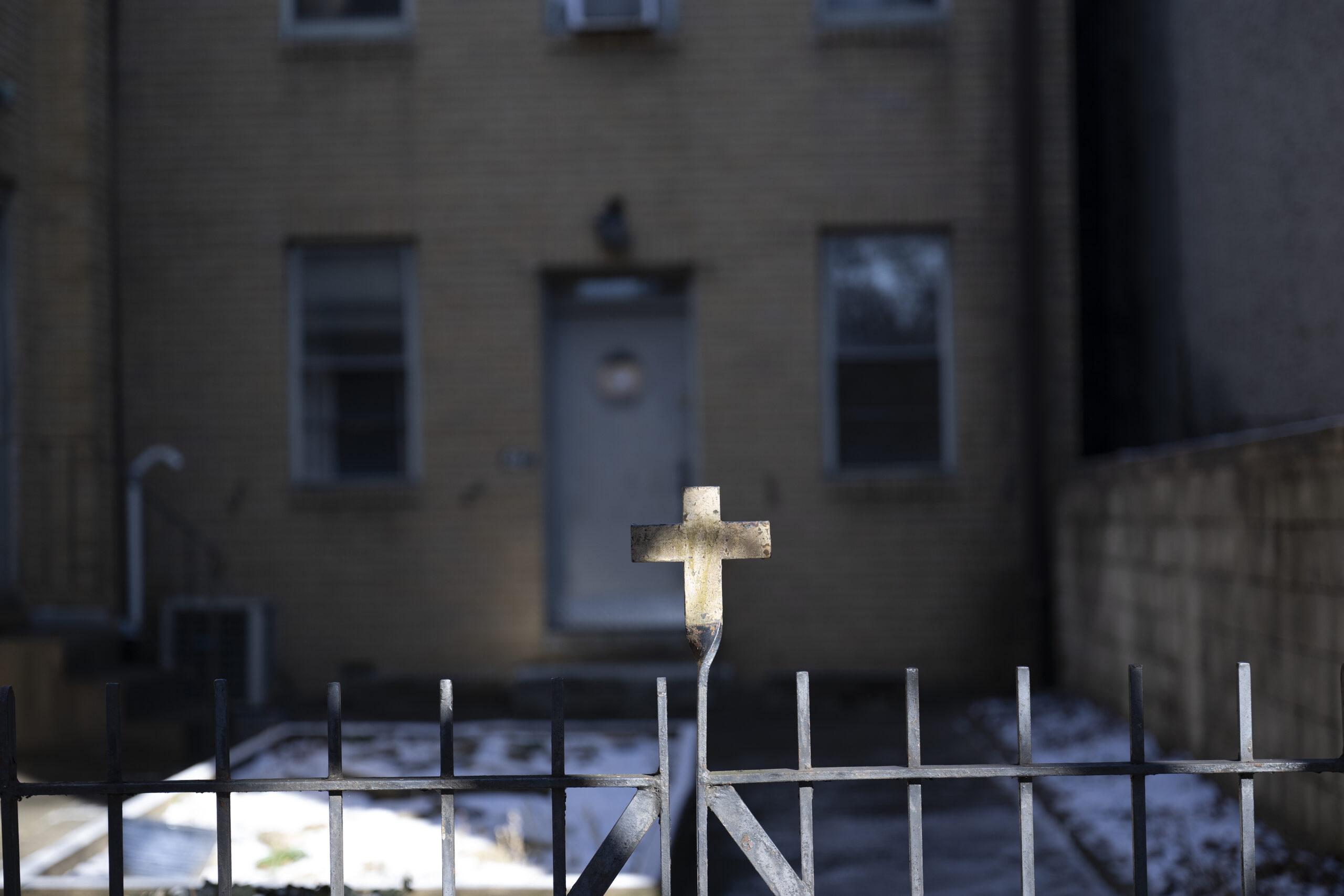
Around the same time, Stein noticed a sale sign on a vacant church two blocks from theirhome. It had been unused for decades, its landscaping overgrown, its windows dark. “I always thought it was so cool and interesting,” Stein said. “And what a waste.”
That discovery shifted their search. Instead of continuing to hunt for the impossible-to-find, perfect rowhouse, the couple began to consider the most glaring fixer-upper in the neighborhood.
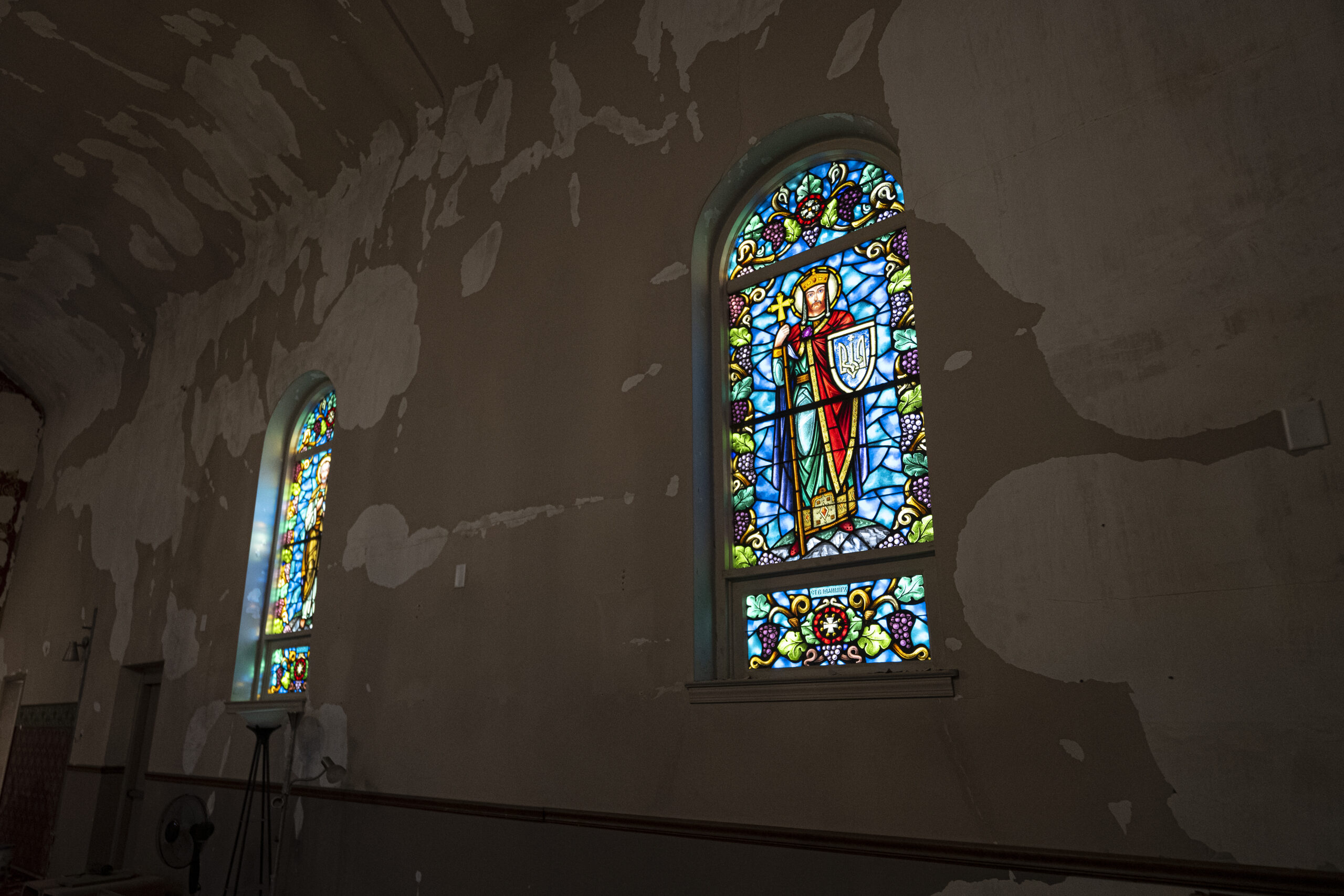
The couple fell in love with the church’s raw materials, like the stained glass windows lining its walls.
The appeal: Thomas was initiallyskeptical. Every church conversion she had seen leaned toward a loft-style layout, and she didn’t want to live in an open, cavernous space. But walking through the property with an architect helped her picture more-private floor plans.
One of the church’s main selling points was its driveway and ample parking space.
Inside, the building was structurally sound and full of “high-quality raw material,” said Thomas. But what really sold them was the “insane amount of outdoor space.”
To get a sense of renovation costs and trade-offs, the couple also consulted with someone who had previously run a design-build construction company. That process replaced vague anxiety about expenses with concrete ranges. “There are really expensive versions of renovations,” Stein said, “and there are much more reasonable versions.”
Understanding that they could “choose their own adventure” and “dial up or dial down the budget based on their design decisions” made the renovation seem actually doable, if not meaningful.
Thomas appreciated that the church had once been a place where people gathered. “One of our primary values is community,” she said. And the idea of restoring that function — even in a different form — felt really special to the couple. “It just adds so much richness to our lives,” she said.
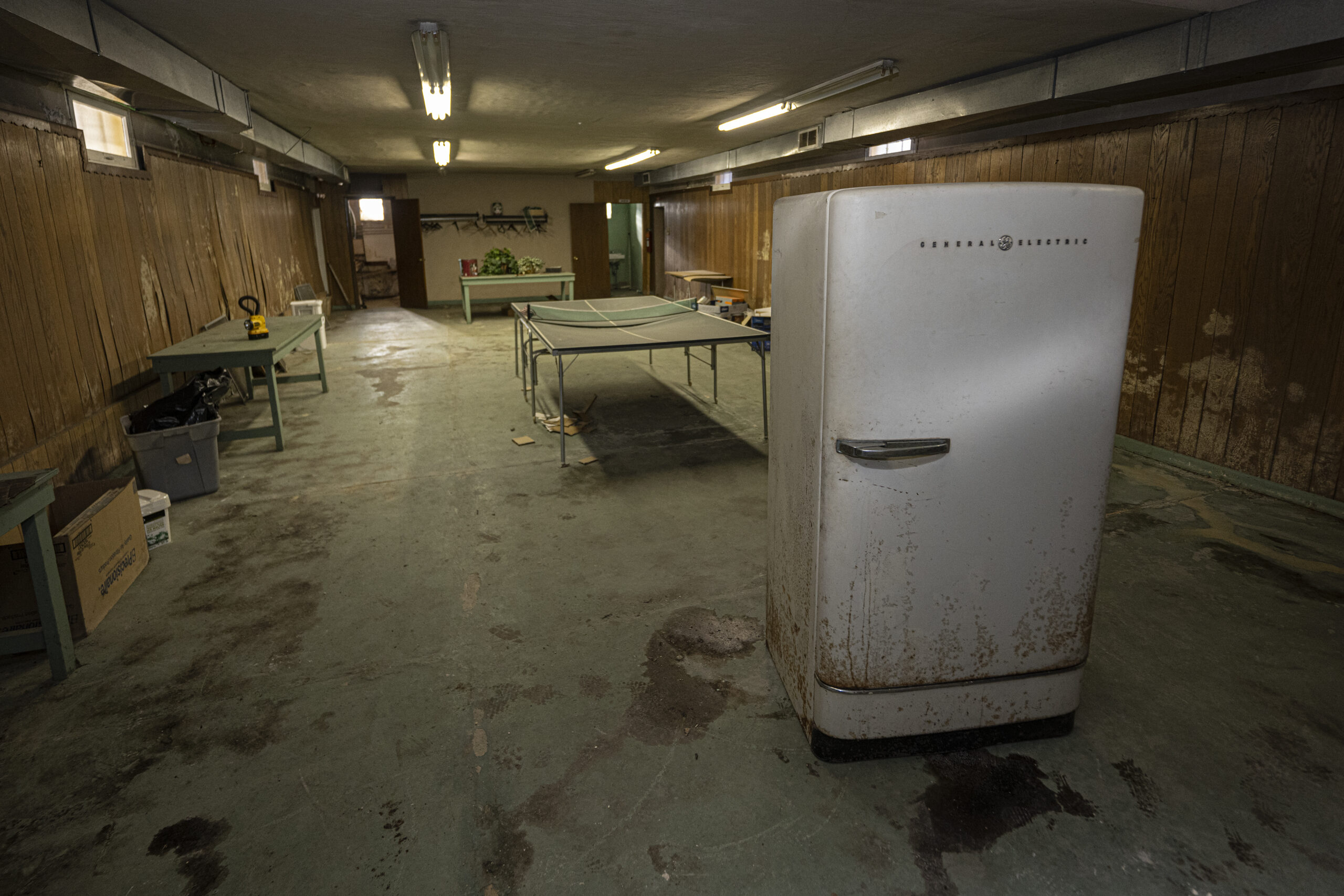
One of Stein’s favorite features of the church is the basement and the giant warped Ping-Pong table, on which he’s played multiple games.
The deal: Thomas and Steinknew that the terms would be largely out of their control. The seller, who lived out of state, had owned the building for decades and was not inclined to negotiate. She had rejected several offers over the years and did not advertise her property as being for sale online. Even getting the asking price took effort. Their agent had to follow up multiple times. The seller eventually told them it was $2.5 million. She had recently rejected an offer below the asking price without counteroffering, so the couple didn’t bother negotiating. “We know we would only get it if we met all of her terms,” Thomas said. They submitted a straightforward offer, including skipping the inspection, at the asking price, and the seller accepted.
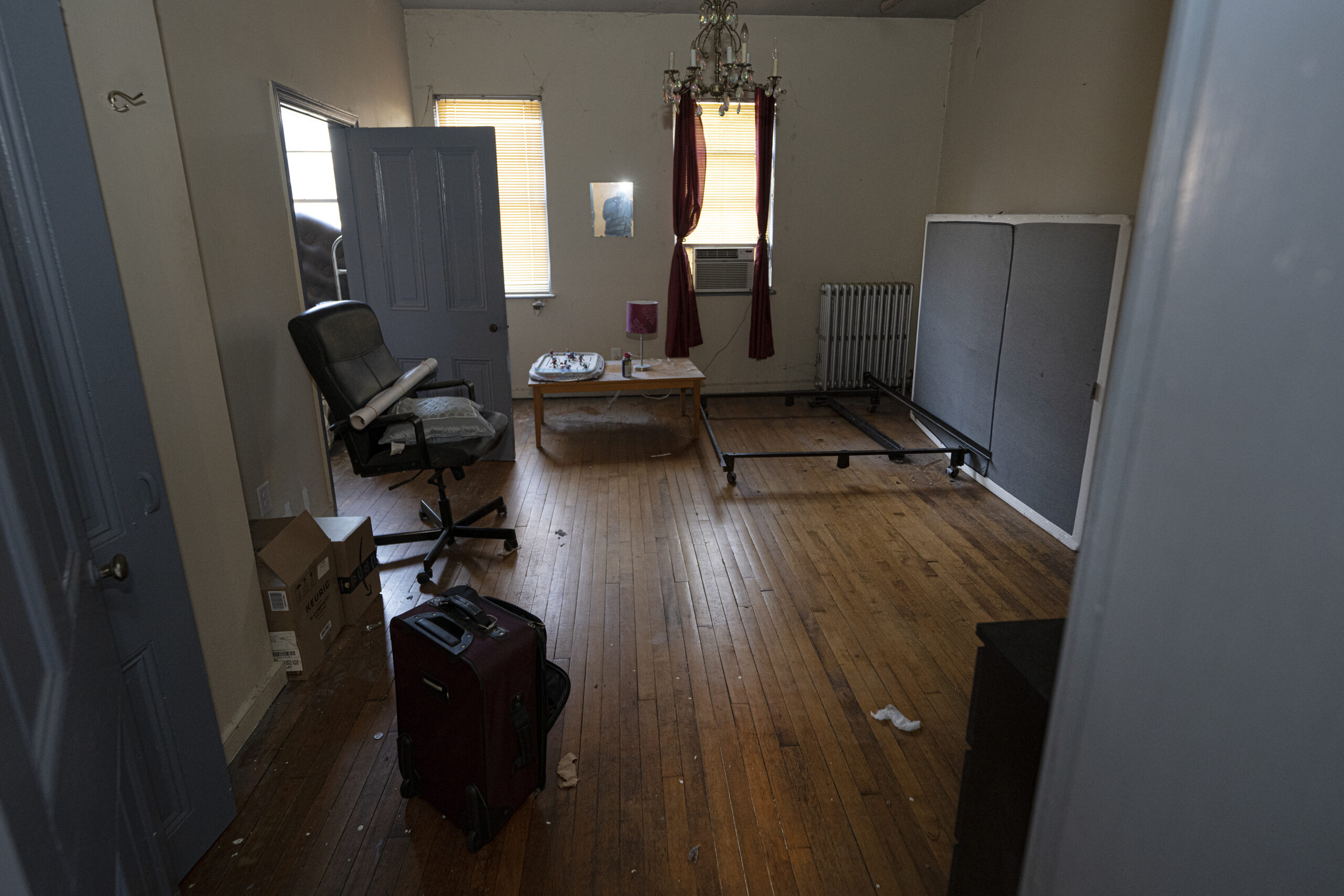
Interior views of the newly purchased church owned by Carrita Thomas and Jake Stein.
The money: Thomas and Stein put $2.5 million down in cash — the full cost of the property — the day they closed. They did not take out a mortgage. The funds came from the sale of Stein’s former software company, which he sold in 2018 for $60 million. Their renovation budget is still fluctuating.
The move: Thomas and Stein closed on the church at the end of September.
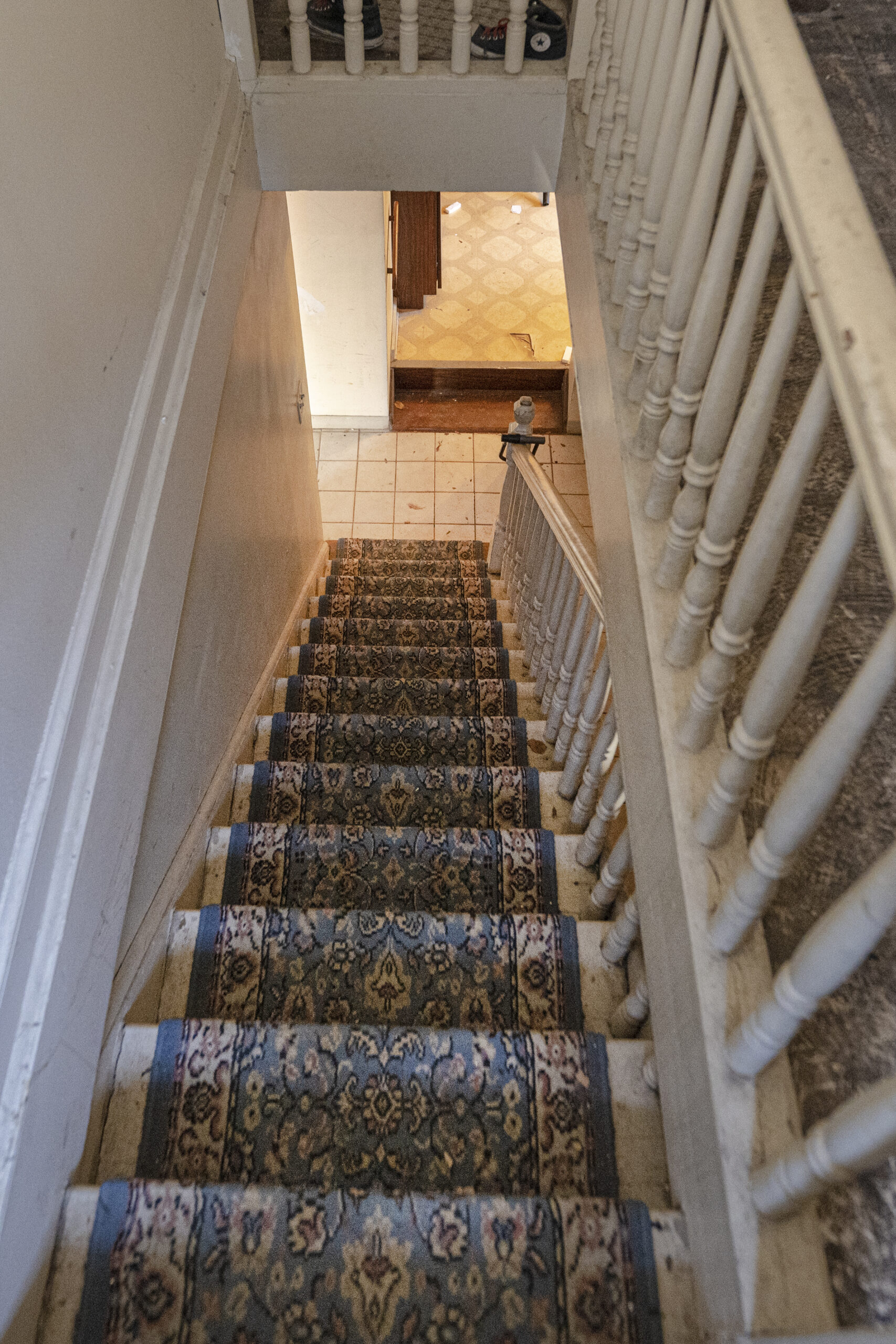
A view of the staircase in the rectory that is attached to the church.
They spent the past few months figuring out how to approach the renovation, talking with people who had done similar projects, and meeting with contractors. “It’s a slow process,” Thomas said, “but it’s a really important part of it.” Now, they are finalizing contracts with vendors. She expects the entire project to take about two years. Construction is still a ways away.
They are living in their Society Hill rowhouse for now, and it no longer feels too small. “We’re pretty comfortable,” Thomas said. “Something changed for me after I had the twins. I think both of our tolerance for chaos just went up a lot.”
Any reservations? The couple is happy with their purchase, even though there are still many unknowns. “A lot of careful planning needs to go into this,” Thomas said. “There are a lot of open questions still,” Stein added. They will have to knock down a few walls to figure out what is even possible. It will take at least 10 months to finalize the design. The couple is up for it. “It’s a cool project,” Thomas said.
Life after close: Even though the renovation hasn’t started, the building is already functioning as part of the neighborhood again. The couple hosted a Halloween party for their neighbors, and a few weeks later Thomas had her daughter’s friends over to plant bulbs.
We’ll show you a photo taken in the Philly-area, you drop a pin where you think it was taken. Closer to the location results in a better score. This week’s theme is all about snow! Good luck!
Round #17
Question 1
Where is this person waiting for the bus?
Loading…
ClickTap on map to guess the location in the photo
ClickTap again to change your guess and hit submit when you're happy
You will be scored at the end. The closer to the location the better the score
Heather Khalifa / Staff Photographer
Pretty good/Not bad/Way off! Your guess was from the location.Spot on! Your guess was exactly at the location. Here's also where a random selection of Inquirer readers guessed.
Pretty good/Not bad/Way off! Your guess was from the location.Spot on! Your guess was exactly at the location. Here's also where a random selection of Inquirer readers guessed.
This is the Independence Hall hole at the Philly Mini Golf course in Franklin Square Park. Until February 16, the entire course will be Winter themed with lights, seasonal music, and occasional inflatable snowman.
Quiz continues after ad
Question 3
Where are these folks shoveling?
Loading…
Tyger Williams / Staff Photographer
Pretty good/Not bad/Way off! Your guess was from the location.Spot on! Your guess was exactly at the location. Here's also where a random selection of Inquirer readers guessed.
Service workers at the Philadelphia Zoo are shoveling snow on a parking lot near the new “Pherris Wheel.” This new observation wheel that will remain through America’s 250th anniversary celebrations.
Your Score
ARank
Amazing work. A Winter wonderland of knowledge.
BRank
Good stuff. You’re a real snowman.
CRank
C is a passing grade, but you nearly slipped.
DRank
D isn’t great. That was an avalanche of bad answers.
FRank
We don’t want to say you failed, but you didn’t not fail.
You beat % of other Inquirer readers.
We’ll be back next Saturday for another round of Citywide Quest.
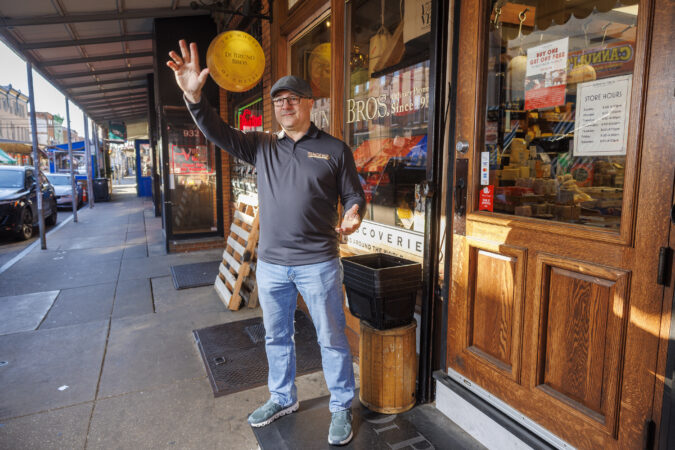
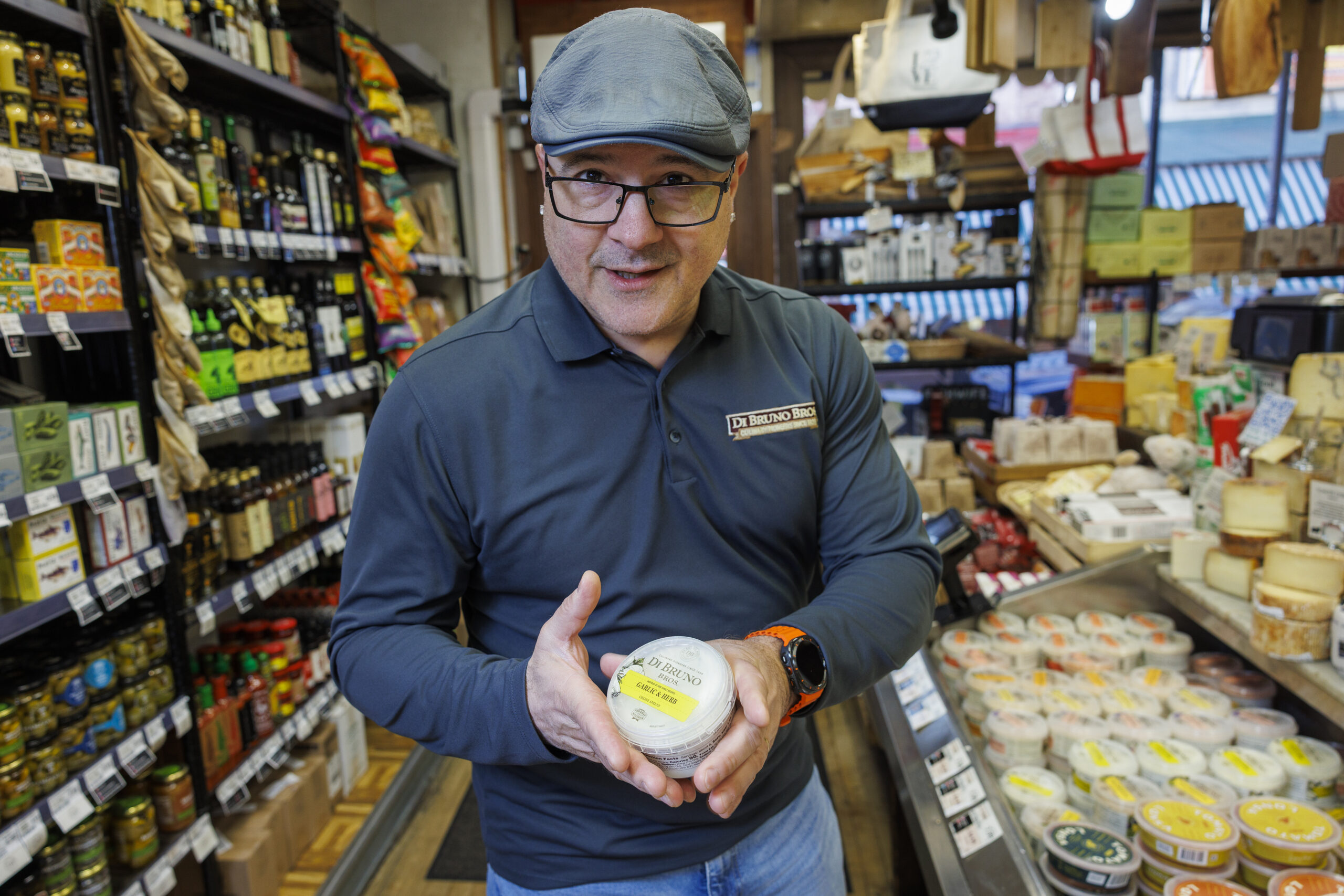
Emilio Mignucci’s name is synonymous with cheese in Philly. The third-generation Di Bruno Bros. owner-turned-vice president of the brand, now owned by Wakefern, lives in Center City but his heart is still in the Italian Market. The legendary importer and cheese connoisseur is also a sometime cheese tour guide, taking cheese-obsessed guests on culinary adventures in Europe with Cheese Journeys. But he’s just as passionate a guide in his hometown. Here are his favorite places to grab a bite on a perfect Friday in Philly.
Emilio Mignucci with a cheese spread he enjoys eating.
4:20 a.m.
My father trained me to get up this early from when I was very young. When I was a kid I used to work the produce stands in the Italian Market and we would start setting up at 4:30 or 5 a.m. I’ve always had that routine.
4:30 a.m.
Nowadays I head to the gym when I wake up. I get in a workout until about 5 or 6 a.m. and then do a five to 10 minute meditation, then practice my Italian on Duolingo, which I’ve been doing for a six-year streak.
6 a.m.
I split my week between Wakefern headquarters in Edison, N.J., and Philly. But I work from home on Mondays and Fridays, so for coffee I’ll walk over to La Jefa.
7 a.m.
I get a cappuccino with whole milk at La Jefa and a concha. They’re always filled with lavender or something cool. I also like their corn husk coffee, but if I’m getting that I skip the concha. And I love their pastrami lengua sandwich on days they do brunch, but I don’t normally eat breakfast.
7:30 a.m.
I walk to Di Brunos in Rittenhouse where I have an office. We just came out of the best season for cheese, which is fall into winter. I’ll taste cheeses with the team behind the counter, like Jasper Hill Farms’ Winnimere and Pleasant Ridge Reserve. They’re stinky and so darn good. I love Alpine-style cheeses.
Emilio Mignucci, DiBruno describes his perfect day, Friday, Jan. 16, 2025. Emilo grandson of the founders of DiBruno take a whiff of cheese.
Noon
I eat lunch around noon. If I stay in the store, I grab one of our seasonal salads, though I’m attracted to the pizzas. But the best lunch in Philly is John’s Roast Pork. There’s nothing better. I crave it. I dream about it. It’s the most succulent pork sandwich. The pork is cooked in its own juices and when you go up to the counter to order, it’s taken out of that hot pork broth. Then there’s sharp provolone and I love the bitter spinach and a single long hot pepper. I know everyone talks about cheesesteaks in this town and they’re great, but for me the best sandwich is the roast pork.
1 p.m.
I go back to work, finish up emails and meetings about product innovation and figuring out cures for the tariffs and increases in pricing because we import so much stuff.
3 p.m.
If people are visiting me, I love taking them to the Italian Market. It’s the oldest open air market in the country and it shows what Philly is all about. [Even though the immigrants have changed] it’s still a mix of really good hardworking people. When my aunts and uncles came over from Italy, they worked their tails off there. So I’ll stop for an espresso at Anthony’s for something traditional and Italian, chicory-flavored, and bitter. Then I’ll pick up stuff for my wife like fresh lettuces. She likes the sweeter ones like Bibb and romaine. I like the more bitter ones like arugula. I’ll also grab mushrooms, peppers, and onions. My wife always makes me roasted peppers.
5 p.m.
I try to sneak into Fiorella when they first open, but I also love Blue Corn. If it’s Fiorella, I try to go with three other people so we can get the whole menu and all the pastas. The pasta for me is second to none. It’s spectacularly delicate, very well made, and not overly filling. Then I have to get something sweet. Isgro’s was open late over the holidays and I have to get their ricotta cookies. A dozen of those is what my wife will get me instead of a birthday cake.
8 p.m.
There are so many good bars in Philly but a.bar is my corner bar. My wife and I go two or three times a week. I like Negronis or I’ll get a Vesper. Nothing is more perfect than a Vesper.