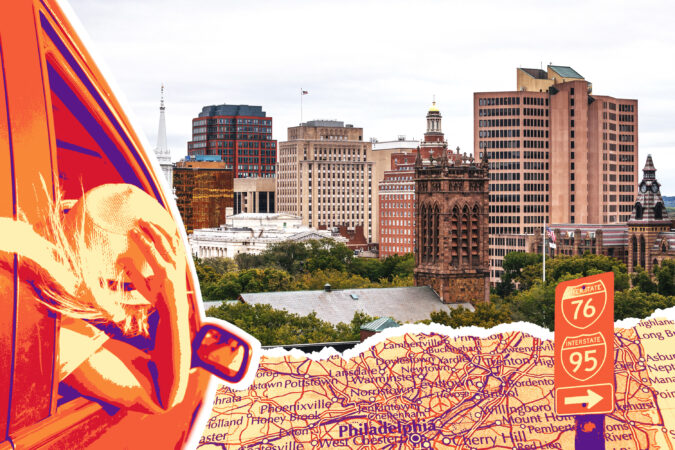
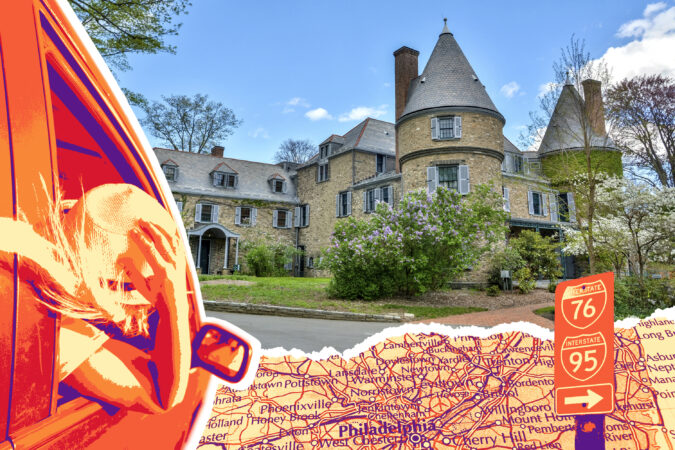
With a population of just over 140,000, New Haven still manages to be tiny Connecticut’s third-largest city — and one that punches well above its weight as a weekend getaway.
It’s a university town, a harbor town, and a New England town, all folded into one. The result is a destination with world-class cultural institutions, excellent food — the pizza is as outrageous as you’ve heard — and easy access to the outdoors, from the river-fed coast of Long Island Sound to one of the largest urban parks in the region. From Philly, it’s about three hours and change up I-95, depending on traffic around New York. Start the car.
Originally the HQ of the tire-producing Armstrong Rubber Co., the Wharf District Hotel Marcel inhabits an architecturally significant, brutalist concrete building honeycombed with windows and retrofitted to run entirely on renewable energy. The inside is just as interesting: terrazzo staircases with mahogany rails, Connecticut-made walnut beds, and a circular bar pouring spirulina margaritas and nonalcoholic spiced cranberry cider.
📍 500 Sargent Dr., New Haven, Conn. 06511
Hike: East Rock Park
New Haven’s central green space, East Rock Park, spans 427 acres and rises 350 feet above the city, rewarding visitors with sweeping views of downtown and Long Island Sound. Not feeling a winter hike? You can drive to the summit instead. Traveling with kids? Stop by the Trowbridge Environmental Center on the park’s west side for hands-on exhibits about the local ecology.
If there’s only one thing you know about New Haven, it’s probably the pizza. Or as they call it here, apizza (“a-beetz”), derived from the southern Italian immigrants that opened the first shops in the early 1900s.
For lunch, stage a mini pie crawl along Wooster Street and compare two legends located a block apart. At Frank Pepe (est. 1925), the tomato pie and oregano-dusted white clam pie are classics for a reason. At Sally’s Apizza (1938), whose recent expansion hasn’t dimmed the original’s quality, the blistered tomato pie with mozzarella is the move.
📍 Frank Pepe: 157 Wooster St., New Haven, Conn. 06511
📍 Sally’s Apizza: 237 Wooster St., New Haven, Conn. 06511
Visit: Yale Peabody Museum
If there are only two things you know about New Haven, they’re probably the pizza and Yale. The Ivy’s lovely, leafy campus dominates the center of town. (It’s no Penn, but…) The impressive collection at the Yale Peabody Museum, which is free to visit and requires no advance ticketing, includes a towering brontosaurus skeleton, a 300-pound Brazilian tourmaline cluster, and 4000-year-old Mesopotamian cuneiform tablets.
Decried as an incongruous eyesore when the Gordon Bunshaft-designed Beinecke Rare Book and Manuscript Library opened in 1963, the modernist building has become an architectural icon on campus. Translucent marble cladding gives the interior a cozy glow while protecting the literary treasures, which are arranged in a stunning five-story cubic column, from sun damage. Even if you’re not a rare-books obsessive, it’s worth visiting for the space alone. Current exhibits include a 15th-century Gutenberg Bible and illustrated Japanese crepe-paper books.
It’ll likely be a bit too chilly to sit out on the pretty deck over the Quinnipiac River, but the warm woodwork and porthole windows get the seafood-tavern vibe across well at Fair Haven Oyster Co. Start with four different types of New England oysters, then progress to tots topped with American sturgeon caviar, oil-poached tuna toast, and bone-in skate wing in Meyer lemon brown butter. Skip dessert.
Based in Litchfield County, Arethusa Farm Dairy produces some of the richest ice cream around, using 16%-butterfat milk from its own cows. Lucky for New Haven visitors, there’s an outpost at the Yale Shops. Breathe in the smell of freshly pressed waffle cones while choosing from classic flavors like coconut-coconut chunk, strawberry that actually tastes like strawberries, and an excellent coffee ice cream. One scoop is never enough.
The long-lost demo tape had always held a certain mythos in Charlotte Astor’s imagination.
For years, the Cherry Hill teen had heard stories about it, recorded about 30 years ago by her mother’s very loud, very short-lived, teenage hardcore band, Seed.
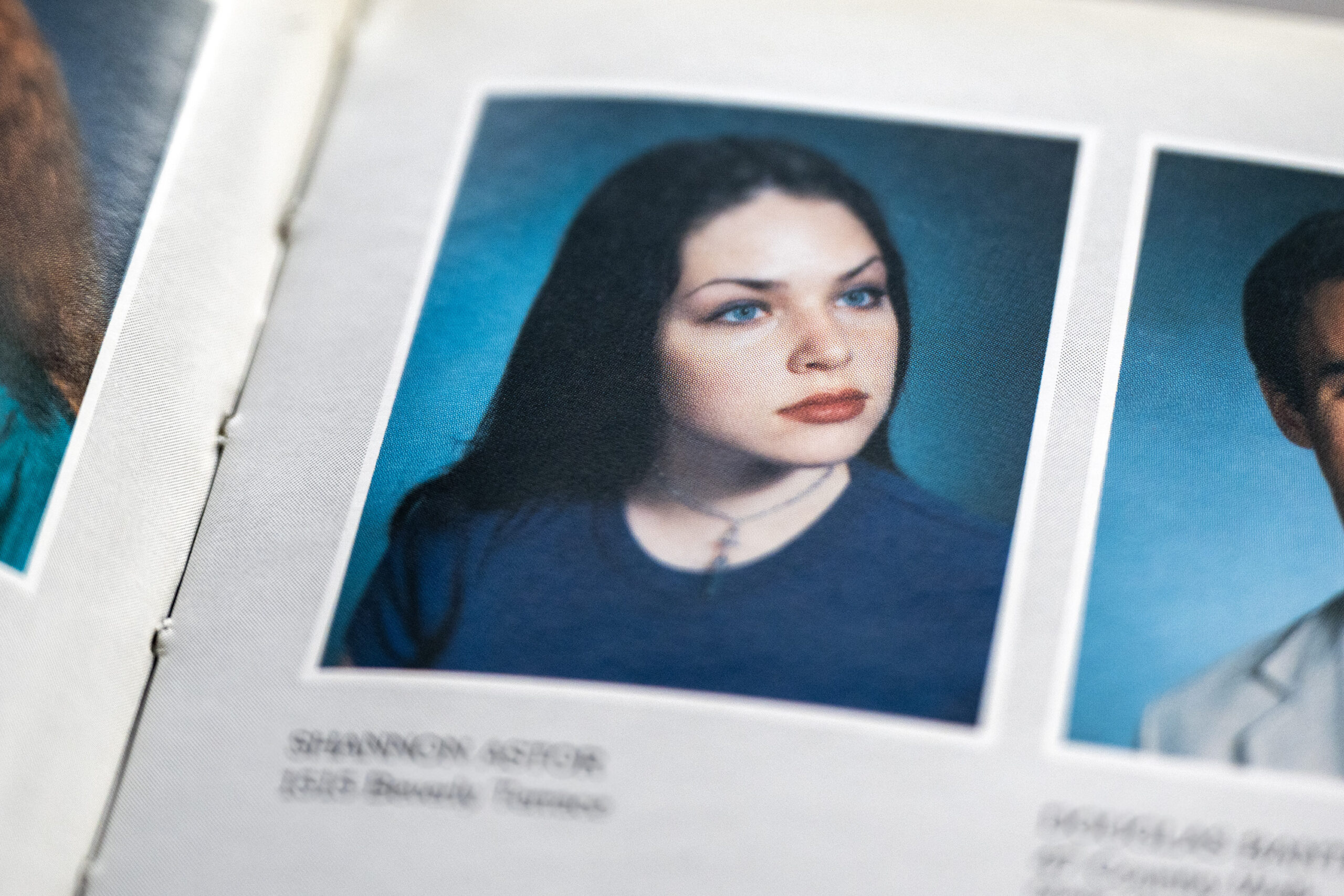
Shannon Astor, now 47, had been a vocalist for the group, just 14 or 15 years old, at a time when female representation within the genre was rare. Within a year or so, the group had disbanded — but before it did, the group, which typically practiced in a member’s parents’ basement, recorded a single demo. There had been only a few dozen copies produced back then, and they had all sold, scattering out around the South Jersey area.
For Charlotte, the tape became a kind of white whale — a relic of her mother’s hard-charging past, something the teen occasionally scoured the web for, to no avail.
She’d never heard her mother’s band. And she wanted to. Badly.
“Ninety-five percent of what I have about my mother is in the stories she tells me,” says Charlotte, 16, a junior at Cherry Hill High School East.
But a demo was something tangible. Something concrete.
“A demo,” she decided, “I can find.”
And so one night last spring, that’s what she set out to do.
She had little to go on: A rough estimate of when the demo would have been released (1993-94), a general geographic location (South Jersey), and a single lyric (“In the wind of the AM shadows cling to nearby trees as season shifts to satisfy the light from above”).
“I have been looking for this tape for 4 years,” she wrote in an appeal to her 1,000 or so Instagram followers, “… and it would mean the absolute world to me to find this tape.”
Butsomething about her search — this desire to connect with a parent, to bridge a gap three decades wide — resonated. It became, within the tight-knit confines of the hardcore music scene, a united pursuit.
At an age when most teenagers couldn’t get far enough away from their parents, here was one launching a quixotic quest to better understand hers.
A senior class photo of Shannon Astor in the 1996 Cherry Hill High School East yearbook. Now 47, Shannon was previously in a hardcore band called Seed.
Soon, strangers from across the country were digging through old boxes in basements, or tagging old running buddies from Jersey’s 1990s hardcore scene in social media posts. Some reached out to old producers from the area, wondering whether the demo might have made its way into some dusty studio corner.
Messages poured in, too — hundreds of them — with suggestions ranging from the plausible to the outlandish. Had she tried getting in touch with Bruce Springsteen’s people? You never know what the Boss might have stowed away in some mansion closet.
“I suddenly had communication with so many people who I thought I would never in my life have any connection with,” Charlotte said. “California to Jersey, and everything in between.”
The lead singer of a well-known Jersey straight-edge band of the era, Mouthpiece, joined the search, messaging Charlotte after others reached out to him about the tape. (He vaguely remembered her mother, Shannon, but not the band.)
Much of the outside help, Charlotte notes, has come from the hardcore community.
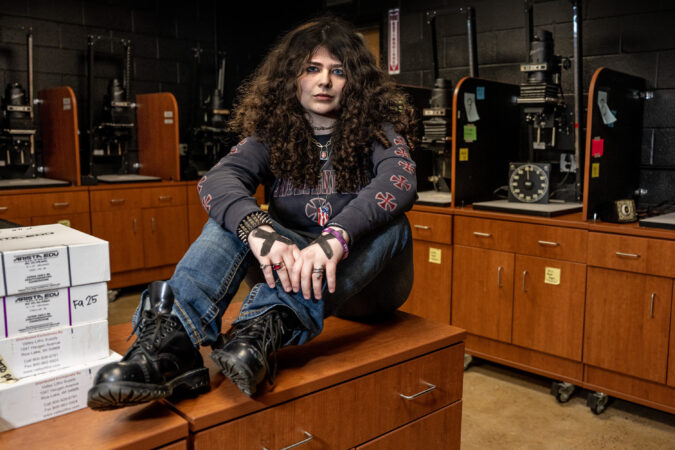
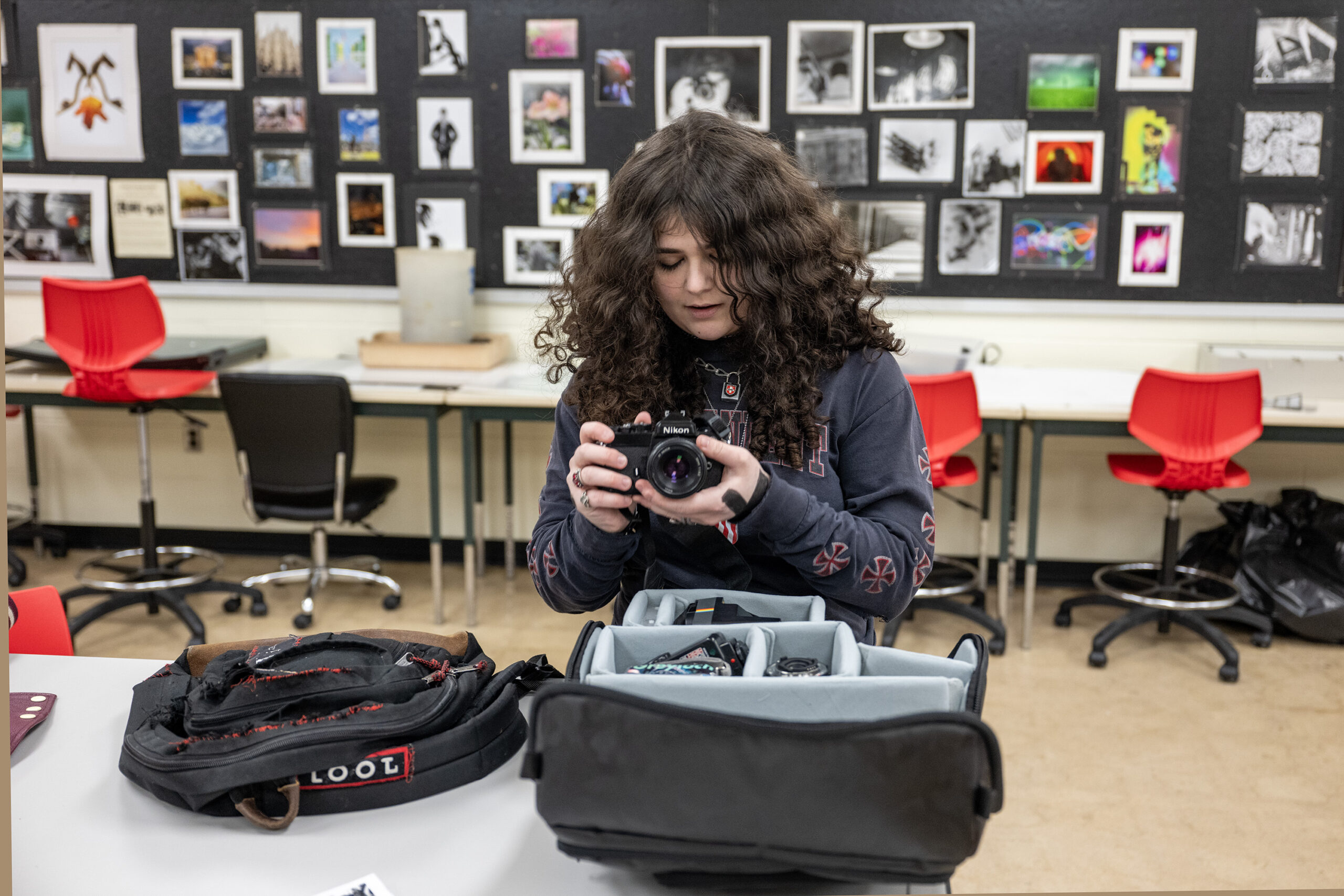
Indeed, much of Charlotte’s young life is rooted in the same hardcore music scene that her mother’s once was. Like Shannon before her, Charlotte spends many nights at hardcore shows around the area, photographing the scene for the magazine she self-publishes, “Through Our Eyes.” And like her mother previously, she’s a member of the “straight-edge” hardcore community, a group with a shared collection of ideals that includes abstaining from drinking or drugs. (Her first flirtation with teenage rebellion came when she snuck out of the house one night to go to her favorite record store.)
And though her mother does not necessarily share Charlotte’s zeal for locating the old tape — “I’m not waiting for some garage band demo to be unearthed,” Shannon joked — she understands what it would mean to her daughter to have it.
“It’s special to me only because of how much she needed to hear it,” said Shannon. “I’m just so pro-Charli and everything that she does … But this is her journey, and something that was intrinsically important to her.”
To those in the scene, meanwhile, the response has been very hardcore.
“A bunch of people banding together to help this random girl find her mom’s thing,” said Quinn Brady, 19, of New York, and a friend of Charlotte’s. “Most people assume that hardcore people are not very nice or friendly. [But] there’s this inherent kinship. It connects people across the nation in a way that not a lot of other genres of music do.”
A recent selfie by Charlotte Astor (right) and her mother, Shannon Astor, taken at Reading Terminal Market.
Those outside the hardcore scene have been no less enthralled, however.
In December, after NJ.com picked up the story, further extending its reach, a documentary filmmaker reached out about the possibility of doing a film on her quest.
Last year, after posting in some “old-head” hardcore Facebook groups about the tape, Shane Reynolds — a member of the Philly-based hardcore band God Instinct — stumbled upon what appeared to be the most promising lead yet.
“I found the guy who allegedly made the demo,” Reynolds said.
But when she got the man on the phone, Reynolds says, it proved to be a dead end.
The closest Charlotte came was last year, not long after she first posted about the demo on Instagram. Her mom’s former bandmate in Seed, convinced he must have kept something from that period, recovered from storage an old cassette that featured a recording of a single Seed practice session.
Charlotte took it home, pushed it into the stereo in her bedroom. She stared at the ceiling as the tape began to play and 30 years fell away.
For the first time, she could put a sound to the stories she grew up hearing.
“The first thing I heard was a few seconds of my mom talking,” Charlotte said. “That’s my mom, when she was 16. I’m listening to a clip of my mother, listening to her at the same age I am.”
Charlotte Astor, a junior at Cherry Hill High School East, and her vintage 35mm film Nikon camera in the school’s photography classroom.
Still, that small taste has only reinforced her devotion to unearthing the actual demo.
Charlotte remains realistic about her odds of finding it. No, it’s not likely to be found in some radio station’s studio. And no, Bruce Springsteen is almost certainly not in possession of a three-decades old demo tape from her mother’s teenage years.
But some graying hardcore fan from the ’90s, with a penchant for hoarding and a cluttered garage?
Stranger things have happened.
“I have confidence — unwavering confidence — that someone has it,” Charlotte says. “And that I will get my hands on it.”
The reconstructed “ghost” structure with partial walls and windows of the building known in the eighteenth-century as 190 High Street is officially titled, “Freedom and Slavery in the Making of a New Nation” (2010).
The open-air President’s House installation in Independence National Historical Park was designed to give visitors a sense of the house where the first two presidents of the United States, George Washington and John Adams, served their terms of office.
The commemorative site designed by Emanuel Kelly, with Kelly/Maiello Architects, pays homage to nine enslaved people of African descent who were part of the Washington household with videos scripted by Lorene Cary and directed by Louis Massiah.
Just like the Rocky statue I photographed last week in anticipation of this week’s news, the President’s House was in the news last year so it remains on my radar as I walk around Old City (our newsroom is right across the street).
The cloud formation in the winter sky was what first caught my attention. Then it was seeing the sun lined up directly behind the triangular pediment above the Georgian home’s “front door.”
I played with “placement” of the sun peeking through a tiny gap at a bottom corner of the gable. I knew knew that f/22 on my mirrorless camera’s lens would give me a nice starburst. It’s an optical effect that happens because the lens’ aperture blades don’t form a perfect circle. And the narrower the opening — like f/22 — the more pronounced the effect (shooting at f/2.8 is not quite as dramatic).
Then it was simply a matter of my moving my head ever-so-slightly to align the sun with the little hole — like threading a needle.
While standing in the thin shadow of the door, I was getting blasted in the eye each time I moved. Then a group of tourists, or a noise, startled a flock of pigeons and as they took flight I was not poised just right, but I liked having the birds there better than a perfect placement of the starburst.
I tried a similar “trick” a few years ago, when walking around my town photographing with my iPhone. It doesn’t have a mechanical diaphragm so the effect is not the same. Plus, the threading-the-needle part is much more difficult when you are not actually looking through the lens as in a DSLR. And with a backlight sun blasting you directly in the face.
The optical principle of refraction through a lens diaphragm is the same for both mirrorless and DSLR cameras because light travels through the lens elements and aperture in the same way.
Since 1998 a black-and-white photo has appeared every Monday in staff photographer Tom Gralish’s “Scene Through the Lens” photo column in the print editions of The Inquirer’s local news section. Here are the most recent, in color:
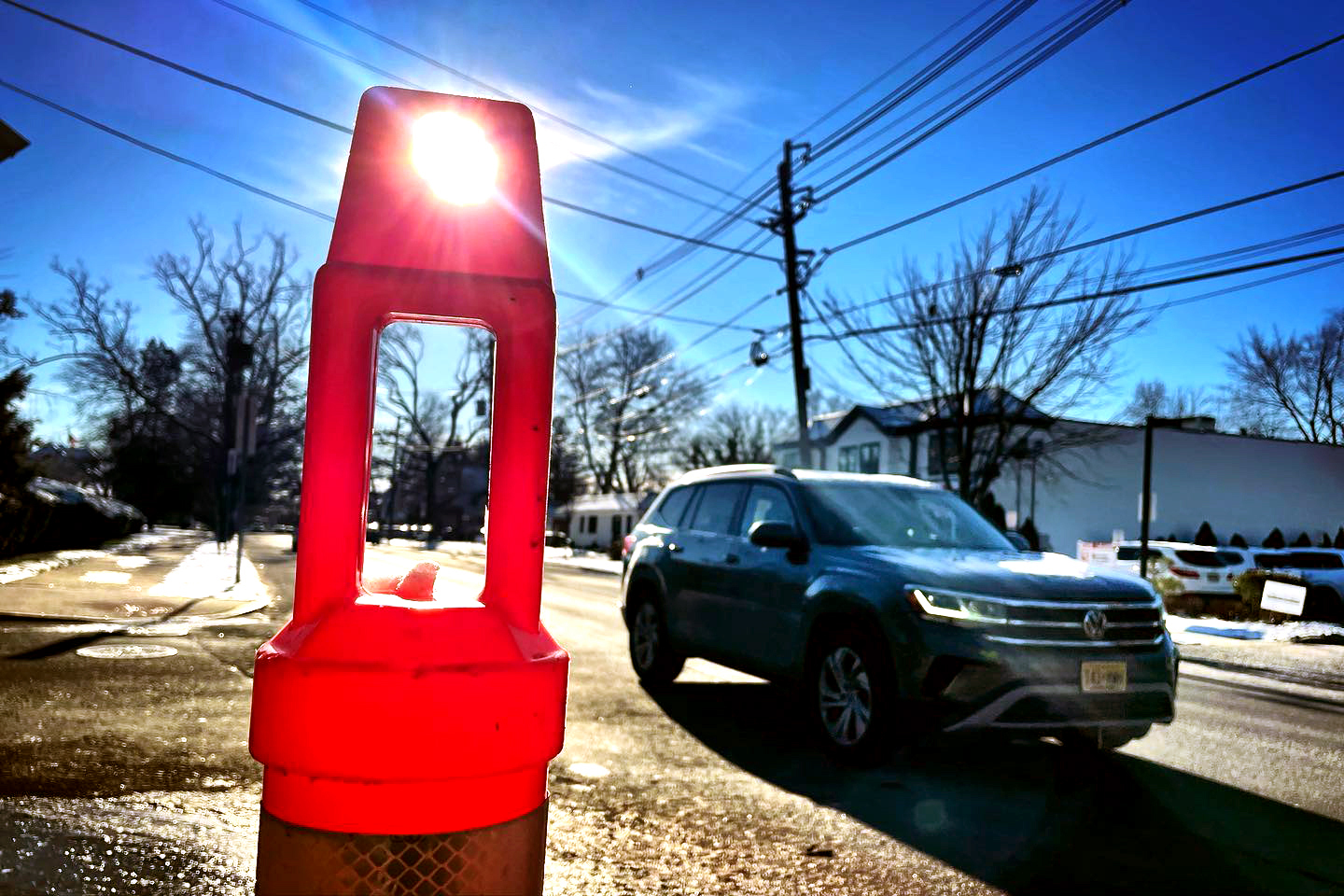
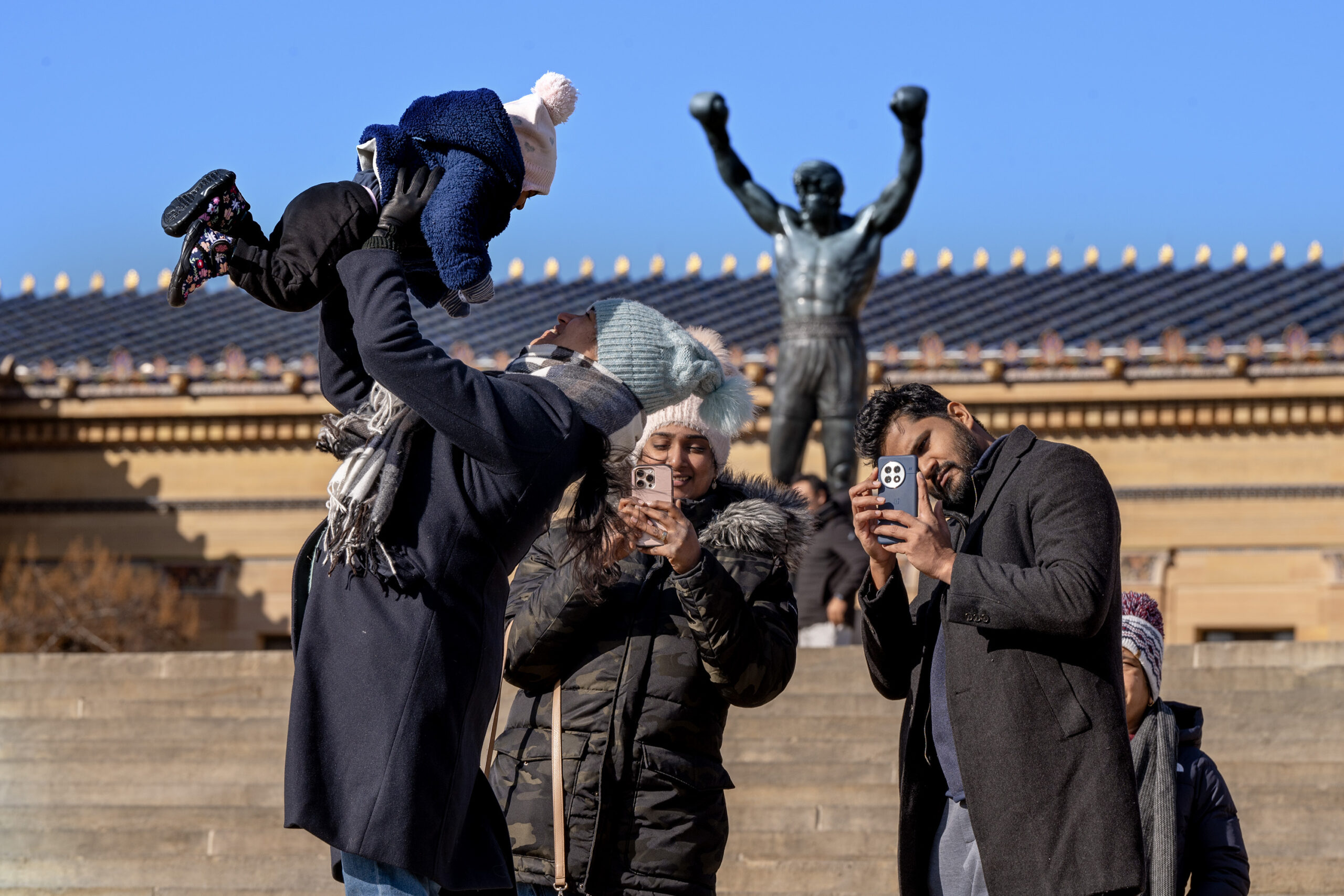
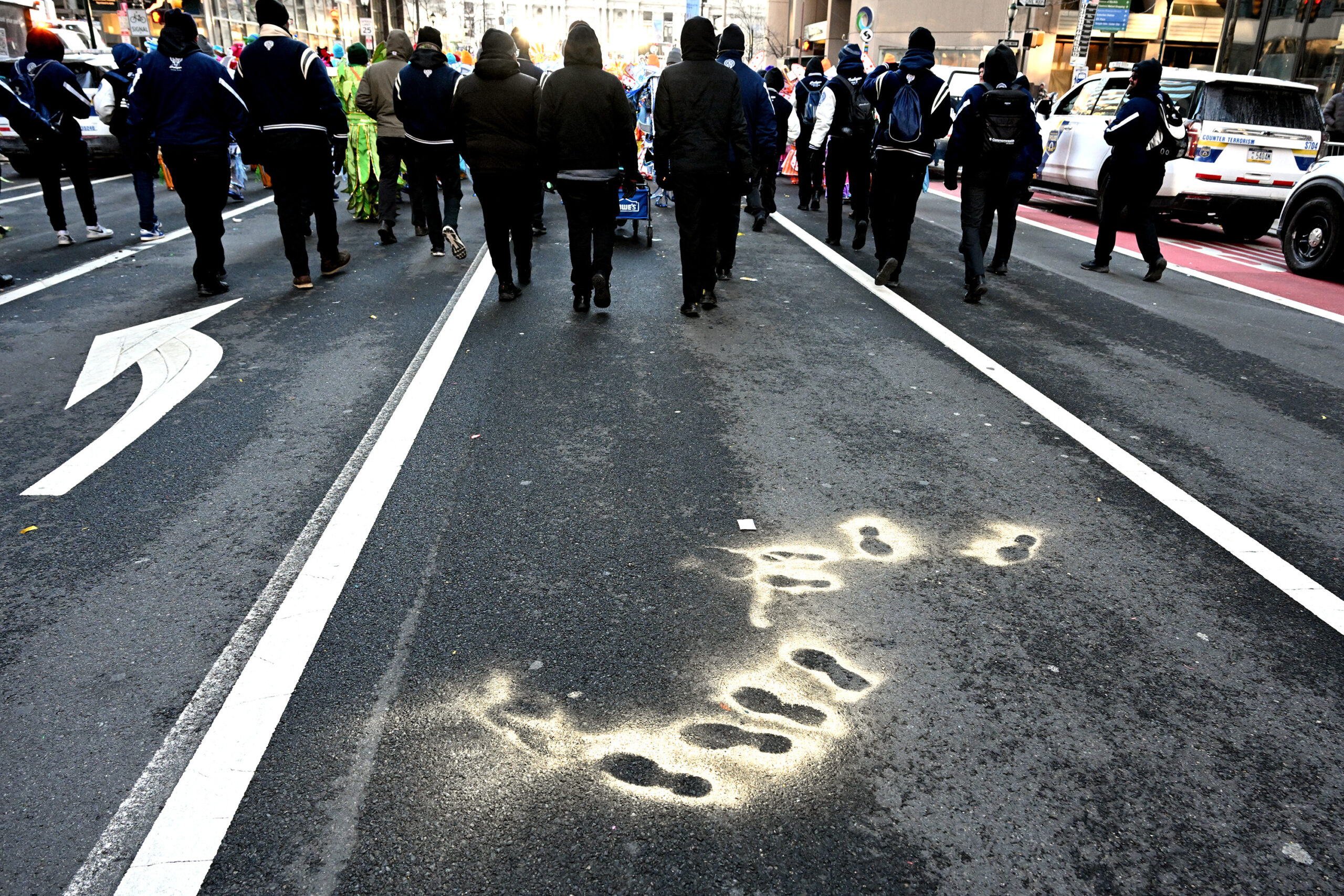
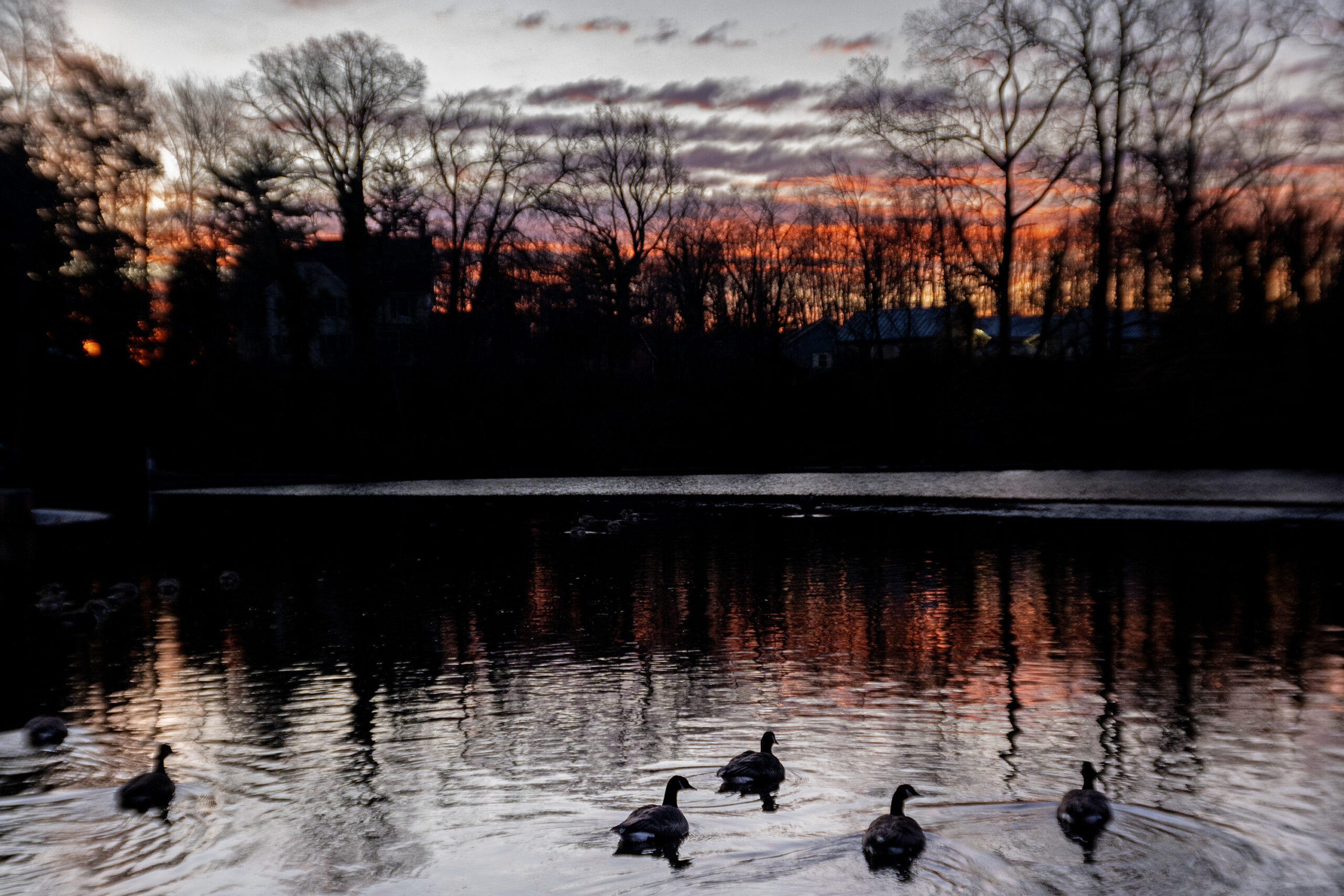
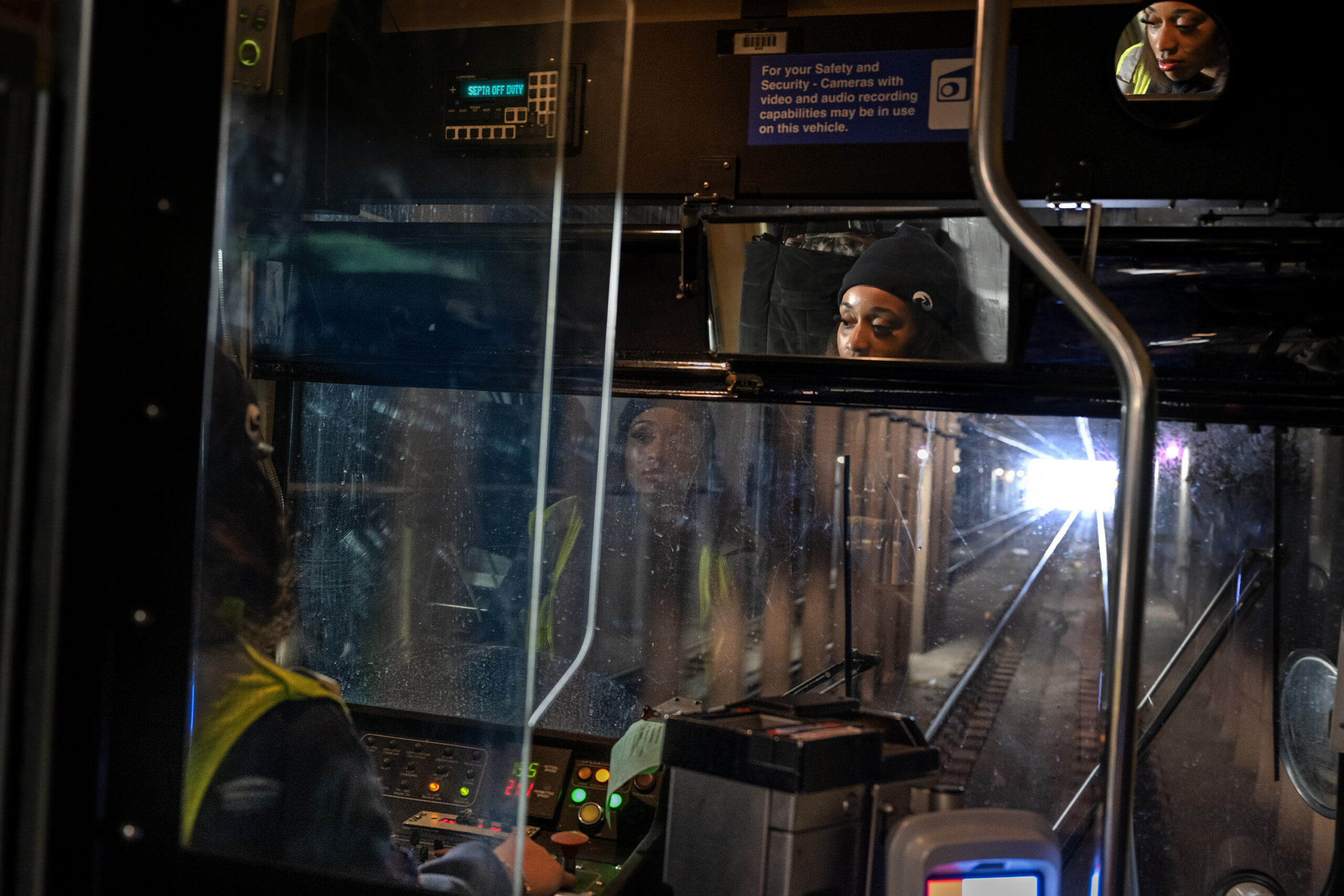
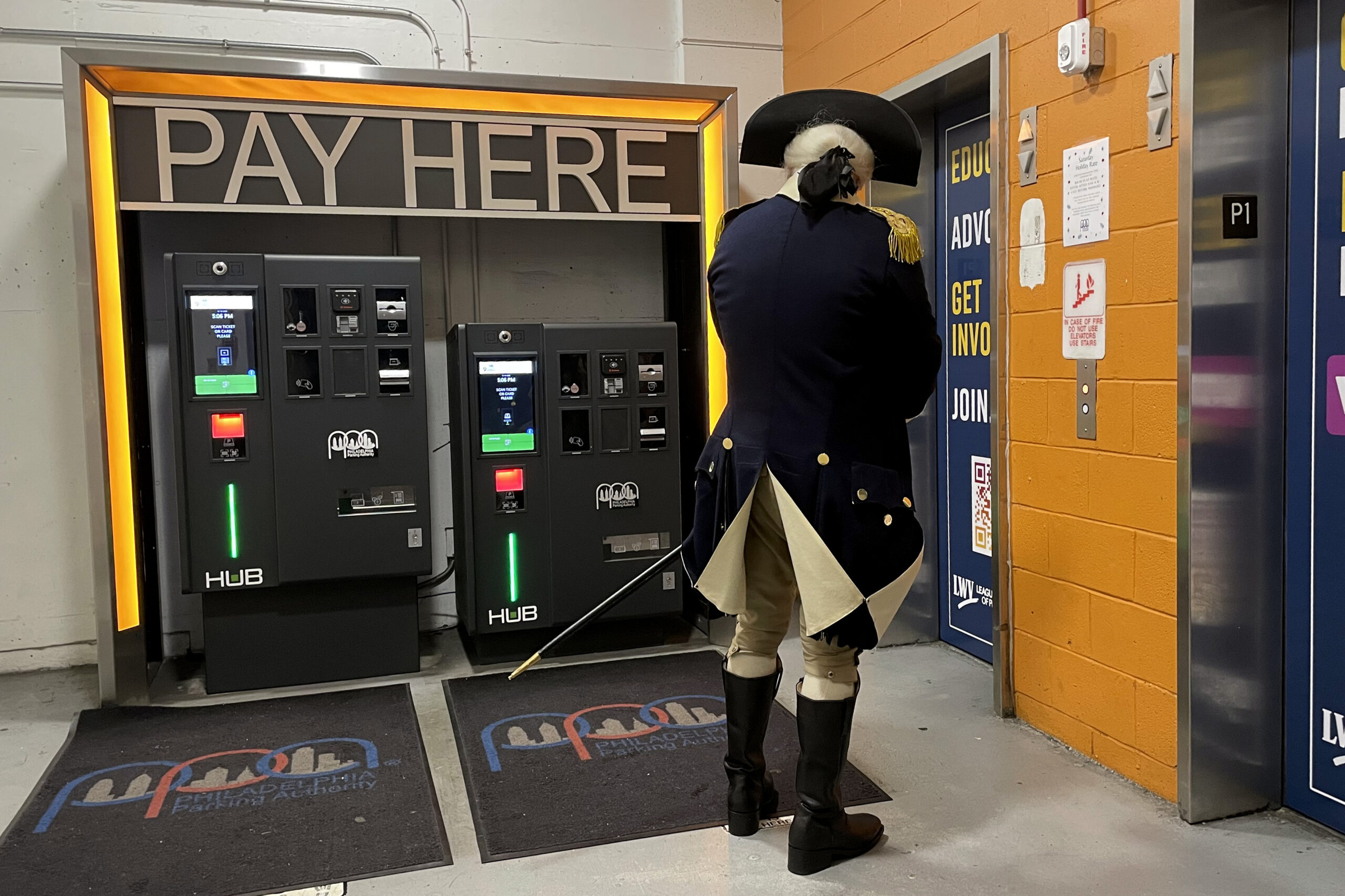
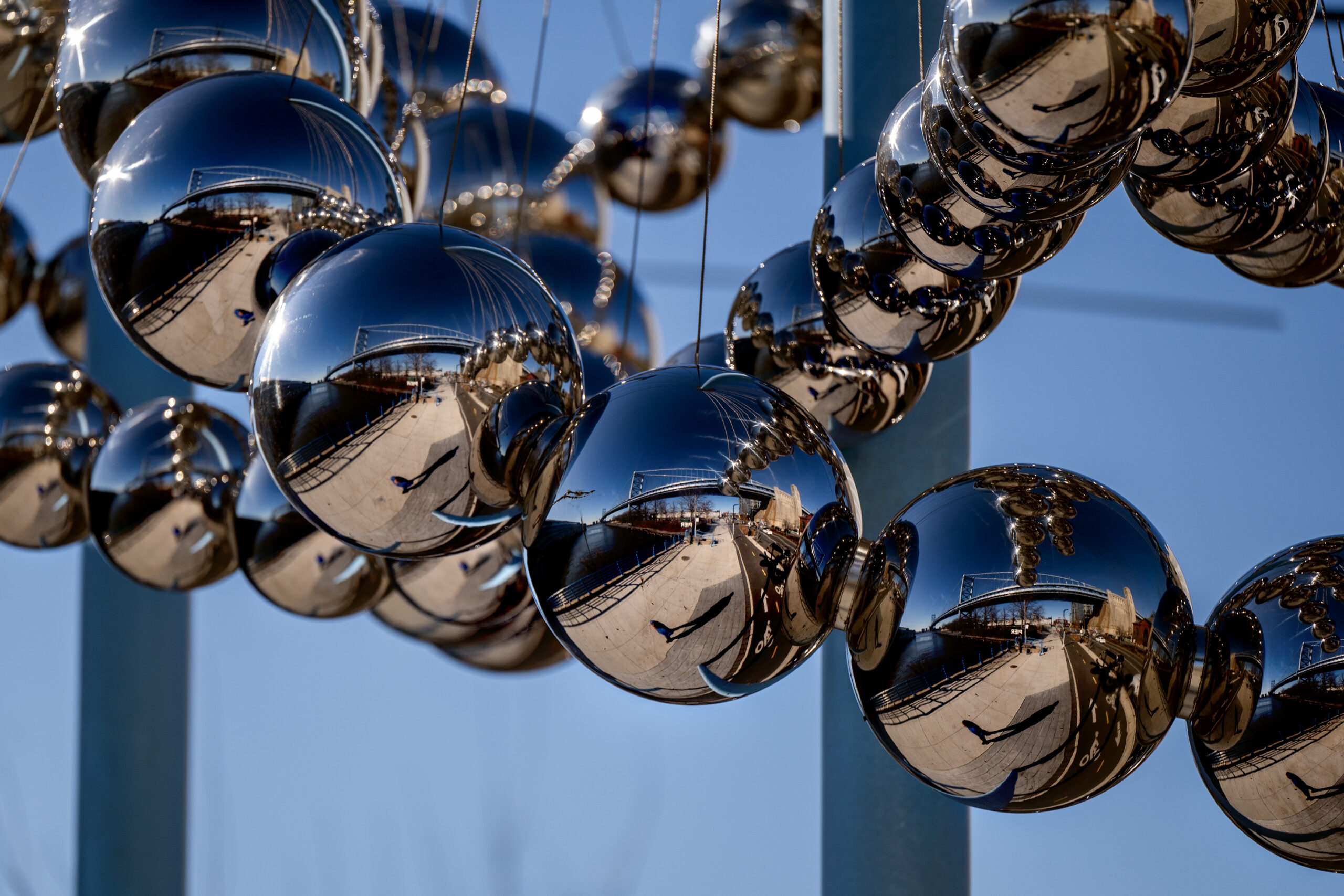
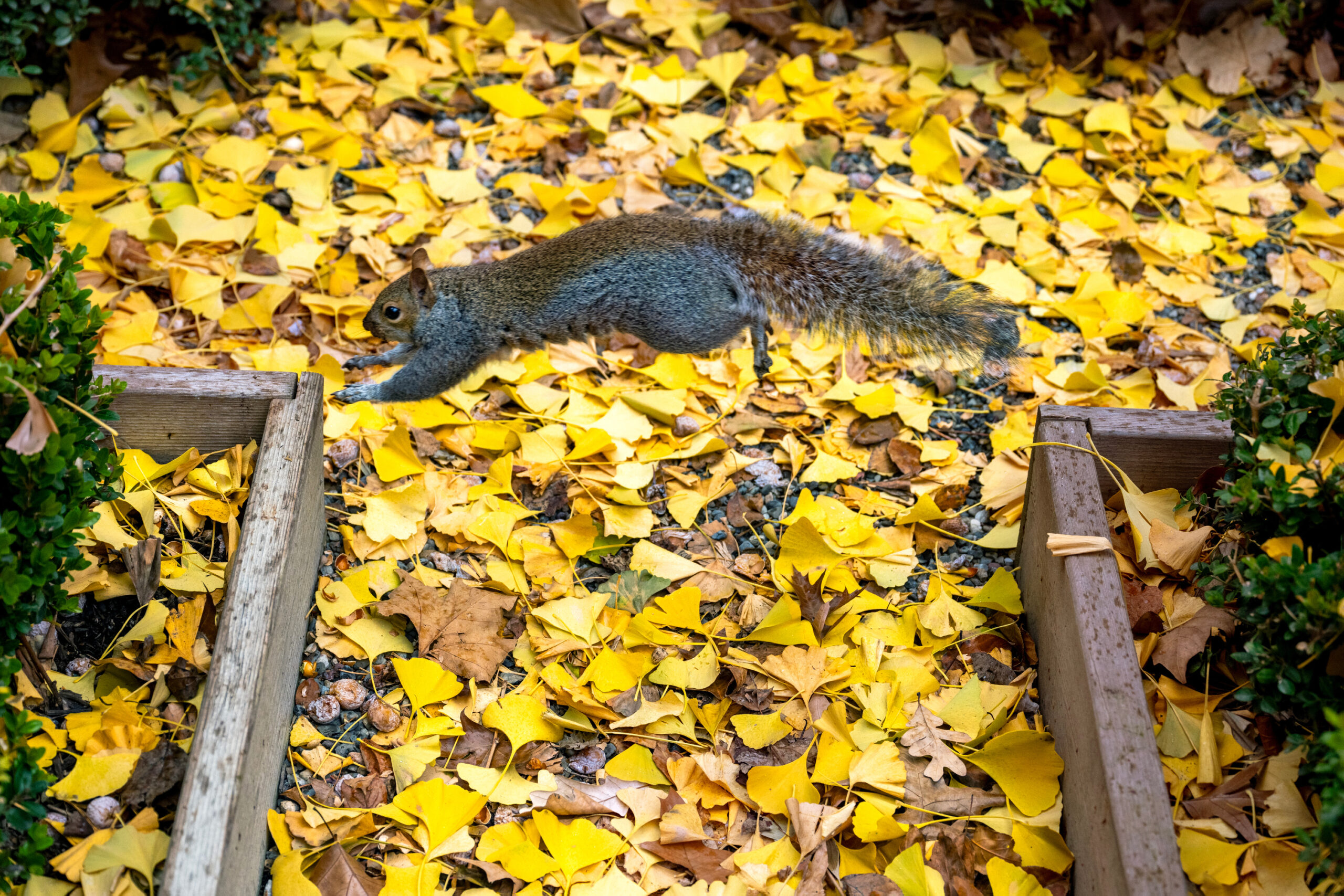
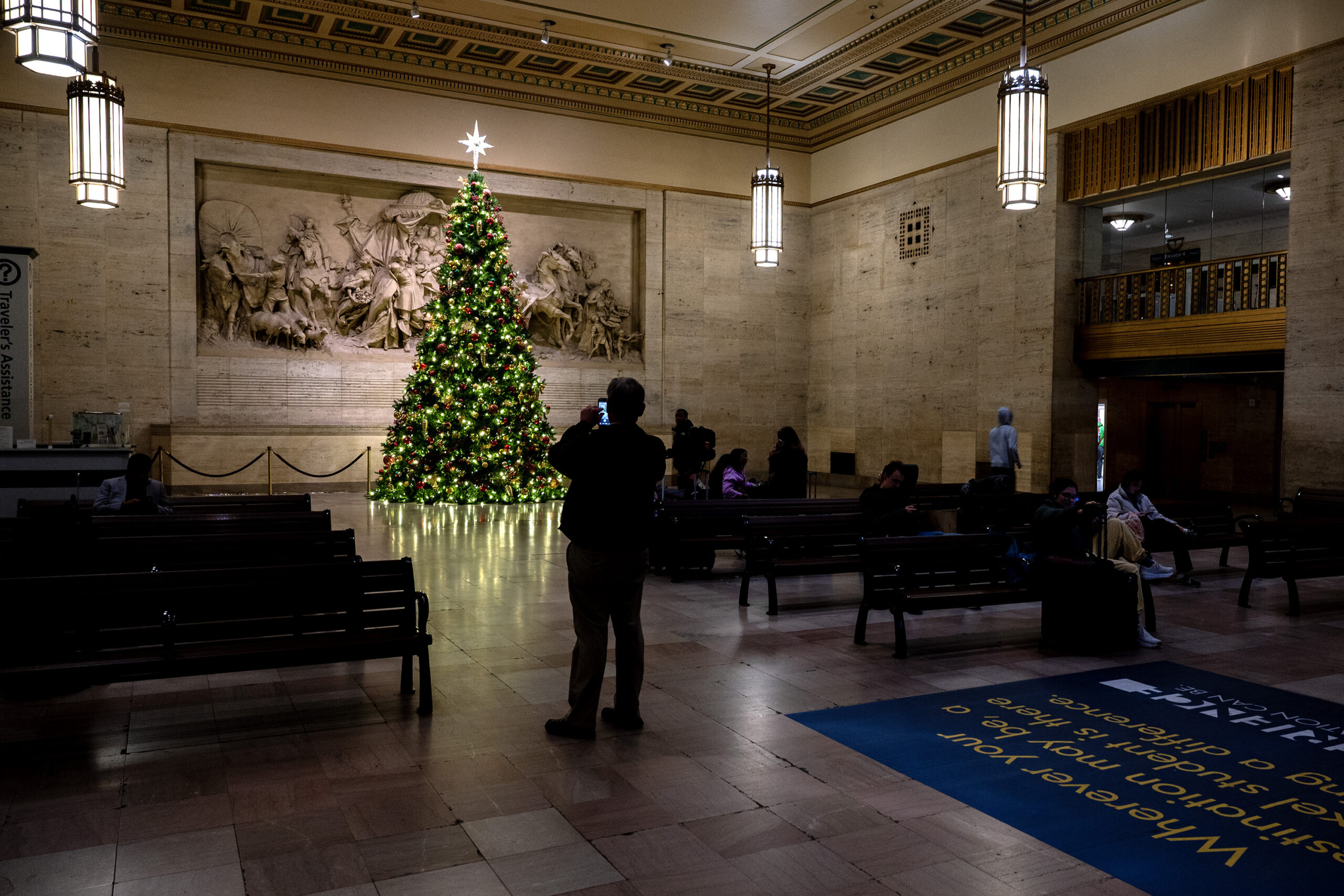
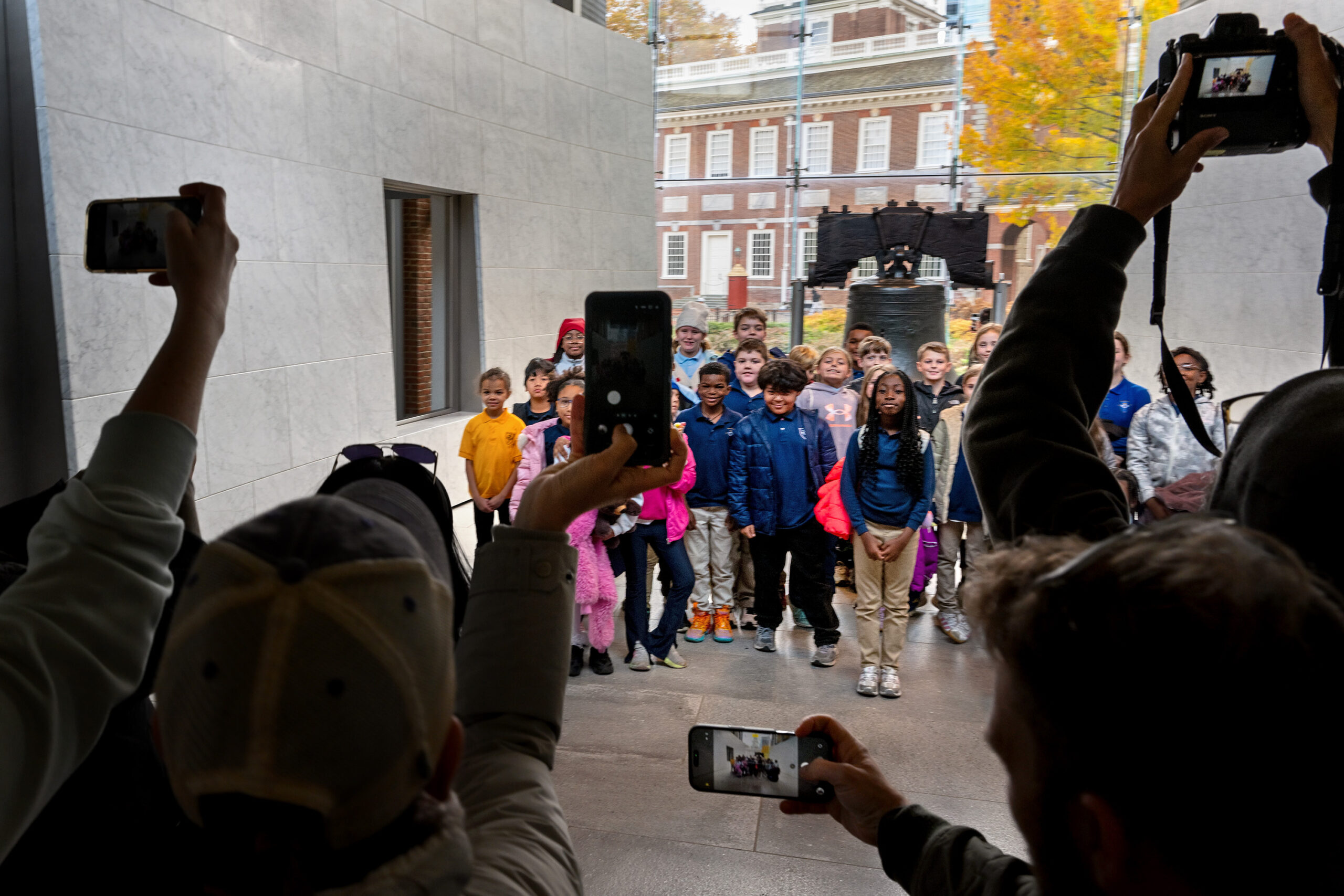
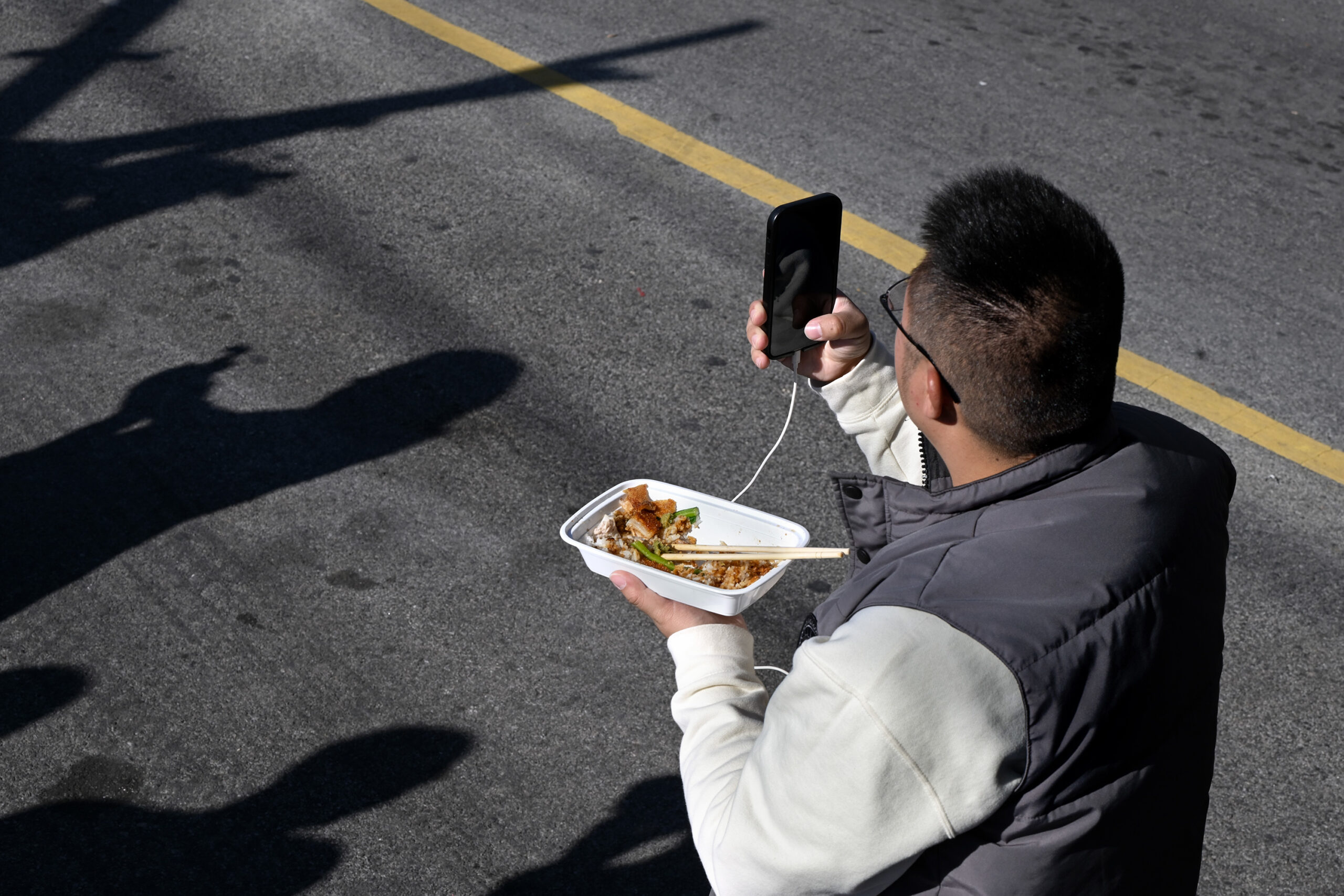
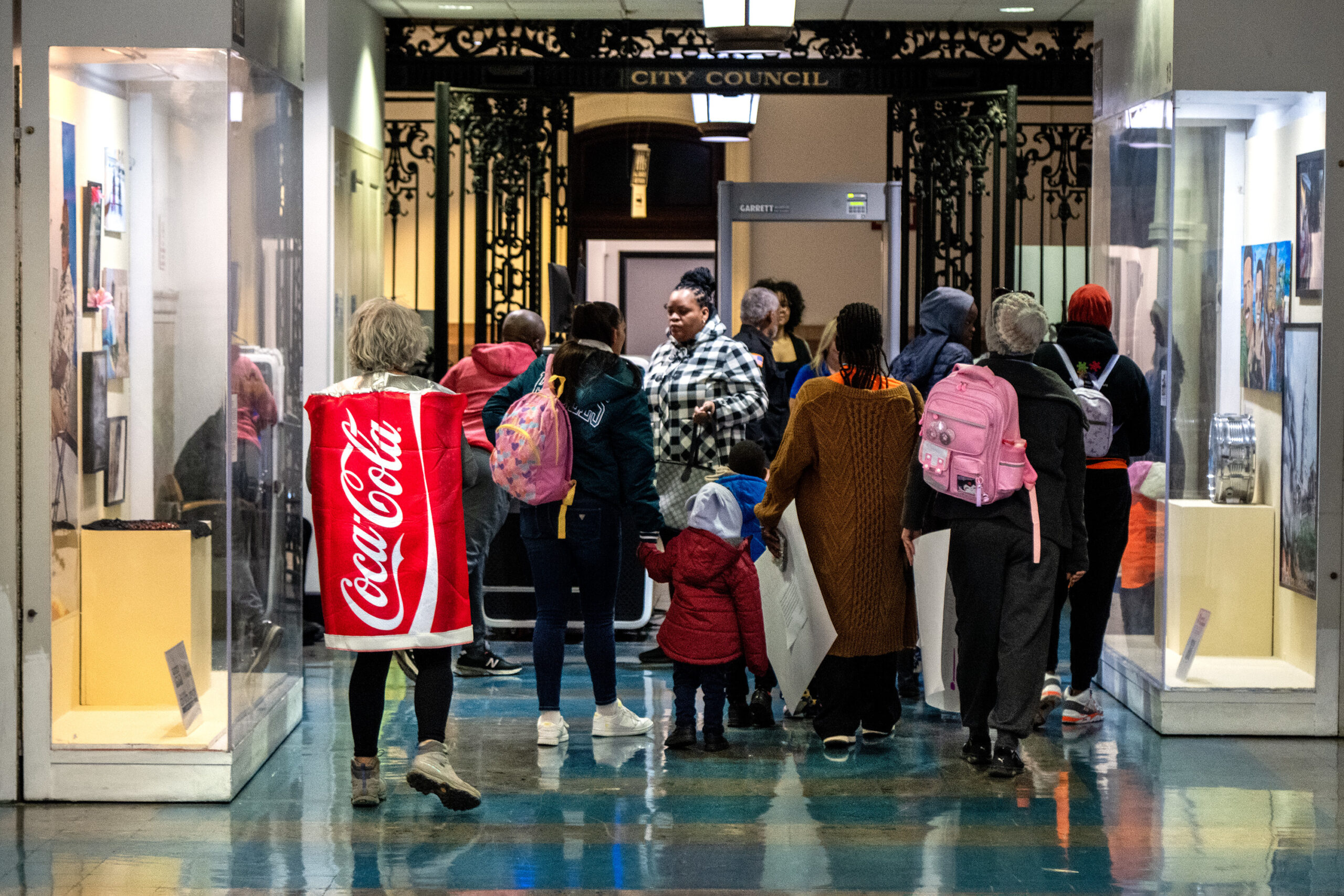
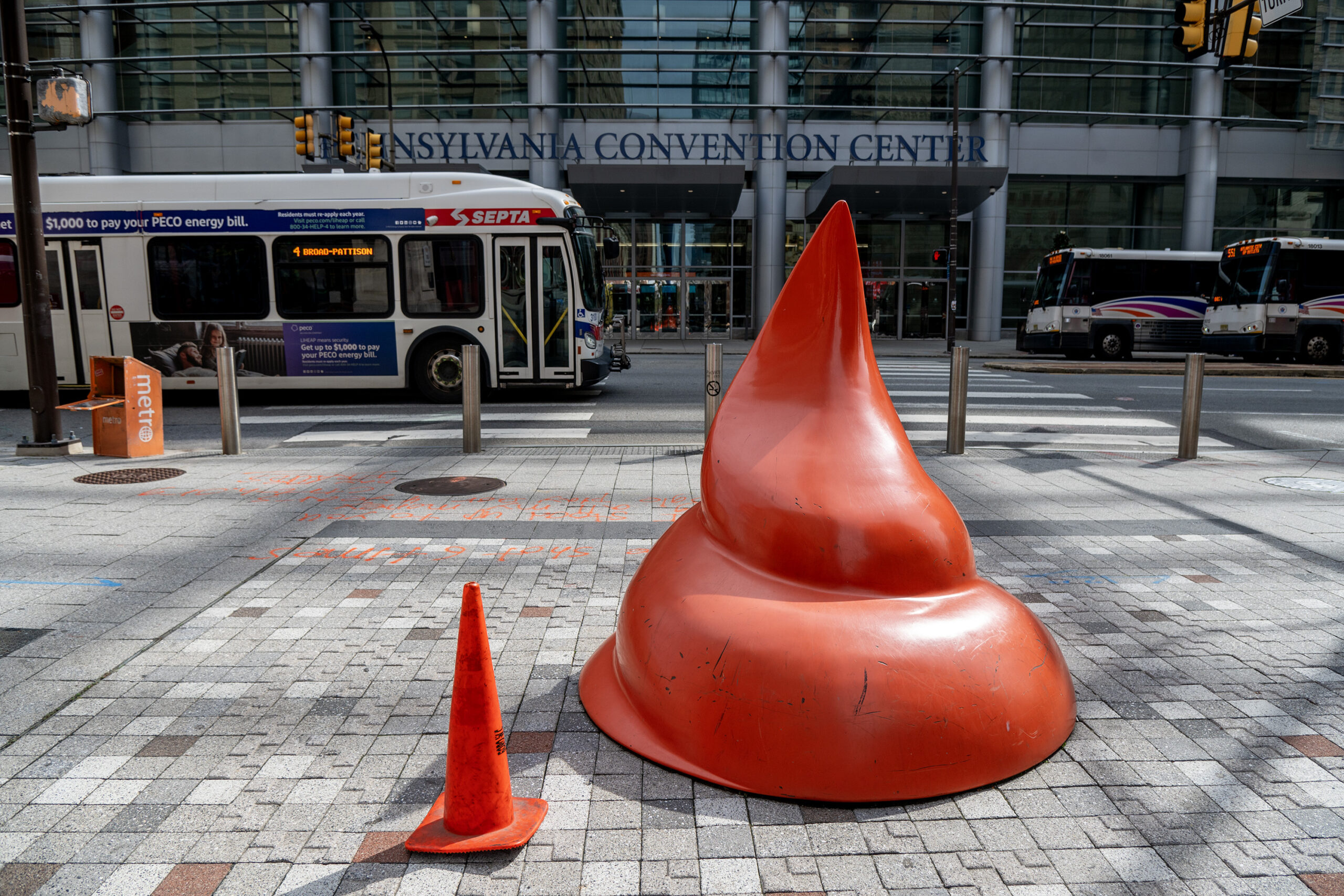
Deepika Iyer holds her niece Ira Samudra aloft in a Rockyesque pose, while her parents photograph their 8 month-old daughter, in front of the famous movie prop at the top of the steps at the Philadelphia Art Museum. Iyer lives in Philadelphia and is hosting a visit by her mother Vijayalakshmi Ramachandran (partially hidden); brother Gautham Ramachandran; and her sister-in-law Janani Gautham who all live in Bangalore, India.January 5, 2026: Parade marshals trail behind the musicians of the Greater Kensington String Band heading to their #9 position start in the Mummers Parade. Spray paint by comic wenches earlier in the day left “Oh, Dem Golden Slippers” shadows on the pavement of Market Street. This year marked the 125th anniversary of Philly’s iconic New Year’s Day celebration.Dec. 29, 2025: Canada geese at sunrise in Evans Pond in Haddonfield, during the week of the Winter Solstice for the Northern Hemisphere. December 22, 2025: SEPTA trolley operator Victoria Daniels approaches the end of the Center City Tunnel, heading toward the 40th Street trolley portal after a tour to update the news media on overhead wire repairs in the closed tunnel due to unexpected issues from new slider parts.December 15, 2025: A historical interpreter waits at the parking garage elevators headed not to a December crossing of the Delaware River, but an event at the National Constitution Center. General George Washington was on his way to an unveiling of the U.S. Mint’s new 2026 coins for the Semiquincentennial, December 8, 2025: The Benjamin Franklin Bridge and pedestrians on the Delaware River Trail are reflected in mirrored spheres of the “Weaver’s Knot: Sheet Bend” public artwork on Columbus Boulevard. The site-specific stainless steel piece located between the Cherry Street and Race Street Piers was commissioned by the City’s Public Art Office and the Delaware River Waterfront Corporation and created and installed in 2022 by the design and fabrication group Ball-Nogues Studio. The name recalls a history that dominated the region for hundreds of years. “Weaver’s knot” derives from use in textile mills and the “Sheet bend” or “sheet knot” was used on sailing vessels for bending ropes to sails. November 29, 2025: t’s ginkgo time in our region again when the distinctive fan-shaped leaves turn yellow and then, on one day, lose all their leaves at the same time laying a carpet on city streets and sidewalks. A squirrel leaps over leaves in the 18th Century Garden in Independence National Historical Park Nov. 25, 2025. The ginkgo (Ginkgo biloba) is considered a living fossil as it’s the only surviving species of a group of trees that existed before dinosaurs. Genetically, it has remained unchanged over the past 200 million years. William Hamilton, owner the Woodlands in SW Phila (no relation to Alexander Hamilton) brought the first ginkgo trees to North America in 1785.November 24, 2025: The old waiting room at 30th Street Station that most people only pass through on their way to the restrooms has been spiffed up with benches – and a Christmas tree. It was placed there this year in front of the 30-foot frieze, “The Spirit of Transportation” while the lobby of Amtrak’s $550 million station restoration is underway. The 1895 relief sculpture by Karl Bitter was originally hung in the Broad Street Station by City Hall, but was moved in 1933. It depicts travel from ancient to modern and even futuristic times. November 17, 2025: Students on a field trip from the Christian Academy in Brookhaven, Delaware County, pose for a group photo in front of the Liberty Bell in Independence National Historical Park on Thursday. The trip was planned weeks earlier, before they knew it would be on the day park buildings were reopening after the government shutdown ended. “We got so lucky,” a teacher said. Then corrected herself. “It’s because we prayed for it.” November 8, 2025: Multitasking during the Festival de Día de Muertos – Day of the Dead – in South Philadelphia.November 1, 2025: Marcy Boroff is at City Hall dressed as a Coke can, along with preschoolers and their caregivers, in support of former Mayor Jim Kenney’s 2017 tax on sweetened beverages. City Council is considering repealing the tax, which funds the city’s pre-K programs. October 25, 2025: Austin Gabauer, paint and production assistant at the Johnson Atelier, in Hamilton Twp, N.J. as the finished “O” letter awaits the return to Philadelphia. The “Y” part of the OY/YO sculpture is inside the painting booth. The well-known sculpture outside the Weitzman National Museum of American Jewish History was removed in May while construction continues on Market Street and has been undergoing refurbishment at the Atelier at the Grounds for Sculpture outside of Trenton.October 20, 2025:The yellow shipping container next to City Hall attracted a line of over 300 people that stretched around a corner of Dilworth Park. Bystanders wondered as they watched devotees reaching the front take their selfies inside a retro Philly diner-esque booth tableau. Followers on social media had been invited to “Climb on to immerse yourself in the worlds of Pleasing Fragrance, Big Lip, and exclusive treasures,” including a spin of the “Freebie Wheel,” for products of the unisex lifestyle brand Pleasing, created by former One Direction singer Harry Styles.October 11, 2025: Can you find the Phillie Phanatic, as he leaves a “Rally for Red October Bus Tour” stop in downtown Westmont, N.J. just before the start of the NLDS? There’s always next year and he’ll be back. The 2026 Spring Training schedule has yet to be announced by Major League Baseball, but Phillies pitchers and catchers generally first report to Clearwater, Florida in mid-February.October 6. 2025: Fluorescent orange safety cone, 28 in, Poly Ethylene. Right: Paint Torch (detail) Claes Oldenburg, 2011, Steel, Fiberglass Reinforced Plastic, Gelcoat and Polyurethane. (Gob of paint, 6 ft. Main sculpture, 51 ft.). Lenfest Plaza at the Pennsylvania Academy of the Fine Arts on North Broad Street, across from the Convention Center.
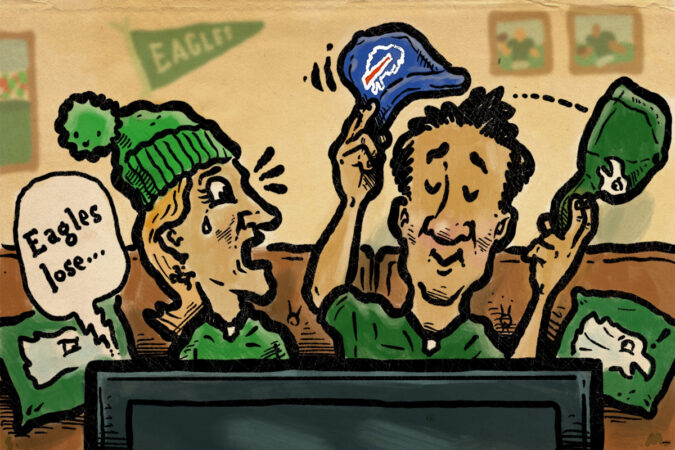
You don’t necessarily need to root for another team … but it’s perfectly acceptable to root for certain teams to lose more than others. Post-Eagles playoff fandom is less about loyalty and more about spite management.
You’re no longer picking a champion; you’re ranking villains.
Dugan Arnett, Life & Culture Reporter
I believe that Philadelphians should be free to root for any of the NFL’s remaining playoff teams. Except the Patriots, obviously. No one should ever root for the Patriots.
Tommy Rowan, Programming Editor
At this point, you’re rooting for fan bases. So I’m rooting for Bills fans. As a fan base, they’ve been through it. Despite an unprecedented four straight Super Bowl appearances in the early 1990s, they have zero championship wins to show for it.
And there are some similarities between Buffalo fans and Philly fans. Our friends from up north routinely throw each other through card tables at game day tailgates like WWE wrestlers. The two fan bases could honestly be cousins. Real long-suffering Northeast football fans recognize real. So, Go Bills. … Until the playoffs are over.
Amy Rosenberg, Life & Culture Reporter
This is when being a transplant has its advantages. Buried ancestral loyalties can now resurface. My dad loved the Bills dating back to the Marv Levy era. I’ve always loved the Rams? Feels OK to go with the Bills. (Getting some Bills consensus here.) Anything remotely Boston, New England, or Dallas is obviously off-limits. Chicago could be a late pivot to root for. Birds, Bills, Bears.
Matt Mullin, Senior Sports Editor for Digital Strategy
Unsurprisingly, I have a lot of thoughts on this. Sorry! Like Biggie said, there are rules to this game, so I wrote you a manual. And these can be applied to almost any season — or any sport.
You absolutely cannot root for the team that eliminated you, so the 49ers are out. But! If they win it all, you’re allowed to say the Eagles basically finished second.
You can’t root for any NFC East teams — luckily that’s not a concern this year — or any teams that beat you during the regular season. Goodbye, Denver and Chicago.
In fact, you shouldn’t really root for any NFC team, since you’ve likely beefed with them all at one point. But if you must, pick one of the teams you beat. At least that way you’ll be able to convince yourself the Eagles were actually the better team. Would the Rams, who the Eagles beat in the regular season and last postseason and don’t really have a fan base to rub it in, making the Super Bowl be the worst? Probably not. But that doesn’t mean you have to support them.
You should also try to avoid rooting for the top seeds, since Philly loves an underdog. We’ve already eliminated the Broncos, but so long, Seattle.
That leaves three AFC teams. Again, any team that beat you this year is automatically out. So are the Patriots. You never root for the Patriots.
In five simple steps, we’ve now boiled it down to just two acceptable teams: the Bills and Texans. We’ll give the Bills the nod here since their fan base and Eagles fans seem to have a lot in common — even though their coach tried to kill the Tush Push over safety but still uses it regularly.
Sam Ruland
I think my ideal Super Bowl here would be Bills vs. Bears. Because the Bills have a good fan base, fun, loyal (all the things we said). And I have no negative thoughts on the Bears fan base either. Also, never forget Jason Kelce tailgating with the Bills Mafia. That’s gotta count for something.
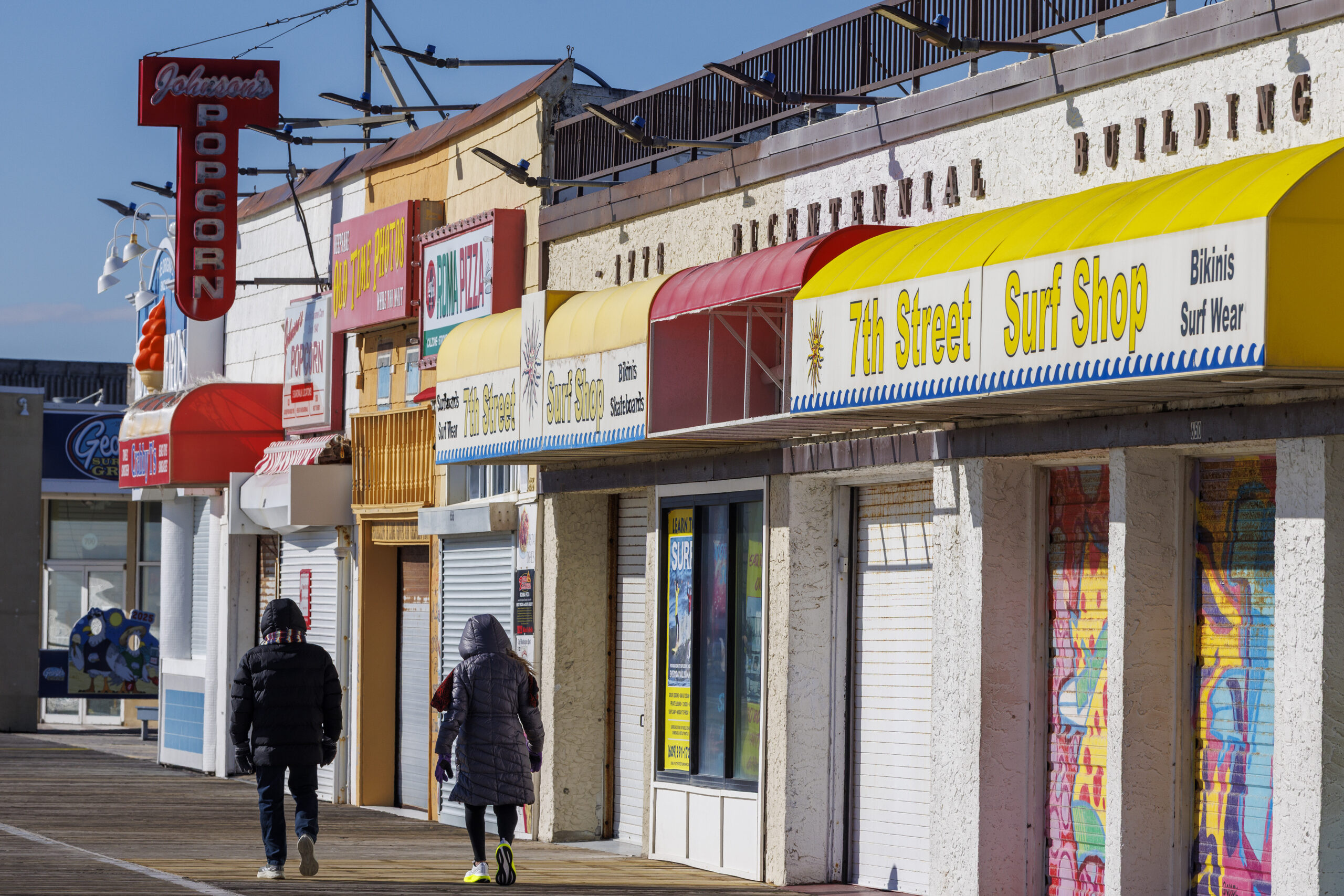
OCEAN CITY, N.J. — Along the commercial stretch of Ocean City’s boardwalk, from Sixth to 14th Streets, there are 167 storefronts, including four Kohr Bros. Frozen Custards, three Johnson’s Popcorns, three Manco & Manco Pizzas, and eight Jilly’s stores of one type or another.
There are eight mini-golfs, nine candy shops, 18 ice cream places, 10 pizza shops, 18 arcades or other types of amusements, five jewelry stores, three surf shops, five T-shirt shops, and 47 clothing or other retail shops. There is one palm reader.
Even without Gillian’s Wonderland Pier, the iconic amusement park at Sixth Street that famously closed in October 2024, it still adds up to a classically specific, if repetitive, Jersey Shore boardwalk experience. Many of the shops are owned by the same Ocean City families, some into their third generation.
But now these very shop owners are sounding the alarm.
“This is a group that’s been hanging on for a long time,” Jamie Ford, owner of Barefoot Trading Co., at 1070 Boardwalk, said in an interview last week. “These places are hanging in there. They’re not going anywhere, but we’re nervous.”
Chuck Bangle, owner of the storied Manco & Manco Pizza, warned planning officials he might close one of his three locations if business did not pick up. Other boardwalk property owners said longtime tenants were not returning.
“It’s the 70th year of our family business, the 34th year on the boardwalk,” Bangle told the planning board Jan. 7, before it eventually deadlocked 4-4 on whether the Wonderland site should be declared in need of rehabilitation. “I wrestled with closing the Eighth Street location. I don’t want to close. The impact of Wonderland’s closing on all the merchants has been substantial.”
Business along Boardwalk near 7th Street, Ocean City, NJ., Thursday, Jan. 15, 2026.
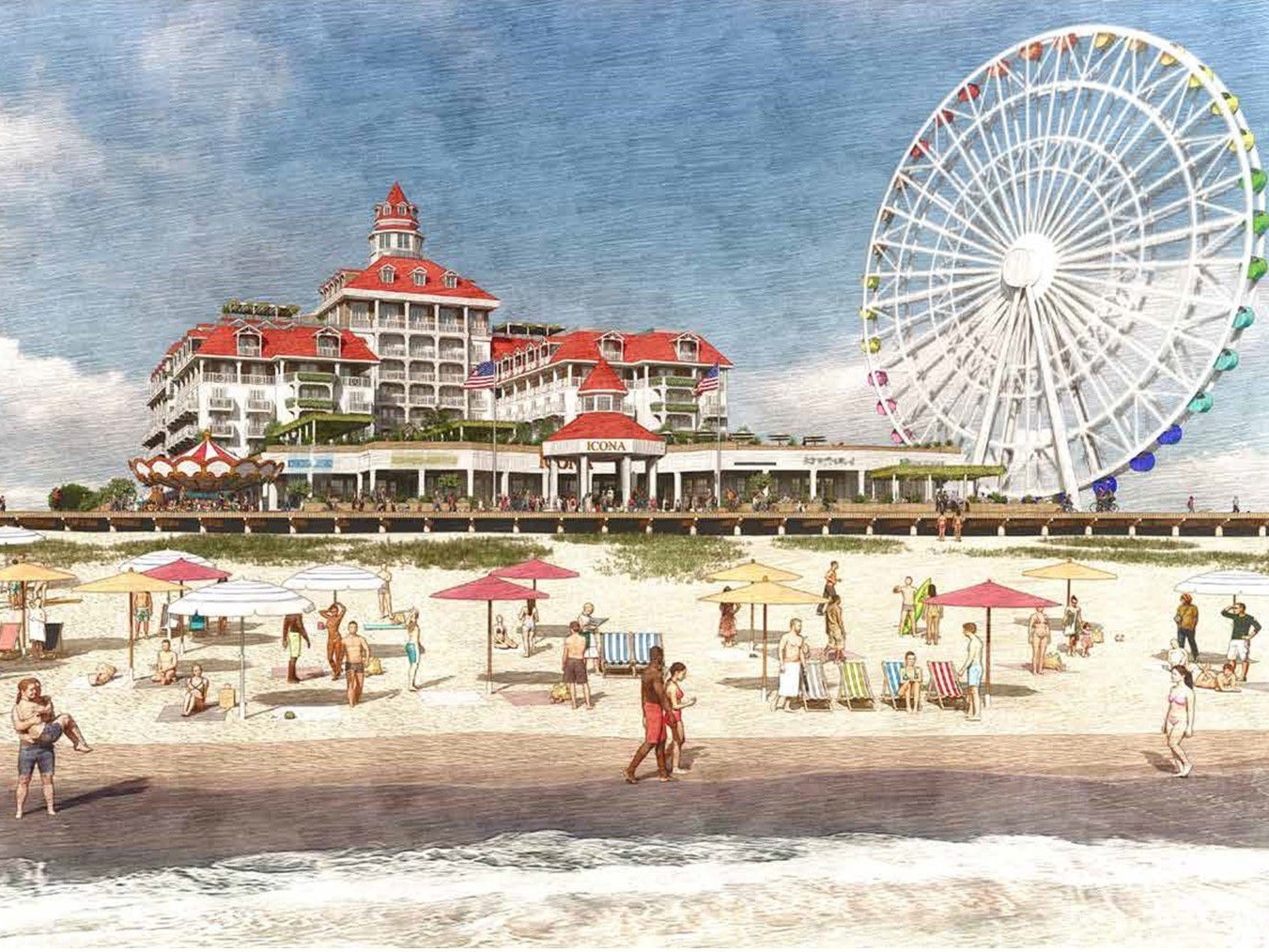
Into blustery January, the debate has raged about whether a luxury hotel, even one that would save the Ferris wheel, would bolster or undermine the essential character of this dry town and its beloved boardwalk.
At this point, even the most ardent members of the Save Wonderland faction seem resigned to the reality that, as Will Morey of Morey’s Piers himself came up from Wildwood to say to the planning board, the odds of Wonderland coming to life again as an amusement park are slim to none.
A rendering of the proposed new Icona in Wonderland Resort, to be built on the site of the old Wonderland Pier. The proposal for a 252-room resort includes saving the iconic Ferris wheel and carousel.
It’s the rest of the boardwalk that now wants to be heard: merchants with the voice of their ancestors ringing in their ears.
“This is an incredible opportunity,” said Ocean City Councilman Jody Levchuk, a member of the family that owns the Jilly’s stores on the boardwalk. He is also a member of a boardwalk subcommittee that will report its findings on Feb. 7. “My grandfather — who’s a big boardwalk guy — he’d walk up and he’d say this man wants to spend $170 million and you’re ignoring him.”
Plummeting parking revenue
A season without Wonderland took its toll. Parking figures from municipal lots tell the story.
The 249-spot lot at Fifth and the boardwalk across from Wonderland brought in $483,921 in parking fees in 2024 (people paid an average of $21 to park there during the summer season), but dropped to $290,895 in 2025, a 40% decrease. Overall, parking revenue dropped by about a half-million dollars, from $2.46 million in 2024 to $1.95 million in 2025.
At the end of 2025, there were a half-dozen empty storefronts, according to boardwalk merchants who keep track, mostly in the 600 block adjacent to Wonderland, though there is inevitable churn during the offseason.
Becky Friedel, owner of 7th Street Surf Shop, said in an interview that the shop is planning to expand and take over two of the vacant boardwalk storefronts for a new breakfast and lunch spot and a clothing boutique.
She said that while businesses have seen the loss of some of the younger clientele who used to fill Ocean City rooming houses and group Shore houses, the newer second-home owners come “with a fair amount of money.” The boardwalk also has a handful of higher-end boutiques, including the Islander. The downtown saw the opening of a Lululemon last year. Some envision a boardwalk that might include more boutiques in the mix, and fewer repeating sequences of ice cream-french fries-pizza-beachwear.
“We’re optimistic,” Friedel said. “Obviously [Wonderland closing] hurt us a little bit, especially in the evening. Our night business isn’t as strong as it was. We’re taking over the french fry place to focus on breakfast and lunch.”
Taking on the boardwalk
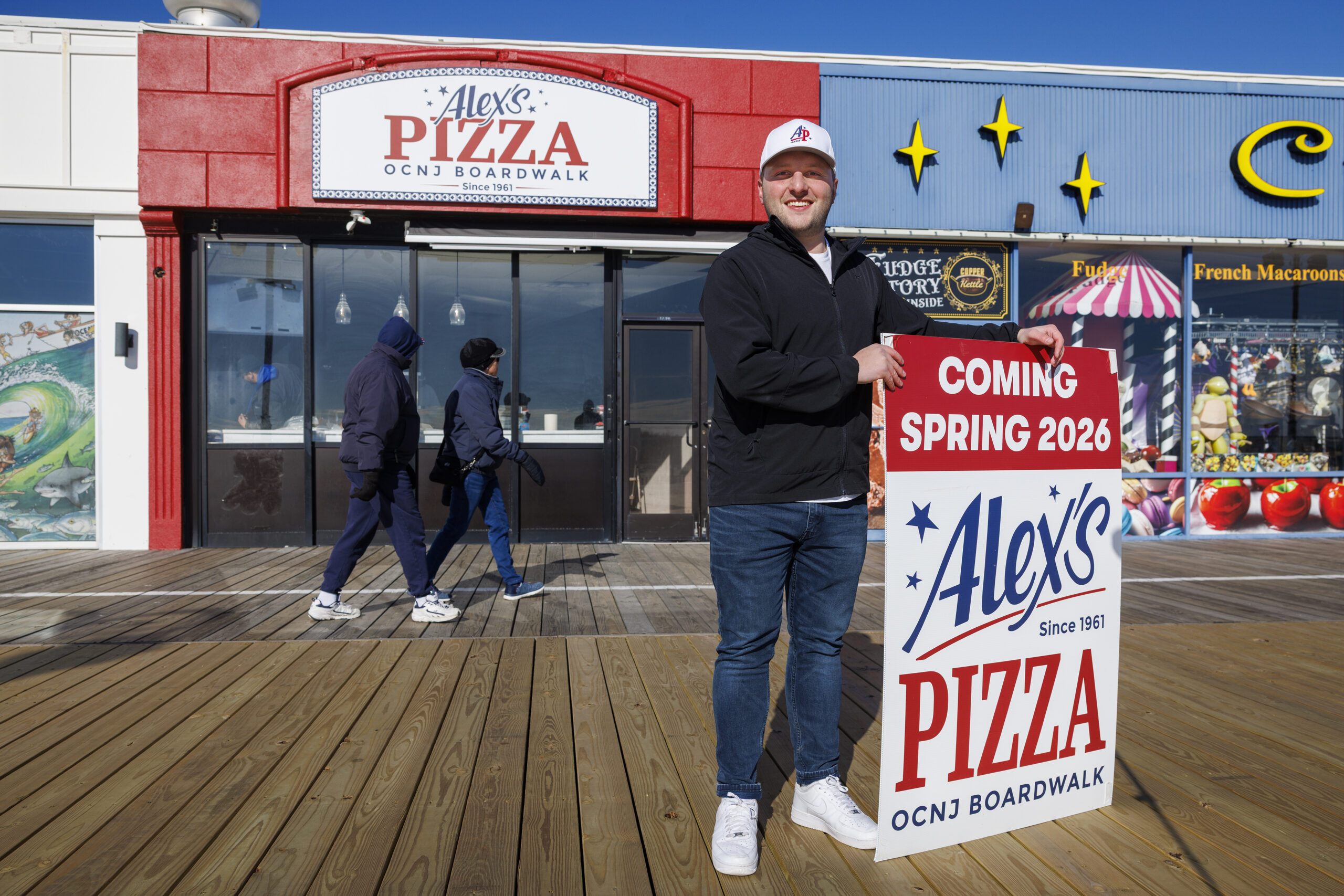
Also optimistic are the partners behind Alex’s Pizza, the Roxborough stalwart dating to 1961 that is opening up this summer at 1214 Boardwalk, next to Candyland. Coming in hot with a tomato sauce swirl atop the pizza not unlike the Manco’s staple, Alex’s partner Rich Ennis said, “We’re more of a thin-crust pizza.”
The enthusiasm of Ennis and partner Dylan Bear to take on the boardwalk also raises the question of whether the center of gravity will continue to shift southward, away from the no-longer-Wonderland end.
Dylan Bear, owner of Alex’s Pizza, 1214 Boardwalk, Ocean City, NJ., Thursday, Jan. 15, 2026.
“If you don’t have an anchor down there, people are not going to walk down there,” said Mark Benevento, owner of Congo Falls golf at 1132 Boardwalk, among other properties he rents out. “They will turn around at the music pier.”
Rather than seeing the hotel proposal as a threat to the character of the town, the merchants have united to stress that they view it as essential to Ocean City’s preservation. In other Shore towns, it has been the push of residential development that has eaten away at commercial zones. The parcel is currently zoned for amusements.
In places like Seaside Heights, Long Beach Island, and Avalon, condo and new residential construction has chipped away at the essential character of the places, replacing some of their most distinctive destinations, from restaurants to motels to bars and nightclubs.
Mark Raab, a local pediatric dentist whose family owns five boardwalk properties in Ocean City, called the closing of Wonderland “devastating” in remarks to the planning board.
“People don’t know what’s going on,” he said. “This year we had three businesses that closed, longtime tenants that did not renew their leases. Six years ago we had a waiting list for these properties.
“The boardwalk is not thriving,” he said. “The boardwalk is slowly going down. It’s going down piece by piece. It is rapidly becoming a snowball effect.”
‘Now they have galvanized us’
Ford, of Barefoot Trading, thinks the time has come for the view of the merchants to be heeded. The 4-4 tie at the planning board is being seen not as an outright rejection of a rehabilitation designation, which would expedite zoning allowances and possible tax abatements, but as a pass back to the city council.
The families, he said, are “the backbone of it. What we’re speaking in favor of should carry a little bit of weight.”
In a usually sleepy Jersey Shore January, there has been an awful lot of intrigue, and packed meetings, with the latest talk of perhaps a limited zoning change that would allow a hotel, though perhaps one not as grand (252 rooms, seven stories) as Mita is seeking.
There is also talk of allowing residential units above boardwalk storefronts. And many believe the city council will essentially give the tie to the nonvoting planner, Randall E. Scheule, who told his deadlocked board he believed the Wonderland site did meet two needed criteria — significant deterioration and a pattern of underutilization — and to go ahead and approve the rehabilitation zone.
Mita has said that time is of the essence. He said he has been shocked at the way the town has stymied his plan twice.
Councilman Keith Hartzell, who twice voted against advancing Mita’s development plan, said he still wants to negotiate with Mita over height, parking, and other issues. One possibility, in conjunction with the boardwalk subcommittee, is rezoning just the 600 block of the boardwalk to allow a hotel. Hartzell has also been trying to bring a playground to that end in the meantime.
“I’m not anti-hotel at all,” Hartzell said. “Our job is to come up with something [Mita] can do that he can make money with and be happy with.”
For Ocean City’s merchants, the Wonderland saga, and Mita’s difficulty in getting his hotel off the ground, has prompted them to step out from behind the counter or out of the ticket booths and speak up.
Said Benevento, the Congo Falls owner: “Maybe we have never gotten political. Now they have galvanized us.”
The buyers: Mercedes Murphy, 33, healthcare worker
The house: a 1,710-square-foot townhome in Port Richmond with three bedrooms and two baths, built in 1925.
The price: listed for $289,000; purchased for $291,000
The agent: Emily Terpak, Compass
The exterior of Mercedes Murphy’s home in Port Richmond.
The ask: Murphy had a strategy for maximizing her savings: never pay more than $850 in rent. If it went above that, she would simply move, which she did several times over five years. But eventually, what started as a strategy began to feel like a trap. “The quality of the places I was willing to pay for kept dropping,” Murphy said. When her small, rat-infested apartment in Point Breeze flooded — the second place she’d lived in that had flooding issues — she decided she’d had enough and set out to find a two-bedroom house with an updated kitchen for $350,000 or less.
The search: Murphy looked across the city, including in Mt. Airy, Fishtown, and South Philly. Some houses looked good in photos, butlooked worse once she saw the surroundings. A Northwest Philly rowhouse made a great impression inside, thanks to its sparkling wood floors, but not outside. “It was just parking lots, and nobody was around,” Murphy said. “It wasn’t very safe.”
She saw a promising place in Fishtown — a beautiful house with updated appliances, right by Girard Avenue. But it was small and had only one bathroom. Murphy debated the pros and cons with her then-fiancé (now husband), Stefan Walrond, for a few days, then made an offer. Almost immediately, she regretted it. She pulled her offer less than 24 hours later. “They had so many offers already,” Murphy said, “I didn’t feel like fighting for it.”
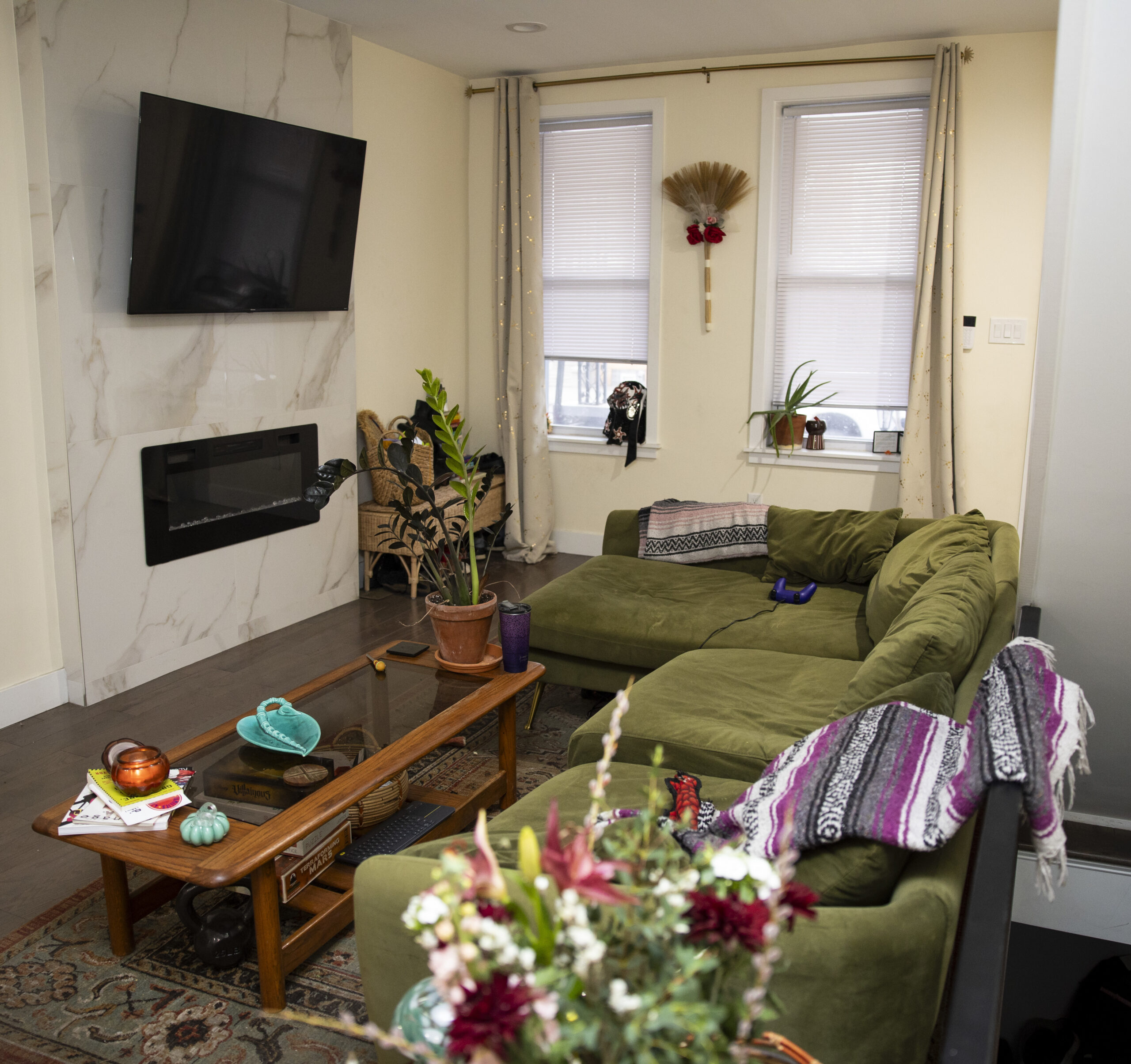
The living room in Murphy’s Port Richmond home. She liked how large it was compared to others that she had seen.
The appeal: A week after she pulled her offer, Murphy got COVID and couldn’t attend showings. Her fiancé went to see a house in Port Richmond without her. “He did the tour,” she said. “He sent me photos and did a little video walk-through.”
Murphy could tell that this might be the one. It had everything she wanted, including lots of space, two full bathrooms, and an updated kitchen. It even had a backyard with a cherry tree and enough room for their dog. What ultimately sold her, though, were the finishes in the kitchen and upstairs bathroom: the gold faucets, the marble countertops, the built-in bench in the shower. “I loved the modern aesthetic,” Murphy said.
The deal: Murphy wanted to avoid a bidding war, so she offered $291,000, $2,000 over the asking price.
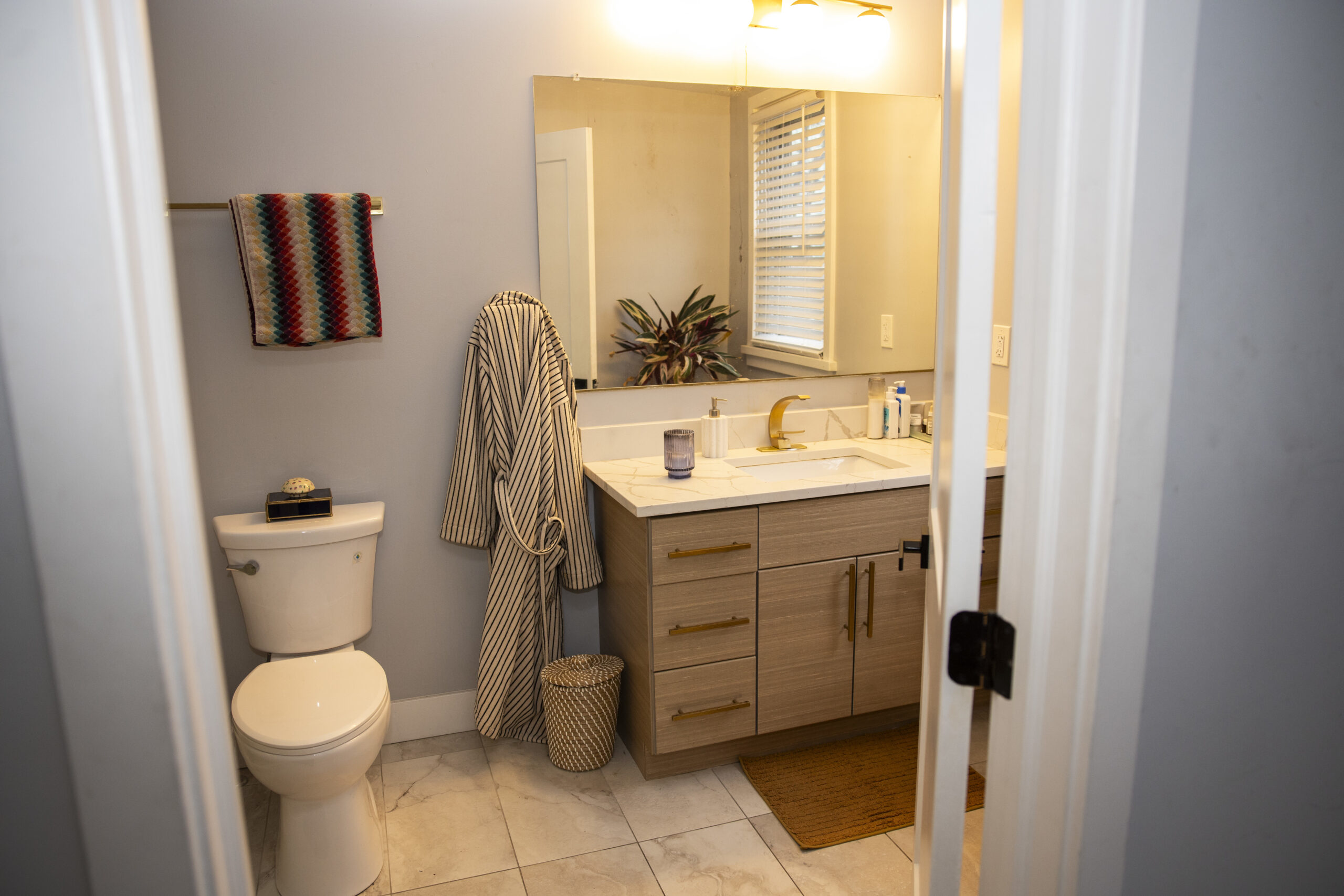
Murphy fell in love with the modern finishes, like the gold faucet, in the bathroom.
The inspection was straightforward. The only major issue was the roof. It would need to be replaced in a few years. A few of the appliances looked like they wouldn’t last very long either. Murphy didn’t ask for any concessions or credits. She just made sure she had enough money saved to pay for replacements down the line. Sure enough, the fridge broke one week after she moved in, and the roof started leaking within the year.
The money: Murphy, a self-described “huge saver,” started aggressively saving money in 2015, the year she got her first “major job.” When she went to buy a house seven years later, she had just over $100,000 in savings. “I always lived really below my means,” Murphy said. She drove an old used car, lived with roommates, and didn’t have any “crazy expenses, like video games or makeup.”
“I’m just not a big spender,” she said. Not having student loans helped too.
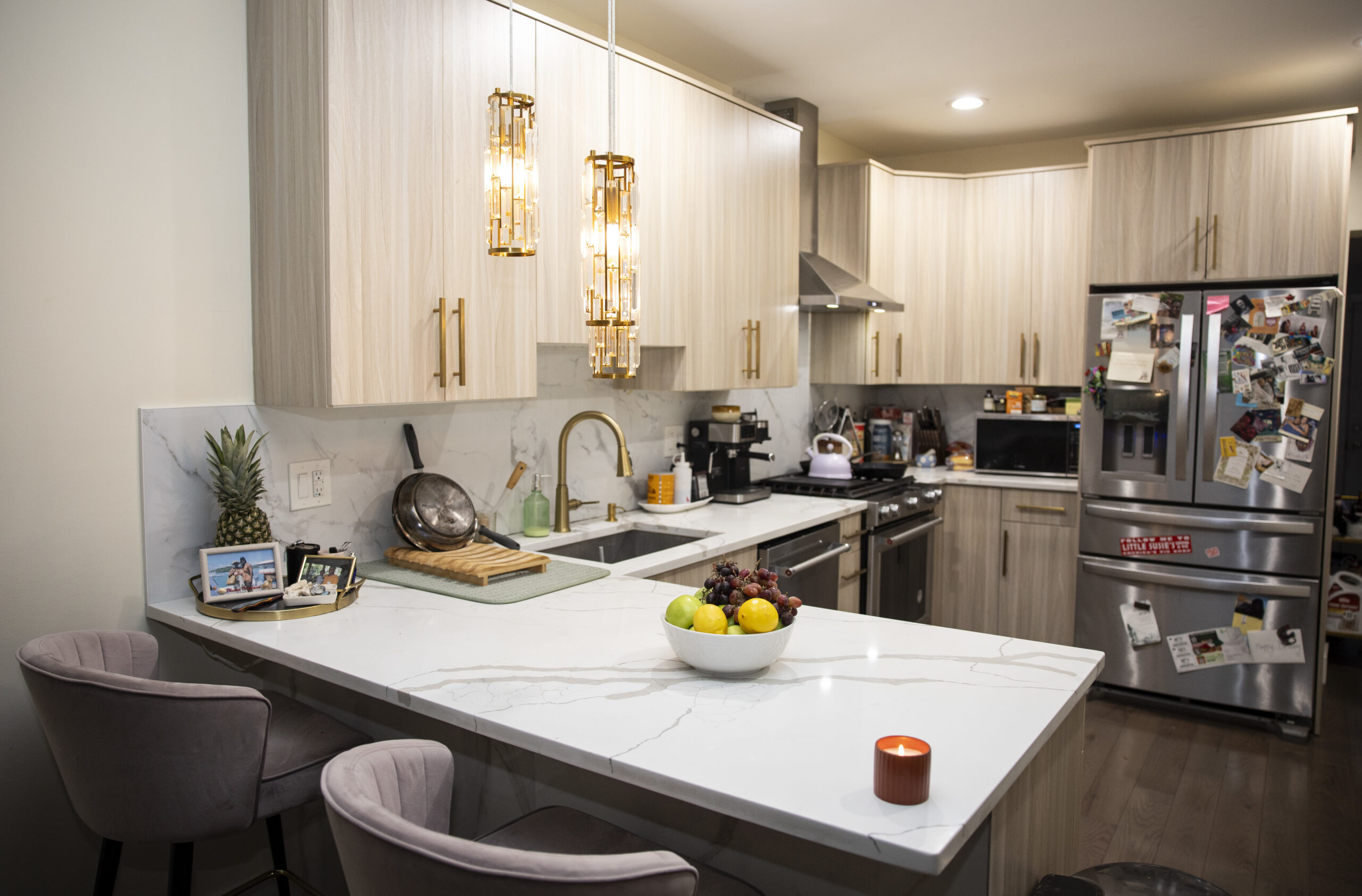
Murphy loved the modern aesthetic of the kitchen.
Murphy used $70,000 for a 20% down payment. She tapped into her remaining $30,000 to pay for the new roof, which cost $6,000, and a new washing machine, which cost $1,700. Her parents bought her a new fridge for $2,000.
The move: Murphy’s landlord allowed her to break thelease she shared with her fiancé due to the flooding. She hired movers for the first time ever. “I moved so much in Philly before that I knew this time I definitely wanted movers,” Murphy said. It only cost $400. “We didn’t have that much stuff,” she said, “and we weren’t going very far.”
Any reservations? Murphy and Walrond love their neighborhood and their neighbors, but they wish they lived on a quieter street. “Aramingo is a main thoroughfare,” Murphy said. “So we have a lot of emergency vehicles come by.”
Other than that, Murphy wishes she negotiated more. If she could do it all over again, she wouldn’t offer $2,000 over the asking price. She would also ask for more concessions from the seller to address the aging appliances. “I didn’t even think to do it,” Murphy said. “I was just so happy to get a house.”
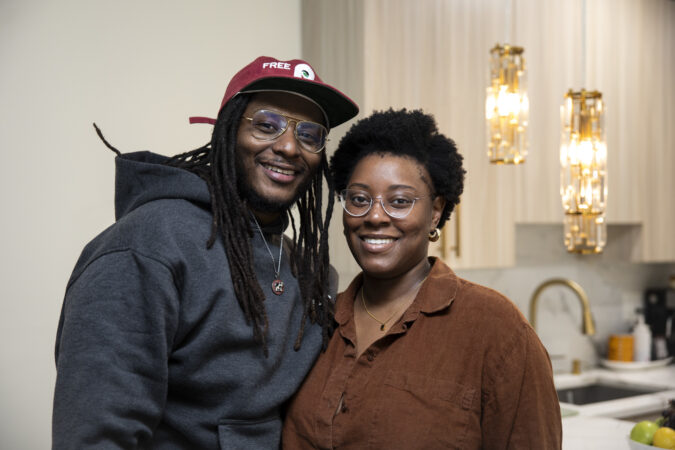
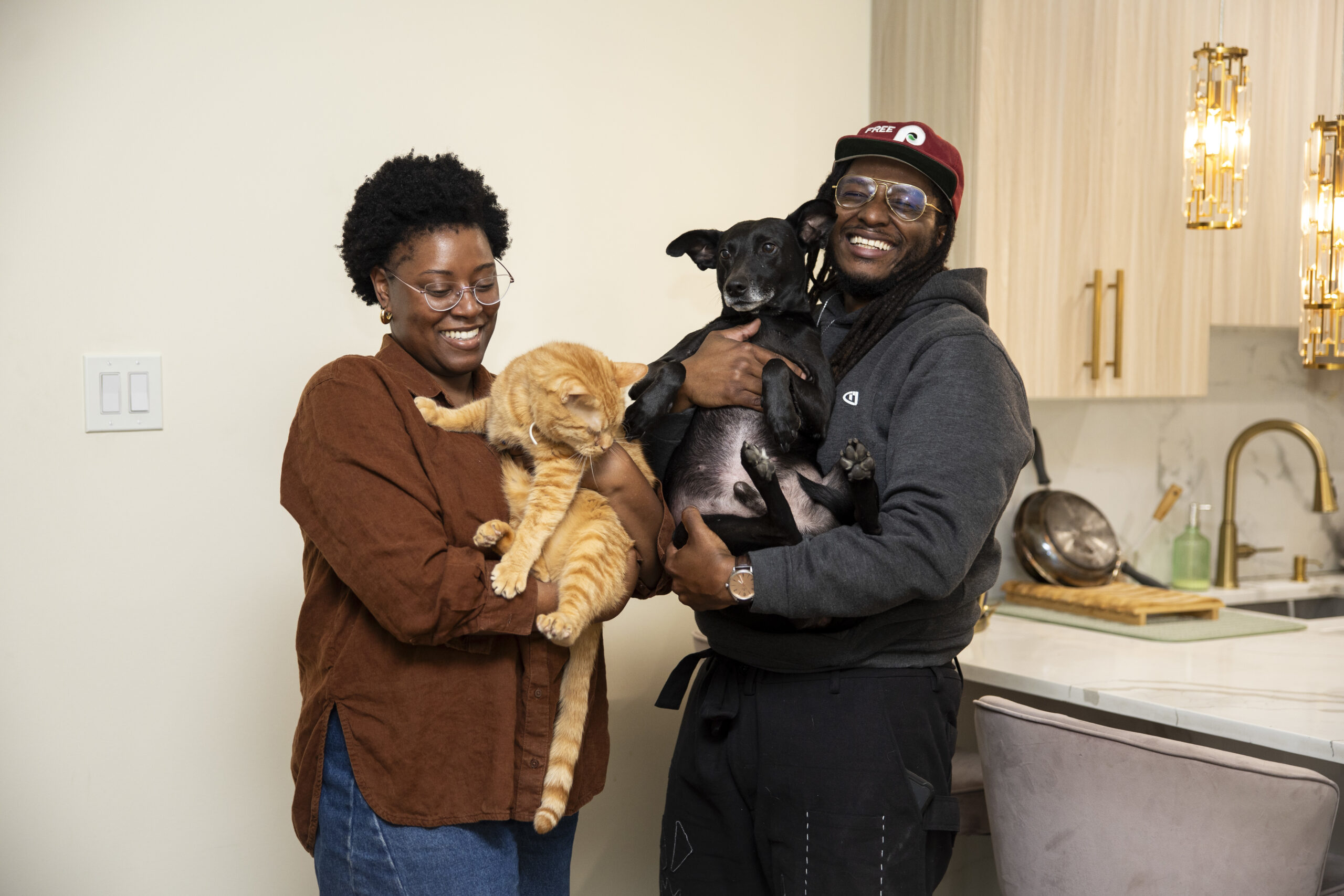
Mercedes Murphy and Stefan Walrond pose with their pets Archie (left) and Onyx at their Port Richmond home on Tuesday, Jan. 13, 2026, in Philadelphia.
Life after close: Murphy hasn’t changed anything since moving in, just repaired things. The leak in the roof damaged the bedroom drywall, which she is now in the process of fixing. And she had to replace a leaky window in the office. Despite the minor inconveniences, she’s happy with her purchase. Now she’s focused on rebuilding her savings. She wants to get back to $100,000. “Let’s see if I can do it again,” she said.
Local fans of RuPaul’s Drag Race are bummed this morning after seeing Philadelphia drag queen Mandy Mango — just the second contestant to represent the city in the show’s history — get eliminated last night.
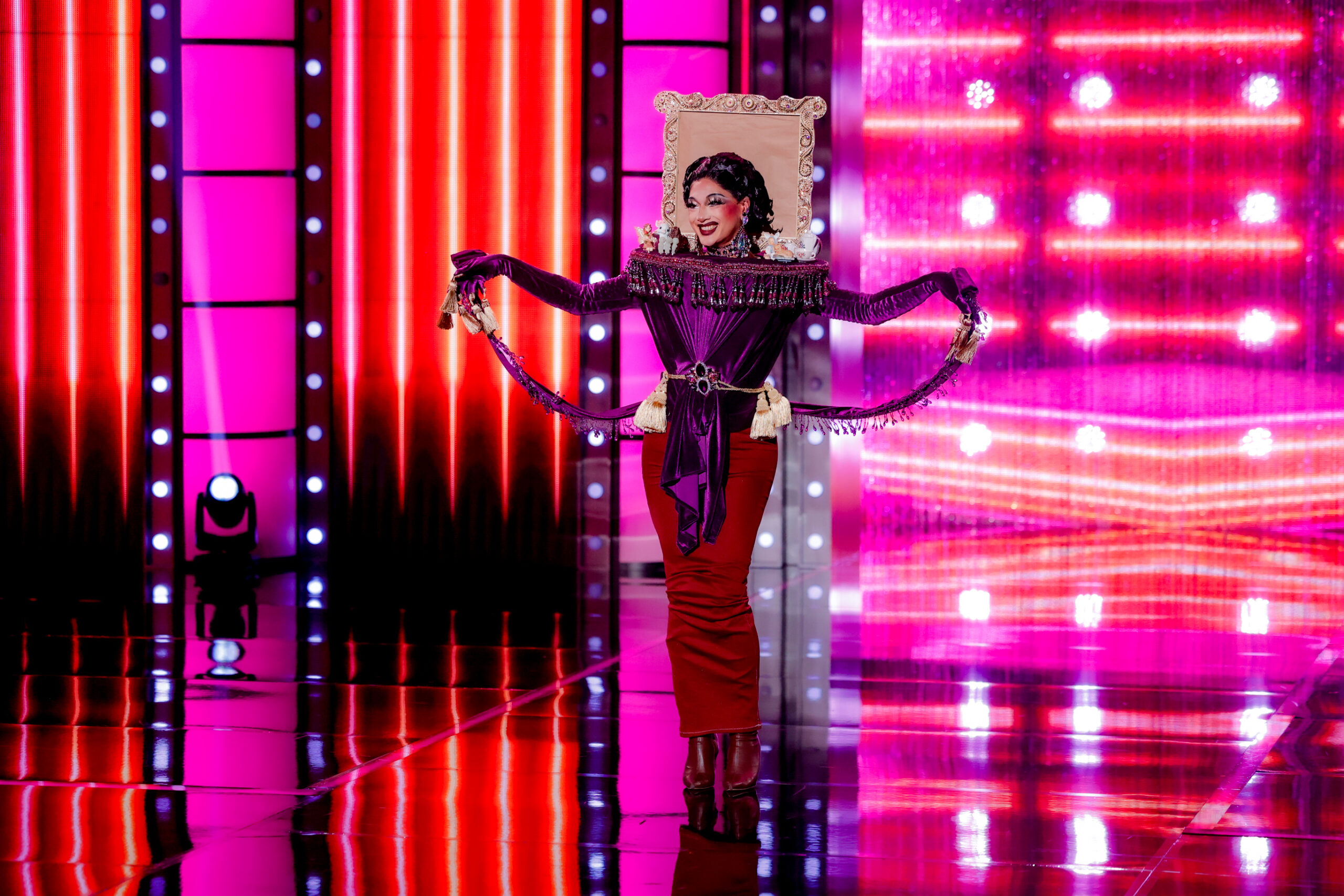
For the third week in a row, Mango landed in the bottom. She failed to impress the judges with her sketch comedy act playing an Amish woman competing in a butter churning competition; her overly sexual take wound up being a bit too outlandish, and her runway look as a dashing deer couldn’t save her.
“I can’t say I’m too surprised, I’m not delusional,” Mango said on Untucked: RuPaul’s Drag Race following the episode. “I accept this with grace but I’m extremely sad.”
Despite the loss, of course, Mango remains a star at home in Philadelphia.
An HIV nurse by day, Mango (aka Sigfried Aragona) grew up in Lansdale and attended West Chester University before moving to Center City, where she lives with a roommate and their four cats named Wasabi, Miso, Soy, and Sriracha. The 29-year-old performer frequently appears at Frankie Bradley’s, her home bar.
Competing on Drag Race was an exciting challenge for Mango, who says she’s received an outpouring of support from fans in Philly and as far as the Philippines, where her family is from. She’s thrilled to spotlight Philly’s drag scene for a national audience, following Season 16 runner-up and Miss Congeniality winner Sapphira Cristál. (Cristál helped Mango prepare her audition tapes.)
“Especially in the context of Drag Race, Philly hasn’t been [seen much]. I feel like we’re kind of on the up-and-up of people really recognizing our drag and seeing what we’re about,” said Mango. “Hopefully I got to show off that Philly is full of fighters. We’re full of performers, and we all have a little bit of quirkiness and silliness to us.”
We asked Mango about her perfect Philly day.
9 a.m.
I’d probably start off by going to Planet Fitness, ideally, to get my little morning workout in. That’s all I need. And then I will get breakfast, probably over at the Reading Terminal. I love Beiler’s Doughnuts, a great post-workout meal [laughs], or honestly, Miller’s Twist with the pretzels.
Mandy Mango and DD Fuego face off in a lip synch battle on episode two of ‘RuPaul’s Drag Race’ Season 18. Mango stunned the judges with her energetic dance skills.
Noon
Come home and watch TV, catch up on my day, take a nap. Love a nap. But a lot of my friends are foodies, so on a nice day we like to be out and about.
1 p.m.
Just walk around Chinatown and get bubble tea. Tea Do is my usual spot. I like to get a little taro bubble tea, but if I need a pick-me-up, I’ll get the Zen’s Awakening. It’s a little chocolatey, really sweet, with coffee in it.
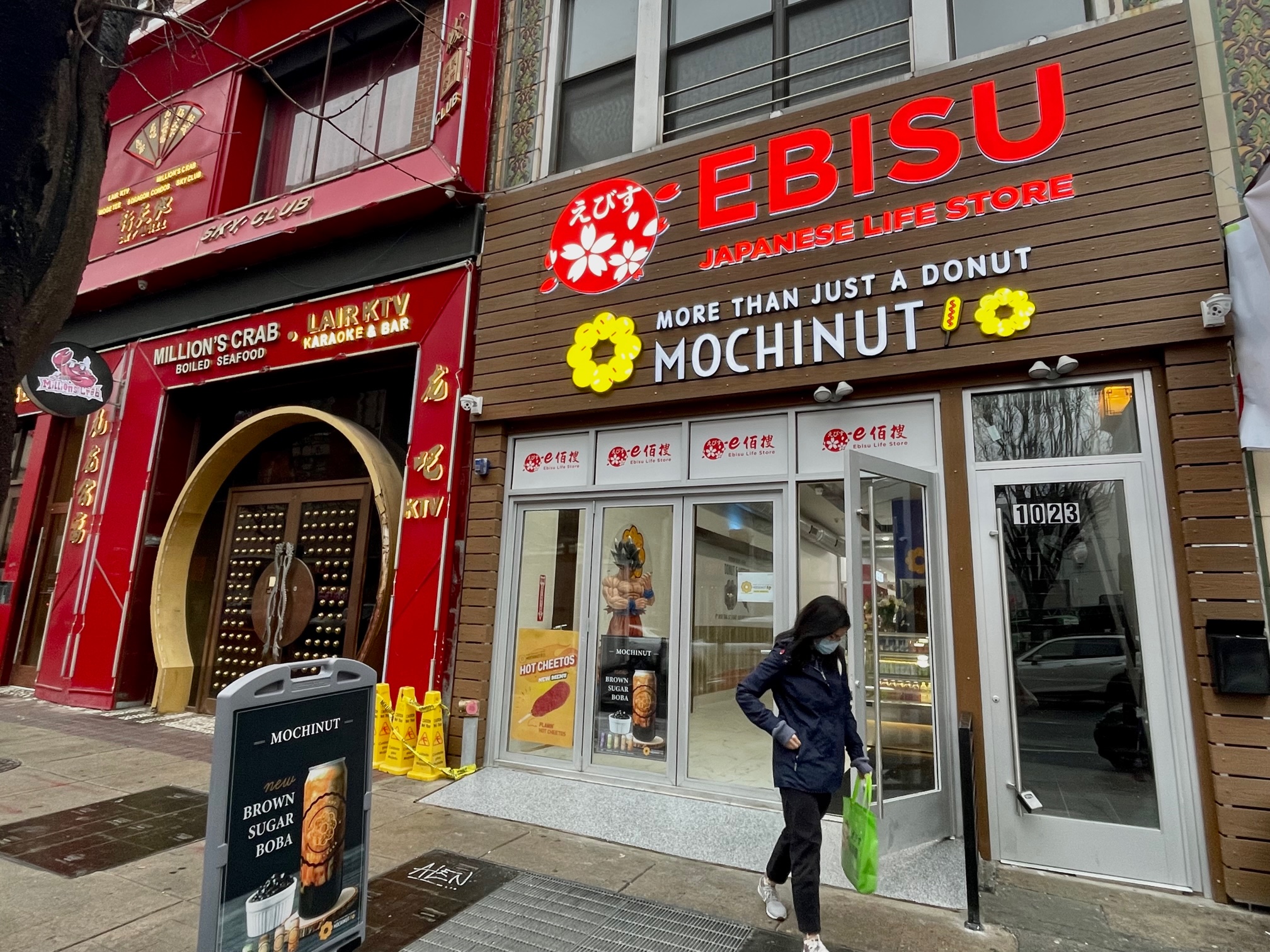
We like to explore the little cute shops in Chinatown, like Ebisu and Little Seven House. Check out the little toys, see if my friend needs another Labubu.
Ebisu Life Store in Chinatown.
Then we’ll probably eat somewhere in Chinatown. We’re always checking out different spots, but a go-to for us is definitely Ocean Harbor for dim sum and Pho 20. There’s something about pho restaurants, when it’s just “pho” and the number after it, you know it’s legit. Also Pho 75 in South Philly is one of our faves. Philly has some of the best Vietnamese food.
3 p.m.
I probably will go ahead and get back home, go over the little pictures that I took with my friends around the city and make sure we post those, and then take a nap.
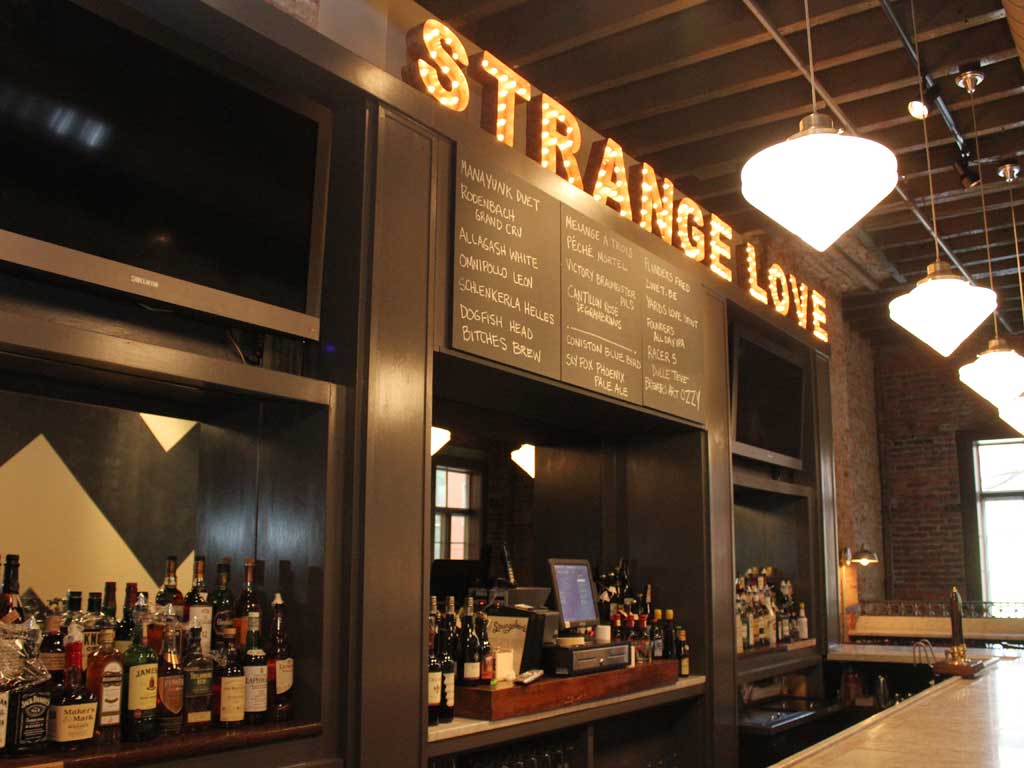
Upstairs bar at Strangelove’s, 216 S. 11th St.
6 p.m. to midnight
I like to go out in drag sometimes, if I have the time. So I probably get mug and get ready to go out. I really love Strangelove’s, that’s probably where I start and get a drink and some food. They have arcade games in the back, which I recently played — I got into a really heated Mortal Kombat tournament. I made it past the first round then one of my designer friends [who helped with my Drag Race submission] Elias [Gurrola] surprisingly hustled me! I will come back and avenge myself.
Mandy Mango on the runway on ‘RuPaul’s Drag Race’ Season 18, episode two.
I’ll eat dinner at Strangelove’s, get some of the flatbread. I love a finger food when I’m in drag, so pizzas or chicken tenders are great. It’s gonna sound basic but their fries are actually so good.
Then I’ll bop around to U Bar, it’s a nice place to get another little drink. Then we’ll make our way down the alley to Tavern [on Camac] to really get dancing and start the night. You can usually catch me on the upper floor. I love it especially if Carl Michaels or Chris Urban are DJing.
Midnight
Around midnight, we move to Frankie Bradley’s, and check out the disco side and the upstairs club side. Catch [DJs] Drootrax or Gina. I usually end up dancing a little too hard because they’re always killing it.
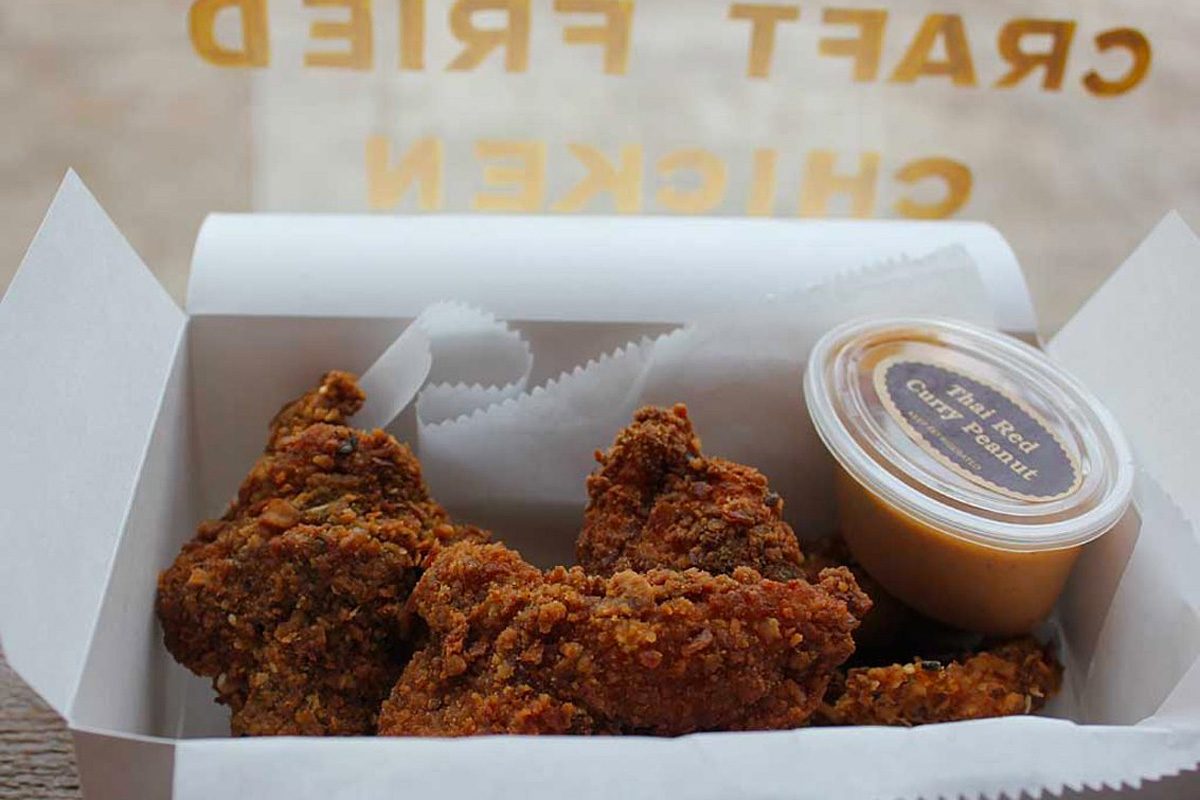
Boneless, skinless, pretzel-encrusted chicken from Wishbone.
2 a.m.
I get my little post, post-club meal at Wishbone. They’re open till 4 a.m. They have pretzel-breaded chicken and baked mac and cheese. I get one white, one dark, half a pound of mac, and a biscuit.
My schedule sounds chaotic, but it’s sort of ideal for me.
Chris Summers was born in South Philly and raised by her grandmother and her mother. She knew she was supposed to get married, but she never felt exactly like the people around her.
The main sticking point was sex: She didn’t want to have it, yet she still longed for romantic companionship.
“I really crave connection and spending time with somebody. I would be happy to spend a romantic weekend where we didn’t have to sleep together,” said Summers, 73. ”We would stay up talking and drinking tea and drawing and reading to each other.”
Summers married Fred, whom The Inquirer is referring to by his first name to protect his privacy, in 1975. The two had sex throughout their marriage, because Summers figured that was what a wife was supposed to do, but she never cared about it. They divorced in 1980 after Fred had a series of affairs, she said.
She continued to date men, all the while wondering if she might be a lesbian. Above all, she was attracted to people’s minds; she wanted a connection that had nothing to do with the “groping, kissing, fumbling, and activity that led to orgasms,” as she described it.
“At that time, there was no vocabulary for that. There was no saying: Sex does not interest me at all. Sex is not part of my reality,” she said. It wasn’t until the 2010s that she began reading about asexuality — the term for people who do not experience sexual attraction.
About 1.7% of lesbian, gay, or bisexual adults identify as asexual, according to the Williams Institute, a research center focused on sexual orientation and gender identity at UCLA. The vast majority are young, under 27; a Williams Institute scholar noted that asexuality is an “emerging identity,” and probably likely to become more widespread in the future.
Summers, who describes herself as neuroatypical, now lives with her two cats in Wissahickon. She has posted personal ads on Craigslist and forums for asexual people, but at this point has mostly resigned herself to being alone.
The following, as told to Zoe Greenberg, has been edited for length and clarity.
On meeting her husband
I put an ad in the personals in 1972. I was definitely hoping for romance, but also I was just looking for somebody to hang out and smoke dope with. Fred answered the ad, and he showed up at my house on his Honda 350 motorcycle. He was kind of like my knight in shining armor. We dated for a few months, and then I moved in with him.
On a less-than-romantic proposal
There was no real romance involved in getting married. We were living in West Philly, and I was setting the table for dinner. He came into the kitchen and said, “What do you think about getting married?” I hadn’t really thought about it at the time, and I just said, “Yeah, OK, that’s a cool idea.” I didn’t realize that was a proposal. He said, “I’ll call my parents and let them know we’re going to get married.” I thought, This is what it’s like?
Fred’s a Libra, and he likes to be doing what other people are doing. Friends and people in our age group were getting married. I guess he thought, Everybody else is doing this. So this should be something that we’re doing.
On her mother offering her husband-to-be cash to marry her
Fred and I had been married for several months, and we were having dinner one night. I was complaining about my mother; I always had a troubled relationship with her.
He said, “Did you know that your mother offered me money to marry you?” I thought he was kidding. I said, “What did she offer?” He said, “$1,000.” I said, “Did you take it?” And he said, “Of course not.”
I was horrified. I was raised by my mother to think I better get married, because that way I would have somebody to take care of me. She didn’t believe I could navigate life on my own. I think that on some level, my mother meant well. She thought, I’m going to offer a guy money to marry my daughter, and that way I’ll feel that I’ve done my part.
Summers at home in Philadelphia this month.
On her husband’s (“pedestrian”) fantasies and her evolving sexuality
Fred was into fantasizing. One of his favorites was: you work in a massage parlor, and you’re really a hooker. I like playing, and I like fantasy and dressing up, and I just thought that was so pedestrian. I mean, if he had said, “Let’s dress up like aliens,” I would have thought, This could be fun.
I still thought that it was quite possible that I was a lesbian. I liked looking at women, I found women attractive. When I was in 8th grade, I had a serious crush on my best friend. But in a working-class, blue-collar family, it was not something that you talked about.
On her husband’s infidelities
I thought we were happy. But Fred was a philanderer. He always had a little something on the side, and one of his big things that he really enjoyed doing was confessing his sins later.
For our first wedding anniversary, we saved money so we could take our honeymoon, and we went all the way up through the Eastern Seaboard.
We were at a lovely restaurant having a nice meal. Fred leaned over and said, “Um, there’s something I have to tell you.” I thought, Oh, God, no.
I knew he was going to confess something, and he told me that he had been having an affair with the woman who was our matron of honor. I said, “Why did you have to tell me this on our wedding anniversary?”
On life after divorce and discovering asexuality
I initiated the divorce in 1980 because I was tired of Fred not being faithful. I made sure that he was served at work with the divorce papers, to embarrass him.
After that, I was in California and I was looking for a partner. But I was not looking for somebody to sleep with. Sex to me is like having anchovies — yeah, I suppose I could, but I’d really rather not.
I was always attracted to people who were very intelligent and on the quirky side. For me, it was never about: I want to get in their pants. It was more like, I want to get in their brain.
In the last 10 years, I was trying to figure out, what is different about me? I started seeing things about asexuality. It made me feel like less of a freak, realizing: OK, this me. This is where I fit.
On searching for love but not sex
I’d always been homesick for Philadelphia, and returned in 2015.
At one point I was part of a now-defunct Meetup group for alternative sexualities. I was an old lady in the midst of these 20- and 30-year-olds. They were very dear, they were very accepting. But I was not really considered dating material due to my age.
Since I’ve been back, I have not really had much of a romantic life. I dated a few guys, a few women. But when you say “I really don’t want to have sex with you” — there’s no nice way to say that.
This story is part of a series about life partners across the Philadelphia area. See other stories in the series here and here.
If you want to share your story about who you’re navigating life with romantically or otherwise, write to lifepartners@inquirer.com. We won’t publish anything without speaking to you first.
Sam Salvo didn’t deliver a nuanced breakdown of route trees or personnel groupings. He didn’t cite EPA or All-22 tape. He simply announced — with the confidence of someone who has never had to answer a follow-up question — that Kevin Patullo should be flipping burgers at McDonald’s. Philly nodded in unison.
The funniest part isn’t that it went viral. It’s that a day later, Patullo was gone, and the city collectively decided the kid deserved at least partial credit. In a town where people once egged an offensive coordinator’s house (too far), this somehow felt like the healthier outlet.
Sam’s rant worked because it was pure, unscripted Philly logic: blunt, emotional, metaphor-heavy, and somehow accurate. “One-half cooked, one-half raw” is not just a roast, it’s a season recap. And when he popped back up afterward saying, “I just wanted to say anything that could get him fired. And it worked,” it sounded less like a joke and more like a performance review.
The follow-up reactions only added to the lore. Fans celebrated. Former players debated scapegoating. Someone somewhere probably floated Big Dom calling plays. And the Eagles, intentionally or not, let the internet believe that an 11-year-old helped nudge a major coaching decision.
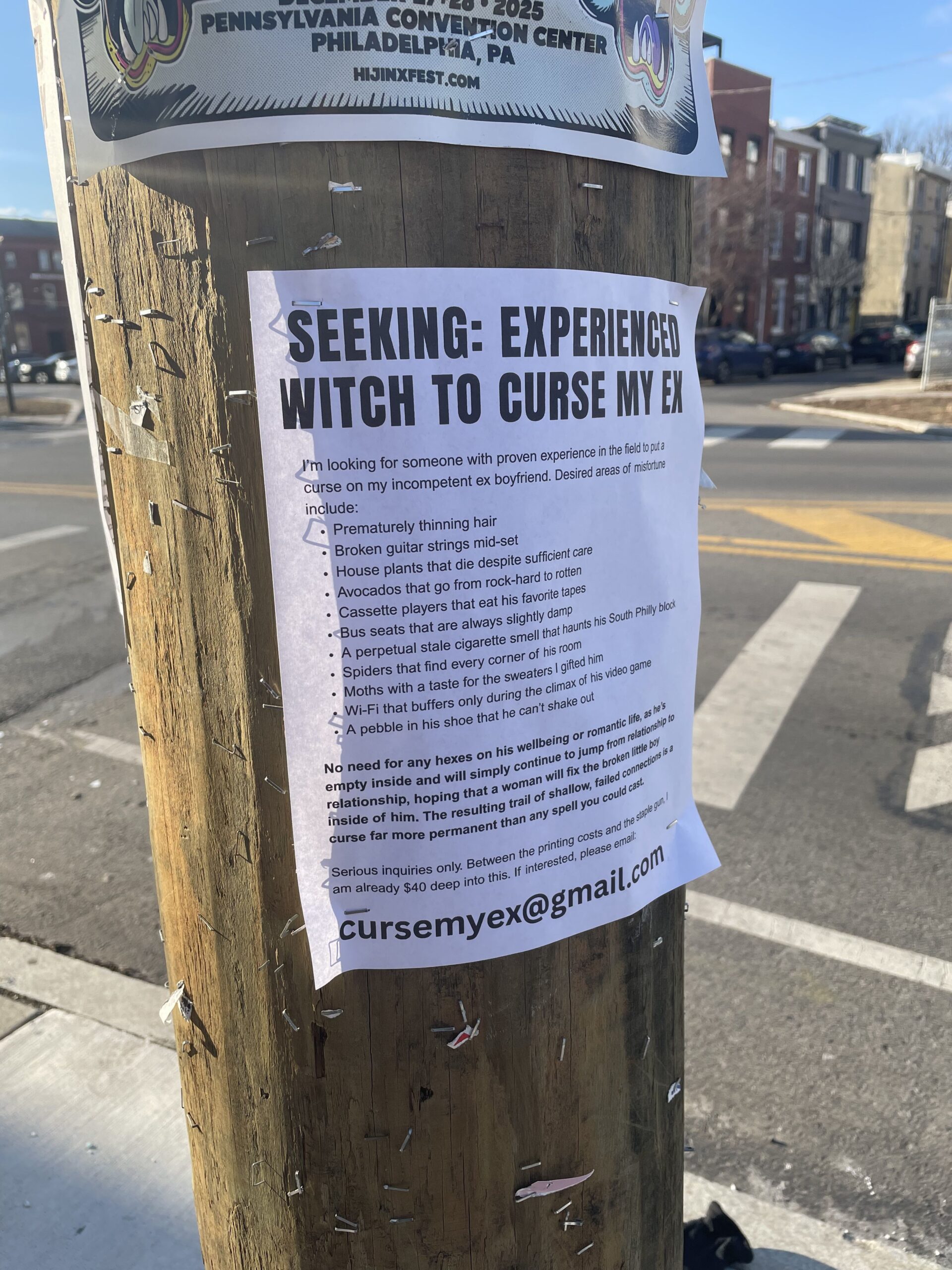
One of the witch-seeker’s fliers hangs in Fishtown on Sunday, Jan. 4. After ending a two-year relationship, a Philadelphia woman posted the fliers around the city and in Phoenixville as a way to channel her emotions over the breakup.
Philly collectively supports hexing an ex (with rules): A
At some point this winter, Philadelphia decided that asking a witch to curse your ex (politely, creatively, and without touching his health or love life) was not only acceptable, but deeply relatable.
The flier itself did most of the heavy lifting. “Seeking: Experienced Witch to Curse My Ex,” stapled to poles from Phoenixville to Fishtown, with a list of curses so specific and mild they felt less like dark magic and more like emotional Yelp reviews: thinning hair, damp bus seats, buffering Wi-Fi, eternally pebbled shoes. Nothing fatal. Nothing irreversible. Just inconvenience with intention.
Instead of pearl-clutching, the city leaned in. The flier spread through neighborhood Facebook groups and socials, where strangers did what they do best: offered commentary, solidarity, jokes, and unsolicited advice. Some people cheered her on. Some defended the ex. Others asked how it ended. And plenty of women recognized the feeling immediately: that moment after you’ve done the therapy, the journaling, the “being mature,” and still need somewhere for the anger to go. This wasn’t about actually ruining someone’s life. It was about yelling into the city and having the city yell back, “Yeah, that sucks.”
The rules mattered, too. No curses on his health. No messing with his love life. Philly rage has boundaries. Even our hexes come with ethics.
Wawa learns Philly does not want a vibes-only convenience store: C-
Philadelphia has many hard rules, but one of the hardest is this: If you remove the shelves from a Wawa, you are no longer operating a Wawa.
And in Philly, that’s not innovation. That’s friction.
This was once one of the company’s highest food-service locations before the pandemic, which makes the experiment feel even more puzzling in hindsight. People weren’t avoiding this store because they didn’t want Wawa. They were avoiding it because it stopped functioning like one. A convenience store that requires commitment, planning, and patience defeats the entire concept.
The grade isn’t lower because this wasn’t malicious or careless. It was a genuine attempt to test something new. But Philly answered clearly, quickly, and repeatedly: We don’t want a Wawa that feels like an airport kiosk. That’s what will get your store closed.
Phillies pitcher Ranger Suárez throws against the Cincinnati Reds on Saturday, July 5, 2025, in Philadelphia.
Saying goodbye to Ranger Suárez hurts, even if it makes sense: B+
This one lands softly and hard at the same time.
Ranger Suárez leaving Philadelphia was never shocking, just quietly devastating. Signed by the Phillies as a teenager, developed patiently, trusted in big moments, and forever tied to the pitch that sent the city to the World Series in 2022, Suárez felt less like a roster spot and more like a constant. You looked up in October and there he was, calm as ever, getting outs without drama.
Now he’s on the Red Sox.
The Phillies weren’t wrong to hesitate on a five-year, $130-million deal for a pitcher with mileage, injury history, and a fastball that succeeds more on craft than velocity. Andrew Painter is coming. The rotation math is real. This is how smart teams stay competitive.
But Philly doesn’t grade purely on spreadsheets.
Suárez embodied a certain Phillies ideal: unflashy, durable when it mattered, unfazed by the moment, and always a little underestimated. He wasn’t the loud ace. He was the steady one. The guy you trusted to calm everything down when the season felt like it might tip.
That’s why this stings. Not because it was reckless to let him go, but because losing someone who felt like a Phillie is different than losing someone who just wore the uniform. Watching him head to Boston is one of those reminders that the version of the team you emotionally commit to is always a few contracts behind the one that actually exists.
OpenTable adds a 2% fee, and Philly sighs deeply: C
Philadelphia understands restaurant math. We’ve lived through inflation menus, pandemic pivots, staffing shortages, reservation deposits, and the great “please cancel if you’re not coming” era. What we don’t love is when the bill quietly grows another line item after we thought we were done reading it.
That’s why OpenTable adding a 2% service fee to certain transactions (no-show penalties, deposits, prepaid dining experiences) landed with more fatigue than outrage. Not rage. Just tired acceptance.
The logic isn’t wrong. No-shows are brutal for small dining rooms, especially in places like South Philly where a missed table can knock a whole service sideways. Restaurants can absorb the fee or pass it on, and in many cases, the platform is genuinely helping places protect their bottom line.
But from a diner’s perspective, this is yet another reminder that convenience now comes with micro-costs layered so thin you barely notice them, until you do. The reservation is free … unless you’re late. Or cancel. Or book a special dinner. Or blink wrong. It’s another reminder that each new surcharge chips away at the simple joy of making dinner plans without feeling like you’re navigating airline baggage rules.
Philly draws the line at selling dinner reservations: A-
Philadelphia has tolerated a lot in recent years: prix-fixe creep, credit card holds, cancellation windows measured in hours, and now, yes, platform fees (see above). But selling a free dinner reservation for profit? That’s where the city finally says no.
The attempted resale of coveted tables at Mawn didn’t just irritate the restaurant’s owners, it offended a basic Philly value system. You can love a place. You can hustle for a table. You can brag that you got one. What you can’t do is turn access into a side hustle and expect people to shrug.
The reaction was swift and very local: public call-out, canceled reservations, and a clear message that this isn’t New York, Miami, or a StubHub-for-dinner experiment. Yes, reservation scalping exists elsewhere, powered by bots and platforms like Appointment Trader. And yes, Philly has passed laws trying to shut that down. But what made this moment resonate wasn’t legislation. It was cultural enforcement. A collective agreement that making money off a free reservation crosses from clever into gross.
Put simply: Waiting your turn is still the rule here. And if you try to flip your way around it, don’t be surprised when the city flips right back.
Amanda Seyfried gives Colbert a very real Allentown community calendar: A
Stephen Colbert has a recurring bit where he asks celebrity guests to promote actual events from their hometowns. When Amanda Seyfried, who grew up in Allentown, took her turn this week, she didn’t try to punch up the material.
She didn’t have to.
Seyfried read through a lineup of events that sounded exactly like a Lehigh Valley bulletin board: all-you-can-eat pasta night, speed dating for seniors, board games at a funeral home, a pirate-themed murder mystery, and Fastnacht Day donuts heavy on lard and tradition. No setup. No apology. Just listings.
That restraint is what made it land. Seyfried treated the segment like she was helping out a neighbor, not auditioning for a tourism campaign.
For viewers around Philly and the surrounding counties, it was immediately recognizable. This is the kind of stuff you scroll past in a local Facebook group or see taped to a coffee shop door without a second thought. Put it on national TV, though, and suddenly it becomes comedy.
It sits along the scenic banks of the Upper Delaware River in Pike County, surrounded by mountains, with access to major trails, canoeing, kayaking, and biking, and the tallest waterfall in Pennsylvania. It’s an adventure hub among the best in the tristate region.
But Milford isn’t just for people in hiking boots. It’s also an artsy town, with galleries, a theater, and dedicated film, music, and writers’ festivals. It’s a shopping destination too, with a slew of antique and gift shops, and a healthy-living store that rivals anything in Philadelphia or New York.
“Geographically, I believe Milford has the edge over most small towns around,” said local entrepreneur Bill Rosado, who owns some popular businesses in town. “It is centered so well. Just looking at the town is a treat to me.”
There’s plenty of history in Milford, too, which calls itself the “birthplace of the conservation movement” as it was home to Gifford Pinchot, founder and first chief of the U.S. Forest Service. It also has a historical museum that’s home to a unique and morbid artifact from the Civil War era.
And, finally, you have to eat. Milford is home to fine dining at historic hotels, both fancy and cozy bars, along with breweries, classic diners, organic coffee, and, thanks to Rosado, authentic food from Mexico’s Yucatan peninsula. (He was born there.)
Milford’s about 75 miles northwest of Manhattan and just across the river from North Jersey, so yes, you’ll see Yankees and Giants gear, but it’s just 135 miles from Philly, so get up there.
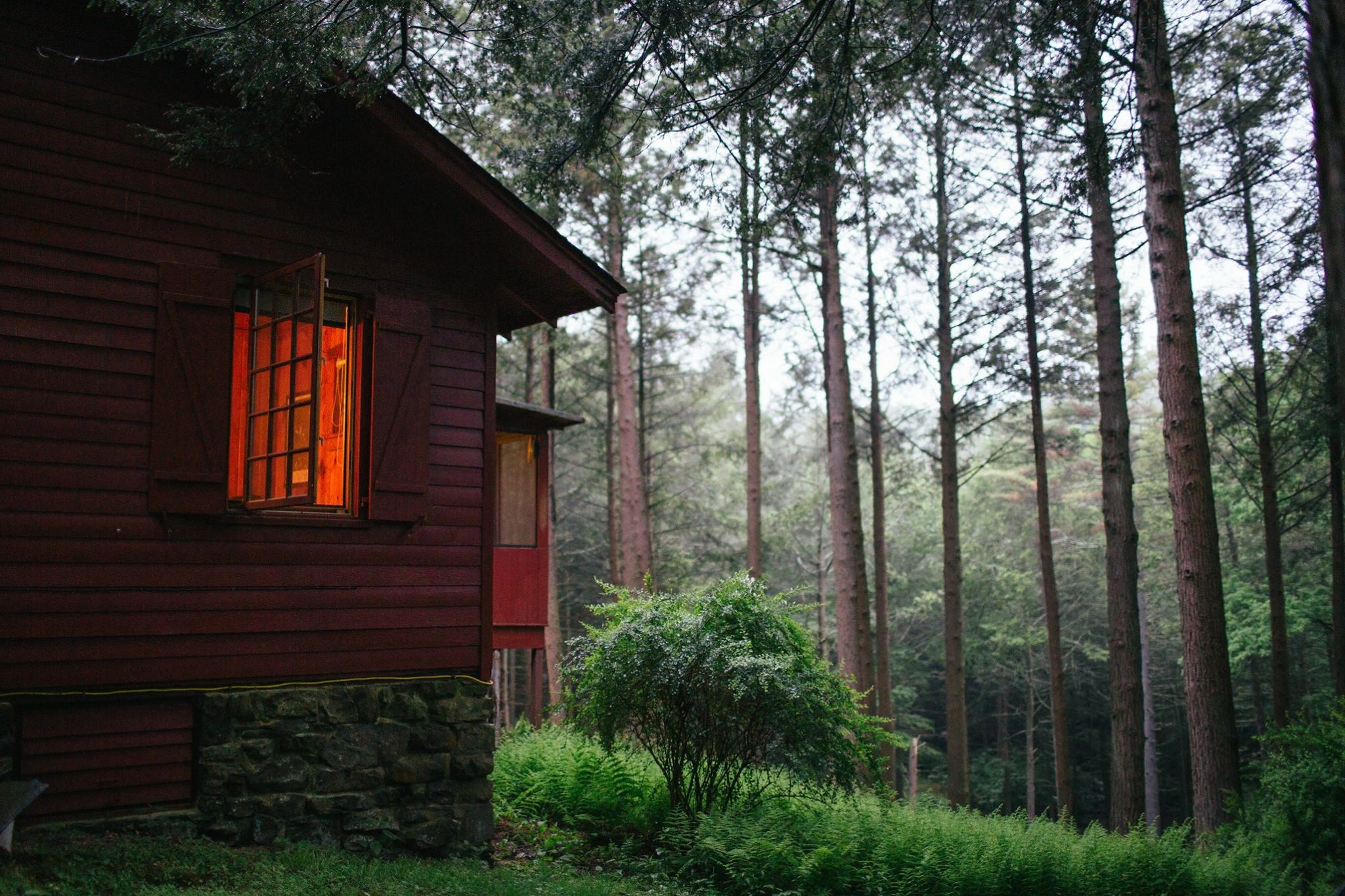
One of the cabins available for rent at Sean Strub’s Dwarfskill Preserve in Milford, Pa.
Stay: Dwarfskill Preserve
There are plenty of hotels in downtown Milford that are in the midst of everything the town has to offer, including the historic and ornate Hotel Fauchère and the Tom Quick Inn, which would be at home in Cape May. Rosado owns both of them.
I’ve been eyeing up the tiny cabin at the 575-acre Dwarfskill Preserve, up in the hills above town, for years now, as a former colleague had spent extended time there over the years and shared lovely pictures. It’s owned by former Milford mayor Sean Strub and consists of three separate properties: the one-room cabin I rented for a few nights with my girlfriend, Jen, and my dog, Wanda, and two larger cabins that can fit more people.
We stayed there over the New Year’s holiday, cooking brisket in the microwave and making coffee on the hot plate. While Milford and the Dwarfskill are undoubtedly at their best in the summer and fall, when you can take full advantage of the outdoor opportunities, including the swimming hole at the cabin, we watched both the wood fireplace and the ample snowfall outside for hours. It was hard to leave, a full hygge experience, in Northeastern Pennsylvania.
📍 Dwarfskill Falls Lane, Milford, Pa. 18337
Grey Towers, the Pinchot family residence, outside Milford, and the family’s haven from 1886 to 1963. The family made its fortune in lumber.
Explore: Grey Towers National Historic Site
If you drive around Pennsylvania as much as I do, you’ll see the name Gifford Pinchot quite a bit. Pinchot was a two-term governor of the Commonwealth and has a 54,000-acre state forest named after him.
He went on to found and run the U.S. Forest Service and is generally considered a pioneer in the U.S. conservation movement. Pinchot was born in Milford and his home, Grey Towers, is a national historic landmark run by the U.S. Forest Service. Its curated gardens, French chateau-style stone architecture, and expansive library can all be seen on tours, both in-person during spring, summer, and fall, and online all year round.
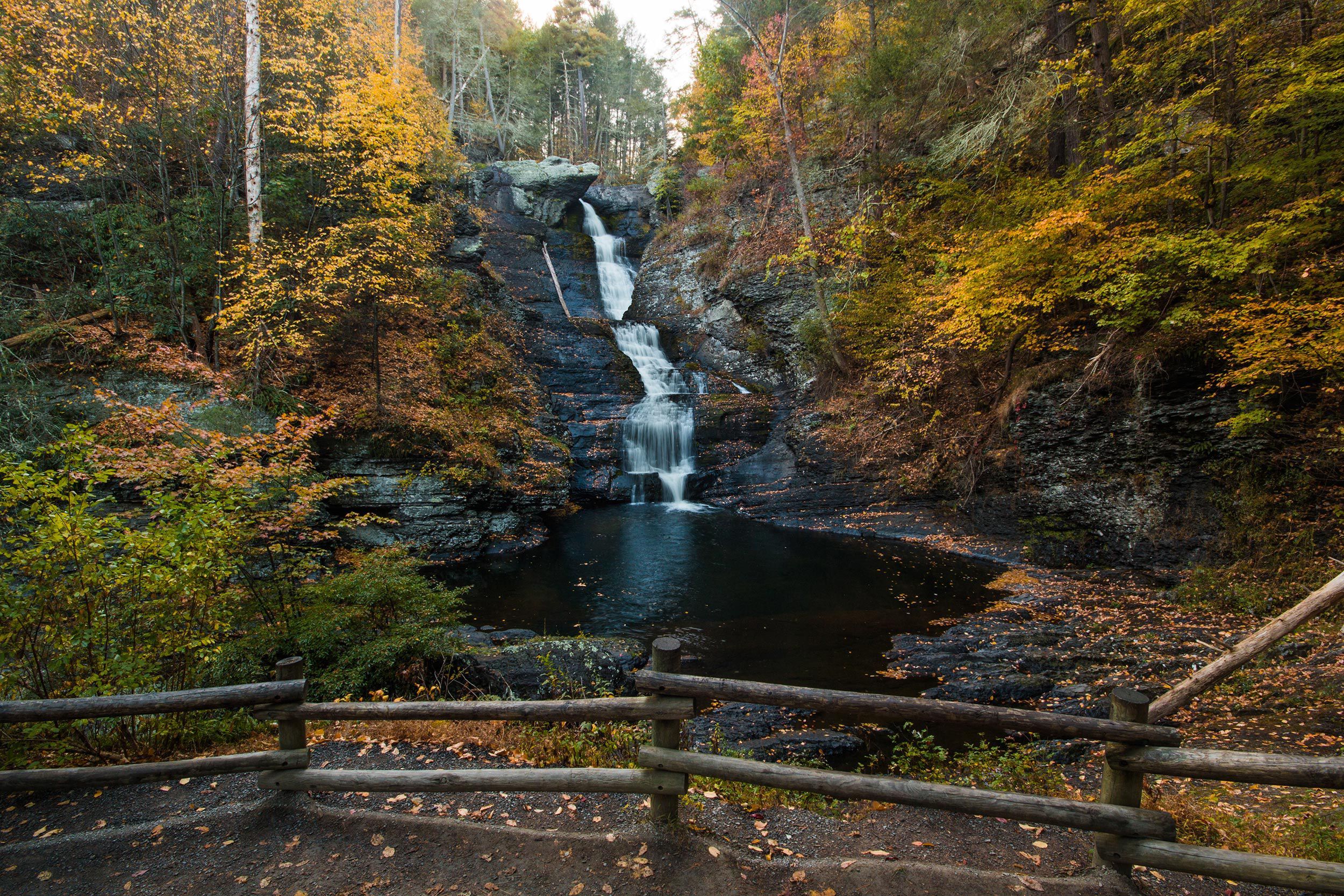
At 150-feet tall, Raymondskill Falls is the tallest waterfall in Pennsylvania.
If you’re interested in something a little more outdoorsy, visit Raymondskill Falls, which, at 150 feet, is the tallest in Pennsylvania. You can, technically, visit in winter, but the ice and snow could be treacherous. In summer, you might have to brave some crowds and jammed parking lots, but the views are worth it.
📍 Grey Towers: 122 Old Owego Turnpike, Milford, Pa. 18337
Learn: The Pike County Historical Society at the Columns
It’s not every day that a county historical society can really wow you with an artifact, but Pike County punches up with a Civil War relic you won’t find anywhere else in the world: the bloody U.S. flag used to cradle Abraham Lincoln’s head after he was shot at Ford’s Theatre in 1865.
The flag and other exhibits are housed in “the Columns,” a 1904 neoclassical-style mansion. Want to learn how they obtained the flag? Visit on Wednesdays, Saturdays, and Sundays.
It’s a place to get coffee or tea and healthy pastries. It’s a community hub, where people gather to meet or work remotely.
It’s also a place to look good, with woolens and other “natural” clothes, and smell good, or simply be good, with homesteading supplies and books.
📍 Broad Street, Milford, Pa. 18337
Eat: Felix’s Cantina at La Posada
Jen spends weeks in the Yucatan every winter, so she was surprised to see a restaurant in Northeastern Pennsylvania promising a “taste of the Yucatan Peninsula and other regional dishes from southern Mexico.”
Rosado, who also owns a historic theater in town, owns the Cantina at La Posada, yet another one of his hotels. He was born in Merida, the capital of Yucatan.
He knows the dishes well, and she approved, describing our pork and birria tacos as “fattening and delicious.”
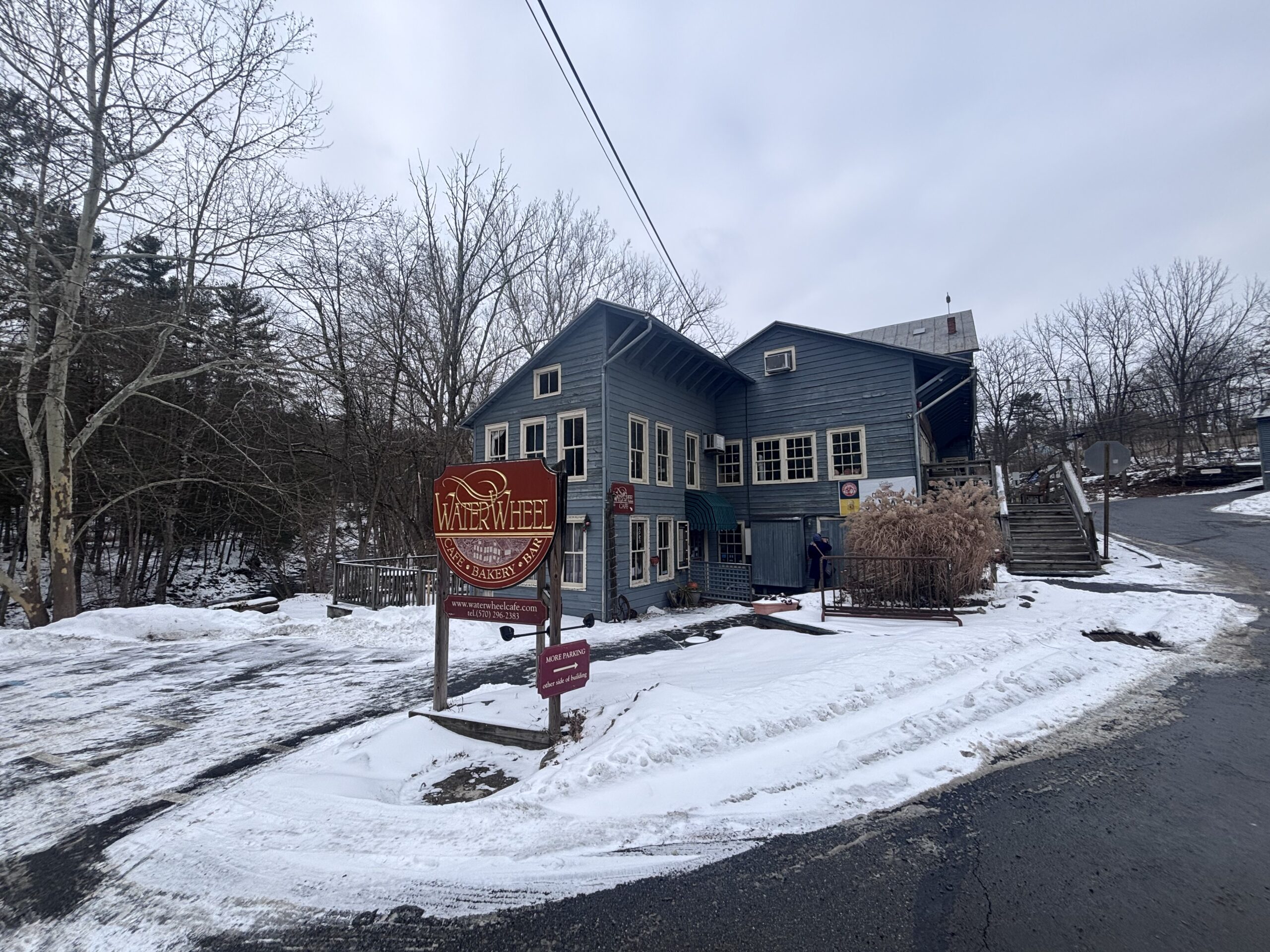
For breakfast, the Waterwheel Café Bakery Bar, an old grist mill along Sawkill Creek, serves up a killer thick-cut challah French toast. We basically licked the plate clean.