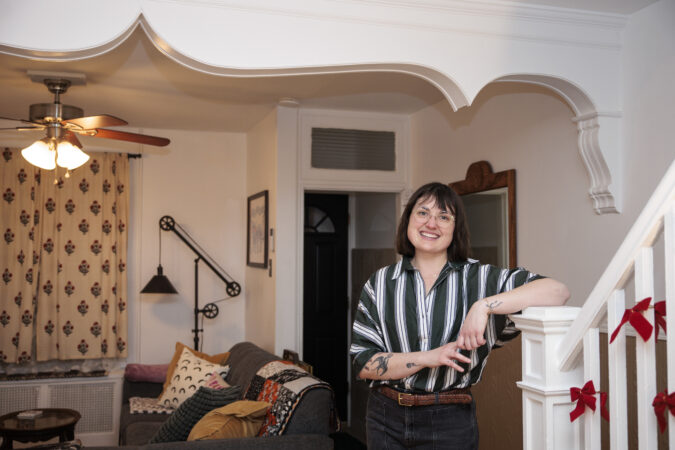
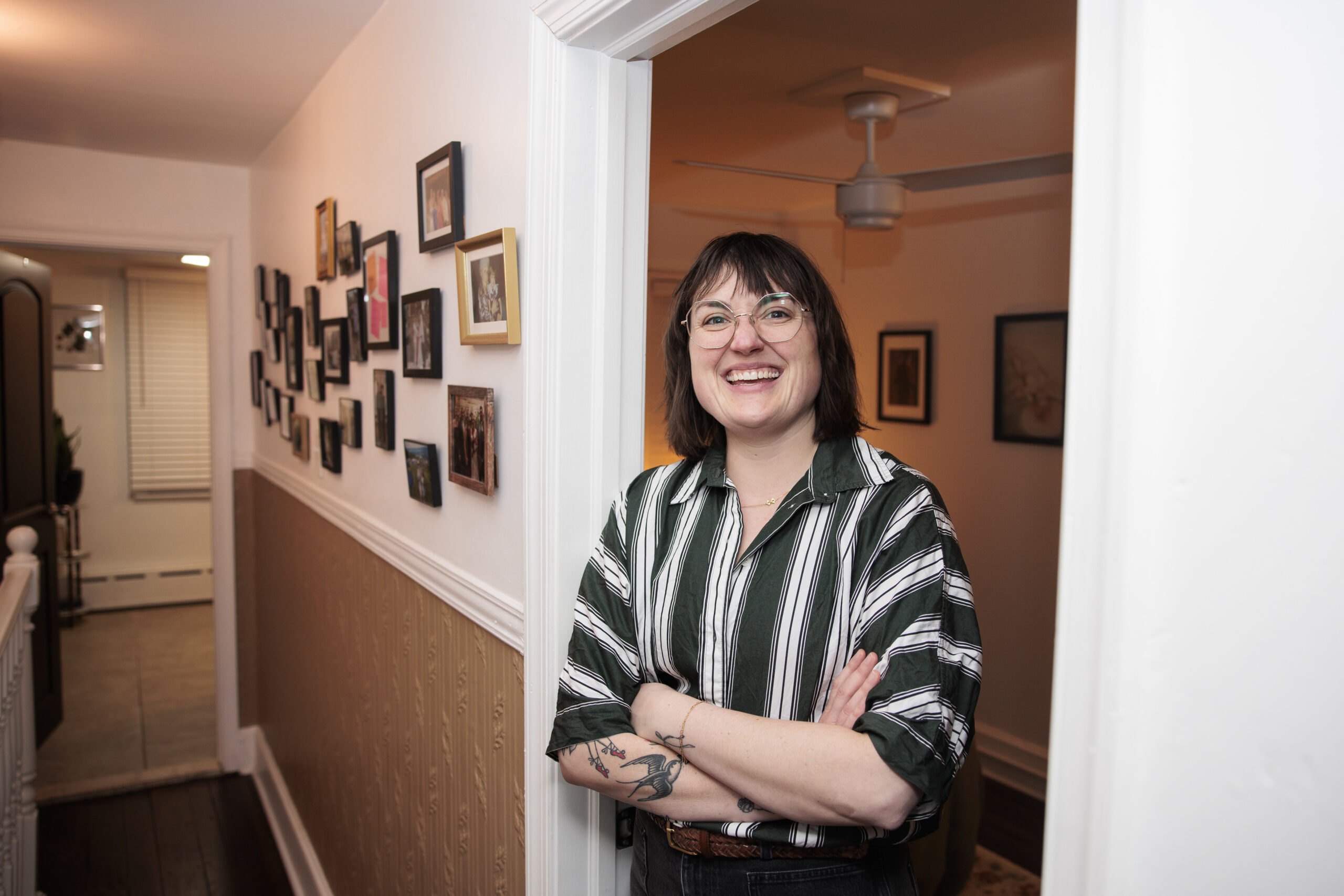
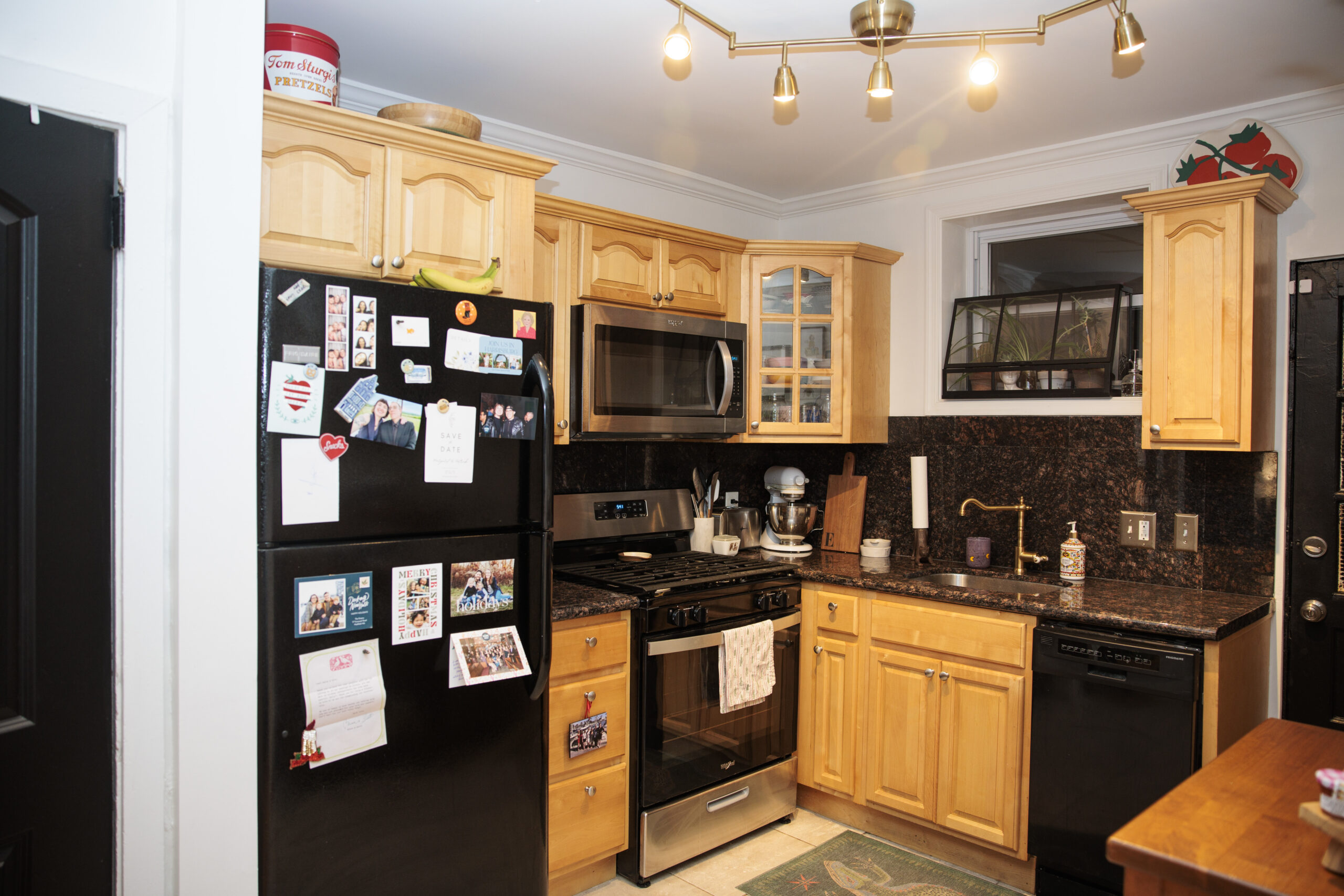
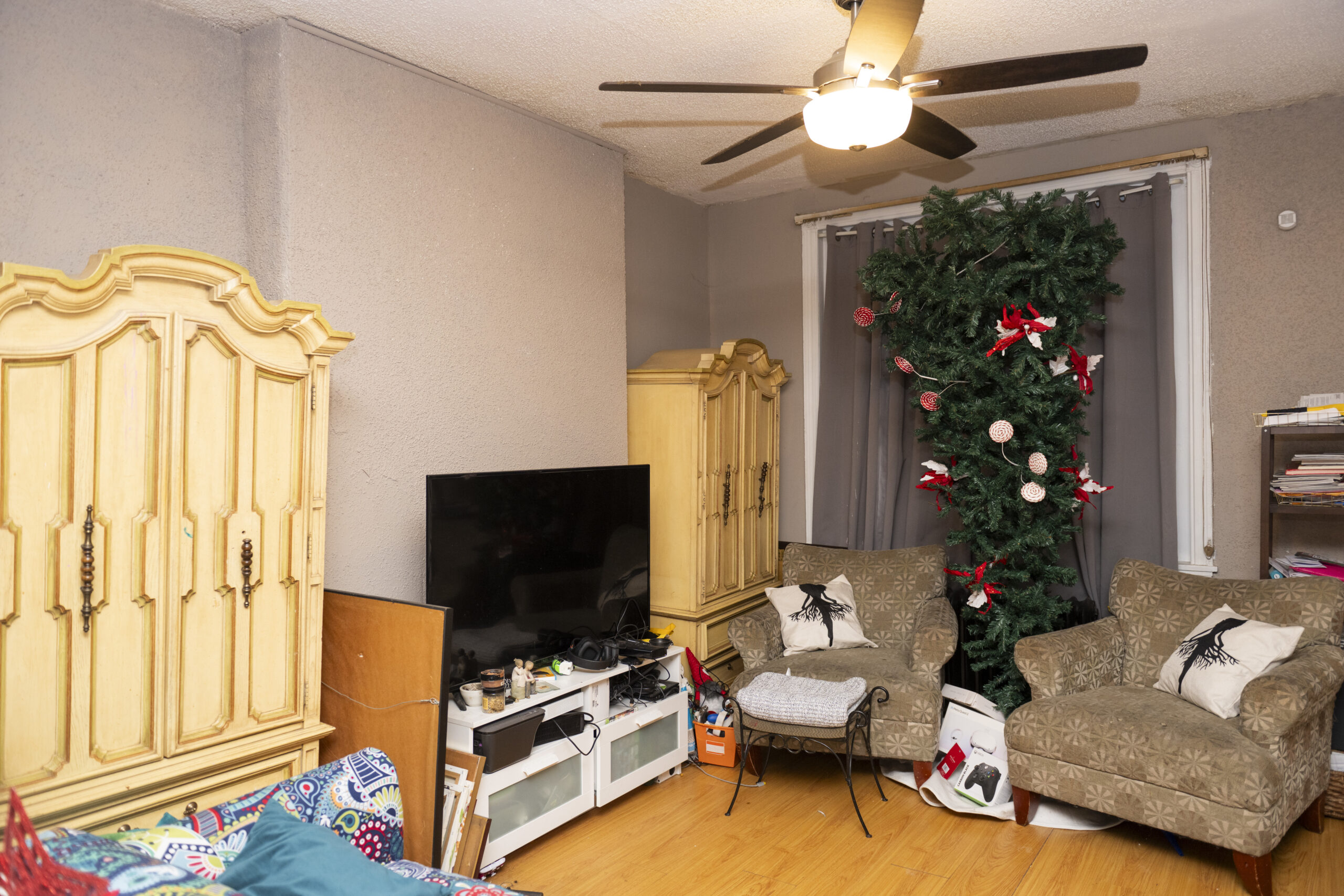
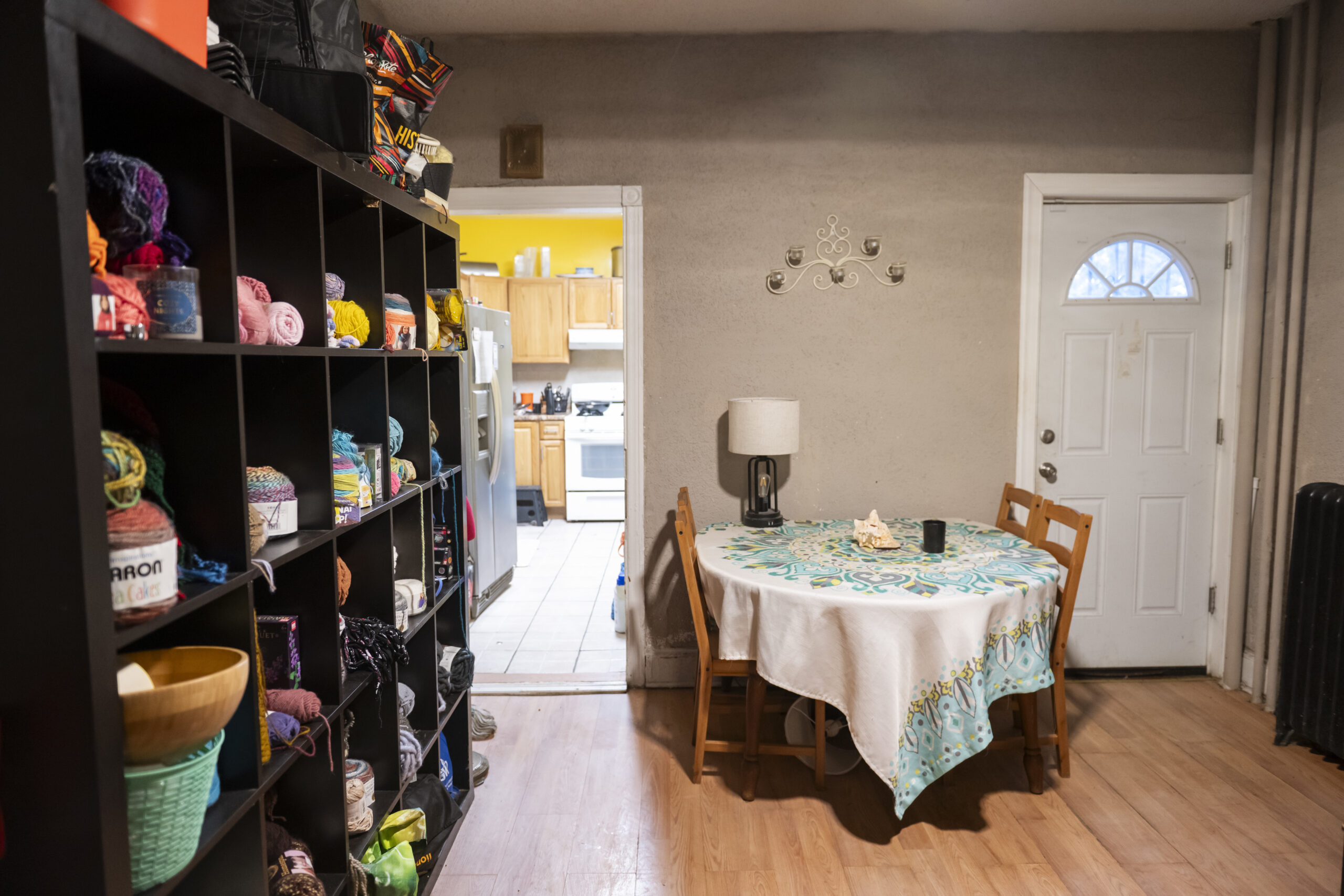
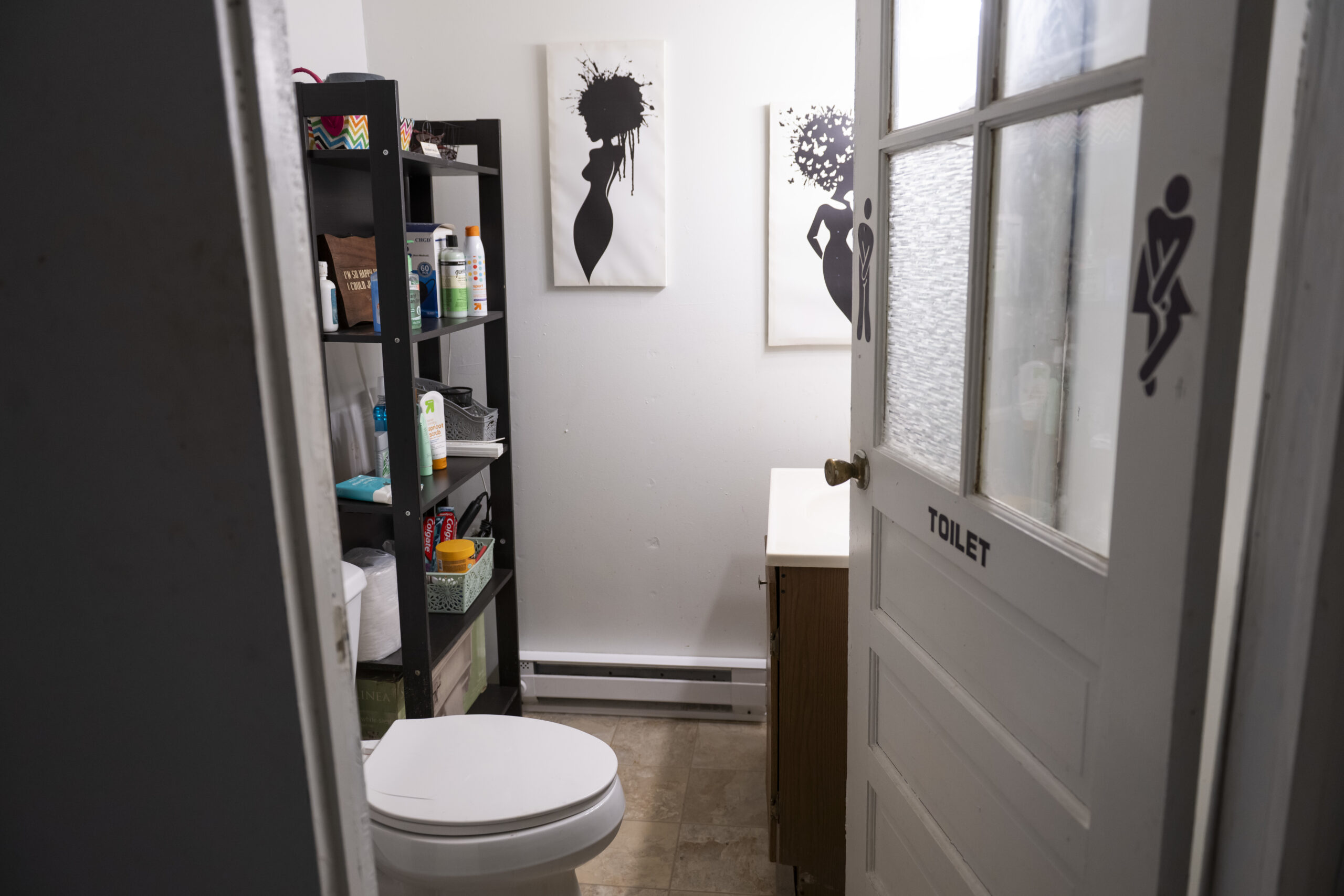
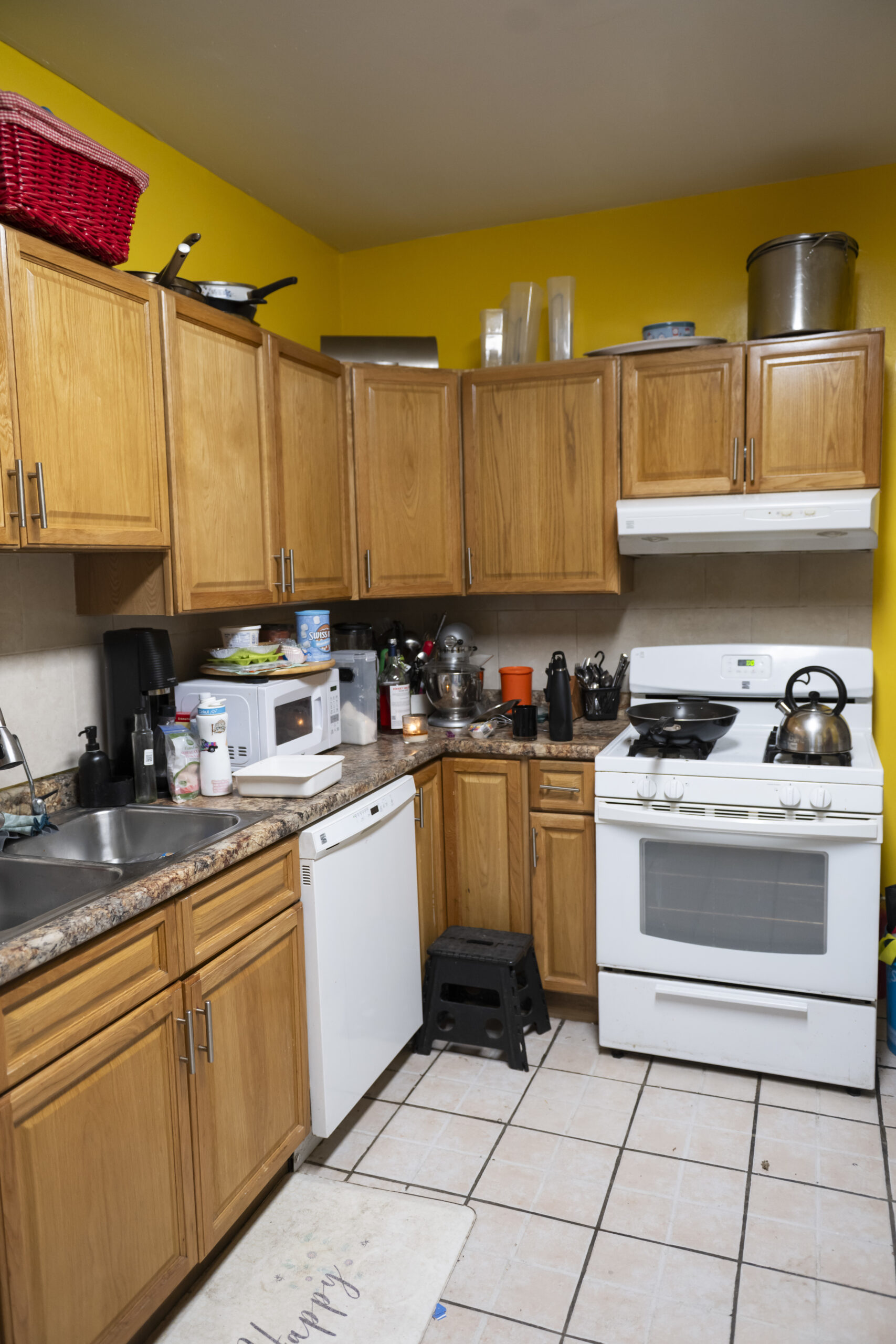
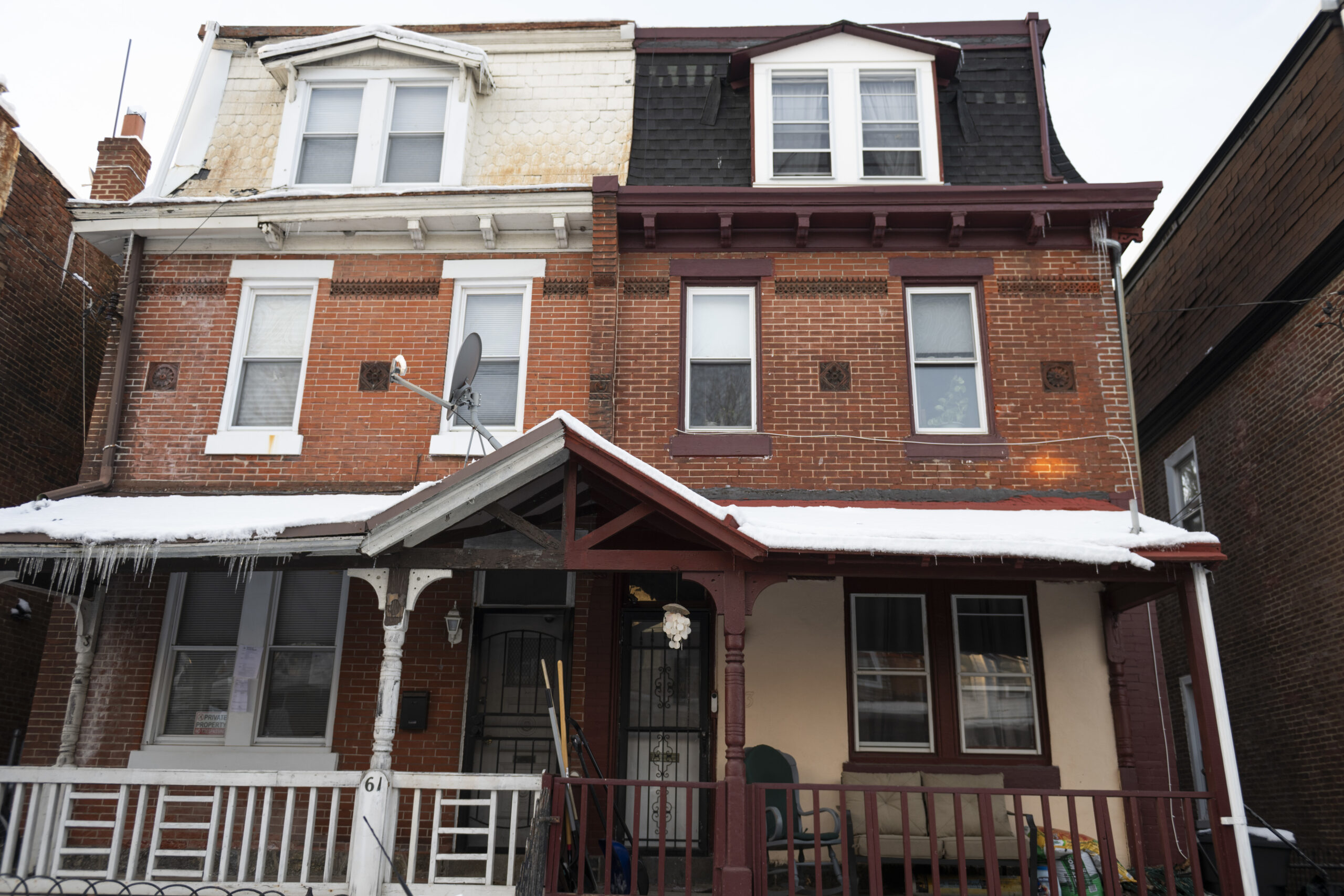
The house: A 784-square-foot rowhouse in Newbold with two bedrooms and one bath, built in 1920.
The price: Listedand purchased for $249,000
The agent: Allison Fegel, Elfant Wissahickon
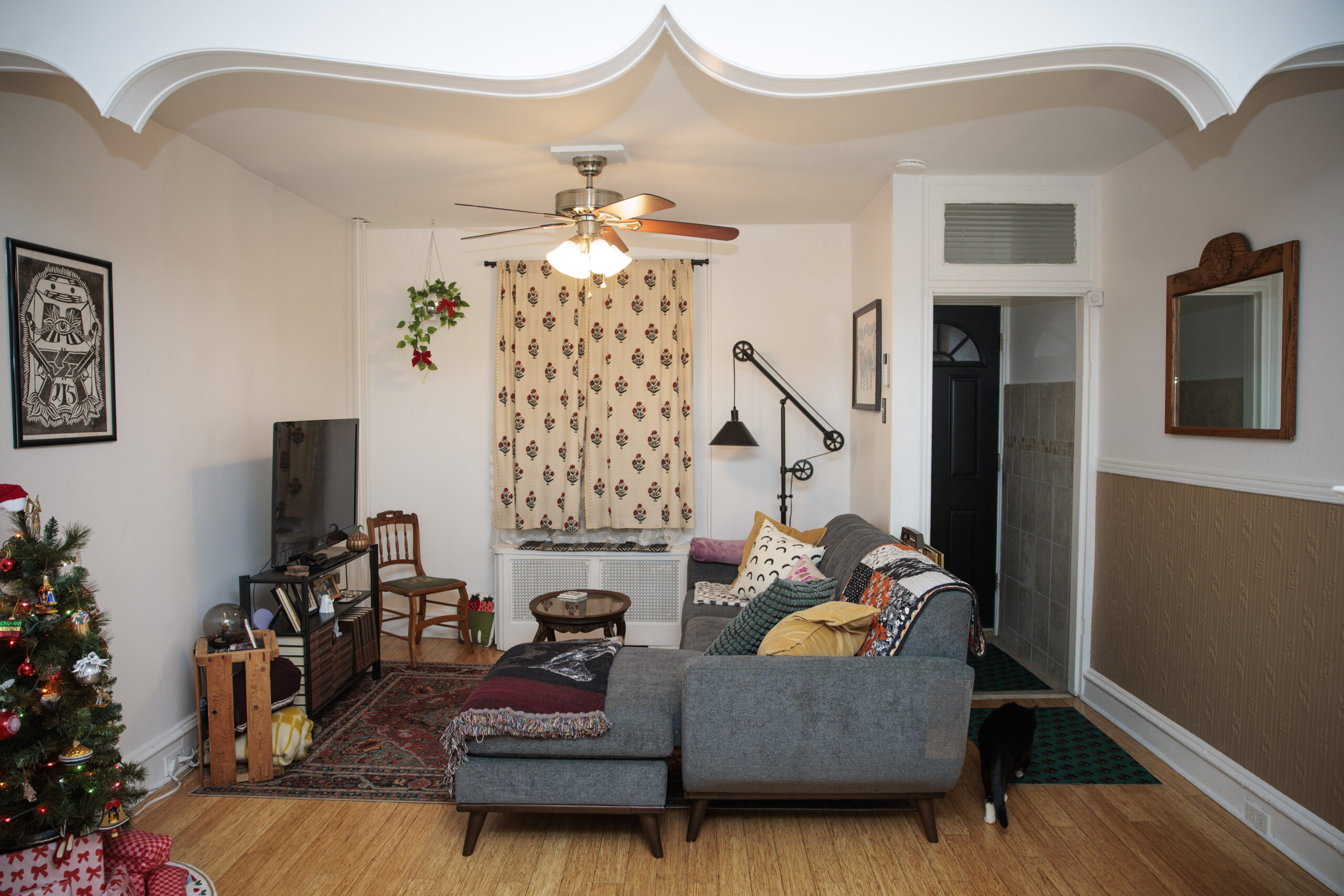
Miles in her two-bedroom home.
The ask: The only good thing about Emily Miles’ old apartment was the price. Miles was making a “nonprofit lawyer salary” and trying to save money. But “it was terrible,” Miles said. Disgusting even. And by November 2024, she’d had enough.
Owning a home felt aspirational, if vague. “It was always something I wanted to do,” she said. “But I didn’t know when I’d be able to do it.”
It didn’t seem like the right time. Miles had student loans. She was bartending in the evenings to make ends meet. Nevertheless, she decided to check out the market and searched for an agent with grant experience. She kept her house wish list short: three bedrooms, outdoor space, and central heat and air.
The search: Miles had no sense ofbudget until her lender preapproved her for about $310,000. From there, her agent began sending her listings across the city, including large homes far from the neighborhoods Miles associated with Philadelphia.
“They were still in Philadelphia County, but not really Philly as you think of it,” Miles said. West Philadelphia, where she was living, was not affordable. Other neighborhoods lacked reliable transportation.
Between late November and January, Miles saw 30 to 40 homes. “They were a lot of flips, and I didn’t want that,” she said.
Eventually, Miles found a place and made an offer. But during the inspection, theydiscovered damage to the front door that indicated someone had kicked it in, and Miles decided to walk away. She was out $1,500. “My pride was hurt a little bit,” she said.
Miles took a brief break, then started attending open houses on her own. That’s how she found the one, a little less than a month after she backed out of the first house.
Miles liked the house’s original features and character, such as the arched framing of the living room.
The appeal: The house Miles ultimately bought — a two-bedroom, one-bath, 780-square-foot rowhouse in South Philadelphia — checked none of her original boxes. “The big LOL about the whole thing is that I ended up with something I didn’t want at all,” she said. It had radiator heat. No air-conditioning. Less space than she planned. The house had been a rental for more than a decade. Carpet covered original features. Paint concealed years of wear. “It was a real landlord special,” Miles said. But when she stepped inside, something clicked. “I walked in, and I could see it,” she said. “It’s full of character.”
The deal: Miles stumbled into the house she would buy while walking to a bar with her boyfriend on a Friday night. The listing price was $249,900. She offered the asking price the following morning.
The seller took days to respond but eventually accepted her offer after no one else made a bid.
When the inspection revealed issues, Miles asked for $5,000 to $7,000 in credits. The seller countered with zero. “He redlined all my stuff,” she said. “So I re-redlined all of his stuff.” The back-and-forth ended with $2,000 in seller’s credit. “Which is better than zero,” Miles said. “I’m pretty proud of that.”
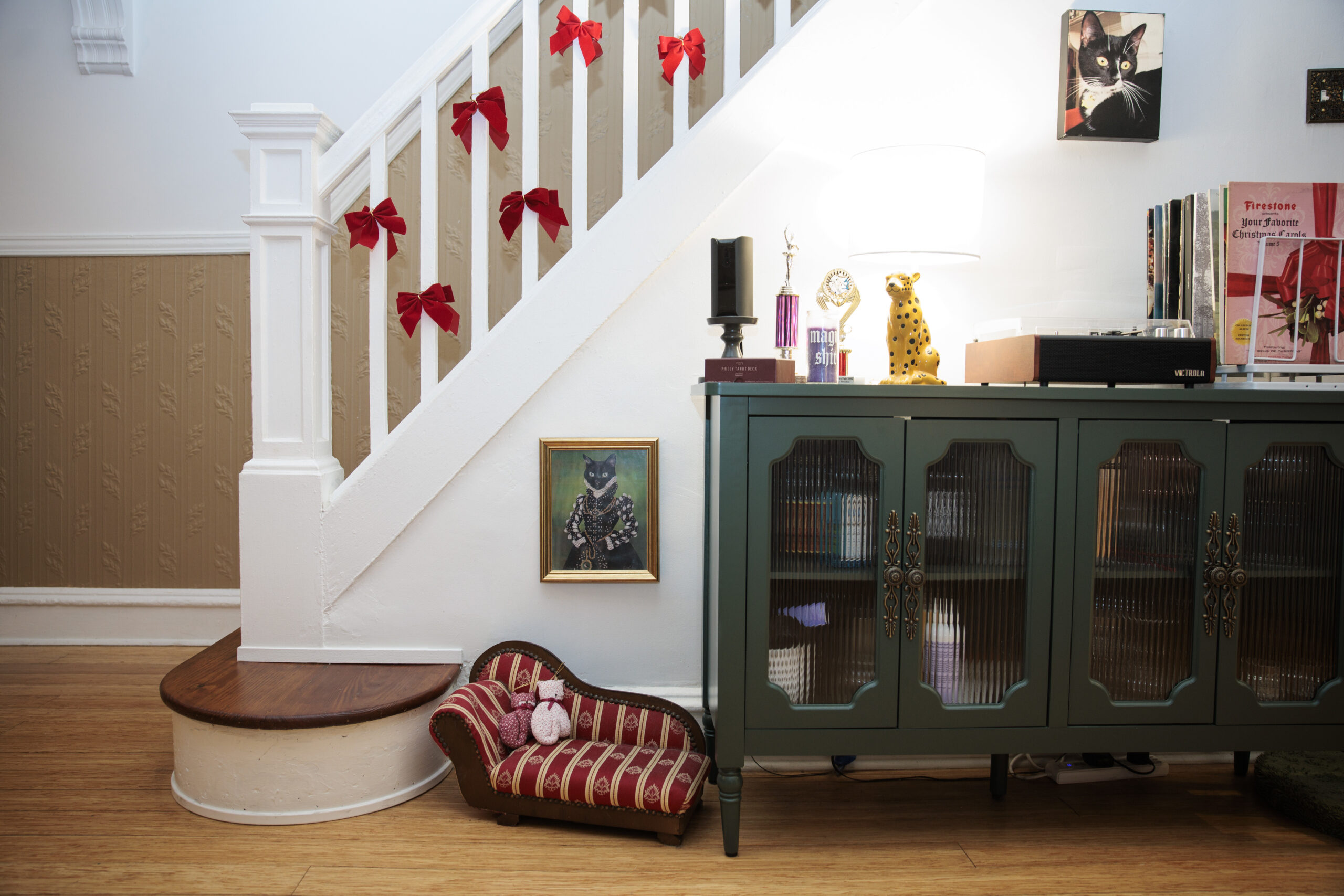
Miles filled her home with vintage furniture she found at local thrift shops. Her cat, August, has his own bed.
The money: Miles had about $20,000 saved from her time before law school, when she worked as a human resources manager in New York City. She had an additional $10,000 from the Philly First Home program, $2,000 from the seller’s credit, and $1,000 from her Realtor’s Building Equity program.
Her lender approved her to put down only 3%, so she made a $7,500 good-faith deposit and brought $1,500 to closing. Miles’ credit score and salary qualified her for a 5.75% interest rate at a time when average rates hovered closer to 7%.
Her monthly mortgage payment is about $1,800 and includes $120 for private mortgage insurance, which she must pay until she reaches 20%. She recently applied for a Philadelphia homestead exemption, which reduces the taxable portion of your house by $100,000 if you use it as your primary residence, and expects her monthly payment to drop closer to $1,700 as a result.
The move: Miles closed on March 19 and moved on April 29. She broke her lease without penalty. “I had been complaining about it being a bad apartment for months,” she said, “so I think they were just happy to be rid of me.”
Miles had to get rid of a lot of her stuff because her new house was so much smaller than her apartment. “I downsized quite significantly,” she said. She also discarded stuff that wouldn’t fit through the house’s small, 30-inch doorway, like her couch. “Luckily, I had some foresight and got rid of it before I moved it over,” she said.
Miles installed new lighting and faucets to make her home feel less like a rental.
Any reservations? Miles wishes she knew that refinished floors can take weeks to fully cure. She had to sleep on the living room floor while she waited for the fumes to fully dissipate upstairs. “It was just my cats and me on the ground for about a month,” she said. Still, she doesn’t have any regrets. “Live and learn,” she said.
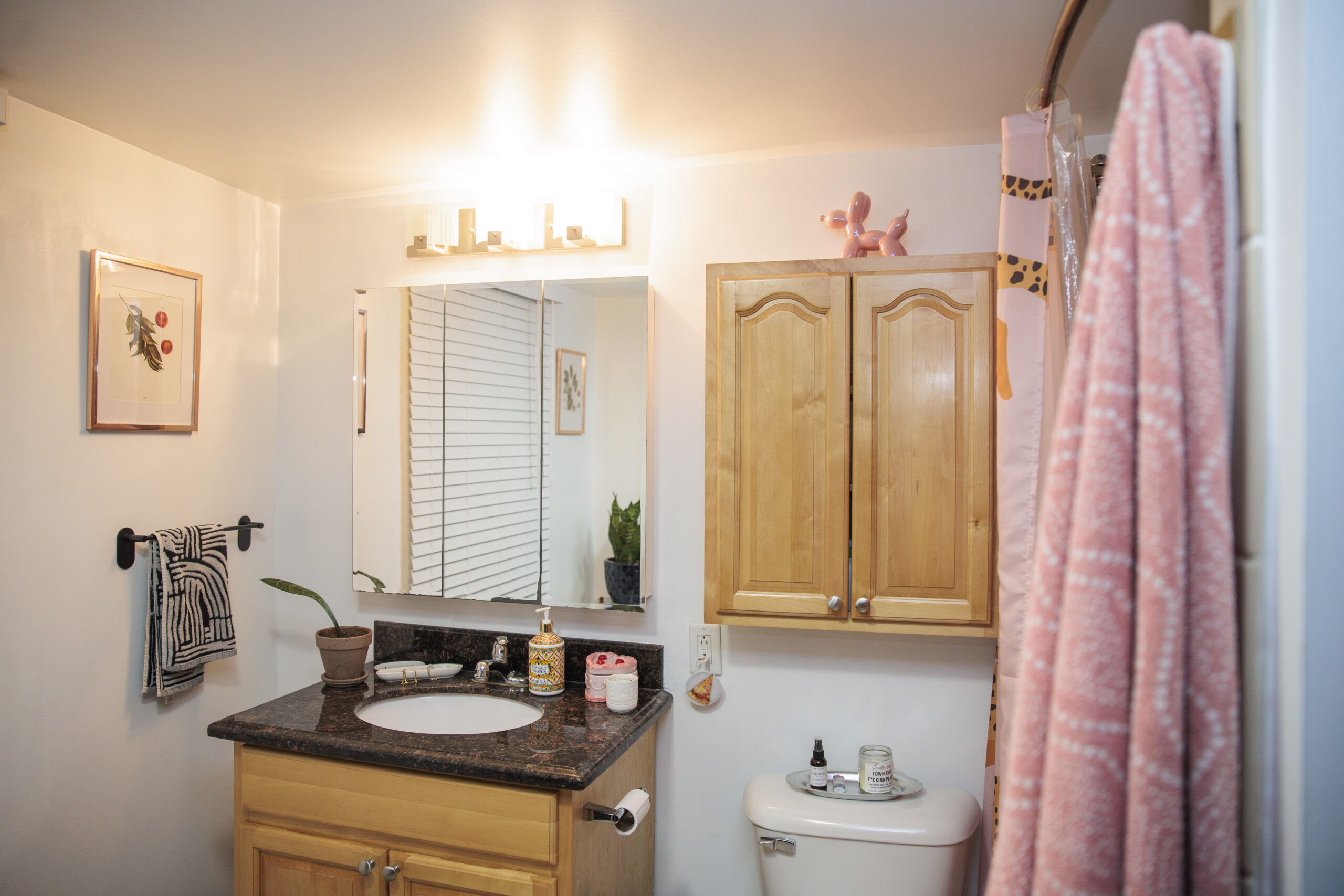
The bathroom in Emily Miles’ Newbold home.
Life after close: Miles used the money her parents had saved for her wedding to make a few cosmetic updates. She fixed the back patio, refurbished the upstairs floors, and replaced light fixtures and faucets so that the house felt less like a rental. She put in a new boiler, too. And filled the house with vintage furniture she thrifted locally. “Stuff that fits the vibe of the house,” she said.
We’ll show you a photo taken in the Philly-area, you drop a pin where you think it was taken. Closer to the location results in a better score. This week’s theme is all about the new year. Good luck!
Round #14
Question 1
Where were people enjoying the fireworks?
Loading…
ClickTap on map to guess the location in the photo
ClickTap again to change your guess and hit submit when you're happy
You will be scored at the end. The closer to the location the better the score
Elizabeth Robertson / Staff Photographer
Pretty good/Not bad/Way off! Your guess was from the location.Spot on! Your guess was exactly at the location. Here's also where a random selection of Inquirer readers guessed.
This is Penn Treaty Park. Crowds gather here annually to watch the New Year’s Eve firework shows on the Delaware River.
Quiz continues after ad
Question 2
Where was this sunrise?
Loading…
Alejandro A. Alvarez / Staff Photographer
Pretty good/Not bad/Way off! Your guess was from the location.Spot on! Your guess was exactly at the location. Here's also where a random selection of Inquirer readers guessed.
This sunrise was at Delancey Street and South 6th Street.
Quiz continues after ad
Question 3
Where is this building?
Loading…
Jose F. Moreno / Staff Photographer
Pretty good/Not bad/Way off! Your guess was from the location.Spot on! Your guess was exactly at the location. Here's also where a random selection of Inquirer readers guessed.
This is the Athenaeum of Philadelphia on South Sixth Street. The Athenaeum will host a celebration on Jan. 6 to commemorate the first balloon voyage in America, kicking off the city's yearlong United States Semiquincentennial celebrations.
Your Score
ARank
Amazing work. You are already checking off your resolution list!
BRank
Good stuff. Seems like you’re ready to embrace a promising new year!
CRank
C is a passing grade, but you need to commit to studying all year-round!
DRank
D isn’t great. Your answers look like leftovers from 2025.
FRank
We don’t want to say you failed, but you didn’t not fail.
You beat % of other Inquirer readers.
We’ll be back next Saturday for another round of Citywide Quest.
Sometimes you take a road trip to experience something totally different from the world you inhabit — the absolute silence of a state forest, the carnivalesque majesty of the shore in full swing. A weekend in Baltimore is not that kind of trip.
Charm City is the most Philly of the cities on the Acela corridor: smaller in size, but equally quirky, proud, and shaped by blue-collar roots. (Our accents are even passably close.) It’s also stacked with restaurants, museums, and cultural institutions that compete on a national level, all with a distinctly Baltimorean flavor, less than two hours away.
Once arriving in Baltimore proper, take I-83 up to the Remington neighborhood on the north side of the city, where Café Los Sueños roasts and brews its own beans in a peaceful, light-washed space a couple blocks off the highway exit. (The name translates to “Café of Dreams,” fitting for owner Carlos Payes, who came to the U.S. from the coffee plantations of El Salvador.) A horchata latte and croissant make for a perfectly calming start to the trip.
📍 2740 Huntingdon Ave., Unit B, Baltimore, Md. 21211
If it’s not too cold — and you’re up for a walk — Los Sueños sits near the eastern edge of Druid Hill Park, the third-oldest urban park in the country and, for millennials, the namesake of Dru Hill. Follow the path along Druid Lake toward the Rawlings Conservatory, a circa-1888 botanical garden with five greenhouses. Even when it’s frosty outside, the impressive Victorian conservatories filled with tropical orchids, ceiling-skimming palms, and citrus blossoms deliver full-on summer music-video energy.
Check into the Pendry Baltimore, a moody, stylish 127-room hotel housed in a grand 1914 building on the former Recreation Pier. The Fell’s Point location is both charming and convenient, putting you within walking distance of many of Baltimore’s marquee attractions. Many of the wood-and-leather-clad rooms overlook the waterfront. The huge pool, which seems to float in the Inner Harbor, will have you booking a return visit for summer.
No curveball here. The National Aquarium is Baltimore’s claim to fame, and if the last time you were here was on an eighth-grade field trip, you should come back as an adult, with or without your own kids. The sprawling complex houses 2.2 million gallons of water and residents ranging from reef sharks and puffins to otters and moray eels. Don’t miss the Harbor Wetland exhibit, which opened in 2024 along a series of floating docks in the Inner Harbor and be sure to book tickets in advance. Aim for off-hours to beat the crowds.
📍 501 E. Pratt St., Baltimore, Md. 21202
View: American Visionary Art Museum
The title Cap Bathing Moligator With Angelic Visitation (Dickens 44) tells you just about everything you need to know about the boundary-pushing work housed at the American Visionary Art Museum. This brick-and-mirror-clad institution in Federal Hill celebrates outsider art in all its surreal glory from landscapes to cosmological oil paintings to sculptures of a mosaic-winged Icarus and Baltimore icon Divine. The collection embodies the city’s DIY spirit and unbreakable creative streak.
With its deep pedigree and polished service, Charleston in Harbor East possesses a sense of occasion that few restaurants have anymore. Even if you’re just passing through for drinks in its swanky little lounge, where local power brokers and big-night-out suburbanites mingle with tourists, those drinks are crafted with gravitas and élan as much as sparkling wine, passionfruit and honey (the Ipanema Fizz), or blanco tequila, Strega, and ginger (the Arandas Monk). The wine list is famously deep, which helps explain why Charleston won the James Beard Award for Outstanding Wine and Other Beverages Program.
From one medalist to another, the Wren, one of Bon Appetit’s best new restaurants of 2025, sits less than a 10-minute walk from Charleston in Fell’s Point. The location is an ideal spot for drink or dinner, with a much more casual silhouette with its wood paneling, pressed-tin ceilings, and no-reservations policy. It’s a pub essentially, and like the very best pubs in Ireland and the U.K. (partner Millie Powell hails from Dublin), the cooking comforts and satisfies on a cellular level. Think glazed ham, golden onion pie, sharp cheeses, honey-roasted apple cake, and the like. (Your Philly analog is Meetinghouse.) As expected, the bartenders pour a precise pint of Guinness, the perfect finale to a Baltimore weekend.
I opened this question up to a wider team because I knew there would be many different takes. What do you think? Email me.
Ariane Datil, Social Video Host
Pick a new resolution, sir.
Ellen Dunkel, Programming Editor
It might not be possible, but it helps not to care. Or to be a fair-weather fan. I am completely disinterested, except in a journalism way (and wanting my friends to be happy). But I enjoy when they win the big game. If they don’t, I move on immediately. It’s very relaxing to not care.
Caryn Shaffer, Senior SEO Editor
The most helpful piece of advice about loss I’ve received this year is to focus on what you DO have. Sure, the Eagles lost a game, and it sucks not to have that win. But do you have friends you watched the game with, and can commiserate with? A partner and family who love you? Your health, a roof over your head, and food on the table?
When you’re feeling sad about a loss, reach out to someone you care about, go for a walk outside, get a little treat to cheer you up, or do another activity you enjoy.
Zoe Greenberg, Features Reporter
Be like me and be a fan who only jumps on the bandwagon when the team is winning. Then your day is never ruined, only made.
Hira Qureshi, Food and Dining Reporter
Like Zoe, I only become a fan when they are winning, lol.
Matt Mullin, Senior Editor for Digital Strategy and Audience Development for Sports
When teams are winning, the expectation is that it’ll stay that way forever, so the losses, especially season-ending ones, are unexpected and crushing. That’s the biggest problem with jumping on the bandwagon — it’s when the losses hurt the most.
My advice is a combination of exposure therapy and resetting expectations.
First, if you hide from defeat, of course it’s going to sting that much more when it finally arrives. All those losses, they become a part of you, they callus over, and the next time they don’t hurt as bad.
Second — and all the losses should help with this — the lower you’re able to set your expectations, the less likely you are to be disappointed after a defeat and the more jubilant you’ll be after a win.
When it comes to Philly sports, as is the case with most things in life, expectations can dictate your level of happiness, or in this case sadness, so set them low. Is that a miserable existence? Perhaps, but it’s the life of a Philly sports fan — and might explain why we party so hard after wins.
Abigail Covington, Life & Culture Reporter
Just remember it could be worse: You could be a Carolina Panthers fan.
I make it my mission to always be eating something delicious when I’m watching a stressful sports game. So if they lose … at least I had a good meal.
Kate Dailey, Managing Editor, Features
I have decided that I’m only a regular-season baseball fan, because I love how slow, meditative, and calming baseball is. Baseball on the radio while you wash the dishes? Beats a spa weekend.
I realized this year that the pressure of the playoffs ruined what I liked best about baseball, so I just decided to tune out. Figure out what you like best about the sport and double down on that, at the expense of the parts you don’t. Unless what you like best is victory. In that case, I can’t help you.
Dan DeLuca, Arts and Entertainment Reporter
You’re not a true Philly sports fan until you’ve suffered. You have to give yourself over to the suffering. That’s what makes the good times good. I personally suffer more when the Phillies and Sixers lose than I do when the Eagles do. That might be my way of rebelling against the dominant culture.
Also the advice I often give myself (but don’t always follow) is it’s better to go to the show than go to the game. Because the show will reward you probably 90% of the time, and your batting average at the game will be much lower.
Way back in 2022, when Philadelphians gathered on an abandoned pier to watch a man eat a rotisserie chicken, folks on social media began to wonder: “Is Philadelphia a real place?”
Sure, that perception has a lot to do with an unbelievable event that actually happened in the suburbs (Delco never fails to carry its weight), but Philly also saw its fair share of the bizarre this year, too.
As we prepare for what may be one of the most important (and hopefully weirdest!) years in modern Philadelphia history, let’s take some time to look back on the peculiar stories from across the region that punctuated 2025.
Five uh-oh
Kevon Darden was sworn in as a part-time police officer for Collingdale Borough on Jan. 12 and hit the ground running, landing his first arrest just four days later.
The only problem? It was his own.
Pennsylvania State Police charged Darden with terroristic threats and related offenses for an alleged road rage incident in 2023 in which he’s accused of pointing a gun at a driver on the Blue Route in Ridley Township. At the time of the alleged incident Darden was employed as an officer at Cheyney University.
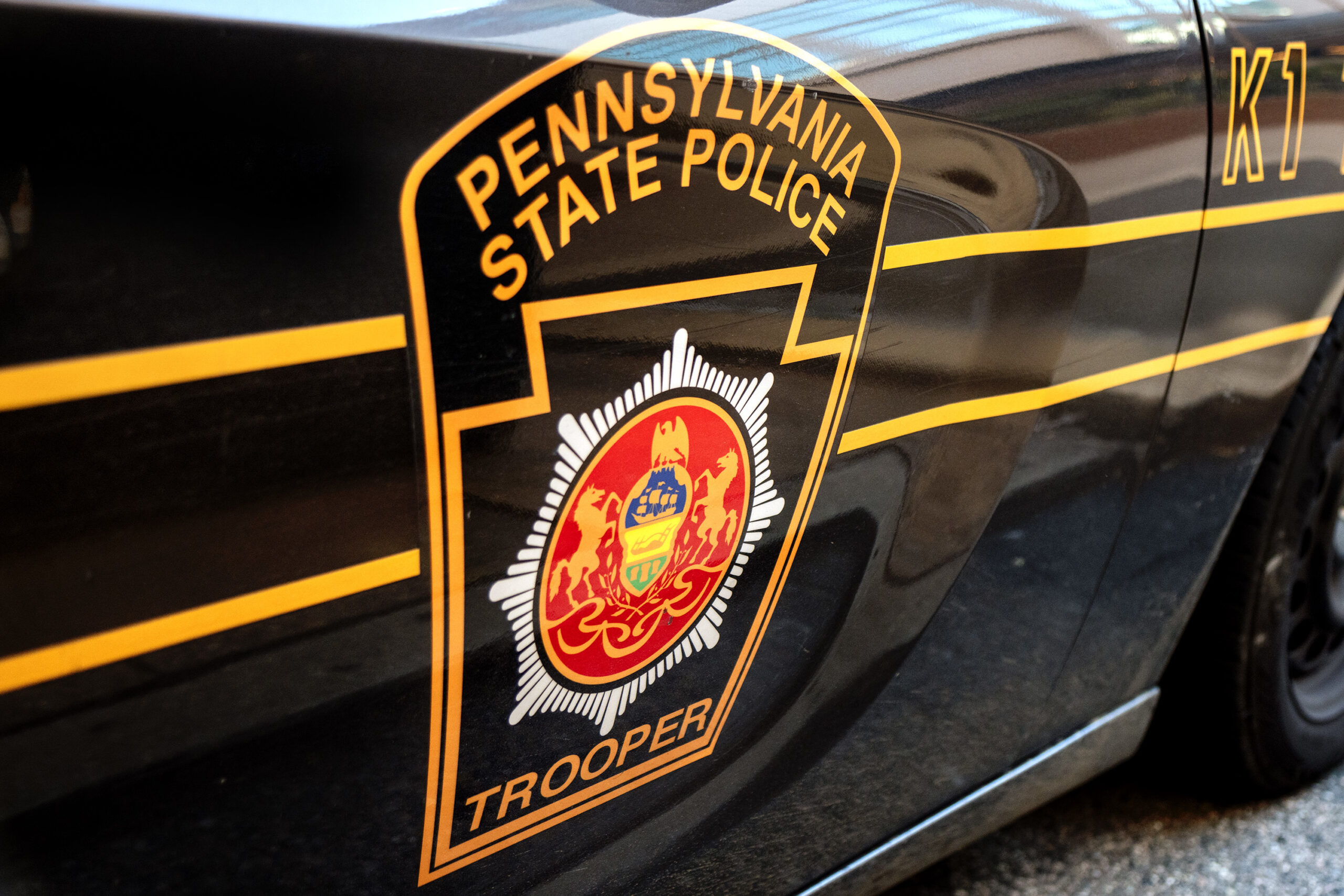
A Pennsylvania State Police vehicle. The agency provided two clean background checks for a Collingdale police officer this year, only to arrest him four days after he started the job.
Here’s the thing — it was state police who provided not one but two clean background checks on Darden to Collingdale officials before he was hired. An agency spokesperson told The Inquirer troopers had to wait on forensic evidence tests and approval from the District Attorney’s Office before filing charges.
Darden subsequently resigned and is scheduled for trial next year in Delaware County Court.
For the Birds
The Eagles’ second Super Bowl win provided a wellspring of wacky — and sometimes dicey — moments on and off the field early this year.
Mayor Cherelle L. Parker started the championship run off strong by going viral for misspelling the most popular chant in the city as “E-L-G-S-E-S” during a news conference. Her mistake made the rounds on late night talk shows and was plastered onto T-shirts, beer coozies, and even a license plate. If you think the National Spelling Bee is brutal, you’ve never met Eagles fans.
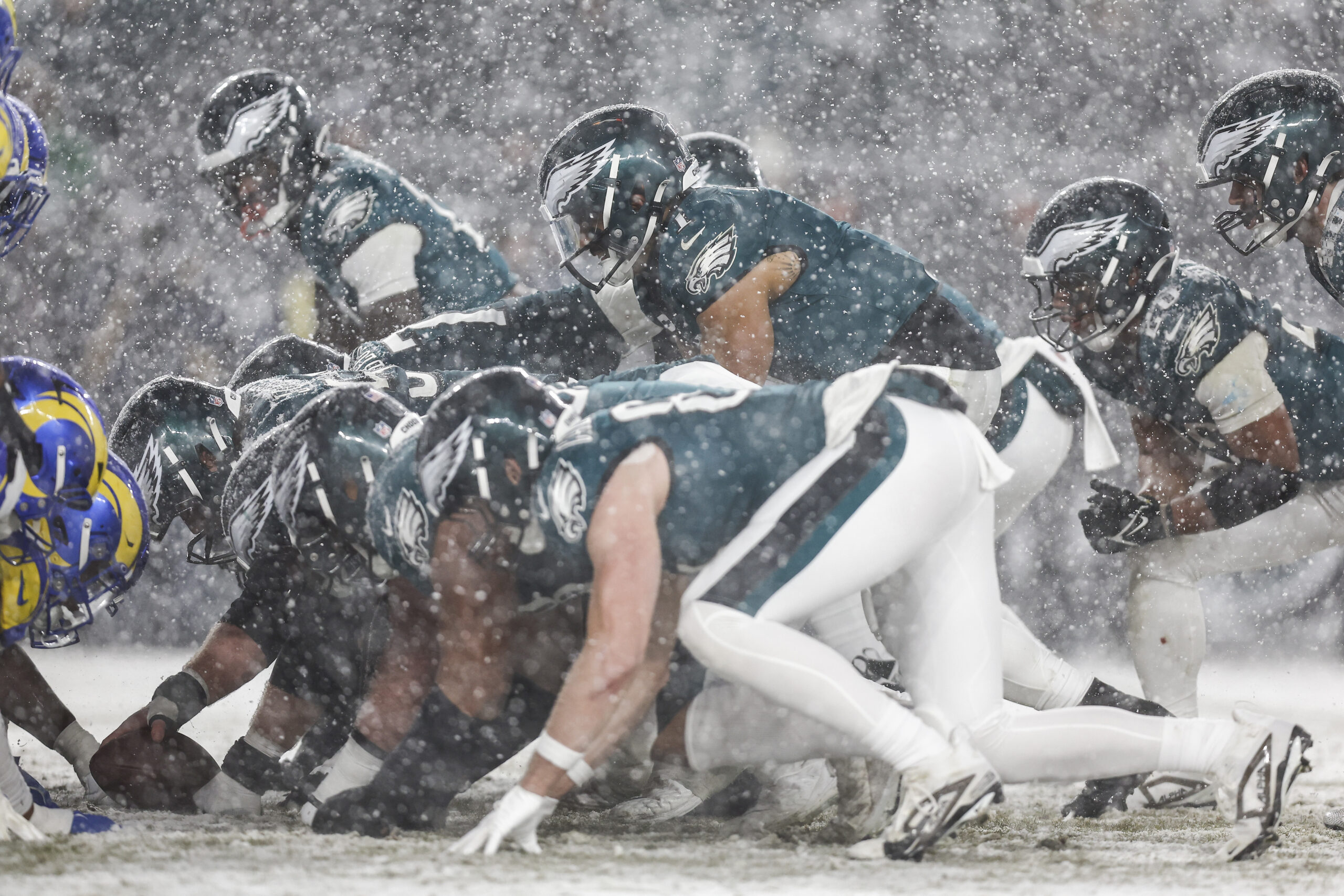
Philadelphia Eagles quarterback Jalen Hurts at the line of scrimmage during the fourth quarter of the NFC divisional playoff at Lincoln Financial Field on Jan. 19. The Philadelphia Eagles defeated the Los Angeles Rams 28 to 22.
Then there was the snowy NFC divisional playoff game against the Los Angeles Rams at Lincoln Financial Field; continued drama around the Tush Push (which resulted in Dude Wipes becoming an official sponsor of the team); and Cooper DeJean’s pick-six, a gift to himself and us on his 22nd birthday that helped the Birds trounce the Kansas City Chiefs 40-22 in Super Bowl LIX.
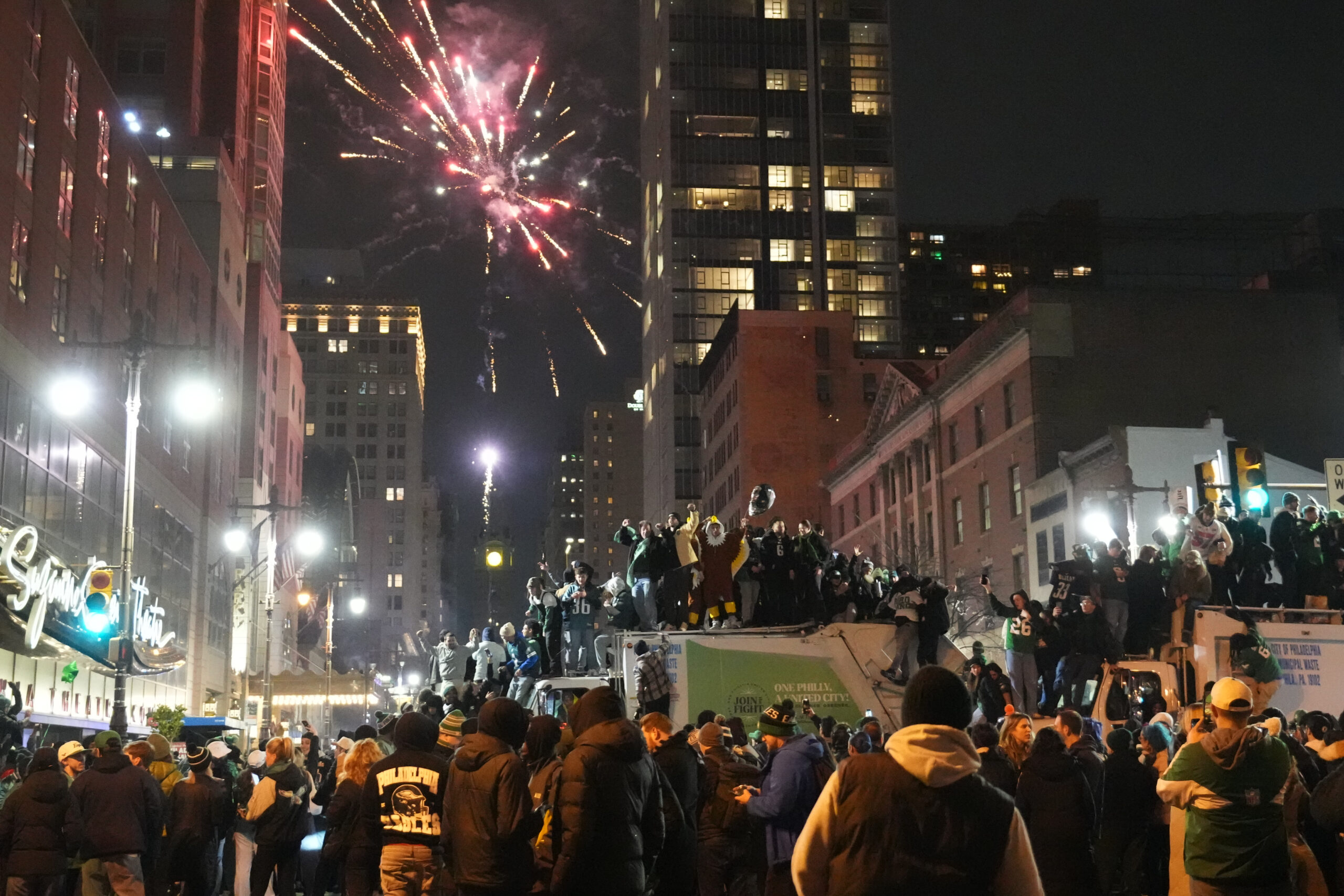
As soon as the Eagles won with Jalen Hurts as MVP, Philadelphians let loose, flooding the streets like a drunken green tsunami. Fans scaled poles and tore them down; danced on bus shelters, medic units, and trash trucks; partied with Big Foot, Ben Franklin, and Philly Elmo; and set a bonfire in the middle of Market Street.
Eagles fans party on trash trucks in the streets of Center City after the Birds win in Super Bowl LIX against the Chiefs on Feb. 9.
Finally, there was the parade, a Valentine’s Day love letter to the Eagles from Philadelphia. Among the more memorable moments was when Birds general manager Howie Roseman was hit in the head with a can of beer thrown from the crowd. He took his battle scar in pride, proclaiming from the steps of the Philadelphia Art Museum: “I bleed for this city.”
As we say around here, love Hurts.
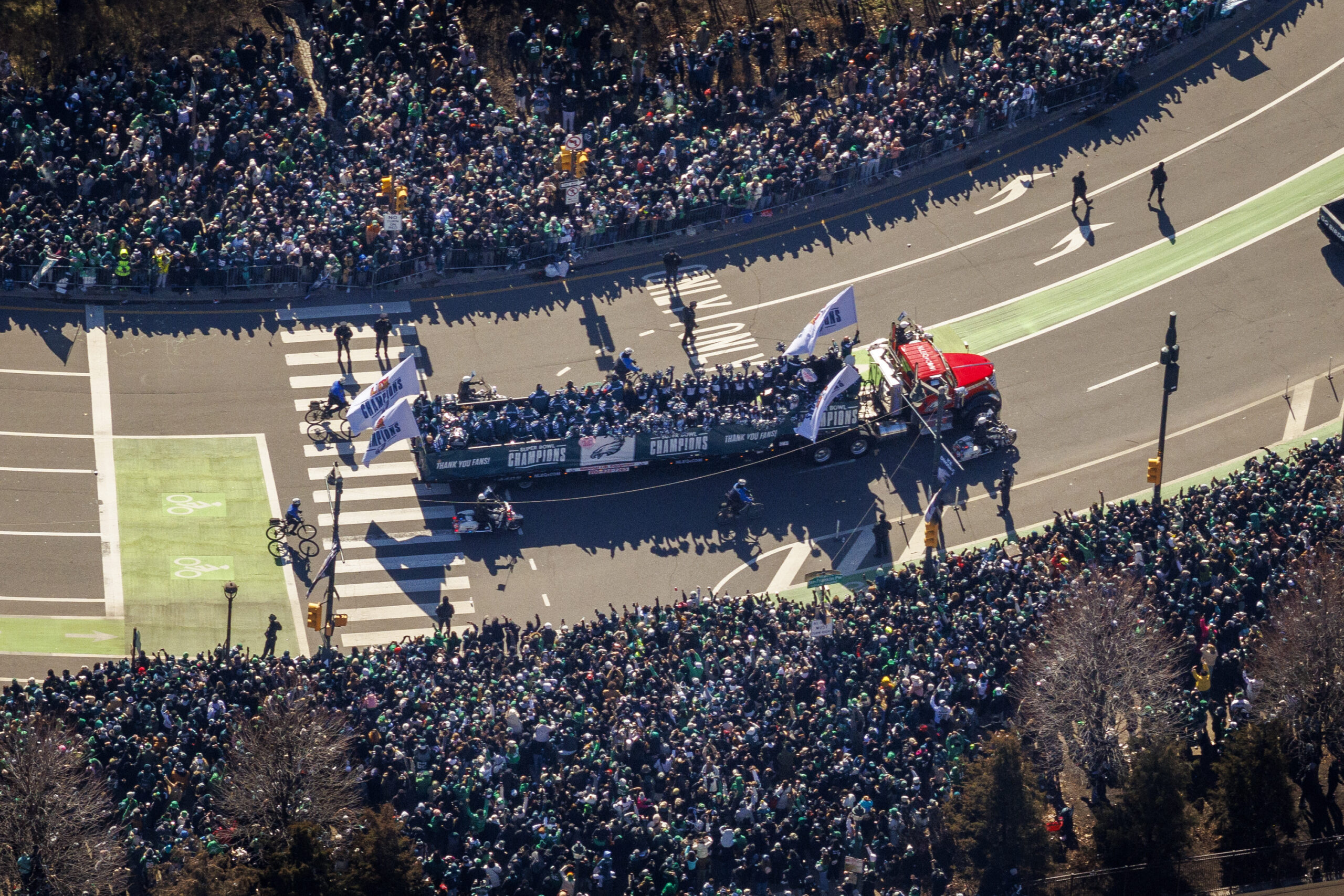
Throngs of Birds fans lined the Benjamin Franklin Parkway for the Eagles Super Bowl Parade on Feb. 14.
A $40 million goodbye
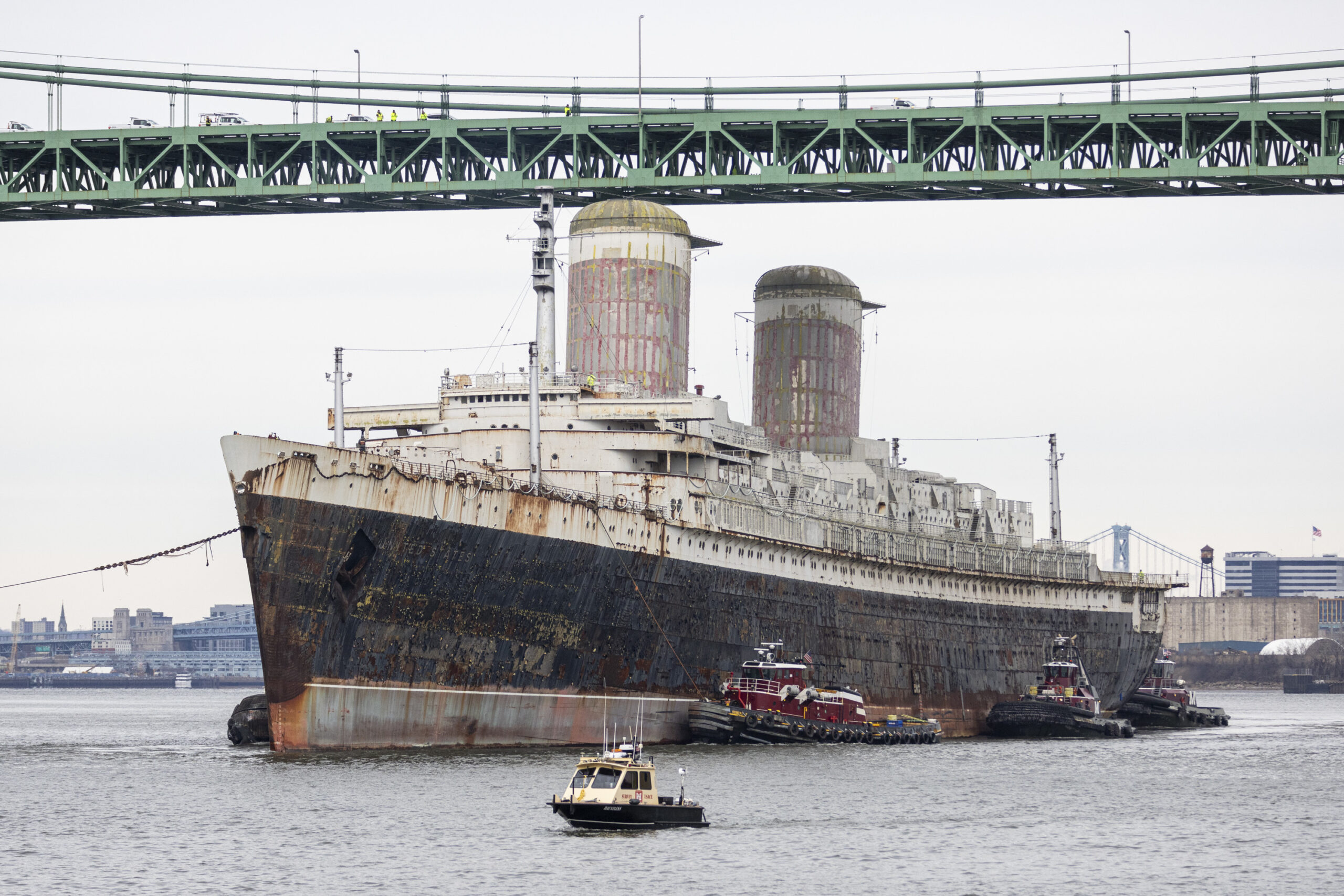
As far as inanimate objects go, few have experienced more drama in recent Philly history than the SS United States, the 73-year-old, 990-foot luxury liner that was docked for nearly three decades on the Delaware River waterfront.
Supporters spent more than $40 million on rent, insurance, and other measures to keep the ship in Philly with the hopes of returning it to service or at least turning it into a venue. But a rent dispute with the owners of the pier finally led a judge to order the SS United States Conservancy, which owned the vessel, to seek an alternate solution.
Workers on the Walt Whitman Bridge watch from above as the SS United States is pulled by tug boats on the Delaware River.
And so in February, with the help of five tugboats, the ship was hauled out of Philly to prepare it to become the world’s largest artificial reef off the coast of Okaloosa County, Fla.
If the United States has to end somewhere, Florida feels like an apt place.
The ‘Delco Pooper’
While the Eagles’ Tush Push was deemed legal by NFL owners this year, a Delaware County motorist found that another kind of tush push most definitely is not after she was arrested for rage pooping on the hood of a car during a roadway dispute in April.
Captured on video by a teen who witnessed the rear-ending, the incident quickly went viral and put a stain on Delco that won’t be wiped away anytime soon.
Christina Solometo, who was dubbed the “Delco Pooper” on social media, told Prospect Park Police she got into a dispute with another driver, whom she believed began following her. Solometo claimed when she got out of her car the other driver insulted her and so she decided to dump her frustrations on their hood.
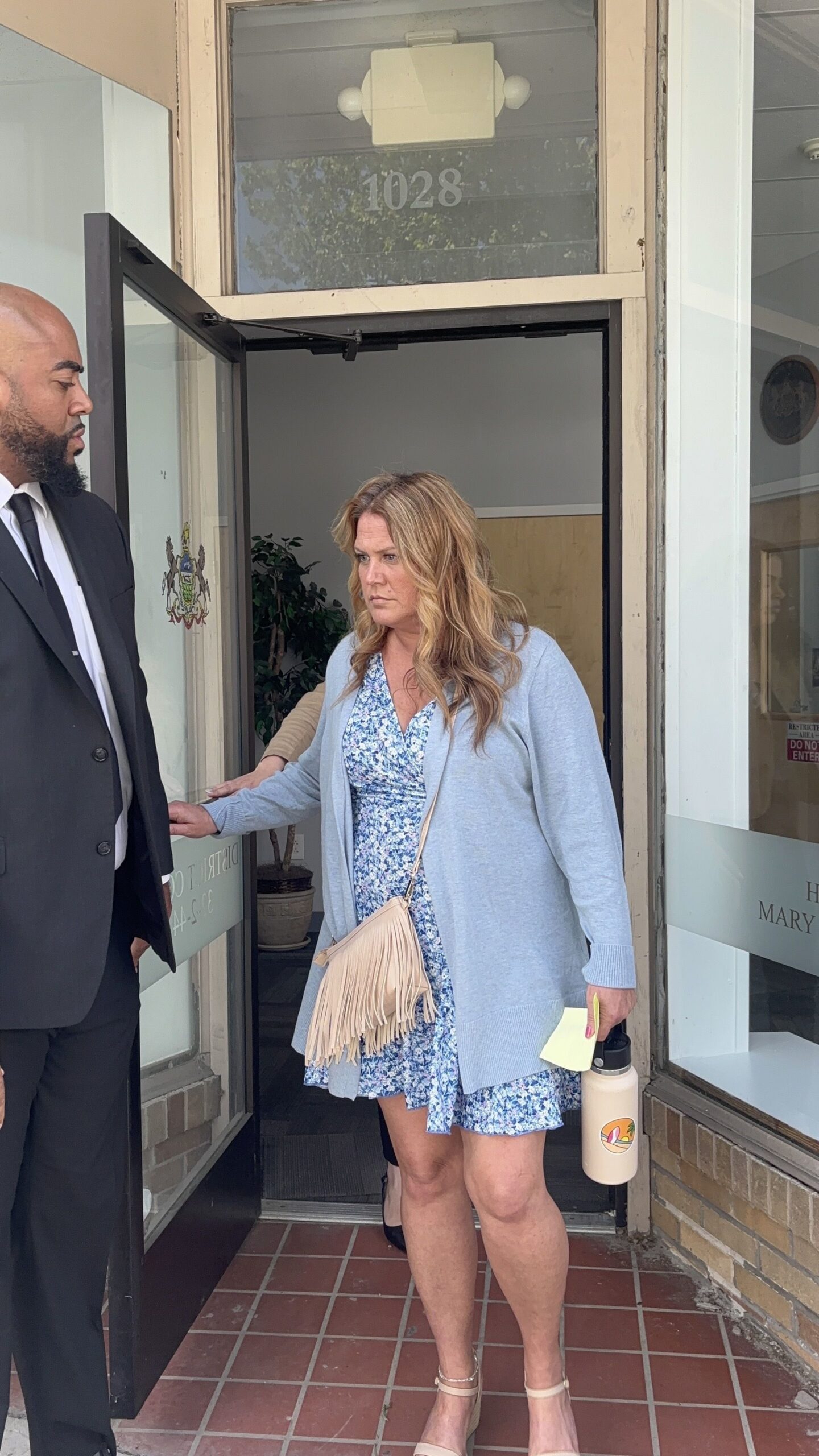
A private security guard holds the door open for alleged “Delco Pooper” Christina Solometo following her preliminary hearing Monday at Prospect Park District Court.
“Solometo said, ‘I wanted to punch her in the face, but I pooped on her car instead and went home,’” according to the affidavit.
I’ve written a lot of stories about Delco in my time, but this may be the most absurd.
Hopefully, she won’t be clogging up the court system anymore.
The Delco pope
Delco is large, it contains multitudes, and never was that more clear than when two weeks after the Delco Pooper case broke, a Delco pope was elected.
OK, so Pope Leo XIV is technically a native of Chicago, but he attended undergrad at Villanova University — which, yes, technically straddles Delco and Montgomery County — but Delco’s had a tough year so I’m gonna give it this one.
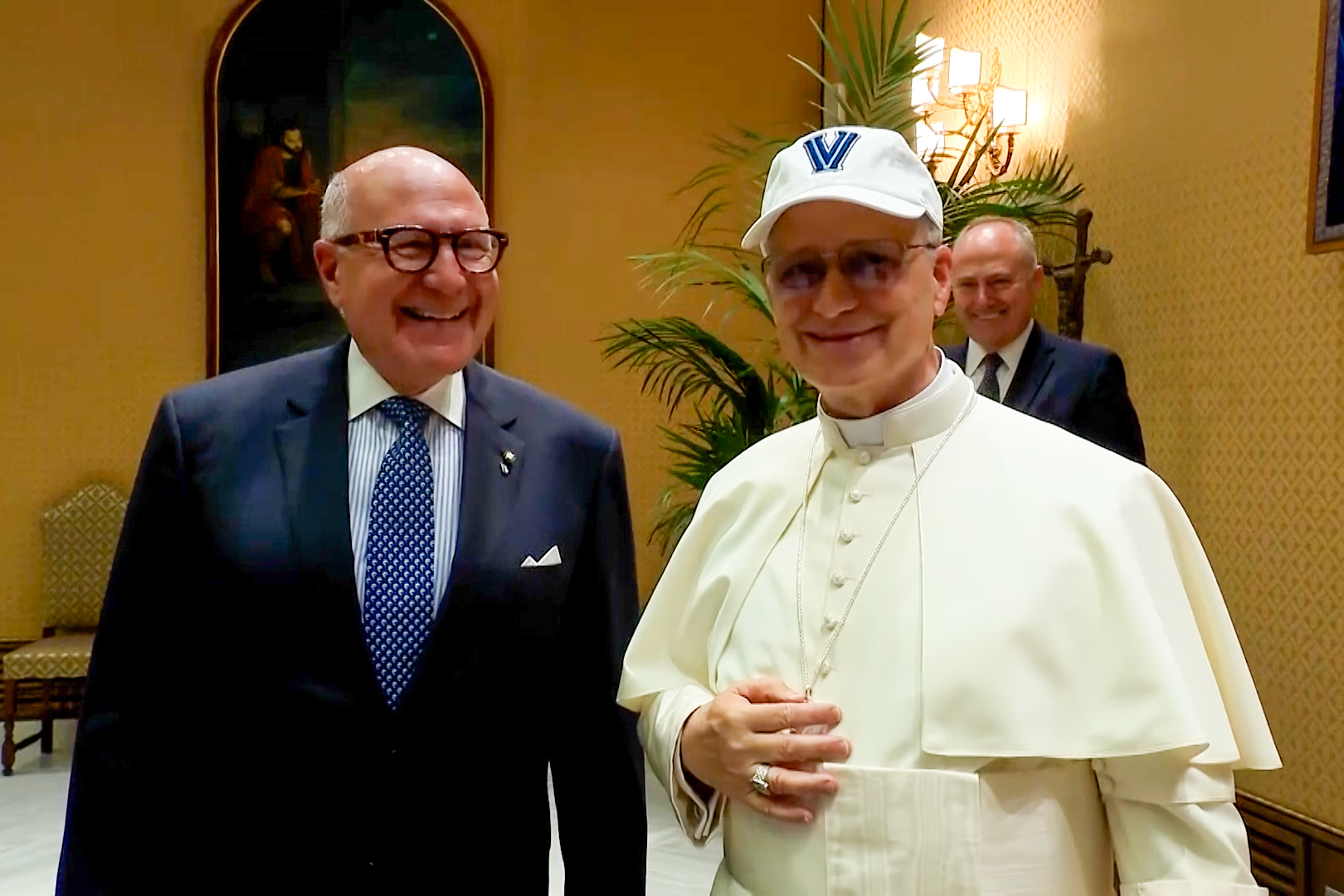
This video screen grab shows Pope Leo XIV wearing a Villanova University hat gifted to him during a meeting with an Italian heritage group.
Born Robert Prevost, Pope Leo is the first U.S. pope in history and also a citizen of Peru. He earned his bachelor’s degree in mathematics from Villanova in 1977 and an honorary doctor of humanities from the university in 2014.
Center City Sips, the Wednesday Center City happy hour program, long ago earned a reputation as a rite of passage for 20-somethings who are still figuring out how to limit their intake and want to do so in business casual attire.
Things seemed to calm down after the pandemic, but then Philadelphians took Sips to another level and a whole new place this year — the streets.
Videos showed hundreds of people partying in the streets of Midtown Village on Wednesday nights this summer. Granted, the parties look far more calm than when sports fans take over Philly after a big win, but the nearby bar owners who participate in the Sips program said their places sat empty as people brought their own alcohol to drink.
Jason Evenchik, who owns Time, Vintage, Garage, and other bars, told The Inquirer that “No one is inside, and it’s mayhem outside.”
“Instead, he claimed, people are selling alcohol out of their cars and bringing coolers to make their own cocktails. At one point on June 11,Evenchik said, a Tesla blocked a crosswalk while a man made piña coladas with a pair of blenders hooked up to the car,” my colleague Beatrice Forman wrote.
In no way am I condoning this behavior, but those two sentences above may be my among favorite this year. Who thinks to bring a blender — with a car hookup — to make piña coladas at an unauthorized Center City street party on a Wednesday night?
Philly.
Getting trashed
Philadelphians experienced a major city workers strike this summer when Mayor Cherelle L. Parker and AFSCME District Council 33 couldn’t agree on a new contract for the union’s nearly 9,000 members.
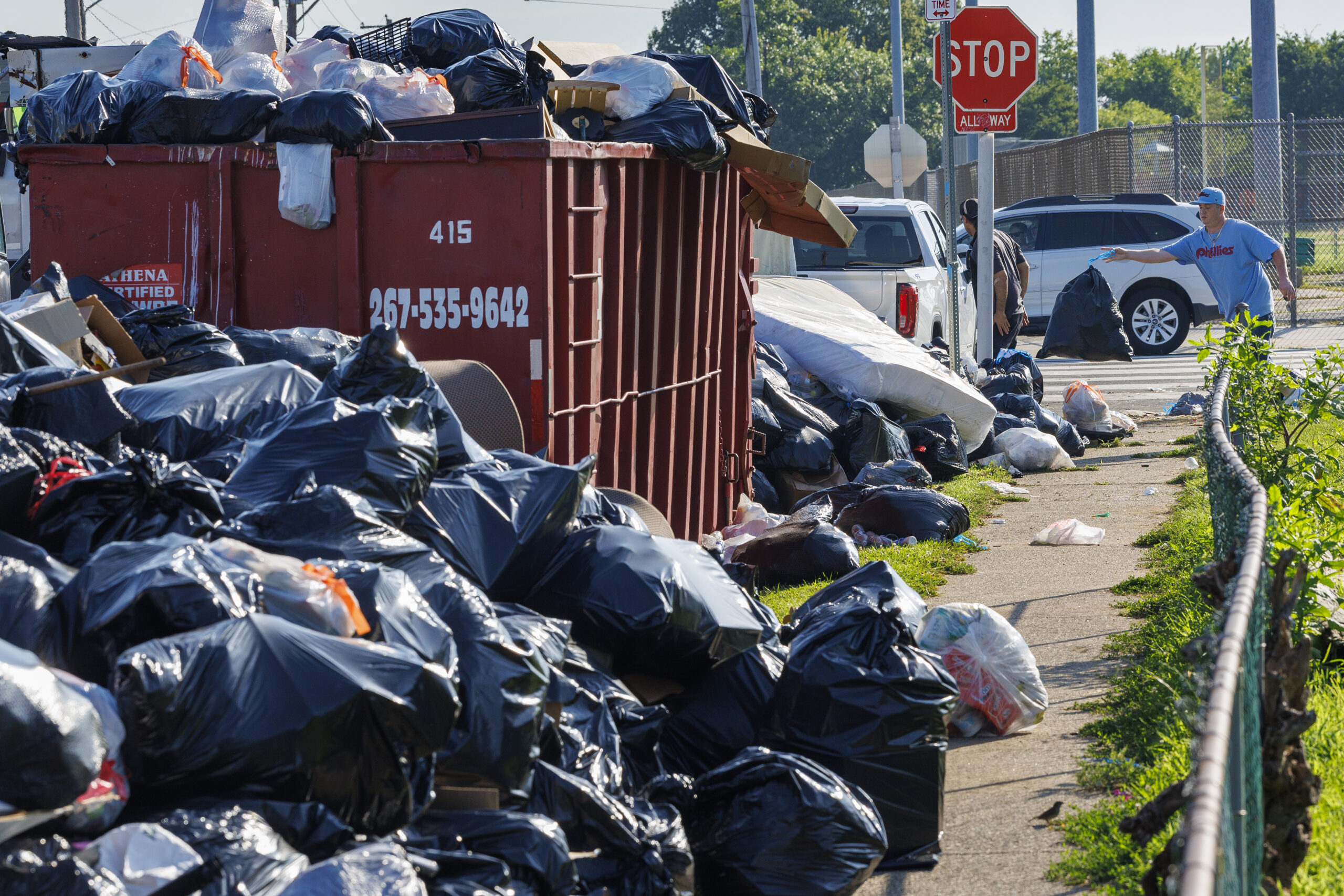
Residents with trash arrive at garbage dump site at Caldera Road and Red Lion Road in northeast Philadelphia during the AFSCME District Council 33 workers strike in July.
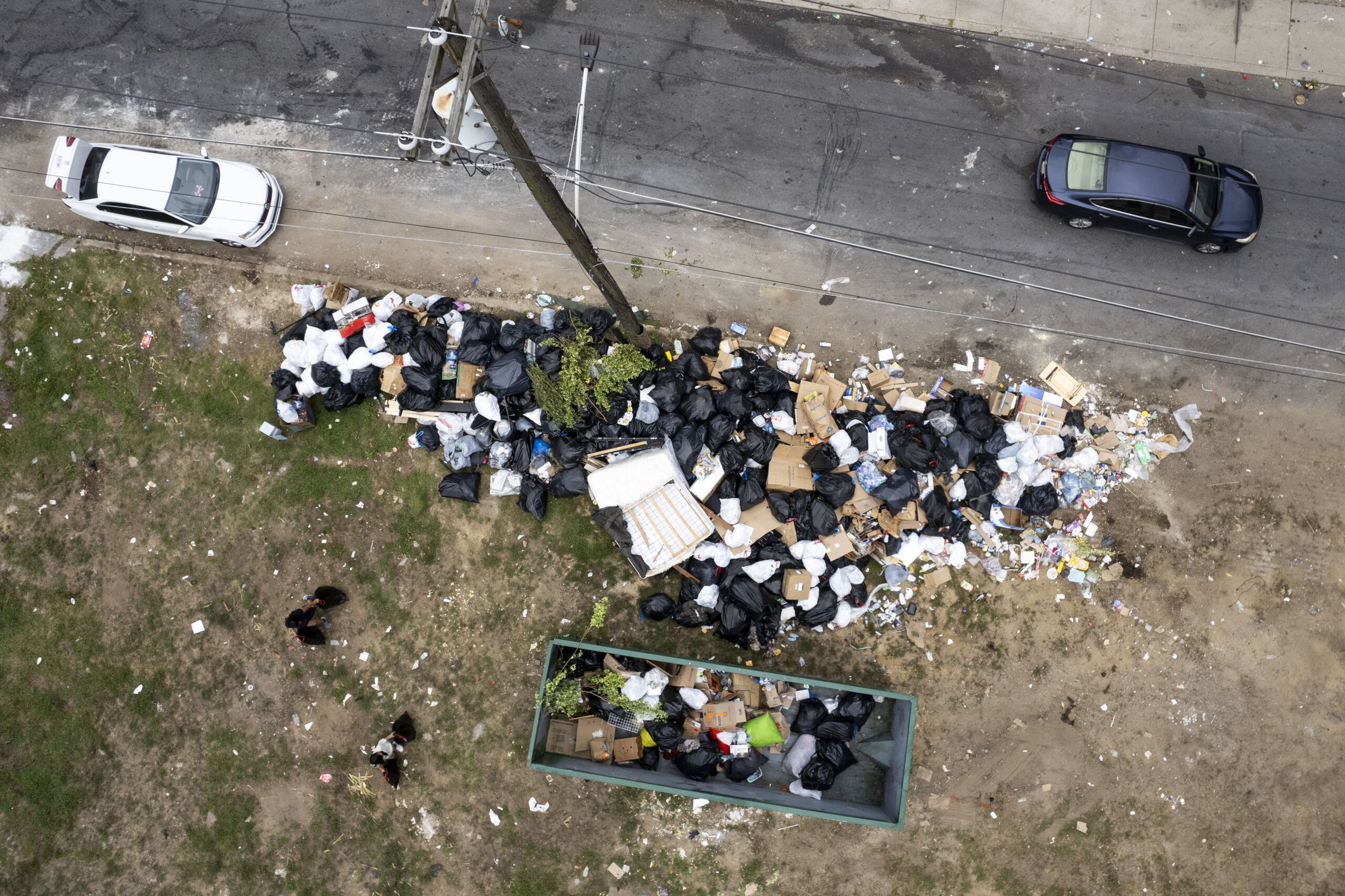
As a result, things got weird. Dead bodies piled up at the Medical Examiner’s Office; a striking union member was arrested for allegedly slashing the tires of a PGW vehicle; and for eight days in the July heat, garbage heaped up all across Philadelphia. The city set up temporary trash drop-off sites, which often overflowed into what were nicknamed “Parker piles,” but that also set off a firestorm about whether using the sites constituted crossing a picket line.
Wawa Welcome America July Fourth concert headliners LL Cool J and Jazmine Sullivan even pulled out of the show in support of striking workers, resulting in a fantastic “Labor Loves Cool J” meme.
It was all like something out of It’s Always Sunny in Philadelphia. In fact, the gang predicted a trash strike in the 2012 episode “The Gang Recycles Their Trash.”
The real strike lasted eight days before a contract was reached. In true Philly form, AFSCME District Council 33 president Greg Boulware told The Inquirer “nobody’s happy.”
A large pile of trash collects at a city drop-off site during the AFSCME workers strike this summer.
97-year-old gives birth to 16 kids
A local nonagenarian couple became national shellebrities this year for welcoming seven babies in April and nine more in August, proving that age ain’t nothing but a number, as long as you’re a tortoise.
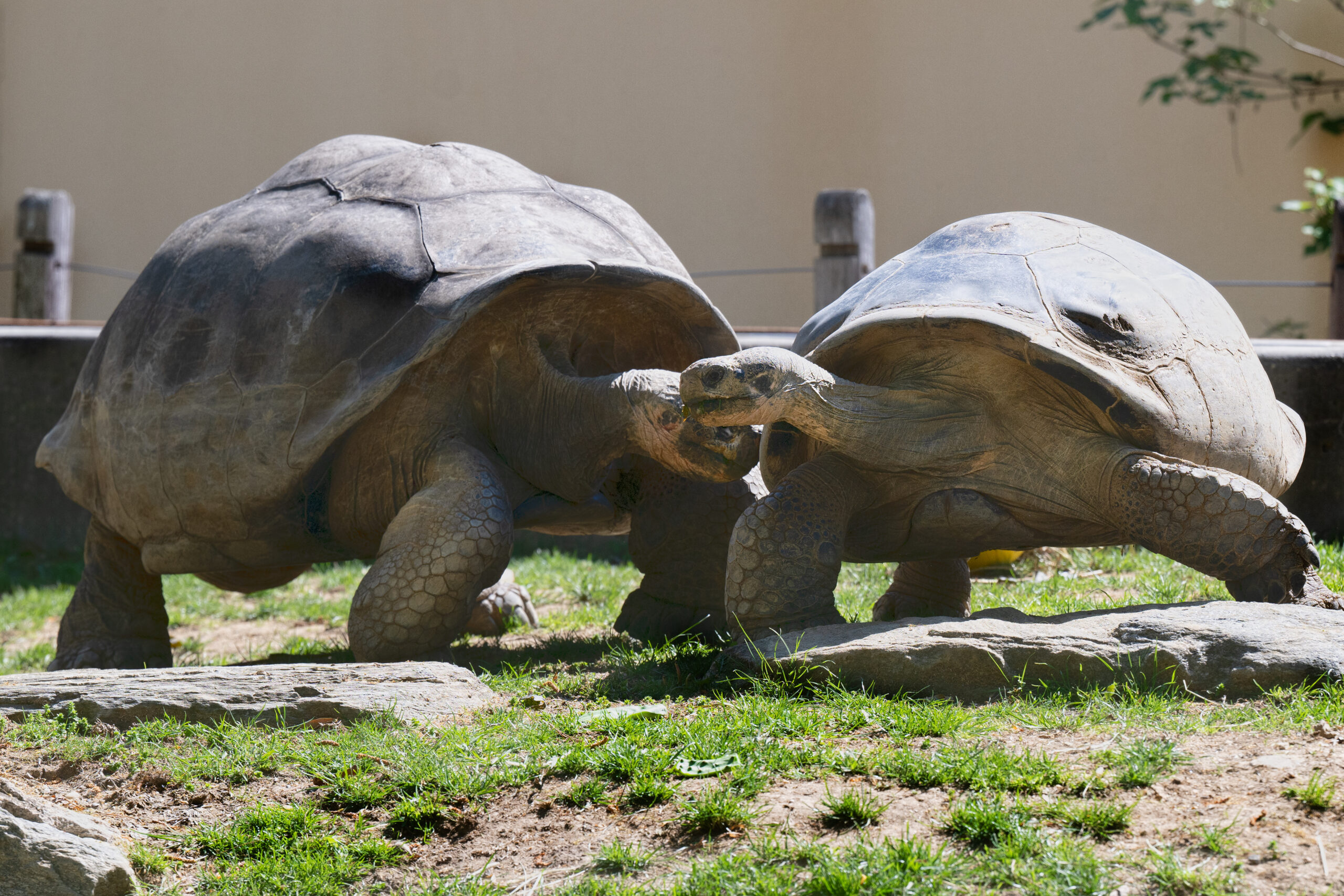
Western Santa Cruz Galapagos tortoise Mommy, and male Abrazzo, left, are shown on Wednesday, April 23, 2025, at the Philadelphia Zoo in Philadelphia, Pa. The hatchlings’ parents, female Mommy and male Abrazzo, are the Zoo’s two oldest animals, each estimated to be around 100 years old.
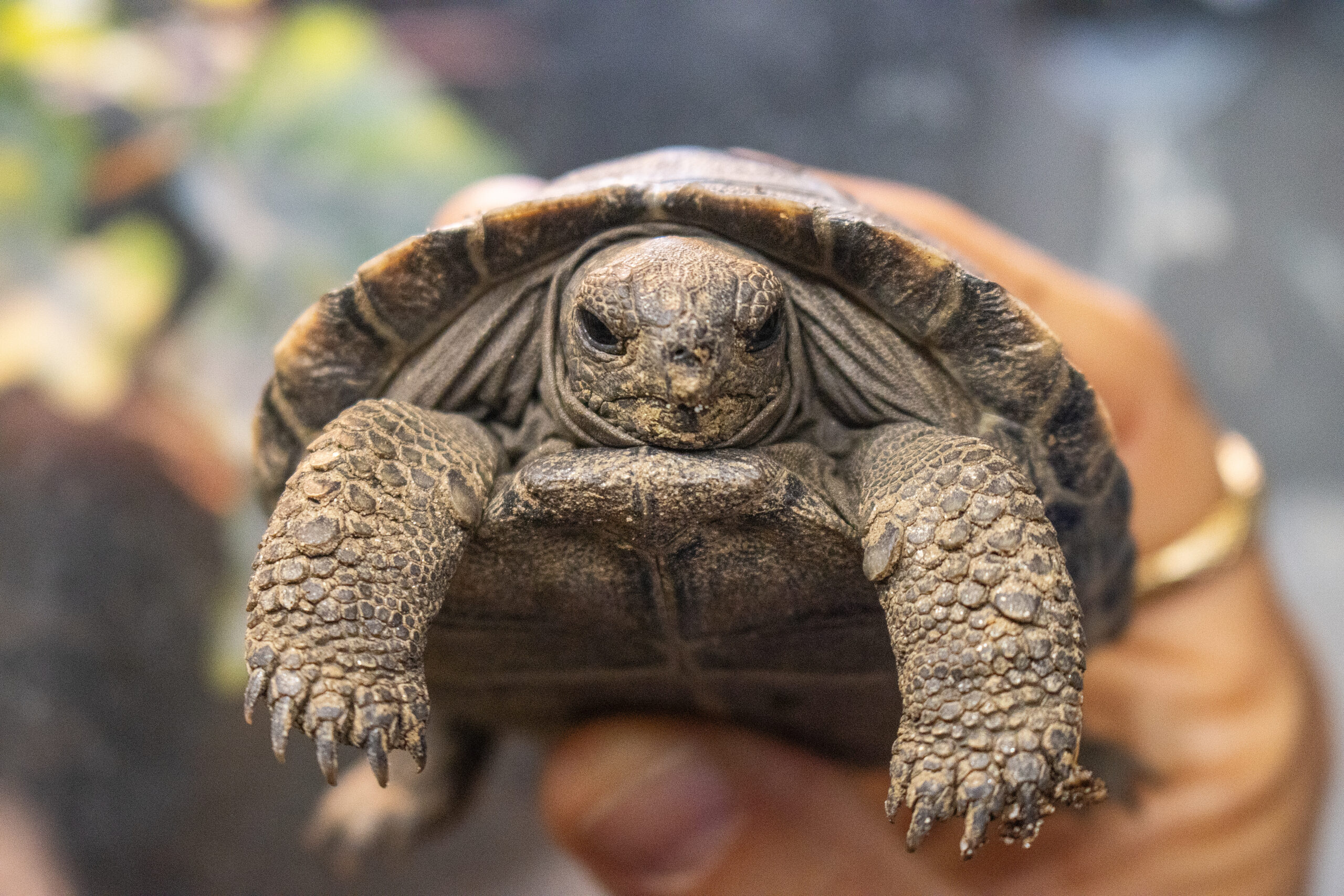
Mommy and Abrazzo, Western Santa Cruz Galapagos tortoises who reside at the Philadelphia Zoo, made history with their two clutches, becoming the first pair of the critically endangered species in the zoo’s 150-year history to hatch eggs and the first to do so in any accredited zoo since 2019.
Mommy is also the oldest known first-time Galapagos tortoise mom in the world, so it’s safe to say she doesn’t have any time or patience for shenanigans. She’s got 16 heroes in a half shell to raise.
Western Santa Cruz Galapagos tortoise egg hatchling.
Phillies Karen
Taking candy from a baby is one thing — babies don’t need candy anyway — but taking a baseball from a kid at a Phillies game is a deed so foul and off base it’s almost unimaginable.
And yet, that’s exactly what happened at a Phillies-Marlins game in September, when a home run from Harrison Bader landed in the stands and a dad ran from his seat to grab it and give it to his son. A woman who was sitting near where the ball landed marched over to the dad, berated him, and demanded the ball be given her. Taken aback, the father reached into his son’s baseball glove and turned the ball over.
The entire scene was caught on camera and the woman, with her Kate Gosselin-esque hairdo, was immediately dubbed “Phillies Karen” by flabbergasted fans.
While the act technically happened at the Marlins stadium in Miami, Fla., it captured the minds and memes of Philadelphians so much that it deserves inclusion on this list. Phillies Karen has made her way onto T-shirts and coffee mugs, inspired skits at a Savannah Bananas game and the MLB Awards, and she even became a popular Halloween costume.
To this day, “Phillies Karen” remains unidentified, so it’s a safe bet she lives in Florida, where she’ll have better luck with alligators than with people here.
Institutional intrigue
Drama at area institutions this year had Philadelphians sipping tea like we were moms on Christmas morning, and sometimes, left us shaking our fists in the air like we were dads putting up tangled lights.
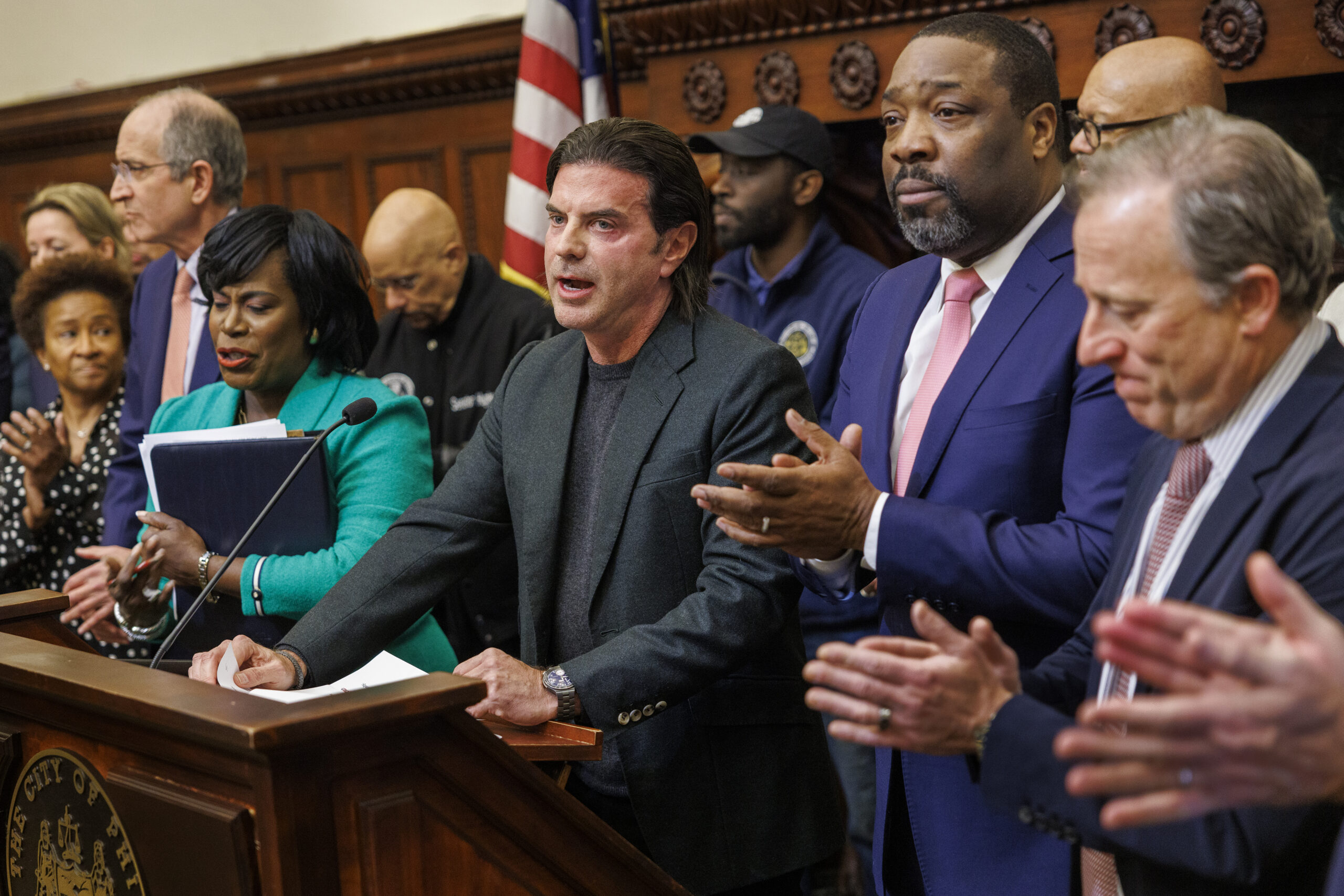
David Adelman with the Philadelphia 76ers makes a statement at a press conference in the Mayor’s Reception Room in January regarding the Sixers changing directions on the controversial Center City arena. At left is mayor Parker, at right City Council President Kenyatta Johnson and Josh Harris, Sixers owner.
It started early in January, when the billionaire owners of the Sixers surprised the entire city by announcing the team would stay at the South Philly sports complex instead of building their own arena on Market East. The decision came after two years of seemingly using the city, its politicians, and its people as pawns in their game.
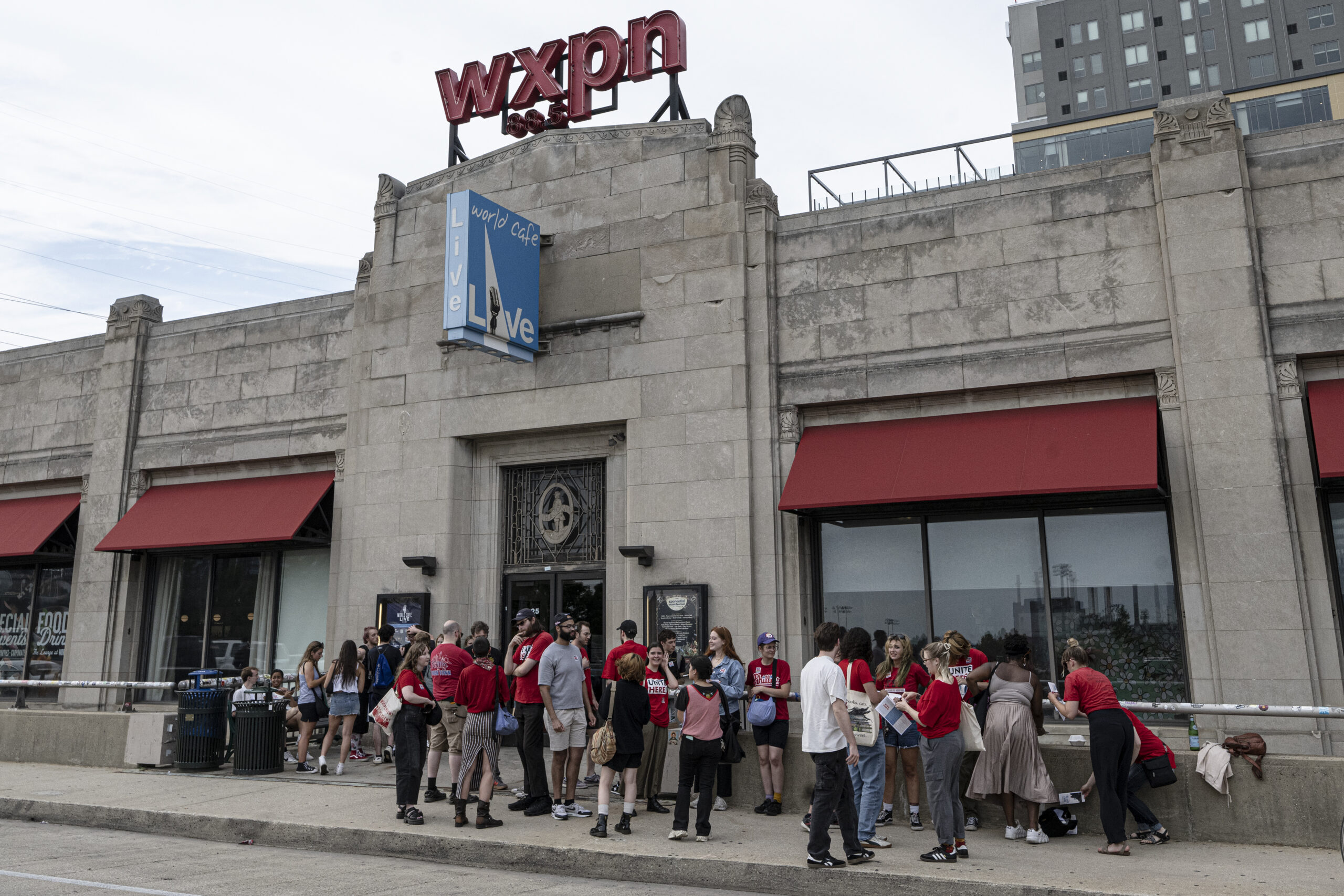
Workers gathered outside World Cafe Live before a Town Hall meeting with management in July.
In June, workers staged a walkout at World Cafe Live due to what they claimed was “an unacceptable level of hostility and mismanagement” from its new owners, including its then-CEO, Joseph Callahan. Callahan — who said the owners inherited $6 million in debt and that he wanted to use virtual reality to bolster its revenue — responded by firing some of the workers and threatening legal action. Today, the future of World Cafe Live remains unclear. Callahan stepped down as CEO in September (but remains chairman of the board), the venue’s liquor license expired, and its landlord, the University of Pennsylvania, wants to evict its tenant, with a trial scheduled for January.
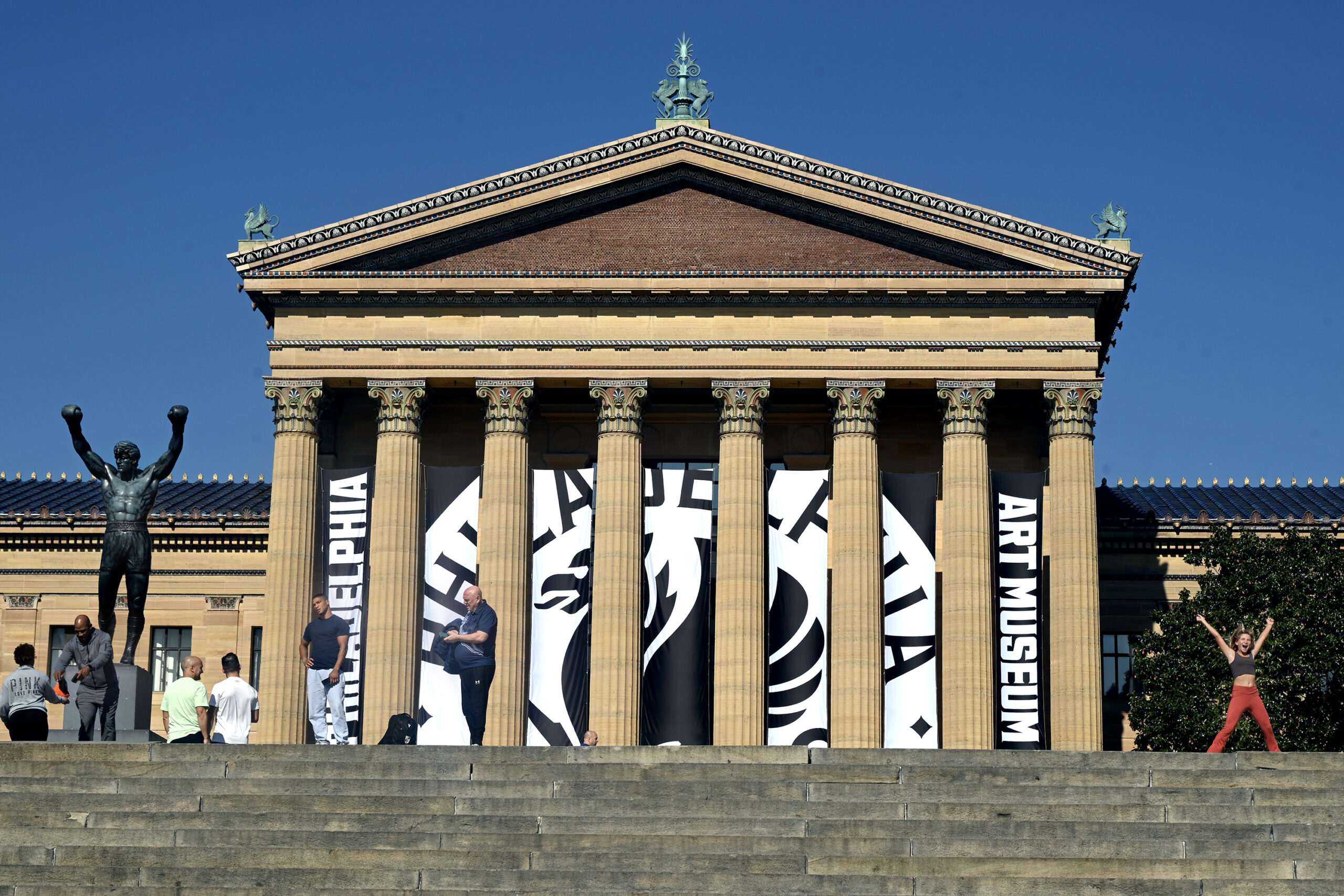
Signage at the east entrance to the Philadelphia Art Museum reflects the rebrand of the institution, which was formerly known as the Philadelphia Museum of Art.
Finally, late this year at the Philadelphia Art Museum, things got more surreal than a Salvador Dalí painting, starting with an institutional rebrand that surprised some board members, didn’t land well with the public, and resulted in a lot of PhART jokes. In November, museum CEO Sasha Suda was fired following an investigation by an outside law firm that focused, in part, on increases to her salary, a source told The Inquirer. Suda’s lawyer called it a “a sham investigation” and Suda quickly sued her former employer, claiming that “her efforts to modernize the museum clashed with a small, corrupt, and unethical faction of the board intent on preserving the status quo.”
Nobody knows where all of this will go, but it’s likely to have more drama than a Caravaggio.
The house: a 1,620-square-foot single-family residence in Germantown with four bedrooms and 1½ bathrooms built in 1900.
The price: listed for $170,000; purchased for $165,000
The agent: Shante Jenkins, Long & Foster Real Estate
The living room in Kia Wilson’s home in Germantown.
The ask: For years, homeownership was something that Kia Wilsonconsidered in the abstract — something she might get to one day. In 2020, she gave herself a timeline. Within five years, she told herself, she would buy a home. She would save. She would fix her credit. She would do it the “right” way.
Then everything changed.
In 2021, a relationship turned unsafe. Wilson’s then-partner threatened her family, including her children. “I was like, ‘I need to leave now,’” Wilson said. ‘Without the money saved up, without my credit being good. I just needed to move.’”
Wilson’s requirements were practical and shaped by urgency. She needed space for herself, her two children, and eventually her mother. She wanted her teenage daughter to have her own bathroom, and she needed a fenced-in backyard for her dogs. Above all, she needed a mortgage she could afford. She wanted it to be $700 a month — the same she paid in rent.
As for location, “I didn’t care,” she said. “Just not Kensington.” And not near her ex’s parents.
The dining area in Wilson’s home.
The search: Wilson began looking seriously in late 2022, working with a friend and coworker who had just gotten her real estate license. Together, they saw about 15 houses over a few months. Some were impractical. Some were strangely laid out. One was in a flood zone, so Wilson didn’t even bother going inside. Another, she is convinced, was haunted. During the showing, a radio suddenly began playing in the basement. “That radio was loud enough for us to hear it on the third floor,” Wilson said.
That house wasn’t the only one that lingered. Wilson and Jenkins returned to another three separate times just to switch off the lights they’d accidentally left on in the basement and on the porch. That hadn’t happened anywhere else. “I was like, ‘Why does this house keep calling me back?’” Wilson said.
Wilson wanted two bathrooms so that her teenage daughter could have her own.
The appeal: The house Wilson ultimately bought wasn’t perfect, but it checked her most important boxes. It had four nice-sized bedrooms, a small backyard with a full basement, and a semiattached layout that gave the house a little breathing room.
But the feature that sold Wilson was surprisingly specific. “At the very top of the steps is the bathroom,” she said. “If I come in the house from work and I have to pee really bad, I can run straight up the steps to the bathroom.”
The kitchen was a major upgrade from her previous place, where the kitchen had essentially been an unheated shed. This one was huge and had cabinets. That alone felt luxurious.
The deal: The house was listed at around $170,000. Wilson offered $160,000, expecting a counteroffer. The sellers came back at $165,000, which she accepted.
Wilson likes how big and open her kitchen is.
Since the sellers wouldn’t meet her lowest price, Wilson requested that they remove a large oil tank from the basement. They agreed. They also patched flooring gaps in the kitchen and near the front door and removed a mysterious electrical switch that carried power but didn’t control anything.
Flush with the concessions she’d already secured, Wilson made one more request. “I was like, wow, what else can I ask them to do?” she said, laughing. She asked for a sump pump in the basement, but the sellers said no.
The money: Wilson didn’t have savings for a down payment. “People think you have to have this ridiculous amount of money[to buy a house],” she said. “I had nothing.”
What she did have was persistence — and grants. She took first-time homebuyer classes and applied for multiple assistance programs, including funding through the Mount Airy CDC and her employer. In total, she received four grants and roughly $16,000. Her mortgage company told her they’d never seen someone with so many grants. Her mother also contributed $1,000, which served as Wilson’s down payment. All in, she spent $17,000 on her home.
The exterior of Wilson’s home in Germantown.
The move: Wilson closed on March 12, 2023, and moved in one month later. Moving was a “pain in the butt,” she said. “I was trying to do it myself because I didn’t have any money.” The friends who promised to help bailed, and the coworkers who stepped up broke her dresser and her refrigerator. “It was terrible,” Wilson said. “I didn’t have a refrigerator for two weeks.”
Any reservations? Some days, Wilson wishes she never bought the house. It’s old and needs extensive work. “Things are falling apart,” she said.
If she could do it again, she would prioritize a house where the cosmetic work was already done and pay closer attention to small details — like mismatched bathroom tiles. Still, the house has “great bones,” she said.
Life after close: Since moving in, Wilson has taken classes at the West Philly Tool Library, where she learned to patch drywall and tile. The bathroom is now all one color. She’s changed the locks, plans to replace the front door, and has begun slowly making the house her own. This year, she grew a watermelon in the yard.
“It’s really surreal,” Wilson said. “I’ve owned a house for two years. Only 28 more to go.”
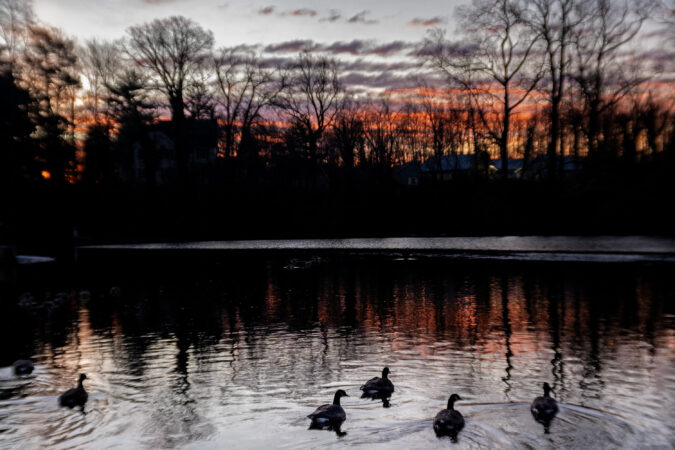
I set out deliberately this week to make an astronomical event photo for this space. I’ve done Santa and a menorah already this winter so I wanted to give props to the solstice.
The same pond on Dec. 14, just after the first significant snowfall of the season.
With the days getting shorter leading up Dec. 21, I first thought of sunset occurring earlier. But I worked nights for many years and photographed many of those.
Then I thought of all the time I’ve spent in our city’s historic district. (I love history, as the following paragraphs will attest, and I expect I’ll be there even more in 2026 as we celebrate the Semiquincentennial.)
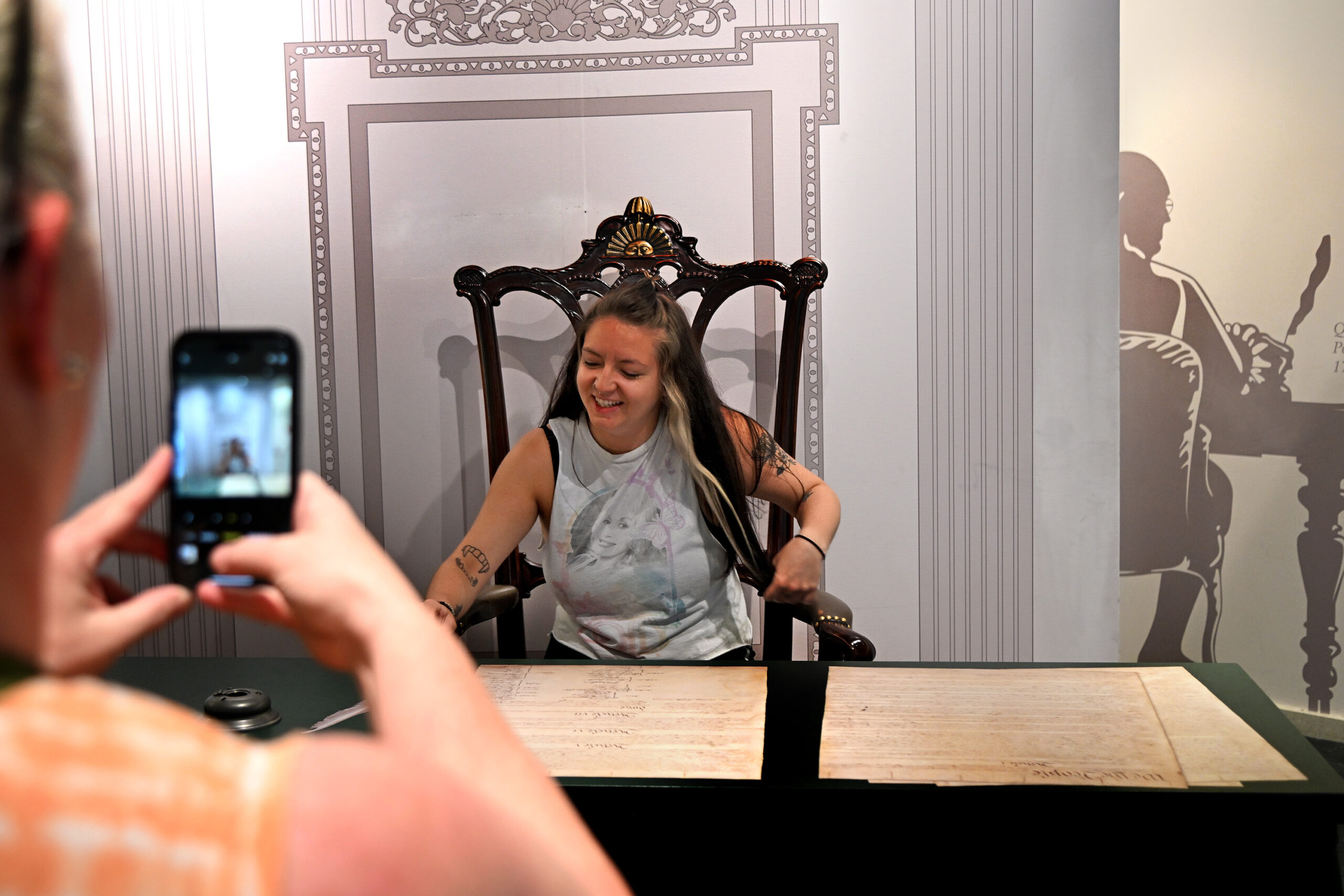
I recalled a Chippendale armchair in the Assembly Room of Independence Hall made by Philadelphia cabinetmaker John Folwell in the years after our country was born. George Washington sat in the mahogany chair with a gilded sun carved into it for three months in 1787 as he presided over the Constitutional Convention.
A replica of George Washington’s chair in the Independence Visitor Center.
Benjamin Franklin is credited with immortalizing the chair at the close of the convention, expressing his optimism for the future of the new nation while looking at the design.
”Often and often … I have looked at that {sun} … without being able to tell whether it was rising or setting, but now at length, I have the happiness to know that it is a rising and not a setting sun.”
That’s why I decided to get out early this week to find a photo at sunrise, as I look ahead to the future.
However, speaking of history, there is also an established tradition of news organizations looking back at the end of the year.
So here is the Inquirer photo staff’s “Year in Review.” A visual record of the challenges, achievements, and the everyday moments of a year lived in full.
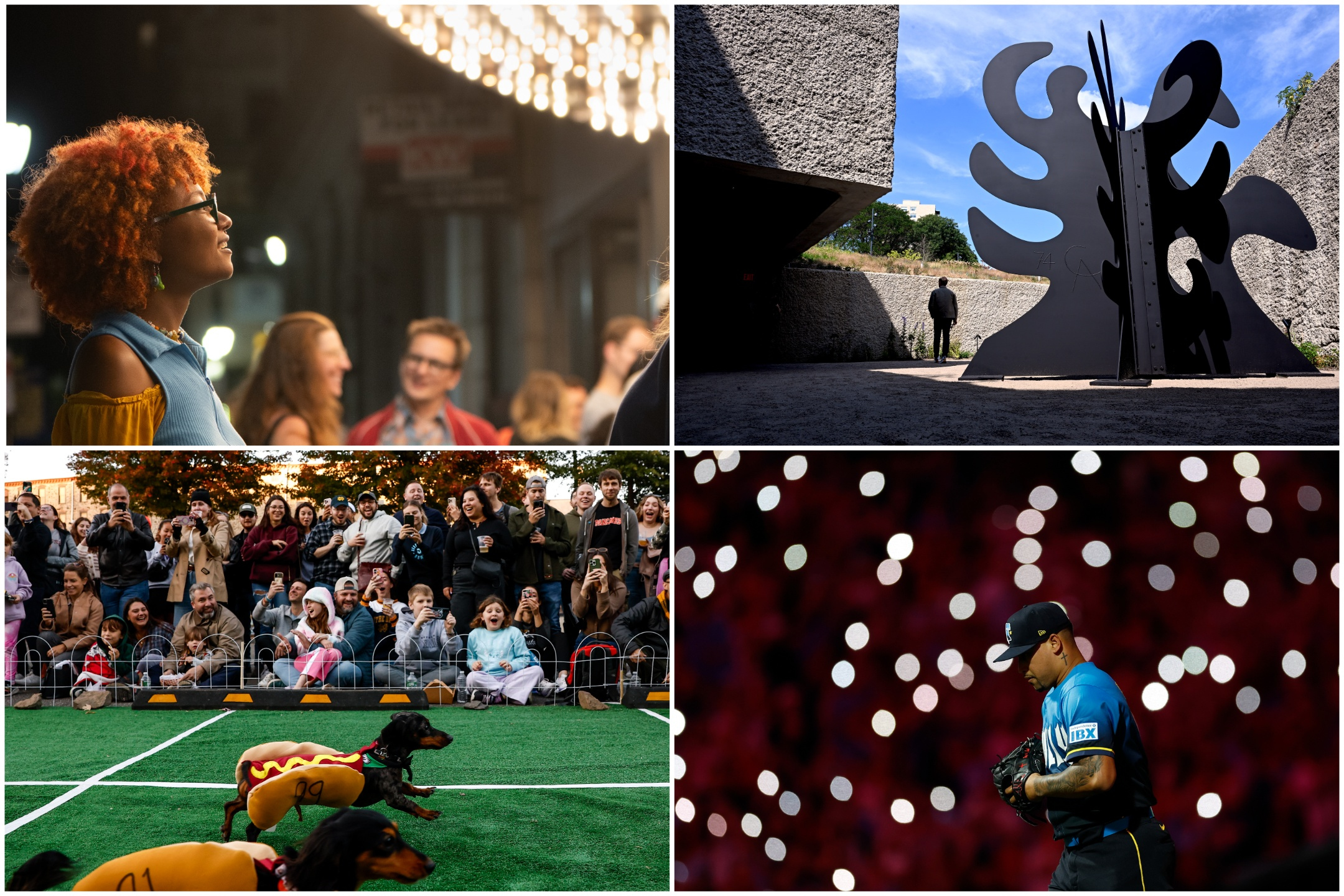
Since 1998 a black-and-white photo has appeared every Monday in staff photographer Tom Gralish’s “Scene Through the Lens” photo column in the print editions of The Inquirer’s local news section. Here are the most recent, in color:
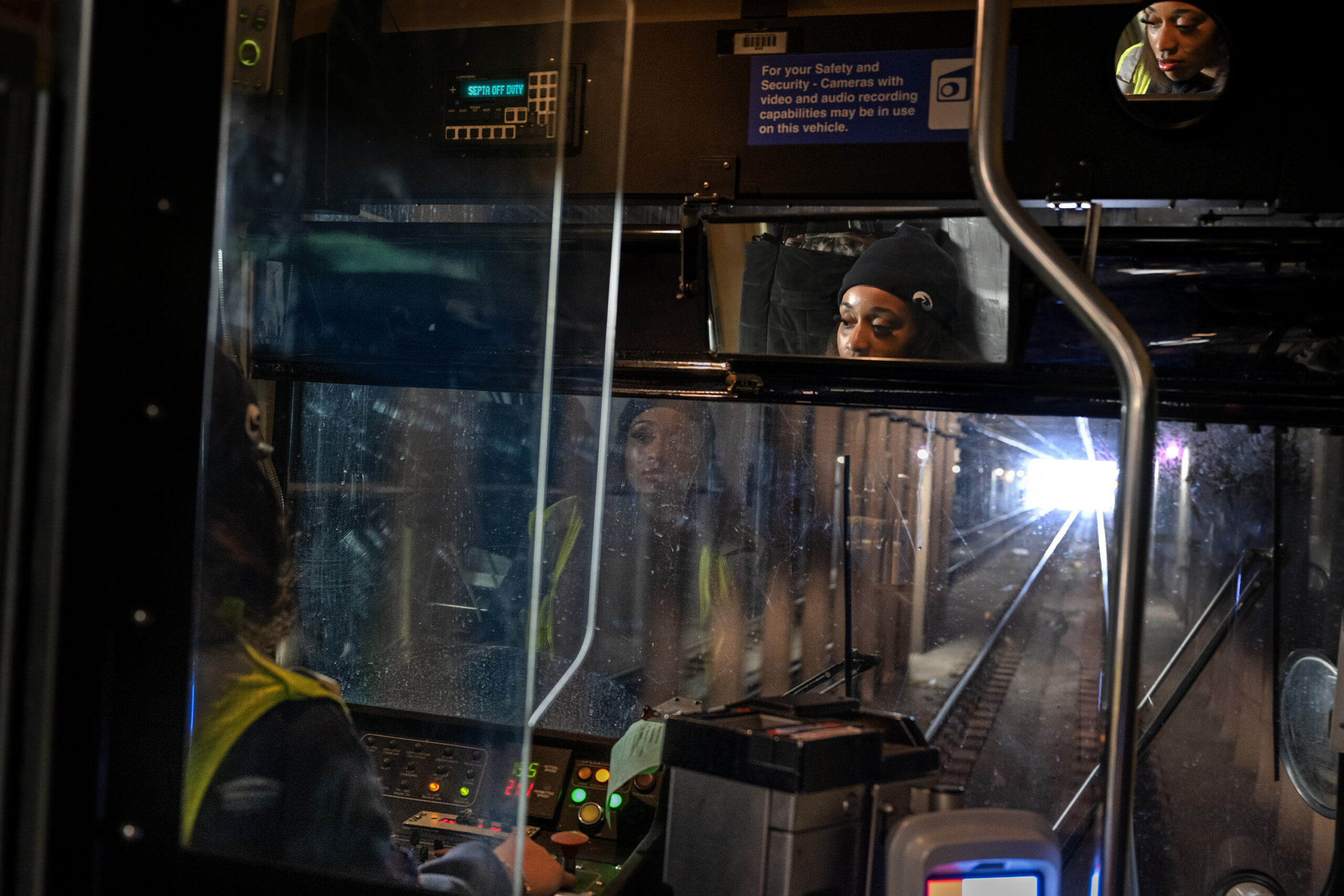
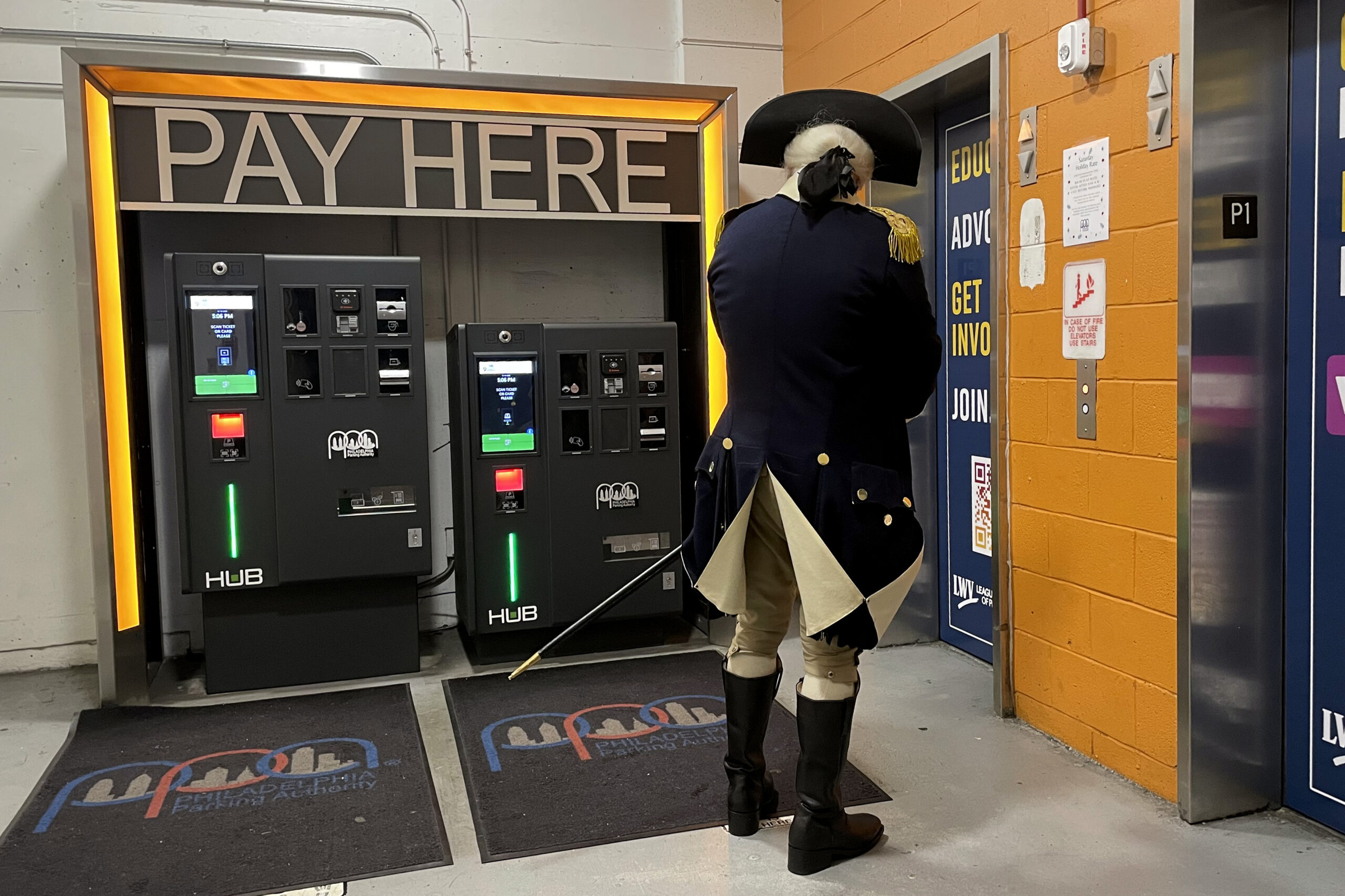
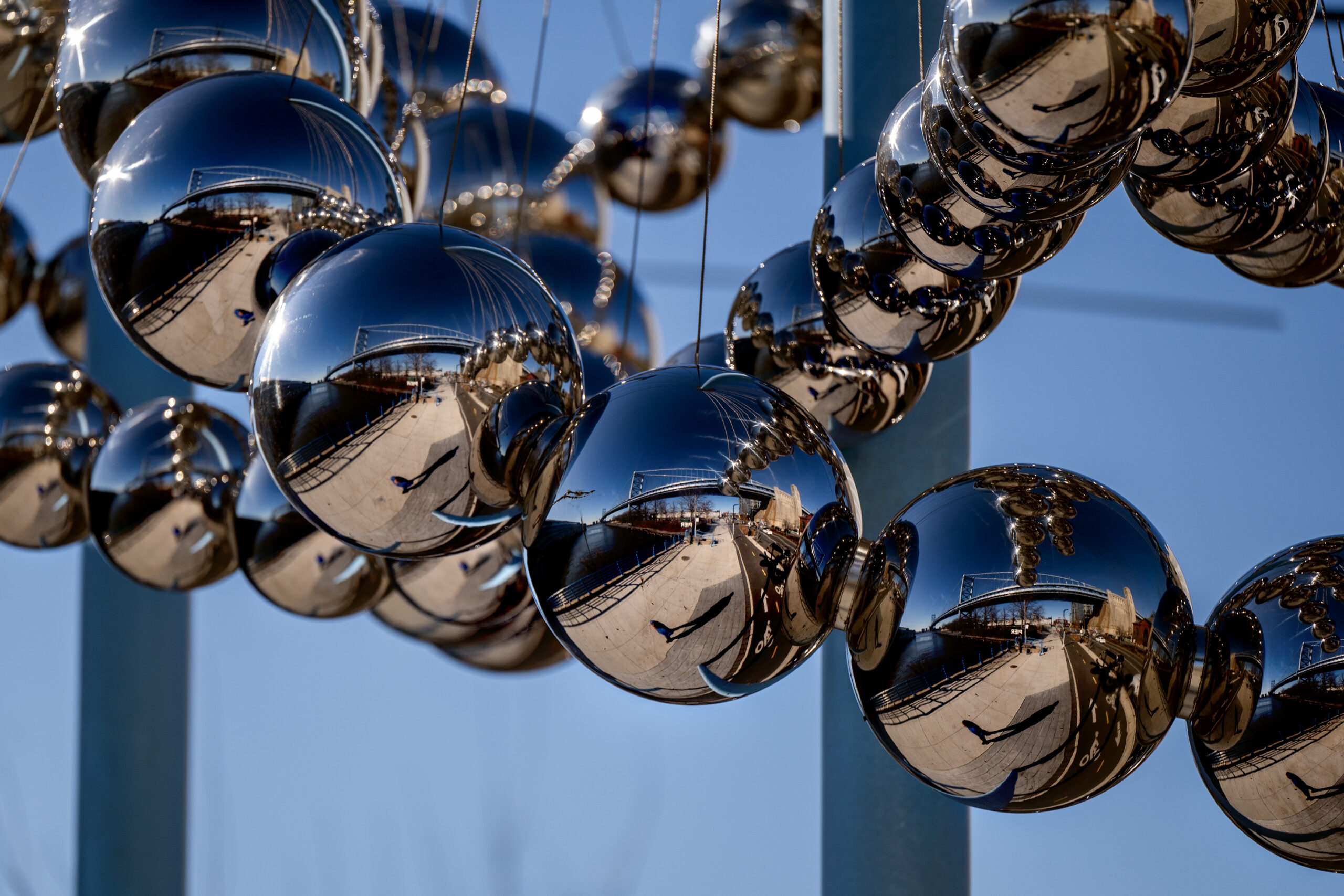
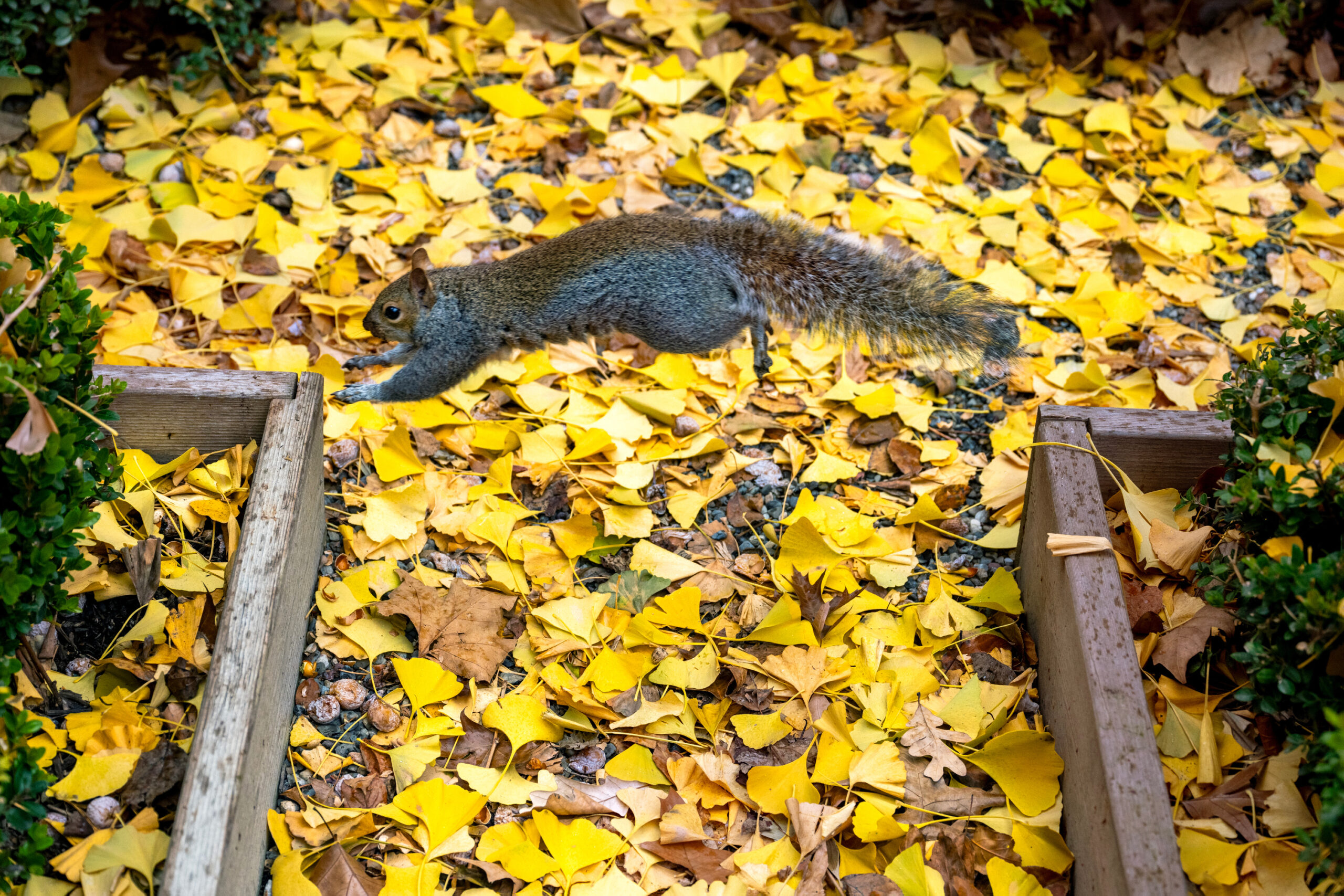
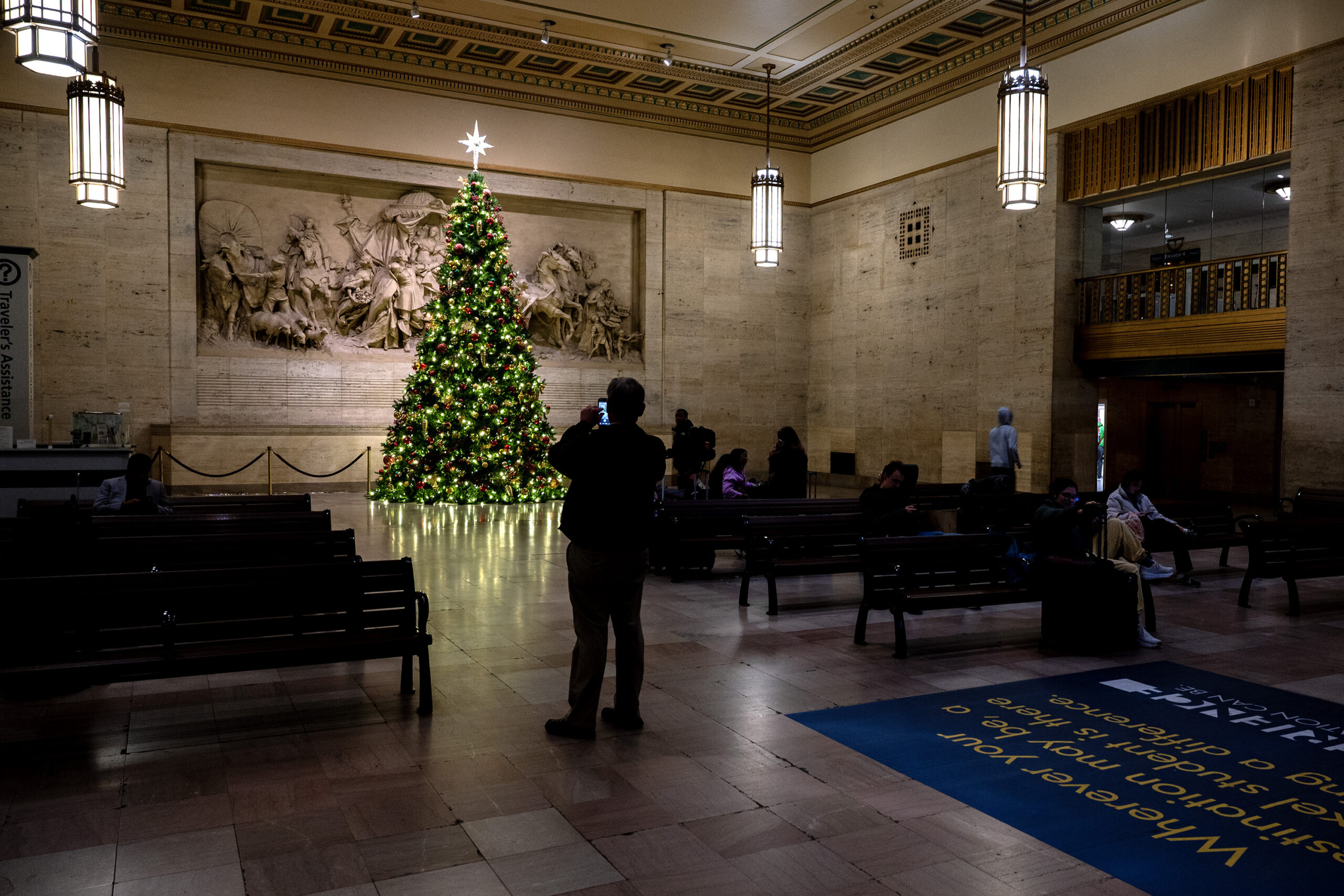
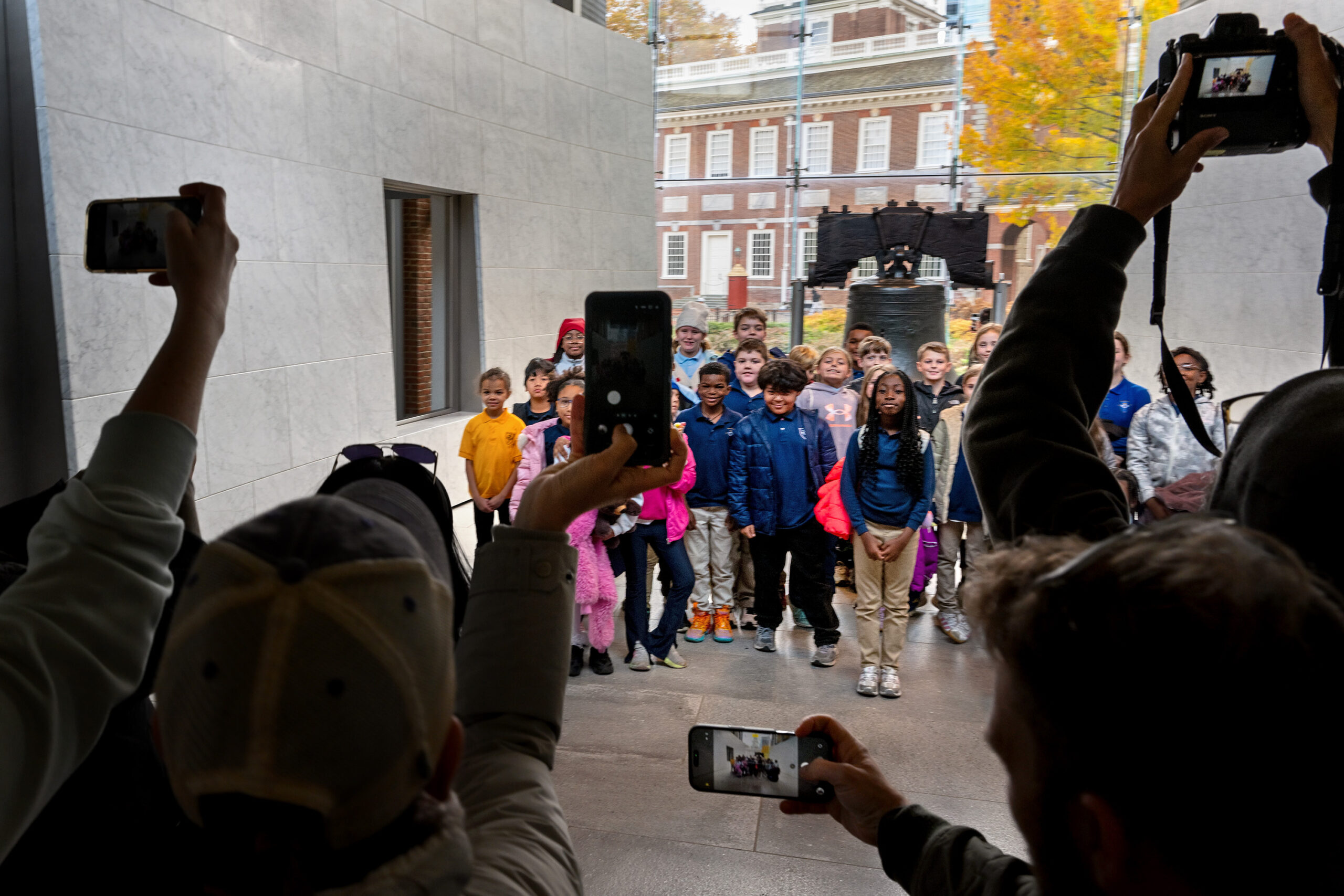
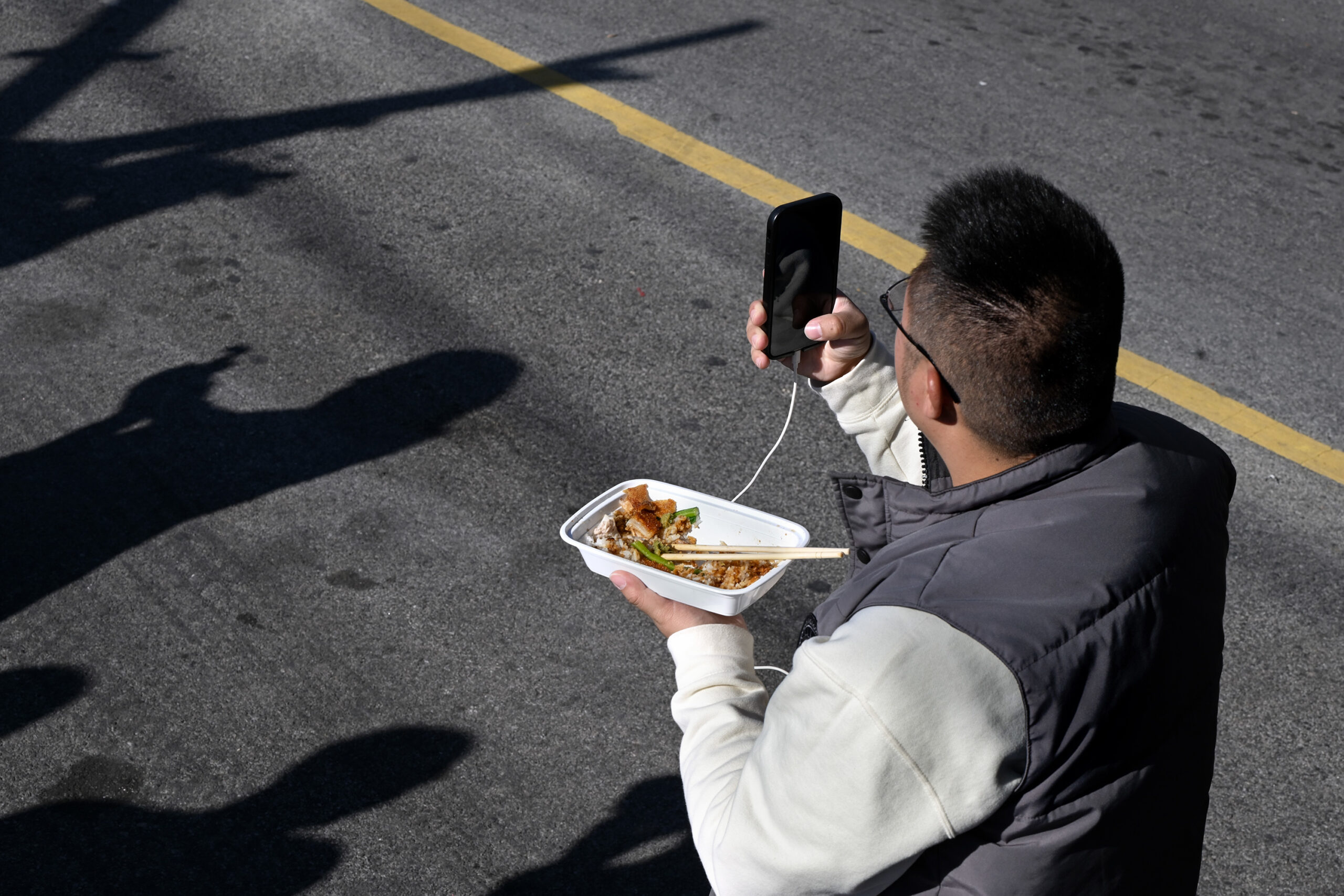
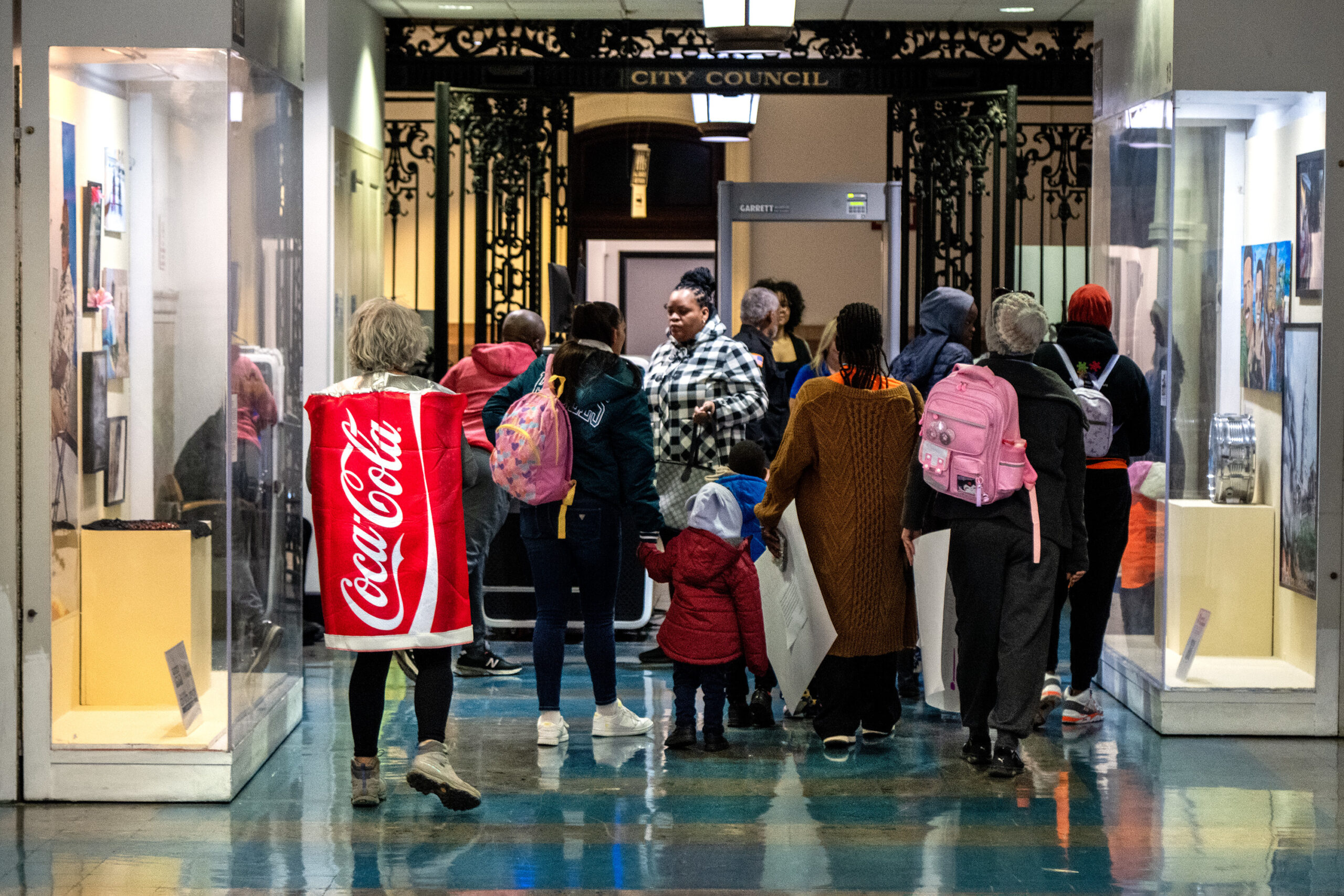
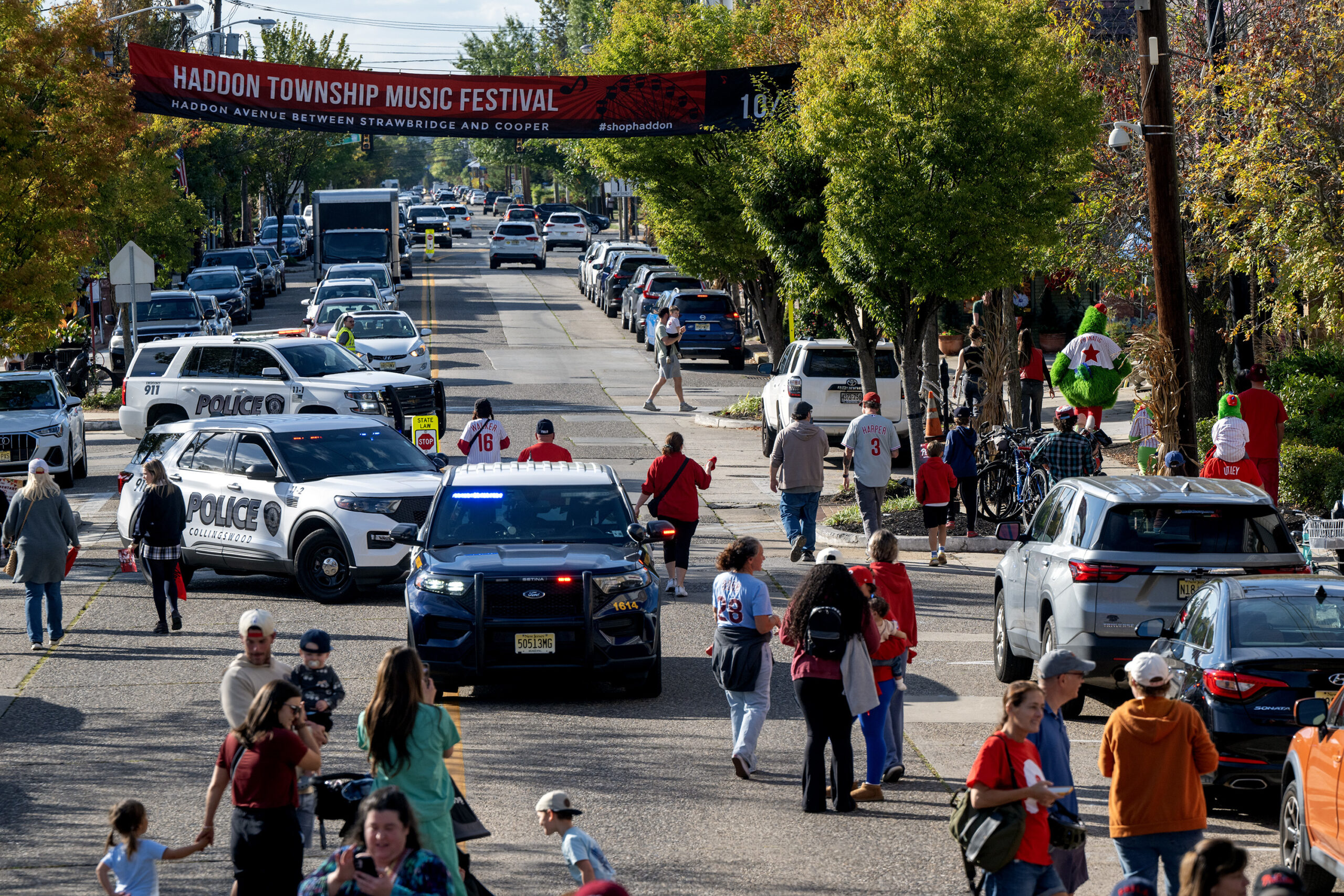
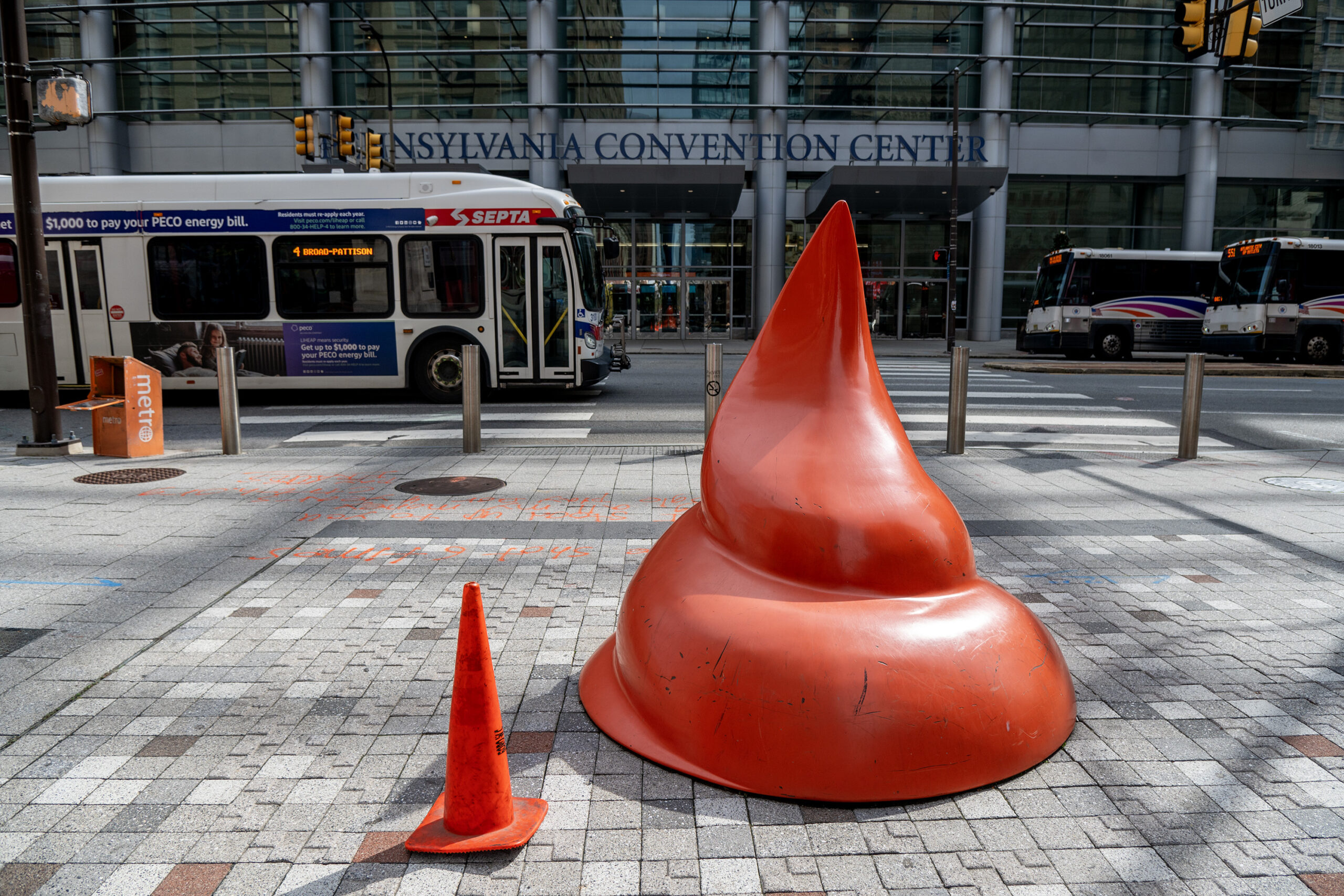
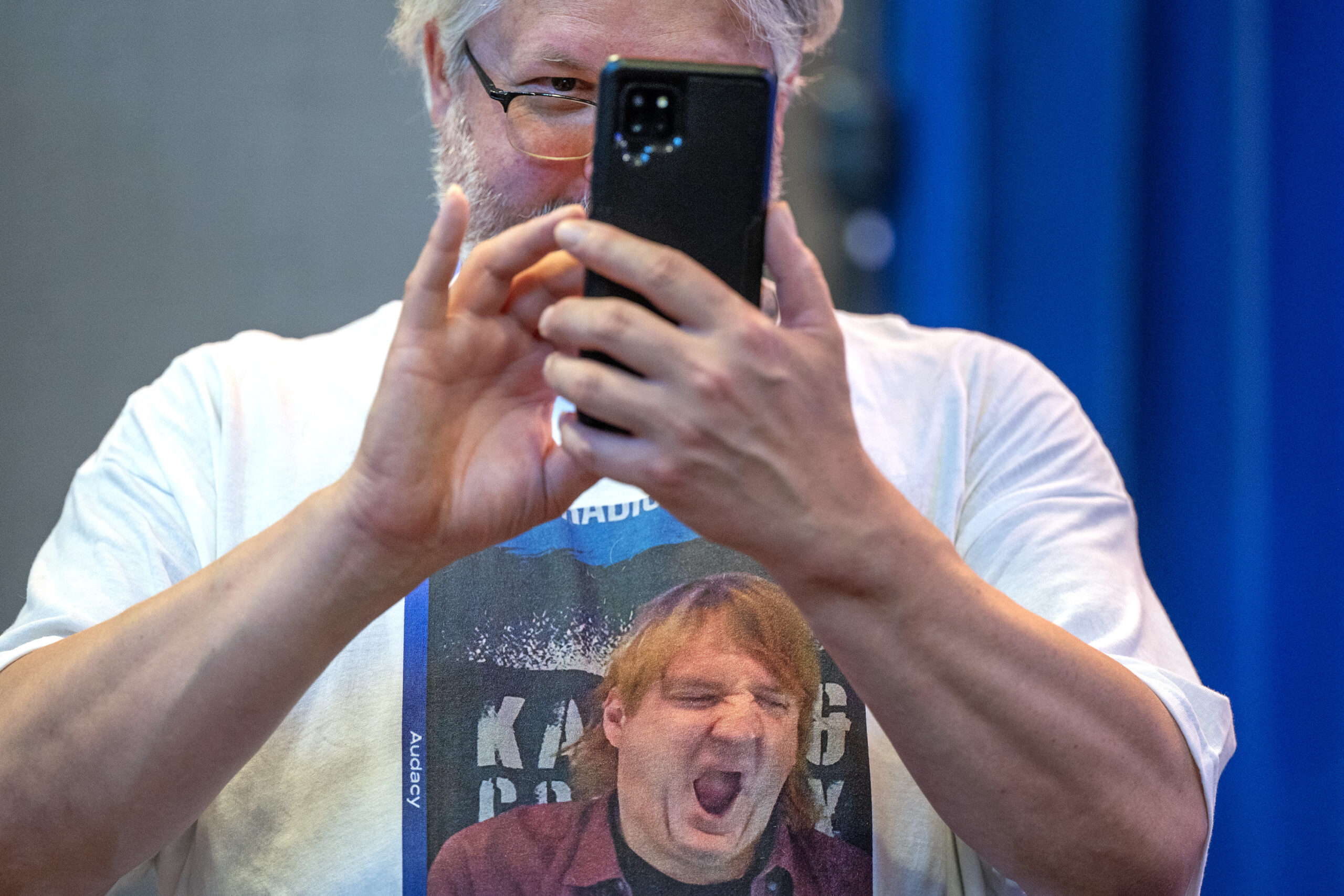
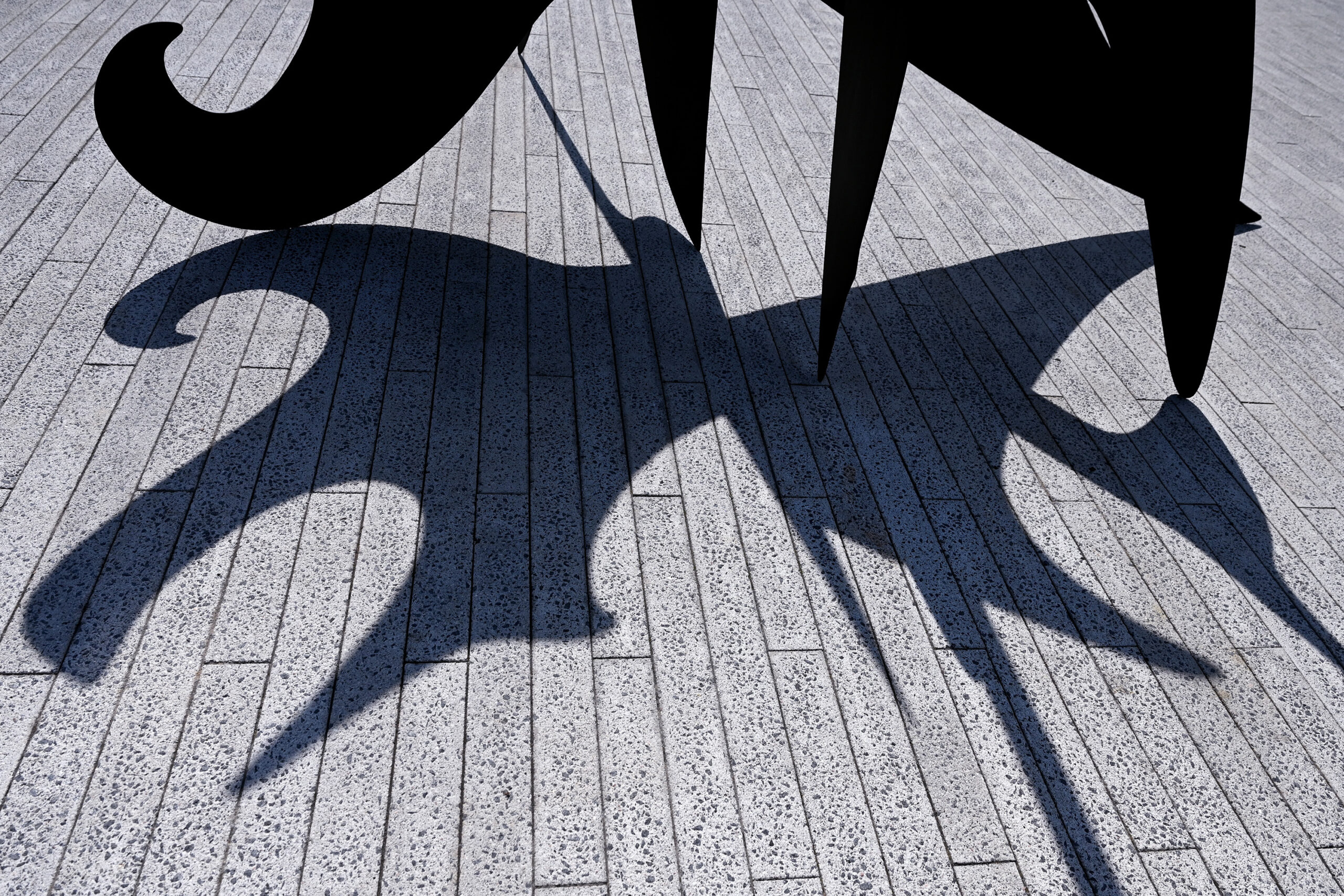
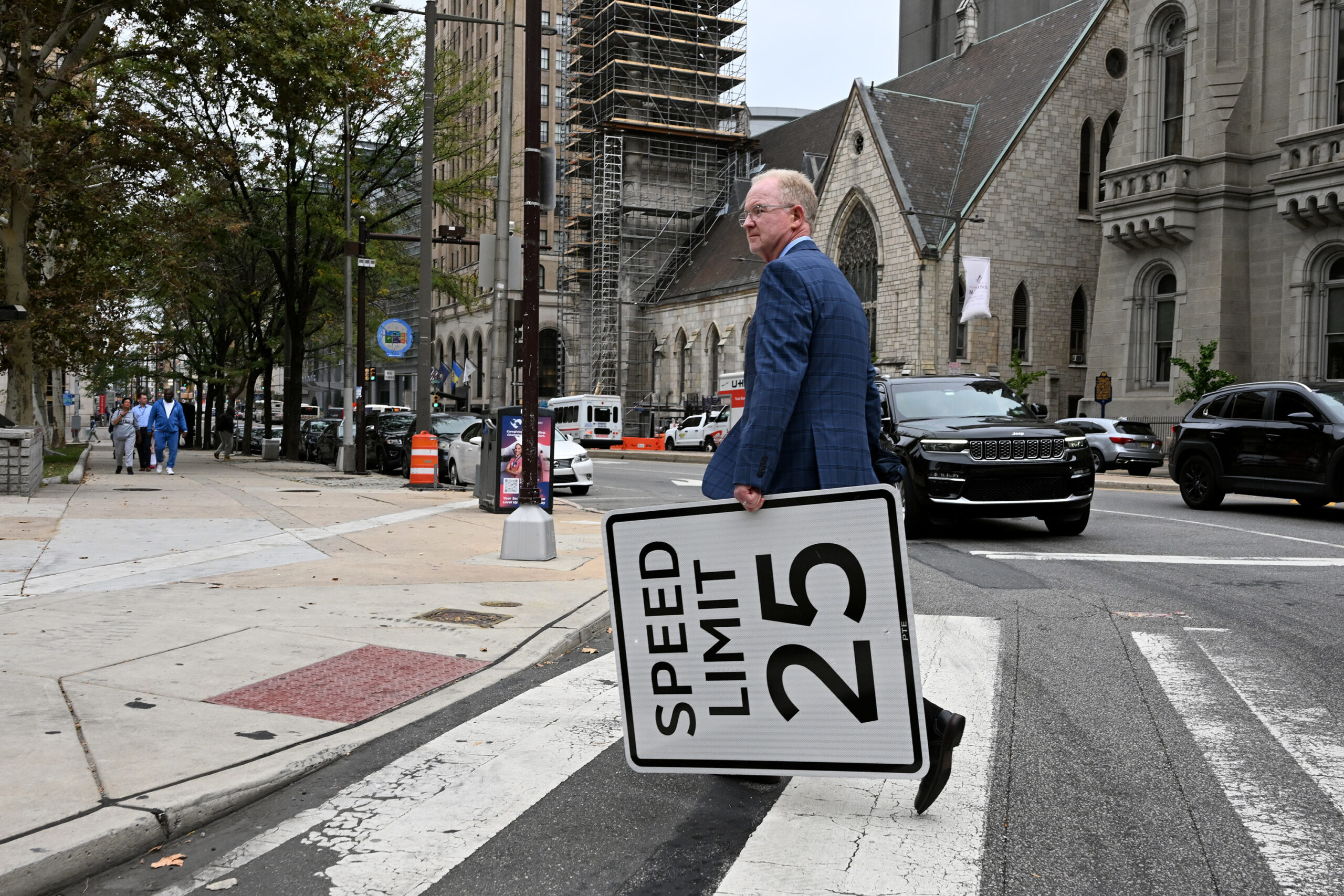
December 22, 2025: SEPTA trolley operator Victoria Daniels approaches the end of the Center City Tunnel, heading toward the 40th Street trolley portal after a tour to update the news media on overhead wire repairs in the closed tunnel due to unexpected issues from new slider parts.December 15, 2025: A historical interpreter waits at the parking garage elevators headed not to a December crossing of the Delaware River, but an event at the National Constitution Center. General George Washington was on his way to an unveiling of the U.S. Mint’s new 2026 coins for the Semiquincentennial, December 8, 2025: The Benjamin Franklin Bridge and pedestrians on the Delaware River Trail are reflected in mirrored spheres of the “Weaver’s Knot: Sheet Bend” public artwork on Columbus Boulevard. The site-specific stainless steel piece located between the Cherry Street and Race Street Piers was commissioned by the City’s Public Art Office and the Delaware River Waterfront Corporation and created and installed in 2022 by the design and fabrication group Ball-Nogues Studio. The name recalls a history that dominated the region for hundreds of years. “Weaver’s knot” derives from use in textile mills and the “Sheet bend” or “sheet knot” was used on sailing vessels for bending ropes to sails. November 29, 2025: t’s ginkgo time in our region again when the distinctive fan-shaped leaves turn yellow and then, on one day, lose all their leaves at the same time laying a carpet on city streets and sidewalks. A squirrel leaps over leaves in the 18th Century Garden in Independence National Historical Park Nov. 25, 2025. The ginkgo (Ginkgo biloba) is considered a living fossil as it’s the only surviving species of a group of trees that existed before dinosaurs. Genetically, it has remained unchanged over the past 200 million years. William Hamilton, owner the Woodlands in SW Phila (no relation to Alexander Hamilton) brought the first ginkgo trees to North America in 1785.November 24, 2025: The old waiting room at 30th Street Station that most people only pass through on their way to the restrooms has been spiffed up with benches – and a Christmas tree. It was placed there this year in front of the 30-foot frieze, “The Spirit of Transportation” while the lobby of Amtrak’s $550 million station restoration is underway. The 1895 relief sculpture by Karl Bitter was originally hung in the Broad Street Station by City Hall, but was moved in 1933. It depicts travel from ancient to modern and even futuristic times. November 17, 2025: Students on a field trip from the Christian Academy in Brookhaven, Delaware County, pose for a group photo in front of the Liberty Bell in Independence National Historical Park on Thursday. The trip was planned weeks earlier, before they knew it would be on the day park buildings were reopening after the government shutdown ended. “We got so lucky,” a teacher said. Then corrected herself. “It’s because we prayed for it.” November 8, 2025: Multitasking during the Festival de Día de Muertos – Day of the Dead – in South Philadelphia.November 1, 2025: Marcy Boroff is at City Hall dressed as a Coke can, along with preschoolers and their caregivers, in support of former Mayor Jim Kenney’s 2017 tax on sweetened beverages. City Council is considering repealing the tax, which funds the city’s pre-K programs. October 25, 2025: Austin Gabauer, paint and production assistant at the Johnson Atelier, in Hamilton Twp, N.J. as the finished “O” letter awaits the return to Philadelphia. The “Y” part of the OY/YO sculpture is inside the painting booth. The well-known sculpture outside the Weitzman National Museum of American Jewish History was removed in May while construction continues on Market Street and has been undergoing refurbishment at the Atelier at the Grounds for Sculpture outside of Trenton.October 20, 2025:The yellow shipping container next to City Hall attracted a line of over 300 people that stretched around a corner of Dilworth Park. Bystanders wondered as they watched devotees reaching the front take their selfies inside a retro Philly diner-esque booth tableau. Followers on social media had been invited to “Climb on to immerse yourself in the worlds of Pleasing Fragrance, Big Lip, and exclusive treasures,” including a spin of the “Freebie Wheel,” for products of the unisex lifestyle brand Pleasing, created by former One Direction singer Harry Styles.October 11, 2025: Can you find the Phillie Phanatic, as he leaves a “Rally for Red October Bus Tour” stop in downtown Westmont, N.J. just before the start of the NLDS? There’s always next year and he’ll be back. The 2026 Spring Training schedule has yet to be announced by Major League Baseball, but Phillies pitchers and catchers generally first report to Clearwater, Florida in mid-February.October 6. 2025: Fluorescent orange safety cone, 28 in, Poly Ethylene. Right: Paint Torch (detail) Claes Oldenburg, 2011, Steel, Fiberglass Reinforced Plastic, Gelcoat and Polyurethane. (Gob of paint, 6 ft. Main sculpture, 51 ft.). Lenfest Plaza at the Pennsylvania Academy of the Fine Arts on North Broad Street, across from the Convention Center.September 29, 2025: A concerned resident who follows Bucks County politics, Kevin Puls records the scene before a campaign rally for State Treasurer Stacy Garrity, the GOP candidate for governor. His T-shirt is “personal clickbait” with a url to direct people to the website for The Travis Manion Foundation created to empower veterans and families of fallen heroes. The image on the shirts is of Greg Stocker, one of the hosts of Kayal and Company, “A fun and entertaining conservative spin on Politics, News, and Sports,” mornings on Talk Radio 1210 WPHT.September 22, 2025: A shadow is cast by “The Cock’s Comb,” created by Alexander “Sandy” Calder in 1960, is the first work seen by visitors arriving at Calder Gardens, the new sanctuary on the Ben Franklin Parkway. The indoor and outdoor spaces feature the mobiles, stabiles, and paintings of Calder, who was born in Philadelphia in 1898, the third generation of the family’s artistic legacy in the city.September 15, 2025: Department of Streets Director of Operations Thomas Buck leaves City Hall following a news conference marking the activation of Automated Speed Enforcement (ASE) cameras on the Broad Street corridor – one the city’s busiest and most dangerous roads. The speed limit on the street, also named PA Route 611, is 25 mph.
We’ll show you a photo taken in the Philly-area, you drop a pin where you think it was taken. Closer to the location results in a better score. This week’s theme is all about the Mummers Parade. Good luck!
Round #13
Question 1
Where were these people?
Loading…
ClickTap on map to guess the location in the photo
ClickTap again to change your guess and hit submit when you're happy
You will be scored at the end. The closer to the location the better the score
Elizabeth Robertson / Staff Photographer
Pretty good/Not bad/Way off! Your guess was from the location.Spot on! Your guess was exactly at the location. Here's also where a random selection of Inquirer readers guessed.
People danced in front of the Engine 1 Ladder 5 firehouse on South Broad Street to celebrate the new year during the Mummers Parade on Jan. 1, 2025.
Quiz continues after ad
Question 2
Where is this museum?
Loading…
Jose F. Moreno / Staff Photographer
Pretty good/Not bad/Way off! Your guess was from the location.Spot on! Your guess was exactly at the location. Here's also where a random selection of Inquirer readers guessed.
This is the Mummers Museum on South Second Street, which chronicles the history of the annual New Year’s Day parade since 1976.
Quiz continues after ad
Question 3
Where was this band?
Loading…
David Maialetti / Staff Photographer
Pretty good/Not bad/Way off! Your guess was from the location.Spot on! Your guess was exactly at the location. Here's also where a random selection of Inquirer readers guessed.
The Duffy String Band was practicing at TipTop Playground in Northern Liberties in December 2021.
Your Score
ARank
Amazing work. Your score is full of glitter and shines brightly!
BRank
Good stuff. You’ve marched impressively down Broad Street.
CRank
C is a passing grade, because we judges are giving you a generous score. Turn up your real performance!
DRank
D isn’t great. Your performance was like sneaking into the parade without a costume!
FRank
We don’t want to say you failed, but you didn’t not fail.
You beat % of other Inquirer readers.
We’ll be back next Saturday for another round of Citywide Quest.
As a chef from Hawai’i who has lived in Philadelphia for well over a decade, I saw firsthand the connection between both places. For years, through Poi Dog, I fed homesick Hawai’i people and those who had celebrated weddings, honeymoons, and holidays in my home state, then came back to the mainland searching for a taste of the islands. These days, the question I get most often is simple: Where should I eat in Honolulu?
This is a special edition of our Field Trip series — not a typical three-day drive, but a culinary escape meant for when you’re bundled up at home, staring down winter, and dreaming of somewhere warmer. Think of it as planning your next trip while the heater’s on: balmy breezes, sun-warmed beaches, and unlimited fresh poke, all waiting when you’re ready to go.
What follows is a starting point for eating your way through Honolulu, whose excellent, deeply multicultural food scene is built on Native Hawaiian traditions and shaped by waves of immigrants who came to work the sugarcane and pineapple plantations — and now, the tourism industry. I urge you to explore far beyond this list, to leave Honolulu when you can, see the rest of Oʻahu, and visit its neighboring islands. But if you’re beginning with the city, this is where to start.
Honolulu is sprawling and encompasses a downtown business district, touristy Waikiki, Kaimuki with its many hip restaurants, Chinatown (which also has hip restaurants), and many suburbs. In the former three categories, we say they’re “in town,” though the limits of “town” are as heavily debated as the boundaries of Philly’s neighborhoods.
Chances are you’re staying in Waikiki, and all of the following are in the most touristed district or are a quick, cheap Uber ride from Waikiki (unless of course, it’s rush hour, in which case, I can’t help you).
Honolulu restaurants to check out
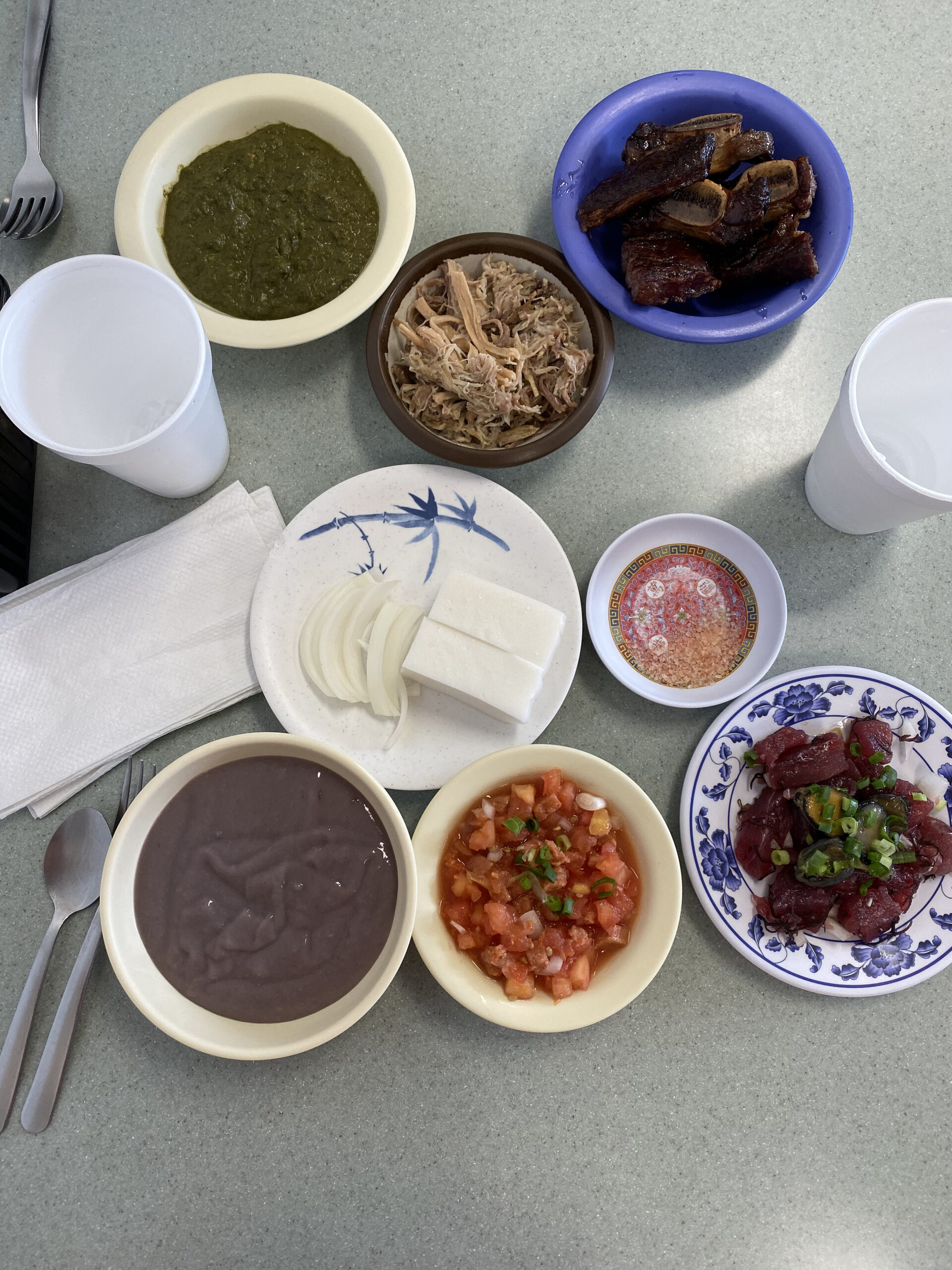
If you’re going to Honolulu, the first order of business is getting real Hawaiian food. This means poi, or pounded taro root, the staple starch of the Hawaiians before laborers on Hawai’i’s sugarcane plantations from East Asia shifted the dominant starch of the islands to rice; smoky, tender kalua pig (preferably cooked in an imu, or underground oven); lu’au (a stew made from taro leaves, coconut milk, and usually with chicken or squid); and delicacies like ‘opihi, small limpets that are somewhat similar in taste to abalone, and are notoriously challenging to collect, requiring one to pry the barnacles from slippery rocks while being pounded by surf.
Hawaiian food is a distinctly different cuisine from Hawaiian BBQ, which falls under the category of “local food” in Hawai’i – a confusing term for outsiders because “local food” encompasses food that was introduced to Hawai’i by its waves of immigrants. Native Hawaiian food does have immigrant influences and does incorporate ingredients not native to Hawai’i, but in ways that predated its sugar plantation era.
Helena’s Hawaiian Food in Honolulu.
Helena’s Hawaiian Food
Helena’s is the reigning queen of Hawaiian food and this is the ideal place for you to try all of the above Hawaiian specialties, including ‘opihi. Their pipikaula, or Hawaiian-style beef jerky, is less jerky and more of a soy-marinated and dried short rib that manages to retain remarkable tenderness, concentrating sublime beefiness into tiny squares of meat. Cleanse your palate with a square of their haupia and a nibble on fresh, raw sweet onion dipped into red alaea salt, fixings that come with every set meal. Be mindful that Helena’s is only open 10 a.m. to 7:30 p.m., and it is closed on weekends.
If you can’t make it past the throngs of people trying to get into Helena’s, Highway Inn also serves great Hawaiian food in town. (Its original location is in Waipahu. They also just opened an outpost at the Bishop Museum.) It’s open every day and in addition to Hawaiian stalwarts like kalua pig, chicken long rice, and squid lu’au, they also serve a large menu of riffs on these, like kalua pig nachos, with sides of lomi lomi salmon, a dish that is made entirely of introduced ingredients, but has been around so long that it has been accepted into the canon of Hawaiian food.
📍 680 Ala Moana Blvd. #105, Honolulu, Hawaii 96813, 📞 808-954-4955, 🌐 myhighwayinn.com
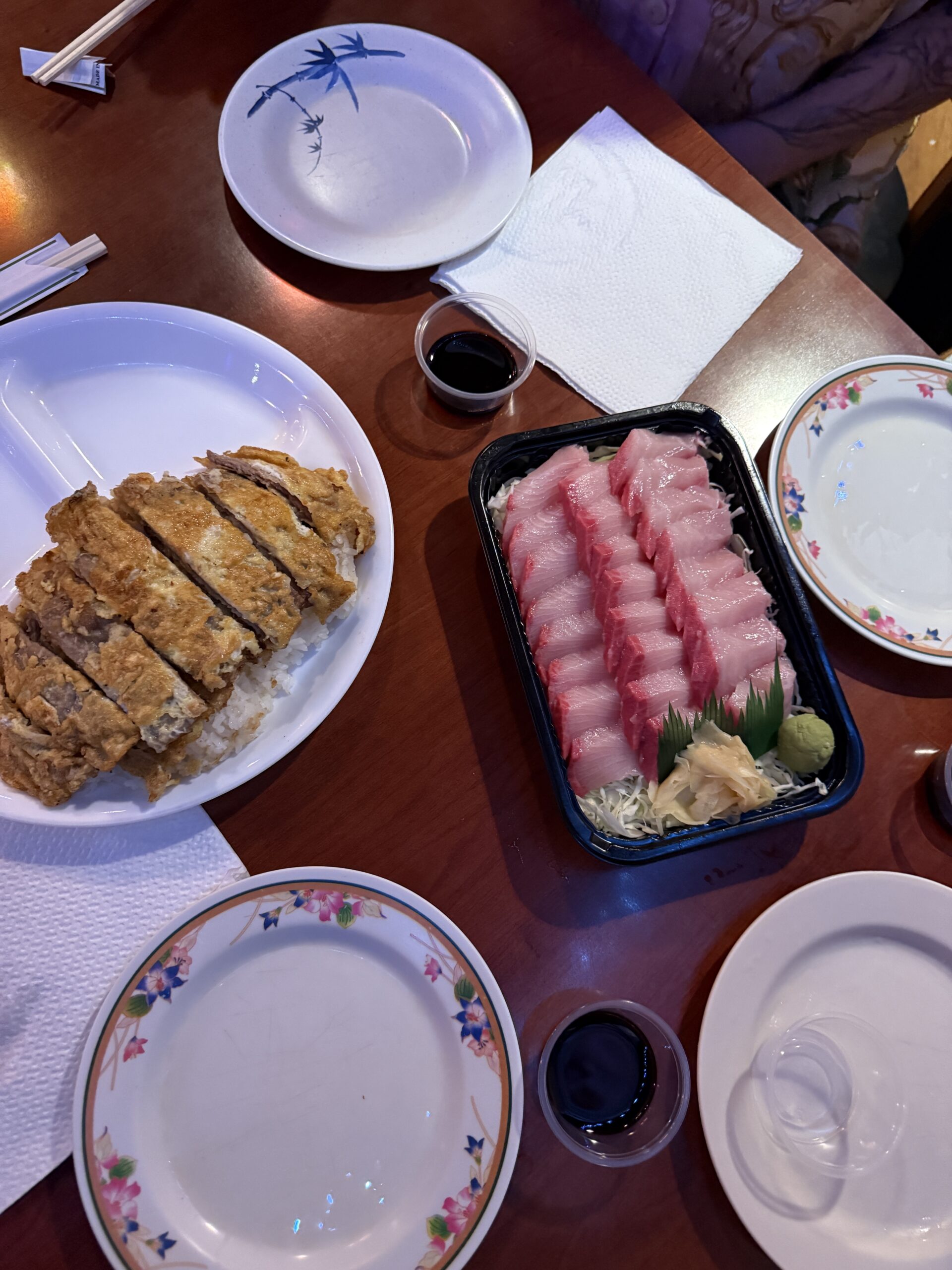
Sashimi and meat jun at Kyung’s Seafood in Honolulu.
Kyung’s Seafood
Some of Honolulu’s best Hawaiian BBQ intersects with Korean BBQ, and there are Korean dishes in Hawai’i that are found nowhere else, not even Korea. Kyung’s Seafoodmakes one of the very best versions of meat jun, one such Korean dish that exists in isolation, which consists of thinly sliced meat battered in scrambled eggs and served with a light soy dipping sauce. Marry their meat jun with rice and mac salad, and some of Kyung’s excellent banchans or precisely arranged sashimi platters.
📍 1269 S. King St., Honolulu, Hawaii 96814, 📞 808-589-1144, 📷 @kyungsseafood
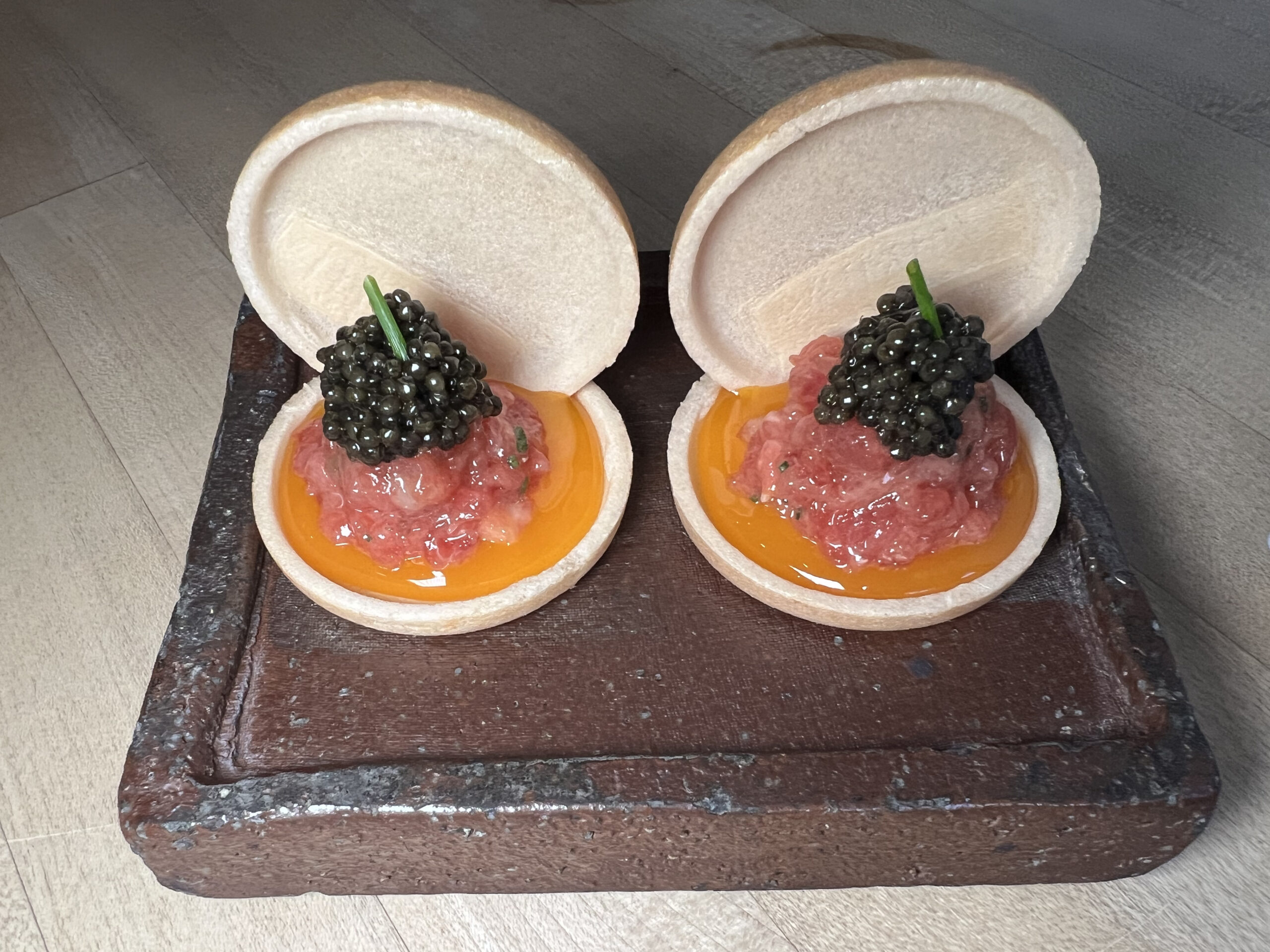
Monaka filled with ahi tartare and caviar from Miro Kaimuki.
Miro Kaimuki
If you’re celebrating something special, whether it’s an anniversary or a Tuesday, Miro in Kaimuki is the finest of dining on this list. It’s a special occasion restaurant that doesn’t feel the least bit stuffy, with beautifully balanced cocktails and wine pairings. Meals are prix fixe, with many possibilities of add-ons like flank washugyu, toasted brioche topped with curls of uni, and vanilla macarons filled with caviar. Miro also happens to be the self-declared Philadelphia Embassy in Hawai’i, as many of its current and former staffers either hail from Philly or have spent time in the city (Zahav pops up on numerous Miro cooks’ resumés).
Speaking of sashimi, Hawai’i is really close to Japan, so not only do we get a wealth of fish pulled from surrounding waters, but we have an abundance of Japanese seafood flown in regularly. This makes for fantastic (and countless) omakase options, most of which hew to classic Japanese experiences. For a relaxed, island-style omakase or a la carte sushi and izakaya dinner, head to Sushi Izakaya Gaku. Gaku has the softest, silkiest, and lightest tamago, the homemade sweet egg omelet, and all the standard izakaya fare, but also some wild, more unusual specials, like seared sting ray, raw octopus, and thinly sliced beef tongue served over shaved onion with a big squeeze of lemon.
📍 1329 S. King St., Honolulu, Hawaii 96814, 📞 808-589-1329
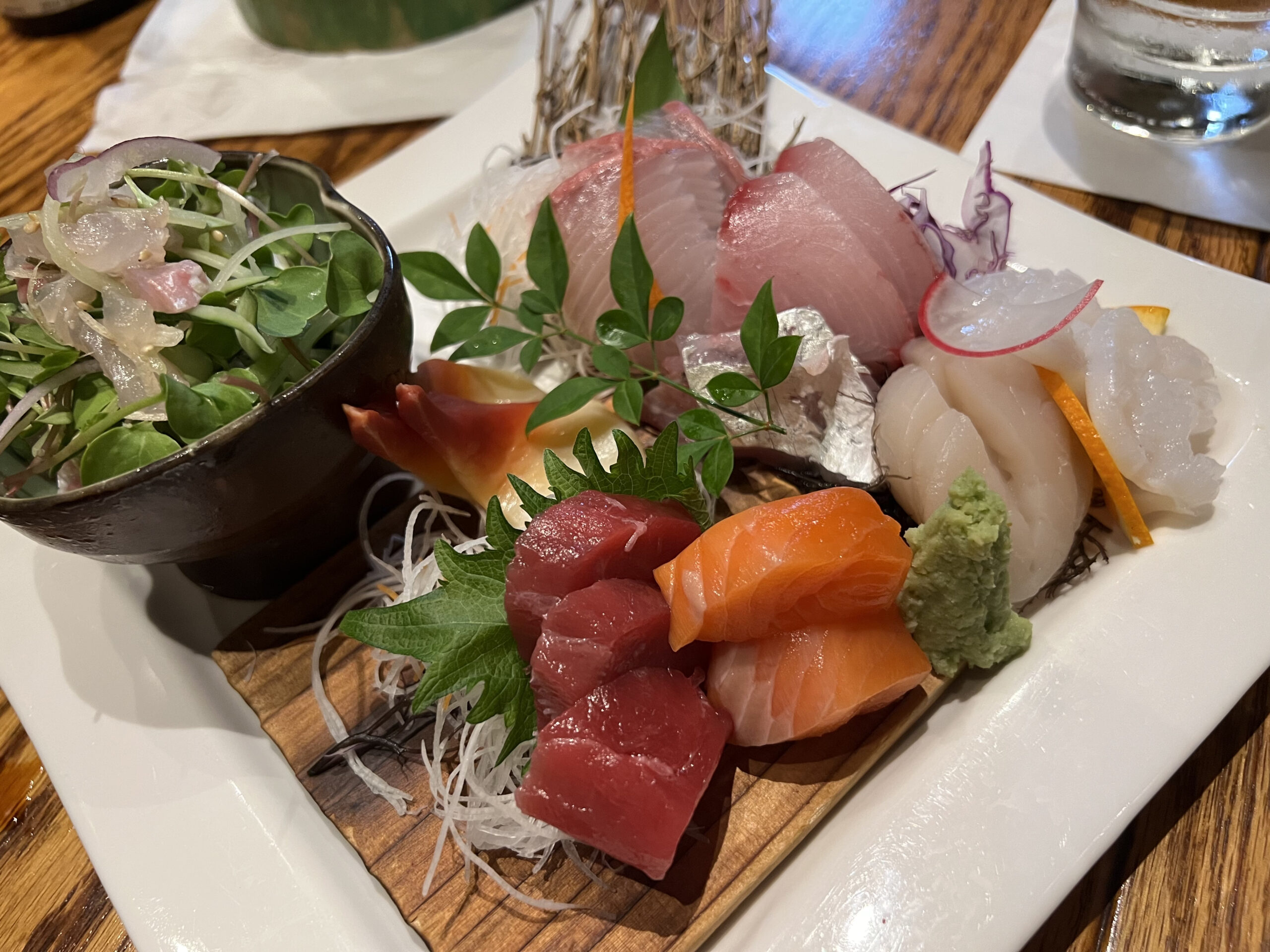
Sashimi platter from Mitch’s Seafood in Honolulu.
Mitch’s Fish Market and Sushi Bar
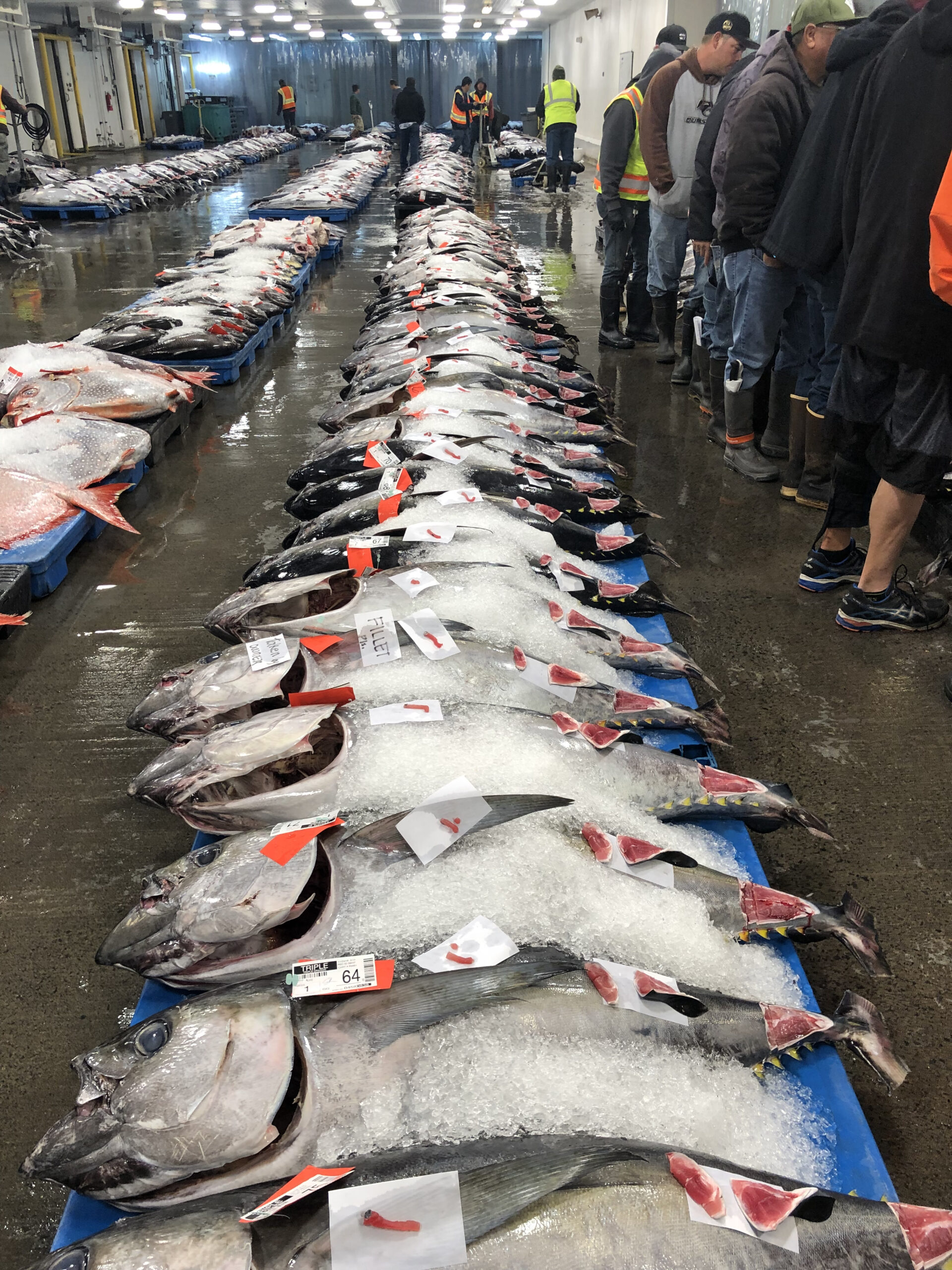
Located right on the pier, where fishing boats dock and unload their ahi for the Honolulu Fish Auction, Mitch’s Fish Market and Sushi Bar is an unbelievable option for generous cuts of sashimi, hefty chirashi bowls piled with shrimp, ahi, yellowtail, and tamago. It’s small (make a reservation), casual, and perpetually proud of their most famous patron, President Barack Obama.
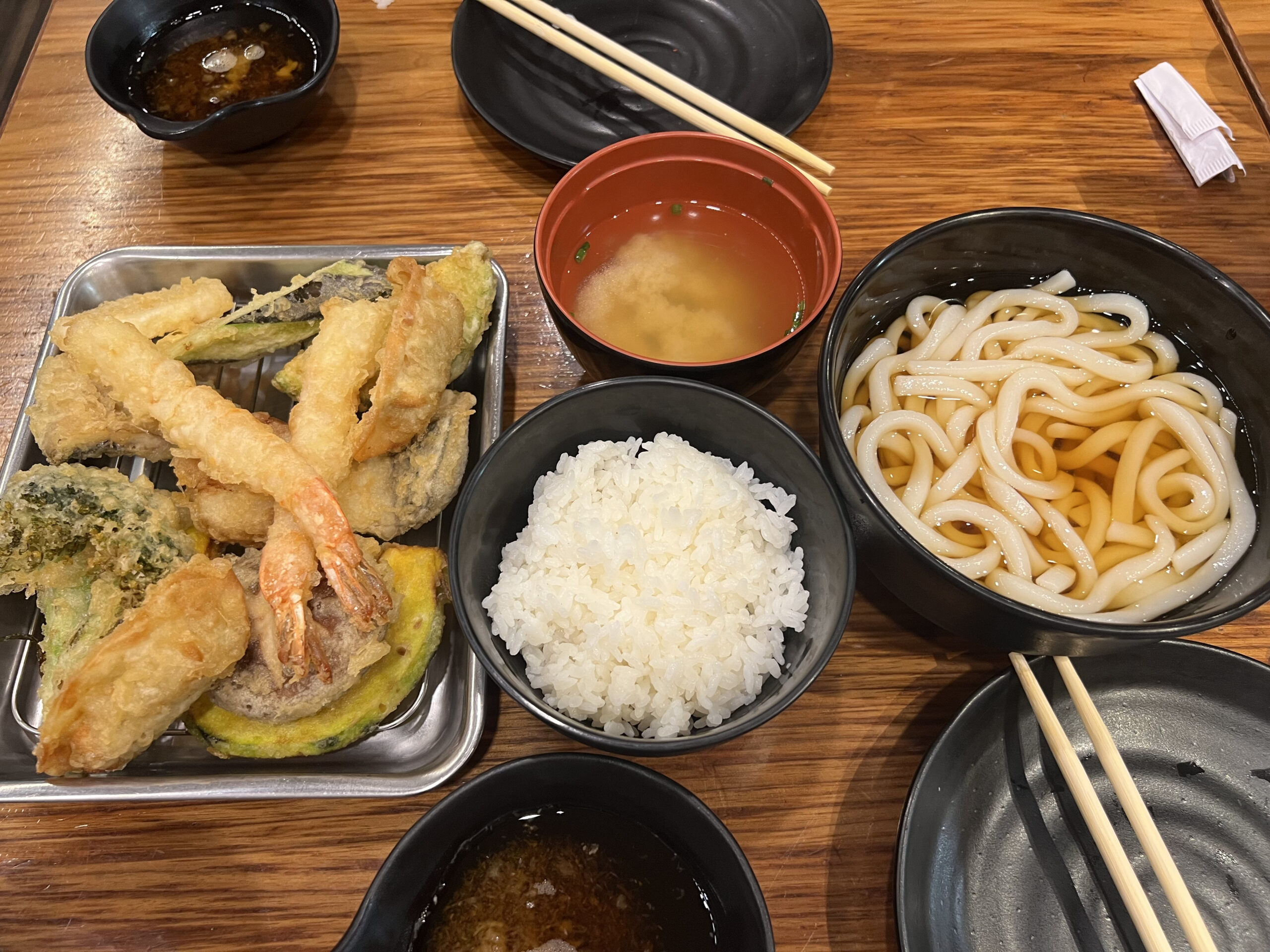
Tempura Kiki set meal, inside the Stix Asian Food Hall.
Stix Asia Food Hall
In addition to ready access to Japanese ingredients, we have practically all the hot Japanese chain restaurants. like Marugame Udon, Han No Daidokoro (which specializes in fresh wagyu — usually, when wagyu is exported, it’s frozen), and many others packed into Stix Asia, a Japanese food hall. Two of my favorites inside Stix Asia are Tempura Kikifor its avocado tempura and bowls of udon (no relation but they did offer me a discount because of my name), and Nanamusubi, which churns out omusubi made with specialty, heritage Japanese grains, and stuffed with an array of fish salads and pickled seaweeds.
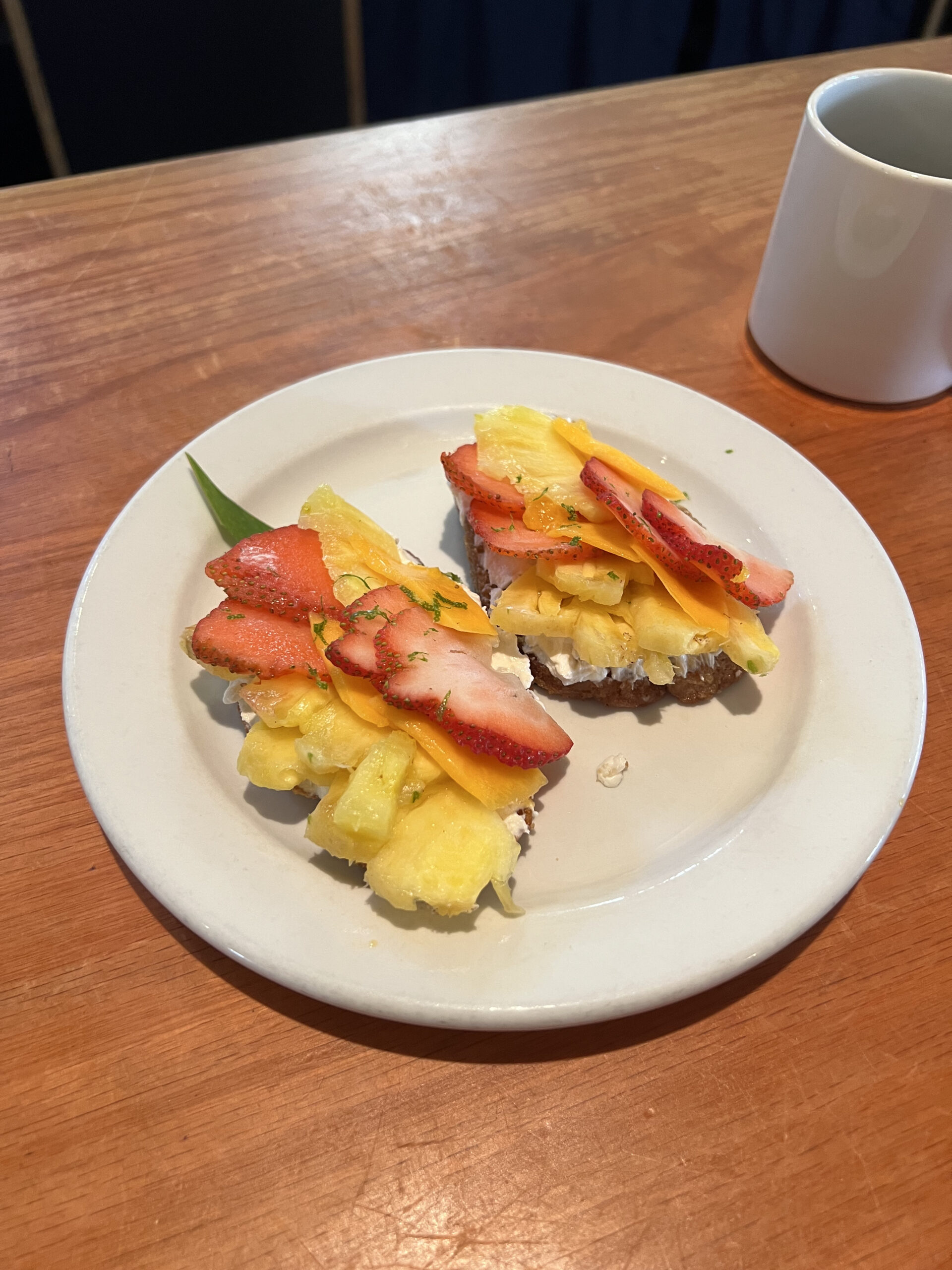
New York transplant and Top Chef competitor Lee Anne Wong pretty much single-handedly made brunch a craze in Honolulu a decade ago. Her Koko Head Cafe has since become a classic for eggs scrambled with local ingredients and enormous, indulgent bowls of congee topped with croutons. Hawai’i and Japan also seem to have a restaurant exchange system; the cafe has also opened locations in Japan. Don’t miss their poke omelets, and my favorite breakfast item, rusk spread with yogurt and fresh local fruit.
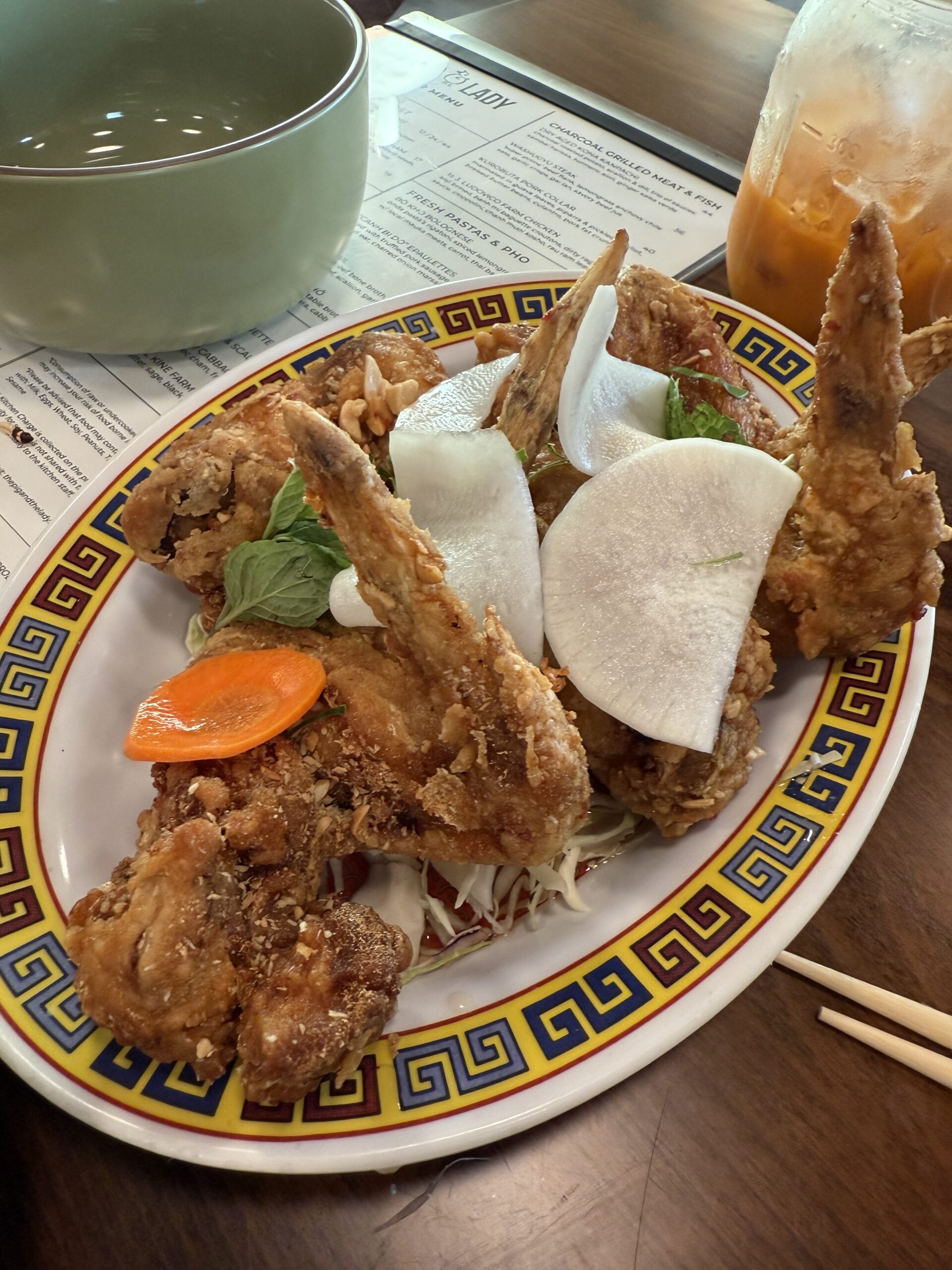
The Pig and the Lady is one of those chef-driven destination restaurants that appear on many a national list. It has gone through a couple iterations, and just opened a new location in Kaimuki that will more than scratch your itch for excellent Vietnamese food, if you can’t live without your Gabriella’s Vietnam fix. But there are unmistakable Hawaiian touches like chile pepper water-doused oysters, country ham served with persimmons, and banh xeo made with pa’i’ai or pounded taro. Vietnamese food like this exists nowhere else on the planet.
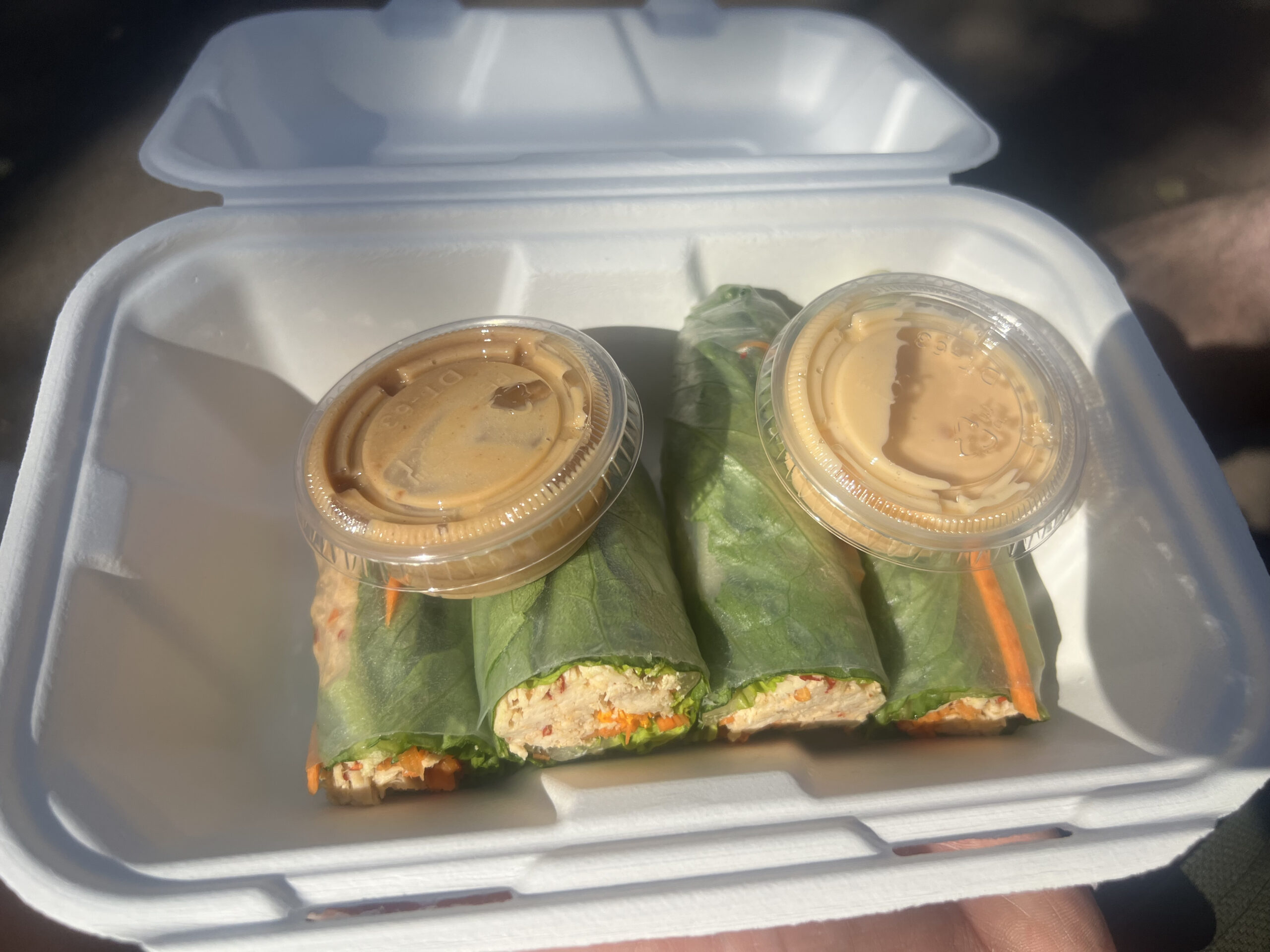
Spring rolls from the Kapiolani Community College Farmers’ Market.
Kapiolani Community College Farmers Market
The Pig and the Lady also sets up a stand at theKapiolani Community College Farmers Marketon Saturdays from 7:30 to 11 a.m., serving pho French dips, lemongrass chicken banh mis, bun bowls with a vermicelli base, and curry rice plates. The rest of KCC Farmers Marketwill knock your socks off with its array of prepared foods, fresh fruit juices, coffee stands, vendors hacking into fresh coconuts with machetes, and abundance of tropical produce, from papayas to ‘ulu or breadfruit. If you’re walking up to the Diamond Head trail from Waikiki, you’ll pass it near the trailhead, but build in time to stop for a siphon coffee at Ars Cafefor a cup that rivals one from Ray’s Cafe and Tea House in Philly.
📍 Parking Lot B, 4303 Diamond Head Rd., Honolulu, Hawaii 96816, 🌐 hfbf.org/farmers-markets/kcc
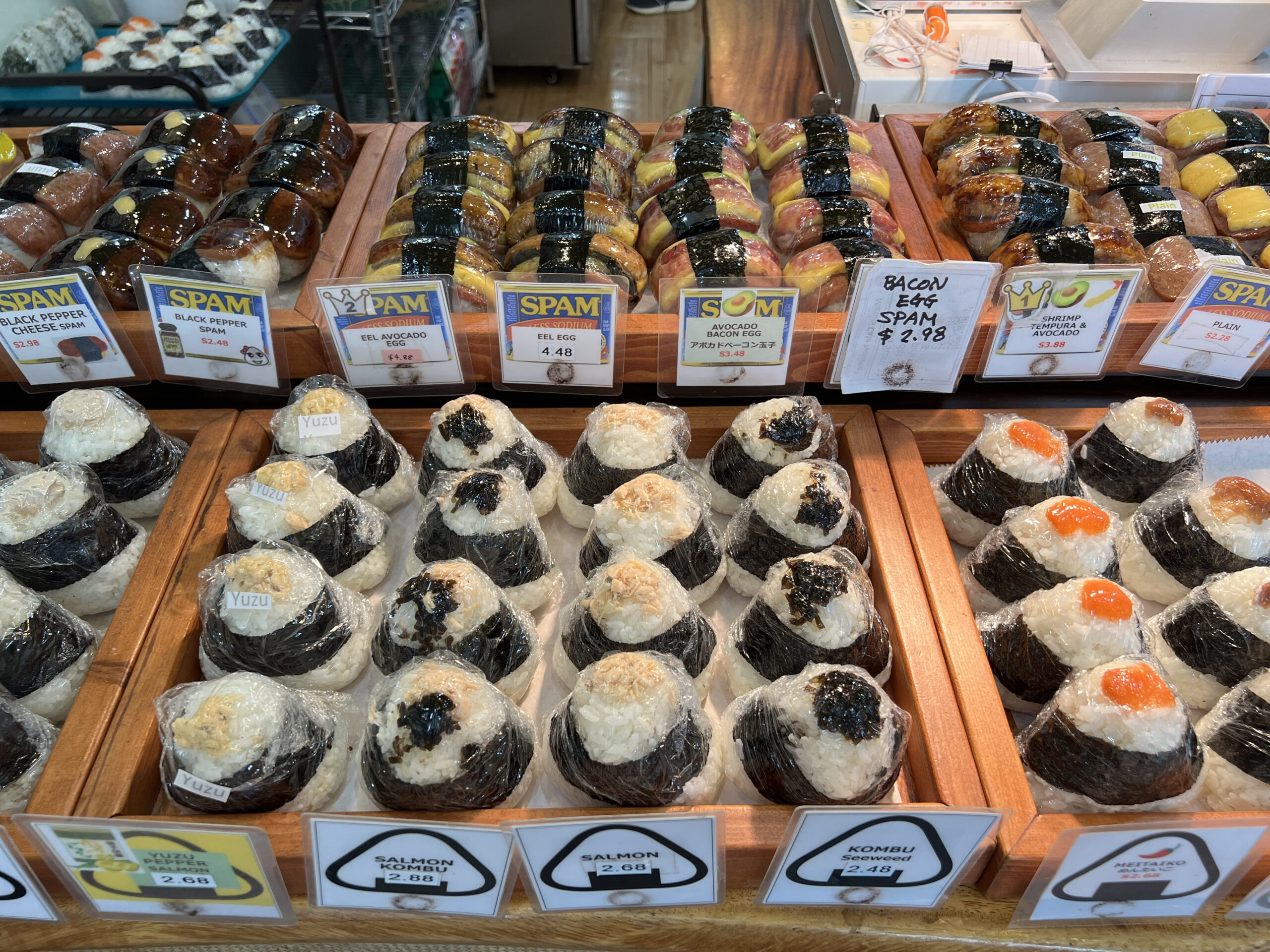
The array of musubi at Musubi Iyasume in Waikiki.
Musubi Iyasume
Many of Waikiki’s 24-hour diner grand dames have closed at this point, but thankfully, my favorite breakfast in Waikiki doesn’t involve sitting down. Musubi Iyasume has multiple locations, serving classic Spam musubis, as well as ones that pair avocado, eel, and tamago with Spam and rice. They have seven locations, but I love the one at Waikiki Beach Walk the most because it has the longest opening hours and can scratch your musubi cravings from 7 a.m. to 9 p.m. every day.
Wash down your breakfast musubi with one of the best deals in Waikiki: a sugarcane juice from the stationary food truck Aloha Sugarcane Juices,which you can get spiked with juicy, local calamansi, or blended with mangoes and papayas.
📍 138 Uluniu Ave., Honolulu, Hawaii 96815
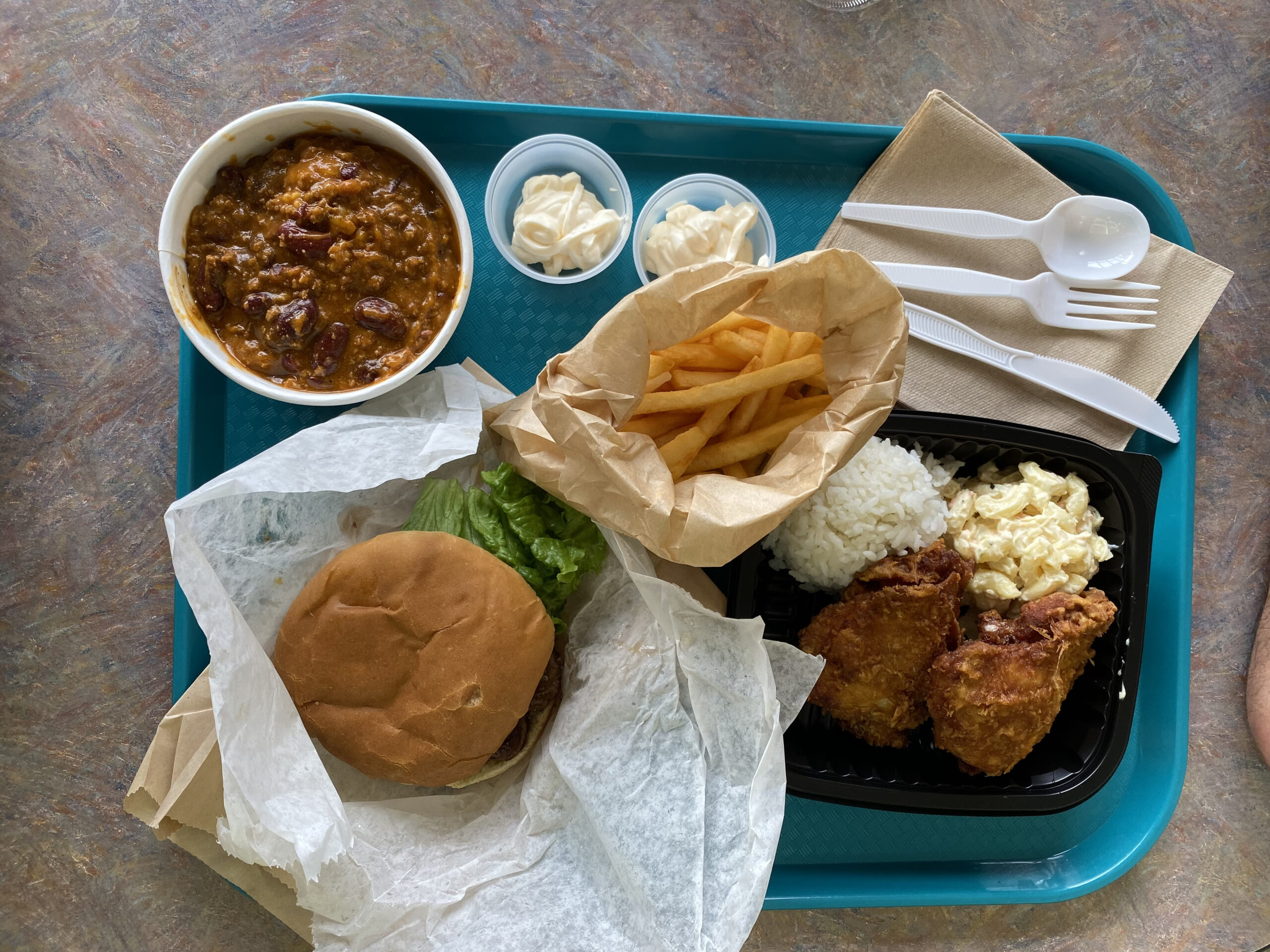
Zippy’s chili, teri burger, fries, and mini fried chicken plate.
Zippy’s
Head over to one of many locations of Zippy’s(a fast food diner chain that we love as dearly as Philadelphians love Wawa) to get some of the best of the island’s fried chicken or to pick up a bento box to bring on one of Oahu’s legendary hikes. Zippy’s is also famous for their chili, which will require you to pick a stance when you order: pro-kidney beans or no-kidney beans. While Zippy’s locations are scattered throughout Oahu (and also Las Vegas, considered Hawai’i’s ninth island), I implore you to go to the one in Kapahulu, so you will be within walking distance of the legendary Leonard’s Malasadas.
Delis in Hawai’i don’t resemble anything that might be called a deli in Philadelphia. Cold cases are filled with vats of fresh fish poke as opposed to deli meats, and Alicia’s Market mixes up some of Hawai’i’s best pokes (though honestly, unless you’re going to one of those newfangled build-a-bear style poke joints, it’s hard to go wrong).
If you’re committed to staying near Waikiki, Ala Moana Shopping Center is a short walk and pretty unavoidable if you’re a tourist. Thankfully, Foodland Farms opened adjacent to the mall eight years ago, and it has only gotten better over the years. It’s far more than just a grocery store, but a one-stop shop for great poke, edible island souvenirs (there’s a huge selection of Hawaiian chocolate, sweets, and coffee), and bento boxes to take with you on hikes. There’s also a wine bar.
📍 1450 Ala Moana Blvd., Honolulu, Hawaii 96814, 📞 808-949-5044, 🌐 shop.foodland.com
Inside the Honolulu Fish Auction
Hawai’i has a serious sweet tooth
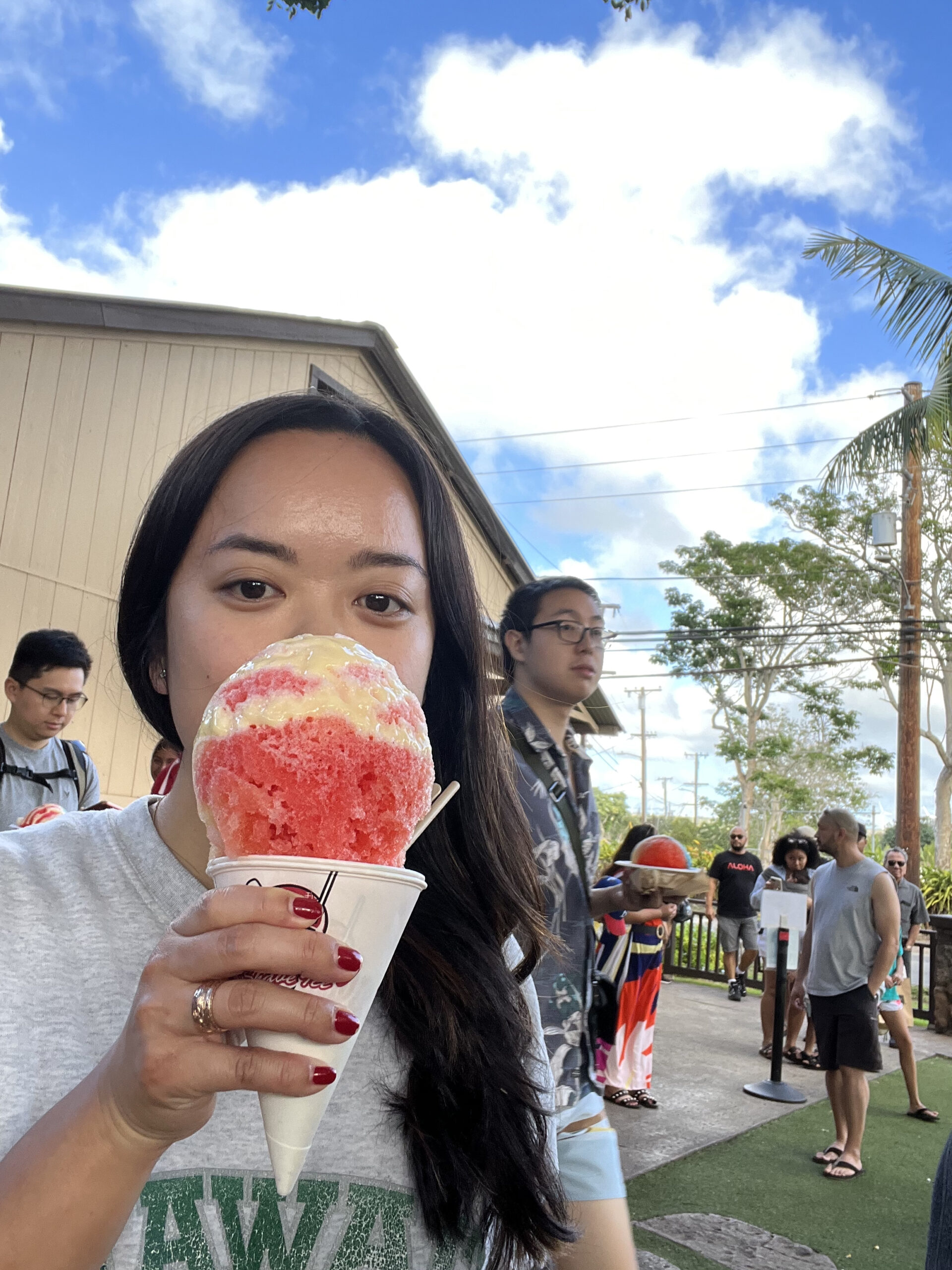
If you think Philly’s water ice is good, wait till you taste shave ice. Forget about tiny little paper cups of flavored ice, in Hawai’i, our shave ice (no “d” in “shave”) is a fluffy, lightly compacted pile of snow that will be quite a bit larger than your head.
Shimazu Shave Ice
Shimazu has been shaving ice for over 70 years and decorating the globes with stripes of tamarind, strawberry, passionfruit, mango, li hing mui (salty preserved plum), and many other syrups. Most shave ice shops will insist upon you consuming their shave ice outside.
For something more akin to water ice, Asato Family Shop painstakingly makes small batches of sherbet inspired by the nostalgic flavors of crack seed stores, Hawai’i’s throwback snack shops filled with jars of pickled mango, dried seeds, and raisin-like apricots.
Need a doughnut? Malasadas, which are yeasty, pillowy Portuguese doughnuts without holes and tossed in sugar, are far superior to any doughnut. Don’t be fooled by “bakery” being in Leonard’s name. These malasadas are fried. Go get one at Leonard’s original location (they also have trucks scattered throughout Oahu), and start with their original malasada, with no filling and a sugar coating, then move on to ones stuffed with haupia, or coconut pudding.
Now that you’ve made it to this point in the guide, you’ve likely consumed a lot of rice and hopefully, poi. If you need your fresh baked bread fix, Local General Store has been garnering a lot of recent attention. It’s on par with Philly’s Lost Bread and Mighty Bread, but is a combination bakery and butcher shop, so you can stop by for a pastry and a porchetta, and perhaps, a slice of their housemade Spam.
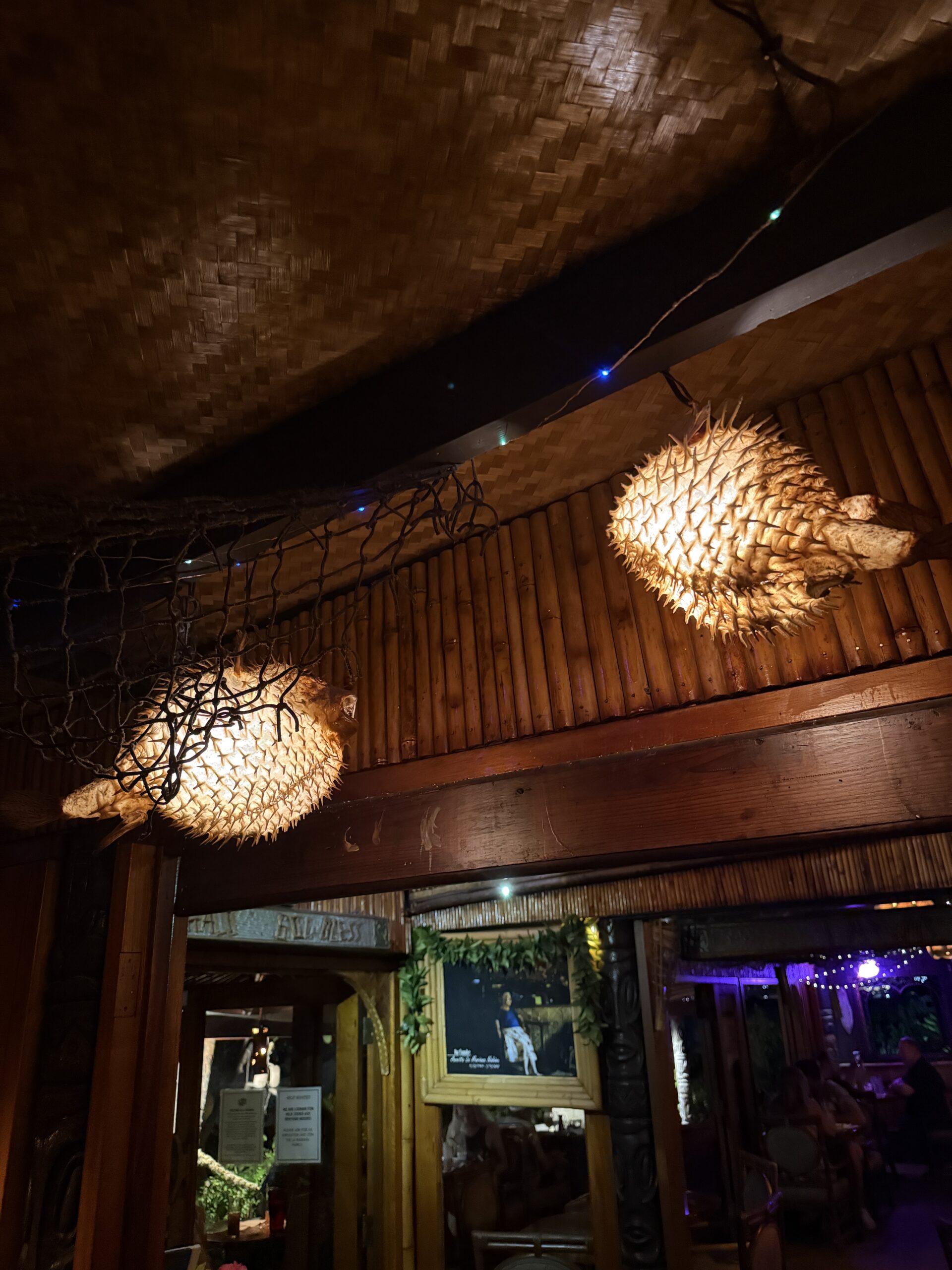
Blowfish lamps at La Mariana Sailing Club in Honolulu.
At some point, you’re going to want to unwind with a cocktail
La Mariana Sailing Club
Yes, it’s hard to get around Honolulu without encountering a mai tai, but if you’re a fan of kitsch and want to visit one of Oahu’s last remaining old school tiki bars, La Mariana Sailing Club leans hard into the theme. They have the vintage tiki mugs, the glass buoys hanging from the ceiling, the dangerously strong drinks. La Mariana is also near the airport if you need one last hurrah before passing out on the plane home.
📍 50 Sand Island Access Rd., Honolulu, Hawaii 96819, 📞 808-848-2800, 🌐 la-mariana-sailing.club
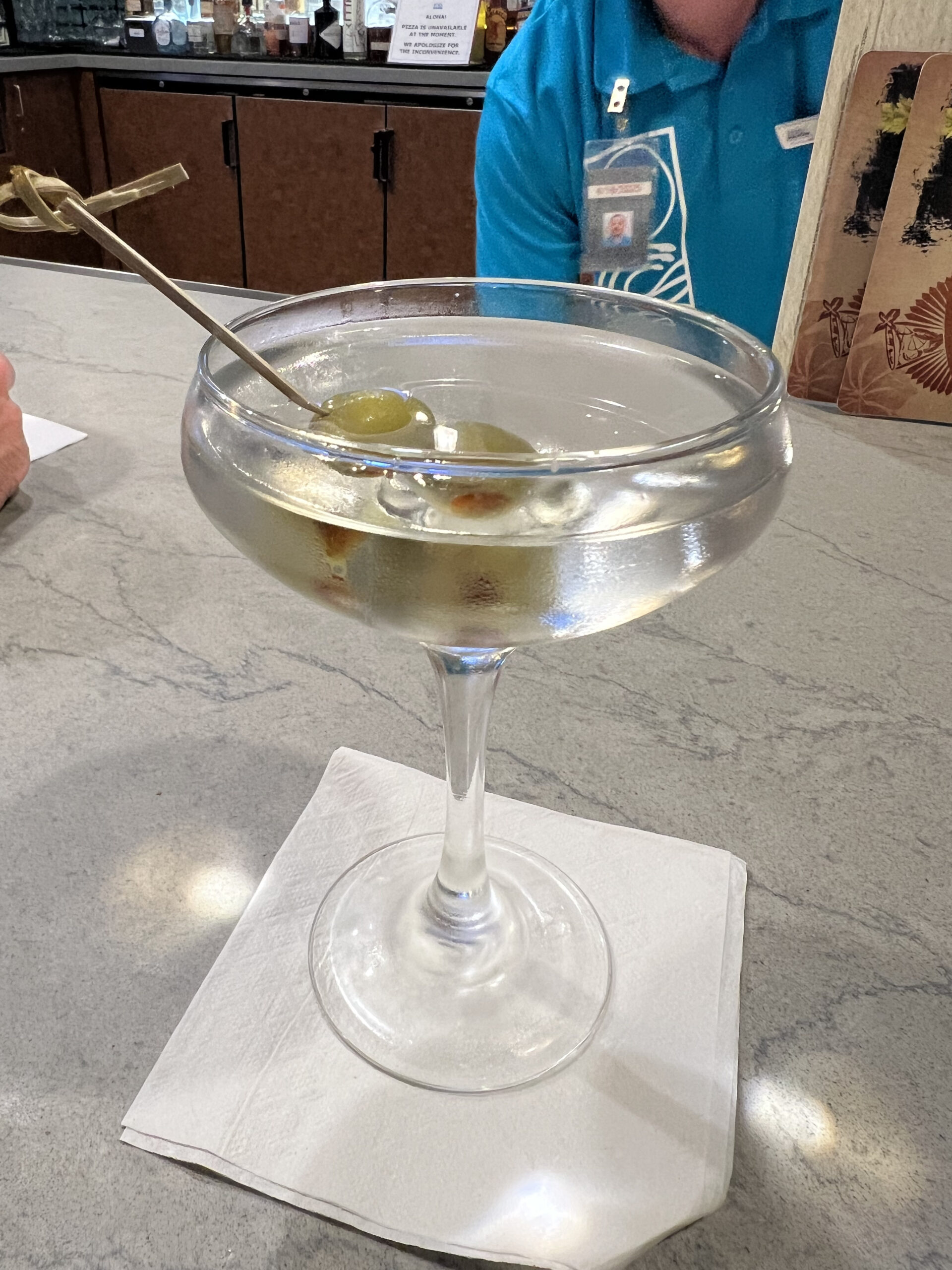
A martini from Podmore in Honolulu.
Podmore
But if you’re looking for refined fancy cocktails, you’ll find them at Podmore in Chinatown, which is fond of touches like yogurt-washed gin, heady spices, and a very good dry martini shaken with yuzu kosho.
For artful, Asian-inflected cocktails and vegan bar snacks, head to the Wild Orange speakeasy, hidden inside Hawaiian Brian’s and accessed by opening up the door to an Aloha Maid juice vending machine.
Restaurants for which you need a car and which are worth the drive
If you want to get out of Waikiki, you need to rent a car. The restaurants in this portion of the list are technically outside of Honolulu, but easily accessible with a car if you’re staying in Honolulu. For context, Haleiwa is the farthest point from Waikiki and is 33 miles across Oahu, which is basically like driving to Bucks County from Center City.
Squid lu’au and handrolls from Masa and Joyce.
Masa and Joyce Okazuya
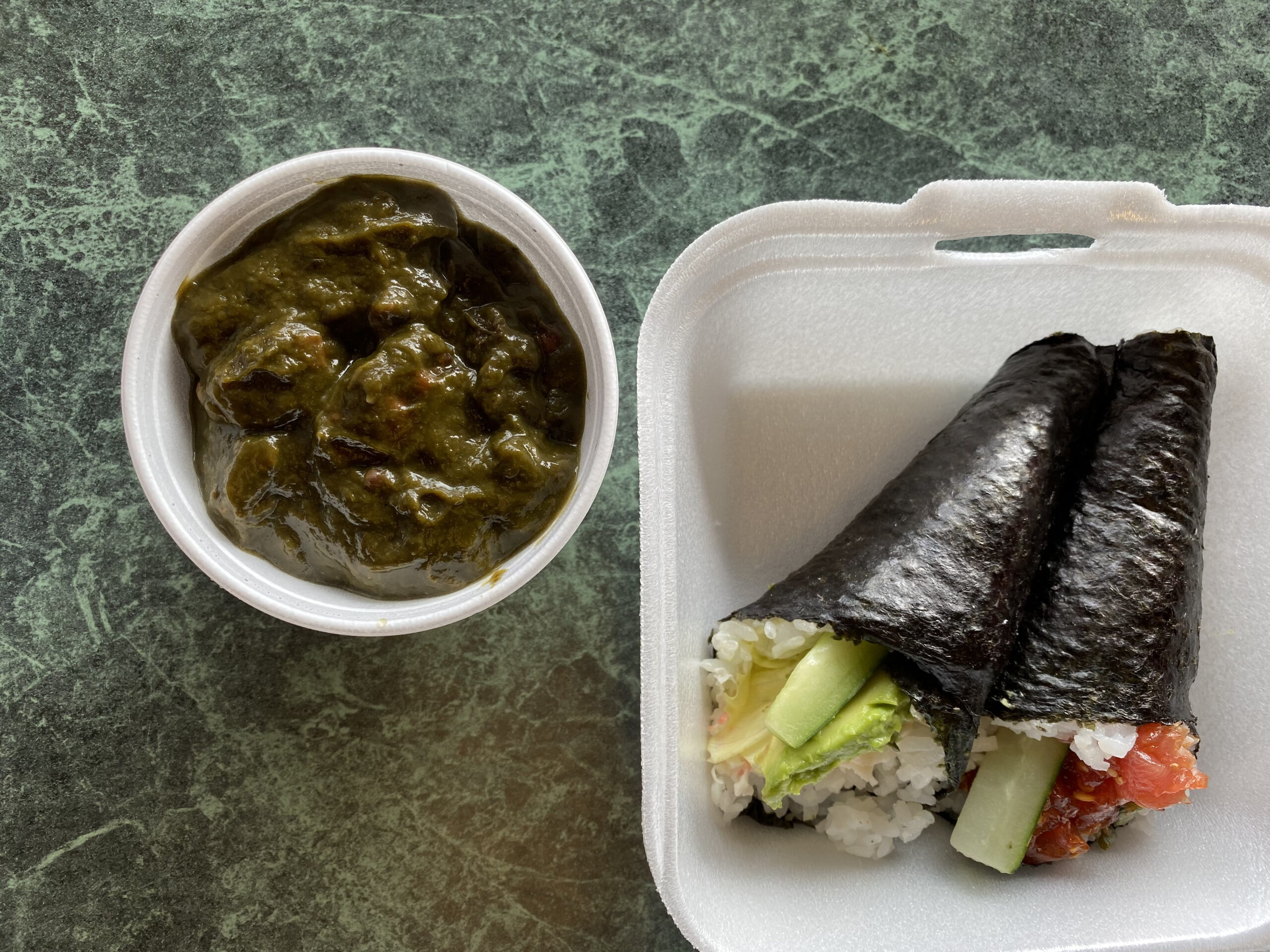
Masa and Joyce in Kaneohe is an old school okazuya, or casual Japanese lunch counter, that makes one of Oahu’s best versions of squid lu’au as well as spectacular hand rolls. It is usually my first stop after getting off the plane, their squid lu’au is so savory and mesmerizing.
Waiahole Poi Factory is also in Kaneohe, but on your way to the North Shore if you’re taking the scenic route around the eastern side of the island. In this factory that has been operating over a century, you can pick up poi that’s both scaled up for larger production (steamed taro root passed through a grinder until it reaches a smooth consistency) and hand-pounded, but more importantly, dig into some of Oahu’s best Hawaiian food, like lau lau (ti leaf wrapped bundles of pork and butter fish) and a gingery beef lu’au.
Ramen is great and all (and you’ll find a wealth of ramen shops in Honolulu) but in Hawai’i, the classic noodle soup dish is saimin, with a lighter broth than most ramens, developed by both Chinese and Japanese laborers over the years. Shiro’s Saimin Haven is a classic saimin spot that serves vast bowls of fresh noodles sunk into a mild, lightly salted dashi that you can dress up with dozens of options for sides, from Filipino-style pork adobo to lau lau to Spam to roast duck. Everything here is good. There are two locations, in Aiea and Ewa Beach, but the Aiea one is the one that I’ve been going to for years.
But if you’re heading in the direction of Ewa Beach, stop in Waipahu and pick up poke, a pupu or sashimi platter, and or a mochiko chicken bento from longtime neighborhood seafood spot Tanioka’s. This is a go-to takeout spot if you need to feed a lot of people at parties or if you want to grab a bento to eat after surfing.
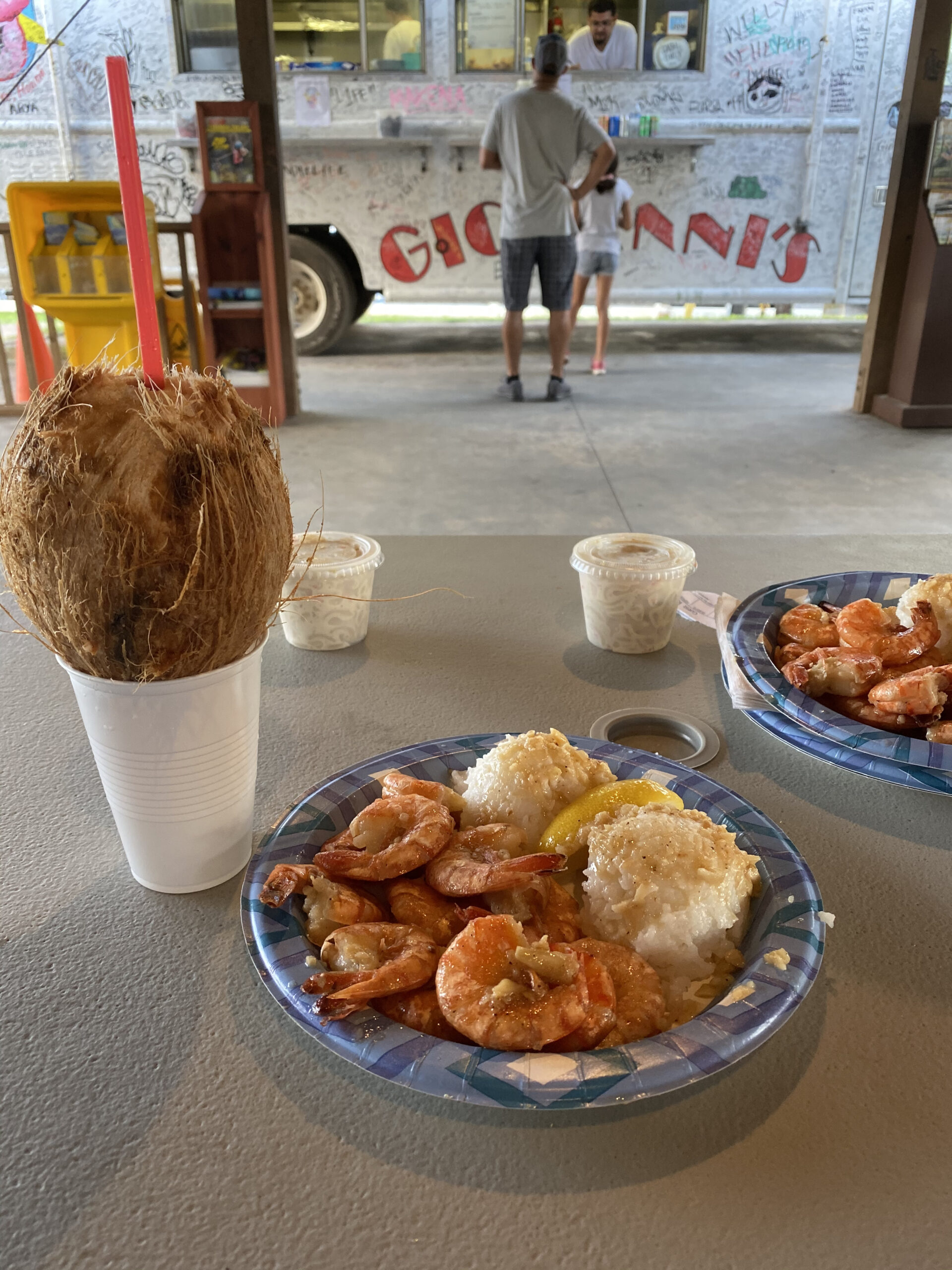
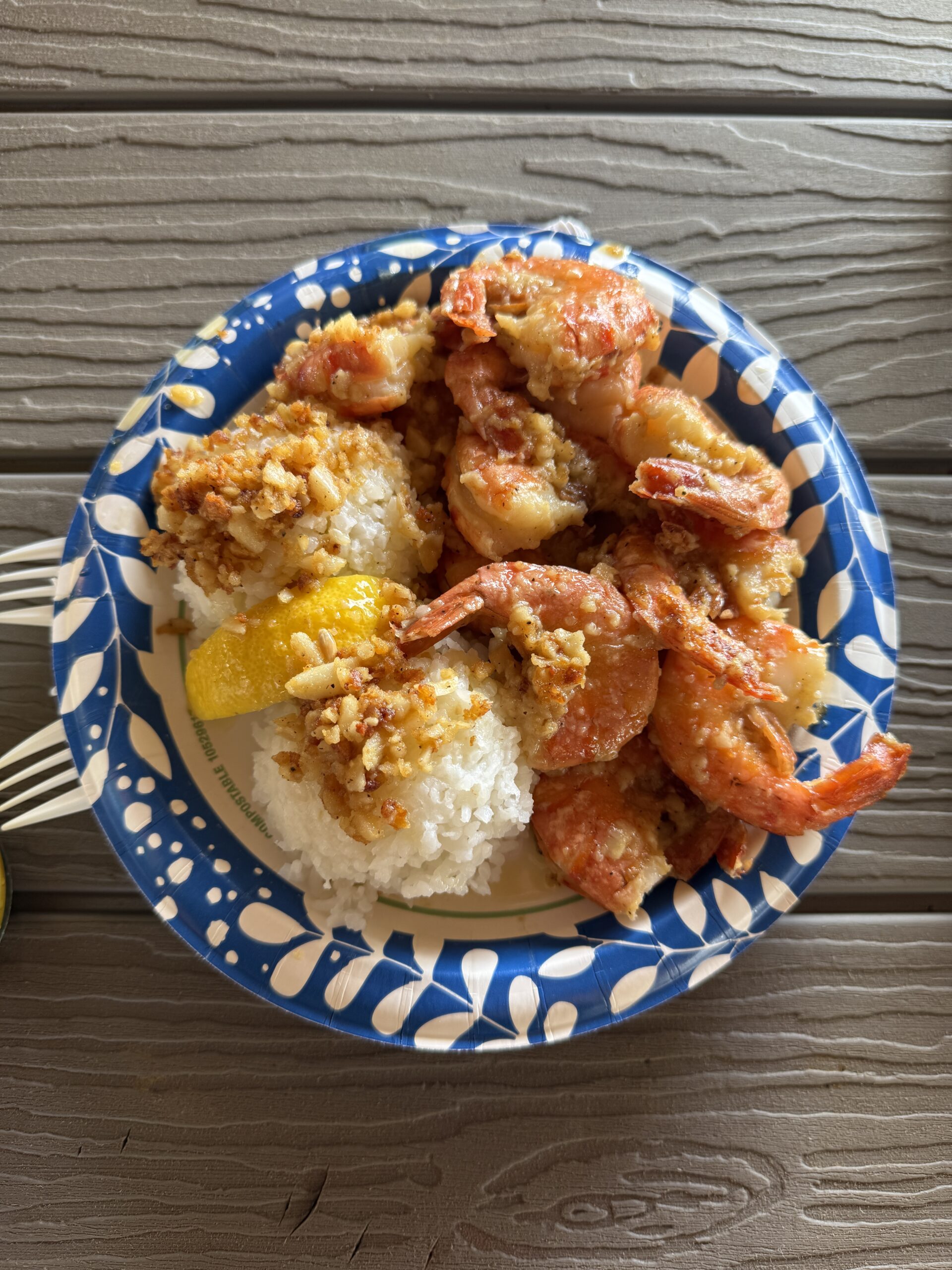
The closest food rivalry in Hawai’i, akin to that between Pat’s and Geno’s, is between the shrimp trucks up at North Shore, which are parked close to the shrimp farms they source from. Giovanni’s, a white truck covered in the signatures of many happy visitors, even has a connection to our parts, as its owner Troy Nitsche is a Pennsylvania native. Don’t leave Oahu without digging into a plate of Giovanni’s super garlicky and buttery shrimp scampi, sucking the shells dry, along the essential sides of rice and macaroni salad. Near Giovanni’s, in Haleiwa, stop in to Matsumoto Shave Ice to complete your North Shore experience.
The Wall Street Journal crowns Philly the best place to visit in 2026: A
Congratulations to Philadelphia, which has officially been named the world’s best place to visit in 2026 — a sentence that still feels fake even after you say it out loud.
The Wall Street Journal says it’s because of America’s 250th birthday, the World Cup, March Madness, the MLB All-Star Game, and a stretch of months where Philly will be hosting basically every major event short of the Olympics.
But let’s be clear: Big events don’t make a city great. They just expose whether it already is.
Philly works as a destination because it can handle the chaos. This is a city that treats historic milestones and sports meltdowns with the same emotional intensity. Where strangers will give you directions, opinions, and a life story within 30 seconds. Where the best part of your trip will almost certainly be something you didn’t plan: a bar you ducked into, a neighborhood you wandered through, a crowd you got absorbed into without realizing it.
So why not an A+? Because Philly being crowned “best place to visit” comes with consequences we know all too well. Inflated hotel prices, SEPTA stress tests, streets that were never designed for this many people, and locals being asked, again, to carry the weight of a global party while still getting to work on time.
And because, frankly, Philly doesn’t need outside validation. This city didn’t suddenly get interesting because the Wall Street Journal noticed. We’ve been loud about this for years, from barstools, stoops, and comment sections, and now the rest of the world is finally catching up (and booking flights).
Still, credit where it’s due. This is a huge moment, and a deserved one. Philly is about to have the kind of year cities dream about, even if we’ll spend most of it grumbling, redirecting tourists, and muttering “we told you so.”
We’ll host the world. We’ll complain the entire time. And somehow, we’ll still prove them right.
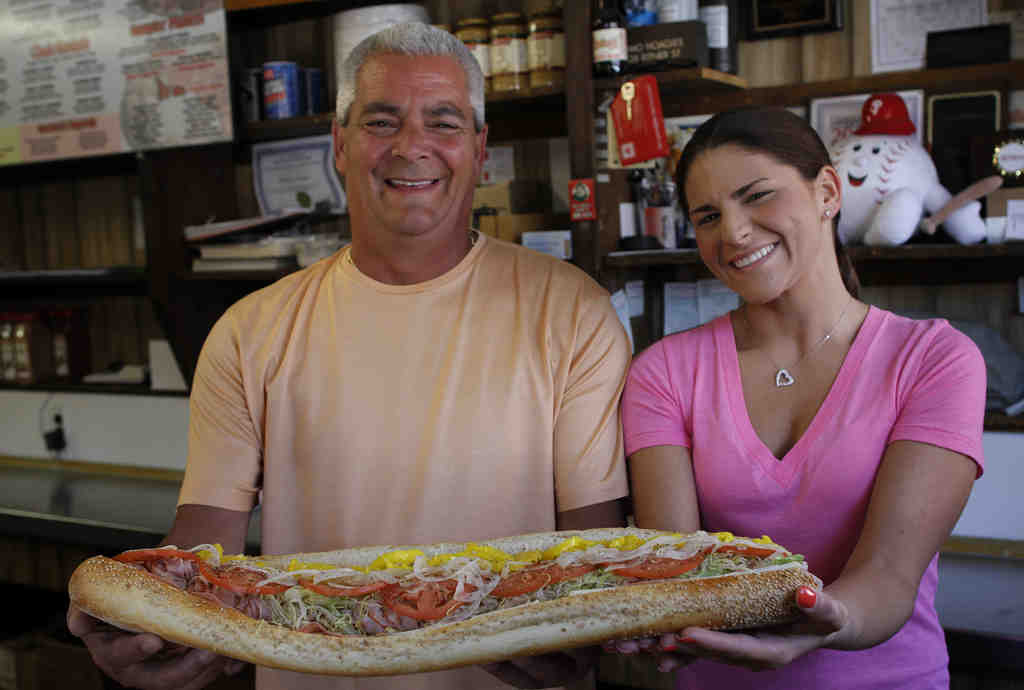
Primo’s founder Rich Neigre and Audrey Neigre, his daughter, hold a whole Italian hoagie in 2011.
Primo Hoagies covering big-dog adoption fees: A+
This is what “using your powers for good” looks like.
As PhillyVoice reported, Primo Hoagies quietly covering adoption fees for large dogs at a South Jersey shelter is the kind of move that cuts straight through the holiday noise. No brand stunt. No overexplaining. Just: These dogs keep getting passed over, that’s not right, let’s fix one part of it.
Big dogs are the last ones out the door. Everyone wants the tiny, apartment-friendly, Instagram-ready pup. Meanwhile, the 70-pound sweethearts sit there, year after year, wondering what they did wrong (answer: nothing). Removing the fee doesn’t solve everything, but it removes one very real excuse, and sometimes that’s all it takes.
Also, this is extremely on-brand Philly energy. Feed people. Love dogs. Don’t make a big deal about it. Just do the thing.
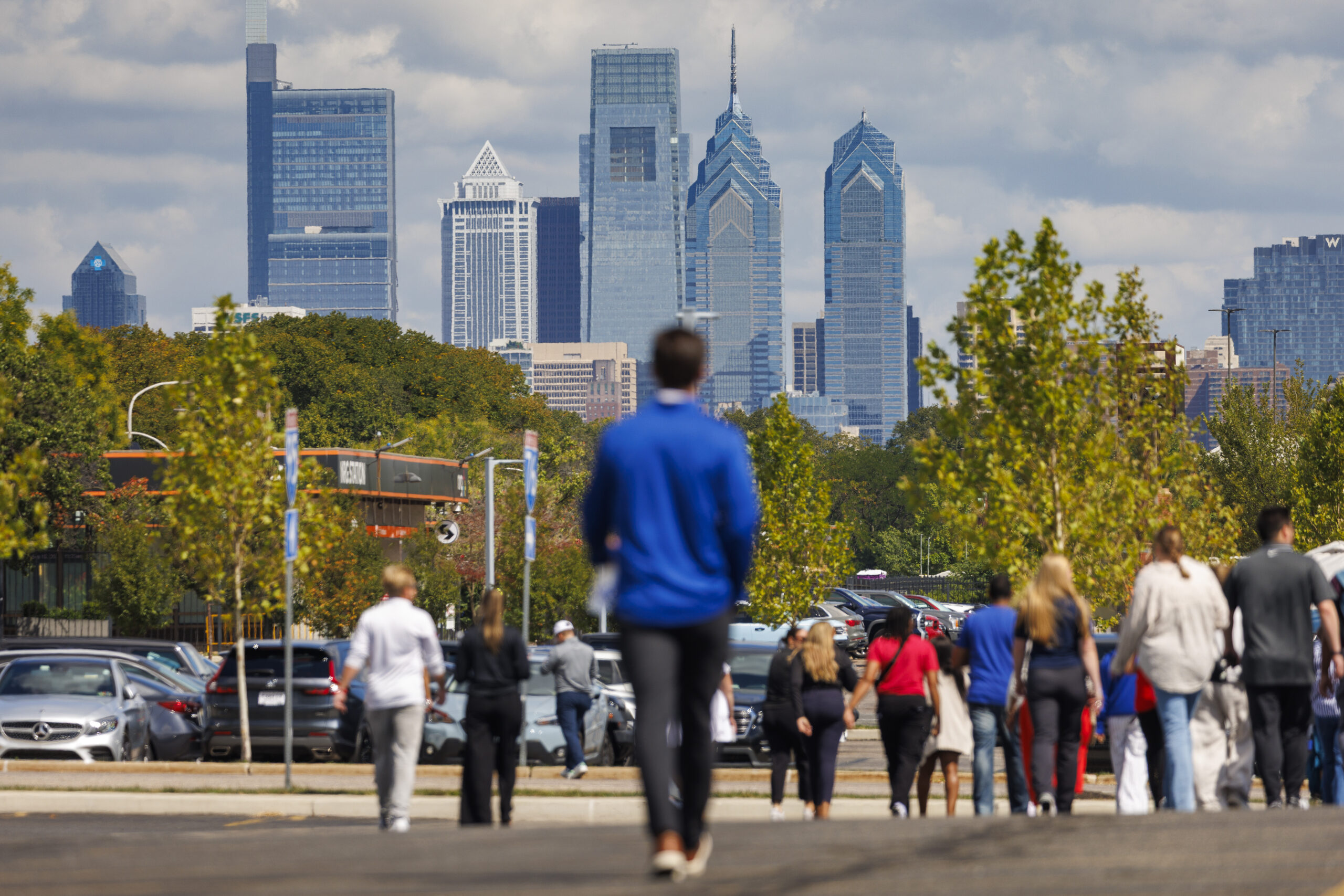
City skyline with people present for the unveiling of the new logo for Xfinity Mobile Arena the former Wells Fargo Center on Tuesday, September 2, 2025.
Philly making Zillow’s hottest housing markets list: B (with side-eye)
Zillow’s takeaway is that Philly is “affordable,” centrally located, and culturally desirable. Which is true. It’s also the most polite way possible to say: People are moving here because they’ve been priced out of everywhere else. Welcome! Please enjoy our rowhouses, strong opinions, and streets that were absolutely not designed for this many buyers.
The median home value sitting around $230,000 looks great on a national list. On the ground, it translates to open houses packed like an Eagles tailgate and starter homes disappearing in 48 hours with cash offers that make lifelong renters quietly spiral. Philly didn’t suddenly become hot. It became relatively attainable, which in 2025 is the real flex.
But let’s acknowledge that there is tension baked into this moment. Being desirable is good. Being affordable is better. Staying both at the same time? That’s the hard part.
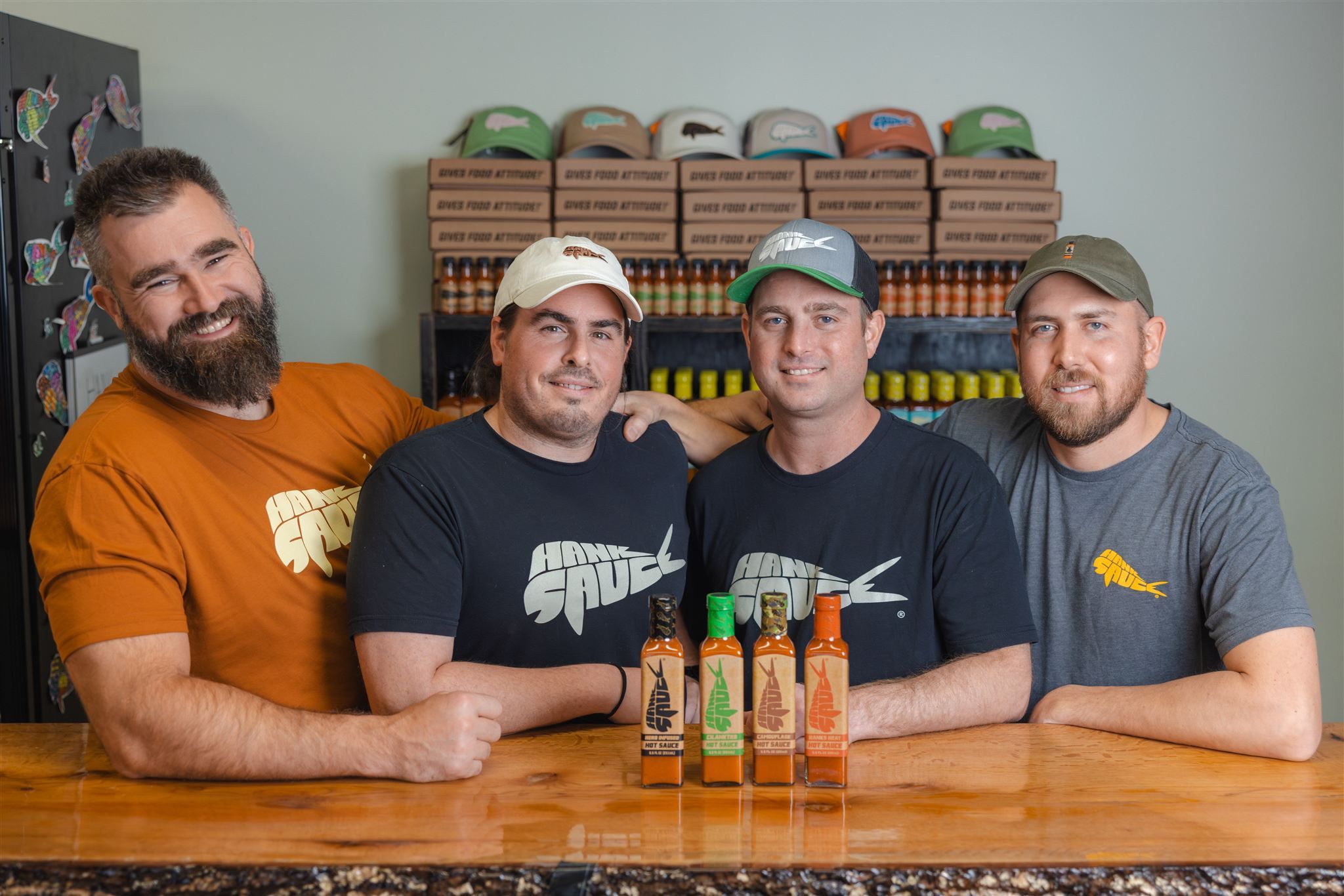
Jason Kelce with the Hank Suace cofounders (from left): Matt Pittaluga, Brian “Hank” Ruxton, and Josh Jaspan. Hank Sauce was founded in 2011 and is based in Sea Isle City. Kelce announced a partnership with the local brand and his family’s Winnie Capital.
Jason Kelce investing in Hank Sauce: A+ (this was inevitable)
There are celebrity investments, and then there are ones so perfectly aligned they feel less like a business move and more like destiny. Jason Kelce backing Hank Sauce, a Sea Isle City staple sold in surf shops, Shore houses, and Philly-area grocery stores, is very much the latter.
Sea Isle is so Jason Kelce. He’s there constantly. He bartends there. He fundraises there. He rips his shirt off there. He eats there. At this point, investing in a Sea Isle brand feels less like branching out and more like protecting his natural habitat.
And Hank Sauce? Also a perfect match. It’s not about pain tolerance or macho heat levels. It’s a hot sauce for people who want flavor without suffering, which somehow mirrors Kelce’s whole deal: loud, intense energy paired with surprising warmth and accessibility.
This doesn’t feel like a celebrity slapping his name on a product he just met. Kelce was already a customer. Already a fan. Already drinking beers with the founders in the back room years ago. Philly and the Shore can smell authenticity a mile away, and this one passes immediately.
Will this help Hank Sauce grow further nationally? Almost certainly. But more importantly, it feels earned. It’s a local guy with local roots putting money behind something that already belonged to the place — and to him.
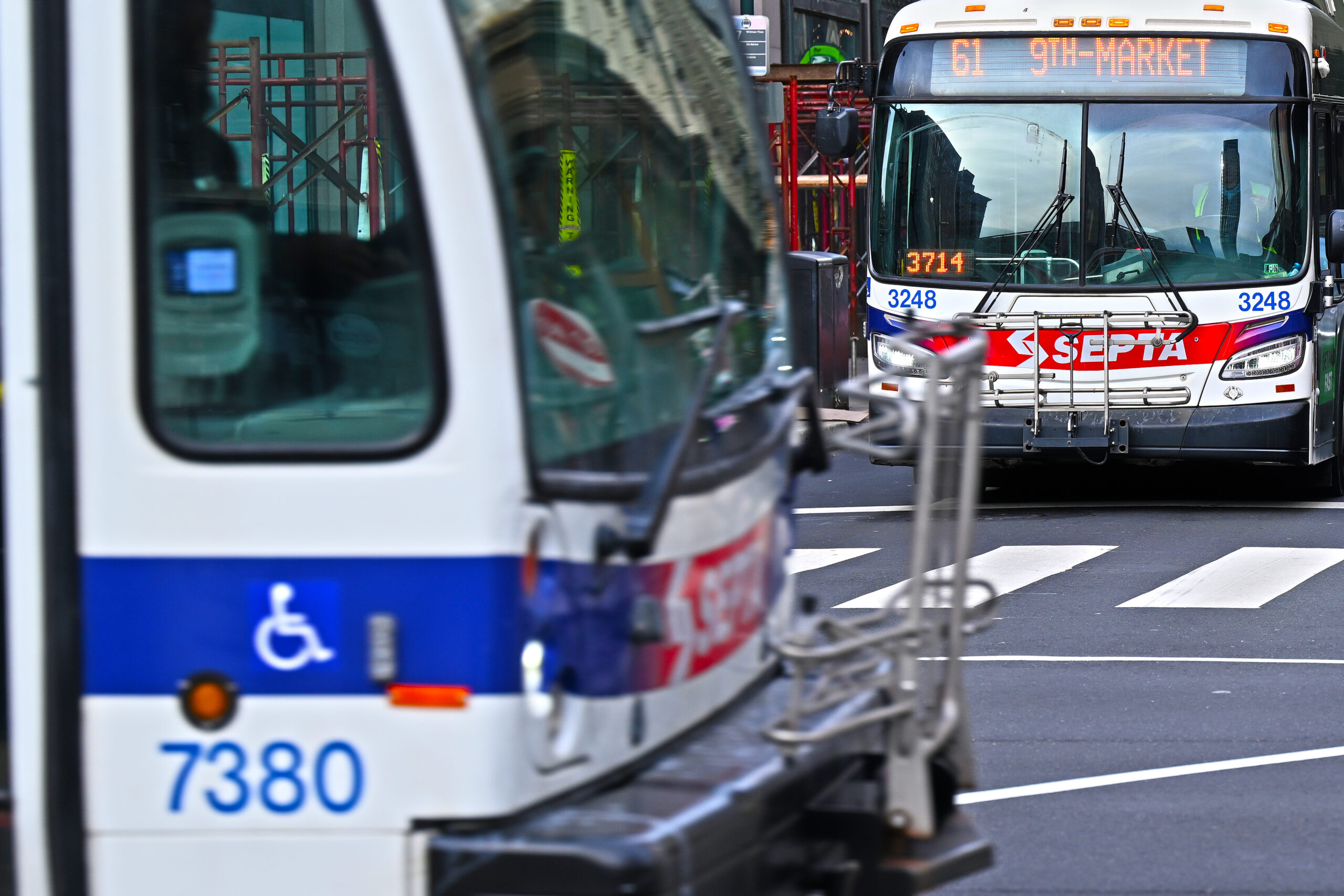
SEPTA buses travel along Market Street on Dec. 8, 2025, in Philadelphia.
Philly’s ever-lengthening commute: C-
Nothing bonds Philadelphians quite like the shared understanding that getting to work will take longer than it should, feel more chaotic than advertised, and somehow still be your fault for not “leaving earlier.”
A new report confirms what everyone stuck on the Schuylkill, the El, or a delayed Regional Rail train already knows: Philly’s average commute is longer than most big cities — and it got worse last year. Thirty-three minutes doesn’t sound brutal until you remember that’s a one-way trip, on a good day, assuming nothing’s on fire (which, this year, was not a safe assumption).
Yes, return-to-office mandates are part of it. Yes, traffic is bad everywhere. But Philly commuters have been playing on hard mode: SEPTA funding drama, service cuts that almost happened, service cuts that did happen, train inspections, near-strikes, and the ever-present question of whether your bus is late or just gone.
The most Philly part is that it’s still technically better than 2019. Which feels less like a victory and more like saying, “Hey, at least it’s not the worst version of this misery.”
New York’s commute is longer. Congrats to them. But Philly’s special talent is making 33 minutes feel like an emotional journey. You leave your house hopeful. You arrive at work already needing a break.
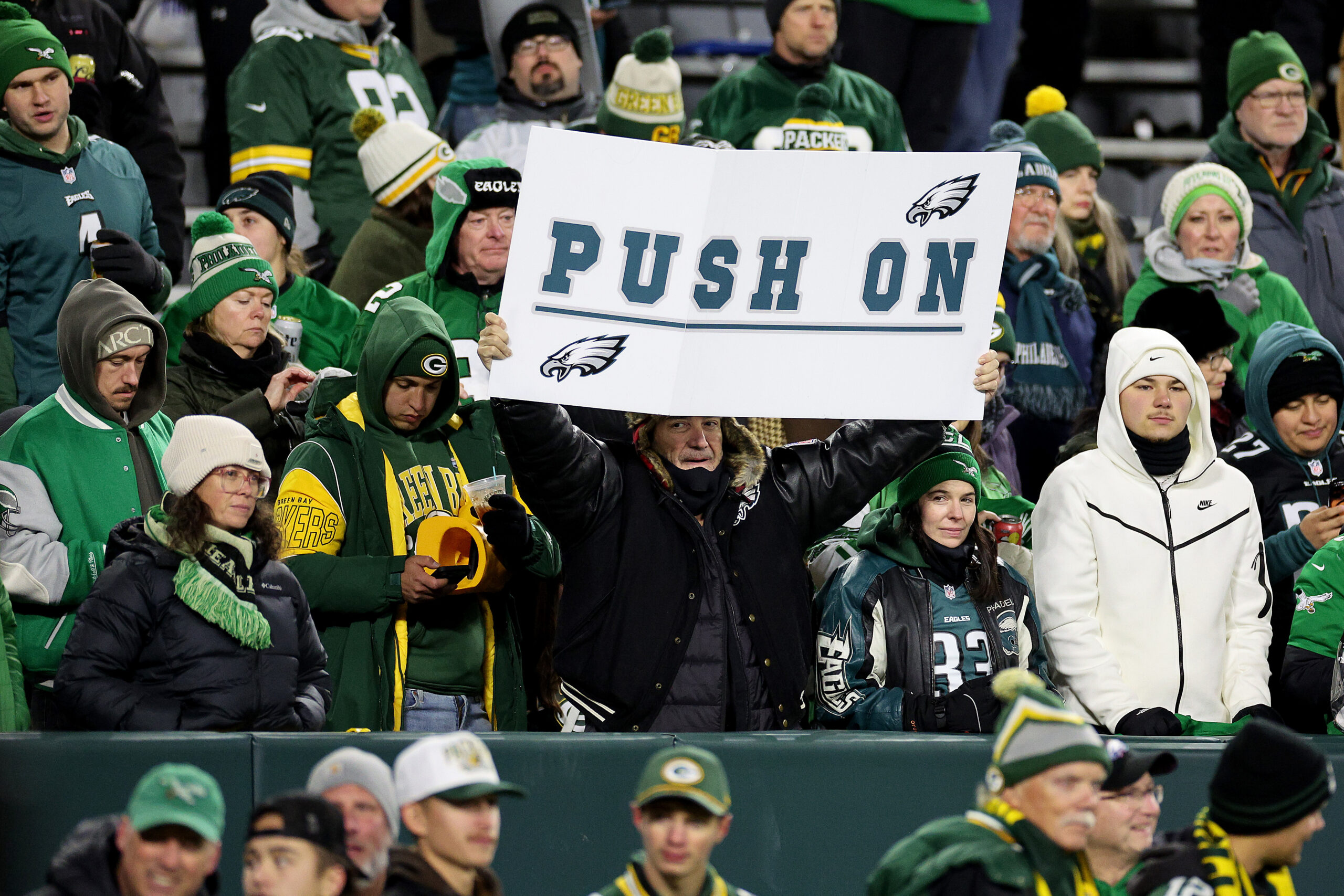
An Eagles fan holds up a sign supporting the Tush Push as the Eagles faced the Green Bay Packers at Lambeau Field last month.
The Tush Push is officially losing its magic: C
Let us be honest with each other, because denial is unbecoming. The Tush Push is no longer a cheat code. It’s a memory. A beautiful, violent, once-automatic memory.
Three tries. Three failures. False starts, no gain, another flag, and then Nick Sirianni punting like a man quietly admitting something he didn’t want to say out loud. When the Eagles chose not to run it on fourth-and-1, that was the tell. Not the stats. Not the penalties. The vibes. Coaches don’t abandon unstoppable plays. They abandon plays that might get them booed.
For a while, the Tush Push was everything Philly loves: blunt, physical, a little rude, and wildly effective. It turned short-yardage into theater. It broke opponents’ spirits. It sent NFL discourse into absolute hysterics. It won games. It won a Super Bowl. It made grown men scream about “nonfootball plays” like the Eagles had discovered witchcraft.
And now? Teams figured it out. Officials started staring at it like it personally offended them. Hurts clearly got tired of being a human battering ram. What was once inevitable is now… work. And unreliable work at that.
This grade isn’t a condemnation. It’s grief. The Tush Push didn’t die because it failed once. It died because it stopped being feared. It went from “automatic” to “ugh, here we go,” and that’s not good enough in January.
The Eagles will be fine. They have Saquon Barkley, creativity, and other ways to move the ball. But the era of lining up and daring the defense to stop you, knowing they couldn’t, is over.
Raise a glass. Pour one out. Say something nice. Then move on.