The waves rocked a dead 30-foot juvenile humpback whale that lay belly-up near Delaware’s Bethany Beach Friday as marine rescue workers prepared for the open-air postmortem examination that would take place on the sand.
The whale was first seen “floating at sea,” two miles off the Indian River Inlet earlier in the week, according to the Marine Education, Research & Rehabilitation Institute, also known as MERR. It finally beached Thursday.
As Suzanne Thurman, executive director of MERR, waited for heavy machinery Friday morning, she guessed the whale might weigh about 20,000 pounds, posing a serious challenge for the people investigating the mammal’s cause of death.
The weight, the constant movement at the behest of the ocean, and the slippery feel of the oil in the whale’s blubber made cutting it open for a necropsy — the examination to determine cause of death — inherently risky, said Thurman. The heavy machinery would have to stabilize the whale on land so the scientists could do their work.
“It can’t be towed,” Thurman said. “There are no other effective ways to move the whale.”
Unlike other animal necropsies, the whale’s postmortem examination would have to take place on the open beach, she said.
“A necropsy is very important because we can’t always tell what happened to the whale simply by looking at it,” she said, adding even if a whale is injured, scientists have to check for signs of human impact and if there was an underlying disease that led to its death.
Finding the cause of death for whale fatalities is crucial for conservationists. Though whale populations have largely rebounded since their peak hunting days, they face more trafficked waterways and a changing climate, which put them at risk all the same.
Whenever there’s a significant die-off of any marine population that “demands immediate response,” the U.S. National Oceanic and Atmospheric Administration gets involved, declaring what’s called an unusual mortality event. This allows scientists to investigate the deaths and study the remaining population in real time.
There are three active unusual mortality events, all involving whales in the Atlantic — the Atlantic minke whale, the North Atlantic right whale, and the Atlantic humpback whale.
How the Delaware fatality factors into the larger picture of whale population health remains to be seen.
The speed at which MERR staff can finish the necropsy depends on environmental factors and equipment availability from the state.
After MERR is done with the necropsy, Thurman said the whale will be buried in the beach because it’s too heavy to move anywhere else and it will become an important source of nutrients.
The Delaware whale is the second such mammal death in the region this week.
A 25- to 30-foot fin whale was discovered on the bow of a ship Sunday night at a marine terminal in Gloucester City, N.J., though the necropsy process has been much slower.
The Marine Mammal Stranding Center took the lead in the New Jersey investigation, limiting public comments to its social media posts. By Wednesday, the Stranding Center said it had a necropsy plan in place for the 12- to 13-ton whale, but staff couldn’t move forward with it until they had a suitable burial location secured.
NOAA’s law enforcement arm, which is tasked with enforcing about 40 different marine laws, has opened an investigation into the whale death despite the incomplete necropsy. A spokesperson could not expand on what drove the decision, citing the pending investigation.
Stranding Center data, dating back to 2002, shows that whale strandings peaked in New Jersey in 2023, with a total of 14 cases. The following year saw a drop in strandings with a total of nine cases reported. Last year, strandings in New Jersey dropped to four.
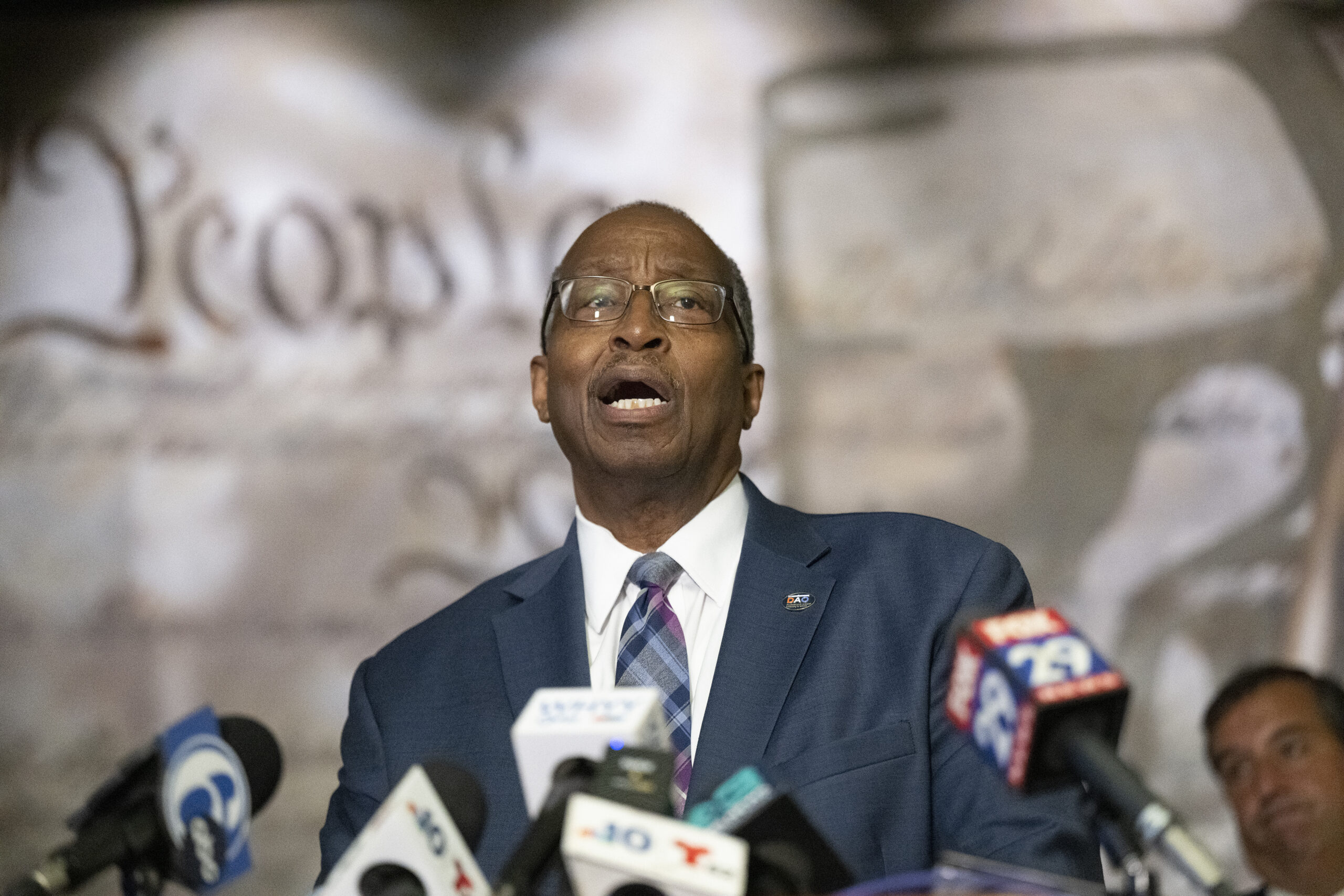
Robert Listenbee, the first assistant district attorney under Larry Krasner and a largely behind-the-scenes enforcer of the office’s progressive agenda, is retiring after nearly eight years as the office’s second-in-command.
Listenbee, 77, is expected to announce Friday that he is stepping down, marking the first shift in Krasner’s leadership team as the top prosecutor begins his third term.
A longtime public defender and juvenile justice advocate, Listenbee joined the administration at the outset of Krasner’s first term in 2018 — even as Krasner openly questioned whether the role of first assistant was necessary beyond its statutory requirement.
Robert Listenbee joined District Attorney Larry Krasner at the 2026 inaugural ceremony.
Over the course of Krasner’s tenure, Listenbee rarely served as the public face of the office on major cases, focusing instead on juvenile work, recruitment, and personnel matters.
Some prosecutors in the office said that often translated into a lack of visible management compared to previous first assistants, and that he served more as an internal messenger of Krasner’s often controversial agenda than the traditional day-to-day overseer of the office.
Listenbee has said his role was never set up to operate traditionally, and his goal was to carry out Krasner’s vision and reform the office.
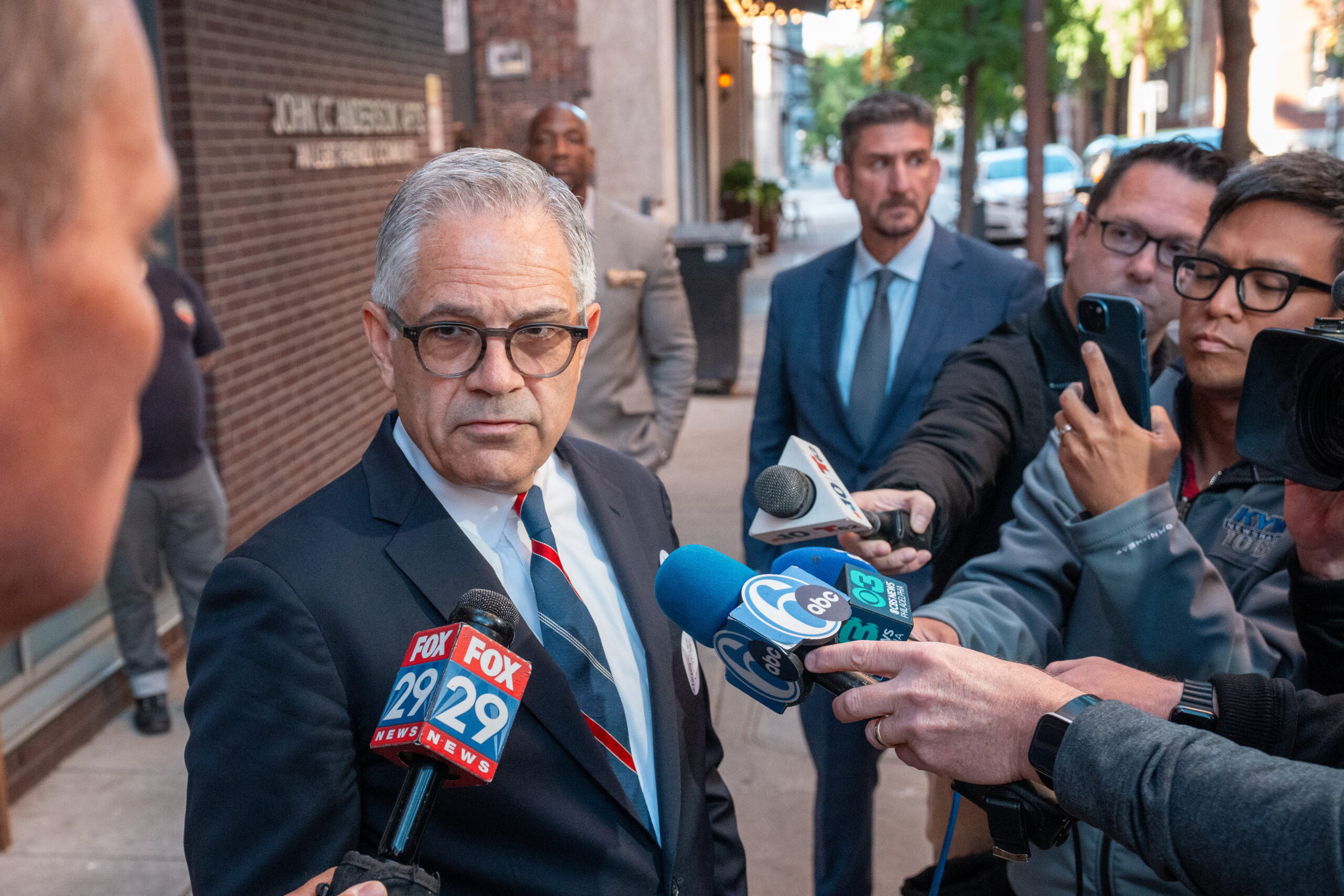
Krasner declined to say who might replace him but he said he was evaluating candidates.
Robert Listenbee, first assistant district attorney, announced developments in the case against a West Philadelphia teen who was planning a terrorist attack.
Before joining the district attorney’s office, Listenbee spent decades as a public defender, including 16 years as chief of the juvenile unit at the Defender Association of Philadelphia. He later led the U.S. Department of Justice’s Office of Juvenile Justice and Delinquency Prevention during the Obama administration, and worked at Drexel University before returning to Philadelphia to join Krasner’s team.
We spoke with Listenbee about his unconventional path to the law, his years reshaping juvenile justice, internal tensions within the DA’s office, and his advice for Krasner’s third term.
This interview has been edited for length and clarity.
Tell me about your life growing up.
I was raised in Mount Clemens, just north of Detroit. My father worked in the auto industry. We were poor and lived in the projects. I went to a public high school, and was the first in my family to go to college.
I came from a small African American community where people look out for one another. This community saw something in me very early. When I was only planning to go to Kalamazoo College, a mom at my school decided my life was going to be different. She contacted the recruiter at Harvard University, and they visited me out in my little home in the projects when I hadn’t even applied. I got a full ride to Harvard.
I was among the first large group of African Americans at Harvard. It was 1966. We were in the middle of the Civil Rights Movement and the Vietnam War.
How was that?
There was total upheaval in this nation. Demonstrations everywhere, college campuses being taken over.
I worked on the committee that helped establish the African American Studies Department at Harvard, one of the first in the nation.
This was also at a time when African countries were becoming independent. I spent 16 months as a teacher in the rural area in western Kenya.
Robert Listenbee spent 16 months in Africa teaching English, and then traveled the continent before going to law school.
Instead of coming back from Africa, I decided to hitchhike around the world. I spent six months in Asia — Thailand, Laos, even as the war was going on. I rode a motorcycle into the Mekong Delta in Vietnam and had experiences that make me grateful to be alive. I hitchhiked across Africa and traveled 8,000 miles by train across India. I did all of this on about $600.
After a two-year gap year, I returned to Harvard and finished my degree.
I ended up getting a full-ride scholarship to Berkeley law school.
Where did you go after law school?
I had job offers but I had this crazy idea that I wanted to build a road across Africa, from Nairobi to Lagos, but I was broke and needed money to do it.
This was when the pipeline was being built across the North Slope of Alaska, and you could make gobs of money in a short period of time. So in 1976, I went to Anchorage without a job and lived in the YMCA. I shoveled snow, washed dishes, and worked at McDonald’s.
Robert Listenbee worked in the oil fields building the pipeline on the North Slope of Alaska for several years beginning in 1976.
Finally, I got a job on the pipeline.
I was there for a couple of years. I was a laborer in the oil fields. I worked trucks that rode across the Arctic Ocean in the middle of the winter. I worked on wildcat wells 50 miles from base camp. I had to relieve pressured gas to keep it from blowing up. It was 50 degrees below zero.
Robert Listenbee worked in the oil fields building the pipeline on the North Slope of Alaska for several years beginning in 1976.
I got into fights. People were trying to kill me at different points in time, and I was trying to kill other people, too. So I mean, the reason I know a little bit about criminal justice is because I was almost a criminal.
I never built the road in Africa. I eventually came back to Philadelphia, and worked construction until 1986.
So what about being a lawyer?
After my construction company failed, I was broke again. I ended up going back to legal work, and got a job working at the Defender Association.
You were the head of the juvenile unit for 16 years, and then you finished your career here on the other side — going from defending young people to prosecuting them. How was that transition for you?
Working for the U.S. Department of Justice’s Office of Juvenile Justice and Delinquency Prevention under President Obama helped prepare me for prosecutorial work.
I was adamant I would never work for this office. I thought it was corrupt. Krasner called me three times before I agreed to join as first assistant.
We were engaging in culture change. Some of the behavior of the people who were here was absolutely outrageous, especially in the homicide unit. They had a sense that this office belonged to them. It didn’t belong to the people. They were willing to cheat and do it and hide evidence in the process of doing it. That’s the feeling that I had when I first got here, and that’s what we found.
Robert Listenbee, first assistant district attorney, takes questions from the media after announcing developments in the case against a West Philadelphia teen who investigators say purchased materials including chemicals, wiring, and tactical equipment associated to become a terrorist.
There has been criticism of your juvenile work — some have said that it was too lenient during the period of intense gun violence and that kids went on to commit worse crimes. Others say the office hasn’t gone far enough to treat kids as kids. How do you assess your record?
We’ve reduced the number of kids in out of home placements. We’ve expanded juvenile diversion programs. In 2024, we created a juvenile homicide unit to review all cases of juveniles charged with murder.
I’m satisfied that we’re being as fair as we can and taking the time to carefully evaluate every issue in a case.
The first assistant is typically the person who manages the office day-to-day. Some prosecutors have said that, in this administration, that role functioned differently — that much of the management flowed directly from Krasner. Do you think that perception is fair, and how did you approach leadership in that environment?
The DA did not want the imperial first assistant that had been here before. He would prefer a flat structure to a hierarchical structure, which means you get assigned a lot of odd jobs depending on what he wants you to do.
If I were running the office, I would have run it completely differently. But I have to tell you that, having been here as long as I have, we never would have gotten this far without the DA’s serious concerns about what people around here were doing, whether they were implementing his policy or not. His skepticism, his oversight, is what’s kept this place moving in the direction that he wanted to go in. I wasn’t tuned in enough to the office to understand that from the very beginning, but I listened to him.
We hire people, we fire people, we move people around. That’s happened a lot. We sometimes end up with younger and inexperienced supervisors, because we haven’t really developed a program for training supervisors really well. We’re working on that.
I wish I had worked on juvenile issues earlier than I did.
District Larry Krasner speaks with the media after casting his vote in the 2025 primary.
What’s your advice for the next first assistant?
You have to understand the DA’s goals and purposes and how he operates.
So, listen to Larry?
Not that. The DA is not a micromanager. But there’s no written directives on most of the things he wants, and there’s no organizational chart or hierarchy. If we have issues, we often go to him.
Do you have a piece of advice for Krasner in his third term?
This is a city that has a chip on its shoulder. The DA is a person who has a chip on his shoulder. They respect him for that when he speaks out. A lot of the things he says may not be politically astute, but they’re things he believes in. They like that about him.
He is the Donald Trump of the progressive era.
He needs to continue surrounding himself with people who can understand him and help him implement his policies.
A lot of people don’t like him, and I understand that. A lot of people don’t like me because I work for him. A lot of people don’t like what we do. That never mattered to me. I know that the people we have seen in court, the victims and the defendants and the witnesses, I know that we’re doing right by them. That’s my North Star.
Robert Listenbee, the first assistant to District Attorney Larry Krasner, retired on Friday.
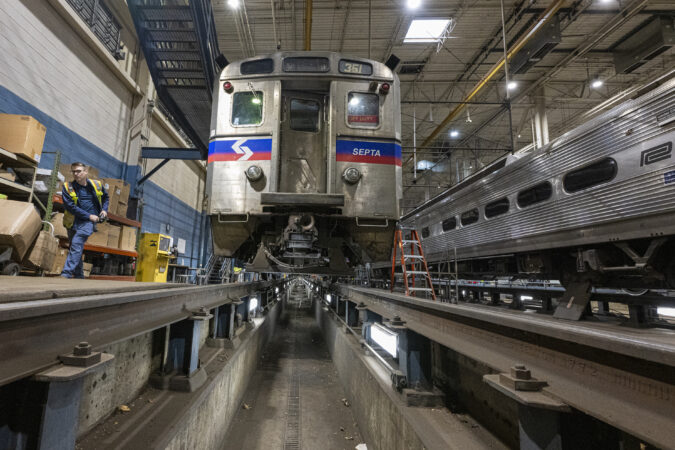
Regional Rail trains are operating with fewer canceled trips and are running with more cars after months of service disruptions while SEPTA rushed to inspect and repair 223 Silverliner IV cars after five caught fire last year.
Yet packed two-car trains and skipped stops persist on some lines during peak travel times.
“It’s been three months and our customers had reason to believe things would be better sooner and they’re frustrated — understandably,“ SEPTA spokesperson Andrew Busch said. ”There is still some catching up to do.”
SEPTA decided late Thursday to restore 24 Regional Rail express trips on the Lansdale/Doylestown, Media, Paoli, West Trenton, Norristown, and Wilmington Lines, Busch said. The restored expresses had been running as locals.
An Oct. 1 federal mandate to inspect and mitigate Silverliner IV fire risks required the transit authority to take the workhorse of Regional Rail offline, leading to shorter trains and furious riders.
SEPTA’s records show it canceled 2,544 Regional Rail trains from October through Dec. 31, though the number steadily droppedover time — from 1,324 to 752 to 468.
As of Thursday, 180 of the Silverliner IV cars had met all the milestones set by the Federal Railroad Administration to return to service.
Regulators demanded each car pass a safety inspection, have necessary repairs made, and have a modern thermal-detection circuit installed.
So far, however, just 78 of those 180 Nixon-Ford era rail cars have been returned to service.
That means work is yet to be completed on35 Silverliner IVs.All together, the carsmake up 57% of the Regional Rail fleet.
(function() { var l = function() { new pym.Parent( ‘regional-rail-return__graphic’, ‘https://media.inquirer.com/storage/inquirer/ai2html/regional-rail-return/index.html’); }; if(typeof(pym) === ‘undefined’) { var h = document.getElementsByTagName(‘head’)[0], s = document.createElement(‘script’); s.type = ‘text/javascript’; s.src = ‘https://pym.nprapps.org/pym.v1.min.js’; s.onload = l; h.appendChild(s); } else { l(); } })();
“Over the last couple of days, we’ve been adding more three and four-car trains,” Busch said. With the restoration of express service, that should continue, he said.
To keep Regional Rail service running in its slimmer form, SEPTA has been using its 120 Silverliner V cars, which arrived between 2009 and 2011, as well as 45 coach cars, which have no motors and are pulled by locomotives.
The Silverliners have onboard motors, carrying passengers and providing propulsion at the same time. The 78 returned to service will also add capacity.
In addition, SEPTA plans to use an additional 10 passenger coaches leased from Maryland’s commuter railroad. They are here, but train crews are undergoing training, which was delayed by vacations and work schedules over the holidays. They should be ready to go a couple of weeks, Busch said.
The transit agency is seeking to buy 20 used passenger cars from Montreal but has not heard whether it won the bidding.
Back-ordered shipments arrived around Christmas, and now there is plenty of wire to finish the job, SEPTA says. The deadline for the installations was Dec. 5, but under the circumstances, federal authorities did not punish SEPTA.
He told the judge that he was from Scranton and began to explain where the town is located in Pennsylvania.
“I know where Scranton is,” said Seamus McCaffery, the judge presiding in the courtroom tucked into the basement of Veterans Stadium.
The man was a rabid Eagles fan but had never been to a game. His work was running a trip — tickets to see the Birds and free food and drinks on the bus ride there — to South Philadelphia. He was in.
But the only thing he could remember, he told McCaffery in December 1997, was that he drank so much on the bus that he had to be carried to his seat. He was soon surrounded by Philadelphia police and handcuffed.
“They put me in a jail cell, three hours later I appeared in front of you, and I missed the entire game,” the man told McCaffery. “And my bus went back to Scranton without me.”
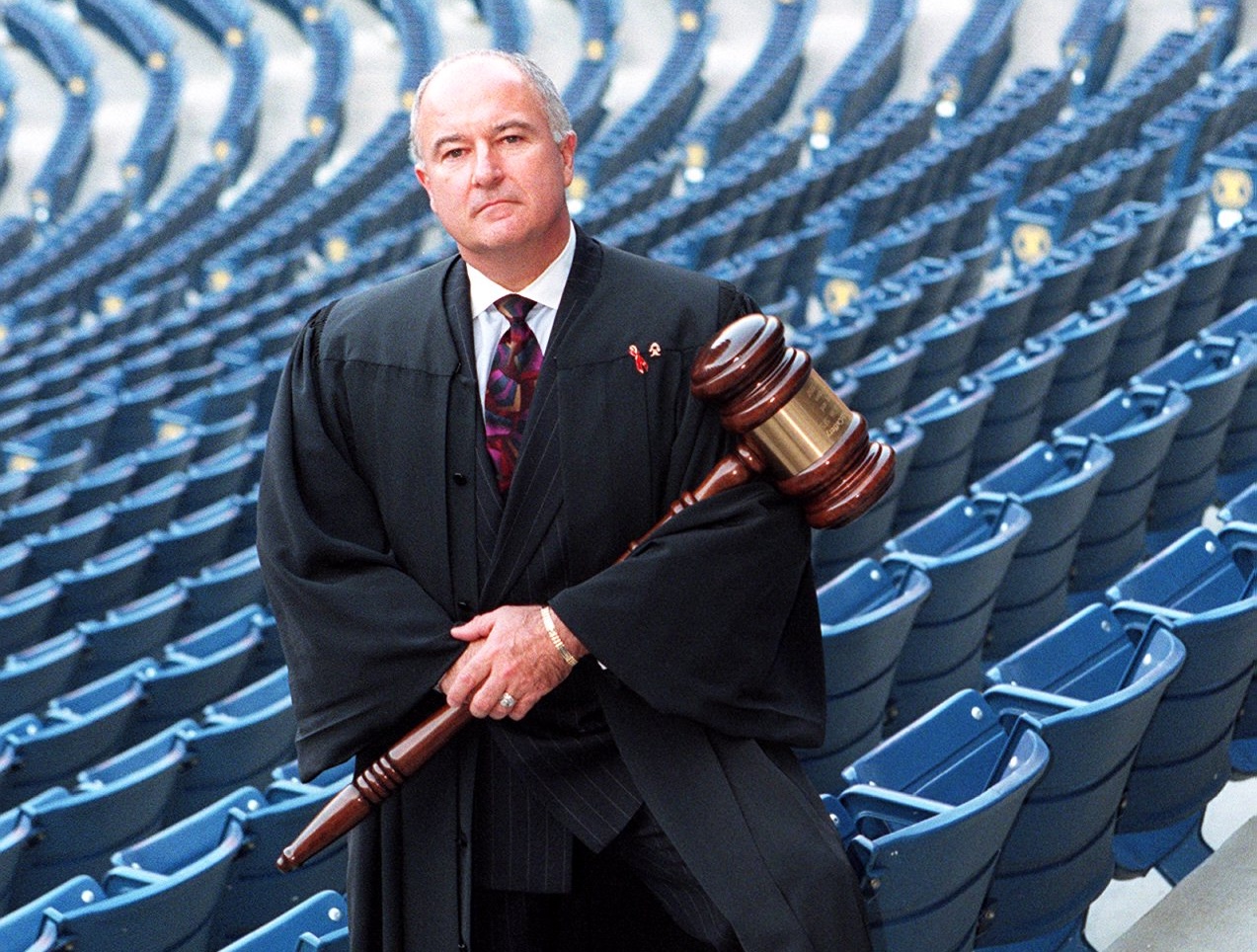
There was a courtroom for three games in 1997 in the bowels of Veterans Stadium, an attempt to curb what had become an unruly scene every week. McCaffery, a municipal court judge who operated a night nuisance court in the city, volunteered to be the judge.
He ruled on everything from fights in the stands to underage drinking to public urination to a guy from Scranton who missed his bus home. It was Eagles Court.
“The hardest part sometimes was keeping a straight face,” McCaffery said.
Seamus P. McCaffery, Philadelphia municipal court judge, at the Vet with his gavel in 1997.
A flare at the Vet
“How do you plead?” McCaffery asked a 19-year-old man after he was charged with trespassing at the Vet in 2003.
“I plead stupidity,” he said.
“Is that aggravated stupidity or simple stupidity?” the judge said.
“Whatever the lesser charge is. I was an idiot.”
The man was acquitted.
On Nov. 10, 1997, Jimmy DeLeon, a municipal court judge, was watching from home when a blowout loss to the 49ers on Monday Night Football became more about what was happening in the stands. There were over 20 fights, a gang of fans broke a man’s ankle, two folks ran onto the Vet turf, and a New Jersey man was arrested after firing a flare across the stadium.
The concrete and steel fortress at Broad and Pattison had long been a haven for rough and rowdy football fans. There was the time the fans stole the headdress from the Washington fan who dressed like a Native American. And the whistling Cowboys fan who was chased out of the 700 Level.
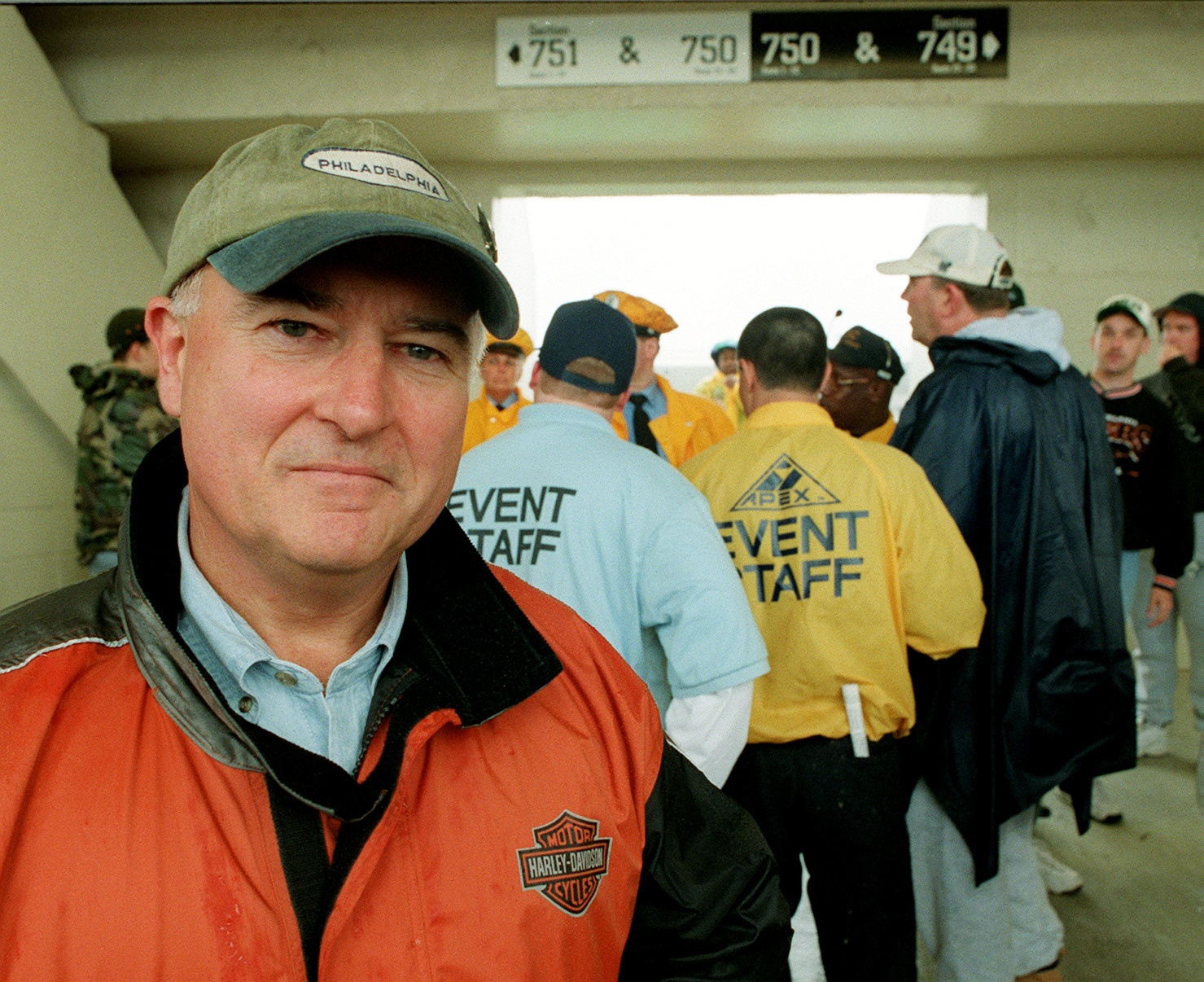
“It was a nightmare,” said Bill Brady, a retired traffic cop who spent game days patrolling the 700 Level. “Fights galore. People passed out in the bathroom. One of the security guys up there used to box in the Blue Horizon. It was nothing but aggravation. You’d have roll call in the police room and go up to the 700 Level. By the end of the day, you were beat up.”
But this Monday night game against the 49ers was too much. The flare gun — the man said he saw people firing them in the parking lot and then brought one into the Vet — became national news as Philadelphia’s unruly stadium was now portrayed as a war zone.
DeLeon called McCaffery as the two volunteered as judges in the city’s nuisance night courts, a program in which people who committed “quality of life crimes” such as loitering, underage drinking, and curfew violations would be brought immediately to a judge and receive a fine. DeLeon told McCaffery that they had to do something about the Vet.
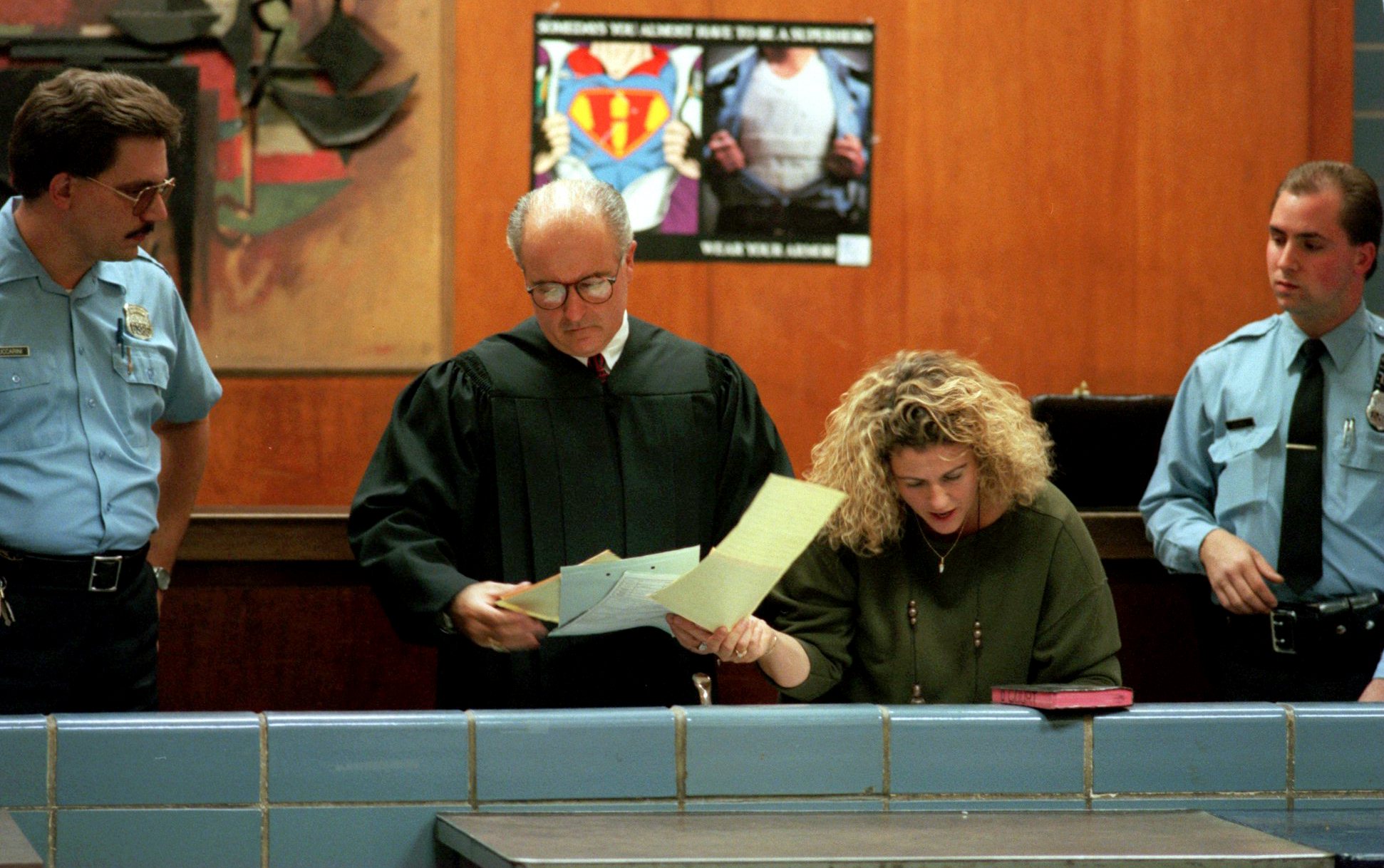
Judge Seamus McCaffery going over the night’s paperwork in 1996 with his wife, Lisa Rapaport, who was standing in for the court clerk, who was ill that day.
“He was right on it,” DeLeon said. “He took it over.”
McCaffery was soon in a meeting with Jim Kenney — the future mayor who was then on City Council — along with Eagles owner Jeffrey Lurie and president Joe Banner.
“I was a Flyers guy at the time, so I really wasn’t paying much attention to who Joe Banner and Jeff Lurie were,” McCaffery said. “But they said, ‘We need to do something for our image.’”
The night nuisance court was Kenney’s idea, and he thought it could work at the Vet. Arrested fans could be charged immediately, plead guilty, and be issued a fine by a judge.
Too often, an arrested fan would fail to show up to a court date and nothing more would happen. The city didn’t spend the resources to chase down fans from the 700 Level. McCaffery said it was a fine idea, but the stadium didn’t have a courtroom.
“Without missing a beat, Jeff Lurie said, ‘We’ll build you a courtroom here,’” McCaffery said.
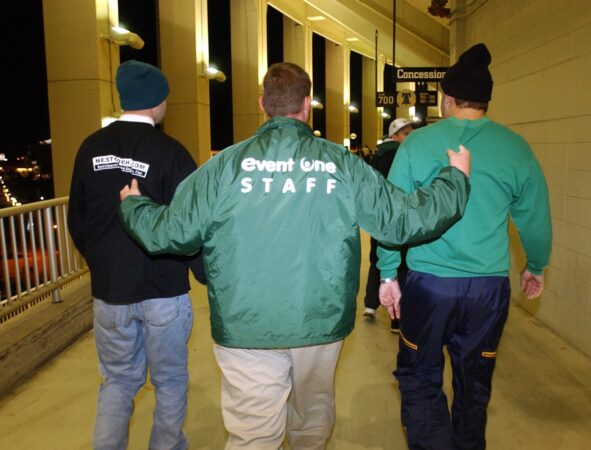
Eagles court judge Seamus McCaffery patrolling the 700 level at Veterans Stadium with security staff behind him.
Made for Netflix
“To be honest, I just wanted to see the game,” a man told McCaffery after being ejected and then arrested for sneaking back in. He was fined $198.50.
A maintenance room used by the Phillies in the stadium’s basement became a legitimate courtroom with public defenders, district attorneys, and flags.
“This was not a kangaroo court,” said McCaffery, who was not paid to be in the courtroom.
On Nov. 23, 1997, during a game against the Steelers, the first defendant at Eagles court was a 38-year-old from Delaware wearing a Starter jacket. Later that afternoon, a 34-year-old from Pennsauken pleaded not guilty to punching another fan. It was an elbow to the chin, he told the judge.
There were 20 fans arrested that game, and McCaffery doled out 18 fines ranging from $158.50 to $300.
“This would be something that would be great for Netflix,” said Anthony “Butch” Buchanico, who was a sergeant in South Philly’s Fourth District and oversaw the courtroom. “People would come in their 20s and 30s crying and begging for mercy.”
The fans were warned before the game on Phanavision that “on-site court proceedings will be presided over by the Honorable Judge Seamus McCaffery.” Everyone booed, McCaffery said.
The police had undercover officers enter the seating bowl dressed as opposing fans. If anyone confronted the “opposing fan,” a crew of police would intervene and McCaffery would have another case to hear. It was an operation.
The stadium was infamous for its concrete-like playing surface, but the upper deck of the “Nest of Death” was even more foreboding.
“I would be on the field and there would be fights in the 700 Level where players from both teams would look up and watch the fights,” Buchanico said. “It was insane. If you were faint of heart, you didn’t go up to the 700 Level. The people up there, that was their territory. They loved it.”
The fan who shot the flare was from New Jersey, and McCaffery likes to say that the majority of the people he saw in Eagles Court lived outside Philadelphia. He thought Eagles Court would be a way to prove that it wasn’t Philadelphians who made the Vet a madhouse.
A 700 Level sign at the Vet.
“Here’s our city, here’s Philadelphia on national news getting beat up and berated, and the vast majority aren’t from here,” said McCaffery, now 75, who grew up in Germantown after his family moved from Northern Ireland when he was 5. “People are thinking that we’re nothing but a rowhouse, trash city and it galled me.”
McCaffery said he got hammered in the press but didn’t care. A sportswriter called him “Shameless McCaffery” but was then “kissing my [butt]” a few years later when he saw what the judge was doing.
The arrested fans would be brought down to the basement where McCaffery did more than just issue a verdict.
“They’d march them up to the court and Judge McCaffery would berate them,” Buchanico said. “The majority of people weren’t from Philadelphia, and that really bugged the judge.
“He would say, ‘Why don’t you do this where you live? Are you proud of yourself? Get out of here.’ Then he would say, ‘Guilty. $300 fine. Pay now’ ‘I don’t have any money.’ ‘Well, there’s a MAC machine in the hallway.’”
Don Wilson of North Philadelphia bares his chest as he cheers for the Eagles on Jan. 19, 2003, during the last football game at Veterans Stadium.
Something to gloat about
“I was washing my hands,” a man told McCaffery after he was arrested for urinating in a Vet sink.
A judge cannot accept a plea from someone who is intoxicated, and McCaffery said no one was ever drunk in his courtroom.
“I mean, who knows?” said DeLeon, who joined McCaffery and Rayford Means as the original judges of Eagles Court. “They were just bringing them in.”
The arrested fans appeared in Eagles Court just hours after their arrest — or longer if they needed to sober up — which meant they were still wearing whatever they wore to the Vet.
“Some of them would be bare-chested, and half their body was coated in green and the other half was coated in white,” DeLeon said. “Some people would have green faces. Back then, the people came ready for the game as if they were participants in the action. So they’d dress accordingly. We had some guys in helmets and shoulder pads. It was the ’90s.”
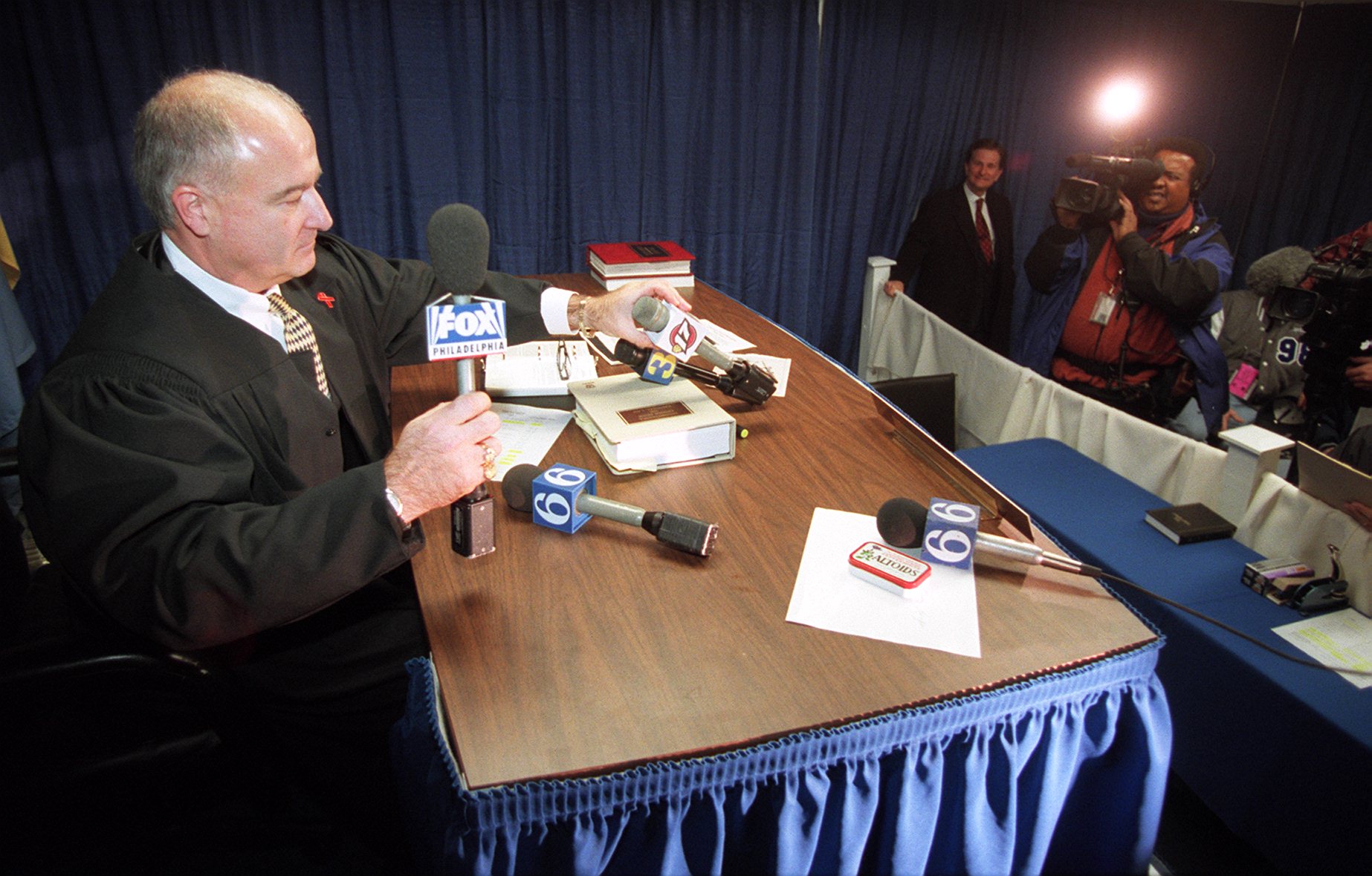
Municipal court Judge Seamus McCaffery talks with the media before the start of an Eagles game in 1997.
The court moved after the 1997 season to the Third District police precinct, and arrested fans would be driven from the stadium to 11th and Wharton Streets. And the arrests eventually slowed down so much that McCaffery saw just one case during one of the Vet’s final games in the 2002 season. Perhaps this was proof that Eagles Court made the stadium a safer place.
“Did it deter them? No,” Brady said. “They took it like a joke. Something to gloat about.”
The Eagles gave McCaffery a tour of Lincoln Financial Field before it opened in 2003, proudly showing him their enhanced security features and the cameras that could zoom in on every fan in the stadium. The judge could tell that Eagles Court would soon be phased out.
“The Linc is a church compared to what the Vet was,” said Buchanico, whose father patrolled the sidelines with Andy Reid as the team’s head of security.
McCaffery resigned from the state Supreme Court in 2014 after he acknowledged sending pornographic emails to state officials. He heard his last Eagles Court case in 2003 but is still known more than 20 years later as the judge from the Vet. He stopped that trial with the fan from Scranton and asked to talk to the police captain at the sidebar.
The judge quietly told the captain to drive the man to the bus station and gave him the money to buy his fare home.
“I turned around and said, ‘This officer here is going to give you a ride to the Greyhound bus terminal. There’s a bus that will take you to Scranton and you’re going to get on it,’” McCaffery said. “‘The next time you come down to an Eagles game, show up sober. This matter is discharged. Not guilty.’”
The man left the stadium’s courtroom and was thrilled even though he missed the entire game.
“Years later, I’m campaigning for Supreme Court justice and where do you think I am? Scranton, Pennsylvania,” McCaffery said. “Who do you think comes up to me at a big rally? The same guy.”
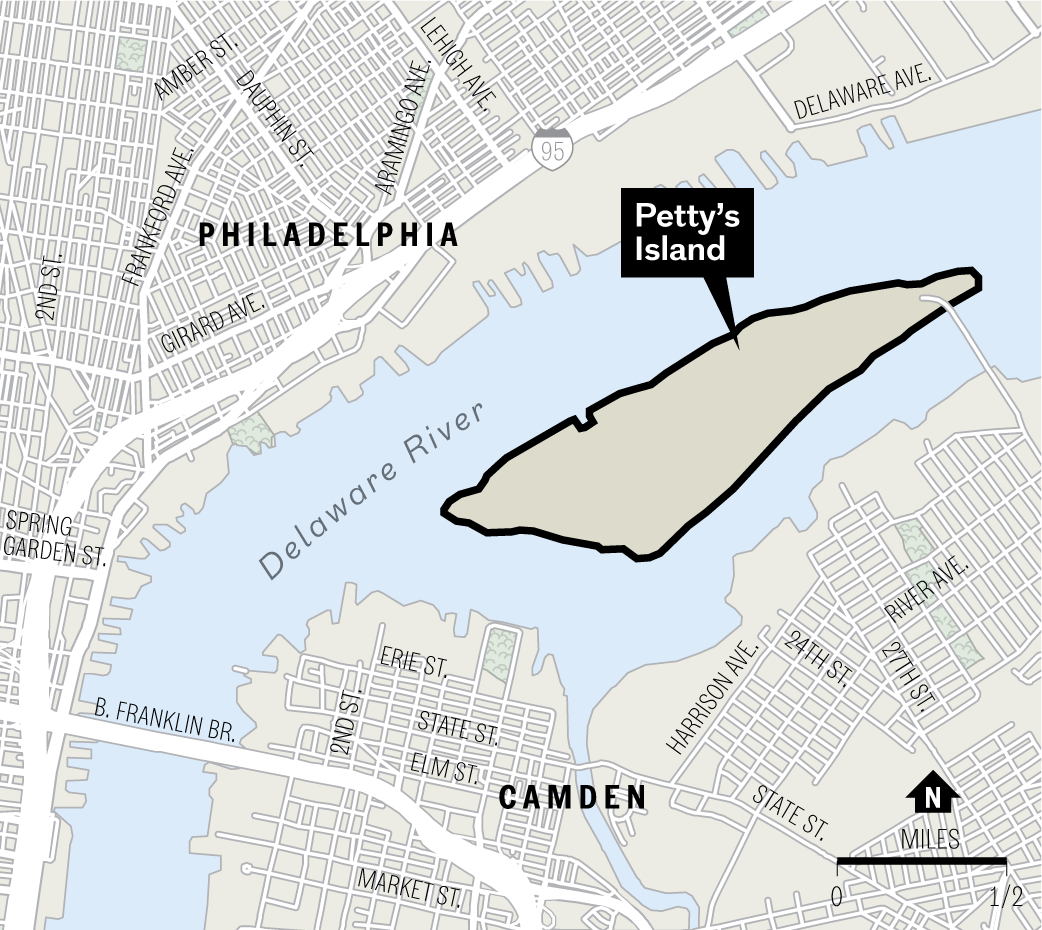
New Jersey has long coveted Petty’s Island, 300 acres in the Delaware River off Pennsauken, as a potential environmental and recreational haven with its grand views of Philadelphia.
Originally the hunting grounds of Native Americans, the island was later farmed by Quakers. Folklore claims pirate landings and an overnight stay by Ben Franklin. In more recent years, redevelopment proposals envisioned a hotel and golf course before the state’s embrace of a nature preserve.
Citgo Petroleum Corp. — the Houston-based refining arm of Venezuela’s national oil company — has owned the island for 110 years, leaving a legacy of pollution from oil storage and distribution.
Now recent international events and a court ruling on Citgo have clouded the island’s immediate future while underscoring the reach of the petroleum industry.
Formerly, it was the site of Fuel storage (center) for the Venezuelan oil company Citco.
Late last year, U.S. District Court Judge Leonard Stark in Delaware approved Amber Energy as buyer of Citgo’s Venezuelan parent company through a sale of shares to settle billions in debts, concluding a process that began in 2017. Amber Energy bid $5.9 billion in a court-organized auction.
Citgo owns a network of petroleum infrastructure that some analysts say could be worth up to $13 billion, according to the Wall Street Journal.
Venezuelan officials immediately denounced the sale as “fraudulent” and appealed the decision. Citgo is a subsidiary of Venezuela’s state-owned oil company, Petróleos de Venezuela (PDVSA).
However, on Jan. 3, the U.S. captured Venezuela President Nicolás Maduro and brought him to the U.S. to face narco-conspiracy charges. He has pleaded not guilty.
It is no longer clear whether Venezuela will continue with an appeal. President Donald Trump has said the U.S. is now running that country and is mapping out a vision for its vast crude oil reserves.
So it’s likely Amber Energy, an affiliate of activist hedge fund Elliott Management, will soon close on the arrangement to own Citgo — and presumably Petty’s Island.
Elliott Management was founded by Paul Singer. He or his firm have contributed tens of millions to political campaigns or groups, including Trump’s 2024 presidential campaign.
Amber Energy, through a spokesperson Braden Reddall, declined to comment this week. Reddall, however, noted in an email that the “transaction involving Citgo has not yet been completed.”
Citgo has long been working to eventually donate the island to the New Jersey Natural Lands Trust, which is overseen by the state Department of Environmental Protection (DEP).
The DEP declined to comment.
Map of Petty’s Island in the Delaware River, north of the Benjamin Franklin Bridge.
Citgo and Petty’s Island
Petty’s Island was originally inhabited by the Indigenous Lenni-Lenape people, and stories abound about its history, according to a DEP website for the trust. The island was once owned by William Penn.
In 1678, then-owner Elizabeth Kinsey, a Quaker, struck a deal to buy it from the Lenni-Lenape and allowed them to continue hunting and fishing — provided they agreed not to kill her hogs or set fire to her hayfields.
There are other tales of Blackbeard the pirate docking there and even Benjamin Franklin spending a night on the island, which was eventually named after John Petty, an 18th-century trader from Philadelphia.
The island had been used for farming, trading, and shipbuilding until Citgo, then an American company, began buying land there in 1916, continuing to do so until it owned the entire island by the 1950s. Venezuela’s PDVSA acquired ownership of Citgo in the 1980s.
In the early 2000s, the oil company sought to donate the island to New Jersey as a nature preserve, aligning with environmental efforts to conserve the land, which includes habitats for bald eagles, kestrels, and herons.
But in 2004, the state’s Natural Lands Trust rejected an offer from Citgo for a conservation easement under political pressure to develop it.
At the time, a development company in Raleigh, N.C., had planned a golf course, a hotel and conference center, and 300 homes for the island, which offers views of Philadelphia and Camden, but that proposal was abandoned.
In 2009, the Natural Lands Trust, created by the New Jersey Legislature to preserve land and protect nature, finally voted to accept the island from Citgo.
Then-Venezuelan President Hugo Chávez heralded the plans at the Summit of the Americas.
An informational sign for Petty’s Island, seen in the distance, at Cramer Hill Waterfront Park in Camden.
What is Elliott Management?
Singer, who leads Amber Energy’s parent company Elliott Management, was the seventh-largest donor in the 2024 election cycle, according to Open Secrets, a research group that tracks money in U.S. politics. That put him in a top 10 list that included Elon Musk, Timothy Melon, and Jeffrey Yass.
Singer contributed $43.2 million, with almost all going to conservative causes, including a $5 million contribution to Make America Great Again Inc., a super PAC that supports Trump. And $2 million went to the Keystone Renewal PAC to support conservative candidates in Pennsylvania.
The order for the sale of Citgo to the arm of Singer’s hedge fund was the last major legal step to wrap claims by up to 15 creditors that began in 2017 for debt defaults.
The deal is expected to close in coming months. Amber Energy plans to retain the Citgo brand.
Petty’s Island (right) as seen by drone, Friday, Jan. 9, 2026. The 292-acre land sits in the Delaware river near the border between Pennsylvania and New Jersey. It is located between the Betsy Ross and Ben Franklin bridges. Formerly it was the site of Fuel storage for the Venezuelan oil company Citco.
What’s happening on the island now?
Currently, the New Jersey Natural Lands Trust holds a conservation easement for the island that prevents any development.
The state’s goal is to turn the island into an urban nature reserve with an environmental center, according to the Center for Aquatic Sciences in Camden, which is partnering with the trust in the endeavor.
Public access to the island is permitted only as part of scheduled programs. The trust has built a main trail along the southern perimeter and added connector trails for a total of two miles. It has installed 13 exhibits and kiosks along the trails.
Transfer of the title of the island ultimately depends on Citgo, which is responsible for removing the petroleum infrastructure and cleaning up contamination.
But before Citgo can turn the title over to the trust, the DEP must certify that the land is cleaned to state standards, according to the most recent information available on the DEP website for the trust.
Last year, Citgo agreed to place $13.3 million in a trust fund to remediate “all hazardous substances, hazardous wastes, and pollutants discharged,” on the island.
If Amber Energy assumes all liabilities of Citgo, it would presumably be responsible for the cleaning and transfer of title under the conservation easement.
Reddall, the spokesperson for Amber Energy, declined to comment on the cleanup.
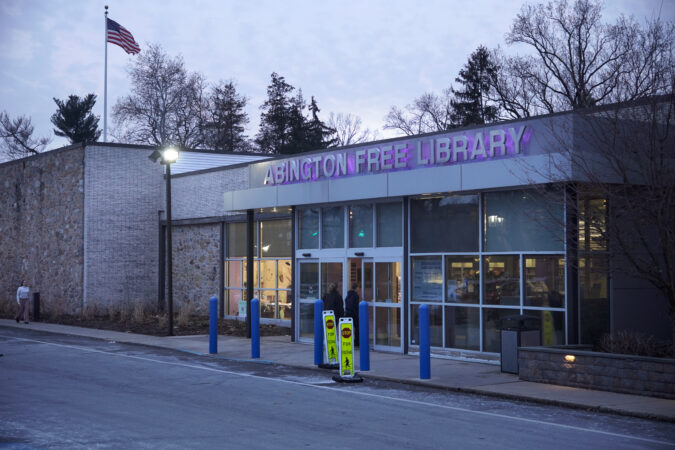
For more than four years, dozens of LGBTQ+ kids and their families have joined the Abington Township Public Library for Rainbow Connections, a monthly Zoom program, to read children’s books, craft, make new friends, and meet interesting people, such as “Jeopardy!” super champ Amy Schneider.
But within the past week, the program — the only one of its kind in Montgomery County libraries — has become a target of a right-wing social media campaign that has circulated misinformation and directed threatening language at the program, prompting the library to release a statement Monday setting the record straight, said Library Director Elizabeth Fitzgerald in an interview Tuesday.
“Rainbow Connections is not a sexual education class. Sexual health, reproduction, puberty, and intimate relationships are not discussed,” the statement said in part.
Though it’s “not different from any other story time or library program,” Fitzgerald says, Rainbow Connections’ mission is to foster a welcoming and intentional environment for LGBTQ+ kids in grades K-5, including those who may be struggling to make friends at school. Its virtual format has allowed families from around the country to join.
“Ultimately just a space where the kids could attend a library program and feel safe,” Fitzgerald said.
Comments attacking the program appeared on the library’s Facebook page early last week. A day later, LibsofTikTok, a controversial far-right social media account founded by Chaya Raichik, as identified by the Washington Post, posted about Rainbow Connections.
LibsofTikTok, which frequently targets LGBTQ+ people nationwide, spurred misinformed outrage from its millions of followers about the program’s upcoming events.
The account’s posts have often provoked real-life consequences. In 2024, after posting about the William Way Community Center, an LGBTQ+-focused nonprofit in Philadelphia, Democratic Sen. John Fetterman and former Democratic Sen. Bob Casey signed a letter requesting to withdraw federal funding from a renovation project that would have made the center’s headquarters more accessible and expanded William Way’s programming space.
“These are difficult times, and I think that the commentary that took off on social media underscores the reason why we need to create spaces where members of the LGBTQ community feel safe,” Fitzgerald said.
Library staff established the program in November 2021 after a community member reached out and asked if the library would help address a need for a safe space for LGBTQ+ kids.
According to anonymous comments from families provided by the library to The Inquirer, parents are profoundly grateful for the safe environment that Rainbow Connections has created for their children. Names were withheld by the library to protect families’ safety and privacy.
“My children live in a two-mom household, so I thought it would be a great program to connect with other kids and possibly see other families that look like ours,” one parent said.
Another parent said they had “tears in my eyes listening to [the kids] introduce themselves, awed by their bravery and vulnerability.”
A family who lives in North Carolina said Rainbow Connections helped their child better understand their identity and build community — “Your program brought us light, hope and education when we were feeling isolated, confused and hopeless.”
In Abington, it’s not the first time that events related to the LGBTQ+ community have been disparaged, said Township Commissioner John Spiegelman, who represents the area where the public library is located. The township’s yearly raising of the Pride flag has provoked a lawsuit against Spiegelman and other members of the board, he said.
“Is it getting worse here and everywhere? Certainly it is,” Spiegelman said.
In the aftermath of the social media posts, Fitzgerald said Rainbow Connections will be contacting parents to say the program will continue and that “their safety is ensured.”
“It is my hope that the children who participate don’t have any idea that this is going on,” Fitzgerald added.
Since the online backlash, the Montgomery County community has rallied around the library and Rainbow Connections, which has served as a model for other Pennsylvania libraries’ programming for LGBTQ+ youth.
“More communities should embrace programs like Rainbow Connections,” said Jason Landau Goodman, board chair of the Pennsylvania Youth Congress, an LGBTQ+ advocacy organization, in a statement. “Young students today read books that feature all types of people because diverse stories reflect the real world we live in.”
“Some students experience bullying or harassment based on who they are — and many still do not get opportunities to see themselves reflected in the stories they learn from,” added Goodman, who is also running for state representative in Montgomery County.
The Abington Human Relations Commission said in a statement Monday that they stand in “solidarity” with the library and encouraged community members to “seek information directly from reliable sources and to engage in dialogue grounded in respect and understanding.”
Fitzgerald said that in spite of the derogatory comments snowballing online, the library has been receiving an onslaught of supportive calls and emails.
“That’s really meant the world to us,” she said. “Just to know that the people who don’t want this program to exist, they’re a vocal, small, nonlocal majority, and that I believe there’s a much larger number of residents who love the library and who care about their neighbors and fellow community members.”
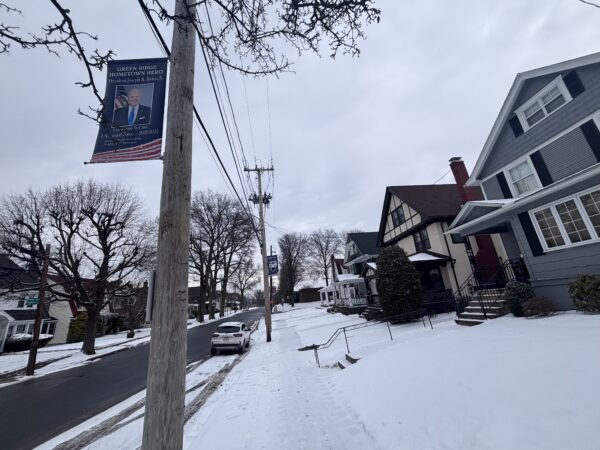
When a Scranton neighborhood group decided to honor Joe Biden with a “hometown hero” banner outside the 46th president’s childhood home recently, they expected a little bit of blowback.
But members of the Green Ridge Neighborhood Association say they’re dumbfounded by the number of complaints and even threats, both locally and abroad.
“Someone in Guam has been very vocal,” Roberta Jadick, the association’s secretary, said beneath the banner on North Washington Avenue on a recent snowy weekday.
“Hometown Heroes” banners first appeared in Harrisburg in 2006, according to the program’s website, and they’ve become ubiquitous in small-town and suburban Pennsylvania. Most appear as black-and-white photos of men and women in uniform, thousands of veterans honored in nearly every corner of the Commonwealth.
While most of the banners honor veterans, no rule prohibits municipalities, civic groups, or veterans’ groups from honoring others, said Laura Agostini, president of the Green Ridge group. Some towns have put up banners of high school athletes or law enforcement officials.
“I mean, teachers are heroes, aren’t they?” Jadick said.
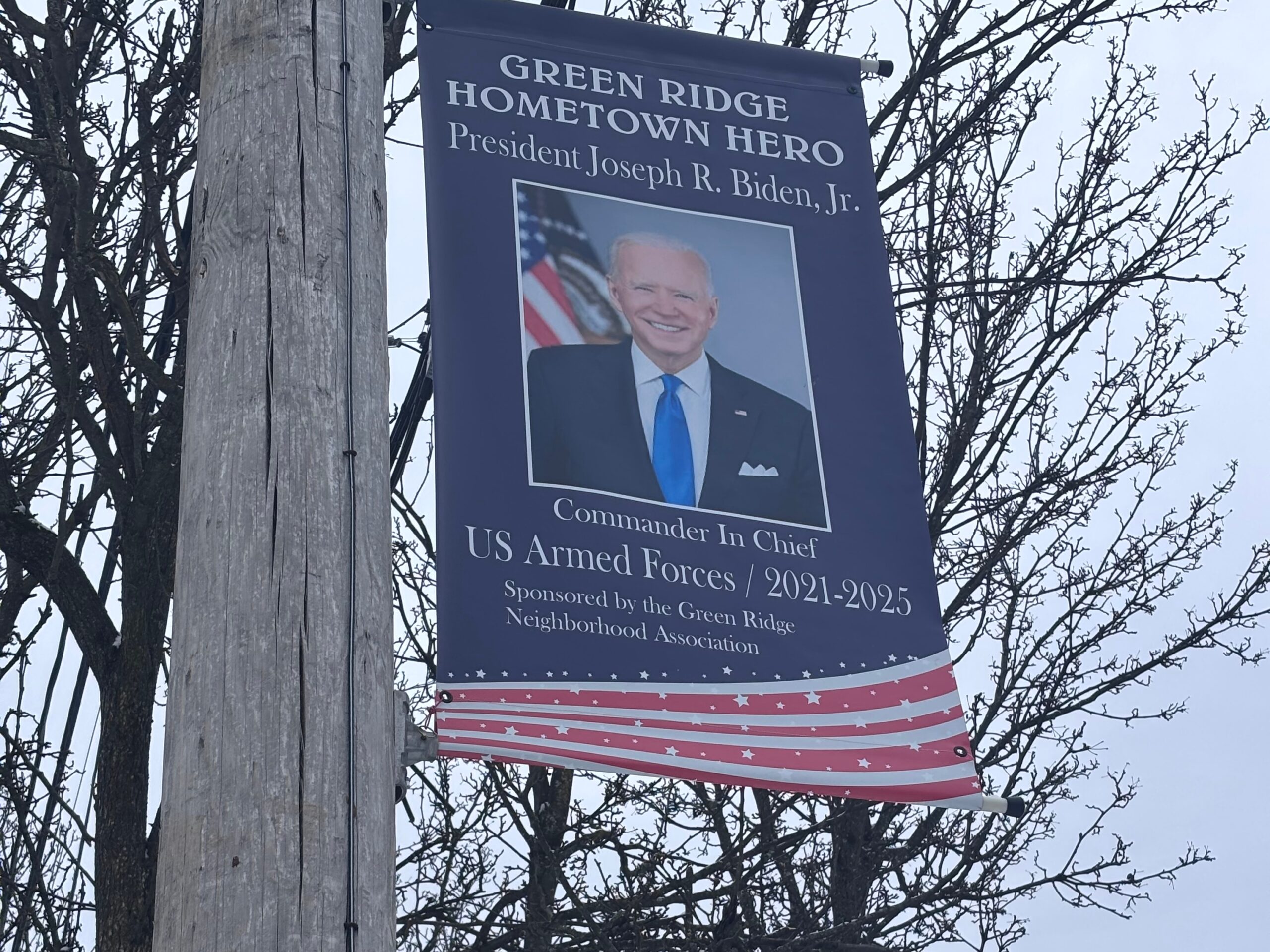
The banner on North Washington Avenue near Biden Street depicts the former president in a suit, with the title “Commander in Chief, U.S. Armed Forces, 2021-2025″ written beneath it. Agostini said the group was aware that “Commander in Chief” was a civilian title.
A banner featuring former president Joe Biden as a “hometown hero” has sparked controversy in Scranton. The neighborhood group that put it up plans to vote on its future Monday after getting criticism from veterans.
Agostini said the initial blowback was political but that the issue “morphed” into a veterans’ issue.
“We never intended to portray him as a veteran,” Agostini said. “There’s only been 46 presidents in the United States, and each one had a hometown, and we thought this is a unique honor.”
A Dec. 21 Facebook post about the banner by the Green Ridge Neighborhood Association received nearly 250 comments, ranging from supportive to critical to crude.
“He’s an embarrassment!” one commenter wrote.
A similar controversy erupted in 2021, when a four-lane highway in Scranton was renamed President Joe Biden Expressway.
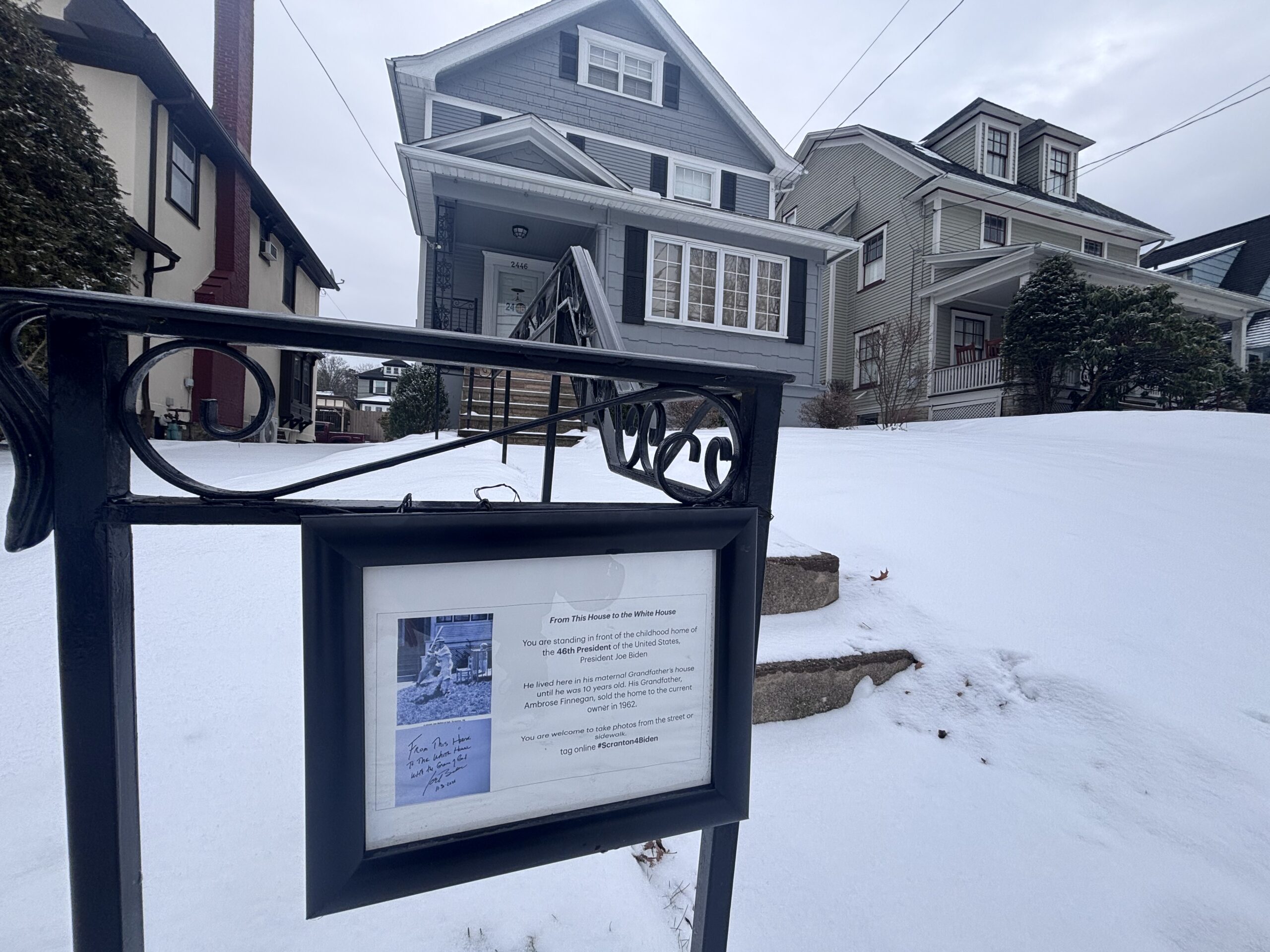
Biden was born in Scranton in 1942 and lived there on and off, and he repeatedly mentioned Scranton as a formative place. A plaque outside the home where Biden lived with his maternal grandfather, Ambrose Finnegan, said he moved out when he was 10 years old.
A Hometown Heroes banner honoring the Finnegans is just one light pole down from Biden’s. No one from the Hometown Heroes Banner Program returned requests for comment on Wednesday.
One local veteran, Andy Chomko, said he doesn’t have a problem with Biden being honored in Scranton, but his banner should not look like veterans’ banners.
“It’s a great thing that he lived here and had roots here,” Chomko said. “But the banner makes it look like he’s a veteran, and every one of those people on those other banners put their lives at risk for their country.”
Navy veteran Harold Nudelman told WNEP-16 that Biden “didn’t put his life on the line.”
“Don’t portray him as a veteran. He didn’t serve. He didn’t take that oath to serve as we did,” he told the news station.
Chomko, who served in Iraq and Afghanistan with the Army, believes the Green Ridge group should remove the banner and “rethink it.”
That could happen after Monday, the group will vote on the future of the banner at a public meeting.
“I would say the vast majority of people support it or really don’t care,” Agostini said. “I don’t take any of this lightly, though, and while we were hoping it would be dying down, we’ll have an open discussion about it.”
Jadick said the banner was never meant to divide the public even more than it is.
“If Trump was from here, he’d have a banner up after he was out of office,” she said. “This is where Joe Biden is from. Those are his uncles on the other banner.”
A banner featuring former president Joe Biden as a “hometown hero” has sparked controversy in Scranton. The neighborhood group that put it up plans to vote on its future Monday after getting criticism from veterans.
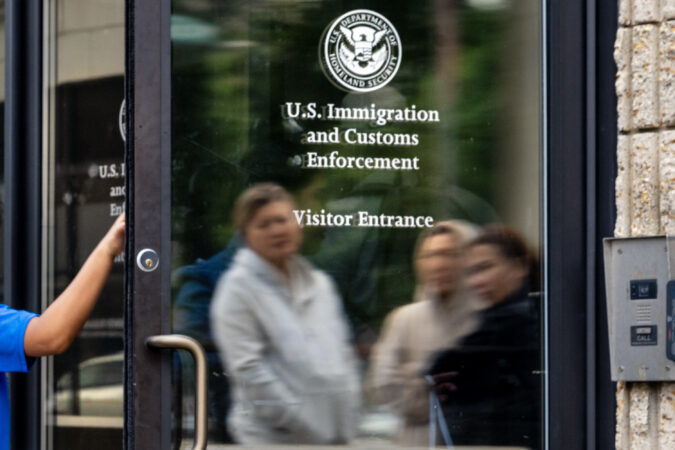
Federal judges in Philadelphia have ruled dozens of times against a Trump administration policy that mandates detention for nearly all undocumented immigrants — joining a nationwide wave of decisions criticizing the government for applying the policy in unlawful ways.
In the Eastern District of Pennsylvania, U.S. District Judge Juan R. Sánchez wrote in a memorandum this week that more than 40 people who have been detained in the region under that policy, which was rolled out by Immigration and Customs Enforcement last summer, have sought relief in the courts — and judges have ruled against the government in every case.
Chief Judge Wendy Beetlestone was even more blunt in an opinion filed last month, writing that “the law is piled sky high against the government’s position” to mandate detention and deny bond hearings for all undocumented immigrants — even those seeking to stay here via appropriate legal channels.
The administration’s insistence on employing the policy and defending it in court, Beetlestone wrote, was akin to the Greek myth of Sisyphus pushing a boulder up a hill.
“The Government’s hope, presumably, is that if it keeps pushing the boulder of its argument up the hill, at least one judge may rule against the weight of the authority,” Beetlestone wrote. “But the tale before the courts is the traditional one of Greek mythology: the Government returns again and again to push the same theory uphill, only for courts to send it rolling back down again.”
The pushback has added to a chorus of similar decisions in courts nationwide. Sánchez, appointed by George W. Bush, wrote in his memo that people challenging their detention in federal district courts “have prevailed, either on a preliminary or final basis, in 350 … cases decided by over 160 different judges sitting in about fifty different courts spread across the United States.”
A Politico analysis of court dockets published this week put that tally even higher, reporting that over the last six months, more than 300 federal judges — comprising appointees of every president since Ronald Reagan — have ordered some form of relief in mandatory detention cases to about 1,600 challengers.
Spokespeople for ICE did not reply to questions about the judicial rebukes, and many of the government’s court filings in cases challenging detention have been made under seal.
Still, the Trump administration has made no secret of its desire to boost the number of people in federal immigration detention. And the mandatory detention policy has helped push the number of confined immigrants past 65,000, a two-thirds increase since Trump took office in January.
Lilah R. Thompson, an immigration attorney in the community defense unit at the Defender Association of Philadelphia, said in an interview that mandatory detention “plainly violates the law and is an illegal policy.” But she said most challenges to it so far have come in individual cases, and the potential legal avenues seeking to strike it down nationwide are protracted and legally complex.
In the meantime, Thompson said, the government has seemed content to use the policy in its attempt to apply pressure to immigrants and, ultimately, increase deportations.
“[Authorities] are applying a blanket policy because when people are in detention, they aren’t able to withstand the horrors of detention,” Thompson said. “It makes their circumstances much more difficult.”
A dramatic change in precedent
ICE’s detention mandate was rolled out amid the Trump administration’s aggressive push to crack down on immigrants nationwide.
It came as the Board of Immigration Appeals — the highest administrative body for interpreting the nation’s immigration laws — issued three precedential rulings that made it dramatically harder for detainees to be released on bond.
In one of those rulings, the board held that immigration judges lack the power to hear or grant bond requests to people who entered the United States without permission — even if they had been in the country for years, or had few other infractions that might warrant detention as their cases wound through the immigration system.
That upended decades of established government practice, which typically allowed otherwise law-abiding people who entered the country illegally to at least receive a bond hearing and determine if they could remain in the community as their cases moved forward.
The decision also meant that thousands of detained immigrants who previously would have been eligible for bond hearings could be released only if they filed and won a federal lawsuit.
For many detainees that created an impossible situation because they have neither a lawyer nor the money to hire one.
“There are so many people that are getting picked up [under] the unlawful mandatory detention policy, but because they don’t have an attorney to file a [legal challenge], they’re still experiencing the consequences of the policy,” said Maria Thomson, another attorney in the Defender Association’s community defense unit.
Officials at the federal Executive Office for Immigration Review, which oversees the BIA, declined to answer questions about the rulings.
“The Executive Office for Immigration Review does not comment on federal court decisions,” spokesperson Kathryn Mattingly said in a statement.
Detainees who have been able to hire attorneys and appear before federal judges have been winning relief at near-universal rates, with the courts ordering their freedom or directing the immigration court to hold a bond hearing.
“The district courts have been overwhelming on this question. It’s been extremely lopsided,” said Jonah Eaton, a veteran immigration attorney who teaches law at Temple University and the University of Pennsylvania, adding that even some Trump-appointed judges “have said this is nonsense.”
Earlier this week, District Judge John Murphy said in a court filing that judges had sided with detainees in all 50 cases filed so far in Pennsylvania’s Eastern District.
And in November, District Judge Paul Diamond wrote that he’d found 288 district court decisions nationwide addressing the issue — and that judges had ruled against the administration in 282 of them.
Diamond then went on to criticize the government’s attempts to justify its policy using what he said were competing interpretations of the law.
It is “difficult to credit the Government’s squarely contradictory position here,” Diamond wrote.
Significant challenges
Still, not all wins for detainees are comprehensive.
In some instances, immigrants are granted bond hearings before an immigration judge. But Eaton said some of those immigration judges will either deny bond or set an impossibly high figure. In Philadelphia, he said, it’s become common for attorneys to ask the federal judges to order release themselves, “because immigration judges won’t do it.”
Immigration Court is part of the executive branch, not the judiciary, run by the Department of Justice. That has for years called the courts’ impartiality into question.
“Even when we’re seeing bond hearings happening, they’re being denied at a higher rate,” said attorney Emma Tuohy, a deportation-defense specialist at Simon, Choi & Tuohy in Philadelphia. So immigrant defenders “are going straight to district court and filing habeas corpus, on the premise that people are being unlawfully detained.”
Habeas corpus, Latin for “you have the body,” is a demand that the government bring a detained person to court and prove that they have been legally imprisoned. It’s considered a fundamental protection against arbitrary detention.
Beyond bond hearings, Thompson, of the Defender Association, said there are challenges in seeking to provide ample legal assistance to people who have solid grounds to fight their detention: Many can’t afford lawyers, she said, there is no statewide funding to support lawyers pursuing such challenges, and ICE can move detainees to different jurisdictions at its discretion, increasing the difficulty of petitioning for release.
“They are doing it because they can, and because the consequences are that most [immigrants] cannot fight this and will end up being deported,” she said.
Cases that might threaten the overall detention policy, meanwhile, are likely to take time to wind through appellate courts, she said — and the administration could seek to litigate the matter in jurisdictions that have been more traditionally conservative.
In the meantime, federal judges are going to continue having to confront the issue in district courts. Murphy wrote this week that there are approximately 25 petitions awaiting a ruling in Philadelphia’s federal courthouse.
If Beetlestone’s opinion is any guide, the judges would prefer that ICE change its position — rather than continuing down the same path and hoping the ruling will be different next time.
Relying on hope in the courts, Beetlestone said, “resembles a game of whack-a-mole, in which the mole (here, the Government) insists on repeatedly volunteering to get struck by the judicial gavel.”
For the first time in more than half a century, Marie Scott is free.
Scott, 72, who served more than 52 years in prison for felony murder, was released from custody on Wednesday after Gov. Josh Shapiro commuted her life sentence in June. Despite opposition from the victim’s family, community advocates had pushed for her freedom for years, saying she had served enough time, was a model inmate, and no longer posed a threat to society.
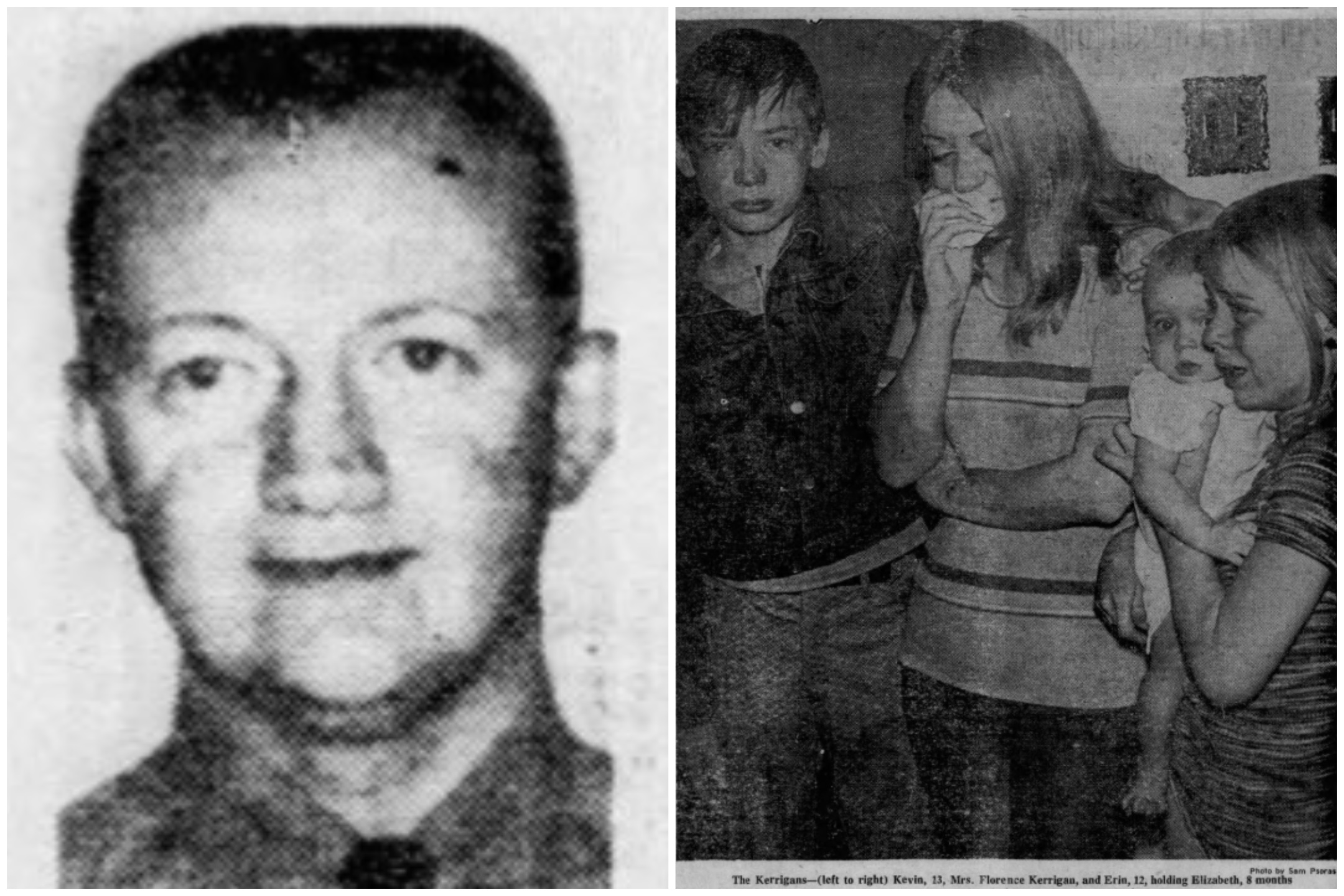
Scott, known as “Mechie,” has been incarcerated since 1973, after she and her then-16-year-old boyfriend, Leroy Saxton, robbed a Germantown gas station. She was 19 and addicted to heroin when she helped Saxton restrain the cashier, Michael Kerrigan, and then rummage through the store’s cash register and safe. Her attorneys say she was acting as a lookout when — to her surprise, she says — Saxton shot Kerrigan, 35, in the back of the head.
Philadelphia firefighter Michael Kerrigan, left, was killed in 1973. His family, shown in a 1973 photograph, was never the same. In the photo, from right to left, is Kerrigan’s son Kevin, wife Florence, and daughter Erin holding 8-month-old Angela.
Saxton was later convicted of first-degree murder and sentenced to life in prison. Scott was convicted of felony murder and handed the same fate.
But Saxton was released on time served in 2020 after the U.S. Supreme Court overturned mandatory life sentences for juveniles.
Scott had remained behind bars ever since.
Until Wednesday, when hours before dawn, she walked out of her cell in State Correctional Institutional Muncy for the final time, stepped into the back of a van, and was driven three hours toward her new life in Philadelphia.
There, for the first time in her life, she hugged her daughter, Hope Segers, outside the prison walls.
“I just covered my face and lost it,” Scott said of seeing her Wednesday. “That was the first time I have seen my daughter and grandson in the real world. … To feel them, to smell them in the free air.”
Marie Scott had her life sentence commuted after 52 years in prison.
Segers was born in SCI Muncy 45 years ago. During one of the three times Scott escaped from prison between 1975 and 1980, she reunited with a man who worked in the prison kitchen and with whom she had fallen in love, and she got pregnant.
Segers has known her mother only through prison visits often years apart, and short calls via phone and Zoom. Now, she said, she is eager to begin building a true relationship with her.
“It’s still not real,” she said of sitting next to her mother. “I’m still in shock.”
Scott, who will be on parole for the rest of her life, will move into her daughter’s home in Northeast Philadelphia after living in a halfway house for a year, as is required by the prisons.
Scott’s health has deteriorated in recent years. She uses a wheelchair, suffered from Stage 2 breast cancer, and had a double mastectomy last year. She was not ill enough to qualify for compassionate release, her attorneys said.
But she has since learned she is cancer free, she said.
Marie Scott, 72, survived Stage 2 breast cancer while in prison.
Scott had been serving a mandatory life sentence under Pennsylvania’s felony murder law, which allows people to be convicted of second-degree murder if a death occurs during the commission of a felony such as robbery — even if they did not kill the victim or intend for anyone to die. Pennsylvania is one of only two states where a felony murder conviction automatically carries a life sentence, a punishment Shapiro has called unjust and unconstitutional. (Pennsylvania’s Supreme Court is currently weighing the issue.)
Other than the decades-old escapes, her attorneys said, she has been a model inmate. She is deeply remorseful for her actions, and has written books about healing, directed plays, and led drug and alcohol treatment courses for inmates, they said. She became a mentor and mother figure to dozens of women at Muncy.
Rupalee Rashatwar (from left, Hope Segers, Bret Grote, and Sam Lew worked to free Marie Scott through their work at the Abolitionist Law Center.
For years, Scott and her attorneys at the Abolitionist Law Center applied for a commutation from the Pennsylvania Board of Pardons, asking that her life sentence be reduced. Her applications were repeatedly denied without explanation, lawyer Bret Grote said.
She applied last year with renewed hope after the leadership at SCI Muncy said they would support her petition.
Still, Grote said, Laurel Harry, secretary of the state Department of Corrections, told officials she would not support Scott’s petition because of the prison escapes decades ago. Harry’s support was typically a requirement of the board’s approval for release, he said.
Grote, his colleagues, and a collection of volunteers drafted a social media, phone, and letter writing campaign to persuade Shapiro and prison officials to support her commutation. Members of Philadelphia City Council, alongside state senators and representatives, called for her release, as did Philadelphia rapper Meek Mill.
It worked. In May, the Board of Pardons voted to recommend a commutation of her sentence, and the following month, Shapiro formally approved her release. The board then required that Scott spend six additional months in prison for the prison escapes.
Her release comes amid opposition from the victim’s family.
Michael Kerrigan holding his granddaughter, Angela Kerrigan Hightower. His wife later adopted Angela to be one of her seven children.
Initially, two of Kerrigan’s daughters said they supported Scott’s release and could forgive her, but later changed their minds and asked the board of pardons and parole not to release her. They said they do not believe she has taken enough responsibility for the crime.
Angela Kerrigan Hightower, a grandchild of Kerrigan’s who was later adopted by his wife and would have been his seventh child, said Wednesday that “the system failed the victims in this case.” She said she does not believe Scott has shown sufficient remorse, and that she and Saxton should have had to serve a life sentence for the suffering they brought her family.
“I want to know,” she said, “where is the justice for the victims in this case.”
Scott has said she deeply regrets what happened. She said Wednesday that she hopes to use her time outside of prison to tell the story of the cycle of drug and sexual abuse and codependency that she has said contributed to her actions.
She also wants to push for the release of other women who she said have been reformed in prison and don’t deserve to die there.
Marie Scott, 72, joined a Zoom call with the Coalition to Abolish Death by Incarceration alongside her daughter, Hope Segers, and grandson Dashawn Green.
Scott’s grandson, Dashawn Green, 28, said he wants to get his grandmother’s health and diet back on track, introduce her to his girlfriend and miniature schnauzer, and maybe even plan a road trip.
Scott said her first order of business is to find a church.
Seated on the couches in the Abolitionist Law Center in North Philadelphia Wednesday night, she recalled gathering for her final Sunday service inside the prison last week and saying goodbye to the women in the facility who raised her.
“You’re my family,” she said she told them. “I don’t make promises because they’re made to be broken, but if you don’t have your word, then you don’t have anything. And I give you my word, I am going to die trying to get all of my women out.”
“It feels like I’m on another planet,” Marie Scott, 72, said of her newfound freedom.
The number of federal government employees in the Philadelphia region plunged in October, according to new employment data that appear to reflect the departure of thousands who opted into President Donald Trump’s resignation program.
Trump’s cuts to the federal workforce over his first year in office became clearer Wednesday with the release of new employment data from the U.S. Bureau of Labor Statistics (BLS). Across Pennsylvania and New Jersey, thousands of federal jobs were cut from September to October.
It was the first time the government’s deferred resignation program has been reflected in local employment data. First offered in January 2025, this program allowed federal employees to resign from their jobs while continuing to receive pay. For many, the program ended Sept. 30. While it may have been months since they had completed duties related to their federal jobs, the end of the deferred resignation period is when they officially stopped being employed by the government for purposes of employment data.
window.addEventListener(“message”,function(a){if(void 0!==a.data[“datawrapper-height”]){var e=document.querySelectorAll(“iframe”);for(var t in a.data[“datawrapper-height”])for(var r,i=0;r=e[i];i++)if(r.contentWindow===a.source){var d=a.data[“datawrapper-height”][t]+”px”;r.style.height=d}}});
“The federal workforce is …in communities like Philadelphia, and we are part of the economy,” said Philip Glover, a union leader with AFGE District 3, which represents federal workers in Pennsylvania and Delaware. The recent local job loss will have ripple effects, he said. It “affects stores, transit, it affects tax bases, all of those things are affected,” he said.
Federal agencies in the Philadelphia metro area — a region that includes Camden and Wilmington — shed about 2,900 jobs in October, down 5.3% from September. It was the steepest month-over-month decline since July 2010 and the fourth biggest since at least 1990.
Pennsylvania lost overall about 4,800 federal jobs in October, a 4.8% drop and the largest month-over-month decrease since October 2020.
New Jersey lost about 1,200 federal jobs in October.
In nearly five years, employment overall has grown 12.6% in the Philadelphia metro area, but regional gains in federal employment have now been completely wiped out by job losses in the past year.
window.addEventListener(“message”,function(a){if(void 0!==a.data[“datawrapper-height”]){var e=document.querySelectorAll(“iframe”);for(var t in a.data[“datawrapper-height”])for(var r,i=0;r=e[i];i++)if(r.contentWindow===a.source){var d=a.data[“datawrapper-height”][t]+”px”;r.style.height=d}}});
The handful of larger prior declines in federal employment for Pennsylvania and Philadelphia came during the recessions of the early 1990s and 2000s, the Great Recession and its aftermath, or the COVID-19 pandemic — periods during which economic activity slowed and the federal government experienced a decline in tax revenue.
The deferred resignation would have been reflected in a November release, but it was delayed because of the federal government shutdown, which stretched through early November.
The federal employment figures include all full- and part-time civilian employees, including those of the Postal Service. But it does not include armed forces and intelligence agencies such as the CIA and NSA.
Why federal workers resigned
Paul Kenney spent almost 30 years at the National Park Service in Philadelphia — more than two decades in the Northeast Regional Office on Market Street in river protection and six years at Independence National Historical Park.
All that came to a halt in March 2025. Kenney decided the Trump administration’s efforts to significantly reduce the federal workforce was too much. He felt demoralized and also concerned that a bill in Congress at the time would impact his pension.
The 59-year-old decided to retire three years early, despite wanting to stay in the workforce. He had just scored some highly coveted grants for restoration efforts in the parks. He remains involved with his union, AFGE Local 2058, as a vice president.
By the end of May, five people from Kenney’s 11-person team at the Northeast Regional Office left; almost all had opted to take an early retirement.
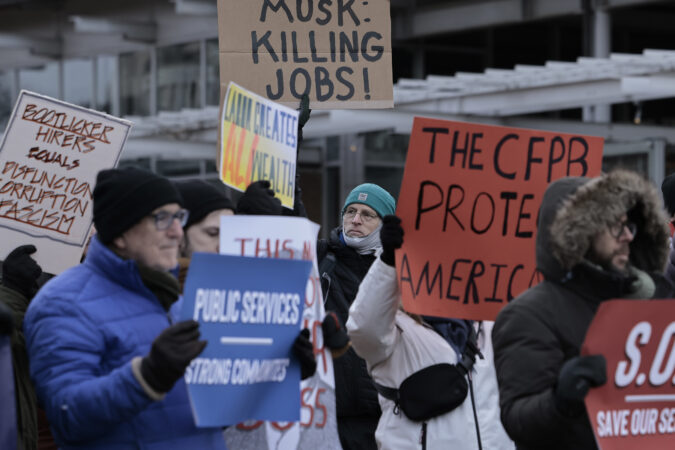
“The pressure really was all DOGE,” Kenney said, referring to the Department of Government Efficiency Trump launched soon after taking office. It was a “grim” experience for those in the federal workforce, he added.
Beyond layoffs earlier in 2025, the Trump administration sent termination notices during the government shutdown that started on Oct. 1. Those firings were ordered to be reversed under the deal to end the shutdown.
Where are federal workers employed?
In Pennsylvania, federal employment represented about 1.52% of all jobs as of November, down from around 1.69% for the same month in 2024, according to the new data.
In New Jersey, federal workers represented about 1.05% of jobs overall as of November, down from around 1.13% in November 2024.
The most recent BLS data are not broken down by agency or department, but data from March 2025 from Pennsylvania’s Department of Labor and Industry indicate that in Southeastern Pennsylvania, the largest employers of federal workers are the U.S. Postal Service, the Department of Defense, and the Department of the Treasury.
window.addEventListener(“message”,function(a){if(void 0!==a.data[“datawrapper-height”]){var e=document.querySelectorAll(“iframe”);for(var t in a.data[“datawrapper-height”])for(var r,i=0;r=e[i];i++)if(r.contentWindow===a.source){var d=a.data[“datawrapper-height”][t]+”px”;r.style.height=d}}});
Nationally, the federal government shed about 162,000 jobs in October, down 5.6% from September and 8.7% from the previous October. The government lost a further 6,000 jobs in November.
There were about 2.74 million federal employees nationwide as of November, compared with about 3.02 million at the start of 2025. The country experienced a loss of 271,000 federal jobs from January through November.
That’s not far off the 300,000 federal jobs that the Trump administration had said would be cut by the end of 2025. Data for the remainder of the year will be available later this month.
“What it’s doing is putting a strain on the remainder of the workforce to continue operations,” said Glover. “That increases stress levels, it doesn’t increase efficiency.”
And with that in mind, Glover said, additional federal workers may be thinking about quitting. “I think people are making decisions now whether they’re gonna stay if that happens again.”