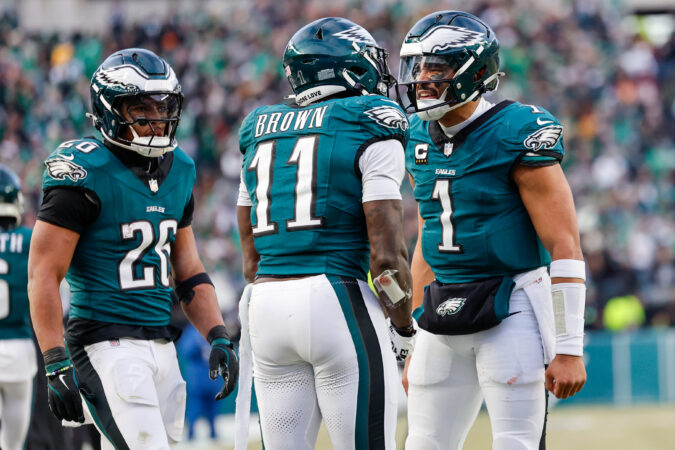
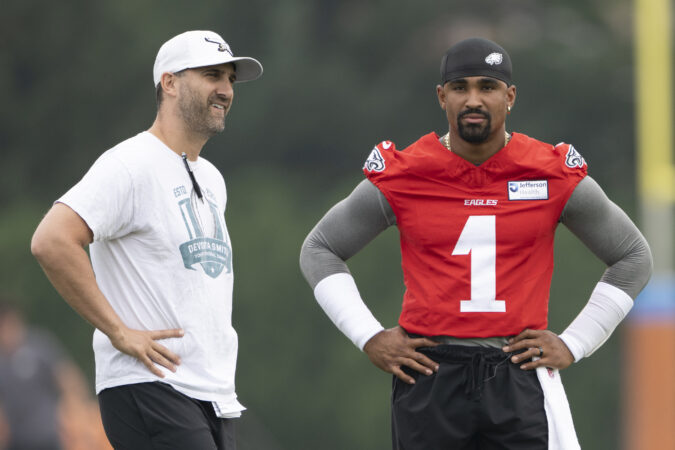
For most of the season, the 2025 Eagles offense did not pass the eye test.
Execution errors plagued them. The Eagles suffered from negative plays and penalties on early downs, setting themselves up for third-and-longs and ultimately forcing them to punt early and often. Options were seemingly limited in the passing game. Rushing lanes failed to open for a previously dynamic running game.
But what do the underlying numbers reveal about the offense’s performance that could have implications going forward? Here’s one compelling advanced stat about each notable offensive starter, the first installment in a two-part series that will also analyze the defense:
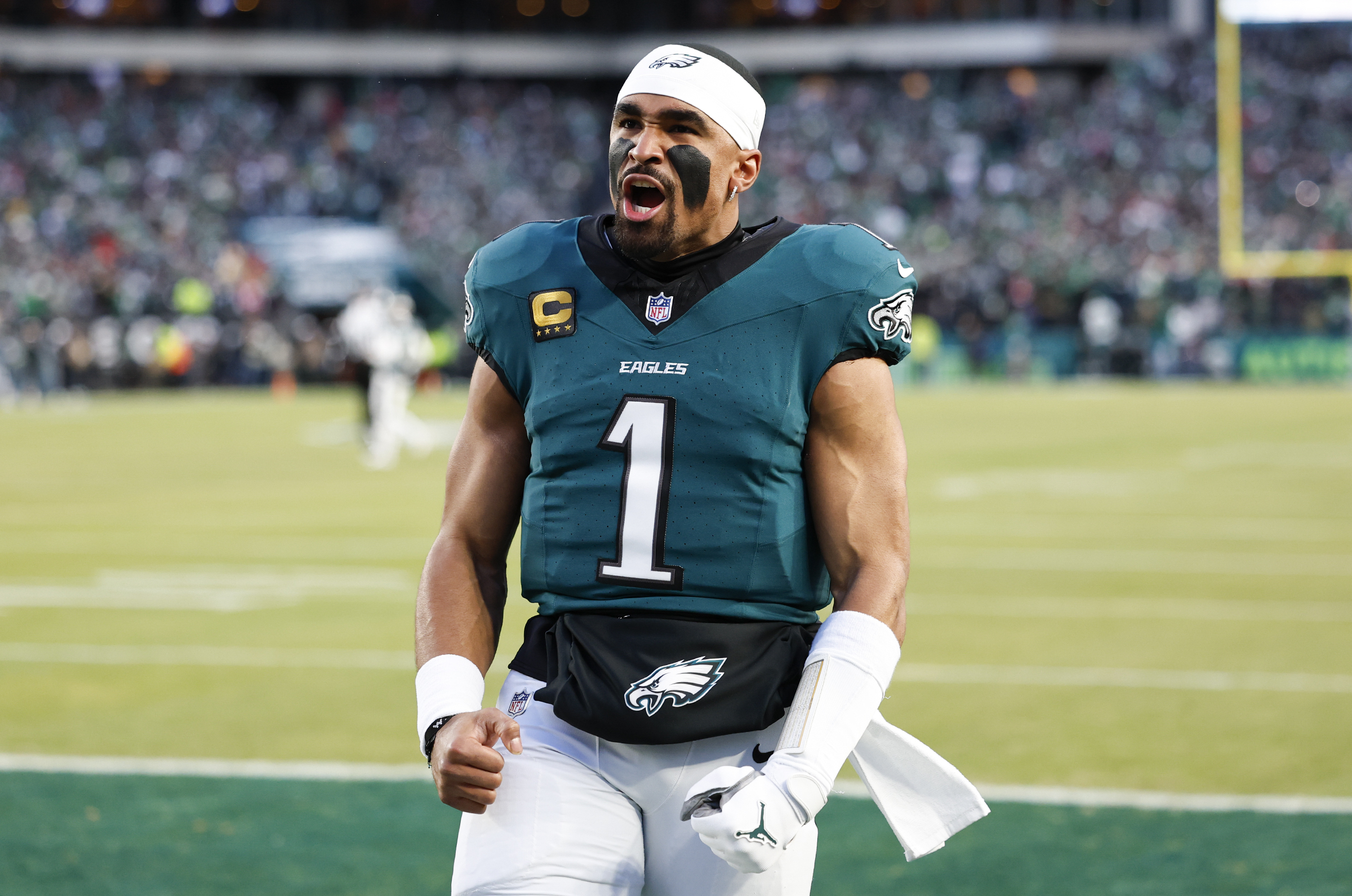
Jalen Hurts ran less, and was less effective when throwing downfield, but was still good on designed runs.
Jalen Hurts
One stat alone can’t sum up the season for Hurts, who plays the most important position on the team. So, let’s dissect two.
First, the rushing component of his previously self-described “triple-threat” ability seemingly went by the wayside this season. Hurts, 27, averaged a career-low 1.7 designed rushing attempts per game this year, according to Next Gen Stats. That’s a notable decrease from his 2024 averages — 3.2 during the regular season and 3.8 during the Eagles’ four-game Super Bowl run.
Even though he had fewer designed carries this year, he wasn’t any less effective. On 27 designed runs, he collected 143 yards and nine first downs, including a touchdown, good for 5.3 yards per carry (his career average is 5.2).
Here’s the $255 million question: Why the decrease? Was it a matter of preserving the franchise quarterback, as Nick Sirianni suggested, or was it just a symptom of Kevin Patullo’s offense, as Hurts said? Will this trend persist in 2026, or will Hurts be called upon to use his legs to help invigorate the offense once more?
Second, the downfield passing game wasn’t nearly as effective for the Eagles in 2025, which hindered an already limited air attack. Hurts completed 47.9% of his downfield passes (10-plus air yards), according to Next Gen Stats, the lowest percentage of his five seasons as the starter.
Wins and losses were often reflected in his downfield completion rates. In the Eagles’ five losses this season (not including Week 18), Hurts went 10-of-17 for 233 yards, a touchdown, and an interception (58.8% completion rate) when targeting open receivers (at least three yards of separation) downfield.
His 65.6% completion rate when targeting open receivers downfield this year was roughly 25 percentage points lower than last season’s (89.3%). Again, can the next Eagles offensive coordinator reverse this trend and improve Hurts’ downfield accuracy in 2026?
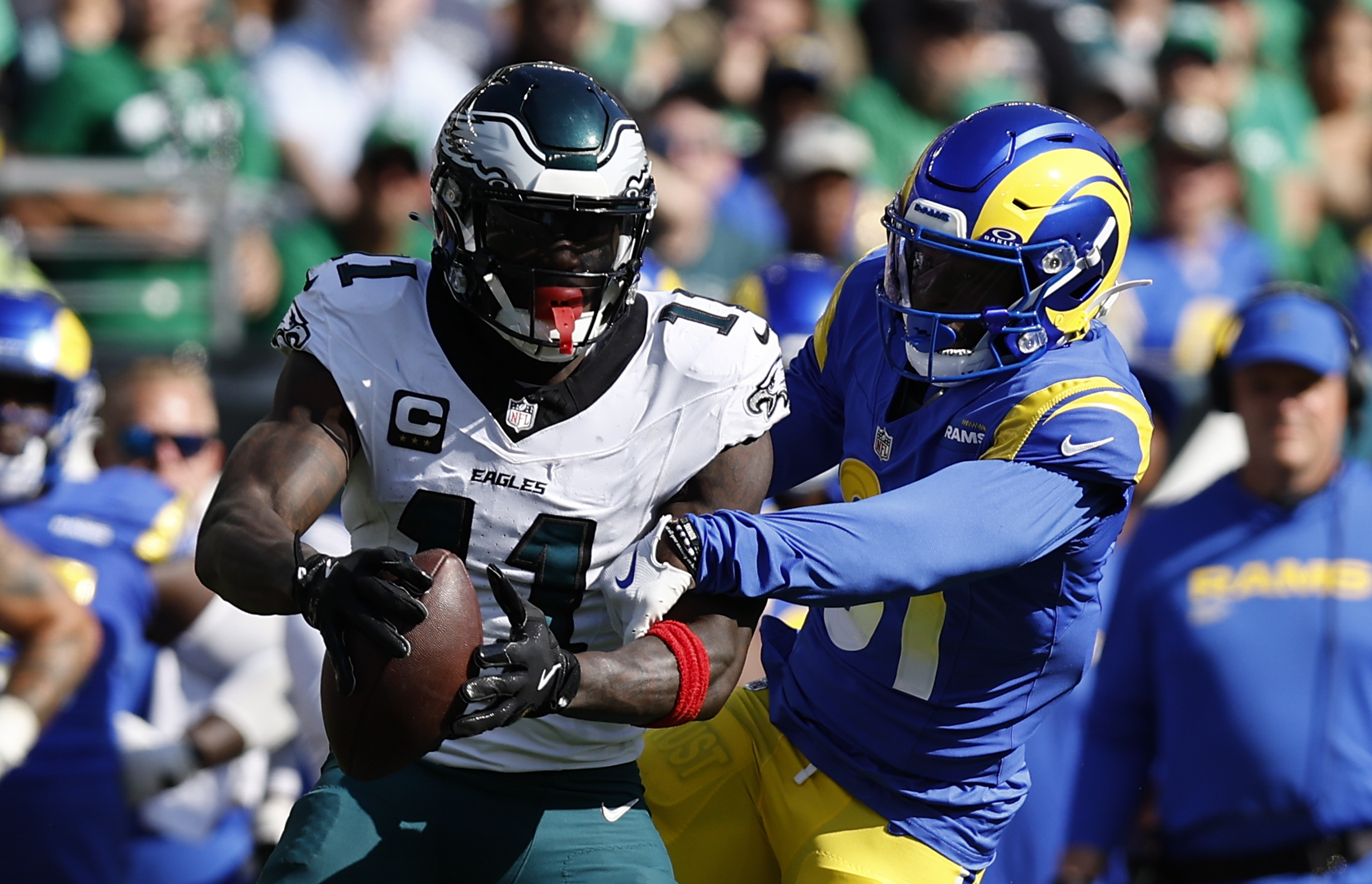
The Eagles were fond of one specific kind of route for A.J. Brown.
A.J. Brown
At his end-of-season news conference, Sirianni noted that the next offensive coordinator will help “evolve” the offense. Perhaps that person will refresh the Eagles’ route concepts.
Brown, 28, ran a hitch route on a career-high 24.9% of his total routes run, according to Next Gen Stats. A hitch is a short route that starts vertical, then requires the receiver to plant his foot and turn toward the quarterback for a pass. Brown’s hitch rate this season was the eighth-highest among receivers who ran at least 200 routes.
Despite the lack of variety in his routes, Brown was still effective when targeted on those hitches. He collected 263 receiving yards and a touchdown on hitch routes, which ranked second in the league behind Dallas’ George Pickens (275).
Brown wasn’t the only Eagles receiver who ran a lot of hitches. The entire group ran hitch routes on 22.1% of its combined routes, which was the second-highest single-season rate by a receiving corps since 2016 (23.4% for the 2019 Chicago Bears).
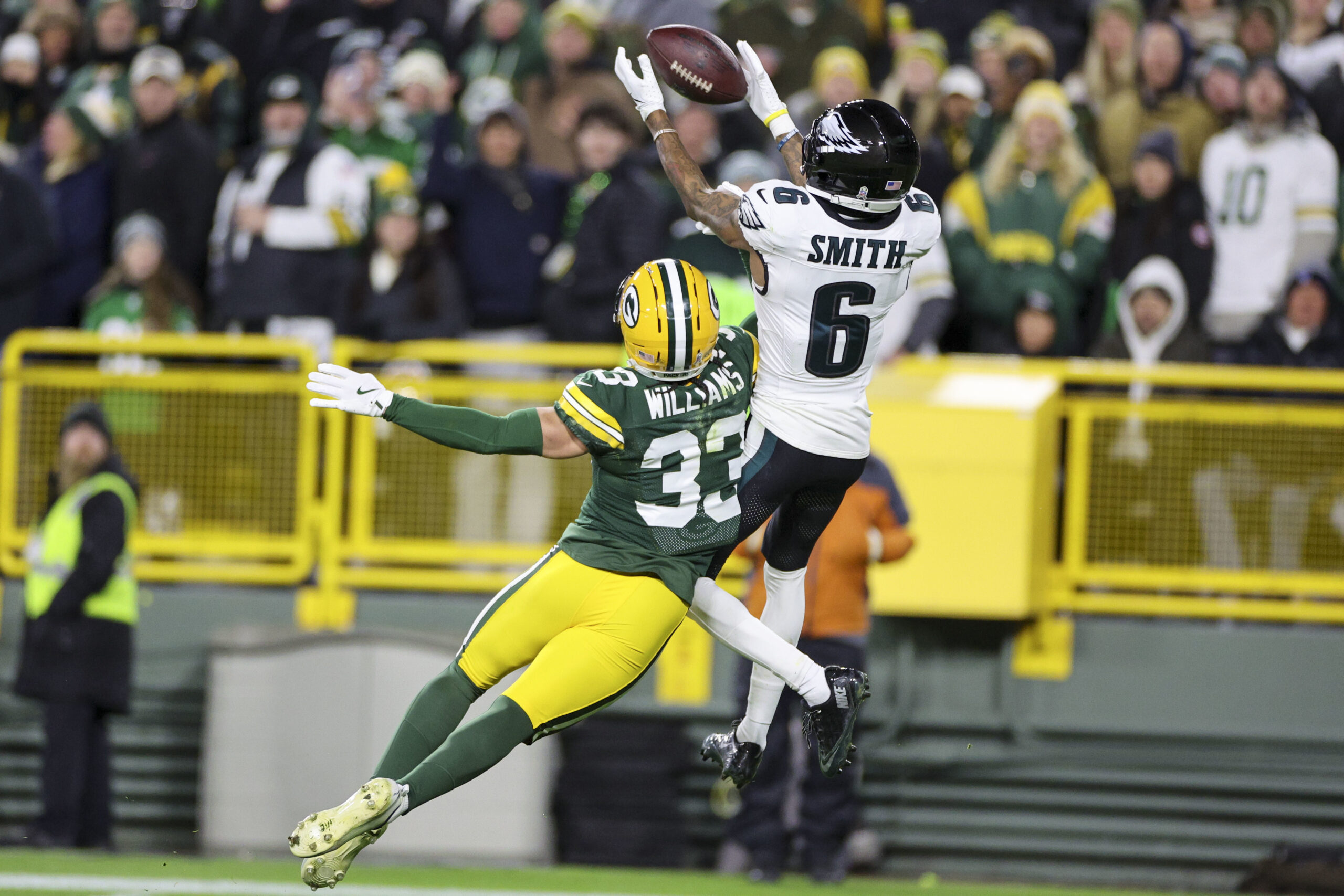
DeVonta Smith showed he was more than merely a slot receiver in 2025.
DeVonta Smith
Smith may primarily line up as a slot receiver, but he was most effective when split out wide this season.
The 27-year-old receiver aligned in the slot on a career-high 57.1% of his routes, according to Next Gen Stats. Still, he posted career bests when he lined up outside in yards per route run (3.1) and yards per target (11.9). Smith trailed only Seattle’s Jaxon Smith-Njigba (3.8) and the Los Angeles Rams’ Puka Nacua (3.6) in yards per route run from the outside among 89 receivers (minimum 150 routes).
His yards per target increased when split out wide to the right. He averaged 13.9 yards per target from that alignment, which led receivers (with at least 20 targets). Smith was particularly efficient downfield, as he caught 12 of 17 targets for 300 yards and a touchdown (17.6 yards per target).
Will his efficiency on the outside change how frequently he lines up in the slot going forward?
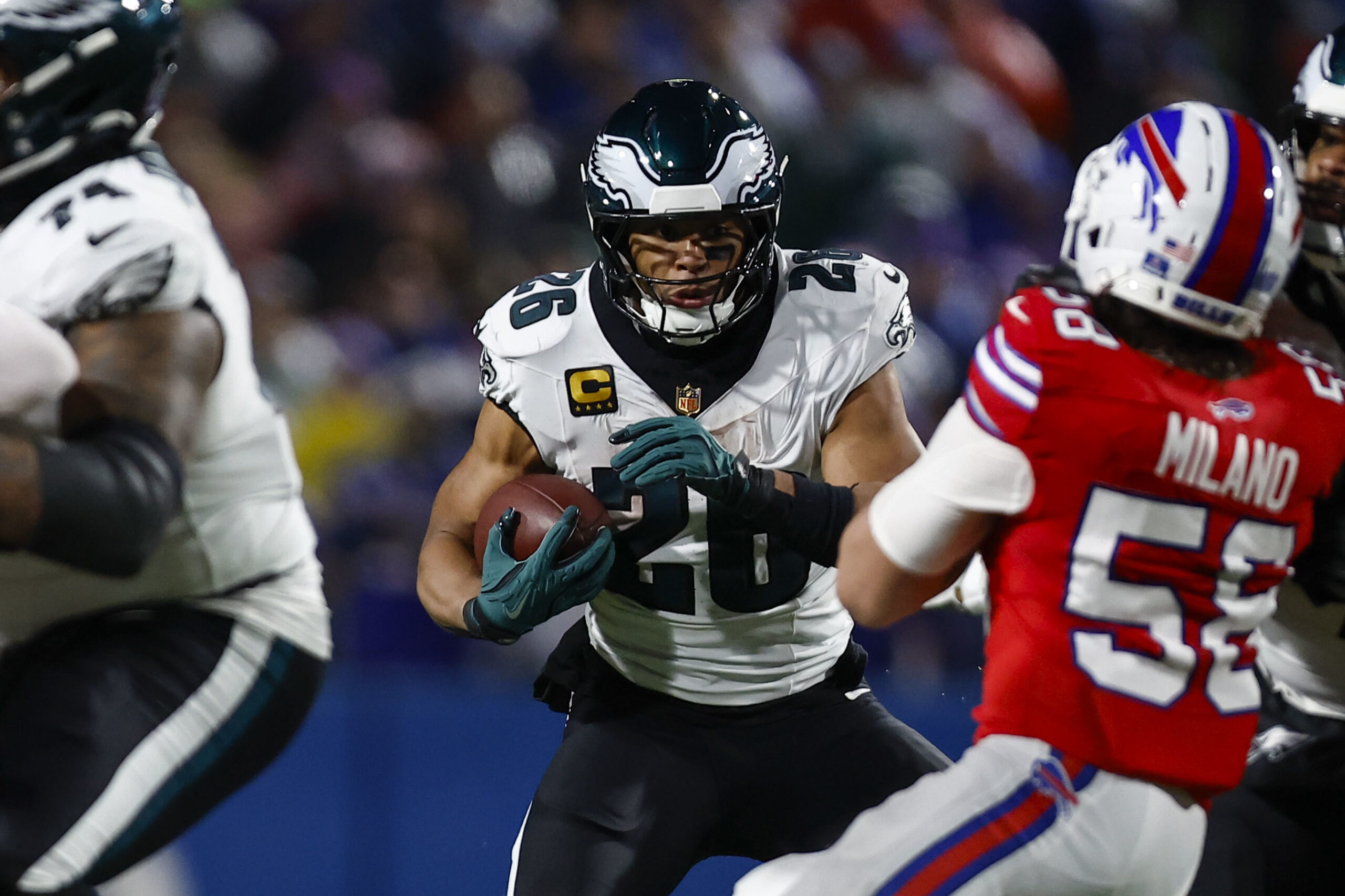
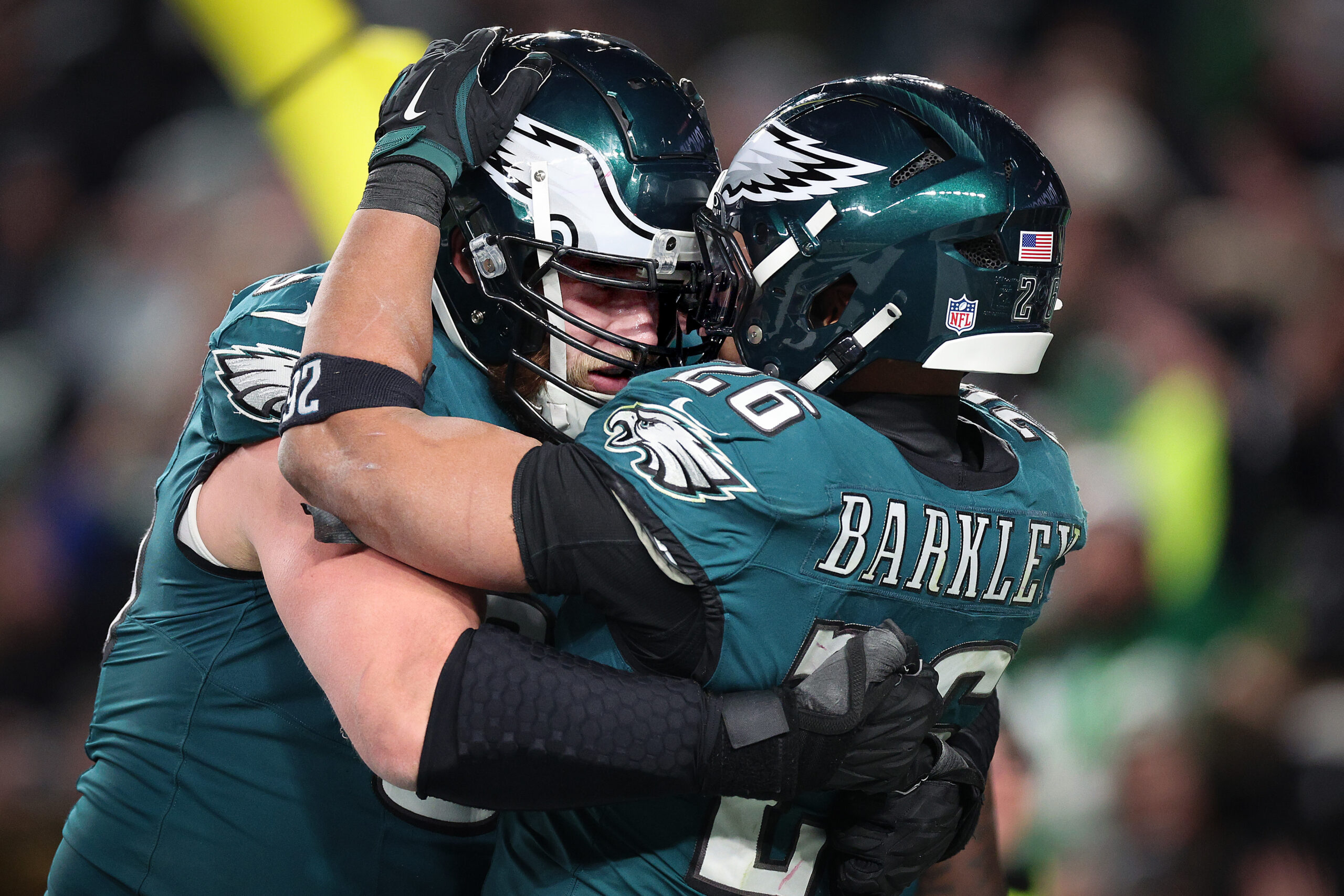
When the Eagles could prevent defenses from blowing up the backfield, the numbers show that Saquon Barkley was as effective as ever.
Saquon Barkley
Barkley eclipsed 1,000 rushing yards for a second consecutive season (1,140), but he didn’t come anywhere close to his total of 2,005 from 2024.
He didn’t get much help up front. According to Next Gen Stats, Barkley tookhits behind the line of scrimmage on47.1% of his carries, which was the ninth-highest rate among 49 running backs (minimum 100 attempts) this season.
By comparison, the 28-year-old running back was hit behind the line of scrimmage on 37.7% of his carries in 2024.
This season, Barkley averaged 1.1 yards before contact per carry, trailing his 2.4 clip from last year. When he was hit behind the line on 132 carries, Barkley combined for 93 yards (0.7 yards per carry) and produced a single explosive run. On the runs without contact before the line, he averaged 7.1 yards per carry and had a 18.2% explosive run rate (both are above the league averages of 6.5 and 15.8%).
What can the Eagles do to improve their run blocking in 2026? Is it a matter of changing the personnel, banking on the improved health/performance of the existing players, or changing up the blocking schemes?
Dallas Goedert’s red-zone effectiveness was to a league-best standard in 2025.
Dallas Goedert
No player was more sought-after in the red zone this season than Goedert.
With his 10 red-zone touchdowns this season, the 31-year-old tight end accounted for 58.8% of the Eagles’ red-zone receiving touchdowns, according to Next Gen Stats. That was the highest share of any player in 2025.
Goedert’s 11 total receiving touchdowns were tied for the most among tight ends (with Arizona’s Trey McBride) and tied for the second-most among all players (trailing the Rams’ Davante Adams).
Hurts may look to someone else in the red zone next season. Goedert is set to become an unrestricted free agent at the start of the new league year.
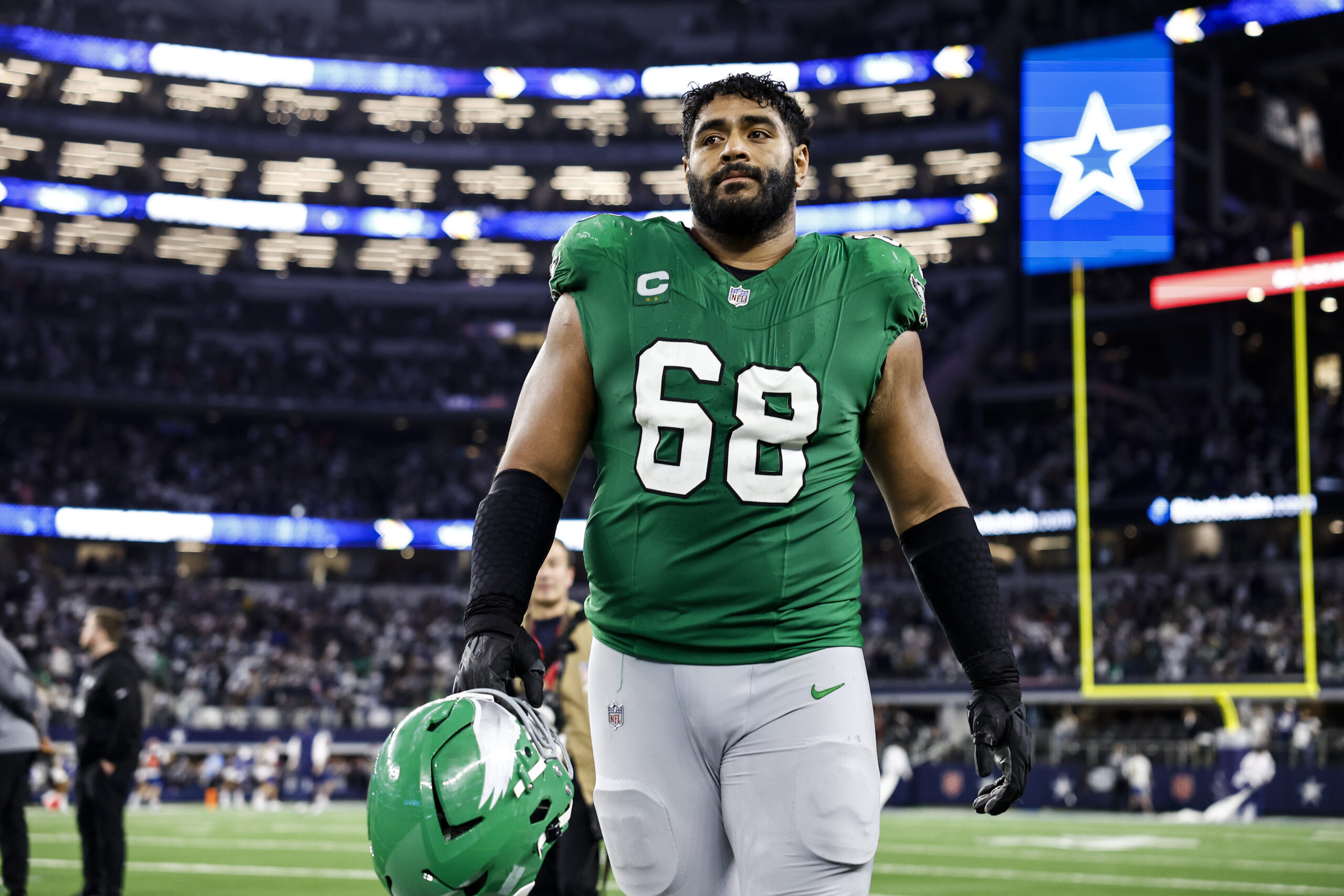
The presence (or absence) of Lane Johnson (left) had an every-play effect on the Eagles running game.
Lane Johnson
The Eagles felt the absence of Johnson, the 35-year-old right tackle, in the seven games he missed at the end of the regular season because of a Lisfranc foot injury.
There was a difference in the running game’s efficiency with and without Johnson on the field, especially on carries to the right side. When Johnson was playing, the Eagles averaged 4.6 yards per carry (84 carries) on designed runs to that side, according to Next Gen Stats. Without him, going into Week 17, the Eagles averaged 3.2 yards per carry (97 runs) on those same runs.
In that same span, the Eagles amassed 26 yards before contact on designed runs to the right without Johnson (and 288 yards after contact).
Will Johnson be back for his 14th season with the Eagles, giving an instant boost to the running game? Or will he be unable to overcome his injury and call it a career?
Tyler Steen was up and down in his first year as a primary Eagles starter.
Tyler Steen
Steen, 25, was the only new starter in the 2025 Eagles offense, replacing Mekhi Becton at right guard.
He had his struggles in pass protection. According to Pro Football Focus, he conceded 37 pressures, which were tied for the third-most among guards with at least 500 pass blocking snaps. Those pressures broke down to two sacks, one quarterback hit, and 34 hurries on a total of 626 pass blocking snaps.
Is Steen the long-term starter at right guard? Or will he face competition in training camp again as Howie Roseman retools the roster for 2026?
Cam Jurgens is headed back to the Pro Bowl, but the numbers suggest it wasn’t his best year.
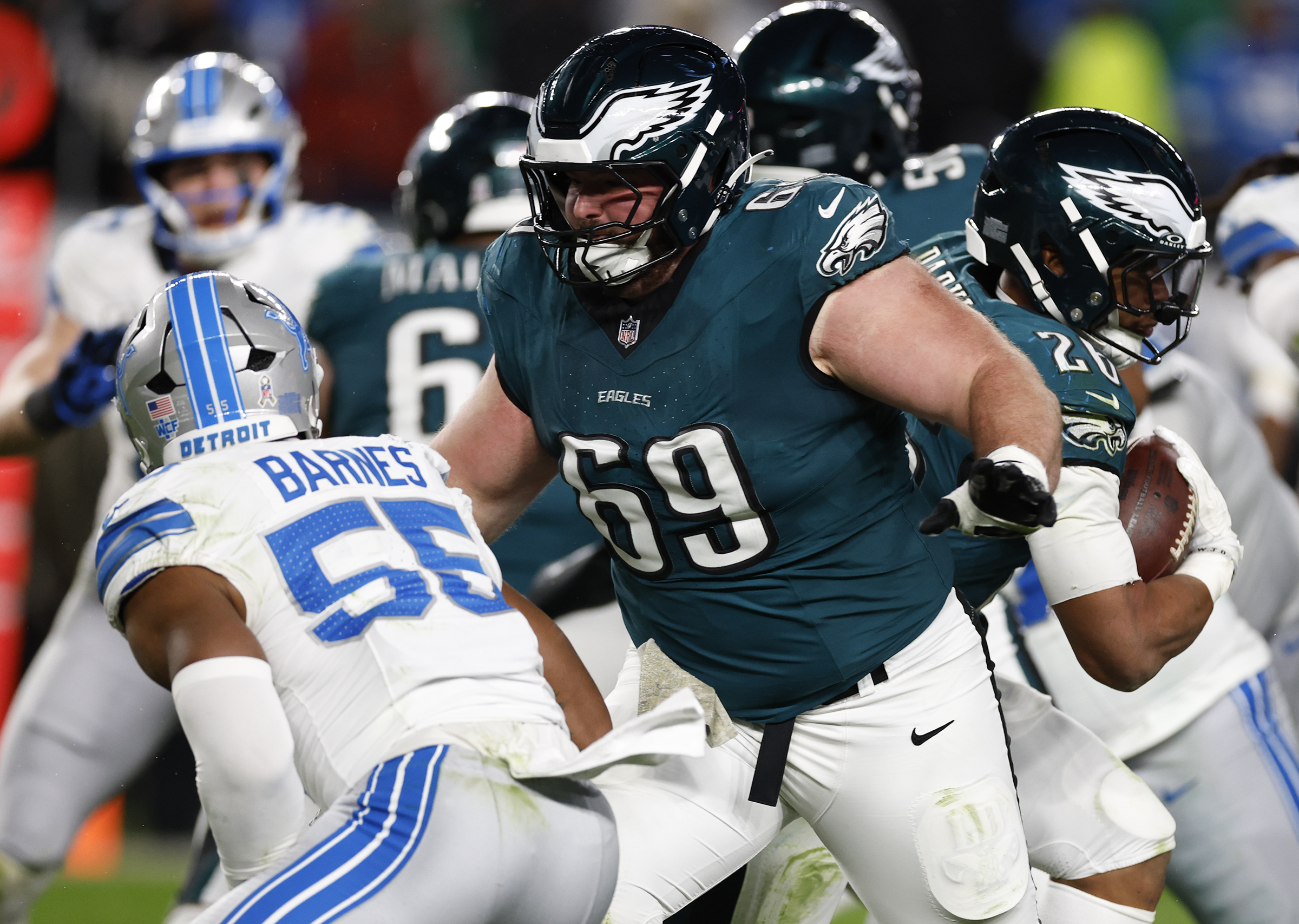
Despite earning a second-straight Pro Bowl nod, Jurgens was seldom dominant in the running game. According to Sports Info Solutions, Jurgens posted a 5.9% blown run block rate on more than 300 run blocking snaps, which reflects the percentage of blocking snaps on which a player had a blown run block. That rate led starting centers.
Can Jurgens’ struggles be attributed to his injuries? Or did the 26-year-old center simply regress, providing cause for concern for next season?
Landon Dickerson’s biggest issues were in pass protection.
Landon Dickerson
Like Jurgens, Dickerson also pushed through myriad injuries in 2025. After playing through a knee injury in the Super Bowl, he dealt with meniscus, back, and ankle ailments this season.
Dickerson wasn’t his sharpest in pass protection, allowing 33 pressures, according to Pro Football Focus. That total is tied for the second-highest in his five-year career despite posting a career low in pass-blocking snaps (506). Those pressures broke down to five sacks, seven quarterback hits, and 21 hurries, finishing No. 13 in pressures among guards with at least 500 pass-blocking snaps.
Is the 27-year-old left guard capable of healing up and returning to his three-time Pro Bowl form in 2026?
Jordan Mailata was very good in pass protection in 2025.
Jordan Mailata
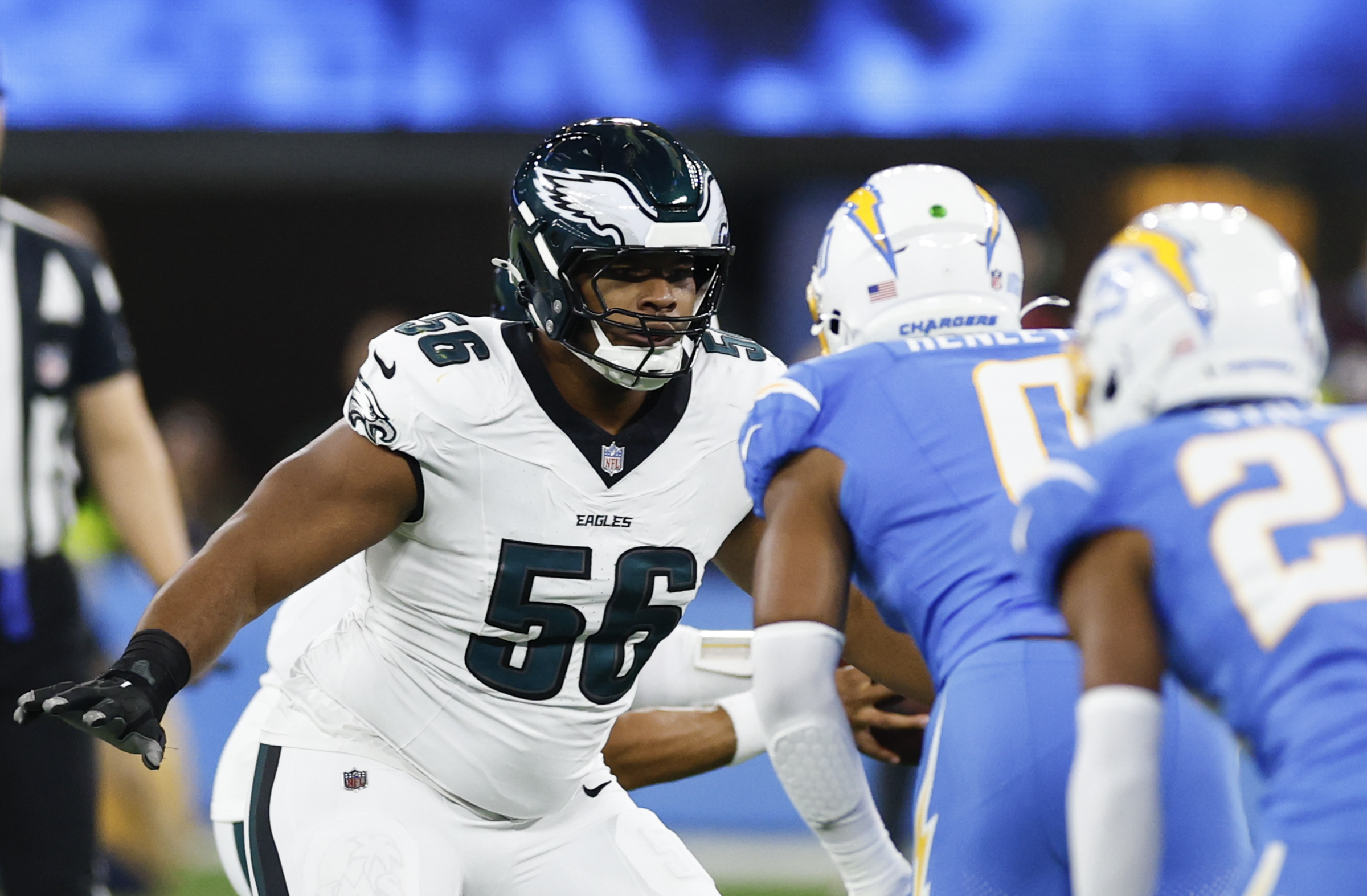
While the offensive line struggled as a whole, Mailata fared better than his counterparts in pass protection.
The 28-year-old left tackle conceded28 pressures, according to Pro Football Focus, which ranked No. 6 out of 28 tackles with at least 600 pass-blocking snaps. The 28 pressures allowed were the third-fewest of Mailata’s six-year career as a starter. Meanwhile, Mailata’s 602 pass-blocking snaps were the third-highest total of his career.
I drank in the glamorous high-pitched cattiness of Netflix’s soapy reality TV series Members Only: Palm Beach — starring four women with Philadelphia ties — like a bottomless carafe of mimosas, finishing the eight 45-minute episodes in less than two days.
Members Only debuted in the final days of 2025 on Netflix’s Top 10 list. It gives old-school Housewives vibes and throws a spotlight on the women who live in and around President Donald Trump’s 20-acre oceanfront Mar-a-Largo estate.
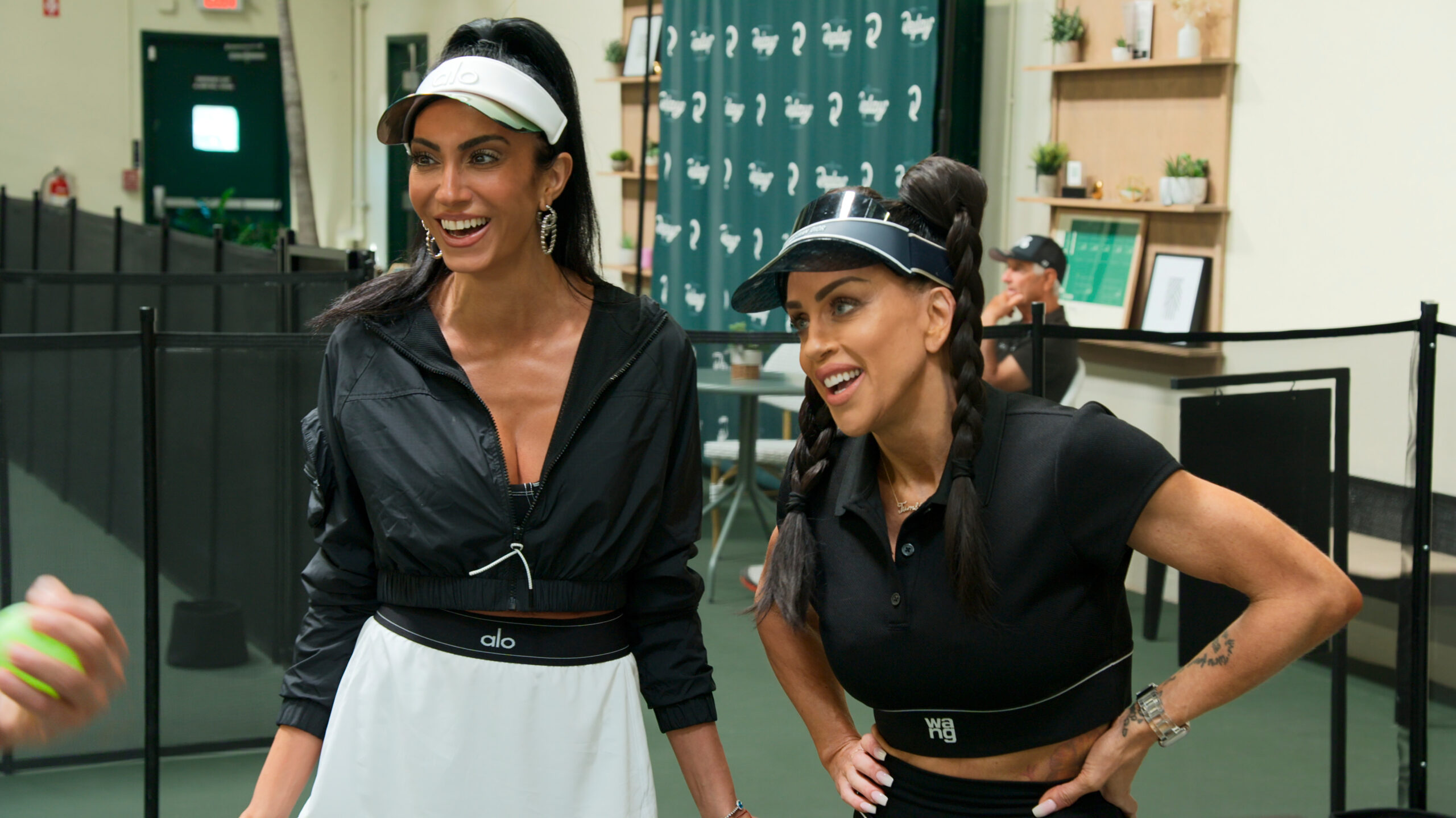
Maria Cozamanis and Romina Ustayev in episode 101 of “Members Only: Palm Beach.”
The gaudy maxi dresses, overfilled lips, horrible lace front wigs, and the backstabbing. It’s all a hot mess.
Members Only is if Jersey Shore ran into a train wreck. But instead of getting caught up in the mean girl shenanigans of 20-somethings, I was gobsmacked by the ugly behavior of 50+ women acting like petty middle schoolers in the name of preserving high society.
Former Bryn Mawr interior decorator and real estate mogul Hilary Musser, whose fifth wedding to a doorman is one of the ostentatious affairs featured, is the Queen Bee.
Musser now sells million-dollar waterfront mansions in Palm Beach and it’s rumored she joined the rest of the relatively unknown cast to help sell her properties.
Hilary Musser in episode 101 of “Members Only: Palm Beach.”
She holds steadfastly to Palm Beach’s strict dress codes. (It’s improper to show cleavage and leg in the same ensemble as a Palm Beach rule). Four-letter words offend her. Crying in public is a no-no. She’s nice only to New Yorker-turned-wellness-entrepreneur Taja Abitbol, partner of former MLB pitcher David Cone and the only non-Philly-affiliated woman in this core group.
The rest of the Philly-connected ladies smile in Musser’s face and grumble behind her haltered and tanned back.
Maria Cozamanis ad Romina Ustayev in episode 101 of “Members Only: Palm Beach.”
They are: Maria Cozamanis, a DJ who moved from Philadelphia to Florida. As DJ Tumbles, she worked her way onto the Palm Beach society scene DJing lavish charity events at Mar-a-Largo. Roslyn Yellin is a former Bucks County Zumba teacher and grandmother with Cinderella ambitions. “My morals and values start at home with my family and husband,” she said in the first episode, as if reading from Vice President JD Vance’s family value cue cards.
And finally, there’s Yellin’s frenemy, Romina Ustayev, an Uzbeki immigrant and former home care business and fashion line owner in Philadelphia. She calls herself the Kim Kardashian of Palm Beach.
“I love going to Mar-a-Largo and being in the same room as the president and Elon Musk,” she said, near hysterically, in one episode. “You feel like, ‘Oh my God. You’ve made it.’”
Maria Cozamanis and Romina Ustayev in episode 101 of “Members Only: Palm Beach.”
I knew going in that Members Only’s garish opulence and prettied up gluttony was a gold-trimmed Trump fever dream, one where he sits at the center of all things tacky, loud, expensive, and hurtful. (He never makes an appearance in the show, but his name is uttered several times in awe and admiration.)
But the moment Ustayev — an immigrant who is not quite as white as Trump’s favored Norwegian and Danish immigrants — stepped in, I knew I was watching the latest piece of Trump propaganda.
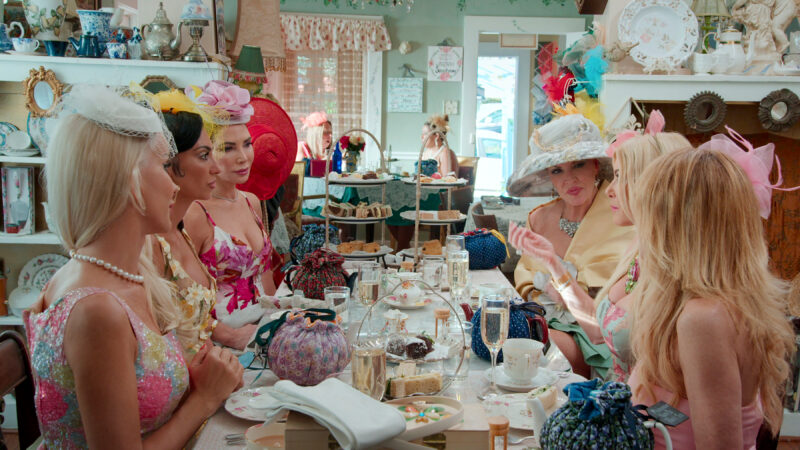
Romina Ustayev, Maria Cozamanis, and Taja Abitbol in episode 101 of “Members Only: Palm Beach.”
Members Only is Trump’s ideal vision of America where obscene wealth is valued and the rest of America can eat cake.
Why is this show in our binging rotation now? Perhaps because Netflix is in the midst of finalizing a merger with Warner Bros. Discovery. The merger, which will give Netflix more than half the streaming market share, needs regulatory approval from the Trump administration.
Thanks to Members Only, the Mar-a-Largo face doesn’t just appear in the context of the White House. Think Attorney General Pam Bondi, Secretary of Homeland Security Kristi Noem, and White House spokeswoman Karoline Leavitt, their plump lips, and heavily Botoxed and made-up faces.
Romina Ustayev and Maria Cozamanis in episode 101 of “Members Only: Palm Beach.”
Now we see these faces as we try to relax and binge-watch trash television. There is no escaping.
Members Only‘s arrival on Netflix is the next logical step in the White House’s messaging and shaping of America’s image. Trump started dismantling America’s diverse optics immediately after he took office and proceeded to remove photos of President Barack Obama from prominent places in the White House in an effort to erase evidence of the first Black president’s existence.
In advance of last Thanksgiving’s travel season, Transportation Secretary Sean Duffy unveiled the Golden Age of Travel campaign, urging airline travelers to dress natty when flying. At the center of the campaign are black and white pictures of white travelers gussied up like the fictional Main Liners in Katharine Hepburn’s 1940 filmPhiladelphia Story.
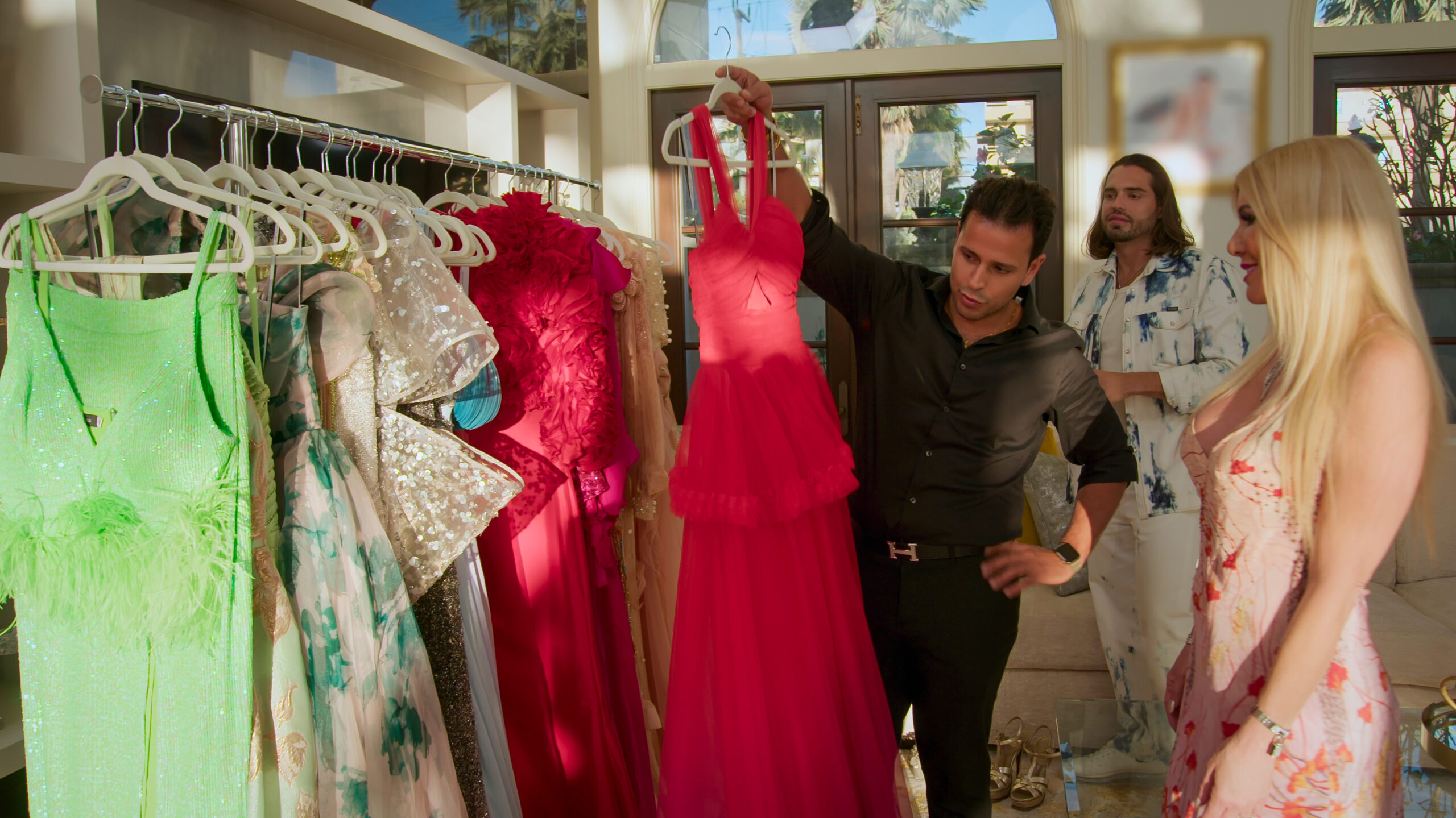
Rosalyn Yellin in episode 101 of “Members Only: Palm Beach.”
And then last summer, Department of Homeland Security used Norman Rockwell paintings in its social media marketing. The images — denounced by Rockwell’s family — show mid-20th-century suburban whites living a blissful white picket fence existence paired with the administration’s anti-immigration slogans “Protect our American way of life” and “DEFEND your culture.”
During a tense moment on the show, Ustayev shares with Yellin and her mentor, New York socialite and Palm Beach grand dame Gale Brophy, that Palm Beach society did not respect her culture, which includes asking for money at birthday parties and eating with her fingers. (Clutching my pearls.)
Brophy’s response: “Go back to your country.”
The inclusion of this kind of xenophobia into pop culture is better than anything Fox News can drum up.
Johnny Gould, founder and president of Superluna Studios and the executive producer of Members Only, insists his show is not political.
He admitted Mar-a-Largo is in the zeitgeist. “After all it is the winter White House,” he said. But he made Members 0nly because he was intrigued with Palm Beach society’s social hierarchy, one of the last in America.
The heart of Members Only, Gould said, is its “private club culture and B & T [Bath & Tennis] Boca Beach Resort, Breakers, and Mar-a-Largo [which] are at the center of social circles and drive societal rules and expectations,” Gould said. “That’s what connects these five ladies.”
Romina Ustayev, Rosalyn Yellin in episode 103 of “Members Only: Palm Beach.”
The Philadelphia connection, Gould said, was a coincidence.
“I didn’t set out to make a show about Palm Beach featuring Philadelphia society women,” Gould said.
(Good thing, because except for Musser, some of the Philly ladies-who-lunch crowd say they have no idea who these women are, nor do they want to.)
“It was about the chemistry,” Gould continued. “For example, when I went to Hilary’s house and she came sweeping down the stairs in a beautiful gown on a Tuesday, immediately, I was intrigued.”
Romina Ustayev and Hilary Musser in episode 101 of “Members Only: Palm Beach.”
Everything else, Gould said, “fell into place.”
“[Members Only] is not about curing cancer,” he said. “It’s about pouring yourself a glass of wine [and taking] a really fun ride in a place that none of us will ever have access to and a lifestyle none of us will get a chance to experience.”
That’s true.
Of course, these women don’t care about curing cancer. (Trump’s secretary of health, Robert F. Kennedy Jr., is shutting down clinical trials that are meant to find cancer treatments.)
The show sells viewers an “aspirational” lifestyle in Trump’s image. And if Trump has his way, soon we will be living in a society where there will be even more haves and have nots, completely robbing the poor — and the middle class— of upward mobility.
A year ago, leaders of Family Practice & Counseling Network feared their health clinic, which has served low-income Philadelphians for more than 30 years, wouldn’t survive past June.
The clinic was part of Resources for Human Development, a Philadelphia human services agency that a fast-growing Reading nonprofit called Inperium Inc. had acquired in late 2024.
As a federally qualified health clinic since 1992, the clinic had received an annual federal grant, higher Medicaid rates, and other benefits.
But federal rules prohibited the clinic from continuing to retain that status and those benefits under a parent company. That meant Family Practice & Counseling Network had two options: close or spin out into a new entity that would reapply to be a federally qualified clinic.
“We had to figure it out,” the organization’s CEO Emily Nichols said in a recent interview.
At the time, the organization’s three main locations had 15,000 patients. They are “very underserved, low-income people that deserve good healthcare,” she said.
Thanks to $9.5 million in financial and operational support from the University of Pennsylvania Health System, a new legal entity took over the clinics in July. They now operate under the tweaked name, Family Practice & Counseling Services Network, and without the federalstatus.
“Penn allowed us to survive,” Nichols said.
Still in a precarious position
The nonprofit, with its name now abbreviated as FPCSN, remains in a precarious position.
Because of the corporate change, the $4.2 million annual grant that Family Practice had been receiving through RHD had to be opened up for other applicants under federal law. FPCSN applied but won’t find out until March the result of the competition.
Natalie Levkovich, CEO of the Health Federation of Philadelphia, a nonprofit that supports community health centers in Southeastern Pennsylvania, expressed confidence that the clinic will regain the funding, which helps cover the cost of caring for people who don’t have insurance.
“FPCSN is a well-run, well-regarded, well-supported health center that has an established, high-functioning practice in multiple locations,” Levkovich said. The clinic received letters of support from all the other federal clinics in the area, she said.
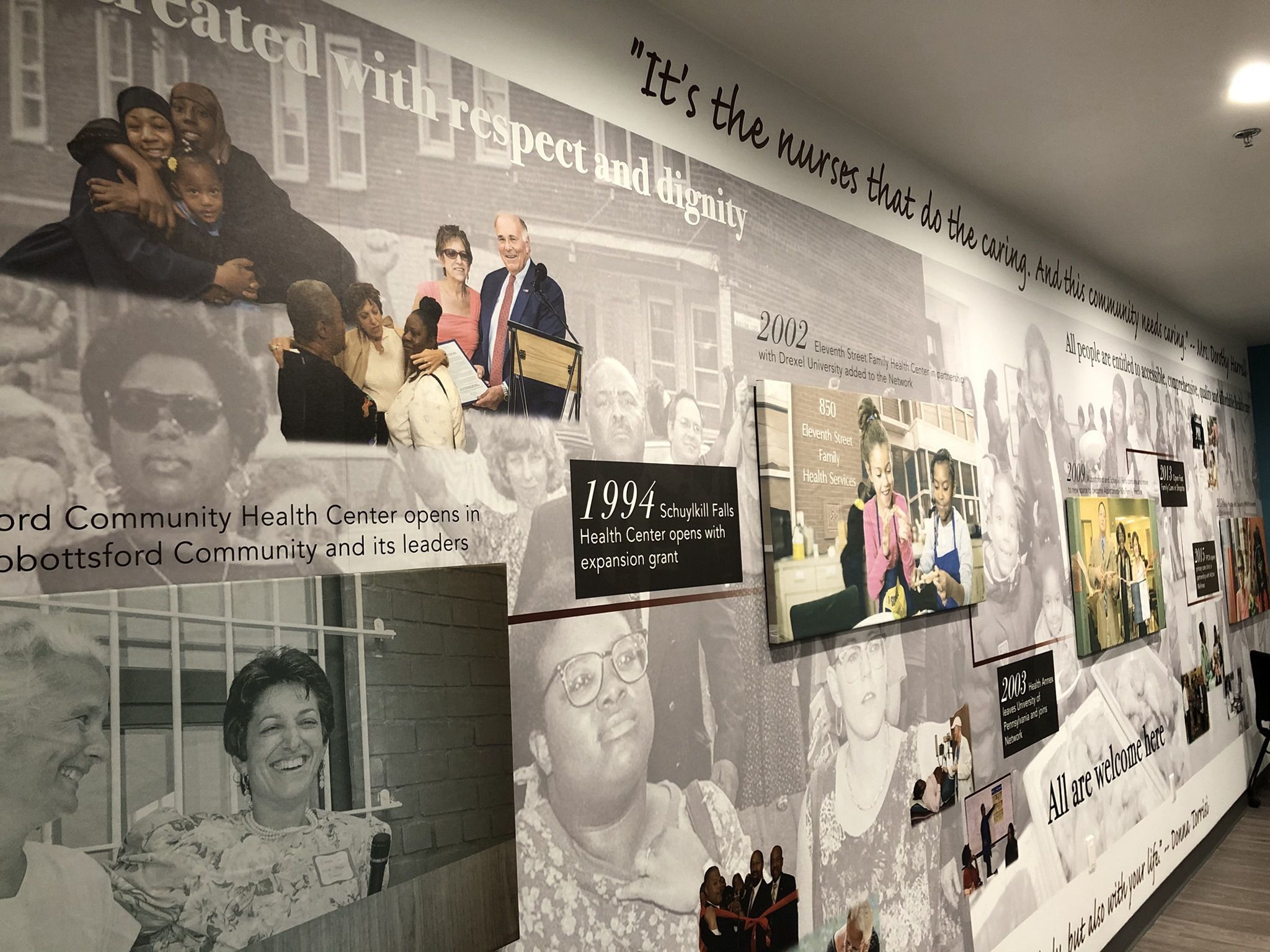
A mural in a conference room at Family Practice & Counseling Services Network’s headquarters in Nicetown shows a timeline of the agency’s history since its founding in 1992.
In return, federally qualified clinics have to accept all patients, including people without insurance. The insurance mix of FPCSN’s patient population is about 60% Medicaid, 20% uninsured, 10% Medicare, and 10% commercial, Nichols said.
Also, half of a federal clinic’s board members have to be patients at the clinic. FPCSN has three main locations, in Southwest Philadelphia, on the western edge of North Philadelphia, and in the West Poplar neighborhood. Its revenue in fiscal 2025 was $31 million.
During the past year, 55 FPCSN staff members have left, leaving 140 employees still at the organization, including 16 nurse practitioners who provide the primary care. The departures may have contributed to a decline in the number of patients seen to 13,500 last year, compared to 15,000 the year before, Nichols said.
Why Penn helped FPCSN
Federally qualified health centers form the core safety net in Philadelphia and across the nation, said Richard Wender, who chairs Family Medicine and Community Health at Penn, which had a longstanding relationship with RHD’s clinics.
Under contract, Penn family practice physicians were providing prenatal care to 400 pregnant patients at the clinics that would have closed abruptly at the end of June if Penn hadn’t provided support. “We wanted them to be able to continue to take care of the patients that they were taking care of,” Wender said.
The money from Penn helped pay startup costs for the new entity and bridged the period until FPCSN was able to secure new contracts with insurance companies.
Penn also didn’t want the clinic’s patients showing up in its already busy emergency departments for basic care. “That adversely affects their health because it’s not a good place to get preventive care,” he said.
But it was important to Penn that there was a pathway back to federal clinic status. “We feel as optimistic as we can,” Wender said.
Wender and Nichols credited Kevin Mahoney, CEO of Penn’s health system, with the preservation of FPCSN’s services for low-income Philadelphians by throwing his full support behind the effort.
“You have to have a CEO, a leader in your health system, who understands that this is the responsibility of large academic health centers,” Wender said.
Philadelphia Eagles kicker Jake Elliott celebrates an extra point during the third quarter of the Philadelphia Eagles game against the Los Angeles Rams at Lincoln Financial Field on Sunday, Sept. 21, 2025 in Philadelphia.Monica Herndon / Staff Photographer
The Eagles' season ended sooner than expected with a loss to the 49ers in the wild-card round. Now the Birds will try to assemble a roster that can help them get back to their Super Bowl standard. Beat writer Jeff McLane makes his picks on what personnel decisions he sees the team making this offseason.
Make your pick for each player by swiping the cards below — right for Stay or left for Go. Yes, just like Tinder. Finding it hard to decide? We'll also show you how other Inquirer readers have voted so far and what we think the team will do.
Advertisement
Quarterbacks
The biggest question here (for a second straight year) is whether Tanner McKee will stick around as the backup.
#1
Jalen
Hurts
Crowd says
Height
6'1"
Weight
223lb.
Age
27
Inky Says Stay
We've seen what he can accomplish with a good coordinator. But he needs help in the drop-back game if he's going to elevate.
#14
Sam
Howell
Crowd says
Height
6'1"
Weight
220lb.
Age
25
Inky Says Go
Tanner McKee's broken hand in camp forced the Eagles to trade for him before the season. He's a free agent and should get a backup opportunity elsewhere.
#19
Kyle
McCord
Rookie
Crowd says
Height
6'3"
Weight
218lb.
Age
23
Inky Says Go
He had a rough first camp, but a full season to watch and learn may help. His return may depend on the new coordinator and scheme.
#16
Tanner
McKee
Crowd says
Height
6'6"
Weight
231lb.
Age
25
Inky Says Stay
It's not fair to base an evaluation solely on the finale. But it's unlikely the Eagles will receive attractive enough offers to trade.
A.J. Brown’s long-term future with the Eagles might be the biggest question of the 2026 offseason.
#80
Darius
Cooper
Rookie
Crowd says
Height
5'11"
Weight
210lb.
Age
24
Inky Says Stay
The undrafted rookie was used mostly as a run blocker, but he has some receiving upside. He'll be back.
#11
A.J.
Brown
Crowd says
Height
6'1"
Weight
226lb.
Age
28
Inky Says Stay
His future is the question of the offseason. By his standards, he didn't have a good season and may have lost a half-step. He still projects as one of the best. There's also a significant cap charge.
#18
Britain
Covey
Crowd says
Height
5'8"
Weight
173lb.
Age
28
Inky Says Stay
It took too long, but when he was promoted to the active roster the return game was given a boost.
#2
Jahan
Dotson
Crowd says
Height
5'11"
Weight
184lb.
Age
25
Inky Says Go
It must have been tough running all those for-the-love-of-the-game routes. He was just too slight to make an impact as the third receiver.
#6
DeVonta
Smith
Crowd says
Height
6'0"
Weight
170lb.
Age
27
Inky Says Stay
He was maybe the one guy on offense who met expectations. If A.J. Brown leaves, he should be the bona fide No. 1.
#85
Terrace
Marshall
Crowd says
Height
6'2"
Weight
200lb.
Age
25
Inky Says Go
The Eagles need more young receivers with upside. He doesn't satisfy that need.
#86
Quez
Watkins
Crowd says
Height
6'0"
Weight
193lb.
Age
27
Inky Says Go
After a few post-Eagles years in the NFL wilderness, he returned to the practice squad.
#89
Johnny
Wilson
Crowd says
Height
6'6"
Weight
228lb.
Age
24
Inky Says Stay
The Eagles lost their best blocking receiver in training camp. He should return in that role.
Some big names could be moving on here, as Nakobe Dean and Jaelan Phillips appear set to test the market.
#53
Zack
Baun
Pro Bowl
Crowd says
Height
6'3"
Weight
225lb.
Age
29
Inky Says Stay
He proved that 2024 wasn't a fluke and his contract guarantees he's here through 2027.
#30
Jihaad
Campbell
Rookie
Crowd says
Height
6'3"
Weight
235lb.
Age
21
Inky Says Stay
He handled his demotion with grace, but the former first-rounder needs to be in the lineup next season. Can he be a hybrid?
#59
Chance
Campbell
Crowd says
Height
6'2"
Weight
232lb.
Age
26
Inky Says Stay
He provided good looks on the scout team and should probably get a look-see in training camp. Making the 53-man roster is another thing.
#17
Nakobe
Dean
Crowd says
Height
5'11"
Weight
231lb.
Age
25
Inky Says Go
A few years ago, it would have been a no-brainer to retain him. But the Eagles have Campbell in the wings and their most depth at off-ball linebacker in years.
#58
Jalyx
Hunt
Crowd says
Height
6'3"
Weight
252lb.
Age
24
Inky Says Stay
Eagles' scouting deserves accolades for plucking this former safety out of anonymity. He did it all in his second season. The future is bright.
#48
Patrick
Johnson
Crowd says
Height
6'2"
Weight
248lb.
Age
27
Inky Says Go
Practice squad Patrick has been a loyal soldier for five on-and-off years. He wasn't getting call-ups late in the season.
#42
Smael
Mondon Jr.
Rookie
Crowd says
Height
6'2"
Weight
224lb.
Age
22
Inky Says Stay
He'll be a depth piece who can play special teams for years, if need be.
#13
Azeez
Ojulari
Crowd says
Height
6'3"
Weight
240lb.
Age
25
Inky Says Go
It's hard to see him wanting to be back when it was clear the Eagles slow-played his return from a hamstring injury.
#50
Jaelan
Phillips
Crowd says
Height
6'5"
Weight
266lb.
Age
26
Inky Says Go
He started strong and then leveled out. Vic Fangio likes him, but is he worth the squeeze when others will pay?
#3
Nolan
Smith Jr.
Crowd says
Height
6'2"
Weight
238lb.
Age
24
Inky Says Stay
The triceps injury lingered into the season. He plays with great effort, but size and durability remain concerns.
#54
Jeremiah
Trotter Jr.
Crowd says
Height
6'0"
Weight
225lb.
Age
23
Inky Says Stay
He could probably start at middle linebacker for a number of teams, but will likely have to watch for another season.
#0
Joshua
Uche
Crowd says
Height
6'3"
Weight
226lb.
Age
27
Inky Says Go
The trade for Jaelan Phillips and Brandon Graham's unretirement marginalized him. He'll likely want to explore other options.
#43
Ben
VanSumeren
Crowd says
Height
6'2"
Weight
231lb.
Age
25
Inky Says Go
It will be tough to return from back-to-back season-ending knee injuries, but I wouldn't count him out.
From his machine shop among corn and bean fields on Kurtz Road near Ephrata, Lancaster County, Allen Hoover sells 1970s-style word-processing computers, upgraded to internet speeds, at the rate of more than one a day.
For some, Hoover’s machine fits fast-changing business with timeless faith; others fear the computers have fed into a wave of covert internet use that threatens a formal split among his Amish customers.
Since 2004 the machines, originally priced at $800 each, have been adopted by dozens of Plain religious communities to run local systems, with names like Classic, Chore Boy, and Steward, to accommodate and monitor members’ text notes and business records, without video, corporate media networks, or Apple and Google apps.
A senior member of his Old Order Mennonite congregation and coauthor of a book on Plain responses to family abuse, Hoover agreed to talk to The Inquirer about Mennonite and Amish ideas and tools. The conversation has been edited for brevity and clarity.
What are the tensions around computers in Plain communities?
Our real goal is to live a separate life and not to be so influenced by popular society around us. If morality is decaying in the world, it becomes even more important for us to become a separate people. Well, that’s hard to do.
Everything is tied together. Especially with the internet, and, smartphones. It gets harder and harder for us to be in business and to make a living without some way of being connected.
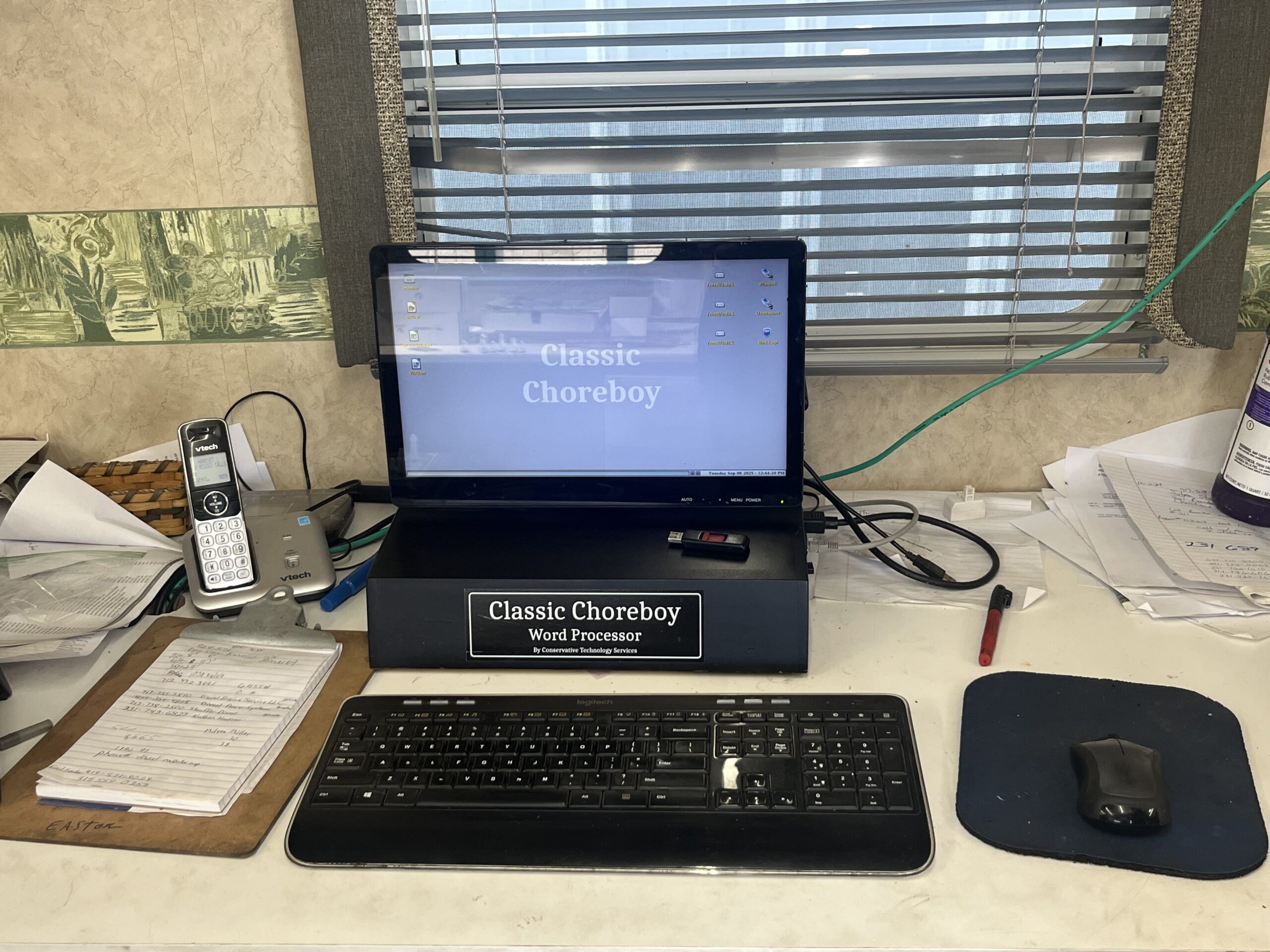
One of Allen Hoover’s Chore Boy word-processor machines at his workshop in Ephrata, Lancaster County, September 2025.
How are your machines different from normal computers?
For our Plain people, we wanted it to be separate from the world. So it should have no connectivity. Not to the internet, email, or even fax. Just a stand-alone unit. And then of course no amusements of the world, no games, music, nothing like that. Just a business tool.
Couldn’t you do that on a computer?
Well, if it’s in my home, my children will find ways of doing things with it that I have no idea of. And also, if you look at 50 different personal computers in peoples’ homes, you will find 50 different systems. We wanted one like the old word processors, where every unit was exactly alike. No additional programs, no apps that you can put on to listen to music or whatever.
The programs included are a word and a spreadsheet program. And a drawing program, and a computer-aided design program. We developed our own comprehensive business accounting system. With inventory control, invoicing, all that.
We looked at the on-the-shelf programs. They are almost all internet-connected. There are a few that stand alone. But they were so clunky, made for a specific purpose, that they just didn’t fit the bill.
How did you adapt the machines for Plain needs?
We had a few meetings with interested businesspeople, to see what the need was. Probably made a mistake, we never asked the church for permission.
And it took off. In the beginning, it was the only thing out there for the Plain people. Then other people started. This is about the only one that is still going — because of our stance of not making changes. We do upgrade it. It has much more power now. But we wanted to stay away from Windows or Mac.
We ended up using Linux as the operating system. We used Open Office, we now use LibreOffice, another free program, more powerful, more useful. The computer-aided design program is called FreeCAD. There is also something similar to MapQuest, that helps you with planning and mapping trips.
How many machines have you sold?
I’m guessing 400 a year. So if we have been doing this for 20 years, there are a few thousand out there.
How did the community react?
It was mixed. In the beginning, it was a huge whoop of joy: Here is something we can use. Once a year there is an expo in Lancaster County, focused on the Plain people and Plain businesses. I got a booth and it was the star of the expo. People were lined up because it was the new thing.
Some Plain communities reacted by banning them because it was coming too close to the computer world. And I understand that perfectly. No hard feelings about that.
What happened more often was that communities started with it, but then became dissatisfied that we didn’t allow them to put more programs on. So they made their own and eventually drifted into the internet world.
It has not made me a popular person. For the ones that feel we should not have gotten into computers at all, I am the bad boy. For the ones that feel we should have allowed more connections, I am the bad boy.
We really don’t want our people working in General Motors, big factories, all day long. We fear that will influence us too much. And so, we want our own little businesses like mine, Allen Repair Service, we rebuild, repair, and resell woodworking machinery.
And it’s getting harder [without internet]. This was a tool to allow us to stay in those businesses.
What about smartphones?
In Lancaster County, the Amish found loopholes, ways to have their cellphones, smartphones.
The leadership are working through that right now, I’m pretty sure there is going to be a big split.
The long-lost demo tape had always held a certain mythos in Charlotte Astor’s imagination.
For years, the Cherry Hill teen had heard stories about it, recorded about 30 years ago by her mother’s very loud, very short-lived, teenage hardcore band, Seed.
Shannon Astor, now 47, had been a vocalist for the group, just 14 or 15 years old, at a time when female representation within the genre was rare. Within a year or so, the group had disbanded — but before it did, the group, which typically practiced in a member’s parents’ basement, recorded a single demo. There had been only a few dozen copies produced back then, and they had all sold, scattering out around the South Jersey area.
For Charlotte, the tape became a kind of white whale — a relic of her mother’s hard-charging past, something the teen occasionally scoured the web for, to no avail.
She’d never heard her mother’s band. And she wanted to. Badly.
“Ninety-five percent of what I have about my mother is in the stories she tells me,” says Charlotte, 16, a junior at Cherry Hill High School East.
But a demo was something tangible. Something concrete.
“A demo,” she decided, “I can find.”
And so one night last spring, that’s what she set out to do.
She had little to go on: A rough estimate of when the demo would have been released (1993-94), a general geographic location (South Jersey), and a single lyric (“In the wind of the AM shadows cling to nearby trees as season shifts to satisfy the light from above”).
“I have been looking for this tape for 4 years,” she wrote in an appeal to her 1,000 or so Instagram followers, “… and it would mean the absolute world to me to find this tape.”
Butsomething about her search — this desire to connect with a parent, to bridge a gap three decades wide — resonated. It became, within the tight-knit confines of the hardcore music scene, a united pursuit.
At an age when most teenagers couldn’t get far enough away from their parents, here was one launching a quixotic quest to better understand hers.
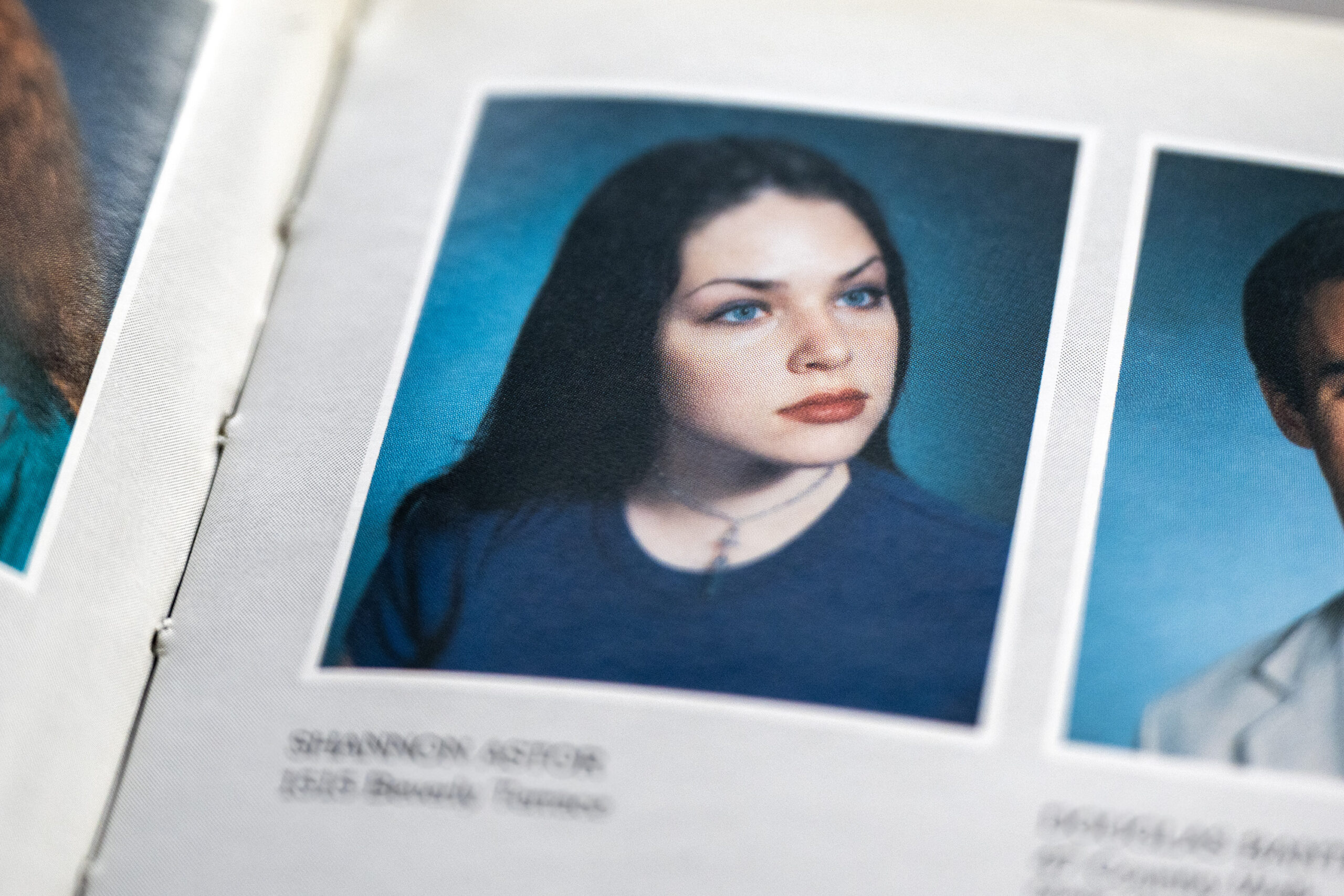
A senior class photo of Shannon Astor in the 1996 Cherry Hill High School East yearbook. Now 47, Shannon was previously in a hardcore band called Seed.
Soon, strangers from across the country were digging through old boxes in basements, or tagging old running buddies from Jersey’s 1990s hardcore scene in social media posts. Some reached out to old producers from the area, wondering whether the demo might have made its way into some dusty studio corner.
Messages poured in, too — hundreds of them — with suggestions ranging from the plausible to the outlandish. Had she tried getting in touch with Bruce Springsteen’s people? You never know what the Boss might have stowed away in some mansion closet.
“I suddenly had communication with so many people who I thought I would never in my life have any connection with,” Charlotte said. “California to Jersey, and everything in between.”
The lead singer of a well-known Jersey straight-edge band of the era, Mouthpiece, joined the search, messaging Charlotte after others reached out to him about the tape. (He vaguely remembered her mother, Shannon, but not the band.)
Much of the outside help, Charlotte notes, has come from the hardcore community.
Indeed, much of Charlotte’s young life is rooted in the same hardcore music scene that her mother’s once was. Like Shannon before her, Charlotte spends many nights at hardcore shows around the area, photographing the scene for the magazine she self-publishes, “Through Our Eyes.” And like her mother previously, she’s a member of the “straight-edge” hardcore community, a group with a shared collection of ideals that includes abstaining from drinking or drugs. (Her first flirtation with teenage rebellion came when she snuck out of the house one night to go to her favorite record store.)
And though her mother does not necessarily share Charlotte’s zeal for locating the old tape — “I’m not waiting for some garage band demo to be unearthed,” Shannon joked — she understands what it would mean to her daughter to have it.
“It’s special to me only because of how much she needed to hear it,” said Shannon. “I’m just so pro-Charli and everything that she does … But this is her journey, and something that was intrinsically important to her.”
To those in the scene, meanwhile, the response has been very hardcore.
“A bunch of people banding together to help this random girl find her mom’s thing,” said Quinn Brady, 19, of New York, and a friend of Charlotte’s. “Most people assume that hardcore people are not very nice or friendly. [But] there’s this inherent kinship. It connects people across the nation in a way that not a lot of other genres of music do.”
A recent selfie by Charlotte Astor (right) and her mother, Shannon Astor, taken at Reading Terminal Market.
Those outside the hardcore scene have been no less enthralled, however.
In December, after NJ.com picked up the story, further extending its reach, a documentary filmmaker reached out about the possibility of doing a film on her quest.
Last year, after posting in some “old-head” hardcore Facebook groups about the tape, Shane Reynolds — a member of the Philly-based hardcore band God Instinct — stumbled upon what appeared to be the most promising lead yet.
“I found the guy who allegedly made the demo,” Reynolds said.
But when she got the man on the phone, Reynolds says, it proved to be a dead end.
The closest Charlotte came was last year, not long after she first posted about the demo on Instagram. Her mom’s former bandmate in Seed, convinced he must have kept something from that period, recovered from storage an old cassette that featured a recording of a single Seed practice session.
Charlotte took it home, pushed it into the stereo in her bedroom. She stared at the ceiling as the tape began to play and 30 years fell away.
For the first time, she could put a sound to the stories she grew up hearing.
“The first thing I heard was a few seconds of my mom talking,” Charlotte said. “That’s my mom, when she was 16. I’m listening to a clip of my mother, listening to her at the same age I am.”
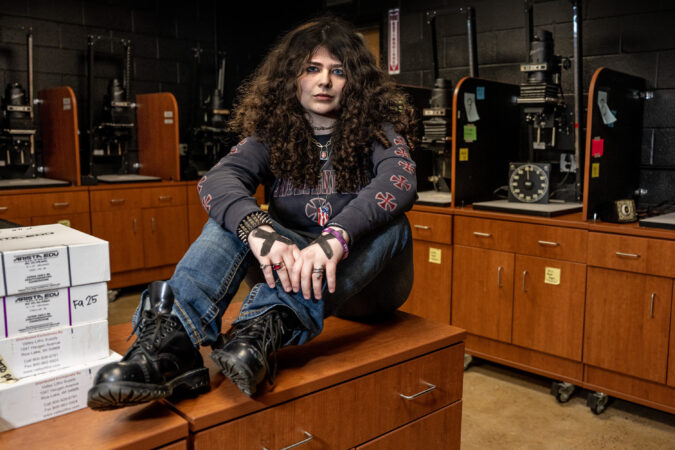
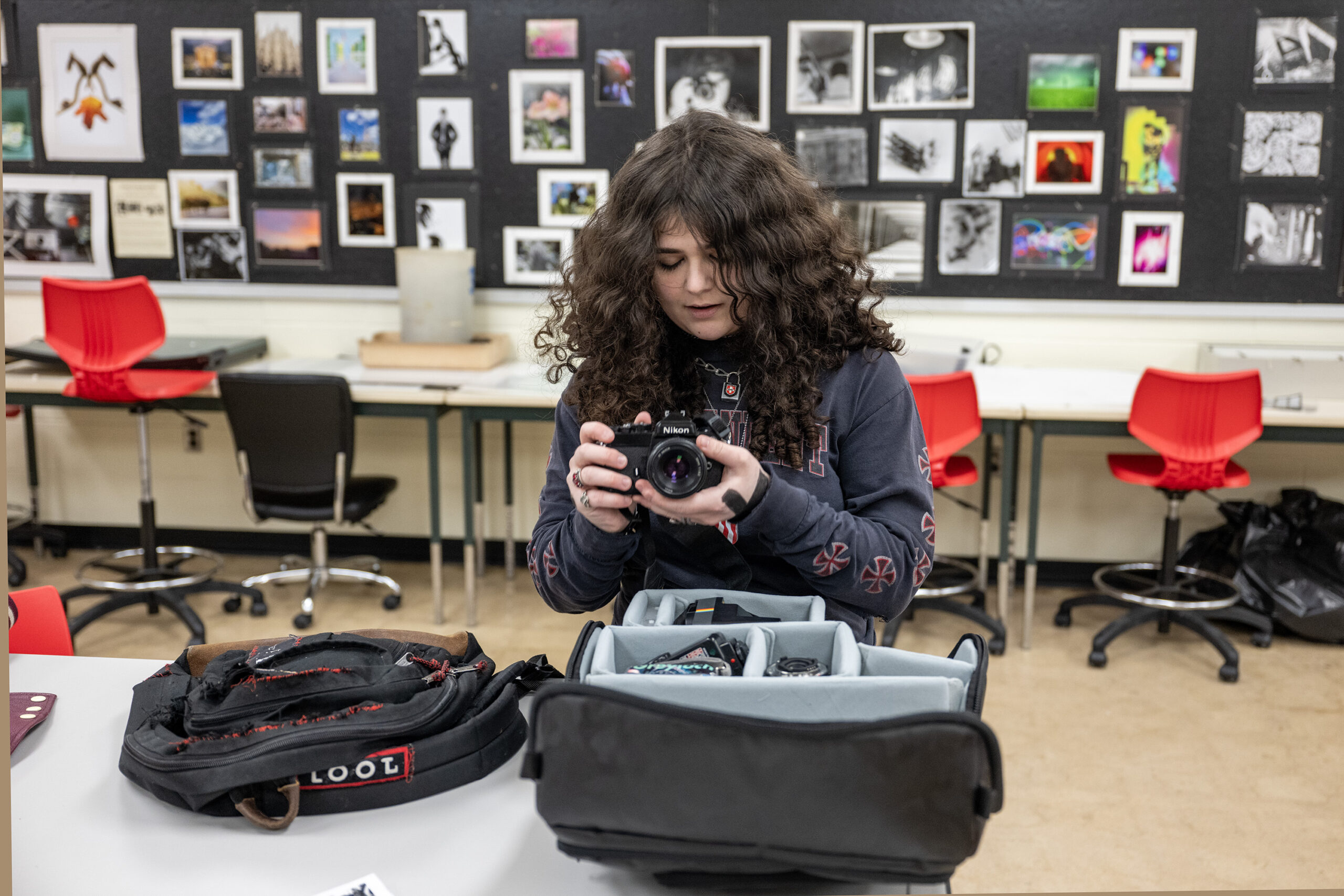
Charlotte Astor, a junior at Cherry Hill High School East, and her vintage 35mm film Nikon camera in the school’s photography classroom.
Still, that small taste has only reinforced her devotion to unearthing the actual demo.
Charlotte remains realistic about her odds of finding it. No, it’s not likely to be found in some radio station’s studio. And no, Bruce Springsteen is almost certainly not in possession of a three-decades old demo tape from her mother’s teenage years.
But some graying hardcore fan from the ’90s, with a penchant for hoarding and a cluttered garage?
Stranger things have happened.
“I have confidence — unwavering confidence — that someone has it,” Charlotte says. “And that I will get my hands on it.”
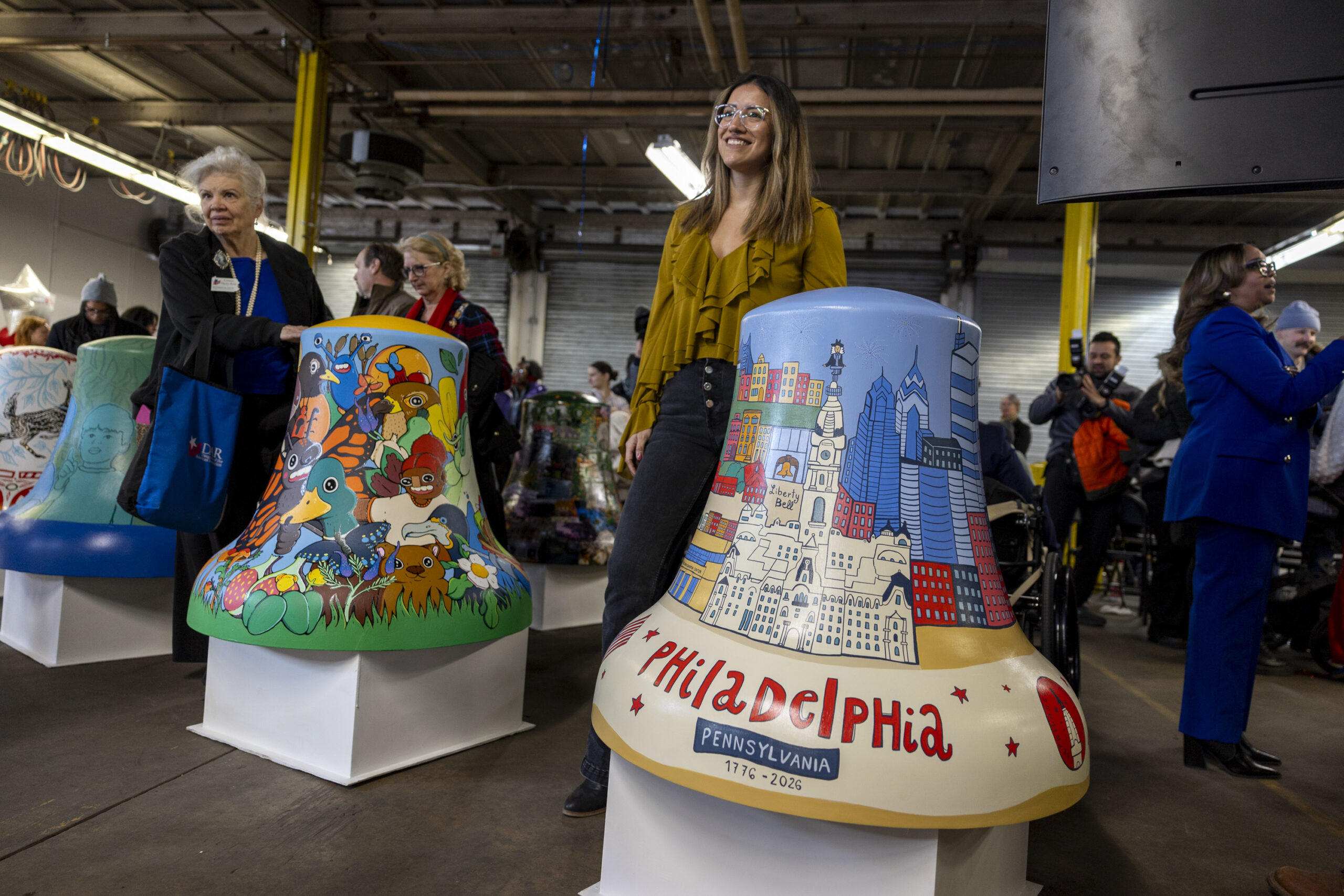
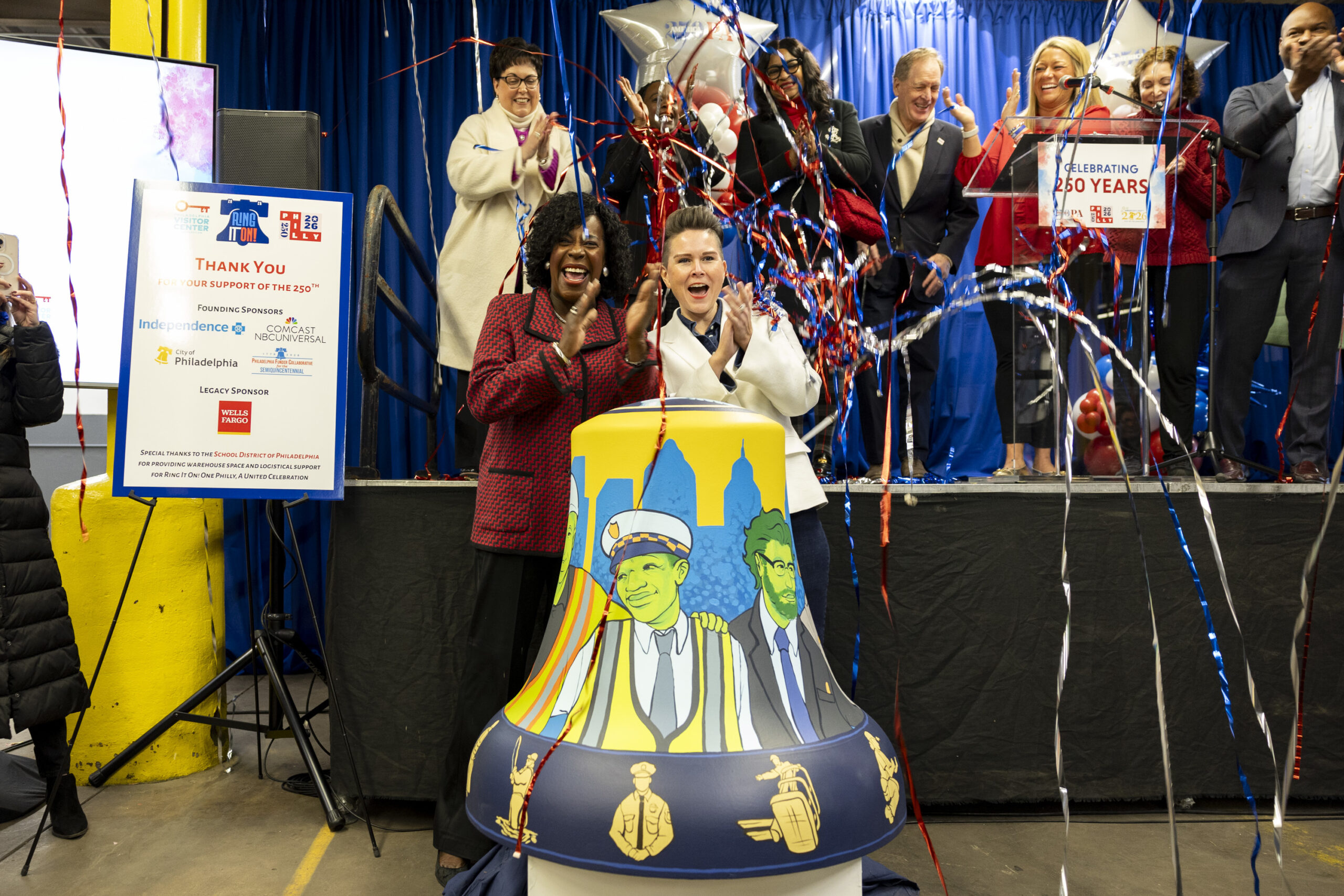
On Friday, the city revealed the 22 large replica Liberty Bells that will decorate Philly neighborhoods this year for the celebrations of America’s 250th anniversary. Officials also released a list of locations where the painted bells will soon be installed. The program announced two special replica bells for the Independence Visitor Center and the Convention Center.
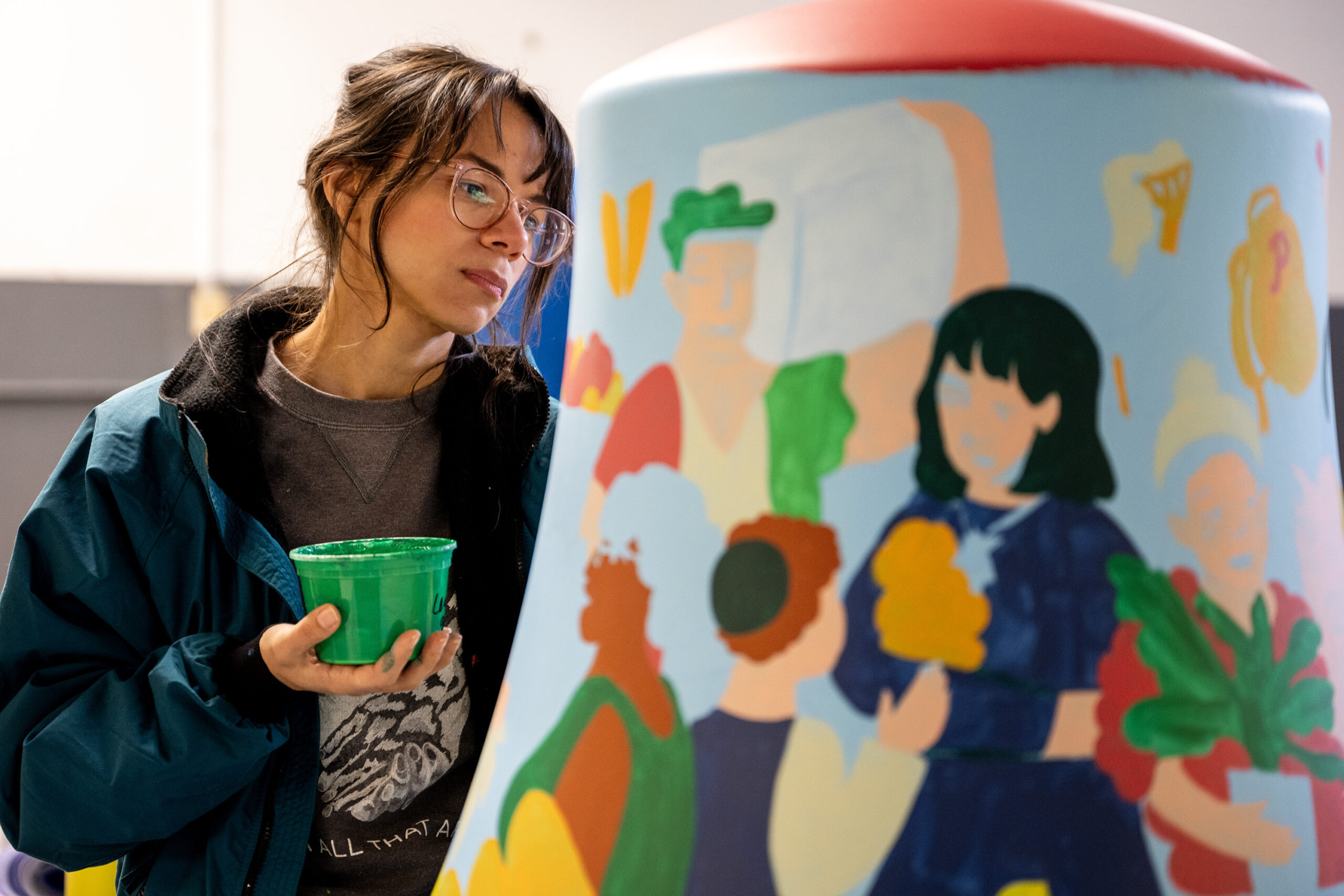
Designed by 16 local artists selected through Mural Arts Philadelphia — and planned for commercial corridors and public parks everywhere from Chinatown and South Philly to West Philly and Wynnefield — the bells depict the histories, heroes, cultures, and traditions of Philly neighborhoods.
<iframe title="‘Bells Across Pa.’ Locations in Philadelphia" aria-label="Locator map" id="datawrapper-chart-UZW3N" src="https://datawrapper.dwcdn.net/UZW3N/1/" scrolling="no" frameborder="0" style="width: 0; min-width: 100% !important; border: none;" height="665" data-external="1"></iframe><script type="text/javascript">window.addEventListener("message",function(a){if(void 0!==a.data["datawrapper-height"]){var e=document.querySelectorAll("iframe");for(var t in a.data["datawrapper-height"])for(var r,i=0;r=e[i];i++)if(r.contentWindow===a.source){var d=a.data["datawrapper-height"][t]+"px";r.style.height=d}}});</script>
“Philadelphia has always been a city of neighborhoods, each with its own story to tell,” said Mayor Cherelle L. Parker during an unveiling of the bells in Olney. “That’s why our communities and these talented artists came together to tell these stories.”
As part of the state nonprofit America250PA’s “Bells Across PA” program, more than 100 painted bells will be installed across Pennsylvania throughout the national milestone, also known as the Semiquincentennial.
For weeks, artists had toiled on their bells inside a makeshift studio behind the Widener Memorial School, each telling a different story of neighborhood pride.
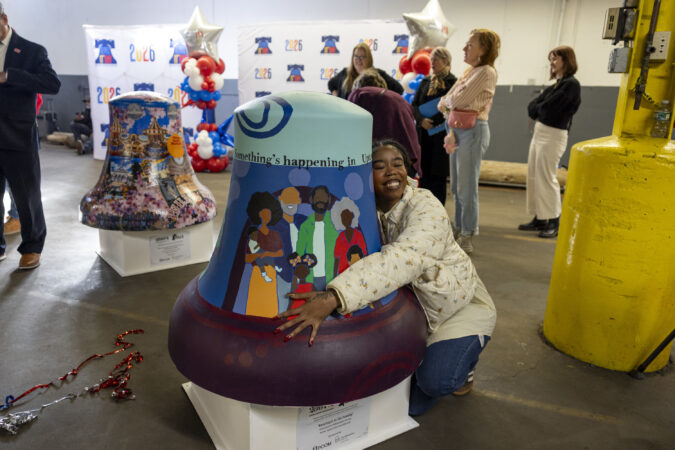
Ana Thorne, of Center City, 37, is next to their bell they made during the Bells Across PA event in celebration of America’s 250th Birthday in Philadelphia, Pa., on Friday, Jan. 16, 2026.
An Italian Market bell depicts scenes of the bustling produce stands, flickering fire barrels, and smiling old- and new-school merchants. An El Centro de Oro bell is painted with images of the neighborhood’s historic Stetson Hats factory, the iconic Latin Music store Centro Musical, and popular iron palm tree sculptures. A Glen Foerd bell is decorated with paints mixed with water from the Delaware River.
“Our goal is to create a Semiquincentennial celebration that meets every Philadelphian where they are,” said Kathryn Ott Lovell, president and CEO of the Philadelphia Visitor Center Corp. and Philadelphia250.
Local artist Cindy Lozito works on her South Philadelphia bell, one of 20 painted replicas of the Liberty Bells representing different neighborhoods Tuesday, Dec. 9, 2025. The bells will decorate parks and public spaces in every corner of the city during America’s 250th birthday.
Planners said they expect the bells to draw interest and curiosity similar to the painted donkeys that dotted Philly neighborhoods during the 2016 Democratic National Convention. Those painted decorations became the focus of scavenger hunts and countless selfies.
Organizers expect to install the bells sometime in March, once the weather warms.
Mayor Cherelle L. Parker and Pennsylvania Deputy Secretary of Tourism Anne Ryan, reveals one of the bells called “Philly Workforce: Celebrating Our Past, Building the Future” made by artist Akira Gordon during the Bells Across PA event in celebration of America’s 250th Birthday in Philadelphia, Pa., on Friday, Jan. 16, 2026.
“I am asking all Philadelphians and everyone who visits our city in 2026 to see the bells,” Parker said.
Below is a full list of Philadelphia’s Bells Across PA installations, artists, and locations:
Neighborhood: Chinatown
Artist: Chenlin Cai, Xingzi Liang
Bell Title: “It Takes a Village”
Bell Location: 10th Street Plaza (10th and Vine Streets)
Neighborhood: City Hall/Center City
Artist: Akira Gordon
Bell Title: “Philly Workforce: Celebrating Our Past, Building the Future”
Bell Location: Municipal Services Building, 1401 John F. Kennedy Blvd.
Neighborhood: El Centro de Oro
Artist: Symone Salib
Bell Title: “El Centro de Oro”
Bell Location: 2739 N. Fifth St.
Neighborhood: Fox Chase
Artist: Sean Martorana
Bell Title: “Heartbeat of the Fox”
Bell Location: Lions Park, 7959 Oxford Ave.
Neighborhood: Germantown
Artist: Emily Busch
Bell Title: “Who’s Your North Star?”
Bell Location: Joseph E. Coleman Northwest Regional Library, 68 W. Chelten Ave.
Neighborhood: Hunting Park
Artist: Andrew Daniels
Bell Title: “United Hunting Park”
Bell Location: Hunting Park
Neighborhood: Logan Square
Artist: Cindy Lozito
Bell Title: “Connection Between the Stars”
Bell Location: Franklin Institute, 222 N. 20th St.
Neighborhood: Mayfair
Artists: Alana Bogard, Madeleine Smith
Bell Title: “Celebrate Mayfair”
Bell Location: 7343 Frankford Ave.
Neighborhood: Mount Airy
Artist: Parris Stancell
Bell Title: “A Tapestry of Hidden History”
Bell Location: United Lutheran Seminary, 7301 Germantown Ave.
Neighborhood: Ogontz
Artist: Tykira Octaviah Mitchell
Bell Title: “Keeping It In the Family”
Bell Location: 7182 Ogontz Ave.
Neighborhood: Olney
Artist: Joanne Gallery
Bell Title: “Where Global is Local”
Bell Location: Greater Olney Library, 5501 N. Fifth St.
Neighborhood: Parkside
Artist: Parris Stancell
Bell Title: “Fun Facts and Historical Treasures of Fairmount Park”
Bell Location: Memorial Hall, 4231 Avenue of the Republic
Neighborhood: Point Breeze
Artist: Symone Salib
Bell Title: “The Promise of What’s to Come”
Bell Location: 1336 S. 21st St.
Neighborhood: Roxborough
Artist: Meghan Turbitt
Bell Title: “19128: A Place With Roots”
Bell Location: Roxborough Pocket Park, 6170 Ridge Ave.
Neighborhood: South Philadelphia
Artist: Cindy Lozito
Bell Title: “Open Everyday”
Bell Location: Piazza DiBruno, 914 S. Ninth St.
Neighborhood: Southwest
Artist: Michele Scott
Bell Title: “A Diagram of Value”
Bell Location: Bartram’s Garden, 5400 Lindbergh Blvd.
Neighborhood: Torresdale
Artist: Bob Dix
Bell Title: “Nature to Industry to Nature Again”
Bell Location: Glen Foerd, 5001 Grant Ave.
Neighborhood: University City
Artist: Sean Martorana
Bell Title: “The Ringing Railroad”
Bell Location: William H. Gray III 30th Street Station, 2955 Market St.
Neighborhood: West Philadelphia
Artist: Akira Gordon
Bell Title: “Lancaster Living Legacy”
Bell Location: 3952-54 Lancaster Ave.
Neighborhood: Wynnefield
Artist: Abigail Reeth
Bell Title: “Stories Tolled”
Bell Location: 5320 City Ave.
In addition to the bells listed above, there will be additional Liberty Bell replicas in Philadelphia as part of America250PA’s Bells Across PA program. These bells are in partnership with Mother Bethel African Methodist Episcopal Church, the Philadelphia Convention and Visitors Bureau, and Visit Philadelphia.
Neighborhood: Center City
Artist: Tara Jacoby
Bell Title: “We The People”
Bell Location: Independence Visitor Center
Bell Sponsors: Visit Philadelphia, Philadelphia Visitor Center Corp.
Artist: Ana Thorne
Bell Title: “Colorful Independence”
Bell Location: Convention Center
Bell Sponsors: Philadelphia Convention and Visitors Bureau, Convention Center
Think you know your news? There’s only one way to find out. Welcome back to our weekly News Quiz — a quick way to see if your reading habits are sinking in and to put your local news knowledge to the test.
Question 1 of 10
Erin Andrews’ coat at the Eagles-49ers game stole the show. What was it made of?
CorrectIncorrect. XX% of other readers got this question right.
Andrews’ coat appears to be a completely faux fur $950 statement piece from the brand Auter. Despite the internet haters, the jacket was seemingly functional and fashionable for a 30-degree and windy wild-card game at Lincoln Financial Field.
Question 2 of 10
Food writer Kiki Aranita says this little treat, with roots in Mexico and China, is the talk of the town right now:
CorrectIncorrect. XX% of other readers got this question right.
The story of Mexican conchas and Chinese bo lo bao predates “little treat culture” by hundreds of years. Crackled, cookie-like crusts sit on top of round, fluffy milk bread, sometimes filled with cream or jam, or custard and char siu, or vibrant red Cantonese roast pork. Versions of the treats are available across Philly.
story continues after advertisement
Question 3 of 10
Wawa is closing a store on Drexel University’s campus after it was remodeled to test this concept:
CorrectIncorrect. XX% of other readers got this question right.
The location was remodeled in 2023 to test the new store format, a digital-only concept that required customers to order all items on a touch screen, with no shelves of products to browse. The pilot was not a success, leading to the store’s planned closure, said a company statement.
Question 4 of 10
New Jersey Gov. Phil Murphy vetoed a bill, despite near-unanimous legislative support, that would’ve allowed a legal carveout for:
CorrectIncorrect. XX% of other readers got this question right.
New Jersey's Milltown is struggling to continue its Groundhog Day celebrations because of a lack of access to live groundhogs. A bill to carve out exceptions for groundhog imports was vetoed. Gov. Phil Murphy said the bill was inappropriate, citing public safety concerns, including rabies.
Question 5 of 10
A $150 million streetscape project will transform South Broad Street’s Avenue of the Arts by adding more:
CorrectIncorrect. XX% of other readers got this question right.
A $150 million streetscape project will transform South Broad Street’s Avenue of the Arts with trees, public art, traffic calming, and redesigned medians and sidewalks, starting this month.
Subscribe to The Philadelphia Inquirer
Our reporting is directly supported by reader subscriptions. If you want more journalism like this story, please subscribe today.
Eagles fan and content creator Robert Williams III kept the faith all season by cranking out parody songs about the Birds. His videos have caught the attention of celebrities ranging from Questlove to Hall and Oates. What artist does he find himself covering more times than not?
CorrectIncorrect. XX% of other readers got this question right.
Williams (also known as Billy Soul) puts on a strawberry blond wig and spoofs songs like the 1984 Billy Joel hit: “For the Longest Time.” He says his Joel covers seem to perform the best. “My favorite genres of music are hip-hop and R&B so those parodies are easy to me,” Williams said. When I’m doing Billy Joel, I’m challenging myself.”
Question 7 of 10
A Philadelphia woman’s fliers around the region seeking help went viral. She was asking for someone of which trade to perform what act?
CorrectIncorrect. XX% of other readers got this question right.
The flier said: “Seeking: Experienced Witch to Curse My Ex.” The woman set up an email — for serious inquiries only. Experts say wishing a curse on your ex is part of a tradition dating back to antiquity.
Question 8 of 10
Restaurant scalping is a growing trend nationwide that business owners would like to stop. A Philly restaurant took to social media, announcing it had canceled someone’s reservations and wanted to ban them after they were caught trying to flip reservations for a profit. What restaurant was it?
CorrectIncorrect. XX% of other readers got this question right.
Mawn’s owners, Phila and Rachel Lorn, took to the restaurant’s Instagram to lambaste a woman attempting to sell coveted dinner reservations on the “Buy, Sell, Trade” section of Philaqueens, a private Facebook group with 75,000 members. “Eww. Gross … Don’t play with us,” the owners wrote on Mawn’s Instagram story, sharing a screenshot of the Facebook post that included the seller’s name. “All 11 of this person’s reservations are canceled.”
Question 9 of 10
This Philly-based comedian went viral on TikTok for her ASMR-style videos, where she whispers about this local favorite:
CorrectIncorrect. XX% of other readers got this question right.
Of all the things Betsy Kenney thought she might go viral for, whispering about Wawa wasn’t one of them. But the 38-year-old comedian’s Philly “ASMR” videos have taken off on TikTok and Instagram, turning Kenney — who spent more than a decade pursuing a comedy career in New York City — into an unlikely local celebrity. Kenney’s videos have racked up millions of views and even earned an endorsement from Kylie Kelce.
Question 10 of 10
Retro enthusiasts and nostalgia lovers are thrilled about a chain restaurant location in Tunkhannock, a small town in the Endless Mountains of Wyoming County, about 140 miles northeast of Philadelphia. That’s because it was restored to look and feel like versions of this spot did decades ago. Which restaurant is it?
CorrectIncorrect. XX% of other readers got this question right.
The Pizza Hut location has been in a shopping center parking lot for decades, but was restored into a classic version, complete with the red, angled roof. “No touchscreen kiosks, no sleek redesign, just the classic dine-in Hut experience you thought was gone forever. It’s more than pizza. It’s a full-blown childhood flashback served with breadsticks and a plastic red cup!” a fan wrote on Facebook.
Your Results
You have skipped .
You scored XX out of 10.
The average reader scored XX out of 10
Seems like you’ve been skimming more than reading there, buddy. There’s always next week.
You’ve read some articles (or made some educated guesses) but we wouldn’t come to you first for our local news recaps. Better luck next week!
Do you work here? You’re a local news stan with the latest updates on Philly happenings. Your friends definitely ask you for summaries on what’s going on and it shows.
Unprompted, Howie Roseman listed Nick Sirianni’s responsibilities and accomplishments.
Normally, a head coach one year removed from winning a Super Bowl, who has taken his team to the title game twice, and to the postseason in each of his first five seasons, wouldn’t need to be publicly lionized by his general manager.
But these aren’t normal times and not in Philadelphia. The Eagles got bounced from the playoffs in the first round and the expectations that have risen from recent success — in part because of Sirianni — have helped foster a distorted reality that has been amplified by a culture increasingly shaped by contrarianism, algorithms, and conspiracy.
Roseman heard several questions about the Eagles’ next offensive coordinator when he felt compelled to jump in. He knew where the inquiry was going having sat in the same seat two years ago when Sirianni’s authority seemed diminished and he was asked essentially: What is it exactly that you do here?
The narrative that Sirianni was just a figurehead propped up by Roseman and his coordinators has hung over his tenure — even after winning a championship. But it gained steam again after he removed Kevin Patullo as coordinator on Tuesday, and the question of who will replace him and how much Sirianni will be involved in the offense remains unanswered.
There is truth to the notion that the selection of a pedigreed play-caller who has previously been a head coach — Mike McDaniel and Brian Daboll are among the top candidates on the list — will make Sirianni more powerless, perhaps put him on the hot seat as early as next season if things go poorly. Roseman might have been anticipating that narrative when he spoke on Sirianni’s behalf during Thursday’s end-of-season news conference.
“I’ve got a lot of things that I’d like to say about Coach and the job that he’s done here,” Roseman said.
He then proceeded to spell out what he thought Sirianni, as a CEO-type coach, was “elite” at doing: “Building connections with our team, … talking about fundamentals, game management, situational awareness, bringing the team together, holding people accountable.”
The GM continued: “When you’re looking for a head coach, those are really the job descriptions. As you’re building out a coaching staff, you’re talking about being able to do that, being able to have elite play callers on both sides of the ball, and when you think about how hard it is to find those three things and that we have one, I mean, we’re starting with a huge advantage.”
To Roseman’s point, it would be true to say neither McDaniel nor Daboll came remotely close to doing what Sirianni has done as head coach.
McDaniel, who was fired by the Miami Dolphins over a week ago, and Daboll, who was fired by the New York Giants in November, will get some interviews for one of nine head coach vacancies. But they are more likely to be coveted by teams in search of a coordinator.
How much Sirianni is willing to cede authority could dictate how attractive the Eagles job is to the prospective contenders. Roseman’s statement that the coach has given previous hires “the flexibility to put their own spin on things” made it obvious he would give as much autonomy as he does to defensive coordinator Vic Fangio — if need be.
Sirianni, for his part, didn’t divulge much about what he’s looking for and how much will change in terms of his involvement and a new scheme.
“Those decisions don’t have to be made for a long time and, as the head coach, you always have to be oversight of everything,” Sirianni said. “Again, this year obviously I got involved more on the offense as the end of the season came because that’s what I needed to do as the head football coach there. Many different ways to do it.
“I know that I want to be the head football coach and I think that that’s what the team needs.”
But even though he gave up play-calling midway through his first season as coach, and more of his system after coordinator Brian Johnson was fired two years ago and Kellen Moore was brought in as his replacement, the offense has remained relatively the same throughout.
At least since Sirianni decided to abandon some of the scheme he brought with him from Indianapolis and cater his offense more to quarterback Jalen Hurts’ skill set, which meant more emphasis on the run game.
The offense evolved over time and was most explosive in 2022 when the Eagles first reached the Super Bowl. But then-coordinator Shane Steichen left to take the Colts’ head job, and running it back again in 2023 didn’t work with Johnson at the controls.
Two years ago, when Sirianni sat in the same chair and was asked about the next coordinator and his involvement, he said there would be a “meshing” of systems. The Eagles hadn’t yet announced Moore’s hiring, but they had zeroed in on him.
This year, they aren’t as far along because the news conference came earlier than two years ago. They have also cast a wider net. Roseman will lead the search. Owner Jeffrey Lurie and his son Julian, recently appointed to a formal role within the organization, will also be in the interviews, per a team source. Sirianni will be in the meetings too, but it is apparent that the senior members of the front office will be making the final call.
There don’t appear to be any restrictions, but the Eagles will likely lean toward proven commodities. It has been suggested that they hire an offensive Fangio who no longer has head coaching aspirations because they previously lost Steichen and Moore to promotions.
“It’s a great compliment when guys get head coaching jobs from here because it means we’re having tremendous success,” Roseman said. “As much as you’d like to have continuity and would like to have guys here for a long period of time, we want to win. We have an urgency to win right now.”
But the offense clearly needs a reset. Two years ago, Sirianni said the offense had gotten “stale” and that he wanted to bring in “new ideas.” This year, he said the scheme needs to “evolve.” The Eagles were again at the lower end of being under center, using motion, and throwing over the middle of the field. They ran more hitch routes than any other team.
From 2022-24, they had one of the NFL’s best offenses, despite not necessarily being at the vanguard of modern offense. But they took a significant step back in 2025 for a variety of reasons. Patullo struggled as a play-caller, but he also took the brunt of the blame because he was the new piece.
Hurts and others got off easier. Sirianni and Roseman, as expected, mostly praised the quarterback when asked about his performance this season.
“We all had a hand in our offense this year,” Sirianni said. “Good, bad, you name it, we all had a hand in it. That’s every coach, every player, myself obviously at the front of that list.”
Sirianni said it would be “foolish” not to have Hurts involved in the coordinator search, but he also mentioned including other players in the same breath. Two of those players — wide receiver A.J. Brown and tackle Lane Johnson — may not even be on the roster for different reasons.
Roseman called Brown “a great player” when asked about trading the receiver who is still under contract, but he didn’t directly answer the question. And he declined to give an update on where Johnson, who turns 36 in May, stands on possible retirement.
Hurts isn’t going anywhere. He’s been the one main constant in the offense since the beginning. Any good coach revolves his schemes around his players, but never more so than at quarterback.
It’s unclear how much Hurts kept the offense from evolving this season — or even doing what it did well previously in terms of him running — but Sirianni said the 27-year-old quarterback will be open to change.
“I think you saw this year that he’s open to do a bunch,” he said. “We were under center probably more than we have been. Different motions, different things like that. Here’s what I’ll say: Jalen’s proved this to everybody, that he’ll do whatever it takes to win football games. Sometimes that’s throwing it a bunch, sometimes that’s running it a bunch, sometimes it’s him handing it off a bunch.
“He’ll do whatever it takes to win.”
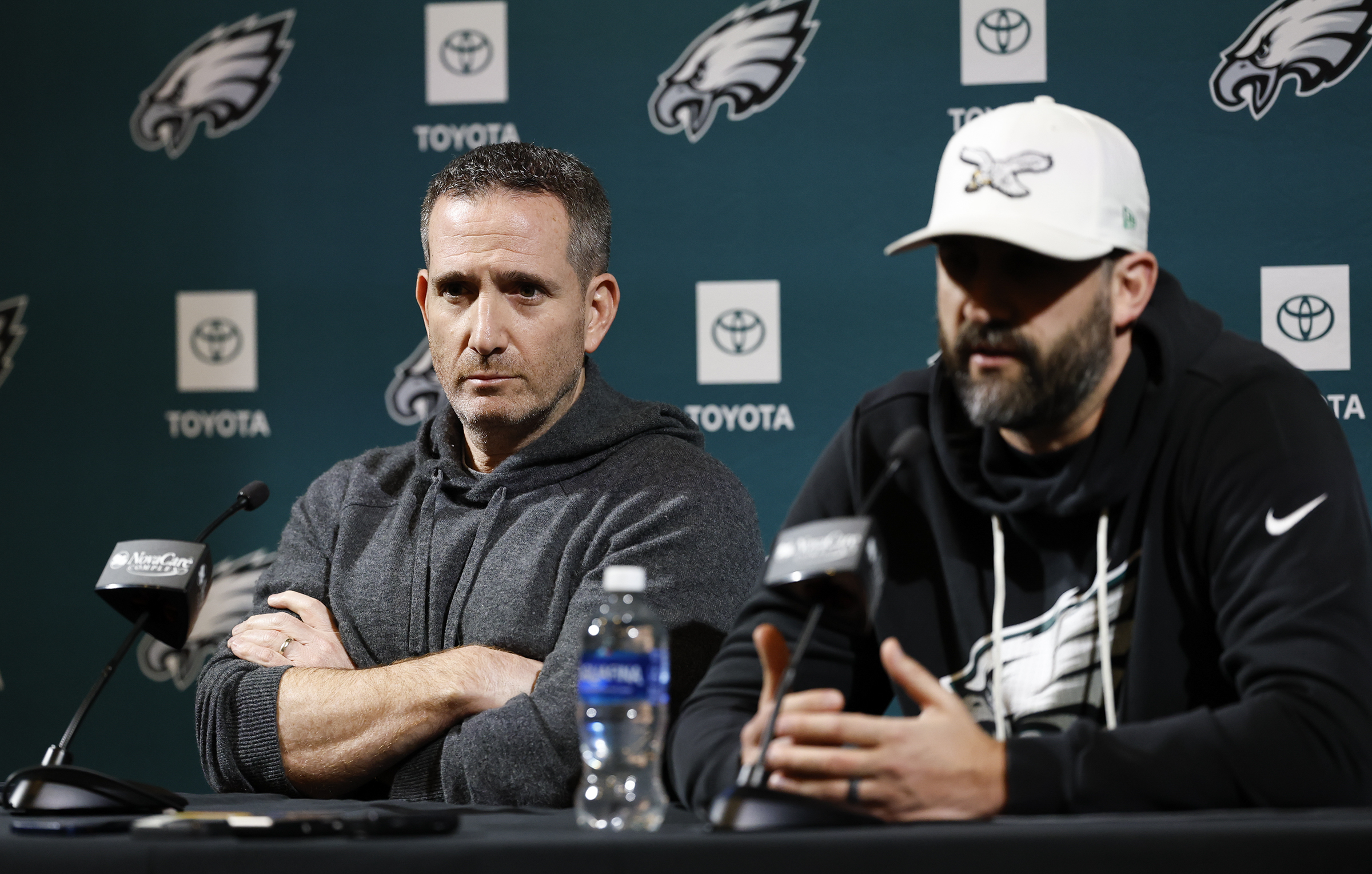
Eagles general manager Howie Roseman (left) offered unsolicited and lavish praise for Nick Sirianni on Thursday.
But that was far from good enough this season, at least on the offensive side of the ball, despite the Eagles having the most expensive unit in the league. There will be a balancing of sorts in the offseason through the draft. The offensive line may undergo some retooling.
The defense will lose some parts, but young, homegrown talent will eventually need to be paid. Roseman, who like Sirianni had faced doubters despite winning a title, knows how to rebuild a roster. Both said the Eagles were in win-now mode.
But the GM knew what kind of pressure that would place upon the coach, who has yet to win over a vocal segment of the fan base, and even himself. So he offered a parting clarification.
“I think it’s important for our fans to understand, you can do whatever it takes to win now and still build for the future and still have those parallel paths,” Roseman said. “I just don’t want it to get confused that we can’t do whatever it takes to build a championship-caliber team next year and also continue to have really good players on this team for the future.
“I just want to make sure that we’re on the same page on that.”
Cole Hamels knew it for years, even before pitching his last major league game. Eventually, a day would come when his name appeared on the Hall of Fame ballot.
Even so, there was something about actually seeing it.
“When they do put your name on the ballot, they send you a letter,” Hamels recently told Phillies Extra, The Inquirer’s baseball podcast. “You can frame it.”
Better yet, cast it in bronze, just like those plaques on the walls in Cooperstown, N.Y. Because although only one, maybe two former players on this year’s ballot will get elected Tuesday night and inducted this summer, all 27 had careers worth recognizing.
Take, for instance, Hamels. He finished in the top 10 in his league in ERA six times in 15 seasons, 10 of which came with the Phillies. He ranks fourth in Phillies history in strikeouts (2,560) and sixth in innings (2,698). He was the MVP of the 2008 World Series and threw a no-hitter in 2015 in his final Phillies start.
By every measure, a brilliant career.
Yet Hamels’ name might be checked on fewer than one-quarter of the 400 or so ballots — and not the one cast by this voter. Hamels was polling at 31.1% as of Friday evening, according to industrious ballot collector Ryan Thibodaux’s tracker, more than the minimum 5% to stay on the ballot, far from the 75% for election.
But here’s what makes baseball’s Hall of Fame special: the quality of the players on the 1-yard line, a Tush Push from getting in. (Too soon for the Eagles reference?)
Consider that less than 24,000 players have made it to the majors, even for one day. A fraction of those stuck around for 10 years, the minimum requirement to be considered by the screening committee that annually puts together the Hall of Fame ballot.
Whittle it all down, and only about 5% of all major leaguers see their name on that sheet of paper. And since the inaugural Hall class in 1936, a total of 279 players have been elected, only 137 on the writers’ ballot.
“It’s not a disservice to anyone that doesn’t get that checkmark in any single year,” said Hamels, making his ballot debut this year. “They’re all some of the best baseball players that I was fortunate to play against.”
Indeed, that’s helpful to remember when the results are announced at 6 p.m. Tuesday on MLB Network.
Full disclosure: I voted for Carlos Beltrán, Félix Hernández, Dustin Pedroia, Andy Pettitte, and Chase Utley. Pedroia was the only addition to my ballot from last year. I strongly considered Hamels, in addition to David Wright, Andruw Jones, and Jimmy Rollins and might come around on some, or all, next year.
Every voter has a threshold for where to draw the 1-yard line. Over the years, my tendency has been to favor players who had a big peak, even if they lacked the longevity of classic Hall of Famers. Hernández, Pedroia, and Utley fall into that category.
For observers of the Phillies, it was another loaded ballot, with four candidates — Bobby Abreu, Hamels, Rollins, and Utley — who spent the bulk of their careers with the team. Howie Kendrick and Hunter Pence briefly played for the Phillies; Kendrick works for them as a special assistant.
Let’s dive into the Hall of Fame candidacies of the four longtime Phillies, from the most to the least likely to eventually get elected.
Chase Utley received nearly 40% of the vote last year in his second appearance on the Hall of Fame ballot.
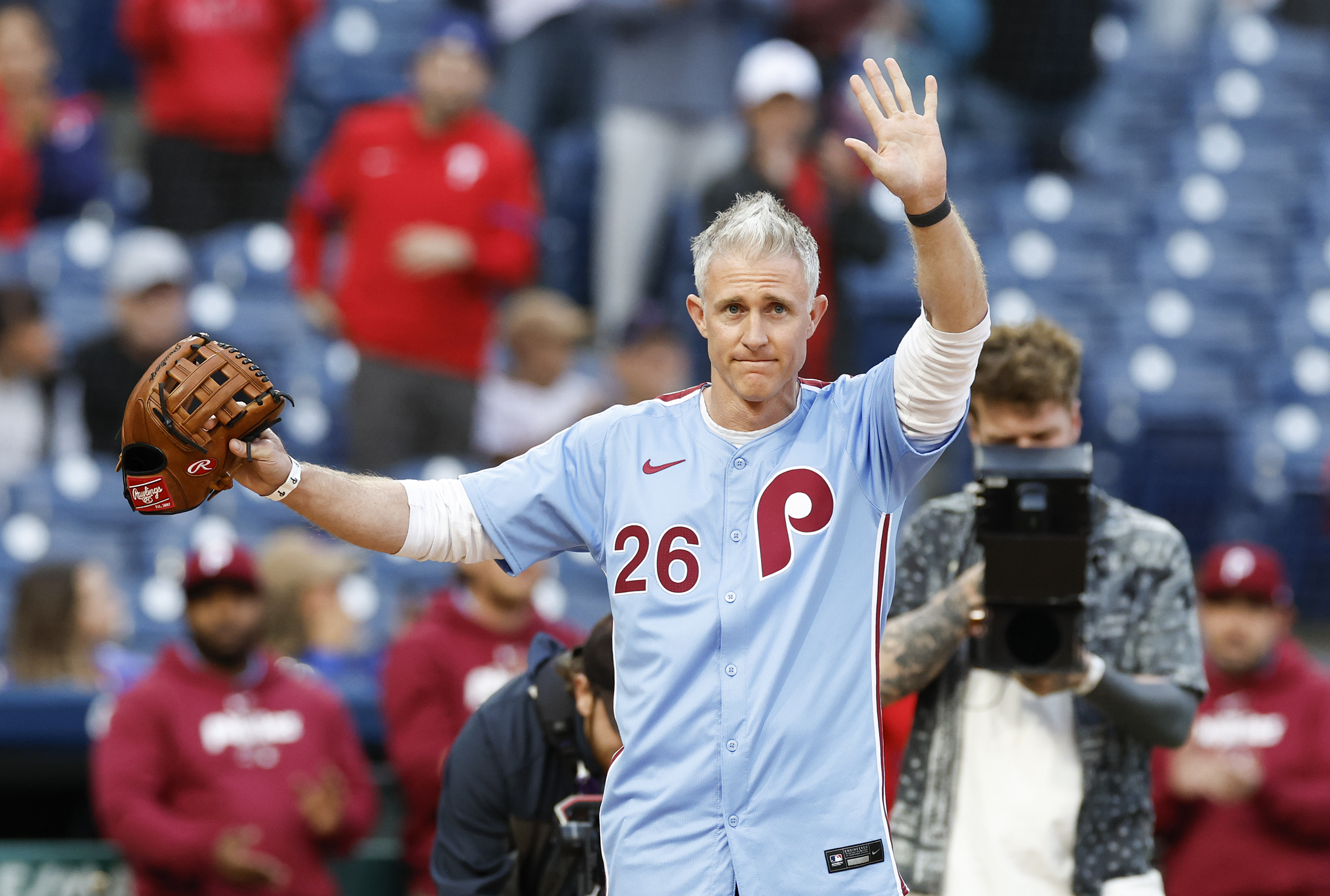
Chase Utley
Years on the ballot: Three
2025 vote total: 39.8%
The writers haven’t elected a player with fewer than 2,000 career hits since Ralph Kiner in 1975.
Utley finished with 1,885.
But Utley appears to be trending toward eventual election, likely because of the height of a peak that lasted at least six seasons and, if you squint, as many as 10. From 2005 to 2014, he had a 127 OPS+ and ranked second among second basemen in extra-base hits behind Robinson Canó, who was suspended twice for failing a drug test. Utley also had the second-most wins above replacement of any player, trailing only Albert Pujols.
Utley made a healthy ballot debut (28.8%) in 2024, then got an 11-point bump last year. Without a strong first-year candidate, he’s set for his biggest leap yet, tracking above 60% in early returns, although players don’t tend to fare as well among voters who don’t make their ballot public.
Second basemen are historically underrepresented in the Hall of Fame. The writers have elected only two (Craig Biggio and Roberto Alomar) since 2006. Jeff Kent was elected last month by an era committee after topping out at 46.5% in 10 years on the writers’ ballot. Maybe it will help Utley and Pedroia with the writers.
Utley already got to almost 40% in only his second go-around. His statistics won’t change, but voters’ perspectives often do. It wouldn’t be surprising to see Utley climb over 50% this year and get the call to Cooperstown sometime around, oh, 2028.
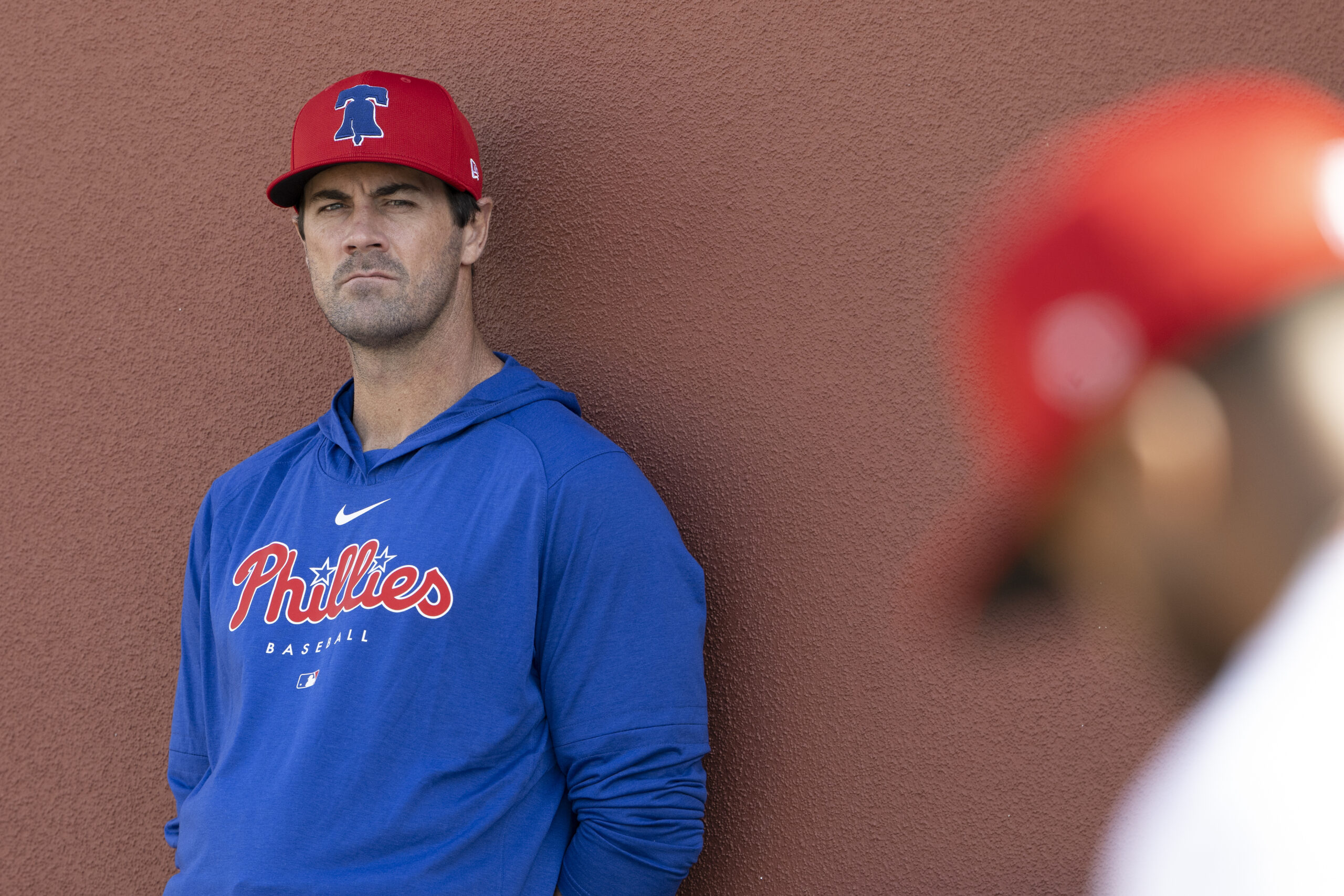
Cole Hamels worked for the Phillies this year as a guest instructor in spring training and a part-time television analyst.
Cole Hamels
Years on the ballot: One
Greg Maddux, Tom Glavine, Pedro Martínez, Randy Johnson, and John Smoltz went into the Hall of Fame in a two-year parade of starting pitchers in 2014 and ’15.
Since then, the writers have elected only three starters.
Roy Halladay, Mike Mussina, and CC Sabathia will be joined in five years by Clayton Kershaw and eventually by Justin Verlander and Max Scherzer. Maybe Zack Greinke, too. But beyond that group, who’s the next surefire Hall of Fame starter?
At a time when teams ask less of their starters than before, in an age of reduced workloads and an arm-injury epidemic that has shortened careers, starters no longer reach the classic benchmarks — 300 wins, 3,000 strikeouts, etc. — that the all-time greats once did.
It has been reflected in Hall of Fame voting. Johan Santana had a six-year peak with two Cy Young Awards and five top-five finishes but dropped off the ballot after one year because he apparently wasn’t dominant for long enough.
Voters appear to be recalibrating. Hernández’s peak lasted slightly longer than Santana’s and featured one Cy Young and two runners-up. He appeared on 20.6% of ballots as a first-time candidate last year and was tracking at better than 50%.
It’s difficult to assert that Hamels’ career, which didn’t include a top-three Cy Young finish, reached King Félix’s heights. But check out their numbers from 2007 to 2016:
Hamels: average of 208.2 innings, 126 ERA-plus, 46.5 WAR, according to Baseball-Reference.
Hernández: average of 214 innings, 129 ERA-plus, 47.2.
It’s close. Fortunately, Hamels will get additional consideration. He’s going to hang around on the ballot, maybe even topping Hernández’s first-year total.
Jimmy Rollins is the Phillies’ all-time leader with 2,306 hits.
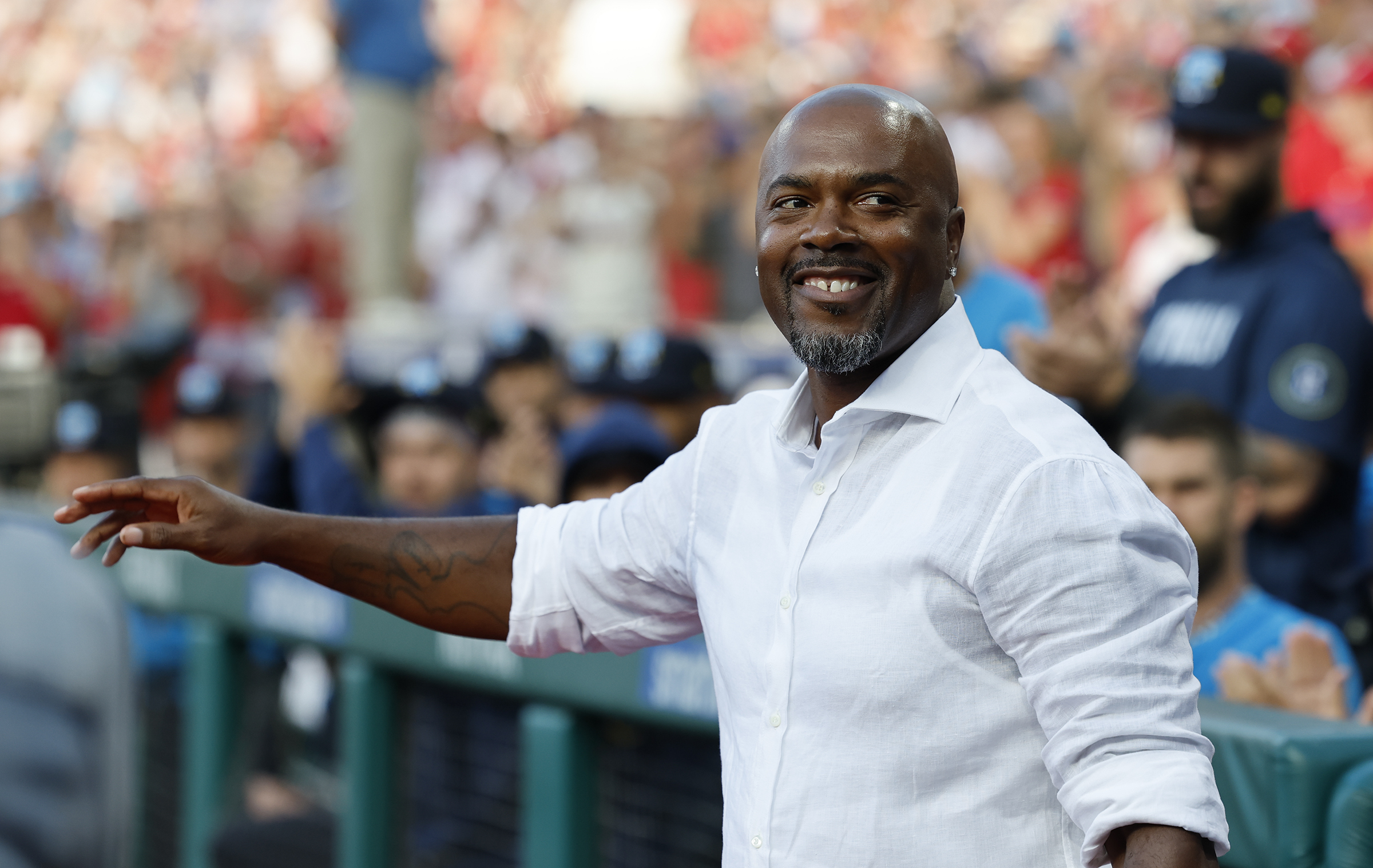
Jimmy Rollins
Years on the ballot: Five
2025 vote total: 18.0%
Rollins’ significance to the Phillies would be undeniable even if he wasn’t their all-time hits leader. He was a soothsaying league MVP in 2007 and a World Series champion in 2008, and authored one of the biggest postseason hits in team history in the 2009 NL Championship Series.
The Phillies’ 143-year story can’t be written without their best shortstop.
The writers didn’t vote in Dale Murphy and Don Mattingly, whose excellence symbolized an era for the Braves and Yankees, respectively. Lou Whitaker didn’t get into the Hall of Fame after 19 starry seasons with the Tigers.
And thus far, J-Roll hasn’t gotten much traction either.
Despite sharing the middle infield with Utley for a dozen seasons, Rollins hasn’t matched his double-play partner’s ballot momentum. He debuted at 9.4% in 2022 and made only modest increases: 12.9% in 2023, 14.8% in 2024, and 18% last year. He’s tracking at about 23%, which would signal another small bump.
Rollins’ supporters within the electorate often note that he’s the only shortstop ever with at least 2,000 hits, 200 homers, and 400 steals. He also won a league MVP, four Gold Gloves, and a World Series ring.
But it’s difficult to ignore Rollins’ below-league-average OPS+ (95), although it wouldn’t be the lowest ever for a Hall of Fame shortstop (Phil Rizzuto, Ozzie Smith, Luis Aparicio, and Rabbit Maranville were worse).
Bobby Abreu spent half of his 18 year major-league career with the Phillies.
Bobby Abreu
Years on the ballot: Seven
2025 vote total: 19.5%
Twenty-one players had at least 900 extra-base hits and 1,400 walks. Here’s the list: Babe Ruth, Lou Gehrig, Mel Ott, Jimmie Foxx, Ted Williams, Stan Musial, Willie Mays, Mickey Mantle, Eddie Mathews, Hank Aaron, Frank Robinson, Carl Yastrzemski, Pete Rose, Mike Schmidt, Barry Bonds, Gary Sheffield, Frank Thomas, Jim Thome, Jeff Bagwell, Chipper Jones … and Abreu.
Yet Abreu somehow always seemed more like a supporting actor. He spent half his 18-year major league career with the Phillies but played for six teams. The Phillies won the World Series two years after he got traded; the Yankees won it one year after he left as a free agent.
Abreu built on a 5.5% debut in 2020 but has plateaued in recent years — 15.4% in 2023, 14.8% in 2024, 19.5% last year. Through Wednesday, he had picked up 12 votes and was polling at about 40%.
It would represent a decent jump for Abreu. But with only three more years on the ball, he needs a bigger leap to stand a chance at even sniffing 75%.