No one throws a “Happy 250th Birthday, America” jammy jam like a Philadelphia museum.
Embedded into the fabric of our nation’s birthplace, Philly cultural institutions are gearing up for high-level deep dives into history, fun, folly, and reflection. Just in time for the Semiquincentennial.
Our museums’ dynamic programming for America’s big birthday kicks off on Jan. 1.
The Philadelphia Art Museum, the National Constitution Center, the Museum of the American Revolution, and smaller outfits like Eastern State Penitentiary and Historic Germantown will, as expected, reimagine the history of our republic in an homage to the forefathers’ ingenuity.
Many are also honoring the perspective of marginalized Americans, upon whose backs this country was built.
Mixed into the Semiquincentennial festivities are other milestone birthdays. Carpenters’ Hall will celebrate the Commonwealth of Pennsylvania’s 250th with an exhibit, historical marker, statewide town halls, and virtual lecture series.
The new year also marks Germantown’s the Colored Girls Museum‘s 10th anniversary; it will open its fall 2026 season with a rare show from renowned sculptor vanessa german.
Renderings of The Franklin Institute’s world premiere of “Universal Theme Parks: The Exhibition” February 14, 2026 – September 7, 2026.
Philly is America’s birthplace. Our 250th birthday energy can’t be outdone.
From the looks of it, it won’t be.
Philadelphia Art Museum
The Philadelphia Art Museum has three major shows in 2026.
Noah Davis
The art museum’s Morgan, Korman, and Field galleries will feature the work of the late African American artist Noah Davis (1983-2015). Davis’ paintings, sculpture, and works on paper capture the history and intricacies of American Black life from antebellum America through his untimely death. Jan. 24-April 26.
“Untitled Girls” This painting by Noah Davis will be on display in the Philadelphia Art Museum’s 2026 exhibition named after the late artist
A Nation of Artists
Paintings, furniture, and decorative arts from Phillies managing partner John Middleton and his wife, Leigh, will center the “A Nation of Artists” exhibit, telling the 300-yearslong story of American creativity. The exhibit is a joint project between the Philadelphia Art Museum and the Pennsylvania Academy of Fine Arts and is billed as “the most expansive presentation of American art ever mounted in Philadelphia.” Opens April 12.
Rising Up
2026 marks the 50th anniversary of the release of the first Rocky film. To coincide, the Art Museum in April will open “Rising Up: Rocky and the Making of Moments” in the museum’s Dorrance galleries. The exhibit will explore how the Rocky statue outside the museum brings people together. April 25-Aug. 2.
Phillies owner John Middleton is photographed next to a painting to his left, part of his personal collection and soon to be exhibited at the Philadelphia Museum of Art.
Visitors at the Museum of the American Revolution in front of a portrait of Absalom Jones, abolitionist and founder of The First African Episcopal Church of St. Thomas. Jones’ writings are on display.
Penn Museum
Spear points dating to 3,000 B.C., centuries-old bowls, and 19th century beaded collars are a few of the items that illustrate the lives Lenape Indians led fishing on the banks of the Schuylkill and hunting in Fairmount Park. These are on display at Penn Museum’s new Native North American gallery. Visiting curator Jeremy Johnson chose these artifacts because, he said, they best “tell the story of his people — who the Founding Fathers tried to erase.” Through 2027.
A gallery of Native American art is displayed at the Penn Museum on Friday, Nov. 21, 2025, in Philadelphia. As celebrations of Native American culture and precolonial Philadelphia plants grow, museums across the city prepare for America’s 250th birthday.
Weitzman National Museum of American Jewish History
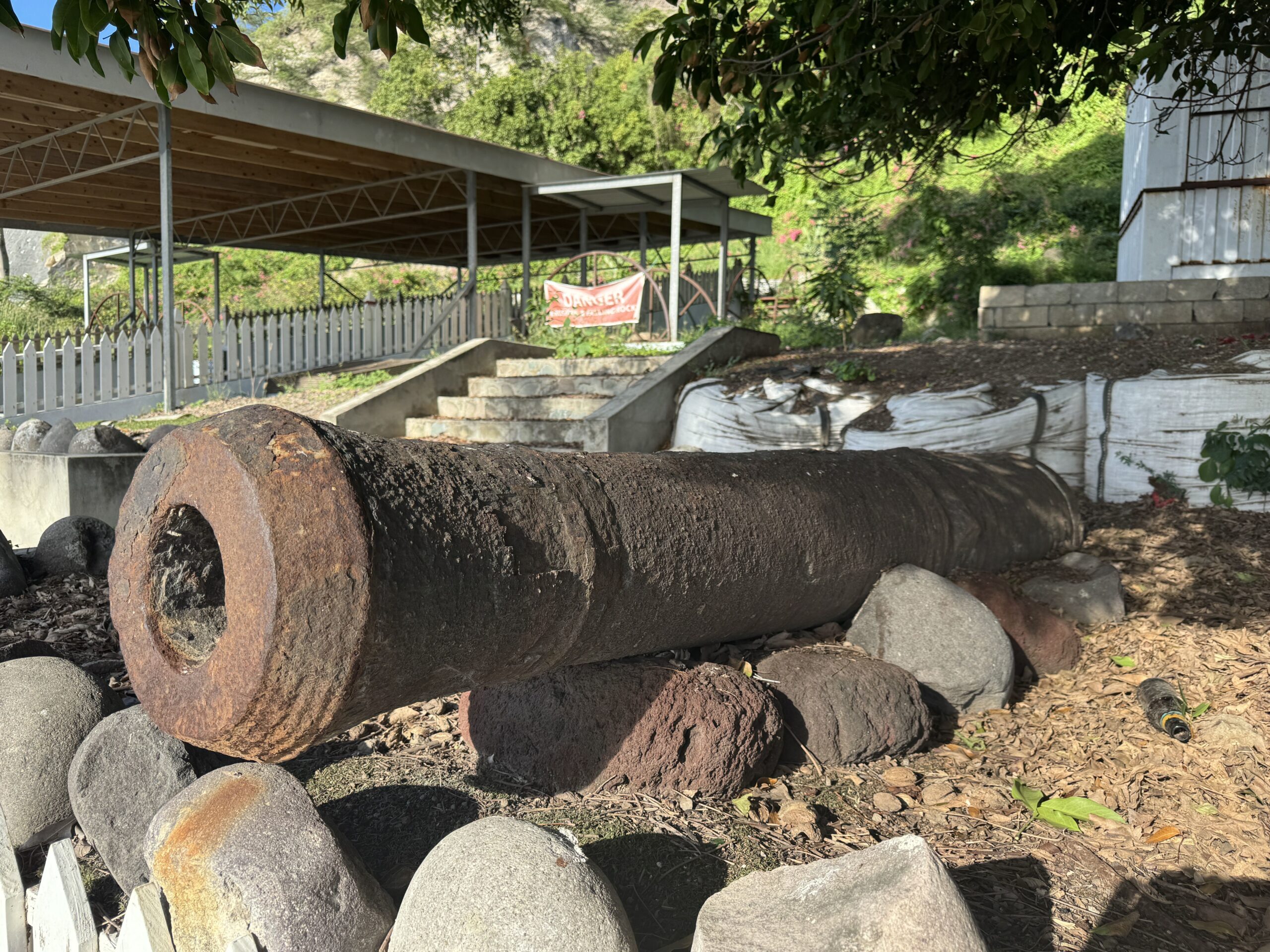
On Nov. 16, 1776, the Andrew Doria brigantine arrived in the Caribbean on the British colony St. Eustatius, waving the first national flag of the United States. The Jewish merchants and English settlers, treated poorly by their antisemitic Anglican monarchs, greeted the newly minted Americans with a 13-cannon salute. In that moment, St. Eustatius became the first country to recognize America’s sovereignty.
Cannon from the shores of St. Eustatius much like those fired in the 18th century that will will be on display during “First Salute.” 250tharts-12-28-2025
Weitzman National Museum of American Jewish History’s“The First Salute” exhibit will recount this largely untold story — including how the Jewish merchants smuggled the Americans’ gunpowder in tea and rice bags, giving Pirates of the Caribbean meets Hamilton vibes. Artifacts on display will include 18th-century currency, a series of paintings from prominent Jewish Philadelphian Barnard Gratz’s art collection, and an actual cannon shot from the island’s shores. From April 23, 2026, through April 2027.
National Constitution Center
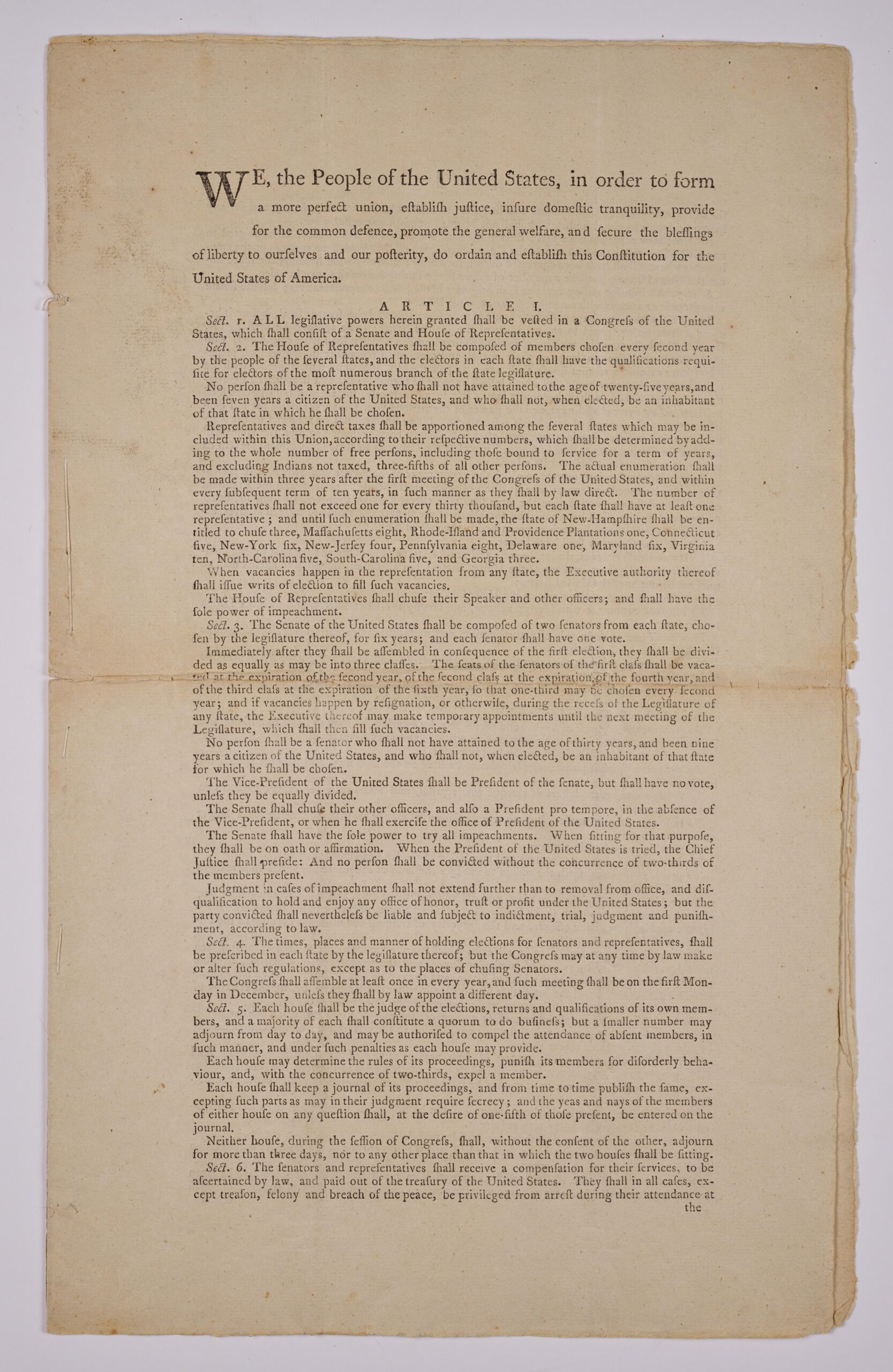
Centered around a rare, centuries-old copy of the U.S. Constitution — a gift from billionaire hedge fund manager Kenneth C. Griffin — the National Constitution Center will present “America’s Founding.“ The gallery will be dedicated to the exploration of our early, colonial principles that led our fight for independence. How do they stand up now? Opens Feb. 13.
This original copy of the U.S. Constitution, one of only 14, was donated to the National Constitution Center by billionaire hedge fund manager Kenneth C. Griffin. It will be featured in the Constitution Center’s upcoming “America’s Founding” exhibit.
A second gallery will explore how the Constitution defines roles and balances power between the legislative, judicial, and executive branches of government. Opens in May.
Ruth E. Carter pauses briefly during the “Ruth E. Carter: Afrofuturism in Costume Design” opening gala at the African American Museum in Philadelphia on Saturday, Nov. 1, 2025.
In October 2026, AAMP will premiere the extension of its “Audacious Freedom” exhibit. Currently on the ground floor, the exhibit is a study of Black Philadelphians from 1776 to 1876. The expanded show will bring “Audacious Freedom” up to present day and will include 20th-century artists and educators, from Charles Blockson to Jill Scott.
Woodmere Art Museum
Inspired by Philadelphia illustrator and friend of WoodmereJerry Pinkney, the Chestnut Hill museum’s Semiquincentennial show, “Arc of Promise,” acknowledges America’s painful histories of slavery, injustice, and displacement of its Indigenous people while affirming its capacity to rebuild, renew, and evolve. Featuring art by Philadelphians dating to 1790, “Arc of Promise’s” paintings, sculptures, maps, and flags explore what freedom and justice for all truly means. Opens June 20.
The Academy of Natural Sciences of Drexel University
In collaboration with California State University ethnobotanist Enrique Salmón, the Academy of Natural Sciences at Drexel University will debut “Botany of Nations: Indigenous Ecological Knowledge and the Lewis & Clark Corps of Discovery.” These centuries-old plants, collected by explorers Meriwether Lewis and William Clark, were a gift to Philadelphia’s American Philosophical Society from Thomas Jefferson. Organizers hope the selection of now-pressed plants — prairie turnip, camas root, and Western red cedar — will be a vegetative portal to the Indigenous perspective in American frontier life. From March 28, 2026, through Feb. 14, 2027.
Samples from Botany of Nations. Academy of Natural Sciences of Drexel University, March 28, 2026 – February 14, 2027
The Clay Studio: Center for Innovation in Ceramic Art.
Twenty-five artists from 20 Philadelphia cultural institutions will present projects that show how the definition of independence evolved from 1776 through 1876, 1926, 1976, and 2026 under the umbrella of the Clay Studio. The exhibit, “Radical Americana,” will start with a compelling show by Kensington potter Roberto Lugo on April 9. Artists will mount additional shows at participating institutions throughout the year, including at the Museum for Art in Wood and Cliveden Historic House. A full list is available at theclaystudio.org. Opens April 9.
Roberto Lugo is shown working on one of his Greek vases that is now part of a new exhibition, “Roberto Lugo / Orange and Black” at Art@Bainbridge, a gallery project of the Princeton University Art Museum
Mural Arts Philadelphia
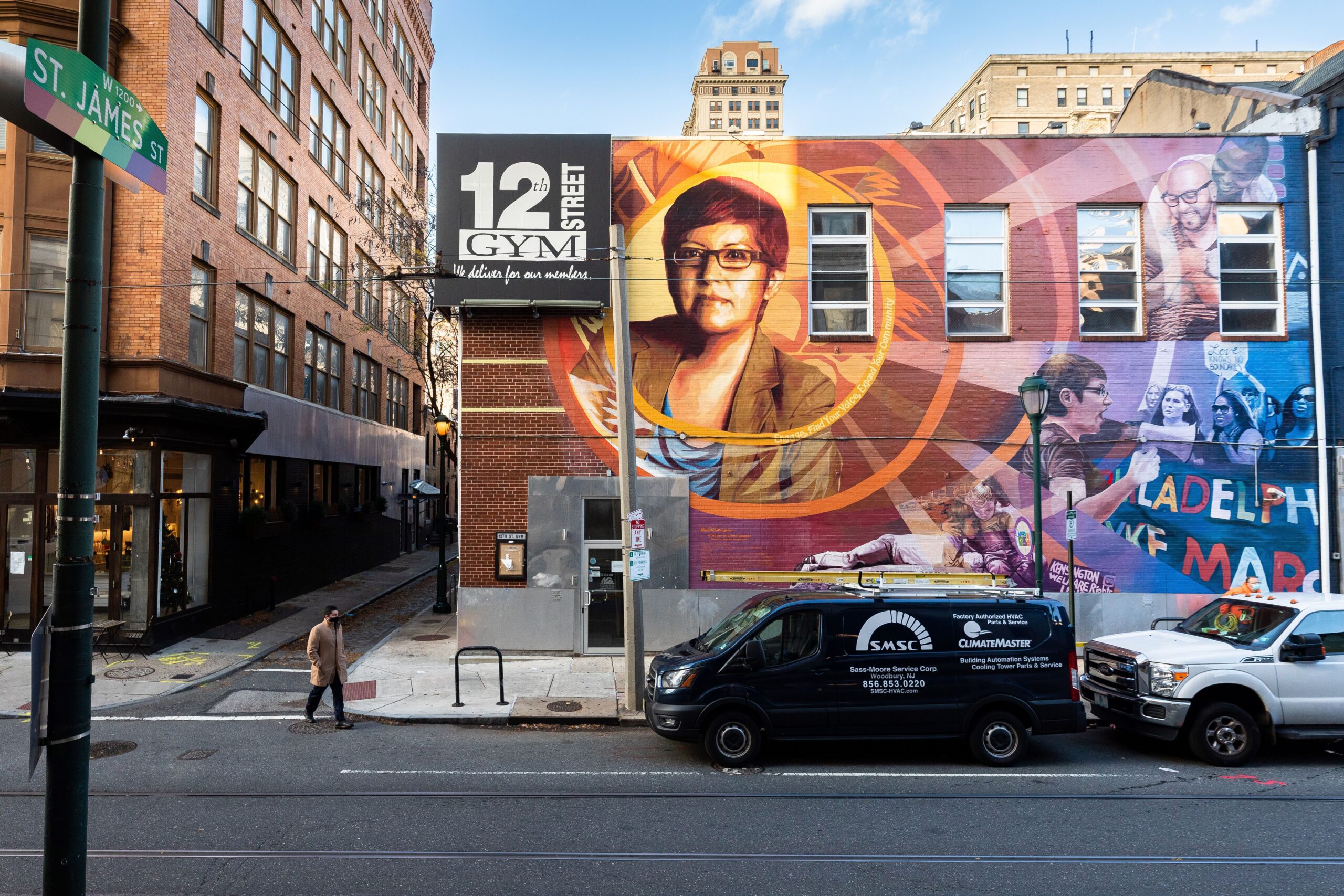
Mural Arts is working on several projects that will spruce up the city in 2026. That includes a new focus on the city’s entryways, the restoration of several murals, and a collaboration between Free Library of Philadelphia in a community printmaking project. At least three new murals will debut and include a tribute to artists Questlove (of the legendary Roots crew) and Boyz II Men. A refurbished mural in honor of Philadelphia’s first director of LBGTQ affairs, the late Gloria Casarez, will be unveiled. Mural Arts also is partnering with the Philadelphia Historic District on sculptures for next year’s 52 Weeks of Firsts programming and with the Bells Across PA program to create Liberty Bell replicas in neighborhoods throughout the city.
A rendering of a tribute to Gloria Casarez City of Philadelphia Mural Arts Program, Michelle Angela Ortiz, 12th Street Gym, 204 South 12th Street.
Philadelphia sports fans of a certain age remember the city’s golden era, when all four professional teams advanced to their league’s championship series or title game in the same calendar year.
“The city was crazy that summer,” said Larry Bowa, the former Phillies shortstop who was a member of the 1980 World Series champion team. “Every team went to the finals, and we were the only one that won.”
Yes, the Sixers, Flyers, and Eagles all came up short of the brass ring in 1980 (and January 1981 for the Birds’ Super Bowl loss), but Philadelphia morphed into a sports nirvana during those 12 months.
Bowa said he thinks the 2026 Philadelphia sports scene will be even more electric, when the City of Brotherly Love hosts a bevy of major sporting events throughout the year. It starts with the March Madness men’s basketball opening rounds at Xfinity Mobile Arena, and stretches through the end of August, when the Philadelphia Cycling Classic is staged.
In between those two marquee events, the 108th PGA Championship will be played at Aronimink Golf Club, followed by six FIFA World Cup matches held at Lincoln Financial Field, the last of which is scheduled for July 4, the 250th anniversary of the adoption of the Declaration of Independence by the Continental Congress.
If that’s not enough, Citizens Bank Park in mid-July will be the host site for the Major League Baseball All-Star Game, the fifth time the Midsummer Classic has been played in Philadelphia, but the first at the Phillies’ current home stadium.
Imagine if the four Philly pro teams have a 1980 redux — that would be the cherry on top of Billy Penn’s hat.
“I think it’s going to be awesome,” Bowa said of the upcoming sports extravaganza. “People come from all over, and, whether it’s fair or not, Philly gets a bad rap sometimes. People that don’t live here, they don’t understand the passion that the fans have. It’s a great city. The fans are great. [You] can enjoy some of the history downtown. It’s going to be fun to sit back and watch.”
Houston forward Ja’Vier Francis blocks a shot by Florida center Micah Handlogten during the NCAA championship game on April 7, 2025, in San Antonio, Texas.
March Madness: NCAA men’s basketball tournament
None of the area men’s basketball teams that constitute the Big 5 (now 6 including Drexel University) is currently in the Top 25 rankings as of this writing, but that could change by the turn of the calendar.
Even if no Philly-area team punches its Big Dance ticket, St. Joseph’s will factor in the 2026 NCAA tourney when the school hosts the first- and second-round games at Xfinity Mobile Arena. The Florida Gators are the defending champions, and when March Madness begins, Philadelphia steps into the college basketball limelight for the opening curtain.
Friday, March 20, and Sunday, March 22; Xfinity Mobile Arena; tickets at xfinitymobilearena.com.
Scottie Scheffler lines up a putt on the fifth green on the first day of the 2025 Ryder Cup at Bethpage Black on Sept. 26.
PGA Championship
The 108th edition of one of professional golf’s four majors will be staged on the pristine Aronimink Golf Club links. The last time the PGA Championship was staged here was more than 60 years ago, when Hall of Fame legend Gary Player beat Bob Goalby by a stroke.
More recently, Keegan Bradley won the 2018 BMW Championship at Aronimink. Defending champ Scottie Scheffler will be among the star-studded group of golfers descending upon suburban Philly to play for the Wanamaker Trophy. If you miss out on tickets to the PGA Championship, you have another chance to see high-level golf in the region when the U.S. Men’s Amateur Championship comes to Merion Golf Club in mid-August.
May 11-17; Aronimink Golf Club, Newtown Square; tickets at pgachampionship.com.
The FIFA World Cup Trophy is displayed during the FIFA World Cup 2026 playoff draw in Zurich, Switzerland, on Nov. 20.
FIFA World Cup
Soccer’s premiere event was last staged in the U.S. over three decades ago, when the USMNT advanced to the Round of 16, before losing to perennial powerhouse Brazil. Now the men’s national team has another chance to try to do what no U.S. squad has done before — win soccer’s most prestigious award.
Six of the 2026 FIFA World Cup matches will be played at the Linc, including the final of those matches scheduled to take place on Independence Day.
June 14-July 4; Lincoln Financial Field; tickets at fifa.com.
Tampa Bay Rays’ Junior Caminero reacts during the MLB baseball All-Star Home Run Derby on July 14 in Atlanta.
MLB All-Star Game
Bowa was an All-Star in 1976, when the Midsummer Classic was played at Veterans Stadium. But in that doughnut-shaped ballpark, “you had to hit ’em to get out of there.” Bowa said he thinks the bandbox Citizens Bank Park will be a great venue for baseball’s All-Star gathering, particularly the Home Run Derby.
“This one, they might be taking the upper deck down with these guys as big and strong as they are, and the way the ball jumps in Philly.”
It will be even more entertaining if defending All-Star Game MVP Kyle Schwarber is suited up in a Phillies jersey next year. But if Schwarber departs in free agency, there is still a group of Phillies — Bryce Harper, Trea Turner, Cristopher Sanchez — who could star for the National League.
July 12-14; Citizens Bank Park; tickets at mlb.com.
Racers in the 2007 Commerce Bank Liberty Classic climbing the Manayunk Wall.
Philadelphia Cycling Classic
One of cycling’s jewel events, the Philadelphia Classic has had numerous name iterations over the years, going back to its start in 1985 when it was called CoreStates U.S. Pro Cycling Championship. That year, Eric Heiden — yes, the former U.S. Olympic gold medal-winning speed skater — was champion.
Tour de France legend Greg LeMond has also been a past participant. The route snakes west of Center City and includes the famed Manayunk Wall, a cycling test of will on Levering Street.
Aug. 30; Planned 14.4-mile circuit goes from Logan Square up Kelly Drive to Manayunk and back; tickets at philadelphiacyclingclassic.com.
First, Danielle Delange saw the news alert: Bristol Health & Rehab, the nursing home where her mother lived, was on fire.
Within minutes, Delange got a phone call from an unfamiliar number. On the line, she heard her 64-year-old mother’s trembling voice.
“My mom said there was a gas explosion,” Delange said. “And I said, ‘How do you know it was a gas explosion?’ And she said, ‘Because we’d been smelling gas.’ … And I said, ‘Today?’ And she said, ‘No, for a couple days.’”
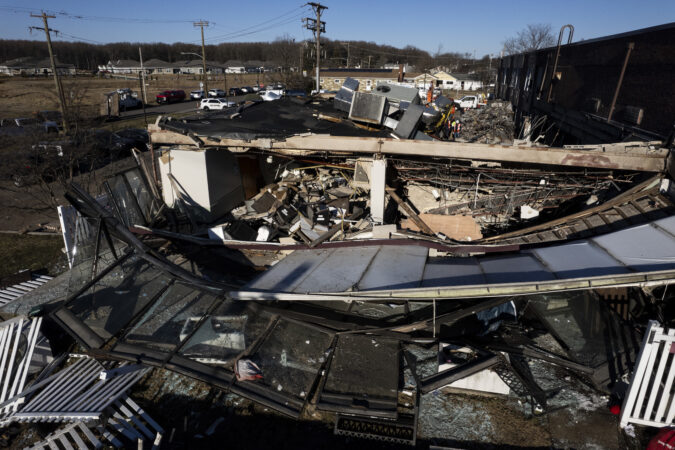
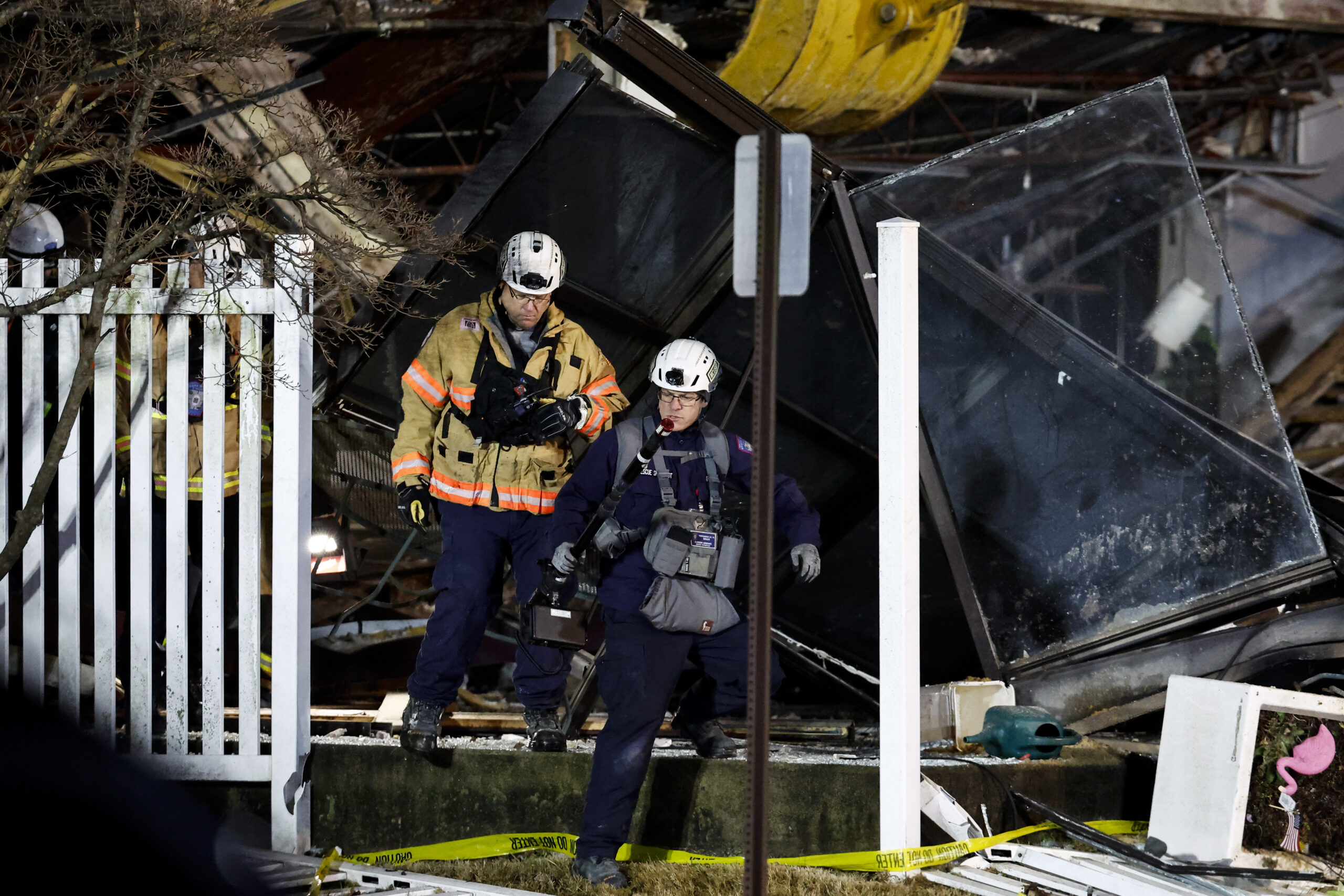
Her mother, Anna Grauber, who uses a wheelchair, was evacuated from the burning building soon after Tuesday’s devastating blast, which killed a nurse and a resident and injured 20 people. The cause of the explosion remains under investigation.
First responders work the scene of an explosion and fire at Bristol Health & Rehab Center, Tuesday, Dec. 23, 2025, in Bristol, Pa.
According to Delange, in the immediate aftermath of the explosion, her mother was outside, and she was starting to get uncomfortably cold.
Delange said her mother, who lives with COPD and emphysema, didn’t have the oxygen that she needs and was struggling to breathe. Even her emergency inhaler was back in her room.
Delange’s mother is one of the 119 residents who had to be relocated from the healthcare facility in Bristol Township, Bucks County, to other care homes across the region. With the facility now the scene of a federal investigation, Grauber and other residents are left without their possessions and, according to several families, they lack even basic necessities like clothes and phone chargers.
‘She doesn’t have pants’
The company that runs the nursing home, Saber Healthcare Group, says it’s doing all it can while it waits for the National Transportation Safety Board to determine whether people can safely return to the nursing home building at 905 Tower Rd.
But family members of residents, such as Delange, are questioning whether that’s enough.
Delange said her mother was promptly moved to another Saber Healthcare Group property, Statesman Health & Rehabilitation Center, a short drive away in Levittown. However, her mother had to go several days without one of her medications, Delange said, and was struggling to adjust.
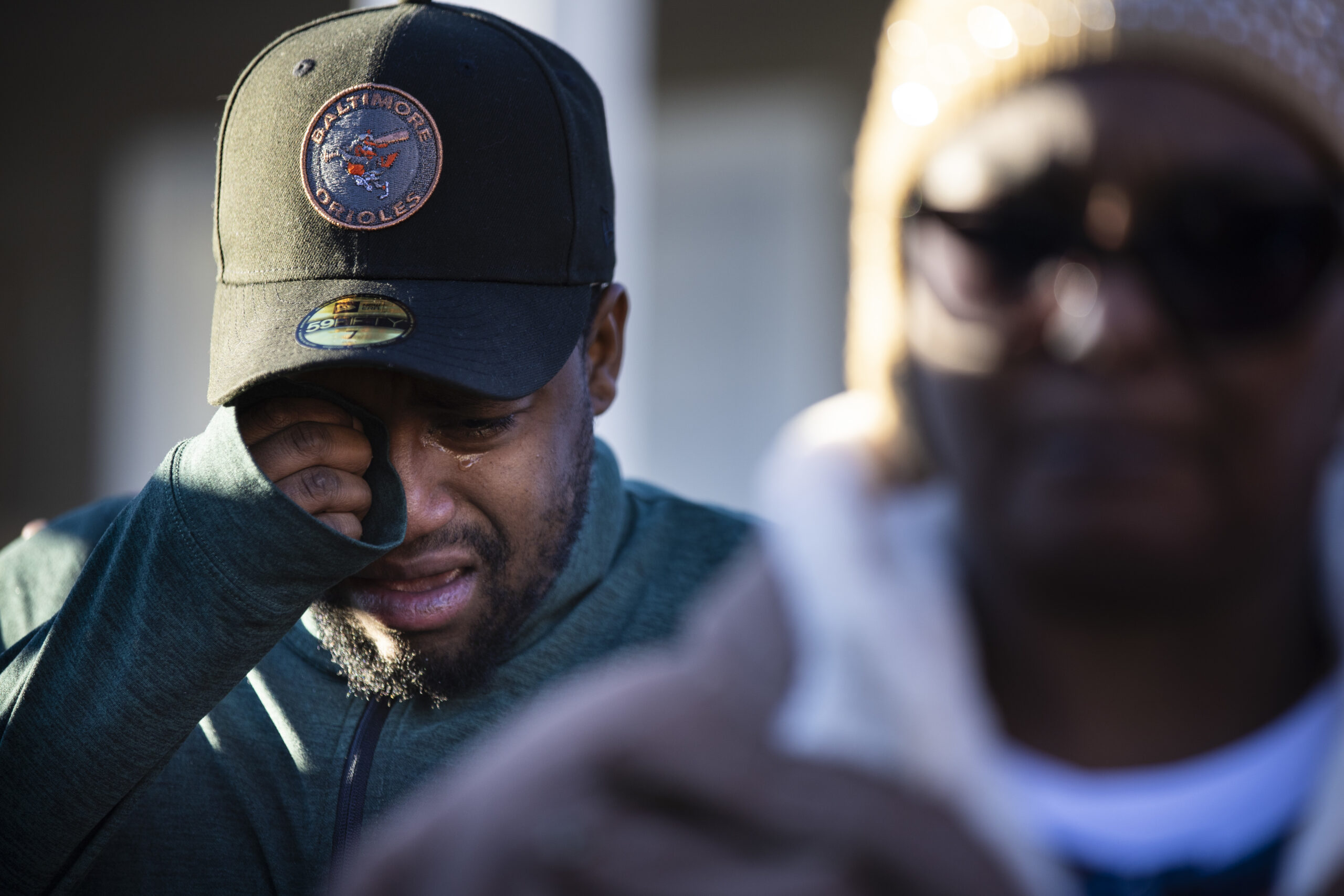
Muthoni Nduthu’s son Clinton tears up while the family speaks with the media on Wednesday, Dec. 24, 2025, in Bristol Township, Pa. Muthoni Nduthu was killed in the explosion at Bristol Health and Rehab Center on Tuesday.
Delange said that when she visited her mother on Friday at her new home in Levittown, her mother was wearing men’s basketball shorts and a T-shirt. She said that Saber has not provided clothes for the relocated residents, and so staff have resorted to pulling clothes from a donation box.
“She doesn’t have pants,” Delange said. “And that got me thinking, like, what did my mom have on when she left there?”
‘No indication’ of issues
Zachary Shamberg, Saber’s chief of government affairs, said the company is doing everything it can to help the displaced residents — but right now, nobody is allowed in the Bristol facility.
Possibly as early as Monday, Saber may be cleared to reenter the building, Shamberg said. “We’ll survey the damage, we’ll see what can be salvaged, and we’ll get in touch with families to ensure any items were returned.”
Saber’s insurance company would likely handle replacement or compensation for items destroyed in the blaze, he said.
As far as he knows, Shamberg said, the company is not providing money or purchasing new clothes or essential items for residents. He encouraged residents’ families to contact leadership at the Bristol facility if they need anything.
Shamberg said many residents have been moved to other Saber-affiliated nursing homes in the area, and these residents would promptly get prescriptions refilled. In addition, the company has started working with Medicare and Medicaid to replace residents’ dentures and eyeglasses. However, because some Saber locations are full, people have been placed in other facilities.
In the immediate aftermath of the disaster, Shamberg said, the goal was to get people “to the best care setting as quickly as possible.” He added the company tried to keep residents as close as possible to their families.
“The focus, initially on Tuesday, was to make sure staff and residents were safe,” Shamberg said. “Now, we survey the damage. We assess the facility. And we decide what happens next in terms of rebuilding and moving forward.”
Gov. Josh Shapiro delivers remarks on the explosion at Bristol Health & Rehab Center, at Lower Bucks Hospital on Tuesday, Dec. 23, 2025, in Bristol, Pa.
Saber staff at Bristol are being paid for the next 30 days regardless of whether they work, Shamberg said, and the company is offering them positions at other locations. Some staff, such as care coordinators and facility leadership, have remained in close contact with residents’ families, he said.
Saber, a privately run for-profit company, acquired the Bristol nursing home from Ohio-based CommuniCare Health Services barely three weeks before the explosion. Under CommuniCare, the nursing home had received numerous citations for unsafe building conditions and substandard care.
Saber was aware of these issues, Shamberg said. However, he said, as the company took over, there was no indication of problems with its gas lines.
“When you acquire a nursing home, you inherit that nursing home’s survey history,” Shamberg said. “Even looking at the most recent survey, the October 30th survey, there’s nothing that indicated a potential gas leak or explosion.”
Bristol had not been the first choice for 49-year-old Lisa Harnick and her family when it came time to find a nursing home for her mother, Debra Harnick. However, since Lisa Harnick didn’t have a car, the family opted for a choice close to her home in Bristol Township.
Now, Lisa Harnick’s 77-year-old mother is about an hour away at York Nursing & Rehabilitation Center in Philadelphia, she said. (The facility is not part of Saber Healthcare Group.) And their weekly lunch date is on hold.
“We started going over every Tuesday to have lunch with her, and visit with her, and now I can’t do that,” Lisa Harnick said.
Debra Harnick is “completely bed-bound,” her daughter said, and has no possessions except for her iPad, which she uses to communicate with family. She does not have a cognitive impairment, is alert, and is not happy about her new situation, Lisa Harnick said.
She added that Saber has remained in touch.
“I’ve been in contact with the social worker, and the activities director,” she said. “And I’ve been in contact with the insurance company, too. They just wanted to verify that she was there.”
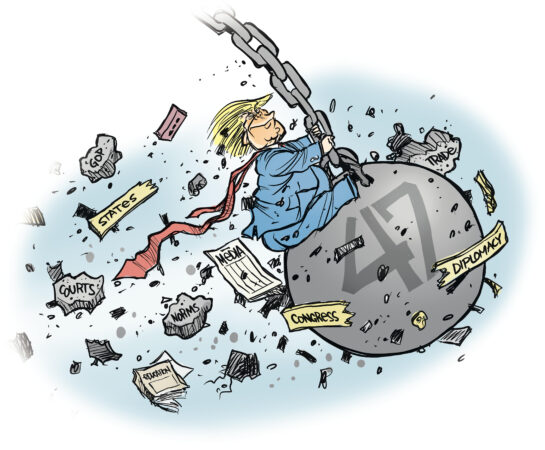
Donald Trump’s first year back in the White House has brought only one surprise: the speed with which he has upended the American Experiment. This board spent 2024 warning of the dangers a second Trump administration could bring. It was hardly soothsaying.
Sadly, Trump’s 2025 performance has reminded many voters that his undeniable luck, charisma, and bravado may be entertaining, but the reality of governance demands more. The office of the presidency demands more.
For his second term, no longer constrained by the guardrails the conservative establishment placed on his first presidential stint, and surrounded by sycophants and incompetents, Trump has wasted no time trying to live out his authoritarian fantasies while being unable to keep the trains running on time.
Indeed, he is very much the man whose administration helped give the world a COVID-19 vaccine in record time before bowing to anti-vax conspiracy theories that ultimately cost American lives.
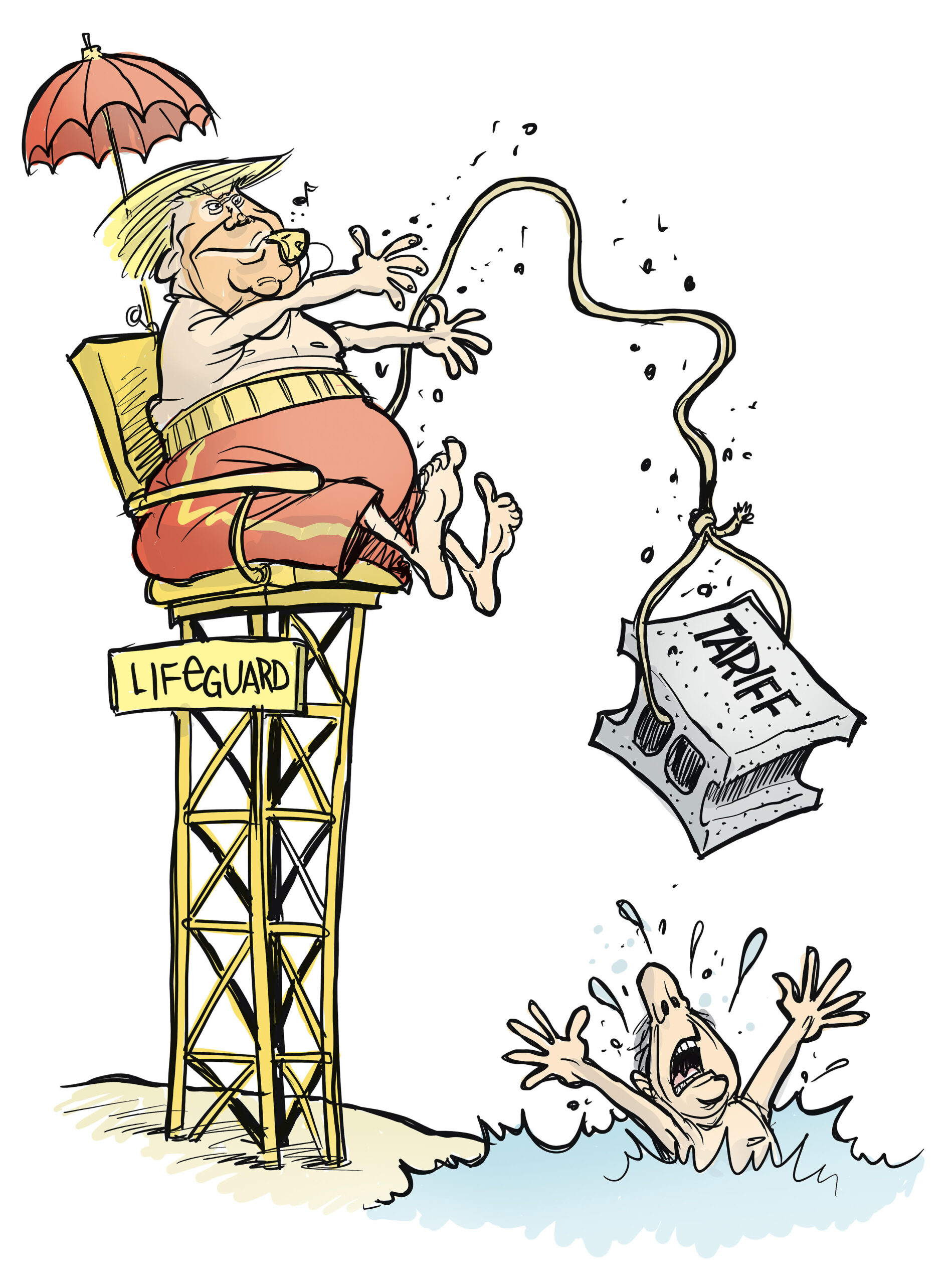
Instead of allowing inflation to continue to abate and the U.S. economy to live up to its label as “the envy of the world,” he haphazardly and likely illegallyinstituted tariffs on global trading partners that amount to a tax on American consumers. Rather than sitting back and taking credit for curtailing immigration at the southern border, which concerned a large number of voters, he’s lost public support as masked federal agents abuse, harass, and intimidate immigrants and citizens alike.
Trump’s signature legislation, the One Big Beautiful Bill Act, is set to make the rich richer and the poor poorer, all while a shrinking middle continues to lose faith in America’s institutions — some of which have willingly acquiesced to whatever Trump demands.
But while Trump has failed to make life better for everyday people, he has been successful in enriching himself, his family, and his cronies. He has captured the U.S. Department of Justice and the FBI, pushing them to pursue his perceived political enemies; used the U.S. Department of Homeland Security to implement cruel immigration policies and as a de facto secret police; and devastated America’s standing in the world by destroying the U.S. Agency for International Development, which helped generate enormous goodwill while improving the lives of millions of people around the globe.
The following appraisal of Trump’s presidency so far is not a “we told you so,” because we are all in this together. It is a reminder that those of us who value democracy and the rule of law must continue to stand fast and push back in defense of the ideals that fueled our nation’s founding and the rights and obligations codified in the Constitution.
As 2025 ends and a new year begins, we must not allow the avalanche of outrages to numb us to the fact that Trump remains unfit for office.
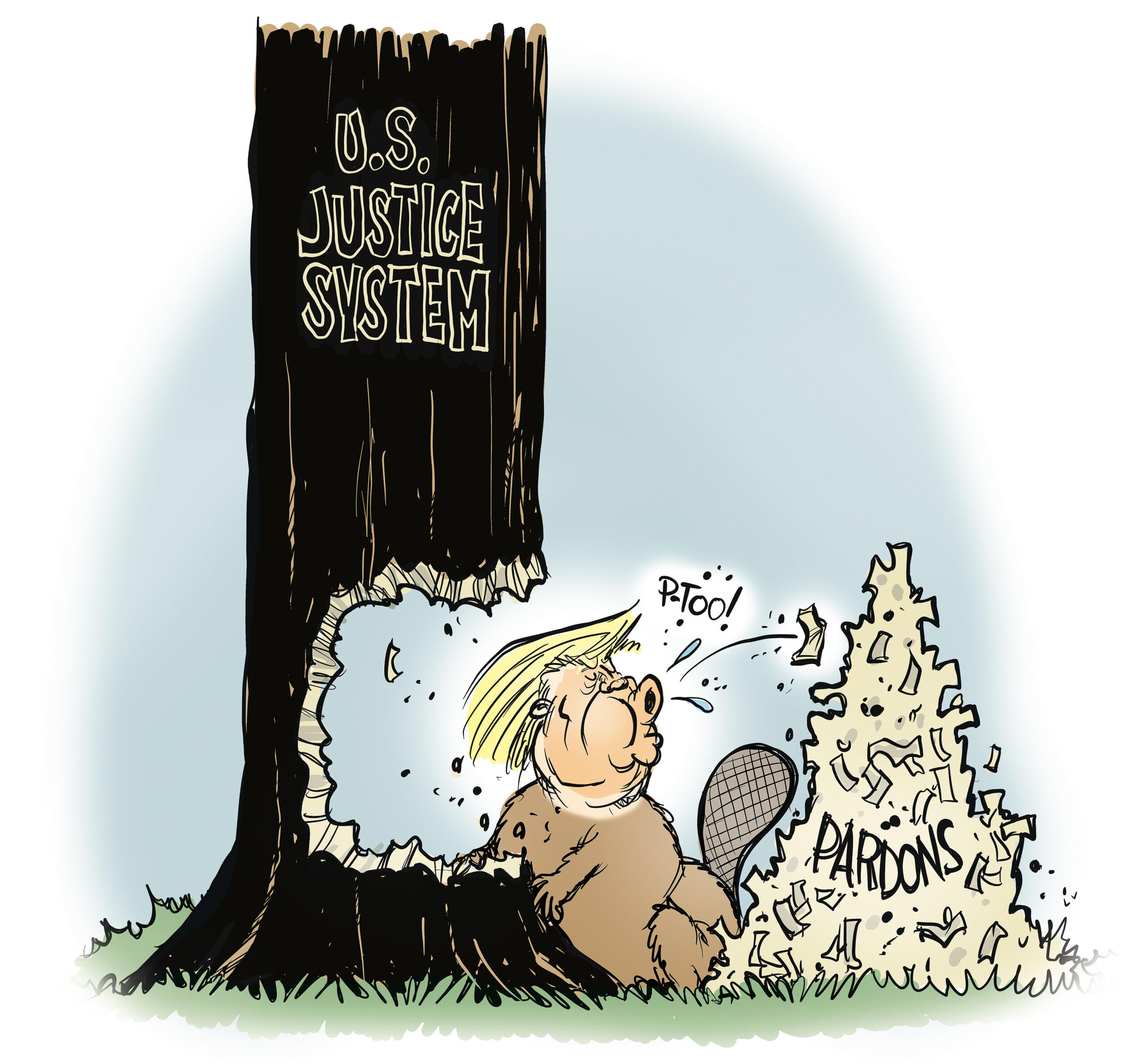
Donald Trump and his administration have attacked judges and maligned the courts, while the president has used his pardon power to eliminate accountability for his political allies and business interests.
Pardoned lawlessness
As far as ominous indicators of dire times ahead, “Abandon hope, all ye who enter here” is difficult to beat. But Trump’s blanket pardon of the roughly1,600 people involved in the attack on the Capitol comes in a close second.
Signed shortly after he took power, among a raft of other troubling executive orders, the clemency shown to the insurrectionists — including those who brutally assaulted law enforcement officers — showed the administration had no interest in accountability for its political allies nor any true concern for the rule of law.
Among Trump’s biggest abuses of presidential power are pardoning Rudy Giuliani and dozens of others accused of trying to overturn the 2020 election, campaign donor and convicted fraudster Trevor Milton, cryptocurrency kingpin Changpeng Zhao, and former Honduran President Juan Orlando Hernández, who had been sentenced to 45 years in prison for drug trafficking.
But why wait for a pardon when the president can simply pressure Justice Department lawyers to drop the corruption case against New York Mayor Eric Adams, or dismiss allegations that Trump border czar Tom Homan took $50,000 from FBI agents posing as business executives.
It is part of the administration’s stifling hypocrisy that while it righteously claims to seek justice by going after people like former FBI Director James Comey or New York Attorney General Letitia James, or labels all undocumented immigrants as criminals, it brazenly ignores due process — a bedrock principle of the American legal system.
If there are bright spots in a U.S. justice system in which the attorney general operates more like the president’s lawyer than a servant to the American people, it’s that grand juries remain independent, refusing to indict on trumped-up charges. And the courts — run by judges appointed by presidents of both parties, including some by Trump himself — are still a bulwark against the administration’s abuses.
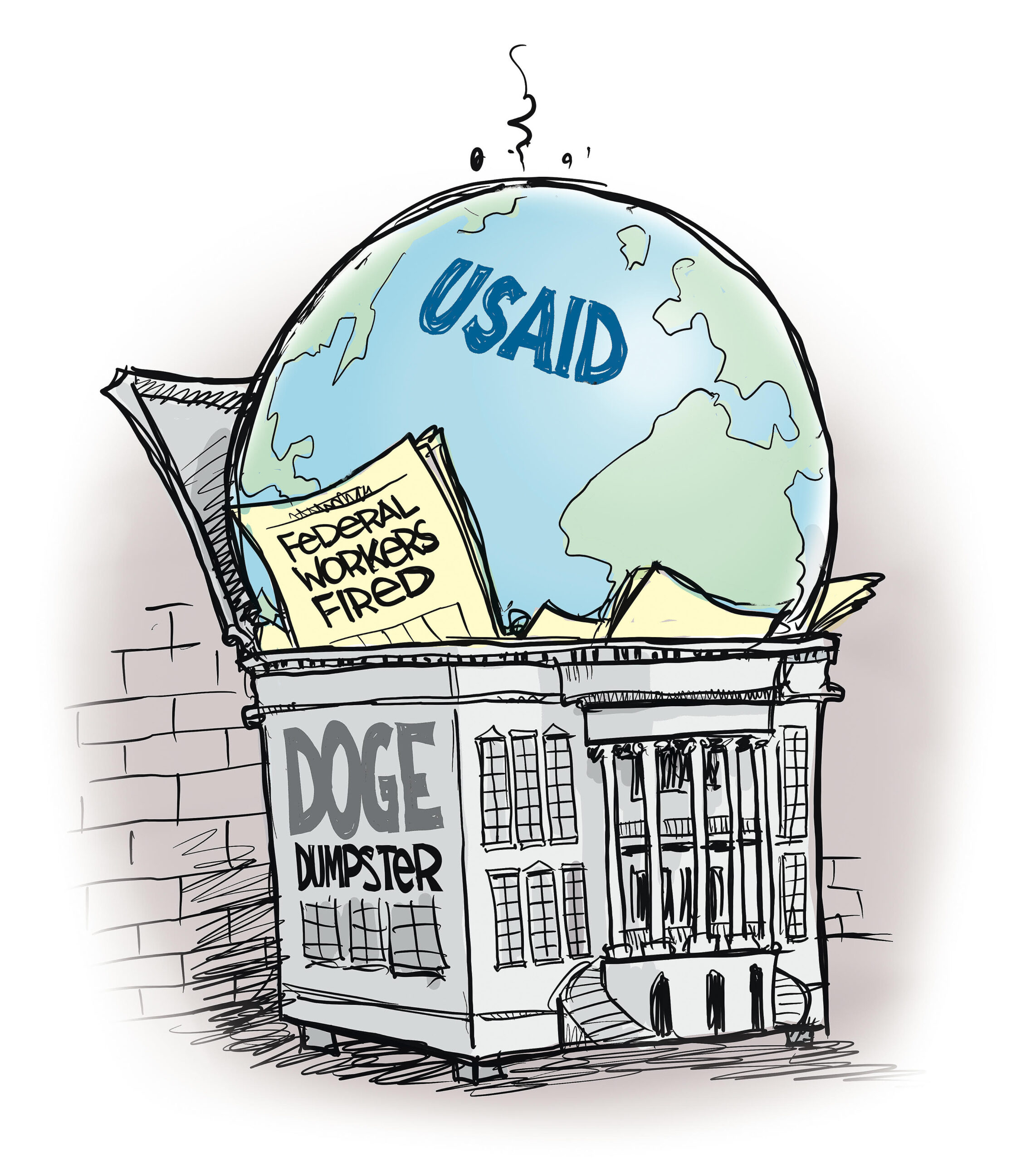
Donald Trump allowed billionaire Elon Musk to fire hundreds of thousands of government workers as head of the so-called Department of Government Efficiency. It is estimated that DOGE’s dismantling of the U.S. Agency for International Development has already led to the deaths of nearly 700,000 people.
Costly savings
The Department of Government Efficiency was Elon Musk’s chance to eliminate the U.S. Agency for International Development, an agency he called a “criminal organization” that needed to die. That the tech billionaire’s passion to eliminate USAID dovetailed with a bullet point in the conservative blueprint for Trump’s second term was likely welcomed by the administration.
Musk, who spent $250 million to help get Trump elected, was the public face of DOGE and promised to eliminate $2 trillion in government spending by identifying and eliminating waste, fraud, and abuse. What he did was bring in a squadron of techies more versed in crunching code than in carefully evaluating government services.
The chaos that followed meant not only the dismantling of USAID — which, as of Dec. 22, was estimated to have led to almost 700,000 deaths, more than half of them children, through the elimination of health and nutrition programs — but the firing or early retirement of nearly 300,000 federal employees.
DOGE also terminated more than $2.6 billion in contracts at the National Institutes of Health tied to medical research and clinical trials, leading to setbacks that may impact Americans’ health for generations.
So what was the result of DOGE’s actions? How much of that promised $2 trillion will show up on the positive side of the government’s ledger? According to an analysis by the libertarian Cato Institute, DOGE had no noticeable effect on the trajectory of government spending.
It did reduce the federal labor force, with savings that may amount to about $40 billion annually. That’s a lot less than it sounds when you consider it’s equal to 0.57% out of around $7 trillion in U.S. spending.
In his campaign for the president, Donald Trump promised he would lower consumer prices. A dubious pledge under most circumstances was made worse by policies, including the chaotic application of tariffs, that threaten the economy as a whole.
Self-inflicted decline
Looking at the data, it was easier to see why Vice President Kamala Harris did not distance herself from President Biden’s economic policies in her 2024 run for the White House. After all, after suffering through the pandemic like the rest of the world, the U.S. economy was bouncing back faster and stronger than that of other developed nations.
Unfortunately for Harris, to many voters, “Bidenomics” did not mean higher wages, lower unemployment, record stock market gains, and that post-pandemic inflation was starting to ease. It certainly didn’t mean billions in investment in infrastructure projects or in domestic production of critical semiconductors through the CHIPS and Science Act.
It meant the high cost of a dozen eggs.
Trump took advantage of the bad economic vibes and pledged to lower prices on Day One if elected. This was a dubious promise under most circumstances. Considering the president’s signature economic policies — indiscriminate tariffs and mass deportations — were destined to actively hurt consumer prices, it was political malpractice.
It is no wonder, then, that people have begun to sour on Trump’s economy, with the latest polling finding 57% of Americans disapprove. People are worried about losing their jobs, as unemployment has increased, and household debt levels are at record highs.
The impact of the president’s tariffs, which are taxes paid by the importer, not the exporter, is gradually being felt on the price of goods. Meanwhile, the administration’s crackdown on immigration, both legal and illegal, is hurting industries that depend on immigrant labor, including construction, agriculture, and health services.
According to the administration, fewer immigrants in jobs means more jobs for native workers, but so far, that result has not materialized. Instead, the projected economic impact of mass deportation on the labor force and consumer market (i.e., fewer people in the country purchasing goods and services) could reduce the U.S. gross domestic product — a common measure of economic growth — by 4.2% to 6.8%, according to the American Immigration Council. On the low end, that would be similar to the impact of the Great Recession on GDP.
Trump also promised to reduce energy prices by half within 18 months of taking office. The growing demand from data centers and the administration’s continued efforts to delay or kill renewable energy projects make it unlikely he will be able to deliver.
Trump infamously said his tariffs meant kids would get “two dolls instead of 30” come Christmas, but even that may have been optimistic, as data find more Americans are relying on installment or buy-now-pay-later plans to cover their holiday shopping.
The president, who had called Americans’ affordability concerns a “fake narrative” and a “con job,” backtracked in a prime-time speech on Dec. 18 in the most Trumpian way possible: He lied.
Trump falsely blamed immigrants for driving up the cost of housing, claimed gasoline is $2.50 a gallon “in much of the country,” and took credit for the mathematically impossible “400, 500, and even 600%” reduction in the cost of some prescription drugs, and for securing $18 trillion in investments in the U.S.
“Inflation has stopped, wages are up, prices are down, our nation is strong,” Trump said.
Donald Trump’s immigration enforcement agencies are seeding terror in communities while his administration’s immigration policies are unashamedly bigoted.
Anti-American sentiment
The Trump administration does not like immigrants. Period.
It does not like those who crossed the border illegally in search of a better life, nor those who are fleeing persecution and are seeking asylum in the land of opportunity. It does not like those who come here to study in America’s universities, nor those who want to fill jobs in fields in which there are not enough native-born workers.
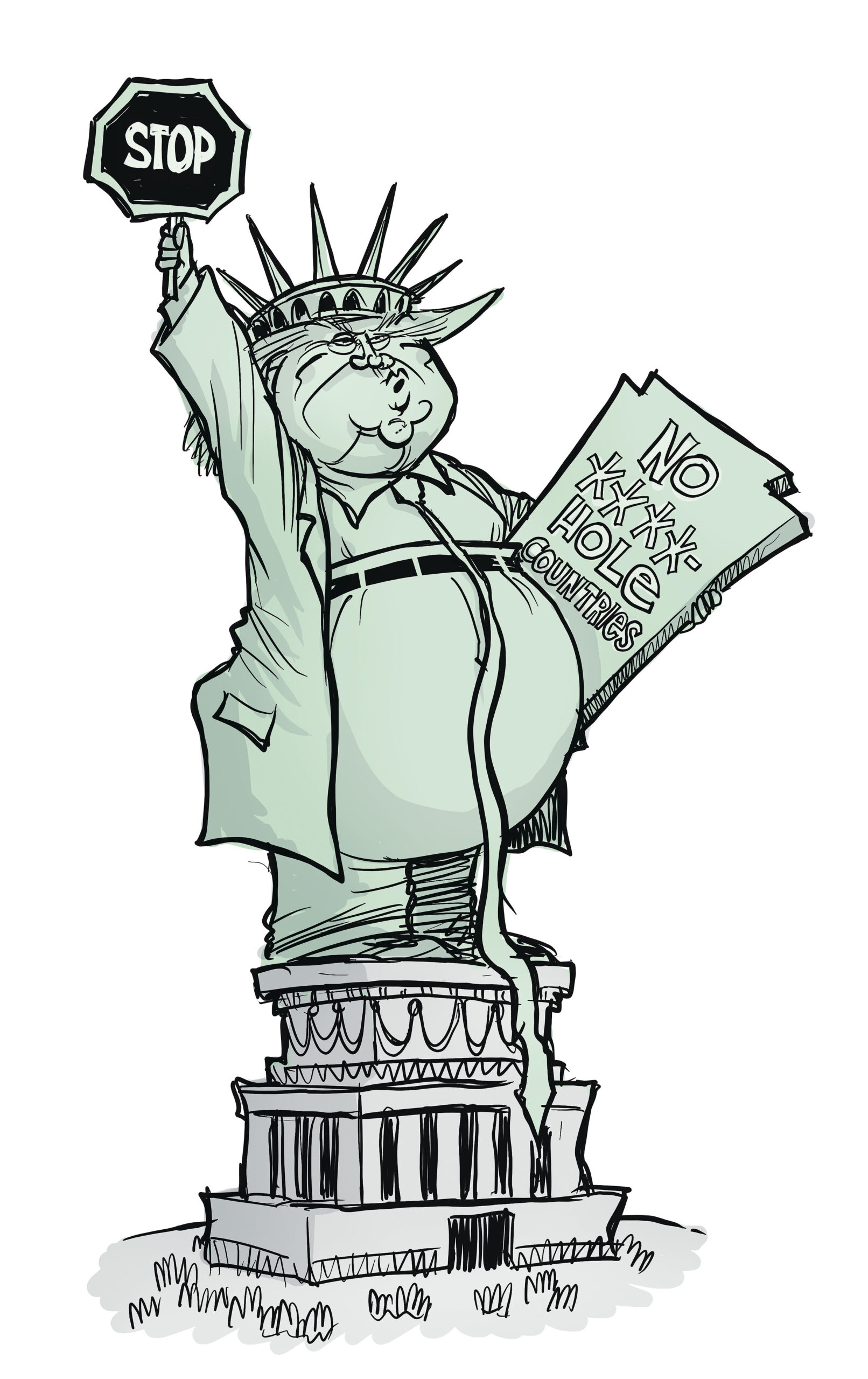
The administration is looking for any excuse — any one example it can point to — to paint all immigrants as rapists, as murderers, as garbage. Any excuse to shut the golden door that has welcomed people from across the world to the benefit of a nation that is as dynamic as it is diverse.
What Trump and the ethnonationalists who surround him fail to understand is that the United States is an ideal — one so strong it has held disparate groups of people together for almost 250 years. The secret to America’s success is that everyone has the right to life, liberty, and the pursuit of happiness.
Perhaps that’s why the administration’s immigration enforcement feels so wrong to so many. Why it’s losing support even among those who voted for Trump.
That is why people are standing up against Trump’s tactics. They are organizing and pushing back, peacefully, against people being snatched up off the streets, against neighbors being intimidated, families split apart, cities roiled by chaos of the government’s own making.
Because while the administration may not like immigrants, America does.
Donald Trump called the very real threat of climate change a “con job.” His administration’s policies not only ignore efforts to mitigate the problem, they actively seek to make it worse.
Climate of denial
The American people’s concern about affordability is at least not the biggest “con job,” according to Trump. That distinction belongs to climate change, humanity’s era-defining challenge that the president has long called “a hoax.”
Speaking to the United Nations in September, Trump said predictions about the impact of a warming planet “were made by stupid people that have cost their countries fortunes and given those same countries no chance for success.”
Never mind that the effects of climate change are already evident in rising sea levels, increasing temperatures, and more frequent extreme weather events such as wildfires and flooding.
Not content with simply ignoring decades of science that prove greenhouse gas emissions caused by human activity are negatively affecting the planet, the Trump administration has swiftly moved to defund climate research, reverse U.S. climate change mitigation efforts, and impede the development of clean energy sources.
On Monday, the government suspended all large offshore wind farms under construction, citing “national security risks.” It was the latest example of Trump using regulatory red tape to hinder these kinds of projects to the detriment of both the environment and clean energy jobs.
Trump and his allies in Congress have also eliminated subsidies for solar panels, wind turbines, and electric vehicles — all while promoting fossil fuel use, including oil, gas, and coal.
While Trump’s climate and energy policies are a danger to the entire world, his administration’s policies also put Americans at risk in their own backyards. The Environmental Protection Agency has rolled back multiple efforts to promote clean air and water, including limits on toxic pollutants from coal-fueled power plants, greenhouse gas emission limits from coal- and gas-fueled power plants, and delayed timelines for water utilities to remove some “forever chemicals” from drinking water.
As Trump tries to leave a legacy by demolishing part of the White House to build a $300 million ballroom or emblazoning his name atop the Kennedy Center, it may be his shortsighted gutting of climate and environmental rules that truly leaves a mark for the ages.
Since retaking the White House, Donald Trump has added billions of dollars to his personal wealth, much of it through crypto and other digital currency schemes.
Shameless enrichment
The man who once couldn’t make money off a casino is $3.4 billion richer since he took office on Jan. 20. He did this, as reported in a comprehensive piece by the New Yorker’s David D. Kirkpatrick, by ignoring conflicts of interest and gauchely trading on the prestige and power of the U.S. presidency for personal gain.
The corruption is so flagrant and transparent that many voters perhaps think this is normal. But while there is likely nothing illegal in what is known about the president’s business ventures, no clear evidence of any quid pro quo, there is nothing ordinary or ethical about what Trump and his associates are doing.
For example, potential access to Trump at his Mar-a-Lago club now comes with a $1 million initiation fee — up from $100,000 in 2016. In May, the president hosted a gala at a Virginia golf club for the biggest buyers of his meme coin, an intrinsically worthless digital token for which the 220 attendees at the event shelled out $148 million. The venture, along with a separate $MELANIA meme coin, reportedly netted the Trumps $385 million.
Cryptocurrency is where Trump and his family are profiting the most.
The digital currency, which can be traded without relying on banks to verify transactions — or regulate or report them — has so far earned the Trump family billions. It is here where some of the most egregious conflicts of interest are made manifest, as individuals and foreign governments with interests before the United States, including government regulation of crypto itself, have made large investments that end up in Trump’s coffers.
Shortly after Trump won the election, a Chinese billionaire accused of fraud invested $30 million in World Liberty Financial, a Trump family cryptocurrency interest. In May, an Abu Dhabi, United Arab Emirates-backed investment firm put $2 billion into the company.
While Trump’s two sons strike lucrative business deals around the world, Trump’s foreign policy seems to be dictated by his drive for fortune. A plan for the “Gaza Riviera” was tied to the end of the war between Israel and Hamas, while either mineral deals from Kyiv or business ventures in Russia have become part of the calculus around the war in Ukraine.
In his short time back in the White House, Trump has shown that the presidency of the United States is open for business.
The U.S. Department of Justice, which seems to otherwise have no trouble doing Donald Trump’s bidding under Attorney General Pam Bondi, continues to drag its feet in releasing the Jeffrey Epstein files mandated by Congress.
Protecting the powerful
Among the promises Trump made in his bid for the White House in 2024, releasing the investigation files regarding convicted sex offender Jeffrey Epstein should have been the easiest to fulfill. Yet, more than a year later, it took an act of Congress to force the Department of Justice to release the files — or at least some of them, at least partially.
The documents made available recently were criticized by lawmakers and victims as incomplete and full of heavy redactions, with some of the published material quickly taken down over unspecified administration concerns.
Epstein, who took his own life in 2019 inside a federal jail cell, was accused of exploiting or abusing hundreds of women and girls over decades, procuring them for his famous friends, who included financial titans and political leaders.
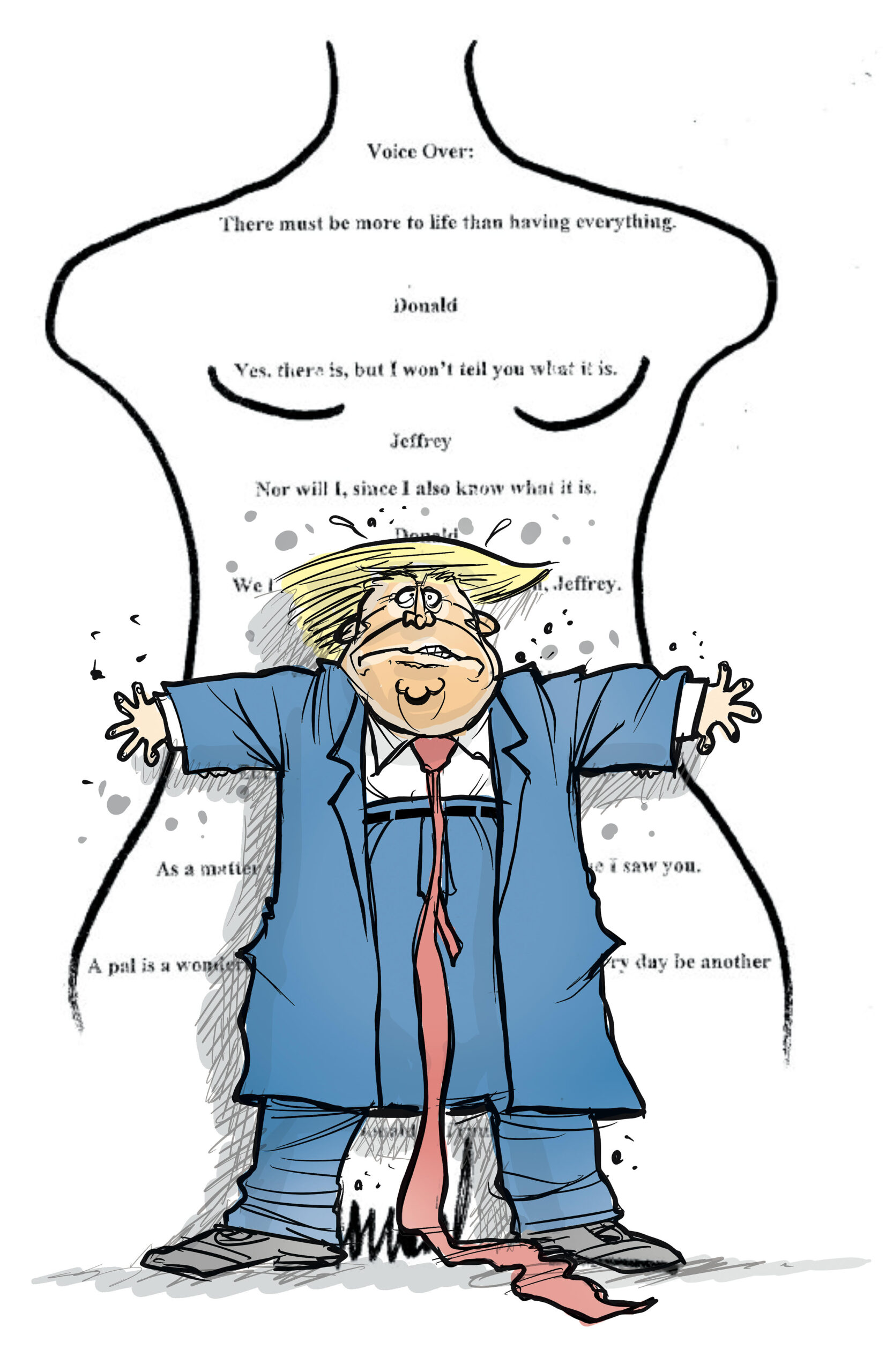
Despite the president’s denials, he and Epstein once shared a friendship, reportedly bonding over the pursuit of women. There are videos and photos of them together, and Trump repeatedly flew on Epstein’s plane (known as “the Lolita Express”), though the president claimed he “never had the privilege” to visit Epstein’s notorious island.
The island, Little St. James, was once described by government officials as “the perfect hideaway and haven for trafficking young women and underage girls for sexual servitude, child abuse and sexual assault.”
The Trump administration’s efforts to delay and obfuscate regarding the files remain an affront to justice and decency. Survivors of the horrors perpetrated by Epstein and the rich and powerful he catered to deserve a public accounting of what happened to them, and there must be accountability for those who participated.
If the president has nothing to hide, if the “privilege” was indeed never his, then whose was it? Whom is Trump protecting?
As California-based canned beverage manufacturer DrinkPAK eyed an East Coast expansion, Pennsylvania was always at the top of their list of potential sites.
But in the end Philadelphia’s Bellwether District — the sprawling site of the former South Philadelphia oil refinery — won out not only over other states like New Jersey, but other possible Pennsylvania destinations likeScranton and the Lehigh Valley as well.
“We looked at other geographies, but ultimately we’d like to be where the people are, where the jobs are,” said Jon Ballas, president of DrinkPAK. “We’re not scared of building in large city centers. It just provides an energy that doesn’t exist out in the more general manufacturing landscapes.”
The 1.4 million-square-foot factory will be the first tenant for the 1,300-acre Bellwether District, which developer HRP Group (formerly known as Hilco Redevelopment Partners) hopes to turn into a new industrial and life sciences hub in the city.
Contractors broke ground on the manufacturing facility earlier this month, and the building’s shell should be complete by this time next year. Then construction on the internal mechanics will begin, with plans to complete it by April 1, 2027.
Once it’s operational, DrinkPAK’s manufacturing facility will operate 24 hours a day, seven days a week, cranking out 3 billion cans a year.
The factory will employ 174 people, largely on site because DrinkPAK doesn’t employ a lot of truck drivers. The workers will be operating the production line and managing machinery.
“We’re committed to hiring the best in the industry, [offering] competitive wages, some of the best benefit programs out there,” said Ballas. “These are very attractive jobs, high-paying jobs.”
DrinkPAK doesn’t work with the major soda or beer companies. Instead it manufactures cans for a variety of smaller, specialty beverage brands including alcoholic seltzer, energy drinks, and lower-calorie soda products.
“We’re not making your typical Coke and Pepsi,” said Ballas. “We’re making a lot of this innovative, better-for-you-type products.”
DrinkPAK was founded in 2020 and already has factories of similar capacity to its future Philadelphia facility in Southern California and in Texas.
There is some regional variation (more canned wine in California, and more health drinks on the coasts), but its production line’s output is largely determined by broad trends in the industry.
“Beverage is very cyclical,” said Ballas, and the facility needs to be designed with flexibility to make what’s most in demand. Right now, he noted protein drinks are “the hottest trend.”
“It takes a specific type of liquid handling equipment to handle all the protein hydration, to get that into solution in order to carbonate it into a can,” he said.
DrinkPAK’s facility is in the portion of the Bellwether District slated for industrial use, with the idea that warehouses and factories would be the tenants.
The HRP Group already built a 326,000-square-foot warehouse and second 727,000-square-foot warehouse, which were both built on spec — meaning without a prospective tenant in mind.
But the 3 billion-can production facility is the first official tenant.
“We’re looking forward to delivering this building for DrinkPAK and playing a small role in their company’s incredible growth trajectory,” said Andrew Chused, chief investment officer for HRP Group.
“DrinkPAK’s decision to build its flagship East Coast facility here is the first big step in turning this site into the dynamic commercial ecosystem we always envisioned,” said Chused.
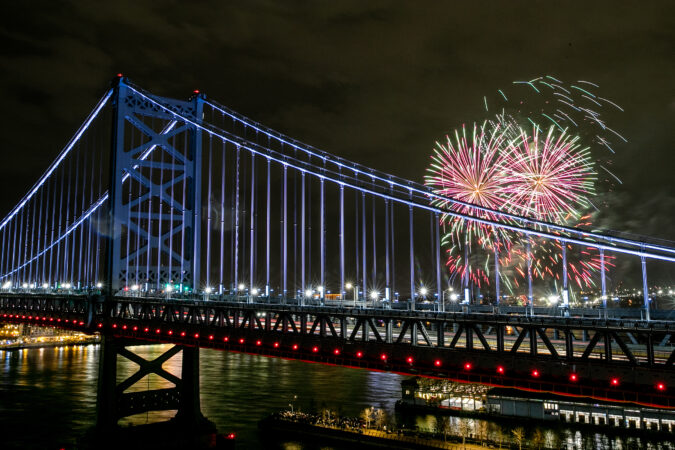
Ring in 2026 with fireworks lighting up the Delaware River waterfront. Philadelphia’s New Year’s Eve shows will return with two displays, including an earlier, family-friendly show at 6 p.m., followed by a midnight celebration to welcome the new year. The Rivers Casino fireworks are a rain-or-shine event, with views from several free spots along the waterfront.
Best free viewing spots
For those looking to enjoy the show without a ticket, the fireworks can be seen from various locations along the waterfront, including:
Race Street Pier: 📍 North Christopher Columbus Blvd., Philadelphia, Pa. 19106
Washington Avenue Pier: 📍Washington Avenue Green, South Christopher Columbus Blvd., Philadelphia, Pa. 19147
Pier 68: 📍At the end ofPier 70 Blvd., Philadelphia, Pa. 19148
Spruce Street Harbor Park: 📍301 S. Christopher Columbus Blvd., Philadelphia, Pa. 19106
Great Plaza at Penn’s Landing: 📍101 S. Christopher Columbus Blvd., Philadelphia, Pa. 19106
Ticketed events with great views
Elevate your celebration with one of these ticketed options:
Cherry Street Pier: Choose between family-friendly fun or an adults-only party, both offering unbeatable views and live entertainment. 💵 $32.70 (with the service fee); 🌐 delawareriverwaterfront.com
Battleship New Jersey: Watch the fireworks from a unique vantage point aboard this historic ship, complete with food and drinks. 💵 General admission: $10, VIP: $125; 🌐 battleshipnewjersey.org
This week in Philly music is all about the plentiful live music options on New Year’s Eve, including LL Cool J, Snacktime, Ben Arnold, Low Cut Connie, and Kindred the Family Soul.
But before we get to the final blowout of 2025, there’s also some action with touring and local Philly bands in the days after Christmas. Not to mention: Wayne Newton!
Friday, Dec. 26
Wayne Newton
Center City will become Sin City with this rare Philly appearance by the longtime denizen of the Las Vegas Strip. “Wayne Newton, Mr. Las Vegas: Memories and Melodies” is how the 83-year-old entertainer who released 165 albums in his day — and scored a signature hit in 1963 with “Danke Schoen” — bills the show he’s bringing to City Winery for two nights. (7 p.m., City Winery Philadelphia, 990 Filbert St., CityWinery.com/philadelphia)
Saturday, Dec. 27
Jealousy Curve / John Faye
On Saturday at Underground Arts, Philly rock band Jealousy Curve shares a bill with John Faye, the longtime musician on the local scene. Faye played reunion dates with his ‘90s alt-rock band the Caulfields last month and was on stage at last week’s Pierre Robert tribute at the Fillmore as a member of David Uosikkinen’s band, In The Pocket. Faye’s latest is The Long Game, released on Uosikkinen’s ITP Entertainment last year. (8 p.m., Underground Arts, 1200 Callowhill St., undergroundarts.org)
Gogol Bordello play the Archer Music Hall in Allentown on Dec. 28.
Sunday, Dec. 28
Gogol Bordello
Gogol Bordello, and its charismatic Ukrainian American lead singer, Eugene Hutz, have a long tradition of playing Philly shows in the week between Christmas and New Year’s. This time, the New York punk band, which mixes Romani and traditional Ukrainian music into their raucous blend, is bound for a different Pennsylvania location with a date at Archer Music Hall, the new Live Nation venue in Allentown. (8 p.m. Archer Music Hall, 939 Hamilton St., Allentown, archermusichall.com)
A Jam Without Borders
Yesseh Furaha-Ali of Snacktime, Camden trumpeter Arnetta Johnson, and the Bul Bey are among the artists who’ll be playing at Ortlieb’s at this event hosted by Corey Bernhard and Friends. It’s a fundraiser for Philadelphia families impacted by ICE. (8 p.m., Ortlieb’s, 847 N. Third St., ortliebsphilly.com)
Monday, Dec. 29
“Fear of Heights”
Philly rocker Alan Mann regularly played South Street clubs like J.C. Dobbs and Ripley Music Hall before his death in 1987. Rich Murray, who directed the video for Mann’s song “Christmas on the Block,” which became the first indie video played on MTV and a subsequent Philly holiday music favorite, has made a documentary about his relationship with Mann and his legacy. Called Fear of Heights, the movie, which begins with a 2015 clip of the late DJ Pierre Robert dropping the needle on “Christmas on the Block” on WMMR-FM (93.3), will have its Philly premiere at Film Society East. It will be followed by a discussion with Murray and his co-filmmakers moderated by WMGK-FM DJ Cindy Drue. (7 p.m., Film Society East, 125 S. Second St., filmadelphia.org)
Low Cut Connie at Concerts Under the Stars in King of Prussia on Aug. 1, 2025. Left to right: Rich Stanley, Nick Perri, Adam Weiner, Jarae Lewis (on drums, partially hidden), Amanda “Rocky” Bullwinkel, and Kelsey Cork. The band will play Ardmore Music Hall on Dec. 30 and 31.
Tuesday, Dec. 30
Dark Star Orchestra
The longstanding Grateful Dead tribute band is marking the transition from 2025 to 2026 on a short East Coast tour, which includes a date at Franklin Music Hall on NYE’s eve. (8 p.m., Franklin Music Hall, 421 N. Seventh St., franklinmusichall.com)
The Samples
And for a further jam band experience, veteran Colorado 10-piece band the Samples, which blends a Dead influence with more pop-rock shadings, does two nights at 118 North in Wayne. (8 p.m., 118 North, 118 N. Wayne Ave., Wayne, 118 NorthWayne.com)
Low Cut Connie
Adam Weiner and Miss Rocky of Low Cut Connie distinguished themselves with their take on David Bowie’s “Young Americans” at last week’s Pierre Robert tribute. Let’s hope they put it in the playlist for their two end-of-the-year blowouts on Dec. 30 and New Year’s Eve.
The band didn’t put out a new album this year but had an eventful 2025, getting caught up in to pop-and-politics brouhahas in D.C. and Luzerne County, and releasing some high-quality protest songs. Bluegrass band Shelby Means Trio, led by the eponymous bassist formerly in Molly Tuttle’s band, opens on Tuesday, and Philly rock and roller Roberta Faceplant opens Wednesday. (8 p.m., Ardmore Music Hall, 23 E. Lancaster Ave., Ardmore, ardmoremusichall.com)
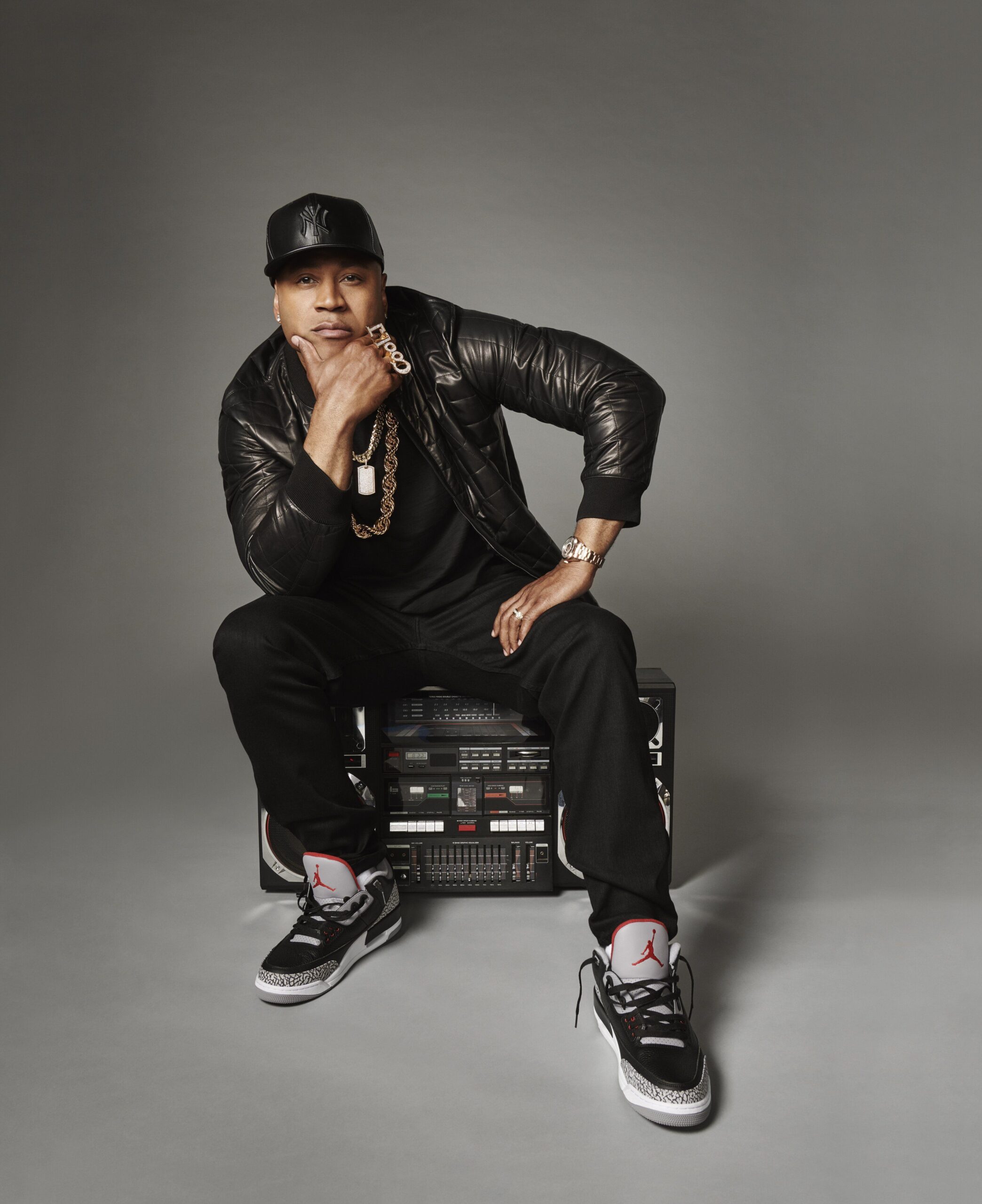
LL Cool J will headline a free concert on the Ben Franklin Parkway on New Year’s Eve. The show will also feature DJ Jazzy Jeff, Adam Blackstone, and Dorothy.
Wednesday, Dec. 31
LL Cool J, DJ Jazzy Jeff, Adam Blackstone
This is the big new party on the Parkway and maybe the start of a new Philadelphia tradition? The city will officially usher in the year of the Semiquicentennial with its first-ever free NYE music and fireworks spectacle. Rock and Roll Hall of Famer and “Mama Said Knock You Out” hitmaker LL Cool J is making good on his commitment to play Philly after he opted out of this year’s July 4 Welcome America show in solidarity with striking municipal city workers. DJ Jazzy Jeff is, of course, the master of the Wheel of Steel, and Adam Blackstone has become one of the leading ambassadors for Philly music, and plans to debut a new civic pride song called “Brotherly Love” at the show. Dorothy and Technician the DJ are also on the bill. (8 p.m., Benjamin Franklin Parkway, phila.gov)
Snacktime
Philly R&B and soul party band par excellence Snacktime is the NYE Brooklyn Bowl Philadelphia house band. This is the third consecutive year that the horn-happy outfit has closed out the season at the Fishtown bowling alley/music venue. The band that started out busking in Rittenhouse Square during the pandemic has a new single. It is a sweetly sung and inventively arranged version of Brian Wilson and the Beach Boys’ “God Only Knows.” (8 p.m., Brooklyn Bowl Philadelphia, 1009 Canal St., brooklynbowl.com/philadelphia)
Ben Arnold
Ben Arnold was another standout at this month’s tribute to the late Pierre Robert. The Philly songwriter covered Robert Hazard’s “Change Reaction” and then led a singalong finale of the Youngbloods’ “Get Together.” Arnold put out a top-shelf album called XI this year, featuring the terrific single “Catch the Lightning,” and also toured Europe with the band U.S. Rails. He’ll be singing his own songs and some by U.S. Rails at his Kelly Center NYE show in Havertown. (7:30 p.m., Kelly Center, 4 E. Eagle Road, Havertown, kellycenter.org.)
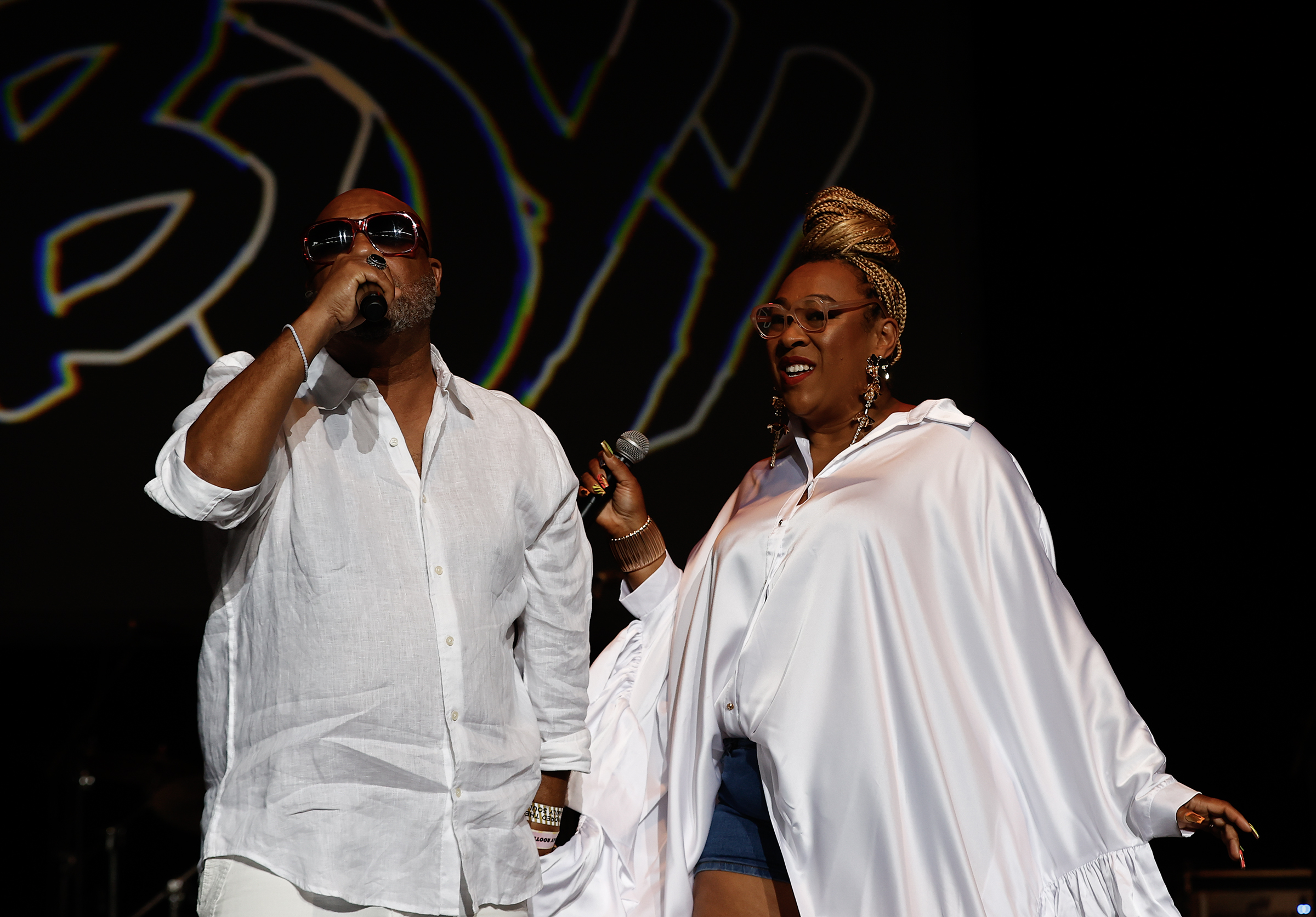
Kindred the Family Soul performs on the Presser Stage during The Roots Picnic Day 2 at the Mann Center for the Performing Arts on June 4, 2023. The group will do two shows at the City Winery Philadelphia on New Year’s Eve.
Kindred the Family Soul
The wife-and-husband team of Aja Graydon and Fatin Dantzler appeared last month at the Met Philly with John Legend, with whom they shared salad days at the Black Lily showcases in the early 00s. The veteran neo-soul act is back as City Winery NYE headliners, playing early and late shows at the Filbert Street club on Thursday. (7 p.m. and 10:30 p.m. City Winery Philadelphia, 990 Filbert St., citywinery.com/philadelphia)
Felice Brothers plays Brooklyn Bowl Philadelphia on Jan. 2.
Friday, Jan. 2
Felice Bros.
Upstate New York-born sibling act the Felice Brothers’ winning, ramshackle sound has mixed folk and rock and roll into a satisfying blend over the course of 10 albums. The most recent is 2024’s The Valley of Abandoned Songs. Brother Ian and James Felice make their annual holiday season stop at Brooklyn Bowl Philly on Friday, with Canadian songwriter Charlotte Cornfield opening. (8 p.m., Brooklyn Bowl Philadelphia, 1009 Canal St., brooklynbowl.com/philadelphia)
Candy Volcano
Philly Loves Bowie Week will kick off with two shows by tribute band Candy Volcano at Ardmore Music Hall. The first show will be at WXPN-FM Free at Noon, and then a nighttime show at the venue in which the band will cover Bowie’s 1976 album Station to Station. (Noon, Ardmore Music Hall, 23 E. Lancaster Ave., Ardmore, xpn.org/freeatnoon, and 8 p.m., ardmoremusichall.com)
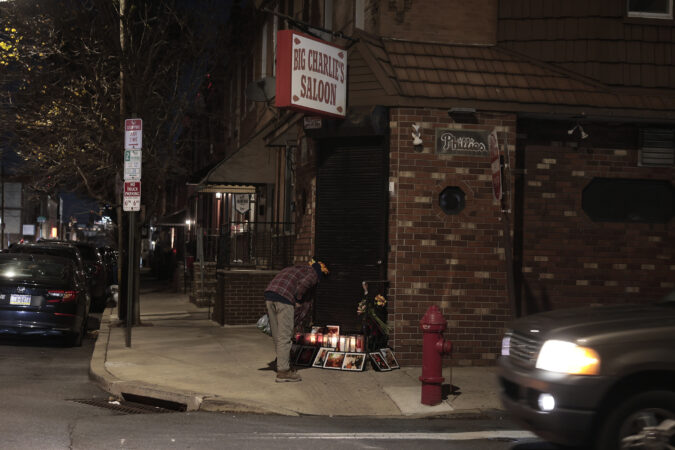
Big Charlie’s Saloon, a South Philly haven for Kansas City Chiefs fans at 11th and McKean Streets, announced on Instagram that it has permanently closed after the recent death of owner and Philadelphia native Paul Staico.
“While this was not how we ever imagined closing our doors, we know Big Charlie’s will never be the same without Paulie, and this is the path we must take,” according to a statement on the bar’s Instagram page.
Staico died suddenly on Nov. 30, three days after Big Charlie’s stayed open on Thanksgiving because the Chiefs were playing. He was 59.
“I wasn’t a Chiefs fan. I’m a Paul Staico fan,” City Councilmember Jimmy Harrity told The Inquirer earlier this month. “If I could name three players, that’s a lot. I was there cheering for him. Some are there to watch the game. But for the most part, they were there for Paul.”
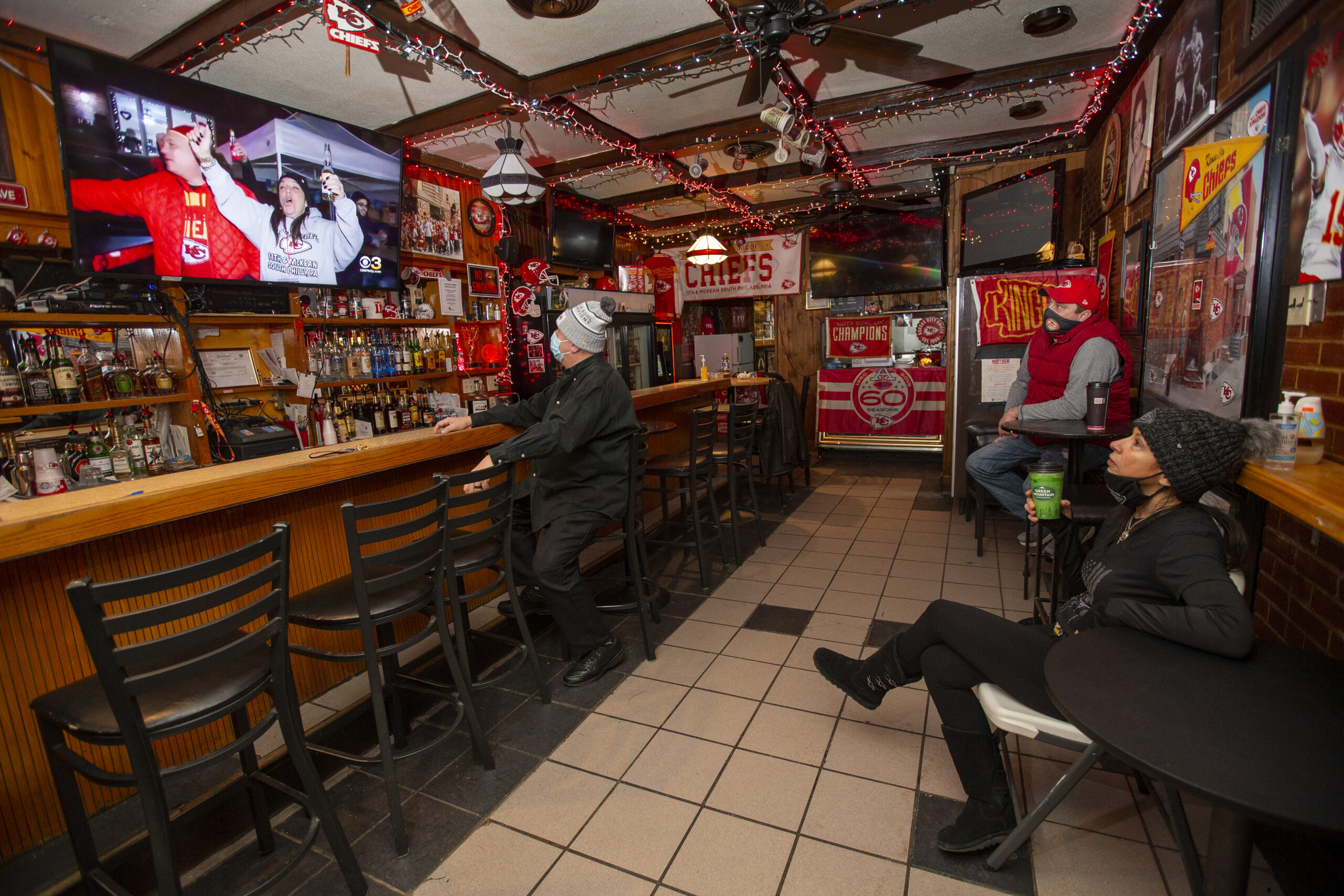
The two-room bar, with its wood paneling, jukebox, vending machine of snacks and cigarettes, and countless Chiefs memorabilia scattered about, became a local media darling in 2023 when the Eagles played — and lost — to the Chiefs in Super Bowl LVII. It was featured by NFL Films in 2003 and 2020 and in The New York Times and The Athletic on the same day in 2023. It got nearly the same treatment in February when the Eagles beat the Chiefs in Super Bowl LIX.
And why was a South Philly bar dedicated to the Chiefs? Staico’s father, Charlie, the former owner of the place, made a bet that the Chiefs would beat the Minnesota Vikings in Super Bowl IV in 1970. When they did, Charlie bought his young son a brand new bike to celebrate. In 1986, an eternally grateful Paul Staico, the bar’s owner since 1983, bought a satellite dish so he could watch the Chiefs, his new favorite team, in every game from then on.
Saloon patrons watch the Chiefs play the Tampa Bay Buccaneers in the Super Bowl in 2021.
“We will continue to find ways to honor Paulie’s legacy and the community he built,” the Instagram post said. “This is not goodbye. This is simply see you later. …As always, go Chiefs.”
2026 Genesis GV80 Coupe 3.5T E-supercharger vs. 2026 Land Rover Defender 130 V-8 vs. 2026 Mercedes Benz GLE 450 4Matic SUV: Off-roading in high style.
This week: Genesis GV80 Coupe
Price: $87,780 as tested.
Conventional wisdom:Motor Trend likes the “gorgeous interior,” that it “retains rear headroom” and is “more luxurious than ever.” Reviewers panned that it’s “not actually sporty,” has a “confused personality” and “reduced cargo space.”
Marketer’s pitch: “The pinnacle of comfort.”
Reality: It has some high points, but comfort isn’t what I would market.
What’s new: The GV80 Coupe — essentially an SUV with some of the cargo capacity lopped off — joined the GV80 lineup for the 2025 model year. Some color changes and new trim levels have been added for 2026.
Competition: In addition to the Defender and the GLE 450, there are the BMW X5, Lexus RX, Lincoln Nautilus, and Toyota Land Cruiser.
Up to speed: Woohoo, that e-supercharger really works, dialing up the horsepower from the 3.5-liter turbo up to 409. Turn the dial to Sport+ and this baby gets off the ground; 0-60 takes 5.2 seconds, according to Car and Driver. It seemed faster.
Shifty: The eight-speed automatic transmission operates through the dial on the console — twist counterclockwise for Reverse or clockwise for Drive. It’s a nice setup that’s easy for back-and-forth motions when parking.
There’s no corresponding move for shift mode, though. Just use the paddles on the steering wheel and keep fighting the vehicle for control. I usually blinked first and just let it do the shifting for me.
On the road: The handling in the GV80 Coupe is almost as impressive as the acceleration. The sporty shaped SUV does nice on the slalom and has a lot of good road feel. The steering is nice as well.
The only drawback for me came on cornering. The GV80 had a lot of drift, and I had to slow down for the sharper movements.
Off the road: The GV80 gets a new terrain mode for 2026, with settings for snow, mud, and sand.
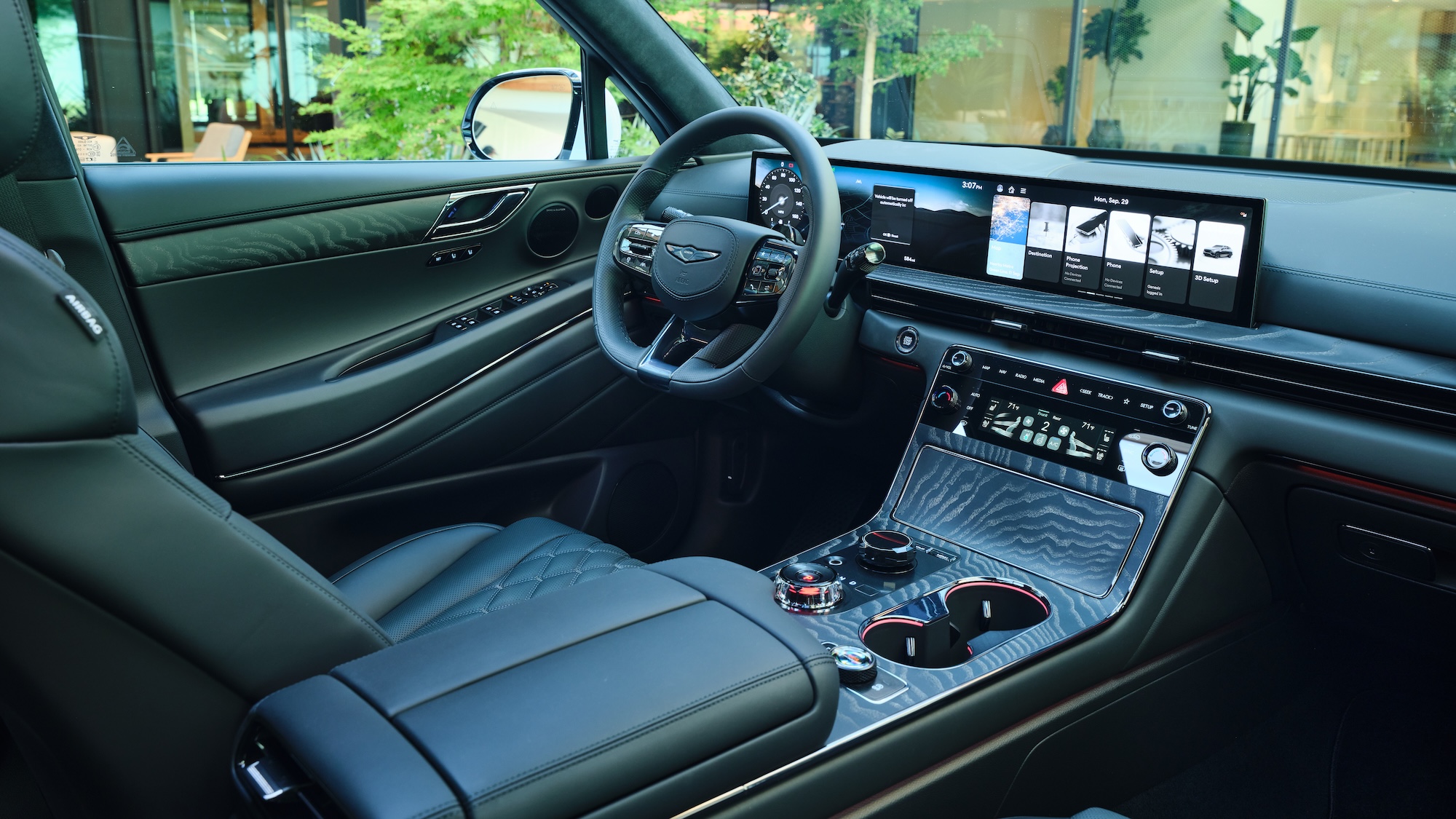
The interior of the 2026 Genesis GV80 Coupe looks inviting, but it turns out comfort is lacking. Also, adjusting the temperature settings is harder than it should be.
Driver’s Seat: The seat seemed quite hard, and the lumbar support seemed more like a kidney punch than a feature. I’m not sure I could live with this seat day to day. It really seemed as uncomfortable as the old Hyundai basic seats and not quite worthy of this fancy a vehicle, even covered in Nappa leather.
The fancy digital dashboard also leaves a bit to be desired. So many of the features are hidden by the steering wheel that it could be hard to know what was going on. The gauges are fine, though, and everything sure is attractive.
Friends and stuff: The rear seats offer nice amenities — power fold and lift, and power recline that provides quite a bit of choice.
Unfortunately, the low ceiling means headroom is less than plentiful — I still have a little space above my head but not much — and foot room is kind of snug.
Cargo space is 61.1 cubic feet with the rear seat folded and 29.3 when it’s upright, both numbers down about 15% from the regular GV80.
The GV80 Coupe can tow up to 6,000 pounds.
In and out: There’s a bit of a climb into the GV80, naturally, but you must have been expecting that.
Play some tunes: Sound from the system is delightful, an A+.
Operation uses either a dial or the touchscreen. A home screen shows all the possible places you can go and swiping to the right shows even more. It’s easy to use and to follow, even through the layers of nested elements.
Keeping warm and cool: Would that the HVAC were so easy to operate. It features simple dials for temperature but then the source, fan speed, and seat heater and ventilator icons are so tiny in their handsome little ebony touch pad, and it offers zero feedback. So there’s a lot of potential vehicle drift just to keep the air at the right temperature. I’ve been panning Hyundai for this left and right and will continue to do so.
There also seems to be a lot of thrust in the airflow, so it might not be everyone’s cup of tea. The Lovely Mrs. Passenger Seat was having none of it, lest her perfect hair get blown about.
Fuel economy: I averaged about 16 mpg, which is pretty pitiful.
Where it’s built: Ulsan, South Korea. The vehicle is made up of 85% Korean parts and 3% from the U.S. and Canada.
How it’s built: Consumer Reports predicts the GV80 reliability to be a 2 out of 5.
Twenty-four hours after two gas explosions ripped through a Bucks County nursing home, the dead and injured had been identified, survivors were accounted for, and the cleanup was underway. But unanswered questions about the blast’s cause mounted.
On Wednesday morning, Peco provided a drastically different account of when its crews responded to reports of a gas odor on Tuesday, saying technicians had actually arrived hours — not minutes — before the blast at Bristol Health & Rehab Center.
Then, the energy company went silent, declining to answer any additional questions as the National Transportation Safety Board (NTSB) took over a sprawling investigation that will also involve other federal law enforcement and regulatory agencies.
Meanwhile, the new operator of the 174-bed nursing home, Saber Healthcare Group, is also coming under scrutiny amid questions about the poorly maintained facility on Tower Road that it took over from another provider just three weeks ago.
It could take months to get answers about what caused, and who is at fault for, the blast that killed two people and left 19 hospitalized, one in critical condition.
Experts and attorneys told The Inquirer the investigation will likely focus heavily on the actions of Peco and the nursing home’s operators.
“If the facility doesn’t maintain the equipment and the gas in their own facility, then they would be responsible,” said Robert Mongeluzzi, an attorney who has represented victims of gas explosions. “If there were reports of the gas leak, and Peco is notified and the facility isn’t cleared … there’s going to be responsibility on both of them.”
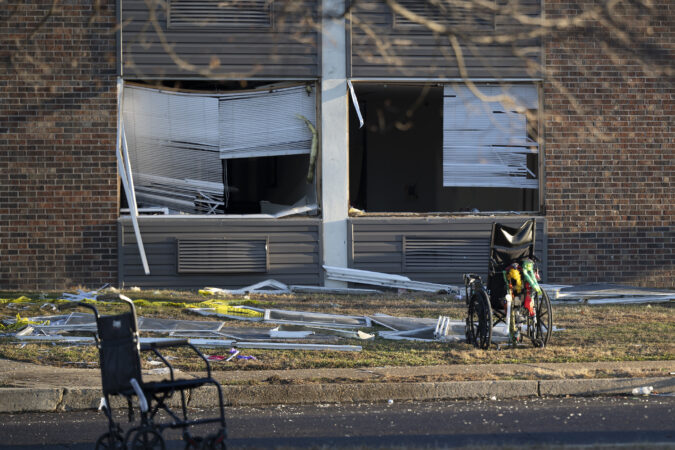
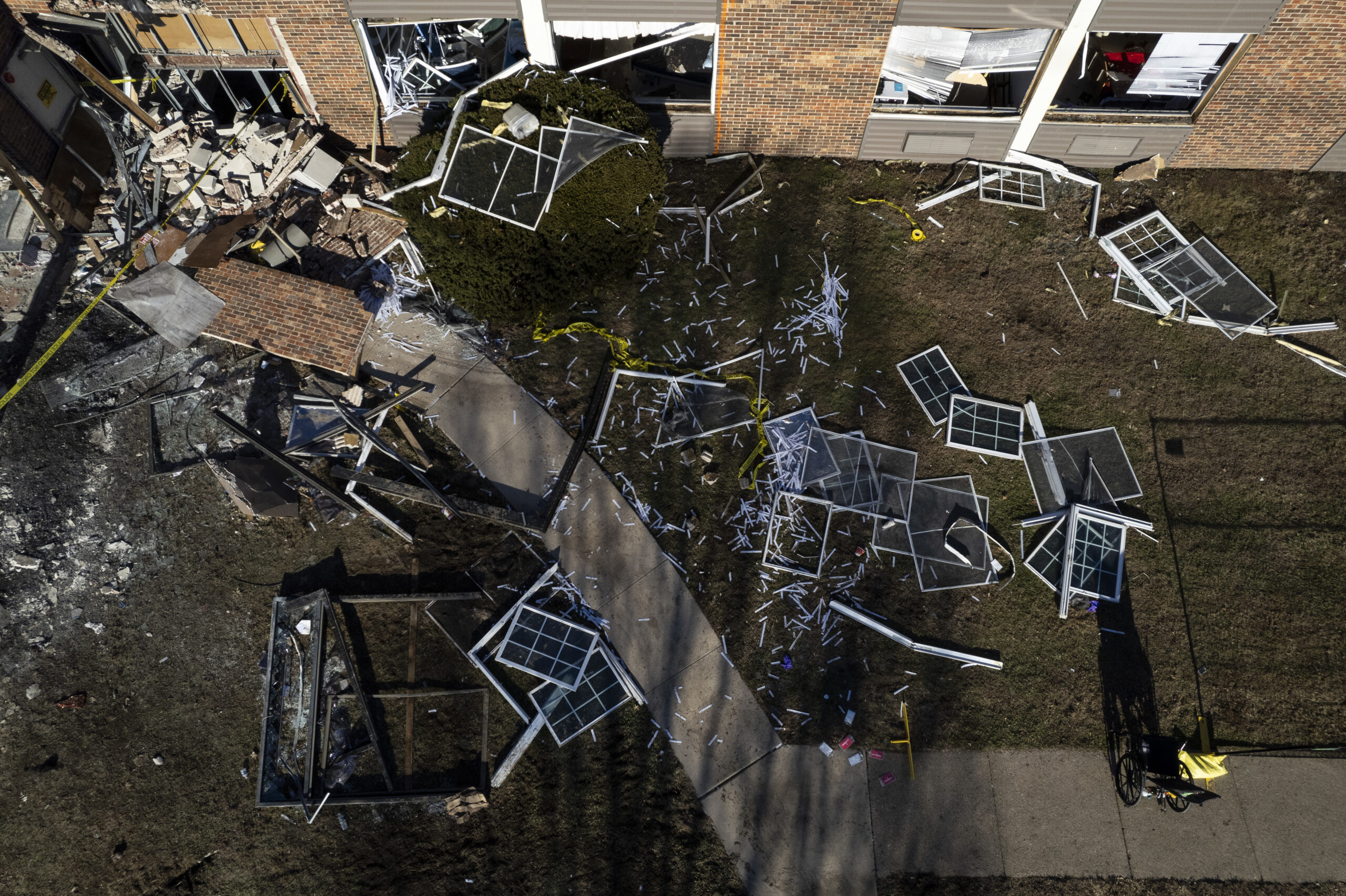
Windows and debris at the site of the Bristol Health & Rehab Center on Wednesday.
In a statement, the NTSB said investigators will not be able to fully evaluate the natural gas service line until “a safe path is cleared.” That effort alone could take several days. The agency provided no timeline for its initial findings.
Saber Healthcare Group took over operations at the nursing home on Dec. 1. Prior to that, the facility had been managed by another privately run for-profit healthcare company, the Ohio-based CommuniCare Health Services.
CommuniCare, which had operated the home since 2021, racked up a long list of code violations for unsafe building conditions and substandard healthcare. Just two months ago, state inspectors cited the facility for lacking a fire safety plan, failing to maintain extinguishers, and allowing conditions that would cause poor smoke ventilation.
Federal inspection records also show numerous citations over previous years for substandard healthcare, poor infection control, and mismanaged medical records, earning the facility a one-star rating. CommuniCare incurred more than $418,000 in fines due to violations in 2024, records show.
“We have worked to improve and fix prior issues, and we will continue that work in the wake of this tragedy,” Saber said in a statement Tuesday.
Attorneys watching the news unfold questioned whether Saber should have evacuated residents sooner on Tuesday. Peco’s own guidelines urge people who smell gas to evacuate the building immediately.
“If you or I smelled gas in our apartment or house, we’d be like, ‘Where is it?’ You have to get everybody out,” said Ian Norris, an attorney at Philadelphia-based McEldrew Purtell who has sued Saber and other nursing home operators accused of negligence. “In a nursing home, you have a higher standard of care. They are dependent residents who are there on the basis that they need help.”
A Saber representative said the company was looking into the evacuation procedures. In its statement Tuesday, the company said “facility personnel reported a gas smell” to Peco. The statement made no mention of an evacuation effort.
The smell was confined to the kitchen area of the nursing home, according to the Saber representative.
A Peco gas technician arrived at the nursing home on Tuesday afternoon. He was working alone in the basement below the kitchen area to address the issue, and as he went to his truck to retrieve more tools, the building erupted, said Larry Anastasi, president of IBEW Local 614, the union that represents Peco workers.
Whether Peco’s gas lines played a role in the blast remains unknown. But the utility company’s aging gas infrastructure will likely come under closer inspection as the probe progresses, according to attorneys with knowledge of investigations following such explosions.
One detail that became clear Wednesday was that Peco’s gas meter was located in the basement of the nursing home — not outside and aboveground as required by a 2011 order from the Pennsylvania Public Utility Commission (PUC).
The PUC, like Peco, declined to comment and referred questions to the NTSB.
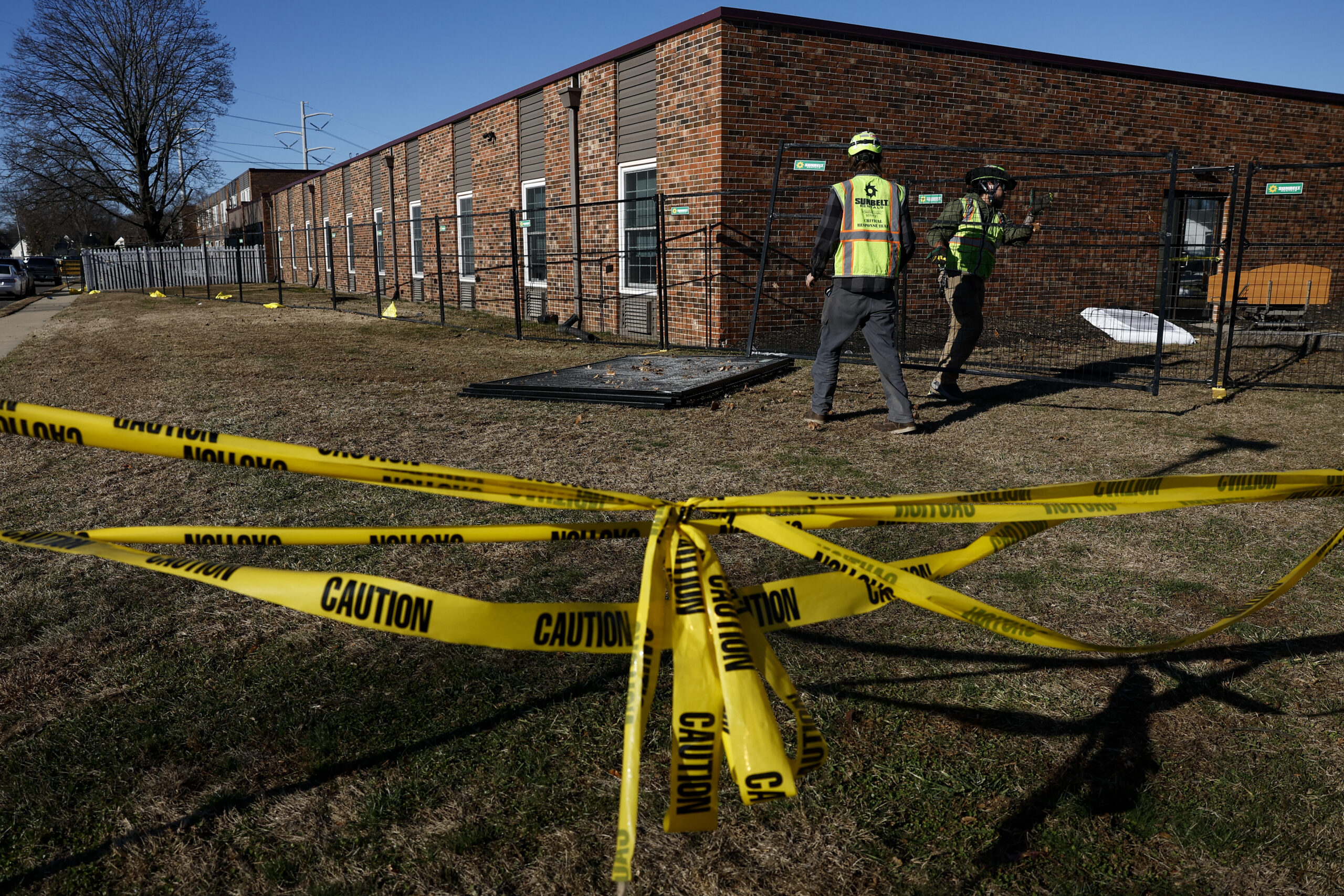
Workers set up fencing at Bristol Health & Rehab Center on Wednesday.
While the age and condition of the gas line near the nursing home were not clear, Peco has acknowledged it had 742 miles of substandard gas lines across the state — including cast iron, plastic, and uncoated steel piping — that needed replacing. The lines accounted for 5% of Peco’s gas service but 82% of leaks, according to a report from the PUC.
Peco plans call for all of those lines to be replaced by 2035 and to invest roughly $6 billion to inspect, modernize, and perform maintenance on all of its systems over the next five years.
Richard Kuprewicz, an expert on gas pipeline safety and investigations, said it is too early to tell if Peco or the nursing home acted improperly. He warned against jumping to conclusions the day after the explosions.
“We just don’t have the facts on this,” Kuprewicz said. “The tragedy is they had an explosion from a gas release that they knew was occurring. People will raise questions about this for months.”
In the immediate aftermath Tuesday evening, Peco spokesperson Greg Smore said in a statement that the company’s crews had responded to the nursing home “shortly after 2 p.m.” Tuesday and that while they were on site, the explosion occurred. The blast was reported just before 2:20 p.m. Tuesday, according to Bristol Fire Chief Kevin Dippolito.
But in a revised statement Wednesday morning, the company backtracked, saying its crews actually arrived “a few hours” before the explosion. It would not provide a specific time.
Peco said it shut off natural gas and electric service “to ensure the safety of first responders and local residents.” But, again, it would not say when.
Depending on where the gas leak was, Kuprewicz said, significant amounts of gas could continue to seep out after a shutoff.
“There isn’t one standard answer for all this,” he said. “Even when you shut it off, it doesn’t [always] stop flowing.”
Inquirer staff writers Samantha Melamed and Barbara Laker contributed to this article.