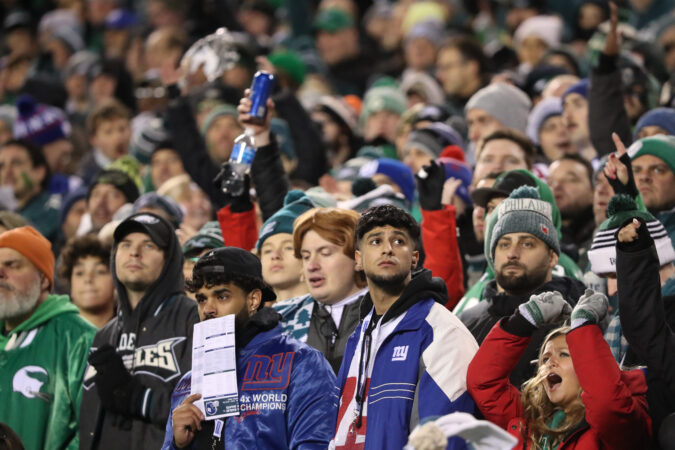
More out-of-towners and fewer locals are searching for rental homes in the Philadelphia region, with New Yorkers leading the way. No word on whether they plan to become Eagles fans.
In an analysis of the country’s 50 largest metropolitan areas, Philadelphia had the second-largest drop in local rental demand since before the pandemic, as measured by listing views on Realtor.com.
In fall 2019, about 68% of the Philadelphia metro’s rental traffic on the website came from local residents. By this fall, that share had dropped to about 45%, according to a Realtor.com report published this month.
This fall, most of the Philadelphia metro’s out-of-town rental traffic — 48% — came from the New York metro, which includes some North Jersey cities. The share of listing views coming from the New York metro grew from almost 7% of all traffic before the pandemic to more than 25% this fall.
window.addEventListener(“message”,function(a){if(void 0!==a.data[“datawrapper-height”]){var e=document.querySelectorAll(“iframe”);for(var t in a.data[“datawrapper-height”])for(var r,i=0;r=e[i];i++)if(r.contentWindow===a.source){var d=a.data[“datawrapper-height”][t]+”px”;r.style.height=d}}});
In the Philadelphia region, the median asking rent for rentals with zero to two bedrooms was $1,743 in October, according to Realtor.com. The area’s affordability compared to New York and other large nearby metros attracts out-of-town renters. That’s also the case in such metros as San Francisco and Charlotte, N.C.
“Shifting affordability across regions is reshaping renter behavior, with a growing share of demand coming from outside local markets,” Danielle Hale, chief economist at Realtor.com, said in a statement.
“Data show that more renters are willing to look farther afield, in some cases to entirely new markets, for homes that better align with their budgets,” Hale said.
Although New York renters are among those eyeing the Philadelphia region, many are looking to stay put. The New York metro had the highest share of local rental demand this fall. About three in four online views for rentals in that metro came from inside the metro, about the same share as in 2019.
window.addEventListener(“message”,function(a){if(void 0!==a.data[“datawrapper-height”]){var e=document.querySelectorAll(“iframe”);for(var t in a.data[“datawrapper-height”])for(var r,i=0;r=e[i];i++)if(r.contentWindow===a.source){var d=a.data[“datawrapper-height”][t]+”px”;r.style.height=d}}});
Nationwide, the rental market has continued to cool, Hale said. From January to October of this year, the median asking rent stayed roughly flat, falling by 0.1%. Over the same period of 2024, the median asking rent increased by 1.1%.
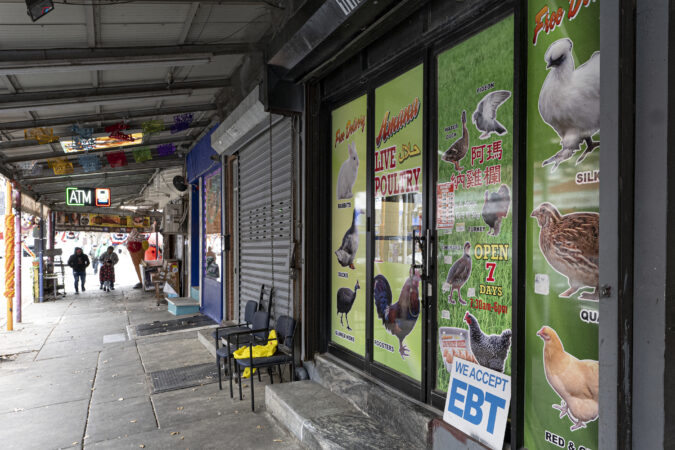
The sounds of clucks and tiny eyes looking through metal cages are part of the Italian Market background, as some stores sell live poultry.
Citywide, chickens, ducks, quails, and other animals are kept alive until purchase, only leaving the store when becoming someone’s food source.
Struggling to understand the dynamics of the live poultry business, a reader asked Curious Philly, The Inquirer’s forum for questions about the city and region: Who is buying these live chickens, where do they come from, and where are they slaughtered?
The Pennsylvania Department of Agriculture oversees what is called the live bird marketing system, a structure that involves farms, distributors, and stores.
About 500,000 birds weekly are sent to live poultry stores across Pennsylvania, New York, and New Jersey, according to an article published in the Delaware Journal of Public Health in 2021.
Statewide there are 17 live bird markets, according to the Pennsylvania Department of Agriculture. Most are in the Philly area, but there is no state registry of the markets.
In the city, the health department licenses and inspects these facilities. The birds are subjected to the same regulations to curb the transmission of avian influenza as all poultry producers in Pennsylvania, a spokesperson for the Pennsylvania Department of Agriculture said.
Alex Lemus, 29, and Juan Amador work at one of South Philadelphia’s live poultry stores. They weren’t authorized to speak for their workplace, but said they put effort into making the chickens feel as comfortable as they can.
“We take good care of them; we give them corn, and they grow up free-range,” said Lemus, who has been working in the live poultry industry for seven years.
The birds sell fast, hesaid, pointing to 16 long metal cages, each with at least 10 chickens and ducks inside. “At least 80 people per day come to buy, mostly Asian and Latino, and that is not counting the holidays,” Amador said.
Among quacks and clucks, longtime customer Nu Aing walked into the store. Stepping over a lone feeder and some light brown liquid residue on the floor, she selected six chickens.
As one worker swept the floor, another weighed the chosen chickens and placed them into a box for Amador to take to the back room. The chickens clucked loudly.
Aing drove an hour and a half from the suburbs because, she said, the chickens here are tender and better for recreating her family’s Vietnamese cuisine.
“Meat is better than the grocery store for soup, but they are good in anything,” Aing said. Around the Vietnamese New Year,“a lot of people are here; the line is long.”
In the back room, the chickens were killed and their bodies plucked and placed in white plastic bags, at Aing’s request.
“It is killed inside in 30 seconds,” Lemus said. “This part of the job was horrible when I started, but you get used to it over time.”
Within 20 minutes, the store is packed with at least 15 people waiting for their orders.
Guatemalan native Carlos Baten, 42, sent pictures of the birds to his family to help him pick the best option. He asked for his chicken to be cut into pieces for a chicken and vegetable soup that would feed three people.
“The freshness of the meat is unmatched,” Baten said. “They just feel like they are healthier and fed with fewer chemicals.”
The idea of eating a healthier type of meat also brought Guatemalan native Mayra González, 35, to the store with her 2-year-old daughter. But as soon as González placed her order, she fled to wait outside.
“I don’t like the scent inside, it smells like chicken feed,” González said. But the meat is “way better than the one at the grocery store,” she said.
To her, live poultry meat feels “silky,” and can feed more people for less. The cost of each chicken depends on the weight, but two chickens are enough to feed 11 people, González said.
“I feel bad for them, but since you can’t see when they are sacrificed, it’s the same as when you buy them at the grocery store,” González said.
Tyrese Maxey’s breakout season continued on Thursday night when the 25-year-old guard scored a career-high 54 points in the Sixers’ 123-114 win over the Milwaukee Bucks. The All-Star continues to grow as a veteran leader in his sixth season with the Sixers — but his personality and impact off the court often steal the show.
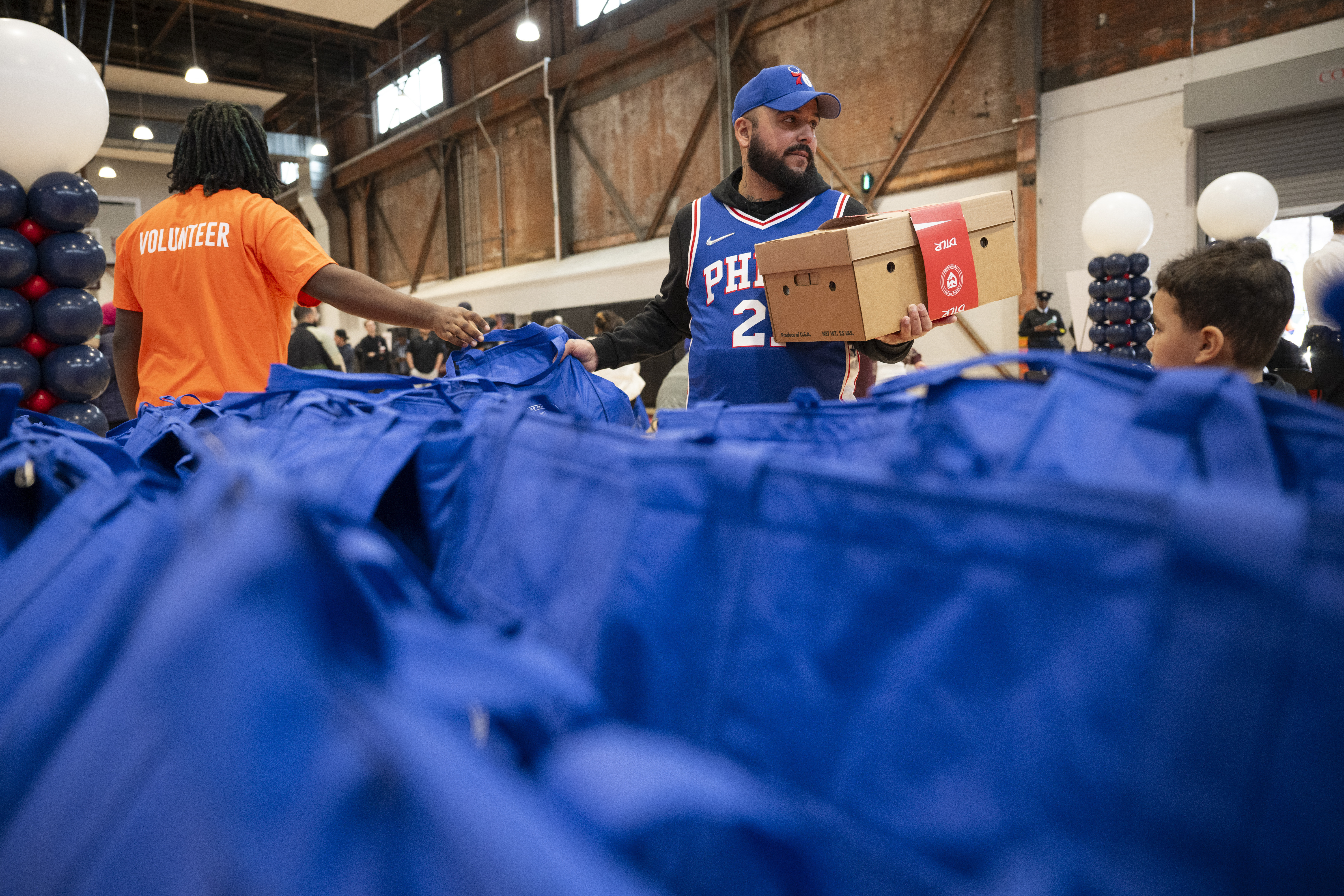
That was on display Saturday morning as a line steadily formed out front of the Alan Horwitz “Sixth Man” Center as Maxey hosted the Tyrese Maxey Foundation’s fourth annual holiday turkey giveaway. And this year the foundation gave away 3,000 Thanksgiving meals to Philadelphia families in need.
“It’s growing,” Maxey said. “The foundation, my uncle, my mama, everybody that’s part of it, is doing an amazing job. I remember when I first came to it, like I said, it was just a small idea that I wanted to do and it turned grand, and that’s a really good feeling.”
With each passing year since it started in 2022, the event continues to make massive leaps.
In its first year the foundation gave away 400 meals. The following year, that number increased to 1,000 meals, and in 2024 the foundation gave out 2,000 meals.
“It shows my connection with the city,” Maxey said. “I try to do whatever I can to give back, honestly. It’s just one of the many things I try to do. But for me, my family, and my foundation, I really do appreciate them for helping me bring a plan like this to fruition.
“I want people to see that I’m not just a basketball player. I’m a person as well. I grew up in places where I wanted to give back there too. And so now I’m blessed to be able to have that impact in Philadelphia.”
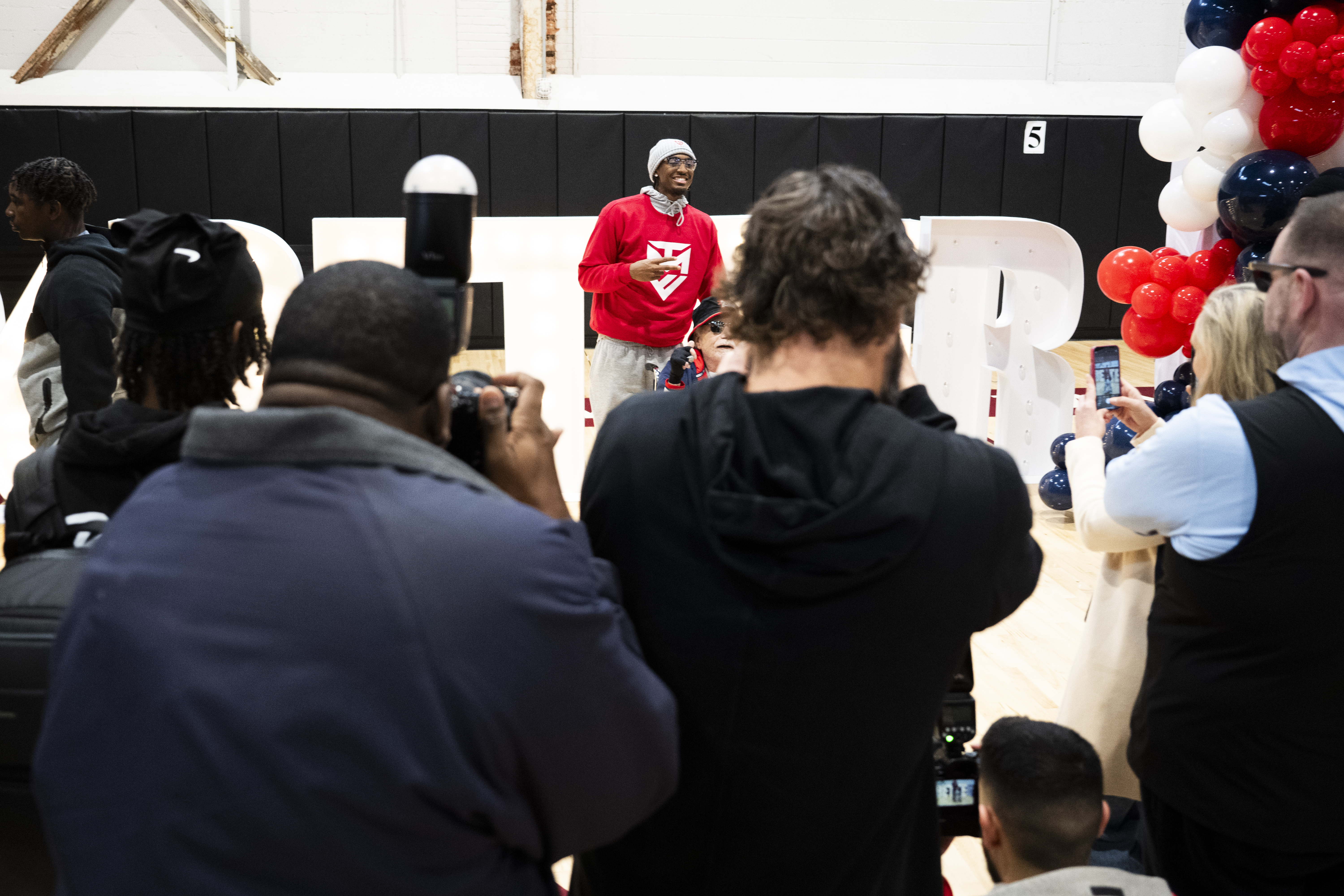
Tyrese Maxey poses with fans before his foundation provides 3,000 turkeys to families on Saturday.
Each Thanksgiving meal included a turkey, sides, fresh produce, and sweets. Philadelphia native Ceriene M. Lofton, 71, was grateful to have the help from the Sixers guard ahead of the holiday season.
“He is humble,” Lofton said. “You have a lot of basketball players and you have a lot of stars, they wouldn’t even give you a dime. But him doing this is a great help for the community, especially for senior citizens who can’t get out or don’t have the means to have any type of dinner. So, you know what, I really honor him and I respect him for that because he doesn’t have to do that, but he does it out of his heart.”
Saturday’s event was just one way the Tyrese Maxey Foundation plans to strengthen the community. During the day, Franklin the Dog made an appearance and Maxey met with children, first responders, and Bare Knuckle Fighting Championship founder David Feldman.
Tyrese Maxey at the 4th annual Tyrese Maxey Foundation holiday turkey giveaway pic.twitter.com/Myd0QtyGBI
Wearing his bright red Tyrese Maxey Foundation T-shirt, Maxey couldn’t help but reminisce on a past interaction from his 2022 turkey drive, a day after he broke his foot.
“I was able to go, and I still walked people around and was there the entire time,” Maxey said. “I remember this one lady came up to me just crying, happy that I was there. She just didn’t think I would be here because I broke my foot the day before. … Those are the moments that we live for. That’s why I do it.”
Tyrese Maxey’s foundation provided 3,000 Thanksgiving meals to families on Saturday.
As the event continues to grow, Maxey has big plans for the future.
“It’s the holiday season, I just try to spread joy,” Maxey said. “Just keep making people happy. Right now, it’s a hard time in the world. … A lot of stuff has been changing, but the more families we can feed, the more smiles we can put on people’s faces, I’m happy.”
On Friday morning, Kayla wore glittery makeup and a big smile as she stood inside the Convention Center. “I used to live in Philadelphia and I came to be with my siblings, and we all love board games, so it’s just a great time,” she said.
The Crestview, Fla., resident is a former Philadelphian who came back to the city to attend Pax Unplugged, the gaming convention she loves returning to.
On Friday, the massive main hall at the Convention Center was crammed to the brim with booths selling game accessories, memorabilia, and whimsical gifts like plushies and stickers.
On one side, gamers were engrossed in games of Magic or Dungeons & Dragons. Influencers sat in special areas to meet fans and sign autographs amid a constant hum of chatter and excited energy.
Guests attend Pax Unplugged, held at the Pennsylvania Convention Center on Friday, Nov. 21, 2025. The gaming convention, which is held in Philadelphia every year, has become a major event for fans of Dungeons & Dragons, Warhammer, Magic: The Gathering, and other tabletop role-playing games.
While other conventions in the Pax family include video games, Philly’s Unplugged focuses on tabletop games. Anyone looking for the Valhalla of tabletop role-playing games, accessories, merch, and communities was in the right place.
Since November 2017, Pax Unplugged has become a major event for fans of Dungeons & Dragons, Warhammer, Magic: The Gathering, and other tabletop role-playing games, and it’s held only in Philadelphia. Pax, “a celebration of gaming and gaming culture,” holds conventions in other cities, like Boston (for Pax East) and Seattle (for Pax West), but the Unplugged convention is exclusive to Philadelphia, drawing fans, vendors, and special guests from all over the country.
The 2025 edition of Pax Unplugged plays host to major Dungeons & Dragons stars and personalities — like Dropout TV standouts Ify Nwadiwe and Aabria Iyengar as well as Critical Role star Matthew Mercer, the last of whom also lent his voice to the Nintendo game The Legend of Zelda: Tears of the Kingdom.
Guests attend Pax Unplugged, held at the Pennsylvania Convention Center on Friday, Nov. 21, 2025.
Heidi Archer, who owns and operates MeloriaMaille — which sells handmade jewelry, trinkets, and stickers — travels from Derry, N.H., every year to run a vendor booth at Pax Unplugged. “I love gamers and I’m a nerd myself, and the fact that I can bring my handmade goods to the nerd populace … it makes it worth it,” said Archer, who has worked at Pax three times. “And I bring them stuff that represents queer pride in fandoms that people might not otherwise have access to.”
At Archer’s stall, there were stickers and other items that represented the LGBTQ+ and Dungeons & Dragons communities. A sticker on sale proclaimed “Naturally Genderfluid” with a 20-sided die as a reference to rolling a “natural 20.”
Guests attend Pax Unplugged, held at the Pennsylvania Convention Center on Friday, Nov. 21, 2025.
This inclusivity is a big part of what brings fans and merch-makers back to Philadelphia every year.
Chris Vicari had traveled from New York City to attend his fourth Pax Unplugged. “[It] is a great representation of how inclusive the community is.” said Vicari, the author of Behind the Screen: A Dungeon Master’s Guide to Crafting Campaigns, who also runs a Substack about crafting Dungeons & Dragons games.
“This is the warmest tabletop show. It’s not the biggest, but it’s the warmest,” said Patrick Rami, the owner of Lethal Shadows, which makes “miniatures” — small figurines used for gameplay during Dungeons & Dragons. This was the fifth time he had traveled from Seattle to attend the convention.
“This is one of everybody’s favorite shows as a vendor,” said Quentin Weir, a managing partner of Elderwood Academy, which makes Dungeons & Dragons dice sets and other items.
“It’s a consumer show, so you’re talking directly to the community. It can be hard to make this work in other markets, but Philly has been great,” said Weir, a Ypsilanti, Mich., resident, who once had to deal with a dead car battery at a previous Pax Unplugged visit. Without hesitating, he said, Convention Center staffers gave the car a jump.
Guests at Pax Unplugged held at the Pennsylvania Convention Center on Friday, Nov. 21, 2025. The gaming convention that is held in Philadelphia every year, has become a major event for fans of Dungeons & Dragons, Warhammer, Magic: The Gathering, and other tabletop role-playing games.
Weir and his team have been to Pax Unplugged seven times.
Across three days, Pax Unplugged offers panels, vendors selling all kinds of TTRPG-related goodies, and even massive table setups where people can hang out and play marathon rounds of whichever games they want.
There’s also quite a bit of cosplay action, as many attendees show up in elaborate costumes.
One fan, Emily, was dressed as her Dungeons & Dragons character Mara, carrying a staff and adorned in a mushroom-themed outfit complete with a cap. (For those in the know, Emily informed us that Mara is a “nature slash death cleric.”)
“I feel like there’s not much else locally that’s available for our community,” said Emily, who lives in Lancaster and has attended six Pax Unplugged conventions.
From stalls full of intricately carved miniature figurines to brand new independent tabletop role-playing games on display, Pax Unplugged is a feast for any TTRPG fan. In an increasingly divided world, it’s thrilling — whether you play board games or not — to spend time in a space where people feel free, happy, and literally playful.
Pax Unplugged runs through Sunday at the Convention Center, 1101 Arch St. unplugged.paxsite.com
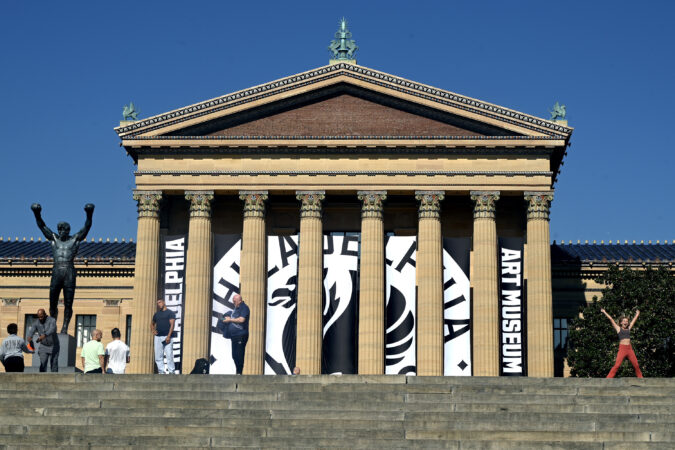
The former head of human resources and diversity initiatives for the Philadelphia Art Museum was charged with theft earlier this year. The police said she racked up more than $58,000 in personal expenses on a company credit card, then failed to pay back the funds, court records show.
Latasha Harling, 43, was arrested in July and charged with theft by unlawful taking, theft by deception, and related crimes about six months after she quietly resigned from her job as the chief people and diversity officer for the museum.
The charges against Harling — which had not previously been reported or made public by the museum — are the latest chapter in a six-week stretch of turbulence for the prominent institution, and raise new questions about the financial oversight and controls of its senior executives.
On Nov. 4, the museum fired its director and CEO, Sasha Suda, after an investigation by an outside law firm flagged the handling of her compensation. Suda filed a lawsuit on Nov. 10 against her former employer claiming that she was the victim of a “small cabal” from the board that commissioned a “sham investigation” as a “pretext” for her “unlawful dismissal.”
The Art Museum on Thursday responded to the lawsuit in Philadelphia Court of Common Pleas with a petition saying Suda was dismissed after an investigation determined that she “misappropriated funds from the museum and lied to cover up her theft.” Her lawyer, Luke Nikas of Quinn Emanuel Urquhart & Sullivan, called the museum’s accusations false.
“These are the same recycled allegations from the sham investigation that the museum manufactured as a pretext for Suda’s wrongful termination,” he said.
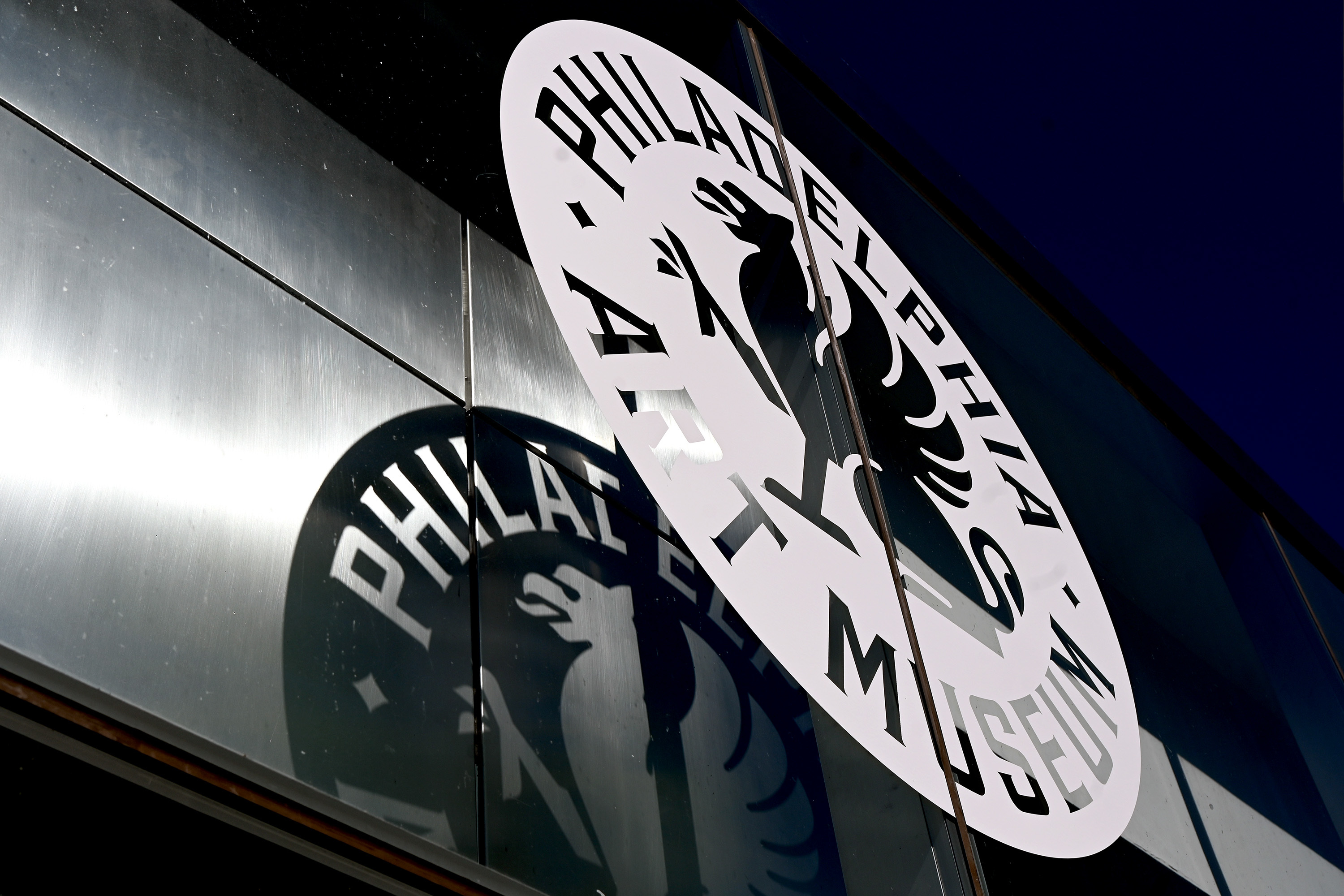
A sign shows the recent rebranding of the Philadelphia Art Museum.
Harling declined to comment on the charges filed against her Friday, as did her lawyers at the Defender Association. A spokesperson for the Philadelphia Art Museum also declined to comment on the matter.
Harling was hired by the museum as a senior member of its executive staff in November 2023, according to her LinkedIn profile. In that role, she oversaw human resources for the museum, implemented policies to promote diversity, equity, and inclusion, and managed budgetary responsibilities, among other duties, per her profile.
As part of her job, Harling had access to a corporate credit card for business-related expenses, according to the affidavit of probable cause for her arrest.
In January 2025, museum staff noticed that Harling’s December credit card statement contained “several large, and apparently personal expenses,” the affidavit said.
The museum’s chief financial officer conducted an audit and found that, over the course of Harling’s tenure, she charged $58,885.98 in personal expenses to the company’s credit card, the document said. She had not filed an expense report since July 2024, according to the affidavit.
Museum officials confronted Harling about the charges in January, the filing said, and proposed that she repay $32,565.42. She resigned from her role soon after “without resolution,” according to the affidavit.
The museum continued to negotiate with Harling, and in February, she signed a promissory note agreeing to pay back $19,380.21 over the course of three months that spring, the record said.
But in April, per the filing, a lawyer for the museum contacted the police to say that two months had passed and Harling had not repaid any of the funds. They said that, according to their agreement, she should have paid back about $13,000 by then.
After the museum provided investigators with copies of their emails with Harling, her expenses, and its travel and expense policy, prosecutors agreed to charge her with theft.
The case remains ongoing in Philadelphia’s criminal court.
Staff writer Jillian Kramer contributed to this article.
Twenty-four hours after throwing 96 pitches to shove the World Series to a seventh game, the Dodgers’ Yoshinobu Yamamoto ran in from the bullpen to this: ninth inning, one out, winning run at second base.
It was a legend-making moment.
Halfway around the world, Tora Otsuka chuckled.
In 2023, his first season as a Japan-based scout for the Phillies, Otsuka hosted three team officials, including assistant general manager Jorge Velandia, on a scouting visit. Among their stops: Chiba, a short drive from Tokyo, to watch Yamamoto pitch for the Orix Buffaloes.
“He threw a no-hitter in that game,” Otsuka said this week, laughing into the phone from Japan. “We had all our people watching this one game, and he threw a no-hitter. Only special players do that, you know? I feel like some players have ‘it.’ He’s one of those guys that has ‘it.’”
Otsuka laughed some more.
“When I saw that,” he continued, “I was like, ‘Yeah, I know he will do good in the States.’”
Just not for the Phillies.
Oh, they tried. The Phillies took a Bryce Harper-size swing at signing Yamamoto two years ago. They flew a seven-person delegation to Southern California to meet him and make a $300 million guarantee, plus add-ons that boosted the offer to more than $325 million, multiple sources said at the time.
The Phillies tried hard to sign Yoshinobu Yamamoto as a free agent out of Japan two years ago.
But the Phillies have never signed a player out of Japan to a major league contract.
And Yamamoto wasn’t interested in being the first.
It’s a common sentiment. When Shohei Ohtani was courted by teams in 2017, he famously told MLB.com that he wanted to snap a selfie with the Rocky statue but didn’t want to play here. Last year, right-handed phenom Roki Sasaki wouldn’t even meet with the Phillies, a snub that owner John Middleton described as “hugely disappointing.”
And with a trio of Japanese stars available this offseason — right-hander Tatsuya Imai entered the posting system this week, joining slugging infielders Munetaka Murakami and Kazuma Okamoto — the Phillies are at a disadvantage relative to teams that have been active in Japan over the years, notably the Dodgers but also the Mets, Yankees, Cubs, Mariners, and Red Sox.
“Well, you still compete,” Phillies president of baseball operations Dave Dombrowski said. “Sometimes there’s a little bit more of an obstacle we’re facing. Maybe [Philly] is not the No. 1 place, first and foremost. But you don’t give in to that. You try to create an atmosphere that people want to join, and you’re hopeful that at some time it works out for you.“
Dombrowski maintains that the Phillies have made inroads, even though it’s difficult to see. They employ two full-time scouts in Japan now after years with one or none. Otsuka, the son of former major league pitcher Akinori Otsuka, is based near Tokyo; Koji Takahashi, hired away from the Twins, lives 300 miles to the southwest in Osaka.
With Otsuka and Takahashi building connections on the ground, at the amateur level and especially within Nippon Professional Baseball, the Phillies believe they’re better positioned to attract players.
But when?
“I feel like it’s going to happen sooner or later for the Phillies,” Otsuka said. “Timing-wise, it just hasn’t happened yet. We’re very close, I would say.”
Assistant general manager Jorge Velandia heads up the Phillies’ international scouting efforts, including in Japan.
Playing catch up
It all started with “Nomomania.”
Hideo Nomo signed with the Dodgers in 1995, bringing a distinctive pitching style that translated into major league success. Since then, 72 players have gone from NPB to MLB, with seven teams (Mets, Dodgers, Mariners, Red Sox, Cubs, Yankees, and Rangers) accounting for more than half those deals.
Conversely, the Phillies, Rockies, Astros, and Marlins have been shut out. (Second baseman Tadahito Iguchi and outfielder So Taguchi played for the Phillies. But Iguchi was traded over from the White Sox in 2007, and Taguchi signed as a free agent a few months later after six seasons with the Cardinals.)
The Phillies fell behind other teams in scouting Japan. After getting hired in December 2020, Dombrowski felt that he lacked adequate information about available Japanese players. He appointed Velandia to lead international scouting, with a directive to “build a better infrastructure in how we approach the Far East.”
Velandia tasked scouting director Derrick Chung with interviewing talent evaluators. Chung, who joined the Phillies in 2017 as an interpreter for South Korean outfielder Hyun Soo Kim before moving into scouting, recommended Takahashi.
Otsuka was clinging to hopes of playing professionally in Japan when Chung met him at a tryout for an independent league team. A former outfielder for the University of San Diego, Otsuka impressed Chung with his knowledge of the game and fluency in both Japanese and English.
After a formal interview process, the Phillies hired Otsuka, now 27, as a full-time scout.
Tadahito Iguchi became the Phillies’ first player from Japan after being acquired from the White Sox in a 2007 trade.
Velandia and Chung each make two or three trips per year to Japan. The Phillies send their special assignment scouts, too. Otsuka said this was a “very busy year, with scouts coming in and out” to watch Imai, Murakami, and others in “a very, very solid class of guys.”
“The stuff we were doing three years ago and now, I’d say we have gotten better just understanding more about the market,” Otsuka said. “We’re more dialed in now compared to maybe before. We send scouts all the time to come to Japan. Just the process of everything has gotten smoother and smoother as the years have gone by.”
Otsuka claims that the Phillies’ brand recognition has improved in Japan, too. Amid four consecutive playoff appearances, and with popular stars such as Harper and Kyle Schwarber, the Phillies are often featured on television in Japan.
They aren’t the Dodgers, of course. For 30 years, from Nomo through pitchers Kazuhisa Ishii, Takashi Saito, Hiroki Kuroda, Yu Darvish, and Kenta Maeda, Japanese baseball culture has extended to Los Angeles. And after signing Ohtani, Yamamoto, and Sasaki in the last two years, the Dodgers might as well be Japan’s national team.
The connection extends to the players. Yamamoto cited a desire to play with Ohtani as a reason for choosing the Dodgers’ $325 million over similar offers from the Mets, Yankees, and Phillies. Sasaki made no secret that he wanted to be alongside Ohtani and Yamamoto.
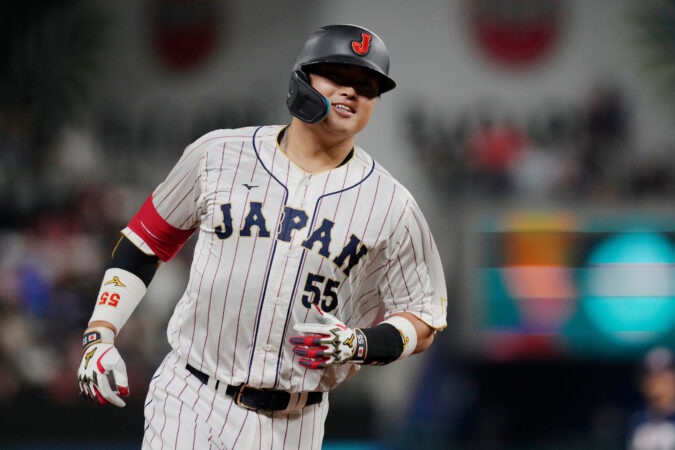
And social media was buzzing this week over a photo of Murakami, who holds Japan’s single-season record with 56 home runs, dining with Yamamoto.
“There is the difficulty of we have not had a player straight from Japan,” Otsuka said. “Players do talk with each other, saying what is a good organization, what is not a good organization. It would be nice to have one player be signed from Japan who plays in the big leagues to have more viewership from the Japan side for the Phillies.”
For a brief time last winter, Otsuka thought he might have found that player.
The Phillies signed Japanese reliever Koyo Aoyagi to a minor league contract last winter but released him in July after he struggled in triple A.
Chicken-or-egg situation
Koyo Aoyagi was a three-time all-star in nine NPB seasons. He won a gold medal in the 2020 Olympics. Three years later, he started Game 7 of the Japan Series and spun 4⅔ scoreless innings for the champion Hanshin Tigers.
But his dream was to play in the majors.
At 31, coming off a 2024 season that he said didn’t meet his standards, Aoyagi signed a minor-league contract with the Phillies. The side-arming reliever attended major league camp but agreed to go to triple A.
Upon arriving in spring training — his first visit to the United States — Aoyagi said through an interpreter that he “wasn’t too aware” of the Phillies’ inability to break through in Japan. But he also acknowledged that “me pitching on the big-league mound will definitely bring some attention to the Phillies that would be able to recruit Japanese players more.”
It was a low-risk, high-reward union of player and team.
And it didn’t work out.
Aoyagi struggled to throw strikes all spring, and it carried into the season. He had a 7.45 ERA with 23 walks in 19⅓ innings in triple A. After getting demoted to double A, he posted a 6.91 ERA and 15 walks in 14⅓ innings. The Phillies released him in July.
But Otsuka, who recommended that the Phillies take a flier on Aoyagi, stands by the team’s process. He also believes in what Aoyagi represented.
“Even though he didn’t make it to the big leagues, just him being on the team [in spring training], that still brought some attention in Japan,” Otsuka said. “I see a lot more Phillies hats walking around town. That’s all I can say. And I hear a lot of people talking about the Phillies just being a really good, strong team.”
Japanese reliever Koyo Aoyagi pitched in the minors for the Phillies last season before getting released.
Maybe. But the Aoyagi experience re-raised a chicken-or-egg conundrum: Do the Phillies have to gain more traction in Japan in order to attract an impact player? Or must they sign a Japanese player to a major league contract in order to really penetrate the Far East market?
The answer might not be found in this year’s class.
Murakami, 26, has prodigious left-handed power but also strikes out a lot and is a poor defender at third base. Okamoto, 30, is a right-handed hitter with less upside than Murakami who also profiles best at first base.
Imai, 28, draws intriguing comparisons to Yamamoto. The Phillies aren’t prioritizing the rotation. But that was the case in each of the last two offseasons, and they made a mega offer to Yamamoto and discussed trading for Garrett Crochet before acquiring Jesús Luzardo.
“When most teams talk to me about Imai, they say, ‘Oh my,’” agent Scott Boras said at the recent GM meetings. “He’s that kind of guy. … He loves big markets. We go through a list of places he may want to play, and, believe me, he is someone who wants to be on a winning team and compete at the highest level.”
But whether it’s now or in the future, the Phillies’ biggest challenge in mining talent from Japan is selling players on Philadelphia.
Velandia said the pitch highlights the city’s restaurants, doctors, and other resources that would make a Japanese player feel comfortable. Otsuka likes to emphasize the area’s golf courses, such as Pine Valley and Merion East.
The fact is, though, Philadelphia has a smaller Japanese population than many other major league cities. As one team official said, it makes sense that a Japanese player coming to the U.S. would be drawn to L.A. or New York, just as an American soccer player going to Spain would focus on Barcelona or Madrid.
“We just spit out all the good things about Philly,” Otsuka said. “We give the most information about Philadelphia, where it is as a city, what it’s like to play for the Phillies. It’s not like the worst sell ever. It has its difficulties, but it’s good. We can make it work.”
It might take a trail blazer, a player who wants to forge his own path. Otsuka intends to find him.
“That’s actually one of those selling points, that you could be ‘The Guy,’” Otsuka said. “You can be the first. When they think about Phillie Japanese players, you could be that player. Definitely the right player’s out there, the player that we want to go after.
“When the time’s right, it’s going to happen. It’s just a matter of time. We have the right processes. We’re doing everything possible now. I think we have all the necessary resources now to actually make it happen. I’m not frustrated about it. I’m just patiently waiting.”
When Lauren Vaughn, a kindergarten assistant in South Carolina, saw reports that right-wing influencer Charlie Kirk had been shot at an event in Utah, she opened Facebook and typed out a quote from Kirk himself.
Gun deaths, Kirk said in 2023, were unfortunate but “worth it” if they preserved “the Second Amendment to protect our other God-given Rights.” Following the quote, Vaughn added: “Thoughts and prayers.”
Vaughn, a 37-year-old Christian who has taken missionary trips to Guatemala, said her call for prayer was sincere. She said she hoped reading Kirk’s words in the context of the shooting might prompt her friends to rethink their opposition to gun control.
“Maybe now they’ll listen,” she recalled thinking.
A few days later, Vaughn lost her job. She was one of more than 600 Americans fired, suspended, placed under investigation or disciplined by employers for comments about Kirk’s September 10 assassination, according to a Reuters review of court records, public statements, local media reports and interviews with two dozen people who were fired or otherwise disciplined.
Some were dismissed after celebrating or mocking Kirk’s death. At least 15 people were punished for allegedly invoking “karma” or “divine justice,” and at least nine others were disciplined for variations on “Good riddance.” Other offending posts appeared to exult in the killing or express hope that other Republican figures would be next. “One down, plenty to go,” one said.
Others, like Vaughn, say they simply criticized Kirk’s politics.
In the pro-Kirk camp, at least one academic was put on administrative leave after threatening to “hunt down” those celebrating the assassination.
This account is the most comprehensive to date of the backlash against Kirk’s critics, tracing how senior officials in President Donald Trump’s administration, local Republican lawmakers and allied influencers mobilized to enforce the Trump movement’s views. The story maps the pro-Trump machinery of retaliation now reshaping American political life, detailing its scale and tactics, ranging from shaming on social media to public pressure on employers and threats to defund institutions. Earlier reports by Reuters have documented how Trump has purged the federal government of employees deemed opponents of his agenda and cracked down on law firms defending people in the administration’s crosshairs.
Americans sometimes lose their jobs after speaking out in heated political moments. Twenty-two academics were dismissed in 2020, the year George Floyd was murdered by a Minneapolis police officer, most for comments deemed insensitive, according to the Foundation for Individual Rights and Expression, a free-speech advocacy group. In 2024, the first full year following the outbreak of the latest Israel-Gaza war, more than 160 people were fired in connection with their pro-Palestinian advocacy, according to Palestine Legal, an organization that protects the civil rights of American supporters of the Palestinian cause.
The backlash over comments about Kirk’s shooting stands apart because of its reach and its public backing from Trump, Vice President JD Vance and other top government officials. It represents a striking about-face for Republicans, who for years castigated the left for what they called “cancel culture” — the ostracism or punishment of those whose views were deemed unacceptable.
Supporters of the firings say that freedom of speech is not freedom from consequence. Standards of behavior should be high for people like doctors, lawyers, teachers or emergency workers who are in positions of public trust, they said.
In a statement, White House spokesperson Abigail Jackson said: “President Trump and the entire Administration will not hesitate to speak the truth – for years, radical leftists have slandered their political opponents as Nazis and Fascists, inspiring left-wing violence. It must end.” She added: “no one understands the dangers of political violence more than President Trump” after he survived two assassination attempts.
Turning Point USA, the youth movement Kirk founded in 2012, said in a statement that it supported the right to free speech, “including that of private employers to determine when a bright line has been crossed and an employee deserves to be terminated.” The organization, however, cautioned that while celebrating or gloating over Kirk’s death was “evil and disqualifying behavior, respectfully disagreeing with his ideas, statements, or values is every American’s right.”
Vaughn is challenging her dismissal in a federal lawsuit filed September 18, seeking reinstatement. As part of the case, she submitted a letter she received from the Spartanburg County School District superintendent that described her remarks as “inflammatory, unprofessional, and inappropriate.” Responding to the lawsuit, the district said Vaughn’ s post “appeared to endorse Mr. Kirk’s murder or indicate that it was ‘worth’ him losing his life to protect Americans’ constitutional rights.”
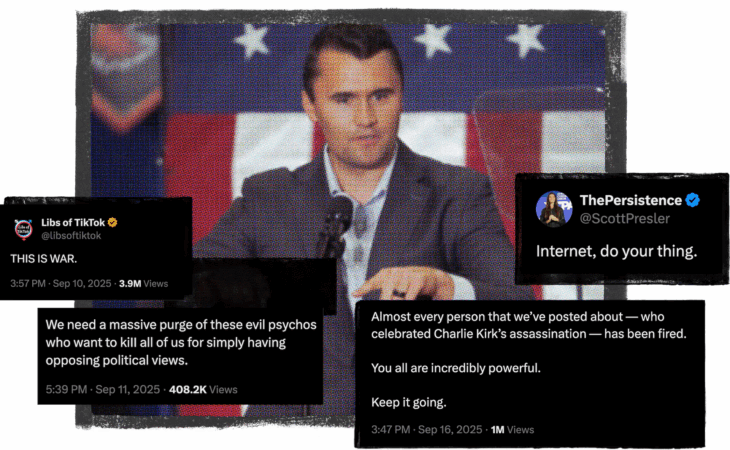
The punishments have often been driven by social media campaigns that circulate screenshots of the offending remarks, along with the names and phone numbers of employers, and appeals such as, “Internet, do your thing.” What typically follows are hundreds of angry or threatening messages, Reuters found. Several individuals who were targeted said in interviews they were inundated with phone calls. One recalled receiving a call every minute for an entire day. At least two said the harassment was so intense they plan to sell their homes.
Julie Strebe, a sheriff’s deputy in Salem, Missouri, lost her job after posting comments on Facebook about the shooting, including “Empathy is not owed to oppressors.” She later said she viewed Kirk as an oppressor because, in her words, he sought to marginalize vulnerable groups and used his platform to rally conservative white Christians behind “racist, sexist, hateful views.” She said her bosses were besieged with calls for her dismissal and that, at one point, a hand-drawn sign appeared across from her home reading, “Julie Strebe Supports the Assassination of Charles Kirk.”
Strebe said she installed five surveillance cameras at her home and now fuels her car only at night to avoid neighbors. Moving from Salem would mean leaving extended family, but she said the small city has grown too hostile to stay. “I just don’t feel like I could ever let my guard down,” she said in an interview. Strebe’s former employer, the Dent County Sheriff’s Office, declined to comment.
Many Republican officials have embraced the punitive campaign. Some have proposed extraordinary measures, including lifetime bans from social media for those deemed to be reveling in Kirk’s death. The U.S. State Department revoked visas for six foreigners who the agency said “celebrated the heinous assassination of Charlie Kirk.”
Speaking on a special episode of Kirk’s podcast on September 15, Vice President JD Vance urged his listeners to inflict consequences on those celebrating Kirk’s death.
“Call them out, and, hell, call their employer,” Vance said. Vance’s office pointed Reuters to comments made earlier this year in which the vice president said, “where I draw the line is encouraging violence against political opponents.”
Some academics compared the backlash to the “Red Scare,” the anti-Communist purge that peaked in the 1950s, when officials, labor leaders and Hollywood figures were accused of Communist ties. Thousands were investigated in a climate of fear that shaped U.S. politics and culture for a generation. There are “very disturbing parallels,” said Landon Storrs, a University of Iowa history professor.
Several prominent Republicans have voiced unease at the clampdown, especially after the Federal Communications Commission openly pressured broadcaster ABC to suspend talk show host Jimmy Kimmel following a monolog in which he suggested that Kirk’s assassin hailed from the political right. Police haven’t fully detailed the findings of their investigation into suspect Tyler Robinson and his motives. Robinson hasn’t entered a plea to the murder and other charges against him.
Republican Senator Ted Cruz warned on his podcast that letting government decide “what speech we like and what we don’t” sets a dangerous precedent. Silencing voices like Kimmel’s might feel good, he said, but “when it’s used to silence every conservative in America, we will regret it.” His spokesperson declined further comment.
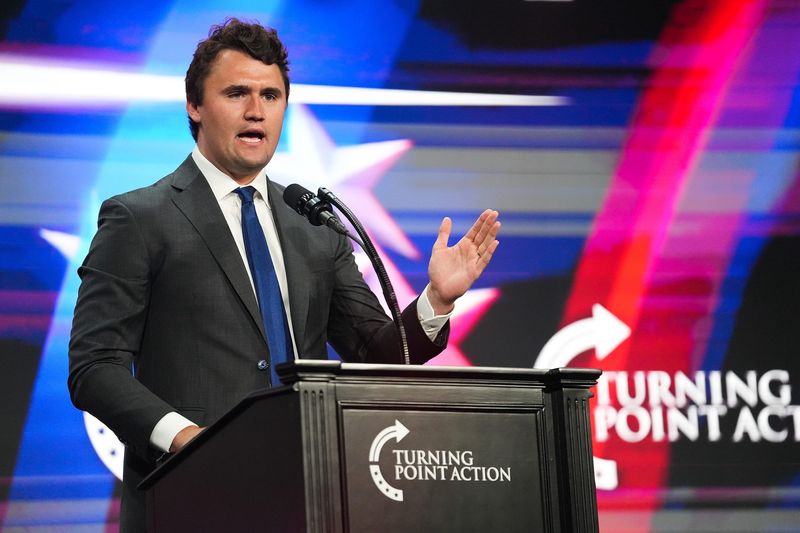
Charlie Kirk, founder of Turning Point USA, speaks in 2022.
‘Massive purge of these evil psychos’
The campaign to punish Kirk’s critics began almost immediately.
About 30 minutes after Trump’s announcement that Kirk had died, right-wing influencers mobilized. Among the first was Chaya Raichik, operator of the widely followed Libs of TikTok account, which had posted on X, “THIS IS WAR,” before highlighting a Massachusetts teacher who had written: “Just a reminder, We’re NOT offering sympathy.”
By night’s end, Libs of TikTok had published or reposted the professional details of 37 individuals, often accompanied by commentary such as “absolutely vile,” “Your tax dollars pay her salary,” or “Would you want him teaching your kids?”
“It’s actually terrifying how many of them are teachers, doctors and military members,” Libs of TikTok wrote the next day. “We need a massive purge of these evil psychos who want to kiII all of us for simply having opposing political views.”
In the week after the shooting, Libs of TikTok shared the names and profiles of at least 134 people accused of celebrating violence or mocking Kirk’s memory, frequently tagging Trump administration officials including Defense Secretary Pete Hegseth and Attorney General Pam Bondi. At times, the influencer posted disciplinary actions taken against specific government employees.
“BREAKING: This marine was fired,” Libs of TikTok posted on September 12, a day after calling out a Marine Corps captain. The officer had responded to Kirk’s death by posting an emoji of clinking beer mugs, according to a screenshot the influencer shared with followers. Reuters could not verify the authenticity of the beer-mug post; the captain declined to comment. Libs of TikTok also reported similar disciplinary actions involving an Army Reserve officer and an Army colonel who had commented on the death on social media.
The Pentagon and the Justice Department issued statements condemning celebrations of Kirk’s death but did not address questions about their relationship with Libs of TikTok.
Right-wing influencer Scott Presler began posting screenshots of Kirk commentary, too.
“Take a screenshot of EVERY single person celebrating today,” he told his followers on September 10. “You bet your behind we will make them infamous.” Over the next week, Presler shared posts on X about 70 people who had commented on the killing, and wrote in one message: “Almost every person we’ve posted about — who celebrated Charlie Kirk’s assassination — has been fired.” Presler didn’t respond to requests for comment.
For many on the right, outraged by celebratory reactions from the left, the wave of firings became a form of catharsis.
“It’s good that they are shamed and humiliated and must live with the repercussions for the rest of their lives,” right-wing podcaster Matt Walsh told his audience as he discussed the firings. “It’s good if they wake up every day until they die wishing they had not said what they said.” Asked for comment, Walsh emailed back: “f**k off.”
On YouTube, video blogger and recovery coach JD Delay expressed glee as he read aloud names of those who had lost their jobs over their remarks.
“I’m having fun! This is so much fun!” he shouted, raising his hands in excitement. Delay told Reuters that he believes in “accountability and consequences” and that “if you publicly say abhorrent things and get fired from your job, I’m going to laugh at you.”
The punishment campaign sometimes veered off course. In at least five cases, people were wrongly blamed for comments made by others. In another case, a website that drew up a blacklist called “Expose Charlie’s Murderers” vanished after taking in tens of thousands of dollars in cryptocurrency donations. Attempts to identify and seek comment from the site’s creators were unsuccessful.
President Donald Trump takes the stage during a memorial service honoring conservative activist Charlie Kirk in Glendale, Arizona, on Sept. 21, 2025.
Several online influencers said they received hundreds — sometimes thousands — of tips from individuals seeking to get Kirk’s detractors fired. Reuters was unable to verify those figures. But at various points, Presler, Libs of TikTok and other right-wing personalities publicly urged tipsters to be patient as they worked through the volume of submissions.
“Can’t keep up with all of you,” Presler wrote on X on September 12. “Post your submissions below & I’ll go through them as I can.”
A day later, the post had drawn more than 2,700 replies.
The tally of more than 600 people punished for criticizing Kirk is likely an undercount. Many companies and government organizations haven’t publicly disclosed terminations or suspensions.
Those punished came from at least 45 states and represented a cross-section of society, from soldiers and pilots to doctors, nurses and police officers.
In Michigan, an Office Depot employee was fired after being filmed refusing to print a poster memorializing Kirk. In Ohio, a Starbucks barista lost her job after she was accused of writing an anti-Kirk message on a cup of mint tea.
Reuters couldn’t determine the identities of the Office Depot worker or the barista. Office Depot and Kroger — the grocery store chain that runs the Ohio Starbucks — condemned the anti-Kirk incidents and said the people involved were no longer employees.
Requests to 21 federal agencies — including Homeland Security, Veterans Affairs and the Defense Department — for the number of suspensions or dismissals tied to the Kirk assassination were either ignored or declined. When the Office of the Director of National Intelligence was contacted, its deputy chief of staff responded on social media, accusing Reuters of trying to generate sympathy “for the ghouls who celebrate his death.”
Educators among the main targets
Teachers, academics and university administrators were among those most frequently punished for criticizing Kirk. More than 350 education workers were fired, suspended or investigated in the days following the assassination, including 50 academics and senior university administrators, three high school principals, two cheerleading coaches and a theology instructor.
The prominence of educators in the backlash may stem from several factors. As leaders tasked with shaping young minds, teachers have long been cast by some conservatives as ideologues who aim to pull their students left. Their status as taxpayer-funded employees made any perceived partisan commentary especially combustible.
In interviews and public statements, at least six teachers cited another reason for speaking out: concern over the frequency of gun violence at schools nationwide — and anger at those, like Kirk, who have championed widespread access to firearms.
Vaughn, the South Carolina kindergarten assistant, said that was front of mind when she went to Facebook to quote Kirk’s 2023 remark dismissing some fatal shootings as the price to pay to protect gun rights. Like other teachers across the country, she said she regularly practiced active-shooter drills at her elementary school and saw fear on her five-year-olds’ faces as they learned how to hide from a gunman.
As she defended her post on the day of Kirk’s death, she told a Facebook friend that she felt “no satisfaction” at the assassination. “Just heartbreak for everyone and anyone affected by gun violence and the hope that one day, enough will be enough.” Speaking to Reuters later, she said, “The one thing I want people to know is that my message was out of concern for the kids.”
Many educators did celebrate Kirk’s death, including a Virginia teacher who wrote, “I hope he suffered through all of it,” and a Texas middle school intern who said the shooting “made me giggle.” Screenshots of both posts were circulated by right-wing influencers. Reuters could not locate the original posts, which may have been deleted or made private. The Virginia teacher was suspended and the Texas intern was fired. Neither could be reached for comment.
While schools that suspended or fired educators cited disruptions to the learning environment, some private employers pointed to a violation of company values or safety concerns as the basis for terminations. Corporations caught up in the backlash gave a variety of explanations: Delta Air Lines CEO Ed Bastian said in a statement some employees’ comments were in “stark contrast” to the company’s values and violated its social media policy, while a United Airlines statement said the company had “zero tolerance for politically motivated violence or any attempt to justify it.”
At least a dozen Kirk critics who took pains to condemn the shooting also found themselves out of jobs or suspended, sometimes after Republican lawmakers got involved.
In the wake of Kirk’s death, Joshua Bregy, a climate scientist at Clemson University in South Carolina, shared another user’s Facebook post that read, in part: “No one should be gunned down — not a school child, not an influencer, not a politician — no one. But am I going to allow people to make a martyr out of a flawed human being whose rhetoric caused notable damage? Not a chance.”
The Clemson College Republicans reposted part of his message, labeling him “ANOTHER leftist professor” and calling for his termination. The post was amplified by right-wing influencers and Republican state lawmakers who threatened to defund the public university unless Bregy was fired.
Clemson initially pledged in a September 12 statement to “stand firmly on the principles of the U.S. Constitution, including the protection of free speech.”
The next day, Trump himself reposted a state lawmaker’s call to “Defund Clemson.” On September 16, after South Carolina’s House speaker and Senate president sent a letter to Clemson’s trustees demanding they “take immediate and appropriate action,” the school fired Bregy. Bregy’s Facebook post was “blatantly unprofessional” and “seriously prejudicial to the university,” Clemson said in a letter informing Bregy he had been dismissed.
Bregy is suing Clemson in a South Carolina federal court in a bid to be reinstated. His lawyer, Allen Chaney, said the academic would have kept his job “but for the really aggressive, coercive tactics of elected officials in South Carolina.”
Clemson, State House Speaker Murrell Smith and Senate President Thomas Alexander did not respond to requests for comment. Clemson has yet to file a response to Bregy’s suit.
In at least six other cases, Republican officials publicly threatened to deprive universities and schools of taxpayer funds unless specific critics of Kirk were fired.
Chaney, who serves as legal director of the South Carolina chapter of the American Civil Liberties Union, said the threats to defund Clemson and others crossed a constitutional line. “The government can’t police speech by pressuring third parties,” he said. Last year, the Supreme Court unanimously held that government officials cannot use their authority to “attempt to coerce” private parties into punishing or suppressing speech they dislike.
The threats to defund schools that resist firing Kirk’s critics were “stunning,” said Paul McGreal, a constitutional law professor at Creighton University Law School in Nebraska. “Government officials are threatening speakers with punishment because they disagree with what they’re saying. These are core First Amendment protections that they’re violating.”
Kirk praised as Christ’s ‘13th disciple’
Since Kirk’s assassination, many Republicans have cast him as a saintly champion of free expression. Evangelical figures have likened him to Saint Stephen, revered as Christianity’s first martyr. One Republican lawmaker told Congress “he’d have been the 13th disciple” had he lived in Biblical times. Trump compared Kirk to the ancient Greek philosopher Socrates, slain President Abraham Lincoln and assassinated civil rights icon Martin Luther King Jr. when posthumously awarding him the Presidential Medal of Freedom.
Kirk’s legacy is complicated, however. He gained fame for debating college students as part of his work with Turning Point. Kirk also advocated criminalizing expression – such as pornography – that clashed with his Christian views. When Black football players started kneeling during the national anthem in protest at police brutality, he backed Trump’s call to strip the National Football League of taxpayer subsidies. The White House later said Trump was making a statement, not a proposal.
Kirk repeatedly denigrated minorities, calling transgender people an “abomination,” warning of “prowling Blacks” in cities, accusing wealthy Jews of stoking “hatred against Whites,” and declaring Islam incompatible with Western civilization. He also dismissed Pope Francis as a Marxist.
Some of those who spoke out against Kirk after his death said they were disturbed by the hagiography.
“I just felt compelled to remind people who he was and what he stood for,” Kimberly Hunt, a human resources worker in Arizona, said in an interview. She had posted a video captioned, “Save your tears for his victims, not him.”
In the video, Hunt cited Kirk’s record of using derogatory language about transgender people and Muslims, before adding that his children “are better off without him.” Hunt was fired soon after. Her employer, an Arizona construction firm, did not respond to requests for comment.
Hunt told Reuters she understood her words sounded harsh but stood by them. She said they reflected Kirk’s stance in a debate last year that if he had a 10-year-old daughter who was impregnated through rape, “the baby would be delivered.”
The retaliation has silenced many voices. Scores of people who posted anti-Kirk comments have since scrubbed or locked their accounts, Reuters found. Others said in interviews that they are pushing back.
Hunt said she has raised more than $88,000 from a GoFundMe campaign titled, “Doxxed, Fired, but Not Silenced.” She said she wants to use the money to further her education, become a content creator, and keep calling out people like Kirk.
“It’s definitely just emboldened me,” she said.
At least 19 lawsuits have been filed against employers who punished Kirk critics, state and federal court records show. At least two plaintiffs have succeeded, including an academic in South Dakota who got his teaching job back.
Karen Leader, an associate professor at Florida Atlantic University, took to social media after Kirk’s death to protest a narrative that he “was a shining inspiration to youth and a noncontroversial figure who just wanted to have open and civil dialog,” she said. “Anyone who’s in higher education knows that it’s not that simple.”
She noted that Turning Point rose to prominence through its Professor Watchlist, a site that encouraged students to report faculty for allegedly holding “radical left” views or being a “terror supporter.”
Kirk had described the Watchlist as an awareness tool, not a blacklist. Those on it have said in interviews, social media posts and public forums that it fostered harassment and intimidation. In 2023, a Turning Point reporter was accused of assaulting an Arizona professor who was on the watchlist after confronting him on camera about his sexuality and shoving him to the ground. The reporter admitted to harassment, assault and disorderly conduct and was ordered to complete a diversion program. A Turning Point cameraman admitted to harassment in the case.
On September 10, Leader began posting Kirk’s past statements on X. She said she made a mistake by incorrectly accusing Kirk of having uttered an ethnic slur and then deleted it. The rest of her posts she said she stands behind, including one highlighting Kirk’s claim that Black Americans were “better” during Jim Crow.
“None of it was me encouraging violence,” Leader said. “I was sharing evidence.”
Jordan Chamberlain, a former staffer of Florida Governor Ron DeSantis, shared screenshots of several of Leader’s posts and tagged her university, asking if it approved of the content. Libs of TikTok shared Leader’s faculty headshot. The university’s president announced she had been put on administrative leave. Her address and phone number appeared online, and menacing messages followed.
In one voicemail reviewed by Reuters, the caller said: “We’re coming to get you. Karen Leader, we know where you work. We’re gonna come to your home as soon as we have your location.” Leader said she has rarely left her apartment since.
She reported the threats to Boca Raton police, which referred the case to campus officers, according to a police report. Florida Atlantic University police said their report could not be released because of an active criminal investigation.
Florida Atlantic University confirmed Leader was one of three academics who were on leave pending investigations. It declined further comment. Chamberlain also didn’t return an email seeking comment.
“Whether my career is over or not, I don’t know,” Leader said. “But my life has changed.”
Think you know your news? There’s only one way to find out. Welcome back to our weekly News Quiz — a quick way to see if your reading habits are sinking in and to put your local news knowledge to the test.
Question 1 of 10
The Michelin awards are officially in Philadelphia. The first batch of honors was marked with a ceremony Tuesday. How many Philly-based restaurants received one star?
CorrectIncorrect. XX% of other readers got this question right.
Three Philly restaurants received one Michelin star: Her Place Supper Club, Friday Saturday Sunday, and Provenance.
Question 2 of 10
Clyde Peeling, 83, of Allentown, is regarded as the reptile king. He was actually bitten by a rattlesnake while serving with this military branch:
CorrectIncorrect. XX% of other readers got this question right.
Peeling’s first bite occurred when he was serving with the Air Force. But it wouldn’t be his last. Today, his space, Reptiland, is home to a slew of Komodo dragons, poisonous Gila monsters, anacondas, and more.
Subscribe to The Philadelphia Inquirer
Our reporting is directly supported by reader subscriptions. If you want more journalism like this story, please subscribe today.
President Donald Trump lashed out at Bloomberg reporter Catherine Lucey on Air Force One last week, telling her, “quiet piggy” when she asked him about the Jeffrey Epstein case. Years before Lucey was at Bloomberg, she was a reporter in Philadelphia. Where did she work?
CorrectIncorrect. XX% of other readers got this question right.
Before her time in D.C., Lucey was a respected reporter in Philadelphia, spending 12 years at the Philadelphia Daily News covering everything from police corruption to local news — but her sweet spot was politics. Her portfolio included coverage of then-Mayor Michael Nutter’s administration and the city’s changing power dynamics.
Question 4 of 10
Sixers player Tyrese Maxey made a cameo as a dog handler at the National Dog Show hosted outside Philadelphia. The dog lover has three dogs of his own, Apollo: a Cane Corso, and Aries and Arrow who are both this breed:
CorrectIncorrect. XX% of other readers got this question right.
Maxey got Aries and Arrow, both Bernedoodles, during the summer. He has been working on his dog training skills for more than a year.
Question 5 of 10
This museum, managed by the College of Physicians, will undergo a $27 million renovation beginning next year:
CorrectIncorrect. XX% of other readers got this question right.
The first phase of renovations at the Mütter Museum will include larger galleries, building upgrades, better signage, and expanded exhibition space. Construction will begin in early 2026.
story continues after advertisement
Question 6 of 10
In Craig LaBan’s review of Borromini, Stephen Starr’s Italian destination in Rittenhouse Square, there was only one dish the food critic said he orders every single visit.
CorrectIncorrect. XX% of other readers got this question right.
LaBan noted that he found the restaurant’s signature 100-layer lasagna to be underwhelming. But he insists on ordering the focaccia di Recco, featuring a hot crispy flatbread paired with wafer-thin rounds of tangy stracchino cheese, every time. The bread is a recipe from consulting chef, Nancy Silverton, the L.A. star with whom Starr runs Osteria Mozza in D.C.
Question 7 of 10
Task, the HBO show set in Delco, has been renewed for a second season. Season one starred Tom Pelphrey and this actor:
CorrectIncorrect. XX% of other readers got this question right.
The first season of Task followed an FBI task force led by Tom Brandis (Mark Ruffalo) — a former priest and grieving widower — as they tracked down thieves robbing drug houses in the Philly suburbs.
Question 8 of 10
Boathouse Row could be seen during the Eagles’ Sunday Night Football broadcast, in special hues to promote this movie:
CorrectIncorrect. XX% of other readers got this question right.
Boathouse Row went green and pink to promote Wicked: For Good as part of NBC's large marketing campaign for the film. It marks the historic strip’s first movie promotion.
Question 9 of 10
Artist Rose Luardo has previously caught locals’ attention with outdoor art installations including “Boob Garden” and “Rave Coffin.” What’s her latest display titled?
CorrectIncorrect. XX% of other readers got this question right.
Located at the intersection of Washington Avenue, Passyunk Avenue, and Eighth Street, “Crab Couch” — which is exactly what it sounds like — is the latest work Luardo set up at what she calls Capt. Jesse G’s Crab Shack Gallery. That’s because the shuttered business’ sign inexplicably remains lording over the lot on a freestanding pole, even though the building was long-ago demolished.
Question 10 of 10
The Franklin Institute is returning its lunar module, which was on display outside for 49 years, back to Smithsonian’s National Air and Space Museum in D.C. What is next for the module?
CorrectIncorrect. XX% of other readers got this question right.
There are currently no plans for it to be displayed at the National Air and Space Museum, a Smithsonian spokesperson told The Inquirer.
Your Results
You have skipped .
You scored XX out of 10.
The average reader scored XX out of 10
Seems like you’ve been skimming more than reading there, buddy. There’s always next week.
You’ve read some articles (or made some educated guesses) but we wouldn’t come to you first for our local news recaps. Better luck next week!
Do you work here? You’re a local news stan with the latest updates on Philly happenings. Your friends definitely ask you for summaries on what’s going on and it shows.
Peter Fineberg sat in his Spectrum seats for more than 20 years, certain his perch was safe from the pucks that often flew into the stands. It would be years until protective netting was installed at every NHL arena, but Fineberg’s season tickets were behind the glass. He was good.
“The puck came in lots of times,” Fineberg said. “But always above me.”
But here it came — an errant slap shot in 1989 from a Flyers defenseman that redirected after tipping the top of the glass — falling straight onto Row 11 of Section L.
“We all see it coming,” Fineberg said. “I bail out of the way.”
He escaped, got back to his feet, and saw his mother grabbing her chin.
“I said, ‘Mom, what happened?’ She said, ‘The puck hit me,’” Fineberg said. “I go ‘What?’ She takes her hand off her chin and she just spurts blood.”
An usher walked Nancy Fineberg to a first-aid station where they helped slow the bleeding and offered the 64-year-old an ambulance ride to the hospital. But this was a playoff game and Nancy Fineberg, a mother of three who graduated from Penn in the 1940s, loved the Flyers. The stitches could wait.
“She said ‘I’ll go to the hospital after the game,” her son said. “She toughed it out.”
Another fan gave Nancy Fineberg a handkerchief to hold against her chin for the rest of the third period as the Flyers beat the Pittsburgh Penguins.
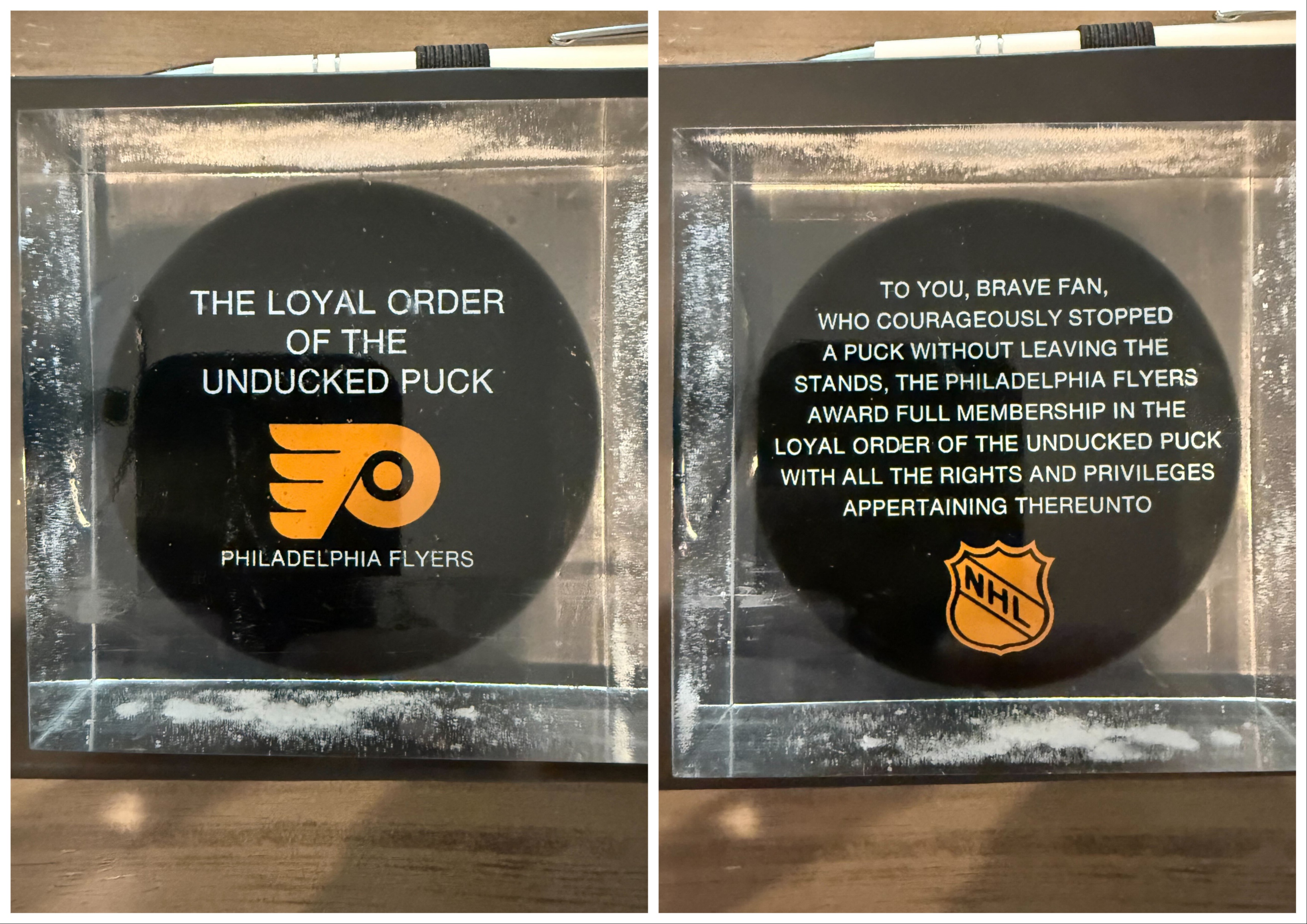
A package was shortly after delivered to her home in Bala Cynwyd. Fineberg was officially a member of the “Loyal Order of the Unducked Puck,” an exclusive club created by the Flyers in the 1970s partly as a way to dissuade fans from suing them if they were hit by a puck. You could not purchase a membership. You had to earn it.
“It was screaming,” her son said of the puck. “I’m amazed it didn’t break her jaw.”
A Loyal Order of the Unducked Puck plaque. The club was created by the Flyers in the 1970s partly as a way to dissuade fans from suing them if they were hit by a puck. You could not purchase a membership. You had to earn it.
A negative to a positive
A fan wrote to the Flyers in the early 1970s, letting them know that she was hit by a puck at the Spectrum and her outfit was ruined. Lou Scheinfeld, then the team’s vice president, told the fan the team would replace the bloodied clothes and get her tickets to a game. But he wanted to do more.
Ronnie Rutenberg, the team’s lawyer, envisioned more fans complaining about being hit by pucks and feared that lawsuits would be filed. The Flyers, he said, needed to turn being hit by a puck into a positive.
“He figured that if we made people feel special, they wouldn’t sue us,” said Andy Abramson, who started working at the Spectrum in the 1970s and became a Flyers executive in the 1980s. “Ronnie was brilliant.”
So the Flyers created the Loyal Order of the Unducked Puck and made fans feel brave for having been hit by an errant shot. Scheinfeld advised security members to immediately attend to any fan who was struck, bring them to a first-aid station, and gather their information.
The team then sent them a letter signed by a player and a puck with an inscription written by Scheinfeld printed on the back.
“To you brave fan who courageously stopped a puck without leaving the stands,” the inscription read. “The Philadelphia Flyers award full membership in the Loyal Order of the Unducked Puck with all the rights and privileges appertaining thereunto.”
The pucks were sent to fans for years, easing the pain of being hit by a frozen piece of rubber and making a bruise feel like an initiation. In 2002, the NHL mandated teams to install protective netting behind each goal after a 13-year-old girl was killed by a puck that was deflected into the stands. The netting has stopped most pucks from entering the stands, all but eliminating the need for a Loyal Order.
“You couldn’t buy your way in,” Abramson said. “You had to live through the experience in order to qualify. And you had to be willing to give up your personal information to a representative of the Spectrum in order to be enrolled.
“Let’s say you got hit and shook it off. We never knew, and you didn’t get in. It’s one of these unique things that made the Flyers who we were. It wasn’t just a hockey team.”
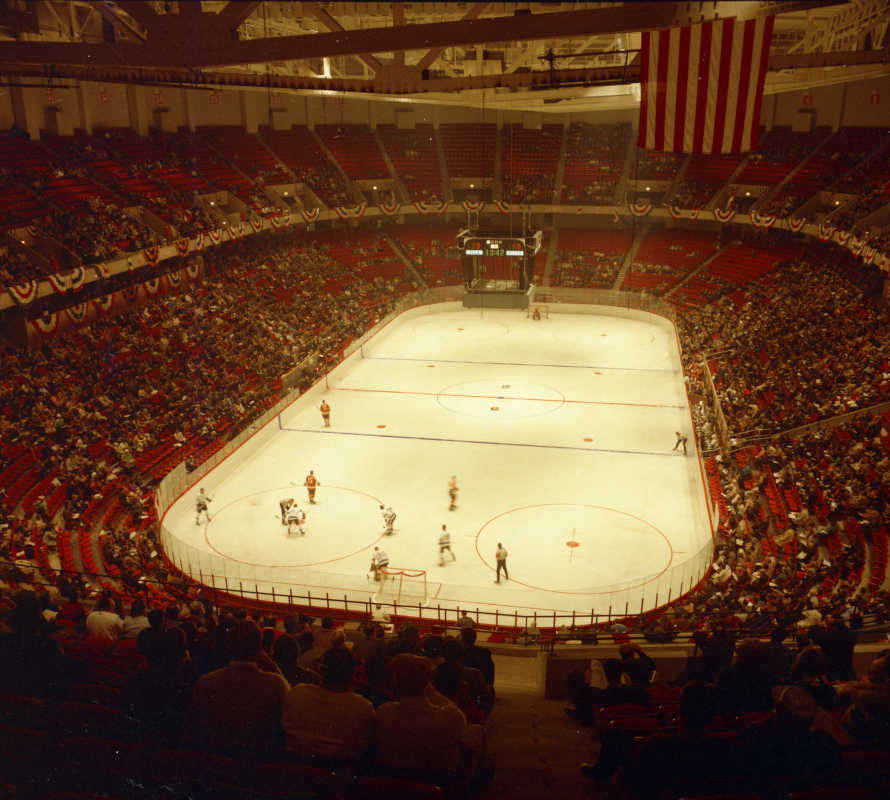
The first Flyers game played at the Spectrum against the Penguins on Oct. 19, 1967.
The perfect arena
The rows of seats inside the Spectrum were steep, because the arena was built on just 4½ acres, forcing developers to build up instead of out. It was perfect for hockey.
“Every seat was close to the ice, and you were on top of the action no matter where you were,” Scheinfeld said. “The sound was deafening. You could hear the click of the stick when the puck hit it. When a guy pulled up in front of the goalie and his skate sent an ice spray, you could hear that.
“It was like a Super Bowl every game. You couldn’t get a ticket. People didn’t give away their tickets to a friend or company. They came.”
And the pucks came in hot.
“We were right in the shooting gallery,” said Toni-Jean Friedman, whose parents had season tickets behind the net. “Thinking about that now, that was really crazy.”
Friedman’s mother was introduced to hockey in the 1970s, falling for the foreign sport at the same time nearly everyone else did in the region. Fran Lisa and husband Frank met a couple of friends at Rexy’s, the haunt on the Black Horse Pike where the Broad Street Bullies were regulars.
The Lisas met the players, got Bobby Clarke’s autograph on the back of a Rexy’s coaster, and bought season tickets at the Spectrum. A few years later, a puck was headed their way.
“She was trying to catch it, but then survival instincts took over,” Friedman said. “We saw people taken out in stretchers.”
The puck hit Lisa’s wrist and ushers rushed to her seat. She shrugged it off and watched the game. They jotted down her address in Marlton Lakes, and a puck was soon on its way. She was a member of the Loyal Order.
“She was proud of it. She showed it to everyone,” her daughter said. “So it worked because she would’ve never thought twice about suing, not that that’s who she was anyway.”
Fran Lisa was hit on the wrist by an errant puck. “She was trying to catch it, but then survival instincts took over,” her daughter said. “We saw people taken out in stretchers.”
The Flyers had Clarkie, Bernie, The Hound, and The Hammer, but the Spectrum was more than just the Bullies. Sign Man was prepared for anything, Kate Smith brought good luck, and a loyal order of fans sold out every game. Hockey in South Philly — a foreign concept years earlier — became an event.
“There was always action. There was always something going on,” Fineberg said. “And you never thought the Flyers were going to lose. I remember going into the third period and they’re down, and Bobby Clarke … it gives me chills … Bobby Clarke just took over and would score and bring them back. It gives me chills thinking about it. It was unbelievable.”
Fineberg bought season tickets in the late 1960s for $4.50 a seat as a teenager attending the Haverford School. His mom started going with him a few years later, knitting in the stands and wearing sandals no matter how cold it was outside.
“I can still see her crossing Pattison Avenue in the snow with sandals and no socks,” said her daughter, Betsy Hershberg.
The faces in the crowd became almost like family as they invited each other to weddings and kept up with more than just hockey. A couple from Delaware sat next to the Finebergs, a UPS driver was in front, a teenager from Northeast Philly was down the row, the Flyers’ wives were nearby, and Charlie was in Seat 1.
“Charlie had one of those comb overs. He was an older guy,” Fineberg said. “I remember one time, the Flyers scored and everybody jumped up. A guy in the back spilled his beer on Charlie’s head and his hair was hanging down to his back.
“You go to all these games with these people and share all these experiences. You can’t help but have a bond with them.”
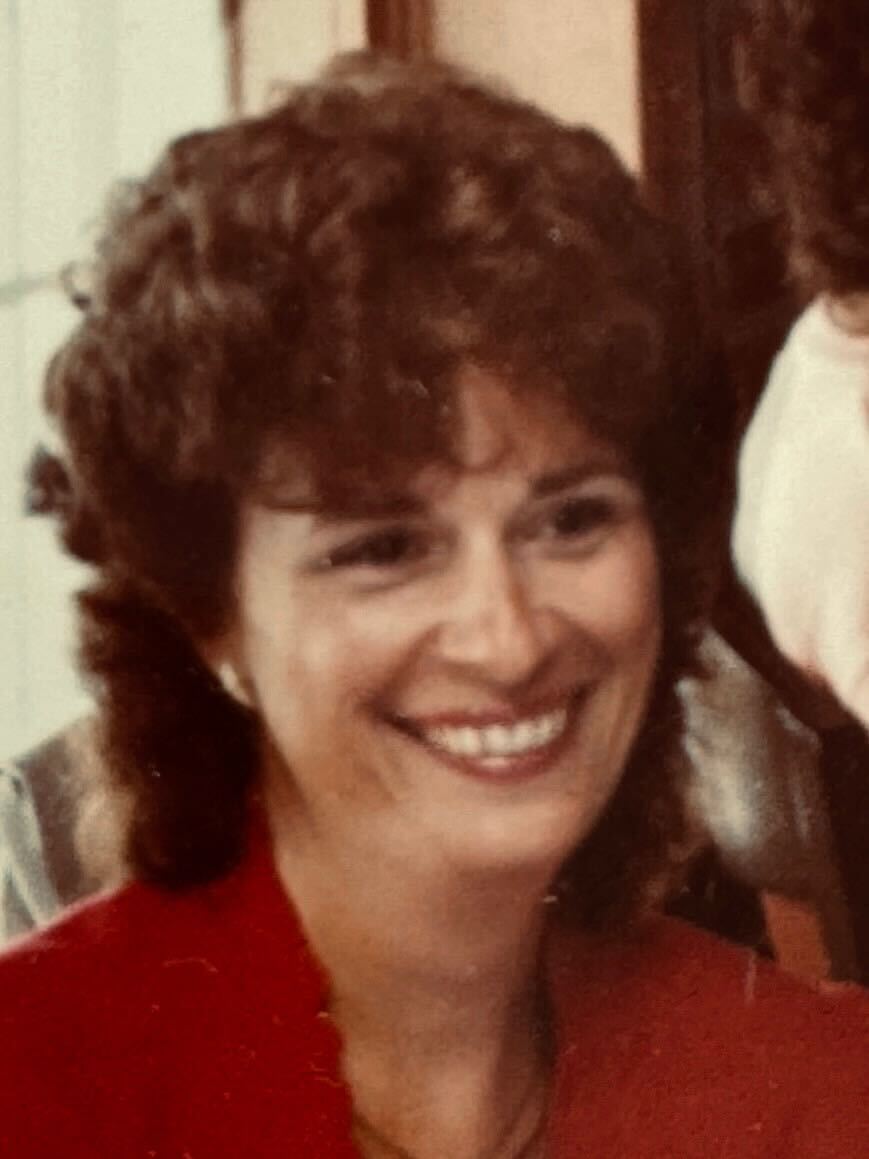
Unducked Puck member Nancy Fineberg (left). “She said ‘I’ll go to the hospital after the game,” said her son. “She toughed it out.”
A lasting legacy
Nancy Fineberg is 99 years old and watches sports on TV. Her 100th birthday is in March. She went to Methodist Hospital after the Flyers won that game and left with 25 stitches. A faint scar is still visible on her chin. Her grandson Dan Hershberg has the puck the Flyers sent to her house, clinging to the symbol of his grandmother’s induction into the Loyal Order like it’s a family heirloom.
“My grandmom is kind of like an old-school badass,” Hershberg said. “Yeah, I was at the hockey game and things happen and you move on.”
The original Loyal Order puck was a cube of Lucite with a Styrofoam puck inside — “Seriously?,” Friedman said — because a real puck would be too heavy. The Flyers later created plaques for members. They also sent a letter signed by a player. Friedman’s mother heard from Bernie Parent.
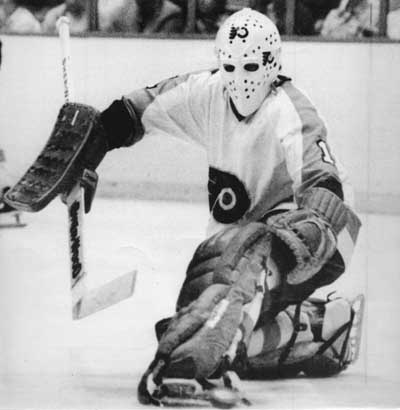
Bernie Parent, the former Flyers goalie, would sign letters sent to Loyal Order of the Unducked Puck inductees.
Dear Fran,
Unfortunately, you are now a full-fledged member of the Loyal Order of the Unducked Puck. I know your initiation was tough, but now that you have passed it with flying colors, Pete Peeters, Rick St. Croix, and myself (all honorary members) would like to take this opportunity to welcome you to the club. Everyone in the Flyers organization hopes you are now feeling fine and we hope you’ll accept this little memento of your unpleasant experience with a smile.
Best regards,
Bernie Parent
Fran Lisa died in March. There was always a game on TV, her daughter said, and Lisa knew all the stats. When the family wrote her obituary, they mentioned how she “showered people with love and food” and invited everyone to her Shore house. Lisa, they said, was the axis of her family.
And they also made sure the obituary included that she was a member of the Loyal Order of the Unducked Puck. Lisa was 85 years old and being hit with a puck at the Spectrum was worth a mention. The family wanted all to know that their mother earned her place in the Loyal Order.
“It was her,” Friedman said. “To her, she felt like she was a Flyer because of this whole thing. She was in the club. I can’t describe it any other way but she was proud. It was a great idea.”
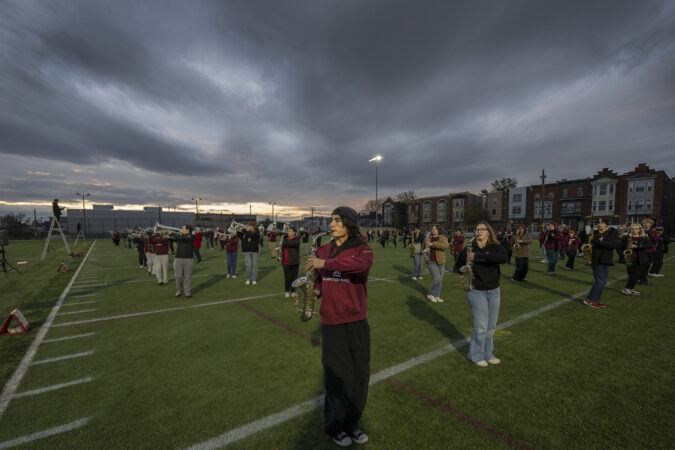
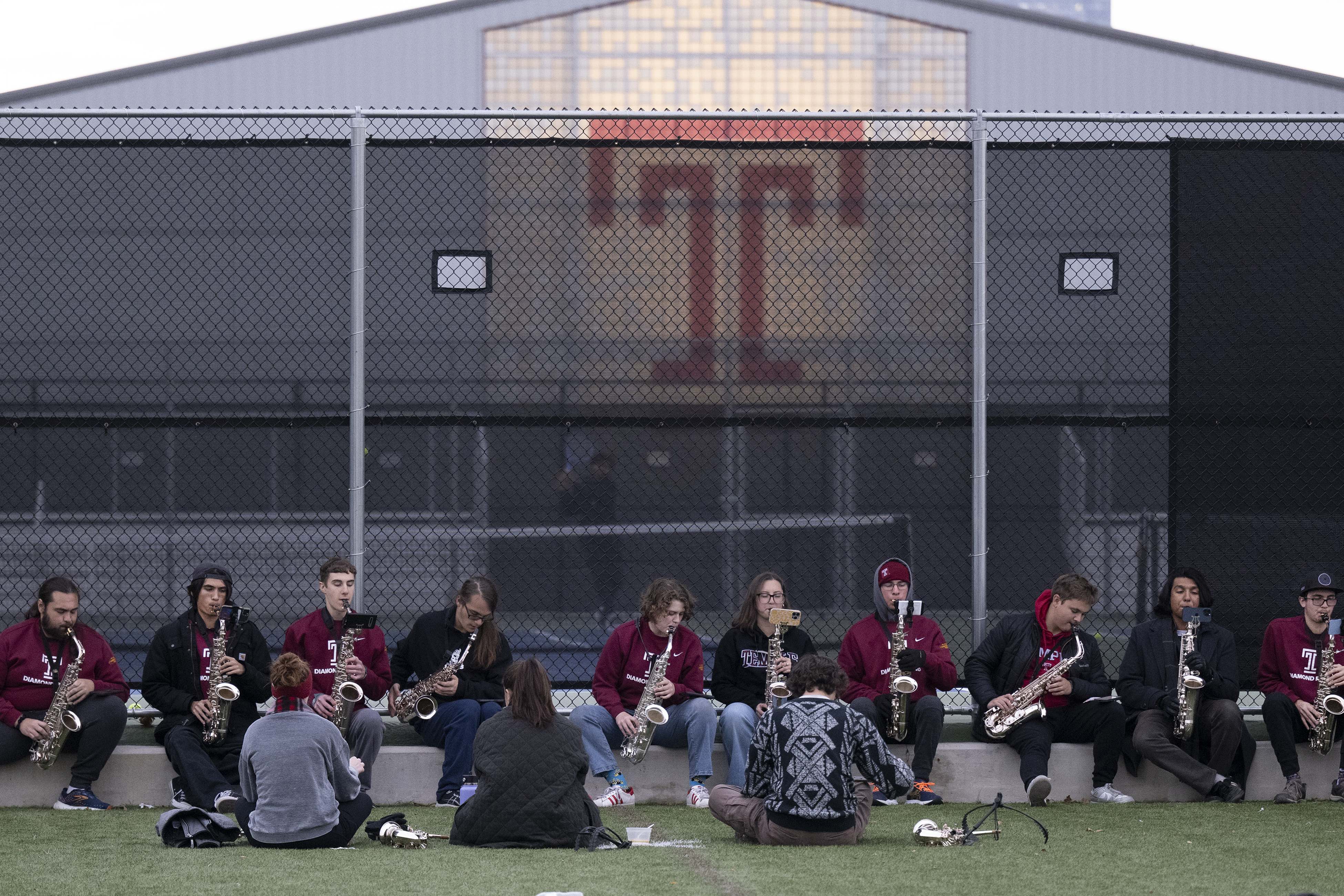
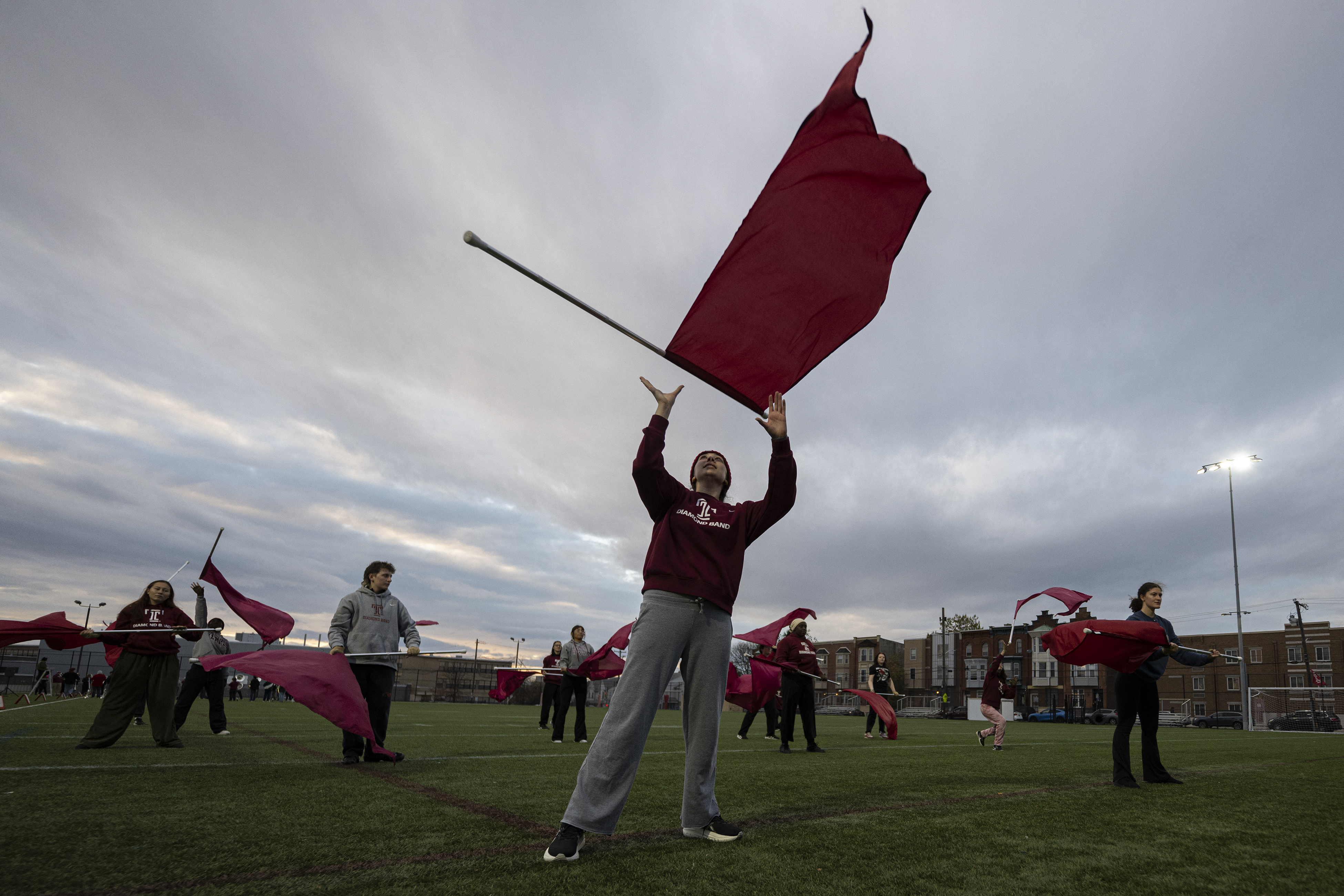
As the pink of twilight peeked through the November clouds, Temple University’s Diamond Marching Band, instruments and flags in tote, practiced on the campus’ Geasey Field.
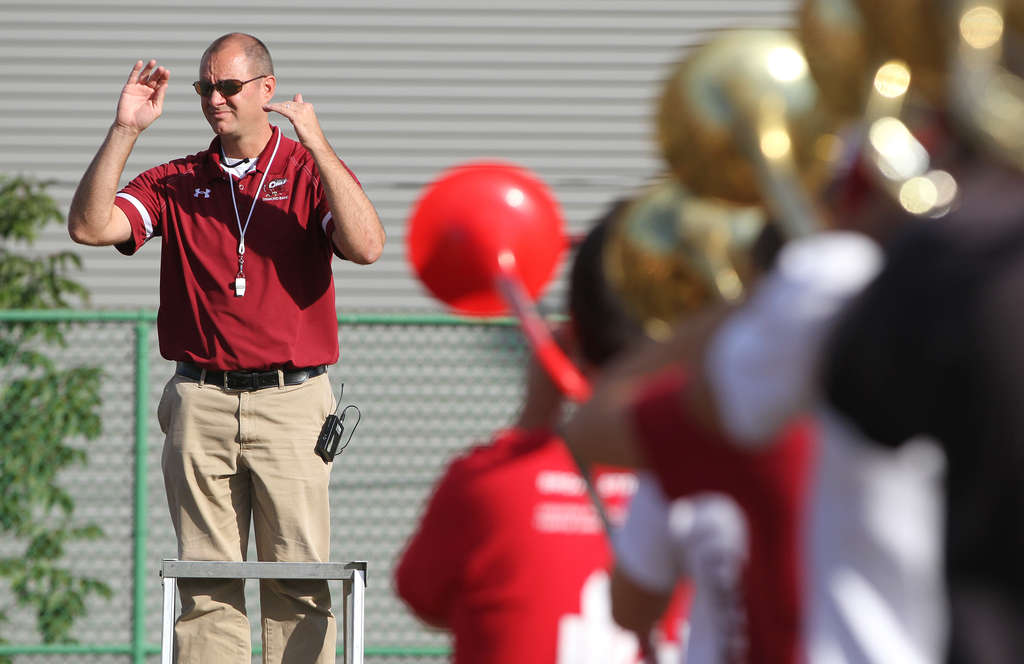
They ran through selections by Taylor Swift and from the movie KPop Demon Hunters while athletic bands director Matthew Brunner studied their sound and formation from a scissor lift 25 feet in the air.
“Notes should be long,” Brunner called out over a microphone after one selection. “Don’t try to play them too short.”
There were few spectators that afternoon. But that’s about to change in a big way.
The 200-member band is one of only 11 that have been selected to participate in the Macy’s Thanksgiving Day Parade in New York City. It’s a first for Temple, which will be the only band from Pennsylvania or New Jersey in this year’s parade. More than 30 million people likely will be watching from home and 3.5 million in person, if prior numbers are any indication.
Members of the Temple University Marching Band prepare to practice. The band will perform in the Macy’s Thanksgiving Day Parade this year.
That’s a lot of exposure for the Cherry and White, which could be a boost for recruitment and fundraising.
“I can scarcely think of a better way to bring visibility to Temple,” said John Fry, Temple’s president.
And that visibility could lead to more people visiting Temple’s website and seeing what the university has to offer, he said.
“It’s going to be incredible for the university,” said Brunner, who initially announced Temple’s band had been selected for the parade in August 2024. “There’s no television event, other than the Super Bowl, that is bigger.”
The excitement is palpable among students, some of whose families plan to attend the parade.
“It’s a once-in-a-lifetime opportunity,” said Erin Flanagan, 21, who grew up watching the parade with her family and notes she wanted to march in it since she was 6. “I mean, the Macy’s parade is iconic.”
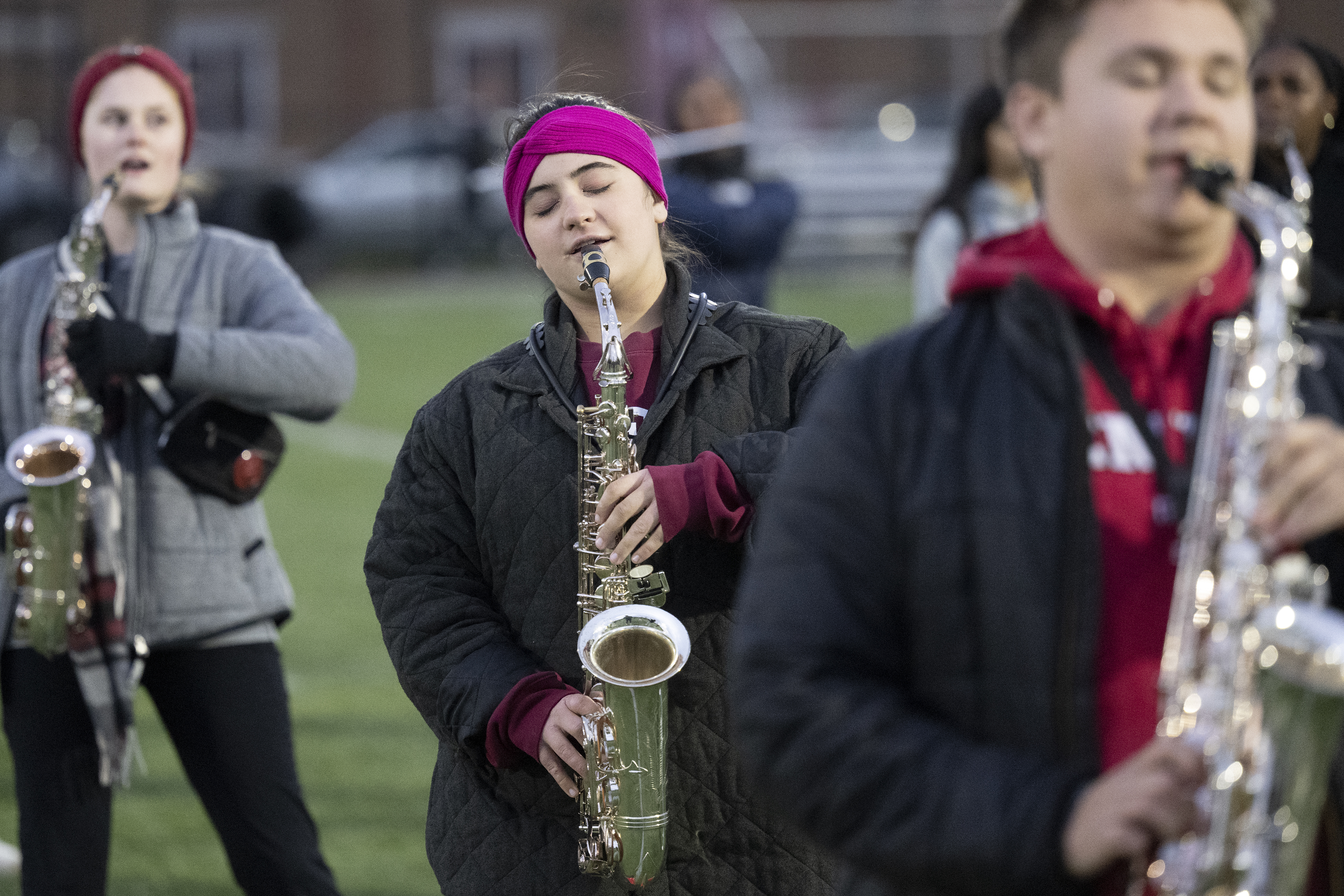
Temple University alto saxophone player Erin Flanagan rehearses with the marching band.
The music education major from Manasquan, N.J., who is a senior, said it likely will be her last performance with the band, and she could not have scripted it better.
“I get to go to this awesome performance and just show everybody what Temple stands for,” said Flanagan, an alto saxophone section leader.
It’s the 99th anniversary of the 2.5-mile parade, which kicks off about 8:30 a.m. on Thanksgiving Day on NBC and Peacock, hosted by Savannah Guthrie, Hoda Kotb, and Al Roker.
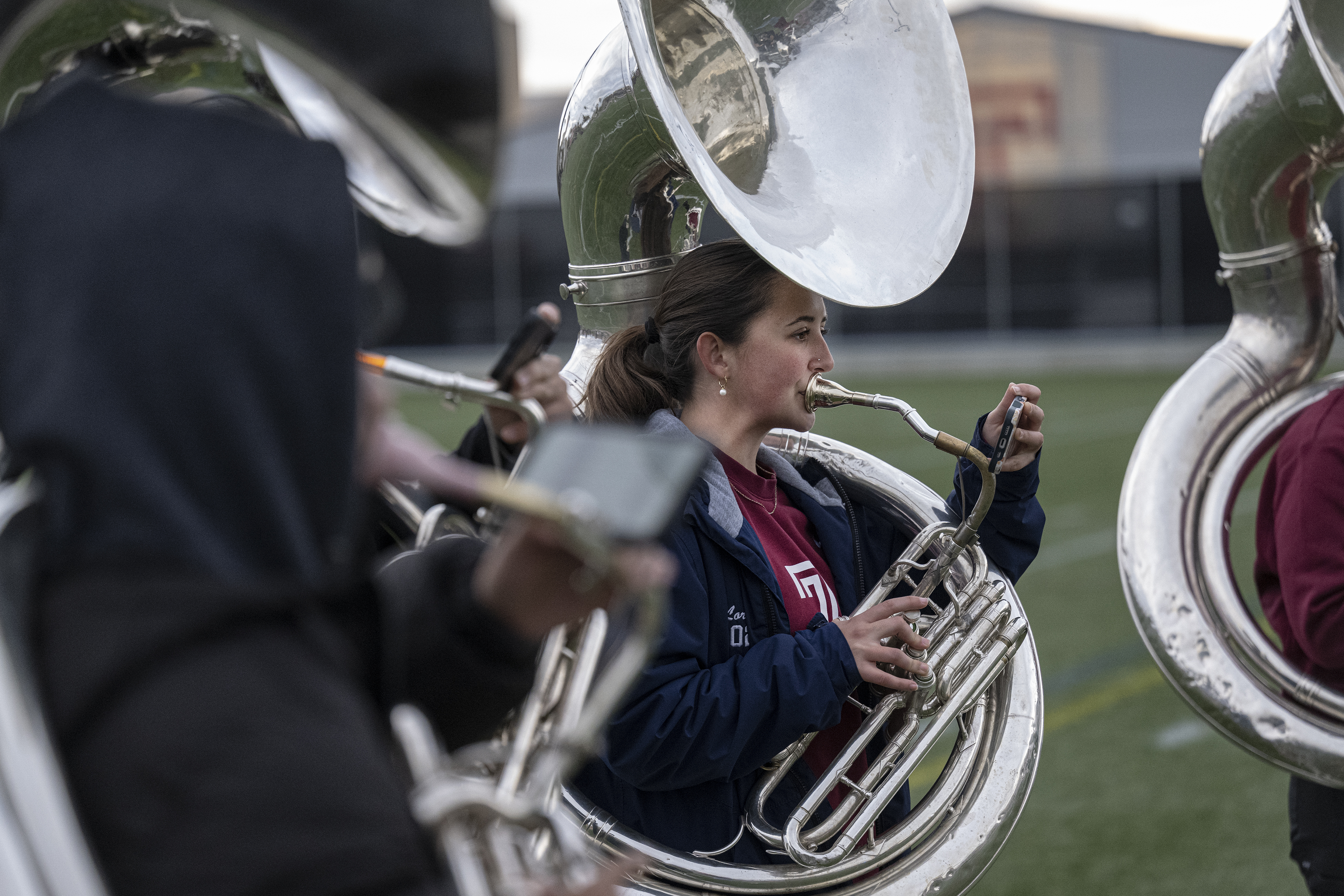
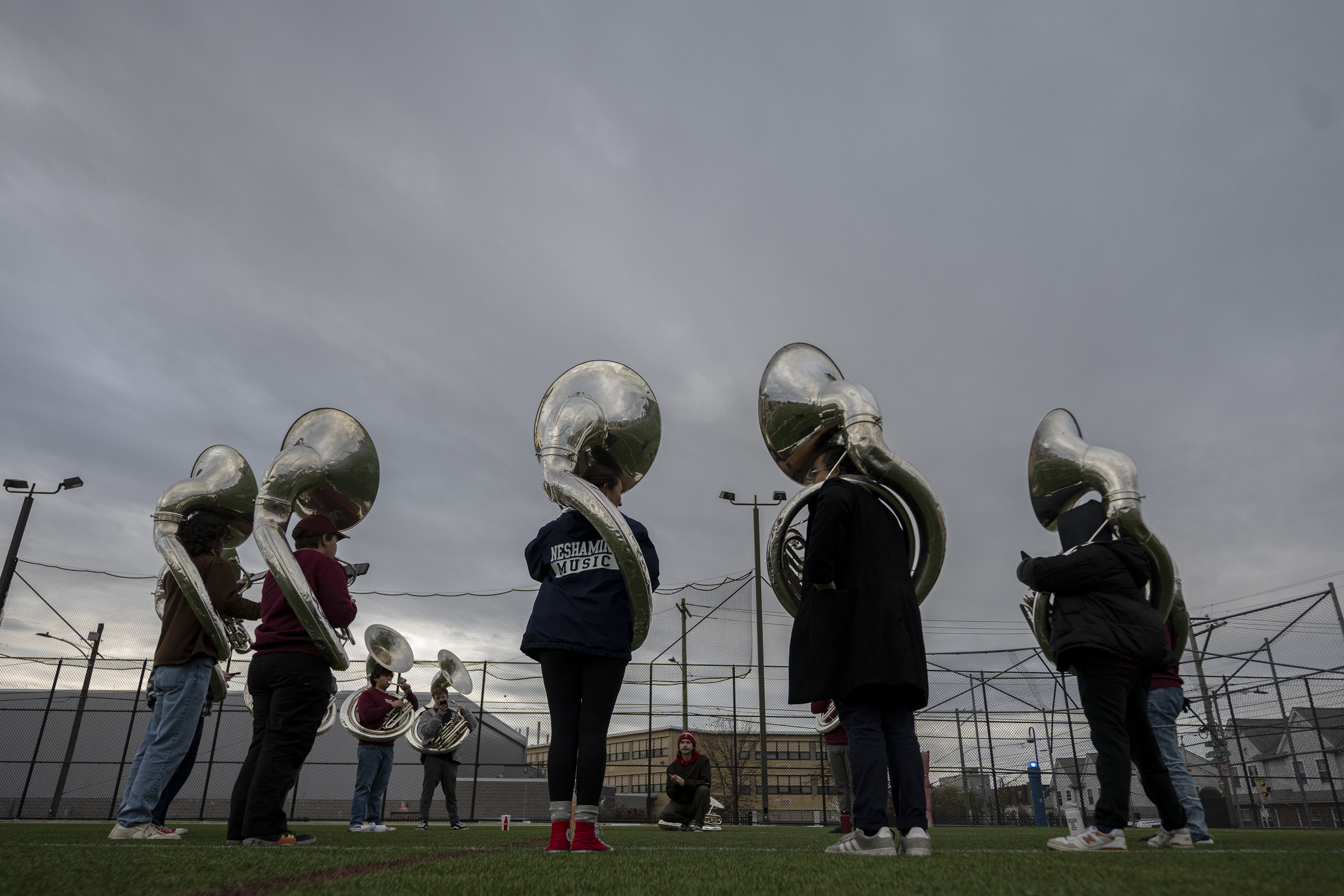
Temple University tuba player Lorali Minde plays the tuba in the marching band.
Lorali Minde, 18, a freshman from Levittown, will be marching while playing the tuba, a 36-pound instrument.
“You kind of get used to it,” she said. “It’s like carrying a really heavy purse.”
Brunner, who has led the marching band for 18 years, said he had applied to be in the parade several times before. It’s a competitive process, with more than 100 applicants vying for a spot. He had to submit video of a performance — he sent the 10-minute show the band did off the Barbie movie soundtrack — pictures of the band in uniform, reasons that Temple deserved a shot, and the band’s resume and biography.
Matthew Brunner, athletic bands director, leads a practice in 2018.
When his wife saw the Barbie show, Brunner said, she texted him: “That’s the show you need to send to Macy’s.”
It proved a winner.
“They loved the fact that the music we play is current,” he said.
The honor comes at a special time for the band, which is celebrating its 100th anniversary. Brunner played that fact up in the application, too.
Under Brunner, the band has grown and has been hitting high marks. Over the years, the school has been recognized as one of the top collegiate marching bands in the nation by USA Today and Rolling Stone, appeared on Good Morning America, The Tonight Show Starring Jimmy Fallon, and an episode of Madam Secretary, and was featured in two Hollywood movies, The Wolf of Wall Street, starring Leonardo DiCaprio, and the remake of Annie. Some of its performances have received millions of views on YouTube, including a 2018 performance of “Idol” by the K-pop group BTS, which currently has more than five million views on Ricky Swalm’s YouTube channel.
The band includes a color guard, a baton twirler, brass and woodwind instruments, a drum line, and a dance team. The group typically practices three times a week for two hours at a time.
Temple University Marching Band tuba players practice.
“The band is infectious,” Brunner said. “When you see them perform, you can’t help but smile.”
Students have been eying the parade opportunity for a while.
When Flanagan was a sophomore, she asked Brunner point-blank: “When are we doing the Macy’s parade?”
Recently, she and her roommates, also band members, have been counting down the days on a whiteboard.
Brunner declined to say exactly what the band will perform on Thanksgiving, but promised a mix of holiday, audience participation, and Temple songs.
“We’re hoping for no wind,” he said.
Temple University Marching Band Color Guard Captain Abigail Rosen practices with her flag.
Abigail Rosen, color guard captain, and her cocaptain are planning an “epic toss” of their flags over other band members, and wind could hinder it, he explained.
“It’s an exchange toss,” said Rosen, 20, a junior advertising major from Abington. “So I toss my flag to Dana [Samuelson] and she tosses her flag to me, and we catch each other’s flags.”
Bands selected received $10,000 from the retailer, which Temple officials said helped them get started on fundraising to pay for the trip.
The band will be heading to New York on Tuesday for an alumni event, then a performance on the Today show Wednesday. Band members will be up in the wee hours of the morning Thursday for a rehearsal, and after the parade, they will be treated by the school to a Thanksgiving dinner cruise along the Hudson River.
Andrew Malick, 20, a music education major from Carlisle, Pa., who plays the tuba, can’t wait.
“It will be cool to say you’ve done it for the rest of your life,” he said.
Jeremiah Murrell, a freshman trumpet player from Savannah, GA, rehearses with the Temple University Marching Band Thursday, Nov. 13, 2025.