2026 BMW iX xDrive45 vs. 2026 Cadillac Vistiq: A lot for a lot?
This week: BMW iX
Price: $96,275 as tested. M Sport Package added $4,500 for a lot of M’s(on the steering wheel, among exterior and interior elements); Executive Package, $3,250 for soft-close doors and more; Driving assistant professional, $2,550. And there’s more, mentioned below.
What others are saying: “Highs: Tranquil cruising, competitive driving range, deluxe cabin. Lows: Busy exterior styling is polarizing, low rear seating position,” says Car and Driver.
Consumer Reports gushed: “We were thoroughly impressed with BMW’s all-electric iX, which is speedy, ultraquiet, and delivers a cushy ride. Even with its complicated controls, the iX earned one of the highest road test scores ever.”
What BMW is saying: “The new age of iX.”
Reality: And this $100,000 model is the low-budget iX.
What’s new: The iX electric SUV is new and improved for model year 2026, BMW says, with a redesigned exterior, cutting-edge technology, and versatility.
Competition: In addition to the Vistiq, there are the Genesis Electrified GV70, Lexus RZ, Mercedes-Benz EQE, Tesla Model X, and Volvo EX90.
Up to speed: Car and Driver reports the iX xDrive45 gets to 60 mph in 4.6 seconds. An M70 version takes just 3.6. It’s still quite fast, but there are other reasons to upgrade. Read on.
Shiftless: A small toggle gets you into Reverse or Drive; there’s a button for Park.
On the road: The iX handles nicely like a good all-wheel-drive EV should. It’s not stellar but it’s smooth and fun. It was actually a little rough on highways.
Vehicle modes are accessed via a touch pad on the console, which gives you a touchscreen full of choices to take your mind and eyes off the road. When you press Sport then there’s an activation dialogue to capture your attention. Who cares about the car that stopped in front of you, the cyclist, the deer, the kid chasing the ball, when there’s all this touchscreen to look at.
The interior of the 2026 BMW iX is striking in red leather. It’s comfortable and spacious but with some quirks.
Driver’s Seat: Here’s another of the iX’s mysteries. The seat is nicely appointed and most comfortable (and on the roomy side), but I was stuck with a lumbar bump that I couldn’t get rid of. The controls are on the door a la old Hyundais but there’s there nothing for lumbar. The touchscreen wasn’t offering any clues either.
The seats do offer massage, and that function helped take my mind off the lumbar issues — and convinced me there has to be a control for it … somewhere.
All this for the bargain price of $3,500, for the leather seats.
Steady speed: The steering wheel controls allow for changing from adaptive cruise to a more intrusive driving assist mode.
All I wanted to do was simply figure out how to set the distance to the next car. It flashed on the screen when I set the system up and then disappeared forever. Because it was set to the farthest distance, cruise control became useless on Philly-region roads, because everyone here will just cut right in front of you. Mr. Driver’s Seat included.
Friends and stuff: The rear seat is comfortable and luxurious, although the backrest is a little recline-y for me. There’s ample room for three people across and for everyone’s legs.
Cargo space is 35.5 cubic feet behind the rear seat and 77.9 with the seat folded.
In and out: The iX is at a nice height so anyone who doesn’t like climbing or bending will be pleased.
Play some tunes: The Harman Kardon stereo system produces among the best sound I’ve heard in a long time. Notes and chords that are buried by normal speakers are allowed to sparkle as intended; this is an A+.
The system is all in the touchscreen or through BMW’s dial and buttons on the console. A volume roller knob on the console just monkeys things up; it’s fairly smooth to the touch and hard to roll. The latter controls remain a favorite and bring this system a step above many other modern BMW offerings (I’m glaring at you, 228).
Keeping warm and cool: Temperature settings are available on the main touchscreen. A small fan icon on the touchscreen opens the larger menu, and I confess for the first couple days I found that HVAC system annoying — it would blow too hard on auto, even on the lowest setting — and then occasionally boil us. In manual mode I had to run the fan at four out of five to get any coolness.
Range: The iX xDrive45 has a range of 312 miles, according to BMW. That jumps to 340 miles in the mid-range xDrive60, and drops back to 302 in the high-performance M70.
Where it’s built: Dingolfing, Germany
How it’s built: Consumer Reports gives the iX a 3 out of 5 for reliability.
Shockingly, Delaware County has only one strip club, Lou Turk’s in Tinicum Township. Not shockingly, it bills itself as “historic” and a “Delco icon.”
Over on Yelp, reviewers call it a “hallowed hall,” “better than expected,” and “the Cheers of the female entertainment industry in the Philly area.”
Now, folks can call Lou Turk’s something else: the Carousel Delco, though the odds that they will actually call it that are exactly zero. It’s as likely as Philadelphians calling the Gallery the Fashion District or anyone saying Columbus Boulevard instead of Delaware Avenue.
A Delco institution for more than 50 years, Lou Turk’s announced it was rebranding via a statement on its social media pages last weekend, prompting comments like “April fools?” “Fake news?” and “This may go down as the biggest travesty to ever occur in Delco … and my god that’s saying something.”
Along with the new name, the club released what appears to be new signage, with the word “CAROUSEL” spelled out using silhouettes of nude women. The establishment also announced recent renovations, new amenities, menu enhancements, and new management. Yeah, new management that did not return my requests for an interview about why this was done.
I have no idea what would inspire someone to name a strip club “The Carousel Delco,” aside from the fact that both have poles. The club’s statement seems to explain why the new name was chosen, but it actually doesn’t. Classic Delco.
“We are still a Delco bar — always have been, always will be,” it reads. “That legacy is exactly why this name was chosen.”
Wait, did Delco bars all used to have carousels inside? If so, I definitely missed this county’s Belle Époque.
When I saw the news, my biggest fear was that one of Delco’s most storied traditions could be in jeopardy — the annual Mother’s Day and Easter flower sales outside of the strip club. It’s been the subject of countless memes and something I’ve used in stories as shorthand to explain Delco culture.
Luckily, whoever wrote the club’s statement anticipated that concern and immediately assuaged all fears:
“We look forward to many more awesome memes along the way … and we will still be selling flowers this Mother’s Day holiday.”
Whew! I mean you wouldn’t want to tell your mom you bought her flowers at the Acme, would you?
Trials and tribulations
The establishment was purchased in the mid-1960s by the late Louis Saddic, who was better known as Lou Turk, a name he picked up as a kid in South Philly, according to a 1983 Inquirer article.
Located in the Essington section of Tinicum, just off of Route 291, the club is situated in between an Irish pub and a Wawa, because of course it is. It’s so close to the Philadelphia International Airport you can see the underbellies of planes flying low overhead, which historically made Lou Turk’s a popular layover spot for travelers. Being near the shipyard didn’t hurt either.
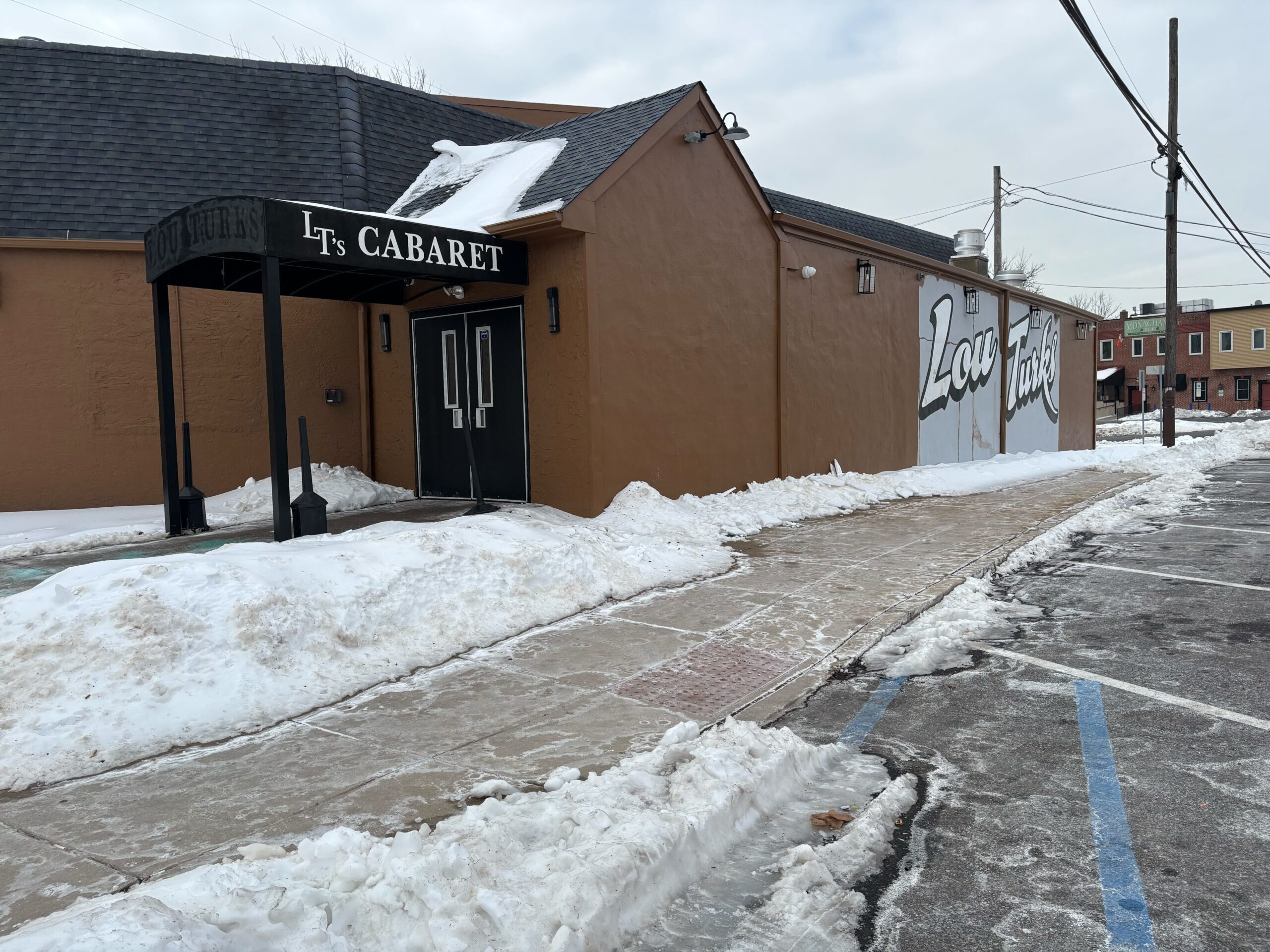
The building itself is a windowless parallelogram painted in a muddy brown, with LOU TURKS plastered in large white letters on a gray patch on the side and “LT’s Cabaret” written on the awning.
Lou Turk’s is at the intersection of Powahatan and Jansen Avenues in the Essington section of Tinicum Township.
It’s unclear if the business was always a strip club, but it definitely was by 1973, when it started to receive citations by the PLCB for “lewd, immoral or improper entertainment,” according to our archives.
In 1983, the club was raided twice, the second time by 55 police officers who confiscated a whopping total of $19 from dancers they claimed had sexual contact with patrons. Turk, who was subsequently hit with prostitution and racketeering charges, vehemently denied the claims, as did five dancers and five other employees arrested in the raid.
William J. Davies, then-deputy district attorney for Delaware County, said at the time of Lou Turk’s: “It won’t reopen” and “We are not going to tolerate this sort of thing out in Delaware County.” Boy, was he off base.
The following year at trial one dancer testified she would “haul off and slug” any patron who tried to get handsy, which tracks for Delco. Investigators who testified used marshmallows and hand puppets to describe what they allegedly witnessed in the club, a Daily News report said.
Turk was represented at trial by the late high-profile attorney A. Charles Peruto Sr., who at one point, while questioning a PLCB agent’s testimony about interactions between a dancer and a patron, “assumed the dancer’s squatting position in front of the jury box and questioned the agent about the physical possibility of the act he had described,” according to an Inquirer article.
It’s unclear if the jurors threw Peruto tips, but what is becoming clear is how the club got its storied reputation in the annals of Delco history.
Turk’s case ended in a mistrial because prosecutors didn’t supply his attorney with the necessary discovery material before the case went to court. You can’t hide anything when prosecuting a strip club.
In 1990, a judge ordered the club to close for a year, after it had racked up a dozen citations between 1975 and 1990, “the longest history of state liquor code violations in the Philadelphia area for lewd entertainment,” The Inquirer wrote at the time.
During the shutdown, the bar operated a sandwich shop with a walk-up window for a few months, but it didn’t cut the mustard.
Lou Turk’s reopened on July 1, 1991, and The Inquirer was surprisingly there on opening day to see a dancer named Gail with palm tree pasties perform to the dulcet tones of ’80s glam metal band Ratt.
The establishment hasn’t made headlines since, according to our archives, aside from a report by unnamed sources that Ryan Howard visited the club in 2008, and several passing references to it in stories about Delco culture by yours truly.
‘Holy mackerel!’
I’m not sure when I first became aware of Lou Turk’s. As a nearly two-decade transplant, it’s the stuff of legends that’s always been here and I’ve always heard talked about, like Wawa or the Lower Swedish Cabin.
Whenever someone asks for a suggestion for the best place to eat or visit on the Delco subreddit or on a local Facebook page, someone inevitably suggests Lou Turk’s, tongue-in-cheek, like they do Woody’s in Philly.
“I think I even got a Lou Turks answer to me asking about vets in the area for my cat lol I died,” one Redditor posted.
“Did the cat survive?” another asked.
“Yeah he got a lap dance and started feeling better.”
Several reviewers on Yelp attest that the club’s food is pretty good. Even Jim Pappas, who’s gained local notoriety for trying and cataloging more than 1,100 cheesesteaks in the tristate area on his Philadelphia Cheesesteak Adventure website and YouTube channel, gave the food a thumbs-up.
“Holy mackerel! Who knew Lou Turk’s would have great food?” he says in his review.
One Yelp reviewer in 2011 even used a cheesesteak analogy to describe the place.
“As far as quality of performers go, think of this place as a cheesesteak shop in comparison to LeBec Fin; you can get a very satisfying quality meal, but it’s not exactly something you’d be bragging about to everyone you meet,” they wrote.
Uncle Lou’s
Changing the name of anything is hard, especially around here, where change is as welcome as the Dallas Cowboys.
But it may be particularly difficult for Lou Turk’s, which is so ingrained in local culture some folks call it Uncle Lou’s.
That’s the great thing about Delco. It doesn’t have famous tourist sites like Longwood Gardens or King of Prussia Mall, but what it has it owns to the bone, including its lone strip club.
Punxsutawney Phil may have seen his shadow on Monday, but spring training waits for no groundhog.
The Phillies’ trucks have been loaded with gear, including thousands of baseballs and one hot dog launcher, and have begun their journey toward Clearwater, Fla. Camp is set to open on Feb. 11, officially starting the long buildup toward October.
Here’s everything to know about Phillies spring training this year:
First spring training game: Feb. 21 at Blue Jays (Dunedin, Fla.)
Spring training home opener: Feb. 22 vs. Pirates (Clearwater)
World Baseball Classic:
Last spring training game: March 23 vs. Rays (Clearwater)
Opening day: March 26 vs. Rangers, 4:05 p.m., Citizens Bank Park
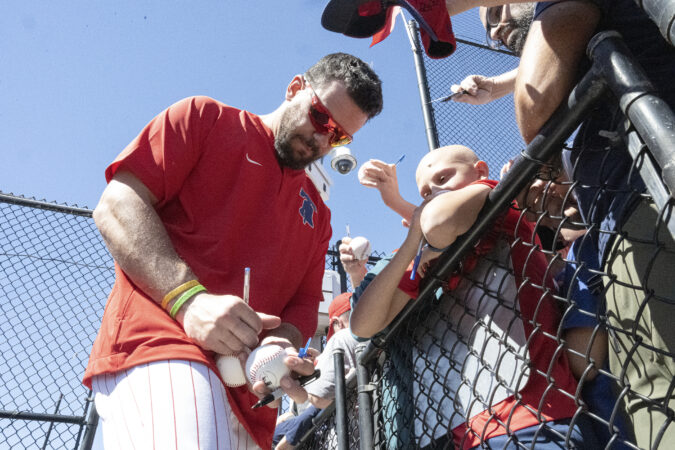
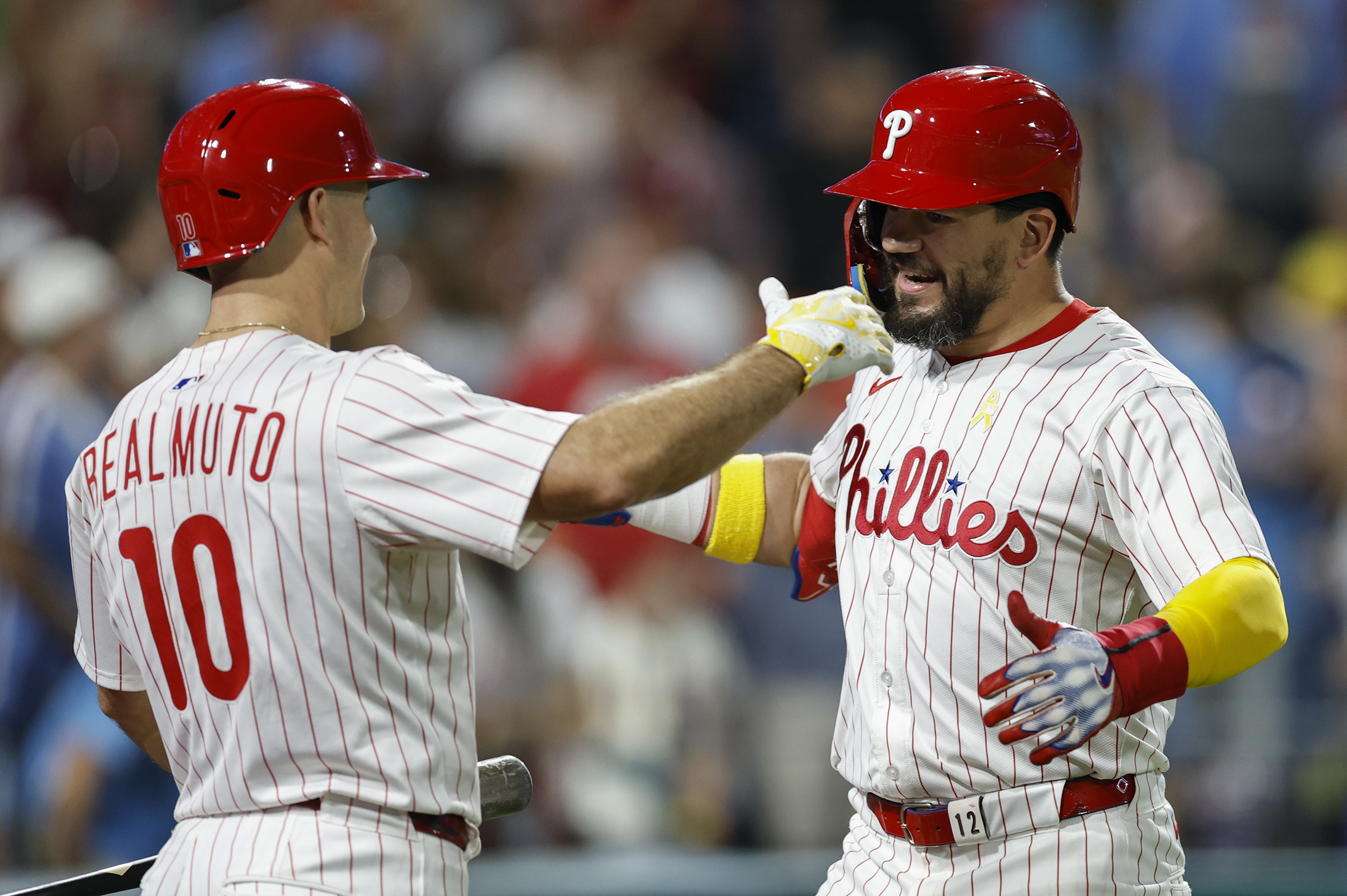
The Phillies’ biggest moves of the offseason were bringing back two members of their core: Kyle Schwarber (right), and J.T. Realmuto.
What additions did the Phillies make?
It was really more about the addition they didn’t make.
When the Phillies went to sleep on Jan. 15, they believed Bo Bichette would be in their lineup for seven seasons after they agreed to his $200 million asking price. By lunchtime on Jan. 16, he signed with the Mets. Dave Dombrowski described it as a “gut punch,” even though the former Blue Jays shortstop wasn’t a consideration for the Phillies until after the holidays.
They prioritized bringing back Kyle Schwarber and J.T. Realmuto, and after signing the former to a five-year, $150 million contract in mid-December, they made an offer to the latter. Talks with Realmuto stalled over money, and the Phillies began considering alternatives. Bichette expressed an interest in switching positions and met with the Phillies over Zoom on Jan. 12.
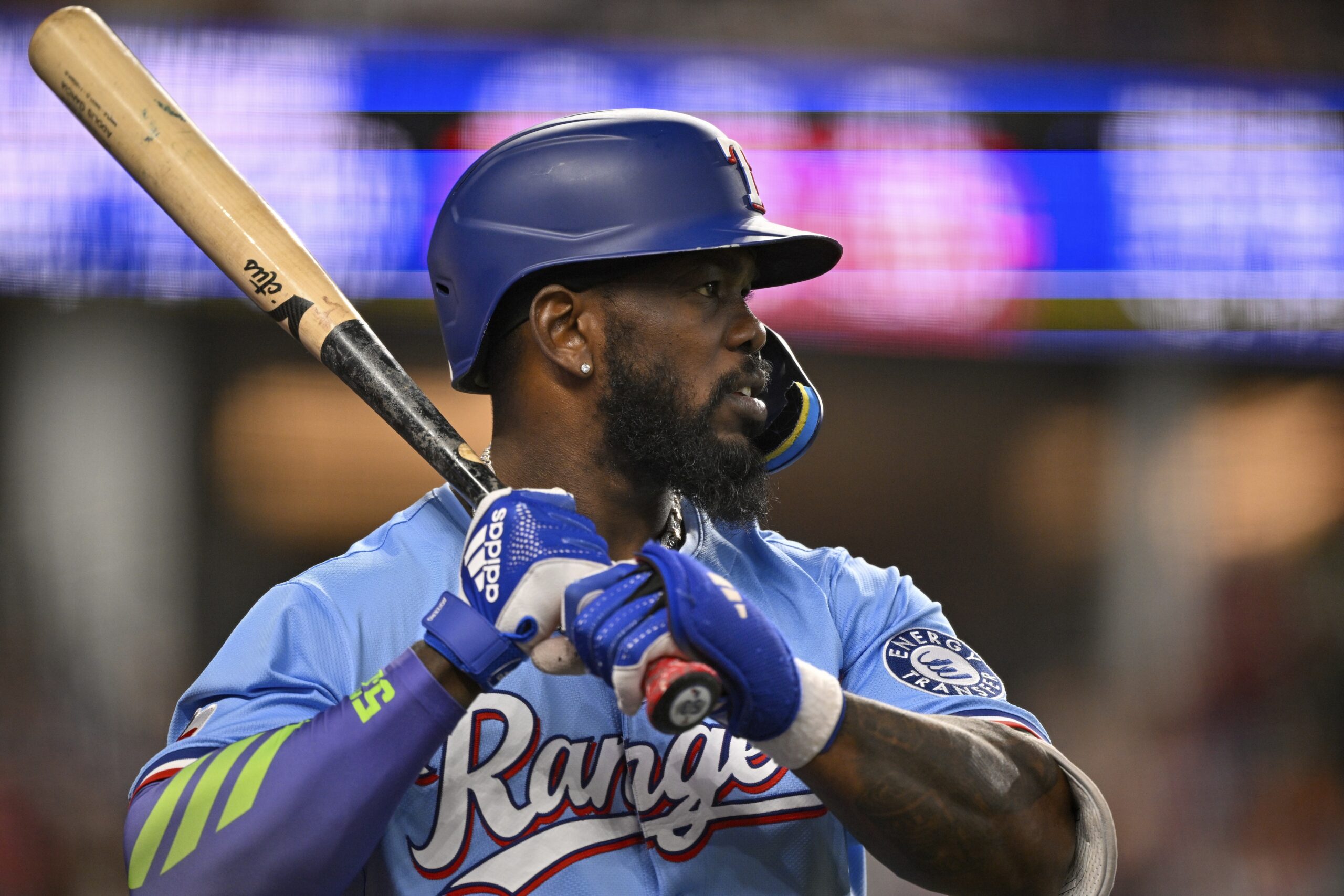
The Phillies are counting on outfielder Adolis García to rebound from a down 2025 season with the Rangers.
Which new Phillie is most intriguing for 2026?
Lauber: Does Justin Crawford count as “new?” Oh, OK, we’ll get to him later. In that case, García. In 2023, he hit 39 homers, got down-ballot MVP votes, and dominated the postseason for the World Series champion Rangers. The Phillies bet on bouncebacks last year from Max Kepler and Jordan Romano and went bust. Will their latest free-agent gamble work out better?
March: Keller. The right-hander had been a starter for most of his career before his breakout season last year as a high-leverage reliever for the Cubs, and he has retained his starter’s arsenal of four-seam, sinker, slider, changeup, and sweeper. That, plus a jump of over 3 mph on his fastball in 2025, makes him an intriguing back-end option in the Phillies’ bullpen.
What did the rest of the NL East do this offseason?
Rooting for the Mets must feel like riding the Coney Island Cyclone. And the last few months surely left fans nauseous, dizzy, and uncertain if they’re really satisfied.
Consider: After going from a 5½-game lead in the division to missing the playoffs in a three-month collapse for the ages last season, the Mets traded Brandon Nimmo and Jeff McNeil and didn’t re-sign Edwin Díaz and Pete Alonso. New Yorkers lost their minds, sure that president of baseball ops David Stearns misplaced his.
But the Mets signed Bichette, relievers Devin Williams, Luke Weaver, and Luis García, first baseman Jorge Polanco, and center fielder Luis Robert Jr., and traded for second baseman Marcus Semien along with ace Freddy Peralta and swingman Tobias Myers.
Are the Mets different? Oh yeah. Are they better? We’ll see.
The Braves hired a new manager (Walt Weiss) and bulked up the bullpen with Robert Suarez and the return of closer Raisel Iglesias. They re-signed shortstop Ha-Seong Kim (out until at least May after hand surgery), traded for utility man Mauricio Dubón, and signed outfielder Mike Yastrzemski.
Two other big moves: The Marlins acquired 23-year-old outfielder Owen Caissie from the Cubs for right-handed starter Edward Cabrera; the Nationals traded top-of-the-rotation lefty MacKenzie Gore to the Rangers, plunging Washington even further into a rebuild under a new, ultra-young front office (36-year-old president Paul Toboni) and manager (33-year-old Blake Butera).
— Lauber
The Mets’ busy offseason included trading for Brewers ace Freddy Peralta.
Which NL East addition will have the biggest impact?
Lauber: Bichette. What, you expected a different answer? If nothing else, the drama will be delicious when Bichette makes his first visit to Philly (June 18-21, by the way). But he’s also a terrific hitter who will be learning a new position on the second-largest payroll in baseball. Get your popcorn ready.
March: Peralta. The collapse of the Mets’ starting rotation was one of the main contributors to their free-fall out of playoff contention at the end of last season. With the Brewers in 2025, the right-hander had a 2.70 ERA over 176⅔ innings and posted the most wins in the National League (17-6). Peralta finished fifth in Cy Young voting and is now positioned to lead the Mets’ rotation.
Zack Wheeler’s return from thoracic outlet decompression surgery is still to be determined.
What are the top Phillies storylines this spring?
Lauber: A year ago, Zack Wheeler would have been my choice to start one game for all the marbles. (Yes, over even Tarik Skubal and Paul Skenes.) Wheeler is now five months removed from thoracic outlet decompression surgery. Every time he picks up a ball in spring training will be newsworthy, not only in determining when he will return to competition but what he looks like when he does. Will he still be an ace of aces?
March: Andrew Painter has been a top storyline for many springs now, from teenage phenom with a chance to make the team to his road back from Tommy John surgery. Well, he’s back now. Painter pitched 118 innings in 2025, all in the minors, never receiving the major league call-up expected in “July-ish.” This will finally be his first normal spring since 2023, and there is a rotation spot up for grabs. Will he earn it?
What’s the Phillies’ biggest roster decision?
Lauber: Although the decision to commit to Crawford was made early in the offseason, it’s about to play out in real time. At 22, he would be the youngest outfielder to make a Phillies opening-day roster since Greg Luzinski and Mike Anderson in 1973. As the Phillies turn over the keys to center field, Crawford will be at the center of attention.
March: The Phillies stocked up on potential bullpen depth this winter, making a host of minor league deals, a few trades, and a Rule 5 selection of McCambley. Six reliever spots are likely spoken for, barring injury: lefties José Alvarado and Tanner Banks, and righties Jhoan Duran, Keller, Orion Kerkering, and Bowlan. There will be some stiff competition for the final two spots.
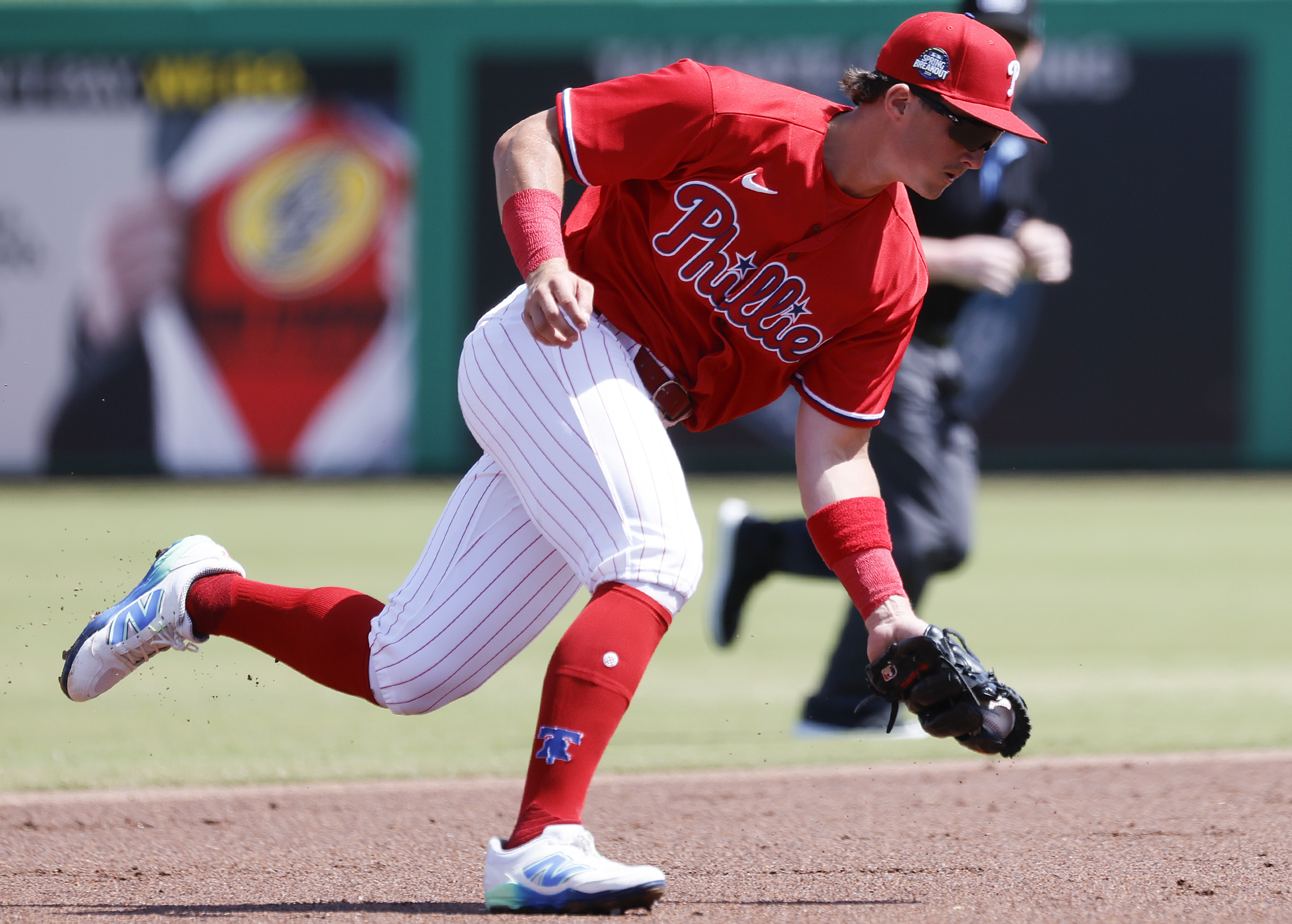
Shortstop prospect Aidan Miller should also get some work at third base this spring.
Which prospect should fans look out for?
Lauber: As you watch Crawford and Painter, don’t take your eyes off Aidan Miller. The Phillies intend to expose the 22-year-old shortstop to third base in spring training, but it will be interesting to see how much third he actually plays — and how fast they push him if he starts hot in triple A and/or Alec Bohm falters again in April.
March: Gabriel Rincones Jr. made a big impression last spring with a couple of towering home runs. The outfielder was added to the Phillies’ 40-man roster ahead of the Rule 5 draft, and he could get a major league look at some point in 2026. Rincones, who will be 25 next month, struggles against left-handed pitching, so any opportunity would likely be in a strict platoon. But he has some big power potential against righties.
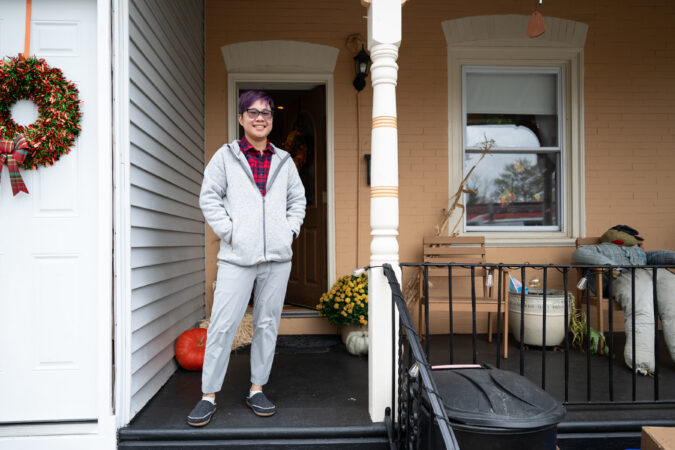
After living in small apartments in Queen Village and Rittenhouse Square, Cooper Lee Kidd was ready to start shopping for his first home.
The Washington, D.C., native, who works in banking and volunteers for the Philly Goat Project, wanted more indoor space and more yard for gardening and entertaining friends. He purchased his home one day before his 30th birthday.
“This is the first house that we saw,” Kidd said on an autumn afternoon. The light from his living room window highlighted a strand of his purple hair. “I looked at another one, a rowhouse in South Philly, but it was literally sinking into the ground. We came back to this one.”
The 900-square-foot rowhouse, nestled near the end of the block in East Mount Airy, was thoughtfully designed, he said. The home, outfitted with hardwood floors, tall ceilings, and lots of natural light, felt less cookie-cutter and industrial than the many other houses he saw online. Most important, he said, it was located in a progressive neighborhood with a strong sense of community.
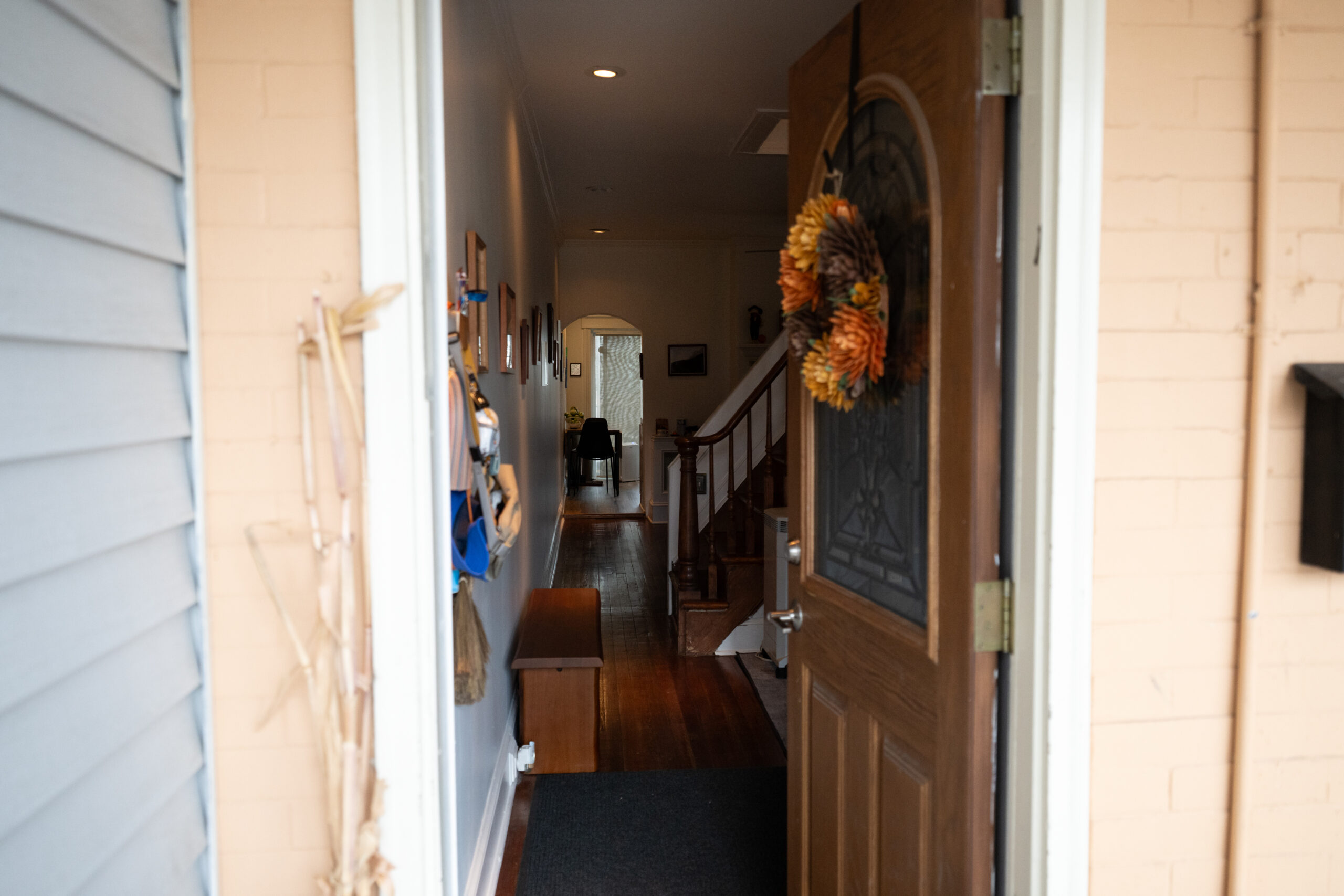
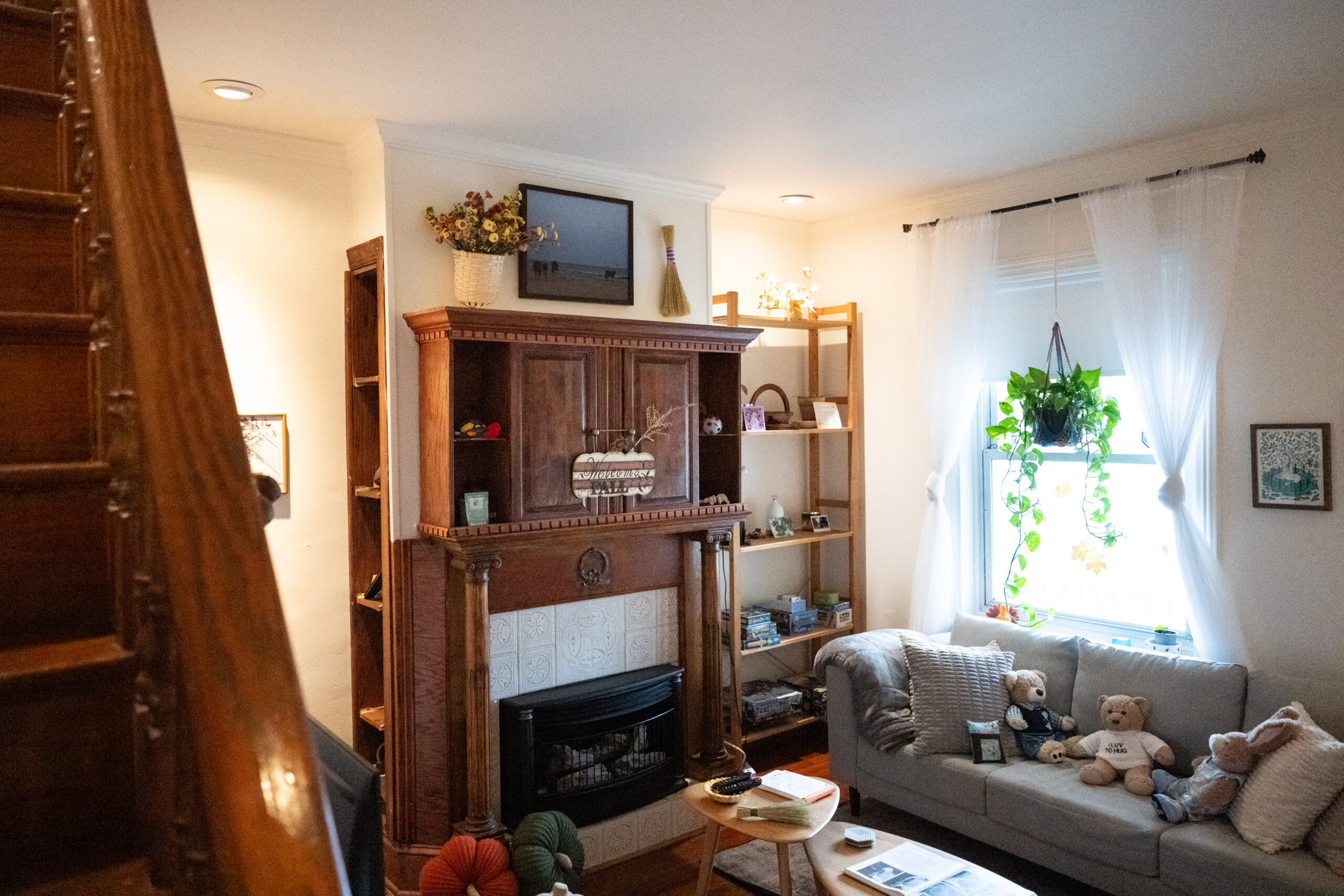
The entry to Kidd’s rowhouse.The living room, where a plant in the window enjoys the afternoon sun.
“I wanted to be very intentional about moving to the area. I didn’t want to live in a neighborhood that was all white. It’s also very economically diverse and that was very important to me,” he said. “Plus, you are near public transportation. You are near nature. There is so much happening here.”
In the front room, a large ornate mantel anchors the space. A decorative leaded glass door leads to a cozy porch. He painted the porch black and decorated it with a pride flag and corn that he grew in the backyard.
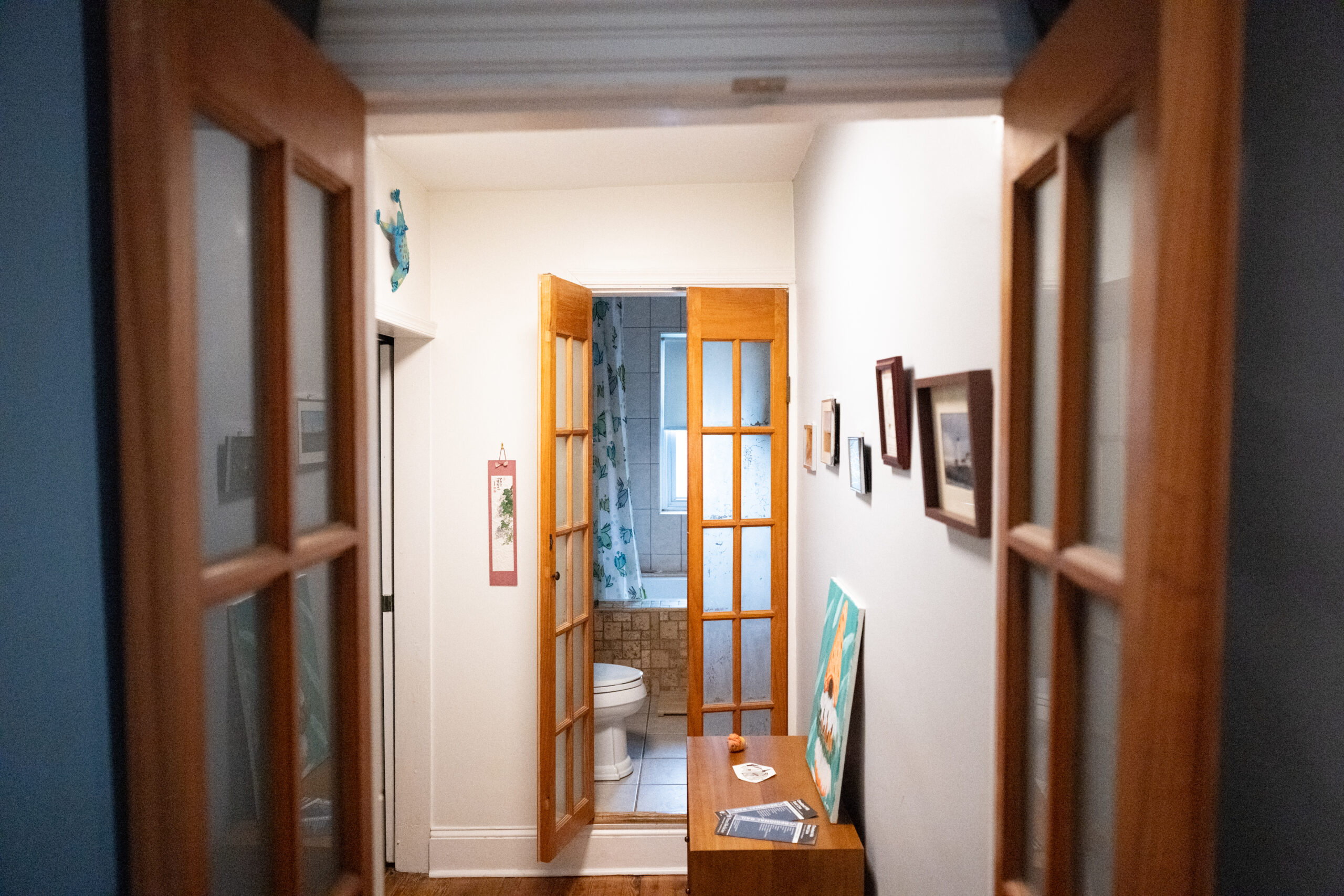
A steep set of stairs divides the living room and adjacent dining room, which like other areas of the home are decorated with Kidd’s photography, including images from his trips to Zion National Park, Assateague Island, and Chicago. Rustic wooden doors lead to a bathroom, which used to be a closet, and to the basement. The dining room boasts decorative tile, a large cabinet, and dining table.
“The previous owner left a lot of furniture. He got out of here very fast,” Kidd said. The owner, who moved out of the country, left the dining room cabinet, the TV stand, a bed frame, and even a French sports car that he tried to sell to Kidd.
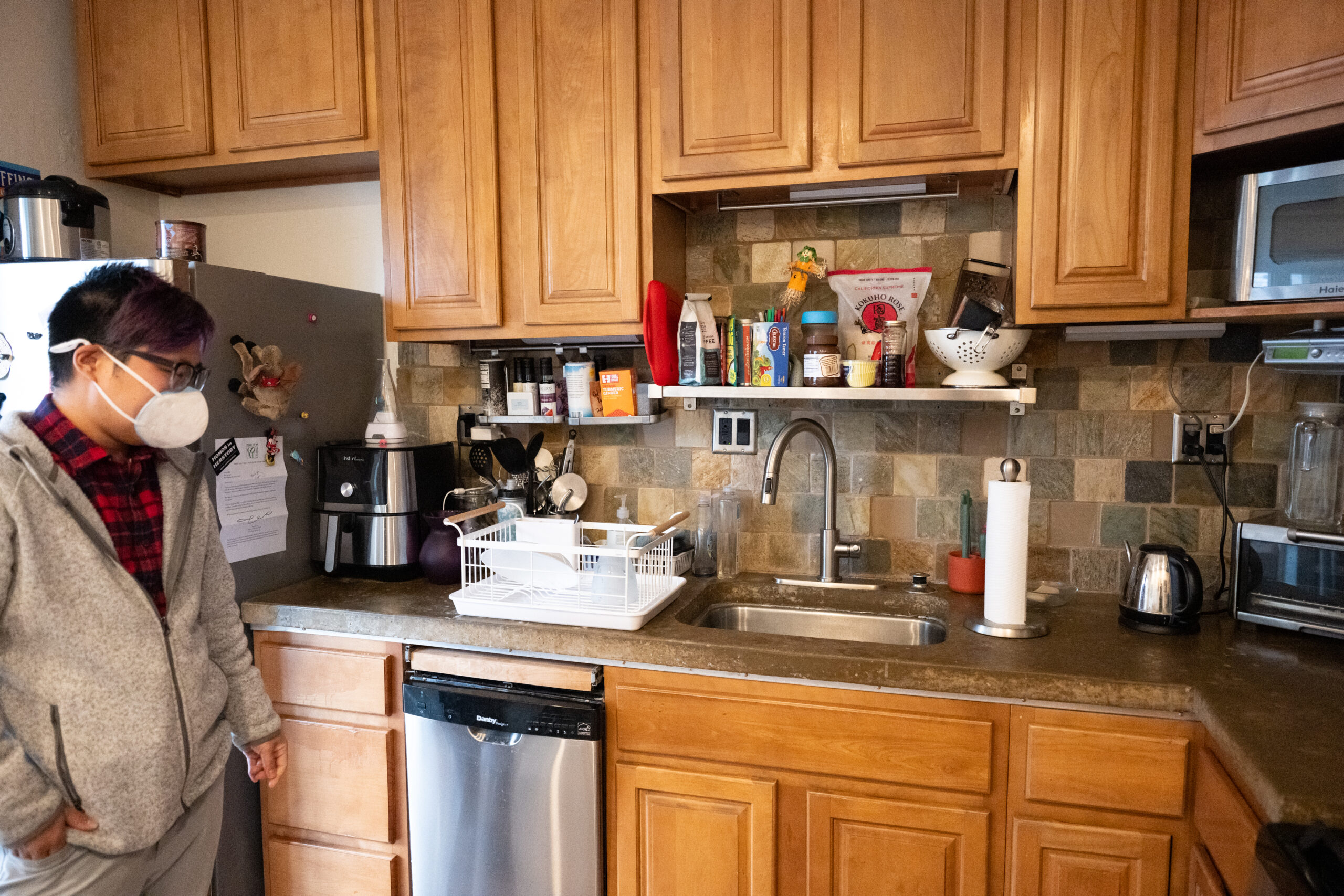
The larger kitchen with a dishwasher was an upgrade for Kidd.The upstairs landing and bathroom.
Kidd didn’t buy the car, but he was grateful for the furniture. “It’s very expensive to furnish a home.”
In the back of the rowhouse, the spacious L-shaped kitchen came with oak cabinets, concrete countertops, and a dishwasher. While he’s not a huge fan of the countertops, Kidd said he was grateful for the upgrades.
“When I was in Rittenhouse, I had to wash dishes in the bathtub,” he said.
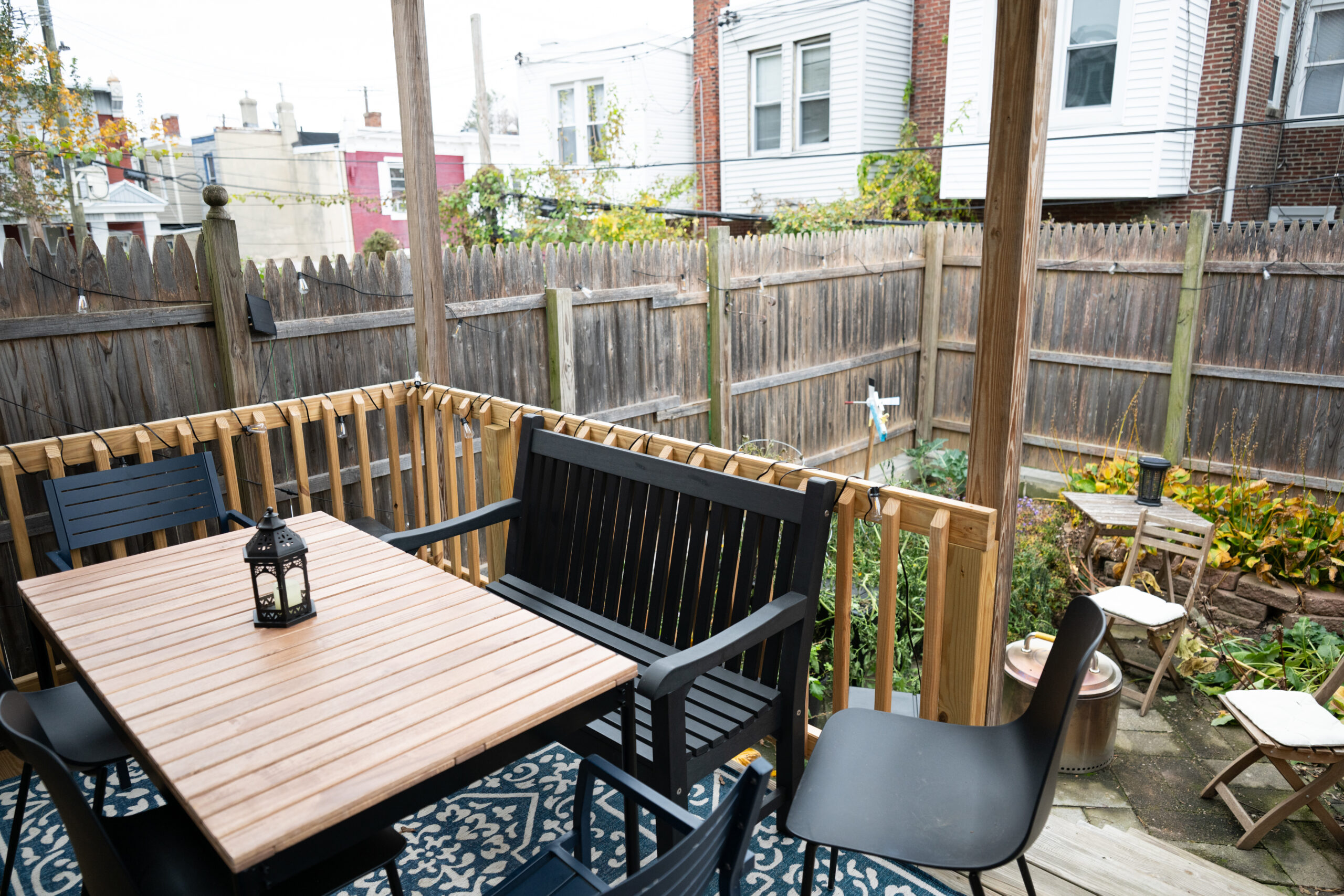
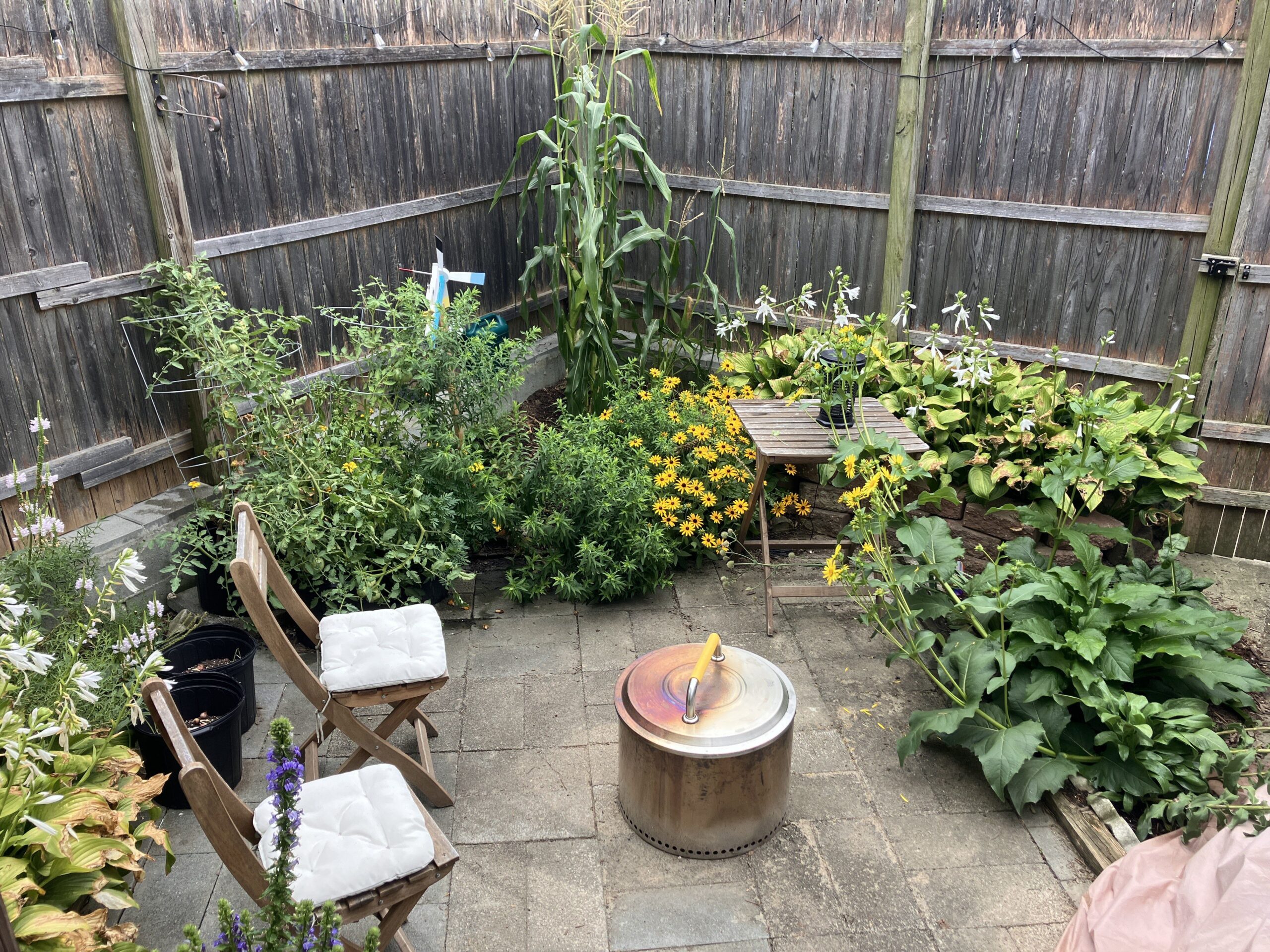
Double doors lead to a quaint deck, wooden pergola, and postage-stamp yard.
The outdoor space was a major draw for Kidd. It took him weeks to clean out the yard, but he was able to grow several plants during his first summer in the home.
This past summer, Kidd spent some free time growing broccoli, kale, tomatoes, and native plants, purchased from local business Good Host Plants. It had taken weeks to clean out the trash that the previous owner had left in the yard.
“I had never gardened before,” Kidd said. “I grew up in a normal suburban home. My parents gardened. I don’t think my brother and I were interested at the time.”
The last batch of tomatoes Kidd harvested from his backyard garden is piled into bowls in his kitchen.Kidd’s garden during the summer, as the flowers were blooming. He worked to clear out the yard and make space for plants and seating after moving in.
Kidd attended the University of Maryland for his undergraduate degree in sociology. He went on to work for the Children’s Hospital of Philadelphia for several years, studying HIV in adolescents, before the grant funding his work was cut. He then returned to graduate school at the University of Maryland. In 2022, he started his current job in banking and finance.
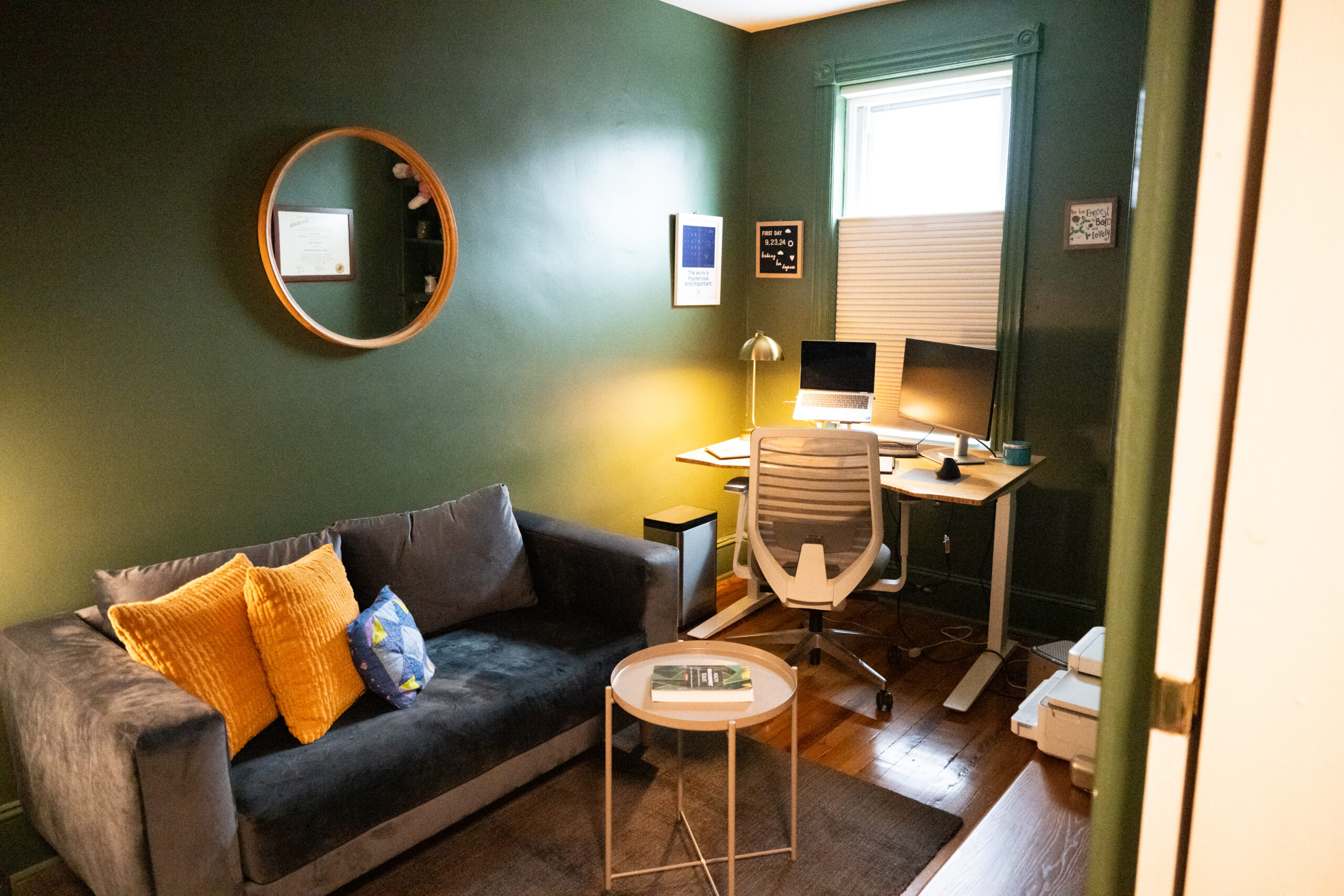
He uses the second bedroom upstairs as his office. Painted a moody hunter green, the office is outfitted with built-in bookcases and a charming pocket door.
The front bedroom faces a historic cemetery. The open space provides for a nice view.
“The Realtor joked that I could commune with my ancestors,” he said. “But you get a really nice sunrise and sunset. There’s no obstruction.”
The home office is made cozy with a velvety couch and throw pillows.
Kidd is grateful the city and neighborhood even has affordable and attainable homes for someone his age.
“This home feels very cozy, so much more than the apartments. It feels like mine.”
Is your house a Haven? Nominate your home by email (and send some digital photographs) at properties@inquirer.com.
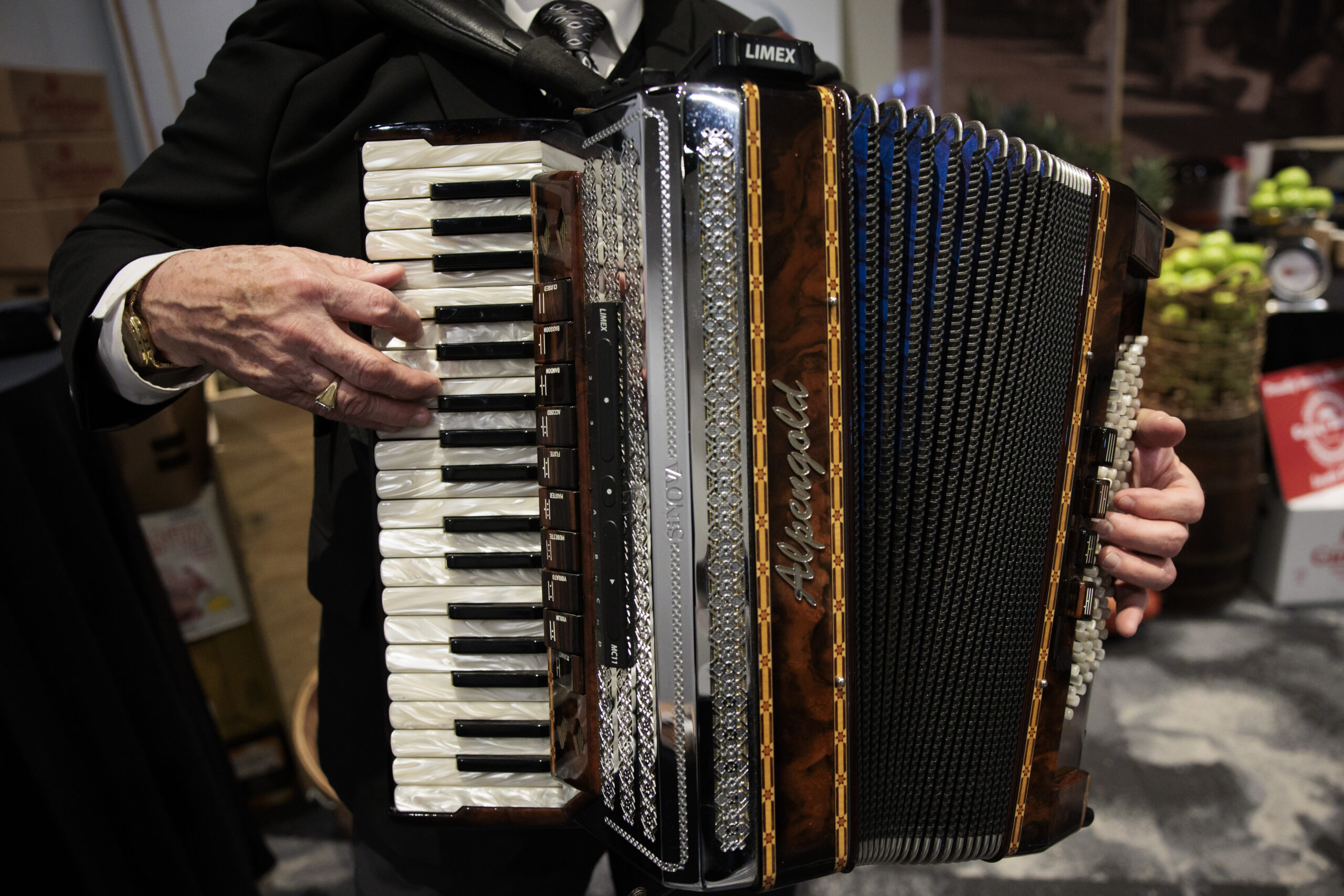
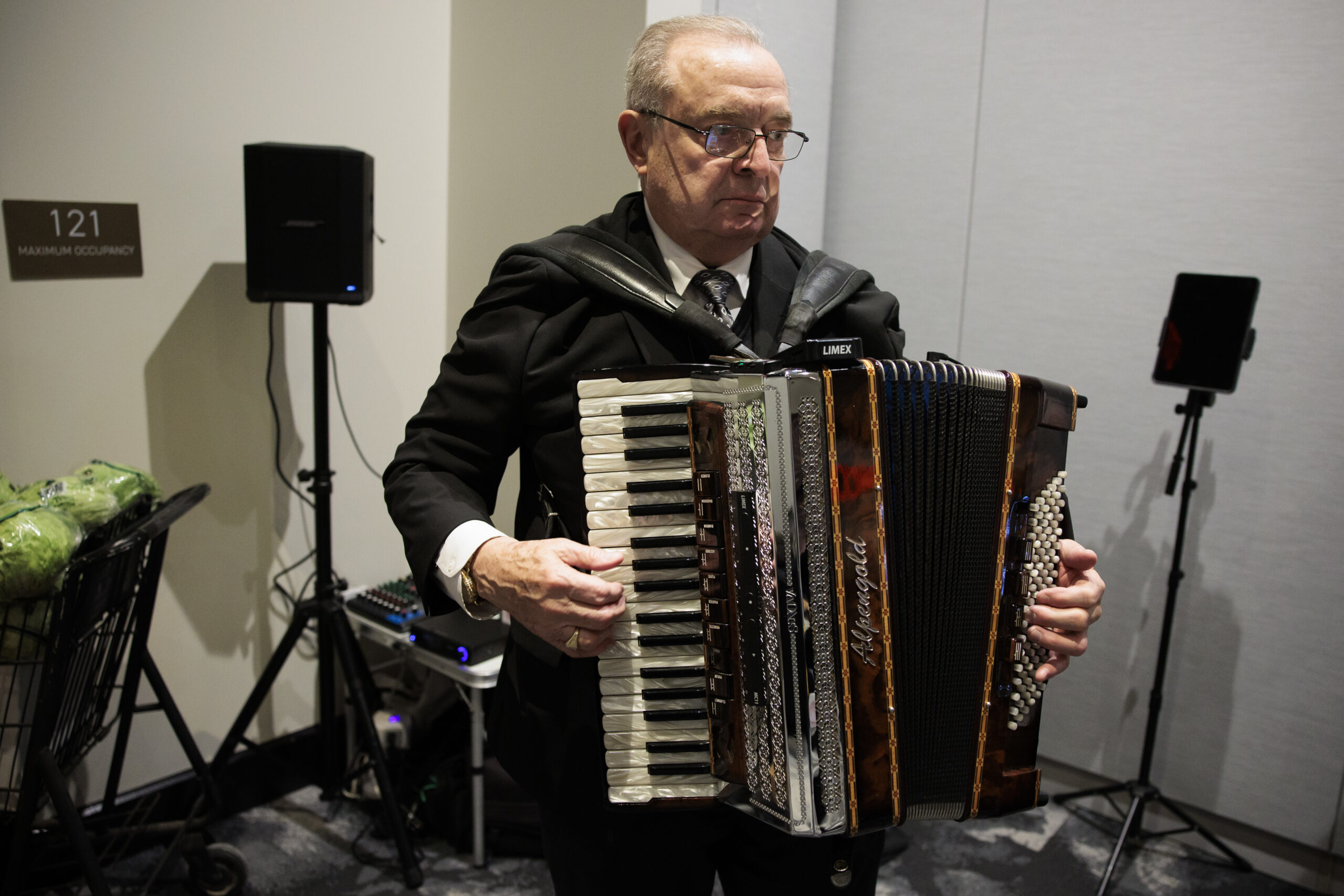
Don Bitterlich’s Chevy Caprice was loaded with everything he needed for his gig that night at an Italian restaurant in Northeast Philly: an accordion, a speaker, and a pair of black slacks.
He learned to play the accordion as a 7-year-old in Olney after his parents took him to a music shop on Fifth Street and he struggled to blow into a trumpet. His father pointed to the accordion, and Bitterlich played it everywhere from his living room on Sixth Street to Vitale’s on Saturday nights.
The owner of Vitale’s — a small restaurant with a bar near Bustleton and Cottman Avenues — paid Bitterlich $175 every Saturday. It was a lot of money for a college student in the 1970s. First, he had to finish football practice.
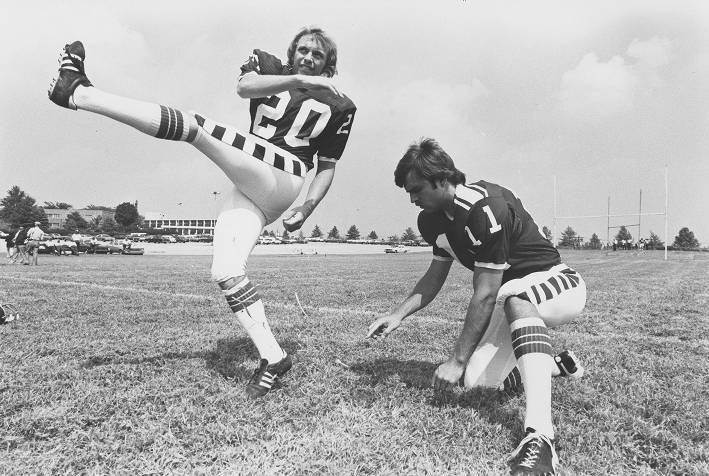
Bitterlich went to Temple on a soccer scholarship before football coach Wayne Hardin plucked him to be the placekicker. He never even watched a football game, but soccer coach Walter Bahr — the father of two NFL kickers — told Hardin that Bitterlich’s powerful left leg was fit for field goals.
Bitterlich went to football camp in the summer of 1973, while also playing soccer for Bahr and trying to keep up with his accordion. He had yet to officially make the football team that August, so there was no use in canceling his 10 p.m. Saturday gig at Vitale’s. Bitterlich was due to play there in 90 minutes, but the Owls had yet to include their kicker in practice. He was hoping to leave practice by 8:45 p.m., and it was almost time.
“I’m watching the clock,” Bitterlich said.
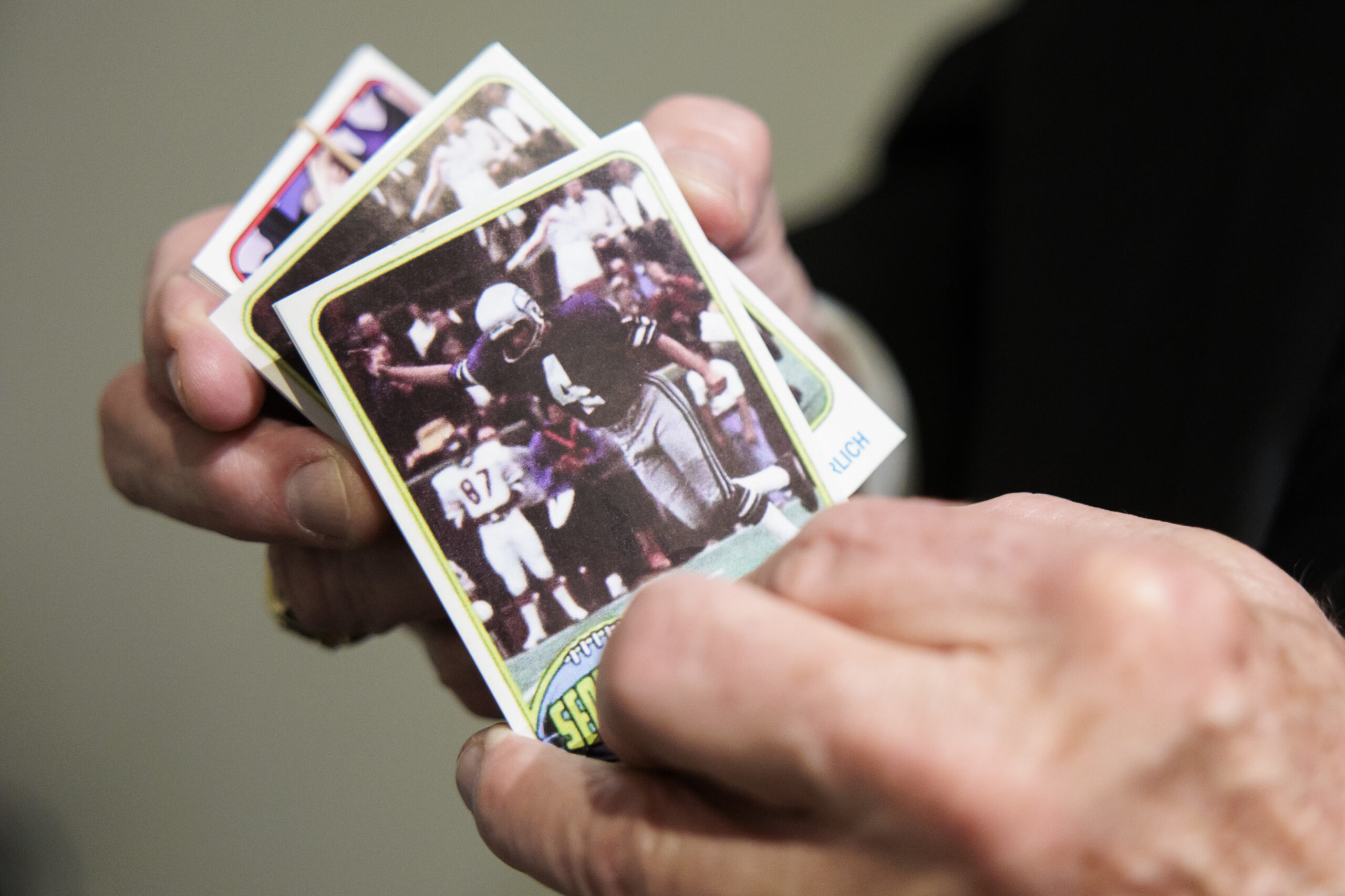
Don Bitterlich holds his Seahawks football card. He scored the first points in Seahawks history as a kicker.
He asked an assistant coach if the team was going to kick, and the coach shrugged him off. A half-hour later, he asked again. He had to go, Bitterlich said.
“He said, ‘Go where?’” Bitterlich said.
Bitterlich set records at Temple, played in an all-star game in Japan, was in his dorm when he was selected in the 1976 NFL draft, and scored the first-ever points for the Seattle Seahawks, who play Sunday in Super Bowl LX against the New England Patriots.
He made it to the NFL despite knowing little about football until he became Temple’s kicker. It was a whirlwind, he said.
He really made his name with the accordion, the instrument he’s still playing more than 50 years after he had to rush to a gig from football practice.
He has long been a regular at German festivals, restaurants, banquets, and even marathons. A German club in the Northeast called Bitterlich “the hardest working accordion player in the world.” He played a gig on Sunday night in South Philly and another on Monday morning near Lancaster.
Bitterlich, 72, who worked as a civil engineer until retiring last year, said he played more than 100 gigs in 2025. Football stopped years ago, but the show rolls on.
“These days,” he says, “most people around hear me playing the accordion, and they don’t know that I kicked in the NFL.”
Becoming a kicker
Bitterlich was home in Warminster — his family moved from Olney just before his freshman year at William Tennent High — when Bahr called. The Temple soccer coach had been a star on the U.S. team that upset England in the 1950 World Cup and was one of the best players to come out of Philadelphia.
“He had this raspy voice,” Bitterlich said. “He smoked cigars during practice and basically chewed and ate half of it as well. He always called me ‘Bitterlich’ but called me ‘Donald’ if I screwed up.”
Don Bitterlich (20) at Temple, likely during the 1975 season.
So Bitterlich figured he was in trouble when his coach called him “Donald” on the phone.
Bahr asked Bitterlich whether he knew who Hardin was. Yes, he said. Bahr said he had just talked to the football coach and told him Bitterlich could kick. The coach had watched Bitterlich since he played soccer for Vereinigung Erzgebirge, a German club his grandfather founded off County Line Road. He told Bitterlich he could do it.
“So I said, ‘No soccer?,’” said Bitterlich, who was also the mascot at basketball games in the winter. “‘No, you’re my starting left midfielder.’ I was thinking, ‘How is this going to work?’”
Bahr told Bitterlich to call the football office, get a bag of balls, and start kicking. He kicked every day at the German club and tried to figure it out. He was soon splitting his day between football camp in Valley Forge and soccer camp at the old Temple Stadium on Cheltenham Avenue in West Oak Lane. Each sport practiced twice a day and Bitterlich found a way to make them all.
He played a soccer game that season in Pittsburgh, flew home with the team, and then took a taxi from the airport to Temple Stadium to kick for the football team. He was studying civil engineering and balancing two sports plus his accordion.
It eventually became too much. Hardin told Bahr that he would give the kicker a full scholarship to play football. That was it.
“With the football scholarship, I got room and board,” Bitterlich said. “So I was living on campus after commuting from Warminster. It was insane. I was so worn out.”
Making history
Bitterlich kicked a game winner in October 1973 against Cincinnati as time expired, made three kicks at Temple longer than 50 yards, and was the nation’s top kicker in 1975. The soccer player made a quick transition.
“Coach Hardin always said, ‘If I yell ‘field goal,’ I expect three points on the board,’” said Bitterlich, who was inducted into the Temple Hall of Fame in 2007. “He expected that. The point of that was that he trusted you. That was his way of saying, ‘I’m not asking you to do anything that I don’t think you can do.’”
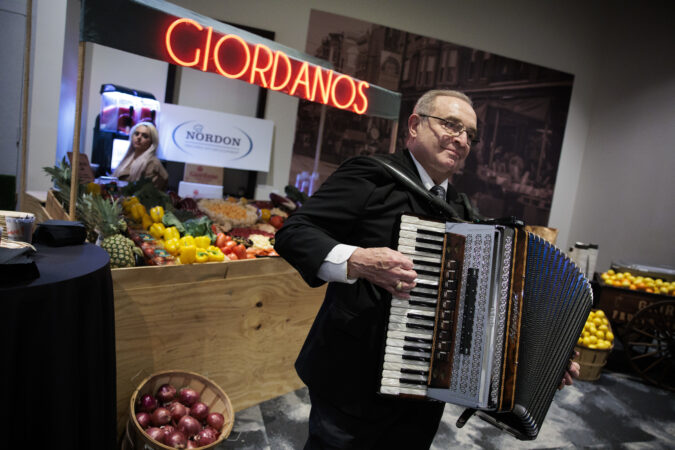
Don Bitterlich performs with his accordian on Sunday during The Tasties at Live! Casino.
The coach helped Bitterlich understand the mental side of kicking, challenging him in practice to focus on the flagpole beyond the uprights. Try to hit the flag, he said.
“That had a huge mental impact on me,” Bitterlich said. “You have that image, and then when you do your steps back and you’re set, that’s all you can see. It made all the difference in the world for me. Once you have that image, you zone out any of the noise. You’re just focused on that image.”
It helped him focus in September 1976 when the Seahawks opened their inaugural season at home against the St. Louis Cardinals. They drafted Bitterlich five months earlier in the third round. The Kingdome’s concrete roof made the stadium deafening, but Bitterlich felt like he was back in North Philly practicing at Geasey Field as he focused the way Hardin taught him to.
He hit a 27-yard field goal in the first quarter, registering the first points in franchise history. The Seahawks had quarterback Jim Zorn and wide receiver Steve Largent, but it was the soccer player who scored first.
Bitterlich’s NFL career didn’t last long, as the Seahawks cut him later that month after he missed three field goals in a game. He tried out for the Buffalo Bills, but a blizzard hindered his chances. He signed with the Eagles in the summer of 1977, missed a field goal in a preseason game, and was cut.
He landed a job as a civil engineer in Lafayette Hill. He received a call on his first day from Eagles coach Dick Vermeil, who said the San Diego Chargers wanted to try him out. Bitterlich flew to California the next day but turned down a three-year NFL contract that would pay him only slightly more than his new job back home.
“Plus, the real reason I turned down their offer was that they couldn’t hold for a left-footed kicker,” Bitterlich said. “Their holder just couldn’t get the ball down. I didn’t want to sign that contract. ‘What’s going to happen in two days when that guy can’t get the ball down?’”
A week later, the San Francisco 49ers called. He flew back to California, tried out against another kicker, and was told he won the job. But the 49ers decided to sign Ray Wersching, who had been cut the previous season by the Chargers. Bitterlich turned down the chance to replace Wersching in San Diego, and now Wersching was swooping in for the job Bitterlich wanted in San Francisco.
“I went back home and said, ‘That’s enough,’” said Bitterlich, who played three NFL games. “It started to get disappointing.”
“I love to play,” Bitterlich says of his accordion. “I usually don’t take breaks. Most bands will play 40 minutes on, 20 minutes off. I just play through.”
Still playing
His NFL journey was hard to imagine that day at practice as he watched the clock at Temple Stadium and thought about how long it would take to drive to Vitale’s. Bitterlich told the assistant coach that it was almost time to play his accordion. That, the coach said, was something he would have to talk to Hardin about. Fine, Bitterlich said.
“I didn’t know if I was going to make the team or not, and I knew I was going to play soccer,” Bitterlich said. “So I just went over and told Coach.”
Hardin heard his kicker say he had to leave football practice to play the accordion and laughed.
“He said, ‘Yeah, I heard something about that,’” Bitterlich said.
The coach stopped practice and let Bitterlich get in the mix. He nailed six field goals and the other kicker shanked a few. The job felt like his. He hit a 47-yarder and looked over at Hardin.
“He’s like, ‘Yeah, yeah. Go ahead. Go,’” Bitterlich said.
Bitterlich was soon in his Chevy Caprice, heading down Cottman Avenue on his way to Vitale’s. He wasn’t late to his accordion gig that night. His football career would end a few years later, but the music has yet to stop.
“I enjoy it,” Bitterlich said. “I love to play. I usually don’t take breaks. Most bands will play 40 minutes on, 20 minutes off. I just play through. I really don’t take a break. I love it.”
Paging through the bulky Sunday Inquirer on Nov. 28, 1976, readers encountered a sports section that might have been compiled in Mount Athos, the tiny Greek republic that’s been off-limits to women for centuries.
It was stuffed with man’s-world staples — stories, stats, and standings on the NFL, NHL, pro and college basketball. There were columns on hunting, golf, boys’ high school sports; features on boxing, men’s cross-country, minor league hockey; an entire page devoted to horse racing.
The ads were no less macho-flavored, promoting car batteries, rifles, tires. A prominent one hyped January’s U.S. Pro Indoor Tennis Championship at the Spectrum with its lineup of “50 of the world’s top male pros.”
About the only indications that women participated in sports were an account of a West Chester State field hockey game and, buried on the gray scoreboard page, a truncated leaders’ list from that weekend’s LPGA tournament.
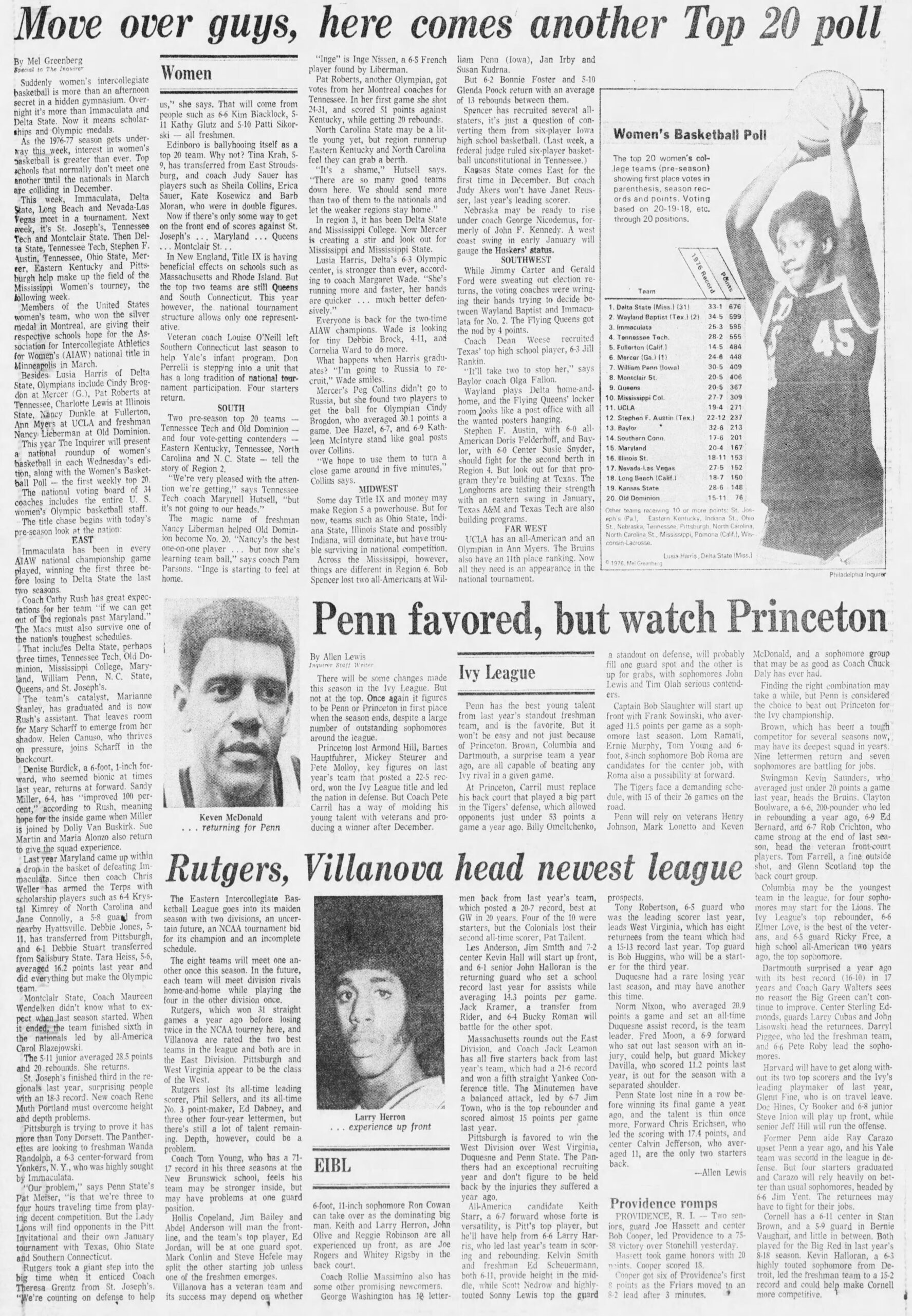
But for those who reached Page 16, a strange interloper awaited. Sandwiched between two men’s basketball previews, as if editors thought it incapable of standing alone, was one of the earliest and most consequential harbingers of a bubbling sports revolution — the first women’s college basketball poll.
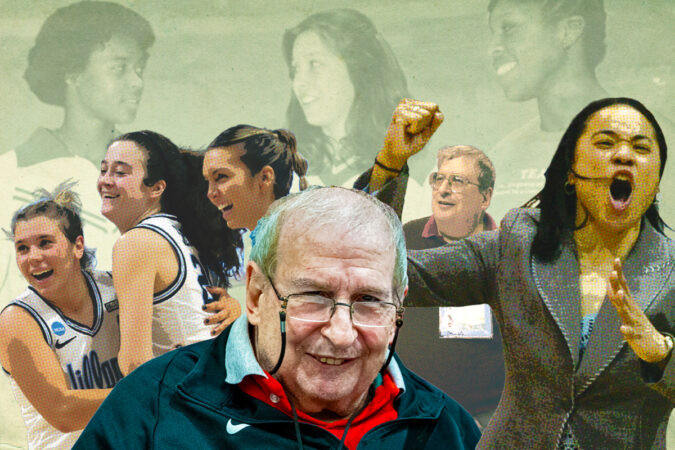
Conceived by then-Inquirer sports editor Jay Searcy and obsessively nurtured by a Temple-educated newspaper clerk named Mel Greenberg, its headline read like a polite plea for recognition: “Move over guys, here comes another Top 20 poll.”
A clipping from the Nov. 28, 1976, edition of The Inquirer that features the first installation of what became the AP women’s basketball poll.
It came. And it stayed. Week after week, year after year, Greenberg’s poll accumulated popularity and heft, becoming a building block in the growth of women’s basketball. A sport that had been widely ignored and loosely governed by the Association for Intercollegiate Women’s Athletics now had validation, a common sense of purpose, and unity.
“That poll gave coaches and others around the country an opportunity to know what was going on everywhere with women’s college basketball,” said Marianne Stanley, a star on Immaculata’s 1970s championship teams and later a successful college and WNBA coach. “Prior to that, there was only word-of-mouth. Newspapers didn’t cover it, and no one was tracking what was happening nationally.”
Revisiting that debut poll in this, its 50th anniversary year, is eye-opening. Its top 10 might today be mistaken for a ranking of Division III field hockey teams — Delta State, Wayland Baptist, Immaculata, Tennessee Tech, Fullerton, Mercer, William Penn, Montclair State, Queens, and Mississippi College.
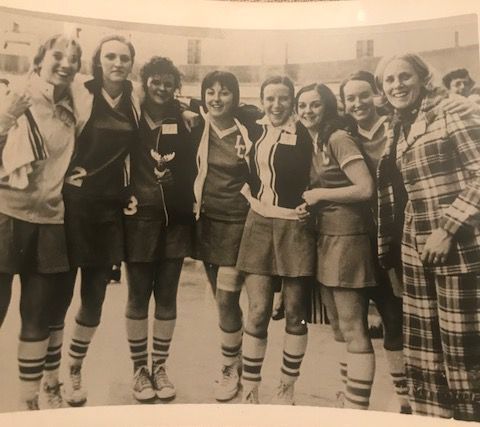
Theresa Grentz (second from left) and Marianne Stanley (fourth from right) with Immaculata teammates and coach Cathy Rush at right. Immaculata was one of women’s college basketball’s first powers.
The large state schools that dominate in 2026 mostly were absent.
But not for long.
Motivated by the mandates of 1972’s Title IX and by a desire to see themselves in the new rankings, many started to invest in the sport.
By 1981, when the NCAA replaced the AIAW as the game’s overseer, there were 234 women’s Division I programs. That jumped to 284 in 1991, 317 in 2001. Last season there were 325 D-I programs, and more than 1,000 when Division II and III are included.
“The fact that so many schools where women’s basketball was nonexistent or an afterthought went all in is a credit to Mel and his poll,” said Jim Foster, the retired women’s coach at St. Joseph’s, Ohio State, and elsewhere.
Deirdre Kane, the retired West Chester University coach, said that “until Mel’s poll, the NCAA wasn’t even acknowledging our existence. That poll made people realize, some of them for the first time, that women’s collegiate basketball was being played.”
Greenberg built a national network of coaches and administrators, contacting them weekly for information and input. As newspapers beyond Philadelphia added his poll, its significance deepened.
“We were all fighting for recognition, but none of us were getting much,” said Geno Auriemma, the Norristown-raised, spectacularly successful coach at Connecticut. “Mel came along, and he was one of the few who gave us a little. His poll helped us all grow the game.”
It grew so widely that in 1996 the NBA launched a women’s pro league, stocked with the stars of the college game. The WNBA now has a national TV contract, recognizable superstars, and a lineup of big-city franchises that in 2030 will include Philadelphia.
“When Philadelphia gets that team,” Foster said, “they ought to call it the Philadelphia Mels.”
It took 28 years after the inception of the Associated Press’ men’s college basketball poll for the women to get one. In 1976, Searcy, who before arriving at The Inquirer had covered women’s sports for the New York Times, decided the time had come. His motivation likely sprang from developments in that Bicentennial year.
Women’s basketball made its Olympic debut that summer in Montreal. A few months earlier, Immaculata had appeared in its fifth straight AIAW national title game. The Mighty Macs, who in 1971 played in the first nationally televised women’s game, had won the first three and were runners-up the next two years.
Searcy reached out to Greenberg, an editorial clerk who by then was the de facto Immaculata beat writer.
“Jay called me into his office and said, ‘What do you think of the idea of a women’s basketball poll?’” Greenberg said. “And I said, ‘I think you’re nuts.’”
As Greenberg prepared for the poll’s November launch, Searcy promoted it. He revealed his plan to Temple students during a campus visit. In that audience was Foster, then a physical education major who also coached Bishop McDevitt High School’s girls.
“It was really exciting news for anyone interested in the sport,” Foster said. “He told us he was going to start a women’s basketball poll that would be just like the men’s.”
Still, many scoffed. Women’s basketball, after all, existed deep in the shadows. Most newspapers and TV stations ignored it. With few exceptions, games were played before tiny crowds, often in substandard gyms. Rules weren’t standardized, qualified coaches and referees were in short supply, and, until the AIAW’s 1971 founding, there was no universally accepted end-of-season tournament.
“The only people who followed women’s basketball then were the people involved in the game,” Kane said.
But if there was a hotbed, it probably was the Philadelphia area. Numerous elementary schools, high schools, and colleges here had teams. West Chester State, with its strong physical education program, gained prominence in the 1960s under coach Carol Eckman, now known as “the mother of women’s college basketball.” And it was a West Chester grad, Cathy Rush, who turned Immaculata into the nation’s best team in the early 1970s.
“There was always a huge basketball presence in Philadelphia,” Stanley said. “But it wasn’t until Immaculata that many people noticed the women. Then, the AIAW was formed, and that was big. Now, here comes the poll, and suddenly we’ve got a way to track and pay attention to what was happening not just here but across the country.”
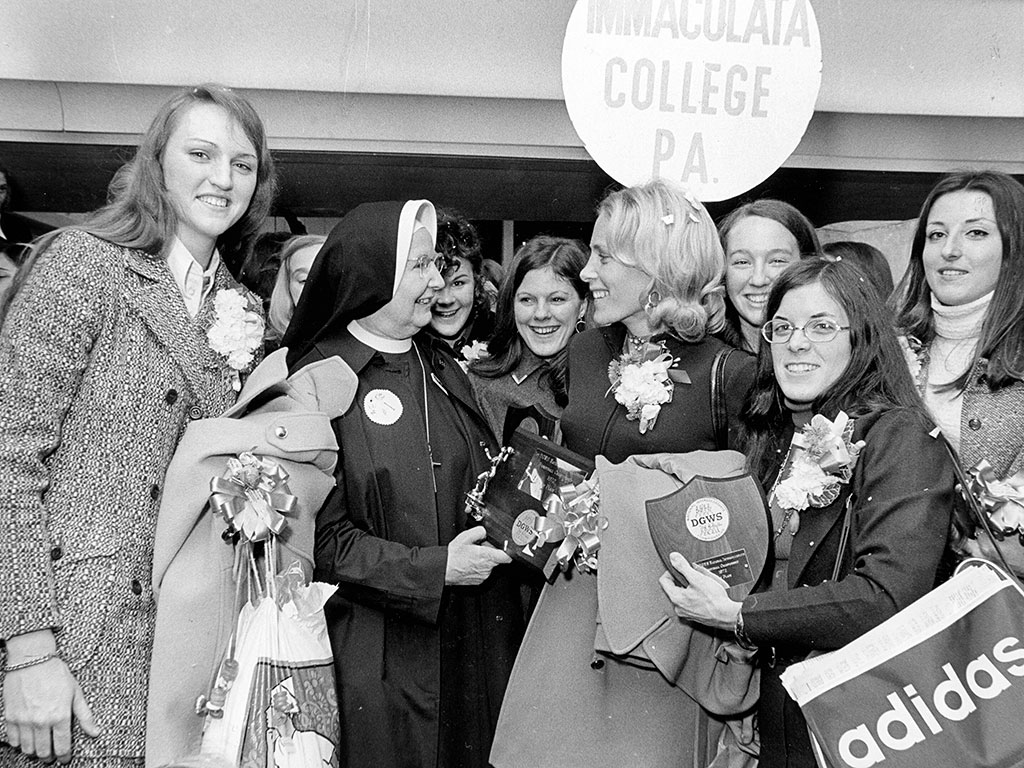
Members of the Immaculata College basketball team gather around their coach as they return after winning the first women’s collegiate national championship in 1972. From left in the foreground are Theresa Shank, college president Sister Mary of Lourdes, coach Cathy Rush, and Janet Ruch.
Despite Greenberg’s occasional stories on the Mighty Macs, few readers knew much of the women’s basketball world beyond. And few sports editors and writers besides Searcy and Greenberg saw its potential.
“I loved women’s basketball,” said Dick Weiss, a veteran sportswriter who then was covering men’s college basketball for the Philadelphia Daily News, “but most of us never saw it becoming a regular beat. All our energy went into the Sixers with Julius Erving and the Big 5, which still had NCAA teams filled with local talent.”
Launching the poll proved problematic. If women’s programs were second-class on most campuses, so were their support staffs. Gathering schedules and stats was nearly impossible. When Greenberg reached out to the AIAW for help, the organization balked.
“They told me women’s sports shouldn’t get involved in things like newspaper polls because that would lead to the evils of men’s athletics,” he said.
So he built a Rolodex of contacts, then he and some basketball contacts painstakingly collected information over the phones.
“Mel based the poll operation in our sports department,” said Gene Foreman, then The Inquirer’s managing editor. “His volunteer helpers were several tall women.”
Coaches telephoned in their votes on Sunday nights. One, N.C. State’s Kay Yow, provided an early indication of the poll’s impact.
On Jan. 2, 1977, Immaculata visited N.C. State, which typically played before small gatherings. But the new rankings promised a compelling matchup. The Wolfpack were ranked No. 15; Immaculata, which triumphed, 95-90, was No. 2.
“I remember Yow calling and talking about how excited she was,” Greenberg said. “It was snowing before the game, but there was a long line of fans outside the arena waiting for tickets.”
In 1978, the Associated Press began distributing the poll, giving most news outlets access. Then, in 1994, Greenberg ceded its compilation to the AP, and media members replaced coaches as the voters.
The poll was a cornerstone of the game, and in 2000, another Sunday Inquirer spotlighted women’s basketball’s maturity.
Philadelphia was hosting that year’s Final Four. Its lineup of Connecticut, Tennessee, Rutgers, and Penn State revealed the game’s progression from the days when little Immaculata could win three straight titles. Its two sessions attracted nearly 40,000 fans. Millions more watched on ESPN.
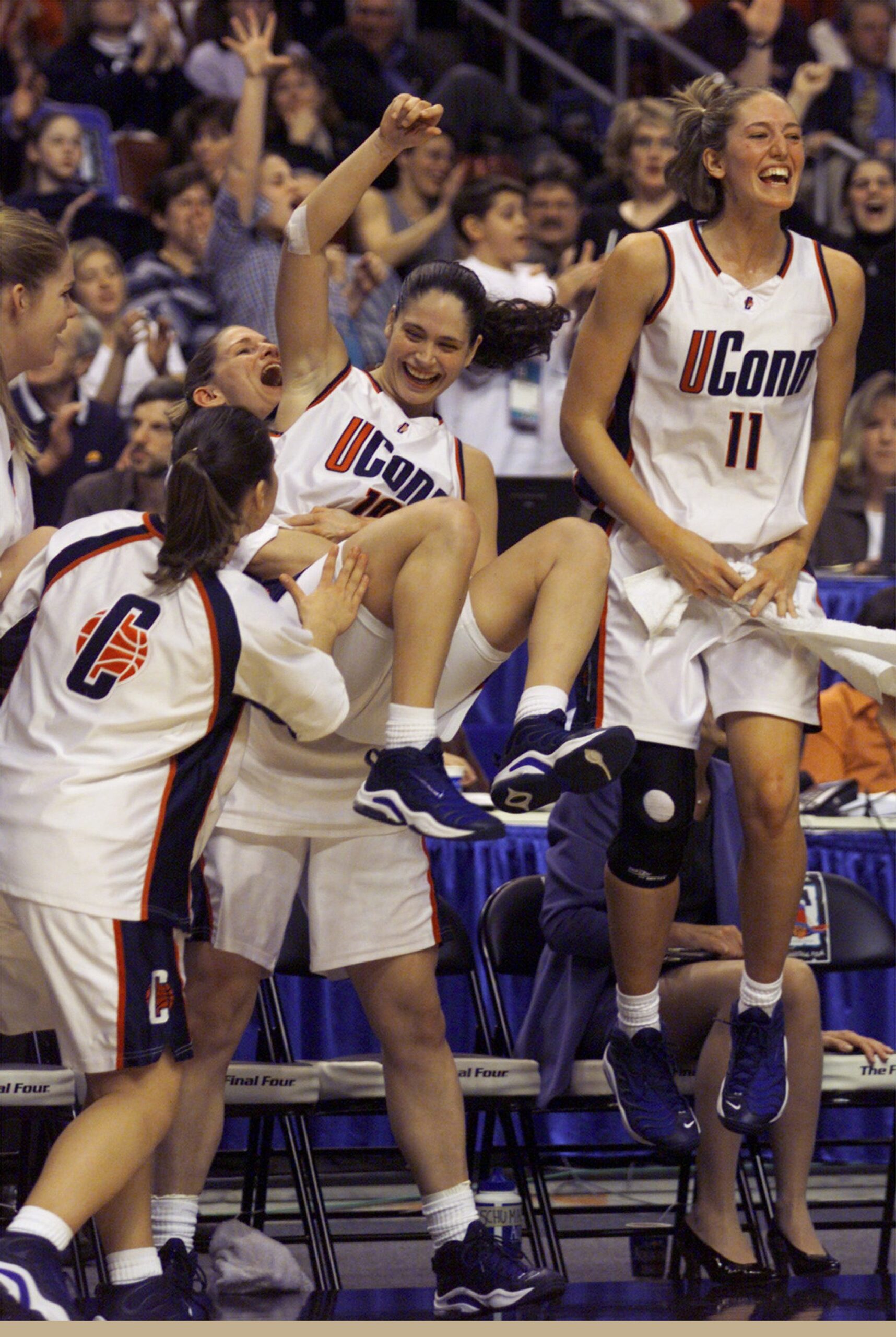
Stacy Hansmeyer, Sue Bird, and the UConn bench celebrate after Swin Cash makes a breakaway layup late in the second half of UConn’s Final Four game against Penn State on March 31, 2000, at what then was called the First Union Center.
The April 2 Inquirer ballyhooed that night’s title game on Page 1. Inside was an entire section previewing the event from every angle. There were profiles of coaches, players, even the referees. There were analyses, features, columns, statistics, photos and predictions.
And the poll?
Well, the championship game itself proved just how plugged in it was. Connecticut, the No. 1 team in the regular season’s final rankings, defeated No. 2 Tennessee.
Greenberg retired from The Inquirer in 2010 but still compiles a widely read blog. Organizations, including the Naismith Basketball Hall of Fame, have recognized him and his poll’s contributions.
“Mel was a gift to the women’s game,” Stanley said. “He was so passionate, and so dedicated and so single-minded. Who knows how long it otherwise would have taken for anything of substance to occur? Not many news outlets gave a crap about it, but Mel and The Inquirer decided to do something about women’s basketball. And that poll has stood the test of time.”
SAN JOSE, Calif. — When Sean Mannion was a quarterback with the Minnesota Vikings, his position room would play a game called “Stumpy.”
The objective was to be the last one to be stumped when then-position coach Andrew Janocko asked each quarterback the specifics of certain plays in Minnesota’s offensive playbook. Mannion might have been a journeyman backup in the NFL, but he had the recall of a Hall of Famer, his former coaches said.
“He was always the champion of that game,” Janocko said.
Mannion was hired as the Eagles’ offensive coordinator last week. He may have only two years of coaching experience, but Klint Kubiak and Janocko, who coached him with the Vikings and are now on staff with the Seahawks at Super Bowl LX, believe the 33-year-old is ready for the job.
Kubiak was Mannion’s first quarterbacks coach in Minnesota in 2019 and 2020. When he was promoted to offensive coordinator a year later, Janocko succeeded him. In September 2021, Kubiak said Mannion was one of the smartest players “he’d ever been around” and that he was like “an extra coach” on the field.
“I still feel the same way about that,” Kubiak told The Inquirer on Monday. “Sean’s a really bright guy. He’s extremely hardworking. He just understands football at a whole other level. He was trained by [Los Angeles Rams coach] Sean McVay early. He had really great coaching at Oregon State.
“He was our backup quarterback. He was always the guy bringing things up in the game-planning process that helped us make plays better, or get rid of bad plays. He just understands the whole picture.”
Kubiak and Janocko, who called the Mannion hire “a home run,” may be biased. But if Eagles coach Nick Sirianni hadn’t tabbed him to be Kevin Patullo’s replacement, it’s possible that Kubiak, who is slated to become the Las Vegas Raiders’ head coach after Sunday’s game vs. the New England Patriots, would have recruited Mannion from the Green Bay Packers.
New Eagles offensive coordinator Sean Mannion (left) was coached by Kevin O’Connell (right), Andrew Janocko, and Klint Kubiak when he was a backup for the Minnesota Vikings.
“We always knew that someday when Sean was done playing, we would all want to hire him on our coaching staff,” Kubiak said.
Mannion likely wouldn’t have called plays in Las Vegas. But he will in Philadelphia, despite having never done it before.
“Everyone’s got to start somewhere,” said Kubiak, who’s been an offensive coordinator with three teams. “You learn on the job. When you’re the quarterback, all you do is call plays all day. You get it from the coach, but sometimes the coach screws it up, and you’ve got to fix it. It’s not your fault, but it is your problem.
“Sean will have no problem calling plays.”
Janocko, like Mannion, has never called plays. He’s the heir apparent to Kubiak in Seattle. He’s also an ex-quarterback. He said there are always growing pains for first-time play callers. But Mannion’s mind, he said, will give him an advantage over opposing defensive coordinators.
“The way he diagnoses and processes information, his internal memory is ridiculous,” Janocko said. “You could ask him things on the call sheet that maybe we hadn’t talked about since Wednesday, and he would know the little minutiae about it.
“Just his general understanding of coverages and what the defense was trying to do, in his mind he was always one step ahead. So I just see that translation to play caller going through the roof.”
Kubiak and Janocko said they can’t predict how Mannion’s offense will look. The Eagles clearly wanted to bring in someone who has had experience with the Kyle Shanahan system. Mannion spent two seasons with McVay and several others with Shanahan acolytes. But he was exposed to other schemes, too.
West Coast guy
Mannion was born in San Jose and played football at Foothill High School in nearby Pleasanton. He was a four-year starter in college for Oregon State before the Rams selected him in the third round of the 2015 draft.
He spent his rookie season in St. Louis but moved back to the West Coast when the Rams relocated to Los Angeles. Janocko, who was born in Clearfield, Pa., and played at Pittsburgh, said he teased Mannion about their geographical differences.
Seahawks offensive coordinator Klint Kubiak, soon to be the Raiders’ head coach, says new Eagles OC Sean Mannion “will have no problem calling plays.”
“Me being an East Coast guy and him being from the West Coast, I’d always rib him that he was going to open his own co-op,” Janocko said. “I’ll be interested to see how he does in Philly getting a cheesesteak.”
Kubiak said Mannion’s authenticity is one of his best traits. He said he’s built up thick skin from playing quarterback when his “back’s against the wall.” Philly’s different, of course. There might not be a job with as much scrutiny as Eagles offensive coordinator.
Shane Steichen, Kellen Moore, and Frank Reich were successful enough to become head coaches. Patullo, Brian Johnson, and Mike Groh suffered a far worse fate. Kubiak said Mannion can’t mentally shoulder all the burden.
Mannion is expected to make some changes to the offensive staff. Josh Grizzard has already been hired as pass game coordinator. Offensive line coach Jeff Stoutland is expected to stay, although he may no longer also be run game coordinator.
“Any time you’re in that role, you don’t do it by yourself. It’s all about having a great staff with you,” Kubiak said. “They have one of the best offensive line coaches in the NFL. They brought [Grizzard] from Tampa with him. Nick is an offensive coach.
“Great staffs do it together. One guy has his name on the job, but when I’m calling a game, there’s five other assistants talking to me on each play.”
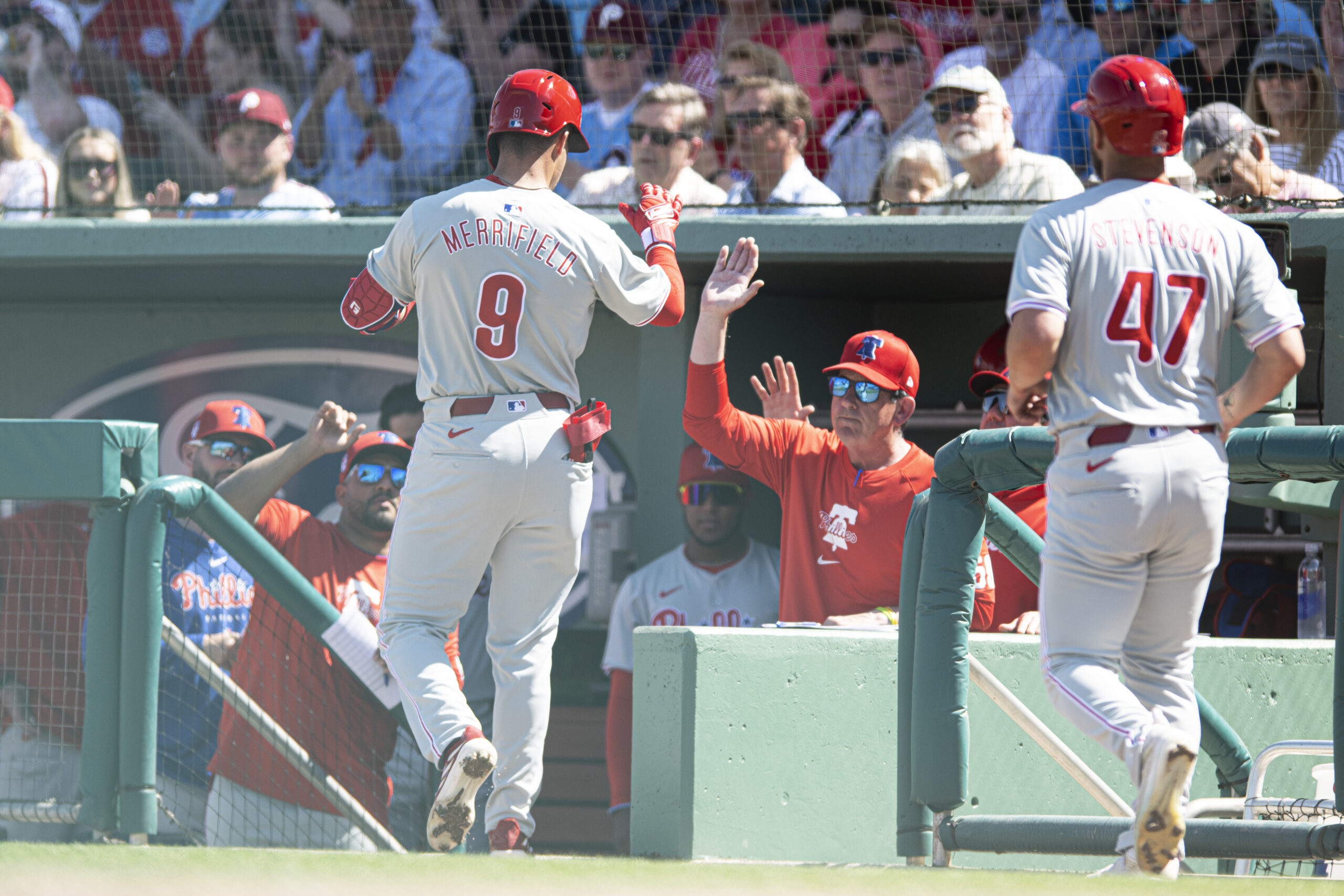
Upon signing with the Phillies as a free agent in 2024, Whit Merrifield figured he would get regular at-bats at multiple positions.
It didn’t work out that way.
Surely, then, Merrifield could relate to the deterioration of Nick Castellanos’ relationship with manager Rob Thomson last season over playing time, the fallout of which will lead the Phillies to trade or release Castellanos before spring training.
Merrifield, who retired last season, recently joined Phillies Extra, The Inquirer’s baseball podcast, to discuss that topic and more, including how his close friend Brad Keller will fit into the Phillies’ bullpen and the team’s unexpected pursuit of his former teammate Bo Bichette.
Watch the full interview below and subscribe to the Phillies Extra podcaston Spotify or Apple Podcasts.
Q: What’s your view of the Phillies’ offseason? And where do you come down on how much change a team like that should be making to a roster that’s been together for a few years and had a lot of regular-season success, but just hasn’t gotten over the hump in October?
A: Well, there’s only one team that ends up winning the last game of the season. In baseball, man, that’s a hard thing to do. It’s such a volatile game. There’s so many ups and downs throughout the course of the year, so much has to go right at the right time for you to hoist that trophy at the end of the season. And for Philadelphia, they’ve got all the pieces. It just hasn’t quite peaked at the right time for them. But if you’ve got a team that’s consistently winning the division, it’s hard to fault the guys in the clubhouse and want to go with new guys. That’s a little unrealistic, in my opinion, especially if you’ve got guys that love being in Philly, love being in the clubhouse with the other guys, love playing for the other guys. It’s another thing if the guys feel like they’re going through the motions. But that’s not the feeling you get in that clubhouse. It’s a very driven group of guys. It’s a group of guys that want to bring a championship to Philly. And it just hasn’t quite happened yet. But there’s 29 other teams that are trying to do the same thing.
It’s not just a matter of, let’s go get all the best players. I mean, it’s easy to say because the Dodgers have done it the last two years. But they about met their match last year, really. They should have lost that series against Toronto, in my opinion. There were some things that happened that allowed L.A. to win over Toronto that probably should have gone the other way. But it’s just not as easy as going out and just being like, ‘Oh, we’re going to go get the best pitcher. We’re going to go get the best position player.’ You’ve got to have the right group of guys in every city. And I think Philly does. It’s just a matter of them getting over that hump.
Nick Castellanos (right) clashed with Phillies manager Rob Thomson last season and is not expected back in 2026.
Q: Nick Castellanos clashed with Rob Thomson a few times last year, especially after he lost his everyday job, and the Phillies are going to either trade him or release him before spring training. As a guy who was used to playing every day when you came to the Phillies and wound up coming off the bench, what was the communication about playing time like with Thomson?
A: It’s a big transition. It really is. Because as an everyday player, you’re used to the flow of the season. You’re used to the mindset of understanding that you’re going to have bad stretches, you’re going to have good stretches, but over the course of the full season, if you just keep doing what you’ve always done and what you’re used to doing, at the end of 162, everything will work itself out. As a bench guy, you don’t quite get that luxury. If you’re in a cold stretch, I might not play for another week unless something happens — somebody needs a day off or something. And if you catch a heater, it’s like, ‘OK, I might be able to earn some playing time, earn some at-bats doing this.’
And so, there’s a lot more innate pressure and focus on what you’re doing yourself vs. being in the flow of the game, trying to contribute to the team and almost like just playing the game. And it’s easy to sit back and say, ‘Oh, well, you should just always be playing to win’ and all that. And that’s not quite what I’m saying. What I’m saying is you don’t think about yourself as much and how you’re doing as much when you’re playing every day, because you know you’ll be in there the next day. And when you’re not, it’s just a different type of focus.
I’ve always said it’s why I wasn’t as good in the minor leagues because the minor leagues is all about you. It’s all about yourself. It’s all about getting your numbers so you can get the hell out of there and get to the big leagues. And my numbers in the minor leagues were not very good, except for I had one really good year. But besides that, they were very average to below average.
When I was in Philly, I’ve told people before, I think Rob Thomson was the best manager I ever had. My favorite manager of all time. I loved him. In any job there’s times when you’re going to disagree with your boss. Your boss has ultimately got to make a decision. And there’s times when you’re going to disagree. I thought that, coming into it, I had a chance to compete for an everyday outfield spot. And after the spring training I had, I thought maybe I had earned a good run to start the year, and didn’t quite get it. But Topper was very up-front with me about what was going on. And like, ‘You’re going to be playing three days this week. We got you [for] two games this series. Hey, we’re going to try to get you in the Sunday game of this series. But it depends on if this guy needs a day off, whatnot.’ And I felt like he was very up-front with me. And if he wasn’t, he’s got a lot going on.
Whit Merrifield, being congratulated by Rob Thomson during a spring training game in 2024, said the Phillies skipper was always very candid with him about playing time.
Look, his worry is not catering to me and worrying about my playing time. He’s got a lot going on. But if I was at a point where I needed some knowledge of what they were thinking, he was the easiest guy to go in and talk to. It was never uncomfortable to knock on his door. ‘Hey, Topper, you got a second? What’s the deal? What’s going on? I haven’t played in three days? Is that what’s happening?’ And he was very communicative.
So, I don’t know how he and Casty’s relationship was. I think Casty is a genuinely good-hearted dude. He’s a little different, and he’ll tell you — he’s just a little different. He’s a little different guy, and he handles things a little differently. He’s very blunt. He’ll tell you exactly how he feels. There’s a little Zack Greinke in him, where he just tells you what he feels. And there’s usually not malicious intent behind it, but it can sound like that sometimes. And I think there are just some things that happen that Casty didn’t like along the way, and he’s not the guy to hide his feelings or sugarcoat it. And I think it just kind of came to a head.
Q: You were part of the players’ negotiating committee for the last collective bargaining agreement in 2022. With the owners supposedly pushing for a salary cap this time around, do you think baseball is headed for the cliff after the season?
A: I don’t know. I know that there is a hard no, a nonstarting conversation — unless that’s changed over the last couple of years — with the [players’ association] on a salary cap. And so, I don’t know if the league is just continuing to say it as a posturing stance, or what the serious level is behind a salary cap. And I know it’s a nonstarter for the PA. … It’s a weird thing now, because it seems like the owners have always been together, and the players have always been together. But now it seems like the owners have turned on the Dodgers, and so now, it’s like they’re fighting the Dodgers, along with fighting the players. I don’t know where that leaves us, and I’m not overly optimistic that there will be baseball on time in 2027.
I haven’t been a part of those conversations in two years, so I don’t know what’s going on behind closed doors. And frankly, I’ve spent enough time doing it; I don’t care to know anymore. I just sit back and watch from afar, because those were some long nights and long hours that I’m not missing being a part of. … I don’t think it’s in a good place. How bad it is, I don’t know. But I’m not optimistic that baseball will be starting on time in 2027.
Watch or listen to the full episode for Merrifield discussing what the Phillies are getting in reliever Brad Keller, one of his best friends, why he was surprised they pursued Bo Bichette, and more.
The ground and your toes aren’t the only things frozen in the Philadelphia region.
In the city and Delaware County last month, potential home sellers and buyers stayed on the sidelines, and sales were slow, according to a Redfin analysis of the 50 most-populous metropolitan areas for the four weeks ending Jan. 25. Pending home sales were down about 4% from the same time last year.
“You’re just not seeing a lot of activity happening,” said Chen Zhao, head of economics research at Redfin.
What has been heating up are prices. The market that Redfin defines as Philadelphia and Delaware County was in the top three areas where sale prices increased the most compared to the same time last year. The median sale price was up just over 10% to $294,125.
Limited home supply and rising home prices tend to go hand in hand, and that is what is happening in these markets, Zhao said.
Sales in January’s slow market happened at higher prices because buyers who are still in the market are willing to pay elevated prices.
The average number of new home listings ticked up slightly from last year, and it should continue to grow as the typically busy spring housing market approaches. So should the number of buyers looking for homes.
Any changes in affordability, Zhao said, will be “mostly driven by mortgage rates, not so much by prices.”
The average interest rate on a 30-year, fixed-rate mortgage was almost 7% at the end of January 2025, according to the government-backed mortgage buyer Freddie Mac. This year, it was 6.10% at the end of the month.
Zhao said she doesn’t expect mortgage rates to go much lower this year.
But buyers have more power than they think, especially now when sales are slow, Zhao said. They “really should be thinking about negotiating” with sellers.
Kai Lu and Edward Mendez had expected to spend many years in the spacious Media home, enjoying the easy access to Center City by SEPTA Regional Rail, the good schools for their two-year-old son and the second on the way, and its aura of history.
But in the words of Lu, who is in data analytics for a major communications company, “life intervened.”
Mendez landed his dream job as a data analyst for the Miami Marlins baseball team, and the couple are headed to Florida after two years in the house.
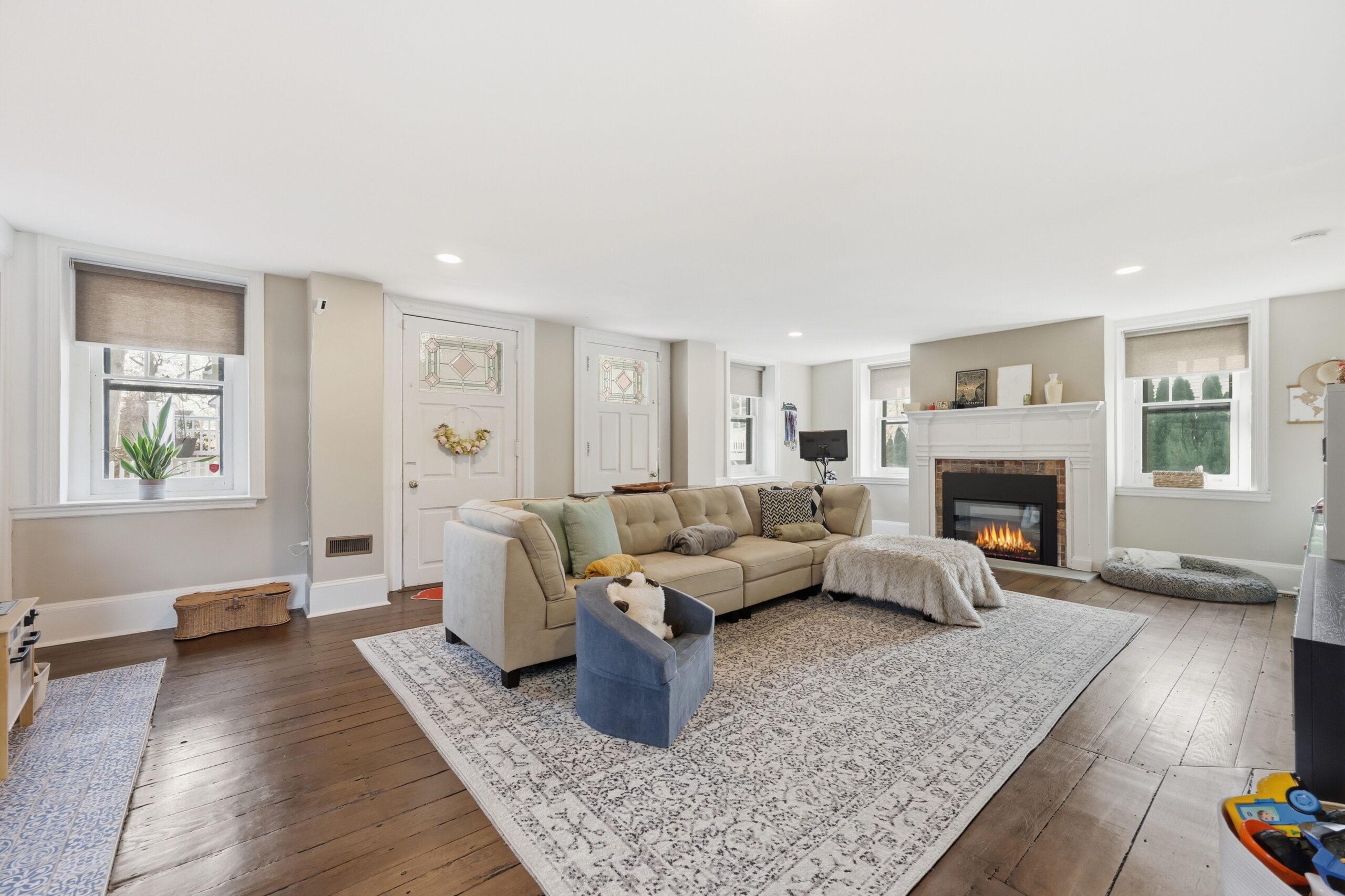
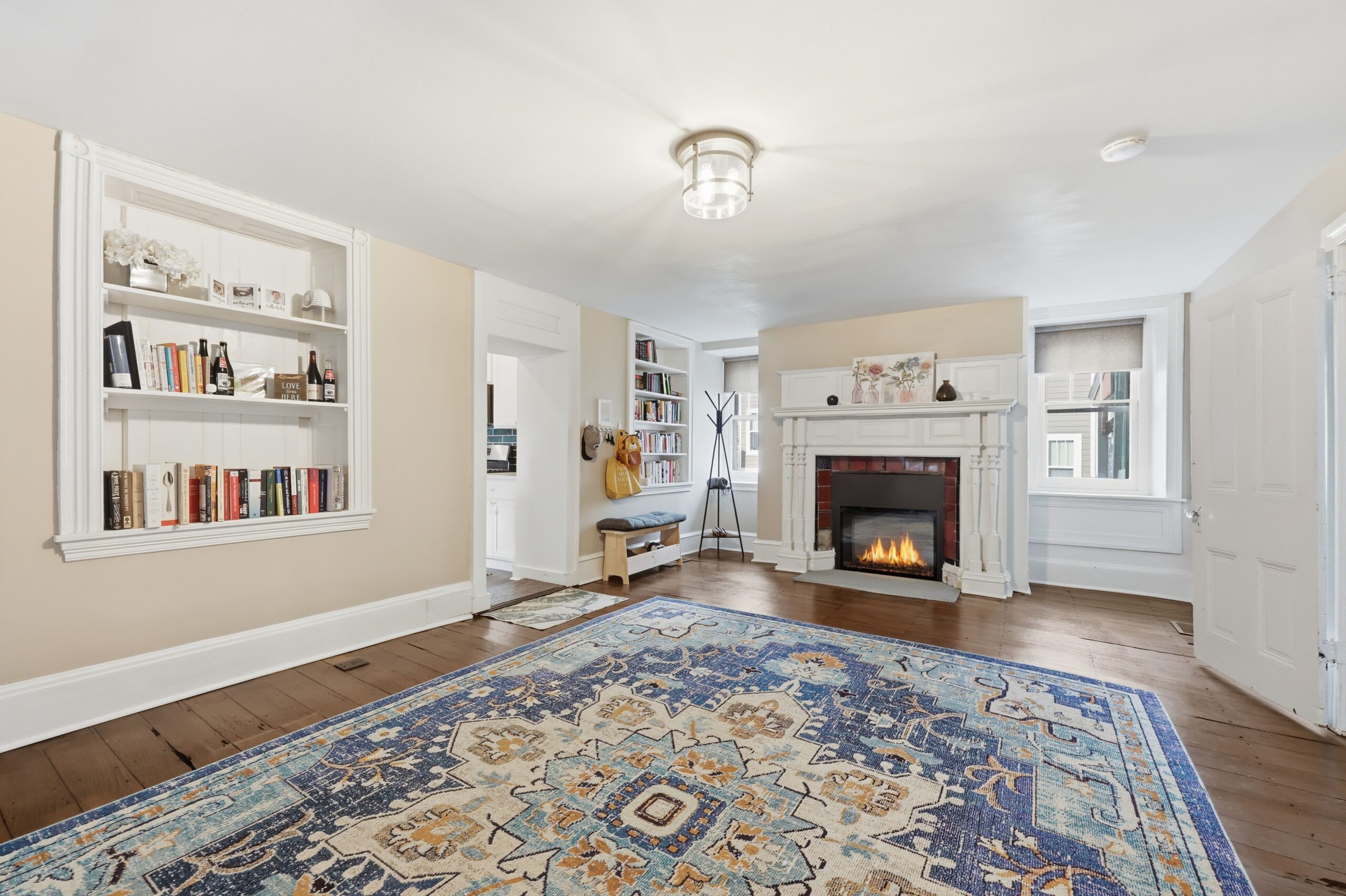
The living room. The home has four working fireplaces.
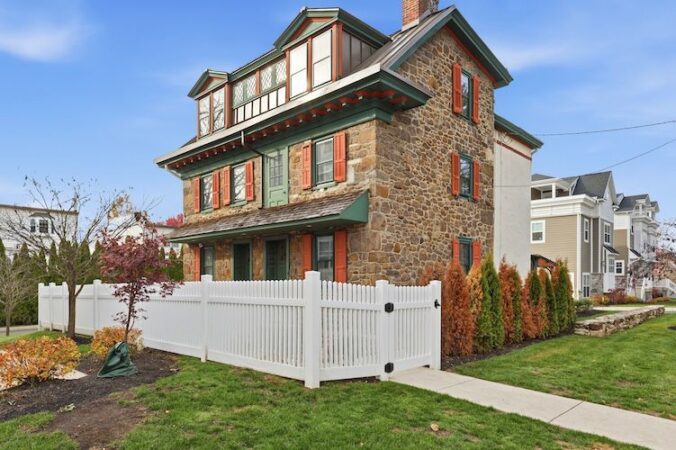
The five-bedroom, 4½-bathroom home was once the general store of Providence Village, and Lu says she doesn’t know when the changeover came.
The earliest part of the house dates to the 18th century, with some 19th-century additions.
The 4,334-square-foot house has three floors of living space plus an unfinished basement, and four working fireplaces powered by electric inserts.
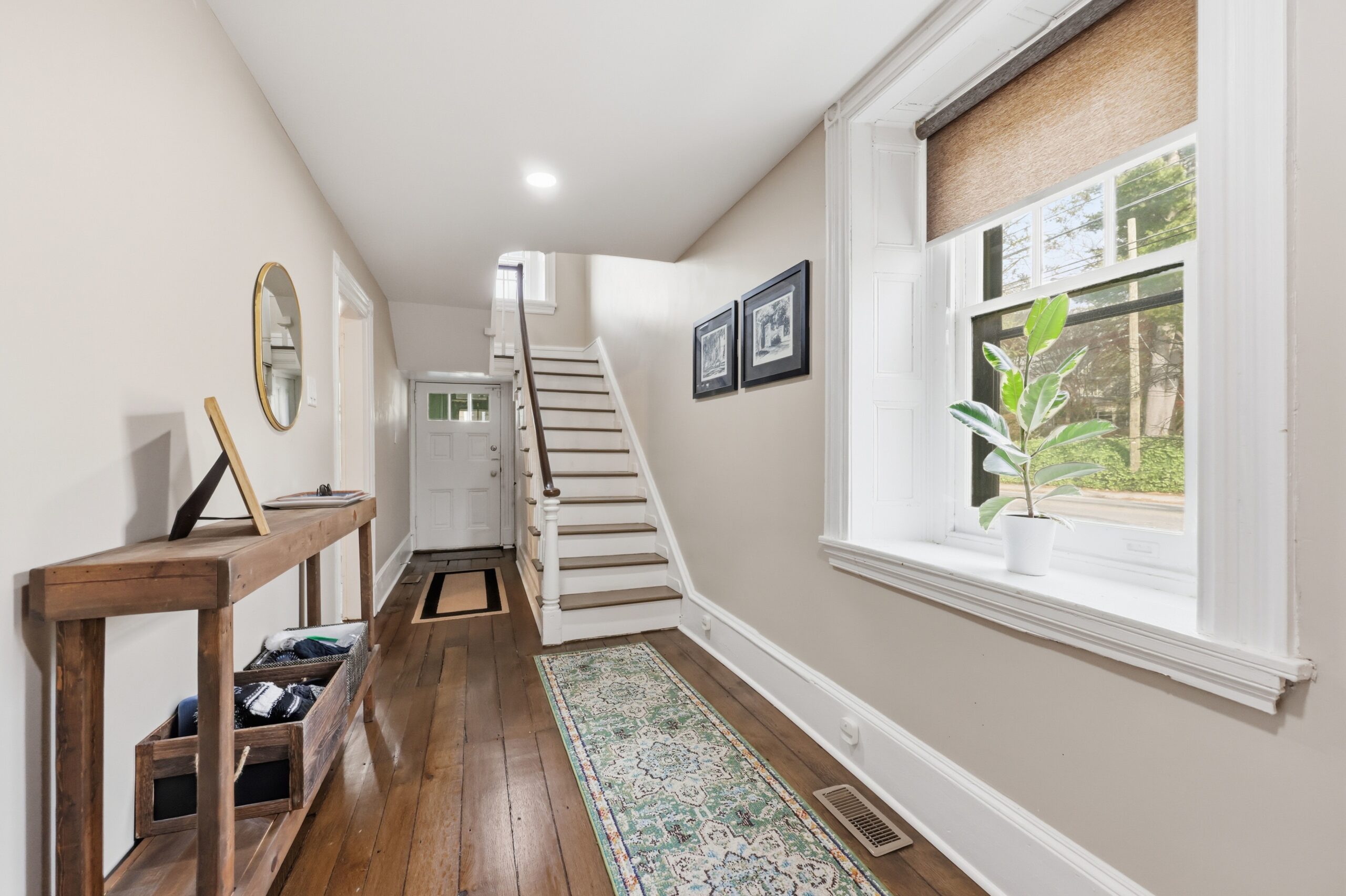
Front hall
The home has its original hardwood floors and a two-zone thermostat system with central air and forced heat.
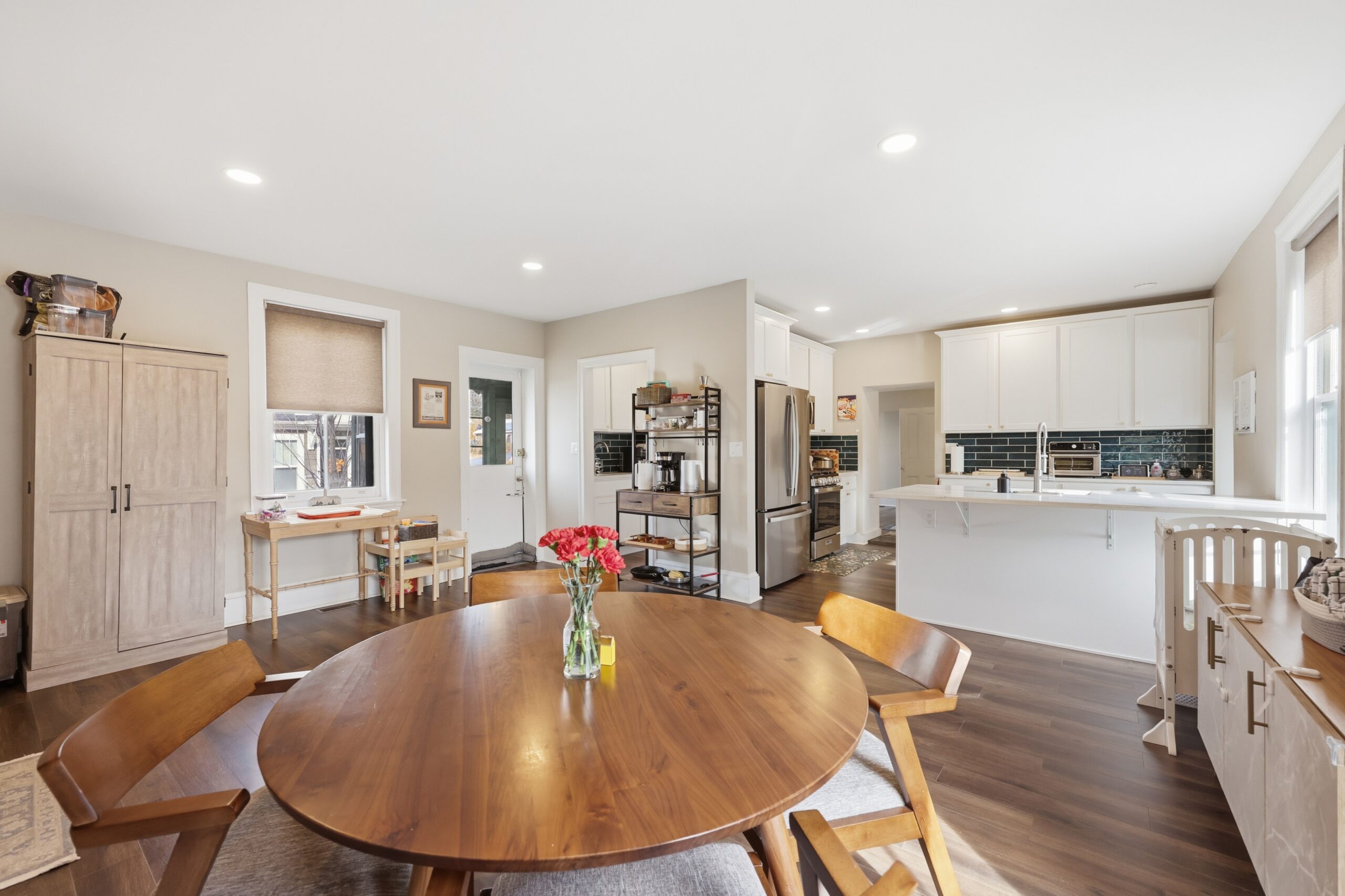
The newly renovated kitchen has quartz countertops, stainless steel appliances, gas cooking, a separate coffee bar and pantry area, and an adjacent sunroom.
The formal dining room has built-in shelves and a fireplace.
The kitchen, which includes a dining area.
The primary bedroom and another bedroom are on the second floor, along with a laundry room.
The third floor has three additional bedrooms — one of which serves as an office — two full bathrooms, and a full-sized cedar closet.
The formal dining room has built-in shelves.
Updates by the current owners include partial roof replacement, resurfacing and staining the hardwood floors, new flooring in the kitchen, exterior stone repointing, custom window treatments, and a new sewer line.
The house is in the Rose Tree Media School District.
It is listed by Amanda Terranova and Adam Baldwin of Compass Realty for $785,000.