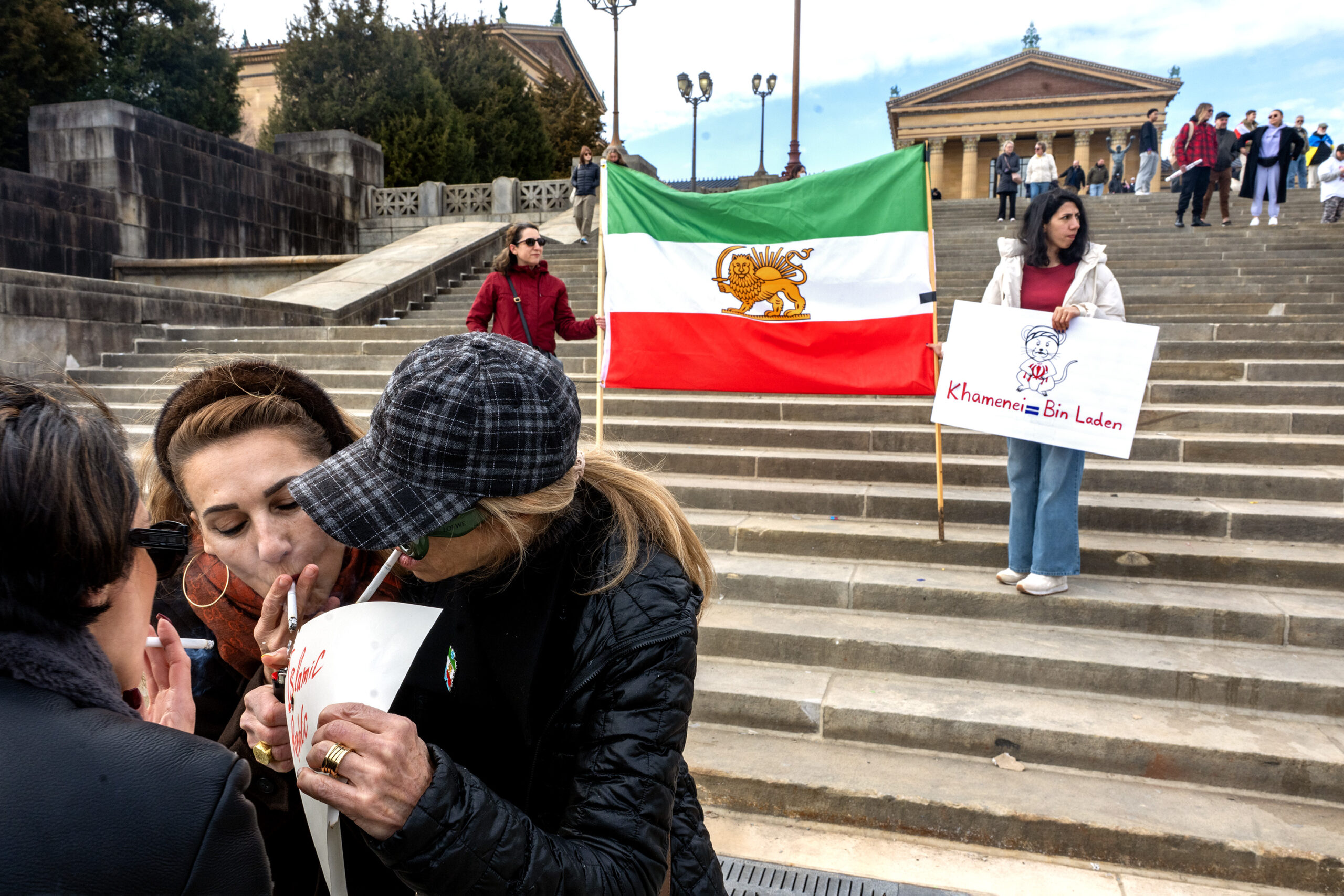
Last weekend I photographed members of the group Philly Iranians at the museum steps calling for a “free, secular, democratic Iran — united for human rights and against gender apartheid.” (They used cigarettes to burn a sheet of paper representing the Islamic Republic. The smoking symbolized and celebrated the “power of women” they told me, as under Iran’s Islamic penal code, women’s rights are severely restricted.)
The flag with the Lion and Sun emblem was the official flag of Iran since 1907. It was changed following the 1979 Islamic Revolution is strictly banned from public use in the Islamic Republic. Iranian opposition groups use the old flag in protests.
I even mentioned the art museum in this space in January.
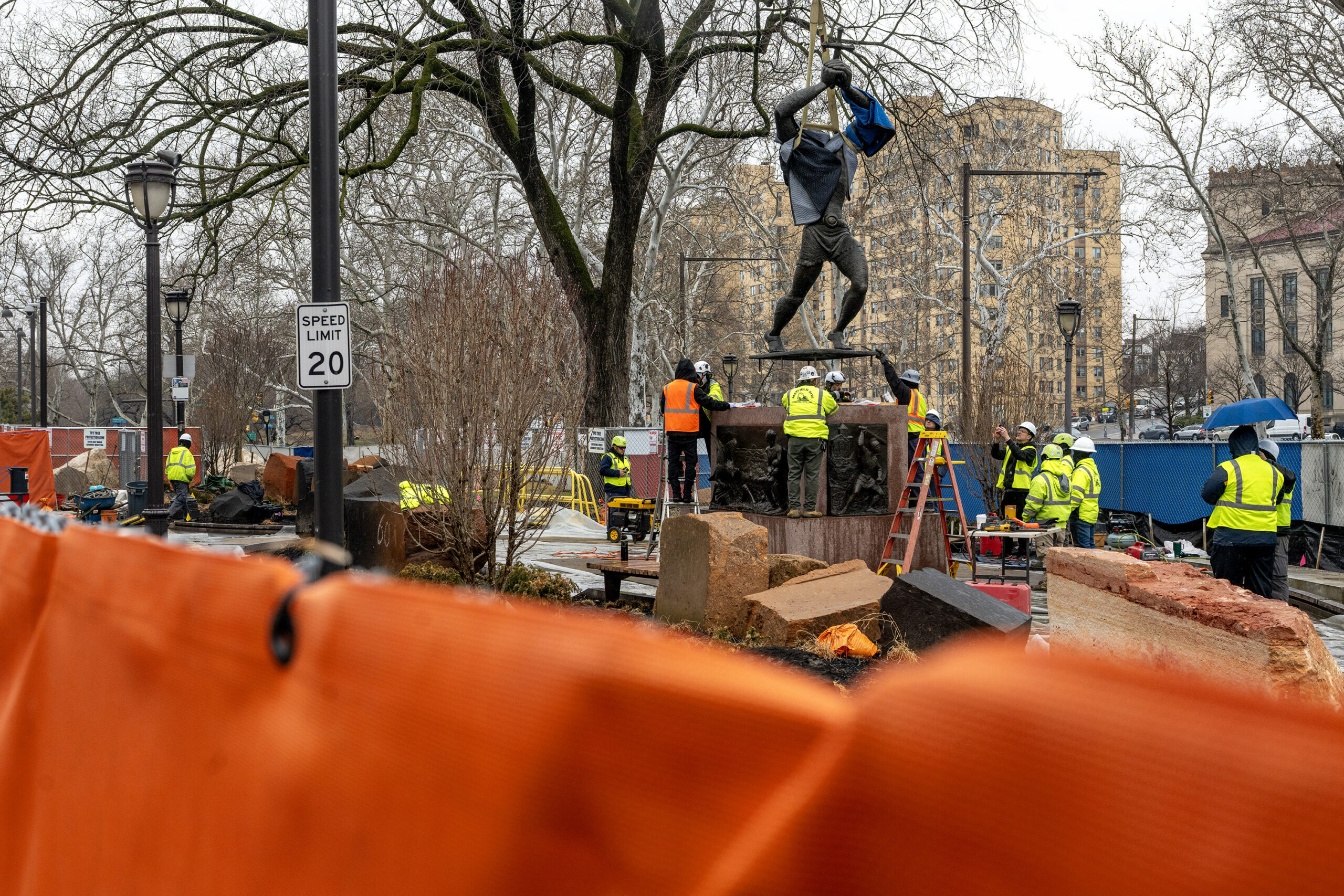
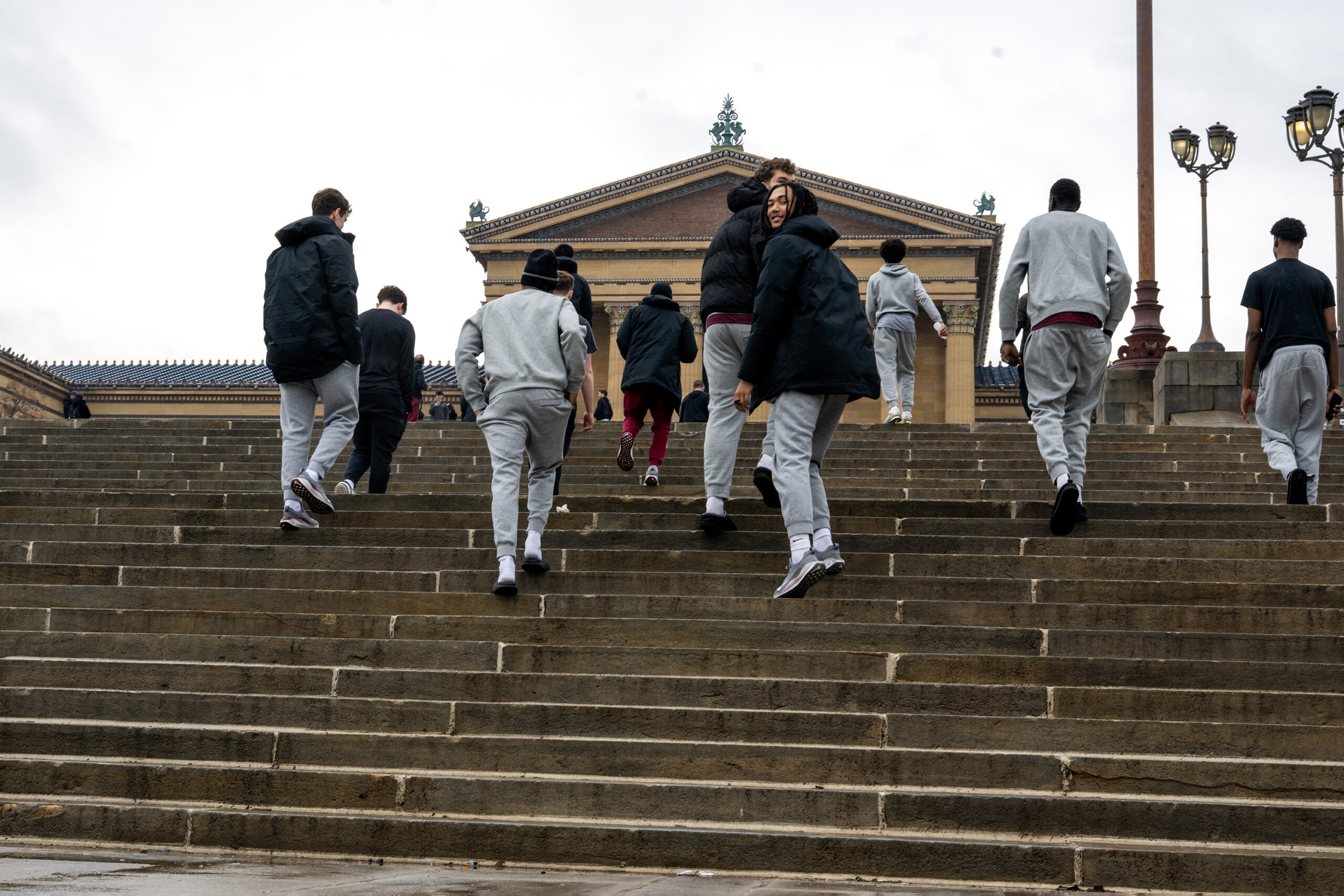
Workers reinstall the Young Meher statue behind construction fencing outside the museum along Kelly Drive. The work by Armenian artist Khoren Der Harootian was presented to the city in 1976 for the Bicentennial. It was reconditioned and will be the centerpiece of the Armenian Heritage Walk to be unveiled in April for American’s 250th anniversary. Student athletes from Fordham University in the Bronx visit the Philadelphia Museum of Art. The steps, anyway. The grey sweats are their “normal travel attire.”
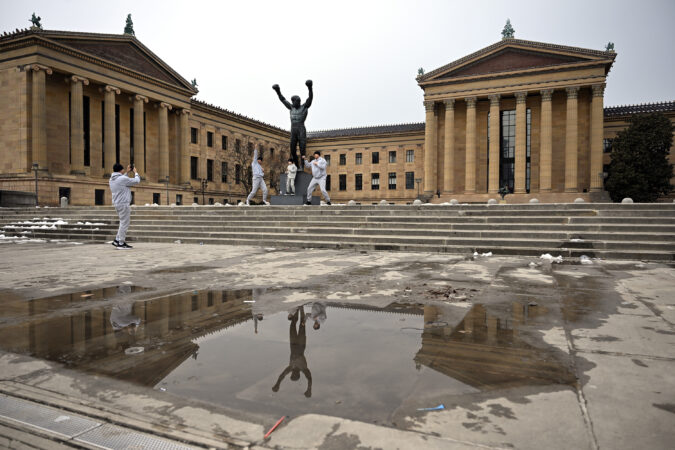
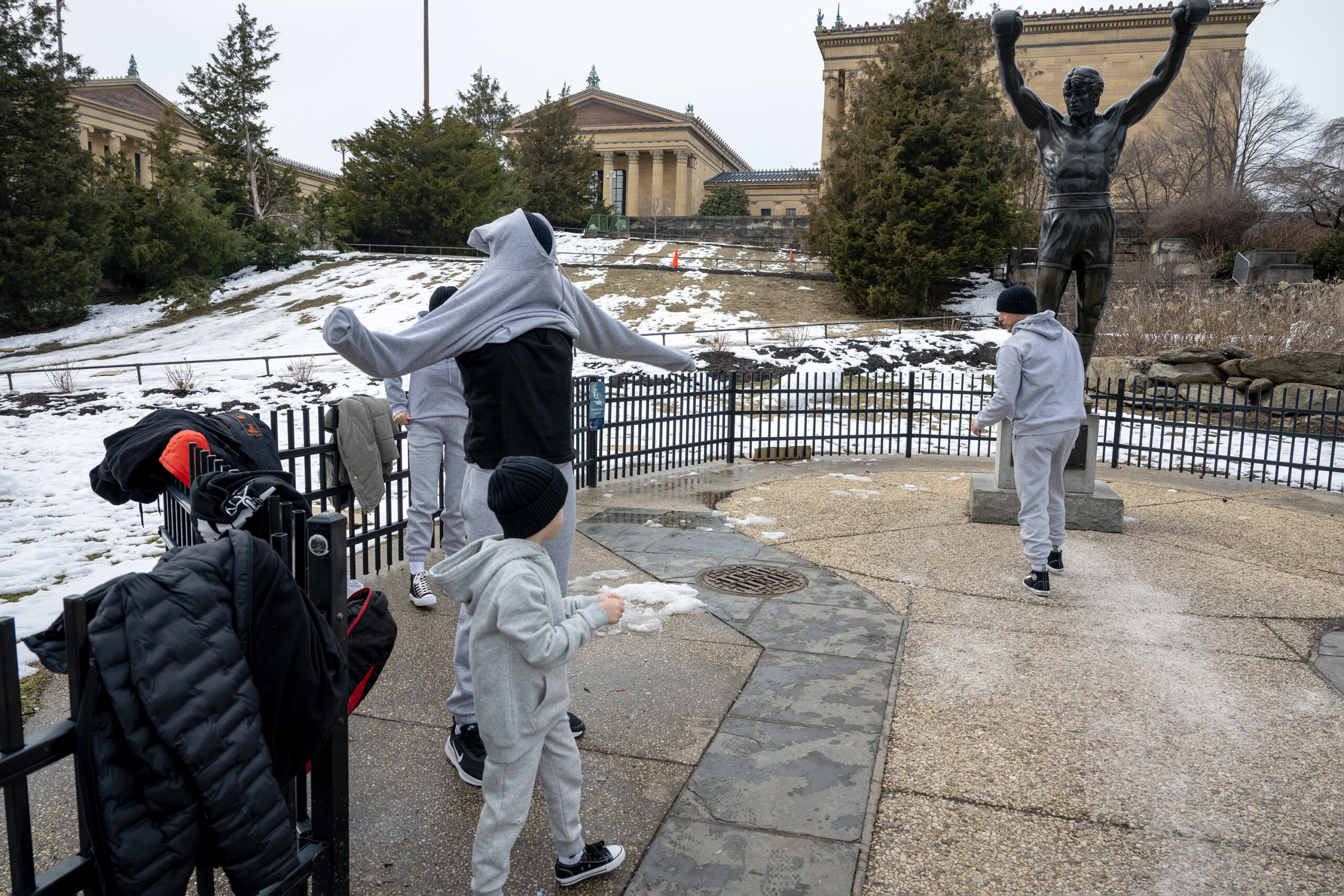
Being there so often, I knew exactly what was going on as I saw three adults and a kid changing clothes next to the Rocky statue. I didn’t have to ask, as I knew exactly what was coming next as they got decked out in gray cotton sweats, black stocking watch caps, and high-top black Converse All-Star Chuck Taylors.
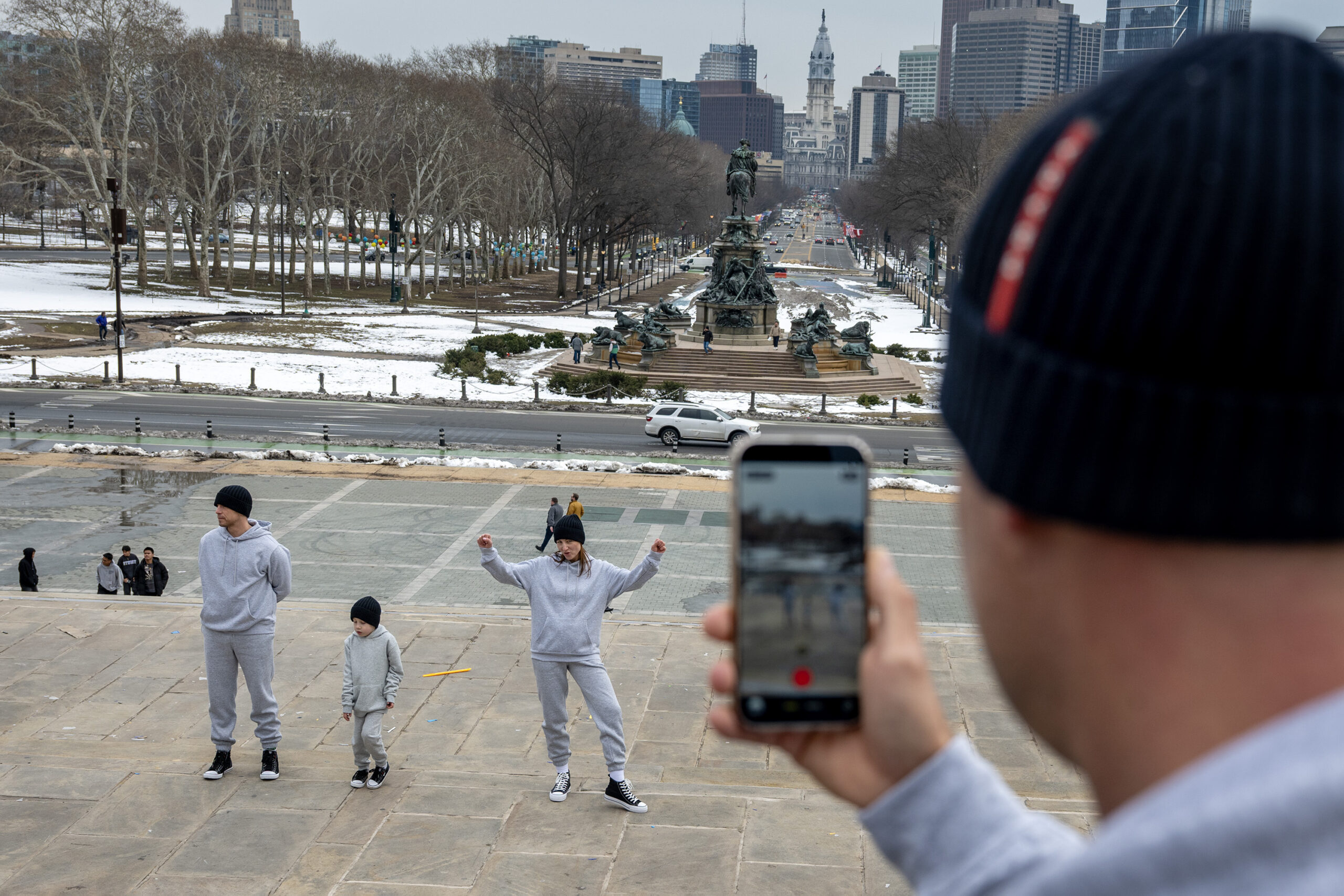
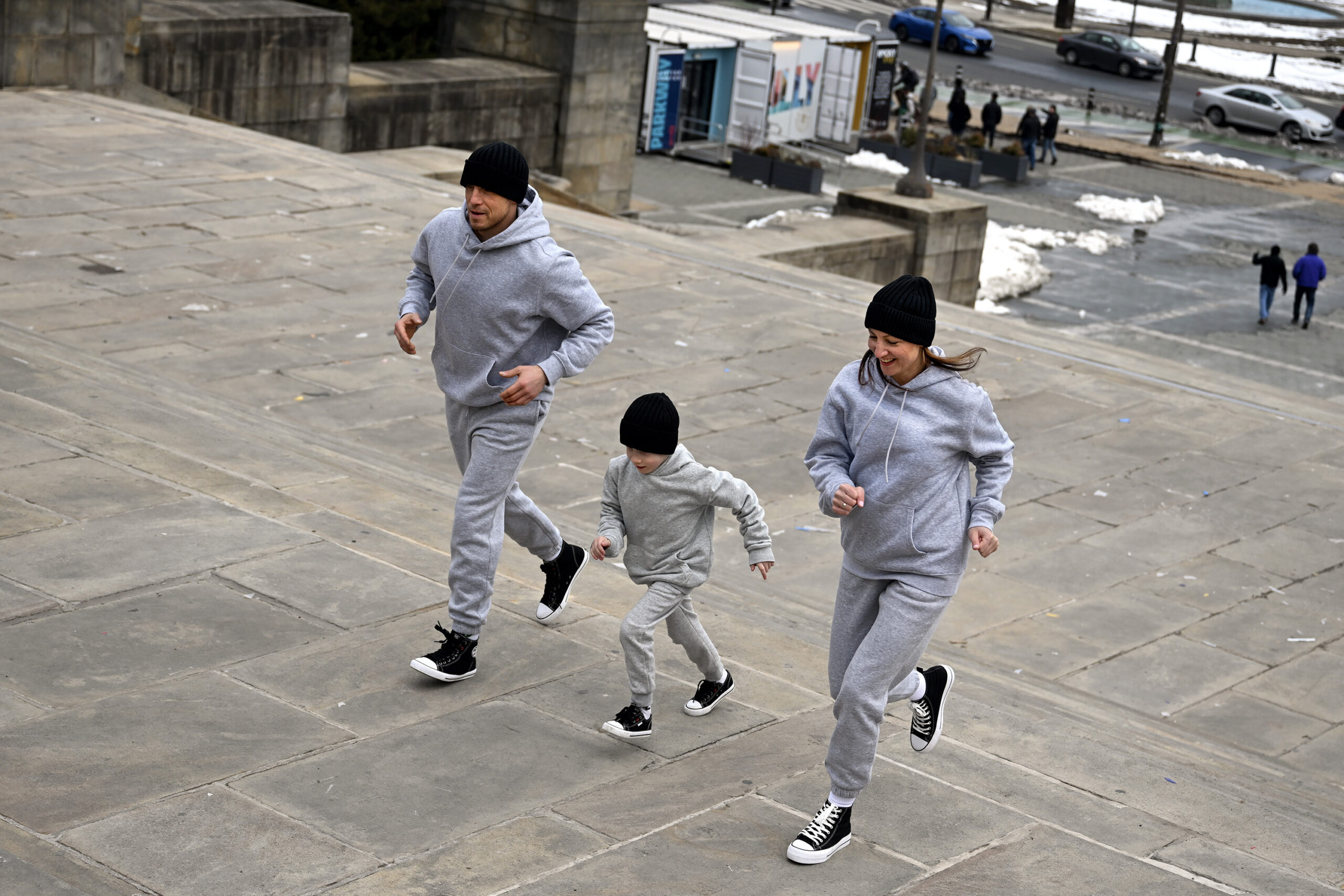
Mariusz Sliwa, his wife Magdalena, and their six year-old son Tymek came from Poznan, Poland. Marcin Danych, a friend now living in Chicago, joined them for what is now a classic pilgrimage.
When he was a boy, Mariusz’s father was “a typical factory worker … worked seven days a week,” he told me. But when he was with his father at night they would watch Rocky — “Playing it over and over, in the VHS.” It was just a part of Mariusz’s childhood, so he wanted his own son to experience it.
I see it every time I am at the steps, people of all ages, from all over sprinting up those 72 steps, “Gonna Fly Now” playing in their heads. It’s why writer Michael Vitez asked me to join him, to spend a year at the steps meeting people just like Mariusz, seeking a tangible way to inhabit a universal story of hope. As Michael often says, “It’s like the ocean; the waves keep crashing on the beach, they never stop.”
Mariusz wanted to bring his father with him from Poland, but he is unable to travel. With his friend Danych’s help, he recorded video — over and over — running up the steps with Magdalena and Tymek. And with just Tymek. And only Magdalena and Tymek together. Finally, Tymek alone. He was making his own Rocky movie. Recasting the scene, as it is etched in his mind.
I hope he sends me a copy. After he shares it back home with his dad.
Since 1998 a black-and-white photo has appeared every Monday in staff photographer Tom Gralish’s “Scene Through the Lens” photo column in the print editions of The Inquirer’s local news section. Here are the most recent, in color:
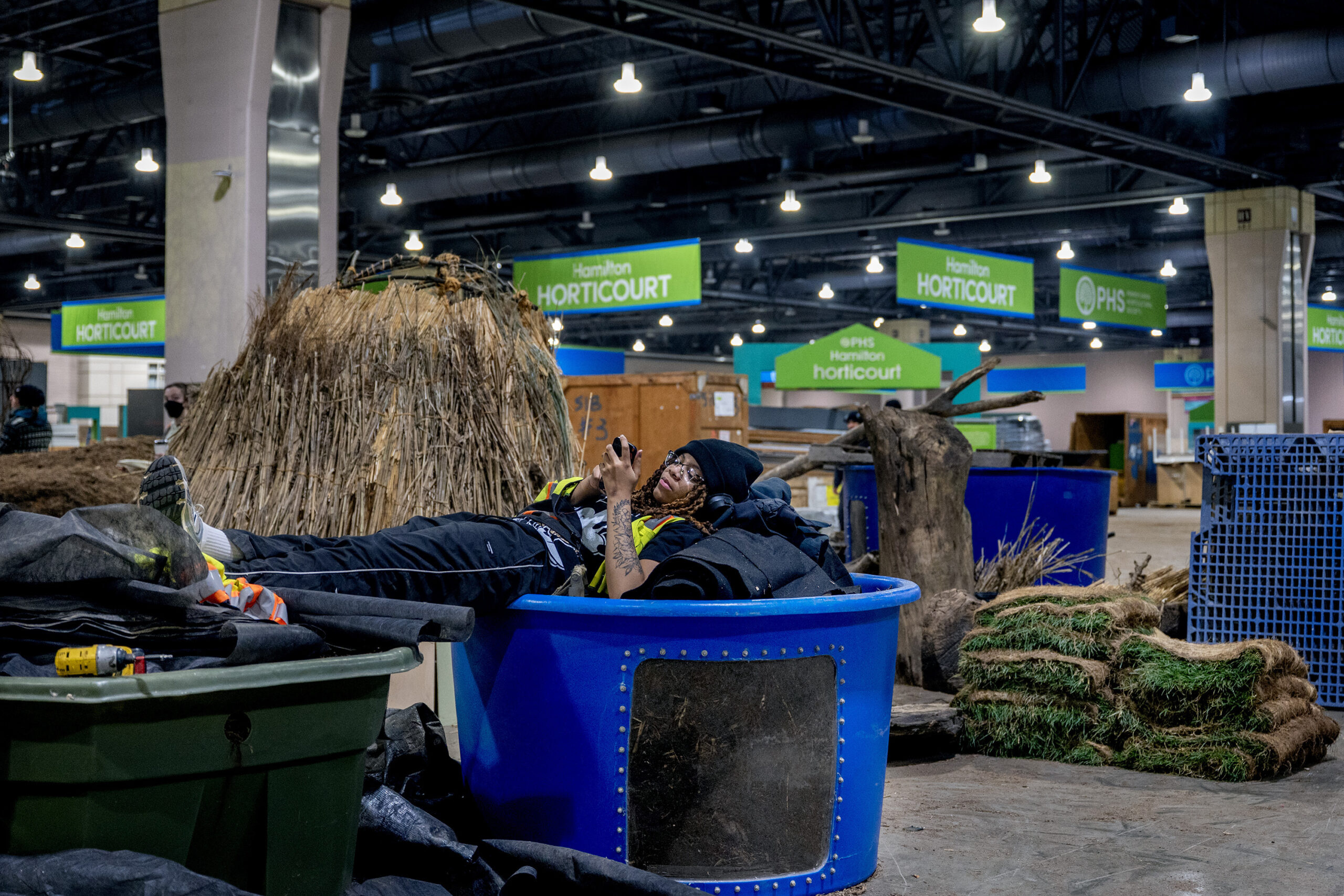
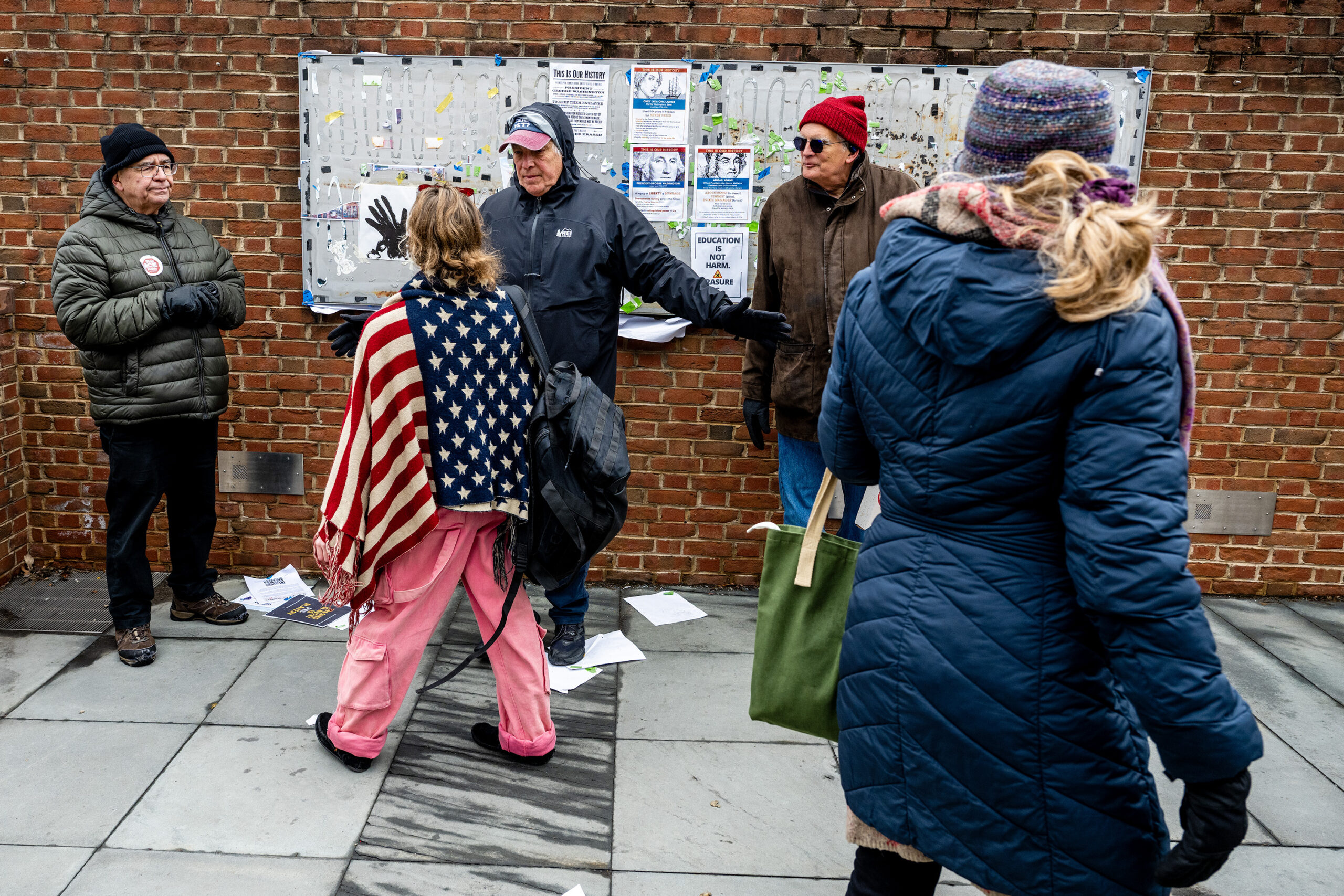
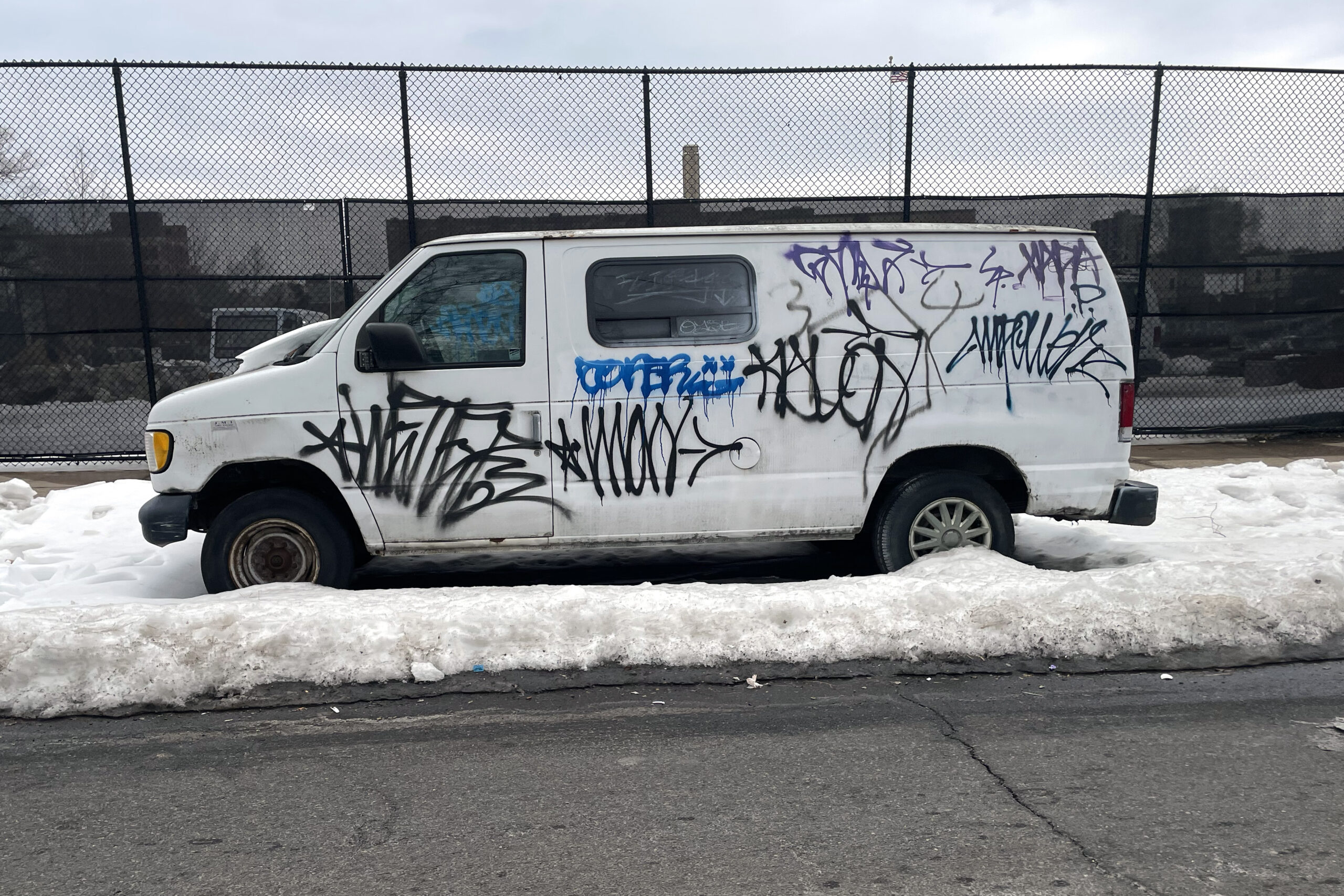
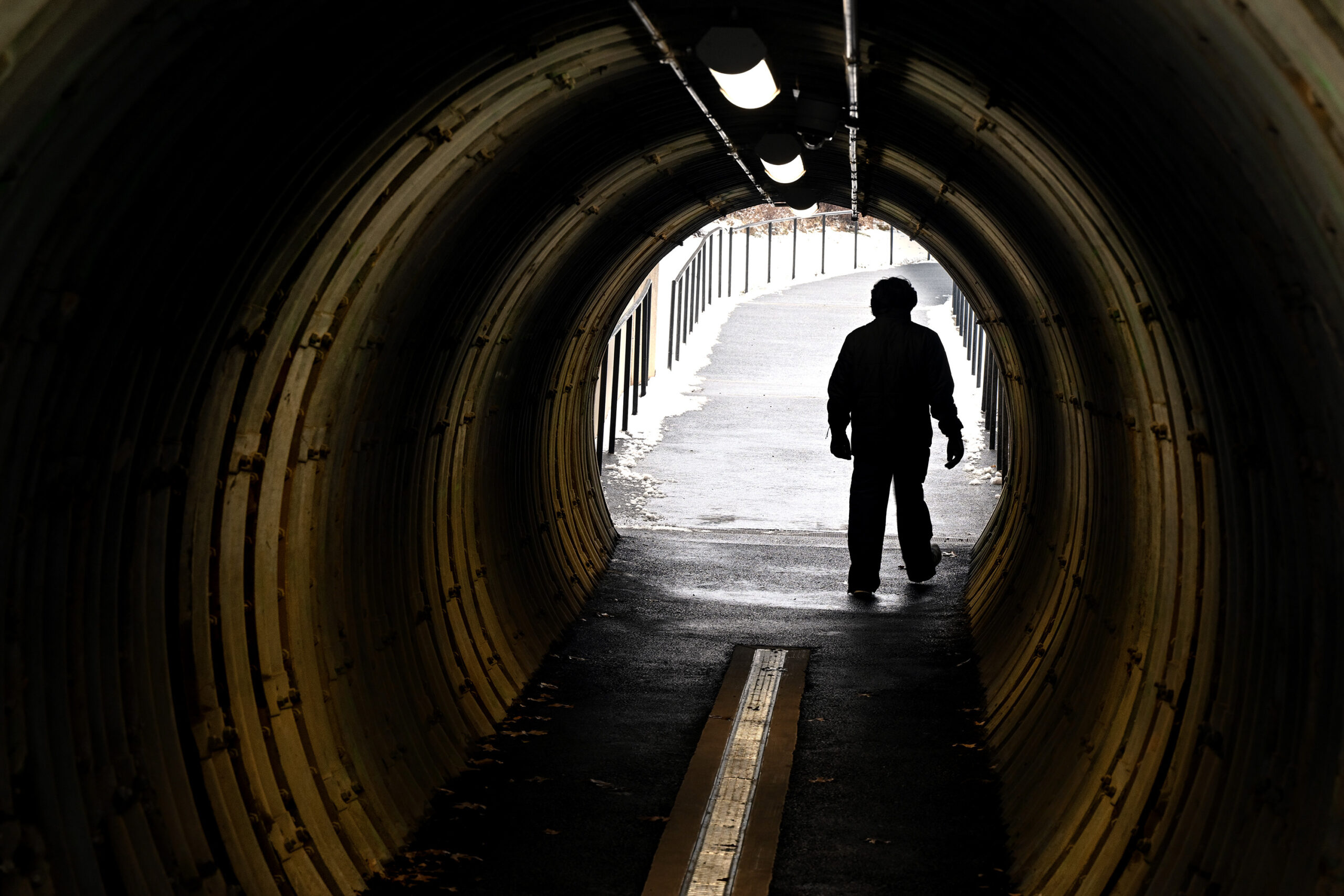
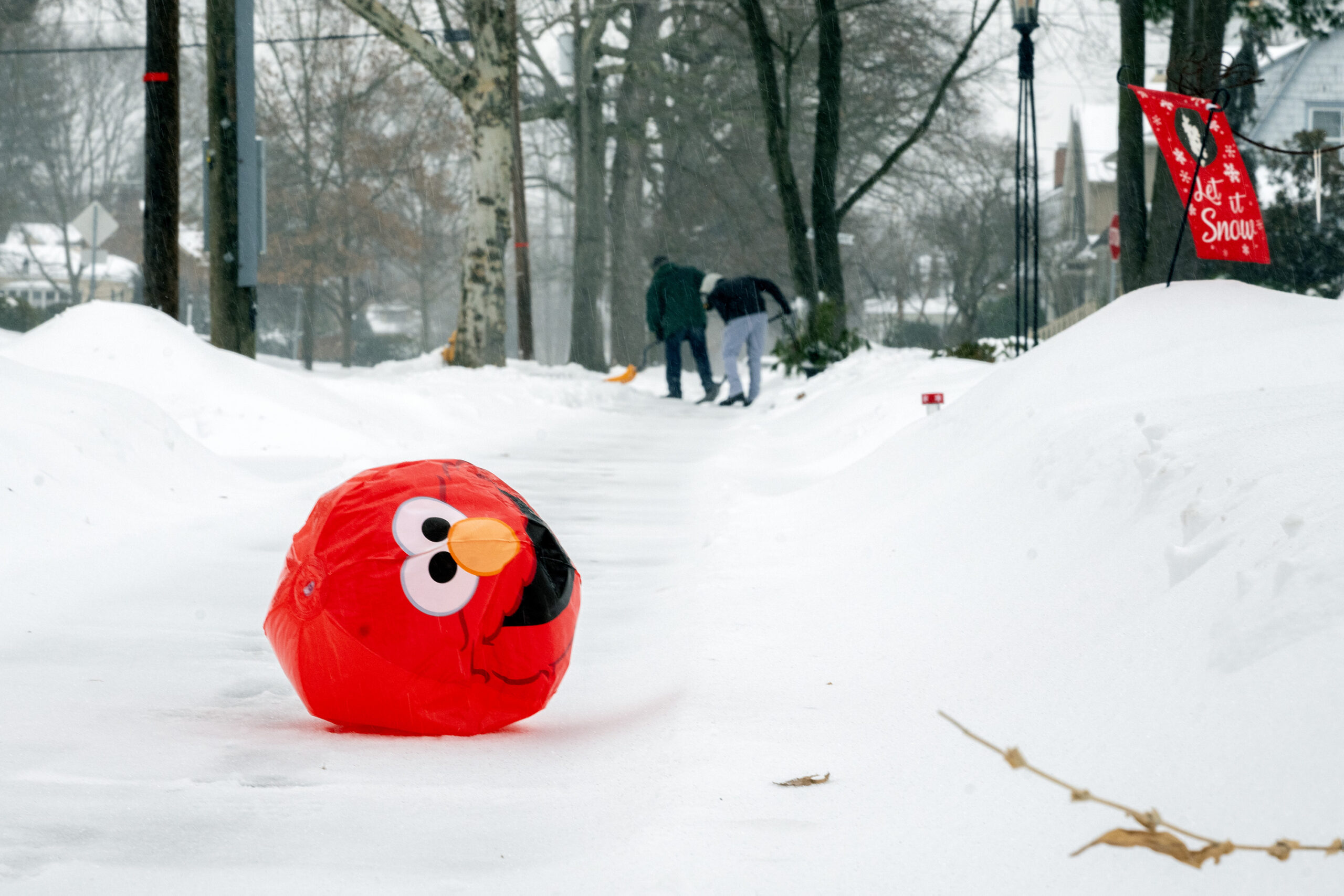
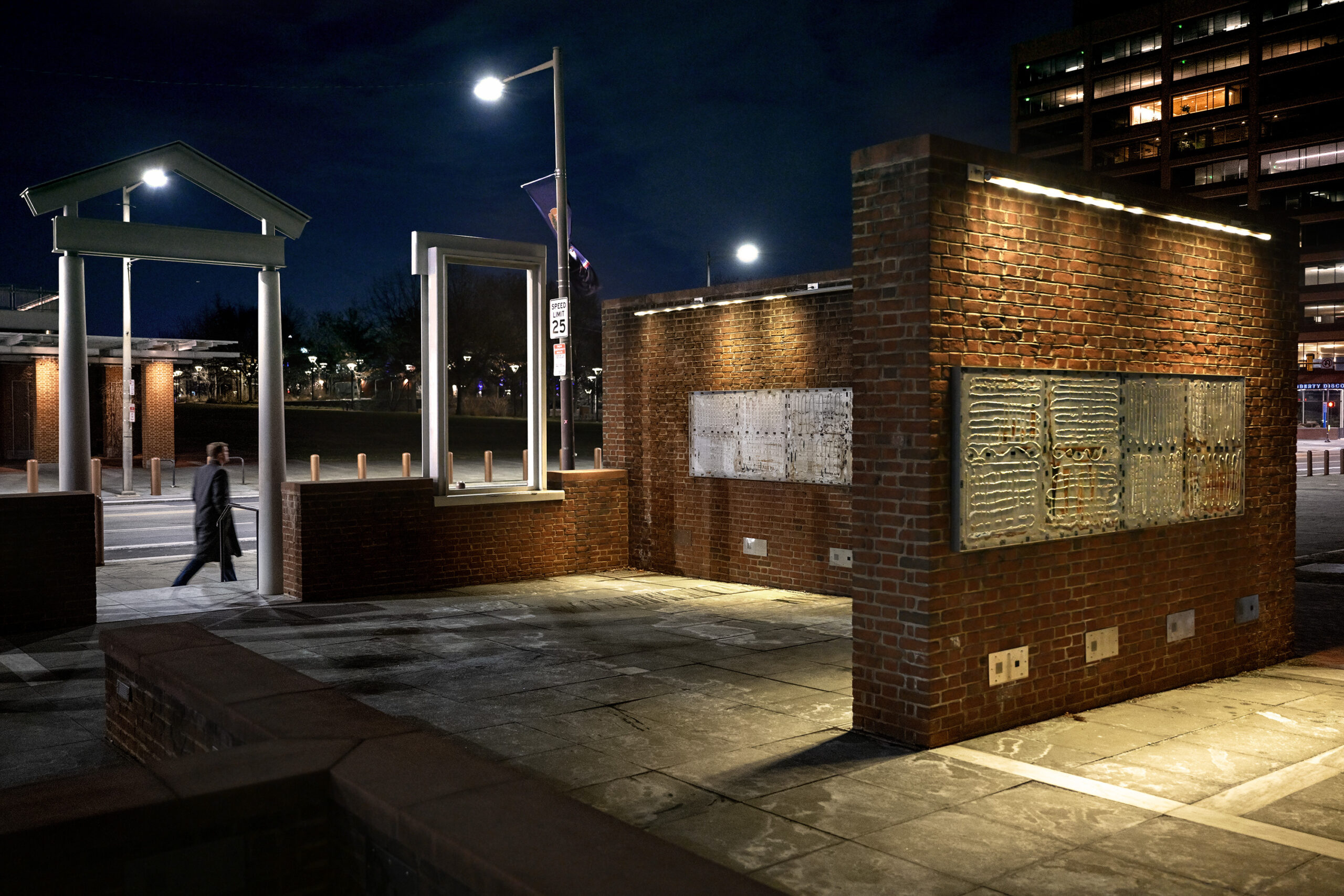
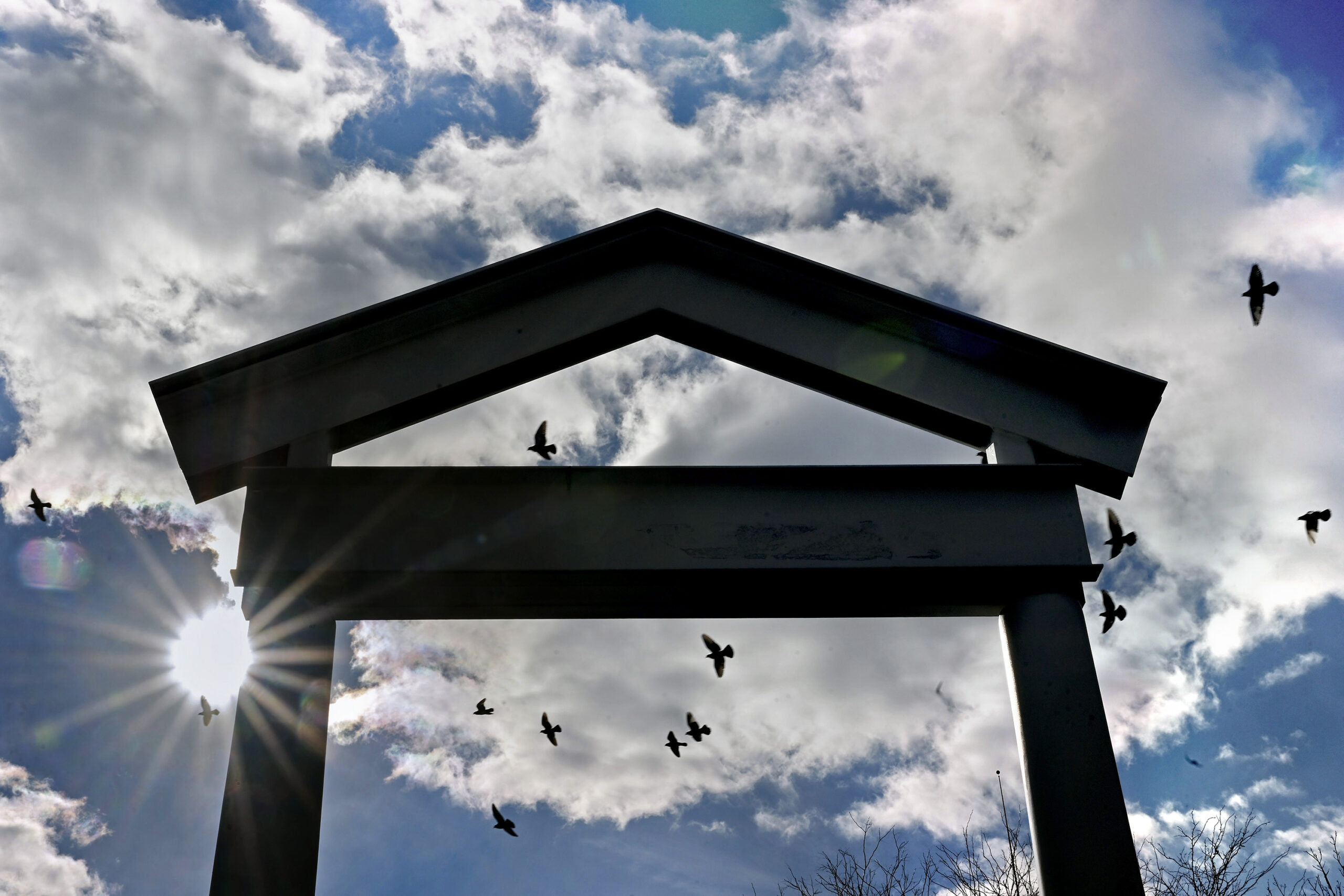
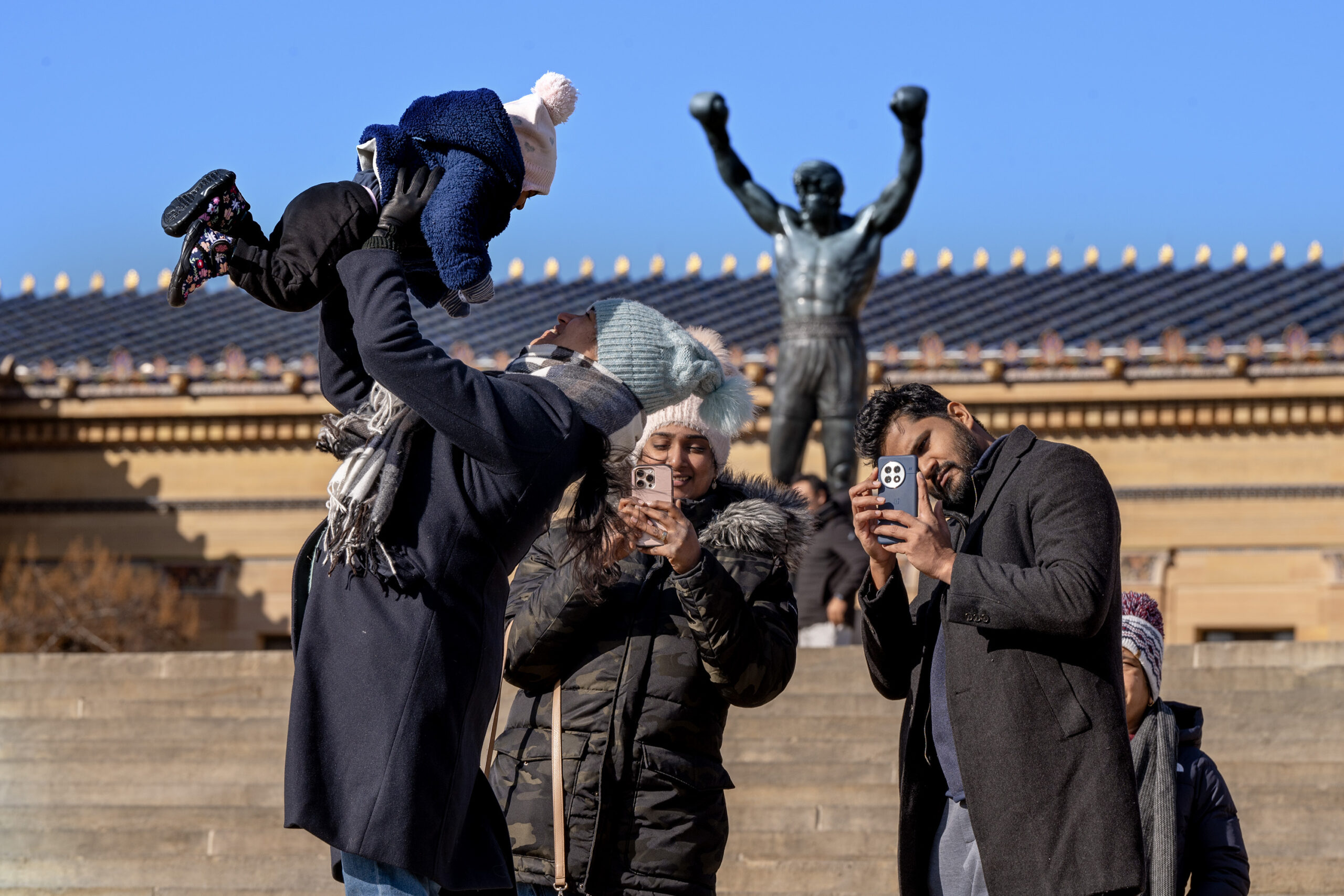
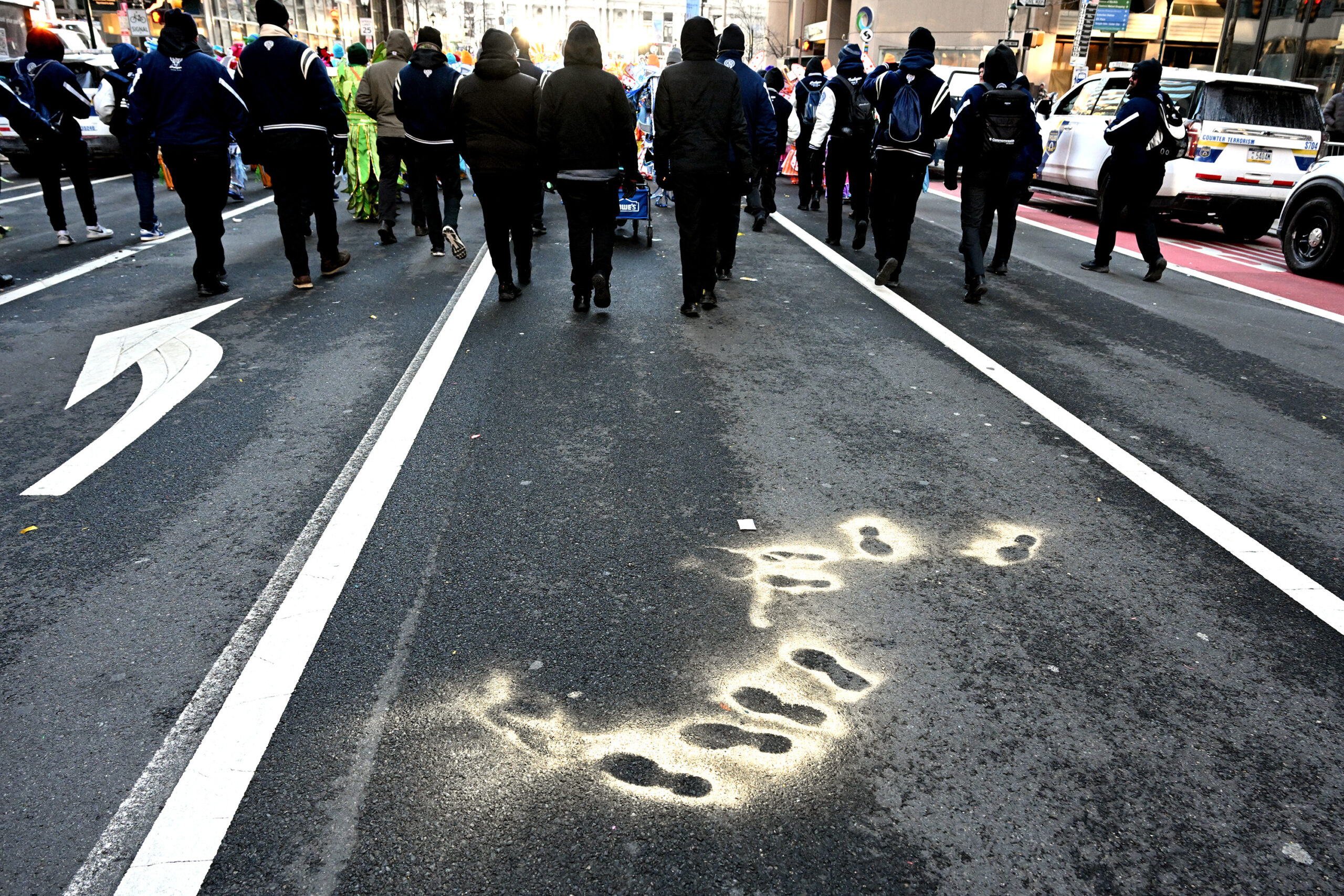
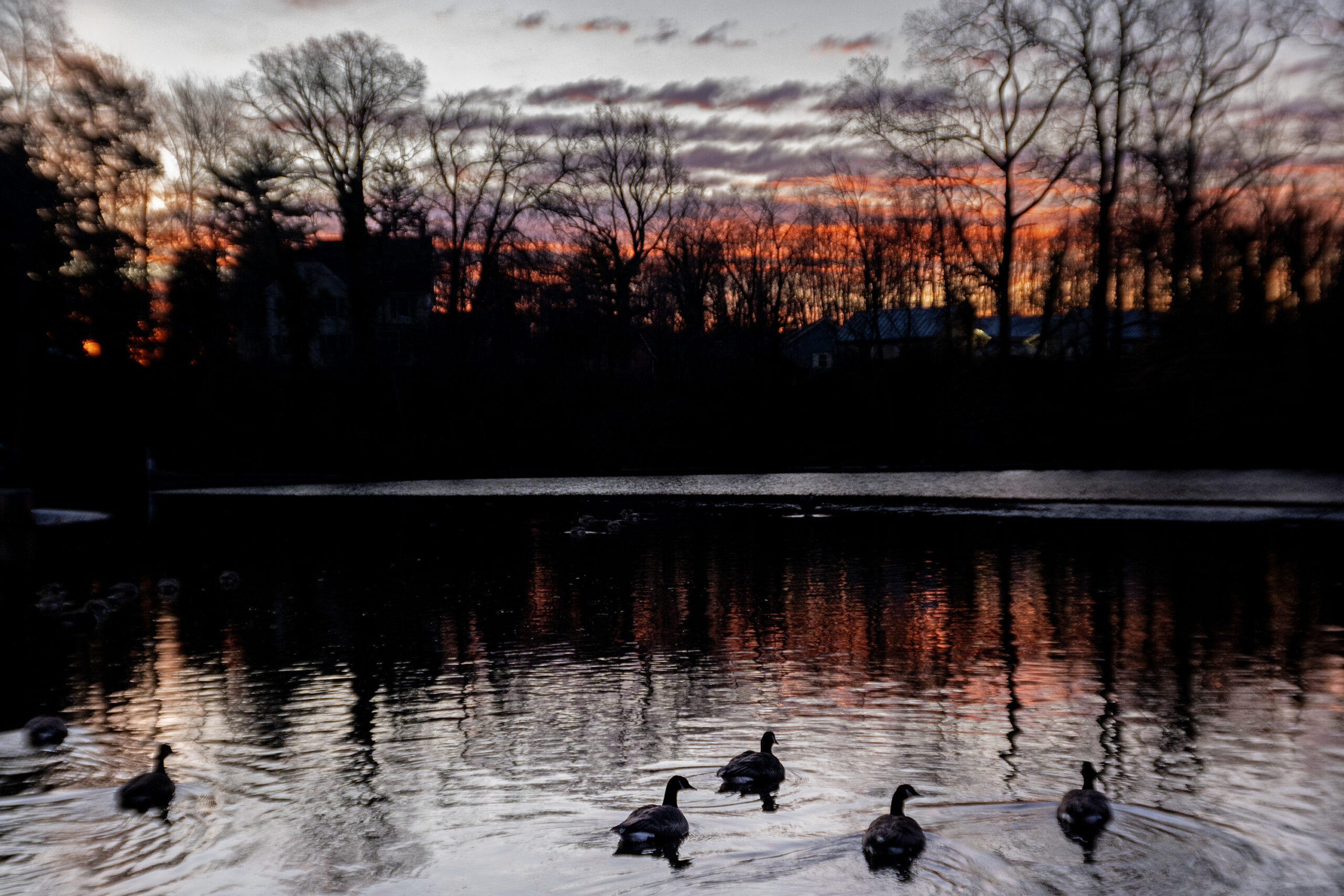
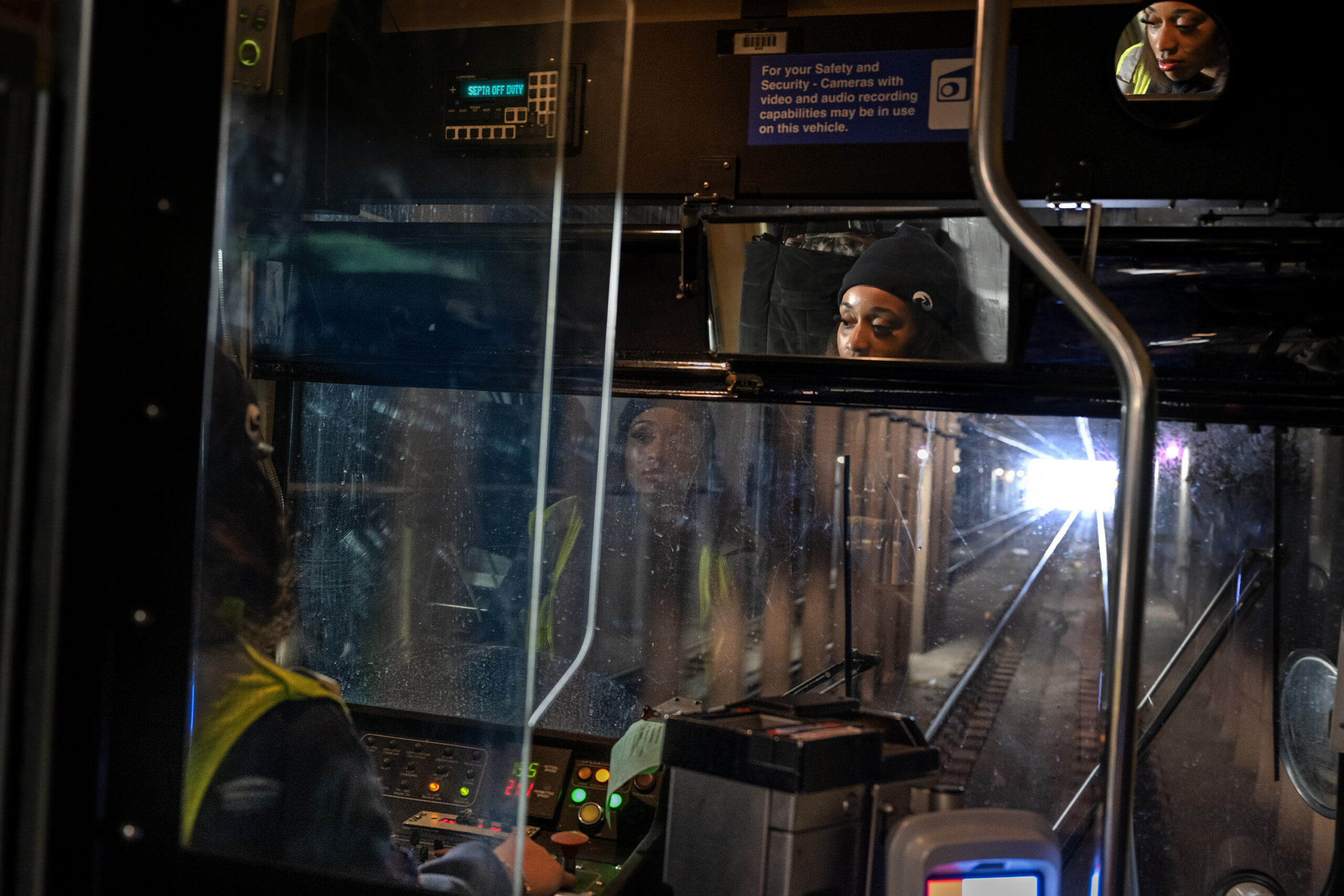
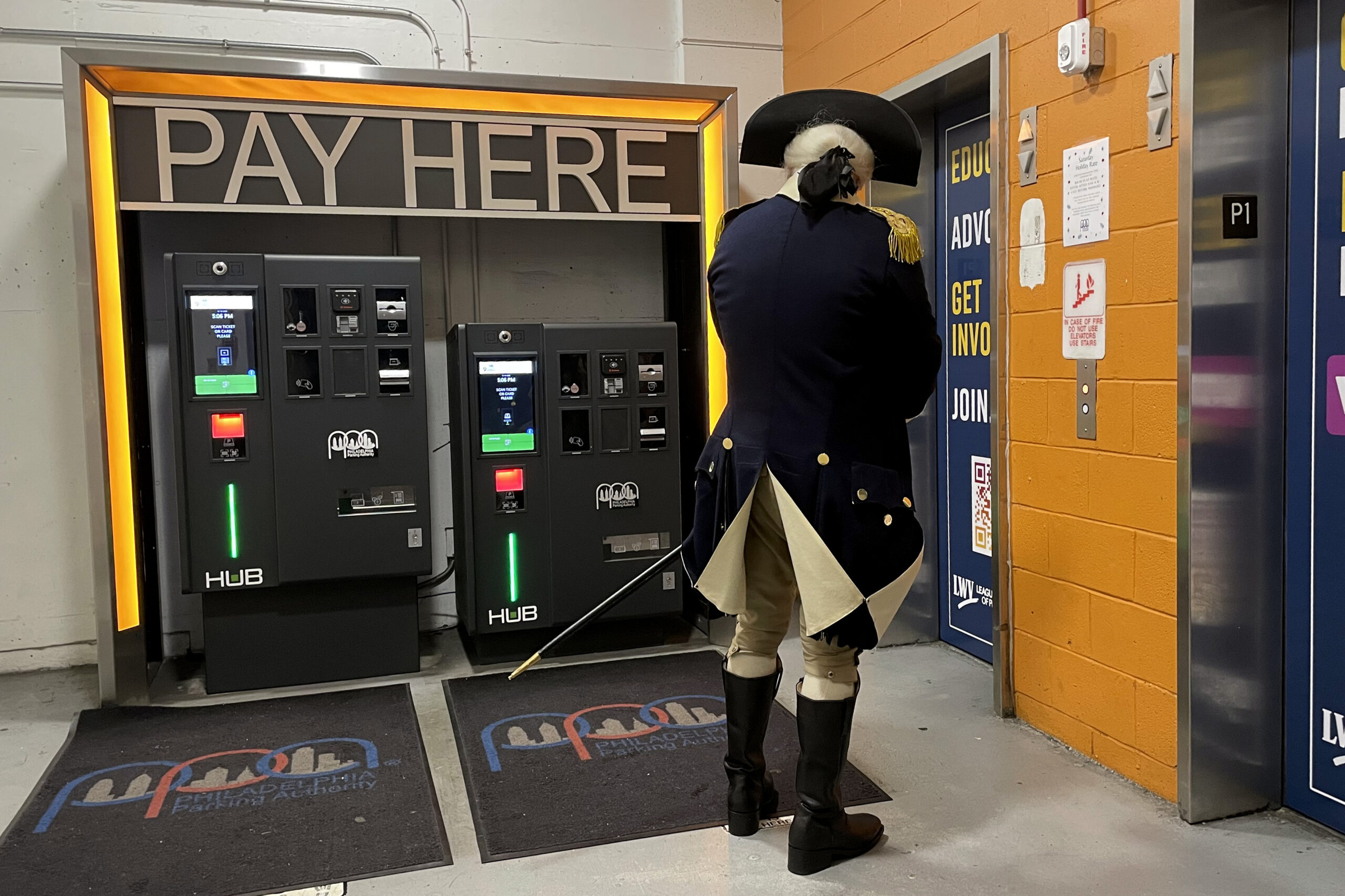
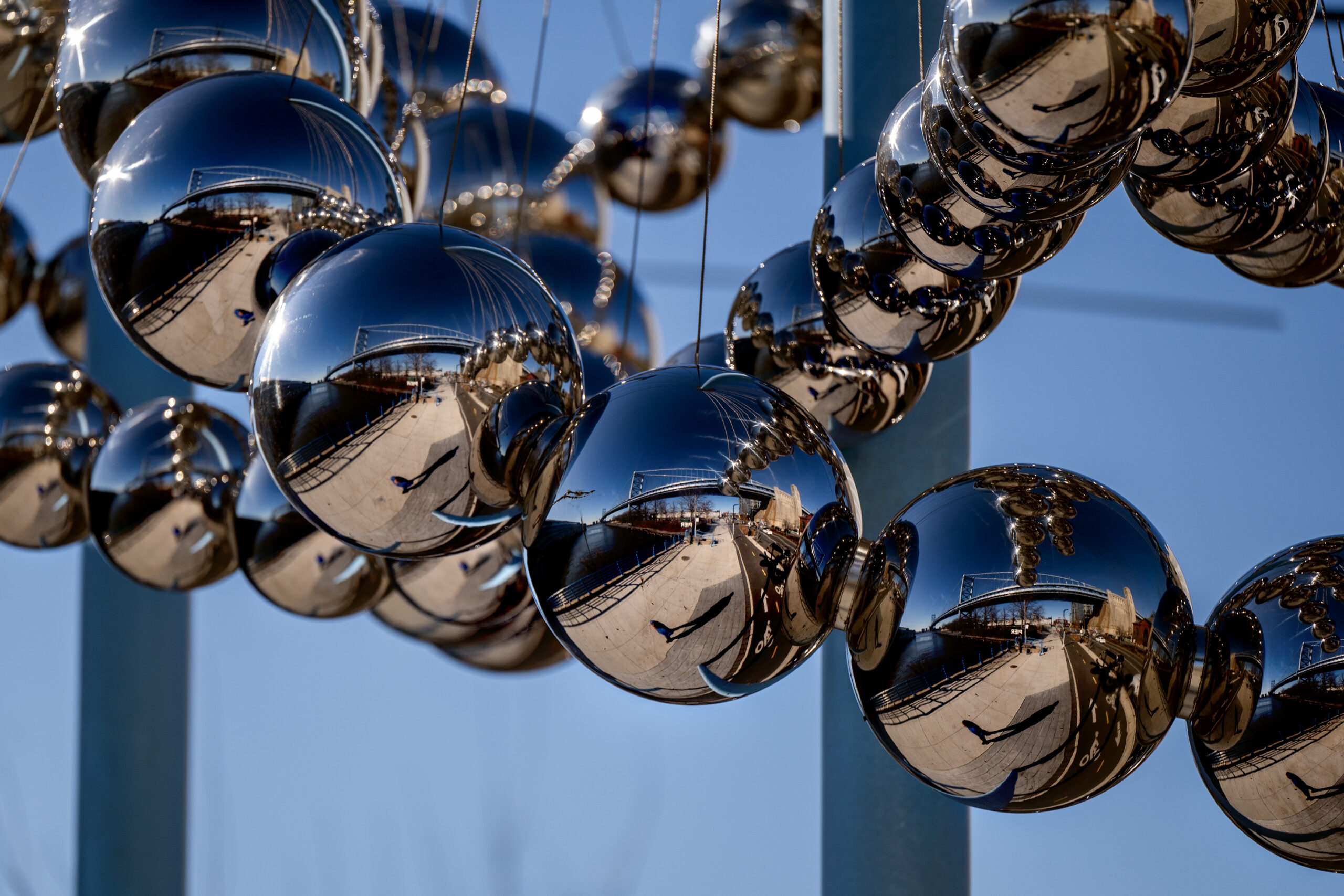
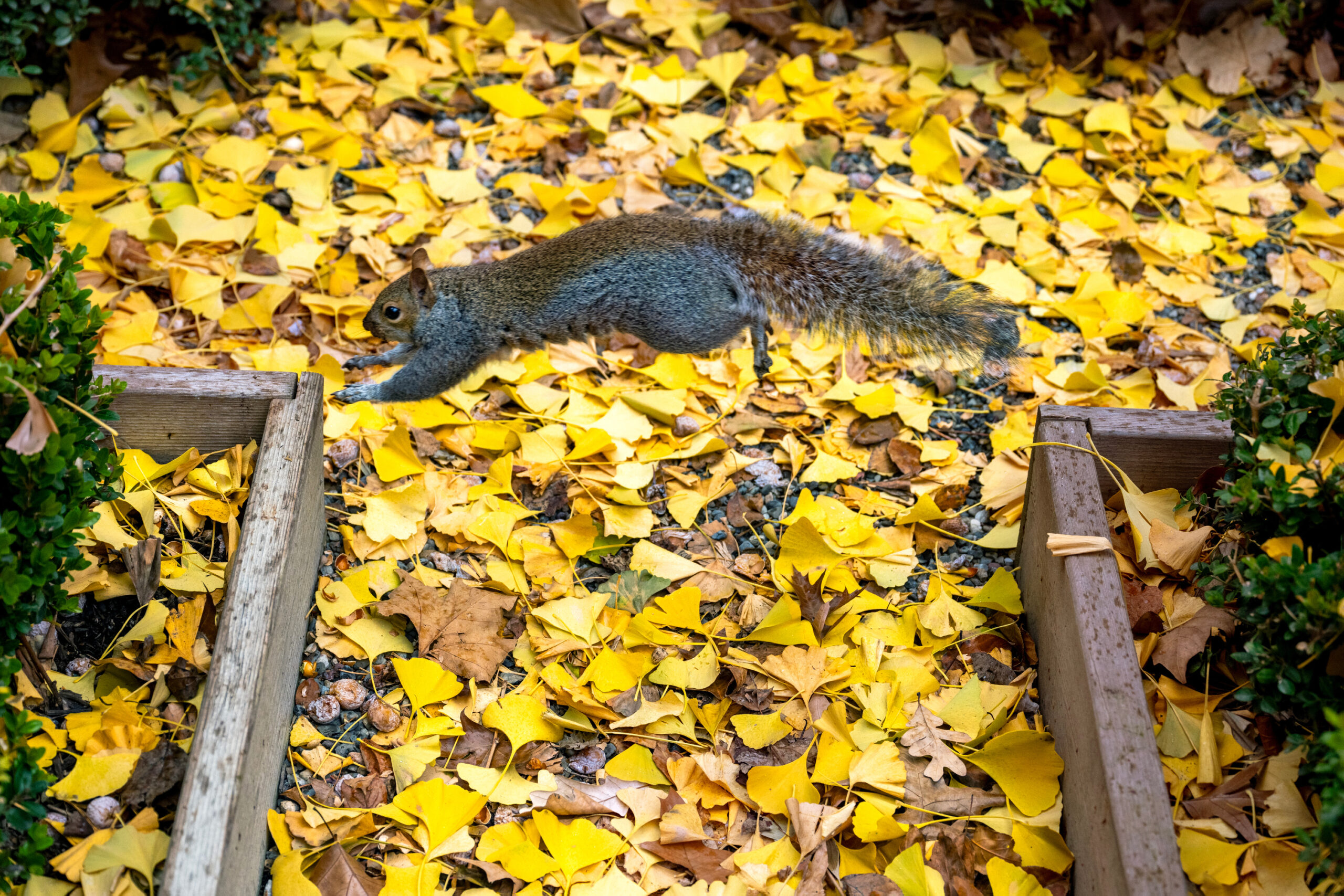
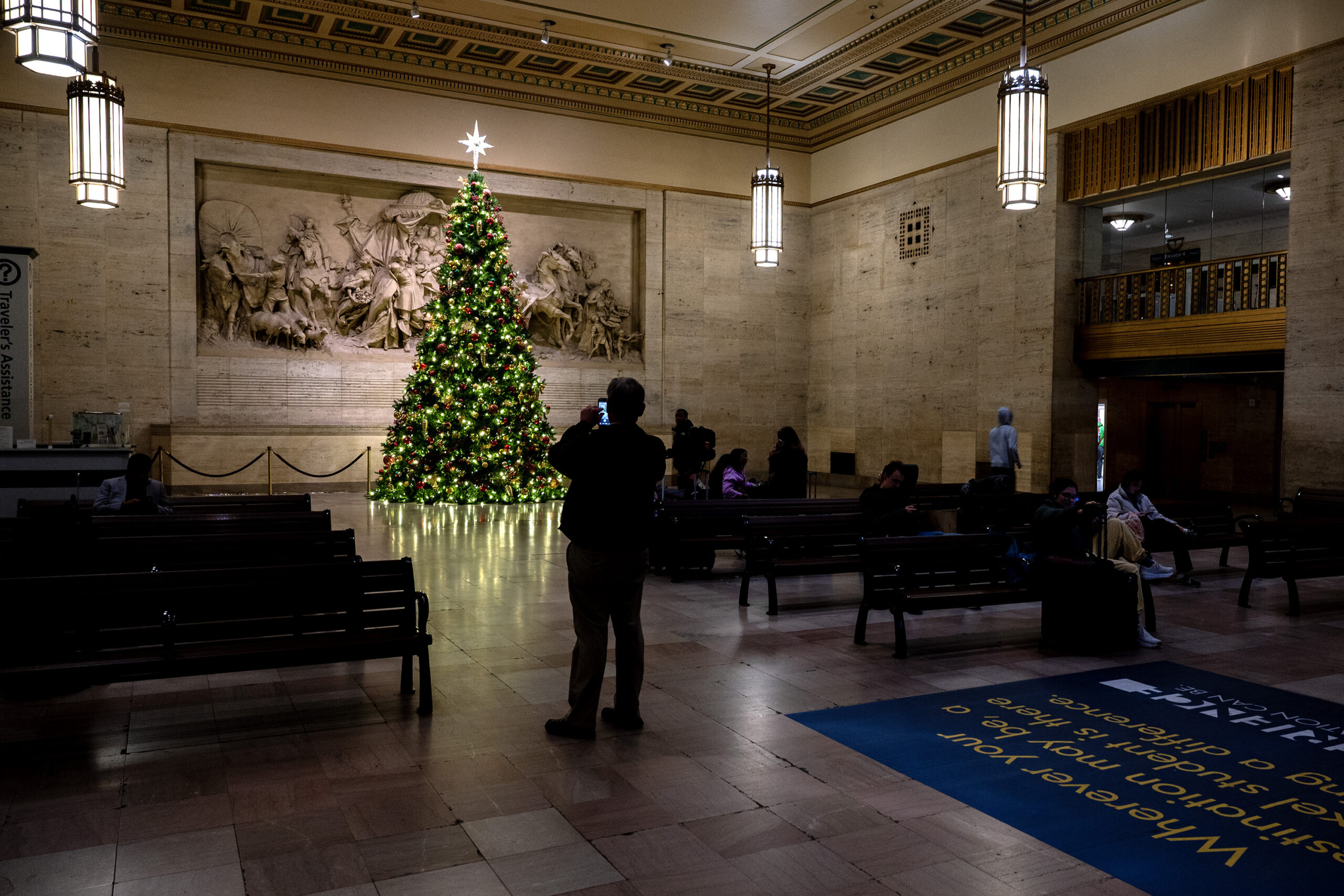
March 2, 2026: Lynasia Allen, a junior horticulture student at W.B. Saul High School is on lunch break at the Convention Center while setting up for the PHS Philadelphia Flower Show before it opened to the public. Her school’s exhibit is titled, “Up-Rooted, Re-Planted.” February 23, 2026: Bystanders at the President’s House try to prevent a “counter-protester” from ripping off notes posted by visitors where panels about slavery had been removed by President Donald Trump’s administration.February 16, 2026: What came first? The dirty snowpacked berm of frozen slush or the graffiti? February 9, 2026: Walking through a corrugated metal culvert called the “Duck Tunnel,” a pedestrian navigates the passageway under the SEPTA tracks on the Swarthmore College campus. February 2, 2026: A light-as-air Elmo balloon rolls along a sidewalk in Haddonfield, propelled by the wind as Sunday’s heavy snow starts to turn to ice and sleet. January 26, 2026: The President’s House in Independence National Historical Park hours Jan, 22, after all historical exhibits were removed following President Trump’s Executive Order last March that the content at national parks that “inappropriately disparage” the U.S. be reviewed. The site, a reconstructed “ghost” structure titled “Freedom and Slavery in the Making of a New Nation” (2010), serves as a memorial to the nine people George Washington enslaved there during the founding of America.January 19, 2026: A low-in-the-sky winter sun is behind the triangular pediment of the “front door” of the open-air President’s House installation in Independence National Historical Park. The reconstructed “ghost” structure with partial walls and windows of the Georgian home known in the 18th century as 190 High St. is officially titled, “Freedom and Slavery in the Making of a New Nation” (2010). It is designed to give visitors a sense of the house where the first two presidents of the United States, George Washington and John Adams, served their terms of office. The commemorative site designed by Emanuel Kelly, with Kelly/Maiello Architects, pays homage to nine enslaved people of African descent who were part of the Washington household with videos scripted by Lorene Cary and directed by Louis Massiah. Deepika Iyer holds her niece Ira Samudra aloft in a Rockyesque pose, while her parents photograph their 8 month-old daughter, in front of the famous movie prop at the top of the steps at the Philadelphia Art Museum. Iyer lives in Philadelphia and is hosting a visit by her mother Vijayalakshmi Ramachandran (partially hidden); brother Gautham Ramachandran; and her sister-in-law Janani Gautham who all live in Bangalore, India.January 5, 2026: Parade marshals trail behind the musicians of the Greater Kensington String Band heading to their #9 position start in the Mummers Parade. Spray paint by comic wenches earlier in the day left “Oh, Dem Golden Slippers” shadows on the pavement of Market Street. This year marked the 125th anniversary of Philly’s iconic New Year’s Day celebration.Dec. 29, 2025: Canada geese at sunrise in Evans Pond in Haddonfield, during the week of the Winter Solstice for the Northern Hemisphere. December 22, 2025: SEPTA trolley operator Victoria Daniels approaches the end of the Center City Tunnel, heading toward the 40th Street trolley portal after a tour to update the news media on overhead wire repairs in the closed tunnel due to unexpected issues from new slider parts.December 15, 2025: A historical interpreter waits at the parking garage elevators headed not to a December crossing of the Delaware River, but an event at the National Constitution Center. General George Washington was on his way to an unveiling of the U.S. Mint’s new 2026 coins for the Semiquincentennial, December 8, 2025: The Benjamin Franklin Bridge and pedestrians on the Delaware River Trail are reflected in mirrored spheres of the “Weaver’s Knot: Sheet Bend” public artwork on Columbus Boulevard. The site-specific stainless steel piece located between the Cherry Street and Race Street Piers was commissioned by the City’s Public Art Office and the Delaware River Waterfront Corporation and created and installed in 2022 by the design and fabrication group Ball-Nogues Studio. The name recalls a history that dominated the region for hundreds of years. “Weaver’s knot” derives from use in textile mills and the “Sheet bend” or “sheet knot” was used on sailing vessels for bending ropes to sails. November 29, 2025: t’s ginkgo time in our region again when the distinctive fan-shaped leaves turn yellow and then, on one day, lose all their leaves at the same time laying a carpet on city streets and sidewalks. A squirrel leaps over leaves in the 18th Century Garden in Independence National Historical Park Nov. 25, 2025. The ginkgo (Ginkgo biloba) is considered a living fossil as it’s the only surviving species of a group of trees that existed before dinosaurs. Genetically, it has remained unchanged over the past 200 million years. William Hamilton, owner the Woodlands in SW Phila (no relation to Alexander Hamilton) brought the first ginkgo trees to North America in 1785.November 24, 2025: The old waiting room at 30th Street Station that most people only pass through on their way to the restrooms has been spiffed up with benches – and a Christmas tree. It was placed there this year in front of the 30-foot frieze, “The Spirit of Transportation” while the lobby of Amtrak’s $550 million station restoration is underway. The 1895 relief sculpture by Karl Bitter was originally hung in the Broad Street Station by City Hall, but was moved in 1933. It depicts travel from ancient to modern and even futuristic times.
Leave a Reply