Category: Washington Post

  • Trump administration uses ICE to pressure blue states

    Trump administration uses ICE to pressure blue states

    For months, President Donald Trump’s administration has been trying to force Minnesota’s Democratic leaders to turn over detailed information about the state’s voters, including driver’s license numbers and partial Social Security numbers.

    State officials have said no. Now, Attorney General Pam Bondi is repeating those demands in a letter that also references the federal government’s aggressive deployment of immigration agents to the streets of Minneapolis.

    Her letter, dated Saturday, presses the state on sharing the voter information, turning over public assistance data and assisting the federal government with immigration enforcement. It was sent the same day border agents fatally shot Alex Pretti, an intensive care nurse, in Minneapolis.

    Bondi’s approach has led Democrats in Minnesota and other states to accuse the administration of blackmailing and bullying them into ceding more power to the administration. It comes as she tries to extract similar data from dozens of other states.

    “The states have power,” Minnesota Attorney General Keith Ellison (D) said. “And Trump is saying, ‘No you don’t, not while I’m president. We’ll run you over. We’ll kill your people. We’ll shoot pepper balls at you. We’ll invade your city. We’ll terrorize everyone. We’ll kill citizens.’”

    The Department of Homeland Security launched Operation Metro Surge last month and has sent thousands of agents to Minnesota since then. Pretti’s death came 2½ weeks after another agent killed Renée Good in her vehicle. Both victims were 37.

    The federal government has sweeping authority to enforce immigration laws, as a federal judge made clear Monday as she repeatedly expressed skepticism in response to Minnesota’s arguments in a lawsuit seeking to halt the surge of immigration agents to the state. The administration has far less power when it comes to elections because the Constitution gives states the primary responsibility for voting policies.

    Bondi’s letter to Minnesota Gov. Tim Walz (D) appeared to try to leverage immigration enforcement to get the state’s voter list. Minnesota officials rejected the demand and said Bondi was trying to force them to give up sensitive voter data that the Justice Department is not entitled to have.

    “This was never about immigration,” Ellison said. “It was never about fraud. It’s about coercion and bullying.”

    The Justice Department recently launched an investigation into whether Walz and others were impeding immigration enforcement. Trump on Monday struck a new tone, writing on social media that he had talked to Walz and believed they were “on a similar wavelength.” He said he expected them to talk again soon.

    But in court, the two sides clashed at a hearing over the surge of Immigration and Customs Enforcement agents. U.S. District Judge Katherine Menendez asked a Justice Department attorney whether Bondi with her letter to Walz was trying to “achieve a goal through force, which it can’t achieve through the courts.” Justice Department attorney Brantley Mayers waved off the possibility the enforcement activities were linked to what Bondi sought in her letter.

    “I have all of these quotes in the record,” Menendez said. “You’re telling me that I’m reading them wrong?”

    Throughout the hearing, the judge expressed skepticism that she has the power to curtail the administration’s immigration enforcement and said she would rule soon.

    In a statement, White House spokesperson Abigail Jackson said Trump “wants to work with local leaders to remove the worst of the worst from American streets.” The Justice Department declined to comment on the record.

    Georgetown University law professor Stephen I. Vladeck said Minnesota officials, in their lawsuit trying to stop the federal immigration surge, were testing a legal theory about the limits of the federal government’s power that is “designed for novel times.”

    “Our existing legal doctrines were not designed for rampant lawlessness on the part of the executive,” he said.

    Ahead of the hearing, Maine Gov. Janet Mills (D) said she was watching the case closely, particularly now that immigration agents have flooded into her state. Mills, a former state attorney general, said Republicans were acting hypocritically, given the party’s historical support of states’ rights, which are granted in the 10th Amendment of the Constitution.

    “Republicans have always loved the 10th Amendment,” she said. “Suddenly, they’re against it.”

    Kansas Attorney General Kris Kobach (R) said he has a “long-standing pro-states’ rights, pro-10th Amendment point of view.” But the federal government has clear authority over immigration, he said.

    He said Bondi was making a “policy recommendation” to Minnesota when she urged the state to change how it cooperates with immigration authorities. He said he didn’t think she was linking the request to the surge of agents in the state.

    “She’s not threatening to do something,” he said. “I don’t think it’s coercive.”

    The federal government has a right to data on public assistance programs because it funds them, he argued. The request for the voter rolls may be “tangential” to what is happening in Minnesota, Kobach said, but he believes the federal government has a right to that data, which he supports using in an effort to find illegal voters.

    The dispute over the connection between voter rolls and immigration enforcement has played out over social media in recent days. Rep. Ilhan Omar (D., Minn.) said online that Bondi’s letter showed the surge of immigration agents “was always about rigging elections.”

    Vice President JD Vance responded to her on Monday by stating that Democrats are effectively saying, “We really want illegal aliens to vote in elections and will riot to ensure that it is so.”

    Democratic-led states have brought dozens of lawsuits against the Trump administration over the past year. California Attorney General Rob Bonta (D) said litigation has been an essential check on a federal government intent on pushing the limits of its power.

    “The check of the Congress is completely absent,” he said. “A Republican-led Congress is completely supine, ready to jump when asked to jump by the Trump administration, and they ask how high it is.”

    The Justice Department’s demand for Minnesota’s voter rolls comes after the agency spent months suing states to get personal information on voters, including their dates of birth, driver’s license numbers and partial Social Security numbers.

    In all, the Justice Department has sued two dozen states for their voter lists, but judges have not ruled in most of the cases. A federal judge this month threw out the lawsuit against California, saying the Justice Department is not entitled to the information. That case could sway how other courts look at the issue.

    Justice Department officials have said they want the lists so they can check whether states are properly maintaining them. It has been sharing data it has received from some states with the Department of Homeland Security, which oversees immigration enforcement.

    Under the Constitution, states, rather than the federal government, are responsible for running elections. Congress has not given the administration the authority to “centralize the private information of all Americans within the Executive Branch,” U.S. District Judge David O. Carter for the Central District of California wrote in his recent decision rejecting the Justice Department’s attempts to get that state’s voter rolls.

    Allowing the Justice Department to get the list “would inevitably lead to decreasing voter turnout as voters fear that their information is being used for some inappropriate or unlawful purpose,” the judge wrote.

    Minnesota Secretary of State Steve Simon (D), who oversees the state’s voter rolls, rejected Bondi’s latest demand and noted that most states have taken a similar stance.

    “This isn’t a defiant Minnesota on its own,” he said. “A large majority of states that have been asked for this information have said no on a similar basis to ours.”

    Maine Secretary of State Shenna Bellows (D) has fought the Justice Department’s demand for the voter list in her state.

    “I think what Bondi’s letter makes clear is that ICE invading Minnesota and Maine was never about immigration, but rather about inflicting violence and creating chaos to try to control our states and our elections,” she said.

    If the administration gathers state voter rolls, it can use them to challenge the ability of people to vote, said Uzoma Nkwonta, an attorney who represents Democratic voters who have intervened in the litigation over voter lists.

    “This is how you steal elections,” he said. “This is the path — taking these lists and then submitting them either to prevent people from voting or after the fact in order to reject the results of an election.”
  • Federal Reserve cuts rates again, signals one more cut amid uncertain outlook

    Federal Reserve cuts rates again, signals one more cut amid uncertain outlook

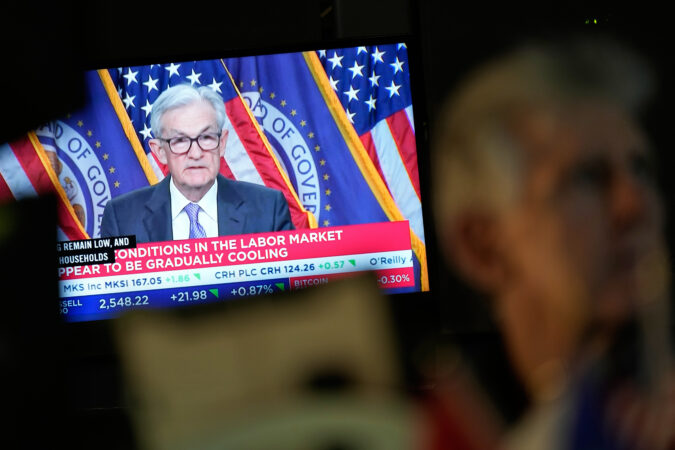
    The Federal Reserve cut interest rates by a quarter of a percentage point on Wednesday for the third time this year, seeking to shore up a softening labor market even as inflation builds and leaving the prospect of more cuts next year unclear.

    “It’s a labor market that seems to have significant downside risks,” Fed Chair Jerome Powell said at a news conference following the meeting.

    Although Fed officials tentatively penciled in at least one more rate cut before the end of next year, estimates about where the economy is heading varied significantly and Powell suggested the central bank might wait before returning to any additional cuts.

    “We are well positioned to wait and see how the economy evolves from here,” he said.

    Wednesday’s widely expected move lowers the Fed’s benchmark rate to a range of 3.5 to 3.75 percent, the lowest level in about three years. But officials remain sharply divided over how to respond to an economy sending mixed signals: Inflation remains above the Fed’s target, which would typically argue for holding rates steady, while slower hiring and a modest uptick in unemployment suggest a case for easing.

    Investors cheered the news, with major financial indexes ending the day higher on Wednesday afternoon.

    Nine Federal Reserve officials backed Wednesday’s cut while three dissented. Two officials — Chicago Fed President Austan Goolsbee and Kansas City Fed President Jeffrey Schmid — favored no rate reduction, while Fed governor Stephen Miran preferred a larger, half-point cut. It was the most dissent since September 2019.

    In another sign of division among top Fed officials, the latest economic projections also released on Wednesday showed seven officials penciled in no additional cuts next year, while 12 favored at least one or more.

    Fed policies influence what households and businesses pay for mortgages, credit cards and other loans, and investors are watching closely for guidance on the central bank’s next steps.

    The Fed’s job is to keep prices stable and to maximize employment, but it is split on how to navigate what some describe as a light version of stagflation — elevated inflation alongside a labor market that is slowing but far from collapsing. Those divides were exposed at the Fed’s last gathering in October, where officials expressed “strongly differing views about what policy decision would most likely be appropriate,” according to the meeting minutes.

    Further complicating the decision, the Fed received far less official data about the health of the economy, because of the government shutdown that delayed or canceled the release of reports on the jobs market and consumer prices. Some Fed officials, relying on alternative data or surveys of the business community, argued that progress on inflation had stalled and warned that cuts risked undermining hard-won gains. Others countered that rising unemployment and weakening consumer demand suggested a need for action.

    Powell defended cutting rates now rather than waiting for the Fed’s next meeting in late January, when officials will finally have a better sense of the status of economy thanks to a trove of upcoming official reports. Wednesday’s call reflected mounting evidence of a cooling job market, he noted, saying that after readjustments and revisions, job growth may have been slightly negative since spring.

    “I think you can say that the labor market has continued to cool gradually, maybe just a touch more gradually than we thought,” Powell said.

    With unemployment rising to 4.4 percent in September, the Fed no longer characterized that rate as “low,” in a statement announcing the rate cut.

    Former Philadelphia Fed president Patrick Harker said this week that Wednesday’s move is shaping up to be a “hawkish cut” — a rate reduction paired with a signal that policymakers may soon pause further easing. Harker said the Fed’s internal divergence reflects an unusual degree of economic “fog,” with inflation not worsening as much as feared, unemployment claims relatively stable, and labor-market signals increasingly difficult to interpret. He noted that monthly job gains below 100,000 would normally be a red flag, but demographic trends and uncertain immigration patterns complicate the baseline.

    Those disagreements are unfolding amid unprecedented political pressure from President Donald Trump, who has repeatedly criticized the Fed for not moving quickly enough to lower rates and has threatened to fire Powell. Trump renewed those attacks ahead of this week’s meeting, telling Politico that support for aggressive rate cuts is a litmus test for whoever he taps to succeed Powell, whose term as chair expires in May. The president plans to nominate a successor early next year, though he has already signaled he knows who he is likely to pick.

    Former Pennsylvania Sen. Pat Toomey, who was top Republican on the Senate Banking Committee, said he is perplexed by Trump’s push for cuts, because inflation remains above target and the broader economy continues to expand. The data shows cooling — not collapsing — labor conditions, which wouldn’t normally justify an urgent push for easing rates, Toomey said.

    Toomey warned that the president is taking a much bigger political gamble than he appears to realize. If inflation were to spike again, he said, Trump would “completely own” the fallout after pressuring the Fed when “there’s no obvious need to ease.” That makes the campaign for faster rate cuts “surprising,” Toomey said.

    Although Powell secured enough board support to approve Wednesday’s cut, future easing would depend on keeping that alliance.

    The split appears to pit a “hawkish” coalition of regional Fed presidents focused on preventing inflation from resurging against a group of governors in Washington who see the greater risk in a softening economy. Officials such as Cleveland Fed President Beth Hammack, who said she would have preferred not to cut rates in October, have argued that inflation remains stubbornly above the bank’s 2 percent target and warned that reducing rates too soon could keep prices rising.

    Meanwhile, other officials continue to emphasize that a cooling labor market and softening consumer demand call for cuts, to ensure the economy does not slip further.

  • Philip Glass pulls world premiere from Kennedy Center

    Philip Glass pulls world premiere from Kennedy Center

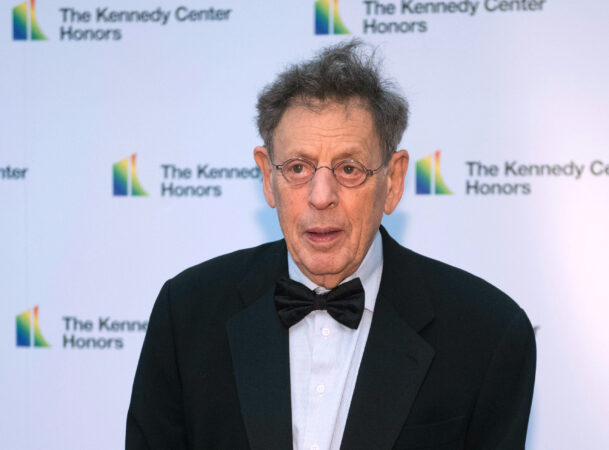
    Composer Philip Glass has joined the list of artists, musicians and performers pulling back from previously scheduled engagements at the Kennedy Center, withdrawing his anticipated Symphony No. 15: Lincoln from the National Symphony Orchestra, which was to perform the world premiere this coming June.

    “After thoughtful consideration, I have decided to withdraw my Symphony No. 15 Lincoln from the John F. Kennedy Center for the Performing Arts,” Glass wrote in a statement provided to the Washington Post. “Symphony No. 15 is a portrait of Abraham Lincoln, and the values of the Kennedy Center today are in direct conflict with the message of the Symphony. Therefore, I feel an obligation to withdraw this Symphony premiere from the Kennedy Center under its current leadership.”

    Glass, who will turn 89 at the end of this month, is a celebrated and influential American composer, who was awarded the Kennedy Center Honors in 2018. Though often credited as a pioneer of 20th-century minimalism, Glass’s music ranges from intimate piano études and chamber works to sprawling symphonies and ambitious, experimental operas such as Einstein on the Beach, Satyagraha and Akhnaten, about historical figures.

    Symphony No. 15: Lincoln was co-commissioned by the Kennedy Center and the NSO, and has already been subject to several delays: It was originally scheduled to premiere in March 2022 and was later postponed to October 2022. This season, the piece was restored to the NSO’s calendar as a centerpiece of the Kennedy Center’s ongoing “250 Years of Us” programming.

    Its withdrawal comes amid a wave of cancellations by artists and performers, prompted by the addition of President Donald Trump’s name to the center (as well as to the building’s facade), or attributed to scheduling conflicts or financial strains. It also lands against a backdrop of reputational crisis at the center, a stretch of politically charged changes (like Trump himself hosting the Kennedy Center Honors) that has been met with a sharp decline in ticket sales and an apparent audience boycott over the politicization of the nonpartisan venue.

    Glass’s letter arrives 188 years to the day after Abraham Lincoln delivered his 1838 Lyceum Address, from which Glass adapts two movements of the symphony’s libretto — along with Lincoln’s Autobiographical Sketch of 1859, his Farewell Address of 1861 and assorted other writings and correspondence. (Baritone Zachary James was slated to sing the premiere performance in June, on a program led by conductor Karen Kamensek.)

    “I think there is no American subject matter more interesting than Abraham Lincoln,” Glass told me in 2022 about the Symphony No. 15, then still in progress. “I read him almost like I would a writer, not a politician or someone in government. There’s a beautiful music to his writing.”

    The withdrawal mars a long history between Glass and the center. And while it’s highly unusual for a composer to withdraw a work from a commissioning body as an act of protest, the composer’s work has responded to contemporary politics in the past.

    In 2015, Washington National Opera, which this month parted ways with the Kennedy Center, gave the world premiere of an expanded version of Glass’s opera Appomattox, which draws a musical through line from the Civil War to the civil rights movement through the voices of Lincoln, the Rev. Martin Luther King Jr., Lyndon B. Johnson and others.

    Glass and playwright Christopher Hampton revised the opera (which premiered in 2007) in response to a 2013 decision by the Supreme Court that invalidated key elements of the Voting Rights Act of 1965.

    “It’s almost like a photojournalist approach to opera,” Glass told The Post at the time, “where the material is changing while you’re writing it.”

  • More history exhibits pulled from national parks, including Grand Canyon

    More history exhibits pulled from national parks, including Grand Canyon

    Trump officials have ordered national parks to remove dozens of signs and displays related to climate change, environmental protection, and settlers’ mistreatment of Native Americans in a renewed push to implement President Donald Trump’s executive order on “restoring truth and sanity to American history.”

    Park staff have interpreted Trump’s directive — which seeks to scrub federal institutions of what it calls “partisan ideology” and remove any content deemed to “disparage Americans past or living” — to include any references to historic racism and sexism, as well as climate change and LGBTQ+ rights. Last week, that included the removal of an exhibit at the President’s House in Philadelphia that focused on George Washington’s ownership of enslaved people.

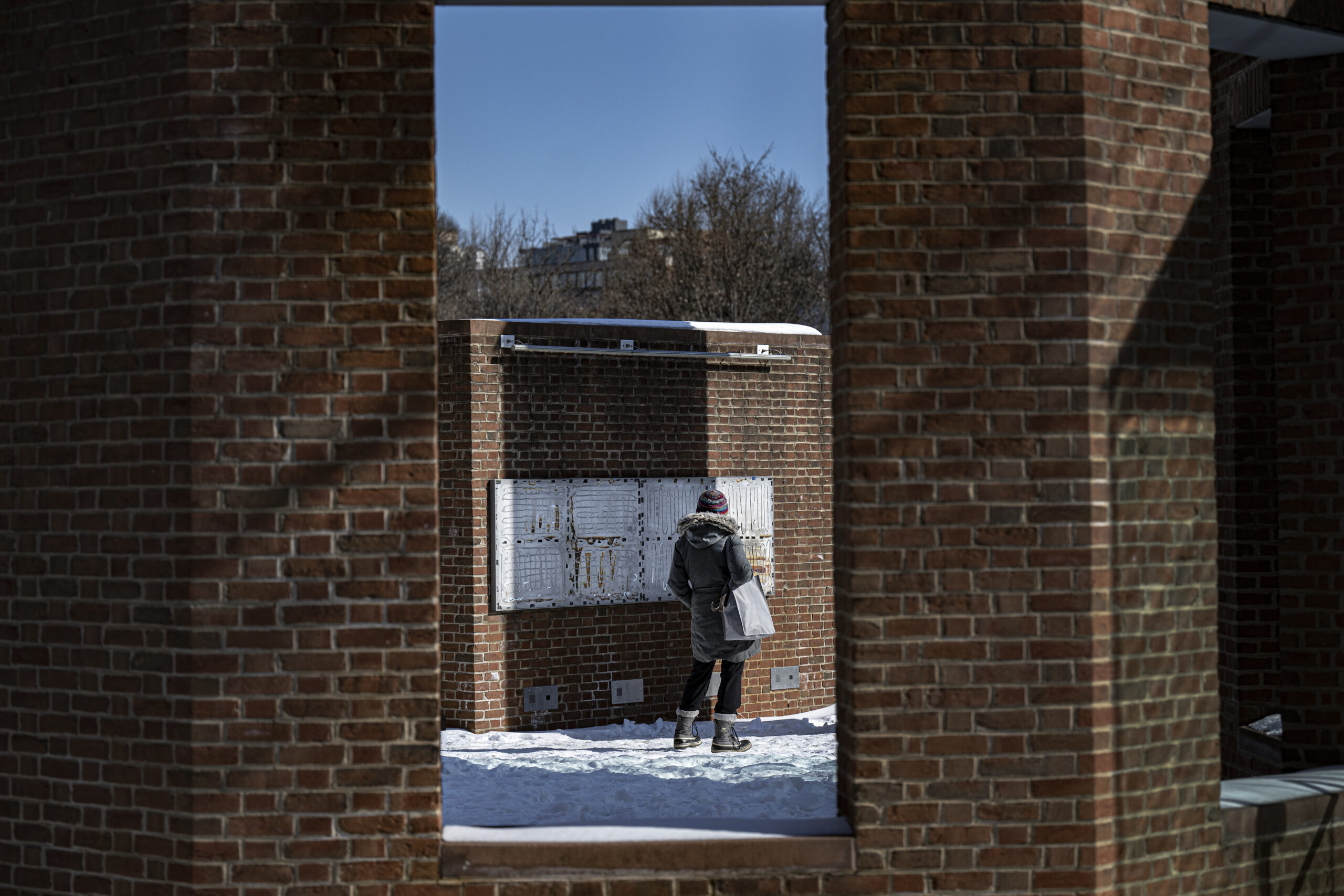
    A visitor on Thursday looks at the site where explanatory panels from an exhibit on slavery were removed from the President’s House in Philadelphia.

    In a new wave of orders this month, Trump officials instructed staff to remove or edit signs and other informational materials in at least 17 additional parks in Arizona, Texas, Colorado, Utah, Montana, and Wyoming, according to documents reviewed by the Washington Post. The documents also listed some removals ordered in August and September.

    The Interior Department said in a statement it was implementing Trump’s executive order.

    “All federal agencies are to review interpretive materials to ensure accuracy, honesty, and alignment with shared national values,” the statement said. “Following completion of the required review, the National Park Service is now taking appropriate action in accordance with the Order.”

    Among the national parks targeted in the new removal orders are some of the country’s most iconic: Grand Canyon, Glacier, Big Bend, and Zion.

    The removal orders include descriptions of how climate change is driving the disappearance of the glaciers at Glacier National Park and a wayside display at the Grand Canyon referring to the forced removal of Native Americans.

    The administration’s broad attempt to suppress true stories “should offend every American,” said Kristen Brengel, senior vice president of government affairs for the National Parks Conservation Association.

    Brengel emphasized that Park Service staffers are acting on administration orders. “Everyone understands this history,” she said. “It’s not debatable, but they’re being forced to select stories because they think the administration will threaten their jobs if they don’t.”

    Here are details on some of the changes being ordered at national parks.

    Grand Canyon National Park

    Staff at a Grand Canyon visitor center in Arizona removed part of an exhibit after flagging potentially problematic passages to the national park system’s leadership in D.C., according to documentation reviewed by the Post.

    The passages included text stating that settlers “exploited land for mining and grazing” and that federal officials “pushed tribes off their land” to establish the park.

    The park also removed references to cattle ranchers “carelessly overgrazing” the land, tourists “foolishly” leaving trash in the park and entrepreneurs who “profited excessively” from tourism.

    Trump officials have yet to take action on several other items, including a video about Native American history.

    Park staff suggested fixes that would remove a reference to a federal policy that prevented Native Americans from using body and face paint, as well as references to their ancestors’ “misery, suffering,” and “loss.”

    Roadside displays on climate change, pollution and mining were also flagged for possible removal.

    Glacier National Park

    In response to frequent inquiries from visitors about the potential disappearance of the famous glaciers at Montana’s Glacier National Park, staff created signs and other resources to answer those questions, said Jeff Mow, who retired as superintendent of the park in 2022.

    The administration flagged one brochure for removal or changes that shows images of glaciers retreating and explains that human-caused climate change is a factor in their likely future disappearance. A video that refers to the disappearance of the glaciers was also ordered removed or changed.

    Also flagged was a sign at the park’s gift shop that says: “Climate Change Affects National Parks and the Treasures They Protect.”

    “We’re whitewashing or we’re taking out all those sort of not-so-nice stories that have occurred in our nation’s history,” Mow said.

    Another informational display to be removed or changed describes the park’s issues with air pollution. The administration paused air-quality monitoring at national parks last year.

    Other signs talk about the increasing fire risk at the park, as well as a nearby dam that “flooded two lakes within the park.”

    “As the nation’s storyteller of natural and cultural history, the National Park Service takes great pride” in telling these stories, Mow said. “This process of being edited — it’s like taking a torpedo in the bow.

    Big Bend National Park

    The signs slated for removal at Big Bend National Park along the Texas-Mexico border do not reference the topics, such as climate or Native American history, that have typically attracted the attention of Trump officials.

    Instead, of the nearly 20 signs flagged for not conforming with the new policy, many deal with geology, prehistoric history, fossils and other seemingly uncontroversial scientific or historical topics. The removal orders do not spell out what’s wrong with the signs.

    Some of the displays are in Spanish and English, while others talk about cooperating with Mexico on modern preservation efforts.

    Big Bend’s submission for the administration’s review says, “These wayside exhibits describe natural features, but emphasize ‘matters unrelated to the beauty, abundance, or grandeur of said natural feature.’” Although it flagged the materials for review, the park said it did “not advocate changing these wayside exhibits.”

    Even so, Trump officials decided the displays did not conform with administration policy and ordered them changed or removed.

    “This is not something that the National Park Service should be blamed for,” said Bob Krumenaker, superintendent of Big Bend until 2023. “They are being told they have to do these things. And my hope is they’re saving these exhibits for when things change so they can put them back up.

    Other parks

    The administration also targeted less famous parks. One sign slated for removal at Bent’s Old Fort National Historic Site in Colorado described key figures in the site’s history and included references to the forced removal of a Native tribe, a family’s slave ownership and another historic figure who had a miscarriage.

    At Hubbell Trading Post National Historic Site in Arizona, a panel on Ganado Mucho, a Navajo leader known for settling disputes with ranchers, is also listed for changes or removal.

    The documentation reviewed by the Post also included new details on removals and changes that were ordered last year.

    At Arizona’s Organ Pipe Cactus National Monument, descriptions of destructive grazing practices and the accelerating rate of warming since 1850, as well as a booklet that talks about endangered turtles and Sonoran pronghorn, were ordered changed or removed.

    Grand Teton National Park in Wyoming was ordered to remove or change a panel about Gustavus Cheyney Doane that said he participated in the U.S. Army massacre of Piegan Blackfeet Native Americans, including women, children and the elderly.

    At Little Bighorn Battlefield National Monument in Montana, exhibit text that described the United States being “hungry for gold and land” and breaking promises to Native Americans was ordered changed or removed.

    Another text describing how U.S.-run boarding schools for Indigenous children “violently erased cultural identities and language” was also deemed not to comply with Trump’s policy.

    Brengel of the National Parks Conservation Association said the Trump administration’s efforts to sanitize American history runs counter to the mission of the park system.

    “We are capable of hearing about our tragedies and our victories, and this systematic erasure should concern everyone in our country,” she said.

  • New evidence shows how discrimination shortens lives in Black communities

    New evidence shows how discrimination shortens lives in Black communities

    Nearly half of the mortality gap between Black and white adults can be traced to the cumulative toll of a lifetime of stress and heightened inflammation, a new study published Monday shows.

    The study, published in JAMA Network Open, bolsters the body of evidence showing that chronic stress takes a biological toll that shortens lives.

    “It’s important to be empirically demonstrated,” said Ryan Bogdan, the study’s senior author and a professor of psychological and brain sciences at Washington University in St. Louis. Researchers tracked the prevalence of two proteins linked to inflammation in the body and tied it to enduring discrimination and related social challenges. The measurement captures more comprehensively “the aftermath” of stressful events, he said.

    Researchers analyzed the proteins in the blood in more than 1,500 Black and white adults who were part of an aging study in the St. Louis area spanning 17 years. They found that decades of stress — childhood adversity, trauma, discrimination, and economic hardship — were associated with higher levels of inflammation later in life, which correlated with earlier death.

    Epidemiologists say the two biomarkers — C-reactive protein and interleukin-6 — tend to linger in the blood after the body’s fight-or-flight system has been repeatedly triggered, allowing them to capture what’s accumulated over time.

    The study, which was largely driven by Washington University in St. Louis graduate student Isaiah Spears, supports the “weathering hypothesis,” which posits that biological wear and tear is caused by striving to overcome hardships in an unequal society.

    Over the course of the study, 25% of Black participants died compared with about 12% of white participants, the study found, meaning Black participants were more likely to die at younger ages. Researchers found that 49.3% of this gap was explained by stress and inflammation.

    A likely undercount

    Arline T. Geronimus, a professor and population health equity researcher at the University of Michigan who began conceptualizing the weathering hypothesis 40 years ago and was not involved in this study, said the data likely represents an undercount. Study participants, on average, were in their late 50s when the study began and were then followed into their 70s and 80s.

    “The most-weathered have already died,” Geronimus said, noting that age span 35 to 60 is “the hardest, most stressful period of life for marginalized groups.”

    She added that another limitation of the study was that the researchers used the “neon lights” of stress events, capturing major traumas or overt discrimination, while overlooking a quieter and important aspect of weathering — the daily stress of resilience. That includes microaggressions, or routine slights, and code-switching, the constant effort to adjust speech or behavior to fit into predominantly white workplaces. Over time, she said, suppressing anger or frustration to avoid reinforcing stereotypes can take a real physiological toll.

    “It’s not just about trauma or severe deprivation, but kind of everyday fists in the face,” she said. It’s a limitation the study acknowledged.

    Black Americans have among the shortest life spans in the United States with a life expectancy of 74 years in 2023, according to federal figures. White Americans live longer on average, but still fewer years than Asian Americans, who have the highest life expectancy — about 85 years, federal data shows.

    Linda Sprague Martinez, a professor and health equity researcher who was not involved in the study, said people tend to misunderstand the type of stress that weathers a body and the interventions needed for relief.

    “Stress management class is not going to solve this problem,” said Sprague Martinez, who runs the Health Disparities Institute at UConn Health in Connecticut. She called the new study’s core finding, that nearly 50% of the mortality gap is linked to stress, “striking.”

    “This is important evidence that continues to contribute to what we know about the fact that racism drives racial inequities,” she said.

    She added that this type of research has been targeted for elimination by the Trump administration because it is associated with diversity, equity, and inclusion, or DEI.

    “There are people who’d be happy if we stopped doing our work, but no,” she said. “We still have to keep doing the work.”

    Health equity experts said the paper is unlikely to influence policy, in part because it does not pinpoint specific forms of structural racism — such as redlining, police violence, income inequality, school segregation, or historical racial terror such as lynching and cross-burning — that drive health disparities.

    “Concentrated poverty, the wealth gap, homeownership — they didn’t talk about any of these and how it affects folks who are aging,” said Derek M. Griffith, university professor of health equity and population health at the University of Pennsylvania’s nursing and medical schools, who was not involved in the study.

    The field of health equity has found collectively that analyzing biomarkers that signal inflammation is one accurate way of measuring the effects of stress on the body.

    “The fact that they’ve found a big relationship with that combination of those measures is novel,” he said. “The fact that they found that relationship, is not.”

  • Users say TikTok stifled political posts about ICE shooting as platform faltered

    Users say TikTok stifled political posts about ICE shooting as platform faltered

    Throngs of TikTok users say the social media platform suppressed or delayed videos about the fatal shooting of a Minneapolis man by federal immigration agents, charging that posts tied to the incident drew few views or were stalled amid broader technical issues on the site.

    Some said their posts about the deadly encounter stalled, while others complained their videos received a fraction of their normal viewership. Many accused the tech company of silencing them under a #TikTokCensorship hashtag on X, Bluesky, and Facebook.

    One TikTok user with the username @necie28 accused the platform of “full-on censorship” after videos she uploaded that were critical of Immigration and Customs Enforcement logged zero views, despite her having 35,700 followers. Her post about the alleged censorship had 15 views on Monday morning, compared with 1.1 million views for her pinned post.

    But the problems on TikTok appeared to extend beyond political content focusing on ICE’s Minneapolis encounter. Thousands of TikTok users reported outages Sunday on the viral video-sharing site, including trouble posting videos, not being able to see follower-count changes, and videos showing no views, according to Downdetector, which tracks outages based on user input.

    The complaints about TikTok, which ramped up over the weekend, arrive days after the company announced it had finalized a deal to spin off its U.S. business to non-Chinese investors to avoid a ban in the country. TikTok has some 200 million U.S. users.

    Tech companies such as TikTok, Meta, and YouTube often face scrutiny over how platforms surface content during moments of heightened political division or make major changes to their algorithms. Content is sometimes throttled, blocked, or removed for a wide variety of unanticipated reasons. Automated moderation systems can make mistakes as they filter violent or hateful content, and algorithms sometimes flag users who make sudden changes to the type of content they post. This latest incident illustrates how TikTok will likely face skepticism under new ownership from its large, younger user base over how it treats dicey political content.

    TikTok said on Thursday that it has finalized its deal to spin off its U.S. business to non-Chinese investors, just before the deadline of President Donald Trump’s suspension of a ban on the platform if it didn’t change ownership. The new U.S. company, TikTok USDS Joint Venture LLC, is controlled by a consortium of U.S. businesses that include Trump allies such as Oracle, whose executive chairperson, Larry Ellison, has assembled an array of media properties friendly to Trump.

    TikTok said in a post on X that it has “been working to restore our services following a power outage at a U.S. data center impacting TikTok and other apps we operate.” The company added that it’s working with the data center “to stabilize our service.”

    A White House spokesperson said in a statement that the “White House is not involved in, nor has it made requests related to, TikTok’s content moderation”

    Steve Vladeck, a Georgetown law professor, said in a Bluesky post Sunday that a video he uploaded to TikTok criticizing the Department of Homeland Security had been “under review” for nine hours and still couldn’t be shared. Vladeck said he argued in the video that DHS’s recent assertions that its officers had the authority to enter homes without judicial warrants in immigration cases were “bunk.”

    “I know it’s hard to track all the threats to democracy out there right now, but this is at the top of the list,” Sen. Chris Murphy (D., Conn.) said on X.

    Other U.S.-based tech companies have faced similar complaints. Last year, after Meta announced it was ending its fact-checking program, among several other Republican-friendly content rules, abortion pill providers complained after Instagram suspended their accounts, some of which were later restored by the company, which said it was not related to the new policies.

    In 2023, thousands of supporters of Palestinians complained that their posts were being suppressed by Meta’s social networks — an incident the company blamed on an internal bug. In the United States, Republicans have long accused TikTok of overemphasizing liberal-leaning content on the platform, especially videos about the Israel-Gaza war and Trump.

  • Trump tries — again — to deliver a winning message on affordability

    Trump tries — again — to deliver a winning message on affordability

    President Donald Trump’s attempts to show Americans he cares about their struggles with rising costs began in earnest last month, when he went to a casino in Pennsylvania to talk about affordability — but instead mocked Democrats who use the term and called it “a hoax.”

    Next, he traveled to Detroit to tout his efforts to revive American manufacturing. But again, he called affordability “a fake word by Democrats.”

    Then, on a trip to Davos last week, he unveiled a new domestic housing policy meant to help families struggling with rising costs. There, too, the president stepped on his own announcement by stoking a global crisis over his desire to wrest control of Greenland from NATO ally Denmark.

    Again and again, Trump has tried to stay focused on domestic economic uncertainty, an issue that Republicans fear could hobble them in this year’s midterm elections. Again and again, the president’s attention has drifted elsewhere — and away from the concerns of his restive base. In the past month, he has ordered a strike on Venezuela, considered military action against Iran, and threatened to use force to take Greenland. None of these actions have inspired broad support within his core America First constituency, which the GOP needs to hold Congress.

    On Tuesday, Trump will give it another go. The planned afternoon speech in Des Moines — assuming winter weather doesn’t upend the trip — will focus on energy and the economy. It is part of what White House officials say will be an uptick in domestic travel to avert what even Trump has acknowledged could be a difficult election in November.

    The trip also comes amid growing concern and political pressure on federal law enforcement actions in the aftermath of a fatal shooting in Minneapolis.

    Although the economy has grown steadily in recent months, there are mounting signs of concern. Employers are hiring fewer people, wage growth is slowing, and credit card delinquencies are rising. And while the wealthiest have benefited from rapid stock market gains and rising home values, that hasn’t been the case for most Americans, whose spending power has remained largely flat since the pandemic, according to Moody’s Analytics.

    As a result, people say they feel worse about the economy than they did a year ago. Consumer sentiment ticked up between December and January but remains well below year-ago levels, according to a closely watched survey from the University of Michigan released Friday. Notably, Americans expect inflation to worsen in the coming year, as Trump’s unpopular new tariffs and immigration policies work their way through the economy.

    “It is definitely the issue that voters say is the most important to them,” longtime Democratic pollster Geoff Garin said of affordability. “And it is the issue that is driving Trump’s very high disapproval ratings.”

    Garin said a particular challenge for the president is the effect of his tariff policies, which he remains committed to despite widespread concerns and the threat of still more rising costs.

    “The polling is crystal clear that Americans do not want higher tariffs and understand tariffs are a tax on them that adds to their cost of living,” Garin said.

    Some Republicans are cautiously optimistic that the president can reset his message.

    “I think he’s woken up to where things are now,” said Frank Luntz, a Republican pollster who frequently conducts focus groups on the economy. “He believes he can change the perception by his tenacity. But affordability is a very stubborn issue.”

    A White House official pointed to positive economic indicators, including cooling inflation and growing wages, and said Trump’s uptick in travel could help get those messages across.

    “President Trump has always been most in his element when he’s interacting with everyday Americans,” said the official, speaking on the condition of anonymity to describe internal deliberations about the trip. “The President’s domestic travel will allow him to most effectively underscore how this administration has and continues to deliver economic prosperity for the American people, despite whatever contrived scandals the mainstream media and Democrats would rather focus on instead.”

    Trump’s choice of Iowa for his next stop is noteworthy because he won the state, which has grown more reliably Republican over the last decade, in three consecutive presidential elections. But Democrats have sensed opportunity there, and it is likely to be a major focus in 2026, with open races for governor and U.S. Senate and two competitive congressional seats. All are currently held by Republicans.

    “I’m going to do a lot of campaign traveling,” Trump told reporters on Air Force One while traveling back from Davos last week, acknowledging the historic headwinds the president’s party typically faces in off-year elections.

    “Sitting presidents don’t seem to do well in the midterms,” he said. “I guess over a 50-year period, they won twice. So I don’t know what that is. That’s something down deep. You’d have to ask a psych — really a psychiatrist about that. But we should do great.”

    Trump regularly blames his predecessor, Joe Biden, for many of the current economic conditions. But the two presidents actually have something in common now when it comes to public opinion: They have both struggled to win over Americans on their handling of the economy.

    Biden repeatedly claimed that the economy was better than how average Americans said they felt about it. He believed he didn’t receive what he felt was well-deserved credit for improving economic conditions, but he also lamented his own shortcomings in selling his policies to the public.

    Trump, who won the 2024 election by tapping into economic anxieties and Biden’s handling of them, now also says the economy is better than people think. And he, like Biden, has acknowledged that he needs to do more to promote his policies.

    “People’s sense that he was good on the economy is what propped him up even when they disliked 100 other things about him,” Garin said. “But now to have him so deeply underwater on the economy means there’s really nothing propping him up among the 100 other things.”

    Garin views the economy as a central issue in the November elections and does not see Trump suddenly succeeding at a message reset that he has been trying for unsuccessfully for weeks.

    “I don’t think things are going to change between now and then because Trump’s not going to change,” he added. “He is who he is.”

    Trump’s first major attempt came in December, when he traveled to a casino in Mount Pocono, Pa., and read from charts touting economic data. Behind him, signs read “Lower Prices Bigger Paychecks.”

    But he frequently veered off course, entertaining the crowd but stealing the focus from the economy.

    Trump’s dismissal of the term affordability may itself become a liability, Luntz said, because it’s a word used not just by Democrats. The president risks sounding like he is telling Americans that their struggles with mortgage payments or groceries aren’t real.

    Affordability is “part of the lexicon,” Luntz said. “And you know this if you talk to average voters. All these focus groups I’ve been doing, that’s what came up first. Immigration was important at one point. Russia-Ukraine was for a while. But affordability, and that’s the word Americans use: ‘I can’t afford fill-in-the-blank.’”

    Trump has also suggested that his policies will be effective in the long run even if there is short-term pain, returning to comments he made earlier in his presidency that Americans can do without.

    “You don’t need 37 dolls for your daughter,” he said last month. “Two or three is nice, but you don’t need 37 dolls. So, we’re doing things right. We’re running this country right.”

    The president’s choice of an annual gathering of the world’s financial elite in Davos to formally tout new policies aimed at helping homeowners struck an odd note, too. The announcement got little attention amid his threats over Greenland and high-profile panels of tech billionaires and thought leaders.

    “It’s not fun for him, and the public doesn’t applaud because it’s serious stuff,” Luntz said.

    That may explain the tangents. In Detroit, Trump started talking about affordability, but quickly got in his own way. “No, that’s a word used by the Democrats,” he said. “They’re the ones that caused the problem.”

    He then digressed into riffs about transgender athletes and criticism about lack of unity in his own party (“We got some real losers,” he said — including Mitt Romney, Rand Paul, and Lisa Murkowski). Five minutes later, he returned to economic matters.

    “After real wages plummeted by $3,000 under sleepy Joe Biden, real wages are up by $1,300 in less than one year under President Trump,” he said.

    As he launches a tour focused on the midterm elections, his overarching message is likely to focus on how he’s tried to turn things around. He has until around Labor Day to change public perception on the economy, a time when voter sentiment tends to solidify ahead of elections.

    The task is made more challenging by the fact that some of those who voted for him in 2024 were not wholly behind him but were turned off by Democrats. Those voters largely oppose Trump’s handling of the economy — especially his tariff policies.

    A new CNN-SSRS poll found that 3 in 10 Americans rate the economy positively, and 55% say that Trump’s policies have worsened conditions. Some 64% said that he hasn’t done enough to reduce the price of everyday goods, and even about half of Republicans say he should be doing more.

    “We’ve inherited a mess,” he said last week. “And we’ve made it a beautiful, beautiful picture.”

  • Trump says it’s ‘too late’ to stop White House ballroom construction

    Trump says it’s ‘too late’ to stop White House ballroom construction

    President Donald Trump on Sunday insisted his proposed ballroom is a done deal — even as Justice Department lawyers in court present the plans as flexible and subject to federal reviews.

    In a lengthy post to his Truth Social platform, Trump said the project could not realistically be reversed because key materials have been lined up, writing that “there is no practical or reasonable way to go back” and declaring: “IT IS TOO LATE!”

    The president’s comments contrast with his administration’s position in federal court, where three days earlier Justice Department lawyers told a judge that the ballroom plans can be modified and that the White House intends to wait for two federal advisory panels to review the project before beginning aboveground construction in April. U.S. District Judge Richard Leon, an appointee of President George W. Bush, said he intends to rule in the coming weeks on whether the project may advance.

    The White House did not immediately respond to questions about how Trump’s post about the ballroom aligned with his administration’s legal argument. Trump and his deputies have said that the ballroom project is personally important to him, and the president wrote Sunday that it is a national security matter.

    “Stoppage of construction, at this late date, when so much has already been ordered and done, would be devastating to the White House, our Country, and all concerned,” Trump wrote in a late-morning note that published as much of the United States was under a weather alert connected to a significant winter storm. He also listed materials that he said had either been ordered or were “ready” to be obtained: “All of the Structural Steel, Windows, Doors, A.C./Heating Equipment, Marble, Stone, Precast Concrete, Bulletproof Windows and Glass, Anti-Drone Roofing, and much more.”

    The roughly 450-word statement came in between two posts that referenced Minnesota, the site a day earlier of another fatal shooting connected to immigration enforcement that roiled domestic politics and raised the possibility of a government shutdown. Democrats pledged to block a funding package that must be approved by Friday to keep much of the government open, saying that they could not support continued funding for federal immigration enforcement without operational changes.

    Trump in October rapidly demolished the White House’s East Wing annex to make way for his planned ballroom addition, prompting criticism from Democrats, watchdogs, and some conservatives who said the administration should have sought public comment before making such significant changes to a building long described as the “People’s House.” The White House has begun construction on the underground elements of the project, deploying workers, construction machinery, and a tower crane, with administration officials saying the work is necessary to protect the president.

    The National Trust for Historic Preservation, a nonprofit group charged by Congress with helping to preserve historic buildings, sued the Trump administration in December, saying it failed to undergo legally required reviews or receive congressional authorization for the project. The group has asked Leon to pause construction until those reviews take place, arguing that every additional day of work locks the project into place.

    “We are fully committed to upholding the interests of the American public and advocating for compliance with all legally required review and approval processes — and an opportunity for the American people to weigh in on a project that impacts one of the most historically significant buildings in our country,” the National Trust said in a statement Sunday following Trump’s post, which also took aim at the group.

    The Justice Department has argued that Trump has significant authority to make changes to White House grounds. The department also submitted testimony from an engineer working on the ballroom project who said the planned building can still accommodate significant design changes. The National Trust has submitted testimony from architect William Bates, former president of the American Institute of Architects, who said in a sworn statement that a building’s subterranean infrastructure essentially predetermines critical aspects of what can be built aboveground.

    “Altering these conditions after the fact would require major demolition and redesign,” Bates wrote last month.

    Leon, who is hearing the case at the U.S. District Court in Washington, D.C., on Thursday, appeared skeptical of the administration’s arguments and pressed the Justice Department to explain how Trump had the legal right to fund the project using hundreds of millions of dollars in private donations. Publicly identified donors, such as Amazon, Google, and Lockheed Martin, collectively have billions of dollars in contracts before the administration. (Amazon founder Jeff Bezos owns the Washington Post.)

    The two federal panels set to review the ballroom project — the Commission of Fine Arts and the National Capital Planning Commission — are now led by Trump appointees after the president removed members named during the Biden administration. White House officials have said they hope to win approval from the panels by March, and the panels’ leaders have signaled support for ballroom construction.

    “I know the President wants to get on with this, and we need to let him do his job,” Rodney Mims Cook Jr., the chairperson of the Commission of Fine Arts, said at a hearing last week.

  • DOJ, FBI take back seat in Minnesota shooting, state vows investigation

    DOJ, FBI take back seat in Minnesota shooting, state vows investigation

    In the 24 hours after an immigration officer fatally shot a protester in Minneapolis, the federal agencies that would typically be involved in investigating an officer-involved shooting have been on the sidelines.

    Federal law enforcement leaders in Minnesota haven’t made public statements or appearances. FBI agents and prosecutors in the state are confused about what — if anything — their involvement will be in the investigation, according to multiple people familiar with the U.S. attorney’s office in Minnesota, who spoke on the condition of anonymity due to fear of retaliation.

    In the apparent absence so far of the Justice Department, Minnesota authorities have vowed to pursue an investigation under state laws into the shooting of Alex Pretti, a 37-year-old ICU nurse. That has set up a potential legal clash between state and federal authorities. Already, the state has sued the federal government, successfully asking a judge over the weekend to ensure that federal law enforcement officials do not destroy evidence.

    The Justice Department’s apparent back seat in the investigation contrasts with how the agency has frequently handled similar fatal officer-involved shootings. Typically, federal investigators would take the lead, deploying FBI agents and Civil Rights Division prosecutors — the department’s experts in investigating use-of-force cases.

    That typical federal deployment of resources has not occurred in this case, according to two people familiar with the matter, who spoke on the condition of anonymity to discuss internal decisions that have not been made public.

    “This is extremely out of the norm,” said Bryna Godar, staff attorney for the State Democracy Research Initiative at the University of Wisconsin Law School, who has studied use-of-force investigations. “Typically, whether or not a shooting is ultimately found to be justified, these types of shootings are taken very seriously.”

    Rather than the Justice Department, the Department of Homeland Security, of which the Border Patrol is a part, has taken the lead in the investigation, with the FBI assisting, according to a law enforcement official familiar with the matter.

    That internal probe is at least in part examining whether Border Patrol agents adhered to protocol when Pretti was shot. Homeland Security doesn’t have independent authority to prosecute crimes, but if its examination finds evidence of criminal wrongdoing, DHS officials could refer the investigation to the Justice Department, the law enforcement official said.

    That typical federal deployment of resources has not occurred after the most recent shooting, according to two people familiar with the matter, who spoke on the condition of anonymity to discuss internal decisions that have not been made public.

    Justice Department officials have said in recent weeks that they only investigate police officers under the civil rights laws involving excessive force if they believe such a probe is warranted. The recent shootings by immigration officers do not necessitate federal criminal investigations, they have said.

    Legal experts, however, have noted that while the threshold to charge a police officer is high, the only way to determine if a prosecution is warranted is for the Justice Department and FBI to conduct thorough investigations.

    FBI Director Kash Patel, in an interview with Fox News’ Sunday Morning Futures, said he trusted Homeland Security Secretary Kristi L. Noem and her agency to “do the right thing.”

    “I don’t want to comment on their ongoing investigation,” he said.

    In the shooting on Saturday, federal agents wrestled Pretti to the ground and secured a handgun he was carrying moments before Pretti was shot multiple times, according to a Washington Post analysis of videos that captured the incident from several angles.

    It is not clear from the video whether all the agents realized Pretti had been disarmed. Local officials have said Pretti had a permit to carry the weapon, and Minnesota law allows the open carrying of firearms.

    On the day after the shooting, Justice Department officials sought to shift blame for it onto state and local authorities, who they assert have egged on protesters, and deferred the responsibility to investigate to other agencies.

    Deputy Attorney General Todd Blanche appeared on Meet the Press Sunday and said the problem was that local police officers were not assisting federal law enforcement in the state.

    “I’m very confused why the conversation is about what you’re talking about instead of focusing on what really matters, which is why in one city, in one place we have these problems,” Blanche told NBC’s Meet the Press, suggesting that Minnesota officials had contributed to the tensions that provoked Pretti’s shooting.

    The immigration crackdown in the Minneapolis-St. Paul region began in early January, despite protests from state officials. The deployment of thousands of federal and immigration agents to the Twin Cities has transformed the region into a center of resistance to the administration’s deportation policies.

    Those protests mounted after Jan. 7, when an Immigration Customs and Enforcement officer shot Renée Good while she was in her car. Good and her partner, who was outside the car at the time of the shooting, had been protesting the immigration crackdown.

    The FBI briefly opened a civil rights investigation into the shooting of Good, but closed it and instead focused on investigating Good’s partner and protesters, the Washington Post reported last week. The handling of that investigation prompted about a half-dozen experienced federal prosecutors to leave the U.S. attorney’s office in Minnesota, leaving the office severely understaffed. The FBI agent who initially opened the investigation resigned, according to two people familiar with the matter, who spoke on the condition of anonymity to discuss personnel matter.

    In the days since, the department has focused its resources on investigating state and local leaders, challenging what Attorney General Pam Bondi has described as “unprecedented judicial activism” in court, and arresting demonstrators, including protesters who interrupted a Jan. 18 church service in St. Paul.

    State and local officials have vowed to conduct their own investigation of both the Good and Pretti shootings, but said they’ve been stymied by federal agents denying them access to the scenes.

    Late Saturday evening, a U.S. district judge, acting on a request from the Hennepin County Attorney’s Office, barred the Department of Homeland Security, the Justice Department, or the FBI from “destroying or altering evidence” related to the shooting.

    Drew Evans, superintendent of the Minnesota Bureau of Criminal Apprehension, said his agency took the unusual step Saturday of obtaining a search warrant from a state court to access the shooting scene after initial efforts to respond were rebuffed. Federal agents ignored the warrant and continued to deny access to state investigators, he said.

    “In my 20-plus years at the BCA, prior to 2026, I had never encountered a situation in which federal authorities blocked BCA access to an incident where there is concurrent federal and state jurisdiction,” he wrote in a declaration filed with the court Saturday night. Hennepin County Attorney Mary Moriarty took to social media urging anyone to submit footage they’d filmed at the scene.

    Hurdles for possible prosecution

    If state authorities determine the shooting was unlawful, they could seek to prosecute agents involved. But any attempt to do so would face stiff legal hurdles.

    Any agent charged with state crimes would probably seek to move the case to federal court and claim federal immunity from prosecution.

    Officers are shielded from prosecution for many actions taken in the line of duty. Federal officers facing state prosecution can claim immunity based on the constitutional doctrine of federal supremacy. Those protections only apply, however, if a judge deems the agents’ actions to have been authorized by federal law and “necessary and proper” in fulfilling their federal duties.

    Local authorities do sometimes move ahead with cases against federal agents, including a recent instance in Virginia that underscores the extent to which such attempts can get bogged down in litigation spanning years.

    In 2020, after the Justice Department declined to file charges, state authorities in Virginia secured involuntary manslaughter indictments against two U.S. Park Police officers who fatally shot an unarmed motorist in Fairfax County in 2017.

    The case was tied up in litigation over the immunity question for years, and the charges at one point were dismissed by a federal judge. Local authorities were pursuing an appeal of that decision in 2021 when Republican Jason Miyares was elected attorney general. Miyares abandoned the effort in 2022.

  • Minnesota shooting scrambles America’s gun debate

    Minnesota shooting scrambles America’s gun debate

    The killing of Alex Pretti in Minneapolis has scrambled America’s gun debate, another reflection of the bitterness and polarization that have engulfed the dispute over the national crackdown on immigration by federal agents.

    Pretti, a 37-year-old ICU nurse, was carrying a gun in or near his waistband when he was killed on Saturday, but videos show he had not drawn it and was disarmed before being shot multiple times. Local authorities believe he had a permit to carry the gun.

    With Americans split between those supporting the Trump administration and those backing anti-ICE protesters, multiple conservatives — including those strongly supportive of gun rights in the past — have justified Pretti’s shooting on the grounds that his carrying of a holstered gun showed he had violent intentions.

    Asked if Pretti ever brandished his gun, Homeland Security Secretary Kristi L. Noem said Saturday, “I don’t know of any peaceful protester that shows up with a gun and ammunition rather than a sign. This is a violent riot when you have someone showing up with weapons and are using them to assault law enforcement officers.”

    Sen. Markwayne Mullin (R., Okla.) told Fox News, “A deranged individual who came in to cause massive damage with a loaded pistol, with an extra mag that was completely loaded, was shot and killed. How much more does it have to go on before the Democrat leaders there take responsibility for their words?”

    Those positions are at odds with the usual stance of many gun rights supporters, who often defend the rights of Americans to carry firearms in almost all situations.

    In 2020, Kyle Rittenhouse, a conservative 17-year-old from the Chicago suburbs, brought an AR-15 to a racial justice protest in Wisconsin, killing two people and injuring another. Liberals said he was obviously looking for trouble, but Rittenhouse, arguing he had acted in self-defense, became a hero to many conservatives and was later acquitted of murder.

    In another episode that year, Mark and Patricia McCloskey waved guns at Black Lives Matter protesters, albeit from their front yard. They were celebrated by gun rights backers and invited to speak at the Republican National Convention.

    Pretti is being framed very differently by many supporters of the Second Amendment.

    “Don’t let the left kid you with this, that this is just a normal protest where people are peacefully protesting. No it’s not,” Rep. Jeff Van Drew (R., N.J.) told Fox News. “Peaceful protesters don’t have 9-millimeter weapons with two extra magazines.”

    Liberals, including gun control supporters, in contrast emphasize that Pretti’s legal possession of a weapon in no way reflects on his intentions at the protest, and certainly cannot justify his killing at the hands of federal agents.

    The divide underlines how much American politics in the Trump era has departed from a debate over principles — to the extent that it was ever that — and has settled firmly into a battle of us-versus-them, where actions are lauded or vilified depending on who is behind them.

    Rosa Brooks, a law professor at Georgetown University who specializes in national security, said there is a certain consistency to people insisting their “side” is always right, even if that involves shifting positions on some issues.

    “If your vision of the America you want to protect is ‘My tribe wins,’ then it’s not hypocritical,” said Brooks, who has served as a reserve D.C. police officer. “Some would say ‘I support the police when they are doing the right thing,’ which some people define really tribally.”

    Even so, some Democrats predicted that the unusually tough tactics of Immigration and Customs Enforcement and Border Patrol agents in Minneapolis and elsewhere will ultimately trigger a backlash against the Trump administration’s tactics among conservatives. There are some signs that process has haltingly begun.

    A faction of the conservative movement has long been suspicious of federal law enforcement, seeing it as a way for the government to oppress ordinary citizens. The recent emergence of an ICE memo instructing agents that they can enter homes without a judicial warrant, and now the killing of two protesters, could fuel that backlash, some Democrats said.

    “There is considerable blowback even among a lot of right-leaning folks at the image of federal agents in masks without cause or control, patrolling the streets of American cities and suburbs and pulling people out of their homes and cars more or less at random,” Sen. Sheldon Whitehouse (D., R.I.) told reporters recently.

    Robert Spitzer, a professor emeritus and expert on criminal law and gun control at the State University of New York at Cortland, said the Minneapolis shooting highlights contradictions in the reality of the Second Amendment — specifically the argument that an “armed society is a safe society.”

    “This is another instance where slogans and ideology run smack-dab against reality,” Spitzer said.

    While the U.S. Supreme Court has affirmed the right of people to carry a firearm, Spitzer said there are virtually no instances where an armed citizen using a gun against the federal government would be viewed in court as lawful.

    “One reason some people acquire guns is in case they need to ‘confront the tyrannical government.’ But there’s a wealth of problems with that whole notion, not the least of which being that as soon as you’re talking in that realm, you’re brushing up against the edge of lawbreaking,” Spitzer said. “That’s because the whole idea of the American system is that it’s designed and structured to resolve disputes peacefully, not through arms.”

    Some Second Amendment activists did express concern about Pretti’s shooting, and especially the use of his gun possession as a justification.

    When Bill Essayli, an assistant U.S. attorney in California, posted a message on social media appearing to broadly justify the shooting, he received pushback from unusual quarters. “If you approach law enforcement with a gun, there is a high likelihood they will be legally justified in shooting you,” Essayli posted on Saturday. “Don’t do it!”

    The National Rifle Association hit back hard.

    “This sentiment from the First Assistant U.S. Attorney for the Central District of California is dangerous and wrong,” the organization said. “Responsible public voices should be awaiting a full investigation, not making generalizations and demonizing law-abiding citizens.”

    That statement was all the more notable because the NRA earlier Saturday seemed to join others on the right in blaming Democratic leaders for the violence, saying their demonization of immigration agents had predictably violent results.

    “Unsurprisingly, these calls to dangerously interject oneself into legitimate law enforcement activities have ended in violence, tragically resulting in injuries and fatalities,” the NRA said in its earlier statement about the Pretti shooting.

    The NRA is not the only gun rights organization to challenge the rush by some Republicans to portray Pretti as a gun-toting firebrand agitator who, if he did not deserve what he got, at least had a hand in provoking it.

    The Minnesota Gun Owners Caucus cautioned that an independent investigation has yet to be conducted, but it added that so far no evidence has surfaced that Pretti intended to harm the officers.

    “Every peaceable Minnesotan has the right to keep and bear arms — including while attending protests, acting as observers, or exercising their First Amendment rights,” the Gun Owners Caucus said. “These rights do not disappear when someone is lawfully armed, and they must be respected and protected at all times.”

    For now, the deployment of federal agents into major American cities, including Minneapolis, Portland, Chicago, and Los Angeles, has produced open hostility between these largely Democratic strongholds and the Trump administration, with mayors and governors begging the federal agents to withdraw.

    Gil Kerlikowske, a former commissioner of U.S. Customs and Border Protection, said the federal agents are acting in unprecedented ways.

    “It’s completely unheard of,” said Kerlikowske, a former police chief in Seattle and Buffalo. “They have jumped into these cities with no coordination, no communication, no joint command post. They are marching to rock music, wearing masks. … Their deployment has been horrific. And it’s been unsuccessful.”