Category: Washington Post

  • Justice Department weighs rollback of gun regulations

    Justice Department weighs rollback of gun regulations

    The Justice Department is considering loosening a slate of gun regulations as it seeks to bolster support from ardent Second Amendment advocates, according to three people familiar with the changes who spoke on the condition of anonymity to discuss plans that have not been made public.

    Some of the changes are expected to ease restrictions on the private sale of guns and loosen regulations on shipping firearms.

    Other changes to Bureau of Alcohol, Tobacco, Firearms and Explosives regulations under consideration would change the types of firearms that can be imported and make licensing fees refundable. Officials are also expected to change the form required to purchase guns to have applicants list their biological sex at birth. The current form asks applicants to list their sex.

    Federal officials had considered announcing the changes to coincide with the National Shooting Sports Foundation gun trade show in Las Vegas, which began on Tuesday. Deputy Attorney General Todd Blanche is scheduled to speak at the annual show. The NSSF SHOT Show is one of the nation’s largest firearm trade shows, and Justice Department officials in both Democratic and Republican administrations have regularly attended it.

    But officials are still finalizing their new regulations and the timing of the announcement, the people familiar with the matter said.

    The back-and-forth over the rollout of the new gun rules highlights the Justice Department’s challenges as it seeks to placate a part of the president’s base that believes the administration has not been aggressive enough in easing firearm restrictions — while also preserving the law enforcement capabilities of ATF, which some gun rights advocates have sought to abolish.

    The Trump administration has installed prominent gun rights advocates in senior political positions, and the president has allied himself with conservative advocacy groups, such as Gun Owners of America. The administration has pushed to slash about 5,000 law enforcement officers from ATF, cutting the number of inspectors who ensure gun sellers are in compliance with federal laws.

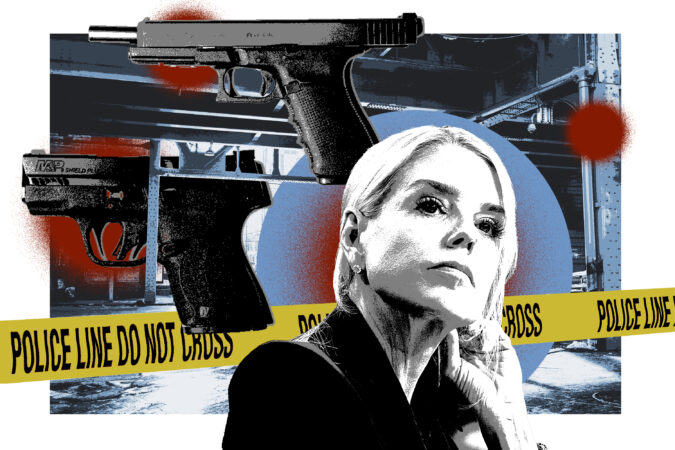
    But some gun rights advocates have publicly expressed disappointment with Attorney General Pam Bondi, who as attorney general of Florida supported gun restrictions after the 2018 school shooting in Parkland.

    Bondi and the Trump administration have faced criticism for not going as far as some lawmakers and gun rights advocates have demanded.

    “The Biden Administration waged war against the Second Amendment, but that era has come to an end under Attorney General Bondi, who has led the Justice Department’s effort to protect the Second Amendment through litigation, civil rights enforcement, regulatory reform, and by ending abusive enforcement practices,” a Justice Department spokesperson said in a statement.

    “Whenever law-abiding gun owners’ constitutional rights are violated, the Trump Administration will fight back in defense of freedom and the Constitution.”

    Because ATF crafts regulations based on its interpretation of laws passed by Congress, Justice Department officials are allowed to amend its rules, though any changes risk legal challenges. ATF is part of the Justice Department, responsible for regulating the sales and licensing of firearms and working with local law enforcement to solve gun crimes. Federal and local law enforcement officials tout ATF’s gun tracing capabilities with helping to combat violent crime.

    In the first months of the Trump administration, the Justice Department proposed merging the Drug Enforcement Administration with ATF — a move that ATF’s backers feared would leave the agency powerless. Opponents of ATF, meanwhile, feared that the merger would give the agency too much power. The merger plans have not come to fruition and, instead, the Trump administration in November quietly nominated a respected ATF veteran to lead the agency.

    The nominee, Robert Cekada, is scheduled to have his hearing next month, and administration officials are worried about how the announcement of the new regulations could boost or hurt his nomination chances, according to one person familiar with the nomination process. Announcing the loosening of regulations ahead of his nomination hearing could risk the support of moderate Republicans, said the people, who spoke on the condition of anonymity to discuss personnel issues.

    Winning confirmation to serve as ATF director is notoriously difficult. Only two people have won Senate approval as director since the position began requiring Senate confirmation in 2006. During his first term, President Donald Trump had to pull a nominee, Chuck Canterbury, the former head of the national Fraternal Order of Police, because some conservative Republicans thought he would restrict gun rights.

    Trump had originally tapped FBI Director Kash Patel to simultaneously serve as ATF director. The Washington Post reported at the time that Patel never showed up to ATF headquarters and had scarce interaction with staff. The administration replaced Patel in early April with Army Secretary Dan Driscoll, who holds the two roles simultaneously. Cekada has been running the day-to-day operations of ATF since the ousting of the second-in-command at ATF in April.

    The nomination of Cekada was considered a win for Bondi, who had wanted a law enforcement veteran leading the agency. Some Second Amendment groups had pushed for an advocate at the head of the organization.

    Bondi pushed out ATF’s longtime general counsel and replaced her with a political appointee, Robert Leider — a former law professor who believes in a strict interpretation of the Second Amendment and has publicly written about how ATF too heavily regulates firearms.

    The Post reported this past summer that the U.S. DOGE Service sent staff to ATF with the goal of revising or eliminating at least 47 rules and gun restrictions — an apparent reference to Trump’s status as the 47th president — by July 4, according to multiple people with knowledge of the efforts. Those plan hit roadblocks, in part, because the political appointees failed to realize how complicated and legally cumbersome it is to amend regulations, according to one person familiar with the process.

    In addition to the regulatory changes, Leider and his team have been working to shrink the legally mandated 4473 Form that most buyers are required to fill out when purchasing a firearm, making it quicker to read and fill out the paperwork required to purchase and sell firearms.

    In December, Assistant Attorney General Harmeet K. Dhillon, who heads the Civil Rights Division, announced creation of a new Second Amendment group within her division focused on expanding gun rights. In its first days, the newly created group filed a lawsuit challenging an assault weapon ban in D.C.

    It’s unclear how much support Dhillon’s new group has received. Top Justice Department officials have not fully backed it, in part because Congress needs to approve the creation of a new section within the Civil Rights Division, according to people familiar with the group.

    Dhillon so far has not hired many attorneys with legal expertise in the Second Amendment to work in the group, the people said. Instead, she has used existing attorneys within the Civil Rights Department to staff some of the group’s projects.

    Top Democratic lawmakers on the Senate Judiciary Committee have questioned the creation and legality of Dhillon’s group.

    “Since President Trump took office, you have decimated the Division’s nonpartisan workforce and changed the Division’s enforcement priorities to serve the President’s agenda in lieu of our federal civil rights laws,” Sens. Peter Welch (D., Vt.) and Dick Durbin (D., Ill.) wrote in a letter to Dhillon this month. “The creation of the Second Amendment Section is another example of this profound retreat from the core mission of the Civil Rights Division.”

    Last week, the Justice Department’s Office of Legal Counsel issued an opinion saying that a federal ban on mailing firearms through Postal Service is unconstitutional. An OLC opinion is not binding, but it provides legal guidance across the federal government on how federal prosecutors view laws and signals the Justice Department’s future stances in court.
  • She helped him flee a rally, then learned he was a right-wing provocateur

    She helped him flee a rally, then learned he was a right-wing provocateur

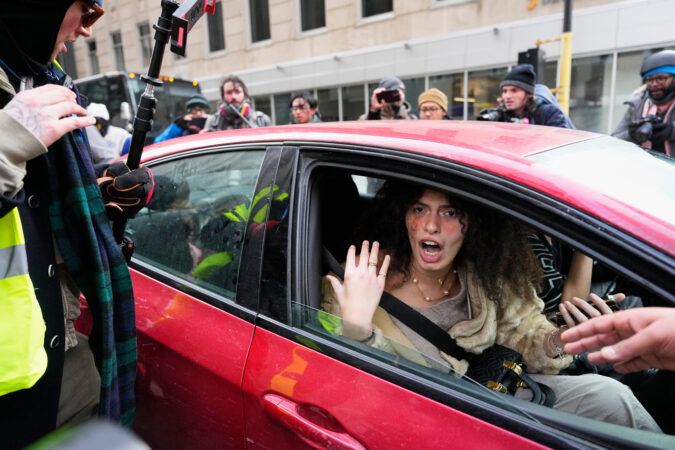
    Daye Gottsche let the stranger into the car without knowing he was a right-wing provocateur who had been leading a march to support President Donald Trump’s immigration crackdown.

    She didn’t realize that the demonstrators she saw on her drive had gathered at Minneapolis City Hall on Saturday to counterprotest — and were chasing him away, throwing punches at him. Gottsche did not recognize that this man was Jake Lang, who had been accused of beating police officers with a baseball bat during the Jan. 6, 2021, attack on the U.S. Capitol and was jailed for four years before Trump pardoned him.

    She saw only a man in need of rescue.

    “Please help me,” Lang said, standing outside her friend’s car door, Gottsche told the Washington Post. “They hurt me bad.”

    Gottsche saw a cut on his lip and scrapes on his face. From the driver’s side, her friend unlocked the doors. Lang jumped in the back seat.

    As they waited for the stoplight to turn green, protesters swarmed them, shouting “That’s him!” according to video of the incident and interviews with Gottsche and Lang. People pried open the doors and kicked Lang. Some hit the car itself. Finally, Lang, Gottsche, and her friend sped away.

    Within minutes, footage of the moment surfaced online. It fueled speculation about how Lang had escaped the reach of counterprotesters and who had helped him pull it off. The reality was simpler — and in some ways, more complicated — than what most guessed.

    Inside the car was Gottsche, a 22-year-old transgender woman and singer-songwriter who said the choice to help Lang felt easy. She thought he might have been hurt by ICE officers, carrying with him the same fear that she and her neighbors have felt for weeks.

    But minutes before Lang was begging for help outside the car, he had been blasting “Ice Ice Baby” to support federal immigration agents and yelling about how immigrants were “replacing” white Americans. After facing attacks from the crowd, he was seen bleeding from the back of his head.

    Gottsche said if she had to relive the encounter, she would make the same decision to help Lang.

    “I don’t necessarily know if he deserved our kindness, but I would not change anything that happened,” she said.

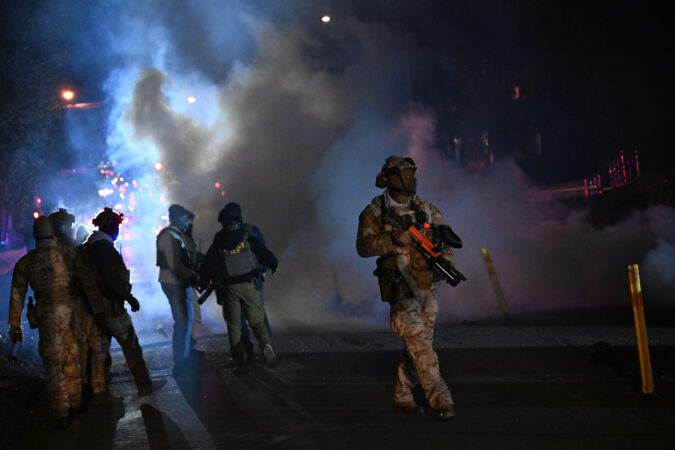
    Afraid for her own safety, Gottsche had sat out the anti-ICE protests roiling Minneapolis. But, she said, she opposes the presence of the thousands of federal officers who have spent their days stopping people to ask for paperwork, pepper-spraying protesters and door-knocking in search of undocumented immigrants. Now, Gottsche sees her decision to rescue Lang as a sort of ironic intervention.

    “I feel like it was meant to happen, because who knows — had we not stopped, he might have died,” she said. “He was really hurt, and I would hate to have something like that on my conscience.”

    To Lang, receiving help from people who disagreed with him presented “a powerful kind of imagery,” a reminder of a higher power at play. He said he wanted to believe that had they known his beliefs, they still would have helped — but he doubts it, given public social media posts he saw from Gottsche afterward. He referenced one video in which she said, “We’re letting the wolves have you next time.”

    “That’s very sad and disappointing,” he told the Post. “And I pray God checks their heart on that.”

    Asked about the video, Gottsche said she had made it just minutes after Lang left the car and before she had even begun to process what had transpired. She said she may have taken her remarks too far.

    But, Gottsche said, she wondered whether, if the roles had been reversed, Lang would have helped her. In the 48 hours since the interaction, Gottsche said she and her friend have been the target of derogatory, threatening messages and posts with false information from right-wing social media accounts.

    Since an ICE officer shot and killed 37-year-old Renée Good on Jan. 7, protests have spilled into the streets of Minneapolis daily. In a different world, Gottsche might have joined them.

    After a police officer murdered George Floyd in 2020, Gottsche, then a high school student, joined thousands in Minnesota to protest police brutality. Gottsche, who is half Black, marched with a sign reading, “Stop killing us.”

    But she doesn’t feel safe anymore, she said. She had seen videos of the shooting of Good, a white woman who had been in her car, blocks away from home. She had watched Vice President JD Vance say the ICE officer who killed Good had “absolute immunity.”

    “I felt like that was my warning to just not” protest, Gottsche said. “That’s not normal.”

    So she chose to keep her support of the Minneapolis demonstrations subtle. She honked when driving by protesters. Then she went about her day.

    On Saturday, Gottsche and her friend decided to grab drinks. The bar they wanted to try was blocks away from Minneapolis’ city hall and federal courthouse, where Lang planned to hold an anti-immigration protest. He had been preparing to protest for months as part of a series of anti-Muslim rallies he has held across America. He said his desire to demonstrate in Minneapolis only grew after he heard Trump blame Somali immigrants for a yearslong welfare fraud probe in the state and saw that residents there were clashing with ICE officers.

    As he was chased by the crowd of counterprotesters Saturday, Lang ran into a hotel and left through a side door. He said he took off the military-style vest he had been wearing with patches reading “Infidel” and “47,” a reference to Trump.

    Then Lang approached the red sedan where Gottsche and her friend, Aleigha, were sitting at a traffic light. Gottsche said that she rolled down her window as she saw Lang running toward them, and that he asked for help. She and her friend looked at each other, trying to figure out whether to let him inside the car.

    Suddenly, the car was surrounded. From the passenger’s side, with the window still down, Gottsche panicked, trying to explain to the people outside that she did not know the man and was just trying to help.

    “Drive!” Lang shouted, according to video and an interview with him. “Drive! Drive!”

    Soon after, they tore away from the crowd.

    Gottsche turned to face Lang and asked him what had happened. It was then that she realized “that we had someone that’s not on our side in our car.” Lang said he recognized that Gottsche was trans and her friend was also a woman of color, and he thought to himself that “they probably are not sympathetic to my stance as a pro-ICE supporter.”

    Lang thanked Gottsche and her friend but did not directly answer their questions about what had led him to their car, Gottsche said. He identified himself only as “Jake” and as a Christian who loves God. He offered to pay for the damage to the car and shared a phone number, Gottsche said. She texted the number and confirmed that the message had gone through.

    The ride was short. They reached the bar, and Lang got out of the car.

    Gottsche still didn’t know who exactly he was.

    Then friends and social media followers who had started to see videos of Lang’s escape sent her messages: Did she know she had just saved an anti-immigrant influencer? They sent videos of the rally he had just held and links to his social media pages, where he had repeatedly made incendiary posts about immigrants and Muslims. Some people seeing the photos and videos of the moment assumed Gottsche was a fan of Lang.

    She took to TikTok to clarify how she had ended up in the now-viral exchange. In one video, she lip-synced to “No Good Deed” from Wicked, with the caption: “When you try to help an injured man in the street but it turns out he was Jake Lang.”

    In the hours that followed, Gottsche still felt it was a “right place, right time” moment — a twist of fate that landed two people otherwise unlikely to talk to one another in the same car. She told Lang in a text message that she hopes the interaction sparks a reconsideration of his stances.

    “I also wanna add while i do not whatsoever support you or ur ideals, im happy to see that you are gonna be okay, and i hope this has some sort of impact on you,” Gottsche wrote to the number Lang had shared with her.

    “Because the fear and urgency you felt trying to escape that crowd is what people here feel everyday. America was never ours to begin with, so how does it make sense that we cant share, especially with people seeking safety and shelter?”

    By Monday afternoon, a reply had not come.

  • New protest art on National Mall takes aim at Trump and Epstein files

    New protest art on National Mall takes aim at Trump and Epstein files

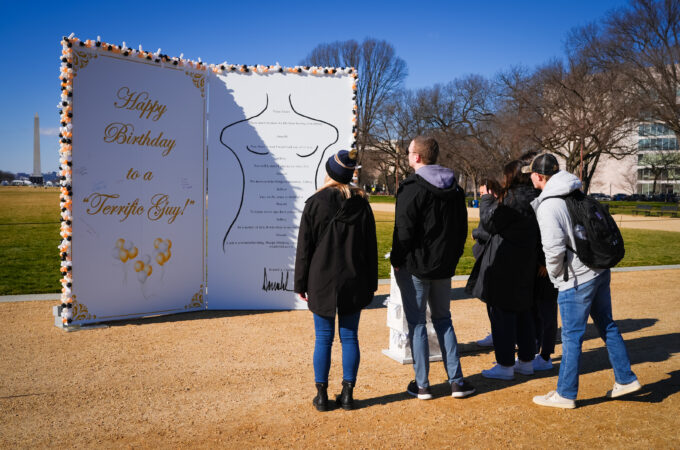
    A massive replica of a birthday note and crude drawing signed with the typed name “Donald J. Trump” and a “Donald” signature that was part of a 2003 book of birthday wishes for the deceased convicted sex offender Jeffrey Epstein was placed on the National Mall early Monday morning, the latest installation of artwork critical of the president by a group that identifies itself as “The Secret Handshake.”

    The group, whose members are anonymous, has previously placed installations at the same location, including a statue of Trump and Epstein holding hands and skipping, a mock tribute to Trump from the world’s authoritarian leaders, and a replica of the desk of former House Speaker Nancy Pelosi (D., Calif.) with a pile of fake excrement on it that ridiculed the Jan. 6, 2021, rioters who sought to overturn the 2020 election.

    The new installation, located on the Mall on Third Street NW between Jefferson and Madison drives, stands 10 feet high by 12 feet wide. A National Park Service permit will allow the work to remain at that location through Friday.

    Trump has denied writing the note and has told reporters that the signature is not his. The White House did not immediately respond to a request for comment on the new installation.

    In front of the replica card is a stack of marble blocks made to resemble a filing cabinet, with each drawer labeled “The Files” and overflowing with hundreds of strips of paper. Atop the files is a box of Sharpies and an invitation for visitors to sign the card with a message to the administration. It notes, “Please refrain from any promotional, violent or hateful speech or it will be removed.”

    The towering placard replicates the message found in a “birthday book” given to Epstein for his 50th birthday by friends and acquaintances. It was one of a tranche of documents released in September by the House Oversight Committee that it had received from Epstein’s estate.

    The sketch is of a woman’s nude form and includes a dialogue between “Donald” and Epstein, ending with a handwritten signature and the typed words “Donald J. Trump” above it.

    The exchange between “Donald” and “Jeffrey” appears inside the contours of a woman’s body. “We have certain things in common, Jeffrey,” “Donald” says. “Enigmas never age, have you noticed that?”

    “Happy birthday — and may every day be another wonderful secret,” “Donald” ends the note.

    Last year, Trump sued the Wall Street Journal and others at the news organization, alleging defamation after the newspaper published its story revealing the letter. The case is pending in federal court in Miami.

    On its permit application, the artists wrote that the purpose of the work was “to use creative and artistic free speech about one of the most relevant political issues of this moment, and to highlight the conversation about President Donald Trump’s friendship and relationship with Jeffrey Epstein using his own reported language and correspondence. As well, to highlight the heavily redacted files that have been released and those that haven’t.”

    The Mall was quiet Monday morning as the nation took a day off to honor Martin Luther King Jr. By midmorning, there were just a few messages written on the giant card, all with negative sentiments toward the president.

    “Looking forward to your jail sentence, DJT!”

    “The people will rise. We already are.”

    D.C. resident Susan Fritz, 61, stopped to take a look during her morning run. “What I really like about it is that they didn’t have to make anything up. They just had to blow it up and put it out here.”

    But she was pretty sure the installation’s message would not be received well by the administration.

    “I’ll be surprised if it stays up,” she said.

    “I think everyone should see it,” said Anders Williams, 45, who stopped in front of card on his way to the Air and Space Museum with his wife and young child. “It shows that someone lived in a very different world from the rest of us at some point. It’s just weird.”

    Ying Yong, 33, also from the District, said he spotted the card from a distance and came over to check it out.

    “It’s great, it’s hilarious,” he said. “Nothing more to be said.”

    A woman bundled up against the morning cold said she was a federal worker and declined to provide her name. But she wanted to comment on the new installation, so she picked up a Sharpie and approached the card.

    On it she quoted King. “Darkness cannot drive out darkness, only light can do that.”

  • How EPA ethics officials cleared former industry insiders for regulatory roles

    How EPA ethics officials cleared former industry insiders for regulatory roles

    Environmental Protection Agency ethics officials have interpreted impartiality guidelines in a way that has allowed several former industry insiders to oversee dramatic changes to chemical regulations, documents obtained under the Freedom of Information Act show.

    Those ethics decisions have cleared the way for a former agriculture lobbyist to help reinstate a pesticide that had been banned twice by federal courts, as well as for two former chemical industry executives to help reassess the agency’s stance on the dangers of formaldehyde.

    Internal emails and documents obtained by the Center for Biological Diversity and shared with the Washington Post show EPA ethics officials determined that Kyle Kunkler’s recent lobbying on behalf of the American Soybean Association did not require his recusal from pesticide regulation, including decisions about dicamba, a pesticide that soybean farmers have wanted to see reinstated.

    According to federal loss-of-impartiality regulations, new government employees are supposed to have a yearlong “cooling-off period” on matters that directly involve their previous employer, unless given written authorization by the ethics office.

    Emails show that before Kunkler started as EPA’s top official on pesticides in late June, ethics officials began prepping him on recusal strategies and answered questions about his ability to work on pesticide regulations given his previous role.

    An email exchange from after his first week shows officials knew he had helped develop his association’s comments to the EPA on dicamba. In light of that, he should not “participate in any meetings, discussions or decisions about ASA’s specific comments,” one ethics office lawyer wrote in a July 3 email, but “he could still work on comments submitted by other parties about dicamba, including those that may overlap with ASA’s comments.”

    On July 23, the EPA announced plans to bring back dicamba. The agency is slated to make reregistration official in the coming weeks.

    In a statement, EPA ethics office director Justina Fugh said “a federal employee’s ‘previous lobbying efforts’ do not constitute any conflict of interest as defined by existing federal ethics laws or regulations” and that only Kunkler’s direct interaction with his former employer would violate loss-of-impartiality rules.

    “The federal ethics rules simply do not preclude him from working as part of his EPA duties on general issues or topics,” Fugh said. “He is therefore permitted under the federal ethics rules to work on pesticide registrations generally, including EPA actions on dicamba, even though he previously worked on that same topic.”

    The ethics decision is legally correct but still raises concerns about bias in regulatory decision-making, said Richard Briffault, a professor of legislation at Columbia Law School.

    “There is a legitimate concern that people who have made a career out of representing or advocating for an industry that has a stake in regulation will be predisposed to favor that industry’s position when they make decisions as regulators – that they will be biased and not impartial,” Briffault said.

    The federal impartially standards are designed to ensure government decisions are not made on the basis of personal bias, personal connection, or loyalty to a former employer, said Kathleen Clark, a government ethics lawyer and a law professor at Washington University in St. Louis. Clark said barring Kunkler from comments and meetings is “relatively unimportant” given his ability to participate in the government approval of pesticides he once lobbied for.

    “It seems strange to me that they would say that it would be inappropriate for him to respond to comments but, on the other hand, he can absolutely participate in what presumably is something extremely important to his former employer,” said Clark, who reviewed some of the documents at the Post’s request.

    “It’s sort of like hiring the fox to guard the hen house,” she said.

    The American Soybean Association did not respond to request for comment.

    The EPA originally approved dicamba in 2016 for use on soybeans and cotton that had been genetically modified to withstand what would otherwise be a damaging dose. But in 2020, a federal court vacated that approval over concern that the pesticide was drifting to and damaging other crops and wild plants. The EPA reapproved dicamba months later with additional application restrictions, but a court revoked that approval in 2024, saying drift damage remained a problem.

    Kunkler had been among those lobbying for dicamba’s reinstatement. Calendar records show he had a virtual meeting in March with officials from the office he would later join, the Post reported last year.

    He once likened the dicamba dispute to the “legal and regulatory equivalent of a Wimbledon court littered with land mines.” He told his association’s members: “ASA knows just how vital it is for your operations to have choices in the crop protection tools available to you, and we will continue to advocate strategically and vigorously to defend your access to them.”

    Nathan Donley, a senior scientist at the Center for Biological Diversity, said it’s not surprising that the new registration plans for dicamba closely mirror proposals from ASA.

    “I don’t see any limitations on what he can or cannot do based on his past work,” said Donley, whose organization has sued the EPA three times over dicamba. “It assures that industry interests are going to be considered above what’s in the public interest.”

    Kunkler’s role in the reinstatement of dicamba in some ways parallels the involvement of two former chemical industry executives who helped drive the EPA’s reassessment of formaldehyde, a cancer-causing chemical used in furniture, wood adhesives, and body preservation at funeral homes.

    Toxicologist Nancy Beck heads the EPA’s Office of Chemical Safety and Pollution Prevention. Lynn Dekleva, an environmental engineer, serves as her deputy.

    Both fought to roll back chemical regulations as part of the first Trump administration. Afterward, Beck joined the chemicals practice at law firm Hunton Andrews Kurth, where her clients included top industry trade groups. Dekleva signed on with the American Chemistry Council trade group as a senior director. Both criticized the EPA’s risk assessment model, and Dekleva directly pressed the agency to reassess the model in relation to formaldehyde.

    But when they joined the second Trump administration, both Beck and Dekleva received written approval from the agency’s ethics office to work on chemical regulation, as reported by E & E News last year.

    “I conclude that the interest of the United States Government in your participation outweighs any concerns about your impartiality,” Fugh wrote in March.

    She told the Post that while federal ethics guidelines proscribe engaging with former employers or clients in activities such as grant-making and enforcement actions, matters with “general applicability” — such as rule- or policymaking — aren’t prohibited.

    The new approach to formaldehyde announced by the EPA last month is the one favored by the industry. It assumes there can be a safe threshold of exposure, and that some carcinogens pose no health risk at lower levels. Under the Biden administration, the agency took the position that even small exposures could pose risks.

    The proposed revisions nearly double the amount of formaldehyde considered safe to inhale.

    Briffault said the real issue may be less about ethical interpretations and than about political decisions — namely, the administration’s pick of proindustry people for top regulatory appointments.

    Asked whether Beck and Dekleva’s appointments influenced the EPA’s shift, agency spokesperson Brigit Hirsch said EPA Administrator Lee Zeldin made the decision and it was based on “the most advanced, gold standard scientific methods.”

    “EPA’s move to a threshold approach for formaldehyde does not at all mean the agency is relaxing its standards or giving industry a pass,” Hirsch said. “By using this science, EPA can set limits that are more protective, not less, because they are based on the most sensitive biological changes that occur before serious health effects develop.”

    In a statement to the Post, the American Chemistry Council said the EPA’s revised approach was recommended by their own peer reviewers and is consistent with other international authorities. “ACC supports risk evaluation approaches that are grounded in sound science and protective of public health, consistent with [Toxic Substances Control Act] requirements.”

  • Trial opens in Prince Harry’s case alleging illegal acts by Daily Mail

    Trial opens in Prince Harry’s case alleging illegal acts by Daily Mail

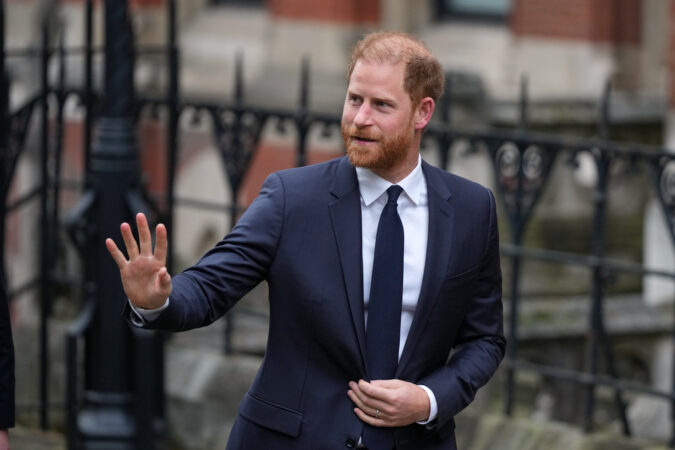
    LONDON — Prince Harry’s third, and perhaps final, major legal showdown with Britain’s tabloid press opened in a London courtroom on Monday, as a closely watched trial began examining claims of widespread illegal information-gathering by the company that owns the Daily Mail and the Mail on Sunday newspapers.

    The company, Associated Newspapers, is one of Britain’s largest newspaper publishers. Harry, who appeared in court wearing a dark suit and tie, is one of seven plaintiffs in the case who are alleging “habitual and widespread” legal violations that collectively span at least two decades — including hiring private investigators to bug phones and plant listening devices in homes and cars; unlawfully obtaining medical records and banking records; and hacking voicemail messages.

    David Sherborne, the lawyer representing Harry and the other plaintiffs, said in his opening remarks that he would prove there was “clear, systematic and sustained use” of unlawful activity at the Daily Mail and Mail on Sunday. He named several private investigators allegedly used by journalists, including one described as a “talented voice actor” who specialized in “blagging,” the impersonation of others to gain private information.

    Court documents show Harry alleges that 14 articles, published between 2001 and 2013, relied on unlawfully obtained information, including flight details of his then girlfriend, Chelsy Davy, and what Harry’s lawyers described as “intimate conversations” with Prince William, his brother, related to images of their dying mother that appeared in the press.

    Harry, who was seated behind Sherborne in the courtroom, stared attentively at a monitor as he followed the proceedings.

    Associated Newspapers has strongly denied the allegations, calling them “preposterous smears.”

    In its written submissions, Associated argued the allegations were unsupported by credible evidence and it can explain legitimate sourcing of its articles. The publisher also contends the claims should be dismissed because they were brought too late — more than six years after the plaintiffs became aware of an allegation. In some cases, Associated said, information came from “leaky” social circles rather than unlawful intrusion.

    The trial’s significance extends beyond the plaintiffs themselves, said Mark Stephens, a media lawyer at the firm Howard Kennedy. “This case is about whether the last untouchable corner of Fleet Street was quietly doing the same things everyone else was caught doing,” he said in an email.

    For the first time, Stephens added, a court will examine the Daily Mail’s historic newsgathering practices “to see whether it genuinely stood apart during the phone-hacking era — or whether it simply avoided scrutiny.”

    In addition to Harry, who is King Charles III’s younger son, plaintiffs in the case include musician Elton John and his husband, David Furnish; actor and model Elizabeth Hurley; and Doreen Lawrence, whose 18-year-old son, Stephen, was murdered in a racist attack in 1993. Lawrence’s decision to join the case came as a surprise, given the Daily Mail publicly supported her campaign to bring her son’s killers to justice. Lawrence has described being stunned when Harry contacted her and informed her that allegedly she had been subject to phone hacking and other illegal information-gathering techniques.

    The case marks the latest chapter in Harry’s long-running crusade against Britain’s tabloids. He has said he is on a mission to reform the news media and curb what he views are its excesses. Harry has repeatedly criticized the British news media, arguing that his mother, Princess Diana, was relentlessly harassed, and that his wife, Meghan, Duchess of Sussex, was vilified by the British press. Diana died in a car crash in Paris in 1997 after being chased by paparazzi.

    Harry has secured judgments and settlements against major publishers. In 2023, Harry became the first senior British royal in more than a century to testify in court, during his case against the publisher of the Daily Mirror. A judge concluded that the prince, also known as the Duke of Sussex, was a victim of “widespread” phone hacking and awarded him 140,600 pounds in damages.

    Last year, Harry secured a last-minute settlement with Rupert Murdoch’s News Group Newspapers. The company apologized for the “serious intrusion” into his private life and Harry reportedly received an eight-figure sum.

    A spokesperson for the prince said there were no additional media-related court cases planned.

    The trial comes amid media reports that the British government is considering whether to reinstate Harry’s full personal security protection while he is in the United Kingdom. The U.K. government is also scrutinizing a high-profile bid by the Daily Mail and General Trust — the parent company of Associated Newspapers — to acquire the Daily Telegraph under competition and media plurality rules.

    The trial, at London’s Royal Courts of Justice, is expected to last about nine weeks, with testimony from plaintiffs and witnesses including Harry and Elton John, as well as current and former journalists and executives from the Daily Mail.

  • As Trump goes to Davos, the world faces a ‘new reality’

    As Trump goes to Davos, the world faces a ‘new reality’

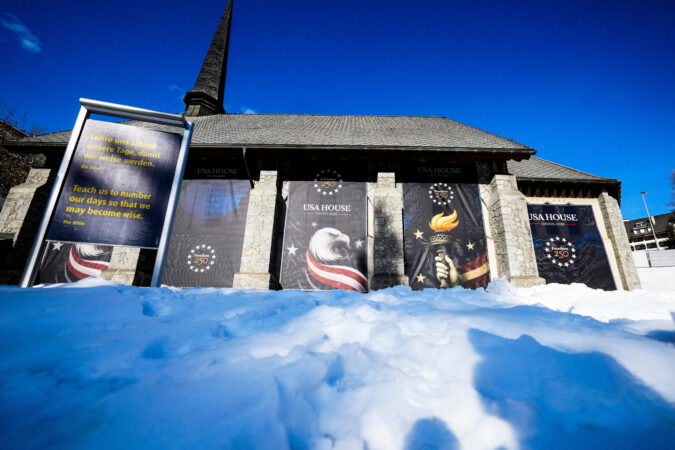
    DAVOS, Switzerland — In some ways, the scene in this picturesque Swiss resort town in late January is as ever. The tall evergreen forest below the Jakobshorn peak is crowned with fresh snow. The small airfield up in the mountains is packed with private jets. Phalanxes of black vans and SUVs crawl through icy streets. Beyond an elaborate security cordon, pavilions representing many of the world’s most influential tech companies, industries, and sovereign wealth funds populate storefronts, awaiting the foot traffic of the global elite who descend on this corner of the Alps every year.

    Behind it all, though, there’s a profound shift. President Donald Trump is leading one of the largest U.S. delegations ever to attend the World Economic Forum’s annual meeting, where he is set to deliver an address Wednesday, at a moment when his administration seems in open conflict with the paradigms that have long defined (and have come to be caricatured by) these conclaves in Davos. His trade wars on U.S. allies and adversaries alike are unraveling webs of globalization championed here for decades. And his constant use of coercion in his foreign policy cuts against Davos’ ethos of comity and cooperation.

    Trump’s speech will come days after he began threatening to impose fresh tariffs on European partners for their unwillingness to oblige his assertions that the United States must annex Greenland. He lashed out in anger at Danish and broader European obstruction over the weekend, guaranteeing that the Arctic territory would dominate conversation in Davos.

    “We stand ready to engage in a dialogue based on the principles of sovereignty and territorial integrity,” read a joint statement from European countries facing U.S. tariffs over Greenland. “Tariff threats undermine transatlantic relations and risk a dangerous downward spiral.”

    Trump’s extraordinary capture earlier this month of Venezuelan President Nicolás Maduro seemed to set new precedents, underscoring the White House’s view that the Western Hemisphere ought to be a U.S. sphere of influence. A slew of prominent foreign policy thinkers see Trump ushering in a global order where “might makes right.”

    “Gunboat diplomacy is back with a vengeance,” Comfort Ero, head of the International Crisis Group, a think tank, recently said. “What do you do when international law becomes international niceties?”

    The response from Davos seems more cautious and calibrated than it might have been in the past. For more than a decade, the organizers of the World Economic Forum have warned about disruptions to the international order — of fractures, crises and dysfunction that can only be solved with collective global effort. This year’s vaguer and more humble theme — “a spirit of dialogue” — may have been chosen in anticipation of the Trump-shaped wrecking ball swinging toward the forum.

    “There’s a robust consensus that the world economy is entering some kind of new reality,” Mirek Dusek, a WEF managing director responsible for the annual event’s programming and business, told me. “Our role is really to be helpful as an organization, and in this moment bring protagonists together.”

    At least to that end, Davos can deliver. The forum’s organizers are touting record participation, with some 65 heads of state or government in attendance, alongside dozens more finance and foreign ministers, as well as close to 2,000 prominent CEOs and business leaders. They convene at a time, as the international advocacy group Oxfam notes in its latest report, when billionaire wealth grew by some $2.5 trillion over the past year — a figure greater than the total wealth possessed by the bottom half of humanity (more than 4 billion people).

    With Trump’s shadow over Davos, there’ll be little consensus over tackling inequality or perhaps any other shared global challenges. The WEF’s annual Global Risks report, which surveys more than 1,000 geopolitical and economic experts from around the world, pointed to “geoeconomic confrontation” as the prime source of short-term concern. The WEF’s latest iteration of the Global Cooperation Barometer, an index using dozens of metrics to chart how the world is getting along, declared that “multilateralism is indeed waning.”

    That zeitgeist is being driven, in part, by Trump’s political project. “Trump’s central strategic insight has always been that America is better prepared than any other country to thrive in a cutthroat arena,” wrote Hal Brands, a senior fellow at the American Enterprise Institute, a conservative Washington think tank. “If Washington no longer wishes to sustain the liberal order, or just can’t afford to uphold it against growing challenges, perhaps it makes sense to seize the largest share of the loot.”

    But the conveners in Davos don’t want pessimism to prevail. “Cooperation is like water, if it sees it’s being blocked it finds a way,” Borge Brende, a former Norwegian politician and WEF president and CEO, said during a briefing call with journalists earlier this month.

    The world isn’t standing pat in the face of Trumpist disruption. Clear signals were sent in recent days by Canadian Prime Minister Mark Carney, who acknowledged the shifting “new world order” on a trip to China where his government reset a long-troubled relationship while touting a “new strategic partnership.” Ottawa’s overtures would not have happened without a year of hostility from Washington, including Trump’s statements urging Canada to become the 51st U.S. state.

    “The global trading system is undergoing a fundamental change,” reducing “the effectiveness of multilateral institutions on which trading partners such as Canada and China have greatly relied,” Carney told reporters in Beijing, gesturing to the deterioration of the rules-based order and the weakening of international institutions. “This is happening fast. It’s large. It’s a rupture.”

    Separately, after a quarter-century of negotiations, four South American countries sealed a free-trade agreement with the European Union. “This is the power of partnership and openness. This is the power of friendship and understanding between peoples and regions across oceans,” European Commission President Ursula von der Leyen said alongside Brazilian President Luiz Inácio Lula da Silva in Rio de Janeiro on Friday. “And this is how we create real prosperity — prosperity that is shared. Because, we agree, that international trade is not a zero-sum game.”

    The new alignments that are emerging place Trump’s America in a conspicuous light. “The United States will remain the most economically and militarily powerful country in the world for several more years,” wrote international relations theorist Amitav Acharya, in an essay for Foreign Policy. “But it will be absent from, if not actively hostile toward, the existing international order.”

    Acharya labeled this “unique configuration” shaped by U.S. antagonism as “the world minus one.”

  • Trump ties Greenland takeover bid to Nobel Prize in text to Norway leader

    Trump ties Greenland takeover bid to Nobel Prize in text to Norway leader

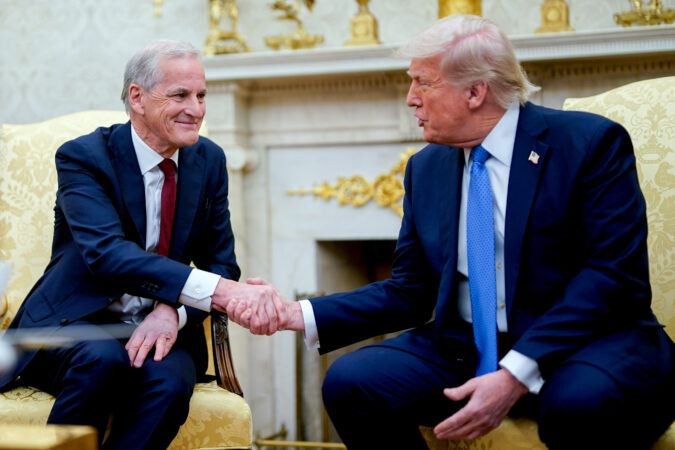
    BRUSSELS — In a message to Norway’s prime minister, President Donald Trump linked his insistence on taking over Greenland to his grievance over not receiving the Nobel Peace Prize — adding a new twist to Trump’s stoking of a trade war that is shaking the trans-Atlantic alliance.

    In the weekend text to Norwegian Prime Minister Jonas Gahr Store, Trump wrote that he no longer needed to “think purely of Peace” after he didn’t win the peace prize last year — an award that the president has openly coveted and that is bestowed by the Nobel Committee in Norway.

    Trump then questioned the “ownership” of Greenland by Denmark, a NATO ally, and repeated his ambition for the U.S. to take “complete and total control” of the autonomous Danish territory.

    The White House confirmed the authenticity of the message, with White House deputy press secretary Anna Kelly saying that Trump “is confident Greenlanders would be better served if protected by the United States from modern threats in the Arctic region.”

    Store confirmed Trump’s leaked message in a statement Monday. He said Trump was responding to a text that Store had sent on behalf of Norway and Finland, conveying opposition to U.S. tariffs against European nations rejecting the takeover of Greenland. “We pointed to the need to de-escalate and proposed a telephone conversation,” Store said.

    The attempt to defuse tensions seems not to have worked. Trump’s reply came shortly after.

    “Considering your Country decided not to give me the Nobel Peace Prize for having stopped 8 Wars PLUS, I no longer feel an obligation to think purely of Peace, although it will always be predominant, but can now think about what is good and proper for the United States of America,” Trump wrote in the text, which was first reported by PBS.

    Store said he made his support for Greenland and Denmark clear, and that he has repeatedly explained to Trump that it is up to the Nobel Committee, not the Norwegian government, to award the annual peace prize.

    On Monday, Treasury Secretary Scott Bessent sought to reframe the narrative. “It’s a complete canard to think President Trump’s action on Greenland is due to” not receiving the Nobel Prize, he told reporters on the sidelines of the World Economic Forum annual meeting in Davos, Switzerland.

    European retaliation, he added, would be “very unwise.”

    Trump’s bid to buy or seize Greenland — effectively a demand to grab a NATO ally’s territory against its will — and to unleash a trade war with European leaders who disapprove, has sparked the greatest trans-Atlantic crisis in generations.

    U.K. Prime Minister Keir Starmer said Monday that it would be “completely wrong” for Trump to slap tariffs on European nations in his push for Greenland — even as Starmer sought to preserve the relationship with the United States which is vital to European security.

    The British leader’s comments added to mounting European pushback. French President Emmanuel Macron has likened Trump’s declaration to a form of “intimidation,” and Swedish Prime Minister Ulf Kristersson described it as blackmail. Even Italian Prime Minister Giorgia Meloni, a Trump ally, called it a “mistake.”

    In remarks to reporters on Monday, Starmer denounced economic coercion against allies as the wrong approach to resolving disagreements. He described tariffs as harmful to British workers and businesses. “A trade war over Greenland is no one’s interest,” Starmer said, calling for discussions between Greenland, Europe, and the United States.

    Still, he declined to say whether he would support calls within the European Union, of which the U.K. is no longer a member, for retaliation against Washington.

    Trump has said controlling Greenland is necessary for national security reasons — a point disputed by allies and some members of Congress who rebutted the president’s claim that the Arctic territory faces imminent security risks from Russia and China. Trump’s unwillingness, so far, to back down risks driving a deeper wedge in the Western alliance or, some fear, causing an irreparable break.

    After months of trying to keep Trump onside, European policymakers are weighing options to retaliate. The continent’s top leaders still stress they would much rather avoid an escalation, but Trump’s threats are fueling a growing chorus of calls from lawmakers and politicians for European leaders to stand up for the continent and fire back.

    “Appeasement has failed,” wrote Javi López, a lawmaker from Spain and vice president of the European Parliament. “Europe can only protect its sovereignty (from Ukraine to Greenland) by reducing dependencies, strengthening its deterrence, and using without limits its most powerful tool: access to the world’s largest single market.”

    If diplomatic efforts fail, the E.U.’s arsenal of trade tools includes imposing tariffs on a list of more than $100 billion worth of American goods, which EU officials prepared last year but suspended to sign a trade deal with Trump.

    Another option would be triggering an instrument often dubbed the bloc’s trade “bazooka,” which would allow for targeting American services in Europe — a major profit center for U.S. tech giants.

    European Union leaders have warned that Russia stands to benefit from the rift at NATO. On Monday, the Kremlin spokesperson, Dmitry Peskov, appeared to stir the pot by telling reporters that by taking action on Greenland, Trump stood to make history one way or another.

    Peskov said there was “a lot of disturbing information” recently and that he would not comment about “our plans regarding Denmark and Greenland.”

    Aside from “whether this is good or bad, whether it complies with international law or not,” he added, “there are international experts who believe that by resolving the issue of Greenland’s accession, Trump will go down in history, not only in U.S. history, but also in world history. It is difficult to disagree with these experts.”

    Russia, preoccupied with its war in Ukraine, has largely stood by while Trump ordered military strikes on Venezuela and seized Moscow’s longtime ally President Nicolás Maduro. That has left Russian President Vladimir Putin’s credibility on the world stage diminished as Trump flexes his muscles among friends and foes alike.

    Ambassadors of the E.U.’s 27 nations debated the possibility of retaliation against Washington during a closed-door meeting in Brussels on Sunday, although there was a broad preference to try to de-escalate — as they have done after Trump’s previous rounds of tariffs.

    European leaders are headed to the World Economic Forum in Davos this week, hoping that face-to-face meetings with Trump will talk him down from the intensifying confrontation. The president has declared the new tariffs on eight countries would start Feb. 1 unless they acquiesce to his plan to acquire Greenland.

    Those European nations — Britain, Denmark, France, Finland, Germany, the Netherlands, Norway, and Sweden — recently sent troops to Greenland in small numbers for joint exercises with the Danish military. European leaders cast the deployment as a sign of NATO’s commitment to protecting the Arctic in response to Trump’s warnings that Arctic security was at risk.

    Because the EU operates as a single trading bloc, the imposition of tariffs on some of its 27 nations could affect all of them, European officials said.

    Leaders of Denmark and Greenland have said repeatedly that they welcome deeper U.S. economic and security involvement, but that the vast island territory — which Trump covets for its strategic Arctic location and natural resources — is not for sale.

    “Blackmail between friends is obviously unacceptable,” French Finance Minister Roland Lescure said in Berlin on Monday. If the U.S. tariff threats come to fruition, Lescure added, “we Europeans must remain united and coordinated in our response and, above all, be prepared to make full use of the European Union’s instruments.”

    France has pushed for Europe to take a harder line against Trump, while many of its EU neighbors preferred restraint. On Monday, however, German Finance Minister Lars Klingbeil echoed the sentiment, saying the EU should consider using the “toolbox for responding to economic blackmail.”

  • FBI opened probe on Minneapolis shooting; none exists now, Justice Dept. says

    FBI opened probe on Minneapolis shooting; none exists now, Justice Dept. says

    In the immediate aftermath of the death of Renée Good in Minneapolis, FBI agents launched a civil rights investigation into the actions of the immigration officer who shot her, according to three people familiar with the investigation.

    An agent in Minnesota conducted an initial review of the shooting and determined that sufficient grounds existed to open a civil rights probe into the actions of Jonathan Ross, the officer who shot Good, according to the people, who spoke on the condition of anonymity to discuss internal deliberations.

    The existence of the civil rights investigation stands in sharp contrast to public statements made by Deputy Attorney General Todd Blanche, who said on Fox News Sunday that the shooting of Good does not warrant a federal investigation.

    “There are over 1,000 shootings every year where law enforcement are put in danger by individuals, and they have to protect themselves, and they have a lawful right to do so,” Blanche said. “The Department of Justice doesn’t just stand up and investigate because some congressmen thinks we should, because some governor thinks that we should.”

    “We investigate when it’s appropriate to investigate,” Blanche added. “And that is not the case here. It was not the case when it happened and is not the case today.” Instead of a civil rights investigation, Justice Department leaders have tried to pursue a probe against Good’s partner, multiple people familiar with the probe said.

    Legal experts said that there is a low threshold for the FBI to open a civil rights investigation, and prosecutors and FBI agents occasionally disagree about when criminal investigations should be pursued.

    The FBI declined to comment about the decisions regarding the investigation.

    Any federal use-of-force investigation into an officer’s conduct is considered a civil rights investigation because the provision under which officers can be charged is a civil rights statute that covers deprivation of a person’s rights “under color of law.”

    On Jan. 7, an Immigration and Customs Enforcement officer in Minneapolis shot three times into the car of Good, a 37-year-old American citizen. Good’s partner was protesting ICE officers nearby in the moments before the shooting.

    About a dozen senior prosecutors in Washington and Minnesota have said they would be leaving their jobs amid turmoil over the Trump administration’s handling of the shooting death of Good.

    At least five prosecutors in Minnesota — including the office’s second-in-command — were furious that Justice Department leaders demanded that they investigate Good’s partner, prompting them to resign, according to people familiar with their decision, who spoke on the condition of anonymity to discuss personnel matters.

    In Washington, multiple senior prosecutors in the criminal section of the Civil Rights Division left, in part, because they were excluded from the Good investigation. People familiar with their departures said that, before the shooting, many of them had already planned to take early retirement because they believed that Justice Department leaders were undermining their work. The handling of the Minneapolis shooting, the people said, hastened their departure dates.

    “No responsible prosecutor should determine what an outcome should be in such a case until a such an investigation is completed,” said W. Anders Folk, who served as acting U.S. attorney for Minnesota during the Biden administration. “I am concerned that without a thorough, impartial, and transparent investigation, the public’s confidence in law enforcement, prosecutors, and public safety professionals will suffer.”

    A robust federal investigation could determine that the officer was justified in shooting Good, legal experts noted. Law enforcement officers are rarely charged for using lethal force, in part because the law provides significant leeway for officers to decide when use of force is needed.

    An accurate conclusion can only be reached, however, if law enforcement officials examine all relevant state and federal laws, and their application to the facts in the case, the legal experts said. A thorough investigation, for example, might conclude that the officer’s first shot at Good was justified, but that the next two were not.

    Minnesota Gov. Tim Walz and Minneapolis Mayor Jacob Frey, both Democrats, have said that state officials have been blocked from conducting an investigation into the shooting, with the FBI taking over the probe and denying state agencies access to evidence. Justice Department and FBI leaders have not publicly explained what their probe entails, only saying that a civil rights investigation is not warranted.

    The Justice Department has since launched a federal investigation into Walz and Frey, examining whether the two Democratic leaders are impeding federal law enforcement officers’ abilities to do their jobs in the state, the Washington Post reported Friday. Federal prosecutors are expected to serve the two leaders with subpoenas in the coming days.

    Walz and Frey have denied any wrongdoing and have accused the Trump administration of weaponizing law enforcement for political purposes.

  • Syria says it has reached ceasefire with U.S.-backed Kurdish militia

    Syria says it has reached ceasefire with U.S.-backed Kurdish militia

    ISTANBUL — Syria’s government said Sunday that it had signed a “ceasefire and full integration” agreement with a powerful Kurdish-led militia that controlled large swaths of territory in the country’s northeast — a critical step, if the agreement is implemented, toward unifying a fractured Syria after years of civil war and the precipitous fall of its dictatorship.

    There was no immediate statement on the agreement from the Kurdish-led group, the Syrian Democratic Forces, a longtime military ally of the United States in the battle against the extremist Islamic State militant group. In a post on X, Tom Barrack, the U.S. envoy to Syria, hailed the agreement while saying that the “challenging work of finalizing” its details “begins now.”

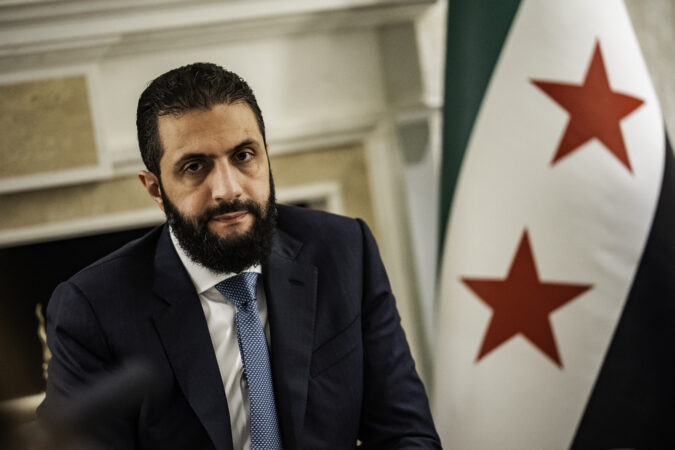
    The announcement late Sunday came after a day of stunning battlefield developments, with Syrian state media saying that government forces, allied tribal fighters, and locals had captured key cities and towns that had been controlled for years by the SDF. Tensions between the government and the SDF had simmered for more than a year, since rebels led by Syria’s interim president Ahmed al-Sharaa toppled the dictatorship of former Syrian leader Bashar al-Assad in December 2024.

    Sharaa has long insisted that the SDF, which over the past decade has claimed territory and declared autonomy in a large swath of northern and eastern Syria, integrate with the new Syrian government. But a March agreement between the two sides aimed at that goal was not implemented by its deadline, at the end of last year.

    The ceasefire agreement Sunday called for the “full and immediate administrative and military” handover by the SDF to the government in three provinces, as well as the surrender of Syria’s border crossings and oil and gas fields, according to a text of the deal posted by the country’s information minister — conditions that seemed to spell the end of a Kurdish proto-state that had sprung up in the chaos of Syria’s 13-year civil war.

    Before the announcement, clashes between government forces and the SDF pitted two of Syria’s most powerful armed groups against each other in a long-feared confrontation that posed a dilemma for the United States, which is allied with both.

    Syria’s state-run SANA news agency reported Sunday that government forces had seized SDF-controlled territory in Tabqa, on the Euphrates River, a dividing line between the two forces and the site of Syria’s largest dam. The Syrian Ikhbariya news channel also reported that the SDF had been expelled from Raqqa city, after what it called a local uprising, and what it said were mass defections by SDF forces.

    The city, it said, would be handed over to the Syrian government, amid reports that SDF fighters had also lost control of territory to local forces in the Deir al-Zour province, as well as several important oil fields there.

    In a statement Saturday, U.S. Central Command said it was urging the Syrian government to “cease any offensive actions” between the city of Aleppo, in northern Syria and Tabqa — before Syrian media reported that government forces had taken Tabqa.

    Beyond the statement, there was little sign Sunday that the Trump administration was intervening to protect its Kurdish allies, once its only Syrian partner against the Islamic State group. In recent months, though, the United States has touted Syrian government forces as a critical counterterrorism partner, as part of a broader vote of confidence in Sharaa’s government that has included the lifting of Assad-era sanctions against the country.

    Sunday’s territorial losses, and the ceasefire agreement that followed, marked a stunning turn of fortune for the SDF, which received global recognition for its sacrifices fighting Islamic State militants after they seized control of large areas in Iraq and Syria beginning in 2014. The SDF received weapons and other support from the United States and remained a key ally, continuing to guard prisons holding Islamic State captives and their families.

    Going forward, Syria’s government would assume “full legal and security responsibility” for the camps, Sunday’s ceasefire agreement said.

    The clashes between the SDF and the government were the latest violent convulsions that have shaken the country since the fall of Assad. Since taking power, Sharaa, a former leader of a Sunni Islamist rebel faction that was once affiliated with al-Qaeda, has sent his forces to put down armed challengers in the south of the country, in the city of Sweida, and on its coast, in confrontations that have killed thousands of people.

    There were signs that the government conducted its latest offensive against the SDF with more care, or at least tried to convey that sense. After days of armed clashes between SDF and government forces in the city of Aleppo and its surrounding areas this month, Sharaa issued a decree Friday recognizing Kurdish as a national language and granting citizenship to Kurds who lost their status in Syria more than 60 years ago, among other measures.

    Analysts said the government, which had gained little trust from Syria’s minorities, would have to do more to dispel minority fears. “The fact is that apolitical Kurds in northern Syria are rightfully afraid of undisciplined government forces,” Dareen Khalifa, a senior adviser with the International Crisis Group, wrote on X, before the ceasefire was announced.

    “They have seen what happened in Sweida and in the coast and cannot take chances with their lives. While this operation has been relatively restrained, it’s on Damascus to continue reassuring Kurds there’ll be no repeat of past disasters,” she wrote.

    If the SDF autonomous region was seen as a haven by many Kurds, Arab-majority areas under the group’s control chafed under its rule, complaining of heavy-handed tactics by its fighters and forced recruitment into its armed cadres. And Turkey, Syria’s northern neighbor, viewed the SDF as a threat, because of its links to the Kurdistan Workers’ Party, or PKK, which fought a long insurgency against the Turkish state.

    Before the ceasefire was announced, the rapid and violent unraveling of the status quo was rattling some of Syria’s foreign backers. French President Emmanuel Macron, in a post Sunday on X, said he had spoken with Sharaa and expressed his “deep concern” at the Syrian government’s offensive.

    “A permanent ceasefire is necessary, and an agreement must be reached on the integration of the Syrian Democratic Forces into the Syrian state, on the basis of the exchanges from last March. The unity and stability of Syria depend on it.”

  • In Iran crisis, Trump confronted limits of U.S. military power

    In Iran crisis, Trump confronted limits of U.S. military power

    It was late morning Wednesday and much of the Middle East and official Washington seemed certain President Donald Trump would launch punishing airstrikes against Iran, his second major use of American military power in as many weeks after the daring Delta Force raid into Venezuela to seize leader Nicolás Maduro and his wife.

    Trump had not officially given the strike order, but his top security advisers expected him to imminently authorize one of the military options presented to him and were girding themselves for a late night.

    The Pentagon advertised that a guided-missile destroyer, the USS Roosevelt, had entered the Persian Gulf. Allies had been alerted that a U.S. strike was likely, according to a person familiar with the matter, and ships and planes were on the move. Personnel at the sprawling al-Udeid U.S. air base in Qatar were advised to evacuate to avoid an expected Iranian counterstrike.

    “HELP IS ON ITS WAY,” Trump had promised Iranian protesters, encouraging them in a social media post Tuesday morning to “take over” regime institutions. While many U.S. and foreign officials took that to mean the United States would intervene militarily, Trump remained open to help in the form of pressuring Iran to stop killing demonstrators.

    The key moment came Wednesday, when Trump received word through envoy Steve Witkoff that Iran’s government canceled the planned executions of 800 people, according to a senior U.S. official. “We’re going to watch and see,” Trump then told reporters in the Oval Office. On Thursday, U.S. intelligence confirmed the executions didn’t happen, the official said.

    Trump’s rapid evolution midweek, which left many of his advisers feeling whiplashed and Iranian dissidents feeling abandoned, reflected intense domestic and foreign pressures, according to interviews with more than a dozen current and former U.S. and Middle Eastern officials, who spoke on the condition of anonymity to describe sensitive diplomatic conversations and ongoing military preparations.

    The president came face to face with the unpredictability of potentially destabilizing another Middle Eastern country and the limitations of even the vast American military machine, several of them said. Having deployed an aircraft carrier strike group and an accompanying armada to the Caribbean on Trump’s orders, Pentagon officials worried that there was less U.S. firepower in the Middle East than would be ideal to repulse what was expected to be a major Iranian counterstrike.

    Israel shared that concern, having expended vast numbers of interceptor rockets against incoming Iranian missiles during their 12-day war in June, one current and one former U.S. official said.

    Key U.S. allies, including Saudi Arabia, Qatar, and Egypt, contacted the White House to urge restraint and diplomacy, a senior Arab diplomat and a gulf official said. Those Sunni Muslim-majority nations have long felt threatened by Shiite-majority Iran, but they fear spasms of instability across their region even more.

    Perhaps most of all, several officials said, Trump realized that Iran strikes would be messy and might bring possible economic convulsions, wider warfare, and threats to the 30,000 U.S. troops in the Middle East — not like the “one and done” operations he has ordered to destroy alleged drug boats and seize Maduro, target Islamic State fighters in Syria, or damage Iran’s nuclear program.

    “He wants [operations like] Venezuela,” said a former U.S. official briefed on the decision-making. “This was going to be messier.”

    The Iranian protests, the largest in the Islamic republic’s 46-year history, appear to have subsided for now in the face of a violent government crackdown that human rights groups estimate has killed more than 3,000 people. A true accounting of the toll is difficult, as Tehran maintains a total shutdown of internet and telecommunications.

    “The regime looks to have dodged a bullet,” said a senior European official in direct contact with Iranian leadership. But Iranians who risked going out in the streets to demonstrate are furious with Trump’s step-back, he said. They “feel betrayed and are utterly devastated.”

    While a strike appears off for now, Trump and his senior advisers are keeping their options open — and possibly buying time — as the USS Abraham Lincoln aircraft carrier strike group is dispatched to the Middle East, two officials said. The Lincoln was in the South China Sea on Friday, officials familiar with the matter said, putting it more than a week away from the Middle East.

    “Nobody knows what President Trump will do with respect to Iran besides the President himself,” White House press secretary Karoline Leavitt said in a statement. “The President has smartly kept many options on the table and as always, he will make decisions in the best interest of America and the world.”

    ‘A cost-benefit analysis’

    Inside the White House, Trump was receiving conflicting advice.

    Vice President JD Vance, who has long been skeptical of foreign entanglements, supported strikes on Iran, a U.S. official and a person close to the White House said. Vance reasoned that Trump had drawn a red line by warning Iran not to kill protesters and had to enforce it, the person close to the White House said.

    In the Oval Office on Tuesday evening, CIA Director John Ratcliffe, an Iran hawk, used a secure iPad reserved for presidential intelligence briefings to show Trump clandestinely acquired videos of regime violence against Iranian protesters and bodies in the streets, the former official briefed on the decision-making said. Emotive images have swayed Trump in past crises: Disturbing images of a Syrian chemical weapons attack on its own people in 2017 moved Trump to order missile strikes.

    The CIA had been tasked with collecting intelligence on the violence, though it is unclear whether Ratcliffe offered his views on military strikes.

    Other Trump advisers urged caution, including Witkoff and Chief of Staff Susie Wiles, the person close to the White House said. Witkoff in particular had heard directly the concerns of Arab allies in the region and wanted to avoid another round of tit-for-tat violence, said a senior U.S. official. Treasury Secretary Scott Bessent argued for waiting and letting economic sanctions on Iran work, another person said.

    Gen. Dan Caine, chairman of the Joint Chiefs of Staff and a trusted Trump adviser, was at the White House throughout the day, a person familiar with the matter said.

    Trump was given presentations by the Defense Department and U.S. intelligence agencies of his available attack options. But he determined that the benefit was not there and that the consequences were too great, an individual close to the Trump administration said.

    “Would a strike have resulted in regime change? The answer is clearly ‘no,’” this individual said. “The negative impact of any attack outweighed any benefit in terms of punishing the regime. And I mean, at the end of the day it’s a cost-benefit analysis.”

    Iran had become aware that the United States was moving military assets, making a strike look imminent. Tehran contacted the Trump administration. A text from Iranian Foreign Minister Abbas Araghchi to Witkoff “kind of also defused the situation,” according to the individual.

    Soon after learning of that message, Trump told reporters in the Oval Office that he learned the killings would stop, according to a U.S. official. “I greatly respect the fact that they canceled,” Trump said Friday as he prepared to leave the White House for his Mar-a-Lago estate.

    Tens of thousands of demonstrators have been arrested and are in Iranian prisons, which human rights groups say are known for torture and other abuses.

    The message: ‘Avoid military action’

    Iran wasn’t the only concerned country to urgently communicate with the White House.

    Saudi Arabia, the United Arab Emirates, Qatar, Oman, and other Arab allies united to urge Trump to maintain his diplomatic options with Iran, said the senior Arab diplomat and gulf official.

    “The message to Washington is to avoid military action,” the gulf official said. “Saudi Arabia, Qatar, Oman, and Egypt were on the same page in the sense that there will be consequences for the wider region in terms of security and the economy as well, which will ultimately impact the U.S.”

    Saudi Crown Prince Mohammed bin Salman, the country’s de facto leader, spoke to Trump by phone during the week to plead his case, according to a Saudi diplomat and a U.S. official. Salman and the leaders of other U.S. allies in the Middle East were concerned about how Iran would retaliate in the event of U.S. strikes.

    Iran had begun warning gulf states that its retaliation would not be as calibrated as it had been after the U.S. attack on its nuclear facilities in June, when Iran telegraphed its intentions and then lobbed roughly a dozen missiles at the Al-Udeid Air Base, according to multiple officials. There were also concerns that Iran’s proxies, including Hezbollah, could launch their own attacks, which would pose a more serious risk without an American aircraft carrier strike group in the region.

    Israel wasn’t ready either, particularly without a large supporting U.S. naval presence. Prime Minister Benjamin Netanyahu, who had launched a massive military and intelligence operation against Iran’s nuclear facilities and scientists in June, called Trump on Wednesday and asked him not to strike because Israel was not fully prepared to defend itself, the person close to the White House said. The leaders spoke twice, a U.S. official said.

    A key factor contributing to Israel’s vulnerability was the absence of major U.S. military assets, which Israel has relied on increasingly to shoot down retaliatory strikes from Iran in exchanges between the two nations over the past 21 months, a U.S. official said. The U.S. support has come at a rising cost to Washington’s stockpile of interceptors, the official said.

    Throughout Wednesday, Washington’s Arab allies were unsure whether their overtures would succeed. But a factor in their favor was Trump’s uncertainty that the military options in front of him would have a decisive and predictable outcome, and wouldn’t result in problematic consequences for the region — or his own sterling track record of using U.S. military power quickly and cleanly, the senior Arab diplomat said.

    The diplomatic lobbying encouraged Trump to stand down, according to a Saudi diplomat, two European officials, and an individual briefed on the matter.

    At the Pentagon on Wednesday, aides to senior leaders were prepared to stay late into the night in anticipation of U.S. strikes. Around 3:30 p.m., they got word they could go home as normal.

    Vance ultimately agreed with the president’s decision to hold off, a person familiar with the process said.

    The president will have another opportunity to sign off on strikes against Iran in the next two to three weeks, when U.S. assets headed toward the region will be in place, helping allay Israel’s concerns about its own protection, officials said.

    The threat level is not expected to subside soon: The U.S. military’s Central Command has been directed to plan staffing for 24/7 high-level support “for the next month,” a person monitoring the situation told the Washington Post.