Category: Washington Post

  • How Gen Z is making millennials look cool again

    How Gen Z is making millennials look cool again

    Step inside a Hollister store today and get a millennial retrospective: low-rise baggy and flare jeans, baby doll tops, fur-trimmed cable-knit V-necks, and sweatpants with numbers and words like “Senior” printed on the backside.

    Walk outside, and you may notice teens sporting Longchamp totes and Ugg slippers. Or digital cameras, which are seeing a resurgence after years of being sidelined by smartphones.

    These are the markers of “Millennial Core” — or the “Y2K aesthetic,” depending on whom you ask — a Gen Z reimagining of the trends its elders (now roughly 29 to 45 years old) made mainstream in the late 1990s and early aughts. Though it’s not unusual for teens and young adults to resurrect styles of the past — fashion trends tend to have 20-year cycles — the current moment speaks to a yearning for what they perceive as simpler times, when people their age weren’t tied to their phones, endlessly scrolling, and battling brain rot, industry experts say.

    “It is such a foreign concept to Gen Z and younger because it’s a world they will never be able to experience,” said Jenna Drenten, a marketing professor at Loyola University Chicago. “Some of these consumer choices … are a tangible way of trying to capture some of what that culture was.”

    Teens are taking cues from influencers and peers on social media. And brands are capitalizing on this, reacting quickly to emerging styles and sending products to TikTok stars to show off to their followers.

    But it’s more than just staying on-trend — curating a modern Y2K style is both a creative outlet and a form of escapism for Gen Z, who run from approximately age 13 to 28, said Michael Tadesse, a marketing professor at George Washington University. During times of social, economic, climate, and political instability, they search for “an emotional anchor.”

    “So when they go to Coach, Longchamp, and others, [the brands] are familiar, comforting and also safe to experiment” because older generations have shopped there, said Tadesse, who studies how technology and psychology shape marketing and retail. “Our brains are wired to find comfort in things that we’ve seen repeatedly.”

    It’s no coincidence that Gen Z is drawn to these brands, said Mark Silverstein, the chief business officer and co-founder of Cafeteria, an app that pays teens and young adults to offer their insights on brands, retailers, and trends. The most successful brands are known for quality and value, do frequent-enough discounting, and have physical stores. They also marry nostalgia with modern style, he said.

    “If you don’t have all these elements, you’re not capturing this group,” Silverstein said.

    The payoff is clear when you do: Birkenstock’s revenue rose 16% in fiscal 2025. Tapestry, which owns Coach, said net sales surged 13% last quarter, year over year. Notably, of the 2.2 million new customers it acquired globally during that time, 35% were Gen Z.

    Hollister, which is owned by Abercrombie & Fitch, outperformed the namesake store in its last quarter, A&F chief executive Fran Horowitz said in a November earnings call. Same-store sales at Hollister grew 15% year over year.

    Industry experts expect that this nostalgic style will only grow in 2026.

    “It’s going from trend to acceptance,” Silverstein said.

    Vicarious nostalgia

    Though the idea of feeling nostalgia for an era you didn’t actually experience might be counterintuitive, Chris Beer said it’s a “constant rule” for marketers.

    “Younger people are almost paradoxically more nostalgic,” said Beer, a senior data journalist at global insights company GWI. “It’s to do with life disruptions, and of course when you’re young you go through so many milestones and rites of passage.”

    Drenten, who as a teenager in the late 1990s and early 2000s remembers her mom saying she had the same halter top at her age, calls it “vicarious nostalgia” when a cultural zeitgeist gets reformed for a new generation. But the difference now is that tweens, teens, and young adults have more exposure to former trends and cultural touchstones than their predecessors, who had to draw inspiration from old photos, magazines, album covers, and TV shows.

    “Gen Z — and even Gen Alpha — has a much bigger access portal to this generational hand-me-down, which is the internet,” said Drenten, who studies digital consumer culture. “Now you have social media, you have search, Google, and Pinterest.”

    They can still find 2006 outfit inspiration boards on Pinterest with baggy, low-rise jeans, slim sunglasses, miniskirts, and Ralph Lauren polos.

    There are other triggers outside social media that are filtering into the marketplace, Drenten said, with current economic uncertainty amid a slowing job market and inflation, and geopolitical instability in the Middle East and Russia being reminiscent of the early 2000s: “There’s a bigger bubble or radius of where there’s millennial comparisons being made.”

    Ironically, Silverstein said, many of the teenagers and young adults his company surveys talk about a desire to “retreat to nostalgia” to get away from these conditions, as well as feeling chained to technology and AI that “are just flooding the internet with junk.”

    They’re not just expressing Y2K aesthetic in their clothes and handbags — they’re also buying analog media such as vinyl, CDs, and cassettes, as well as digital and disposable cameras, coloring books, charm bracelets, and collectible cards and figurines.

    Though CDs and DVDs are still niche, revenue declines are leveling. Sales fell 3% in the third quarter of 2025, according to the trade organization Digital Entertainment Group; a year earlier, they tumbled nearly 26%.

    But sales of point-and-shoot cameras climbed 48%, year over year, in the 52 weeks ended Jan. 3, according to market research firm Circana. The number of units sold spiked 89%.

    “Waiting for a photo to develop, or download, or print, increases emotional reward,” Tadesse said. “It’s delayed gratification. … They’re trying to figure out a way to appreciate what they have because everyone’s told them that they want everything now, and life doesn’t work that way.”

    Curators, not consumers

    The brands with the most “iconic Y2K vibes” keep finding new ways to refresh the millennial look, Silverstein said. Ugg launched a line of Mini boots and its Tasman slipper. Birkenstock released more colorways and variations on its popular clogs and sandals. Hollister is constantly refreshing its in-store inventory. Other brands bubbling back up are Juicy Couture, Ed Hardy, and True Religion, Silverstein said.

    The teens and young adults Cafeteria surveys say these brands “‘get it’ as far as modern styling with the aesthetic,” Silverstein said.

    Then there are brands such as Coach and Longchamp, Millennial Core staples that come with a level of “recognizable status,” he said. These shoppers may have spotted these brands in their mom’s closet.

    The Coach Brooklyn purse — a popular tote that ranges in size — goes for $295 to $495. A Longchamp Le Pliage original tote bag costs $180.

    “It’s expensive enough to signal quality and status, but there is this aspirational-purchase language they use around them: ‘I’m waiting to buy this,’ ‘I’m saving up for it,’ ‘I’m having it in my cart for the right time,’” Silverstein said. “They have identified the product they want. … It is the goal.”

    The internet has played a crucial role in how Gen Z has adapted their style. They have endless inspiration and everything they could want on their devices, Tadesse said. Unlike millennials, who were mostly limited to discovering what was cool by reading the same magazines, watching the same TV shows, and visiting the same stores in the mall, Gen Z is less constrained, and it’s reflected in their fashion choices, Tadesse said.

    “They’re curators,” he said. “They’re able to mix and match, and do things their own way. And so that gives them the irony, the play and the ability to control traditional sense [of style], but they bring their own flavor of what’s cool.”

    “Something that could be cringe is also cool,” he said.
  • White House told CBS to run Trump interview unedited or get sued

    White House told CBS to run Trump interview unedited or get sued

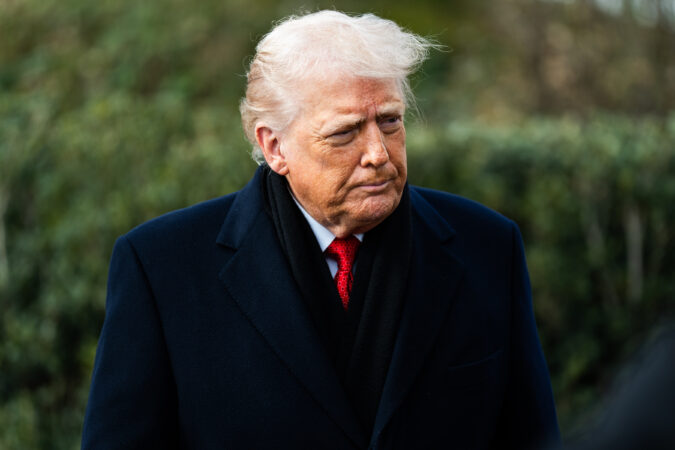
    White House press secretary Karoline Leavitt told CBS News to air an interview with President Donald Trump in full or face a lawsuit, according to an audio recording of the exchange reviewed by the Washington Post.

    “He said, make sure you guys don’t cut the tape. Make sure the interview is out in full,” Leavitt told new CBS Evening News anchor Tony Dokoupil, relaying a message from the president ahead of the interview last week. “He said, if it’s not out in full, we’ll sue your ass off.”

    Dokoupil responded with levity: “He always says that!”

    The New York Times first reported on the exchange. The White House did not immediately respond to requests for comment.

    “The moment we booked this interview we made the independent decision to air it unedited and in its entirety,” a CBS spokesperson wrote in a statement.

    Before winning reelection in 2024, Trump sued CBS News for its editing of a 60 Minutes interview with Kamala Harris, then the vice president and Trump’s rival in the election. Trump’s lawsuit said the edited version was intended to “confuse, deceive, and mislead the public” and deliver the Nov. 5 election to Harris. CBS maintained that Harris’ answer was edited for time considerations only, a long-standing practice in television, just as space considerations come into play for other media outlets. In July, CBS settled the lawsuit out of court for $16 million.

    Later in the summer, CBS News’ parent company, Paramount, was purchased by Skydance, whose CEO, David Ellison, is the son of billionaire Trump ally and Oracle co-founder Larry Ellison. In October, the Paramount Skydance chief executive arranged the joint company’s purchase of the conservative opinion website the Free Press, run by former New York Times columnist Bari Weiss, and installed Weiss as editor in chief of CBS News, reporting directly to him.

    Weiss’s early tenure has been marked by layoffs and consternation among staffers about their new leader’s direction, story ideas, and deference to the government. In December, Weiss faced staff blowback at 60 Minutes for shelving a segment on the El Salvador prison CECOT because the production team was unable to secure an on-camera interview with an administration official.

    Dokoupil, who became the anchor of CBS’s storied evening news program earlier this month, has made a point of taking a different tack on the air, saying “People do not trust us like they used to.”

    Trump has expressed criticism of CBS News since it came under the new owners and Weiss’ editorship began. “THEY ARE NO BETTER THAN THE OLD OWNERSHIP, who just paid me millions of Dollars for FAKE REPORTING about your favorite President, ME!” Trump wrote on Truth Social in December. “Since they bought it, 60 Minutes has actually gotten WORSE!”

  • Melting ice may raise Greenland’s value. Trump’s fight may be just the start.

    Melting ice may raise Greenland’s value. Trump’s fight may be just the start.

    The Arctic is warming around four times faster than the rest of the globe, exposing natural resources, opening up potential shipping routes and prompting an increase in activity among military powers. The changing landscape has created a region ripe for opportunity — and potential conflict — factors that may play a role in President Donald Trump’s sudden quest to obtain Greenland.

    Though he has called climate change a “hoax,” part of the value Trump has described in the Danish autonomous territory’s location is a result of the environmental shifts.

    “It’s partly the melting of sea ice making it more attractive for the economic development that he’d pursue in Greenland,” said Sherri Goodman, a distinguished fellow at the Atlantic Council and the former deputy undersecretary of defense for environmental security.

    Trump has said he wants the territory because of its strategic location and untapped natural resources, including diamonds, lithium, and copper.

    The president announced tariffs Saturday on countries that have sent troops to Greenland in recent days. Talks this week between the foreign ministers of Greenland and Denmark and U.S. officials ended in “fundamental disagreement,” according to Denmark’s top diplomat, Lars Lokke Rasmussen.

    The prospect of the United States using military force against the NATO ally, as Trump has floated, could end the decades-old defense pact. His bid for the territory is one of the most concrete examples of how climate change is influencing geopolitics. As the northernmost parts of our planet continue to warm, the effects could change the ways the international community operates.

    “The freeing of the Arctic from sea ice, at least seasonally, will create an entirely new theater for economic and security competition,” said Joseph Majkut, the director of the Energy Security and Climate Change Program at the Center for Strategic and International Studies. “And while we’ve known that is going to be the case for some time, it seems we’re at an inflection point.”

    Arctic sea ice typically peaks in March, as ice forms and spreads through the depth of winter, before beginning to melt to its lowest extent, usually in September. Over approximately the past five decades, changes in Arctic ice cover have revealed pathways for shipping and commerce, as parts of the region stay ice-free for longer. There’s the northern sea route along Russia’s coast, and the northwest passage along northern Canada. Analysts note icebreakers, or vessels with the capability to chomp through thinning ice, have begun passing through a “central route,” over the top of the Arctic.

    In October, a Chinese container ship used the northern sea route to shave about 20 days off its typical journey through the Suez Canal to Europe.

    If the region becomes ice-free in future summers, it could reshape global trade. That reality is mere decades away, though exact predictions depend on whom you ask and how quickly the planet warms.

    A 2021 study in Nature modeled future open-water periods based on different warming thresholds. It found that if the planet warms 2 degrees Celsius (3.6 degrees Fahrenheit) above the 1850-1900 average, that period lengthens by 63 days, while if the planet warms 3.5 degrees (6.3 degrees Fahrenheit) above the average, nearly the entire Arctic would have at least three months of open water each year.

    But it’s hard to predict the exact timeline of the rate of melting, and either way, continued escalations or jockeying won’t really depend on the pace of warming, Majkut said.

    They also may be underestimating the hazards of a melting Arctic, scientists warn. Regardless of when an ice-free summer comes, it will remain an extreme environment.

    “It’s going to be a long time before we’re arguing over beachfront property or protecting people from crocodiles up there,” Majkut said.

    Without sea ice, communities could lose crucial protection, said Zack Labe, a climate scientist who studies regional climate risks.

    “Typically, the ice would act as a buffer for high wind and waves,” he said, especially in the fall when the region experiences typhoons in the Pacific that bring huge swells. That ice protects people against erosion and flooding.

    The melting Arctic could produce unpredictable ocean conditions, like changes in the wind and the waves. And if there is an emergency, there are few accessible ports.

    “It could become more hazardous for ships to go into these areas rather than less,” said Labe.

    While Trump is pursuing Greenland, he hasn’t publicly acknowledged climate change’s role in what he perceives to be its value. A staunch climate change denier, the president has moved to cut funding to many climate initiatives including Arctic research.

    But to some, that could be bad geopolitical strategy.

    “Climate change is a significant national security risk,” said Goodman. “The openings of sea lanes, the changing ice conditions, are contributing to the intense geopolitical situations we’re experiencing.”

  • Pentagon readies 1,500 soldiers to possibly deploy to Minnesota, officials say

    Pentagon readies 1,500 soldiers to possibly deploy to Minnesota, officials say

    The Pentagon has ordered about 1,500 active-duty soldiers to prepare for a possible deployment to Minnesota, defense officials told the Washington Post late Saturday, after President Donald Trump threatened to invoke the Insurrection Act in response to unrest there.

    The soldiers are assigned to two infantry battalions with the Army’s 11th Airborne Division, which is based in Alaska and specializes in cold-weather operations.

    The Army placed the units on prepare-to-deploy orders in case violence in Minnesota escalates, officials said, characterizing the move as “prudent planning.” It is not clear whether any of them will be sent to the state, the officials said, speaking like some others on the condition of anonymity to discuss sensitive military planning.

    The White House said in a statement that it’s typical for the Pentagon “to be prepared for any decision the President may or may not make.” Sean Parnell, a spokesperson for Defense Secretary Pete Hegseth, said in a statement Sunday that the Pentagon is “always prepared to execute the orders of the Commander-in-Chief if called upon.” Two officials said that the orders are unrelated to Trump’s recent rhetoric about the United States needing to take control of Greenland.

    The development was reported earlier by ABC News.

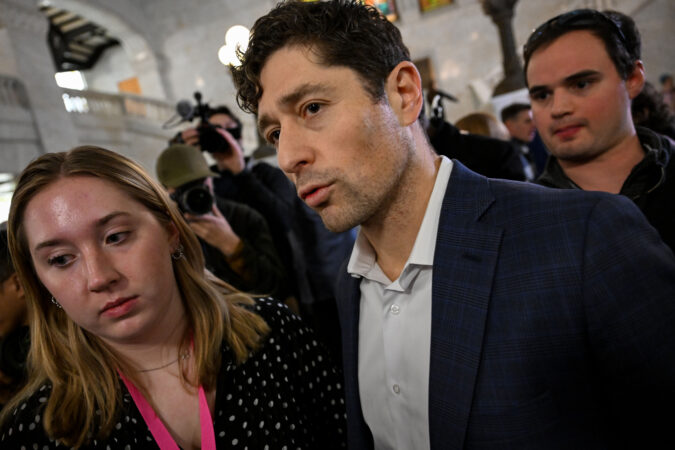
    Minneapolis Mayor Jacob Frey on Sunday called the federal government’s surge of immigration enforcement officials, and the possible deployment of active-duty soldiers, an attempt to “bait” protesters in the city.

    “We’re not going to give them an excuse to do the thing that clearly they’re trying to set up to do right now, which is these 1,500 troops,” Frey told CNN. “I never thought in a million years that we would be invaded by our own federal government.”

    The Insurrection Act, a federal law dating to 1807, permits the president to take control of a state’s National Guard forces or deploy active-duty troops domestically in response to a “rebellion.” Invoking the act would be an extraordinary move and mark the first time a commander in chief has done so since President George H.W. Bush called on the military during the Los Angeles riots of 1992 that killed dozens of people and caused widespread destruction.

    Typically, invoking the Insurrection Act is considered a last resort, when law enforcement personnel are unable to keep the peace during times of civil unrest.

    Trump threatened Thursday to invoke the law, saying on social media that unless officials in Minnesota could stop protesters from “attacking” agents with Immigration and Customs Enforcement, he would “institute the INSURRECTION ACT” and “quickly put an end to the travesty that is taking place in that once great State.”

    On Friday, Trump seemed to cool his rhetoric, saying there wasn’t a reason to invoke the law “right now.” He added, “If I needed it, I’d use it.”

    The Trump administration has turned up the pressure on Gov. Tim Walz and other Democratic leaders in Minnesota, with the Justice Department launching an investigation into whether Walz and Frey have impeded immigration enforcement. Walz, Frey, and other Democrats have said the move is an act of authoritarianism intended to silence critics of the administration’s actions.

    On Sunday, Frey said his office had not yet received a subpoena in the investigation, calling the probe “deeply concerning.”

    “This whole investigation would ultimately be the product of one of the most basic, foundational responsibilities that I have as mayor, which is to speak on behalf of my constituents,” he told ABC News.

    Walz and Frey have pleaded for protesters to remain peaceful. On Saturday, Walz also mobilized the Minnesota National Guard to support local authorities, but he has not deployed those troops.

    Minnesota has been a preoccupation of the Trump administration since at least December, when the Department of Homeland Security launched Operation Metro Surge, a multiweek immigration crackdown that has led to the arrest of hundreds of people and has been marked by clashes between federal agents and protesters.

    ICE agents have shot two people there this month, killing Renée Good, an American citizen, and wounding a Venezuelan migrant, Julio Cesar Sosa-Celis, after they attempted to detain him.

    Minnesota officials have sued the Trump administration over the operation, alleging the surge in law enforcement there is a politically motivated violation of the Constitution. Minnesota Attorney General Keith Ellison (D) said he is seeking a restraining order and called the operation a “federal invasion.”

    Other domestic military deployments ordered by Trump have been legally contested, with mixed results. In the most significant of those actions, Trump seized control of the California National Guard in June over the objections of Gov. Gavin Newsom, a Democratic political rival. About 4,000 Guard members were deployed to Los Angeles along with a battalion of about 700 active-duty infantry Marines after protests against ICE turned violent in a few instances.

    In December, Trump said he would end his efforts to keep National Guard troops deployed in Los Angeles, Chicago, and Portland, Ore., following a 6-3 ruling by the Supreme Court that found the administration failed to identify a legal way in which the military could “execute the laws in Illinois.” At issue in those jurisdictions was whether the deployments violated the Posse Comitatus Act, a federal law that prohibits U.S. troops from carrying out civilian law enforcement actions.

    Trump also has deployed more than 2,600 members of the National Guard to D.C., and administration officials recently extended that mission through the end of 2026. While that deployment remains legally contested, the president has more authority to deploy National Guard members there because it is a federal jurisdiction.

  • Justice Dept. enters new territory with probe of Minnesota officials

    Justice Dept. enters new territory with probe of Minnesota officials

    President Donald Trump’s Justice Department crossed a new threshold with its criminal investigation of top Democratic elected officials in Minnesota, targeting vocal critics during a moment of crisis in which protesters and federal agents are clashing on icy city streets.

    The Twin Cities have been a tinderbox for more than a week since an Immigration and Customs Enforcement officer fatally shot a woman in her vehicle, with residents confronting ICE agents. Trump has raised the prospect of sending U.S. troops into the state, and the Justice Department escalated tensions Friday as it prepared to send subpoenas to Gov. Tim Walz and Minneapolis Mayor Jacob Frey, two of Minnesota’s highest-profile Democrats.

    The pair have loudly disparaged ICE’S presence in the state and the way Trump and his administration have defended the officer and sidelined state officials in an investigation into the shooting. The subpoenas the Justice Department is preparing to send suggest the agency is looking at whether Walz’s and Frey’s public statements about the administration’s actions amount to illegal interference with law enforcement.

    The administration has pursued numerous other Democrats and perceived adversaries, fulfilling Trump’s promises to prosecute his foes. However, the administration had not taken such forceful action against elected officeholders at a volatile moment when public safety was at issue — until now.

    To Trump’s allies, the latest investigation should serve as a warning to critics who they argue are inflaming matters with their rhetoric. Former Trump adviser Stephen K. Bannon said he believes Walz and Frey hit Trump’s “trip wire” with their heated comments and expects “intense prosecution.”

    “Walz and Frey should listen when the president says, ‘No games,’” he said.

    Trump’s critics warned in stark terms that he was crossing a dangerous line.

    “This is what totalitarianism looks like,” said Sen. Chris Murphy (D., Conn.). “Trump is now using the full, entire scope of the federal government in order to destroy and suppress dissent and compel loyalty.” Murphy said Minneapolis is a “test case” that will determine whether Trump tries the same approach elsewhere.

    The White House and Justice Department had no comment Friday on the probe of Walz and Frey, but Attorney General Pam Bondi posted on social media a “reminder to all those in Minnesota: No one is above the law.” Neither Walz nor Frey had been served with a subpoena by Friday evening, spokespeople for the officials said.

    Trump, who on Thursday threatened to invoke the Insurrection Act in Minnesota, which would enable him to deploy the military on U.S. soil, downplayed the prospect on Friday. “If I needed it, I’d use it. I don’t think there’s any reason right now to use it,” he told reporters.

    The Justice Department’s investigation of a governor and mayor is highly unusual. In the 1950s and 1960s, presidents used troops to enforce court desegregation orders in the face of defiance from some Southern governors. But the department did not press charges against them, said Steven Lawson, a history professor at Rutgers University.

    “The Justice Department’s Civil Rights Division did keep track of civil rights incidents in the South, but it did not prosecute or harass governors or mayors for their resistance,” he said by email.

    Trump’s administration is taking the opposite approach by going after those who have pilloried the president. Traditionally, the Justice Department has tried to insulate itself from the White House, but Trump has not shied away from getting involved in its investigations. In September, he took to social media to complain to Bondi that she wasn’t taking action against his political opponents.

    Many Minnesotans were angry when ICE sent thousands of agents to the state, and they launched widespread protests after an ICE officer fatally shot Renée Good. ICE’S presence and the demonstrations have put Minneapolis on edge, with residents blowing whistles and screaming at agents, and officers at times deploying tear gas. Demonstrations “remained peaceful until last night,” Minneapolis Police Chief Brian O’Hara said last weekend after 29 people were arrested and an officer was injured.

    Tensions rose again this week when an ICE officer shot a man in the leg.

    Soon after an investigation into Good’s shooting began, state officials said they were reluctantly withdrawing from it because the FBI was not sharing information with them. Separately, Minnesota Attorney General Keith Ellison sued federal officials this week to try to force ICE agents out of the state.

    Walz, the Democrats’ 2024 vice-presidential nominee, has been fiercely critical of ICE, as has Frey, who drew nationwide attention when he told ICE to “get the f— out of Minneapolis” following the shooting.

    Walz and Frey are being investigated under a law similar to one used against protesters whom federal officials have accused of impeding their work.

    “The administration is taking us back to the days of seditious libel, where people are prosecuted simply because they criticize the acts of government,” said Rep. Jamie Raskin (D., Md.), a former constitutional law professor who served on a congressional panel that investigated the Jan. 6, 2021, attack on the U.S. Capitol by a pro-Trump mob. “The Department of Justice has now been reduced to a completely political and partisan instrument of vendetta.”

    In a statement, Walz noted that Trump has gone after many others who have not done what he wants and said, “The only person not being investigated for the shooting of Renée Good is the federal agent who shot her.”

    Justice Department prosecutors pursued cases against former FBI director James B. Comey and New York Attorney General Letitia James, but judges dismissed the charges. The department has also conducted investigations of Sen. Adam Schiff (D., Calif.), who led Trump’s first impeachment as a member of the House, Federal Reserve Chair Jerome H. Powell, and several Democrats who told military members they could defy unlawful orders. He has also tussled with Democratic state officials such as California Gov. Gavin Newsom and Illinois Gov. JB Pritzker, and tried to withhold funds from them when they have fought his agenda.

    Frey wrote on the social media platform X that the investigation against him was “an obvious attempt to intimidate me for standing up for Minneapolis, local law enforcement, and residents against the chaos and danger this Administration has brought to our city.” He said he “will not be intimidated.”

    The administration’s pressure on Minneapolis ramped up further Friday when the Department of Housing and Urban Development said it was investigating the city over fair housing initiatives, probing for alleged violations of the Fair Housing Act and the Civil Rights Act.

    A Minneapolis spokesperson said the investigation “appears to be about politics, not affordable housing.”

  • EU, spurred by Trump, to sign mega free-trade deal with South America

    EU, spurred by Trump, to sign mega free-trade deal with South America

    BRUSSELS — The European Union’s leaders are set to sign a landmark trade agreement with South American nations to create what they have trumpeted as the world’s largest free-trade zone.

    This deal is more than 25 years in the making. But its culmination comes at a time when the EU is moving with a new, urgent sense of purpose, as President Donald Trump upends long-standing alliances and the norms of global trade.

    The EU voted this month, despite stiff opposition from some of its 27 nations, to approve the deal with the trade bloc known as Mercosur, which includes South America’s two biggest economies, Brazil and Argentina, along with Paraguay and Uruguay. EU leaders are headed to Paraguay on Saturday for a signing ceremony, after years of negotiations on the pact, which will cut tariffs on an array of signature products from Argentine beef to German cars.

    Along with Trump’s tariff blitz, his administration’s wavering interest in being responsible for European security and general disdain for the EU have spurred a push to “diversify” and “de-risk” from the United States. In other words, Europe is looking for other friends and hedging its bets.

    As jilted U.S. allies like Europe and Canada close ranks against Washington, the EU has sped up trade talks with Malaysia, the United Arab Emirates and other countries. In the fall, the EU inked a trade accord with Indonesia and now hopes to clinch a big one with India.

    European Commission President Ursula von der Leyen, head of the E.U.’s executive branch, has declared that Europe is charting its own course. “Only if we are economically strong, we can secure our independence,” she said before the trip to South America.

    European officials have emphasized the contrast between forming a free-trade zone of more than 700 million people and Washington imposing tariffs and threatening military power, as well as suspending cooperation not only on trade but also on climate, health and international aid.

    With South America balancing its interests vis-à-vis the United States and China, EU leaders have also cast the Mercosur deal as a way for the EU to assert itself as a global player — and a steady hand in troubled times.

    Still, Europe’s push to branch out from the U.S., its biggest export market for goods, has also created friction. The bloc has grappled with its own strained relationship with Beijing and economic competition from China. And securing the backing of all 27 EU member countries in trade negotiations is tough, given occasionally conflicting national priorities.

    The European Parliament must now ratify the Mercosur treaty, which could take months, and opponents, especially in France and Poland, are threatening to sink the deal.

    The accord has long faced opposition over environmental protection and deforestation concerns. In particular, farmers and beef and poultry producers also argue that the influx of cheaper goods from South America, with looser production standards, would dent their livelihoods.

    France, Poland, and Italy had sought to block or water down the deal over worries from farmers, a powerful lobby and economic pillar. But Trump’s tariffs and domestic political turmoil in France may have left Paris, historically an EU heavyweight, with little sway.

    For France’s EU neighbors, the state of international politics seems to have outweighed the traditional preference for consensus. “Other member states were of the view that we cannot really delay this much further, that there would be a huge loss of credibility for the European Union if it cannot go ahead at this time,” said Ignacio García Bercero, a former EU trade negotiator and senior fellow at Bruegel, a Brussels-based research institute.

    The Mercosur deal long predates Trump, Bercero said. “Now it is clear, however, that in the current geopolitical context, concluding this type of agreement is more important than ever,” he added. “When we are facing a very disruptive situation, not only with the United States, but also China, it becomes more important than ever to consolidate your trade agreements, to expand your alliances.”

    As the E.U.’s 27 heads of state and government debated the deal in December, European farmers rumbled into Brussels on tractors to protest. French farmers did the same on the streets of Paris this week, blocking roads near the Eiffel Tower, and have pledged to clog the streets again next week in Strasbourg.

    Other industries, however, are keen to tap into the South American market, such as carmakers in Germany, which have been buffeted by Chinese competition and U.S. tariffs.

    The European Commission made 11th-hour concessions, including billions in agricultural aid, which brought Italian Prime Minister Giorgia Meloni onside and ultimately secured a majority for the political green light last week.

    The commission, which says it addressed grievances with safeguards and quotas on South American imports, will focus now on winning the support of the European Parliament, according to trade spokesman Olof Gill. Gill described the deal as “a geopolitical signal,” adding that the commission has “built in every necessary protection for our farmers.”

    European Council President António Costa, who is also attending the ceremony in Paraguay on Saturday, pledged in a statement that the deal would not only benefit European businesses but also “boost the EU’s sovereignty and strategic autonomy.”

    Confronted with Trump’s tariffs, EU leaders so far have averted a spiraling confrontation by signing a skeletal trade deal last year. Still, they have tried to show that they can lead in maintaining open and orderly global markets despite America’s protectionism.

    While Brussels has boasted that the Mercosur accord will create the largest free trade zone of its kind, economists expect only a limited boost for the EU economy. EU exports to Mercosur countries stood at around 55 billion euros in 2023, while exports to the U.S. in 2023 were over 500 billion euros.

    The deal will probably bring some benefits, by lifting barriers and encouraging higher EU exports, though its “overall economic impact remains modest,” analysts at ING, the global bank headquartered in Amsterdam, wrote this week. Even so, they added, the “true value of the deal goes beyond simple economics.”

    “It sends strong signals to the U.S. and China” that the EU is serious about curbing reliance, the ING analysis said, and it could create momentum to finalize other languishing talks, including with India: “For the EU, this is not just about trade — it’s about securing strategic resources and counterbalancing global competitors.”

    If ratified, the agreement would deepen EU ties to a region in which China is the largest trading partner and which the Trump administration has declared to be a U.S. sphere of dominance. Just this month, Trump ordered strikes on Venezuela, which borders Brazil, and U.S. forces captured President Nicolás Maduro.

    Venezuela was suspended from Mercosur about 10 years ago over trade and human rights commitments. Bolivia, which recently joined, can eventually join the EU trade deal.

  • What a 76-cent average tip reveals about gig work in America

    What a 76-cent average tip reveals about gig work in America

    New York’s government disclosed an eye-popping number this week: The average customer tip on the food delivery apps DoorDash and Uber Eats is 76 cents in the city, compared to $3.66 two years ago.

    Everyone agrees why tips dried up — not because we’re tired of tipping. It’s largely because those two companies changed the in-app tip feature to make New Yorkers less likely to leave a gratuity.

    The apps moved the tip option from just before customers place an order to after. Average tipping amounts immediately plummeted, the city says. It’s proof that app design influences our behavior.

    What’s hotly disputed, though, is whether the tip decline is a healthy sign for workers, as the companies say, or a result of delivery couriers being deprived of a collective $550 million in income, as the new administration of New York Mayor Zohran Mamdani says.

    While this tipping fracas is unique to New York, it also reveals two broader realities about app-based convenience services such as Uber, Lyft, DoorDash, and Instacart.

    First, people are confused and angry about tipping, and the delivery app boom makes it worse. (Keep reading for food delivery tipping suggestions from a worker advocate.)

    Second, 15 years after app-based “gig work” emerged as an alternative to conventional employment, there remains profound disagreement about whether these are good jobs and how to make them better.

    Those struggles raise questions about whether Americans and our political leaders are prepared to address the risks of artificial intelligence wiping out jobs or cratering incomes.

    Regulating gig work

    If a restaurant server’s tips are low, the restaurant must pay the worker more until she reaches the legally mandated minimum wage.

    But people who work for apps such as Uber, Lyft, DoorDash, and Instacart are considered independent contractors rather than employees. Minimum wage laws don’t typically apply to them.

    The workers often say that as a result, their pay is unpredictable and highly dependent on tips, which can comprise half or more of app workers’ pay. Some states and cities have tried forms of pay guarantees for app workers.

    Starting in December 2023, New York mandated a minimum hourly wage for couriers of six food delivery apps. DoorDash, Uber Eats, and Grubhub were by far the largest.

    App companies warned that the wage mandate would hurt workers, raise prices for consumers, and drive restaurants out of business. That was true on the margins, but largely the law worked as intended without ruining what people like about food delivery.

    Average hourly pay for delivery couriers of the six apps more than doubled, from $11 in the spring of 2023 to $24 in spring 2025, New York data show. Tips have declined significantly, but the higher total pay is now mostly coming from the app companies’ pockets rather than tips.

    This average hourly pay isn’t necessarily comparable to what a restaurant cook or a Starbucks barista makes. Employers of those conventional hourly workers may pay the costs of benefits, job-related expenses ,and workers’ compensation. Delivery app workers typically must pay those expenses out of their own wages.

    Ligia Guallpa, executive director of the Worker’s Justice Project, a labor advocacy group, said workers still need tips. She criticized DoorDash and Uber Eats for moving the in-app tipping option.

    The city says that the average customer tip on apps such as Grubhub that didn’t move the in-app tipping option in late 2023 is $2.17 compared to the 76-cent average for DoorDash and Uber Eats.

    DoorDash and Uber Eats say the city suggested they move or remove the in-app tipping option, essentially to avoid scaring off customers facing higher delivery fees from the minimum-wage law. DoorDash and Uber Eats now say that the city wanted workers to rely less on tips; it worked and New York is blaming them for a change the city itself suggested.

    The two companies sued to stop a looming mandate to put the in-app tipping option back where it was, at the moment New Yorkers place an order.

    Again, this dispute isn’t about one city. It shows the difficulties in making food deliveries fair for everyone involved — restaurants selling you meals, delivery workers, app companies, and diners.

    What workers want you to know about tips

    An oddity of tipping for many app-based delivery services is that you’re often asked for a gratuity when you place an order. It’s like tipping at a restaurant just as you sit down for dinner rather than after the meal.

    This breaks American norms of tipping as a reward for a job well done. But fairly or unfairly, app companies built their system around tips.

    Tips may determine whether your order is assigned a delivery courier right away or not, and tips can make or break an app worker’s paycheck.

    I asked Guallpa for a road map on how food delivery workers would like us to tip. She said:

    • Consider tipping 10% to 20% of your order amount. And she suggested tipping more during bad weather or if you’re placing a large order.
    • If you can, opt for Grubhub over DoorDash or Uber Eats. Guallpa said Grubhub tends to treat workers better than other food delivery apps. (DoorDash’s comment didn’t address the criticism. Uber Eats didn’t comment.)
    • Consider tipping both in the app and in cash at the door if you’re happy with the service. Guallpa also said that some delivery couriers suspect the app companies don’t pay them all the in-app tips they earn. (Wage theft is a common claim among hourly workers, and delivery apps have previously been forced to reform over tip-stealing allegations.)

    If you tip in the app, she said that couriers tend to appreciate it when customers show them the amount, at the door or with a texted screenshot, for the worker’s records.

  • Trump administration suspends seizing wages and tax refunds for defaulted student loans

    Trump administration suspends seizing wages and tax refunds for defaulted student loans

    With Americans reeling from high consumer prices, the federal government will suspend tax refund seizures and wage garnishments for people in default on their student loans, the Education Department said Friday.

    The action dials back the Trump administration’s recent decision to resume involuntary collections after a nearly six-year suspension because of the pandemic.

    The suspensions take effect immediately, with no defined end date. The move offers relief to the millions of Americans in default but means the government is losing out on billions of dollars.

    The Education Department said Friday that the temporary suspension will help the agency implement student loan repayment reforms to give borrowers more options to repay their loans and give defaulted borrowers more time to rehabilitate their loans. The tax bill that President Donald Trump signed into law last year calls for the creation of new repayment plans, while phasing out a few existing ones starting July 1.

    “The Department determined that involuntary collection efforts such as Administrative Wage Garnishment and the Treasury Offset Program will function more efficiently and fairly after the Trump Administration implements significant improvements to our broken student loan system,” Under Secretary of Education Nicholas Kent said in a statement Friday.

    About 5.3 million people have not made a payment on their federal student loans for nearly a year — defaults that place them at risk of having a portion of their paycheck, Social Security, or disability income garnished or their tax refund withheld by the federal government. Many were in default before the federal government stopped collecting defaulted loans six years ago. Another 4.3 million borrowers are severely delinquent and nearing default, according to an analysis by the Congressional Research Service.

    In December, the Education Department told the Washington Post that starting the week of Jan. 7, it would notify about 1,000 defaulted borrowers of plans to withhold a portion of their wages. After that, notices were supposed to be sent to a larger number of borrowers each month. The department would not confirm Friday whether those notices ever went out.

    Under garnishment regulations, the Education Department can withhold up to 15% of a borrower’s disposable, or after-tax, income. The garnishment continues until the defaulted loans are paid off in full or the borrower takes action to get out of default.

    “Borrowers were in an absolute panic about the government garnishing wages during an affordability crisis,” said Persis Yu, deputy executive director at the advocacy group Protect Borrowers. “Garnishing wages right at this moment was always a terrible idea.”

    Protect Borrowers and the National Consumer Law Center have also been warning struggling borrowers to check if they are in student loan default before they file their taxes. The groups released a public service announcement Tuesday that encouraged people to call the Treasury Department to find out if they are on the list to lose some or all of their refund. Refunds of federal Child Tax Credits and Earned Income Tax Credits can be critical lifelines for impoverished families, the advocates said.

    Defaults have historically been concentrated among borrowers with low loan balances who never completed their degree, leaving them less likely to find work that could pay off the debt.

    While it was widely anticipated that the government would one day resume seizing the money, the collections would run counter to Trump’s promise to make life more affordable for Americans — a message he is heralding ahead of the midterm elections.

    But Republicans have historically denounced student loan relief as an affront to taxpayers, who they say shouldn’t be on the hook for the debt of college students. Pausing involuntary collection is far from the debt forgiveness the Biden administration pushed, but it does give borrowers a reprieve at the expense of taxpayers.

    The White House’s decision to suspend involuntary collection undercuts the administration’s messaging around student loan repayment. The Education Department previously said the portfolio is headed toward a “fiscal cliff” if the Trump administration doesn’t restart involuntary collections.

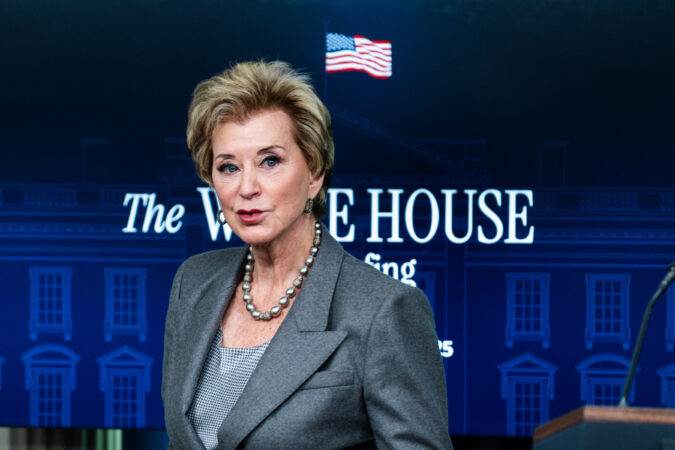
    When the Education Department announced the resumption of involuntary collection in April, Education Secretary Linda McMahon said her agency, with the help of the Treasury Department, would “shepherd the student loan program responsibly and according to the law, which means helping borrowers return to repayment — both for the sake of their own financial health and our nation’s economic outlook.”

    But at an event in Rhode Island this week, McMahon signaled that the administration was changing plans. Asked if she had any concerns about making borrowers’ financial situation worse by garnishing their wages, the secretary said there was a pause on taking any action, even though no official announcement had been made.

    Even with a suspension in place, interest will continue to accrue on defaulted loans and borrowers will still contend with the negative credit reporting. The Education Department is encouraging defaulted borrowers to explore resolutions, noting that it reports student loan defaults to credit reporting agencies.

  • Trump’s promised manufacturing boom is a bust so far

    Trump’s promised manufacturing boom is a bust so far

    Introducing the highest U.S. tariffs since the Great Depression, President Donald Trump made a clear promise in the spring: “Jobs and factories will come roaring back into our country.”

    They haven’t.

    Manufacturing employment has declined every month since what Trump dubbed “Liberation Day” in April, saying his widespread tariffs would begin to rebalance global trade in favor of American workers. U.S. factories employ 12.7 million people today, 72,000 fewer than when Trump made his Rose Garden announcement.

    The trade measures that the president said would spur manufacturing have instead hampered it, according to most mainstream economists. That’s because roughly half of U.S. imports are “intermediate” goods that American companies use to make finished products, like aluminum that is shaped into soup cans or circuit boards that are inserted into computers.

    So while tariffs have protected American manufacturers like steel mills from foreign competition, they have raised costs for many others. Auto and auto parts employment, for example, has dipped by about 20,000 jobs since April.

    “2025 should have been a good year for manufacturing employment, and that didn’t happen. I think you really have to indict tariffs for that,” said economist Michael Hicks, director of the Center for Business and Economic Research at Ball State in Muncie, Ind.

    Small- and midsize businesses have found Trump’s on-again, off-again tariffs especially vexing. Fifty-seven percent of midsize manufacturers and 40% of small producers said they had no certainty about their input costs in a November survey by the Federal Reserve Bank of Richmond. Only 23% of large manufacturers shared that complaint.

    Smaller companies also were more than twice as likely to respond to tariffs by delaying investments in new plants and equipment, the survey found. One reason could be that taxes on imports raise the price of goods used in production much more than they do with typical consumer items, according to a study by the San Francisco Fed.

    Industries producing more technologically complex goods such as aircraft and semiconductors also are paying an outsize price, according to Gary Winslett, director of the international politics and economics program at Middlebury College. Makers of semiconductors, for example, shed more than 13,000 jobs since April.

    “They’re the ones who need the imported inputs. Really advanced manufacturing is actually what’s getting hit the hardest,” he said.

    Trump’s tariffs, however, are not the industrial sector’s only headache. Factory payrolls began their post-pandemic decline in early 2023, almost two years before Trump returned to the White House.

    High interest rates and a shift in consumer spending patterns are hurting the nation’s manufacturers, economists said. Business loans are more than twice as expensive as they were four years ago, with banks charging their most creditworthy borrowers interest rates of 6.75%. That discourages businesses from expanding operations and hiring additional workers.

    After bingeing during the height of the pandemic on durable goods, consumers have gradually redirected their spending to in-person services. Money that once went to makers of furniture, televisions, and exercise machines now goes instead to restaurants and entertainment venues.

    In Indiana, the spending switch can be glimpsed in the fortunes of the recreational vehicle industry, a local mainstay. RV shipments soared to a record 600,400 in 2021 as consumers trapped at home by the pandemic hit the road. But by 2024, the work-from-home era was over, and sales fell by nearly half. Thor Industries, the largest RV manufacturer, laid off several hundred workers last year, as demand flagged.

    Once Trump returned to the White House, manufacturers responded by over-ordering imports to beat the anticipated tariffs. That’s left many producers with more inventory than they need, suggesting cuts lie ahead, according to Hicks.

    “The manufacturing job losses that we see now are really just the beginning of what will be a pretty grim couple of quarters as manufacturing adjusts to a new lower level of demand,” he said.

    Modest numbers of manufacturing jobs have been trimmed throughout the economy. In December, Westlake Corp., a Houston-based producer of industrial chemicals, said it would idle four production lines at facilities in Louisiana and Mississippi, putting 295 employees out of work. Speaking on an investor call, company executives blamed excess global capacity and weak demand for the move.

    While the jobs that Trump promised have not materialized, factory output rose in 2025, reaching its highest mark in almost three years, according to Federal Reserve data, and administration officials said it is only a matter of time before the full benefits of the president’s plan are felt.

    Trump’s tariffs and jawboning encourage CEOs to invest in new U.S. plants. Provisions in the president’s signature fiscal legislation permitting companies to quickly write off the full expense of new investments in equipment and research and development expenses will spur modern manufacturing, they said.

    “It also encourages the build-out of high-precision manufacturing here at home, which will lead to high-paying construction and factory jobs,” Treasury Secretary Scott Bessent said in a speech this month.

    Companies are spending more than three times as much on constructing new factories as they did when Trump was first inaugurated, though less than during the Biden-era peak. The White House last fall hailed recent investment announcements by companies such as Stellantis and Whirlpool. Last month, T. RAD North America, a subsidiary of a Japanese manufacturer, announced plans for a new auto parts plant in Clarksville, Tenn., which would employ 928 workers.

    Nick Iacovella, a spokesperson for the Coalition for a Prosperous America, which backs Trump’s manufacturing policies, said the roughly 1% shrinkage in factory employment last year was less significant than the uptick in business investment.

    “We saw a significant increase in capital expenditures, which is the earliest signal that reindustrialization is taking hold. Those investments take time to permit, build ,and staff before they show up in employment data,” he said.

    The president’s hopes of increasing manufacturing employment defy decades of experience in the United States and other advanced economies. American factory jobs peaked at 19.5 million in the summer of 1979 and have been sliding ever since, largely because of the introduction of machinery that can do the job of several workers.

    As two presidents sought to revive domestic production over the past decade, manufacturing employment rode a roller coaster. Factory jobs increased by 421,000 during Trump’s first term before sinking by more than 1 million during the pandemic. President Joe Biden used government subsidies to encourage hiring, especially for green energy projects, and manufacturing payrolls rose more than 100,000 above Trump’s highest mark.

    But those gains evaporated by the end of 2024.

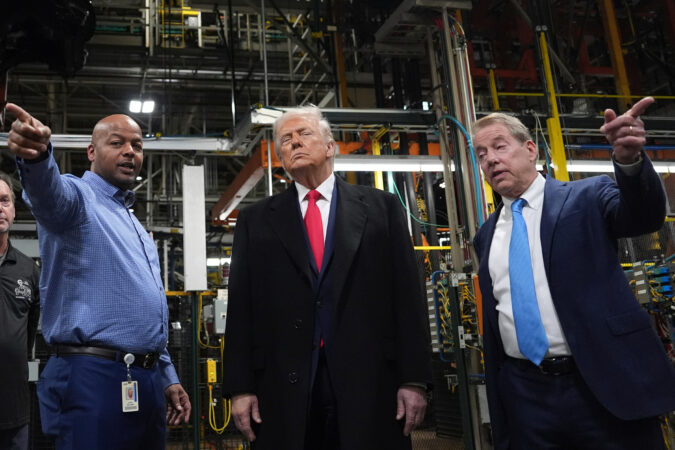
    On Tuesday, the president addressed the Detroit Economic Club, touting “the strongest and fastest economic turnaround in our country’s history.” He boasted about growth, productivity, investment, incomes, inflation and the stock market.

    “The Trump economic boom is officially begun,” the president said.

    All that’s missing now are the jobs.

  • These LinkedIn tweaks could get you noticed faster after a layoff

    These LinkedIn tweaks could get you noticed faster after a layoff

    If you’re one of the more than 1 million people who were laid off this past year, you’ve probably been busy tackling your checklist to land your next job.

    You need to spruce up that resumé, start your online job hunt, and connect with old colleagues and professional contacts. But there’s also one more thing you should do right now, experts say. If you’re on the professional social network LinkedIn, a few strategic moves could boost your visibility to hiring managers and recruiters.

    “It’s much harder to break into the labor market right now,” said Elise Gould, senior economist at Economic Policy Institute. “Employers just aren’t hiring at the rate that they did last year or the previous years.”

    From Amazon to Meta, Walmart, and Starbucks, recent data show that layoffs accelerated in October, bringing the total to 1.1 million, a level not seen since 2020. While the job market may be particularly challenging for some, especially those in industries that are cutting back or young people entering the workforce, the rate of job openings has stayed relatively stable — meaning there’s still opportunity for job seekers, Gould said.

    Here are a few things you can do on LinkedIn to increase your chances of landing your next gig.

    List your new consulting firm

    Some people worry about showing that their employment has ended at one employer without being able to add a new job. So add a new job, said Michelle Volberg, founder of an executive search firm and CEO of Twill, a talent recommendation platform.

    “The job market is so competitive right now, you really have to stand out and you want to do it in thoughtful ways,” she said. “Create value.”

    Start by opening a limited liability company, which usually involves filling out some paperwork and paying a fee. Start building a portfolio of projects and clients, which at first might be your friends and family who let you do a few things free, Volberg said. Then make a list of 25 employers you want to work for and offer your free consulting services. You can say something like, “I’m interested in your company’s mission, and I have some ideas I’d like to share with you free that could help you with” a specific named client. The idea is to give them a preview in the outreach without giving away your ideas. Save those for a Zoom or in-person meeting, Volberg said.

    Be clear about boundaries around your work, including the scope of the project and time expectations. Put them in writing. Use the time to create value and establish a relationship with the employer, but don’t offer free work beyond 30 days, Volberg said. Once you’ve done three or four projects, start charging. You can research market rates through ChatGPT and other AI services and gut check them with connections or professionals in industry social networking groups, including those on Slack, Volberg said.

    In the end, you may have a foot in the door at a new employer or a new path to working for yourself.

    Don’t lie about the break

    Update your LinkedIn as soon as you can to signal you no longer work at your employer. If you’re not interested in consulting, you can update your LinkedIn profile to include a career break.

    The feature is under “Experience” on your profile and allows you to include details and skills that could be useful to employers during your unemployment.

    “Make sure you’re including what you’re doing in that time that could be seen as transferrable skills,” said Catherine Fisher, career expert at LinkedIn.

    You could include a community project you led or a marketing campaign you did for your child’s school fundraiser, or maybe you built something with AI that helped a volunteer organization improve their processes. “AI literacy is a top skill, so is communication, leadership, and collaboration,” Fisher said about what employers seek. “Ways you can show you possess those skills are important.”

    Show off your expertise

    Face it: You have skills and knowledge. It’s time to share that with your professional network to help get you some visibility, Volberg said.

    Regularly publish thoughtful or educational posts relevant to people in your industry, like other people’s posts, and leave smart comments.

    “It’s highly underrated,” said Volberg. “You can really stand out by posting as a thought leader.”

    Recruiters and hiring managers are always looking, Volberg said. Even if they don’t know you’re available to hire, if they like you, they’re more likely to message you. Posting and publicly engaging with others about industry topics just helps you increase your reach.

    Signal that you’re looking

    Let people know you’re looking. There are several ways to do this, depending on your comfort level.

    One way to do this is to click the “open to” button below your name in your profile and hit “finding a new job.” You can set preferences like job titles and locations as well as choose whether only recruiters can see it or all LinkedIn members. If you choose all LinkedIn members, a green frame will appear around your profile photo that says “#OpenToWork.”

    The banner is the best way to remind everyone in your network that you’re searching and LinkedIn’s data shows people are more likely to get noticed that way, Fisher said. But some hiring managers may see this as the worker being not in demand, Volberg cautioned.

    Another way to signal you’re open is to post about your layoff on the network. Tell your story, explain your expertise, and let people know what you’re looking for.

    Engage with employers

    Search for employers you’d like to work for, follow their pages, and connect with people who work for them in your direct or extended networks.

    LinkedIn recently released AI-powered people and job searches, which allows users to ask for what they’re looking for using natural language. You might type something like “product managers that work at Apple,” and LinkedIn can surface relevant people. Similarly, you can say, “I’m looking for a full-time sales role in financial services” to find jobs that might fit.

    Follow your dream employers’ pages so you can get updates from them and so recruiters can get a sense that you’re interested, Fisher said. Message people who are first or second connections. They may also be able to make introductions.

    “A secret I always share is that everyone loves to talk about themselves, so just say, ‘I want to learn about you,’” Volberg said. “Find ways to bring value to them.”

    Being laid off in a competitive job market can be taxing. But think of it like a really tough breakup, with LinkedIn helping you “glow up,” Volberg said.

    “You can be on your couch with ice cream for a couple of days, but then get up,” she said.