Category: Washington Post

  • Israel reopens Jordan crossing as pressure builds to advance Gaza truce

    Israel reopens Jordan crossing as pressure builds to advance Gaza truce

    Trucks carrying goods from Jordan crossed into the West Bank for the first time in months on Wednesday, after Israel said it would reopen a key land bridge with its neighbor, including for aid and other cargo bound for the Gaza Strip.

    It was unclear whether the first trucks out of the gate were transporting humanitarian supplies or commercial items, but a spokesperson for COGAT, the branch of the Israeli Defense Ministry that controls aid flows to Gaza, confirmed that the crossing, known as Allenby, was open for the passage of aid.

    The move to restore Allenby as a transit point for relief comes as pressure builds on Israel to move a tenuous U.S.-backed ceasefire in Gaza into its second phase, and as the United Nations and other aid organizations have warned that nowhere near enough supplies are being allowed into the enclave to meet the needs of the Palestinian population, the majority of whom are displaced and living in makeshift shelters or tents.

    Under the ceasefire agreement between Israel and Hamas, Israeli authorities are supposed to allow at least 600 trucks of aid to enter Gaza each day. But the United Nations and other aid agencies say they continue to face bottlenecks and other restrictions, including delays and denials of cargo, custom clearance challenges and limited routes inside Gaza for transporting humanitarian goods.

    Israel closed the border in September after a Jordanian truck driver killed two Israeli soldiers at the crossing. An Israeli security official, speaking on the condition of anonymity because they were not authorized to speak to the press, said Jordanian truck drivers would undergo stricter screening processes and that a dedicated security force had been assigned to monitor the terminal.

    The reopening also coincided with a visit to Israel and Jordan by the U.S. ambassador to the U.N., Mike Waltz, who met on Monday with Israeli Prime Minister Benjamin Netanyahu. A statement from the U.S. mission to the U.N. said Waltz “welcomed Israel’s cooperation on expanding border crossings,” including Allenby. Waltz also met with Jordan’s King Abdullah on Sunday.

    In recent days, both Israeli and Hamas officials have said that there will be no discussion of moving to the second phase of President Donald Trump’s ceasefire plan until the first phase has been fully implemented. Both continue to point fingers at the other for not holding up their side of the deal. Israel has blamed Hamas for being slow to return the bodies of hostages, with one remaining in Gaza. Hamas has, in turn, pointed to the continued closure of border crossings for medical evacuations and aid and the daily fire that Israeli troops are carrying out in Gaza.

    But as pressure from the U.S. and other mediators to push the deal into the next phase grows, Netanyahu said Sunday that the transition could happen “very shortly” and announced he will meet with Trump on Dec. 29. A Hamas official also told the Associated Press on Sunday that the group is open to “freezing or storing” its weapons arsenal as part of the ceasefire.

    The second phase, which in theory would involve the disarmament of Hamas, withdrawal of Israeli troops from the territory, and the formation of an international force to maintain security, is likely to be far more complicated to achieve than even the first phase. Any delays in reaching that second phase leaves open the prospect of a status quo being established in Gaza in which Israel continues to occupy half of the enclave.

    One remaining step is the return of the remains of Ran Gvili, a 24-year-old Israeli police officer who was killed in Hamas’s Oct. 7, 2023, attack on Israel.

    “Without Gvili, Israel will not begin the talks over phase two,” said an Israeli official, speaking on the condition of anonymity because they were not authorized to speak to the press.

    U.N. agencies have reported an increase in aid that has been allowed into Gaza since the ceasefire came into effect, but say the levels are still far below what is needed for a population trying to recover from widespread malnutrition, famine and infectious diseases with a decimated health care system.

    Israel has allowed commercial operators and aid groups that bypass the U.N. system to scale up their operations more rapidly than other major relief organizations with long-running histories of assistance in Gaza. In particular, Israel has refused to allow UNRWA, the U.N. Relief and Works Agency for Palestinian refugees, to deliver aid, despite its sprawling infrastructure in Gaza and decades-long presence in the territory.

    “A shockingly high number” of children are still suffering from acute malnutrition, said Tess Ingram, a spokeswoman for UNICEF, the U.N. children’s agency, according to comments reported by Reuters.

    Ingram also told reporters on Tuesday that opening the Rafah crossing in southern Gaza, which links it with Egypt, could help bring down the number of children suffering from malnutrition. “We really need to see all types of aid come in, particularly nutritious food through commercial routes as well,” Ingram said.

    Israel said last week that it would reopen the crossing in the coming days, but only for the exit of Palestinians from Gaza.

    Millions of shelter items have also been stuck in Jordan, Egypt and Israel while awaiting Israeli approval to enter, a consortium of humanitarian organizations focused on providing shelter aid said in November.

    A severe winter storm landing in the region this week threatens 850,000 people sheltering in 761 displacement sites particularly vulnerable to flooding in the Gaza Strip, the U.N. Office for the Coordination of Humanitarian Affairs (OCHA) said. On Wednesday, there were reports of flooding in large parts of Gaza City, particularly low-lying areas.

    “The entire services system is unable able to rescue displaced people due to the heavy rain and flooding,” said Mahmoud Basal, a spokesman for Gaza Civil Defense, in a statement to reporters. “Rainwater has risen to more than one meter in some shelter centers.”

    The storm, dubbed Byron, has already hit Greece and Cyprus and is expected to bring as much as eight inches of rain to Israel and Gaza.

    “Low pressure fronts pose a major danger to displaced people and residents because of the destruction inflicted on the infrastructure,” Gaza municipality spokesman Hosni Mhanna told Al Araby TV on Wednesday.


  • Medical Mysteries: For years she was told it was stress. Then a brain scan revealed the real cause.

    Medical Mysteries: For years she was told it was stress. Then a brain scan revealed the real cause.

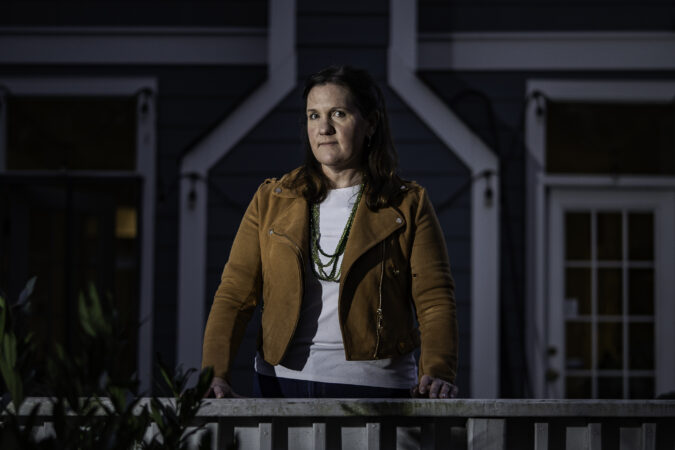
    In the spring of her senior year at college, Annie Sedoric woke up with jaw pain. It was March 2020, and there was a lot to worry about at the start of the COVID pandemic, so she tried to ignore the pain, even as it grew worse.

    “My jaw kept popping and popping and popping,” said Sedoric, who was 22 at the time. “The pain was getting more intense, less bearable, to the point that I had to do something.”

    A visit to the dentist ended with a referral to an oral surgeon, who concluded that Sedoric had developed a TMJ disorder from grinding her teeth due to stress. Fixing the problem required a procedure under anesthesia to manipulate her jaw back into position, doctors told her. The recovery extended over several weeks, she said, and during that time opening her mouth was difficult.

    “I remember shoving soft food between the cracks of my teeth,” Sedoric added.

    But the “fix” didn’t last. The pain persisted and her jaw popped out of place again, later requiring a second procedure by the oral surgeon. In the meantime, Sedoric stopped getting her period.

    “It was concerning for me,” Sedoric said. “I’d always been regular, never on birth control.”

    Her gynecologist suggested Sedoric’s running and workouts — and stress – were the culprits. But that didn’t make sense: Sedoric had been a three-varsity-sport athlete in high school and continued working out with her college sports teams, so she hadn’t been exercising any more than usual. The doctor ordered a blood test, which showed slightly low estrogen levels. She was prescribed progestin, a form of the hormone progesterone, for a week to reset her menstrual cycle. When that failed, the doctor said it might take some time and to “come back in a few months.”

    But a few months later, still without her period, Sedoric began experiencing severe hip pain.

    Odd, disparate symptoms continued to accrue, including pelvic floor pain, for which she received a series of nerve-blocker injections through her vagina, and leg pain, which required physical therapy. And the jaw pain never stopped. A new oral surgeon suggested “breaking my jaw and putting it back in place,” she said.

    Then, after moving from her parents’ home in New Hampshire to an apartment in Lower Manhattan, Sedoric noticed subtle changes in her body: Her face seemed to be broadening, her lips got puffier, and her fingers swelled to the point that the cherished gold ring belonging to her grandmother that she always wore snapped. “My body was deforming before my eyes,” she said. She attributed the shifts to routine aging, living in New York City, drinking with friends, and the ongoing stress of the pandemic.

    After two years, several misdiagnoses and some painful treatments that didn’t help, Sedoric was about to give up on solving her health problems. Then, in desperation, she decided to seek help at a private medical clinic, which, for a hefty fee, conducted an exhaustive battery of tests. What emerged from those tests eventually put her on the path to figuring out that she had a rare, life-altering condition that would undermine her sense of self in profound ways.

    “I lived in pain and was gaslit for years,” Sedoric said. “But the experience gave me a different perspective, like, you almost died but now you get to live.”

    Desperate for answers

    In 2021, during a Christmas holiday in New Hampshire, Sedoric said her best friend’s father, an orthopedic surgeon, recommended a privately run clinic in Colorado that conducts comprehensive testing and full physical workups for people with difficult-to-diagnose conditions. The catch: a price tag that would ultimately top $21,000 — no insurance accepted. Sedoric’s parents agreed to pay, and in February 2022, she flew to the Resilience Code headquarters in Englewood, Colo., for four days of testing.

    She met with neurosurgeon Chad J. Prusmack, the company’s founder and CEO, for about 90 minutes to review her medical history. Then she spent the following days undergoing tests. She had an MRI of her brain and a biomarker panel looking at thousands of conditions. Blood work tested her for a variety of potential problems, including viral and gut conditions, as well as inflammatory, immune, and hormone imbalances.

    “When you get a whole bunch of labs, it tells a story of the patient,” Prusmack said. “It doesn’t take a snapshot and leave out some of the important details.”

    Before the results came in, she said, Prusmack told her he predicted she had Lyme disease, and then prescribed several medications to treat her symptoms. None of the pain medicines worked, she said.

    “Except for the ketamine: For 30 minutes I was in no pain but I couldn’t function, so it wasn’t really a long-term solution.”

    One month later, on a Zoom call with Prusmack, she got the news: It wasn’t Lyme disease. It was, most likely, a condition related to the substantially elevated level of IGF-1, a marker for growth hormone, picked up on a test Sedoric had not previously been given. The upper limit of IGF-1 for a person Sedoric’s age is about 200, Prusmack said, but hers was 523, which suggested an endocrine-related problem.

    In addition, the MRI showed a tumor on Sedoric’s pituitary gland, a pea-size structure that sits at the base of the brain and is often called the “master gland” because it releases hormones responsible for many critical functions, including growth, metabolism, sex and reproduction, and the body’s response to stress.

    The news stunned her. She said it was a relief to pinpoint the problem, but “not in my wildest dreams did I think I had a brain tumor, and I had no idea how bad it was.” Sedoric texted her roommates, and together they ran through the streets of the Lower East Side, screaming and crying.

    The next day, she started interviewing surgeons.

    Sedoric secured an appointment with Tim Smith, a neurosurgeon at Brigham and Women’s Hospital in Boston.

    Smith said a follow-up MRI showed that Sedoric’s tumor was a 1.4-cm “macroadenoma.” Doctors also finally gave her an official diagnosis that explained her years of frustration and pain. She had acromegaly, a rare condition that, in adults, causes certain bones, organs, and other soft tissue in the face, jaw, hands, and feet to grow far beyond what is typical. In children, whose growth plates have not yet closed, the condition can cause excessive height and is known as “gigantism.” Among the most famous people with gigantism was André the Giant.

    Smith said Sedoric did not appear with many of the telltale signs of acromegaly, which afflicts about 30 to as many as 120 people out of a million, according to various analyses that show prevalence to be higher than previously thought. She didn’t have an obviously prominent jaw, for example, or a massively larger shoe size. Still, her arthritislike joint pain was unusual for a fit, young adult, he said.

    “At her age, and with her athleticism, this [collection of symptoms] was just very strange,” Smith said.

    She did display some classic symptoms, he said, including swelling in her face and hands and what’s known as frontal bossing, a prominent or bulging forehead.

    This happens, Smith said, because the excessive growth hormone secreted by the pituitary causes overgrowth of cartilage, bone, and a form of connective tissue called synovium, which first makes the joints look bigger and then causes them to stop working normally.

    On April 26, Smith successfully removed Sedoric’s tumor. About an hour after the operation, however, Sedoric said she got out of bed to use the bathroom and suddenly felt nauseated and off-balance. The next thing she remembers is waking up covered in vomit with about a dozen medical professionals staring at her.

    She had apparently thrown up and breathed it in through her nose, causing the vomit to travel up through the surgical cavity. Soon, she was in the intensive care unit with a high fever and throwing up blood; a spinal tap confirmed she had bacterial meningitis. Bacteria from her gut had infected her brain and spinal fluid; doctors performed a second surgery to clear out the infected area.

    Sedoric returned home after two weeks.

    Living with uncertainty

    It hasn’t been an easy recovery. She has less jaw pain, and the swelling and puffiness in her body transitioned back to normal. But she’s developed headaches, still has pain in her legs and suffers lingering trauma from the surgery complications.

    And her future remains uncertain. An analysis of Sedoric’s tumor found she has a more aggressive form of the disease; there’s a 20-40% risk of a recurrence within 10 years, Smith said, and a lifetime risk “close to 100%.”

    Sedoric sees endocrinologist Nidhi Agrawal, the director of pituitary disease at the Holman Division of Endocrinology, Diabetes and Metabolism at NYU Langone Health, every six months to closely monitor her symptoms.

    Agrawal says in certain ways, Sedoric is lucky. While some of the bone growth she experienced is irreversible, much of the soft tissue expansion has resolved because her acromegaly was diagnosed just a couple of years after symptoms began. The typical diagnostic delay for acromegaly is generally about five to six years, Agrawal said, which is an improvement from a few years ago, when the delay was closer to 15 years.

    “These are patients who have been just hopping around seeing different practitioners and just not getting the diagnosis,” she said.

    Agrawal said she now tries to educate medical students, dentist groups, and other specialists to let them know that if patients come in complaining of unexplained pain in disparate body parts, it could be acromegaly.

    Sedoric, now 28, has tried to integrate her illness into daily life. She remains active — she ran the New York and Chicago marathons recently, and plans on completing the Boston Marathon in April — and enjoys her job as a sustainability consultant. Currently she’s not taking medication for her condition.

    From the outside, her life looks fairly typical.

    “I hang with friends, run marathons, look pretty normal,” she said. “But it’s hard when you have an invisible disease with no cure that comes with constant pain and could deform your body at any time.”

    She is learning to live with uncertainty.

    “The most difficult thing is trusting myself,” Sedoric said. “Like having to look in the mirror and decide if I have a swollen face because I didn’t get enough sleep or if I have a tumor. It’s trusting when to take it seriously and when to let go.”

    Just before this story was published, Sedoric learned that the tumor is growing back. She is working with her endocrinologist on a treatment plan that could include surgery, life-long medication, or radiation.

    Rachel Zimmerman is a journalist and writer based in Cambridge, Mass. Her book, “Us, After: A Memoir of Love and Suicide,” was published in 2024.

  • In Russia talks, NATO allies fear Trump is doing his ‘own thing’

    In Russia talks, NATO allies fear Trump is doing his ‘own thing’

    BRUSSELS, Belgium — When NATO foreign ministers gathered this week to deliberate on a U.S. plan to end the war in Ukraine, they had neither the plan in hand nor Secretary of State Marco Rubio in the room to represent the alliance’s biggest, most powerful member. Rubio skipped the meeting as the White House held talks with Russia and Ukraine that have kept European allies sidelined.

    The State Department did not give a reason for Rubio’s absence, but his decision not to attend the high-profile meeting only added to the quiet frustration among his European counterparts as President Donald Trump’s envoy Steve Witkoff and son-in-law Jared Kushner visited Moscow to discuss a plan with huge ramifications for European security.

    It was here at NATO’s glassy headquarters that Trump rattled America’s partners during his first presidency by telling them that if they didn’t pull their weight, he could “do his own thing.” Now Washington appears to be doing just that, and not only in the Russia talks. In the Middle East, the Caribbean, the South Caucasus and pretty much everywhere else, Trump acts first, consults after — if at all.

    In their plan for Ukraine, the president and his advisers have even seemed to position the United States as speaking not for the alliance — synonymous with American military might since its founding in 1949 — but as an independent arbiter, whose interests do not necessarily coincide with those of the 31 other allies, from Canada to Estonia.

    “The spirit of the plan was: We are no longer an ally, we are a broker. We are not in this camp or that one, we are above that. It was perceived as a catastrophe by the Europeans,” said Claudia Major, a senior vice president of the German Marshall Fund, a Washington-based think tank.

    “They don’t have to leave NATO to weaken NATO,” she said. “I mean, I’m a member of a gym but I don’t go.”

    NATO Secretary General Mark Rutte, whose core job responsibility often seems to be to smooth over relations between Trump and other allies, told reporters there was nothing to worry about. The White House is “absolutely consulting enough” with European allies and he is “in constant contact” with U.S. officials, Rutte said as he convened the foreign ministers meeting Wednesday.

    But Trump’s approach repeatedly has left European leaders in the dark, relying on leaks and news reports for the latest developments, then scrambling from afar to shape policy discussions in which their constituents and their continent have a far more direct stake.

    Ahead of Witkoff’s trip, several diplomats at NATO said they weren’t sure which version of the plan he was taking to the Kremlin — an updated proposal reflecting changes from talks with Ukrainian negotiators, or something else.

    European leaders are anxious and distrustful of the Trump administration. According to the leaked transcript of a phone call among leaders, published on Thursday by Der Spiegel, German Chancellor Friedrich Merz said that the Americans are “playing games” while French President Emmanuel Macron warned that Washington might “betray” Ukraine.

    American exceptionalism — including unilateral decision-making and military action — is nothing new. But for Europeans, it now hits closer to home. After supporting the U.S. in many conflicts, including by sending troops to Afghanistan and Iraq, some allies feel bitterly slighted by Trump’s limited regard for their priorities.

    European leaders were already alarmed by Trump’s interest in renewing economic ties with Russia, along with the president’s uncertain commitment to Europe’s security.

    In an earlier bid to end the war, Trump invited Russian President Vladimir Putin to Alaska and seemed open to Russia’s demands for Ukrainian territory, prompting several European leaders to race to the White House for a meeting.

    Special envoy Steve Witkoff (from left), Secretary of State Marco Rubio, and Jared Kushner meet with Ukrainian officials Nov. 30 in Hallandale Beach, Fla.

    Last month, Witkoff floated a plan for Ukraine that many European officials found out about in the press. The proposal triggered alarm not only for the concessions it demanded of Kyiv but also because it mentioned using Russian frozen assets held in Europe, as well as restricting NATO expansion and the European Union’s ability to accept Ukraine as a member.

    The initial, 28-point plan appeared to get revised after meetings between U.S. and Ukrainian negotiators. European diplomats expressed relief that it was revamped and said they had received U.S. assurances that NATO and EU questions would be addressed separately.

    But Trump’s constant freelancing has cut to the heart of European apprehension that Washington does not share their dark assessment of Putin’s ultimate intentions, which they see as undermining European democracies and weakening NATO.

    The negotiations also feed a fear that Trump shares with Putin a vision of the world in which Washington and Moscow get to decide the fate of others.

    “You have this idea behind it that the great powers decide, and the smaller ones have limited sovereignty, and they are informed afterward,” Major said. “There is a certain intellectual dissonance,” she added, in the U.S. wanting to potentially do business with Russia while most NATO leaders describe Russia as their biggest threat.

    Still, some European diplomats say the only option in the immediate term is to keep getting in Trump’s ear — because even if he were willing to consult more, Putin is not.

    “The fact of life is the only ones capable of negotiating an end to the Ukraine war are the U.S., for the simple reason that Putin will not sit at the table with anyone else,” said a NATO diplomat, who, like others, spoke on the condition of anonymity to discuss sensitive security issues. “This causes a lot of discomfort for many Europeans, but it is a fact of life, so as long as the Americans listen to us.”

    “I think it’s fair to say these are the most consequential negotiations for European security of this century,” the diplomat added.

    At this week’s NATO meeting, the United States was represented by Deputy Secretary of State Christopher Landau — who earlier this year questioned the need for NATO, calling it “a solution in search of a problem” in a post on X that he later deleted.

    A State Department official, speaking on the condition of anonymity to discuss Rubio’s travel, said NATO was “completely revitalized” since Trump secured a European pledge to increase national defense spending by allies. Rubio has “already attended dozens of meetings with NATO allies, and it would be completely impractical to expect him at every meeting,” the official said.

    NATO foreign ministers typically meet two times per year, with ambassadors stationed in Brussels meeting far more frequently.

    “I totally accept him not being able to be here,” Rutte said of Rubio, who is juggling multiple jobs in the administration. Rutte also told reporters that he hears from “all allies that they’re completely committed” to NATO’s political doctrine that Russia poses the biggest threat to the Western alliance.

    Several European diplomats acknowledge privately, however, that they encounter conflicting messages among those in Trump’s circle — seeing Rubio, for example, as more aligned with their ideas and Witkoff as too close to Moscow.

    The Kremlin regularly criticizes input from European officials on the negotiations, casting them as warmongers seeking to perpetuate the conflict with their backing of Ukraine.

    Putin declared this week that Russia is ready for war with Europe “right now if Europe starts it,” drawing consternation from European ministers, who said this was proof that they should funnel more money to Ukraine and their own militaries.

    The increasingly tense rhetoric is fueling European calls to take charge at NATO in case the U.S. shrinks its dominant role, including in the command structure and quick-response plans.

    European leaders must “adjust to a new reality” in which U.S. interests don’t necessarily match theirs, said Giuseppe Spatafora, an analyst at the EU’s Institute for Security Studies and a former NATO policy adviser.

    “This opinion is becoming more popular among European leaders,” as the leaked phone call suggested, Spatafora said. “They thought that relentless engagement would avoid the worst outcomes, which it did, or could have slowly shifted Trump’s needle. I don’t think the latter happened.”

    Ukrainian President Volodymyr Zelensky, meanwhile, is dealing with a major corruption scandal that prompted the resignation of his chief of staff, and his negotiating leverage remains precarious. That’s especially because of a disagreement among EU nations on how to find fresh cash for Kyiv, now that the U.S. has halted direct cash assistance.

    An EU plan to tap into some $200 billion in frozen Russian assets has run into stiff opposition from Belgium, where most of the funds are located.

    Estonian Foreign Minister Margus Tsahkna said there was “very important momentum” in the U.S.-led talks, but he acknowledged early Wednesday, the morning after the American delegation went to the Kremlin: “We don’t know exactly what was discussed, and what will be the results.”

  • Trump fired this regulator. She’s fighting him to the Supreme Court.

    Trump fired this regulator. She’s fighting him to the Supreme Court.

    Rebecca Kelly Slaughter was a powerful — but low-profile — bureaucrat when a New York Times news alert popped up on her phone blasting to the world her firing by President Donald Trump. The Democratic member of the Federal Trade Commission had found out only minutes earlier.

    Her phone began blowing up as she stood outside her daughter’s school during a rehearsal of Beauty and the Beast Jr. Slaughter, who mostly avoided the media, was soon participating in an impromptu news conference on her phone as the musical carried on inside.

    When her daughter stepped offstage, Slaughter pushed through a crowd so she could be the first to spill the news to the girl. The fifth grader burst into tears before asking, “Are you going to fight back?”

    “Probably,” Slaughter replied.

    Thrust into the spotlight in March, a regulator more comfortable with the minutiae of antitrust issues than the dynamics of a political fight, has emerged as one of the primary opponents of Trump’s war on the federal workforce he disparages as the “deep state.”

    Slaughter has not only fought her own dismissal in court, she has defended the work of civil servants before Congress, on podcasts and on TV, speaking out when many others are demoralized from losing jobs and absorbing the president’s repeated attacks.

    Rebecca Slaughter chats with her children as she makes dinner.

    On Monday, the Supreme Court will hear arguments in her case — which probably will be the first in which the justices render a final decision on the legality of Trump’s moves to fire agency heads and gut agencies.

    Many legal experts expect the court to rule against Slaughter — a majority of the justices have signaled support for much of Trump’s argument. The stakes are high: The case could upend how the federal government has been run for nearly a century. A ruling against her could give the president greater control over some two-dozen independent agencies, a major goal in his quest to enlarge his power.

    The administration says presidential control will make agencies such as the Federal Trade Commission, Federal Election Commission and Federal Communications Commission more accountable to voters who elect presidents. Slaughter fears political influence will replace the expertise that has guided decisions on issues such as product safety, banking, and media mergers.

    In other words, the very work she and some of the roughly 300,000 other civil servants who have been laid off in recent months have unobtrusively carried out for decades. Trump’s purge of the federal workforce is the largest in a single year since World War II.

    “The alternative to allowing these agencies to operate as Congress designed is … accruing power to the president,” Slaughter said. “That is something that would be concerning at any time, but really concerning when you have a president who is interested in wielding power for the benefit of himself, his friends and allies — and at the expense of everyday Americans.”

    Dismissed

    Independent agencies were some of the first targets of Trump’s second-term buzz saw as he slashed government jobs and put the executive branch under a tighter grip.

    “My administration will reclaim power from this unaccountable bureaucracy, and we will restore true democracy to America again,” Trump said in his first speech to Congress of his current term.

    Slaughter watched with trepidation as Trump fired a Democratic member of the National Labor Relations Board in January and the Democratic chair of the Merit Systems Protection Board in February.

    She guessed she might be a target but was still shocked when the email landed in her inbox March 18. Slaughter had spent nearly seven years on the commission and loved the work. Trump had originally appointed her in his first term, and she was reappointed by President Joe Biden.

    “Your continued service on the FTC is inconsistent with my Administration’s priorities,” stated the message sent on behalf of the president.

    It was the first time in 91 years a president had tried to fire a member of the FTC, which focuses on consumer protection and increasing business competition. Trump also dismissed the other Democrat on the five-member commission, Alvaro Bedoya, leaving only Republicans.

    What struck Slaughter was that Trump had given no reason for her dismissal. Congress insulated the FTC from the president through a law allowing the executive to remove commissioners only for “inefficiency, neglect of duty, or malfeasance in office.” Slaughter said firing her without citing any such reason was a blatant and illegal power grab. Almost immediately, she resolved to sue.

    The stakes of her public stand quickly became apparent.

    After juggling press calls and her daughter’s performance the night of her firing, Slaughter returned home. She received a knock on her door around 11:30 p.m. as her four children slept. It was a pizza delivery she had not ordered. Bedoya got one, too, the same night.

    They concluded the pizzas were probably part of a wave sent to the homes of judges and other officials, most of whom had ruled against or opposed Trump’s policies — a reminder that potential assailants knew where they lived. They alerted police and scrubbed personal information from the internet.

    Rebecca Slaughter chats with fellow FTC member Alvaro Bedoya on Capitol Hill in 2023.

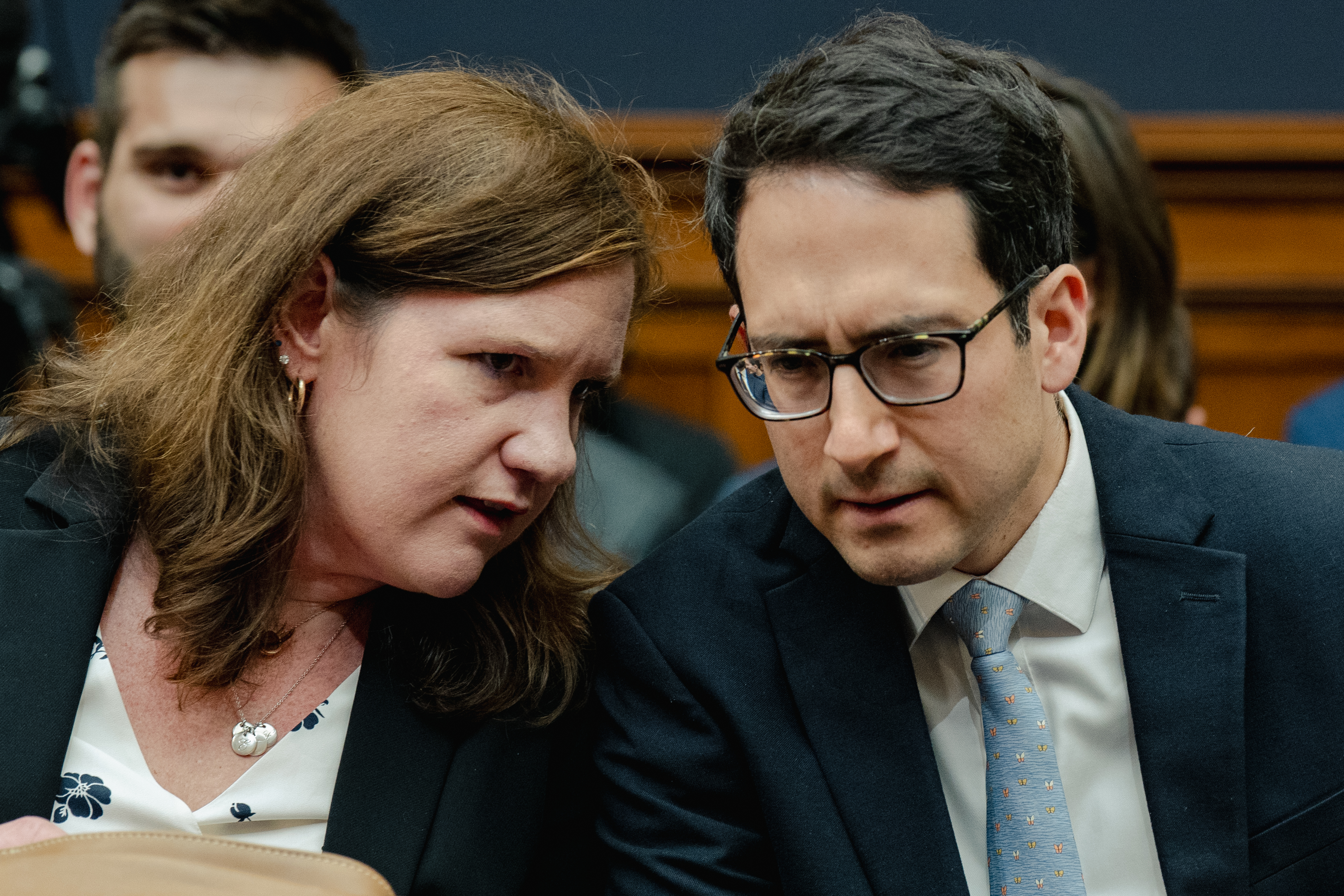
    But she and Bedoya resolved to stay in the public eye despite the risks. Days later, Slaughter appeared before a House committee to testify about her firing.

    “I will not be the first to go down without a fight, and neither will Commissioner Bedoya,” Slaughter told the legislators. “We swore an oath to serve the American people and our Constitution, and I believe that the law will vindicate our right to finish the job.”

    The legal fight

    That was not so easily accomplished.

    The path to the Supreme Court has been winding and full of setbacks. Bedoya had to drop out along the way. His family was struggling financially with one paycheck. The problems were compounded when someone tried to take out a $500,000 line of credit in his name, an act he suspects was tied to his speaking out about his firing.

    “It is not fun to take on the president of the United States, particularly in this environment,” Bedoya said. “It’s not fun to not know where your next paycheck will come from or if you will get a paycheck, period.”

    Slaughter carried on, with her husband, who works for an investment firm, shouldering the financial load for the family and with help from pro bono attorneys. She has continued to publicly weigh in on matters before the FTC as if she were still on the job, while speaking and making media appearances to draw attention to her case.

    Rebecca Slaughter kisses one of her daughters as she prepares a meal in November.

    “Mommy, I thought that being fired would make you less busy,” Slaughter recalled her 6-year-old daughter telling her.

    In July, a federal judge ruled she could return to her job while her case played out in the courts. When Slaughter arrived back to work on a Friday, about two-dozen FTC staffers stood outside and clapped as she entered the building.

    The return was exhilarating — but short-lived. By the following Monday, an appeals court had paused her reinstatement. In September, the appeals court ruled she could return to work again, but the Supreme Court soon stayed that order until it makes a final ruling on her dismissal.

    Slaughter joked she is the first person in history fired from the FTC three times but said “the whiplash was really disheartening.” Even more disturbing were the glimpses she got inside the FTC during her second stint back.

    It was an agency transformed.

    “There were a lot of questions about political interference,” Slaughter said of two staff meetings she held. “People seem demoralized. People felt beaten down.”

    A case with major ramifications

    Slaughter’s case is in many ways a redo of another that changed the course of the federal government nine decades ago.

    Through the late 1800s, presidents regularly rewarded political supporters with federal jobs. But the spoils system, as it was called then, was phased out after a backer of President James Garfield who had been denied a position assassinated him. Congress passed new laws for a nonpartisan civil service and prevented some officials from being removed for political reasons.

    A major test of those standards came in 1933, when President Franklin D. Roosevelt fired an FTC commissioner over policy disagreements related to economic regulation and the New Deal. William E. Humphrey sued, saying he could be removed only for cause under the law that created the FTC.

    The Supreme Court sided with Humphrey, upholding Congress’s ability to limit the president’s firing of the heads of independent agencies. The case, known as Humphrey’s Executor, is little known to the general public, but it has outsize legal importance.

    University of Michigan law professor Daniel A. Crane credited it with “paving the way for the modern administrative state” — the alphabet soup of agencies that rely on technical expertise to regulate interest rates, bank deposits, labor disputes, and more.

    The agencies are often run by bipartisan commissions, whose members are appointed to staggered terms and can be removed only for cause. The idea was to mitigate political pressure on the agencies, so they could make decisions based on expertise and technical knowledge, rather than political considerations.

    Backers of the idea of independent agencies worry the demise of Humphrey’s Executor will mean presidents could politicize regulation of baby food, credit card fees, and a host of other things to please cronies, big donors, and ideological allies.

    “The last thing we want is for industry to be able to come in and insert their favorite folks on commissions,” said Erin Witte, director of consumer protection at the Consumer Federation of America. “Congress designed these agencies to be independent for a reason. There’s a lot at stake.”

    The Trump administration counters by arguing the contemporary FTC is far different from the one that existed when Humphrey’s Executor was decided. The agency now wields significant executive power, so the president — as head of the executive branch — has the constitutional authority to remove its commissioners.

    “In this case, the lower courts have once again ordered the reinstatement of a high-level officer wielding substantial executive authority whom the President has determined should not exercise any executive power,” Solicitor General D. John Sauer wrote in a court filing.

    The position is in keeping with a muscular vision of the presidency embraced by Trump and some conservatives, known as the unitary executive theory, that holds the president should have unfettered control over hiring and firing in the executive branch.

    So far, the court has appeared to endorse that idea in temporary orders allowing Trump to remove Democrats from the National Labor Relations Board, Consumer Product Safety Commission and Merit Systems Protection Board. Those orders aren’t final decisions on the merits of the cases but give a strong suggestion of where the court’s majority is headed, legal experts say.

    “The Supreme Court has given every indication it will overrule Humphrey’s Executor,” Crane said.

    Despite the seemingly long odds, Slaughter remains hopeful she will prevail. On a recent morning, she was once again making her case in public before a conference of women who work on antitrust issues.

    “Why are you staying in the fight?” the host asked.

    Slaughter said that independent agencies are crucial for protecting Americans and that she was taking a stand against Trump’s lawlessness. Trump should have sought a change in the law if he wanted to dismiss her, she said.

    “As a person who took an oath to the Constitution, I feel very strongly that when that process for changing the law isn’t followed, then I need to stand up and push back,” Slaughter said. “I really recognize deeply how many people in this country are not in a position to do that. I am, so I have the obligation to do it.”

  • A heart surgeon saved his life as a teen. Now they perform surgeries together.

    A heart surgeon saved his life as a teen. Now they perform surgeries together.

    The first time Mesfin Yana Dollar assisted with an open-heart surgery, his patient was a teenage girl from Ethiopia. She was scared and crying.

    He went to her bedside at Emory University Hospital in Atlanta and spoke to her in Amharic, explaining he would be running the machine that would function as her heart and lungs during the surgery.

    “I had the same surgery, and things are going to be just fine,” he told her, adding that as a teen he also had rheumatic fever that became rheumatic heart disease.

    The girl told him, “You must be an angel.”

    Years later, he still sees himself in every patient.

    “I was on that same operating table,” Mesfin said.

    Mesfin was born in a small village in Ethiopia in 1985. There was no electricity or running water, but he said he didn’t want for anything. He was surrounded by family and he was happy — until he got sick when he was around 10 or 11 years old.

    At first, he felt like he couldn’t run as fast and he became short of breath easily. Then he couldn’t walk to school anymore, and his cough kept him awake at night. His parents tried tribal medicine and taking him to doctors in nearby cities. He still didn’t know what was wrong — but he didn’t want to feel like a burden to his family. One day, he got a ride to the capital, Addis Ababa, and walked into Mother Teresa’s Missionaries of Charity. That’s where he met American doctor Rick Hodes.

    “I saw this young, short White man with a stethoscope hanging around his neck,” Mesfin said of Hodes, who lives in Ethiopia and helps patients with rheumatic heart disease and spine problems. “He was joking with the kids and joking with the patients.”

    Hodes, Mesfin learned, is known for saving thousands of lives in Ethiopia, often finding creative ways to fund treatment for the poorest and sickest patients. Hodes has adopted children so he could put them on his health insurance and send them to the United States for spinal surgeries.

    Leaving home for surgery

    Hodes listened to Mesfin’s heart and lungs, then ordered a battery of tests before telling Mesfin that he had a serious heart condition. He would need surgery.

    There was no open-heart surgery in Ethiopia at the time, so Hodes started working on finding a place for Mesfin to get surgery in the U.S.

    “He showed up out of nowhere, diagnosed me, and now he’s looking into surgery,” Mesfin recalled. He credits Hodes with saving his life.

    Mesfin flew to Atlanta when he was about 15 to get the surgery, which was funded in part by the nonprofit Children’s Cross Connection International. Jim Kauten, a cardiothoracic surgeon at Piedmont Heart Institute, repaired Mesfin’s mitral valve to improve his heart function. The surgery went well, and Mesfin returned to a host family nearby in Atlanta to recover.

    His host happened to be a dentist, and he recommended Mesfin have his wisdom teeth pulled before returning to Ethiopia. He recovered from his surgery, had his teeth pulled and returned to Addis Ababa, where he stayed with Hodes so the doctor could continue to monitor his recovery.

    Then the site of Mesfin’s wisdom teeth became infected. He developed endocarditis, a life-threatening condition. Hodes treated him in his living room with drugs, but Mesfin was getting sicker.

    “I told Dr. Rick, you know what, you did everything possible,” Mesfin recalled saying. “This is the will of God, and if I die, there’s no problem now.”

    Hodes said he would not let Mesfin die. He sent him back to Atlanta for emergency surgery. An ambulance met him at the airport.

    Instead of a valve repair, the doctors replaced his valve with a mechanical one that would last longer. But this meant Mesfin would need blood thinners and monitoring for life — so he couldn’t go back to his home in rural Ethiopia, where care wasn’t readily available.

    Mesfin’s cardiologist, Allen Dollar, decided to take Mesfin into his home — and the teen joined the Dollars’ growing family in Atlanta, which includes biological and adopted children. Mesfin eventually took the family’s name.

    “It kind of reminded me of home because I have 11 brothers and two sisters,” Mesfin said. “This is as large a family as I had back in Ethiopia.”

    ‘A second life’

    As a teenager at school in Atlanta, Mesfin studied hard to improve his English and quickly caught up to his peers.

    “I was blessed with a second life,” he said.

    Cardiovascular disease is a leading cause of death in young adults in Ethiopia, and rheumatic heart disease, Allen Dollar said, is a top reason. Rheumatic fever can develop when strep throat, or sometimes scarlet fever, isn’t properly treated.

    “Until recently, there literally were no heart surgeons for 100 million people,” Allen said.

    The hospital where he worked, Piedmont Heart Institute, started bringing more kids over for surgeries.

    Allen said that Mesfin quickly adapted to the rhythms of American life.

    “Mesfin was the most studious of any of our kids,” Allen said. “I never saw a kid study so much in my life.”

    Mesfin knew he wanted to work in healthcare. He went to Georgia State University and studied to be a respiratory therapist. That’s where he met his wife, Iyerusalem. They have two sons. Mesfin worked in Atlanta for a couple of years before moving his young family to Texas. He trained to be a cardiac perfusionist at the Texas Heart Institute and eventually got a job at the Mayo Clinic in Minnesota, where his wife now works, too, as a cardiac sonographer.

    At the Mayo Clinic, Mesfin, 40, runs the heart-lung machine for patients during some of the most complex open-heart surgeries in the world.

    He and the surgeon who saved his life return to Ethiopia to do surgeries there through the nonprofit Heart Attack Ethiopia.

    On the first surgery mission trip a couple of years ago, Mesfin surprised Kauten by showing up.

    “That was especially nice in my mind,” Kauten said. “For him to be able to pay back to his community services that he received in the United States, and he was able to pay it back in Ethiopia.”

    Kauten said that in addition to being a skilled perfusionist, Mesfin acts as an interpreter for the Ethiopian and American healthcare workers, and helps the team with a sense of cohesion. He also spends hours with students training to be perfusionists, like him, to help them learn.

    As much as Mesfin loved his new life, he missed his biological family. He eventually helped bring his parents and several of his siblings to the U.S.

    Allen said he is proud of his adoptive son’s professional success — but also of the person he has become.

    “He has retained this spirit of gratitude,” he said. “He has never lost sight of what his life could have been and all the people along the way.”

    “I’m always grateful,” Mesfin said. “I’m grateful for my family, for just being in the United States. It’s a resurrection for me. You know, I was once lost, dead, and I was resurrected and I’m living a new life.”

  • These creative activities may help slow down brain aging

    These creative activities may help slow down brain aging

    Playing music, dancing, creating art — and even playing some types of video games — aren’t just immersive and emotionally rewarding. They may actually slow down brain aging, a new study suggests. By analyzing brain activity data, the researchers found that engaging in creative pursuits of all kinds is linked to a younger-looking brain. The study was published by Nature Communications in October.

    “This is not just a solution for the da Vincis of the world. Anyone can benefit from having a creative hobby, not just geniuses or professional artists,” said study author Agustín Ibáñez, director of the Latin American Brain Health Institute at Universidad Adolfo Ibáñez. “We are living in a world full of stress, uncertainty, and despair. Creating a little bubble through art or music can have a positive impact on your brain health.”

    Delayed aging

    The researchers analyzed imaging data of brain activity taken from 1,467 healthy participants from around the world, including tango dancers, musicians, visual artists, and strategy video game players. To quantify brain aging, they used brain clocks, which are computational models that can estimate the difference between a person’s chronological age and their brain’s biological age.

    “We use brain connectivity metrics to predict your brain age, and there is a gap between this estimated age and your real age,” Ibáñez said. “This gap is informative for assessing accelerated or delayed brain aging.”

    Accelerated aging of the brain, as indicated by a person’s brain appearing older than their actual age, has been observed in some people with psychiatric and neurological conditions. In the current study, Ibáñez and his colleagues wanted to investigate what other factors are associated with delayed brain aging.

    The researchers found that all four creative and challenging pursuits they looked at — dance, music, visual art, and strategy video games — were associated with delayed brain aging. And greater expertise and performance level seemed to help. Experts with years of practice had younger brains compared with hobbyists. Out of all participants, highly skilled tango dancers seemed to have the most youthful brains — an average of seven years younger than their chronological age.

    However, even participants who learned a creative skill managed to reap some antiaging benefits. The researchers trained 24 people to play “StarCraft II,” a video game that requires strategic thinking and imagination. A control group was trained in “Hearthstone,” a rule-based video game with limited improvisation and creative play. After 30 hours of training, spread over three to four weeks, the “StarCraft II” group showed slower brain aging compared to the “Hearthstone” group.

    The study used strong, well-validated methods, and its findings align with previous research showing that participation in the arts is related to younger biological age, said Daisy Fancourt, a professor of psychobiology and epidemiology at University College London.

    “There have been increasing studies identifying associations between arts engagement and both cognitive preservation and delayed time to dementia onset,” said Fancourt, who was not involved in the research. “So while replication of the findings in this new paper in other data sets will be important, they overall reinforce the importance of continued research on the health benefits of the arts.”

    Protective effects even from passive activities

    Even taking in art made by others — such as going to a concert or play — may have protective effects that help buffer against age-related cognitive decline. Other research suggests such receptive arts engagement may help preserve cognitive function in later life.

    In a 2022 study, Jill Sonke, a research professor in the Center for Arts in Medicine at the University of Florida, and her colleagues analyzed data from 4,344 older adults based on six cognitive tests given in 2004 and 2011. While test performance slightly declined overall in the seven years from baseline to follow-up, engaging in receptive arts activities (such as going to a concert, play, or museum) for up to three hours a week was associated with better subsequent memory.

    A more recent study published in 2025 found that engaging in cognitively stimulating activities has a wide array of cognitive benefits, such as improved memory, better language ability, and improved executive functioning.

    The findings originate from the Long Life Family Study, a research project focused on families that have multiple people living into their 90s to uncover the biological, environmental, and behavioral factors that contribute to healthy aging. Older adults without a history of family longevity who frequently participated in hobbies such as reading and attending concerts, plays and musicals were able to match the same level of good cognitive functioning as those with familial longevity.

    “Even if you don’t have exceptional longevity in your family, what our results show is that you still can improve your chances for cognitive health by taking part in cognitively stimulating activities,” said Stacy Andersen, an assistant professor of medicine at Boston University’s Chobanian & Avedisian School of Medicine, and lead author of the September study. “There’s no time like the present to learn something new — like photography or how to play guitar — that can also help protect your future brain.”

    How to benefit from creative arts

    Here are some tips from experts on nurturing a creative activity:

    • Cultivate your flow state. Ibáñez thinks creativity’s power comes from entering the flow state, where stress and time fade away. Lean into activities and experiences that keep you fully engaged and deeply focused. “To truly have a creative experience demands focus, attention, and practice,” he said.
    • Participate in a hobby club or group. Having strong social connections is also linked to healthy aging, and a shared creative activity is one way to bond with others in your community.
    • Combine creativity with movement. “Some hobbies such as dance not only engage the mind but also engage the body,” Andersen said. “Anything that keeps your heart healthy is going to also help keep your brain healthy.”
    • Know that it’s never too late. Being excited to work on a creative project or hobby can provide a strong sense of purpose and fulfillment, particularly in retirement. At age 54, Sonke learned how to sing and play guitar. “It was just amazing taking up a new art form in midlife,” said Sonke, now 59. “I don’t strive to be a professional musician, but it is a huge part of my life now.”

    “The arts are phenomenally multimodal, in that they give us so many different kinds of benefits at the same time,” Sonke said. “They can engage us with information, physical movement, and uplifting activities that contribute to reduction of stress and improvement in mental health.”

  • As a doctor, here’s my simple, science-backed schedule for a healthier day | Expert Opinion

    As a doctor, here’s my simple, science-backed schedule for a healthier day | Expert Opinion

    How can I organize my day so I can feel as good as possible?

    The morning routines and “biohacks” you see on social media can seem extreme and often oversell the science. But consistent daily routines do matter.

    Routines are linked to better health, academic success, and even resilience. We can all take simple steps to synchronize our activities with our circadian rhythms and biology. Small tweaks in the timing of things can pay off.

    I analyzed dozens of studies to separate hype from science, and here’s my straightforward advice for a healthier day: Maximize your efforts in the morning — that’s when much of the magic can happen for your health and productivity. And be consistent with your nighttime rituals. The quality of your sleep, and your subsequent day, depend on it.

    Here’s a science-backed daily schedule to try. Think of it as a template to help you plan a healthier day.

    Early morning

    Goal: Get sunlight or light exposure early, engage in physical activity, and fuel up with protein and fiber. It may not be possible to pull all these off each morning — like if you’re a caregiver or have a long commute — but try to check as many of these boxes as possible.

    7 a.m.: Outdoor exercise then shower. If getting outside for an early walk or run is a nonstarter for you, think about investing in a light box to boost sunlike exposure and trying a quick and easy routine indoors to get your blood moving, like the 7-minute workout.

    8 a.m.: Eat a high-fiber, high-protein breakfast (aim for 25-30 grams of protein). Studies have found that when people pump up the protein at breakfast — think eggs, yogurt, and whole grains — they feel fuller and snack less later in the day. And getting in your daily coffee in the morning, before noon, is linked to a 16% lower risk of dying from all causes compared with people who sip throughout the day.

    8:30-9 a.m.: Morning commute or settle in for the day if you work from home.

    Why this works: Going outside first thing is key. Exposure to blue light halts melatonin production (the sleep hormone) and has been shown in randomized controlled trials to improve alertness, productivity, and depression.

    You’ll get bonus points if you exercise with a friend: A workout buddy boosts accountability, and social connectedness is an underappreciated key to longevity and happiness.

    And about those cold showers that are all the hype on social media: If you enjoy them, sure. But the data on cold water immersion isn’t slam dunk, and cold plunges may actually undo the benefits of strength training.

    Late morning

    Goal: This is the most productive window of your day, so tackle activities requiring greatest focus.

    9 a.m.-noon: Write the essay, read the stack of scientific papers piled on your desk, or finish working on that budget you’ve been procrastinating. Personally, this is when I leave my smartphone in another room and nix notifications.

    Why this works: Our alertness and intellectual performance peak as we approach midday. Riding the high of your early morning cortisol (and your first coffee), this is the window when you’re bringing your A-game.

    While you’re working, set a 50/10 timer for micro-breaks. A meta-analysis showed that a 10-minute or less break every hour — to stretch, stroll around the cubicles, or do a brief meditation exercise — can enhance, not hurt, performance.

    Afternoon

    Goal: Counter that post-lunch inertia with a brisk walk — not more caffeine. Then tackle simple tasks.

    Noon: Eat with a friend, family member, or colleague if you can, then take a 15-30-minute walk.

    1-4 p.m.: Now’s the time to get those mindless errands (or worse, mind-numbing meetings) out of the way.

    Why this works: Decision fatigue builds as the day goes on. We’re all susceptible: A 2019 study published in JAMA Network Open found that as the afternoon wears on, primary care doctors are less likely to order breast and colorectal cancer screening tests for their patients than in the morning — and perhaps more interestingly, patients are also less likely to follow through with future screenings if that first appointment is in the afternoon.

    High-stakes moments are better scheduled earlier, but you can help counter the fatigue with a post-lunch walk outdoors. Pro-tip: If the weather is bad, a 10-minute walk inside will help control your blood sugar after the meal, so still prioritize movement.

    Evening

    Goal: Eat early and start winding down.

    5 p.m.: Pick up the kids, drive home, prep dinner, and pair your evening grind with a joy snack. I enjoy a fun podcast, calling my mom, or even just doing random acts of kindness for my fellow commuters like pausing to allow someone to cut in.

    5:30 p.m.: Aim to eat within an 8 to 10-hour window each day, so chow down on the earlier side. If this time frame isn’t doable, try to eat ideally at least two hours before bedtime.

    8 p.m.: Think of this as your digital sunset — minimize screens and dim household lights, which can suppress melatonin.

    Why this works: Evidence for intermittent fasting is most promising when we’re talking about an eating window of 8-10 hours within a day. The exact same meal can raise your blood sugar more at night than if you ate it early in the morning due to circadian effects.

    Bedtime

    Goal: Avoid alcohol and vigorous exercise, and build in a nightly ritual to quiet the mind.

    9 p.m.: Take a warm bath one hour before bed or slip on some cozy socks.

    9:30 p.m.: Engage in a short mindfulness or journaling exercise.

    10 p.m.: Lights out. The next seven to nine hours are for you and your pillow. Nighty-night.

    Why this works: In my ideal schedule, I would have showered after my morning workout, so if you already bathed once, no need to repeat. Instead, wear some warmer clothes to start getting your body ready to sleep. This trick can be as effective as melatonin to help you fall asleep quicker by helping your core temperature drop.

    A randomized controlled trial found that mindfulness exercises — even starting with just five minutes daily — helped improve sleep quality compared with standard sleep hygiene education offering tips such as dimming lights and avoiding alcohol or caffeine at night. Journaling can also help the mind unwind: Studies have found that actually writing a gratitude letter to someone specific (regardless of whether you send it) is more effective than making a simple gratitude list.

    I also love to write a specific to-do list about the coming days. It helps alleviate nighttime worry, and a 2018 study found that people who do this fall asleep faster.

    What I want my patients to know

    New routines don’t stick overnight. A classic study found that it takes on average 66 days of practicing a new dietary or physical behavior each day before it becomes a habit. This routine is a great goal. But some days, with my two toddlers in the mix, work deadlines, and ruthless Boston traffic, I don’t nail it.

    You need to make it easy to make it last. So choose one habit and list every barrier that will keep you from hitting the mark. Then presolve each one. Is it too cold to go for a jog early in the morning? Find a good 30-minute cardio routine on YouTube that you can do in your bedroom.

    Don’t have time for a 15-minute walk after lunch? Turn one of your afternoon calls into a walking-and-talking meeting (a personal favorite), or take a smaller win with a 5-minute lap around the building.

  • National Guard can stay in D.C. for now, appeals court says

    National Guard can stay in D.C. for now, appeals court says

    The Trump administration will be allowed to continue its National Guard deployment in D.C. at least temporarily, pending another appeals court decision, a panel of U.S. Court of Appeals judges said Thursday.

    The ruling means the deployment of troops to the nation’s capital could persist beyond Dec. 11, the date a lower-court judge had previously set as a deadline for the administration to halt the mission.

    Judges with the D.C. Circuit of the U.S. Court of Appeals granted an administrative stay in the case, meaning the drawdown of troops in the capital will be delayed at least until the appeals court makes an additional ruling. The court emphasized that Thursday’s decision had nothing to do with the merits of the Trump administration’s arguments in the case.

    “The purpose of this administrative stay is to give the court sufficient opportunity to consider the motion for stay pending appeal and should not be construed in any way as a ruling on the merits of that motion,” the judges wrote.

    The appeals court ruling comes the week after an attack in which prosecutors say a man targeted National Guard members, killing one and critically injuring another in a busy downtown area of D.C. blocks from the White House. For Trump administration officials, the attack – allegedly carried out by a lone gunman who was resettled in the United States from his native Afghanistan after work for a CIA-backed counterterrorism squad – only deepened their resolve to keep the troops in the capital city.

    Trump called for an additional 500 troops; South Carolina’s governor said this week he would send up to 300 members of his state’s National Guard in response.

    “Our warriors are strong and we will not back down until our capital and our cities are secure,” Pentagon press secretary Kingsley Wilson said at a news briefing Tuesday.

    For D.C. Attorney General Brian Schwalb, who sued the Trump administration in September over the National Guard deployment, the shooting and its aftermath offered further proof that the deployment of troops was ill-advised and unsafe. D.C. police officers have since paired up with National Guard troops for the troops’ safety, potentially diverting officers from other public safety tasks, he said in a court filing this week.

    “The deployment impinges on the District’s home rule, requires the diversion of scarce police resources, and exposes both the public and Guard members to substantial public safety risks, as Defendants themselves acknowledged at the outset of the deployment, and as the horrific attack on two National Guard members last week tragically underscored,” Schwalb wrote.

    President Donald Trump deployed the D.C. National Guard to city streets on Aug. 11 as part of a broader crime crackdown he initiated in the city. He also took temporary control of the D.C. police department and launched a surge of federal law enforcement into D.C. neighborhoods. Multiple Republican governors heeded Trump’s call for reinforcements and sent troops from their National Guards to the District. As of Wednesday, about 2,300 National Guard members were stationed in the city – about 100 more than the previous day.

    The National Guard members have stood watch at Metro stations and picked up trash at national parks. They also carry weapons and have been instructed to use them only as a last resort.

    Unlike in states, where governors control their National Guards, the president is commander in chief of the D.C. National Guard – a role the administration argues gives Trump vast power over the deployment and legally authorizes his actions in the District. But Schwalb, in his lawsuit, has argued that the president’s power over the Guard has limits. Schwalb also has alleged that the troops in D.C. have been illegally engaged in law enforcement, in violation of a federal law that prohibits military troops from engaging in domestic policing.

    In November, U.S. District Judge Jia M. Cobb sided with D.C. in a preliminary ruling, writing that the National Guard deployment was illegal and that Trump lacked the authority to activate the Guard for the mission. Cobb ordered the Trump administration to halt the deployment in D.C. while litigation continued over whether the troops should be permanently withdrawn. However, she delayed her order from going into effect until Dec. 11 to give the Trump administration time to appeal.

    In response, the administration asked an appeals court for an emergency ruling to allow the deployment to continue while litigation continues, arguing in court documents that Cobb’s order “impinges on the President’s express statutory authority as Commander-in-Chief of the D.C. National Guard and impermissibly second-guesses his successful efforts to address intolerably high crime rates in the Nation’s capital.” The appeals court on Thursday did not rule on that request; the administrative stay means the deployment can continue while the appeals court considers it.

    The Trump administration has argued that the troops have not been engaged in city law enforcement and merely deter crime through their presence, freeing up police for other tasks.

    Questions of the mission’s safety implications have taken on new weight in the aftermath of last week’s attack, but each party in the lawsuit has argued that the city would be safer if the court sided with them.

    A group of retired senior military officers and the Vet Voice Foundation, a nonpartisan, nonprofit organization representing veterans and their supporters, filed a brief in the appeals court that they said was “in support of neither party.” They argued that the use of the National Guard in D.C. “threatens to undermine the apolitical reputation of the military as an institution, places service members in situations for which they are not specifically trained, and pulls the Guard away from its critical missions.”

    But attorneys general from 24 Republican-led states – including some that sent their troops to D.C. – argued that crime is high in D.C. and while the mission “has already produced strong results,” there is more to be done. Violent crime is down 28 percent in D.C. compared to last year, although crime in the city began to fall steeply well over a year before Trump surged federal law enforcement in August.

    “Danger still lingers,” the states’ attorneys general wrote in their brief, filed in support of the Trump administration. “Just last week, an Afghani national committed a heinous terror attack, shooting two National Guardsmen at close range and murdering one.”

    In arguing that the Guard troops should stay, they also cited a few actions that Guard members had taken to keep the city safe.

    “National Guard troops have stopped at least one fight near the metro,” they wrote, “helped provide first aid to elderly residents of the district, and aided in the successful search for a missing child.”

  • Trump hires new White House ballroom architect

    Trump hires new White House ballroom architect

    President Donald Trump has replaced the architect he handpicked to design his White House ballroom, according to three people familiar with the project, ending the involvement of a boutique firm whose selection raised questions from the start about whether it had the capacity to complete the massive, high-profile endeavor.

    For more than three months, James McCrery II and his architecture firm led the effort to design Trump’s $300 million ballroom building — until late October, when he stopped working on the project, one of the people said. It is unclear whether McCrery stepped back voluntarily, but the men parted on good terms and remain so, according to one of the people familiar with the project, all of whom spoke on the condition of anonymity to discuss internal conversations.

    Trump and McCrery had clashed over the president’s desire to keep increasing the size of the building, but it was the firm’s small workforce and inability to hit deadlines that became the decisive factor in him leaving, one of the people said.

    Trump has chosen architect Shalom Baranes, who’s been designing and renovating government buildings in Washington for decades, to pick up the mantle, according to two of the people. Baranes’ firm has handled a number of large Washington projects dating back decades, including projects involving the main Treasury building near the White House and the headquarters of the General Services Administration.

    “As we begin to transition into the next stage of development on the White House Ballroom, the Administration is excited to share that the highly talented Shalom Baranes has joined the team of experts to carry out President Trump’s vision on building what will be the greatest addition to the White House since the Oval Office — the White House Ballroom,” White House spokesman Davis Ingle said in a written statement. “Shalom is an accomplished architect whose work has shaped the architectural identity of our nation’s capital for decades and his experience will be a great asset to the completion of this project.”

    The White House and McCrery’s representative have continued to say that McCrery remains involved in the project in a “consulting” role.

    The ballroom building — at 90,000 square feet and estimated to hold nearly 1,000 guests and cost $300 million — was from the start a herculean task for McCrery, said people familiar with his firm’s operations. That might have been true for any firm given Trump’s rushed timeline, but it was especially difficult for the head of a small firm better equipped to design churches, libraries, and homes.

    Trump’s selection of the firm raised eyebrows of architects and planning experts worried that a shop as small as McCrery’s couldn’t complete such a large project in little more than three years. One architect said federal officials tasked with awarding contracts would normally consider only firms four times bigger than McCrery’s to take on projects of that scale.

    Those concerns grew almost immediately, according to one of the people, who spoke on the condition of anonymity about the project.

    “Everybody realized he couldn’t do it,” the person said.

    McCrery’s spokesman did not respond to requests for an interview.

    The renovation represents one of the biggest changes to the White House in its 233-year history, and has yet to undergo any formal public review. The administration has not publicly provided key details about the building, such as its planned height. The structure also is expected to include a suite of offices previously located in the East Wing. The White House has also declined to specify the status of an emergency bunker located beneath the East Wing, citing matters of national security.

    In the weeks since the switch from McCrery to Baranes, crews of dozens of workers have continued to prep the site for construction, driving piles, stockpiling materials such as reinforced concrete pipes and amassing an array of cranes, drills and other heavy machinery, photos obtained by The Post show. On Wednesday, they erected a towering crane anchored into a concrete paddock.

    On Tuesday, Trump said during a Cabinet meeting that the pile drivers operate “all night” and have created a disagreement in his marriage. The president said he loves the sound while first lady Melania Trump has asked him to make the constant pounding stop, a request he’s denied.

    “Sorry, darling, that’s progress,” Trump said he told her.

  • A seal walks into a bar … and we don’t mean the Navy kind

    A seal walks into a bar … and we don’t mean the Navy kind

    A seal waddled into a bar — and ordered a drink on the rocks.

    So went one of the many jokes made by patrons at Sprig + Fern, The Meadows, a craft beer pub in New Zealand’s South Island, after a young fur seal walked in the front door on a rainy Sunday, sparking excitement and disbelief.

    Co-owner Bella Evans said she was working behind the bar, putting up Christmas decorations, when the young seal entered shortly after 5 p.m.

    “Everyone was pretty shocked,” Evans said in a phone interview Thursday. “A lot of people thought it was a dog at first, because we are a dog-friendly establishment.”

    “It was a mix of shock, excitement and everything all at once,” she said.

    The seal seemed “pretty relaxed” and was in the pub for around 25 minutes, including visiting the bathroom, Evans said. Video posted online by the bar — and set to the Mission Impossible theme tune — shows the seal waddling between tables as a customer tries to usher it outside.

    “Today we had the cutest unexpected visitor,” the business wrote on Facebook. “It wandered in all on its own for a little look around, absolutely stealing the show.”

    Evans said she was initially worried about the seal getting frightened and the safety of customers, but the pup seemed “really mellow.”

    The seal eventually settled under a dishwasher before staff members managed to lure it into a customer’s dog crate — with the help of some salmon from a pizza special on the menu. Conservation rangers then came to collect it.

    “Everyone was joking it was so popular that even the seal’s heard,” Evans said about the pub’s pizza.

    Helen Otley, a principal ranger for the New Zealand Department of Conservation, said the agency received “numerous” calls Sunday about the young fur seal, known as kekeno in Maori, which had been spotted in the area.

    “The pub staff did a great job keeping the seal safe until the DOC ranger could get there,” she said in a statement to The Washington Post.

    Otley said it was “not unusual” to see young fur seals in the Tasman Bay area, at the top of New Zealand’s South Island, as they explore their environment after being weaned. The pub is about a mile from the coast.

    “Seals can wander up to 15 km (9.3 miles) inland, often following rivers and streams. They can turn up in unusual places — like this pub — but this is normal exploratory behavior,” she said, adding that the department generally takes a “hands off” approach to seals.

    “They are capable and resilient and, given time and space, they usually find their way back to the shore,” she said.

    Evans said the surprise visitor delighted customers and staff, and sparked a flurry of jokes about drinks served “on the rocks” and the pub having the “seal of approval.” The seal has also left an intriguing scent for local dogs who have been “sniffing the trail” where it roamed, she said.

    Otley said the seal has since been released at Rabbit Island, a small island in the Tasman Bay area, which she described as “a safe location due to its dog-free status.”

    It’s not the first time animals have turned up in unexpected places in the past couple of weeks, with a raccoon passing out in a bathroom after ransacking a Virginia liquor store and a bear squeezing into a crawl space in a California home.

    For Evans, who took over the pub around three months ago, the animal visitor was followed up by another surprise this week: a customer bringing their bearded dragon for a drink.

    “We’re turning into a zoo,” she joked.