Category: Washington Post

  • What science says we’ve been getting wrong about exercise

    What science says we’ve been getting wrong about exercise

    Every year, I climb to the top of Everest. It’s no big deal. I take it one step at a time, 80,000 steps per year.

    By the time Dec. 31 arrives, I calculated, I have ascended at least seven vertical miles, carrying loads roughly equal to the weight of three pickup trucks, mostly composed of laundry, groceries, and small children.

    You see, I live on the top floor of a duplex.

    Public health messaging has convinced us that the only way to work out is “exercising.” Yet, for most of human history, of course, living was exercise. Humans got most — if not all — of the physical activity needed to stay healthy through natural movement in their daily lives.

    After a half-century asking us to exercise more, doctors and physiologists say we have been thinking about it wrong. U.S. and World Health Organization guidelines no longer specify a minimum duration of moderate or vigorous aerobic activity.

    Movement-tracking studies show even tiny, regular bursts of effort — as short as 30 seconds — can capture many of the health benefits of the gym. Climbing two to three flights of stairs a few times per day could change your life. Experts call it VILPA, or vigorous intermittent lifestyle physical activity.

    “The message now is that all activity counts,” said Martin Gibala, a professor and former chair of the kinesiology department at McMaster University in Canada. And perhaps nothing’s better than stairs.

    Here’s how to take your first step toward living to 100.

    Staircase athletes

    In the world’s “Blue Zones” — Sardinia, Italy; Okinawa, Japan; Nicoya Peninsula, Costa Rica; Ikaria, Greece; Loma Linda, California — a disproportionate number of people live to be 100 and beyond. Scientists aren’t certain why, but they’ve proposed several reasons, including diet, genetics, social connection, purpose, and daily physical activity, especially on hills and stairs.

    The villagers of Sardinia, a rugged part of Italy, stand out. A typical octogenarian engages in daily physical activity equivalent to climbing many flights of stairs. When researchers looked at what was behind Sardinians’ extraordinary longevity, three factors — terrain slope, distance to workplace, and working as a shepherd (who often climb more than 1,000 feet per day) — were most strongly correlated with longer lives. In some regions, the global pattern of men dying earlier than women was virtually absent.

    Since we can’t all move to Sardinia, as beautiful as it is, we can just stop avoiding gravity instead.

    From a topological perspective, modern life has leveled what’s healthy about Blue Zones, replacing them with a “frictionless” landscape of elevators, cars, instant delivery, and sedentary jobs. Just about a quarter of U.S. adults meet the modest targets for aerobic activity.

    Yet our stairs remain. And if you’re looking to maximize the benefits of short bouts of exercise, “stair climbing is the clear winner,” said Emmanuel Stamatakis, a professor of physical activity and population health at the University of Sydney.

    That’s because of what stairs, and hill climbing generally, force your body to do. With each step, you must momentarily balance your entire body weight on one leg. As you ascend — an exquisite feat of neurological coordination — you’re constantly lifting at least 100 pounds into the air, boosting your heart rate and cardiovascular fitness. On the way down, bracing against the pull of gravity, you build bone density and muscle strength, especially in your quadriceps, hamstrings, glutes, calves, adductors, and core muscles.

    Over the past decade, studies have shown the potency of going up and down stairs each day to boost your health. It doesn’t take much. Just taking the stairs daily is associated with lower body weight and cutting the risk of stroke and heart disease — the leading (and largely preventable) cause of death globally. While it may not burn many calories (most exercise doesn’t), it does appear to extend your health span. Leg power — a measure of explosive muscle strength — was a stronger predictor of brain aging than any lifestyle factors measured in a 2015 study in the journal Gerontology.

    Subsequent studies put a finer point on it: Just nine to 10 brief bouts of vigorous activity per day — averaging 30 to 45 seconds each — lowered the risk of dying by about 40% in nonexercisers, according to a 2022 study in Britain. Benefits increased as people exercised longer, but most of the risk reduction occurred during the first few minutes of daily activity.

    Anyone who has ever prepared for a race will be familiar with the question: What are you training for? At some point, I realized what I’m really training for — whether I acknowledge it or not — is the life I want to lead when I’m older.

    If the goal is live independently and get out of a chair unassisted, something has to change for many Americans.

    The belief that your daily routine isn’t exercise is a good place to start. The truth is that we don’t have “exercise” guidelines, Gibala said. We have physical activity guidelines. That doesn’t distinguish between the gym, dancing, or using your home stairs.

    “Exercise doesn’t need to be this special thing you do in this special place after you change into special clothes,” Gibala said. “It can be part of everyday life.”

    How little activity can you do?

    Four minutes daily. Essentially, a few flights of stairs at a vigorous pace. That’s the effort Stamatakis found delivered significant health benefits in that 2022 study of British nonexercisers.

    “We saw benefits from the first minute,” Stamatakis said.

    For Americans, the effect is even more dramatic: a 44% drop in deaths, according to a peer-reviewed paper recently accepted for publication.

    “We showed for the first time that vigorous intensity, even if it’s done as part of the day-to-day routine, not in a planned and structured manner, works miracles,” Stamatakis said. “The key principle here is start with one, two minutes a day. The focus should be on making sure that it’s something that you can incorporate into your daily routine. Then you can start thinking about increasing the dose.”

    Intensity is the most important factor. You won’t break a sweat in a brief burst, but you do need to feel it. A highly conditioned athlete might need to sprint to reach vigorous territory. But many people need only to take the stairs. Use your breathing as a guide, Stamatakis said: If you can sing, it’s light intensity. If you can speak but not sing, you’re entering moderate exertion. If you can’t hold a conversation, it’s vigorous.

    The biggest benefits come from moderate to vigorous movement. One minute of incidental vigorous activity prevents premature deaths, heart attacks or strokes as well as about three minutes of moderate activity or 35 to 49 minutes of light activity. Other studies show an even wider gap for reducing the risk of developing Type 2 diabetes: One minute of vigorous activity is roughly as effective as about 1½ hours of light activity.

    If you rarely climb stairs, or it’s not safe to climb unassisted, then check with your doctor before starting any activity regimen.

    How to do it

    Home. Office. Subway. A step platform in your living room. All stairs work at every fitness level.

    But they work best with someone else. That’s a lesson from Blue Zones: Social connection is probably essential to our health. You can’t “stair-climb” out of a solitary, stressful, junk-food-filled lifestyle on your own. Try a few sessions with a coach, friend, or social fitness app to stick to your routine.

    If you want to know where your fitness level stands (or lies sprawled on the couch), the best gauge of cardiorespiratory fitness is VO2 max, a measure of how much oxygen your body can consume during intense exercise. You can test this in a lab, use a stopwatch or health app, or estimate it with an online calculator.

    The most important thing? Start moving, said Gibala, who recommends beginning with at least 30 seconds of continuous climbing or one minute of ascending and descending. “It doesn’t matter what you are starting from, you’re still going to see benefits,” he said.

    After that, it’s just one step at a time. I made a calculator through which you can estimate your annual ascents — and decide how many Everests you want to climb.

    Upward.
  • Trump allows Democratic governors to White House meeting after initial snub

    Trump allows Democratic governors to White House meeting after initial snub

    President Donald Trump has backed down from his decision to exclude Democratic governors from an annual White House meeting that has long been bipartisan, according to the National Governors Association.

    For decades, the White House meeting between the president and governors — held around the NGA’s annual winter gathering in Washington — has included Republican and Democratic governors. That nearly changed last week when Trump did not extend an invitation to Democrats, sparking concern among governors. After telling Democratic governors Friday that they would not be invited to the meeting, the bipartisan NGA said the meeting would no longer be part of the organization’s official schedule for the gathering.

    On Wednesday, however, Oklahoma Gov. Kevin Stitt (R), the NGA chairman, told governors that Trump would be inviting all governors to the White House on Feb. 20 for the NGA’s business breakfast.

    “He was very clear in his communications with me that this is a National Governors Association’s event, and he looks forward to hosting you and hearing from governors across the country,” Stitt wrote to the governors. “President Trump said this was always his intention, and we have addressed the misunderstanding in scheduling.”

    Governors from all states are expected to gather in Washington for their conference from Feb. 19 to 21.

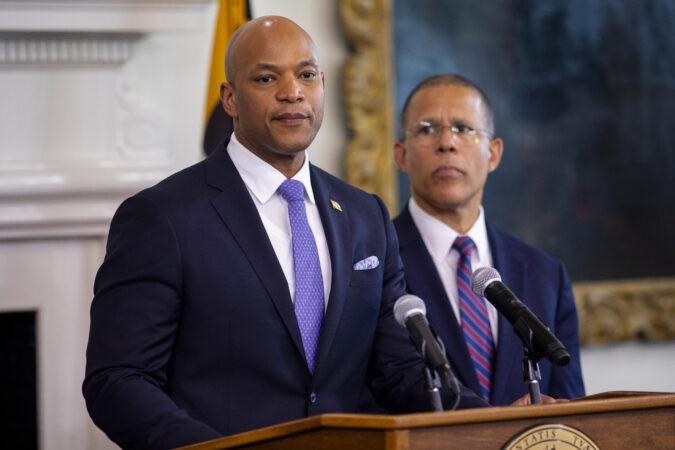
    And while all governors are now being invited to the White House, not all Democrats were invited to a separate dinner there scheduled to be held around the NGA gathering. Maryland Gov. Wes Moore and Colorado Gov. Jared Polis, both Democrats, said in recent days that their invitations to the dinner had been rescinded. The other 16 Democratic governors remained on the guest list but decided Tuesday that they would not attend unless all 18 of them were invited.

    Trump said on social media Wednesday that the situation over the White House meeting invitations had been a misunderstanding — and he blamed it on Stitt, whom he referred to as a “Republican In Name Only.” Stitt “incorrectly stated my position on the very exclusive Governors Annual Dinner and Meeting at the White House,” Trump wrote, and said that invitations were sent “to ALL Governors, other than two, who I feel are not worthy of being there.”

    Trump emphasized that Polis and Moore had not been invited to the dinner, slinging baseless accusations against them, but he noted that he did invite some Democratic governors that he has repeatedly sparred with, including Illinois Gov. JB Pritzker and California Gov. Gavin Newsom.

    “Stitt got it WRONG!” Trump wrote. “I look forward to seeing the Republican Governors, and some of the Democrats Governors who were worthy of being invited.”

    White House press secretary Karoline Leavitt had defended Trump’s decision to exclude the Democrats from the meeting only a day earlier. “The president has the discretion to invite whomever he wants to the White House,” she told reporters.

    NGA CEO Brandon Tatum said in a statement that the organization was “pleased the president will welcome governors from all 55 states and territories to the White House.”

    “The bipartisan White House governors meeting is a valued tradition and an important opportunity to build bridges and hold constructive conversations,” Tatum said. “The NGA looks forward to continued collaboration between governors and the White House.”

    The Democratic Governors Association did not immediately respond to a request for comment on the meeting and dinner.

  • She bounced a $25 check in 2014. ICE tried to deport her.

    She bounced a $25 check in 2014. ICE tried to deport her.

    One evening last summer, Donna Hughes-Brown was handcuffed and led into a filthy holding cell somewhere in Kentucky, where insects crawled out of a drain and feces streaked the walls.

    The Missouri grandmother’s life had taken an unrecognizable turn days earlier, when federal agents pulled her off an arriving flight at Chicago’s O’Hare International Airport, arrested her and told her she would be deported.

    Her crime? Writing two bad checks, for a combined total of less than $75, more than a decade earlier.

    Hughes-Brown, a lawful permanent resident of the United States since she was a child, would go on to spend 143 days — nearly five months — in detention. She was only released at the end of last year after an immigration judge granted an application to stop her removal. Her story underscores just how far the Trump administration is willing to go in its quest to boost deportations, extending its dragnet to people who are legally present in the country with minor offenses from years earlier.

    For those swept up in the expanding deportation drive, it is also increasingly difficult to win release, resulting in lengthy detentions such as the one Hughes-Brown experienced. In November, the number of people released from Immigration and Customs Enforcement detention into the U.S. fell about 70 percent from a year earlier, according to a recent report from the American Immigration Council.

    When asked about Hughes-Brown, Tricia McLaughlin, assistant secretary at the Department of Homeland Security, defended her agency’s handling of the case. A conviction for passing bad checks does “not make for an upstanding lawful permanent resident,” McLaughlin said in an email. A spokesperson for ICE did not respond to a request for comment.

    Hughes-Brown, 59, is an Irish citizen and green-card holder who immigrated to the U.S. with her parents in 1978. Before last year, she never imagined she would become a target of the administration’s clampdown on immigration, she said, and she believed that everyone should come to the country legally, like she did.

    Now back home in small-town Missouri, Hughes-Brown said she thinks constantly of the women she left behind in detention: Jeimy, a 25-year-old from Guatemala who is married to an American citizen; Grace, a woman from Venezuela with a congenital heart condition; Beata, a Polish green-card holder with two convictions for minor retail theft more than a decade ago, her story an echo of Hughes-Brown’s.

    “It was the intent for this to happen to so many people,” Hughes-Brown said. “It doesn’t really matter how you got here, the end result is the same.”

    A $25 mistake

    Hughes-Brown’s ordeal began last July, when she made her first overseas trip in almost a decade. Her aunt had died, so Donna and her husband, Jim Brown, traveled to Ireland, gathering with family at a lighthouse overlooking an estuary as they spread her aunt’s ashes.

    At the airport in Dublin, Donna and Jim precleared U.S. Customs and Immigration. Officers pulled Donna aside and asked questions about her travel history. Then they let her proceed to her flight, she said.

    As the plane was approaching Chicago’s O’Hare airport, the flight attendant announced that all passengers would be required to show their passports as they exited. That’s odd, Donna thought. Exiting the plane, she saw armed officers waiting on the jet bridge. They were there for her.

    After a night in a cell at O’Hare, Donna received paperwork explaining why she had been apprehended. She was flummoxed. Back in 2015, she pleaded guilty to passing a bad check the previous year, a misdemeanor. The check was for $25, court records show, and made out to Krazy Korner, a gas station, and convenience store.

    She was living paycheck to paycheck and didn’t realize the check would bounce, Donna says. After it did, court records show, she paid restitution of $80 plus court fees of $117 and served a year of probation. She stabilized her finances, building a career as a home health care aide. She was certain that chapter was closed.

    The government also cited a separate 2012 misdemeanor conviction for passing a bad check. Records from that case are not available to the public because the case was either dismissed or expunged, a county official in Missouri said. Donna barely remembered it; she believes it was for less than $50 at a grocery store.

    While lawful permanent residents have considerably more protection from deportation than visa holders, the government can seek to deport green-card holders for certain nonviolent offenses. One such situation: crimes of “moral turpitude,” which include offenses with an intent to steal or defraud.

    But the government has an “immense amount of discretion” in deciding whether to exercise such powers and whether to detain someone, said César Cuauhtémoc García Hernández, a law professor and immigration expert at Ohio State University. In the past, he said, he would have expected DHS to exercise its discretion favorably in Donna’s case, given her “half a century in the United States with only one or two extremely minor hiccups.”

    To assert that passing a bad check more than a decade ago “makes you unworthy of living in the U.S. — that’s a policy decision,” García Hernández said. What’s more, detaining someone for months is “neither easy nor cheap.”

    The average cost to house an ICE detainee per day was $187, according to the most recent figures available. At that rate, detaining Hughes-Brown cost taxpayers about $27,000.

    ‘Hell from both sides’

    In early August, Donna and several other detainees were handcuffed and loaded into a van for the six-hour drive from Illinois to Campbell County Detention Center, a local jail in Kentucky that also houses ICE detainees. Four hundred miles from home, she lived in a pod with dozens of other women, she says, sleeping on metal bunks with only a thin mat and toilets that were clogged for days.

    One of the women was Beata Siemionkowicz, a lawful permanent resident from outside of Chicago who has lived in the U.S. since 1995. Federal agents arrested her at her daughter’s house in August, her lawyer, George Gomez, said, and told her they were launching deportation proceedings. The reason: two misdemeanor cases for retail theft in 2005 and 2011.

    Meanwhile, Donna’s husband, Jim, was doing everything he could think of to get her released. They’d met online and married seven years before, building a life in Cyrene, a tiny town south of Bowling Green, where they keep three horses and are active in their church. After Hurricane Helene, they twice filled a 30-foot horse trailer with supplies and drove it to North Carolina to help disaster victims.

    A combat veteran turned CT technologist, Jim describes himself as a conservative Christian and voted for Trump in 2024. He’s not against immigration: He grew up around migrant workers in Texas, hard-working people who paid taxes into the system.

    When Donna was detained, Jim wrote to every member of Missouri’s congressional delegation. He struck out, but then help came from an unexpected place: Rep. Seth Magaziner, a Democrat who represents Rhode Island. Magaziner brought Jim to Washington to speak at a panel on Trump’s immigration crackdown. At the event, Jim was asked why he had voted for Trump. He paused. “Because I was an idiot,” he answered.

    The partisan backlash has been swift, he said. Longtime friends in the ruby-red county where the couple lives have turned their back on him because he criticized Trump. Meanwhile, more liberal neighbors have said his wife’s ordeal is a fitting consequence of his vote.

    “My family and I have got hell from both sides,” Jim said.

    In December, Magaziner also asked Homeland Security Secretary Kristi L. Noem about Donna’s case during a hearing on Capitol Hill. “The Trump Administration claimed it would target the ‘worst of the worst,’ but no one understands how false that promise was more than Jim and Donna Brown,” Magaziner said in a statement.

    As the months rolled by, Donna spent two stints in an isolation cell, where the only book allowed was the Bible and she was permitted an hour outside every other day. Her requests to be released on bond were rejected by an immigration judge. But on Dec. 18, after a hearing during which family members talked about how devastating her deportation would be, the judge granted her application to cancel removal proceedings. DHS declined to appeal the decision.

    Still, Donna doesn’t intend to take chances. Her passport and green card were finally returned to her last week after the Irish consulate intervened. “I’m not even getting close to the border,” she said.

    These days, she senses an awkwardness with some friends. They’re sorry for what happened to her but still support the administration’s efforts. That’s their right, she says, and she’s not interested in cutting people off because they disagree with her.

    But she does want to talk to them. About how helpless she felt in her darkest moments in detention – labeled a criminal, locked away and unsure if she would ever return to her life in Missouri. She’s determined to fight for the women she met there.

    “I’m going to keep on keepin’ on,” Donna said. “Because it is not right. It is not right.”

  • IRS improperly disclosed confidential immigrant tax data to DHS

    IRS improperly disclosed confidential immigrant tax data to DHS

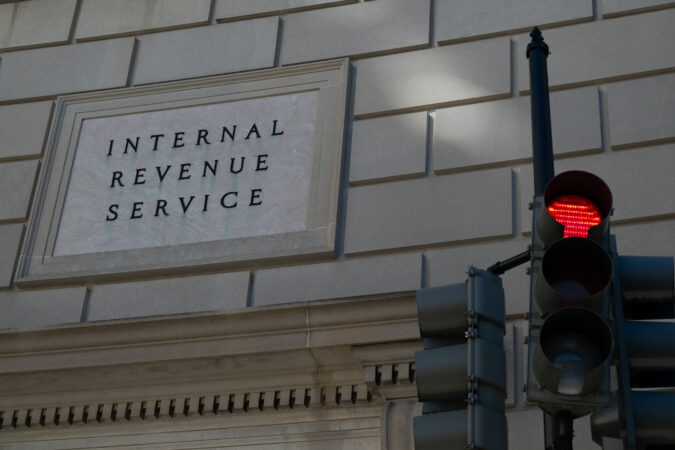
    The Internal Revenue Service improperly shared confidential tax information of thousands of individuals with immigration enforcement officials, according to three people familiar with the situation, appearing to breach a legal firewall intended to protect taxpayer data.

    The erroneous disclosure was only recently discovered, the people said. The IRS is working with officials from the Treasury Department, Justice Department, and Department of Homeland Security on the administration’s response.

    The IRS confirmed the Washington Post’s reporting in a court filing Wednesday afternoon. Dottie Romo, the tax agency’s chief risk and control officer, wrote in a sworn declaration that the IRS provided confidential taxpayer information even when DHS officials could not provide sufficient data to positively identify a specific individual.

    But in a controversial decision, Treasury, which oversees the IRS, in April agreed to provide DHS with the names and addresses of individuals the Trump administration believed to be in the country illegally, pursuant to DHS requests.

    Federal courts have since blocked the data-sharing arrangement, holding that it violates taxpayers’ rights, though the government appealed those rulings.

    Before the agreement was struck down, DHS requested the addresses of 1.2 million individuals from the IRS. The tax agency responded with data on 47,000 individuals, according to court records.

    When the IRS shared the addresses with DHS, it also inadvertently disclosed private information for thousands of taxpayers erroneously, a mistake only recently discovered, said the people familiar, who spoke on the condition of anonymity for fear of retribution.

    Romo, in her declaration, did not state when the IRS learned of its error. She said the agency notified DHS on Jan. 23, to begin taking steps to “prevent the disclosure or dissemination, and to ensure appropriate disposal, of any data provided to ICE by IRS based on incomplete or insufficient address information.”

    She declined to state if the IRS would inform people whose data was illegally disclosed to immigration officials, and said DHS and ICE had agreed to “not inspect, view, use, copy, distribute, rely on, or otherwise act on any return information that has been obtained from or disclosed by IRS” because of the pending litigation.

    The affected individuals could be entitled to financial compensation for each time their information was improperly shared. And government officials can personally face stiff civil and criminal penalties for sharing confidential tax information.

    Charles Littlejohn, an IRS contractor, pleaded guilty in 2023 to leaking the tax returns of President Donald Trump and other wealthy individuals.

    Littlejohn was sentenced to five years in prison. Trump in January sued the IRS for $10 billion in damages related to the Littlejohn leak.

    In a statement, a DHS spokesperson said that under the data-sharing agreement, “the government is finally doing what it should have all along.”

    “Information sharing across agencies is essential to identify who is in our country, including violent criminals, determine what public safety and terror threats may exist so we can neutralize them, scrub these individuals from voter rolls, and identify what public benefits these aliens are using at taxpayer expense,” the spokesperson said.

    There is little evidence that undocumented immigrants have attempted to participate in U.S. elections, nor is there a link between undocumented immigrants and higher levels of crime.

    “With the IRS information specifically, DHS plans to focus on enforcing long-neglected criminal laws that apply to illegal aliens,” the DHS spokesperson said.

    Treasury and Justice Department spokespeople declined to comment, citing agency policies not to comment on active litigation. The Office of the Deputy Attorney General is monitoring the ongoing litigation, but the office is not making any decisions on the matter, according to a person familiar with the matter who was not authorized to comment publicly.

    When the IRS began conversations with DHS over data sharing shortly after Trump returned to the White House, senior IRS employees warned administration officials that the program was likely illegal and could sweep up misidentified people, the Post has reported.

    During early meetings on the project, one agency staffer asked immigration authorities how many people with the same name may live in the same state, according to one of the people, illustrating how easy it would be for the Trump administration to inadvertently breach taxpayers’ privacy, including those who are not targets of immigration investigations.

    The IRS’s privacy department was largely sidelined from the talks, two of the people said, and its IT department took over implementing the data sharing. That team had largely been taken over by officials from Trump’s U.S. DOGE Service, the White House’s “efficiency” office charged with shrinking the federal government.

    Treasury officials justified the data-sharing agreement by arguing immigration enforcement was pursuing individuals who had violated criminal statutes, though immigration violations are generally civil, not criminal.

    Under the arrangement, DHS would provide the IRS with the name and address of a taxpayer. The IRS would then cross-reference that information with its confidential databases and confirm the taxpayers’ last known address.

    Immigration officials said the procedure was necessary because DHS lacked reliable information to locate individuals the Trump administration wanted to detain and deport, according to numerous IRS and DHS officials, who spoke on the condition of anonymity because they were not authorized to publicly discuss the matter.

    “This allegedly unauthorized viewing involves personal information that taxpayers provided to the IRS pursuant to a promise that the IRS would prioritize keeping the information confidential,” Judge Colleen Kollar-Kotelly of the U.S. District Court for the District of Columbia wrote in a November order. “A reasonable taxpayer would likely find it highly offensive to discover that the IRS now intends to share that information permissively because it has replaced its promise of confidentiality with a policy of disclosure.”

  • FBI cited debunked claims to obtain warrant for Fulton County vote records, documents show

    FBI cited debunked claims to obtain warrant for Fulton County vote records, documents show

    The FBI relied heavily on previously debunked claims of widespread election irregularities in Georgia as it persuaded a federal judge last month to sign off on plans to seize scores of 2020 voting records from the state’s most populous county, court documents unsealed Tuesday show.

    In a pair of Jan. 28 search warrant affidavits, authorities said they were seeking evidence that would determine whether “deficiencies” in the vote tabulation in Fulton County, home to Atlanta, were the result of intentional wrongdoing that could constitute a crime.

    But many of the irregularities they raised — including claims of duplicate ballots and missing ballot images — have been previously explained by county officials as the types of routine errors that frequently occur, are typically corrected in the moment, and are not significant enough to sway the outcome of an election. Independent reviews have backed up that conclusion.

    The affidavits cited previously aired theories from several prominent election deniers whose names were redacted in the documents unsealed Tuesday but whose descriptions align with publicly known details about those who advanced conspiracy theories about the election.

    The documents also revealed that the FBI’s investigation was prompted by a referral from former Trump campaign lawyer and prominent election denier Kurt Olsen, who was recently appointed to a White House position tasked with monitoring election integrity.

    “Some of those allegations have been disproven while some of those allegations have been substantiated, including through admissions by Fulton County,” FBI Special Agent Hugh Raymond Evans wrote in the affidavits, which sought court authorization to search the county’s primary election warehouse and the office of the county’s clerk of courts.

    He added, “If these deficiencies were the result of intentional action, it would be a violation of federal law,” whether or not any of them were significant enough to affect the outcome of the race.

    Evans’s affidavits were made public Tuesday after Fulton County officials and a coalition of news outlets, including The Washington Post, urged a federal judge to release the typically sealed court filing. The Justice Department did not oppose the request.

    The assertions laid out in the 23-page documents are likely to stoke alarm among county officials and democracy advocates who have condemned the investigation as an attempt by the Justice Department to substantiate Trump’s long-held grievances about his 2020 election loss to Joe Biden.

    Multiple audits, nearly a dozen court rulings and former Trump attorney general William P. Barr have found no evidence of widespread fraud sufficient enough to affect the outcome of the race in Georgia.

    More broadly, Trump’s critics have raised concerns that the criminal probe of Fulton County officials could pose a threat to state-level control of voting and the future of independent elections.

    Dozens of agents descended on Fulton County’s election warehouse last month and spent several hours combing through the county’s records under supervision from FBI Deputy Director Andrew Bailey. They left with more than 700 boxes of material, including all physical ballots from the 2020 race.

    A copy of the search warrant, previously obtained by The Post, revealed that the search was part of a criminal inquiry into possible violations of two federal laws: one requiring officials to retain voting records and the other criminalizing efforts to defraud voters through denying them an impartially conducted election.

    But until the public release Tuesday of the affidavit underlying the warrant, the exact focus of the investigation — and the evidence agents cited to persuade a judge to sign off on the search — was unknown.

    Federal authorities did not have to prove any claims laid out as the basis for the warrant. They were required only to demonstrate a substantial likelihood that a crime occurred and that evidence of that crime could be found at the two locations they sought to search.

    U.S. Magistrate Judge Catherine M. Salinas in Atlanta found the Justice Department had met that threshold and signed off on the warrant Jan. 28 — just hours before agents arrived at the warehouse.

    Since the search, FBI Director Kash Patel has waved off concern expressed by Trump’s critics over the bureau’s investigation, describing the search as “just like one we would do anywhere else.”

    “We did the same thing there we do in any criminal case or investigation,” Patel told Fox News in an interview last week. “We collected evidence, we presented that evidence to a federal magistrate judge, who made a finding of probable cause.”

    Fulton County officials have urged a different federal judge — Trump appointee J.P. Boulee — to order the return of all material seized by the FBI.

    “Claims that the 2020 election results were fraudulent or otherwise invalid have been exhaustively reviewed and, without exception, refuted,” Fulton County Attorney Y. Soo Jo wrote in a recent filing. “Eleven different post-election lawsuits, challenging various aspects of Georgia’s election process, failed to demonstrate fraud.”

    Boulee has yet to rule on that request.

    — — –

    Aaron Schaffer and Mark Berman contributed to this report.

  • AMA joins effort to launch vaccine science review amid CDC turmoil

    AMA joins effort to launch vaccine science review amid CDC turmoil

    The American Medical Association and a leading public health research group focused on vaccines are teaming up to create a system to review vaccine safety and effectiveness, mirroring a role long played by the Centers for Disease Control and Prevention.

    The groups, which will operate independently from the federal government, say their work is needed because the CDC’s vaccine review process has “effectively collapsed.” The parallel effort will initially focus on reviewing immunizations for influenza, COVID-19 and respiratory syncytial virus, or RSV, ahead of the coming fall respiratory season.

    The groups will not be making vaccine recommendations but will provide the evidence reviews to state health officials, clinicians, and others making vaccine decisions.

    The nation’s largest physician organization and the Vaccine Integrity Project at the University of Minnesota will convene leading medical professional societies, public health groups, and healthcare organizations to “ensure a deliberative, evidence-driven approach to produce the data necessary to understand the risks and benefits of vaccine policy decisions for all populations — the approach traditionally used by the federal government,” according to a joint statement announcing the effort Tuesday.

    The involvement of the AMA is significant because the doctors group has traditionally focused on issues such as physician reimbursement, billing practices and the economics of medical practice — not on broad public health evidence reviews. Its decision to help stand up a parallel vaccine review process reflects how seriously medical leaders view the breakdown of confidence in the federal government’s vaccine system under Health Secretary Robert F. Kennedy Jr.

    “This signals a really important foray for them to come into this space,” said Jeanne Marrazzo, chief executive of the Infectious Diseases Society of America and the former director of the National Institute of Allergy and Infectious Diseases. “It shows the considerable concern around where we are going with evidence-based recommendations.”

    For decades, the CDC’s outside panel of vaccine experts — the Advisory Committee on Immunization Practices — set the standards for which vaccines the agency should recommend and who should get them. Even though the recommendations were guidance, not law, physicians, school systems, health insurers and others broadly adopted them. The vaccine panel, in coordination with CDC staff, conducted extensive data reviews of benefits and risks, and held exhaustive discussions during its public meetings before voting to make new vaccine recommendations or change existing ones.

    But Kennedy fired all 17 members of the vaccine panel in June and replaced them with a handpicked group that included several vaccine skeptics. The Department of Health and Human Services has also disallowed several doctors groups that had long provided input from participating in the panel’s work groups, the teams that do the detailed analysis for the full committee.

    Since then, the panel has made recommendations that have been strongly criticized by public health and medical experts, including voting in December to drop the long-standing recommendation that all newborns be given the hepatitis B vaccine.

    Andrew Nixon, an HHS spokesman, said the “claim that ACIP’s evidence-based process has collapsed is categorically false. ACIP continues to remain the nation’s advisory body for vaccine recommendations driven by gold standard science.” He added, “While outside organizations continue to conduct their own analyses and confuse the American people, those efforts do not replace or supersede the federal process that guides vaccine policy in the United States.”

    The new effort comes after the acting CDC director, a top deputy to Kennedy, took the unprecedented step of reducing the number of vaccines that the United States routinely recommends for every child. Leading public health experts and medical organizations raised alarms, saying the shift, which bypassed vaccine experts at CDC and its vaccine advisory panel, could weaken protections against preventable deadly disease.

    “Everything that has been done since the new ACIP has all been about ideology and not based on science,” said Michael Osterholm, director of the University of Minnesota’s Center for d Research and Policy, which established the Vaccine Integrity Project last year.

    Osterholm said the new initiative is an attempt to fill “a huge black hole in public health and medical practice.”

    “It is our duty as healthcare professionals to work across medicine, science, and public health to make sure the U.S. has a transparent, evidence-based process by which vaccine recommendations are made,” said Sandra Adamson Fryhofer, an AMA trustee and the organization’s liaison to the CDC vaccine panel. “Together, we are committed to ensuring the American public has clear, evidence-based guidance that inspires confidence when making important vaccination decisions.”

    The Vaccine Integrity Project published an evidence review and convened panels that looked at scientific studies on COVID-19, influenza, and RSV vaccines in 2025, and is conducting a review of the HPV vaccine.

  • Number of Americans who expect ‘high quality lives’ drops to two-decade low

    Number of Americans who expect ‘high quality lives’ drops to two-decade low

    The number of Americans who anticipate they will have “high-quality lives” in five years’ time has dropped to a nearly two-decade low, according to a poll released Tuesday.

    Around 6 in 10 people surveyed said they expected their lives would be significantly better in the future than today. That is about nine percentage points lower than during the height of the COVID-19 pandemic, according to Gallup, which began measuring Americans’ sense of optimism in 2008.

    “I think that’s disconcerting, and says a lot about the mood of the American public today,” said Dan Witters, the research director for Gallup’s National Health and Well-Being Index.

    American optimism is down across the board by 3.5 percentage points since 2024, and Hispanic adults have had the greatest drop in optimism in the past year, from about 69% to roughly 63%, according to Gallup. (The new figures are based on four quarterly surveys conducted throughout 2025 involving 22,125 respondents, and the poll’s margin of error is plus or minus half a percentage point. The margin is higher — plus or minus two percentage points — for divisions of race and political party.)

    Gallup has used two questions to gauge the national mood as part of its National Health and Well-Being Index. Its poll asked around 22,000 adult respondents to rank their current life — and where they imagine their lives will be in five years’ time — on a scale of 1 to 10.

    Both ratings have slumped over the past five years across a pandemic, affordability issues, turbulent national politics, and global conflicts. The steep drop in optimism in 2025 suggests some Americans think their lives will worsen still, Witters said.

    In the past year, around 62% of American adults ranked their current life at a 7 or higher, and around 59 percent anticipated their life in five years’ time would rank at an 8 or higher, according to Gallup.

    The Gallup poll did not ask respondents to give reasons for their answers, but Witters said the recent slump in optimism began as high inflation rates staggered American consumers in 2021 and 2022, during the Biden administration.

    “Even as the pandemic was kind of receding, those affordability issues, which of course linger on in not insignificant ways to this day, I think, had a lot to do with it,” Witters said.

    The downturn has persisted after the reelection of Donald Trump. Democrats feel a lot worse about their future, reporting a 7.6 percentage-point drop in ratings of their future lives from 2024, while independents’ future ratings dipped by 1.5 percentage points. Republicans’ future life ratings increased by 0.9 percentage points.

    It is common for optimism among partisans to swing after a new party wins the White House, but changes among Democrats and Republicans largely offset each other in 2021, after when Joe Biden was elected president, Witters said. That was not the case in 2025.

    Black and Hispanic adults reported some of the largest declines in optimism in recent years. Witters said the trend suggests that minority groups have been hit hardest by affordability issues.

    That Hispanic adults reported the steepest drop in optimism in 2025 — coupled with the partisan divide in optimism — could suggest Trump’s policies are partly to blame, Witters said. Latino voters swung against the Republican Party in November’s special elections, a break Democrats claim is a repudiation of the Trump administration’s aggressive immigration enforcement campaign.

    Can American morale recover? Witters said Gallup’s polling is “highly sensitive to changes that are going on in the world” and has seen the country emerge from other periods of pessimism.

    “There’s no reason to think that that can’t happen again,” Witters said. “It’s just a bit of a trough right now.”

  • Republicans are pushing to drastically change the way you cast ballots

    Republicans are pushing to drastically change the way you cast ballots

    As President Donald Trump calls for sweeping changes to election law — including saying that Republicans should “take over the voting” — Republicans in Congress are planning to vote this week on the SAVE America Act, which would make massive changes to how Americans vote ahead of November’s midterms.

    They want to require all Americans to prove they are citizens when registering to vote, and to show an ID when voting in person or by mail, as well as make mail voting more difficult.

    Trump and Republicans say this would make voters feel more confident there’s no fraud in federal elections. “We need elections where people aren’t able to cheat,” Trump told NBC News. “And we’re gonna do that. I’m gonna do that. I’m gonna get it done.”

    But there’s no evidence of widespread election fraud. There is evidence, say some nonpartisan elections experts, that this bill could disenfranchise millions of eligible voters by requiring new voters to provide documents that tens of millions of U.S. citizens lack immediate access to.

    The nonpartisan Campaign Legal Center asserts the bill “is harmful to our democracy and a threat to the freedom to vote for all Americans. … Its extreme documentation requirements would actually amount to one of the harshest voter suppression laws nationwide.”

    Here’s how the SAVE Act could dramatically change elections and its chance of becoming law.

    3 major changes

    1. You’d have to provide a proof of citizenship to register to vote: Millions of Americans register to vote every year, and they are already required to verify they are citizens when they do. Under this bill, they’d have to prove it.

    For example, those who change states, or are newly eligible to vote would have to provide proof of their citizenship, like a passport, a military ID submitted with proof of place of birth, or — when submitted alongside other documents — a birth certificate. Newly married voters who change their last name would have to reregister to vote with all of these documents — plus provide proof as to why their current name doesn’t match their birth certificate.

    But about half of Americans don’t have passports, and not all Americans have a copy of their birth certificate.

    “Our research shows that more than 21 million Americans lack ready access to those documents,” writes the nonpartisan Brennan Center for Justice.

    Even some Republican election experts have questioned whether all this documentation is necessary.

    “The premise of the SAVE Act is we need to ensure there are processes that confirm citizenship,” says Matt Germer, director of the governance program at the R Street Institute, a conservative think tank. “But I think much of the burden of citizenship verification should be on the government, which holds much of this data in the first place.”

    2. It requires IDs to vote nationwide: Strong majorities of Americans, including Democrats, support voters presenting a photo ID to cast ballots.

    Only government (state, tribal, or federal) IDs would be accepted.

    3. It would probably make voting by mail more difficult: Mail-in voting is popular and safe, say election experts. Almost all states offer some form of it. Trump has voted by mail, and Republicans certainly use it too.

    But this bill would put strict restrictions on who can vote by mail without providing valid identification. Some disabled voters and active duty troops would be exempt from the new rules.

    Some Republican election officials have expressed concern this takes away from states’ constitutional right to run their own elections how they best see fit. Mail-in voting first became popular among rural conservatives in Western states.

    “When I was in office,” former Kentucky secretary of state Trey Grayson said in a recent interview, “the number one principle of election administration was that the states run elections and Congress should be minimally involved. On the Republican side, we really believed that. It was really, really important.”

    Democrats adamantly oppose

    The bill could pass the Republican-controlled House this week, but in the Senate, Democrats plan to block the legislation by filibustering it.

    “It’s Jim Crow 2.0,” Senate Minority Leader Charles E. Schumer (D., N.Y.) told MS NOW recently. “What they’re trying to do here is the same thing that was done in the South for decades to prevent people of color from voting.”

    This isn’t the first time Republicans have tried to pass some version of the bill, and Trump has been increasingly vocal about election reform. Some of his ideas appear blatantly unconstitutional. But that hasn’t stopped the president from arguing for them.

  • Under growing pressure, the biggest social networks agree to be rated on teen safety

    Under growing pressure, the biggest social networks agree to be rated on teen safety

    Three leading social media companies have agreed to undergo independent assessments of how effectively they protect the mental health of teenage users, submitting to a battery of tests announced Tuesday by a coalition of advocacy organizations.

    The platforms will be graded on whether they mandate breaks and provide options to turn off endless scrolling, among a host of other measures of their safety policies and transparency commitments. Companies that reviewers rate highly will receive a blue shield badge, while those that fair poorly will be branded as not able to block harmful content. Meta — which operates Facebook and Instagram — TikTok and Snap are first three companies to sign up for the process.

    “I hope that by having this new set of standards and ratings it does improve teens’ mental health,” said Dan Reidenberg, managing director of the National Council for Suicide Prevention, who oversaw the development of the standards. “At the same time, I also really hope that it changes the technology companies: that it really helps shape how they design and they build and they implement their tools.”

    Teenagers represent a coveted demographic for social media sites and the new standards come as the tech industry faces increasing pressure to better protect young users.

    A wave of lawsuits alleges that leading firms have engineered their platforms to be addictive. Congress is weighing a suite of bills designed to protect children’s safety online. And state lawmakers have sought to impose age limits on social apps.

    But those efforts have borne little fruit. Some legal experts argue teens and their families may face difficulty in court cases proving the connection between social media use and their struggles. Officials in Washington, meanwhile, have been unable to agree on how to regulate the industry and laws passed by the states have run into First Amendment challenges.

    The voluntary standards represent an alternative approach. Reidenberg said in an interview that the ratings are not a substitute for legislation but will be a helpful way for teenagers and parents to decide how to engage with particular apps. The project is backed by the Mental Health Coalition, an advocacy group founded by fashion designer Kenneth Cole.

    Cole said in a statement that the standards “recognize that technology and social media now play a central role in mental health — especially for young people — and they offer a clear path toward digital spaces that better support well-being.”

    There is still no scientific consensus on whether social media is on the whole harmful for children and teenagers. While some research has found that the heaviest users have worse mental health, studies have also found that young people who are not online can also struggle. But teenagers themselves have reported becoming more uneasy about the time they spend online, with girls in particular telling pollsters at the Pew Research Center in 2024 that apps were affecting their self-confidence, sleep patterns, and overall mental health.

    Reidenberg said it’s clear that in some cases young people’s time online becomes problematic. He said the system was developed without funding from the tech industry, but companies will have to volunteer to participate.

    Antigone Davis, Meta’s global head of safety, said the standards will “provide the public with a meaningful way to evaluate platform protections and hold companies accountable.” TikTok’s American arm said it looked forward to the ratings process. Snap called the Mental Health Coalition’s work “truly impactful.”

    Organizers compared the process to how Hollywood assigns age ratings to movies or the government assesses the safety of new cars. Companies will submit internal polices and designs for review by outside experts who will develop their ratings. In all, the companies’ performance will be measured in about two dozen areas covering their policies, app design, internal oversight, user education, and content.

    Many of the standards specifically target users’ exposure to content about suicide and self harm. But one also targets the sheer length of time that some people spend scrolling, crediting platforms for offering either voluntary or mandatory “take-a-break” features.

    The standards are being launched at an event in Washington on Tuesday. Sen. Mark R. Warner (D., Va.) said in a statement that he welcomed the standards but they weren’t a substitute for regulatory action.

    “Congress has a responsibility to put lasting, enforceable guardrails in place so that every platform is held accountable to the young people and families who use them,” he added.

  • Trump threatens to block opening of bridge between U.S. and Canada

    Trump threatens to block opening of bridge between U.S. and Canada

    President Donald Trump has threatened to block the opening of a bridge between Michigan and Ontario, claiming Canada is trying to “take advantage of America” and calling for compensation in the latest flash point in the simmering tensions between the United States and its northern neighbor.

    The Gordie Howe International Bridge — a six-lane bridge between Detroit and Windsor, Ontario, that has cost about $4.7 billion to build — has been under construction since 2018 and is due to open early this year, according to the organization behind it.

    On Monday, Trump said he “will not allow” it to open in a post on Truth Social, saying Canada had treated the U.S. “very unfairly for decades” and that the U.S. would not benefit from the project.

    “I will not allow this bridge to open until the United States is fully compensated for everything we have given them, and also, importantly, Canada treats the United States with the Fairness and Respect that we deserve,” he said. It was unclear how Trump would be able to delay or block the project from opening.

    “We will start negotiations, IMMEDIATELY. With all that we have given them, we should own, perhaps, at least one half of this asset,” he said, adding that the revenue generated from the project “will be astronomical.”

    The bridge, named after Canadian ice hockey legend Gordie Howe, who played for the Detroit Red Wings, has been labeled a “once-in-a-generation undertaking” by the Windsor-Detroit Bridge Authority, the Canadian government entity responsible for delivering it. It is set to have U.S. and Canadian entry ports and an interchange connecting to Michigan’s road network.

    The bridge is financed by the Canadian government but is publicly owned by the governments of Canada and Michigan, with terms outlined in a 2012 Crossing Agreement. The agreement stated all iron and steel used in the project must be produced in the U.S. or Canada.

    Canada will recoup the costs of funding the bridge from toll revenue, the Canadian government said in 2022.

    Candace Laing, president and CEO of the Canadian Chamber of Commerce, said regardless of whether Trump’s threat is real or an attempt at creating uncertainty, “blocking or barricading bridges is a self-defeating move.”

    “The path forward isn’t deconstructing established trade corridors, it’s actually building bridges,” she said in an emailed statement.

    The complaint is the latest in a string of blows he has leveled at Canada and Prime Minister Mark Carney, rupturing the traditionally close relationship between the two allies.

    Last month, Trump threatened to decertify and impose tariffs on Canadian-built aircraft in a move that sparked fears of wide ramifications for U.S. air travel. He also traded barbs with the Carney on the world stage at the World Economic Forum in Davos, and later revoked his invitation for Canada to join the Board of Peace, an entity that Trump has claimed will resolve global conflicts.

    The latest comments mark a sharp contrast to Trump’s previous support for the project. In a February 2017 statement with then-Canadian Prime Minister Justin Trudeau, Trump highlighted the closeness of the two countries and praised the bridge as a “vital economic link.”

    The Gordie Howe International Bridge is set to absorb traffic from the nearby Ambassador Bridge between Detroit and Windsor, which is owned by Detroit’s Moroun family and responsible for about a quarter of all trade between the U.S. and Canada. The owners have appealed to Trump to stop construction of the new bridge and sued the Canadian government for approving it, claiming it will infringe on their right to collect revenue.

    Windsor Mayor Drew Dilkens told the Canadian Broadcasting Corporation that Trump’s post was “insane,” noting that U.S. steel was used in construction on the Michigan side of the bridge.

    “I really can’t believe what I’m reading,” Dilkens said. “The faster we can get to the midterms and hopefully see a change, the better for all of us.”

    He also mocked Trump’s suggestion — made in the social media post without any supporting evidence — that if Canada makes a trade deal with China, China would “terminate” Canadian ice hockey and eliminate the Stanley Cup.

    “Thankfully the bridge was named after Gordie Howe before China terminates hockey and eliminates the Stanley Cup!” Dilkens quipped on X.

    U.S. Sen. Elissa Slotkin (D., Mich.) said Trump’s threats to tank the bridge project meant he was “punishing Michiganders for a trade war he started.”

    “The only reason Canada is on the verge of a trade deal with China is because President Trump has kicked them in the teeth for a year,” she wrote in a post on X.

    “The President’s agenda for personal retribution should not come before what’s best for us. Canada is our friend — not our enemy. And I will do everything in my power to get this critical project back on track.”

    The Canadian government, the Windsor-Detroit Bridge Authority and the White House did not immediately respond to requests for comment early Tuesday.